
How to Cook Beef Steak at Home That Tastes
Better Than a Singapore Steakhouse
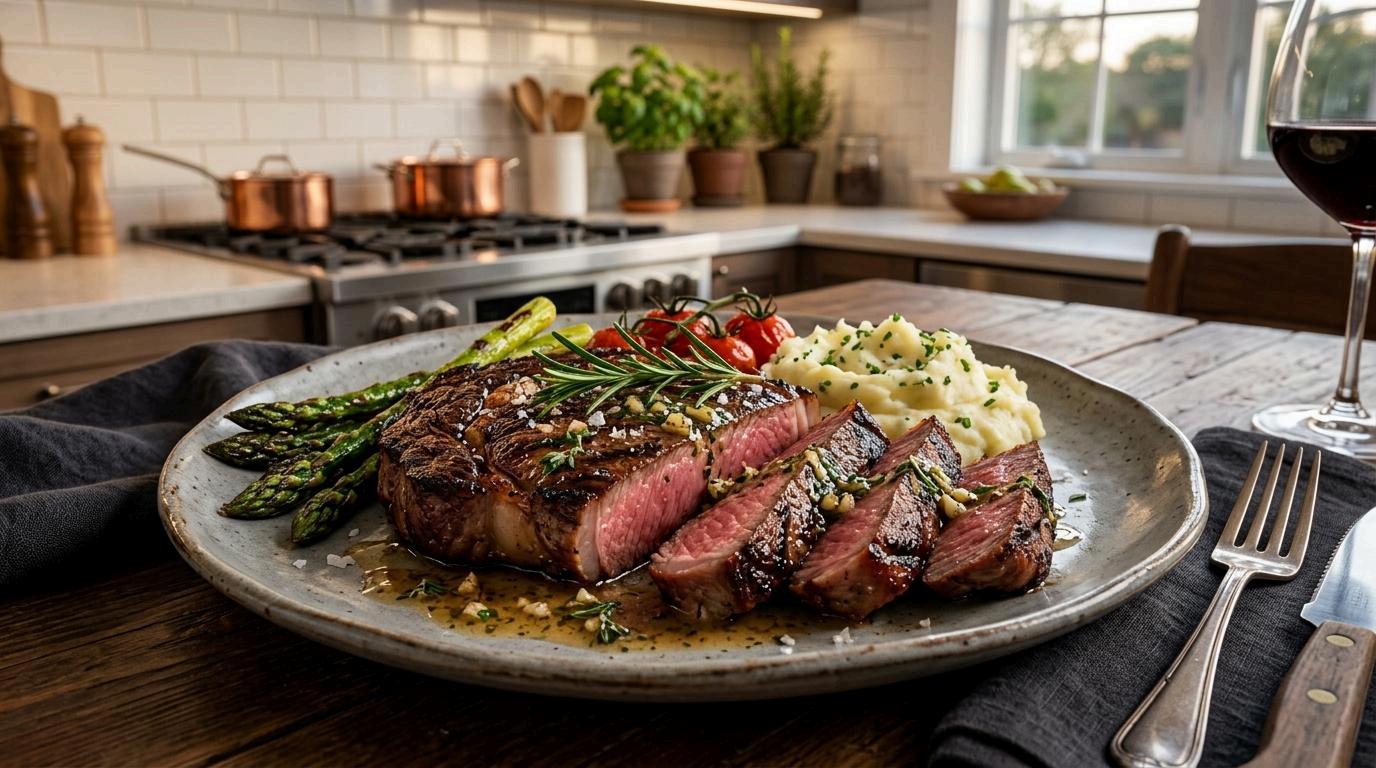
Let's be honest. You've sat down at a steakhouse in Singapore, paid $80 or more for a single plate, and thought "I could probably do this at home " And you know what? You're not wrong
Cooking a great steak at home is not as hard as people make it sound You don't need a wood-fired grill, a Michelin-star kitchen, or a culinary degree. What you need is the right cut, a hot pan, good seasoning, and a little patience Once you get these four things right, your home-cooked steak will honestly give Burnt Ends a run for its money
Start With the Right Cut This Is Where Most People Go Wrong
Walk into NTUC or Cold Storage and you'll see labels like "beef steak," "sirloin," and "ribeye" all over the place. But not all cuts cook the same way, and choosing the wrong one is the number one reason home-cooked steak ends up disappointing
For home cooking in Singapore, these are the three cuts worth focusing on:
● Ribeye The most forgiving cut for beginners It has fat running through the meat (called marbling), which keeps it juicy even if you slightly overcook it Rich, buttery flavour. Best for pan-searing.
● Sirloin (Striploin) Leaner than ribeye, with a firmer bite Great balance of flavour and texture. A solid everyday choice.
● Tenderloin The softest cut on the cow. Very little fat, very delicate flavour. Best cooked rare to medium-rare, otherwise it dries out quickly
If you're just starting out, go for ribeye. The marbling protects you from small mistakes. Once you're comfortable, explore the others
Season It Simply Less Really Is More
Here's something many home cooks get wrong. They marinate the steak for hours with sauces, spices, and all sorts of things. And then they wonder why it doesn't taste like a steakhouse steak
Premium beef does not need a complicated marinade. It needs salt, and that's mostly it.
Use coarse sea salt or kosher salt Season generously on both sides more than you think is needed Then let the steak sit at room temperature for at least 30 to 45 minutes before cooking. This is especially important in Singapore's climate, where meat straight from a cold fridge can cook unevenly
You can add cracked black pepper just before it hits the pan Some people add it earlier, but pepper can sometimes burn at high heat, which gives a slightly bitter taste.
That's your seasoning sorted Simple works
The Pan Matters More Than the Grill
Most Singapore homes do not have an outdoor grill That's fine A good cast iron pan or a heavy stainless steel pan gives you results that are equal to, and sometimes better than, a restaurant grill
Getting the Pan Hot Enough
This is the single most important step Your pan needs to be smoking hot before the steak goes in Not warm Not medium heat Smoking hot
Heat your pan on high heat for at least two to three minutes. Then add a high smoke point oil refined coconut oil, vegetable oil, or avocado oil all work well Avoid olive oil here as it burns too easily at this temperature
When you place the steak in the pan, you should hear a loud, aggressive sizzle If it sounds quiet or soft, the pan is not hot enough and you won't get that beautiful brown crust
The Crust Is Everything
That brown crust on a steakhouse steak is not just looks It's flavour It comes from a process called the Maillard reaction, where heat causes the surface of the meat to caramelise and develop a deep, savoury taste.
To get this at home, press the steak gently into the pan when it first goes in Don't move it Let it sear for two to three minutes undisturbed. Flip once. That's it. Resist the urge to keep pressing or moving it around
Doneness How to Know When It's Ready
This is where most home cooks either undercook or overcook, and it usually comes down to guesswork. The best tool you can buy for steak is a meat thermometer. They cost about $15 to $25 on Shopee and they take all the guesswork away completely
Here's a simple temperature guide to follow:
● Rare: 50°C Cool red centre, very soft
● Medium-rare: 55–57°C Warm red centre, juicy and tender (most popular choice)
● Medium: 60–63°C Pink centre, firmer texture
● Well-done: 70°C and above No pink, firmer throughout
Most steak lovers in Singapore go for medium-rare, and for good reason It's the sweet spot where the meat is still juicy and the flavour is at its peak.
If you don't have a thermometer yet, you can use the finger test as a rough guide but invest in a thermometer eventually. It genuinely changes your cooking.
The Resting Step That Most People Skip
You've cooked the perfect steak The crust looks great The internal temperature is right Now the biggest mistake is cutting into it immediately
Don't do this
Let the steak rest on a plate or chopping board for five to seven minutes after cooking During this time, the juices that were pushed to the centre by the heat will redistribute throughout the meat If you cut it too early, all that juice runs out onto the plate and your steak ends up dry
Tent it loosely with foil to keep it warm while it rests Then slice and serve