
Religious freedom & Human dignity
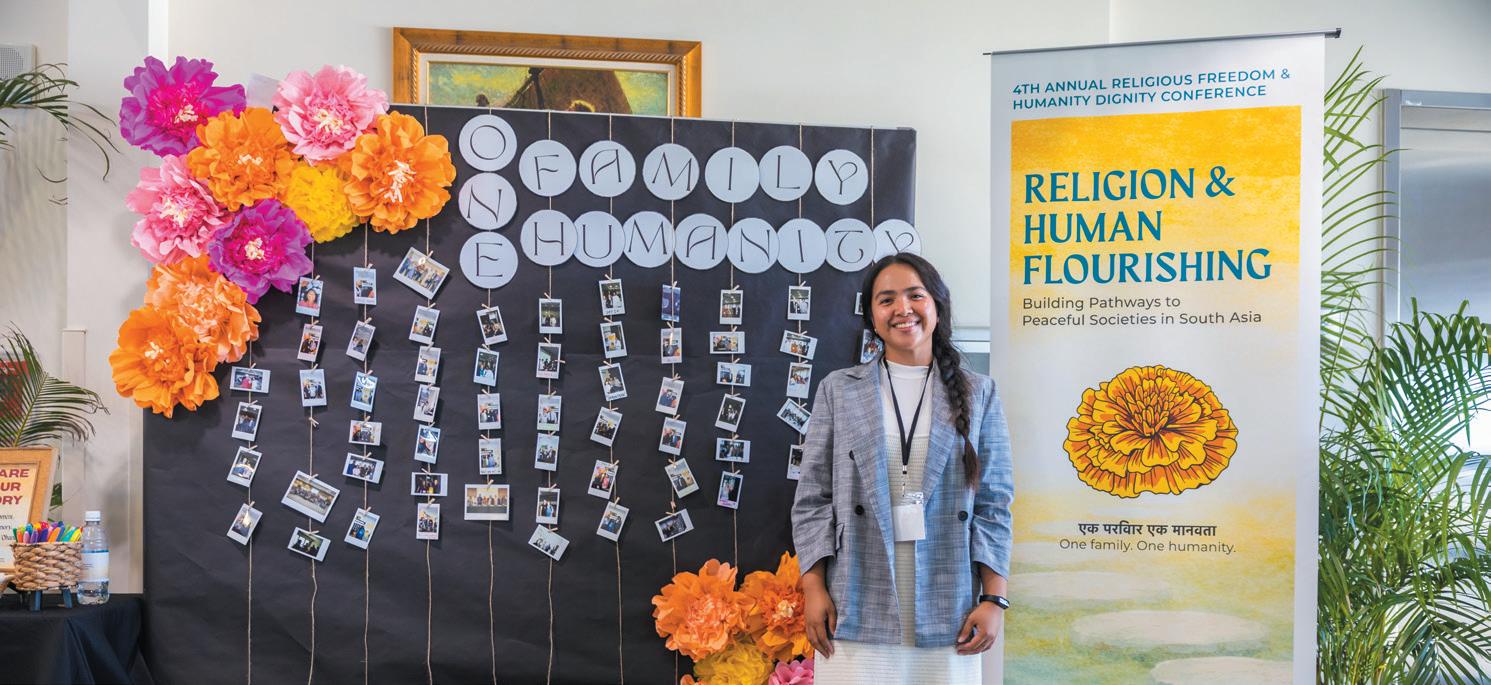
This special issue highlights the Religious Freedom and Human Dignity Conference held at Brigham Young University–Hawaii from April 21–23, 2026. Centered on the theme “Ek Parivaar, Ek Manaavta” — “One Family, One Humanity” — the conference brought together judges, scholars, policymakers, religious leaders, civil society practitioners, and students to examine how sustainable pathways toward peace, dignity, and human flourishing can be strengthened across South Asia.
The photographs featured throughout this issue were captured by the photographers of Ke Alaka‘i News. The publication’s layouts draw inspiration from South Asian religious art and cultural patterns, while the stories are informed by lived experiences and reports presented during the conference.
STAFF
Editor-in-Chief
Managing Editors
Copy Editors
Art Director
Lead Photographer
Multimedia Journalists
TEAM MEMBERS
John Andrew Quizana
Jessika Juwitahatma Santoso
CJ Shinihah Notarte-Orr
Samantha Faith Satorre
Myco Chillian Marcaida
Chance Childers
Hiroki Konno
Julia Aunai
Linda Laulu
Graphic Designers
Illustrator
Photographers
NEWS CENTER: Box 1920
BYUH
Laie, HI 96762
Editorial, photo submissions & distribution inquiry: kealakai@byuh.edu
To view additional articles, go to kealakai.byuh.edu
Alden Ethanael Pua
Rosemarie Valdez
Judith Weman
John Carlo Navarro
Ice Cesario
Jay-R Gallano
Guen Ramirez-Platon
Ruea Tama
John Lennon Onda
CONTACT:
Email: kealakai@byuh.edu
Phone: (808) 675-3694
Office: BYU–Hawaii
McKay Classroom 135 ON THE FRONT & BACK: Images from Adobe Stock
© 2026 Ke Alaka‘i BYU–Hawaii All Rights Reserved
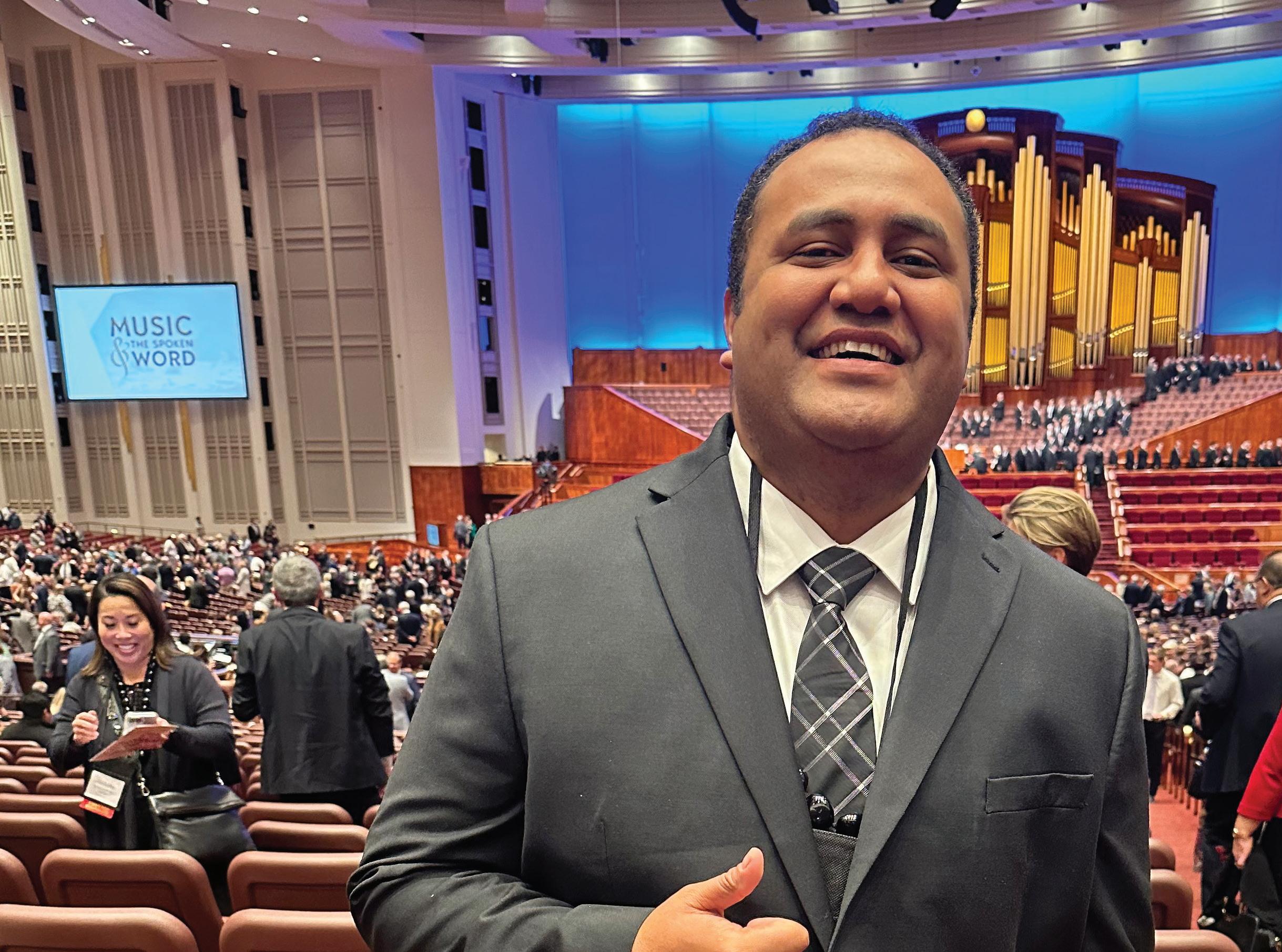
A JOURNEY IN FAITH AND RESPONSIBILITY
BYU–Hawaii student fellow Riji Levaci reflects on his work with the Religious Freedom and Human Dignity Initiative and how majority faiths can protect minority beliefs
BY JESSIKA SANTOSO
Riji Levaci, a social work senior from Fiji, said human dignity matters because every person, regardless of faith, culture or circumstances, carries infinite worth. “When we honor that truth, we uplift others and elevate our shared humanity,” he said.
As one of the longest-serving student hfellows for the BYU–Hawaii Religious Freedom and Human Dignity Initiative (RFHD), Levaci said he has spent about three years, in addition to his academic responsibilities, advocating for religious freedom on campus and raising awareness among students and faculty.
The foundation
Levaci said his journey with RFHD started with his ongoing interest in religious associations, and the word “religion” in the initiative stood out to him. He said his faith in the Savior Jesus Christ and Heavenly Father, and his belief in respecting people for who they are, led him to join the initiative. However, he said his initial thinking was centered on his faith, not fully understanding the broader concept of religious freedom and human dignity.
Over time, Levaci said his motives grew
as he became more involved by attending conferences and being part of a community where everyone yearns for respect and the freedom to worship. Growing up as a member of The Church of Jesus Christ of Latter-day Saints, he said it shaped his mindset that the Church is the only true church. “I didn’t have negative feelings toward other faiths. But over time, I came to understand that other religions also have the right to worship. Now, I still believe in my faith, but I also respect and value what others believe.”
Levaci said this shift in his mindset reflects his golden rule of treating others with dignity, treating others as he wants to be treated.
“Whether I’m in a minority or majority setting, I want to be treated with respect, love and care. So I treat others the same way, even if their views differ from mine.”
Living this golden rule has been a big part of his journey at BYU–Hawaii, Levaci said. “When we work together with our differences, we grow stronger as a community. But if we clash, it weakens society.” He continued, “There’s no value in conflict when we can respect each other and build on each other’s knowledge.”
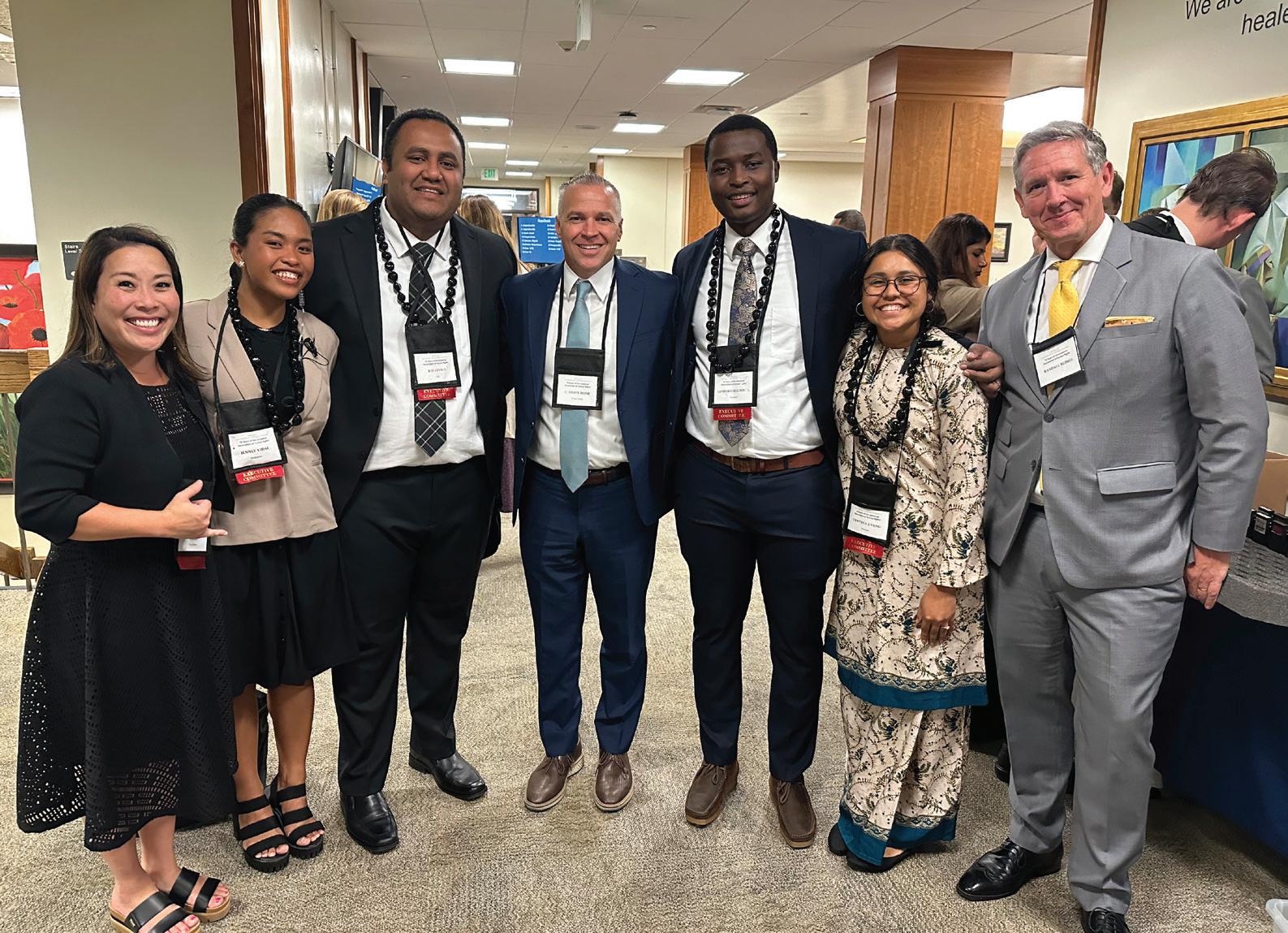
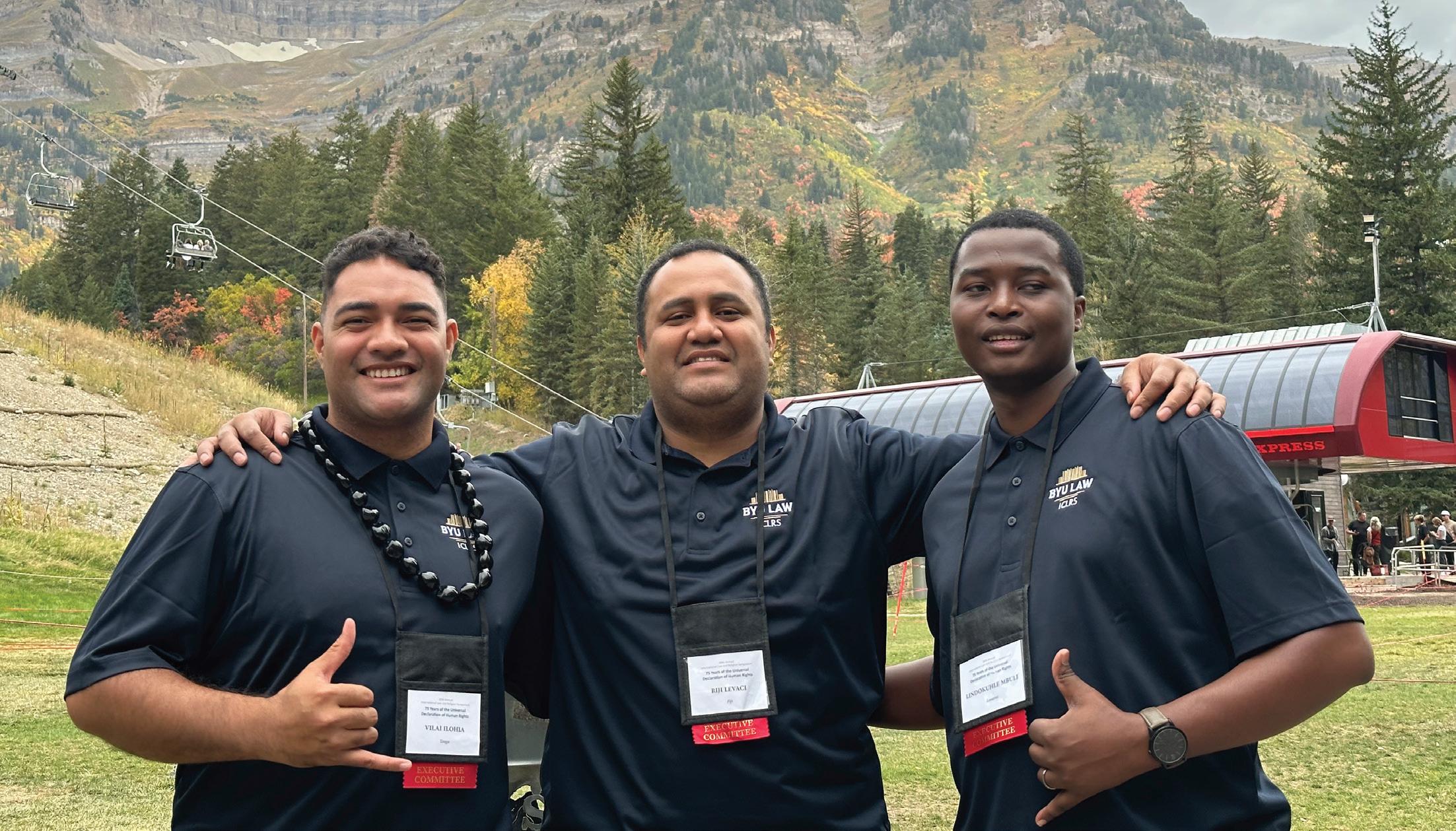
A photo of Levaci with BYUH delegates during the 30th Annual International Law and Religion Symposium in Utah.
Responsibility in majority
Among several conferences Levaci attended, he said the 32nd Annual International Law and Religion Symposium held in Utah in 2025 was transformative. One phrase from W. Cole Durham Jr., emeritus professor of law at the J. Reuben Clark Law School at Brigham Young University, stood out to him: “When you are in the majority, you have the responsibility to protect the minority.”
creating space for others to practice and share their faith. Respecting others’ beliefs is essential, whether they are members of the Church or not, he said. “Even when inviting others to come unto Christ, we still respect their religion and where they stand in their faith.” He also shared that during conferences, organizers provide rooms for attendees to pray, describing it as respecting their right to worship, even within a Church-sponsored setting.
“
Whether I’m in a minority or majority setting, I want to be treated with respect, love and care. So I treat others the same way, even if their views differ from mine.”
Riji Levaci
Levaci said the idea changed how he understands responsibility across religious differences. “The responsibility extends beyond your own religion, especially if you’re the majority because the minorities that one is always persecuted, discarded, disregarded and neglected because of differences.”
Levaci said he sees that gap reflected in BYUH students’ experiences. He said some students come from countries where their religion is the majority, while others come from places where their faith is a minority. He said some have shared they must hide their religious identity, avoid certain neighborhoods or worship in secret to avoid harassment from community members or government officials. Levaci said he applies what he learned by
Personal connection
Levaci said being born and raised in Fiji, which has close ties to South Asian countries, made this year’s RFHD conference especially meaningful to him. He said he attended a school governed by the Hindu faith, participated in Hindu prayers every Monday morning–being part of Hindu society is part of his upbringing.
Levaci said he valued those experiences, even as he continued practicing his own faith at home. “Growing up around Indigenous Fijians were mostly Christians and also Indo-Fijian who were mostly Hindus and Muslims taught me deeply about identity, family and history.”
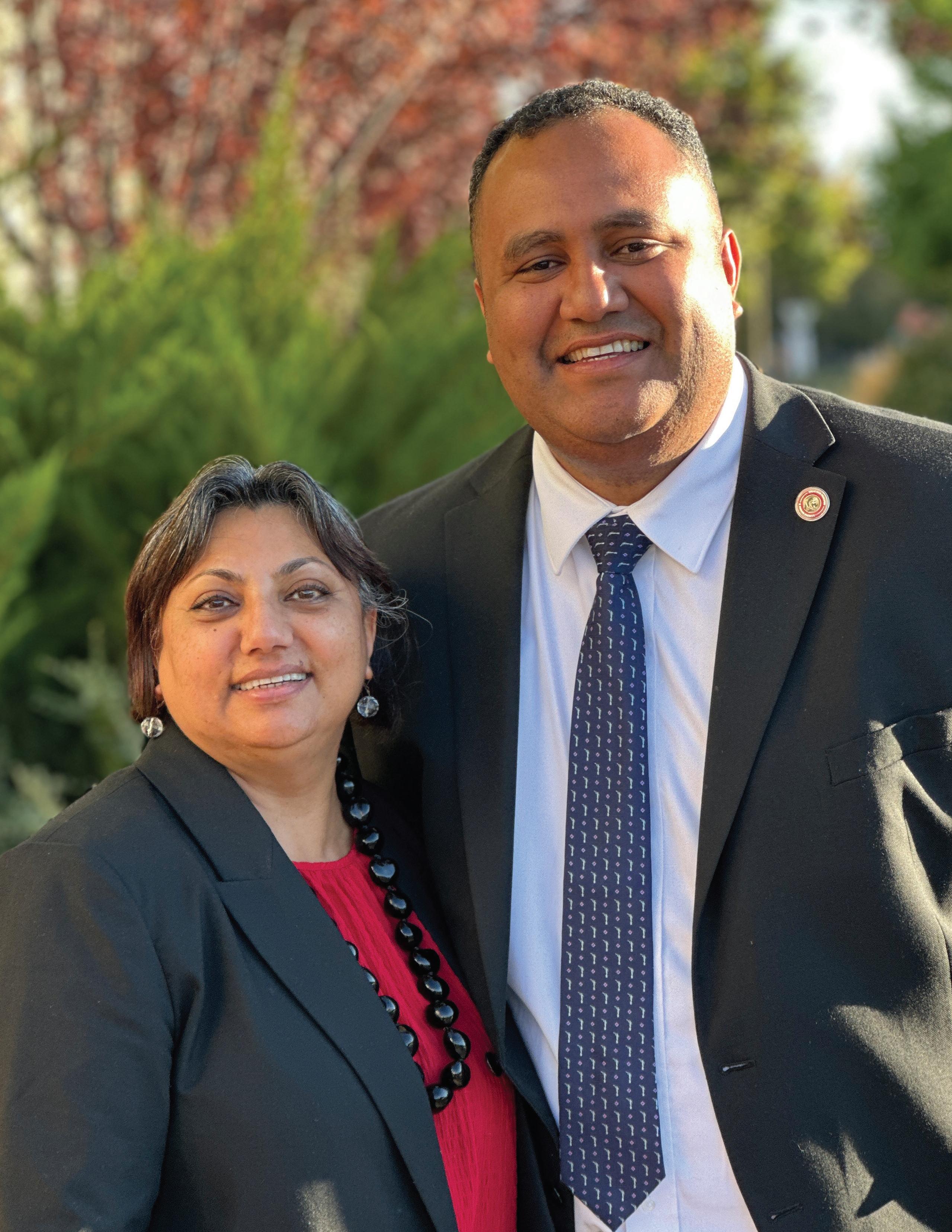
Levaci said those experiences being exposed to different faiths and teachings shaped his journey and helped him better understand his role in the RFHD initiative. He said his upbringing has been “a big blessing” as he continues to learn and contribute to the work.
For students attending the 2026 RFHD conference, Levaci encouraged them to be open to learning from leaders either from your country or the countries represented in the conference. “Those leaders bring knowledge and experience of how RFHD matters done in their countries.” He continued, “Always ask yourself: ‘What can I do after this conference? What can I contribute to society to advocate for religious freedom and human dignity?’”•
Page Design by Guen Ramirez-Platon. Photos provided by Riji Levaci.
MAPPING FAITH ACROSS SOUTH ASIA
A comparative study of religious freedom between secular and religious constitutional orders in South Asia
BY JOHN ANDREW QUIZANA
In the mosaic of South Asia, where ancient traditions meet modern statecraft, the definition of religious freedom is as varied as the region’s geography. Across the seven nations of Bangladesh, Bhutan, India, Maldives, Nepal, Pakistan and Sri Lanka, constitutional protections for faith reflect a delicate tug-of-war between secular ideals and the push for national identity, according to University of Hull.
According to constitutional experts and recent legal assessments, these frameworks range from the Maldives’ absolute commitment to a single faith to India’s “Dharma-based” pluralism. While every nation in the region offers some textual guarantee
of “freedom of conscience,” the fine print often reveals a complex landscape of statesponsored religions and anti-conversion laws, says constitutional experts.
The secular experiment: India and Nepal
India stands as the region’s most prominent secular actor, though the interpretation of that secularism is evolving, according to Human Rights Watch. According to the Indian Constitution, Articles 25 through 28 provide the fundamental right to profess, practice and







propagate religion. However, this is not an absolute right. As noted in recent legal debates surrounding the Maharashtra Freedom of Religion Bill, the state retains the power to regulate “secular activities” associated with religious practice and to intervene on grounds of public order, morality and health.
Rajeev Bhargava, an Indian political theorist said, “Indian secularism is not the strict separation seen in Western models but a system of ‘principled distance,’ where the state may intervene in religion to uphold equality and reform.” Despite this pluralistic framework, he pointed the rising tide of state-level anti-conversion laws. Reports from The Hindu note that such laws “mandate prior notice to the district magistrate before conversion,” a requirement critics argue “could violate fundamental rights and impact personal freedom.”
by the same provision, which states that “no person shall … convert another person from one religion to another,” effectively prohibiting proselytization, says Human Rights Watch.
As noted by David N. Gellner, anthropologist of Nepal and South Asia, Nepal’s form of secularism is “not a separation of religion and state but a reconfiguration of their relationship,” where the state continues to regulate religious practice. Similarly, United States Commission on International Religious Freedom states that Nepal’s anti-conversion laws have been used in ways that “restrict the ability of individuals to freely change their religion,” raising concerns that such provisions may criminalize certain forms of religious outreach.
Nepal, once the world’s only Hindu kingdom, transitioned to a secular republic with the adoption of the Constitution of Nepal. Under Article 26, “every person who has faith in religion shall have the freedom to profess, practice and protect his or her religion.” However, this freedom is explicitly limited
The “State Heritage” Model: Bhutan and Sri Lanka
According to their both constitutions, Bhutan’s and Sri Lanka’s religious freedom is constitutionally guaranteed, yet one faith is explicitly elevated as central to national identity. The Constitution of Bhutan declares Mahayana Buddhism as the nation’s “spiritual heritage,” while also affirming under Article 7(4) that citizens have the right to “freedom of thought, conscience and religion.” At the


same time, the Constitution provides that religious institutions and personalities shall “promote the spiritual heritage of the country,” reflecting the state’s active role in preserving Buddhist traditions.
As noted by Open Doors in its World Watch List reporting, “this framework contributes to a climate where ‘converts to Christianity are watched with suspicion,’ and Christian communities face structural limitations, including restrictions on building churches.” Scholars such as Matthew J. Walton argued that in Buddhist-majority states, constitutional protection of religion often coexists with efforts to preserve a dominant religious identity, creating inherent tension for minority groups.
Sri Lanka, on the other hand, reflects a similar model through what is often called the “foremost place” doctrine. The Constitution of Sri Lanka states that the Republic shall “give to Buddhism the foremost place” and obligates the state to “protect and foster the Buddha Sasana,” while also guaranteeing freedom of religion to all citizens. Asanga Welikala, from Edinburgh Law School said, “Interpreting this provision, the Supreme Court of Sri Lanka has consistently upheld a protective stance toward Buddhism.”
In a 2018 determination on proposed anticonversion legislation, the Court held that inducements tied to religious conversion—such as material or financial benefits—could constitute an “infringement of the freedom of thought, conscience and religion” of vulnerable individuals, Welikala
said. “Sri Lanka’s constitutional order represents ‘a form of asymmetrical secularism,’ where formal religious freedom exists alongside a privileged status for Buddhism.”
The Islamic republics: Pakistan and Bangladesh
Pakistan and Bangladesh present two different interpretations of how Islam interacts with the state, said Ayesha Jalal, a Pakistani-American historian. “Pakistan’s constitution explicitly establishes Islam as the state religion and requires that all existing laws shall be brought into conformity with the injunctions of Islam,” Jalal said. According to the U.S. Department of State’s International Religious Freedom Reports, the Pakistani framework creates a Federal Shariat Court to ensure no law is repugnant to Islam. “While the constitution protects the rights of minorities to ‘profess, practice, and propagate,’ these rights are often superseded by blasphemy laws that, according to human rights advocates, are frequently used to target religious minorities,” says the website.
Bangladesh, conversely, maintains a unique secularism with a state religion model, Jalal said. “While the constitution was amended to restore secularism as a core principle, Islam remains the state religion,” she added. According to Article 41 of the Bangladesh Constitution, every citizen has the right to profess, practice or propagate any religion and religious communities have the right to

manage their own institutions. “This dual identity often creates what observers call a constitutional paradox between the state’s secular mandate and its Islamic identity,” Jalal said.
The exclusionary model: The Maldives
According to Ministry of Islamic Affairs, the Maldives represents the most restrictive end of the spectrum. According to the Maldivian Constitution, being a citizen is legally synonymous with being a Muslim.
The World Watch List 2026 country dossier on the Maldives notes that “the Maldivian Constitution does not permit citizens to have any other religion than Islam.” Furthermore, Article 36(c) mandates that “education shall strive to inculcate obedience to Islam.” There are no official churches, and the propagation of any non-Islamic faith is a criminal offense. According to the Ministry of Islamic Affairs, “apostates cannot be tolerated,” and religious freedom for non-Muslims is effectively non-existent for citizens.
The so-called “South Asian model” of religious freedom is rarely characterized by a strict separation of religion and state, said Rajeev Bhargava, a constitutional scholar. Rather, as comparative constitutional scholarship notes, it reflects a “complex accommodation” in which states regulate, recognize and at times privilege religion as part of nation-building and public order.
In this context, religion functions not only as private belief but also as a public institution embedded in constitutional identity and governance, he said. “South Asian secularism is better understood as ‘principled distance,’ where the state engages with religion in uneven but structured ways rather than maintaining strict neutrality,” he said. Within this framework, he added the central constitutional tension remains whether state engagement with religion protects pluralism or reinforces majority identity. •
Page Design and illustrations by Guen Ramirez-Platon.
Faith across borders
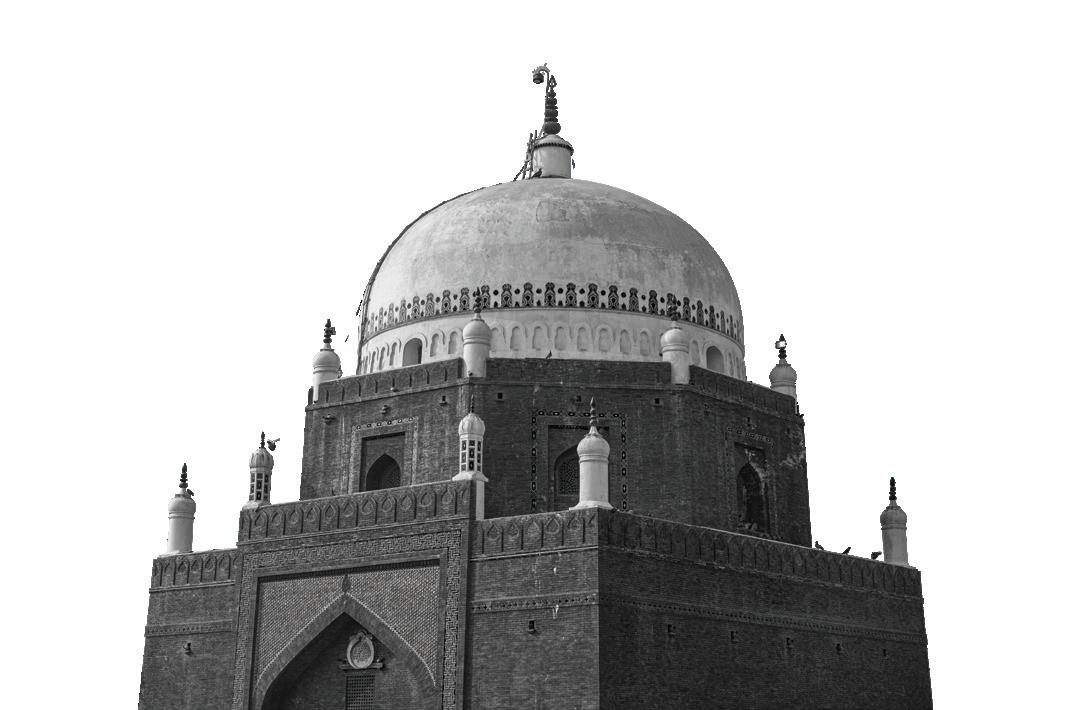
A snapshot of religious populations and state policies across South Asia
BY JULIA AUNAI
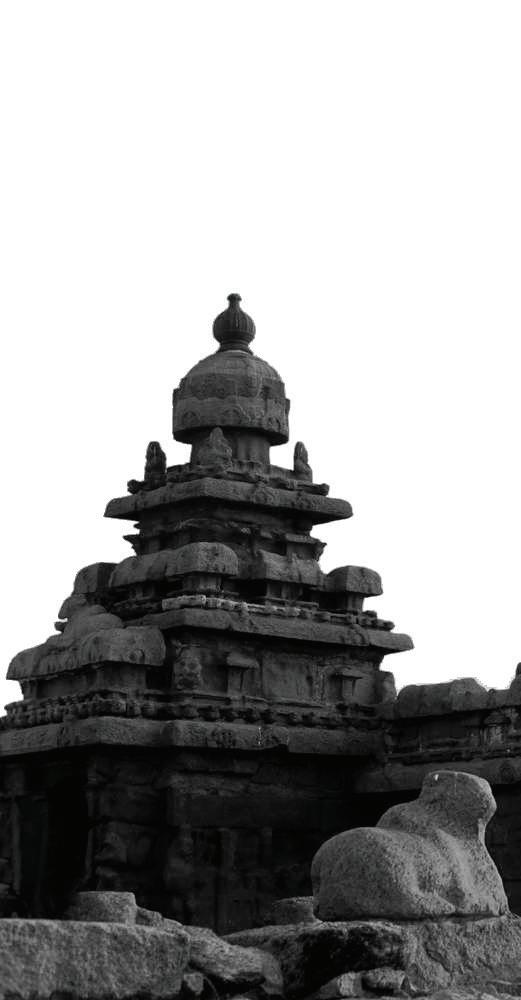
Pakistan
Islam (95%), Christianity (1.6%), Hinduism (1.5%)
Islam is the state religion and influences laws and governance. For example, many Islam holidays are considered national holidays in Pakistan. Minority religions are legally permitted, but face discrimination and are not under equal protection from the government. Religious minorities often report vulnerability to violence and limited protection.
India
Hinduism (79.8 %), Islam (14.2%), Christianity (2.3%), Sikhism (1.9%), Buddhism (0.7%), Jainism (0.4%)
India is constitutionally secular and guarantees freedom of religion, with laws prohibiting religious discrimination in 13 out of 28 states. Some states have anti-conversion laws and regulations affecting interfaith marriages and religious practice. The government must stay impartial in affairs regarding religion. 94% of Hindus reside in India.
Maldives
Islam as state religion.
Islam is the official state religion and is required for citizenship and political office. Practicing Islam is required in the state. NonMuslim practices are restricted and public practice of other faiths is not permitted. The legal system enforces religious unity through constitutional and criminal law. For example, hate crimes against Islam are against the law.
Nepal
Hinduism (81%), Buddhism (9%), Kirat (3%), Christianity (1%)
Nepal is a secular state with constitutional protection for religious freedom and bans on forced conversion. The constitution describes a state where people of different religions, cultures and languages can share common goals and loyalty to one nation.While Hinduism is historically dominant, the government allows the practice of other religions. However, while discrimination based on religion is prohibited, discrimination based on caste is not.
Bhutan
Buddhism (83%), Hinduism (11%), Christianity (2.3%)
The constitution guarantees freedom of thought, conscience and religion as well as prohibiting discrimination based on faith. However, Buddhism is the state-supported religion. Unregistered religions face restrictions and are not able to practice publicly.
Sri Lanka
Buddhism (70.2%), Hinduism (12.6%), Islam (9.7%), Christianity (7.4%)
Sri Lanka does not have a national religion and recognizes four faiths: Buddhism, Hinduism, Islam and Christianity. The constitution guarantees freedom of religion, but gives Buddhism a foremost position, requiring state protection of it. Religious education is structured around select faith instruction in schools. Religious minorities, such as Christians, have reported instances of discrimination and limited legal redress.
Bangladesh
Islam (89%) Buddhism (11%)
Islam is the state religion, but the constitution guarantees equal rights for other religions such as Buddhism, Hinduism and Christianity. While religious discrimination is illegal, enforcement can be inconsistent and minority groups have reported violence. Personal status laws vary by religion, particularly in marriage and divorce regulations.•
Sources: Pew Research Center, U.S. Department of State (International Religious Reports, 2022-2023). Page Design by Ice Cesario.

Colors, lights and connection

From Diwali to Eid, shared traditions invite participation, foster understanding and celebrate common human values
BY MYCO MARCAIDA
Across South Asia, religious festivals are not only expressions of faith, but also powerful moments of cultural connection, said a professor and student from BYU-Hawaii.
Diwali and Holi
Joel Campbell, an associate visiting professor in the Faculty of Arts & Letters said celebrations such as Diwali, Holi, Eid and Vesak carry deep spiritual meaning within their traditions, yet they also open their doors to people of other beliefs creating spaces of inclusion, learning and shared joy.
He shared his knowledge participating in some South Asian celebrations. “Diwali is a Hindu tradition but also celebrated by others not of the faith. It is linked to the return of Rama defeating Ravana. It’s the victory of light over darkness,” he said.
According to NPR, Diwali also known as Deepavali and the Hindu Festival of Lights, is one of India’s most widely celebrated holidays. The site continues, the celebration overlaps with the other ritual harvests and festivals and originated in India more than 2,500 years ago. “The annual festival that extends to the Indian diaspora is usually observed for five days though celebrations can vary depending on location and traditions,” the site adds.
Campbell said like Diwali, other festivals like Holi’s significance extend beyond Hinduism. “Holi is recognized for the colors and carries both religious and social meaning. It’s a harvest festival and a moment of social renewal where you can goof off and throw around colors regardless of social class,” he added.
Sahithi Pusapally, a freshman from India majoring computer science shared her personal experience growing up around these traditions. “Both Diwali and Holi are about victory of good over evil. It’s also about letting go of bad habits and starting fresh. Many people use this time to make changes in their lives, like a new beginning,” she explained.
Pusapally described how these festivals are celebrated in daily life. “For Holi, we celebrate with colors—colored powder on each other. These are usually dyes or natural powders. When I was a kid, the colors wouldn’t wash off for a week! So, we used to apply oil on our skin first,” she explained.
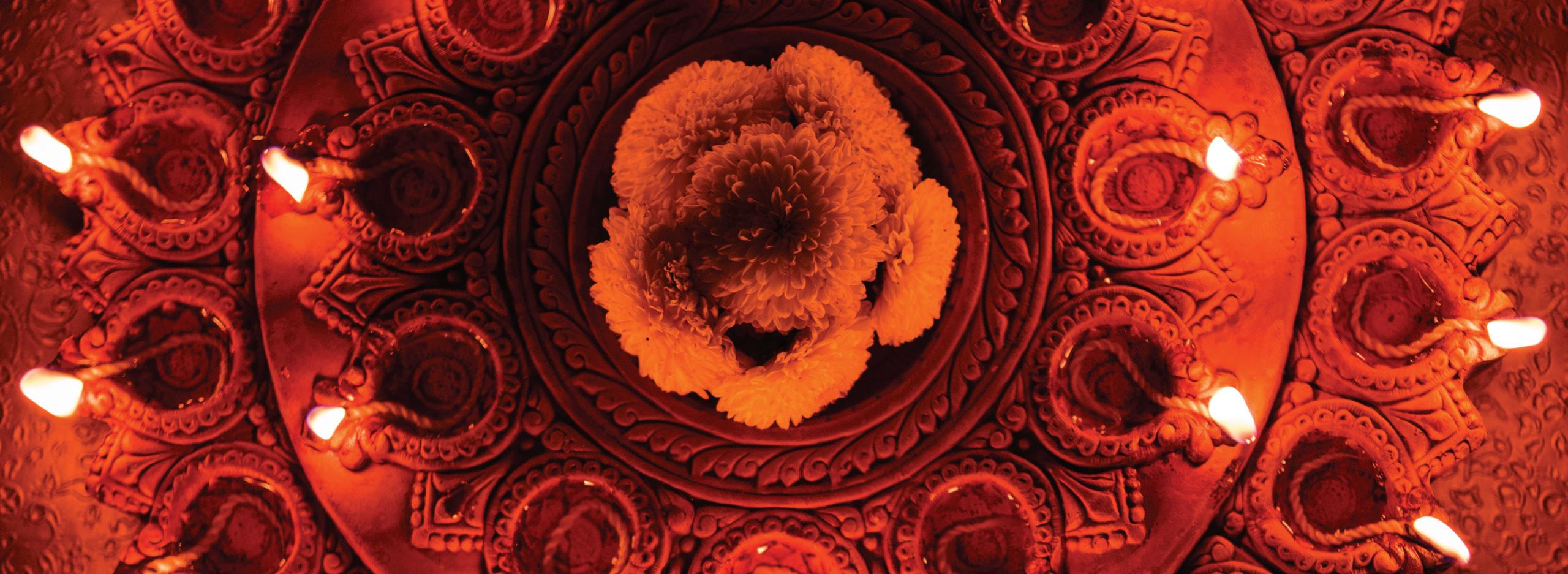
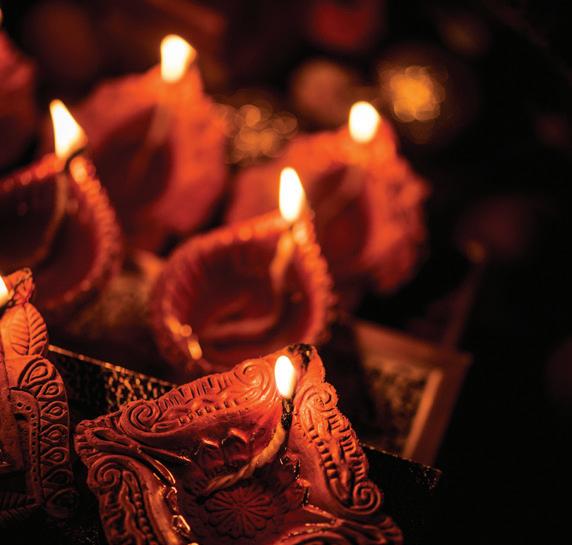
For Diwali, she continued; the festival is celebrated with sweets, food, fireworks and clay lamps. “The lamps are placed around the house to light it up,” she added.
Celebrating with respect
Pusapally said experience also highlights how these traditions extend across religious lines. “I was actually born Christian, while most of my family is Hindu. When I visit relatives, they invite me and explain everything, at first, I was hesitant, but they made it fun and welcoming.”
Pusapally said openness helps bridge differences. “Even though I’m Christian, I respect my family’s beliefs. I don’t participate in worship practices, but I join in celebrations like food and family time. They respect my beliefs, and I respect theirs,” she said.
Pusapally said that hospitality is central to Holi and Diwali. “In India, we treat guests as if they are gods. It’s our responsibility to make them feel comfortable and explain why we do things,” she explained.
Campbell echoed this idea that entering sacred spaces with respect fosters empathy and connection. He referenced the concept of holy envy, coined by scholar Krister Stendahl encouraging people to appreciate meaningful aspects of other faiths without comparison. “We’re all connected to something divine.Whether it’d be different names, beliefs, but ultimately a shared sense of meaning,” Campbell said.
Pusapally added, “Life is short. Don’t let a religion divide you and just enjoy and connect with people. These festivals teach us to let go of negativity and start fresh,” she shared.
Eid and Vesak
For Muslims, Campbell said the celebration marks moments of reflection and celebration tied to faith and sacrifice. “Eid al Fitr is at the end of Ramadan and marks the end of fasting. It originated with the Prophet Muhammad. For Eid al Adha, it celebrates Abraham’s willingness to sacrifice his son Issac in obedience to God,” he added.
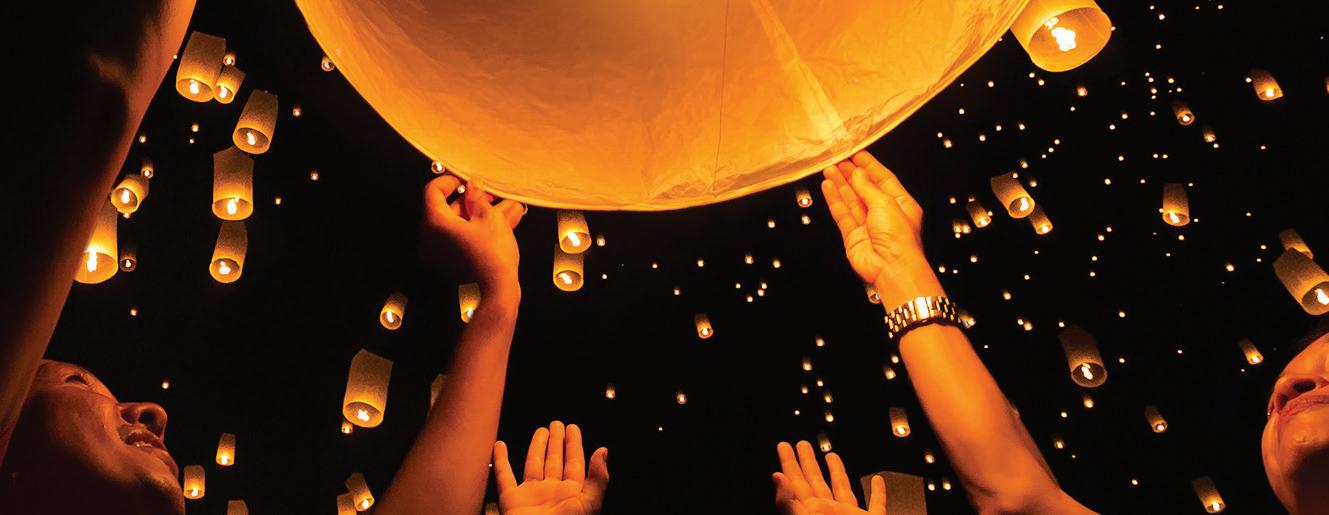
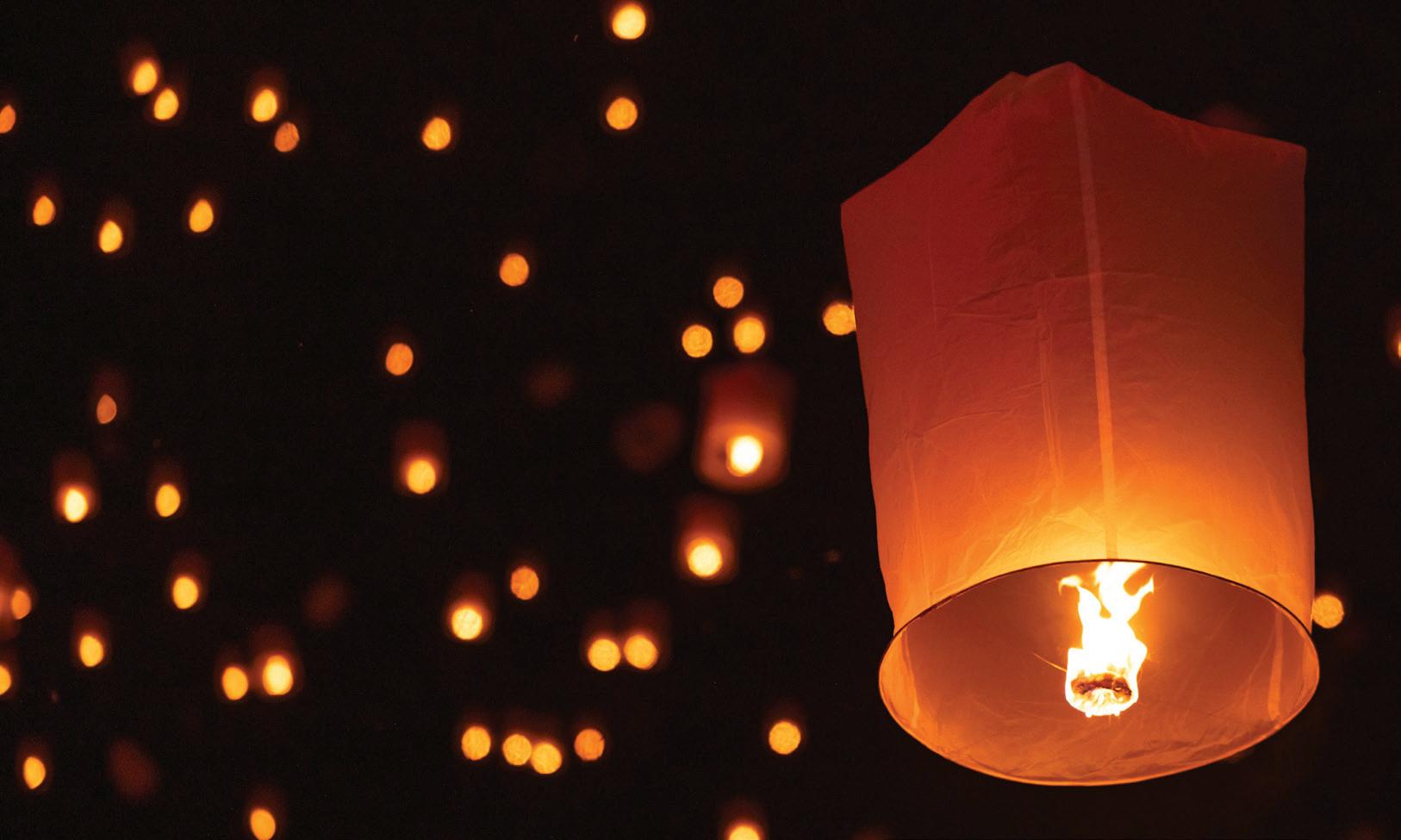
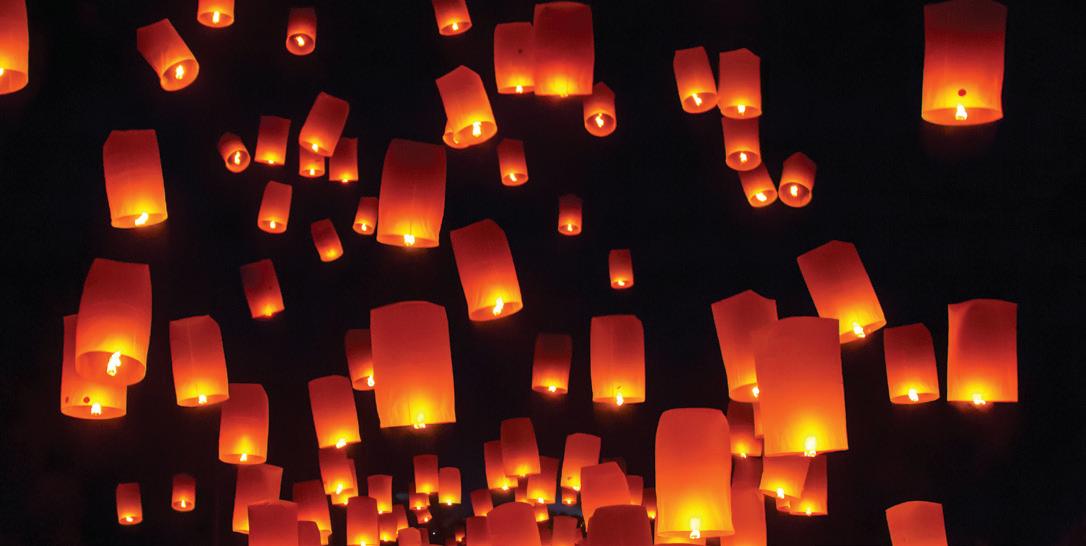
Campbell also shared his experience with Vesak, a celebration commemorating the life of Buddha. “I was in Seoul as a missionary during Buddha’s birthday and went to the main temple in downtown Seoul. We saw lanterns and what you do is to light a lantern and pin little prayers into it,” he explained.
BBC explains that Buddhists do not believe in a single creator god but instead follow the teachings of Siddhartha Gautama, also known as Buddha, a prince believed to have lived in the fifth century B.C. in present-day Nepal. “Vesak is celebrated once a year and marks Buddha’s birth, enlightenment and death. The date changes annually and is observed across many countries in Asia, including India, Thailand and both South and North Korea,” the BBC adds.
Campbell said Vesak emphasizes compassion and generosity. “What I saw a lot of people praying, putting in prayers and a lot of almsgivings. It’s a time for giving gifts or helping the poor, releasing animals but reinforcing ethical self-cultivation and compassion,” he added.
Beyond their religious significance, these festivals often become inclusive of cultural events, Campbell said. “Many communities actively welcome outsiders. I think a lot of festivals are very intercultural. In places like Salt Lake, Japanese Buddhists and Christians celebrate together. It becomes more cultural than strictly religious,” he added.•





“Both Diwali and Holi are about victory of good over evil. It’s also about letting go of bad habits and starting fresh. Many people use this time to make changes in their lives, like a new beginning.”
-Sahithi Pusapally


Page Design by Jay-R Gallano. Photos from Adobe Stock
SOUTH ASIA RELIGIOUS FREEDOM MILESTONES
BY SAMANTHA FAITH SATORRE
PAKISTAN
Although religious liberty is formally guaranteed in Pakistan’s constitution, the United States Commission on International Religious Freedom (USCRIF) reports that impediments to the citizens’ freedom of religion and belief still exist. The systematic enforcement of blasphemy laws, in particular, stands as a significant restriction that has been raising up a storm of fear, causing mob violence and discriminating against religious minorities, the USCRIF explains.
1974
Second Constitutional Amendment: Ahmadis declared non-Muslim
Under Prime Minister Zulfikar Ali Bhutto, Parliament passes the Second Amendment, officially classifying the Ahmadiyya community as non-Muslim. At independence, non-Muslims were 15-20% of the population; today they are under 4%.
1980-1986
Zia-era Islamization: Blasphemy laws expanded, death penalty introduced
Gen. Zia ul-Haq adds Sections 295-B (death for desecrating the Quran), 295-C (death for blasphemy against the Prophet), 298-B, and 298-C (criminalizing Ahmadi religious expression, including use of the word “mosque”).
2014
Supreme Court order: Task force on minority rights created, largely unenforced Pakistan’s Supreme Court orders a federal task force on religious tolerance, new hate speech restrictions, and employment protections for minorities. Human Rights Watch reports the order remains largely unenforced.
2023
Criminal Laws (Amendment) Bill: Penalty for blasphemy raised to 10 years
The National Assembly unanimously raises the penalty for disrespecting the Prophet’s companions from 3 to 10 years imprisonment. Rights groups warn the bill will intensify persecution of minorities. At least 85 people have been killed by mobs in blasphemy-related violence since 1990.
INDIA
India, as the world’s most populous country and the birthplace of major world religions, holds a highly significant and influential position in the world’s religious landscape. According to the Library of Congress, religious freedom in the region is explicitly protected in its constitution. Home to thousands of ethnic groups, 22 official languages and what the Library of Congress describes as “a long tradition of religious tolerance,” India boasts a long and complex history of religious freedom, marked by deep traditions of pluralism alongside periods of conflict and restriction.
1976
42nd Amendment: “Secular” added to the Preamble
Parliament amends the Preamble to explicitly declare India a “secular” state. The Supreme Court later held that India was already secular from 1950. The amendment made explicit what was always implicit in Articles 25-28.
1977
Rev. Stainislaus v. Madhya Pradesh: Right to propagate is not equal to right to convert
1950
Constitution adopted: Articles 25-28 guarantee religious freedom
Every citizen receives the right to freely profess, practice, and propagate religion. Articles 25-28 form the constitutional basis for religious rights and are enforceable as fundamental rights.
1967
Orissa Freedom of Religion Act: First anticonversion law
Orissa becomes the first state to restrict religious conversion. The Orissa High Court later strikes down the Act as beyond state legislative authority, but the precedent spreads to other states.
The Supreme Court holds that Article 25’s right to “propagate” religion does not include the right to convert others. This ruling provides the legal basis for state anti-conversion laws that followed.
2018
Sabarimala verdict: Women’s temple ban struck down 4-1
The Supreme Court rules that barring women aged 1050 from the Sabarimala temple violates Articles 14, 15 and 25. A 9-judge bench review of the ruling was still ongoing in April 2026.
2019
Citizenship Amendment Act (CAA): Excludes Muslims from fast-track citizenship
The CAA creates a pathway to citizenship for non-Muslim persecuted minorities from three neighboring countries but explicitly excludes Muslims. USCIRF flagged the law as discriminatory and has recommended India as a Country of Particular Concern every year since 2020.
NEPAL
The centuries-long reign of Hindu monarchy over Nepal was ended by the 2007 constitution that declared the country as a secular state, the United States Commission on International Religious Freedom (USCRIF) reports. USCRIF explains that the country’s National Penal (Code) Act “criminalizes proselytism, blasphemy, and cow slaughter, [disproportionately] impacting the country’s Buddhist, Christian, and Muslim populations.” Secularism, for Nepal, is defined as the “protection of religion and culture handed down from the time immemorial,” but the leading influence of Hinduism in the Nepali society continues to pose challenges for religious minorities.
1962
Panchayat Constitution: Nepal formally declared a Hindu Kingdom
The 1962 constitution formalizes Nepal as a Hindu state under the monarchy, embedding Hinduism into the legal identity of the country for 45 years. The King is constitutionally required to be Hindu.
2007
Interim Constitution: Secular state declared after civil war
Following a decade-long civil conflict, the interim parliament abolishes the Hindu Kingdom and declares Nepal a secular state. The change is codified in the 2015 Constitution.
2015
New Constitution: “Secular” defined as protecting ancient (Hindu) religion
Article 4 defines “secular” as “protection of religion and culture handed down from time immemorial.” Courts have interpreted this as giving de facto priority to Hinduism. Article 26(3) prohibits converting another person to a different religion.
2017
Penal Code: Religious conversion criminalized, up to 5 years imprisonment
Section 158 of the Penal Code makes converting another person to a different religion a criminal offense punishable by up to 5 years in prison. Christian and other minority groups face arrests under this provision from 2018 onward.
BANGLADESH
As is the case in Pakistan, constitutional guarantees are not enough to alleviate the strain on religious freedom in Bangladesh. New Kerala reports, “Bangladesh shows a worrying pattern of shrinking Hindu populations linked to property seizures and periodic communal violence.” The timeline of the nation’s religious liberty following the adoption of the constitution is riddled with challenges faced by minor religious groups, political conflicts, economic and cultural crises, religious extremism and misunderstandings regarding religious harmony.
1972
Constitution adopted: Secularism as a founding principle Bangladesh’s founding constitution highlights secularism as one of four core state principles, explicitly rejecting the religious nationalism of Pakistani rule. The constitution authorizes freedom of religion for all citizens.
1988
Eighth Amendment: Islam declared state religion
Military ruler H.M. Ershad amends the constitution to make Islam the state religion, directly contradicting the 1972 secular foundation. The amendment remains in force today despite constitutional challenges.
2011
Supreme Court ruling: Secularism affirmed as unamendable core
The Supreme Court rules that secularism is part of Bangladesh’s unamendable constitutional identity, creating a legal tension with the 1988 state religion amendment that has never been fully resolved. The Hindu population has fallen from 13.5% in 1974 to roughly 8% in 2024.
BHUTAN & MALDIVES
Both Bhutan and the Maldives employ restrictive approaches to state religion. In Bhutan, according to the U.S. Department of State’s report on International Religious Freedom, Article 3 of the 2008 Constitution declares Buddhism as the country’s “spiritual heritage” and requires all religious organizations to register with the government’s Commission for Religious Organizations (CRO). The Minority Rights Group also reports that of the 96 organizations registered with the CRO, all are Buddhist except for a single Hindu umbrella body. Christian and Muslim organizations are not formally recognized by Bhutan’s government.
Meanwhile, the Maldives is more absolute with their restrictions, explicitly prioritizing Islam in their constitution. Article 9(d) of the 2008 Constitution states that “a non-Muslim may not become a citizen of the Maldives.” The U.S. Department of State’s report adds that public officers, including the President, are required to be followers of Sunni Islam. The same report states that propagating any religion other than Islam is a criminal offense, that non-Muslim foreigners may worship only in private and that the Ministry of Islamic Affairs maintains control over all religious matters.
Bhutan - 2008
First written constitution adopted: Buddhist values embedded, Gross National Happiness enshrined Bhutan transitions from an absolute to a constitutional monarchy. The constitution embeds Buddhist values and enshrines Gross National Happiness as a state guiding principle. Minority religious groups report ongoing difficulty registering and operating freely.
Maldives - 2008
New constitution: Citizenship conditioned on being Muslim
The 2008 Constitution creates a presidential republic in which citizenship is explicitly conditioned on being Muslim. All laws must comply with Islamic principles. Non-religious organizations cannot legally register, and public practice of non-Islamic faiths is prohibited.
SRI LANKA
Authorities express significant concern over the conditions of religious freedom in Sri Lanka. According to the reports of the United States Commission on International Religious Freedom (USCRIF), freedom of religion or belief for the country’s citizens is constitutionally guaranteed but inconsistently applied. According to the constitution, the highest protection is placed on Buddhism while respect for other religious groups is maintained. However, says USCRIF, the enforcement of discriminatory laws such as the Prevention of Terrorism Act (PTA) and the International Covenant on Civil and Political Rights (ICCPR) Act grants the government power to arbitrarily detain religious minorities.
1972
First Republican Constitution: Buddhism given foremost place for first time
The 1972 constitution removes the secular character of the 1947 Soulbury Constitution, eliminating minority protections enshrined in Section 29(2). Buddhism is formally elevated to the state’s “foremost” religion for the first time.
1978
Second Republican Constitution: Article 9 entrenches Buddhism, requires supermajority to amend Article 9 of the 1978 Constitution makes the state duty to “protect and foster the Buddha Sasana” a constitutional mandate. The article is entrenched, requiring a two-thirds parliamentary majority plus a public referendum to amend.
2018
Supreme Court ruling: Restrictions on proselytism outlined The Supreme Court sets limits on proselytism, further constraining minority religious activity. Christian groups report that police in many areas side with majority Buddhist communities in disputes over worship.
2024-2025
USCIRF Special Watch List: Severe violations flagged two years running Sri Lanka appears on USCIRF’s Special Watch List in both 2024 and 2025 annual reports for severe violations of religious freedom, citing ongoing marginalization of Hindu and Christian Tamil communities.•
Page Design by Jay-R Gallano. Illustrations from Adobe Stock
Carried by faith
How faith during disaster builds hope and confidence amidst difficult times
BY JESSIKA SANTOSO
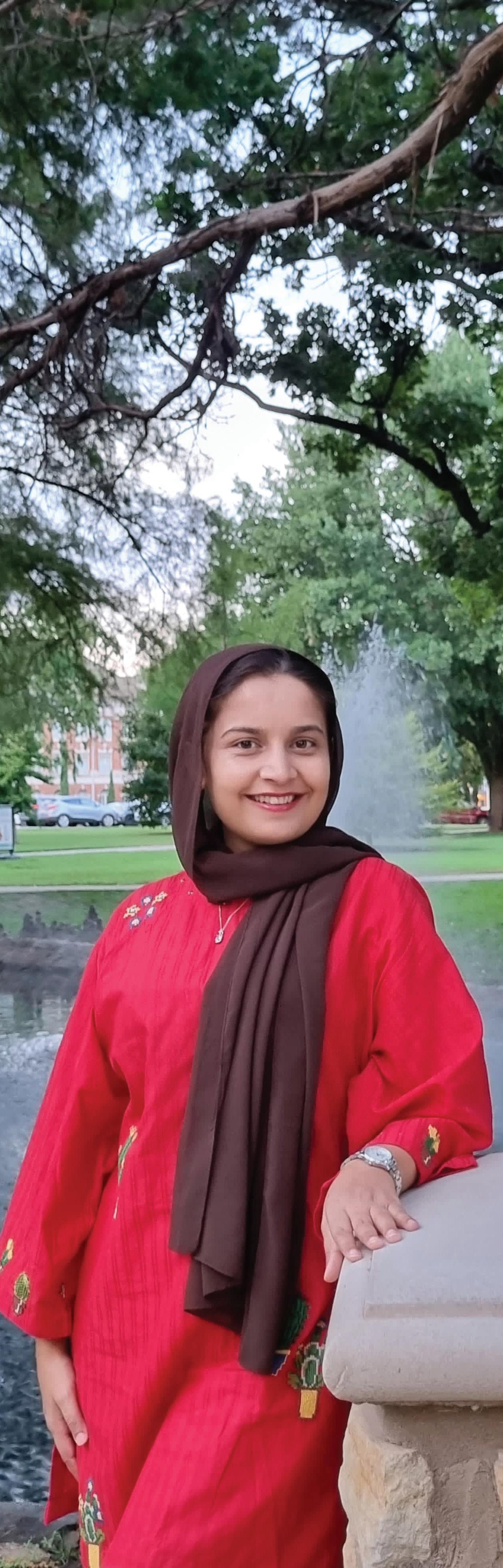
When disaster struck—an earthquake in Pakistan and a flood in Hawaii—Sonia Shabbir and Chakravarthi Ambati said faith shaped how they responded to fear, giving them resilience and reassurance in difficult times.
Ambati, a senior in Informational Technology from India, shared being surrounded by a community with shared values and beliefs creates a shared commitment to serve and respond to others’ needs. “Faith is what makes you compassionate, and faith is what makes you dignified,” said Sonia Shabbir, the 2005 Khasmir earthquake victim from Pakistan.
Unshaken hope
Living in Abbottabad, north of the epicenter, Shabbir said she was in her Grade 10 classroom on the third floor around 8:55 a.m. as an exam was about to begin when the earthquake struck. The shaking started suddenly; first like wind, then violently, as the building moved side to side, she described. “I saw the ceiling cracking and cement falling,” she said, recalling how students began running and crying as panic spread. Her thoughts immediately turned to
her family as her siblings were in the same school, she said.
According to the National Oceanic and Atmospheric Administration, the 2005 Kashmir earthquake measured 7.6 in magnitude and is considered one of the deadliest in South Asia, affecting more than six million people across Pakistan, India and Afghanistan.
In the weeks that followed, Shabbir said the fear did not end, even within her family’s strong religious environment. “I saw that my parents and siblings were very calm during aftershocks. They would tell me not to panic, but I couldn’t absorb that at the time,” she said. She said constant aftershocks made it difficult to return to normal life, especially at night. “I couldn’t sleep for months,” she said, explaining she would stay awake watching the roof, afraid another tremor would strike.
The turning point came through a conversation with a classmate during an aftershock drill at school, Shabbir said. She said her friend explained that in Islam, those who die in natural disasters as believers are considered martyrs, and those who are
injured are forgiven of their sins.
“That idea really hit me. I already knew it, but the way she explained it made a difference,” Shabbir said. Her friend reminded her that “Whatever happens is from God, and the end is always in your favor.”
Shabbir said that conversation shifted how she responded to fear. She said she was able to sleep that same night after months of restlessness, describing it as the first moment she felt calm since the earthquake.
Reflecting on that experience, Shabbir said faith plays a central role in helping people navigate uncontrollable situations. She said religion provides a way to remain grounded when circumstances feel overwhelming.
Shabbir said that understanding shapes how she approaches challenges and reflects what she sees as living with dignity. With difficult experiences having been the most formative in her life, she said hardship can be discouraging, but faith gives her hope and motivation to keep moving forward. “If I use my past to predict my future, then I would stop initiating anything. But this is where faith comes in. My connection
with God gives me positive motivation. It reminds me to keep going,” she said.
“We need hope,” Shabbir said. “And for me, that hope comes from God.”
Firm confidence
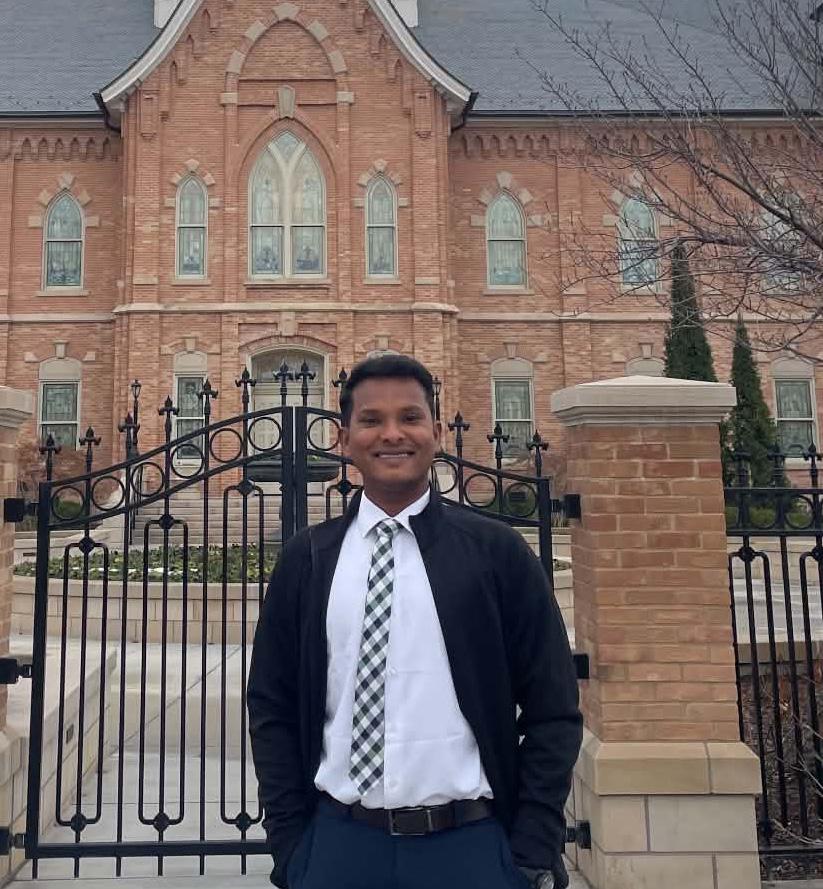
Chakravarthi Ambati said the early morning of March 20, 2026, shifted from a regular night of finishing homework to uncertainty when floodwaters entered his home during the Kona Low storm in Laie. He said that although there had been a warning, the flooding was unexpected because a similar alert the week before had not resulted in any damage.
Though Ambati initially had mixed feelings when the water entered, he said he felt confident managing the situation. “Instead of being panicked and fearful of the things I see, it reminds me of where I am: I’m at the campus and I live with my people from the same ward [local church congregation],” he said. He added, “Whatever happens, I’ll still be safe.”
The following morning brought a new challenge as Ambati said he was hesitant
“
My connection with God gives me positive motivation. It reminds me to keep going.”
Sonia Shabbir
when residents were asked to evacuate, thinking conditions would improve within a couple of days. However, he said he immediately followed instructions from campus and church leaders, guided by his faith to rely on leadership and the need to act collectively in a moment of uncertainty.
“Because when the leaders say it’s the right thing to do, they want us to be safe,” he said. “If you stay there, though the situation gets better, it might affect your health.”
Ambati said he witnessed compassion and dignity through the actions of others during the evacuation. “The leaders, staff and community came and stayed with us. They helped move belongings, often without being asked,” he said.
Looking back, Ambati said the flooding experience reshaped how he understands the relationship between faith and resilience. He said his faith in Jesus Christ gives him confidence that no matter how difficult the situation becomes, he and his family will be supported.
“After this experience, I know I can handle it,” he said. He added, “Because of my faith, I can move on from those hard times.”•
Page design by Ice Cesario. Photos provided by Sonia Shabbir and Chakravarthi Ambati
Hopes for the youth, peace and human dignity
Student volunteers from India and Fiji share hopes for young South Asians in promoting religious understanding, antibullying and community service
BY MYCO CHILLAN MARCAIDA
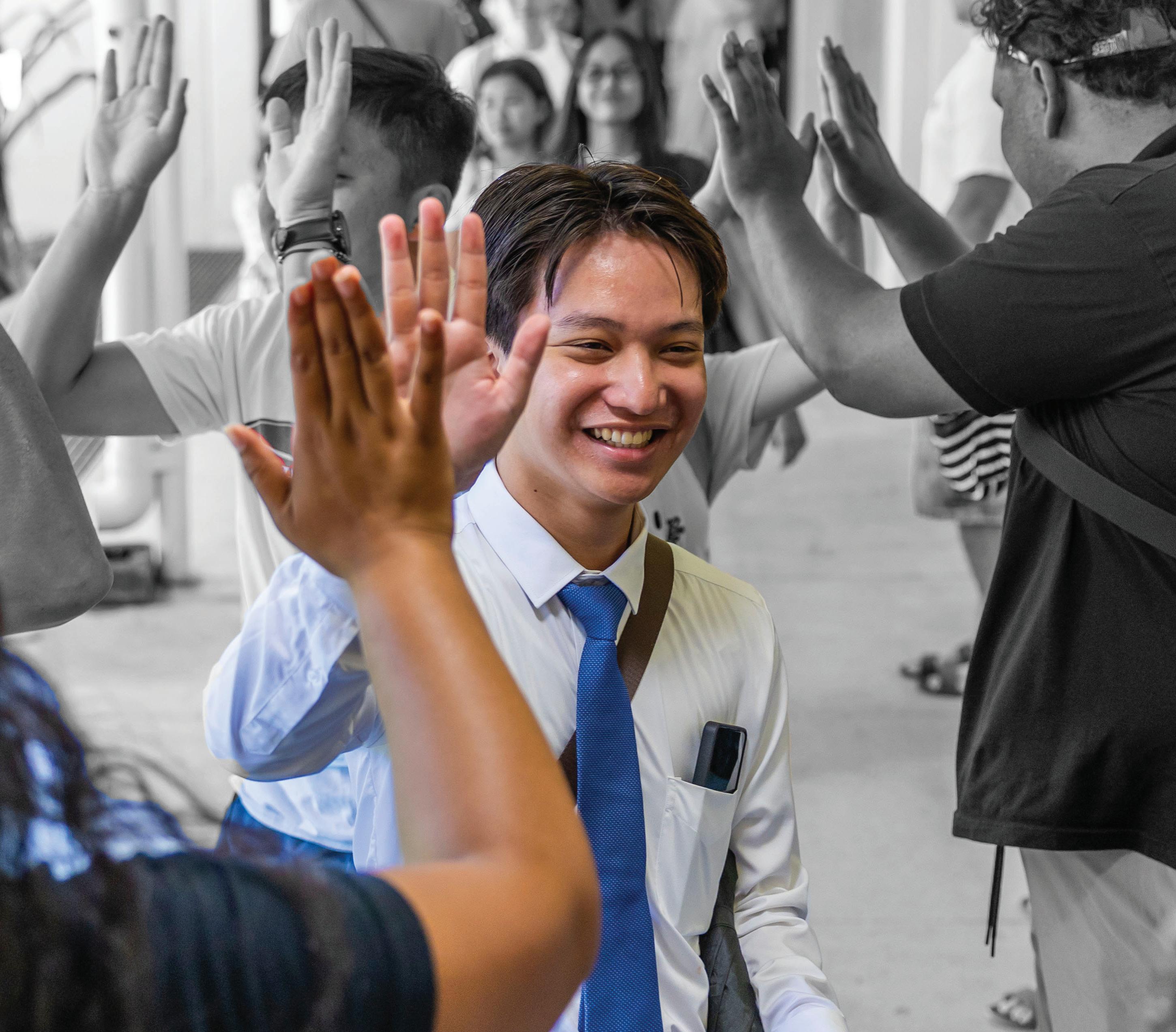
Peacebuilding begins with understanding others through advocating for religious freedom, standing up against bullying or creating stronger communities through service, said three student volunteers who participated in the annual Religious Freedom and Human Dignity Conference (RFHD) at Brigham Young University–Hawaii on April 21 to April 24, 2026.
According to research published by J.L. Tacket and colleagues in the Perspectives of on Psychological Science in 2022 entitled, “Understanding the Leaders of Tomorrows: The Need to Study Leadership in Adolescence,” adolescence is identified as a critical period for leadership development where young people begin shaping the traits, behaviors and social skills that influence how they lead others.
The researchers wrote that leadership skills remain flexible during adolescence and can be strengthened through schools, communities and service opportunities. “Rather than seeing leadership as something reserved for adults, the study emphasizes that young people already practice leadership in meaningful ways and should be recognized as active contributors to social change,” the researchers said.
According to Forbes, UNICEF USA highlights that youth bring unique insights and a deeply help passion to the causes and issues they care about and young people help institutions better understand priorities such as inclusion, climate change and mental health. “Youth leadership is most effective when young people are meaningfully included in decision-making spaces where their voices influence real outcomes,” the website says.
Diversity and understanding
For Kausalya Arumugam, a senior from India majoring in communication, media, and culture said the importance of diversity and understanding shapes a religion’s identity. “The reason I volunteered is because it is a diverse group of leaders coming up and this conference helps me understand what role religions and religious freedom plays in our lives,” she added.
Arumugam said she came from a Hindu background before joining The Church of Jesus Christ of Latter-day Saints church and said that the experience helped her understand how deeply religion influences both personal and community life. “Having lived in India and studying here in Hawaii, I’ve seen how important it is to respect other religions between communities where we live,” she added.
“Youth leadership is most effective when young people are meaningfully included in decision-making spaces where their voices influence real outcomes,” -Forbes
Arumugam said what stands out the most in South Asia is the willingness of young people to create change despite challenges. “Youth currently are trying to bring people together instead of focusing on differences,” she said.
She emphasized that community service, education, and social media as tools young people use to spread awareness and encourage understanding. “They use things like community service or having an education which helps them to give a good balance in their life,” she said.
Religious understanding through youth leadership
Dipeek Reddy, a senior double majoring in business management and intercultural peacebuilding from Fiji said volunteering for RFHD connected him to his academic studies and personal experiences.
“During my missionary service, I met people who wanted to change their religions but were afraid of family disapproval,” he shared.
He said he realized traditions hold people back on making decisions. “There were adults and they feared their parents and I couldn’t believe that those things still happened. It helped me become
more aware and made me want to help break stigma,” he added.
Like Arumugam, Reddy said growing up in a Hindu home before joining The Church of Jesus Christ of Latter-day Saints, his own perspective on religion changes over time. “Every religion teaches peace, but we LDS really strive for actual life practice for peace,” he explained.
Reddy said youth-led peacebuilding matters because younger generations are more open to change. “It is more difficult changing old people’s minds, but one can still work on young people’s mindset, and it helps them do the same for other people,” he added.
Today, as a father, Reddy said his hopes for peace are personal. “I want a safe place or space for my daughter as she grows up and I know that bullying is a common thing in schools, but I hope my daughter won’t get to experience that in the future,” he added.
Developing skills through service
Raja Badu, a senior in information technology (IT) from India said RFHD offered an opportunity to step outside the technical world of IT and work directly with people. “I wanted to do something which involves people because working in IT is working with a computer all day and I wanted to do something where I can talk to people and understand different perspectives on the world,” he explained.
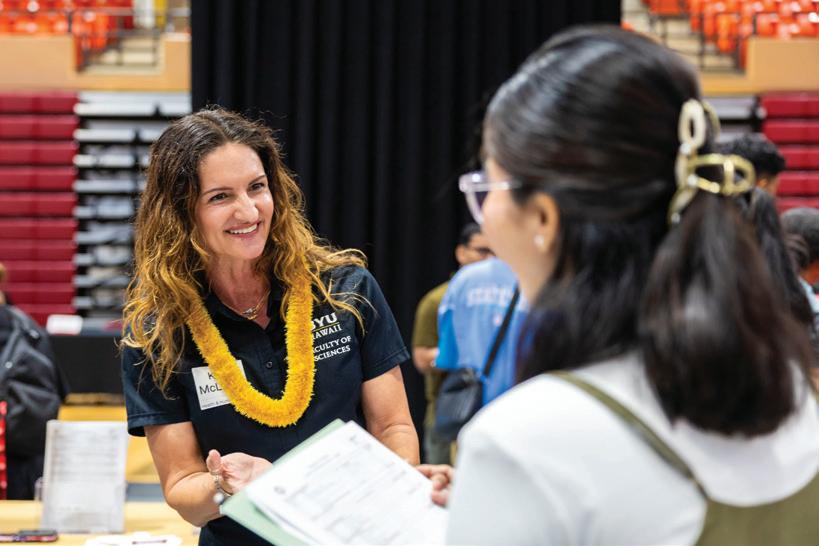
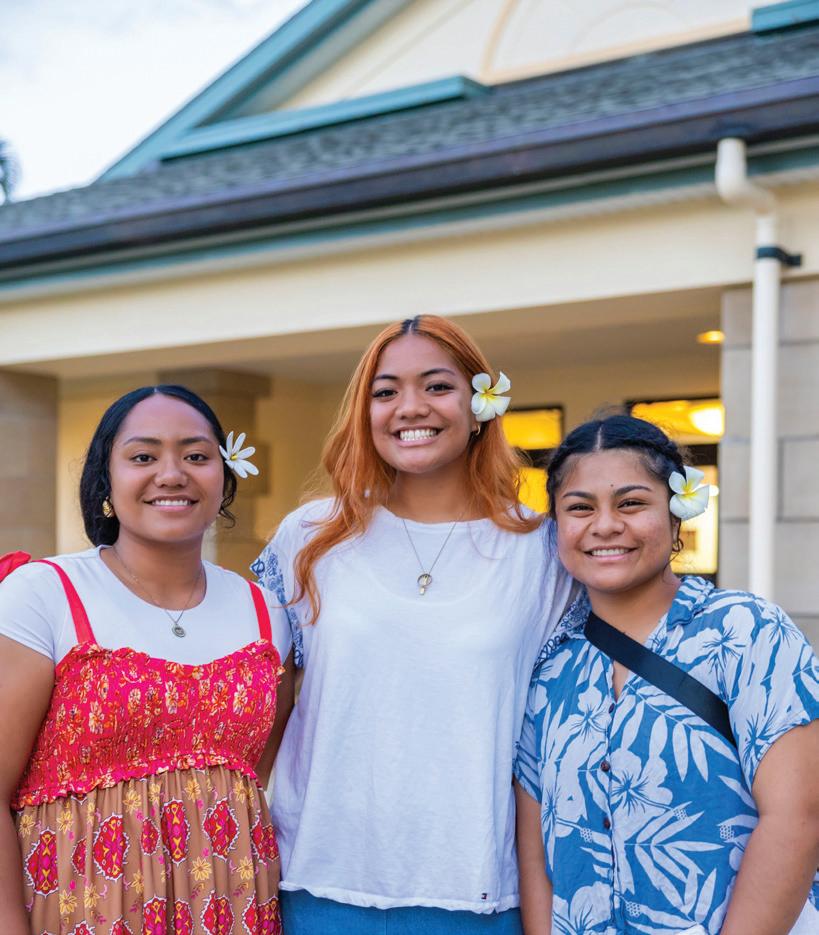
Badu said being a student representative required assisting delegates from India, Pakistan and Bangladesh during the conference, helping host them at the Polynesian Cultural Center, conduct interviews and support media production. “It’s working in all three sectors,” he said. “I am using my skills in IT and learning new skills in the process being with the delegates.”
Badu said one of the most important lessons he learned in observing youth-led peacebuilding is learning how to coexist despite differences. “Religion is one of the sensitive topics and we are usually divided based on culture, our religion and our country,” he added.
He said he believes the next generation must focus on bringing people together instead of dividing them. “No one is going to dominate, so we need to come together and live respectfully,” he added.
Badu said strong leadership begins with patience and understanding. “You can be right, but not always,” he said. “Even if you’re always right, you have to understand the other person where they are coming from.”•

“The reason I volunteered is because it is a diverse group of leaders coming up and this conference helps me understand what role religions and religious freedom plays in our lives,”
-KausalyaArumugam
Page Design by Jay-R Gallano.
Photos by Ke Alaka’i News.
Empowerment in law and religious freedom
RFHD
Chairperson Jennifer Mie Kajiyama Tinkham shared how the initiative empowers students in their education and enables them to serve as leaders in their chosen fields
BY ALDEN PUA
FThey were not only participating, [but also] building significant connections,”
-Jennifer Mie Kajiyama Tinkham “
or Jennifer Mie Kajiyama Tinkham, the Religious Freedom and Human Dignity Initiative (RFHD) at BYU–Hawaii is about more than just academic study; it is a gateway to leadership. As the founder of the initiative, she views her role as a catalyst for student empowerment, helping them bridge the gap between their education and their future careers. “This opens doors and expands what [students] believe is possible for themselves,” she explained, noting that the initiative is designed to enable students to serve as leaders in their chosen fields.
Kajiyama-Tinkham stated that she is tasked with “creating opportunities where students can step into meaningful experiences, rather than simply observing them.” She explained that she fulfills this role by helping students through mentoring sessions, conference preparations, research guidance and partnership building.
Student opportunities through connection building
Kajiyama-Tinkham said the opportunities provided by RFHD “quickly became personal for students,” helping them grow within the initiative. She noted that many students lead, contribute to, and shape the experiences of others. At conferences, students often present research, moderate sessions, and deliver concluding remarks, she said.
“[Students] step into roles that place them not on the margins, but at the center of [important] conversations,” she said.
Over time, she said she noticed students forming their own

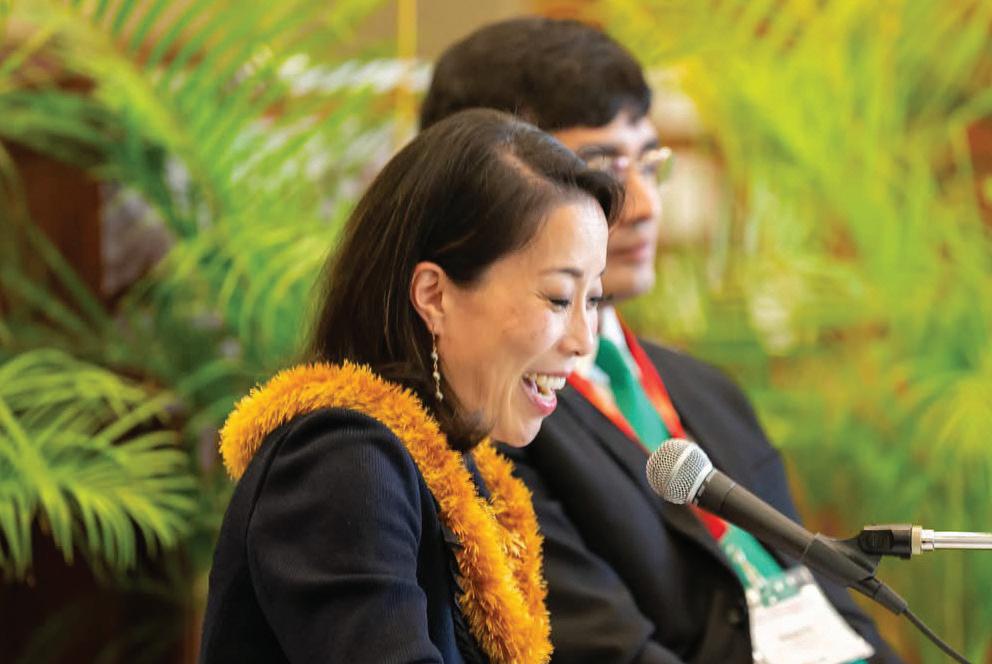
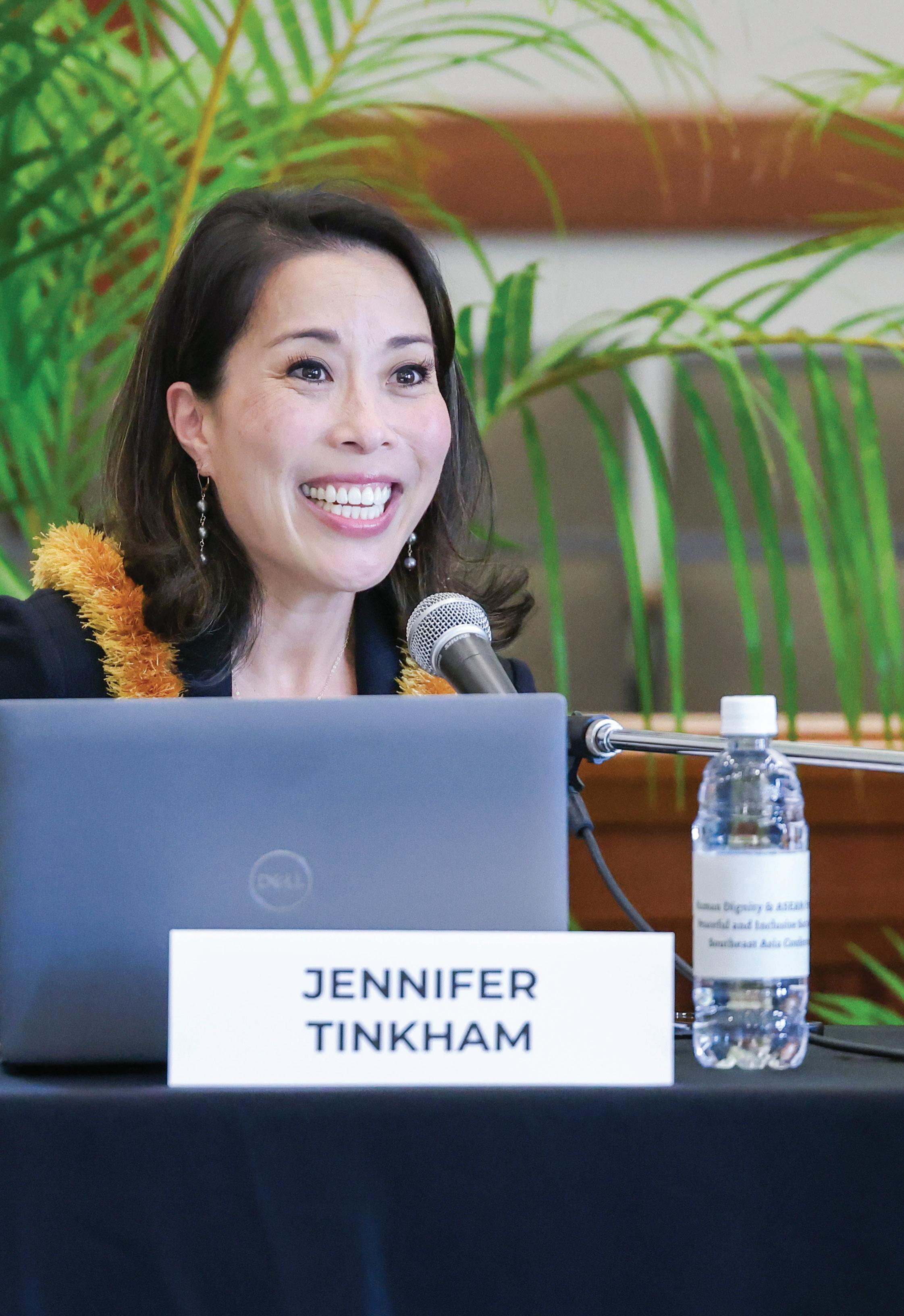
perspectives on law and religious freedom while acquiring new connections and a clearer sense of purpose. This was evident when Kajiyama-Tinkham worked with a group of students preparing for a conference; she noted many were initially hesitant and unsure of their abilities. However, during the event, “they were not only participating, [but also] building significant connections,” she said.
Kajiyama-Tinkham specifically referenced the experiences of two students. “One student from Indonesia had the opportunity to connect with leaders from her home country, including a former judge,” she said. That connection allowed the student to secure an internship in Indonesia. A second student from Tonga secured similar connections that ultimately enabled them to serve in government.
Kajiyama-Tinhkam emphasized how these experiences are not isolated events, but have meaningful and long-lasting effects. “Students do not just participate in these spaces, but [also] shape conversations around human dignity, peacebuilding and religious freedom on a global level,” she explained.
Moving forward, Kajiyama Tinkham hoped that the RFHD can offer students more opportunities to hone their skills and research, as well as build their connections with figures willing to invest in them. She emphasized the value each connection holds, noting that even one may enable students to serve in their home countries or desired fields. “If [students] leave with the confidence and connections to build bridges, lead with understanding and contribute to peace in their own communities, then I believe we are fulfilling both the purpose of RFHD and the broader mission of BYU–Hawaii,” she concluded.
How cultural diversity enriches RFHD
The Religious Freedom and Human Dignity Initiative (RFHD) is a student-led interfaith
Photos: Kajiyama-Tinkham served as moderators to some conference sessions. Photos are provided by Kajiyama-Tinkham.
Page Design by Jay-R Gallano.
organization originally founded in BYU-Hawaii. With the mission of advancing understanding of human dignity through research, education and events consistent with gospel principles, the RFHD focuses on fostering religious liberty, human rights and diverse dialogue, specifically in Oceania and the Asian Rim.
Kajiyama-Tinhkam highlighted BYU-Hawaii’s culturally diverse environment and its significance in shaping the RFHD. She said, “It is not uncommon to have conversations where students from Indonesia, Fiji, Tonga and the Philippines are all sharing how religion, law and culture intersect in their own communities.” She added that such discussions draw from grounded experiences instead of abstract concepts. “[Students] are drawing from their own lives, their families and their communities,” she stated.
Kajiyama-Tinhkam also noted the support students give to one another within those settings. She shared how they listen carefully, ask thoughtful questions and genuinely attempt to understand other’s perspectives. She said, “[BYU-Hawaii’s] environment becomes the foundation for everything we do in RFHD.” She also reiterated how RFHD and the university’s missions and visions intertwine with one another. “I see the university’s vision come to life as our students engage with one another and with global leaders in ways that reflect intercultural peace, unity and the teachings of Jesus Christ,” she concluded.
A vision for leadership
In addition to her work with the RFHD, KajiyamaTinkham serves as an adjunct professor of legal studies and political science and is the director of legal studies at BYU–Hawaii. She originally studied political science at BYU–Hawaii before attending the J. Reuben Clark Law School at BYU.
While in law school, she said she supported the International Law and Religion Symposium, hosted by the International Center for Law and Religious Studies (ICLRS). “There was a genuine sense of collaboration, learning and shared purpose among people from very different backgrounds,” she said.
Kajiyama-Tinkham explained that her extensive experience in law, the ICLRS, and religious freedom allowed her to help launch what is now the RFHD. She recalled being invited to early discussions regarding the program and was later recruited for the founding team.
“What began as a vision to better support students and connect them to global conversations has grown into something much more impactful,” she said. “For me, RFHD has always felt like a continuation of the experiences that shaped me as a student, now shared with the next generation.”•
-Jennifer Mie Kajiyama Tinkham “
What began as a vision to better support students and connect them to global conversations has grown into something much more impactful”

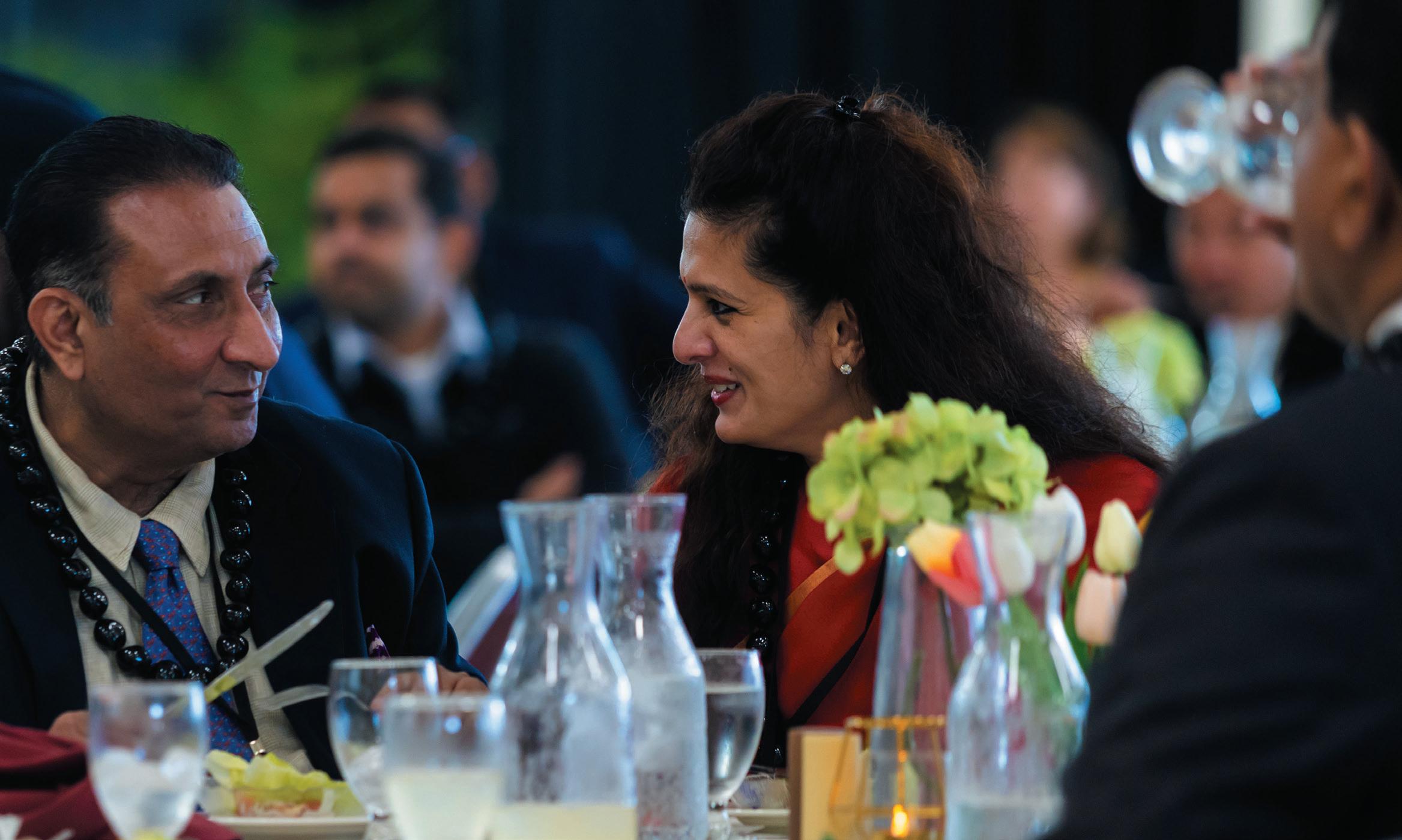
Day 1
Religious peacebuilding for a better tomorrow
2026 RFHD welcome dinner opens religious dialogues on peacebuilding in South Asia
BY ALDEN PUA
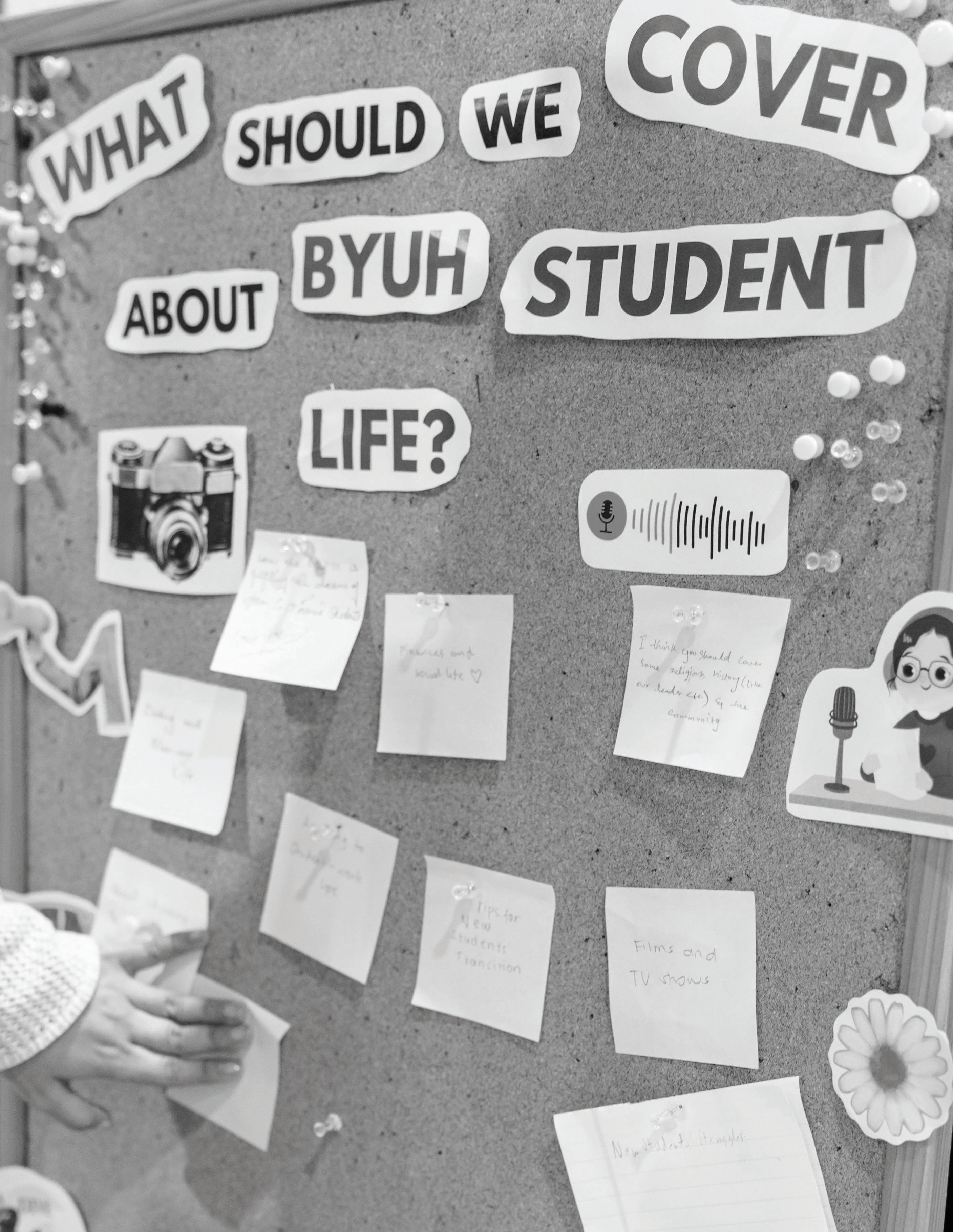
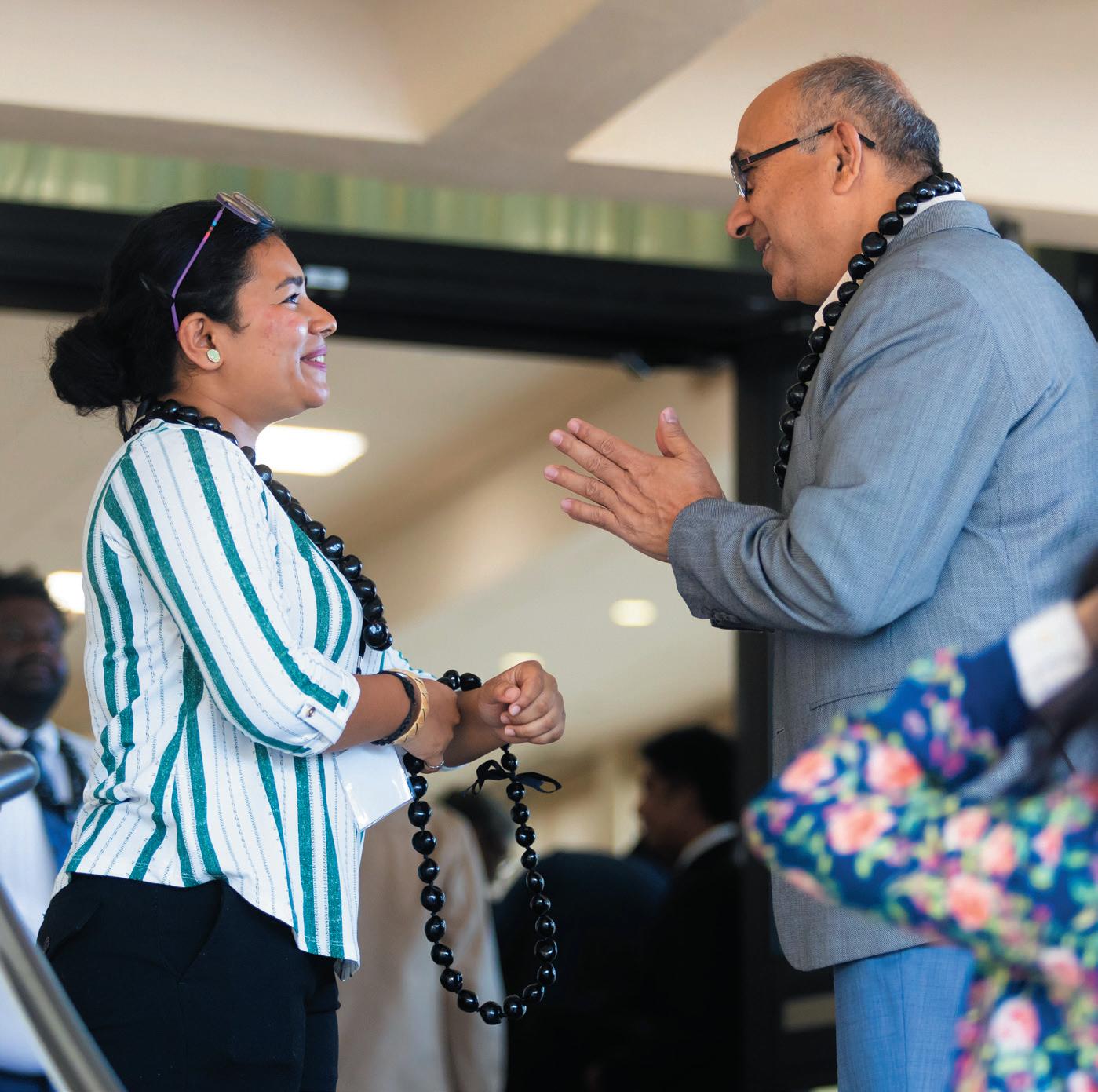
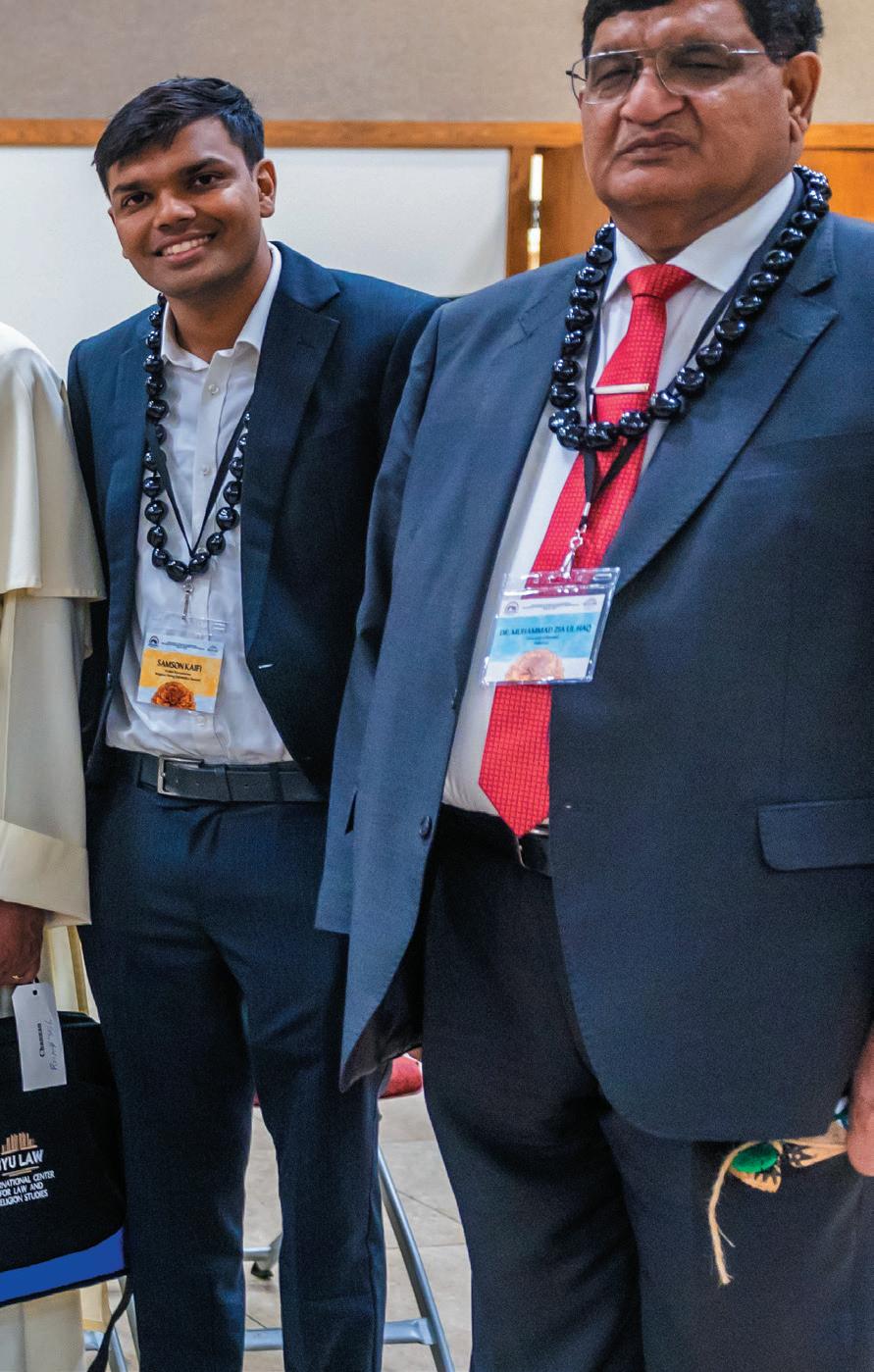
Religious delegates and student representatives gathered at BYU–Hawaii on April 21 for the 2026 Religious Freedom & Human Dignity (RFHD) welcome dinner. Participants engaged in meaningful dialogues on religious diversity and social inclusivity in the hopes of improving regional peacebuilding. The welcome dinner marks the commencement of the annual RFHD conference themed, “Religion & Human Flourishing: Building Pathways to Peaceful Societies in South Asia.”
Finding friendship and harmonizing as one Elder David L. Buckner, a general authority seventy, opened the session by urging the audience to reflect on the current
state of the world. He said, “We find ways to connect [with people] across the world, yet we feel so distant when we’re in the same room.” He then shared three key lessons for the audience to consider and apply.
Buckner called the first lesson “the sacred and the divine.” He recounted two past experiences, one where he viewed bright city lights and another where he observed the architectural elements of a temple. He explained that light is “something as we see and are drawn to,” emphasizing the absence of borders and boundaries within it. He also acknowledged the temple’s beauty, despite its differences from a temple of the Church of Jesus Christ of Latter-day Saints.
He related these experiences to the RFHD and asked the audience, “Where are
we looking?” He invited them to ponder whether their eyes were drawn to the differences in one another, or “looking heavenward together” despite their differing faiths and understandings.
Buckner titled his second lesson “We Have a Story.” He referenced traveling to Jerusalem with a diverse group of religious leaders. He noted many held differing beliefs. “[Some of which] we’ll never agree upon,” he commented. Nevertheless, he stated that he still regarded them as friends. “These are my best friends. Oh, different faiths, different beliefs, … but they are friends,” he said.
He reiterated that “[everyone] has a story,” and emphasized the importance of looking heavenward despite the differences behind each story. “It’s [all] about friendship,” he stated.
The third and final lesson Buckner relayed was the time when he invited friends from different religions to watch the Tabernacle Choir in Salt Lake City, Utah. As the choir sang, he noted the sense of harmony throughout the performance. The different voices, notes and music all came together in perfect harmony, he said. “In the purest sense, [it was] God-like unity,” he shared.
He then posed the question, “What part do we play?” He explained that “[everyone] has the capacity to harmonize with different voices, beliefs, faiths and understandings,” and encouraged the audience to put that into practice.
Looking beyond probabilities and moving toward possibilities
Buckner described the RFHD as an opportune moment for the audience to apply his three lessons. For him, the weeklong event allows participants to become acquainted with one another, harmonize with their differences and ultimately look heavenward together. “Look beyond the probabilities. [Instead], look at the possibilities,” he commented.
Buckner concluded by inviting the audience to “look at this week as a higher and holier opportunity to [not only] express unity, but also harmony.” He said, “Recognize that there’s still one story left to be told, and that is the story you write here.”
Rediscovering religion to promote inclusivity in diversity
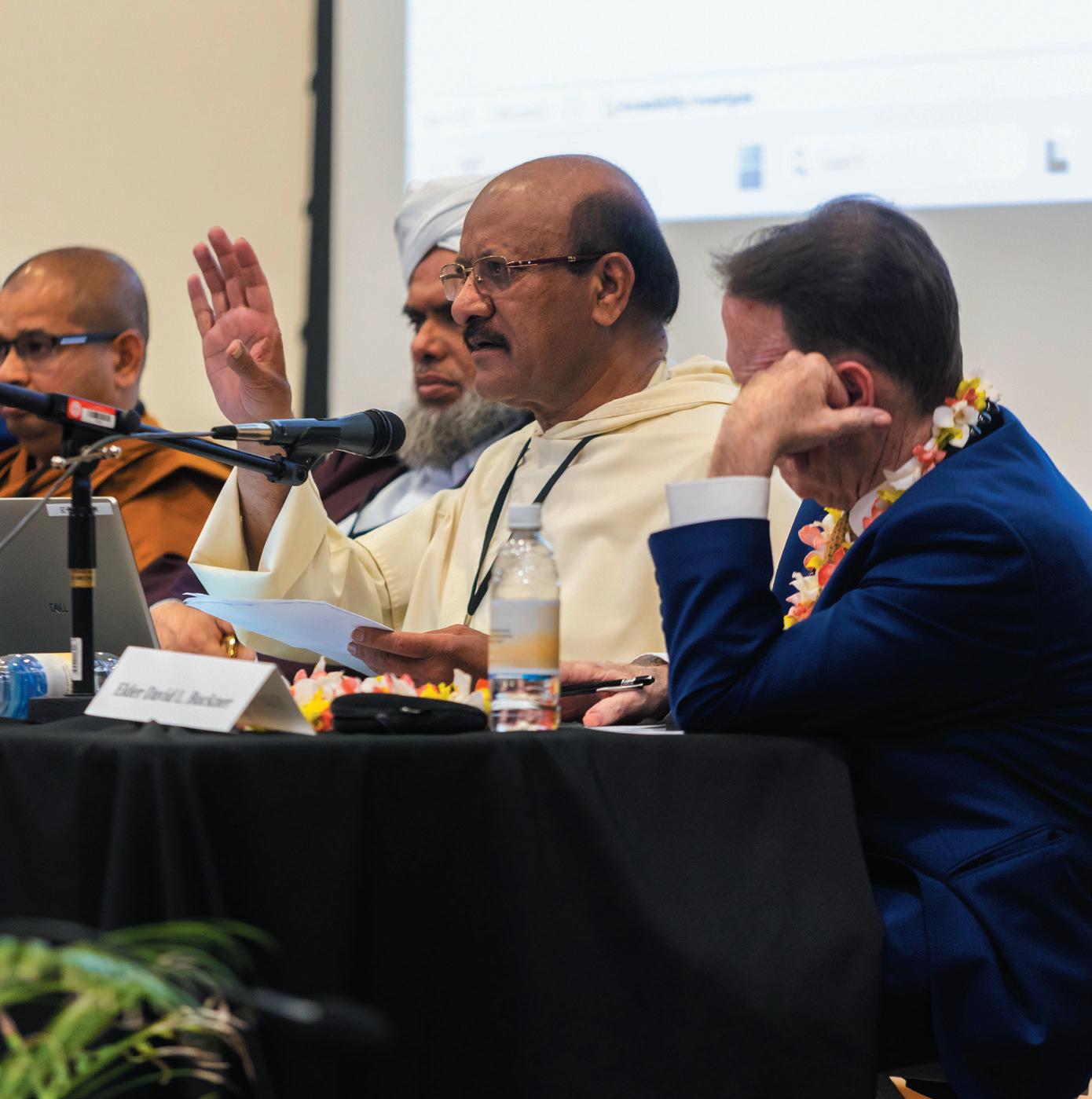
Following Buckner’s talk, six religious leaders from South Asia discussed religion’s role as a force for peacebuilding in societies. Reverend Father Pascal Paulus O.P. stated religion has been misused to promote fear and mistrust instead of peace in diversity. “The problem is not religion … [it] is how we misuse it,” he said.
Concurring with this notion, Muslim representative Sayyid Ibraheemul Khaleel Al Bukhari spoke of the true spirit of religion as the driving force for unity. He stated, “Religions should not divide us. [It] should
grade us to live together with respect, dignity and compassion.”
Religious leaders Jasbir Singh Dhody, Reverend Dr. Wadinagala Pannaloka and Father James Channan O.P. each offered ways to foster peaceful societies, particularly in South Asia. Sikh representative Dhody stated peace may be truly established through concrete, humanitarian acts and a shared recognition of humanity over different identities. “Peace cannot be built where religions compete for supremacy,” he stressed.
Similarly, Reverend Pannaloka explained inclusivity, particularly in how different groups perceive one another, is key to fostering religious peace efforts. He said, “[Peace] comes through a lot of effort. One way is changing how [we] see others.”
Lastly, Father Channan reiterated the importance of loving others and working for reconciliation as a means of ending violence in various aspects of society—aspects such as “healthcare, social welfare, human development and helping [those in need].”
Concluding the talk was Buckner, who shared the first steps in building peaceful societies. “One thing that can help create more peaceful societies is starting here,” he said. Before bridging communities and building societies, he explained that people must first “start at home.”•
Page Design by Ice Cesario.
Photos by Ke Alaka’i News.
Day 2
Religious diversity in pursuit of peace
Religious leaders and scholars examined harmony and human flourishing, marking
the second day of RFHD 2026
BY ALDEN ETHANAEL PUA
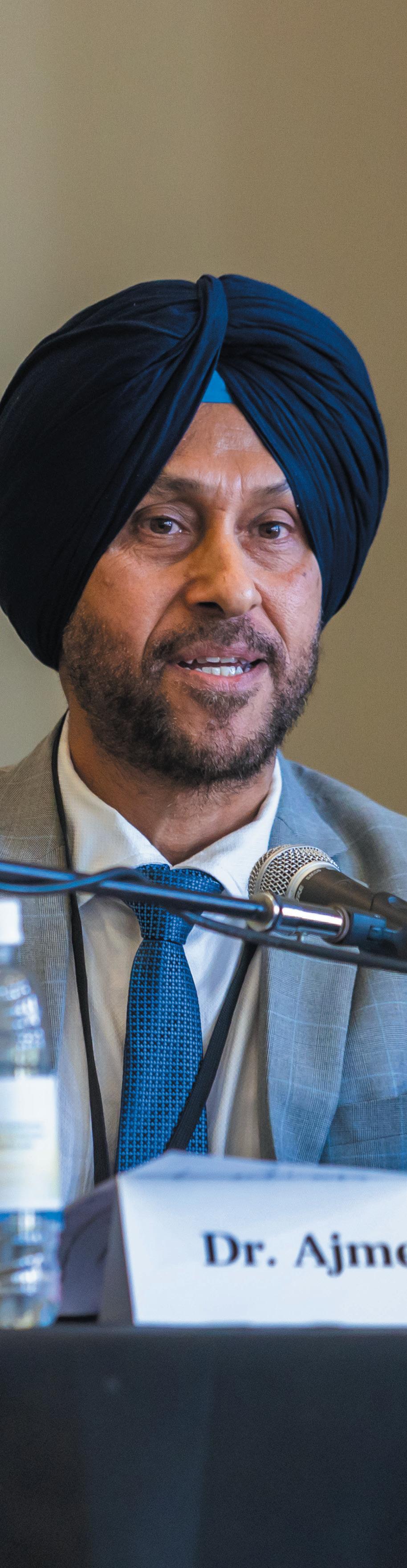
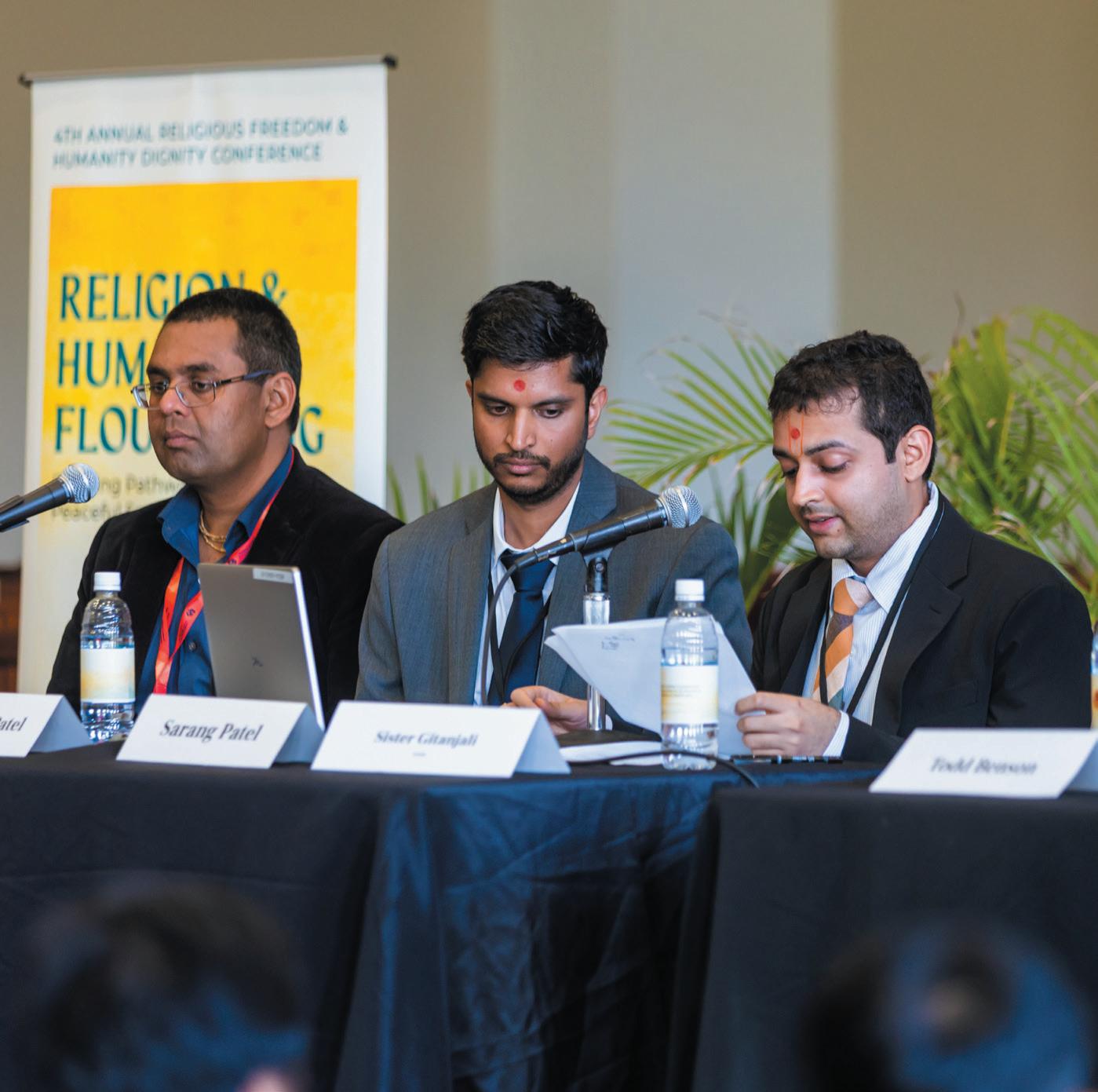
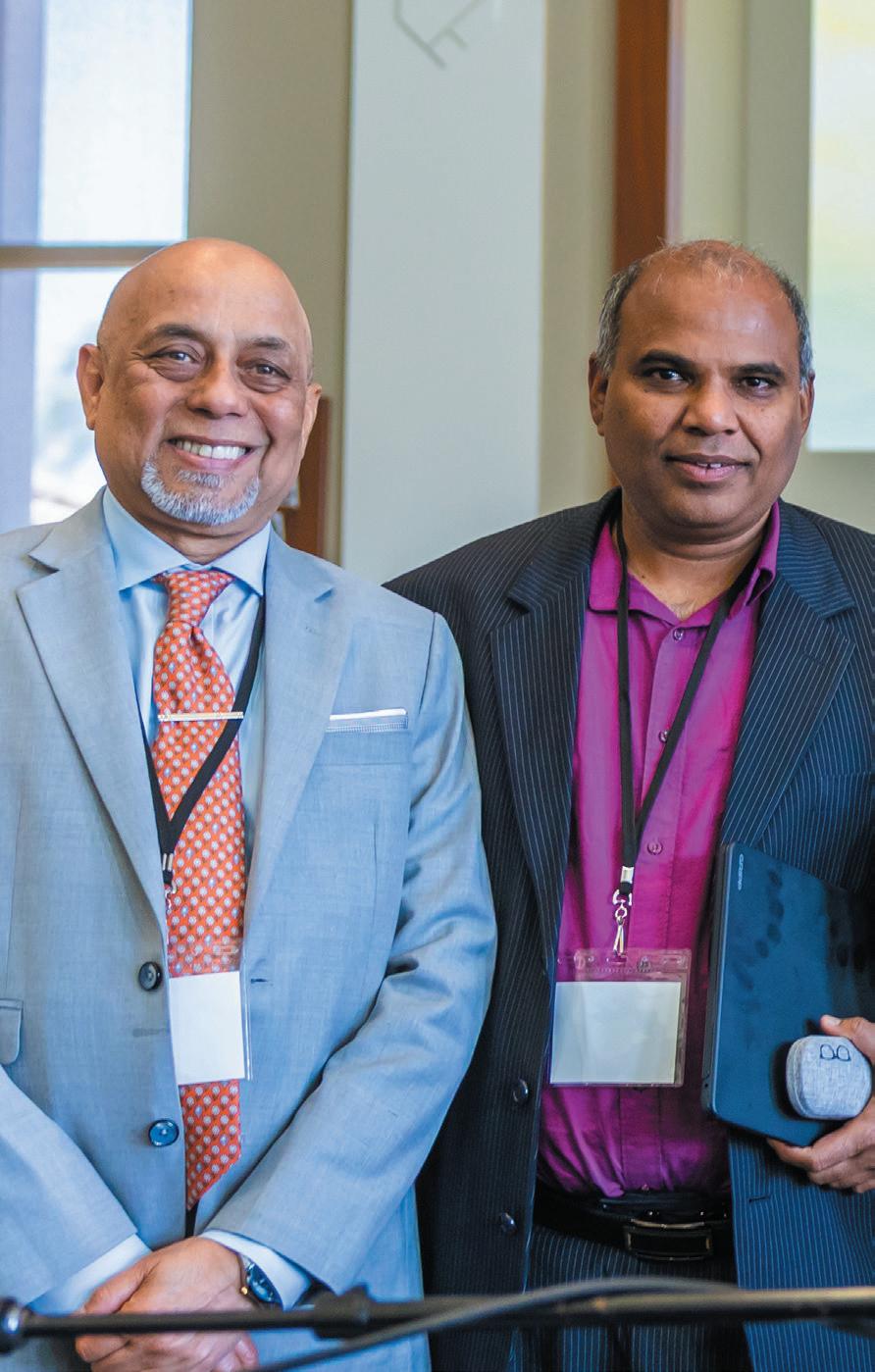
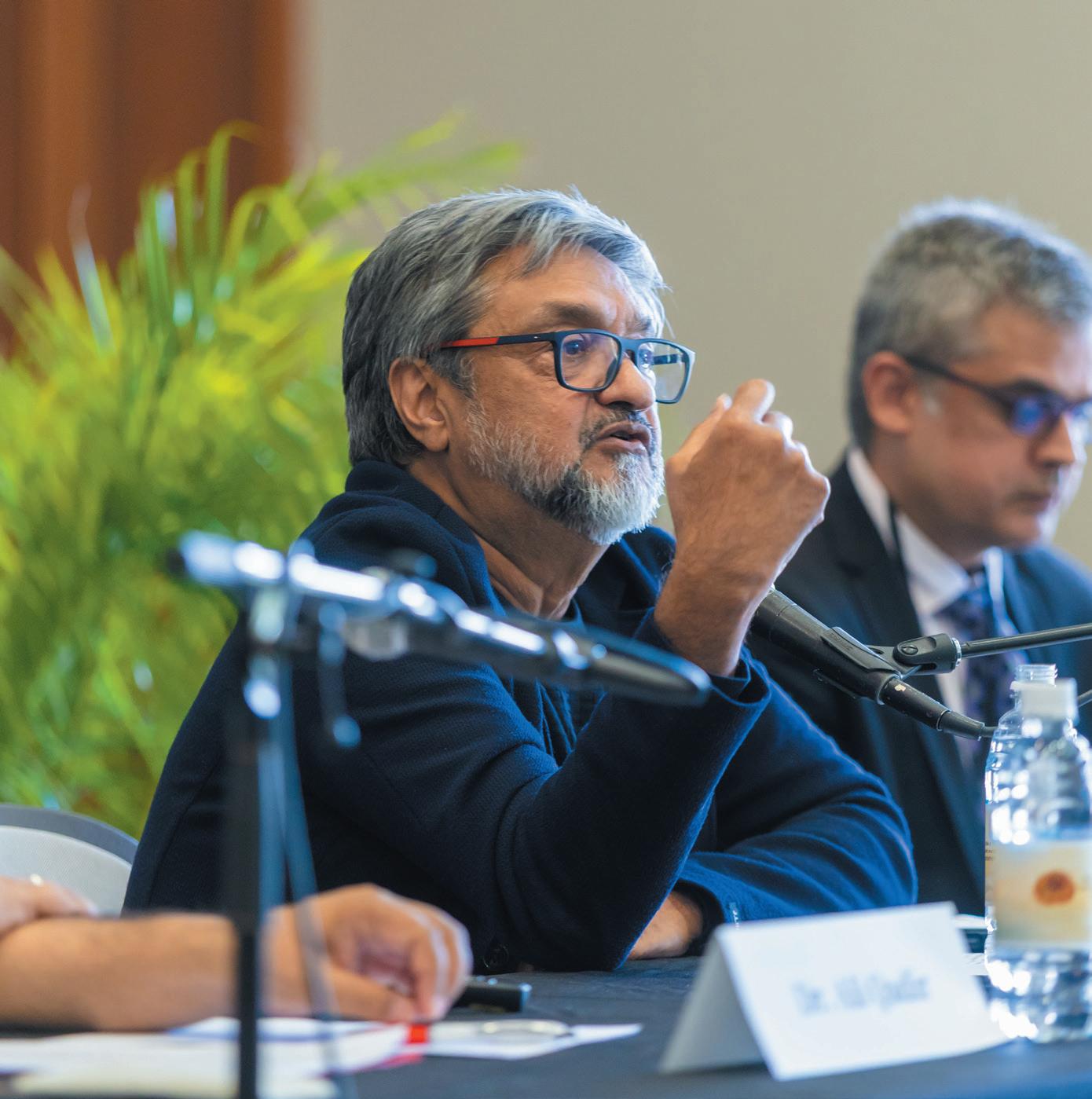
Interfaith dialogues filled the Heber J. Grant building as religious leaders and student delegates gathered on April 22 for the annual Religious Freedom & Human Dignity (RFHD) conference.
Opening the session, keynote speaker Honorable Ashok Lavasa addressed a global crisis marked by institutional failures and declining public trust. “Those charged with maintaining order and protecting human rights [are] swayed by a desire to perpetuate that authority rather than fulfilling the responsibilities cast on them,” he said.
Lavasa said global peace and freedom are being obstructed by declining democracy, politicization of religion, nationalism, exclusion and economic inequality. He proposed a “multidimensional approach” to address these issues and foster human flourishing—a meaningful, dignified and balanced life.
Lavasa concluded by posing questions on faith, religion and leadership, asking how individuals can balance personal happiness with collective well-being in a
divided world. “May God bless the RFHD so it can contribute to world peace and socialism,” he said.
Following Lavasa’s talk three academic speakers discussed religion and human flourishing in South Asia, arguing it requires more than tolerance. They said it demands genuine interfaith exchange, a return to core religious values and systems that integrate these principles into society.
Professor Rajeev Bhargava, director of the Institute of Indian Thought, said, “In this kind of inter-religious and inter-cultural [world], you do not merely tolerate or coexist with [other religions], but you are genuinely shaped by them.”
The session concluded with a panel of five leaders discussing peace in South Asia. Speakers said peace depends on strengthening interfaith collaboration while addressing division and inequality.
McAndrew Leadership Chairman Saifuddin Ahmad said, “Only through sitting with the other can we begin to build bridges of trust, loyalty and friendship.”•
Faith through coexistence
How faith, culture and governance intersect in a system that prioritizes coexistence and individual choice
BY JESSIKA SANTOSO
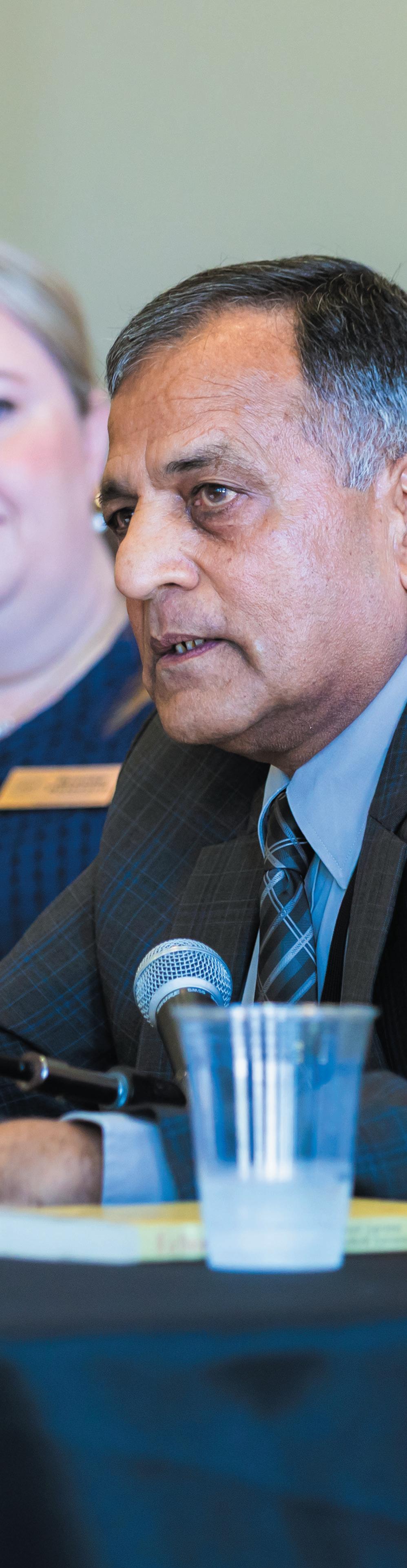
Religious freedom must be understood through context, coexistence and individual dignity, said Nepal Supreme Court Justice Hari Prasad Phuyal during the April 22 afternoon keynote session.
Phuyal emphasized religious belief is ultimately a personal matter, noting that freedom of religion is designed to protect “an individualistic character,” where faith is exercised according to one’s own conviction rather than external pressure.
Drawing on Nepal’s history, Phuyal described a society shaped by long-standing religious coexistence. Hindu, Buddhist and Muslim communities have “existed harmoniously for generations” and influenced one another through shared cultural practices, he said. This fluid and interconnected identity reflects a broader understanding of religion as part of social life rather than a rigid or isolated system, he explained.
Phuyal also addressed Nepal’s approach to secularism, which differs from Western models. Rather than a strict separation between the church and state, he said secularism in Nepal focuses on giving “equal regard” to all religions while protecting their continued practice.
At the same time, Phuyal noted religious freedom is not absolute. He said practices such as forced conversion or actions that harm others are restricted to preserve dignity and social harmony. In this way, he explained, religious liberty is balanced with responsibility within a diverse and interconnected society.
A similar perspective on pluralism was raised earlier in the afternoon session. Ravi Gupta, a professor and head of Department of History, Cultures, and Ideas at Utah State University, said Hindu traditions approach pluralism through respect rather than imposing uniform belief. He said encountering truth in other traditions should not be seen as a threat, but as something that can strengthen one’s own faith. “When I find my truth reflected in another tradition, that, rather than feeling threatening, inspires my faith,” he said.
Gupta added that unity does not erase difference, but exists alongside it. “Hindus have never seen unity as the opposite of diversity,” he said, describing a worldview where multiple paths can coexist without coercion.•
Page Design by Ice Cesario. Photos by Ke Alaka’i News.

Day 3
Building peace through faith and inclusion
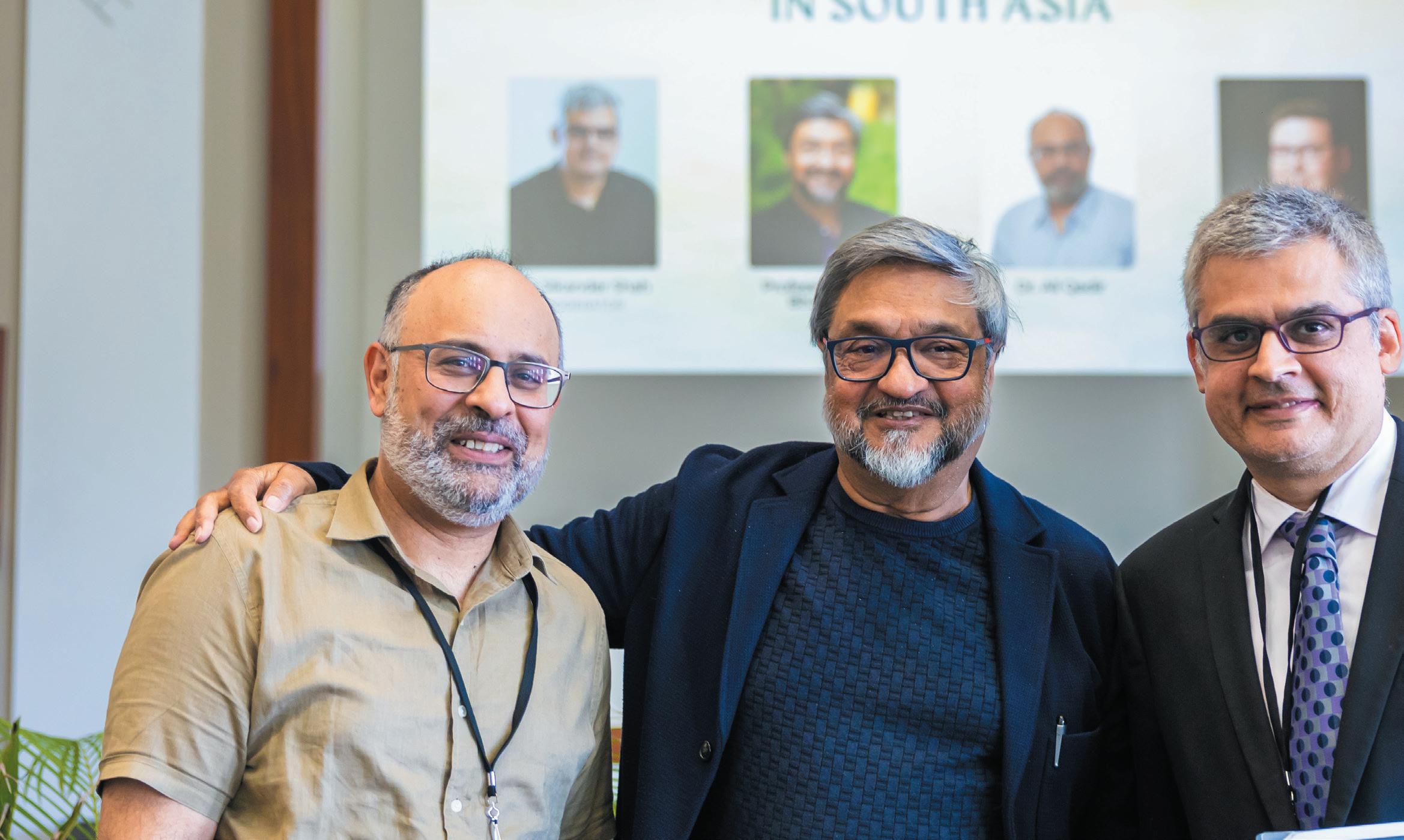
Speakers from Pakistan and Nepal emphasize women’s roles in religious freedom and community peace during RFHD panel on April 23 at the Heber J. Grant Building
BY MYCO MARCAIDA
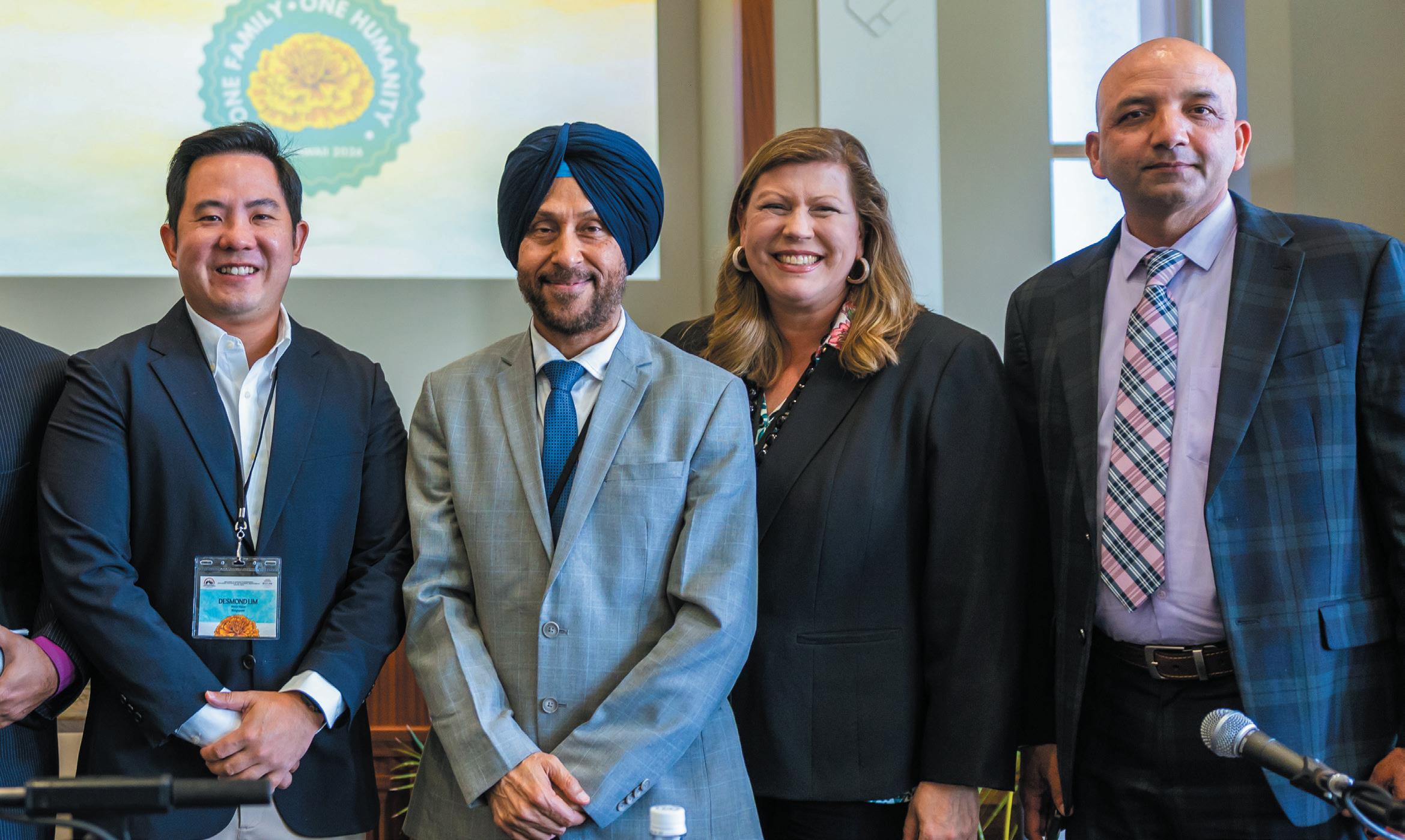
Women’s leadership, faith and inclusion are emerging as key drivers of peacebuilding, panelists said during the April 23 morning session at the Heber J. Grant Building during the Religious Freedom and Human Dignity Conference. The session, “Women, Religion, and Building Peaceful Communities,” highlighted how women across South Asia are advancing religious freedom, social cohesion and peace despite persistent barriers in leadership, public life and policy.
Asiya Nasir, chairperson of the Resilient Women Network and former senior parliamentarian in Pakistan, said religion should serve as a bridge rather than a source of division. “In a world where religion is often associated with conflict, I stand for you as someone who has witnessed to restore and bring people together,” she said.
Nasir emphasized freedom of religion over forced harmony. “I believe in freedom of religion, in acceptance and accepting each other as we are,” she said.
Bhawana Bhatta, chairperson of the Women Service Institute of Nepal, focused on women’s role in local peacebuilding and post-conflict recovery. She said women contribute significantly within families and communities, often becoming the first responders during conflict.
“Women create these spaces for dialogue,” Bhatta said. “Women are the ‘teacher of the children’ and they sustain peace in everyday life.”
Sobia Batool Shah, vice chair of the South Asia Forum for Freedom of Religion or Belief, said women are often overlooked in formal religious and policy spaces despite being central to family life and faith. “Mothers are our first school and first learning point, so we need to work with women if we need lasting peace,” she explained.
Shah said peace is not built only through constitutions or institutions but inside homes, daily interactions, relationships where women hold a central role.•
Religious literacy and youth engagement in peacebuilding
RFHD panelists emphasize pluralism and cross-cultural understanding in forming future peacemakers
BY MYCO MARCAIDA
Education, pluralism and youth engagement are contributing to building peaceful communities, said religion and human rights advocates during the “Forming Future Peacemakers: Religious Pluralism, Human Rights, and Cross-Cultural Religious Literacy” panel at the April 23 afternoon session of the Religious Freedom and Human Dignity Conference.
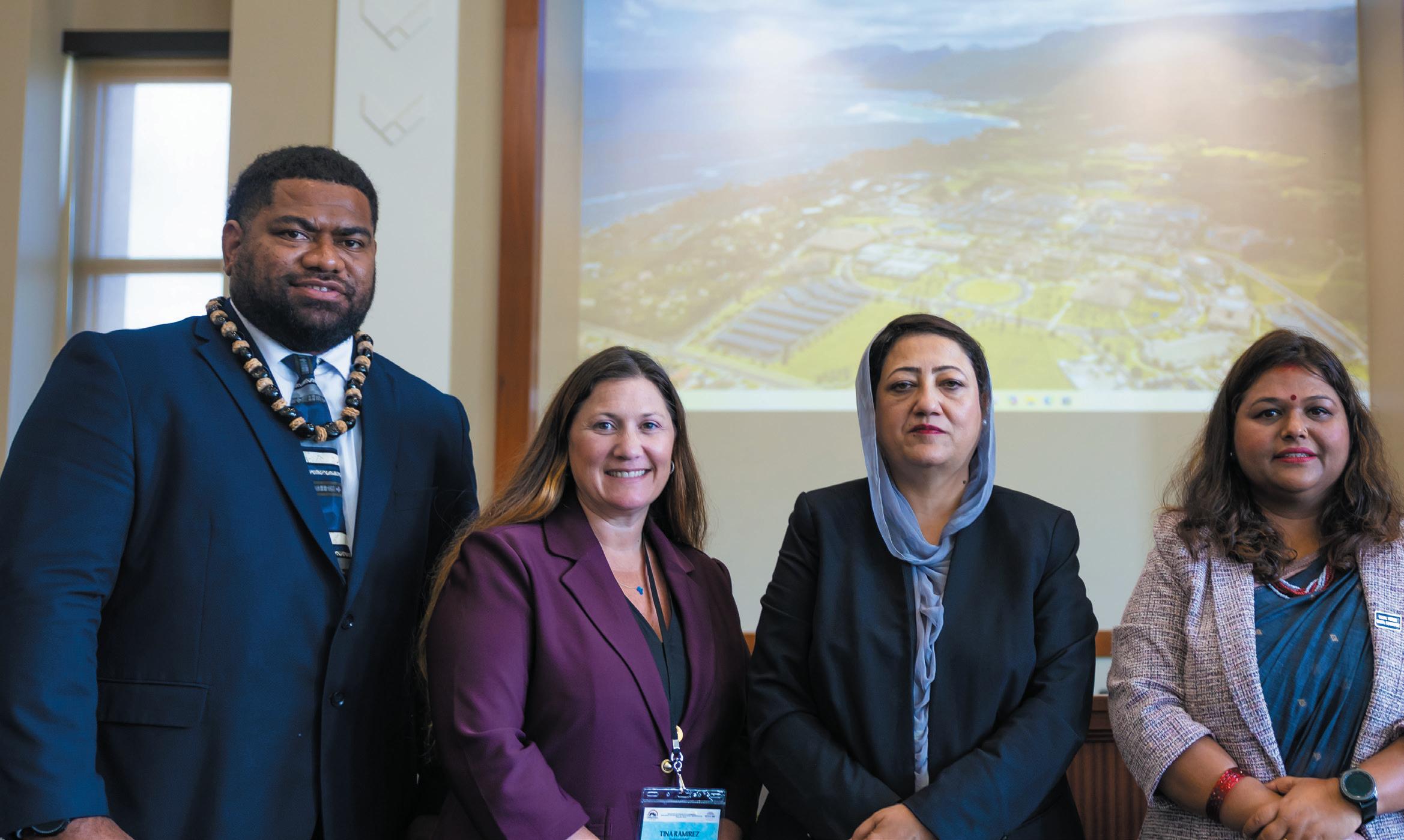
Tina Ramirez Lee, Hardwired Global president, said peace should not be understood as the absence of conflict but as the ability to respect others despite differences. “Peace ... is not achieved by minimizing differences or even compromising beliefs. It doesn’t always require agreement,” she said.
Lee shared her experience growing up with a father who converted to a different religion, which led to years of difficult conversations about faith. She said those disagreements taught her that people can love and respect each other without sharing the same beliefs. “Just because you believe differently doesn’t make you enemies,” she said.
Samson Salamat, executive director of the Centre for Human Rights Education in Pakistan, said South Asia faces challenges including religious extremism, political misuse of religion and institutional discrimination. “If extremists ... have access to educational institutions, they can influence young people through that system,” he said.
Shahid Rehmat, executive director of the Youth Development Foundation in Pakistan, said young people play a role in preventing extremism. “We are training young people in proper cellphone use ... to counter narratives of extremists circulating on social media,” he said.
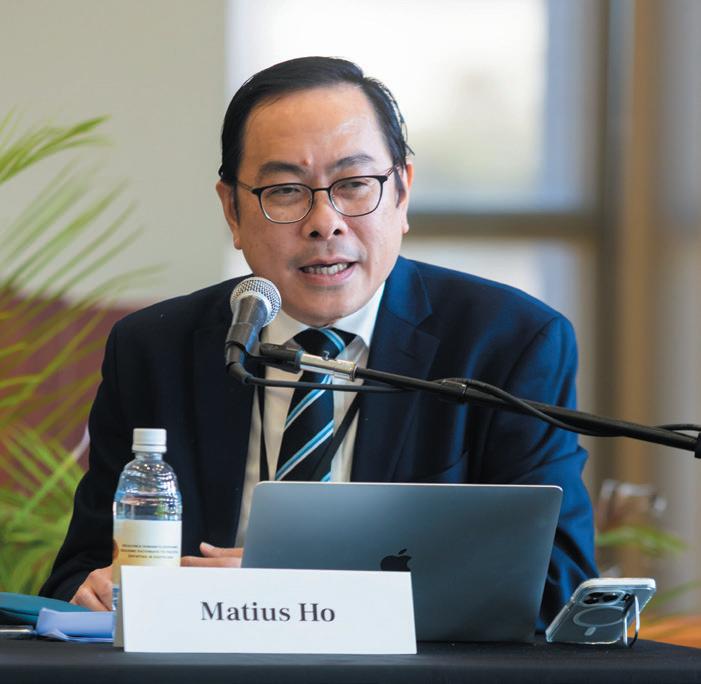
Matius Ho, executive director of the Leimena Institute in Indonesia, said trust across religious communities begins with understanding both one’s own beliefs and those of others. “We need to be able to work together and learn how to collaborate for common good,” he said.•

Page Design by Ice Cesario. Photos by Ke Alaka’i News.

Scan the QR code to see more photos of the
Religious Freedom and Human Dignity Conference

“True religion is not a narrow dogma... Religion is a matter of the heart.”
MAHATMA GANDHI