Building Facade Repairs: 7 Warning Signs Your Cape Town Property Needs Repairs constructionservicescapetown.wordpress.com/2026/09/07/building-facade-repairs-7-warning-signs-your-capetown-property-needs-repairs
A building facade does more than shape how a property looks. It helps protect the structure from weather, moisture, and daily exposure. When the exterior starts to fail, small defects can develop into costly repair work. Building facade repairs in Cape Town are easier to manage when problems are found early. These seven issues can show when a facade needs closer inspection and repair.
1. Cracks Are Spreading Across Exterior Walls Small cracks may seem harmless, but they should not be ignored. They can allow water into the wall and may widen over time. Pay attention to cracks that are growing, forming around windows, or returning after previous patching. Repeated cracking can suggest that the underlying cause was never resolved. Good building facade repairs should deal with more than the visible crack.
1/3
2. Concrete Is Flaking or Spalling Concrete spalling happens when parts of the surface break away. This needs attention because exposed steel can corrode when moisture reaches it. Corrosion can expand and force more concrete away from the surface. Repairs may involve removing loose material, treating affected reinforcement, rebuilding damaged sections, and applying a suitable protective finish.
3. Paint or Coatings Keep Peeling Peeling paint is not always a cosmetic problem. It can point to moisture, poor preparation, failed coatings, or movement underneath the finish. If the same area keeps blistering or peeling after repainting, the cause should be investigated before another coat is applied. Effective building facade repairs may require surface preparation, crack treatment, moisture control, and a coating system suited to the substrate.
4. Water Stains Appear on Walls Dark patches, streaks, bubbling finishes, or damp areas can indicate water penetration. Water may enter through cracks, failed sealants, joints, parapets, or window surrounds. The entry point is not always directly above the visible stain. That is why diagnosis matters. Repairs should focus on where moisture is entering, not only on covering the affected surface.
5. Sealants Around Windows and Joints Are Failing Sealants close gaps where different building materials meet. Over time, they can harden, shrink, split, or pull away from the surfaces they protect. Failed sealants may allow water and air into the facade. They can also contribute to staining and deterioration around windows and joints. Proper replacement means removing failed material, preparing the joint, and applying a suitable new sealant.
6. Rust Stains or Exposed Metal Are Visible Rust marks can be an early sign that metal inside or attached to the facade is corroding.
2/3
Check concrete edges, balconies, railings, window frames, fixings, and other exposed metal elements. Corrosion can spread and damage nearby materials. Building facade repairs may need to include corrosion treatment, damaged metal replacement, concrete repair, and protection against further moisture exposure.
7. Parts of the Facade Feel Loose Loose plaster, render, tiles, cladding, or concrete should be taken seriously. These materials can detach and create a safety risk. Signs may include hollow sounds when surfaces are tapped, visible bulging, movement, cracks around edges, or pieces breaking away. Loose areas should be assessed before cosmetic work starts. The repair may require removing unstable material and rebuilding the affected section correctly.
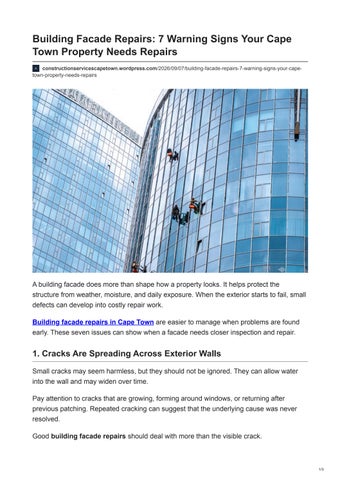
What Should Happen Before Building Facade Repairs Begin? A reliable repair starts with inspection. The facade should be checked for visible defects, moisture paths, failed materials. The repair scope should then match the actual condition of the building. Access must also be planned. Multi-storey properties may require scaffolding, mobile platforms, rope access, or another safe working system.
Building Facade Repairs Should Fix the Cause The purpose of building facade repairs in Cape Town is not to hide damaged areas temporarily. It is to restore the facade and reduce the chance of the same failure returning. Cracks, spalling, water penetration, failed sealants, corrosion, and loose finishes all need the correct response. Addressing defects early can also make future maintenance easier to plan. If your Cape Town property shows several of these warning signs, start with a proper assessment. A clear diagnosis creates a better repair scope and helps ensure that the work addresses what is actually failing.
3/3