
1
NUMBER
NUMBER & PLACE VALUE
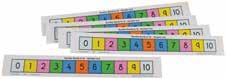
Practice counting using one to one correspondence.
2
NUMBER
NUMBER & PLACE VALUE
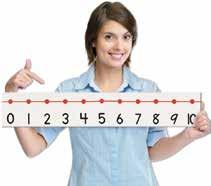
Hide numbers on the number line and ask the children which numbers are missing.
3 NUMBER
NUMBER & PLACE VALUE
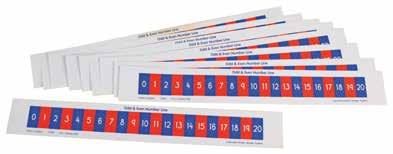
Circle all of the odd numbers and ask the children if they can identify a pattern. Can they predict which number would be next after 30?
4
NUMBER
NUMBER & PLACE VALUE
Ask the children to count the numbers omitting the even ones.
5
NUMBER NUMBER & PLACE VALUE
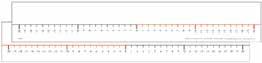
Highlight all of the palindromes on the 100 number line.
6
NUMBER NUMBER & PLACE VALUE
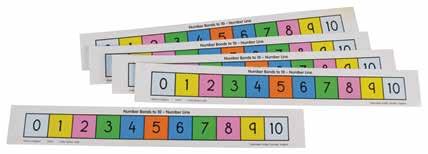
Choose a number on the number line and ask the children to investigate how many different ways they can make that number.
7
NUMBER
NUMBER & PLACE VALUE
Put the children in pairs and ask one child to use a counter to cover a number on their number line. Then their partner can ask questions and work out which number the counter is hiding. For example: Is it an odd number? If the child guesses correctly they win the counter and then the other child chooses a number to cover.
8
NUMBER
NUMBER & PLACE VALUE
Place counters on the number line to represent a number sequence and then ask the children to work out which numbers would come next.
9
NUMBER NUMBER & PLACE VALUE
Get the children to highlight a number on the number line and create an investigation for a partner involving that number.
NUMBER NUMBER & PLACE VALUE
Choose four number and work out what the largest and smallest numbers are that can be made using these. 10
11 NUMBER NUMBER & PLACE VALUE
Ask the children to choose a number and write five facts about that number.
It is an even number. It is made of 7 tens and 3 ones. It is larger than 50. It is a prime number. The sum of the digits
12
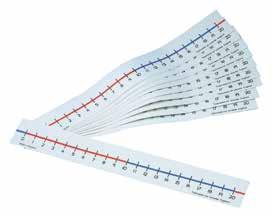
Count on the number line to model addition.
NUMBER
13 NUMBER
ADDITION & SUBTRACTION
Jump back on the number line to model subtraction.
14
ADDITION & SUBTRACTION
Show repeated addition by jumping on in jumps of the same size.
15 NUMBER
ADDITION & SUBTRACTION
In pairs take turns to roll a dice and count on the number line the corresponding number shown on the dice. The first child to reach 100 wins.
16
NUMBER
ADDITION & SUBTRACTION
Find any two digit number and add together both of its digits.
1 + 3 = 4
17
NUMBER
ADDITION & SUBTRACTION
Choose a number and continue adding ten to it, which numbers do you land on? Do the children notice a pattern?
18
NUMBER
ADDITION & SUBTRACTION
Start on 100 and count back a set number, continue repeating the same number of jumps backwards. Which numbers do you land on?
19
NUMBER
ADDITION & SUBTRACTION
Investigate which numbers on the number line have digits that add up to 6.
20
NUMBER
ADDITION & SUBTRACTION
Find two consecutive numbers on the number line that add up to a square number.
21
22 NUMBER ADDITION & SUBTRACTION
Find different pairs of numbers that add up to 100.
NUMBER
ADDITION & SUBTRACTION
Find numbers on the number line that digits add up to 10. Do children notice a pattern emerging?
23 NUMBER
ADDITION & SUBTRACTION
Find three consecutive numbers on the number line and add them together to find their total.
24
NUMBER
ADDITION & SUBTRACTION
Choose two numbers on the number line and find the difference between them.
25
NUMBER
MULTIPLICATION & DIVISION
Start on a number and jump back in jumps of the same size to model division.
26
NUMBER
MULTIPLICATION & DIVISION
Demonstrate multiplication by jumping on in groups.
27 NUMBER
MULTIPLICATION & DIVISION
Find multiples of a set number.
NUMBER
MULTIPLICATION & DIVISION
Locate on the number line the square root of a given number.
NUMBER
MULTIPLICATION & DIVISION
Identify the cubed root of a given number.
NUMBER
MULTIPLICATION & DIVISION
Investigate which numbers on the number line are prime numbers.
NUMBER
MULTIPLICATION & DIVISION
Divide five different numbers by ten. Can the children identify anything about what happens.
Find a number on the number line and double it.