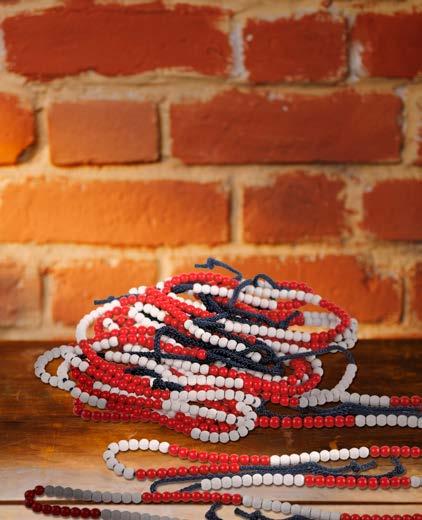


9mm polished resin beads.
Pack 10 08 100 269
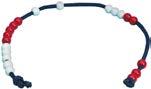
PUPIL 100 BEAD STRING WHITE/RED
9mm polished resin beads.
Pack 10
08 100 268
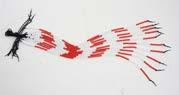

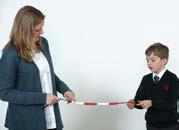
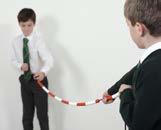
Here at KCS we want to make your life easier and help you to inspire young minds. Let this handy booklet inspire you with a range of ways to use a beadstring all linked to the national curriculum.
Make a set number. Move two groups of ten and six individual beads to make the number 26.

Count along the bead string in 2’s, 5’s and 10’s.

Ask children questions such as find 2 less than or 10 more than a set number of beads.

Show the place value of a number such as 45 by separating 4 groups of 10 beads and 5 individual beads.
Hide a set number of beads and ask children to estimate how many beads are hidden.

Solve word problems involving addition, subtraction, multiplication and division practically using a bead string.
8 x 2 = 16
Round numbers by showing 27 beads rounded up to 30 and 33 beads being rounded down to 30.
Represent negative numbers by displaying the bead string vertically.
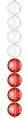
Show children a set number of beads and ask them which number this represents.
Use numerous bead strings to model larger numbers. The number 546 would require 5 full bead strings and one bead string showing 40 and 6. 10

Make number sequences on the bead string identifying the pattern and carrying this on.
3 + 7 = 10 12
NUMBER | ADDITION & SUBTRACTION
Make number bonds up to 100.
NUMBER | ADDITION & SUBTRACTION
Model repeated addition through separating groups of beads and counting on.
3 + 3 + 3 + 3 + 3 + 3
40 - 5 = 35 14
NUMBER | ADDITION & SUBTRACTION
Take away a number of beads from a large number.
Use two bead strings to show the inverse relationship between addition and subtraction.
3 + 7 = 10 10 - 3 = 7
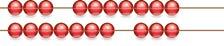
Use two bead strings to find the difference between two numbers. Make the number 20 on one bead string and the number 34 on the other bead string. Sliding the additional beads along the bead string and counting them.

Using a dice get children to add or subtract the corresponding number of beads on the bead string.
40 ÷ 10 = 4 18
Make a number and show division by making groups of beads.
NUMBER | MULTIPLICATION & DIVISION
Show a set number of beads and divide these clearly showing the remainder.
NUMBER | MULTIPLICATION & DIVISION
Create groups of a number to show how it is multiplied. 5 x 5
NUMBER | FRACTIONS, DECIMALS & PERCENTAGES
Make a number on the bead string and then find half.

NUMBER | FRACTIONS, DECIMALS & PERCENTAGES
Make a number on the bead string and double it.


23 NUMBER | FRACTIONS, DECIMALS & PERCENTAGES
Count up and down the bead string in tenths.
24 NUMBER | FRACTIONS, DECIMALS & PERCENTAGES
Show a fraction of a set number of beads.
1/4 of 20 is 5 beads.

NUMBER | FRACTIONS, DECIMALS & PERCENTAGES
Show a percentage of a set number of beads.
20% of 100 is 20 beads.
25 RATIO & PROPORTION
26
Show the ratio of red beads to white beads. 2 groups of red beads and one group of white represent 2:1.
Demonstrate proportion by showing 50 beads. 30 beads are red and 20 beads are white so the proportion of white beads is 2/5 or 2 in 5.
Work out linear sequences by moving the beads on the bead string to identify the pattern. The sequence 3, 7, 11, 15, 19 would be represented by children adding groups of four each time.
Use two bead strings one to represent each side of an equation. To find out 2a + 2a = 8 Children can make 8 on one bead string and then use the other bead string to explore 2a + 2a.
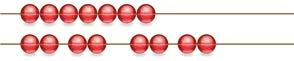
Use the bead string as a non standard unit of measure to find the lengths of objects.
Use two bead strings to make two different numbers. Ask children which is longer, shorter and which has more or less beads.
Imagine each bead on the bead string has a value of 1p. The whole bead string is worth £1. Ask children to buy items from a shop and deduct the money spent from the bead string.

Display a sequence of beads on one side of the string and then copy the pattern on the other side to show symmetry.