Online Exhibition by MEP Anna Cavazzini
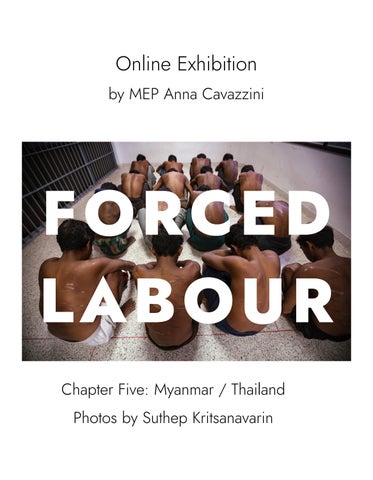
FORCED LABOUR Chapter Five: Myanmar / Thailand Photos by Suthep Kritsanavarin
From forced labour in Myanmar’s military rule, to forced labour as migrants in neighbouring countries Suthep Kritsanavarin Forced labour is something that does not only take place in the private sector: often, it is imposed by the state. During Myanmar’s military dictatorship, which lasted until 2011 and was then resumed in 2021, there were several reports of state-imposed forced labour. The following images depict some of the situations where this took place. The images also show the long-lasting consequences of Myanmar’s military rule: many Burmese people left the country in search of better work and living conditions, yet due to their vulnerability as migrant workers or refugees, sadly became victims of forced labour in their new country.
Myanmar is the land of mines including Jade, gold, amber and ruby. As reported by Human Rights Watch in 2008, gem mines in Myanmar were ruled with an iron hand by military authorities and mining companies. Many Burmese people were forced to work in the mining sector under hazardous and exploitative conditions. Photo by Suthep Kritsanavarin, 2013.
Three Rohingya hide in the trunk of a car on the way to Kuala Lumpur. They cross the border from Thailand, where traffickers promise to bring them to Malaysia’s capital. However, many of them end up being caught by police and deported back to the Thai side, where another agent brings them to work in the fishing sector. They might end up in forced labour in the fishing boat for several years without ever seeing land. Photo by Suthep Kritsanavarin, 2009. This Burmese man worked under forced labour conditions in a factory in Thailand. Like many other migrant workers, he paid a fee to an agent to bring him to Thailand to work. This fee was deducted from the worker’s salary. As is often the case, his passport was taken away in order to prevent him from leaving before having worked enough to cover the fees he owed the agents. Photo by Suthep Kritsanavarin, 2017.
A group of Rohingya boat men arrested in Thai immigration in 2009. Before being caught by Thai authorities, they had been detained by the Myanmar Navy and forced to work for them for several weeks, likely in the construction sector. Photo by Suthep Kritsanavarin, 2009.
A Burmese woman was forced to work every day in a factory in Surat Thani, Thailand, with little time to rest. She was saved by a local NGO in 2017, who helped initiate a legal case against her former boss. Photo by Suthep Kritsanavarin, 2017.