KBIC NEWS
ONAABANI GIIZIS - CRUSTY MOON

What’s for Dinner?
Submitted
by:
Austin Ayres
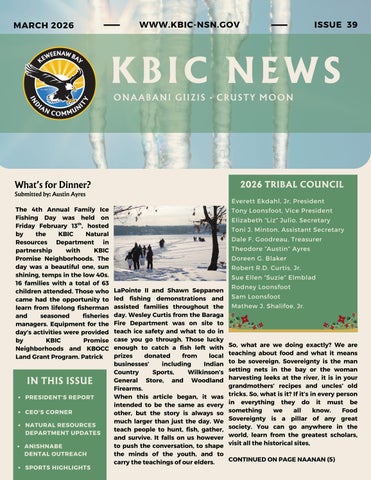
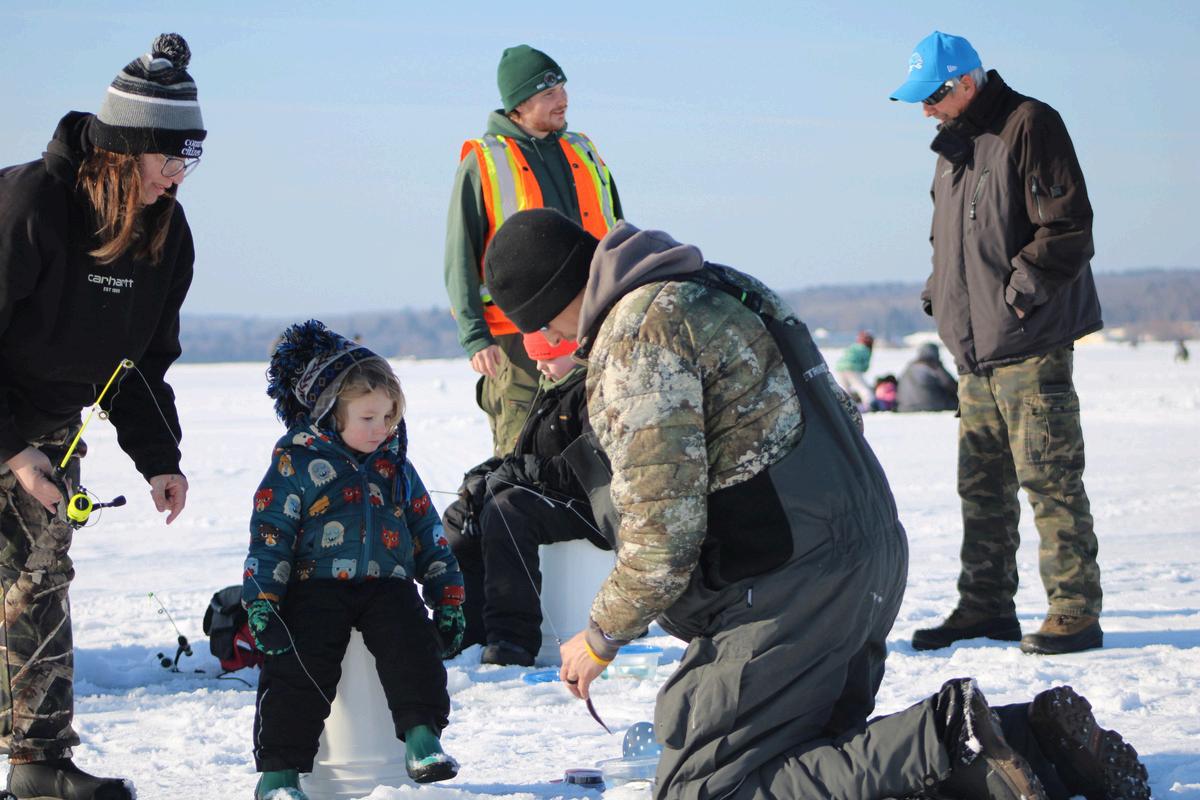
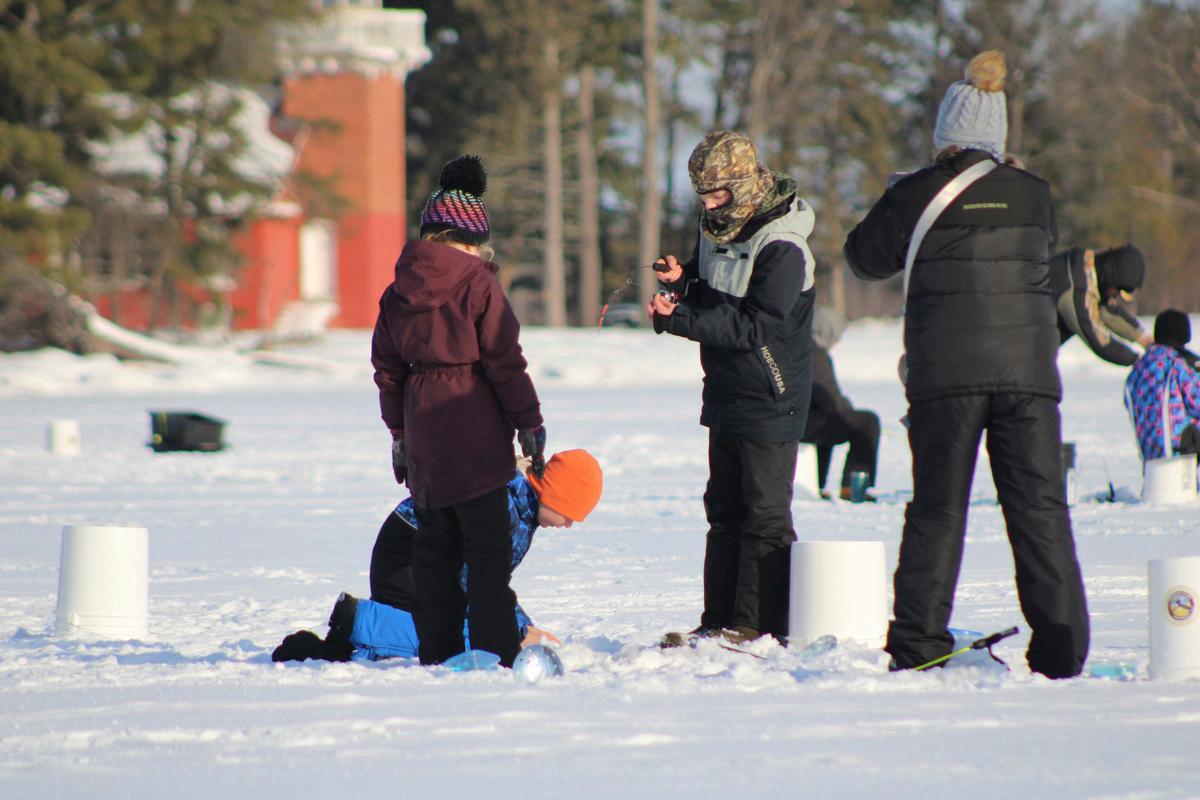
The 4th Annual Family Ice Fishing Day was held on Friday February 13 , hosted by the KBIC Natural Resources Department in partnership with KBIC Promise Neighborhoods. The day was a beautiful one, sun shining, temps in the low 40s. 16 families with a total of 63 children attended. Those who came had the opportunity to learn from lifelong fisherman and seasoned fisheries managers. Equipment for the day’s activities were provided by KBIC Promise Neighborhoods and KBOCC Land Grant Program. Patrick th
IN THIS ISSUE
PRESIDENT’S REPORT
CEO'S CORNER
NATURAL RESOURCES DEPARTMENT UPDATES
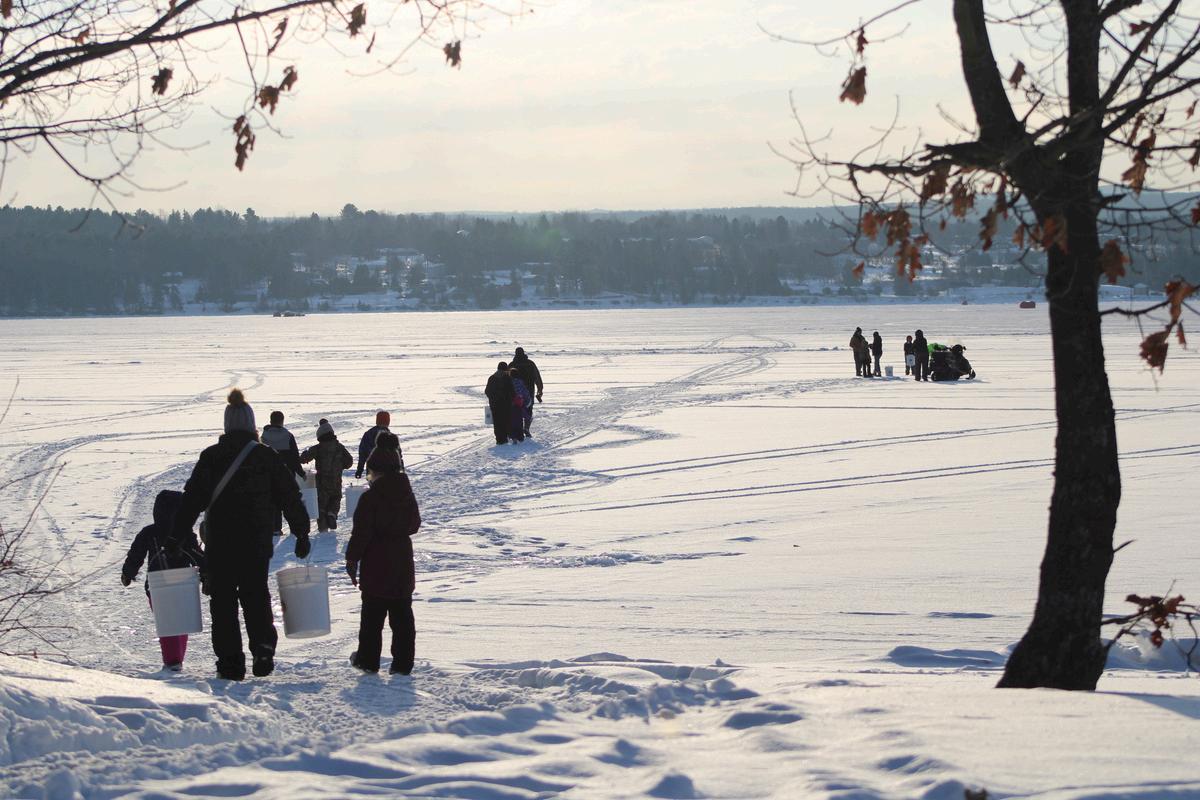
LaPointe II and Shawn Seppanen led fishing demonstrations and assisted families throughout the day. Wesley Curtis from the Baraga Fire Department was on site to teach ice safety and what to do in case you go through. Those lucky enough to catch a fish left with prizes donated from local businesses’ including Indian Country Sports, Wilkinson’s General Store, and Woodland Firearms. When this article began, it was intended to be the same as every other, but the story is always so much larger than just the day. We teach people to hunt, fish, gather, and survive. It falls on us however to push the conversation, to shape the minds of the youth, and to carry the teachings of our elders.
2026 TRIBAL COUNCIL
Everett Ekdahl, Jr, President
Tony Loonsfoot, Vice President
Elizabeth “Liz” Julio, Secretary
Toni J. Minton, Assistant Secretary
Dale F. Goodreau, Treasurer
Theodore “Austin” Ayres
Doreen G Blaker
Robert R D Curtis, Jr
Sue Ellen “Suzie” Elmblad
Rodney Loonsfoot
Sam Loonsfoot
Mathew J. Shalifoe, Jr.

So, what are we doing exactly? We are teaching about food and what it means to be sovereign. Sovereignty is the man setting nets in the bay or the woman harvesting leeks at the river, it is in your grandmothers’ recipes and uncles’ old tricks. So, what is it? If it’s in every person in everything they do it must be something we all know. Food Sovereignty is a pillar of any great society. You can go anywhere in the world, learn from the greatest scholars, visit all the historical sites,
Boozhoo, Community Members,
During the month of February, I attended the United Tribes Meeting in Lansing. This was my first time attending these meetings. Several presentations were given by representatives from
the State of Michigan. I also had the opportunity to speak with several state representatives and their assistants. We had productive conversations regarding several needs of the Tribe and the surrounding area.
A total of four Tribal Council meetings were held during the month.
Motions Approved in February:
Motion approved to approve the budget modification and organizational chart changes for the Elder Nutrition Program as discussed.
Motion approved to add an issue date to the current KBIC Tribal ID cards.
Motion approved to approve the monthly department head reports from November 2025 and December 2025.
Motion approved to approve the preferred bid from Keweenaw Power & Lite LLC in the amount of $699,800.00 for solar installation services as presented.
Motion approved to approve the amendment to the services agreement with Angela Moore, PMHNP, as presented. Motion approved to approve a free fishing day for KBIC members on Friday, February 13, 2026, for the 4th Annual Family Ice Fishing Day at the Ojibwa Campground.

Motion approved to move forward with the development of a contract with Samuels Group for Phase 1 and Phase 2 planning of the Health Center expansion/remodel project in the amount of $200,000.00 as presented.
Motion approved to approve a letter of support for the Baraga County Road Commission to include with their BUILD grant application.
Motion approved to approve the NDA with the Pascua Yaqui Tribe regarding enhanced Tribal IDs.
Motion approved to approve the Tier III services agreement with Dale Schmeisser, R.D., Ph.D., for dietician services as presented.
Motion approved to approve the appointment of Ashley Seppanen to the vacant seat on the Education Committee.
Motion approved to approve a donation in the amount of $1,000.00 to the Hancock Salvation Army Homeless Fund as presented.
Motion approved to move forward with land acquisition and authorize Jason A. Ayres to sign for the purchase as presented.
Motion approved to approve a donation in the amount of $1,000.00 to the L’Anse Area School’s Youth in Government Program.
Motion approved to approve the Employee Conduct and Corrective Action Policy as discussed.
Motion approved to amend a motion made on June 25, 2025, to include approval of the Closure Policy as presented, to be included in the Employee Policy Manuals.

Motion approved to extend an offer of $165,000.00 per year, plus mileage if a KBIC vehicle is not available, to Garry Tollefson for the Ojibwa Casinos General Manager position.
Motion approved to approve the Tier III amended and restated services agreement with Luis Verissimo as presented.
Motion approved to approve the Sick Leave Policy as presented

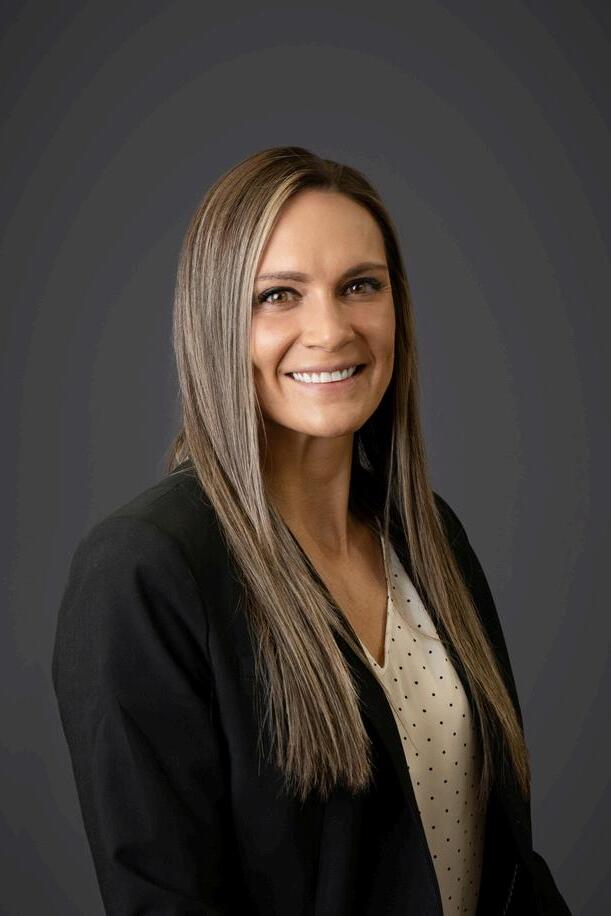
Well, March came in just as fierce as I expected it. I hope everyone was able to stay safe and warm this opening week as we endured another wild snowstorm. I want to give our snow removal and plowing teams a huge shout out for the excellent work they do to keep things clear and safe for our community.
I couldn’t help but notice that this opening feels very familiar, it’s almost the exact same way I started last year’s March article. While Groundhog Day may have come and gone last month, it seems like we can officially expect winter to remind us who’s in charge well into March. At this point, it might just be part of living here; resilient, prepared, and always ready for one more storm.
March also gives us an opportunity to recognize Women’s History Month and reflect on the strength, leadership, and resilience of the women who continue to shape our community. In our culture, women have always held important roles as leaders, teachers, and caretakers of knowledge. Their guidance has carried our community through generations, and that influence continues today through the work being done across our programs, our families, and our leadership. There are many times I get asked, “What does your day-to-day look like as CEO?” I sometimes hesitate to answer because, while the ideal is to have a structured and predictable schedule, the reality is that every day tends to bring something new. There is always an issue that arises, a question that needs to be answered, or a program that requires additional attention.
That said, there are a few areas where I try to maintain consistency. One of my priorities is staying connected with department leadership and being as available as possible. As I’ve shared in past articles, I hold weekly, bi-weekly, or monthly one-on-one meetings with department heads. These meetings are intentionally flexible, allowing each department to bring forward their current needs, updates, successes, staffing matters, and any challenges they may be facing.
In addition to those meetings, I attend all scheduled Tribal Council meetings and work sessions related to my role, as well as facilitate bi-weekly Policy Review Workgroup meetings. There are also standing monthly meetings, including CEO-CFO-President meetings and regular check-ins with key vendors and partners of the Tribe.
To start each week, Assistant CEO Jennifer Misegan and I hold a CEO Huddle every Monday morning at 8:30 a.m. to align on priorities and set the tone for the week ahead. While no two days are exactly the same, maintaining these consistent touchpoints helps ensure that we stay connected, responsive, and moving forward together as an organization.
As we move into the spring season, I am looking forward to several important milestones across the organization. These include progress on our accounting software upgrade, continued work on strategic planning for the Tribe, and the completion of the long-awaited compensation analysis.
Our new accounting system is expected to go live in the coming months, marking a significant step toward modernizing our operations. This transition will not only improve efficiency but also reinforce a shift in how we manage funding, process purchases, and track time across the
organization. While change can take adjustment, this upgrade positions us for stronger financial management and long-term sustainability.
Spring also provides an opportunity to revisit and strengthen our strategic plan. I am currently working to schedule time with Tribal Council to review our existing plan, with the goal of hosting community input sessions shortly after. These sessions will focus on key areas such as housing and infrastructure, economic development, health and human services, education and workforce development, and cultural preservation and natural resource stewardship. This plan will serve as a guiding document for the next three to five years, helping ensure that our priorities reflect both the needs of today and the vision for future generations.
In addition, the compensation analysis with REDW is nearing completion. The next step will be to review and approve initial recommendations to bring forward to Tribal Council, with a focus on strengthening our current wage structure and addressing key departments and positions in the short term. A broader, long-term approach will be incorporated into the FY27 budget planning process.
There is a great deal of important work underway, and I am encouraged by the progress being made across these areas. Next month’s article will focus on funding received so far for FY26 and how those resources will be prioritized moving forward. Again, this year, I couldn’t close out March without mentioning March Madness, arguably the best time of the year for college basketball! For my picks, I’m going with the Michigan Wolverines on the women’s side, and I have a feeling the Duke Blue Devils will make another strong run and take it all on the men’s side, sorry to my Michigan and Michigan State fans
We’ll see how it plays out, but either way, it’s always a fun time to enjoy the games and maybe even win a bracket or two.
Take care,
Brigitte
Natural Resources
CONTINUED FROM COVER PAGE
yet it would take one meal with the people of that land to deepen your understanding of their culture. Where does their food grow, what have they caught, how does it shape their daily lives, what habits come from acquiring these foods, do they honor the life and nourishment they receive, are they shaped by abundance or scarcity?
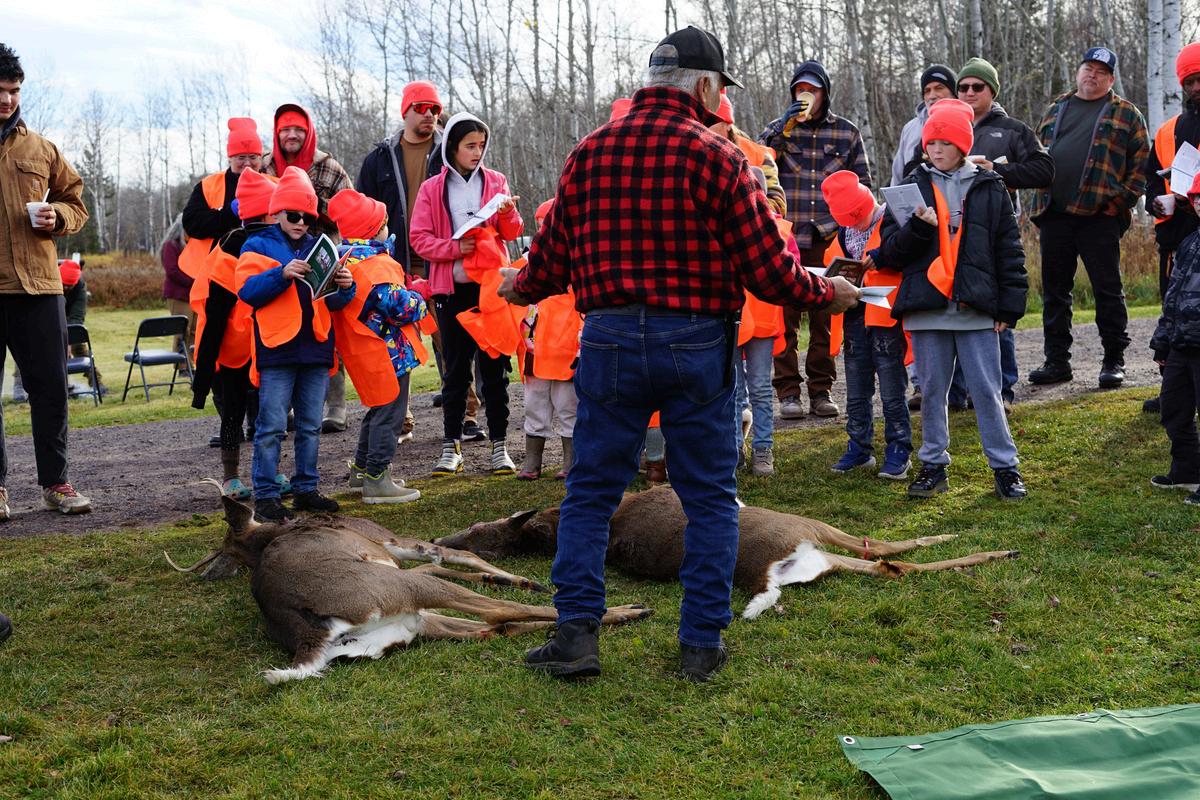
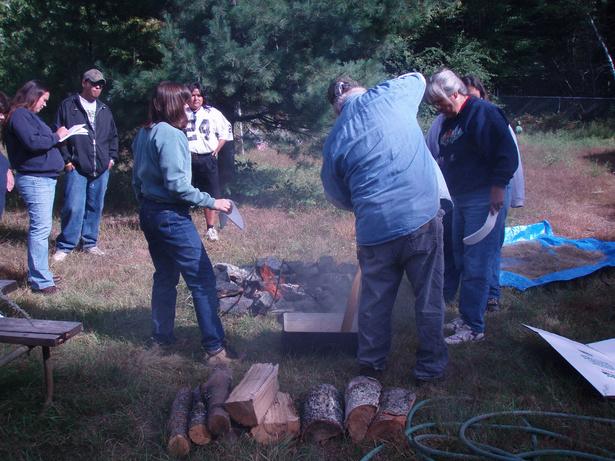
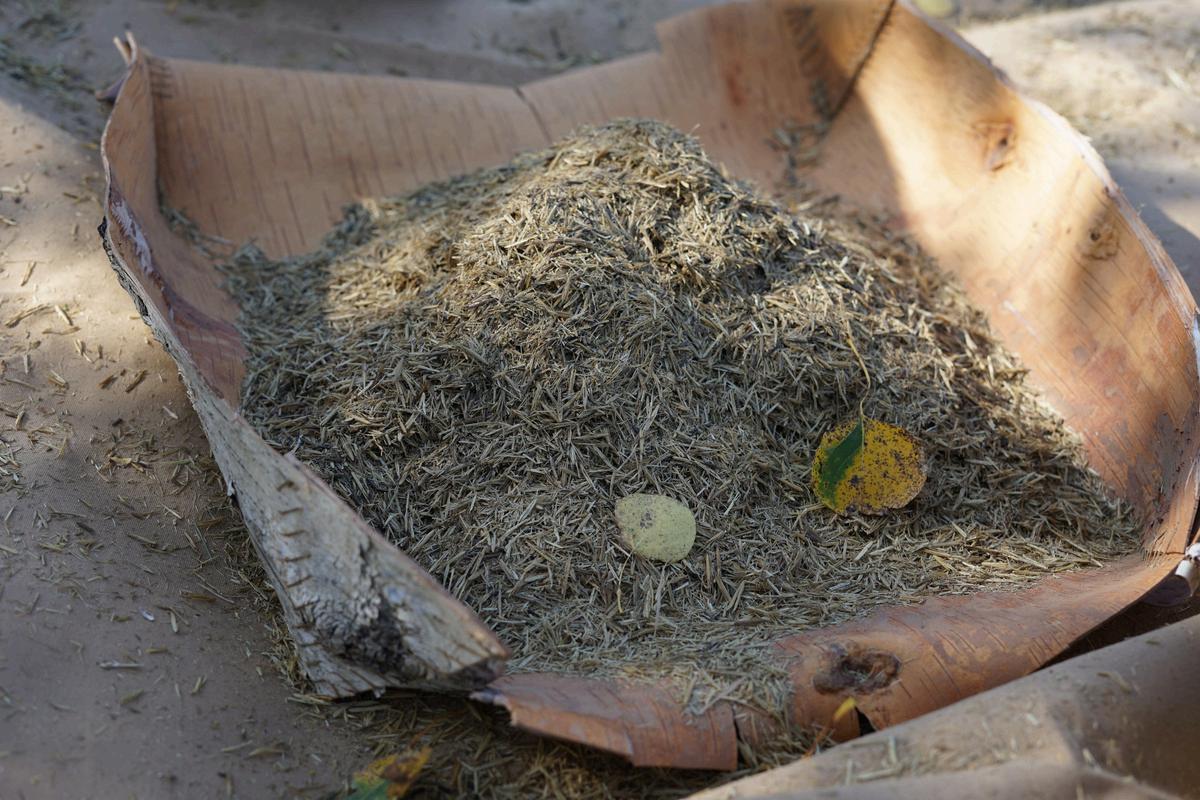
Identity, memory, ecology, and survival all fill your plate in ways we take for granted. Food sovereignty in KBIC territory is not abstract politics. It is the defense of Manoomin from pollution. It is protecting fishing waters. It is language revitalization tied to harvest vocabulary. It is youth learning to rice and set nets, to jig, tap, winnow, shoot, forage, and snare.
Many of us in the modern age have begun trading time for money, to provide and to survive. Our lifestyles have changed, it used to be by the season not by what was in stock. Now instead of spending the day hunting, we take time off the job to go. Now instead planting potatoes you say large fry please, instead of growing grains and raising cattle you buy cereal and beef in a tube, instead of fishing you buy cod from the store all while a stone throw from the largest fresh water lake in the world. There
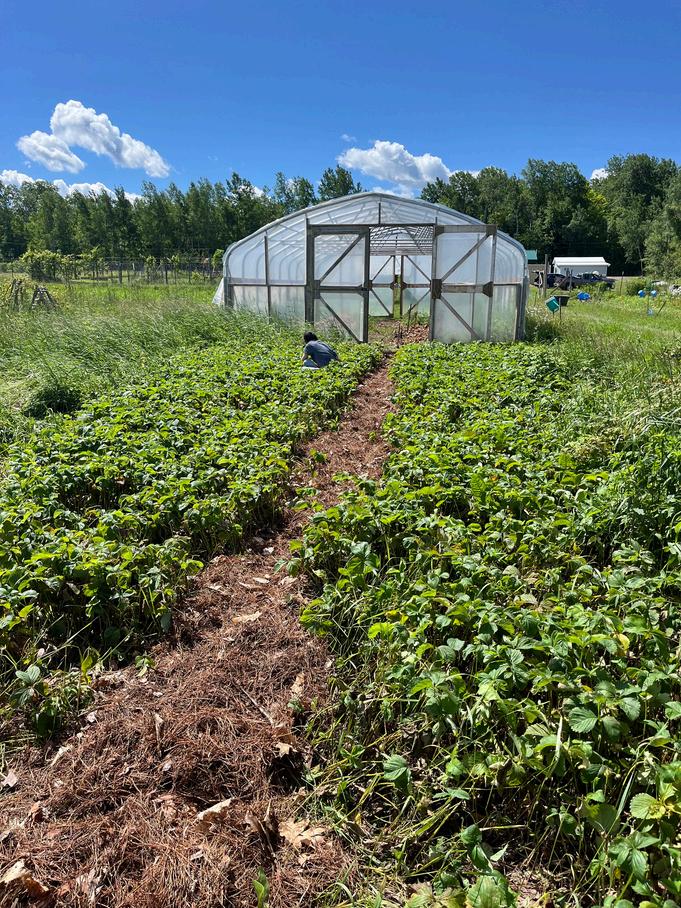
When did it change and where do we go from here? These are complex questions with answers that change daily and depending on who is being asked. Law and policy shape how food is grown, harvested, stored, and sold in public, if you want to know why the price of your food has nearly doubled call your local congressperson. However, we cannot point the finger, no, we must accept that all is choice. So how could you not choose to garden or hunt? Time, money, ability, knowledge, motivation, and connection, do you have time to spend multiple hours a week in the garden or the woods, can you afford the proper tools, do you know how, why should you even try, is it available to you?
Local food gives us appreciation for where it comes from. If a person has never had to go further than the grocery store, how could they appreciate fresh whitefish you got up at 4 in the morning for? If they had never spent hours
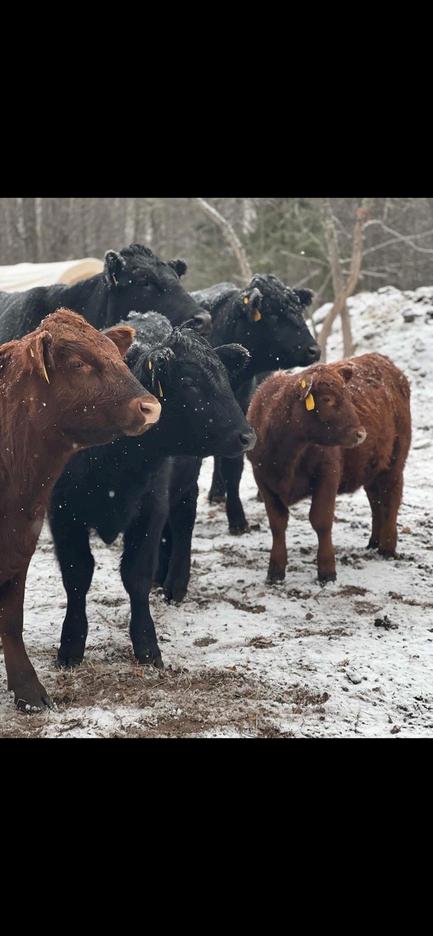
weeding a garden how could they know how sweet the peas turned out? The farmer who grows cattle teaches gratitude through effort, the hunter who shares venison teaches purpose through sacrifice, the fisherwoman who makes soup for funerals teaches reverence through practice. When you commit to these practices, you commit to those parts of creation, and in turn commit to yourself. To be able, to be strong, to survive and live is Food Sovereignty, because sovereignty is in one’s ability to choose to survive.
Many kids today have yet to hear a cow moo, or to catch a fish, or to pick wintergreen from the ground, they do not know the taste of fresh blueberries only the taste of the ones off a pallet. So, the next you hear of a young person not feeling well, ask yourself, how are any of them? Has anyone taught them to hunt, do they know how to tap a maple, or did they only have access to processed nutrient scarce foods? Who has shown them the reward of labor, why should they appreciate a free meal, or the fact that anyone cooked for them if they have never been taught to?
So, what is Food Sovereignty? It’s Family Ice Fishing Day, it’s community cooking demos, it’s legislation that regulates overharvesting, it’s spending the day cooking with Doreen, or talking to Karena about the plants. It’s enforcing our sovereignty through water quality standards, it’s promoting culture, it’s being healthy and strong, it’s becoming the elder and passing the teaching on.
At its base anyway you look at it, how we acquire food and keep alive is how we are sovereign. So, what’s for dinner, do we know?
If you are encouraged by this article to become more food sovereign or participate in community building watch out for posting from the NRD, from KBOCC Land Grant, from Promise Neighborhoods, or the Health Center, there are opportunities to take control of your food sovereignty every day.
Around the Community



https://www.surveymonkey.com/r/FF8YZ33



The Indigenous Health, Education, and Resources Taskforce, IHEART is a national collaborative which addresses the scarcity of American Indians and Alaska Natives (AI/AN) in the health professions. IHEART includes about 650 AI/AN health professions educators, learners, organizational leaders, and community members. This Indigenous led, culturally responsive network has supported the engagement, matriculation, retention, and graduation of AI/AN individuals interested in the health professions. IHEART supports Native students in the health sciences, from K-12 to residency and beyond!

The IHEART Spring 2026 Virtual Summit is a two-day conference focused on strengthening the Native health workforce through connection, shared learning, and collaboration. Programming will include discipline-specific discussions across healthcare fields, student panels highlighting education and workforce pathways, and updates from the National Indian Health Board (NIHB). Jessica A. Rickert, DDS, will present 03/24/2026 at 3:30pmEST.
This virtual workshop on Zoom is designed for students, healthcare professionals, educators, and partners engaged in advancing Native health workforce development. IHEART Website https://www.iheartnativeworkforce.org/ IHEART Virtual Summit https://www.iheartnativeworkforce.org/event/ spring-2026-virtual-workshop/ Summit Registration https://aamcorg.zoom.us/meeting/register/puDetrnTwyRcDt1oULdTA#/registration
Submitted by:

Mnamaadizin. Our Mission is to improve oral health through benefit plans, advocacy, and community support. Stay Strong,
Jessica A. Rickert, DDS, Anishinaabe Dental Outreach
231-313-8407, jarickert@charter.net
Around the Community
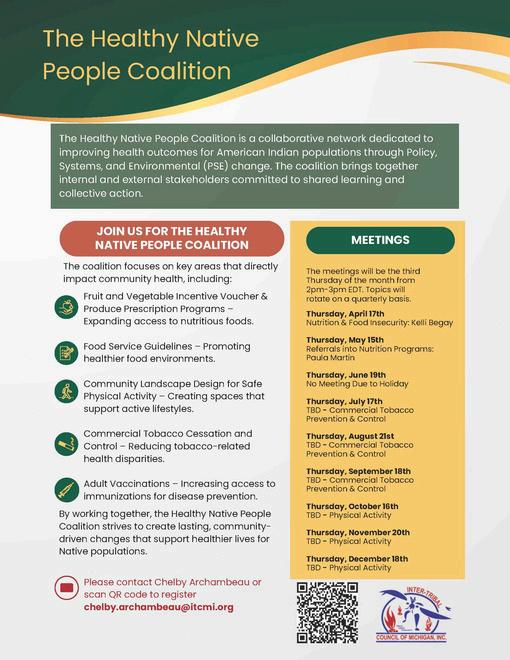
Jerry Sweet Scholarship for Tribal Children – Applications Due May 15, 2026
NTCSA is now accepting applications for the Jerry Sweet Scholarship for Tribal Children. Up to 10 scholarships of $1,000 will be awarded to graduating high school seniors who are, or have been, beneficiaries of a federally funded Tribal IV-D Child Support Program and who will be entering their first year of college or vocational training. The 2026 essay theme is:
“How do you plan to light the way for generations to come in your community?”
Applications are due May 15, 2026. Please help us spread the word by sharing this opportunity with eligible students and families in your communities. The flyer is attached and can be shared on your program’s website or social media pages. Students can apply here: supporttribalchildren.org/scholarship/
Natural Resources
Mystery of the Moose
by Wildlife and Habitat, KBIC Natural Resources Department
Imagine a cool fall morning, dew and fog cover the ground. You sit in a white pine stand, the forest floor covered in needles from years past. The canopy of the trees is over one hundred feet tall yet no sun reaches the ground. Goosebumps ripple across your arm, there is a small patch of sun just ahead a chance to warm up. Bright beams stretch across your face and chest as you approach, there is a gradient headed into a shaded wetland. That is when you see him, walking straight toward you.
A giant in any era of Aki’s history, he stands near six feet tall at the shoulder, his antlers seemingly stretch beyond reason past his silhouette. For many thousands of years, these larger than life relatives have called the continent home. From the time there was glaciers or when the land was covered in tall pines. Much has changed and yet the moose remain.
Here in the western Upper Peninsula widespread logging and destruction of habitat led to a significant decline in population. The ecological response to logging brought the introduction of new diseases from species moving to occupy the
changed landscape, most notably brain worm from white-tailed deer. By the 1900s only a handful of individuals remained scattered across the landscape. Several attempts to reintroduce moose have been made, some more successful than others. Significant resources have been dedicated to understanding the species at Isle Royale, and decades of research and monitoring has continued. For many years all signs pointed to a carry capacity of nearly 1000 animals. Recent trends shown a stagnation in the moose population. These data trends were compiled through a series of collaborative projects, most recently the moose capture project.
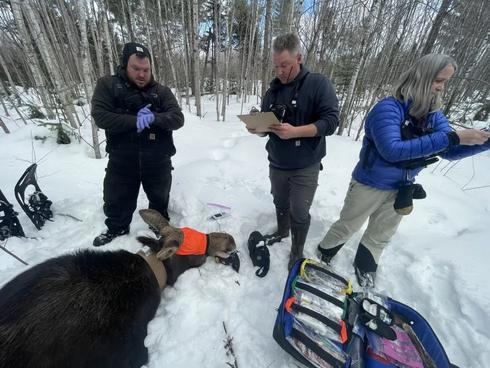
Northern Michigan University, Michigan Department of Natural Resources, and the Keweenaw Bay Indian Community have come together to deploy a number of monitoring tools in the ‘core area.’ “Our goal is to better understand why the moose population has remained stagnant. We’re collecting data related to movement, mortality or survival, habitat use, and other factors influencing population growth,” Blake Chosa, Wildlife Biologist for the KBIC.
The project is as much a spectacle as the subject themselves, low-flying spotter planes reporting to helicopter and snowmobile teams, darting moose, deploying equipment, and collecting samples. Exactly what you always
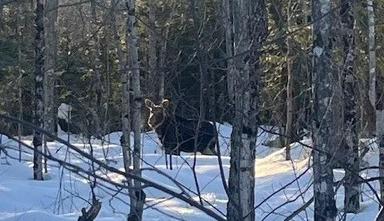
Moose calf leaving the capture site
imagined a biologist doing, rather than the reality of stuck in the office. Only the birds and a few sniffles, calm and calculated, this is the teams second year and it shows. “We were smooth, more prepared, and effective. We doubled our effort from the previous year,” Kyle Seppanen, Wildlife Coordinator for the KBIC.
This project represents who we are, one of the last frontiers. The moose is a symbol of the U.P. a sign that we are still wild, untamed. Perhaps you see this story as a success, of what we can do to correct the wrongs of the past. After all the U.P. belongs to them as much as it belongs to us.
To learn more about the moose project and stay up to date make sure you check back regularly and follow our Facebook page for a more personalized experience!
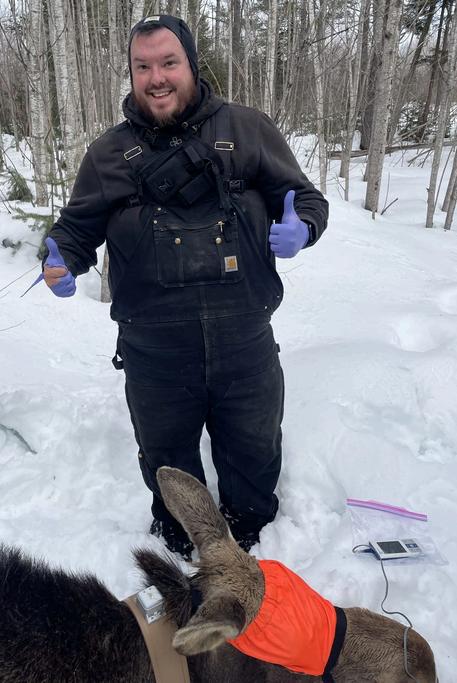

Kyle Seppanen, KBIC Wildlife Coordinator, works up a moose with staff from MDNR
Around the Community




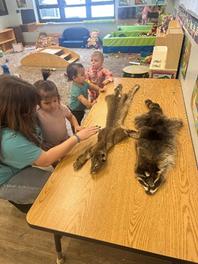
A Look Back at February in PrePrimary Education
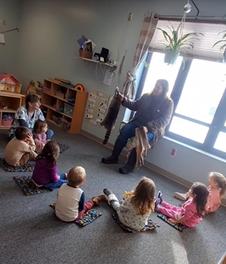
On January 29, 2026, Austin Ayres visited our center and taught us about the raccoon (esiban) and the bobcat (gidagaa-bizhiw). Austin visited all of the classrooms and the children got to touch real fur. We are always excited when Austin comes to visit and shares stories of the animals.
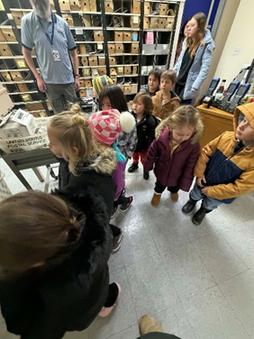
On February 4, 2026, our preschool class, along with Head Start (Baraga) went on a field trip to the Baraga Post Office. They got to stamp and mail their own envelops. They were so excited to learn where mail comes from and the process of mailing letters.
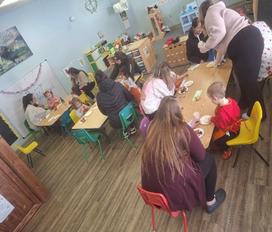
On February 12, 2026, we partnered with Promise Neighborhoods for a Valentine’s party. Parents were invited to join their little ones for lunch and activities. The children made fruit pizza cookies, played games, and did activities with their parents. We all had a great time and can’t wait for the next holiday party.
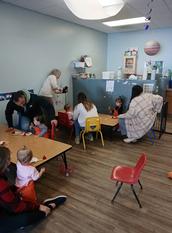
On February 25, 2026, our preschoolers went on a field trip to Superior View Complex for an ice cream social. They spent time with the residents and shared smiles, laughs, and ice cream. The children enjoyed their visit and can’t wait to see them again.
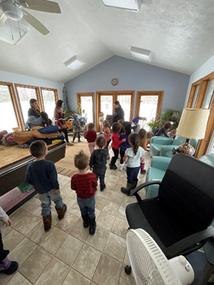
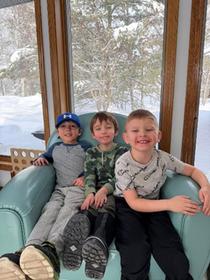
On February 26, 2026, Austin Ayres came to visit our center to talk about the Loon and the Muskrat and how they taught us about bravery. The children in each classroom get so excited to learn about the animals that Austin brings in. They love hearing the stories of how the different animals help and teach us lots of important things.
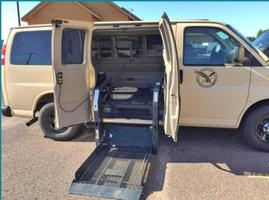
Handicapped Accessible Van Guidelines
Eligibility
Enrolled KBIC members and their non-KBIC family members who are not mobile enough to be transported without a wheelchair lift (Eligible User) are eligible to use the Handicap Accessible Van (HAV).
Overview
The driver of the HAV assumes the duty of obeying all motor vehicle laws, maintaining the vehicle properly at all times, and complying with the following guidelines.
Vehicle Purposes
The HAV shall be used for transportation to medical appointments or other purposes approved by the CEO or Tribal President.
Authorized Driver
Drivers must have a valid and unrestricted driver’s license and be able to drive a HAV. The HAV allows drivers to perform approved transportation activities safely, efficiently, and economically while promoting a positive image of the KBIC. Drivers are required to operate the HAV safely and responsibly.
The Tribal Center Receptionist shall instruct first-time HAV drivers on operating the wheelchair lift before their first trip.
Around the Community
The following rules apply to using the HAV: Only authorized individuals may drive. The vehicle must be picked up at the assigned location and returned to that location after use. It must also be locked, and the keys must always be secured. The driver must review the vehicle's use in the Driver Log, which is to be kept in the HAV at all times and returned for review at the end of use.
The driver and all passengers must wear available personal restraints, including seatbelts. Eligible users must be secured in the rear of the HAV utilizing the available locking straps. Report all accidents immediately to the appropriate police and the CEO's office (906)353-4104.
Maintenance
Drivers and eligible users must maintain the HAV at all times. The HAV must be returned in the same condition it was issued: clean and with a full fuel tank. The eligible user is to pay for the fuel cost.
The HAV should not be operated with any defect preventing safe operation during current and foreseeable weather and lighting conditions. Preventative maintenance, such as regular oil changes, tire pressure, and fluid checks, determines to a large extent whether eligible users will have a reliable and safe vehicle to drive. Please report any issues with the HAV you experience during your use of the CEO’s office.
The use of tobacco products by all occupants in the vehicle is prohibited and includes cigars, cigarettes, chewing tobacco, ecigarettes, and all other forms of tobacco.
Around the Community
Traffic Violations
Fines for parking, moving violations, etc. are the personal responsibility of the driver/eligible user.
Accidents Involving the HAV
In the event of an accident:
Do not admit negligence or liability. Do not attempt settlement, regardless of how minor.
If possible, get the name, address, and phone number of the injured person(s) and witness(s).
Exchange vehicle identification, insurance company name, and policy numbers with the other driver.
Take a photograph of the scene of the accident if possible. Call the police.
Complete the vehicle accident report in the HAV.
Turn all information over to the CEO’s office upon your return.
Thefts
In the event the HAV is stolen, notify local police immediately.
Failure to comply with these guidelines will result in denied future use and may result in additional costs to the eligible user.
The Driver/Eligible User is responsible for the actual possession, care and use of the HAV.
Members wishing to utilize the HAV can contact the Tribal Center Receptionist at (906)353-6623 or receptionist@kbic-nsn.gov to reserve it.


Government
FULL-TIME POSITIONS
Steralization Technician
Food Systems Specialist
Early Learning Specialist
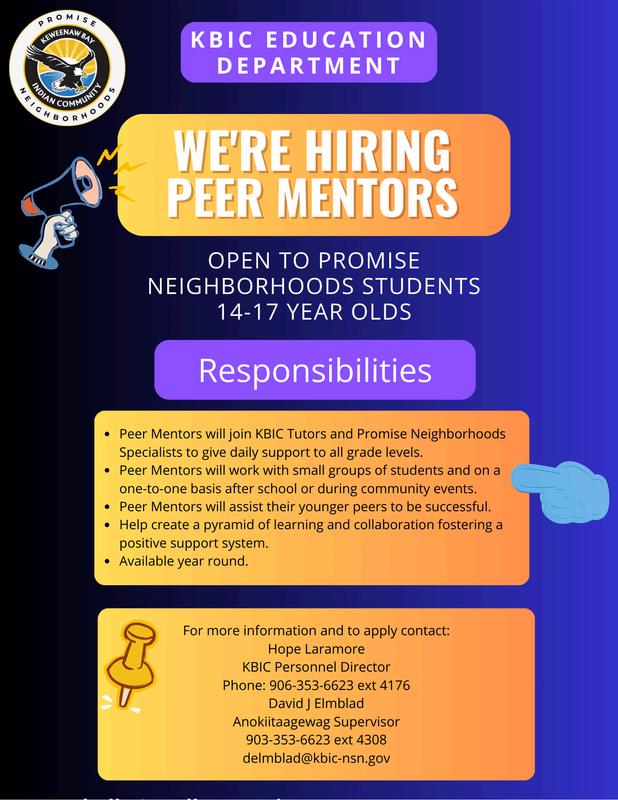
Healing to Wellness Peer Recovery Mentor
Certification and Distribution Worker
Field-Fisheries Technician
Home Care Aide
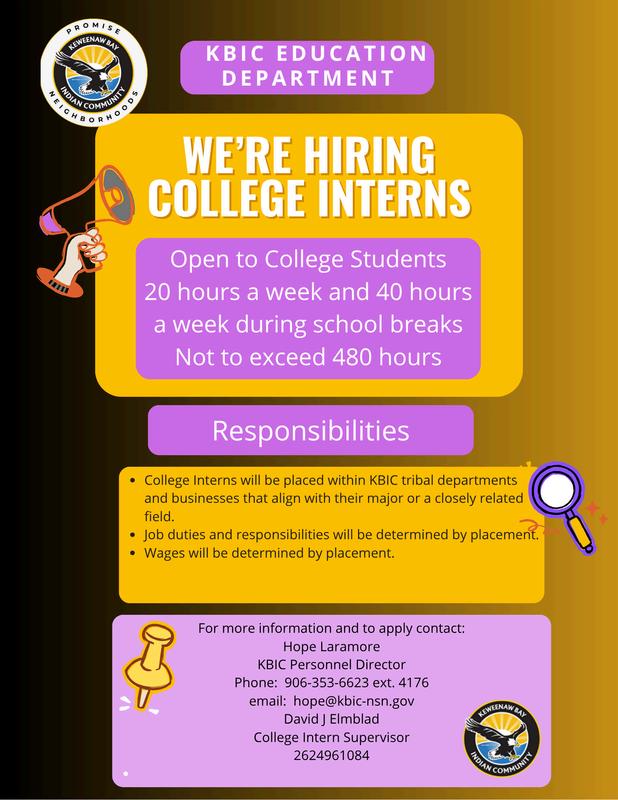
Plant Technician College Intern
Assistant Tribal Attorney/Prosecutor
RN or LPN
Tribal Attorney/Prosecutor
Social Services Specialist
Physician
Jail Diversion Case Manager
Grant Accountant
Current Job Postings
ONGOING RECRUITMENT
CLEANING PERSON
LABORER
PHARMACIST OR PHARMACY TECHINICIAN
RECEPTIONIST/CLERICAL WORKER
RN OR LPN
UNIT MANAGER (SUBSTANCE ABUSE PROGRAMS)
UNIT MANAGER (TRANSITIONAL HOME PROGRAMS & SERVICES)
VAN DRIVER OR PREP COOK
WILDLAND FIREFIGHTER
YOUTH/FITNESS WORKER
CLOSING DATE
April 10, 2026, at 4 pm
April 10, 2026, at 4 pm
April 7, 2026, at 4 pm
April 6, 2026, at 4 pm
April 6, 2026, at 4 pm
April 6, 2026 at 4 pm
Open Until Filled
Open Until Filled
Open Until Filled
Open Until Filled
Open Until Filled
Open Until Filled
Open Until Filled
Open Until Filled
Open Until Filled

CLOSING DATE
Open Continuous
Open Continuous
Open Continuous
Open Continuous
Open Continuous
Open Continuous
Open Continuous
Open Continuous
Open Continuous
Open Continuous
Open Continuous
Current Job Postings
Enterprise
BARAGA - IMMEDIATE OPENINGS
Cage Shift Manager
Maintenance Worker
Revenue Auditor
Slot Technician
MARQUETTE - IMMEDIATE OPENINGS
Account Executive/Sales
Cage Cashier
Count Team Member
Dealer
Guest Services Clerk
Pit Boss
Security Officer


APPLY ONLINE: https://www.ojibwacasino.com/employment
Baraga HR Office: (906) 353-6333 x4188
Marquette HR Office: (906) 249-4200 x4705
*Tipped positions are guaranteed at least $15/hr in baraga and $16/hr in Marquette. Part-time = 37 hrs/week
Until Filled

Baraga HR Office at 906-353-6333 x4188 or Marquette HR Office at 906-249-4200 x4705
Around the Community

Around the Community



Around the Community
Around the Community
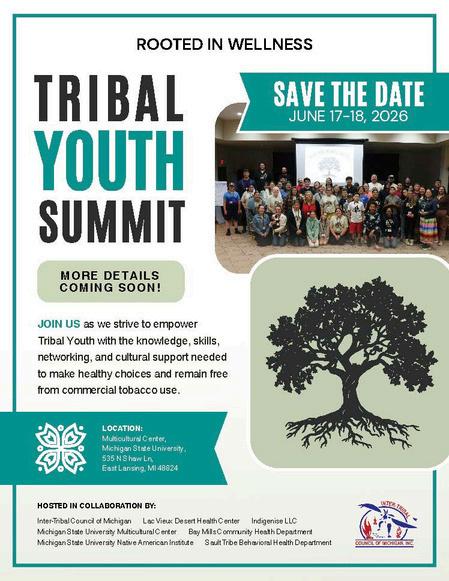
Tribal Youth Summit Returns This June to Empower Native Youth
The 2026 Rooted in Wellness Tribal Youth Summit is set to return this summer, bringing together Native youth, families, and community supporters for two days focused on health, culture, and connection. The event will take place June 17–18, 2026, at the Multicultural Center at Michigan State University in East Lansing.
Designed for students in grades 6 through 12, the summit creates a space where young people can learn practical skills, build meaningful relationships, and strengthen cultural values that support healthy, tobaccofree lifestyles. Parents, educators, and community members are also encouraged to attend and take part in the experience.
Organizers say the summit is about more than just education—it’s about empowerment.
“We hope that Native youth leave the summit feeling empowered, informed, and supported,” said Ashley Young, Program Manager at the Inter-Tribal Council of Michigan. “Our goal is for participants to gain knowledge, build skills, develop connections with other youth, and strengthen cultural values that encourage healthy lifestyles and tobacco-free choices.”
The event will feature interactive sessions and opportunities for youth to connect with peers and mentors who are committed to promoting wellness and cultural resilience.
“The Tribal Youth Summit brings together young people and allies who are passionate about supporting Native youth,” added Chelby Archambeau, Program Coordinator. “It’s a chance to strengthen cultural connections while encouraging healthy, commercial tobacco-free lives.”
This year’s summit is a collaborative effort among several partners, including the Bay Mills Community Health Department, Indigenise LLC, the Inter-Tribal Council of Michigan, Lac Vieux Desert Health Center, Michigan State University Multicultural Center, Michigan State University Native American Institute, and the Sault Tribe Behavioral Health Department. Additional details, including registration information, will be announced in the coming weeks.
The Multicultural Center is located at 535 N. Shaw Lane in East Lansing.
To learn more about the Inter-Tribal Council of Michigan and its programs supporting tribal communities across the state, visit www.itcmi.org.
For questions about the event, contact Ashley Young at ashley.young@itcmi.org or 906-6326896.
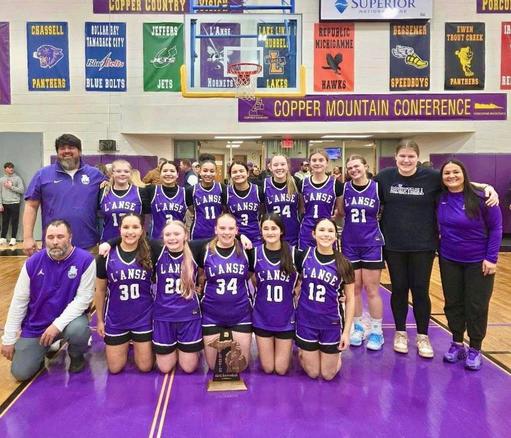
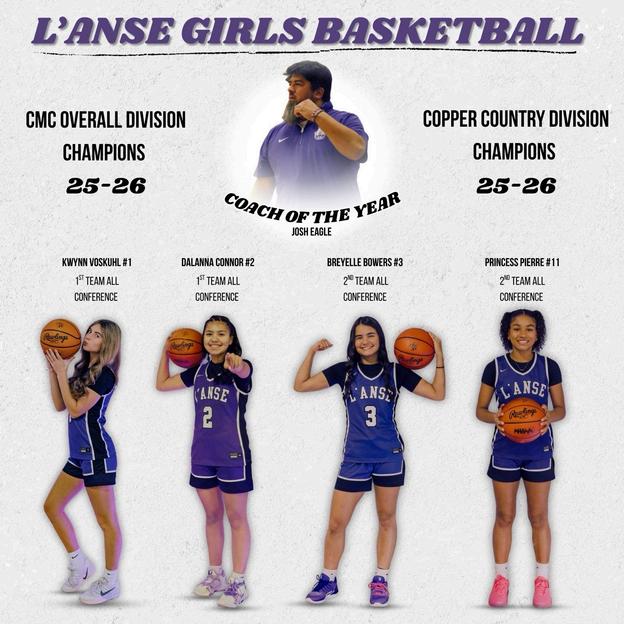
L’Anse High School captured the District Championship with a 61–56 double overtime win over Baraga KBIC student-athletes on the team include Alice Curtis (30), Payton LeClaire (10), Dalanna Connor (2), Princess Pierre (11), Breyelle Bowers (3), and Kwynn Voskuhl (1). The team is led by KBIC coaches Josh Eagle, Sheila Royal, and Jim LaFernier
The L’Anse High School girls’ basketball team finished the 2025–26 season as both Copper Mountain Overall Division Champions and Copper Country Division Champions, going undefeated in conference play.
KBIC student-athletes Kwynn Voskuhl, Dalanna Connor, Breyelle Bowers, and Princess Pierre earned All-Conference honors, while KBIC coach Josh Eagle was named Coach of the Year
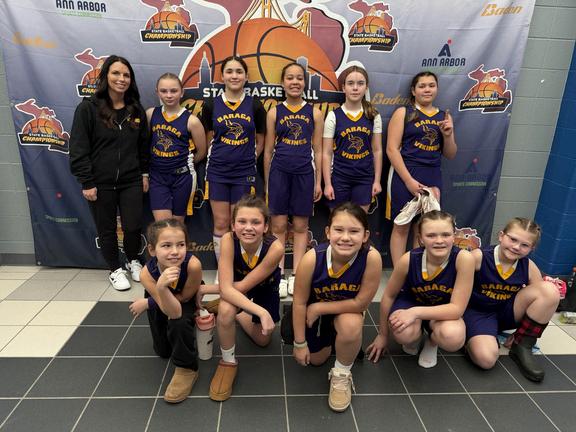
Baraga Schools 5 grade girls’ basketball team finished in 4 place at the Michigan Middle School Basketball Championship in Brighton, Michigan
th
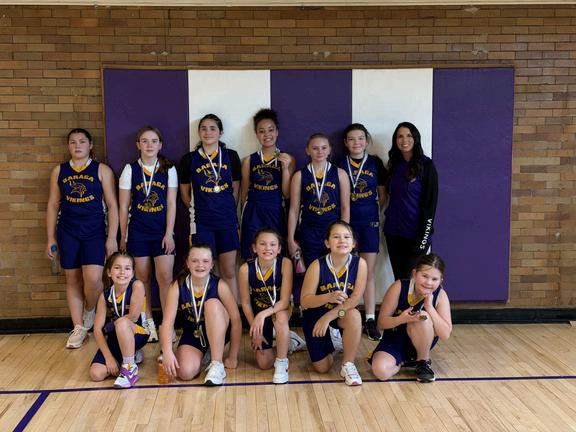
Baraga Schools 5 grade girls’ basketball team took home 1 place at the L’Anse Hoops Havoc basketball tournament
st
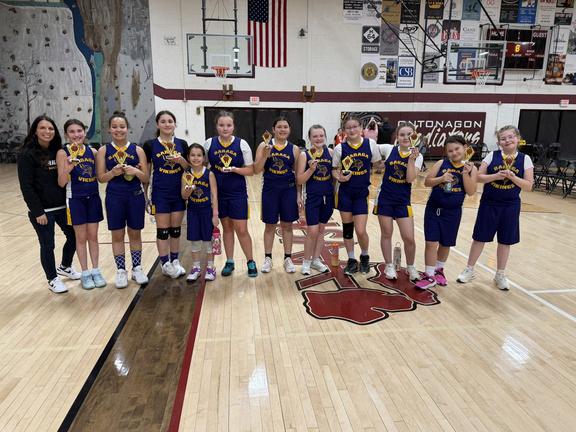
Baraga Schools 5/6 grade girls’ basketball team took home 1 place at the Ontonagon Hoopla basketball tournament st
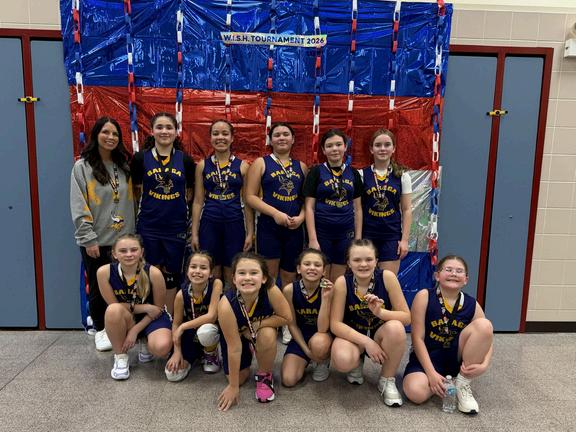
Baraga Schools 5 grade girls’ basketball team took home 1 place at the W.I.S.H. basketball tournament.
st