KBIC NEWS
MIDSUMMER MOON

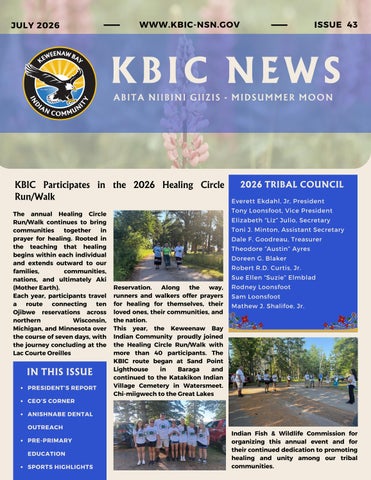
KBIC Participates in the 2026 Healing Circle Run/Walk
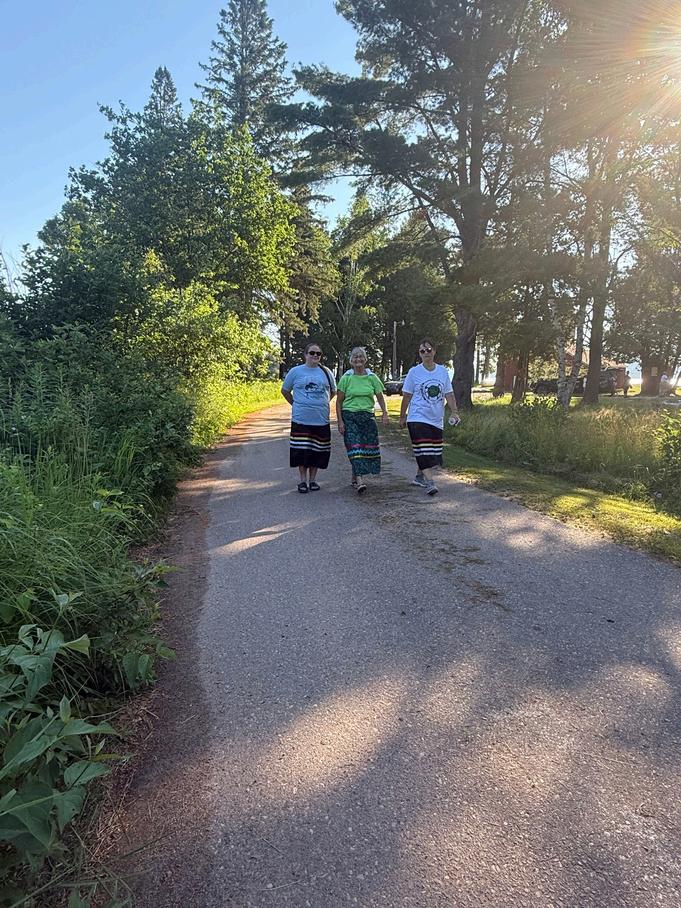
The annual Healing Circle Run/Walk continues to bring communities together in prayer for healing. Rooted in the teaching that healing begins within each individual and extends outward to our families, communities, nations, and ultimately Aki (Mother Earth).
Each year, participants travel a route connecting ten Ojibwe reservations across northern Wisconsin, Michigan, and Minnesota over the course of seven days, with the journey concluding at the Lac Courte Oreilles
IN THIS ISSUE
PRESIDENT’S REPORT CEO’S CORNER
2026 TRIBAL COUNCIL
Everett Ekdahl, Jr, President
Tony Loonsfoot, Vice President
Elizabeth “Liz” Julio, Secretary
Toni J. Minton, Assistant Secretary
Dale F. Goodreau, Treasurer
Theodore “Austin” Ayres
Doreen G Blaker
Robert R D Curtis, Jr
Sue Ellen “Suzie” Elmblad
Reservation. Along the way, runners and walkers offer prayers for healing for themselves, their loved ones, their communities, and the nation.
This year, the Keweenaw Bay Indian Community proudly joined the Healing Circle Run/Walk with more than 40 participants. The KBIC route began at Sand Point Lighthouse in Baraga and continued to the Katakikon Indian Village Cemetery in Watersmeet. Chi-miigwech to the Great Lakes
Rodney Loonsfoot
Sam Loonsfoot
Mathew J. Shalifoe, Jr.

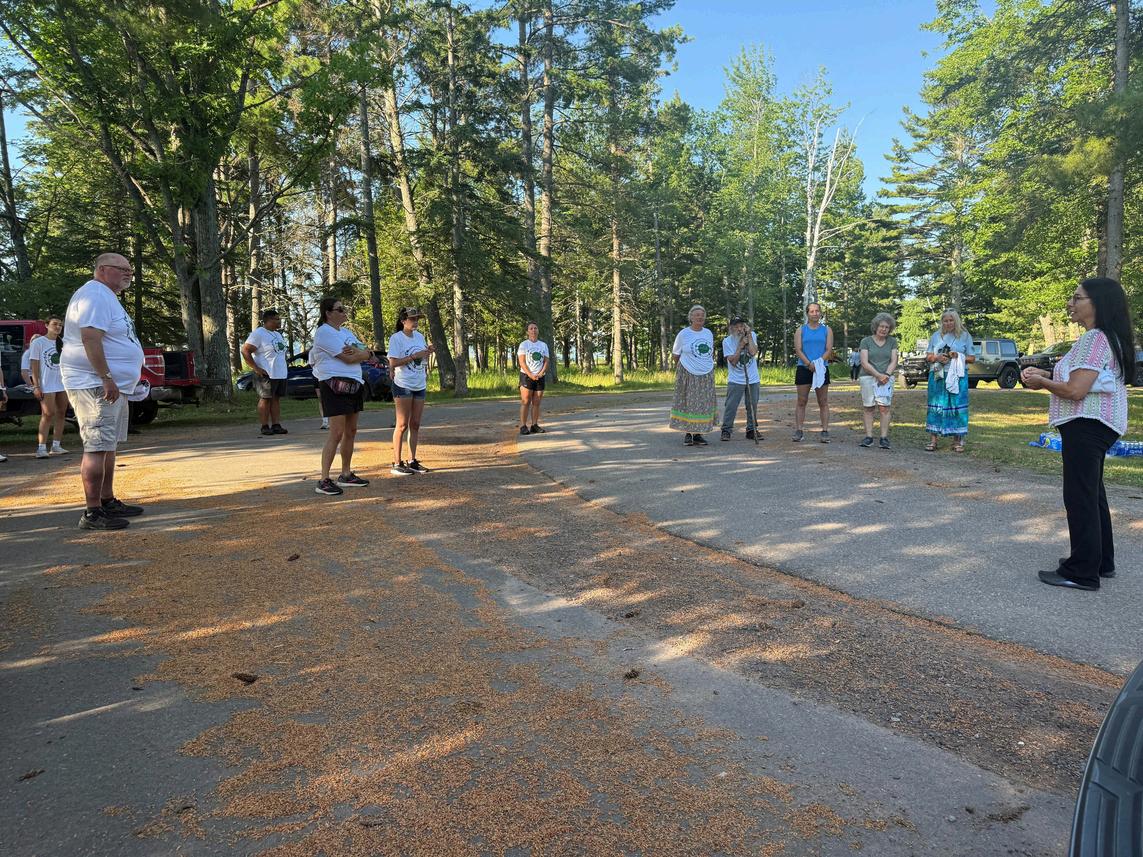
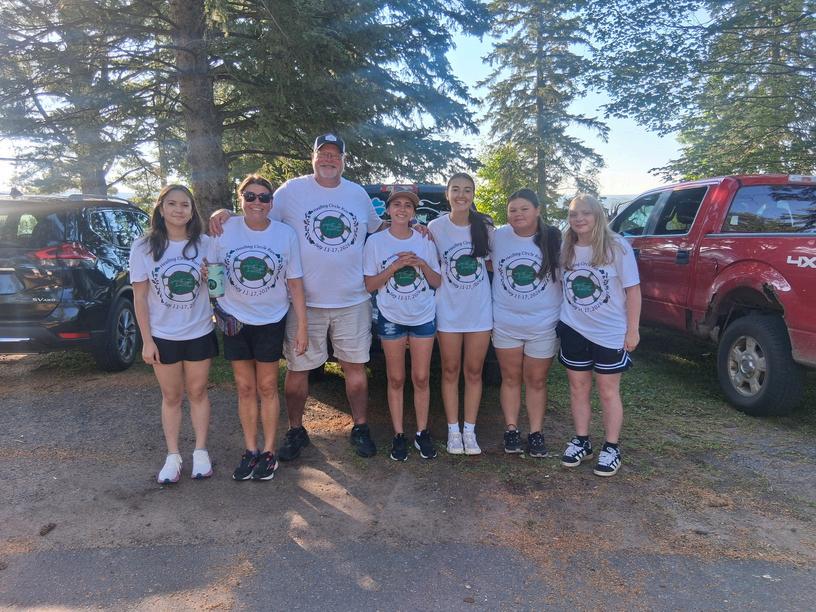
Indian Fish & Wildlife Commission for organizing this annual event and for their continued dedication to promoting healing and unity among our tribal communities.
Boozhoo, Community Members,
The month of June continued to be a busy and productive time for the President's Office. Throughout the month, I worked closely with Tribal
Council, department directors, and staff to review ongoing projects, discuss operational needs, and make decisions that support the long term interests of the Keweenaw Bay Indian Community. I also continued to meet with Tribal, state, and federal partners to voice our issues that impact our community.
Motions Made by Tribal Council for June:
Motion approved to donate $10,000 to the Baraga Lumberjack Days Fireworks
Motion approved to donate $2,000 to the Festival of Nations 2026
Motion approved to apply the changes to the KBIC Enterprise Employment Manual.
Motion approved for a deadline extension for a big boat commercial Fishing license.
Motion approved to update Tribal Social Services Expungement application form.
Motion approved for the department head monthly reports for April 2026
Motion approved for Tribal Social Services Department Organizational Chart changes.
Motion approved for the bid for the Zeba waterline replacement from MD contracting for $631,434.45
Motion approved for a donation to Deanna Foucaults for $1,500.00 for medical expenses.
Motion approved for a donation to Diana Carlson for $1,500.00 for medical expenses.
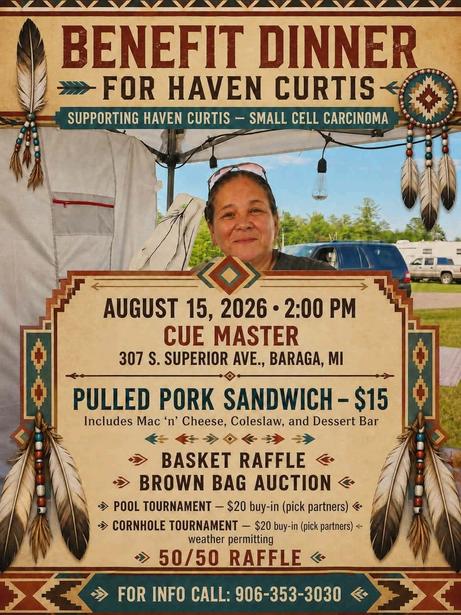
Motion approved for a donation to Haven Curtis for $1,500.00 for benefit account.

Motion approved for a donation to James Shelifoe for $1,500.00 for medical expenses
Motion approved for the admission and occupancy policy amendment.
Motion approved for the bid from ERA
Chevrolet inc.
Motion approved for the proposed grade scale for nurses at KBIC Health Systems.
Motion approved for resolution KB-0302026 allotment UFI Acquisition.
Motion approved for resolution KB-0322026 Alana J. Miller-Scholfield residential lease.

Summer is in full swing, and it has been wonderful to see so much activity taking place throughout our community. This time of year brings opportunities for our youth to learn, grow, and make lasting memories, and I am grateful for the many
departments and staff who make these experiences possible.
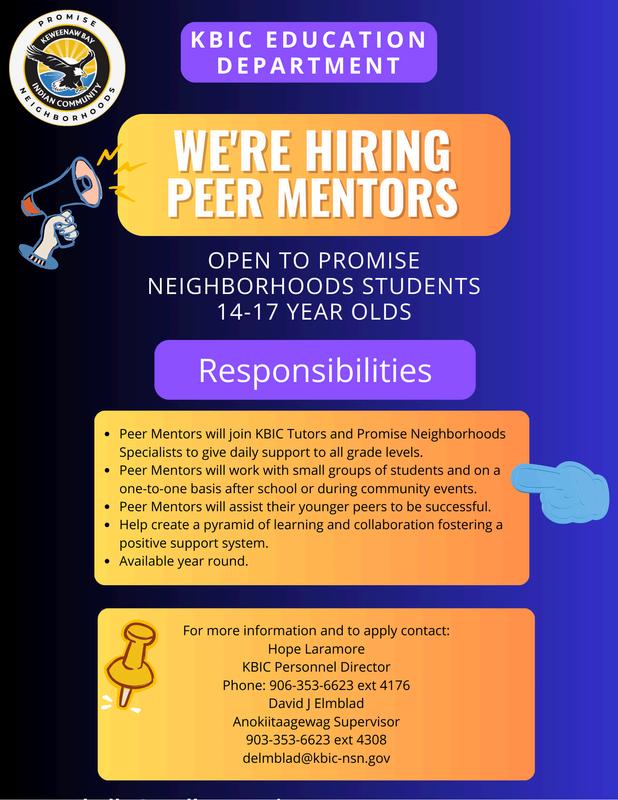
Our Summer Day Camp and Promise Neighborhood summer camps are keeping our youngest community members active, engaged, and connected throughout the summer. Our Summer Youth Employment Program and Peer Mentor Program continue to provide valuable work experience while helping participants develop important leadership and job skills. This year, we are also excited to offer our new Career Exploration Camp, where youth are learning about a variety of career opportunities, meeting professionals, and exploring pathways that may help shape their futures. Investing in our youth today helps build a stronger community for tomorrow, and I appreciate everyone who has dedicated their time to these programs.
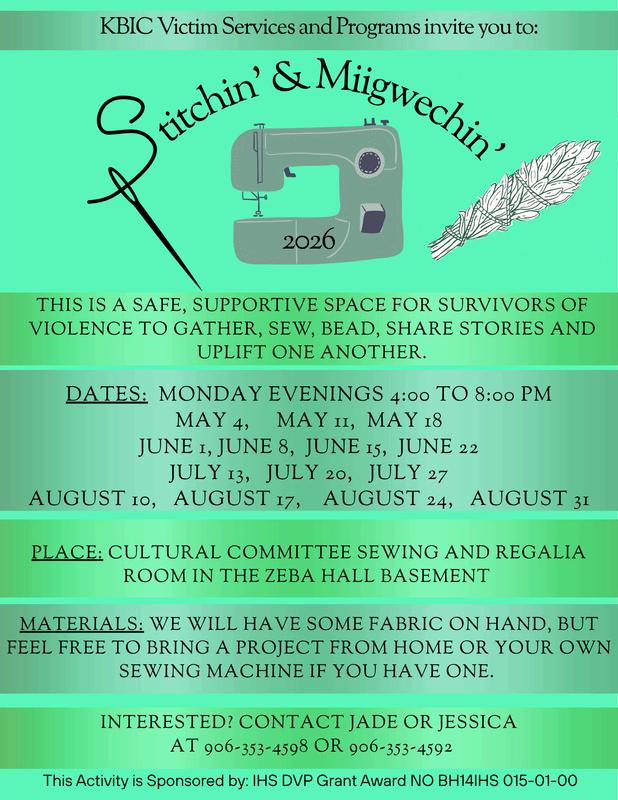
I also want to highlight a new opportunity offered through Victim Services and Programs. Beginning this summer, the department is hosting Coffee with an Advocate on the first Tuesday of each month. Community members are invited to stop in, enjoy a cup of coffee, and learn more about the services and support available through our Survivor Advocate. Sometimes simply knowing where to turn can make all the difference, and I encourage anyone interested to take advantage of this welcoming opportunity.
Tribal Government is also preparing for another important season - budget development. Departments will soon begin working on their Fiscal Year 2027 budgets. This process is about much more than numbers; it gives us an opportunity to reflect on the past year, evaluate our financial stewardship, and thoughtfully plan for the future. It is a collaborative effort that helps ensure we continue providing quality programs and services while responsibly managing Tribal resources.
You may also notice several office relocations taking place throughout Tribal Government. These moves are part of our ongoing efforts to improve operations and better serve the community. Promise Neighborhood's K-12 staff have relocated to the Gikendaasowin Explorers Camp, our Post-Secondary Education staff have moved into the new Career and Technical Education (CTE) Building, and Social Services will soon relocate to the newly acquired McGillan Street building, allowing Outpatient Substance Abuse Services to move into the former Social Services offices next to Eagle Radio. I appreciate everyone's patience during these transitions and extend a special thank you to our Public Works Department for coordinating each move.
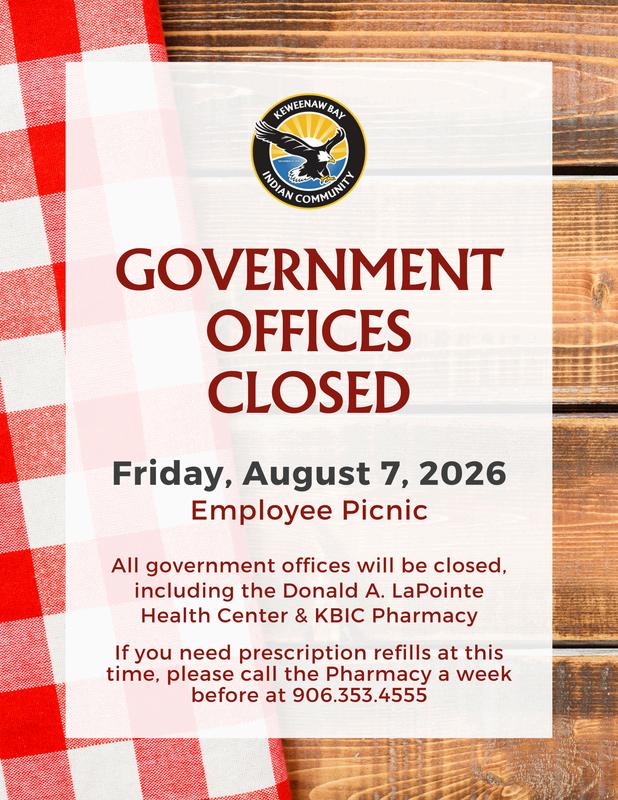
Finally, I hope our employees will take time to enjoy our Summer Employee Picnic on August 7. This event is a small way of recognizing the dedication and hard work our employees demonstrate every day in service to the community. I look forward to spending time together and celebrating all that we accomplish as one team.
As always, thank you for your continued support of our community and Tribal Government. I hope you enjoy the remainder of your summer.
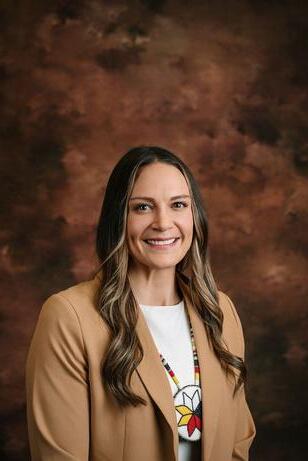
Brigitte
Around the Community
Around the Community
Improving Trauma-Informed End-ofLife Support for Indigenous Populations
By: Holly Vossell, Hospice News
The end of life can come with significant challenges for underserved and underresourced patient populations, including indigenous tribal communities. Hospices seeking to improve quality and disparities need a trauma-informed care delivery approach, as well as greater cultural staffing diversity and education.
Culturally inclusive recruitment and retention policies can help hospices to bridge wide gaps of unmet needs among terminally ill patients and their families, according to Dr. Sophina Manheimer Calderon, CMO, Keweenaw Bay Indian Community (KBIC) Health System in Baraga, Michigan. Calderon is from the Navajo Nation in Arizona and previously worked within the tribal community’s health system to collaborate with local hospice and home health providers.
Increasing diverse staff representation allows hospices to have a deeper understanding of the unique challenges a community faces alongside the cultural nuances that directly impact quality and access, Calderon said. Culturally representative staff are important in building trusting within indigenous communities.
“Working with indigenous families is [about] learning about Native Health Care and its history,” Calderon told Hospice News. “Organizations that are open to that education understand and recognize the historical, intergenerational trauma effects and how community members access care with that trauma-informed approach. It really says a lot about an organization that shows
respect for the culture, the community, for the tribe. [It’s] being available to them from a tribal health and indigenous resource standpoint, because they might have a distrust of hospice care or health care systems.”
Bridging gaps of disparity, distrust, mistreatment
A lack of culturally inclusive care and mistrust of the health system are contributing to low hospice utilization among Native Americans. These populations are the least likely to enroll in hospice among racial and ethnic groups, according to the National Alliance for Care at Home.
Only 11,682 Native American individuals died in hospice care in 2024, compared to more than 2 million white decedents and upwards of 272,000 African Americans, the Alliance reported.
Geographic and financial challenges also play a role in access.
Native American populations have experienced several barriers to improved quality at the end of life, according to Calderon. It’s important that hospice providers understand the depth of historic racial discrimination, as well as unethical and unlawful treatment, that these individuals have encountered. Being culturally aware and informed is a crucial part of building lasting and sustainable relationships within indigenous communities, she indicated.
Among the most significant cases of mistreatment among indigenous populations was a study by the U.S. General Accounting Office (GAO). The study found that 3,406 Native American women across four of 12 Indian Health Service regions were sterilized without their consent from 1973 to 1976.
“Native people in general have a long-standing history of mistrust [with] experiences tied to colonization, boarding schools, forced relocation, prior sterilization and
discrimination,” Calderon said. “Having that patient trust us and then at the end of life have a hand off of care to the other team, it’s quite daunting to them and might even lead to late referrals to hospice. It’s having that reassurance to work with them with overlapping care with the hospice to bridge that time.”
Native Americans often face unique problems, particularly those who live in remote areas, researchers reported in survey findings published in 2020 in the Journal of Rural Health. The research spanned two years of insights of 317 Native Americans 18 and older living in rural regions across the United States, as well as 1,066 white adults.
One-third of the surveyed individuals reported experiencing problems accessing health care when needed. Additionally, about 28% of the respondents cited issues with the quality of health care they received. Native Americans also reported experiencing higher rates of racial violence, unfair police treatment and “major” housing problems compared to white respondents.
Increased federal funding and policy evolutions are needed to improve health care and other disparities, said the researchers. “Rural Native American adults report ongoing and widespread problems with health care, discrimination, the police, safety and housing,” the researchers stated. “These findings support many national policy recommendations to improve federal funding and oversight for programs serving Native American populations living in rural areas.”
Misperceptions about hospice can represent a barrier to improved understanding about these services, Calderon stated. Meanwhile, misunderstandings about cultural beliefs about death and illness serve as a significant barrier on the hospice provider side. Some organizations may lack insight into the culturally appropriate ways to discuss dying
Around the Community
processes with certain indigenous communities, she said.
Community relationships allow hospices to have a mutual educational avenue in which providers improve public understanding about their services and increase cultural awareness and education among their own staff, Calderon stated. Hospices can improve access through stronger outreach and a multifaceted communication approach. Local community educational sessions can go a long way toward bridging gaps of knowledge, she added.
Key to improved quality is having a traumainformed and culturally sensitive approach to hospice care delivery, according to Calderon. This approach involves including tribal health care providers in a hospice’s interdisciplinary and leadership team meetings. A collaborative and dynamic relationship between tribal and hospice care teams could go a long way toward earlier access, better outcomes and more person-centered support.
“Hospice programs that come back to us regularly and check in on our needs often get feedback about their services and how they can do better,” Calderon said. “They’re actually interested in having an engaged, long-term relationship with us [and] that speaks volumes. It gives a huge advantage in having trust, it means a lot to our patients supporting indigenous native communities.”

Holly Vossel, senior reporter for Hospice News, is a word nerd and a hunter of facts with reporting roots sprouting in 2006. She is passionate about writing with an impactful purpose, and developed an interest in health care coverage in 2015. A layered onion of multifaceted traits, her interests include book reading, hiking with her dog, roller skating, camping, kayaking and creative writing.
Around the Community

Anishnaabe Dental Outreach
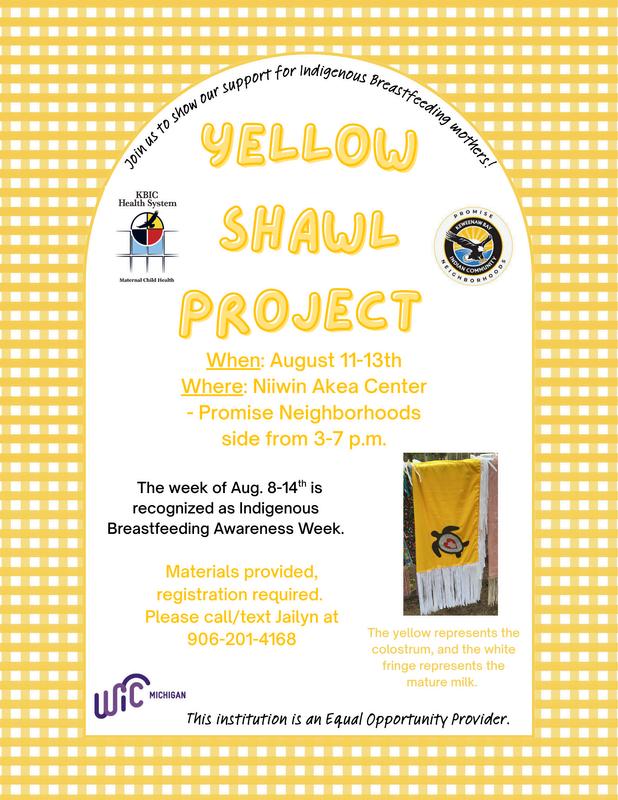
National Breastfeeding Month
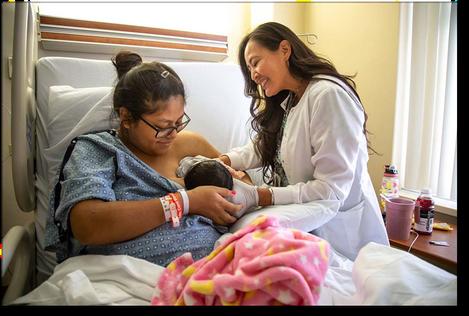
The United States Breastfeeding Committee designates August as National Breastfeeding Month, so designated by the United States Breastfeeding Committee. The American Academy of Pediatrics and the American Dental Association recommend nursing for the first year of a baby’s life. Why? Nursing is a healthy choice for both moms and babies, with many benefits, including a fast and strong bond between baby and Mom.
Breastfeeding reduces the risk for Baby Bottle Tooth Decay. This type of tooth decay often occurs when a baby is put to bed with a bottle containing formula, milk or fruit juice.
The ADA found that babies who were exclusively breastfed for 12 months or more were less likely to have teeth alignment issues such as open bites, crossbites, and overbites.
Still, a breastfed baby may need braces someday. Other factors, including genetics, pacifier use, and thumb sucking affect alignment. But why not control those factors that you can control?
Breast milk and Baby:
Is easier for babies to digest than formula
Is the best source of nutrition for baby
Changes to meet the nutritional needs of a growing baby.
Helps protect baby from infection and illnesses like ear infections by providing immunities from Mom to the baby
May lower a child’s risk of obesity and asthma
Can also help lower baby's risk of sudden infant death syndrome (SIDS).
Breastfed infants tend to have fewer speech problems than bottle-fed infants
Breastfeeding and Mom:
Moms who breastfeed have lower rates of ovarian and breast cancer
Moms who breastfeed have lower rates of high blood pressure
Moms who breastfeed have lower rates of Type 2 diabetes
Breastfeeding helps the Mother’s body return to normal and decreases blood loss after the baby is born
To get ready to breastfeed, while Mom is pregnant, she can:
Talk to the doctor or midwife about breastfeeding
Do her own research
Ask family members for support
Realize that in the first couple of months, babies need to nurse every few hours, even at night
Learn about breast pumping, especially if Mom wants other family members to be able to feed the baby
Find out how to eat healthy while breastfeeding
Once baby is born:
The doctor, nurse or midwife know that immediate skin-to-skin contact with baby is important, and nursing is the best way to do that
Nurse whenever baby is hungry
Ask health professionals for help anytime. They can answer questions about nursing.
Breast milk is the perfect food for baby. Breastfeeding gives Mom and baby a closeness that is delightful. The emotional satisfaction is intense and is so unique for each Mom and her baby, truly a time to be cherished
References:
https://nativenewsonline.net/health/breastf eeding-is-healthy-for-babies? utm source=Native+News+Online&utm ca mpaign=cc3315530bEMAIL CAMPAIGN 2021 11 24 COPY 01&ut m medium=email&utm term=0 dfd254033 7-cc3315530b-1318482848
https://americanpregnancy.org/healthypregnancy/breastfeeding/benefits-ofbreastfeeding/#:~:text=Breastfeeding%20yo ur%20baby%20has%20health%20benefits %20for%20you%2C,decreases%20blood%2 0loss%20after%20your%20baby%20is%20 born.
Join the Conversation: August National Health Observances - News & Events | health.gov
https://health.gov/news/201907/joinconversation-august-national-healthobservances
https://www.cdc.gov/breastfeeding/pdf/BFGuide-508.PDF
https://www.cdc.gov/breastfeeding/aboutbreastfeeding/index.html
Anishnaabe Dental Outreach
https://health.gov/myhealthfinder/pregnancy/ doctor-and-midwife-visits/breastfeed-yourbaby? ga=2.87626584.1937774865.165754805322007812.1657548053
https://www.yourdentistryguide.com/news/br eastfeeding-dentalhealth/#:~:text=There%20are%20many%20ot her%20factors%20that%20impact%20alignm ent%2C,issue%20exclusive%20to%20the%20 use%20of%20baby%20bottles
https://www.mouthhealthy.org/en/aztopics/b/breastfeeding
Mnamaadizin. Our Mission is to improve oral health through benefit plans, advocacy, and community support.
Jessica A. Rickert, DDS, Anishinaabe Dental Outreach jrickert@deltadentalmi.c om; jarickert@charter.net
Around the Community
Around the Community
Summer Fun at KBIC Child Development Center
Submitted By: Calli Sweeney, Education/Disabilities Coordinator
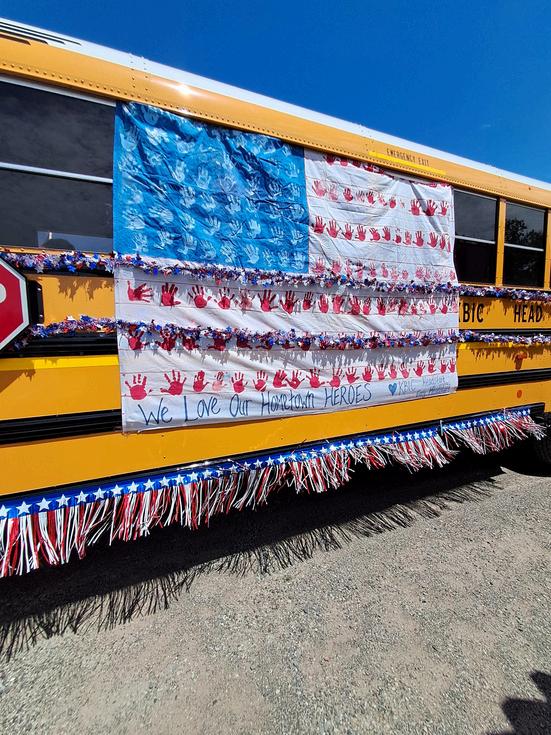
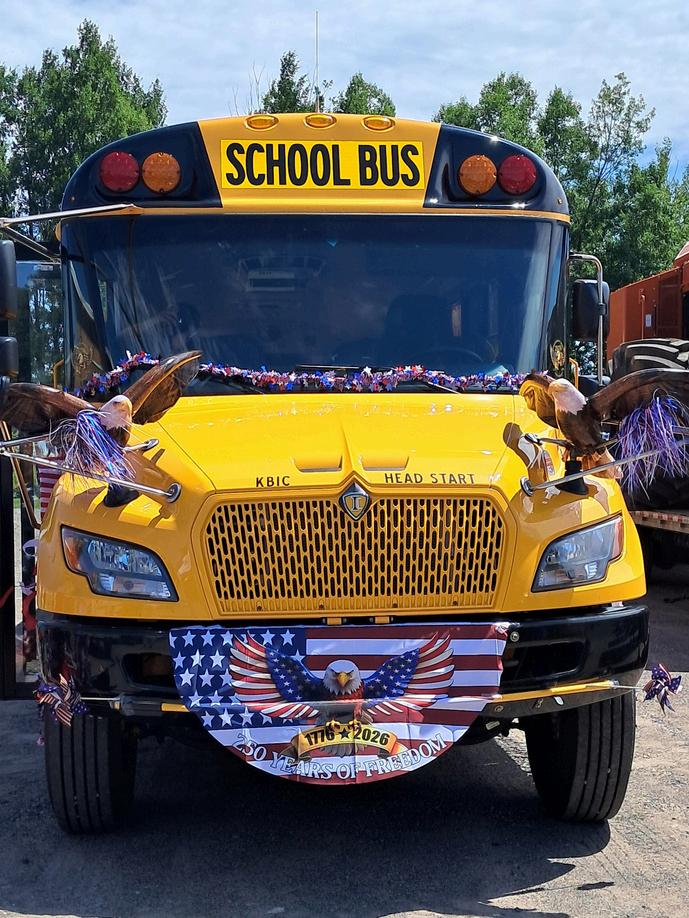
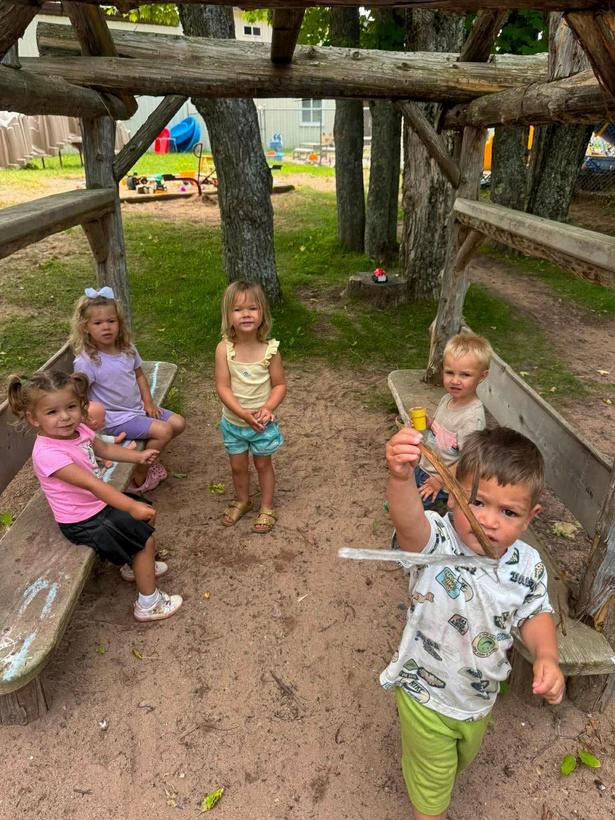
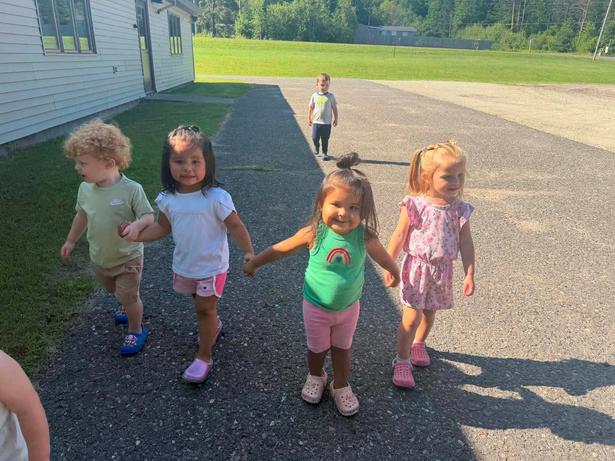
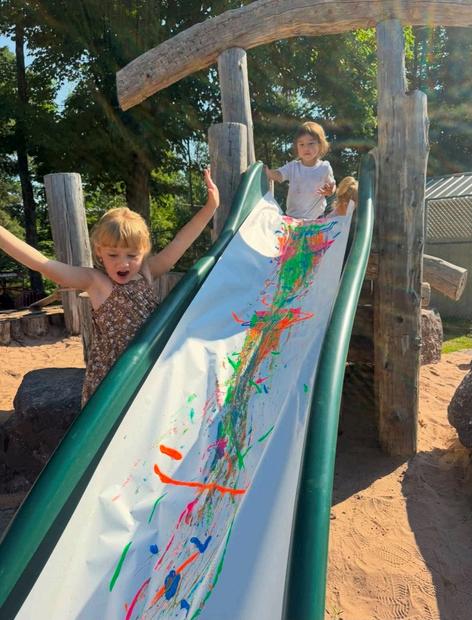
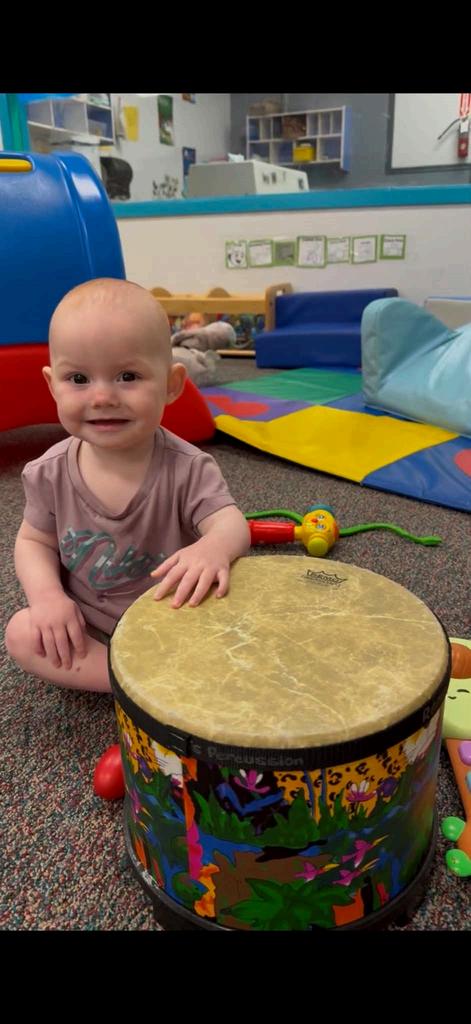
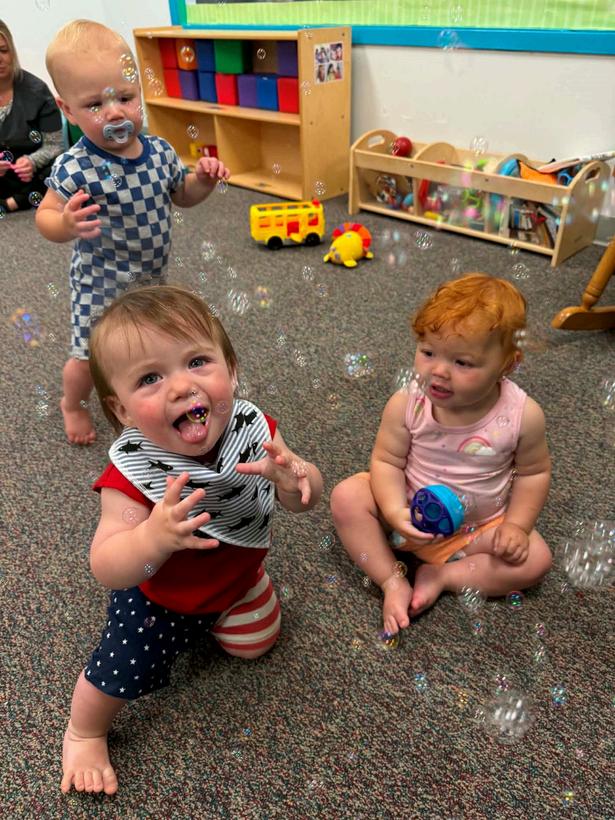
Summer has been filled with fun, excitement, and community spirit at the KBIC Child Development Center! One of the highlights this month was participating in the Fourth of July Parade. Our bus proudly joined the celebration, helping showcase our program and bringing smiles to community members along the parade route.
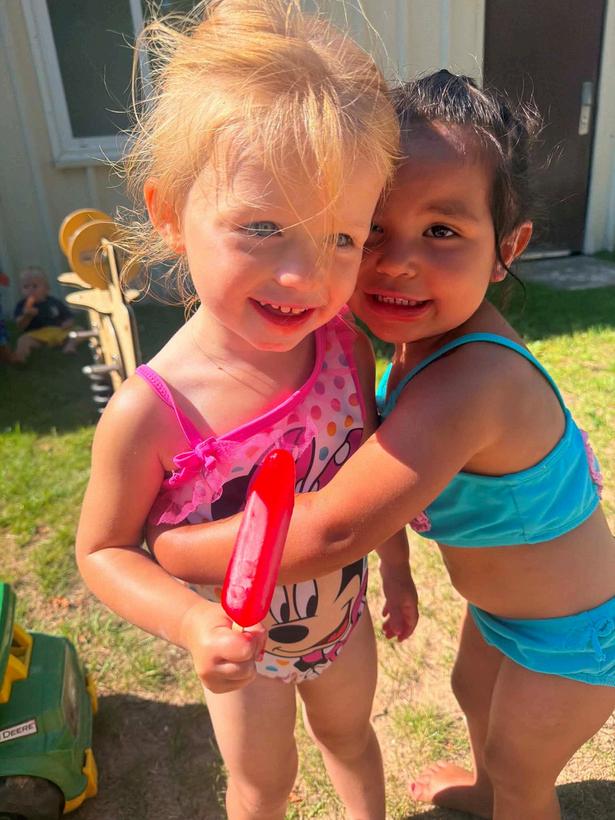
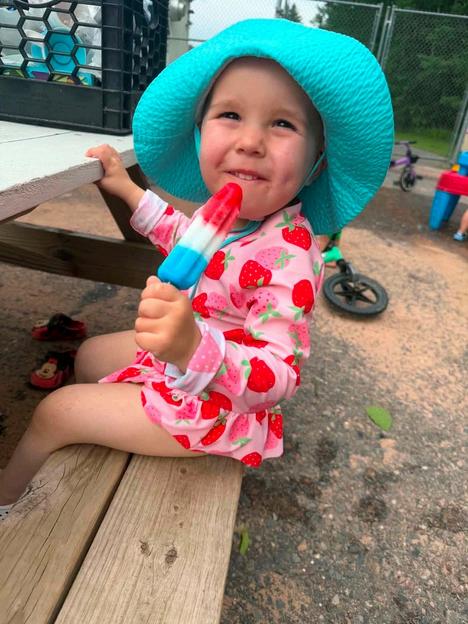
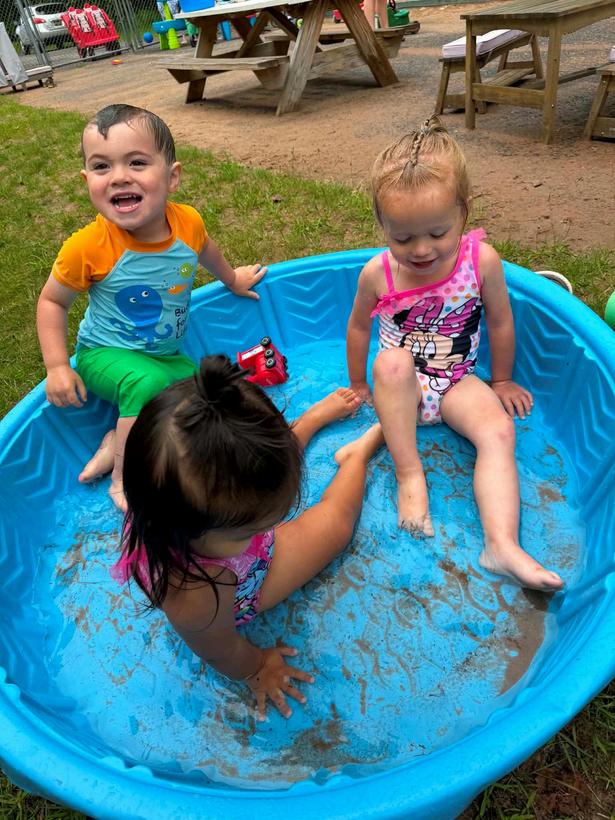
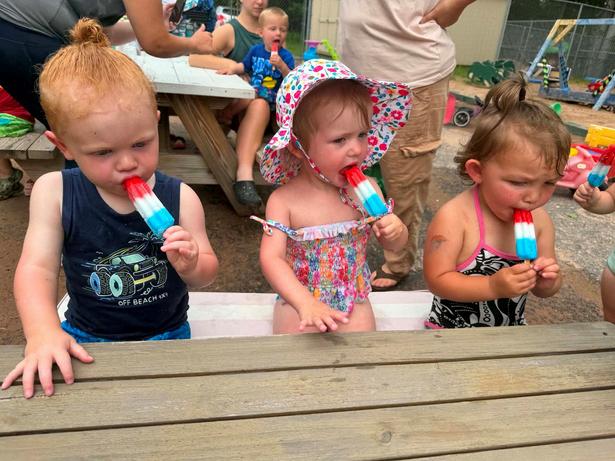
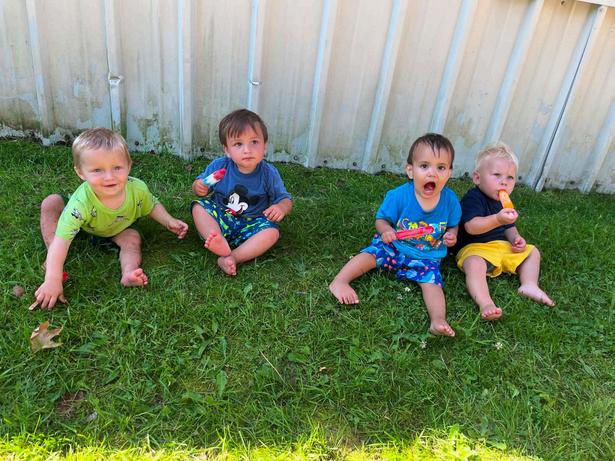
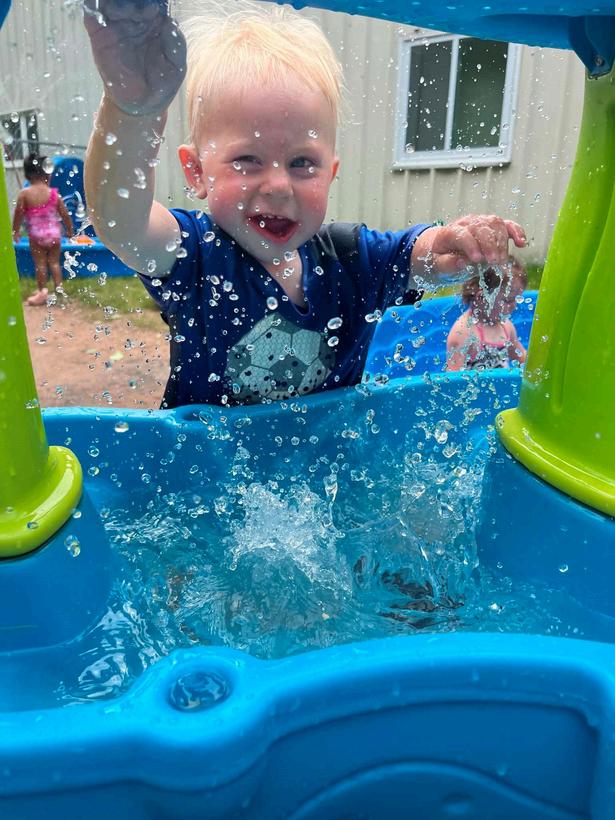
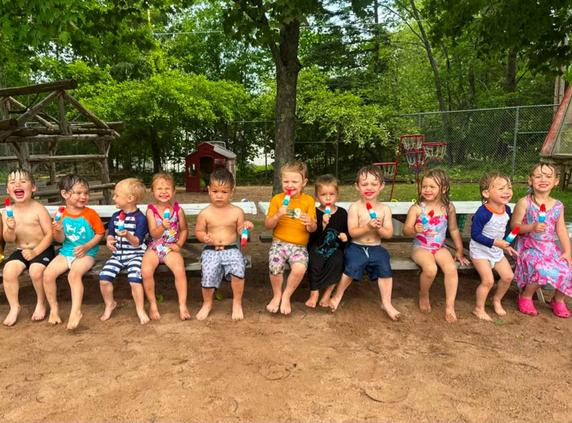
The chidlren also have been making the most of the warm summer weather. They have enjoyed water play activities that help them stay cool while having fun with their friends. From splashing and laughing outdoors to cooling off with tasty popsicle treats, summer has provided many opportunities for memorable experiences and joyful learning.
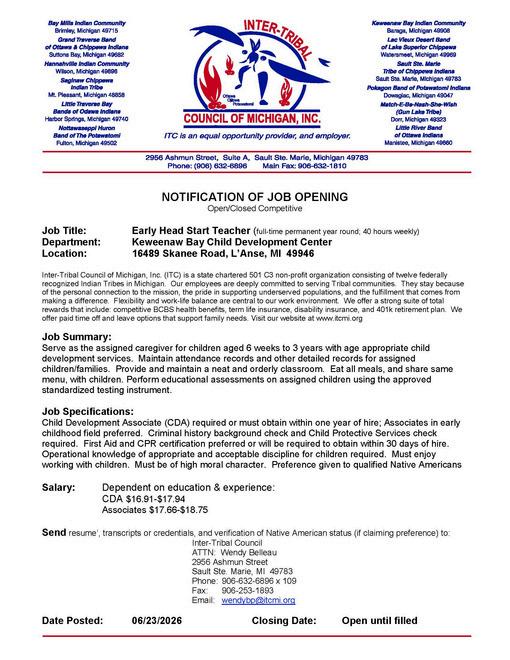
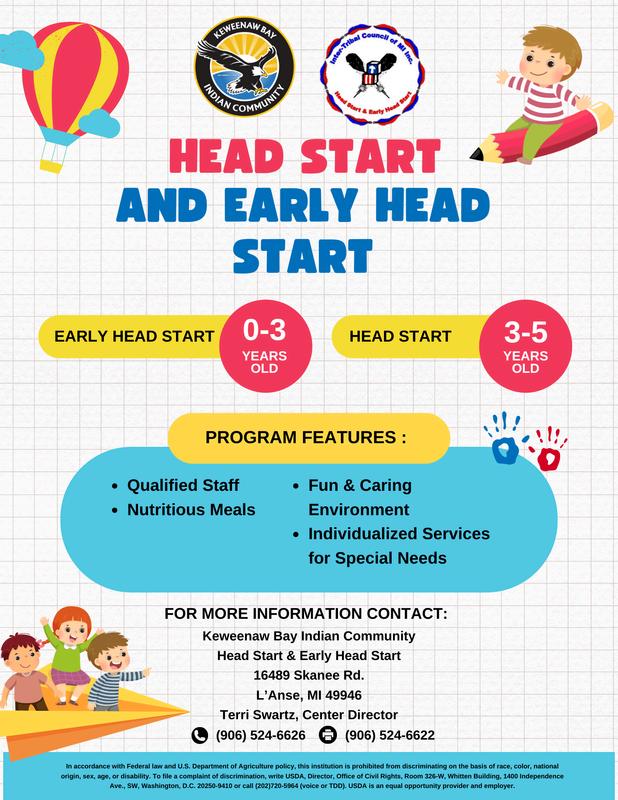
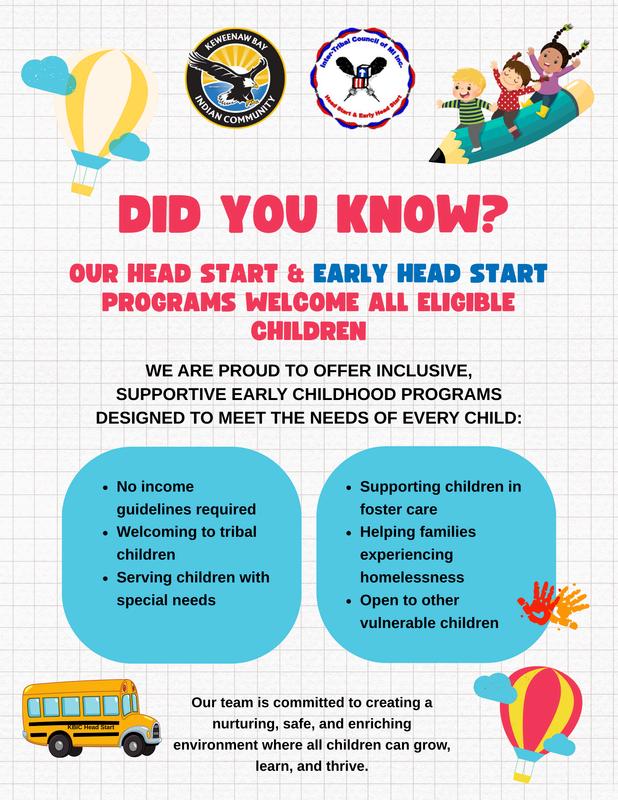
The fun doesn’t stop here! We still have Head Start openings available and encourage interested families to reach out and learn more about all our program has to offer.
Head Start

Around the Community

Around the Community
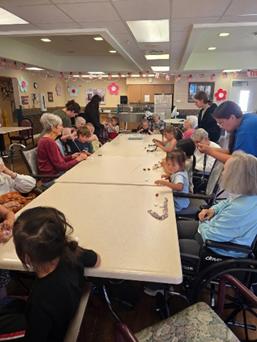
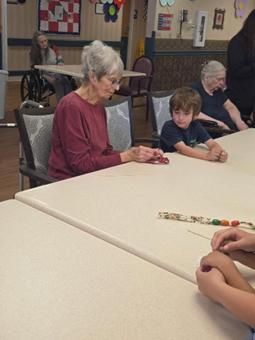
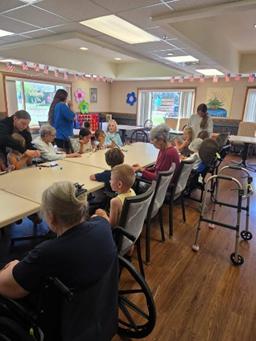
June Activities at Pre-Primary Education
On June 11, 2026, our preschool class visited Bayside Village to make bracelets. They did so well and the residents loved being able to interact with the children. We can’t wait to go back and visit again.
Pre-Primary Education
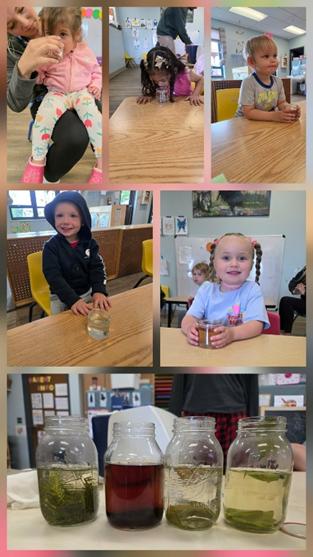
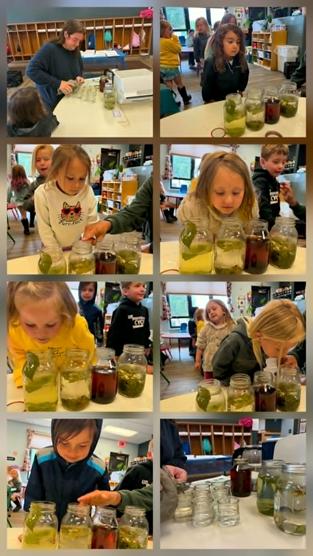
On June 25, 2026, Austin and Anthony came to visit the center to teach about the benefits of drinking different teas. They brought four different kinds of teas for us to try including cedar, raspberry, wintergreen, and elderberry. The white cedar (giizhik) tea contains vitamin C which helps boost our immune system. The raspberry (miskomin) tea has a calming effects among other benefits. The wintergreen (wiinisiibag) tea is known for having a key ingredient that is found in aspirins, and is appreciated for its ability to relieve pain. The black elderberry (bibigwemin) tea is used to help minimize the symptoms of flu and colds; it is abundant in antioxidants. Each child had the chance to pick and try the teas along with the teachers. We always love when Austin comes to teach us and can’t wait to see what we will learn about next time
Handicapped Accessible Van Guidelines
Eligibility
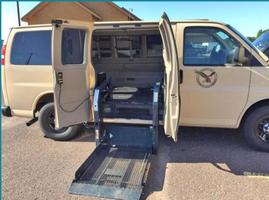
Enrolled KBIC members and their non-KBIC family members who are not mobile enough to be transported without a wheelchair lift (Eligible User) are eligible to use the Handicap Accessible Van (HAV).
Overview
The driver of the HAV assumes the duty of obeying all motor vehicle laws, maintaining the vehicle properly at all times, and complying with the following guidelines.
Vehicle Purposes
The HAV shall be used for transportation to medical appointments or other purposes approved by the CEO or Tribal President.
Authorized Driver
Drivers must have a valid and unrestricted driver’s license and be able to drive a HAV. The HAV allows drivers to perform approved transportation activities safely, efficiently, and economically while promoting a positive image of the KBIC. Drivers are required to operate the HAV safely and responsibly.
The Tribal Center Receptionist shall instruct first-time HAV drivers on operating the wheelchair lift before their first trip.
Around the Community
The following rules apply to using the HAV: Only authorized individuals may drive. The vehicle must be picked up at the assigned location and returned to that location after use. It must also be locked, and the keys must always be secured. The driver must review the vehicle's use in the Driver Log, which is to be kept in the HAV at all times and returned for review at the end of use.
The driver and all passengers must wear available personal restraints, including seatbelts. Eligible users must be secured in the rear of the HAV utilizing the available locking straps. Report all accidents immediately to the appropriate police and the CEO's office (906)353-4104.
Maintenance
Drivers and eligible users must maintain the HAV at all times. The HAV must be returned in the same condition it was issued: clean and with a full fuel tank. The eligible user is to pay for the fuel cost.
The HAV should not be operated with any defect preventing safe operation during current and foreseeable weather and lighting conditions. Preventative maintenance, such as regular oil changes, tire pressure, and fluid checks, determines to a large extent whether eligible users will have a reliable and safe vehicle to drive. Please report any issues with the HAV you experience during your use of the CEO’s office.
The use of tobacco products by all occupants in the vehicle is prohibited and includes cigars, cigarettes, chewing tobacco, ecigarettes, and all other forms of tobacco.
Around the Community
Traffic Violations
Fines for parking, moving violations, etc. are the personal responsibility of the driver/eligible user.
Accidents Involving the HAV
In the event of an accident:
Do not admit negligence or liability. Do not attempt settlement, regardless of how minor.
If possible, get the name, address, and phone number of the injured person(s) and witness(s).
Exchange vehicle identification, insurance company name, and policy numbers with the other driver.
Take a photograph of the scene of the accident if possible. Call the police.
Complete the vehicle accident report in the HAV.
Turn all information over to the CEO’s office upon your return.
Thefts
In the event the HAV is stolen, notify local police immediately.
Failure to comply with these guidelines will result in denied future use and may result in additional costs to the eligible user.
The Driver/Eligible User is responsible for the actual possession, care and use of the HAV.
Members wishing to utilize the HAV can contact the Tribal Center Receptionist at (906)353-6623 or receptionist@kbic-nsn.gov to reserve it.
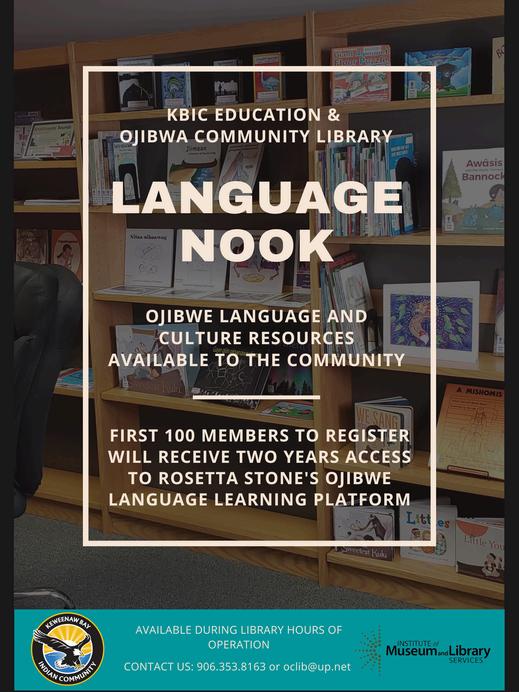
Around the Community
Around the Community
Keweenaw Bay Indian Community
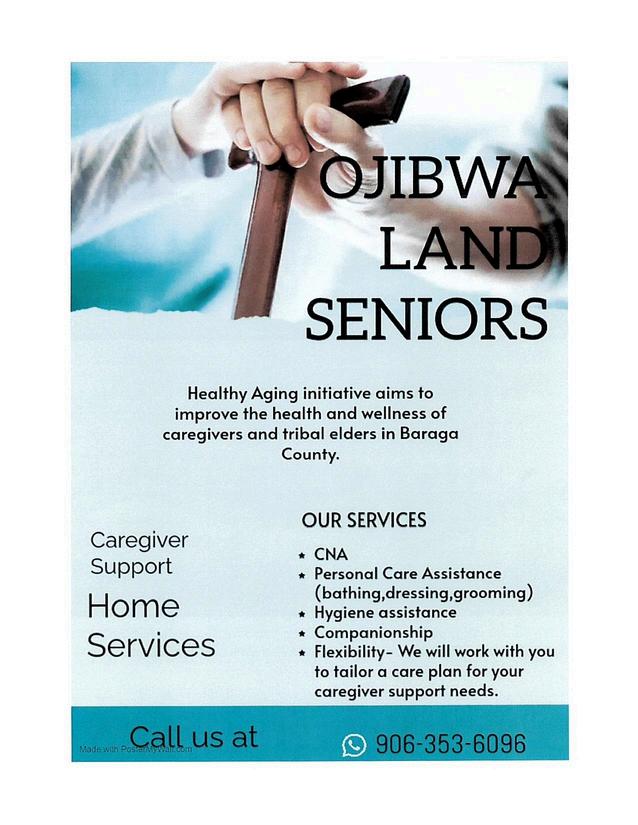
Selected for the 2026 Thome Aging Well Grant to Support Older Adults
Keweenaw Bay Indian Community (KBIC) was recently awarded an $180,000.00 2026 Thome Aging Well Grant to support the implementation of its high impact Energy Efficiency Project at the Superior View Apartment Complex in Baraga. KBIC is one of 24 organizations in Maryland and Michigan that received a combined $3.8 million to help older adults with lower incomes age safely and with dignity at home.
KBIC Housing Director, Doreen Blaker says, “This project will replace outdated windows that are 40 years old with modern, high efficiency, high performance units specifically designed for cold climates. This upgrade will immediately improve the safety, comfort and quality of life for the Tribal elders living at the Superior View Apartments. The project will also result in the reduction of long-term operating expenses, allowing scarce Tribal Housing resources to stretch further to help to meet growing housing needs.”
Launched in 2022 by Enterprise Community Partners – with funding from the Edward N. and Della L. Thome Memorial Foundation, Bank of America trustee – the Thome Aging Well program uses a trust-based philanthropic approach that allows local organizations to respond to community needs quickly and directly.
“These organizations will have the flexibility to meet older adults where they are and respond to the needs they see emerging in their communities,” said Stephany De Scisciolo, Enterprise vice president of Impact, Evaluation and Population Health. “This is how we ensure that these grants will have the
greatest impact—by placing them in the hands of trusted, community-based partners working every day to ensure older adults can remain in their homes and continue to live safely and comfortably in the neighborhoods they know.”
To date, the Thome Aging Well program has awarded over $23 million to 66 communitybased, government, and tribal organizations and reached over 14,000 older adults with aging-in-place home modifications, trainings and workforce supports, preventive health screenings, food access and delivery programs, and additional services.
About Enterprise Community Partners Enterprise is a national nonprofit that exists to make a good home possible for the millions of families without one. We support community development organizations on the ground, aggregate and invest capital for impact, advance housing policy at every level of government, and build and manage communities ourselves. Since 1982, we have invested $92.0 billion and created 1.1 million homes across all 50 states, the District of Columbia, Puerto Rico, and the U.S. Virgin Islands – all to make home and community places of pride, power, and belonging. Join us at enterprisecommunity.org.

Government
FULL-TIME POSITIONS
CUSTODIAN
PHARMACY TECHNICIAN
LAKE SUPERIOR PROGRAM COORDINATOR
RN OR LPN (NEW WAGE)
BEHAVIORAL NURSE (NEW WAGE)
CLEANING PERSON
VOCA COORDINATOR
PAYROLL CLERK
SEASONAL LABORER
FUELS MODULE CREW MEMBER
Current Job Postings
NATURAL RESOURCES TECHNICIAN (YOUNG ADULT 18-25)
SEASONAL PLANT TECHNICIAN
EARLY LEARNING SPECIALIST
HOME CARE AIDE
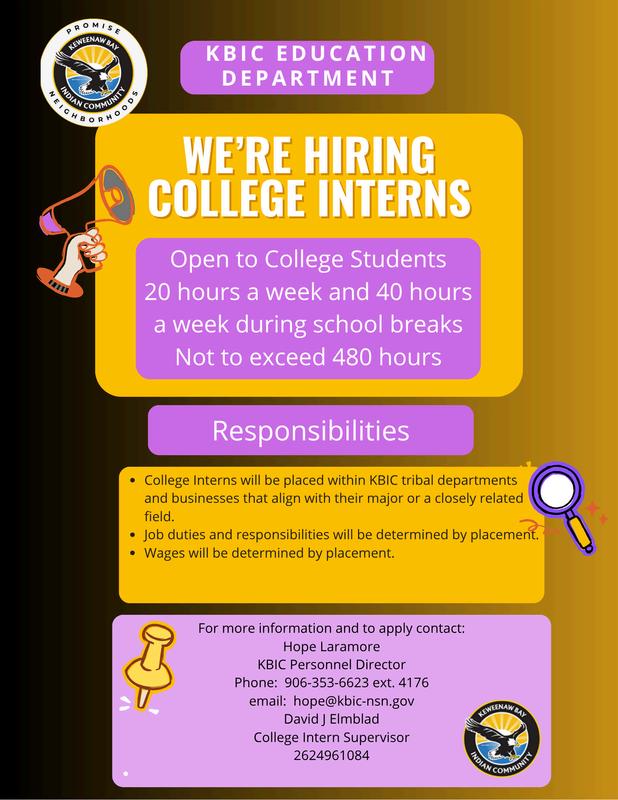
PLANT TECHNICIAN COLLEGE INTERN
ASSISTANT TRIBAL ATTORNEY/PROSECUTOR
TRIBAL ATTORNEY/PROSECUTOR
PHYSICIAN
DENTAL HYGIENIST
JAIL DIVERSION CASE MANAGER
GRANT ACCOUNTANT
ONGOING RECRUITMENT
CLEANING PERSON/LABORER
PHARMACIST OR PHARMACY TECHINICIAN
RECEPTIONIST/CLERICAL WORKER
RN OR LPN (NEW WAGE)
UNIT MANAGER (SUBSTANCE ABUSE PROGRAMS)
UNIT MANAGER (TRANSITIONAL HOME PROGRAMS & SERVICES)
CLOSING DATE
June 30, 2026, at 4 pm
July 1, 2026, at 4 pm
July 1, 2028 at 4 pm
July 8, 2026, at 4 pm
Open Until Filled
Open Until Filled
Open Until Filled
Open Until Filled
Open Until Filled
Open Until Filled
Open Until Filled
Open Until Filled

VAN DRIVER OR PREP COOK
WILDLAND FIREFIGHTER
YOUTH/FITNESS WORKER
Open Until Filled
Open Until Filled
Open Until Filled
Open Until Filled
Open Until Filled
Open Until Filled
Open Until Filled
Open Until Filled
Open Until Filled
CLOSING DATE
Open Continuous
Open Continuous
Open Continuous
Open Continuous
Open Continuous
Open Continuous
Open Continuous
Open Continuous
Open Continuous
Open Continuous
Current Job Postings
Enterprise

BARAGA - IMMEDIATE OPENINGS
BARTENDER
FRONT DESK CLERK
HOUSEKEEPING SUPERVISOR
LINE COOK
MAINTENANCE WORKER
REVENUE AUDITOR
ROOM ATTENDANT
TRUCK DRIVER/OPERATOR
VAULT CASHIER
ACCOUNT EXECUTIVE/SALES
COUNT TEAM MEMBER
F&B CASHIER
HOUSEKEEPER
LINE COOK
SECURITY OFFICER
CLOSING DATE
Until Filled
Open Until Filled Continuous Open Until Filled Open Until Filled
MARQUETTE - IMMEDIATE OPENINGS Open Until Filled Continuous Continuous Continuous Continuous Continuous 8/11/2026 CLOSING DATE
REVENUE AUDITOR
APPLY ONLINE: https://www.ojibwacasino.com/employment
Baraga HR Office: (906) 353-6333 x4188
Marquette HR Office: (906) 249-4200 x4705
*Tipped positions are guaranteed at least $15/hr in baraga and $16/hr in Marquette. Part-time = 37 hrs/week
Baraga HR Office at 906-353-6333 x4188 or Marquette HR Office at 906-249-4200 x4705

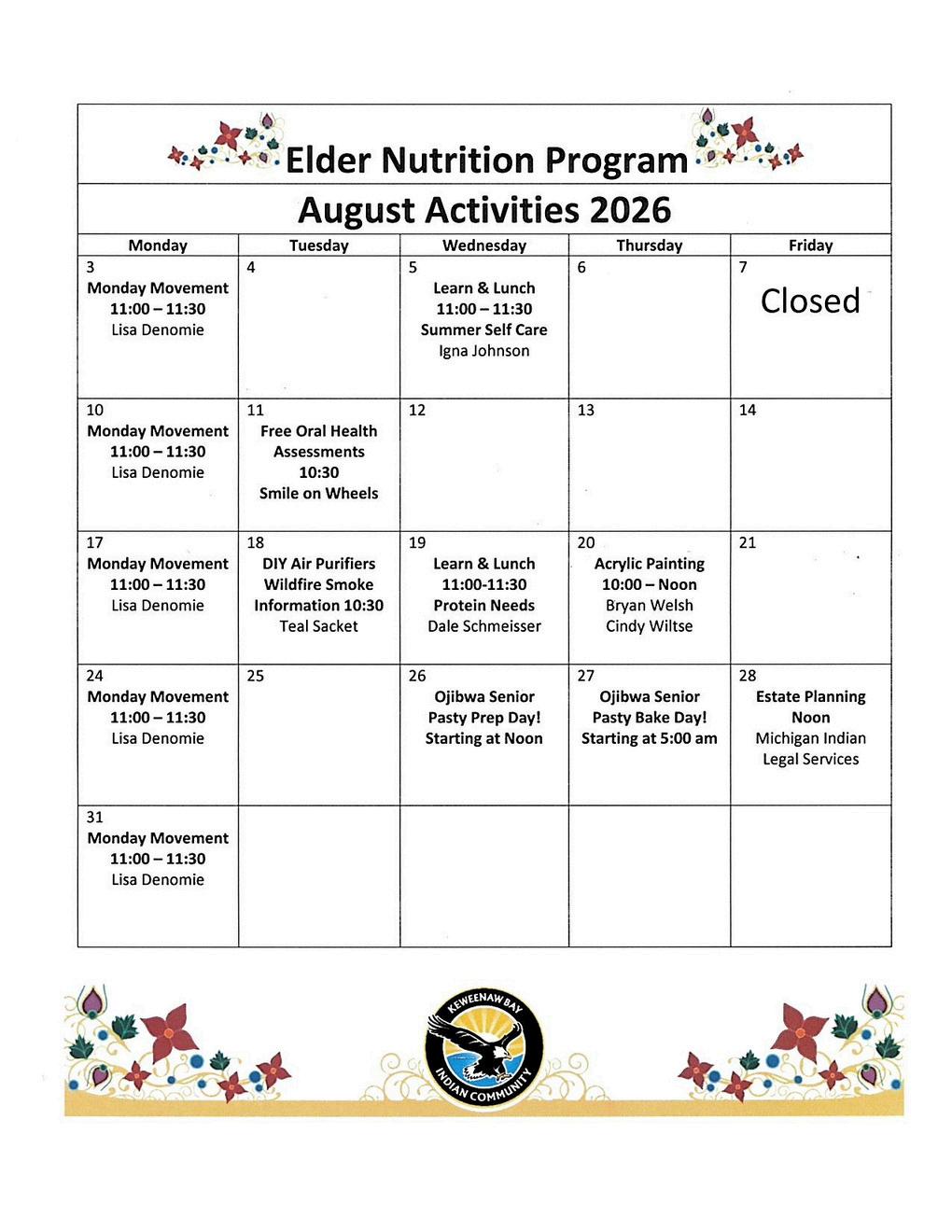
Elder Nutrition
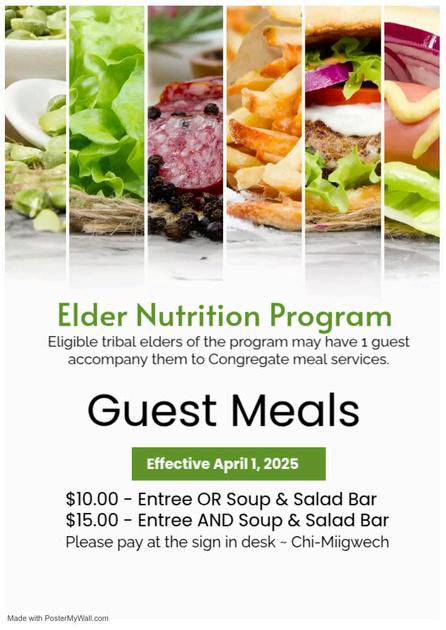
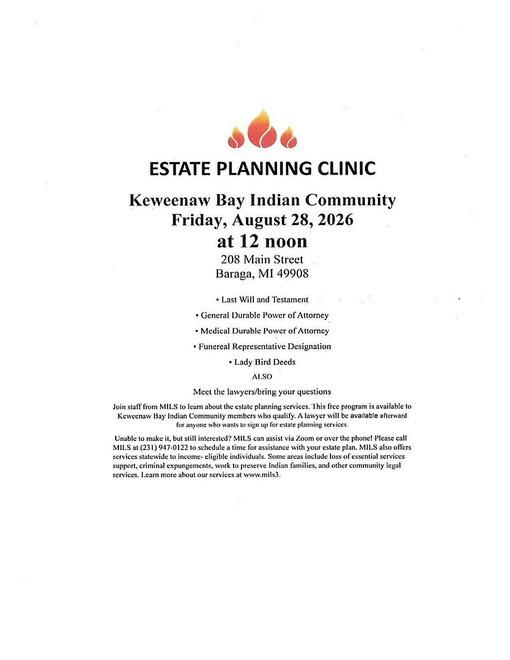
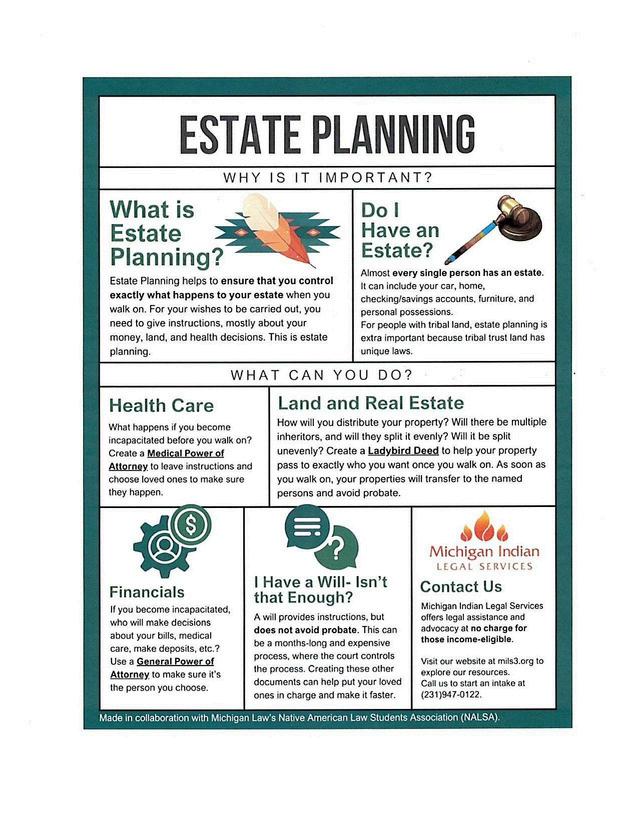
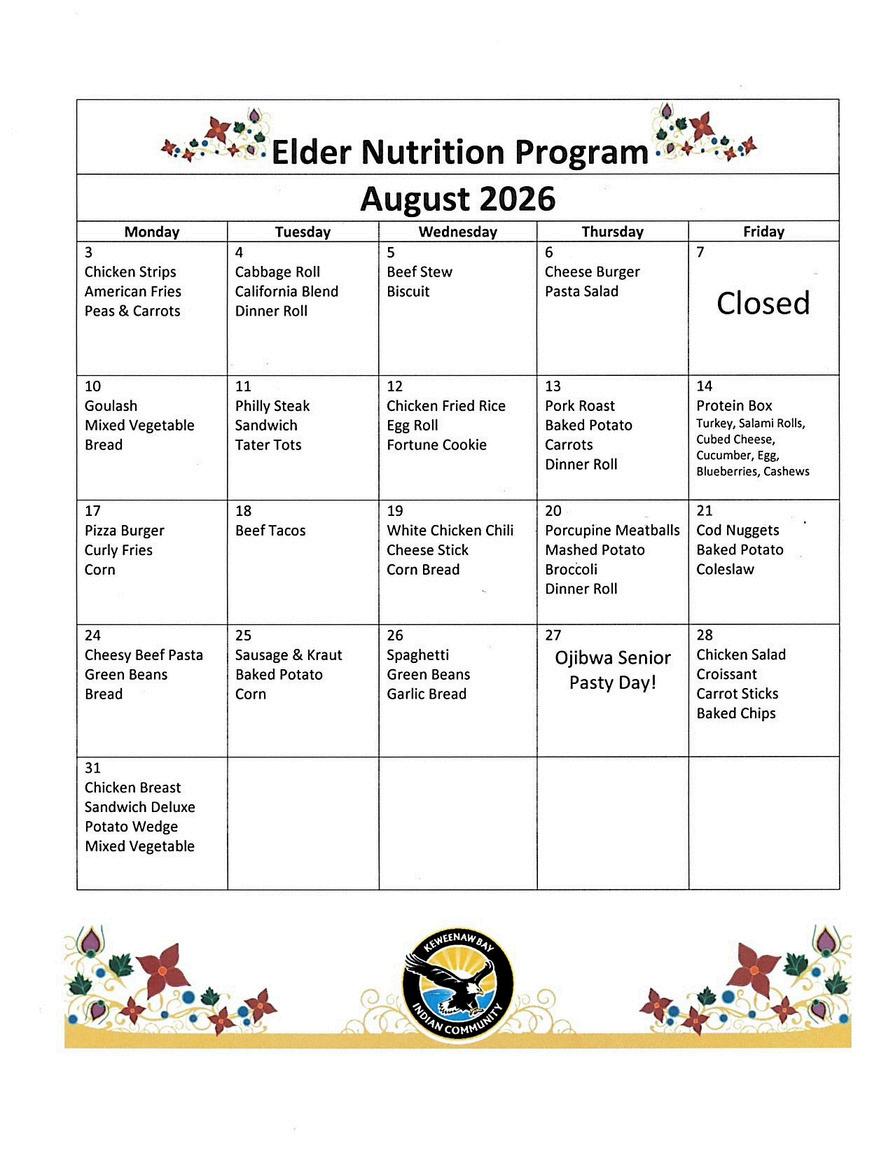
Elder Nutrition
Around the Community
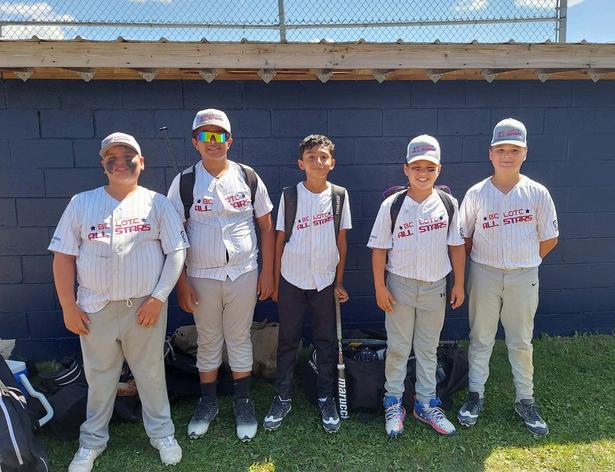

Five of our community members earned their placement on the 2026 Baraga County - LOTC Major League Team.
Photo was taken following their first win on July 6, 2026, in Neguanee, Michigan. (Left to Right: Malachi DeCota, Kai Lahti, Dekkar Denomie, Donovan Francois, Evan Ekdahl).
Casino Promotions