


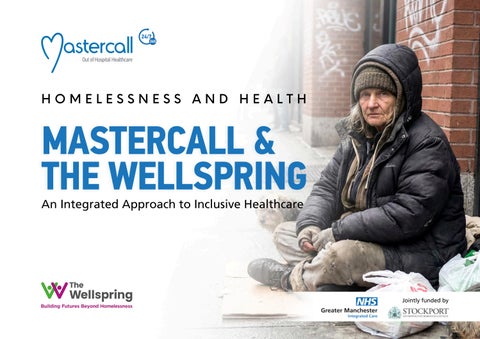



For many people, healthcare begins with the simple assumption of a safe place to sleep, stability, and a reliable point of contact. For those experiencing homelessness or housing insecurity, none of these foundations are guaranteed. The consequence is stark health inequality, avoidable suffering, late presentations of illness, preventable deaths, and the ongoing invisibility of people already living at the margins of society.
This booklet highlights the compassionate, practical partnership between Mastercall and The Wellspring in Stockport, created to address exactly those inequalities. Together, we believe that access to care must not depend on a postcode, an appointment letter, or the ability to navigate complex systems. It should meet people where they are.
The stories, clinical pathways, and services described here demonstrate an integrated, trauma-informed model, rooted in dignity, flexibility, and trust. Mastercall clinicians, alongside our colleagues at The Wellspring and wider partners in health, housing, mental health, safeguarding and substance misuse services, work collaboratively to remove barriers and provide care that is personalised, responsive and sustainable.
The need could not be clearer. Across Greater Manchester, the number of people facing homelessness continues to rise, with increasing numbers presenting with advanced illness, bloodborne viruses, complex wounds, substance dependence, and unmet mental health needs. Traditional models of healthcare cannot adequately respond to these intersecting issues. Our work here represents an intentional shift: away from fragmented pathways, and toward coordinated support delivered in a safe, familiar environment.
I am incredibly proud of our teams for bringing this approach to life every day through outreach, clinical expertise, partnership working and unwavering compassion. Their commitment ensures that individuals who have often been excluded from mainstream healthcare can build trust, seek help earlier, and receive care with dignity.
We remain committed to evolving and expanding this model, informed by data, patient experience, and the lived realities of those who rely on our services. None of our progress would be possible without the collaboration of commissioners, partner organisations and the dedicated staff and volunteers who continue to make this work a reality.
Thank you for your interest in this vital service. Together, we can continue to challenge inequity and strive for a future where homelessness no longer determines health outcomes and where every person, regardless of circumstance, has access to compassionate, high-quality care.

Homelessness across Britain is rising, with recent research estimating just under 300,000 households facing the worst forms of homelessness and overall homelessness rising yearon-year due to housing shortages and affordability pressures.
People without a home face much worse health outcomes than the housed population:
Rough sleepers have dramatically higher rates of TB, Hepatitis C, epilepsy, heart disease, stroke and asthma compared with housed people.
They use emergency and hospital services far more often, stay longer when admitted, and are less likely to be registered with a GP. Many are not identified as homeless in health records because they give out-of-date addresses or avoid disclosing living situations due to stigma.
Locally, Stockport’s housing market has grown sharply unaffordable, with private rents and house prices rising much faster than incomes. This has increased homelessness pressure, with long social housing waiting lists and intense competition for limited homes.
The main local causes of homelessness reflect national trends:
End of private tenancy
Friends/family no longer able to accommodate Domestic abuse and relationship breakdowns
People leaving Home Office-provided accommodation after asylum (rising locally from 62 in 23/24 to 146 in 24/25)
Council spending on hotel placements has also risen sharply in recent years.
The Wellspring (Stockport) is a local charity providing essential day-to-day support to people experiencing homelessness or at risk of losing their home, including:
Hot meals, showers, clothing and basic supplies every day of the year
One-to-one guidance on housing, benefits, employment, debt and more
A welcoming base for outreach and partnership work
Mastercall Healthcare at The Wellspring delivers open access clinical support on-site five days a week, with a team including GPs and Advanced Nurse Practitioners. There is also a “hot transfer” option for urgent concerns outside clinic days.
Services include:
Full assessments and treatment (infections, complex wounds, chronic conditions)
Health advocacy and support with partner agencies
Repeat prescriptions and seasonal flu vaccinations
Outreach to temporary accommodation
Mastercall Clinic Schedule (Wellspring):
Mon: 09:30–16:30 (ANP)
Tue: Week 1 09:30–16:30 (ANP); Week 2 12:00–14:00 (GP)
Wed: 09:30–16:30 (ANP)
Thu: Week 1 12:00–14:00 (GP); Week 2 09:30–16:30 (ANP)
Fri: 09:30–16:30 (ANP)
Visiting services include infections diseases, a monthly drop-in sexual health service, podiatry support and optometry clinics providing free eye tests and glasses. This integrated, inclusive health approach reflects national guidance from NHS England, NICE and the Faculty for Homeless and Inclusion Health, recognising that people experiencing homelessness require flexible, trauma-informed, co-ordinated care.


Homelessness raises the risk of acquiring Hep C and HIV by 55% and 65%
This testing programme takes place at the Manchester Royal Infirmary, Wythenshawe Hospital, North Manchester General Hospital, Salford Roal Hospital and has expanded to include Royal Oldham Hospital, Fairfield General Hospital, Tameside Hospital and the Royal Bolton Hospital.
Testing is also routine within HMP sites, community drug teams, several GP practices, and Sexual Health services.
In Stockport, Dr Javier Vilar, Consultant in Infectious Disease at North Manchester General Hospital operates an outreach clinic from the Mastercall premises at Pepper Road. His team provide treatment for Stockport’s drug and alcohol service (Cirtek House) weekly Hep C treatment clinic. The various teams work collaboratively with all agencies including the clinical team at the Wellspring. Medication is available from the Mastercall team at the Wellspring, and this improves the chance of successful treatment. We can also take bloods for monitoring and check treatment success to foster patient engagement. Additional pop-up testing sessions further widen access and ensure opportunities for diagnosis are maximised.


Access





These vulnerabilities increase:
The risk of trauma
Sexual transmitted infections
Unintended pregnancies
Mental health symptoms
NICE emphasises that services should recognise these layers of trauma and adopt a psychologically informed, inclusive approach.
Mastercall’s Integrated, trauma informed approach
Mastercall’s experienced Advanced Clinical Practitioners (ACP’s) and General Practitioners (GP’s) are committed to establishing trust through a compassionate and trauma informed approach to practice. Our presence at the Wellspring fosters a collaborative approach to health. We work in partnership with support workers, mental health teams, sexual health clinics, safeguarding services, housing, primary care and specialised secondary care services. This integrated multiagency model helps to overcome barriers and develop co-ordinated care pathways tailored to women’s needs.
This partnership model supports engagement with cancer screening, antenatal and postnatal services, contraception and sexual transmitted infection care and mental health support. It sensitively and compassionately supports women with complex trauma histories. By reducing late presentations, providing accessible and traumainformed support, we aim to reduce morbidity, optimise mental health, improve early cancer detection rate and decrease mortality rates for women experiencing homelessness.
People experiencing homelessness face barriers to accessing sexual and reproductive health services. They can be at risk of sexual exploitation and often have higher risk factors for sexual transmitted infections, and unintended pregnancies.
The sexual health service in Stockport “Locala” is based at a clinic on St Peters Square (SK1 1NZ) providing a range of in- house clinics, as well as:
A “Queue and wait” clinic for under 18’s
An outreach service to the Wellspring and Drug service
An online test service under “SH 24” for STI’s and HIV
A “text a nurse” service (07312263032) for confidential advice.
They provide screening and treatment, contraception and vaccinations for Monkey Pox, Gonorrhoea, HPV and Hep A +B.
There is a referral form on their website for anyone who may be vulnerable due to Addiction, homelessness or victim of Domestic violence and they will reach out to them and arrange to see them in a place of safety.
The Wellspring clinical team work closely with the team at Locala collaborating around vulnerable groups, expediting access to their service. In addition, the Wellspring clinical team have experience of working in sexual and reproductive healthcare and proactively address the contraceptive and sexual healthcare needs of service users.

Understanding the health need: People experiencing homelessness, housing insecurity, or unstable living conditions face significant health inequalities.
Recent national data shows that deaths among people experiencing homelessness remain alarmingly high. In 2020 in England and Wales, an estimated 688 deaths of homeless people were registered, and almost two in five of those deaths were related to drug poisoning, a far higher proportion than in the general population (ONS 2021)
Locally, at registration to the service there is evidence of extremely high levels of substance misuse among the local homeless population. The most common issues involve the use of alcohol at harmful levels, and drugs including heroin and crack cocaine.
The Wellspring’s integrated response: At The Wellspring, we take a whole-person, compassionate approach to supporting people with drug and alcohol needs, recognising that substance use often co-exists with trauma, poor physical health, mental distress, and unstable housing.
The Doctors and Advanced Clinical Practitioners from Mastercall are on hand 5 days a week in the onsite clinic to support physical and mental health issues caused by substance misuse as well as arranging referrals to specialist services when required.
This means that people can access healthcare, substance-related support, and referrals in one trusted place, without needing to navigate multiple systems.


People experiencing homelessness face significate challenges to their mental health with instability, trauma and social exclusion contributing to psychological distress. Homeless people can have significant underdiagnosed or untreated mental health disorders, substance misuse, and/or co-morbidities that prevent access to traditional services. Stigma, inflexible appointment systems and previous negative experiences contribute to the challenge of providing equitable access to mental health resources.
The Mastercall clinical team work collaboratively with a range of professionals including support workers at the Wellspring, mental health practitioners, dual diagnosis teams, psychologists, social services, housing and safeguarding teams to optimise mental health care for the homeless population. This allows for trauma informed assessments, and continuity of treatment.
Mastercall clinicians have adopted a proactive and holistic approach to caring for our patients with mental health issues. We administer depot injections to ensure continuity of treatment, communicate compassionately, to build trust and engagement, and refer to the specialised community mental health team or secondary care when an immediate Mental Health Act Assessment is required. Our clinical teams engage with patients in hostels, and community settings to build trust and ensure support reaches people who may be invisible to services.
Collaborative care helps to optimise mental health and recovery, promotes inclusion and a more equitable approach for people experiencing homelessness.
People experiencing homelessness are at high risk of a wide range of wounds including skin and soft tissue infections such as abscesses, cellulitis, injuries, chronic wounds and leg ulcers. These conditions are exacerbated by repeated use of injection sites, vascular insufficiencies from prolonged drug use, harsh weather environments, lack of nutrition and poor sleeping conditions.
These wounds not only cause pain and disability, but also contribute to increased risk of infection, hospital admission and potentially mortality without early and consistent intervention.
People experiencing homelessness face significant barriers to accessing conventional healthcare services for several reasons with research showing that traditional, appointment-based models often fail to meet the needs of people experiencing homelessness. This contributes to delayed treatment and poorer clinical outcomes.
The clinic within The Wellspring provides a critical access point for healthcare with the ability to offer immediate assessment and care of a vast range of wounds. We have access to an array of dressings and treatments, can prescribe specialist dressings and antibiotics as they are needed and as individual needs and compliance allow. We can also refer into specialist services such as Tissue Viability Nurses.
This model of aligns with findings that drop-in wound services significantly improve accessibility and health outcomes for vulnerable people experiencing or at risk of homelessness.
Walk-in, low-threshold clinics achieve higher attendance rates, repeated contacts and better progression toward healing compared with traditional clinics which is critical if we wish to improve poor outcomes for those who face disproportionate risk, overcoming barriers and supporting dignity, building trust and encouraging ongoing engagement in healthcare services.
Care coordination and discharge planning for homeless patients at local hospitals requires a proactive, multi-agency approach to ensure safe and sustainable transitions out of hospital care back into the community setting.
These patients often face complex medical, social, and psychological challenges, so early identification and involvement of the hospital’s safeguarding, social work, and homelessness teams are essential.
Effective discharge planning typically includes assessing accommodation options, arranging follow-up healthcare, and linking patients with community services such as outreach teams, primary care networks, housing support, and substance-misuse or mental-health services.
Close collaboration with local authorities and voluntary-sector organisations helps prevent the risk of patients being discharged back onto the streets and supports better long-term health outcomes. By coordinating care in this integrated way, local hospitals can help ensure that homeless patients receive appropriate support, continuity of care, and a more stable pathway after leaving the hospital.
Mastercall are committed to supporting this safe discharge and can offer,
A dedicated email address to send all homeless discharge information to be actioned by a member of our Wellspring clinical team.
Please use this address stockport.Mastercall@nhs.net
In addition if you wish to discuss any patients with our clinical team you can contact us at
The Wellspring on 0161 4776344 9am-4pm or Mastercall on 0161 4779190



People who are homeless face increased risks of abuse, exploitation, neglect, and selfharm. Vulnerable adults may be subject to physical or sexual assault, financial or emotional exploitation. Families who are homeless may also face serious risks: children may suffer neglect, or there may be a danger of them being removed into care.
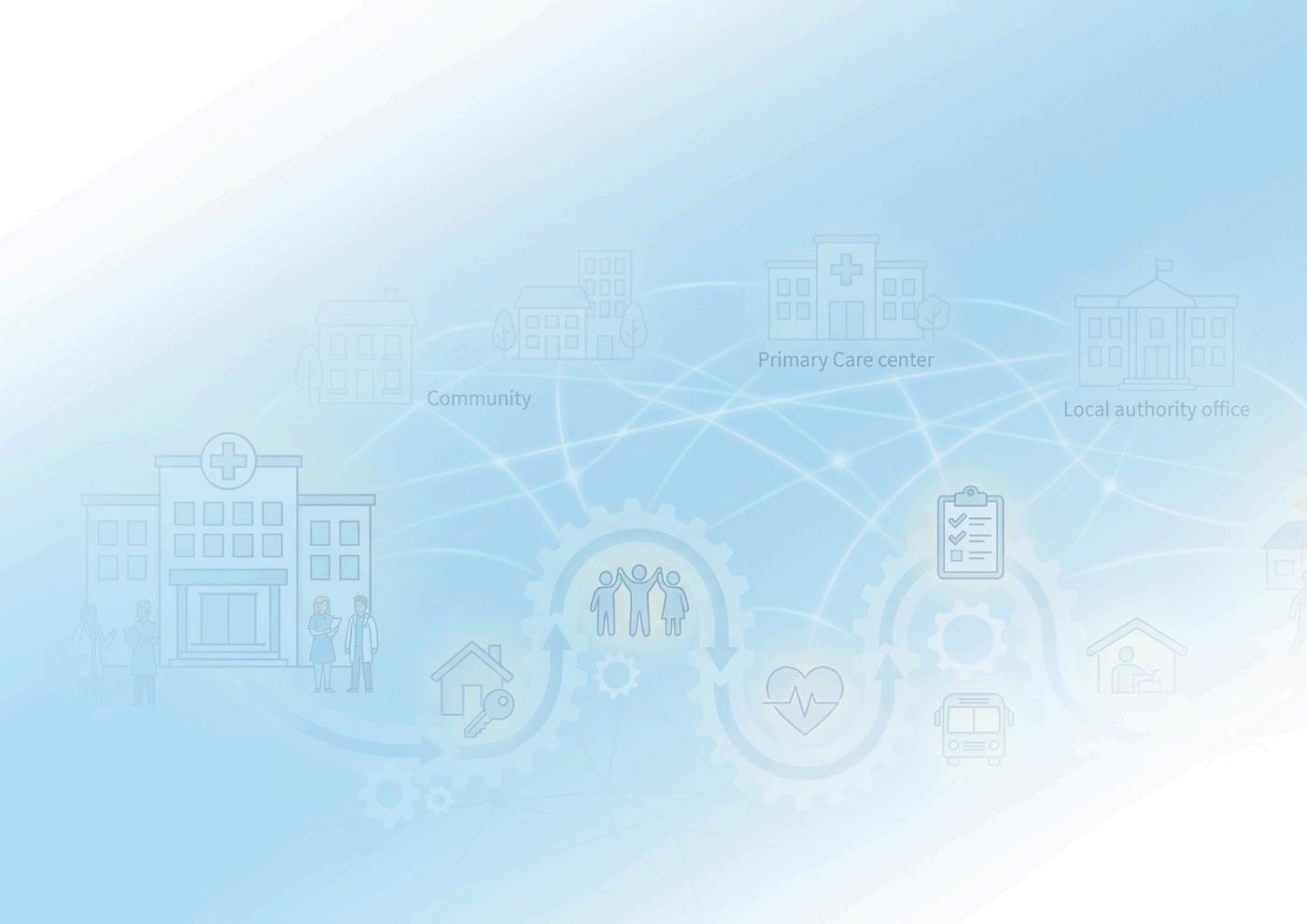
Addressing safeguarding issues for people experiencing homelessness requires a coordinated, multi-agency approach. This means working across health, social care, housing, support services, and mental health provision, because risk tends to stem from a mix of unstable housing, poor health, trauma, social exclusion, and lack of resources.
How Mastercall and the Wellspring Can Make a Difference
Mastercall clinicians, working with Wellspring support workers, are well placed to deliver the kind of safeguarding that’s needed for people experiencing homelessness especially those with complex and overlapping needs.
Multi-agency coordination: By working together with social services, housing providers, mental health teams and support services, we can identify risks early including those associated with homelessness, mental ill-health, substance misuse, trauma or exploitation and plan appropriate interventions.
Trauma-informed care: Our clinicians are trained to recognise signs of abuse or neglect, to understand the legal and ethical duty to safeguard adults at risk, and to act promptly when concerns arise.
Flexibility and continuity: Many standard services have strict eligibility criteria or require fixed addresses but for people who are homeless, that’s often unrealistic. Through our integrated model we aim to offer accessible, low-threshold support and maintain continuity of care even when housing or circumstances are unstable.
Empowerment and respect: We aim to treat people with dignity and respect and involve them in decisions where possible to avoid making assumptions about their situations recognising that homelessness is often only one part of a person’s story.


Mastercall is a homeless-friendly organisation.
We are committed to creating a safe, inclusive environment for people experiencing homelessness, ensuring every interaction is supportive, respectful, and non-judgemental.
Our teams regularly encounter individuals who may not be accessing traditional services. In these moments, having immediate resources available allows us to respond quickly and compassionately.
Our vehicles are stocked with homeless-friendly packs, enabling clinicians to offer practical support alongside clinical care. These packs are designed to meet urgent, real-world needs and can provide comfort, warmth, and reassurance at a critical time.
Beyond the items themselves, these interactions help to build trust and open conversations. This can encourage individuals to engage with services, accept further support, or seek help when they may not otherwise have done so.
Working across Stockport during evenings and weekends, our teams are often present at times when access to other services is limited. This places us in a unique position to offer both immediate assistance and signposting to appropriate local support where possible.
Through this approach, Mastercall aims to make every contact count—providing not just practical help, but also compassion, dignity, and a pathway to further support.

Mastercall Wellspring
Service Lead / Senior
Advanced Clinical Practitioner
Mastercall Deputy
Medical Director /
onsite GP at The Wellspring
Mastercall Associate
Medical Director / onsite GP at The Wellspring
Mastercall Advanced Clinical Practitioner / onsite clinician at The Wellspring
Mastercall provides 24/7 remote support

"I have been a nurse for 46 years, completed my MSc in 2001 and worked in acute secondary care for the first 35 years, moving into community-based services in 2014.
I have always been a strong advocate for patients, believing in empowering people to make their own informed decisions.
When I first started working in Homeless and exclusion health, I became aware of the barriers to accessing healthcare experienced by the most disadvantaged in our society, including the emotional barrier created by the negative opinions of others.
People for whom each day is a struggle cannot access rigid distant services and require open, flexible services to be delivered where they are at. They struggle to form trusting relationships and need continuity to feel safe, I feel that is what is offered at the Wellspring.”
“I have been involved with Homeless and exclusion health for over 20yrs after going to meet the team at the original Wellspring portacabins and being overwhelmed with the kind caring service they offered to those most at need. It was impossible not to be moved and motivated to help in any way I could, and we persuaded the CCG to commission a GP practice to register this cohort of patients to improve access to specialist healthcare for people experiencing homelessness and exclusion. At The Wellspring, my role sits at the intersection of practical support and long-term stability. Each day involves meeting people where they are often at a moment when life feels uncertain and helping to create a bit more steadiness through respectful, consistent care. Whether the task is coordinating resources, listening through a difficult conversation, or guiding someone toward their next step, the focus is the same: make support accessible, human, and responsive to real needs.
That day-to-day experience is also what fuels my interest in homeless healthcare. Health challenges don’t pause when someone loses housing if anything, they multiply. Managing chronic conditions without a safe place to rest, keeping up with medication without secure storage, or trying to book appointments while navigating immediate survival needs can turn “routine” healthcare into an obstacle course. Working alongside people facing these barriers has made it clear to me that healthcare isn’t only about treatment; it’s also about access, dignity, and continuity.
The team has grown and with their hard work and resilience there is better recognition of what is needed for our patients within the wider healthcare economy with the local hospitals and GP practices agreeing to enhancing the care they provide. I look forward to continuing to support the team and patients for as long as I can.”
“I am deeply committed to working with people who are homeless and vulnerable. I volunteered at homeless charities in Manchester when I was at school and continued volunteering throughout my time at Medical School in London.
When I started in my current role at Mastercall, I was keen to work at the Wellspring and embraced the opportunity to become part of the Wellspring clinical team last year.
Over the past year, I have gained an understanding of the unique challenges that our service users face navigating health, housing and social care systems.I have had the privilege of learning from experienced, empathetic clinicians in addition to the wonderful support and volunteer teams at the Wellspring.”
“I began my nursing career in 2012 and, prior to joining Mastercall in 2023, spent over a decade working in Emergency Departments across Blackburn and Wythenshawe. Throughout my time in ED, I developed a strong passion for advocating for the most vulnerable, striving to ensure that everyone received the best possible care despite increasing pressures and limited resources.
Following the completion of my MSc in August 2025, I was grateful for the opportunity to join the team at The Wellspring. This role has deepened my understanding of the significant health inequalities faced by some of the most disadvantaged people in our community. I am committed to immersing myself in this area of work, contributing to meaningful change, and helping to ensure that everyone has access to the care, dignity, and support they deserve.”

The integrated approach between Mastercall and the Wellspring demonstrates how inclusive, trauma-informed, community-based healthcare can reduce health inequalities for people experiencing homelessness. Delivering outreach, open-access clinical care alongside practical support, harm reduction services and multiagency collaboration addresses the complex needs of some of the most vulnerable members of our society.
Aligned with NHS England, NICE and the Faculty for Homeless and Inclusion health this approach recognises that equitable healthcare requires flexibility, continuity and trust. By reducing barriers to care and integrating health with social support, Mastercall and the Wellspring continue to improve health outcomes.
Mastercall uses advanced business analytics to analyse the data of people experiencing homelessness to proactively plan, evolve and adapt our service to the needs of the local population.
We are grateful for the support of our commissioners and our partners in health and social care whose collaboration is central to delivering inclusive, equitable care for people experiencing homelessness.
Alex Knight, Manager at The Wellspring said:
“At The Wellspring, health and housing are never separate. Many of the people we support face significant barriers to accessing healthcare, shaped by instability, trauma and past experiences of exclusion. Our partnership with Mastercall allows clinical support to happen in a place that feels safe, familiar and non-judgemental, removing barriers that so often prevent people from engaging with health services.
This integrated way of working means people are met with dignity, consistency and understanding, and supported as individuals rather than problems to be solved. By working together, we are able to respond to complex needs in a practical, compassionate way and support people on their own journey towards improved health, stability and a more secure future.”

To discuss any patients with our clinical team you can contact us at The Wellspring on 0161 477 6344 (9am-4pm) or Mastercall on 0161 477 9190 Useful contacts:
For operational enquiries contact: Gemma Gray (gemma.gray4@nhs.net)
For commissioning enquiries contact: Tim Davison (tdavison@nhs.net)
For clinical enquiries contact: Dr Shah Mian (shah.mian@nhs.net)
www.mastercall.org.uk
www.thewellspring.co.uk