WGA EQUINE Sport Horse Team
Horses As Teachers
Empire 2013
Eastern Classic 2014
Region 16 Championships 2014
In Their Own Words

Empire 2013
Eastern Classic 2014
Region 16 Championships 2014
In Their Own Words
The WGA Sport Horse Team was an evolution. It grew out of teaching the basic horsemanship skills that all aspiring horsemen are taught the world over. Long before the words “equine therapy” were validated by the larger community, horsemen had long known that horses make better humans. So much so that the adage “the outside of a horse is good for the inside of a man” has been attributed to more than one famous orator including Winston Churchill, Will Rogers and Ronald Reagan. In learning horsemanship one learns many important lessons. Patience. Resolve. Empathy. Diligence. Consequences. Responsibility.
The qualities of a leader.

Somehow, back in the mists of times long past humans began to figure out how to enter into a productive relationship with another species. Amazing, when you consider that we still struggle to have productive relationships with other humans. The ability to command the power of a horse has always been associated with great leadership. This was true even as civilization began to require their speed and strength for survival less and less.
Horses have always been the ultimate equalizer. They recognize no human rank, ethnicity, gender or religion. You earn the right to command them by individual merit and their own mysterious sense of how horses and humans fit in the universe.
Because when you really think about it, the horse/human dynamic should never work. Every horse is physically more powerful than the humans they live with and are basically 1,000 pounds of flight instinct. But somehow, somewhere in mankinds earliest history, some humans figured out how to work with horses. And, ultimately, how to get horses to work for us. To do so they had to learn how a horse perceived his world and how a horse interacted with his community...his herd. This understanding of the horse is critical to working with and training horses, but this knowledge alone won’t get you very far without other very human qualities; empathy, courage, tenacity, and most importantly, responsibility.
Fairness. Empathy. Strength. Courage. Tenacity. And most importantly, responsibility.
In 2009, WGA Equine Director, Michael Troxler made the decision to focus the Equine Vocational program in such a way that the students would be instructed in such a way that not only would they would learn about horses, they would be taught the skills expected of an entry level professionalequestrian and they would have the maximum amount of hands on practical time as we could manage within the realities of the WGA schedule.
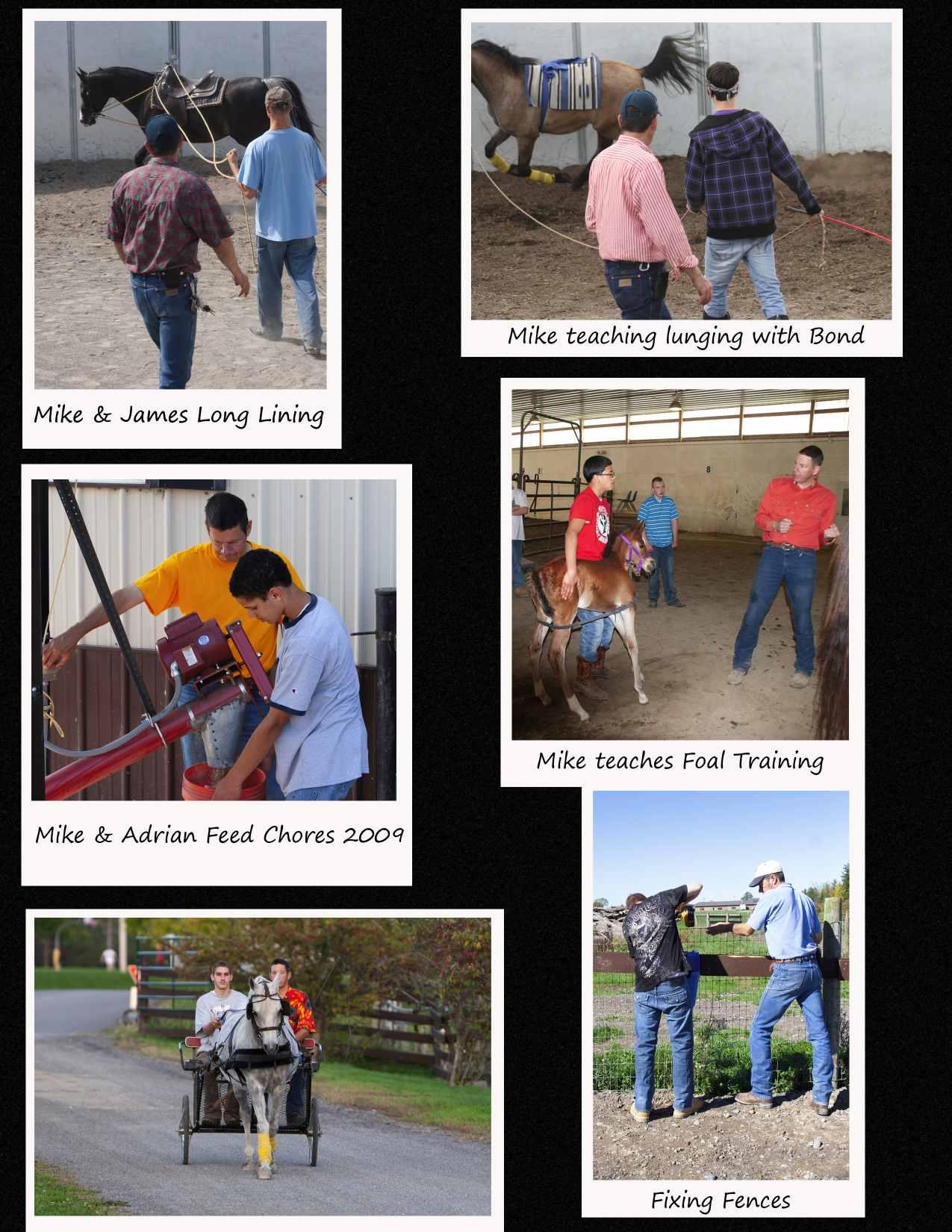
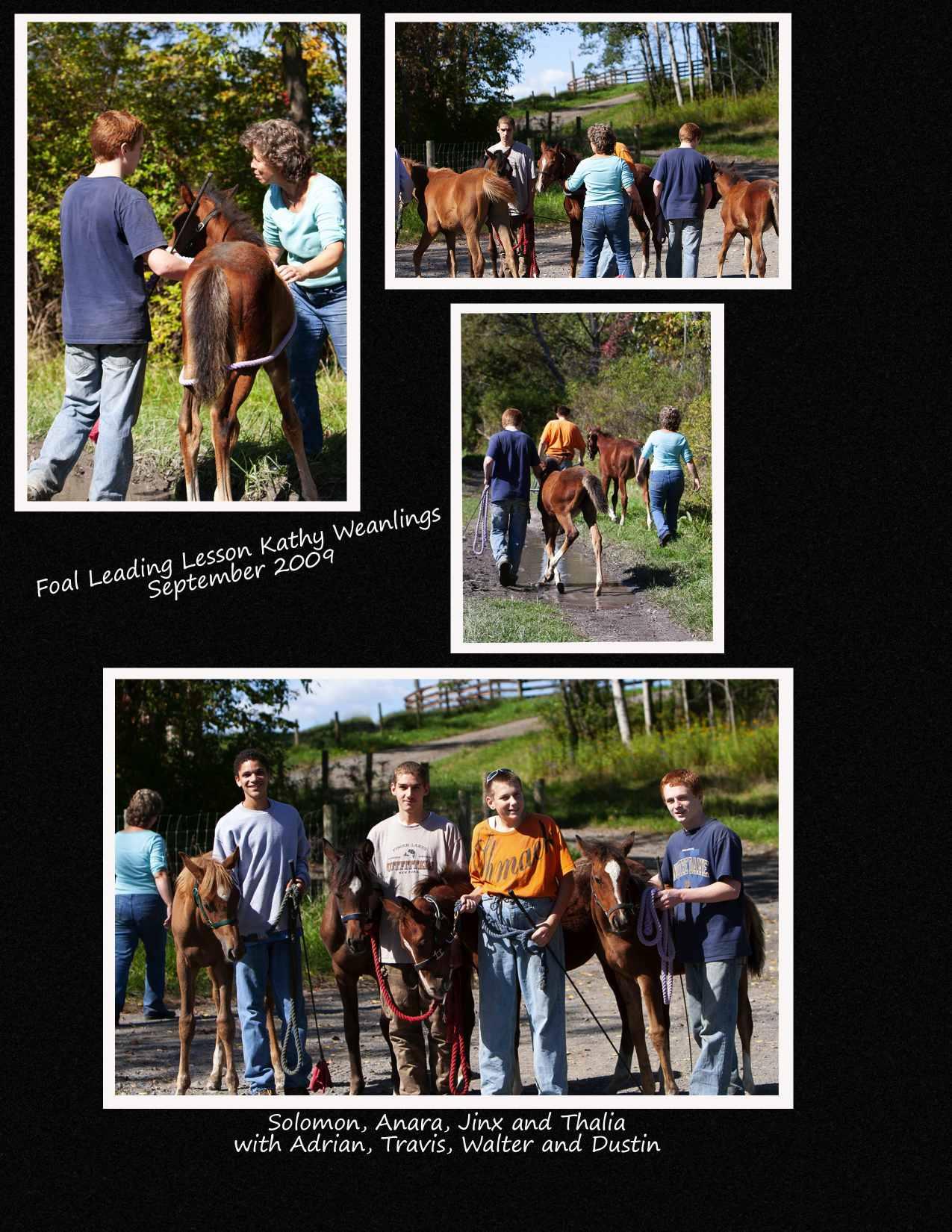
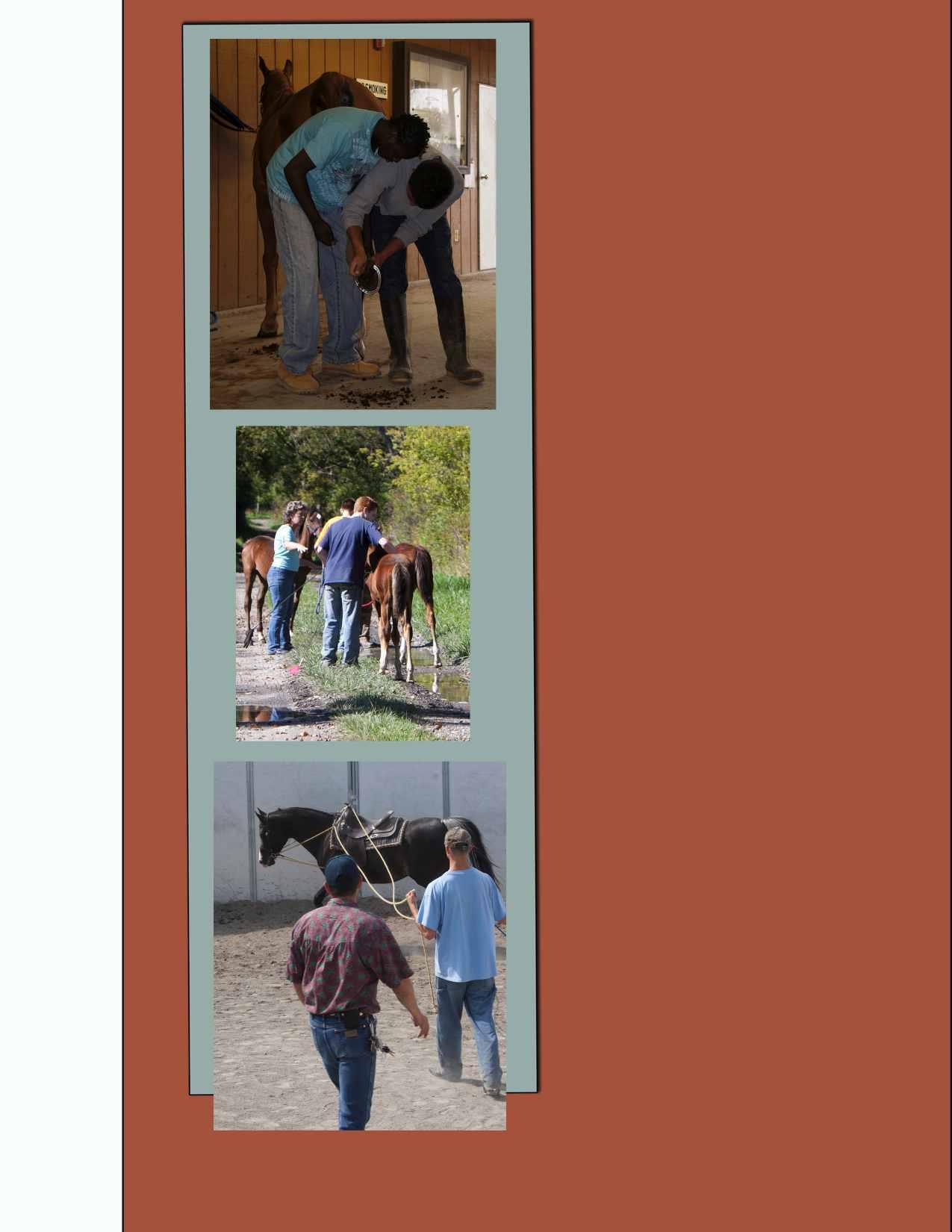
In the beginning this meant making fundamental changes to the management of the horses in everything from basic management (such as delivering feed to each horse) to horse handling skills, such as basic haltering and leading. Every decision was—and still is— informed by what is expected at the highest levels of the equestrian community.
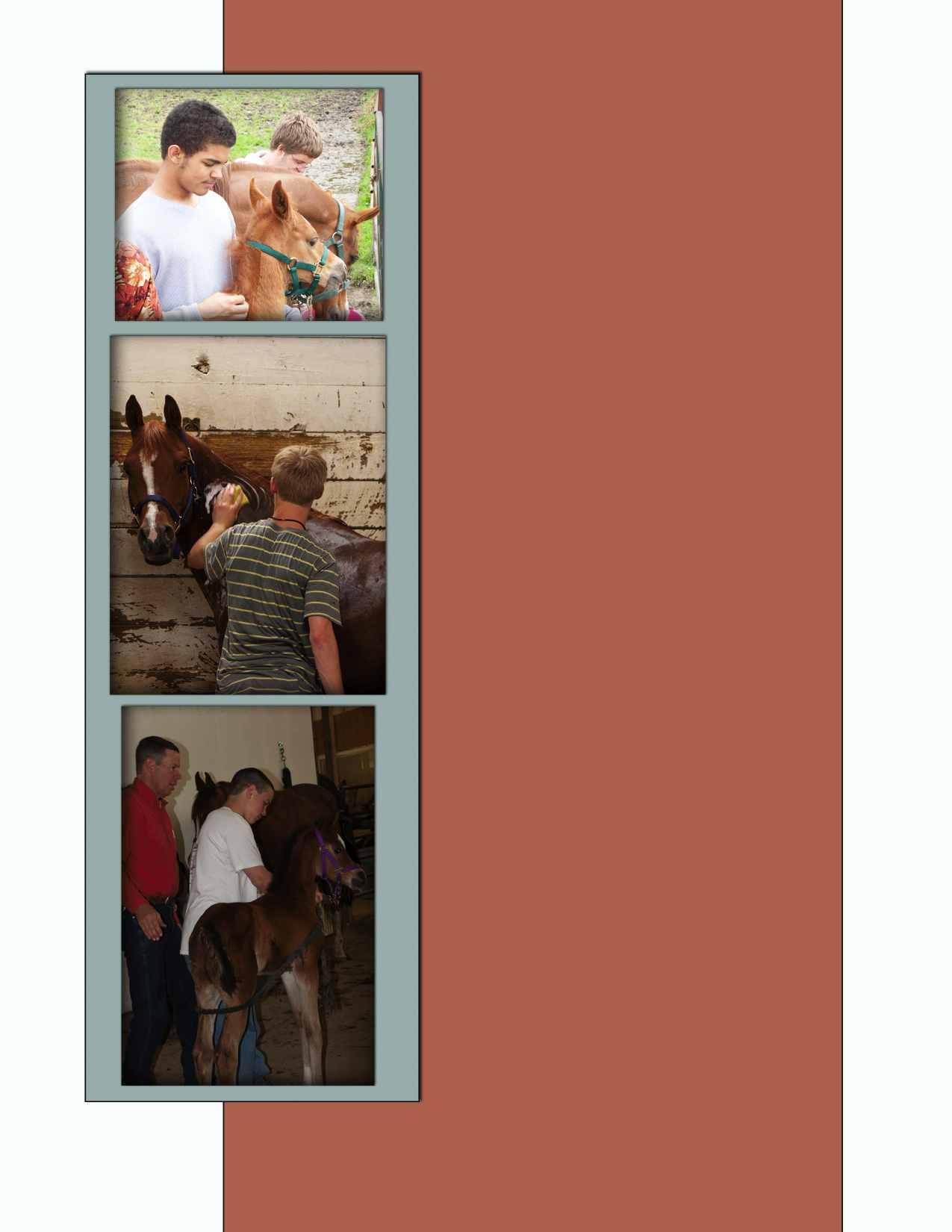
In the course of teaching any horsemanship skill—whether it's something as simple as grooming or more advanced such learning training techniques such as long- lining—the horse provides a focal point for lessons that go far beyond the technique being learned. Depending upon the individual, lessons in learning to groom a horse might simply be about with finding the courage to step outside your comfort zone and be close to an animal so much larger than yourself, but quickly move on to discussions about reading body language and responding appropriately and ultimately evolve into the responsibility the groom has as it relates to the health and wellbeing of a horse.
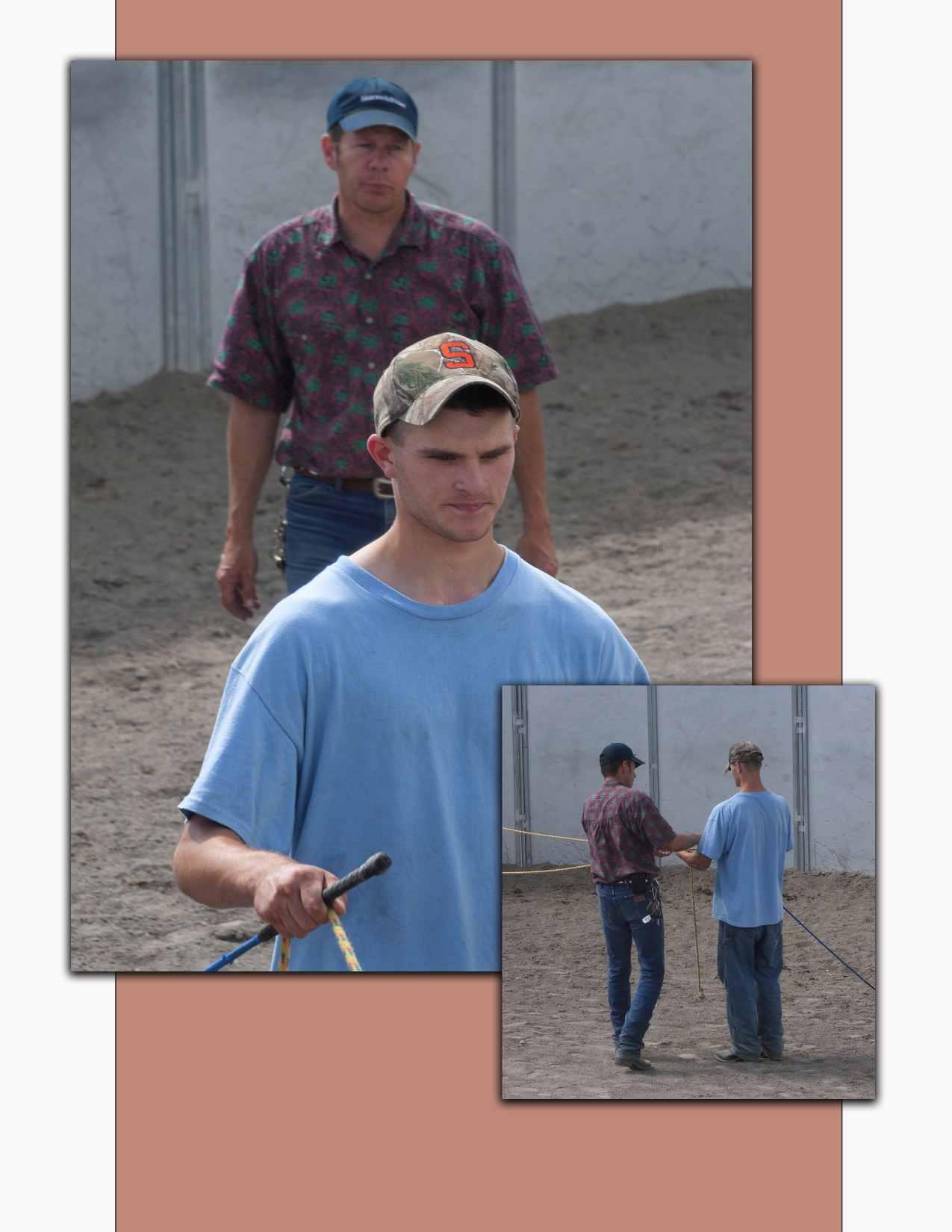
Lessons in more advanced horse training techniques fascinate many of our kids. For many students that may not feel successful in a traditional classroom setting, the ability to succeed at these hands on activities are very empowering.
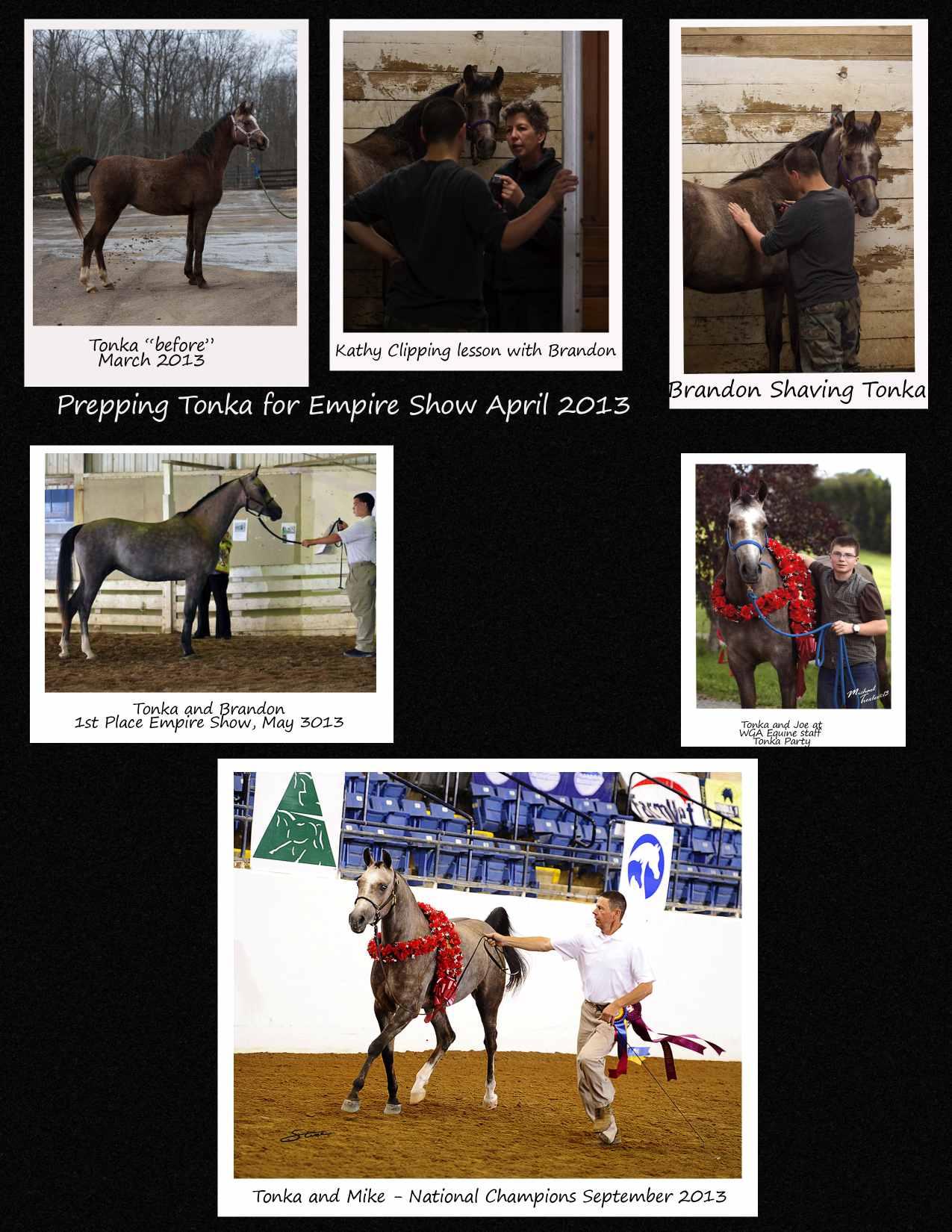
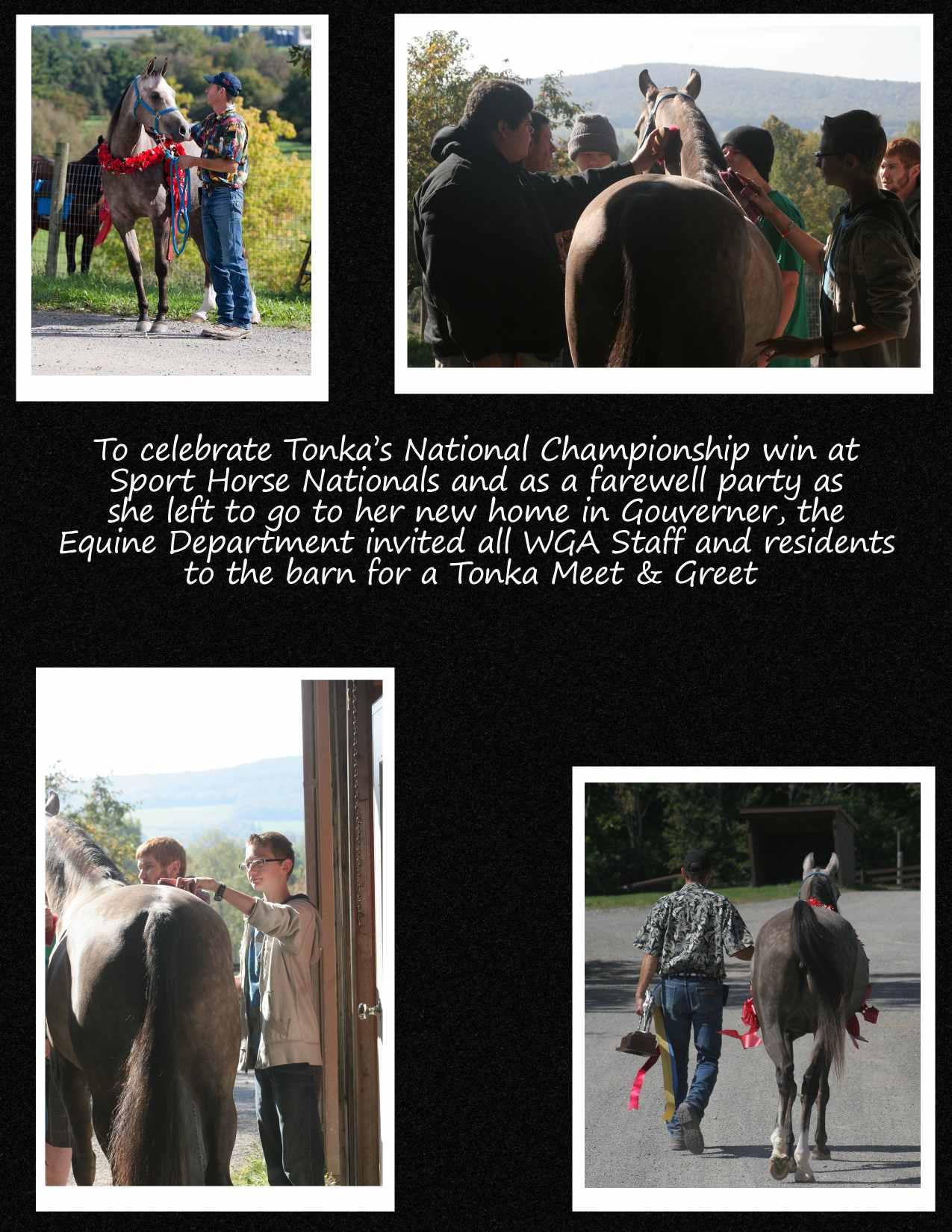
The 2013 Empire Show in Syracuse presented us with the first opportunity to debut a WGA Equine Team. The concept of a Sport Horse Team is an innovative one and what we've achieved with our “at risk” youth is a unique accomplishment both within the equestrian community and within programs for high school athletes of any level. The actual competition is an individual event; with each horse scored and awarded a separate award.
The WGA Equine Team concept was based on the idea students of any ability would be provided with a chance to make a valuable contribution to the team goal—the goal of presenting well-trained and conditioned horses at a competition.
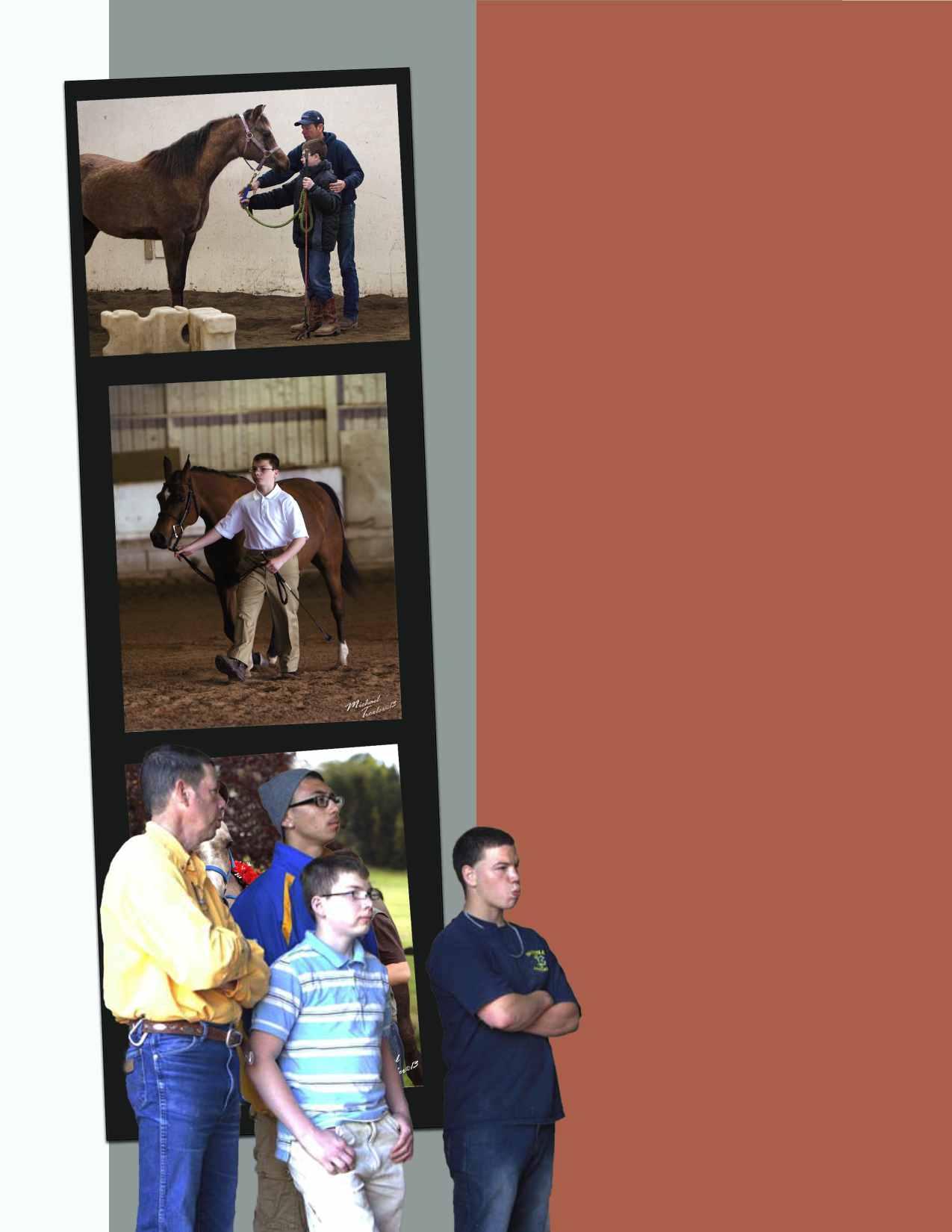
Every horse that enters a ring has a supporting team of people that play an important part of getting that horse and that handler into the arena for their performance.
Months and months of daily conditioning, grooming, managing and training go into preparing a horse for a competition. We created an environment where every individual knew that the effort they put into the work would be rewarded. However, it was always stressed that the opportunity to travel to a competition was determined by each student maintaining a certain level in their program.
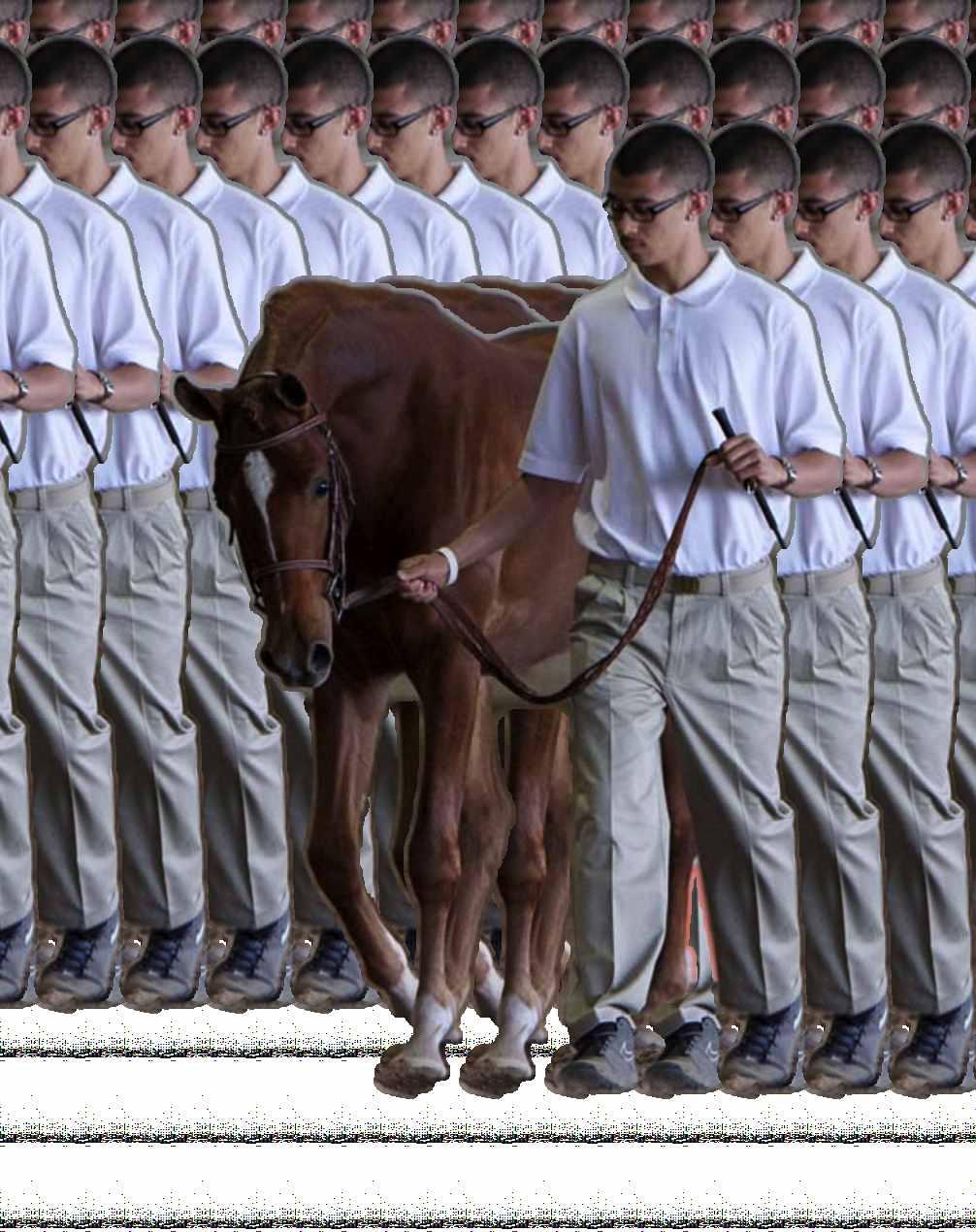

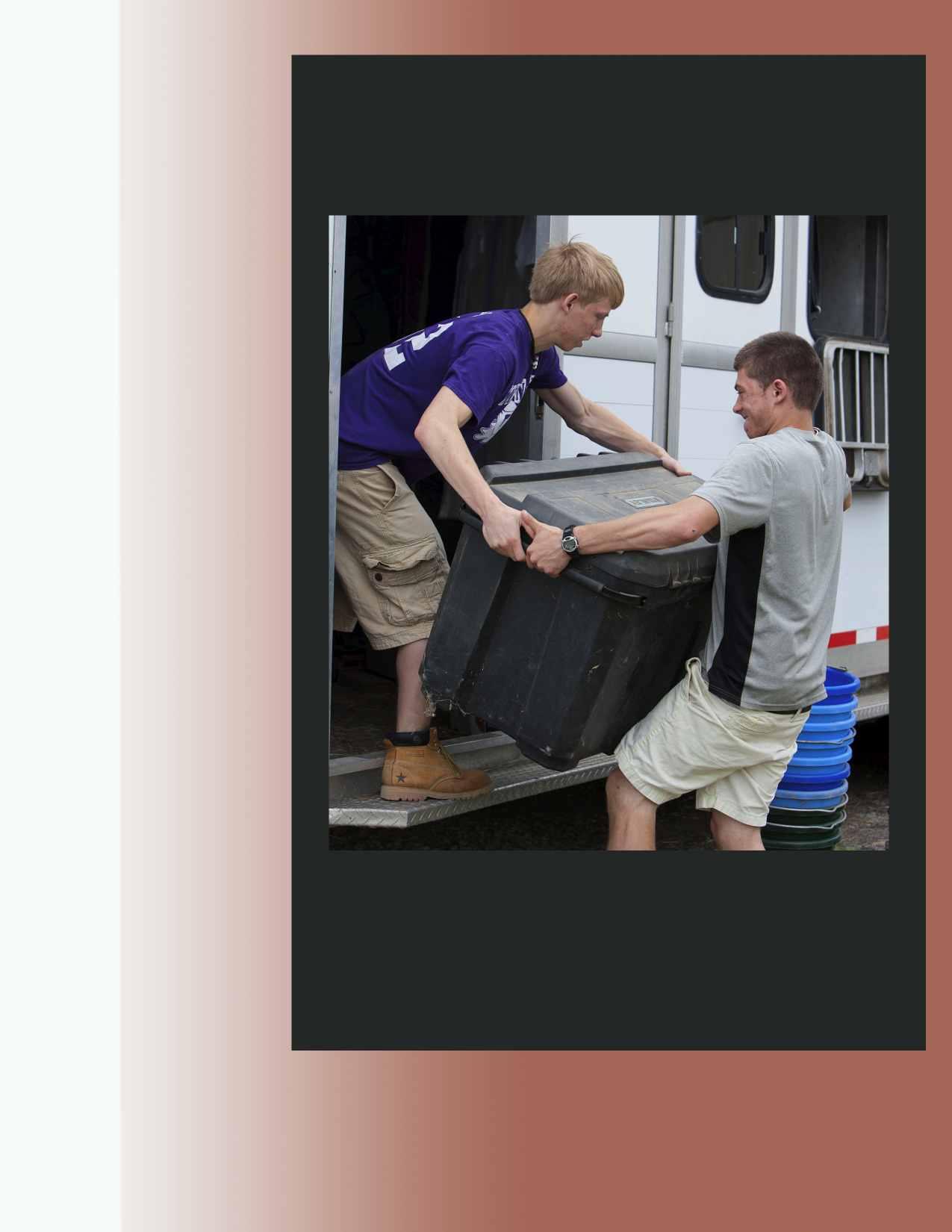
“Champions do not become champions when they win the event, but in the hours, weeks, months and years they spend preparing for it. The victorious performance itself is merely the demonstration of their championship character.”
Alan Armstrong
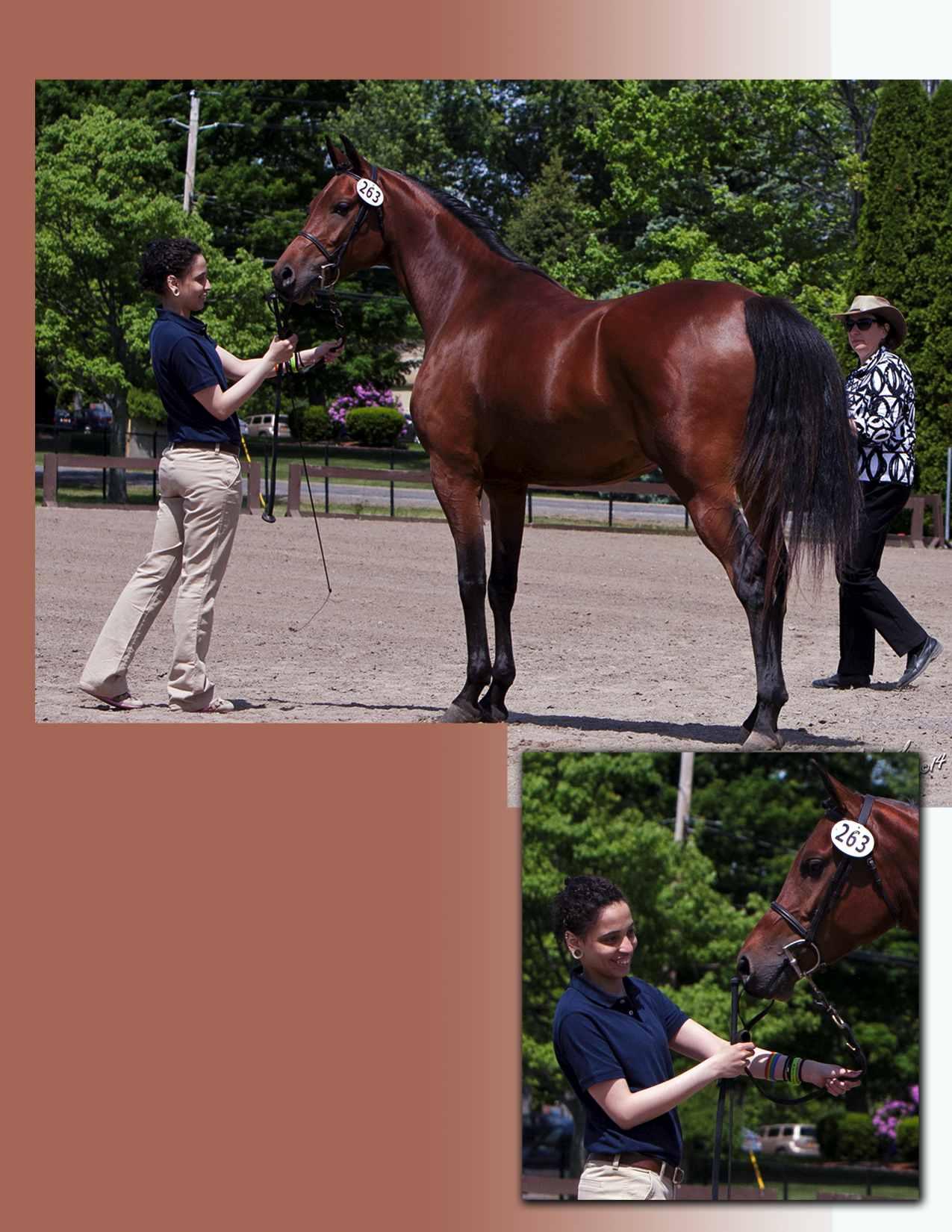
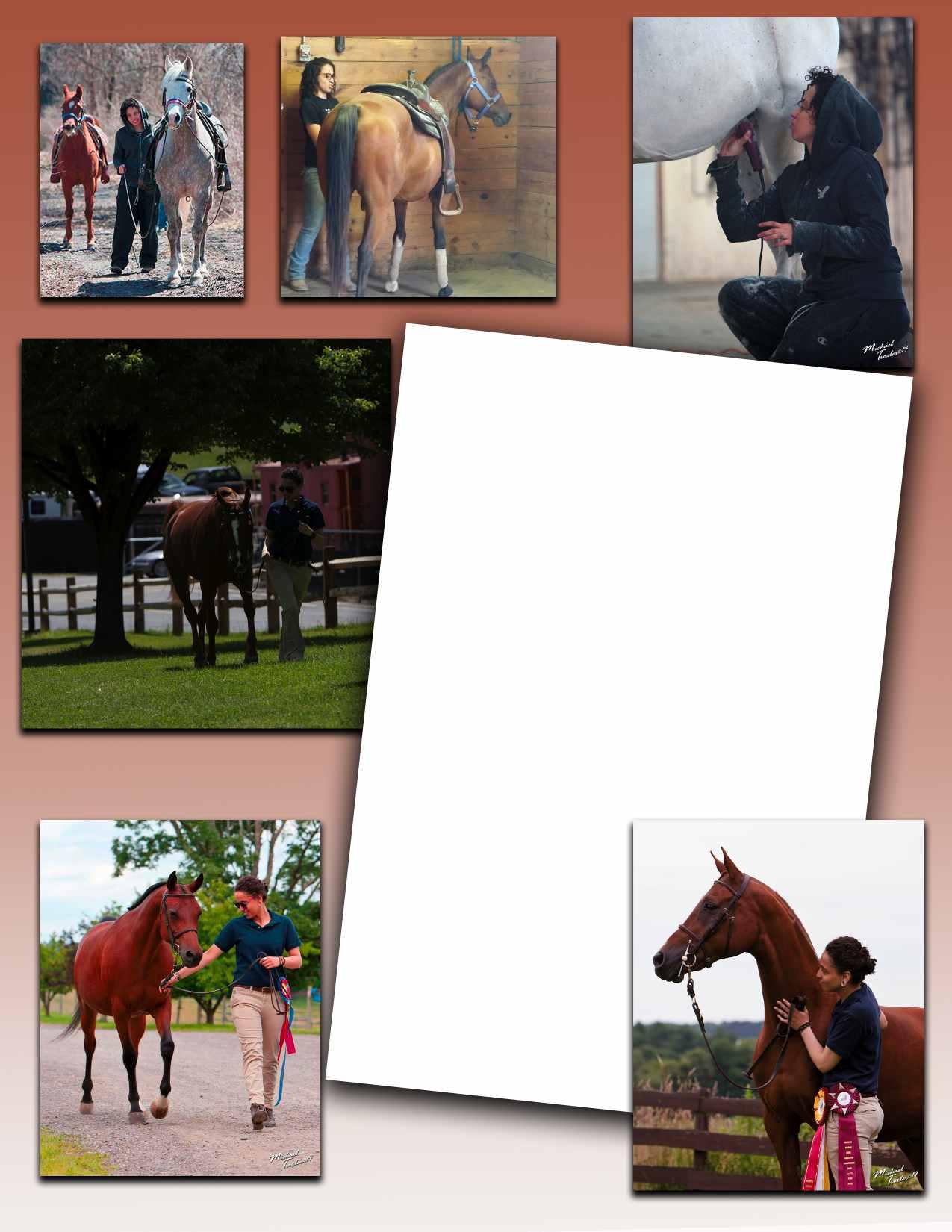
The Equine Team became a very important part of Kate’s program. Unable to take the Equine Vocational class, I made sure she had as much time at the barn as possible through either recreational time afterschool and on weekends. To say that Kate was shy is an extreme understatement, so the fact that in a matter of months she was able to step outside her comfort zone and not only present a horse, but to do so with an air of such pride and confidence is truly amazing and a testament to the empowering nature of the human/horse connection.
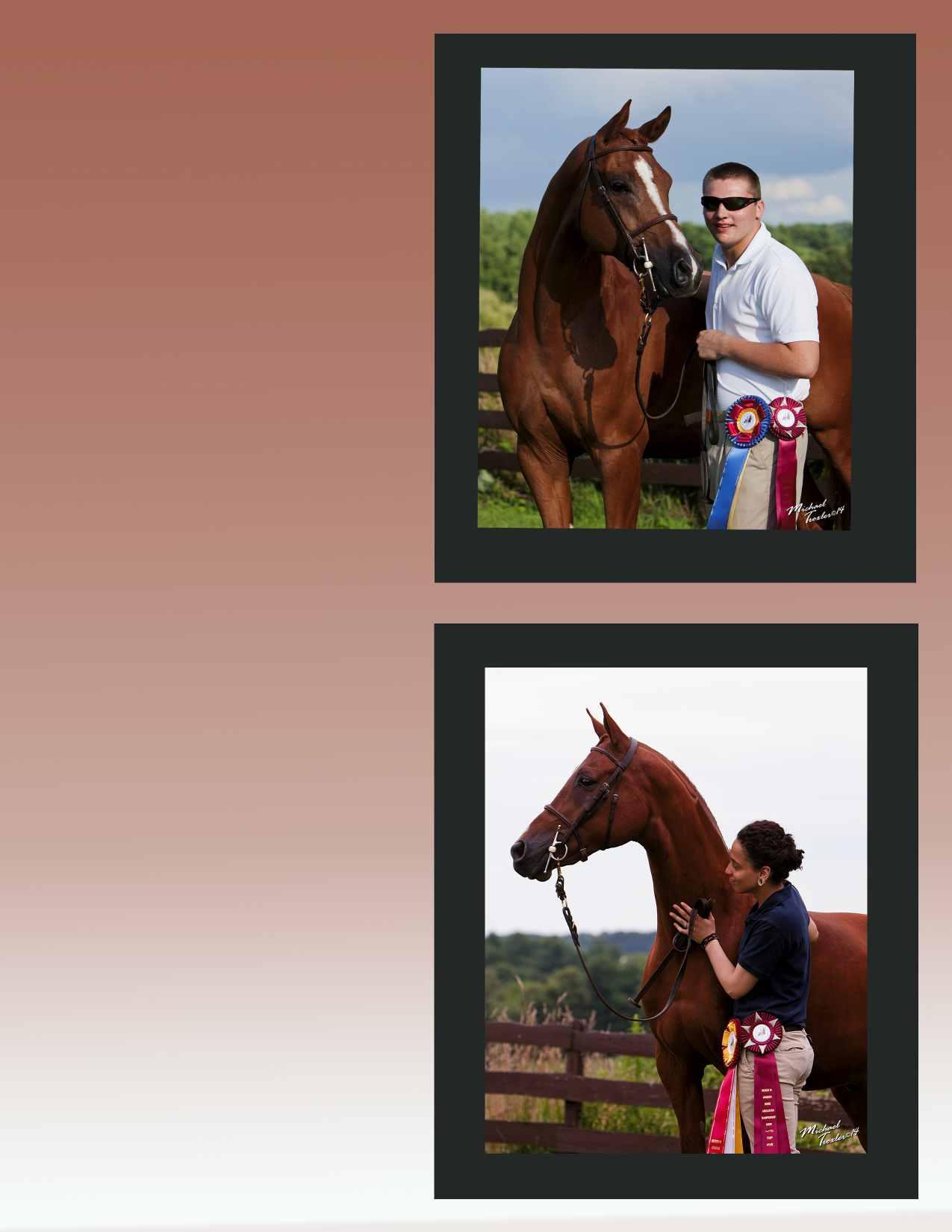
The Region 16 Championship show alternates location between West Springfield MA and Syracuse, NY and happily 2014 happened to be the year for the show to be in in NY, opening the door for us to consider taking the WGA Equine Team to a Championship Show. This show attracts entries from all over the eastern US and Canada, all having already qualified to compete by placings at lower level competitions. As with any competition, the main focus of our program was to expose our students to the months of preparatory training and conditioning that professional level grooms and handlers would be expected to be familiar with as well as giving them a chance to act in the capacity of a professional level groom or handler at this level of competition.
Our successes at the 2013 Empire and Silver Spur Show and the 2014 Eastern Classic meant we had horses that already had the necessary qualifications to compete and choosing the best candidates for the
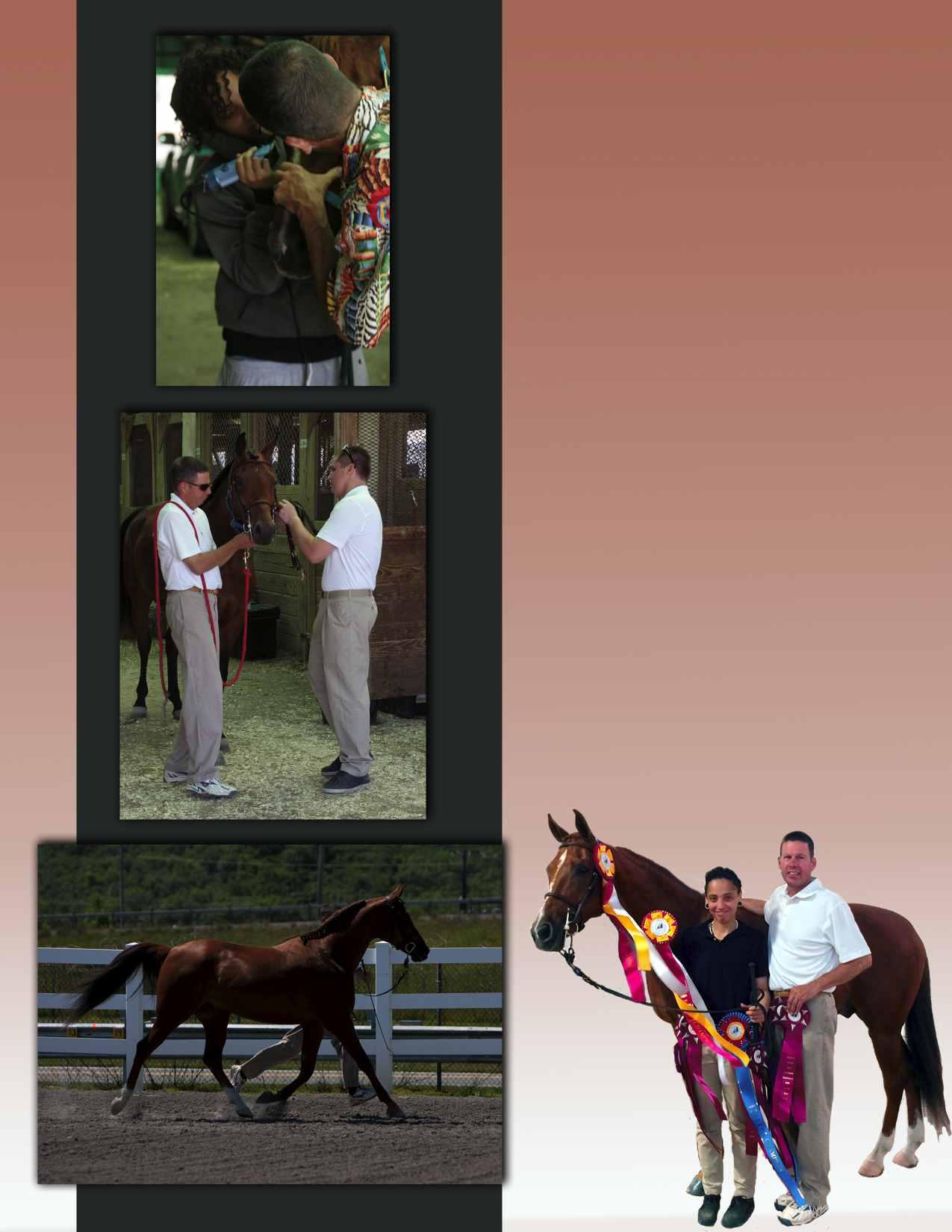
Regional Championship show was built into the lesson plans leading up to the close of entries. Ultimately four horses and two residents were chosen to represent WGA in Syracuse. The horses— Royal Jester PF, Captainn Jack, Minutette in E Major and Thymeless Bf—are all horses that were donations to the program.
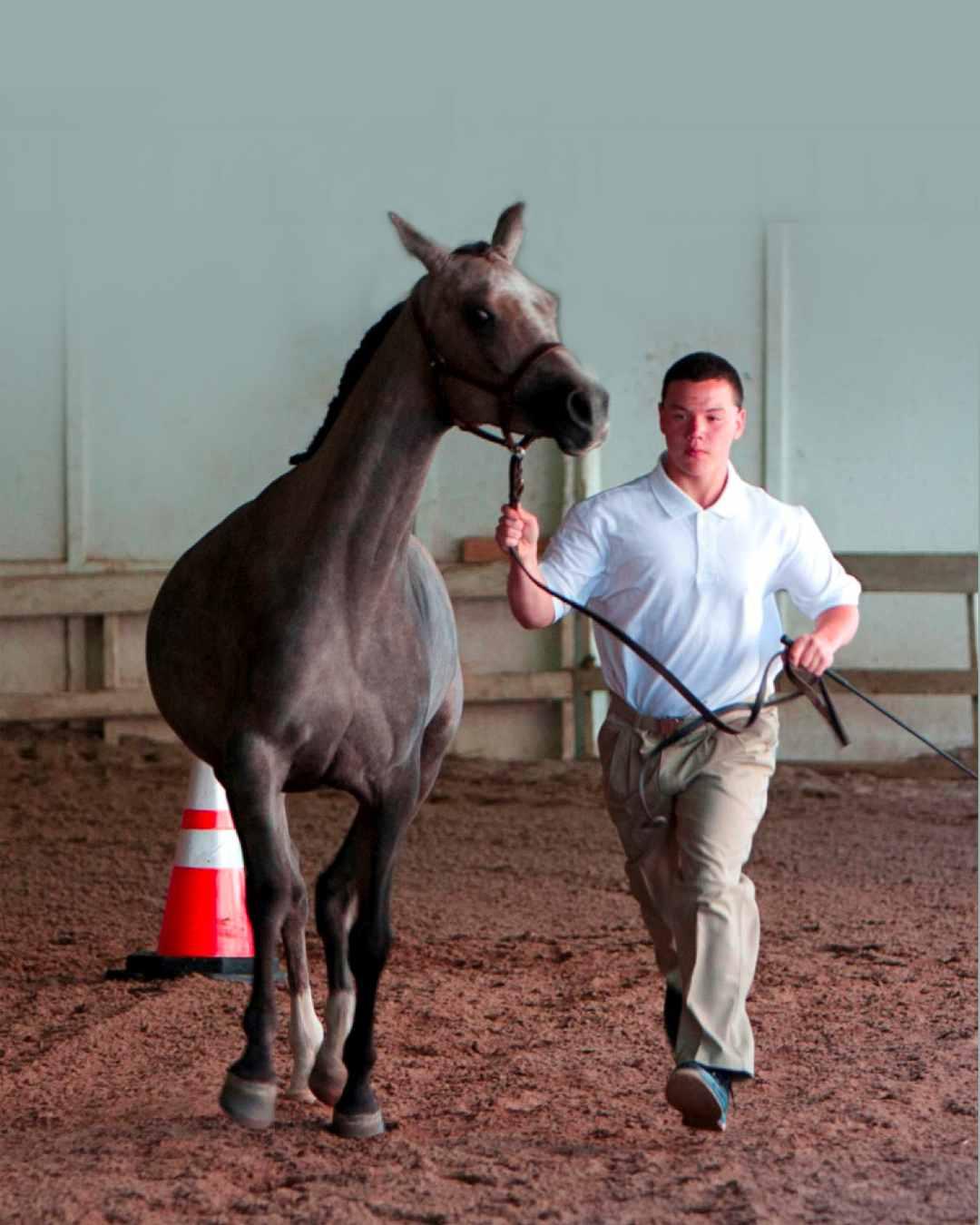
The two residents chosen to present these horses were Rich Banks and Kate Simo-Velez, with Kate exhibiting horses on one day, and Rich showing the following day.
To say that the event was a success for WGA Equine is an understatement and the WGA Equine Team presence at this show, as well as every other show we attended, payed even more important if intangible dividends. At every single outing, people came up to us asking, “Where are these kids from? What is it you do? What exactly is the William George Agency?” providing us with many, many opportunities to explain the WGA mission.
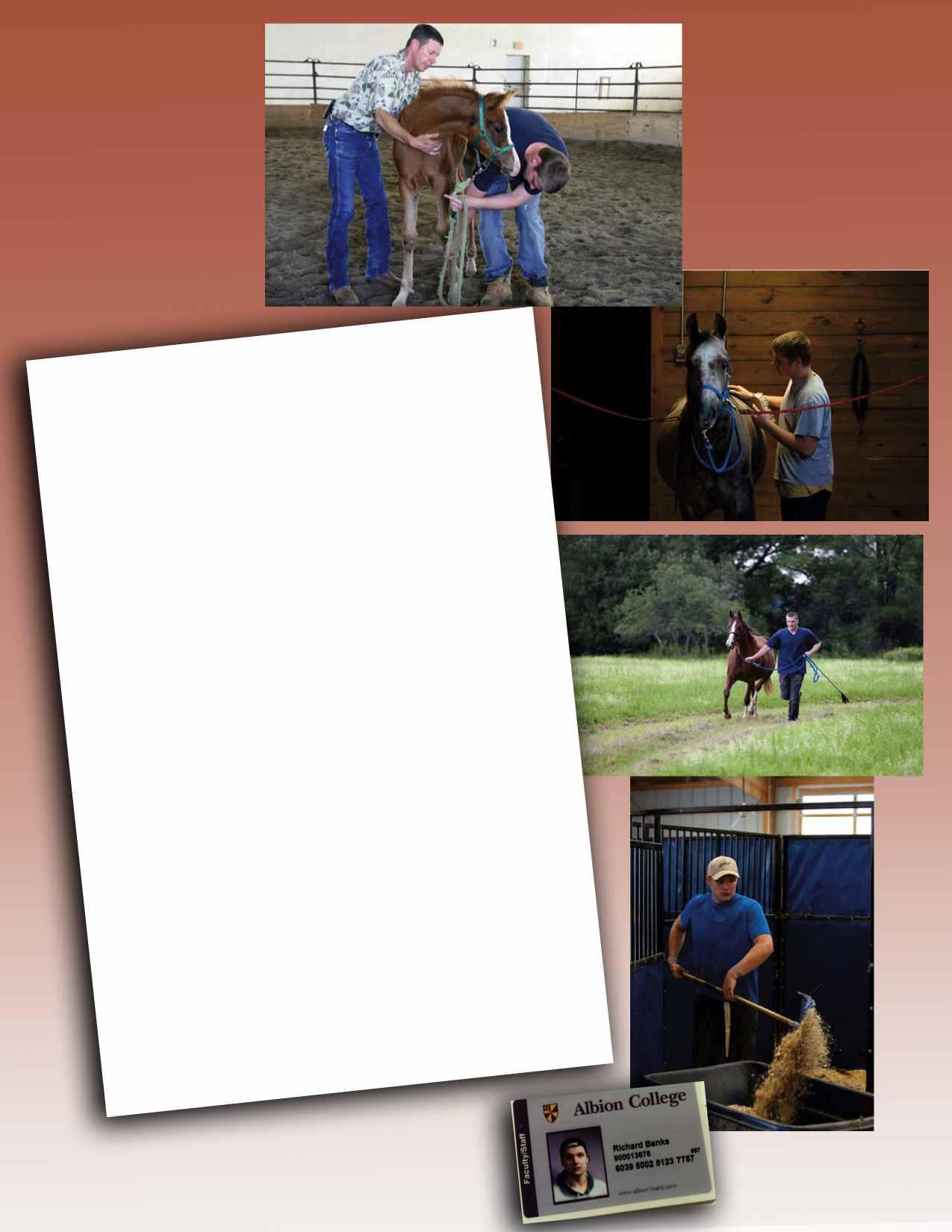
By Rich Banks
April 12, 2016 peaceful and calm around them and when I was upset I could go
That is why you should be calm. Just focus on the horse. Leave all of handle the horse. How to control the horse. One of my favorite things
What I can tell you is that in 2016 I got hired as a groom atAlbion College There is so much you can learn, but I can't tell you all of that here. inAlbion MI.
brush a horse. When you are part of the sport horse team it feels amazing.You and the horse are like one. You move together and Being on the WGASport HorseTeam was fun and amazing. My favorite part of being on the team was being with the horses. I felt almost everything you do is together. I learned so much stuff. How to I learned is that a horse can feel when your upset or mad or down. your problems at the cottage. how to smile and have fun, and it was worth it in every way. Just ask horse team made me smile and feel really good. If it was not for Mr. a little more work.
they were, I wrote it up and let the barn managers know. Then I groomed each horse for about 30 minutes and then workd them for 30 minutes or the barn members needed help and they'd call “groom 2”, that would be a different 10 horses every day for a week. I went in at 8 am and I pulled so. I also helped out the barn crew. I drove the tractor and stuff. If one of
In that job, I was what we call a “groom”. I had 10 horses each day and out one horse at a time. I made sure they're not hurt in any way and if me. I was “groom 2”.There were 2 grooms. Groom 1 has less experience.
I think lots of kids at WGAwould like being part of the Sport Horse not have had an amazing job atAlbion College. Groom 2 is the person that Groom 1 goes to if a horse is hurt or needs Mike and what I learned about training and working horses, I would Mr. Mike and Miss Kathy. I would not smile and being part of the sport Team. There's a lot to learn but one of the biggest things I learned was