SECOND THOUGHTS
EDITOR IN CHIEF
Adrianna Bartoszek
VICE EDITOR IN CHIEF
Julia Krzeszowska
EDITING & PROOFREADING
Kaaviya Balakrishnan
Adrianna Bartoszek
Karol Borczyk
Dominika Front
Karolina Kordońska
Julia Krzeszowska
Kacper Kusio
Szymon Malkin
Matin Nikookar
Antonina Nizielska
Sonia Pakhomovska
Jakub Sągolewski
Aleksandra Socha
Maria Stabulewska
Julia Sułkowska
ILLUSTRATORS
Daria Chmielewska
Paulina Durakiewicz
Bartek Gąsiorek
Mikołaj Marczykowski
Sanaz Nouri
Maja Rucińska
Palina Sachyvets
Natalia Urban
FRONT & BACK COVER DESIGN
Palina Sachyvets
DESIGN AND LAYOUT
Janek Bodzioch
Want to join us in preparing the next issue?
Write an email: second.thoughts.texts@gmail.com
Follow us on Facebook and text us there! @second.thoughts.uw
Find us on Instagram! @sec_ondthoughts
The views and opinions expressed through our magazine, social media, websites or any medium of information we send out are those of the authors and do not necessarily reflect the official policy of the Second Thoughts student club. Any content provided by our authors and designers are of their opinion and are not intended to malign anyone else’s opinion or beliefs.

Dominika Front Lead-in
The Analog Renaissance
Every 5 years or so, every atom of your body is replaced. You get a completely new set. Naturally, a question arises: who are you really? And this question does not come in isolation. The world is crazy and you don’t know what will happen the next day. Another war? Oil crisis? Discrimination, human rights violation, genocide, a new pandemic? Add to that the technological acceleration, global warming, as well as your everyday struggles. How are we still holding up, having seen yet another end of the world? There must be some soothers or stabilisers preventing us from losing a sense of self. One of them is nostalgia.
The meaning of this word is connected with… cow bells. During the 1600s, Europe was tormented by numerous conflicts. Switzerland, although neutral, was a source of mercenaries (people who joined wars for their personal gain). Some of those Swiss soldiers experienced anxiety, insomnia, abdominal pain, and irregular heartbeat. The condition was first described by Johannes Hoffer, a medical student, who attributed those symptoms to longing for the Swiss Alps. A logical assumption to everyone who has ever visited that region. Hoffer dubbed the condition Heimwehe (Ger. home-woe), but later used Latinised Greek words in a scientific paper – nostos (Gr. homecoming) and algos (pain). Some scholars hypothesised that the reason this condition is characteristic only to the Swiss was due to their constant exposure to the clanging of cow bells, which inflicted damage on their eardrums
and the brain. Other theories included variations in atmospheric pressure as well as the flow of “animal spirits” through fibers of the brain. Obviously, it is not only the Swiss who feel nostalgia, so the word began to be used for the feelings of all people away from their homeland. Later, the meaning expanded and started to indicate longing for any place, and, more importantly, time, that one has a pleasant recollection of. It is worth noting that the change of meaning had another dimension – not only of what areas it refers to, but also the emotion it indicates. From a medically pathological and uncomfortable state, nostalgia revolves around positive feelings. Reminiscing fondly about your past cools down the anxiety and instability, improves your self-esteem, and generally boosts your psychological well-being. You and the world change all the time, but nostalgia allows you to connect those changes into a unifying whole
There are two kinds of nostalgia –personal and historical. Personal nostalgia is when you miss something from your own life. Historical nostalgia is when you miss something you’ve never experienced. So I could say that I am nostalgic for the time when my grandmother was showing me her jewellery collection and telling me the story of each piece. I could also say, after watching Bridgerton extensively, that I would like to be a young widow in the regency era, organising soirées, not having (since I would be a widow) to conform to the expectations of society. Those kinds of nostalgia exist independently, and from the beginning of humankind, every generation experiences them one way or another. Nowadays, however, nostalgia has colonised our globalised, fast-paced world and it has become a coping mechanism for the accelerating period of rupture and instability. And since the capitalist hyena is well aware of that, nostalgia has been successfully turned (or commodified, if you will) into an aesthetic dubbed “retro” or “vintage”.
This almost obsession with the past has been observed in people of all ages, but it is Gen Z that is especially preoccupied with nostalgia. No surprise here – Gen Z is the first generation that does not know what life without the internet looks like. The evanescence of social media content and the constant need for questioning what is real or not (not to mention all the crises on this planet) create an even greater need to go back to the times when life was (seemingly) better. Maybe not good, but definitely better than this. With the speed of modern life getting faster and faster, I presume that the next generations will make themselves even more embedded in the longing for the past.
Now, let’s look at some examples of things that have made a nostalgic comeback recently. Mind you, the choice was totally subjective, and I won’t get into much detail – my point is to give you a general overview, not a detailed analysis of the analog renaissance.
Exhibit A: Digital point-and-shoot cameras and analog photography
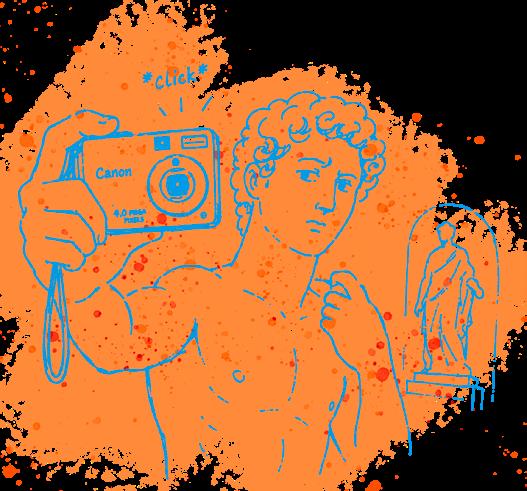
Maybe you have noticed it. I was shocked when I was sitting with friends on a beach in Sopot, after my friend’s graduation concert (he’s a jazz musician), and next to us there was a group of teenagers. It was a warm June evening, a week or two before the end of the school year, so even though it was Thursday, it was understandable they were partying. Suddenly, almost all of them pulled out digital cameras and started taking pictures of one another. The what now? The same kind of camera as the one my parents were tormenting me with when I was a kid? No way.
Those cameras offer a flashy – both in the sense of looking too bright and ostentatious – sometimes grainy, and imperfect look. You get candid photos that seem to capture reality more truthfully than those hyper-processed photos that near perfection. A nice change after deliberating whether an image you see in the media was generated by AI. Moreover, by using a point-and-shoot instead of a smartphone, it is possible to stay in the moment and not get distracted with all the notifications.
Exhibit B: Vinyl records, CDs, and… cassettes
There have been five eras corresponding to means of listening to prerecorded music: vinyl, cassettes, CD, digital download, and streaming. The main difference between the last one and all the rest? Ownership. In the case of streaming, you don’t actually own the music (or movies and series, when it comes to television), but you loan it. Sure, it provides you with a colossal catalogue of musical numbers. Yet, you are often tied up with multiple subscriptions and premium membership tiers that let you avoid ads. If you want to discover new music, you’re going up against algorithms that present you dead ringer songs. And you never know when the streaming service is going to remove your favourite album or TV show from their platform. The answer to all those
problems is buying physical copies. In 2024, it accounted for 16.4% of globally recorded music revenue. Cassettes, CDs, and vinyls may not be perfect, but they provide us a connection to music as well as to our youth, and the possibility to experience it with all senses. Their tangibility becomes an artifact of your identity and of your involvement in a certain artist or a genre. What’s more, by listening to music on records, cassettes, or CDs, you also avoid any music generated by AI (I strongly encourage you to use the word “generate” when talking about what AI spat out; creation should be for humans). For example, a “band”, The Velvet Sundown, garnered 1m plays on Spotify. It released two albums before Spotify admitted that the group’s story, music, and photos were AI-generated. And the platform still has not introduced any kind of warning that the content you listen to was not created by real people.
After a fall in sales in the 1980s when they were replaced with cassettes and CDs, vinyl records became a subject of renewed interest in the early 2010s. The vinyl revival, or resurgence, peaked in the 2020s, and Taylor Swift is considered to play a crucial role in that. For 2025, the Recording Industry Association of America (RIAA) reported that the US vinyl sales surpassed $1 billion, which represents almost a half of global sales. Now, at every concert you attend, there will be a merch shop selling CDs and vinyls. High vinyl sales draw a bigger picture of audiences craving stronger personal connections with the artists. What’s more, people who buy them value the tactile nature of vinyl records as well as the ritualistic side of it, which makes fans engage in purposeful listening. Unlike services such as Spotify, when you listen to music on records, one song does not continuously flow into another. You have to put it on, flip it, and, if you want to listen to something else, you have to browse through your collection and repeat the process. And it’s fantastic, since it allows you to fully submerge in the experience – an art that has been lost in the modern times. And we want to go back to
before the misunderstanding that the job market taught us, namely that multitasking is something great and desirable.
Vinyl records are also perceived as more durable, and because of their size, they come in significantly bigger packaging, so the cover art becomes more and more creative and can be appreciated in greater detail. It can be summarised with what one Reddit user said:
[…] We are alienated from so much due to our digital connections, that vinyl encourages you to think about what you want to listen to, and that when you do listen to it, it’s the whole album as it was meant to be heard. You get to listen to the story through songs the artist wanted to tell, rather than hitting shuffle on 2000 random songs on your Zune. It’s similar to real books versus ebooks, you get the tactile feel, smell, and a physical item you can look at, collect, trade, hunt down. Vinyl slows you down in a busy and detached digital world.
Lastly, there is something I could not have omitted (exactly for nostalgic reasons), namely cassettes. I may have missed the time cassettes came back to use. Or perhaps they never left? 2025 best-selling cassette album Better Man from Robbie Williams sold 21,400 copies. Not much you’d say? That’s 49% of its 43,000 combined chart sales cassettes. Other artists who sell cassette versions of their albums are, for instance, Taylor Swift, Lady Gaga, and Harry Styles People old enough to remember cassettes get to revisit the format through which they first discovered music. Young generations seek the comfort of non-digital mediums and may be tempted to feel historical nostalgia for the 80s. This comeback isn’t logical – cassettes don’t offer high sound quality and they degrade pretty quickly, not to mention the tapes frequently landing outside the cassette. But the point is the same as with vinyls and CDs – to find comfort in what we consider our nostos, our home.
Postscriptum
Instead of a teaser into the issue, I would like you to watch this reel or read its transcript below. I believe it will get you in the mood of the issue perfectly, and definitely better than I would.
Gen Alpha (on their iPad): Can we get a cass-ETTE player?
Gen X: Cassette player?
Gen Z: Yeah, it’s kinda like-
Millennial: I swear to God, Hannah Montana, if you try explaining cassettes to us, I will end you with nothing but the pencils we used to wind them.
Gen Z makes a face, which the author describes as “fear of lead poisoning”.
Gen X: Why do YOU want a cassette player?
Gen Z: Cassettes are coming back!
Gen X (showing a bunch of cassettes like cards in his hand while playing): Mine never left.
Gen Z: See?! They’re vintage!
Millennial (so offended): Excuse me?!
Gen Z: Antique?
Millennial: Strike two.
Gen Z: Old.
Millennial (holding three Bic yellow pencils): OHH… Guess we’re doing it!
Gen Z (panicking): Oh- I thought you liked nostalgia!
Millennial: For US! Not for you. (Gen Z rolling their eyes) Cassettes are OUR thing.
Gen X (winding a cassette with the aforementioned pencil): Are they?
Millennial: Whose side are you on?
Gen X: Pff. None of you.
Millennial: What’s next, iPods and digital cameras?
Gen Z (pulling out a compact digital camera): Oh, those are back.
Millennial: Oh, you’ve got to be fu-
Gen Z takes a photo of Millennial, flash on.
Millennial: Uhhhh! (blinded, points with pencils to Gen Z) Delete that!
Gen Z: Ohoho, this is going on IG!
Millennial: I hate these fucking kids.
Gen Alpha: Soooo, is that a yes for the player?
Millennial sighs (author’s description): “traditional fed up millennial sigh”
Transcript of a reel by bmotheprince on Instagram, descriptions from the author of this text, unless noted otherwise
Lead-in | Dominika Front
CULTURAL
5 “this is so life-core” | Mikołaj Marczykowski
9 I Long for a Place I Don’t Know and Besides, You’re Dead | Emilia Jansson
12 Geese, Ween, and Musical Nostalgia Trains | Aleksandra Bieniewska
16 Times Two | Ivan Sadovoi
POLITICAL
20 Make Bary Mleczne Great Again – The Allure of All Things Past | Emma Panasiuk
“this is so life-core”
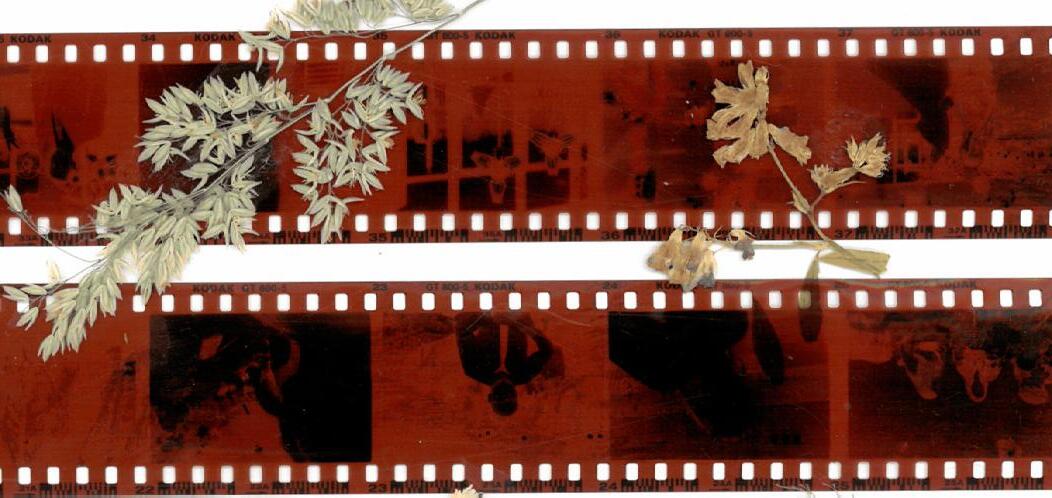
I discovered Flickr in late 2023, while browsing Pinterest for pictures of old gas stations. After clicking on a link under a pin, I was transported to someone’s personal archive, with close to a thousand photos, all dated 2005-2009. They were mostly shots of people in everyday situations, shot in a candid, unprofessional way. They seemed oddly comforting and nostalgic, due to the warm lighting and low quality. There was a welcoming, almost ethereal aura about them – like a window into a lost world, encased in grainy shots from a digital camera. In the weeks to come, I would grow fascinated with this gallery of digital remains, so unlike the Internet I’ve come to know. I chose to open the virtual time capsule, full of unaestheticized spirit and a tangible sense of nostalgia.
Most of the content on Flickr has relatively low traffic. Due to it being an archive site first, the users often treat it as their entirely personal photo dumping space. They expect no one but them to find it, which is true in most cases. This adds an unbelievable layer of intimacy to the things you can stumble upon there. For example: someone’s eighth birthday party with red cups and kids running around; a (possibly confidential) scan of medical records; someone’s father slightly moonlighting the camera while fixing a car in the driveway on a sunny day; a close-up of the pores on someone’s nose at a house party; a shaky picture of a breathtaking sunset seen on a hiking trip with high school friends.
By looking at them, you can truly tell they’re shot by people doing their best to capture a moment – and any moment in life is worth remembering. In contrast to something like a “photo dump” – a current social media phenomenon characterized by posting carefully hand-picked photographic “memory” collections, often accompanied by large amounts of editing and vetting – the photos feel taken purely by chance. There is no theme, no larger concept to any of them. What you see is what you get, in the most literal sense. Those people are most often not trained photographers with a knowledge of such concepts as the rule of thirds or framing, and most definitely have no idea how to use photo editing software. All they care about is taking a snapshot of a moment. Yet, they somehow make it work beautifully. The flashes, the grainy digital quality, the blurry shots, the lens flare from the sun all come together to create an ephemeral picture. Those are all amateur archives of raw, distilled, sometimes embarrassing memories. Be it worth remembering, or uneventful – this was someone’s life back then. There is often no backstory or context provided, and the sole finder of said “digital remains” is left only to wonder – what did they feel? Why was it so valuable to them? Is that all there was to the moment? The mystery adds to it all. We most likely may never know.
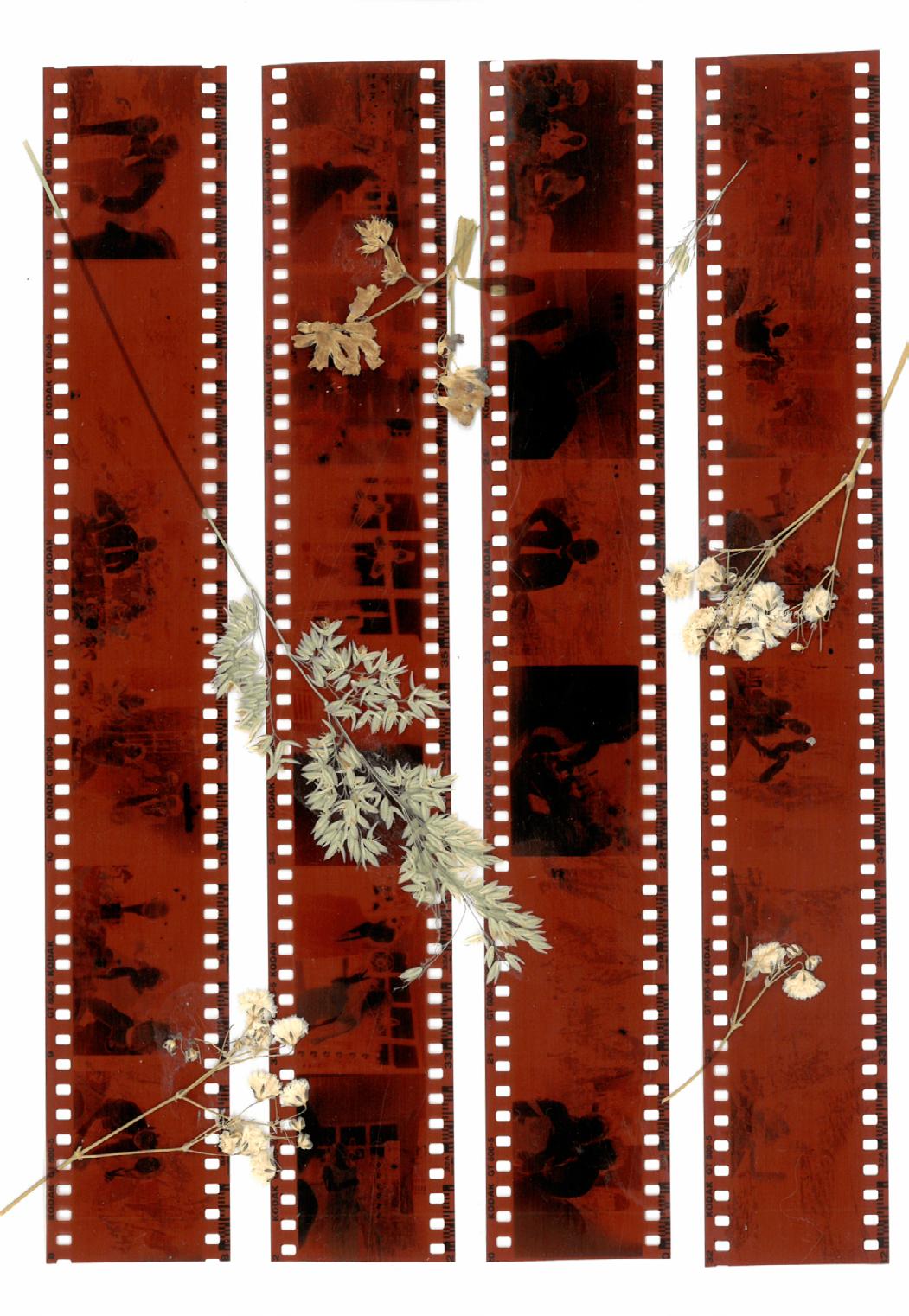
It all brings me back to my father’s own expansive photo album from my childhood. Looking back at it now, it is also a true distillation of my own experiences growing up. Going to car shows with him, awkwardly posing next to the ones I found interesting. Watching ducks, climbing rocks at the park. Intentionally falling into a puddle while riding my first bike to see how it feels. I was a little happier and present back then. I felt different. I can’t have been older than seven when the last pictures from the photo album were taken. Thirteen years have passed since then. I’m still the same, but I have no way of truly reliving the moments captured in the candid pictures taken by my dad. The photos fill me with a host of new feelings each time I examine them as time passes –mostly of nostalgia, but one that positively haunts you, somehow transmitting the emotions into the realm of the present day.
The best-known term coined by Marxist literary theorist Raymond Williams is the “structure of feeling.” Through the 50s and 60s, he sought to develop a way of naming the unique components which contribute to a tangible “aura” of a certain period in which artists create their work, as an unspoken “totality,” difficult to define in everyday language, and even harder to replicate in any other circumstance. The “feeling” of a certain era is essentially an inseparable, one-of-a-kind “vibe,” that no matter how hard one tries, simply cannot be recreated due to the nature of life around us changing irreversibly over time. The emergence of Flickr, and the sole fact of the existence of the photos I have described above, are a great example of the “feeling” of the 2000s manifesting itself through media. The users of the site had posted them to the website, because, to put it simply, the Internet was a vastly different
place compared to what it is now. There had not yet been developed a concept of a digital “panopticon,” in the understanding of Michel Foucault, where the existence of a shared social media feed allows for one user to take a metaphorical peek over the shoulder of another at all times, and allows for constant, mutual judgment to take root. Those conditions, forcing the users to restrain themselves from authenticity due to a fear of being perceived, no longer allow for the display of the kind of emotional freedom which is, for me, the root of Flickr’s appeal. As it turns out, I am far from the only one to think so.
Matter of fact, many people, mostly Gen Z-ers on Instagram and Pinterest, have taken notice of the unmanicured, uncurated nature of Flickr, and started to archive content from the website. One of the more known archive accounts goes by @tvwishes on both platforms – run by an American college student, has amassed over 120 thousand followers on Instagram alone. The archive posts consist of small collections of unrelated photos from the website, in a way being a subversive play on the aforementioned “photo dump” trend. In a 2024 interview with creator Molly Soda published on her Substack, Evie (tvwishes’s real name) states the mission behind her account as helping to “find the beauty in the mundane,” and “uplifting the […] routine parts of life.” She also considers herself an amateur archivist, compiling her findings on her computer’s drive, completely non-profit. Even though she does not consider her work to be “100% up to par with a […] museum,” her efforts have drawn a considerable audience charmed by the magic of amateur digital photography. Interestingly, the title of this article is taken from a comment left under a post of Evie’s.
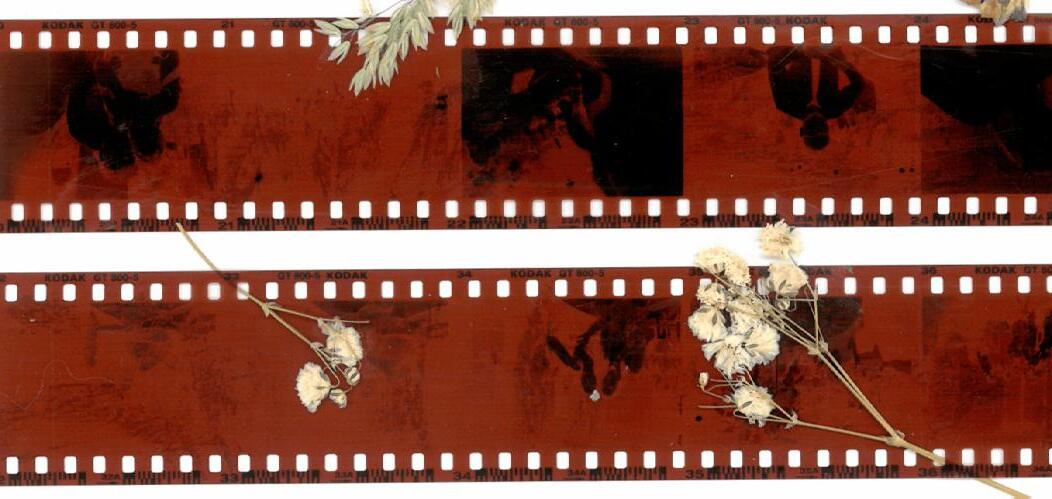
“this is so life core,” despite its typical Gen Z prudeness and juvenile simplicity, is, to me, such a fitting statement. Not only Evie’s work, but whatever old content found on Flickr brings with it such a nostalgic, yet life-affirming energy. This is the whole of life, romanticized. The je ne sais quoi aura of it somehow bleeds back into the current overaestheticized social media landscape, overly reliant on algorithms, providing an alternative that reaches beyond the neverending digital simulacrum of our age. Flickr’s surprisingly intimate repository of
the digital past seems to “haunt” the current online space, leaving a distinct mark on it, and brings me to ask a question. Why don’t we give the past we had abandoned a warm welcome, and let it reappear in our lives every once in a while, so as to remind us of a real future, full of hope, and see beyond the bleak space within our pocket black squares, eating at so much of our lives way beyond our digital existence?
The answer may be out there, in the form of an old image board with bad pictures.
Emilia Jansson
I Long for a Place I Don’t Know and
Besides, You’re Dead
In Swedish, there is a word used to describe a state that is at once not too much and not too little: lagom. How are you? Lagom. How’s the weather? Lagom How much coffee do you want? Lagom. It does not mean perfect; it does not mean sufficient. It means balanced – almost neutral, somewhere in the middle. There is no good translation. It is a word my farmor, my paternal grandmother, used often.
At some point, I started to think that my identity is lagom. Not entirely Swedish; not entirely Polish. A bit of this and a bit of that, but never fully either of them. Balanced, maybe, I’d say on a good day, but not in a way that feels stable. More like it is suspended. Identity put on pause.
Perhaps in some kind of a liminal space. Anthropologist Victor Turner describes liminality as a “betwixt and between” state –a transitional place where individuals exist between established social positions.
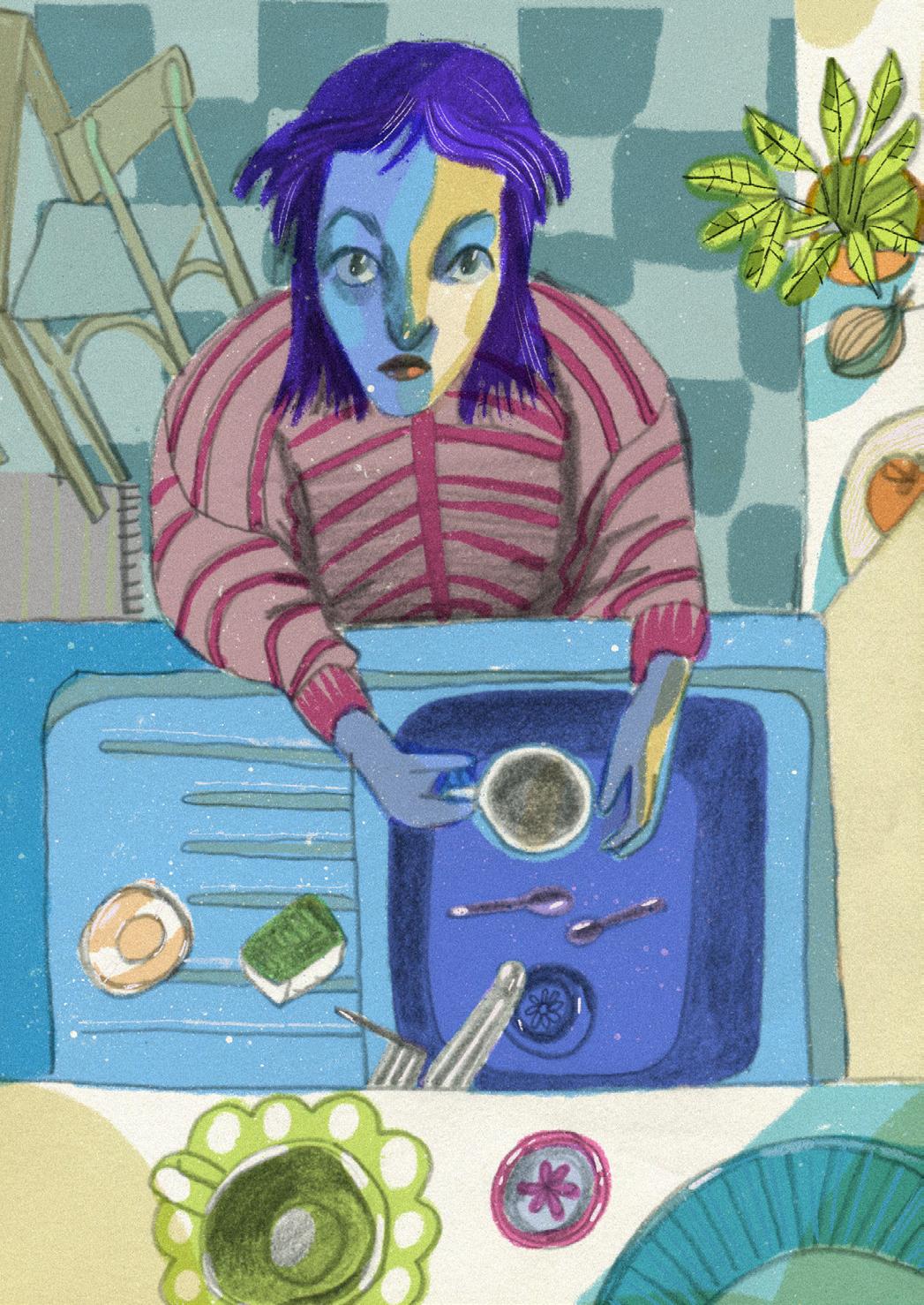
My fondest memory is of me doing dishes with my farmor – when I close my eyes, I can almost see it. I stand on a small stool because the sink is too high up for little-me and the light is casting a yellow tint on my farmor’s hands, which she has wrapped around me. The water is warm and there are a lot of bubbles from the dish soap. I am convinced that my help is indispensable and that I will do all the dishwashing. My farmor smiles at me in a way that makes me belong – in the kitchen, in Sweden, in my identity. I’ve been chasing that effortless belonging my whole life. For me, nostalgia and homesickness were always interchangeable words.
I feel homesick for Sweden. For a country I have been visiting all my life, yet never fully lived in. I speak Swedish, although not as well as I wish I did and I know I cannot hide the fact it is not my only language. Everyone can hear it: I hesitate just a second too long when I speak. When a Swedish term eludes me, I substitute it with an English one. I create weird grammatical constructions, use words that don’t fit the conversation the way I want them to. I sense it in every confused glance, in every gentle question to repeat what I said. I am Swedish by definition, but I don’t sound like it.
It’s not like I feel Polish either. In the week before the winter break started, I tried to explain what decorations I put around my house for Christmas (or Jul, I should perhaps say) to five people – without success, as I honestly should’ve expected. And, to be fair, I often find myself at the other side of this conversation, too: I don’t know any cultural dishes or what belongs on a Christmas table. I don’t know Polish traditions, the Christmas ones or any other, for that matter.
What is home when you have always lived between two places? In a study, “No Place to Call Home,” cultural homelessness is defined as the subjective experience of not fully identifying with either cultural group. It is characterized by low attachment to the cultures, difficulties in locating where one belongs, and the experience of existing in between. It is not about lacking a culture but about lacking belonging, never fully understanding what it even means to fully belong – it’s about understanding a joke at the dinner table without asking for an explanation.
Palina
I am one foot in Poland and one foot across the Baltic Sea in Sweden. I feel most Polish when I am in Sweden and most Swedish when I am in Poland. In spite of what I usually think, it seems my identity emerges and sharpens in contrast. It doesn’t settle. I move between languages, stumble between traditions, between what I should be and what I am. I try to understand jokes by how they occupy the air after a laugh. I am a stranger in a foreign land no matter in which country I am. I used to see it as something akin to a failure. I can succeed neither in being Polish, nor Swedish.
My Swedishness has always been tied most strongly to my farmor, not to the country itself. Hur mår du?, she would ask how I was doing on the phone when she called, and I would answer her, a boat lost at sea finally seeing the light from the lighthouse. For those fifteen minutes, my identity wouldn’t be wrong, divided in half, or suspended. It would be something complete. No more existing in the middle.
In On Earth We’re Briefly Gorgeous Ocean Voung writes: “In Vietnamese, the word for missing someone and remembering them is the same: nhớ. Sometimes, when you ask me over the phone, Có nhớ mẹ không? I flinch, thinking you meant, Do you remember me? / I miss you more than I remember you.” I remember my farmor, and so I miss her, and by extension I miss Sweden; I long for a part of myself that I have never been able to find unless I was with her. And I’m never going to find that part of me ever again. I’ve already spent my whole life homesick. After my farmor’s death, this feeling has only deepened. My homesickness, my nostalgia, is not for a place. It’s for a person. I long for coherence, for things to make sense the way they did when I was with my farmor in that kitchen.
I’ve always felt untethered to my cultural identity and therefore, I have never held any strong attachment towards it. Sometimes in jest, sometimes seriously, people ask me if I am more Swedish or Polish. I don’t have an answer. I don’t know how to explain that I feel like both, like nothing, like sometimes only one. Victor Turner emphasizes that liminal states are transformative spaces: uncomfortable, but ones that create. Other research suggests that individuals who affirm bi- or crosscultural identities can buffer the strain of cultural homelessness better than those who are detached from all cultural categories.
Identity in-between is not half of an identity, but one that completely redefines itself. So, my lagom identity might not be defined by absence or liminality, but by coexistence. Maybe identity is not meant to fit neatly and wholly in a way I imagined. Maybe my nostalgia is not proof of what I lost, but evidence of what I know existed, even if only once upon a time: that I did belong, even if only in a kitchen filled with soft light and soap bubbles.
Now, I am twenty. I sigh and I put my plate into the dishwasher – I hate washing dishes. Outside, snow gathers on my windowsill. I think of myself in Sweden, five, ten, fifteen years ago. I look into the mirror and find traces of my farmor’s face in mine. Hur mår du? Lagom
Aleksandra Bieniewska
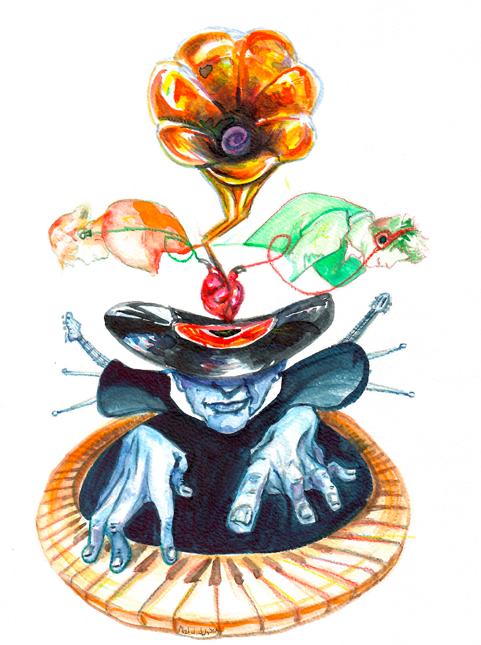
Geese, Ween, and Musical Nostalgia Trains
Nostalgia is a tricky feeling that tends to creep up on a person, gradually building without one noticing until it’s already there. More than that, it can transport you to specific places, much like a train moving through memories would. The bittersweet emotion has its triggers; the figurative train may arrive quicker when engaging with art forms, especially those you’re already acquainted with. In today’s age of online streaming, listening to music is one of the most convenient and simple ways of traveling back to old, cherished moments. Think about the last time you shared a song with a friend, and it reminded them of something they’ve already heard. Maybe they seemed more keen after a familiar sound came flooding back. They may have even laughed it off, calling the recommendation a rip-off of another track. I reflected on this common occurrence, as I was guilty of doing it myself. Many times, I brushed it off with a self-assured conviction that by listening to multiple genres and gaining knowledge in the field, you simply notice more. But I wasn’t at peace until I explored it further.
In January 2025, a Brooklyn-based indie rock group named Geese became my go-to recommendation to friends. The quartet –composed of frontman Cameron Winter, Emily Green, Dominic DiGesu, and Max Bassin, with the addition of a fifth touring member, keyboardist Sam Revaz – blew up on the alternative scene in the following months with the release of their third studio project, Getting Killed. Multiple songs from the album gained traction online, earning the band praise from numerous publications. The band’s sound was likened to that of The Strokes, Television, or the ‘90s sensation, alternative duo Ween.
Geese’s sophomore album, 3D Country, is ingrained in my mind as a sister project to Ween’s 12 Golden Country Greats. Winter’s expressive voice and dramatic vocal style became a subject of reviewers’ speculation. Some argued his falsetto reminded them of Thom Yorke; others praised his lower register, saying it was distinctive of Will Toledo from Car Seat Headrest. Amongst all the compliments and acclaim, I began to wonder, why did nobody congratulate the group for sounding like themselves? Has everything been simply done before, and if so, why should the artists bother to come up with fresh ideas? Has music become too self-referential, and is the modern music industry simply recycling instead of striving for novelty? Does the word “original” mean anything to anyone in the late postmodern times?
Natalia Urban
One may argue that the market for left-field, guitar-based music is so oversaturated that sounding authentic and brand-new is a myth. Ironically, that’s the exact reason for the up-and-coming band’s appeal. The reused sound often becomes manipulated, looped, or chopped to fit the newer song. When it comes to Getting Killed, the instrumental intro of the seventh track of the record, “Half Real,” bears an uncanny resemblance to the one found in “All Tomorrow’s Parties” by The Velvet Underground. Although the band doesn’t publicly acknowledge it in the credits, critics and fans frequently cite the 70’s art-rock group as a primary influence on Geese’s sound. Moreover, they have covered The Velvet Underground’s songs before. Online discussions surrounding the project show that people often hold prejudices against music being inspired by older references. The “re-heating” process paints it as unoriginal, and therefore wrong, often paired with comments about the precedents doing it better, since they were first. But then, some may ask whether sounding like the people you’re influenced by is inherently bad?
What if it’s good? What if, in a time seemingly devoid of hope and innovation for rock music, the generic sounds and melodies are re-imagined to create something entirely new? The aforementioned Ween album, 12 Golden Country Greats, seems to solve this mystery to me. Even though mostly a rock album, the songs combine many techniques to replicate a true country sound, not commonly found throughout said genre. The melody of the second track off the record, “Japanese Cowboy,” resembles the instrumental of the song “Chariots of Fire” by the Greek composer Vangelis. The riff of Merle Haggard’s “If We Make It
Through December,” although played faster and in a more jangly manner, can still be heard on “Help Me Scrape the Mucus off My Brain.” When I first listened to the record from front to back, I recognized the familiar country melodies overloaded with cellos and banjos, and, despite this, I could easily tell what I was listening to was far from generic. With their fifth studio album, Ween managed to do something that solidified their project as more than just a nostalgia-filled, unoriginal cluster of obsolete ideas. By exploring a genre outside their natural musical habitat, they developed a characteristic alt-country sound, while staying true to their own experimental, artistic ways (including, but not limited to, unserious song titles).
It’s worth noting that my stance is not fact, and that attitudes toward scrapping and gluing influences together vary from person to person – or rather, artist to artist. Some musicians consciously evoke a sense of familiarity in their listeners through covers and musical techniques such as sampling. The latter is a process of taking portions of an existing audio recording (a melody, guitar riff, or a vocal) and repurposing them for a new composition. Though legal in the face of the law, the procedure of sampling generates a lot of controversy, with some calling it a form of plagiarism. The discussion around the ethics of this practice becomes even more tangled upon learning about its roots. The origin of sampling can be traced back to African-American traditions, emerging from the 1970s block parties, where DJs used turntables to loop funk/soul breaks. Early sampling was more than just recycling; it was a way for musicians to reinterpret multiple genres, honoring their predecessors. This practice paved the way for the production of hip-hop
Maja Rucińska
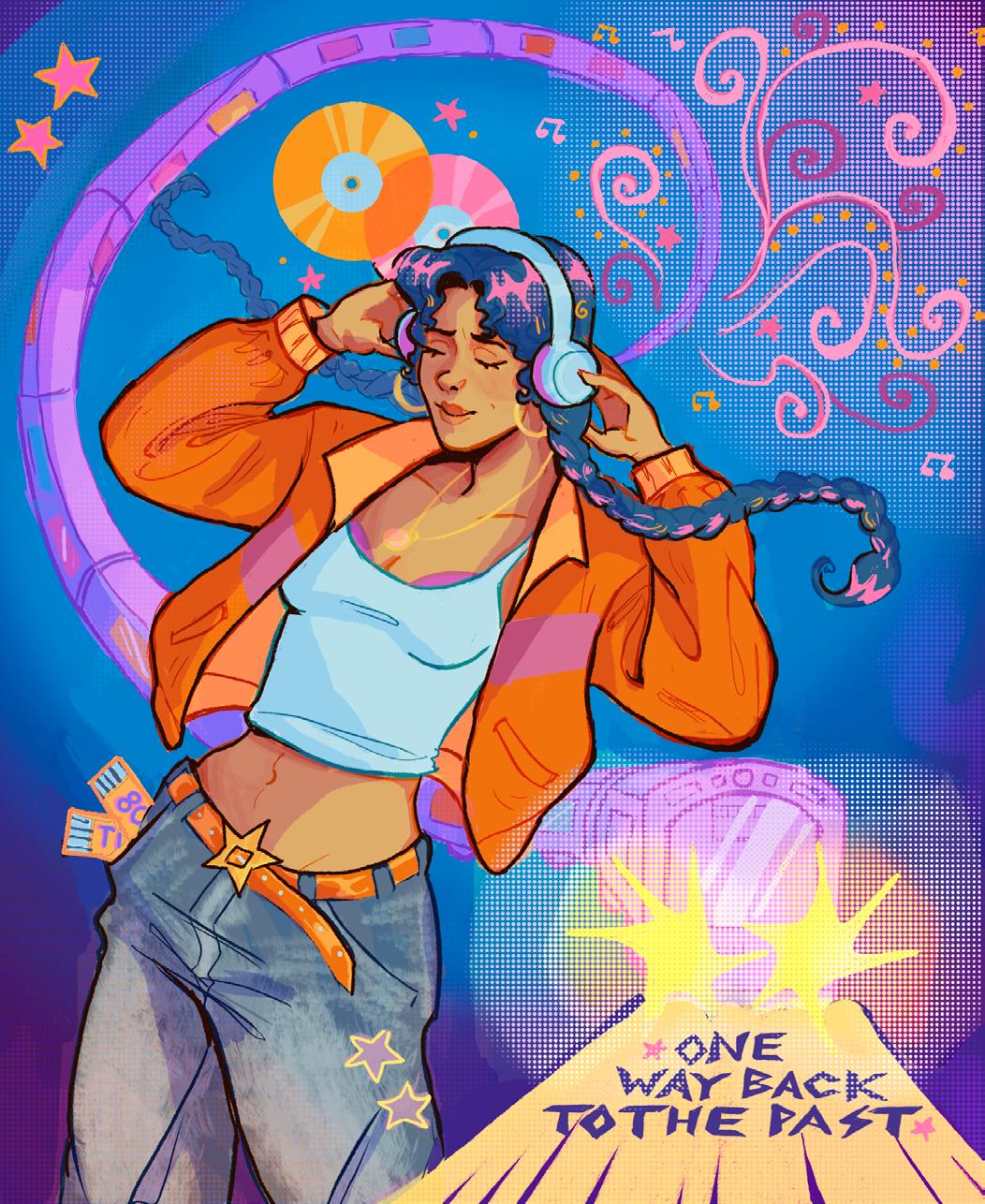
music and can still be found in many jazzinfluenced rap albums. Therefore, when talking about the technique, its cultural significance cannot be left out. What’s more, incorporating bits and pieces of older projects may help revive interest in them. In an interview with Zane Lowe, Geese guitarist Emily Green equated sampling an aged, well-loved record with “cradling it in your arms and handing it to somebody as a gift.” Winter called the procedure “noble stealing.” In the case of covering songs, artists are neither obliged to obtain a mechanical license for releases nor pay royalties to the original songwriters. Although it’s legally regulated, ethical questions about crediting are still disputed. The ratio of praise to contempt may vary, as YouTube comment sections of covers are often flooded with opinions that the new version is better than the original, or conversely, that the song is being butchered. Throughout modern music history, there have even been cases of reworkings becoming more popular than their originals, e.g., Nirvana’s MTV Unplugged 1993 performance of David Bowie’s “The Man Who Sold The World.”
Is it enough for contemporary musicians to hop on the nostalgia train for their careers to take off? I don’t believe that to be true. Even if the driving force behind initial success may be the sentimentality of it all, eventually, the fuel runs out, and it’s up to the artists to keep the publicity going. When it comes to Geese, they sound like everything and everyone they are influenced by; this opinion, being used as criticism, fails to insult upon examining it closer. Open-mindedness while consuming, as well as not counting out bands that are on the rise, may just reveal the motive behind their popularity. Combining influences can count as developing a new sound, one that’s harder to put in a pigeonhole. After all, getting creative with covering, sampling, and mixing sounds is the very reason music can seem old and new at the same time.
Ivan Sadovoi
Times Two
Have you ever felt nostalgic for something that is already wistful in its nature?
One of the most fitting contemporary examples that evokes this feeling is Stranger Things, a series that attempts to capture the beloved, over-commercialized 1980s aesthetic in the framework of the digital age. Or, perhaps, David Lynch’s last directed work, Twin Peaks: The Return, which operates the nostalgia haze primarily to mess with the viewer’s expectations and plot comprehension.
Yet, when speaking about this phenomenon of “double nostalgia”, there exists a certain internet-born music movement that is difficult to ignore. A genre that sparked thousands of releases and helped reshape how sampling is perceived today.
Enter Vaporwave
Many give credit for the creation of vaporwave to Daniel Lopatin, an electronica visionary from Massachusetts. Most famous for his works under the alias Oneohtrix Point Never, he was also the executive producer for The Weeknd’s Dawn FM, and the composer behind the original scores for the Safdie brothers’ films, including Josh’s solo directorial debut, Marty Supreme.
Born into a family of musicians, Daniel was inspired to write music by his father’s extensive record collection and a synthesizer, which the boy would later inherit. That same instrument, the Roland Juno-60 (affectionately nicknamed Judy by Lopatin himself), can be heard throughout the artist’s early progressive electronic era, as well as his guest productions.
It was summer 2009 when Daniel decided to present the world with one of his strong suits – sampling. On his YouTube channel, under the name of sunsetcorp, he would go on to post a series of music videos, which he labeled “eccojams.” In their essence, those were collages of sloweddown and looped samples of 80s and 90s pop songs, utilizing a variety of sound effects. Initially, Lopatin created most of the eccojams while working his desk job between 2004 and 2008, using free audio editing software.
The project concluded in 2010, with the release of Chuck Person’s Eccojams Vol. 1 on cassette. The most well-known song on the tracklist, “nobody here / B4,” featuring trippy reverbed samples and psychedelic visuals, would ultimately go down as one of the very first tracks in the history of vaporwave.
The name for the genre itself was first coined in 2011, seemingly by artist Robin Burnett (aka Internet Club). It was adopted as a play on the term “vaporware,” which in the software and hardware industries was used to label products heavily advertized, yet never officially released. First, as a satirical response to American overconsumption culture of the 1980s, vaporwave earned its reputation thanks to the snazzy “perpetual summer” visuals, excessive use of Japanese (or any non-Latin) text in promo materials and, similarly to eccojams, the heavy sampling of pop songs from the era, drenched in sound effects and distorted in any way one can only imagine. Akin to the notion of “hauntology,” fleshed out in the musical sense by Mark Fisher, a scholar of postmodernism, in his book Ghosts of My Life, vaporwave, too, focuses on ghosts of unrealized futures promised by late-twentieth-century capitalism that still linger in our present.
The producers themselves often choose to remain anonymous, hiding behind aliases that match the aesthetic they are going for. In some cases, artists even commit to roleplaying as fictional characters to carry out a proper narrative. The most notorious for their peculiar personas are Luke Laurila (Telepath) and David Russo (HKE), whose cryptic online presences became inseparable from their work. Some artists go even further: the Canadian artist wosX, for instance, built an entire fictional universe around his hardvapor releases, expanding upon the narrative with written lore.
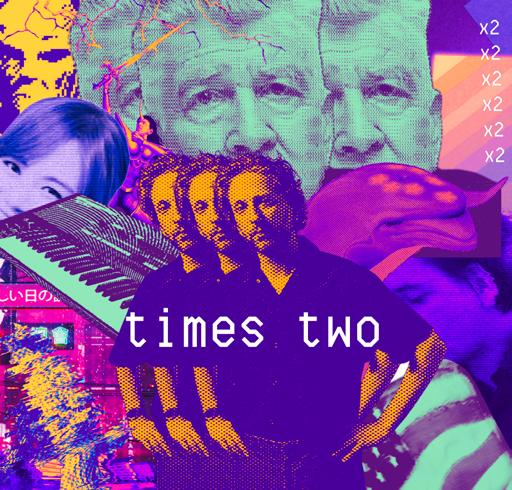
So, you may ask, where exactly does the line of vaporwave end? What does really count as vaporwave? The answer is too simple: almost anything – if you slow it down. Scrolling through Bandcamp1 you could find a project described as an “idyllic journey through the depths of the human subconscious and memory” sitting right next to an album, whose entire runtime consists solely of slowed-down loops from Japanese car dealership commercials circa 1996. In other words, vaporwave was given this openness and diversity, which, in turn, granted musicians tremendous creative freedom. As time passed, vaporwave’s satirical roots slowly began to wither away.
Thus, not too long after that, new subgenres began to emerge. Dreampunk, for example, leaned heavily into the ambient. In pursuit of more minimal and cinematic soundscapes, it distanced itself from vaporwave’s sample-based fixation on the 1980s nostalgia. Here, dreampunk was built around cyberpunk aesthetics and, primarily, its visual romantic aspect, while its known ridicule of the capitalist worldview became overshadowed. The duo 2814 (by coincidence, consisting of Telepath and HKE) cemented themselves as dreampunk heavyweights with their album Birth of a New Day inspired by Ridley Scott’s Blade Runner and the filmography of Wong Kar-Wai. Each album became its own little fantasy realm.
Eventually, mystique completely replaced satire, and over the years, boundaries of vaporwave were stretched thin. Audiences grew tired of fauxJapanese neon amalgams recycling samples from Michael Jackson’s Off The Wall. Vaporwave was becoming a fad by then, much like the consumer culture that spawned it in the first place. The genre needed something rather unorthodox that could breathe life back into it. That’s how the trend for full-on concept albums started to catch on. Sure, those had already been done in the past (returning back to wosX), yet nothing of this scale. The second half of the 2010s brought with it a great deal of such records:
2016: christtt releases his no lives matter and Reflection under the alias Father2006, dedicated to his father’s passing.
Cat System Corp releases NEWS AT 11, an audio reinterpretation of the TV programming on the day of 11th September 2001, if the plane never hit the Twin Towers.
2017: Birth of the Asutenki (Jap. “weather forecast”) project, which mostly samples Japanese TV and radio jingles.
Mikołaj Marczykowski
1 The music distribution service most vapor musicians resort to to avoid copyright takedowns.
2018: Dennis Mikula, the owner of an internet label Geometric Lullaby, sets an entire alternative reality game into motion, pretending to be an anonymous vaporproducer from Azerbaijan using the name begotten who feeds his audiences skeleton creepypasta. The same year Mikula releases a whole series of albums that sound nothing like its spooky visual counterpart.
2019: Equip releases Cursebreaker X, a grandiose soundtrack for a fictional roleplaying video game.
Yet, it was a 2015 release that is considered the trailblazer for the trend. Meet death’s dynamic shroud – the Ohio-based electronic trio, whose works encompass ambient, synthpop, and even shoegaze. Much like Lopatin’s song “nobody here,” death’s dynamic shroud pulls the listener into an ephemeral, almost angelic space, cranking up the atmosphere pressure to 777 percent and leaving the door sealed shut. An ideal mix of claustrophobia and ear candy. Maybe this was the fabled “digital drug” all along.
Interestingly enough, not every member of the band takes part in the making of each album. So far, only three (out of seventy-seven) LPs in their discography were composed by the whole crew. I’ll Try Living Like This was a joint effort between two members, James Webster and Keith Rankin, an hour-long deconstruction of the body of vaporwave music. Rather than following already familiar aesthetics or relying on basic level sample manipulation, the group somehow managed to pull off an entirely new sound, never heard before in the community, conjuring perfect fusions of mildly unmixable things. Sailor Moon sound effects were mashed together with Susumu Hirasawa, K-Pop with Drake and Pink Floyd with Lenny Kravitz. The album broke a seemingly unspoken rule of vaporwave – not to sample anything that was released sooner than twenty years ago (from the moment of speaking).
With K-Pop being the central source of inspiration and idol Kwon Mina (of AOA) featured on I’ll Try Living Like This, many listeners interpret the record as a dystopian narrative from the perspective of the idol herself. It’s no secret this line of work is far from being sunshine and rainbows, and in this respect the long play reads as a bittersweet confession of the heroine. Her fragmented thoughts about falling victim to the hardships of the industry are compressed into a single iridescent disc. Even the album’s title solidifies the heroine’s act of resignation.
This was certainly an unusual shift for the genre. Hardly anybody believed vaporwave could be that profound and human. Audiences loved every second of it and still consider the LP one of the greatest accomplishments in the genre. In their production, James Webster and Keith Rankin achieved ethereal, almost fluid-like textures. Experimental sample chopping methods stitched with seemingly conventional modern pop hit structures created nothing short of a sonic Frankenstein. You listen to it bewildered, yet can’t bring yourself to press the pause button. The same is true of the album cover. It is just so hard to look away.
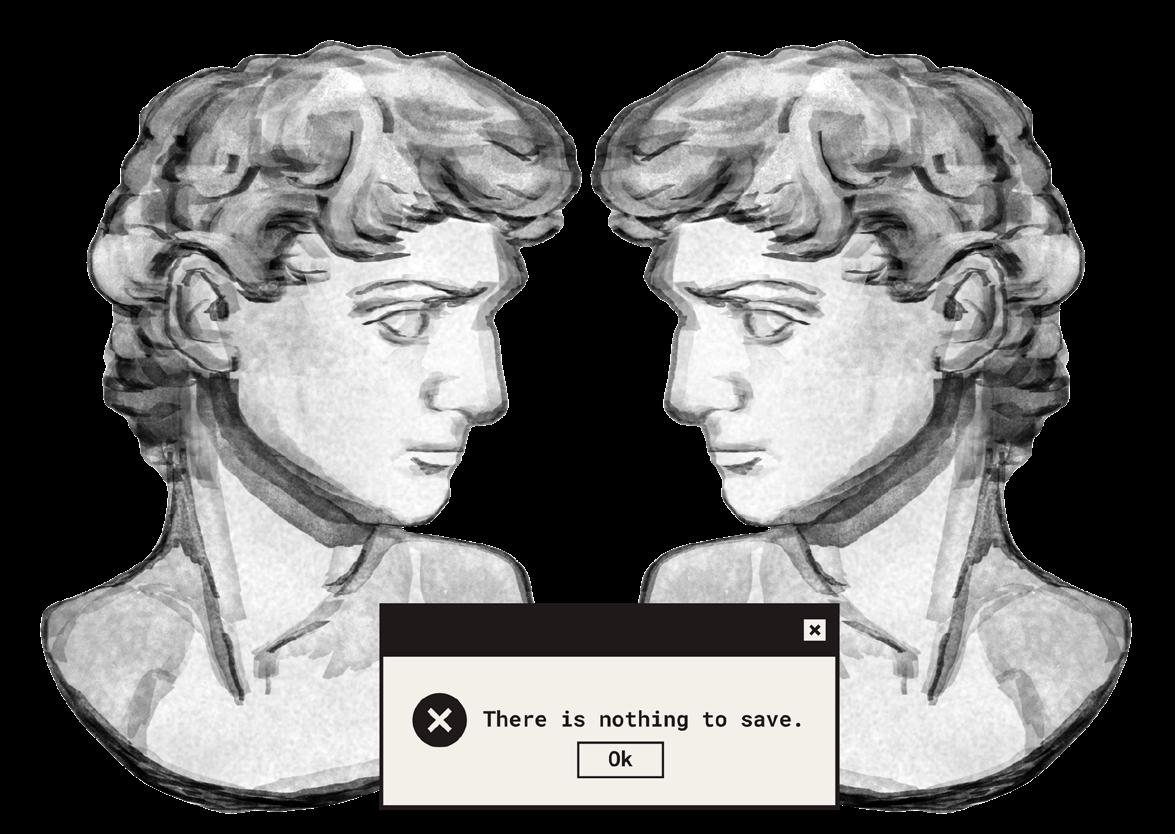
Fifteen years since its original conception, the spirit of vaporwave has morphed immensely, dipping its toes into experimentation with other genres and subcultures, and it still continues to live on. As for the folks who were there when the movement was at its peak, things have come full circle. It is no longer only nostalgia for the subject matter, the marble statues in music videos and the 80’s city pop aesthetics. It is, in fact, nostalgia for this kind of nostalgia and time spent with vaporwave. It is nostalgia, times two
Daria Chmielewska
Make Bary Mleczne Great Again –
The Allure of All Things Past
Some time ago, at a family dinner, I found myself defending the loosely defined younger generation from charges of laziness and bad work ethics, wielded by the united front of older relatives. They shared their anecdotes of careless, sloppy employees; I recounted stories of nightmare bosses and landlords that my friends and I had to deal with. They claimed these were exceptions; I spoke of Aristotle’s complaints about the horrible new generation. We listened to each other with respect, considered the other side’s arguments, and let everybody speak their mind freely. And I still truly believe that, at heart, everyone retained their opinions completely unchanged.
This is not surprising; we are, for the most part, notoriously bad at changing our views, even when faced with so-called hard facts. Arguably though, this specific conversation and the broader cultural discourse playing out in a similar spirit reflect not only the perks of our cognitive processes. What makes people so defensive about their memories and mental images of the past is the fact that today, these are becoming an increasingly essential element of one’s not only personal, but also political identity – and thus all the more difficult to untangle or change.
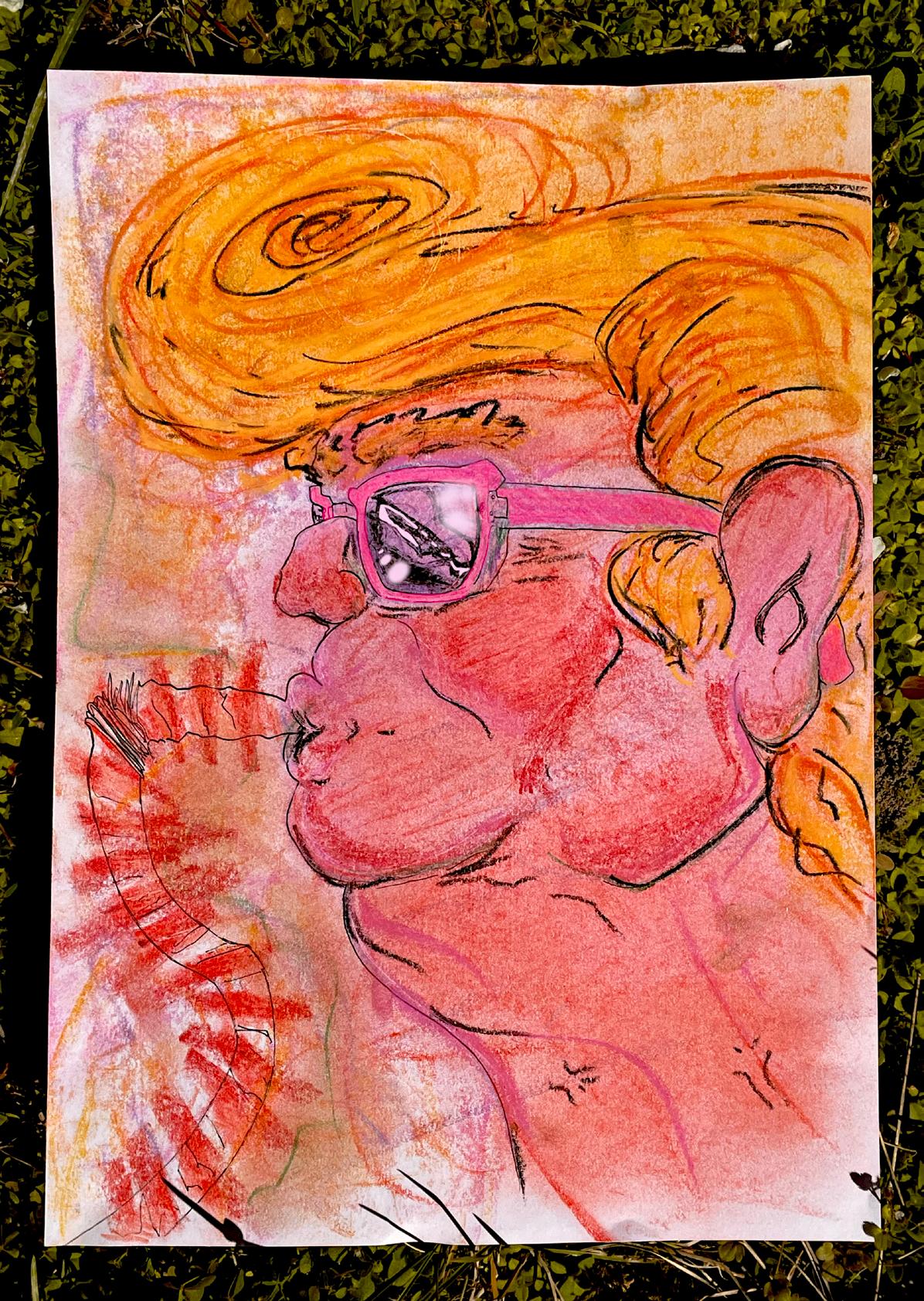
Just how politically charged the past has become is perfectly exemplified by the U.S. political landscape over the past few years. Indeed, the rallying slogan of the man who would become America’s 45th and 47th president could not be a more direct encapsulation of nostalgia. “Make America Great Again,” short as it might be, already puts forward three substantial presumptions – that the U.S. used to be
a great country, ceased to be such, and is now back on track thanks to the Republican Party’s politics. The last conviction, namely that the solutions you happen to propose will be best to the general public interest, is a pretty obvious part of any political agenda, even one not as infested with nostalgia. What is more interesting and telling is the ferociousness with which this administration attacks any voices that dare to contest the first and second assumptions.
One of the most culturally influential discussions of nostalgia was formulated back in 1991 by the American critic Fredric Jameson. In Postmodernism, or, the Cultural Logic of Late Capitalism, he puts forward the concept of nostalgia mode, proposing that the past, as it is represented culturally, ceases to constitute a real period and takes on the form of a superficial idea, a simulacrum through which we strive to comprehend the present-day reality. Thus, it becomes clear that all cultural displays of nostalgia are representations not of the past, but rather our ideas about it. Some illustrative, fairly recent examples from popular culture are, in my opinion, Lana del Rey’s rise to mainstream pop stardom, or the craze for 80’s-inspired series and films like Stranger Things or It. I would argue that the popularity of those cultural texts rests, at least partially, on their aesthetic boldness and distinctiveness, achieved through an intense focus on a singular aspect of the time they are representing. Lana is probably best known for her vintage Americana fashion and leaning into “traditional” ideas of romantic relationships. The marketing around Stranger Things or films like It, meanwhile, relied heavily on their use of colorful, retro 80s visuals in set and
costume design. Naturally, such a focus on the aesthetics of the past foregoes its more complex, less image-friendly aspects, resulting in a shallowing of sorts. And yet those flawed representations are the only means of access we have to the past, which itself stays permanently out of reach. Thus, any attempt to distinguish between the past as a real period versus only an arbitrary image is always futile, at least when it comes to cultural discussions and representations.
aesthetic inspirations, and maybe even views on romantic relationships, from her politics. In other words, to state how truly nostalgic she was. Hence the repeated demand for Lana to explicitly articulate her position on feminism, not required of many other female celebrities and artists.
Take also Tumblr: the platform, which was founded in 2007, had from the very beginning hosted a considerable number of blogs devoted to vintage (50s/60s)
Yet with this yearning for the bygone being so prominent in the American mainstream media landscape, audiences still craved a clear distinction between what they perceived as the real period and its cultural reconstructions. For instance, from the onset of her career, Lana del Rey has, in light of her distinctly Americana aesthetic, been extensively questioned over her politics, especially when it comes to feminism. The disappointment many fans felt when she famously professed she was “not that interested” in feminism was arguably rooted in a desire to have their idol clearly separate her conservative
and soft grunge (90s) fashion. As these communities expanded and moved to other platforms, they repeatedly and explicitly indicated that for all their aesthetic inspirations, their politics were remarkably not conservative or regressive. While they relied on the past for their sense of visual identity, they also proved to be a haven for girls, queers, and non-white individuals exploring their identities. Their point of departure seems to have been the conviction that nostalgia can be felt and performed while distancing oneself from the past. Thus, the conclusions they reached seem to be fairly similar to
Sanaz
Nouri
Jameson’s – namely that cultural nostalgia is only an arbitrary picture of the past, one that can be modified according to current wishes and needs. What began to be accepted in the mainstream was the notion that you could have nostalgic aesthetics without nostalgic politics, and vice versa.
So, how does this notion hold up against the second, more radical, Trump administration? Obviously, it is completely rejected, while aesthetics and politics are all blurred into one undistinguishable mass. This is not to say that perceiving the two as completely separate entities is totally unquestionable. What happens here, though, is an equating of a political stance with a supposedly complementary aesthetic, and using the latter to justify the former. The image of the past that this administration draws on is no less arbitrary than the one employed by various online communities. The difference is in a total lack of acknowledgment of this arbitrariness, whether that be due to naivety or political cynicism. Simultaneously, a belief arises that the past as a whole was (or is?) infinitely better than the degenerate present, corrupted by “wokeness,” identity politics, and economic decline. Then, those economic and cultural issues become inextricably tied, and will all be fought against. Whether the MAGA economy is actually experiencing a boom or a recession is irrelevant – what matters is the narrative.
Nostalgia, as it is being utilized by the Trump administration, uses the romanticized past to further justify contemporary political positions. Robert F. Kennedy Jr. fights the food industry and “Big Pharma,” all poisoning people with new “chemicals” and responsible for the modern “obesity epidemic”1; radical anti-trans legislation claims a return to the times of “biological truth” and safe women-only spaces; actions against DEI and
1 Maintenance Phase, hosted by Aubrey Gordon and Michael Hobbes, brilliantly discusses the complexities of modern nutrition and health research. They have recorded great episodes on RFK Jr., anti-vaxxers, and the “obesity epidemic.”
increasingly more brutal ICE operations yearn back to an all-white and homogenous America that has never really existed; and so on. These are all connected by a severe allergy to all kinds of revisionism departing from simple binary narratives. The past becomes a unified utopia, superior both politically and aesthetically, so what is needed is a suppression of any fact or narrative suggesting it might not have been as picture-perfect. It’s therefore not surprising that combatting critical race theory or trans-friendly legislation goes hand in hand with embracing the return of tradwifery or “natural food.”
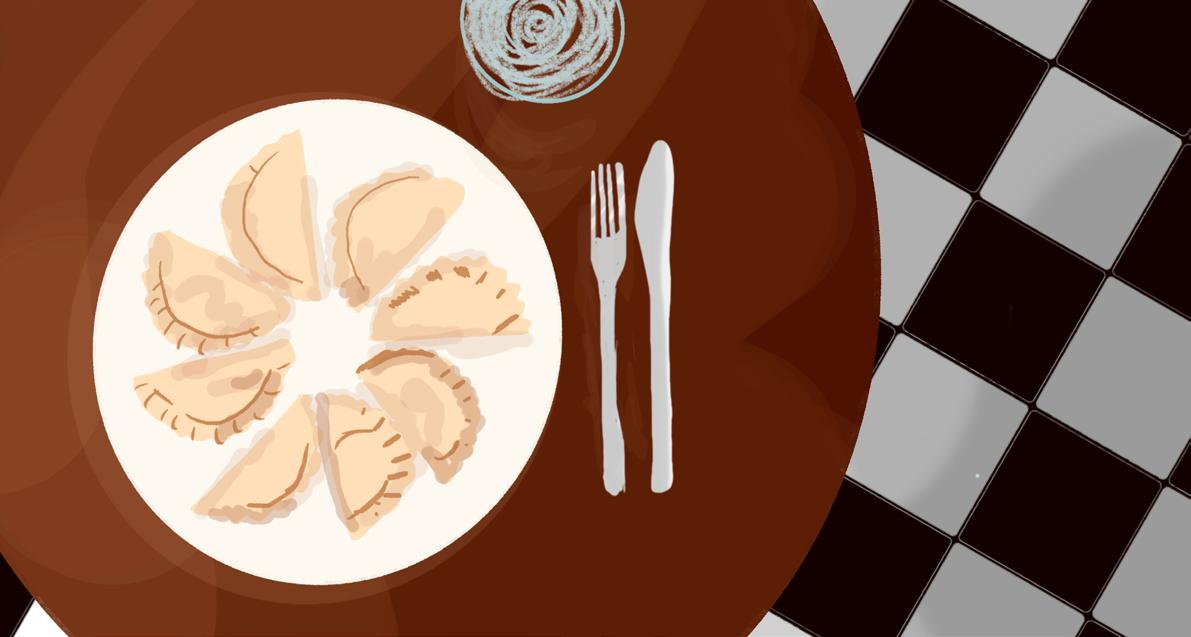
In Poland, however, there seems to have occurred a split in how we collectively experience nostalgia, in a way similar to the U.S.-centric online culture. The type of nostalgia acceptable within the Polish mainstream has followed two loosely defined paths, constituting, arguably, a great generational gap. On the one hand, the younger generation freely indulges in a semi-ironic return to the aesthetics of the PRL2. There is a growing fascination with certain elements associated with that period (bary mleczne3, Supersams, Polishproduced sweets and snacks, the fashion and cinema of that period, PRL museums). More and more visual artists or filmmakers seek inspiration in both the memories of that period and our current recollection and mediation of them. This tongue-incheek return to what is perceived as the earnest simplicity of that time is almost never used to justify a socioeconomic or political regression. On the other hand, though, older people who explicitly claim to miss that period are often scorned by the mainstream, even if they cite issues like housing policies, stronger interpersonal connections or steady employment.
One could also note related tendencies within public discourse, as well as populist political movements. Over the last few
2 PRL is an abbreviation of Polska Republika Ludowa, which stands for the Polish People’s Republic, the official name of the Communist state existing in the years 1947-1989.
3 “Bary mleczne,” or milk bars, are cheap restaurants offering traditional Polish cuisine, mostly inexpensive, vegetarian, dairy-based meals (hence the name). They were very popular during PRL and have regained popularity in recent years.
years, a trend can be observed among some public intellectuals, who selectively transfer controversial, nostalgia-prone topics from the American to the Polish media landscape. What I mean here are the likes of Marcin Matczak, a prolific author of impressively monothematic opinion columns lamenting the young generation: its lack of work ethics or an aspirational, capitalist mindset; women being too lazy to have children; and so on. On the surface, these are traits that can be attributed to purely personal – yet somehow generation-wide – deteriorations of character among young people. This is obviously an illusion. Such thinking derives from a perception of the past that should be too naive and simplistic for any adult to entertain, in that it chooses to believe people used to be entirely and unequivocally superior in character, which rendered their societies significantly less problematic. This example also shows that nostalgia doesn’t necessarily have to be positive in character. Instead of a yearning for bygone times, it can also take the shape of an endless lament over the broken present. It’s no accident that the same figures bemoaning the decaying 21st-century soul find themselves fascinated with the idealized, fact-immune image of the past that characterizes the American far right. Matczak, for his part, has been very vocal about his admiration of Jordan Peterson, one of the principal “anti-woke” voices in contemporary media. Personas like these seem to employ an almost wilful blindness to the possibility of structural causes for demographic issues, choosing instead to believe that people’s characters were simply better in the past.
This intellectual alignment with Margaret Thatcher’s famous remark (with the MAGA movement as a spiritual successor of her idea to a certain extent) is also characteristic of Polish right-wing populist parties, like Konfederacja – sibling movements to Trumpism, Reform UK or AfD. The nostalgia they utilize eagerly employs MAGA-like, emotionally charged, simplistic narratives which designate specific groups as outside enemies, bearers of degenerate and dangerous progressive politics. Konfederacja’s 2019 campaign plan, as described by Sławomir Mentzen, reads as follows: “We’re doing all this research [...]. We know what to say so that the voters will listen to us [...]: We do not want Jews, homosexuals, abortion, taxes, and the EU.” Almost all of those are, arguably, symbols and symptoms of Poland’s posttransformation social progress – of more social heterogeneity and inclusivity, women’s emancipation, and European integration. Once again, what is employed here is an overly simplistic narrative about an unproblematic past, one that might be in reach once all the present-day meddlers and enemies are removed. The possibility that wide-ranging societal problems might have wide-ranging structural causes stays unmentioned. This proves an effective way not only to promise an impossibly easy way out of all issues (the enemy must simply be done away with), but also to conveniently cover up various incoherences within such parties’ political programs.
Why cannot these two modes of Polish nostalgia – the aesthetic and the social one –constitute a unified political movement as it is in America? The answer, I think, lies in the inherent contradiction between those two modes. Right-wing populist economic programs assume, at least in theory, an unrestrained free-market capitalism with minimal government interference, reduced social welfare, and so on. In today’s economic climate, these claims go directly against the desires that proponents of cultural nostalgia may express: the continued existence of affordable, widely accessible dining options, such as bary mleczne, which have become culturally significant. The same can be said regarding the few aspects of PRL life that could be considered positive, like housing or employment security.
Additionally, there is the nature of Poland’s recent history. We clearly lack a materially better past to yearn for (within a distance of a few decades, at least), therefore, political longing had to be separated from other types of nostalgia in order for the latter to be possible at all. For the purposes of this piece, I think the word “horrible” will suffice to describe Polish 20th-century history. Americans gladly indulge in reminiscing about the golden 60s or 90s, and part of that indulgence is not entirely unjustified. In 1960, the average price-to-income ratio of a house was around 4.8, meaning that an average American home cost 4.8 times the yearly median household income. At the time, it was also much more common for households to have only one, usually male, breadwinner. In 1990, this ratio was even lower, around 4.6. Compare that to a 7.03 ratio (as of December 2025), and it becomes clear why at least some Americans would yearn back to those times of greater affordability
Most Poles, however, will find nothing similarly appealing in the times of PRL or the volatile transition period in the 90s. Should we need a period of Polish greatness to reminisce about, we would probably need to go back to the 17th century, if not further. Therefore, what remained for people unwilling to be pushed to cultural fringes was a selective longing for either the aesthetics or the social life of the past century. Arguably, what should also deter us from politicized nostalgia is the eagerness with which our most dangerous neighbor currently employs it for strictly imperialist purposes. A sentiment expressing a straightforward wish for the PRL to return has, therefore, been pushed to the peripheries, unlike in Russia A potential “MPGA” movement, aside from being unpronounceable, would inherently lead to the uncomfortable question – when exactly was Poland great?
An essential part of nostalgia’s seemingly irresistible allure is, I think, the fact that the past can be perceived with a simplicity and clarity never available to the evercomplicated present. This is simply the result of hindsight and temporal distance, yet all too tempting to ascribe to specific perks and circumstances of the past. Their superimposition on the present naively promises to achieve a similar simplicity. This is why political programmes like those of Trump or Konfederacja have found substantial success in a simple and insistent repetition of the promise to cleanse the country of any symptoms of degenerate progress, whether that be queer people, emancipated women, the EU, or even body-positivity/neutrality. Do all types of nostalgia have to be tools for regressive politics? Can nothing be claimed to have been better in the past? Obviously not; what is interesting here are the specific methods by which the past becomes divinized for the purposes of political discourse and erased in this very process. The populist movements not only posit that fighting against racism or homophobia negatively affects society. They claim that these problems, these people, have never
existed at all, up until now. A myth is thus constructed for populist, short-term gains; a myth which turns social progress into degeneration and distinguishable facts regarding historical injustices into “fake news.” In this way, bygone days become a simplified site of comfort, a remedy against times too complicated, a blank slate onto which utopian wishes and desires can be projected. The perfect future some of us would like to inhabit is thus turned into a period already foregone, which works all too well for blocking political action and agency. An improved future needn’t be worked towards; it can be achieved simply by “returning to the past” and stalling progress via reactionary movements. The trick is that this past is, obviously, never achievable. Thus, a mythos of our progress (or lack thereof) as so-called Western societies is steadily constructed. Arguably, it is precisely its employment of simplified, aestheticized narratives that makes it so compelling and dangerous at the same time. It sticks in people’s minds in a way that facts never could, as evidenced by that universal experience of a family dinner conversation.