Standard The Kashmir
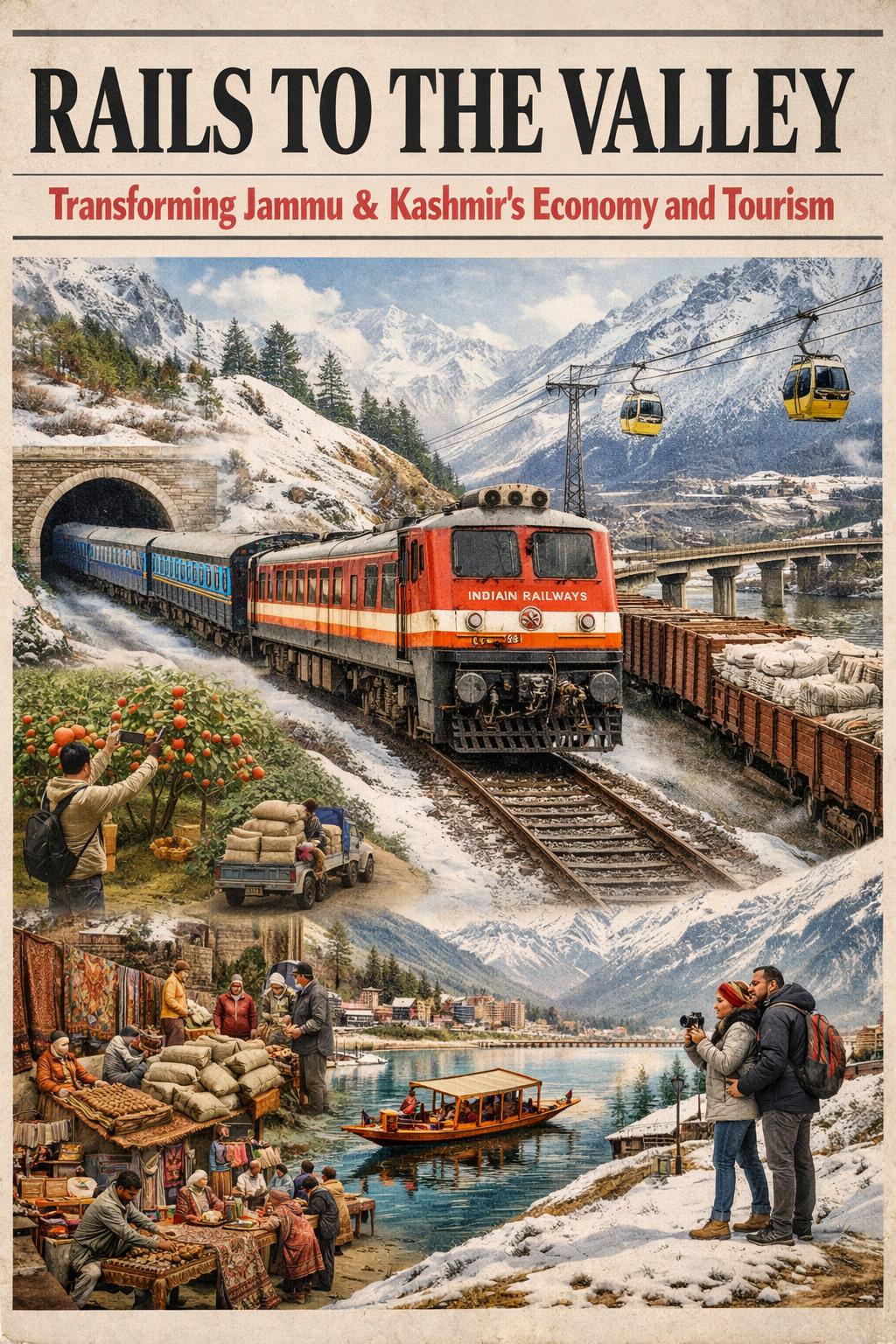
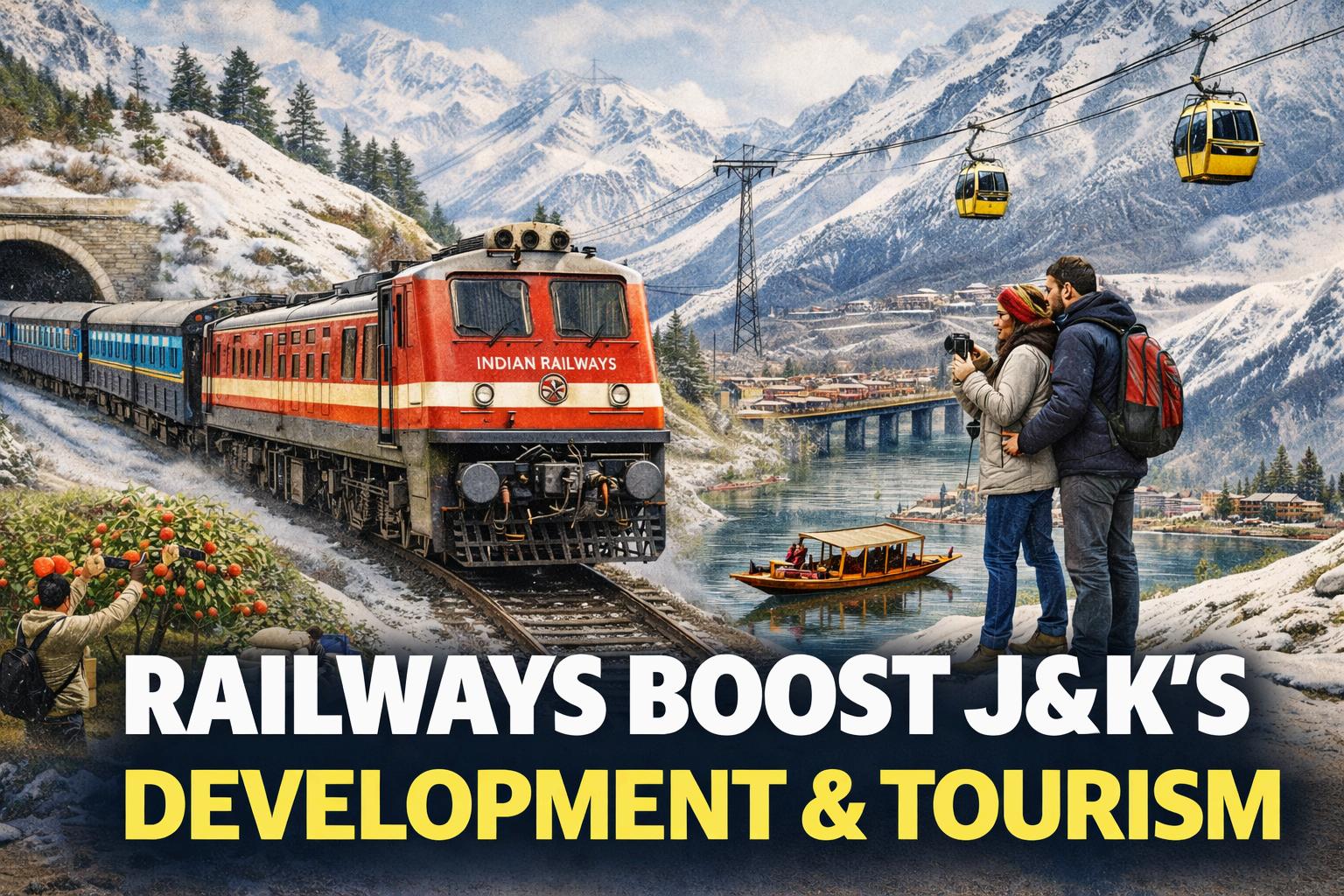
The expansion of railway connectivity to Jammu & Kashmir marks a historic turning point in the region’s developmental journey, promising to reshape its economy, tourism landscape and overall quality of life. Long constrained by difficult terrain and weatherdependent road access, the Union Territory is now witnessing the transformative power of all-weather rail infrastructure, led by the Udhampur–Srinagar–Baramulla Rail Link (USBRL).
For decades, harsh winters, landslides and highway closures disrupted the movement of people and essential goods, inflating costs and isolating the Valley for weeks at a time. The rail link has begun to change this reality.Withreliableand
faster transportation, commodities such as foodgrains, cement, fertilisers and horticultural produce are now moving more efficiently, reducing logistics costs and ensuring uninterrupted supply even during adverse weather. This enhanced connectivity strengthens market access for local farmers, traders and small businesses, enabling them to compete more effectively beyond regional boundaries.
The economic implications are far-reaching. Improved freight movement lowers input costs for industries, encourages private investment and supports the growth of ancillary sectors such as warehousing, cold storageandlogisticshubs.
Foraregionrichin horticultureandhandicrafts,
dependable rail connectivity opens new avenues for exports, helping local producers reach national markets with greater speed andreducedlosses.
Tourism, one of Jammu & Kashmir’s most vital economic pillars, stands to gain immensely. Seamless rail access makes travel more affordable, comfortable and accessible for tourists from across the country. Direct and dependable connectivity is expected to boost footfall to destinations across the Valley, extend the tourist season beyond summer months and promote lesserknown locations. This, in turn, can generate large-scale employment in hospitality, transport, handicrafts and local services, especially for youth.
Beyondeconomics,railway
connectivity plays a crucial role in social integration and regional resilience. It enhances mobility for students, patients and workers, while reducing the Valley’s dependence on a single highway corridor. Environmentally, a shift from heavy road traffic to rail transport also means lower emissions and reduced congestion on fragile mountainroads.
As rail lines knit Jammu & Kashmir more closely with the rest of the country, they symbolisemorethansteeland concrete—they represent opportunity, stability and long-term growth. In bridging distances and seasons, the railways are fast becoming the backbone of a more connected, prosperous and confidentJammu&Kashmir

The proposed introduction of a direct Vande Bharat Sleeper train service from New Delhi to Srinagar is being seen as a historic milestone in Kashmir’s connectivity story one that could reshape travel, trade and tourism in the Valley Once operational, the overnight train, expected tocovernearly800kilometres in under 13 hours, will connect Kashmir with the national capital through a fast, affordable and all-weather rail link, passing over the world’s highestrailwaybridge
For decades, Kashmir’s connectivity has largely depended on air travel and the Srinagar–Jammu National Highway, both of which are frequently disrupted by weather conditions, landslides and snowfall A direct rail link is therefore being welcomed as a gamechanging alternative, particularly for locals who travel frequently for education, healthcare, employmentandbusiness
Tourism stakeholders believe the Delhi–Srinagar train could significantly increase tourist footfalltoKashmir Overnight sleeper connectivity at relatively affordable fares will make the Valley accessible to middle-income travellers, families and group tourists who often find air tickets expensive, especially during peakseasons
Hoteliers, taxi operators, houseboat owners, handicraft sellers and small shopkeepers stand to benefit from a more consistent inflow of visitors throughout the year The rail link could also promote offseason tourism, reducing the Valley’s dependence on short seasonal peaks and helping stabilizeincomes
Beyond tourism, improved rail connectivity will support trade and logistics, enabling fasterandcheapermovement
of goods such as apples, handicrafts, dry fruits and other local products to mainland markets Reduced transportation costs could make Kashmiri produce more competitive nationally, directly benefitting farmers andartisans
For residents of Jammu & Kashmir, the train promises safe, economical and predictable travel Students studying outside the UT, patients travelling for medical treatment, and workers employed in other states often struggle with flight cancellations and highway closures A reliable sleeper train offers comfort, affordability and peace of mind, especially for elderly passengersandfamilies
The service is also expected to improve social integration, making travel between Kashmir and the rest of India morefrequentandaccessible,
thereby strengthening peopleto-peopleconnections
ChallengesandConcerns
While the project carries immense promise, experts caution that certain concerns must be addressed to ensure long-termsuccess
Security remains a key issue Authorities will need to ensure robust surveillance, passenger screening and infrastructure protection along sensitive stretches Additionally, harsh winter conditions in Kashmir pose operational challenges, requiring advanced snowclearance systems and weather-resilient infrastructure to maintain punctualservices
Environmental impact is another concern Increased tourist inflow and constructionactivitycouldput pressure on Kashmir’s fragile ecosystem if not managed sustainably.

New Delhi, January 25: The announcement of the Padma Awards 2026 on the occasion of Republic Day has brought a moment of pride for Jammu and Kashmir, with renowned social worker Shri Brij Lal Bhat being conferred the Padma Shri for his distinguished contribution inthefieldofsocialwork
The Padma Awards, among the highest civilian honours of the country, are instituted to recognise exceptional service across diverse fields including social work, art, public affairs, science and engineering, medicine, literature,education,sports,
and civil services The awards are categorised into Padma Vibhushan, Padma Bhushan, and Padma Shri, with Padma Shri honouring distinguishedservice inany field.
For the year 2026, the President of India has approved the conferment of 131 Padma Awards, comprising 5 Padma Vibhushan, 13 Padma Bhushan, and 113 Padma Shri awards The list reflects the inclusive spirit ofthehonours,featuring19 women awardees, 16 posthumous recognitions, and six recipients from the Foreigners, NRI, PIO, and OCIcategories
The selection of Shri Brij Lal Bhat has been widely welcomed across Kashmir, where he is known for his unwavering commitment to social welfare and community service. Over the years, Bhat has dedicated his life to working at the grassroots level, addressing social challenges and contributing to the upliftment of underprivileged sections of society His efforts have played a significant role in promoting social harmony and inclusive development intheregion
Observers note that the recognition of a social workerfromKashmiratthe
national level underscores the positive contributions emerging from the region and highlights the importance of sustained community-oriented service. The award is expected to inspire younger generations to engage in social work and constructive nationbuildingactivities
The Padma Awards will be formally conferred by the President of India at ceremonial functions to be held at Rashtrapati Bhawan, usually during MarchorAprileachyear
SyrierDar: Shopian,Kashmir:
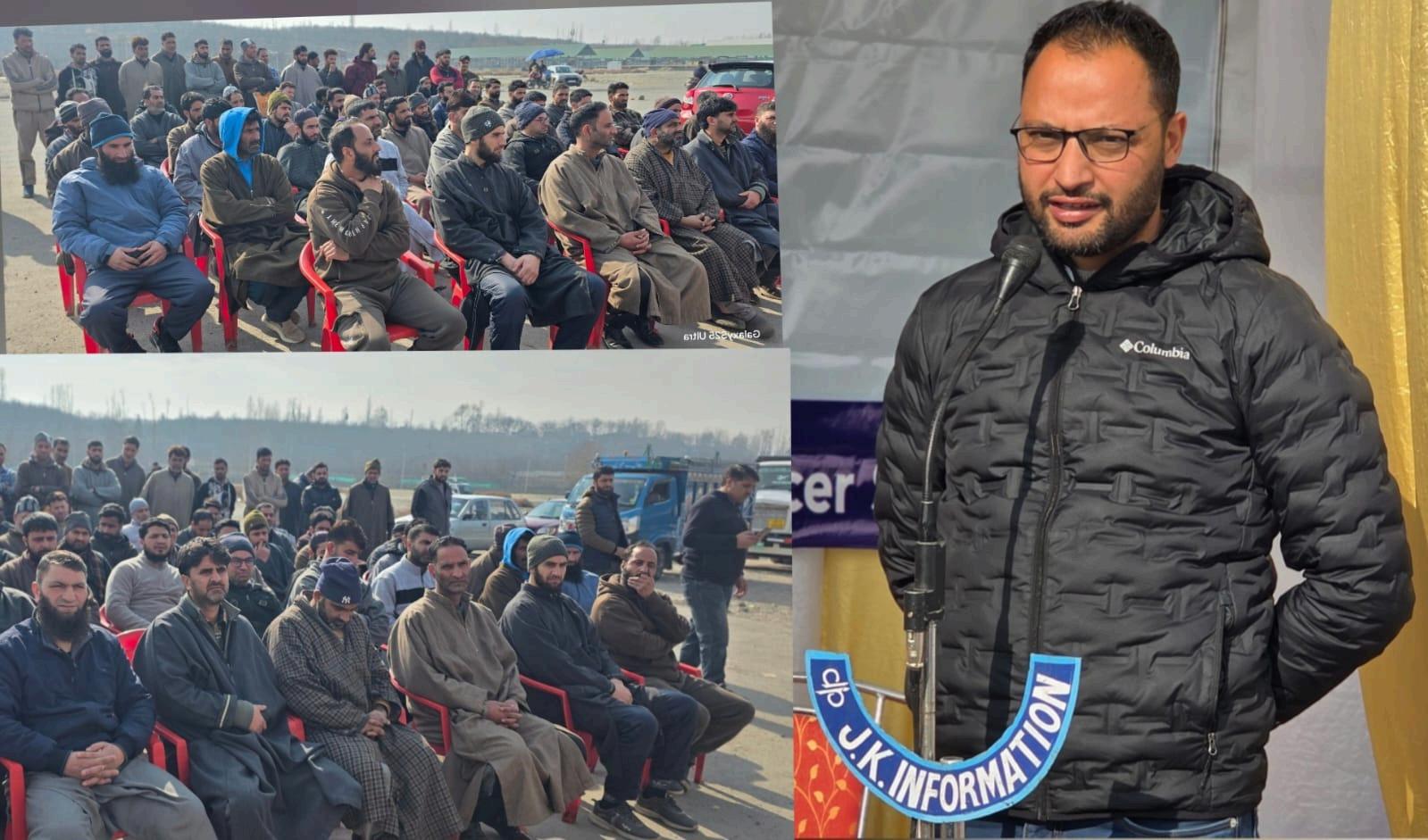
Shopian, January 19: As part of the National Road Safety Month 2026, the Motor Vehicles Department (MVD), Shopian organized a Road Safety Awareness Camp at the Mega Fruit Mandi, Aglar, underthenationwide
campaign “Sadak Suraksha Abhiyan,” being observed from January 1 to January 31, 2026.
The programme aimed to sensitize the general public, drivers, riders, traders and other stakeholders about the importance of road safety and strict adherence to traffic rules.
Keymessagesfocusingonthe dangers of overspeeding, the mandatory use of seat belts, and wearing helmets while riding two-wheelers were sharedwiththeparticipants.
Addressing the gathering, Assistant Regional Transport Officer (ARTO), Shopian, ShowkatAhmademphasized
that road safety is a collective responsibility. He stated that the majority of road accidents occur due to human error, negligence and violation of trafficnorms.
The ARTO urged citizens to adopt safe driving practices, respect traffic laws and develop a responsible attitude while using roads. He further highlighted that simple precautions such as wearing helmets and seat belts, avoiding mobile phone usage while driving, and maintaining prescribed speed limitscansignificantly reduce accidents and save precious lives.
He also appealed to parents, drivers and youth to act as road safety ambassadors and spread awareness within their familiesandcommunities.
The programme witnessed active participation from the public and officials of the MotorVehiclesDepartment.
21 water supply schemes completed; officials directed to fast-track remaining works and ensure quality standards
SyrierDar: SHOPIAN, January 20: District Development Commissioner (DDC) Shopian, Shishir Gupta, on Monday presided over a review meeting of the Jal Jeevan Mission (JJM) to assess the progress of ongoing water supply schemes and ensure timebound delivery of safe drinking water to every householdinthedistrict.
During the meeting, the DDC reviewed the status of various JJM projects and directed the concerned officers to complete all works within the stipulated timelines while strictly adhering to prescribed quality standards. He underscored that the Jal Jeevan Mission is a priority programme of the government,aimedat
improving public health and enhancing living standards in ruralareas.
Emphasising the need for efficiency and accountability, Gupta called for accelerating the pace of work, removing execution-related bottlenecks, and maintaining transparency at all stages of implementation. He also stressed the importance of regular community engagementtoensure
sustainability and effective utilisation of the infrastructure being created underthemission.
The meeting was informed that out of 62 sanctioned water supply schemes in the district, 21 schemes have been completed and are fully functional, while the remaining schemes are at advanced stages of completion. In terms of individualworks,109outofa
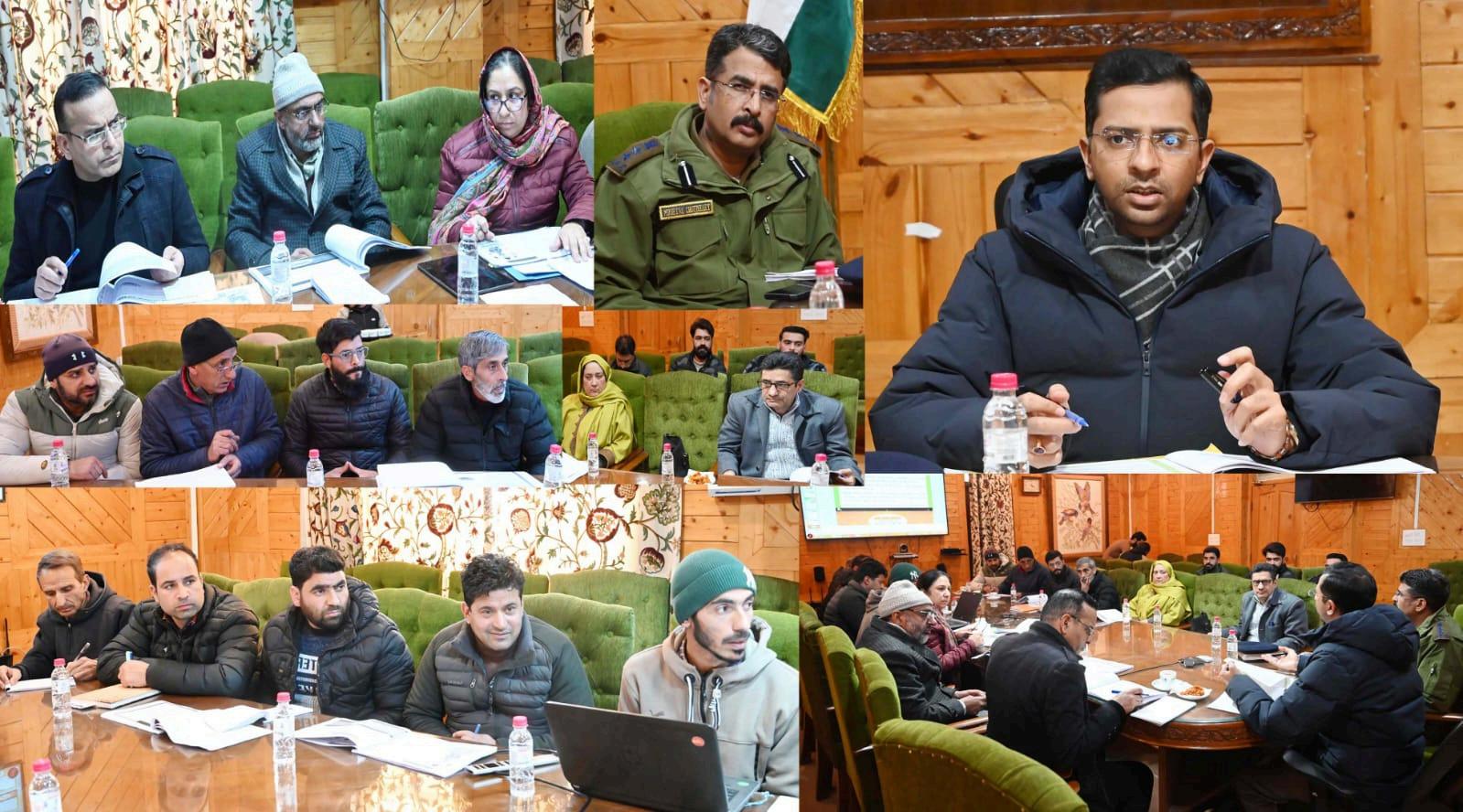
total of 162 works have already been completed. The proposal regarding the extension of timelines for the physical completion of certain works was also discussedduringthereview.
Additional District Development Commissioner (ADDC) Shopian, Dr Nasir Ahmed Lone, Executive Engineer PHE Abdul Rashid Wani,ChiefPlanningOfficer, Junior Engineers, and other concerned officials attended themeeting.
The DDC reiterated the district administration’s commitment to ensuring universal access to safe and potable drinking water under the Jal Jeevan Mission and called for coordinated efforts to achieve the targets within theprescribedtimeframe.
From ground-level policing to district-wide coordination, authorities ensure safety, mobility, and emergency care amid season’s heaviest snowfall
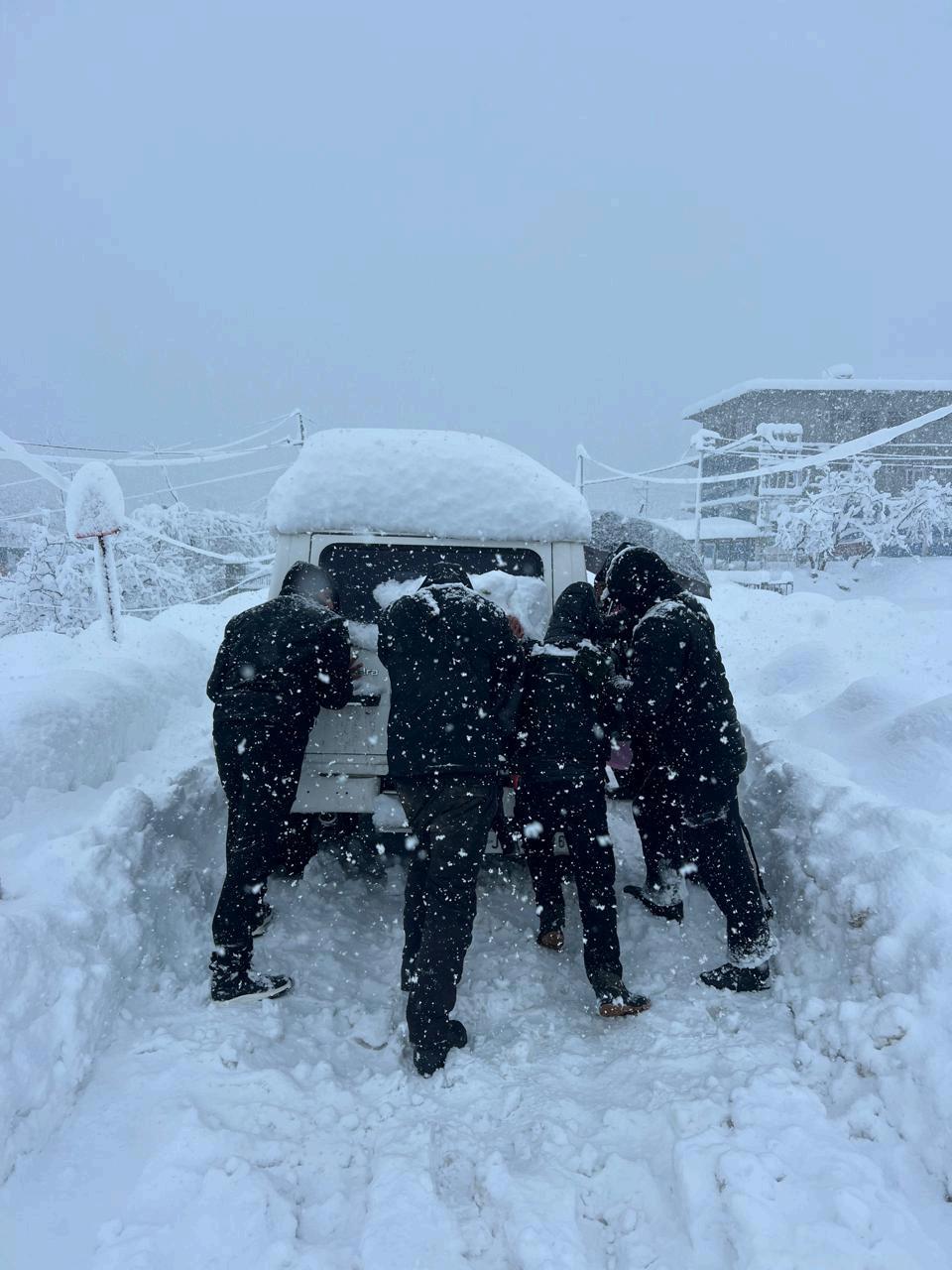
Shopian: As the season’s first major spell of snowfall blanketed Shopian district with nearly three feet of snow, normal life came to a standstill. Roads disappeared under thick white layers, power lines snapped under pressure, and mobility across towns and villages was severely affected Yet, amid the harsh weather and biting cold, a coordinated administrative response unfolded on the ground focused not merely on managing snowfall, but on protecting lives and sustaining essentialservices
From the early hours of the morning, district administration, police, and allied departments swung into action, braving extreme conditions to assist the public Snow clearance machinery was deployed on priority routes, police personnel remained stationed across vulnerable points, and emergency response systems were activated to ensure uninterruptedmedicalaccess
Administration on the Ground
In a clear signal of hands-on governance, Deputy Commissioner Shopian, Shishir Gupta, accompanied by Senior Superintendent of Police Mushtaq Ahmad Chaudhary, conducted a foot march across various parts of Shopian town amid ongoing snowfall Interacting directly with residents, the officials assessed snow clearance operations, availability of essential services, and public safetyconcerns
Speaking to the media, the Deputy Commissioner described the snowfall as beneficial for agriculture and water resources, while acknowledging the immediate challenges posed by the weather He informed that around 90 percent of the district’s main roads had been cleared,enablingsmooth
service round-the-clock, while all departments were placed on high alert to deal with any eventuality arising from the harshweather
PoliceattheFrontline
Across Shopian, the police emerged as a visible and reassuring presence From district headquarters to remote pockets, police teams remained deployed on the ground, assisting stranded commuters, evacuating vehicles stuck in deep snow, and facilitating emergency medicalmovement
In one critical instance, Shopian Police responded swiftly to an emergency call from a COPD patient in need of oxygen, arranging an oxygen cylinder from SDH Shopian and delivering it to the patient’s residence at Bon Bazar without delay In another case, police teams ensured the safe transportation of a patient stranded due to snowbound roads to a hospital, underscoringthelife-saving
on duty from as early as 4:00 AM, assisting people in distress and ensuring safe movement amid nearly three feet of snow accumulation Their dedication earned widespread public appreciation, with residents lauding the police for their humanitarian approach and tirelessservice
Coordination and Preparedness
What stood out during the snowfall was the interdepartmental coordination Police, traffic authorities, power department, health services, and municipal teams worked in tandem to ensure that hospital roads remained accessible, emergency services uninterrupted, and public grievances addressed promptly
Traffic advisories were issued regularly, snow clearance operationswerereviewed
Public Advisory and CollectiveResponsibility
While commending the efforts of the administration, authorities also emphasized public cooperation Citizens were repeatedly advised to avoid unnecessary travel, adhere to official advisories, and follow safety protocols to minimize risks during heavy snowfall
ATestofGovernance
The snowfall may have disrupted daily life, but it also served as a test of preparedness, coordination, and governance In Shopian, the response reflected a system striving to balance natural challenges with human responsibility where officials chose presence over protocol andserviceovercomfort
As Shopian slowly emerges from under the snow, the episode stands as a reminder that effective administration is measured not only by plans on paper, but by boots on the ground when nature strikes hardest
Historic rise in bullion rates puts buyers on hold as market cools; 24K gold now near record highs
Srinagar — A prolonged surge in gold prices has significantly weakened consumer demand across Kashmir and the rest of India, as buyers hesitate to make purchases amid persistent market volatility and high retailrates.
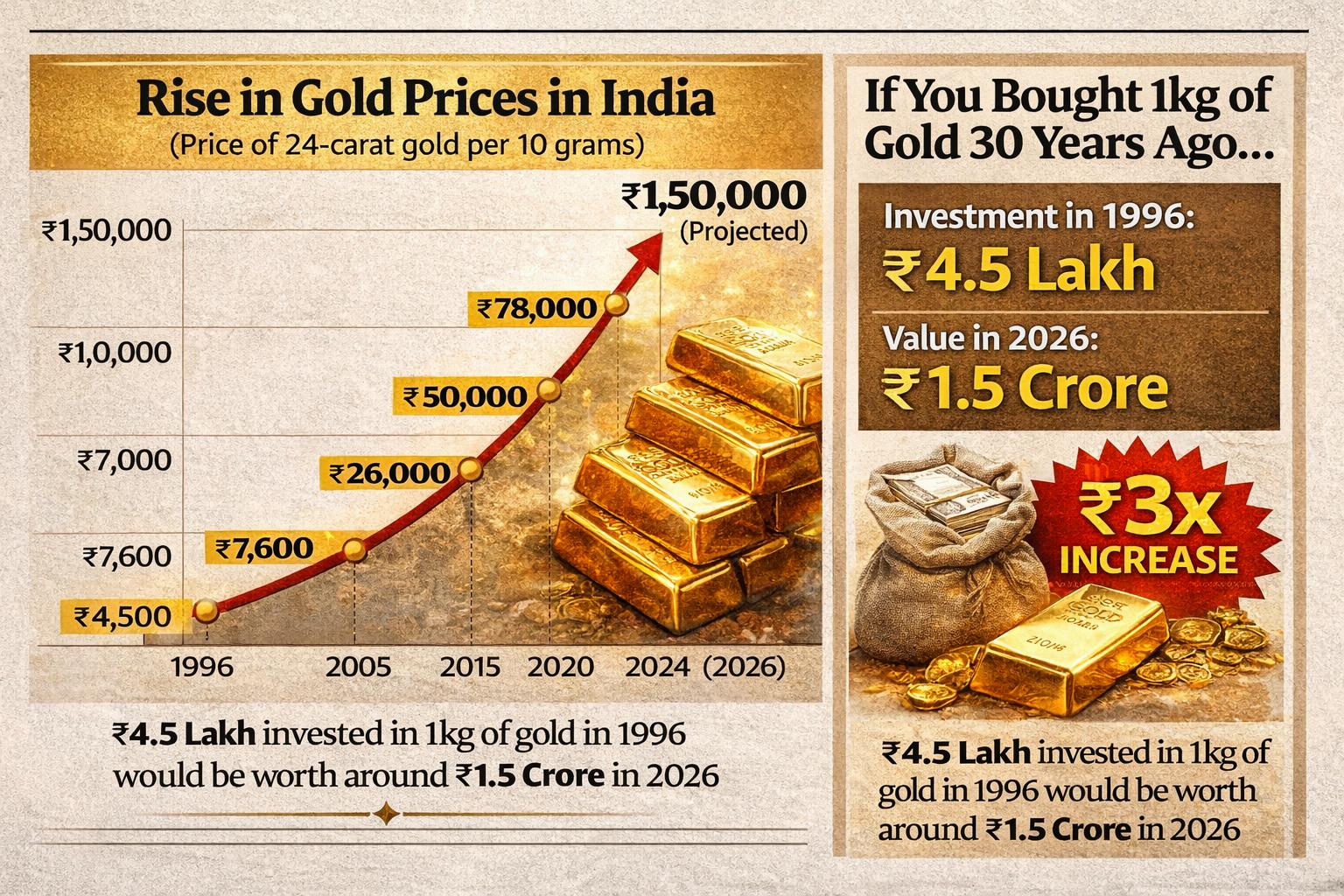
“Gold has climbed from around ₹30,000 per 10 grams a decade ago to over ₹78,000 in 2024 — and in 2026 it has now crossed ₹1.5 lakh, a historic high reshaping buying behaviour across Kashmir.”
Data shows that gold prices in India — traditionally a cultural and financial mainstay — have risen sharply over the last decade and beyond. In the early 2010s, the price of 24-carat gold hovered around ₹30,000 per 10 grams, but by 2024 it had climbed to nearly ₹78,000, and in 2025 it crossed the ₹1-lakh mark, reflecting more than threefold growthoverthepastdecade.
This long-term trend reflects both domestic and global economicforces.
Historically, gold prices in India have soared from modest levels such as ₹4,400 per10grams in 2000 to over ₹1 lakh in recent years as investors seek refuge from inflationary pressures,currency depreciation, and geopolitical uncertainty.
“Daily spikes in gold prices have severely impacted demand,” said Bashir Ahmad, President of the All Kashmir Gold Dealers and Workers Association. “Buyers are holding back in anticipation of stability, leaving the market largely sluggish.” dampenedjewellerybuying.
Jewellers across Srinagar and other Valley markets report that while curiosity about currentgoldratesremains
high, actual purchases have declined sharply particularly for traditional wedding and festive jewellery, which historically accounts for a significant shareofsales.
According to industry analysts, India’s gold demand for2025wasexpectedtocool compared with the previous year after reaching multi-year peaks,assoaringprices
Traders also note that frequentfluctuations—
The impact is felt not only by consumers but also by small jewellers and gold workers in Srinagar. Many report lower footfall and delayed purchases, particularly among budget-conscious buyers who are opting to wait for price stability before committing funds.
With gold likely to remain volatile amid evolving global economic conditions, local traders say renewed demand may depend on a period of sustainedpricestabilityto
“Daily fluctuations in gold prices have discouraged buyers People are waiting for stability before making any major purchase,”
— Bashir Ahmad, President, All Kashmir Gold Dealers and Workers Association
drivenbyglobalbenchmark movements, currency shifts, and domestic policy changes — have reinforced buyer hesitation. Recent trends show gold trading at historicallyhighlevels,even as occasional dip episodes offerbriefrespite.
rebuildbuyerconfidence.
“With gold prices crossing historic highs in recent years, consumer behaviour has shifted from immediate buying to cautious waiting,”
— Gold trader, Srinagar

India’s badminton icon and Olympic medallist Saina Nehwal has officially announced her retirement from competitive badminton, marking the end of an era in Indian sports. The decision has left fans, athletes, and sports lovers across the country emotional, as one of India’s most influential sportspersons steps away fromthecourt.
Saina Nehwal holds a special place in India’s sporting history as the country’s firstever badminton Olympic medallist, winning a bronze medal at the London 2012 Olympics. Her achievement not only brought global recognition to Indian badminton but also paved the wayforanewgenerationof
players, particularly women, to take up the sport professionally.
Over the years, Saina emerged as a trailblazer, breaking barriers in a sport long dominated by a few global powerhouses. She reached the world No. 1 ranking in 2015, a rare feat for an Indian shuttler at the time, and claimed numerous international titles, including Super Series victories and medals at the Commonwealth andAsianGames.
Her journey, however, was not without challenges. Persistent injuries, intense competition, and the physical demands of elite badminton tested her resilience. Despite thesehurdles,Sainaremained
success opened doors for countless young players from small towns and modest backgrounds, proving that international excellence was within reach through disciplineandhardwork.
As she steps into the next chapter of her life, Saina leaves behind a legacy defined by courage, consistency, and trailblazing success. While she may no longer compete on court, her impact on Indian badminton will continue to resonate for generations.
The nation wishes Saina Nehwal the very best for her future endeavours, confident that her journey off the court will be as impactful as the oneshecarvedonit.
As Saina steps away from competitive badminton, she leaves behind a legacy built on courage, consistency, and conviction. Her story is not merely about winning matches, but about changing perceptions and creating pathways.
a symbol of determination and grit, often making comebacks that inspired admirationacrossthesporting fraternity.
Confirming her retirement, Saina expressed gratitude to her coaches, family, teammates, and fans who supported her throughout her illustrious career. Tributes poured in from fellow athletes, sports administrators, and fans, acknowledging her role in changing the landscape of Indian badminton and elevating it to global prominence.
Beyond medals and rankings, Saina Nehwal’s greatest contribution lies in the inspirationsheprovided.Her
She may no longer walk onto the court with a racket in hand, but her influence will continue to shape Indian badmintonforyearstocome. For Indian sport, Saina Nehwal will always remain the woman who made the nationbelieve.
“Success is not about how many times you fall, but how often you rise.”
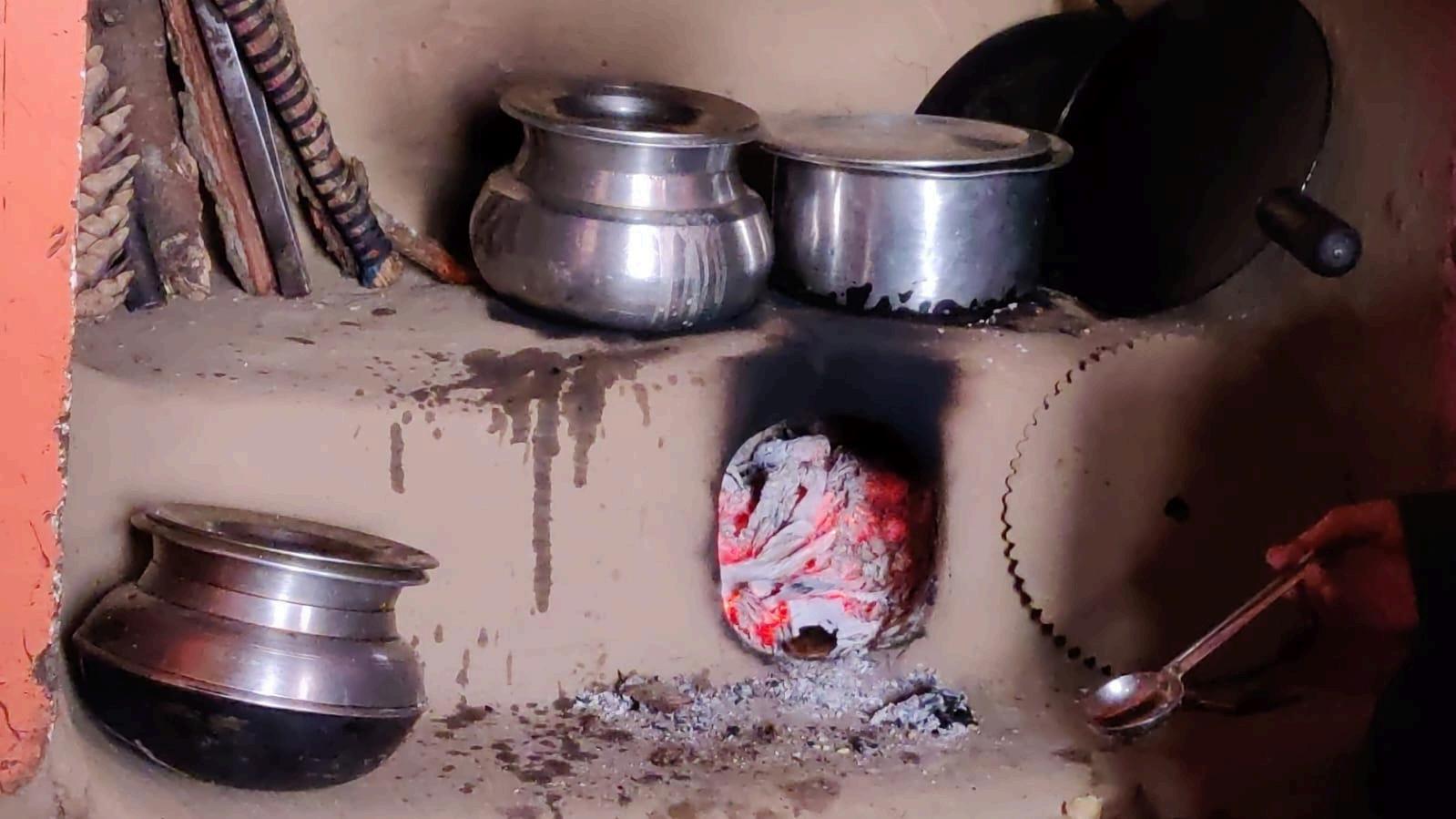
The age-old firewood hearth, locally called “DAAN,” continues to reflect Kashmir’s rural identity, sustainable living, and culinary heritage.
SyrierDar,
In an age dominated by LPG cylinders, induction cooktops, and modular kitchens, the traditional chulha continues to glow quietly in many rural households of Kashmir Tucked away in mud-walled kitchens or open courtyards, this age-old cooking hearth remains a powerful symbol of cultural continuity, resilience, and a lifestyle deeply rooted innature.
with the crackle of firewood as women prepare noon chai or breakfast, while evenings see families gathered around the hearth, sharing warmth and stories. Dishes like haakh, nadru yakhni, tsoek wangun, and even simple rice are believed to taste richer when cooked over a chulha. Elders frequently recall how food cooked on fire carries “qudrati zayka”—a natural flavour shaped by patience andcare.
Dishes like haakh, nadru yakhni, tsoek wangun, and even simple rice are believed to taste richer when cooked over a chulha.
Traditionally crafted from clay, mud, and locally available stones, the Kashmiri chulha is fueled by firewood, dried twigs, and cow dung cakes. Its design is simple yet efficient, often built at floor level with space to hold large metal utensils. The slowburning fire allows food to cookevenly,infusingitwitha smoky aroma that modern cooking methods struggle to replicate. For generations, this hearth has warmed not just meals, but families— especially during Kashmir’s longandharshwinters.
In rural Kashmir, the chulha is inseparable from daily life. Earlymorningsoftenbegin
Beyond taste, the chulha reflects an eco-conscious way of living. Long before sustainability becameaglobal buzzword, rural Kashmiri households practiced it naturally. Fuel was sourced locally, waste was minimal, and kitchens functioned without dependence on external energy supplies. During frequent power outages or gas shortages, the chulha continues to serve as a reliable alternative, highlighting its practical relevanceeventoday.
Known locally as the “daan, ” the traditional firewood hearth continues to warm kitchens, preserve flavours, and reflect a sustainable way of life in rural Kashmir despite the march of modernity.
Culturally, the chulha holds a special place in Kashmiri homes. It is often central to traditional events, communal cooking, and winter gatherings.During
During snowbound months, when life slows down, the hearth becomes a place of warmth and conversation.
snowbound months, when life slows down, the hearth becomes a place of warmth and conversation. Many families,eventhosewhohave shifted to modern stoves, keepachulhaintactasamark of respect for tradition or for useduringspecialoccasions.
However, modernization and urban migration have led to a gradual decline in its everyday use. Younger generations, drawn to convenience and speed, often view the chulha as outdated. Yet, in recent years, there has been a renewed interest in traditional practices, with many acknowledging the cultural, environmental, and emotionalvalueofthehearth.
The traditional chulha is known in Kashmiri as “daan”—awordthatcarries
The traditional chulha is known in Kashmiri as “daan” a word that carries memories of warmth, nourishment, and togetherness.
memories of warmth, nourishment, and togetherness. It is not merely a cooking structure but a living archive of Kashmiri rurallife. As Kashmir stands at the crossroads of tradition and change, the survival of the chulha reminds us that progress does not always meanabandoningthepast.
How do you cook your food at home today on gas, induction, or firewood?
Have you ever cooked or eaten food prepared on a daan?
Share your experiences and memories, and help keep this fading yet glowing tradition alive—for the next generation to remember, and perhaps, to revive.