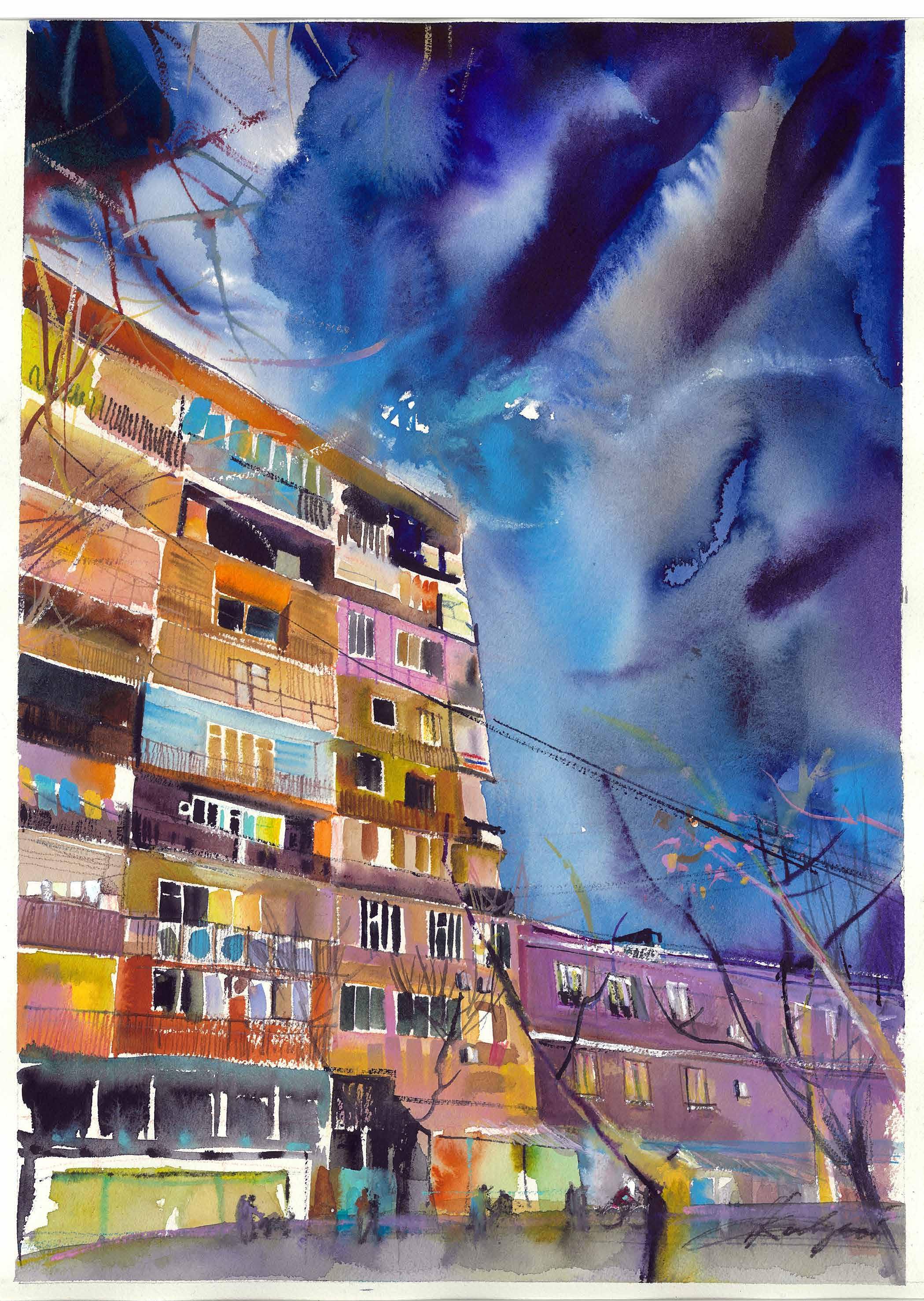
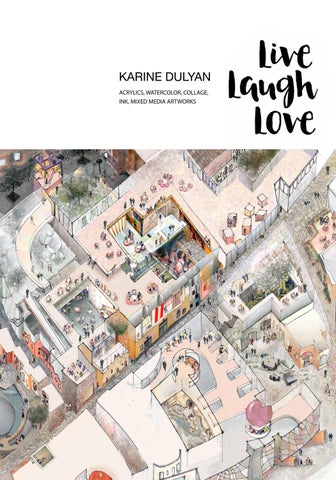
ACRYLICS, WATERCOLOR, COLLAGE, INK, MIXED MEDIA ARTWORKS
WhatsApp: + 374 94 54 09 82
E-mail: karina.dulyan@gmail.com
FB: Karishok Dulyan
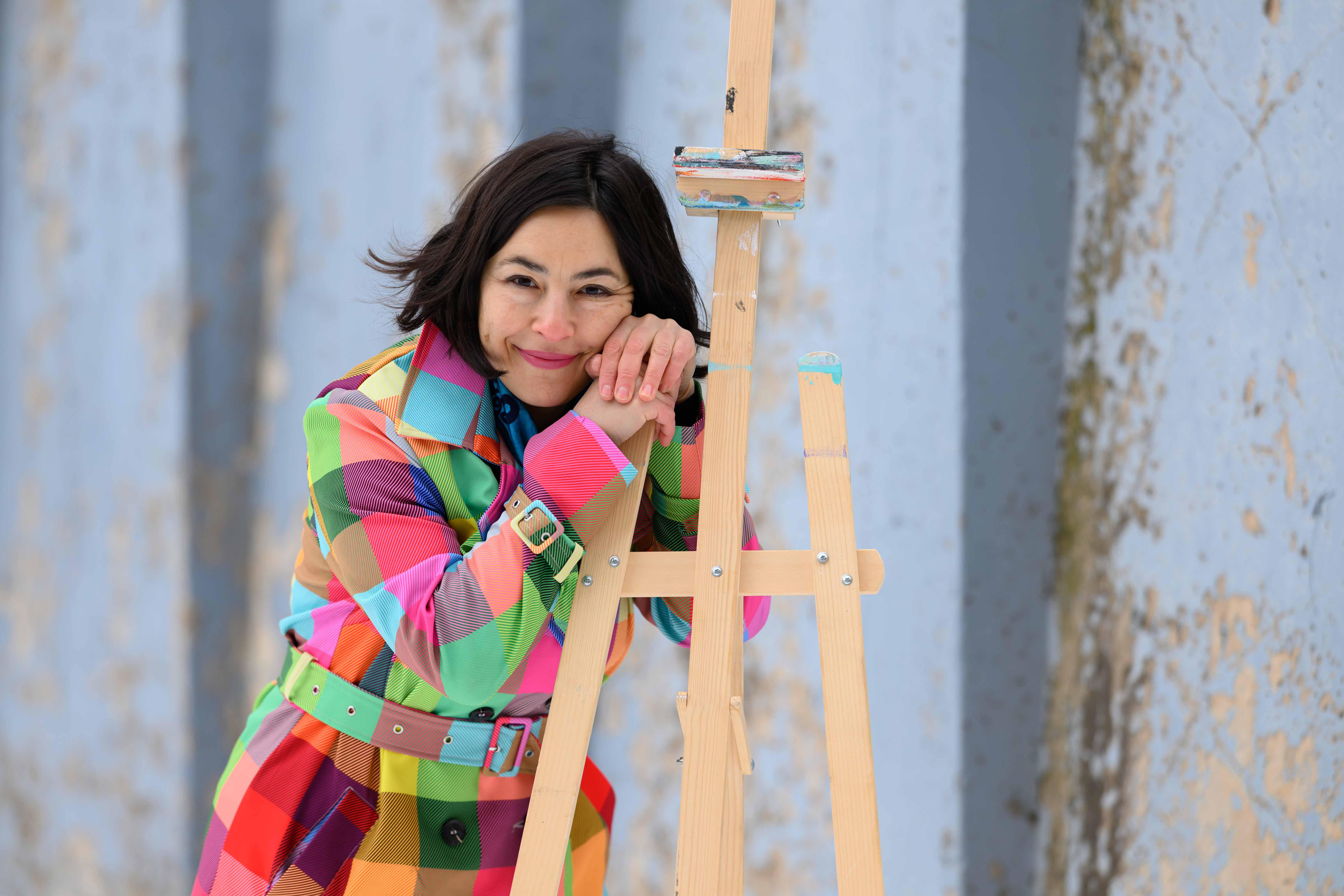
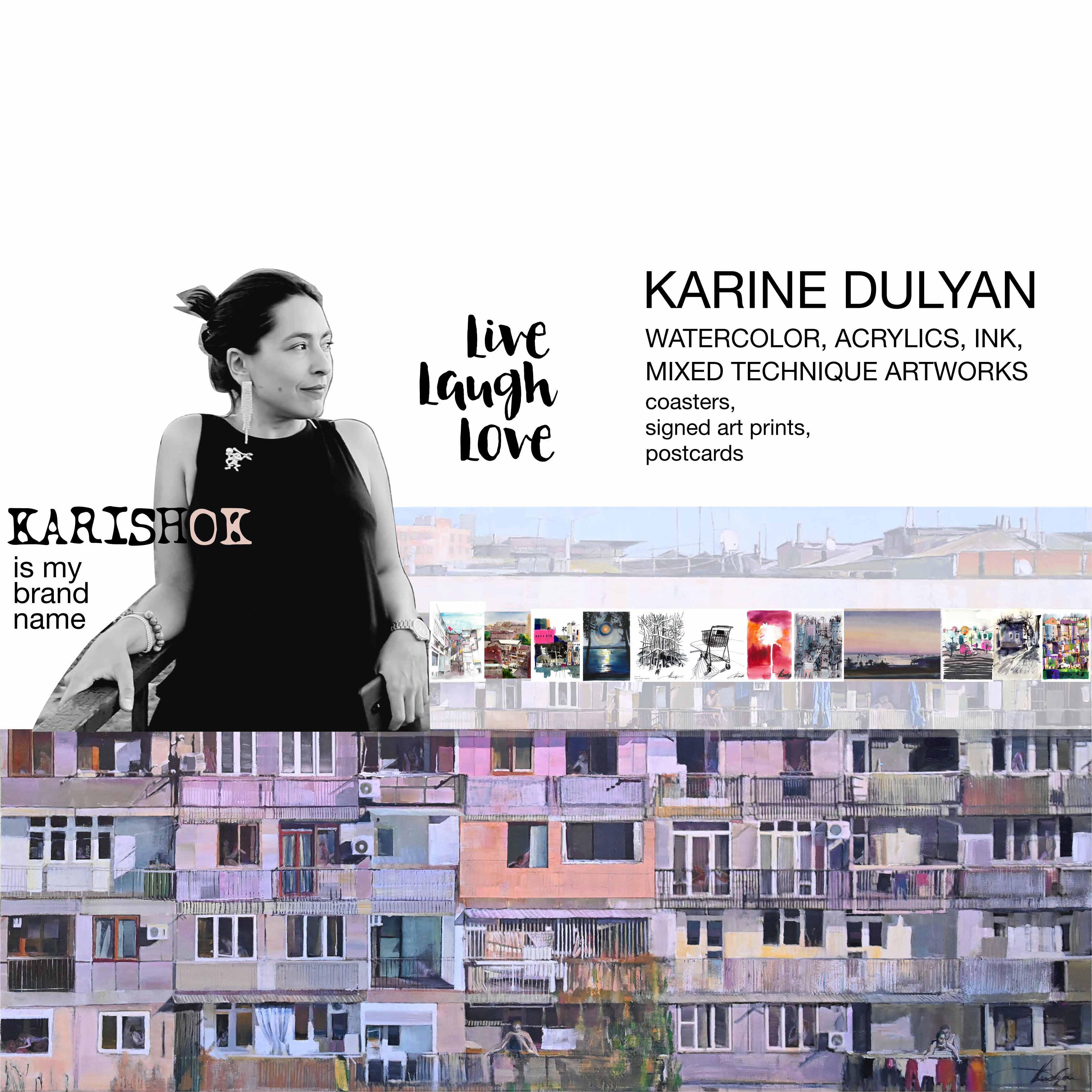
Karine “KARISHOK” Dulyan is a contemporary ar�st based in Yerevan, Armenia. Working across urban landscapes, abstract composi�ons, and mixed media, she explores the emo�onal life of ci�es, human connec�on, memory, and the hidden rhythm of everyday spaces.
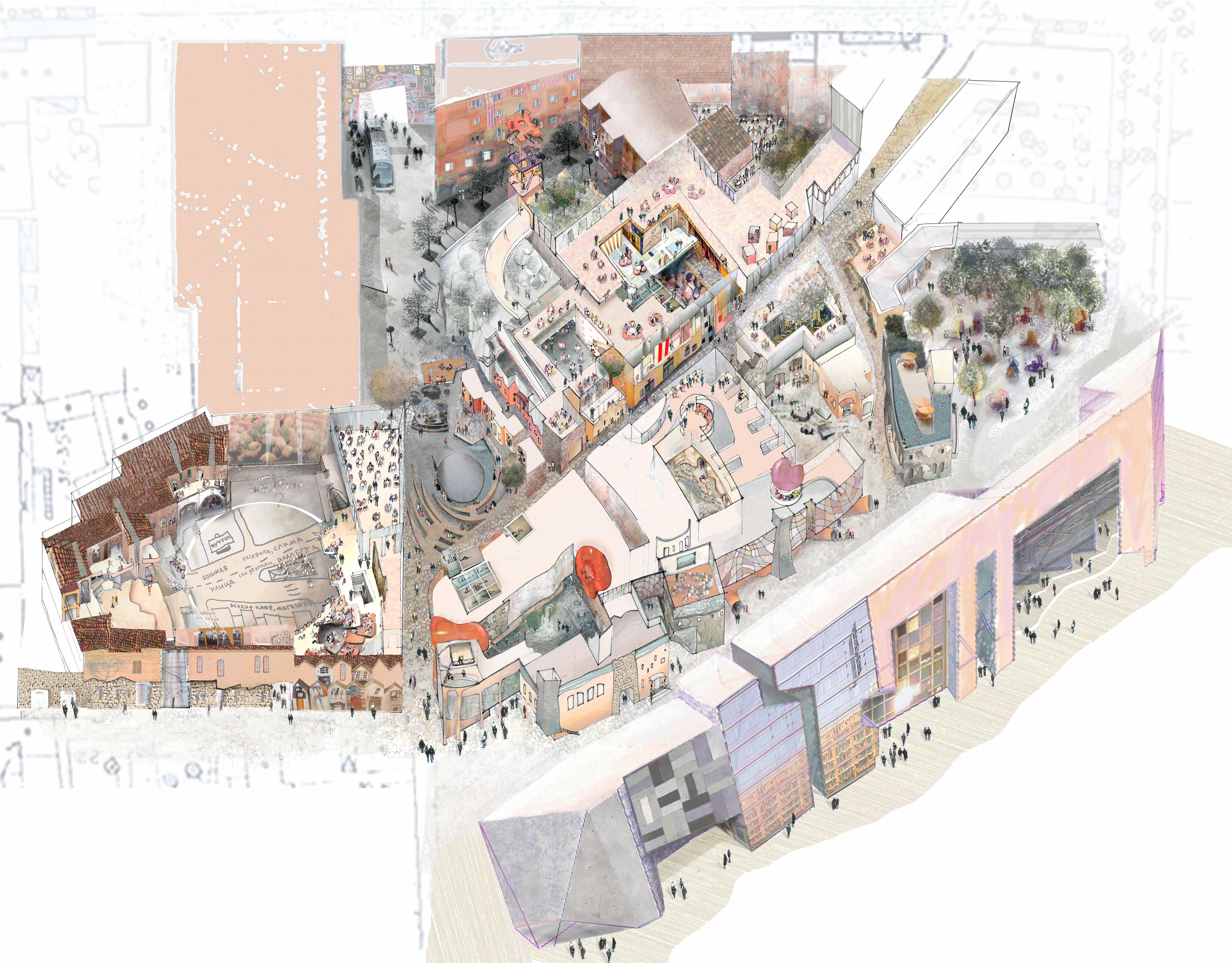
Her first solo exhibi�on took place at the age of five — an early sign of a lifelong need to create, observe, and connect. Although she later pursued a career in architecture and urban design, pain�ng remained a constant parallel language throughout her life. In 2020, a�er nearly two decades in architecture, she returned fully to ar�s�c prac�ce.
Dulyan studied at the Na�onal University of Architecture and Construc�on of Armenia and later con�nued her educa�on in Spain, earning Master’s degrees in Arts and New Technologies from the European University of Madrid and in Urban Design from Madrid Polytechnic University.
Her architectural background deeply informs her visual language, where façades, balconies, windows, roo�ops, and fragments of urban life become emo�onal landscapes carrying memory and human presence.
Working with watercolor, acrylic, ink, pastel, pencil, and mixed techniques, KARISHOK approaches pain�ng as a dialogue between intui�on and structure. Music plays a central role in her process, guiding rhythm, composi�on, and atmosphere. Inspired by neuroscience, biology, travel, and human interac�on, she creates works that seek to reconnect people with beauty, warmth, and one another.
2026
Feb 6 – 28 — Solo Exhibi�on, Arts Club of Washington, Washington, D.C. Feb 13, 14 — Solo Exhibi�on, Armenian Arts, Glendael, CA
2025
Solo Exhibi�on, Zvartnots Airport, Yerevan
Solo Exhibi�on, Embassy of Armenia, Passport DC / Around the World Embassy Tour, Washington, D.C. Solo Exhibi�on, Saryan Cultural Center, Los Angeles, CA
Women for Peace, Group Exhibi�on, Liver Art Company, Yerevan (Mar–May)
Avant Garden, Charitable Auc�on & Exhibi�on, Kirkland Arts Center, Kirkland, WA
Crossing Points, Group Exhibi�on, Galeria Azur, New York (Nov–Dec) 2024
Everything is Connected_, Solo Exhibi�on, Pasadena An�que Auc�ons, Pasadena, CA (Sep)
Art & Aid Fundraiser, FCN, Glendale, CA (Aug) World Art Dubai 2024
ARTCONTACT Istanbul 2024
Dissonance, Group Exhibi�on, Nikoghosyan Cultural Founda�on, Yerevan (May)
Tending the Frenzy, Group Exhibi�on, Yerevan Biennial Art Founda�on, La�tude Art Space, Yerevan (Apr) Art Ambassadors, Group Exhibi�on, Art Embassy, Yerevan (Apr 11–21)
Za�kArtFest, Group Performance, 40 Ar�sts, FtN�.AM, Charles Aznavour Square, Yerevan (Mar 31)
Architectural Sketches, Group Exhibi�on, Armenian Center for Contemporary Experimental Art, Yerevan (Mar 16–29) 2023
Live, Laugh, Love, Solo Exhibi�on, Common Ground, Yerevan (Oct 25 – Nov 9)
Art for Artsakh, Charitable Solo Exhibi�on, Yerevan Biennial Art Founda�on A1 Art Space, Yerevan (Oct 7–15)
Make Love Not War, Solo Exhibi�on, Na�onal Parliamentary Library of Georgia, Tbilisi (Aug 30 – Sep 3)
Notes from Sun City, Solo Exhibi�on, Layers Gallery, Pasadena, CA (Jun 16–20)
Solo Exhibi�on, St. Andrew Armenian Apostolic Church, Cuper�no, CA (Jun)
Par�cipa�on in First Friday, Blitzer Gallery, Santa Cruz, CA (Jun 2) 2022
My Ci�es, Solo Exhibi�on, Zangak Publishing House, Yerevan (Sep 19 – Oct 28)
Make Love Not War, Artwork Opening, House-Museum of Aram Khachaturian, Yerevan (Sep 9)
Solo Exhibi�on, Strawberry Fields Forever Fes�val, Watsonville, CA (May 15)
Solo Exhibi�on, St. Andrew Armenian Apostolic Church, Cuper�no, CA (Apr 23–24)
Group Exhibi�on, Union of Ar�sts of Armenia, Yerevan (Feb 10–17) 2021
Solo Exhibi�on-Concert, House-Museum of Aram Khachaturian, Yerevan (Jul)
Awakening, Solo Exhibi�on, Na�onal Chamber of Architects of Armenia, Yerevan (May–Jun)
Group Exhibi�on, Na�onal Chamber of Architects of Armenia, Yerevan (Oct 4–17) Ellipsis, Digital & Augmented Reality Group Exhibi�on, Glendale, CA
2020
Art for Artsakh Fundraiser, Brand Park, Glendale, CA (Nov 22 & 29)
2019
Architectural Sketches Collec�on, Group Exhibi�on, Armenian Center for Contemporary Experimental Arts, Yerevan (Nov)
Childhood — First solo exhibi�on at age five, Yerevan, Armenia
and collage on canvas
160 x 160 cm (4 pieces 80 X 80)
2024
* This pan�ng is currently on temporary display in the office of the Vice Minister of Culture of the Republic of Armenia, as part of an ongoing dialogue with the country’s cultural insitu�ons.
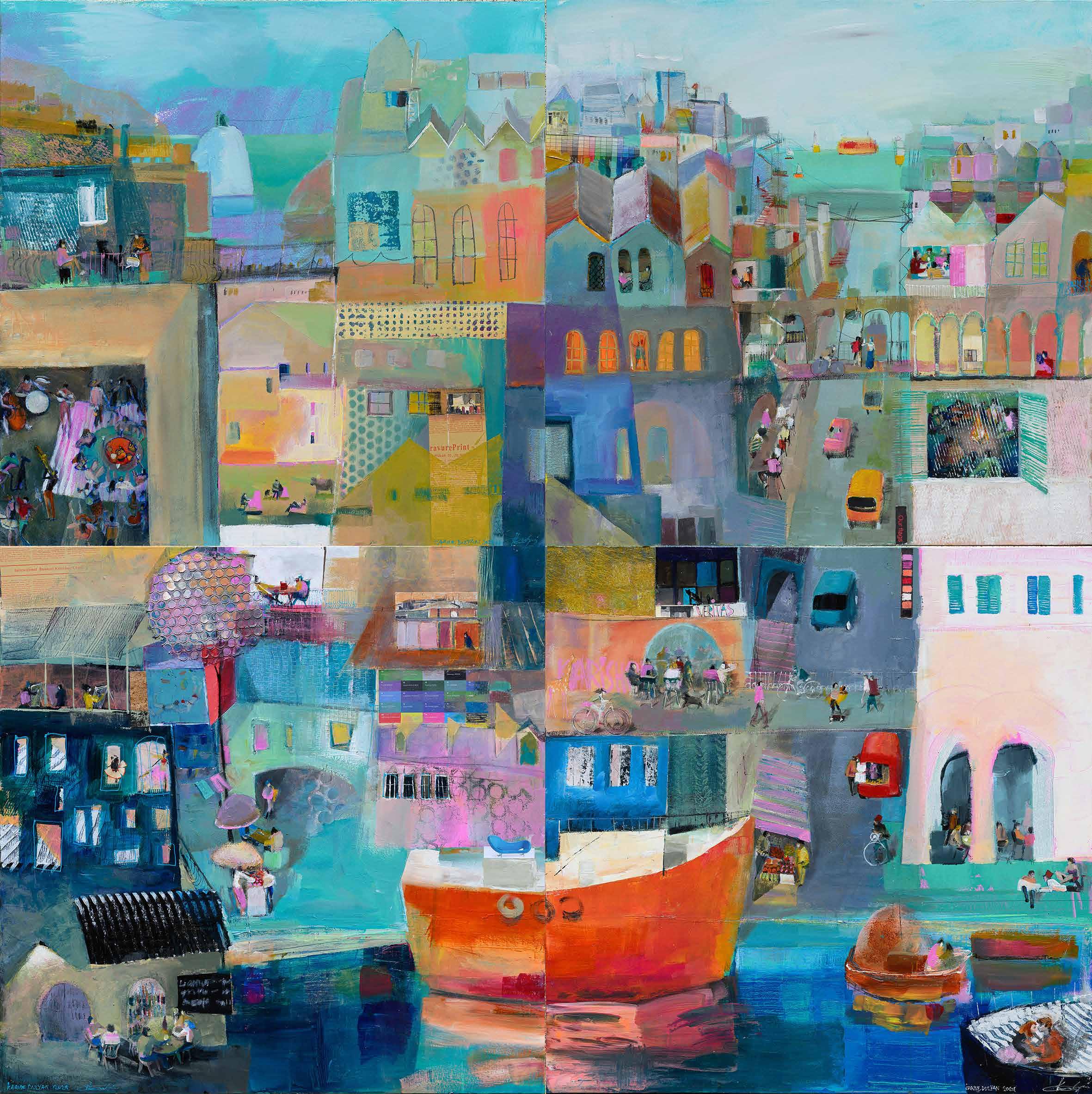
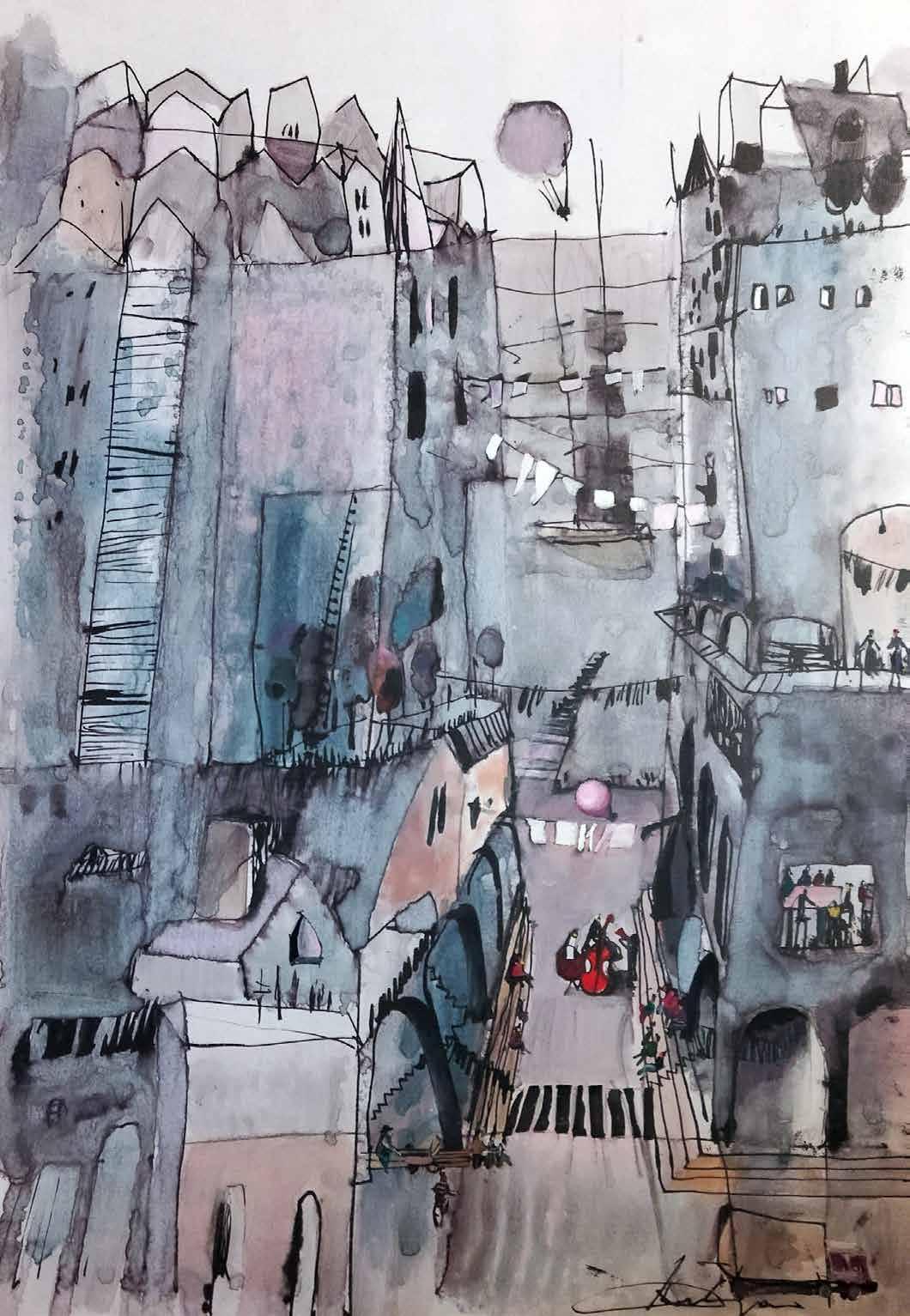
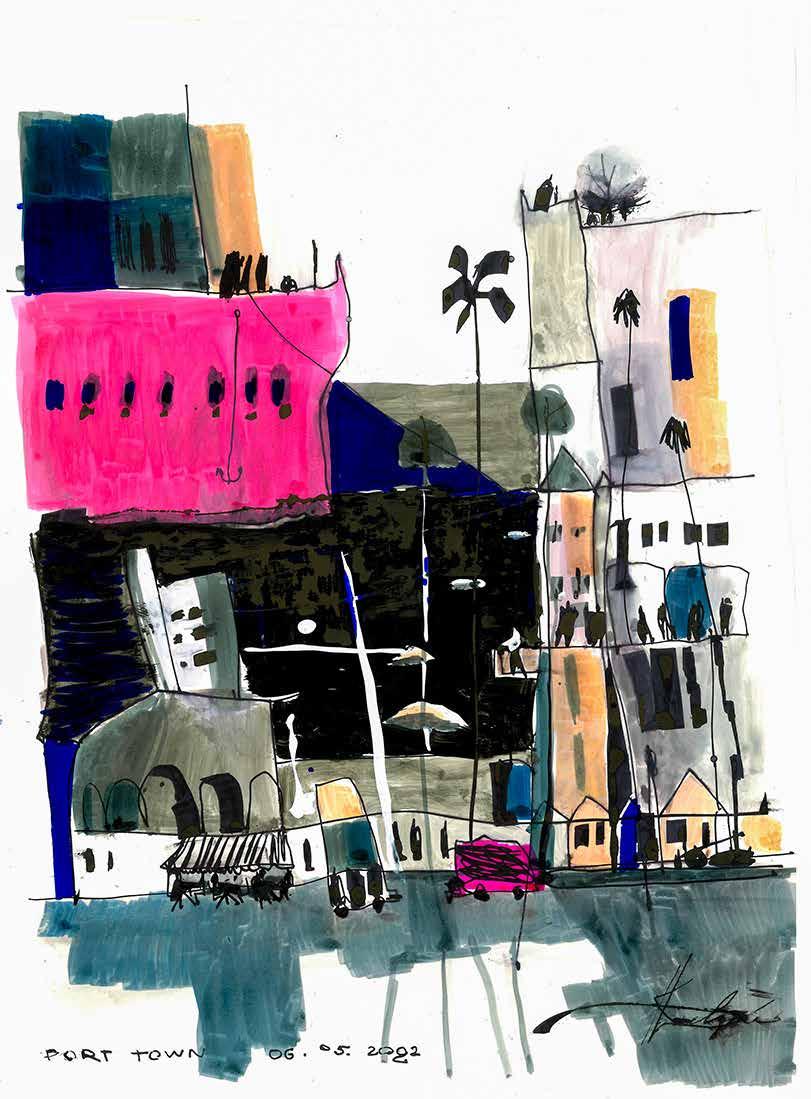
I live in Armenia, a landlocked country which, at one glorious point in its history nearly two thousand years ago, stretched toward the Mediterranean, Black, and Caspian seas. Yet somehow, I have always carried a sea inside me.
Maybe it is because I am a woman, and women resemble oceans more than solid ground — though that is another story, perhaps be�er told in private.
Many of the pain�ngs I create intui�vely tend to contain some kind of water presence: seas, harbors, ships, reflec�ons, or simply the feeling that water is nearby. I seem unable to escape it. Over �me, I realized that I have my own personal sea here in Yerevan, hidden somewhere behind the buildings and roo�ops.
So do not be surprised that the opening pages of this por�olio — the pain�ngs closest to my heart — are filled with seaside towns.
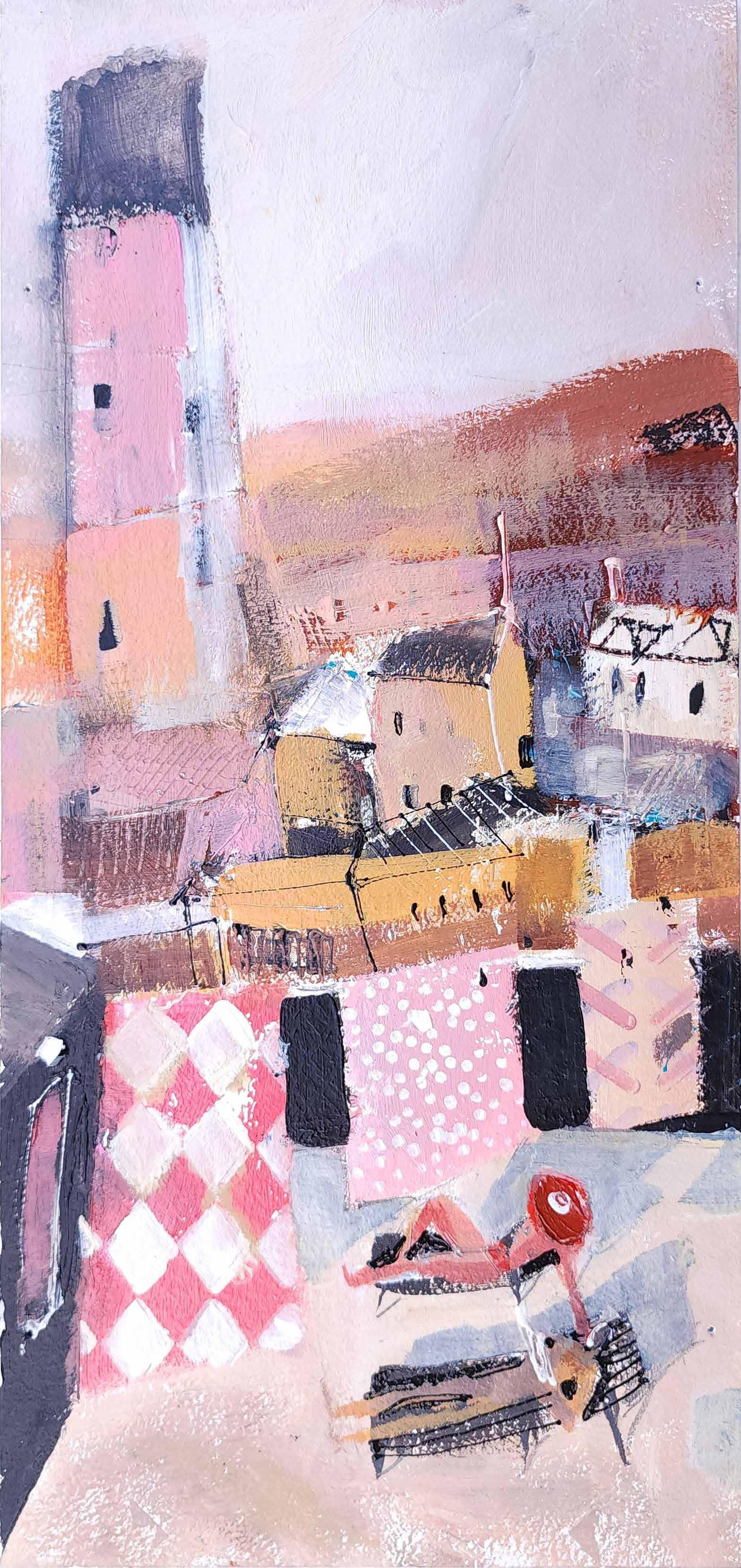
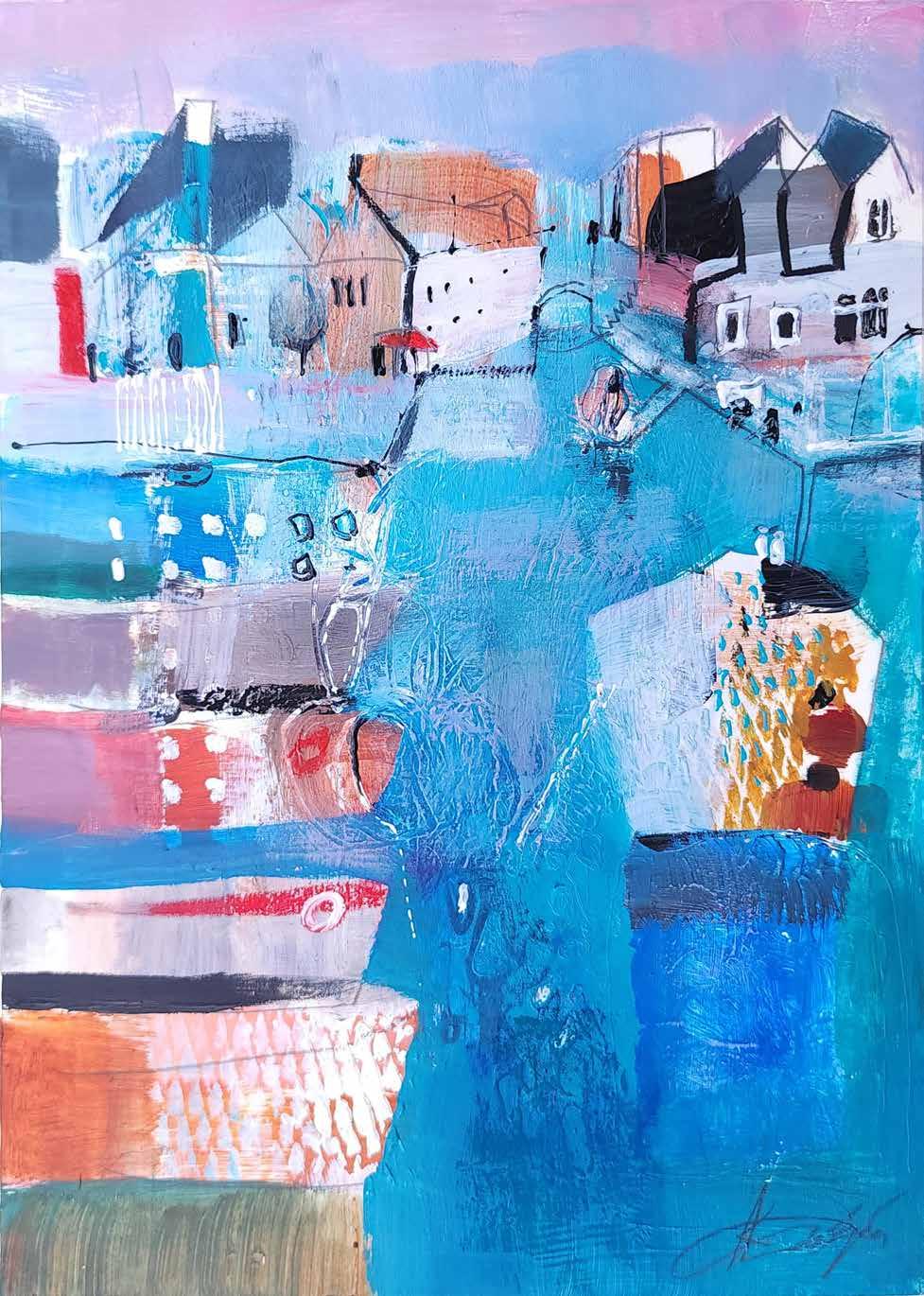
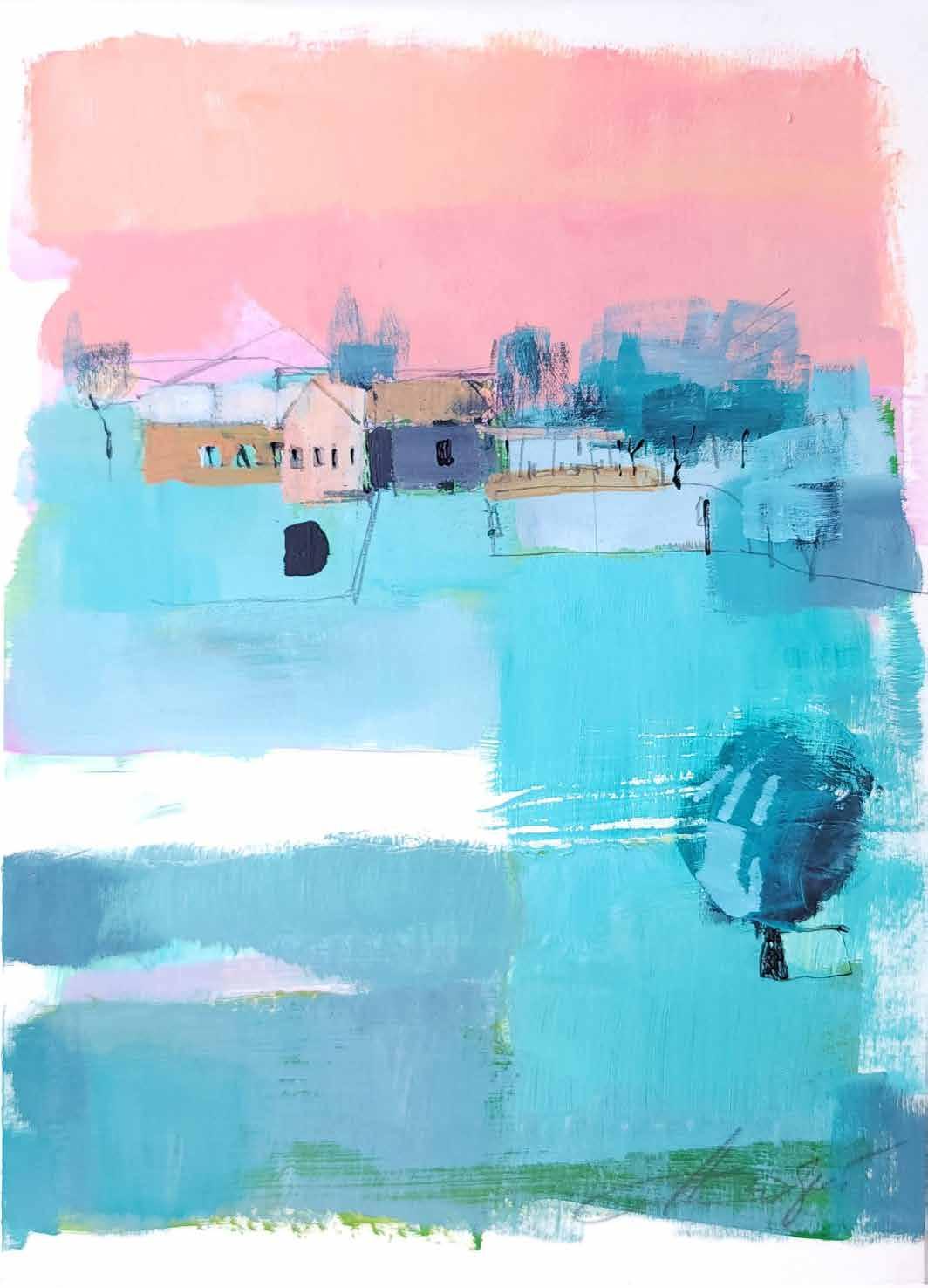
I am also deeply fascinated by recent findings in neuroscience and percep�on, par�cularly the research of V. S. Ramachandran (following Tinbergen’s findings on supernormal s�muli) on why our brains respond so intensely to certain colors, forms, and visual exaggera�ons. I o�en feel that par�cular color rela�onships func�on almost like supernormal s�muli for the human mind — triggering emo�onal and perceptual reac�ons that go beyond conscious interpreta�on.
This curiosity drives my ongoing explora�on of limited color pale�es and the subtle psychological shi�s they produce in viewers. In many ways, pain�ng becomes for me both an emo�onal and perceptual experiment: an a�empt to understand how visual harmony, tension, rhythm, and contrast affect us internally.
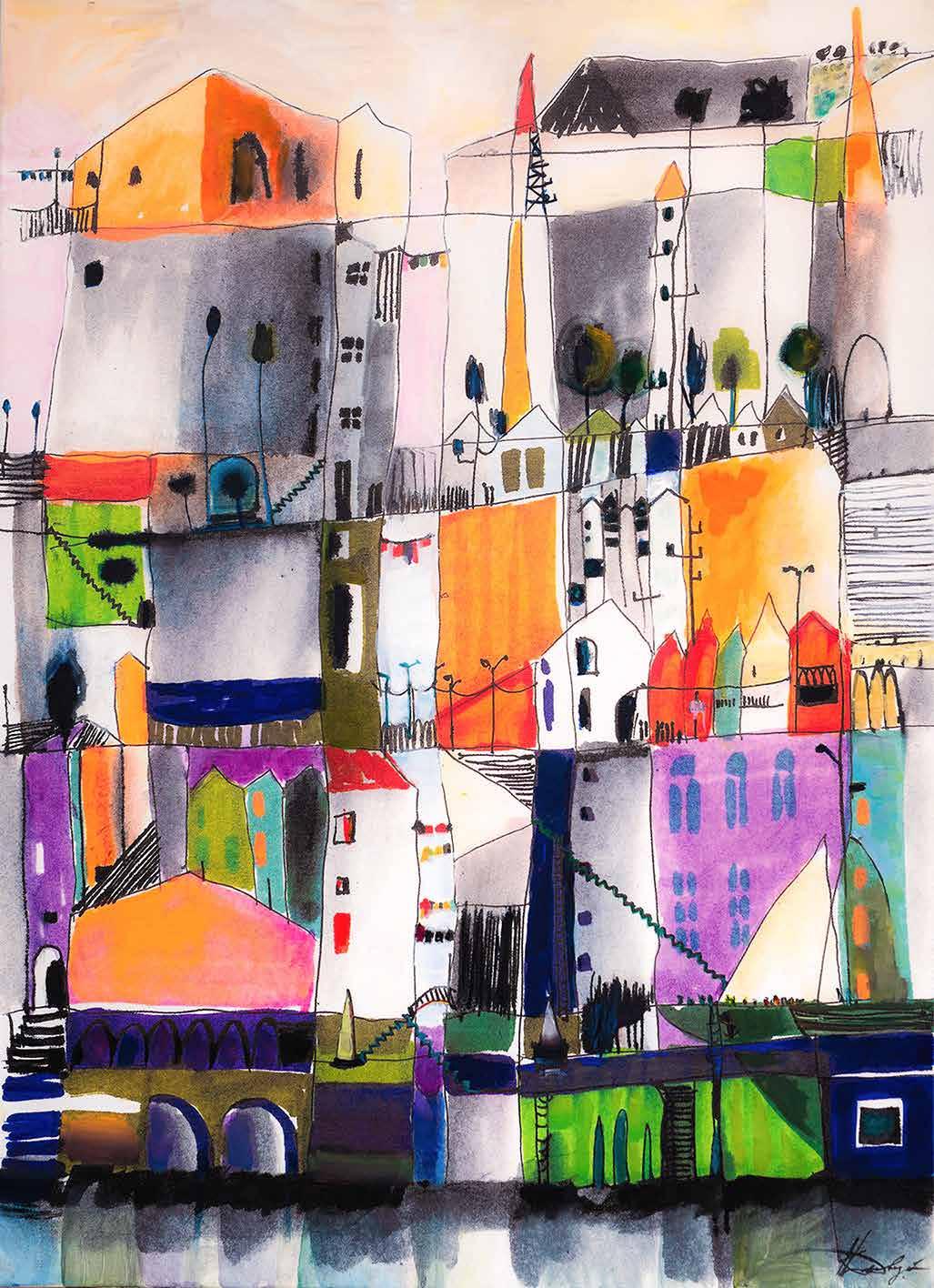
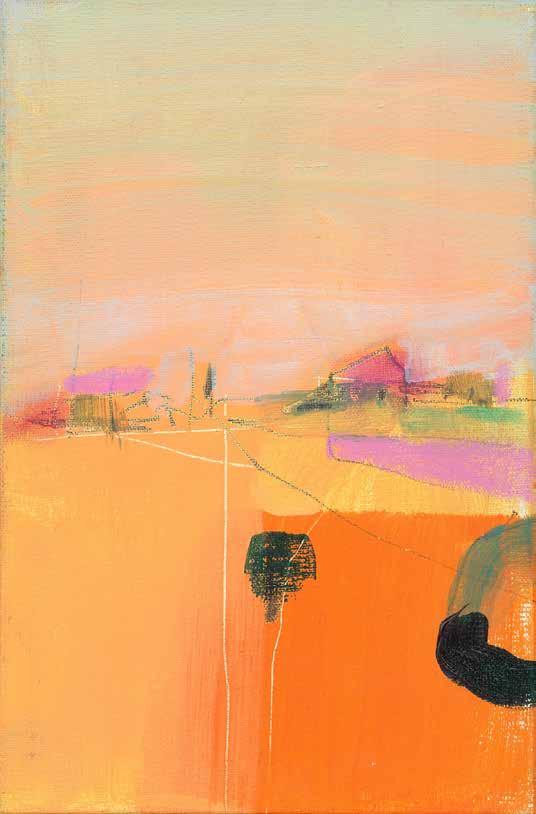
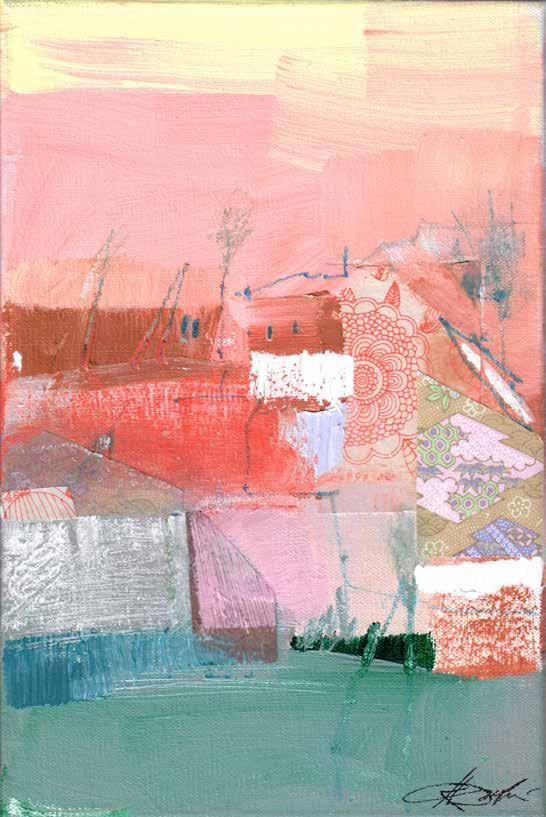
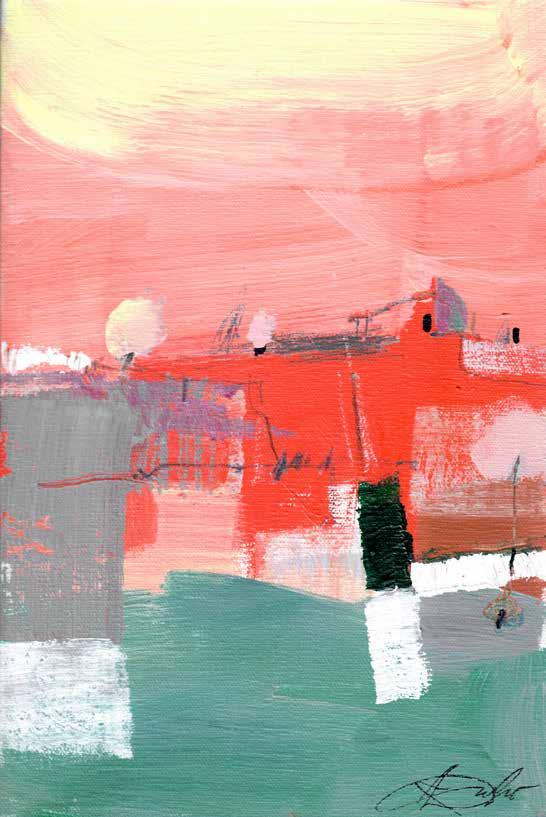
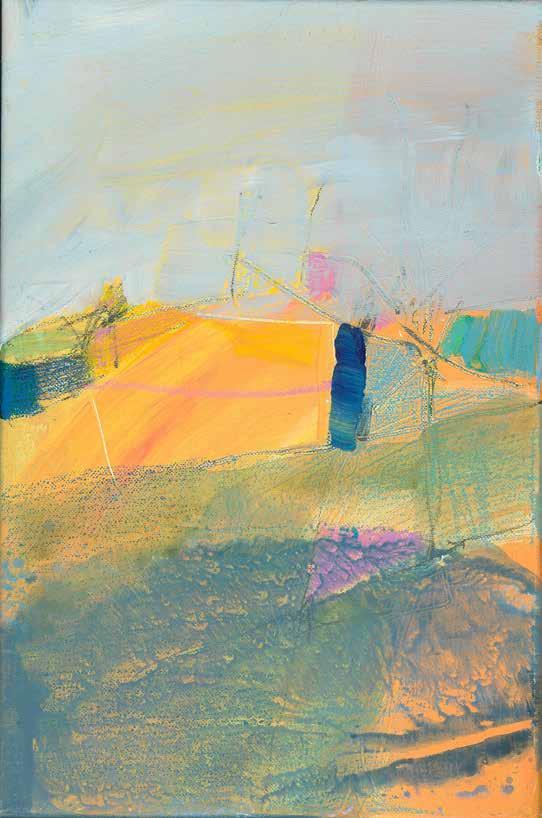
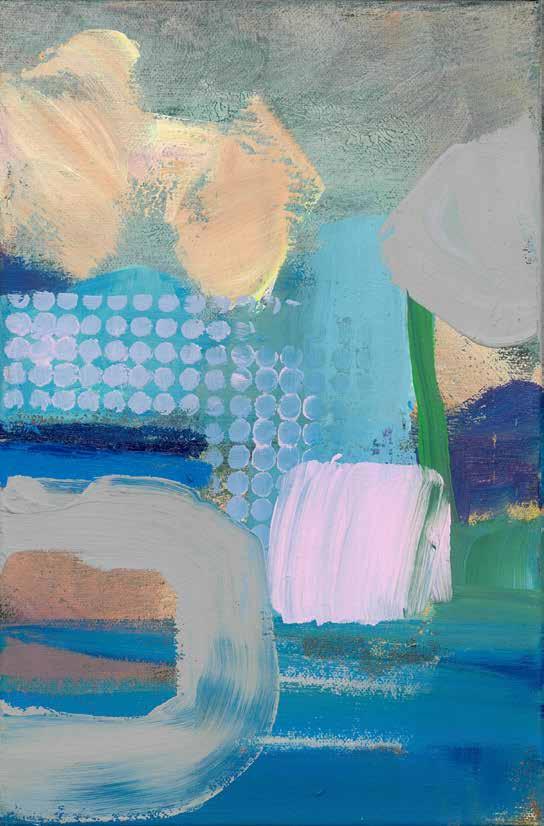
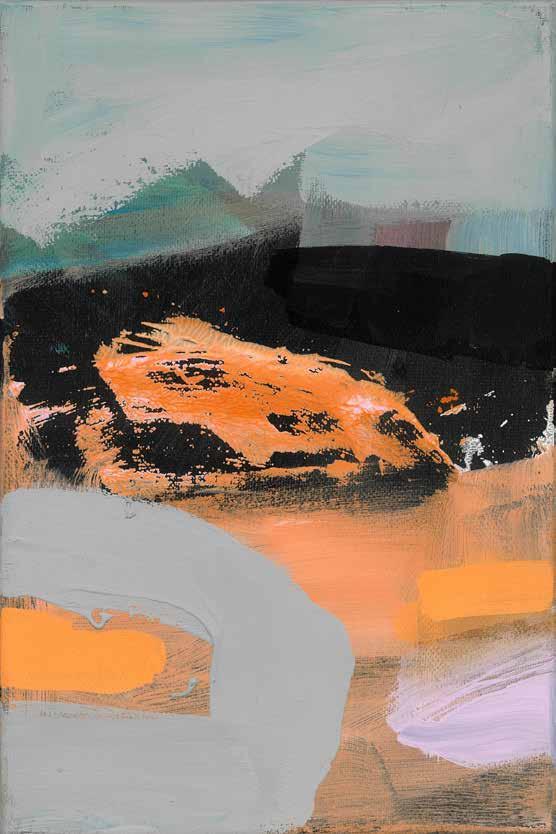
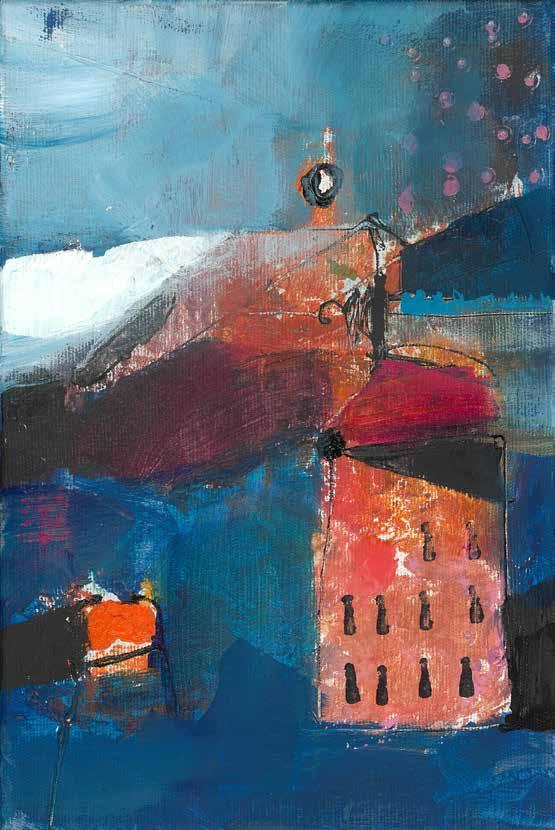
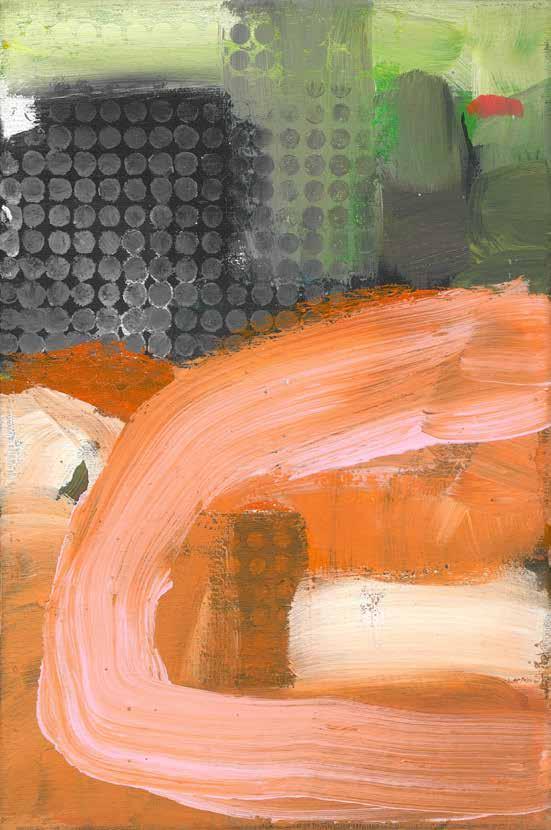
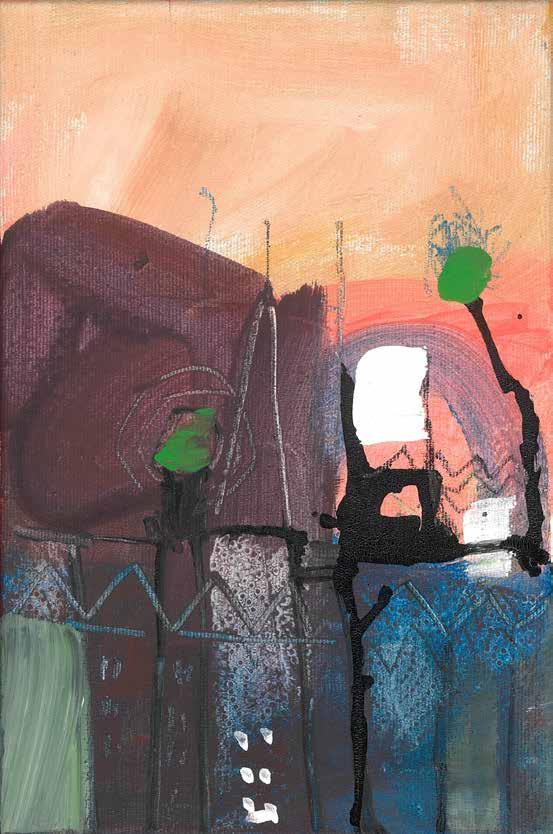
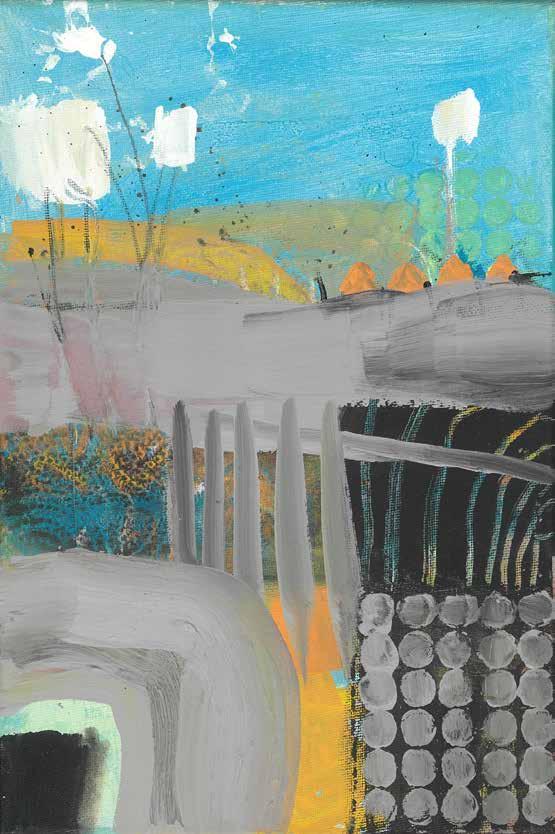
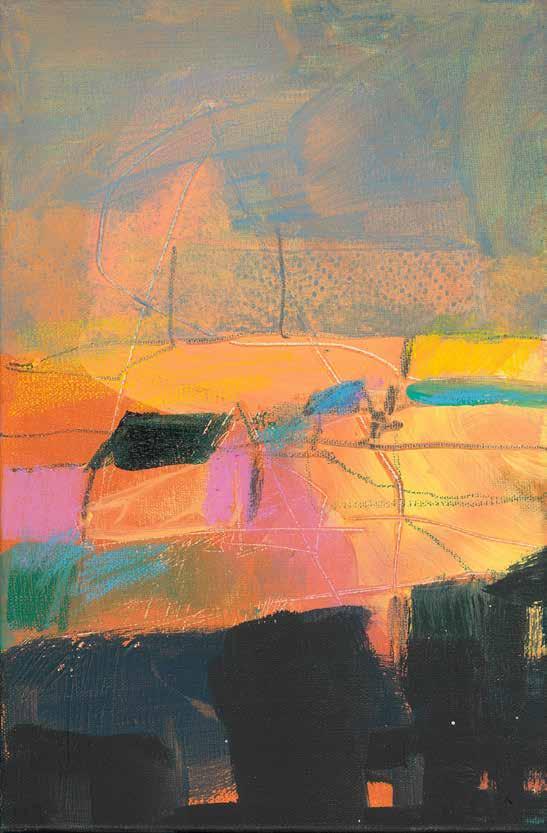
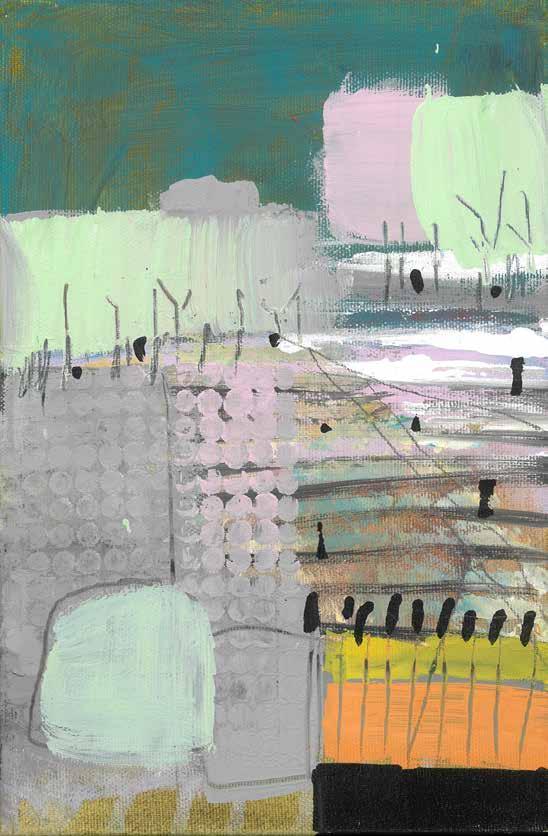
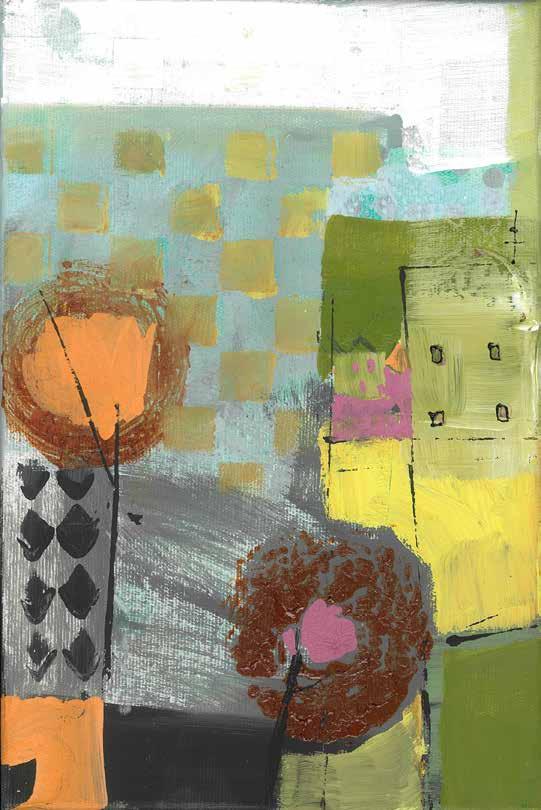
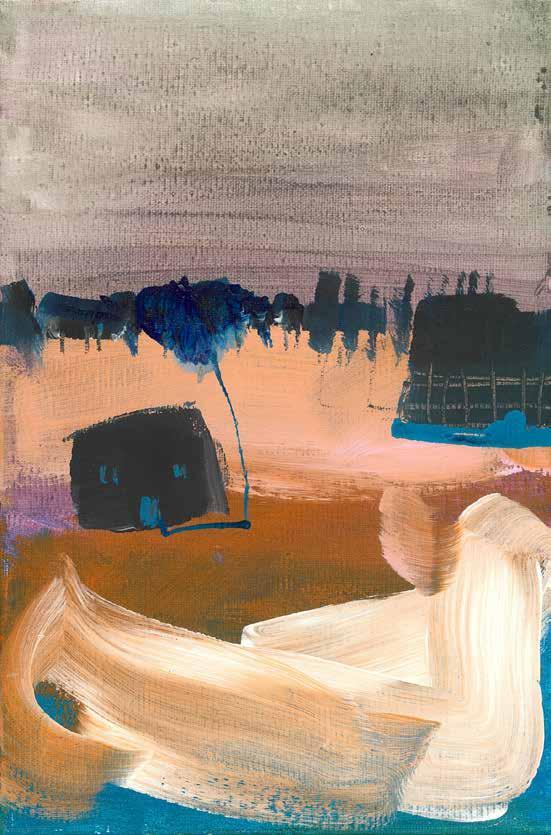
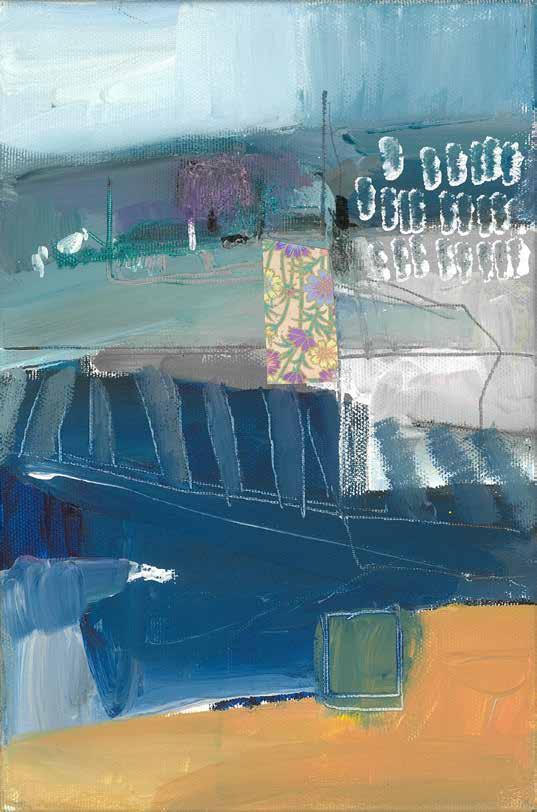
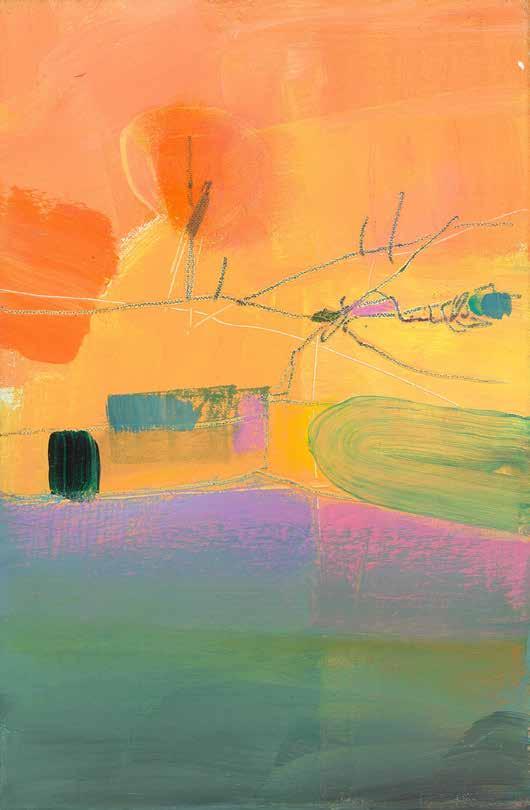
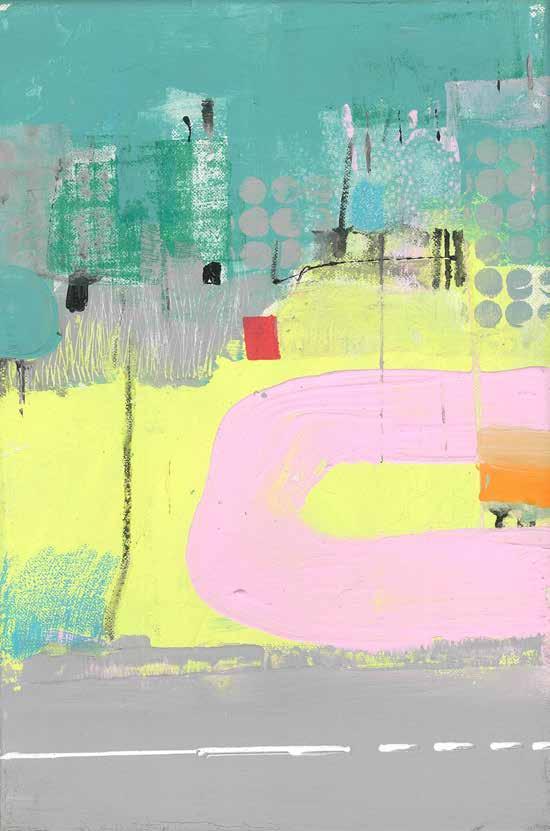
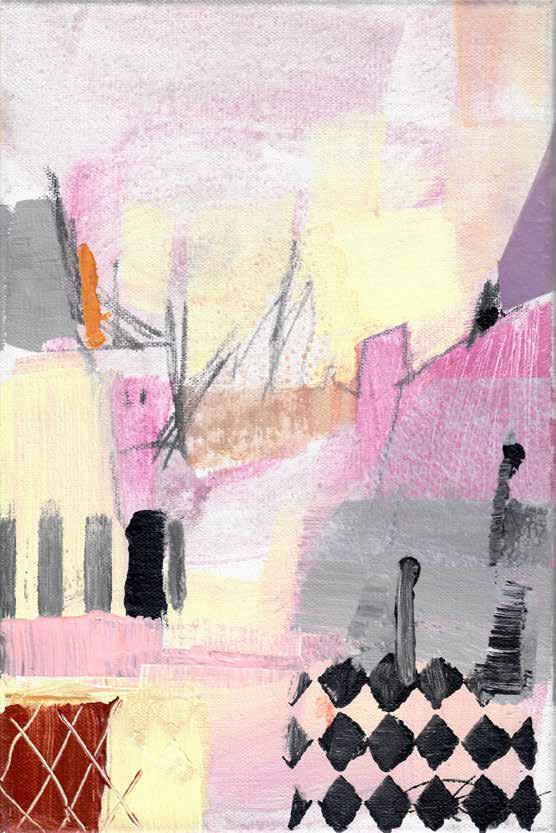
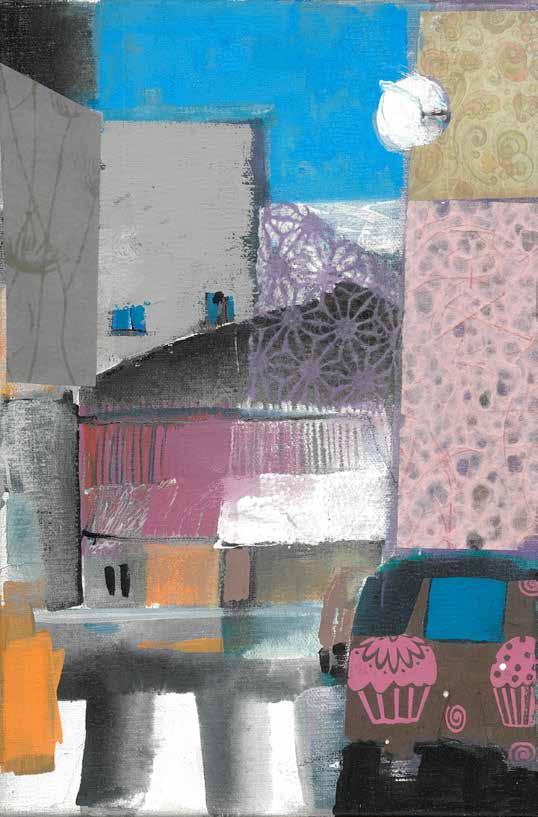
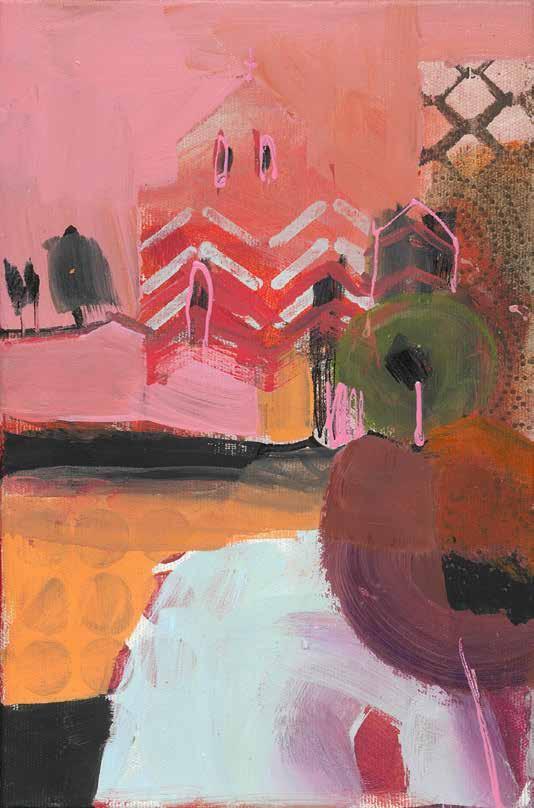
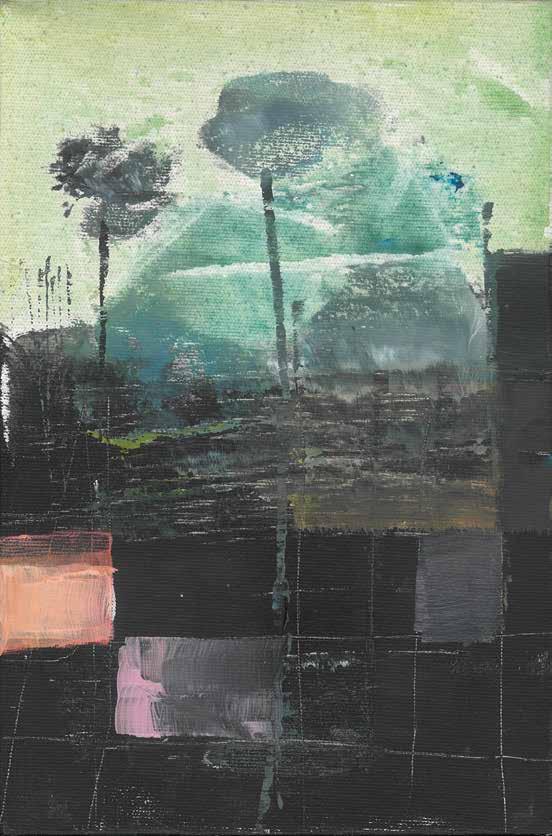
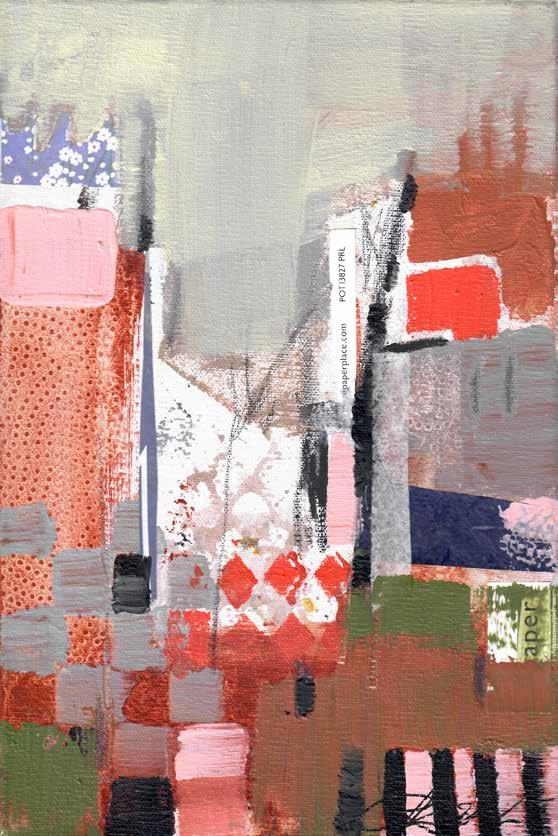
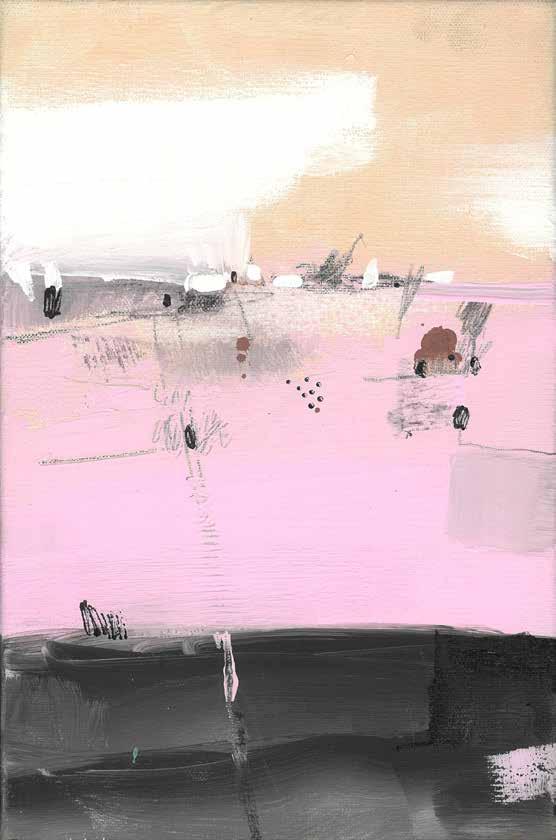
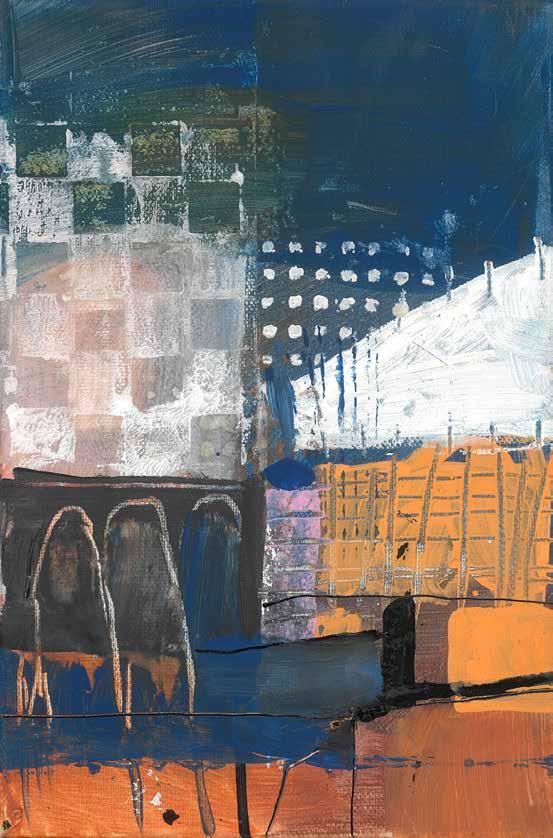
Many of my works are not representa�ons of real places, but emo�onal reconstruc�ons — imagined ci�es built from fragments of memory, architecture, travel, music and thoughts.
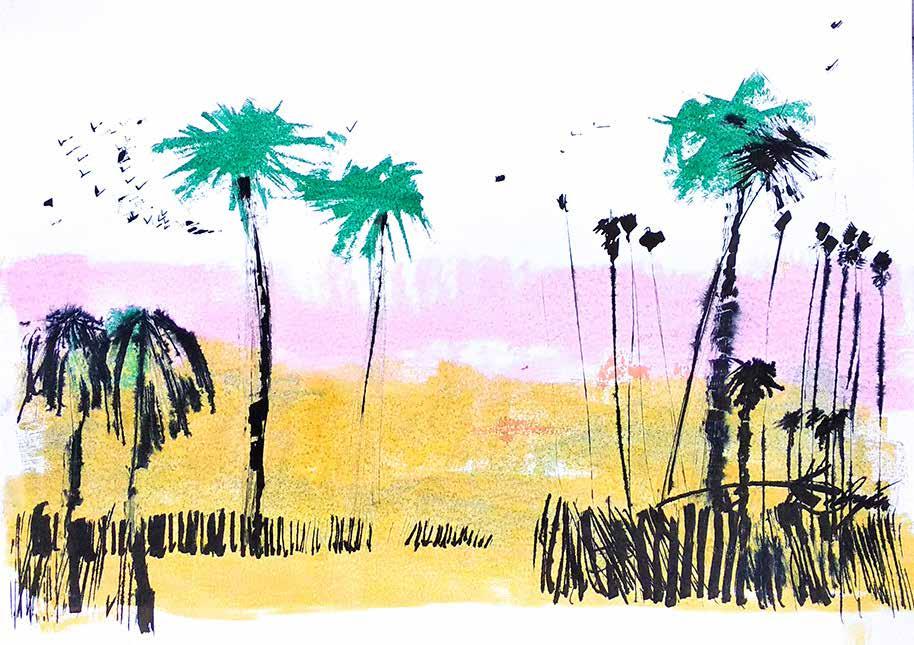
VANILLA CRÈME BRÛLÉE | 2021
Ink on paper, 20 x 30 cm
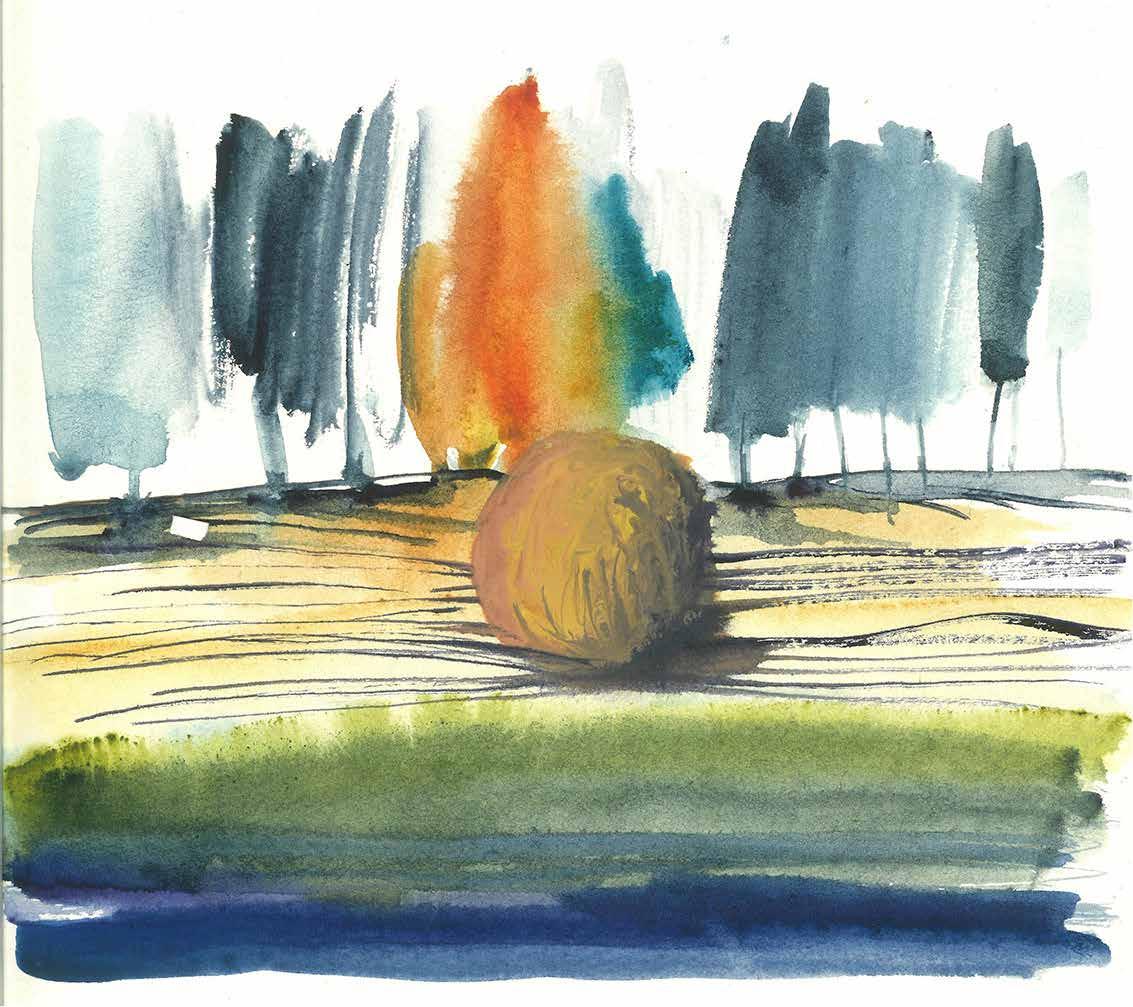
LET IT ROLL | 2021
Watercolor on paper, 20 x 25 cm
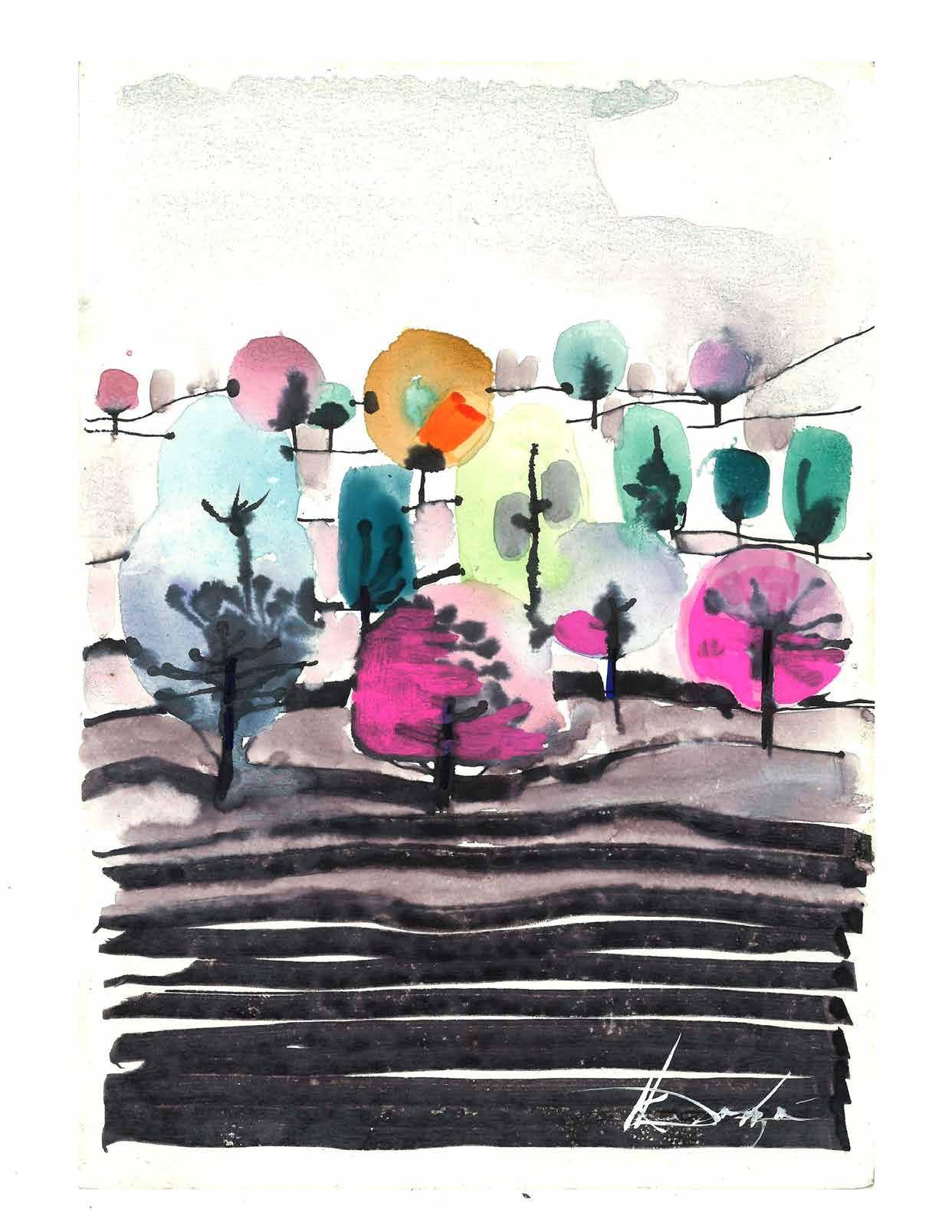
DREAMY MEADOWS | 2022
Ink and watercolor pens on glossy cardboard, 21 x 15 cm
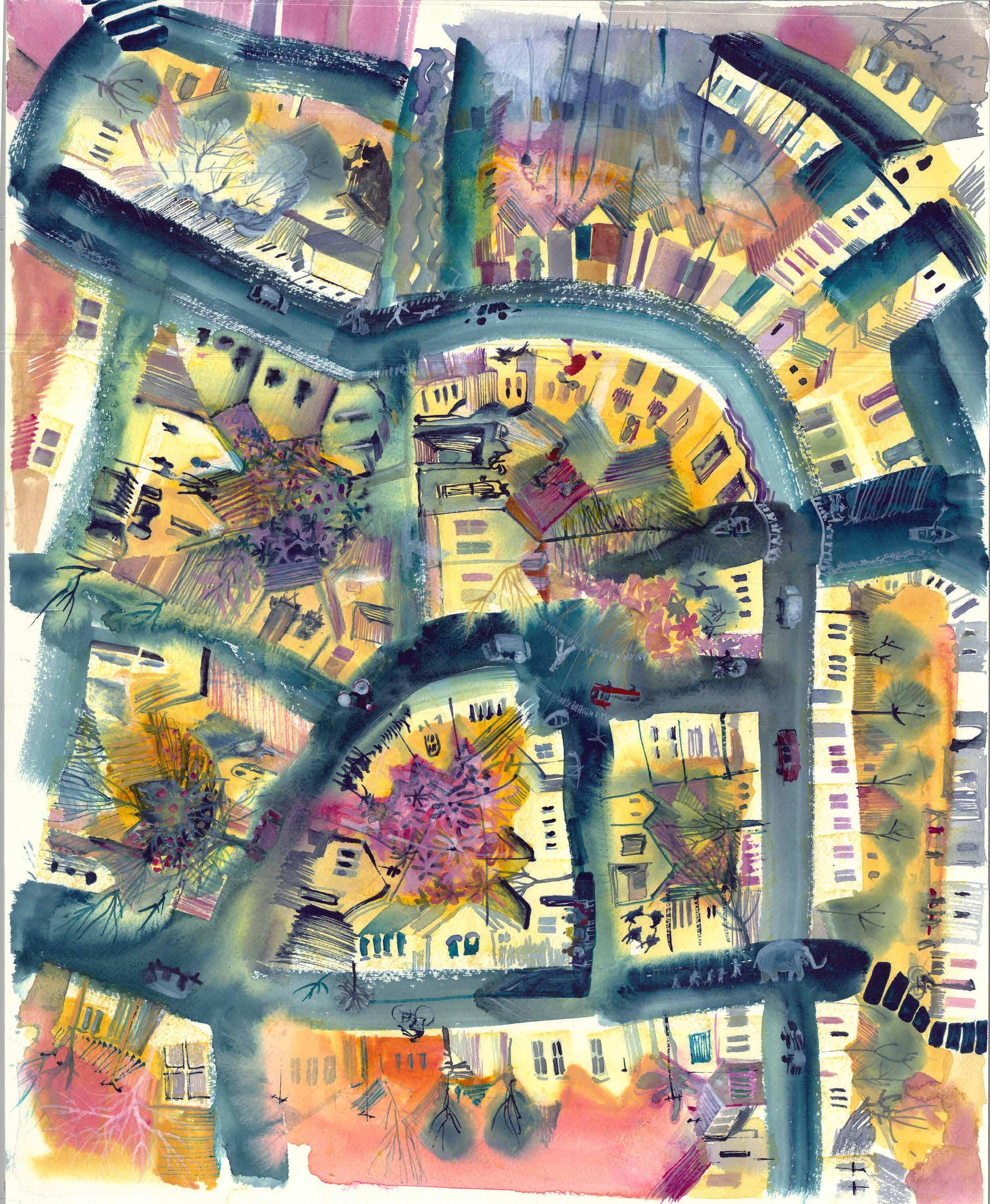
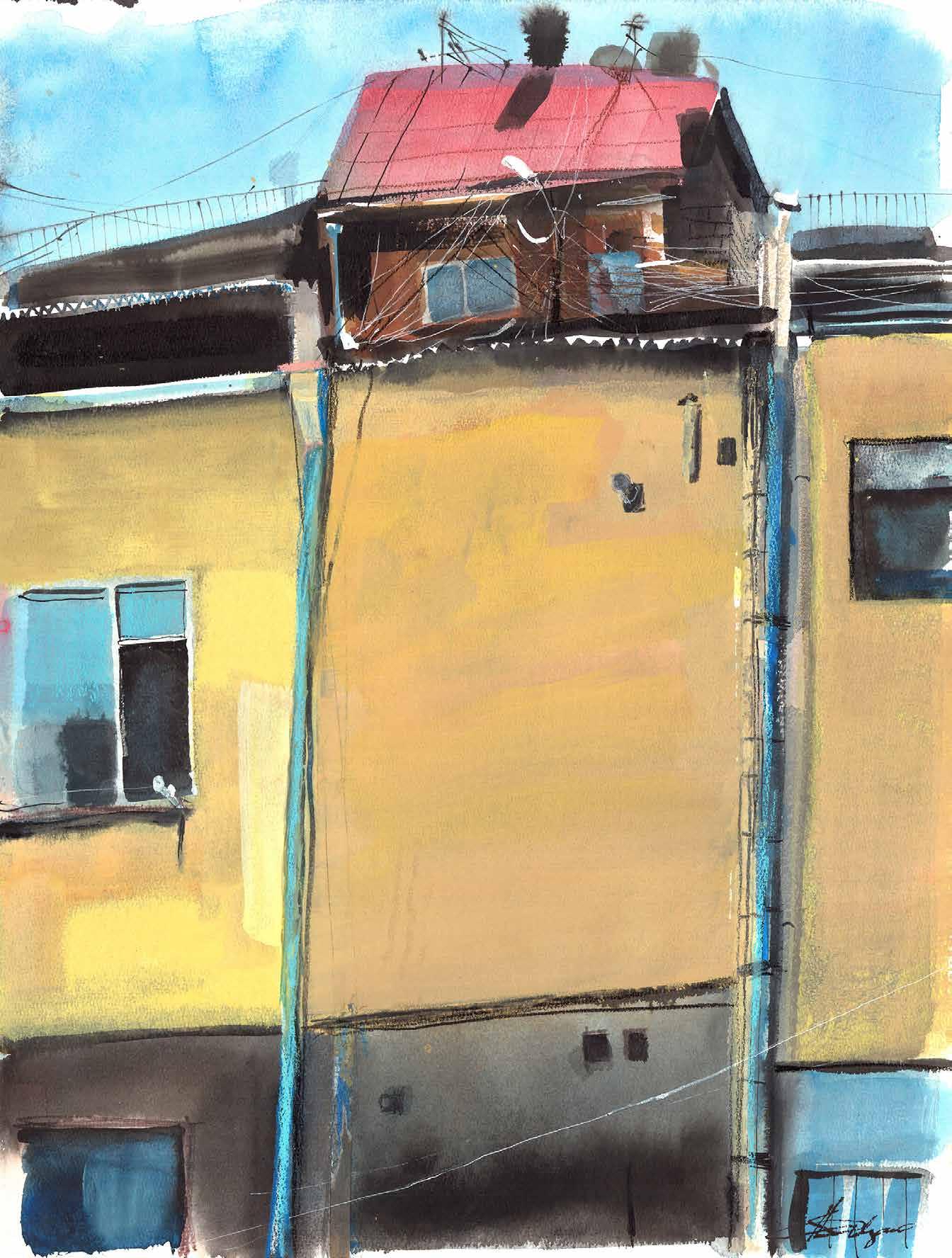
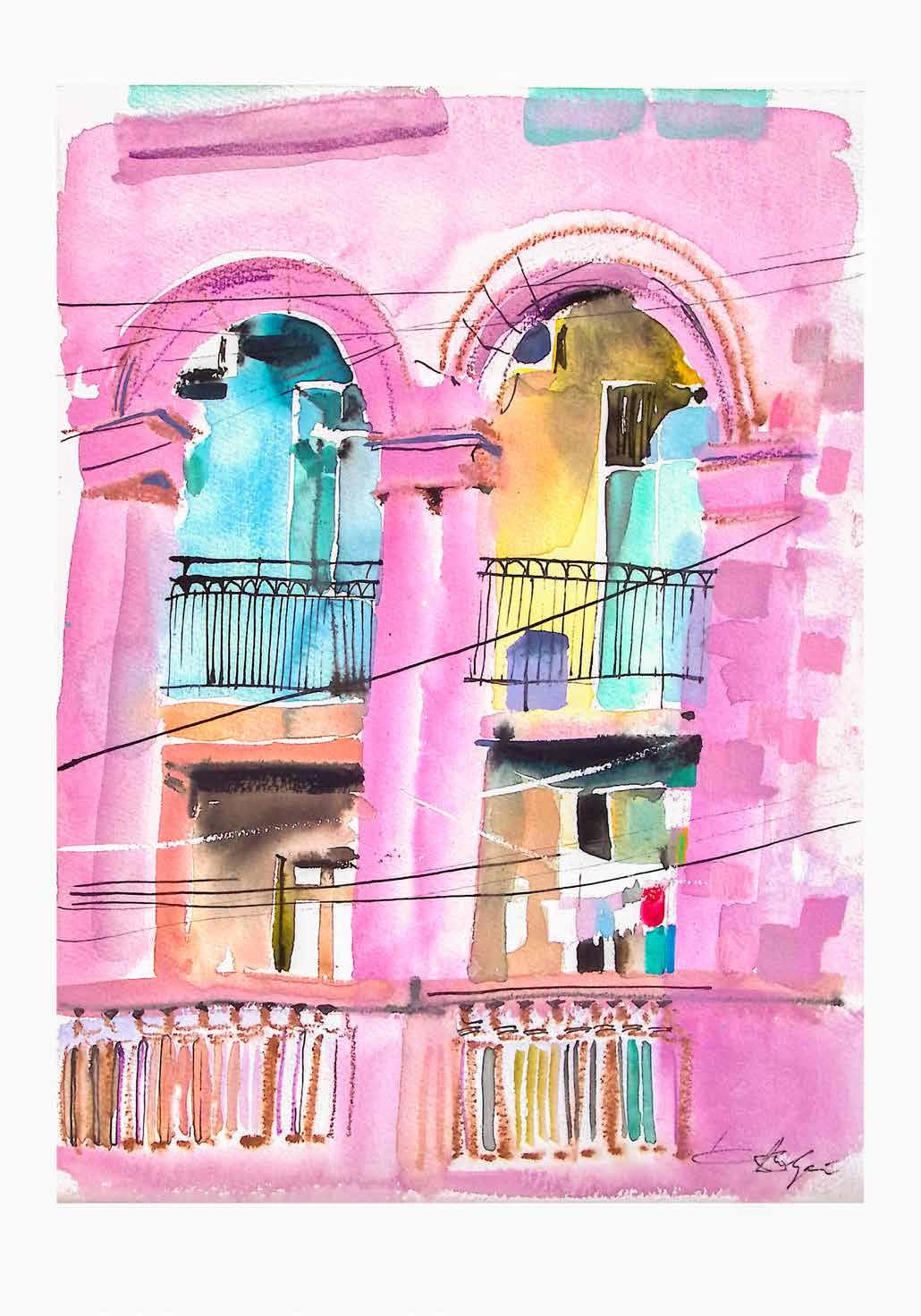
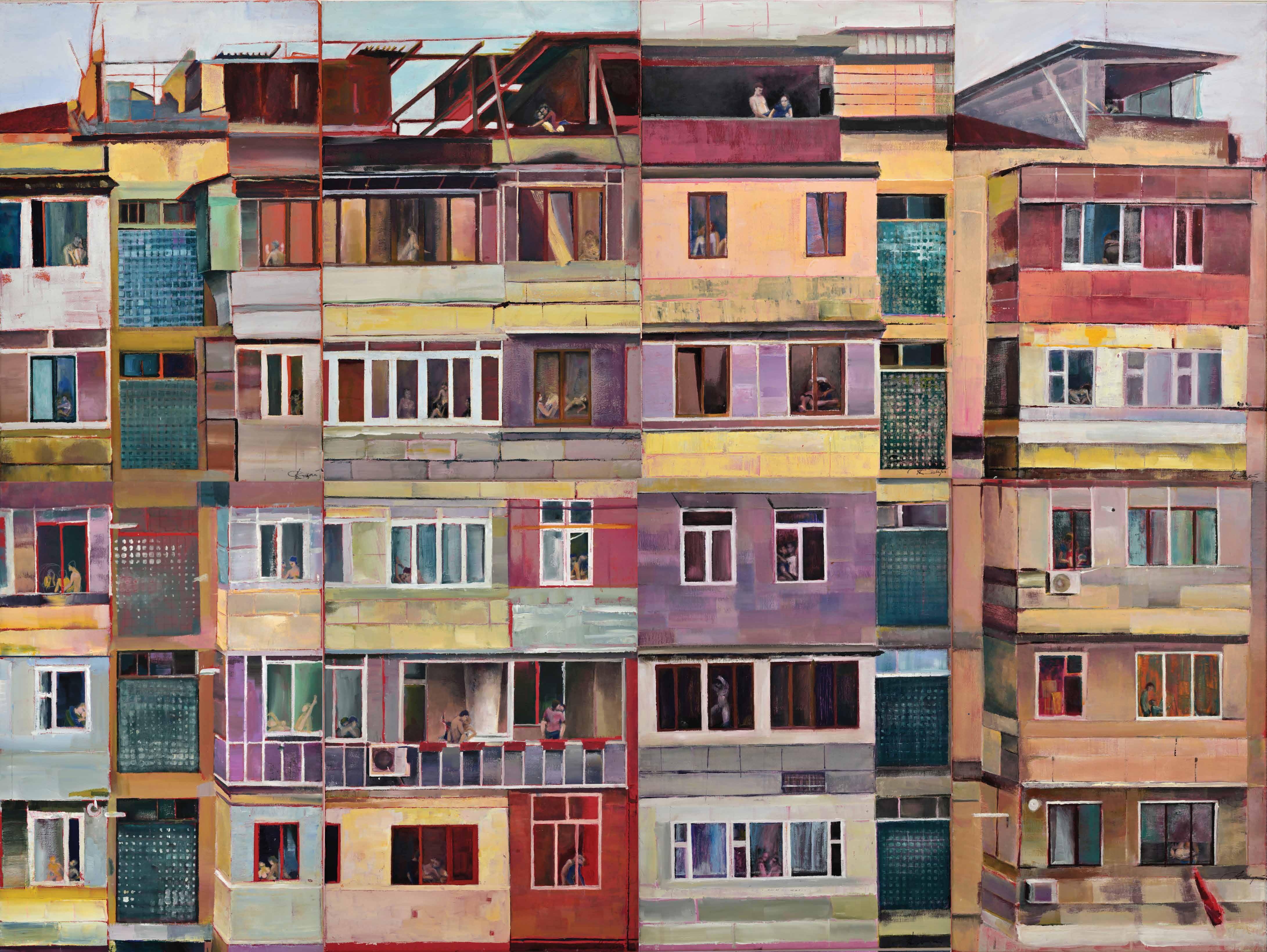
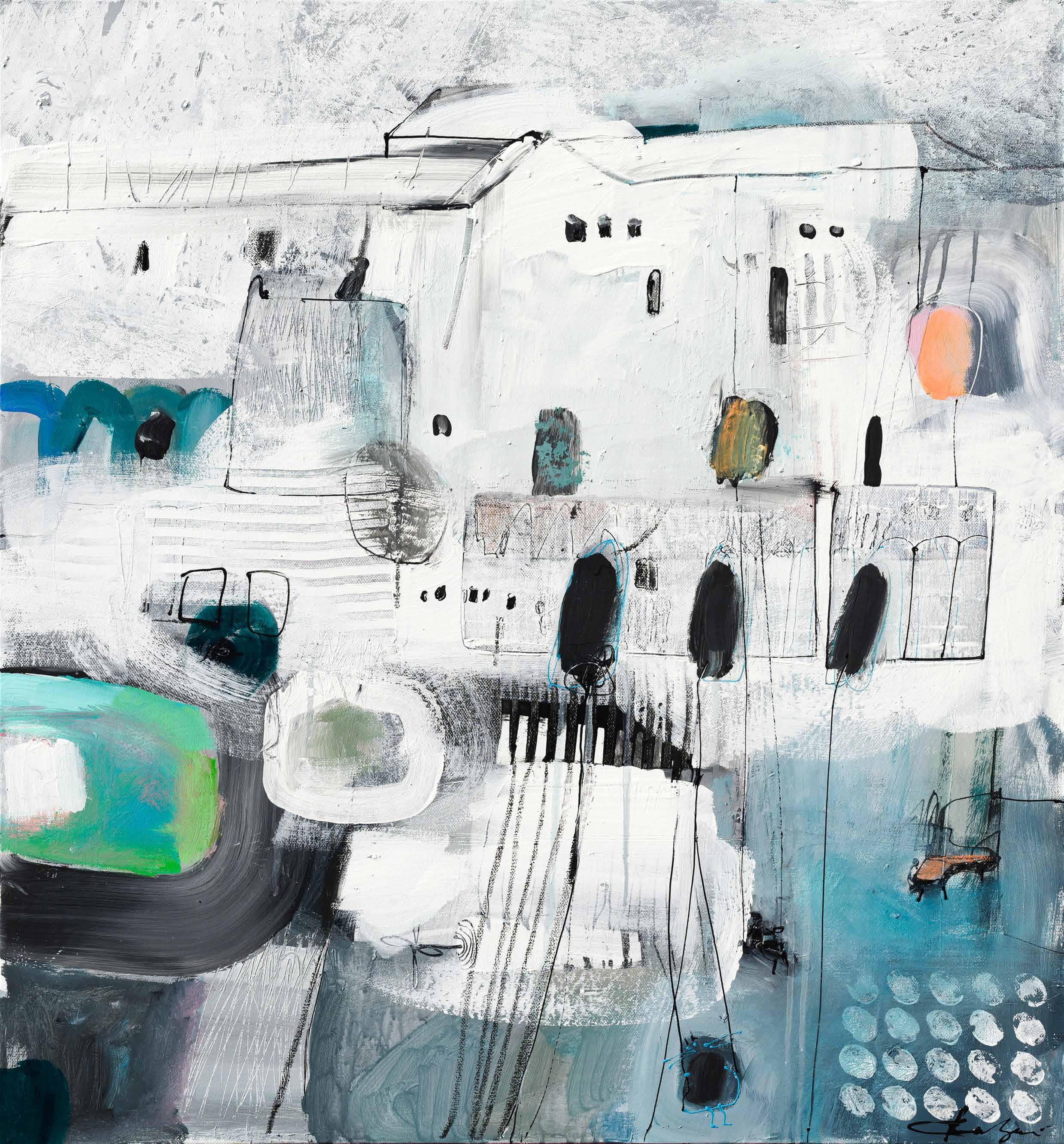
I have always felt that ci�es reveal us. Their walls absorb gestures, voices, loneliness, tenderness, repe��ons and dreams. Windows become witnesses; balconies become small stages of everyday life.
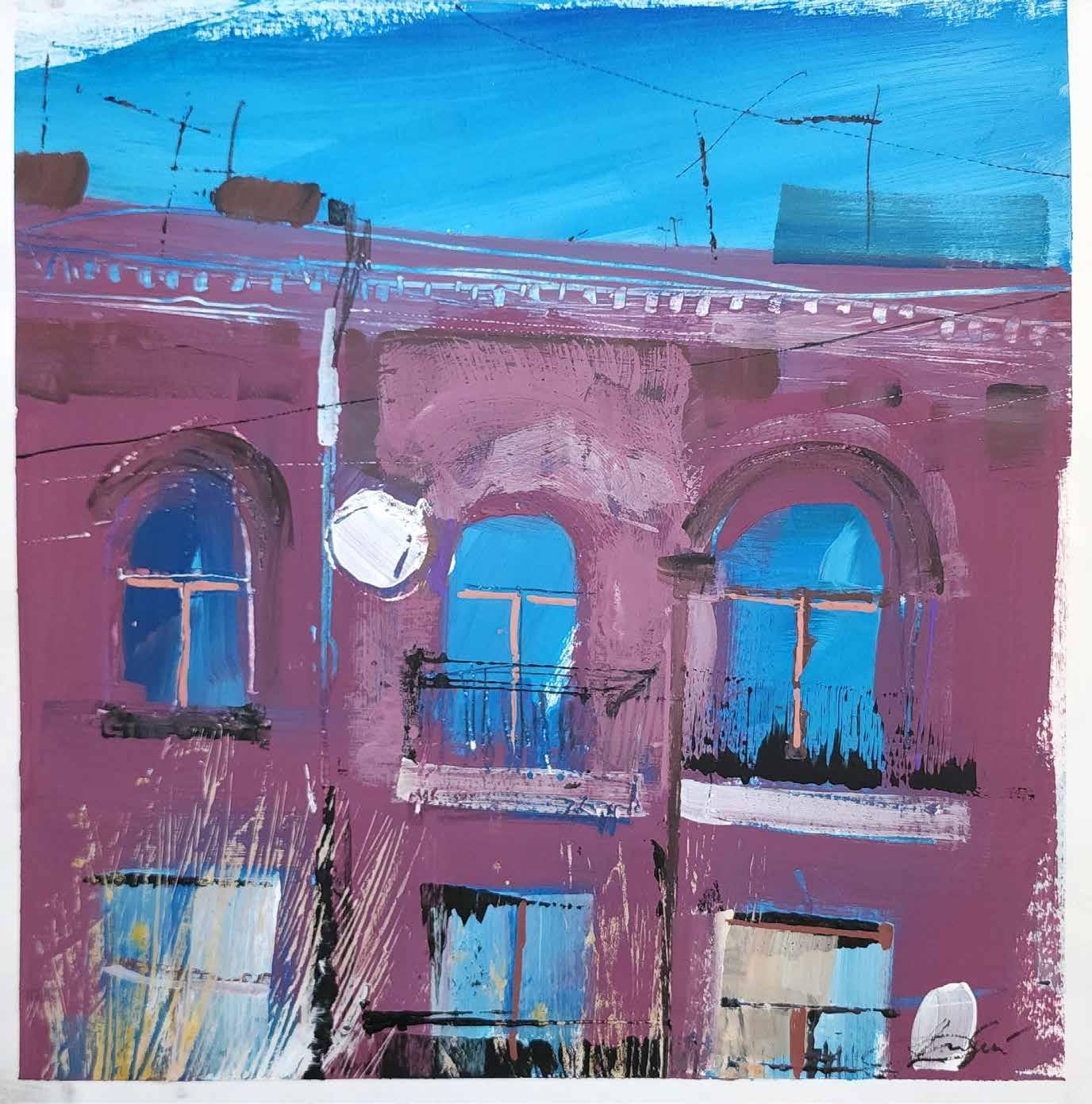
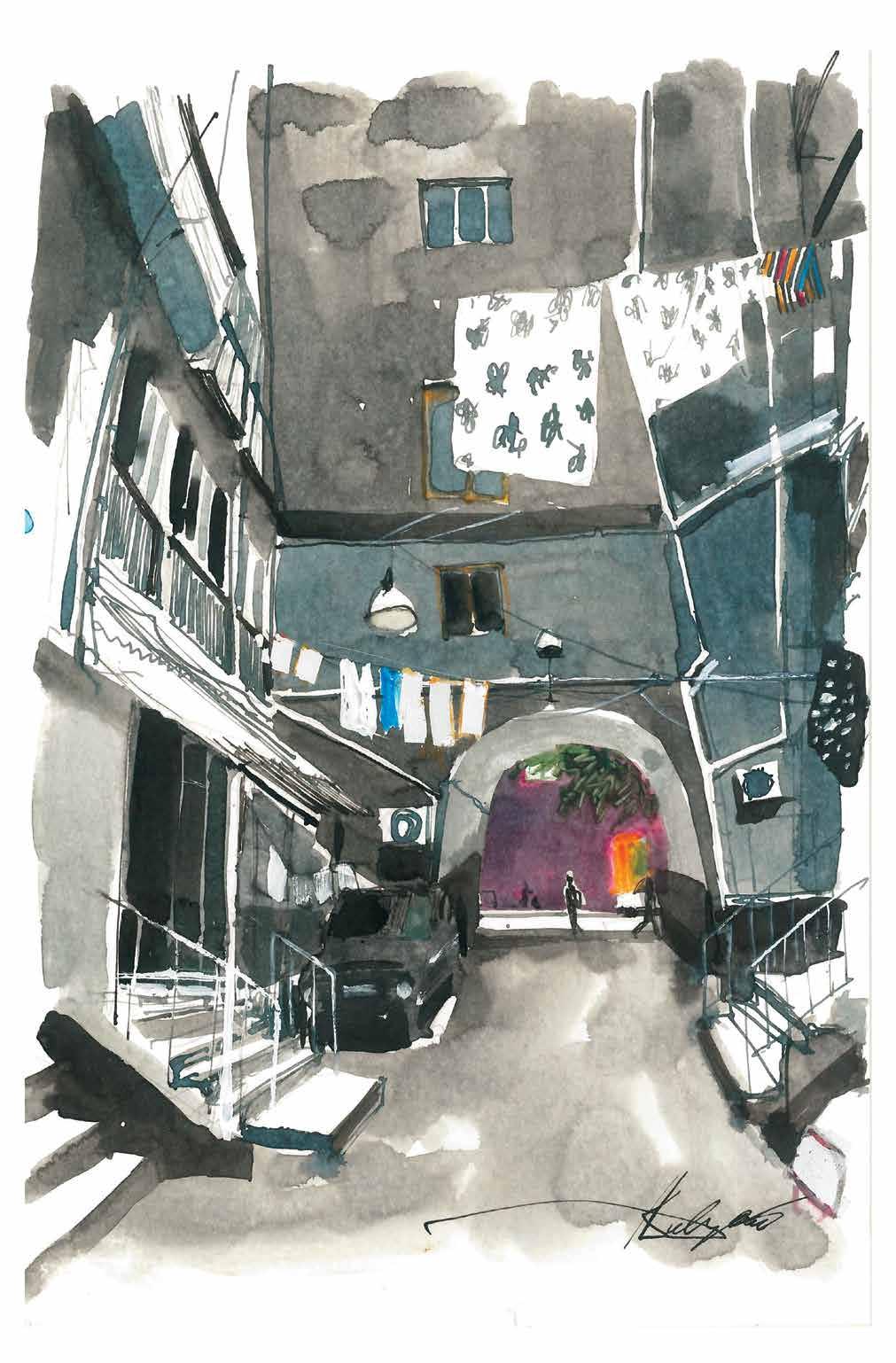
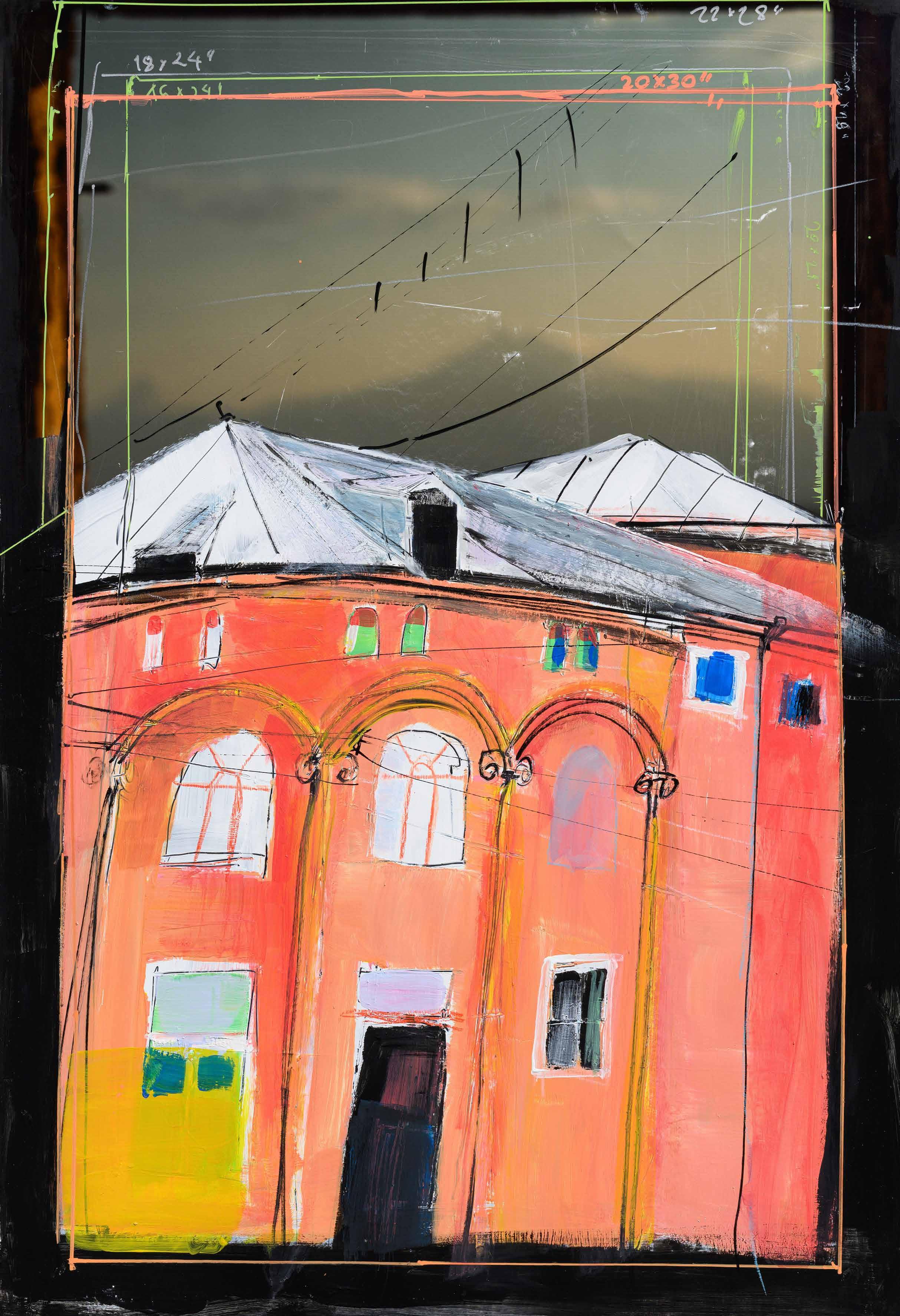
Acrylics on canvas, 105 x 160 cm 2022
This series grew out of my long fascina�on with apartment windows and balconies — especially the facades of typical Soviet residen�al buildings. For as long as I can remember, I have loved looking at illuminated windows at night and imagining the invisible lives unfolding behind them. I am equally fascinated by the patchwork character of Yerevan’s façades, constantly transformed by their residents according to their tastes, needs, and means.
In these pain�ngs, the rigid geometry of Soviet architecture becomes so�ened by human in�macy. Behind balconies and windows, couples are embracing, touching, or in moments of emo�onal closeness. The repe��ve facades begin to resemble a living organism made not of concrete, but of human longing for warmth and connec�on.
I painted these works during a period when wars breaking out around the world le� me feeling deeply saddened and emo�onally disturbed. At the same �me, I had become fascinated by Robert Sapolsky’s lectures and his descrip�ons of bonobos — primates known for resolving conflicts through the act of making love rather than aggression.
The �tle Make Love Not War is also a tribute to John Lennon, whose music and texts deeply influenced me from an early age.
Somewhere between Lennon’s idealism and Sapolsky’s observa�ons of nature, this series became an emo�onal cry: “People, really — make love, not war.”
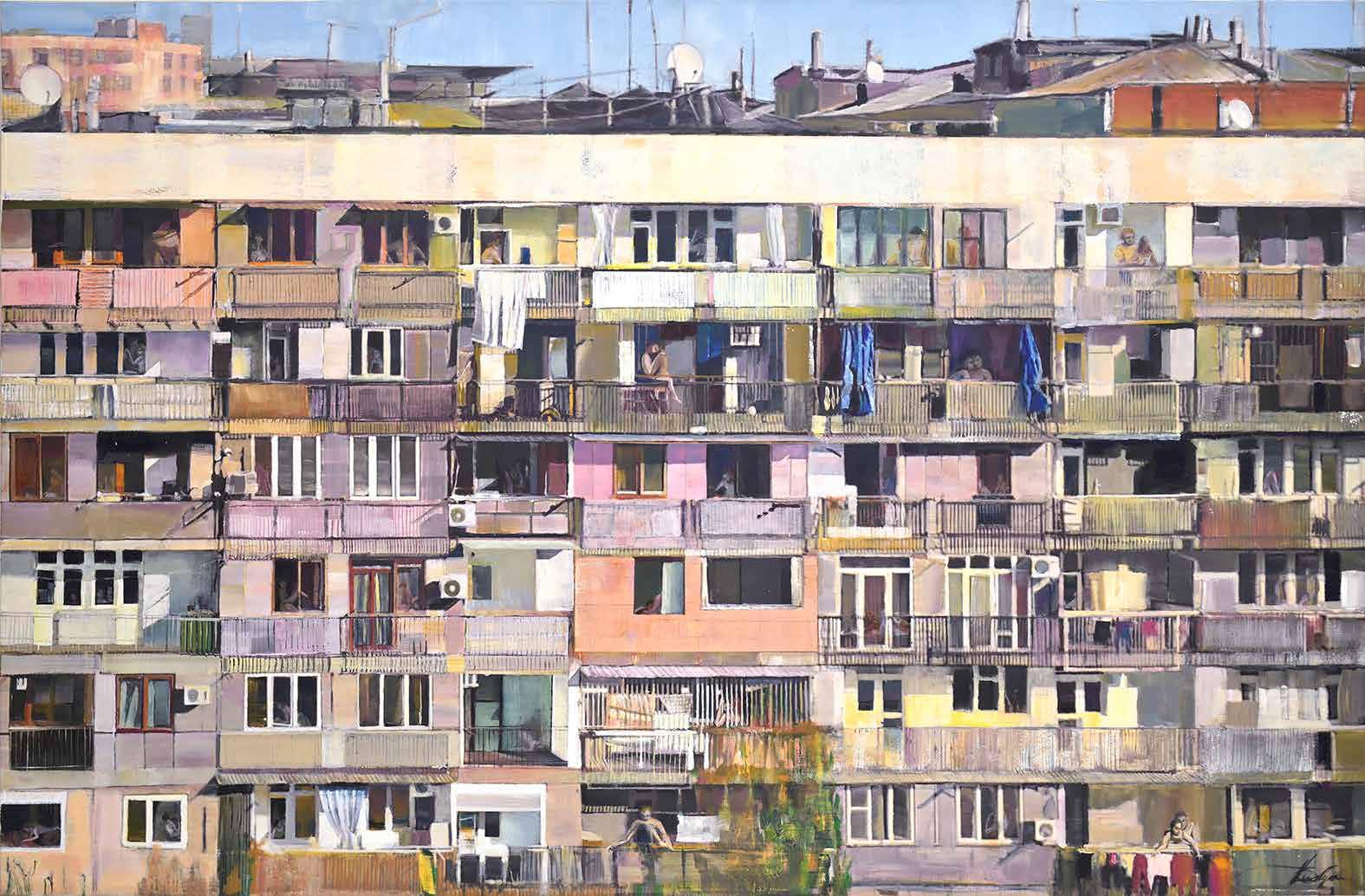
Acrylics on canvas
140 x 190 cm,
(made of eight pieces 70 x 47 cm)
Many of the buildings from the former Soviet Union were constructed using prefabricated blocks of repe��ve elements, and this par�cular condominium is no excep�on, made from reinforced concrete panels.
To emphasize this concept of divisions and patches, I decided to create this second canvas in the MLNW series from smaller pieces. The artwork is composed of eight separate panels, allowing the owner of the pain�ng to rearrange them at will, giving the pain�ng a slightly different appearance from �me to �me.
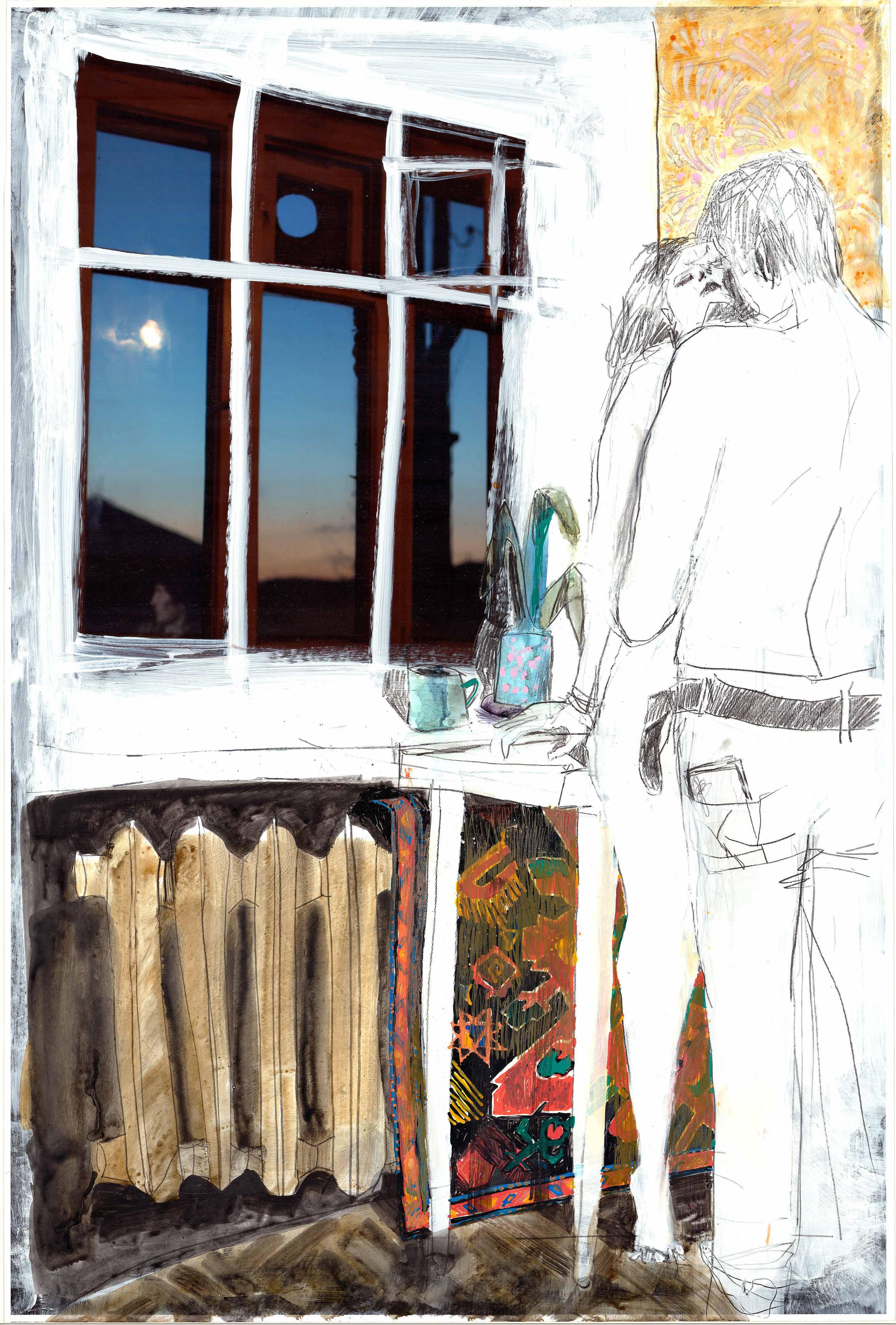
Acrylics on a photograph, 91 x 61 cm
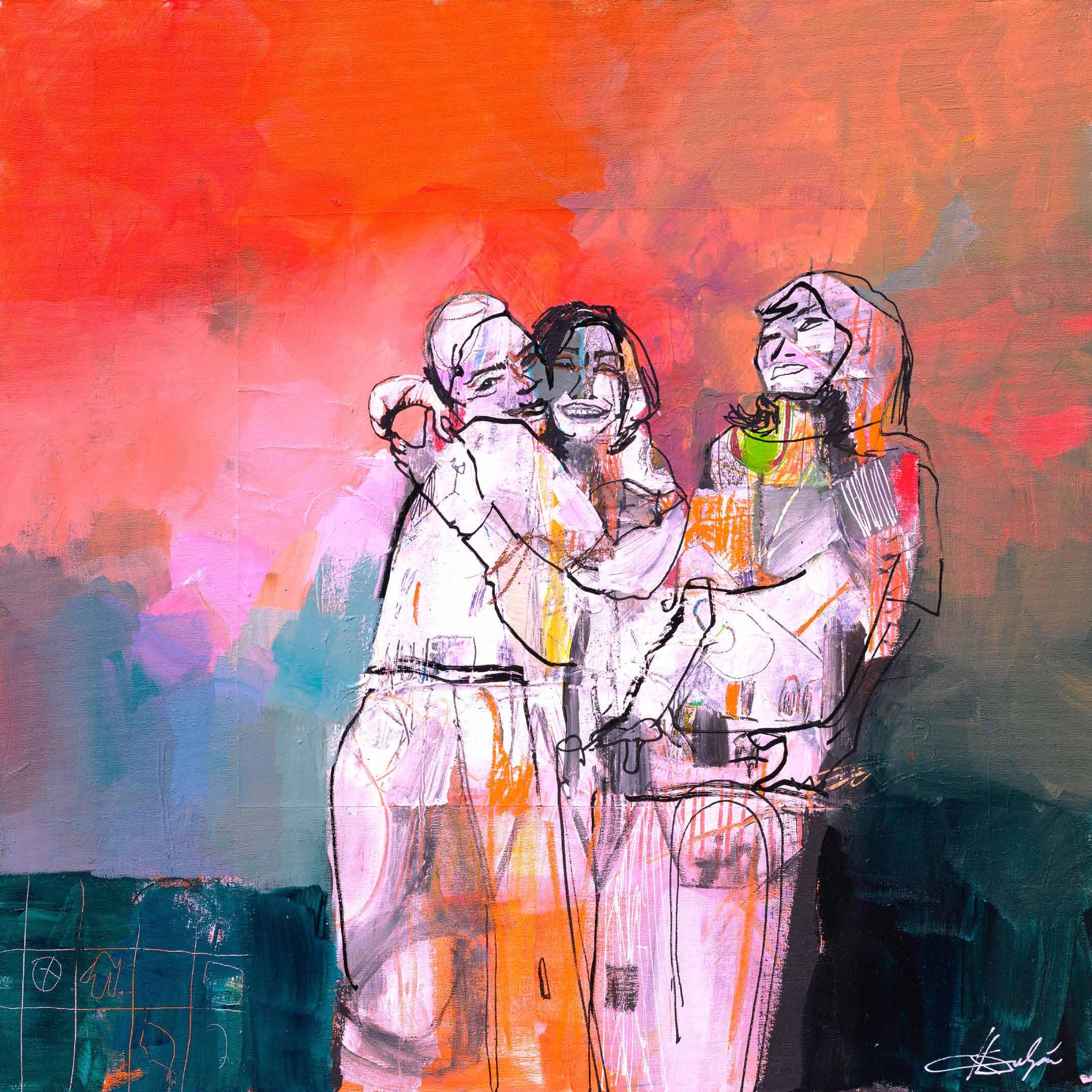
This work began over a photograph by the Armenian photographer Arthur Lumen, though the original image had nothing to do with the final pain�ng and served only as an underpain�ng. Almost everything disappeared in the process except a window reflec�on, where the unexpected profile of an elderly woman from the photograph mysteriously remained.
The new pain�ng evolved into an en�rely different scene centered around a couple suspended in a moment of an�cipa�on, fascina�on, and emo�onal tension — enclosed within their own world, seemingly unaware of the silent presence lingering beside them.
I was struck by how two completely unrelated reali�es unexpectedly merged into one image, as if the previous life of the photograph quietly refused to disappear.
The Night Guest was later selected by curator Erich Keel for my solo exhibi�on at the Arts Club of Washington and had previously a�racted the a�en�on of several curators during earlier exhibi�ons.
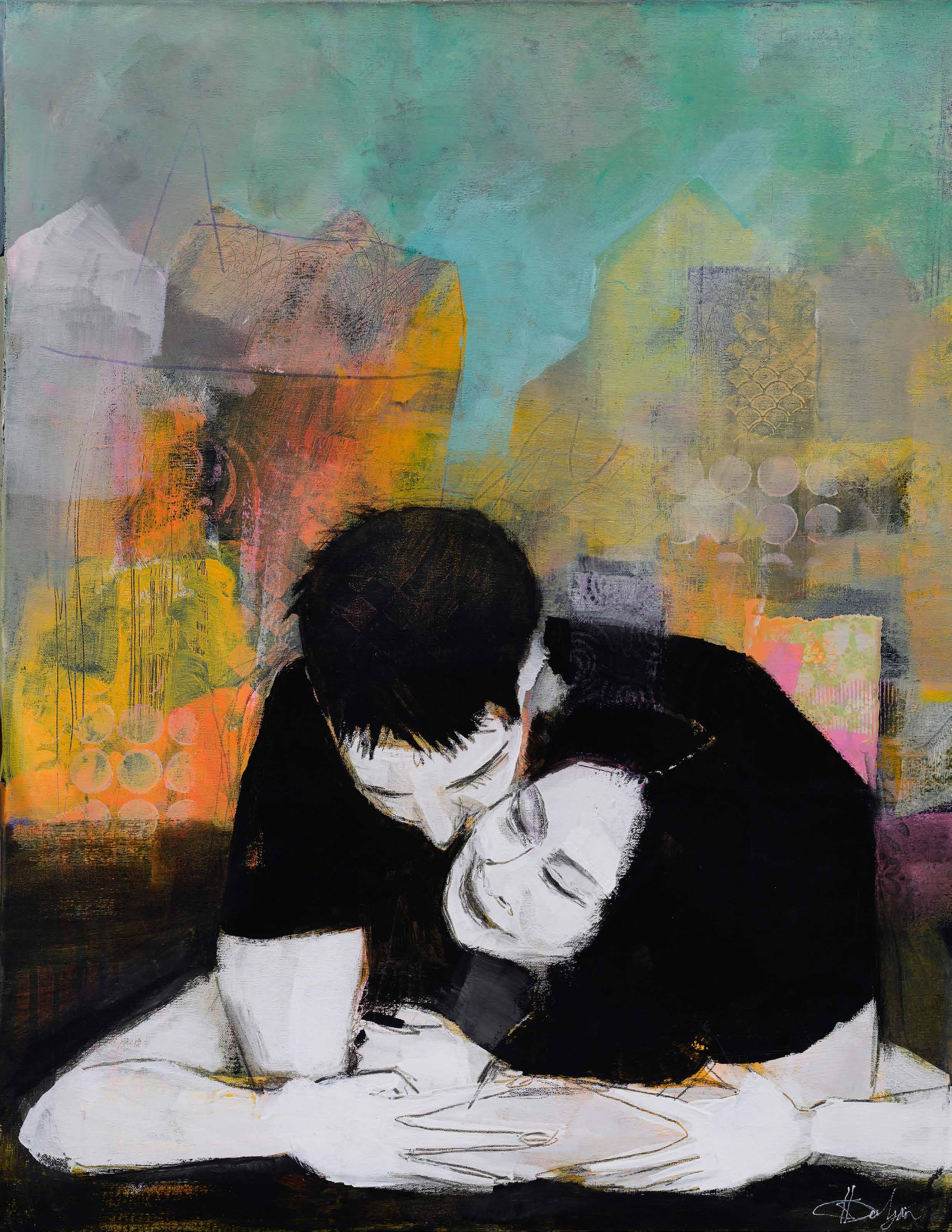
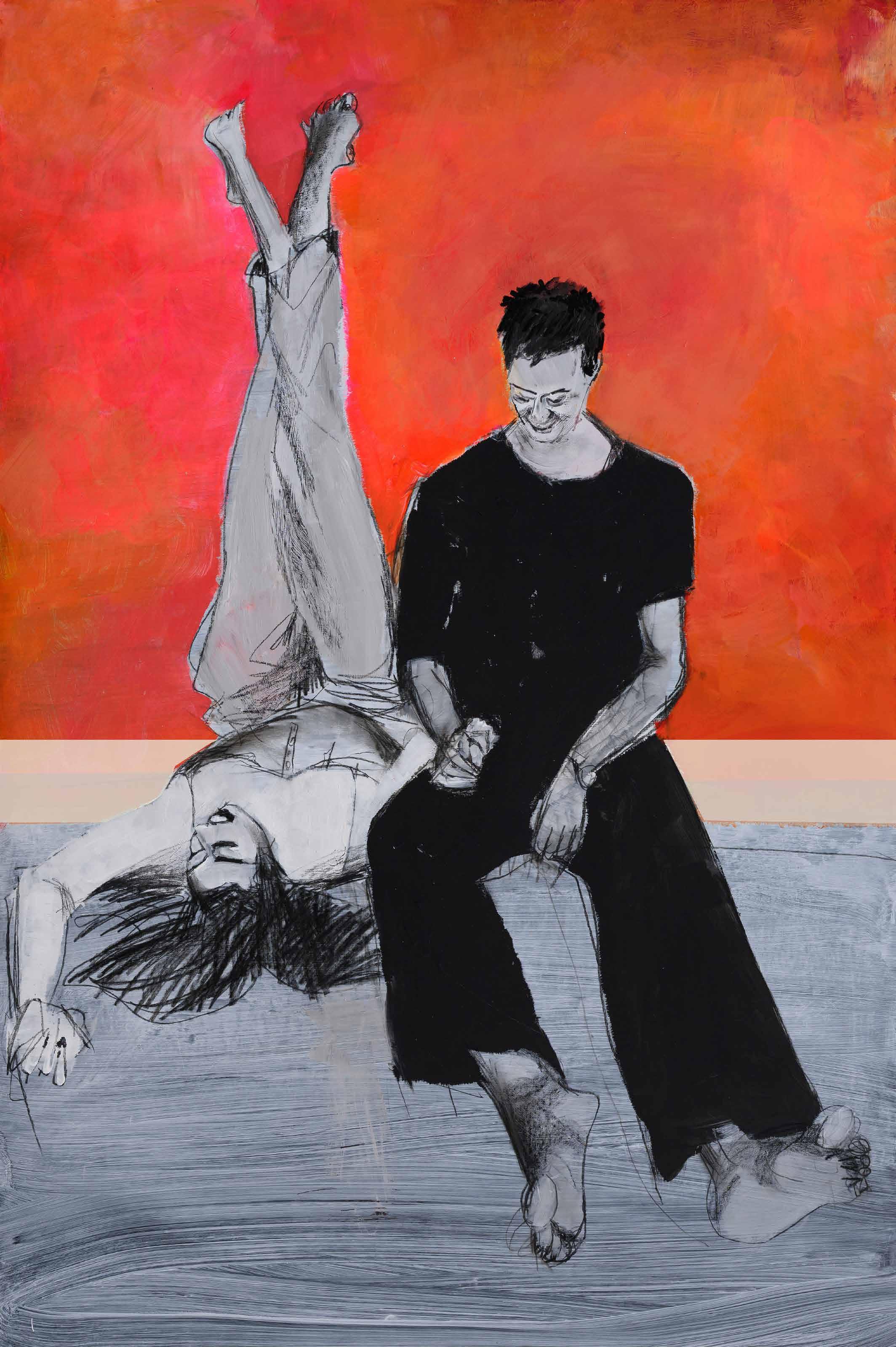
Acrylics on canvas, 80 x 80 cm
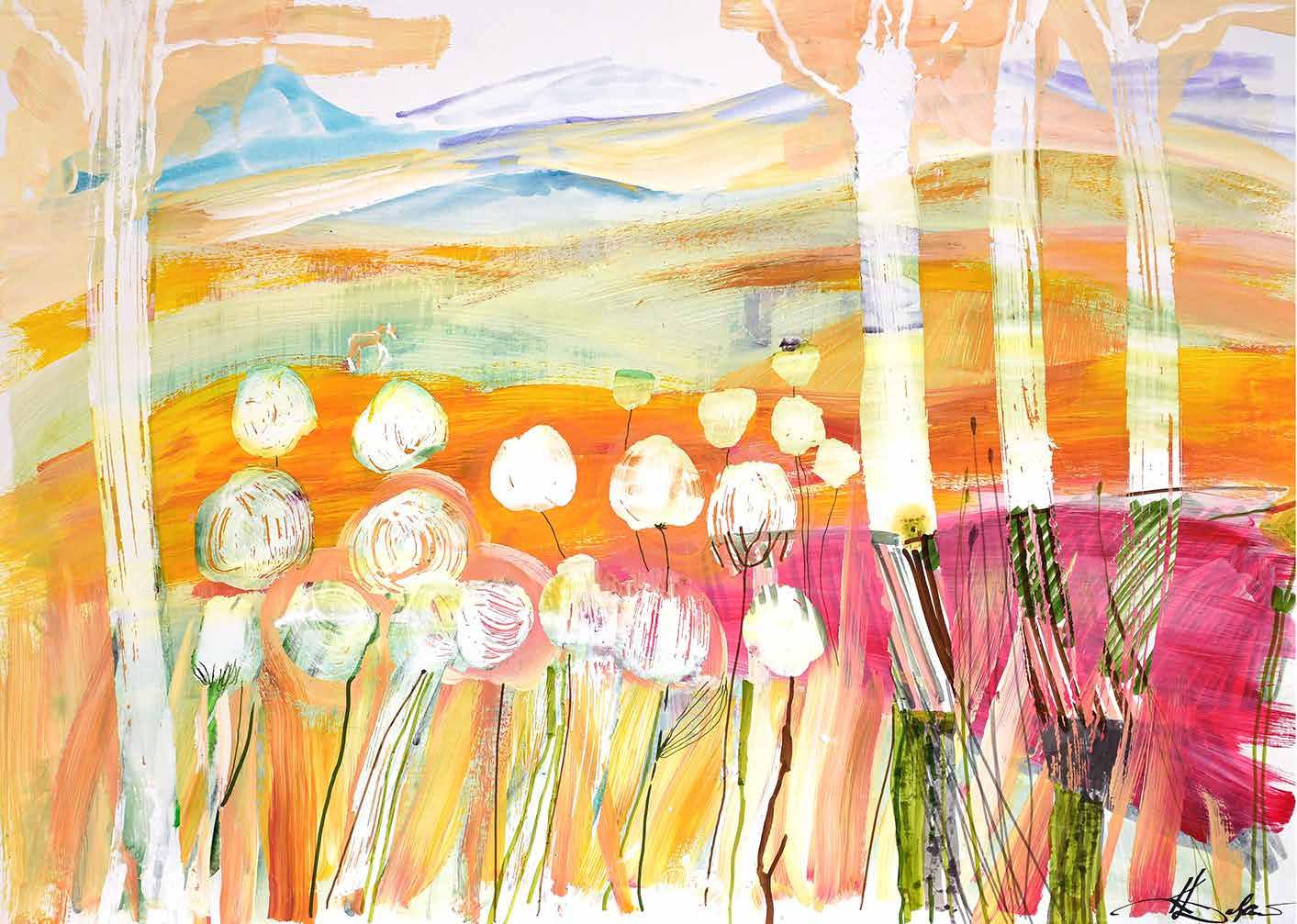
DANDELION FIELDS
Acrylics on cardboard
50 x 70 cm
2020
As I sit and observe the �meless dance of dandelions swaying in the breeze, I can't help but reflect on the moment when you haven't yet taken that crucial step, and a boundless realm of poten�al possibili�es awaits. Un�l ac�on is taken, there exists a vast world of poten�al scenarios, each stretching out before you. It's the perfect moment because once you take ac�on, you select just one of those many paths. It might be a good one, even splendid, or perhaps less ideal, but it's only one path—a single train you board. Yet before that, an infinite mul�tude of lines and branches extend in all direc�ons. I feel deeply fascinated by those moments of mul�ple probabili�es presiding the defining steps of our lives.
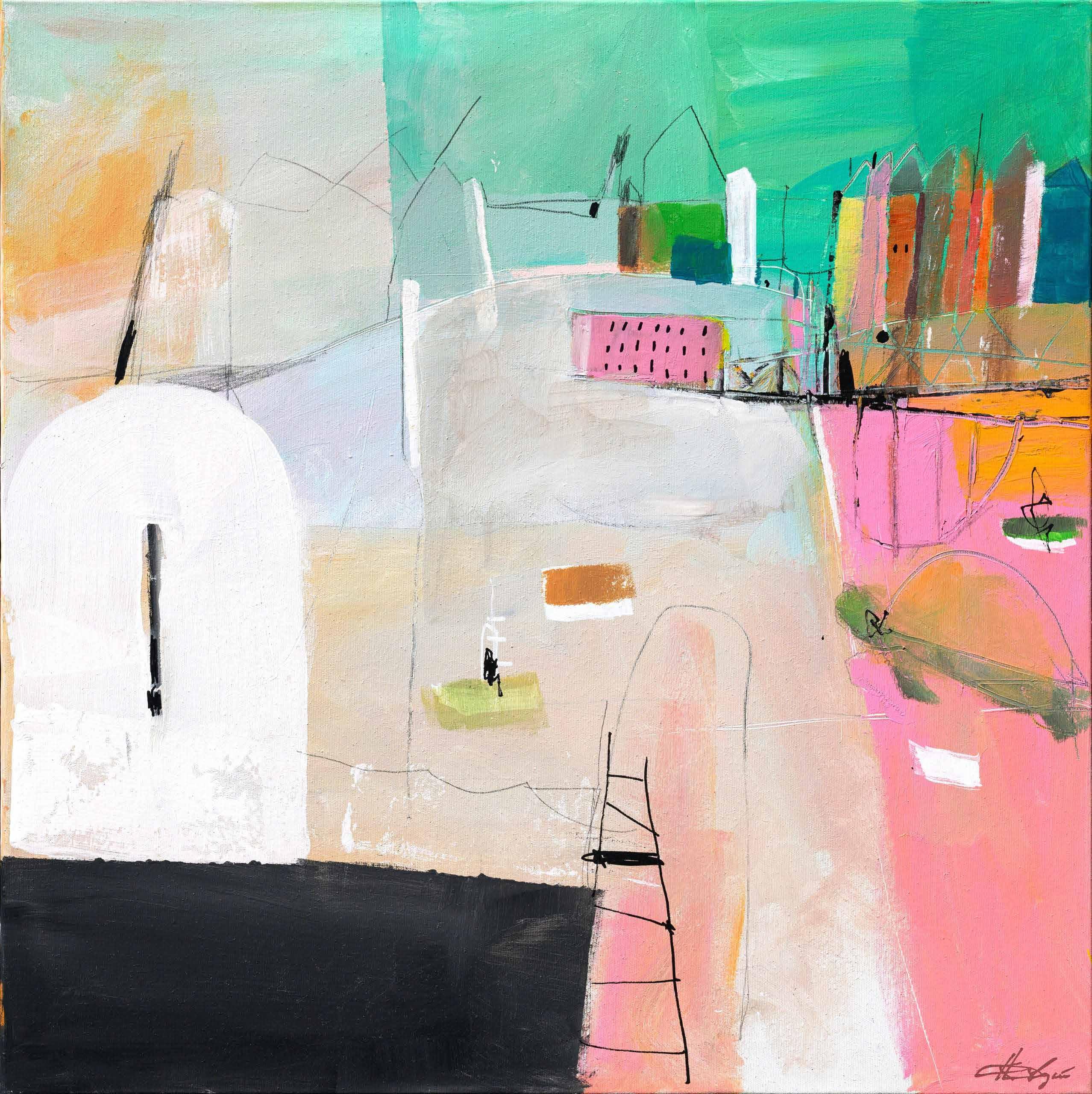
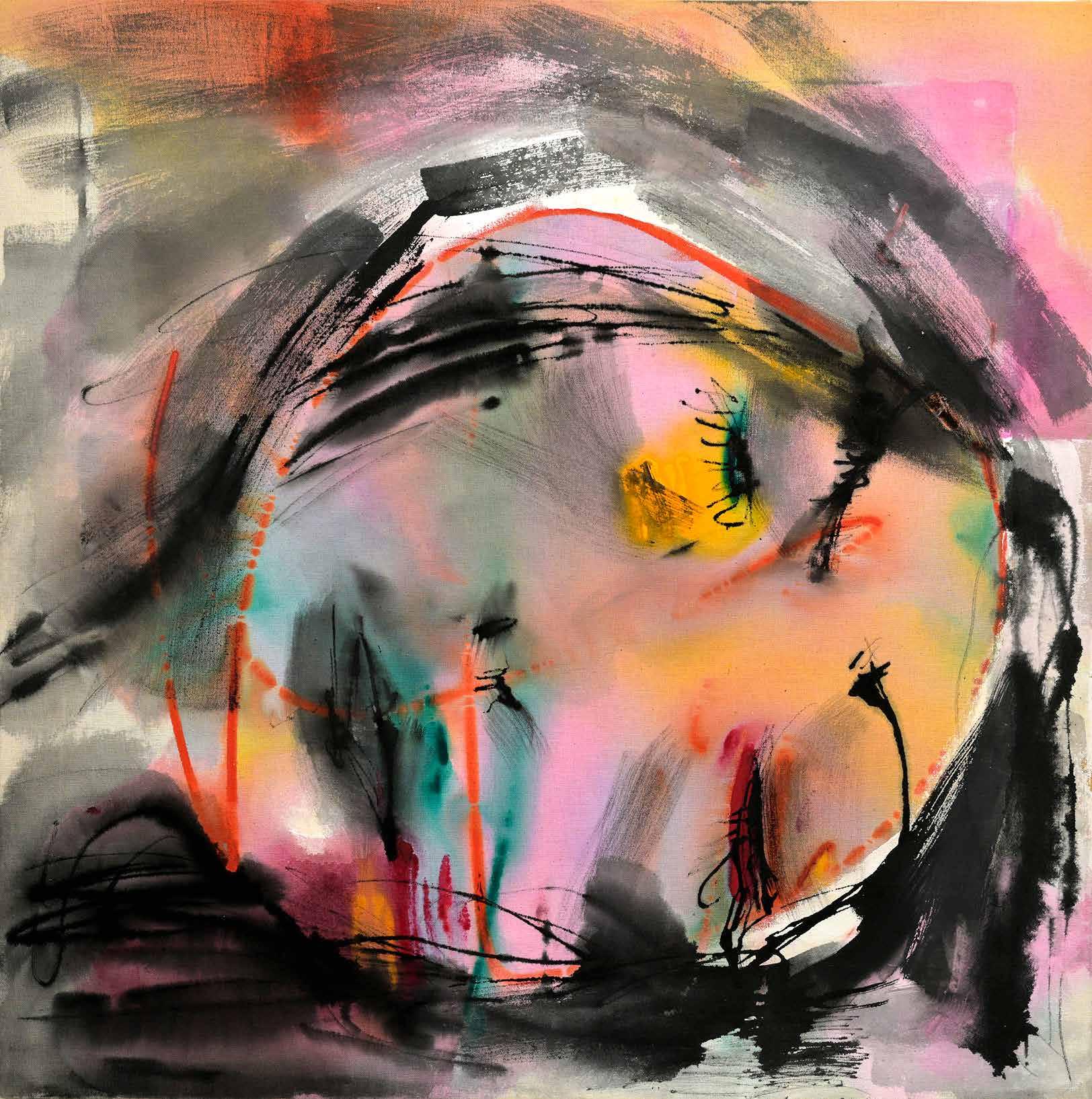
I approach pain�ng as a way of studying myself and finding ways to understand my inner world and see it more clearly. Each work becomes a reflec�on of a par�cular emo�onal state, thought, tension, memory, or inner feeling. My prac�ce does not follow a single visual language; instead, it embraces mul�plicity — a shi�ing constella�on of voices, rhythms, and perspec�ves. This diversity reflects the way I experience life itself: fluid, contradictory, dynamic, and constantly transforming. Some�mes I feel as if there is not one ar�st inside me, but a whole family of them, each stepping forward for an hour or two before giving space to another.
MIKADO TRIPTYCH | 2025
Acrylics on canvas 80 x 80 cm * 3
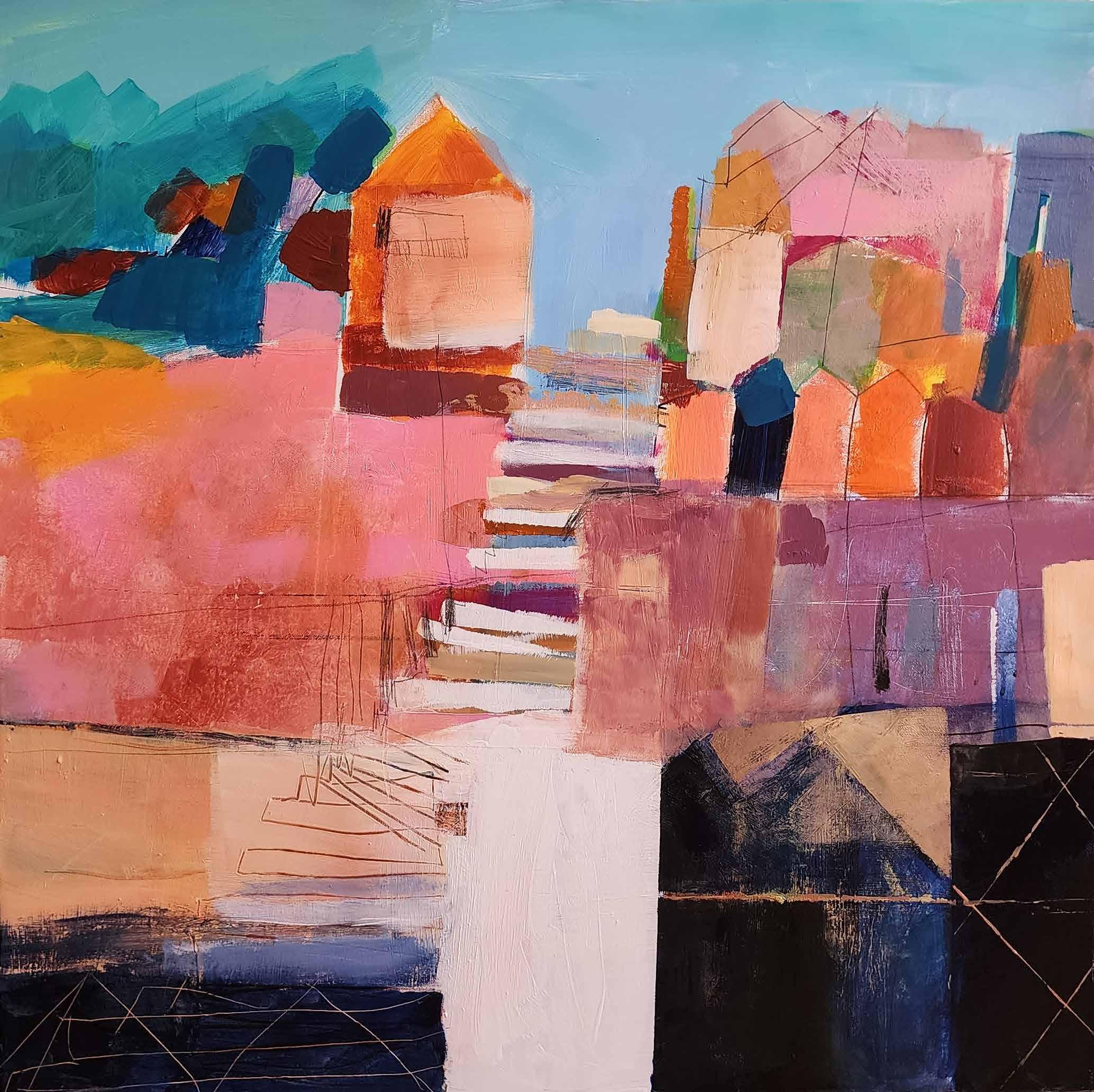
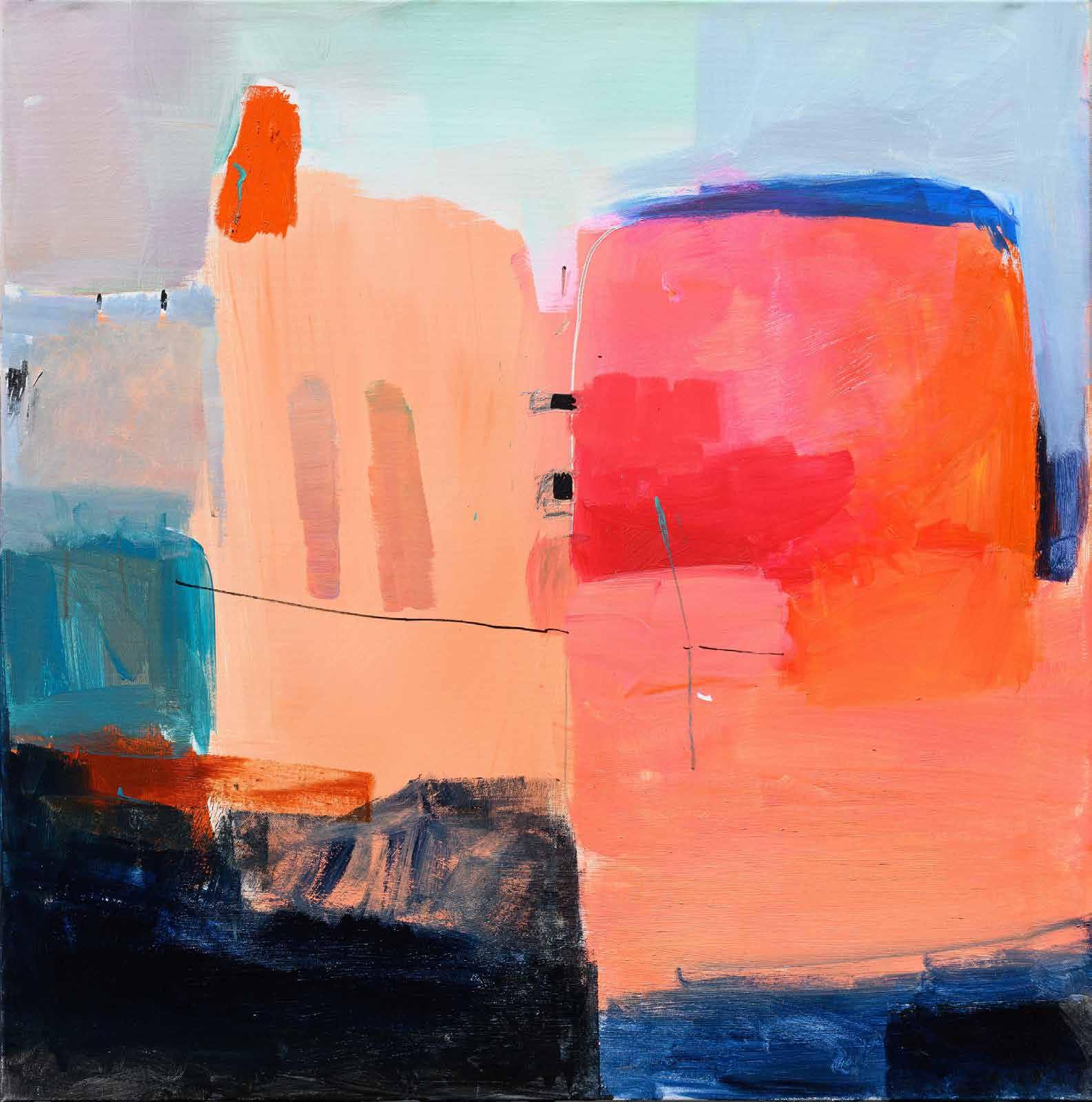
In today’s art world, ar�sts are o�en expected to cul�vate one immediately recognizable voice. While I understand the strength of cohesion, I also believe there is power in oscilla�on — between structure and spontaneity, playfulness and seriousness, intui�on and reflec�on.
In this sense, I feel close to the metamodernist spirit: moving con�nuously between opposites, allowing contradic�ons to coexist without rushing to resolve them.
My process welcomes experimenta�on, accidents, and unexpected turns. I rarely see mistakes as failures; more o�en, they become openings into new direc�ons. There is also a playful side to this freedom — almost a quiet inner “And now for something completely different.”
Through this mul�plicity, I try to create works that resonate with the complexity of contemporary life: emo�onally layered, shi�ing between the personal and collec�ve, the in�mate and universal.
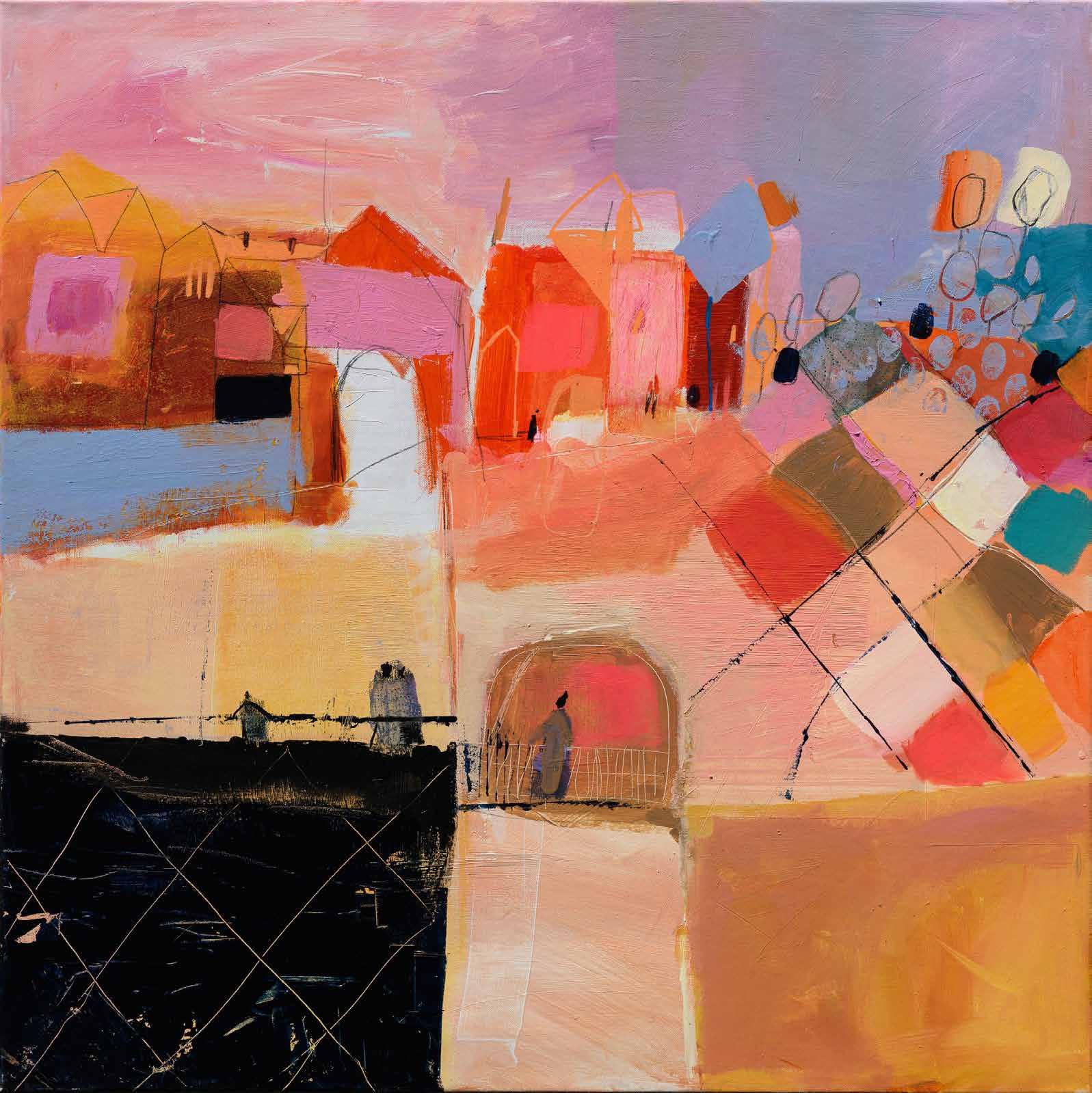
Mixed media on cardboard, 20 x 20 cm
on canvas, 80 x 80 cm
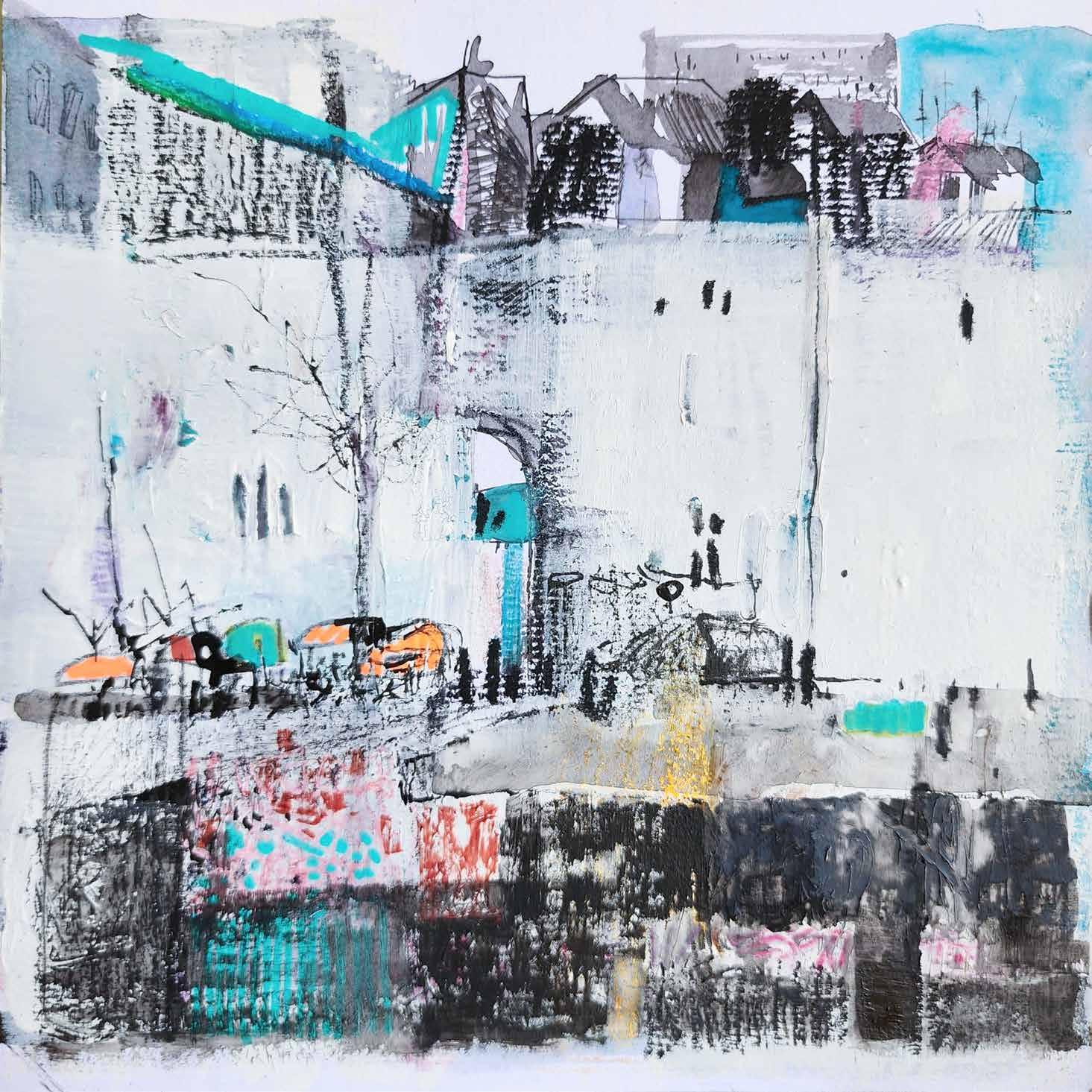
Music guides me through the pain�ng process. Some�mes I feel that composi�on and colors in pain�ng behave like rythm and harmony in music. Every canvas carries a hidden soundtrack. Music feels to me like another dimension of human existence — something that expands the space we inhabit beyond physical reality.
The same mul�plicity present in my pain�ngs reveals itself in my musical world as well. My playlists move freely between genres, moods, cultures, and eras, reflec�ng the fluid emo�onal logic through which I experience both music and pain�ng.
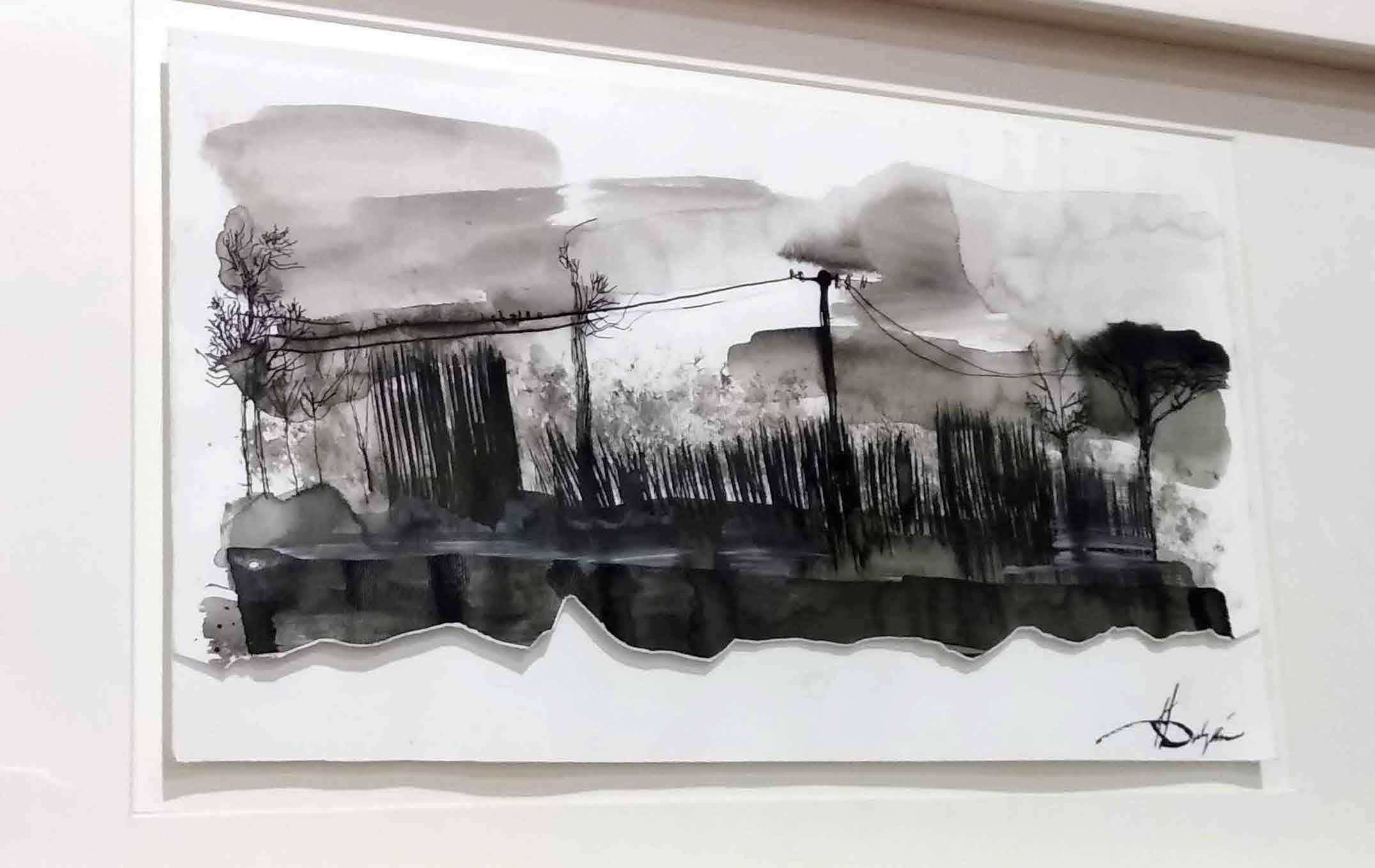
ON THE ROAD BACK HOME | 2020
Ink and water on paper, 19 x 33 cm
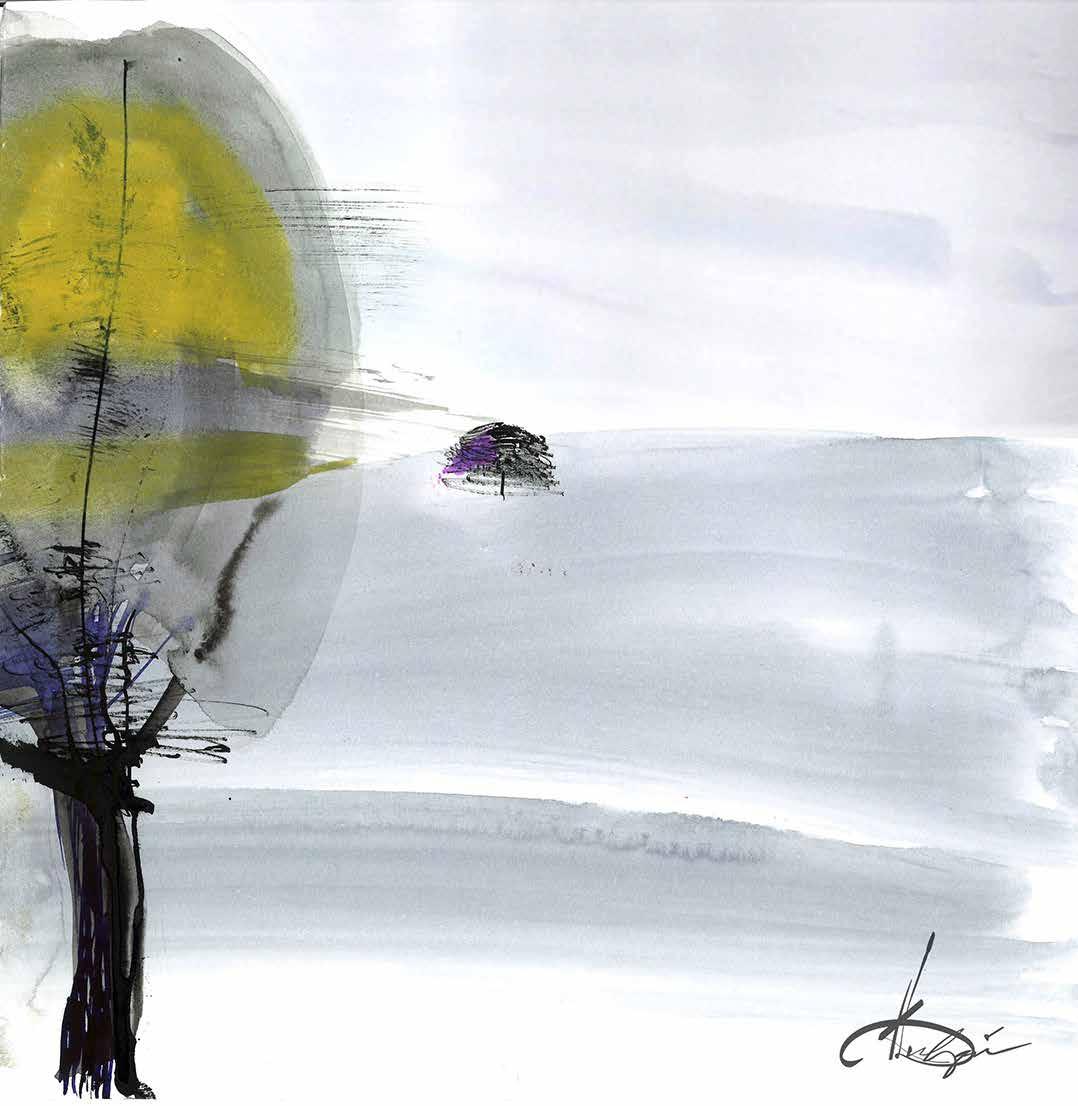
NOT ALONE | 2021
Ink and watercolor on paper 21 x 19 cm
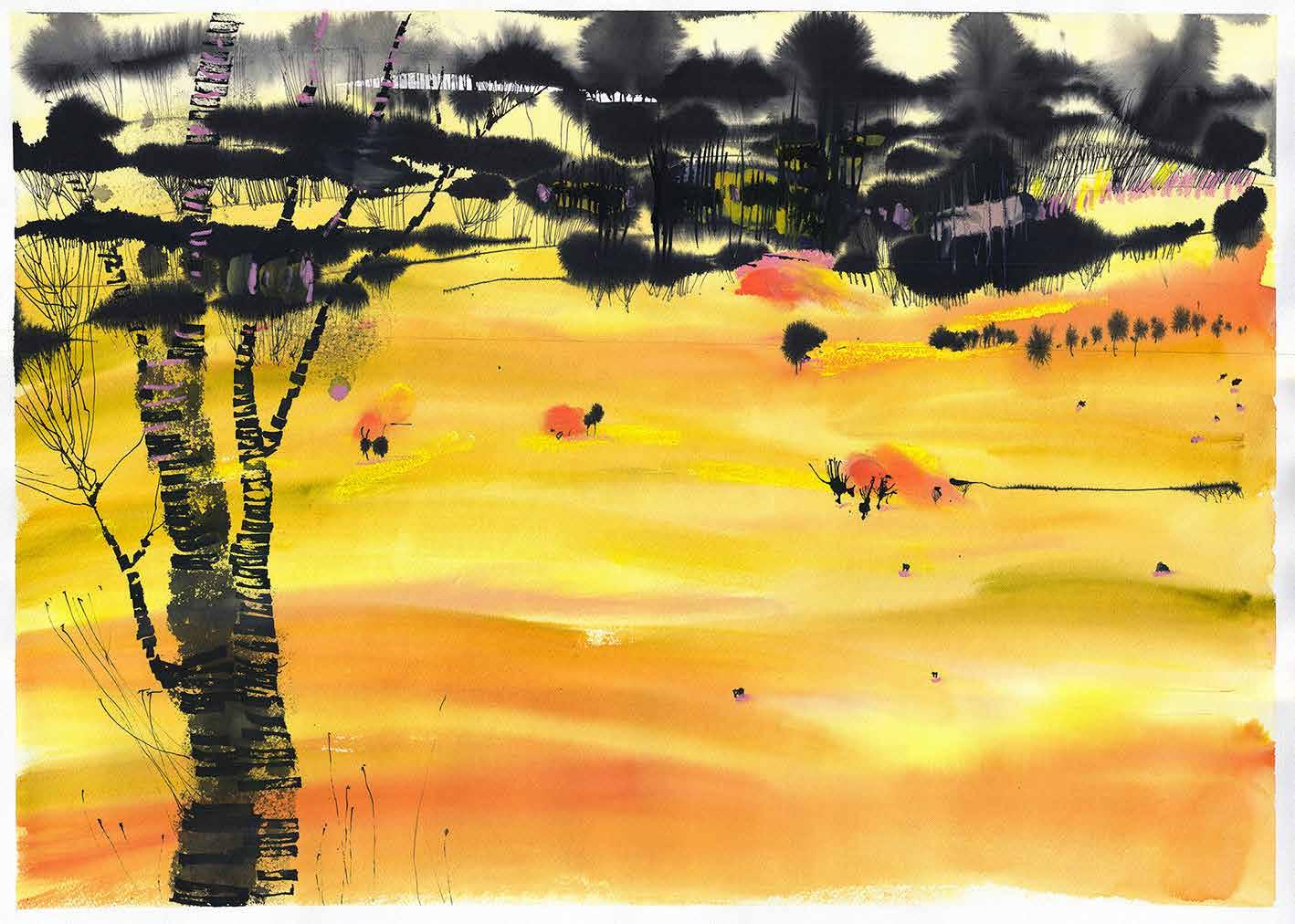
Ink, watercolor on paper, 57 x 78 cm
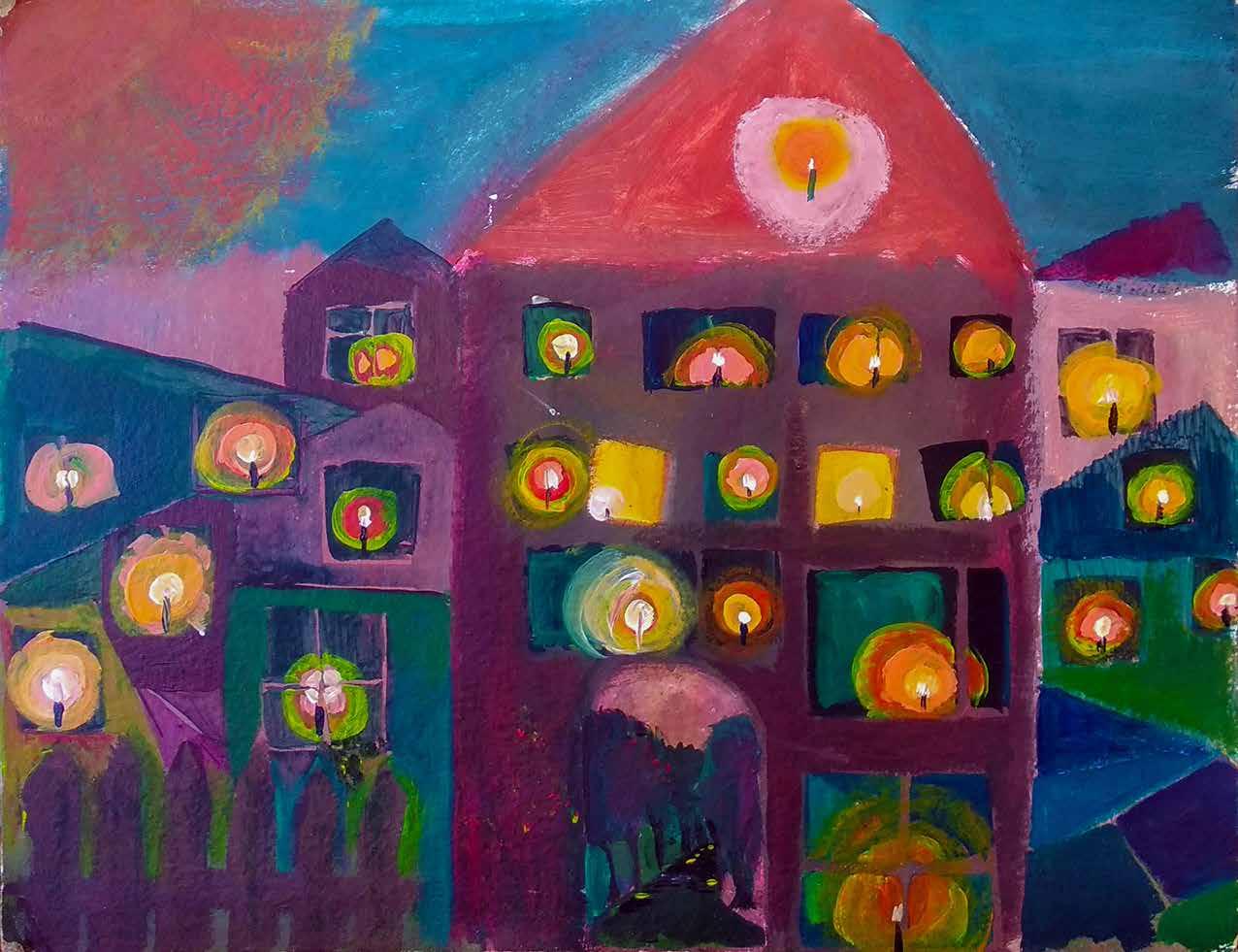
To conclude this lengthy journey, I'd like to share an oil pain�ng that I ini�ated when I was five or six years old and revisited in 2020.
It was on April 24, a day of remembrance for the vic�ms of the Armenian Genocide when, at 9 pm, it was customary to turn off all the lights and light a candle. Every window displayed a candle. On that evening, I took the pain�ng and posi�oned myself at my working desk by the window (as I've previously men�oned, my passion for windows). I began to paint candlelights in each window of the houses I had painted as a child.
Upon comple�ng it, a few weeks later, an acquaintance expressed interest in bying the painting. I sold it, and that's when I had the realiza�on that I could sustain my livelihood as an ar�st, engage in what I truly love, and lead a happy life.
This is my current reality, and I believe it serves as a fi�ng conclusion to my por�olio.
I believe the pendulum of art is slowly swinging back toward beauty — toward art that heals, upli�s, and brings emo�onal clarity rather than aliena�on. For me, the highest purpose of art is not to shock or make people internally ques�on, “Is this even supposed to be art?”, but to make people feel a li�le more alive. A pain�ng can create a quiet inner shi�: a sense of warmth, recogni�on, tenderness, inspira�on, gra�tude, nostalgia, relaxa�on, rapture, or even a small emo�onal flu�er — a �ngling feeling that is difficult to explain in words.
Some reac�ons remain deeply engraved in my memory. Once, a�er one of my solo exhibi�ons, a man recovering from a stroke told me that he physically felt be�er a�er walking through the exhibi�on. Another visitor told me it was the first cultural event he had a�ended since the war, and that it had “brought him back to life.”
These are the moments that stay with me.
They remind me that perhaps the most meaningful thing art can do is very simple: help someone feel be�er, even if only for a moment.