Karin Burns: What to Consider Before Pursuing a Public Service Executive Career
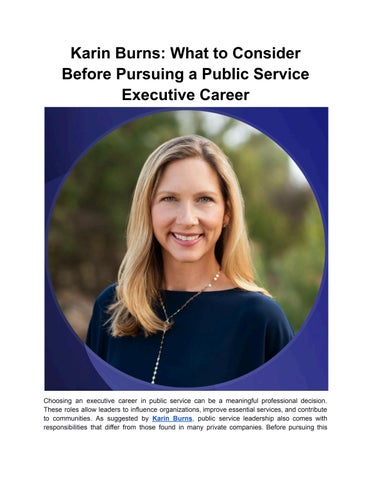
Choosing an executive career in public service can be a meaningful professional decision. These roles allow leaders to influence organizations, improve essential services, and contribute to communities. As suggested by Karin Burns, public service leadership also comes with responsibilities that differ from those found in many private companies. Before pursuing this
career path, professionals should understand the expectations, challenges, and opportunities that often come with executive positions in the public sector. One important factor to consider is the purpose behind the work. Public service executives often make decisions that affect employees, communities, government programs, and the people who depend on public services. Success is not always measured by revenue or business growth. Instead, leaders may focus on service quality, responsible use of resources, policy goals, accessibility, and public outcomes. Therefore, professionals who find satisfaction in serving broader community needs may find this career especially rewarding. Accountability is another major part of public service leadership. Executive decisions may receive attention from government officials, employees, community groups, journalists, and members of the public. Leaders must often explain how and why decisions were made. As a result, strong communication, transparency, ethical judgment, and careful documentation can become essential leadership skills. Professionals should also consider the complexity of decision-making. Public organizations frequently operate within detailed laws, regulations, policies, budgets, and administrative procedures. An executive may recognize a problem quickly but still need to follow established processes before implementing a solution. This environment can require patience and an ability to work effectively within institutional structures. Budget and resource limitations may create further challenges. Public service leaders often need to balance community expectations with available funding, staffing, technology, and operational capacity. They may have to decide which projects deserve priority while ensuring that essential services continue. Strategic planning and responsible resource management are therefore important parts of executive leadership. At the same time, a public service executive career can provide valuable professional development. Leaders often collaborate with people from different departments, organizations, and communities. These interactions can strengthen skills in negotiation, crisis management, communication, policy implementation, and organizational leadership. Executives may also gain a deeper understanding of how institutions respond to complex social and economic needs.