
WRITINGS & COMMUNICATION

What Makes a Great First Impression? Lessons I've Learned From Membership Onboarding:
What do welcome emails, front desk greetings, and tours all have in common? They’re either forgettable or foundational.
We don’t talk enough about the art of onboarding. But those first few touchpoints? They’re make-it or break-it. Whether welcoming a new team member, client, or member to the organization, the goal is the same: make them feel like they belong from day one.
Here are five small (but mighty) ways to create lasting first impressions:
1. Personalize the “Hello.”
Don’t rely on generic auto-responses. When someone joins, call them by name. Reference how you met. Mention something you remember. Make it human.
2. Introduce before they arrive.
Before a new member or client walks through the door, let others know they’re coming. That way, the first greeting they receive feels like a warm welcome and not a cold intro.
3. Give them a “guide,” not just a packet. Instead of only handing over a brochure, connect them with a person. A buddy. A mentor. Someone to walk them in, show them around, and answer the real questions.
4. Create a small “wow” moment. It doesn’t have to be big: a handwritten note, a coffee waiting at their table, a reserved seat at an event. A personal touch periodically that says, “We see you.”
5. Keep showing up.
First impressions aren’t a one-and-done. Follow up. Invite. Include. Help them engage on their terms.
Because the best onboarding doesn’t feel like onboarding, it feels more like a welcome.

The Art of Saying Less (and Being Heard More)
Want to be a better communicator? Say less. Powerful professionals:
1.Eliminate filler words like "I think," "just," & "kind of."
2. Pause for impact. Silence makes people lean in.
3. Lead with value. Start with the most important point.
The best communicators don’t talk the most, they talk with purpose.
Recommendation: "Smart Brevity: The Power of Saying More with Less" by Jim VandeHei at https://amzn.to/3ERUjRZ

https://www.facebook.com/reel/2407711619597614.
Three C’s of Executive Presence:
Executive presence isn’t about a title, it’s how you show up. Master the 3 C’s to help you command respect in any room:
1. Confidence – Speak with clarity, stand tall, and own your message.
2. Composure – Stay calm under pressure and lead with poise.
3. Clarity – Get to the point. The most influential leaders are the clearest communicators.
Recommendation: Follow Vinh Giang, a renowned communication expert who specializes in executive presence and effective leadership.
Website: https://www.vinhgiang.com/ @askvinh YouTube Channel: https://www.youtube.com/channel/UC9K9Wnz6t4cLnCdTzAVrXqQ
In particular, his video "Leadership is a Performance" delves into how body language influences leadership: https://www.youtube.com/watch?v=FNjeXvh2Z_Y
By engaging with Vinh Giang's content, you can further develop the confidence, composure, and clarity essential for commanding respect in any professional setting.




https://www.linkedin.com/posts/kari-cassidy-diercks-66778b
The Secret Skill No One Talks About: Managing Up
Ever feel like you’re working twice as hard but not getting the recognition (or promotions) you deserve? Here’s a little secret: success isn’t just about working hard, it’s about working smart. And one of the smartest things you can do? Master the art of Managing Up. Managing up isn’t about office politics or brown-nosing, it’s about building strong partnerships with your leaders so you can work more effectively, reduce frustration, and open doors to bigger opportunities. Here are three simple but powerful ways to start managing up:
1. Understand Your Boss’s Priorities
DO NOT SAY: “I’ll just do my work and hope for the best.”
INSTEAD SAY: “What are my boss’s top priorities, and how can I align my work with them?” Your manager isn’t just juggling your tasks, they’re balancing multiple high-level objectives. If you take the time to understand their goals, you can position your work to directly support their priorities.
Why this matters:
When you align your work with their big-picture objectives, you become indispensable instead of just another employee. You’ll gain clarity on what really matters so you’re not wasting time on things that won’t move the needle. When leadership sees you’re proactive about helping them succeed, you’ll be the first person they think of for new opportunities.
2. Be a Solutions Provider
DO NOT SAY: “There’s a problem. Someone should fix it.”
INSTEAD SAY: “Here’s a challenge I noticed, and a possible solution to address it.”
Leaders don’t just want to hear about problems, they want to hear how to fix them. If you can anticipate challenges before they escalate and come prepared with solutions, you’ll stand out as a critical thinker and problem-solver.
Why this matters:
It saves your boss time (which they’ll appreciate). Instead of just bringing them problems, you’re helping them solve them.
It positions you as a leader, someone who takes initiative and thinks strategically. You build trust. When leadership sees you as a go-to problem solver, they’ll rely on you more, which may lead to more career growth opportunities.
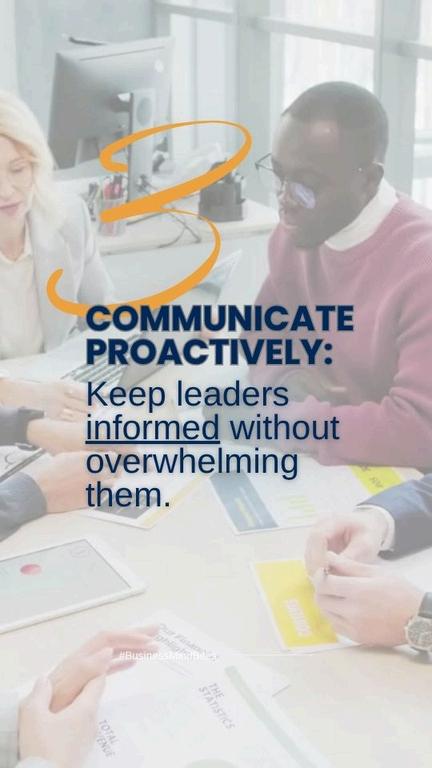
3. Communicate Proactively
DO NOT SAY: “I’ll wait until they ask for an update.”
INSTEAD SAY: “Here’s where we are, here’s what’s next, and here’s what I need from you.” Effective communication isn’t just about talking, it’s about timing, clarity, and relevance. Your boss doesn’t need every tiny detail, but they do need to stay informed enough to make decisions.
Why this matters:
Keeps projects on track with less back-and-forth. Prevents surprises (leaders hate surprises unless they involve cake).
Builds trust, your manager won’t have to wonder what you’re up to because you’ll keep them in the loop before they have to ask.
Managing up can be a game-changer, not just for your boss, but for your own career. When you take ownership of aligning with leadership priorities, solving problems, and communicating effectively, you build trust, gain influence, and open new doors for growth.


Confidence is a Skill, Not a Trait.

Confidence is a Skill, Not a Trait
Ever looked at a confident person and thought, "Wow, they were just born that way"? Spoiler alert: they weren’t. Confidence isn’t a magical trait some people are gifted with, it’s a skill that’s built, brick by brick, through action. The good news? That means anyone can build it, too. And no, it doesn’t require walking into a room like you own it (though that doesn’t hurt). Here are some ways on how to develop real, lasting confidence, one step at a time.
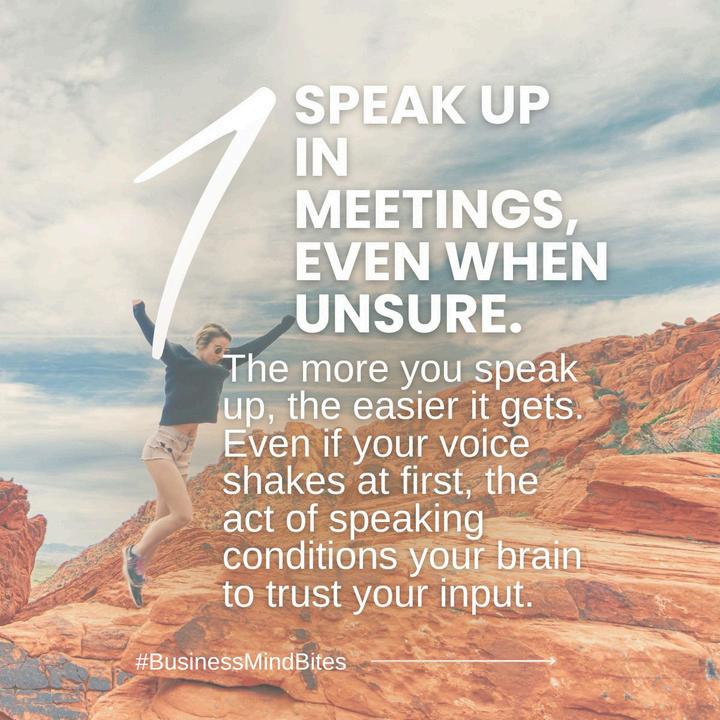
1. Speak Up, Even When You’re Unsure
DON’T: "I’ll just stay quiet and let someone else answer."
DO: "I have a thought on that, let me share."
Why? Confidence grows when you act despite uncertainty. The more you speak up, the easier it gets. Even if your voice shakes at first, the act of contributing conditions your brain to trust your input.
2. Master Body Language
DON’T: Hunched shoulders, avoiding eye contact, fidgeting.
DO: Standing tall, making eye contact, controlled gestures. Why? Your body speaks before you do. Strong posture and eye contact signal confidence to others and to yourself. Your brain literally responds to your posture, so stand tall like you mean it.
3. Prepare Like a Pro
DON’T: "I’ll just wing it and hope for the best."
DO: "I’m going to research, practice, and walk in ready." Why? Knowledge builds self-assurance. Whether it’s for a meeting, a presentation, or a difficult conversation, preparation is your secret weapon. The more you know, the more confident you feel.
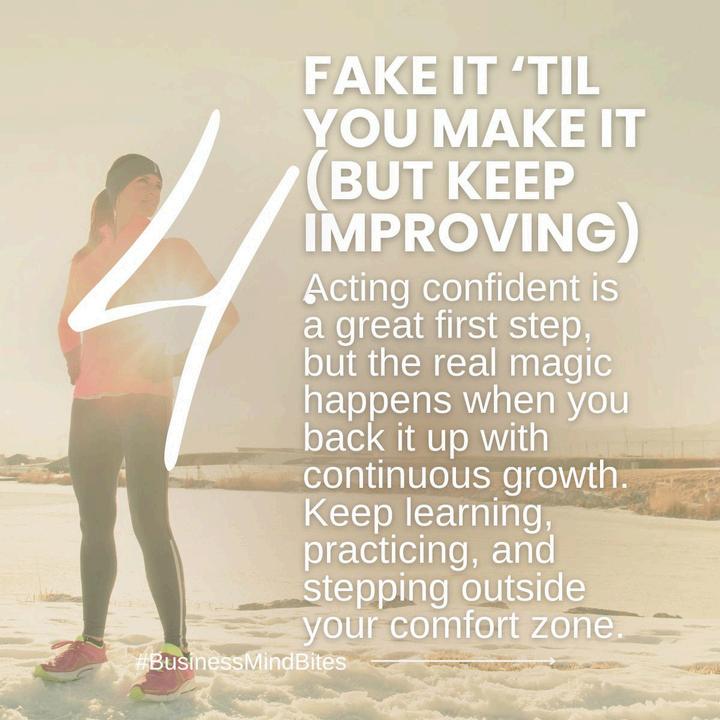
4. Fake
It ‘Til You Make It, But Keep Improving
DON’T: "I’ll pretend I’m confident and hope no one notices my nerves."
DO: "I’ll project confidence while actively working to improve."
Why? Acting confident is a great first step, but the real magic happens when you back it up with continuous growth. Keep learning, practicing, and stepping outside your comfort zone. Confidence isn’t reserved for the lucky few, it’s available to anyone who wants to work on it. Speak up, stand tall, prepare, and keep pushing yourself forward. Your confidence is built in the moments you choose to act.





Silence Speaks Volumes.
Sometimes the best communication strategy is listening first.
1. Pause before responding. Process before reacting.
2. Observe nonverbal cues in conversations.
3. Let people fully express their thoughts before jumping in.
4. Use silence as a tool to encourage deeper discussions.
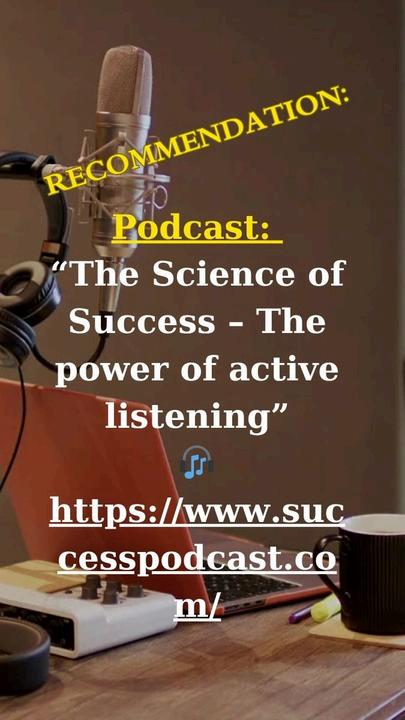
Recommendation:
Podcast: The Science of Success – The power of active listening
https://www.successpodcast.com/ https://www.facebook.com/reel/1351922465689741
Speak Like a Leader Before You Have the Title
Ever feel like people don’t take you seriously at work? Maybe you pitch an idea, and it lands with a thud. Or you send an email and get... crickets. Here’s a secret: It might not be your ideas, it might be your words. The way you communicate shapes how others see you, and small shifts in language can make a huge difference.
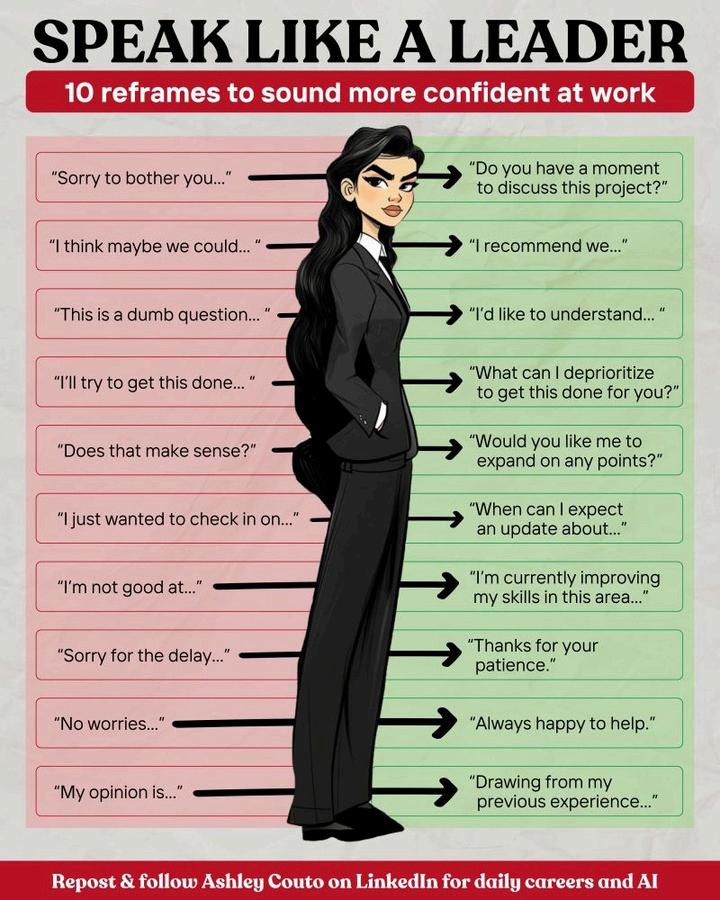
Recently, Ashley Couto shared an insightful post on LinkedIn about how small language shifts can make a big leadership impact. Inspired by her wisdom, here’s my take on her suggested 10 language tweaks that will boost your authority and confidence at work .
Recommendation: Follow Ashley Couto on LinkedIn. Check out this post titled: "Speak like a leader before you have the title". #ashleycouto @ashleycouto
.1. Stop Apologizing for Existing
❌ "Sorry to bother you..." ✅ "Do you have a moment to discuss this project?"
Why? Leading with an apology weakens your presence. Instead, respect their time and get straight to the point.
2. Own Your Ideas with Confidence
❌ "I think maybe we could..." ✅ "I recommend we..."
Why? Leaders don’t hedge, they own their expertise. Speak with conviction, and people will take your recommendations more seriously.
3. Ditch the Self-Doubt
❌ "This is a dumb question." ✅ "I'd like to understand."
Why? Curiosity is a leadership skill. Asking thoughtful questions makes you look engaged, not uncertain.
4. Take Control of Your Workload
❌ "I'll try to get this done." ✅ "What can I deprioritize to get this done for you?"
Why? Leaders don’t just react; they manage priorities. This shift shows initiative and strategic thinking.
5. Position Yourself as the Expert
❌ "Does that make sense?" ✅ "Would you like me to expand on any points?"
Why? The first option implies that you doubt your clarity. The second assumes your expertise while making space for deeper discussion.
6. Be Direct, Not Passive
❌ "Just wanted to check in..." ✅ "When can I expect an update?"
Why? Leaders get things done. This wording is polite but firm. It signals that you expect action.
7. Frame Weaknesses as Growth Areas
❌ "I'm not good at..." ✅ "I'm currently improving my skills in..."
Why? Leaders don’t dwell on weaknesses, they focus on development. This small shift signals a growth mindset.
8. Lead with Gratitude, Not Apology
❌ "Sorry for the delay." ✅ "Thanks for your patience."
Why? Apologies focus on failure. Gratitude shifts the tone to appreciation and leadership.
9. Make Helpfulness Intentional
❌ "No worries." ✅ "Always happy to help."
Why? This slight tweak turns a casual response into one that reinforces your leadership mindset.
10. Ground Your Opinions in Expertise
❌ "My opinion is..." ✅ "Drawing from my experience..."
Why? Leaders don’t just have opinions, they have informed perspectives. This shift makes you sound like someone worth listening to.
Your words are powerful. The way you communicate signals to others whether you’re a leader in the making or just waiting to be noticed. Start practicing these small language shifts and watch how people respond differently.
https://youtube.com/shorts/_qMOXuq0C5E?si=HrP231Dx1mm2WCNA.
The Power of Asking for Help: Your Shortcut to Success
Ever feel like asking for help makes you look weak? Think again. The world’s most successful people, from CEOs to top athletes, lean on mentors, coaches, and colleagues to level up. Yet, many young professionals hesitate, thinking they have to figure everything out on their own. The truth? Going solo is the slow route to success. Smart professionals know that asking for help isn’t a sign of failure, it’s a strategy for growth. So, how do you make asking for help work for you? Let’s break it down.
1. Reach Out When You’re Stuck
You’ve hit a wall on a project. Instead of spinning your wheels for hours (or days), take a step back and ask yourself: Who do I know that can help me move forward? Maybe it’s a mentor, a manager, or a colleague with experience. People actually love being asked for help. It signals that you respect their knowledge and expertise. Plus, many people have been where you are and are happy to share insights.
Action Step:
Make a list of three people in your network you can reach out to when you need advice. Send a quick message like: “Hey “X,” I’m working on XYZ and would love your perspective. Got time for a quick chat?”
2. Be Open to Feedback
Asking for help isn’t just about getting answers, it’s also about growing from the advice you receive. That means accepting feedback with an open mind. Don’t get defensive. Even if the response isn’t what you expect, it’s a chance to see things from a new perspective.
Action Step:
Next time you ask for help, follow up with: “Thanks for your input! What’s one thing you think I could do better moving forward?” This keeps the conversation open and helps you refine your skills.
3. Offer Help in Return
Networking is a two-way street. If someone helps you, look for ways to give back. Maybe you can offer insights on a project, introduce them to a connection, or simply express genuine appreciation. Building strong professional relationships is about give and take; helping others makes them more likely to support you in the future.
Action Step:
Find one way this week to support someone in your network. It could be sharing a job posting, reviewing a resume, or just sending a thoughtful message of encouragement.
4. Be Specific in Your Ask
The clearer you are about what you need, the more likely you are to get useful help. Instead of saying, “I need help with marketing,” try: “I’m struggling with social media engagement. Do you have any tips on boosting interaction on LinkedIn?” Being more specific makes it easier for others to give you more exact advice.
Action Step:
Next time you ask for help, write down exactly what you need before reaching out. This saves time and increases the chances of getting the right guidance.
Asking for help isn’t a weakness, it’s a superpower. The most successful people surround themselves with mentors, peers, and supporters who lift them up. So don’t be afraid to reach out, accept feedback, offer help in return, and be specific about what you need. Challenge yourself this week: Ask for help on one thing you’re struggling with and see what happens.
Your Challenge and Call to Action:
This week, try just one of the above tips in your daily interactions. Reach out for help, be open to feedback, or offer assistance to someone else. You’ll be amazed at how much faster you grow when you embrace the power of asking for help!
For more actionable advice, visit Business Mind Bites at www.karicassidydiercks.com. Success is a team effort: start building your support system today! Want to go deeper?
Check out “Give and Take: Why Helping Others Drives Our Success” a book by Adam Grant, a thought leader on networking and workplace success. You can also follow him on social media @adamgrant.

https://youtube.com/shorts/Z1XLziKz8Vo?feature=share
Build Your Tribe:
Surround yourself with people who inspire, challenge, and believe in you.

https://www.linkedin.com/posts/kari-cassidy-diercks-66778b_5-ways-to-strengthen-your-business-relationships-activity-7292240997038571521-opBP?
utm _ source=share&utm _ medium=member _desktop&rcm=ACoAAAAdae8BF0kE5gzBQr9LNJgISFX91cLaH2Q
Strengthen your business relationships!
This is the perfect time to nurture and strengthen business relationships. Thoughtful gestures and strategic engagement can help you build lasting connections with clients and partners.
5 Ways to Strengthen Connections:
1.Express Gratitude: Take a moment to thank clients, partners, and colleagues for their support. A simple email, handwritten note, or a personalized LinkedIn message can go a long way.
2.Offer Appreciation: Consider sending a small gift or a customized greeting card. (Suggestion: use the “Ink” cards app on your phone.)
3.Celebrate: Acknowledge your contact’s holiday, birthday, anniversary or success on your own social media, website, or company newsletter.
4. Plan for Success Together: Check in on your clients’ goals. Offering insights or solutions can build trust and long-term loyalty.
5. Engage in Meaningful Conversations: Instead of generic messages, personalize your outreach by referencing past collaborations, shared milestones, or upcoming projects. Make it about them, not just your business.
Recommendation:
Book: “The Go-Giver” by Bob Burg & John David Mann
A great book about the value of giving and how it leads to business success. It emphasizes that focusing on adding value to others is the best way to build long-term relationships. Get it here: https://amzn.to/3WG7I5A
Recommendation:
Use the “Ink” cards app from your phone for customized cards. https://www.sincerely.com/ink
Final Thought: Strengthening business relationships isn’t just about transactions, it’s about connection, trust, and value. Take an opportunity to show appreciation and reinforce meaningful partnerships!

https://youtube.com/shorts/KlyHEkrCLOk?feature=share
Elevator Pitch Made Easy - How to Sell Yourself in 30 Seconds
Ever been asked, "So, what do you do?" and suddenly forgot everything about yourself? You’re not alone. Whether at networking events, interviews, or random encounters, having a solid elevator pitch is a game-changer. A great pitch is concise, compelling, and makes people want to know more. But how do you craft one without sounding robotic? Let’s break it down into a simple, repeatable formula:
Who you are + Problem you solve + Why it matters = Your Elevator Pitch
Here’s how you can create your own and a few examples to get you started.
1. Who You Are
This is your introduction: your name and what you do. Keep it simple and confident. You don’t need your entire job history her, just the essentials.
Example:
"Hi, I’m XYZ, a digital marketing consultant."
"I’m ABC, a startup coach helping new entrepreneurs find their footing."
2. The Problem You Solve
This is where you add value. What challenges do you help people overcome? Be specific and frame it in a way that shows why your work matters.
Example:
"I help small businesses increase their online visibility so they can attract more customers."
"I assist companies in streamlining operations to cut costs and improve efficiency."
3. Why It Matters
This is where you make it relevant to the person you're talking to. Show why your work makes a difference.
Example:
"With my help, small businesses don’t have to waste money on ineffective marketing, they see real results." "By improving efficiency, my clients save thousands every year and can focus on growth."
Putting It Together
Now, let’s combine the pieces into a smooth, natural-sounding elevator pitch.
Example Pitches:
1."Hi, I’m XYZ, a digital marketing consultant. I help small businesses increase their online visibility so they can attract more customers. That way, they can grow their brand without wasting money on ineffective ads."
2."I’m ABC, a startup coach helping new entrepreneurs find their footing. I guide them in developing business strategies and avoiding common pitfalls, so they launch with confidence and long-term success."
3."I’m DEF, a financial advisor. I help young professionals take control of their money and build wealth early, so they don’t spend decades playing financial catch-up." Your elevator pitch doesn’t need to be complicated, it just needs to be clear, engaging, and adaptable to different conversations. The key is practice. Test it out in front of a mirror, record yourself, or try it with a friend.
Your Challenge and Call to Action:
This week, craft your own elevator pitch using the formula: Who you are + Problem you solve + Why it matters. Then, practice it until it feels natural.
For more actionable advice, visit Business Mind Bites at www.karicassidydiercks.com. The next time someone asks, "What do you do?" you’ll be ready to impress! Want to go deeper? Check out The Perfect Elevator Pitch by Professor Heather Austin for expert insights. Find it here: https://heatheraustin.online/perfect-elevator-pitch/

https://www.linkedin.com/posts/kari-cassidy-diercks-66778b_happy-lunar-new-year-2025-activity7290469123380154368-9QiO?utm _ source=share&utm _ medium=member _desktop
3 Key Thoughts for Business Transformation This Year
Want to make big moves in your business but feel stuck in the same old routine? You're not alone. Every year, we set ambitious goals, only to get sidetracked by daily fires and distractions. But real transformation doesn’t happen overnight. It happens through intentional, strategic shifts. If you’re serious about making this your best business year yet, here are three key ideas to guide your transformation.
1. Adaptability: Stay Open to Change
Business landscapes shift fast. One minute, your strategy is rock solid, and the next, a new trend, competitor, or economic shift forces you to rethink everything. The best businesses aren’t just resilient; they’re adaptable. Being flexible in your approach and ready to pivot ensures you stay ahead rather than struggle to catch up.
Action Step:
Evaluate one process in your business that’s been running on autopilot. Ask yourself: Is this still the best approach, or is there room for improvement? Make one small change to improve efficiency or responsiveness.
2. Strategic Planning: Look Back to Move Forward
Before setting new goals, take a moment to reflect on the past year. What worked? What didn’t? A successful business transformation starts with clarity; knowing where you’re headed and having a roadmap to get there. Set clear, measurable goals and break them down into actionable steps.
Action Step:
Write down three business wins from last year and one challenge that held you back. Now, set a SMART goal (Specific, Measurable, Achievable, Relevant, Time-bound) that tackles that challenge head-on.
3. Continuous Learning: Stay Ahead of the Curve
The business world is more kind to those who stay curious and committed to growth. Whether it's developing leadership skills, learning about emerging trends, or refining industry expertise, ongoing learning is a non-negotiable for transformation. If you’re not evolving, you’re falling behind.
Action Step:
Pick one professional development resource, whether it’s a book, podcast, or online course, and commit to engaging with it this month. Not sure where to start? Check out Professor Heather Austin’s podcast for fresh insights.
Business transformation isn’t about making huge, overwhelming changes overnight. It’s about small, intentional shifts that lead to significant longterm impact. Adaptability keeps you ahead of the game, strategic planning ensures you have a clear direction, and continuous learning keeps your skills sharp.

https://www.facebook.com/61568786713370/videos/3446870648940876/

https://www.instagram.com/reel/DFLP2eRBR1H/?
utm _source=ig_web_copy_link&igsh=MzRlODBiNWFlZA==
3 Ways to Strengthen Your Personal Brand
When you think of personal branding, does it feel like an abstract concept reserved for influencers or CEOs? The truth is, everyone has a personal brand, it’s what people think and say about you when you’re not in the room. The question is, are you shaping that narrative intentionally, or leaving it to chance? A strong personal brand helps you stand out, build trust, and create opportunities. Ready to take control of how you’re perceived? Here are three practical ways to strengthen your personal brand and ensure it aligns with your goals.
1. Define Your Values
Your personal brand starts with understanding what you stand for. What are your core principles? What motivates and drives you? Defining your values creates a foundation for authenticity and ensures consistency in how you show up, both personally and professionally. When your brand is built around clear values, people know what to expect from you—and they’re more likely to trust and connect with you.
How to Make it Happen:
· Reflect on what matters most to you. Is it innovation? Collaboration? Integrity? Write down three words that capture your core values.
· Use those values as a filter for your decisions, messaging, and actions.
Quick Tip: Keep your three value words visible, put them on a sticky note at your desk or as a reminder on your phone. Let them guide how you present yourself daily.
2. Create Consistent Visuals
In a digital-first world, visuals are often the first impression of your personal brand. Whether it’s your LinkedIn profile picture, social media graphics, or the layout of your website, consistency in your visuals builds recognition and trust. Your visuals should not only look professional but also align with the story you want to tell about who you are.
How to Make it Happen:
· Choose a cohesive color palette and font style to use across all platforms.
· Update your profile pictures to reflect your current professional self.
· Ensure your branding is aligned, whether someone visits your social media profiles, website, or emails.
Quick Tip: Use free tools like Canva to create professional, branded graphics that are easy to replicate across platforms.
3. Share Your Expertise Regularly
Your expertise is your greatest asset, and sharing it consistently is key to strengthening your personal brand. When you regularly provide valuable insights, you position yourself as a thought leader and stay top of mind in your industry. The key is consistency. You don’t need to post every day, but you do need to show up regularly to build trust and credibility.
How to Make it Happen:
· Commit to posting one helpful tip, article, or insight each week.
· Choose a format that works for you, whether it’s writing LinkedIn posts, creating Instagram Reels, or sharing blog articles.
· Engage with your audience by responding to comments and answering questions.
Quick Tip: Repurpose content! Turn a blog post into a social media snippet or a video into a podcast clip to maximize your reach. Building a strong personal brand doesn’t have to be complicated it just takes clarity, consistency, and effort. By defining your values, creating cohesive visuals, and sharing your expertise regularly, you can shape how others perceive you and open doors to new opportunities.
https://drive.google.com/file/d/1lsM_2Xwzg4OhF45r99hGWeaVCWhvHvHG/view?usp=sharing.
What’s a secret to achieving personal and professional growth?
Micro-habits. Those small, consistent actions that add up over time. From a quick daily reflection to tracking progress for just a week, these bite-size steps can make a huge difference for busy people like you.
Ready to start? Explore these 10 tips with recommendations and links to resources that will help you take that first step. Start today!

www.karicassidydiercks.com