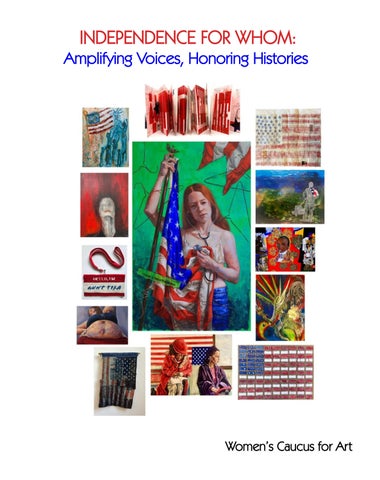
As we approach the 250th anniversary of our nation's independence, we face a challenging question: Independence for whom? Women and marginalized groups continue to fight for representation, recognition, and equity in every arena. Rights and freedoms that our forebears struggled to obtain are being systematically stripped away. Our stories are suppressed, our voices are muted, and our contributions are marginalized.
This milestone of American independence from colonial rule provides an opportunity to confront the legacy of inequity and reimagine independence as a shared promise. What kind of world can we create when we are all truly free? The Women’s Caucus for Art invited all women-identified artists in the United States to submit work that amplifies our narratives, addressing themes such as: freedom and equity what does independence truly mean, and for whom, resilience and resistance representations of struggle, survival, and strength and voices of the marginalized perspectives often overlooked in history and society.
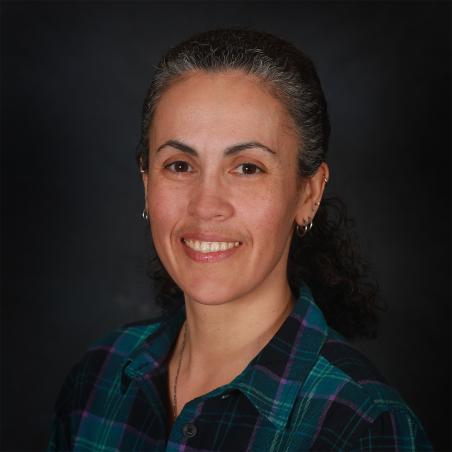
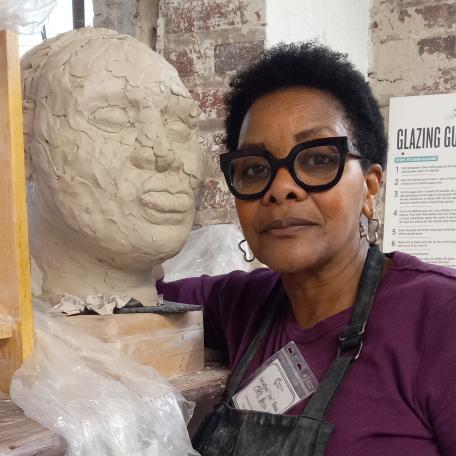
We sincerely thank our jurors: Shanna Aberle, artist and educator, Janathel Shaw, artist and educator, Debra Wright, artist, activist, and Regional Coordinator Chair, The Feminist Art Project (TFAP), and Carter Wynne, MFA Student.
46 works by 37 women artists will be featured in a juried exhibition June 20 to August 8, 2026, at the Workhouse Arts Center in Lorton, VA. This unique setting, once a suffragist prison and now a vibrant arts space, highlights the enduring legacy of women's voices and the transformative power of art.
We invite you to join us in amplifying voices, celebrating stories of independence, and using art to inspire transformative changes. Together, we will challenge the status quo and redefine what independence means in the 21st Century.
Sandra Davis President WCA
ABOUTTHEWOMEN’SCAUCUSFORART
The Women’s Caucus for Art was founded in 1972 in connection with the College Art Association (CAA). WCA is a national member organization unique in its multidisciplinary, multicultural membership of artists, art historians, students, educators, and museum professionals.
The mission of the Women’s Caucus for Art is to create community through art, education, and social activism. WCA is committed to recognizing the contribution of women in the arts; providing women with leadership opportunities and professional development; expanding networking and exhibition opportunities for women; supporting local, national and global art activism; and advocating for equity in the arts for all.
As an NGO (non-governmental organization) of the United Nations, the Women’s Caucus for Art actively supports Sustainable Development Goals (SDG’s). WCA utilizes art as the universal language to engage artists, NGOS, and civil society on a broad range of issues such as gender equity and environmental sustainability.
WCA is a proud Founding Program Partner and supporter of The Feminist Art Project, an international collaborative initiative recognizing the Feminist Art Movement and the aesthetic, intellectual and political impact of womxn on the visual arts, art history and art practice, past and present.
OUR MISSION: The mission of the Women’s Caucus for Art is to create community through art, education, and social activism.
We are committed to:
• recognizing the contributions of women in the arts
• providing women with leadership opportunities and professional development
• expanding networking and exhibition opportunities for women
• supporting local, national, and global art activism
• advocating for equity in the arts for all
For more information visit: www.nationalwca.org
P.O. Box 1498, Canal Street Station New York, NY 10013-1498
Workhouse Arts Center is a Virginia not-for-profit corporation that was created for the purpose of planning, developing and fundraising a self- sustaining arts space. The primary goal has been and remains the renovation, preservation and reuse of the former District of Columbia Complex’s Workhouse facilities. Officially transitioned from the District of Columbia Prison Complex to Workhouse Arts Center in 2008, the organization now sits on 55-acres of land surrounded by rolling hills, featuring 3 main gallery spaces, near 100 artist studios and hosts an array of engaging opportunities and inspiring experiences in visual and performing arts, history and education.
Mission:
The mission of Workhouse Arts Foundation is to grow and support a vibrant arts center that offers engaging opportunities and inspiring experiences in visual arts, performing arts, history, and education.
Art Born from History:
The prison was, for much of its history, an agricultural work camp. Intended to be self-sufficient, the prison developed extensive agricultural operations: cultivated fields; pastureland; an orchard/cannery; a poultry farm; hog ranch; slaughterhouse; dairy; blacksmith shop, and a sawmill. Along with all of these functions, it also contained feed, hay, and storage barns.
By the 1980s, the prison was known more for its over-crowding and disorganization than for President Roosevelt’s rehabilitation program, becoming representative of the nation’s difficulties with correctional facilities. Federal legislation enacted in 1997 required the prison to be closed by December 31, 2001, with the last prisoner leaving in November of 2001. In 2002 the land was sold to Fairfax County for $4.2 million dollars, with the understanding that the land was to be used for open space, parkland, or recreational use.
A group of community leaders proposed a plan to transform a 55-acre portion of the former prison facility into a cultural arts center. The Fairfax County Board of Supervisors approved the rezoning in July of 2004, and the Workhouse Arts Center was born. A year later, the site was nominated to the National Register of Historic Places. After several years of planning, adaptive reuse and rehabilitation of the historic buildings, the Workhouse Arts Center opened to the public in September 2008.
9518 Workhouse Way, Lorton, VA 22079 workhousearts.org @workhousearts facebook.com/WorkhouseArts
JUROR:
SHANNA ABERLE
To ask “Independence for Whom?” is not just to look backward. It asks us to sit, sometimes uncomfortably, in the present and to listen.
Serving as a juror for this exhibition was grounded in dialogue, reflection, and discovery. Working alongside three fellow jurors, our conversations became essential, shaped by differing perspectives yet united by a shared commitment to the theme. These exchanges expanded my understanding of what independence can mean. As a newer artist, this experience was invaluable and reinforced the importance of collaboration, guidance, and growth.
The selected works spoke with clarity and conviction. Each piece carried an individual perspective, whether personal, historical, or social, yet together they engaged ideas of freedom and equity, resilience and resistance, and marginalized narratives. Particularly striking were works that confronted independence through imagery of confinement, unity, and symbolism connecting past and present. These works moved beyond reflecting the theme. They challenged it and, at times, refused resolution.
In evaluating submissions, I was drawn to work that demanded to be seen. I found myself stopping, returning, and sitting with pieces in silence, considering them without titles or context. In those moments, I focused on concept, composition, and craftsmanship as the foundation of each work. Beyond that, I looked for presence. All artwork speaks. The question is whether we are willing to listen.
What emerges from this exhibition is an invitation to question, reflect, and connect. Viewers are encouraged to bring their own perspectives into conversation with the work; it is within that connection that dialogue begins and where change becomes possible.
What stayed with me most is the strength of the collective vision. These artists come together not only in support of women’s voices, but in recognition of anyone whose rights and identities continue to be challenged. There is a sense of unity here, a willingness to stand for others even in moments of tension. Independence is not a finished achievement. It is an ongoing pursuit. One that asks us to confront inequity, amplify what has been silenced, and imagine a future where freedom is truly shared.
Shanna Aberle is a Virginia-based artist and 2024 graduate, Summa Cum Laude with Departmental Honors from the University of Mary Washington (UMW), where she developed her studio art practice and creative identity. She explores the expressive potential of all mediums, using imaginative yet precise techniques to transform everyday moments into compelling art that invites reflection. Her work has been exhibited at the duPont Gallery at UMW and the Frederick Gallery at the Fredericksburg Center for the Creative Arts.
JUROR:
JANATHEL SHAW
I was pleased to be asked to serve as a juror for this important exhibit, IndependenceforWhom? I looked forward to collaborating with other creatives who were artists and professionals in the field. It was fun to work together and a challenge to sift through the submissions carefully to give each piece the time and importance it deserved. I worked as an arts educator on the K-12 level for over 27 years and part-time at the collegiate level. I have also juried work as a member artist at Touchstone Gallery.
The theme of the exhibit was intriguing, and I wanted to see how artists approached the challenge creatively. Each artist had to decide whether they saw America through a clear lens or one based on idealism. Several works excelled in quality, imaginative concept, and alignment with the theme. The pieces that caught my eye demonstrated risk-taking, imaginative concepts, and individual voices. The installation pieces were strong in concept and invited visitors to interact and engage in critical discussion. Some strong paintings explored the importance of community, while others were visually striking and confronted the idea that women were not the stewards of their bodies and futures.
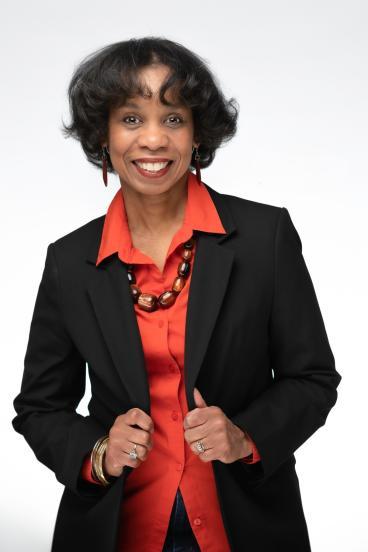
In reviewing the vast selection of works submitted, I leaned more towards the impact of the message and how the piece(s) expressed or connected on a deeper level. Independence isn’t a cerebral construct; it is about personal freedom. It is emotional, and I wanted to see if it was addressed in the art. As a Black American, I am indebted to all the activists in the past who sacrificed so that I would have the freedom to make life choices that would impact my health, political affiliations, education, profession, and to dream of a future of continued growth for everyone.
In closing, I hope that the exhibit itself is seen as a chorus of voices that show the pulsing beat of an invested community. The selected works are varied in style, emotional or intellectual timbre, experimental, traditional, complex, explore ideation, jarring, and show complexity. As a whole, the works seemed to ask for reflection and an opening for acceptance and investigation of ideals/ morals, individuals, and collectively.
JUROR: DEBRA WRIGHT
Freedom has always had a guest list. IndependenceforWhom?is what happens when those of us left outside stop waiting for an invitation to come in and kick down the door instead. This exhibition is not a polite inquiry. It is an uprising rendered in canvas, clay and thread, serving as a testament to the widening gap between the mythology of freedom and the machinery of its denial. It asks us to sit with the profound discomfort of a promise made loudly, repeatedly and ceremonially that has never been fully kept. The question embedded in this exhibition's title is not rhetorical. It’s an indictment.
As a found object artist, I am drawn to what gets left behind as these items still carry within them history, meaning and someone's story. The artists in this exhibition operate from this same instinct. They have gathered the evidence of lived experience the textures of exclusion, the weight of erasure, the persistent residue of inequity and created work that makes it impossible to look away.
Jurying this exhibition was both a privilege and a responsibility, one I did not take lightly. The submissions reflected the breadth and urgency of this moment: work that was formally rigorous and conceptually fearless, made by artists who understand that aesthetics and activism are not separate pursuits but inextricably linked. My selection criteria were guided by conceptual clarity, the authenticity of the artist's voice and the degree to which the work advanced the central inquiry of the show. I was looking for work that did not merely illustrate an argument but embodied one.
The artists selected for Independence for Whom? are not passive observers. They are witnesses, advocates and agitators. They honor and advance the lineage of feminist art-making that Women's Caucus for Art has championed for more than five decades: a tradition of unflinching creative practice that demands full humanity extended to everyone for whom independence has been withheld, deferred or outright denied.
I am grateful to WCA for organizing this exhibition and entrusting me with this role. To the artists whose work appears in these pages: your voices matter. Your work matters. The questions you have dared to ask demand answers.
Keep giving them hell.
Debra Wright (she/her) is a found object, installation, and avant-garde artist based in Northern Virginia. Her work explores social justice, human rights and personal identity through assembled, recovered materials. She is represented by Kyo Gallery (Alexandria, VA) and Covet Art Gallery (Oceanside, CA), a National Artist Member of A.I.R. Gallery and serves on the Managing Committee of The Feminist Art Project. She is also Curator of The Rogue Art Project at The Stacy C. Sherwood Center in Fairfax, Virginia. www.debrawrightstudio.com
JUROR: CARTER WYNNE
Serving as a juror for Independence for Whom was an illuminating and deeply meaningful experience. Having spent much of my time on the other side of the process as an artist applying to open calls it was both instructive and humbling to step into the role of juror. This perspective fostered a strong sense of empathy in my approach. I am acutely aware of the time, care, and vulnerability embedded in each submission, and I sought to honor that effort through a thoughtful and attentive review process.
The exhibition’s central question resonated strongly throughout the submissions. Many artists engaged directly with themes of freedom, equity, and resistance, offering works that confronted historical erasure and reasserted the presence of voices too often marginalized. Particularly compelling were pieces that moved beyond surface-level engagement and instead presented nuanced, personal, or unexpected interpretations of independence. These works not only reflected resilience and resistance but also challenged viewers to reconsider independence as a collective and ongoing struggle rather than a fixed or granted condition. In evaluating the submissions, I looked for a balance between technical proficiency and compelling narrative. While many works demonstrated strength in one of these areas, fewer synthesized both. The most resonant pieces occupied that intersection. They were skillfully executed and conceptually impactful. As a practicing painter, I remained aware of my own potential biases toward certain mediums. In response, I intentionally engaged more deliberately with works outside of painting, ensuring a more equitable and comprehensive evaluation process.
My perspective was also shaped by my experience working in civil rights and community organizing. I found myself drawn to works that foregrounded historically marginalized perspectives, particularly those that expanded or complicated dominant narratives. Serving alongside a thoughtful and seasoned panel of jurors further enriched this experience. As the youngest member of the jury, I valued the insight and perspective of my fellow jurors, while recognizing my own viewpoint brought a distinct sensibility to the conversation. Overall, this process reaffirmed for me the vital role of artists as both chroniclers and challengers of history. The works selected for this exhibition reflect not only technical and conceptual strength, but also a shared commitment to amplifying voices, honoring lived experiences, and reimagining independence as a collective responsibility.
Carter Wynne (b. 1997) is a self-taught painter and curator, raised and based in Washington, D.C. Her work explores the emotional weight of entrenched inequity, tracing how personal and collective experiences are politicized, obscured, or transformed into sites of resistance. Rooted in a decade of organizing and a former career in civil rights, Carter uses painting as visual rhetoric: a means of bearing witness, challenging hegemonic systems, and insisting on relational clarity in an age of desensitization. Her curatorial work investigates the potential of play as an insurgent force. Drawing from her lived experience, Carter’s practice affirms that art and justice are not separate pursuits but entangled partners. She holds a B.A. in Art History and Women, Gender, and Sexuality Studies from Colby College. Her paintings have been exhibited throughout the Washington D.C. metro area and Baltimore, including at Hillyer Gallery and the Sheila & Richard Riggs Gallery. Her curatorial work has most recently been exhibited at the DC Arts Center.
Acrylica
FEATURED ARTISTS:
Susan Amorde
Marcie Brozyna
Greta Chapin McGill
Kimberly J. Chapman
Clarissa Coleman
Donna Coleman
Desepe DeVargas
Jamie Frontiera
Jessica Gardner
Kelly Hartigan Goldstein
Elizabeth Gorcey
C. Gordon
Dana Hallman
Seemeen Hashem
Mary Kearney Hull
Holly Hutton
Jo Israelson
Tanya Kaiser
Nara Lesser
Linda Lowery
Sandi J Ludescher
Magda Macias
Tracy Mahaffey
Antonella Manganelli
Sarah Matthews
Jo-Ann Morgan
Laura Morrison
Priscilla Otani
Liz Plaster
Aviyah Keren Riegel
Sharon Robinson
Nancy Rodrigo
Judy Takács
Jeane Vogel
Teresa Greve Wolf
Su Yang
Acrylica Member-at-Large
Susan Amorde
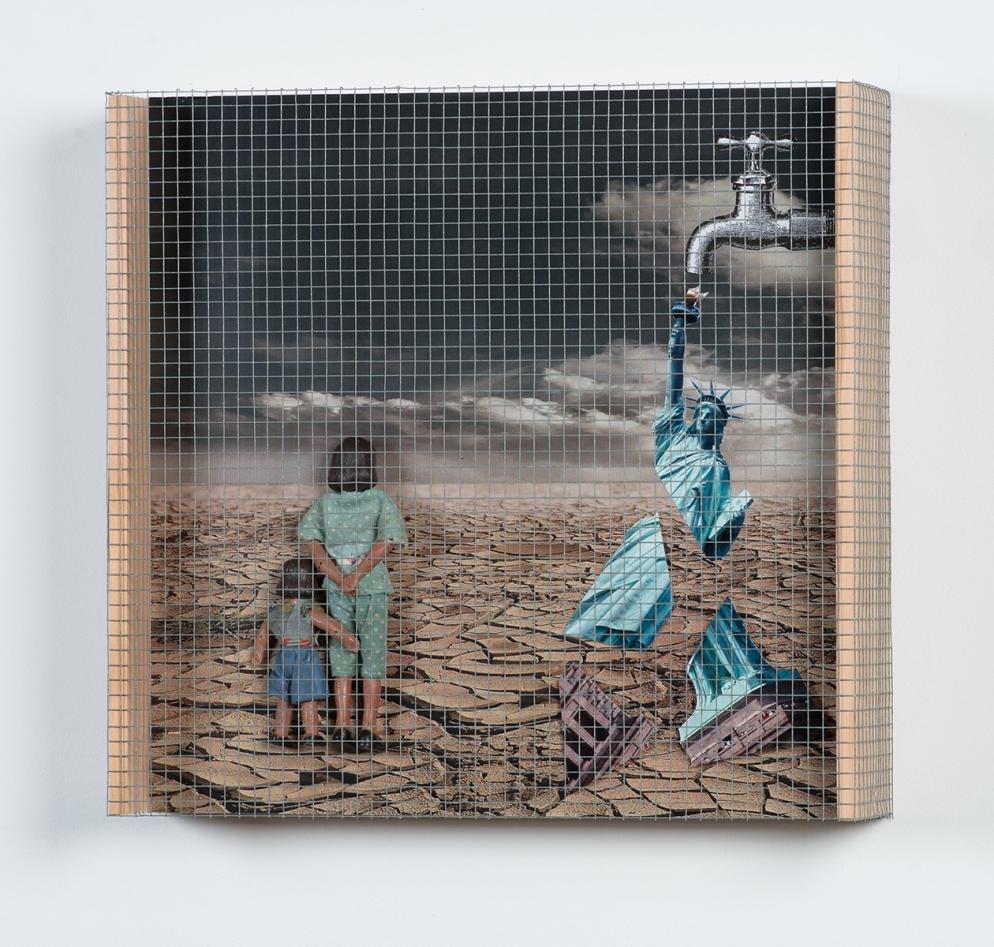
Southern California / Northern California
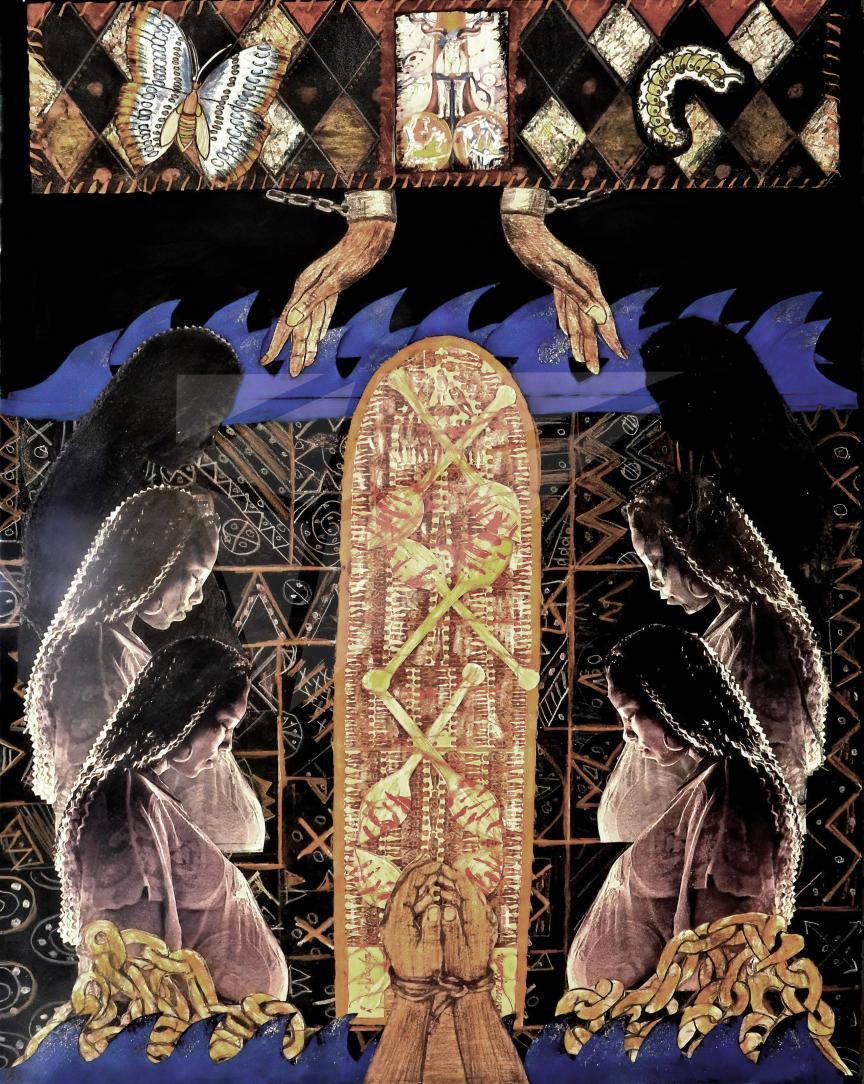
UnconscionableTravesty
2018, mixed media - paper and mixed media works on wood panels, 12 x 12.75 x 3 inches
Marcie Brozyna Member-at-Large
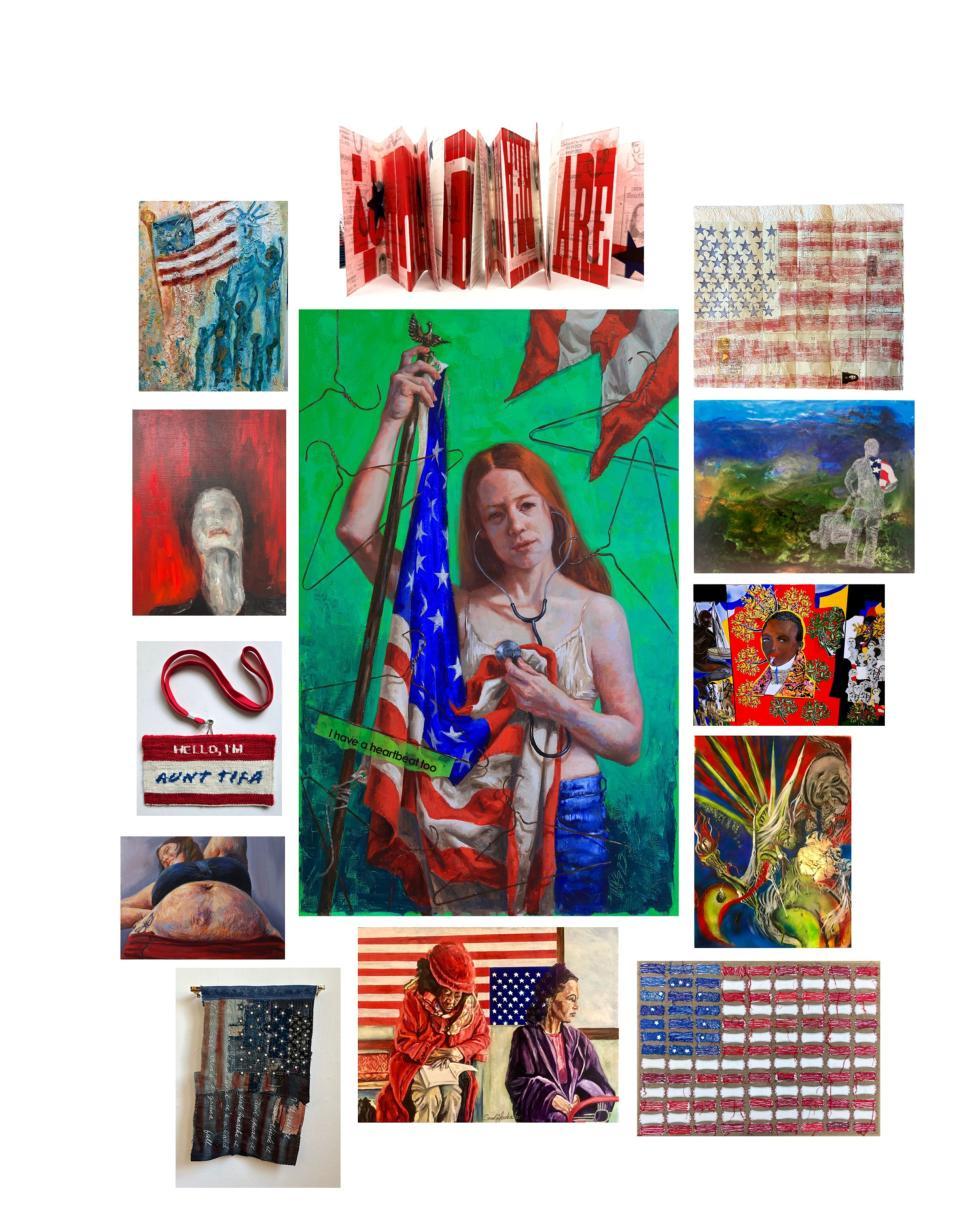
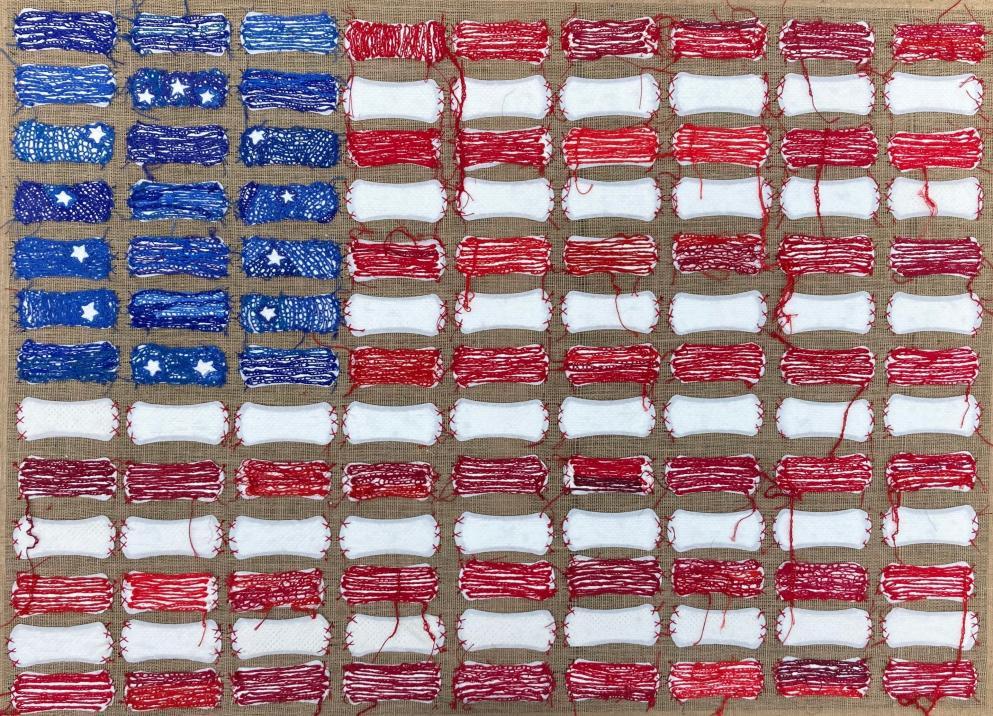
BloodComingOutofHerBetsyRoss 2022, fiber art, 46 x 64 x 0.5 inches
Greater Washington DC
TheWords
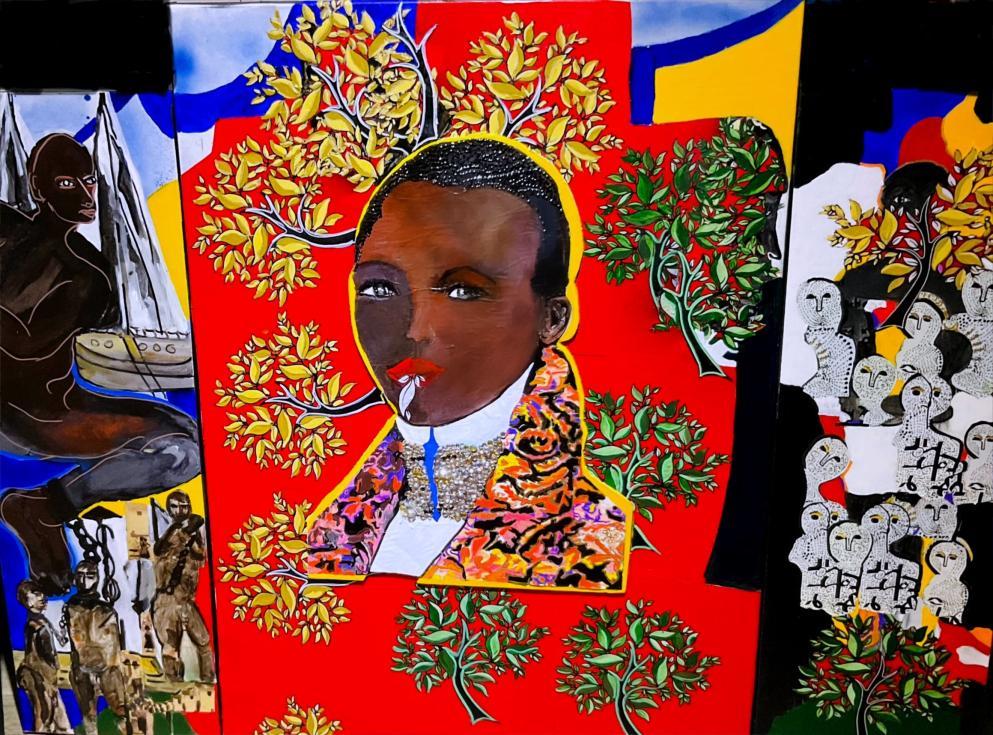
2023, painting - mixed media painting, 40 x 54 x 2 inches
Greta Chapin McGill
Kimberly J. Chapman Member-at-Large
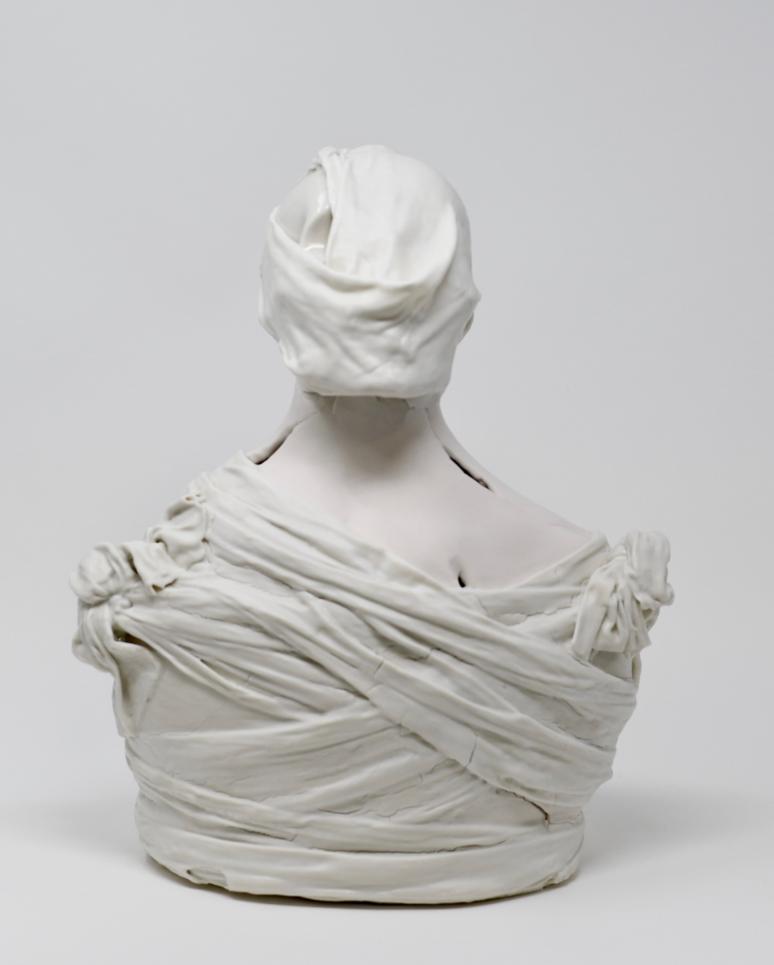
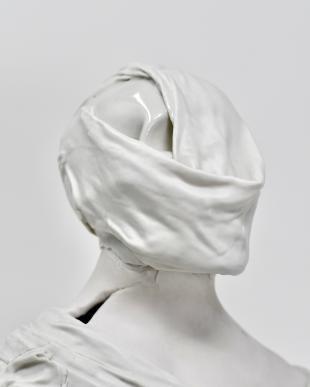
You'reReallyLovelyUnderneathItAll 2021, sculpture - porcelain, glaze, 15 x 11 x 7 inches
Greater Washington DC
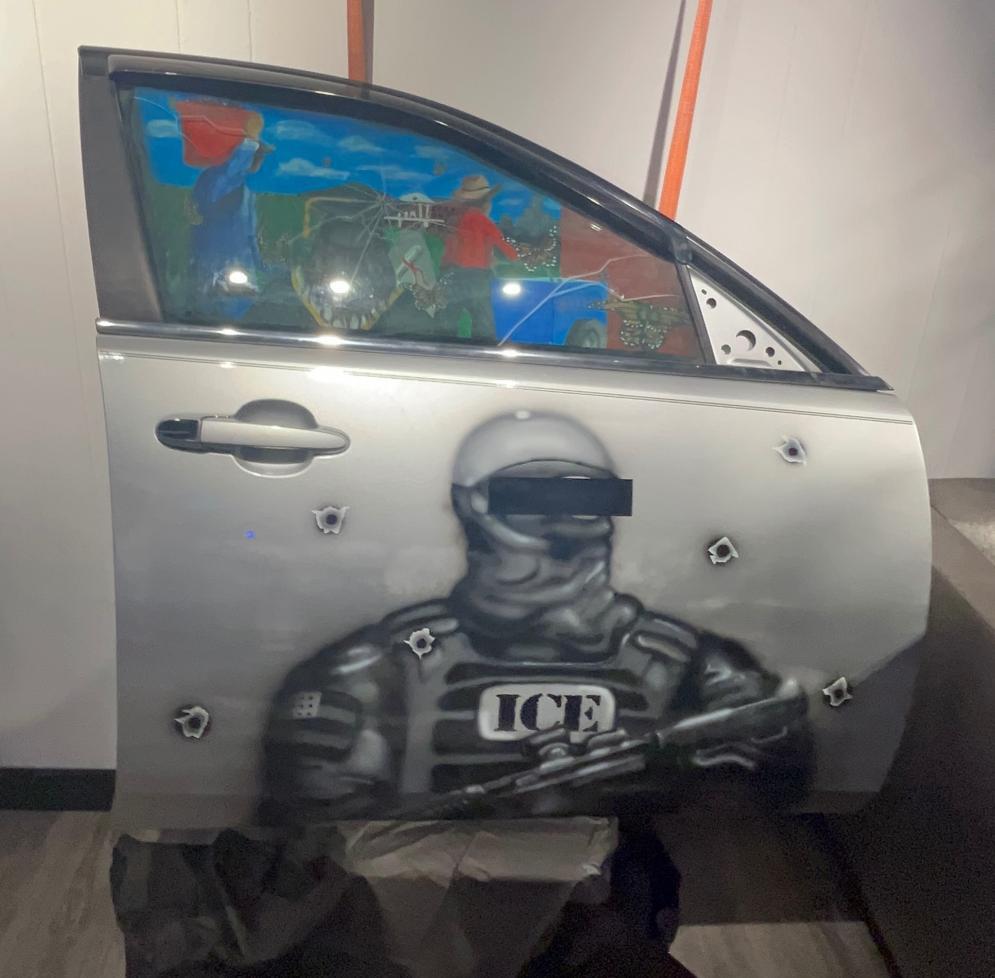
ShatteredDreams
Clarissa Coleman
2025, mixed media – airbrushed car door, engraved window, cutout canvas paper, acrylic painting, 70 x 57 x 8 inches
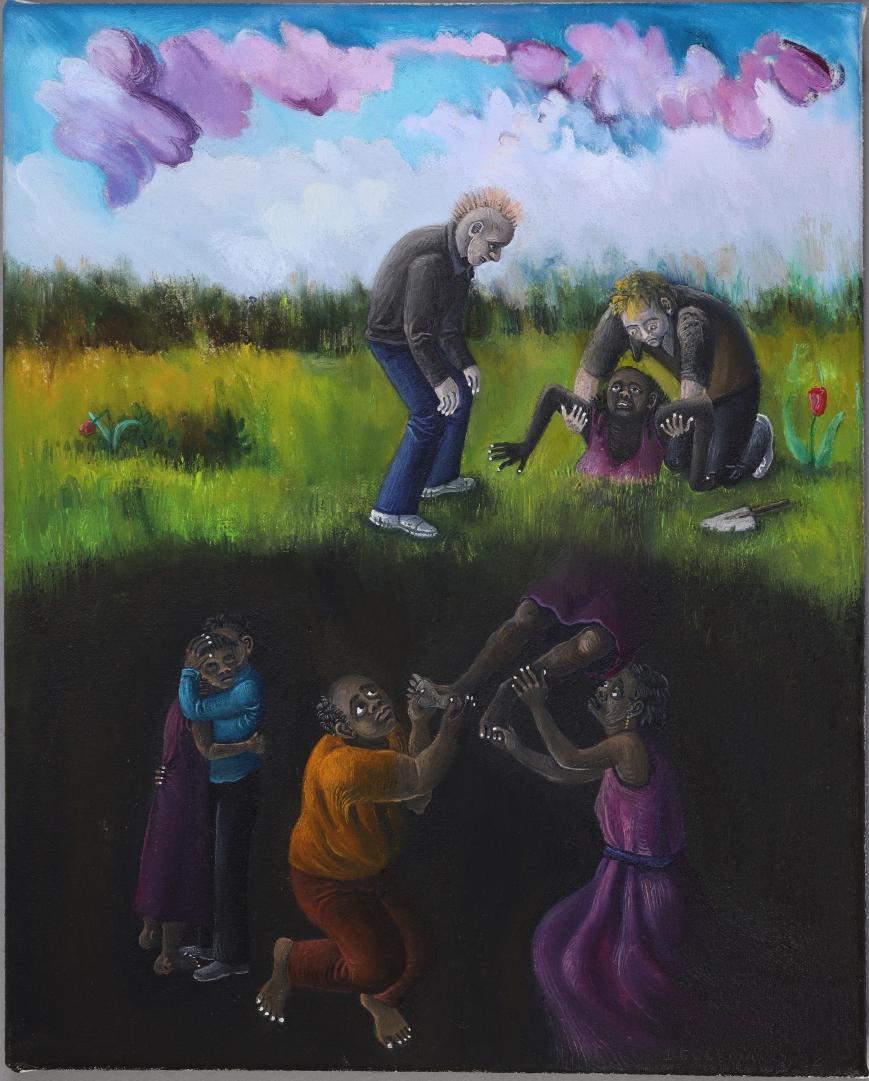
Donna Coleman Member-at-Large
Unearthing 2022, painting, 15 x 12 inches
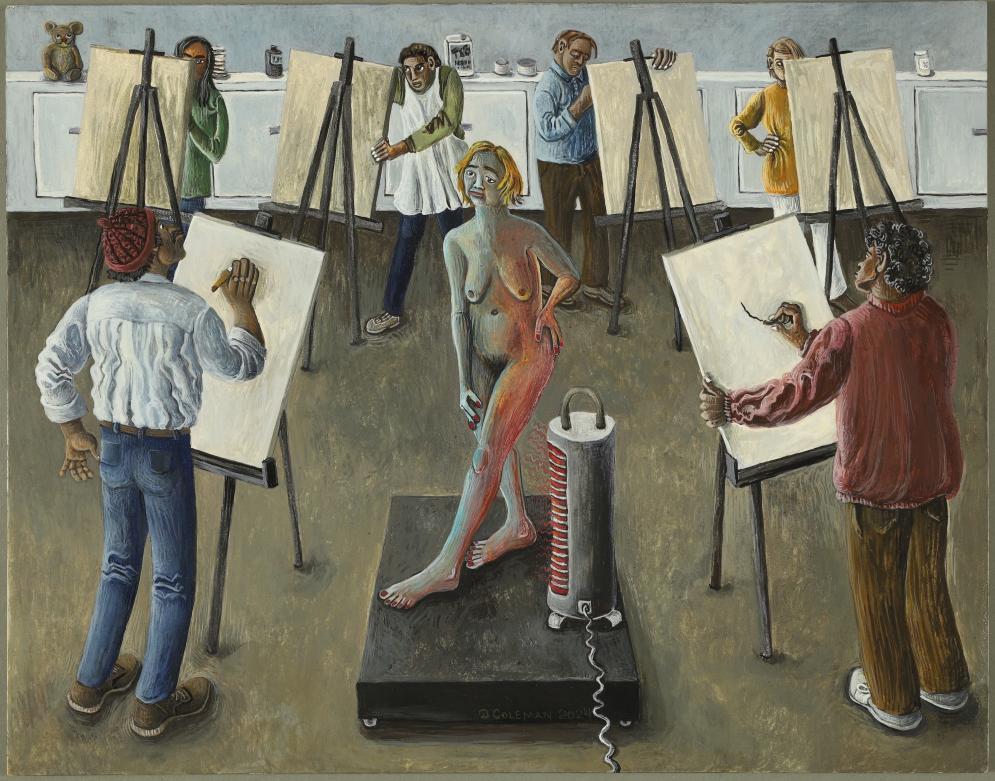
Donna Coleman Member-at-Large
DrawingClass 2024, painting, 11 x 14 inches
Desepe DeVargas
Greater Washington DC
Jamie Frontiera Texas
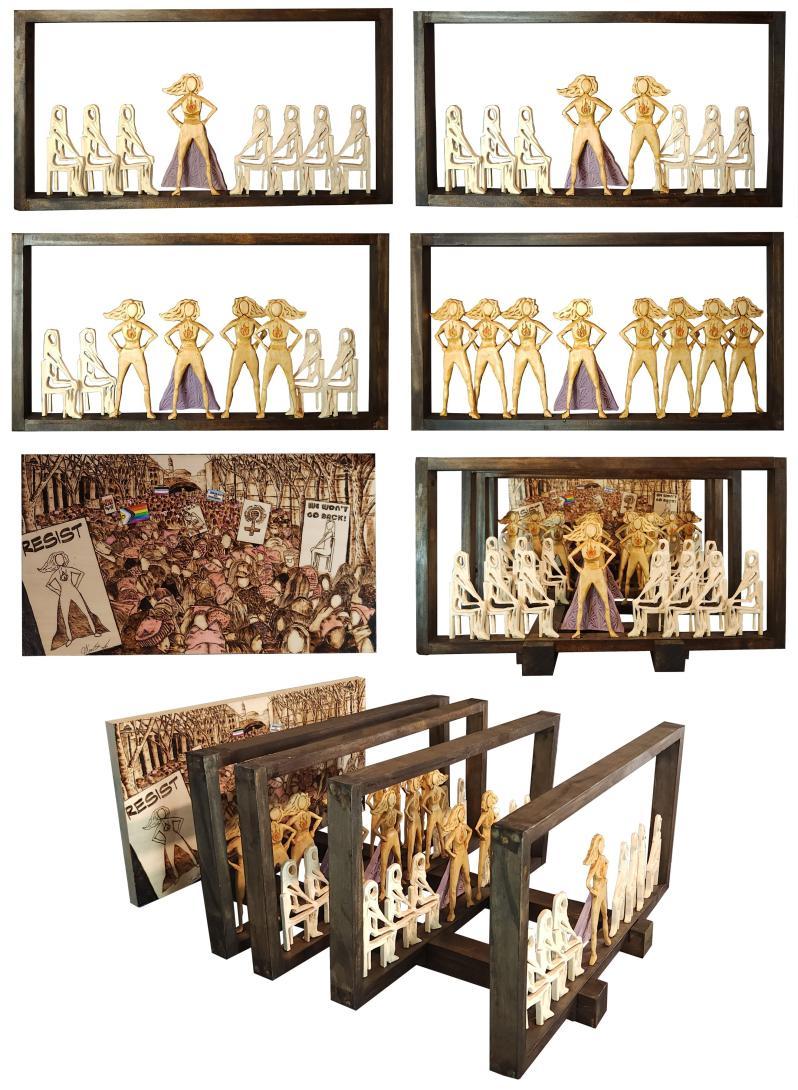
TheCourageToStand 2025, sculpture – layered panels in basswood and pryography, 13 x 22 x 30 inches
Jessica Gardner Member-at-Large
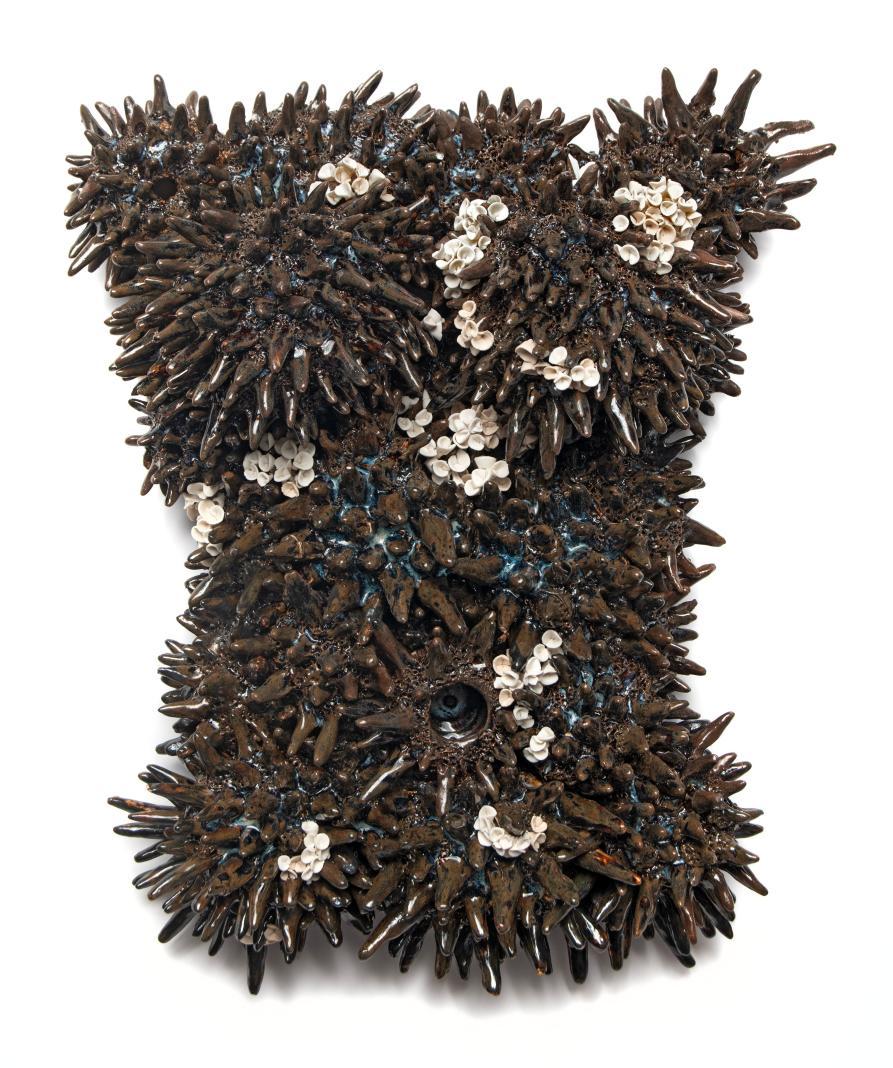
BeneaththeSkin
2026, sculpture - porcelain and stoneware, 15 x 15 x 5 inches
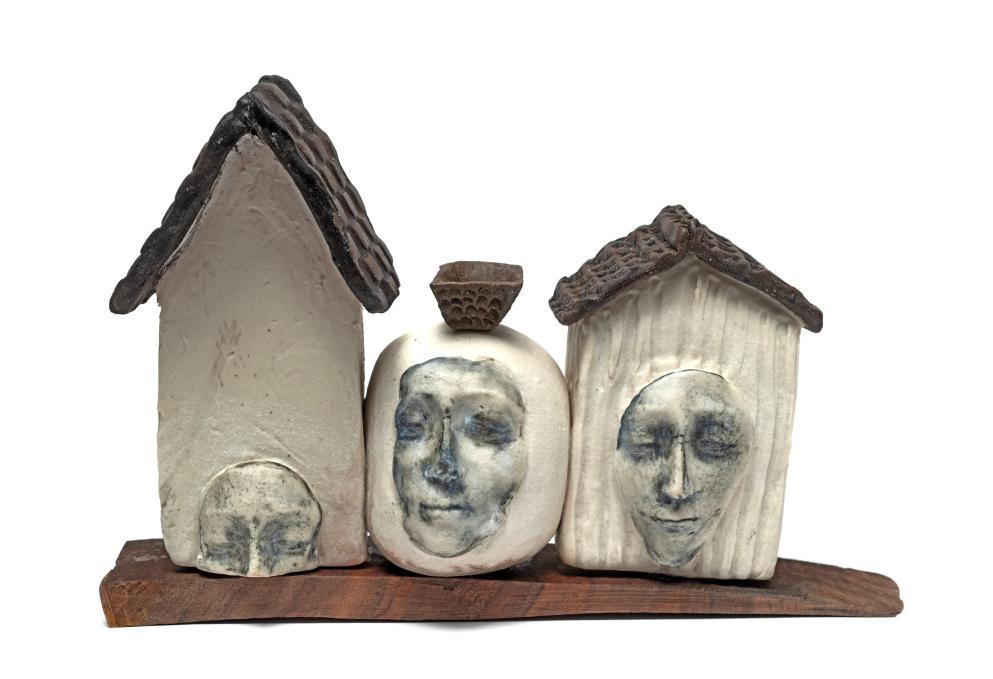
Jessica Gardner Member-at-Large
2025, sculpture - porcelain, stoneware, and wood, 5 x 8 x 2.5 inches
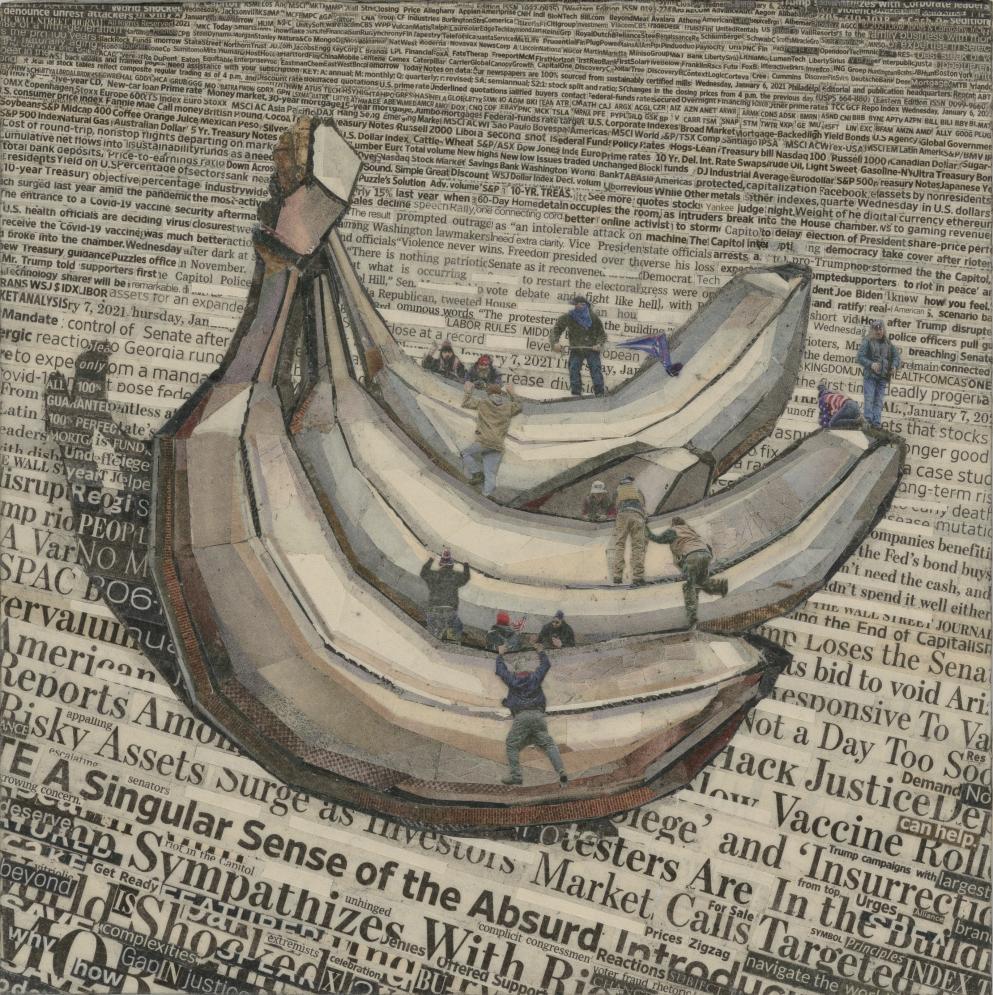
2022, FoundingFathersEd.6/13,mixed media - Analog newspaper collage on cradled panel, 16-layer textured print on aluminum, UV archival ink, 10 x 10 x 0.75 inches
Elizabeth Gorcey Southern California
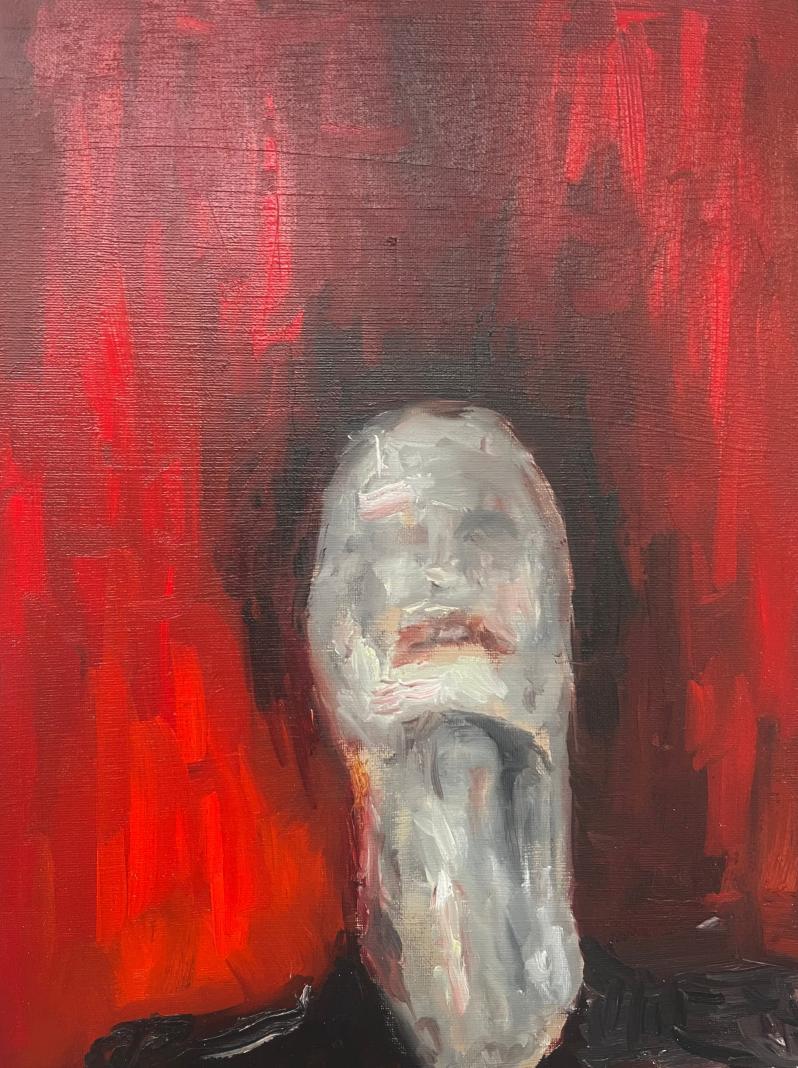
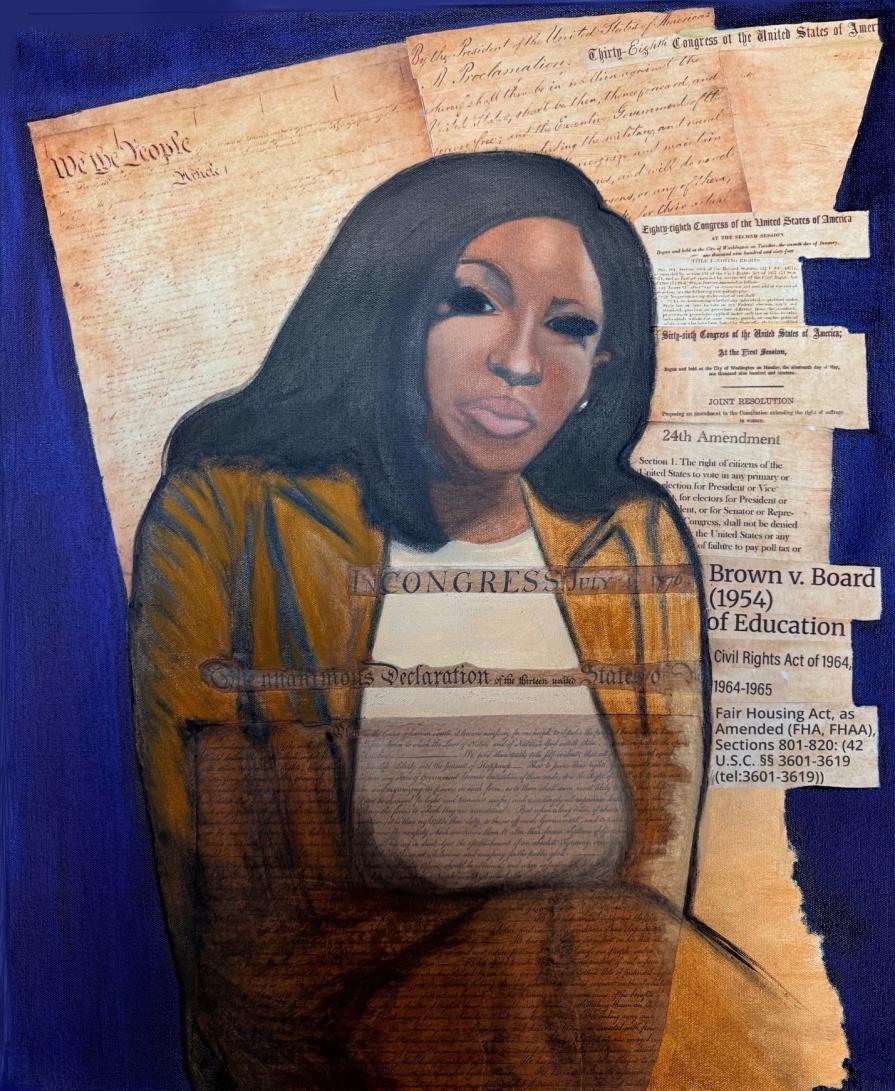
TheWomanThatCouldNotbeSilenced 2025, painting - oil painting, 14 x 11 inches
Northern California
C. Gordon
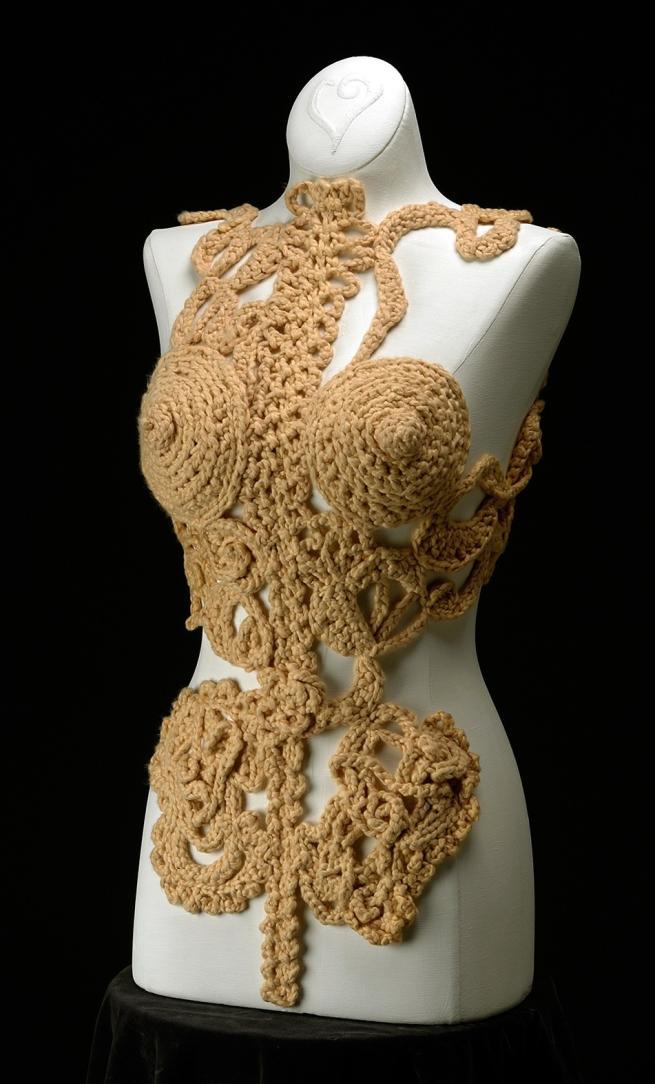
DevilsRope
2026, mixed media - lace, fabric, 58 x 25 x 4.5 inches
Dana Hallman
Greater Washington DC
Member-at-Large
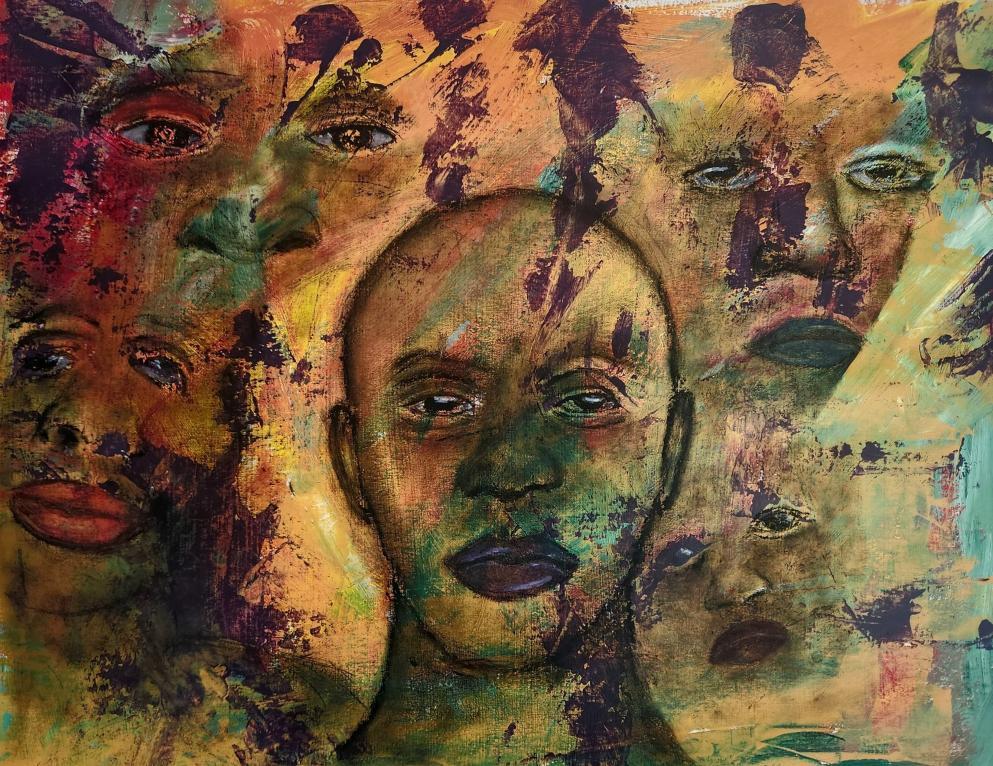
Seemeen Hashem
Seemeen Hashem
Member-at-Large
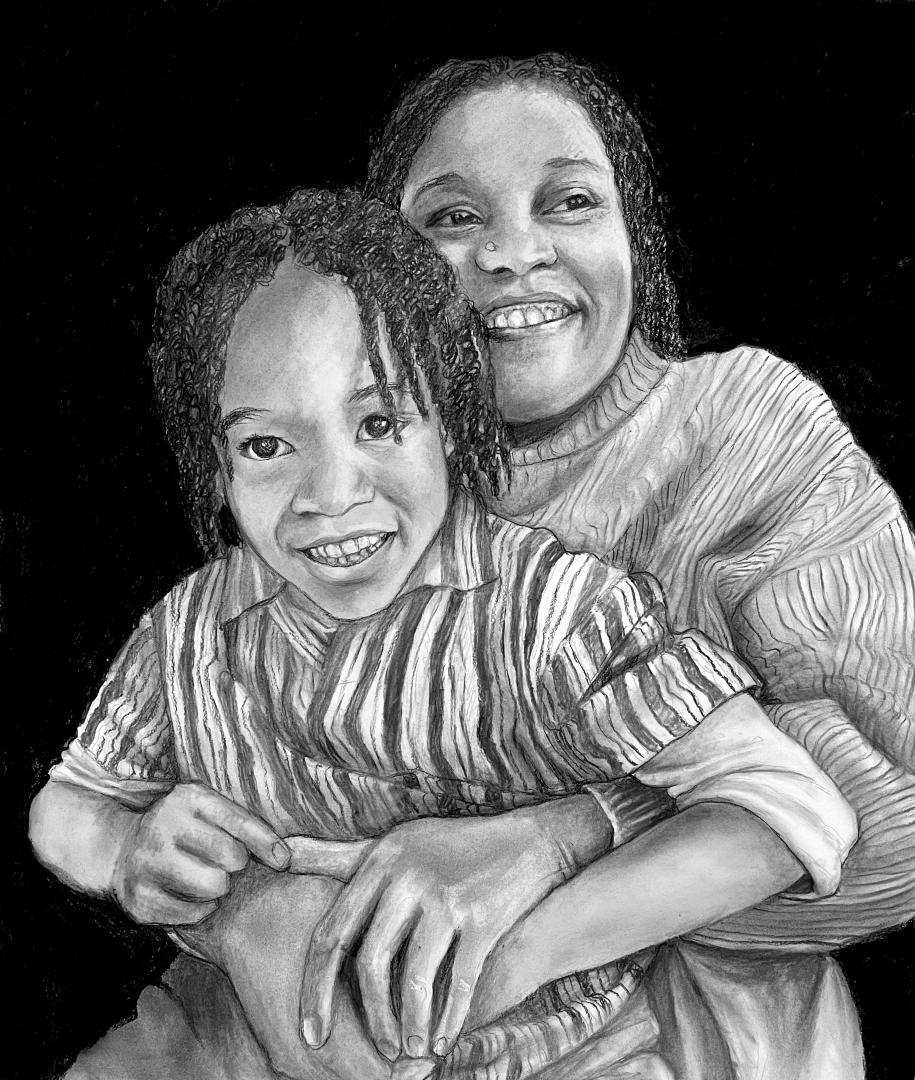
KeepingTime
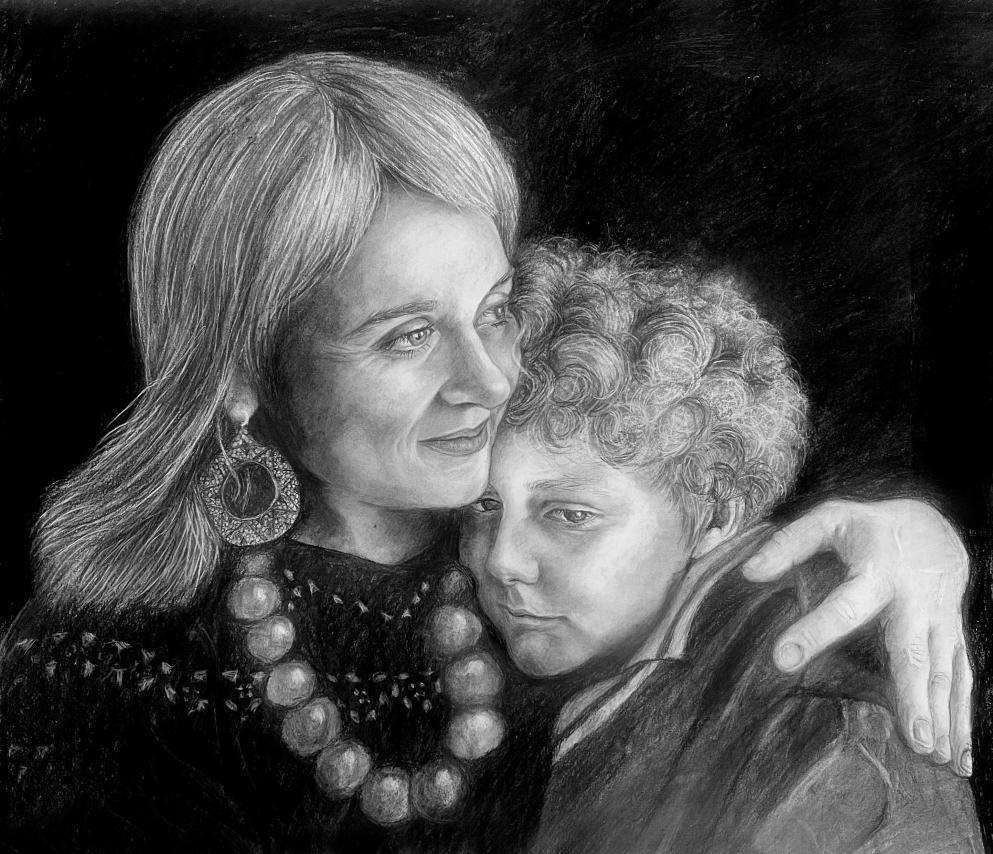
2026, drawing - charcoal, 30 x 26 x inches
Mary Kearney Hull Member-at-Large
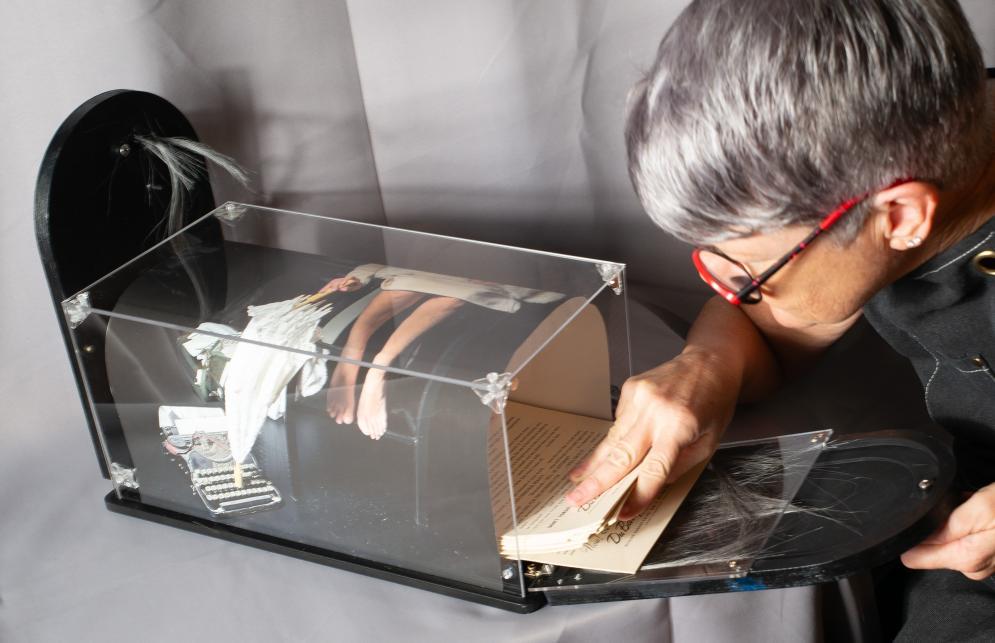
MailFromAMale
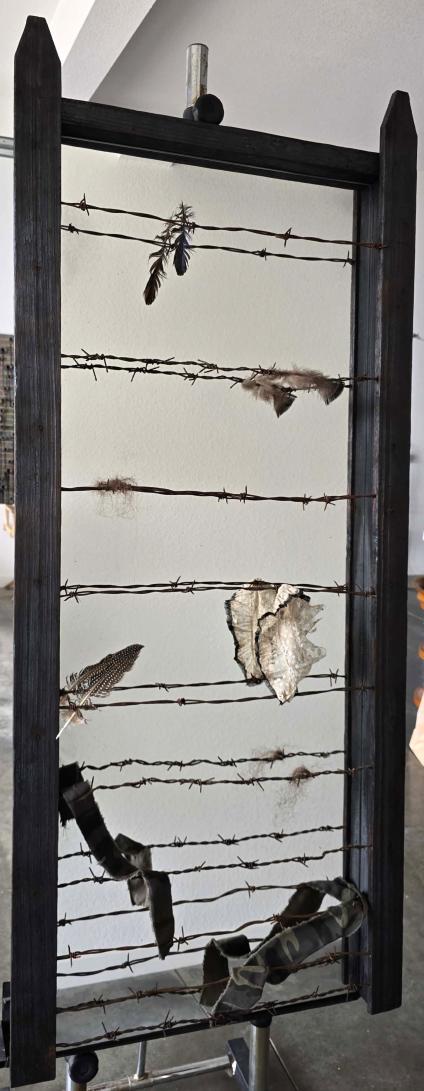
2025, mixed media - a “glass ceiling” box made of plastic and wood, human hair, oil paints, photography, sculpture, 17 x 14 x 9 inches
Holly Hutton
Southern California
ThePassage 2023, mixed media - photograph, 28 x 20 x 2 inches
Jo Israelson
Greater Washington DC
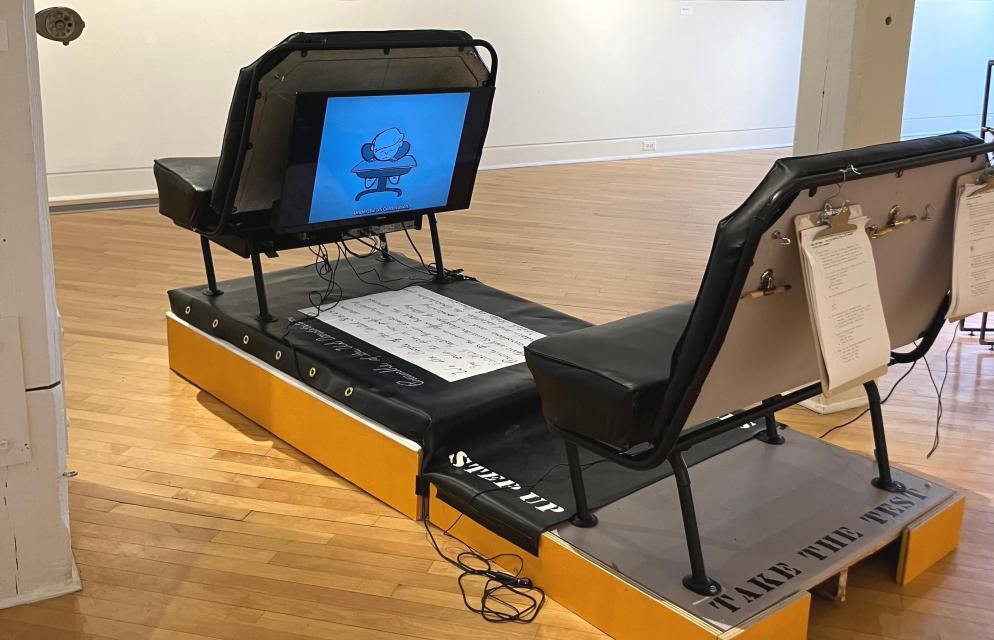
2024, sculpture - site specific installation using animation, sound and video, 60 x 48 x 96 inches
GetontheBus
Tanya Kaiser Member-at-Large
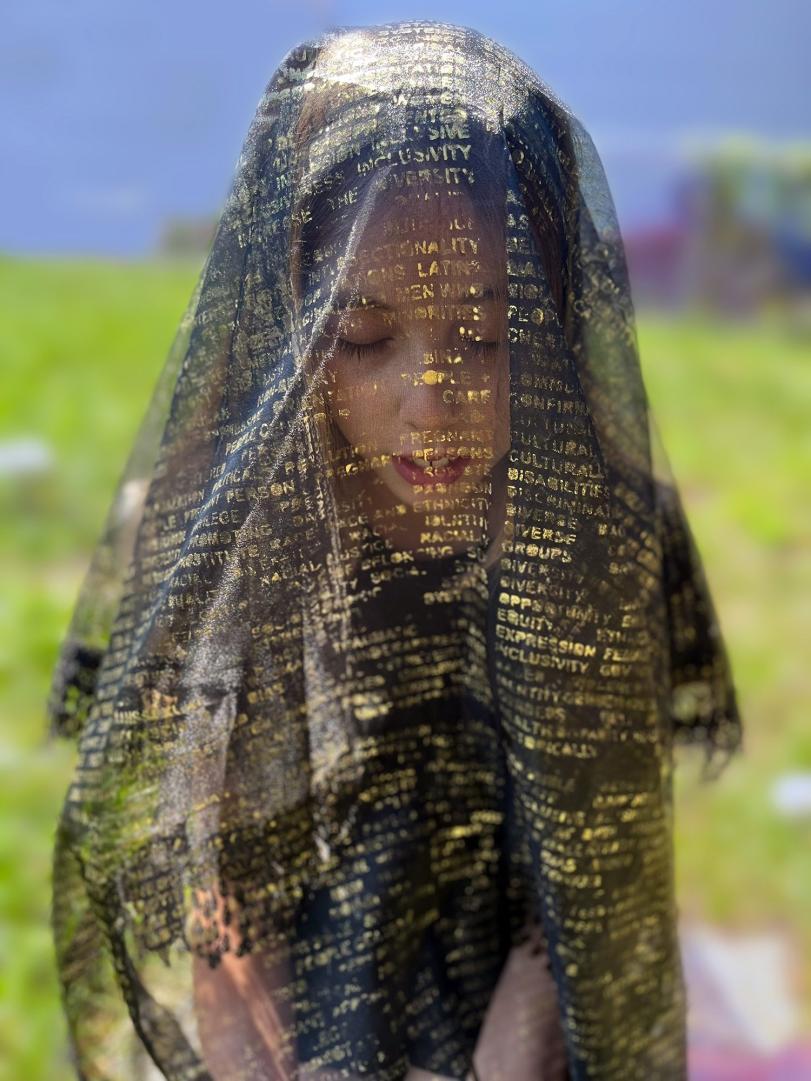
TheVeilofSilence
2025, fiber arts - sheer black netting and hand-stenciled in gold paint, 58 x 37 x 0.25 inches
Nara Lesser Texas
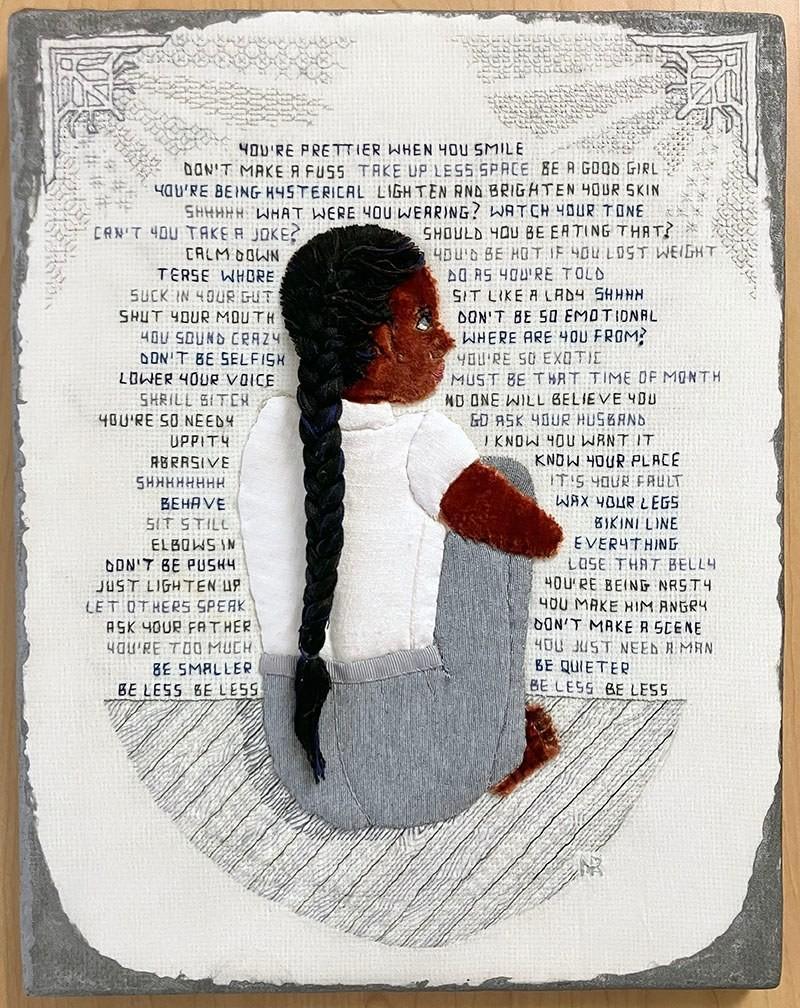
Sticks&Stones
2026, fiber arts - hand embroidery and applique with polychrome floss, silk velvet, linen, and knit on Aida cloth and organza, 14 x 11 x 1.25 inches
Greater Washington DC
Again
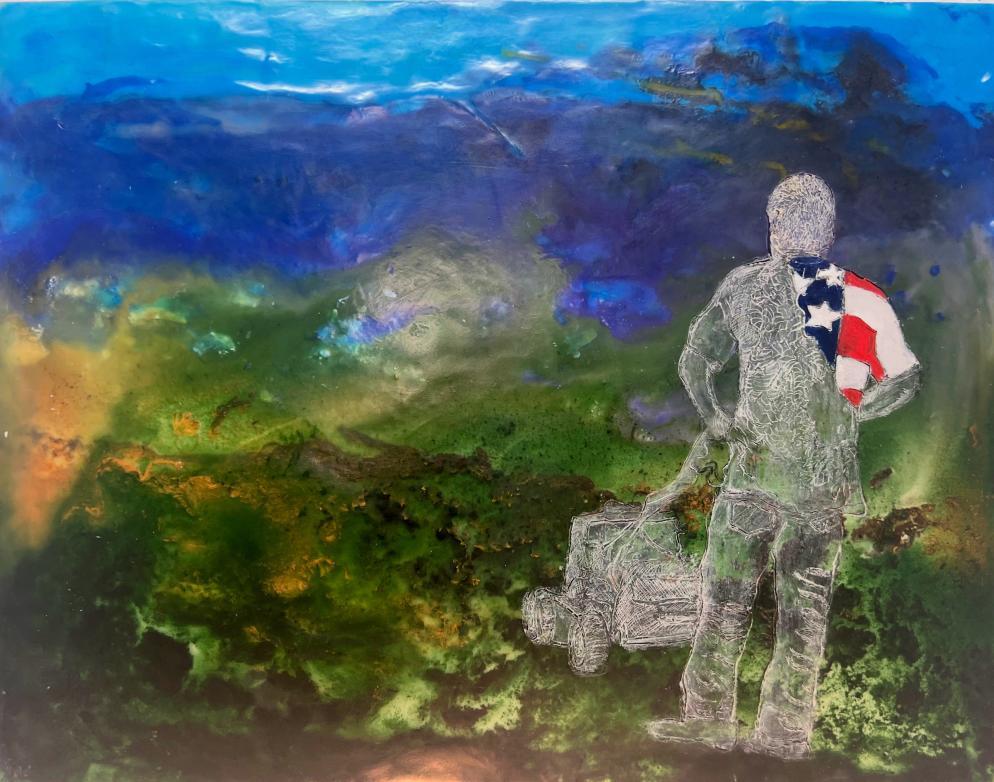
Linda Lowery
2022, painting - encaustic, hot wax, 36 x 24 x 1.5 inches
Sandi J Ludescher
Member-at-Large
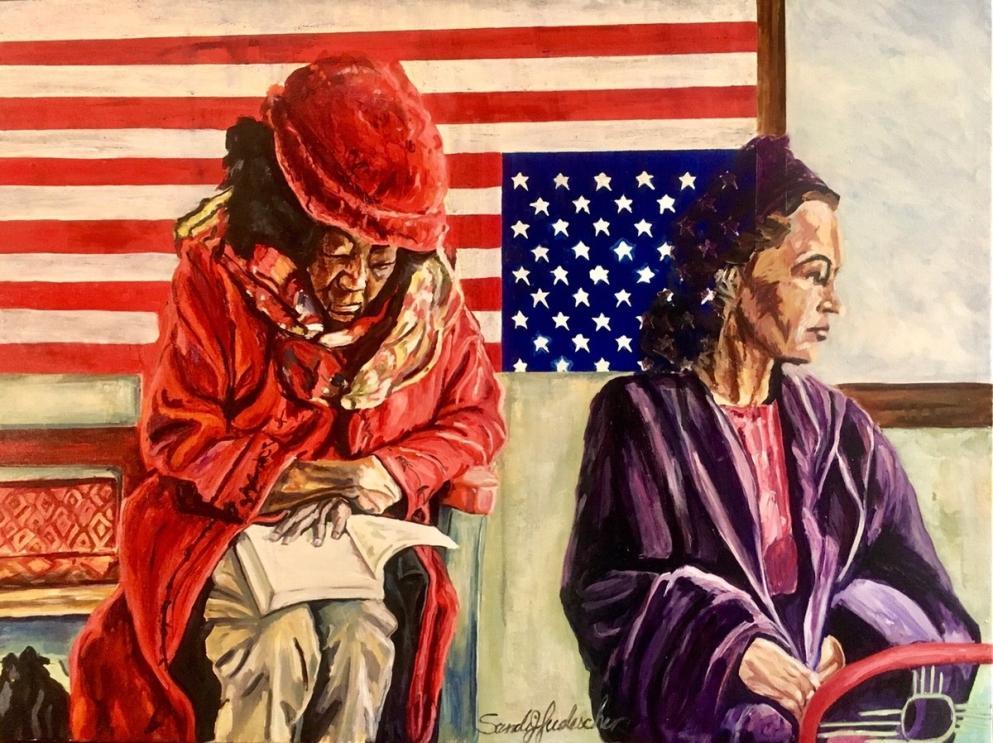
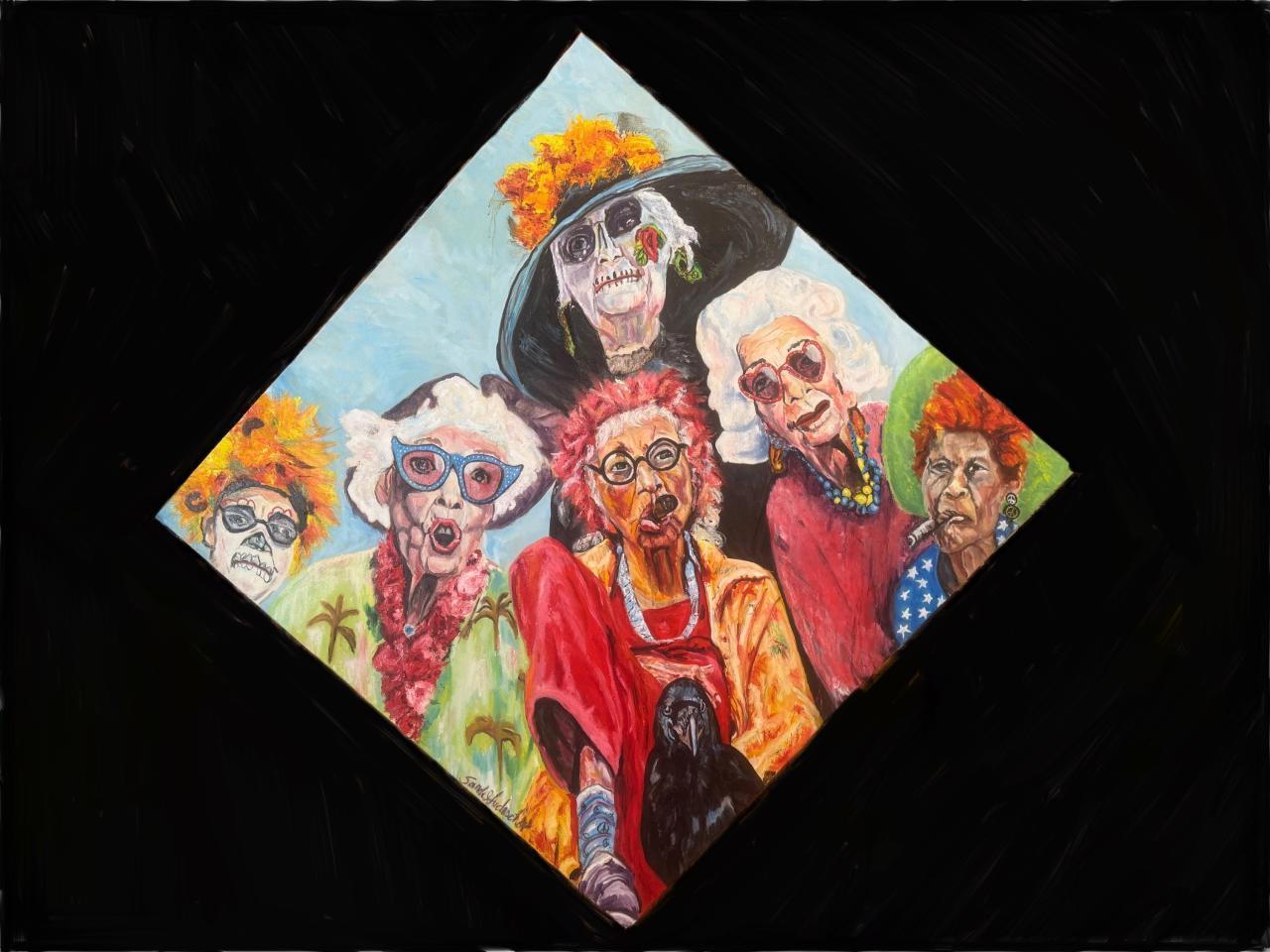
StillWaiting 2020, painting - oil on canvas, 36 x 48 x 1.5 inches
Sandi J Ludescher Member-at-Large
Magda Macias
DelusionofInclusion
2024, mixed media - encaustic, black ink, and oil on board, 11 x 14 x 1 inches
Tracy Mahaffey Member-at-Large
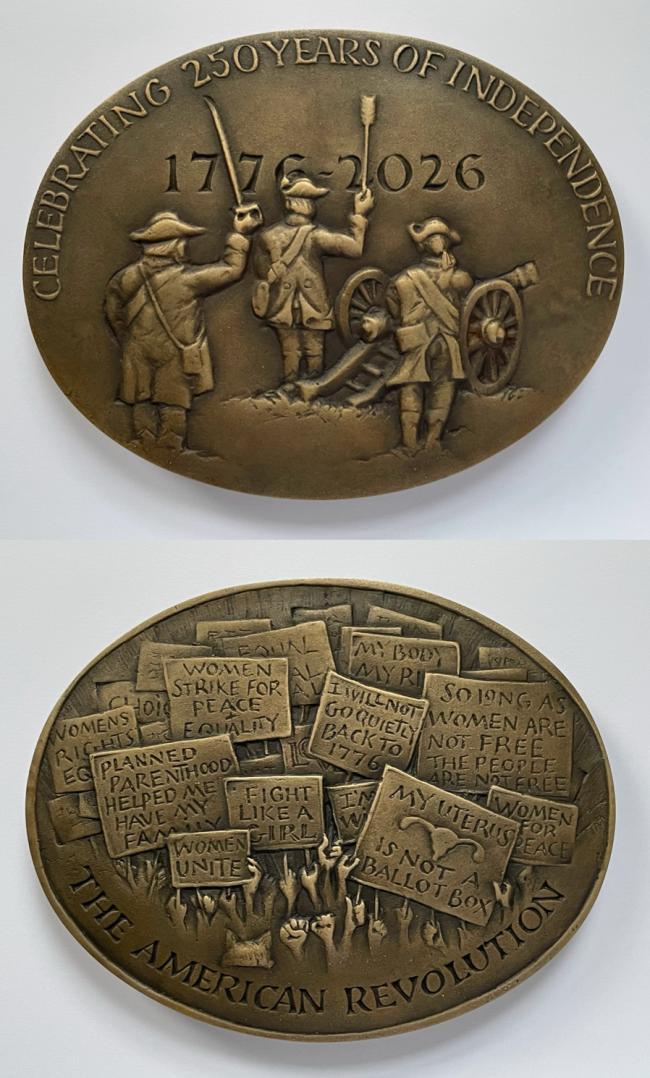
RiseUpandResist 2025, sculpture - bronze, 4.25 x 5.5 x 0.25 inches
Greater Washington DC
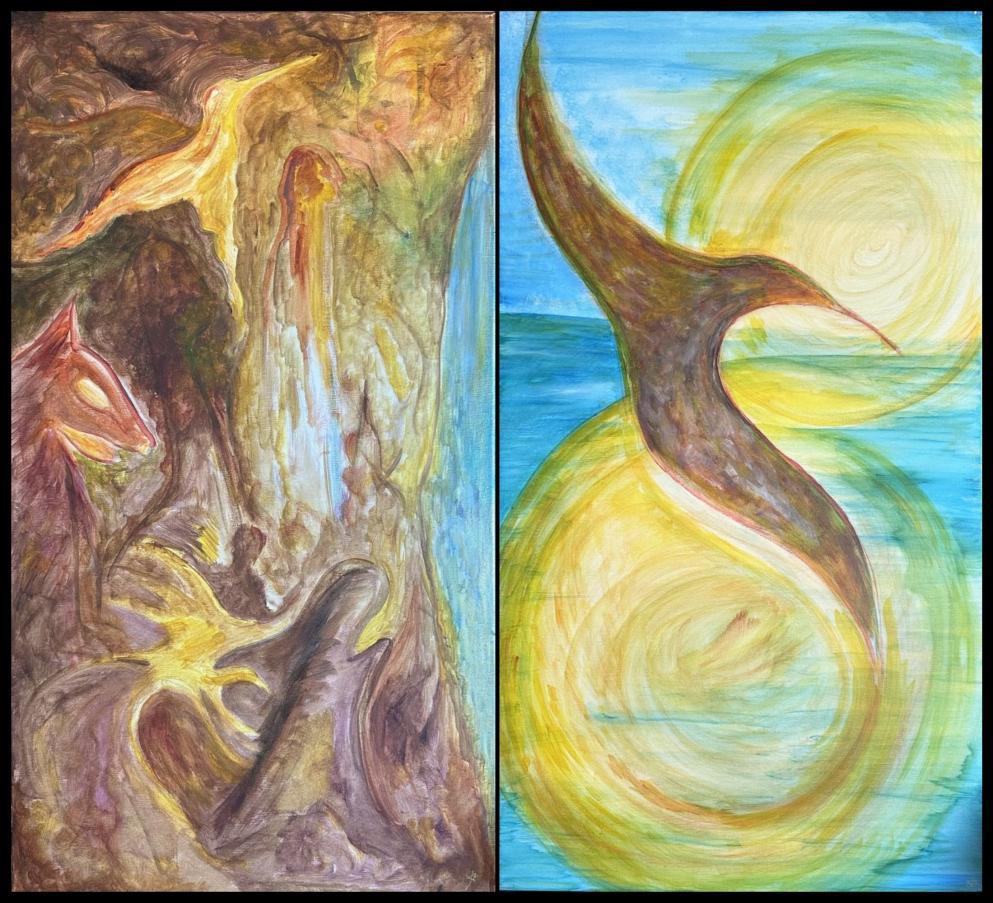
FirstLight-Freedomofknowledge 2022, painting, diptych, 36 x 32 x 2 inches
Antonella Manganelli
Greater Washington DC
Sarah Matthews
Jo-Ann Morgan Member-at-Large
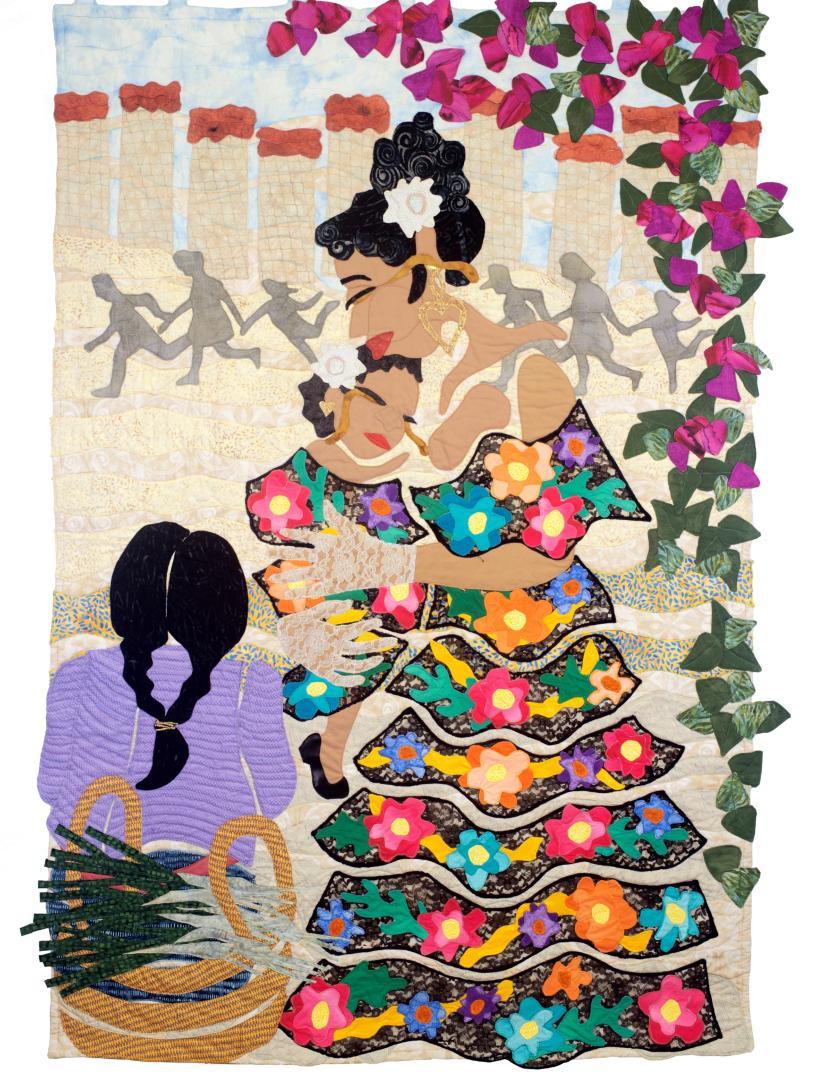
SueñosdeLaMadre 2021, fiber arts, 60 x 42 x 2 inches
New Hampshire
Laura Morrison
Don'tTouch 2009, fiber arts, 27 x 13 x 10.5 inches
Priscilla Otani
Northern California
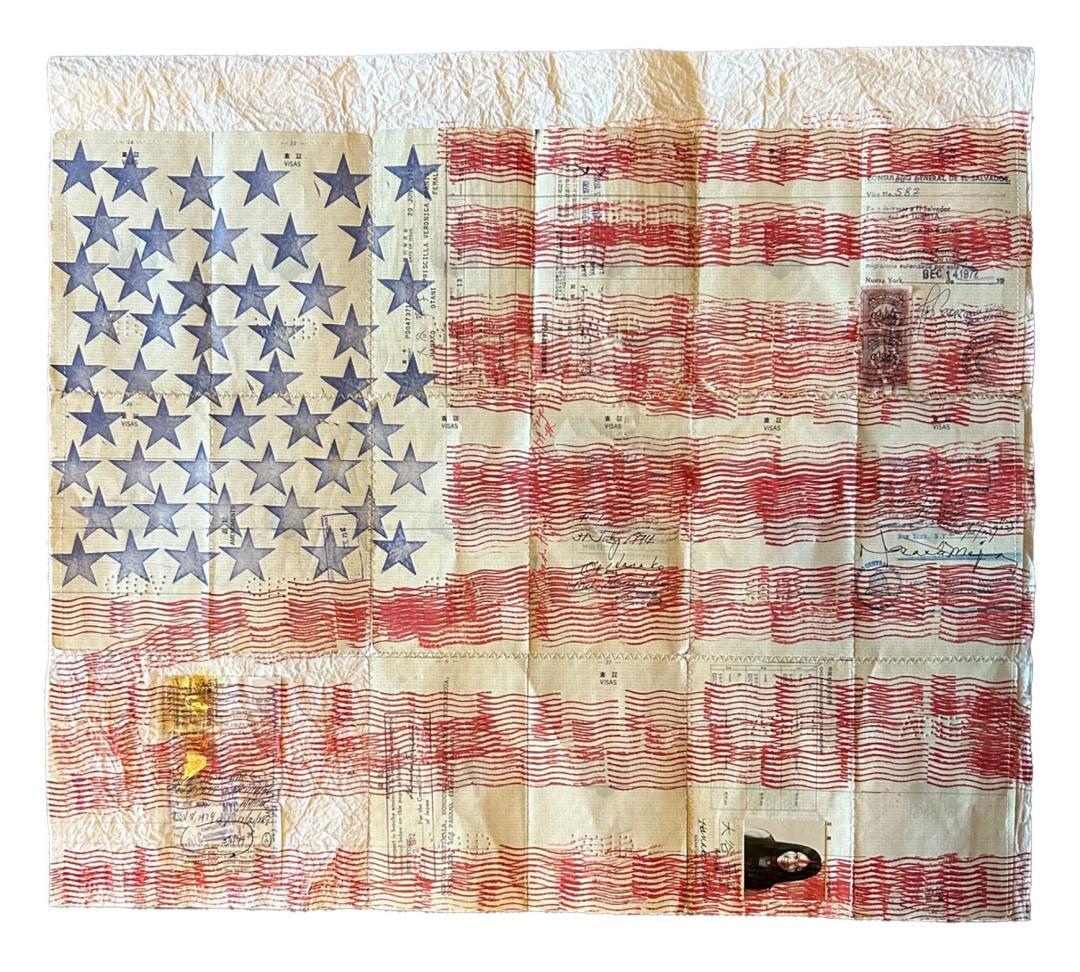
Cancellations
2025, mixed media – deconstructed Japanese passport sewn on Japanese momi paper, 20 x 23 inches
Northern California
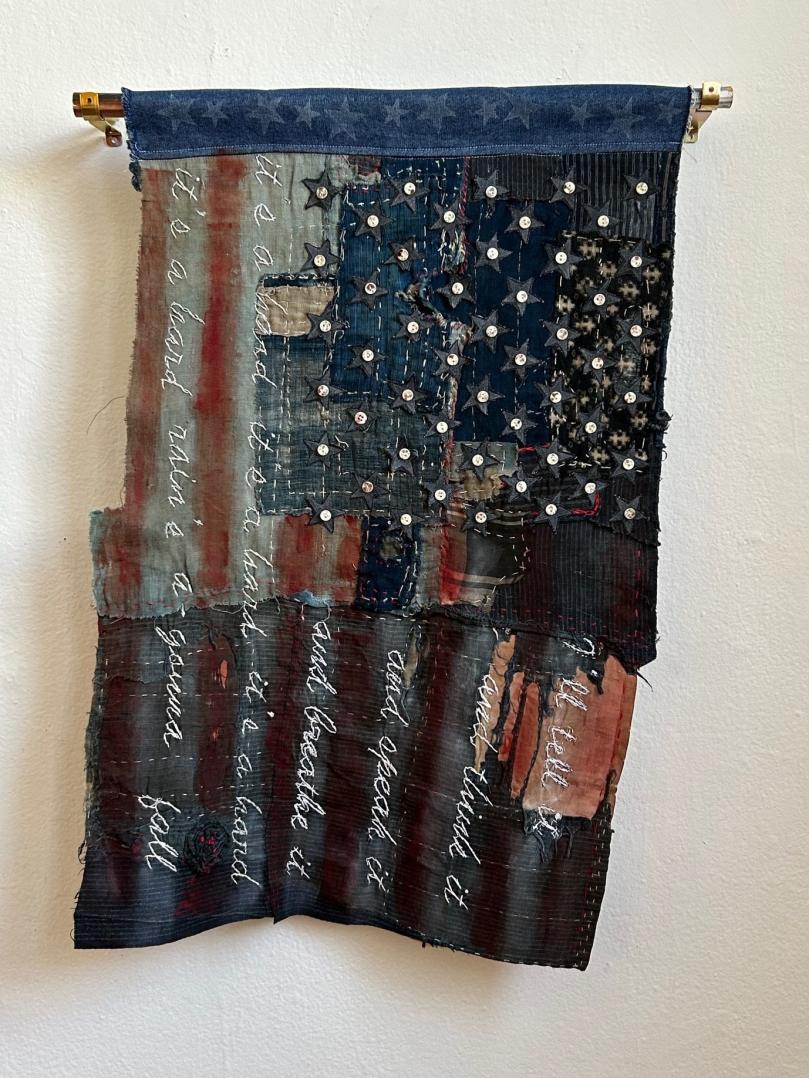
2025, fiber arts - Boro fragments, embroidery threads, 27 x 19 inches
Priscilla Otani
OldGlory
Liz Plaster Texas
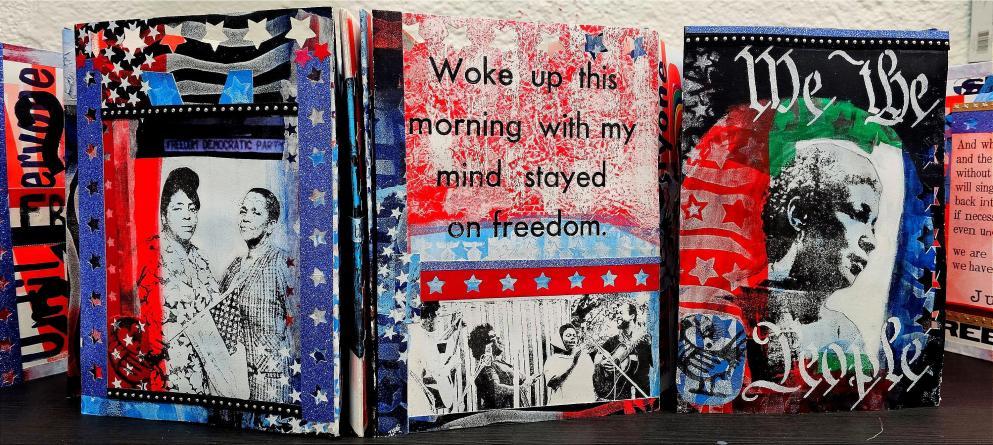
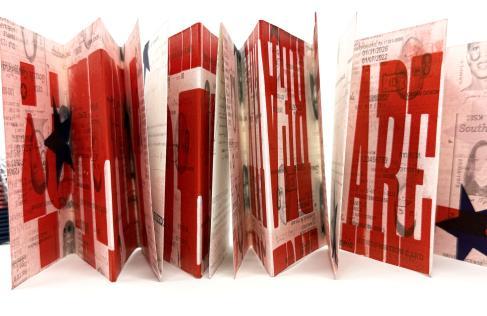
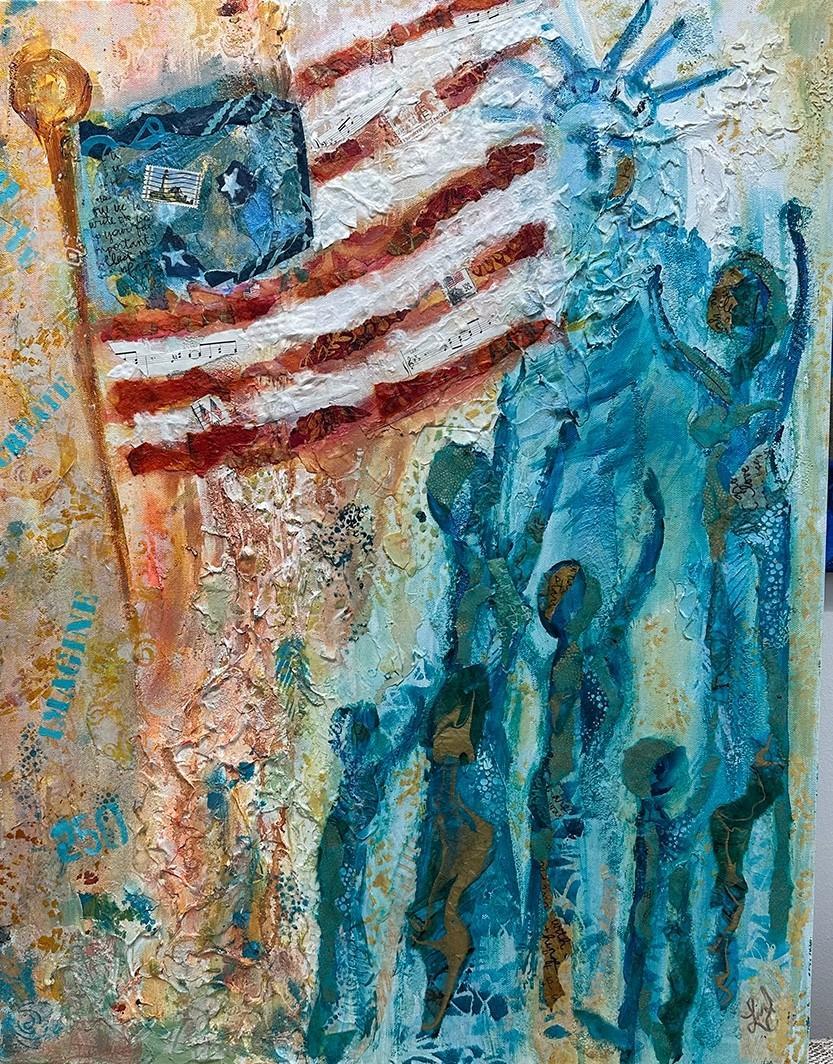
WeAreVoicesofFreedom 2025, mixed media - collage with hand designed papers and ephemera, 30 x 24 x 1.5 inches
Liz Plaster Texas
Keren Riegel
Greater Washington DC
Aviyah
Sharon Robinson
Greater Washington DC
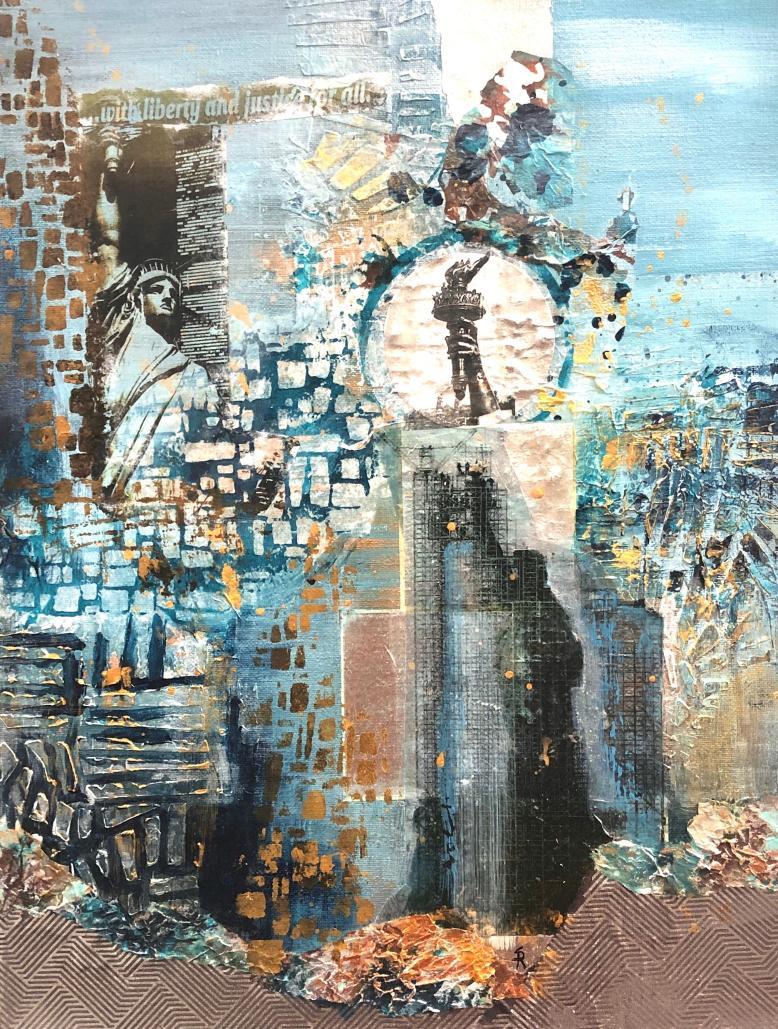
TheDeconstructionofLadyLiberty 2025, mixed media – mixed media on canvas, acrylic painting, collage and printmaking, 20 x 14 x 1 inches
Nancy Rodrigo Member-at-Large
Judy Takács Member-at-Large
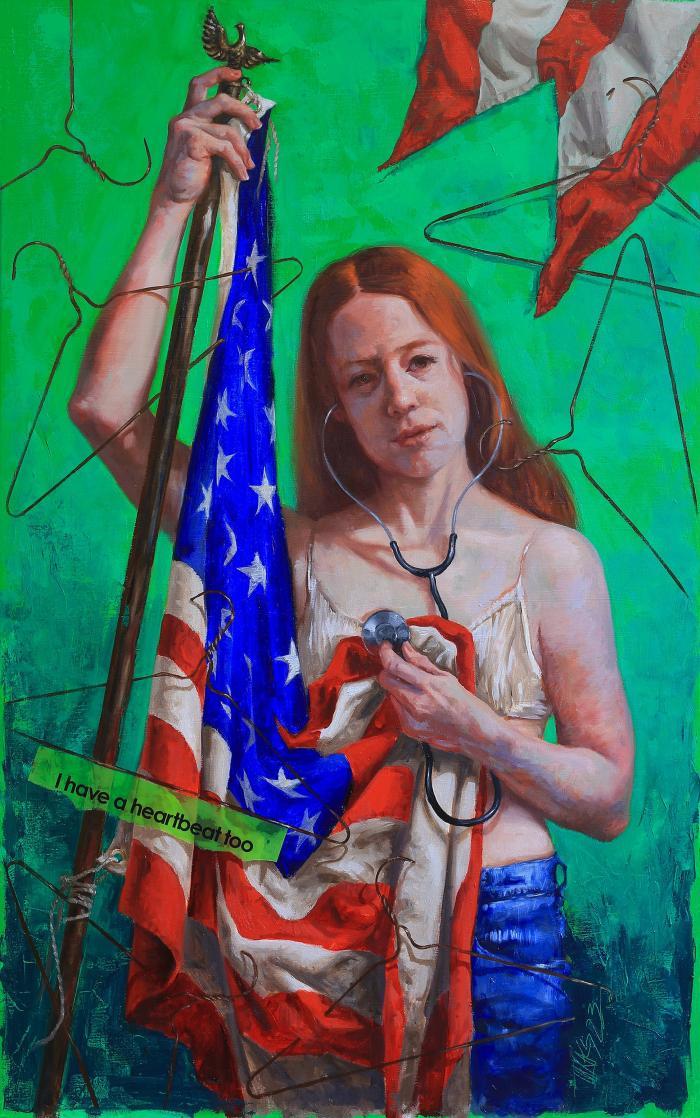
BanHeartbeatBills
2023, painting - oil on canvas with collage, 48 x 30 x 2 inches
Judy Takács Member-at-Large
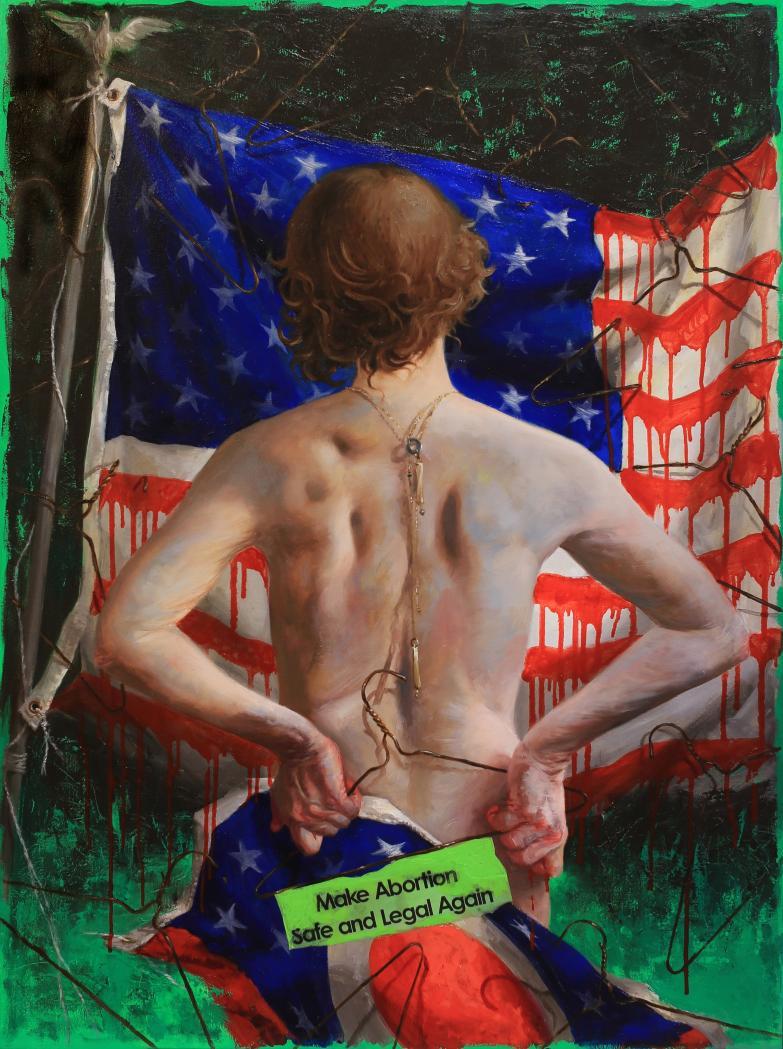
MASALA,MakeAbortionSafeandLegalAgain 2022, painting - oil on canvas with collage, 48 x 36 x 2 inches
Jeane Vogel Member-at-Large
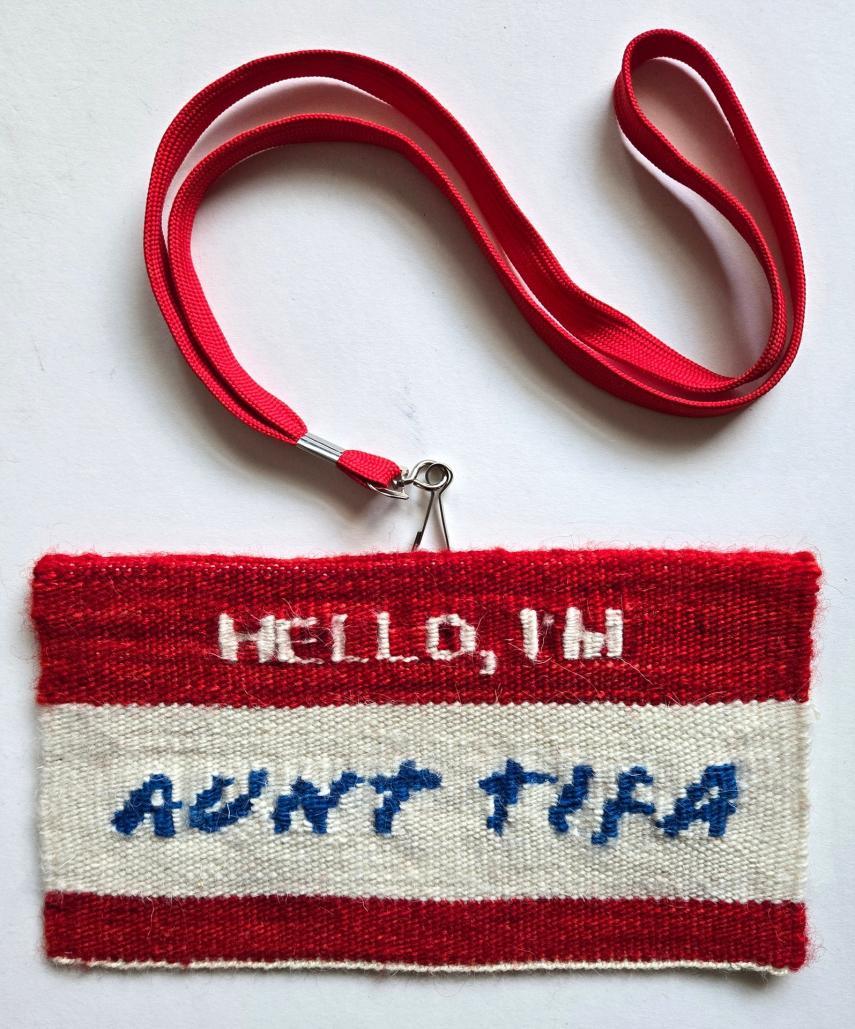
Hello,I'mAuntTifa
2026, fiber arts - wool warp and weft, purchased lanyard, 18 x 12 x 1 inches
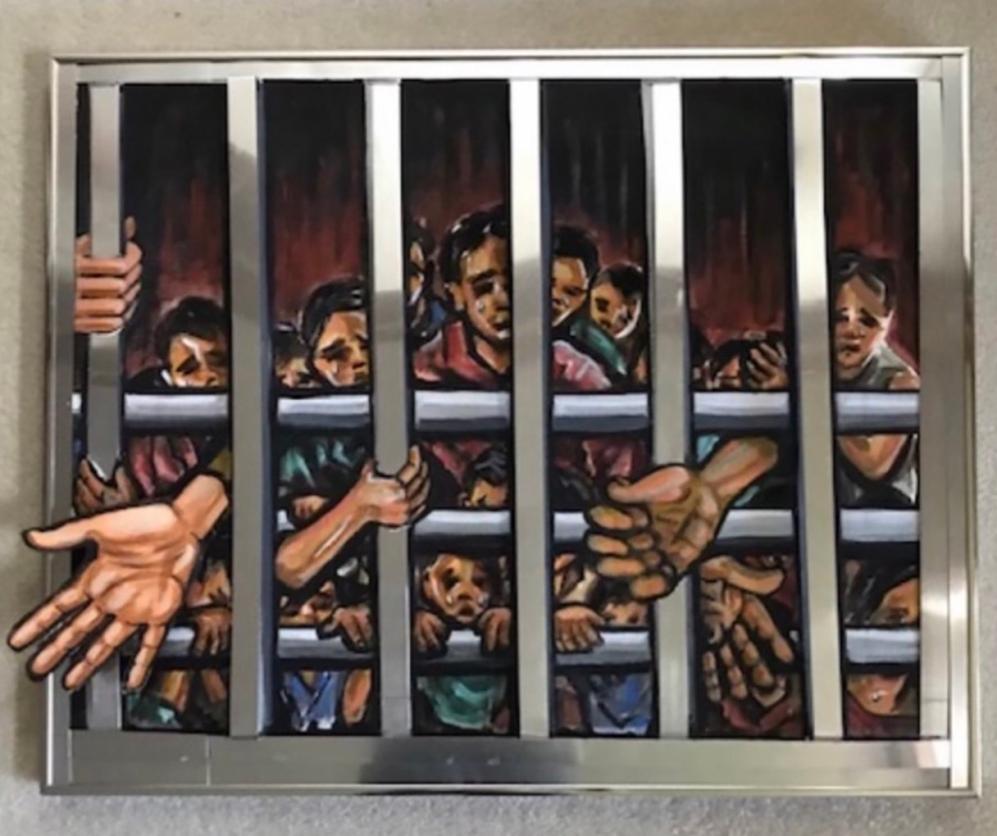
Teresa Greve Wolf Indiana
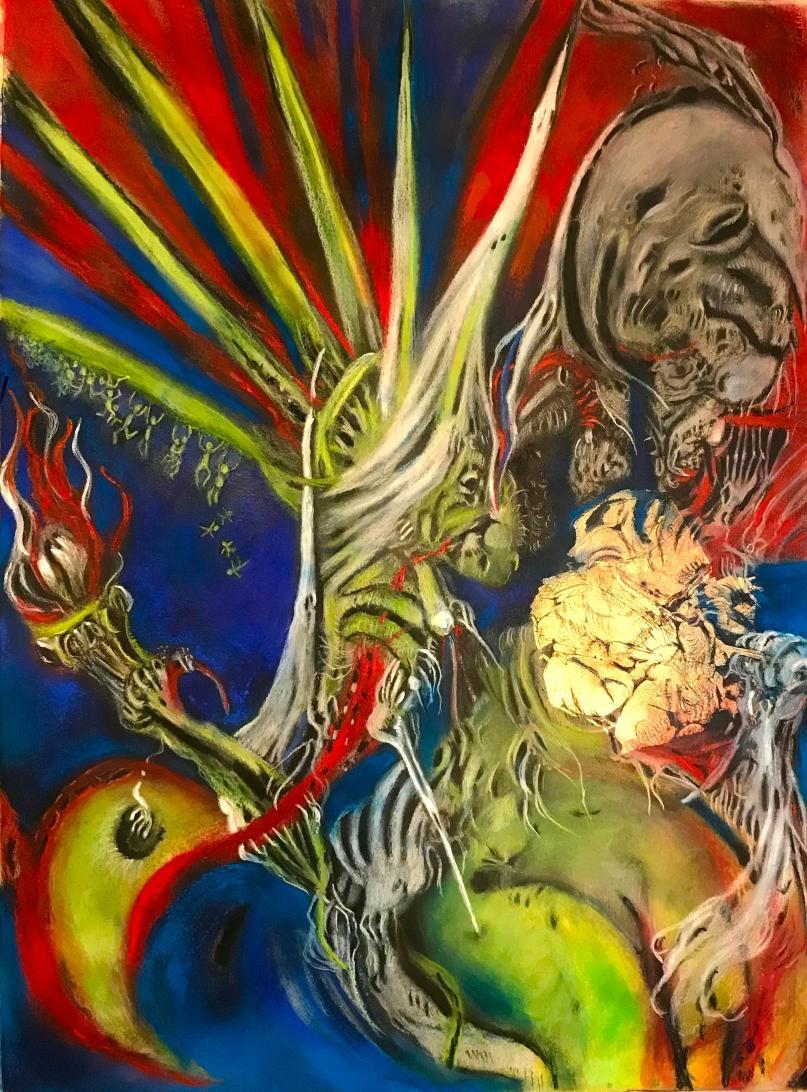
StatueofLiberty:“Givemeyourtired,yourpoor,yourhuddledmassesyearningtobreathefree” 2019, painting - watercolor paper and laminated aluminum, watercolor and oil pastels, 24 x 31 x 2 inches
Teresa Greve Wolf Indiana
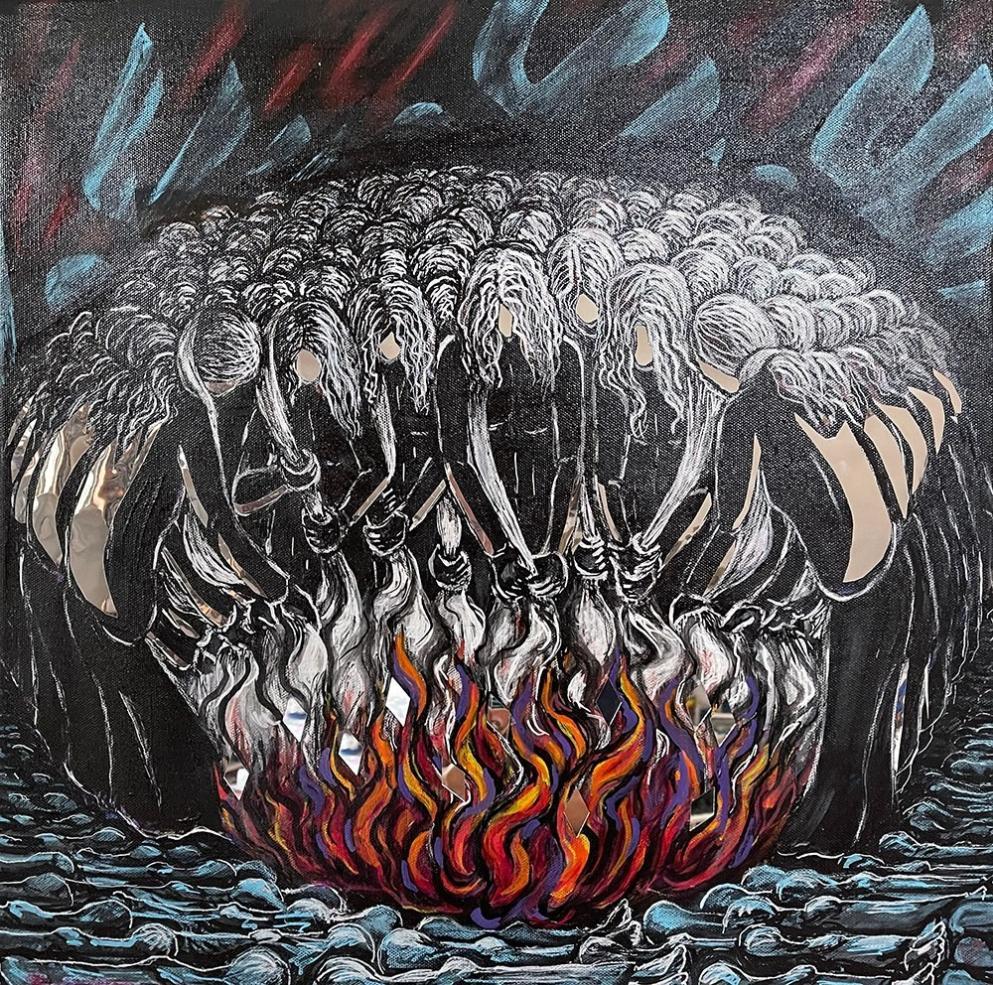
BurningforMahsa
2023, painting, 20 x 20 x 0.5 inches
Su Yang Texas
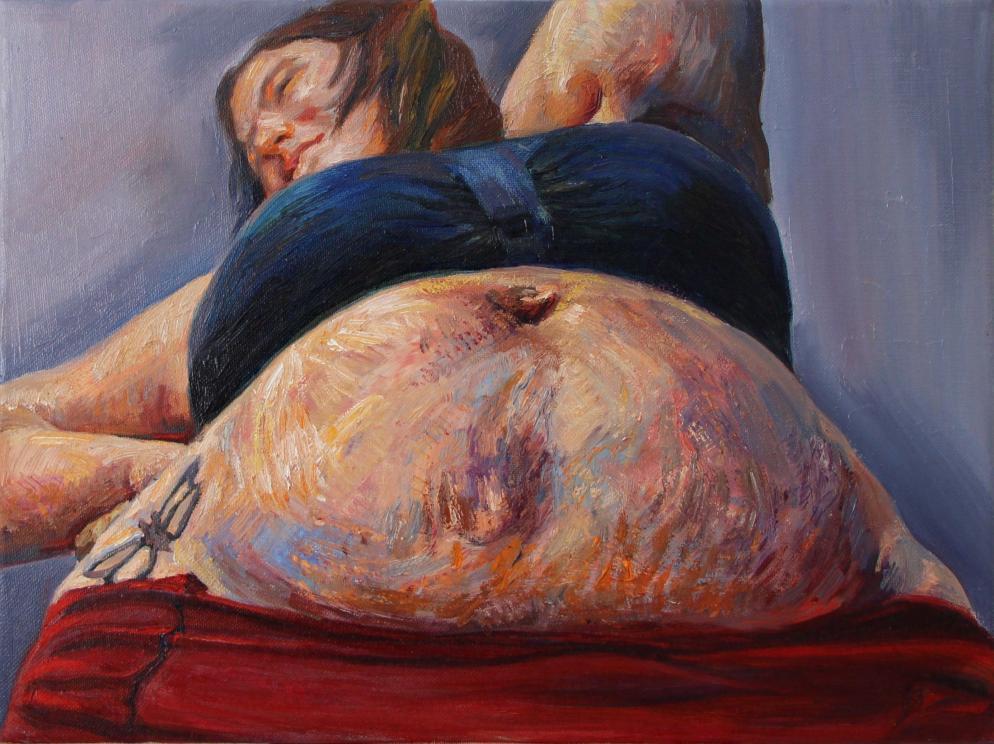
IsabellaDavis – NotBloatedPregnantOrFull 2023, painting - oil on canvas, 12 x 16 x 1 inches
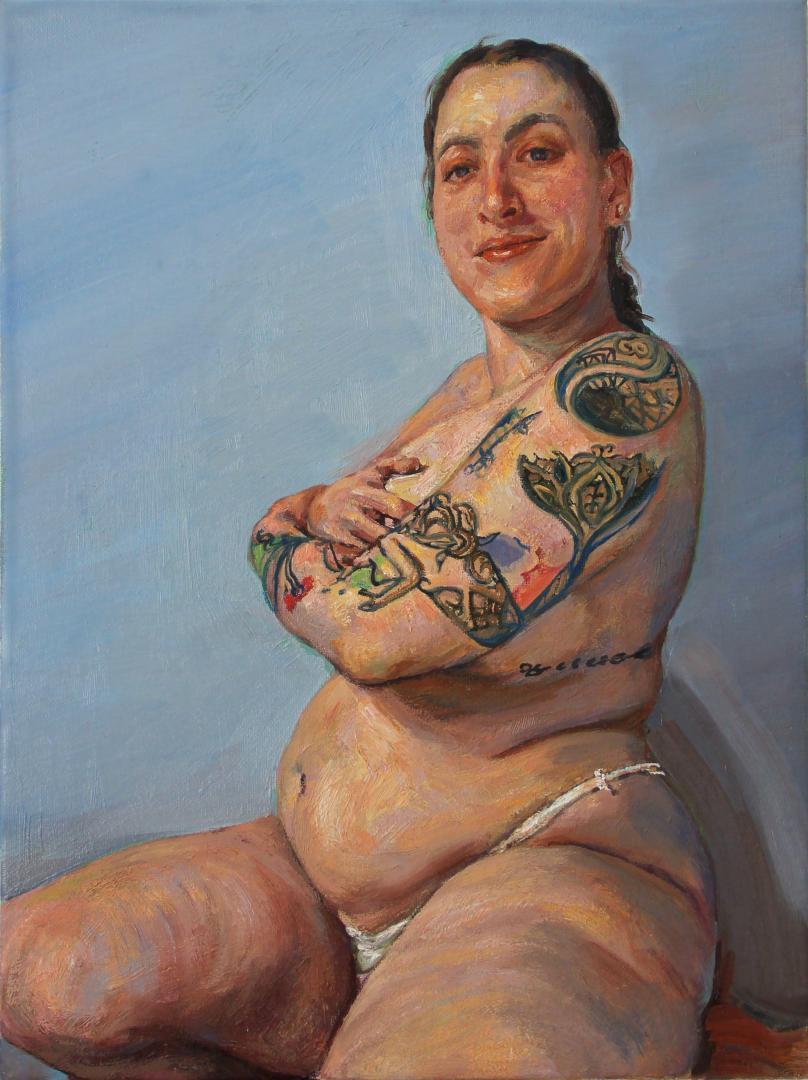
Yang Texas
KristynDingman– ThisBodyOfMineHasBroughtChildrenIntoThisWorld 2023, painting - oil on canvas, 16 x 12 x 1 inches