Typhoid Fever: Symptoms, Diagnosis, and Treatment Options
A persistent fever, particularly when accompanied by indigestion, should not be ignored. In some cases, it could be a sign of typhoid fever, which, if left untreated, can lead to serious complications. This makes it important to understand the symptoms of typhoid fever and recognise when medical evaluation may be needed. To help, in this article, we’ll discuss the causes and symptoms of typhoid fever, how the infection is diagnosed, and the available treatment pathways. Let’s start by understanding the condition.
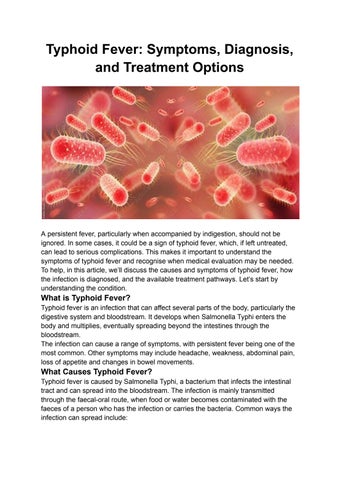
What is Typhoid Fever? Typhoid fever is an infection that can affect several parts of the body, particularly the digestive system and bloodstream. It develops when Salmonella Typhi enters the body and multiplies, eventually spreading beyond the intestines through the bloodstream. The infection can cause a range of symptoms, with persistent fever being one of the most common. Other symptoms may include headache, weakness, abdominal pain, loss of appetite and changes in bowel movements.
What Causes Typhoid Fever? Typhoid fever is caused by Salmonella Typhi, a bacterium that infects the intestinal tract and can spread into the bloodstream. The infection is mainly transmitted through the faecal-oral route, when food or water becomes contaminated with the faeces of a person who has the infection or carries the bacteria. Common ways the infection can spread include:
Contaminated Water: Drinking water from an unsafe or contaminated source can introduce Salmonella Typhi into the body. Contaminated Food: Food can become contaminated when it is prepared or handled with unwashed hands, particularly by someone who has typhoid or carries the bacteria without obvious symptoms.
What are the Symptoms of Typhoid Fever? Typhoid fever symptoms usually develop gradually, often beginning with a fever that becomes higher over several days. The symptoms can vary from person to person and may become more pronounced as the infection progresses. Common symptoms include: Persistent Fever: Fever is one of the most characteristic symptoms of typhoid fever. It may start mildly and gradually increase, often reaching a high temperature as the infection progresses. Headache: A persistent or recurring headache may occur along with the fever and general feeling of illness. Weakness and Fatigue: The infection can cause marked tiredness, weakness and reduced energy, which may persist during the illness. Abdominal Pain: Discomfort or pain in the abdomen may occur as the infection affects the digestive system.
How is Typhoid Fever Diagnosed? Since typhoid fever can cause symptoms similar to other infections, symptoms alone cannot confirm the diagnosis. A doctor considers the symptoms, then recommends appropriate laboratory tests that detect Salmonella Typhi. The main tests include: Blood Culture Blood culture is an important test for detecting Salmonella Typhi in the bloodstream and is generally preferred for confirming acute typhoid fever. A blood sample is examined in a laboratory to check for bacterial growth. However, the blood test may not detect every infection, particularly if antibiotics have already been taken. Stool Culture A stool sample can be tested for Salmonella Typhi. The test may detect bacteria being shed through the intestines, but it is generally less useful than blood culture for diagnosing an acute infection.
Are the Typhoid Test Results Always Accurate? No. Typhoid tests can sometimes give false-positive or false-negative results, meaning the result may not accurately reflect whether a person has an active Salmonella Typhi infection. The likelihood of this can vary depending on the test used, the stage of the infection and whether antibiotics have already been taken. False-Positive Results A false-positive result means the test suggests typhoid fever is present when the person does not actually have an active infection. This is particularly a concern with the Widal test, as antibodies detected by the test may be present because of a
previous infection, vaccination or exposure to related bacteria. This is one reason a positive Widal result should not be considered proof of typhoid on its own. False-Negative Results A false-negative result means the test does not detect typhoid even though the person has the infection. This can happen with blood culture if the bacterial count in the blood is low, particularly early in the illness.
How is Typhoid Fever Treated? The choice of typhoid fever treatment depends on the severity of the infection, antibiotic resistance and the person's overall health. Treatment may include: Antibiotic Therapy Antibiotics are the primary treatment for typhoid fever. The choice of antibiotic depends on the susceptibility of the bacteria and local patterns of antibiotic resistance. Hospitalisation Severe typhoid fever or complications may require treatment in a hospital. This allows close monitoring and may involve intravenous antibiotics or fluids, particularly when there is severe dehydration, persistent vomiting, intestinal complications or other signs of serious illness.
Conclusion Typhoid fever can become serious if left untreated, so symptoms such as those mentioned above, particularly a persistent fever, should not be ignored. Prompt treatment with the appropriate antibiotics can help clear the infection and reduce the risk of complications. Consult an internal medicine specialist at Sterling Hospitals, who can help determine the cause of the fever and recommend the right treatment. Reference Link : https://www.sterlinghospitals.com/blogs/typhoid-fever-symptoms-diagnos is-treatment