The Kalamazoo Area Mathematics and Science Center (KAMSC) provides an accelerated academic program designed for students with a passion to excel in the fields of mathematics, the sciences, and computer science, and to engage in a research agenda throughout high school. KAMSC’s high school program serves approximately 300 talented students selected from the nine area school districts in Kalamazoo County.
The mission of KAMSC’s high school program is to design and deliver educational experiences to eligible students capable of benefiting from a highly rigorous, sequential and integrated exposure to mathematics, science, and computer science in an environment where respect for self and others is valued.
Students attend KAMSC for half of their school day and their district, private, parochial, or home high school for the other half. Our challenging courses emphasize problem solving and research skills throughout the four year program. The program is laboratory intensive, providing opportunities to apply theoretical foundations to experimental situations.
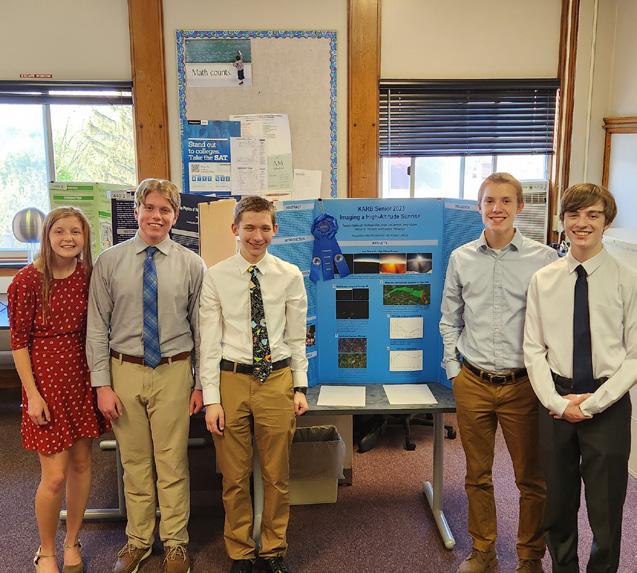
Outside of class students take advantage of research, competitions, and team projects in STEM fields. Each year 30-40 students conduct independent research in the community with mentors from business, industry, and academia. They present their research at the Southwest Michigan Science and Engineering Fair and regional winners present at the Regeneron International Science and Engineering Fair. Our students consistently excel in competitions such as the Michigan Mathematics Prize Competition, Governor’s Cyber Challenge, and the American Computer Science League International All-Star Invitational.
KAMSC is a highly selective program which admits students based on admissions test scores, teacher recommendations, writing samples, and grades. Each year over two hundred fifty students complete the application process to compete for approximately eighty five seats in the ninth grade class.
The KAMSC academic year is two semesters. KAMSC academic credits become part of a student’s high school transcript. Class rankings are determined by each high school’s own criteria. KAMSC provides a separate transcript, but does not rank students or weight grades.
Kalamazoo Area Mathematics and Science Center 600 West Vine Street, Suite 400, Kalamazoo, Michigan 49008
PH 269-337-0004 • FAX 269-337-0049 • kamsc.org • CEEB #232167
Director • Heather Kortlandt • heather.kortlandt@kamsc.org College Advising • Rebecca Joyce •rebecca.joyce@kamsc.org

(AP: Advanced Placement H: Honors)
KAMSC INTEG. MATHEMATICS I / Geometry (H)
Integrates geometry, algebra, probability, statistics, graphing calculators, and problem solving. Major component: Geometry. Emphasis: methods of problem solving, formulation and applications utilizing graphing calculators.
KAMSC INTEG. MATHEMATICS II / Algebra II (H)
Integrates geometry, algebra, probability, statistics, graphing calculators, and problem solving. Major component: Advanced Algebra. Emphasis: problem solving, utilizing graphing calculators.
KAMSC INTEG. MATHEMATICS III / Pre-Calculus (H)
Major component: trigonometry and functions. Functions include: trigonometric, polynomial, rational, radical, exponential and logarithmic. Concentration: relating an algebraic expression and its graph to data found in the real world, so that a mathematical model can be written. Methods: both algebraic and graphical. Additional topics: exploratory and graphical introduction to experimental design, discontinuity, definition of limits; vector analysis.
KAMSC BIOLOGY (H)
A rigorous college-preparatory survey course. Conceptual themes are integrated with meaningful field and laboratory experiences to develop the student’s ability to recognize and solve scientific problems. Topics: ecology, cell biology, biochemistry, genetics, evolution, and diversity of organisms.
KAMSC CHEMISTRY (H)
Honors level course featuring laboratory and inquiry-based instruction. Topics: chemical bonding, thermodynamics, description of compounds through writing and nomenclature, chemical reactions, stoichiometry, behavior of gasses, liquids and solids, light and electron behavior, acids and bases, electrochemistry, organic chemistry. Each student completes a team-based research project.
KAMSC PHYSICS (H)
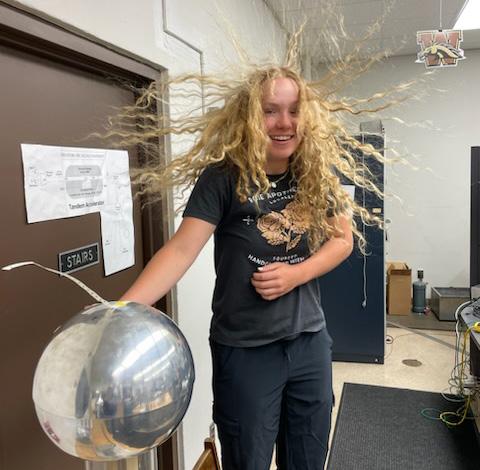
A college-preparatory honors physics course covering classical mechanics, special and general relativity, gravitation, oscillatory and wave motion, geometric optics, electromagnetism, quantum mechanics, and nuclear physics. Lab activities include an experiment using Western Michigan University’s tandem Van de Graaff accelerator. This is a mathematically rigorous experience equivalent to an introductory college-level algebra-based physics course. A research project in physics, engineering, or mathematics is required.
KAMSC INFORMATION TECHNOLOGY (H)
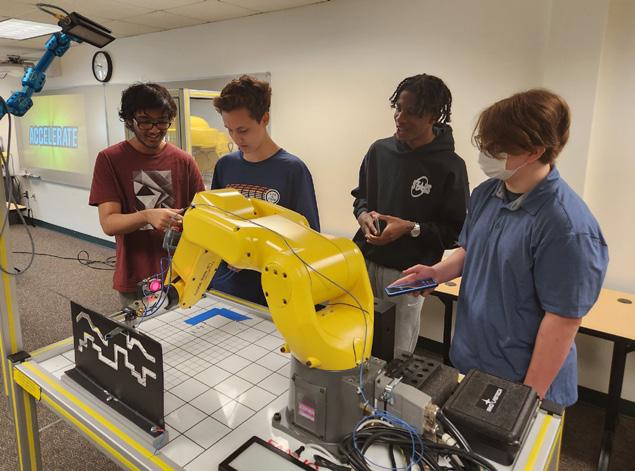
Survey course designed to integrate select components of math and science. Students utilize diverse technologies to explore, develop, analyze and produce appropriate products. Applications: Hardware knowledge, software utilization; computers as a scientific tool; data analysis; research preparation and presentation. Topics include introductory computer programming, introductory robotics, 3D design, regression and modeling tools.
KAMSC COMPUTER STUDIES (H)
An introduction to computer science with emphasis on the development of problem solving and critical thinking skills. Students will learn software development techniques using the programming structures of C++. A major focus of the course is computer-math topics such as computer number systems, Boolean algebra, graph theory, data structures, algorithm analysis, and problem solving exposure to other languages including BASIC, LISP and Assembly Language. The course ends with a web design project.
ALTERNATIVE CORE COURSE (Full year)
AP CALCULUS (AB)
Follows AP Calculus AB Syllabus. Concepts are presented using graphical, numerical, and symbolic representation. Covers more than one semester of college calculus.
AP CALCULUS (BC)
Follows AP Calculus BC Syllabus. Concepts are presented using graphical, numerical, and symbolic representation. Covers two semesters of college calculus.
AP STATISTICS
Covers major concepts and tools for collecting, analyzing, and drawing conclusions from data. Frequent labs involve hands-on gathering and analysis of real-world data. Computers and calculators allow students to focus on the concepts. Themes: exploring data; planning a study; anticipating patterns; statistical inference.
ELECTIVES (Full year)
KAMSC ADVANCED CALCULUS (H)
A college level course covering topics fundamental to understanding theoretical foundations of physical sciences and engineering. Topics: infinite series; complex variables; matrices; partial differentiation; multi-variable calculus; vector analysis; Fourier series; Fourier transforms; vector calculus. Prerequisite: AP Calculus (AB) or AP Calculus (BC).
KAMSC BIOMEDICAL SCIENCE (H)
A college level course devoted to structure and function of organs and systems. Richly infused with aboratory investigation. Lecture, lab, field experiences and guest presenters are utilized to study anatomy, physiology and human genetics.
AP ENVIRONMENTAL SCIENCE
Capstone course allowing students a look at more advanced studies in environmental science including the biospheric, lithospheric, hydrospheric and atmospheric forces contributing to global changes. The impact of humans as a significant force in shaping an altered environment will also be investigated. Lecture, guest lectures, labs, and field experiences are utilized to develop an understanding of the earth on a global scale-describing how component parts have evolved, how they function and how they are expected to continue. Content exceeds the AP syllabus.
AP BIOLOGY
Content exceeds the AP syllabus with a more intense experimental approach. Essential to conceptual understanding: science as a process rather than as an accumulation of facts; personal experience in scientific inquiry; recognition of unifying themes that integrate the major topics of biology; application of biological knowledge and critical thinking to environmental and social concerns. Activities include: Diffusion; Osmosis; Colony Transformation; Enzyme Catalysis; Genetics; Mitosis and Meiosis; Population Genetics; Evolution; Plant Pigments and Photosynthesis; Transpiration; Cell Respiration; Physiology of Human Systems.
AP CHEMISTRY
Equivalent to first year college chemistry course. Emphasis: chemistry as an experimental and quantitative science. Analytical instruments: Infrared Spectrophotometer; UV-Visible Spectrophotometer; Gas Chromatography; HPLC. Projects are performed in small groups on each instrument. Content exceeds the AP syllabus.
AP PHYSICS C MECHANICS
Covers concepts and problem solving at a more mathematical level involving calculus and vector calculus. All topics in the AP syllabus are covered, plus additional enrichment topics which include: translational and rotational kinematics; linear and rotational dynamics, collisions in one and two dimensions, energy conservation, gravitation simple harmonic motion, damped motion and mechanical resonance and special theory of relativity and celestial dynamics. The course offers a selected number of labs to enhance the lessons.
AP PHYSICS C ELECTRICITY & MAGNETISM
Covers electric fields and magnetic fields, DC electric circuits, culminating in Maxwell’s equations. This course covers all topics on the AP syllabus, in addition to some enrichment topics in optics and an introduction to quantum mechanics. It has several labs with focus on electricity and magnetism. Equivalent of a first college level course on electricity and magnetism.
AP COMPUTER SCIENCE A
APCS-A is a two-semester Advanced Placement course for problem solving using the popular Java programming language. The object-oriented programming methodology is used to produce quality computer-based solutions to real problems. Students will develop individual problems solving skills and will learn to solve problems in small groups.
KAMSC DIFFERENTIAL EQUATIONS (H)
A college level course includes the study of first order differential equation; higher order differential equations; eigenvalues and eigenfunctions; Laplace transforms; numerical methods; boundary value and initial value problems; qualitative analysis of solutions and applications of differential equation to physical system.
KAMSC COMPLEX VARIABLES (H)
A college level course which is a rigorous exploration of the fundamentals of complex variable. The course begins with covering some of the typical topics: complex numbers; their properties in the Argand Plane; integers and fractional powers. The calculus of complex variable starts with some basics such as limits and continuity, the complex derivative, the Cauchy-Riemann condition, the relationship of the derivative to analyticity, and harmonic functions.
ELECTIVES (One Semester)
KAMSC DISCRETE MATHEMATICS (H)
A college level course dealing with finite processes, sets of elements, countable phenomena (based on integers—contrasted with calculus, which has to do with infinite processes and intervals of real numbers). The mathematical topics and algorithms studied have many applications in the broad field of computer science. Topics include combinatorial analysis, graph theory, mathematical trees, logic gates, circuits, and more.
KAMSC ADVANCED COMPUTER SCIENCE (H)
A college level course that follows the APCS-A class and includes the topics once covered in the APCS-AB curriculum (data structures, lists, stacks, queues, trees, and advanced algorithms). Computer-math topics and other objectoriented programming design concepts are also continued and implemented using the Python programming language.
KAMSC BIOETHICS (H)
A college level course designed to promote dialogue on the social and ethical implications of science and technology. Possible questions examined: What are effects of science and technology on society and individuals? Can genes be patented? Topics may include animals in research; informed consent for drug experimentation; impact of the Human Genome Project; physician-assisted dying; designing offspring; Fetal Alcohol Syndrome; DNA databases for criminals; breast cancer susceptibility; Alzheimer’s Disease.
KAMSC HUMAN GENETICS (H)
A college level course. Human Genetics is a one-semester course that includes a study of both classical and molecular genetics plus an introduction to the new science of bio-informatics. The course aims to help students learn to define basic genetic mechanisms in human inheritance, examine genes and genomes and use bio-informatics techniques that go beyond the human genome project and study genes and the diseases they cause.
KAMSC MICROBIOLOGY (H)
A college level course designed to introduce students to the various roles microorganisms play as they relate to human activities. Laboratory work includes microbial techniques in culturing, staining, and enumeration of microorganisms from soil, water, food, and humans. Lecture, extensive labs, guest lectures, and field trips are utilized to discuss metabolism, genetics and disease potential of these organisms.
KAMSC BIOCHEMISTRY (H)
A college level course that examines chemistry of living things and interrelationships of various metabolic pathways. Extensive laboratory activity provides hands-on experience with various clinical method including electrophoresis, chromatography and spectrophotometry. Offered for motivated students of biology & chemistry who wish combined experiences in both sciences.
Prerequisite: Organic Chemistry OR Biomedical Science.
KAMSC ZOOLOGY (H)
A college level course that covers the major phyla and families of invertebrates and vertebrates. Emphasis is placed on anatomy and physiology, classification, evolution and behavior of various organisms, with in depth study of insects and vertebrates. Laboratory experiences include dissections and a zoo field trip. Field research includes sample collecting and habitat observation.
KAMSC ORGANIC CHEMISTRY (H)
A college level course. Chemistry of carbon compounds. Students study common classes of compounds, stressing structure, nomenclature and general reaction types. Extensive laboratory experiences are a major part of the course.
KAMSC MATERIAL SCIENCE (H)
A college level course in which students explore the classification, behavior, and properties of solid state matter, and the internal structures of metals, ceramics, polymers, and composites,to develop understanding of their mechanical, physical, chemical, electrical, and thermal properties. Students will survey industrial applications and standard testing protocols, and will learn how to manipulate the internal structures of materials in order to improve their properties. The course includes a strong laboratory component.
KAMSC GEOLOGY (H)
A college level course that is a qualitative overview of mineralogy, petrology, igneous landforms, hydro-geologic processes, sedimentary structures, plate tectonics, and geologic time. The course includes extensive laboratory components, field investigations, and a comprehensive research paper.
KAMSC ASTRONOMY (H)
A college level course that covers introductory astronomy, astrophysics, and planetary science. Includes an extensive overview of the tools of amateur and professional astronomers. The focus of the course is on observational astronomy with extensive field exercises. Students have access to high-quality telescopes and off-site observational work will take place at the Kalamazoo Nature Center.
KAMSC RESEARCH SCIENCE
A unique three-year course that takes place in the student’s, 9th, 10th and 11th grade science classes. Topics: instruction in searching scientific literature; technical writing; scientific process; statistical evaluation methodology. Students carry out research, develop a poster board presentation and participate in KAMSC’s Project Day. Comprehensive exam: end of the Junior Year.
KAMSC INDEPENDENT RESEARCH
An independent research course wherein junior and senior students are placed with research mentors in the community or at KAMSC. In collaboration with a mentor, they develop a research proposal and, from early in the fall until the end of February, carry out the research at the mentor’s work site. This research averages 6-8 hours per week after the classes at KAMSC. Milestones are measured and students participate in regular meetings, science seminars and science fair competitions. (by application only)
KAMSC EVOLUTION OF SCIENTIFIC THOUGHT I & II
Designed to explore science through the evolution of major scientific discoveries. Such discoveries include great events in mathematics, chemistry, biology, physics and astronomy and the sequence of scientific thought that made them possible. Readings, discussions and books may include: Germ Theory; The Periodic Table of Elements; Atomic Theory; Evolution; DNA, Biotechnology; Organic Synthesis; Medical Breakthroughs, Emerging Infectious Diseases and other topics.
KAMSC CURRENT TOPICS IN SCIENCE
Delivered as a discussion course, eligible for any KAMSC tenth grade student. The course will encourage the interest of students to understand topics that relate to science, mathematics and technology in a way that elevates student knowledge of current events in science from a superficial, “sound-byte” level to understanding that is deep and able to be transferred to future learning.
“College