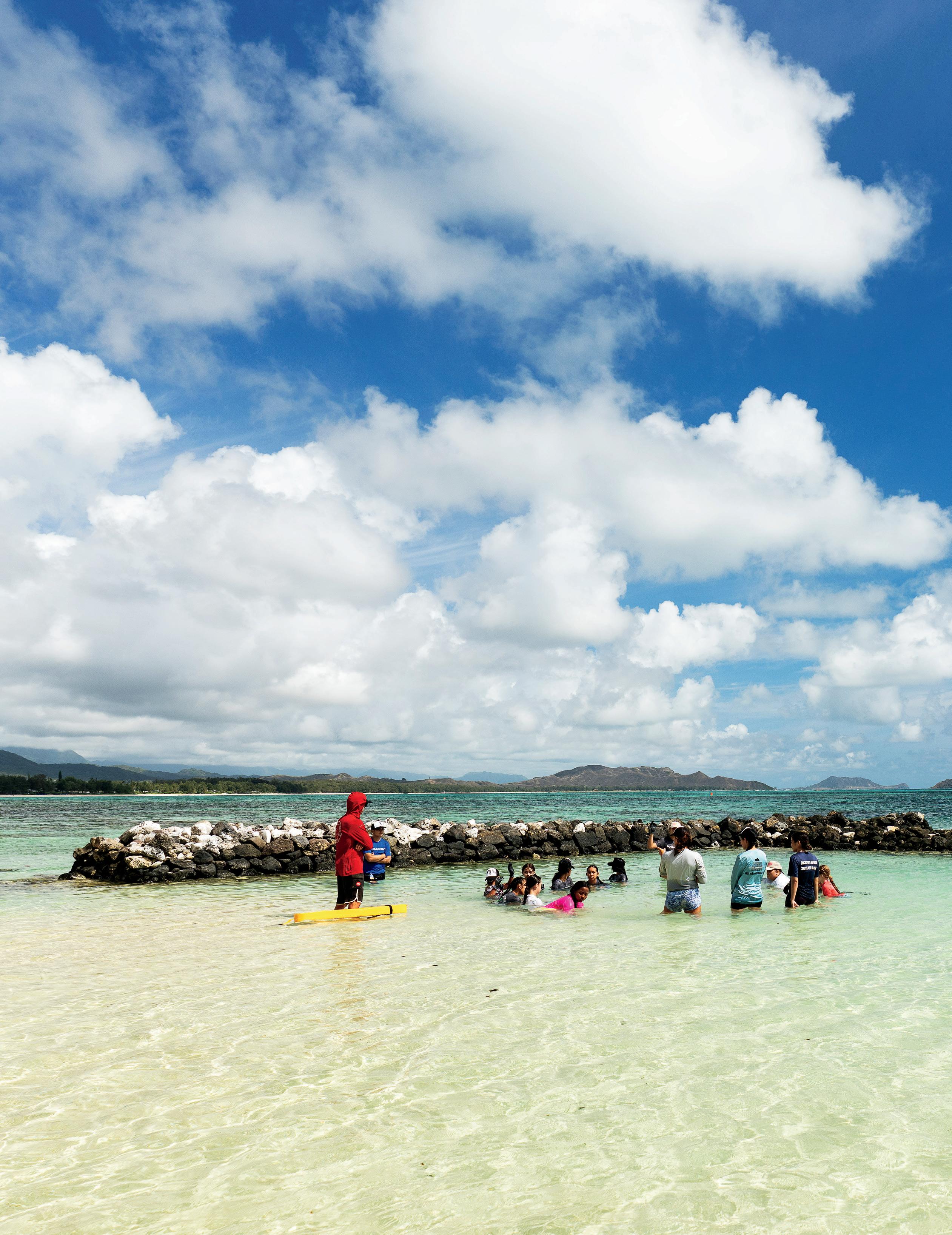
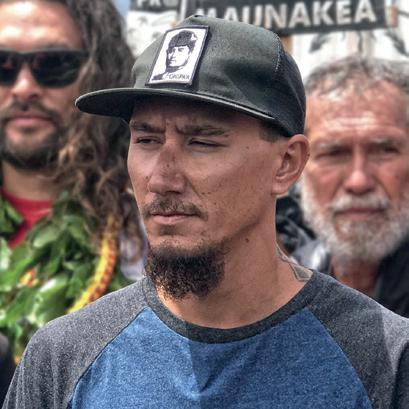
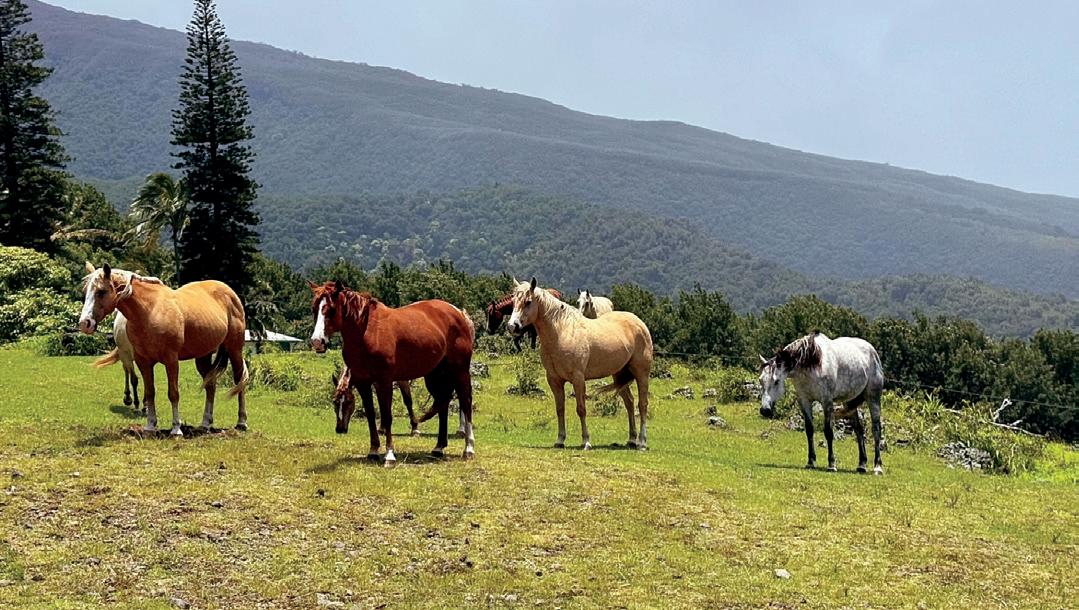
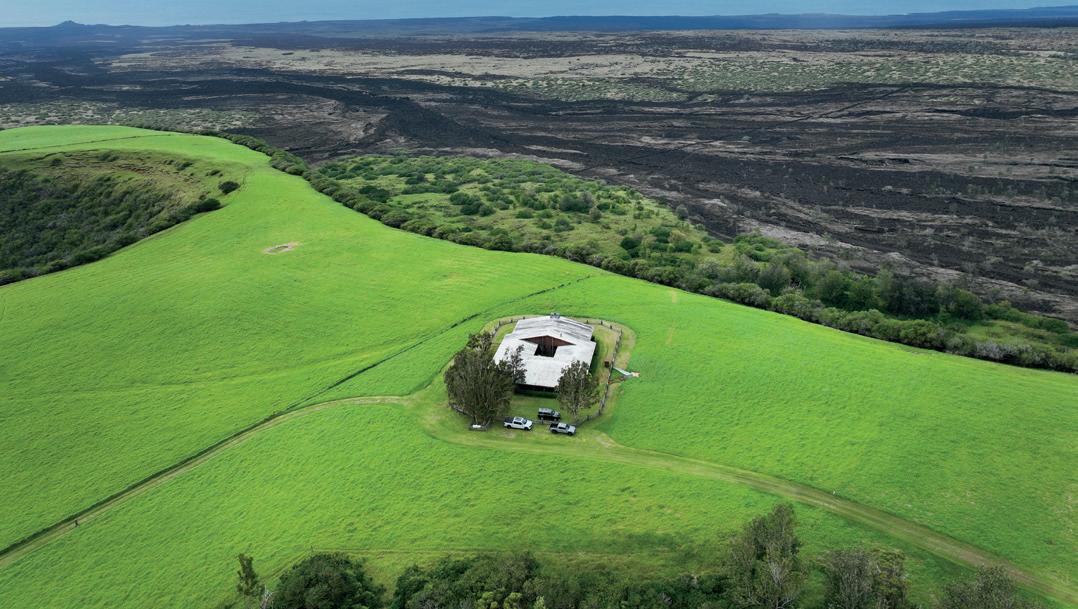
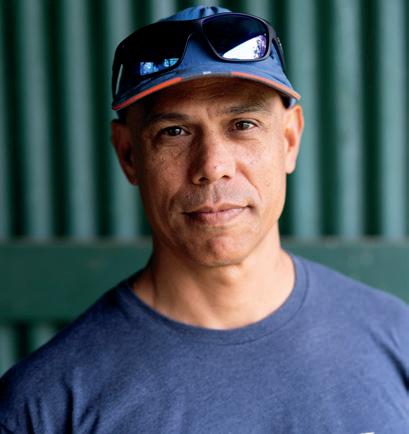
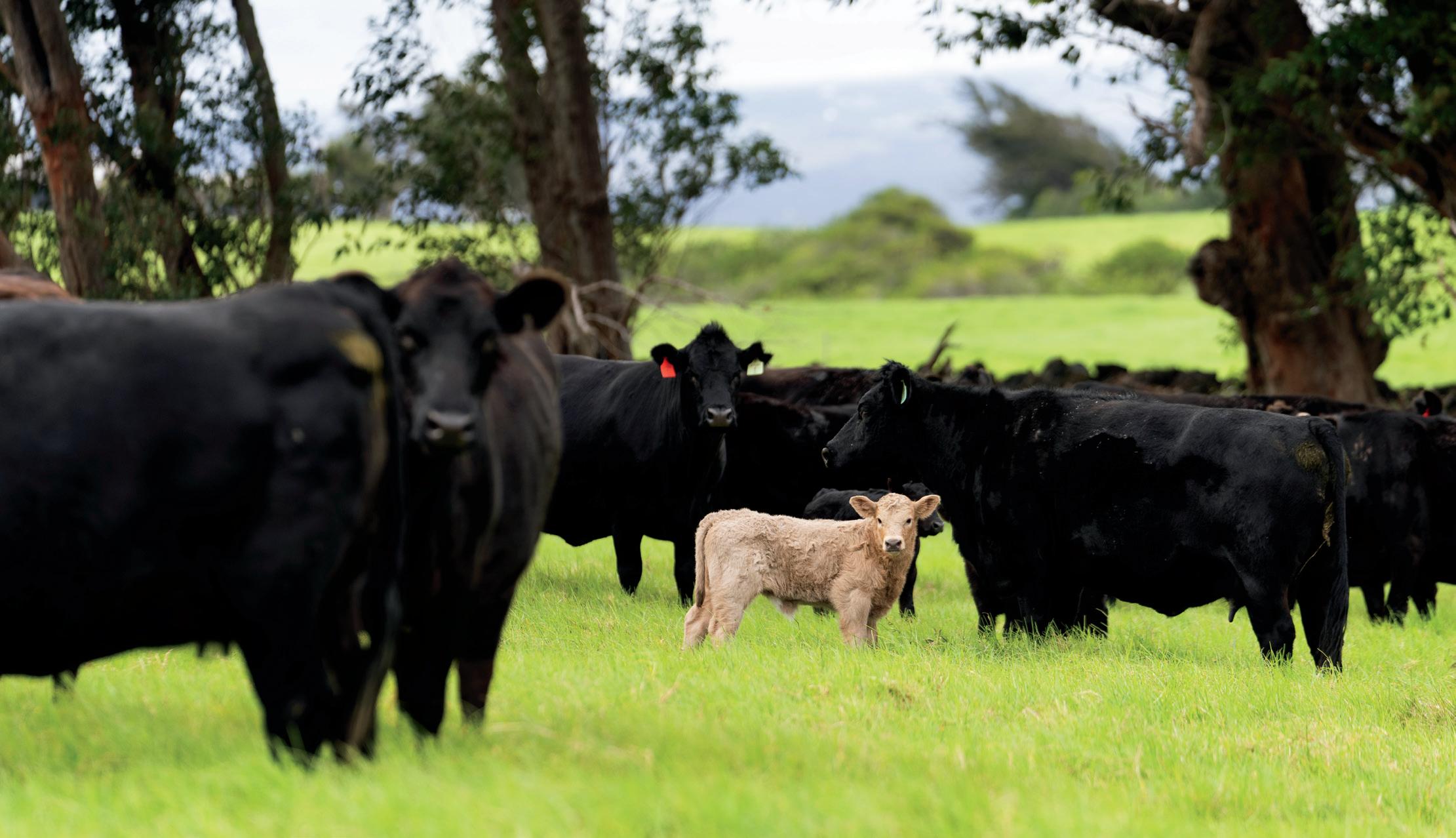
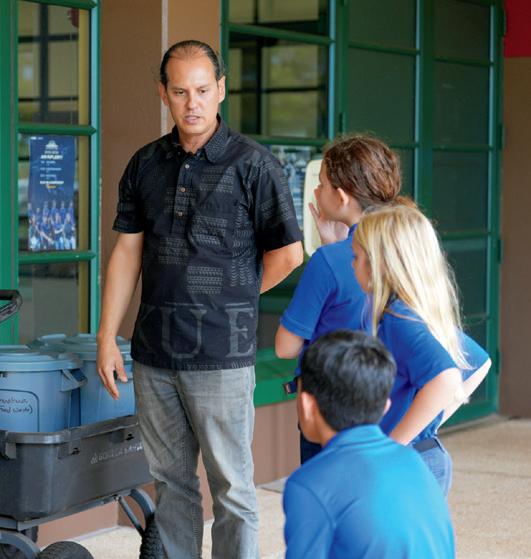
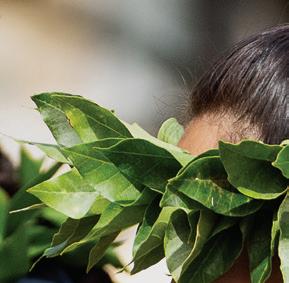
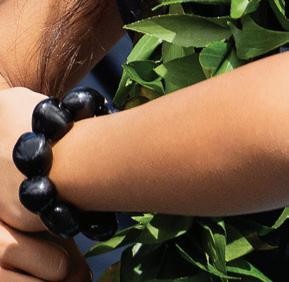
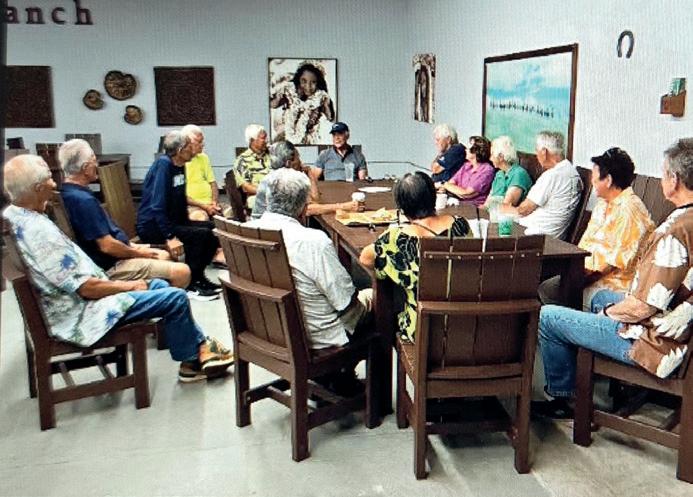
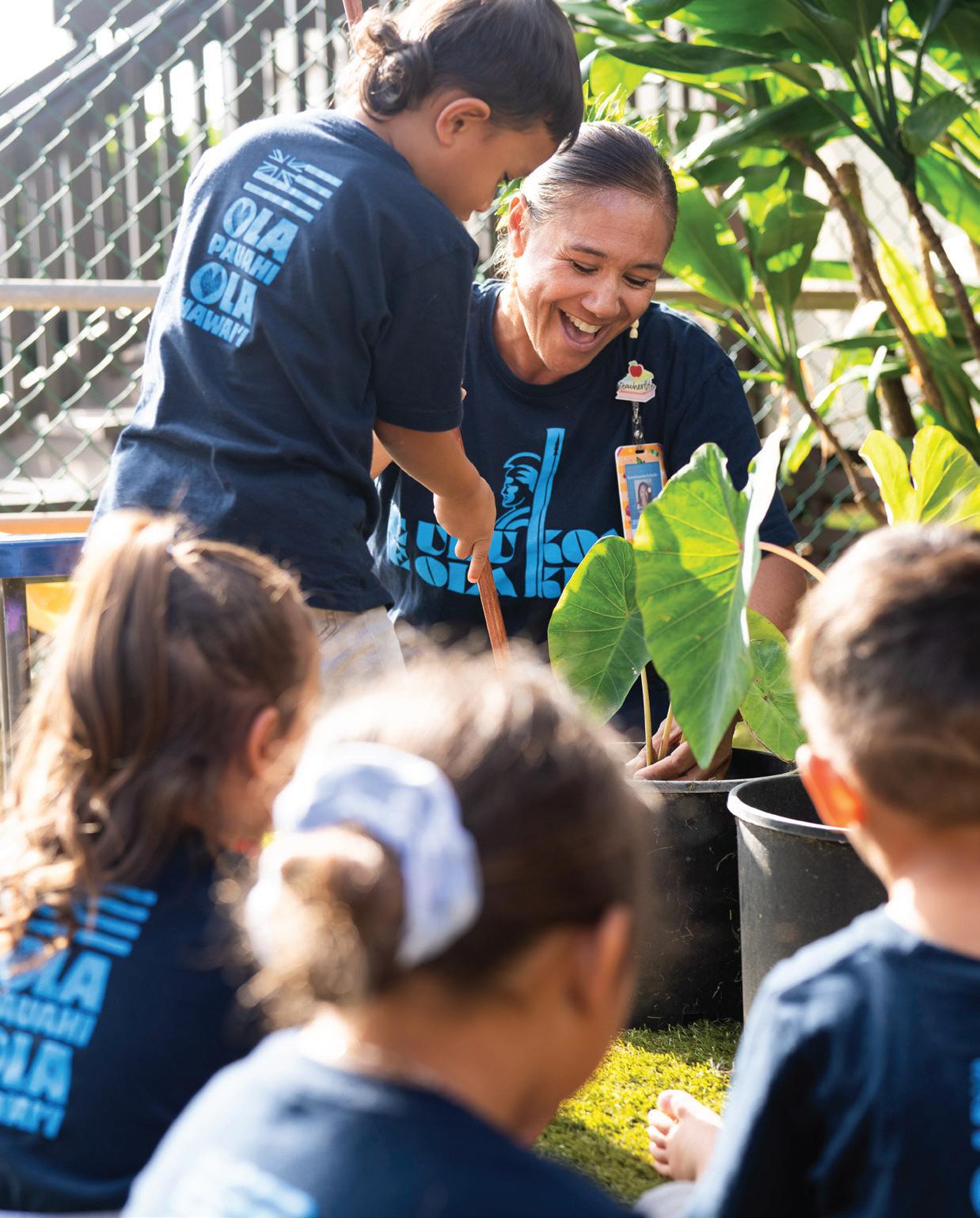
With a kia‘i ola at the ready, ‘ōpio from Ho‘omāka‘ika‘i receive a briefing before they help repair the kuapā at historic Pāhonu in Waimānalo.
Ke Ali‘i Pauahi’s kauoha, our kuleana
by Livingston “Jack” Wong Chief Executive Officer
Aloha kākou,
For nearly 140 years, Ke Kula ‘o Kamehameha has fulfilled Ke Ali‘i Pauahi’s kauoha that her gift of education might uplift her people and, through the choices of each haumāna, uplift her lāhui across generations. Her chiefly charge was a profound act of trust, an expression of aloha and kuleana to mālama her people in perpetuity.
Our Strategic Plan 2030 builds on the momentum of the last decades to steward Princess Pauahi’s trust with clarity and cohesion. It aligns every part of Ke Kula ‘o Kamehameha toward a single purpose: contributing to a thriving and self-determined lāhui through education, leadership development, ‘āina regeneration and financial acumen. Rooted in E Ola!, this focus is activated by the support of our collective kuleana that we carry as people who have benefited from her legacy. In this way, SP2030 operates as a living, responsive system that includes every Kamehameha Schools graduate — past, present and future.
We cultivate culture-centered, world-class learning environments where haumāna grow in ‘ike and character. We develop ‘Ōiwi leaders across all sectors, including education, business, government, science, arts, and ‘āina stewardship so ‘ōiwi values and perspectives will be at the forefront of shaping Hawai‘i’s future.
We mālama and regenerate ‘āina Pauahi so that the resources entrusted to us will sustain abundance in perpetuity. We align our financial stewardship, enterprise operations and relationships with ‘ohana and kaiāulu in concert with our values as an ‘ōiwi organization.
Together, these commitments form our shared kahua of kuleana, upon which Ke Kula ‘o Kamehameha alumni, ‘ohana, staff, supporters and community partners engage together to advance Ke Ali‘i Pauahi’s vision.
Fulfilling her kauoha requires cohesion, resolve and grace. When questions arise about our mission, history and identity, we respond with aloha, firm in our kuleana to steward Ke Ali‘i Pauahi’s Will and steady in our movement toward a flourishing lāhui. As we stand together in aloha, our efforts are multiplied by the mana of our kūpuna, our ali‘i and Ke Akua, giving us confidence and strength to remain ‘onipa‘a.
In this issue of I Mua magazine, you will see SP2030 well in progress — Warrior haumāna and graduates standing in defense of Ke Ali‘i Pauahi’s legacy, alumni ‘Ōiwi leaders helping “Chief of War” bring Kanaka Maoli stories to the world, and ‘āina stewardship that sustains our mission in perpetuity.
These are the stories of a living, thriving lāhui with the ea to shape our own destiny. Each mo‘olelo is rooted in the collective kuleana to stand strong and be living vessels of Ke Ali‘i Pauahi’s intent and to carry it forward with care and conviction. Through the grace of Ke Akua and the collective strength of our lāhui, our mo‘olelo will continue to unfold and rise with courage, purpose and aloha.
E ola mau, Jack Wong
Board of Trustees
Crystal Kauilani Rose KSK’75 Chair
Jennifer Noelani
Goodyear-Ka‘ōpua, Ph.D., KSK’92 Vice Chair
Michelle Ka‘uhane KSK’86
Secretary/Treasurer
Elliot Kawaiho‘olana Mills
Chief Executive Officer
Livingston “Jack” Wong
Executive Leadership Team
M. Kāhealani Nae‘ole-Wong KSK’87
Po‘o Kula – KS Hawai‘i
Scott Parker, Ph.D.
Po‘o Kula – KS Maui
Wai‘ale‘ale Arroyo, Ph.D.
Interim Po‘o Kula – KS Kapālama
Shelli Kim
Interim Vice President of Hi‘ialo
Ben Salazar
Vice President of Finance and Chief Financial Officer
Darrel R. Hoke
Executive Vice President of Administration
Kā‘eo Duarte, Ph.D.
Vice President of ‘Āina Pauahi
Kēhaunani Abad, Ph.D., KSK’82
Vice President of Uluhiwa
Nālani Fujimori Kaina KSK’90
General Counsel and Vice President
Tim Donohue
Chief Investment Officer
Internal Audit
Mia Okinaga
Vice President of Internal Audit
Advancement/Pauahi Foundation
Pono Ma‘a KSK’82
Director of Advancement and Executive Director of the Pauahi Foundation
I Mua Staff
Justin Barfield Editor
Edwin Subia Design
Jacob Chinn
Photography
Contributors
Shaun Chillingworth KSK’99
Peter Daniels KSK’85
Kanani Franco KSK’91
Kyle Galdeira KSK’03
James Hall
Ku‘ualoha Kauanoe-Luda
Lily Kay-Wong KSH’28
Lisa Kubota
Brandon Ledward
Miala Leong KSK’02
Pono Ma‘a KSK’82
Lurline Wailana McGregor
Kala‘i Pomroy KSH’17
Alice Malepeai Silbanuz
Jacqui Sovde
Chris Sugidono
Dancine Baker Takahashi KSK’79
Chad Takatsugi KSK’95
Cheryl Chee Tsutsumi
Kaiāulu
ka papa kuhikuhi
Ka mana‘o o ka luna ‘oihana nui A message from the CEO
Ka hunahuna mea hou
I ola nā keiki Caring for the whole child
Ke ki‘i nui The big picture
Through Hawaiian eyes: “Chief of War” spotlights ali‘i, ‘ōlelo and ea
Stewarding ‘āina Pauahi:
Ke Ali‘i Pauahi’s
Ka nūhou o Nā Kula
Nā helu ko‘iko‘i
Nā ki‘i o ko Ke Kula ‘o Kamehameha KS snapshots
Kāu makana. Kāu ho‘oilina. Your gift. Your legacy. Paying it forward by giving back
Keeping it pono A message from the Director of Advancement and Executive Director of the Pauahi Foundation
Ka nūhou o nā papa Class news
Nā hali‘a aloha Births, weddings and obituaries
I Mua Published for the Kamehameha Schools ‘ohana.
2026, Issue 1
I Mua is published by Uluwelo o Ke Kula ‘o Kamehameha, 567 S. King St., 4th floor, Honolulu, HI 96813.
I Mua magazine connects, informs and inspires through storytelling that engages alumni and other important members of the donor community by framing the breadth and impact of Kamehameha Schools and its mission of strengthening the capability and well-being of Ke Ali‘i Pauahi’s people through education. I Mua is committed to being a catalyst in establishing the thriving la¯hui envisioned by the KS Board of Trustees.
Share your stories! Do you have a story idea or class news item to share? Please email AlumniNews@ksbe.edu
Ko kākou mana‘o‘i‘o Our faith
Join the KS alumni community by visiting ksbe.edu/alumni
I Mua magazine online Current and past issues of I Mua magazine can be found at ksbe.edu/ imua/archives
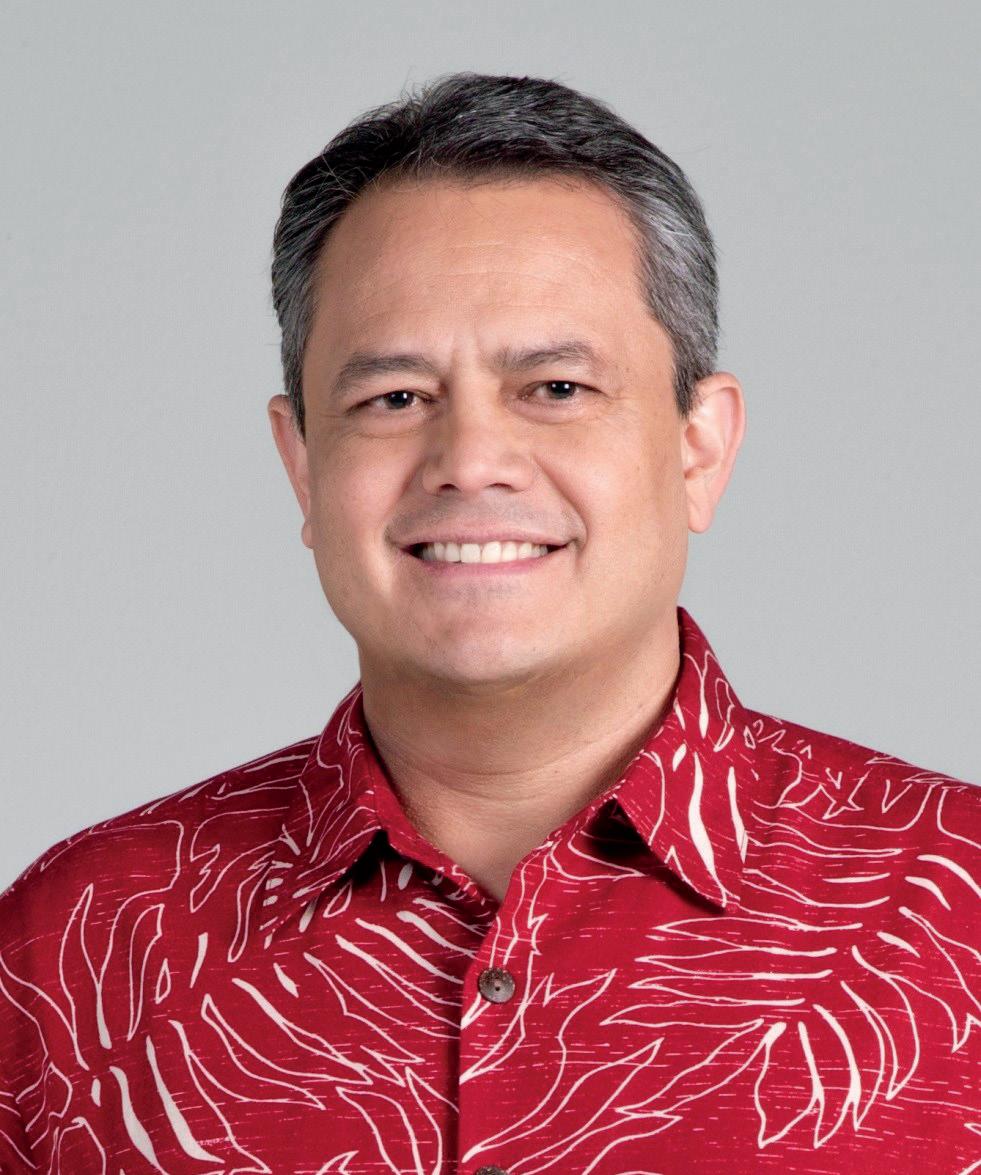
Probate Court selects Eric Yeaman as Ke Kula ‘o Kamehameha trustee
Eric Yeaman has been selected by the state Probate Court as the newest member of the Kamehameha Schools Board of Trustees. He filled the vacancy created by the end of Robert K.W.H. Nobriga’s term on June 30, 2025.
Yeaman brings more than three decades of executive leadership experience across Hawai‘i’s financial services, telecommunications, energy and investment sectors. He is the founder and managing partner of Hoku Capital LLC, a firm established in 2019 to provide strategic advisory services and pursue strategic investments in Hawai‘i-based companies as well as national private equity and real estate funds.
Previously, Yeaman served as president and chief operating officer of First Hawaiian Bank from 2015 to 2019, after leading Hawaiian Telcom as president and chief executive officer from 2008 to 2015. Earlier in his career, he was chief financial officer of Ke Kula ‘o Kamehameha from 2000 to 2003 and
Yeaman brings more than three decades of executive leadership experience.
held senior leadership roles at Hawaiian Electric Company and Hawaiian Electric Industries.
In addition to his professional experience, Yeaman has demonstrated a strong commitment to community service. He serves on the boards of the Harold K.L. Castle Foundation, Friends of Hawai‘i Charities, and the Hawai‘i Asia Pacific Association. He previously served on the Kamehameha Schools Audit Committee and on the boards of The Queen’s Health Systems and The Queen’s Medical Center, including as chair from 2012 to 2017.
Born and raised in Kona, Yeaman is a graduate of the University of Hawai‘i
at Mānoa, where he earned a bachelor’s degree in accounting with distinction. He is a certified public accountant in the State of Hawai‘i.
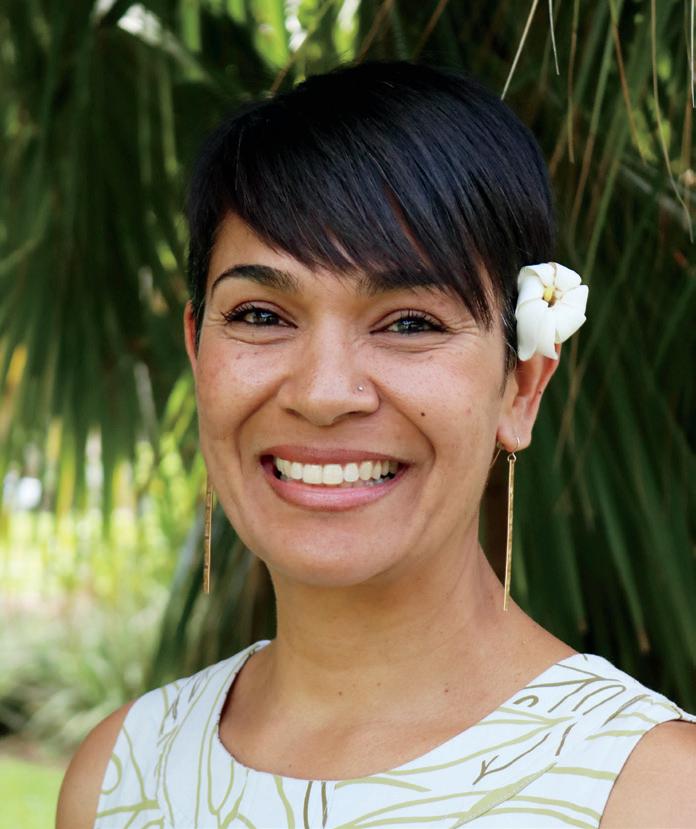
New po‘o kula appointed to lead Kamehameha Schools Kapālama
Kaiwipunikauikawēkiu Punihei
Lipe, Ph.D., has been appointed as the next po‘o kula of Ke Kula ‘o Kamehameha Kapālama, effective June 15, 2026.
Her journey in education reflects both deep purpose and lifelong commitment.
A graduate of Kamehameha Schools Kapālama, Lipe began her path in Hawaiian immersion education at Pūnana Leo o Honolulu and Ke Kula Kaiapuni o Waiau, grounding her early in ‘ike kūpuna. She holds a Ph.D. in education administration, a master’s degree in counseling psychology and a bachelor’s degree in Hawaiian studies.
Lipe brings more than two decades of leadership within the University of Hawai‘i system, serving in roles including director of Hawai‘i Papa o Ke Ao and the Native Hawaiian Place of Learning Advancement Office; director of the Institute for Hawaiian Language Research and Translation; and director of UH Mānoa’s Truth, Racial Healing and Transformation Campus Center.
The selection of Lipe as po‘o kula is the result of an extensive search process that was designed to be rigorous,
Lipe began her path in Hawaiian immersion education at Pūnana Leo o Honolulu and Ke Kula Kaiapuni o Waiau, grounding her early in ‘ike kūpuna.
inclusive and transparent. Every voice mattered throughout the process, which was guided by a clearly defined evaluation rubric and informed by 1,088 comments from our Kamehameha ‘ohana, including many of our haumāna, kumu, limahana, mākua, alumni and community members. Their voices, mana‘o and kōkua strengthened the process and helped shape the path forward.
Honolulu firefighters find new training grounds on ‘āina Pauahi
While plans for ‘Ōlauniu in Kapālama Kai continue to take shape, the ‘āina is serving the community in a new way as a full-scale training ground for the Honolulu Fire Department.
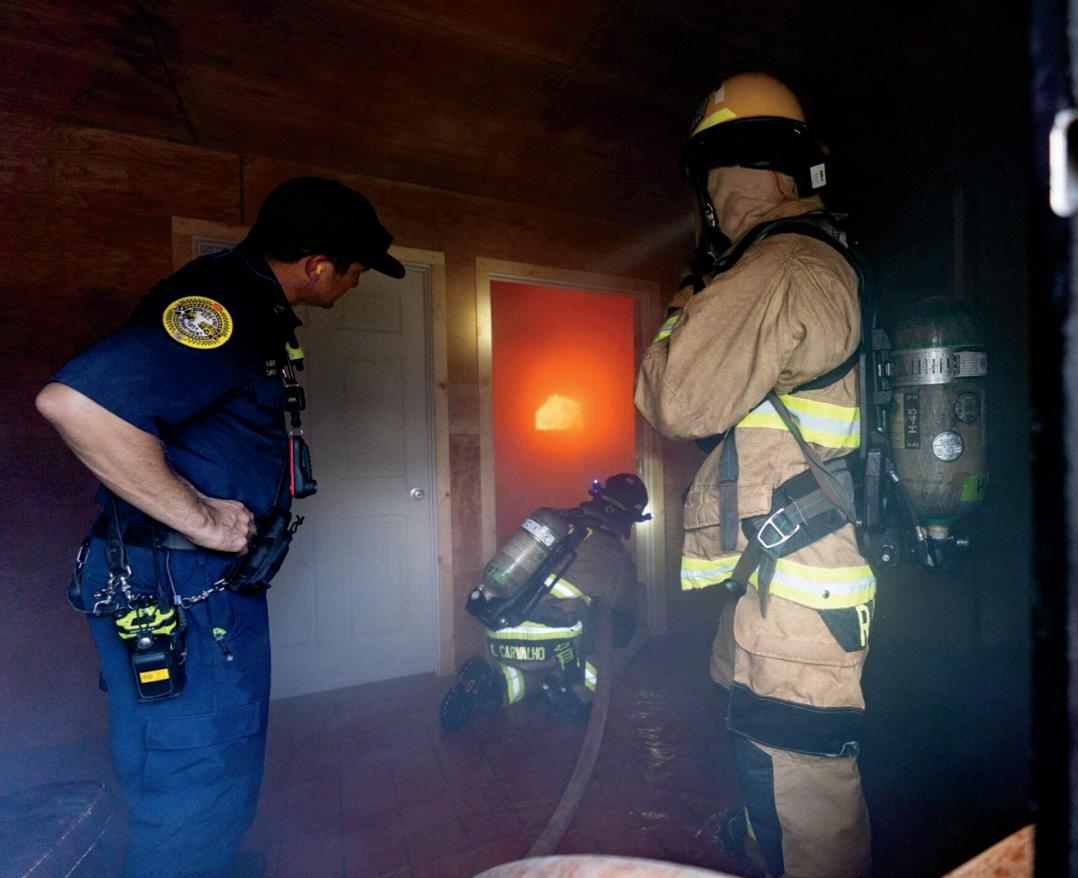
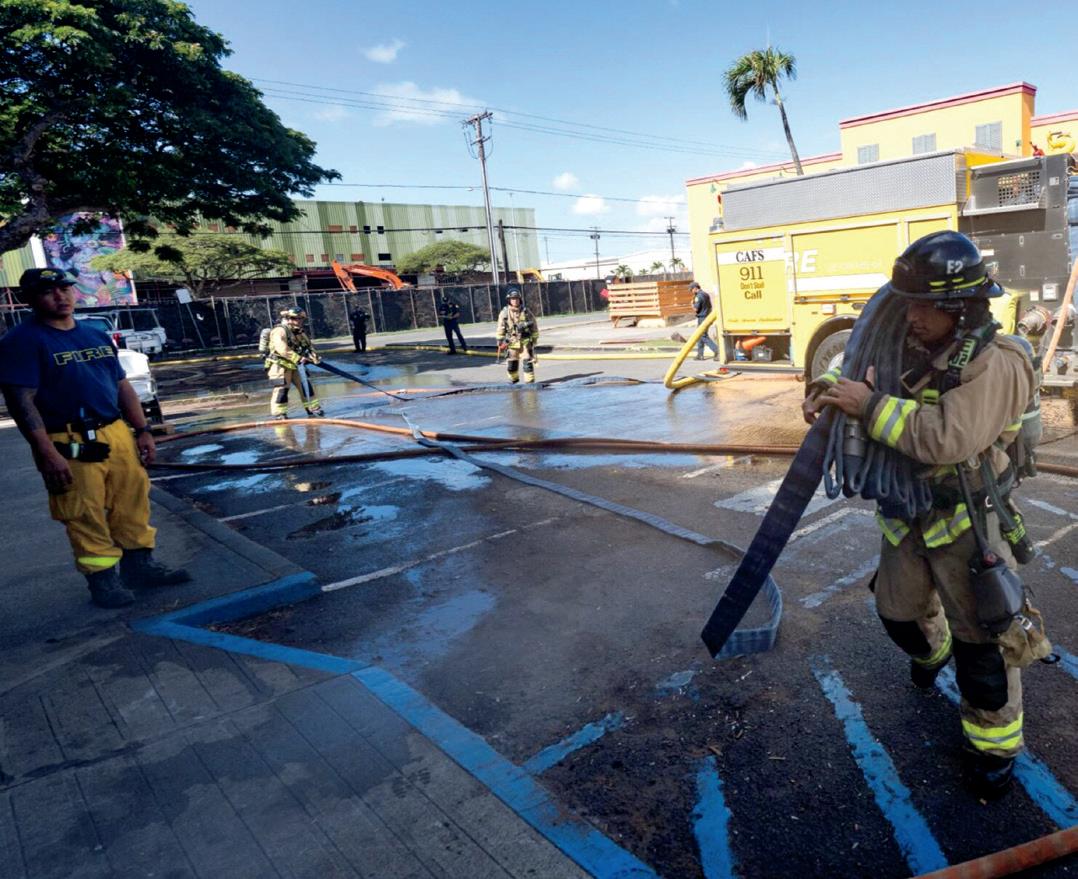
In late 2025, battalions from across O‘ahu rotated through the site for simulated fire drills designed to test their technical skills, coordination, communication and teamwork. The former Popeye’s and Burger King buildings were temporarily refurbished into mock homes and apartments, complete with built-in furniture, smoke machines and fire panels that glow and react to water streams.
“We don’t often get to do this full-scale scenario where we can train,” Battalion Chief Joseph Condlin said. “At the station, we can drill a couple skills at a time, but this is where we get to put it all together — command and coordination, ventilation and fire attack.”
The exercises bring together firefighters from various parts of the island who may never respond to the same call until they actually do. Training alongside new teams helps build confidence long before a crisis breaks out.
“We have companies from all over the island that aren’t used to working together … so it’s about building that
coordination,” recent academy graduate Kalā Burnett KSK’19 said.
Between drills, captains and battalion chiefs lead quick debriefs to review what worked and what could improve. From hose deployment to victim search, every drill builds rhythm and trust that keeps the crew moving as one. For firefighters like Nick Miyasato KSH’09, that synergy feels familiar.
“I see the fire department kind of like playing sports — that bond … in doing something you’re proud of,” Miyasato said.
His colleague Austin Lee-Mahi‘ai KSK’13 carries that same pride, shaped by both family and heritage.
“My grandfather was a firefighter, and I wanted to carry on that legacy of public servants,” Lee-Mahi‘ai said. “Knowing the Honolulu Fire Department was established by the Hawaiian Kingdom — I feel like it’s something to be proud of: my heritage, being Hawaiian and being in the fire department.”
The transformation of ‘Ōlauniu reflects how ‘āina Pauahi continues to serve the community in impactful ways.
“This partnership shows how reimagining our spaces can help us make a lasting, positive impact on our community,” said Christine Sanpei, a project manager with Kamehameha Schools’
“This partnership shows how reimagining our spaces can help us make a lasting, positive impact on our community.”
Christine Sanpei
Project manager
Kamehameha Schools
‘Āina Pauahi Group
‘Āina Pauahi Group. “By transforming these buildings into a temporary training ground for our emergency responders, we’re strengthening community resilience and breathing new life into Kapālama Kai in a way that honors our mission and uplifts those we serve.”
The partnership brings to life the mission of Ke Kula ‘o Kamehameha to uplift leaders who serve with compassion and courage. For now, it’s readying the next generation of first responders for our shared kuleana to protect and sustain a thriving Hawai‘i.
In a training exercise at ‘Ōlauniu at Kapālama Kai, Honolulu firefighters simulate making entry into a burning building.
Honolulu firefighters lay out hoses in a Kapālama Kai parking lot used for hands-on training.
Aloha ‘āina volunteers achieve milestone at He‘eia Loko I‘a
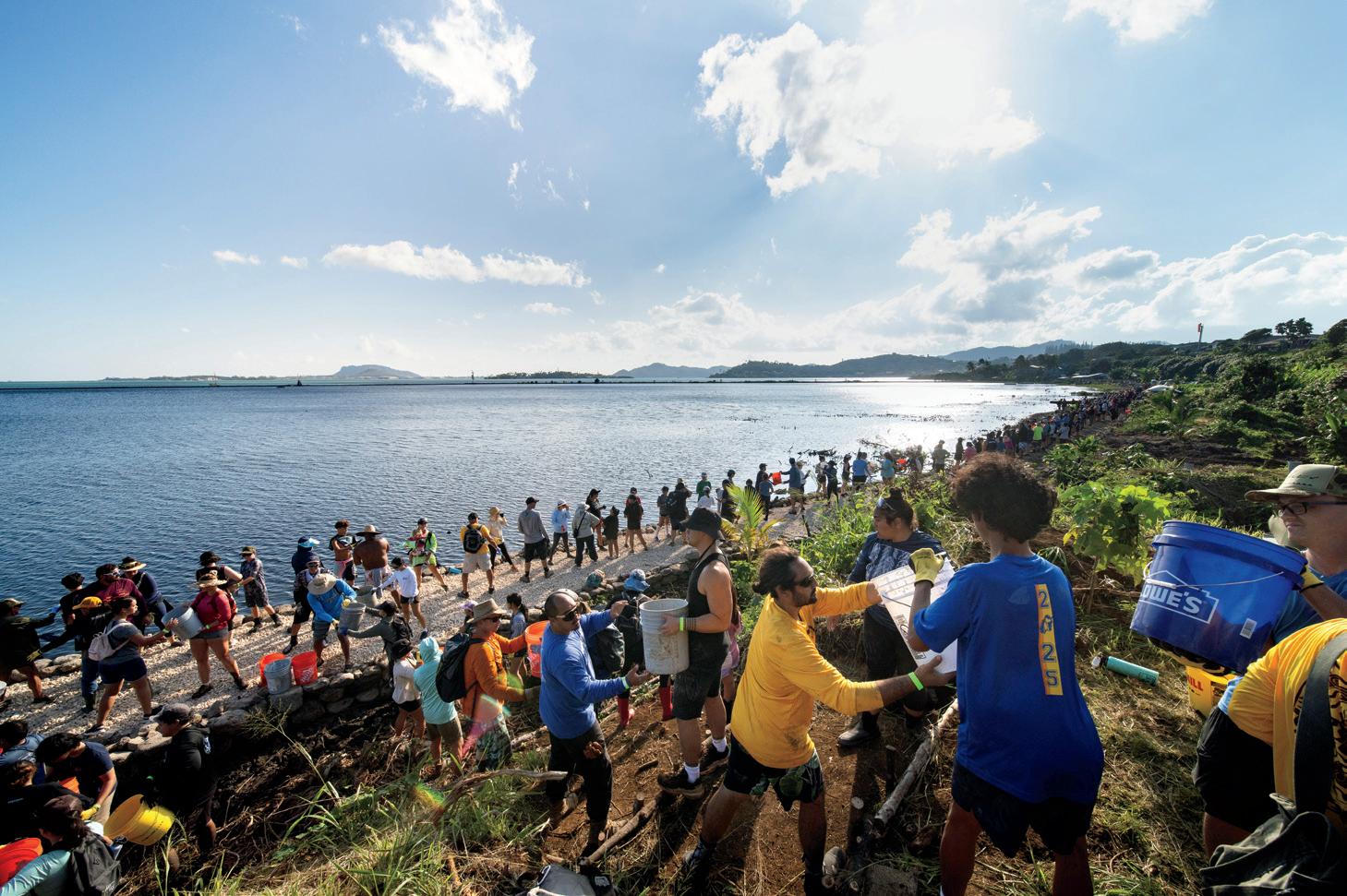
Some 1,800 volunteers activated their aloha ‘āina during the Mo‘okuapā lā hana and celebration at He‘eia Loko I‘a on Dec. 13, 2025. The historic day on ‘āina Pauahi in the moku of Ko‘olaupoko on O‘ahu saw these dedicated participants complete the final 300 feet of the 1.3-mile kuapā. They filled that gap with 120,000 pounds of ko‘a passed hand to hand in buckets. In addition, volunteers cleared and opened five new lo‘i, cleaned six existing lo‘i and dug a 700-foot ‘auwai to carry freshwater from He‘eia Stream to the fishpond.
The accomplishment would not be possible without the vision and dedication of KS ‘Āina Ulu partner, Paepae o He‘eia. Founded in 2001, the nonprofit provides Hawaiian culture-based education via stewardship of the 800-yearold fishpond, which is on the National Register of Historic Places.
As kahu, Paepae o He‘eia organized scores of supporters who worked over nearly 25 years — a generation — to restore the kuapā and health of the pond, which had deteriorated to the point where it was no longer recognizable.
The Mo‘okuapā gathering celebrated the ea — restoration — that’s taken place here, and its inoa is significant. Mo‘o means “perpetuation,” and kuapā refers to the wall that encircles the loko i‘a.
Not all Hawaiian fishponds have kuapā. The walls of most of the ones that do are straight or semi-circular. He‘eia Loko I‘a is unique, its kuapā is circular with no start or end points.
For Keahi Pi‘i‘ōhi‘a KSK’06, Paepae o He‘eia’s restoration coordinator, that metaphor of unbroken connection to place is meaningful. He believes his kuleana is putting people in the footprints of kūpuna. Even if their ancestors were never at He‘eia Loko I‘a, he pointed out, they can be the first person in their ‘ohana to kōkua it.
“The mana they leave in the pōhaku, the mana they leave in the ko‘a, remains,” Pi‘i‘ōhi‘a said. “I hope when their mo‘opuna come, they feel that. Whether your lineage, your mo‘okū‘auhau, existed here for 800 years or whether today is the first day your mo‘okū‘auhau begins, it never leaves this place.”
Seeing He‘eia Loko I‘a fully restored was a dream come true for Ānuenue Punua KSK’94, one of Paepae o He‘eia’s
eight founders and its first education program coordinator. She grew up in Kāne‘ohe, went to parties at He‘eia State Park and, like many people at the time, didn’t know about the 88-acre pond.
It was a daunting task to remove the thick forests of mangrove that covered it and its kuapā. “I remember being stuck in mud, knee deep,” Punua said. “We were working with no chainsaws, just hand tools. Then you start to break away the invasive mangrove, and you realize the stones are still there. If we didn’t do this work, thousands of people would not know (the pond) was here.”
And it’s not over.
“We’ve got to keep the rocks up,” said Keli‘i Kotubetey KSK’96, Paepae o He‘eia’s assistant executive director and another one of its founders. “The weeds continue to grow. We have invasive plants, crabs, fish. It is our collective responsibility to continue the maintenance to increase the productivity of our pond.”
Mo‘okuapā participants lunched on some of that bounty, including fish, ‘ulu, ‘uala, cassava, kalo pa‘a and lū‘au. Paepae o He‘eia’s mission is to nourish the community in every sense of the word. “We’re honored, privileged, to take on the responsibility of feeding people from this place,” Kotubetey said. “Feeding minds,
feeding hearts and feeding bodies.”
Neil Kaho‘okele Hannahs KSK’69, former director of Kamehameha Schools’ Land Assets Division, acknowledged the revival of He‘eia Loko I‘a began with the revival of traditional cultural practices. The leaders of Paepae o He‘eia understood that restoring the pond would require engagement of the community — it would be hard work not done for the people, but with the people.
As time passed, others noticed the progress at the pond and started to look at things on an ahupua‘a scale. “How do we get not just my land, my pond, my lo‘i kalo, my pūnāwai to work, but how do we get the system to prosper?” Hannahs said. “That’s a return to ancestral wisdom.”
He‘eia Loko I‘a is indeed an impressive, inspiring model of success. “Look at all the people here today,” Hannahs said. “They recognize that this is an asset for our entire lāhui. We can proudly stand and say we took care of the work together. Think about that — to earn your place in a lineage that goes back so many generations, to be somebody who contributes to the strength of that line. That’s a legacy!”
Volunteers form a human chain, passing buckets full of ko‘a at the Mo‘okuapā event at He‘eia Loko I‘a.
i
ola nā keiki
caring for the whole child
Talking story with Jared Nihi KSK’92
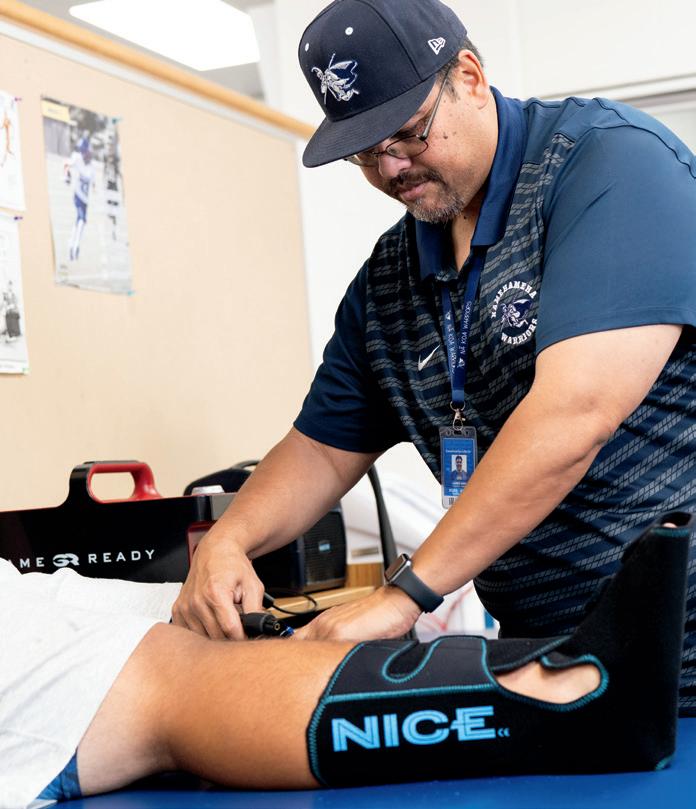
In this edition of I Ola Nā Keiki, we kūkākūkā with Jared Nihi KSK’92, the supervisor for athletic trainers at Ke Kula ‘o Kamehameha Kapālama. Born and raised in Honolulu, Nihi grew up in a Christian household, with his father serving as pastor/alaka‘i and mom serving in administrative roles at the churches they attended.
Nihi earned a Bachelor of Science degree in athletic training at the University of Hawai‘i at Mānoa and a few years later became a certified athletic trainer. He’s been on staff at Kapālama since 2001, becoming lead trainer in 2016 and supervisor in 2023.
I Mua: What inspired you to pursue athletic training and how did your career in health and safety begin?
Jared: I pursued athletic training after sustaining some injuries as a studentathlete. I admired all the work and effort the staff did for me in getting me back to participating, and I told myself that I would like to do the same for student athletes. Cindy Clivio, our current athletic health manager, was the athletic trainer when I was here and she was very instrumental in motivating me to pursue this path.
I Mua: How do you support each other in creating a safe and healthy environment?
Jared: Our athletic training staff works together to provide the best care possible for our athletes. We collaborate to see what treatment would work best or what rehab exercises would speed the healing process. Our staff supports one another to have a healthy work-life balance so that we are not burning ourselves out, as most of our staff have been working in this field for over 20, 25 and even 30-plus years.
I Mua: What’s the most rewarding part of your job? Is there a moment or experience that stands out?
Jared: The most rewarding part of our job is seeing the student-athletes come back from injury and perform at the highest level possible. Of course, winning championships is always nice, but just seeing the athletes return to participation is rewarding. One athlete who stands out was a promising varsity-level football
player in his sophomore year. At the start of his junior year, he tore his ACL and was out for the season. However, he rehabilitated his knee and returned for his senior season. Then, at the start of his senior year, he tore the ACL in his opposite knee and was sidelined again. But he didn’t give up! He rehabilitated his other knee and went on to play for an NCAA Division I program, where he earned a scholarship. After several years, he played professional football in the Canadian Football League and now competes professionally in Japan.
I Mua: How does your role enhance the student and ‘ohana experience at KS?
Jared: One thing that stands out is the ability to assist the family in the whole process. For the majority of the injuries, we can evaluate, diagnose, treat and rehab them all on campus. Athletes don’t have to miss school to go to a doctor’s appointment and parents don’t have to leave work to take their child to the doctor. We can provide immediate care to these athletes to help in the healing and recovery process. We communicate with our health services staff, behavioral health teams, counselors, teachers and more to make sure that we are providing the best care possible for each student-athlete.
I Mua: How has your E Ola! journey influenced your growth as a limahana and as a person?
Jared: E Ola! has greatly influenced my growth, knowing that there is a reason for my actions, for my words. I do things for a reason; I say things for a reason. I don’t do things just to do it. With this mentality, I have a responsibility to foster the growth of those who come after me. It is my kuleana to help student-athletes so that they can blossom to something far greater than I can imagine.
I Mua: What’s one of your most memorable moments at KS — either as a student or staff member?
Jared: One of my greatest moments happened my senior year during our basketball season. I injured my knee during the football season, which held me out of playing basketball, which is my favorite sport. However, I was still able to be part of the team as a playercoach, which led to a state championship that year.
I Mua: What do you enjoy doing in your free time?
Jared: My wife and I are senior pastors at our church, so free time is very minimal. If I’m not working here at KS Kapālama or working at the church, my free time is spent with family, relaxing at home and getting rest. We try to go on family vacations to get away from the busyness of life.
I Mua: What’s a quote that inspires you?
Jared: My favorite Bible scripture, Philippians 4:13, “I can do all things through Christ who strengthens me.” Knowing that Jesus Christ is behind me, supporting me, and lifting me up, I realize that I can do anything that I put my mind to.
I Mua: What’s one health or safety tip you’d like to share with our readers?
Jared: Take time for yourself and your health. For years, I felt like I was fine; I was OK. I never wanted to go to the doctor unless I absolutely needed to. But over the last couple years, I realized that I need to prioritize my health so that I can continue to do what I am doing.
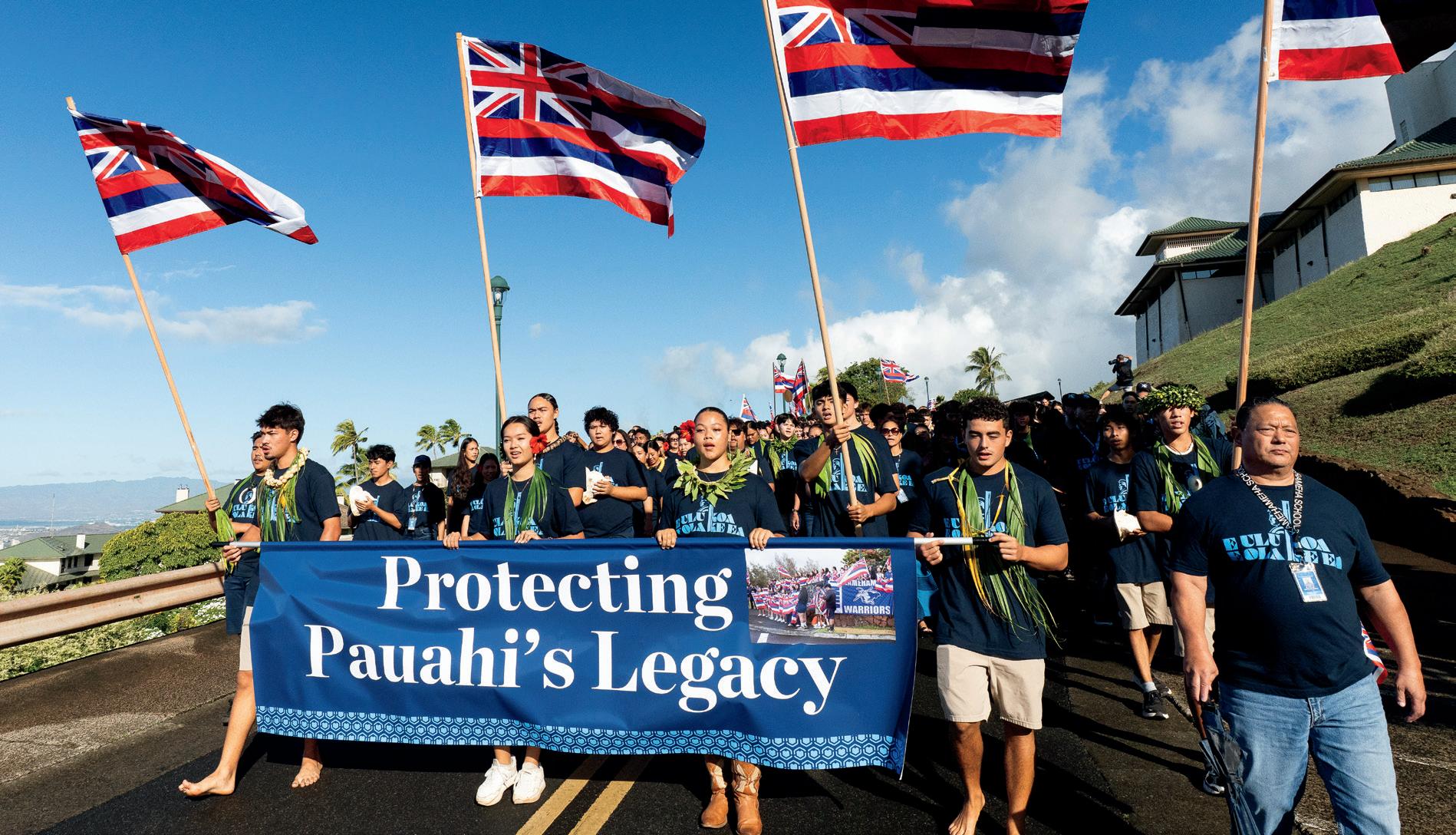
Protecting Pauahi’s Legacy
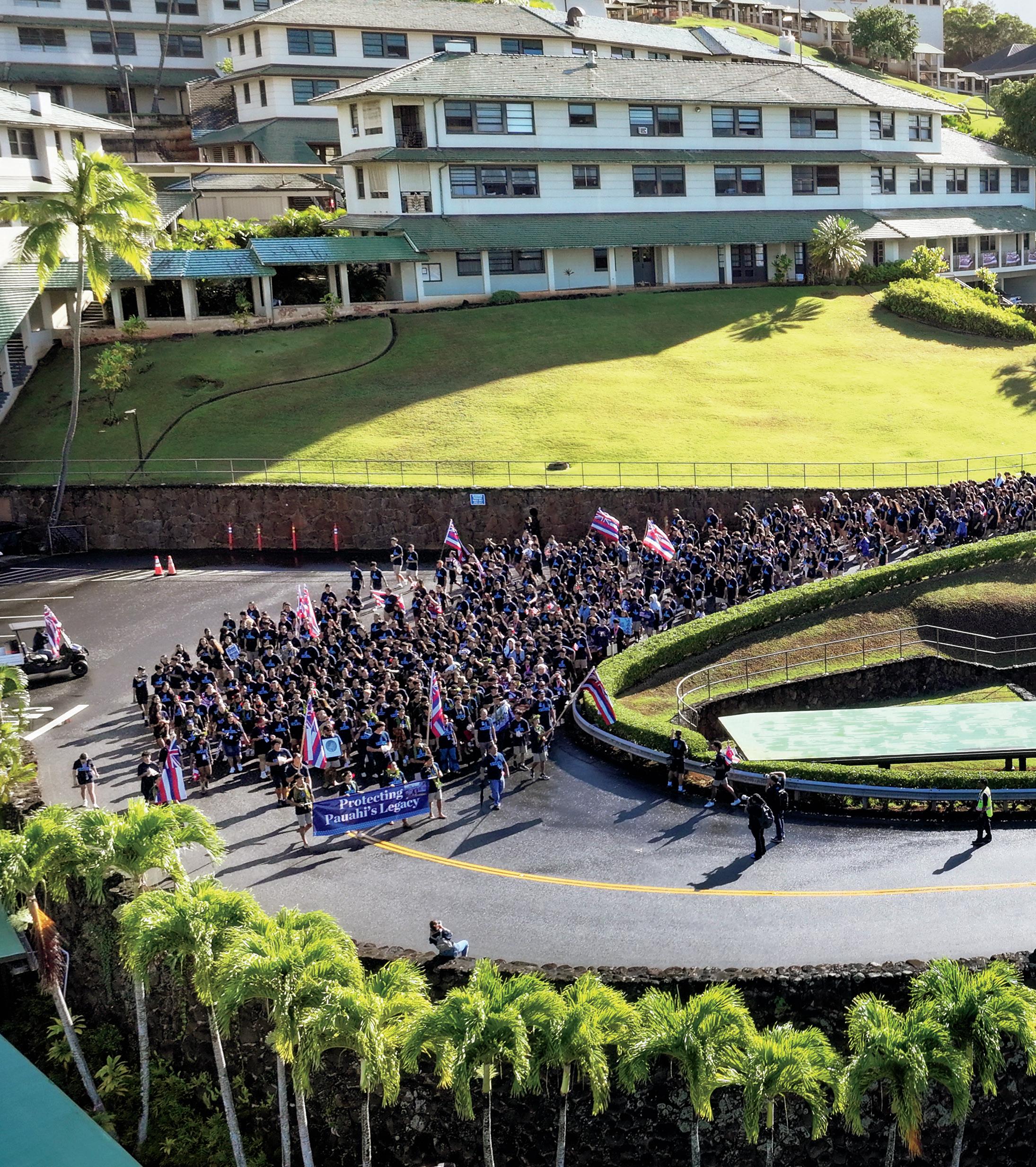
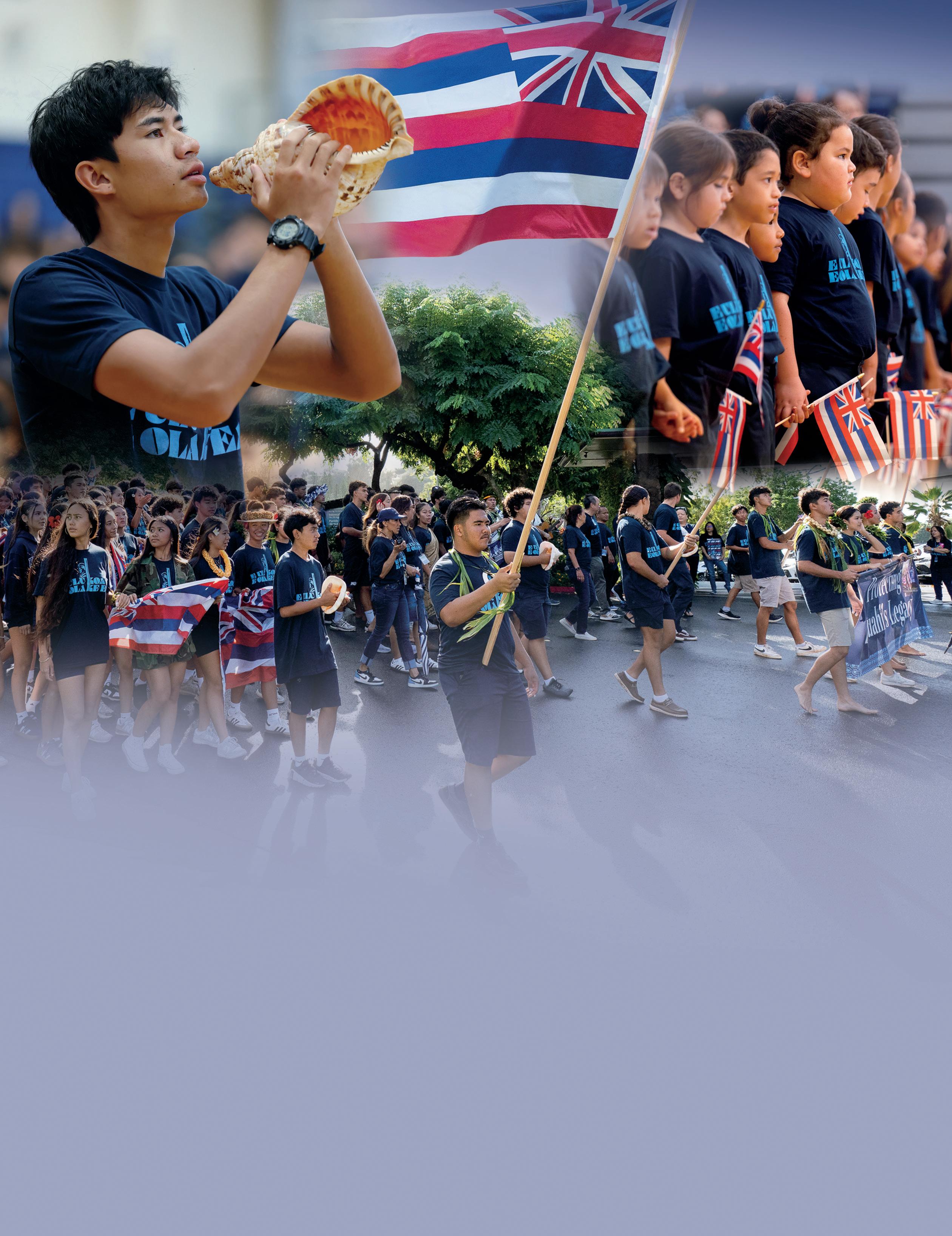
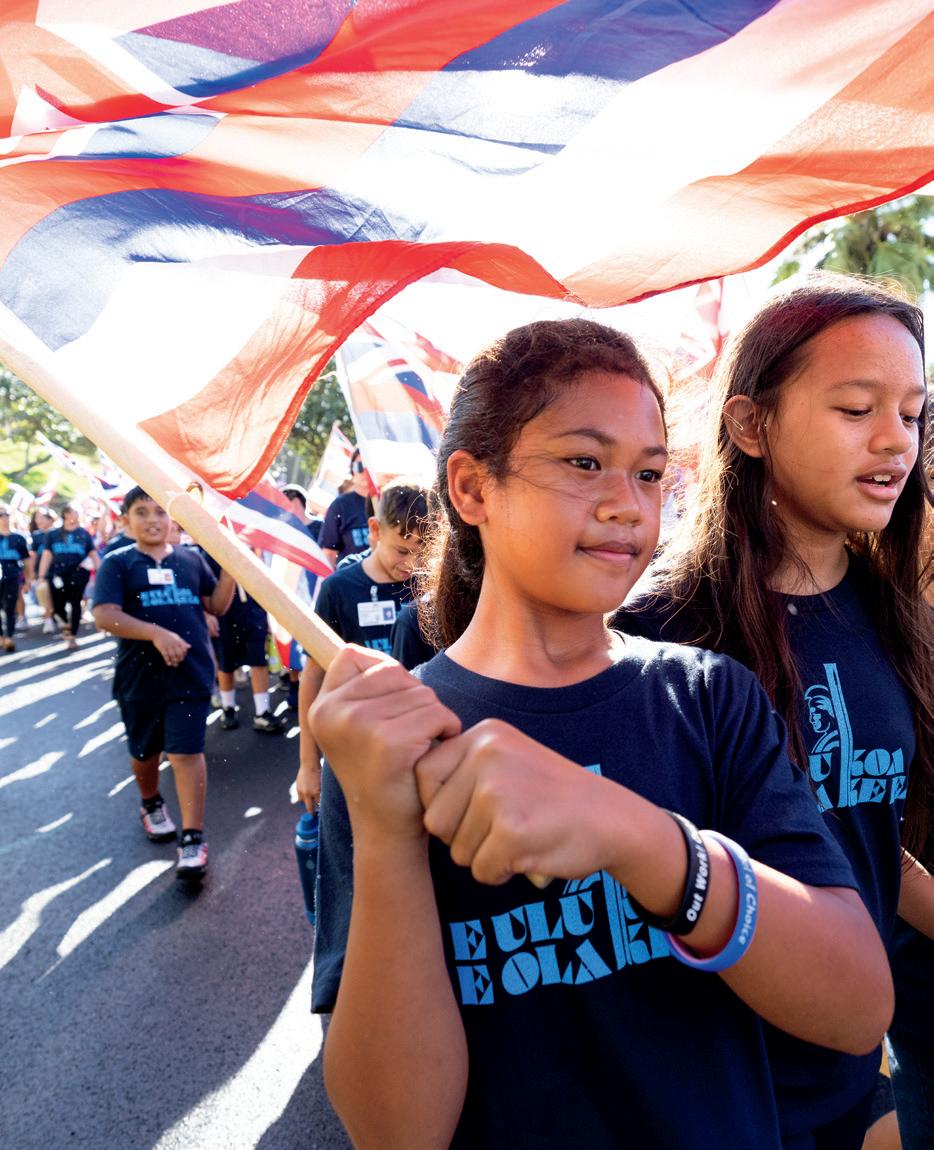
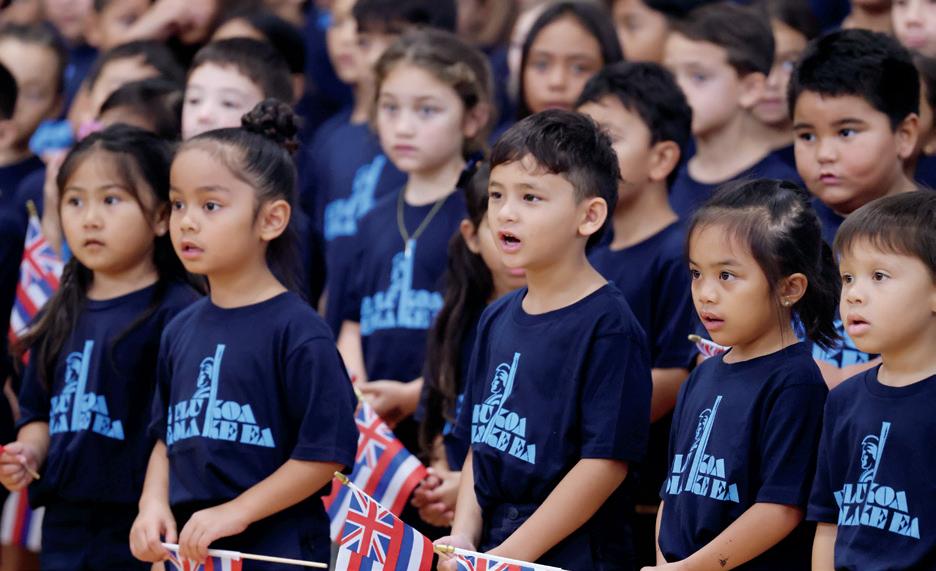
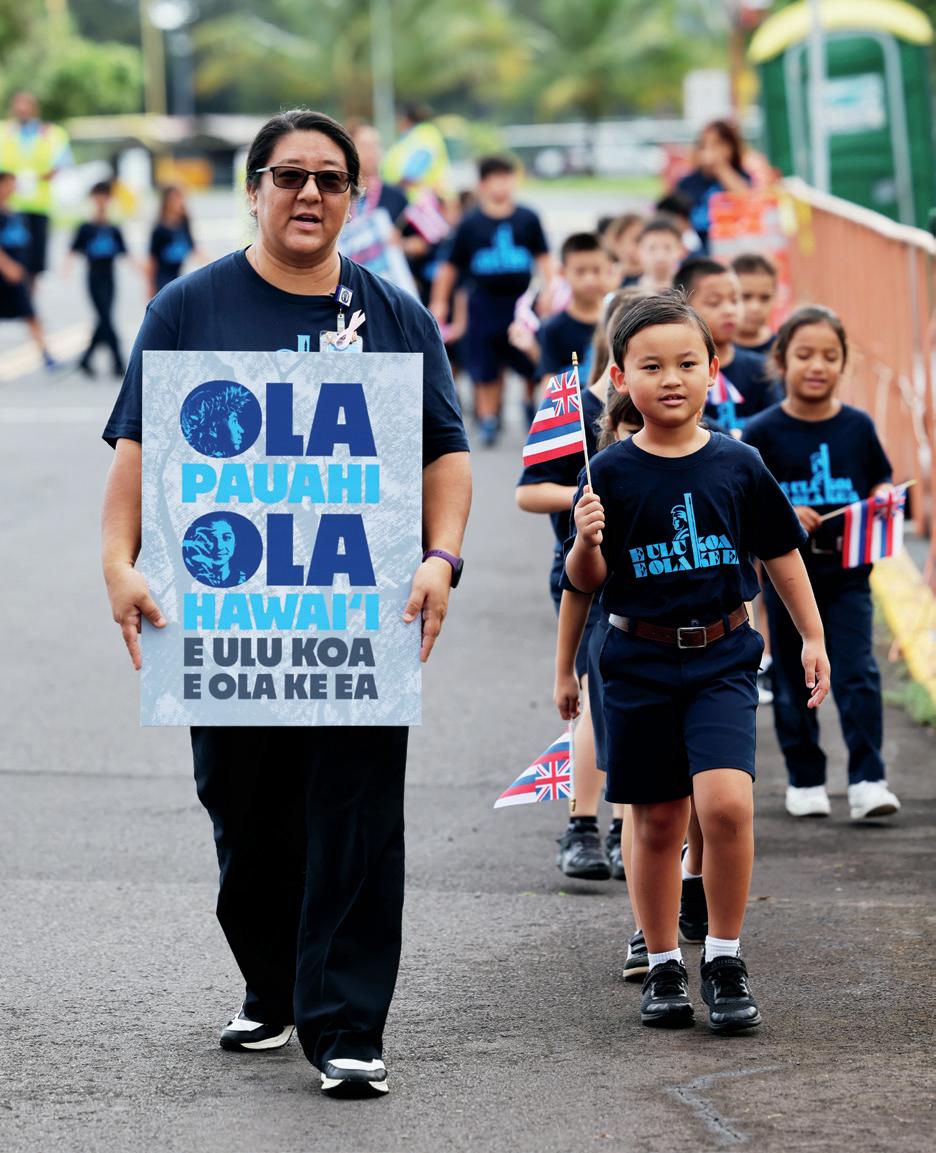
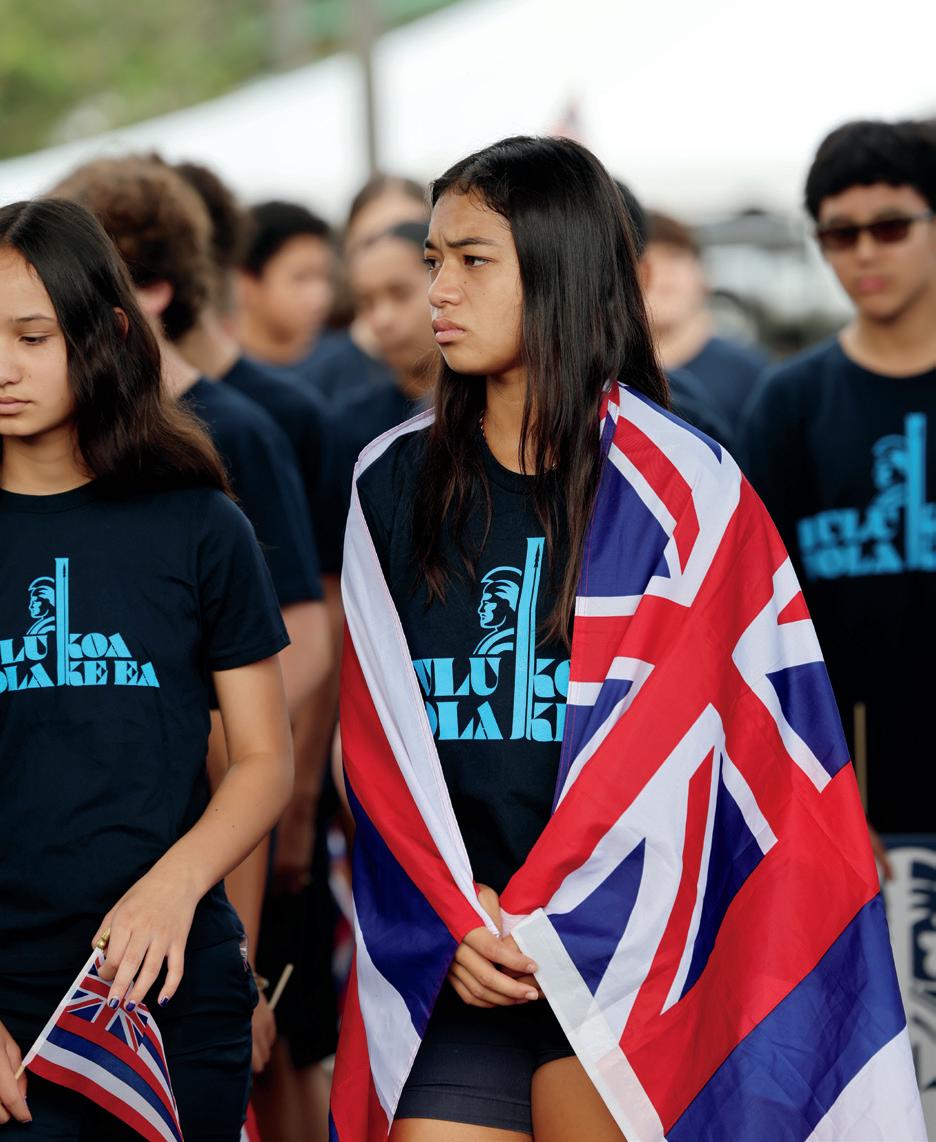
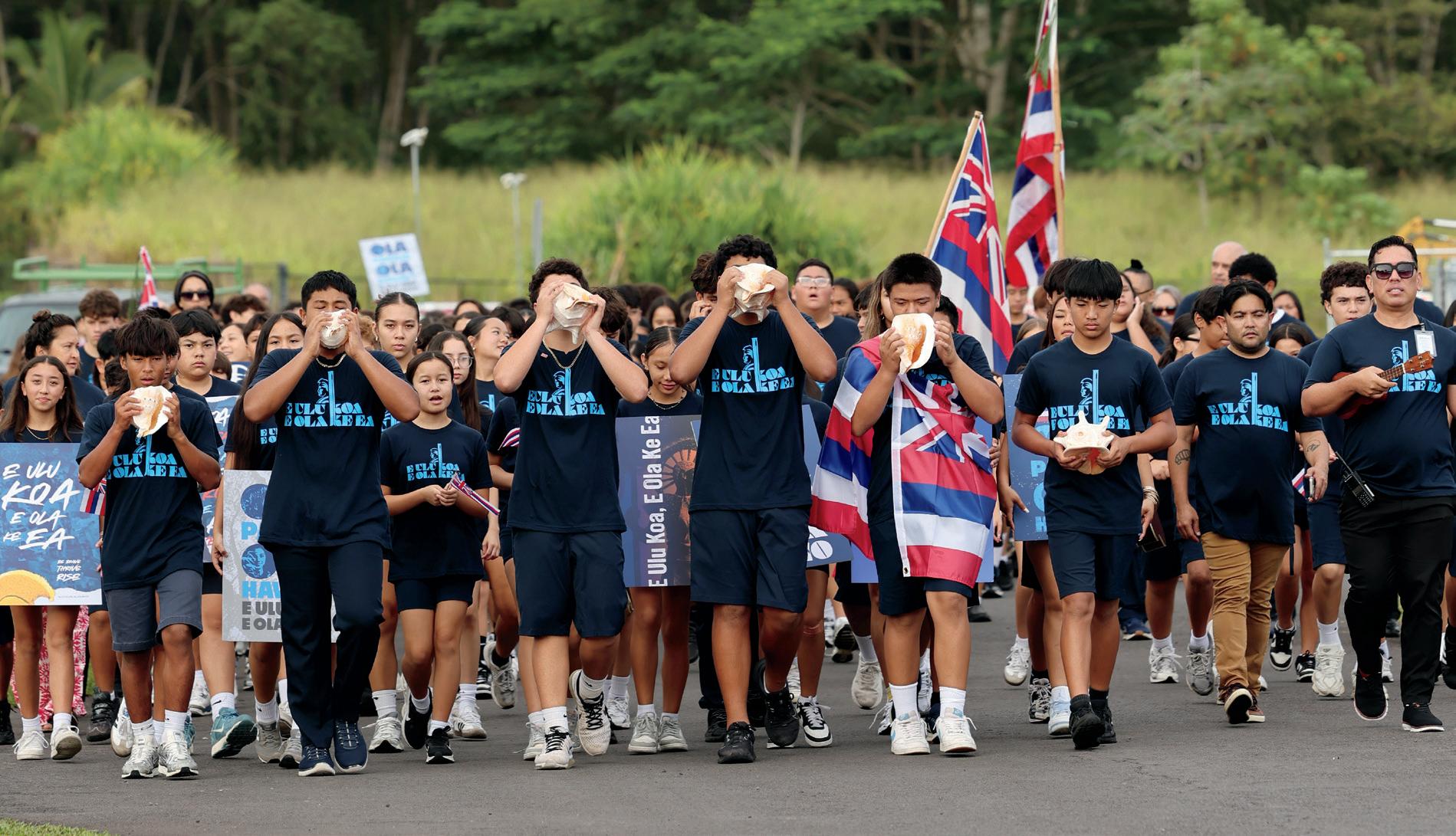
A throng of KS Kapālama haumāna, kumu and staff wound their way down Princess Drive during a historic kula-wide paikau in support of Ke Ali‘i Pauahi. This demonstration of lōkahi is part of wider movement to protect her kauoha from outside forces. You’ll find more mana‘o about this in our cover story on page 18.
“‘A‘ahe palena palena apau, aia kēia a‘e palena nā palena, um, ka mea, kēia pahuhopu, Hawai‘i ma ke ka ‘ōlelo Hawai‘i hiki
ke
lawe aku ‘a‘ale ma nā ha‘awina ke le‘ale‘a ma ke kaumaha ma hiki ke ‘uwā, a mea like ‘ole.”
ka ‘ōlelo Hawai‘i, o nā aia me kākou, eā? No laila,
‘ana, kēia ho‘ākea ‘ana i um, he lanakila nui kēia. No pahuhopu, ‘a‘ale ka ‘ōlelo kula wale nō, eā? ‘A‘ale Hawai‘i ma ka hale wale nō. Ka aku ma nā wahi apau, uh, and ha‘awina wale nō. Pono hiki ka ‘ōlelo Hawai‘i. Pono hiki ma ka ‘ōlelo Hawai‘i. Pono hūhū, ukiuki, uh le‘ale‘a nā
THROUGH HAWAIIAN EYES: “CHIEF OF WAR” SHINES
ON ALI‘I, ‘ŌLELO AND EA
Mea kākau: Ku‘ualoha Kauanoe-Luda
Mea pa‘i ki‘i: Jacob Chinn
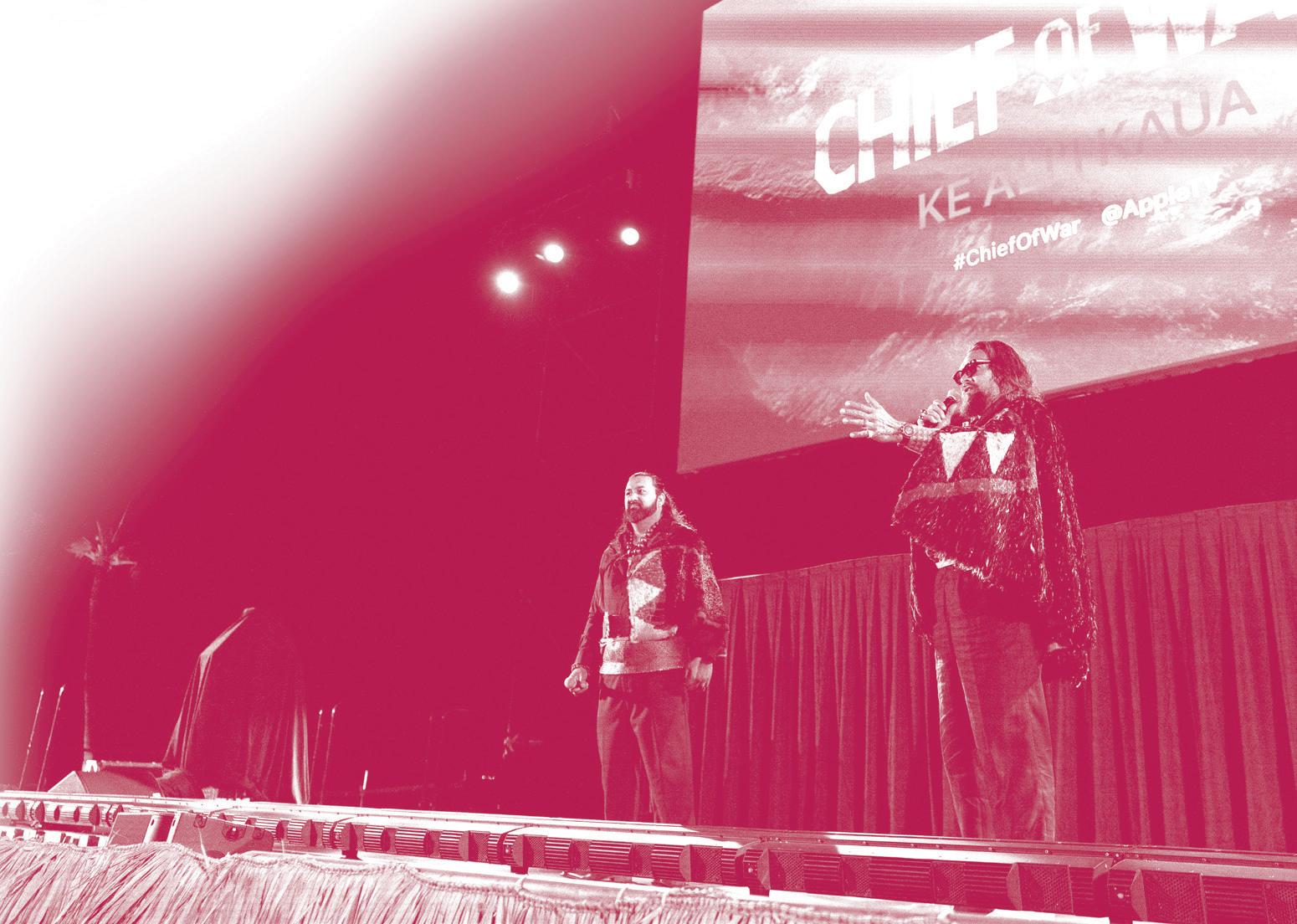
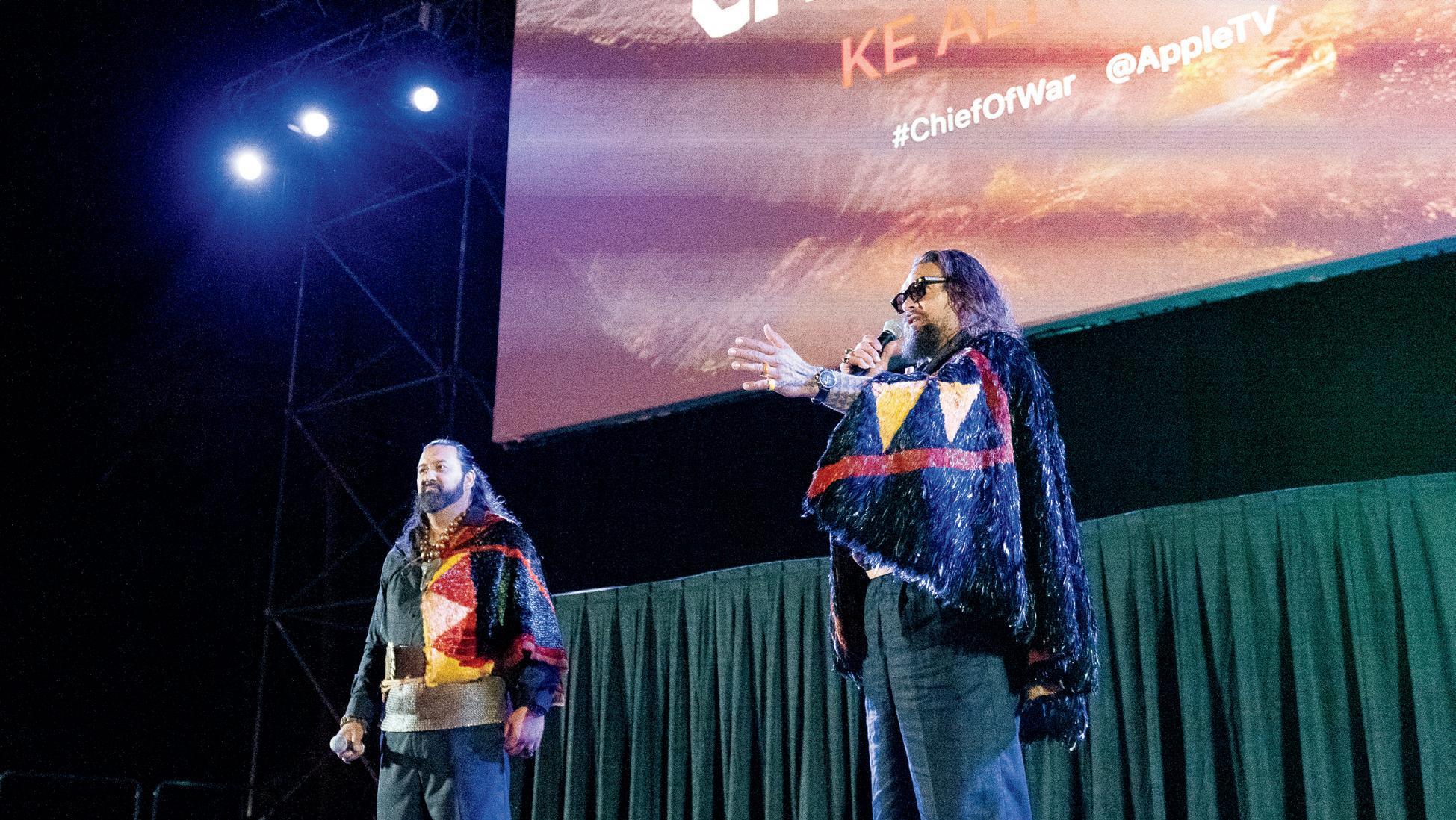
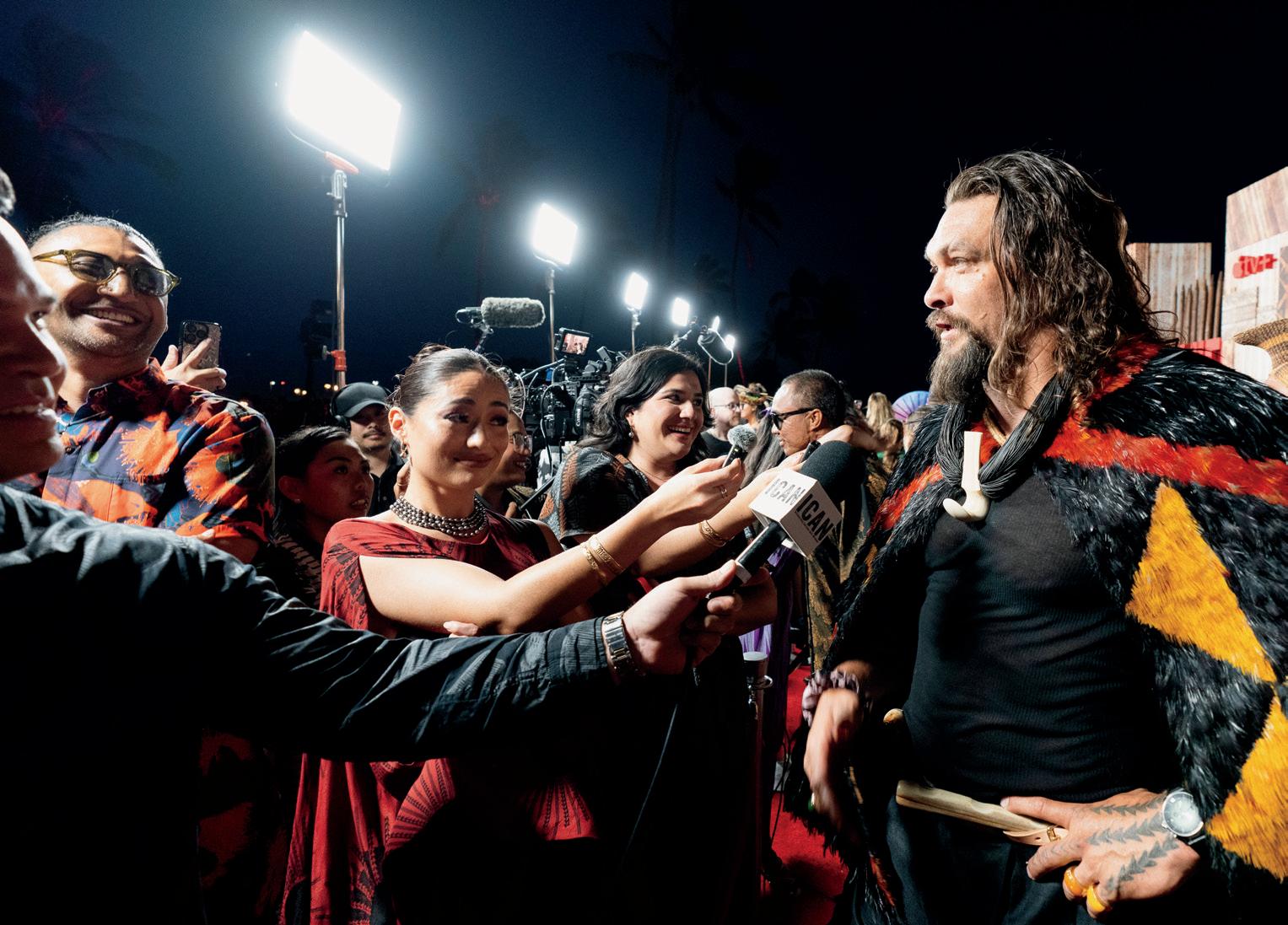
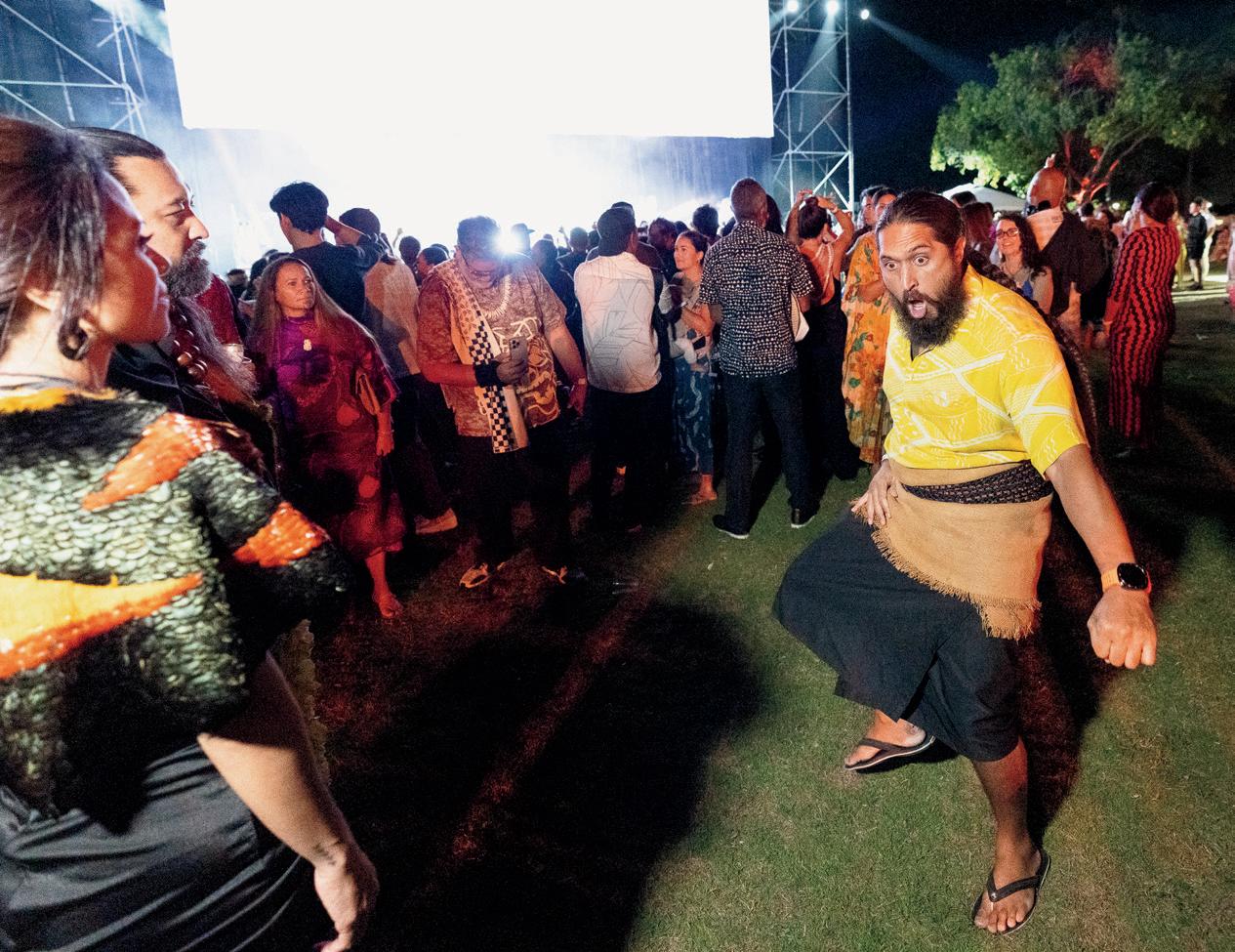
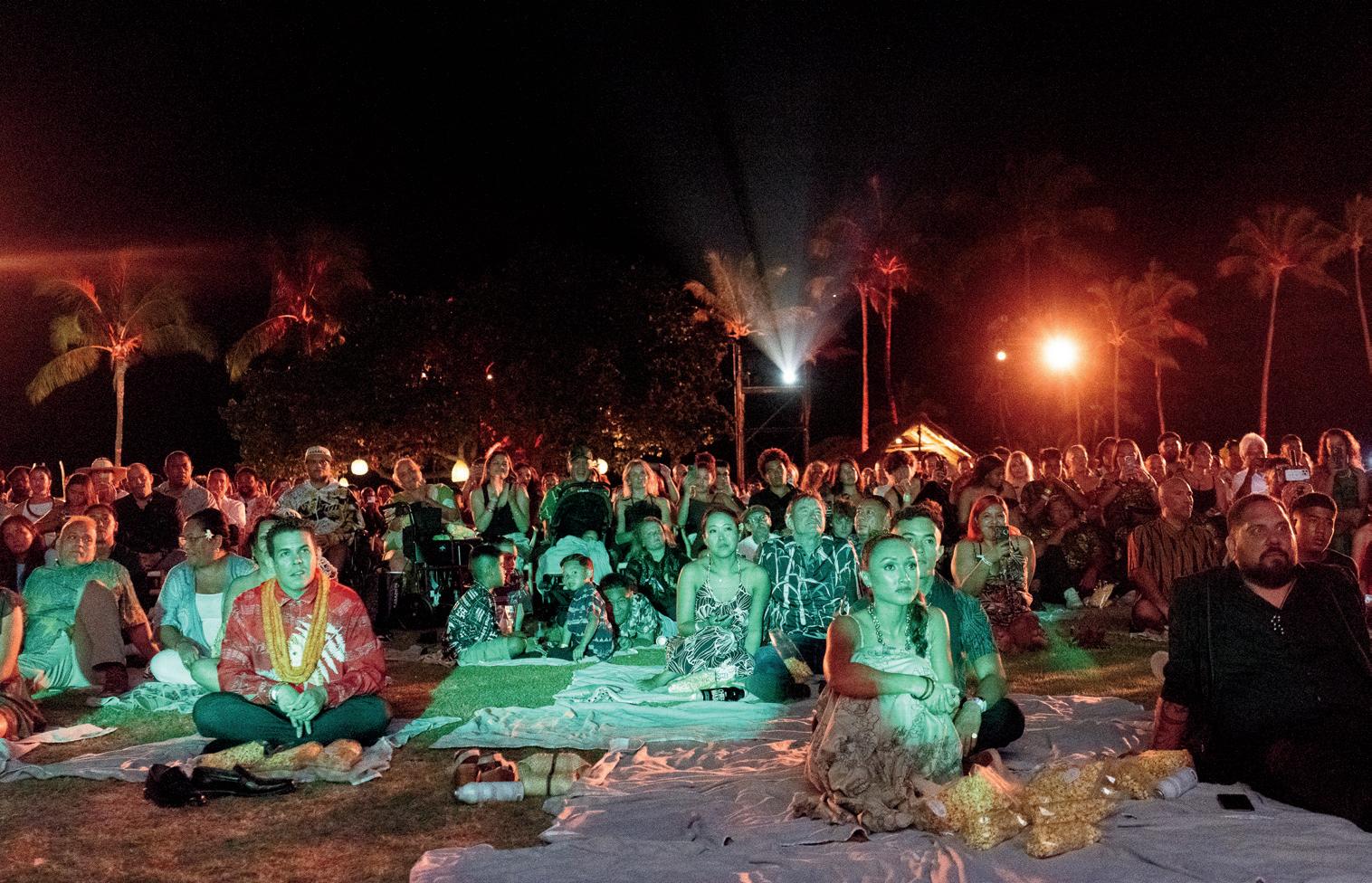
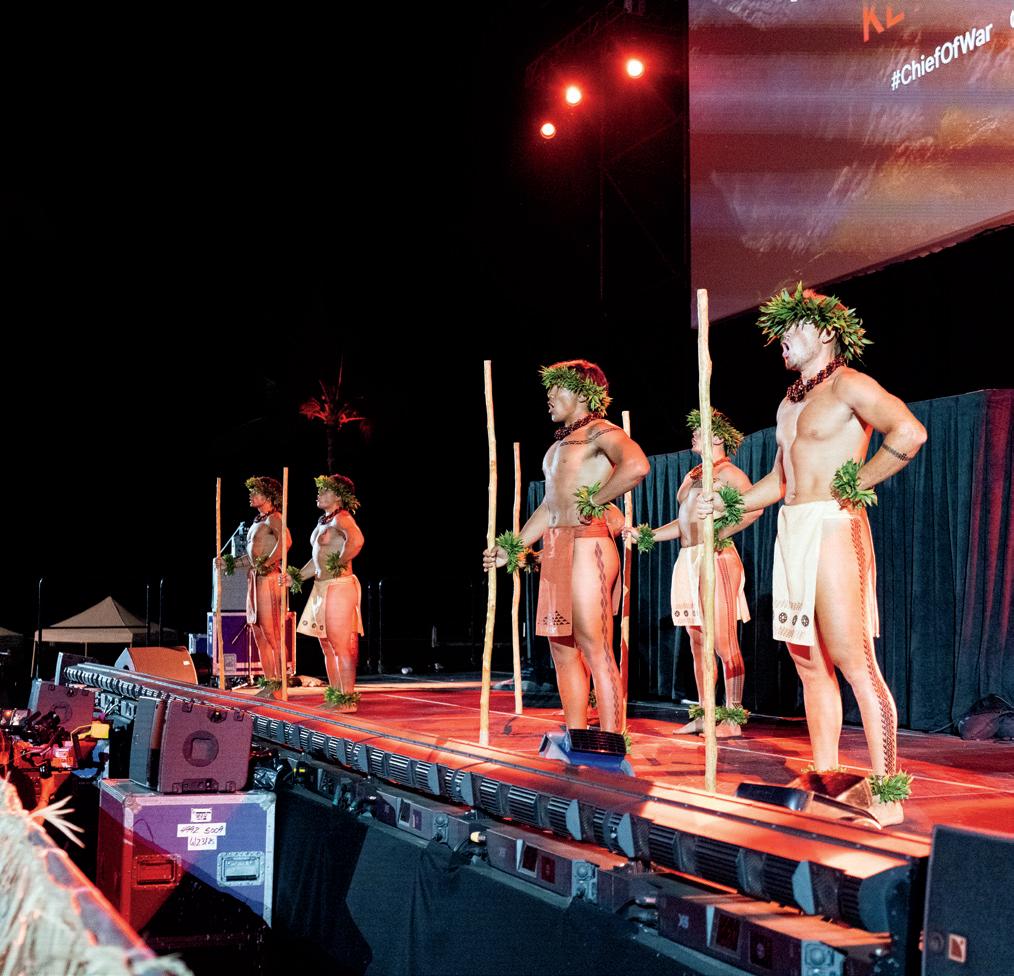
After its historic debut on Apple TV+, “Chief of War” leaves a legacy of firsts: the first major streaming series told in ‘ōlelo Hawai‘i, the first time many in our lāhui saw themselves reflected on screen and the first step in a broader movement to reclaim Hawaiian storytelling at a global level.
The series from co-creators Thomas Pa‘a Sibbett and Jason Momoa premiered in August 2025, but the conversation it sparked con tinues. Chronicling the rise of Kamehameha I and the unification of the Hawaiian Islands, audiences around the world saw — many for the first time — the history and culture of Hawai‘i not in a textbook, but living and breathing on screen.
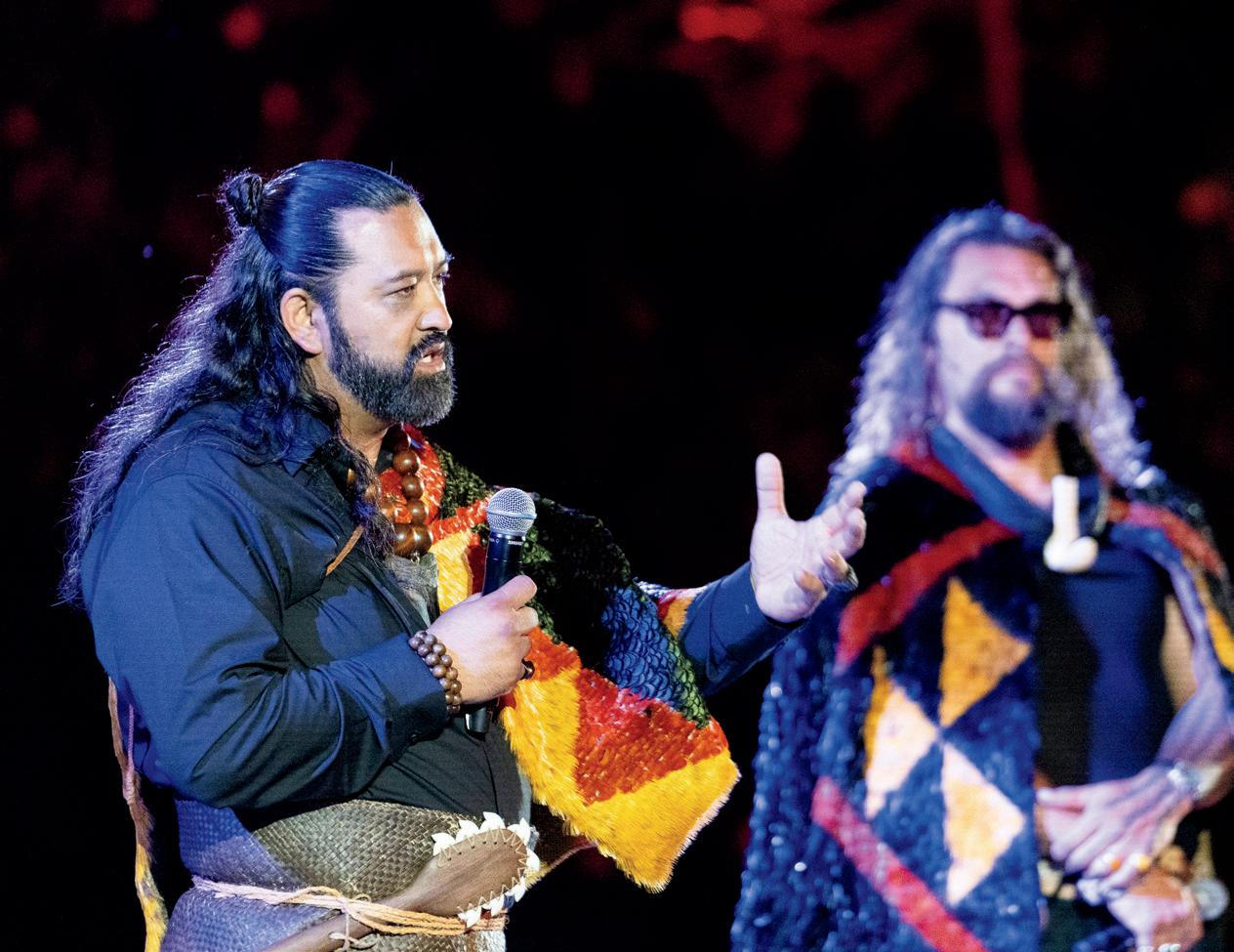
“Even when we were editing, I said, ‘Don’t cut that.’ Our people have never seen this — never seen someone put on a malo and get ready for battle,” Momoa said. “This is for our kids, for our grandpas, our dads. The younger generation’s never seen any of this, so let them.”
Momoa plays Ka‘iana, a complex ali‘i who once stood with Kamehameha during the unification fight. Many of Hawai‘i’s great ali‘i are portrayed throughout the series, brought to life by a mostly Native and Indigenous cast. Behind the scenes, the work was just as intentional.
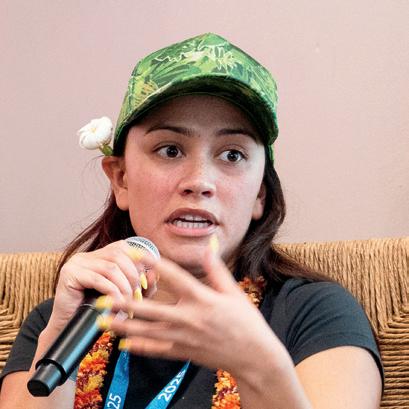
Cultural advisor and ‘ōlelo Hawai‘i coach Kaho‘okahi Kanuha KSK’07 worked closely with the cast to bring authenticity and mana to every scene. He coached Momoa directly in the language, often rehearsing lines on long drives between set locations. For him, the show’s impact goes far beyond pronunciation.
“It’s not just about language, it’s about knowledge … and national consciousness,” Kanuha said on Hu‘e Kaona, the companion podcast of the series. “How can you really be proud to be Hawaiian if you don’t know what Hawaiian is?”
He believes one of the most powerful outcomes of “Chief of War” is what it opens up in the imagination of the lāhui.
“It will allow our people an opportunity — and for many of our people, the first opportunity — to imagine what it’s like to be Hawaiian,” Kanuha said. “That’s one of the most empowering things about the show.”
And that imagination is rooted in language, seen and heard onscreen in ways never before done at this scale.
“‘A‘ahe palena o ka ‘ōlelo Hawai‘i, o nā palena apau, aia me kākou, eā? No laila, kēia a‘e palena ‘ana, kēia ho‘ākea ‘ana i nā palena, um, he lanakila nui kēia. No ka mea, kēia pahuhopu, ‘a‘ale ka ‘ōlelo Hawai‘i ma ke kula wale nō, ‘eā? ‘A‘ale ka ‘ōlelo Hawai‘i ma ka hale wale nō. Ka hiki ke lawe aku ma nā wahi apau, uh, and ‘a‘ale ma nā ha‘awina wale nō. Pono hiki ke le‘ale‘a ma ka ‘ōlelo Hawai‘i. Pono hiki ke kaumaha ma ka ‘ōlelo Hawai‘i. Pono hiki ke ‘uwā, a huhū, ukiuki, uh le‘ale‘a, nā mea like ‘ole,” said Kanuha.
Kaho‘okahi Kanuha KSK’07 worked closely with the cast to bring authenticity and mana to every scene.
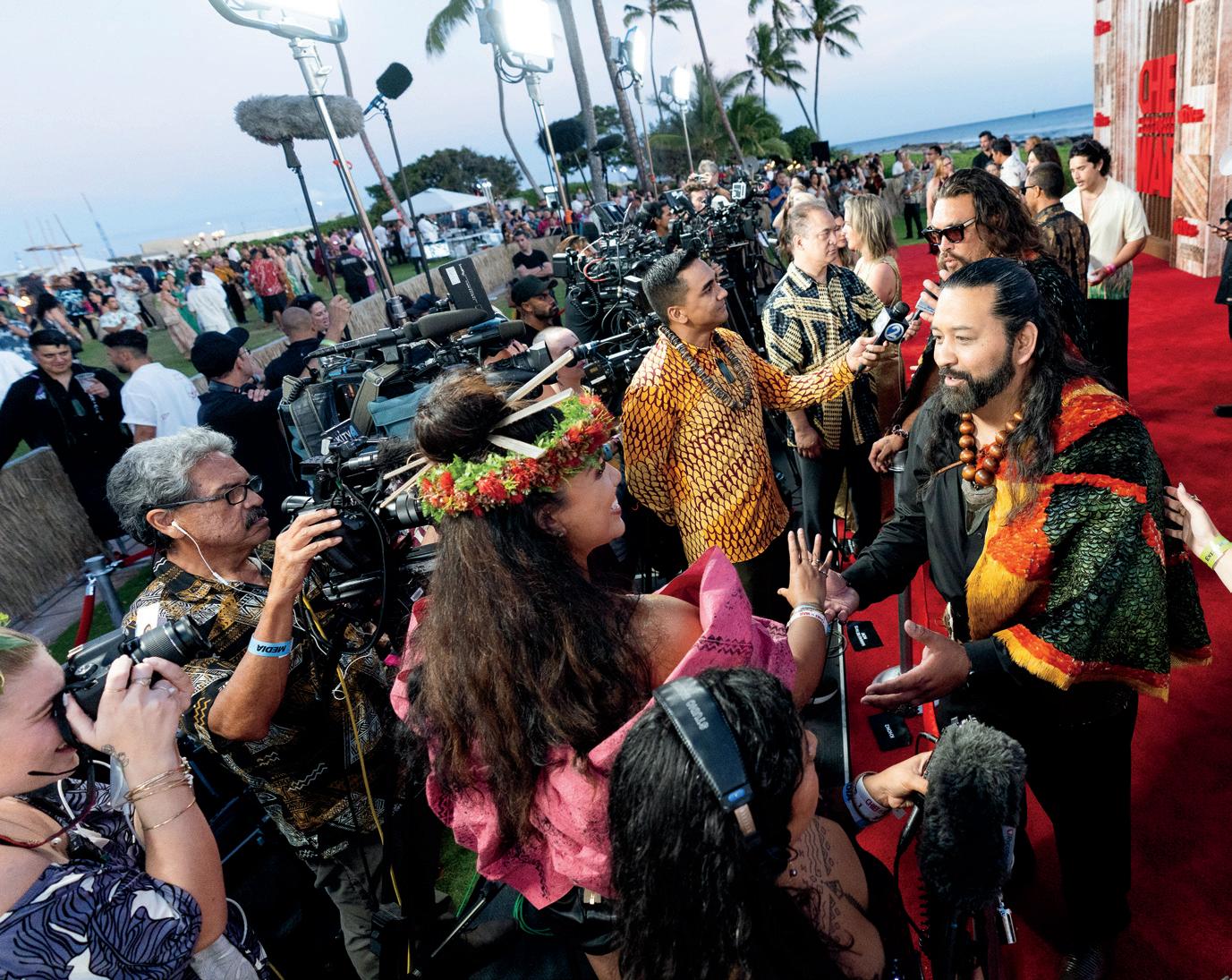
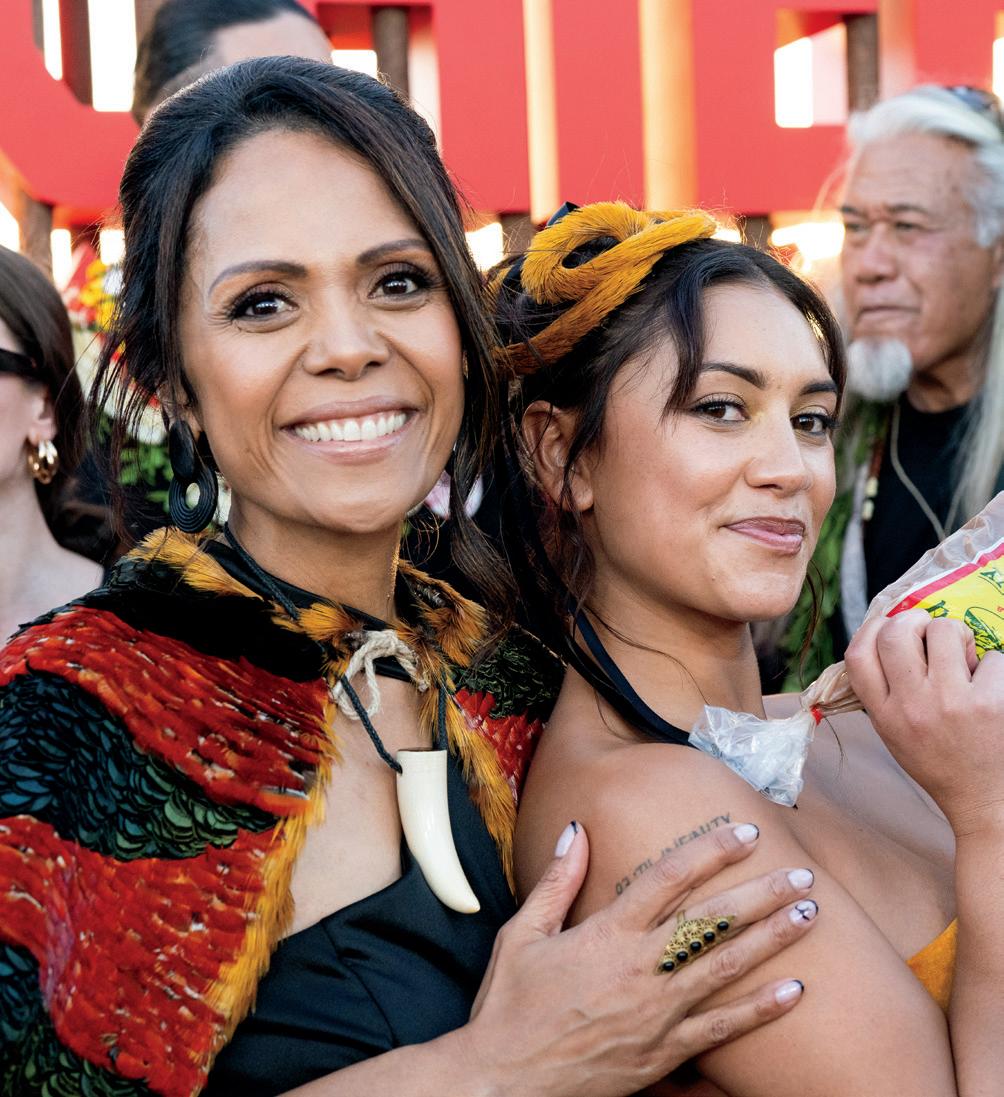
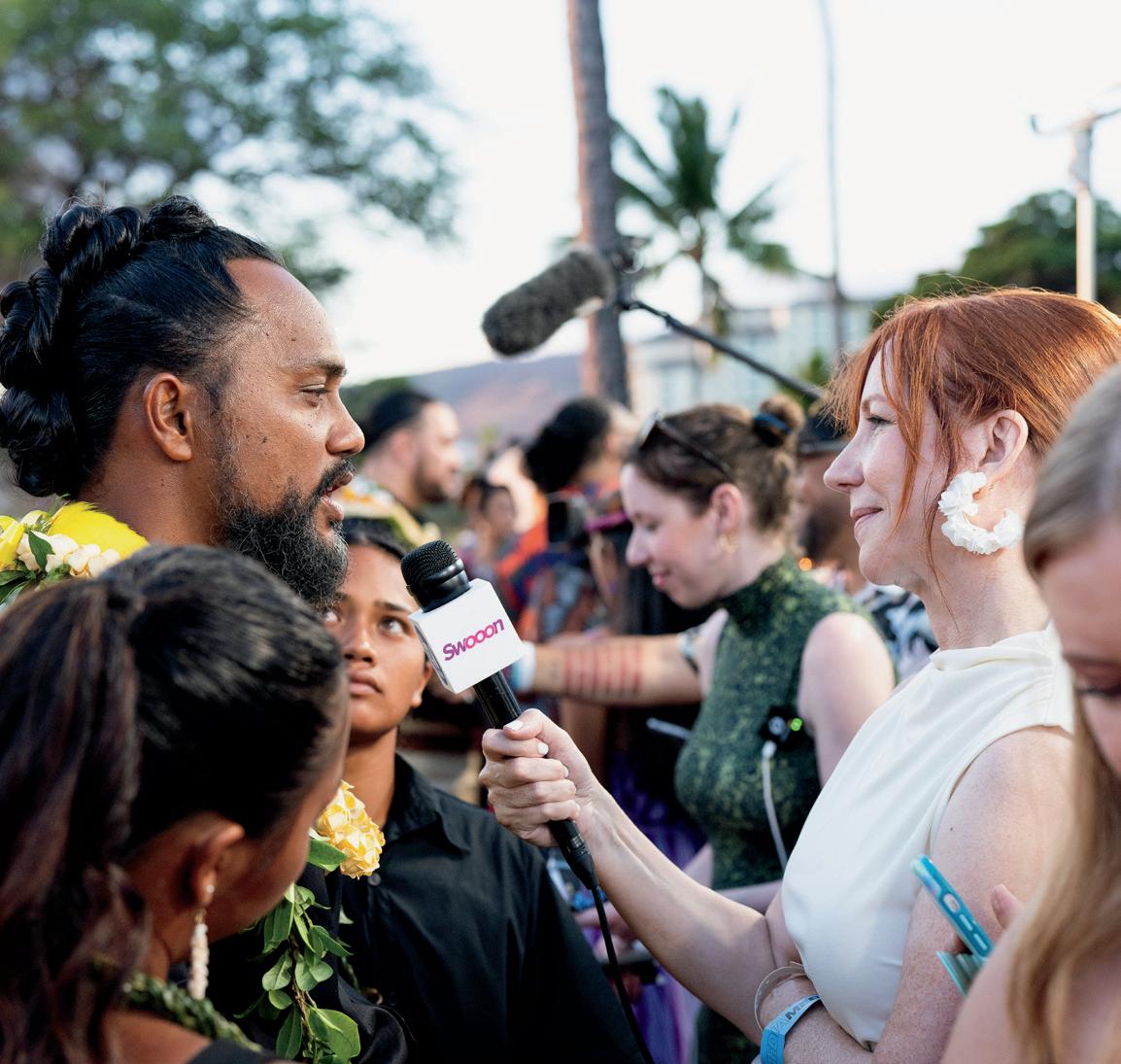
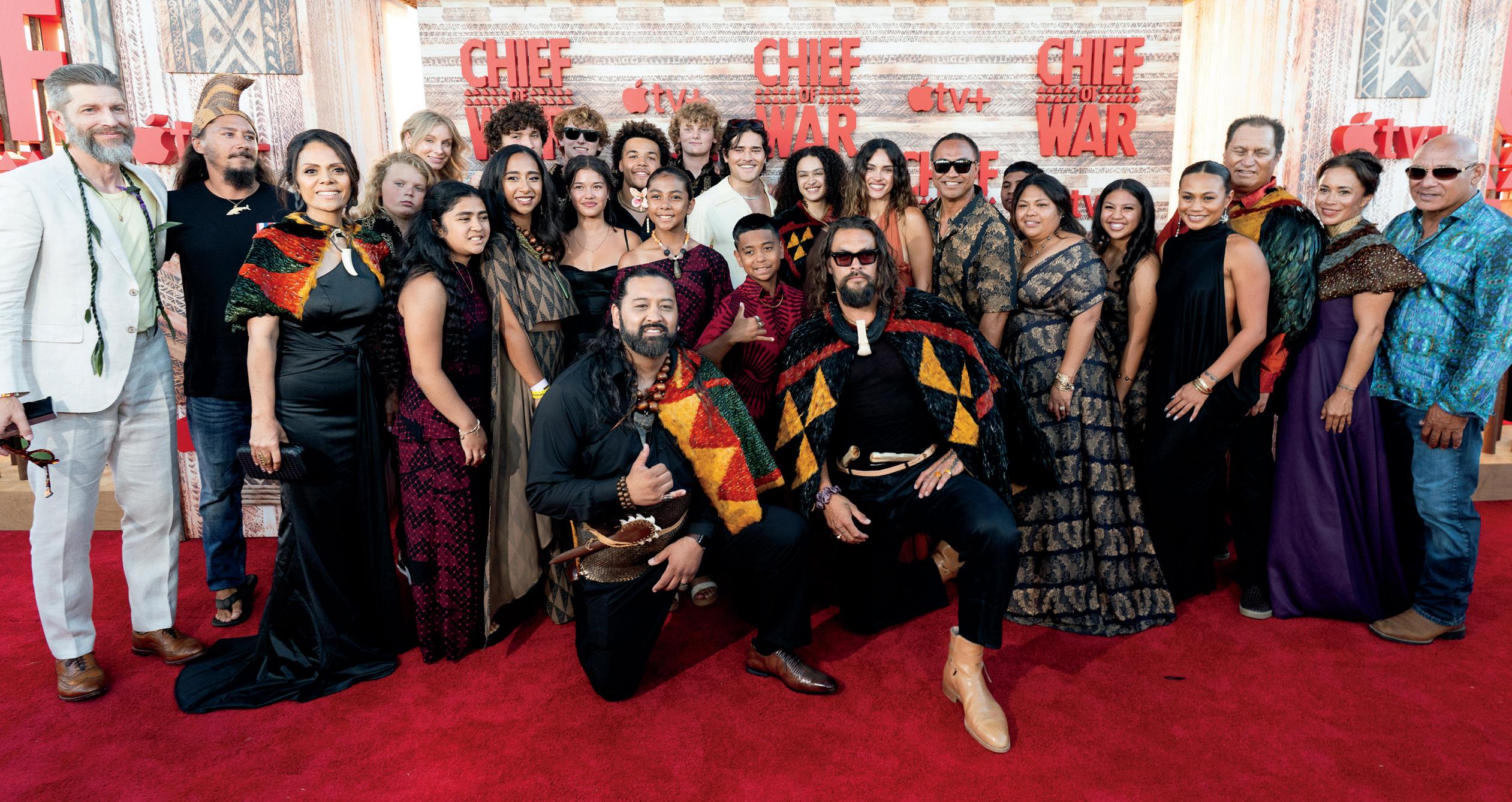
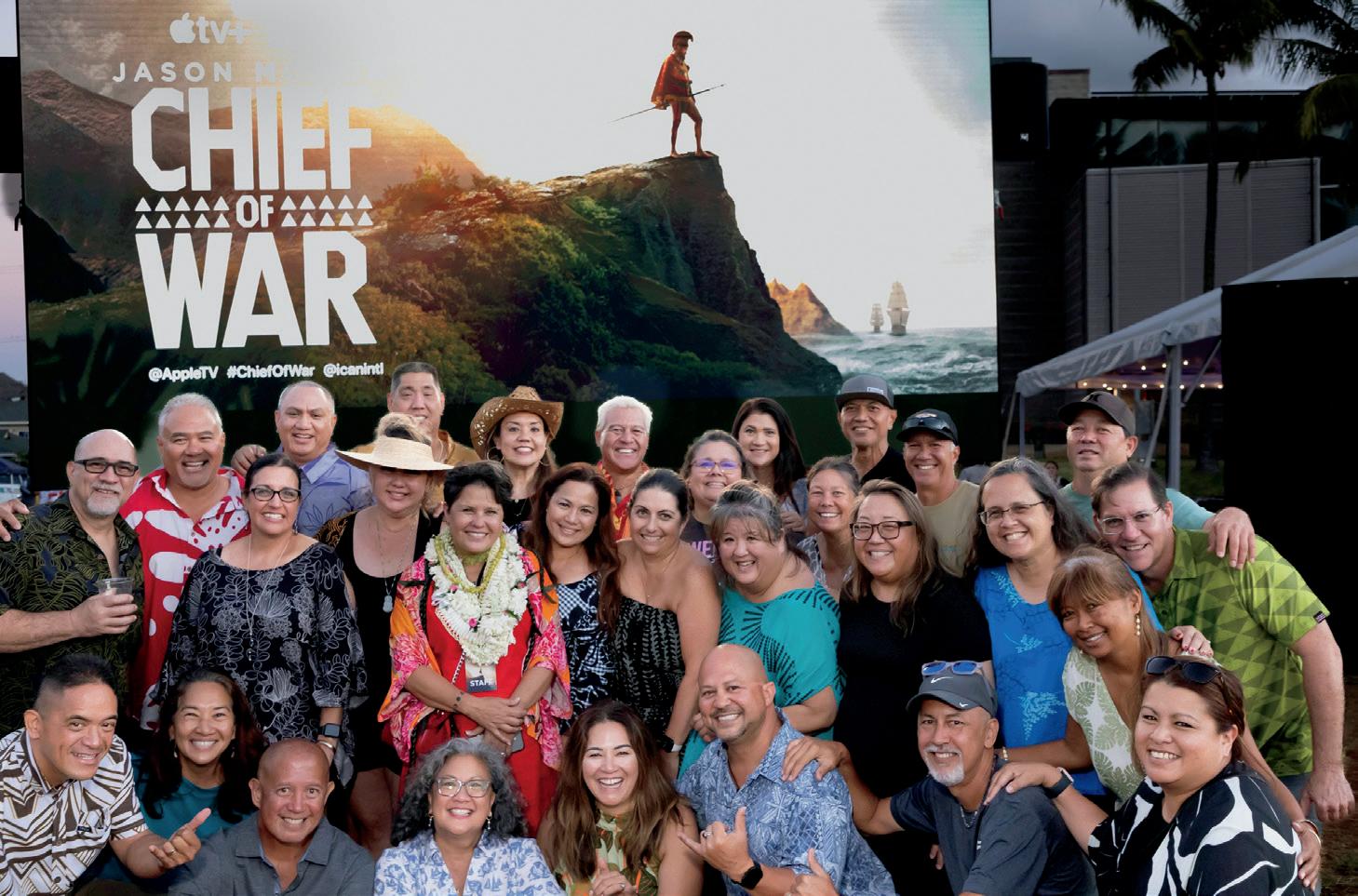
Creators, cast and community members walk the red carpet at the premiere of “Chief of War,” marking a historic moment for Hawaiian storytelling on a global stage.
[Translation: “There’s no limit to Hawaiian language, if there are limits, they’re ours. So breaking down those boundaries, expanding what’s possible, that’s a huge win. Because the goal isn’t ‘Hawaiian in school.’ It’s not ‘Hawaiian at home.’ It’s Hawaiian everywhere. And not just for lessons/homework. We should be able to have fun in Hawaiian. To grieve in Hawaiian. To yell, to get angry, to laugh, everything in Hawaiian.”]
For Luciane Buchanan, who plays Ka‘ahumanu, stepping into that imagination became personal.
“I, as an actress, found my power through playing her,” Buchanan said. “There’s a little bit of mana that I got to experience that made me more confident and lead within my cast to help each other.”
Moses Goods, who portrays the ali‘i Moku, also approached his role with humility and deep respect.
“These are more than just historical figures. They continue to exist,” Goods said. “We’re in service to them, telling a story like that. We gotta be right with them.”
Across the pae ‘āina, the impact was immediate. The day the series premiered in Hawai‘i, many tuned in to watch, making it the streaming service’s No. 1 show in its premiere week. Within those numbers, ‘ōiwi finally saw themselves on screen — in ‘ōlelo, in ali‘i, in strength.
“‘O akahi nō mākou i ‘ike i Ke Ali‘i Kaua, ‘Chief of War,’ no Apple Kīwī no ho‘i. Just pā ka na‘au i ka lohe ‘ana i ka ‘ōlelo Hawai‘i ma kēia ‘ano ki‘i ‘oni‘oni no ho‘i. ‘A‘ale wā i hala — he wā hou kēia no ka lāhui Hawai‘i, no ka ‘ōlelo Hawai‘i, no ke kuana o ka mo‘olelo Hawai‘i,” said background actor Kepa Barrett KSK’13
[Translation: “Upon first seeing Ke Ali‘i Kaua, ‘Chief of War’ on Apple TV — it just hit the gut, it touched our hearts, to hear Hawaiian language in this kind of cinematic production. This isn’t the past — this is a new era for the Hawaiian nation, for the Hawaiian language, for the lens of Hawaiian storytelling.”]
That feeling carried through the season and into the podcast Hu‘e Kaona, where Sibbett and guests unpack the cultural decisions behind the storytelling from ali‘i relationships and heiau protocol to language choices and visual symbolism.
“We’re not just consuming mo‘olelo — we are mo‘olelo,” said Ryan “Gonzo” Gonzalez KSK’96, interim director of KS’ Kealaiwikuamo‘o who supported the podcast. “What we saw in ‘Chief of War’ are the previous chapters of who we are. And we are now continuing to write the current and future chapters — whether we realize it or not.”
“Chief of War” was never just about the past. It’s about what we do next.
“Ea is about possibility and having control over those possibilities. ‘Chief of War’ created more possibility,” Gonzalez said.
For Luciane Buchanan, who plays Ka‘ahumanu, stepping into that imagination (of what it’s like to be Hawaiian) became personal.
“I, as an actress, found my power through playing her,” Buchanan said.
Kaiaulu rallies to defend Ke Ali i Pauahi’s kauoha ‘
That legendary rallying cry uttered by Kamehameha Nui before leading his young warriors into battle carried great mana in 1782 at the pivotal Battle of Moku‘ōhai in South Kona.
Fast forward to the morning of October 31, 2025, when that same powerful battle cry reverberated off buildings and hillsides of the Kapālama campus of Ke Kula ‘o Kamehameha.
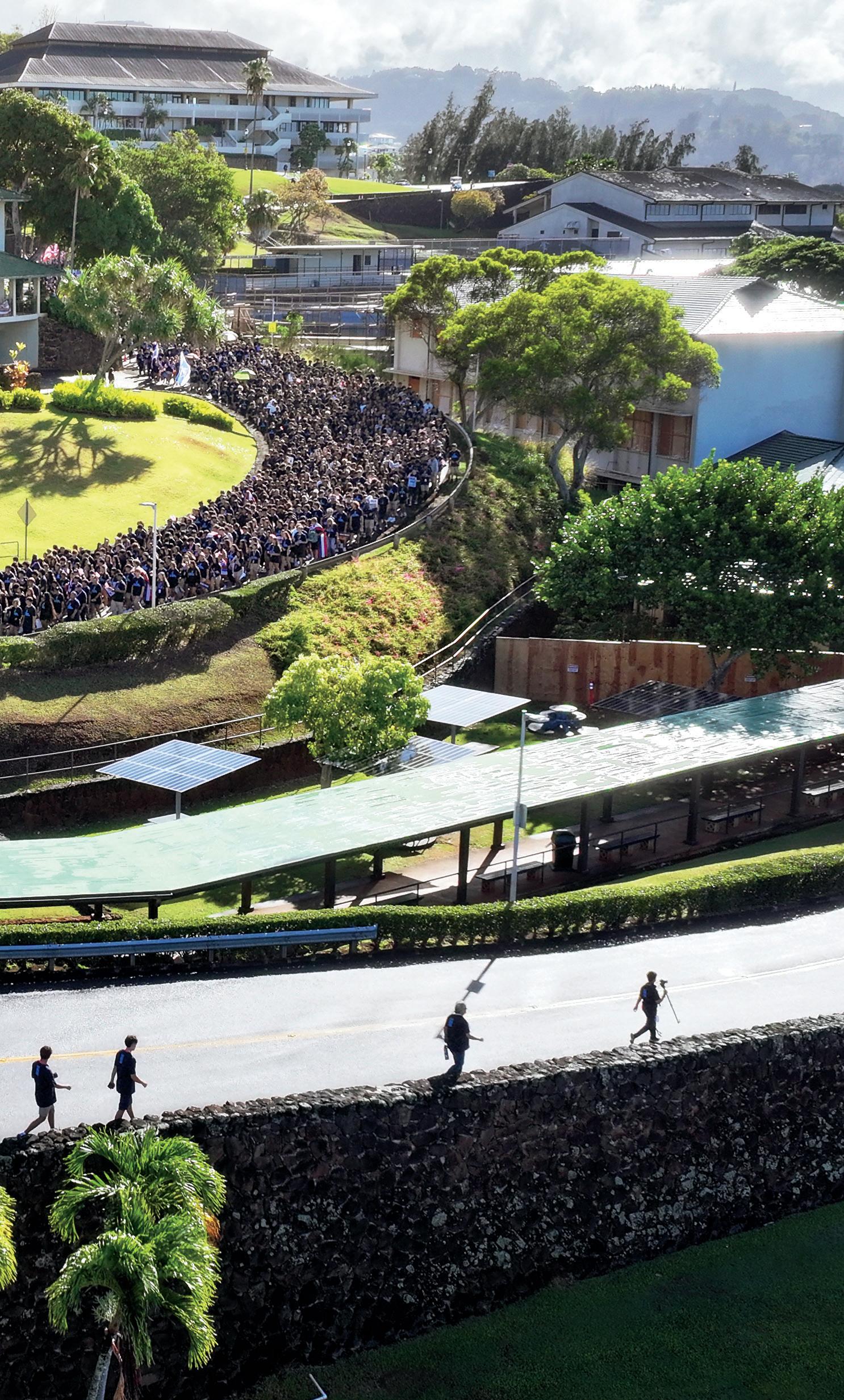
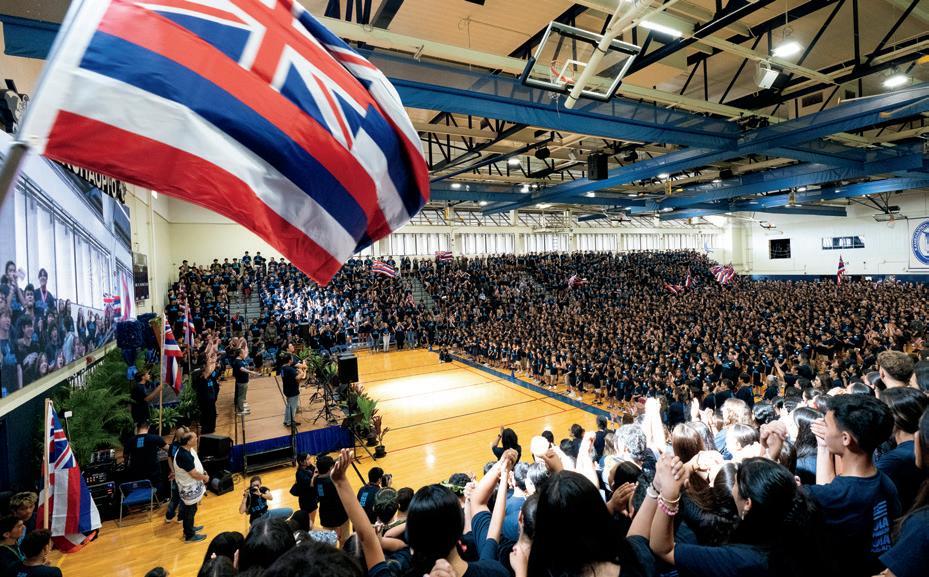
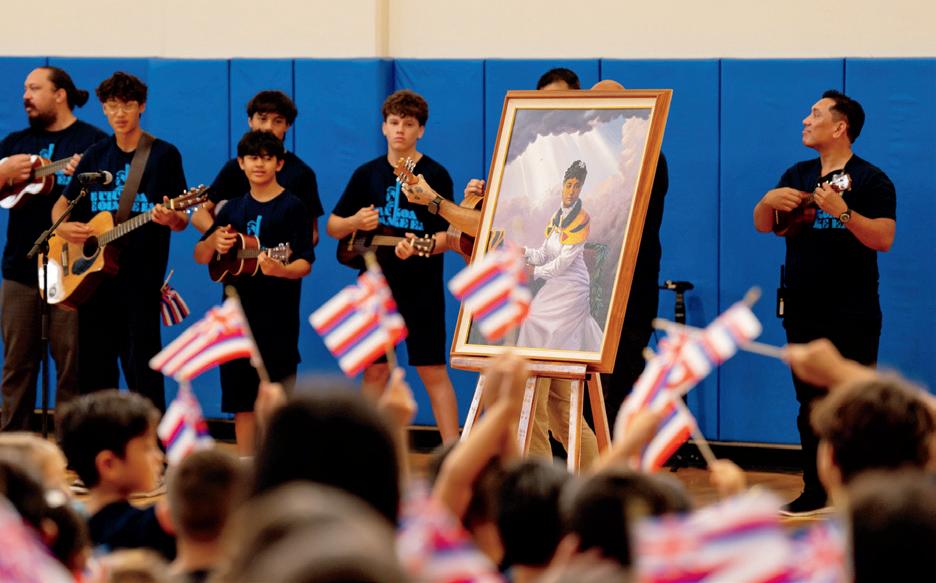
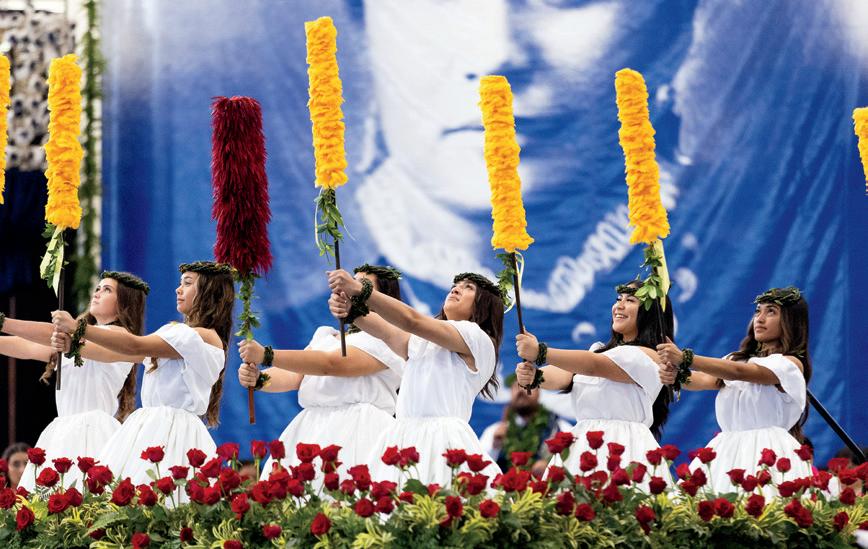
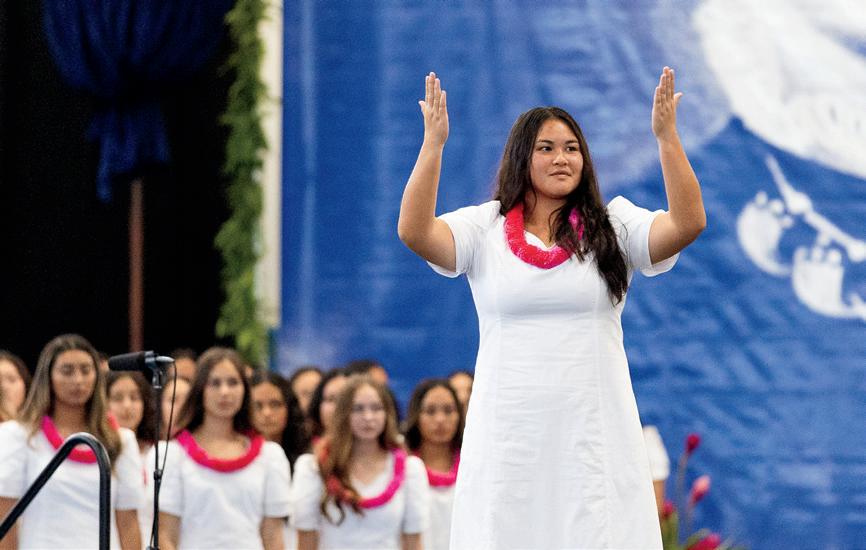
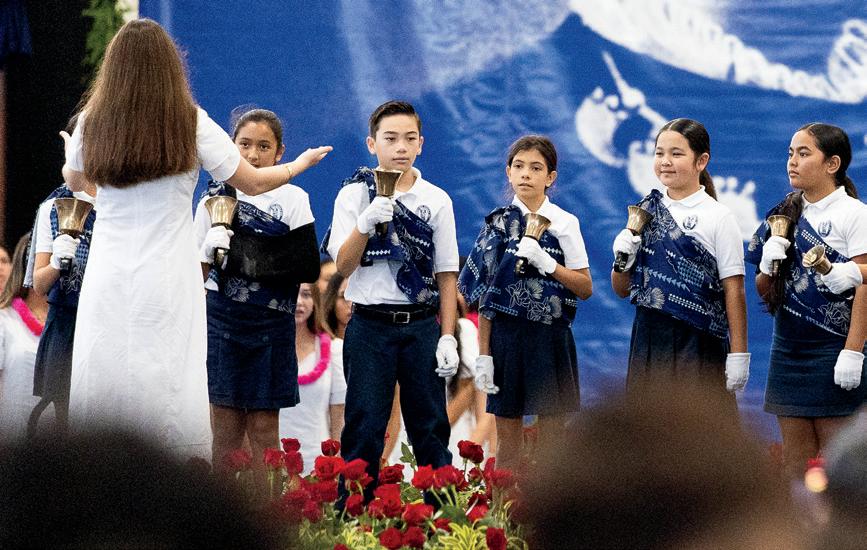
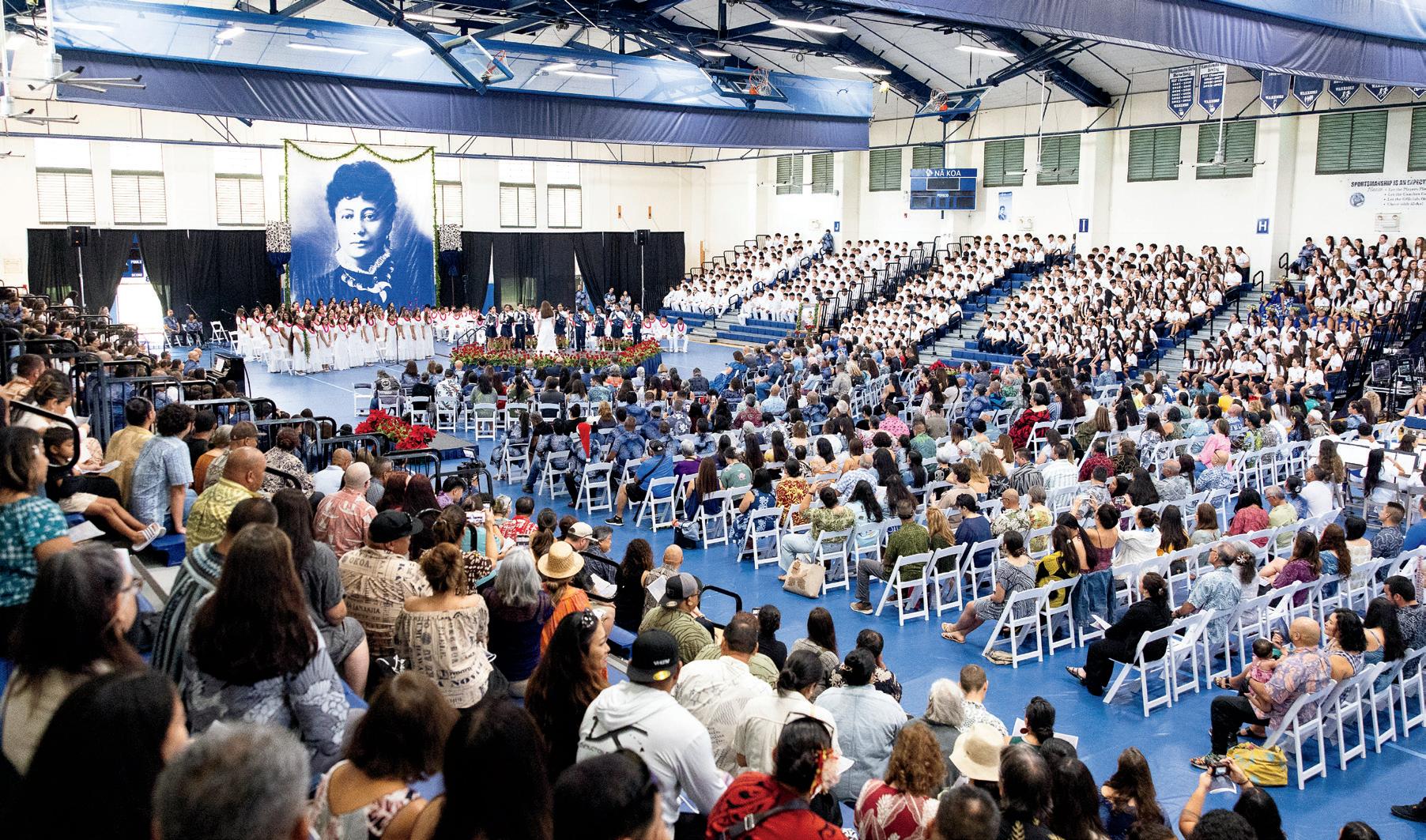
Some 4,000 K-12 haumāna, kumu and staff marched, chanted, sang mele aloha ‘āina and proudly waved hae Hawai‘i as they made their way from kula ki‘eki‘e to Kekūhaupi‘o Gym for an Ola Pauahi assembly.
The galvanizing event happened the week after the filing of a federal lawsuit challenging Kamehameha Schools’ admissions policy.
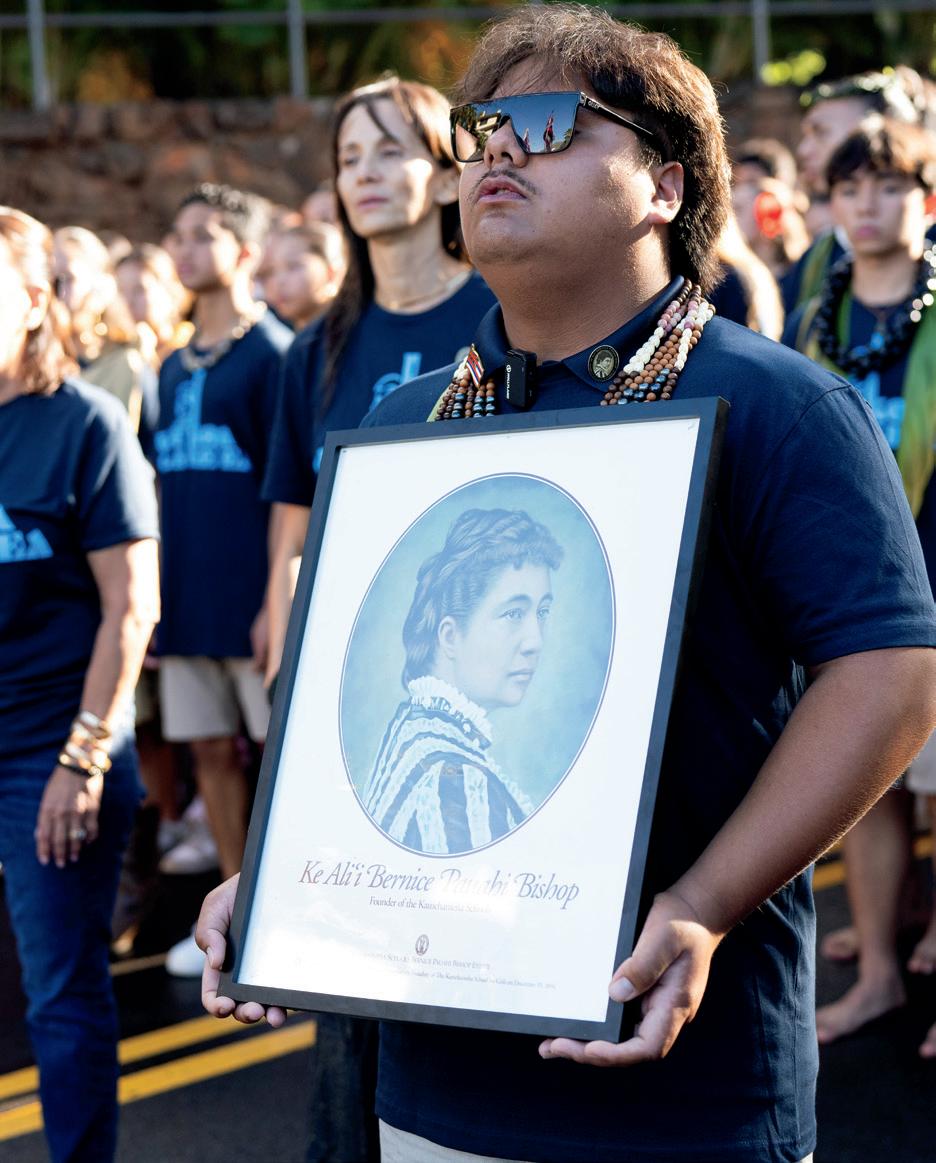
But this was no protest. It was an affirmation of aloha for Ke Ali‘i Pauahi on the anniversary of the signing of her will in 1883.
“We wanted to make sure it was meaningful. And we
thought, what would be more meaningful than the day that she signed her will?” said Kēhau Isara KSK’94, the po‘o kumu of kula waena.
Andrew Lai KSK’89, the student leadership and activities director for kula ki‘eki‘e, echoed that sentiment.
“Us converging down this hill, marching on those grounds on that day, I mean, it couldn’t have been more poignant.”
Isara, Lai and Tory Watanabe KSK’11 served as alaka‘i in organizing this massive event, the first kula-wide paikau in decades. Getting thousands of haumāna and kumu safely up the hill and back down again was a huge logistical challenge. But for Watanabe, it was all in a day’s work.
“It’s kuleana. It’s important. So we had to figure out how to do it for the kids and for Pauahi. But in reality, every day for me is important,” said Watanabe, who serves as the middle school dean of student leadership and engagement.
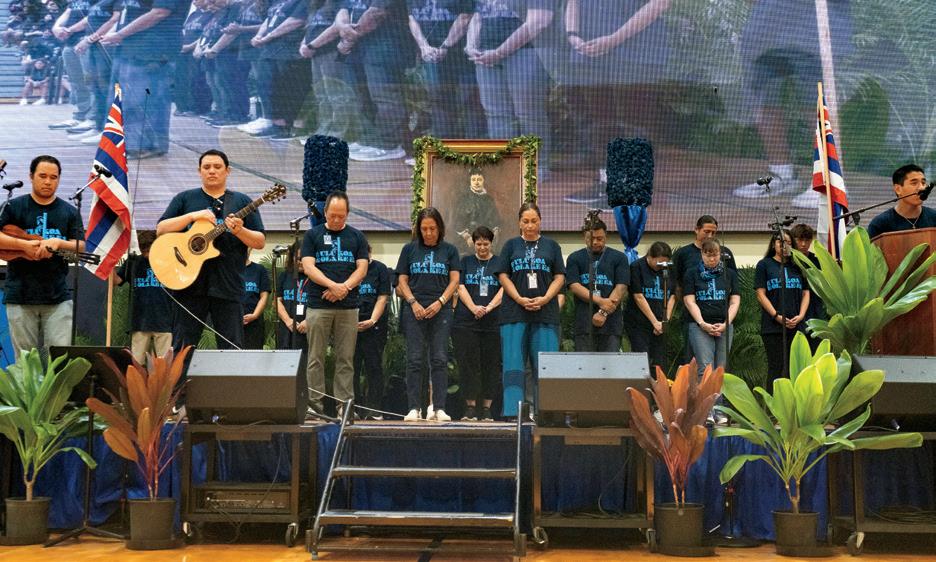
All three were also thrilled with the Ola Pauahi rally that capped off the memorable morning. The energy was palpable as
MEA KĀKAU: JUSTIN BARFIELD
MEA PA‘I KI‘I: JACOB CHINN, JAMES HALL, CHRIS SUGIDONO, SHAUN CHILLINGWORTH KSK'99, LILY KAY-WONG KSH'28
the entire kula gathered for mele and hula offered as ho‘okupu to Ke Ali‘i Pauahi.
Haumāna also took in ‘ike from Wai‘ale‘ale Arroyo, the po‘o kula kuikawā, and Jon Kamakawiwo‘ole Osorio KSK’67, legendary scholar, musician and aloha ‘āina. Effortlessly strumming his kīkā, Osorio performed “Pule no ke Ea — The Prayer of Sovereignty,” a mele calling for bravery and unity that he co-wrote more than 30 years ago with the late George Kanalu Young KSK’72
Osorio then offered mana‘o, detailing the selfless acts of our ali‘i, including Princesses Pauahi and Ke‘elikōlani, who gave their vast lands and resources in perpetuity to educate and uplift their people.
“As kānaka, I urge you to understand that these resources come with an immense kuleana. And that kuleana is clearer today than it has been in the last 50 years. It is to feed, educate, heal and care for our people. That is what you are growing up to do. As America turns its back on its own people, we must step forward. We must occupy that space.”
This was one of several inspiring events held across the pae ‘āina in the days that followed this new outside
threat. Alumni played a crucial role in rallying the lāhui in kapu aloha.
‘Aha Koa ma ‘Iolani Palace
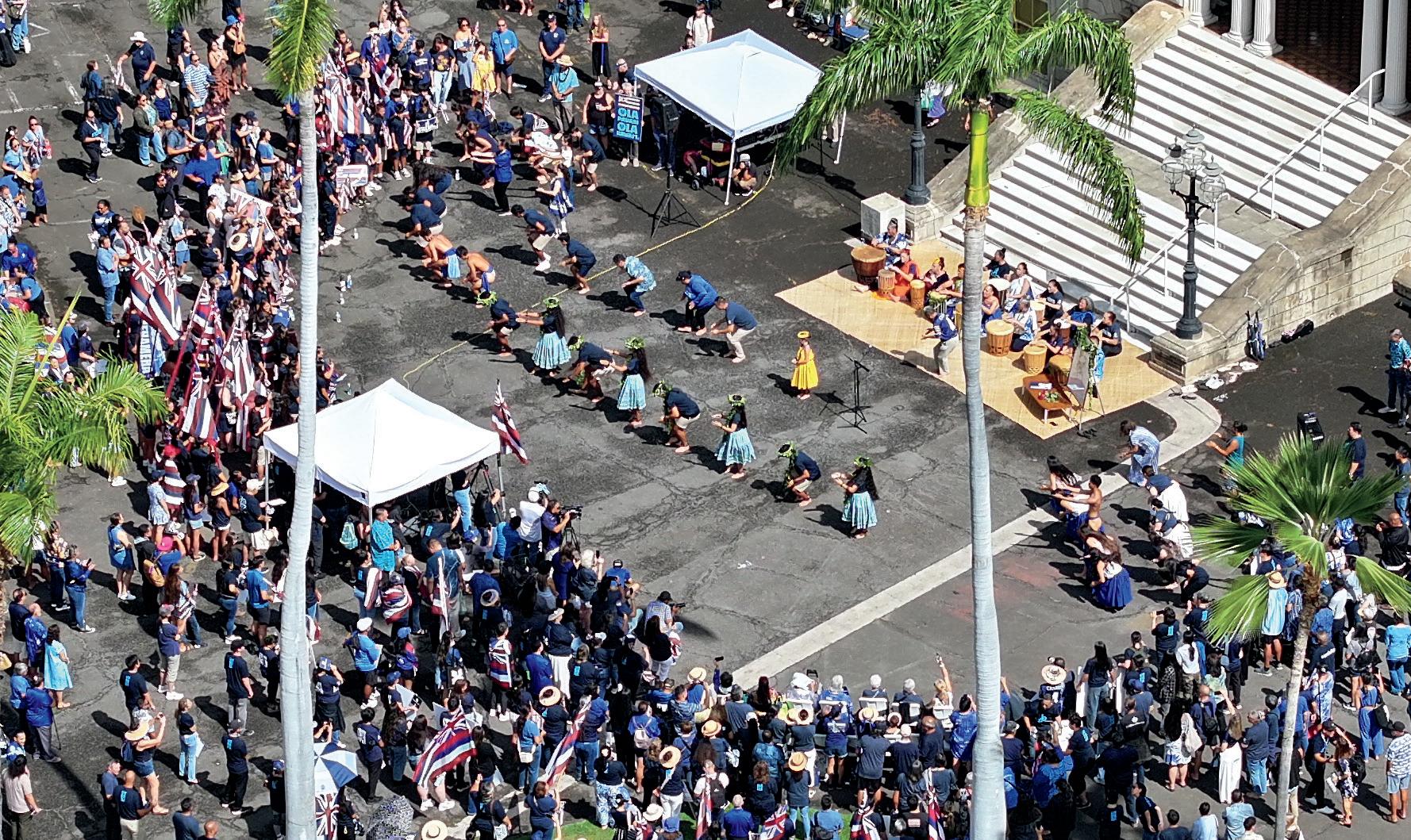
Hundreds gathered on the grounds of ‘Iolani Palace on October 21, 2025, for an ‘Aha Koa, a gathering of warriors young, old and all ages in between. Organized just hours after the filing of the lawsuit against KS, the kāhea was issued, and the lāhui responded in a big way.
Despite the ‘eha from the prior day’s filing, this event was filled with aloha, purpose and hope. Manu o Kū kept a watchful eye from above as the crowd joined in pule and mele. Accomplished musician Chad Takatsugi KSK’95, who serves as KS’ director of content and creative, helped lead the crowd in singing “Auē ke Aloha ‘Āina,” which he co-wrote with Zachary Lum KSK’10 during the Maunakea movement.
Board of Trustees Chair Crystal Rose KSK’75, who was part of the legal team that successfully defended KS in a similar challenge decades ago, didn’t mince words during her heartfelt speech.
“We are warriors. We fight, we win. We understand the law and we understand the facts, and the law and the facts are on our side.”
Retiree Dawn Luahiwa FarmRamsey KSK’71, who worked at Kamehameha Schools for 35 years, had a similar perspective to that of Trustee Rose.
“My hope is justice will be served. I’m going to do everything I can to support Kamehameha until I pass.”
KS Kapālama sixth grader Ka‘ulaahiakawahine Beaupre, a greatgreat-grandson of Mary Kawena Puku‘i, explained why upholding Ke Ali‘i Pauahi’s kauoha is so important.
“Because of her will, we get to be at Kamehameha and we get to learn more about our culture and we get to be the next leaders of our culture.”
“When things like this happen, it’s important to rally, to kāko‘o kekahi i kekahi no ka pono o ka lāhui, to show that we are one collective people and that we all have a voice and can make a difference,” Kahōkū Lindsey-Asing KSH’10 said.
Former trustee Corbett Kalama summed up the purpose of the day quite nicely: “Pauahi is everybody’s princess. We all benefit from her.”
Continued on page 23
Hundreds of people took in a performance by the KS Kapālama Hawaiian Ensemble at the ‘Aha Koa event on the grounds of ‘Iolani Palace.
Continued from page 19
‘Aha Koa ma Kea‘au
Ke Kula ‘o Kamehameha Hawai‘i held a kula-wide gathering on November 4, 2025, which coincided with the anniversary of the opening of Kamehameha School for Boys in 1887.
The momentous occasion was celebrated with oli, hula and mele. And while kumu provided the event’s framework, haumāna were front and center.
“The elementary and the middle school both organized and led an oli and taught it to the rest of the haumāna. That’s so admirable that you’re in fifth grade or middle school and you’re leading the entire school ... very impressive,” kumu Lā‘ieikawai Suganuma KSH’06 said.
Suganuma also found great meaning as the kula sang “Kaulana nā Pua,” the mele aloha ‘āina written shortly after the illegal overthrow of Queen Lili‘uokalani in 1893. She’s taken her English class on a deep dive about the song’s meaning.
“Everybody knows it, everybody sings it, but we don’t always stop and talk about ‘What does this actually mean?’ So I thought that was really appropriate, very appropriate for what’s going on.”
In a speech before the entire kula, junior Noah Lee shared a personal experience of the Kīlauea eruption in 2018 that sent lava across vast swaths of Puna, eventually making its way toward his ‘ohana generational home in Pohoiki. With roads cut off, he told his fellow haumāna how he and his family arrived to the hale by boat, joined hands in pule and thanksgiving. When the lava flow eventually stopped, his ‘ohana home was spared.
“Today, we sit here with a similar situation, our hale being threatened by the influence of an outside power that we may feel as though we have no control over. But what is indispensable is to understand that just like my ‘ohana… We have power as a kauhale.”
Haumāna o ‘A‘apueo get civically engaged
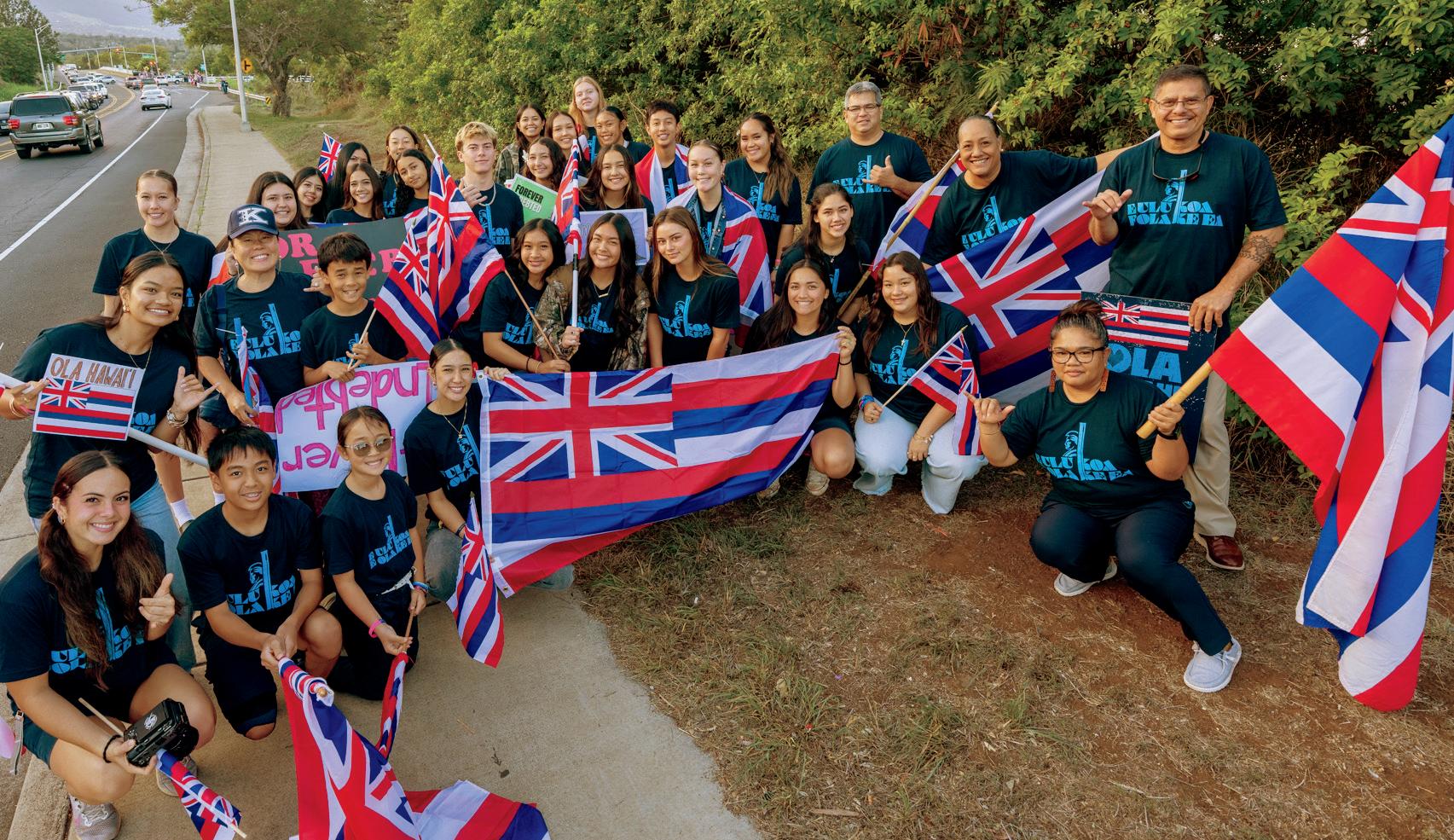
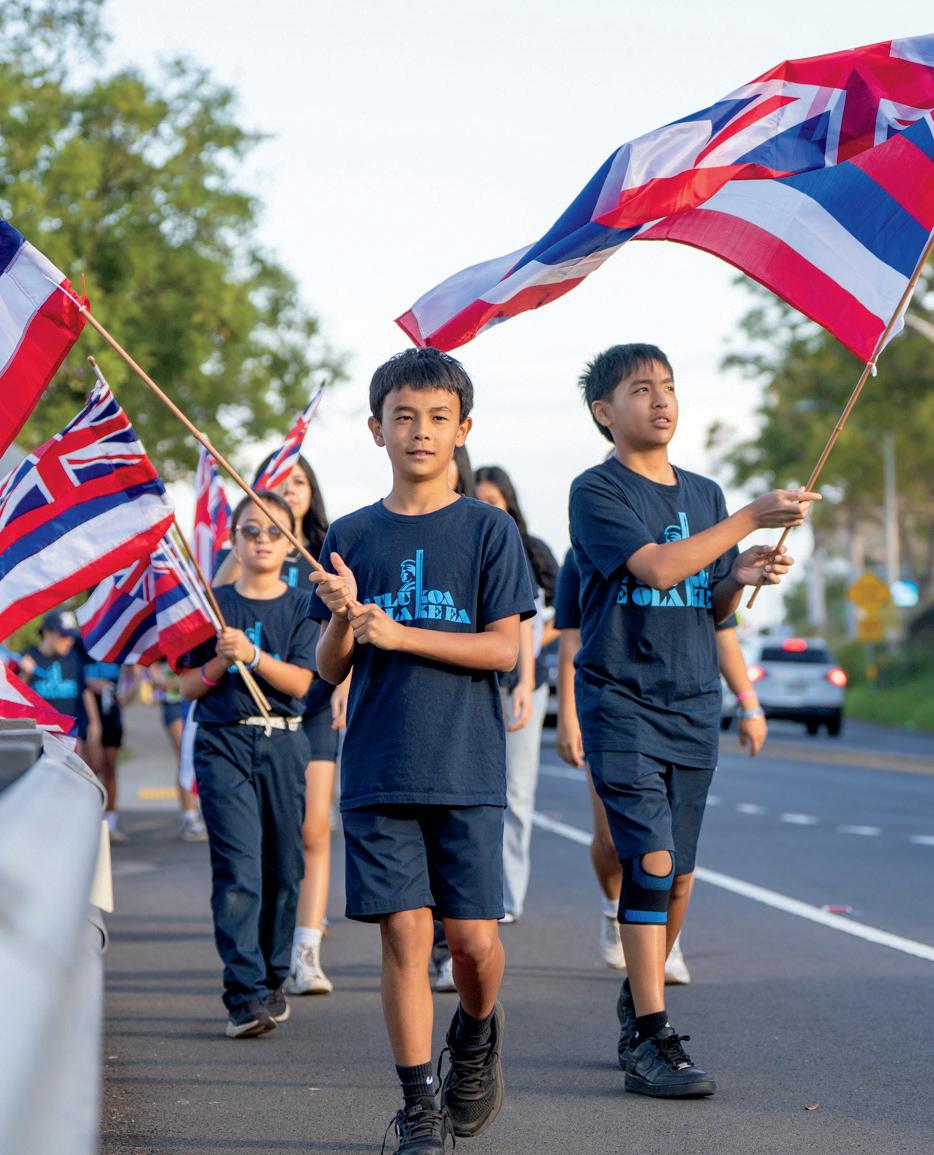
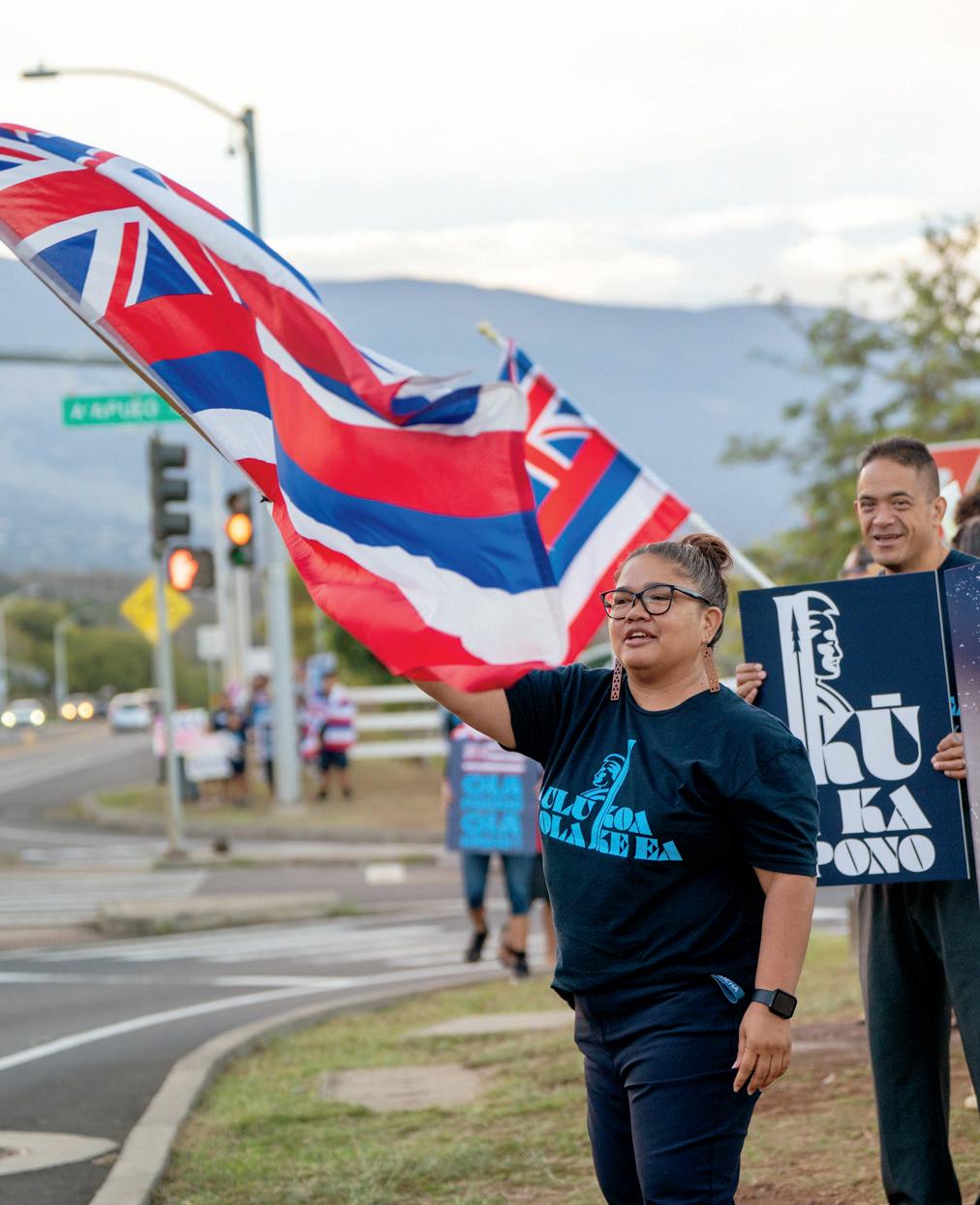
Ke Kula ‘o Kamehameha Maui senior Sarah Stupplebeen and a contingent of her fellow haumāna had a great experience in civic engagement on November 7, 2025. She got to campus just in time to take part in a kapu aloha/Ola Pauahi sign-waving and flag-waving event fronting Kula Highway before the start of the school day. This has become a monthly occurrence on the first Friday of each month.
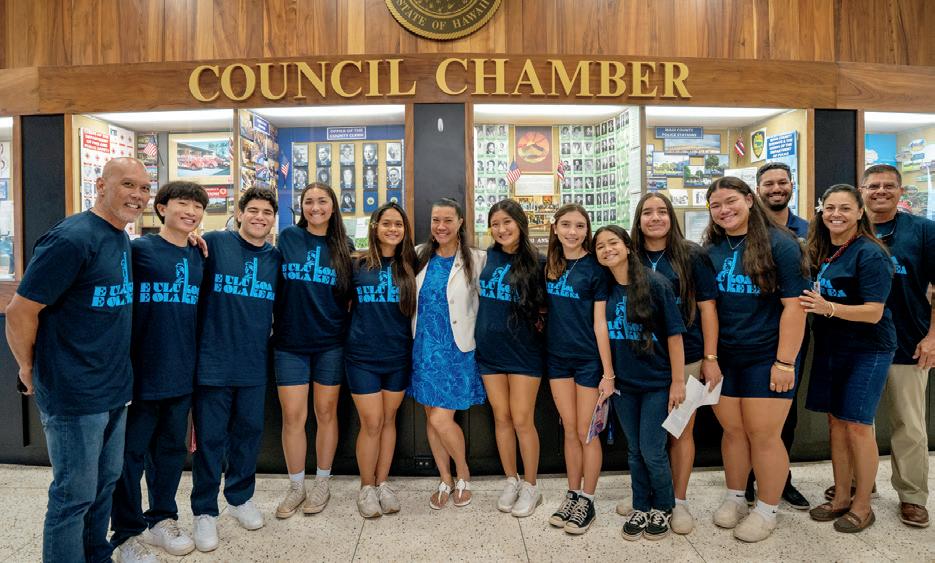
“There were so many people that passed by and honked or showed support with chants of ‘E ola Pauahi, e ola Kamehameha!’ I really loved that. It was a very special moment,” said Stupplebeen, who then hopped on a bus with several other haumāna and kumu for a huaka‘i to the Maui County Council Chambers in Wailuku.
It was there that the County Council took up Resolution 25-205, a measure declaring “solidarity and support for Kamehameha Schools as it defends the legacy of Princess Bernice Pauahi Bishop.”
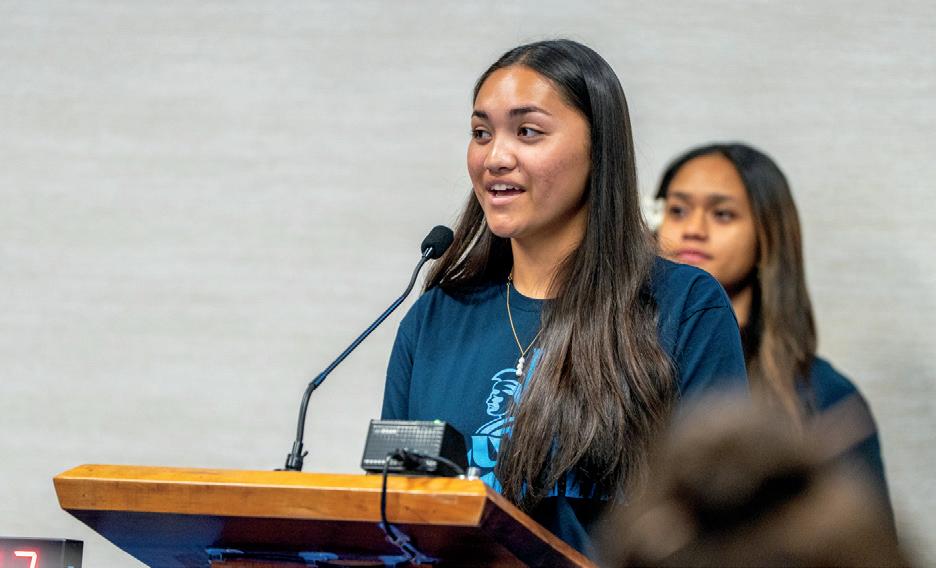
Stupplebeen and eight other haumāna along with others in the community delivered passionate testimony in favor of the resolution.
Fellow senior Makoa Pua‘oi was admittedly nervous when he first started sharing his mana‘o before the council, but those jitters faded quickly when he reflected on why he was there.
“I want my younger siblings to have what I’ve been blessed with. It’s my responsibility to get up and fight for Pauahi’s legacy because she’s the reason why I’m here today and why I’m gonna go do great things in the world.”
The resolution passed unanimously. Kahu Kanani Kepani Franco KSK’91 traveled with the haumāna to support their efforts and said they did an outstanding job representing their kula and lāhui.
“This experience not only empowered our haumāna to have a voice in shaping local decisions, but it also deepened their understanding of civic engagement and the importance of advocacy. We mahalo Ke Akua for the support of our Maui County Council in
standing with our school and honoring the will of Pauahi.”
Kāko‘o from kamali‘i
Our littlest learners at the 30 KS Preschools across the pae ‘āina don’t yet have a grasp on the complexities of this threat, but they’re still contributing to the Ola Pauahi, Ola Hawai‘i movement. Whether it’s Pennies for Pauahi fundraising or classroom ha‘awina on our ali‘i and their enduring legacy, kamali‘i have a role to play in this kākou effort.
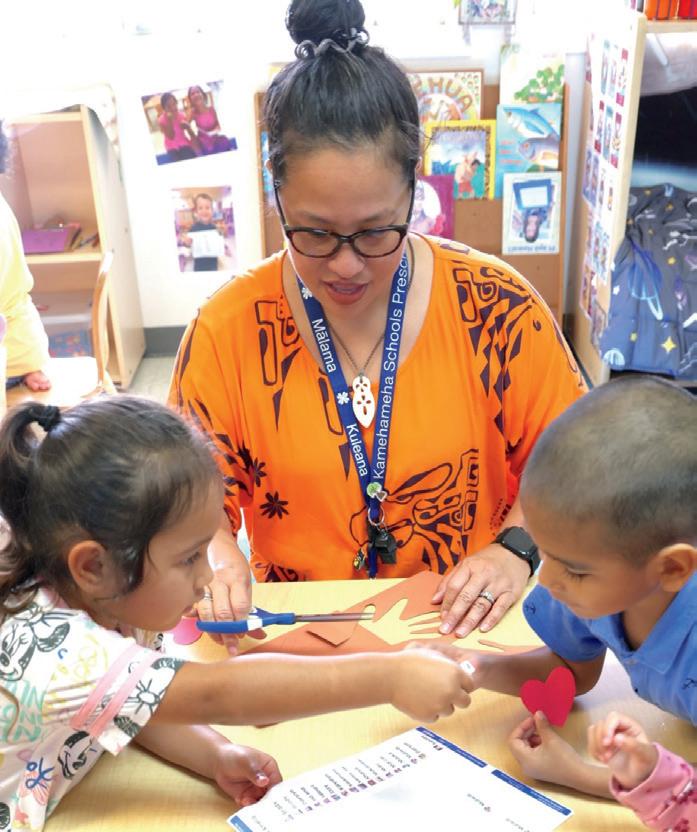
Kimi Matsuyama Brown KSK’94 has been a kumu at KS PreschoolsKeaukaha for 23 years. She says reaching kamali‘i at this tender age is the kahua for building our future ‘Ōiwi leaders.
“We really try to help them build pilina with Pauahi in particular. Who was her ‘ohana? What was she interested in? Do you and her have interests in common? We talk about how special she is to us every single day. When they develop this pilina to Pauahi, I think they will grow to be more protective of her and her legacy. I know that is true for myself and my ‘ohana,” Brown said.
Ke ala lō‘ihi i mua:
The long road ahead
There will no doubt be twists and turns, peaks and valleys in this effort to defend Ke Ali‘i Pauahi’s kauoha against this outside threat. Our kula and kaiāulu continue to answer the kāhea to get involved and be maka‘ala, as evidenced by the robust turnout at a series of E Ulu Koa community gatherings across the pae ‘āina. There will be additional opportunities to connect and engage in the months and years ahead. You can also find resources to a‘o aku and a‘o mai (learn and share) at ksbe.edu/ola.
The steps we take today will help preserve Ke Ali‘i Pauahi’s legacy for generations to come. Kapālama kumu Lai’s life work (like so many others) sums up why this is so important:
“I have not stayed at this school for 29 years just because. I stay because her mission is important to me. When I agreed to become a kumu here, one of the first things I did was look at her picture on the wall. And I told her, ‘I promise I’m going take care of your babies. I promise I’m going take care of your school. I don’t intend to leave this place without keeping that promise.”
“I mua e nā pōki‘i!”
KS Preschools kumu Kimi Matsuyama Brown KSK’94 shares mana‘o with kamali‘i in her Keaukaha classroom.
Stewarding ‘āina Pauahi:
Growing Pauahi’s land legacy forward
Ke Ali‘i Bernice Pauahi Bishop stewarded a vast ‘āina portfolio grounded in her chiefly lineage. She had the incredible foresight to ensure those lands would benefit Native Hawaiian keiki and the lāhui for generations to come. She wrote in paragraph 13 of her will: “For the purposes aforesaid I grant unto my said trustees full power to lease or sell any portion of my real estate, and to reinvest the proceeds and the balance of my estate in real estate, or in such other manner as to my said trustees may seem best.”
Our present-day existence as Ke Kula ‘o Kamehameha is built upon this kahua of taking decisive action. That’s because 100% of the financial resources needed to fulfill Ke Ali‘i Pauahi’s wishes come from the success and growth of the endowment. ‘Āina is not simply part of that story, it is foundational to it.
Our Board of Trustees and CEO have called for ‘āina stewardship grounded in E Ola! This multi-generational perspective is rooted in our past while innovating forward. It is central to how we approach ‘āina today. Rather than managing a static inheritance, we are stewards of a living ‘āina legacy, one that must evolve and regenerate to create waiwai (value) in all its manifestations –education, finances, culture, food, water and all elements necessary for thriving keiki, ‘ohana and kaiāulu.
In recent years, there have been several land transactions within the 373,000-acre ‘āina Pauahi portfolio. Kā‘eo Duarte, the vice president of the ‘Āina Pauahi Group, understands the sensitivities that surround any decision regarding ‘āina, and says these sales — and acquisitions — are taken very seriously and are undertaken with rigor, intention and an unwavering commitment to our mission and kuleana as cultural stewards.
“There are certain ‘āina where, through investment, we’ve been able to realize tremendous financial value creation over time. And there are times when it’s appropriate to realize the value and reinvest it. These decisions are difficult and tug at our na‘au. But there is also a tremendous upside knowing that these sales enable us to invest in other ‘āina, other communities, and create waiwai in other ways for future generations,” Duarte said.
Each transaction reflects a clear and deliberate commitment to ‘āina and the lāhui. Our Board of Trustees, CEO and Duarte all agree that this is what we strive to achieve:
• Remaining a major ali‘i landowner
• Managing our ‘āina portfolio in perpetuity in ways that advance culture, kaiāulu, education and a thriving and self-determined lāhui
• Stewarding our ‘āina following elevated standards of care
• Operating as a disciplined, world-class enterprise generating competitive financial returns
• Implementing a moku by moku approach grounded in cultural stewardship
Producing positive impacts across communities and over time is the heart of the “moku approach” to ‘āina. Using traditional moku as a frame of reference, KS seeks to maximize collective waiwai across geographies and generations. We are not balancing between values; we are advancing a model in which cultural grounding drives enduring prosperity. We do not view cultural stewardship and financial performance as competing priorities. Our strategy and experience affirm that when ‘āina is stewarded well, it generates long-term economic strength, resilience and opportunity. This viewpoint applies to all land-use types and activities — agriculture, education, forestry, residential, industrial, retail, cultural landscapes and more.
Sales in recent years have included:
• Lands beneath the Royal Hawaiian Hotel at Helumoa, Waikīkī.
• The ‘āina beneath the Four Seasons Hualālai in North Kona.
• Block I in Kaka‘ako, sold for the development of Ālia, a mixeduse high-rise project that’s part of Kamehameha Schools’ Kaiāulu ‘o Kaka‘ako master-planned community.
• Continued leasehold-to-fee-simple conversions of residential properties.
• Sales of three parcels in Mō‘ili‘ili to the Department of Hawaiian Home Lands to increase ‘Ōiwi homeownership.
Kamehameha has also completed several significant acquisitions just in the past five years:
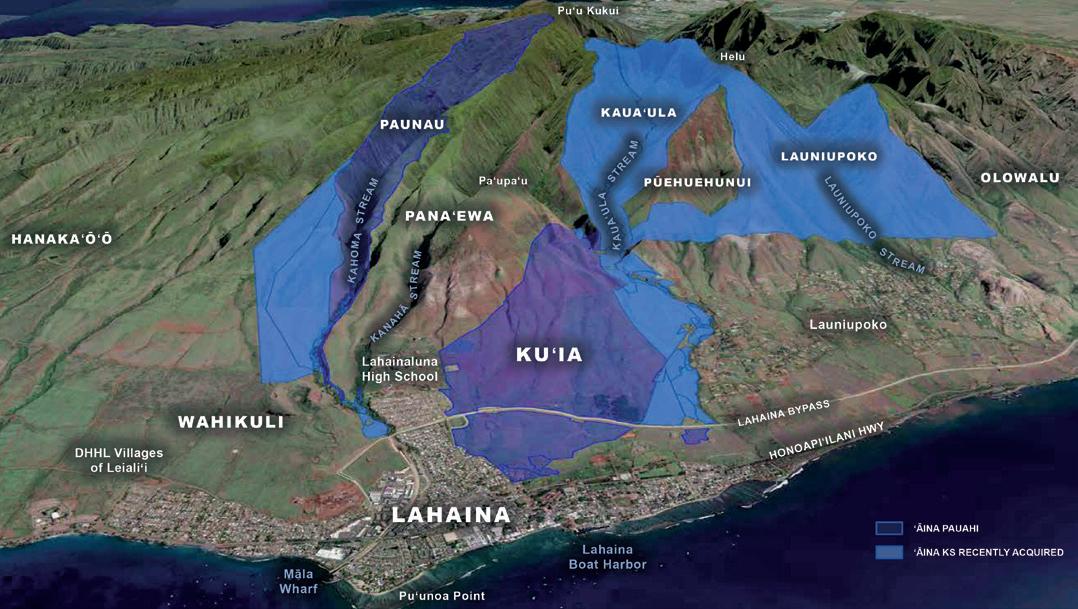
• 3,885 acres of ‘āina neighboring KS parcels in Paunau and Ku‘ia above Lahaina (2025).
• 944 acres of forest lands in South Kona, Hawai‘i Island (2025).
• 6,629 acres of ranch and agricultural lands in Kaupō and Hāmākualoa, Maui (2023).
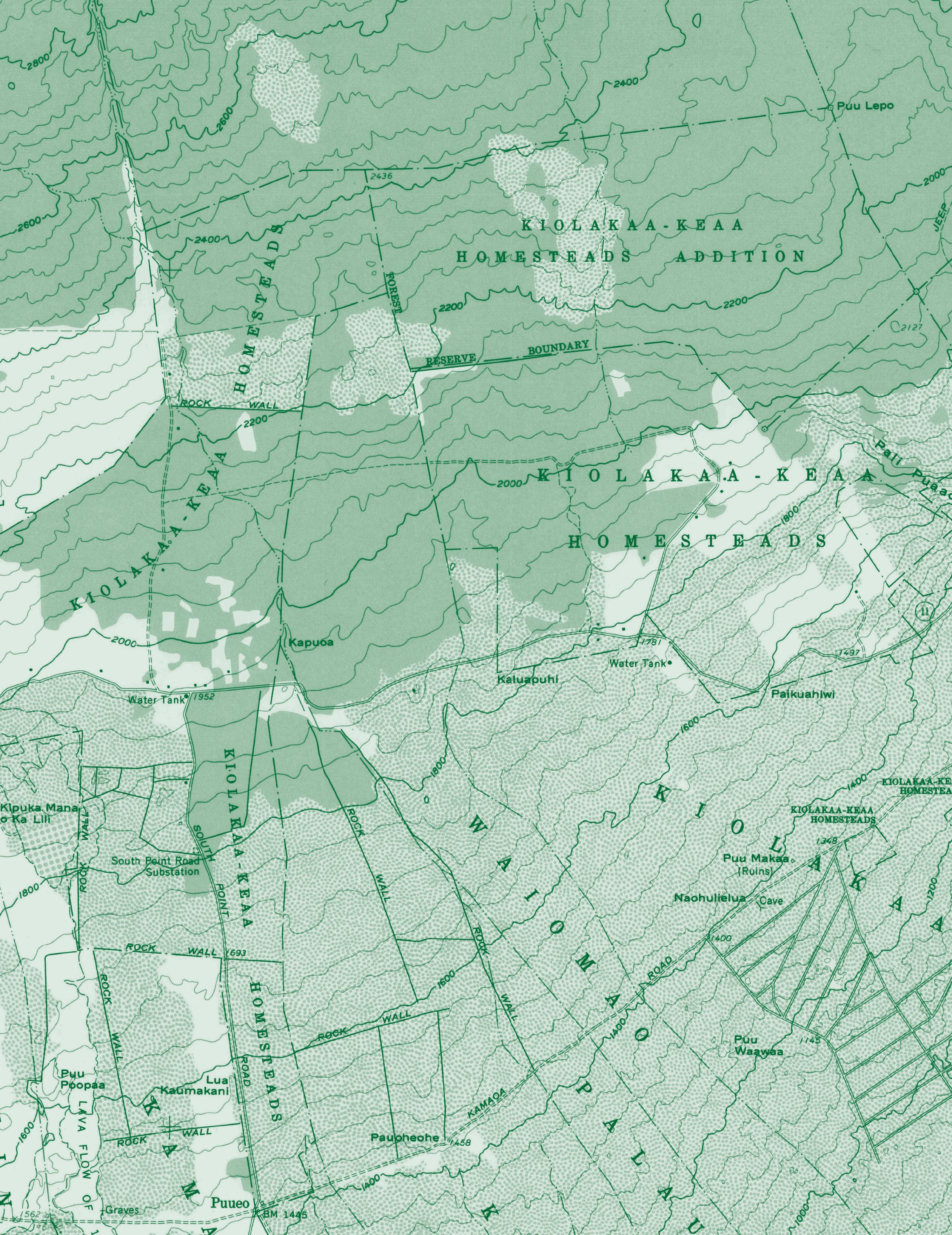
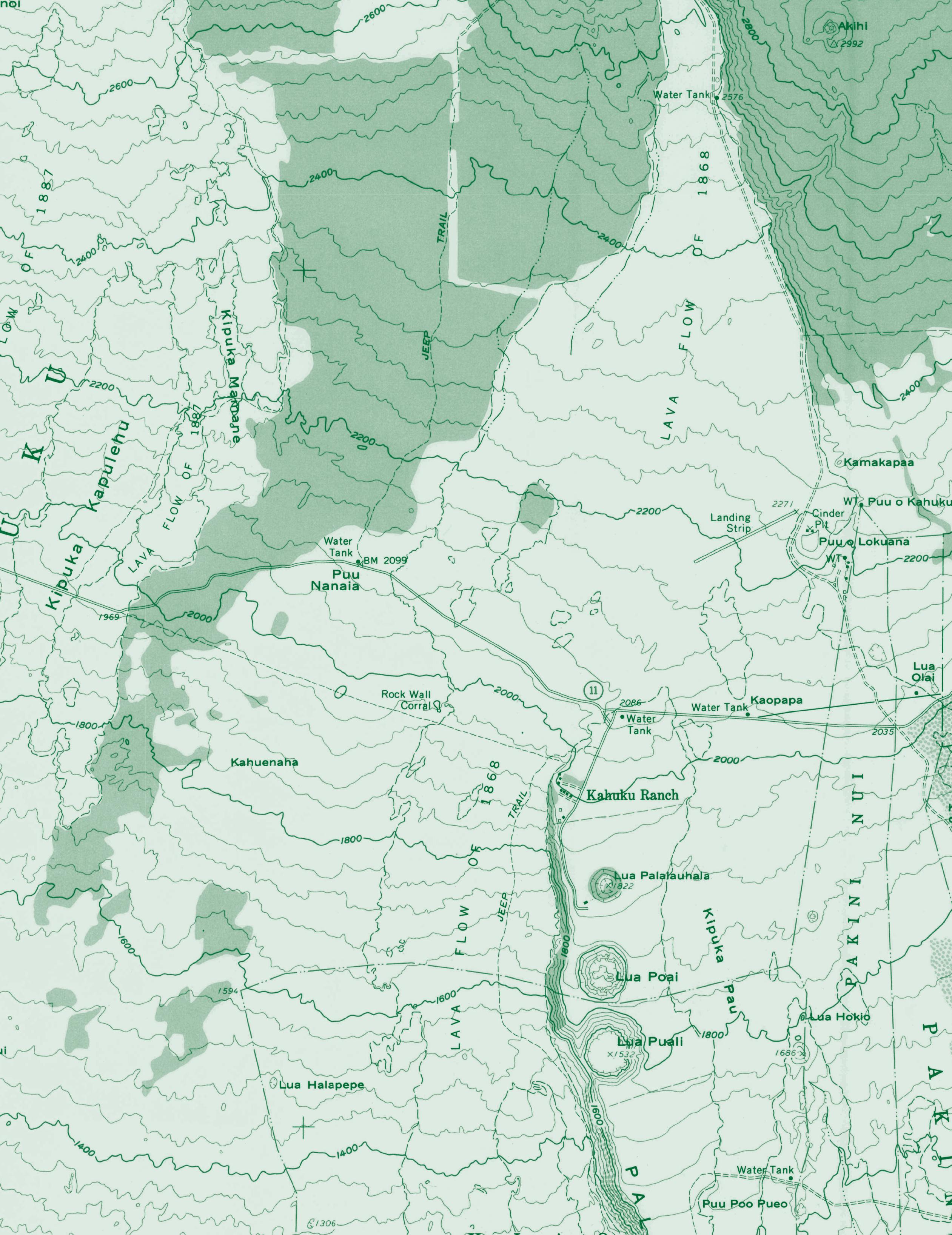
• 656 acres at Kahuku Ranch in Ka‘ū, Hawai‘i Island (2022).
Future acquisitions, sales and restorative investments are always under consideration. Each decision is made in the context of moku and portfolio plans, reflecting a commitment to remain a significant and enduring steward of ‘āina while continuously strengthening the portfolio that sustains our mission.
This work aligns with Strategic Plan 2030, which was released in late 2025. Two of the plan’s four goals reflect an integrated approach in which culturally grounded stewardship generates strong financial returns.
Goal 3: ‘Āina
Through E Ola! and culturally rooted stewardship, generate competitive financial portfolio returns while cultivating prosperous ‘ohana and communities.
Goal 4: Enterprise
Achieve performance excellence through disciplined management standards (operational, financial and risk management) and globally competitive lines of business, with a collective commitment to E Ola!
To fulfill this kuleana, we must generate the resources needed to serve today’s learners while also growing the endowment to sustain future generations. This is not a question of tradeoffs; it is a commitment to excellence across generations. Second, we must earn a financial return that exceeds our spending rate plus inflation to ensure tomorrow’s beneficiaries have the same opportunities as today’s.
Following Ke Ali‘i Pauahi’s kauoha, Kamehameha Schools must take a bold approach to its ‘āina strategy, ensuring that we are not simply drawing from what was entrusted to us but actively growing it for generations to come. As we consider these moves, we know that community visions, progress and insights are crucial guides for us. With that recognition, we are committed to connecting with key community leaders and others with a passion for the work ahead.
Ku‘ia, Maui
‘Iliahi forest, South Kona, Hawai‘i Island
Kaupō, Maui
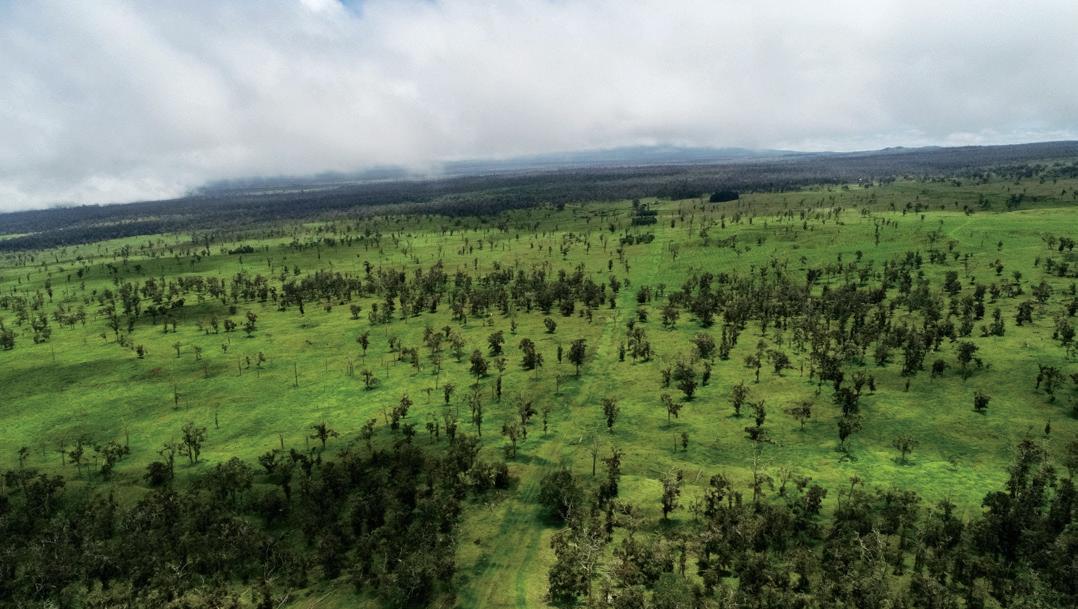
Kahuku Ranch, Ka‘ū, Hawai‘i Island
Kahuku Ranch: Growing waiwai on ‘āina
# 3
Mea kākau: Justin Barfield
Mea pa‘i ki‘i: Jacob Chinn, Justin Barfield
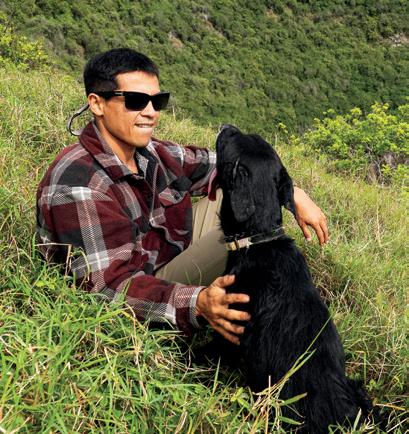
Taking a UTV ride with James Akau KSK’05 and his ‘īlio, Lupe, across the sweeping pasturelands of Kahuku Ranch in the Ka‘ū District is a body-mind-and-spirit experience. As one of the caretakers of the bucolic 656-acre parcel, Akau is as adept at sharing mo‘olelo and mo‘okū‘auhau of this place as he is at safely navigating every bump and divot along the ranch’s dirt roads.
And then there’s the ever-present, transformative makani.
“It’s an incredible place to be — to live, to work, to visit. Everyone who comes here, I feel like they’re rejuvenated, refreshed and energized by the wind,” Akau said.
Kahuku Ranch, located in the ahupua‘a of Kahuku, offers a
“The biggest impact we’ve had on improving this place so far is bringing people back. Everyone in Ka‘ū has some historical tie to Kahuku Ranch…
Kamakani Dancil KSK’93
clear window into how Ke Kula ‘o Kamehameha stewards ‘āina today — enhancing cultural and educational impact and creating long-term financial returns to grow waiwai for generations to come.
Since Kamehameha acquired this ‘āina in 2022, Akau and other alumni have worked alongside community in a concerted effort to increase the cultural, educational and financial waiwai of this wahi pana.
Enhancing Kahuku Ranch through community engagement
When Ke Kula ‘o Kamehameha first looked at buying the Kahuku Ranch parcel, one initial draw was increased access to adjacent KS lands at Pākininui, where leased ‘āina for a wind farm generates electricity — and revenue for the trust. But KS ‘āina stewards like senior asset manager Kamakani Dancil KSK’93 knew that was just the beginning of increasing waiwai.
“The biggest impact we’ve had on improving this place so far is bringing people back. Everyone in Ka‘ū has some historical tie to Kahuku Ranch, whether it’s their family members or their kūpuna who once worked there in some capacity. There’s a strong tie to this ranch,” Dancil said.
Bringing people back to Kahuku Ranch is the result of the
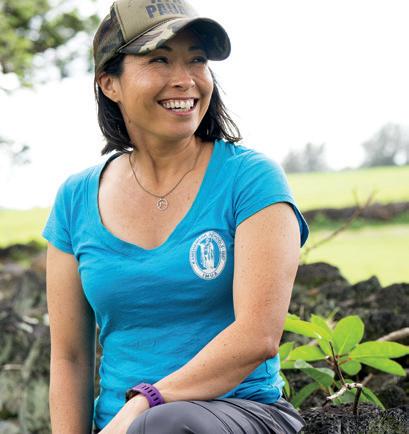
concerted efforts of people like Nālani Parlin KSK’96 and Akau, who are both kupa of Ka‘ū. Serving as KS’ senior ‘āina sites and facilities manager, Parlin has drawn from her community education background to co-create culturally grounded, customizable learning opportunities. In 2025 alone, more than 1,300 people took part in experiences like mele workshops, oral history interviews, aloha ‘āina service-learning opportunities, huaka‘i, community art and hula retreats.
“There’s something here that evokes different emotions for different people. It’s not something you can put your finger on. It’s a visceral response, and I love to see people connect and have an amazing experience,” Parlin said.
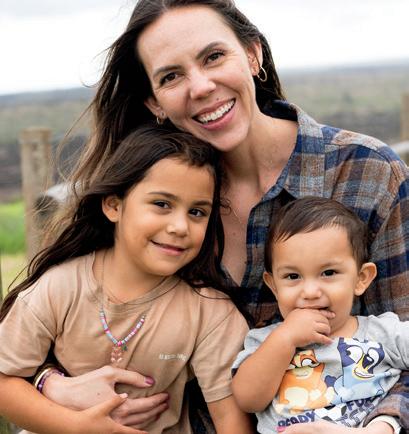
One of those community connection points is fellow alumna Maluhia Zamudio KSK’09, a sixth grade teacher at Nā‘ālehu Elementary School. Proximity and ease of access make the
“There’s something here that evokes different emotions for different people. … It’s a visceral response, and I love to see people connect and have an amazing experience.”
Nālani Parlin KSK’96
ranch a budget-friendly field trip option for all grades at her kula.
“It’s an invaluable resource for our haumāna. They make connections here that they can’t in the classroom. Having that outside space for them to learn is huge, especially when it connects to their Hawaiian culture and the place they’re from,” Zamudio said.
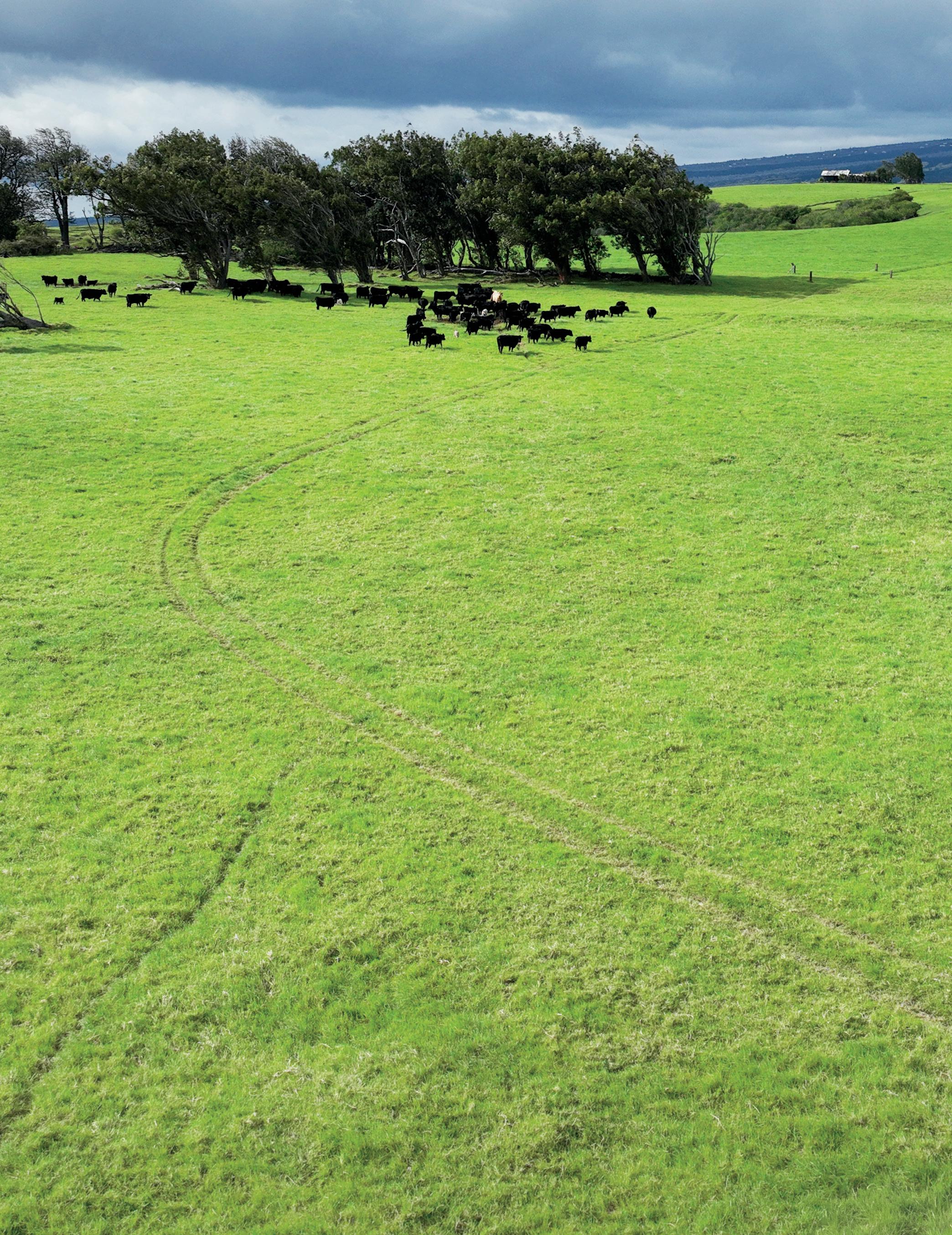
Besides offering community programs, Kamehameha has increased financial waiwai while also uplifting local food systems. A Ka‘ū-based rancher, Boots Ka‘apana, leases prime pastureland here for dozens of cattle to graze. His ‘ohana is also helping to meet an important need in the local cattle industry. Most cattle from the large Hawai‘i ranches are shipped to the continent for finishing and processing before the beef is shipped back to local stores. Ka‘apana helped build a slaughterhouse on Hawai‘i island that’s geared toward small ranches. His Kahuku Ranch grass-fed cattle never leave Hawai‘i, creating a genuine farm-to-table experience and boosting the local economy.
“This captures the essence of food security. When you talk about circular economies, this is a prime example. Keeping the whole process in Hawai‘i is great!” Dancil said.
Linked to a legendary mo‘olelo
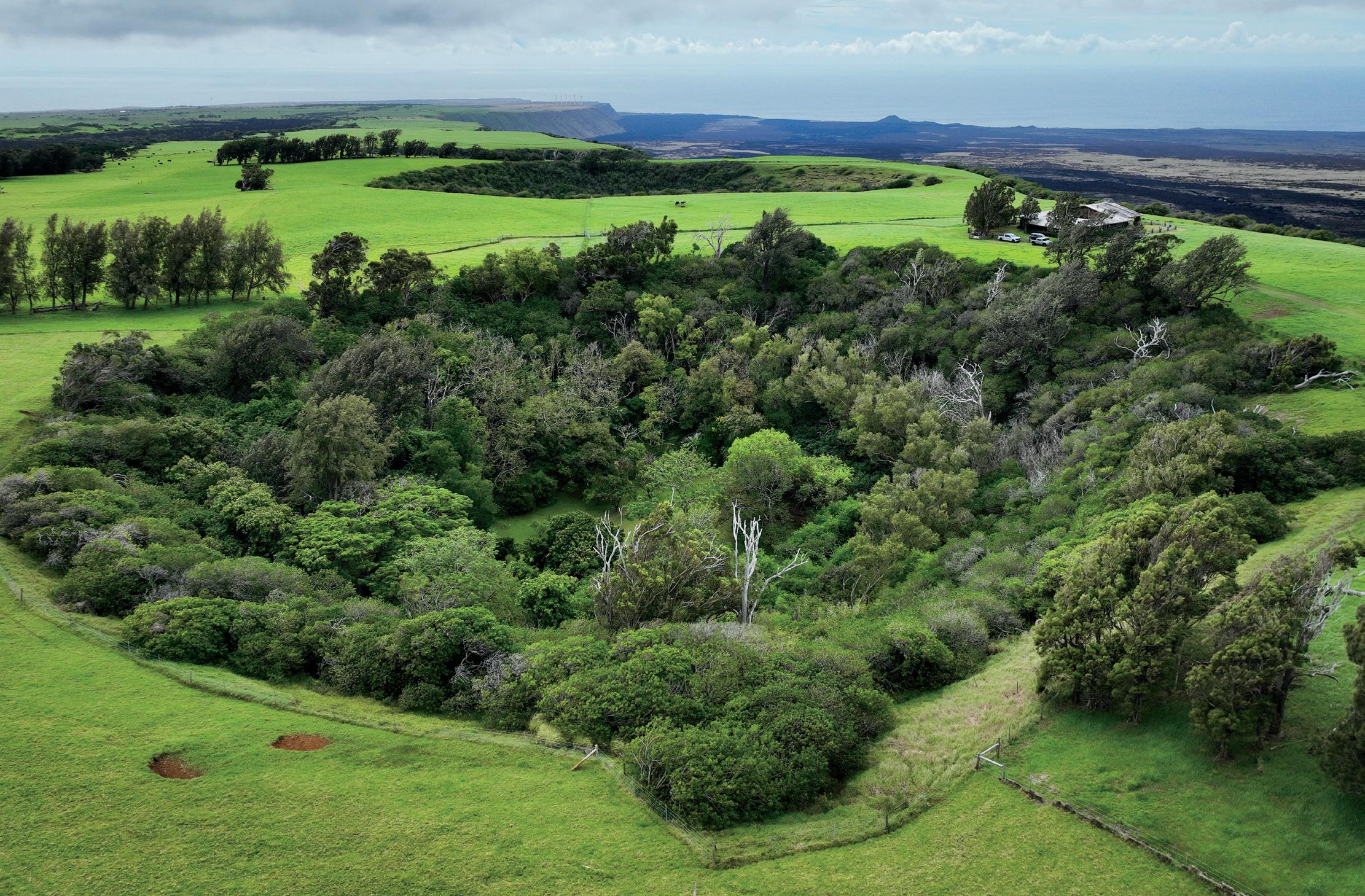
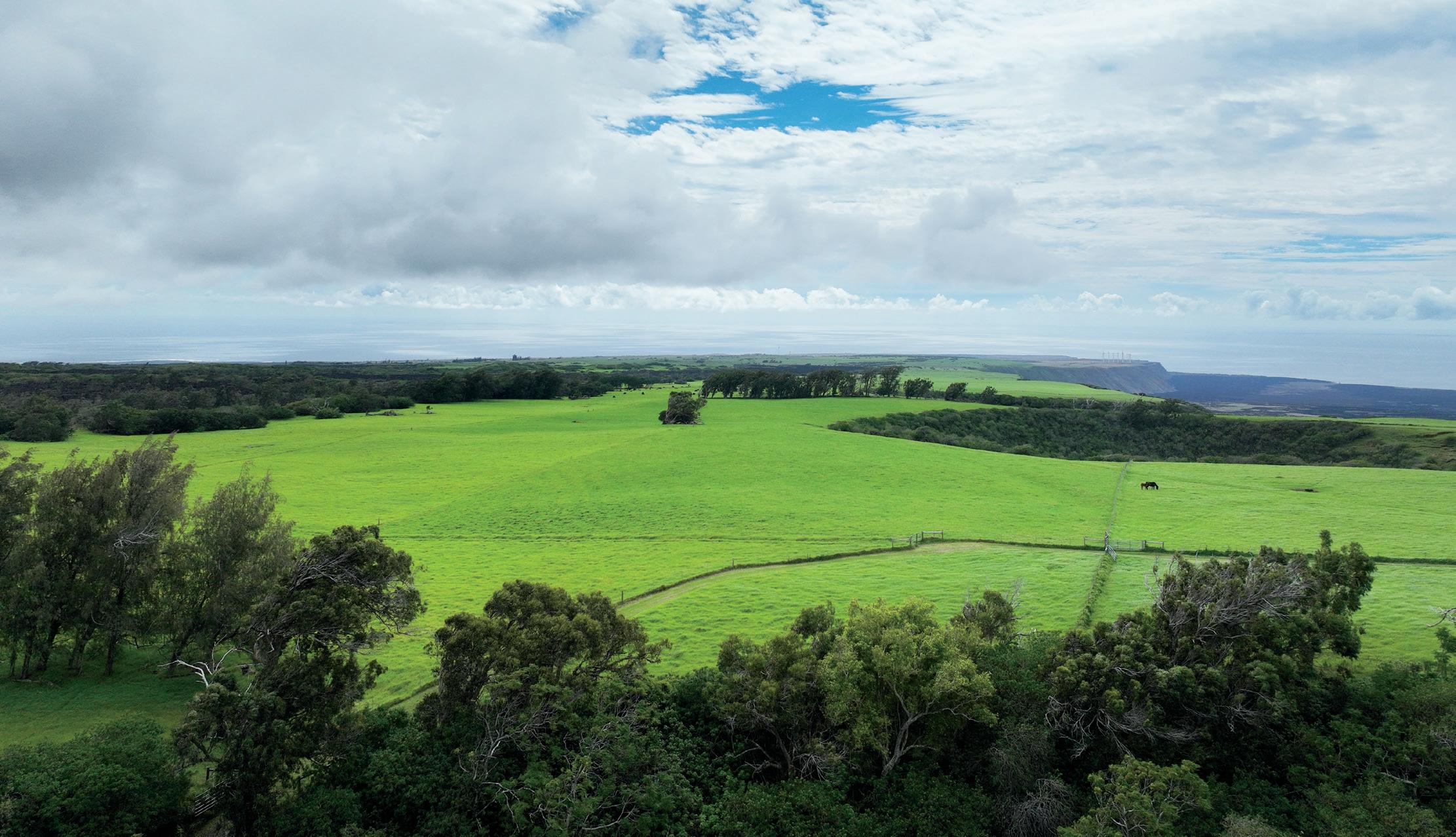
Ka‘apana’s cattle graze on abundant grasslands that are flanked by hardened, black craggy lava from the devastating 1868 Mauna Loa eruption. The bedrock beneath this narrow strip of pastureland dates back some 11,000 to 30,000 years. Millennia transformed the volcanic ‘āina into a fertile gem of the Ka‘ū District.
Three lua — collapsed lava tubes — dot the landscape at Kahuku Ranch. Two are pictured here. One in the foreground, and the second off in the distance. These sunken spots allow unique microecosystems to flourish. Some also link them to a supernatural mo‘olelo involving Māui the demigod.
There is another striking geological feature here that’s linked to a well-known mo‘olelo. Three lua — collapsed lava tubes — dot the landscape. The hands of time transformed them into fascinating microecosystems.
The floor of one of these lua is accessible via a dirt road. It’s there that people get to experience the otherworldly contrast with the grassy landscape topside. Sheltered from the relentless makani, orange, kukui and avocado trees thrive there alongside other native lā‘au.
It should then come as no surprise that this area in general is linked to the supernatural tale of Māui and his invention of the lupe (kite) as a way to harness the wind. Several accounts say his lupe landed in the vicinity of Kahuku Ranch, with some in Ka‘ū even sharing that the three lua are where the ornamental ribbons of the kite’s tail came to rest.
After learning all this, it finally makes sense why Akau named his dog Lupe.
“It’s (Kahuku Ranch) an incredible place to be — to live, to work, to visit. Everyone who comes here, I feel like they’re rejuvenated, refreshed and energized by the wind.”
James Akau KSK’05 with his ‘īlio, Lupe.
“It’s an invaluable resource for our haumāna. They make connections here that they can’t in the classroom.”
Maluhia Zamudio KSK’09 with her children, Camila and Keahonui.
Kahuku Ranch — and our ‘āina strategy — continues to evolve
While much has been done in the few years since Kahuku Ranch became part of the ‘āina Pauahi legacy, there is still much more to be done here. As mentioned on page 25, enhancing cultural and educational waiwai must be done in lockstep with realizing financial returns.
“My passion is reaching out to people to help them understand that we cannot continue to operate without a financial metric. It’s a difficult conversation for some, but it’s also reality,” Dancil said.
The mo‘olelo of Kahuku Ranch — and how Kamehameha stewards ‘āina across the pae ‘āina — is still being written. Taking an active role in that future reflects ea: agency, sovereignty and creating more spaces for the lāhui to reconnect with ancestral lands.
“For me, ea is the ability to come to place, to interact with place, and just be who we’re supposed to be — to sit still, be quiet and listen,” Dancil said.
In addition to offering sweeping views in all directions, Kahuku Ranch is home to some of the best cattle pasturelands in all of Ka‘ū.
KE KULA ‘O KAMEHAMEHA KAPĀLAMA
Māori sovereignty advocate connects with KS Kapālama haumāna
Mea kākau/pa‘i ki‘i: Peter Daniels KSK’85
High school haumāna from Ke Kula ‘o Kamehameha Kapālama took part in a powerful exchange on the topic of ea during a visit by Debbie Ngarewa-Packer, co-leader of Te Pāti Māori (the Māori Party) and relentless advocate for Māori sovereignty and environmental justice. Students from various classes engaged in a lively dialogue about shared struggles, inherent responsibilities and the vision for a self-determined future for all Pacific nations.
Ngarewa-Packer’s visit to Kapālama coincided with her being a featured speaker for the University of Hawai‘i’s Better Tomorrow Speaker Series, which brings world experts to O‘ahu to discuss solutions to global challenges. Tammy Miles KSK’92, the K-12 dean of academics, structured Ngarewa-Packer’s time at Kapālama in a way that connected global political themes directly to the students’ academic and cultural experiences. Miles said it was important to shape the learning opportunity by grounding it in Hawaiian protocol and forging connections in environmental stewardship and Indigenous leadership between two Pacific cultures. Approximately seventy students from ‘epekema kai (honors marine science taught in ‘ōlelo Hawai‘i), ‘āina-based STEM and fisheries management in Hawai‘i attended the session.
Ngarewa-Packer, the former CEO of Ngāti Ruanui iwi (tribe) and elected member of Aotearoa’s Parliament, embodies the concept of tino rangatiratanga — Māori self-determination — a principle mirroring the Native Hawaiian fight for mana kū‘oko‘a. The students found immediate resonance in Ngarewa-Packer’s life work, particularly her successful eight-year campaign against seabed mining off the Taranaki coast.
Addressing the environmental stewardship of the ocean, she framed her legal battle as a fight for ancestral duty.
“When I talk to you about the fight against seabed mining,” Ngarewa-Packer told the haumāna, “I am talking about kaitiakitanga — our inherent duty as guardians of the sea. That same duty, that kuleana, is something you hold for your moana and ‘āina. The corporations trying to exploit our oceans don’t see
life; they see dollars. We must teach them to see the life, the history and the future contained in every part of our ancestral domain.”
The session also focused on Indigenous governance and delved into the political front line of decolonization. NgarewaPacker, who champions Māori-led solutions as a Te Pāti Māori co-leader, spoke candidly about advocating for Indigenous rights within a colonial parliament. She shared the powerful example of being censured and suspended for performing a haka as a protest to challenge the controversial Treaty Principles Bill, which aimed to undermine Te Tiriti o Waitangi (the Treaty of Waitangi).
“The institutions of power were not designed for us,” she noted. “Our job isn’t to ask for a seat at their table; it’s to build a new table, one where our values — where mana motuhake — is the foundation.”
A significant part of her message focused on cultural revitalization — the push to restore te reo Māori (the Māori language) place names and making Aotearoa the official name of New Zealand. She framed language as the core of Indigenous identity and a critical tool against racism.
Senior haumāna Avapui Ulufale captured the urgency of Ngarewa-Packer’s message in his reflection, “Her reminders were powerful: ‘ike tūpuna — be your forever self, mobilize our people, colonization won’t die, it evolves, so we must evolve faster.”
This charge — to use ‘ike kūpuna not as a relic, but as a living, evolving political tool — reaffirmed the students’ commitment to grounding their activism in their Hawaiian identity.
For her part, Ngawera-Packer was equally impressed by the mana‘o shared by the haumāna.
“Discussions on activism, issues faced by your school and wider community as well as solutions that many already had — absolutely outstanding. As I reflect on my time spent at your beautiful campus, I couldn’t help but think of the vision Princess Pauahi had for education and how you are the dreams of your kūpuna. I am so excited for what will be achieved by this generation coming through and will be following eagerly the journeys, until we meet again.”
Ngarewa-Packer’s visit ultimately strengthened the cultural and political pilina between two powerful Pacific Indigenous groups, providing the Kapālama students with a real-world blueprint for realizing a Pacific guided by Indigenous values.
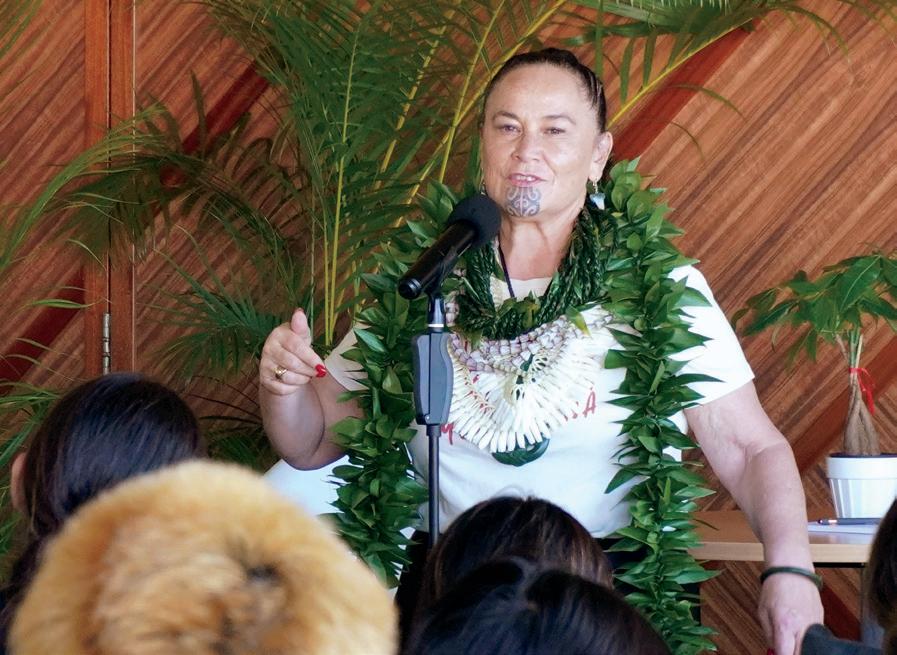
Debbie Ngarewa-Packer engages with haumāna on issues related to environmental stewardship and indigenous leadership.
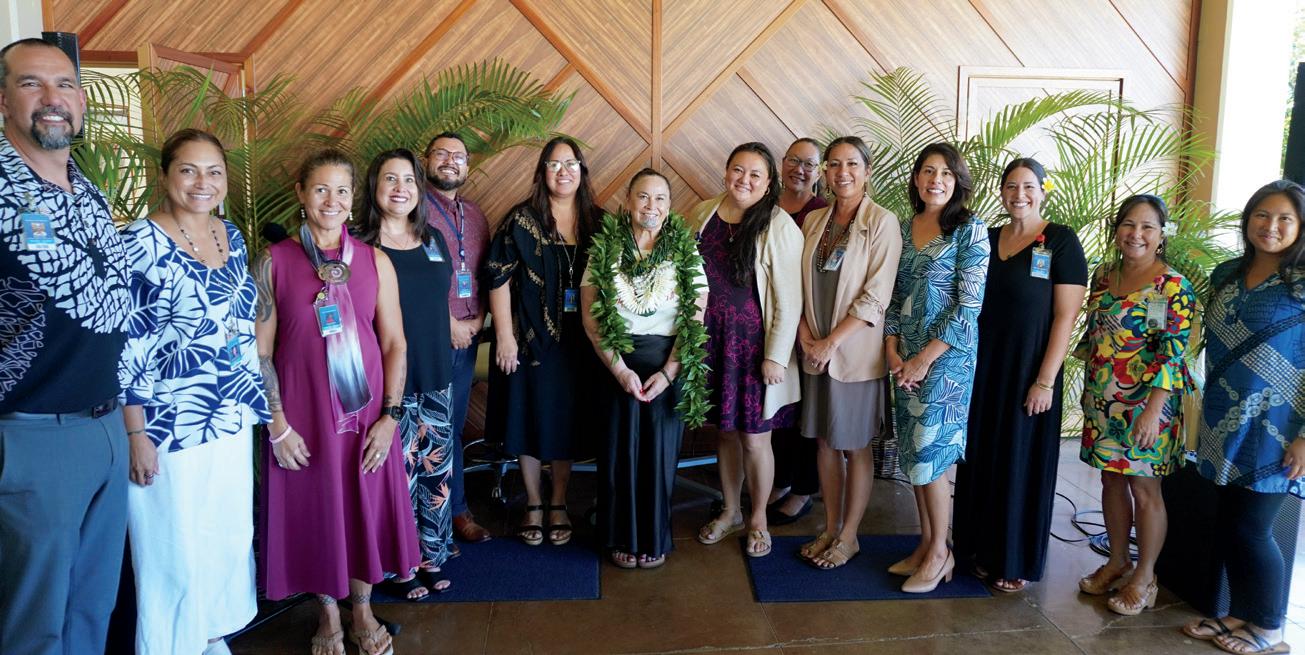
Members of Kapālama’s leadership team and kumu were fortunate to learn from Debbie Ngarewa-Packer’s experiences and build pilina with our Māori ‘ohana. Tammy Miles KSK ’92, (fourth from the left) organized Ngarewa-Packer’s visit.
KE KULA ‘O KAMEHAMEHA MAUI
He ‘ai no ka ‘āina
KS Maui becomes first school in Hawai‘i to install food waste machines on campus
Mea kākau/pa‘i ki‘i: Chris Sugidono
Ke Kula ‘o Kamehameha Maui is confronting food waste with innovative solutions that are student driven.
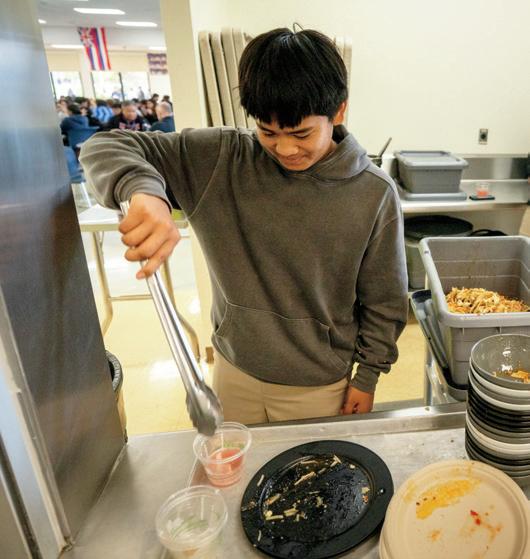
Haumāna from kindergarten through 12th grade have begun converting food waste from school lunches into compost using state-of-the-art machines located at the three dining halls on campus.
KS Maui is the first K-12 school across Hawai‘i to install food composting machines on its campus.
“If our kūpuna were around, I think they’d be really proud,” sophomore Rylan Ching said, while working a November lunch service and overseeing food waste operations. “The chefs in the back are making all this delicious food and whatever doesn’t get eaten just goes back into our gardens for more food and more crops. I think it’s just really cool. It’s like a cycle between our island and us.”
The new machines are part of the Nā ‘Ono o ka ‘Āina Farm to School Program in collaboration with KSM Food Service and Ka‘āinamāhuahua department. The program serves as a catalyst to improve the health and well-being of Native Hawaiian haumāna, in addition to increasing student access, engagement and consumption of locally sourced and sustainably grown food. Support also comes from local Maui Nui farmers, KS ‘āina Pauahi ag lessees and food crops grown on campus by haumāna.
Hōkūao Pellegrino, program director of Ka‘āinamāhuahua, which oversees the new initiative, had spent the past five years researching ways to not only repurpose the school’s approximately 200 pounds of food waste every day, but also reduce it. Previously, staff would manually mix the food waste with woodchips to create compost and have local piggeries pick up waste for their feed.
“The priority and the focus of Ka‘āinamāhuahua is engaging our haumāna in every step of the way so that they understand what a complete food system looks like from a culture-based lens,” Pellegrino said. “Prior to this program, haumāna had no clue as to what was happening to the food waste. It was kind of out of sight, out of mind. The lack of awareness was honestly unnerving to me. Not only do these new machines help haumāna better understand where their food waste is going, they also learn how beneficial food waste can be in terms of soil remediation and food production right here on campus. And even more importantly, to further help find ways to reduce food waste all around.”
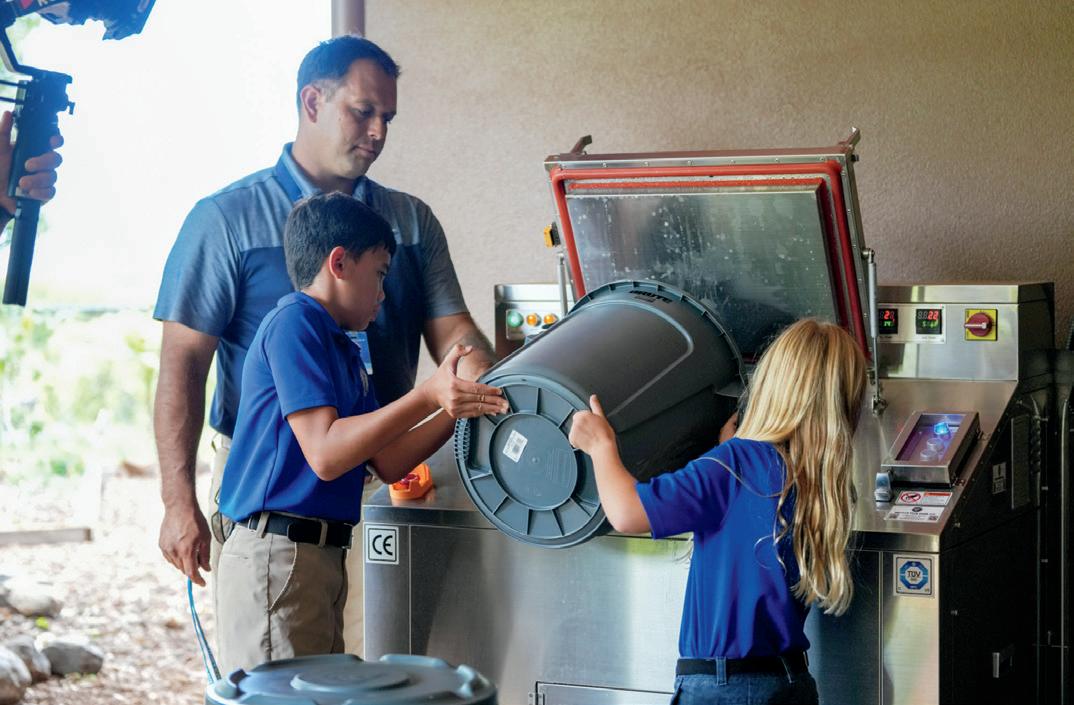
The food waste machines are simple to operate and are virtually odorless and soundless. Each machine has a daily capacity of about 150 pounds and takes 10 hours to convert waste into compost. The machines are located outside the dining halls for grades 6-8 and 9-12, while the K-5 machine is located at Māla A‘o ‘o Ka‘u‘uku School Garden where it can be used as part of the curriculum for the Kupa ‘Āina Science Program.
Haumāna are tasked with sorting out plates and cups, and ensuring only food goes into the food waste bins. The food waste is then emptied into the compost machine, where it is dehydrated and broken down to produce the compost that is mixed into the soil at the school’s gardens.
Kumu Hōkūao Pellegrino, program director of Ka‘āinamāhuahua, explains the food waste and new composting machine process to papa ‘elima haumāna after a lunch service.
Sophomore Rylan Ching separates cups, plates and food waste as part of the Nā
Kumu ‘Iwikauikaua Joaquin, who oversees the grades 6-12 Kupa ‘Āina Program, educates haumāna on the myriad benefits and uses for food waste as well as other waste such as discarded wood chips and branches from tree trimmers. The program seeks to use traditional Hawaiian practices for growing food and plants and avoid the use of synthetic fertilizers.
“Knowing we’re in Kula — one of the driest places — we’ve got to be smart about keeping the soil moist,” Joaquin said. “Then it’s turning to soil fertilizers, and we get to show the kids that by using our food waste we can mimic that same process in nature and provide fertile soil amendments, which enables the food crops to grow bigger.
“To me, that’s the whole thing that we want them to experience: from seed to recipe, to the ‘ono in their ‘ōpū.”
While the Ka‘āinamāhuahua team are excited about the benefits of the new machine, their goal this school year is to see food waste decrease 10% to 15% across the entire campus. Since the machines were first installed in October 2025, early estimates have shown haumāna are already throwing away less food during lunch.
“I think it’s super good for our environment and our school because a lot of places, like especially in the mainland, they show videos of people wasting their food and all that,” Ching said. “I think it’s really cool that we’re putting it to good use.”
Kumu ‘Iwikauikaua Joaquin, who oversees the Māhele Luna Kupa ‘Āina Program, helps guide papa ‘elima haumāna Kalahikiola Noa (left) and Ashton Pocock as they empty food waste from lunch service into the new composting machine on their campus.
‘Ono o ka ‘Āina Farm to School Program in the Ke‘eaumokupāpa‘iaheahe Dining Hall.
KE KULA ‘O KAMEHAMEHA HAWAI‘I
KS Hawai‘i haumāna visit Oxford
Mea kākau: Lurline Wailana McGregor
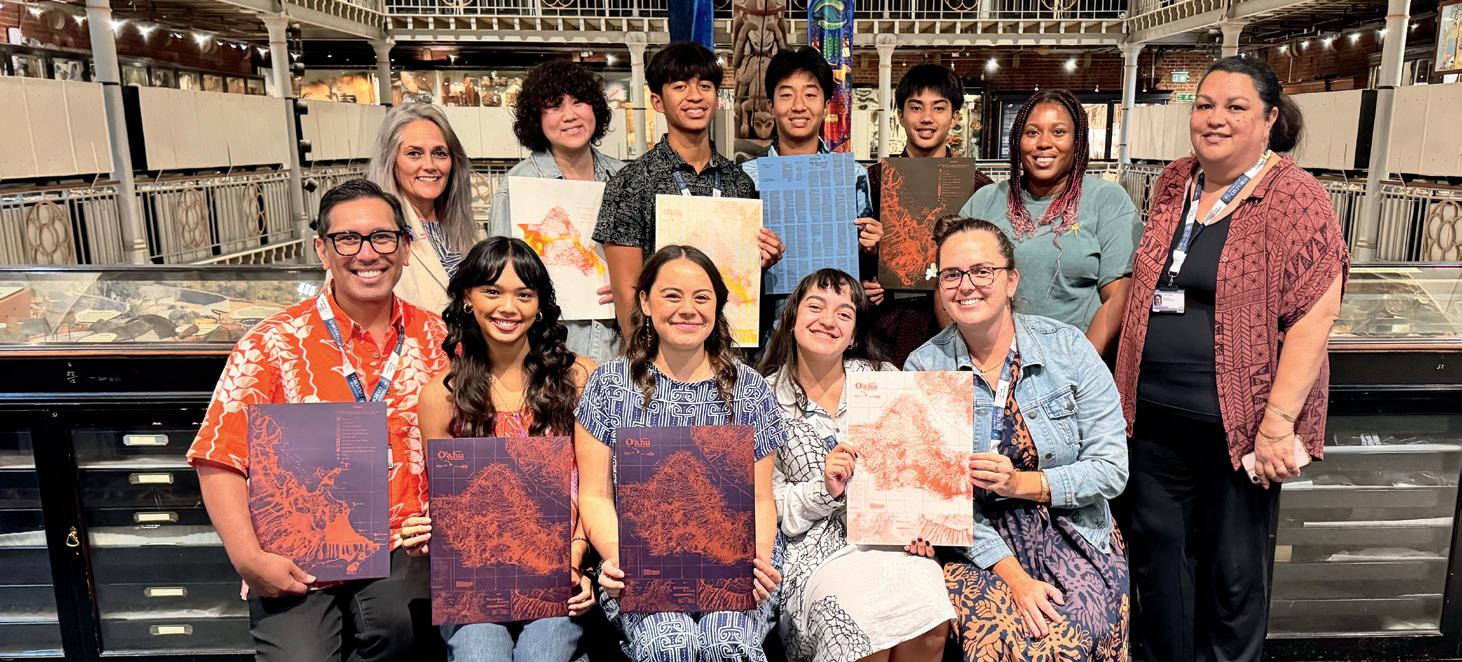
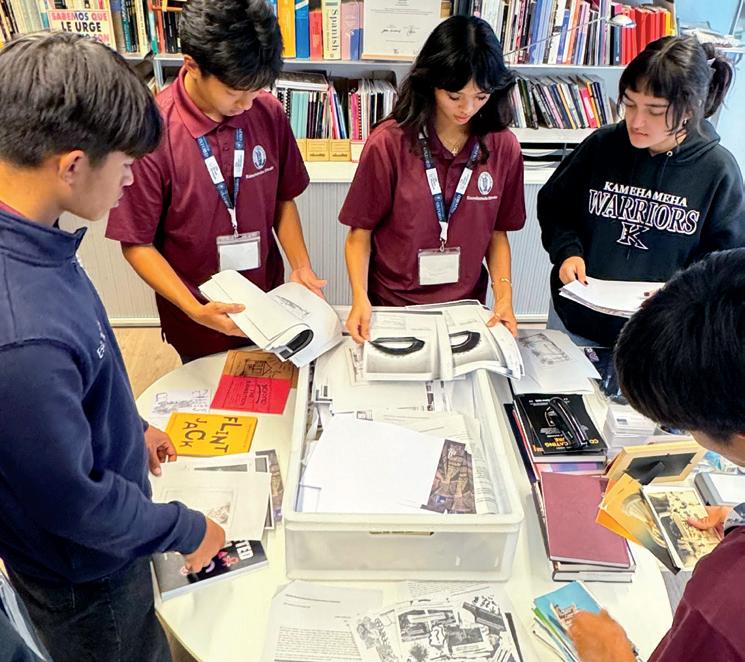
This past summer, six Kamehameha Schools Hawai‘i haumāna spent five weeks in Oxford, England, studying and working on projects at the Pitt Rivers Museum.
Founded in 1884, the Pitt Rivers Museum houses over half a million objects, photographs and manuscripts from around the world, including Hawai‘i. It prides itself in “innovative curation,” where artifacts are arranged across cultures rather than by time or region, as a more in-depth way to understand humanity. Marenka Thompson-Odlum, Research Curator of Critical Perspectives at the museum and who worked with the KS Ed Tech team on a previous collaboration, says that from this initial project, “we envisioned a program where Hawaiian youth could actively shape how PRM represents Hawaiian culture – empowered as curators, storytellers and knowledge holders.”
Thompson-Odlum’s partnership with KS Hawai‘i continued with the creation of the “Oxford Study Programme, Mo‘olelo in Motion.” Aolani Kailihou KSK’87, the director of Pū‘awalau Center for ‘Ōiwi Leadership and Advocacy at KS Hawai‘i, led the campus instructional team and the delegation of haumāna who traveled to England. She approached the collaboration as a way to accomplish multi-tiered goals: “How can the museum serve as a site for looking at critical perspectives, including objects that belong to Native people, and in this case, Hawaiian things,” says Kailihou. Both teachers and students are involved in the Center’s initiatives, which Kailihou describes as “using the landscape of the world to teach instead of just the four walls of the classroom.”
The three seniors, two juniors and one ninth grader, who came in with a wide range of interests, worked closely with University of Oxford museum staff and faculty, many of whom are leading academics in their fields.
Kendra Ryan, who is now a junior, describes how the students were tasked with creating their own projects after spending the first part of their visit seeing and learning about the items housed in the museum.
“We had an activity where it was just find an object that you liked in the museum, and I ended up in the “magic section” of the museum,” says Ryan, whose interest is in theology. “I found this weird little paper tucked away in a drawer, and that really caught my interest, because unlike a lot of the other items in
‘o
the museum, this had little to no information on it. So it started down a rabbit hole where I wanted to learn more.”
It turns out that the paper, which had symbols and letters and the Star of David on it, was a charm against witchcraft. “I started to research all this stuff because there were so many different parts of this single paper that didn’t add up,” says Ryan. “I ended up having to talk to someone who grew up Hebrew because there were Hebrewic words on it. That’s when I learned that this paper had the forbidden name of God written on it. It was a name that shouldn’t be written or spoken.”
She also learned that the paper was written by someone from Ireland in the 16th to 17th century who most likely knew nothing about Hebrew culture and what that culture deemed as sacred. “I think it’s important for us to recognize the alienation of culture, especially religious culture. In our past, here in Hawai‘i, we’ve lost touch with a bunch of customs, our language, our mo‘olelo, and I think it’s really important to recognize that it happened here, but not just here. It’s happened all over the world to different groups of people.”
Elle Ayat, who is a senior this year, had a different takeaway. “I learned more about myself than I ever did during school, because they were teaching us in a different learning style that I’ve never experienced before,” Ayat says. “You begin with kilo, where you gather knowledge, and that’s your research stage.”
She describes the next three stages as ho‘opa‘a, where the research is developed into prototypes and tested for refinement; then kā, where students revise their models; and finally paka, which involves meeting with a professional to get feedback.
“It wasn’t just a teacher proctoring the class and you taking notes,” says Ayat. “You really got to engage with each other. I found myself speaking up more in class, asking uncomfortable questions and participating.”
“As the program progressed,” Thompson-Odlum says, “I witnessed the students realizing that both these institutions (Oxford and Pitt Rivers Museum) could be problematic and sometimes just plain wrong. But more importantly, I saw how they grew to be more confident in their opinions and in their identities as Indigenous youth. I saw students who were proud to be part of the KS ‘ohana, but also future leaders who had ideas for their school to be even more rooted in Hawaiian epistemologies.”
Since returning from this experience, the students have created a student-led advisory board to replicate this style of learning at Kamehameha Schools.
KAMEHAMEHA SCHOOLS PRESCHOOLS
Hāmākua preschoolers put aloha into action via diaper drive
Mea kākau: Alice Malepeai Silbanuz
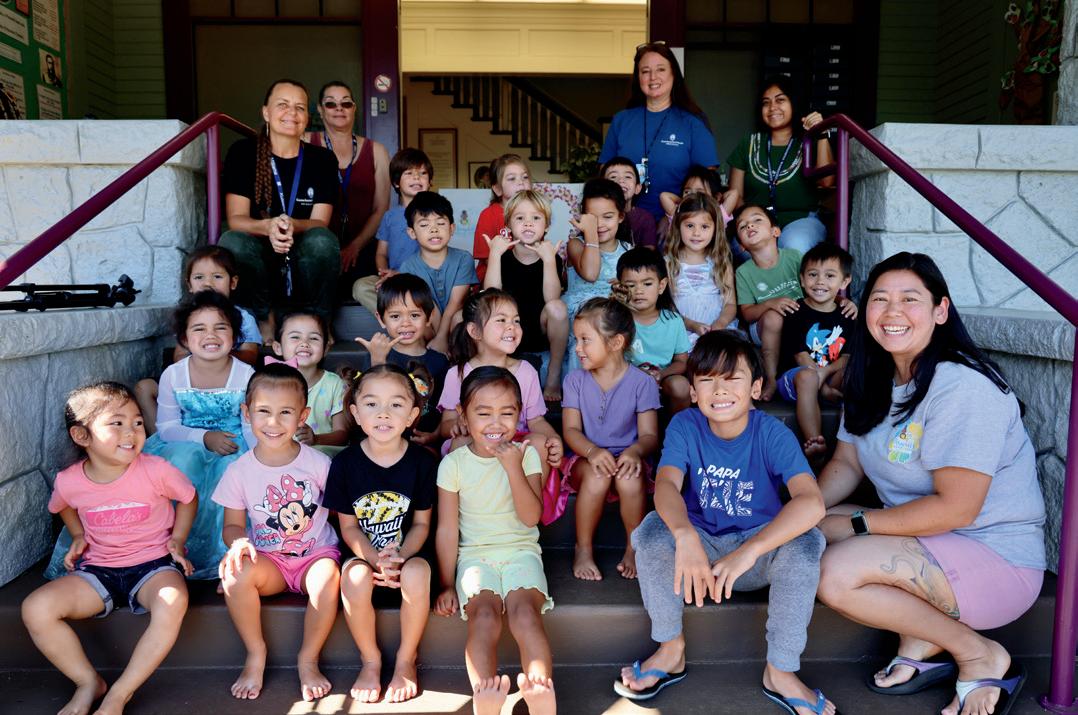
Hāmākua preschoolers, kumu, and ‘ohana came together to support families in need through a monthlong diaper drive in partnership with the Hawai‘i Diaper Bank. Led by kumu Lisa Goff and fellow kumu, the preschool served as one of seven drop-off sites across Hawai‘i Island. One in two U.S. families struggle to afford enough diapers for their babies. Without this basic necessity, children’s health and well-being are at risk, and families face added stress.
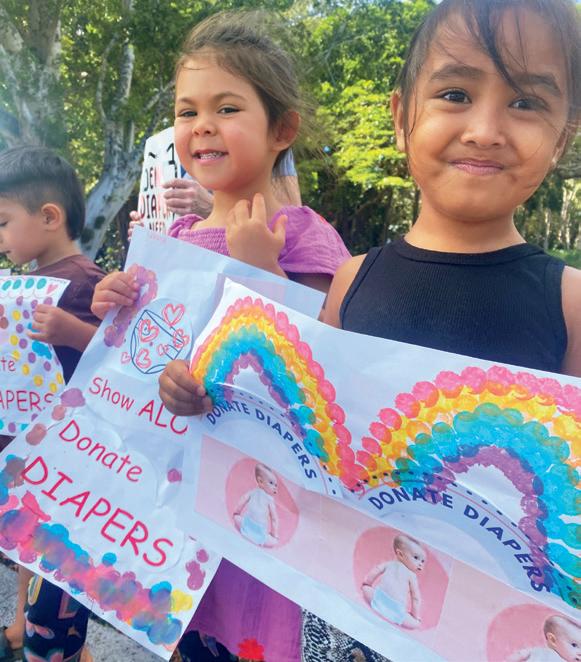
The campaign included a visit from Jessica Histo, founder and president of the Hawai‘i Diaper Bank, who shared that the organization provides diapers for about 600 Hawai‘i Island babies each month. During National Diaper Need Awareness Week (Sept. 15–21), to raise awareness, keiki and kumu held a spirited sign-waving event in Pa‘auilo — smiles, shakas and cheerful honks filled the air as the community members showed their support. Keiki called out, “Show aloha to babies because they need diapers!”
As keiki made donations they got to write their name on a paper flower and affix it to a poster board. Over time, the flowers came together to form a lei, a beautiful symbol of unity and giving. The children beamed with pride as they saw the lei completed, knowing that their aloha and teamwork had created something meaningful for others.
“Our haumāna have been learning and exemplifying the Hawaiian value of aloha,” Goff said. “We are teaching the keiki that it is ok to help if you can, and it is ok to reach out for help as well. Our kaiāulu supports us all, and keiki are an integral part of this community.”
For our preschoolers, the experience went beyond a community service project — it was a living lesson in the values their kumu teach every day. By practicing aloha, mālama and kuleana, keiki experienced firsthand how even at the young ages of 3 and 4 years old, they can make a big difference.
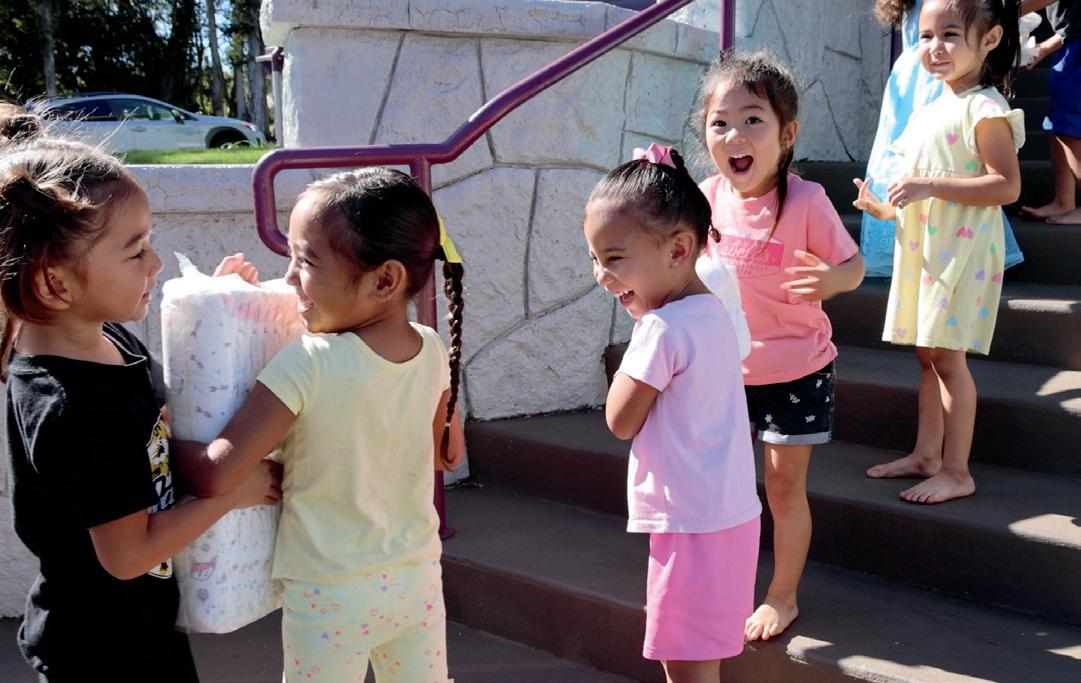
On Oct. 1, Histo and her son Dylan came to collect diapers and wipes donations that were overflowing out of the donation bin at Hāmākua Preschool. Keiki worked together to pass diapers down the stairs of their schoolhouse — just like passing pōhaku to build a wall. Only this wall was made of diapers and wipes! Together they loaded up the van and celebrated the total of 533 diapers and 764 wipes — enough to cover 10 babies for a month.
Mahalo nui to our keiki, kumu, and ‘ohana for working together to support this effort. To learn more visit www.hawaiidiaperbank.org
Kamehameha Preschool kumu are planting the seeds of ‘Ōiwi leadership every day. Go to ksbe.edu/growingoiwi to see how our littlest learners are walking proudly in the footsteps our our ali‘i on their leadership journey.
Embodying lōkahi, Hāmākua preschoolers work together to pass diaper donations from their schoolhouse to the Hawai‘i Diaper Bank van.
Keiki practice advocacy by sign waving during National Diaper Need Awareness Week.
Hāmākua Preschool kumu and keiki with Jessica Histo of the Hawaii Diaper Bank and her son Dylan (seated far right.)
by Brandon Ledward Principal Strategist Uluhiwa Kamehameha Schools
new study highlights the power of Hawaiian culture-based education and E Ola! in shaping student success at Ke Kula ‘o Kamehameha.
Designed and implemented by our campuses and preschools, this study supports what many have long believed: Grounding education in Hawaiian culture leads to stronger academic achievement and personal growth.
E Ola! is how we deliver Hawaiian culture-based education at Kamehameha and is reflected in the outcomes we cultivate in our haumāna.
The findings reveal strong links among HCBE-rich learning environments, cultural identity and academic performance. For example, haumāna in programs that demonstrate high levels of HCBE and E Ola! consistently achieve higher scores in reading, math and college readiness. More specifically, strong cultural identity is linked to better results on standardized tests such as the MAP, PSAT and SAT.
In addition, the longer a student remains in HCBE-rich settings, the greater their academic achievement.
Skilled educators are crucial in this equation — their culturally grounded teaching and ongoing development drive lasting improvements in academic performance.
Key findings
n CULTURE MATTERS:
Among Kamehameha students, those who experience rich HCBE and E Ola! environments consistently show higher achievement in reading, math and college readiness.
From preschool keiki to high school haumāna, early cultural identity and place-based learning are linked to measurable gains on standardized tests.
KS Hawai‘i found positive impacts on academic growth across three HCBE
exemplars, spanning a range of ages and learning models. For example, grade 1 students who received HCBE-aligned, mastery-based instruction were 63% more likely to exceed growth expectations in math than were prior cohorts.
n SUCCESS BEGINS EARLY:
Nearly 5,000 preschoolers across 30 sites showed significant growth in both cultural and academic areas after just one school year.
E Ola! scores were the strongest predictor of academic achievement, accounting for 75% of the variance in academic performance.
n BENEFITS OVER TIME:
The longer students are immersed in HCBE, the greater their academic gains. At KS Maui, each additional year in the program adds about 35 points to SAT scores, with gains continuing for up to 10.5 years. At KS Kapālama, students who connect with their Hawaiian identity early score significantly higher on the SAT than those who do so later.
n KUMU MAKE THE DIFFERENCE:
In all cases, educators skilled in E Ola! and HCBE are key to student success. Their commitment to culturally grounded teaching helps students thrive academically and personally. Investments in teacher development have led to lasting improvements in both cultural knowledge and academic performance.
Reflections and next steps
Nicole Souza, interim po‘o kula for KS Preschools, notes that the study “celebrates the dedication of our kumu, who have fully adopted E Ola! and Hawaiian culture as the foundation for every learning experience. As a next step, we plan to validate measures of high-performing Hawaiian culture-based classrooms and explore how HCBE and ‘āina-based learning shape the academic success and lifelong well-being of our youngest haumāna.”
According to Kelly Dukelow, assistant head of school for KS Maui, the study findings highlight the important work of our kumu. As she explains, “We expected positive results but were happily surprised by the size of the impact. We immediately thought about ways to socialize the study at our campus to share the success with the kumu and limahana who work to generate such positive outcomes.”
Scott De Sa, associate head of school at KS Hawai‘i, is also excited about the future. “Looking ahead, KS Hawai‘i will seek to better model the complex pathways through which HCBE impacts learners, expanding our data collection on the learning environment itself and integrating a range of holistic student outcomes, from motivation and agency to long-term postsecondary success.”
Shawna Medeiros, director of Campus Teaching and Learning Innovations at KS Kapālama, believes this latest study moves us closer to our ultimate goal. “Eventually, we would like to understand the longer-term haumāna outcomes associated with the HCBE and E Ola! Advantage, both during and after their time at Kapālama. Our mission is to equip our haumāna to become ‘Ōiwi leaders who can ho‘ōla lāhui, and we’re eager to understand how our efforts contribute to ea and self-determination.”
Why it matters
This study confirms that HCBE is not just about preserving heritage — it’s a proven strategy for academic excellence and personal growth. By nurturing cultural identity, fostering community connections, and investing in skilled educators, Ke Kula ‘o Kamehameha is preparing graduates to lead with confidence, compassion and a deep sense of kuleana.
Alumni can be proud that Kamehameha continues to honor its foundational identity while innovating for the future. While the journey to fully understand and maximize the impact of HCBE and E Ola! is ongoing, early results show great promise and move us closer to realizing our vision of a thriving and self-determined lāhui.
Your story is part of Ke Ali‘i Pauahi’s living legacy.
Through Letters from the Lāhui, share how Pauahi and Ke Kula ‘o Kamehameha have shaped your life — and the ways you are impacting the community.
Your mo‘olelo strengthens our collective kuleana and a rms the enduring importance of her vision.
Founder’s Day 2025
Across our three campuses, 30 preschools and numerous other places across the pae ‘āina, people gathered to honor Ke Ali‘i Bernice Pauahi Pākī Bishop on December 19th, her lā hānau. The 138th Founder’s Day celebrated the enduring legacy of our beloved ali‘i and her kauoha that continues to uplift the lāhui now — and for generations to come. Forever indebted.
your gift. your legacy.
Paying it forward by giving back
Linda and Gayton Costa KSK’68
Mea kākau: Kyle Galdeira KSK’03
Mea pa‘i ki‘i: Kala‘i Pomroy KSH’17
When Gayton “JR” Costa and his wife, Linda, returned to Hawai‘i from their home in Cottonwood, Arizona, in June to celebrate his 75th birthday with Class of 1968 schoolmates during the annual Kamehameha Schools Alumni Reunion Celebration, their visit became a heartfelt journey of reconnection, reflection and giving back.
Amid a week of cherished traditions, including attending Alumni Lū‘au and Kūpuna Pā‘ina, the Costas made time to meet with the Pauahi Foundation team to thoughtfully shape the criteria for their planned gift, driven by their deep commitment to uplifting future generations.
Their philanthropic spirit culminated in the establishment of a $50,000 endowed fund through a stock gift. In addition, the couple formalized their legacy-giving intentions with a planned gift valued at $450,000, for a remarkable total contribution of $500,000 to the Pauahi Foundation.
“Being a Kamehameha Schools alumnus and the recipient of an excellent education, with so many opportunities to build leadership and life skills, set me on the path to a successful career and a good life,” JR said.
“Linda, who moved to Hawai‘i from the continent, always says her life changed when she met me,” he added with a smile. “And since then, my classmates from Kamehameha have welcomed and embraced her like one of their own. That kind of aloha has made a lasting difference.”
Linda agreed, adding: “We were just talking about how something as simple as the KS Alumni license plate cover creates connection. My husband gave me one for my car in Arizona, and wherever I went, people would pull up next to me and say, ‘Hey, sister, how you doing?’ I’d tell them it was my husband’s alma mater, and they’d respond with such warmth. It reminded me of the strength of the Kamehameha Schools ‘ohana and how far that spirit of aloha travels.”
Inspired by that enduring sense of belonging and gratitude, the Costas began thinking deeply about how they could give back.
“We hope that our giving will inspire others and give new donors an opportunity to share their wealth or whatever they have, even volunteering or anything they can do to give back.”
Gayton “JR” Costa KSK’68
“As we reflected on the blessings in our lives and how we might leave a legacy that uplifts others, we thought, ‘Why not pay it forward?’” JR said. “We recognize that it was Ke Ali‘i Pauahi’s generosity that made all of this possible for us and we wanted to give in our own way to continue that legacy through the Pauahi Foundation.”
The Costas did extensive research on Pauahi Foundation education program support opportunities and decided to dedicate their funds to support Kamehameha Schools programs
Linda and Gayton Costa KSK’68
and initiatives that focus on educational pathways in trades and skilled services. Their intent is to empower KS haumāna who plan to enter the workforce directly after high school or college, as well as those looking to pivot into new careers.
“That’s where we decided to focus our giving: on Native Hawaiian students staying home to raise their families and be able to have a home and continue school with a good income,” JR said.
The Costas have used this giving opportunity to tell others with similar means and motivations why it’s important to give back to others through the Pauahi Foundation.
“We hope that our giving will inspire others and give new donors an opportunity to share their wealth or whatever they have, even volunteering or anything they can do to give back,” JR said. “We’ve also encouraged some of my classmates to do the same! The Pauahi Foundation staff makes the process to set up a planned gift very easy.”
The Costas remain based in Arizona and enjoy traveling all over the world. Though they’ve embraced diverse people, places and traditions, they always find their hearts anchored in Hawai‘i. Their recent trip home gave them a moment to pause and reflect on all they’ve been given — and all they hope to give back.
“You can take the boy out of the islands, but you can’t take the islands out of the boy,” JR said, recalling the deep connection he feels to his upbringing and the Kamehameha ‘ohana that shaped him.
When asked to reflect on the appreciation he has for Ke Ali‘i Pauahi and the lasting impact that his experience at Kamehameha Schools has made on his life, JR paused for a moment and said: “I would just give her a big hug and kiss and say, ‘I’m so grateful that you’ve done this for Hawaiian children because it has made such a difference in their lives.’ And, it will continue because Kamehameha Schools is going to keep going and continue to do great work.
“Linda and I would thank her for her generosity, foresight and her gift. Without that, you wouldn’t have what we do today. And we would not put out the quality learners and leaders that we have today.”
To learn more about the Pauahi Foundation’s endowed scholarship and planned giving programs, please contact Director of Philanthropy Natalie Arrell via email at naarrell@ksbe.edu or by calling (808) 534-3966.
ka nūhou o nā papa
Keeping it Pono
by Pono Ma‘a KSK’82 Director of Advancement and Executive Director of the Pauahi Foundation
Aloha mai e nā koa o Kamehameha,
As we celebrate the 30th anniversary of the Pauahi Foundation, we pause to reflect on the kuleana we share as Kamehameha Schools Alumni: to honor and perpetuate the vision of Ke Ali‘i Pauahi.
Your generosity and continued support have made a tremendous impact. Together, we have achieved so much across our preschools, campuses and communities, reminding us of the strength of our KS Alumni network and the difference it makes for the lāhui.
Last fiscal year alone, thanks to your support, we disbursed more than $1.5 million in preschool and post-secondary scholarships and fellowship funds! Each gift represents opportunity, hope and a commitment to nurturing the next generation. These successes affirm that when we move forward collectively, we strengthen communities and create lasting change.
Looking ahead, there is still so much important work to be done, and we invite you to join us in continuing and building this collective mission. Your gifts at Pauahi.org, or by scanning the QR code below with your digital device, make a meaningful and lasting difference as we grow the next generation of ‘ōiwi leaders and uplift the lāhui.
Together, we mālama our keiki, heed the wisdom of our kūpuna and perpetuate the legacy of Ke Ali‘i Pauahi for generations to come.
Stay connected by subscribing to our monthly Kahiau e-newsletter for the latest news, updates and stories of impact. You can also engage with us on our KS Alumni (@kamehamehaalumni) and Pauahi Foundation (@pauahifoundation) social media channels. We look forward to welcoming you to our upcoming gatherings, including the annual Alumni Reunion in June.
Me ka ha‘aha‘a, Pono Ma‘a
Use your digital device to scan the QR code and support the Pauahi Foundation!
1960s
Members of the Class of 1964, and their spouses, had a great get-together on Hawai‘i Island in August 2025.
1980s
KS Kapālama Class of 1987 classmates went out to support and view the “Chief of War” pre-screening event at Bishop Museum, August 2025. Hulō to classmate Wainani Young Tomich, first assistant director, “Chief of War” (water, stunt and battle units)! Some of Tomich’s other notable Hawai‘i credits: “Rise of the
Alumni sharing a little self history after leaving Kamehameha.
Ed Tseu, Carl Beyer, Herb Wilson KSK’61, Ed Lincoln and Lloyd Van De Car
Front row: Allen Daniels, Gary Rickard, Lloyd Van De Car and Fred Spencer. Back row: Jeffrey Coakley, James “Rusty” Seymore, Bob Berrington, Herb Wilson KSK’61, Ed Tseu and Ed Lincoln
Planet of the Apes,” “The Hunger Games: Catching Fire,” “Jumanji: Welcome to the Jungle,” “Jumanji: The Next Level,” “Aquaman and the Lost Kingdom,” “Lilo and Stitch,” “Lost,” “Hawai‘i Five-O,” “Magnum PI,” “Doogie Kamealoha, M.D.” and “Rescue: HI-Surf.”
1990s
Louis “Louie” Galdeira III KSK’95 joined Aloha Mortuary as the director of community relations.
2000s
J. “Miki‘oi” Wichman Tamangaro KSK’05 and Sadé Villatora Thomas KSK’05 are co-founders of Hāpu‘u Designs, a Hawai‘i-based company creating educational tools that support early childhood development through a cultural lens. Their first product, My Hawai‘i: High-Contrast Flash Cards, helps introduce keiki to native plants and animals while stimulating visual development — all with a gentle foundation in ‘ōlelo Hawai‘i. As moms, they’re passionate about early childhood learning, creative exploration and designing with purpose. With the right tools and environment, they believe our keiki can flourish.
The Pacific Business News 40 Under 40 Class of 2025 include several Kamehameha Schools Alumni, including: Zane Dydasco KSK’08 (Chick-fil-A Makiki), Kapua Chandler KSK’08 (Namahana School), Alexis Pomare Charpentier KSK’07 (Waikiki Health), Troy “Kimeona” Kane KSK’04 (808 Cleanups), Tyler Gomes KSK’05 (Kilohana). PBN’s 40 under 40 recognizes individuals for their achievements in their professional fields that have helped the community.
Colton Collins KSH’08 completed a Ph.D. in forest ecology at Nanyang Technological University in Singapore in 2025.
Under the state Department of Transportation and Maui Economic Opportunity’s Youth Services Program, a new mural on the Kūihelani Highway sound wall was painted by MEO’s students and Maui artists Bailey Onaga KSM’09 and Matthew Agcolicol. Onaga worked with KS Maui Senior Kaylia Gomes-Hema and other students to create the mural “Oneloa & Keone‘ō‘io.”
Front row: Larry Kekaulike, Cindy Teramoto, Troy Dunaway, Mikie Abangan Medeiros, Debbie Ah Chick Hopkins, Damien Kahaulelio, Peter Finnegan, Randell Ha‘o, Noelle Kai Middle row: Brad Ah Mook Sang, Bruce Hirota, Susan Thoemmes, Janell Chun Silva, Wainani Young Tomich, Teena Melo, Tracy Silva Damitio, Debbie Lukela Suyat, Wailani Kim Ceberano, Pua Schwab Higa, Franklin Hopkins
Back row: Willie Ahana, Randy Wong, Serina Lemmo Akimseu, Russell Wong, Natasha Cornelius Achong, Rochelle Balderas Guthrie, Daniel Robert “Bobby” Bobbit KSK’85, Joelle Ahuna Lee, Eddie Lee, Kenny Morishige.
Left: J. “Miki‘oi” Wichman Tamangaro KSK’05, co-founder of Hāpu‘u Designs. Middle: Sadé Villatora Thomas KSK’05, co-founder of Hāpu‘u Designs, with son, Rory. Right: Hāpu‘u Designs creates educational tools that support early childhood development through a cultural lens. Their first product is My Hawai‘i: High-Contrast Flash Cards.
A popular spot for bodyboarding, Oneloa, or affectionately, “Bigs,” was a location suggested by many of the participating students. Bailey described their passion for the project as deeply inspiring. The first mural, “Mo‘olelo o Maui,” was completed in January by Agcolicol and Onaga, featuring Haleakalā and depicting Māui the demigod harnessing the sun.
2010s
Steven “Kaui” Mau KSK’16, is a community health educator at the University of Hawai‘i Cancer Center. Along with other community advisory members, many of whom are KS Alumni, Mau is running the Kū Ola Program, a Native Hawaiian kāne healthcare initiative that aims to decrease the staggeringly high rates of cancer deaths amongst Native Hawaiians. Kū Ola was founded and started by the late Dr. Kekuni Blaisdell KSK’42. The program provides cancer and early screening education to Native Hawaiian men through our hui kūkākūkā discussion sessions, which are administered in a traditional hale mua setting. Kū Ola is a community-driven initiative, looking to recruit interested kāne from the community so that they can share
with their connections in their own community. More information about the program can be found at kuola.org
Mirai “Mimi” Manatad KSK’17 and her family were in attendance of her White Coat Ceremony at A.T. Stills School of Medicine in Mesa, Arizona, on July 11, 2025.
Kobe Young KSK’18, attended his A.T. Stills School of Medicine White Coat Ceremony at Mesa, Arizona, on July 11, 2025.
2020s
Ashlee Hi‘ilaniku‘upuahiehie Palimo‘o KSM’20 graduated in May 2025 majoring in psychology and minoring in art from Doane University in Nebraska. There, she founded the API club, was a member of the Student Athletic Leadership Team, a scholar-athlete on the women’s wrestling team, and placed four times at the GPAC conference. She plans to continue her schooling at Doane toward her master’s and is still eligible to compete another year.
In June 2025, Alexandra “Nohi” Perry KSK’21 received her BA from Dartmouth University. She was one of twelve in her class of approximately 1,500 to be selected by her fellow students as a “Marshal” on the basis of good citizenship, enthusiasm, integrity and positive impact on others. She was also awarded two ceremonial staffs in recognition of her leadership and service to the school. She is currently employed as an analyst in the Indigenous American section of the Washington, D. C., law firm of Akin Gump Strauss Hauer & Feld LLP. Photo and announcement shared by Nohi’s grandfather Warren Perry KSK’66
KS Maui Senior Kaylia Gomes-Hema.
Matthew Agcolicol and Bailey Onaga KSM’09
Matthew Agcolicol and Bailey Onaga KSM’09
Mirai “Mimi” Manatad KSK’17 and parents Candido Manatad III and Yuko Manatad
Kobe Young KSK’18
Ashlee Hi‘ilaniku‘upuahiehie Palimo‘o KSM’20
Ashlee Hi‘ilaniku‘upuahiehie Palimo‘o KSM’20 (right) with mom Leilani Jeremiah
Left to right: Aunt Catherine, father Kimo, Nohi, mother Natasha and sister Anastasia Kealaula (KS Class of ’26).
Kahikikapuihōlanikeku‘ina
“Kahi” Cornelius Ross was born in September 2025 to Tyneski
Quintel KSK’08 and proud dad
Jethro Ross.
A love story that began over 35 years ago, Tina Fonceca KSK’92 and Burrelle Alamillo KSK’90 met in 1990 while attending Kamehameha Schools. They dated briefly before he left for college, not knowing life would bring them together again years later. In 2004, their paths crossed once more, and they picked up right where they had left off. After 20 years of love, family and life shared together, they finally made it official — true to Hawaiian time. On Oct. 19, 2024, Tina and Burrelle wed at the very place their love story began: Kamehameha Schools’ Bishop Chapel. We celebrate this journey, for love is the bridge that binds our two families. Forever indebted to our beloved Princess Pauahi.
n n n n n
Mikela Rindlisbacher Halstead KSM’13 and Eddie Halstead were married in Las Vegas on April 20, 2024. In attendance were Francine Kam Rindlisbacher KSK’80 and Fred Rindlisbacher (parents), Kaumana Rindlisbacher KSM’10, Courtney Rindlisbacher and John Kapena Rindlisbacher (brother and family), Kauluwehi Rindlisbacher KSM’12 (sister), Keawe Rindlisbacher KSM’15 and Sarah Noelani Reyes KSM’15 (brother and partner), Keanu Rindlisbacher KSM’20 (brother), Ashley Watson Keung KSM’13, and extended family. The couple resides in Las Vegas and are both pursuing doctorate degrees, Mikela in occupational therapy and Eddie in physical therapy.
Left to right: Keanu Rindlisbacher, Sarah Noelani Reyes, Keawe Rindlisbacher, Francine Rindlisbacher, Eddie Halstead, Mikela Halstead, Fred Rindlisbacher, Kauluwehi Rindlisbacher, Courtney Rindlisbacher, Kaumana Rindlisbacher, John Kapen Rindlisbacher.
Alfred Benjamin Souza IV KSK’14 and Kanoe Maile Nikola were married on July 6, 2025, at Waialae Country Club. Proud family members are parents Bernadette and Alfred B. Souza III KSK’86, brothers Joshua Souza KSK’15 and Jace Souza KSK’24, uncles David Souza KSK’87 and Steven Souza KSK’92
Tina Fonceca KSK’92 and Burrelle Alamillo KSK’90
Alfred Benjamin Souza IV KSK’14 and Kanoe Maile Nikola
Ralph Francis Morgan KSK’48, 94, of Wahiawā passed away on May 5, 2025. He was born on June 25, 1930, in Honolulu. He is survived by his wife, Paola; son, Alan (Andrea); daughter, Caroline Morgan Green KSK’96 (Andrew); and sister, Doris Morgan Timeus KSK’53
Rev. Robert Tadao Tanaka Jr. KSK’49, age 94, of Waimānalo, died in Waimānalo on July 30, 2025. He is survived by his son Roy K. Tanaka KSK’87 and daughter Robyn Crowder.
Raymond Yutaka Yoshioka KSK’50, 92, of Kailua, O‘ahu, passed away peacefully on March 28, 2025. Raymond was born on June 26, 1932, to Yutaka and Lena Yoshioka of ‘Ōma‘o, Kaua‘i. After graduation from Kamehameha Schools, he went on to attend aircraft mechanics school in California, followed by service in the U.S. Air Force, stationed in Tokyo. Returning to Hawai‘i, he started an impressive career with Hawaiian Airlines that lasted 62 years. Raymond is predeceased by his parents, sister Joyce and daughter Tracie Ann. He is survived by sons Derrick, Dayne (Deanne) and Rayner (Cheryl); grandchildren Leah and Kristi Anne; great grandchildren Loden and Adler; and brother-in-law Rick Corpuz.
June Aloha Naipo Shimoda KSK’51 passed away peacefully on Aug. 9, 2025, at the age of 92. Shimoda was born on June 17, 1933, in Kohala, Hawai‘i — the sixth of 10 children of Hiram Kihapiilani Naipo and Mary Akui Liu. She was raised in Kohala until her family relocated to O‘ahu and attended Kamehameha School for Girls. While there, she was elected student body president and built formative friendships. In her senior year she met the love of her life and future husband, Stanley Sueo Shimoda, while being treated at Leahi Hospital. They would attend the University of Hawai‘i at Mānoa, where they built lifetime friends who they would affectionately refer to as their “worse-den-family”. Family was always June’s priority — the one she built with Stanley, the Naipos, the Shimodas, and her “worse-den-family”. June earned a bachelor’s in education with a minor in French, and later returned to achieve a master’s in education from UH Mānoa. June worked as an elementary school teacher on the mainland, tutored students individually in Honolulu, and
obituaries
became the office manager for Stanley’s gastroenterology practice at Kuakini Medical Plaza. After his retirement, she continued as office manager for her son, Dr. Neal Shimoda. June had a sharp intellect, was incredible with children and was tough to beat at cards. She played ‘ukulele, danced hula, learned ikebana, was a terrific seamstress, and loved teaching Sunday school. She will always be remembered for her infectious smile, heart-warming personality, and the way she embodied aloha wherever she went. She was predeceased by her sister, Iwalani W.S. Naipo Tsai KSK’59. She is survived by her brothers, Merrill Naipo and Ollney Naipo KSK’57; her children, Marion Shimoda KSK’79 (Phil Ricker), Neal and Paige Shimoda, Sandy Shimoda (Wil Green), Cynthia Ohata (Mike); grandchildren Alyssa Shimoda (Barrett Courtney), Jordan and Gina Shimoda, Merrick Ohata, Nainoa Ohata; and great grandchild Alohilaniokala Shimoda.
Beloved father and husband Gustavus Mahoahoaokahoaokalani Supe Jr. KSK’52, of Kailua, O‘ahu passed away peacefully on Dec. 30, 2024, at Castle Medical Center. He was born on Feb. 12, 1934, in Hilo to the late Gustavus Mahoahoaokahoaokalani Supe Sr. KSK’30 and Isabelle Keli‘ikuewa Akini. He was a proud graduate of Kamehameha, where he was lovingly referred to as “Gus-Gus” and “Honey.” He participated in the rifle team, concert glee club, band, cheerleading, swimming and Reserve Officer Training Corps and led his class as song leader, to name a few of his activities.
After high school, Supe became an OSC Beaver Believer, graduating from Oregon State College in 1957 with a Bachelor of Science degree in engineering. Gus entered the active-duty Air Force on Feb. 28, 1958, and graduated from primary and basic pilot training in 1959. He also attend KC-97 co-pilot training that same year and flew the “Stratofreighter,” which was an aerial refueling tanker for jet fighter planes like the F-84, F-100 and F-101. While serving, he attended the advanced survival school, the Pacific Air Forces’ Jungle Survival School and the Advanced Flying course. Besides being a transport pilot, Gus also served as an Air Operations Officer. Among the decorations Gus earned during his illustrious Air Force career are the Armed Forces Expeditionary Medal with one oak leaf
cluster, Combat Readiness Medal, the Air Force Longevity Medal with three oak leaf clusters, National Defense Service Medal, Small Arms Expert Marksman Ribbon, Vietnam Service Medal, Air Force Outstanding Unit Award with two oak leaf clusters, Air Medal with one oak leaf cluster, and the Air Force Commendation Medal with one oak leaf cluster. After more than 21 years of dedicated and honorable service, he retired as a major on July 1, 1979. Gus is predeceased by his wife, Stella Melnick Supe; son, Gustavus Supe III KSK’84; daughter Michele Supe KSK’81, and brother Charles Supe Sr. KSK’55. He is survived by his daughter Lianne P. Supe KSK’85 of Kailua, sister Maureen Thibadeau KSK’57 of Hilo, and numerous nieces and nephews.
Lorraine Leialoha Buchanan Viloria KSK’54 passed away on Oct. 17, 2025, in Wailuku, Maui. She was born in the Pioneer Mill Co.’s Hospital in Lahaina on Dec. 18, 1936, to William K. Buchanan Jr. and Victoria M. Buchanan. After graduation, she served in the Army and as a clerk for County of Maui Motor Vehicles. Lorraine loved to dance hula, sing in church choir, attend church every Sunday, spend time with all her ‘ohana and perform with Alu Like Hula. She is predeceased by her husband, Jovito C. Viloria; daughter Elizabeth K. (Alan) Hoe; father, William K. Buchanan Jr.; mother, Victoria M. Buchanan; brother, William K. Buchanan III; and sister, Elizabeth Ghose. Lorraine is survived by her sons, Anthony “Moku” (Lori) Buchanan and Christopher
(Jen) Viloria; daughter, Yolanda Zunick; and numerous grandchildren, great-grandchildren, great-great-grandchildren and great-great-great-grandchildren. Lorraine will forever be missed.
Celestia Toai Fonoimoana Lawton KSK’55, 88, of Kapolei passed away on Aug. 17, 2025. She was born on Jan. 22, 1937, in Kahuku. Lawton began at Kamehameha School For Girls as a freshman, making many friends along the way. After graduation she worked for the United States Postal Service and the American Postal Workers Union for 36 years before retiring in 2007. She continued her long support of KS and was ecstatic when her great-grandchildren Christian Auld KSK’24, Jolene Auld Class of 2028, and Elizabeth Auld Class of 2030 also joined the Kamehameha ‘ohana. She is predeceased by her daughters Joreen (Christopher Haae KSK’90) and Rebecca K. Rapoza, and son Joe E. Jones; she is survived by her children Dalmas (Jennie) Jones and Shanly M. Jones; 12 grandchildren, 38 great-grandchildren and five great-great-grandchildren.
Kapualehuaonapalilahilahiokaala “Kapua” Kaapu Sproat Fonoimoana KSK’56 passed away on Oct. 2, 2025. She was born on March 9, 1938, to David Makaliu Kaapu and Myrtle Marion King, and was raised in Punalu‘u, Ko‘olauloa, O‘ahu. After graduation, she went on to Oregon State University. Life at OSU didn’t last long because she had met the love of her life three days before she was going off to college. She stayed for the semester in Oregon and begged to return
home much to her father’s dismay. She married Herbert Kamakaohua Sproat on Dec. 21, 1957. She finished up her schooling at the University of Hawai‘i and in time, she had four children: Kaohu, Anuenue, Maile and Kehau. Kapua taught PE, health, and dance at the Church College of Hawai‘i, which later became Brigham Young University-Hawai‘i. She taught there for many years. She finished her master’s at OSU during the summers. She was involved in church, community and many organizations relating to bettering the health of her community. She was also a student of Papa Auwae. All who she studied with became her family. She was involved with many local organizations: Ke Ola Mamo, Papa Ola Lōkahi, HRI, Water and Soil Conservation, Hau‘ula Community Association, Punalu‘u Community Association, and many others. Her first love, Kamaka Sproat, passed in 1990. In 1999 she found love again and married Kosena Simamau Toa Fonoimoana. They blessed each other’s lives immensely until Kosena passed away in 2017. Later in life, she was a pig farmer and her pigs were her loves. She loved caring for them with the help of her children, grandchildren, great-grandchildren and many others. Kapua will be missed by many who loved her dearly. She is also preceded in death by her brothers, David Awai Kauka Kaapu (Leona) and David Kekoa Kaapu (Diana). She is deeply and tenderly missed by her children and their posterity — Kaohu K. Sproat (Sandy), Ānuenue Kamaka‘ala (Alyn), Maile S.K. Johnson (Darren), and Kehau Sproat (Selena). Also embraced with aloha are her stepchildren — Rodney (Tessie), Kosena Jr. (Mayette), Ferron (Lucie), Wayne (Masa), Kurt (Lily), and Toa Fonoimoana, Lanae (Liahona) Ngatuvai, Adeline (Kealoha) Keama, and Luella (Tyrone) Meredith.
Lyle Maynard Du Pont KSK’57, age 85, of ‘Āhuimanu passed away on Aug. 17, 2025. He was born in Waialua, O‘ahu, and raised in Wahiawā. Lyle was a proud graduate of Kamehameha School for Boys. He also attended Colorado State University on a golf scholarship. Coming from a law-enforcement-oriented family, he dedicated much of his life to public service, first as a police officer at the Honolulu Police Department for 10 years, attaining the ranks of detective and sergeant. He transferred to the
Department of the Attorney General, State of Hawai‘i, and retired as assistant chief of investigations. During this time, he attended and graduated from the FBI National Academy’s law enforcement management training program in Quantico, Virginia. After retirement, he went on to become the security division manager for Daiei USA Inc. Not able to stay retired again for very long, he then joined the State of Hawai‘i, Department of Public Safety, as a special investigator, as his last professional job. Du Pont enjoyed playing many sports and especially loved playing golf. He experienced his first hole-in-one at the age of 10 and had three more while enjoying his many years on the golf course. He was respected by many, and always willing to help family, friends and neighbors. Du Pont is survived by his loving wife of 55 years, Brenda, and best furry friend Ehukai. Also survived by sisters-in-law, brothers-in-law, nephews, nieces, grand/ great-grandnieces and nephews, cousins, godchildren, neighbors and many friends. He was predeceased by his beloved parents Gabriel and Lillian Kaaa Du Pont KSK’31, brothers Holbrook B. Dupont KSK’50 (Amanda) and Clyde Du Pont KSK’51 (Beth), and sister Daryl Jean K. Du Pont Aiwohi KSK’54 (Herbert).
Daniel Canady KSK’59 passed away on Aug. 25, 2025, at age 83. Canady loved baseball, the Washington Commanders, golf, and being Hawaiian. Anybody who played football or baseball, or sung in a competition, he would follow. He was a proud alum of the Kamehameha School for Boys and the University of Hawai‘i. He always had a smile on his face and some encouraging but “wise” comment to his family and friends that reminded everyone that Papa was in charge. Papa’s generosity, words of wisdom, wit, smile and joking nature left a huge legacy, and will be missed by everyone he touched throughout his life. He is survived by his young bride, Marsha Canady; younger sister, Muriel Canady Anderson KSK’62 (Leslie); three children, Lisa McWhirt (David), John Canady (Alberta), and Joel Canady (Claire); and four grandkids who were the apples of Papa’s eye: Madison, Sam, Jason, and Christopher. Canady was predeceased by his parents, Samuel and Rosaline AhNee Canady; and two brothers, Charles and David Kawena Canady KSK’67
Chanson Aiono Ching KSK’59 passed away at home in the early morning on Sept. 21, 2025, at the age of 84. He was born in Pu‘unēnē, Maui, on June 14, 1941, attended Catholic school during his elementary years and, beginning in eighth grade, attended Kamehameha School for Boys. In his senior year, he was student body secretary and co-captain of the rifle team. He then served in the U.S. Army Corps of Engineers as a draftsman for three years. In 1962 he began studies at the College of San Mateo in California, then transferred in 1964 to the University of California at Berkeley, where he majored in sculpture, studying with Peter Voulkos for his B.A. in 1968. That year he also married fellow art student and sculptor Susan Newell. At the University of Montana he studied with sculptor Rudi Autio for his MFA in 1970. He and Susan relocated to remote Chimisal, New Mexico, where Ching built an adobe kiln and their first child, Isami, was born. Returning to Montana, Ching was appointed as resident potter at the Yellowstone Art Center in Billings for two years, then continued as an Artist in the Schools, where he led workshops in ceramics for two years in Great Falls, followed by residencies at Butte, Glendive and Bozeman. Their second child, China, was born in Great Falls. He also was a ceramic arts instructor at Eastern Montana College in Billings and Great Falls and was a guest artist at Montana State University. His ceramics have been exhibited in New York, California, Arizona and Washington, D.C., along with numerous exhibits throughout Montana and other western states, and his works are held in several public and private collections. Ching also pursued his interest in still photography and film production. He joined the Bozeman Film Festival in 1992 and brought a series of Asian films to the Bozeman screen. He worked as assistant camera and grip on several film productions at MSU. He worked as a rural mail carrier in Belgrade from 1992 to 2007. Once retired, Ching traveled to Alaska with his partner, Doris Loeser, a film-maker and school counselor, whom he married at Hyalite Grotto Falls in 2005. While living on Prince of Wales Island, he avidly fished for salmon, explored the country and made artwork for Doris’ counseling program. On the North Slope, he hunted for ptarmigan on the tundra with his two black Labrador retrievers, Hokulele and
Nalulele. The couple’s interest in sailing eventually led from sailing on Canyon Ferry Lake to starting a second home in Port Townsend, Washington, in 2018, where he and Doris bought a sailboat and practiced in the nearby bay until the summer of 2024. Ching was also devoted to reading, woodworking and gardening, and was active in whitewater kayaking, aikido and tai chi. He had a deep understanding of his Chinese, Japanese and Hawaiian heritage. He was a dedicated artist in everything that he did, especially in his ceramics, carpentry and sailing. For many years, he always had a well-trained dog at his side. He told wonderful stories about his Maui childhood and other adventurous times. Ching has many loyal friends and family who will remember his lovely smile and his warm presence. Ching was preceded in death by his father, Chan Ching, and his mother Rena Apo Ching, of Kahului, Maui. He is survived by his wife, Doris Loeser of Port Townsend, Washington; son Isami; daughter-inlaw Charlene Liu; and granddaughters Rifka and Florence, of Eugene, Oregon; daughter China of Bozeman, Montana; and sisters Drena P. Ching KSK’63, of Kahului and Charen L. Ching KSK’57, of Mesa, Arizona.
George Kekuni Washburn Sr. KSK’60, 82, a proud husband, father, grandfather, great-grandfather, brother, uncle and friend of Kapahulu, passed away peacefully on June 2, 2025. He is predeceased by his wife, Chenty, of 60 years, and survived by their children Chenty (Vince), George Jr., LaVelle (Patrick), Jerlene and Carol; 6 granddaughters; 3 great-granddaughters, brother Wayne and extended ‘ohana.
Robert Pi‘ilani Kamai Jr. KSK’62, passed away on Aug. 10, 2025. He is survived by his wife, Joyce; sons Sean and Ryan; and five mo‘opuna.
It is with profound sadness that we announce the passing of Dr. Gary Robert Gutcher KSK’62, who departed this life on Oct. 24, 2025, at the age of 80. Dr. Gutcher passed peacefully in his sleep under the compassionate care of Parsons Health Care in Westminster Canterbury, Richmond, leaving behind a legacy of love, humor, kindness and cherished memories. Born on Nov. 5, 1944, in Honolulu, Gutcher was the beloved son of Abigail and Robert Gutcher. His formative years were spent nurturing lifelong friendships
at Kamehameha Schools, where he deepened his enduring love for Hawai‘i and strengthened his commitment to helping others. Gutcher’s journey of learning and service led him to Stanford University, where he graduated before volunteering with the U.S. Peace Corps in Micronesia, an experience that further inspired his dedication to global health and humanitarian work. Gutcher’s pursuit of excellence in medicine began at the University of Hawai‘i School of Medicine and continued at Johns Hopkins University, from which he received his medical degree. As a board-certified neonatologist, he rose to become full professor and chairman of the VCU/MCV Division of Neonatology. Over the course of his career, Gutcher supervised the care of more than 9,000 premature infants, developed pioneering software for nutritional dosage, and led the design of a state-of-the-art Neonatal Intensive Care Unit at VCU. His visionary leadership earned global recognition when the NICU received a prestigious GE Medical award for its innovative design and impact. Throughout his distinguished career, Gutcher held deep respect for his colleagues and especially valued the essential contributions of the nursing team in achieving the NICU’s success. He was a mentor to all who knew him — always generous with his expertise, insight and a helping hand. Gutcher will be remembered not only for his professional accomplishments, but also for his warmth, wit and generosity. His unwavering commitment to his patients, colleagues and community leaves an indelible mark on the lives he touched. His legacy of compassion and innovation will continue to inspire all who had the privilege of knowing him. He is survived by his wife and “Split Apart” of 54 years, Karen; their children, Jordan Bastien (Pierre) and Megan Coster; grandchildren Luc and Rowan Bastien; and his sister, Sandra Gutcher Decker KSK’65. With heartfelt appreciation, the family thanks his niece, Michelle McClelland, and Dr. Peter Boling for their kind support of both Gary and Karen.
Michael “Buddy” Kau Chun Aki KSK’63, 79, passed away on Feb. 11, 2025. He was a veteran of the U.S. Navy and a retired inspector from the Honolulu Fire Department. He is survived by his wife, Audrey; his children, Michelle Aki KSK’90 (Jesse), Michael Darin Aki KSK’94 and Tiffany Aki KSK’02; siblings
Sidney (Alana) Aki, Danielle “Ipo” Gora KSK’73 and Guy Gora KSK’74 (Sky); his aunt Juliette “Tootsie” Goo; and his many nephews, nieces, cousins and friends.
Karen Nalani Wright KSK’68 was born on April 4, 1950, to Leslie Madison and Mae Lee Wright. Growing up in Mānoa Valley, she attended Mānoa Elementary, Stevenson Intermediate and Roosevelt High School until she was accepted into the Kamehameha School for Girls. She graduated in 1968 and then pursued her interest in biology at Leeward Community College, eventually going to work at Sears, where she worked for 15 years. Ever the seeker, Wright found and fell in love with Jesus, receiving Him as her Lord and Savior in 1980. She entered the ministry with the Assemblies of God as a children’s pastor. She served in the Assemblies of God for 20 years. After retiring from the church, Wright then put her administrative expertise to work as the wedding coordinator at Kawaiaha‘o Church. There she continued to minister to fellow workers, congregants and wedding couples. Wright loved children and was the consummate “aunty” to her three nieces and nephew. Birthdays, Christmas, movie nights or just goofing around, Aunty was always there. In the early morning hours of May 23, Jesus came to take our beloved Aunty home. Our hearts are assured that her earthly assignment is done and that now she is rejoicing in heaven with her Heavenly Father. Wright was a good and industrious Godly woman who had run her race with love, joy and endurance. Well done, good and faithful servant.
Denise Chisako Melemai-Perry KSK’68 was born at St. Francis Hospital on July 25, 1950, and passed on Oct. 4, 2025. She was the oldest of five children, and the daughter of William Herman Melemai and Helen Sumida Melemai. Melemai-Perry grew up in Pauoa Valley in Honolulu. She attended Kamehameha Schools from kindergarten, then the University of Hawai‘i, where she received a bachelor’s in art education in 1971. She then attended programs in ceramics at the University of Hawai‘i, which is where she met her husband, Bill Perry. Bill and Denise were married in 1975 by the great Indian saint Baba Muktananda. When Bill was accepted to Washington University for graduate school, they moved to St. Louis. While Bill was in graduate school, Denise worked as a chef at various
St. Louis restaurants. In 1976 Bill left Washington to be part of the founding faculty of the Visual & Performing Arts High School. The following year Denise was also hired by the Saint Louis Public Schools as an art teacher at the Visual & Performing Arts High School. She was hired away from that position by Normandy High School, where she taught art until 1982. She then moved to Normandy Middle School, where she taught art to grades 7 and 8 until 2007. When she retired from Normandy she was hired by another public school district, Maplewood Richmond Heights, to teach art in their early childhood program. Denise was always active. She loved life. She loved sharing food, and she was a superb and generous cook. She loved people, especially children, and children seemed to love her instinctively. She loved toys, and collected them to keep and to give to children. She loved art, especially Indigenous art and the arts of China and Japan. She herself produced and collected artwork that reflected that love, and before she died she became a certified docent at the St. Louis Art Museum. She was deeply loved by all who knew her and will be missed by many.
Lynn Kanani Akana Mattson KSK’70, 72, of Waimānalo died in Pearl City on Jan. 25, 2025. She was born in Honolulu. She is survived by her husband Frederick Mattson II KSK’70
Dr. Carla Lee Garcia Rolison KSK’70 passed away on July 2, 2025 in Albuquerque, New Mexico. She was more than just a doctor for her patients, who would bring her presents she could take home to share with her loving family. As a care provider, she would share her precious time and compassion with those she treated to ensure they left better than when they arrived. She was dedicated to providing quality in her work, even as a student at Southwest Acupuncture College where she took the bold opportunity to travel to China to maximize her education. After graduating, her quest to hone her skills as an acupuncturist and care provider never stopped. She would go on to work with organizations to provide relief for veterans and those who needed support in emergencies. As a mother, wife and sister, she held the best interests of those around her close to her heart. Native to the Hawaiian Islands and born in Honolulu as the oldest of seven children, she would often provide
motherly care for her siblings, whom she was so proud to have and who would reciprocate her love with their humor, wit and loving support throughout her lifetime. Rolison also took great pride in her upbringing in Hawai‘i and was particularly proud of her education from Kamehameha Schools, where she learned life lessons she could bring with her to the mainland that would eventually help hundreds of people in their health journey.
Iris I‘inilani Logan Kekaula KSK’70, 72, of Kāne‘ohe died in Kāne‘ohe on Sept. 28, 2025. She was born in Honolulu. She is survived by daughter Rose Kekaula Polvado KSK’91 and son Pomaikai Kekaula KSK’00
Nadine Kapiolani Sylva KSK’72, 70, of Waipahu, died in Honolulu on May 23, 2025. She was born in Honolulu.
Roland Herbert Chang KSK’72, 71, of Kailua, O‘ahu died in Honolulu on June 28, 2025. He was born in Honolulu.
Aukake Robert Dapitan Sr. KSK’72, 71, of Kailua, O‘ahu, passed away on July 9, 2025. He was born in Lahaina, Maui, and was a retired Honolulu police officer and served with the Attorney General’s Office. He is predeceased by his sister, Kehaulani Samudio, and brother, Charles R. Dapitan. He is survived by his wife, Peggy K. Dapitan; sons Aukake R. Dapitan Jr. and Kenui A. Dapitan; sisters Kina Laporga, Luka Ladera, Charlotte Figueroa and Ellen Kaililaau; brother Buddy Dapitan; many grandchildren, and one great-grandchild; as well as many nieces and nephews.
Retired FRS Edward “Bimo” Kelii Akiona KSK’72, passed away on July 10, 2025, at the age of 71 in Kailua-Kona, HI. Born in Hilo on February 4, 1954, Bimo dedicated much of his professional life to public service — first as a police officer and later as a firefighter, from which he retired after 21 years at Station 7 in Kailua-Kona. He was an outspoken advocate for the protection of Mauna Kea and used his time and resources in retirement to support aloha ‘āina. He is survived by his children, Tyson, Kui, and Dayson Akiona KSK’04; grandchildren Jaden Ah Mow KSH’20, Josiah Akiona KSH’21, and Hala‘i Akiona-Miyasato; siblings Lloyd, Deron Akiona KSK’76, Emerson, Nalani, and Jason. He was preceded in death by his parents, Lloyd and Sylvia Akiona, brother Markham Akiona, and son Kalson Akiona.
Joelyn “Joey” Ha‘aheo Akeo Miyashiro KSK’72, age 71, of Honolulu, Hawai‘i, passed away on August 26, 2025. Joey was a volleyball coach and retired teacher of the Hawai‘i State Department of Education. She was born on March 10, 1954 to Joseph and Eleanor (Tilton) Akeo. Joey was an All-American volleyball player at the University of Hawai‘i in the mid ’70s. She is survived by her sisters Ingrid Akeo Lee KSK’74 (Gerald), and Ku‘uleinani “Ta” Data (Robert); children Tehani Fiatoa (Kaipo), Imai Miyashiro (Risa), Jordon ‘Ainoa Miyashiro KSK’04, Tamari Miyashiro, and Kaulana Miyashiro (Alex); 12 nieces and nephews; and 13 grandchildren. She was preceded in death by brother, Tilton Akeo (Susan) and sister, Stephanie Perez (Kamaki).
Celeste Kehaulani “Kehau” Jung KSK’74, passed away peacefully at home, in Hālawa, surrounded by family on July 29, 2025, after a hard fought battle with cancer. Jung was born and raised in Honolulu and the oldest of seven children. Growing up she shouldered the responsibilities as the eldest daughter, big sister, and became known to many as “Aunty Kehau.” Whether hosting events, celebrations, game nights or heartaches, she loved gathering family and having them close. She always made sure there was a warm meal and a bed available that allowed family and visitors to feel welcomed and loved in her home. She was a proud graduate of Kamehameha Schools, entering in kindergarten, and was blessed to forge lifelong friendships over her years there. She was incredibly grateful for the values instilled in her as a student and the life lessons she learned. She spoke often of her gratitude that her children were also blessed with the opportunity to attend Kamehameha. She always insisted on volunteering her time as a parent by handcrafting hundreds of ribbons for song contest lei, helping sports team boosters, and chaperoning special events – she was always ready and willing to serve. Jung was also a devout member of the Church of Jesus Christ of Latter-Day Saints. Her love for Jesus Christ and his atoning sacrifice inspired her faith, patience and generosity. She spent many years serving in leadership roles within the church and was always attentive to the needs of those she served, as well as those she served alongside. She was an inspired
leader and disciple of Christ. Without hesitation, she always cared for the elderly, served those in need and testified of her witness of Jesus Christ. However, Jung’s greatest love was her own little family. Built upon a 37-year marriage to her devoted husband, Randy, they forged a life of love, laughter and quiet strength together. Kehau and Randy were often inseparable and spent their time together traveling, gardening and wandering the aisles of Costco. As her children stepped into adulthood, she guided each of them as they faced challenges, reached new milestones and started their own families. “Grandma Hau” loved spending time with her six grandchildren — Ava, Madison, Ryder, Olivia, Emelia and Rowan. Visits with Grandma Hau were defined by love, hugs, laughter, games, gardening, french fries and Disney fun. Jung’s unwavering devotion to her family and love for Jesus Christ were the foundation of her life. During her battle with cancer, she demonstrated remarkable faith, strength and perseverance. She spent the final weeks of her life surrounded by her husband, children and grandchildren, leaving each with treasured memories, love and advice as part of her legacy. She held her family together in her final moments. Although she will be profoundly missed, her spirit will continue to guide and inspire those she loved. She is survived by her husband, Randy; children Michelle Cluney KSK’95, Wilson Cluney KSK’98 (Lindsey), Ross Jung KSK’07 (Francesca) and six grandchildren. She is also survived by her father Walter Jung (Lucy) and siblings Wendell Jung (Sondra), Miles Jung (Renee), Clay Jung, Denise Jung Kauhi KSK’75 (Thompson), and Jessica Ackerman (Aaron), as well as numerous nieces and nephews.
Weyline Lahela Kamakana Surprise Puhi KSK’77 died on July 25, 2025. She is survived by husband Keawe Puhi of Moloka‘i and preceded by Ronald H. Surprise. She is also survived by children Donovan, Makana Surprise-Butay (Jordan), Nāmaka and ‘Aimoku; grandchildren Jax and Henry; stepchildren Kawelolani (Kathy), Kuilani (Kahiwa) and Keawe Kai Jr.(Pi‘i); step grandchildren Kilinahe, Kaiolohia, Mahealani, Kahekili, Kealana and Kuhao. She is also preceded by mother Rachael J. Lahela Kamakana and survived by father Weymouth Nakeleawe Kamakana Sr. (Jule); sister: Elizabeth-Rose Mahina Kamakana-Juario (Milton); brother Weymouth Nakeleawe Kamakana Jr. KSK’80 (Jojo); cousin: Leslie Ku‘uipo Machado Borges KSK’68; stepsisters Laurie M. (Sherry), Rhonda P. (Steve) and Jenny L. Puhi is also survived by many nieces, nephews, cousins and friends. Raised on the island of Moloka‘i in Kalama‘ula, she began her attendance at Kamehameha Schools in the seventh grade. As a boarder student she adapted to dorm life quite well and would eventually go on to excel in athletics, cheerleading and friend-making. She also admired the boarding staff very much. Upon graduation, Puhi worked for Budget Rent a Car before moving on to American Airlines and later accepted a position stationed in Arizona, where she and Ron raised their 4 children. She retired after 32 years of service. She and her family enjoyed traveling around the world seeing new places and what was beyond our shores, as well as, of course, many trips home to Hawai‘i. She enjoyed hula, singing and embracing life at many gatherings with her family and friends, and could always be counted on for her enthusiasm in a celebration. In planning for her retirement, Moloka‘i was always the focus. She and her husband, Keawe, enjoyed the life provided by Moloka‘i, where hunting, fishing and golf were the norm and she loved it. She said many times, “I’m coming home, I’m coming home …”, and she made that happen. In an excerpt from her “Oli Aloha” composed by her brother, he writes: “… Alaila iho nō, ho‘opau ka hele, helena lawa pono nō e…” (…And in doing so, she has completed her journey, a life well-traveled indeed…).
Dr. Lianne Mae Chang KSK’79, 64, of Kāne‘ohe, passed away on Oct. 23, 2025 at Castle Medical Center in Kailua, O‘ahu. She was born on Oct. 2, 1961, in Honolulu. Chang was a pediatrician and loved serving the Windward community. She is survived by her children, Matthew E. Ching and Lydia H. Ching Bjugstad KSK’13; mother Linda M. Chang; brother Michael Chang; and one grandchild.
Brian Kauakane Urbshot KSK’80, born on Aug. 25, 1962, in Honolulu, passed away on June 18, 2025, in Wai‘anae. He was 62 years old. A proud son of the islands, Brian lived a life rooted in simplicity, love and connection. He found joy in the everyday moments — strumming his favorite tunes, taking sunset drives along the Wai‘anae coast with his beloved wife and best friend Susan, savoring beach barbecues under the Hawaiian sky, and spending time surrounded by family and friends. Urbshot is lovingly remembered by his wife, Susan; son Kealii (and his child La‘akea); daughter Jovan “Kanoe” Urbshot LaFontaine KSK’04 and her husband, Rob, and their child, Kaiao; and son Ikaika and his wife, Jenely, with their children Aviah, Alani, and Ikaika. He is also survived by his younger brother Dwayne and younger sister Lisa Urbshot KSK’90. He was preceded in death by his parents, Lona and Gerald K. Urbshot KSK’51. His presence brought warmth to every gathering. Whether through music or shared meals by the ocean and football Sundays. He created memories that will live on in the hearts of those who knew him. His legacy continues through the generations he helped shape and inspire. May his memory bring comfort to all who loved him.
Kirk J. K. Kama KSK’80, born on July 24, 1962, entered eternal rest on August 25, 2025. A proud Kamehameha Schools alumnus, Kama lived a life rooted in service and aloha. As a retired federal police officer, he dedicated himself to protecting others while finding joy in giving back to his community. Kirk’s heart was especially full when serving through Special Olympics and Cop on Top, where his compassion and commitment touched countless lives. Beyond his professional and community service, Kama’s greatest pride and joy was his ‘ohana. He is survived by his three beloved daughters, Kerrine Akiona, Kasey Kama Giddens KSK’05, and Kirstie Tandal, and leaves behind a legacy of love as “Papa” to 11
precious mo‘opuna. His legacy lives on through Kerrine and Kasey, who continue in their father’s footsteps by serving in civilian roles within law enforcement. Kama will be remembered not only for his dedication and service, but also for the love, laughter and aloha he shared with everyone blessed to know him.
With heavy hearts, we announce the death of Shawn William Kaaeae Peterson KSK’87 of Winnemucca, Nev., who passed away on July 22, 2025 at the age of 56. Though Kaaeae may no longer walk beside us, his memory will forever be enshrined in the fabric of the lives of those he touched, a beacon of light guiding us through the darkness. In his absence, his spirit lives on — a gentle whisper in the breeze, a ray of sunlight on a cloudy day, a reminder that love knows no boundaries. He was loved and cherished by many people, including his parents Jefferey Paul Kaaeae Peterson KSK’60 and Shirley Jean Perterson.
Wayne “Vene” Ah Loy Chun KSK’87, 55, of Wailuku, Maui, passed away peacefully on Oct. 22, 2025, surrounded by his family. He was born on Dec. 17, 1969, at Kapi‘olani Hospital in Honolulu to the late Richard Ah New Chun Jr. and the late Lorraine Nalani Mayoga Chun KSK’64. Raised in Nānākuli, Chun was proud to attend Saint Joseph School in Waipahu alongside many of his cousins until his family moved to Maui in 1977. He graduated from Kamehameha Schools Kapālama, where he was active in volleyball and canoe paddling. Chun is survived by his beloved wife, Angela (Wall) Chun; children Keomaikalani Chun KSM’17 and Alohalani Chun KSK’25; siblings Puanani (Chun) Gilliland (Lance), Earl Chun, Su Lin (Chun) Martinez (Tommy), Sara (AngelChun) McFerran (Andrew), Tanya (AngelChun) Velasquez (Daniel), and Amanda (Angel-Chun) Burkett (Ryan), as well as numerous aunties, uncles, hānai brothers and sisters, cousins, nieces, nephews, grandnieces and grandnephews. He is predeceased by sibling Ah New Chun III (Trisha). Wayne “Vene” Chun will be forever missed and fondly remembered for his aloha, laughter and devotion to family, faith and culture.
Moana Ah Yuen Wheelon KSK’89, 54 of Kāne‘ohe passed away on March 4, 2025. She was born on Feb. 9, 1971, in Honolulu. Moana was a proud alumna of Kamehameha Schools and earned a
bachelor’s of science in aeronautics from Embry-Riddle Aeronautical University, Honolulu campus in 2003. Moana worked at Hawaiian Airlines as a flight attendant for 25 years. Moana is survived by her father, Patrick Ah Yuen; her son, Brewer Wheelon; brothers Keith Ah Yuen KSK’78, Arnold Ah Yuen KSK’83 (Kim); and sister Nahe Pohina (Isaac). We remember Moana for her beautiful smile and resilient spirit. Although her physical presence is gone, her love and aloha live on and will continue to shine.
Harry Baldwin Kanani Robins KSK’91 was a beloved father, husband, son, brother, uncle, cousin and friend. He is survived by his wife, Kalauihilani, his three children, Candy Pu‘uwai RobinsReyes KSK’12, Anuhea and ‘Eleu; and his grandson Ka‘iolana. Whether you needed help drawing plans, bringing tables and chairs to a party, changing your car oil, or anything, “Uncle Harry” would drop everything to be there for you. That’s the kind of person he was: selfless, hard-working, and loving. He loved his trucks/cars, his puka shell lei collection, his home and most importantly his ‘ohana. Robins loved going to the beach, catching sets at Pray for Sets, hunting for shells at Mā‘ili, and camping in Mākua. He was an extremely gifted artist with a skill that manifested itself through his career in helping people create their dream homes. He was passionate about working on his vehicles and was most proud of his collection of American muscle cars. He was affectionately named the Puka Shell Man by his ‘ohana, a reflection of his deep love for making lei and hunting for shells. To show his aloha for his ‘ohana, he made a puka shell lei for each of his mamo. In 2017, Harry suffered a stroke that set in motion a series of health challenges. He was diagnosed with having a weak heart and has been battling his condition for the past few years. Despite the pain and lethargy he experienced as a result of his condition, he always made time to take his mo‘opuna to ‘au‘au kai at his favorite beaches. After an admission to the hospital, he was brought home to Wai‘anae, the ‘āina that raised his family and nurtured his soul. On May 19, 2021, Harry passed in the home that he built with his father, surrounded by family that loved him.
OE ho‘omaika‘i kākou: Gratitude in every season
by Kahu Kanani Franco KSK’91 Kamehameha Schools Maui
ne of the most cherished hymns written by the beloved Rev. Lorenzo Lyons, or Makua Laiana, beautifully captures the essence of our island home. From the majestic kualono to the glistening, life-sustaining kahawai, and even the vibrant māla pua nani ē, “Hawai‘i Aloha” reminds us that in every season, God is our protector.
Ecclesiastes 3:1 declares, “There is a time for everything, and a season for every activity under the heavens.”
Solomon affirms that God’s design embraces every stage of life — moments of joy and times of hardship. Through it all, His presence and sovereignty remain steadfast, guiding all things according to His purpose.
In the cover story of this I Mua magazine, you read how students offered heartfelt testimony before the Maui County Council in support of a resolution expressing solidarity with Kamehameha Schools as it defends the legacy of Ke Ali‘i Bernice Pauahi Bishop. In her testimony, senior Sara Ilihia Stupplebeen shared, “In these times of challenge, let us remain grounded in who we are and what we stand for. Let us continue to carry ourselves with pride and aloha, and faithfully ‘auamo our kuleana — our shared responsibilities — as we walk together in purpose and unity.”
As she addressed the school-wide chapel, papa ‘ewalu haumāna Lawakua So‘o shared these words of encouragement: “Philippians 4:6-7 reminds us, ‘Do not be anxious about anything, but in every situation, by prayer and petition, with thanksgiving, present your requests to God.’ In moments of anxiety, gratitude brings peace. Even in the midst of our struggles, we can still thank God for His love, His faithfulness, and the countless blessings He continues to pour into our lives.”
No laila e nā ‘ohana o Ke Kula ‘O Kamehameha, ‘Oli ē! ‘Oli ē! Rejoice! Rejoice! Mau ke aloha no Hawai‘i! Let us stand firm in God and His faithfulness to us.
No laila e nā ‘ohana o Ke Kula ‘O Kamehameha, ‘Oli ē! ‘Oli ē! Rejoice! Rejoice! Mau ke aloha no Hawai‘i!
Uluwelo
567 S. King Street, Suite 400
Honolulu, Hawai‘i 96813
Living and protecting the charge of Princess Bernice Pauahi Bishop
Na kaua e pale, me ka ihe — In battle we will defend, with weapons of sharp intellect
In this moment of challenge, we stand ready to defend what is dear to our people, our lands and our keiki. We will rise as pū‘ali koa, steadfast in pono, for Kamehameha, for Ke Ali‘i Pauahi, for Hawai‘i.