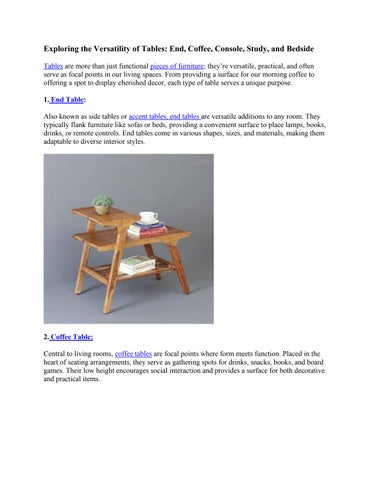
Exploring the Versatility of Tables: End, Coffee, Console, Study, and Bedside Tables are more than just functional pieces of furniture; they’re versatile, practical, and often serve as focal points in our living spaces. From providing a surface for our morning coffee to offering a spot to display cherished decor, each type of table serves a unique purpose. 1. End Table: Also known as side tables or accent tables, end tables are versatile additions to any room. They typically flank furniture like sofas or beds, providing a convenient surface to place lamps, books, drinks, or remote controls. End tables come in various shapes, sizes, and materials, making them adaptable to diverse interior styles.
2. Coffee Table: Central to living rooms, coffee tables are focal points where form meets function. Placed in the heart of seating arrangements, they serve as gathering spots for drinks, snacks, books, and board games. Their low height encourages social interaction and provides a surface for both decorative and practical items.
3. Console Table: Console tables are elegant, elongated pieces often placed against walls or behind sofas. With their slender design, they’re perfect for narrow spaces like hallways or entryways. Console tables are versatile — they can serve as decorative display spaces for art or function as catch-alls for keys, mail, and other everyday essentials.
4. Study Table: Primarily designed for work or study, these tables prioritize functionality. They often feature ample surface area for laptops, books, and writing materials. Ergonomic considerations like adjustable height and comfortable seating are key factors in creating an efficient study environment.
5. Bedside Table: Bedside tables, or nightstands, are essential companions to beds. They offer storage for bedtime essentials like lamps, books, water, and personal items. Their height is typically aligned with the bed, allowing for easy access to items while lying down.
In conclusion:Each table type not only serves a distinct purpose but also contributes to the overall aesthetics and functionality of a space. Factors like material, design, and size play crucial roles in choosing the right table for a specific area. • • •
Materials: Tables can be crafted from wood, metal, glass, or a combination, each contributing a different look and feel to the space. Design: From minimalist Scandinavian designs to ornate vintage styles, the design of a table can set the tone for the entire room. Size: Considering the available space and the intended function of the table is essential. A large coffee table might dominate a small living room, while an undersized bedside table might not fulfill storage needs.