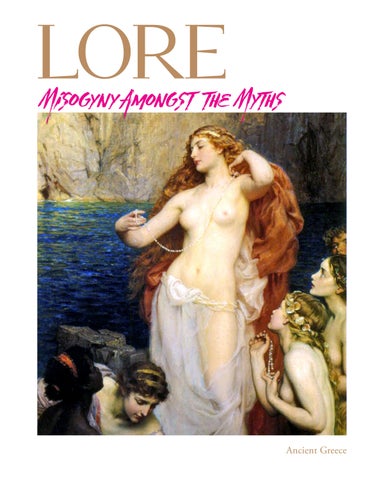
Misogyny Amongst the Myths
Ancient Greece

TABLE
Echoes Of Patriarchy....................................................................................................1 The Story Of Medusa ............................................................................................2 The Breakdown .......................................................................................... 5 The Story Of Persephone ......................................................................................9 Digging Deeper .......................................................................................... 11 The Story Of Daphne ............................................................................................15 Revealing Allegory ...................................................................................... 17 The Deadliest Femme Fatales .......................................................................................19 The Divine Feminine Scholars ......................................................................................22 Who Is Artemis? ..........................................................................................................24 The Tradegy Of Greek Goddesses .................................................................................25 Beyond The Canvas ......................................................................................................30 Resistence & Rebellion ................................................................................................32 Beyond The Sculpture ..................................................................................................34 The Vanishing Vulva .....................................................................................................36
OF CONTENTS
Echoes Of Patriarchy
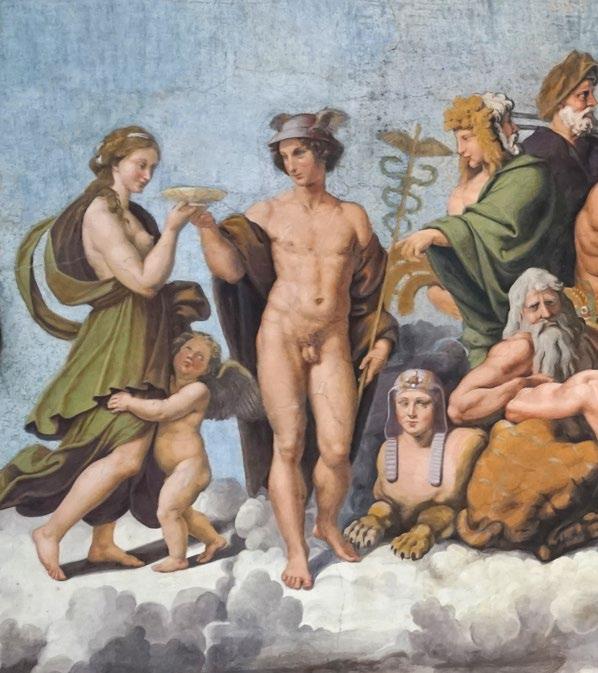
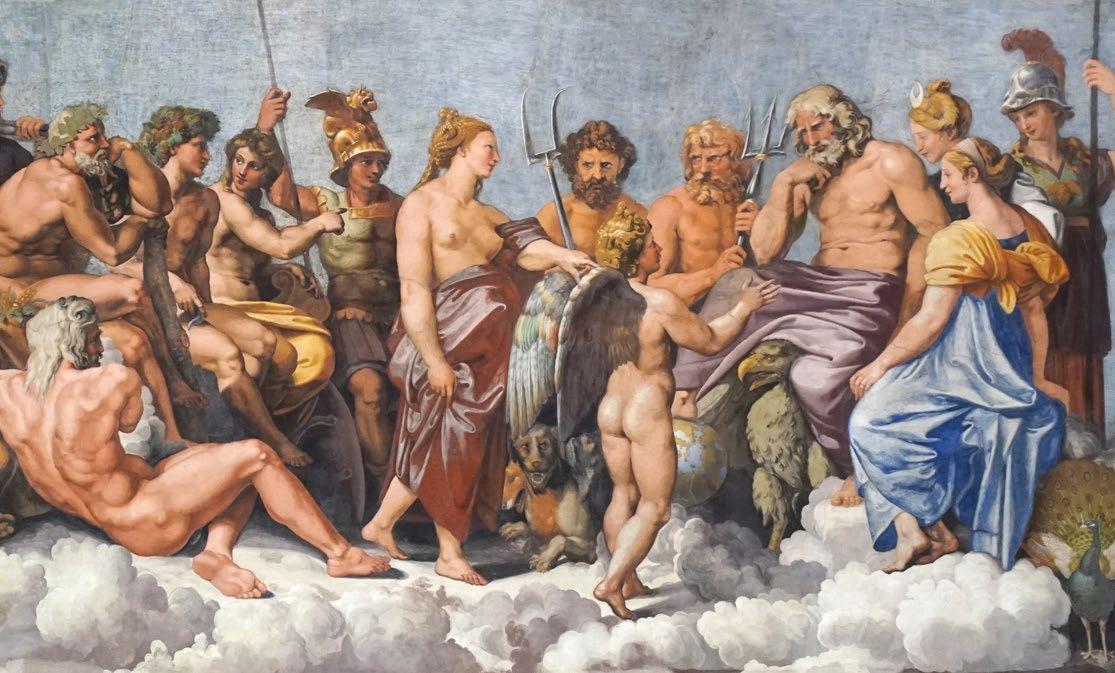
Greek mythology, a tapestry of divine beings, heroes, and heroines, is a mirror to the values and norms of ancient Greece. Yet, beneath its grandeur lie narratives that echo deep-seated patriarchal structures. In this series of articles, we embark on a journey to dissect three prominent myths—those of Medusa and Poseidon, Persephone and Hades, and Daphne and Apollo—each offering a unique lens through which to explore the treatment of women within ancient Greek society.
A Tale of Violation & Transformation
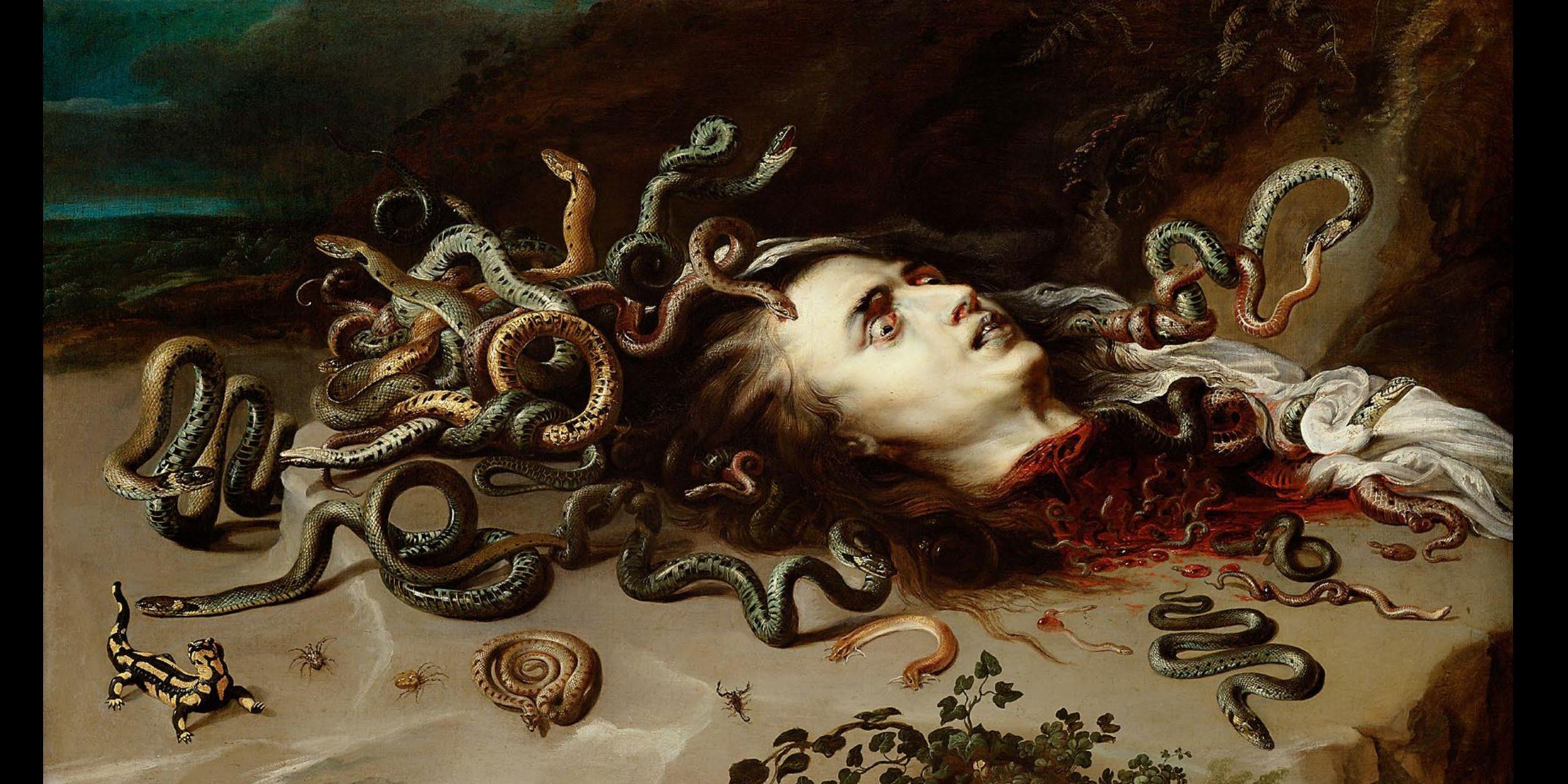
The myth of Medusa and Poseidon stands as a poignant illustration of how ancient Greek mythology often portrays women as victims of male dominance. Medusa, once a very brilliant priestess of Athena, experiences a brutal violation within the sacred confines of the goddess’s temple at the hands of Poseidon. As a consequence, she incurs the wrath of Athena, who curses her, transforming her into a monstrous Gorgon, her once-celebrated beauty turned into a weapon of terror.
This tragic narrative raises profound questions about power dynamics, consent, and the ways in which women were often objectified and punished for events beyond their control. It invites us to delve into the broader implications of this tale for women’s agency and the quest for autonomy within a deeply patriarchal society.
Bargains & Boundaries
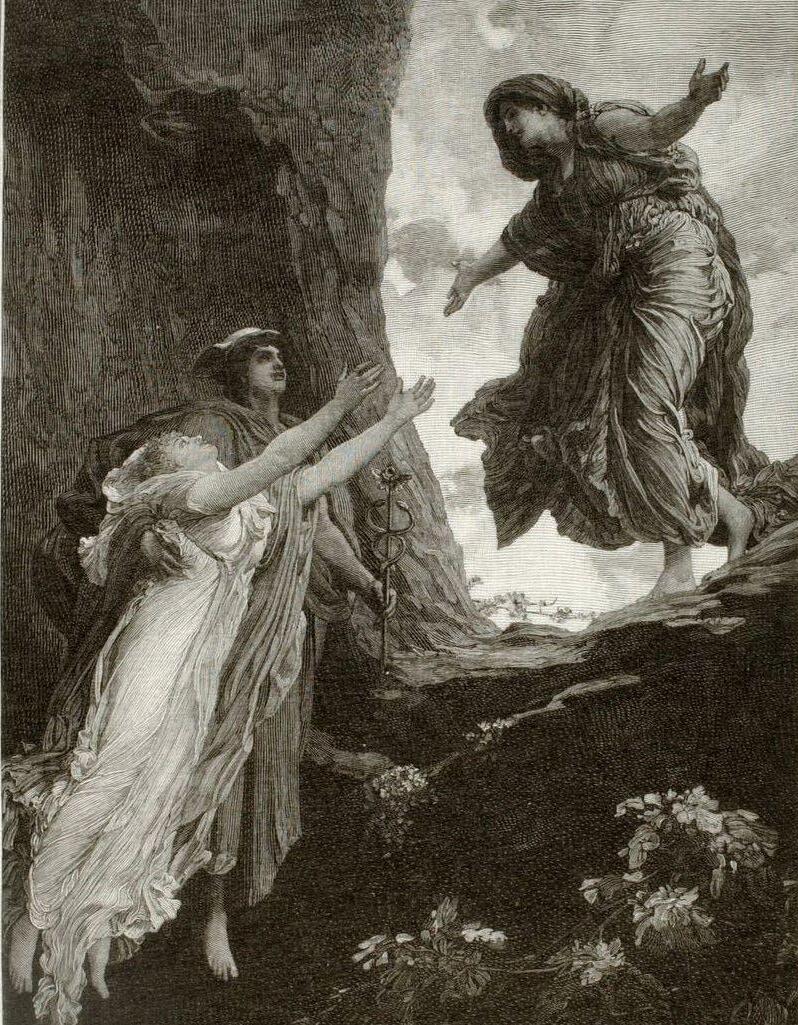
The myth of Persephone and Hades invites us into a realm of coercion and agency. Persephone, the cherished daughter of Demeter, is abruptly whisked away to the underworld by Hades. While there are interpretations that emphasize the eventual love that blossoms between the two, the initial act is quite obviously one of abduction and coercion. Persephone’s transformation from innocent maiden to queen of the underworld unfolds against a backdrop of complex power dynamics and questions of consent.
This myth prompts us to scrutinize the blurred lines between agency and coercion, and how ancient narratives grapple with issues of autonomy and control within romantic relationships.
1
LORE - Misogyny Amongst the Myths

A Pursuit & Transformation
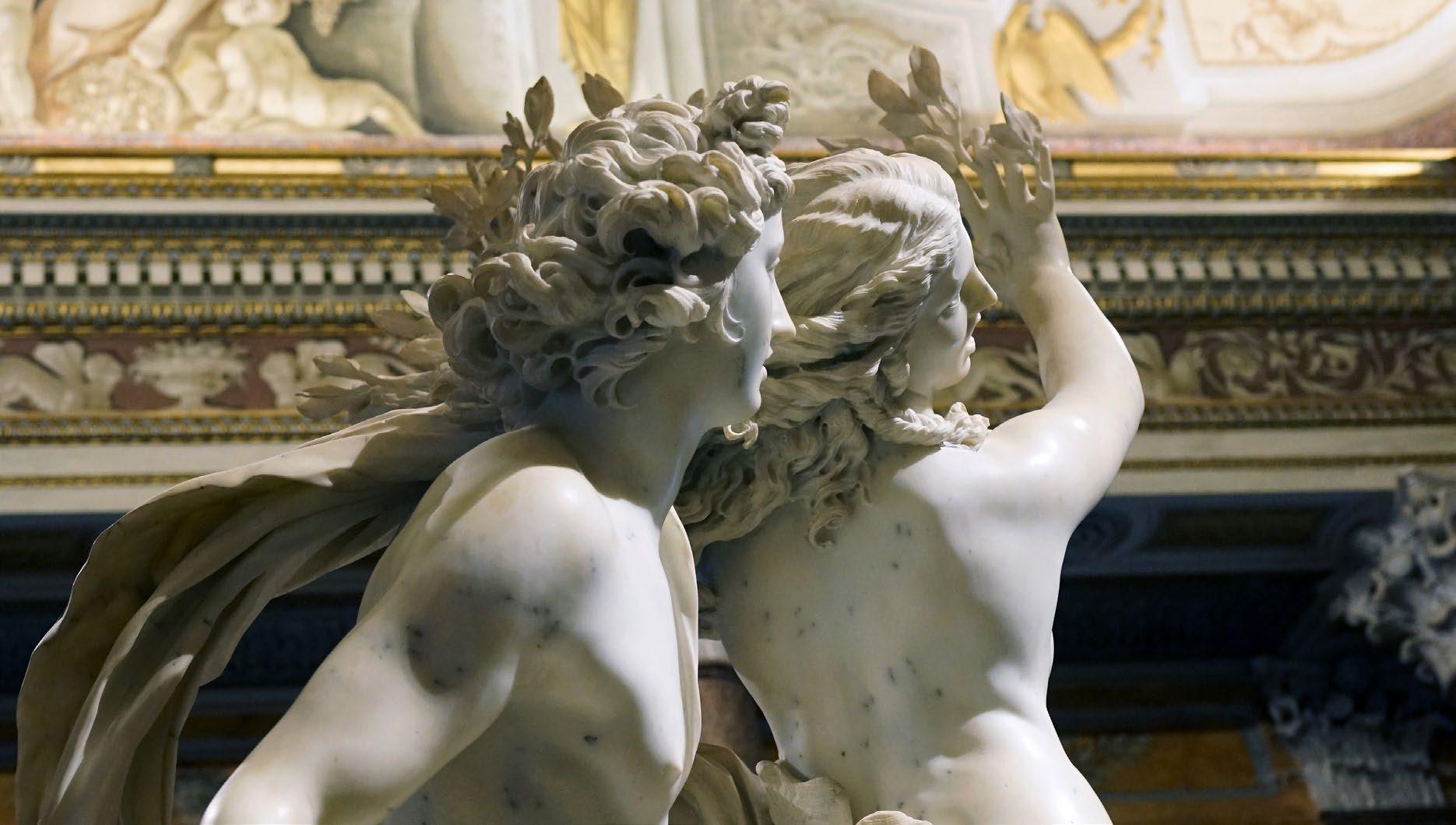
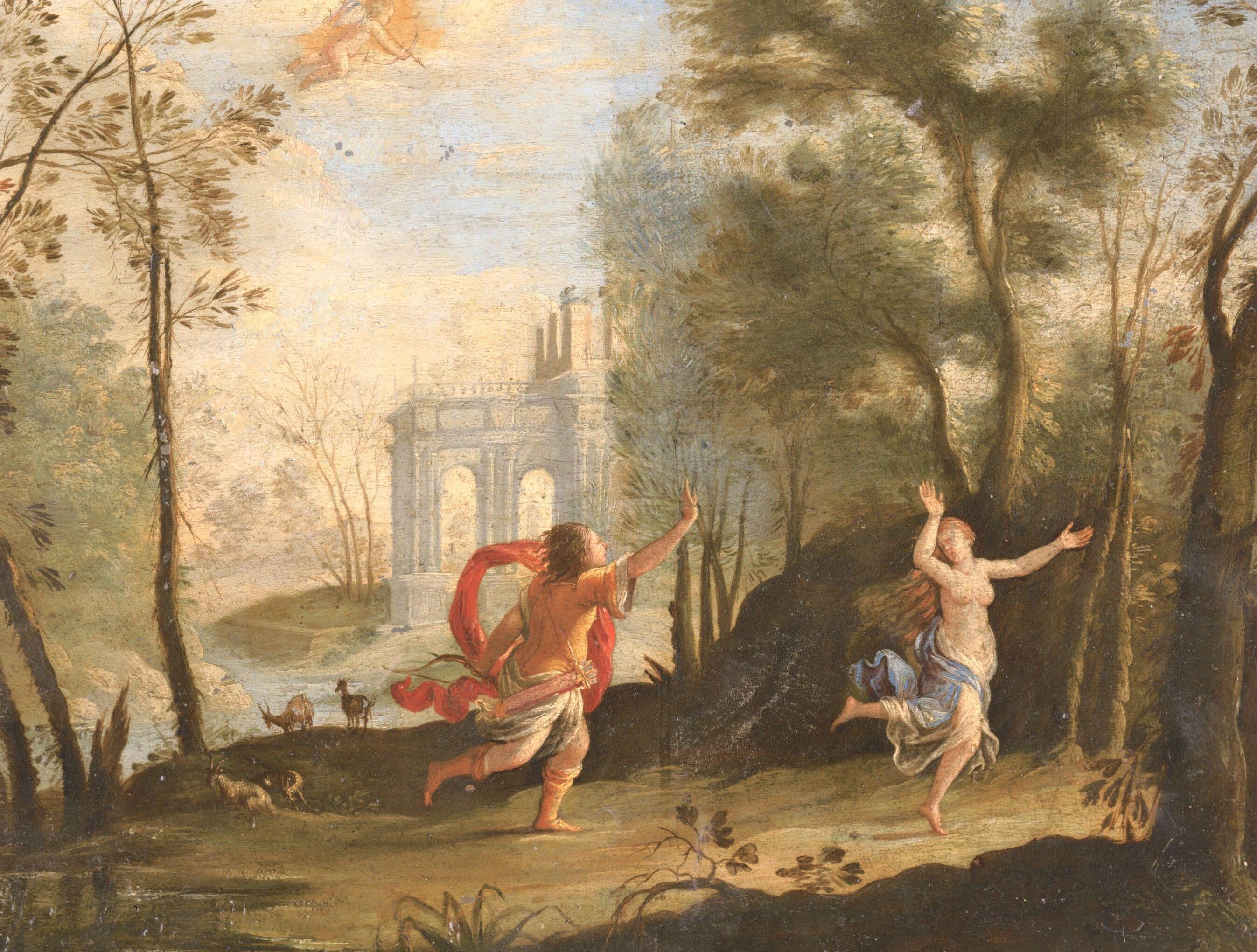
The myth of Daphne and Apollo illuminates issues of objectification and the denial of agency. Daphne, a nymph of exceptional beauty, finds herself relentlessly pursued by the ardent god Apollo. In her desperation to evade his relentless advances, Daphne implores her father, a river god, to intervene, and he transforms her into a laurel tree. Thus, she is forever denied her own voice and choice.
This narrative compels us to reflect on the ways in which women’s desires and boundaries were often disregarded, reducing them to objects of desire rather than recognizing them as individuals with their own agency.
2 Ancient Greece
The Story Of:
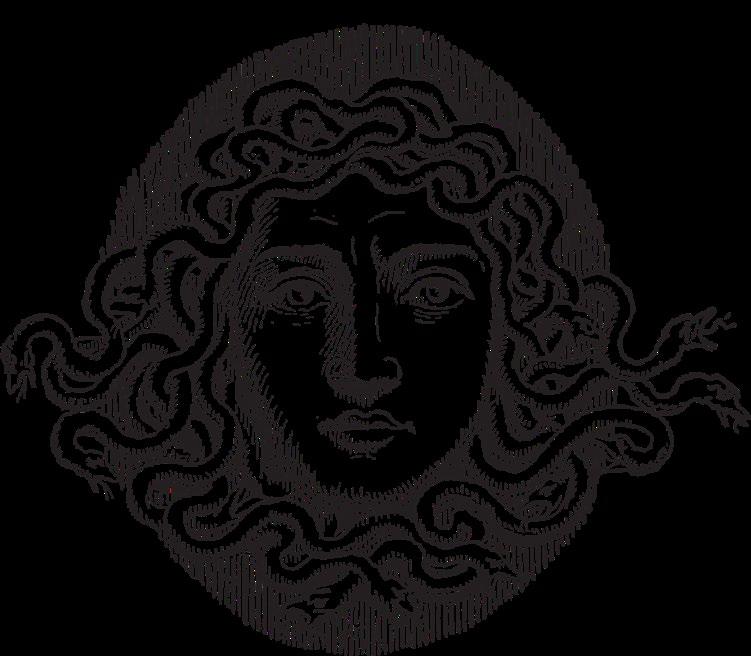
The myth of Medusa and Poseidon stands as a haunting testament to the pervasive themes of male dominance and victimization of women within ancient Greek mythology. Once a radiant priestess of Athena, Medusa’s life takes a tragic turn within the sacred confines of the goddess’s temple, where she becomes the victim of a brutal violation at the hands of Poseidon, the sea god. Athena’s wrath swiftly follows, transmuting Medusa’s once-celebrated beauty into a weapon of terror, casting her into the realm of the Gorgons. This narrative is not merely an isolated incident but a poignant reflection of the broader societal norms that defined ancient Greece. In this patriarchal landscape, women were often perceived as pawns in the power struggles of male deities, their agency and autonomy stripped away in the face of unwarranted advances. Medusa’s transformation from a revered priestess into a Gorgon—a monstrous, serpent-haired figure—illustrates the depths to which a woman’s identity and agency could be reduced when subjected to the whims of male figures of authority. Yet, within this tragic metamorphosis, there lies a glimmer of defiance and resilience. Medusa’s gaze, now capable of turning those who meet it into stone, becomes an emblem of the power she reclaims. No longer a passive victim, she emerges as a force to be reckoned with, a symbol of the strength that can arise from the crucible of adversity.

As we delve into the layers of this myth, we are compelled to confront profound questions about consent, power dynamics, and the enduring legacy of patriarchal structures. What transpired within Athena’s sacred temple serves as a stark reminder of the systemic challenges faced by women in ancient Greece, and by extension, throughout all of history. Medusa’s story is not one of isolated tragedy but a reflection of the countless women whose narratives have been overshadowed by the dominant male voices of antiquity. In dissecting this myth, we will unravel not only the plight of Medusa but also the broader implications for women’s autonomy and resilience in the face of systemic oppression. It calls upon us to challenge the narratives that have perpetuated these power imbalances and to celebrate the strength and agency that women have displayed, even in the darkest moments of history.
“It calls upon us to challenge the narratives that have perpetuated these power imbalances and to celebrate the strength and agency that women have displayed, even in the darkest moments of history.”
“...serpent-haired figure—illustrates the depths to which a woman’s identity and agency could be reduced when subjected to the whims of male figures of authority.”
Medusa’s tale serves as a powerful touchstone, reminding us that within every story of victimization lies the potential for transformation, empowerment, and the reclamation of one’s own narrative. Through our exploration of this myth, we embark on a journey to not only understand the echoes of patriarchy within ancient Greece but also to amplify the voices of those who have been silenced for far too long.
3 LORE - Misogyny Amongst the Myths

Misogynistic Themes
Beauty as a Curse: The myth implies that Medusa’s physical beauty was the catalyst for her tragic transformation. Her allure caught the attention of Poseidon, ultimately leading to her sexual assault. This narrative subtly suggests that female beauty is fraught with danger and is often linked to punishment rather than empowerment.
Silencing Women's Voices: Her transformation effectively silences her. Removed from society and rendered incapable of communication or interaction, she embodies a broader pattern in patriarchal societies of suppressing women’s voices and autonomy.

Victim-Blaming: Medusa’s portrayal as a monstrous figure has led to the victim-blaming of her character. This narrative subtly insinuates that she deserved her fate, reinforcing the deeply ingrained notion that women bear responsibility for the actions of others when they experience violence or assault.
The Fear of Powerful Women: The curse that turns Medusa’s gaze into a lethal weapon can be interpreted as a warning against women who defy traditional gender roles. It suggests that women who assert power or independence are perceived as dangerous and must be controlled.
4 Ancient Greece
5 LORE - Misogyny Amongst the Myths
The Breakdown
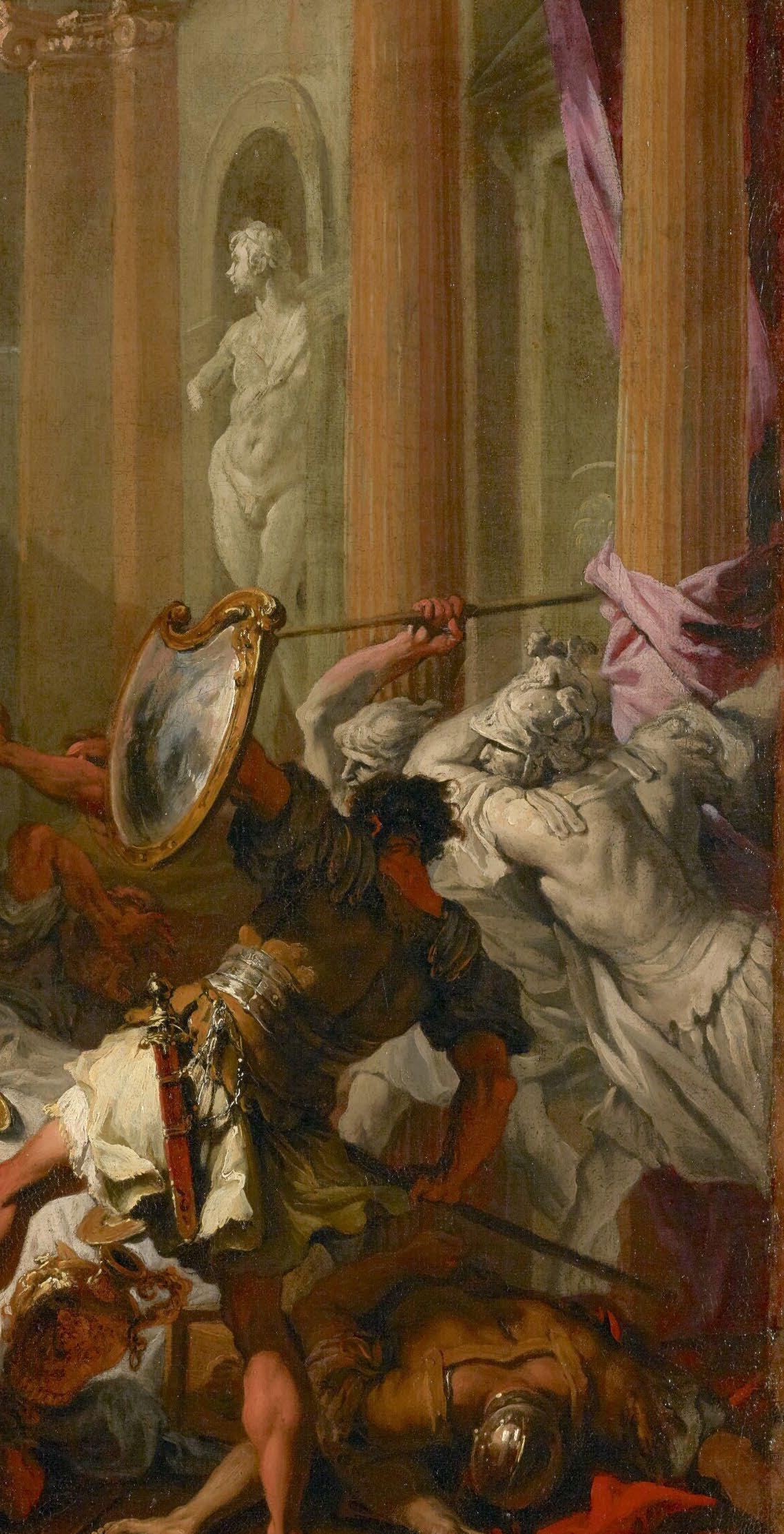
Medusa’s story unfolds in a world of ancient myths, where women often navigate a precarious balance between agency and victimhood. Her unparalleled beauty becomes both a gift and a perilous allure. In a sacred temple of Athena, Poseidon’s unchecked desire shatters sanctity, leading to Medusa’s transformation into a Gorgon—a grotesque symbol of divine retribution and Athena’s judgment, while swift, is severe. Medusa’s beauty, once a source of power, becomes a catalyst for her monstrous fate. The Gorgon, with serpentine hair and a petrifying gaze, emerges—a stark metaphor for the silencing of women’s agency in a world governed by male deities.
“Medusa’s beauty, once a source of power, becomes a catalyst for her monstrous fate.”
Yet, within this narrative lies a paradox. Medusa, silenced but not defeated, navigates a world forever changed. Her story mirrors the enduring struggles of women, both then and now, in a world shaped by patriarchal norms. As we delve into Medusa’s tale, we confront a stark reality—a world where women’s agency is often subject to the whims of male deities, and where beauty can be both a blessing and a curse. It is a reflection that calls us to confront the enduring legacy of misogyny within all of the narratives that have shaped our collective consciousness.
An undeserved curse
6 Ancient Greece
Medusa’s curse serves as a powerful commentary on the victimization and suppression. It reflects a society that punishes women for their physical attractiveness, denies them agency, and blames them for the actions of others. Furthermore, it exposes a deep-seated fear and discomfort with powerful and assertive women, often portraying them as monstrous or very unnatural.
Reclaiming Medusa
In recent times, there has been a noteworthy movement to reclaim Medusa’s narrative, shifting the focus towards her victimization, and underscoring her remarkable resilience and transformation as potent symbols of empowerment. This reinterpretation challenges the conventional portrayal, endeavoring to present Medusa as a survivor, not a monstrous antagonist. The saga of Medusa’s curse extends beyond a singular character’s plight; it mirrors the enduring societal dynamics that influence our perceptions of gender, power, and victimization. Through a discerning feminist lens, we have an opportunity to unearth and contest deeply entrenched beliefs and attitudes that persist in contemporary society. Furthermore, the recent trend of utilizing Medusa’s visage as a tattoo representing resilience for survivors of sexual assault amplifies this narrative of strength and survival. Medusa’s story transcends antiquity; it stands as a resounding call for sustained efforts towards the gender equity and inclusivity in our world. By adopting a feminist interpretation, we take strides towards dismantling detrimental narratives, fostering a more equitable and just society that empowers all individuals.

“...Medusa’s visage as a tattoo representing resilience for survivors of sexual assault amplifies this narrative of strength and survival.”

7 LORE - Misogyny Amongst the Myths
Passport Ready?


The Story Of:
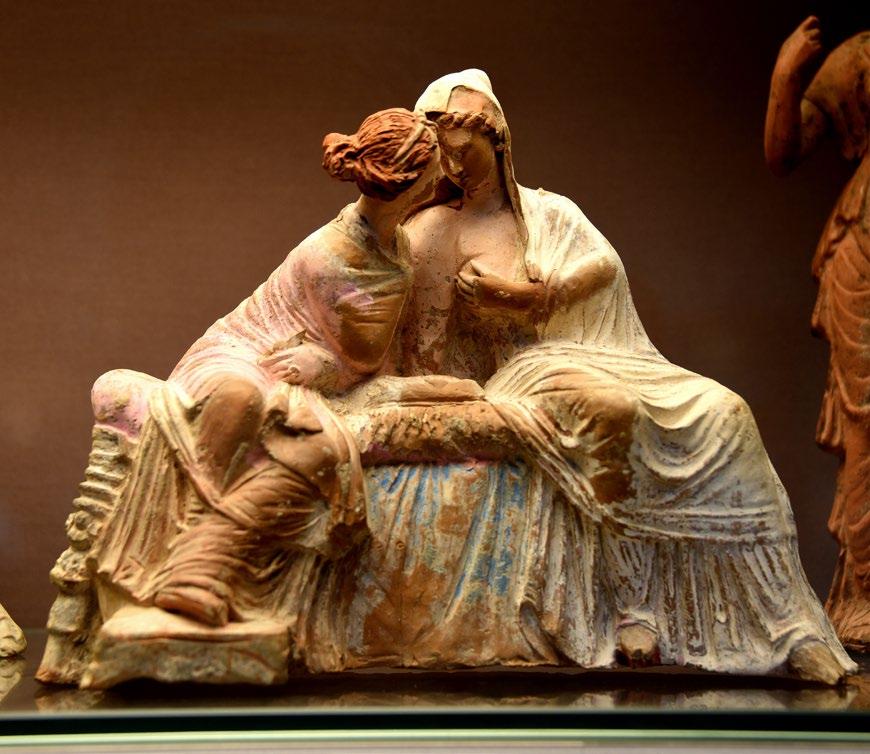
In the rich tapestry of Greek mythology, the narratives of Persephone and Hades emerge as a profound allegory, offering us a glimpse into the intricate dynamics of power, autonomy, and transformation within the lives of women. This sagas, woven with threads of both divine intervention and mortal strife, reveal the nuanced layers of feminine experience in ancient Greece.
The tale of Persephone, beloved daughter of Demeter, who is spirited away to the shadowed realm of the underworld by Hades, carries within its folds the weight of coercion, agency, and the eventual metamorphosis of identity. Similarly, twhe plight of Daphne, an enchanting nymph whose ethereal beauty draws the relentless pursuit of the ardent god Apollo, paints a vivid tableau of the struggle for self-determination and the poignant price of escape.
“The tale of Persephone, beloved daughter of Demeter, who is spirited away to the shadowed realm of the underworld by Hades, carries within its folds the weight of coercion, agency, and the eventual metamorphosis of identity...”
Through these mythic lenses, we embark on a compelling odyssey, uncovering the resounding echoes of patriarchal influence that resonate through these ancient stories, illuminating the challenges faced by women in their pursuit of autonomy and the forging of their own destinies. Join us as we delve into the depths of Persephone’s descent and the arboreal transformation, while seeking to unravel the multifaceted layers of symbolism and meaning that imbue these tales with enduring relevance.
“It calls upon us to challenge the narratives that have perpetuated these power imbalances and to celebrate the strength and agency that women have displayed, even in the darkest moments of history.”
In doing so, we aim not only to unearth the ancient attitudes towards women but also to engage in a dialogue that will transcend temporal and cultural boundaries, resonate with the struggles, aspirations, and triumphs of all women across the annals of history. It is within the heart of these myths that we truly discover reflections of universal themes, offering us the opportunity to glean wisdom from the past and, in turn, weave our own narratives of empowerment and agency in the present and future.

9 LORE - Misogyny Amongst the Myths
Misogynistic Themes
Loss of Innocence: One interpretation of Persephone’s abduction is as a symbol of the loss of innocence experienced by many young women as they transition into adulthood. In this reading, Hades represents the harsh realities and challenges of the adult world, while Persephone’s time in the underworld metaphorically mirrors the responsibilities and complexities of maturity.
Control and Ownership: Hades’s act of abduction of Persephone can be seen as an act of possession and control, reflecting the prevailing idea in ancient Greece that women were property. This myth underscores the belief that men had the authority to dictate the lives and bodies of women.
Seasonal Change and Female Agency: Demeter’s profound grief and anger at her daughter’s abduction led to the changing of the seasons. From a feminist perspective, this can be interpreted as an allegory for the immense power of female emotion and agency. In a society where women often had limited influence, this myth suggests that their emotional and creative energy could have profound and far-reaching consequences, much like the changing of the season.

Negotiating Patriarchal Systems: Demeter’s unwavering determination to reunite with her daughter, despite the authority of Zeus, the king of the gods, is a beautiful representation of maternal love and defiance in the face of patriarchal systems. It serves as a reminder that women, when marginalized and denied a voice in society, may go to great lengths to protect and reunite with their loved ones.
Initiation and Resiliences: In some interpretations, Persephone’s time in the underworld is viewed as an initiation into womanhood. Through this very transformative experience, she emerges not as a victim but as a powerful goddess associated with both the realm of the dead and the rejuvenation of spring. This reading emphasizes her resilience and the capacity for growth and transformation in the face of adversity.
10
Digging Deeper
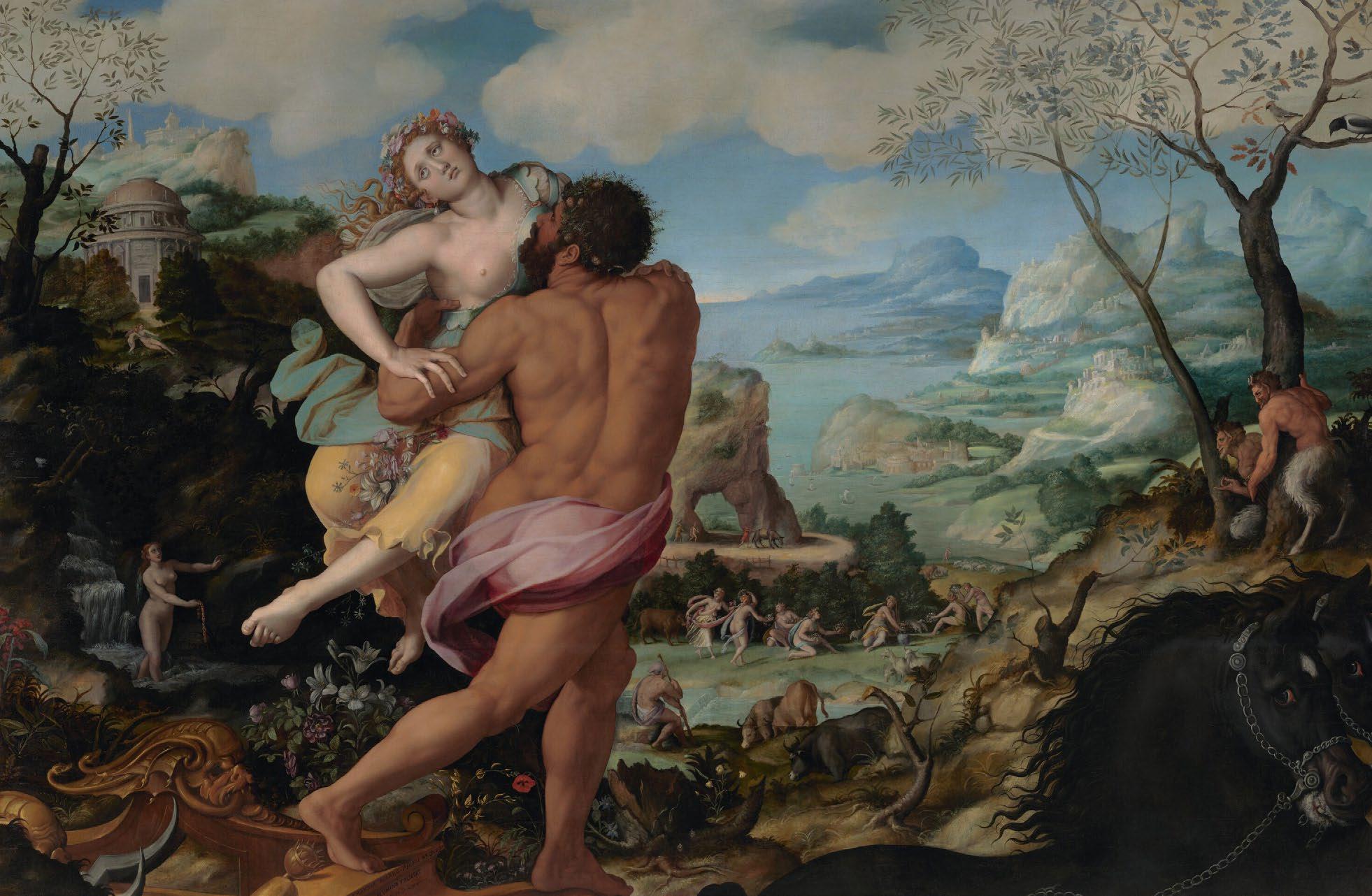
At its core, the saga of Persephone and Hades is a tapestry of many profound metaphors, interwoven with the threads of life, death, and power dynamics. Persephone, the effervescent progeny of Demeter, stands as the embodiment of the earth›s vitality and fecundity. Her abrupt and forceful abduction by Hades, the somber sovereign of the underworld, serves as a poignant allegory for the inevitable descent into the shadows and the sincere embrace of mortality that ultimately awaits all living beings.
Central to the narrativwe is a stark illustration of patriarchal dominance, reflecting an age-old trope pervasive in Greek mythology. Hades, during his single-minded pursuit of Persephone, emerges as the quintessential agent of male privilege, acting with an utter disregard for her autonomy or agency. This narrative choice lays bare the prevailing motif within ancient Greek stories, where women frequently find themselves relegated to passive vessels of desire or mere victims of male authority.
11 LORE - Misogyny Amongst the Myths
Demeter’s inconsolable sorrow at the loss of her cherished daughter serves as a visceral portrayal of maternal love and the profound resonance of a woman’s connection with her child.
“Demeter’s inconsolable sorrow at the loss of her cherished daughter serves as a visceral portrayal of maternal love and the profound resonance of a woman’s connection with her child.”
This anguish radiates from her core, and its reverberations are palpable in the natural world. The barren desolation that envelops the earth in her mourning state is a powerful visual testament to the intimate interplay between a mother’s emotional state and the vitality of the natural realm.
Persephone’s sojourn in the enigmatic embrace of the underworld encapsulates a period of profound metamorphosis and self-discovery. This can be seen as an allegory for the innate strength and resilience that can emerge from confronting adversity, even in those circumstances where agency and choice have been forcibly wrested away. It stands as a testament to the indomitable spirit that resides within, capable of adapting and always finding strength even in the bleakest of circumstances.
The act of partaking in pomegranate seeds, which irrevocably binds Persephone to the underworld and, by extension, to Hades, introduces a layer of intricate complexity. This aspect of the narrative is open to multifaceted interpretation, potentially reflecting the limited agency women often held in making decisions that would profoundly shape their lives. Persephone’s choice may be viewed through the lens of survival and adaptation within a constraining framework, the highlighting of nuanced complexities of agency within patriarchal systems.
Hades emerges as an enigmatic figure, bearing the weight of a dual identity. Often vilified due to his role in Persephone’s abduction, he also presides over the underworld, a domain teeming with the potential for transformation, rebirth, and the rhythmic ebb and flow of life. This dual nature can be regarded as a strong metaphor for the intricate tapestry of male power dynamics, capable of sowing both parallels, destruction and regeneration.
The myth of Persephone and Hades serves as a reflective mirror, offering a poignant portrayal of the prevailing societal norms and entrenched power imbalances of ancient Greece. It beckons for a critical examination, inviting us to dissect and contemplate how such narratives have indelibly shaped cultural perspectives on gender roles and the dynamics of power throughout the annals of history.
“It beckons for a critical examination, inviting us to dissect and contemplate how such narratives have indelibly shaped cultural perspectives on gender roles and the dynamics of power throughout the annals of history.”
In essence, the story of Persephone and Hades stands as a symphony of allegory and symbolism, inviting readers to wade through the depths of its complexities. Within its folds, not only does it contemplate the cyclical dance of life and death but also confronts the enduring echoes of patriarchal structures on the portrayal and agency of women, both in mythology and the broader societal tapestry.
12 Ancient Greece
...A desperate mother
Reminding Women
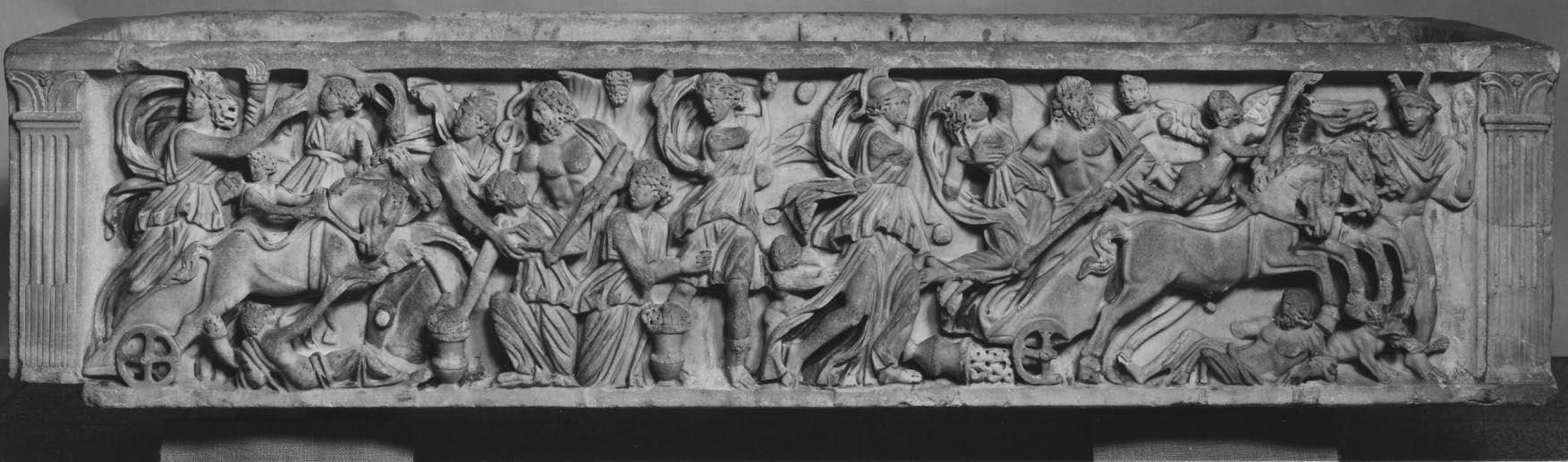
The abduction of Persephone is a myth that encapsulates layers of interpretation, reflecting the gender dynamics and societal norms of ancient Greece. It serves as a poignant reminder of the vulnerability and powerlessness that women could experience in a patriarchal society. Yet, it also provides opportunities for reinterpretation and empowerment, highlighting the enduring power of myth to both reflect and shape cultural attitudes toward gender and agency. As we continue to analyze and reexamine this myth, it remains a testament to the complexity of human experience and the evolving interpretations of our ancient stories.
13 LORE - Misogyny Amongst the Myths

The Story Of:
In the annals of Greek mythology, the tale of Daphne and Apollo emerges as a poignant tapestry woven with threads of desire, ones agency, and profound transformation. Daphne, a nymph of unparalleled beauty and grace, found herself ensnared in a relentless pursuit by Apollo, the radiant god of music, poetry, and light.
“Daphne, a nymph of unparalleled beauty and grace, found herself ensnared in a relentless pursuit by Apollo, the radiant god of music, poetry, and light.”
As the myth unfolds, we are drawn into a narrative that resonates with themes of objectification, the denial of autonomy, and the transformative power of nature. Desperate to elude all Apollo’s fervent advances, Daphne, with her heart pounding and breath labored, raises her voice to the heavens, entreating her divine parent, a river god, to intercede on her behalf. In a tumultuous crescendo, the celestial realm answers her plea, and she is transformed. No longer a nymph, she becomes the guardian spirit of the forest, her once-limbs now branches, her once-lustrous hair transformed into leaves, and her once-dancing feet now rooted in the verdant earth. Thus, she stands as an arboreal sentinel, forever rooted in the sanctuary of the natural world. The vibrant nymph, once in harmonious communion with the elements, now finds solace in the rustling of leaves and the whispering of the wind.
Yet, beneath the surface of this ancient myth lies a profound allegory that transcends time and place. The story of Daphne and Apollo will transcend its mythic origins to speak to the very heart of human experience. It is a tale that really
encapsulates the struggles faced by individuals, particularly women, in asserting their own voices, boundaries, and identities in the face of unrelenting societal pressures. Through this exploration, we embark on a journey not only through the narrative itself, but into the depths of the cultural milieu that gave rise to it—a world steeped in the traditions, beliefs, and power dynamics of ancient Greece. As we delve into the layers of this myth, we discern the resonances that continue to echo through our own contemporary understanding of autonomy, consent, and the enduring spirit of her transformation.
“It is a tale that encapsulates the struggles faced by individuals, particularly women, in asserting their own voices, boundaries, and identities in the face of unrelenting societal pressures.”
In the ensuing pages, we will dissect the intricacies of this narrative, exploring the symbolism and all of the implications of Daphne’s transformation, the dynamics of power and desire between mortal and divine, and the enduring legacy of this myth in the broader context of Greek mythology. Through this analysis, we seek not only to unravel the layers of a captivating story, but to shed light on the enduring relevance of these ancient narratives in our ongoing quest to understand the complexities of human relationships, autonomy, and the perennial struggle for self-determination.
15 LORE - Misogyny Amongst the Myths

Misogynistic Themes
Objectification of Women: One of the most apparent misogynistic elements in this myth is the objectification of Daphne. Apollo’s love for her is based purely on her physical appearance, reducing her to an object of desire rather than recognizing her as an autonomous being with her own wishes and agency.
Pursuit Despite Rejection: Apollo’s relentless pursuit of Daphne despite a clear rejection underscores themes of entitlement and a disregard for consent. This narrative can be seen as a reflection of the historical tendency to trivialize or ignore women’s boundaries and choices.
Female Transformation and Loss of Identity: Daphne’s transformation into a laurel tree can be interpreted as a symbol of the suppression of women’s voices and identities. Her transformation is a means of escaping Apollo’s advances, but it also robs her of her agency and her ability to live as a human being.
Lack of Female Empowerment: Daphne’s inability to fend off Apollo and her reliance on her father to save her depict a lack of female empowerment in the story. Her agency is ultimately surrendered to male figures in her life.
16 Ancient Greece
Revealing Allegory
The very myth of Apollo and Daphne, as recounted in Ovid’s “Metamorphoses,” begins with Apollo, the god of music and prophecy, mocking Eros, the god of love. In retaliation, Eros strikes Apollo with two arrows—one of love, which causes him to fall in love with Daphne, and the other of repulsion, which causes Daphne to spurn Apollo’s advances. Here, the seeds of misogyny are sown, as the myth positions a woman’s autonomy and choice as a source of ridicule and scorn.
Apollo’s relentless pursuit of Daphne is a central element of the myth and a prime example of male entitlement. He becomes infatuated with Daphne and insists on pursuing her despite her clear lack of interest. Apollo’s actions reflect the belief that men are entitled to a woman’s affection and that her rejection should be seen as a challenge rather than a choice. This entitlement to a woman’s body and emotions is a reflection of the deeply ingrained misogyny that has persisted throughout all of history.
“...that men are entitled to a woman’s affection and that her rejection should be seen as a challenge rather than a choice.”
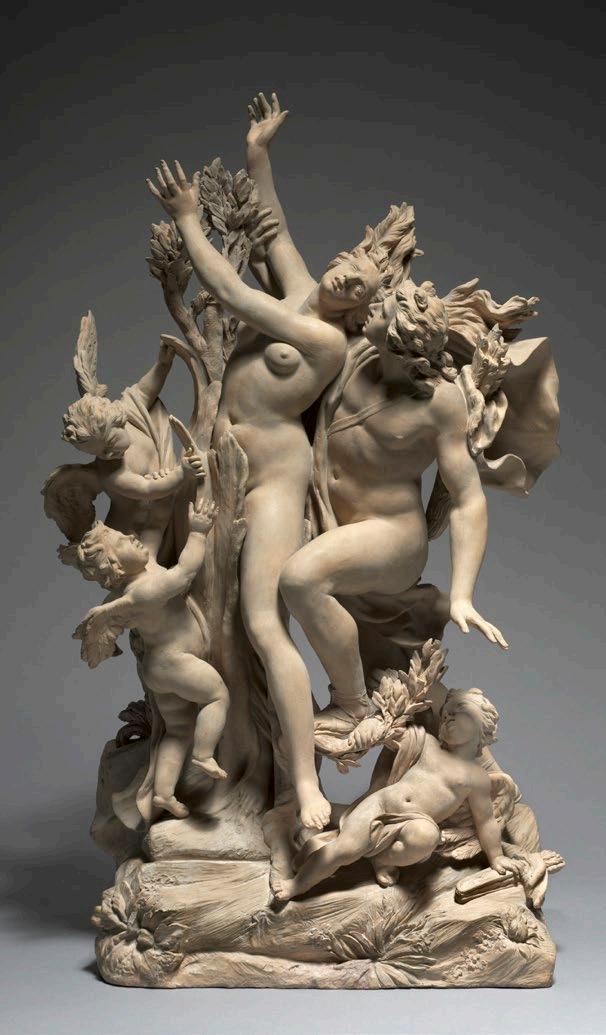
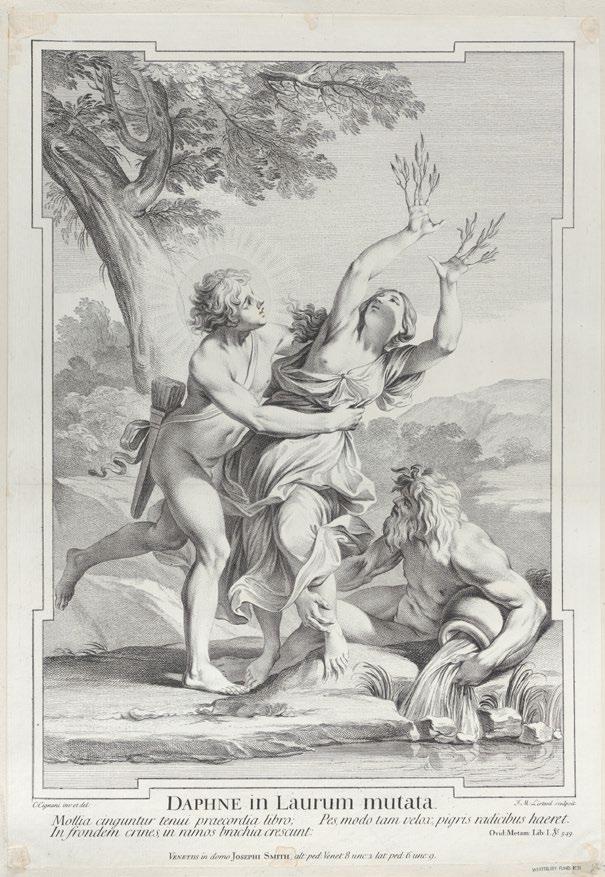
Daphne’s transformation into a laurel tree is her ultimate act of agency and resistance against Apollo’s advances. In desperation, she pleads with her father, the river god Peneus, to help her escape Apollo’s grasp. In granting her request, Peneus then transforms her into a laurel tree, helping her to escape Apollo’s pursuit forever. Daphne’s transformation can be interpreted as a metaphor for women who are seeking refuge from unwanted male attention and
the objectification of their bodies. It symbolizes the lengths to which women have historically gone to assert control over their own lives and bodies in a patriarchal society.
Apollo’s reaction to Daphne’s transformation further underscores the misogyny within the myth. Instead of acknowledging her autonomy or respecting her choice, he triumphs in what he perceives as a victory. He embraces the tree and claims it as his own, turning it into a symbol of his own achievements. This act objectifies Daphne’s body, reducing her to a mere trophy in Apollo’s conquest. This pattern of objectification and appropriation of women’s bodies and experiences by men is a recurring theme in history, perpetuating gender inequality.
The myth also raises questions about the role of Eros, the god of love, in perpetuating misogyny. Eros’s actions, initially triggered by Apollo’s mockery, set the entire chain of events in motion. By using his arrows to manipulate emotions, Eros becomes a catalyst for Apollo’s pursuit of Daphne. This raises many questions about the ethics of using ones love as a weapon, as well as the portrayal of love being something that can be imposed on any number of unwilling individuals.
One of the most striking aspects of Daphne’s transformation is her voicelessness. In becoming a tree, she loses her ability to speak, further emphasizing the silencing of women’s voices in a patriarchal society. Daphne’s transformation highlights the historical suppression of women’s agency, perspectives, and narratives. It reflects a society where women were often denied the opportunity to express themselves and make choices freely.
17 LORE - Misogyny Amongst the Myths
Parting Words
The myth of Apollo and Daphne, while often celebrated for its portrayal of love and transformation, reveals deep-seated misogyny beneath its surface. It exposes a narrative where male entitlement, objectification, and the silencing of women’s voices are normalized. Daphne’s transformation, far from being a romantic escape, becomes a poignant symbol of the lengths women have historically gone to protect their autonomy and resist unwanted advances.
As we analyze and interpret such myths, it is essential to recognize the subtle and pervasive ways in which misogyny has been woven into our cultural narratives. By shedding light on these layers, we can confront and challenge the gender biases that continue to shape our world today. The story of Apollo and Daphne serves as a reminder that even within the realm of mythology, we must critically examine the narratives we inherit and seek to unravel the deeper truths they conceal.
18 Ancient Greece
The Deadliest Femme Fatales In Ancient Greece

There are many strong and powerful women, or femme fatales, who became known for their ruthlessness and cunning ways in Greek mythology, such as Circe, Clytemnestra, and Medea. These women were powerful and often deadly forces despite the fact that Greek mythology is filled with references to strong men who conquered kingdoms, fought for their freedom, and did not hesitate to kill.
19 LORE - Misogyny Amongst the Myths
1. Clytemnestra
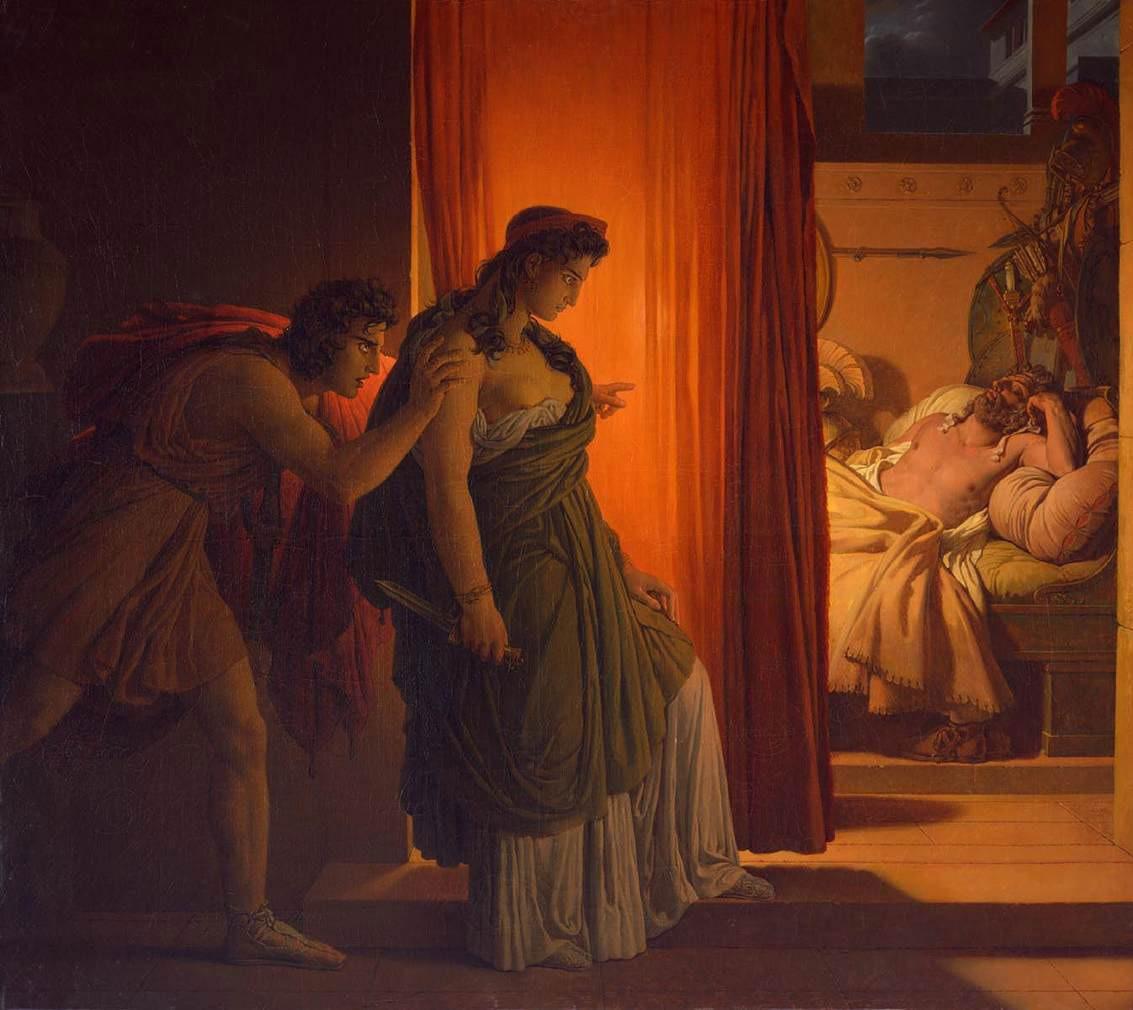
Clytemnestra was every man’s worst nightmare. According to the legend, Clytemnestra was the wife of Agamemnon, the king of Mycenae. He sailed to Troy as commander of the Greek Army to help his brother Menelaus take back his wife Helen, who had been abducted by Paris of Troy. thus as threatening and potentially violent towards her, while on another vase by Makron, Paris clasps her wrist in his hand like a manacle, suggesting her unwillingness (or at least her passivity) when captured. Before leaving Greece, as the story goes, Agamemnon sacrificed his daughter, Iphigenia, to the goddess Artemis, to appease her after he accidentally killed one of the goddess’s sacred stags. While Agamemnon was fighting the Trojan War, Clytemnestra, who was enraged at the murder of her daughter, began plotting his murder with her new lover, Aegisthus. Upon the king’s return, the two lovers ambushed him and slit his throat. Choking on his own blood, the king called Clytemnestra something that can only be translated as “bitch-face.” Even though she has been portrayed as a villain in numerous ancient Greek tragedies, few could truly blame her for avenging her daughter’s death.
2. Artemisia
Artemisia, the Queen of Halicarnassus, was a real historical figure, but her legacy is legendary. She fought in the Battle of Salamis for her Persian overlord Xerxes as one of his closest naval advisors. Even though she was opposed to the attack, she fought bravely and refused to back down. With her cunning tactics, she fought through the Greek ships fearlessly while the other Persian admirals dissolved into hysteria. Although she may not have been on the right side of history, the Athenian fighters who sailed against her showed a lot of respect for Artemisia.
3. Penthesilea
Penthesilea was the queen of Amazons. She went almost suicidally mad after she caused the death of her sister during a hunting accident. Driven by the demons haunting her, she decided to go on a suicide mission to fight in the Trojan War. Eventually, she got her wish, but not before killing her way through the Greek troops and heroes. She even held her own in a fight against Telamonian Ajax. She was eventually defeated by the Greek demigod Achilles, according to mythology.
4. Medea
Hell hath no fury like a woman scorned. Medea was the wife of Jason who, like many ancient Greek husbands, was sleeping around. He had many mistresses, but when he decided to marry one of them, he stepped over the line. In order to get revenge, the heartbroken Medea, who was deeply in love with her husband, murdered the children that she and Jason had together.
5. Circe
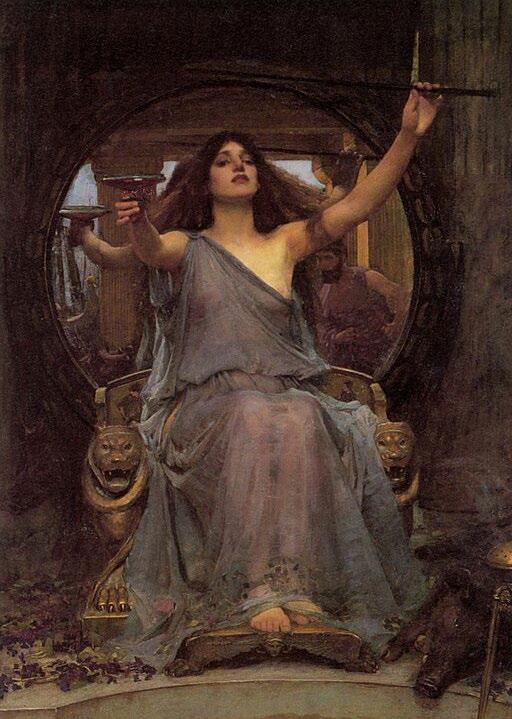
According to ancient Greek legends, Circe, a sorceress, was the most well-known femme fatale of that time. She would seduce men, luring them onto her island. When the men, driven mad by their desire to touch her, visited the island, she would catch them off guard and use a spell to transform them into hogs, trapping them forever in their ignominious bodies.The only man who was ever able to escape her magic was Odysseus, who had been forewarned by the ancient Greek god Hermes.
20 Ancient Greece
The Divine Feminine Scholars: Unveiling Ancient Wisdom
In the realm of mythology, there exists a collective of pioneering women whose dedication to unraveling the mysteries of ancient tales has shaped a new narrative. The Divine Feminine Scholars, a very distinguished assembly of female mythologists, have embarked on an odyssey to reclaim and redefine the voices of goddesses, heroines, and forgotten figures from the annals of history. This collective seeks to bridge the gap between antiquity and modernity, breathing life into age-old stories, and offering fresh perspectives that resonate with the contemporary world. Among these luminaries, we are privileged to sit down with Dr. Maya Rodriguez and Dr. Alexia Bennett, two trailblazers whose contributions have ignited a resurgence of interest in the divine feminine in mythology. Their insights, garnered from decades of scholarly inquiry, promise to illuminate the rich tapestry of ancient narratives and inspire new ways of understanding the profound relevance of myth in our lives today.


Dr. Maya Rodriguez
President
• Education: Ph.D. in Mythology and Folklore Studies from the University of Southern Mississippi, with a focus on goddesses in Greek mythology. M.A. in Comparative Literature.
• Contributions: Prolific author, specializing in the divine feminine in mythology and cultural symbolism.
Dr. Alexia Bennett
Vice President
• Education: Ph.D. in Mythology and Cultural Anthropology from the Pristine University of Mythologia, with expertise in oral mythological traditions. B.A. in Anthropology.
• Contributions: Noted for research on mythology’s role in cultural identity, rituals, and storytelling within diverse communities.
22 Ancient Greece
Today, we have the privilege of sitting down with the inspiring members of the Divine Feminine, a group of dedicated women scholars determined to uncover and expose the deeply ingrained misogyny present in the myths of ancient Greece. Dr. Alexia Bennett and Dr. Maya Rodriguez, esteemed members of this collective, join us in this insightful conversation.
Dr. Alexia Bennett expresses her gratitude for the opportunity to share their mission, emphasizing the honor she feels in being part of this transformative endeavor. Dr. Maya Rodriguez echoes the sentiment, emphasizing the absolute profound significance of the collective’s work in reshaping societal perceptions of gender dynamics and women’s roles, both past and present. The Divine’s mission is a powerful one - to challenge traditional interpretations of ancient Greek myths. Driven by a shared passion for mythology, they spotlight overlooked female characters and expose the deep-seated misogyny in these narratives. As Dr. Bennett articulates, “We’re rewriting the narrative, reframing societal perceptions of gender dynamics and women’s roles, both past and present.”
“We’re rewriting the narrative, reframing societal perceptions of gender dynamics and women’s roles, both past and present.”
When asked for an example of a myth they have collectively reinterpreted, Dr. Bennett offers the story of Clytemnestra. Often portrayed as treacherous, the collective highlights her trauma, aiming to foster her empathy and understanding. Dr. Rodriguez adds another example, that of Ariadne, a character often reduced to
a plot device in the tale of Theseus and the Minotaur. Their reinterpretations breathe new life into these ancient tales, illuminating the depth and complexity of these female figures.
But their work goes well beyond academic discourse. By challenging deeply ingrained beliefs about gender roles, power, and agency, the collective believes they have the power to transform perspectives and lead to positive societal change. “We’re fostering conversations that go beyond academia, advocating for a more inclusive and equitable world,” explains Dr. Rodriguez.
“We’re fostering conversations that go well beyond academia, advocating for a more inclusive and equitable world,”
For those interested in joining or supporting The Divine Feminine mythological studies, Dr. Bennett and Dr. Rodriguez offer sage advice. They encourage immersing oneself in myths and feminist literature, and finding a community of like-minded individuals. Together, they believe, voices can be amplified, and meaningful change can be created for us. Dr. Rodriguez concludes, “This work is about challenging the status quo and advocating for equality. Stay resilient, stay curious, and keep pushing those boundaries.
In closing, the collective expresses gratitude for the opportunity to discuss their mission and goals. Their full dedication to reshaping the narratives of ancient Greek myths through a feminist lens is both enlightening and very inspiring to others.

23 LORE - Misogyny Amongst the Myths
Who Is Artemis? Goddess Turned Feminist Icon
Artemis I will send a rocket without a crew on a monthlong journey around the Moon. The program aims to increase women’s participation in space exploration – 30% of its engineers are women. In addition, the Artemis I mission will carry two mannequins designed to study the effects of radiation on women’s bodies so that NASA can learn how to protect female astronauts better. Female astronauts are currently less likely to be selected for missions than men because their bodies tend to hit NASA’s maximum acceptable threshold of radiation earlier. NASA expects to bring the first woman and person of color to the Moon on Artemis III sometime after 2024. As a scholar of Greek mythology, I find the name of the mission quite evocative: The Greeks and Romans associated Artemis with the Moon, and she has also become a modern-day feminist icon. Artemis was a major deity in ancient Greece, worshiped at least as early as the beginning of the first millennium B.C., or even earlier. She was the daughter of Zeus, the chief god of the Olympians, who ruled the world from the summit of Mount Olympus. She was also the twin sister of Apollo, the god of the Sun and oracles. Artemis was a virgin goddess of the wilderness and hunting.
“...Artemis was a virgin goddess of the wilderness and hunting.”
Her independence and strength have long inspired women in a wide range of activities. For example, in a poem titled “Artemis,” author Allison Eir Jenks writes: “I’m no longer your god-mother … your chef, your bus-stop, your therapist, your junk drawer,” emphasizing women’s freedom and autonomy. Also, as the goddess of animals and the wilderness, she has inspired many environmental conservancy programs, in which the goddess is viewed as an example of a woman exercising her power by caring for the planet. However, while the Greek Artemis was strong and courageous, she wasn’t always so kind and caring, even toward women. Her rashness was used to explain a woman’s sudden death, especially while giving birth. This aspect of the goddess has faded away
with time. With the rise of feminism, Artemis has become an icon of feminine power and self-reliance. NASA has a long history of naming its missions after mythological figures. Starting in the 1950s, many rockets and launch systems were named after Greek sky deities, like Atlas and Saturn, whose Greek name is Cronos. Atlas and Saturn weren’t just gods, they were Titans. In Greek mythology, Titans represent the untamed, primordial forces of nature, and so they evoke the prodigious vastness of space exploration. Although the Titans were known for their immense strength and power, they were also rebellious and dangerous and were eventually defeated by the Olympians, who represent civilization in Greek mythology. Following the advent of human space flight, NASA began naming missions after the children of Zeus who are associated with the sky. The Mercury program, active from 1958 to 1963, was named after Hermes’ Roman counterpart, the messenger god who flies between Olympus, Earth, and the underworld with his winged sandals. Starting in 1963, the three-year-long Gemini program featured a capsule designed for two astronauts and was named after the twin sons of Zeus – Castor and Pollux, known as the Dioscuri in Greek – who were cast in the stars as the constellation of Gemini. They were regularly represented with a star above their heads in Greek and Roman art. The Space Shuttle program, which lasted from 1981 to 2011, diverted from mythological monikers, and the names Columbia, Challenger, Discovery, Atlantis, and Endeavour were meant to evoke a spirit of innovation. With Artemis, NASA is nodding back to the Apollo program, which lasted from 1963 to 1972 and put the first men on the Moon in 1969. Over 50 years later, Artemis will pick up where her twin brother left off, ushering in a more diverse era of human space flight.

24 Ancient Greece
The Tragedy Of Greek Goddesses
The The Greek Goddesses, despite their immortality and strength, were often subject to their male counterparts, or else barred from embodying their own power. Women in Greece were oppressed, there’s no doubt about it. But what most people don’t realize is, that so too, were the Goddesses. Ironically, Aphrodite, Goddess of Love, was trapped in a loveless marriage; Athena, wisest of beings, always deferred to Zeus; and Hera, Goddess of Marriage, was married to the worst serial adulterer ever known. The Greek Goddesses shared in the oppression of ancient mortal women, and their example is important to the history of feminism.
25 LORE - Misogyny Amongst the Myths
1. Hera
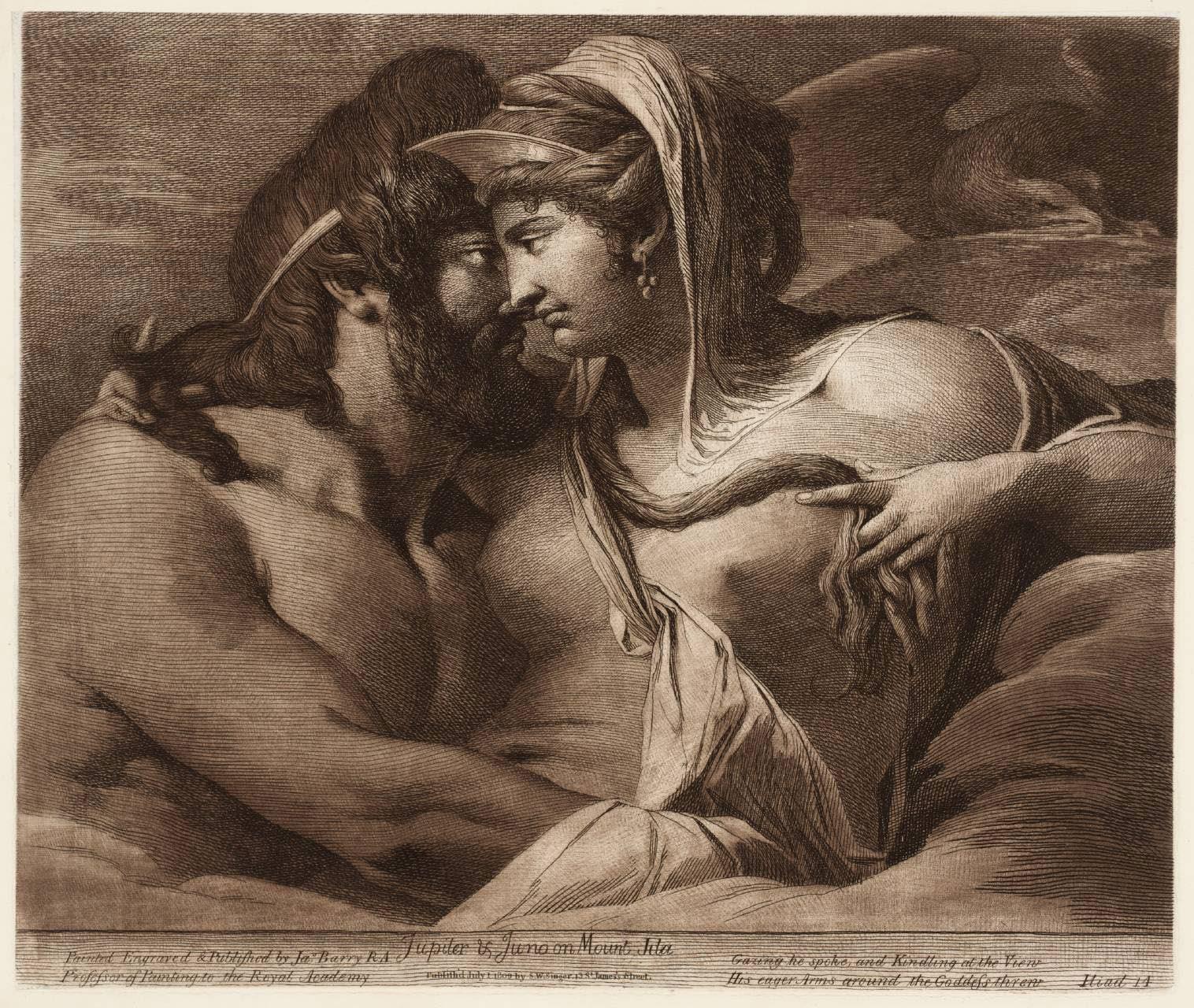
Hera was the Queen of Olympus. Her rank surpassed all other Greek goddesses and most other gods. As the Goddess of Marriage, Hera was the most worshipped and respected goddesses in ancient Greece for a very long time. At every wedding and throughout every marriage, people would regularly pray to Hera for her protection and guidance. And yet, her story began with a forced marriage. In mythology, Hera repeatedly rejected Zeus’ advances and refused to marry him. However, Zeus was relentless and ignored her dismissal. Eventually, he transformed himself into a cuckoo and conjured a great thunderstorm. He pretended to be an injured and very helpless little bird, endangered by the harsh weather. Hera saw the bird in distress and took it into her arms, close to her chest so that she could warm and protect it. Taking advantage of her proximity, Zeus then transformed back into his true godly form and raped her. Hera, ashamed of the violation, agreed to marry Zeus. From that point on, Zeus’ lust and Hera’s jealousy caused untold problems for them both. Hera’s title as Goddess of Marriage was continually flouted by Zeus in his countless affairs with other people. Whilst Hera was meant to represent the divine ideal of a happy marriage and family, she actually experienced the opposite. Zeus cheated on Hera with many beautiful mortal women and men, and often showed more favor to his illegitimate children than he did to Hera’s children by him, which greatly angered her. Hera was unable to avenge herself for Zeus’ slights because she was subjugated by the divine hierarchy and fearful of Zeus’ power. On one occasion, Hera attempted to overthrow Zeus with the help of some of the other gods, but the plot failed. In retaliation, Zeus tormented and terrified Hera so much that she never attempted to overthrow him again. Hera had no power to escape this bond, because, for her and Zeus, marriage was eternal, and it was the custom that only the man could decide to divorce his wife in ancient Greece. Another factor influencing the partnership was that if Zeus and Hera were to divorce, Hera would lose her status and power as Queen of Olympus. Thus, she was dependent on his power for her own. As a result, despite the volatile nature of their relationship, Hera was bound to Zeus forever. In the context of the history of feminism, Hera’s example illustrates that society was structured in such a way that women were dependent on their husbands and often helpless to change the dynamic. Her rape also demonstrates that women were seen as sexual objects to exploit, even then.
2. Aphrodite
Aphrodite was one of the most beautiful Greek Goddesses in Greek mythology. Due to her unparalleled beauty, many of the gods vied for her hand in marriage. Zeus was unsure how to go about handing her over in marriage to a god without causing tensions. Finally, an opportunity came along when Hera was trapped in a gold throne by Hephaistos. Zeus offered Aphrodite’s hand in marriage to the god who was able to bring Hephaistos to Olympus and release Hera. Aphrodite was happy with this decision as she was confident in the skill and power of her beau, Ares. However, when Ares attempted to barge into the forge, Hephaistos held him back with a shower of burning molten metal. Hephaistos held off many suitors until he decided to return to Olympus voluntarily, and demanded Aphrodite’s hand in return for releasing Hera. Zeus agreed, putting a stop to the rivalry and freeing Hera. And so, Aphrodite was given in marriage by her father, Zeus, to Hephaistos but she did not return his affections. Aphrodite had wanted to marry her lover Ares. Unfortunately for Aphrodite, the custom in Ancient Greece was that women were not allowed to instigate a divorce, this was the man’s choice, so she was bound to her unwanted marriage. As a result of her dissatisfaction with the union, Aphrodite continued to act on her desires and pursue other men. Aphrodite’s marriage contradicted her status as the Goddess of Love; she was in a loveless partnership. Whilst Hephaistos loved Aphrodite devotedly, Aphrodite had not and would never, return his affection. Eventually, Hephaistos became increasingly enraged and bitter about Aphrodite’s indifference towards him as well as her affection for others. Hephaistos formulated a plan to shame Ares and Aphrodite in front of the other gods. When they were locked in an embrace in bed, he sprung a golden net over them, and called upon the gods to come and witness their infidelity. After this, it is implied in various accounts that Hephaistos divorced Aphrodite, as he is reported to have been married to Aglaia, one of the Charities. It is important to note that it had to be his choice and not Aphrodite’s to instigate a divorce. In Aphrodite’s mythology, she had rebelled against those who attempted to govern her love and passion, the very attributes she represented in her title as Goddess. She was passed through the patriarchal structure of society by the men who had the most control over her life. First, by Zeus, her father and the head of her household, and then, onto the new household of Hephaistos. Concerning the history of feminism, her position reflects the many cases
26 Ancient Greece
in which ancient Greek women were given in arranged marriages, passing from their father’s household to their husband’s. In most cases, the marriage was a transaction between two men, for their benefit. There was not much consideration for the woman’s opinion. Aphrodite’s only available act of independence and resistance against this arrangement was to continue her relationship with Ares, who was her own choice of partner.
4. Athena
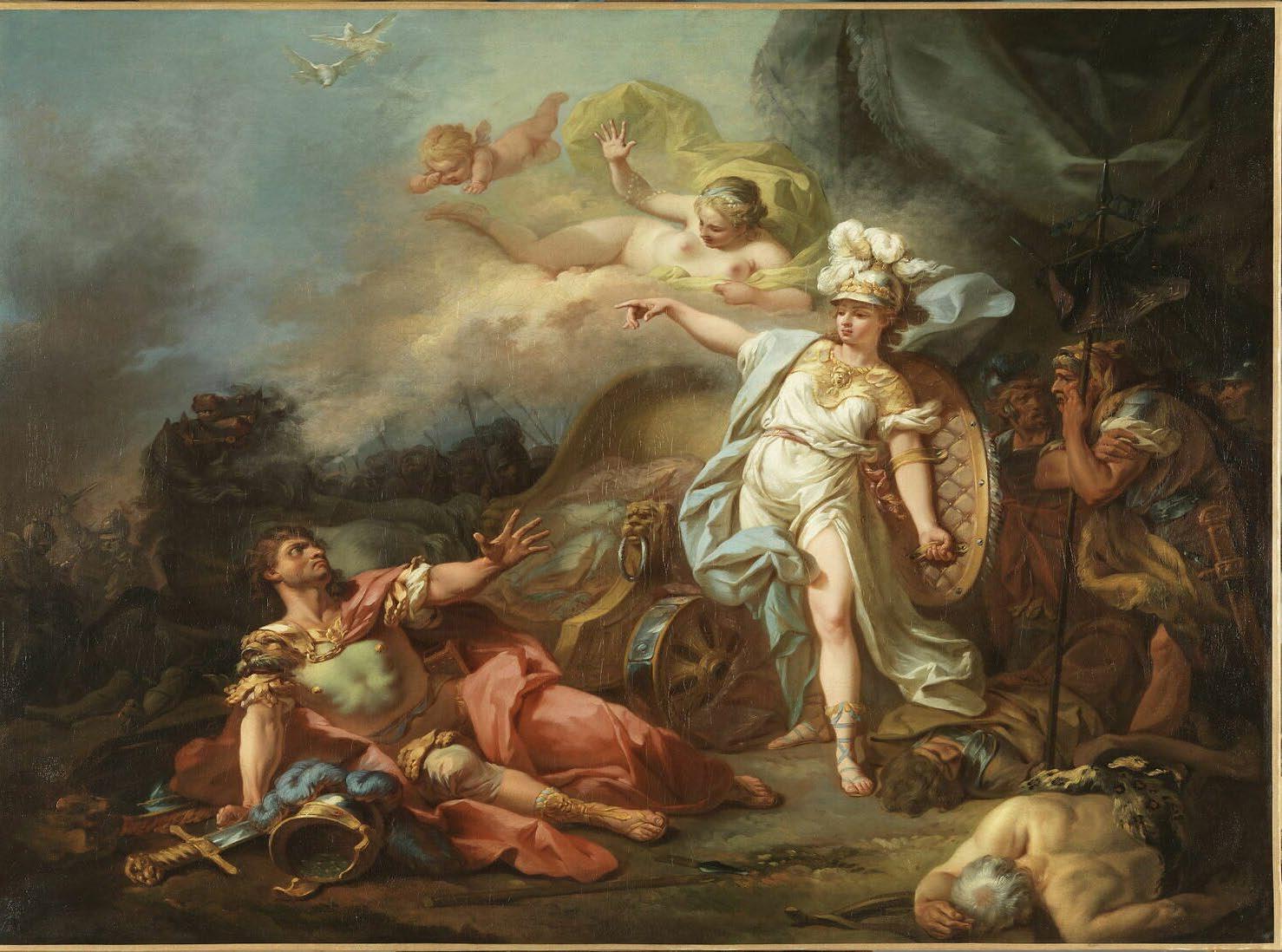
Athena’s story is of immense importance for everyone interested in understanding Greek Mythology within the greater context of the history of feminism. Athena had some independence and power when compared to her fellow Greek Goddesses, but nevertheless, she was still subject to her father. Many ancient sources imply that Athena was the favorite child of Zeus because Zeus allowed Athena to wear his own armor (called Aegis) into battle. Athena’s myth begins as such: when her mother, Metis, the first Goddess of Wisdom, was pregnant with Athena, Metis told Zeus a prophecy that sent him into a spiral of worry. As Zeus was the current king of gods and men, he feared being overthrown, so he swallowed Metis and his unborn child. Despite the odds, Athena was born as a fully grown woman from the head of Zeus, fully arrayed in armor. From the moment of her birth, Athena fulfilled the prophecy by being equal to her father in strength and wisdom. Rather than becoming a rival to Zeus, she became his valued advisor. But Athena did not exert her wisdom as superior to Zeus’, because this would make him see her as a threat, just as the prophecy implied. Thus, Athena held a high position of power, such that she became the ‘favorite’, and was allowed a degree of freedom, yet, she was still subject to her father. In the Iliad, Ares, child of Zeus and brother to Athena, is injured by the mortal hero Diomedes, who was encouraged by Athena. Ares complained to Zeus that he let Athena get away with everything and showed his wound. To this, Zeus replied that Ares deserved his injury. Whilst Zeus showed favoritism to Athena, she was not allowed to have complete freedom. She would always have to ask Zeus permission before she acted, for fear of punishment. In the Trojan War, Athena greatly wanted to see Troy punished for their actions against the Greeks and the Greek gods, however, Zeus was giving support to both sides causing chaos on the battlefield. Athena had to join with Hera in order to convince Zeus to let the Greeks push back the Trojans. In another myth, when both Athena and Poseidon wanted to be the patron of
Athens, Zeus got involved with the decision, demanding that it be put to a vote. Athena was still subject to Zeus’ command because she was his daughter in a patriarchal hierarchy, and she was beneath him in terms of status and power. Athena would spend an eternity deferring to her own father.
3. Persephone
Persephone was the victim of a classic case of injustice within the history of feminism. Without her knowledge of the arrangement, Persephone had been given in marriage by her father, Zeus, to Hades. One day whilst Persephone was picking flowers in a meadow, Hades burst out of the ground and whisked her away to be his bride in the Underworld. Persephone had no knowledge of the arrangement and believed she was being kidnapped until Hades eventually explained the situation to her. Persephone, goddess of springtime and fertility and now Queen of the Underworld was subject to living in a kingdom devoid of the brightness and life of the world above. Some sources say that Persephone was gifted a garden in the Underworld by Hades, a garden which was populated with blood-red poppies. This was a poor substitute for the variety and abundance of plant life that the living world could offer. As a result of her marriage to Hades and her new role as Queen of the Underworld, Persephone became a dual goddess: of the spring, and of the dead. Therefore, her identity was split between her original interest, her fascination with springtime and fertility, and her mandatory role presiding over the dead with Hades. Her position and influence consequently appear very oxymoronic.
5. Hestia
Hestia was the eldest immortal within a single generation of the gods. She was Zeus’ eldest sister and Kronos’ first child. As the first of the generation, she took the title of the Goddess of the Hearth and Home. In ancient Greek society, the hearth was an important aspect of society, as life revolved around the whole community and the home. Hestia’s role tending the flame of the hearth represents the tending of the home and the whole community itself, both private and public. In some mythological accounts, Hestia is regarded as one of the twelve Olympians. However, in many accounts, her place is taken by Dionysus. Since Dionysus was seen as a younger, newer god in mythological chronology, it has been interpreted that Hestia gave up her seat for
27 LORE - Misogyny Amongst the Myths
Dionysus. However, this appears to be a very modern interpretation by Robert Graves, to account for the switching twelfth Olympian, because there is not a clear reason as to why Hestia was replaced by Dionysus in the ancient sources. Hestia’s passive and quiet nature may be a reason for this interpretation, as Hestia in Greek mythology appears to be a reserved soul. She often does not take sides in the wars that her fellow gods take part in, but instead tends the eternal flame. The eternal flame was the hearth of Mount Olympus, signifying the whole community and home of the Greek gods. Nevertheless, despite Hestia being the central figure who represented the connectedness of the home and the community, she was effectively removed from them, the Olympians, making her not only just a secondary goddess, but also, a very minor less significant goddesses.
...Unfortunate Tales

28 Ancient Greece
Greek Goddesses: The History Of Feminism
These examples show that even the Greek goddesses were subject to male oppression, which often meant the Greek Goddesses were unable to represent their godly powers. In some cases, as with Persephone and Hera, their situations illustrate the opposite of their supposed ideal, i.e. instead of the perfect marriage, Hera’s myths feature adultery; instead of representing fertility, Persephone is often associated with the lifeless Underworld. In Greek mythology, male oppression is best illustrated by the figure of Zeus, who has great control over the lives of others. His power and control symbolize the patriarchal structure of both divine and mortal society. Even the virgin goddesses who were seen as untouchable were not; they often had to deal with unwanted advances. Their status as virgins was dependent on the power and protection of Zeus. Zeus
himself was an ironic guardian of these goddesses’ virtues, as he showed little care for other women’s choice to remain celibate. Zeus’ example indicates a society that was structured so that females were dependent on males, yet vulnerable to them at the same time. Many of the Greek goddesses accepted their given roles within the society of the gods. However, the examples of rebellion indicate friction within the history of feminism. Hera’s attempt to overthrow Zeus, Aphrodite’s continual pursuit of Ares despite her marriage to Hephaistos, and Athena’s ongoing manipulation of Zeus through her wisdom, show how these goddesses fought against their restraints. The Greek Goddesses often held their own and exerted what freewill they could under the system they were subjected to.
29 LORE - Misogyny Amongst the Myths
Beyond The Canvas
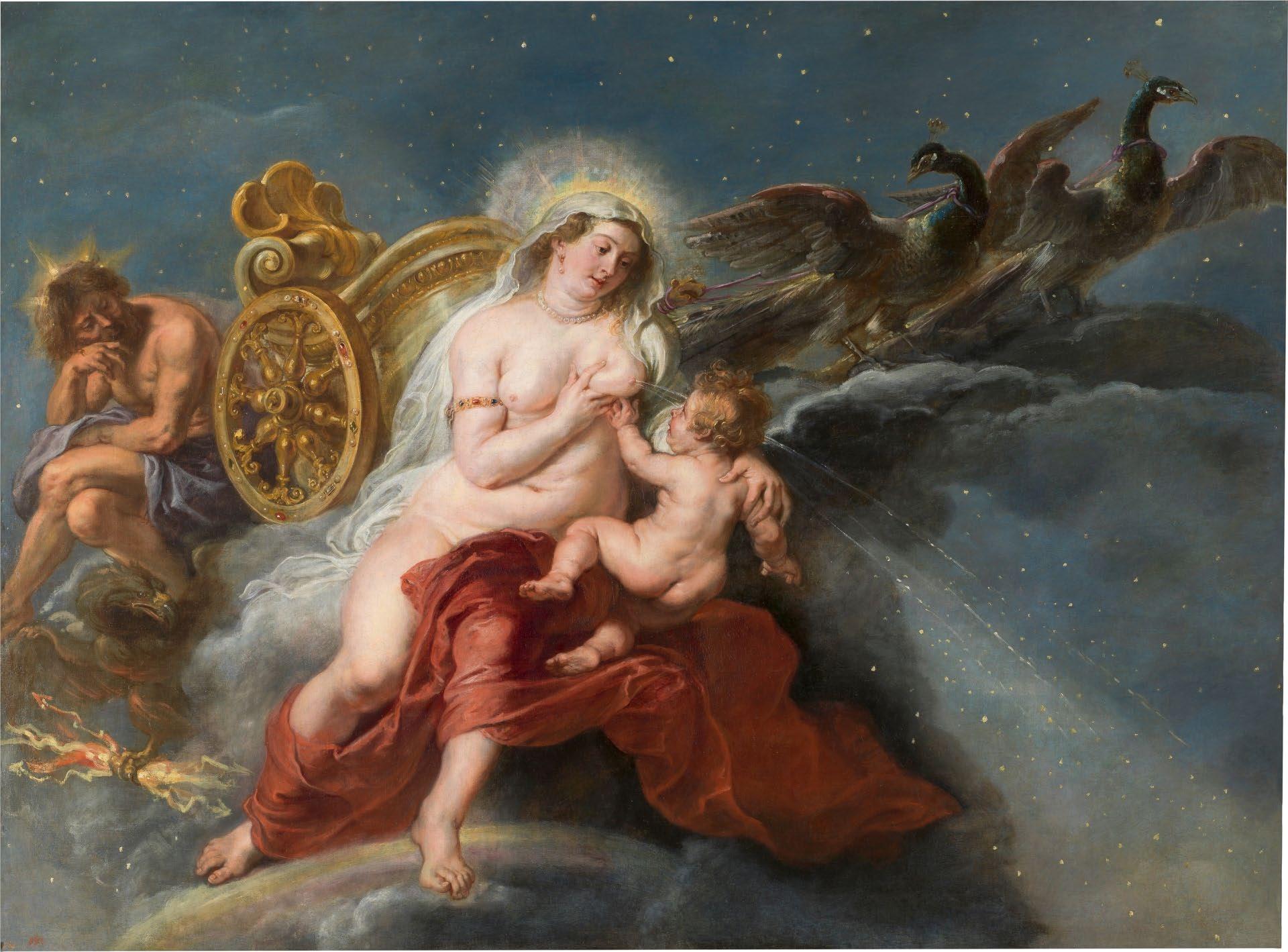
At the center of the canvas, we find Juno, the Roman queen of the gods, a figure poised in turmoil. Pregnant with the child of Jupiter, she wrestles with the impending birth, her discomfort palpable. It's within this tumultuous moment that the essence of female strength emerges. Juno, portrayed as a deity of maternal virtues, transcends very traditional roles to embody the whole complexity of womanhood. She embodies resilience and power, encapsulated in the physical act of childbirth, which, while painful, ultimately brings forth life.
Juno's struggle serves as a metaphor for the broader journey of women in this society, a testament to the challenges they face, and the sheer extraordinary strength they draw upon to overcome adversity. Rubens, through his masterful brushwork, elevates this moment into a huge celebration of female fortitude, urging viewers to recognize the depths of
strength hidden within the whole feminine experience.
The celestial figures that surround Juno further contribute to the narrative of female empowerment. The goddesses Venus and Minerva, representatives of love and wisdom, stand in unity, bearing witness to Juno's labor. Their presence signifies the solidarity and collective support that women can offer one another. This portrayal dismantles the notion of female rivalry often perpetuated in mythology, replacing it with a vision of women standing together in complete moments of vulnerability and utmost strength.
As Juno's milk squirts spiraling into the night sky, it transforms into the Milky Way, eternally imprinted on the canvas of the cosmos. This metamorphosis symbolizes the enduring legacy of women's strength and the imprint they leave on the world. It speaks to the idea that even in moments of pain and struggle,
The Birth of the Milky Way
Peter Paul Rubens 1636 - 1638
Oil On Canvas
women have the capacity to create enduring beauty and leave an indelible mark on the universe.
Rubens' portrayal of Juno challenges traditional depictions of motherhood, reframing it as an act of empowerment rather than mere nurturing. Through this lens, the act of giving birth becomes an act of creation, a force that shapes worlds and leaves an enduring legacy.
"The Origin of the Milky Way" invites us to look beyond the medium, to peel back the layers of paint and pigment and immerse ourselves in the profound narrative that unfolds before us. In doing so, we are reminded of the strength, resilience, vulnerability, and transformative power that lies within every woman. Peter Rubens' masterpiece transcends time and speaks to the enduring spirit of female empowerment, urging us to recognize and fully celebrate the extraordinary strength that exists within us all.
30 Ancient Greece
Resistance & Rebellion
After some hard-fought victories, women’s rights are threatened again in many parts of the world. In the United States, the Supreme Court overturned women’s right to abortion in June 2022; women have also been leaving the workforce since the COVID-19 pandemic, in many cases to care for children and elderly relatives. In other parts of the world, especially in developing countries, women are disproportionately affected by climate change. As a scholar of ancient mythology, I’m aware of many female characters in Greek mythology who offer us models for today’s challenges. This may be a little surprising, because ancient Greece was under strict patriarchal rules: Women were considered minors under the guardianship of their fathers or husbands for their whole lives and not allowed to vote. Yet women in these myths spoke truth to power and fiercely resisted injustice and oppression.
Rebel goddesses
Female rebellion is at the heart of the Greek story about the creation of the world. Gaia, the Earth goddess, rebels against her husband Ouranos, the Sky, who smothers her and refuses to let her children be free. She orders her son Kronos to castrate his father and take his throne. Once Kronos comes to power, however, he becomes afraid of being dethroned by his children, so he swallows all the babies his wife Rhea gives birth to. Rhea rebels against this horrific act. She gives Kronos a stone wrapped in a blanket to trick him into thinking that he is going to devour this baby as well. Rhea then hides her child, the god Zeus, who grows up and throws his father down into the depths of the Underworld. But history repeats itself, and the new leader of the gods again fears that his wife may plot to overthrow him. As the king of the gods, Zeus is forever afraid of his wife Hera, who exacts vengeance for all his transgressions, especially his innumerable affairs. Similarly, the story of Demeter and her daughter Persephone shows a powerful goddess holding her ground in the face of male deities. When Persephone is abducted by Hades, the king of the Underworld, Demeter, the goddess of agriculture, refuses to let the crops grow until Persephone is returned. Despite Zeus’ pleading, Demeter does not relent. The entire world is barren of fruit, and humans starve. Eventually Zeus is forced to negotiate, and Persephone rises from the Underworld to be with her mother for a part of each year. During the months when Persephone is with Hades, Demeter holds back vegetation and it is winter on the Earth.
Mortal Women
Greek culture, however, was suspicious of strong-willed women and portrayed them as villains. Classical scholar Mary Beard explains that women are characterized in this way by male writers to justify women’s exclusion from power. She argues that the Western definition of power applies intrinsically to males. Therefore, Beard explains, “[Women] are, for the most part, portrayed as abusers rather than users of power. They take it illegitimately, in a way that leads to the fracture of the state, to death and destruction. … In fact, it is the unquestionable mess that women make of power that justifies their exclusion from it in real life.” Beard uses the stories of Clytemnestra and Medea, among others, to illustrate her point. Clytemnestra punishes her husband, Agamemnon, for sacrificing their daughter Iphigenia at the beginning of the Trojan War. She seizes power in his kingdom of Mycenae while Agamemnon is still at war, and when he returns, she murders him in cold blood. Medea makes her husband, Jason, pay the ultimate price for deserting her – she kills their children. Medea, as a foreign princess in the Greek city of Corinth, a powerful sorceress, and a Black individual, is marginalized in multiple ways. Yet she refuses to back down. Classical scholar and Black feminist intellectual Shelley Haley stresses that Medea is proud, a characteristic that is viewed as typically masculine in Greek culture. Haley sees Medea’s actions as a way to assert her individuality in the face of Greek societal expectations. Medea is not willing to give Jason the freedom to start a relationship with another woman, and she negotiates asylum on
31 LORE - Misogyny Amongst the Myths
her own terms with the king of Athens. According to Haley, Medea “resists the cultural norms that inscribe child-bearing as the only raison d’être of female existence. Medea loves her children, but like a man, her pride comes first.”
Comedy And Tragedy
In a more humorous way, in “Lysistrata,” the playwright Aristophanes imagines the women of Athens protesting the destructive Peloponnesian War by going on a sex strike. Under such dire pressure, their husbands quickly give in and peace is negotiated with Sparta. Lysistrata, the leader of the striking women, explains that women suffer doubly in war, even though they have no say in the decision to enter warfare. They suffer first by bearing children and then by seeing them sent out as soldiers. They can be widowed and enslaved as well as a consequence of war. Finally, in a famous tragedy by Sophocles, Antigone fights for human decency in the face of autocracy. When Antigone’s brothers Eteocles and Polyneices fight for the throne of Thebes and ultimately kill one another, the new king, Creon, orders that only Eteocles, whom he considers to have been the rightful king, be buried with honor. Antigone revolts and says that she must uphold divine law rather than Creon’s tyrannical human law. She sprinkles Polyneices’ body with a little dust, a symbolic gesture that allows the dead man to move on to the afterlife. Antigone takes action knowing full well that Creon will kill her to enforce his edict. Yet she is prepared to offer the ultimate sacrifice for her beliefs.
Women And Moral Justice
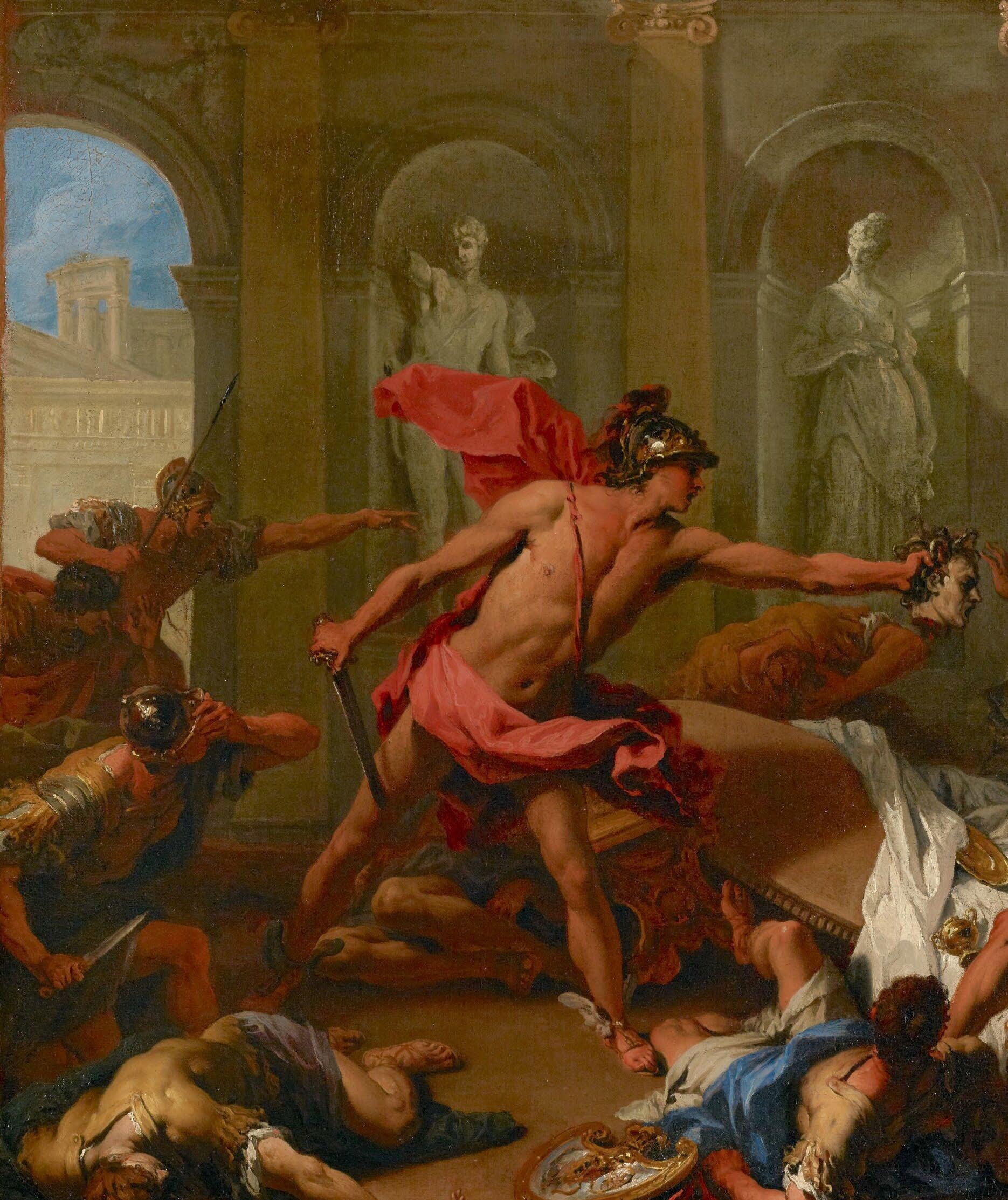
Throughout these stories, female figures stand for moral justice and as an embodiment of the resistance of disempowered people. Perhaps for this reason the figure of Medusa, traditionally viewed as a terrifying female monster defeated by the male hero Perseus, has recently been reinterpreted as a symbol of strength and resilience. Acknowledging that the mythological Medusa was turned into a monster as a result of her rape by Poseidon, many survivors of sexual assault have adopted the image of Medusa as an image of resilience. Sculptor Luciano Garbati turned the myth on its head. In a new take on the traditional image of the victorious Perseus with the head of Medusa, Garbati gave Medusa a powerful new stance with his statue “Medusa with the Head of Perseus.” Medusa’s thoughtful and determined demeanor became a symbol for the #MeToo movement when the statue was set up outside the courtroom where Harvey Weinstein and many others accused of sexual assault stood trial.
What does this mean today?
Echoes of all these stories resonate strongly today in the words of fearless young female activists. Malala Yousafzai spoke up for girls’ education in Taliban-controlled Afghanistan although she knew the potential repercussions could be dire. In an interview for a podcast, she said: “We knew that nothing would change if we remained quiet. Change comes when somebody is willing to step up and speak out.” Greta Thunberg, addressing world leaders at the United Nations Climate Action Summit in 2019, did not miss a beat: “You are failing us. But the young people are starting to understand your betrayal. The eyes of all future generations are upon you. And if you choose to fail us, I say: We will never forgive you. We will not let you get away with this. Right here, right now is where we draw the line.” For the women who continue to fight against oppression, it can be both a comfort and a catalyst for action to know that they have been doing so for millennia.
32 Ancient Greece
33 LORE - Misogyny Amongst the Myths
Beyond The Sculpture
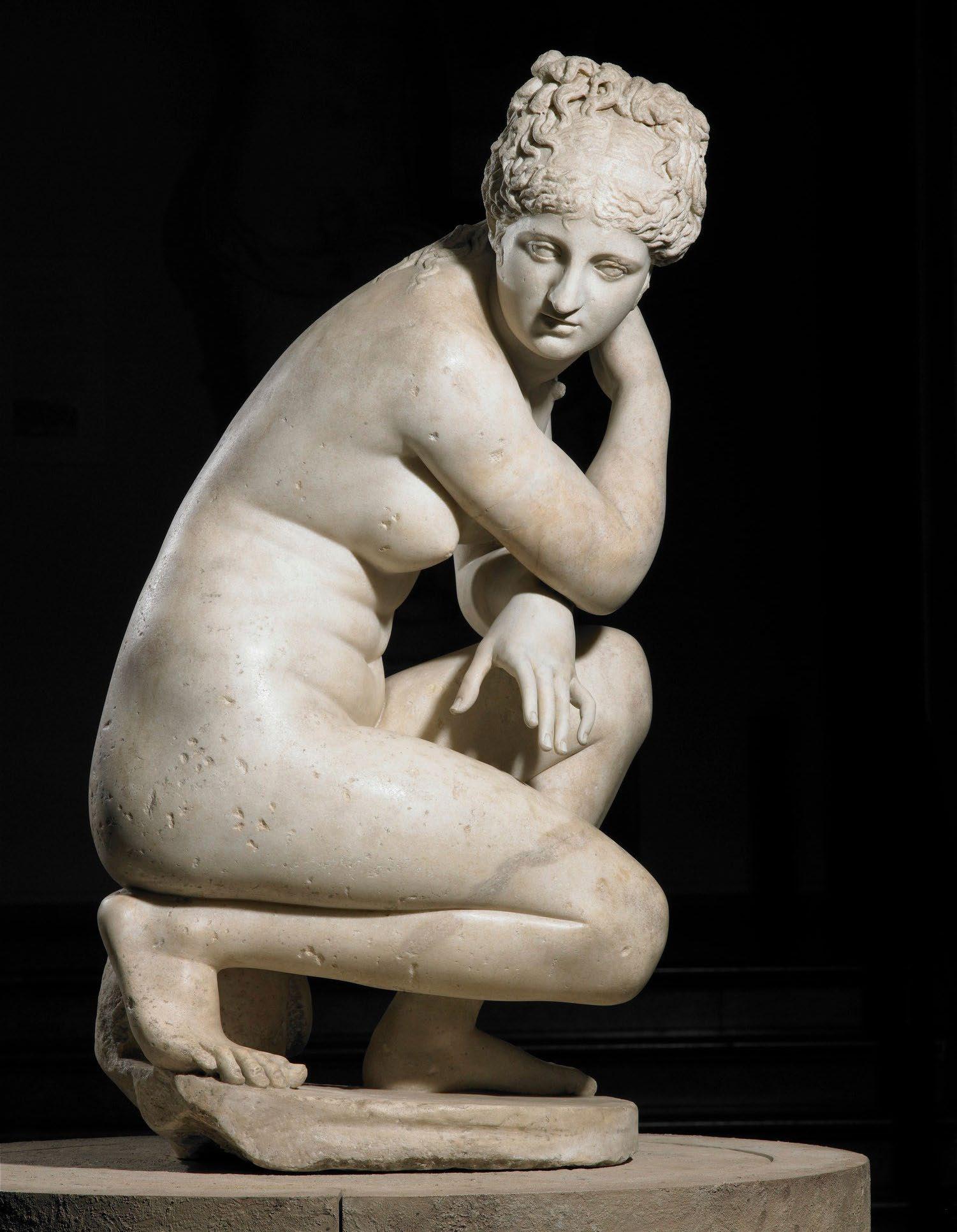
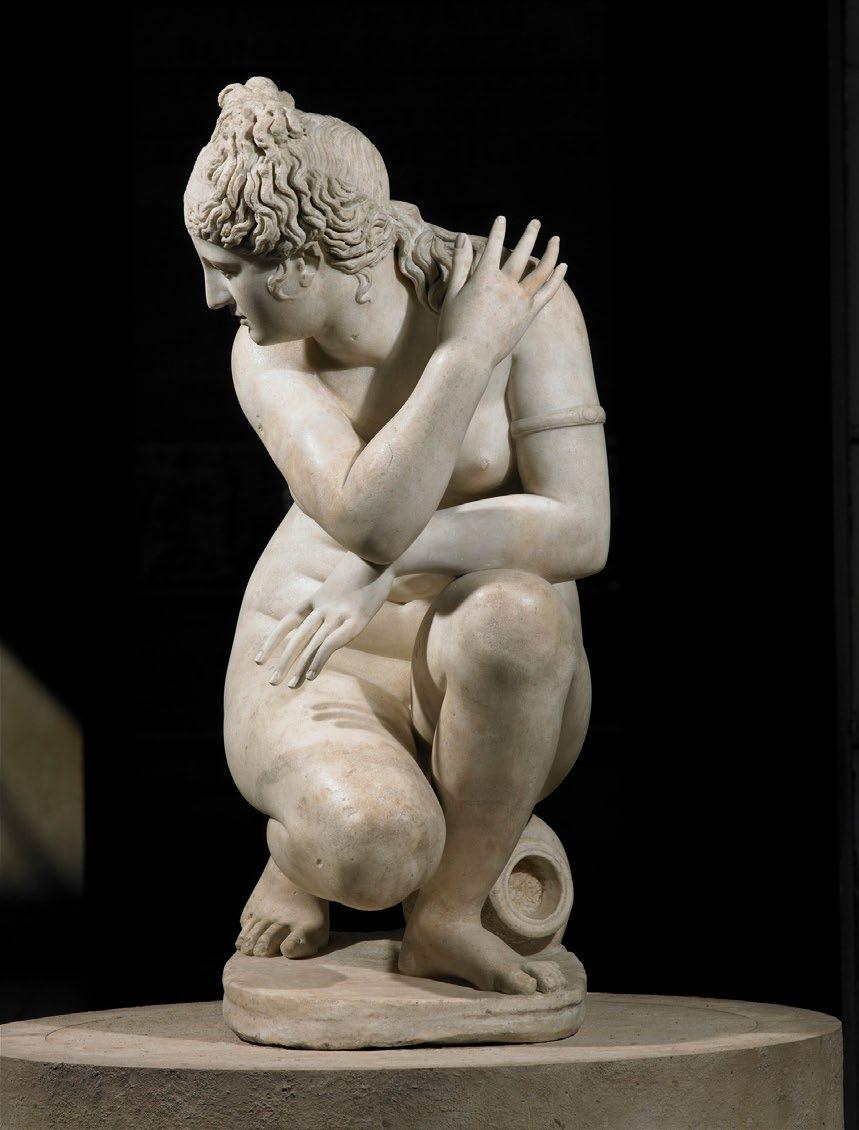
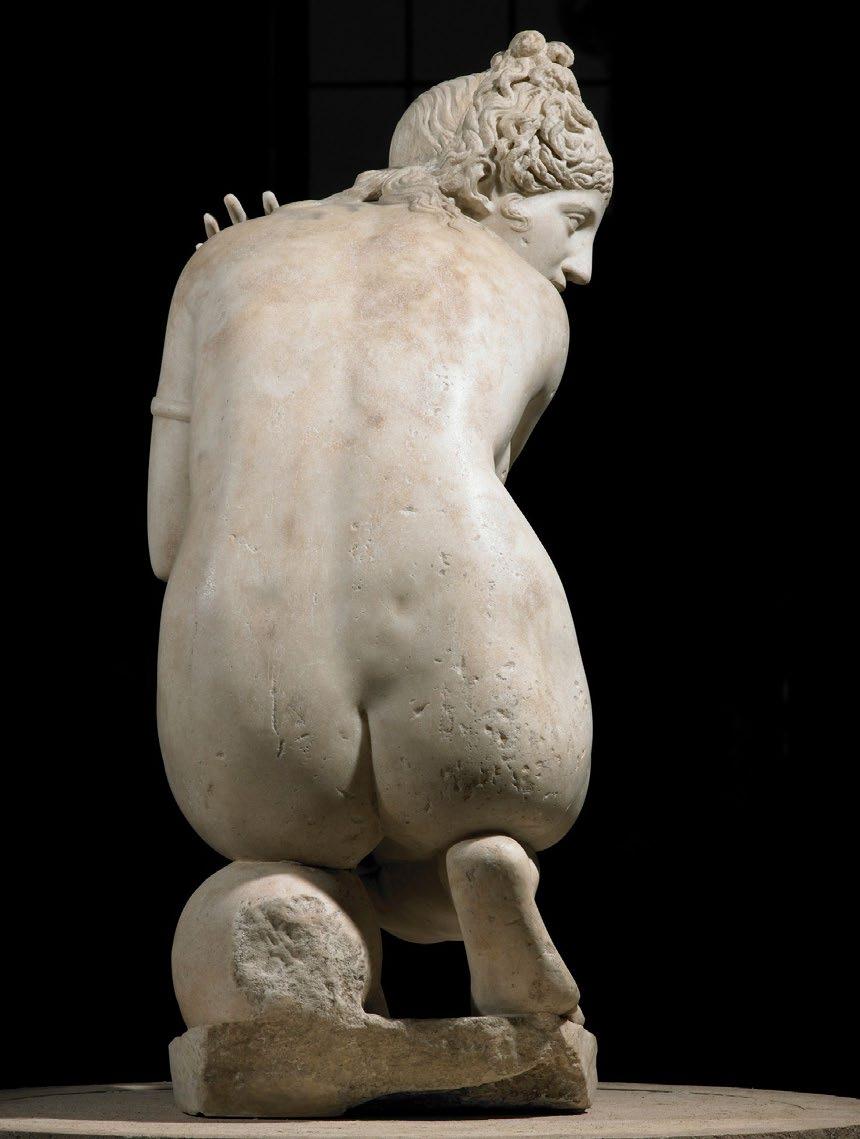
Aphrodite
Second century AD
125 x 53 x 65 cm
Marble
In the hallowed halls of the British Museum, amidst the echoes of ages past, rests a silent sentinel of the ancient artistry and divine femininity— Aphrodite. This exquisite marble sculpture, believed to be a Roman copy of a lost Greek original, beckons us to unravel the layers of symbolism and significance woven into its form. Much like the other articles in this feminist magazine, our exploration aims to dissect the narrative, offering fresh perspectives on a portrayal that has captivated audiences for centuries.
At first glance, Aphrodite appears to be in a state of repose, her lithe form gently curled in a protective stance. This position, traditionally associated with vulnerability, takes on a subversive quality when viewed through a feminist lens. Rather than just portraying passivity, this Aphrodite exudes a sense of inner strength, her posture a testament to resilience in the face of adversity. It challenges antiquated notions that equate feminine grace with fragility. Cloaked in drapery, the Crouching Aphrodite hints at a dual nature—the concealment of the body, yet the revelation of agency. This veil, often interpreted as an emblem of modesty, can equally be seen as a symbol of self-possession. It shrouds Aphrodite in an aura of mystery, inviting the viewer to contemplate the depths of her inner world, shielding her autonomy from the prying eyes of the observer.
“This veil, often interpreted as an emblem of modesty, can equally be seen as a symbol of self-possession.”
The gaze of Aphrodite pierces through time, an unwavering assertion of self-possession. Her eyes, though cast downward, carry a defiance that challenges the observer’s assumptions. This Aphrodite, far from an object of passive adoration, asserts ownership of her own narrative. Her stare is a reminder that even in stillness, agency remains steadfast, transcending the confines of the sculptor’s chisel. Rooted in ancient
mythology, Aphrodite herself bears the weight of a rich cultural heritage. The connection to the goddess of love and beauty infuses the sculpture with layers of meaning. Rather than just being reduced to a mere representation of an idealized female form, she fully embodies the complexities and contradictions inherent in the realm of love, desire, and power. Aphrodite still stands as a strong testament to the multifaceted nature of all femininity, defying the simplistic categorizations.
“ Rather than just being reduced to a mere representation of an idealized female form, she embodies the complexities and contradictions inherent in the realm of love, desire, and power.”
The Aphrodite, like so many ancient sculptures, carries with it the marks of time. Its fragmented state speaks to the history of transition and complete transformation. Yet, even in its incomplete form, it radiates an enduring beauty—a reminder that strength can be found in imperfection, and that wholeness transcends physical completeness. As we stand before Aphrodite, we are confronted with a presence that defies antiquated paradigms. Through the prism of feminist interpretation, this sculpture emerges not as a passive representation, but as a living testament to the resilience, agency, and complexity of the feminine experience. In our quest to decode the layers of meaning within this ancient artwork, we find a voice—a voice that has endured much through the ages, waiting to be rediscovered and celebrated. In Aphrodite, we find not just a sculpture, but a testament to the enduring spirit of women throughout history.
34 Ancient Greece
Her Love, Power, & Desire
Embedded in the very essence of Aphrodite lies a profound narrative of love, power, and desire. As the goddess of love and beauty, her domain extends far beyond mere aesthetics. Aphrodite wholly embodies the intricate dance between her passion and agency, challenging conventional notions of femininity. This sculpture encapsulates her essence, inviting us to ponder the complexities of romantic entanglements, the assertion of one’s whole desires, and the profound interplay of her strength and vulnerability that defines the human experience.
“Aphrodite wholly embodies the intricate dance between her passion and agency, challenging conventional notions of femininity.”
As we stand before Aphrodite, we are not merely in the presence of an ancient sculpture, but in the company of an enduring testament to the feminine spirit. Through the lens of feminist interpretation, this representation transcends the confines of art and history, emerging as a living embodiment of resilience, agency, and the multifaceted nature of love and power. In our endeavor to decode all the layers of meaning within this ancient artwork, we uncover not only the complexities of femininity but also the timeless relevance of Aphrodite’s narrative. It is a narrative that resonates through the ages, reminding us of the enduring strength and complexity of women throughout all of history.
35 LORE - Misogyny Amongst the Myths
The Vanishing Vulva
In the ancient Greek civilization, a curious shift in symbolism took place. While the phallus, emblematic of male potency and revered as a symbol of fertility, was celebrated in various forms of art and worship, the representation of the vulva, once a symbol of life and creation, began to dwindle. Instead of being honored, it slowly veered into a realm of obscenity and even phonographic association. This transformation, from veneration to vulgarity, sheds light on evolving societal attitudes towards female sexuality and the subtle erosion of the sacred feminine in ancient Greece.
The Rise of Phallic Worship
The ubiquity of phallic symbols in ancient Greece is unmistakable. From the towering herms that lined the streets, acting as both markers of boundaries and symbols of fertility, to the celebrated depictions in pottery and statuary, the phallus was an omnipresent emblem of vitality and virility. It found its place not only in the artistic realm but also in religious rites and festivals. In particular, the cult of Dionysus held a central place for the phallus. Elaborate processions featuring oversized phalli were a spectacle of revelry and a nod to the procreative force they symbolized. This widespread veneration of the phallus mirrored a society that held masculine attributes in high regard, often at the expense of diminishing the significance of the feminine. It was a paradigm that, over time, would subtly reshape the cultural landscape.
“Elaborate processions featuring oversized phalli were a spectacle of revelry and a nod to the procreative force they symbolized.”
Phallic imagery extended beyond ceremonial contexts. Pottery, a ubiquitous medium of artistic expression, frequently featured phallic motifs, whether as part of everyday scenes or as standalone symbols of potency. Even architectural elements, such as herms, served as both functional markers of boundaries and unabashed declarations of virility. The phallus became a visual lexicon, seamlessly integrated into the various facets of life. This prominence, however, was not merely just aesthetic. It was emblematic of a very deeper cultural ethos that celebrated male vigor and procreation. The cult of Dionysus, with its grand processions and libations, exemplified this celebration, placing the phallus at the very heart of communal revelry. Through these unique practices, the phallus itself became more than a symbol; it was a super pervasive presence, a declaration of life’s generative power, and a reflection of the societal reverence for masculine attributes.
The Shifting Narrative
Conversely, the whole representation of the vulva underwent a stark transformation, tracing a path from sacred reverence to muted obscurity. Once revered as a potent symbol of fertility, life-giving power, and the divine feminine, the vulva gradually began to recede from the forefront of public consciousness. The intricate, detailed portrayals that once adorned temple facades and public spaces diminished, giving way to more modest or abstract representations. As time wore on, the vulva became associated with obscenity, often reduced to comical or mocking depictions in art. This shift not only reflected changing attitudes towards female sexuality but also signaled a departure from the reverence once bestowed upon the sacred feminine principle. The sacred act of creation, once linked intimately with the vulva, seemed to retreat into the recesses of collective memory, veiled by societal taboos and veiled in the cloak of modesty.
Rediscovering Ancient Narratives
This evolution of symbolic representation in ancient Greece reflects a broader narrative of societal values and perceptions surrounding gender, sexuality, and power dynamics. The celebration of the phallus, coupled with the diminishing reverence for the vulva, serves as a poignant reminder of the subtle ways in which cultural norms can shape our understanding of the sacred and the profane. As we delve into this historical transition, we are confronted with an opportunity to unravel all the layers of societal attitudes towards gender and sexuality, and contemplate the enduring impact of these ancient paradigms on contemporary perspectives. The vulva stands as a testament to the enduring power of symbolism, and a call to reevaluate the narratives we inherit from the past.
36 Ancient Greece