We’ve definitely been there, although for the last few years, we’ve felt something different. We’ve known each other for a while now, so we feel safe to open up to you: We’ve felt like a burden at times—vulnerable and without our own home, reliant on the houses of our partners. Though we may have felt like a burden, at least we haven’t felt lonely. Rather, we’ve been surrounded by all of you, across many stages and programmes. With our theatre sloooowly being reconstructed, we had to ask others to mutualize space and resources, engaging in what will become a five-year collaboration.
This is not an attempt to romanticize our condition; the support of others is not an easy thing to ask for. In a world where we’re taught: be your own little island, be productive, independent, do not burden others, we come to view self-reliance as paramount to success. But now we wonder: what is solidarity—without a burden to carry?
If solidarity emerges from need (and God, these certainly are times of need), then maybe “solidarity” in easy times is nothing of the sort. This reality is heavy to inhabit. Every day, we have witnessed the genocide perpetrated in Gaza, the resource-driven war exerted by western powers in Goma, the ethnic cleansing in Darfur, the erosion of
ear reader,
Do you ever feel lonely?
We’ve definitely been there, although for the last few years, we’ve felt something different. We’ve known each other for a while now, so we feel safe to open up to you: We’ve felt like a burden at times—vulnerable and without our own home, reliant on the houses of our partners. Though we may have felt like a burden, at least we haven’t felt lonely. Rather, we’ve been surrounded by all of you, across many stages and programmes. With our theatre sloooowly being reconstructed, we had to ask others to mutualize space and resources, engaging in what will become a five-year collaboration.
This is not an attempt to romanticize our condition; the support of others is not an easy thing to ask for. In a world where we’re taught: be your own little island, be productive, independent, do not burden others, we come to view self-reliance as paramount to success. But now we wonder: what is solidarity—without a burden to carry?
If solidarity emerges from need (and God, these certainly are times of need), then maybe “solidarity” in easy times is nothing of the sort. This reality is heavy to inhabit. Every day, we have witnessed the genocide perpetrated in Gaza, the resource-driven war exerted by western powers in Goma, the ethnic cleansing in Darfur, the erosion of
rights for the most vulnerable groups by governments globally. Amongst all the injustice unfolding far beyond theatres (and also within them), we have tried to stand radically together.
Together with audiences, artists and cultural workers, we’ve navigated sickness, anger, and mourning. As we watched it all unfold, we stood, although it often felt we were standing in quicksand. Standing together sometimes feels like the only thing we can do. Solidarity became more than strategy; it was survival itself, a way to obstinately feel in a world that pushes us continuously towards apathy.
As care, resistance and connection became more urgent, more alive to us, not only in our personal journey, but concretely in the wider world, we realized something: What comes out of need turns out to be necessity; when times are heavy, the load is lighter if shared by many. We’ve asked ourselves the question, how to mend our brokenness? And of course, we do not have the answer. But we think it begins when we start to imagine each problem as a collective one.
To be without a fixed home, as we have been, is considered a burden. When we receive another’s care, when we are invited in, extending this care to others is a given: we want to share our pieces, or even, to break some pieces into two. And what forms from this practice is an ecosystem of sharing, of shared responsibility, shared destiny, the knowledge that to uplift another uplifts us all. In the coming years, we will return to our home, but what we have built together and shared does not stop there. Our doors will be open on all sides to you. In the meantime, we will be here and there, for and with each other.
So dear, let us be each other’s burden. With hope always, Kaaitheater
(Text by Maria Dogahe, Elia Ephron & Dagmar Dirkx)
ieve lezer,
Voel je je wel eens eenzaam?
We’ve definitely been there. Toch kregen andere emoties de laatste jaren de bovenhand. We kennen elkaar nu al een tijdje, dus stellen we ons nu makkelijk voor je open: soms voelden we ons een last—kwetsbaar en zonder eigen huis, vertrouwend op de huizen van onze partners. Maar we voelden ons tenminste niet eenzaam.
Integendeel: we werden omringd door jullie allen, tussen de vele podia’s en programma’s. Terwijl ons theater laaaaaaangzaam wordt verbouwd, moeten we anderen vragen om hun ruimtes en middelen te delen, en zo een engagement voor een vijfjarige samenwerking aan te gaan.
Dit is geen poging om onze situatie te romantiseren; het is niet makkelijk om aan anderen steun te vragen. In een wereld waarin ons wordt aangeleerd: wees je eigen kleine eiland, wees productief, onafhankelijk en anderen vooral niet tot last, zagen we zelfredzaamheid als de sleutel tot succes. Maar nu vragen we ons af: wat betekent solidariteit—iets waar we ook naar streven—zonder een last om te dragen?
Als solidariteit ontstaat vanuit nood (en God, zijn dit tijden van nood...), dan betekent ‘solidariteit’ misschien wel heel iets anders in makkelijke tijden. De realiteit is moeilijk te verdragen. Elke dag waren we getuigen van de genocide in Gaza, de door grondstoffen gedreven oorlog van westerse actoren in Goma, de etnische zuiveringen in Darfoer, de uitholling van rechten van de meest kwetsbare groepen door regeringen wereldwijd. Te midden van al die onrechtvaardigheid die zich afspeelde ver buiten de theaters (en tegelijk er binnenin), probeerden we om radicaal samen te staan.
Samen met publiek, kunstenaars en cultuurwerkers, navigeerden we door ziekte, woede en rouw. Terwijl het zich allemaal voor onze ogen afspeelde, stonden we daar, ook al leek het dikwijls alsof we ons in drijfzand bevonden. Soms voelde samen staan als het enige dat we konden doen. Solidariteit werd meer dan een strategie: het was een manier van overleven, van koppig blijven voelen in een wereld die ons steeds richting apathie duwt.
Terwijl zorg, verzet en verbondenheid steeds urgenter en levendig werden, niet alleen in ons eigen traject, maar meer concreet in de hele wereld, beseften we: wat ontstaat uit nood, blijkt noodzakelijk.
Wanneer de tijden zwaar zijn, blijkt de last lichter wanneer gedragen door velen. We hebben ons afgevraagd: hoe helen we onze gebrokenheid? Natuurlijk hebben we geen pasklare antwoorden. Maar we geloven dat we een begin van een antwoord formuleren, wanneer we elk probleem als een collectief probleem verbeelden.
Zonder vast huis zijn, zoals wij voorlopig zonder vast huis zijn, wordt als een last beschouwd. Wanneer iemand ons
zorg geeft, wanneer iemand ons binnenlaat, blijkt het doorgeven van deze zorg aan anderen plots vanzelfsprekend: we willen onze stukjes delen, sommige porties in twee verdelen. Uit deze praktijk vloeit een ecosysteem van delen voort, een gedeelde verantwoordelijkheid, een gedeeld lot. Nu weten we dat elkaar vooruithelpen ons allemaal vooruithelpt. De volgende jaren keren we terug naar ons huis, maar wat we samen hebben opgebouwd, stopt dan niet. Onze deuren zullen voor je openstaan, langs alle kanten. Ondertussen zijn we hier en daar, voor en met elkaar.
Dus, lieve lezer, laat ons elkaar tot last zijn. Altijd met hoop,
Kaaitheater
(Tekst door Maria Dogahe, Elia Ephron & Dagmar Dirkx)
her lecteur·rice
Vous arrive-t-il parfois de vous sentir seul·e ?
Nous avons certainement connu cela, même si ces dernières années, nous avons ressenti quelque chose de différent. Nous nous connaissons depuis un certain temps déjà, nous pouvons donc nous confier à vous en toute confiance : on s’est parfois senti comme un fardeau, vulnérables et sans domicile, dépendant·e·s de nos partenaires. Même si on s’est parfois senti comme un fardeau, au moins on ne s’est pas senti seul·e·s. Au contraire, nous avons été entouré·e·s par vous toustes, à travers de nombreuses étapes et programmes. Alors que notre théâtre est lentement en cours de reconstruction, nous avons dû demander à d’autres de mutualiser l’espace et les ressources, s’engageant dans ce qui deviendra une collaboration de cinq ans.
Il ne s’agit pas ici de romantiser notre situation ; il n’est pas facile de demander le soutien des autres. Dans un monde où l’on nous enseigne à être notre propre petite île, à être productif·ve·s, indépendant·e·s, à ne pas être un fardeau pour les autres, nous en venons à considérer l’autonomie comme la clé du succès. Mais aujourd’hui, nous nous demandons : qu’est-ce que la solidarité, cette chose à laquelle nous aspirons également, sans fardeau à porter ?
Si la solidarité naît du besoin (et Dieu sait que nous vivons actuellement une période de besoin), alors
peut-être que la « solidarité » en temps normal n’en est pas vraiment une. Cette réalité est difficile à vivre. Chaque jour, nous avons été témoins du génocide perpétré à Gaza, de la guerre menée par les puissances occidentales à Goma pour s’emparer des ressources, du nettoyage ethnique au Darfour, de l’érosion des droits des groupes les plus vulnérables par les gouvernements du monde entier. Face à toutes ces injustices qui se déroulent bien au-delà des théâtres (et aussi à l’intérieur de ceux-ci), nous avons essayé de nous serrer les coudes de manière radicale.
Ensemble, nous avons traversé la maladie, la colère et le deuil. Alors que nous assistions à tout cela, nous sommes resté·e·s debout, même si nous avions souvent l’impression d’être enlisé·e·s dans des sables mouvants. Rester uni·e·s semble parfois être la seule chose que nous puissions faire. La solidarité est devenue plus qu’une stratégie ; c’est la survie même, un moyen de ressentir obstinément dans un monde qui nous pousse continuellement vers l’apathie.
Alors que les soins, la résistance et les liens sont devenus plus urgents, plus vivants pour nous, non seulement dans notre parcours personnel, mais aussi concrètement dans le monde en général, nous avons réalisé quelque chose : ce qui découle d’un besoin s’avère être une nécessité ; lorsque les temps sont durs, le fardeau est plus léger s’il est partagé par plusieurs. Nous nous sommes posé la question suivante : comment réparer ce qui est brisé ? Et bien sûr, nous n’avons pas la réponse. Mais nous pensons que cela commence lorsque nous imaginons chaque problème comme un problème collectif.
Être sans domicile fixe, comme nous l’avons été, est considéré comme un fardeau. Lorsque nous recevons l’attention d’autrui, lorsque nous sommes invité·e·s chez quelqu’un, il va de soi que nous rendons la pareille : nous voulons partager ce que nous avons, voire diviser certaines choses en deux. Et ce qui résulte de cette pratique, c’est un écosystème de partage, de responsabilité partagée, de destin commun, la conscience que le fait d’élever quelqu’un d’autre nous élève toustes. Dans les années à venir, nous retournerons chez nous, mais ce que nous avons construit et partagé ensemble ne s’arrête pas là. Nos portes vous seront ouvertes de tous côtés.
En attendant, nous serons ici et là, les un·e·s pour les autres et les un·e·s avec les autres.
Alors, mes cher·e·s ami·e·s, soyons le fardeau les un·e·s des autres. Avec espoir, toujours,
Kaaitheater
O sol está nascendo contornando uma montanha. Perto daqui tem tantas cachoeiras e rochas quanto pequenas criaturas, quanto criaturas invisíveis. Você pode ouvir a água e talvez algum sussurrar que vem com o vento. O sol tem uma luz quente, e o vento é um levemente frio. É uma sensação boa. O sol está tocando tudo que você pode ver e pouco a pouco novas silhuetas se desenham no horizonte. Enormes nuvens com mensagens escondidas. Um parquinho para crianças de todas as idades — um parquinho no céu. Levada por uma dessas nuvens, cercada pelas suas formas macias e o seu tom de rosa, de repente, você vê o sol de perto.
E de repente começa também a chover, assim não temos que escolher entre o sol e a chuva. Nós não sabemos como escolher um deles. Sol forte chuva forte. Lá embaixo o rio segue serpenteando, pintando a floresta com uma cor marrom-dourada, sendo uma cobra que não se camufla. A paisagem me dá uma piscadela como quem diz, tu sabes né? Tu já sabia. Tu sempre soube. E isso é um segredo entre eu e ela, a estrada.
Eu choraria tanto vendo um campo de vagalumes no interior do estado do
Rio divisa com Minas quanto vendo a aurora boreal
Mas na estrada no Pará
Eu sorrio
Hoje quem eu sou e a arte que produzo é determinado pelo fato de que estou em um movimento sanfonar com o lugar de onde vim, pêndulo certeiro: sempre volto. Eu nunca rompi com meu lugar de origem: uma cidade, metrópole, no coração da Amazônia. Belém do Pará. Que onda. Esse lugar tem sido pra mim uma espécie de fonte inesgotável de símbolos, histórias, códigos, cultura, sons, músicas, línguas. Desde que saí de lá, passei por algo que hoje vejo ser muito comum pra pessoas que migram: passei a ser muito de lá. Minha arte então segue o mesmo movimento, fala sobre esse lugar, desloca seus símbolos comigo pra onde quer que eu vá.
A isso eu chamei de uma prática artística trans-situ: ao contrário do in-situ, do hyper localizado, ela está interessada em transpor, transcrever e traduzir esses códigos para outros contextos.
Com que ética? Como fazer esse deslocamento sem me auto-exotizar?
Sem mastigar minha cultura pra gringo ver? Como não me apropriar de outras vivências e sim traduzir de forma muito autêntica minhas próprias percepções de uma cultura da qual faço parte e sou estrangeira ao mesmo tempo? Essas são questões que permeiam minha forma de criar, que são parâmetros de exigência para que a ética e a estética do que produzo possam caminhar juntas.
Eu estou sempre me perguntando: eu faria isso no Brasil?
Eu voltaria pro meu país e perfumaria isso?
E voltar é tão difícil. E também é um alívio. Quando eu volto todo mundo está num ponto diferente, constantemente se transformando junto com o contexto em que vivem. Eu volto e eu sinto uma necessidade muito verdadeira de entender como a cena artística vem evoluindo, como meus amigos estão crescendo, como as pessoas que eu amo estão ficando mais velhas. Quando eu volto, eu preciso de tempo. Tempo pra processar a travessia entre contextos tão radicalmente diferentes tu já imaginou o arco entre a Suíça e a Amazônia brasileira? Eu preciso de tempo pra entender, de novo, que quando eu volto eu não pertenço e eu pertenço tanto ao mesmo tempo.
Essa é a encruzilhada onde eu me encontro. Recentemente, eu entendi que o papel daqueles que não estão fincados nos seus lugares de origem é o papel de mensageiro. Nem melhor, nem pior: eu admiro muito as pessoas que fazem dos seus lugares uma base, que são referência, que são ramificação e sustento de suas
culturas locais. Mas meu caminho foi diferente: o da mensageira. E desde que eu entendi isso, eu fico me perguntando: o que eu vou levar pra lá dos contextos que eu vivo, das experiências que eu compartilho aqui na Europa?
Uma das coisas que mais me inspira aqui é observar outras diásporas vivendo na Europa. Aqui nessa encruzilhada no mundo eu tive a oportunidade muito preciosa de conhecer pessoas do Chile, Irã, Vietnã, Peru, Equador, Uruguai, Argélia, Guadalupe, Martinica, China, México, Mongólia e muitos outros países. E eu escutei suas diversas histórias de migração e como nos microcosmos das famílias que migraram juntas os elementos culturais dos seus lugares de origem são passados (ou não) de geração em geração. Como essas famílias se inscrevem em comunidades que resistem ou aderem à imposta eurocentrização de seus costumes, crenças, formas de se expressar. Essa linha tesa que não quer arrebentar entre o que eles chamam de integração cultural e uma recusa a se auto-apagar completamente.
Tem uma coisa que eu acho tão bonita sobre uma pessoa resistindo em não deixar sua cultura ancestral ser apagada. Em manter vivas crenças que a racionalização extrema do ocidente nunca vai entender. Em compartilhar uma língua como uma arma contra a xenofobia. Em ter um senso de humor específico que conecta o lugar de onde você veio com a forma que você ri — isso não é maravilhoso?
Eu não vim pra Europa com a minha família, eu não sei ainda em que medida eu faço parte da diáspora brasileira aqui. Eu conheci no ano passado um grupo de mulheres amazônidas vivendo em Genebra. A maioria delas têm entre 40 ou 50 anos, eu me vi ali no meio das suas histórias e das suas tão diferentes realidades e eu aprendi tanto sobre as infinitas formas com que alguém pode se mudar do seu lugar de origem. Eu sei que muitas pessoas não escolheram isso, e enquanto eu escrevo aqui eu penso nas minhas amigas trans exiladas na Europa por conta da violência contra pessoas trans no Brasil — nós somos infelizmente o país que mais mata pessoas trans e travestis no mundo todo. Enquanto eu escrevo sobre isso aqui, eu penso nos movimentos diaspóricos dentro da Europa e o quanto isso pode ser similar com pessoas vindo de todas as regiões do Brasil pra construir São Paulo, e como internamente a gente tem que lidar com tanta xenofobia. Como os portugueses e italianos que construíram a Suíça, por exemplo. Quando eu penso em pessoas que não queriam se mudar e tiveram que fazer isso por pressão, eu penso no absurdo do contínuo genocídio em Gaza. E como deixar isso continuar é afirmar que nós autorizamos as políticas de imigração serem ainda piores, que desrespeitamos a humanidade em todos os sentidos, que nós não atribuímos nenhum valor à vida nessa sociedade doente onde vivemos. Como vamos contar essa história pras futuras gerações? Manter a resistência do povo palestivo viva é algo que deveria ser inescapável em nossos tempos.
Uma mensageira deve ser antes e mais que tudo uma receptora, uma amiga me disse. E eu concordei. Eu gostaria de ouvir ainda mais histórias sobre todos os diferentes processos de migração e suas diferentes realidades, pra que eu então eu possa, através desse processo de escuta, encontrar uma forma de contar para os meus o que é a história da minha migração e o que esses deslocamentos têm feito comigo. Encontrar uma forma de conectar com pessoas que eu nem sei que compartilham as mesmas dificuldades e as mesmas belezas desses movimentos migratórios. E tentar responder a constante pergunta no meu coração: quem eu estou me tornando ao cruzar tantas realidades?
Quando eu estou aqui, desse lado do oceano, tu vai sempre me ver falando sobre o Brasil. Compartilhando a nossa música. Nossos imaginários, comidas, piadas, nossos memes. Se eu confiar um pouco em ti, eu posso às vezes compartilhar um pouco sobre nossas crenças. Uma pessoa poderia dizer que eu estou dando visibilidade para esses tópicos. Mas visibilidade não é o suficiente. Visibilidade sem ética é apropriação. Visibilidade sem partilha é predatório. Então na medida em que eu for avançando na minha prática artística, eu espero que eu possa criar mais e mais espaço para meus pares estarem comigo. Eu espero que eu possa incluir mais e mais outras pessoas migrantes no meu trabalho. Eu espero que meu trabalho possa falar e tocar outras pessoas como eu. Que ele possa sensibilizar pessoas de outras realidades, também. Eu espero que meu trabalho possa nos levar de volta pra casa.
MAYARA YAMADA
Voltar pra casa é preciso, ao menos uma casa simbólica, e voltar pra casa é tão difícil.
Então para além das dificuldades de encontrar pertencimento num corpo fragmentado pelo deslocamento, para além da terrível constatação que muitos nem tem uma casa pra onde voltar: eu olho pras ruas da minha cidade, quando estou lá, eu olho pro rio me perguntando o que está no seu fundo e que eu não posso ver, eu tento absorver a umidade do ar, eu olho pra floresta e eu tento escutar os mistérios que ela não para de sussurrar. E eu me vejo crescendo, aprendendo e apenas sendo num canto, perto de um canal, numa praça. Num barco, em um cavalo, embaixo de uma mangueira. Eu vejo que IA nenhuma nunca vai conseguir reproduzir: o encantamento da terra em que eu fui presenteada por ter nascido.
Com o meu corpo ainda quente do suor úmido dos trópicos amazônicos, da proximidade da linha do equador, banhado em água doce doce tão doce do rio Guamá, mas também salobra do rio-mar de Algodoal, no meu sangue correndo açaí, tucupi, no meu ventre e nos meus braços a massa que se forma em um corpo que come farinha de mandioca, banhada de
NL Elk seizoen geeft
Kaaitheater een carte blanche: we zoeken naar een tekst, essay of andere bijdrage met een link naar het overkoepelende thema van het seizoen, door een van de artiesten in het programma. Voor janjun 2026 schreef Mayara Yamada de bovenstaande tekst.
ervas, lavada em lágrimas do luto dos que já foram, da falta que fazem os abraços diários, do gosto da cerveja e da rua, eu venho lhes contar que:
A alegria é uma força com a qual enfrentamos muitas batalhas.
2,6 milhões de pessoas foram às ruas em outubro em nome da fé.
A festa é incontornável, no palácio dos bares um enorme rubi fez tanto barulho que quase nos ensurdeceu.
No meio de um igarapé você encontra numa brecha entre as árvores o mais lindo holofote.
A maré trouxe aos nossos olhos uma água viva em todos os tons de rosa e lilás.
Um corpo suporta mais de 10 mil abraços.
É possível segurar um coração de cera no meio de uma multidão e ele não quebrar. O que não é possível é sair ileso da Amazônia, intocado. E se um dia lhes for permitido tocar essas terras e essas águas e esse for o caso de vocês: derretam o seu coração e acendam uma vela.
FR Chaque saison, Kaaitheater donne une carte blanche : nous recherchons un texte, un essai ou une autre contribution ayant un lien avec le thème général de la saison, écrit par l’un des artistes figurant dans le programme. Pour Jan-Jun 2026, Mayara Yamada a écrit le texte ci-dessus.
EN Every season, Kaaitheater gives a carte blanche: we look for a text, essay or other contribution with a link to the overarching theme of the season, by one of the artists in the programme. For JanJun 2026, Mayara Yamada wrote the text above.
The sun is rising, contouring a mountain. Nearby, there are as many waterfalls as rocks, as small creatures, as invisible ones. You can hear the water, maybe some whispering with the wind. The sun has a warm light, and the wind is slightly cold. It feels good. The sun is falling into all of what you see and little by little other silhouettes are drawing in the horizon. Huge clouds with hidden messages. A playground for children of all ages a playsky. Driven by one of these clouds, surrounded by their tender shape and their pinkness you can see the sun closely, all of a sudden.
And all of a sudden it is also raining, so we don’t have to choose one of them. We don’t know how to choose one of them. Strong sun, strong rain. Down there the meandering river is painting the forest with its brown-golden colour, it’s a snake that does not camouflage itself in the forest.
The landscape gives me a wink as if to say, you know right? You already knew. You’ve always known. And that’s a secret between me and it,
the road.
I’d cry as much seeing a field of fireflies in the interior of the state of Rio bordering Minas Gerais as seeing the aurora borealis.
But on the road in the state of Pará I smile
Today, who I am and the art I produce is determined by the fact that I’m in an accordion movement with the place I came from, a pendulum of certainty: I always go back. I have never broken with my place of origin: a city, a metropolis, in the heart of the Amazon. Belém do Pará. Such a wave. This place has been for me a kind of inexhaustible source of symbols, stories, codes, culture, sounds, music, languages. Since I left there, I’ve experienced something that I now see is very common for people who migrate: I’ve become very much from there. My art then follows the same movement, talking about that place, moving its symbols with me wherever I go.
I’ve called this a trans-situ artistic practice: unlike in-situ — hyperlocalized it’s interested in
transposing, transcribing, and translating these codes to other contexts.
With which ethics? How can I make this displacement without selfexoticizing? Without chewing up my culture for the gringos to see? And yet communicate with my audience? How can I not appropriate other experiences but translate them in a very authentic way to my own perceptions of a culture of which I am both local and a foreigner? These are questions that permeate my way of creating — parameters that demand that the ethics and aesthetics of what I produce can go hand in hand.
I am always questioning myself: would I do it in Brazil? Would I come back to my country and perform this?
And coming back is so hard. Yet such a relief. I come back and everyone is at a different point, transforming themselves within the contexts that they live in. I come back and I really feel the need to understand how the art scene is evolving, how my friends are growing up, how my beloveds are getting older. I come back and I need time. Time to process the crossing between contexts so radically different have you ever imagined the cultural gap between Switzerland and the Brazilian Amazon? I need time to understand, again, that when I come back I don’t belong and I belong so much at the same time.
This is the crossroads I am at. I’ve recently come to understand that the role of those who are not rooted in their places of origin is that of the messenger. Neither better nor worse: I greatly admire people who make their place a great base, who are a reference, who are the ramification and sustenance of their local cultures. But my path was different: the one of the messenger.
And since I gained this recent understanding I constantly ask myself: what will I bring back there from the contexts I live in, from the experiences I share here in Europe?
One of the things that inspires me most here is observing other diasporas living in Europe. Here in this crossroads of the world I have had the precious chance to meet people from Chile, Iran, Vietnam, Peru, Ecuador, Algeria, Guadeloupe, Martinique, China, Mexico, Romania, Mongolia, and many other countries. And I listened to their multiple stories of migration and how, in the microcosms of families who have migrated together, the cultural elements of their places of origin are passed on (or not) from generation to generation. How these families are part of communities that resist or adhere to the imposed Eurocentralization of their customs, beliefs, and ways of expressing themselves. That thin line that won’t break between what they call cultural integration and a refusal to completely erase themselves.
There’s something that I find so beautiful about someone resisting, to not let their ancestral culture be erased. To keep beliefs that the extreme rationalization of Western thought will never understand. To have a shared language as a weapon against xenophobia. To have a specific humour that relates the place you’re from with the way you laugh — isn’t it amazing?
I didn’t come to Europe with my family, and I don’t know yet to what extent I am part of a Brazilian diaspora here. Last year I got to meet a group of women living in Geneva who came from the Brazilian Amazon. They are mostly in their 40’s/50’s. I found myself there, in the middle of their stories and so-different realities, and I learned so much about the different ways one can move out of own’s place. I know some people don’t choose it, and while I write about it here, I think about my trans women friends who are exhilarated in Europe because of the violence against trans people in Brazil we are unproudly the country that kills the most trans people in the world. While I write about it, I think about the diasporic movements inside Europe, and how it can be similar with people coming from all regions in Brazil to build up São Paulo, and how internally we need to deal with so much xenophobia. As with the Portuguese and Italians who built Switzerland, for example.
When I think about people who don’t want to move away but they do
it for necessity or pressure, I think about the absurdity of the ongoing genocide in Gaza. And how letting this continue is affirming that we will let the immigrant politics get even worse, that we disrespect humanity in all senses, that we don’t have any value for life in this sick society we live in. How are we going to tell this story to the future generations? To keep the resistance of the Palestinian people alive is something that should be inescapable in our times.
A messenger must first and foremost be a receiver, a friend told me. And I agreed. I would like to listen to even more stories of every migration process and their different realities, so I can throughout this listening process find a way to tell my people what my migration story is and what all these displacements have done to me. To find a way to connect with people I don’t even know, who share the struggle and the beauty of these migratory movements. To try to answer the ongoing question in my heart: who I am becoming by crossing so many realities?
When I’m here, on this side of the ocean, you will always find me talking about Brazil. Sharing our music. Our imagery, our food, our jokes, our memes. If I trust you a bit, I’ll sometimes share some of our beliefs. One could say that I am giving visibility to these topics. But visibility is not enough. Visibility without ethics is appropriation. Visibility without
sharing is predatory. So as long as I am proceeding in my art practice, I hope I can make more and more space for my pairs to be with me. I hope I can include more and more other migrant people in my work. I hope my work can talk and touch others like me. I hope it can sensibilize people from other realities. I hope my work will also take us back home.
We need to return home a symbolic home at least and returning home is so hard.
So beyond the difficulties of finding belonging in a body fragmented by displacement, beyond the terrible realization that many don’t even have a home to go back to: I look at the streets of my city, when I’m there, I look to the river asking myself what is within it that I cannot see, I try to absorb the humidity of the air, I look to the forest and I try to listen to the mysteries it is constantly whispering. And I see myself growing up, learning and just being around a corner, near a canal, in a square. In a boat, on a horse, underneath a mango tree. I see what no AI could ever reproduce: the enchantment of the land I was blessed to be born in.
So with my body still warm from the humid sweat of the Amazon tropics, from the proximity of the equator, bathed in the sweet sweet water of the Guamá river, but also brackish water from the Algodoal island. In my blood flowing açaí, tucupi, in my belly and in my arms the mass that is formed in a body
that eats manioc flour, bathed in herbs, washed in tears from the mourning of those who have gone before, from the lack of daily hugs of my friends, feeling on my tongue the taste of beer and the taste of the street, I come to tell you, from the other side, that:
Joy is a force with which we face any battle.
2.6 million people took to the streets in October in the name of faith.
The party is inescapable, in the castle of bars a huge ruby made so much noise that it almost deafened us.
In the middle of a water formation in the middle of the forest through the trees you find in a gap of leaves the most beautiful spotlight.
The tide brought to our eyes a jellyfish in all shades of pink and purple.
A body can withstand more than 10,000 hugs.
You can hold a wax heart in the middle of a crowd and it won’t break. What is not possible is to leave the Amazon unscathed, untouched. And if one day you have the chance to touch these lands and waters and this is the case for you: melt your heart and light a candle.
BREL
NL Anne Teresa De Keersmaeker en Solal Mariotte selecteerden persoonlijk een aantal composities van Jacques Brel. Elk heeft, vanuit een andere generatie en achtergrond, een verschillende geschiedenis met de Brusselse chansonnier. Hoewel Brels nummers tijdloze thema’s aansnijden (denk aan vriendschap, relaties of geweld), resoneren zijn songs heel anders met de wereld vandaag.
FR Anne Teresa De Keersmaeker et Solal Mariotte ont sélectionné quelques compositions de Jacques Brel. Issu·es d’une génération et de milieux différents, chacun·e a une histoire singulière avec le chanteur bruxellois. Les chansons de Brel abordent certes des thèmes intemporels (l’amitié, la violence ou les relations), mais elles ont une résonance très différente dans le monde d’aujourd’hui.
EN Anne Teresa De Keersmaeker and Solal Mariotte made a selection of different compositions by Jacques Brel. They are from different generations and backgrounds and have different histories with the legendary Brussels chansonnier. Although Brel’s songs touch on timeless themes (friendship, violence, relationships), they also resonate differently today.
Teresa De Keersmaeker
WORLD PREMIÈRE
Where is everybody?
NL Een project met dansenden van ZOO, de compagnie rond choreograaf Thomas Hauert, en Platform K, een platform voor dansenden en makenden met een handicap. Welke inhoud en esthetiek drijven boven wanneer dansenden met een beperking zich niet hoeven aan te passen aan de conventies van de heersende danscultuur? Het verlangen van de dansenden van Platform K makend, kijkend en performend vormt het vertrekpunt, terwijl ZOO op een flexibele en non-hiërarchische manier methodes van improvisatie en materiaal aanlevert.
FR Un projet avec les danseur·euses de ZOO, la compagnie du chorégraphe Thomas Hauert, et Platform K, une plateforme pour des danseur·euses et créateur·ices porteur·euses d’un handicap. Quels types de contenus et d’esthétiques émergent lorsqu’iels n’ont pas à s’adapter aux conventions de la culture de la danse traditionnelle ? Le désir des danseur·euses de Platform K en tant que créateur·ices, spectateur·ices et interprètes est le point de départ, tandis que ZOO fournit des méthodes d’improvisation et du matériel de façon flexible et non hiérarchique.
EN A project with dancers from ZOO, the company formed around choreographer Thomas Hauert, and Platform K, a platform for disabled dancers and makers. What content and aesthetics emerge when dancers with a disability do not have to adapt to the conventions of the dominant dance culture? The desire of the dancers of Platform K as makers, viewers and performers forms the starting point, while ZOO provides flexible and non-hierarchical methods of improvisation and materials.
On almost every page
NL Je wordt wakker en kleedt je zo stil mogelijk aan. Je gaat naar buiten en laat de sleutel achter. Dat is waar je begint. Eenzame schilderijen van lege kamers, een kapotlopende relatie, marginale pantomimekunst en een parade aan mensen die na een slechte onenightstand de deur uitlopen: Gerben Vaillant brengt in een fysieke en beeldende voorstelling verschillende fascinaties bij elkaar. Een simpele compositie over de eindeloze inwisselbaarheid van mensen en dingen.
FR Vous vous réveillez et vous vous habillez aussi silencieusement que possible. Vous sortez et laissez la clé derrière vous. C’est là que tout commence.
Des peintures solitaires de pièces vides, une relation qui bat de l’aile, l’art marginal du pantomime et un défilé de personnes qui quittent la maison après une mésaventure d’un soir : Gerben Vaillant réunit différentes fascinations dans un spectacle physique et visuel. Une composition simple sur l’interchangeabilité infinie des personnes et des choses.
EN You wake up and get dressed as quietly as possible. You go outside and leave the key behind. That’s where you begin. Lonely paintings of empty rooms, a failing relationship, fringe pantomime, and a parade of people walking out the door after a bad one-night stand: Gerben Vaillant brings together different fascinations in a physical and visual performance. A simple composition about the endless interchangeability of people and things. 20:30
Figures of Fascism and Antifascist Solidarity
Study days
From the US to India, from Europe to Israel, fascism no longer appears as an abstract threat but as a long-term process; neither a historical aberration to be bracketed nor anything exceptional. In 2025, the speed at which fascist politics has advanced has outpaced all expectations. The intensified scapegoating of an array of “others” for the most chilling persecution has gone hand in hand with the criminalization of protest and the defunding of research and culture. The political left still falls short of the power which fascists project onto it.
To catch up, all who resist normalization of this ordeal may feel compelled to reclaim antifascism and seek to know what it requires today. That is, how antifascist solidarity can be made, what “world-making” can make possible for organization and resistance, and what means and resources artists and cultural workers can mobilize and make collective. The motto “How to be many?” long stood for the promise of thinking together, collaborating, and commoning; but we can recognize today that “to be many” is the condition for our power to resist and to stand with others.
We will meet three times between 2026 and 2027 for study, seeking to shape a space in which artists, political thinkers, cultural workers and activists, can address the questions they have in common through their different genres and forms: lecture, performance, film, video installation, and conversation. In our first session, we will draw a long arc of relations between present-day and historical faces of struggles against fascism, because antifascism is not an exception.
TUE 27 JAN
DECADE
Nikhil Vettukattil
18:00 (in loop)
Sommerspiele
Eszter Salamon
19:00
An Introduction
Olga de Soto
20:30
Aftertalk with Olga de Soto,
Eszter Salamon and Bojana Cvejić.
21:45
WED 28 JAN
DECADE
Nikhil Vettukattil
17:30
Conversation prompted by DECADE with Nikhil Vettukattil, Marijana Cvetković and Goran Sergej Pristaš
19:00
Keynote lectures: Relations of destruction: Dismantling racial fascism in the 21st centur y Alberto Toscano ≈ Pre-emptive Legal Violence
Brenna Bhandar
20:30
THU 29 JAN
DECADE
Nikhil Vettukattil
18:00 (in loop)
Algo se cruza en las palabras al escavar bajo los pies*
Olga de Soto
19:00
Wrap, History and Syncope
Isabel de Naverán 20:30
• This programme has been compiled by Bojana Cveji . Bojana Cveji is author of several books, notably Choreographing Problems (2015) and Toward a Transindividual Self (co-written with Ana Vujanovi 2022). As a practicing dramaturg, she has co-created numerous performances and collectively selforganized platforms for artistic production, critical theory, and education in Europe and the former Yugoslavia. Figures of Fascism and Anti-fascist Solidarity is a public program of the research project Choreographing Fascism (KhiO Oslo) which Bojana shares with Dora García, Goran Sergej Pristaš, Benni Pohlig and others.
DECADE
NL Een video-installatie van chronologisch geordende, gevonden en gemonteerde beelden uit nieuwsuitzendingen, waaronder geremixte en gesampelde muziek, lezingen en politieke toespraken uit de afgelopen tien jaar. Nikhil Vettukattil richt zich op specifieke momenten binnen bevrijdingsbewegingen: rond milieu, feminisme, LGBTQI, alsook rond pre- en dekoloniale geschiedenissen en grenspolitiek. Zo wil die geschiedenissen die we vaak geïsoleerd bekijken, speculatief verbinden.
FR Une installation vidéo composée d’images issues d’émissions d’information, trouvées et montées dans l’ordre chronologique, et comprenant notamment de la musique remixée et samplée, des conférences et des discours politiques des dix dernières années. Nikhil Vettukattil se concentre sur des moments spécifiques au sein des mouvements de libération, qui portent autour de l’environnement, du féminisme, des LGBTQI, ainsi que des histoires précoloniales et décoloniales, et de la politique frontalière. Iel souhaite ainsi relier de manière spéculative des histoires que nous appréhendons souvent de façon isolée.
EN A video installation of chronologically arranged and edited found footage from news broadcasts, including remixed and sampled music, lectures, and political speeches from the last ten years. Nikhil Vettukattil focuses on particular moments within environmental and liberation movements, feminist and LGBTQI struggles, indigenous and decolonial histories, and border politics. Their intention is to make speculative connections between histories that are often viewed in isolation rather than as part of an intersectional network of mutually reinforcing and global processes.
Nikhil Vettukattil
19:00
Sommerspiele
40 min
NL Eszter Salamon verkent op filmische wijze het leven en werk van de Duitse avant-gardistische danseres en kunstenaar Valeska Gert, meer bepaald in de context van de Olympische Zomerspelen van 1936 in Berlijn. Tegen de achtergrond van de nazi-architectuur en Valeska Gerts gebruik van het groteske, legt de film de tekortkomingen van ons collectief geheugen bloot. Tegelijk omarmt de film het potentieel van performance en cinema voor politieke, poëtische empathie.
FR Eszter Salamon explore de manière cinématographique la vie et l’œuvre de la danseuse et artiste avant-gardiste allemande Valeska Gert, et ce plus précisément dans le contexte des Jeux Olympiques d’été de 1936 à Berlin. Sur fond d’architecture nazie et dans la lignée du grotesque qu’utilisait Valeska Gert, le film révèle les lacunes de notre mémoire collective. Il embrasse en même temps le potentiel de la performance et du cinéma pour une empathie politique et poétique.
EN Sommerspiele is a cinematic exploration of history and memory, centred on the life and work of German avant-garde dancer and artist Valeska Gert, within the context of the 1936 Summer Olympics in Berlin. Set against the backdrop of Nazi architecture and echoing Gert’s use of the grotesque, the film exposes the failures of collective memory. At the same time, it embraces the potential of performance and cinema to evoke poetic and political empathy.
Eszter Salamon
20:30
An Introduction
NL Olga de Soto herwerkt haar documentaire performance Een Introductie, die vertrekt vanuit La table verte (1932) van Kurt Jooss, gecreëerd kort voor Hitler aan de macht kwam. Op een kaal podium, ondersteund door video’s en archiefbeelden, deelt ze haar onderzoek naar dit mythische ballet, dat de opkomst van het fascisme en de verschrikkingen van de oorlog aan de kaak stelde. Ze volgt een complex pad, rijk aan vragen en ontdekkingen, en brengt op het podium wat vaak in de marge blijft.
FR Olga de Soto revisite sa performance documentaire Une introduction, dont le point de départ est La table verte (1932) de Kurt Jooss, créée peu avant l’arrivée de Hitler au pouvoir. Sur un plateau nu, secondée de vidéos et d’images d’archives, elle partage ses recherches sur ce ballet mythique, qui dénonçait la montée du fascisme et les horreurs de la guerre. Elle retrace un chemin complexe, riche en questionnement et en découvertes, exposant sur scène ce qui souvent reste en marge.
EN Olga de Soto revisits her documentary performance An Introduction, based on Kurt Jooss’ The Green Table (1932), created just before Hitler came to power. On a bare stage, accompanied by videos and archival materials she traces her research on this legendary ballet, which denounced the rise of fascism and the horrors of war, retracing a complex journey rich in questions and discoveries, while shedding light on what often remains in the margins.
Olga de Soto
EN, FR surtitles: EN Part of Figures
75 min
20:30
Relations of Destruction:
Dismantling racial fascism in the 21 st century
NL Deze lezing schetst enkele lessen die we kunnen trekken uit antikoloniale, zwarte radicale en derdewereldtheorieën over fascisme voor ons eigen gewelddadige en onstabiele historische moment. De focus ligt op de nauwe band tussen fascistische politiek, de voortdurende ‘primitieve accumulatie’ van kapitaal en het zich ontdoen van raciale overtollige bevolkingsgroepen, terwijl de antikoloniale en antifascistische strijd op de voorgrond wordt geplaatst.
FR Cette conférence présente plusieurs enseignements que nous pouvons tirer des théories radicales Noires, anticolonialistes et tiers-mondistes sur le fascisme pour notre propre période historique caractérisée par la violence et l’instabilité. L’accent est porté sur le lien étroit entre la politique fasciste, l’« accumulation primitive » continue du capital et l’élimination des populations raciales excédentaires, tout en mettant en avant les luttes anticolonialistes et antifascistes.
EN This talk will outline some of the lessons to be drawn from anticolonial, Black radical and Third World theories of fascism for our own violent and volatile historical moment. It will focus on the intimate bond between fascist politics, the ongoing ‘primitive accumulation’ of capital, and the making disposable of racialized surplus populations, while foregrounding anticolonial and antifascist struggles.
Alberto Toscano
Pre-emptive Legal Violence
NL Brenna Bhandar verkent preventief geweld als een juridische techniek, gebruikt om alternatieve toekomsten te verhinderen. Preventief geweld komt voor in verschillende doctrines van het landrecht: van de koloniale nederzettingen in de 19 e eeuw tot de criminalisering van antikoloniaal verzet. Het is een sleutelmechanisme om weigering en verzet te controleren.
FR Brenna Bhandar explore la violence préventive en tant que technique juridique utilisée pour empêcher l’émergence de futurs alternatifs. La violence préventive apparaît dans différentes doctrines du droit foncier : des implantations coloniales du XIXème siècle à la criminalisation de la résistance anticoloniale. C’est un mécanisme clé pour contrôler le refus et la résistance.
EN Brenna Bhandar explores pre-emptive violence as a legal technique used to prevent alternative futures from taking hold. Pre-emptive violence appears across land law doctrines from the 19th century settler colonies to the criminalization of anti-colonial resistance. It’s a key mechanism for controlling refusal and resistance.
Brenna Bhandar
Algo se cruza en las palabras al escavar bajo los pies*
NL Het nieuwe onderzoek van Olga de Soto begint met de Maternité d’Elne, opgericht in 1939 door Elisabeth Eidenbenz, een jonge Zwitserse lerares en verpleegster, om Spaanse vluchtelingenvrouwen op te vangen die na de Retirada aan het einde van de Spaanse Burgeroorlog in kampen in Frankrijk waren geïnterneerd. Het onderzoekt de impact van een individu op de samenleving en volgt tegelijkertijd een begrafenisdans voor een overleden kind, die in 1765 in de regio Valencia werd verboden en tot het begin van de 20e eeuw clandestien werd beoefend.
FR La nouvelle recherche d’Olga de Soto part de la Maternité d’Elne, fondée en 1939 par Elisabeth Eidenbenz, jeune enseignante et infirmière suisse, pour accueillir des femmes espagnoles refugiées après la Guerre Civile espagnole, internées dans des camps en France après la Retirada. Il s’intéresse à l’impact d’un individu sur la société et à la transmission de l’histoire familiale, en suivant les traces d’une danse funéraire pour un enfant mort, interdite en 1765 dans la région de Valence, et pratiquée clandestinement jusqu’au début du XXème siècle.
EN Olga de Soto’s new research begins with the Maternity of Elne, created in 1939 by Eilsabeth Eidenbenz, a young Swiss teacher and nurse, to shelter Spanish refugee women interned in camps in France after the Retirada at the end of the Spanish Civil War. It explores the impact of a single individual on society while tracing a funerary dance for a dead child, banned in 1765 in the Valencia region and practiced clandestinely until the early 20th century.
Olga de Soto
* ‘iets raakt verstrikt met de woorden wanneer men lichtjes begint te graven onder onze voeten.’
« il y a quelque chose qui s’empêtre avec les mots quand on commence à creuser légèrement sous nos pieds. »
“something is tangled with the words when one digs lightly under our feet.”
20:30
60 min
Wrap, History and Syncope
NL 18 juli 1936, Bayonne. Bij het horen van het nieuws over de fascistische militaire opstand verliest Antonia Mercé y Luque, de Spaanse danseres en bailaora bekend als ‘La Argentina’, haar bewustzijn en sterft. En dat in een fatale synchronie met de Tweede Republiek. Isabel de Naverán volgt de echo van die klap. Zo bevat ‘La Argentina’s’ individuele stuiptrekking ook de collectieve pijn, die op verschillende momenten en in verschillende vormen weerklank vond bij andere kunstenaars.
FR Bayonne, 18 juillet 1936. Antonia Mercé y Luque, une danseuse espagnole et bailaora connue sous le nom de « La Argentina », perd connaissance et meurt en apprenant la nouvelle du soulèvement militaire fasciste. Une synchronicité fatale avec la Seconde République. Isabel de Naverán suit l’écho de ce choc. Les convulsions individuelles de « La Argentina » reflètent ainsi également la douleur collective, qui a trouvé un écho à différents moments et sous différentes formes chez d’autres artistes.
EN 18 July 1936, Bayonne. Upon hearing the news of the fascist military uprising, Antonia Mercé y Luque, the Spanish dancer and bailaora known as ‘La Argentina’, suffers a syncope and dies, in fatal synchrony with the Second Republic. Isabel de Naverán pursues the echo of that blow an individual convulsion that contains the collective pain that was approaching and has resonated (at different times and in different forms) through other artists.
Part of Figures of Fascism and Antifascist Solidarity Isabel de Naverán
Rosas danst Rosas 95 min
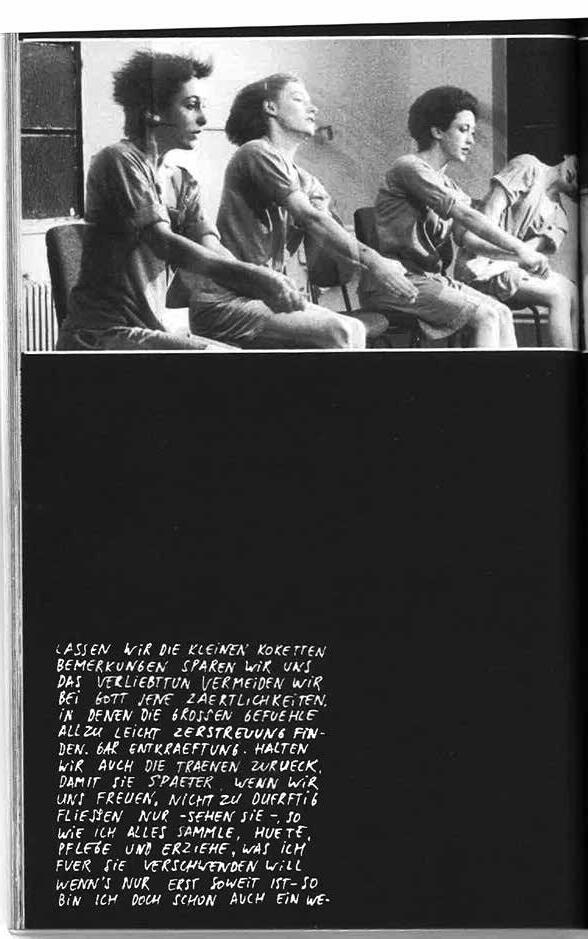
NL Rosas danst Rosas betekende de internationale doorbraak van Anne Teresa De Keersmaeker in 1983. Ondertussen vormt de voorstelling een ijkpunt in de geschiedenis van de postmoderne dans. Rosas danst Rosas bouwt verder op het minimalisme dat De Keersmaeker initieerde in Fase (1982). Abstracte bewegingen vormen de basis van een gelaagde choreografische structuur waarin herhaling de hoofdrol speelt. De heftigheid van die bewegingen wordt gecounterd door kleine, dagelijkse gebaren.
FR En 1983, Anne Teresa De Keersmaeker s’imposait sur la scène internationale avec Rosas danst Rosas, un spectacle devenu depuis lors une véritable référence dans l’histoire de la danse postmoderne. Rosas danst Rosas approfondit la veine minimaliste ouverte avec Fase (1982) : des mouvements abstraits constituent la base d’un riche contrepoint chorégraphique dominé par la répétition. La véhémence expressive de ces mouvements est contrebalancée par la trivialité des petits gestes quotidiens.
EN In 1983, Anne Teresa De Keersmaeker had her international breakthrough with Rosas danst Rosas, a performance that has since become a benchmark in the history of postmodern dance. Rosas danst Rosas builds on the minimalism initiated in Fase (1982): abstract movements constitute the basis of a layered choreographic structure in which repetition plays the lead role. The fierceness of these movements is countered by small everyday gestures.
Anne Teresa De Keersmaeker
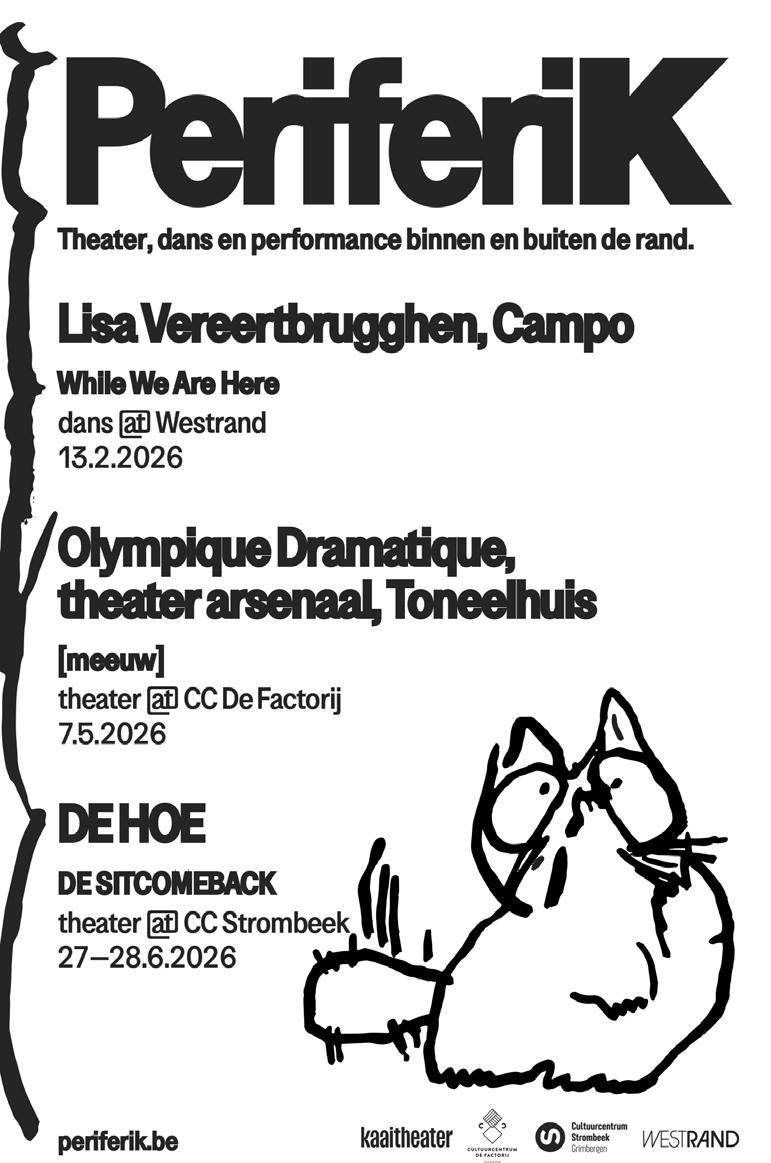
While we are here
NL Raven is van alle tijden: mensen hebben altijd al collectief intens gedanst. Lisa Vereertbrugghen gaat op zoek naar precies dat tijdloze verlangen om samen hard te dansen. Ze nodigde Claire Godsmark, Dolores Hulan, Eimi Legget en Castélie Yalombo Lilonge uit voor een parallel beoefenen van hardcore rave én volksdans. Zonder nostalgie noch met een vastgelegd toekomstbeeld, brengen ze samen een hybride techno-folk die alle controle verstoort en collectieve lichamelijkheid viert.
FR La rave est intemporel : les gens ont toujours dansé collectivement avec intensité. Lisa Vereertbrugghen part précisément à la quête de ce désir intemporel de danser ensemble avec ferveur. Elle a invité Claire Godsmark, Dolores Hulan, Eimi Legget et Castélie Yalombo Lilonge pour s’exercer en parallèle à la rave hardcore et la danse folklorique. Sans nostalgie ni vision figée de l’avenir, elles proposent ensemble un techno-folk hybride qui perturbe tout contrôle et célèbre la physicalité collective.
EN Raving is timeless: people have always danced intensely as a collective. Lisa Vereertbrugghen investigates that timeless desire to dance hard, together. She invited Claire Godsmark, Dolores Hulan, Eimi Legget, and Castélie Yalombo Lilonge for a parallel practice of hardcore rave and folk dance. Without nostalgia or a fixed vision of the future, they bring together a hybrid techno-folk that disrupts all control and celebrates collective physicality. 20:00
Lisa Vereertbrugghen
TUE 03 MAR WED 04 MAR
THU 05 MAR
80 min
Fampitaha, fampita, fampitàna
NL Anderhalve eeuw na haar dood hangt de schaduw van Ranavalona I nog steeds over de geschiedenis van Madagaskar. Maar wat is eigenlijk de erfenis van deze vrouw van de macht, die nooit ophield de autonomie van haar eiland te verdedigen tegen de aanvallen van de koloniale machten? Deze herneming, een mix van radiovertellingen, muzikale compositie en choreografie, herinnert ons eraan dat onze lichamen, net als onze woorden, de dragers van verhalen zijn.
FR Un siècle et demi après sa mort, l’ombre de Ranavalona Ière plane encore sur l’histoire de Madagascar. Mais qu’en est-il réellement de l’héritage de cette femme de pouvoir, qui n’a cessé de défendre l’autonomie de son île face aux assauts des puissances coloniales ? Entre récit radiophonique, composition musicale et création chorégraphique, cette reprise nous rappelle que nos corps, au même titre que nos paroles, sont porteurs d’histoires.
EN Some 150 years after her death, the shadow of Ranavalona I still hangs over the history of Madagascar. But what is really the legacy of this powerful female, who never ceased to defend the autonomy of her island against the onslaught of the colonial powers? This resumption is a mix of radio narrative, musical composition and choreographic creation that reminds us that our bodies, just like our words, are the bearers of stories.
Presented by Kaaitheater ≈ Théâtre Varia
20:30 20:30
No Dreams, No Gold
NL Aan de grenzen van hun muzikale expertise gaan Ingrid Berger Myhre en Lasse Passage in onderhandeling. Ze wijken doelbewust af van het autobiografische om af te dwalen naar fictieve plekken. Het resultaat is een breed scala van genres: van erotische hoorspelen tot hybride lezingen en talloze one-man-bands. Misschien zijn pauze en structuur slechts twee kanten van dezelfde medaille: iets om aan vast te houden, en iets om op te leunen.
FR Ingrid Berger Myhre et Lasse Passage repoussent les limites de leur expertise musicale. Iels s’éloignent délibérément de l’autobiographique pour s’égarer dans des lieux fictifs. Il en résulte un large éventail de genres : des pièces radiophoniques érotiques aux lectures hybrides en passant par d’innombrables one-man-bands. La pause et la structure ne sont peut-être que les deux revers de la même médaille : quelque chose à quoi s’accrocher et quelque chose sur quoi s’appuyer.
EN Ingrid Berger Myhre and Lasse Passage engage in negotiations to the limits of their musical expertise. They deliberately deviate from the autobiographical to wander into fictional places. The result is a wide range of genres: from erotic radio plays to hybrid lectures and countless ‘one-man bands’. Perhaps pause and structure are just two sides of the same coin: something to hold on to, and something to lean on.
WED 18 MAR
20:00 20:00
Whispered Dreams
NL Whispered Dreams begon als een reeks brieven en teksten uitgewisseld tussen Mona Ahmadi, schrijvend en acterend in Teheran, en de Iraanse Fariborz Karimi, theatermakend, performend en schrijvend in Amsterdam. De goede vrienden, lid van het-zelfde collectief, blikken terug op hun band, vriendschap en artistieke samenwerkingen, steeds rekening houdend met elkaars levenservaringen én de grote fysieke afstand tussen beiden, een belangrijk vraagstuk voor het publiek en hun creatieve proces.
FR Whispered Dreams a commencé par une série de lettres et de textes échangés entre Mona Ahmadi, écrivaine et comédienne à Téhéran, et l’Iranien Fariborz Karimi, dramaturge, performeur et écrivain à Amsterdam. Ces deux ami·es proches, membres du même collectif, reviennent sur leur relation, leur amitié et leurs collaborations artistiques, en tenant toujours compte de leurs expériences de vie respectives et de la grande distance physique qui les sépare, une question importante pour le public et leur processus créatif.
EN Whispered Dreams began as a series of letters and texts exchanged between Mona Ahmadi, a writer and actor in Tehran, and Iranian Fariborz Karimi, a theatre maker, performer, and writer in Amsterdam. The close friends, members of the same collective, reflect on their bond, friendship, and artistic collaborations, always con-sidering each other’s life experiences and the considerable physical distance between them, a crucial question for the audience and their creative process.
Fariborz Karimi
20:00 20:00
90 min
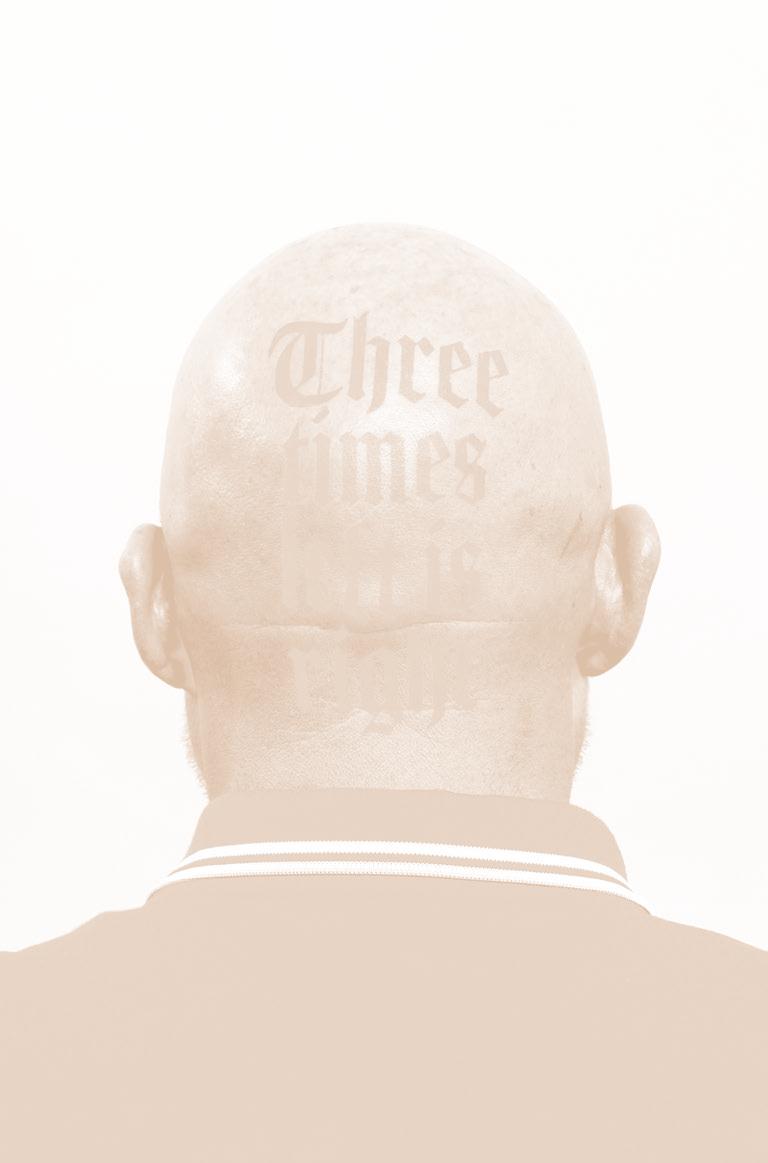
Three Times Left is Right
NL Links zit in een identiteitscrisis, nieuwe rechtse politieke partijen claimen met succes een revolutionaire houding die oude linkse partijen vroeger typeerde. Het oude sterft, het nieuwe kan niet geboren worden. Met een project over de nabijheid van haat en liefde, verkent Studio Julian Hetzel toenemende polarisatie. Een werk over de uitdaging van samenleven tussen radicale uitersten onder één dak, een familieportret schipperend tussen populistisch rechts en progressief links.
FR La gauche traverse une crise d’identité, tandis que les nouveaux partis politiques de droite revendiquent avec succès l’attitude révolutionnaire qui caractérisait autrefois les anciens partis de gauche. L’ancien meurt, le nouveau ne peut naître. Studio Julian Hetzel explore la polarisation croissante avec un projet sur la proximité entre la haine et l’amour. Une pièce sur le défi de la cohabitation entre des extrêmes radicales sous un même toit, un portrait de famille oscillant entre la droite populiste et la gauche progressiste.
EN The left is in an identity crisis, with new right-wing political parties successfully claiming the revolutionary stance that once characterized the old left. The old is dying, the new cannot be born. With a project about the proximity of hate and love, Studio Julian Hetzel explores this increasing polarization. A work about the challenge of coexistence between radical extremes under one roof, a family portrait navigating between populist right and progressive left.
Studio Julian Hetzel
20:30
DOPA
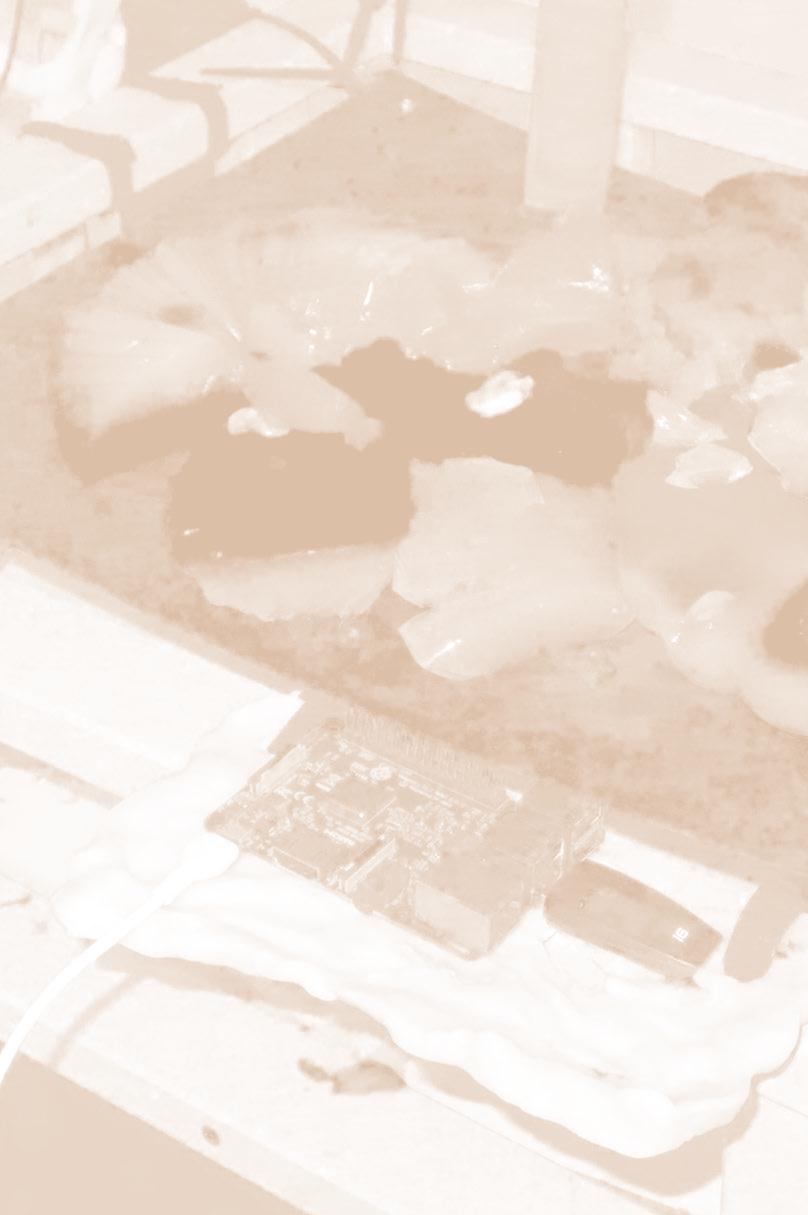
NL DOPA is een tijdelijk actienetwerk voor de vrije uitwisseling van kennis, waarin hackers Anne Lise Le Gac en Anat Bosak de systeemobjecten in hun handen ontmantelen, aanpassen en hijacken. Het gaat om feitelijke én symbolische technologieën, zoals een gloeiend organisme, een gedragscode, een doedelzak of een air-conditioner. Lekken zijn dus net als hittegolven te verwachten. Maar geen zorgen: de hackers zullen ons bij elke stap vergezellen. ((༼ • @ • ༽)))
FR DOPA est un réseau d’action temporaire pour le libre-échange de connaissances, au sein duquel les hackeuses Anne Lise Le Gac et Anat Bosak démontent, modifient et détournent les objets du système qu’elles ont entre les mains. Il s’agit de technologies factuelles et symboliques, dont un organisme incandescent, un code de conduite, une cornemuse ou encore un climatiseur. Des fuites sont donc à prévoir, tout comme des vagues de chaleur. Mais ne vous inquiétez pas: les hackeuses vous accompagneront à chaque étape. ((༼ • @ • ༽)))
EN DOPA is a temporary action network for the free exchange of knowledge, in which hackers Anne Lise Le Gac and Anat Bosak dismantle, adapt, and hijack the systemic objects in their hands. These are factual and symbolic technologies, such as a luminescent organism, a code of conduct, a bagpipe or an air conditioner. Leaks are therefore just like heat waves to be expected. But don’t worry, the hackers will be with us every step of the way. ((༼ • @ • ༽)))
Anne Lise Le Gac ≈ Anat Bosak
20:30 20:30
WAYQEYCUNA
surtitles: EN, FR
70 min
NL Tiziano Cruz graaft in de herinneringen van zijn kindertijd, en probeert zo opnieuw verbinding met zijn gemeenschap te zoeken.
Net als de vrouwen uit de Andes hun ‘quipus’, textielartefacten gemaakt uit touwen en knopen, gebruiken als een manier van herinneren. Ook in dit laatste deel van de trilogie Tres Maneras de Cantarle a una Montaña articuleert Cruz zijn herinneringen aan het binnenland van Noord-Argentinië in politieke manifesten over de kunstmarkt en klasseprivilege.
FR Tiziano Cruz fouille dans ses souvenirs d’enfance pour tenter de renouer avec sa communauté. À l’instar des femmes des Andes qui utilisent leurs « quipus », des artefacts textiles faits de cordes et de nœuds, comme supports pour se souvenir. Dans ce dernier volet de la trilogie Tres Maneras de Cantarle a una Montaña, Cruz continue d’exprimer ses souvenirs de l’intérieur de l’Argentine du Nord à travers des manifestes politiques sur le marché de l’art et sur les privilèges de classe.
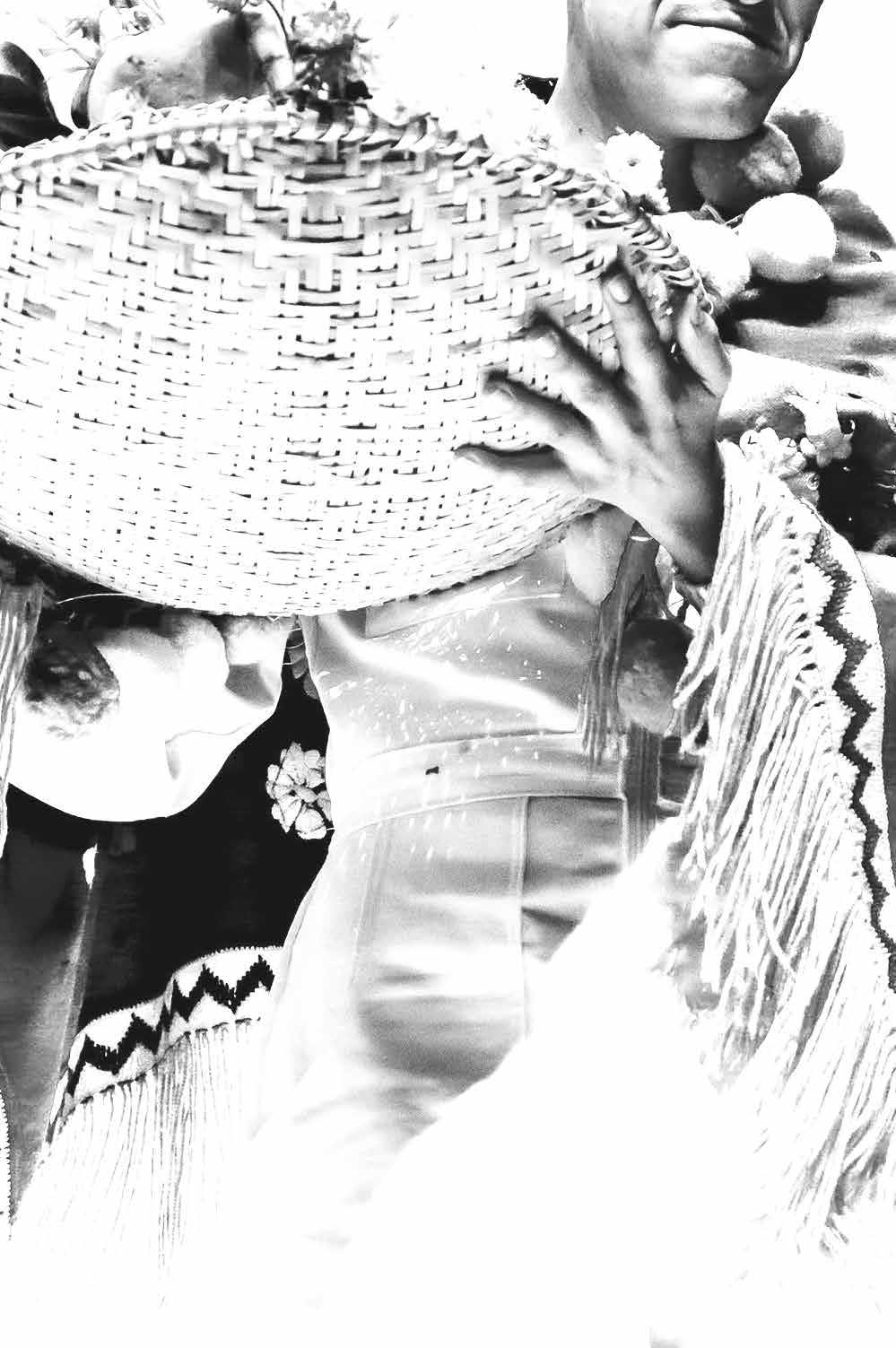
EN Tiziano Cruz digs into his childhood memories, seeking to reconnect with his community. Just as Andean women use their quipus, textile artifacts made of ropes and knots, as a way of remembering. In this final installment of the trilogy, Tres Maneras de Cantarle a una Montaña, Cruz articulates his memories of the interior of northern Argentina in political manifestos about the art market and class privilege.
Tiziano
Bread for the World
NL De workshop Bread for the World mengt ideeën over kunst, brood, het vieren van onze doden en territorium. Samen met de lokale gemeenschap, bakt Tiziano Cruz de broden die later in de performance Wayqeycuna te zien zullen zijn. Zo probeert hij de grenzen tussen kunst en gemeenschap te laten vervagen. Leeftijd of voorkennis zijn niet van belang: iedereen komt in aanmerking om samen brood te maken.
FR L’atelier Bread for the World fusionne des idées sur l’art, le pain, la commémoration de nos défunt·es et le territoire. En collaboration avec la communauté locale, Tiziano Cruz cuit des pains qui seront ensuite présentés lors de la performance Wayqeycuna. Il tente ainsi d’estomper les frontières entre l’art et la communauté. L’âge ou les connaissances préalables n’ont aucune importance car tout le monde contribue à la fabrication du pain.
EN The workshop Bread for the World blends ideas about art, bread, celebrating our dead, and territory. Together with the local community, Tiziano Cruz bakes the loaves that will later be featured in the performance Wayqeycuna. In this way, he aims to blur the borders between art and community. Age or prior experience are not important: everyone can make bread together.
20:30 20:30
Ben en Vero
NL Wat gebeurt er wanneer twee dansenden met twee heel verschillende levens elkaar ontmoeten? Veronique heeft zich de dans eigen gemaakt bij Platform K, een dansgezelschap voor dansenden met een beperking. Benjamin disciplineerde zijn danslichaam door jarenlang ballet te dansen en hedendaagse training. Ze vinden elkaar in een dans waarin ze het risico niet schuwen. Ze dagen elkaar graag uit en gaan fysiek, mentaal en spiritueel tot het uiterste van dat wat ze denken te kunnen.
FR Que se passe-t-il quand deux danseur·euses aux parcours très différents se rencontrent? Veronique s’est formée à la danse chez Platform K, une compagnie de danse pour danseur·euses porteur·euses de handicap. Benjamin a quant à lui discipliné son corps de danseur grâce à des années de ballet et d’entraînement contemporain. Iels se retrouvent dans une danse où iels n’ont pas peur de prendre des risques, en se lançant des défis et en repoussant leurs limites physiques, mentales et spirituelles jusqu’à l’extrême.
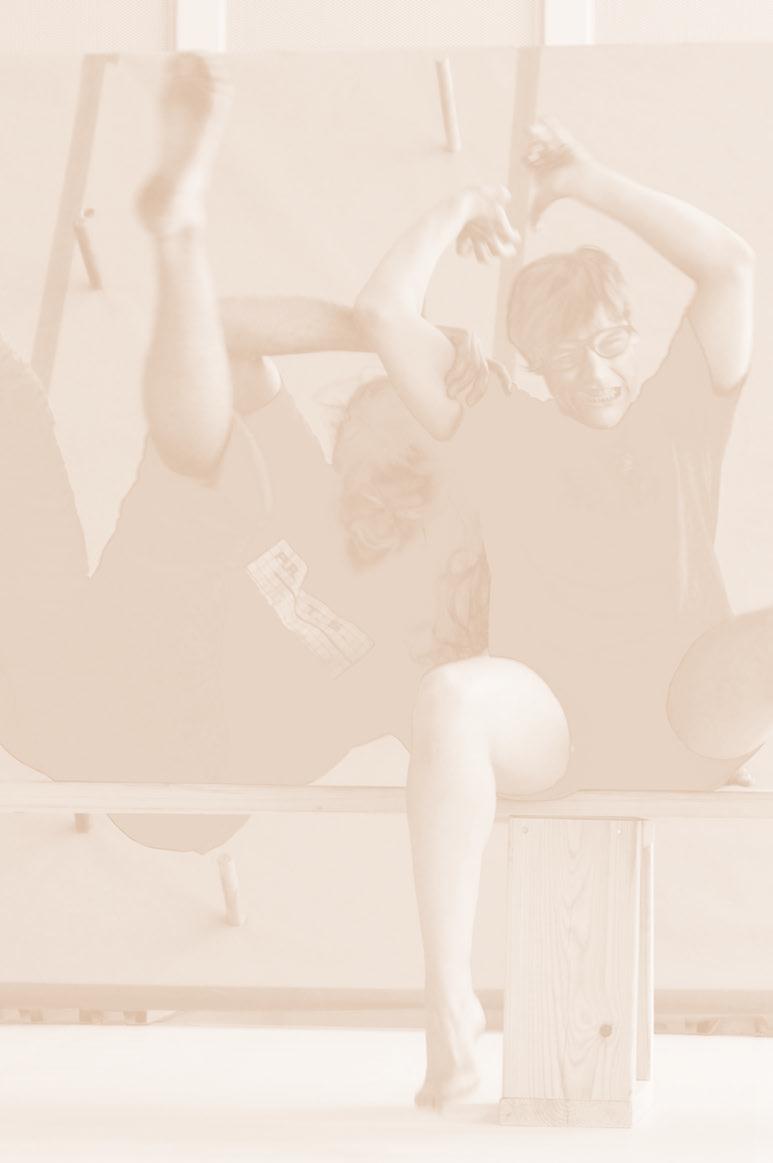
EN What happens when two dancers from two very different lives meet? Veronique made dance her own in Platform K, a dance company for disabled dancers. Benjamin disciplined his body through years of ballet and contemporary dance training. They find common ground in a dance performance in which they don’t shy away from taking risks. They enjoy challenging each other and going physically, mentally and spiritually to the limits of what they think they can do.
20:00
Gundhi
surtitles: FR, EN
120 min
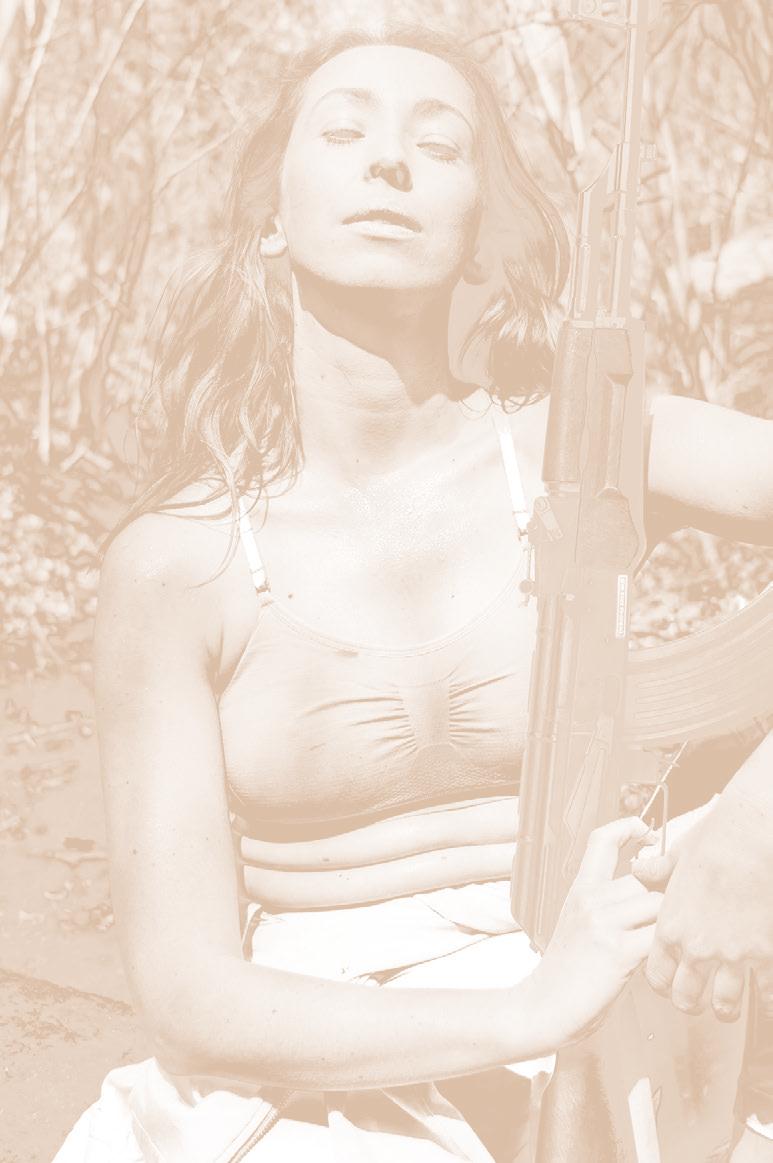
NL Een gewapende yoga-groepering houdt na hun dagelijkse Kalasjnikovassane hun geradicaliseerde internationale achterband een spiegel voor: kunnen we onze idealen ook zonder het gebruik van wapens bereiken? Op zoek naar de levensvatbaarheid van pacifisme, wordt het theaterpubliek gegijzeld door gewelddadig teksttoneel. Om daarna geestelijk bevrijd en fysiek gelouterd terug het 21ste eeuwse leven aan te kunnen.
FR Après leur kalachnikov-assane quotidien, un groupe de yogis armé·es tend un miroir à ses partisan·es internationaux·ales radicalisé·es : pouvons-nous atteindre nos idéaux sans recourir aux armes ? En quête d’un pacifisme pérenne, le public est pris en otage par un théâtre violent qui, dans la tradition de De Warme Winkel, oscille entre sérieux et ironie. Pour ensuite pouvoir retourner à la vie du XXIe siècle, libéré spirituellement et purifié physiquement.
EN After their daily Kalashnikov asana, an armed yoga group holds up a mirror to their radicalized international following: can we achieve our ideals without the use of weapons? Exploring the viability of pacifism, the theatre audience is held hostage by violent textual theatre that, in De Warme Winkel’s tradition, balances earnestness and irony, to be able to once again face 21st-century life, mentally liberated and physically purified.
DE
WARME WINKEL ≈ Schauspielhaus Bochum
20:30 20:30
The Transition Pieces: Chant I
NL Met de nieuwe muzikale compositie The Transition Pieces, brengt Gérald Arev Kurdian onder de noemer Hot Bodies pop en experiment. In het eerste hoofdstuk Chant I smelten elektronische muziekstukken samen tot het sonische dagboek van een lichaam in transitie, navigerend door een wereld in continue staat van onrust. Een transformatieve en collectieve lofzang voor de 21ste eeuw, folklore in een tijdperk voorbij het internet.
FR Gérald Arev Kurdian réunit pop et expérimentation sous le nom de Hot Bodies dans sa nouvelle composition musicale The Transition Pieces. Dans Chant I, son premier chapitre, des morceaux de musique électronique fusionnent pour former le journal sonore d’un corps en transition, évoluant dans un monde en bouleversement perpétuel. Une ode transformatrice et collective au XXIème siècle, le folklore à l’ère post-Internet.
EN With The Transition Pieces, Gérald Arev Kurdian, under the name Hot Bodies, embarks on a new cycle of musical composition pop and experimental. In the first chapter, Chant I, electronic music pieces merge into the sonic diary of a body in transition, navigating a world in a constant state of unrest. A transformative, collective paean to the 21st century, folklore in an era beyond the internet.
20:30 20:30
16 +
75 min
Palace of Justice
NL In Palace of Justice komen rechters, advocaten, beklaagden, bodes, griffiers en conciërges voorbij, vertolkt door twee veelzijdige spelenden. De beeldende theatervoorstelling laat zich inspireren door een van de meest mysterieuze stukken van het Belgische erfgoed: het labyrintische Justitiepaleis in Brussel. Door de eindeloze restauratiewerken lijkt het enorme paleis ook wel wat op een ruïne. Het is de perfecte allegorie voor de rechterlijke macht vandaag.
FR Dans Palace of Justice, juges, avocat·es, accusé·es, huissier·eres, greffier·eres et concierges défilent, interprété·es par deux comédien·nes polyvalent·es. Ce spectacle théâtral visuel s’inspire de l’un des bâtiments les plus mystérieux du patrimoine belge : le labyrinthique Palais de Justice de Bruxelles. En raison des travaux de restauration interminables, cet immense palais ressemble quelque peu à une ruine et propose une parfaite allégorie du pouvoir judiciaire actuel.
EN In Palace of Justice, judges, lawyers, defendants, ushers, clerks, and concierges pass by, played by two versatile actors. This expressive theatrical performance draws inspiration from one of the most mysterious pieces of Belgian heritage: the labyrinthine Palace of Justice in Brussels. Due to the endless restoration works, the enormous palace even resembles a ruin. It is the perfect allegory for the judiciary today.
20:30 20:30
VASHT
NL Ulduz Ahmadzadeh put inspiratie uit de knooppunten van de Zijderoute om de verspreiding van oude danskennis en de complexe genealogieën daarvan in kaart te brengen. Tegen de achtergrond van huidige neokoloniale handelsinfrastructuren, herinterpreteert Ahmadzadeh choreografisch de beweging van de route. Zo laat ze VASHT schipperen tussen herinnering en verzet.
FR Ulduz Ahmadzadeh s’inspire des carrefours de la Route de la Soie pour retracer la diffusion des connaissances ancestrales en matière de danse et leurs généalogies complexes. Dans le contexte actuel des infrastructures commerciales néocoloniales, Ahmadzadeh réinterprète chorégraphiquement le mouvement de la route. Elle fait ainsi osciller VASHT entre mémoire et résistance.
EN Ulduz Ahmadzadeh draws inspiration from the crossroads of the Silk Road to map the circulation of ancient dance knowledge and its complex genealogies. Against the backdrop of contemporary neocolonial trade infrastructures, Ahmadzadeh choreographically reinterprets the movement of the route, allowing VASHT to navigate between memory and resistance.
20:00
The Beach
14 +
75
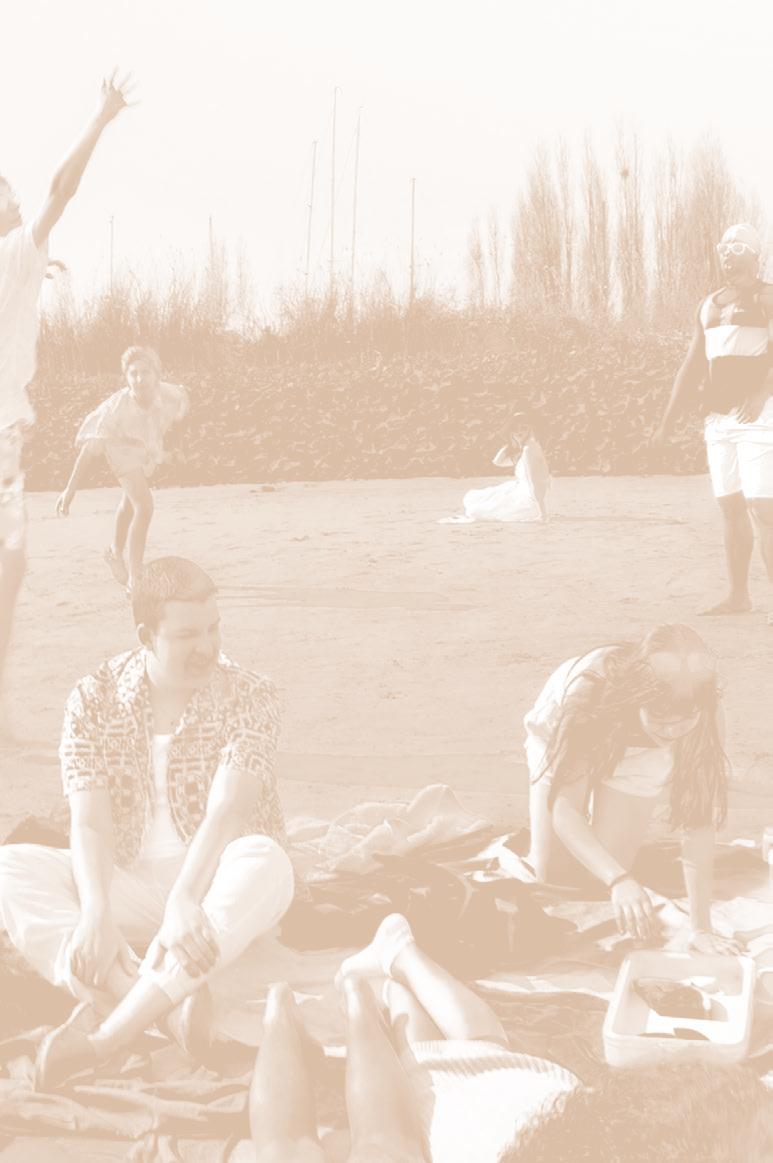
NL Het strand: een van de meest bezochte vakantiebestemmingen, een populaire maatschappelijke ruimte. Een plek voor spel, ontspanning, verleiding, erotiek, ontmoeting, vol codes, scripts en rituelen. We volgen dertien jonge performenden een dag lang naar het strand. Ze passeren in duo’s, groepjes of alleen, met vrienden, familie of onbekenden. Daar, in een vreemde spanning tussen rust en actie, tussen publiek en intiem, leren we hen beter kennen. Wat schuilt er onder hun licht verbrande huid?
FR La plage : l’une des destinations de vacances les plus prisées, un espace populaire très fréquenté. Un lieu de jeu, de détente, de séduction, d’érotisme, de rencontre, pétri de codes, de scripts et de rituels. Nous suivons treize jeunes artistes pendant une journée à la plage. Iels défilent en duo, en groupe ou seul·es, avec des ami·es, des membres de leur famille ou des inconnu·es. Nous apprenons à mieux les connaître, là, dans une tension singulière entre calme et action, entre public et intimité. Que cache leur peau légèrement brûlée par le soleil ?
EN The beach – beloved by holiday makers, a popular social space and a place for play, relaxation, seduction, eroticism, and encounters is rich with codes, scripts, and rituals. We follow thirteen young performers to the beach for a day. They pass by in pairs, groups, or alone. With friends, family, or strangers. On the beach, where weird tensions arise between inertia and action, between the public and the intimate, we get to know the young performers better. What lies beneath their lightly sunburnt skin?
20:30 20:30
Wasted Land
65 min
NL Geïnspireerd door queer ecology, gaat Ntando Cele aan de slag met theater, donkere humor, de samenstelling van een koor en video om zo de complexe relatie tussen mensen en hun afval bloot te leggen. Tegen een apocalyptische achtergrond, dissecteert Cele de menselijke catastrofes die voortkomen uit de wereld van fast fashion en westerse feel-good ecologie, waar organische labels en sussende beloftes van recyclage een bron van comfort vormen. Of: hoe de droom van duurzaamheid van één persoon, de ondergang van de ander kan betekenen.
FR Inspiré par l’écologie queer, Ntando Cele utilise le théâtre, l’humour noir, la composition d’une chorale et la vidéo pour mettre en lumière la relation complexe entre les humains et leurs déchets. Sur fond apocalyptique, Cele dissèque les catastrophes humaines qui découlent du monde de la fast fashion et de l’écologie occidentale feel-good, où les labels bio et les promesses rassurantes de recyclage constituent autant de sources de réconfort. Comment le rêve de durabilité d’une personne peut signifier la ruine d’une autre ?
EN Inspired by queer ecology, Ntando Cele uses theatre, dark humour, the assembling of a choir, and video to expose the complex relationship between people and their waste. Against an apocalyptic backdrop, Cele dissects the human catastrophes that arise from the world of fast fashion and Western feel-good ecology, where organic labels and soothing promises of recycling provide a source of comfort. Or: how one person’s dream of sustainability can mean another’s downfall.
Figures of Speech
NL Ritme, al sinds de Oudheid gebruikt om leden van een samenleving bijeen te brengen, vormt het uitgangspunt van de nieuwe voorstelling van Lander en Femke Gyselinck. Tien jaar na Flamer gaan broer en zus, drummer en danseres, opnieuw de samenwerking aan. Deze keer vertalen ze hun artistieke ideeën naar een grote scène. Samen met 7 dansenden en 4 drummers, bewijzen ze: het geheel is méér dan de som der delen.
FR Le rythme, utilisé depuis l’Antiquité pour rassembler les membres d’une société, est le point de départ du nouveau spectacle de Lander et Femke Gyselinck. Dix ans après Flamer, le frère et la sœur, le batteur et la danseuse, font à nouveau équipe. Cette fois, ils traduisent leurs idées artistiques en une grande scène. Avec sept danseur·euse·s et quatre batteur·euse·s, ils prouvent que le tout est plus que la somme des parties.
EN Rhythm, used since ancient times to bring members of a society together, is the starting point of Lander and Femke Gyselinck’s new performance. Ten years after Flamer, brother and sister, drummer and dancer, team up again. This time they translate their artistic ideas to a big stage. Together with seven dancers and four drummers, they prove: the whole is more than the sum of its parts. 20:30
[meeuw]
NL Een gemengde cast van dove en horende spelers brengt met [meeuw] voor het eerst een repertoiretekst in zijn geheel vertaald en gespeeld in Vlaamse Gebarentaal. Het uitgangspunt is Anton Tsjechovs De Meeuw uit 1896, een van de klassiekers uit de literatuur- en theatergeschiedenis. Over een zoekende jeugd met nieuwe ideeën en een oudere generatie die zich daardoor bedreigd voelt, verteld vanuit het perspectief van drie verschillende generaties.
FR Avec [meeuw], une troupe mixte d’acteur·ices sourd·es et entendant·es présente pour la première fois un texte de répertoire traduit dans son intégralité et joué en langue des signes flamande. Le point de départ est La Mouette d’Anton Tchekhov de 1896, l’un des classiques de l’histoire littéraire et théâtrale. L’histoire, racontée du point de vue de trois générations différentes, est celle d’une jeunesse en quête d’idées nouvelles et d’une génération plus âgée qui se sent menacée par ces idées.
EN A mixed cast of Deaf and hearing actors performs [meeuw] ([seagull]) for the first time, a repertoire text translated and performed in its entirety in Flemish Sign Language. The starting point is Anton Chekhov’s 1896 play The Seagull, a classic of literary and theatrical history, about a truth-seeking youth with new ideas and an older generation that feels threatened by them, told from the perspectives of three different generations.
Olympique Dramatique ≈ Toneelhuis
NÔT
NL In een betoverende vallei knutselt Marlene Monteiro Freitas een miniatuurspektakel dat evengoed in uitgestrekte ruimtes kan passen. NÔT betekent ‘nacht’ in het Creools van Kaapverdië, en vindt inspiratie in de sprookjes van duizend-en-één-nacht: een verzameling van vele verhalen sommige over liefde, andere over oorlog, sommige over reizen, andere over dieren. Wapen-verhalen die de overleving van hun verteller verzekeren. Klaag-verhalen die de afwezigen eren. Nog een verhaal, toegevoegd aan een oneindigheid van verhalen.
FR Dans une vallée enchantée, Marlene Monteiro Freitas façonne un spectacle en miniature pour tenir dans de grands espaces. NÔT signifie « nuit » en créole capverdien et s’inspire des contes des Mille et Une Nuits: une accumulation de plusieurs contes, certains d’amour, d’autres de guerre, certains de voyages, d’autres bestiaux. Des contes-armes qui garantissent la survie de leur narrateur∙ice. Des conteslamentations qui célèbrent les absents. Un autre conte aujouté à l’infinité des contes.
EN In an enchanted valley, Marlene Monteiro Freitas crafts a miniature spectacle to fit into vast spaces. NÔT, Cape Verdean Creole for ‘night’, draws inspiration from the Thousand and One Nights: an accumulation of many tales some of love, others of war, some of journeys, others of beasts. Weapon-tales that ensure the survival of their narrator. Lament-tales that honor the absent. Yet another tale, added to the infinity of tales.
TUE 02 JUN
WED 03 JUN
THU 04 JUN
HOLY
20:30 20:30 20:30
NL HOLY is een staat van continue vernieuwing, een ruimte die pas heilig kan worden wanneer we denkkaders, zekerheden en zelfbeelden loslaten. Performers en publiek bewegen zich samen doorheen verschillende ruimtes, en ontdekken manieren om samen te zijn.
Samen met Marie Umuhoza & Vivi Focquet en Jozef Wouters/Decoratelier, begeeft Martha Canga Antonio zich op het snijvlak tussen dans en muziek en neemt ons mee op een reis, een overgang, een moment bevroren in de tijd.
FR HOLY est un état de renouvellement continu, un espace qui ne peut atteindre une sacralité qu’à la condition que nous abandonnions nos cadres de pensée, certitudes et images de nous-mêmes. Les artistes et le public se déplacent à travers différents espaces et découvrent des façons d’être ensemble. En collaboration avec Marie Umuhoza & Vivi Focquet et Jozef Wouters/Decoratelier, Martha Canga Antonio se situe à l’intersection de la danse et de la musique, et nous emmène dans un voyage, une transition, un moment figé dans le temps.
EN HOLY is a state of continuous renewal, a space that can only become sacred when we let go of our conceptual frameworks, certainties, and self-images. Performers and audience move together through different spaces, and discover ways of being together. Along with Marie Umuhoza & Vivi Focquet and Jozef Wouters/Decoratelier, Martha Canga Antonio explores the intersection of dance and music, taking us on a journey, a transition, a moment frozen in time.
Martha Canga Antonio
One Song
NL In deze dernière van One Song, origineel gecreëerd voor de reeks
Histoire(s) du Théâtre bestormt een groep performers nog één keer de arena voor een betoverend ritueel over afscheid, leven en dood, hoop en wedergeboorte. Via de metafoor van een live wedstrijd, inclusief commentator en cheerleader, nodigt Miet Warlop ons uit om op het podium een gemeenschap te vormen en onszelf te overstijgen als in een viering.
FR Dans cette dernière de One Song, créée à l’origine pour la série
Histoire(s) du Théâtre, un groupe de performeur∙euse∙s prend l’arène d’assaut une dernière fois pour un rituel enchanteur sur l’adieu, la vie et la mort, l’espoir et la renaissance. À travers la métaphore d’un match en direct, avec commentateur et pom-pom compris, Miet Warlop nous invite sur scène à former une communauté et à nous transcender comme lors d’une célébration.
EN In this dernière of One Song, originally created for the Histoire(s) du Théâtre series, a group of performers storm the arena one more time for an enchanting ritual about farewell, life and death, hope and rebirth. Using the metaphor of a live match, including commentator and cheerleader, Miet Warlop invites us on stage to form a community and transcend beyond ourselves as in a celebration.
100 min
No Yogurt for the Dead
Histoire(s) du Théâtre VI
NL Tiago Rodrigues vindt inspiratie in het verhaal van zijn vader Rogério, een journalist die zijn ervaringen als terminale patiënt in een krantenartikel begon neer te pennen. Na zijn vaders overlijden ontdekte Tiago slechts een paar lijnen, stippen en krabbels in het notitieboekje. Nu wil hij die onbeschreven pagina’s verbeelden: een verzameling van herinneringen, liedjes of fragmenten van zijn vaders geschriften wordt een kleine overwinning op de dood.
FR Tiago Rodrigues trouve son inspiration dans l’histoire de son père Rogério, un journaliste qui a commencé à consigner ses expériences en tant que patient en phase terminale dans un article de journal. Après le décès de son père, Tiago n’a découvert que quelques lignes, points et gribouillis dans le carnet. Il souhaite désormais illustrer ces pages vierges. Une collection de souvenirs, de chansons ou d’extraits des écrits de son père devient une petite victoire sur la mort.
EN Tiago Rodrigues finds inspiration in the story of his father, Rogério, a journalist who began writing about his experiences as a terminally ill patient in a newspaper article. After his father’s death, Tiago discovered only a few lines, dots, and scribbles in the notebook. Now he wants to visualize those blank pages. A collection of memories, songs, or fragments of his father’s writings becomes a small victory over death.
20:30 20:30
The Bones
NL De Zuid-Amerikaanse forensisch antropoloog Roberta Lobos is expert in bottrauma. Overal ter wereld identificeert ze slachtoffers van gewelddadige verdwijningszaken. Nu vraagt ze aan kunstenaars om de data uit haar wetenschappelijke rapporten om te zetten naar muziek. “Ik ben zeker dat we meer zouden horen.” Voor het eerst luisteren we écht naar de botten, naar de lichamen, de verhalen, de conflicten, het geweld en de ongelijke verdeling van publieke rouw.
FR L’anthropologue médicolégale sudaméricaine Roberta Lobos est experte en traumatismes osseux et identifie partout dans le monde des victimes de disparitions violentes. Elle demande aujourd’hui à des artistes de transposer en musique les données provenant de ses rapports scientifiques. « Je suis certaine que nous en apprendrions davantage. » Pour la première fois, nous écoutons véritablement les ossements, les corps, les histoires, les conflits, la violence et la répartition inégale du deuil public.
EN The South American forensic anthropologist Roberta Lobos is an expert in bone trauma. She identifies victims of violent disappearances worldwide. She is now asking artists to transform the data from her scientific reports into music. “I’m sure we would hear more.” For the first time, we’re really listening to the bones, to the bodies, the stories, the conflicts, the violence, and the unequal distribution of public grief.
20:30 20:30
Quinceañeras
NL De Quinceañera valt samen met de vijftiende verjaardag van een meisje, en markeert tegelijk de overgang van kind naar volwassene. Het Latijns-Amerikaanse feest, met wortels in Europese debutantenbals en oorspronkelijke overgangsrituelen, heeft een groot performatief gehalte en kent ook een gewelddadig aspect. Estefanía Álvarez Ramírez & Luisa Fernanda Alfonso gaan ermee aan de slag in hun choreografie, en proberen zo via dans een nieuw Quinceañera-ritueel in het leven te roepen.
FR La Quinceañera coïncide avec le quinzième anniversaire d’une jeune fille tout en marquant le passage de l’enfance à l’âge adulte. Cette fête latino-américaine, qui trouve ses racines dans les bals des débutant·es européens et les rites de passage autochtones, revêt un caractère très performatif et comporte également une dimension violente. Estefanía Álvarez Ramírez & Luisa Fernanda Alfonso s’en inspirent dans leur chorégraphie et tentent ainsi de créer un nouveau rituel de Quinceañera à travers la danse.
EN La Quinceañera coincides with a girl’s fifteenth birthday and marks her transition from child to adult. This Latin American celebration, with roots in European debutante balls and traditional rites of passage, has a strong performative element and also a violent aspect. Estefanía Álvarez Ramírez & Luisa Fernanda Alfonso address this in their choreography, attempting to create a new Quinceañera ritual through dance.
Estefanía Álvarez Ramírez
≈ Luisa Fernanda Alfonso
20:30 20:30
60 min
Graduation Show
Bachelor in Contemporary Dance, La Manufacture
NL Lia Rodrigues’ creaties ontvouwen zich als partituren die energiek de kracht van het collectief onthullen. De Zwitserse danser en choreograaf Jeremy Nedd plaatst dan weer vraagtekens bij hoe we ‘gemeenschap’ creëren in een vijandig politiek klimaat. Samen met de bachelorstudenten hedendaagse dans van La Manufacture maakten ze in Lausanne een gloednieuwe voorstelling, helemaal op maat van de grote Europese danspodia.
FR Les créations de Lia Rodrigues se dévoilent comme des partitions qui révèlent avec énergie la puissance du collectif. Le danseur et chorégraphe suisse Jeremy Nedd s’interroge quant à lui sur la manière dont nous créons une « communauté » dans un climat politique hostile. En collaboration avec les étudiant·es en bachelor de danse contemporaine de La Manufacture, iels ont créé à un tout nouveau spectacle à Lausanne, qui est spécialement conçu pour les grandes scènes de danse européennes.
EN Lia Rodrigues’ creations unfold like scores that energetically reveal the power of the collective. The Swiss dancer and choreographer Jeremy Nedd, on the other hand, questions how we can create “community” in a hostile political climate. Together with the bachelor’s students in contemporary dance at La Manufacture, they created a brandnew performance in Lausanne, tailor-made for the major European dance stages.
20:00 20:00
DE SITCOMEBACK
NL Na de onverwachte hit DE SITCOM, een megalomaan plan dat eigenlijk gedoemd was om te mislukken, keert DE HOE terug met DE SITCOMEBACK. In de voorstelling tegelijk prequel, finale én makingof van beide delen, zowel als een op zichzelf staand stuk probeert de groep een definitief voorlopig antwoord te formuleren op de vragen waarmee alles begon. Is het allemaal eigenlijk om te lachen of om te huilen? Wanneer wordt lichtheid ondraaglijk? Wat gebeurt er als je de bodem van de oppervlakkigheid bereikt hebt?
FR Après le succès inattendu de DE SITCOM, un projet mégalomaniaque qui était en fait voué à l’échec, DE HOE revient avec DE SITCOMEBACK. Dans ce spectacle à la fois préquelle, finale et making-of des deux parties, ainsi que pièce autonome le groupe tente de formuler une réponse définitive et provisoire aux questions qui ont tout déclenché. S’agit-il vraiment de rire ou de pleurer ? À quel moment la légèreté devient-elle insupportable ? Que se passe-t-il lorsque l’on atteint le fond de la superficialité ?
EN After the unexpected hit DE SITCOM (a megalomaniacal plan that was actually doomed to fail), DE HOE returns with DE SITCOMEBACK. In the performance a prequel, finale, and making-of of both pieces as well as a stand-alone piece, all at the same time the group is trying to formulate a definitive provisional answer to the questions with which it all began. Is it all actually something to laugh at or cry about? When does lightness become unbearable? What happens when you have reached the depths of superficiality?
DE HOE
NL Ook aankomend seizoen belooft weer heel wat vertrouwde festivals en nieuwe samenwerkingen. Markeer alvast de volgende data in je agenda!
FR La saison prochaine promet à nouveau de nombreux festivals que vous connaissez déjà et des nouvelles collaborations encore inédites. Notez les dates suivantes dans votre agenda !
EN The upcoming season promises lots of familiar festivals and new collaborations. Note the following dates in your agenda!
EUROPALIA ESPAÑA
NL Precies veertig jaar na de eerste editie in 1985, zal EUROPALIA ESPAÑA een multidisciplinair programma ontvouwen. Een gelegenheid voor het Kaaitheater om enkele emblematische kunstenaars uit de onafhankelijke Spaanse scène uit te nodigen: in 2026 verwelkomen we Olga de Soto met twee nieuwe voorstellingen.
FR Exactement 40 ans après une première édition en 1985, EUROPALIA ESPAÑA déploiera un programme pluridisciplinaire alliant patrimoine et formes d’art contemporain. L’occasion pour le Kaaitheater d’inviter quelques artistes emblématiques de la scène indépendante Espagnole : en 2026, nous accueillerons Olga de Soto avec deux nouveaux spectacles.
EN Exactly forty years after its first edition in 1985, EUROPALIA ESPAÑA will unfurl a multidisciplinary programme. An opportunity for Kaaitheater to invite some emblematic artists from the independent Spanish scene and: in 2026, we will welcome Olga de Soto with two new performances.
An Introduction
Olga de Soto 27/01/26
20:30 Kaaistudios
Algo se cruza en las palabras al escavar bajo los pies
Olga de Soto 29/01/26
19:00 Kaaistudios
NL It Takes a City presenteert voor de tweede editie de volgende generatie Brusselse podiumkunstenaars. Vier Nederlandstalige en vier Franstalige organisaties slaan de handen in elkaar om nieuw en jong talent te tonen over de grenzen van de taal, cultuur en regio heen. Voor het tweejaarlijkse festival vormen atelier 210, la Balsamine, Beursschouwburg, Charleroi Danse/La Raffinerie, Les Halles de Schaerbeek, Kaaitheater en Kunstenwerkplaats opnieuw een team.
FR Pour sa deuxième édition, It Takes a City présente la nouvelle génération d’artistes bruxellois·es. Quatre organisations néerlandophones et quatre organisations francophones unissent leurs forces pour présenter de nouveaux et jeunes talents au-delà des frontières linguistiques, culturelles et régionales. Pour ce festival biennal, atelier 210, la Balsamine, Beursschouwburg, Charleroi Danse/La Raffinerie, Les Halles de Schaerbeek, le Kaaitheater et Kunstenwerkplaats conjuguent leurs ressources.
EN For the second edition, It Takes a City presents the next generation of Brussels-based stage artists. Four Dutch-speaking and four Frenchspeaking organisations join forces to showcase new and young talent across the borders of language, culture, and region. atelier 210, la Balsamine, Beursschouwburg, Charleroi Danse/La Raffinerie, Les Halles de Schaerbeek, Kaaitheater, and Kunstenwerkplaats join forces for the biennial festival.
More info:
06 — 07 MAR 2026 Kaaistudios ENCORE Movement. Voice. Community Moussa Cheniguel
NL ENCORE, geïnitieerd door Moussa Cheniguel aka
Espace Moss, is een open artistiek en sociaal laboratorium, voor en door mensen met beperkingen en hun bondgenoten. In deze editie zullen drie verweven onderdelen (Movement, Voice, Community) uitmonden in onder meer neuro-fitness, mini-zines & wandelingen. Al deze praktijken gaan in gesprek met elkaar en brengen nieuwe verhalen in circulatie, waarin we Brussel opnieuw leren bewonen met pluriforme lichamen.
FR ENCORE, initié par Moussa Cheniguel alias Espace Moss, est un laboratoire artistique et social ouvert, conçu par et pour des personnes porteuses de handicap et leurs allié·es. Dans cette édition, trois volets interdépendants (Movement, Voice, Community) déboucheront notamment sur des activités de neuro-fitness, de création de mini-zines et des promenades. Ces pratiques multiples dialoguent entre elles et permettent la circulation de nouveaux récits, dans lesquels nous réapprenons à habiter Bruxelles avec des corps pluriformes.
EN ENCORE, initiated by Moussa Cheniguel, also known as
Espace Moss, is an open artistic and social laboratory, for and by people with disabilities and their allies. In this edition, three interwoven components (Movement, Voice, Community) will culminate in activities such as neuro-fitness, mini-zines, and walks. All these practices will engage with each other and circulate new narratives, in which we learn to re-inhabit Brussels with diverse bodies.
Kunstenfestivaldesarts
NL Kunstenfestivaldesarts is een internationaal kunstenfestival dat in het teken staat van hedendaags theater, performance, dans en bij uitbreiding film en beeldende kunst. Het festival verkent hybride en eigenzinnige kunstvormen en probeert zo een antwoord te bieden op enkele fundamentele vragen. Wat kan liveness op een podium vandaag betekenen? Wie of wat wordt er gerepresenteerd? Wie mag toekijken en ervaart het moment live?
FR Kunstenfestivaldesarts est un festival international dédié aux arts du spectacle : théâtre, danse, performance. Il s’ouvre aussi au cinéma et aux arts plastiques pour réunir toutes les disciplines traversées par la notion du vivant. Le festival présente des formes hybrides et non conventionnelles et propose une remise en question constante : que signifie aujourd’hui créer du live sur scène ? Qui est représenté·e ? Et qui regarde ou fait l’expérience de ce moment ?
EN Kunstenfestivaldesarts is an international arts festival dedicated to contemporary theatre, performance, dance and, by extension, film and visual arts. The festival explores hybrid and idiosyncratic art forms in an attempt to answer some fundamental questions. What does liveness on stage mean today? Who or what is being represented? Who is allowed to watch and experience the moment live?
NÔT
Marlene Monteiro Freitas 14 17/05/26
Théâtre National
05 —06 JUNE 2026
TASHATTOT
SWANA BOOK FAIR
NL Tashattot brengt de SWANA (South West Asia & North Africa) Book Fair naar Brussel in juni 2026. De beurs wil een levendig platform zijn om publicaties uit Zuidwest-Azië en Noord-Afrika te presenteren en verkopen. Ze viert zo de rijkdom en diversiteit van de hedendaagse literaire en culturele productie over grenzen heen. Naast ontmoetingen met de boekenstandhouders, kan je er ook terecht voor voorstellingen, samenkomsten en kruisbestuivingen met andere kunstvormen.
FR Tashattot organise le Salon du livre SWANA (South West Asia & North Africa) à Bruxelles en juin 2026. Ce salon se veut une plateforme dynamique pour présenter et vendre des publications provenant d’Asie du Sud-Ouest et d’Afrique du Nord. Il célèbre ainsi la richesse et la diversité de la production littéraire et culturelle contemporaine au-delà des frontières.
Outre les rencontres avec les libraires qui tiennent les stands, vous pourrez également assister à des spectacles, des réunions et des échanges autour d’autres formes artistiques.
EN Tashattot is bringing the SWANA (South West Asia & North Africa) Book Fair to Brussels in June 2026. The fair aims to be a vibrant platform for presenting and selling publications from Southwest Asia and North Africa, celebrating the richness and diversity of contemporary literary and cultural production across borders. Along with encounters with the book stallholders, you can also attend performances, gatherings, and crosspollinations with other art forms.
FUTURE GENERATION(S)
24 — 26 APR 2026
OPEN STUDIOS WORKSPACEBRUSSELS
15 — 17 JUN 2026
RITCS
NL Bij Kaaitheater is het een traditie om jonge, vernieuwende makers de kans te geven om hun talent aan het grote publiek te laten zien. Ook dit jaar kan je bij ons een glimp opvangen van het aanstormend talent van morgen. In de Kaaistudios zijn er van 24 tot 26 april de Open Studios van workspacebrussels, waar tal van Brusselse en (inter)nationale kunstenaars tonen aan welke projecten en voorstellingen ze momenteel werken. En in juni kan je de masterstudenten van RITCS aan het werk zien.
FR Au Kaaitheater, il est de tradition de donner aux jeunes créateur·rice·s innovant·e·s l’occasion de présenter leur talent au grand public. Cette année encore, vous pourrez découvrir les talents prometteur·rice·s de demain. Du 24 au 26 avril, les Open Studios de workspacebrussels se tiendront aux Kaaistudios, où de nombreux·se·s artistes bruxellois·es et (inter)nationaux·ales présenteront les projets et performances sur lesquels iels travaillent actuellement. En juin, les étudiants en master de RITCS seront à l’œuvre.
EN At Kaaitheater, it is a tradition to give young, innovative makers a chance to showcase their talent to the general public. This year too, you can catch a glimpse of tomorrow’s up-and-coming talent with us. From 24 to 26 April, workspacebrussels’ Open Studios will be held in the Kaaistudios, where numerous Brussels and (inter)national artists will show what projects and performances they are currently working on. And in June, you can see the master students of RITCS at work.
ENTWINED
NL ENTWINED is een theatrale en audiovisuele radiofonische community, samengesteld door Matias Rocha Moura (MalMeQuer) en Stanley Ollivier, in residentie in Kaaitheater. ENTWINED STUDIO in onze Kaaistudios nodigt verschillende stemmen uit om hun persoonlijke onderzoek te delen door middel van formats zoals veldopnames, muziek, dj-sets, soundtrack, interviews, live concerten en kronieken.
FR ENTWINED est une communauté théâtrale et audiovisuelle radiophonique, composée par Matias Rocha Moura (MalMeQuer) et Stanley Ollivier, en résidence au Kaaitheater. ENTWINED STUDIO, dans nos Kaaistudios, invite différentes voix à partager leurs recherches personnelles à travers des formats tels que des enregistrements sur le terrain, de la musique, des sets de DJ, des bandes sonores, des interviews, des concerts live et des chroniques.
EN ENTWINED is a theatrical and audiovisual radio community, curated by Matias Rocha Moura (MalMeQuer) and Stanley Ollivier, in residence at Kaaitheater. ENTWINED STUDIO in our Kaaistudios invites different voices to share their personal research through formats such as field recordings, music, DJ sets, soundtracks, interviews, live concerts and chronicles.
Listen here!
CRUISING THE ARCHIVE
This season, we are programming an absolute benchmark in contemporary dance history: Rosas danst Rosas. In 1983, it marked the international breakthrough of choreographer Anne Teresa De Keersmaeker. In the same year, the performance was already on stage at Kaaitheater, and
CRUISING THE ARCHIVE
thus also appeared in our programme booklet. The text beautifully and accurately explains what makes the piece so innovative: the choreographic combination of repetitive, mathematical processes with an emotional dimension. In other words: already a classic at the time!
While waiting for the new building of Kaaitheater, we delved into the original cellars beneath Sainctelettesquare to dig for hidden treasures. There we found the original Kaaitheater letters, albeit a little dusty. They were designed by Ever Meulen, who was inspired by the typical Brussels Art Deco style. In the meantime, the new letters — copies of Ever Meulen’s design — already shine on our fresh façade. Be sure to keep an eye on our website for more updates!
Since 1948, all countries have been obliged under international law to help prevent or stop a genocide. Including Belgium.
guidelines
As an institution, Kaaitheater has an important task—to provide a foundation for current social themes that require reflection, reaction, and translation into practice.
We recognize that the effects of racism, sexism, and other systemic prejudices and biases are deeply embedded in our society, including the cultural field in which we operate. We do not tolerate any inappropriate or transgressive behaviour, violence, or abuse of power. We actively work to create a climate in which everyone is treated with respect and where there is room for difference.
We are taking structural measures for this purpose. Our vision of respectful behaviour is translated into a set of guidelines, in which we specifically state what transgressive behaviour is and what you can do when you’re confronted with it.
These guidelines are not set in stone. We are adopting a learning attitude within the often-complex interplay of spaces, participants, and subjects: we want to learn more about how we position ourselves and act within this landscape. In particular, we want to become more aware of our blind spots and implicit assumptions. As an organization, we want to continuously learn, and are open to your feedback and suggestions.
Read the guidelines here.
Als instituut heeft
Kaaitheater een belangrijke taak om een bedding te geven aan actuele maatschappelijke thema’s, die vragen om reflectie, reactie en een vertaling naar de praktijk.
We erkennen dat de effecten van racisme, seksisme en andere systemisch aanwezige vooroordelen en vooringenomenheid diep ingebed zijn in onze samenleving, inclusief het culturele veld waar wij ons in bewegen. We tolereren geen enkel ongepast of grensoverschrijdend gedrag, geweld of machtsmisbruik. We werken actief aan het creëren van een klimaat waarin
iedereen met respect behandeld wordt en waar ruimte is voor verschil.
Hiertoe nemen we structurele maatregelen. Onze visie op respectvol gedrag is vertaald in een set aan richtlijnen, waarin we concreet benoemen wat grensoverschrijdend gedrag is en wat je kan doen wanneer je hiermee geconfronteerd wordt.
Deze richtlijnen zijn niet in steen gebeiteld. Binnen het vaak complexe samengaan van ruimtes, participanten en onderwerpen, stellen we ons lerend op: we willen bijleren over hoe we positie innemen en handelen binnen dit landschap. In het bijzonder willen we ons beter bewust worden van onze blinde vlekken en impliciete aannames. Als organisatie willen we continu leren en staan we open voor jouw feedback en suggesties.
Lees hier de richtlijnen.
En tant qu’institution, le Kaaitheater a pour mission essentielle de fournir une assise permettant d’aborder des questions sociales contemporaines qui appellent à la réflexion, la réaction et la mise en pratique.
Nous reconnaissons que les effets du racisme, du sexisme ainsi que d’autres partis pris et préjugés systémiques sont profondément ancrés dans notre société, y compris dans le secteur culturel dans lequel nous évoluons. Nous ne tolérons aucun comportement inapproprié ou transgressif, aucune violence, ni aucun abus de pouvoir. Nous œuvrons activement à la création d’un climat où chacun·e est traité·e avec respect et où il y a de la place pour la différence.
Nous prenons des mesures structurelles dans cet objectif. Notre vision d’un comportement respectueux se traduit par un ensemble de lignes directrices, dans lesquelles nous nommons concrètement ce qu’est un comportement transgressif et ce que vous pouvez faire lorsque vous y êtes confronté·e.
Ces lignes directrices ne sont pas gravées dans le marbre. Conscient·es de la coexistence souvent complexe d’espaces, de participant·es et de sujets différents, nous adoptons une attitude d’apprentissage : nous voulons apprendre comment nous nous positionnons et agissons dans ce paysage. Nous voulons plus particulièrement prendre davantage conscience de nos angles morts et de nos hypothèses implicites. En tant qu’organisation, nous voulons apprendre en permanence et sommes ouvert·es à vos commentaires et suggestions.
Lire les lignes directrices ici.
VANUIT ONZE ‘HOW TO BE MANY?’
FILOSOFIE WILLEN WE REKENING HOUDEN MET ZOVEEL ALS MOGELIJK BEHOEFTES VANUIT ONS PUBLIEK.
We stellen alles in het werk om onze ruimtes en voorstellingen zo toegankelijk als mogelijk te maken. Toch begrijpen we dat dit een continu leerproces is. Daarom werken we samen met onder meer het Brusselse collectief Constant vzw aan het project A cane, sticky notes, another body. Met Bye Bye Binary en andere kunstinstellingen in Brussel en Vlaanderen denken we na over toegankelijkheid. Via dit proces proberen we om alle aspecten van toegankelijkheid, zowel fysiek als mentaal, en zowel individueel als collectief de nodige aandacht te geven.
Onder de QR-code vind je een overzicht van de maatregelen tot nog toe. Heb je specifieke wensen, suggesties of andere opmerkingen? Aarzel niet om Titane Michiels te contacteren via tickets@kaaitheater.be.
NOUS VOULONS PRENDRE EN COMPTE LE PLUS GRAND NOMBRE DE BESOINS POSSIBLES DE NOTRE PUBLIC EN ANCRANT NOTRE PHILOSOPHIE «HOW TO BE MANY»,
Nous mettons tout en oeuvre pour rendre nos espaces et nos spectacles aussi accessibles que possible. Néanmoins nous comprenons qu’il s’agit d’un processus d’apprentissage continu. C’est pourquoi nous travaillons avec le collectif bruxellois Constant asbl sur le projet Une canne, des post-it, un autre corps. Avec Bye Bye Binary et d’autres institutions artistiques à Bruxelles et en Flandre, nous réfléchissons à l’accessibilité. À travers ce processus, nous essayons d’accorder l’attention nécessaire à tous les aspects de l’accessibilité, à la fois physique et mentale, et tant sur le plan individuel que collectif.
Vous trouverez ci-dessous le code QR un aperçu des mesures que nous avons adoptées jusqu’à présent. Avez-vous des souhaits spécifiques, des suggestions ou d’autres commentaires ?
N’hésitez pas à contacter Titane Michiels à l’adresse tickets@kaaitheater.be.
ROOTED IN OUR ‘HOW TO BE MANY?’ PHILOSOPHY, WE WANT TO TAKE THE NEEDS OF OUR AUDIENCE INTO ACCOUNT AS MUCH AS WE CAN
We do everything in our power to make our spaces and performances as accessible as possible. As we realise this is an ongoing learning process, we collaborate with the Brussels-based collective Constant vzw in the project A cane, sticky notes, another body. With Bye Bye Binary and other art institutions in Brussels and Flanders, we are thinking about accessibility. Through this process, we try to pay attention to all aspects of accessibility, both physical and mental and individually and collectively.
Below the QR code is an overview of what we have done so far. Do you have any specific requests, suggestions or other comments? Don’t hesitate to contact Titane Michiels at tickets@kaaitheater.be
No Yogurt for the Dead — Histoire(s) du Théâtre VI
Tiago Rodrigues ≈ NTGent
HOLY
Martha Canga Antonio
HOLY
Martha Canga Antonio
HOLY
Martha Canga Antonio
One Song
Miet Warlop ≈ Irene Wool ≈ NTGent
The Bones
Manuela Infante
THU 18/06/26
KVS Box
THU 18/06/26
De Kriekelaar
FRI 19/06/26
De Kriekelaar
FRI 19/06/26
Charleroi Danse
SAT 20/06/26
Charleroi Danse
SAT 27/06/26
CC Strombeek
SUN 28/06/26
CC Strombeek
20:30 20:30 20:30 20:30 20:30 20:00 20:00
The Bones
Manuela Infante
Quinceañeras
Estefanía Álvarez Ramírez
≈ Luisa Fernanda Alfonso
Quinceañeras
Estefanía Álvarez Ramírez
≈ Luisa Fernanda Alfonso
Graduation Show
Bachelor in Contemporary Dance, La Manufacture
Lia Rodrigues ≈ Jeremy Nedd
Graduation Show
Bachelor in Contemporary Dance, La Manufacture
Lia Rodrigues ≈ Jeremy Nedd
DE SITCOMEBACK DE HOE
DE SITCOMEBACK DE HOE
not the right door ?
Our building at Square Sainctelette is being renovated. We look forward to welcoming you there in 2027. In the meantime, you can find us at several other venues in and around Brussels. Please check where your performance is happening!
Lost your way? No worries, we’ve got you covered with a map on the back of this brochure!
Onze ticketbalie in de Gallaitstraat 76 in Schaarbeek is open en telefonisch te bereiken op dinsdag tot vrijdag, van 14u tot 17u via +32 2 201 59 59.
Notre billetterie, située au 76 rue Gallait à Schaerbeek, est ouverte et joignable par téléphone du mardi au vendredi, de 14h à 17h. Appelez-nous au +32 2 201 59 59.
Our ticket office at 76 Rue Gallait in Schaerbeek is open and reachable by phone Tuesday to Friday, from 2—5pm. You can reach us on +32 2 201 59 59.
Voulez-vous payer un peu plus? Vous faites ainsi en sorte que d’autres peuvent payer moins. Attention : pour les spectacles que nous organisons en collaboration avec d’autres théâtres, ce système ne s’applique que si vous achetez vos billets via le Kaaitheater. Des prix différents peuvent être appliqués au guichet le soir de la représentation.
EN In line with the Kaaitheater motto How to Be Many?, we want to make tickets as accessible as possible for as many people as possible. For each performance, there is a series of prices from which you can choose. Would a lower price make it more likely that you come? Then feel free to choose that price. You don’t mind paying a bit more? This way, you can make sure that others can pay less.
Please note: where we organise performances together with other theatres, this system only applies if you buy tickets via Kaaitheater. Different prices may apply at the box office on the night of the performance.
NL In lijn met het Kaaitheatermotto How to Be Many? proberen we tickets zo toegankelijk mogelijk te maken voor zoveel mogelijk mensen. Bij elke voorstelling vind je een reeks prijzen terug waaruit je zelf kan kiezen. Vergemakkelijkt een lager tarief je bezoek? Dan ben je vrij dat te kiezen. Betaal je graag wat meer? Dan zorg jij ervoor dat anderen minder kunnen betalen. Let op: bij voorstellingen die we samen met andere theaters organiseren, is dit systeem enkel van toepassing wanneer je tickets via Kaaitheater koopt. Aan de kassa op de voorstellingsavond zelf gelden mogelijk andere prijzen.
FR Conformément à la devise du Kaaitheater, How to Be Many ?, nous essayons de rendre les billets accessibles au plus grand nombre de personnes possible. À chaque représentation, vous trouverez une série de prix parmi lesquels vous pourrez choisir. Un prix plus bas facilite-t-il votre visite ? Alors vous êtes libre de le choisir.
NL Met de 5xKAAI-pass kun je naar vijf voorstellingen komen voor een prijs van €10 per ticket. Wil je alleen naar vijf voorstellingen? Of met vier vrienden of familieleden naar eentje? Kan allemaal. De 5xKAAI-pass geeft je 5x zoveel plezier, 5x zoveel spektakel, 5x zoveel Kaaitheater!
FR Le pass 5xKAAI vous permet d’assister à cinq représentations pour un prix de 10 € par billet. Vous voulez assister seul·e à cinq représentations ? Ou y aller avec quatre ami·es ou membres de votre famille ? Tout est possible. Le pass 5xKAAI vous offre 5x plus de plaisir, 5x plus de spectacle, 5x plus de Kaaitheater !
EN With the 5xKAAI pass, you can come to five performances for a price of €10 per ticket. Do you want to go to five performances alone? Or go to one with four friends or family members? It’s all possible. The 5xKAAI pass gives you 5x as much fun, 5x as much spectacle, 5x as much Kaaitheater!
not the right door ?
Our building at Square Sainctelette is being renovated. We look forward to welcoming you there in 2027. In the meantime, you can find us at several other venues in and around Brussels. Please check where your performance is happening!
Lost your way? No worries, we’ve got you covered with a map on the back of this brochure!
Onze ticketbalie in de Gallaitstraat 76 in Schaarbeek is open en telefonisch te bereiken op dinsdag tot vrijdag, van 14u tot 17u via +32 2 201 59 59.
Notre billetterie, située au 76 rue Gallait à Schaerbeek, est ouverte et joignable par téléphone du mardi au vendredi, de 14h à 17h. Appelez-nous au +32 2 201 59 59.
Our ticket office at 76 Rue Gallait in Schaerbeek is open and reachable by phone Tuesday to Friday, from 2—5pm. You can reach us on +32 2 201 59 59.
Voulez-vous payer un peu plus? Vous faites ainsi en sorte que d’autres peuvent payer moins. Attention : pour les spectacles que nous organisons en collaboration avec d’autres théâtres, ce système ne s’applique que si vous achetez vos billets via le Kaaitheater. Des prix différents peuvent être appliqués au guichet le soir de la représentation.
EN In line with the Kaaitheater motto How to Be Many?, we want to make tickets as accessible as possible for as many people as possible. For each performance, there is a series of prices from which you can choose. Would a lower price make it more likely that you come? Then feel free to choose that price. You don’t mind paying a bit more? This way, you can make sure that others can pay less.
Please note: where we organise performances together with other theatres, this system only applies if you buy tickets via Kaaitheater. Different prices may apply at the box office on the night of the performance.
PASPARTOE & ARTICLE 27
NL Ook na de invoering van PWYC, blijven we tickets aanbieden aan mensen met een Paspartoe-kaart en Article 27-bonnen. Mensen met een beperkt inkomen betalen via Paspartoe slechts € 2 voor een voorstelling. Deze tickets kan je online kopen (geef gewoon je kaartnummer in bij het selecteren van je ticket), in de ticketshop, of reserveren via mail of telefoon. Via Article 27 betalen personen uit kwetsbare groepen € 1,25 per ticket. Deze tickets kan je kopen in de ticketshop, of reserveren via mail of telefoon.
FR Même après l’introduction de PWYC, nous continuerons à offrir des billets aux personnes titulaires de cartes Paspartoe et de bons Article 27. Les personnes au revenu restreint peuvent acheter des billets à 2€. Vous pouvez acheter ces billets en ligne (il vous suffit d’indiquer votre numéro de carte lors de la sélection de votre billet), à la billetterie, par mail ou par téléphone. En vertu de l’article 27, les personnes appartenant à des groupes vulnérables paient 1,25 € par billet. Vous pouvez acheter ces billets dans la billetterie, ou les réserver par mail ou par téléphone.
EN Even after the introduction of PWYC, we will continue to offer tickets to people with Paspartoe cards and Article 27 vouchers. People on a limited income pay only €2 for a performance through Paspartoe. You can buy these tickets online (simply enter your Paspartoe card number when selecting your ticket), in the ticket shop or book them by email or by phone. Through Article 27, people from vulnerable groups pay €1.25 per ticket. You can buy these tickets in the ticket shop or book them by email or by phone.
NL In lijn met het Kaaitheatermotto How to Be Many? proberen we tickets zo toegankelijk mogelijk te maken voor zoveel mogelijk mensen. Bij elke voorstelling vind je een reeks prijzen terug waaruit je zelf kan kiezen. Vergemakkelijkt een lager tarief je bezoek? Dan ben je vrij dat te kiezen. Betaal je graag wat meer? Dan zorg jij ervoor dat anderen minder kunnen betalen. Let op: bij voorstellingen die we samen met andere theaters organiseren, is dit systeem enkel van toepassing wanneer je tickets via Kaaitheater koopt. Aan de kassa op de voorstellingsavond zelf gelden mogelijk andere prijzen.
FR Conformément à la devise du Kaaitheater, How to Be Many ?, nous essayons de rendre les billets accessibles au plus grand nombre de personnes possible. À chaque représentation, vous trouverez une série de prix parmi lesquels vous pourrez choisir. Un prix plus bas facilite-t-il votre visite ? Alors vous êtes libre de le choisir.
NL Met de 5xKAAI-pass kun je naar vijf voorstellingen komen voor een prijs van €10 per ticket. Wil je alleen naar vijf voorstellingen? Of met vier vrienden of familieleden naar eentje? Kan allemaal. De 5xKAAI-pass geeft je 5x zoveel plezier, 5x zoveel spektakel, 5x zoveel Kaaitheater!
FR Le pass 5xKAAI vous permet d’assister à cinq représentations pour un prix de 10 € par billet. Vous voulez assister seul·e à cinq représentations ? Ou y aller avec quatre ami·es ou membres de votre famille ? Tout est possible. Le pass 5xKAAI vous offre 5x plus de plaisir, 5x plus de spectacle, 5x plus de Kaaitheater !
EN With the 5xKAAI pass, you can come to five performances for a price of €10 per ticket. Do you want to go to five performances alone? Or go to one with four friends or family members? It’s all possible. The 5xKAAI pass gives you 5x as much fun, 5x as much spectacle, 5x as much Kaaitheater!
Groepen en Scholen
NL Wil je graag met je klas of groep naar een voorstelling van het Kaaitheater? Wij helpen je graag met het uitzoeken van een voorstelling op maat, met tips, meer uitleg, een inleiding of een ontmoeting met de artiest. Voor een persoonlijke toelichting van ons programma maken we met plezier een individuele afspraak.
FR Vous souhaitez emmener votre classe ou votre groupe à une représentation du Kaaitheater ? Nous vous aidons volontiers à sélectionner un spectacle sur mesure, avec des conseils, des informations supplémentaires, une introduction ou une rencontre avec l’artiste. Pour une explication personnelle de notre programme, nous serons heureux·ses de vous rencontrer personnellement.
EN Would you like to take your class or group to see a performance at Kaaitheater? We help you select a customised performance, with tips, more information, an introduction or a meeting with the artist. If you want a more personal explanation of our programme, we will be happy to make an individual appointment.