Sixteen years ago, we started with a clear goal: to create a lifestyle magazine that informs, inspires, and grows alongside its readers. Today, as we celebrate our 16th anniversary with pride, we reflect not only on how far we’ve come but also on how our vibrant lifestyle has evolved and flourished with us.
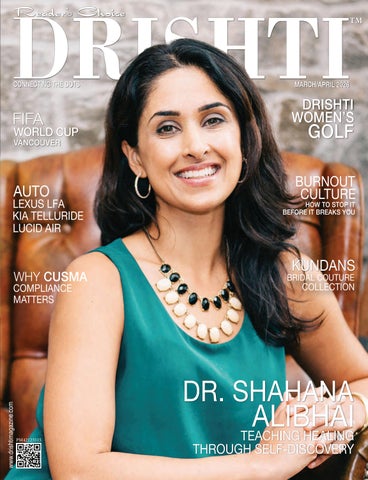
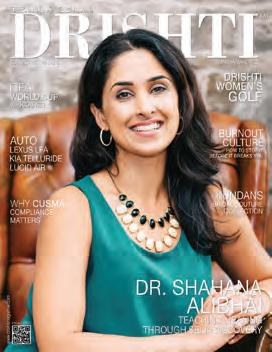
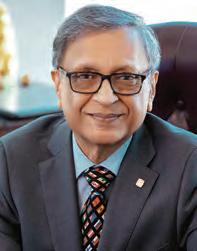
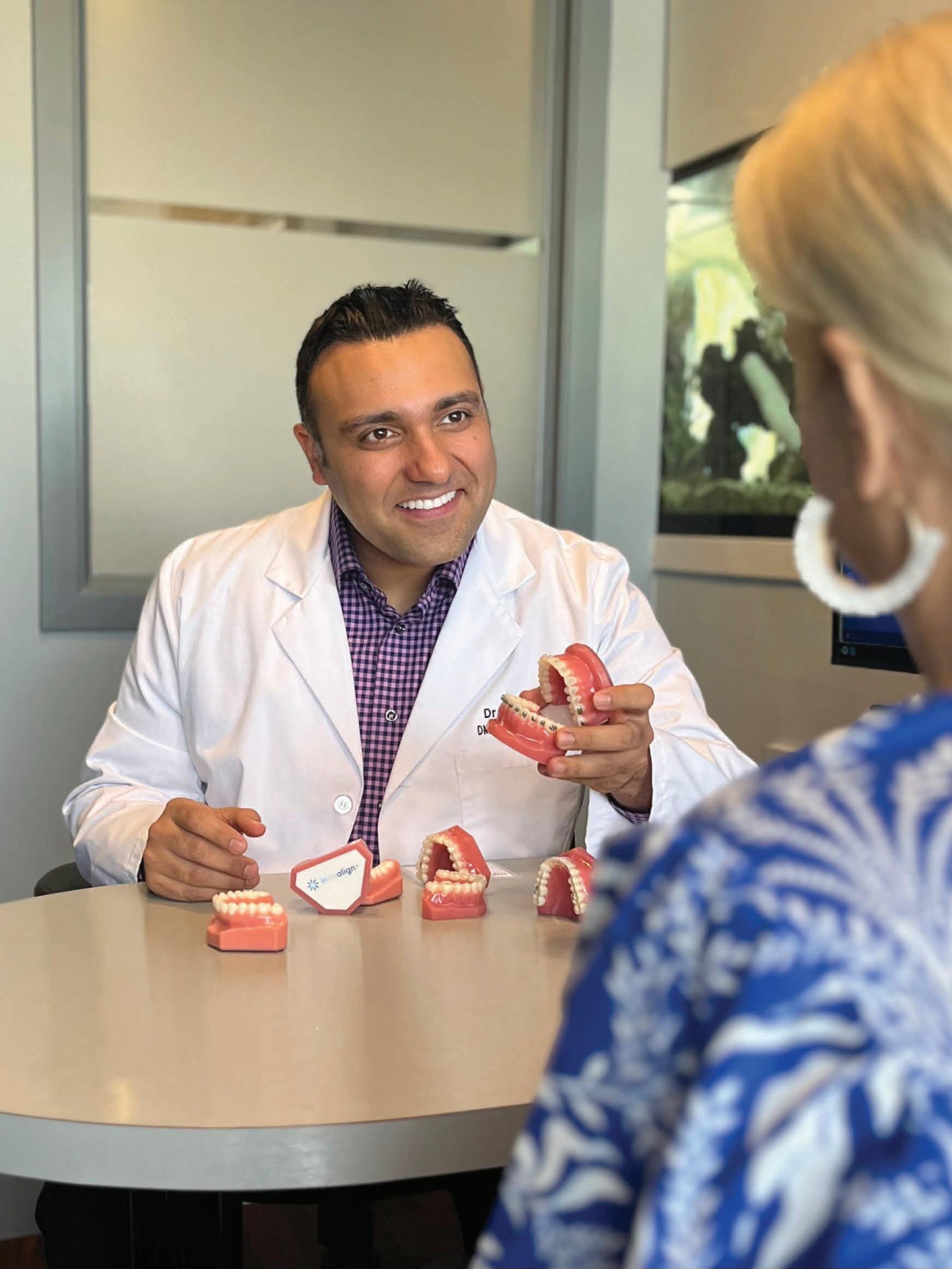
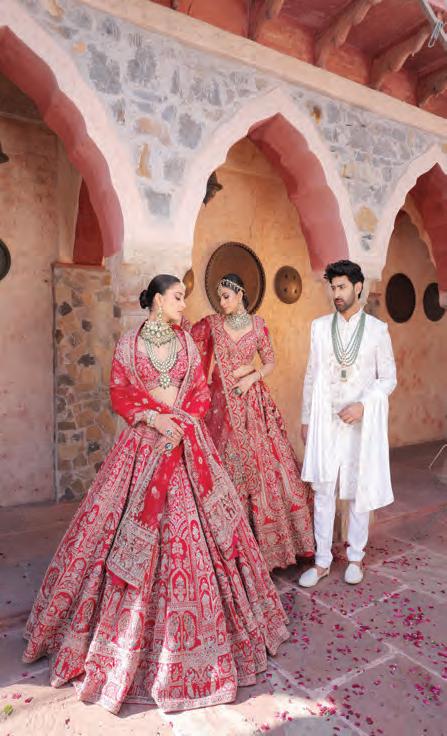
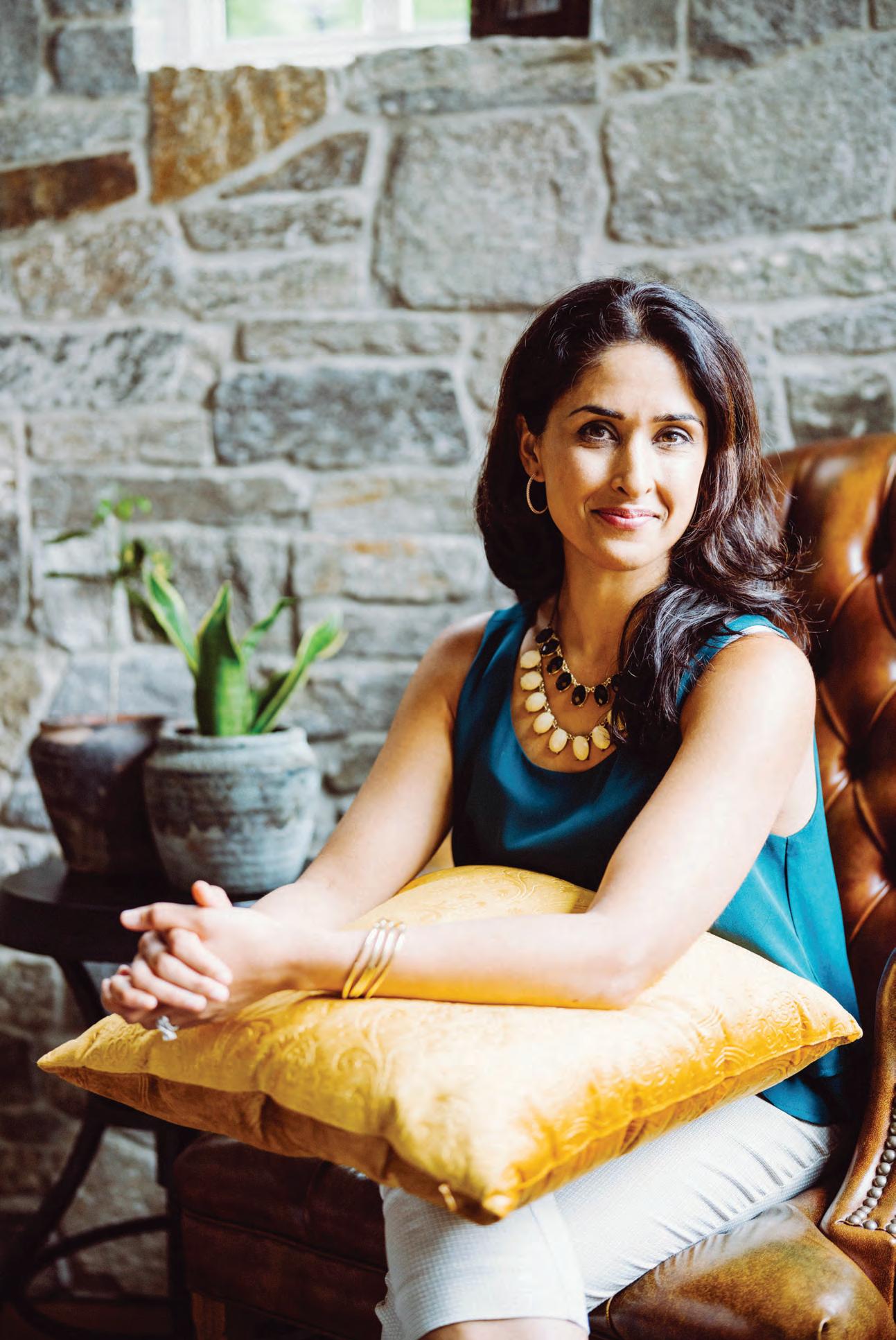
This milestone issue celebrates influence in many forms—from industry pioneers to quiet changemakers. It emphasizes achievement, perseverance, and transformation. Today, influence is defined by ideas, impact, and authenticity, not just titles. We highlight leaders whose journeys show courage, adaptability, and purpose. In this issue, on the cover—Dr. Shahana Alibhai, a TEDx speaker and family physician, shares insights on healing through self-discovery. She has created a revolutionary approach to enhancing health and well-being called the Pyramid of Optimal Health. We feature Dr. Jeff Zabudsky, President of BCIT, who emphasizes BCIT’s innovative vision to meet labor market needs and its provincial mandate, along with Raymon Hothi, General Manager at Surrey Honda, who builds credibility through honesty. In a vibrant, ever-changing world, staying informed is essential. Thoughtful perspectives on current events analyze key global and local developments shaping our future. Mindful approaches to health and wellness in this issue focus on physical vitality and emotional resilience. We seek new trends to enhance the beauty of order, exploring the latest skincare and elegant natural trends, with expert advice to help you improve your natural radiance. In fashion and style, remember—it’s not only what you wear, but how you wear it.
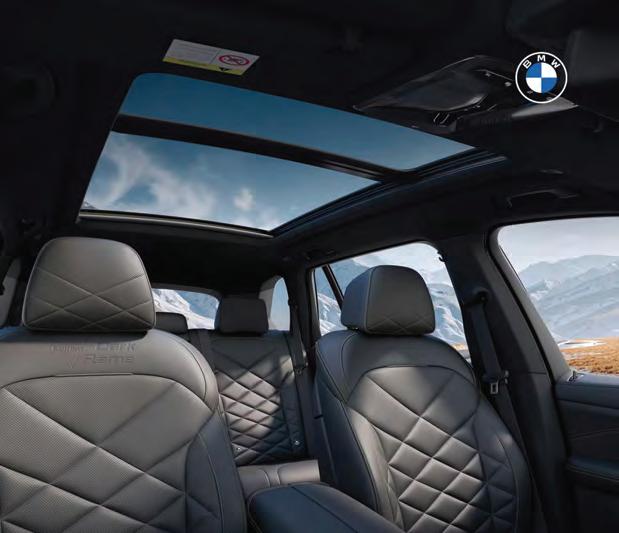
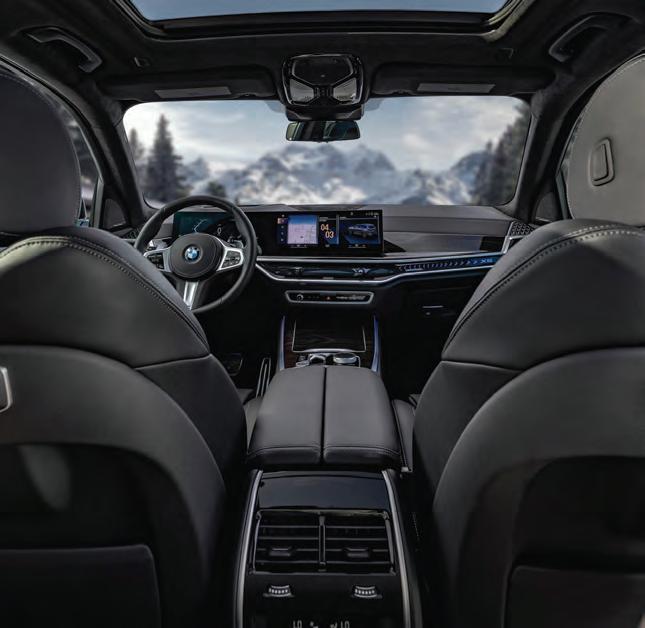
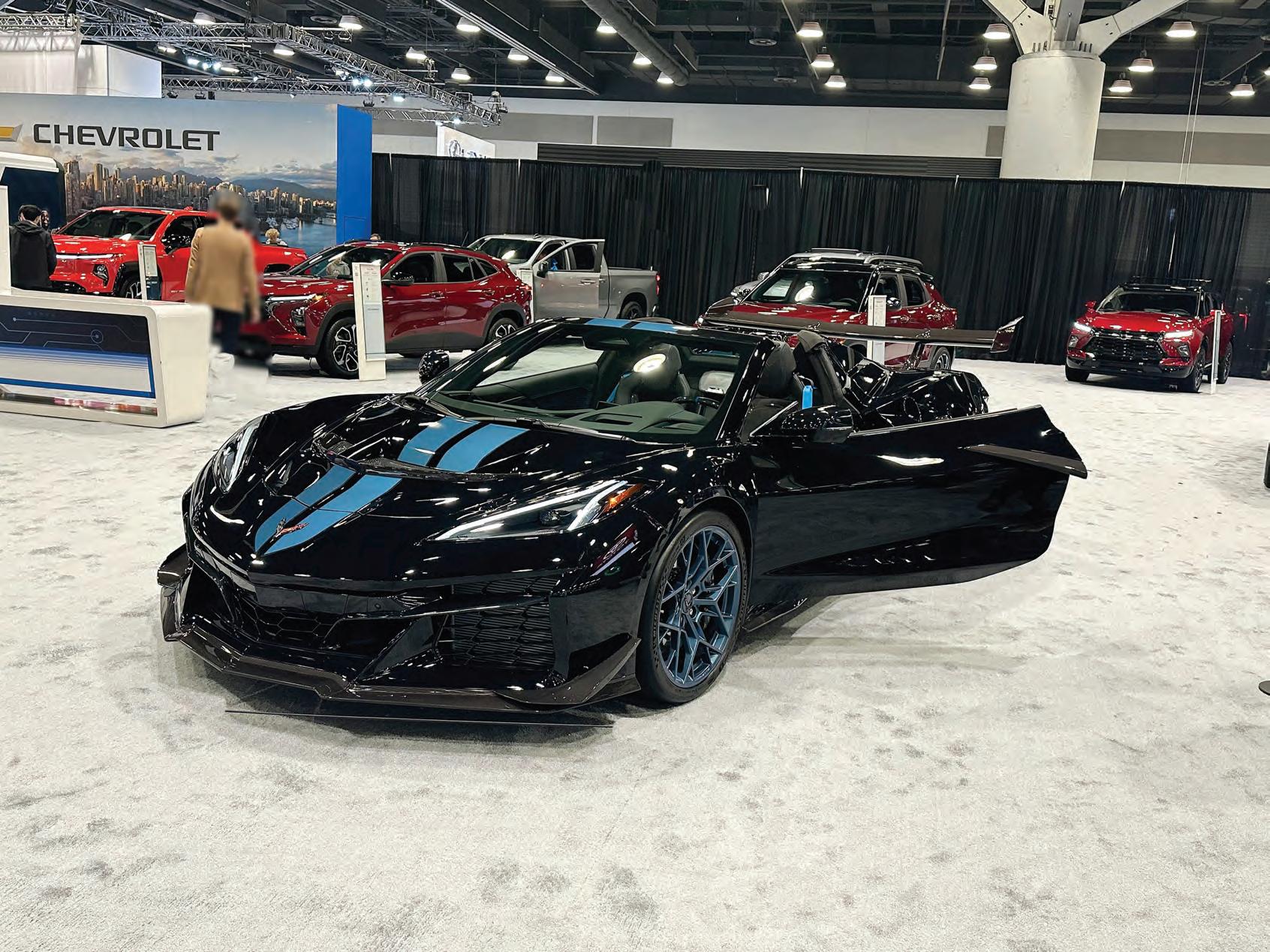
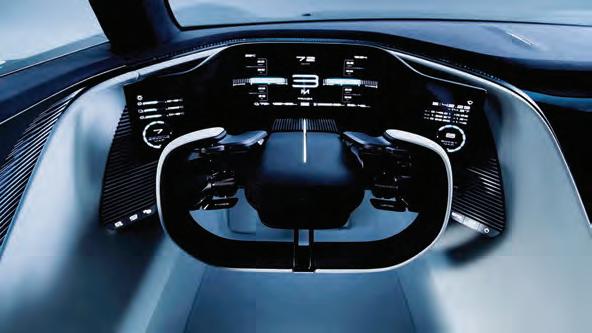
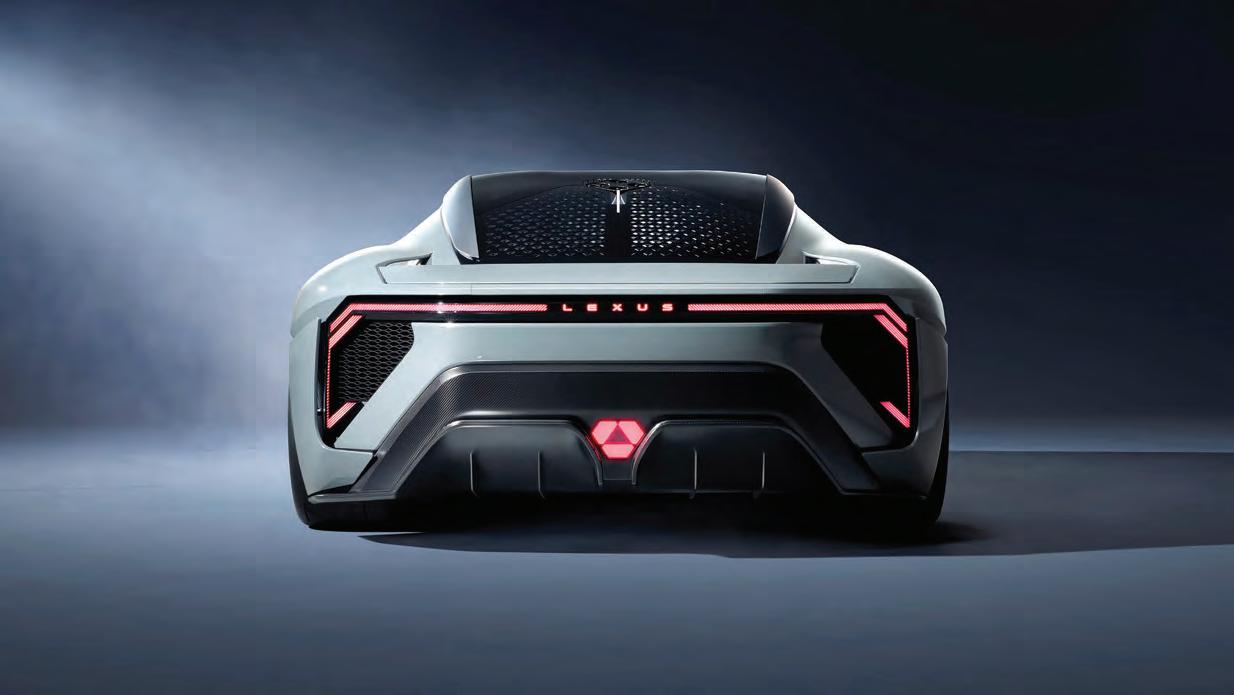
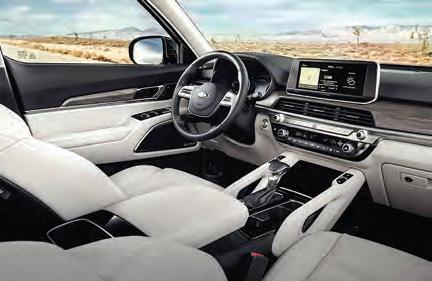
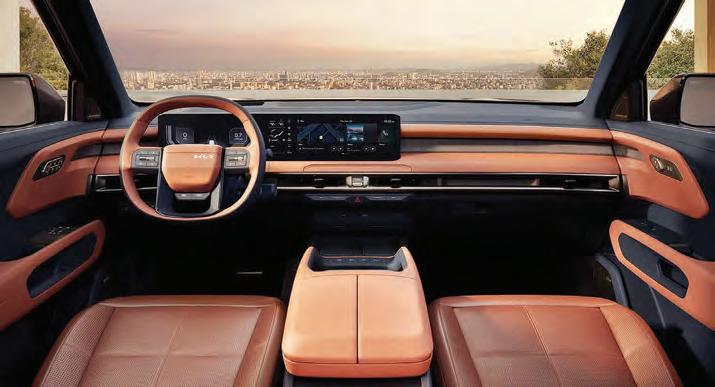
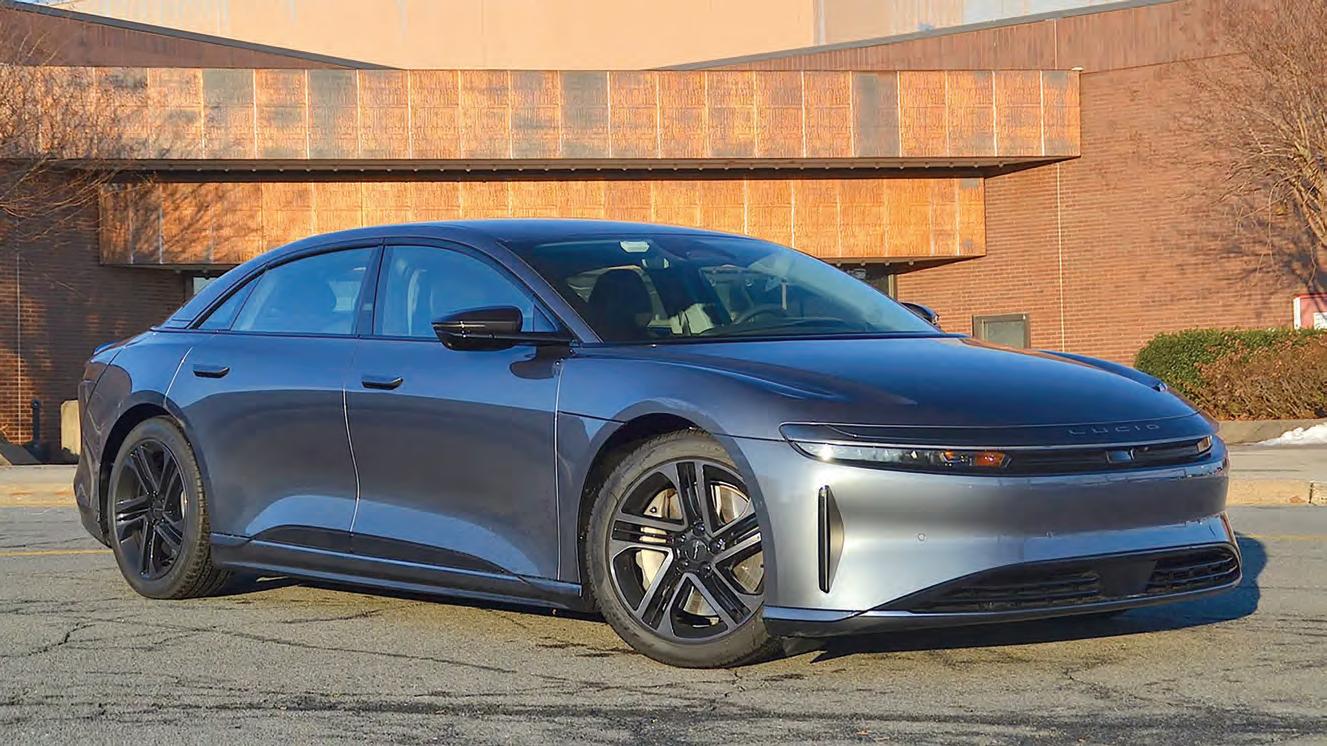
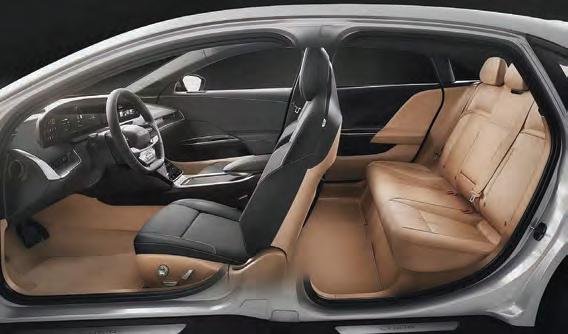
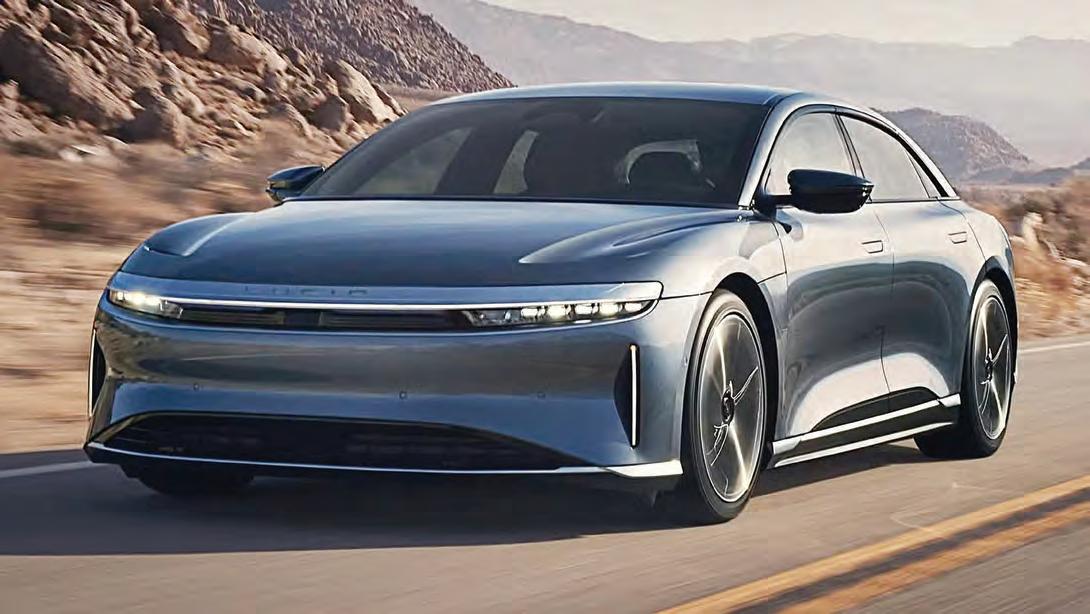
We explore automotive innovation and showcase the latest responsible-performance models. From productivity tools to lifestyle devices, we highlight new gadgets that make life easier and reignite your wanderlust. Finally, we inspire and entertain you with horoscopes and Hollywood movies.
Likewise, we celebrate the elegance and empowerment of women at this year’s Drishti Women’s Golf Event, taking place on July 9. We conclude the issue in style with the 12th annual Drishti Awards Gala on November 13, an evening dedicated to honoring excellence, creativity, and leadership across various fields. Thank you for joining our journey. À votre santé.
Drishti Magazine is published by Drishti Media Group Ltd. The views expressed and images used in the articles of this Magazine are solely of their writers. It is not mandatory or complusary for the Publisher and/or the Editor of this publication to be in agreement with these views. The whole matter in this magazine has been taken from approved and accepted sources, and while publishing the same, every care has been taken, but even in case there is any flaw or error, the Publisher and/or the Editor will not be responsible for it. The readers are advised to get all information from the sources directly and not through this magazine. Any reproduction of this magazine, editorial content, images or advertisement cannot be reproduced or reprinted in any other form, without prior written permission from the Publisher.
Contact
Tel: 604-572-9600
info@drishtionline.ca
#205 8556 120 St.
Surrey BC V3W 3N5
Connecting the Dots-
Building a Healthy Society
Arun K Garg PhD, MD, FRCPC
Medical Lead, South Asian Health Institute, Fraser Health (www.fraserhealth.ca), Clinical Professor, Faculty of Medicine. e University of British Columbia, and Simon Fraser University, Visiting Professor Swami Vivekananda Yoga Anusandhana Samsthana (S-VYASA), Executive Member: Global Association of Physicians of India Origin (www.gapio.in)
You-YOUR Health, & the GAPCINI 2026 (Part II)
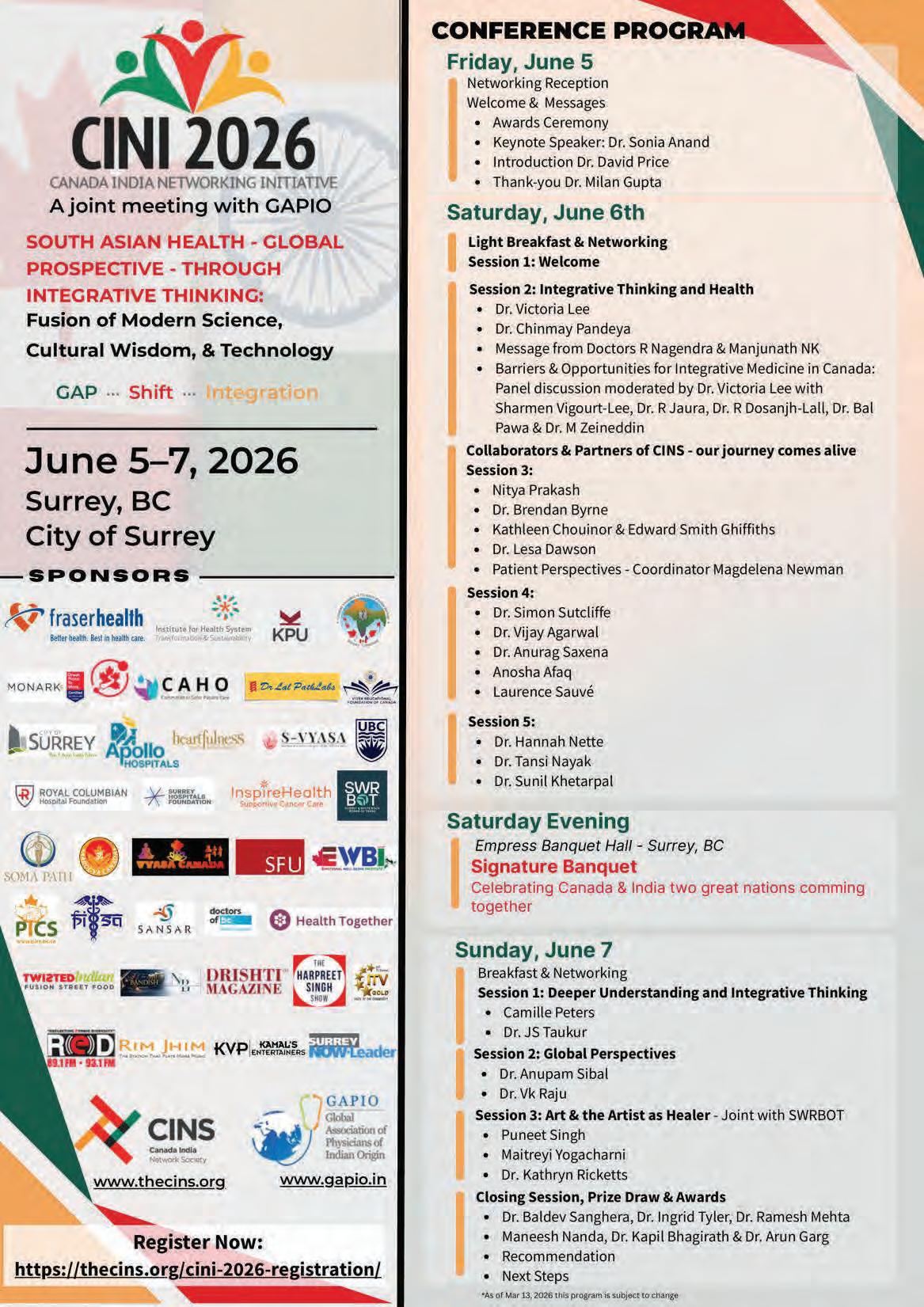
In the last issue of the magazine, I introduced information about the upcoming CINI2026. A full yer is included in the magazine, and registration is open at www.thecins.org.
e program is a 3-day program, June 5-7, 2026, from Friday evening to Saturday and Sunday. e conference is open to all and will be of interest to anyone concerned with our cherished health care system and our e orts to build a healthy civil society. e venue is the iconic City Hall Chambers, City of Surrey, with a banquet planned for the Empress Banquet Hall, Payal Center. e full registration is 400... Canadian for full 3 days, including signature banquet on Saturday evening. e full registration included catered co ee breaks, lunch, and a reception on Friday
You will note that this is a unique program, designed with an outcome-focused, action-oriented presentation. e key principle is to engage the community, people, and patients in their health through education, empowerment, and engagement. e care provided by physicians, nurses, and all other health care providers is in response to acute or chronic illness, and our e ort is to go beyond that care and connect with the individuals in health. Health, as de ned by the World Health Organization, is a state of complete physical, mental, and social well-being, not merely the absence of disease or in rmity, and it also includes health promotion, illness prevention, and homeor community-based management of chronic disease.
e innovation incorporated the principle of Integrative inking: a way to think about developing actions for a total-systems approach and integrating di erent ideas for sustainable solutions. In this case, the full rigor of science (Biochemical precision), the role of diversity, ethnicity (cultural precision), and emerging Technology and Arti cial
Intelligence (microchip-based wearable self-testing and its application in health). Great emphasis on fusion of Best of East and Best of West in incorporating ancient wisdom and modern science through a cultural lens.
We are very fortunate to have a leading thought leader share information and practical examples of the role of these 3 modalities in health. Lifestyles and behaviors have a profound impact on one’s health, and self-determination, self-realization, and self-culture are very powerful tools for living a full, healthy life. One will also share our collaborative projects that CINS has championed with its partners, all of which are listed in the yer. We will introduce the unique role of Art, Artist, and health to complement the reductive science of Biochemical precision. We need all 3 modalities to work in synergy and complement each other, whether it be metabolic disease, mental wellness, or cancer. It is also of great importance in Rehabilitation a er acute care and in preparation for acute elective care. e late stages of one’s life journey, from birth to the end, have very speci c cultural relevance, and the conference will link all stages of the journey. It rea rms the science and basic understanding of the pathobiology of modern medicine and links them to one’s own cultural role in day-to-day living and in facing disease. We have also incorporated the evolving role of Arti cial Intelligence and microchip-based monitoring of health parameters.
So this unique global conference will be a powerful platform for knowledge sharing. e conference is the 5th major conference of the Canada and India Network Society and a midyear joint meeting with the Global Association of Physicians of Indian Origins. ere will be ample opportunity to network, interact, and share your experiences for building a healthy society. e number of seats is limited, so register early.
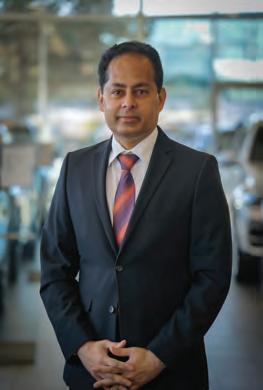
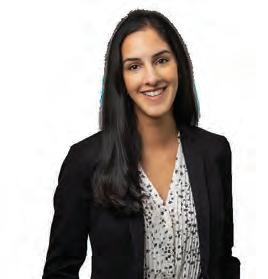
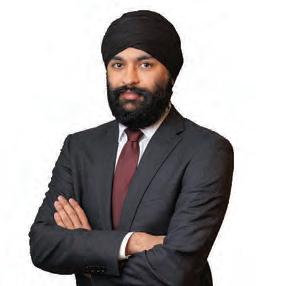
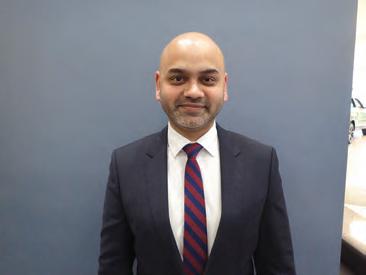
BUILDING CREDIBILITY THROUGH HONESTY RAYMON HOTHI
“Preparation, consistency, and accountability became my edge. I came to understand that credibility is built through consistent action. When your team sees that you’re willing to put in the work alongside them, listen to their input, and keep learning, trust develops naturally.”
BY SURBHI GOGIA
Selling vehicles may be routine in a salesperson's daily work, but for a customer, it’s anything but ordinary. For many, it happens once every ve or ten years. It’s o en second only to buying a home.
“When we approach that moment with care and excitement, exceptional experiences happen naturally,” says Raymon Hothi, General Manager at Surrey Honda. is conviction lies at the core of Raymon’s leadership. Known for exceptional customer service, he has, at a surprisingly young age, led and motivated teams across multiple dealerships, guiding them toward a standard of excellence that doesn’t shi gears once keys are handed over. Instead, they keep the customer in the driver’s seat, ensuring service remains steady long a er the sale is closed.
Born and raised in Maple Ridge, Raymon grew up with a twin curiosity for cars and business. He knew he wanted a career in business and explored di erent paths to nd the right t. A Bachelor of Business Administration helped him explore a wide range of elds.
A er graduating in 2014, he aimed for the automotive industry. “I researched which auto groups o ered the best growth opportunities and discovered OpenRoad Automotive Group, one of the fastestgrowing and most respected groups in the country.” He joined OpenRoad Mazda Port Moody in March 2017 as an Assistant Sales Manager and was promoted to Sales Manager later that year.
ree years in, he moved into the luxury space at Audi Boundary, then took on a senior role at BMW/MINI Langley. He later served as General Manager at Hyundai Richmond and Jaguar Land Rover Langley before becoming the leader at Surrey Honda. “Each step has allowed me to grow my leadership skills while deepening my passion for delivering exceptional customer experiences,” he says.
Taking on a leadership role at a young age can bring its share of scrutiny. When Raymon found himself managing individu als who were older and more experienced than he was, the challenge was real. But just like a true leader, he led by example.
“Preparation, consistency, and accountability became my edge. I came to understand that credibility is built through consistent action. When your team sees that you’re willing to put in the work alongside them, listen to their input, and keep learning, trust develops naturally.”
e lesson he o ers to young profession als is simple: don’t allow perceived disadvantages to de ne you. Concentrate on growth, remain humble, and let your work ethic speak louder than your resume.
Raymon continued along the same path, and success arrived in a way that marked a career milestone. Under his leadership, Hyundai Richmond was named the Global Dealer of the Year by Hyundai Motor Company. In his view, the award belonged to the entire team.
e award was based on 10 key storewide KPIs across Sales, Service, and Parts, requiring alignment and shared accountability throughout the organization. “Customer satisfaction and loyalty were central to many of those metrics—values I’ve always prioritized. I believe our shared commitment to delivering a consistent, high-level customer experience is what ultimately drove the result.”
He says that high-level customer experience means consistently putting the guest rst, whether it’s understanding their needs
e modern buyer, he explains, is changing the rules of the game. Long dealership visits are becoming less common. Customers come prepared. “Whether in automotive or any other industry, the key remains the same: consumers want transparency and clear information. ey don’t want to be “sold” a product—they want a knowledgeable professional who can guide them through the process, explain the di erences between models and trims, and make the experience simple. at level of trust and ease is especially important when representing a luxury brand, where expectations are even higher.”
e engine of the business also runs beyond sales. In an automotive setting, many people think of a dealership as just a place for sales and new-vehicle purchases, but its impact extends much further. “We play an important role in the daily lives of our customers and community. Our Service and Parts departments help keep vehicles safely on the road and ensure family plans
breakdowns happen. Sometimes that means going above and beyond, such as sourcing and rushing in parts from across the country.”
As a leader, Raymon focuses on establishing alignment, setting clear expectations, and fostering a shared sense of purpose across all departments. When everyone recognizes that the goal is for each customer, whether visiting Sales, Service, or Beyond the showroom, his contributions to the community stand out.
When OpenRoad launched OpenRoad Foundation, Raymon saw this as a great opportunity to be part of real change in local communities. In 2025 Raymon took on a Co-Chair role, where he has helped direct more than $1.5 million in support to over 60 partner organizations across British Columbia and Ontario. Recently, Surrey Honda, the OpenRoad Foundation, and Drishti Media collaborated on a Food Drive to celebrate Vaisakhi. All food and monetary donations collected will go to the Surrey Food Bank, which supports local families, infants, and seniors.
A VISION FROM DESIGNING THE CARBON-NEUTRAL CITY:
PROF. BANTHIA
University Killam Professor University of British Columbia
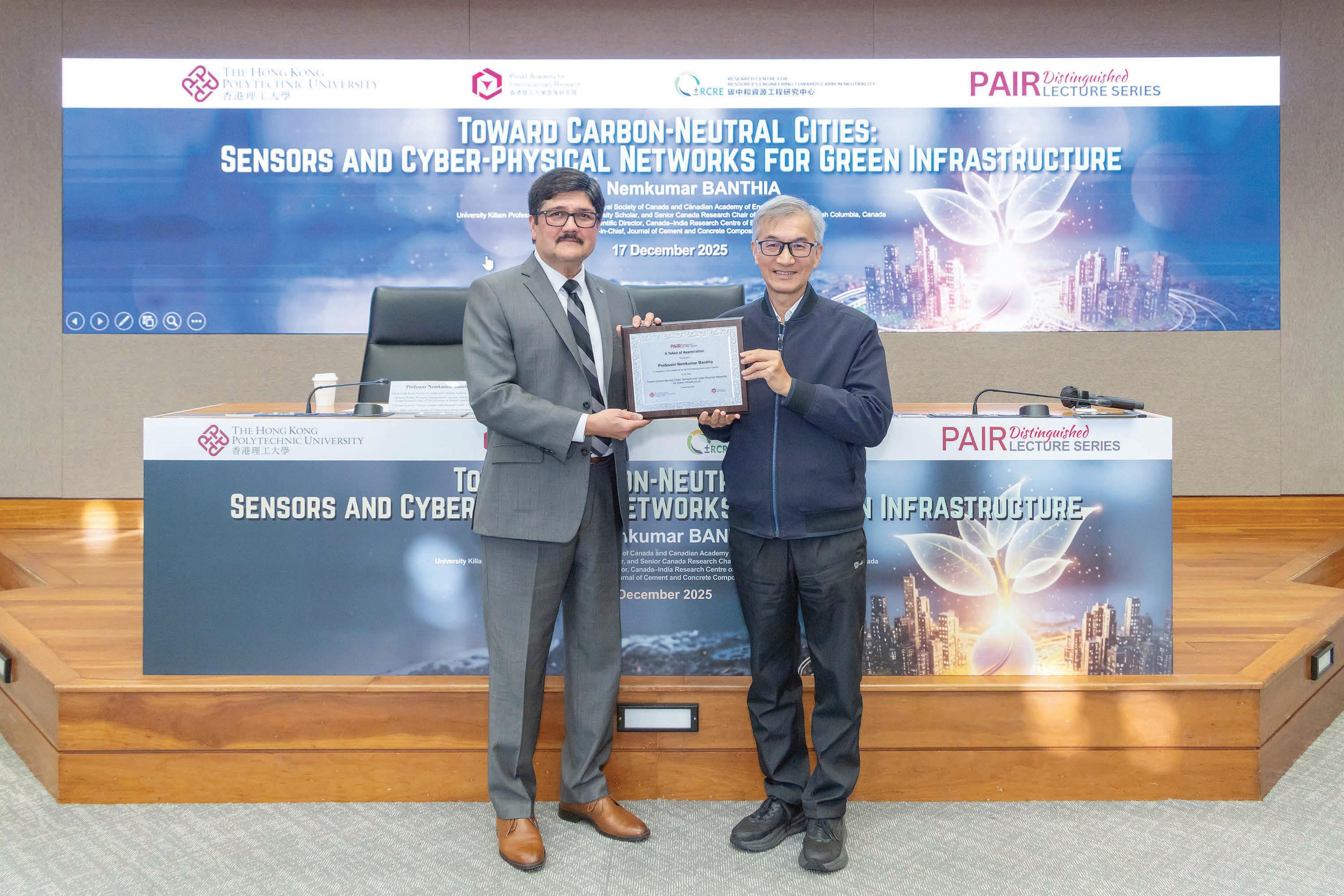
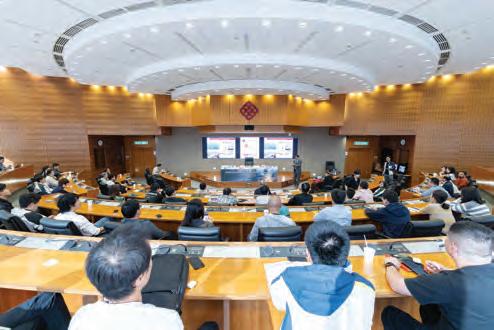
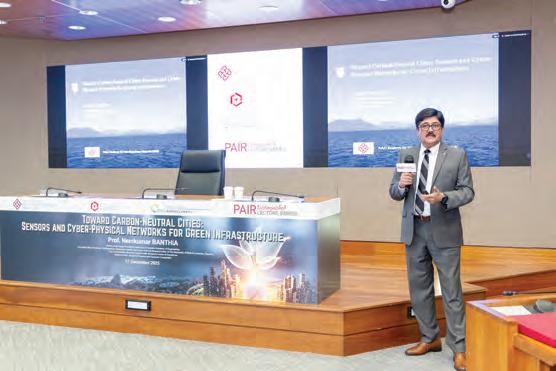
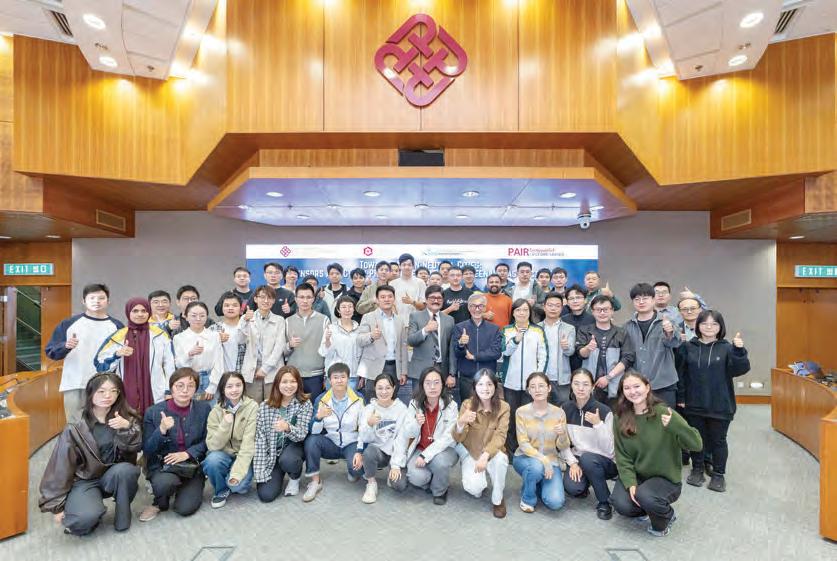
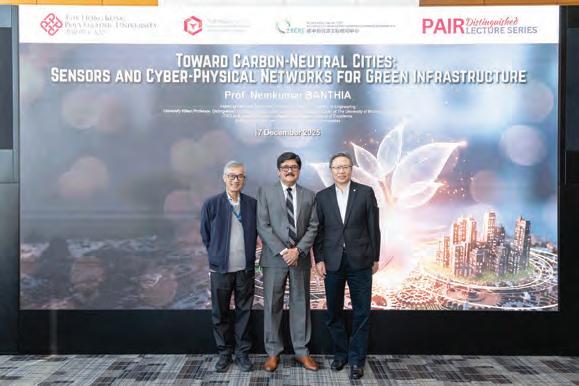
Professor Nemkumar Banthia delivered the PAIR Distinguished Lecture in Hong Kong on December 18, drawing a standing-room-only audience of more than 18,000 people from 31 countries. e lecture, Toward CarbonNeutral Cities: Sensors and Cyber-Physical Networks for Green Infrastructure, explored how the materials and systems that shape our cities can be redesigned to curb emissions, while becoming more resilient to a warming world.
A carbon footprint woven into every building
Banthia began with a stark reminder: every structure we erect carries a carbon
burden, from the cement in its foundations to the energy that powers its daily operations. Infrastructure, though o en overlooked, is a silent driver of climate change. Portland cement production alone accounts for nearly 8 percent of global greenhouse gas emissions. Yet climate change is not only a threat to the environment; it also erodes the longevity of the very structures we rely on. Warming temperatures intensify cycles of expansion, moisture, and weather extremes, accelerating deterioration and raising maintenance costs.
“It is a two-way thing,” Banthia said. “We are emitting signi cant
greenhouse gases from the construction sector, and climate change—our rising greenhouse gases—is also a ecting our structures, making them less durable. It is a double whammy.” e consequence is practical: shorter lifespans demand more frequent replacements and repairs, driving up both carbon emissions and nancial strain. “A bridge designed to last 50 years may now last only 30 because of climate change,” he noted, underscoring the need to rethink urban design in the face of evolving conditions.
A holistic pathway to resilient, carbon-conscious cities As climate challenges intensify, resilience
becomes essential rather than optional. Banthia argued for a holistic approach that blends advanced infrastructure design with ongoing monitoring and rigorous climate assessment. e pillars of this approach are:
• Low-carbon materials and durable designs: Innovations in cement formulations and high-performance concretes aim to reduce embodied carbon while extending service life.
• Sensor-driven monitoring: Embedding sensors and employing nondestructive testing delivers real-time insights into structural health, enabling
proactive maintenance and early problem detection.
• Predictive climate modeling: Site-speci c projections help anticipate how environmental conditions will evolve, informing design standards, maintenance strategies, and risk mitigation.
• Together, these elements form a design–monitor–predict loop that empowers cities not only to endure disruptions but to anticipate risks, adapt swi ly, and prosper amid uncertainty.
• Design, monitor, predict: three pillars of resilience.
Banthia emphasized the triad as essential for climate-adaptive cities: Design: Develop robust structures and codes that withstand earthquakes, oods, and other hazards, balancing resilience with material e ciency and embodied carbon.
Monitoring: Use ongoing or periodic assessments to understand performance over time, revealing hidden weaknesses
and guiding timely interventions. Prediction: Embrace uncertainty by assessing how environmental conditions have shi ed since construction, including ground motions, ooding, scour, and corrosive environments.
IC-IMPACTS: a cross-border model for impact-driven innovation
A highlight of Banthia’s talk was IC-IMPACTS (the India-Canada Research Centre of Excellence), hosted by UBC. With roughly US$100 million in joint funding, IC-IMPACTS unites universities, industry, and communities to co-create deployable solutions to real-world challenges. Its track record speaks to the model’s vitality:
• 101 joint Canada-India projects have trained 1,327 postgraduate students.
• e centre has secured 34 patents and created eight startups, illustrating a robust pipeline from research to market.
A career dedicated to sustainable infrastructure
Banthia’s four-decade career has fused theory with practice. He has championed ultra-high-performance and self-healing concretes, carbon-neutral building materials, and sensor-based structural health monitoring systems. ese innovations bolster urban resilience by enabling early detection of deterioration, extending service life, and supporting adaptive city systems that can respond to future climate challenges.
e message is clear: urban resilience requires deliberate design choices, continuous monitoring, and intelligent prediction—an integrated strategy for climate-ready cities. Cross-border collaboration, as exempli ed by IC-IMPACTS, accelerates the path from laboratory breakthroughs to real-world impact, ensuring that research translates into sustainable, scalable solutions for cities around the world.
DR. JEFF ZABUDSKY
BCIT: TRAINING TODAY’S WORKFORCE FOR JOBS
OF TOMORROW
“When people are asked to redo education they’ve already completed, it delays their ability to contribute and puts their potential on hold. We will identify the training gaps as soon as possible and provide the necessary education."
BY SURBHI GOGIA
Mark Carney recently stated that Canada is “well-positioned” to capitalize on India’s growing energy demand. BCIT (British Columbia Institute of Technology) is already “wellpositioned” to supply the skilled workforce needed as companies build infrastructure to serve this growing market.
“As a polytechnic, BCIT maintains close ties with industry to anticipate future job-market trends,” explains Je Zabudsky, BCIT’s president.
“Polytechnic institutions like BCIT,” Zabudsky says, “have a clear advantage in addressing labor market needs. Industry dialogue is their key strength, ensuring students graduate with the skills employers require.”
Industry and BCIT collaborate closely. “We regularly review and update our programs to match the skills employers need now and in the future.”
BCIT is also provincially mandated. Unlike many polytechnics, BCIT serves the entire province of British Columbia. O en, the institute is at the forefront of economic initiatives.
In addition to its short micro-credentials, BCIT o ers certi cates, diplomas, degrees, and even master's programs. ey are typically designed with a “laddered” structure that allows students to progress in their careers.
BCIT’s quick response is also clear in emerging industries like mass timber construction. A structural panel is made in a factory and then assembled on site. British Columbia’s forestry sector bene ts from using engineered wood instead of concrete.
To train workers in mass timber construction, BCIT developed specialized micro-credentials. ey adopt best practices from Scandinavian countries, where technology advances quickly, and apply them to the local industry.
International collaboration and industry partnerships provide students and industries with a foundation for future standards while keeping them up to date with current ones.
As technology reshapes the job market, it is essential to stay focused on the future. Arti cial intelligence is a dominant force today. Industries from advanced manufacturing to logistics and design use AI to boost e ciency.
“Automation is replacing traditional coding in manufacturing,” Zabudsky explains. “ e process helps companies automate production lines more quickly.”
Job losses are a natural concern, but tech disruptions can also create new opportunities, according to the BCIT president. He states that AI will transform many job categories. As some jobs vanish, new ones will emerge. Despite barely existing a few years ago, prompt engineers are becoming increasingly vital.
“However, skilled trades won't disappear anytime soon,” he says. “Construction workers, welders, and electricians will remain essential for decades. More construction work is now done in factories, where components are manufactured and then assembled on site.”
“ e skilled trades are in high demand,” he says. “Support is also growing to build a trades workforce that is diverse, equitable, and inclusive."
Women who were hesitant to enter skilled trades before might now be more willing to do so with increased support and resources.
BCIT has also been vital in helping
“BCIT offers a wide range of programs in trades, technology, business, applied sciences. The institute has a long-stand ing focus on resource-based industries like oil and gas, various energy sources, and mining. A new and evolving emphasis on these industries is especially exciting for Canada today.”
immigrants join Canada’s workforce. O en, newcomers have important skills and experience, but their credentials are not accepted.
To tackle this problem, BCIT works with government agencies to assess foreign credentials. To help professionals upgrade their skills without starting over, the institute o ers targeted training.
“When people are asked to redo education they’ve already completed, it delays their ability to contribute and puts their potential on hold. We will identify the training gaps as soon as possible and provide the necessary education.” is approach bene ts both the Canadian economy and newcomers.
BCIT is also expanding its international partnerships. To o er Canadian-recognized curricula abroad, the institute is collaborating with overseas institutions, including those in India. Students can receive a Canadian-standard education while preparing for careers in Canada through these programs. It is no longer safe to assume that students will automatically come to us. e competition for global talent is intense, so partnerships are crucial.
more o en focuses on critical minerals for new technologies.
“BCIT o ers a wide range of programs in trades, technology, business, applied sciences, and the creative industries,” Zabudsky said. “ e institute has a long-standing focus on resource-based industries like oil and gas, various energy sources, and mining. A new and evolving emphasis on these industries is especially exciting for Canada today.”
In mining, for example, the discussion
Institutions like BCIT play a vital role in developing the skilled workforce that supports Canada’s commitment to delivering cleaner energy to markets like India. BCIT graduates will build the infrastructure needed to transport natural gas, support re ning and liquefaction processes, and even work in marine operations, loading LNG onto large ships.
Zabudsky’s vision is to position BCIT as an international leader in applied education as Canada develops new infrastructure. In addition to meeting future industry needs, he aims to have the institute grow across British Columbia and strengthen its global partnerships over the next decade.
SURREY HOSPITALS FOUNDATION’S CELEBRATION OF CARE GALA 2026
AMAN AND KAMAL’S
The doctors and nurses brought warmth into the NICU. They recall many moments when Rania’s nurse, Sydney, and Dr. Moodley took extra time to make them feel at ease. They made us feel as comfortable as you can be in such an uncomfortable situation.”
BY SEBASTIEN DERVEEUW
t Surrey Hospitals Foundation’s Celebration of Care Gala 2026, Aman and Kamal stood before a full room to share their story. “I was cleaning the bathroom,” Aman recalls. “I was 25 weeks pregnant, and my lower back was hurting. I didn’t think much of it at rst.”
en she noticed spotting. “My rst instinct was to ignore it,” Aman says. “You push aside small health problems. But this wasn’t about me anymore. I was carrying two living beings.”
Standing in the elevator on the way to the Family Birthing Unit at Surrey Memorial Hospital, Aman had a feeling she wouldn’t be going home that night.
By 9 p.m., they welcomed a daughter, Rania, and a son, Sher. “It all went by so quickly,” she says. “ ey told me I was delivering my babies that day, and all I could think was, it’s too early.
How will they survive this? ere was no time to process anything. It was out of our control.”
Her babies were taken to the Neonatal Intensive Care Unit (NICU) at Surrey Memorial Hospital.
“When we came home empty-handed,” Aman says, “that’s when it really hit me.”
Finding the Warmth e NICU had a rhythm they were learning to understand.
“I would leave feeling frightened,” Aman says. “ e burning question in my head was always, do babies get to go home from here?”
Seeing their babies in incubators, surrounded by wires and monitors, made the distance feel even greater. In contrast,
Sydney, and Dr. Moodley took extra time to make them feel at ease. “ ey made us feel as comfortable as you can be in such an uncomfortable situation.”
Beyond care sta , family carried them through the hardest days. Aman’s mother, Satpal, became a constant presence in the NICU, sitting at the babies’ bedsides, helping shoulder the emotional weight of each uncertain day.
As the days passed, Aman and Kamal
began recognizing other parents.
“We saw another baby come in, also born at 25 weeks,” Aman remembers. “And I remembered how it felt to be on that side. Helpless. It’s a feeling you don’t understand unless you’re living it.”
Without hesitation, Aman and Kamal went to them, o ering the same reassurance they had received along their own journey.
Rania
Rania was 20 days old. She was ghting pneumonia. At 1 a.m., they received a call from Surrey Memorial Hospital. ey dropped everything and went to the hospital.
When they arrived, Rania was in her room. A small blanket lay gently over her. e doctor checked her pulse. And then, quietly, there was nothing more to do. “Our hands were on top of the blanket,” Aman says. “Over her body.” “ ere was no time to heal,” she says.
In those early days, Kamal had been afraid to touch his babies.
“When they were born, the nurse told me it was okay to do hand hugs,” he says. “I was terri ed. ey were so tiny.” He hadn’t held them skin-to-skin at rst. A er Rania passed away, that quickly changed. at same evening, Kamal held Sher
skin-to-skin. Holding his son didn’t erase the grief, but it li ed the weight of it. “For that moment,” Kamal says, “I forgot what had happened twelve hours earlier.” It gave them strength and something to hold onto.
A Journey Taken, Never Alone
Sher was discharged in August 2025. ere was no single moment that marked the end of their journey, just a gradual realization that they were nally going home together. Sher was stronger. He no longer needed the same level of support. Today, Sher is a healthy, growing baby, curious, bubbly, and full of personality. He keeps his parents very much awake at night.
Sharing their story at the Celebration of Care Gala was their way of giving back to the people who stood beside them. eir family, their care teams, and the community of donors who invest in exceptional health care.
eir journey was shaped by both loss and hope, but they never walked it alone.
Surrey Memorial Hospital delivered more than 6,000 babies last year. e highest volume of any general hospital in the Lower Mainland. As demand continues to grow, donor support is helping strengthen maternal and neonatal care in B.C.’s fastest-growing city.
n any given day, thousands of trucks cross the Canada–U.S. border carrying products made by Canadian businesses. Inside those shipments could be maple syrup from Quebec, auto parts from Ontario, seafood from Atlantic Canada, or specialty foods and consumer products from British Columbia. Behind each shipment is a story of entrepreneurship, innovation, and ambition.
For many of these businesses, success depends not only on product quality but also on their ability to trade e ectively across borders. One agreement that enables this is the Canada–United States–Mexico Agreement (CUSMA).
Although CUSMA may not o en make headlines, it quietly plays an essential role in Canada’s economy. For businesses that understand and follow its rules, it can open access to a market of nearly 500 million people across North America.
A Modern Agreement for a Modern Economy
OPENING DOORS FOR CANADIAN BUSINESSES
BY DAVINDER BIR-BHATTI
CUSMA took e ect in 2020, replacing the long-standing North American Free Trade Agreement (NAFTA). e updated agreement was created to re ect today’s economy, which includes digital trade, advanced manufacturing, and increasingly interconnected supply chains.
At its core, CUSMA is a free trade agreement. A free trade agreement is a deal between countries that lowers or removes barriers to trade, allowing goods and services to move more freely between them.
In the case of CUSMA, the agreement links Canada, the United States, and Mexico; three economies that already have strong trade ties. Together, they form one of the largest trading regions in the world.
For Canadian businesses, this relationship is especially signi cant. e United States is Canada’s top trading partner, and millions of Canadian jobs depend on exports.
e Power of Tari -Free Trade
One of the main advantages of CUSMA is the decrease or removal of tari s.
people across North America
In the case of CUSMA, the agreement links Canada, the United States, and Mexico; three economies that already have strong trade ties. Together, they form one of the largest trading regions in the world.
A tari is a tax on imported goods. Governments o en impose tari s to protect domestic industries or to generate revenue. However, tari s also raise the price of products, which can make them less competitive in foreign markets.
Under CUSMA, many goods can ow between Canada, the United States, and Mexico without tari s. is enables Canadian companies to sell their products internationally at competitive prices.
But an important condition is that products must meet speci c requirements to qualify.
Understanding “Rules of Origin”
To take advantage of tari -free trade, businesses must adhere to rules of origin. Rules of origin identify where a product is considered to have been produced.
ey ensure that the bene ts of the agreement mainly apply to goods made within North America, not to products from elsewhere that are simply routed through a member country.
For example, if a Canadian company makes furniture using wood from North
America, the product might qualify as North American under CUSMA rules. However, if most of the materials come from outside the region, the product might not qualify for tari -free treatment.
ese rules promote businesses to develop supply chains within Canada, the United States, and Mexico, enhancing regional cooperation and economic resilience.
technical paperwork, it is essential in international trade. Without proper documentation, businesses may have to pay tari s—even if their products otherwise qualify.
Why Compliance Matters
For businesses, understanding CUSMA compliance can provide tangible nancial and strategic advantages.
First, compliance can result in
What Is CUSMA Compliance?
is leads us to consider CUSMA compliance.
CUSMA compliance involves ensuring products comply with the agreement’s rules so they qualify for its trade bene ts. is usually includes two key steps: meeting the rules of origin and keeping proper documentation.
A key document is the certi cate of origin. is document con rms that a product meets CUSMA rules and enables customs o cials to verify its eligibility for tari -free treatment.
While this might seem like just
substantial cost savings. Avoiding tari s allows businesses to keep prices competitive and preserve their pro t margins.
Second, compliance encourages market expansion. With fewer trade barriers, Canadian companies can more easily sell products across North America, opening the door to millions of potential customers.
ird, compliance enhances supply chains. By sourcing materials and manufacturing within North America, businesses can develop more dependable and resilient production networks.
In recent years, global supply disruptions have highlighted the importance of regional partnerships. Trade agreements like CUSMA help reinforce these partnerships by encouraging collaboration across borders.
Opportunities for Canadian Entrepreneurs
For entrepreneurs and small businesses, trade agreements may sometimes seem designed for large corporations. In reality, CUSMA can also create opportunities for smaller companies that are ready to grow.
Many Canadian small and mediumsized enterprises already export to the
United States. With the right knowledge and support, more businesses can take advantage of North America’s integrated marketplace.
Government trade o ces, industry organizations, and export development agencies o er resources that help businesses understand the requirements of CUSMA and navigate the export process.
For companies willing to learn the rules, the potential rewards can be substantial.
Looking Ahead
Trade agreements are not static documents. ey evolve alongside the economy,
and CUSMA includes mechanisms for periodic review to ensure it continues to meet the needs of modern industries.
As technology advances and cross-border commerce becomes even more integrated, businesses that understand international trade frameworks will be better positioned to adapt and succeed.
A Positive Future for North American Trade
Trade may o en be discussed in policy terms, but at its heart, it is about people: entrepreneurs building businesses, workers creating products, and communities bene ting from economic opportunity.
CUSMA helps support these connections by creating a stable framework for trade across North America. For Canadian businesses, understanding and complying with the agreement is more than a regulatory requirement. It is a pathway to growth, collaboration, and long-term success.
In an increasingly connected world, agreements like CUSMA remind us that when trade ows smoothly, opportunity o en follows.
VANCOUVER WELCOMES FIFA WORLD CUP 2026 TO CANADIAN SOIL
For the rst time in history, FIFA World Cup matches are happening on Canadian soil, and Vancouver will be at the heart of it. In 2026, BC Place will host o cial FIFA World Cup games as Canada co-hosts the world’s largest sporting event alongside the United States and Mexico. is event is not just a milestone for football fans; it is a de ning cultural moment for Vancouver and Canada.
e FIFA World Cup is an iconic, globally loved, and most-watched sporting event on the planet, drawing billions of viewers and uniting countries through shared love of the game. Until now, Canadians had watched the World Cup from afar. In 2026, that would change. Vancouverites will witness history rsthand as teams from around the world compete on our home ground.
For the rst time, the world’s biggest football tournament is going to happen in Canada, and Vancouver is on the global stage.
Looking ahead, the legacy of the FIFA World Cup 2026 matters. Investments in infrastructure, transit, and event planning can benefit residents long after the event ends. With persnickety care, they leave behind not just memories but momentum.
Vancouver is one of only two Canadian host cities selected for the FIFA World Cup 2026, and BC Place will host multiple matches, including group-stage games and high-stakes knockout xtures. e stadium, already a landmark of the city, will transform into a global arena: broadcast worldwide, lled with international supporters, and alive with the electric energy that de nes the World Cup. Vancouver is one of only two Canadian host cities selected for the FIFA World Cup 2026. BC Place will host multiple matches, including group-stage games and high-stakes knockout xtures. e stadium, already a landmark in the city, will transform into a global arena: broadcast worldwide, lled with international supporters, and alive with the electric energy that de nes the World Cup.
FIFA hosting extends far beyond the stadium walls. As fans arrive from across the globe, Vancouver will experience a surge of excitement and activity. Hotels will be full, restaurants will buzz, patios will over ow, and neighbourhoods will
come alive with a celebration. For local businesses, especially those in hospitality, retail, and tourism, this moment represents a once-in-a-generation opportunity.
Yet what makes FIFA 2026 truly special is not only its scale, but its ability to bring people together. Football is a shared language. It pulls strangers into conversation, turns public spaces into communal gathering points, and creates moments of joy that transcend borders. Whether watching a match at BC Place, at a local pub, or in a public viewing area, Vancouverites will be part of something larger than themselves.
nature and city life. is unique combination of urban vibrancy and natural splendor will make Vancouver a standout destination for fans to experience a diverse food scene, cultural attractions, and a welcoming atmosphere, further enriching the experience and ensuring the World Cup leaves a lasting impression beyond the matches themselves.
Vancouver not only strengthens its reputation but also fosters unity among residents in a world-class city of culture and natural beauty.
Looking ahead, the legacy of the FIFA World Cup 2026 matters. Investments in infrastructure, transit, and event planning can bene t residents long a er the event ends. With persnickety care, they leave behind not just memories but momentum.
FIFA has the power to turn a city into a celebration, and Vancouver is ready. As one of Canada’s most diverse and globally connected cities, Vancouver is well-suited to hosting the world. Fans from dozens of countries will arrive wearing their team colours, chanting, and sharing their stories. Vancouver will meet them with openness, curiosity, and pride. Vancouver is a city shaped by migration and movement, and FIFA 2026 will amplify that identity globally.
e city’s natural beauty will only heighten the experience. Few World Cup host cities can o er iconic ocean views, mountain backdrops, and walkable urban neighbourhoods in the same frame. Visitors may come for football, but they will leave remembering seawall sunsets, green spaces, and the unmistakable balance Vancouver strikes between
There is also a cultural legacy to consider. FIFA creates space for volunteers, performers, artists, and community groups to participate in a historic moment. The World Cup is not only played on the pitch; it is felt in music, food, celebrations, and shared experiences across the city.
Vancouverites host FIFA to see their city in a di erent light. Global attention sharpens local pride. Streets, transit systems, and public spaces will operate to international standards, showcasing Vancouver as a con dent, capable host city. is opportunity allows the city to highlight its infrastructure, hospitality, and community spirit on a global stage. By hosting such a prestigious event,
ere is also a cultural legacy to consider. FIFA creates space for volunteers, performers, artists, and community groups to participate in a historic moment. e World Cup is not only played on the pitch; it is felt in music, food, celebrations, and shared experiences across the city.
Football is about belief; belief in teamwork, e ort, and possibility. At a time when the world o en feels fragmented, the World Cup o ers something rare: collective joy on a massive scale. Vancouver, with its welcoming spirit and global outlook, is well-positioned to hold that joy. e province’s diverse communities can showcase their unique traditions, blending them with the global excitement of the event. is competition fosters inclusivity, strengthens local pride, and establishes the city as a model for how sports can unite people. It also leaves a lasting, positive imprint on its social and cultural fabric.
As the countdown to 2026 continues, excitement will only grow. When the opening whistle blows at BC Place, marking more than the start of a match, it will mark a historic rst for Canada. For the rst time, the FIFA World Cup 2026 comes to Vancouver. Have fun, everyone. Enjoy this grand, unique event.
The 9th Annual Celebration of Care Gala raised $1.813 million and counting in support of the Women, Children and Youth Pillar of Care.
This investment strengthens capacity across programs that see some of the highest patient volumes in the province, ensuring families across our region continue to receive exceptional, compassionate care.
Our sincere thanks to the donors, sponsors, volunteers and community members whose generosity made this impact possible.
Left to right: Aaron Jasper, Sharn Bhinder, Loveen Chera, and Kat Smith
Mayor Brenda Locke and Larry Thomas
Raj Aadmi and Manu Sandhu
Left to right: Dimitri Pantazopoulos, Dianne Watts, and Iain Black
Board of Directors; left to right: Richard Fung, Ashish Arora, Nancy McNeil, Barinder Bhullar, Jacy J. Wingson, KC, Larry Thomas, Nicole Robson, Dr. Randeep Gill, Paul Deol, Harp Dhillon, Kirk Fisher, Sumeet Sangha, Marten Van Huizen, and Jason Boyer
Left to right: Sarb Bhatia, Ashish Arora, Diana Campoli, Ridhi Mathur, Christine Wu, Jessie Sidhu, and Lana Nam
Left to right: Jordan Perkins, Dr. Navi Jagpal and Dr. Kam Mann
Ashish Arora and Martin Thibodeau
Gurpal Dhaliwal
Joslyn Young and Indra Bhan
Surrey Memorial Hospital Doctors and Health Care Workers
Left to right: Dr. Joban Bal, Dr. Randeep Gill, Dr. Gursimar Sidhu-Gill, Natasha & Mandeep Bains, and Perminder Tung
Left to right: Sheena Sidhu, Rita Chohan, Kiran Sangha, Jennifer Hochstein, and Kimberly Harmsen
Grateful patients Aman & Kamal Gill
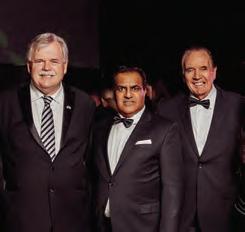
Left to right: Darrell Jones, Bob Hans, and Dave McGregor
ENGA
IN 2026: GLOBAL UNREST WHY IS THIS HAPPENING?
BY VEENO DEWAN
We live in turbulent times characterized by rising levels of uncertainty, doubt, distrust, and insecurity. e world is in the midst of a multidimensional global crisis encompassing political, economic, technological, social, cultural, and environmental components. ere is a polarization of societies, corrupt politics, social unrest, extremism, violence, war, and geopolitical instability.
In recent times, social upheaval and unrest have been fuelled by factors such as regional wars, the world nancial crisis of 2008, the COVID-19 Pandemic, and the acceleration of global warming. Newer threats include large-scale inequality and una ordability for the vast majority of the global population. More recently, nationalism, authoritarianism, and continuing wars, such as in Ukraine and tensions in the Middle East, are also contributing to global turmoil and unrest. e newest and most insidious threat to society is the recent
We live in turbulent times marked by increasing uncertainty, doubt, distrust, and insecurity. The world is experiencing a multidimensional global crisis covering geopolitics, trade, economics, technology, and social and cultural issues, leading to rising unrest and protests worldwide.
technological advances in generative AI (GenAI) and the anticipation of arti cial general intelligence (AGI) in the near future, which are expected to eliminate tens of millions of jobs and whole sectors of employment.
Added to this, with the advent of liberalization, we see the awakening of a new consciousness among younger people, particularly among Generation Z and the Millennials, who are now witnessing a world crisis characterized by the weakening of democratic institutions, the rise of extreme nationalism, and growing authoritarianism. Coupled with this, we see a declining e ectiveness of politicians, multilateral institutions, and a loss of con dence in politicians, the media, business, technology, science, and other institutions.
e sense of shared vision and universal values that provided a platform for international collaboration and global leadership a er World War 2 is now being challenged by a retreat to
current United States Government leadership regarding territorial and annexation threats and the upending of long-established treaties and international co-operation.
Key Reasons for Global Unrest
Weak Political Leadership
More than half of the global population has little or no trust in their government, and 59% believe their countries share fewer common values. We now see global politics shaped, outmaneuvered, and held hostage to the plutocratic power of money, corporations, nancial markets, and other forces. Continual weak governments and poor oversight of money and market economics lead to systemic imbalances and social inequality. e decline in the quality of international relations, due to increasing complexity and a departure from traditional theories of diplomacy and
governance, is now evident. e world political stage is increasingly dominated by autocratic and authoritarian leaders who use nationalism, anti-immigration sentiments, and territorial ambitions as key strategies.
Poor political leadership leads to the suspension of cooperation and a rising issue of unemployment and job insecurity caused by globalization and technological innovation. This results in economic and social disruption, eventually causing civil wars, terrorism, and mass migration, which further fuel unrest worldwide.
Technology
AI (Arti cial Intelligence) is the next revolution in human history and promises many bene ts – but in the pursuit of nancial pro t, there are serious concerns about the deep, disruptive social and economic impacts of technologies such as automation, AI, robotics, and broader technological acceleration. Inadequate regulation and safeguards by governments to prevent the weaponization of technology (AI, social media, espionage, and election manipulation) are leading to social unrest as populations worry about their future as jobs disappear.
Immigration and Refugees – e backlash
Increased migration driven by a combination of local and regional con icts, poor economic opportunities, and environmental changes such as Global warming has seen the global refugee population increase dramatically, from 14 million in 2000 to 27 million in 2020. As many ee war, famine, and political chaos and search for security and economic salvation, previously tolerant
countries in the developed world now have populations protesting about refugees and migration numbers. Meanwhile, political parties, o en right-wing, support anti-immigration policies to capitalize on this unrest and resentment.
Unemployment
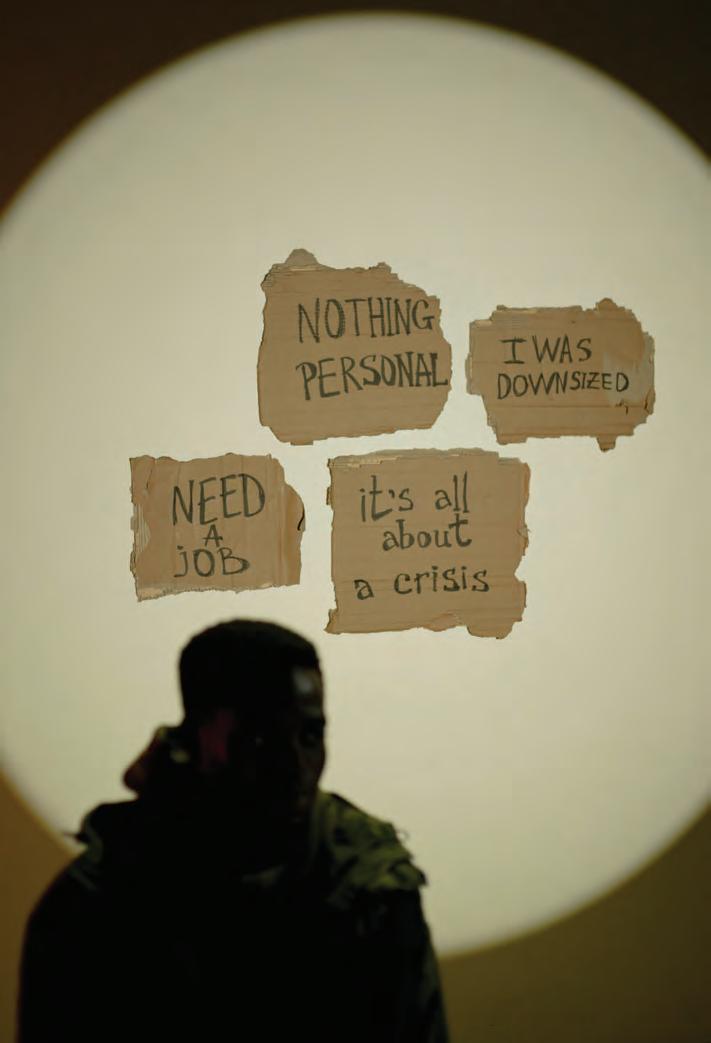
Job insecurity and unemployment are among the most widespread sources of unrest, social discontent, political instability, societal polarization, and extremist politics. In recent decades, employment security has been undermined by the rising power of corporations and the declining power of unions. Add the globalization of markets, uncontrolled immigration of low-wage workers, and rapid technological innovations that replace workers with robots, and we see unemployment set to rise in the future.
Environmental Crisis and Climate Change
Climate change is a major "threat multiplier" that causes displacement, resource scarcity (food/water), and economic disruption. It induces, for example, 20 million+people to leave their homes annually due to extreme weather, droughts, and oods. Con ict and climate change have triggered widespread food insecurity, with over
With the advent of liberalization, we see the awakening of a new consciousness among younger people, particularly among Generation Z and the Millennials, who are now witnessing a world crisis characterized by the weakening of democratic institutions, the rise of extreme nationalism, and growing authoritarianism.
100 million people facing acute hunger, adding to popular unrest.
Economic Inequality and the Wealth Gap
Globally, a staggering wealth gap has emerged—where the top 1% of the world's population controls the vast majority of wealth—fueling resentment, social division, and unrest. e "cost-of-living" crisis, with rising in ation and food and fuel prices, has sparked protests worldwide. Even economically advanced countries are experiencing a hollowing out of the middle class due to a dramatic increase in the share of national income and wealth going to a small minority of the very wealthy.
Geopolitical Con ict and Shi s e erosion of multilateralism, rising nationalism, and con icts (e.g., Russia-Ukraine) destroy supply chains and create refugee crises that put strain on other countries’ economies and resources. Signi cant concerns include US military actions in Iran and Venezuela,
tensions in the South China Sea over China’s ambitions for the return of Taiwan. ere is growing tension in Africa and South Asia, also adding to the climate of unrest.
What is to be done - Political leadership is the key
What is needed is a better class of leaders for the future, the curtailing of corporations, power, and in uence, and improved oversight, legislation, and regulations to protect working people without hampering economic growth by the private sector. Sadly, unlike the optimism and cooperation a er World War II, the current geopolitical climate is increasingly unable to sustain that tradition, which led to rapid social and economic growth in the rst y years a er 1945. A much-needed political reset may be the answer—however, this will not be an easy task, and it may take decades. Sources – United Nations, Council on Foreign Relations, World Economic Forum, International Crisis Group, ACLED’s Con ict Watchlist, World Academy, IntelliNews, Global World Report.
Roger Bhajan General Manager
Hassan Al-Zayyat Sales Manager
Dave Jassar Sales Manager
TJOINT TENANCY IN ESTATE PLANNING: HELPFUL TOOL OR HIDDEN RISK?
W“Joint tenancy can simplify estate administration but when implemented without proper planning, it can create disputes, tax exposure, and outcomes that contradict a parent’s intention.”
hen thinking about estate planning, many clients focus on two key goals: minimizing taxes and ensuring their families can administer their estate smoothly a er death. One strategy frequently used in British Columbia is joint ownership between parents and adult children. Assets are o en registered jointly with the intention of simplifying matters later. While joint tenancy can o er advantages, it also carries signi cant legal and tax risks that require careful planning.
e Appeal: Avoiding Probate
e primary reason parents add a child as a joint owner is to avoid probate. Probate is the court process that con rms a Will is valid and authorizes
the executor to administer the estate. Probate helps to eliminate fraud and create transparency in estate administration, but it also has a cost.
In British Columbia, probate fees are approximately 1.4% of the value of assets that pass through the estate (about $14,000 in fees on a $1,000,000 estate). Probate fees must be paid prior to the court issuing a grant of probate.
Probate can also take several months to complete, potentially delaying access to funds needed by surviving family members.
Assets held in joint tenancy pass to the living joint owner by right of survivorship. Jointly held assets typically do not require a grant of probate. In theory, this saves both time and probate fees.
However, the legal reality is more complex. Joint tenancy arrangements can create legal relationships and obligations that are not always fully understood at the time the asset is transferred into joint ownership.
Risks
e individual adding a joint owner onto their asset, is opening themselves up to risk. e original owner loses control over their asset. If the original owner wants to sell or re- nance, they need the joint owner’s approval.
Further, the asset may become exposed to any personal claims (i.e. from creditors, due to divorce etc.) of the joint owner.
Joint tenancy planning is o en implemented when the parent and child have a healthy and close relationship. If the parent and child’s relationship deteriorates in the future, it is not simple or may not be possible to remove the child as an owner of the asset.
e Presumption of Resulting Trust
In British Columbia, when a parent adds an adult child as a joint owner on their asset, the law presumes the child is holding the asset in trust for the parent. is is known as the “presumption of resulting trust.” is presumption does not apply to assets held jointly with a spouse.
During the parent’s lifetime, the child is presumed to hold the asset as a bare trustee for the parent. A er the parent’s death, the presumption is that the asset forms part of the estate, unless there is clear evidence that the parent intended the child to receive it bene cially. is presumption can create unintended consequences.
Intent of Joint Tenancy
Many parents add a child to an account simply for administrative convenience, such as assisting with bill payments or banking. Legally, this o en creates a bare trust relationship. Depending on the circumstances, the child may have trust reporting obligations, including ling a T3 Trust Return with CRA, and a Land Owner Transparency Report for real estate. Whether a bare trust relationship exists or not depends on the parent’s
“Without written evidence, courts will apply legal presumptions that may not re ect the parent’s wishes, potentially leading to unintended outcomes and costly disputes
among family members.”
intent behind adding their child as a joint owner on the asset.
A er death, disputes can arise. A parent may add a child to their bank account with the intention a er death the account be distributed in accordance with their Will. However, a er the parent’s death the bank may transfer the account to the child who was joint owner of the account, without investigating the parent’s intention, or applying the presumption.
Conversely, if the parent’s intention was for the child to receive the bank account as a gi , the parent’s other children can make the argument that the presumption applies, and the funds should form part of the estate.
Either way, there is confusion. Confusion may result in litigation, which may cost the estate more in legal fees and time than a probate application.
Tax Considerations
If a parent adds a child as a joint owner of their asset, this may constitute a disposition for tax purposes.
If the asset is the parent’s principal residence and the child does not live in the home, the availability of the principal residence exemption may be in question on the transferred portion.
Capital gains implications can arise both at the time of transfer and on death. Improper planning can result in unexpected tax liabilities.
Joint Tenancy with a Spouse
Joint ownership between spouses is not treated the same as joint ownership between a parent and child. Joint tenancy planning can be a helpful tool
between, spouses where a spouse intends to leave an asset to their spouse a er the owner’s death. Although individuals should still be mindful of any tax implications for transferring an asset into joint ownership with their spouse.
Documentation
e key to joint tenancy planning is clear documentation of intention at the time the joint ownership is created. Without written evidence, courts will apply legal presumptions that may not re ect the parent’s wishes. Most disputes about joint tenancy planning arise a er the parent’s death, when they are no longer able to explain their intention.
Joint tenancy can simplify estate administration but when implemented without proper planning, it can create disputes, tax exposure, and outcomes that contradict a parent’s intention.
Each person’s legal, tax and family dynamics di er, and requires individualized advice to ensure their plan aligns with their estate planning goals.
is article is authored by Kiran K. Dhesa, Wills and Estates Lawyer at Richards Buell Sutton LLP (RBS). Established in 1871, RBS is the oldest law rm in British Columbia with o ces in Surrey and Vancouver. Kiran is a member of the rm’s South Asian Practice Group and advises on a wide range of Estate Planning and Estate Administration matters, including Wills, Incapacity Planning, Trusts (Family, Joint Partner and Alter Ego Trusts), Estate Administration (Probate), Committeeships and more.
MENTAL HEALTH: IS SILENCE STILL THE NORM?
by POOJA VALEJA
For generations, we have been taught and have heard that men need to be strong, steady and, above all, silent about their pain. Across cultures and continents, masculinity has o en been equated with emotional control. ere is no doubt that conversations and debates on such subjects have compelled people to think di erently and broaden their horizons, but in smaller cities and larger families, these conversations and debates do exist, though unde ned and unnoticed. e tendency is to place the household load and the overall responsibility for issues on the man, who sometimes could drown in it when he does not even have a place to vent, speak about it, or even grieve.
On the other hand, a woman’s grievance is considered with a lot of emotion, sympathy, and understanding. Although this has changed over the years with growing awareness campaigns, celebrity disclosures, and social media conversations, an important question remains whether this norm could a ect mental health. e answer is complex. While the progress is visible, it does shape many men’s experiences with mental health.
History:
Roots of Silence
Traditional masculinity has long been celebrated. From childhood, boys were o en told to ‘man is tough’ or “don’t cry.” ese phrases, though casually spoken, carry powerful psychological
implications. It’s more put out like vulnerability equals weakness, and men are not weak. is conditioning follows men into adulthood.
Emotional suppression becomes a coping strategy. Stress, anxiety, depression, and trauma are internalized rather than expressed. Instead of seeking help, many men channel it into work, substance (alcohol and drugs) use, aggression, or complete withdrawal.
In many societies, emotional expression of men still remains as a stigma. A man who speaks openly about sadness may be perceived as unstable. A father admitting anxiety might fear being seen as incapable. A man crying over the loss of a parent or a partner may come across to the traditional mindset as weak. Several factors continue to reinforce silence:
-Identity and Masculinity: For some men, vulnerability feels like a threat to identity. If strength is de ned as emotional control, then admitting distress can feel like personal failure -Fear of Judgment: Men may worry about being perceived as weak by peers, partners, or employers. In competitive environments and corporate settings, sports emotional openness can still be viewed as a liability.
-Lack of Emotional Vocabulary: Many men were never taught to name or process emotions. ey may feel “o ” or “angry” without recognizing underlying anxiety, shame, or sadness. e Result of putting on a Strong & Straight face e consequences of silence are signi cant.
• Mental Health Struggles: Globally, men are statistically less likely to seek psychological help but more likely to lose lives by suicides and cardiac arrests. is paradox reveals the core issue not necessarily that men experience more mental health struggles, but that they are less likely to express or treat them. ey also don’t want to pass the burden on to their family.
• Anger & Sadness: Men o en exhibit depression di erently than women. Instead of obvious sadness, they may show irritability, risk-taking behavior, anger, or physical symptoms like headaches and fatigue.
• Silence can also strain relationships: Emotional avoidance may create distance between partners, friends, and family members. Children growing up with emotionally withdrawn fathers may unconsciously inherit the same patterns, perpetuating a cycle of silence.
• Lead to Misunderstandings: When men remain silent, partners o en carry emotional labor alone. Misunderstandings arise. A man experiencing depression might withdraw, leaving loved ones confused or hurt. Without communication, con icts escalate.
Signs of Change
Despite barriers, in the last decade there has been an undeniable progress in the eld of emotional understanding for both men and women. Since mental health is now more taken up, just like physical
health, there is a lot of openness in speaking about men’s emotional quotient. ere are more platforms to allow them to speak their mind and share their issues. High-pro le athletes, actors, and public gures have spoken openly about their struggles and serve as examples to everyone.
Social media has also reshaped the conversation. Podcasts, online communities, and mental health in uencers now discuss therapy, emotional intelligence, and fatherhood with unprecedented openness. Younger generations, particularly Gen Z, appear more comfortable articulating emotional
men and women. Since mental health is now more taken up, just like physical health, there is a lot of openness in speaking about men’s emotional quotient. ere are more platforms to allow them to speak their mind and share their issues. High-pro le athletes, actors, and public gures have spoken openly about their
especially if the stigma has been in people’s minds for over a couple of decades. Public conversation is increasing, but private disclosure remains di cult for many men.
On the other hand, when men open up even cautiously, the impact can be transformative. Studies consistently show that emotional vulnerability strengthens relationships. Fathers who model healthy emotional expression raise children who are more emotionally secure and resilient.
Breaking the silence not only heals individuals, but it also reshapes families. It also gives each family member space to
STOP ARTHRITIS FROM STEALING MOBILITY AND INDEPENDENCE.
Become a monthly donor and power life-changing research and support all year long.
Donate now:
arthritis.ca/donate
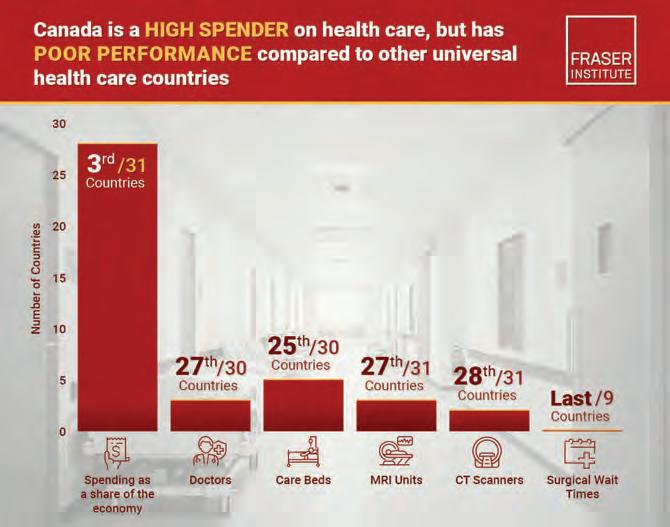
OTHER COUNTRIES DO BETTER THAN CANADA UNIVERSAL HEALTH CARE
Whether it’s hospital overcrowd ing, physician resignations and shortages or the millions without a regular primary care provider, Canadians are caught in an endless struggle to obtain medical care. Stories like these are now so frequent that many Canadians have come to accept them—and the long delays for care they create—as a natural consequence of universal health care.
But it doesn’t need to be this way. As a recent study has found, other countries do universal health care better than Canada.
In fact, compared to these other countries, Canada has some of the fewest hospital beds, doctors, MRI machines and CT scanners in the developed world. Canada also reports some of the longest delays for physician appointments, specialist consultations and nonemergency surgery.
In 2023, the most recent year of comparable data, some 65 per cent of
Canadians reported waiting one month or longer for a specialist appointment compared to 52 per cent of Australians and 44 per cent of Germans. And 58 per cent of Canadians reported waiting more than two months for a non-emergency surgery compared to 33 per cent of Australians and 20 per cent of Germans.
And despite claims to the contrary, we can’t simply spend our way out of these problems, because we’ve already tried that. In 2023, Canada was the third-highest spender on health care among industrialized countries with universal coverage. Germany ranked 8th and Australia ranked 10th.
Clearly, we can learn many lessons from Germany and Australia given that these countries spend less than Canada but perform better. But the main lessons are about how both countries nance and deliver universal health care.
In Germany, for instance, nearly half of all hospitals are operated on a private
for-pro t basis and around 99 per cent of hospital beds in the country (both government and private) were accessible to those with universal insurance. e government also allows Germans to opt out of the public system and purchase private coverage for medical care. Yet despite the arguments o en heard in the Canadian media about the harms of private providers and nancing, the German system remains one of the best performing and most accessible in the developed world.
In Australia, patients are not only able to purchase private health insurance, they receive subsidies to do so. On the delivery side, private hospitals regularly contract with Australian governments to provide publicly-funded surgical care.
Here at home, not only did Canadians wait longer than ever for non-emergency surgery last year, but because there’s no alternative, they were forced to either wait or travel out-of-province and pay out-of-pocket for care.
Despite spending more than most developed countries with universal health care, Canadians remain stuck with some of the lowest levels of access to care. And while we remain caught in an endless struggle to access medical services, while weathering whichever new crises that arises within our system, evidence from other countries with universal coverage clearly demonstrates there’s a better way.
Policymakers should follow the example of these better-performing countries and allow a larger role for the private sector in Canada’s health-care system.
Mackenzie Moir is a policy analyst at the Fraser Institute.
THURSDAY
https://drishtimagazine.com/womengolf2026/
DR. SHAHANA
TEACHING HEALING ALIBHAI
THROUGH SELF-DISCOVERY
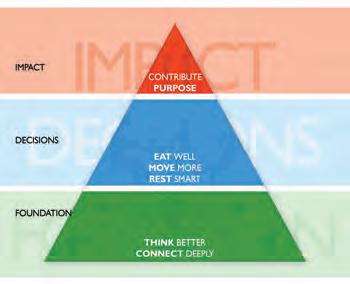
Dr. Shahana has introduced a groundbreaking approach to health and well-being—the Pyramid of Optimal Health. It is a revolutionary framework that transcends traditional health paradigms to foster holistic well-being, reduce burnout, and enhance life balance
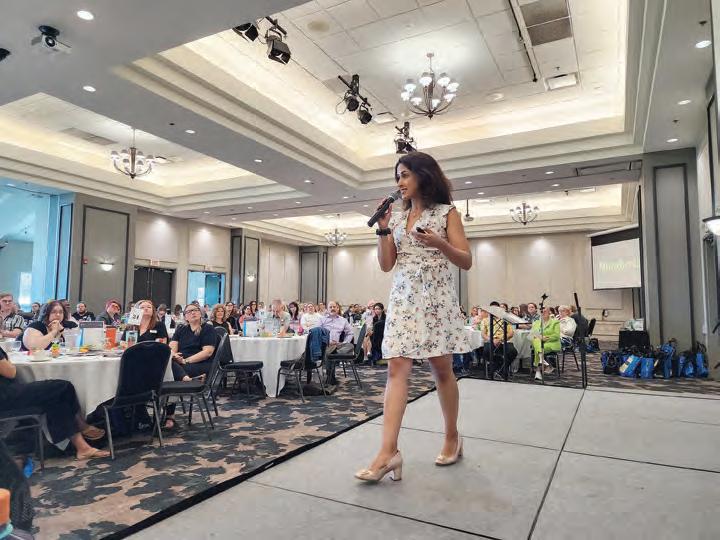
Dr. Shahana Alibhai is family physician, a keynote speaker, a National Accreditor for the College of Canadian Family Physicians, and has served as a mentor in the UBC Faculty of Medicine Residency Training Program. She has been guiding patients through illness, worry, and uncertainty for many years. In the consulting room, she o ers steady hands to care for her patients. In her talks, she o ers comforting words to help heal the audience. Best known for her TEDx talk “Emotional Literacy for Better Mental Health,” Dr. Shahana, with a unique ability to blend science, storytelling,
BY SURBHI GOGIA
and real-world strategies, motivates many people each day to overcome shame and guilt and have the courage to speak openly about mental health challenges.
But this journey of healing others did not come solely from the traditional path of academic education. It was years of struggling with her own mental health that led her to re ect, confront her fears, resolve her trauma, and discover the path to treatment for herself and, eventually, for others.
According to her, mental health doesn't separate doctors from patients; it quietly walks alongside everyone, no matter their profession or status. If a doctor, o en
viewed as a symbol of strength and stability, can face mental health challenges and speak openly about them, others should feel encouraged to do the same.
Born into a family of East African immigrants who came to Canada, Dr. Shahana was raised in Abbotsford. She says, there are two things you cannot control in your life—your birthplace and the parents who raised you. I was fortunate in both. I was raised in British Columbia by two incredible parents who themselves were refugees to the country and never once took for granted how lucky we were to be in Canada. My parents were
“ ______
I encourage people not to live for one single purpose or mission. Life rarely unfolds that neatly. Instead living with purpose—letting curiosity, compassion, and courage steer the journey.”
We tend to think of emotions as black or white. But emotions have layers. Did you feel angry, upset, frustrated, resentful, embarrassed, or perhaps a little bit of all these? The
forced to leave Uganda during the exodus of 1992 under Idi Amin. ey had a wonderful life there until it was completely turned upside down.”
Despite the fear and uncertainty they faced, they worked tirelessly to build a new life in Canada. eir resilience le a deep impact on their daughters. “ e importance of education was instilled in us early.” Her father is a pharmacist who encouraged Dr. Shahana to pursue the same career. At the University of British Columbia, she began training to become a physician. But even during medical school, she noticed something was missing. “Medical education teaches you a lot about disease and treatment, but it o en doesn't leave much room for discussions about prevention and wellness.”
Drawn to holistic healing, she studied kinesiology prior to medicine, exploring how movement, exercise, and lifestyle could greatly in uence health.
But while she was learning to care for others, Dr. Shahana was quietly ghting a battle within her own mind.
For years, she struggled with symptoms she would later recognize as obsessive-compulsive disorder (OCD). “I carried deep
shame about the thoughts I was experienc ing,” she says. “It wasn’t until medical school that I nally discovered the name behind what I was going through.”
Even then, understanding the diagnosis did not immediately change her life. Like many high achievers, she hid behind productivity. “I was on autopilot,” she recalls. “Focused on achievement, perfection, and constantly moving forward.”
She became a family physician and later served as Medical Lead at Foundry Abbotsford, one of British Columbia’s largest youth health centers.
It was only 10 years ago, a er her rst child was born, that Dr. Shahana began to face the condition more directly, something she had long tried to ignore. “At rst, I assumed I was experiencing postpartum depression, something many new mothers go through.”
Yet something felt di erent. Her emotions carried a deeper intensity and urgency. Summoning courage, she con ded in a colleague. e response was compassionate but clear: she needed help. Eventually, she was diagnosed with postpartum OCD, a condition far less recognized than postpartum depression.
“We’ve made signi cant progress in recognizing postpartum depression,” she explains. “But it is a broad umbrella term.”
Postpartum depression is thankfully more commonly recognized, however conditions like postpartum anxiety and especially postpartum OCD are still not. When women understand what they are experiencing, treatment becomes easier. Postpartum OCD involves intrusive, unwanted thoughts about harm coming to the baby, o en accompanied by compulsive behaviors such as checking, cleaning, or seeking constant reassurance. ese symptoms can develop quickly a er childbirth and o en focus on fears of contamination or safety.
“ ese thoughts are deeply distressing for mothers,” she says, “yet they are rarely discussed openly.”
Most postpartum emotional challenges typically resolve within a few months. However, if symptoms persist, withdrawing from loved ones or experiencing severe anxiety interfering with daily functioning may indicate the need for professional support. “Listening to your inner signals matters,” she says. “When something feels di erent, it’s important to seek help.”
What began as a deeply personal struggle gradually transformed into a meaningful journey of understanding. Instead of diminishing her calling as a doctor, the experience strengthened it. Rather than retreat into privacy, Dr. Shahana decided to turn her experience into a purpose. She started cold calling organizations, companies, and health centers, o ering to speak about mental health. “At rst, people were surprised,” she says. “ ey would ask, ‘Why would a doctor want to talk about this?’”
Eventually, someone agreed to hire her. “My rst thought was, what am I going to talk about?” she laughs. Still, she stepped forward. e experience was powerful, and one opportunity led to another. Looking back, she says many people expect purpose to appear like a carefully drawn map, when in reality it o en feels foggy and uncertain.
“ e worst thing you can do is stand still,” she says. “Keep exploring. Bit by bit, the path begins to form.”
Her speaking work also naturally connected with her long-standing involvement with adolescents at the Foundry, where she had treated young patients struggling with mental health issues throughout her career. Once she discovered the power of speaking openly about emotions and mental well-being, she felt she had nally found her true calling. “ e more I spoke about emotions, the more I realized the idea had always been there in my heart.”
Today, she stands not only as a physician but also as a mental health ambassador, speaking openly about struggles that many
hide behind closed doors and empowering others with tools to heal through emotional intelligence. She builds emotional resilience using science-backed strategies and storytelling. Featured on CTV, Global, Medium, and Forbes, she has inspired audiences at Yale, UBC, Scotiabank, and beyond. She also authored the book "Feel Better," which hit number one on Amazon's bestseller lists for psychiatry and parenting. It o ers an insightful exploration of emotional health, providing practical tools to help individuals understand and manage their emotions.
In her talks, Dr. Shahana discusses the powerful impact of emotional awareness on mental health. Explaining what emotional intelligence is, she says, “We tend to think of emotions as black or white. But emotions have layers. Did you feel angry, upset, frustrated, resentful, embarrassed, or perhaps a little bit of all these? e key point is to identify the predominant ‘ avor’ you are experiencing and focus on that. Yes, you can experience many emotions at once, but usually, there
“
Medical education teaches you a lot about disease and treatment, but it often doesn't leave much room for discussions about prevention and wellness.”
is one emotion that stands out or, put another way, stings just a bit more. is is the one you are trying to identify and name—remember, just by naming and identifying the emotion, you can reduce its intensity by up to 30%.”
She has created a simple framework based on three ideas, which she calls e 3 “S” of emotions: Sensation – the physical feeling in the body, Story – the narrative the mind begins to create, and Signi cance – understanding why that feeling matters.
Together, these steps create a sort of roadmap for understanding emotional signals instead of ignoring them.
Dr. Shahana has also introduced a groundbreaking approach to health and well-being—the Pyramid of Optimal Health. e Pyramid of Optimal Health is a revolutionary framework that goes beyond traditional health ideas to promote holistic well-being, reduce burnout, and improve life balance and productivity. Moving away from conventional views, she encourages attendees to rethink their understanding of health and adopt a holistic model that examines the connections between physical, mental, and emotional health.
In the end, her message is simple yet profound. “I encourage people not to live for one single purpose or mission,” she says. “Life rarely unfolds that neatly.” Instead, she recommends living with purpose—letting curiosity, compassion, and courage steer the journey.
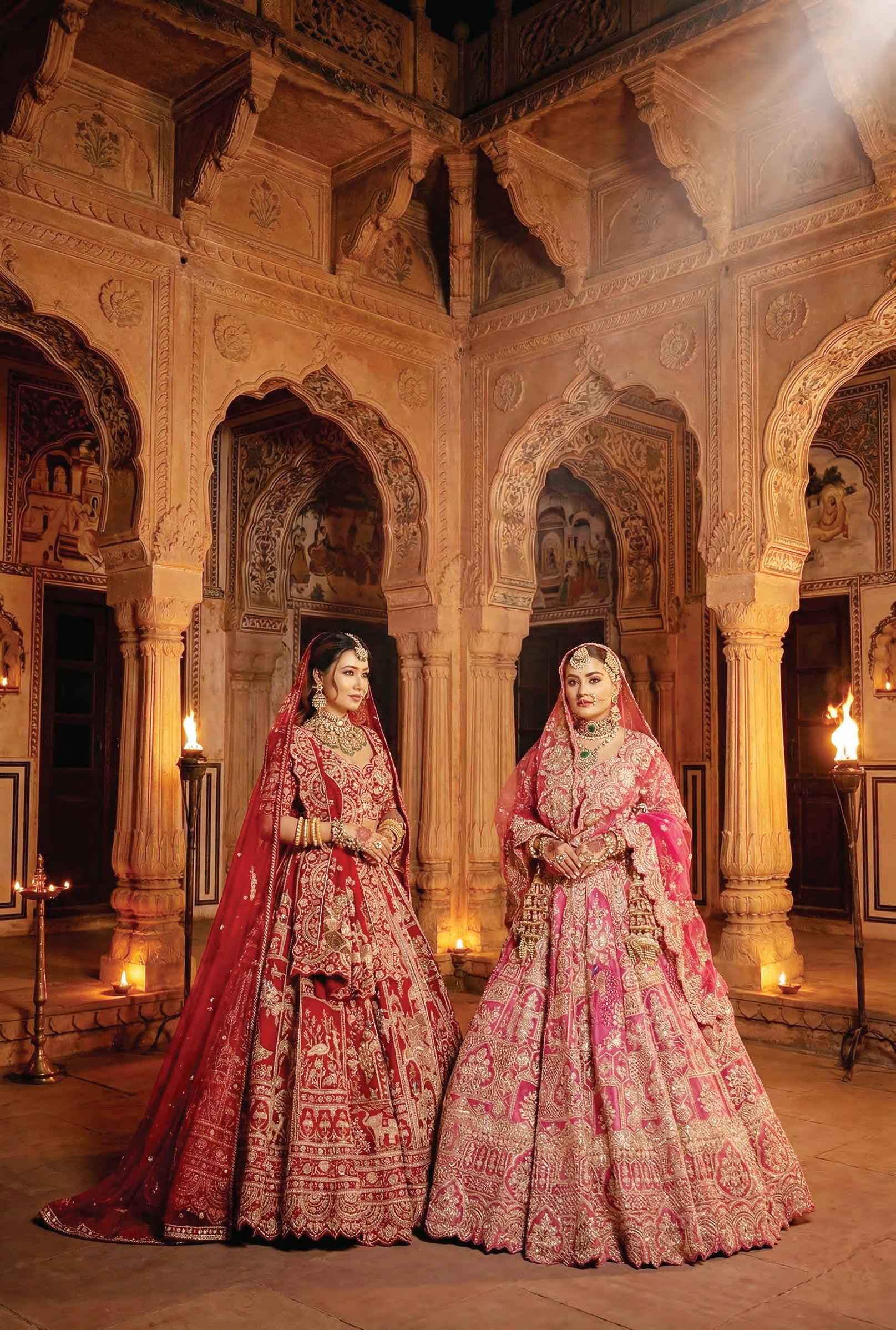
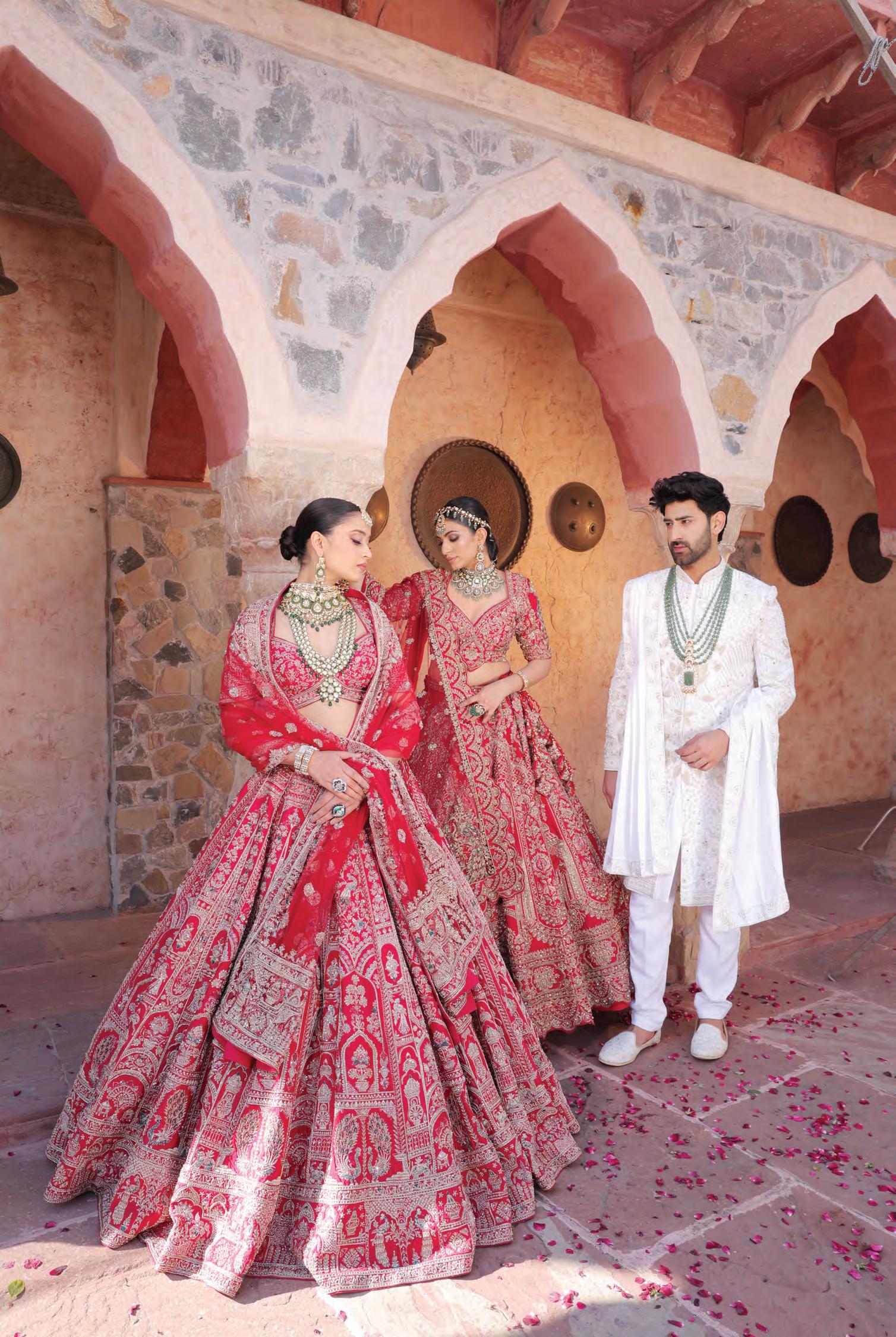
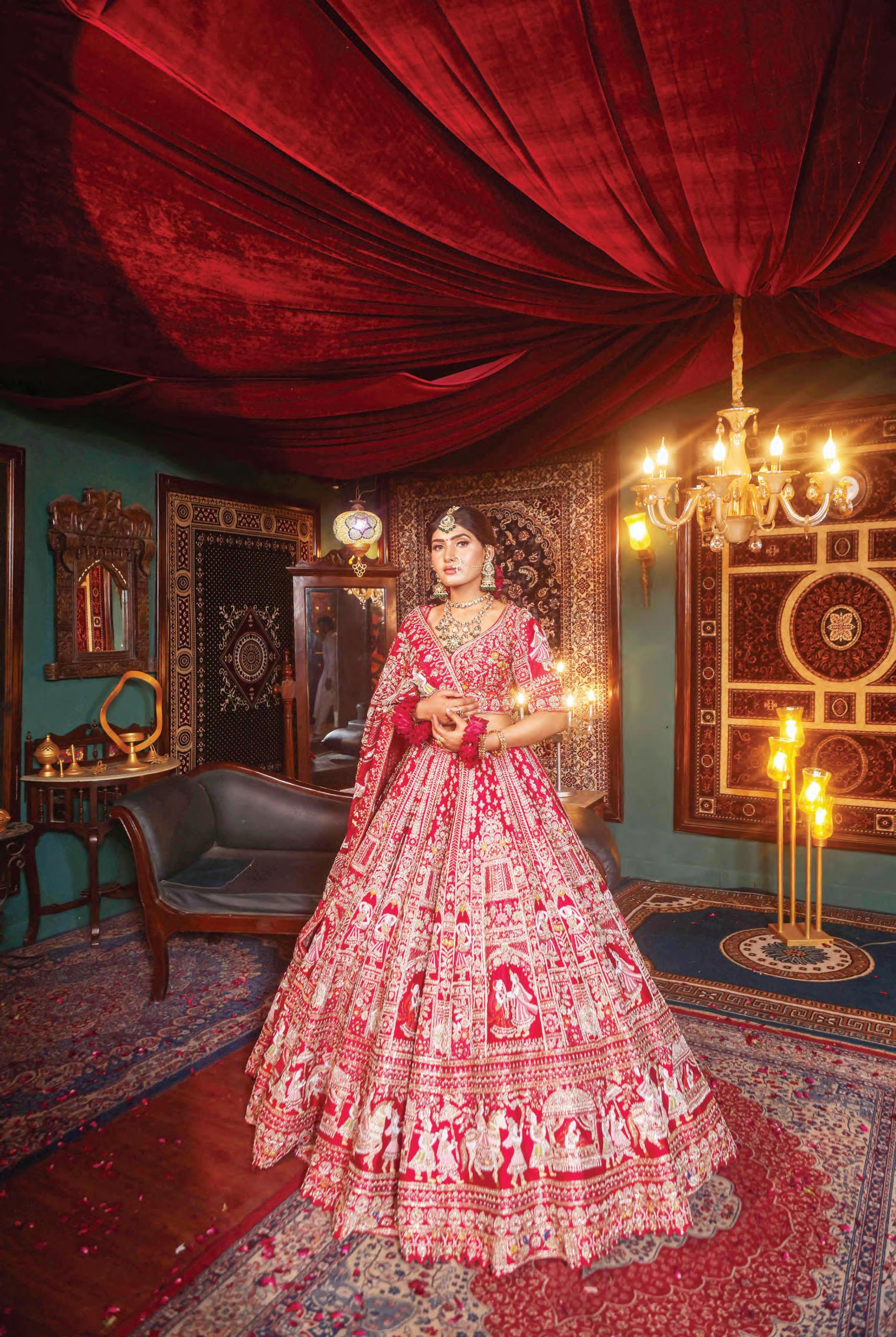
DRISHTI FASHION
KUNDANS BRIDAL COUTURE COLLECTION
BY POOJA VALEJA
A glimpse of classic romance in handcrafted luxury with gold sequence and zardozi
Unveiling the magic of tradition with a modern twist
Timeless elegance woven in heritage ideal for your big day
Heirloom silhouettes for modern brides that love red
Contemporary Bride and Groom’s wear in contrasting strokes
Grace, grandeur, and eternal femininity in every thread
Traditional craftsmanship meets modern royalty with a touch of glam
Broad necklines and innovate cuts to blend with modern trends
Detailed hand embroidery of gold and sequence in bold bridal colour
Runway to Retail: 2026 Online Fashion Trends
by POOJA VALEJA
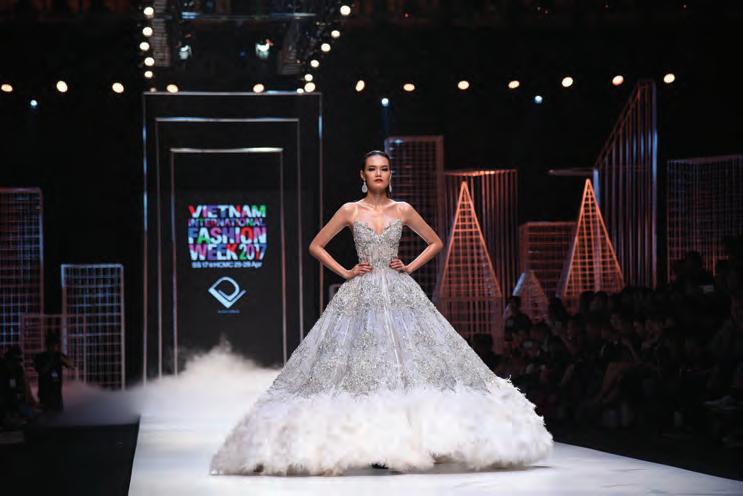
The fashion world is evolving rapidly. With digitalization captivating every demographic, the fashion and retail industry is embracing digital transformation at an unprecedented pace. By 2026, the journey from runway innovation to online retail will be faster, more dynamic, and more consumer-driven. It’s now easier to get runway looks from home by trying on apparel virtually with Augmented Reality and Arti cial Intelligence.
Besides, social media platforms, AI styling tools, sustainable fashion consciousness, and cultural movements now in uence how trends spread and settle into wardrobes around the globe. Here’s a look at how a runway trend reaches your wardrobe without you even stepping out:
1. Personalized Style & AI Shopping Tools
Innovation has led to greater reliance on arti cial intelligence to make our shopping experience simpler and more pleasurable. Arti cial intelligence isn’t just powering recommendations; it’s also becoming a creative partner in fashion.
• AI-powered style assistants that curate out ts based on your mood, climate, past purchases, and even upcoming calendar events.
• Dynamic product suggestions that adapt in real time as you browse.
• Highly powered AI tools consider all your lters, from budget-friendly options to color schemes, and from sizing to delivery location proximity.
e impact of AI has led to a shi in consumer preferences from in-store shopping to online shopping at any time, at their convenience.
2. Augmented Shopping Experiences
An augmented shopping experience uses AR tools to make your experience feel more real and physical, like when you enter a store or boutique, whereas AI focuses on analyzing your tastes and needs to recommend products.
• Virtual try-ons that go beyond just t—allowing you to see fabrics move, shimmer, or drape in real time with realistic physics.
• AR dressing rooms that integrate with live video calls so friends can virtually shop together.
• Interactive 3D product displays that let shoppers explore every angle and detail before purchasing.
e impact on the retail industry is massive, especially for standalone stores and physical store experiences. One can have a seamless experience with deliveries, returns, exchanges, and product knowledge.
3. Runway to Retail
Traditionally, runway looks were primarily seen in magazines and digital publications, but access was rare and periodic. Today, fashion shows are online, and one can view apparel instantly and use AI to nd the exact brand or similar pieces based on preference and budget.
Even designers are becoming more approachable and showcasing their collections on social media to gain greater visibility. In fact, designers opt for speci c color palettes to create various looks, which uno cially feel like their own copyrighted work.
You may notice a brand with a green-and-red color palette and a bee symbol. Another brand might be recognized for brown checkered scarves, coats,
and bags. Brands use signature colors and prints to establish a distinct identity and high recall, o en making the logo secondary.
e impact of runway-to-retail through digitalization has been very visible, especially when you see something at Paris Fashion Week trending in Canadian stores, or a US product going global despite being showcased for only a few hours or days on the runway. e world has become a single global market, and procurement is available through multiple channels.
4. Sustainability and digitalization
Sustainability isn’t a buzzword; it’s now a key decision factor for online shoppers. Although there is a selected set of consumers at this point, this set is
increasing. Products are doing the lling for such a conscious audience:
• Digital product stamps that show a garment’s lifecycle—from material sourcing to carbon footprint.
• Brands highlighting ethical production with veri ed transparency badges. Shoppers are more informed and intentional, making sustainability a major online di erentiator.
5. Tech Innovation in Cra smanship
As digital trends accelerate, cra smanship nds a new platform.
• Handmade and artisanal pieces showcased through online brand stories, livestreams, and creator highlights.
• Tech-enhanced tradition, like laser embroidery or 3D-printed embellishments on handcra ed garments, is a new trend this year.
• Collaborative collections between digital artists and traditional makers. e idea is to have a collaborative bond with the artisans to showcase their work globally.
Authenticity and story become as valuable as style and trendiness. True cra smanship and character add value to the product, such as the man-hours used in its creation, sourcing from the core, and the artisans' origins; these are ampli ed to create visibility and trust.
6. Social E-Commerce: Social Media platforms are more than
inspiration—they are the store. With increasing screen time, content is king. Brands, designers, and artisans create innovative designs, styles, and patterns for every palate, showcased in stories, posts, and threads that build conversations.
ese platforms also o er a great shopping experience, such as user-generated lookbooks that fuel communitybased recommendations.
To conclude, 2026 is the year when fashion becomes truly interactive. From AI stylists to AR tting rooms, online fashion is evolving into a seamless mix of technology, creativity, and personal expression. e future of fashion isn’t just observed, it’s lived.
Vintage fashion has long been celebrated as timeless, elegant, and endlessly relevant. ese are pieces cherished for years, and even decades. Some of them become heirlooms and get passed on from generation to generation. Something peculiar about Vintage is that it never goes out of fashion. ey are valued by their quality, cra smanship, artisanal rareness, and individualism. While modern-day fashion o en revolves around fast-paced, bold statement pieces and designer collections, streetwear for a season, and vintage style quietly endures by doing the opposite. It thrives on subtlety, quality, and thoughtful design—proving that true style does not need to shout to be heard. At its core, vintage fashion is about longevity. Garments from the 1920s to the 1980s were cra ed with an emphasis on t, fabric, and function. Imagine watching an early 1900 nineties movie. Isn’t it impressive to check out their styles, cuts, silhouettes, and even hairstyles? Tailored trousers, crisp button-down shirts, midi skirts, trench coats, and well-structured blazers formed the backbone of everyday wardrobes back then.
ese items were never meant to be eeting trends; they were designed to be worn repeatedly, styled di erently, and passed down.
Never goes out of Style
Unlike statement pieces, which are o en de ned by exaggerated silhouettes, loud prints, or trend-speci c embellishments, vintage staples blend seamlessly into any era. Ruling out statement pieces does not mean rejecting individuality. Instead, it shi s the focus to a personal style built on consistency rather than spectacle. A neutral woolen trench coat from the 1960s or a classic denim jacket from the 1970s, when worn today, allows the consumer to express themselves and showcase their love for quality and class.
Vintage fashion trusts the wearer more than the garment, encouraging condence and creativity without visual
Unmatched Cra smanship
Another reason vintage fashion remains evergreen is its unmatched cra smanship. Many vintage garments were produced before fast fashion dominated the industry. Natural bers such as cotton,
construction techniques prioritized durability. Fast fashion has forced brands to develop seasonal collections, increase production, and manage logistics. is has led brands to produce in bulk, focusing on short-term quality, since it’s streetwear and meant for today’s fast-paced fashion. Moreover, huge bulk quantities lead to products becoming r common. In contrast, a simple vintage dress with clean lines or a stocking with minimal detailing can look just as appropriate today as it did forty years ago. Timeless palettes
Timeless color palettes further strengthen
vintage fashion’s lasting appeal. Earthy tones, monochromes, muted pastels, and classic combinations like black and white or navy and beige de ne vintage aesthetics. ese colors age gracefully and adapt easily to changing trends. Statement pieces, on the other hand, are o en tied to bold colors or patterns that quickly feel dated. While both are great options, they particularly de ne an individual's characteristics and preferences. Some like statement pieces like a bold red coat or a multicolored skirt. It’s all about personal style. Vintage fashion does not avoid them; it simply maintains quiet sophistication that transcends seasonal cycles. e same coat in a burgundy tone, made of heavy woolen fabric with some hand embroidery, is all it needs to make it a classic vintage.
Naturally Sustainable
Vintage fashion also aligns naturally with sustainable values since it was created to
last seasons. Choosing enduring pieces over trend-driven statements reduces overconsumption and waste. When wardrobes are built on versatile, long-lasting items, fashion becomes more intentional. is philosophy feels especially relevant today, as consumers seek ethical and sustainable alternatives to fastfashion excess.
Trends may come and go, but a well- tted blazer, a classic dress, or a pair of timeless shoes will always have a place, quietly, con dently, and forever in style.
Quick tips to make your wardrobe have a look and feel of Vintage without spending too much:
Focus on Timeless Silhouettes:
Select classics like high-waisted trousers, A-line skirts, midi dresses, and structured blazers. ese silhouettes were popular across decades and instantly give a vintage feel.
Neutral and Muted Colors
Vintage fashion favors earthy tones, so pastels, and monochromes over bright, neon shades. Select colors like beige, olive, navy, brown, and cream.
Quality Fabrics over Quantity
Natural materials such as cotton, linen, wool, silk, and tweed mimic the texture and drape of vintage garments.
Incorporate Retro Accessories
Accessories play a key role in vintage styling. Add leather belts, silk scarves, cat-eye sunglasses, brooches, or structured handbags to elevate a modern look with old-world charm.
Pay Attention to Fit
Tailoring is essential. Vintage fashion is known for clean lines and well- tted garments. Alter for a more polished, vintage-inspired appearance.
Avoid Loud Logos and Prints
Minimal branding is key to achieving a vintage aesthetic. Replace bold logos and oversized graphics with subtle patterns like checks, polka dots, stripes, or plain fabrics.
Mix Old with New
Pair one genuine vintage or thri ed piece with modern clothing. A vintage jacket, watch, or bag can instantly transform a contemporary out t into something that feels nostalgic yet fresh.
Embrace Simplicity Over Statement
Pieces
Vintage style thrives on subtle elegance. Instead of bold statement items, focus on balanced out ts where every piece works together harmoniously.
BURNOUT CULTURE
HOW TO STOP IT BEFORE IT BREAKS YOU
We live in an age where earning, working hard, and adding side hustles are worn like a badge of honor. “I’m so busy” has become a status symbol.
Additionally, long hours, constant noti cations, immediate email responses, more e cient communication modes, and the pressure to always be optimizing have created what many now call burnout culture. It’s a way of living that glori es overwork while quietly draining our mental, emotional, and physical health. e interesting part is that we don't always even realize that this is happening to us. Skipping lunch to nish up a presentation, avoiding hanging around with friends in the evening so you can wake up early next morning for a meeting, having the urge to constantly look at your emails when alone, even for a minute or two, wanting to nish some chores all the time when you have a few minutes in hand to relax between work.
Well, this is not to blame anybody; it’s plainly our own mindset, which wants to give attention to everything around us but not ourselves. Most of the times our
mind is tuned to making sure that everything around runs smoothly, and we are the wheels to it. So, in the cyclic space, we want to make sure everything is done perfectly, even if that means forgetting to take your medicines on time or stretching for a few seconds.
Here’s how to realize and comprehend if you are facing it, how long you have been going through, and how to stop it before it stops you.
Comprehending Burnout
Being burned out is more than feeling tired a er a long week. It’s a state of
chronic physical and emotional exhaustion caused by prolonged stress, especially stress that feels inescapable. So, critically, being burned out is when you have reached a stage where, most times, the mind and the body do not completely want to e ectively respond to the situation due to a situation of any of the following:
1.Exhaustion: You feel drained, even a er resting. Sleep doesn’t restore you the way it used to.
2.Sudden Distrust or Detachment: You become emotionally distant from your work, colleagues, or responsibilities. What once mattered now feels pointless.
3.Reduced e ectiveness: Tasks that used to feel manageable now feel overwhelming. Your performance and con dence decline.
It’s not laziness. It’s not a lack of discipline. It’s what happens when your internal resources are depleted for too long without recovery. But again, burnout doesn’t happen overnight. It creeps in slowly. Some of the emotional, physical, and mental signs of being burned out could be:
• Irritability
•Loss of motivation
•Feeling detached from work or people
•Chronic fatigue
•Headaches or muscle pain
•Sleep disturbances
•Reduced creativity
•Negativity
If you’re constantly tired but wired, pushing through despite dread, or feeling like nothing you do is ever enough, you’re not lazy. You’re just overloaded and need an extra hand.
It is important to understand that a
personal issue can a ect the professional front. For instance, if one is going through the loss of a family member, a separation, or even an accident, this could
times, it is important to get some extra help and rest until we feel mentally and physically t to take on all the activities. Stop Burnout Before It Breaks You Sometimes, we do not even realize that we are on the path to exhaustion. On the other hand, in some ways, we also do not know how to escape it. In some cases, taking on a hustle job and managing a home and a regular job could be an economic necessity. In other cases, some people cannot be assertive and say ‘No’. Whatever the case, to avoid burning out is to realize that, if you are already on the path, you need to stop now before it exhausts you to the point where you want to completely give up the activity. So then, if you realize you need to stop now, it is important to delegate or compartmentalize work and set aside a few pockets of time for yourself, simply to rejuvenate. Also, another important aspect is to stay positive and happy because if you are not
•Rede ne Productivity: Productivity isn’t about doing more. It’s about doing what matters sustainably. Sustainable success beats short-term intensity.
•Set Non-Negotiable Boundaries: Boundaries are not sel sh. ey are protective. Set clear work hours.
•Detach Your Worth from Your Work: Develop identity anchors outside work, like knitting while traveling, listening to music, which could be calming hobbies
•Structural Change: If possible, push for realistic workloads. Normalize mental health conversations
To conclude, you don’t need to quit your job or move to the mountains to escape burnout culture. You need awareness, boundaries, and the courage to reject toxic productivity norms. Because success means nothing if you’re too exhausted to enjoy it. And no achievement is worth breaking yourself for.
FROM DORM ROOMS TO THE SPOTLIGHT: HOW GEN Z REDEFINES ENTREPRENEURSHIP
“Nearly half of what separates successful entrepreneurs from unsuccessful ones is pure perseverance.”
—Steve Jobs, Co-Founder and CEO, Apple Computer
Today’s university students are not solely rede ning technology but driving a shi in ways that earlier generations overlooked. Dorm rooms are no longer spaces for sitting, chatting, and studying; they are now areas for brainstorming technological breakthroughs. While an enormous chunk of students rely on AI to help with assignments and exams, others use it as a catalyst to explore new social ideas. Earlier, technology was a privilege, but today it has become an everyday asset. Classrooms turn into incubators Universities today aren’t only producing graduates but serving as launchpads for entrepreneurs who start their companies even before graduating. is relies not only on education but on a blend of
BY JASMINE KAUR KOCHHAR
analytical thinking, risk-taking skills, and opportunities. ese factors equip students with the skills, experience, and vision to create something of their own that bene ts society. e year 2026 denotes innovation, adopting a vibrant mindset, and taking risks.
Evolution of the generation With the rise of AI in our lives, perspectives on technology and education shi ed. While companies stuck to the same structures and skill sets for years, Gen Z reimagined them. ey embraced risks and challenges, taking bold steps that traditional thinkers might nd impractical. Youth turned curiosity into a tool for pursuing new opportunities.
Startups to real businesses
At one point, start-ups founded by university students were projects deemed by naysayers as preoccupations that could not break through the mainstream market. is perception has evolved. University students’ start-up projects bene ted society. Canadian universities like UBC, Waterloo, and Simon Fraser present tech programs where students explore the world of technology. ese courses serve as the foundation for students to become entrepreneurs. e courses o ered by these universities are interdisciplinary. For example, mass communication students might collaborate with the design department, while healthcare students might work with technology.
Canadian universities o er students
facilities that help them build and create various things. is year’s Forbes 30 Under 30 included achievers from elds such as media, green tech, and AI. is shows that the youth are versatile in these areas, especially in rede ning existing paths and ways.
e young entrepreneurs and students rede ned what success means. While older companies usually followed a similar path to succeed, younger companies not only want their businesses to be pro table but also aim to improve society’s well-being.
Learning doesn’t only sustain within those walls
e learning horizon widened due to advances in technology and students’ willingness to take risks. Success won’t come from being comfortable. A motto embraced by Gen Z has identi ed long-standing societal problems that traditional entrepreneurs have overlooked.
e co-op programs o ered by universities helped students start companies during their second and third years of study. For example, students from the
University of Waterloo’s engineering program founded a start-up called “Corale.” is has transformed how companies can choose to hire the best engineering talent and avoid errors. e students credited the university’s co-op and entrepreneurial programs. Another example from Metro Vancouver is a student and tutor at Simon Fraser University, Amir Shara , who le university to build “Enya Learning,” a platform that provides personalized education and training for newcomer K-12 students.
ey don’t only nd problems; they solve them. ese ventures lie in discovering societal issues that traditional ventures didn’t recognize. eir motives are nobler: ambition and an intent to create a platform that bene ts society. University students and young entrepreneurs transformed campus life by making the most of their time. ey didn’t spend their days chatting with friends; instead, they o ered solutions to signi cant societal problems. ey are rede ning technology
Science teacher Ryland Grace (Ryan Gosling) wakes on a spaceship light-years from home, with no memory of who he is or how he got there. As his memory returns, he uncovers his mission: to solve the riddle of the mysterious substance causing the sun to die. He must draw on his scienti c knowledge and unorthodox ideas to save everything on Earth from extinction, but an unexpected friendship may mean he doesn’t have to do it alone. e lm stars Ryan Gosling, Sandra Hüller, Lionel Boyce, Ken Leung, and Milana Vayntrub.
(Animation, Kids, Family)
Based on the 2026 animated adaptation of Deborah Diesen’s best-selling children’s book, e Pout-Pout Fish follows Mr. Fish (voiced by Nick O erman), a gloomy, reclusive character who reluctantly teams up with Pip, a bubbly, hyperactive leafy sea dragon (voiced by Nina Oyama). A er their homes are destroyed, they embark on a quest to nd the mythical, magical sh Shimmer to restore their reef, learning valuable lessons about friendship and self-discovery. Featuring voice actors are: Jordin Sparks, Amy Sedaris, and Miranda Otto.
and oil tycoon Merriell Sunday Sr. have disappeared without a trace in the windswept wilds of northern Alaska. As their children, Ellie Bannister and Merriell Sunday Jr., set out to search for their missing fathers, danger mounts. With the desperate search underway in the unforgiving, treacherous terrain, a prehistoric monster has taken notice of their trespassing expeditio and is now stalking and hunting them..THE YETI. Cast: Brittany Allen, Eric Nelsen, Corbin Bernsen, William Sadler, and Jim Cummings.
Mortal Kombat 2
(Sci-Fi, Fantasy, Adventure)
Mortal Kombat 2 is the sequel to 2021’s Mortal Kombat. It follows Earthrealm’s warrior champions, including the new addition Johnny Cage, as they face high stakes in a new Mortal Kombat tournament—a massive battle in which warriors from di erent realms face o against one another. Now the ultimate challenge is here. If the ghters from Earth aren’t victorious, the evil Outworld overlord Shao Kahn will invade and take over the planet. Cast includes: Josh Lawson, Ludi Lin, Mehcad Brooks, Lewis Tan, Karl Urban, Adeline Rudolph, and Tati Gabrielle.
Beast
(Mixed Martial Arts, Action, Drama)
A er years away from the violent world of cage ghting, a formerly feared Mixed Martial Arts (MMA) champion, Patton James, is forced back into the sport to save his younger brother, Malon, who has found himself in nancial and physical danger with dangerous underworld gures. Patton sets out to avenge him in a deciding Championship ght with the help of veteran trainer Sammy (Russell Crowe) for a nal, high-stakes showdown against the reigning champion. Will Cage be able to save his brother? e lm stars Russell Crowe, Daniel MacPherson, Luke Hemsworth, and former NRL star George Burgess.
Ready or Not 2: Here I Come
(Fantasy, Adventure, Drama)
e Devil Wears Prada 2 (Fashion, Comedy, Drama)
Directed by Andy Serkis, the 2026 animated Animal Farm is a satirical, family-friendly retelling of George Orwell's novella about a popular revolution betrayed. It follows a group of farm animals who live repressed, cruel lives and ultimately rebel against their neglectful human owner to create a free society. However, a cunning pig, Napoleon, seizes power, corrupting the farm animals’ ideals into a dictatorship. As the animals’ dream of an ideal society is lost, a younger pig named Lucky witnesses the farm’s corruption.
e Devil Wears Prada 2 features veteran Miranda Priestly (Meryl Streep) returning as she navigates the decline of print media, forcing her to confront her former assistant, Emily Charlton (Emily Blunt), now a high-powered luxury executive with the power and advertising money Miranda desperately needs. It focuses on shi ing power dynamics in the modern, digital - rst landscape of fashion and media, with Emily holding the cards while an evolved Andy Sachs returns to the fashion world. Cast: Meryl Streep, Anne Hathaway, Emily Blunt, and Stanley Tucci.
Directed by Andy Serkis, the 2026 animated Animal Farm is a satirical, family-friendly retelling of George Orwell’s novella about a popular revolution betrayed.
It follows a group of farm animals who live repressed, cruel lives and ultimately rebel against their neglectful human owner to create a free society. However, a cunning pig, Napoleon, seizes power, corrupting the farm animals’ ideals into a dictatorship. As the animals’ dream of an ideal society is lost, a younger pig named Lucky witnesses the farm’s corruption.
Animal Farm (Animation, Satire, Family)
Avocado Spring Rolls
When you want something light, vibrant and genuinely nourishing, these avocado spring rolls o er a refreshing way to eat well without sacri cing avour. Each one is packed with bright vegetables and the creamy richness of avocados from Mexico, which provide good fats and are an excellent source of bre. Paired with a zesty ai-inspired peanut sauce, this dish is a simple, energizing and satisfying meal for any day of the week.
Ingredients
For the spring rolls:
• 2 ripe avocados from Mexico
• 6-8 rice paper wrappers
• Fresh basil leaves, to taste
• 1½ cups (375 ml) romaine lettuce or mixed greens
• 2 cups (500 ml) cooked rice noodles (optional)
• 1 cup (250 ml) thinly sliced red cabbage (optional)
Directions:
1. Prepare the llings
Prep time: 15 minutes
Servings: 6 to 8 rolls
For the peanut sauce:
• ¼ cup (60 ml) creamy peanut butter
• 1 tbsp (15 ml) soy sauce (or tamari)
• 1 tbsp (15 ml) lime juice (fresh)
• 1 tsp (5 ml) sesame oil
• 1–2 tsps (15–30 ml) maple syrup, to taste
• ¼ tsp (1.25 ml) garlic powder
• 1/8 tsp (0.75 ml) ginger powder
• 2–4 tbsps (30–60 ml) warm water (as needed, to thin)
Slice the avocados into thin strips. Wash and dry the greens and cabbage, if using. Set the basil and noodles aside.
2. Make the peanut sauce
Whisk together the peanut butter, soy sauce or tamari, lime juice, sesame oil, , garlic powder and ginger powder until smooth. Add in the maple syrup until desired sweetness is reached.
3. So en the rice paper
Fill a shallow dish with warm water. Prepare the rolls one at a time, dipping one rice paper wrapper until it becomes so and pliable. Place it on a clean, damp surface.
4. Assemble the rolls
For each roll, layer a small amount of lettuce or greens, basil, noodles and cabbage, if using, and a few slices of avocado on the lower third of the wrapper. Fold in the sides and roll tightly from the bottom to seal.
5. Serve
Enjoy the rolls immediately, with the peanut sauce for dipping.
Wellness tips:
• Avocados bring a naturally creamy texture along with good fats and bre, helping you feel comfortably satis ed.
• For the freshest results, roll just before serving.
• You can lighten the sauce by reducing the maple syrup or adding a touch of warm water for a thinner consistency. (NC)
Powered by
ARIES (March 21 - April19)
April and May bring a phase of self-re ection and recalibration. You may feel a strong urge to rede ne your goals, especially in career matters. Financially, cautious planning is advised as unexpected expenses may arise. Relationships require patience, as misunderstandings can arise from impulsive speech. is is a good time to focus on health and discipline, especially in terms of routine and diet. Professionally, slow but steady progress is indicated rather than quick gains. Avoid taking major risks or making rushed decisions. Spiritual practices or time in solitude will bring clarity. By late May, momentum improves, and you begin to feel more in control. Trust the process and stay grounded.
TAURUS (April 20 - May 20)
is period brings gains through networking and social connections. Opportunities may arise through friends or professional circles, so remain open to collaboration. Financial growth is indicated, but avoid overindulgence in luxury spending. Relationships improve, and you may nd yourself strengthening emotional bonds. Career-wise, recognition for past e orts may begin to surface. However, balance work and personal life carefully to avoid burnout. Travel or short journeys could be bene cial. Health remains stable but requires consistency in habits. By May, a sense of satisfaction and emotional stability sets in. Stay focused on long-term goals rather than short-term pleasures.
GEMINI (May 21 - June 20)
April and May highlight career and public image. You may experience increased responsibilities or a shi in professional direction. Hard work will be noticed, but results may come with a slight delay. Financial matters require careful planning, especially when it comes to investments. Relationships may feel strained due to time constraints or mental stress. Avoid overthinking and trust your instincts. is is a good time to enhance your skills or take up learning opportunities. Health may require attention, particularly related to stress or sleep. By the end of May, clarity improves, and you regain con dence. Stay patient and avoid unnecessary con icts.
CANCER (June 21 - July 22)
is period encourages expansion, learning, and new perspectives. You may feel inclined toward spiritual or philosophical pursuits. Traveling, especially long-distance travel, can be bene cial or even transformative. Career advancement is likely, especially if you're willing to step outside your comfort zone. Financial stability exists, but avoid risky ventures. Relationships o er support, particularly from mentors or elders. It's an ideal time for higher education or earning new certi cations. Health remains steady, though mental clarity improves with meditation or mindfulness. By May, opportunities become clearer and more rewarding. Trust your intuition and welcome growth.
LEO (July23 - August 22)
April and May bring a deep, transformative phase. You might deal with hidden issues, nancial changes, or emotional intensity. It’s important to stay calm and avoid unnecessary con icts. Focus on managing debts or shared resources wisely. Relationships may feel intense, requiring honesty and emotional maturity. is is a time for inner healing and releasing past baggage. Career progress may seem slow, but the groundwork is being laid. Avoid taking risks or making impulsive commitments. Health needs attention, especially stress management. By late May, a sense of renewal begins to surface. Embrace transformation with patience.
VIRGO (Aug 23 - Sept 22)
Relationships take center stage during this period. Whether personal or professional, partnerships need attention and balance. You might face situations that test your patience and communication skills. Careerwise, collaborating will be more helpful than working alone. Financially, you’re stable, but steer clear of unnecessary spending. Resolve past con icts and strengthen connections. Health stays steady, but mental peace should be a priority. Avoid overanalyzing to prevent confusion. By May, harmony begins to return, and clarity improves. Focus on mutual understanding and compromise.
Capt. Sukhbir Mangat
778-891-4965
LIBRA (Sept 23 - Oct 22)
April and May focus on work, routine, and health. You might nd yourself busy with responsibilities and daily chores. is is a good time to organize your life and boost e ciency. Career growth remains steady, though it may feel demanding. Financially, stability is likely, but avoid impulsive lending. Relationships require e ort, especially in maintaining a balance between work and personal life. Prioritize health by focusing on diet and physical activity. Avoid stress and overexertion. By the end of May, you'll start to see the results of your e orts. Discipline will be your strongest asset during this time.
SCORPIO (Oct 23 - Nov 21)
Creativity and self-expression are emphasized during April and May. is is an ideal time to pursue passions or creative projects. Relationships, especially romantic ones, bring excitement and emotional depth. Financial gains are possible, but steer clear of speculative risks. Career growth is steady, with chances to showcase your talents. It's also a good time to plan future endeavors. Health remains stable, but avoid overindulgence. Children or younger individuals may play a signi cant role during this period. By May, con dence and clarity grow. Embrace joy and allow yourself to express freely.
SAGITTARIUS (Nov 22 - Dec 20)
Home, family, and emotional stability become key themes. You may focus on domestic matters or property-related decisions. is is a good time to strengthen family bonds and create a peaceful environment. Your career might require you to balance personal responsibilities. Financially, stability exists, but avoid large investments without proper planning. Emotional sensitivity may increase, so practice patience when communicating. Health remains stable, but emotional balance is needed. is is a favorable time for introspection and personal growth. By May, a sense of comfort and grounding develops. Focus on nurturing both your inner and outer worlds.
CAPRICORN (Dec 21 - Jan 19)
Communication, travel, and learning are highlighted during this time. You might nd yourself involved in discussions, negotiations, or short trips. Career opportunities could emerge through networking or communication e orts. Financial gains are possible, but careful planning is essential. Relationships improve through honest and clear communication. is is a good period to acquire new skills or deepen your knowledge. Health remains steady, but avoid mental overexertion. By May, your con dence in decisions grows. Stay focused and avoid distractions. Your e orts will lead to gradual, steady progress.
AQUARIUS (Jan 20 - Feb 18)
Financial matters take priority during April and May. You may focus on saving, investing, or restructuring your nances. Opportunities to increase income exist but require careful decision-making. Your career remains steady with gradual progress. Relationships provide support, but try to stay connected rather than detached. is is a good time to build security and plan for the future. Health stays stable, but watch your diet. Avoid unnecessary expenses or risky ventures. By May, your nancial clarity improves, and your con dence grows. Focus on stability and long-term growth.
PISCES (Feb 19 - March 20)
is is a signi cant period for personal growth and self-expression. You may feel more con dent and motivated to take control of your life. Career opportunities appear but need focused e ort and discipline. Financially, improvements are likely, but careful planning is recommended. Relationships o er both support and lessons, fostering emotional maturity. is is a great time to start new ventures or take initiative. Health remains steady, but avoid overexerting yourself. By May, clarity and direction improve greatly. Trust yourself and move forward con dently.
2029 WILL ASTOUND
LEXUS LFA
BY VEENO DEWAN
The Lexus LFA is an iconic, legendary Supercar that originally debuted in 2010. With a sleek, swoopy body, state-of-the-art technology, and a highly tuned V10 engine boasting 553 horsepower, it has been acclaimed by the automotive press as one of the nest modern-day supercars ever built. e LFA won accolades for its high-revving, bulletproof Yamaha-derived V10 engine, superb acceleration, sublime handling, and excellent everyday driving capability.
ere is no current LFA for 2026, but the new Lexus LFA is expected in 2029, possibly debuting as a 2028 model. Details
are approximate, according to both Lexus and automotive press reports. e new Lexus LFA concept, however, was displayed at the annual Monterey Car Week event in California in 2025. Lexus says the pre-production Sport Concept version of the new LFA is expected to be identical to the production model as displayed. In a press release, Lexus said, “ e LFA Concept is a next-generation sports car model that embodies, along with the GR GT and GR GT3, Toyota’s Shikinen Sengu ethos.” Based on the three key elements of a low center of gravity, low weight with high rigidity, and the pursuit of aerodynamic performance.” e new Lexus LFA is designed to be an electric sports car, not a plush grand tourer. As a result, storage options will be limited.
Battery power – no V10 engine!
Unlike its predecessor, the new LFA will be battery-powered only, with no hybrid version on the cards for now. Horsepower gures have not yet been released, but over 600 hp is expected as the lowest gure. e styling will be updated with an even lower-slung design, featuring a lightweight aluminum frame and a ground-e ect, low-riding body adapted from the current GR GT sports car. e LFA's styling will be specialized and unique
to this model only. Ultra-aerodynamic body contours, high-speed aero aids, and a bevy of high-tech engineering systems are expected to maximize performance. e LFA will use the same advanced aluminum space-frame as other new Toyota Gazoo Racing supercars.
e new LFA will likely be the rst to use Toyota’s rst-generation solid-state batteries (SSBs), which have much-improved energy density, allowing battery packs to be much thinner. e more compact battery will also o er the LFA even better mass centralization and weight distribution for optimum handling and performance, according to Lexus. Another bene t of SSBs is the faster charging rate, enabling a charge from 10% to 80% in just 10 minutes.
Interior-wise, the new LFA's cabin is expected to be minimalist and driver- focused, with an emphasis on total control and performance-oriented driver ergonomics. e instrument and driver infotainment display will also likely be a curved, all-digital unit, with a dedicated driver instrument cluster behind a GT3 racing-style steering wheel. Lexus says, “ e LFA will have an ideal driving position that enhances a sense of car-driver unity and vehicle handling.” Lexus also said the new
steering wheel “eliminates the need for regripping with a di erent hand, together with a switch layout that makes blind touch operation possible and so enabling intuitive vehicle control.”
Final performance speci cations, powertrain, top speed, and pricing, along with a production timeline, are still to be con rmed. Like its predecessor, which was always a rare, limitedrun supercar, the LFA is expected to command a six- gure price of over $500,000. Lexus says the new LFA will make a showroom appearance in 2029 in limited numbers. As with all good things, Lexus will make supercar fans wait!
2029 Lexus LFA – Price to be announced. More info at www.lexus.ca
F 2027
KIA TELLURIDE AWARD-WINNING SUV
BY VEENO DEWAN
or 2026, the Kia Telluride remains a large 7 or 8-seater premium SUV. Key changes continue with a new, more powerful and e cient 2.5L turbocharged 4-cylinder hybrid (329 hp, 339 lb- ) joining the lineup. e Telluride
Hybrid version adds two electric motors, bringing the total to 329 horsepower. All-wheel drive is standard in Canada, with the hybrid's towing capacity expected to be around 4,500–5,000 lbs.
e 2027 is 2.3 inches longer than its predecessor and nearly 3 inches longer in
wheelbase. is result is a larger interior. Combined, these expanded dimensions promise more interior and cargo space. e boxy Ranger Rover style body is re ned and more rounded with ush pop-out door handles and sleek lighting designs front and rear. ere is now the adoption of a trendy “ oating roof” styling.
e sporty X-Pro trim provides mild o -road capability and a tougher look with its large, black grille and black wheels. Added is an electronic limited- slip di erential, a raised suspension with more ground
clearance, and an exterior camera system that lets the driver see what's under the Telluride on terrain approach.
For 2027, the Telluride’s interior is updated with a revamped single-unit wide-screen digital high-tech dashboard featuring a dual-screen setup (12.3-inch cluster + 12.3-inch infotainment). ere is also an updated steering wheel, premium materials, and a more cabin-e cient layout. e Telluride will again be available in seven- and eight-passenger con gurations, with a choice between captain’s chairs or a bench seat for the second row. Wireless Android Auto and Apple CarPlay are standard, as is an AI-powered voice assistant.
e cabin features upscale touches, like accent lighting, twin phone charging mats, and seating surfaces with embossed details.
e Kia Telluride continues the company’s tradition of o ering more equipment and luxury at a lower price than premium brands. Available content includes the ability to turn your iPhone into a key to unlock doors and start the engine.
e Telluride arrives with standard equipment such as: LED headlights, 20-inch black alloy wheels, dual sunroofs, a heated steering wheel, ventilated second-row seats, rain-sensing wipers, a head-up display, a surround-view camera system, and adaptive cruise control with steering assist. Interior trim is composed of very nice brushed metal and faux matte-open-pore nish wood that actually looks real. e seats have a rich, premium look and feel that is comfortably sumptuous. Fully loaded Kia Tellurides are lavish—with arti cial or real full leather
interior upholstery, heated and ventilated front seats, dual sunroofs, second-row captain’s chairs, and a 360-degree camera.
e Telluride o ers a huge roomy second row and good access to the third row. ere are also plenty of storage compartments and well thought out details such as two USB ports per row. Everything looks solid and well built, with high quality, durable looking materials. A streamlined interior design gives the Telluride's cabin a modern look. A large center console between the front seats provides plenty of room for small-item storage, A pair of wireless smartphone charging pads is nestled at the front of the center console and is a standard feature on all Tellurides. While a three-across bench seat is standard in the Telluride's second row, some trims can be out tted with captain's chairs. e third row of seats can be had with an optional seat heater. there's more room here than in Kia's other three-row SUV. With the third-row seats up, cargo room is decreased. substantially.
with forward collision warning, automatic emergency braking, lane keeping assist, blind-spot monitoring, and adaptive cruise control with Highway Driving Assist.
On the road, e Telluride o ers four di erent modes from which to choose from, depending on road and weather conditions: Smart, Eco, Sport, and Comfort, each using di erent settings for powertrain, drivetrain, and steering e ort mapping.
To sum up, the new Telluride is comfortable, sporty with good driving dynamics, and a feeling of luxury and re nement. It arrives superbly equipped and undercuts comparable SUVS by many thousands of dollars. e Telluride continues to win awards and sells well; hard not to see why. Highly recommended as a best buy.
2027 Kia Telluride. Expected price $53,930 - $57,000. Plus fees taxes Destination and PDE. More info at www.kia.ca
Driver Assistance includes Kia's Drive Wise suite
2026
LUCID AIR
ALL-ELECTRIC PREMIUM SEDAN
BY VEENO DEWAN
Lucid Motors, based in California, has operated since 2020 and produces expensive, luxury allelectric sedans and SUVs to compete with the best European EV models, such as the Porsche Taycan, Audi RS e-tron GT, BMW i7, and Mercedes-AMG EQE sedan.
For 2026, Lucid o ers the Air–a sleek four-door sedan – as well as the new Gravity SUV. e Air is a luxury, fully loaded, premium car with superb acceleration, attention to detail, and
nishing. For 2026, all Air models receive additional standard driver aids, along with a more e cient heat pump, a better-performing driver interface, and improved technology hardware.
e Lucid Air is o ered in four distinct versions. e entry-level rear-drive Pure model has 430 horsepower and can sprint from 0 to 100 km/h in 4.7 seconds. e Touring model comes next and adds twin electric motors and All-Wheel-Drive. e two motors combine to produce 620
horsepower, and the 0 to 100 km/h acceleration time is an even quicker 3.6 seconds.
e two other models dramatically increase electric power and performance. e two-motor Grand Touring o ers a mighty 819 horsepower and a mind-bending 0 to 100 km/h time of 3.2 seconds. e ultimate Lucid Air model is the incredible Sapphire version. It receives a third electric motor, and the All-Wheel-Drive powertrain delivers a stupendous 1,234 hp and 1,430+ lb- of torque. Acceleration from 0 to 100 km/h is a blink of an eye, 2.0 seconds! e top speed for this model is 330 kilometers per hour. ese gures make the Lucid Air Sapphire the world's quickest-accelerating production sedan. e Sapphire has a high-performance EV driving range of approximately 687-748 km.
e Air Pure with the 88-kWh battery delivers an EV driving range of 676 km. e Touring version uses a larger 93-kWh battery and o ers an EV driving range of 694 km. e Grand Touring features the high-capacity 112-kWh battery, delivering a driving range of 824 km.
In terms of EV charging, the Lucid has some impressive numbers – you
can add 320 km of driving range to the Air’s battery using a DC fast charger in 16 minutes for the Pure and Touring versions. e larger battery-equipped Grand Touring and Sapphire take 12 and 15 minutes, respectively. All models have an 800-volt architecture and use Tesla’s North American Charging Standard (NACS) charger plug.
Regarding the cabin, the Air has a plush, highly technology-led, driver-centric cockpit dominated by a huge 34-inch OLED glass display that handles most driver information and entertainment, plus all car control functions. ere is also a 12.5-inch portrait-style retractable Pilot Panel control center for vehicle functions and settings. e infotainment system now supports Android Auto via
over-the-air updates. Technology includes wireless Apple CarPlay and an optional audiophile-quality Surreal Sound Pro audio system with 21 speakers. e immersive audio system integrates Dolby Atmos technology to provide directional, 3D sound. ere is a heavy reliance on multiple screens and menus to operate the car's functions, with few tactile controls.
Otherwise, the cabin feels opulent, with comfortable front seats and sustainable materials. e “Mojave PurLuxe” interior trim uses recycled fabrics, open-pore wood trim, and high-quality leather alternatives. Real leather trim is available for an extra cost. e back seat comfortably accommodates a pair of tall adults. Cargo space is also plentiful, with a 283L frunk (front trunk) and a 627L rear trunk. When the rear seats are folded, Lucid says the Air o ers 1,835 L of space.
Canadian pricing starts with the rear-drive Air Pure at $99,900 and ends with the top-of-the-range $327,300 Sapphire, which includes all available features. Safety aids include the Lucid DreamDrive Pro driver-assistance suite, which uses 32 sensors—including LiDAR—plus Drive Assist with active lane centering.
Latest Gadgets
BY POOJA VALEJA
LG PF600U 3-in-1 Projector is is a unique three-in-one projector because it has 3 sharp features. e rst one is the Ultra Short row Projection; it can give a screen image from a short distance and does not need to be mounted on the roof or ceiling. Secondly, it has a Bluetooth Speaker feature that lets it connect easily to your phone or laptop, making it easy to listen to music, watch movies, and more. irdly, it has Mood lighting, which changes the lighting at your command.
Withings Omnia Smart Mirror is mirror is unique with AI sensors. It’s used for more than just showing your re ection; it also checks your health. ese AI sensors are very sensitive and can gauge a lot about your body just by spending a few minutes in front of them. It can track your personal health status by only standing in front of it. It helps you track your heart rate, blood pressure, metabolic rate, and more, so you can keep an eye on your well-being every day. It easily syncs with the app on your phone, giving you reports with a single click. So now you can also look at the beauty
Huupe Mini Smart Basketball Hoop
A latest tech game changer for all basketball lovers. A fun twist on indoor basketball, this hoop features a built-in screen. is is fun when you want tracking
a Smart screen built into your glasses. ese glasses provide views and videos kind of like a high-tech display right in front of your eyes. ey have clear visuals, a wide eld of view, and are designed for both fun and work. You can even add upgrades, like a camera, to record everything happening around you at any given time.
Apple Watch Series 10
Launched in September 2024, this is the latest Apple Watch with enhancements to the Series 9. It has a larger screen area, making viewing easier. Compared to the previous ones, this one is sleeker and o ers a wider range of angles, making it more desirable for any Apple lover. Its new case de nitely adds to the style. e enriching features include health monitoring and enhanced workout tracking that keep an exact count of your movement and help you calculate your calorie burn. Besides its best feature, Sleep Apnea detection, which makes it perfect for any health-conscious person, and even a workaholic, to get a good sleep analysis.
Anker Solix Solar Beach Umbrella is is a must-have umbrella for your vacations. It is a Solar-Powered Charging Station, so it's an answer to all those phone-charging needs on the beach or on the go. It looks like a regular umbrella, but it can charge your devices using sunlight. It is a Smart Upgrade to the outdoor gear. It has strong waterproo ng and is perfect for powering up phones or tablets at the beach or park. It is great for Eco Users and people who work remotely, as it can be carried on the go.
Lenovo ink Book Plus Gen 6 Rollable Laptop
is is the latest innovation of Lenovo, and it's truly unique. A laptop with a tall screen, i.e., it has an elongated screen. e screen that rolls up to get taller! You can use it as a regular laptop, but when you need more space, the screen extends. It’s a cool mix of style and function for serious work. If you are someone who likes to work on sheets and Excel, nance, or numbers, this is your ideal go-to.
ese are the latest innovation in the eld of motorized electric skateboards. It has a Top Speed of 35 Mph, 24 miles, making it one of the fastest skateboards. ese are great for uphill and rough surfaces, also known as Range Mountain Boards. ey o er an Optional AUXPack Battery that is long-lasting. ese are made with a high-end carbon ber unibody, making it strong for rough surfaces. ese are for Professional moving and travelling and can be dangerous for kids since these are for adults only. So, if you like adventure, this should be on your list for your next trip.*
*Images are for reference only. For accurate images, kindly visit the o cial websites.
Exway Atlas/Atlas Pro All-Terrain O -Road Electric Skateboards
FRANCE:
WANDERLUSTING IN DISCOVERING THE MAGIC OF THE LOIRE VALLEY
BY ZARA DURRANI
Just a few hours from Paris, the Loire Valley feels like stepping into another world. Rolling vineyards stretch across the countryside, rivers glide quietly past medieval villages, and elegant châteaux rise above manicured gardens and forests. O en called the “Garden of France,” the region is known for its extraordinary architecture, culinary traditions, and relaxed pace of life. For travelers willing to venture beyond the capital, the Loire Valley o ers a glimpse into a France that feels timeless and deeply rooted in heritage.
My journey began at Château de Villandry, one of the Loire Valley’s most celebrated estates. While many castles
impress visitors with grand architecture, Villandry is famous for something di erent: its breathtaking Renaissance gardens. Walking through the perfectly arranged terraces feels like wandering through living artwork. Vegetables, herbs, owers, and hedges are planted in intricate geometric patterns that shi with the seasons.
One of the most enchanting spaces is the Love Garden, where carefully trimmed hedges and vibrant blooms create symbolic designs representing di erent expressions of love. During my visit, I had the privilege of being shown around by Henri Carvallo, the château’s owner, whose family has dedicated
Château d'Azay-le-Rideau
Château de Champchevrier
Château d'Azay-le-Rideau
decades to restoring and preserving this historic estate. His warmth and humility made the experience even more meaningful as he shared the stories behind the gardens and the ongoing work that keeps Villandry thriving today.
at evening I checked in at Les Hautes Roches, a remarkable four-star property carved into the limestone cli s overlooking the Loire River near Rochecorbon. Part historic manor and part troglodyte dwelling, the hotel blends natural caves with elegant modern comforts. Some rooms are literally built into the cli side, a reminder of the centuries when these caves were used by monks and wine producers.
e property is led by owner Jérémy Augereau, whose dedication to hospitality is evident from the moment guests arrive. e service throughout the stay was warm and attentive, creating an atmosphere that felt both re ned and welcoming.
Dinner at the hotel’s renowned restaurant was unforgettable. With
views overlooking the Loire River, the experience felt almost cinematic. Each dish celebrated the ingredients of the region, beautifully presented and thoughtfully prepared. Sitting there enjoying the meal, I couldn’t help but feel as though I was dining like royalty in the heart of the Loire Valley.
e next day brought a di erent kind of discovery as I explored the historic city of Tours on a guided culinary tour with Yaël, from Food in Tours. Tours has long been considered one of France’s gastronomic capitals, and wandering through its lively medieval squares and cobbled streets quickly reveals why.
One memorable stop was a local fromagerie, where we sampled regional cheeses and learned about the cra behind them. e Loire Valley is famous for its goat cheeses, including the iconic Sainte-Maure-de-Touraine, and tasting them directly from local producers o ered a deeper
Les Hautes Roches morning outdoors
Château de Villandry with owner Henri Carvallo
Château de Champchevrier—owned by Laurence Bizard Hamilton
e journey continued at Château de Champchevrier, where I met owner Laurence Bizard Hamilton. Her family has cared for the estate for generations, and walking through the château with her o ered a fascinating look into its history and traditions. I even had the chance to meet the estate’s famous hunting hounds and their adorable puppies, an experience that made the visit feel both personal and unforgettable.
Listening to Laurence share stories of her family and the château’s past was a powerful reminder that these historic estates are not just monuments they are living legacies.
appreciation for the region’s culinary traditions.
Later we sat down for lunch at La Petite Embarque, a charming riverside guinguette along the Loire. e relaxed setting, with views of the water and locals gathering for long lunches, perfectly captured the spirit of life in the region. As a pescatarian traveler, I was delighted to nd thoughtful options on the menu that allowed me to enjoy the local cuisine while staying true to my diet.
at a ernoon I visited the stunning Château d’Azay-le-Rideau, widely considered one of the most romantic castles in France. Built on an island in the Indre River, the château appears to oat above the water, its graceful Renaissance architecture re ected in the surrounding moat. Standing there, it truly felt like stepping into a fairytale.
But the Loire Valley is not only about castles, it is also a region deeply connected to its rivers. One of the most memorable experiences of the trip came the following morning when I joined local shermen through Les Pêcheries Ligériennes to learn about traditional shing practices along the Loire.
Rain had arrived that day, turning our outing into a peaceful river cruise where we learned about the ecosystem and history of the Loire River. Later, the day’s catch was prepared at the riverside restaurant La Cabane à Matelot, where we enjoyed the freshest possible seafood while watching local chefs transform the ingredients into beautiful dishes. It was a wonderful reminder that the Loire Valley’s culinary traditions are deeply tied to its landscape.
What makes the Loire Valley truly unforgettable is this blend of history, culture, and human connection. From meeting château owners and local guides to sharing meals prepared from the day’s catch, each experience revealed another layer of the region’s identity.
For travellers looking to discover France beyond Paris, the Loire Valley o ers something extraordinary: majestic castles, vibrant culinary traditions, and a landscape that feels almost magical.
It is, quite simply, an experience I will never forget and one I highly recommend to anyone dreaming of discovering the timeless beauty of France.
Château de Champchevrier—outside gate
Château de Champchevrier
Chateau de Villandry living room Loire Vallery Fishing Boat experience
La Cabane à Matelot Food in Tours stop at Beillevaire