
Hilma af Klint was a Swedish painter and mystic. If Kandinsky is said to be the father of pure abstract painting, then Hilma af Klint was its grandmother. A considerable body of her work predates the work of Kandinsky and other pure abstractionists. A relative unknown in her lifetime, she has lately emerged as abstract art’s postumous superstar.
After a convential training, Af Klint began working in Stockholm, gaining recognition for her landscapes, botanical drawings, and portraits. Her conventional painting was a source of income, but her abstract work remained a separate practice. The latter can be understood as part of the modernist search for new forms in artistic, spiritual, political, and scientific systems that were in vogue at the start of the 20th century.
In 1906, at the age of 44, af Klint painted her first series of abstract paintings. These works for her Temple series comprising 196 paintings grouped into several sub-series. After completing the Temple series, she continued to pursue abstract painting independent of any external influences. Her work was rarely exhibited and in her will she specified that her work should be kept secret for at least 20 years after her death because the world was not ready for her art forms.
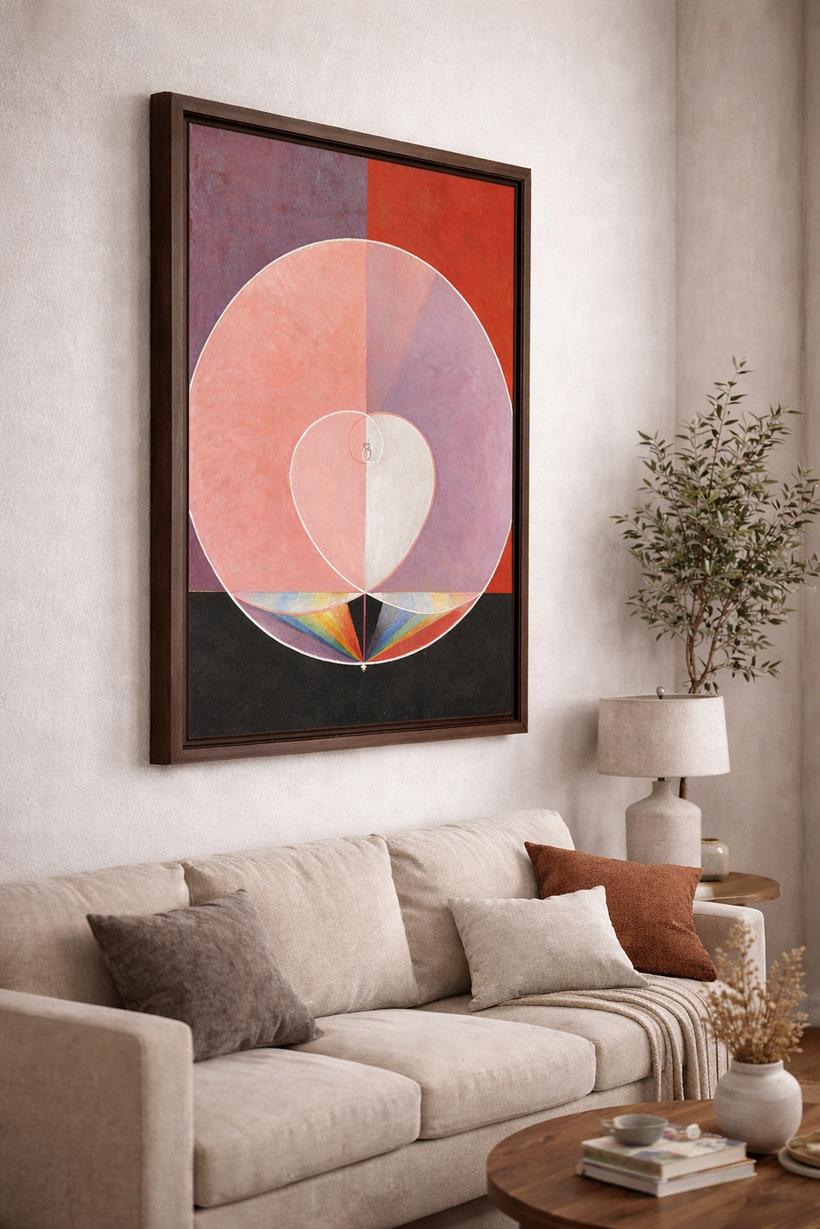
The Dove, No. 2, 1915
Oil on Canvas - 45 x 60 in.
Museum of Modern Art, NY
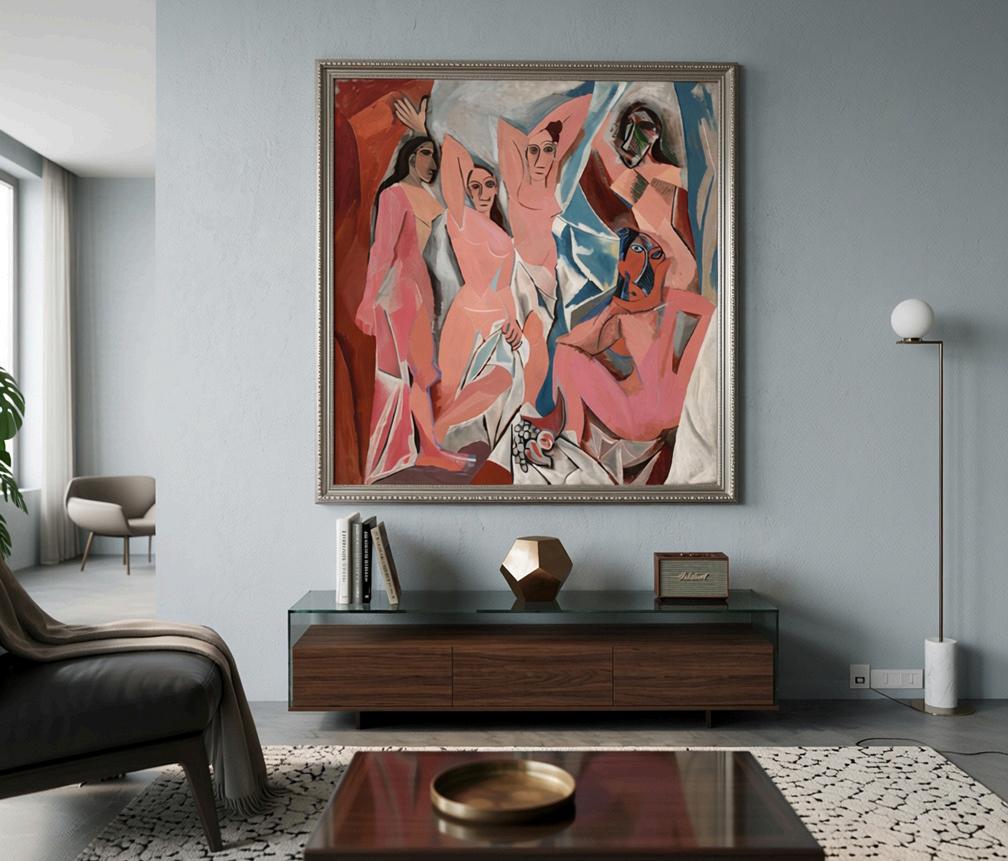
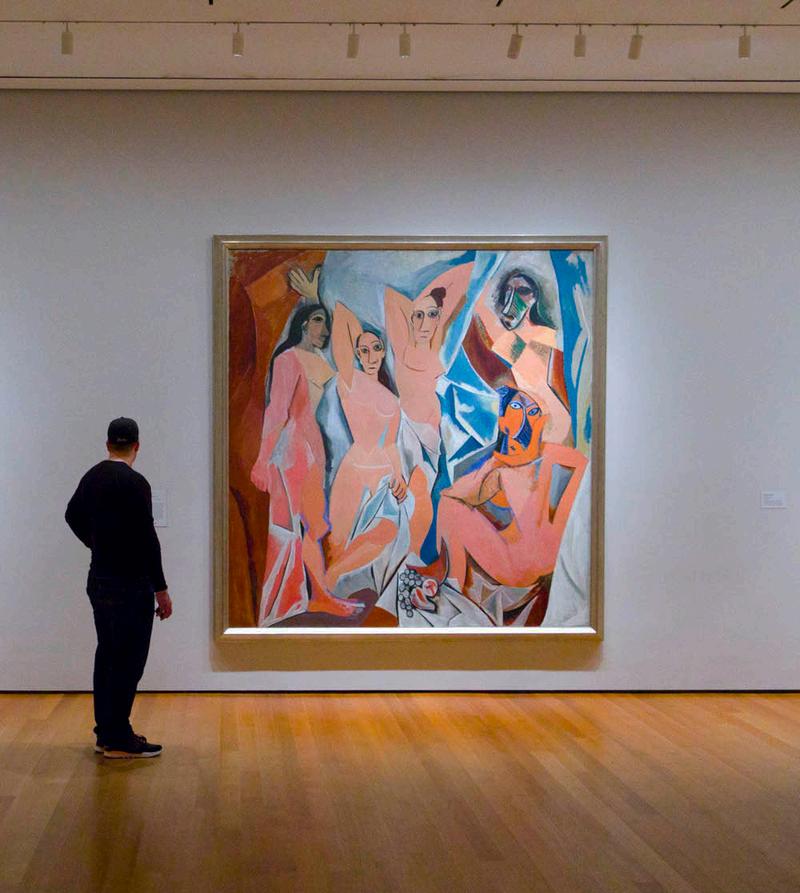
Oil on Canvas 92 x 96 in.
Museum of Modern Art, NY
Pablo Ruiz Picasso is undoubtedly the painter for all seasons. Born in Spain, Picasso was a painter, sculptor, printmaker, ceramicist, and theatre designer who spent most of his adult life in France. Considered one of the most influential artists of the 20th century, he is known for co-founding the Cubist art movement, the invention of constructed sculpture, and the co-invention of collage with Henri Matisse..
Early on in his career Picasso was influenced by Matisse and thereafter they would challenge one another as they developed their unique painting styles. Picasso’s career if often broken into various periods such as his blue period and the African-influenced period. It was in this latter period that he painted Les Demoiselles d’Avignon.
Les Demoiselles d’Avignon features five prostitutes from a brothel in Barcelona. His figures are confrontational and not conventionally feminine, being rendered with angular and disjointed body shapes, some to a menacing degree. The painting was met with shock and revulsion by acquaintances and was not displayed again until 1916. Where the faces on the left were based upon an Iberian sculpture, the two on the right featured heads with African masks. .
Henri Matisse was a French painter, sculptor, and designer widely regarded as one of the greatest artists of the 20th century. Matisse came to art relatively late only discovering his passion for painting at age 21 while recovering from an illness. It was, by his own admission, a revelation that changed the course of his life.
After his classical art studies, Matisse encountered impressionism and post-impressionism which pushed him toward a more expressive and non-naturalistic use of color. He rose to fame around 1905 when he was painting in the Fauvist style. Matisse believed that color alone could convey emotion and structure.
Matisse’s impact on modern art proved to be profound and lasting. By liberating color from its purely descriptive role, Matisse helped lay the groundwork for abstraction. In his final years, being largely confined to a wheelchair, he pioneered a new medium, the cutout. Using custom colored sheets of paper Matisse, with the help of assistants, would cut out and assemble designs creating bold, joyful compositions. His cutouts are considered among his greatest achievements.
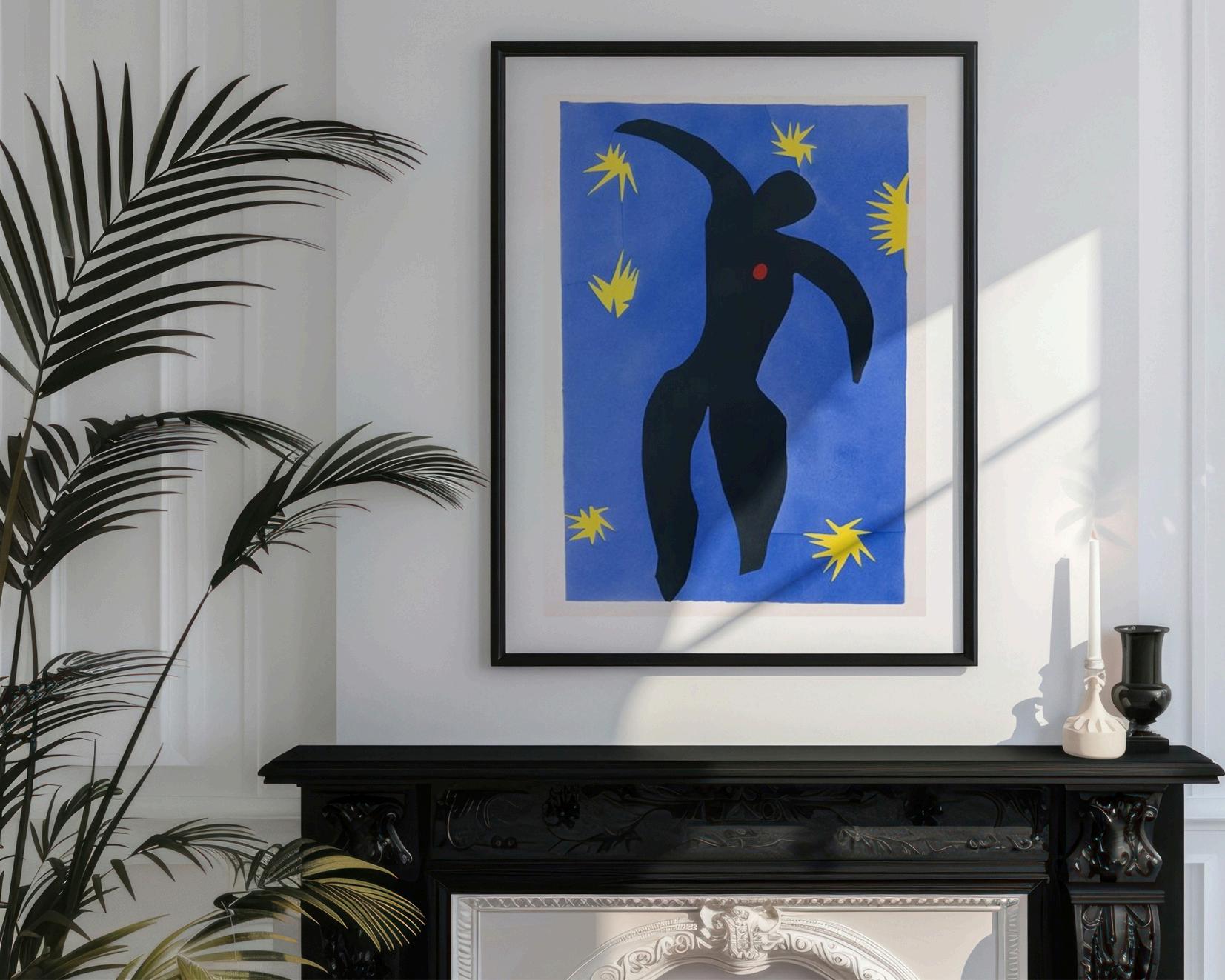
Icarus, plate VIII from the illustrated book "Jazz," 1947
Cutout & Assembly
Metropolitain Museum of Art, NY

Piet Mondrian was a Dutch painter and art theorist whose radical journey from traditional landscape painting to pure geometric abstraction made him one of the most pioneering and recognizable figures in the history of modern art. Mondrian was blown away by the cubist work of Picasso and thereafter his paintings became increasingly simplified — landscapes dissolving into grids, trees reduced to intersecting lines until he arrived at the bold, geometric language for which he is best known. Mondrian believed that radical simplicity could express universal harmony and spiritual truth beyond the surface appearance of the world. This he called “Neoplasticism”.
Broadway Boogie-Woogie (1943) is one of Mondrian best known artworks from the late period of his life. It is a vibrant, rhythmic departure from previous work that reflected his love of jazz and dance.
Mondrian's ideas about pure abstraction influenced not only painters but architects, graphic designers, typographers, and fashion designers. His clean lines are evident in midcentury modern furniture and architecture along with many areas of graphic design.Mondrian’s aesthetic has permeated popular culture so thoroughly that his grid compositions remain one of the most referenced and reproduced visual styles in the world.
Salvador Dali was a Spanish painter, filmmaker, sculptor, and showman whose flamboyant personality and astonishing technical mastery made him the most famous and most theatrical figures of the Surrealist movement. After arriving in Paris in the late 1920s Dali immediately joined the Surrealist circle led by André Breton. Surrealism sought to unlock the irrational imagery of dreams and the unconscious mind. Dalí would embrace it with a unique intensity.
The Persistence of Memory, 1931 with its haunting, melting watches draped over a barren landscape, became one of the most recognized images in the entire history of art and ultimately Dali’s masterpiece. It epitomizes Dalí's theory of "softness" and "hardness", which was central to his thinking at the time. The painting sold for $250 in 1932 and was donated to Museum of Modern Art two years later.
Dali’s impact on modern art and culture has been immense and wideranging. He showed that meticulous, classical painting technique could be placed in service of the wildest imaginative content. He helped permanently expand the boundaries of what art could depict and mean. Furthermore his influence extended far beyond the art world into film, fashion, advertising, literature, and popular culture. The visual language of Surrealism has become a fundamental part of how modern creative culture thinks and communicates.
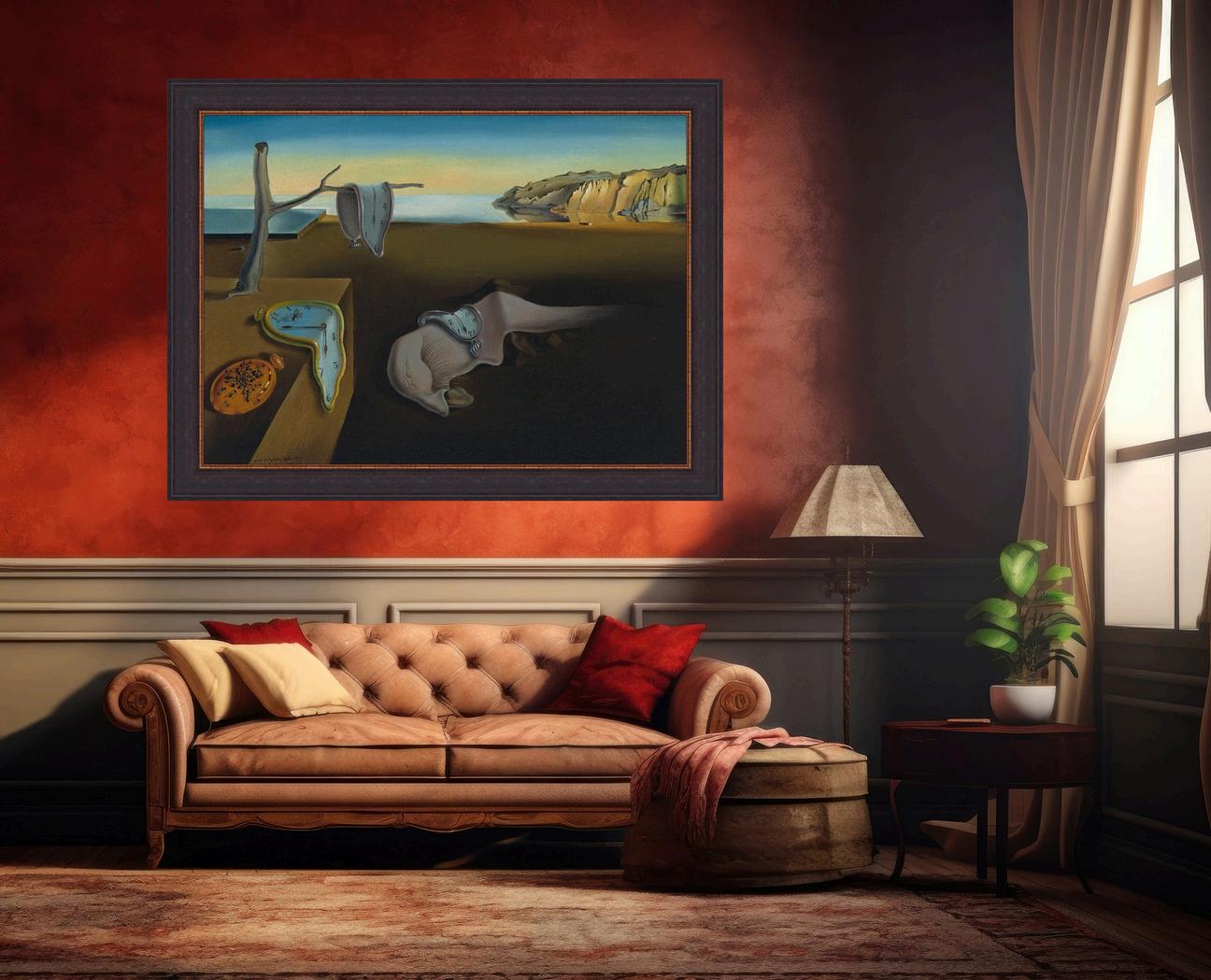
The Persistence of Memory, 1931
Oil on Canvas 9.5 x 13 in.
Museum of Modern Art, NY
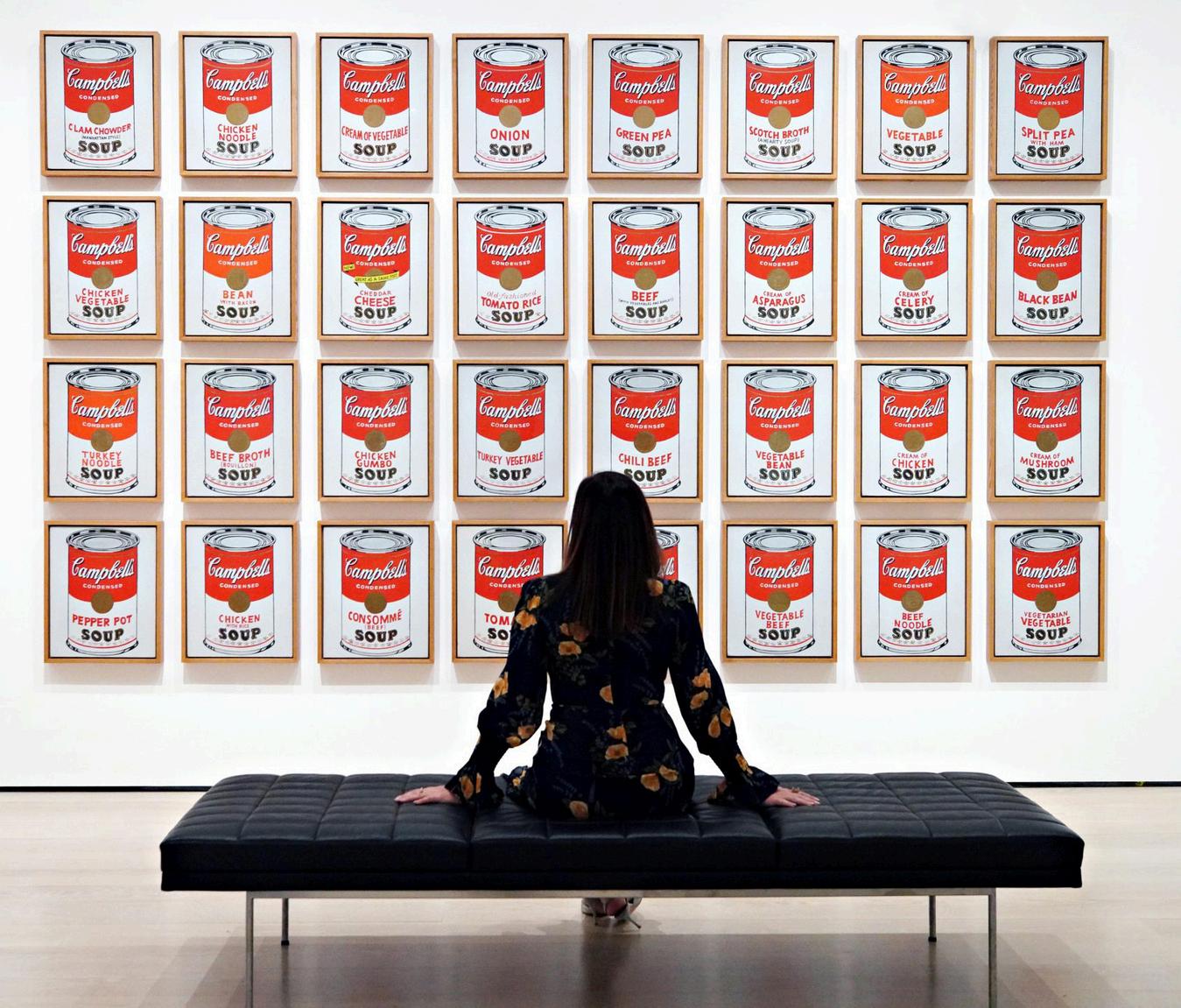
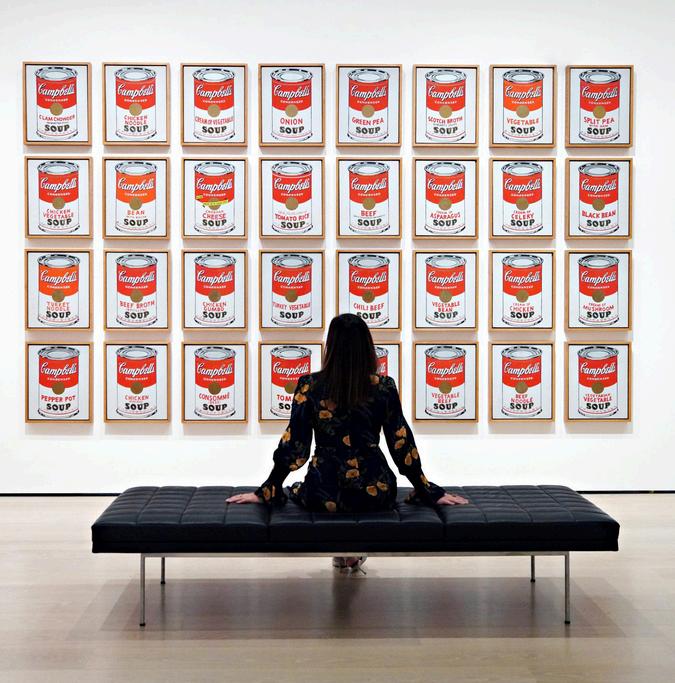
Andy Warhol was an American artist, filmmaker, and cultural provocateur whose radical blurring of the boundaries between fine art and commercial culture made him the central figure of the Pop Art movement. Born Andrew Warhola in Pittsburgh, Pennsylvania, he studied pictorial design at the Carnegie Institute of Technology before moving to New York City in 1949. There he quickly established himself as a successful commercial illustrator and graphic designer.
Warhol came to realize that the imagery of consumer culture, advertising, and mass media was not beneath the attention of fine art but was in fact the most honest mirror of contemporary American life. In the early 1960s he began producing paintings of everyday commercial objects most famously his iconic Campbell's Soup Cans (1962). At the same time he created silkscreen portraits of celebrities such as Marilyn Monroe, Elvis Presley, and Mao Zedong, using bold, flat colors that were intended for mass reproduction.
Andy Warhol’s impact on modern art and culture has been extensive and arguably unparalleled in its reach beyond the art world. By deliberately embracing mechanical reproduction, repetition, and the imagery of consumerism, he dismantled the Modernist ideal of artwork as a unique, handcrafted expression of individual genius. This raised profound and still resonant questions about originality, value and even the nature of art itself.
Jackson Pollock was an American painter whose revolutionary "drip" technique and tortured, elemental energy made him the defining figure of Abstract Expressionism. He is one of the most iconic artists of the 20 century. th His early years in New York were characterized by struggles with poverty, alcoholism and with a restless artistic dissatisfaction. It wasn’t until the 1940s that he achieved a breakthrough. He began placing his canvases on the floor and moving around and over them, dripping, flinging and pouring paint in sweeping, gestural arcs using sticks, hardened brushes, and even basters. This radical "drip painting" technique produced dense, energetic webs of line and color that seemed to capture raw psychological and physical force on an almost primal level. A 1949 feature article in Life magazine catapulted him to a level of celebrity rare for any artist, least of all an abstract one. His volatile personality, rugged American background, and turbulent marriage to fellow Abstract Expressionist painter Lee Krasner made him a compelling and tragic figure. He died in an alcoholrelated car crash cutting short a career that had reshaped the art world.
Pollock’s impact on modern art was seismic and enduring. He redefined the act of painting at its core. By making his own body's movement an integral part of the work, he established the idea of "action painting" and anticipated later movements such as performance art and process art.

Number 1 (Lavender Mist), 1950
Oil, Enamel & Aluminum on Canvas 118 x 87 in National Gallery of Art, Washington DC
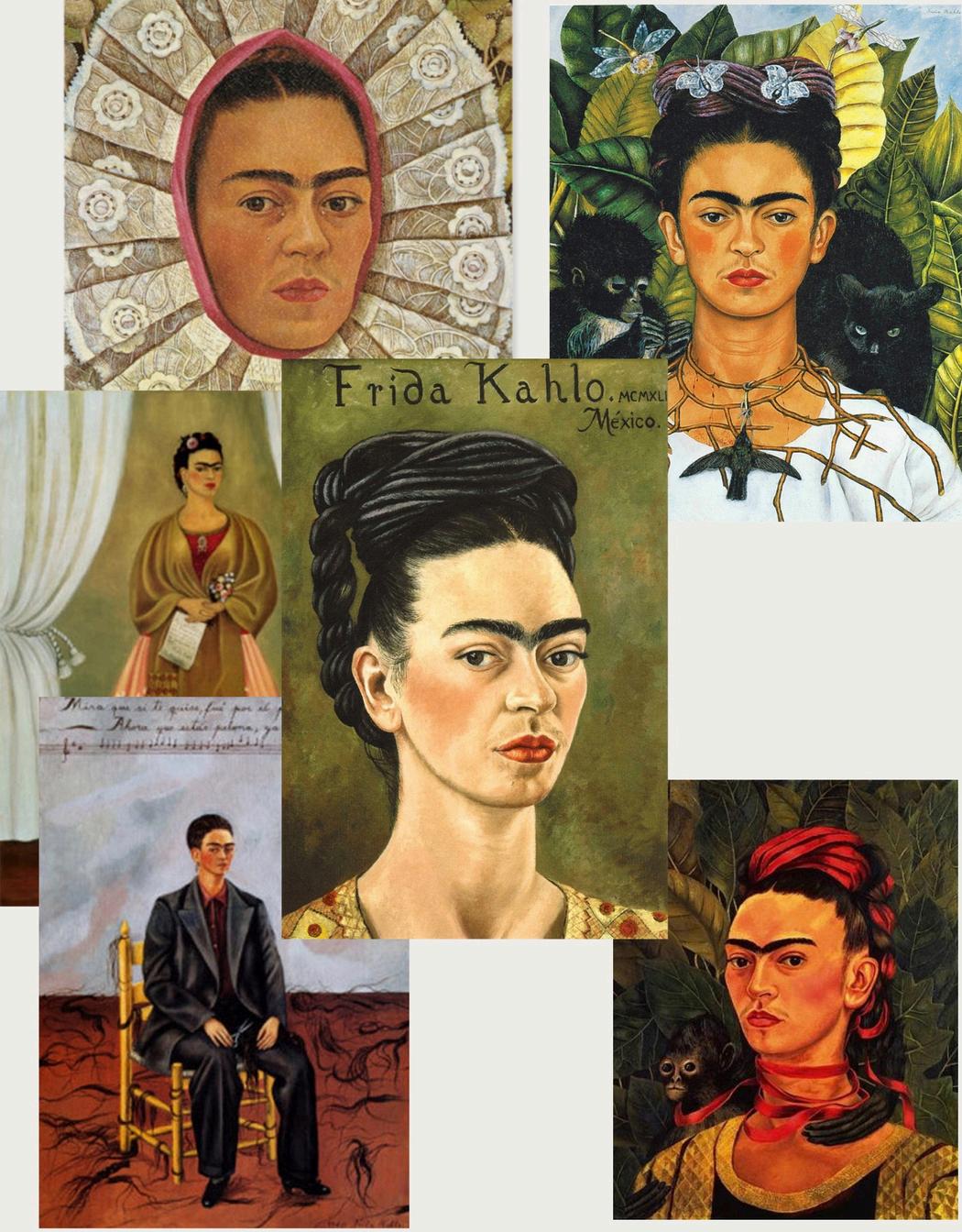
Frida Kahlo was a Mexican painter whose intensely personal, symbolically rich, and visually arresting work made her one of the most celebrated and culturally significant artists of the 20th century. She only began painting during her recovery from a a shattered spinal column resulting from a bus accident. Despite being a self-taught artist, her early paintings already displayed the fierce introspective intensity that would characterize her entire output. Her best known paintings are the 55 self-portraits. Only 4 other artists are known to have made more. They are among the most emotionally raw and symbolically layered works in modern art. Drawing on Mexican folk art traditions, pre-Columbian imagery, Catholic iconography, and Surrealist dream logic, she created a visual world entirely her own.
Frida met and married the famed Mexican muralist Diego Rivera in 1928 and for a long time his notoriety overshadowed her career. In recent years her reputation has soared to a level that now eclipses almost all of her contemporaries. She is celebrated not only as a painter of extraordinary power but as a pioneering figure in the art of identity, the body, and autobiography. Her art anticipated by decades the feminist art movement and identity politics in art. Frida Kahlo’s influence extends far beyond the art world into fashion, film, literature, and popular culture. She has become a global icon.
The Swiss-German painter Paul Klee was a draughtsman and art theorist. His uniquely inventive body of work can be viewed as playful yet at the same time intellectually rigorous. He was one of the most original and beloved figures in the history of modern art.
Klee studied at the Academy of Fine Arts in Munich. He was associated with Der Blaue Reiter (The Blue Rider) group in Munich in the early 1910s and after military service he joined the legendary Bauhaus school in Weimar in 1921. But it was a trip to Tunisia in 1914 that proved transformative. The brilliant North African light and color struck him with the force of revelation.
Paul Klee’s paintings resist easy categorization. He moved freely between abstraction and figuration, between humor and melancholy, between the microscopic and the cosmic. He worked on a wide variety of surface using an equally wide range of media.
Klee’s combined color theory with emotional and spiritual meaning, In this he anticipated the Color Field painting. His playful, sign-like visual language prefigured aspects of Abstract Expressionism and Outsider Art and the midcentury fascination with primitive and childlike mark-making. Most importantly, he demonstrated that art could be simultaneously intellectually rigorous and yet joyful and whimsically playful.
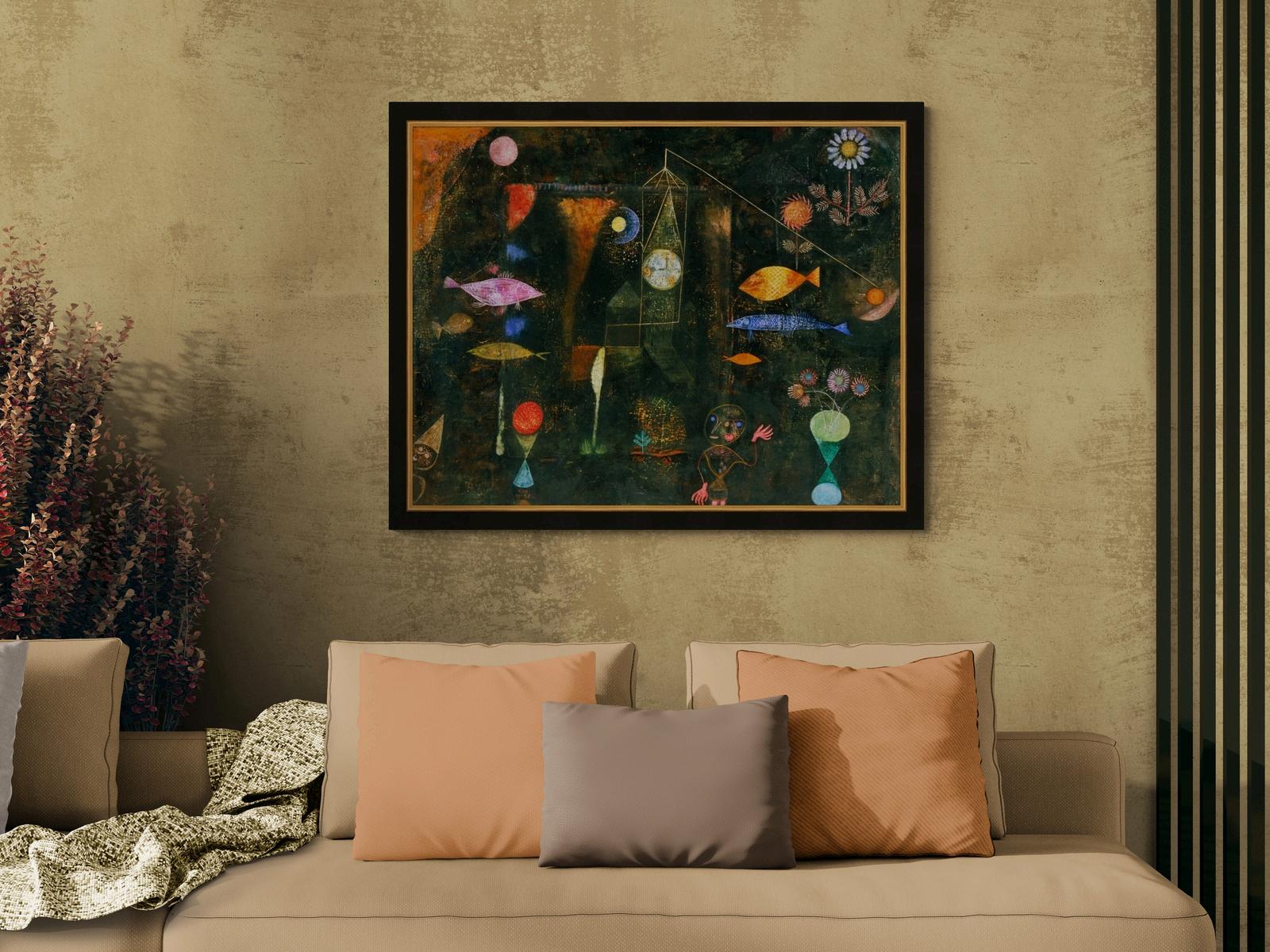
Magic, 1925
Oil and Watercolor on Canvas on Panel - 38.7 x 30.4 in. Philadelphia Museum of Art
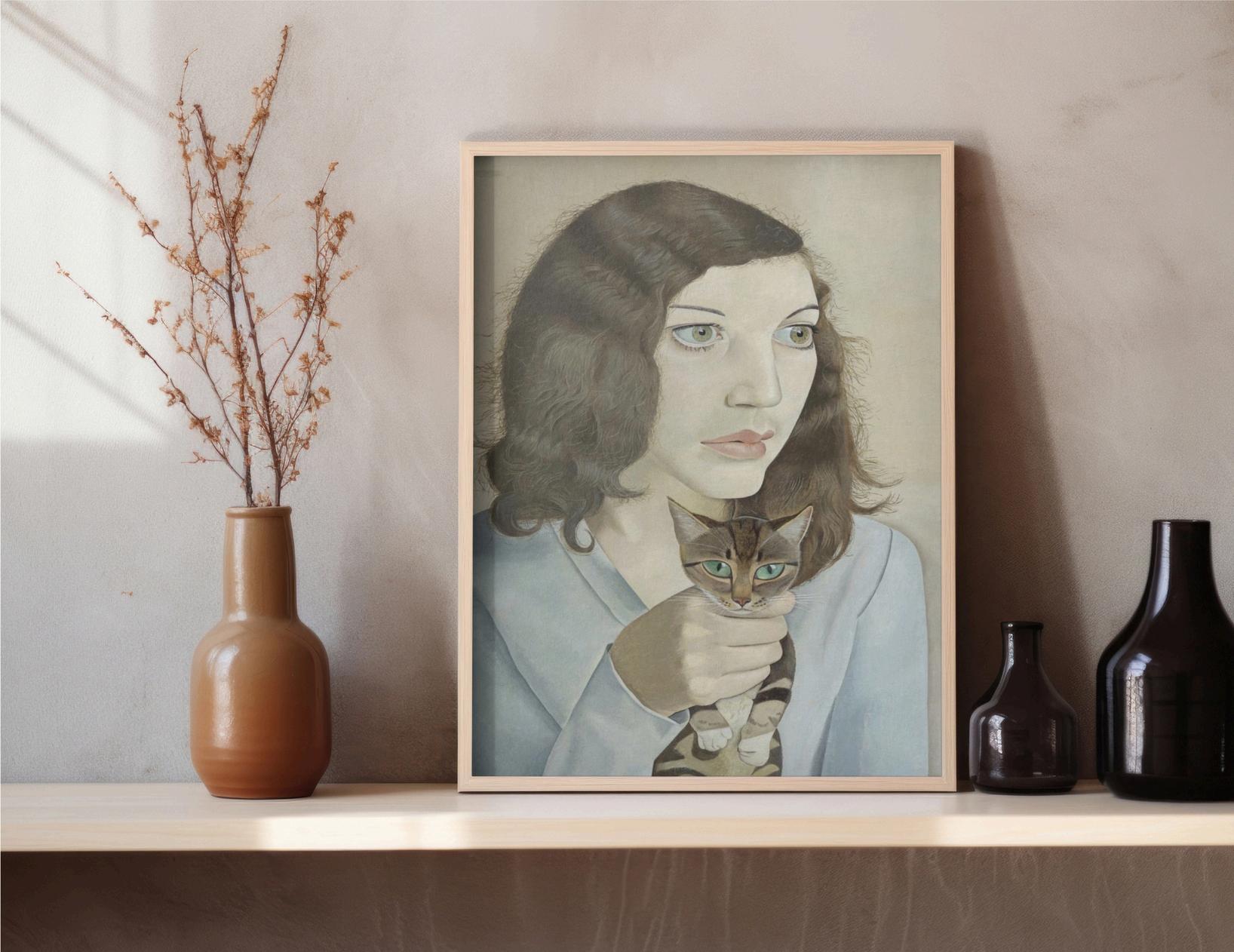
Girl with a Kitten, 1947
Oil on Canvas - 16 x 20 in.
Tate Museum, London
Lucian Freud was a German-British painter widely regarded as one of the greatest realist painters of the 20th century and one of the most powerful portrait artists in the history of Western art. Born in Berlin, he was the grandson of the founder of psychoanalysis, Sigmund Freud. He came to Britain as a child when his family fled Nazi Germany in 1933.
After initial training in London he forged his own path applying lessons learned from the Old Masters including Dürer, Holbein, and Ingres. His early work from the 1940s and 50s was characterized by precise, almost eerily detailed draftsmanship and a cool, unsettling intensity. His paintings of plants, animals, and human figures were rendered with hyper-attentive stillness. After 1960 Freud's style underwent a radical transformation. He would paint with a heavy impasto and the resulting work was increasingly bold and sculptural. From that point forward the human body became his primary subject. He approached his subjects with deep psychological insight and almost brutal physical honesty. His sitters were never idealized.
Girl with a Kitten is from his early period. The sitter is his first wife (Kitty Garman). Her face suggests tension or detachment. The kitten, instead of appearing playful or comforting, is held awkwardly adding to the sense of unease. Freud presents both human and animal with his typical detached, clinical intensity.
We hope you enjoyed our top picks for the 20 century. I imagine they probably don’t match with your top picks but that’s what makes art so fascinating. We don’t necessarily have to agree on what makes certain pieces of art stand out to us. But we should be able to appreciate and respect other people’s choices. th
Feel free to send us your thoughts on our choices. And please check back from time to time as we’ll be adding 10 X 10 Flipbooks for other time periods.