PERUSALSCORE
Quartet

PERUSALSCORE
HAN Jungyoon Wie
PERUSALSCORE
Quartet
PERUSALSCORE
Published by Just a Theory Press, L.L.C. www.justatheorypress.com
Copyright © 2019 Jungyoon Wie (ASCAP). All Rights Reserved. For more information, visit www.jungyoonwie.com
First printing of this edition, November 2020 Typesetting by Joshua DeVries
Program Note:
The Korean term han originates from the Sinitic-language hen conveying pity and regret. This Chinese character amalgamates two different characters, one that denotes the mind and the other the state of limitation or stagnancy. This idea of impasse in one’s mind is central to the concept of han in Korea, a feeling of unresolved anger, grief, and regret that has been prolonged and accumulated over time. It has been identified that han, like trauma, suffers from its delayed manifestation which results in its ambivalent, paradoxical, and transgenerational quality.1
PERUSALSCORE
In the first movement of Han, the traditional Korean tune, Saeya, Saeya, Parang Saeya (Birds, Birds, Blue Birds) is used to describe the concept of han. The origin of this melody owes much to why I selected this tune: it is both a lullaby and an elegy. It was sung to commemorate Bong-jun Jeon, one of the leaders in Donghak Peasant Revolution (1894-95), an armed rebellion in Korea by aggravated peasants against the corrupt government. It was also sung by the widows of the Jeon’s army as a lullaby for their babies. I found that these historical qualities of the original melody resemble the complexity of han that encompasses grief, regret, and hope. The original melody is stated at the beginning, and its fragments appear in different shapes and emotions, sometimes peaceful like a lullaby and other times explosive and pleading.
The second movement imitates the color and intensity of singing style of pansori, Korean musical storytelling performed by a singer and drummer. Written without barlines, this movement acts like a monologue or recitative after the slow developing yet dramatic first movement.
The third movement is inspired by sanjo, which is a Korean musical genre that features a solo instrument accompanied by janggu (a Korean hourglass drum). In sanjo, chuimsae (vocal signals) is used by the drummer to add to the musical excitement and to communicate with the audience as well as the soloist.
The title of the fourth movement, Mu, means not, nothing, or without. I named this movement as such because this movement does not have a recognizable melody, yet expresses itself through dynamics, texture, and register. Here I wanted to write about the aspect of han having to do with the repression of repulsive elements deep within our psyche, which when allowed to surface can incite a visceral feeling within oneself so strong as to induce a desire to purge as a consequence. My goal was to create music that captures the process of purging these emotions from one’s being, and try to make something beautiful out of this. In the process of doing so, I hoped to challenge traditional aesthetics of what can be considered beautiful music and, as a consequence, beautiful emotions.
The final movement, Maum, means heart or mind in Korean. It calls for Amita Buddha, a cosmic energy called into presence through the syllables. Through repetitious calling, chanting, singing, and meditating, I try to reach the state of emptiness, awareness, and the resolution of han.
—Jungyoon Wie 2019
1. Meera Lee, “Sorrowful Feeling: Han and Its Haunting Legacies,” Telos 184 (2018): 106.
Performance Instructions:
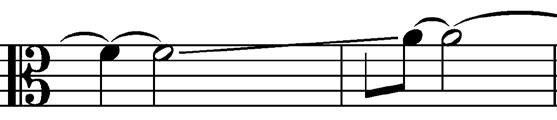
Glissandi:
Accidentals:
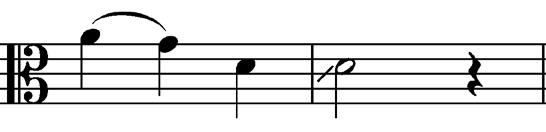
Glissandi should cover the full interval and length of the notes and rhythms marked. At times, headless stems are used to clarify the rhythm and end points of glissandi.
Partial glissandi should be interpreted as portamenti.
Accidentals carry through a measure. In senza misura sections, accidentals carry through the line.
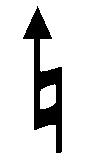
The following quarter tone accidentals are used:
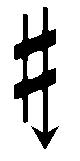
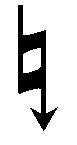
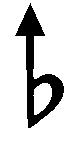
Noteheads:
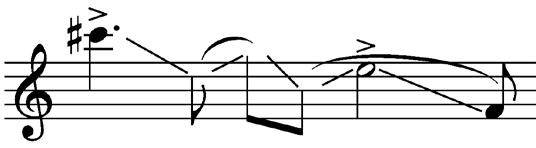
Vibrato:
one quarter sharp
one quarter flat
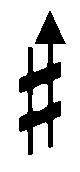
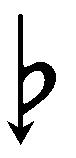
Stems with no noteheads show approximate pitch
three quarter sharp
three quarter flat
PERUSALSCORE
Singing:
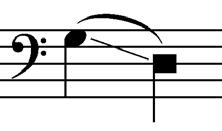
Notes with square noteheads indicate to play with half pressure in left hand, between normal pressure and harmonic pressure.
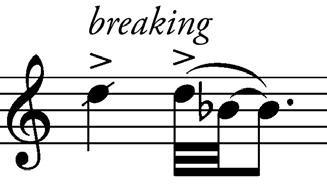
Slashed noteheads indicate a breaking pitch. Use slight overpressure in the bow to “break” the pitch, allowing harmonic partials to speak and the tone to scratch.
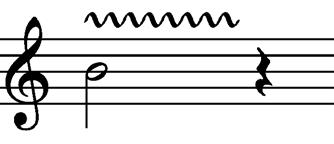
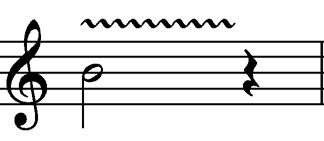
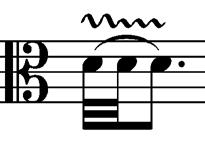
Rhythmic vibrato accent. Begin the note with a very wide, accented vibrato oscillating in the approximate rhythmic value shown.
Players may sing an octave higher or lower than what is written, depending on their vocal register. The given octave is used only for convenience.
The ensemble may also change who sings which of the solo vocal parts in the fifth movement. The instruments they are marked in reflect the choices made by the premiering ensemble.
molto vibrato
wide vibrato
Doublings:
Meter:
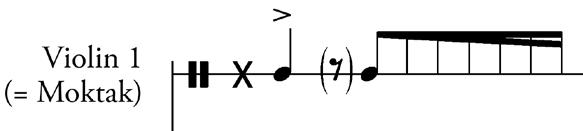
In the fifth movement, the first violin doubles on the moktak, a hand-held hollow wooden percussion instrument used in Korean temples. It is struck with a small wooden mallet.
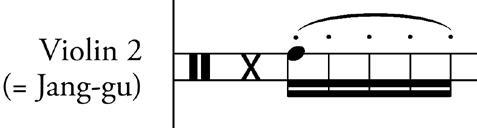
In the third movement, the second violin doubles on the jang-gu. The following instructions are relevant only for the jang-gu:
PERUSALSCORE
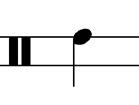
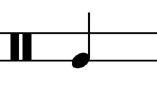
The right hand plays the higher pitched side of the drum, notated on the upper line of the staff, with a yeolchae (a flat, wooden bamboo stick).
The left hand plays the lower pitched side of the drum, notated on the lower line of the staff, with the hand or a gungchae (a mallet with a round head).
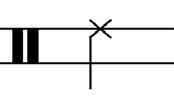
Hit the rim on the side of the jang-gu (with the yeolchae)
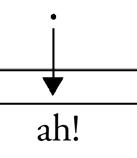
Chuimsae, vocal signals meant to express excitement
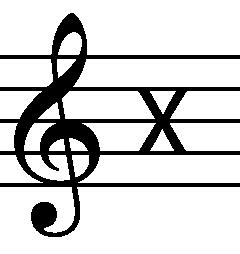
An X in place of a normal time signature indicates a senza misura passage. Each player in the ensemble performs their printed material independently of the remainder of the ensemble. A normal time signature indicates a return to coordinated meter. Where coordination is needed in the senza misura passages, they are indicated by one of the means below.
Duration: ca. 26’
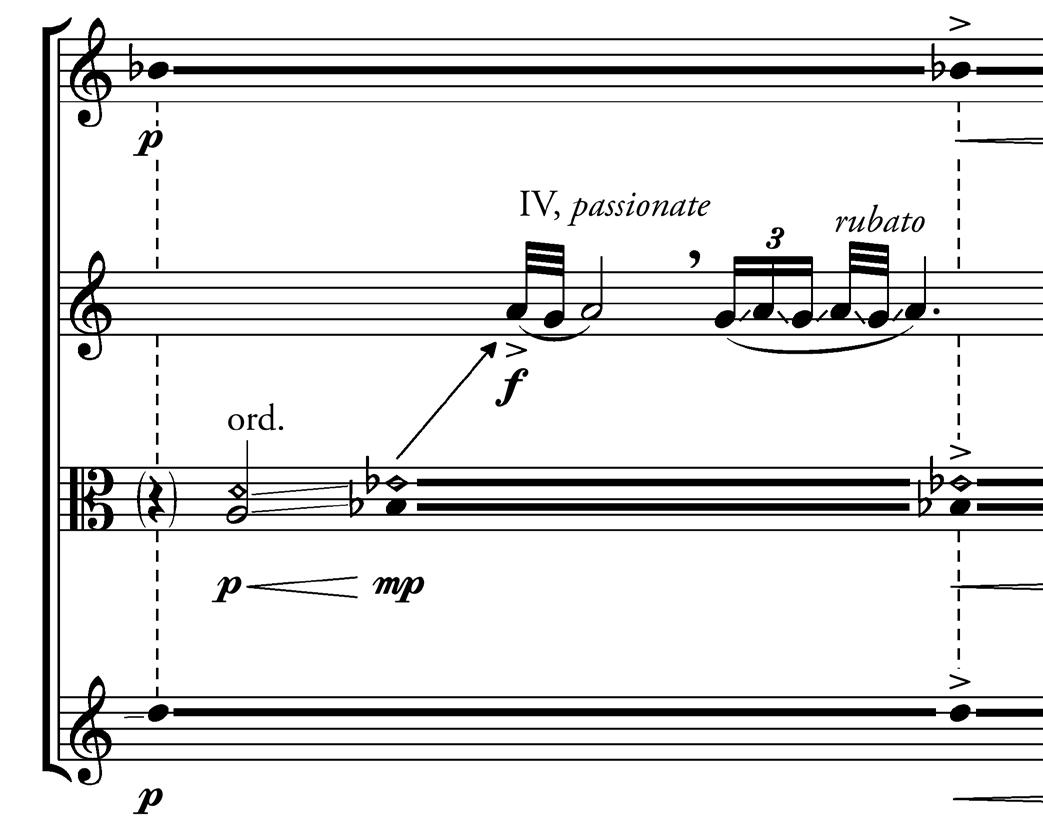
Dashed vertical lines indicate synchronous attacks or passages by the marked instruments. At times, only two or three instruments may be marked; the remainder of the ensemble is, then, uncoordinated.
Arrows between two parts indicate that one event happen after another (violin II comes in after viola ends the gliss in this example). Timing is specified at times, e.g. “(1” after viola).”
Stemless noteheads followed by thick lines indicate to hold those notes for the length of the lines.
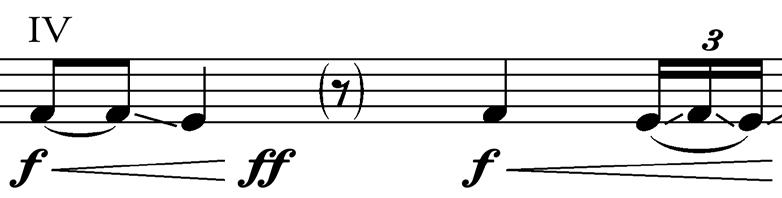
Rests in parentheses are approximate lengths, but can be adapted as desired by the performer. These are used only between two entrances that do not need to be coordinated with the rest of the quartet.
PERUSALSCORE
PERUSALSCORE
PERUSALSCORE
PERUSALSCORE
PERUSALSCORE
PERUSALSCORE
PERUSALSCORE


PERUSALSCORE

PERUSALSCORE

PERUSALSCORE
PERUSALSCORE
PERUSALSCORE


PERUSALSCORE
PERUSALSCORE

PERUSALSCORE
PERUSALSCORE

PERUSALSCORE
PERUSALSCORE
PERUSALSCORE
PERUSALSCORE
PERUSALSCORE
PERUSALSCORE
PERUSALSCORE
PERUSALSCORE
PERUSALSCORE
PERUSALSCORE
PERUSALSCORE
PERUSALSCORE
PERUSALSCORE
PERUSALSCORE
PERUSALSCORE
PERUSALSCORE
PERUSALSCORE
www.justatheorypress.com

Wie: Han Score and Parts JAT-134-009-SP