
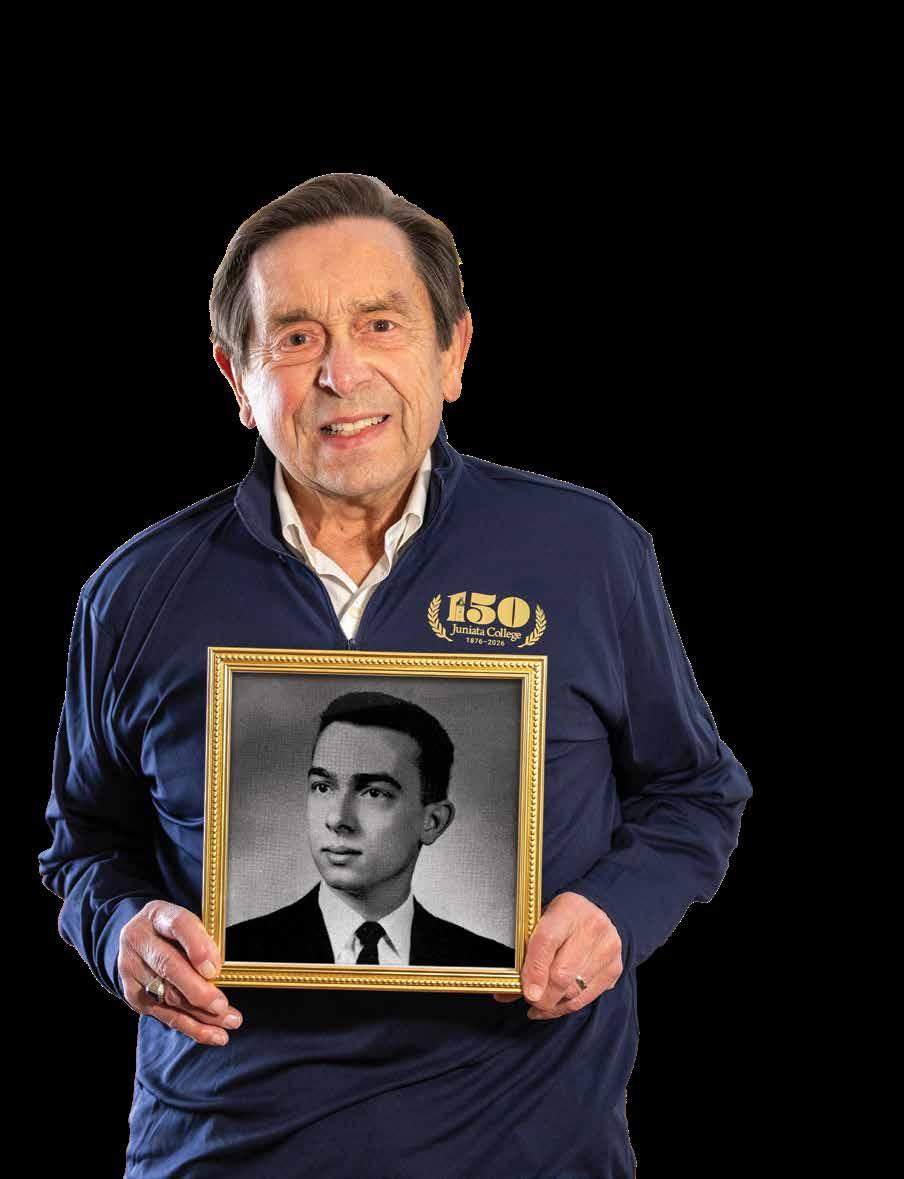
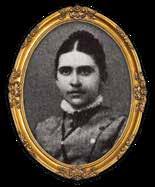
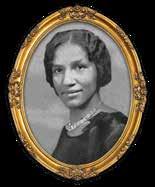
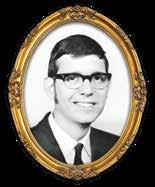
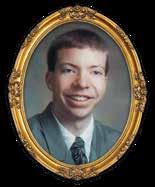
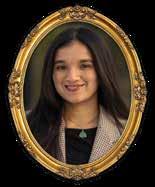

At the heart of Juniata’s 150th Jubilee, celebrated on April 23, 2026, was a defining idea: Juniata is not just a place, but people who embody a set of values. Five Juniatians from across the generations brought that truth to life, each reflecting the College’s enduring mission to prepare students for lives of purpose, meaning, and impact. Phoebe Norris, Class of 1879, transformed opportunity into care, becoming one of the first women physicians of her time. Nancy Slaughter Lee, Class of 1932, forged a path where none existed, carrying the hopes of her family into a life of teaching, making an impact on young minds. William Phillips, Class of 1970, guided by curiosity, pursued discovery to its highest level as a Nobel Prize–winning physicist. Greg Anderson, Class of 1999, reimagined success through community, building connection over commerce. Jahnavi Patel, Class of 2026, represents the global, forward-looking spirit of today’s students, bridging cultures and disciplines. Together, their stories illustrate a legacy not simply remembered, but continuously made — an investment, compounding across 150 years, in those who ask more, reach further, and ultimately say:
I am Juniata.
SPRING 2026
RECURRING
5 Living & Learning Campus news and athletics, plus the voices of faculty, students, and alumni
8 My Way
Maximizing opportunities
9 The Big Question Who owns history in a digital world?
10 Past Comes Alive
Preserving precious college memories
12 Scorecard
Recognizing excellence and celebrating leadership
31 Forever Juniata
Alumni news, events, class notes, profiles, and remembrances
31 Then & Now
One small class, generations of Juniata graduates to follow
34 I Met an Alum Finding each other, all over the world
56 Parting Shot
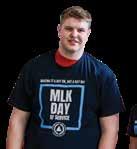
Serving Together: Students roll up their sleeves for MLK Day, giving back alongside local firefighters

As Juniata concludes its year-long sesquicentennial celebration, our gaze shifts to the future and the continuing stories of people, place, and purpose.
FIRST PERSON
Tracy Kretz carefully balances AI speed with ethical creativity
OBJECT
Early computers paved Juniata’s path into the digital age
ALUMNI INSIGHT Celina (Isenberg) Seftas ’07 explains AI’s energy and water burden
FEATURES
24 Field Notes
Juniata observes a day on, not a day off
26 Letters to My First-Year Self
Sharing what they wish they knew then, alumni pen letters to their younger selves
DEAR FRIENDS,
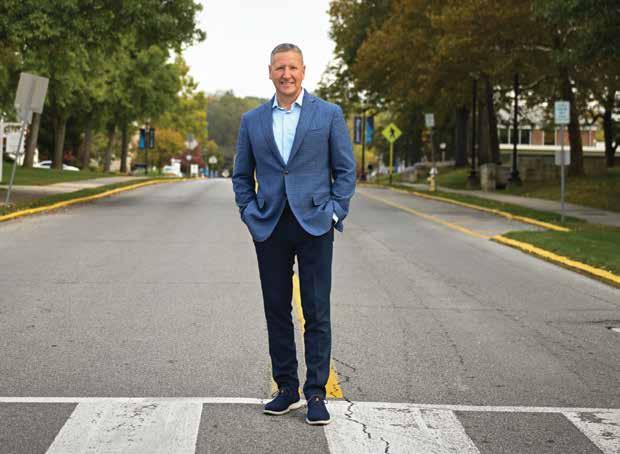
As we complete our year of celebration, Juniata’s 150th anniversary has offered many opportunities to honor the legacy of learning, sustained by the generations who followed, while also reflecting on who we are today and where we are headed.
In this issue, you will read how Juniata is engaging generative artificial intelligence tools thoughtfully and intentionally. Our faculty and students are exploring these tools not as substitutes for thinking, but as resources that must be guided by judgment, creativity, and ethical reflection. This work reflects a broader commitment to preparing graduates who are not only technologically capable, but also critically aware and socially responsible.
That same shared spirit of purpose is reflected throughout these pages, from students pursuing excellence in the classroom and in their communities to faculty and alumni whose work extends Juniata’s values far beyond campus. Just as the Class of 1915 created the College’s first
yearbook to stay connected with one another and with Juniata, today’s students navigate a digital landscape with the same intention. Across 150 years, the College has remained rooted in purpose: to help students learn how to think, how to engage with others, and how to lead with integrity.
Thank you for being part of this continuing story. Together, we honor the values that define Juniata while embracing the opportunities that will shape its future.
JAMES A. TROHA, PH.D. PRESIDENT
SPRING 2026
MAGAZINE
David Meadows ’98
Executive Director of Career Development & Alumni Engagement
Tracy Kretz
Executive Director of Strategic Marketing & Brand Design
April Feagley g’23
Editor Associate Director of Media Relations
Isaac Baker
Digital Magazine Director of Web Design
Nate Ulrich ’19 Photography Director of Communications and Digital Media
Aubrey Zegstroo Graphic Designer
READ ONLINE: JUNIATA.EDU/MAGAZINE
5 Campus News
8 My Way
9 The Big Question
10 Past Comes Alive
12 Scorecard
Juniata College has earned the Carnegie Community Engagement (CE) Classification, placing it among a select group of U.S. colleges and universities recognized for the depth, quality, and intentionality of their partnerships with communities beyond campus.
At Juniata, community engagement extends across teaching, learning, research, and co-curricular experiences, and is grounded in collaboration that benefits both the College and its community partners. It affirms an approach that connects scholarship to real-world challenges while preparing students to lead with purpose and responsibility.
Members of the College’s Carnegie Reclassification Committee led by Sarah Worley ’00 were Lillian Case ’25, Brittany (Carr) DeHaven ’09, Lee Ann DeShong-Cook, April Feagley g’23, Tom McClain ’94, Eric Quallen, Celina (Isenberg) Seftas ’07, Allie Sones, Zakira Watts ’20, Colin Wible ’27, and Anne Wood.
More than 230 institutions nationwide received the classification in the 2026 cycle, as announced by the Carnegie Foundation for the Advancement of Teaching and the American Council on Education. Participation is voluntary and requires a rigorous process of self-study, data collection, and documentation. The framework examines how community engagement is embedded in an institution’s mission and practices and how those efforts support reflection and continuous improvement.
This marks Juniata’s second time receiving the CE Classification, following its initial designation in 2020. Reclassification requires institutions to demonstrate that their work has deepened and strengthened over time, including progress in institutional infrastructure, assessment, and cross-campus integration of community-based initiatives. Juniata will be eligible to apply again in 2032.
For nearly two decades, the Carnegie Community Engagement Classification has served as the leading national framework for recognizing institutional commitment to community partnerships in higher education. Institutions that have received the classification foster civic engagement, generate usable knowledge, and create real-world learning opportunities for students.
In the 2026 cycle, 237 institutions earned the designation, joining 40 institutions classified in 2024, for a total of 277 institutions that currently hold the Carnegie Community Engagement Classification. Of those recognized in 2026, 48 received the classification for the first time, while 189 demonstrated strengthened commitments through reclassification.
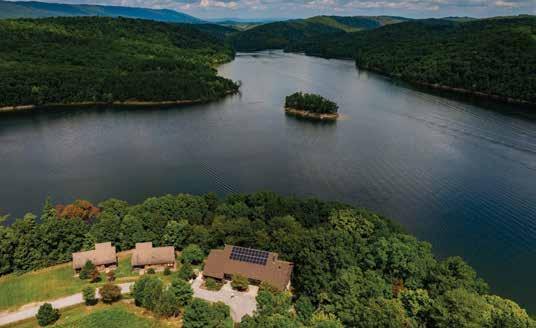
Juniata received a $100,000 planning grant from the U.S. Department of Health and Human Services’ Health Resources and Services Administration to launch the Rural Communities Collaborative, a countywide initiative to strengthen health outcomes in Huntingdon County. The project, led by Sarah Worley ’00, professor of communication and director of community engaged learning, builds upon earlier AmeriCorps VISTA and community-engaged learning initiatives and will bring together healthcare providers, educators, businesses, and community organizations to design a cross-sector rural health network. Founding partners include Broad Top Area Medical Center, Mainstream Counseling, Inc., and Central Pennsylvania Clinic, with more than 15 additional organizations expressing interest. Guided by systems thinking and the social determinants of health framework, the Collaborative will focus on improving access to care, workforce development, and coordination of services. The planning effort aims to create a sustainable model to address provider shortages and transportation barriers.
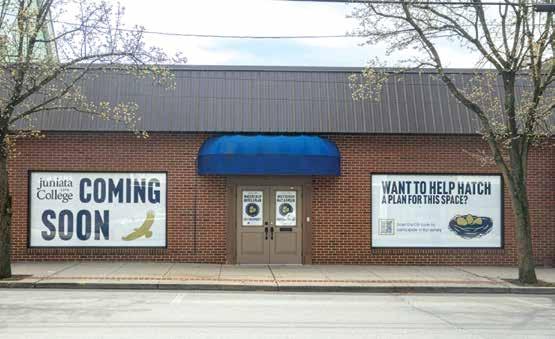
A new partnership is bringing fresh life to a former storefront in downtown Huntingdon while opening doors for local students. Through an agreement with AAA Central Penn, a building that housed a former branch location at 608 Washington Street has been donated to the College to support community-focused programming and activities that connect campus and town. The downtown site fulfills a long-standing goal of establishing a visible, accessible space for engagement beyond campus, complementing existing off-campus locations that support entrepreneurship and small business development.
The partnership also creates an annual scholarship for a graduating high school senior from Huntingdon or Juniata county, strengthening educational access for students in the region. Together, the donated property and scholarship reflect a shared commitment to community investment, collaboration, and opportunity — linking education, local vitality, and long-term regional impact.
A $400,000 federal award co-sponsored by U.S. Senators Dave McCormick and John Fetterman will support upgrades to chemistry education and expand access to modern laboratory equipment in central Pennsylvania. The funding will be used to purchase advanced instrumentation for college-level instruction and faculty-mentored research, while also opening laboratory experiences to local high school students through hands-on field trips. The initiative strengthens pathways to STEM careers, particularly in rural communities where access to advanced science resources can be limited. The project was selected as part of a national group of 62 awards supporting priorities such as education, healthcare, infrastructure, and economic development. By enhancing experiential learning and building stronger connections between secondary and postsecondary education, the investment helps prepare students for in-demand STEM fields and supports long-term regional workforce and economic growth.
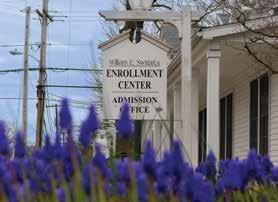
As higher education confronts the demographic cliff and a shrinking pool of applicants, Juniata is growing through innovation and connection. Fall 2025 enrollment showed a nine percent increase in headcount since 2022, reaching 1,363 students. The increase is driven by academic expansion, athletic recruitment, and student success initiatives. New programs in nursing and civil and environmental engineering are attracting strong interest, alongside accelerated dual-degree pathways that enable completion of bachelor’s and master’s degrees in four years. Nearly one in five new students plan to pursue POEs new to the College in the past five years. Out-of-state and community college transfer enrollment continue to rise, supported by national recognition for classroom experience.
Juniata College has been recognized in The Princeton Review Guide to Green Colleges: 2026 Edition for its strong commitment to environmentally responsible practices. The College’s sustainability initiatives span infrastructure upgrades, curriculum, and student-led projects, including energy-saving lighting improvements and hands-on learning at the Raystown Field Station in forestry, aquatic ecology, and wildlife conservation. Juniata offers a range of sustainability-focused courses and recently launched a master’s program in Applied Ecology and Natural Resource Management. One of 19 Pennsylvania schools on the list, Juniata joins small liberal arts colleges and major research universities alike in demonstrating a holistic approach to environmental stewardship, equity, and sustainability education.
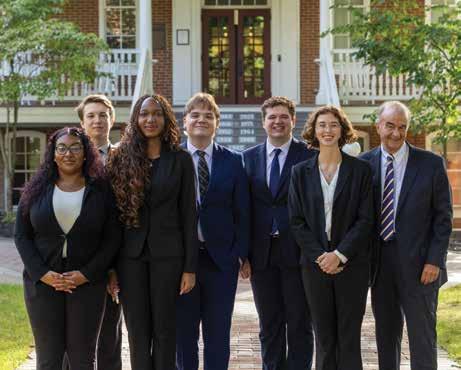
The 2025-2026 Juniata College Mock Trial season concluded on a high note, showcasing both competitive achievement and the character of its team members. Juniata advanced to the Opening Round Championship Series of the national tournament, demonstrating the program’s strength on a national stage. At their final competition, the Blue Team earned the prestigious Spirit of the AMTA Award, voted on by fellow competitors. Peers described Juniata students as outgoing, friendly, and willing to go above and beyond — embodying the ideals of civility, fair play, and justice. It was a season defined not just by success, but by the powerful example that greatness and kindness go together.

The Society of Physics Students (SPS) chapter at Juniata has earned the Outstanding Chapter Award from the SPS National Office for the 27th consecutive year, marking the longest uninterrupted streak of recognition in the country. Fewer than 15 percent of SPS chapters nationwide receive the distinction, which highlights excellence in student-led engagement, outreach, and professional development. The chapter’s activities span campus involvement, public outreach, and participation in national SPS programs, providing students hands-on experience in physics and related fields. The chapter is advised by Jim Borgardt, William W. Woolford Professor of Physics, and continues to set a standard for student achievement and leadership in the physical sciences.
INTERVIEW BY APRIL FEAGLEY g ’23
What influenced your decision to attend Juniata College, and how has your experience compared with your expectations?
I had to look at multiple dynamics when choosing a college. The kind of people you’re going to work with really matters. The faculty, student population, and overall culture were important to me. When I arrived as a first-generation college student from India there was a big cultural and academic shock. I thought I’d have to understand the dynamics of America to be able to be part of the community and partner with faculty members, but I quickly realized that at Juniata, there are no barriers between you and your faculty members. My experience has been like a fine wine, getting better with time.
What advice would you offer to other international students?
One moment that was especially formative for me was changing my POE. I came in as a computer science student, but I realized I wanted to study business and enter the financial services industry. My professor encouraged me, saying, “Figure out what you want to do and take the classes that you like.” My advice to other international students is simple: ask for things, do not shy away from talking to people, and speak up for yourself. Juniata has taught me to make informed decisions, be humble, and rely on the incredible community around you.
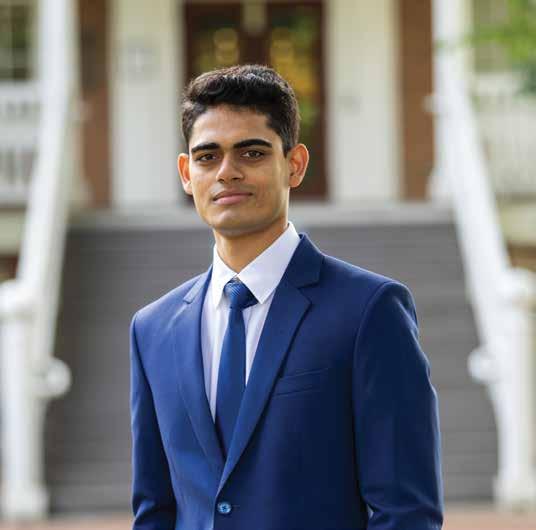
What drew you to Mock Trial and how has participating influenced you?
Attorney David Andrews ’74 has been a tremendous guide for me and encouraged me to join. When I researched the program, I found that our team is one of the best in the nation, competing against top schools like Princeton, which we even beat. Representing Juniata at such a high level was a source of pride for me. Participating has improved my speaking skills and strengthened my critical thinking, since in trials you have to think on your feet. Being part of this competitive team has enhanced my confidence, communication, and understanding of leadership.
How do you decide where to invest your time and energy on campus?
The best way I decide where to invest my time is by following my interests and asking for opportunities. When you want something and you ask for it at Juniata, you get it. I joined the Juniata Eagle Fund, where a small group of students manages $300,000, and even started my own Finance and Investing Club. Pursue what you’re passionate about, and people at Juniata are always willing to help you get what you’re looking for. Faculty and staff go out of their way to guide you, connect you with alumni, and pave the path toward your goals.
Anjan Kumar ’27 plans for a career in investment banking and private equity. Connections with alumni in the field have led to mentorship and internship opportunities that make the most of his
Juniata
education.
Robb Conrad Lauzon, assistant professor of communication, reflects on who preserves history in a digital age and argues that while powerful technologies archive our records, everyday rituals remain essential to collective memory.
BY ROBB CONRAD LAUZON ASSISTANT PROFESSOR OF COMMUNICATION
The cliché that “history is written by the victors” has long implied that those who can preserve the materials we use to tell our stories ultimately decide what matters. When the written record’s infrastructure requires AI data centers in thousands of locations across the country, it might be concluded that history is now written by those who can sustain our information ecosystem. The victors have always possessed the ability to carry history across generations. Considering this unsettling truism, we might ask: how can the histories outside of this record also matter?
In 1989, the French historian Pierre Nora, wrote “There are lieux de mémoire, sites of memory, because there are no longer milieux de mémoire, real environments of memory.” These sites of memory comprise what we consider to be history. Sites of memory consist of physical artifacts that narrate and monumentalize the details of our social origin. They are the archival remnants of lived experience. Nora’s observations identify the disappearance of ritual and tradition that are transmitted between generations as a collective memory. These observations are even more pronounced in the seemingly instantaneous production, consumption, and archiving of cultural knowledge that we are witnessing in a digital age marked by generative AI.
In medieval monasteries, scribes worked in a scriptorium. Here, knowledge was preserved and access to this space was central to preservation of history. In a digital world, memory is fleeting and archived with minimal effort. Although the doors of our contemporary scriptorium have been flung open for all to write on the palimpsest of the world wide web, the posterity of its output is not guaranteed to all. Whose story is told is a struggle as old as civilization. Because the digital world is amnesiac, habits of memory atrophy. As everyday experience is increasingly moved online, the mundane rituals that preserve cultural memories compete for access to the archive and ultimately what is reality. An emphasis on ritual institutions like celebrations, holidays, performances, and a whole host of cultural activity have long sustained our spirit. These memories cultivated by ritual also matter albeit without inscription.
Those who possess the rare earth minerals, capital, and technical expertise to deliver the compute at the center of this information ecosystem where history is being written will ultimately own history. As it has always been, it is the cultivation of our collective memory through the most mundane of rituals that will enable people to preserve their stories and maintain a grasp on reality.
“Because the digital world is amnesiac, habits of memory atrophy. As everyday experience is increasingly moved online, the mundane rituals that preserve cultural memories compete for access to the archive and ultimately what is reality.”
Robb Conrad Lauzon Assistant Professor of Communication
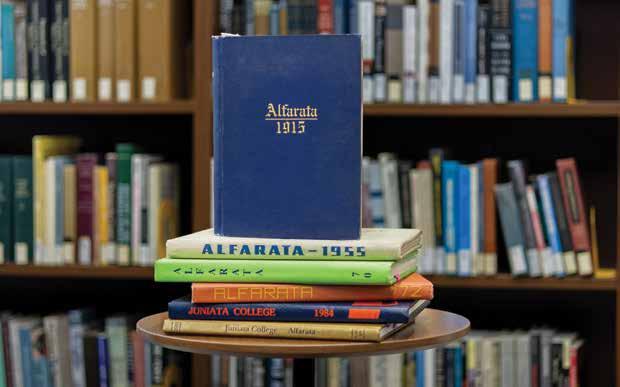
Determined to leave their mark on their alma mater, Juniata’s Class of 1915 — young adults straddling the Victorian era and the modern age — created the College’s first yearbook.
As their senior project, the members of the Class of 1915 created Juniata’s first yearbook and founded a tradition that spanned almost a century — the “Alfarata.” Named for the heroine of the popular song, “Blue Juniata,” the pictorial keepsake expanded on annual souvenir publications, “Leaves of Industry” (1897), “Blossoms of Life” (1898), and “Fruits of Virtue” (1899).
Led by editor and “math wonder” Harry Baer, the Class of 1915 student editorial board included John Ake (art), Holmes Falkenstein (literary), Eston Fox (business), Joshua Reber (assistant business), George Replogle (athletics), Raymond Ryder (assistant literary), and Alvah Detweiler (academy).
Dedicated to President I. Harvey Brumbaugh, Class of 1886, “who personifies to us the spirit of the College we love so well, who has helped us translate ‘Veritas Liberat’ into terms of life and character,” Volume One of the “Alfarata” stands as a testament to college life early in the 20th century.
The volume opens with a poetic foreword that reveals the students’ motivations:
Four years we have drunk deeply of life and learning at Juniata. The sands of the hourglass run swiftly and the drama for us will soon be ended. The thought of breaking college ties bids us halt a moment and survey the past. Before relentless time can snatch away these precious college memories we hasten to express and preserve them, as far as possible, in tangible form. Juniata is not a mere institution and cannot be pictured. It is a life and must be lived. However, we hope that, some day, by looking over these crude pictures and descriptions, we can live again the old days. If those also, who have been members of the Juniata family in the past, can be made to feel, as of yore, the throbbing life and spirit of their alma mater, we shall be more than repaid for our efforts. In this spirit, we send forth the first Alfarata, “with all its imperfections on its head.”
Though the “Alfarata” would not become an annual tradition until 1921 and would ultimately cease publication in 2007, its first volume endures as a window into student life at the dawn of the modern era. Created by students who feared their memories would fade with time, it fulfilled their hope that future Juniatians might “live again the old days,” preserving the spirit of Juniata for those who follow.
“Before relentless time can snatch away these precious college memories we hasten to express and preserve them, as far as possible, in tangible form. Juniata is not a mere institution and cannot be pictured. It is a life and must be lived.”
Dedication, 1915 Alfarata
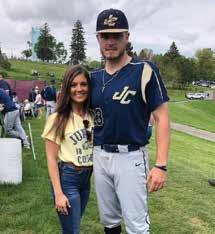
“Gavin Grimaldi ’19 and I met in 2019. He was a senior and I was a sophomore. Our very first date was actually on Valentine’s Day in 2019! We got married in July 2023 and had our first baby in March 2025.”
CAMILLE (MCMATH) GRIMALDI ’21
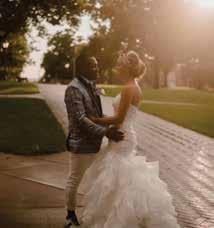
“Nick Stubbs ’16 and I met in 2014 in front of East Towers, as well as playing sports! We were married in 2019 under the Cloister Arch!”
ALISSA (SELLERS) STUBBS ’16
Love is in the air at Juniata! In honor of Valentine's Day this year, we asked alumni to share their “We met at Juniata” love stories.
“Jeff Miles ’82 and I met at a mixer in Tussey Terrace on 1/26/1980. Our friendship deepened to best buds and then dating. We've been together since. Like Mike Ford ’82, our youngest daughter attended JC & we could not have been more proud!”
LISA M. (DONOHUE) MILES ’82
“He was a townie moving into Sherwood after the fall term in our sophomore year. I was the RA, and I had to hand out his room key. I went to check to see if he was settled in. We’ve been together for 53 years.”
TIM REIMER ’76
“We met when I was a freshman and Ryan (Hollen ’97) was a sophomore fall of 1994. We both lived in North. We were immediate friends but didn't actually start dating till my senior year. We've been together ever since, married for 22 years.”
ERIN L. (BARR) HOLLEN ’98
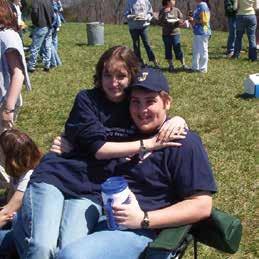
CWS class in the Fall of 2000. We got engaged at the Cliffs in 2004.”
DOUG SCHUNK ’04
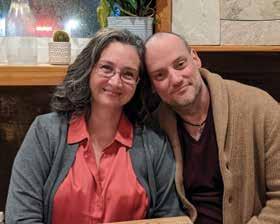
“Maureen ’84 and Rick Leader ’83. Married 40 years in August!”
MAUREEN (MORRISSEY) LEADER ’84
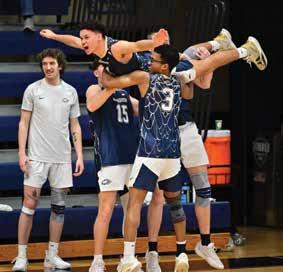
The men’s volleyball team has put together an outstanding 2026 campaign, compiling a 29–2 overall record and capturing the Continental Volleyball Conference (CVC) championship. The Eagles have excelled against top competition, going 8–2 against nationally ranked opponents, and will host early rounds of the NCAA Tournament after earning a firstround bye.
Individually, the team continues to earn national recognition, with multiple players earning All-Region honors, while several Eagles were named to the All-CVC team. Head Coach Glenn DeHaven ’07 and his staff were also recognized as CVC Coaching Staff of the Year, highlighting the program’s continued excellence. Earlier this season, DeHaven surpassed 350 career wins, a milestone moment in a year defined by both team success and program growth.
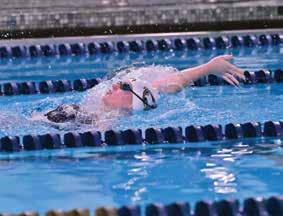
The women’s swim team shattered 19 school records, earning the second-highest point total in program history at the Landmark Conference meet. Eleanor Smith ’29, Coltan Swarts ’29, Megan Mikell ’29, and Delany Wetzel ’28 led standout performances, with the quartet of Wetzel, Swarts, Smith, and Dani Cline ’28 taking bronze and setting a school record in the 800-meter freestyle relay. Head Coach Kyle Russell and Assistant Coach Ashley Derrick were named Landmark Conference Coaching Staff of the Year. On the men’s side, the largest roster in over a decade helped break 14 school records and achieve the program’s highest conference meet points since its restart.
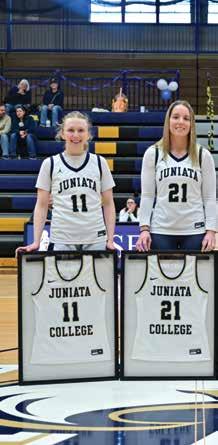
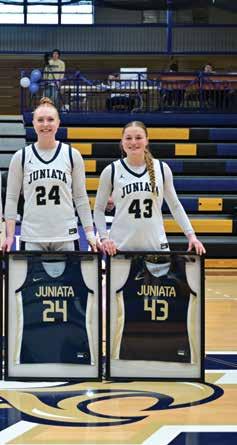
The women’s basketball team closed the 2025–2026 season against Moravian, celebrating seniors Olivia Berg ’26, Bri Bodtorf ’26, Emma Coolidge ’26, and Emily McCann ’26. Bodtorf had a standout year, ranking third in conference scoring, second in rebounds, third in assists, fifth in steals, and ninth in blocks, and became the 18th player in program history to reach 1,000 career points. Coolidge also ranked third in rebounds, while Berg was ninth in three-pointers per game. The season highlighted strong individual performances and team leadership as the seniors were honored in the final game of their collegiate careers.
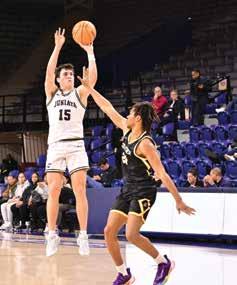
The men’s basketball team ended their season with a decisive win over Moravian, eliminating the Greyhounds from the Landmark Playoffs. Junior guard Ty Kocak ’27 led the charge, scoring 17 points in the second half for a team-high 24. Kocak finished the season eighth in the conference with 17.4 points per game. The team’s defense remained a standout, ranking third in the Landmark in points allowed and steals per game, while also finishing second in turnover margin, highlighting their consistent ability to control the pace and pressure opponents throughout the season.
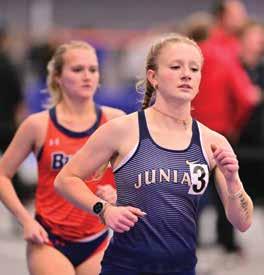
The Juniata Eagles closed their indoor season at Landmark Championships, highlighted by Ella McCrum ’29 placing third in the women’s 5,000m with a school record. Camille McRoberts ’27 finished fourth in the 800m. Gracie French ’28 broke records in the 60m and 200m, placing fifth in both. Josie Kelly ’26 and Rae Waight ’28 placed fourth and eighth in pole vault. On the men’s side, Gavin Robb ’27 was second in pole vault, with Spencer Siegel ’28, Deric Fritzges ’28, and Djemba Ndikwe ’29 posting top finishes. At the All-Atlantic Region Track and Field Conference (AARTFC), McCrum set another 5,000m record, finishing fifth.
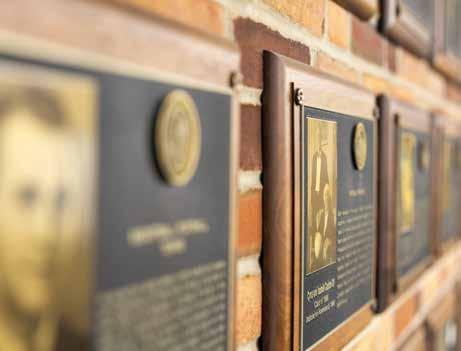
Joel Delewski ’70 (football, basketball, baseball) was a standout three-sport athlete at Juniata, earning starts in basketball, baseball, and football. A threetime football letter winner, he led the nation with three punt return touchdowns in 1967 and finished with 1,029 punt return yards and five career touchdowns.
Carolyn Stambaugh ’87 (volleyball) was a dominant volleyball player at Juniata and a leader whose legacy endures through the Carolyn Stambaugh Award Endowment. A 1985 MAC MVP and NCAA All-Tournament Team selection, she was a 1987 preseason All-American and set the NCAA single-game solo blocks record.
Craig Moshier ’04 (football) is one of the most prolific running backs in Juniata football history, appearing in the record book 34 times. He holds single-game and season rushing records and ranks second in career rushing yards (3,164) and tenth in career receptions.
Meredith Troutman Zorn ’06 (volleyball, track and field) was a dominant sprinter at Juniata, capturing three MAC championships in 2006 in the 100m, 4x100m, and 4x400m, and finishing second in the 200m. She holds the outdoor 400m record and ranks among Juniata’s all-time leaders in multiple indoor and outdoor events.
Jen Hnatuck Sealy ’11 (basketball) is one of the greatest centers in Juniata women’s basketball history. She holds the single-season free-throw record (89%) and ranks top 10 in scoring, rebounds, and blocks. A three-time Landmark All-Conference selection, she was Landmark Player of the Year and a D3hoops.com All-American.
Meghan McGlone ’12 (field hockey) is one of the most decorated field hockey players in Juniata history. A two-time NFHCA Division III All-American and Landmark Defensive Player of the Year, she is the program’s only four-time First-Team All-Conference selection and helped lead three straight conference championships and two NCAA Tournament appearances.
Joe Bortak ’15 (volleyball) was a four-time AVCA AllAmerican, earning three first-team and one secondteam selections. A CVC Rookie of the Year and four-time All-East pick, he holds Juniata’s career blocks record and helped win two conference championships and reach the 2014 national championship match.
Seven alumni athletes joined Juniata’s Sports Hall of Fame Class of 2026 this spring. Members of the Hall of Fame are selected by a committee consisting of current coaches, campus and athletic administrators, and the current Hall of Fame members.
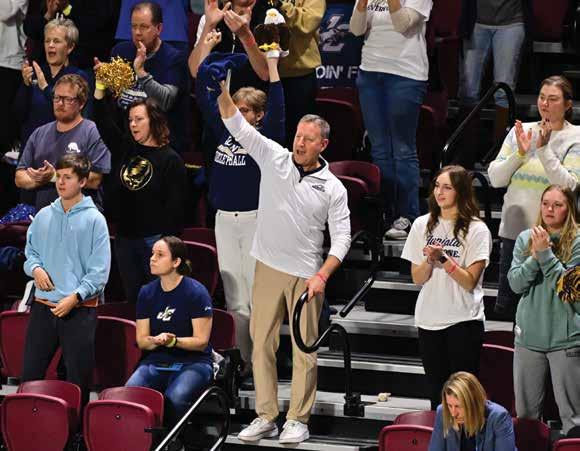
President James A. Troha has been named vice chair of the National Collegiate Athletic Association (NCAA) Board of Governors, placing him among the most influential leaders in college athletics. The appointment was announced at the NCAA Convention in Washington, D.C., in January 2026. A long-time advocate for student-athletes, Troha will help guide the NCAA through a period of significant change. The Board of Governors oversees strategic priorities and governance across all three NCAA divisions, addressing issues that shape the future of collegiate sports nationwide.
“I am honored to serve the NCAA in this leadership role,” Troha said. “The issues facing college athletics are real and profound, and I will do whatever I can to help the NCAA thrive in a really challenging environment. Our student-athletes, particularly, deserve our collective time and attention toward sustaining such a powerful co-curricular campus experience.”
Troha joined the Board of Governors in November 2024 and is serving a two-year term from 2025 through 2027. His appointment as vice chair builds on more than a decade of leadership within the Landmark Conference and years of national service. Most recently, he completed a two-year term as chair of the NCAA Division III Presidents Council, helping guide policy for institutions balancing academic excellence with competitive athletics.
In addition to his work on the board, Troha serves on the NCAA’s Strategic Risk Advisory Committee and Compensation Committee, contributing to discussions on financial sustainability, governance, and accountability.
Katie Boldvich, commissioner of the Landmark Conference, praised his leadership. “The Landmark Conference has been incredibly lucky to have President Troha as one of our leaders for over a decade,” Boldvich said. “His thoughtfulness, steadiness, and genuine care for student-athletes have benefited the entire division.”
The NCAA Board of Governors is the association’s highest governing body, composed of presidents and chancellors from each division, former student-athletes, and select leaders from within and beyond NCAA membership.
For Juniata, Troha’s appointment highlights the College’s growing voice in national conversations about athletics, education, and student experience — ensuring that student-athletes remain central to decisions shaping the future of college sports.
BY THE NUMBERS
Making Their Mark
Juniata’s studentathletes are continuing a proud tradition of stand-out achievement, on and off the field. Some highlights:
13.6 average games per week
24 varsity sports
508 athletes enrolled
3.34 grade point average for student-athletes
3,000+ community service hours by studentathletes
Cheering on
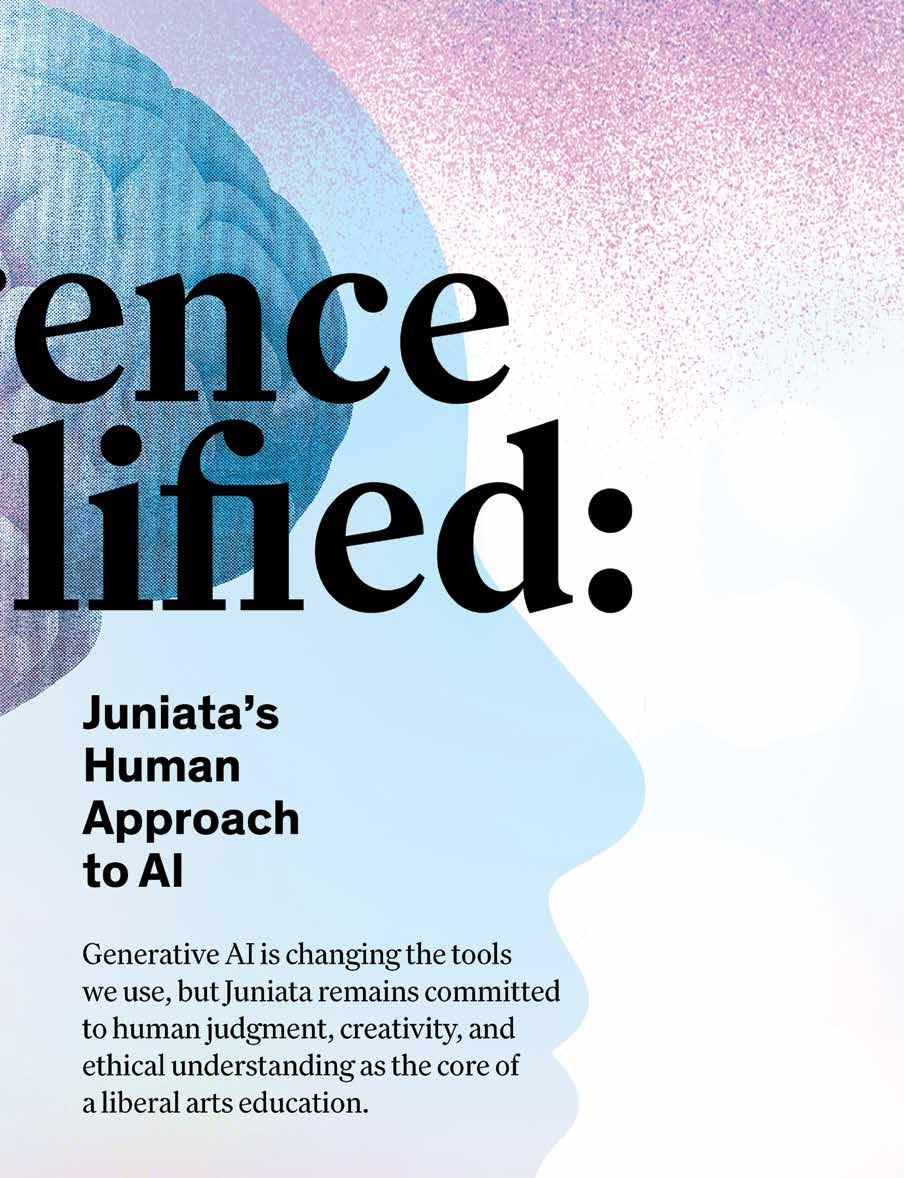
Not long ago, computer technology mainly helped people look things up faster.
Now, generative artificial intelligence can write a paragraph, generate an image, or sketch out an idea in seconds, changing what it means to do the thinking ourselves.
Artificial intelligence has existed since the 1950s, but generative artificial intelligence entered everyday life much more recently. Here, “AI” refers to generative AI.
At the celebration of December graduates, President James Troha shared a list of the top 10 skills employers seek in college graduates and AI literacy made the cut for the first time. At Juniata, that shift is already influencing classrooms, student research, and campus policy.
“AI is everywhere, and it’s not new. What is new is how accessible it has become,” said Misty Andrade, associate vice president and chief information officer at Juniata. “It’s built into social media, the tools we use, and the websites we log into every day.”
Most of today’s generative AI tools are powered by large language models, or LLMs — systems trained on vast amounts of text to recognize patterns in language and generate responses that resemble human writing, alongside related models that create images and other visual content from text prompts.
Exploring the opportunities and challenges of AI has been the charge of the College’s institutional AI Task Force, cochaired by Andrade and Provost Lauren Bowen, with members representing a broad cross-section of disciplines from academic departments and administrative sectors.
The task force has multiple workstreams taking a comprehensive look at the implications of generative AI for not
“AI is everywhere, and it’s not new. What is new is how accessible it has become. It’s built into social media, the tools we use, and the websites we log into every day.”
Misty Andrade
Associate Vice President and Chief Information Officer
only the classroom experience but for how all of us work and how we gather, share, and evaluate information. Related, Juniata is participating in the Council of Independent Colleges’ AI Ready Initiative, a College-wide project providing participants with the opportunities to build and evaluate AI tools while also shaping campus policy and practice.
Territa Poole, associate professor of psychology and director of the SoTL (Scholarship of Teaching and Learning) Center, leads Juniata’s team, a second initiative sponsored by the American Association of Colleges and Universities (AAC&U) Institute which focused on AI in the teaching and learning environment. Team members include Bowen; Robb Conrad Lauzon, assistant professor of communication; Shuang Quan, assistant professor of education; and Thomas McClain ’94, assistant director of instructional technology.
AI helps computers do things that usually require human thinking – recognizing patterns, making choices, or creating content.
Types of AI
Rule-Based AI
• Follows set instructions
• Example: calculator, simple chatbot
Predictive AI
• Uses past data to guess what comes next
• Example: Netflix or Spotify recommendations
Generative AI
• Creates new content: text, images, music, code
• Example: ChatGPT, AI image generators
Fun Fact
• Most AI today is narrow AI – built to do one job really well
• AI that thinks like a human is still science fiction
“The goal of the AAC&U Institute is to help institutions decide how they want to foster student literacy with regard to AI. This work includes articulating and assessing learning outcomes, exploring the resources and tools we need to provide to instructors and students, and thinking through policies,” Bowen said.
Since his time at Rensselaer Polytechnic Institute, Lauzon has been experimenting with various platforms to explore both strengths and weaknesses of AI technology. Most importantly, he considers the ramifications within the classroom and the field of communication.
“In managing strategic communication, there’s value in being able to dig deep and scan wide for resources. As a professor, I try to show my students how powerful it is in that sense,” Lauzon said.
AI’s propensity for hallucination means human oversight is crucial. Andrade described these incidents as “answers that sound completely correct but aren’t when you take a closer look.” In one AI encounter, she asked the program for a relatable equivalent to 6,983 pounds of recyclables. Its response was “one baby grand piano, or almost the weight of one adult elephant’s heart.”
When that answer didn’t seem quite right, she asked for sources and the answer changed to two baby grand pianos... or 151 elephant hearts.
“Understanding the implications of AI tools means recognizing they are resources, not replacements for imagination, independent thinking, or judgment.”
Lauren Bowen
Provost and Professor of Politics
“In looking at the answers AI gave, I started doing my own research,” she recounted. “We need to be careful not to blindly trust everything that it returns.”
The goal of the task force, particularly when it comes to AI usage in a classroom or research setting, is not to prohibit AI, but to foster literacy, intentionality, and ethical practices. While encouraging faculty to set explicit classroom expectations, students and instructors alike are discovering how AI can enhance learning, research, and administrative efficiency – without replacing critical thinking, creativity, or human connection.
In Bowen’s view, literacy begins with perspective: “Understanding the implications of AI tools means recognizing they are resources, not replacements for imagination, independent thinking, or judgment. They help distill information into
BY APRIL FEAGLEY g ’23
AI-generated images are everywhere, raising a question that goes beyond what we can create to what and how we should.
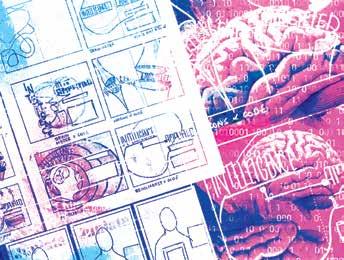
Tracy Kretz, executive director of strategic marketing and brand design at Juniata, sees AI technology as a powerful tool for ideation and prototyping — a way to turn rough sketches into visual concepts without letting the machine replace human creativity.
Drawing on broad experience leading design work for global companies, she recalls that storyboarding once involved hours of sourcing and customizing images to create a shared set of visuals to which everyone can point to, react to, and refine together.
“The most useful place for AI is during the ideation phase,” she explained. “Now, you can feed a script into the tool with art direction prompts to generate something close to what you are imagining.”
Human judgment and guidance are essential.
“What makes me uncomfortable is when people use it as a shortcut, instead of contributing their own creativity,” Kretz added.
“When work is published or monetized, that’s where the ethical questions start. Even with careful prompting and reference images, I can’t fully verify what influenced the output or feel the certainty I would with licensed stock or commissioned work.”
Even with signals that an image is AI-generated, there is rarely a source-by-source trail of influences. That is where critical thinking, especially in a liberal arts context, matters. “You still have to ask: Is this right? Is this ethical? Is this true?” she said. “AI can generate options, but it can’t generate accountability. That part stays with us.”
Above: From rough sketches to visual concepts, Tracy Kretz uses AI to augment the creative process while ensuring human judgment and accountability drive the final work.
“H.U.M.A.N. exists because we want our peers to know that nothing is more important than your ability to think for yourself ”
Zachary Riggall ’29
manageable bits, but students still need to exercise discernment.”
She added, “There’s a healthy skepticism among a critical mass of students, which is important. They understand the need to engage with AI responsibly rather than randomly.”
That skepticism has resulted in the formation of H.U.M.A.N. (Holding Unethical Machine usage Accountable Now), a student club on campus.
“H.U.M.A.N. exists because we want our peers to know that nothing is more important than your ability to think for yourself,” said Zachary Riggall ’29, the group’s founder. “I think it's easy to forget the fundamentals nowadays — being kind, having your own opinions, trying to do your best in your studies. H.U.M.A.N. hopes to encourage the student body to really consider what they are giving up in the name of convenience or innovation.”
Members of H.U.M.A.N. are far from Luddites. Rather than eschewing the emerging technology, they are advocating for careful integration prioritizing individual learning and comprehension.
“The truth is, generative AI is here, and it isn’t going anywhere anytime soon. It would be totally unreasonable to expect a data scientist to never use AI for research, just as much as it would be unreasonable to ask a math student to never use a calculator,” Riggall clarified. “H.U.M.A.N. club wants our peers to ask the question, ‘Do I really need a calculator for this problem?’”
In a presentation to members of the Student Government Association, Poole mentioned many students are interested in how the Task Force is approaching AI work at Juniata.
A core concern is AI’s impact on the mechanics of learning. Lauzon warned that sole reliance on technology over thought process and lack of experience and expertise are a dangerous prospect.
“I worry that students are foregoing important cultivation of memory and relational knowledge. If they rely too much on AI, they may lose the ability to synthesize information from their own understanding,” he said. “Rapid adoption without cultivating knowledge could erode the wisdom our society relies on.”
Innovation, along with investigation into AI’s potential and pitfalls, is taking place across all sectors of the College’s campus. Improved access to existing information could help those on campus as well as prospective students get answers to questions quickly. Many of the tools Juniata’s offices already use have AI capabilities built into them; it’s a matter of mindful implementation.
As campus administrative offices explore implementation of AI processes, Andrade emphasized that any AI use must comply with
AI can generate and assist, but meaning is created through human connection, critical thinking, and shared experience.


BY APRIL FEAGLEY
Like their technological predecessor, the calculator, personal computers began as expensive luxuries that initially changed little in daily life.
B. Edwin Blaisdell, professor of chemistry and self-taught computer expert, prompted and led Juniata College’s entry into the computer age. In 1963, when the College purchased its first computer, an IBM 1620, he became its caretaker.
“The sciences and mathematics departments were using computers in Brumbaugh Science Center (now,
Brumbaugh Academic Center),” said Jim Lakso, professor emeritus and provost from 1997–2013.
“You would use a programming language like Fortran or Cobol to write a program which you typed up on computer cards. You submitted the cards to the computer operator who put you in the queue. If you did everything right, you might be able to get your results in a day. If you made a programming error or a typing error, you had to start over."
Throughout the 1960s and 1970s, technology continued to evolve, but early models were “clunky and difficult to use,” Lakso recalled. At one point, departments even shared a single computer mounted
on a rolling cart, transporting it from office to office.
Faculty devoted substantial time to learning the latest developments, then applied that knowledge to design curricula that prepared students for a world increasingly shaped by computers. By the late 1980s, computer labs had been established in every academic building, giving students access to transformative technology. That same spirit of innovation now connects Juniata students to a digital world Blaisdell could only imagine, continuing the College’s tradition of preparing students for life at the forefront of technology.
BY APRIL FEAGLEY g ’23
AI is everywhere in daily life, but its environmental costs are often hidden.
Celina (Isenberg) Seftas ’07, Juniata’s director of sustainability, emphasizes that the data centers powering AI place heavy demands on electricity and water. “Power companies are having to build additional capacity to accommodate data centers, which increases costs for consumers,” she explained. These systems contribute to peak load stress on the hottest and coldest days, requiring careful management to maintain grid stability.
AI’s carbon footprint — the greenhouse gases emitted from its operation — is substantial. “The amount of emissions from a single AI query varies based on the model used and the complexity of the prompt,” Seftas noted.
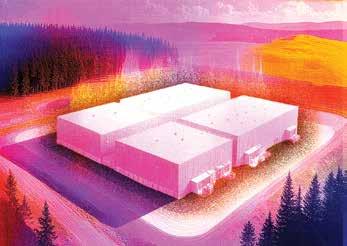
In addition, data centers have a substantial land footprint, leading to concerns from rural and suburban communities about noise, construction traffic, and loss of farmland.
Water usage is another concern. Data centers draw heavily from local resources. “Even in Pennsylvania, which
has abundant water, we must plan responsibly given competing demands during periods of drought,” she said.
Still, AI is not inherently harmful. “Using AI for frivolous things seems like a waste of resources,” Seftas said, “but there are great applications in medical research and environmental sectors, where it can streamline systems, reduce waste, and direct resources efficiently.” Responsible AI would prioritize renewable energy and purposeful use rather than being embedded in every routine task.
As institutions like Juniata explore AI, balancing innovation with environmental stewardship is critical. With careful planning, AI can serve society while protecting the planet’s resources.
Above: The image of the data center wa created using Adobe Firefly and Adobe Photoshop, guided by human-made sketches, textures, color palettes, and human-drafted prompts. Open your mobile device camera and point it at the QR code to access exclusive digital content on the process behind it.
“AI cannot create meaning. That’s the human part, and that’s really what we’re about at Juniata — relationships and meaning and value and being good citizens in the world.”
Territa Poole
Associate Professor of Psychology and Director of the SoTL Center
federal privacy laws and protect student, faculty, and staff data.
Since the first class of students arrived 150 years ago, Juniata has witnessed technological advances unimaginable by its founders.
The advent of the telephone, automobile, radio, airplane, television, computer, and the internet brought questions of the impact on human relationships. Through it all, Juniata has remained committed to human-centered education and preparing students to lead thoughtfully and ethically into whatever the future holds. To that end, each academic department will articulate an AI literacy outcome this year, recognizing that healthy disciplinary variation will shape what that outcome looks like in practice.
On a campus renowned for faculty-student partnership, members of Juniata’s AI Task Force see implementing these tools as a way to accelerate information processing and research, synthesize data, and allow more time for problem-solving and creative thought.
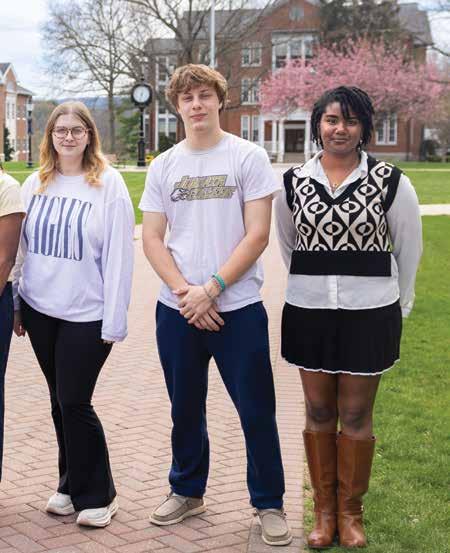
In Poole’s view, the future of AI at Juniata depends less on what the technology can produce than on what it can never become.
“AI cannot create meaning. That’s the human part, and that’s really what we’re about at Juniata — relationships and meaning and value and being good citizens in the world,” she explained. “AI can make something, it can record something, but it doesn’t have the capacity to create meaning. The value of a liberal arts education resides in these human-to-human encounters. AI cannot reproduce these encounters. This is where meaning is made.”
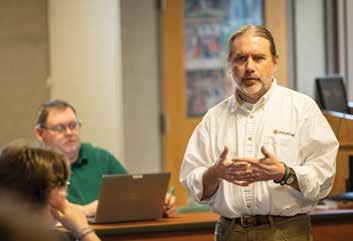
“Computers are useless. They can only give you answers,” Pablo Picasso said in 1968. But what if the real question about AI isn’t the answers it gives, but the endless line of inquiry it sparks? How does generative AI — or the more advanced agentic AI — “think”? And is think even the right word?
Tom McClain ’94, assistant director of instructional technology, describes it as an algorithmic, iterative process. “AI is a computer’s ability to take pre-existing work, look at the body of knowledge, and provide answers back. The generative part comes in because, as it replies, it can fold that information back into itself, iterate, and improve based on the quality of the responses,” he said.
Computer-generated answers are built on human-generated data. McClain warns, “If you feed bad information in, you get bad information out. Be mindful that at some point, that data was keyed in by a human and bias or errors can be introduced into the mix.”
At its core, AI converts questions or tasks into code, converts the text into vector data which can be used to analyze “closeness” or probability, and calculates the most probable responses. “That’s how AI currently ‘thinks,’” McClain said. “It’s about the probability of the responses based on the words, not on what we know is truth. That’s where hallucinations occur — if it doesn’t have context it gives the most probable response.”
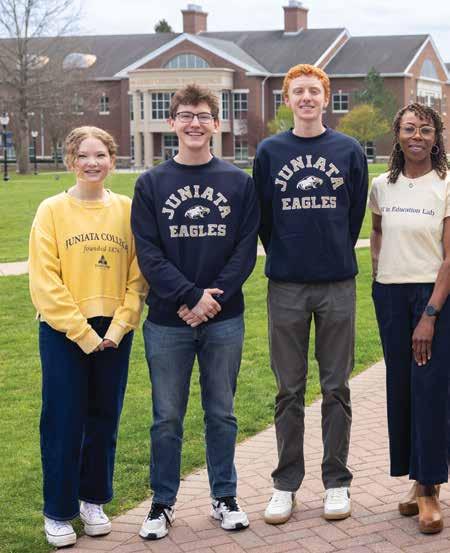
Above: Led by faculty advisor Territa Poole (center), members of H.U.M.A.N. (Holding Unethical Machine usage Accountable Now), from the left, Abbey Landahl ’29, Zachary Riggall ’29, Noah Rosner ’29, Elle Barnes ’29, Finn Anderson ’29, and Mariam Sesay ’29, advocate for careful integration of AI, prioritizing individual learning and comprehension.
Even mistakes, however, reveal how AI is designed: it’s built to respond agreeably and promptly. “It’s similar to positive customer service experiences,” McClain explained. “AI is going for those dopamine hits. It won’t be grumpy or scold you. It wants to be your best buddy. It will provide a response, guide the conversation, and keep you coming back.”
In the end, AI may only give answers, but its true power lies in how it sparks new questions, turning human curiosity into a dialogue.
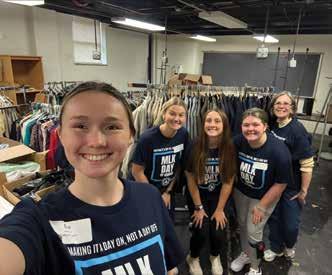
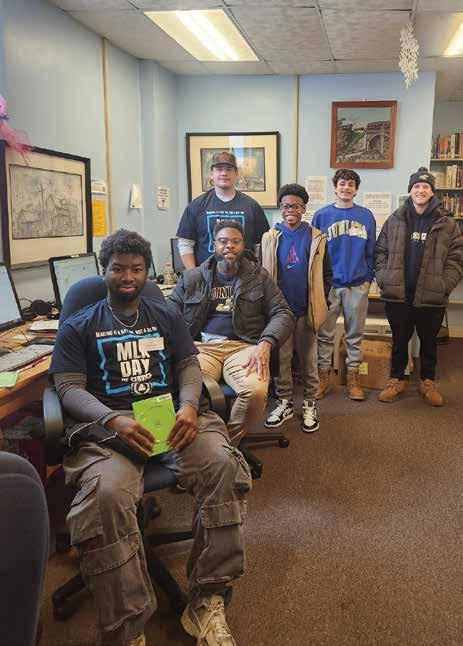
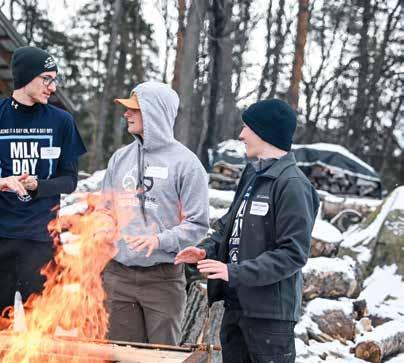
“Everybody can be great, because anybody can serve,” Dr. Martin Luther King Jr. said. At Juniata College, those words are put into action each year as volunteers spread out across Huntingdon County for the annual MLK Day of Service, held just before the start of the spring semester.
On January 19, 2026, 250 students, faculty, and staff worked at 30 project sites in partnership with local organizations.
“This National Day of Service gives us a chance to honor Dr. King’s legacy of community building while creating space for everyone to give back,” said Sarah Worley ’00, professor of communication and director of community-engaged teaching and learning. “It shows both our campus and our broader community that we show up for one another. Service happens all year, but this day brings us together to build community through service.”
Juniata’s MLK Day of Service outreach activities are supported through grant funding from the Partners for Campus-Community Engagement (PCCE).
The first campus-wide observance of the MLK Day of Service took place in January 2020. A virtual option was offered in 2021, and the annual event returned in person in 2022.
“Every time we think it can’t get bigger, it does,” Worley said. “We’ve grown in terms of volunteers and community partners.”
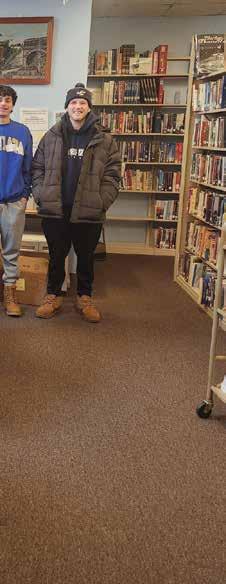
Eva Johnson ’27 (right) joined a group led by Tammy Stuber, associate director of career development, supporting Juniata’s Career Clothing Closet and preparing peers for professional interviews.

Braving the frigid temperatures, Deric Fritzges ’28 (far left) worked with a team to remove invasive plant species to promote a healthy space for native flora to grow.

Serving on MLK Day was an exciting and meaningful experience because it allowed me to give back while actively connecting with the purpose of the day.
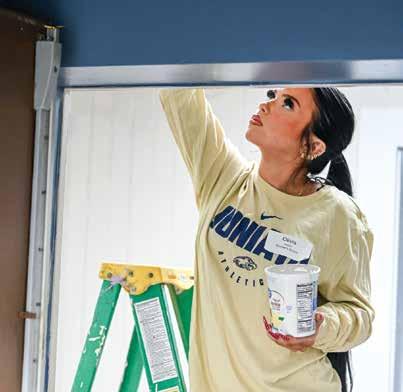
Painting the community center felt rewarding, knowing our work would help create a welcoming space for the community. As someone who isn’t from Huntingdon, I loved exploring a new place and meeting people from both the local community and my school.
Olivia Seasor ’29
MLK Day of Service was an important day for students to come together and enjoy our community.
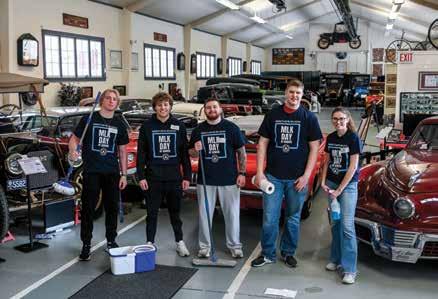
It made me think about how big our task was for one person, but it ended up being efficient with the help of volunteers. It was refreshing to be able to give back and have a personable experience with community members. A little bit of time made a difference to improve the local area.
Eva Johnson ’27
What we did primarily impacted plant life, but the job that I was tasked with also allowed me to offer a space void of invasive plants to the students of Juniata, and the community of Huntingdon.
Impacting the community of Huntingdon in a positive manner gives me a sense that I am returning the generosity that this community gives to Juniata College.
Deric Fritzges ’28
The MLK Day of Service was a very enjoyable event. Speaking to the community was even more exciting than the work. I have been participating in these MLK events since freshman year.
The first time really teaches you about how much helping one another plays a huge factor in growing as a person and I’m thankful these events helped everyone around us.
Eric Jallah ’27
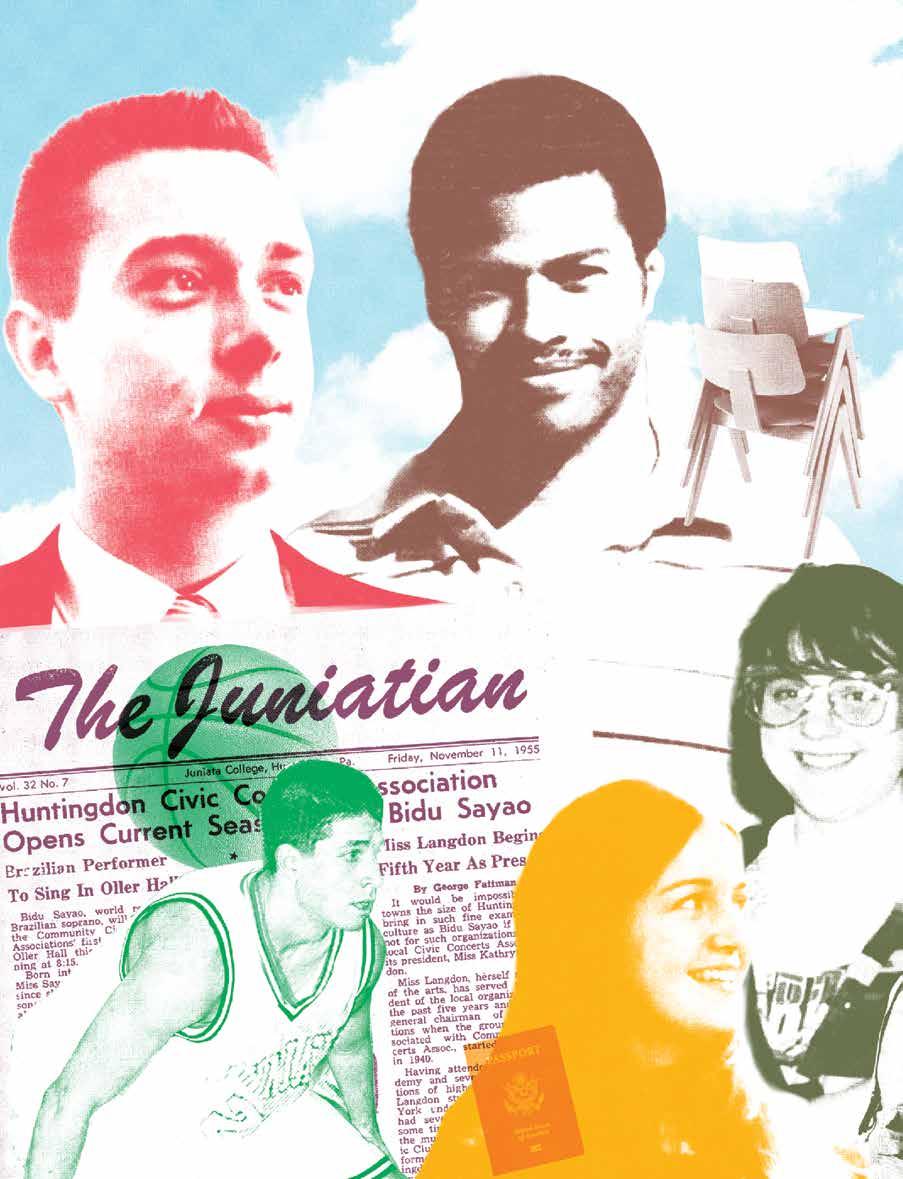
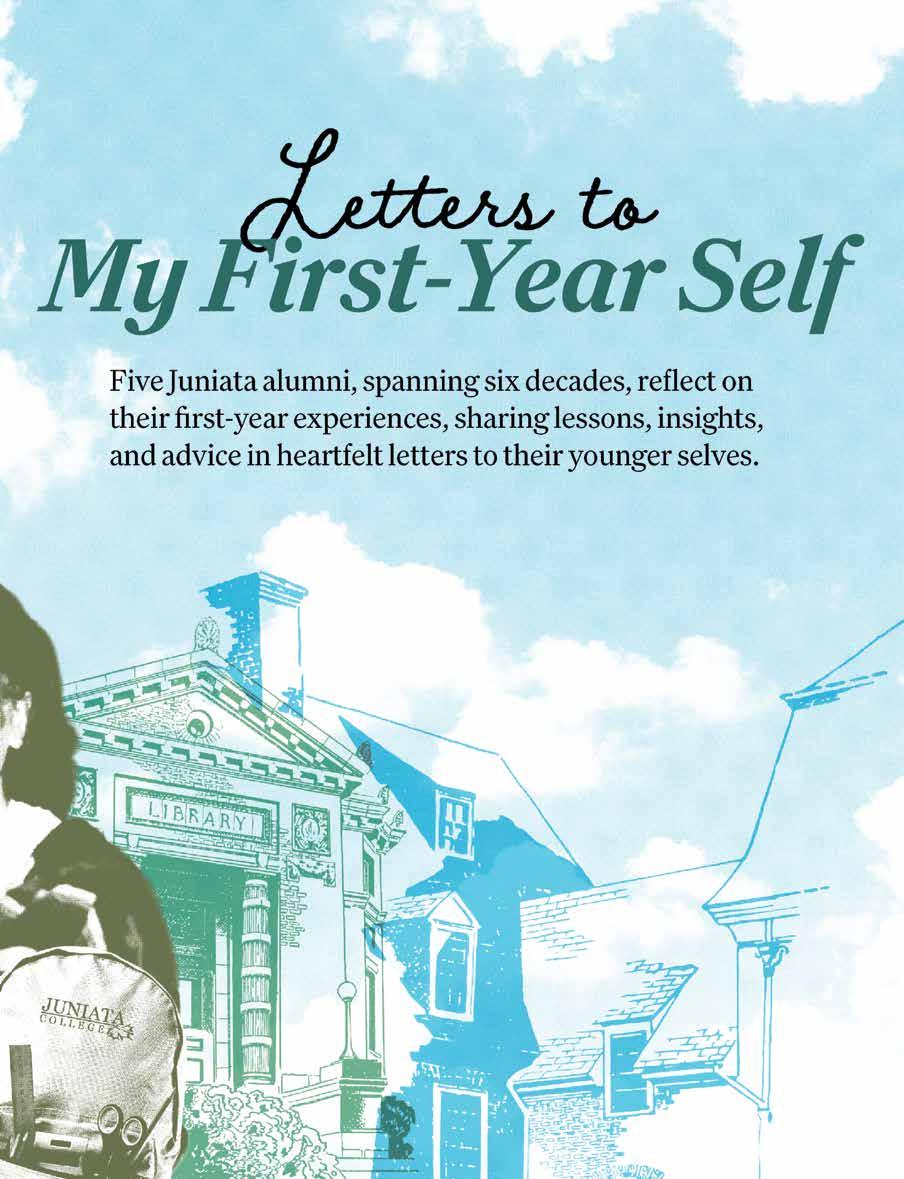

Five voices, sixty years, one shared perspective.
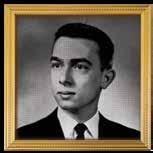
Dear George,
You came from a humble background, but even so, to be dropped off at the Lodge to begin your experience at Juniata was, even for you, downscale. The dorm was an Army barracks divided into rooms every six feet by cardboard walls painted green. There was a bed, a desk, a shelf, and a narrow closet. Your window looked out against an excavated hillside. It may not look like much at first, but give it time.
Still, the pre-freshman mixer and related activities were delightful. You will quickly like just about everybody you meet. The library loans prints of famous art, so you’ll check out a Gauguin and a van Gogh to brighten your dorm walls.
Your main courses will be what Dr. Harold Binkley brought from Harvard. A new professor, Dr. Robert Thornburg, will teach The Nature of Arts, and that course will resonate in your life for many years. Another new professor, Dr. John Comerford ’50, will teach The Nature of Science, and Dean James Penny will teach The Mind. Dr. George Clemens ’36 will teach French, and his wife will be your freshman composition tutor.
Because of your interest in journalism, you’ll quickly become involved with the Juniatian. Your “big brother,” Jim Hunt ’56, will be the editor. Radio station WJC will just be going on the air. The Student Senate will have appropriated $25 in start-up money. So listeners can call in, and somebody will “liberate” a receiver from a roadside phone booth. The station
will have no phone line, so every evening, somebody will go to the switchboard in Founders Hall and redirect a dean’s line to a makeshift line to the station.
You’ll actually like the food in the dining room, although you’ll be unfamiliar with parsnips, broccoli, and beef heart. You’ll dress for sit-down dinner and have table assignments. Because of some rowdiness at the football players’ tables, the College will hire a rather demure hostess to encourage good manners. That will not work.
You’ll go to a session for prospective members of the Juniata band, since you played in your high school band. It will be so small that it can barely spell out JC on the football field.
You’re not an athlete, but the center on Juniata’s champion football team will befriend you. You couldn’t be more different, so the friendship will be a bit tenuous.
You’ll get a job in the alumni office filing letters for 50 cents an hour. That will buy a so-so haircut downtown or a spaghetti dinner at the Penn Hunt Hotel across from the train station. A trolley runs every 20 minutes and can take you to the Clifton Theater to see a movie.
To watch television you’ll go to a lounge in Totem Inn, the student center in the basement of the women’s gym. Vice President Harold B. Brumbaugh ’33 has the only other television on campus, as you recall. Phones are just as scarce. When a new men’s dorm opens in January, it will have one phone to serve the entire building.
So yes, it is what a successful alumna will later call “this quirky little college.” But what an education you will receive — not just knowledge, but how to be a thoughtful citizen in the big world beyond “the college that we love.”
George ’58
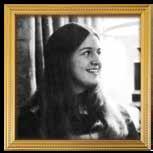
Dear Jo Ann,
What an exciting time you are about to encounter in your first year at Juniata! You are fortunate that, as a transfer to Juniata for your capstone year, you already have several years of college and overseas exposure that help to put Juniata into perspective. You have experienced large and varied classes at a state university where you did well, but barely knew your professors or classmates. You experienced the thrill of learning in a different country and language, but still remained a foreigner without a local community. Now you embark on a simpler path of smaller classes, professorial friendships, and active affinity groups that will make you feel part of a community and its traditions. And, remember the most important reason why you chose coming here — to determine your final year of study through your POE — a creative, independent way of selecting what you learn.
Enjoy the beautiful and peaceful surroundings of the College and Huntingdon area, a calm place for learning and entertainment, especially at the cliffs and Raystown Lake. Go to State College for big school fun, but join interest groups on campus for friends and focus on activities important to you. Engage with your professors. Be present in the things with which you are involved, but dream about and prepare for what you want to accomplish after Juniata. Remember, you will learn more than subject matter: you’ll learn how to think about issues, solve problems, and work with people to make compromises. And, spoiler alert, you may also meet a lifelong friend, your future husband!
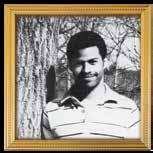
Dear 1978 Me,
You may not recognize me, but we know each other quite well. For that reason, I would like to give you some things to ponder as you begin at Juniata. People will tell you to work hard, manage your time wisely, make friends… and I would agree. But I want to have one of those “look at yourself in the mirror” conversations we sometimes have.
First, I want to stress working on the inward you. In short, I want you to know yourself, love yourself, and then get over yourself. Know what you need physically, mentally, and spiritually to function well as a human; love yourself enough to be sure those things are present in your life; and humble yourself enough to realize that the world is bigger and more important than you.
Also, I would like you to embrace discomfort. Mental and personal growth require an ingredient of it– at college within the confines of a safe space. This is where Juniata specifically comes in. The College has changed dramatically over the last 150 years, but I think the people who made up the campus in the 1800’s, 1900’s, and now would say that you may not know the faculty, staff, and students well yet but you can consider them the safe space you need to thrive.
Seek new things, experience them, reflect upon them, repeat.
Eric ’82
Jo Ann ’75
PS: You may encounter a moment when, during an 8 a.m. class, a professor stumbles over a row of stored chairs. If so, look around the room. You might see a woman classmate sharing a chuckle with you. Keep in touch with her. She will become the most important person in your life.
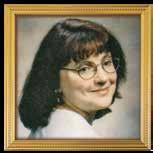
Dear Amanda,
This is so exciting — you’ve moved into your dorm, unpacked the last box, and triple-checked your backpack like it’s a life-support system. I know you’re feeling excited but are also very nervous. That queasy feeling? Completely normal. Give it time. You’re not behind, you’re just brand new.
The next four years are going to be some of the most transformative and memorable of your life. You are going to make friends that will last a lifetime. You will attend lectures and seminars and performances that will expose you to new cultures, experiences, and ways of thinking. You’ll have opportunities to travel abroad, and to try all sorts of new things. Soak it all in.
Say yes to invitations like coffee after class, joining a club, or introducing yourself to a professor. And go to office hours, even when you feel awkward. Asking for help isn’t weakness; it’s how you learn faster and become part of a fantastic community of really smart and engaged people!
You’ll work hard in your Program of Emphasis, and you should. But don’t panic if you forget the details of the Krebs Cycle or the mechanism of a Friedel-Crafts reaction. What’s important is that you learn how to think, how to ask better questions, how to problem-solve, and how to recover when things don’t go perfectly. And while your perfectionist side will be disappointed when you don’t get straight As, what you’ll come to find is that it’s far more important that you figure out how to think creatively and learn how to learn. Don’t be afraid to break things, you’ll learn how to fix them. Don’t be afraid to try something new, you’ll be surprised by what you love. Don’t be afraid of failure, that’s where real growth starts.
One last thing: Be kind. Be brave. Be you. And when you walk into that first class with your overstuffed backpack and a stomach full of nerves, remember: you’ve already done something hard. You started.
Brian D. Dietrich ’02 of Sinking Spring, Pa.
Dear 18-year-old Brian,
As you enter your first semester at Juniata, I know you are both anxious and excited about the journey ahead. You don’t know it yet, but this small school in the middle of Central Pennsylvania is about to change your life and open your eyes to experiences that will one day take you to a career with unlimited possibilities.
Basketball is going to shape a huge part of your experience. There will be tough practices, moments of doubt, one major injury and days you wonder if the demanding schedule is worth it. I’m here to tell you that without a doubt — it is. Your teammates and coaches will become some of your closest friends and will push you to grow. You won’t win conference championships — in fact you’ll lose more than you win — but the experiences you gain will shape you more than you can imagine – as a professional, a coach, and most importantly — a parent.
I know you’re worried whether your campus experience will prepare you for the real world. Not only will it prepare you, but the environment on this campus will give you advantages that others won’t have. You’ll learn how to think, communicate, adapt, and lead. You’ll have access to unbelievable professors who actually know you and want to help you succeed. Team-focused classrooms will build real confidence when you step out of these halls and into an office. You’ll find that you not only measure up, but Juniata has given you a head start.
So my advice is to lean into the uniqueness of this place –make new friends, try new things, learn how to learn — and you’ll soon realize that this is where you belong.
Brian ’02
Amanda ’98
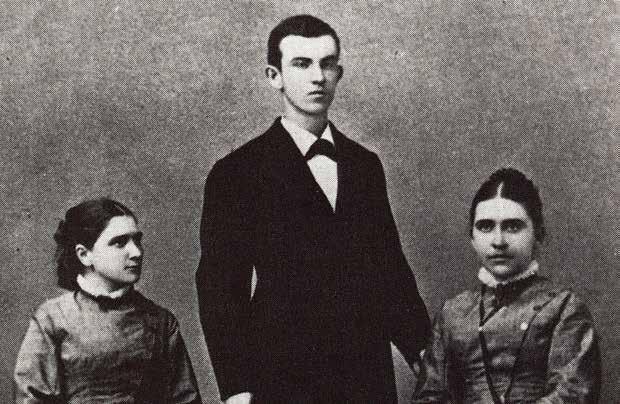
In 1879, three students sat for a portrait to commemorate becoming the first to call Juniata College their alma mater.
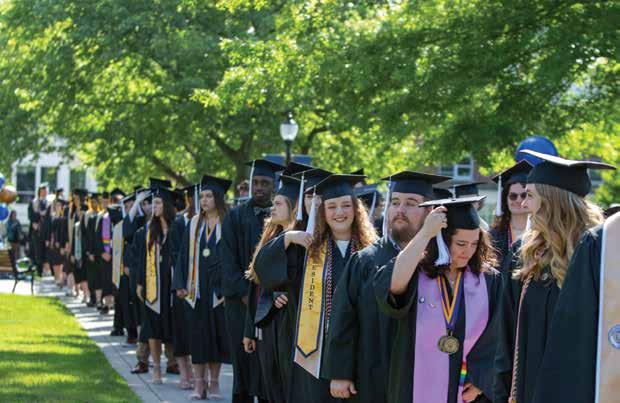
From the left, Linnie (Bosserman) Grigsby, Gaius Brumbaugh, and Phoebe Norris made up the College’s inaugural graduating class — a milestone that marked the beginning of Juniata’s long tradition of scholarship and discovery. What began with the Class of 1879 has grown into generations of Eagles crossing the Commencement stage each spring. Today, Juniata’s graduating classes may be considerably larger, but the College’s commitment to learning, community, and preparing students to lead lives of purpose remains unchanged.
RECURRING
31 Then & Now
32 Alumni News
34 I Met an Alum
36 Events
42 Class Notes
47 Marriages & Births
48 In Memory
56 Parting Shot
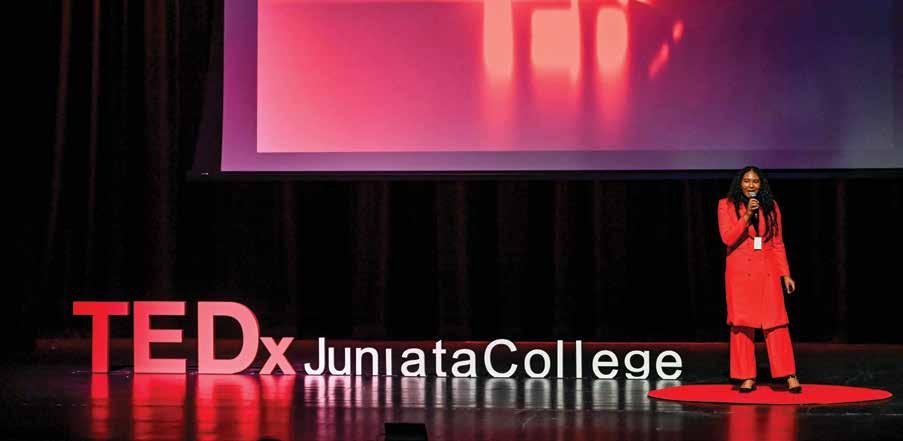
In October 2025, TEDxJuniataCollege marked Juniata’s 150th anniversary with “Innovations Throughout Time,” a celebration of ideas that have shaped the past and will define the future. Held on campus, the event brought together students, faculty, and alumni to explore innovation in science, health, culture, and human experience, reminding attendees that ingenuity is as much about curiosity and care as it is about invention.
Student speakers opened the stage to share their perspectives. Abjana Bhandari ’27 blended global insight with community engagement as she emphasized that innovation begins with understanding and empathy, while Alexander Ross ’26, a first-generation student exploring death and storytelling, challenged assumptions with a talk on sustainable human composting. Em Perago ’26, founder of Robin’s Gourmet Food, recounted turning a small business into a thriving rodent food brand, showing that innovation can take the shape of entrepreneurship and everyday problem-solving.
Faculty talks offered insight from several disciplines. James Latten, professor of music, traced technological advances in capturing and sharing popular music since 1876, while Robb Conrad Lauzon, assistant professor of communication, explored how
memory and media shape the stories we tell. Kyle Jaquess, assistant professor of psychology, examined how embodied thinking and resilience fuel learning, and Regina Lamendella, Valko Professor of Biological Sciences, revealed how microbiomes connect diet, gut health, and cognition.
Innovation in health and community solutions were also explored. Tia Warrick, assistant professor of biology and director of public health, reminded audiences that meaningful change often grows from cultural insight and community collaboration. Talia Haller, an expert on wearables and diagnostics, demonstrated how AI and precision medicine can tailor care to individuals, while Nicole Close ’92, president of EmpiriStat Inc., showcased how biostatistics quietly powers medical breakthroughs. Eric Quallen, director of the Raystown Field Station, invited the audience to rethink how identity, language, and belonging shape the way we interact with each other and with the world around us.
Throughout the event, the talks underscored a central truth: innovation doesn’t always arrive in shiny packages — it thrives in curiosity, collaboration, and connection. From cutting-edge research to small business ventures, from art to AI, the speakers revealed that bold thinking knows no single form. TEDxJuniataCollege invited the community to consider how innovation begins with engagement, creativity, and the courage to reimagine the world.
Above: Tia Warrick, assistant professor of biology and director of public health, highlights how innovation grows from cultural insight and community collaboration at TEDxJuniataCollege.
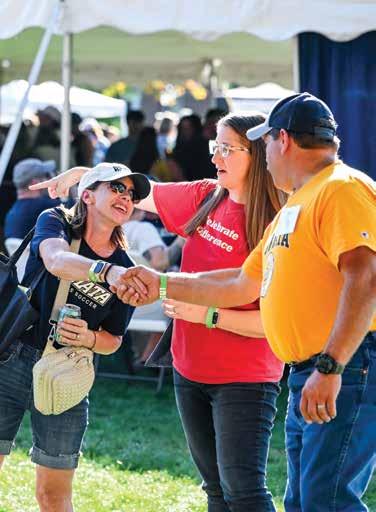
Homecoming and Family Weekend 2025 was a celebration to remember as the College marked its 150th anniversary with the memorable Juniata Jamboree. The highlight brought together students, alumni, family, and friends to share memories and make new ones on the campus quad.
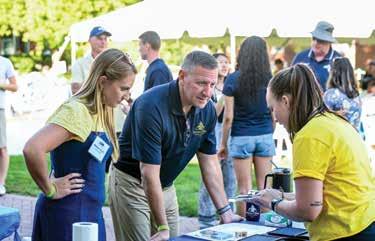
The Jamboree combined the food and fun of Carnival on the Quad with the beloved annual beer garden to create a festive and welcoming atmosphere that reflected the spirit of the Juniata community. With live music by Nelly’s Echo, attendees left their mark on a handprint mural organized by campus life, took a chance at ax-throwing, and reconnected with their fellow Juniatians. Members of Juniata College’s Marketing Department contributed a keepsake stamping activity featuring Founders Hall, giving attendees a tangible memory of the weekend.
Beyond the scheduled activities, the Jamboree offered a chance for multi-generational engagement as alumni reunited with former classmates, families explored campus, and current students participated alongside their loved ones. The event complemented the broader Homecoming and Family Weekend schedule, which included class reunions, campus tours, and athletic events, making it a full weekend of connection, celebration, and tradition.
The event was made possible through the generous support of alumni who proudly represented their businesses: Matt Dunn ’01 of Southern Tier Brewing Company; Sean Steeg ’00 and David Welsch ’18 of Juniata Brewing Company; Heidi (Kratzer) John ’97 of Rusty Rail Brewing Company; and Tim Gill ’08 of Wissahickon Brewing Company. Their partnership and enthusiasm helped bring Juniata’s 150th Jamboree to life.
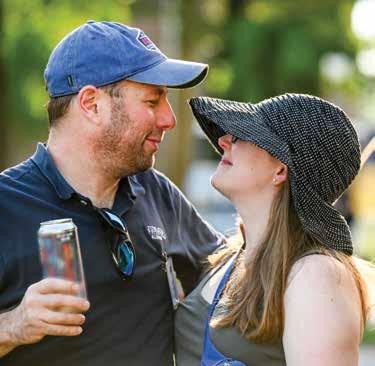
Upper left: Alumni reconnect on the quad, sharing memories and catching up; below, middle: Madison (Troha) Speck ’20 g’21 and President James A. Troha participate in an interactive stamping activity organized by Aubrey Zegstroo, graphic designer; below, bottom: Chris Brookhart ’05 and his wife, Sara enjoy the lively campus atmosphere while celebrating Juniata’s 150th anniversary.
Juniatians find each other in locations all over the world. Here are some of the latest connections made:
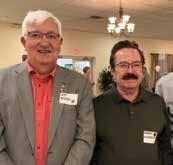
Jeffrey J. Wood ’76 attended his wife Joann’s 55th high school reunion. While making small talk with the people at their table, they realized their fellow tablemate, Randy L. Schaffer ’74, was a Juniata graduate.
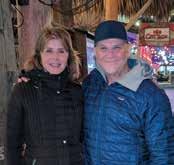
Louis J. Gibbons ’79 was on vacation with his wife in Siesta Key, Florida when he ran into his classmate, Nancy E. (Clemmer) Gingrich ’79. Nancy was also on vacation, and they were thrilled to see one another.
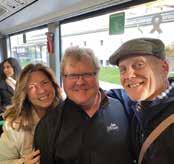
R. Jeffrey Meeker ’85, Sharon W. (Arber) Meeker ’86, and Andrew S. Nimick ’82 met on a train ride in Germany and were delighted to find a shared Juniata connection.
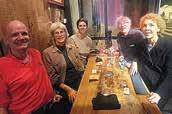
Jill E. (Thayer) Henry ’80 and David B. Henry ’80 were on vacation in France and met up with Guy P. Barbier, a 1977-1978 exchange student from Lille Polytechnic. They exchanged many Juniata memories over dinner in the shadow of Notre Dame Cathedral.
R. Jeffrey Meeker ’85 and Sharon W. (Arber) Meeker ’86 met Andrew S. Nimick ’82 and his wife, Daleen, while touring Dachau concentration camp in Germany. On the train back to Munich, they struck up a conversation and discovered their shared connection to Pennsylvania. They discussed studying abroad in college, and when Andrew asked where Jeff and Sharon went to college, he was delighted to learn that they were also Juniata graduates. They spent the rest of the train ride discussing Juniata memories.
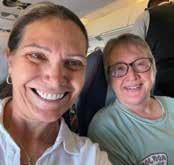
Jessica J. Robertson ’94 was on a return flight from a safari in Botswana to her home in the Bahamas when she began chatting with the woman next to her. The woman mentioned that she lived in Central Pennsylvania, and Jessica told her that she had studied at Juniata. Her seat partner’s eyes lit up, and JoAnn H. Goshorn ’81 explained that she was also a Juniata graduate. Jessica and JoAnn spent the rest of their flight sharing stories about their times at the College.
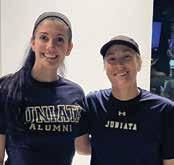
Samantha N. (Hendricks) Weyant ’17 met Dana M. Relation ’14 at their weekly Tuesday night running club at Celebration Brewing Company. Both Sam and Dana mentioned that they had attended a small college in Central Pennsylvania, and they soon realized that their paths had crossed at Juniata.
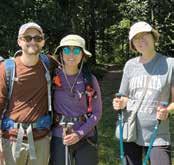
Margaret R. Gonglewski ’88 was hiking at Sky Meadows State Park in Virginia when two passing hikers noticed her Juniata t-shirt. Brett D. Shaffer ’10 and Elaine S. Pang ’11 stopped to strike up a conversation, and they shared fond memories of Juniata.
Sara (Davis) Bowen ’01 was getting routine lab work completed when her phlebotomist noticed that she was a physician in the Penn Medicine health system. He mentioned that he had just interviewed at Penn State College of Medicine in Hershey, which was her medical school alma mater, and they continued chatting. Grant E. Lorelli ’25 told her that he had recently graduated from Juniata, and they were delighted to discover the shared connection.
WE WANT TO PRINT YOUR STORY. Tell us about any unusual or surprising places or circumstances where you met a Juniatian and we will include it in an upcoming issue of Juniata Magazine. Please send your story and photos to: Alumni Office Juniata College 1700 Moore Street Huntingdon, PA 16652 Email: alumni@juniata.edu
my.juniata.edu
alumni@juniata.edu 814-641-3443
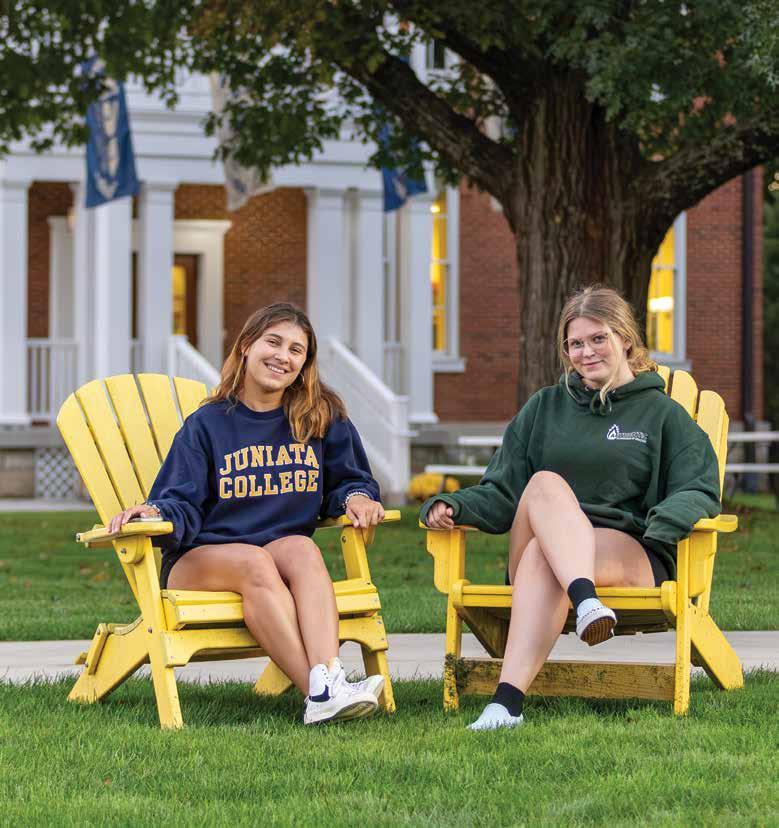
Alumni, students, and families returned to campus for Juniata’s 2025 Homecoming and Family Weekend, making memories and celebrating traditions together while marking the College’s milestone 150th anniversary.
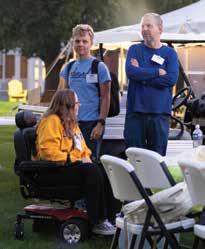
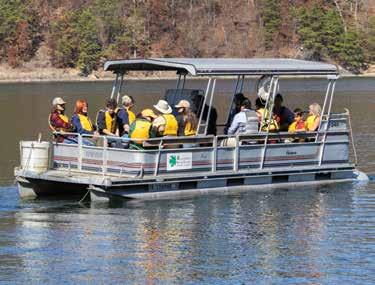
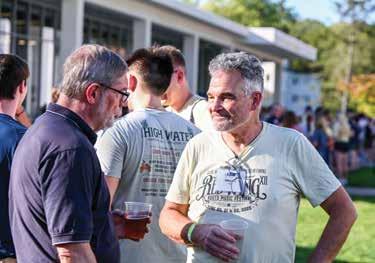
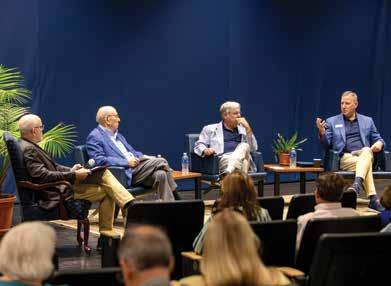
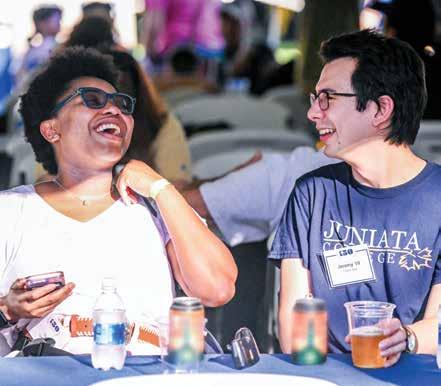
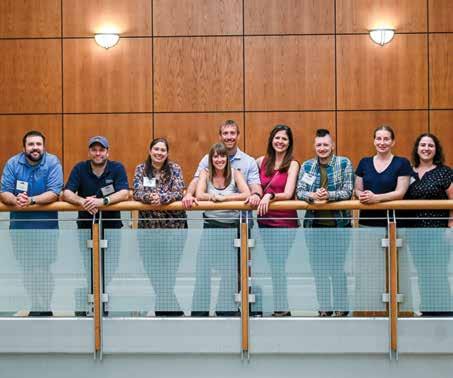
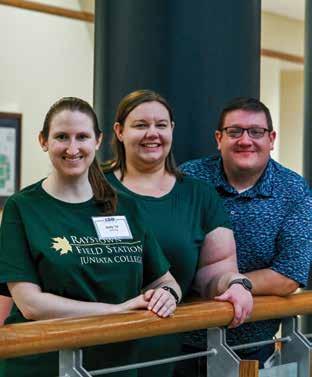
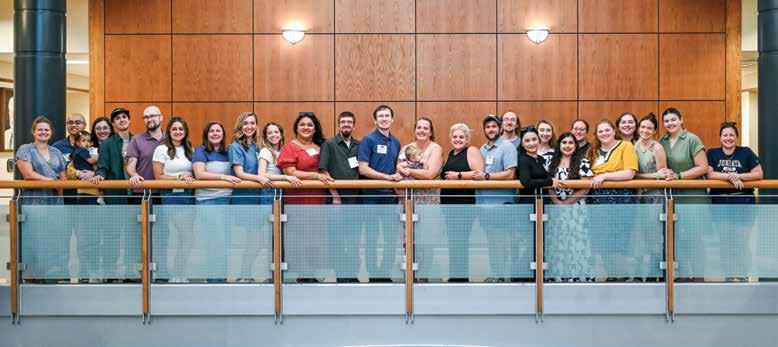
Each fall, during Juniata College’s Homecoming and Family Weekend, the College welcomes back alumni to celebrate milestone reunions, with special
recognition given to those marking their fifth, 10th, 15th, and 20th anniversaries.
This cherished tradition offers returning alumni the chance to reconnect with classmates, reflect on their time at Juniata, and experience how the campus has grown and evolved. Throughout the weekend, reunion classes are invited to participate in a variety of events, including class gatherings, campus tours, and athletic games.
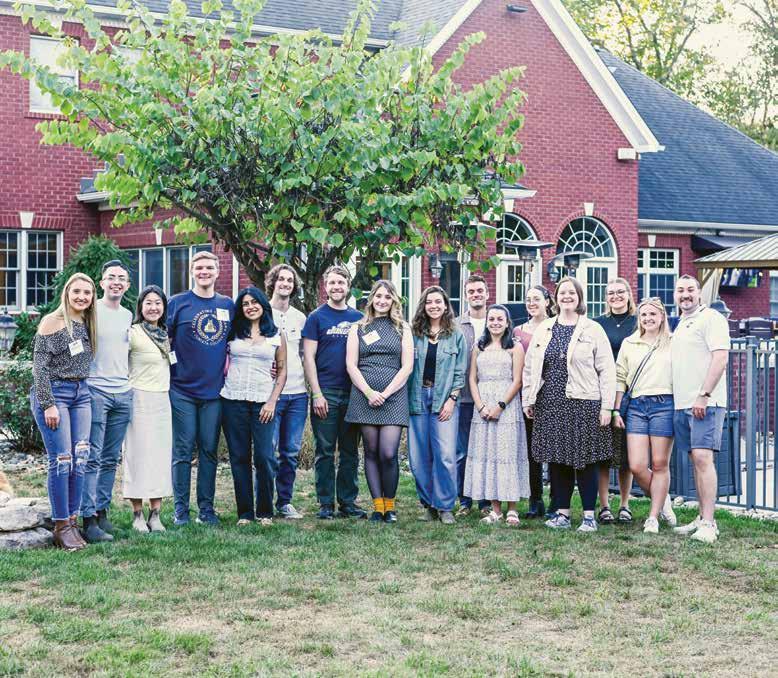
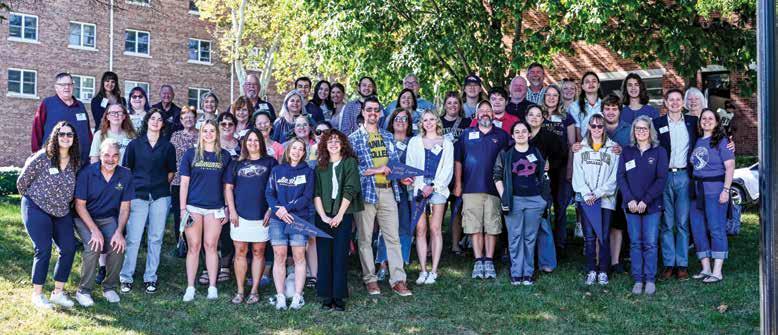
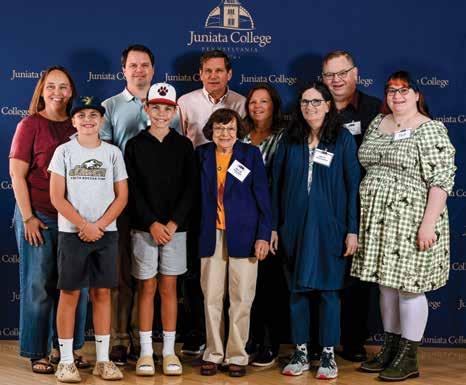
Legacy families gathered for Juniata’s Legacy Lunch to reminisce, celebrate their shared history, and enjoy a milestone 150th-anniversary gathering that highlighted the College’s enduring sense of community and tradition.
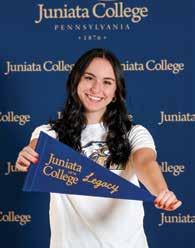
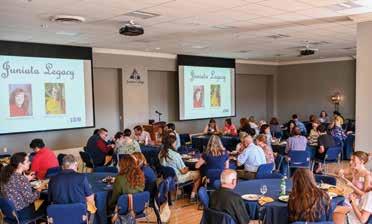
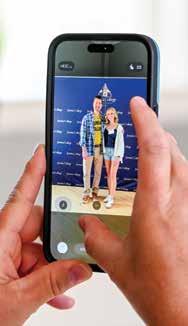
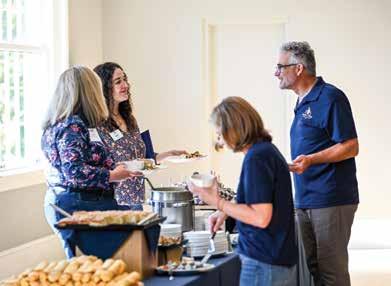
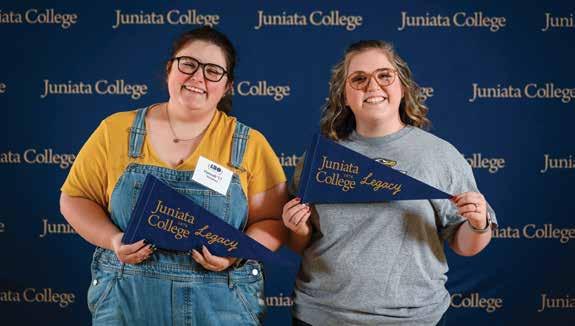
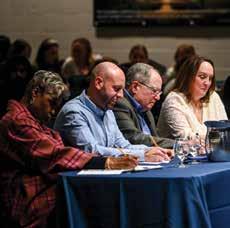
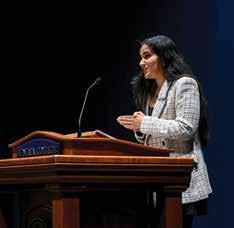
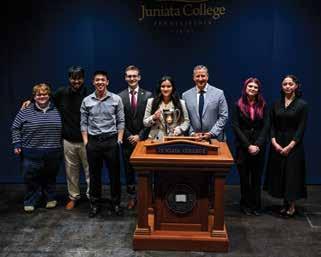
Juniata’s 116th Bailey Oratorical challenged students to explore the theme, ‘What future should Juniata strive to create –for its students, for higher education, and for the world?’ Jahnavi Patel ’26 earned first place, with Drew Perhamus ’26, Adithya Kommi ’27, and Nicole Montes Pérez ’26 also recognized.
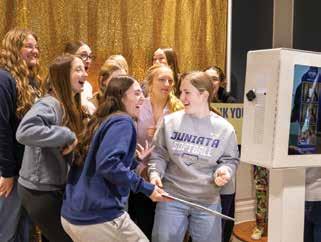
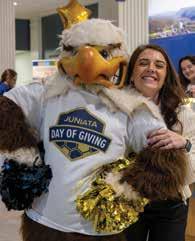
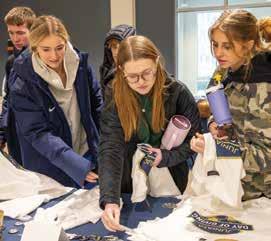
Juniata’s sixth annual Day of Giving brought together alumni, parents, and friends from around the world. With more than 2,600 gifts totaling $940,585, the community celebrated generosity, impact, and belief in the College’s students and future.
SAVE THE DATE
Alumni Weekend
June 4–6, 2026
Mountain Day Tomorrow!
Homecoming & Family Weekend
October 2–4, 2026
All alumni, family, and friends are welcome back to campus for Homecoming & Family Weekend. Class reunions will be held for the Classes of 2006, 2011, 2016, 2021, and 2026.
Career Day
February 26, 2027
Interested in volunteering on your reunion committee?
Please contact the Alumni Office at alumni@juniata.edu or call 814-641-3443 to learn more about how you can work with your classmates to make your reunion extra special.
1962
John R. Biddle stepped down from the Spring Cove School District Board of Directors after a 28-year term, during which he never missed a single meeting. Previously, he taught history and government in the ClaysburgKimmel School District for 40 years.
1963
Ronald R. Blanck, Lieutenant General, coauthored “Drug Abuse in Vietnam: The Heroin Epidemic,” which was officially released in August by the Borden Institute, a U.S. Army Center of Excellence in Military Medical Research and Education. The book delves into the measures taken by the military to address the heroin epidemic during the Vietnam War. Ron served as the 39th Surgeon General of the Army from 19962000 and as a battalion surgeon in Vietnam. He collected observations and data from heroin users in order to assess the historical impact of the epidemic.
“Vietnam kind of shaped my view of the military. That loyalty, selfless service… it really meshed with the way I wanted to practice medicine.”
Ronald R. Blanck ’63 U.S. Army News
1966
James S. Cremer was recently awarded a Quilt of Valor by the New Jersey chapter of the Quilt of Valor Foundation; the organization presents quilts to service members and veterans touched by war. The ceremony took place at the Forgotten Warriors Vietnam Museum in Cape May, where James serves as a docent.

Bennett Rea ’10 blends politics and pop culture through his viral series
BY CAT LANIGAN ’20
When Bennett Rea ’10 graduated from Juniata, his line of work didn’t yet exist. Now, Rea has certainly found his chops. As the host and creator of “Cookin’ with Congress,” a viral social media series with 700,000+ followers, Rea recreates politicians’ recipes, eats like U.S. presidents, and connects with everyday people’s diets — the good, the bad, and the ham mousse.
After being a student in Emil Nagengast’s course and trip focused on the Gambia and taking a course that took students to the 2008 Democratic National Convention, Rea was left with a rich understanding of the nuances of politics, plus a desire to connect others rather than divide them. “With all that amazing political knowledge I learned, I wanted to build something creatively that lights up people’s spirit.”
With a politics and philosophy Program of Emphasis plus a short film made with Professor Jim Tuten under his belt, Rea graduated into a recession hoping there was a way to mix his two passions: politics and entertainment. “I saw something in the future that was fuzzy but intriguing,” Rea says, and with that vision he moved to LA, where he still resides.
The Cookin’ With Congress idea sparked a few years later when Rea was gifted a 1989 South Dakota Centennial Cookbook, featuring recipes like Richard Nixon’s ham mousse. Rea began with a blog, then found acclaim sharing videos recreating these recipes. In recent days, Rea has taken to following the daily diets of U.S. Presidents, like Harry Truman’s morning shot of bourbon.
“The ones I find the most fascinating are the ones that really tell you something about a person,” Rea explains. The show humanizes politicians both alive and long gone, and reveals “there’s always been some madness in our political arena. You can laugh.”
BY CAT LANIGAN ’20
Getting out to a museum might not seem like a remedy for today’s ailments, but it happens to be just what the doctor ordered. That doctor is R. Scott Stephenson ’87. As President and CEO of the Museum of the American Revolution in Philadelphia, Stephenson would say the Museum aims to be a “‘prebiotic’ for the civil health of the nation.”
A Pittsburgh native, Stephenson entered Juniata with an environmental science Program of Emphasis; and chose Juniata, admittedly, due to the proximity to great fly-fishing streams. Stephenson quickly uncovered a passion for history. Thanks to urging from history professor Klaus Kipphan, Stephenson studied abroad at the University of Leeds. There, living with students from around the world, Stephenson developed a new perspective on American history as well as a drive to humanize the people behind it.
Stephenson then completed his Ph.D. in American History at the University of Virginia, writing his dissertation on the French and Indian War in Pennsylvania. In 2007, Stephenson began consulting with a team looking to expand the Valley Forge Historical Society, which eventually found a home in Center City Philadelphia as the Museum of the American Revolution.
After 18 years at the Museum and seven years at the helm, the need for civil understanding feels more relevant than ever to Stephenson. “We’re in the empathy business,” he explains. The museum's mission is to connect people who could “otherwise feel so remote” through exhibits, photos, and “predicaments.” Stephenson draws on the curiosity, critical thinking, and conviction instilled in him during his Juniata days: “We’re trying to create a more perfect union. We ask you questions up front and let you answer them.”
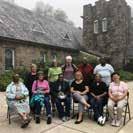
Anita C. (Bullett) Nwaobilo participated in the September Sankofa Journey along with members of the Stone Church of the Brethren and the Huntingdon community. Additional participants included Lori E. Harris ’97, Cynthia Merriwether-deVries, professor emerita of sociology, and Rev. Cindy Lattimer, campus co-chaplain. The Sankofa Journey is a pilgrimage to important sites of the Civil Rights Movement.
George J. Drobnock has completed his private research on very low frequency (VLF) radio signatures produced by meteors, with his last articles published in 2022 and 2024 by WGN, the bimonthly journal of the International Meteor Organization (IMO). His work investigates the phenomenon of electromagnetic radiation from meteors, which is linked to the audible noise known as electrophonic sounds. George first published research in “Sky and Telescope” in 1992, with further publications in IMO from 20012024. He suggests a controversial hypothesis that a meteor’s tail can act as a resonant inductor-capacitor (LC) circuit, which can explain why some, but not all, meteors produce VLF signatures.
James L. Madara retired from his role as CEO and Executive Vice President of the American Medical Association after 14 years.
Christopher S. Hart received the Bishop’s Award at the Pennsylvania Episcopal Diocese Convention, honoring his many contributions to the diocese over the years. He was also elected to his 10th term as deputy to the triennial General Convention of the Episcopal Church. Christopher is currently the longest serving member from his diocese.
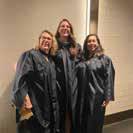
Sarah F. Freeberg is reflecting fondly on her time teaching at Annapolis High School. She worked alongside two fellow Juniatians, Samantha R. Shaiman ’12 and Kelly (Rotan) Joiner ’10. “Fran” retired in 2024.
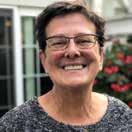
Patricia J. Cook, professor of psychology at the Community College of Vermont (CCV), was recognized with the college’s annual Teaching Excellence Award. She has taught at CCV for more than 15 years.
Joseph L. Sloan retired from his position as chief financial officer, vice president, secretary, and treasurer with Mutual Benefit Group after 42 years.
Rebecca (Abraham) Silva earned her master of education in trauma informed education from Columbia College in August 2024. She currently works as a case manager and educator at Youth Empowerment Source, a nonprofit whose programs serve over 6,000 at-risk children in Cecil County, Md.
Douglas A. Spotts has been elected for a three-year term on the Board of Directors of the American Academy of Family Physicians.

P. Timothy Phelps was honored as one of City and State’s 2025 50 Over 50 for Pennsylvania. He has served as director of the Chester County Transportation Management Association since 2012, focusing on sustainability, accessibility, and community-building in his work.

Joseph V. Fishel competed in the basketball shooting competition at the Ohio Senior Olympics. He won both the gold medal in overall basketball shooting and the silver medal in three-point shooting for his age division.
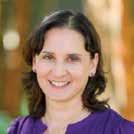
Pamela S. (Mertz) Steere received the American Society for Biochemistry and Molecular Biology William C. Rose Award for Exemplary Contributions to Education. She is a professor of chemistry and biochemistry at St. Mary’s College of Maryland (SMCM) and serves as the chair of the SMCM Health Sciences Advisory Committee.
George W. Cummings III completed his 500th robotic-assisted surgery at Conemaugh Nason Medical Center. He began performing robotic-assisted surgeries at the hospital in March 2023.
Bradley J. Miller was named Associate Dean for Graduate Medical Education and Professor at the new Meritus School of Osteopathic Medicine in Hagerstown, Md.
Lori E. Harris participated in the September Sankofa Journey along with members of the Stone Church of the Brethren and the Huntingdon community.
Kevin T. Shock was elected to serve a sixyear term as bishop of the Allegheny Synod of the Evangelical Lutheran Church.
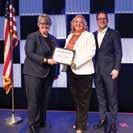
Whitney D. (Cramer) Bellomo was honored as a finalist for Pennsylvania Teacher of the Year 2026. She has taught for 26 years at Leaders Heights Elementary School in the Dallastown Area School District.
“I think Pennsylvania is ensuring they have the best representation of what they expect our teachers to produce.”
Whitney D. (Cramer) Bellomo ’00 York Daily Record
Jason R. Stouffer was appointed as CEO of Kinsley Construction in November 2025. He has spent his entire career with the company.
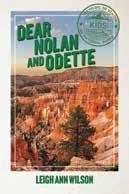
Leigh Ann (Suhrie) Wilson recently published her first book, “Dear Nolan and Odette.” Part memoir and part travel log, the book follows her and her family on their journey to visit all 50 states and all 63 national parks before her children grow up.
Celina J. (Isenberg) Seftas, director of sustainability at Juniata, was appointed to the Board of Directors of Keep Pennsylvania Beautiful. The organization works statewide with government agencies and local communities to promote litter prevention, waste reduction, and beautification efforts.
Tricia M. Bitetto has recently joined the 2026 South by Southwest Pitch Advisory Board and the 2026 Curation Team for TedxHarvard Square. Since October 2023, she has worked as the Program Manager at Venture Cafe Cambridge, the largest weekly tech networking event in New England.
George P. Patitsas has accepted a new role as Vice President of Strategic Account Services for SupplyOne Inc., a two-billion dollar North American packaging converter and distributor.
Logan C. Barkman was elected Moderatordesignate at the Church of the Brethren Middle Pennsylvania District Conference. After a year as Moderator-designate, he will serve as Moderator of the District Conference. Logan is a member of Woodbury Church of the Brethren and works as a high school social studies teacher in the Spring Cove School District.
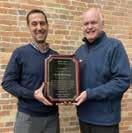
Evan T. Heisman was named 2025 Office Staff Employee of the Year for his work in the Facilities Management Department at Duke University. He was honored for his dedication to maintaining university environments in excellent condition for students, faculty, and staff.
Morgan M. (O’Dellick) Williams has joined the Board of Directors of WISE Women of Blair County, a nonprofit dedicated to empowering women through collaboration, service, and education. She will serve on both the Membership and Tribute Committees and will chair the Media Committee.
Stephanie E. Strauss has been appointed as Director of Athletics for the Shaler Area School District.
“When you’re an athletic director, you get to have an impact on all the different sports. When you’re with a specific sport, it’s [that sport] all the time. You’re trying to win championships and still have a lot of impact on that team.”
Stephanie E. Strauss ’11 The Oracle
Jacob D. Sinclair is enjoying his work as a stage manager for Disney Cruise Lines. He oversees three Broadway-style productions and fireworks at sea.
Karl R. Suttmann is working as a Natural Resources Specialist for the U.S. Bureau of Land Management. Based in the Vale District’s Malheur Field Office in Oregon, his position focuses on managing soil, water, and riparian resources for 4.6 million acres of public land.
Scott M. Rahner Jr. earned his master of arts in curriculum and instruction with a concentration in English as a second language from Caldwell University in May 2025. This is his second master’s degree; he earned a master of arts in reading from Montclair State University in 2022.
Lavinia V. Unverdorben earned her Ph.D in microbiology and immunology from the University of Michigan in October 2025. She has accepted a position with Putnam Associates as a Life Sciences Consultant.
Isabella S. Bennett earned her master of arts in public policy from University College Dublin. In December, she competed in the 2025 European Masters Swimming Championship in Lublin, Poland.
Quinn L. Girasek and Stephanie M. Letourneau ’20 ran the Chartway Norfolk Harbor 5K and the Chartway Norfolk Harbor 10K together during the weekend before Thanksgiving.

Eleanor M. Miller has joined Pietragallo Gordon Alfano Bosick & Raspanti, LLP as an associate in the Family Law Practice Group. She previously served as a law clerk for Pietragallo.
1 Alexandra K. (Vogatsky) Pannebaker ’15 and Kyle M. Pannebaker ’16 were married June 14, 2022.
2 Emma F. Johnson ’17 g’20 and Conor Kennedy were married Sept. 20, 2025. In attendance were back row (L-R) Katherine Jeffress ’17, Yasmine Naama ’17, Cody Januszko ’17, Maris Wilson ’17, Hannah Hrobuchak ’17. Middle row Jillian Loomis ’17, Elise Kury ’17, Torunn Gundersen ’17, Morgan Horell ’17, Kristine Pham ’17. Front row Emma Johnson ’17 g ’20 (bride) and Conor Kennedy (groom).
3 Amber P. (Boring) Hoover ’18 and Matthew Hoover were married June 14, 2025. In attendance were Samantha Cline ’18, James Fogle Jr. ’18, Samantha Ochs ’18, Alexis Shoop ’18, and Jack Walker ’18.
4 Catherine (Neville) Fair ’19 and Andrew Fair were married Aug. 23, 2025. In attendance were (L-R) Marissa Cubbage ’19, Andrew Fair (groom), Catherine Neville Fair ’19 (bride), and Scott Rahner Jr. ’19.
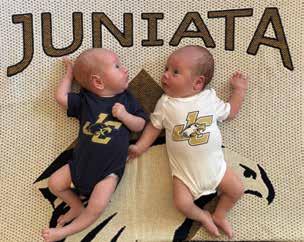
1 Emily T. (Wolf) Guetzlaff ’15 and Matthew D. Guetzlaff ’15 are pleased to announce the birth of their sons, Henry Jack Guetzlaff and Owen Alexander Guetzlaff, on Aug. 3, 2025.
Amy J. Mullen ’03 is pleased to announce the birth of her son, Samuel John Mullen, on July 17, 2025.
SUBMISSIONS
Please email alumni@juniata.edu
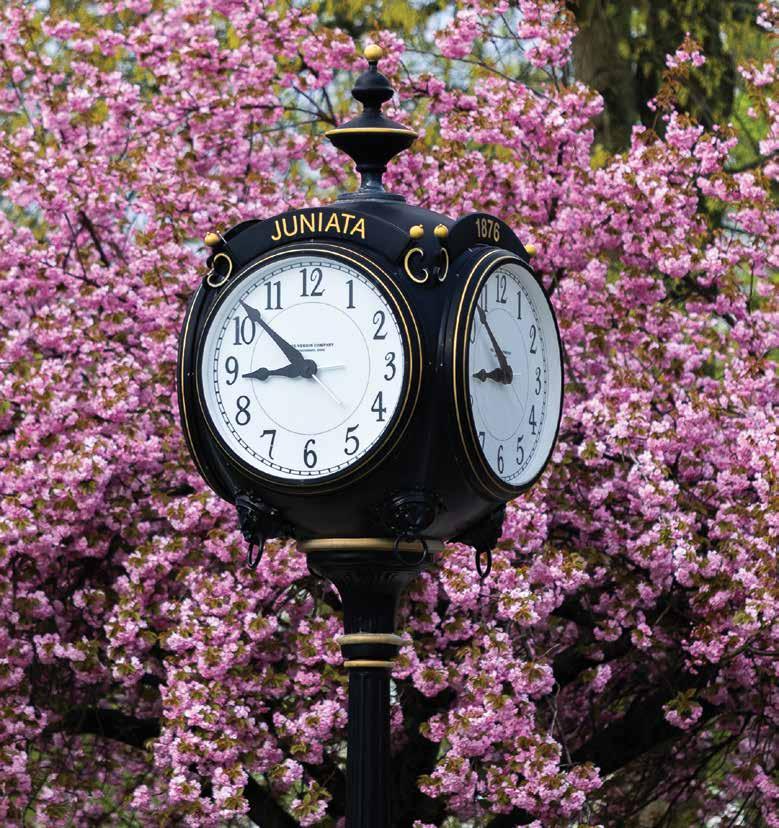
Springtime on the quad:
is framed by pink blossoms, observing the rhythms of another semester on campus.
Hilda (Horner) McCreight ’41
Oct. 28, 2025 — Hilda was Juniata’s oldest living alum at the age of 105. She completed her bachelor’s degree in home economics at the Carnegie Institute of Technology. During World War II, Hilda worked at the Pentagon as a nutritionist. Throughout her life, Hilda devoted herself to charitable institutions such as United Against Gun Violence, PBS, and the Wisconsin Prison Partnership. She loved cryptograms, playing bridge, and knitting. Hilda was preceded in death by father Miles Horner, Class of 1913, mother Lucille (Gump) Horner, Class of 1917, and husband Jim; she is survived by sons Ed, Will, and Mac, daughter Peg, and seven grandchildren.
John M. Grasse Jr. ’48
Aug. 14, 2025 — John completed his undergraduate education at Goshen College and received his M.D. from Jefferson Medical College in 1952. Through the Mennonite Church, John served as a missionary physician in Puerto Rico, Nigeria, and the Democratic Republic of the Congo. He also worked with the U.S. Government’s Indian Health Service, serving communities in California, Montana, North Dakota, and South Dakota. John later maintained a private practice for 40 years in Ephrata, Pa. He was deeply committed to his family and community. John loved gardening, traveling, reading, and music. He was preceded in death by wife Betty; he is survived by daughters Elizabeth, Linda, Sandra, and Martha, son John, and 11 grandchildren.
Iva L. Yoder ’52
Sept. 29, 2025 — Iva taught at William Smith School in Huntingdon, Pa. for 33 years. She enjoyed reading, doing crossword puzzles, and listening to audiobooks. Iva loved being outdoors and spending time with her cats. She taught Sunday School at Otelia Mennonite Church and Barrville Mennonite Church and volunteered at Big Valley Thrift & Gift. Iva is survived by loving friends and family.
Nancy (Blanck) Brown ’54
Aug. 20, 2025 — Nancy and her husband were avid birders, and they enjoyed traveling the country with Elderhostel. She sang in church choirs all her life, most recently at Salem Hellers Church Cantata Choir in Lancaster. Nancy taught Bible study at Zion Church and for the Millersville Council on Aging. She was preceded in death by first husband Glenn; she is survived by husband James, sons Steven, Bradley, Kevin, and Brian, daughters Nancy, Jill, and Amy, and 11 grandchildren.
Janet (Cline) Champion ’54
Oct. 16, 2025 — After graduating from Juniata, Janet worked for the Central Intelligence Agency until 1956, when she and her husband relocated to Spain. While living in Spain, Janet worked at the Resident Construction Office until they returned to the U.S. She had a lifelong passion for gardening, cooking, and entertaining family and friends in her gazebo. Nancy was preceded in death by husband Robert Champion ’53 and brother George Cline ’58; she is survived by son David and two grandchildren.
A stick found in the woods, soup bubbling on the stove, a 20-year-old avocado tree, tiny turtles hiding in a classroom, a singing bowl. Anything can be used as a tool for teaching. Becky Plane lived this sentiment. She looked at the world with wonder and curiosity and invited children and adults to join her in it through creativity, care for the environment, and inclusivity. She had a unique ability to connect with and nurture those around her that will be sorely missed.
Becky moved to Huntingdon in 2004, with her husband, Dennis Plane, professor of politics, and became a full-time education student at Juniata College. She truly thrived when she became a teacher at the Early Childhood Education Center. She developed deep friendships and connections with her colleagues, students, and their families. “Teacher Becky,” as she was endearingly called, was beloved by her students well after they left the school. After ECEC closed, her gifts were welcomed into the community at the State College Friends School.
Teacher Becky claimed many kids as her own, but her heart belonged to her own children, Austin and Rosemary. She was often the family photographer, creatively capturing moments big and small of family trips and adventures. Becky loved living close to all the beauty and connectedness in her Huntingdon community. But she also cherished the travel she was able to do. In 2019, the family spent several months in Mexico, and Becky fell in love with the colors, food, and culture. She also had a deep connection to Guatemala; she traveled with family and members of her Stone Church Community to volunteer at Asturias Academy in Quetzaltenango, Guatemala, a school committed to offering low- or no-cost education to poor and indigenous children. The impact of her life and teaching is truly both broad and deep.
Anyone who knew Teacher Becky will miss the gift of her wonderful hugs. Perhaps we can remember her well by sharing that gift with others. And by keeping our eyes open to all the ways the world, and the people within it, can teach us.
By Rev. Cindy Lattimer, co-chaplain
Read obituary on page 55.
To his Juniata friends, Henry was always “Hank” or “Siedz.” Although never seeking the spotlight, he nonetheless was the “glue” that held together a closeknit group of Juniata grads from ’75–’77, having started an annual summer party that spanned more than 50 years. He would always answer his phone when someone called to talk or ask for advice. He equally enjoyed calling friends just to chat and was always thrilled to share dinner or travel with them.
Henry came to Juniata to study chemistry but quickly found his true calling in the legal world. He graduated cum laude in 1975 with a degree in political science/pre-law. During his time on campus, he was engaged in student life, participating in All-Class Night, Student Government, the Barristers’ Club, and serving as editor of The Juniatian. He was infamous for his “tea” parties and organizing activities such as snow football and bottle races on Muddy Run. Despite his busy schedule as a prominent Philadelphia lawyer, he continued to play guitar and league basketball and enjoyed kayaking on the Schuylkill River by the banks of his home — harking back to his Juniata days of music, intramurals and the Raft Regatta on the Juniata River.
His commitment to Juniata only deepened over time. Henry joined the Board of Trustees in 2011 and served the College in numerous leadership roles. Beyond formal governance, Henry was a generous and steady presence for the College for many years. He volunteered as a guest lecturer, reunion volunteer, Juniata Community Scholarship recruiter, campaign volunteer, and law-career panelist.
The love of his life was Mary Rita (Walsh), who shared his enthusiasm for family, friends, dogs, travel, work, and of course, Juniata College. Together, they eagerly recruited students for Juniata as well as giving continued support to Juniata students through mentorship and meals. During the holidays, the Siedzikowskis would host students who otherwise would be alone on campus.
Hank is remembered in the legal community as a “lawyer’s lawyer.” To us, he is remembered as a “friend’s friend” — he made you a better person just by being around him. He will be missed terribly but his legacy will always be with us.
By George Valko ’75, trustee
Read obituary on page 54.
Jacquelyn (Hayes) Gibbons ’57
Oct. 18, 2025 — Jacque graduated from Temple University School of Medicine in 1961. She started her pediatric practice in 1966, where she worked until her retirement in 2014. Jacque was a longtime member of Saint Mary Magdalen Parish, where she also served as the organist and choir director for over 20 years. Jacque was a former member of the Juniata Alumni Council. She was preceded in death by mother Marion (Commons) Hayes, Class of 1929; Jacque is survived by son Richard Gibbons ’83, daughter Lynn, brother Arthur Hayes ’71, and six grandchildren.
Martin T. Grothe Jr. ’57
Aug. 16, 2025 — Ted played golf at Juniata and received a degree in business. He worked alongside his father and brother at Grothe Supply Company. Ted specialized in advertising. He was a lifelong member of St. John Lutheran Church, where he also sang in the choir. Ted was preceded in death by wife Gail and daughter Jaime; he is survived by sons Ted, David, and Jonathan, stepdaughter Cheryl, and eight grandchildren.
E. Reed Reynolds ’57
July 12, 2025 — Reed worked for B.F. Goodrich, where he managed plants in Ohio, North Carolina, and South Carolina. He retired after 29 years as V.P. of Human Resources. Reed was a member of the Free and Accepted Masons, serving as past master of the New Franklin Lodge in Akron, Ohio; he was also on the director’s staff of Tadmor Shrine. Reed was Past Imp and Past Director of Akron Court No. 80 of the Royal Order of Jesters, a masonic fraternal organization. He enjoyed gardening and playing golf. He was preceded in death by wife Delores.
James M. Stayer ’57
April 23, 2025 — After graduating from Juniata, Jim received his master’s degree from the University of Virginia and his Ph.D. from Cornell University. In 1968, he moved to Canada and became a full professor at Queen’s University, Ontario, teaching history until his retirement. Jim contributed to the study of Anabaptists in the sixteenth-century German Reformation. He retired in 2000 but continued to teach as an adjunct professor for 10 years. Jim was preceded in death by father Raymond Stayer, Class of 1922, sister Martha (Stayer) Alfano ’61, and ex-wife Marcia Sweet ’60; he is survived by wife Sherry, daughter Elizabeth, sons William and James, stepchildren Dawn, Darryl, and Ryan, and seven grandchildren. 1960s
H. Carl Beck ’60
April 12, 2025 — Carl received a bachelor’s degree in physics from Juniata. He worked for the Department of Defense for almost 40 years. Carl learned woodworking from his father, and he specialized in marquetry wall art and furniture. He also enjoyed creating gemstone jewelry for loved ones. Carl was preceded in death by wife Frances; he is survived by son Mark, daughters Ann and Cara, and four grandchildren.
Milton C. Chew Jr. ’60
Nov. 22, 2025 — Milton received his Ph.D. from Carnegie Mellon University. He worked at Rensselaer Polytechnic Institute of New York before immigrating to Canada in 1974, where he taught at Saint Mary’s University in Halifax. Milton served as Chair of the Department of Finance, Information Systems, and Management Science at the Sobey School of Business. He was a lifelong baseball fan — first cheering for the Phillies and Red Sox before proudly declaring himself a Blue Jays fan. Milton enjoyed birdwatching and refinishing antique chairs. He was preceded in death by first wife Joyce; Milton is survived by wife Barbara, brother William Chew ’64, daughter Gabrielle, son Adam, step-sons Rick, Rob, and Randy, and eight grandchildren.
Elizabeth A. (Clark) Funk ’60
Nov. 26, 2025 — Betty Ann received a master’s degree from the Drexel Institute of Technology in 1964. She worked in the Pennsylvania Department of Library Development for 36 years until her retirement in 2003. Betty Ann spent most of her career traveling to different libraries throughout the state, offering advisory services. She was preceded in death by husband James Funk ’58; she is survived by sons Harry and Thomas and four grandchildren.
Clayton O. Yeager ’60
Jan. 22, 2026 — Clay received a bachelor’s degree in history from Juniata. He worked in the insurance industry in Pennsylvania and Connecticut. Clay enjoyed reading historical novels, golfing, gardening, and hiking. He is survived by wife Kathleen, daughters Denise and Jill, son Dean, and five grandchildren.
Donna J. (Zwick) Davis ’62
Dec. 13, 2025 — Donna received a bachelor of arts in early childhood education from Juniata and a master of library science from the University of Pittsburgh. She worked for most of her career as a Senior High Librarian for the Greater Latrobe School District. After retiring from public schools, Donna spent 16 years as a reference and early childhood librarian for the Greensburg-Hempfield Area Library. Along with her husband, Donna traveled to all 50 states, Canada, and Europe. Donna was preceded in death by sisters Joanne (Zwick) Gordon ’61 and Geraldine (Zwick) Suvak ’64; she is survived by husband Donald Davis ’63, sisters Cheryl Zwick ’69 and Shelby Zwick ’71, daughters Jennifer and Heather, son Donald, and eight grandchildren including Maurice Slinger ’17.
Harold L. Royer ’62
Sept. 9, 2025 — Hal taught biology and coached football early in his career. He worked at Conestoga Valley School District in the guidance office for nearly 30 years. Hal was an active member of St. Paul’s United Methodist Church. He was an avid outdoorsman, enjoyed hunting and fishing, and owned a chicken farm. Hal was a passionate fan of the Phillies, Eagles, and Nittany Lions. He was preceded in death by wife Mary; he is survived by son Matthew, daughter Michelle, and four grandchildren.
M. Louis Browdy ’63
Dec. 10, 2025 — After graduating from Juniata, Lou worked as a cook for the Army Reserves at Fort Knox, where he was an honor graduate of the Cooks and Bakers School. He transferred to Saga Food Service in Northern California, working as an internal auditor for the company. After relocating with his family to Carpinteria, Lou served his community through the local Boy Scout Troops, Avocado Festival, Kiwanis Club, and El Montecito Presbyterian Church. He met his wife Karen at Juniata; her first impression was during his senior class president campaign speech, which Lou delivered without notes in a Yogi Bear costume. He is survived by wife Karen (Scott) Browdy ’63, daughter Kara, and son Loren.
Geoffrey W. Funk Sr. ’63
Aug. 21, 2025 — Jeff is fondly remembered by dear friends and loved ones. He was preceded in death by father John Funk ’35, mother Phyllis (Walker) Funk ’33, and brother James Funk ’58; he is survived by wife Natalie and brother John Funk Sr. ’66.
Nancy (Cassada) Nelson ’63
Oct. 24, 2025 — Nancy worked at the New Jersey Department of Transportation for most of her career. She was a historian who loved genealogy; she was a member of the Genealogical Society of Pennsylvania and was known for her knowledge and expertise. Nancy enjoyed reading, sewing, knitting, volunteering, and listening to country music. She is survived by daughters Jennie and Rachel and six grandchildren.
Doris J. (Eichelberger) Comerford ’64
Jan. 9, 2026 — Doris received her bachelor of science in education from Penn State. In 1965, she began teaching at Juniata Valley Elementary School, where she worked for 30 years until her retirement. Doris was an active member of Stone Church of the Brethren, where she assisted with the monthly newsletter, knitted shawls for the prayer shawl ministry, and was a member of the embroidery guild. She enjoyed quilting, baking, doing puzzles, and feeding birds. Doris was preceded in death by husband John Comerford Sr. ’50, former professor of biology, and second husband Edward; she is survived by sons John Comerford Jr. ’76 and David, daughter Jean, and 12 grandchildren, including Lucas Corbin ’15.
Beatrice A. (Schorsch) Hueglin ’64
Dec. 25, 2025 — After graduating from Juniata, Bea received her master’s degree from Temple University. She taught Special Education in the Philadelphia School System until her retirement. Bea traveled extensively in Italy and Greece. She was preceded in death by mother Beatrice (Branda) Schorsch ’36; Bea is survived by ex-husband Robert Hueglin ’63 and sister Christy Schorsch ’65.
William P. Utley ’64
Oct. 28, 2025 — Bill received his bachelor’s degree in history and accounting from Juniata. He worked in data processing, programming, and manufacturing cost analysis. Bill retired to Trinity, Fla. in 2017. He loved playing cards, traveling with his family, and learning Civil War history. Bill was an avid sports fan and never missed an opportunity to watch his children and grandchild play. He is survived by wife Rosalie, daughter Elizabeth, son Stephen, and one grandchild.
John L. Armstrong Jr. ’65
Nov. 12, 2025 Jack served as the Executive Vice President of Technical Operations at CorMedix Inc. until his retirement in 2021. He worked for 40 years in the pharmaceutical and biotech industry at ICI, Marion Labs, and DuPont Merck. Jack was a devoted member of St. Andrew’s Evangelical Lutheran Church, serving as a member of the Church Council and the Endowment Board. He was a wine connoisseur and loved to host tastings. Jack is survived by wife Jennifer, sons John and Lucca, daughters Isabella and Jean, and three grandchildren.
Nancy J. (Williams) Peters ’66
Oct. 14, 2025 — Nancy retired as an administrator for the State of Colorado and enjoyed golf, gardening, travel, biking, and volunteering. She was preceded in death by husband Richard.
Alaine D. (Siena) Tremel ’66
Jan. 8, 2026 — Alaine worked for the public school system in Ellicott City, Md. She loved teaching children and encouraging them to read. After their own children left home, Alaine and her husband relocated to Egg Harbor Township, N.J., where she continued to work as a librarian and teacher. Alaine’s favorite event was Read Across America Day, where she would dress up as the Cat in the Hat, decorate the school, and read Dr. Seuss books to the students. She loved book clubs, craft groups, and going to the beach. Alaine is survived by husband Michael Tremel Jr. ’65, son Damon, daughter Meredith, and four grandchildren.
Roy R. Heinz ’67
July 5, 2025 — Roy lived in Helena, Montana. As a student, he was an active member of campus life, participating in intramural sports, Masque, the Outing Club, and Kvasir. Roy is survived by dear friends and loved ones.
George H. Patterson Jr. ’67
Oct. 10, 2025 — George served as a Delaware State Trooper and was known by his colleagues as “The White Knight,” a reflection of his commitment to courage, loyalty, and honor. He loved NASCAR, photography, cars, football, and crime television. George was preceded in death by father G. Harold Patterson ’39 and mother Evelyn (Hood) Patterson ’39; he is survived by wife JoAnne and stepdaughter Stephanie.
Gregory S. Gohn ’68
June 15, 2025 — After graduating from Juniata, Greg served in the U.S. Army Corps of Engineers until 1971. He served in Vietnam and reached the rank of First Lieutenant. After leaving the military, Greg received his Ph.D. in geology from the University of Delaware in 1976. He specialized in Mid-Atlantic Coastal Plain Geology throughout his career at the U.S. Geological Survey. After retirement, Greg began researching his family history by visiting Pennsylvania graveyards and historical societies. He is survived by wife Kathleen, sons Dave, Steve, and Toby, daughter Libby, and four grandchildren.
Alice J. (Isenberg)
O'Loughlin ’68
July 18, 2025 — Jo received a master of arts in English literature at NYU. She worked as a journalist covering steel, nonferrous metals, and other process industries. Jo was an executive editor of “American Metal Market,” and headed the editorial operations of the daily edition for more than a decade. She received the Jesse H. Neal Award for excellence in business journalism. Jo is survived by husband Joey and son Aran.
William G. Foster ’69
Nov. 24, 2025 — Bill enjoyed joking and telling stories, and he was known for his own contagious laugh. Bill was a veteran of the U.S. Navy and was proud to have served his country. He loved sports, especially rooting for the Yankees and the Ravens. Bill was preceded in death by father James Foster ’39; he is survived by wife Cathy, daughter Brooke, son James, and two grandchildren.
James A. Hamilton ’69
Oct. 10, 2025 — After graduating from Juniata, Jim received his Ph.D. in biochemistry from Indiana University in 1974. In 1978, he was recruited by Boston University School of Medicine to establish a Nuclear Magnetic Resonance Facility. Jim retired from Boston University as a full professor in 2023. He was motivated by a desire to help others, leading him to co-found Euclid, a company focused on cardiovascular health. Jim contributed widely to the fields of chemistry and medicine through hundreds of published papers with over 18,000 citations. He never lost his passion for the next paper, conference, or scientific discussion. Jim is survived by wife Malina, daughter Lianna, son Guy, and two grandchildren.
Eldbjørg (Eide) Dubbel ’70 Oct. 27, 2025 — Eldbjørg grew up in Norway, where she developed a lifelong love of learning and nature. In 1957, Eldbjørg began her 40-year career at the Grier School in Tyrone, Pa. She taught history and geography, later serving as assistant head of school and dean of international students. Eldbjørg was a dedicated member of both the American Association of University Women (AAUW) in Huntingdon and the Huntingdon Presbyterian Church. She was preceded in death by husband Silas Dubbel Jr. ’58 and daughter Ingrid Dubbel ’88; she is survived by daughters Kristin and Kari Dubbel ’84.
Lynn A. Eyerman ’70 Dec. 5, 2025 — Lynn graduated with a bachelor’s degree in business from Juniata and began her career working at a publishing house in New York City. She moved to Phoenix in the 1970s and in 1978, she joined Brookdale Community College as a Career Counselor. Lynn helped generations of students find their future careers. She is survived by loving friends and family.
Marie M. (Ottemiller) Kutz ’71
Feb. 2, 2026 — After graduating from Juniata, Marie began her career working for her family’s machine shop, William H. Ottemiller Company. In 1989, she moved to Franklin County, Pa. and was employed as a medical assistant at Mont Alto Family Practice and later for Chambersburg OB-GYN Associates. Marie was a passionate fan of Penn State football and an accomplished pianist and singer. Marie loved animals, especially horses and rabbits; she rescued rabbits and was a member of BunnyPeople, a domestic rabbit rescue, adoption, and education organization. Marie is survived by husband Hugh.
Greta J. (Wenger) Smithson ’72
June 29, 2025 — Greta owned the Moose’s Antler, a gift shop in Gorham, N.H. She enjoyed interacting with her customers. Greta loved crafting, including card making and knitting. She is survived by husband John, son Geoff, daughter Jill, brother Lloyd Wenger Jr. ’77, and four grandchildren.
Cynthia (Smith) Zodda ’74
July 29, 2025 — Cindi graduated with a bachelor’s degree in education from Juniata and moved to Harrisonburg, Va. in the early 1980s, where she began a 34-year career with Rockingham County Public Schools. Even after she retired in 2019, Cindi continued to teach by homeschooling, tutoring, and working as a teacher’s aide. She was preceded in death by father Joseph Smith Jr. ’46, and sister Crystal (Smith) Nicolosi ’70; Cindi is survived by son Ryan, daughter Courtney, and two grandchildren.
Sarah (Young) Fisher ’75
Oct. 27, 2025 — Sarah earned dual degrees in math and biology from Juniata and was a graduate of the Pennsylvania Bankers Trust School and ABA National Graduate Trust School. She held national certifications in the field of estate planning. Sarah served as vice president and senior officer at Fulton Bank in Lancaster before joining Hershey Trust Company. She later founded Fisher Advisors, which merged with RKL Wealth Management, where she helped grow assets to over $1 billion. In 2024, Sarah retired as President Emeritus to spend more time with family. She authored seven financial education books. In 2022, Sarah received the College's Alumni Achievement Award, which honors those who have reached a pinnacle position in their chosen profession. She served as a member of the Juniata Alumni Council before serving on the Board of Trustees until her passing. Sarah was preceded in death by husband Dallas Fisher Jr. ’72; she is survived by son Robert, daughter Mary, and one grandchild.
I met Sarah on the very first day of our freshman year. Eight of us quickly became a group and dinner together became our routine.
Our Class was the first to experience the Program of Emphasis (POE). Sarah built her program in biology and mathematics. She studied diligently and completed her degree in less than four years. After graduation, Sarah leveraged her math skills and pursued a career at first in banking and later starting her own financial management company. She worked hard and was always willing to share her knowledge. That’s what led her to write a number of books about managing money. Sarah liked to admit they weren’t best sellers, but they reflected her desire to help others understand finances.
At Juniata, Sarah met the love of her life, Chuck (Dallas R. Fisher Jr. ’72). Following his death, she honored his memory by naming a classroom, establishing scholarships, and funding the Fisher Café in the Statton Learning Commons.
Sarah was deeply devoted to her family, including her two children, Rob and Catie, her parents, her three siblings, and her new grandson, Benny. I saw Sarah right after her return from a wedding dress shopping trip with Catie and she could hardly wait until the big event. The joy she felt at the recent arrival of Rob and his wife Katie’s new son strengthened her will to live — she wanted to get to know him.
We reconnected at the dedication of Kepple Hall in 2017. Her commitment to education and success showed up in her dedication to Juniata. She served for multiple years on the Alumni Council and was a member of the Board of Trustees, first as the Alumni Council’s representative from 2018–2021, then as a standing member of the Board from 2022 until her passing in October 2025. Sarah didn’t just give financially, she gave of her time and her intellect.
The original group of eight freshmen has now shrunk to five (two members of the group transferred to other schools). Those of us attending the Class of 1975 50th class reunion in June shared many stories about our exploits and particularly about how we wished she had been able to join us. She called me after the event and shared the news that her time on earth was drawing to a close. We were all devastated when she passed.
Sarah made a life. She made a family. And she made a legacy
By Jayne K. Donahue ’75, trustee
Read
obituary
on page 53.

Henry F. Siedzikowski ’75
Dec. 16, 2025 — Henry earned a bachelor’s degree in politics from Juniata and graduated at the top of his class from Villanova University Charles Widger School of Law. He practiced law for more than 45 years, served as the President of Elliot, Greenleaf, and Siedzikowski for two decades, and was nominated more than 25 times as a Philadelphia Super Lawyers honoree. Henry’s lifelong commitment to civic responsibility and protecting the vulnerable earned him the trust and respect of judges, clients, and opposing counsel. At home, he loved to cook, play guitar, and garden. Henry’s loved ones noted his generosity, strength, and rare ability to sit quietly with others, comforting them in times of sorrow without needing words. He returned to Juniata as a trustee in 2011, serving until his passing. Henry is survived by wife Mary Rita, daughter Allie, and three grandchildren.
William H. R. Clemens Jr. ’77
Aug. 13, 2025 — Bill earned his bachelor’s degree in accounting and business from Juniata and went on to hold financial management positions in the manufacturing, corporate, and healthcare arenas, including many years at Teleflex, Inc. and Challenger Electrical Equipment Corporation. He retired from Catholic Health Initiatives, where he worked in IT systems implementation. Bill was actively involved with the Class of ’77 and fundraising for the College. His travels took him to all seven continents, and he enjoyed playing pickleball and gardening. An active resident in the retirement community of Normandy Farms Estates in Blue Bell, Pa., Bill served as treasurer of the resident executive committee, chaired the landscape committee and was recognized for his commitment to “strengthening the community and inspiring others to make a difference.” He is survived by his husband Bob Leis, his sisters Susan Antorino-Perry and Carol Merwine, and many friends who dearly miss him.
Scott G. Letcher ’78
Oct. 6, 2025 —After graduating from Juniata, Scott attended the University of Pennsylvania and received a master's degree from New York University. He worked for many years as a psychotherapist in New York City before retiring to Vermont, where he lived on a farm with alpacas, chickens, pigs, and dogs. Scott is survived by partner Todd.
Nancy A. Brunner ’79
Aug. 20, 2025 — "Tate" received her master of science in clinical psychology and her Ph.D. in neuropsychology, followed by a long and rewarding career providing mental health services to those in need. She remained an avid reader throughout her life and loved spending time outdoors, running, hiking, and traveling. Tate will be remembered for her kindness, quiet introspection, and steadfast loyalty to her friends. She is survived by wife Maggie.
Timothy P. Burgin ’84
July 19, 2025 — Timothy earned his Ph.D. in chemistry from Indiana UniversityBloomington. He researched organic and materials chemistry, nanotechnology, surface chemistry, and chemical synthesis, and he made significant contributions to the fields of chemical and biological defense. Timothy loved hiking, working in the woodshop, reading, and watching movies with his sons. He is survived by wife Rebecca and sons Daniel and Christian.
Deborah A. Cole ’84
Oct. 4, 2025 — Deb received a master’s degree in analytical chemistry and microbiology from Indiana University of Pennsylvania. She joined the New Jersey State Police Office of Forensic Sciences in 1989. Deb was instrumental in developing an understanding of synthetic cannabinoids and worked with the state’s Attorney General to pass laws controlling these substances. After 9/11, she volunteered at the New York City Office of the Chief Medical Examiner to help identify victims. Deb loved music, and she played in many bands throughout her life. She is survived by daughter Kylie.
Ruth A. (Woodrow) Bancroft ’85
Aug. 17, 2025 — Ruthie was an independent, hard-working registered nurse who enjoyed getting together with her Juniata friends. Ruthie is survived by father Thomas Woodrow ’58, emeritus professor of education, and daughters Julia and Laura Bancroft ’15.
Amy R. (Lane) Moore ’88
Aug. 27, 2025 — Amy worked as an auditor for Penn National Insurance Co. until her retirement. She was a member of the Quilters Guild of Blair County, Pa. and a social member of the Janesville Veterans of Foreign Wars. Amy is survived by husband Jeffrey.
Dale E. Miller Jr. ’97
Nov. 13, 2025 — Dale received a bachelor’s degree in management and went on to work at First National Bank. He played basketball at Juniata and continued his love of sports throughout his life. Dale especially enjoyed sharing his passion for sports with his son; they could often be found playing catch with a football, shooting hoops in the driveway, or golfing at Toftrees. Dale is survived by wife Ashley and son Grayson.
Brittany J. Barbera ’06
Oct. 19, 2025 — Brittany was a singer, songwriter, author, and potter. She loved going to the beach, especially basking in the sun. Brittany enjoyed relaxing in her hammock, taking long walks, and spending time with friends and family. She is survived by husband Jack and daughter Jackie.
Rebecca L. (Dix) Plane ’08
Dec. 10, 2025 — Becky discovered her passion for teaching young children at the Early Childhood Education Center (ECEC) on the Juniata campus. She loved connecting children with nature through arts and crafts. After the ECEC closed, Becky joined the State College Friends School. She kept many houseplants and a water garden, and she planted milkweed in her backyard to help monarch butterflies during migration season. Along with the Stone Church community and her family, Becky volunteered at the Asturias Academy in Quetzaltenango, Guatemala, which provides affordable or no-cost education for poor and indigenous students. She loved bringing joy to children through teaching. Becky is survived by husband Dennis Plane, professor of politics, son Austin, and daughter Rosemary.
Seikah R. Roberts ’15
Dec. 30, 2025 — Seikah graduated from Juniata with a bachelor’s degree in environmental science. She returned to Maine after graduation and worked at the Belgrade Lakes Association and in the office of The Shipyard at Boothbay Harbor. In 2020, Seikah moved to Denver and worked at Arkose Tax and Consulting. She loved exploring Colorado, swimming, cows, and dogs. Seikah could make friends wherever she went, and she was always there to lend a listening ear. Seikah is survived by mother Janet and birth mother Diane.
Mason G. Kazakavage ’25
Dec. 28, 2025 — Mason was born in China and adopted by his parents shortly after birth. He graduated from Lewisburg High School in 2021 before attending Juniata. Mason was employed as a graphic designer at RP Management, Inc. and at Giant Foods. He loved creative pursuits and was a self-taught guitarist and keyboardist. Mason recently became interested in architectural stippling, and many of his works were commissioned pieces. At Juniata, he was a member of the tennis team, the jazz ensemble, and band. Mason could always be counted on to lend a helping hand. He is survived by father James, mother Kim, and sister Lydia.
Jane C. Parker Carpenter Oct. 1, 2025 — Jane received a bachelor’s degree from the University of Connecticut and a master’s degree from Laval University in Quebec, Canada. Known as Jane Parker Gauvin, she taught at Juniata in the 1950s and 1960s as assistant professor of French. Jane returned to the University of Connecticut, teaching until her retirement. She then moved to Southern California, where she met her husband. In 1989, they bought a boat and traveled throughout Europe and the Mediterranean, returning to California in 1993. Jane loved painting and often drew inspiration from her travels. She also loved reading and took pride in her large collection, especially books on art and history. Jane was preceded in death by husband Clyde and daughter Marie; she is survived by daughter Renée, son Pierre, and four grandchildren.
Suzanne von Liebig Sept. 22, 2025 — Suzanne and her parents immigrated from Hungary in the early 1930s. She studied at the Parsons School of Design and the Art Students League and was dedicated to promoting the arts and education throughout her life. Together with her husband, Suzanne endowed and founded numerous institutions throughout the globe, including the Von Liebig Transplant Center at the Mayo Clinic, the Von Liebig Art Center in Naples, Fla., and the Von Liebig Entrepreneurial Center at the University of California, San Diego. At Juniata, Suzanne and her husband established the William J. von Liebig Center for Science; following his death in 1999, she donated toward the Suzanne von Liebig Theatre. In 2009, the College awarded Suzanne an honorary doctor of humane letters degree. She was preceded in death by husband William von Liebig ’46.
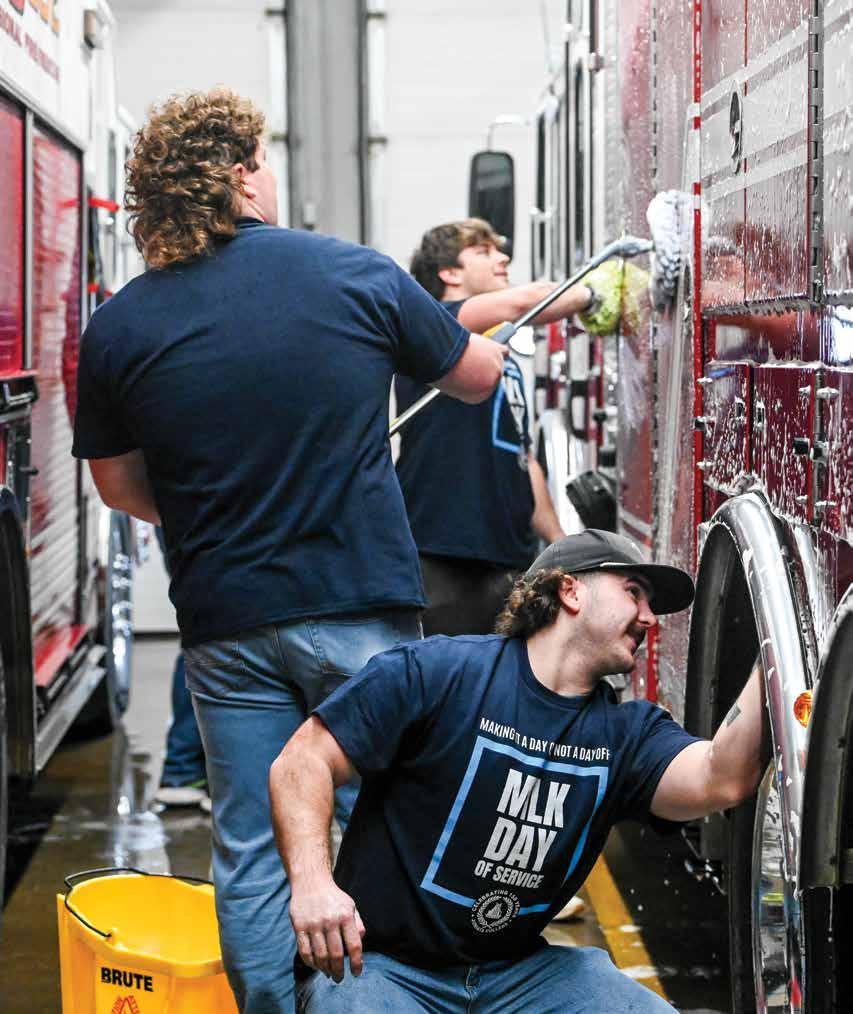
Students roll up their sleeves for MLK Day, giving back alongside local firefighters.
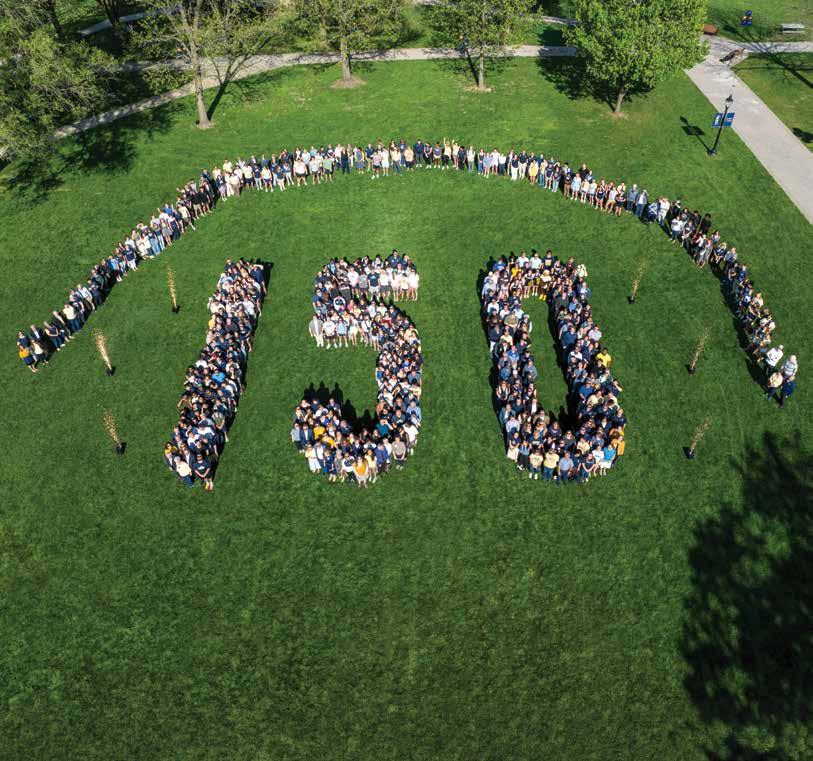
To commemorate the Juniata Jubilee held on April 23, 2026, those in attendance posed for a historic group photo on the quad.