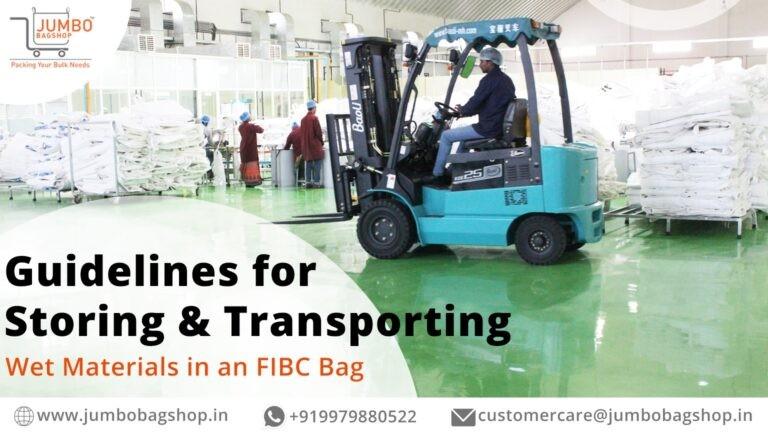
Guidelines for Storing & Transporting Wet Materials in an FIBC Bag

The FIBC Industry is growing every day, with the demand for FIBC bags increasing globally. Earlier FIBC Bags were primarily used for storing & transporting dry flowable powders & materials, and with time the application usage has grown.
Now FIBC bags are used for multiple uses, such as chemical materials, minerals, hazardous materials, fine powders, carbon, food ingredients, green fodder, construction materials, garden waste, landscaping materials, debris, and more.
FIBC bags have become a go-to solution for several industries. FIBC bags are now used for storing, handling, & transporting wet materials. However, specific guidelines must be followed for the safe handling & transporting of wet materials in FIBC Jumbo Bags.
In this blog, we will talk you through the guidelines for storing & transporting wet materials in FIBC Bag.
Guidelines for Storing & Transporting of Wet Materials in Jumbo FIBC Bags
Storing & transporting moisture-heavy materials & high-liquid materials in any container is challenging. A tiny hole or a crack in the container can cause crosscontamination or a heavy loss of materials. By following the below guidelines, you can ensure the safe storing & transporting of wet materials in an FIBC bag.