Introduction ●
The Australia-India ECTA will bolster textile exports significantly through preferential market access
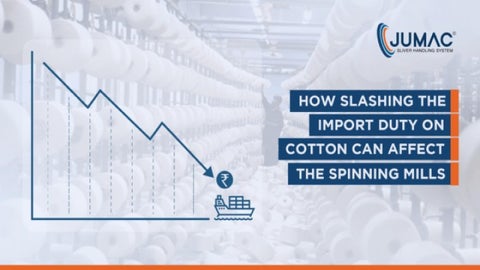
● Another important update is the removal of import duty on cotton for a period of five-and-a-half months ●
Right from spinning mills to cotton suppliers and spinning can manufacturers, the news of cotton import duties being slashed opens up a plethora of benefits
AVAILABILITY OF COTTON AT COMPETITIVE RATES ● To stay competitive, the Indian textile sector needs the support of favourable government policies ● The news of cotton import duties being slashed has come as a welcome one in this regard ● It is widely expected that this policy shift will bolster the availability of cotton at highly competitive rates ● As a result of the removal of the import duties, cotton imports in the domestic markets will significantly ease.
2. DIMENSIONAL ACCURACY & OPERATIONAL EFFICIENCY ● Randomly selected spinning can and accessories are not able to maintain the accuracy levels required for high-quality yarns ● So, mill-owners should go with high-density polyethylene (HDPE) sliver cans ● When spinning cans are not carefully chosen, there is a relatively high risk of sliver damages ● The top sliver can manufacturers, like Jumac Cans, help their clients eliminate such risks.
3. A BUFFER AGAINST COTTON PRODUCTION UNCERTAINTIES ● At present, there is a 5% AIDC cess (Agriculture Infrastructure Development cess) on cotton imports ●
A further 5% import duty is levied as Basic Customs Duty (or, BCD)
●
In a country like India, where sudden & unseasonal rainfall often affects cotton production
● High import duties serve as roadblocks for both domestic & international buyers, and for the textile sector as a whole.
4. BOOSTING SPINNING MILL PRODUCTIVITY & OUTPUT ● As cotton prices have been increasing in the domestic markets, the productivity and cash flows of spinning mills are getting adversely affected ● In the last few months, the ICS-105 cotton variety witnessed a price rise of around 70% ●
The falling production levels at mills were impacting the demand for spinning machinery and HDPE spinning can & accessories
● The removal of cotton import duties will significantly ease the liquidity problems that Indian mills are facing at present.
5. DOING AWAY WITH COTTON HOARDING HABITS ● The high cotton prices had, over the last few quarters, given rise to cotton hoarding tendencies among many domestic players ● The frequent rises in cotton prices were threatening to stunt the growth of the Indian textile & yarn industry ● With the duties no longer in place, yarn & fabric production would benefit from the lower material costs ● Malaysia and Dubai are expected to grow, and India would once again be able to stand out as a force to reckon with in the global textile industry.
6. VITAL STEP TO SAVE FROM CRITICAL SITUATION ● The scrapping of the cotton import duties has come as a timely step for preventing a major crisis for the industry as a whole ● Indian yarn & textile industry not being able to meet commitments of advance orders because of high cotton price ● The uncertain political climate (for example, the conflict between Russia and Ukraine) is also causing unique problems ● The slashing of the import duties on cotton will help in more effective material price management and higher operations.
7. MANIFOLD BENEFITS FOR THE ENTIRE VALUE CHAIN OF TEXTILES ● From spinning mill operations and sustaining day-to-day workflow efficiency levels ○ Fabric/yarn manufacturing ○ Demand for spinning can products ○ Removal of the high import duty of cotton will benefit the Indian textile sector ● The Indian textile sector is recovering well from the pandemic-induced slowdowns ●
8. Removal Of Cotton Import Duty – Truly A ‘Stitch In Time’ ● With the prices of locally produced cotton zooming past the international figures, the Indian textile sector has been hemorrhaging for some time now ●
The policy change will offer a much sought-after breather for the domestic textile and yarn production sector
●
The removal of cotton import duties may not immediately bring down the prices
●
Going forward, things like tighter MCX trading parameters and
Jumac smart can technology is presented in a comprehensive and user-friendly way to facilitate the operations. Utilization of this smart can technology will be a core competence of the mills in the near future, adding a competitive edge.
- From an expert
Thank You! Contact us:
Jumac Manufacturing 21, C.R. Avenue, Kolkata - 700071, India
Get Additional Info on
How Slashing The Import Duty On Cotton Is Likel y To Affect Spinning Mills