Auction Highlights
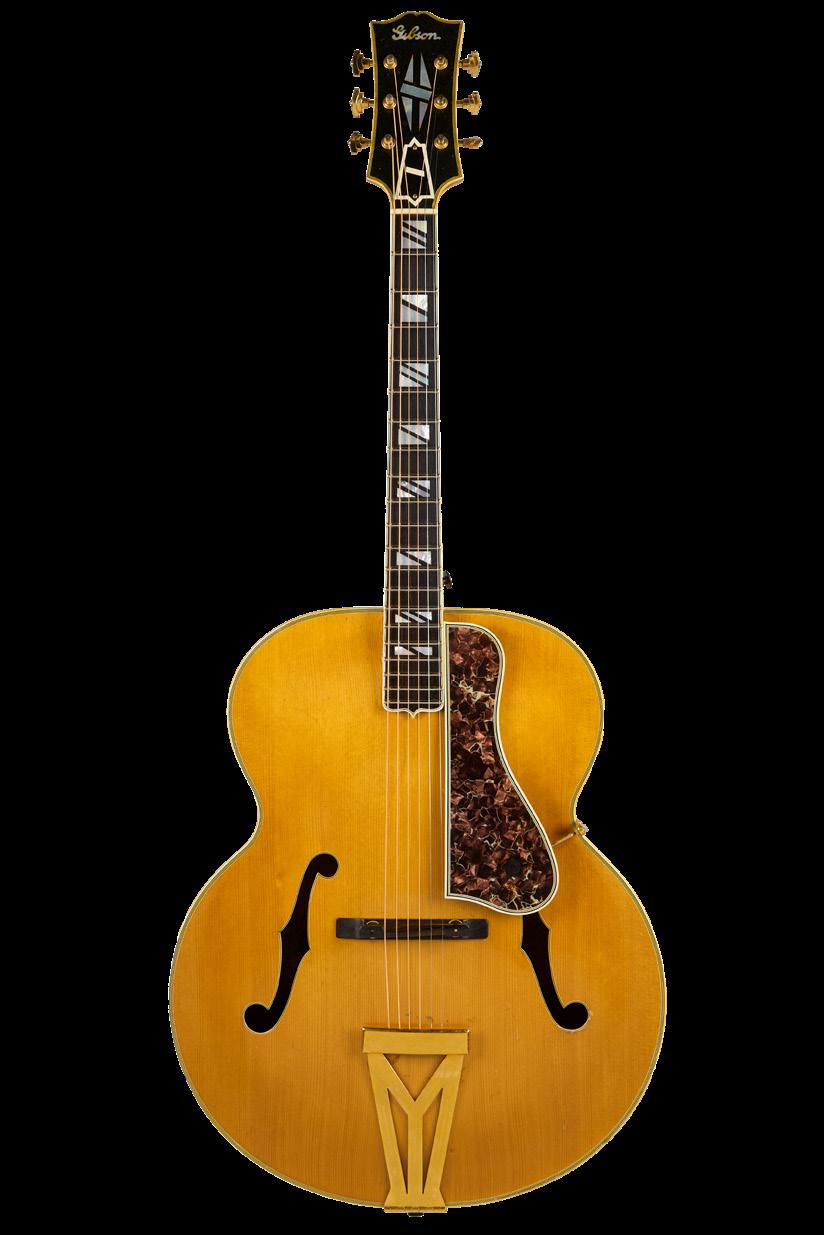
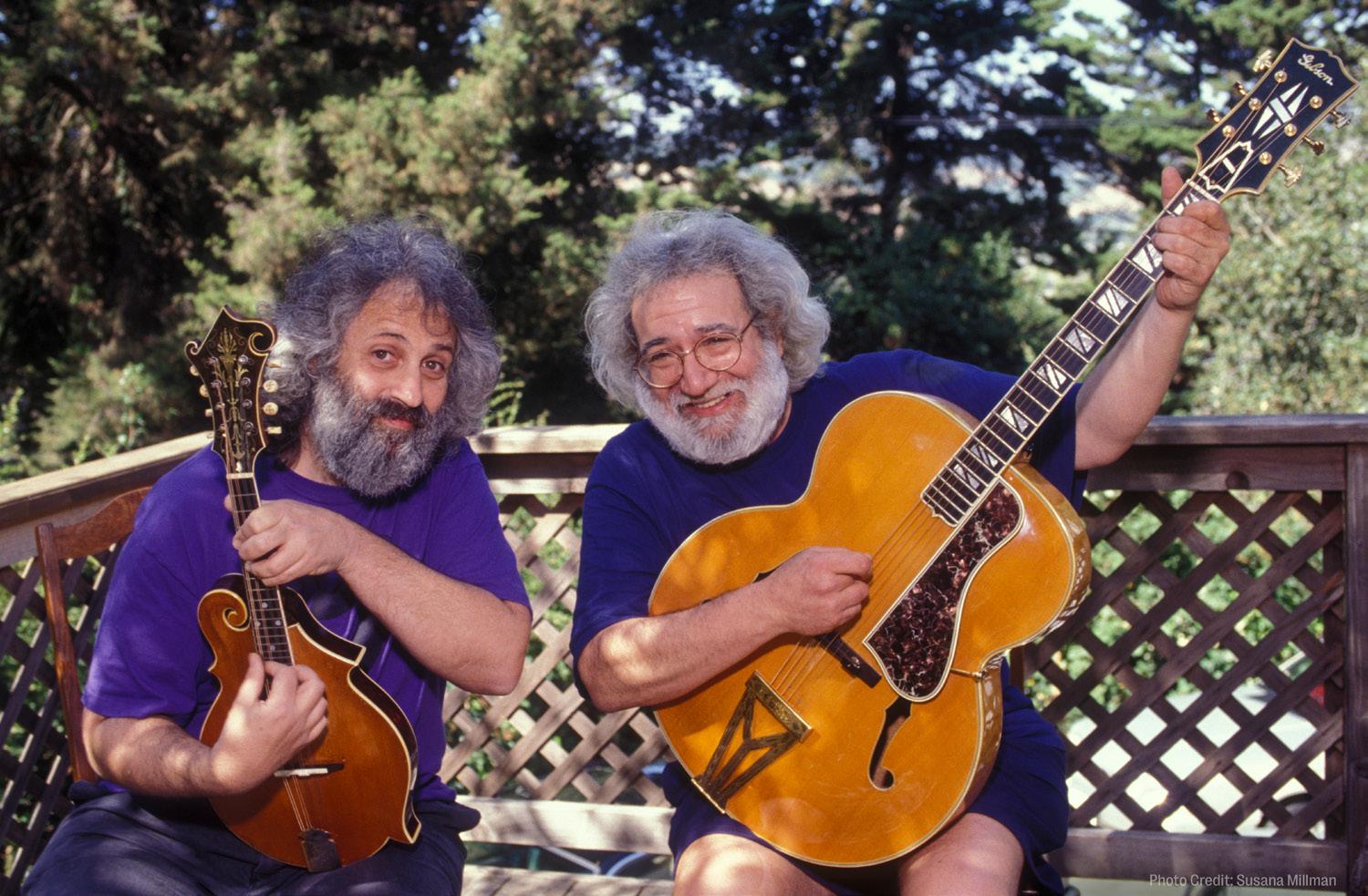
Jerry Garcia Studio and Video Played 1939 Gibson
Super
400N Archtop Guitar, Natural
A 1939 Gibson Super 400 archtop guitar (serial number: 95924), in a beautifully aged natural finish which was owned and played by Jerry Garcia, the beloved cofounder, songwriter, and lead guitarist of legendary rock and jam band Grateful Dead. This well-kept and lovingly played instrument comes directly from Jerry Garcia’s daughter, Trixie.
Garcia also participated in a number of other projects including the Jerry Garcia Band, Old & In the Way, and frequent collaborations with mandolinist David Grisman. In fact, Garcia used this very Super 400N on recording sessions with Grisman, including the duo’s 1993 album of children’s songs Not For Kids Only, as well as the song “Blue Yodel #9” from Garcia and Grisman’s Been All Around This World, Garcia’s final album session before his passing in 1995.
In addition to having been photographed in Garcia’s hands numerous times over the years, it was also played by Jerry in the video for “Smoke Gets In Your Eyes” from the soundtrack for Wayne Wang’s 1995 movie, Smoke.
It features a 25.5 inch scale length three piece flame maple neck, a multi-ply bound 20 fret ebony fretboard, mother of pearl split block Super 400 inlays, multi-ply bound headstock with mother of pearl Gibson script logo and split diamond inlays, a black factory stinger on the back of the headstock with mother of pearl split diamond inlay, and six gold plated stair step button Grover Imperial tuners. The body has a spruce top and highly figured book matched maple back and figured maple sides, with multi-ply binding, bound f-holes, engraved gold Super 400 Y tailpiece, a marbled reddish brown pearloid pickguard, Super 400 inscription on the neck heel cap, X top bracing, and replaced ebony bridge.
The guitar is missing an oval plaque which was once affixed to the back of the headstock with two screws, but still retains its original brown Lifton case with pink interior, a black strap, a thin grey cable, a photo of the guitar, and a bag containing a very old set of strings and fragments of the celluloid pickguard.
Est: $80,000 - $120,000

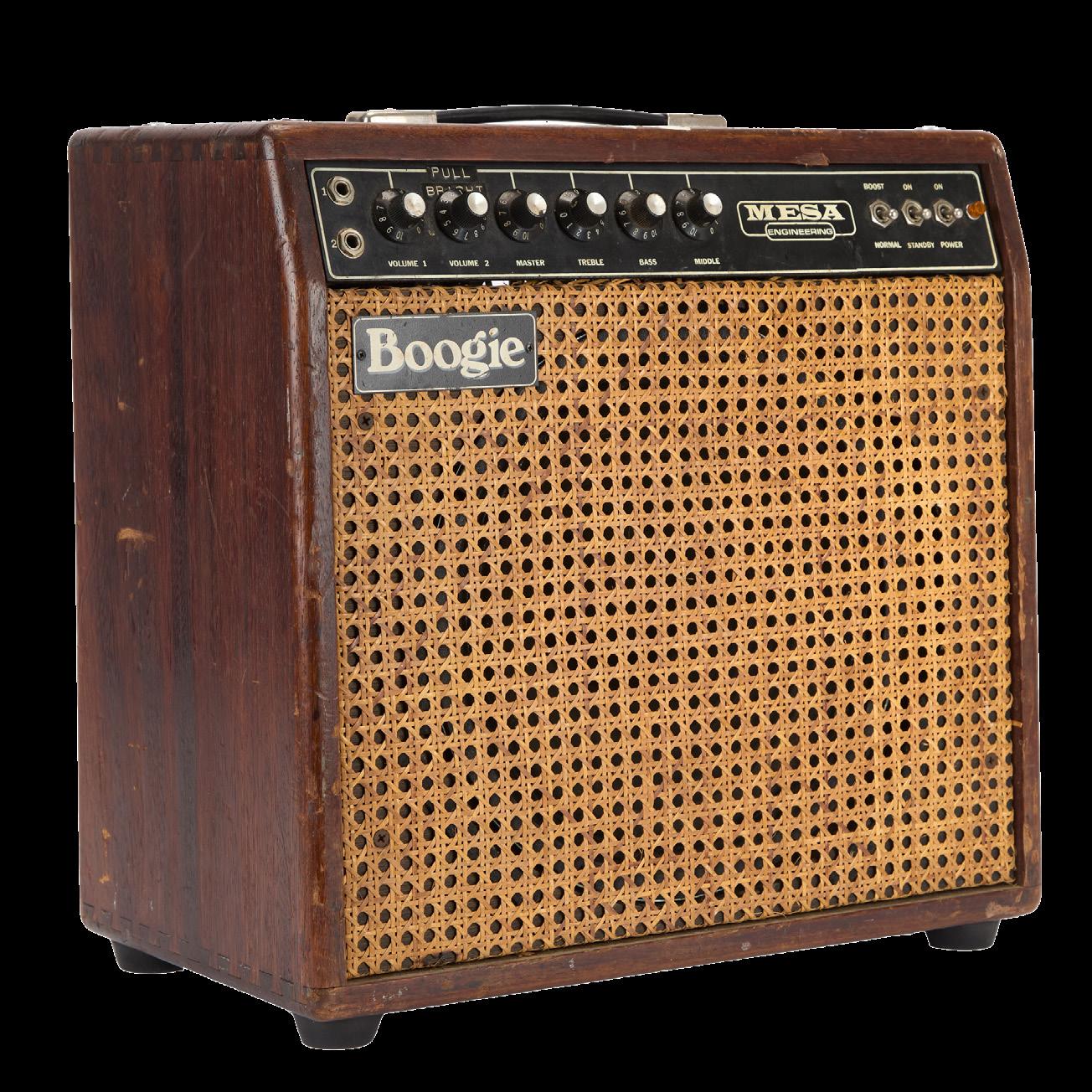
Jerry Garcia Stage Used Grateful Dead 1975 Mesa Boogie Mark I
Combo Guitar Amplifier
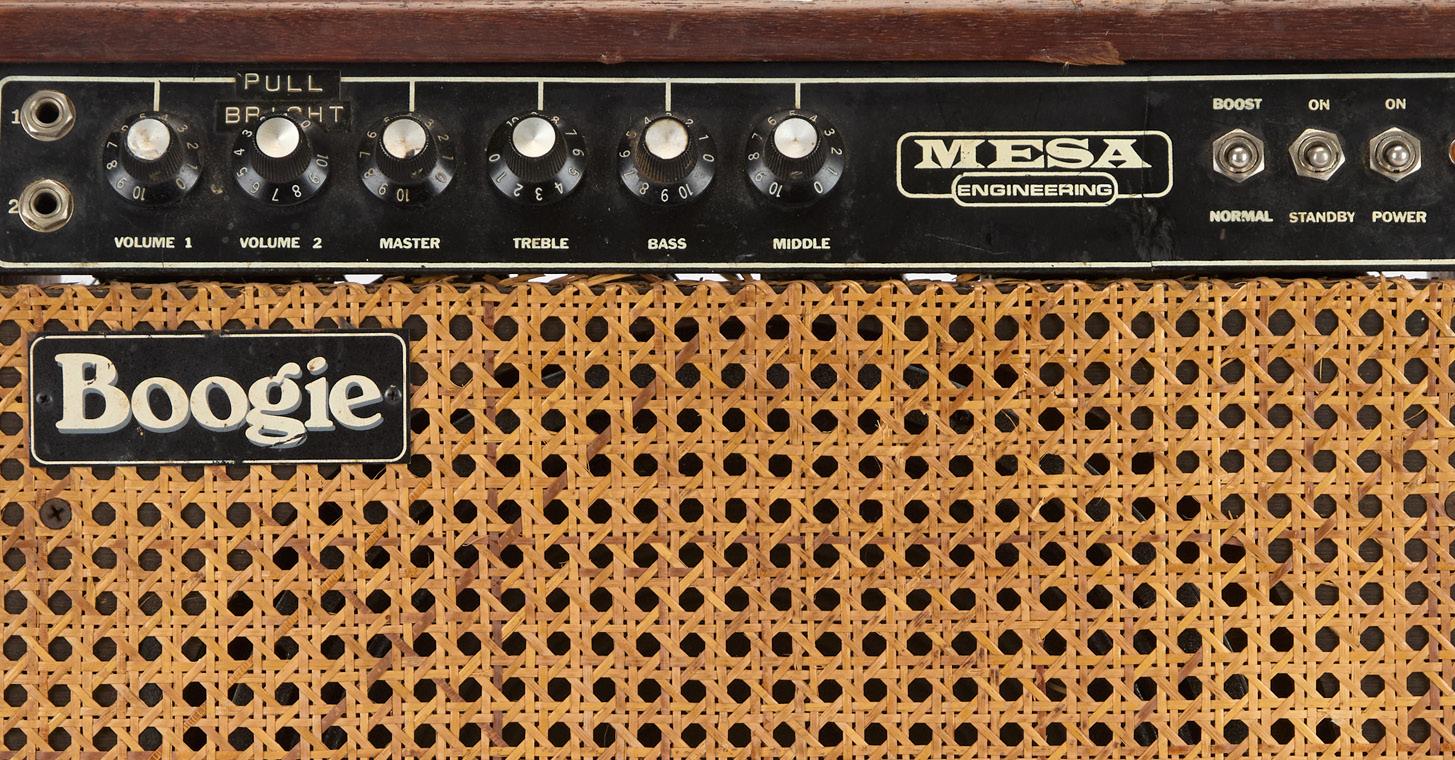
A 1975 Mesa Boogie Mark I guitar amplifier with a stained wood enclosure and basketweave grille. This amplifier was owned and stage played by Jerry Garcia, co-founder, songwriter, and lead guitarist of legendary rock and jam band Grateful Dead. According to Jerry’s daughter Trixie, the amp’s post-tour days were spent set up in Jerry’s living room for quite some time, always at the ready.
This amp was part of Jerry’s live guitar rig for a brief period from 19751976 and appeared in a print ad for Mesa amplifiers with Jerry and Bobby, a copy of which is included in this auction. Based on the placement of the grille cloth and the Boogie plate on the upper left side of the speaker baffle, this amp appears to be the one on the bottom of Jerry’s side of the ad.
It is equipped with four 6L6 power tubes, three 12ax7s, and a single 12at7 in the preamp, a Mesa Black Shadow 12” speaker, two independent channels with individual volume controls, Master volume control, shared EQ for Treble, Bass, and Middle, plus a Presence knob and a control for the built-in spring reverb on the back panel. On the back panel is a small property tag with the number A-100.
Est: $30,000 - $50,000
Jerry Garcia
1988 #0001 Alvarez Yairi DY 74CJG
Custom Made for Jerry (With Ad)
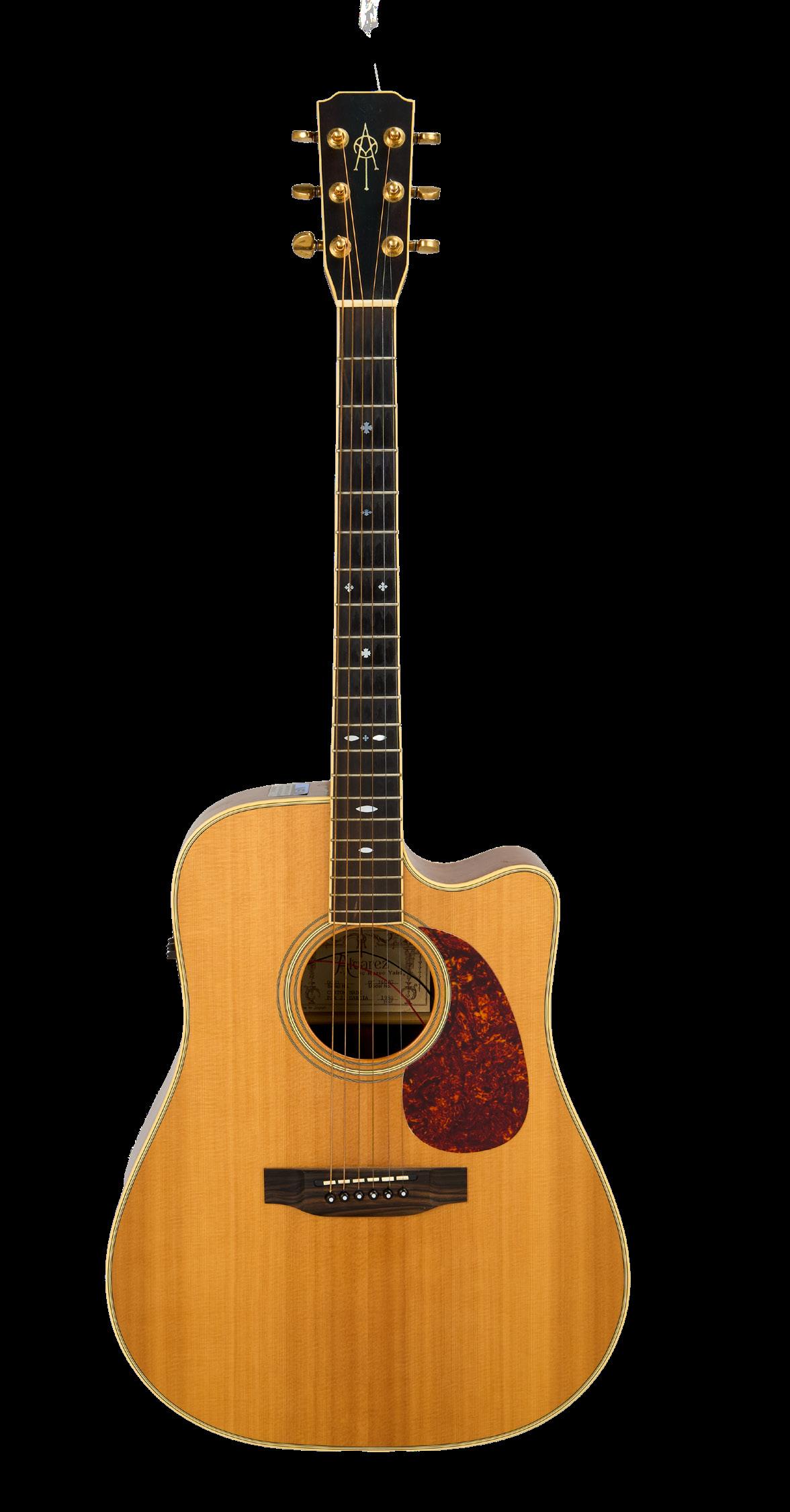
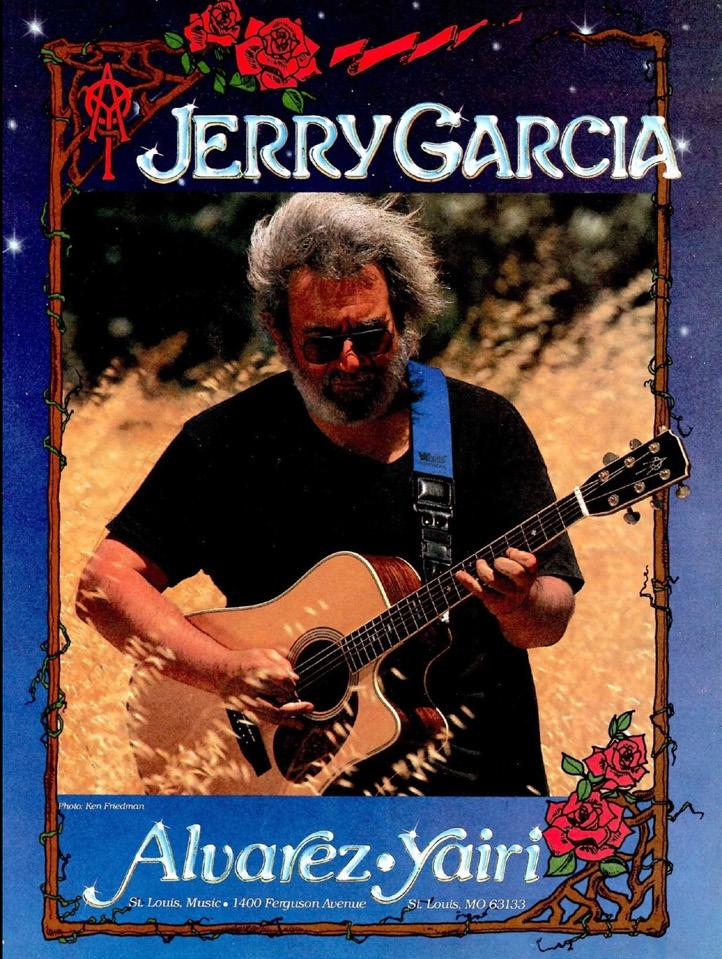
An Alvarez-Yairi DY 74CJG acoustic guitar (serial number: 0001), custom made for Jerry Garcia in 1988. Owned and played by Jerry Garcia, this instrument comes directly from his daughter, Trixie. Jerry was a frequent user of instruments made by renowned Japanese luthier Kazuo Yairi in his later acoustic period, and this guitar predates the Garcia signature model known as the GY-1, designed by Yairi in the 1990s along with input from Garcia. Accompanied by an ad featuring Jerry with the guitar.
While this DY 74CJG shares a number of features with the GY-1 Jerry Garcia model including an ebony fretboard, rosewood back and sides, gold tuners, peghead shape, and inlays, this 1988 model lacks the tulip inlay which resides just behind the nut on the later GY-1 guitar; this DY 74CJG stands out among the other JG models produced.
On the interior label is the model number, the serial number of 0001, the year of 1988, and “Custom Made For J. Garcia.” It is also the very guitar Garcia is holding in a 1990 Alvarez-Yairi print ad, with identical wood grain to the guitar in this lot; a copy of the ad is included.
The Alvarez-Yairi DY 74CJG features a 25.5 inch scale length mahogany neck with a bound 20 fret ebony fretboard, mother of pearl snowflake and oval inlays, a bone nut, a mother of pearl Alvarez inlay on the headstock, and six gold plated Grover tuners. The body has a spruce top, rosewood back and sides, multi-ply binding throughout, black and white soundhole rosette and backstrap, plastic shell pickguard, and a rosewood bridge with built-in electronics for plugged-in use. Jerry affixed a sticker from a Sony D-T66 CD player on the bass body side near the neck. Please note that the bridge is cracked through the bridge pin holes; request a condition report for more information.
This guitar also includes a black hardshell case with red interior with a piece of tape on the lid which reads “JG #6.”
Est: $70,000 - $100,000
Jerry Garcia
1988 Dobro Model 64 Tree of Life Resonator Guitar
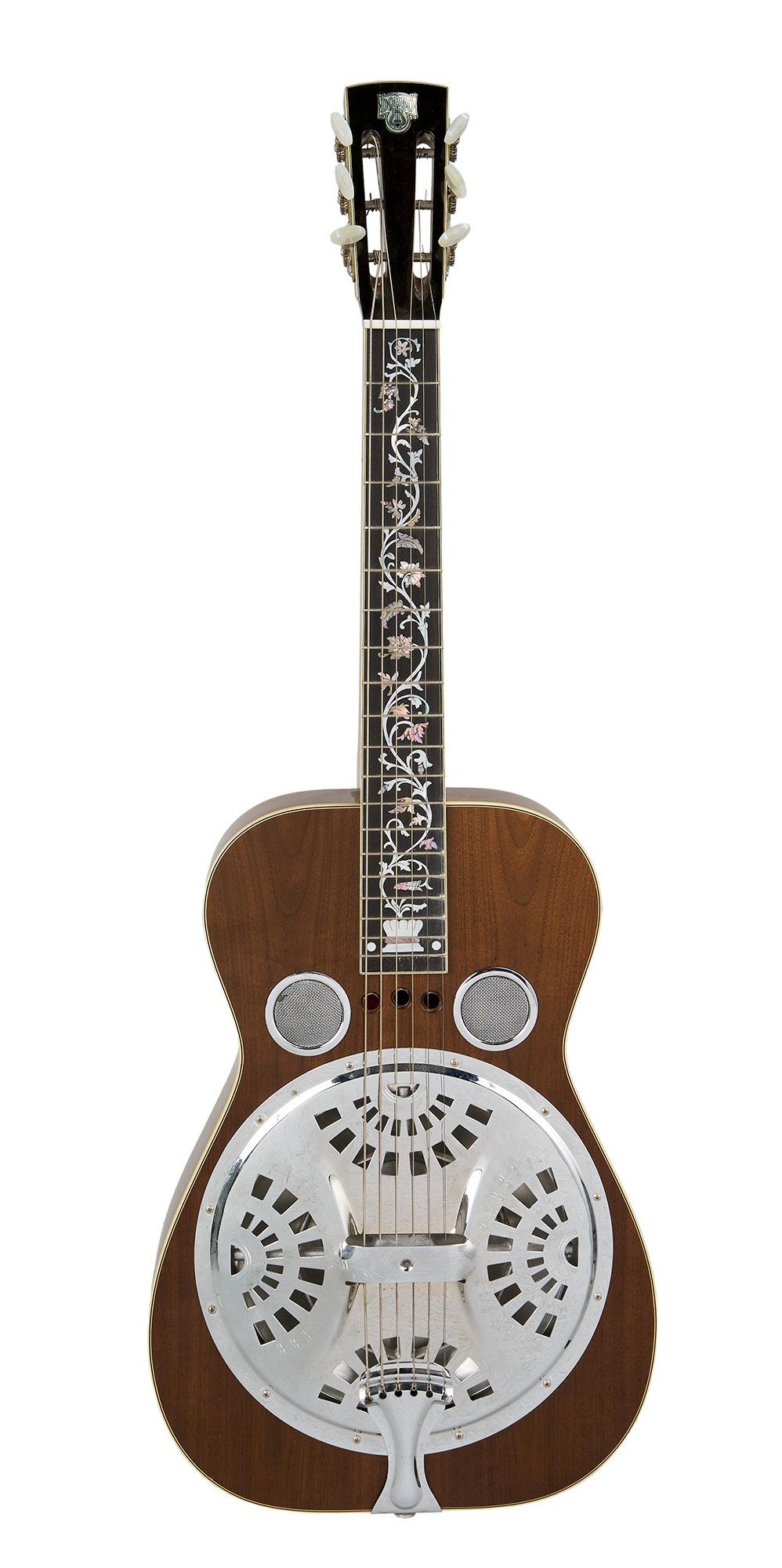
A 1988 Dobro Model 64 square neck resonator guitar (serial number: C9 232 88D) in walnut finish with “Tree of Life” fretboard inlay. Owned and played by Jerry Garcia, and made available to this auction by Jerry’s daughter, Trixie. As far as we can surmise, this instrument never made it to the stage.
The instrument features a walnut neck, bound ebony fretboard with mother of pearl Tree of Life inlays, a mother of pearl peghead logo, and a bound slotted headstock with three-on-a-side tuners with pearloid buttons. The walnut body is bound and finished in natural with a chrome plated cone cover plate, and two sound holes with tea strainer wire mesh inserts. Inclues a black hardshell case with red interior, a tone bar, and original O.M.I. warranty card. On the case lid is a piece of tape marked “JG 11.”
Est: $25,000 - $30,000


Jerry Garcia Dusty Strings FH-26 Lap Harp
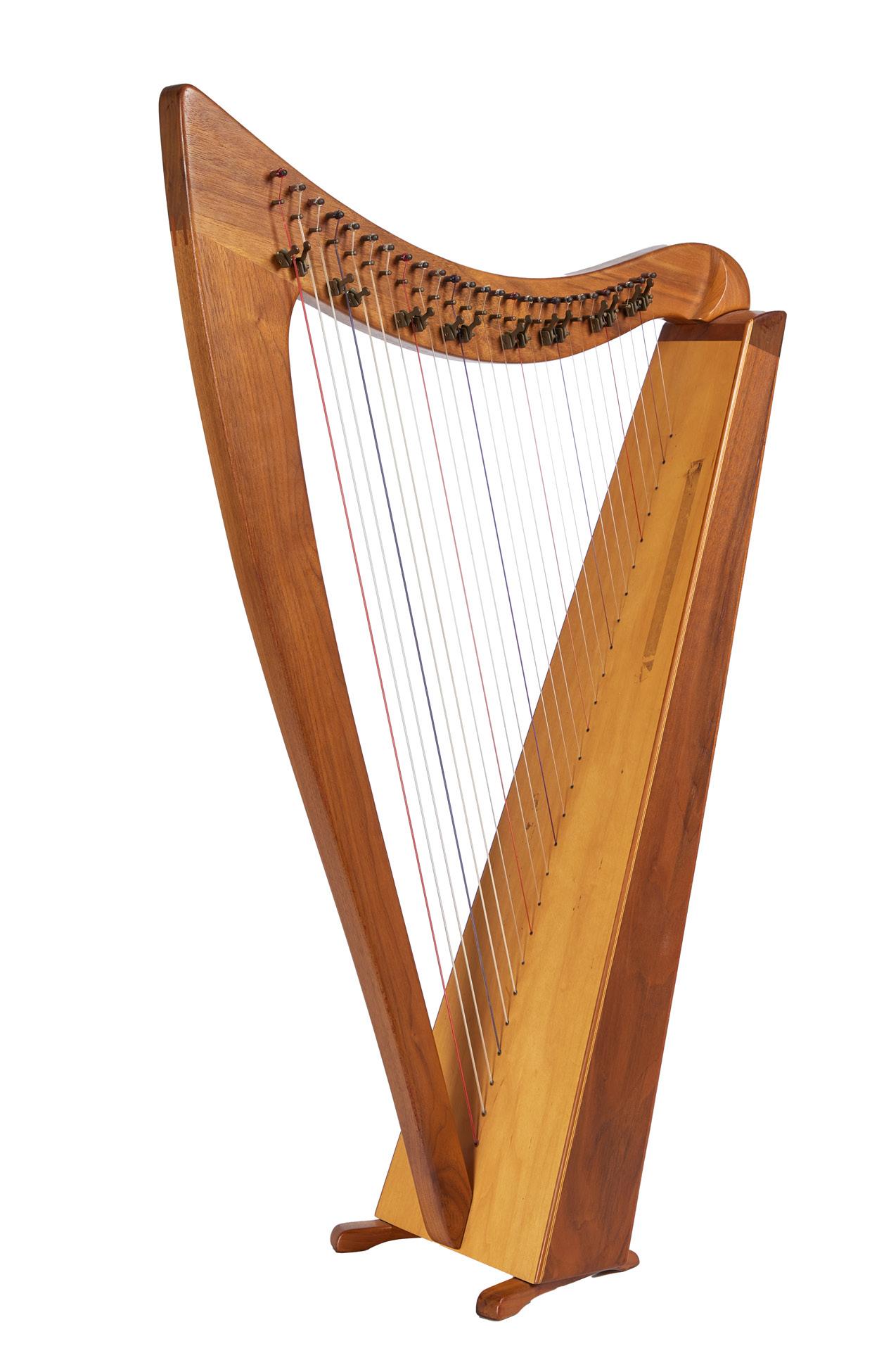
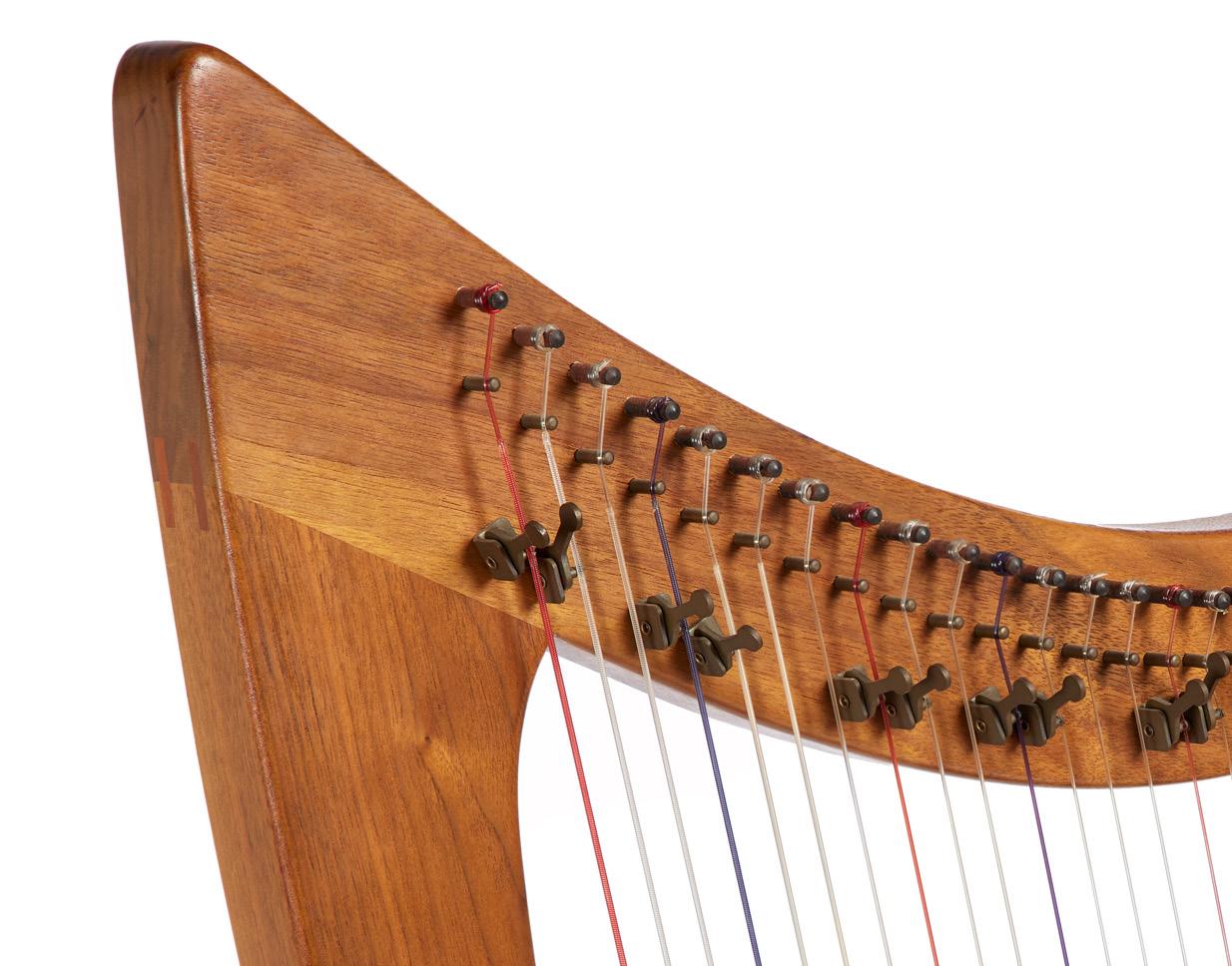
A Dusty Strings FH-26 lap harp (serial number: 0586) hand crafted in Seattle, WA in 1988, owned and played by Grateful Dead co-founder, songwriter, and guitarist, Jerry Garcia. While known primarily as a guitar player, Garcia also played pedal steel, dobro, banjo, and a number of other instruments.
Since 1979, Dusty Strings have been making stringed instruments from highquality materials that are both beautiful and sonorous, including hammered dulcimers and harps, and have garnered the respect of musicians and luthiers worldwide. This 1988 FH-26 appears to have cherry wood construction, 26 strings, 16 levers for altering the tunings of the strings, and a carrying case. The interior label is signed by the craftspeople who made the instrument, lending a personal touch to a gorgeous harp.
Est: $20,000 - $30,000
Hard Truckers
Speaker Cabinet with 15 Inch Speaker
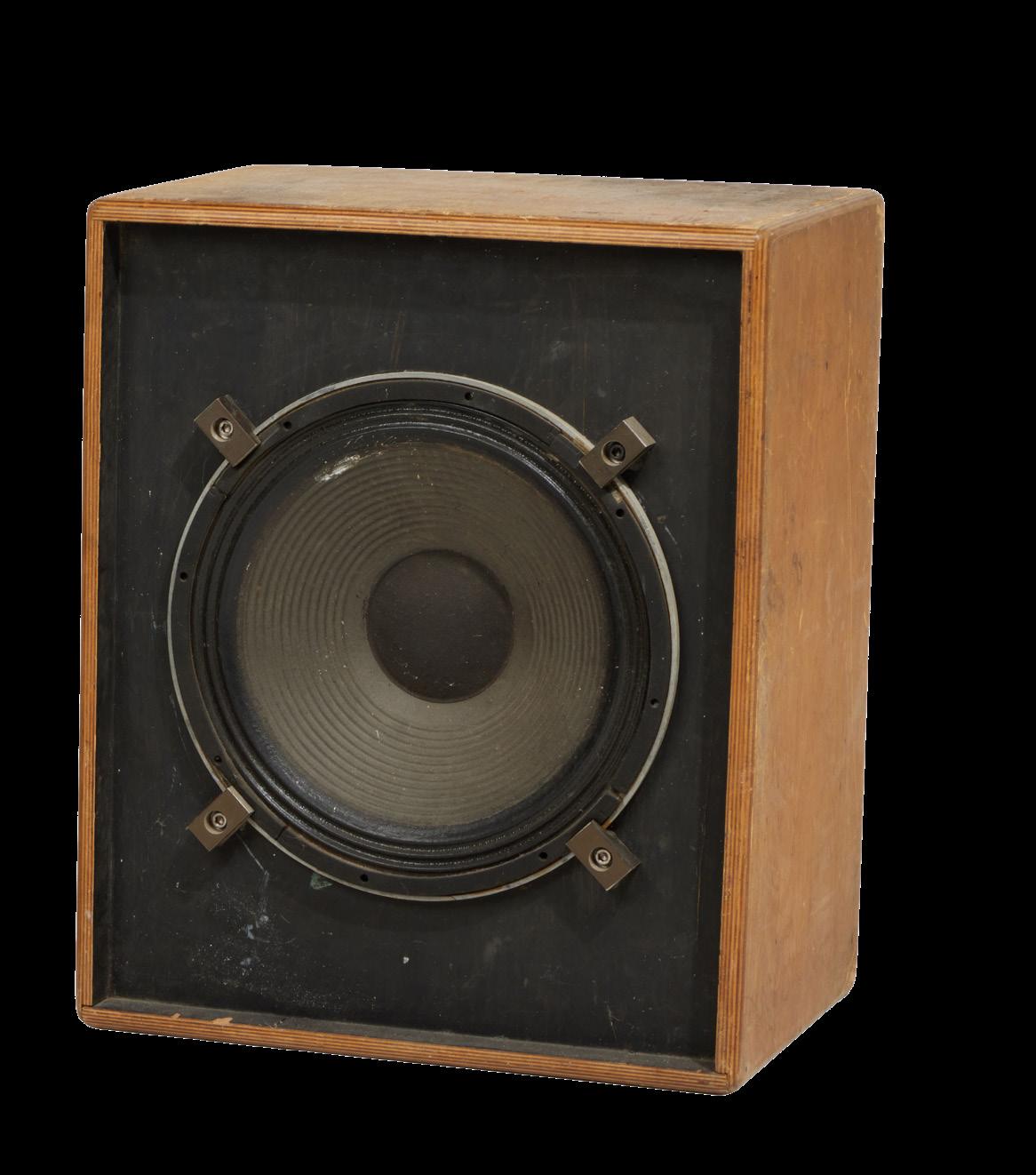
A Hard Truckers closed-back speaker cabinet, used by The Grateful Dead in their legendary live sound setup.
The speaker cabinet features plywood construction, natural sides, top, and bottom, and a black speaker baffle. The cabinet is equipped with a 15 inch speaker measuring at 5.4 ohms. Input jacks (red and black) are located on the rear panel and appear to be banana plugs.
Hard Truckers was formed by then-roadie Steve Parish and Joe Winslow who drove a truck for the Dead and eventually worked alongside the sound engineers. The company provided a large quantity of speaker cabinets in a number of speaker configurations for the band, including this one.
Est: $800 - $1,200
Grateful Dead
McIntosh 2300 Case “Mustard”
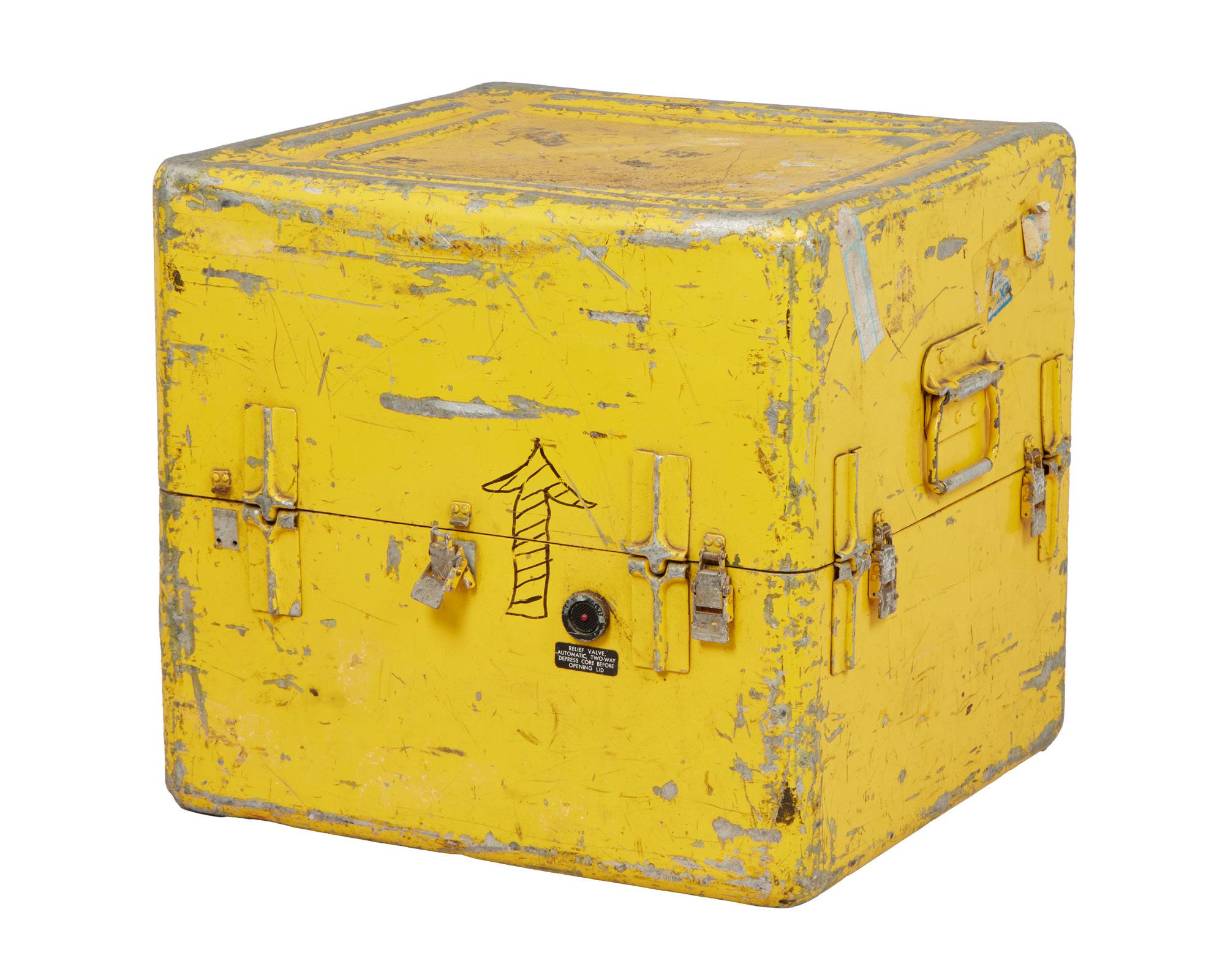
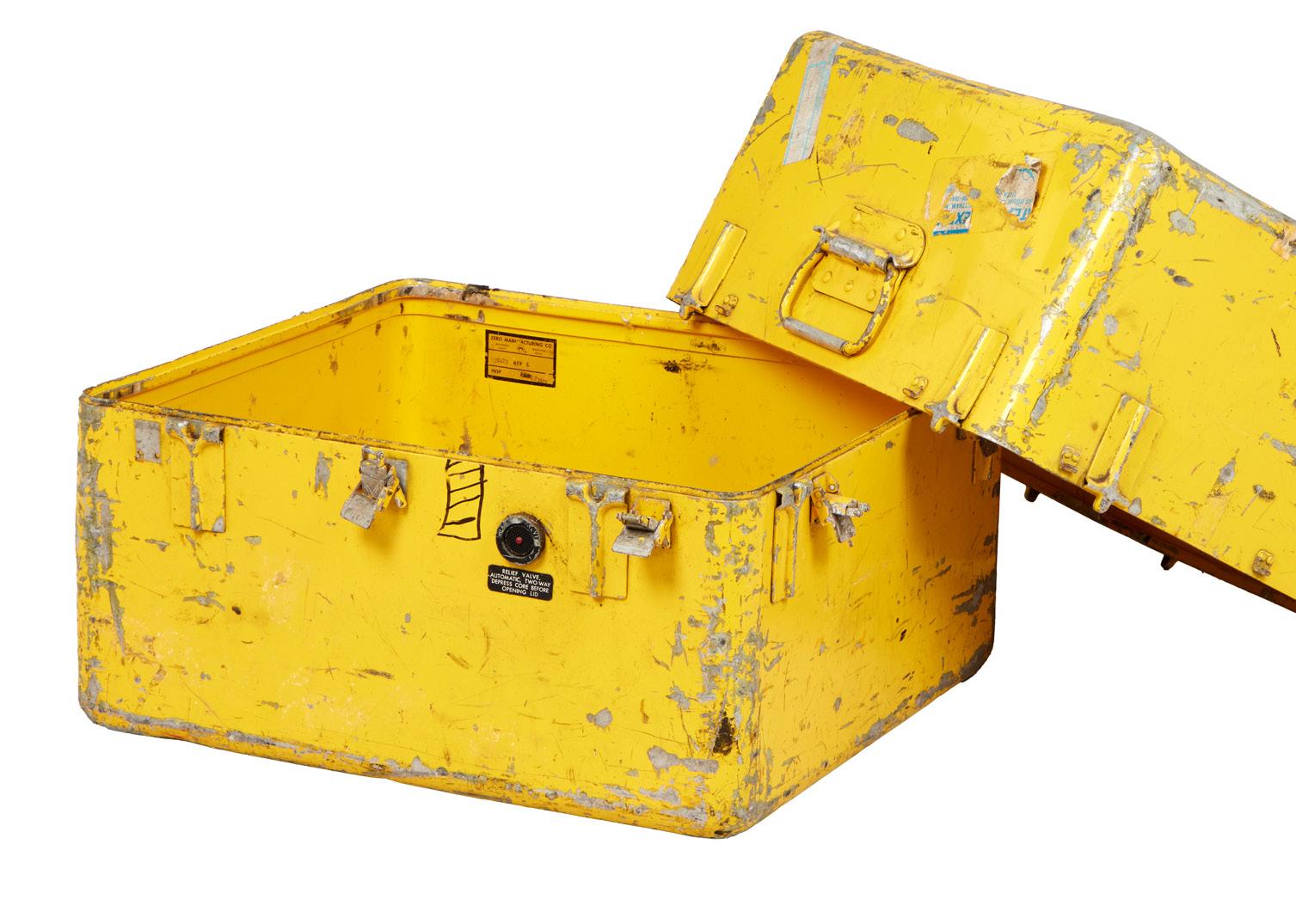
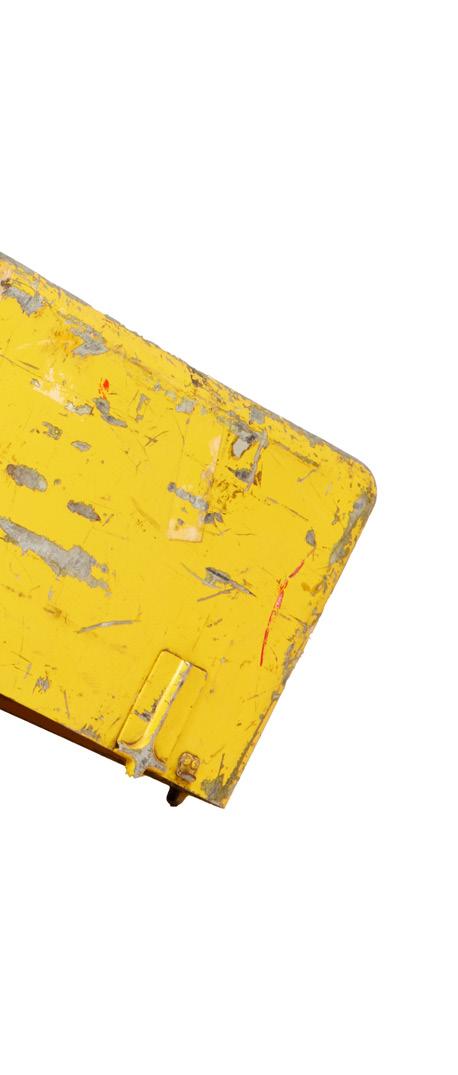
A yellow aluminum road case which housed one of the Grateful Dead’s many Macintosh 2300 power amplifiers for the Wall of Sound.
Nicknamed “Mustard,” the case was one of many custom-made by the Zero case company for the Dead and painted a distinct color for identification purposes.
This case is well-traveled and heavily scratched, with lots of paint missing which makes it an evocative display piece. On the exterior are a few freight labels, hand-drawn arrows pointing upward, and the number “36A” written on one side in black felt tip pen. Inside, the case is empty and painted yellow and shows a commensurate amount of wear, with scratched paint throughout. The case is equipped with a pressure release valve on one side. Three exterior latches are broken or missing, all are oxidized and move with mild difficulty.
Est: $800 - $1,200
Grateful Dead
McIntosh 2300 Power Amplifier with Case “Ketchup”
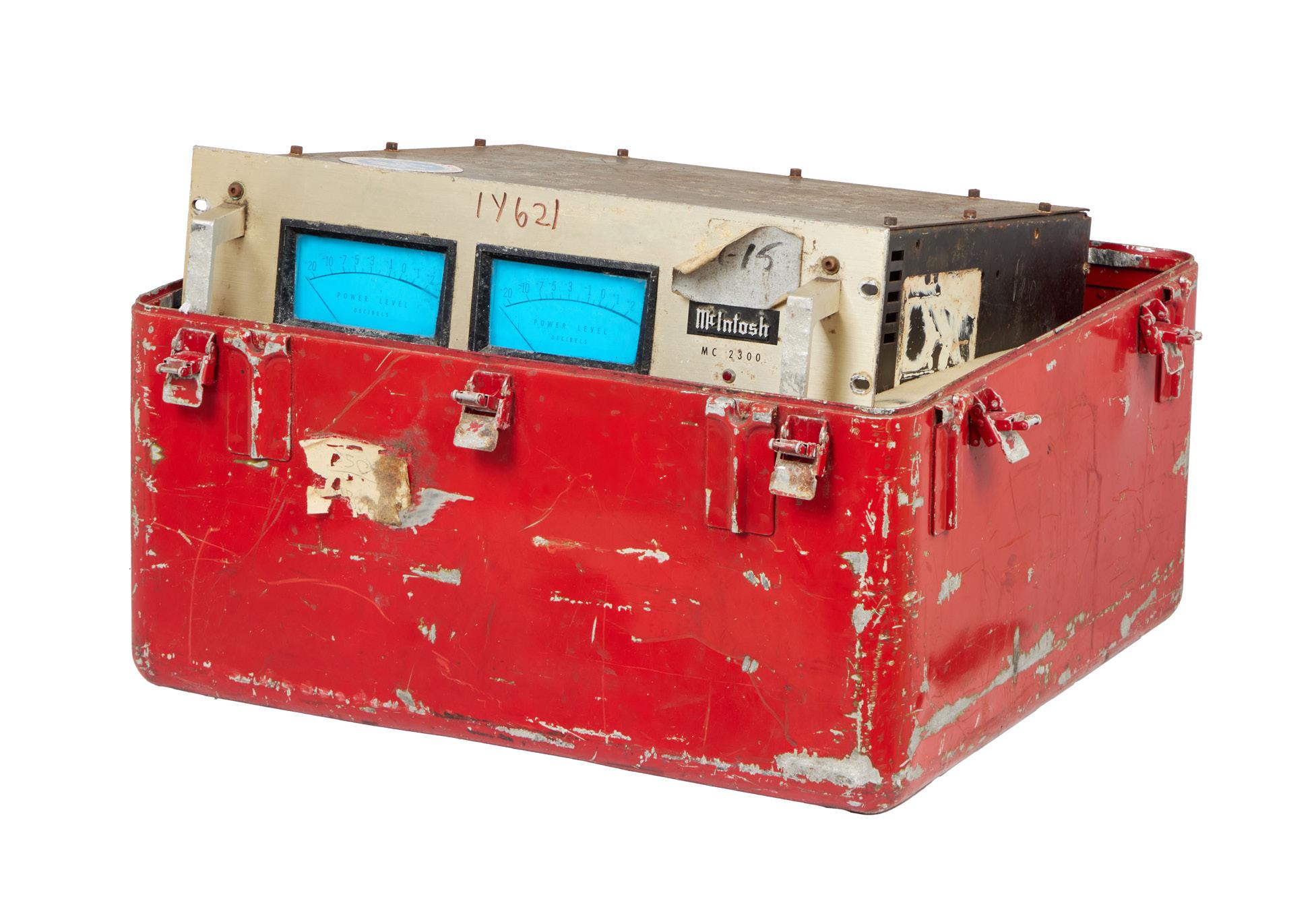
A red aluminum road case which contains one of Grateful Dead’s many McIntosh 2300 power amplifiers (serial number: IY622) for their live “Wall of Sound” setup, marked “M-15” on the front panel.
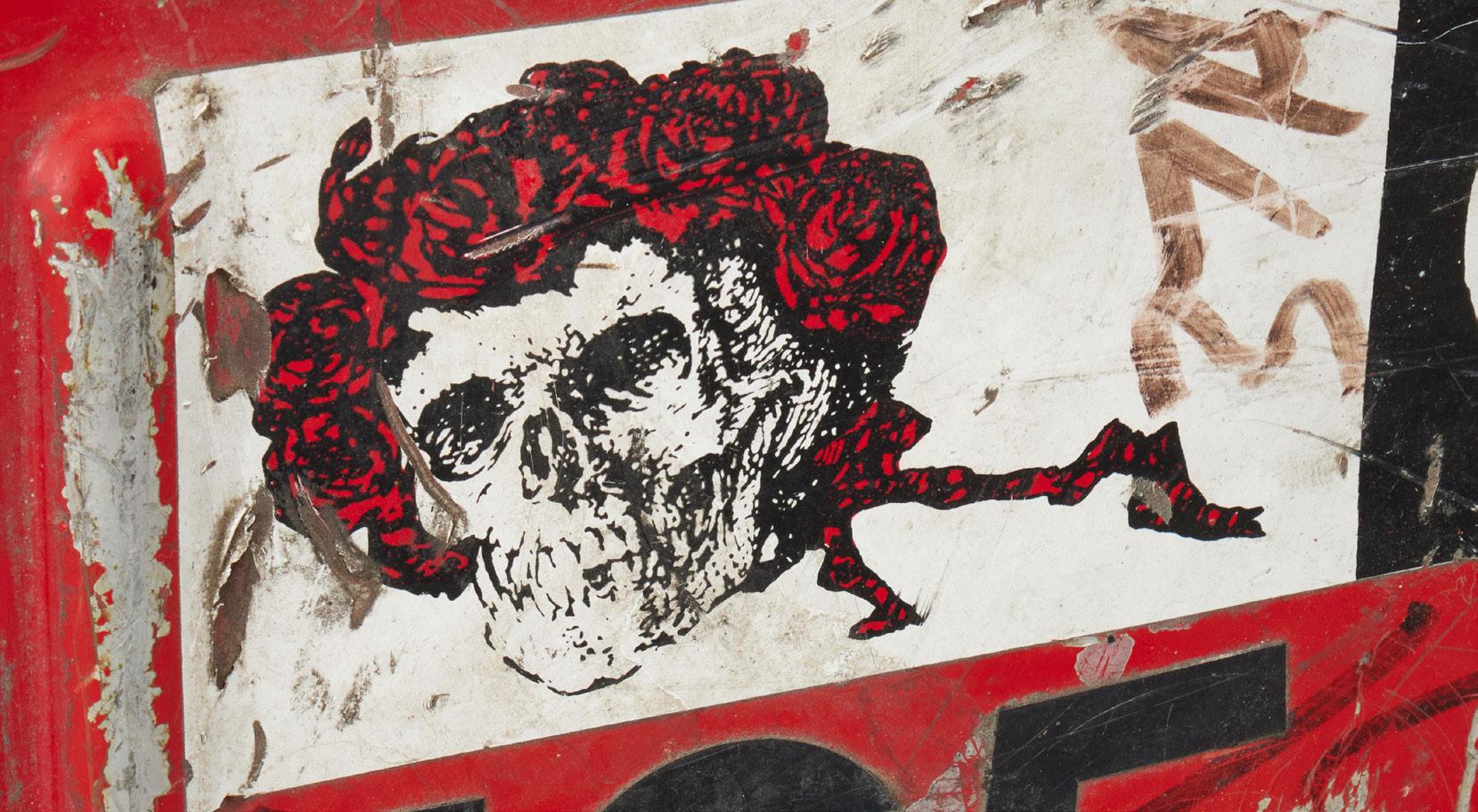
This McIntosh was used in the Wall of Sound primarily for lower frequency sounds, according to “Big Steve” Parish. This unit has a “Good Ol’ Grateful Dead” sticker on the top panel, a BMW logo sticker on the front, a “Steal Your Face” logo on the bottom right face plate, and is marked with a serial number in black felt tip pen which is exactly one digit off from the unit’s correct number.
The MC2300 produces 600 watts through a single channel or 300 watts per channel in stereo, with two meters on the front for reading Decibels, Left and Right/Mono Gain dials on the front panel, and Meter Range and Speakers On/Off controls. On the back panel, Input and Output connections plus power connector, fans, and mono/stereo switching.
Nicknamed “Ketchup,” the case was one of many custom-made by the Zero case company for the Dead, and painted a distinct color for identification purposes.
The case is well-traveled and heavily scratched, with lots of missing paint. On the exterior are a few stickers including a large Grateful Dead bumper sticker, the number 105 in black, an MXR sticker, and a freight label. The number 37A is written on the top in black felt tip pen. It contains white foam surrounding the MC2300 it carries and appears to be in good working order.
Est: $4,000 - $6,000
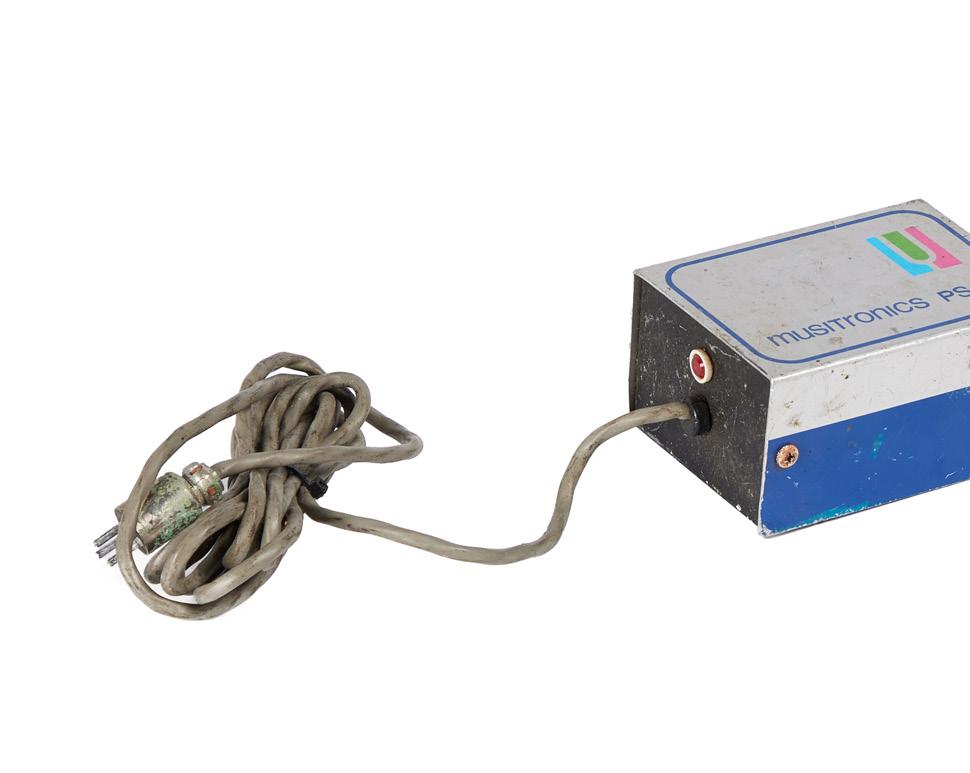
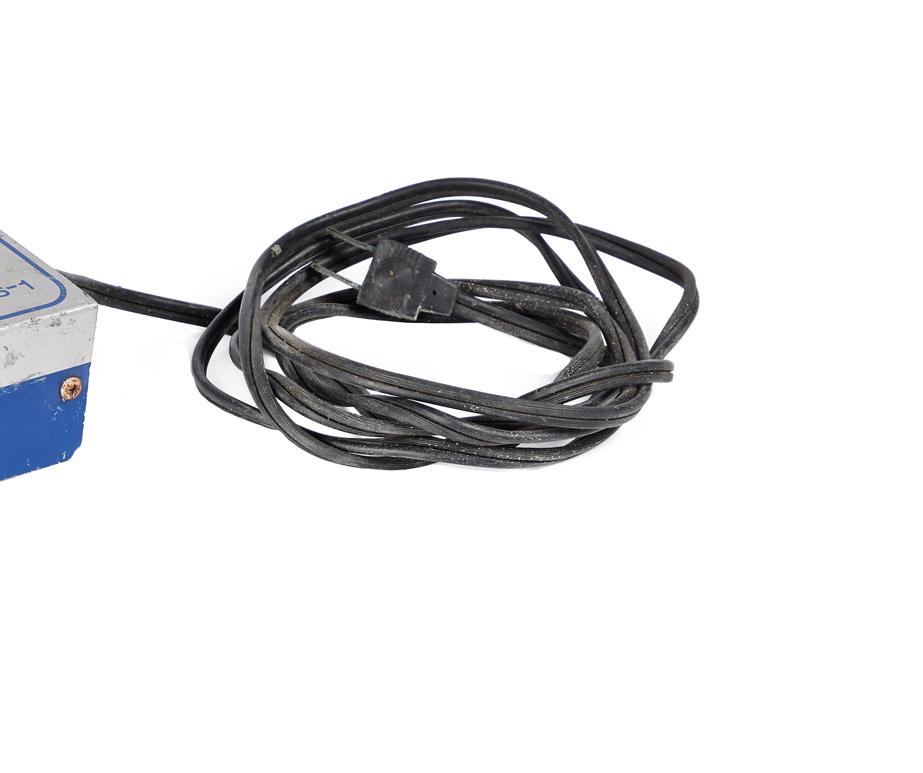
Jerry Garcia Musitronics Mu-Tron III Filter Effect Pedal with Power Supply
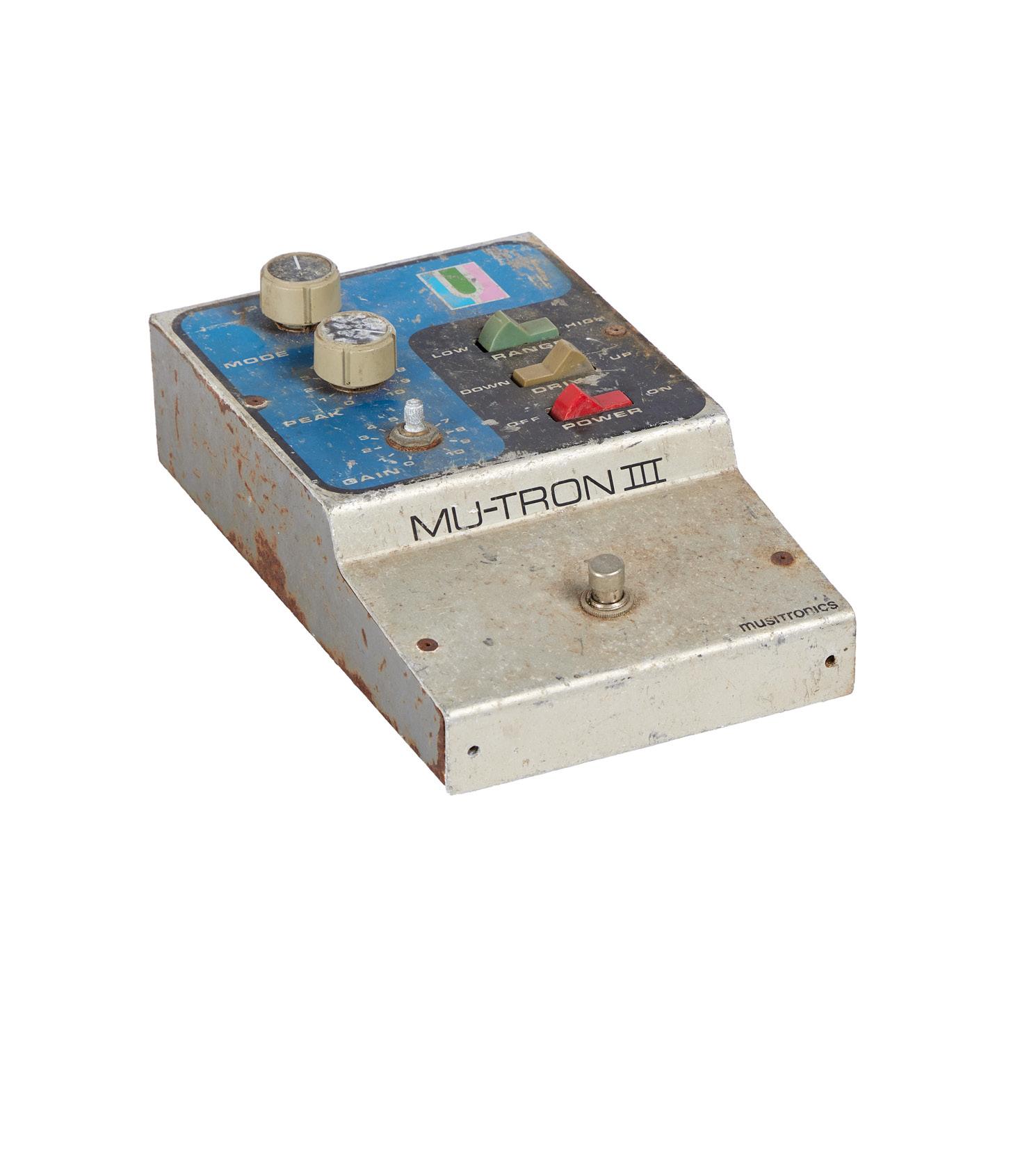
A c. 1970s Mu-Tron III effect pedal (serial number: 21685) heavily used and played by Jerry Garcia in the Jerry Garcia Band. According to “Big Steve” Parish, who came into possession of the pedal after Jerry’s death, this is Jerry’s oldest Mu-Tron III pedal.
The Mu-Tron III pedal is responsible for the vocal auto-wah sound present on many of Jerry’s guitar parts including the song “Estimated Prophet,” “Shakedown Street,” “Feel Like A Stranger,” and many more.
Rusty, dirty, and missing a knob, it’s clear this one has seen plenty of use. It includes a Musitronics PS-1 power supply and features controls for Mode Peak Gain Range Drive and an on-off power switch along with a footswitch to engage the effect.
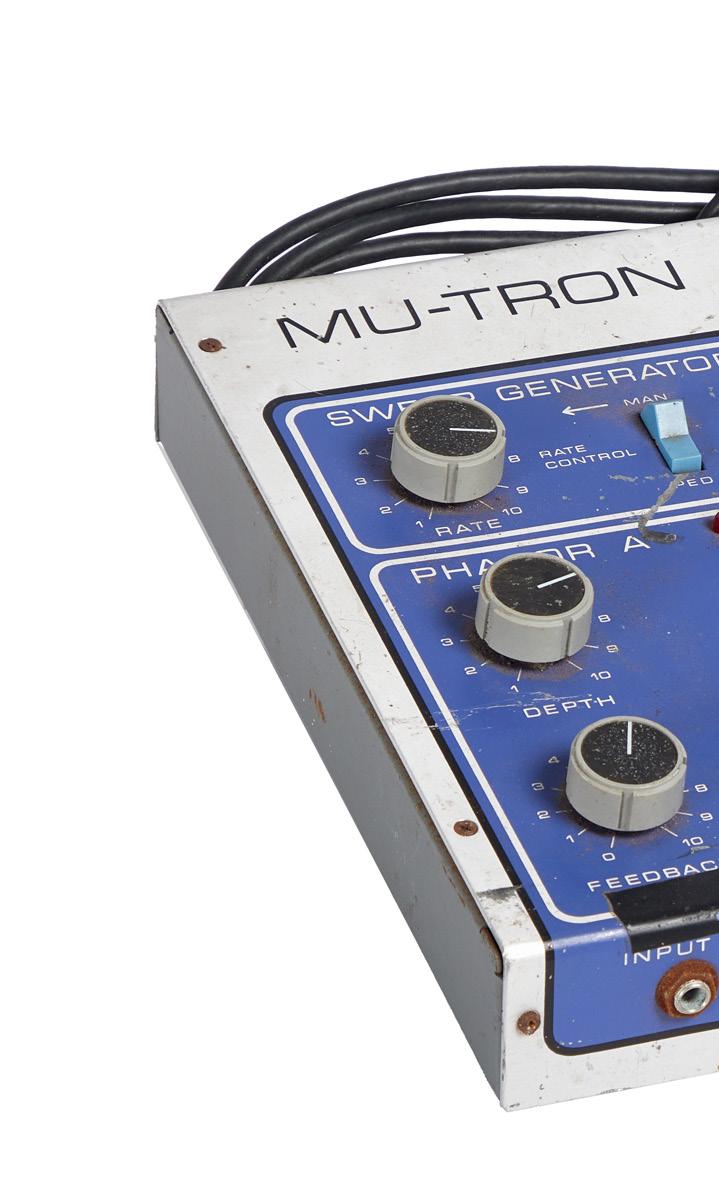
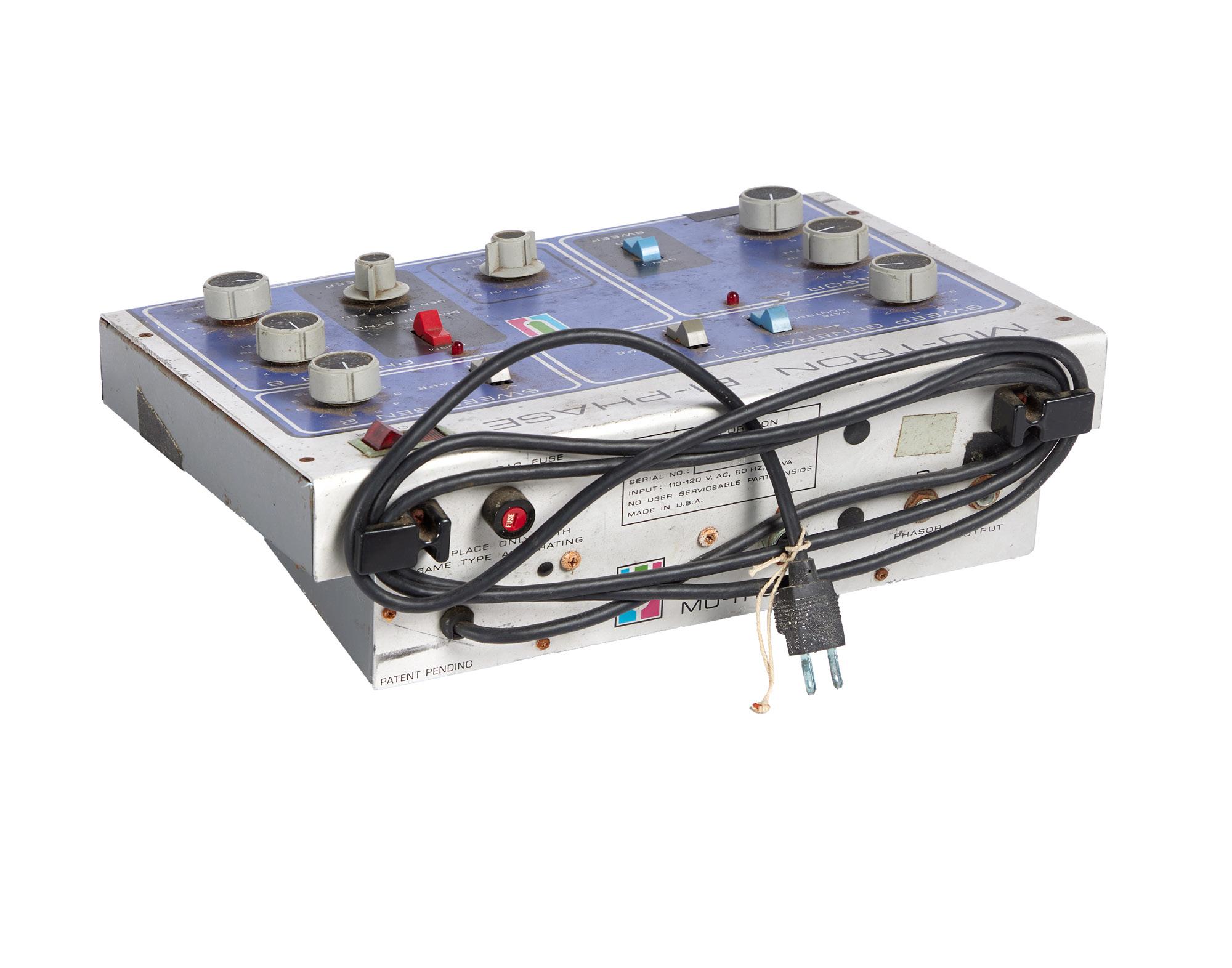
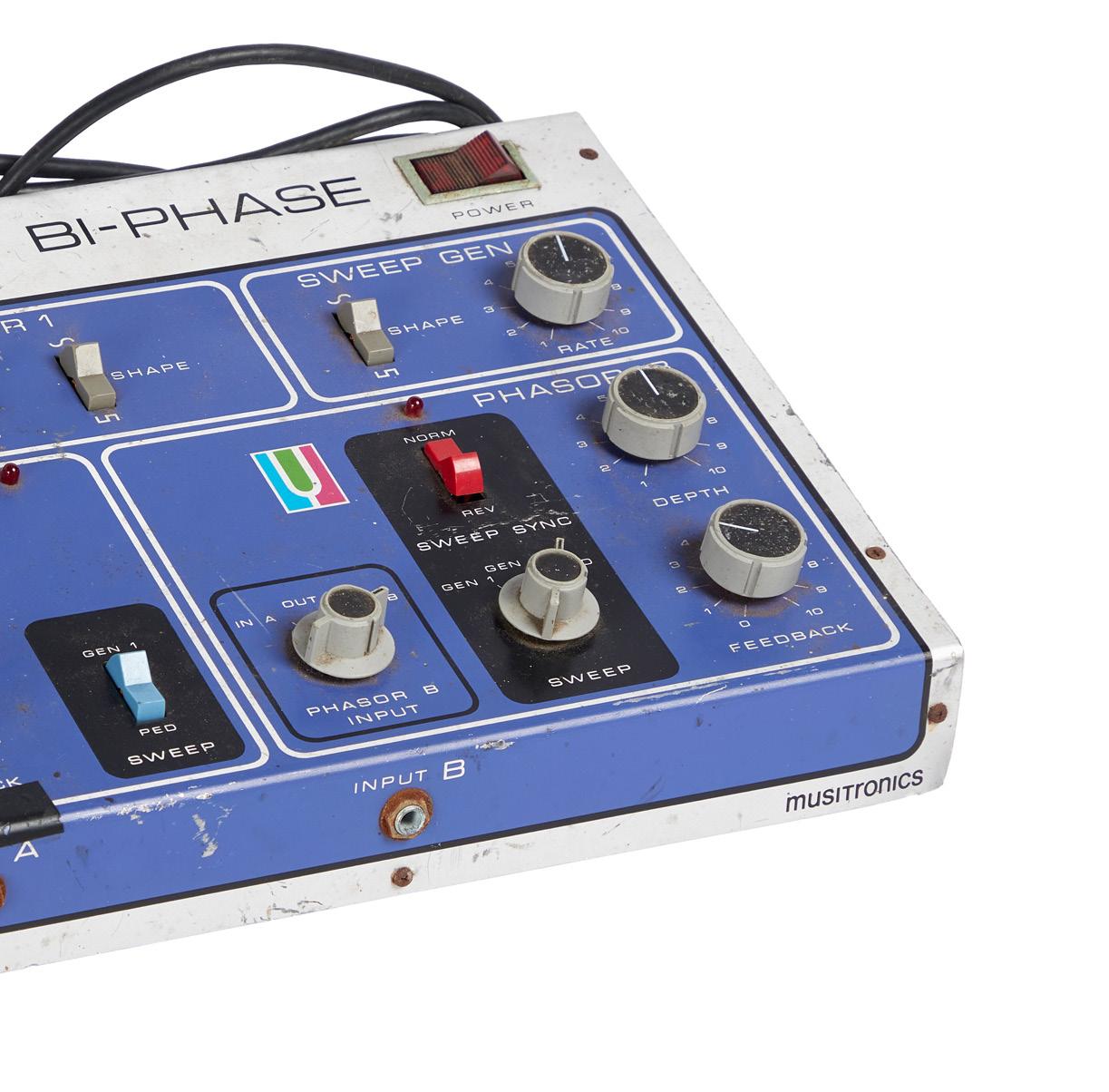
Jerry Garcia Mu-Tron Bi-Phase Effect Pedal Played
By Jerry Garcia and Bobby Weir
A c. 1970s Mu-Tron Bi-Phase phaser effect pedal (serial number: 05631) used, according to “Big Steve” Parish, by Jerry Garcia and Bobby Weir.
Jerry used a Mu-Tron Bi-Phase in his live rig for a short time before replacing it with a Mu-Tron III. The legendary Bi-Phase pedals defined the sound of a generation of phase effects and showed up on innumerable classic recordings. A dual six-stage phaser with photocell circuit and unsurpassed dynamics complexity and granular fine-tuning. Includes controls for Phasor A and B (depth feedback sweep) plus Phasor B Input and Sweep Sync switches and Sweep Generator 1 and 2 with Rate and Shape controls. Includes attached power cable. Non-functional.
Est: $2,000 - $4,000
Jerry Garcia
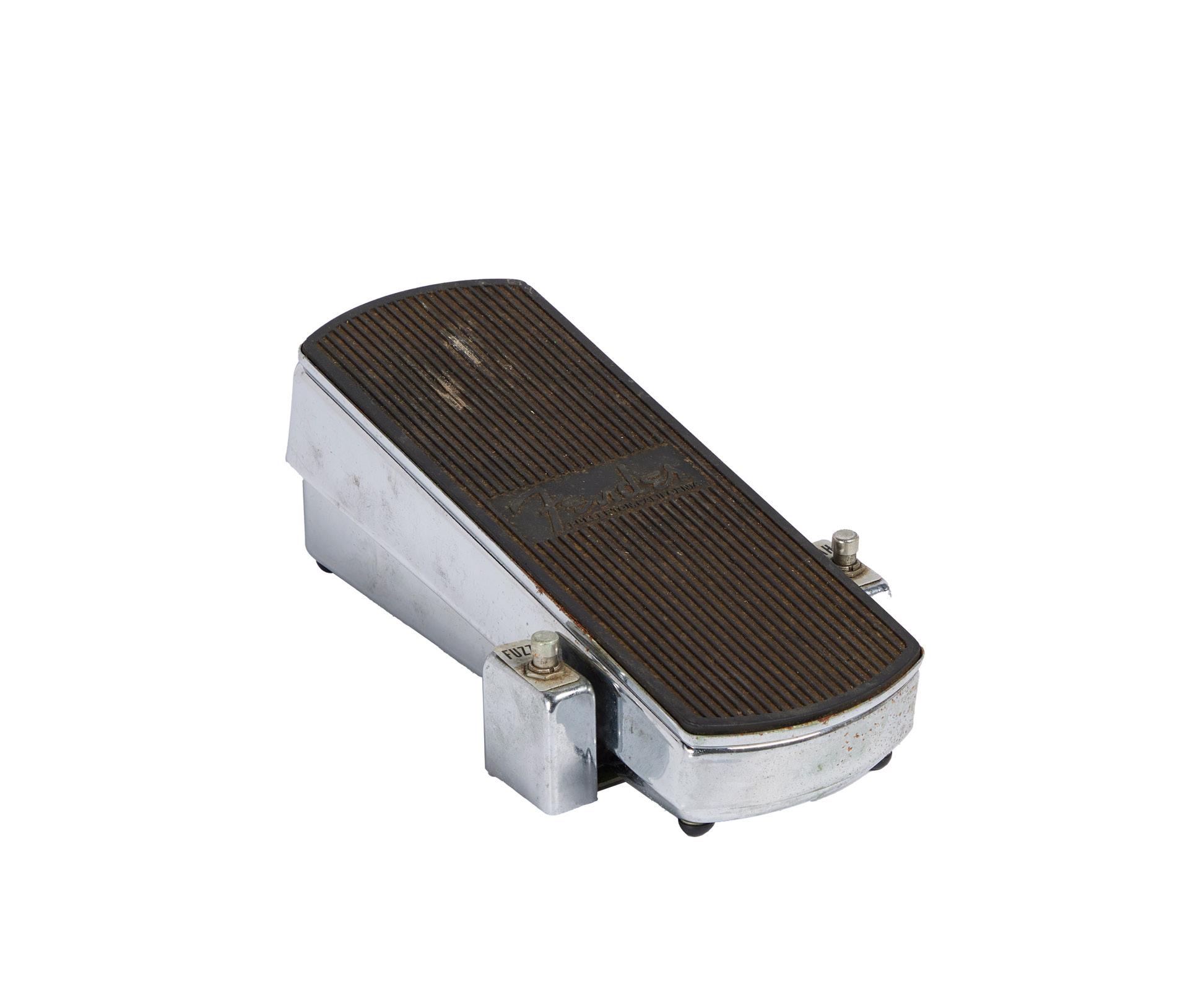
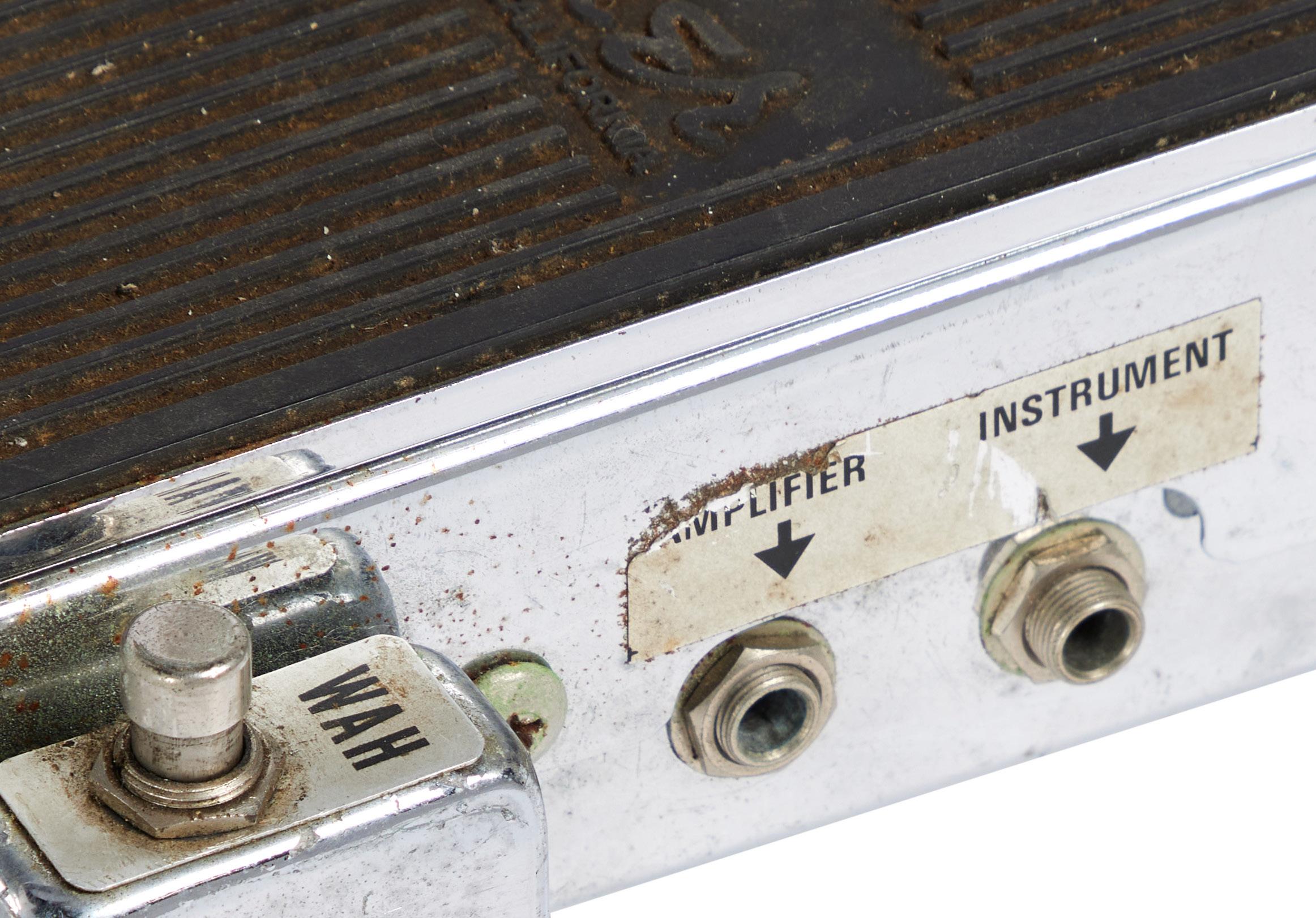
Fender Fuzz-Wah Effect Pedal, Chrome
A Fender Fuzz-Wah effect pedal in chrome finish, owned and played by beloved co-founder, songwriter, and lead guitarist of legendary rock and jam band Grateful Dead, Jerry Garcia. According to “Big Steve” Parish, this pedal was purchased by Jerry in 1968 for use with his pedal steel.
The Fuzz-Wah features two on-off footswitches to activate each effect which can be used in tandem or on their own. The treadle moves up and down for the sweep of the wah and side-to-side to control the fuzz effect. Requires a 9V battery (not included).
Est: $2,000 - $4,000
Lawrence “Ram Rod” Shurtliff
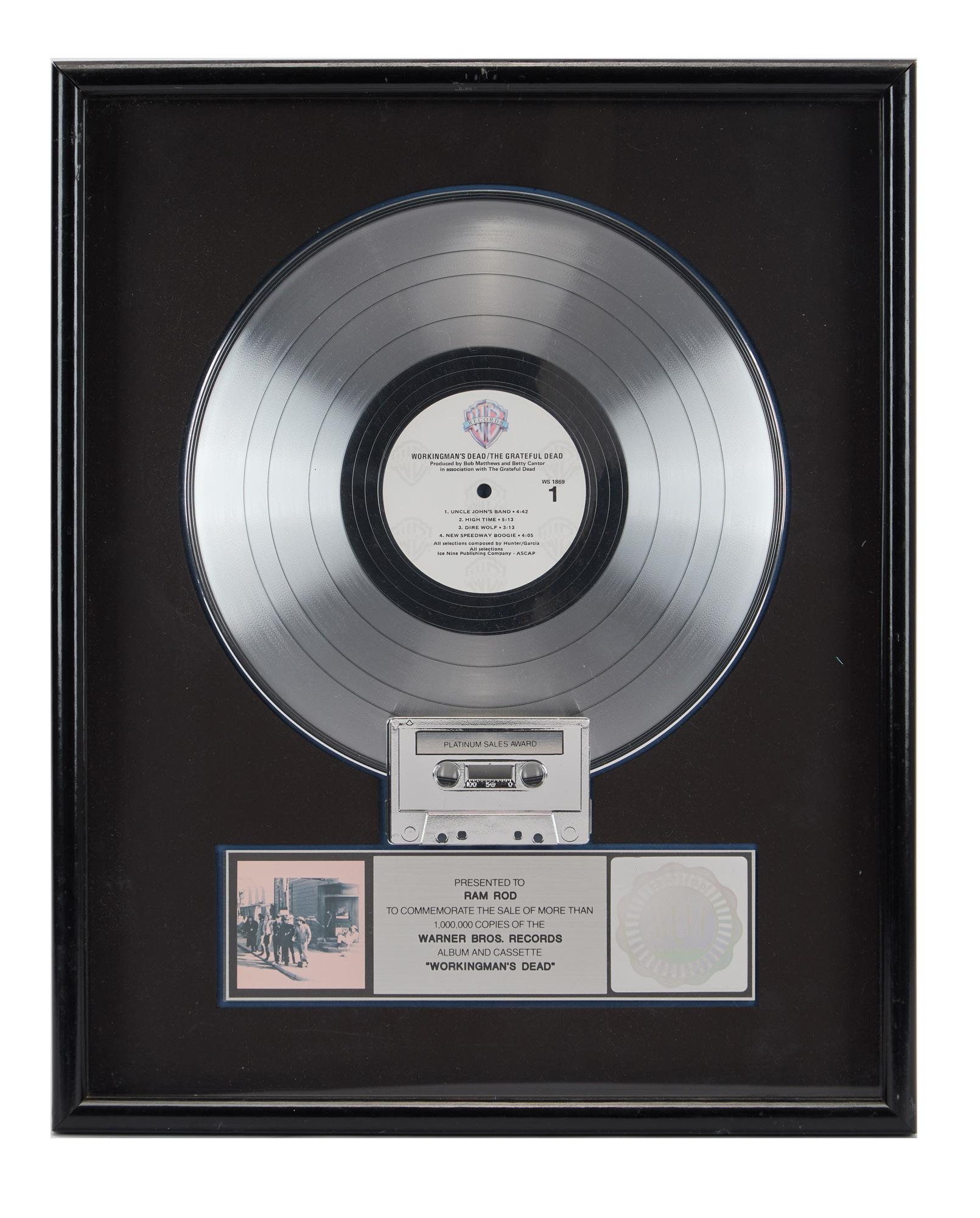
RIAA Platinum Sales Award for “Workingman’s Dead”
An RIAA-Certified “Platinum” sales award presented to legendary roadie and equipment manager, Lawrence “Ram Rod” Shurtliff, to commemorate the sale of more than one million copies of Grateful Dead’s 1970 studio album Workingman’s Dead. Ram Rod is officially credited as part of the “equipment crew” for the album, alongside Rex Jackson and Scott Heard.
According to Phil Lesh, Workingman’s Dead represents a “massive paradigm shift” for the band: away from the colorful, psychedelic experimentations of Aoxomoxoa and towards more craftsman-like Americana folk songs influenced heavily by the Bakersfield sound and the tight harmonies of Crosby, Stills and Nash. The sepia tone album cover photo was taken at 1199 Evans Ave in San Francisco and includes lyricist Robert Hunter, who had become increasingly important for the group’s songwriting process.
The album reached the top 30, with the single “Uncle John’s Band” climbing to #69 on the Billboard Hot 100, introducing the Dead to new audiences all over the world.
Est: $600 - $800
Jerry Garcia Band
Jerry’s Working Songbook
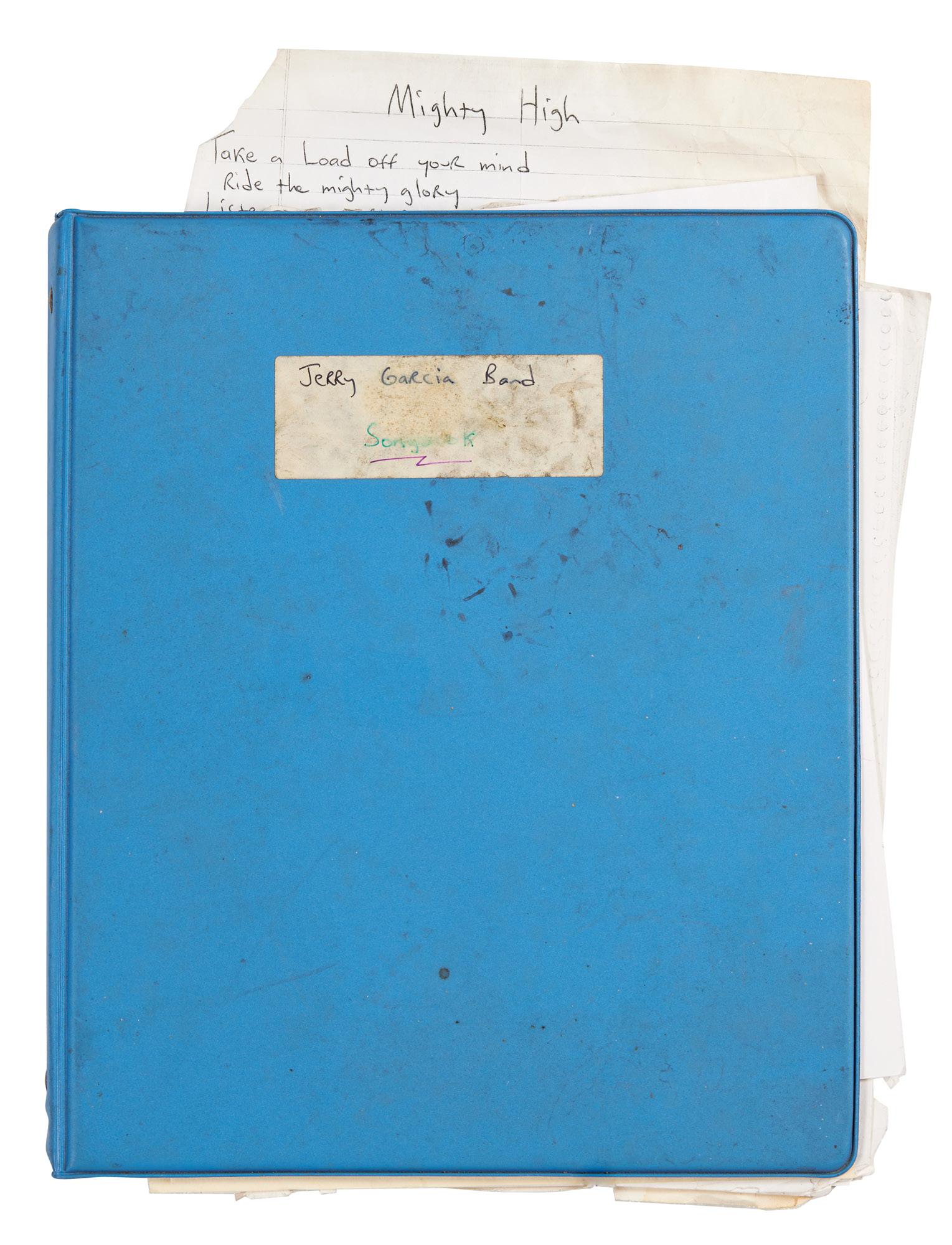
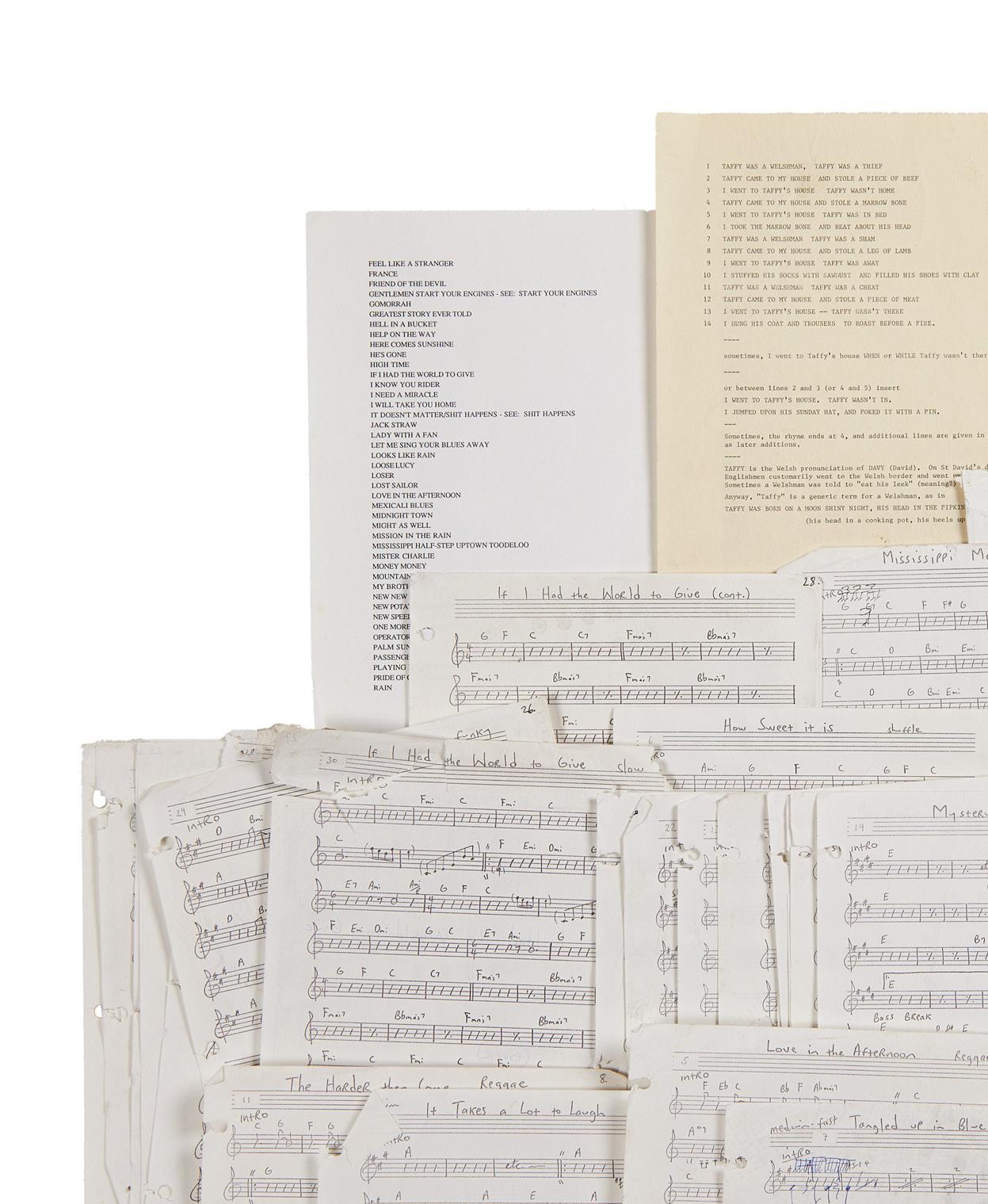
A c. 1990s blue three-ring binder containing copies of lead sheets, typewritten lyrics for “Taffy was a welshman” (likely from Brent Mydland who was interested in children’s songs at the time), and a printed song list (alphabetical), used by Jerry while working with the Jerry Garcia Band. A sticker affixed to the front reads: “Jerry Garcia Band Songbook.” There is a cigarette burn to the inner front cover.
The lead sheets include songs from all decades of the band’s existence, such as: “Mighty High,” “Rubin and Cherisse,” “They Love Each Other,” “I’ll Take a Melody,” “Catfish John,” “Mission in the Rain,” “If I Had the World to Give,” “How Sweet It Is,” and others, including tribute songs such as “Tough Mama” and reggae-influenced songs such as “Harder They Come.”
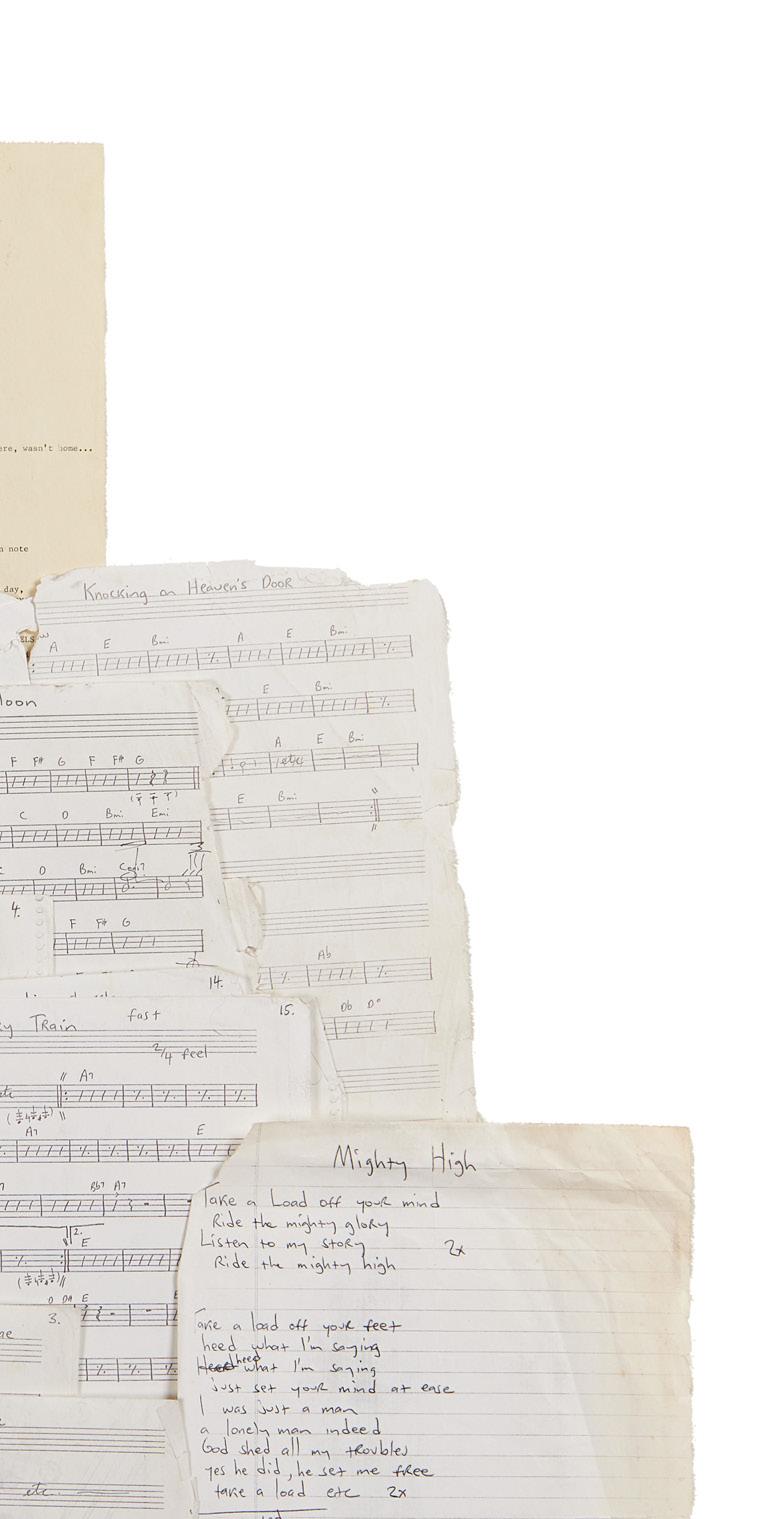
The copies of the lead sheets and one copy of the lyrics for “Mighty High” are in, according to “Big Steve” Parish, John Kahn’s handwriting, with some annotations by John in ink on various pages.
Grateful Dead
Winterland Ballroom “The Grateful Dead”
Dressing Room Plaque
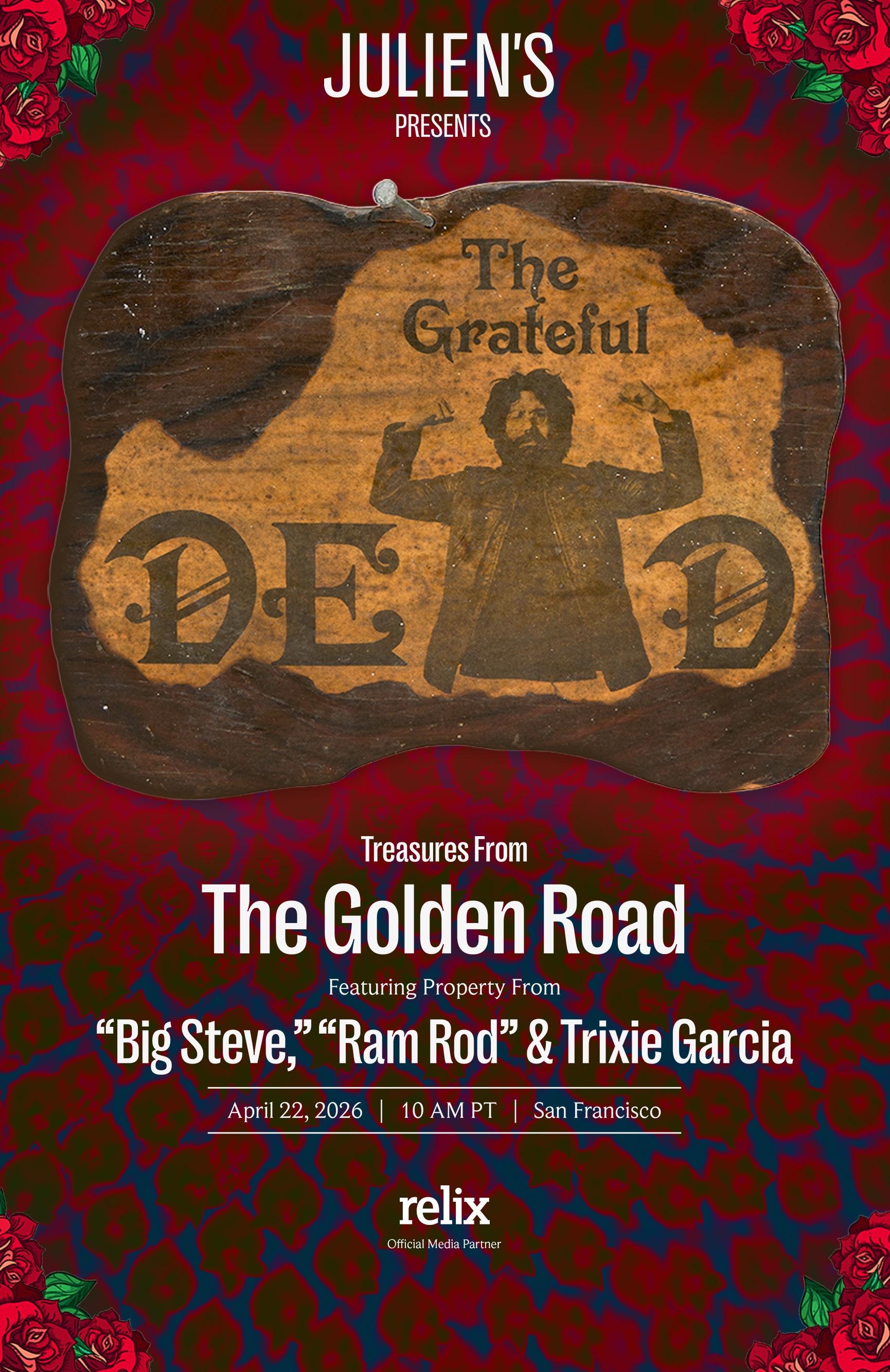
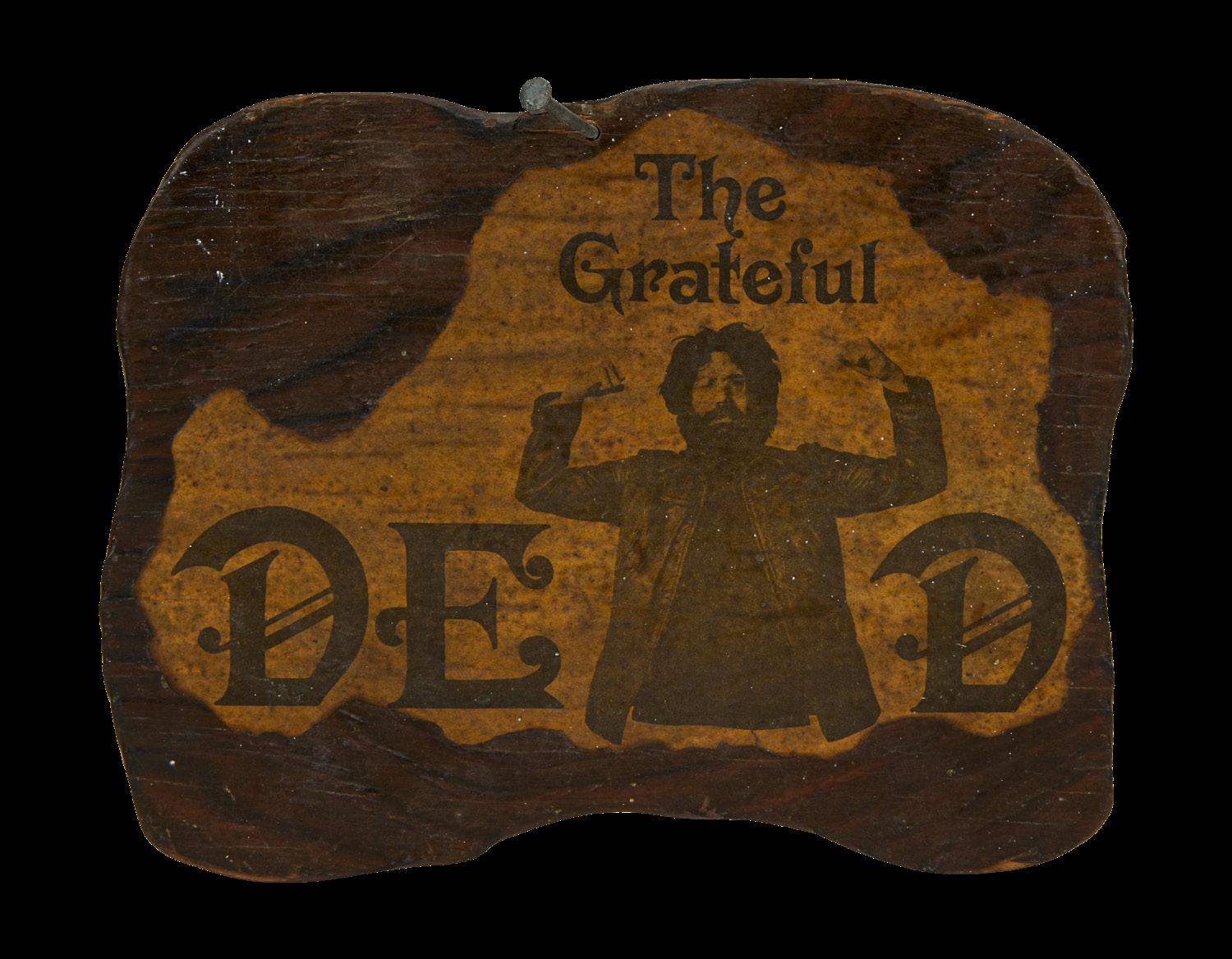
A dressing room plaque from Winterland Ballroom gifted to Steve Parish by Bill Graham after the closing of the venue in 1979.
The irregularly shaped wooden plaque reads “The Grateful Dead” with an image of Jerry Garcia in place of the “A.” The nail that attached the plaque to the door is still present.
Concert promoter Bill Graham began to popularize the 5,400-seat venue as a stop for popular rock acts in 1966, with a Jefferson Airplane / Paul Butterfield Blues Band double bill. The Dead first played Winterland in 1967 and would go on to give 59 documented concerts there, including the 5-night run in 1974 that would become The Grateful Dead Movie. It became their preferred venue for hometown gigs.
Most notably, the band closed the venue on New Year’s Eve with a gargantuan set that began after appearances by The New Riders of the Purple Sage and the Blues Brothers. The Dead began with “Sugar Magnolia” at midnight and concluded with a lavish breakfast for the audience at dawn (as advertised on the flyer for the event). The sign was gifted to the band by Graham after the closing in 1979.
Est: $600 - $800
Jerry Garcia
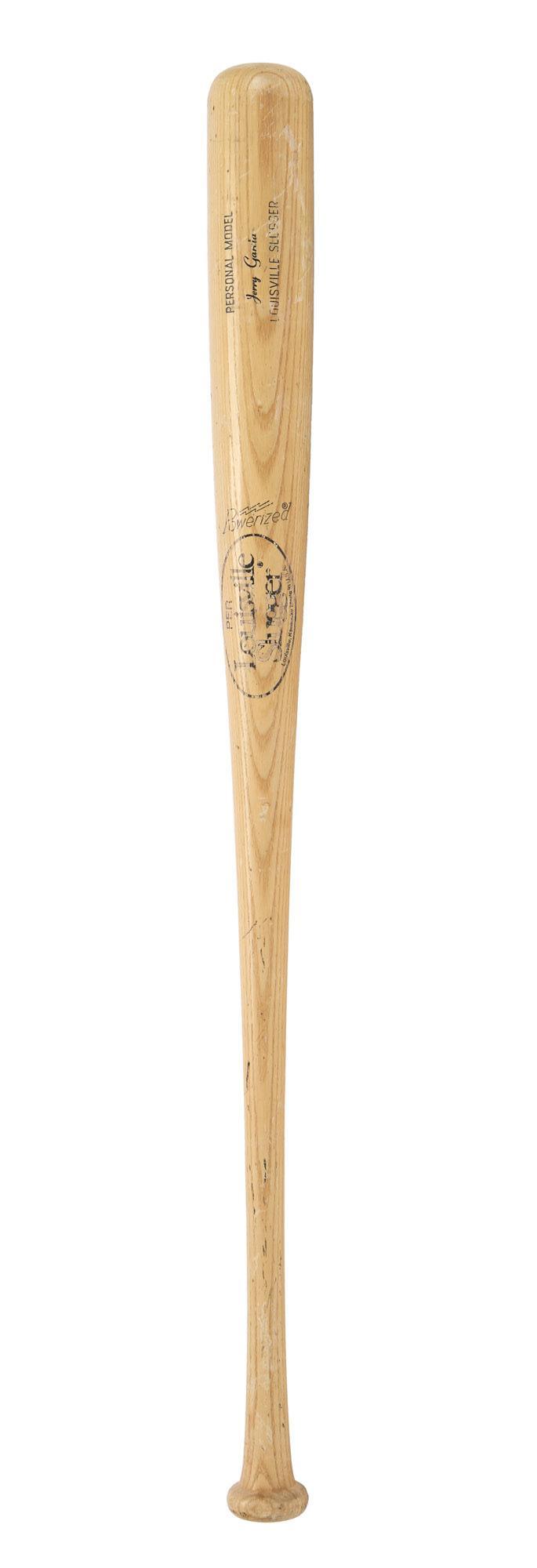
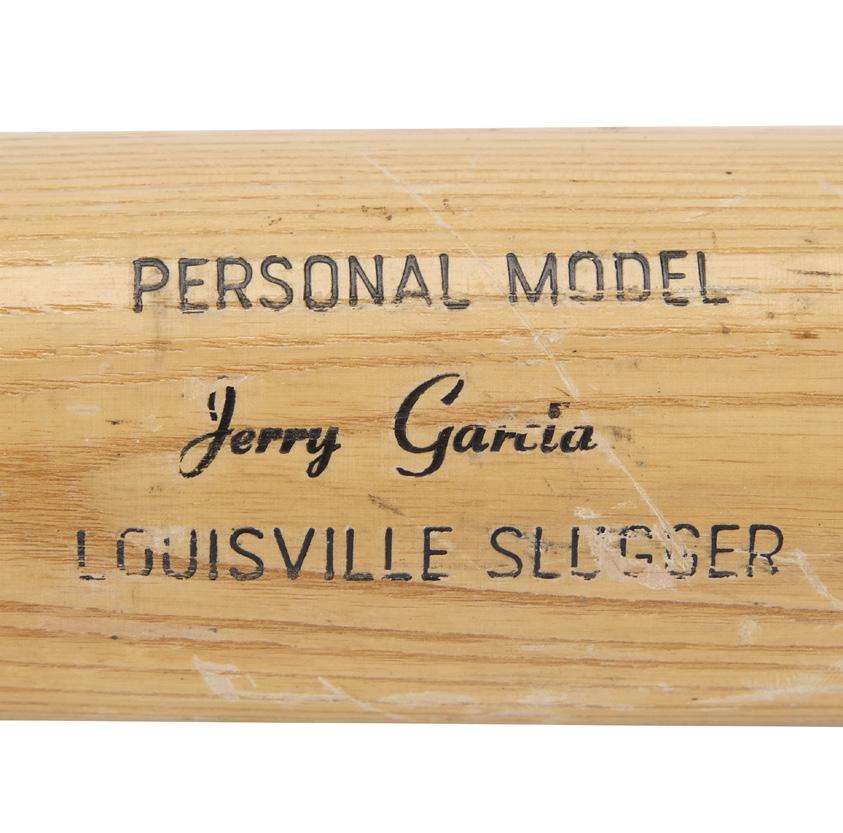
Personalized Louisville Slugger Bat
A Louisville Slugger baseball bat personalized for Jerry Garcia with text that reads “Personalized Model - Jerry Garcia - Louisville Slugger.”
The Dead has had a long, enduring love of baseball, which has been reciprocated with various Grateful Dead and Jerry Garcia themed and tribute nights. Notably Jerry Garcia, Bob Weir, and Vince Welnick performed an a cappella version of the National Anthem at the San Francisco Giants’ Opening Day at Candlestick Park on April 12, 1993.
Est: $800 - $1,200
Jerry Garcia Personalized Madison Square Garden
Tie-Dye Director’s Chair
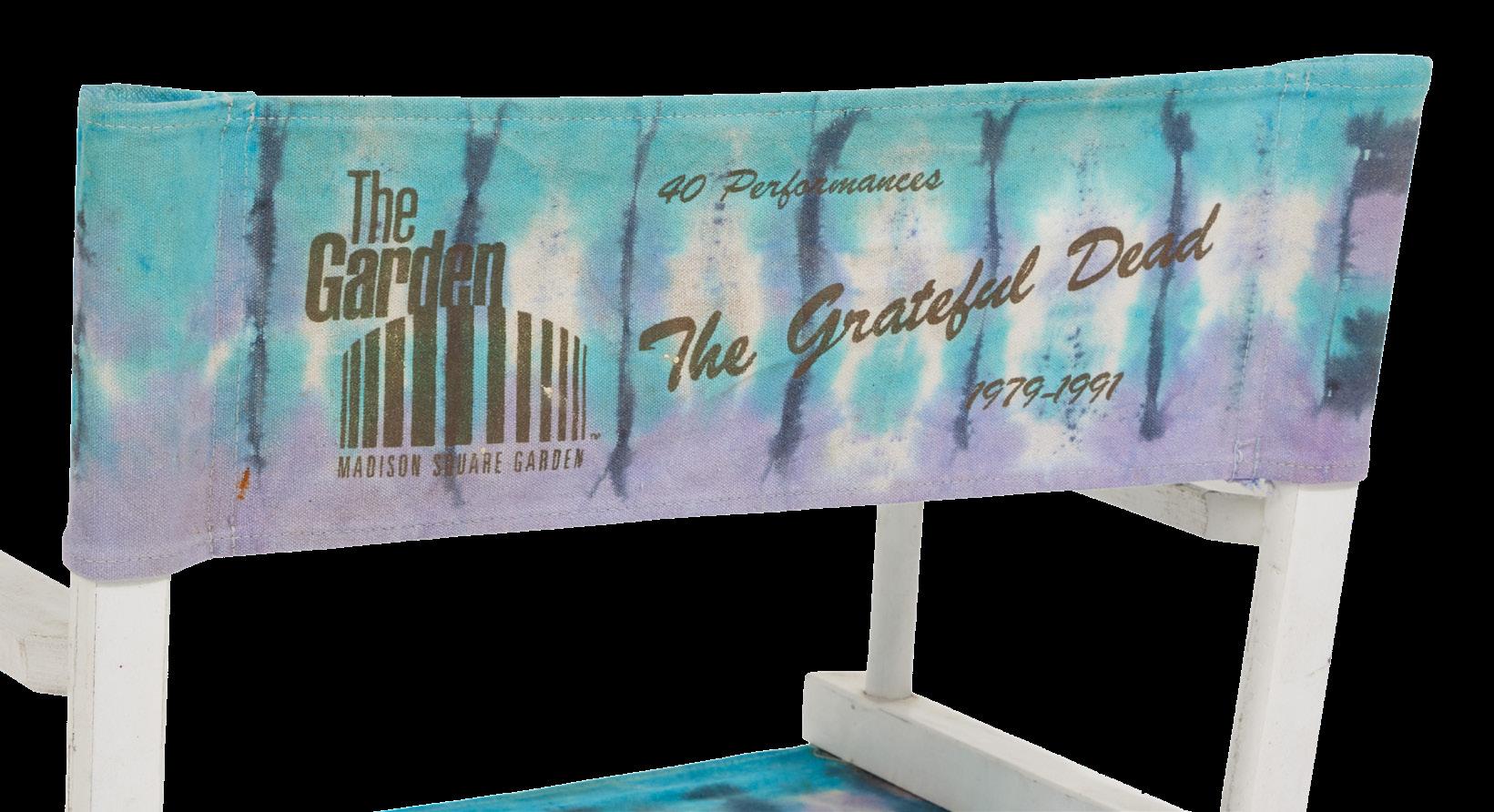
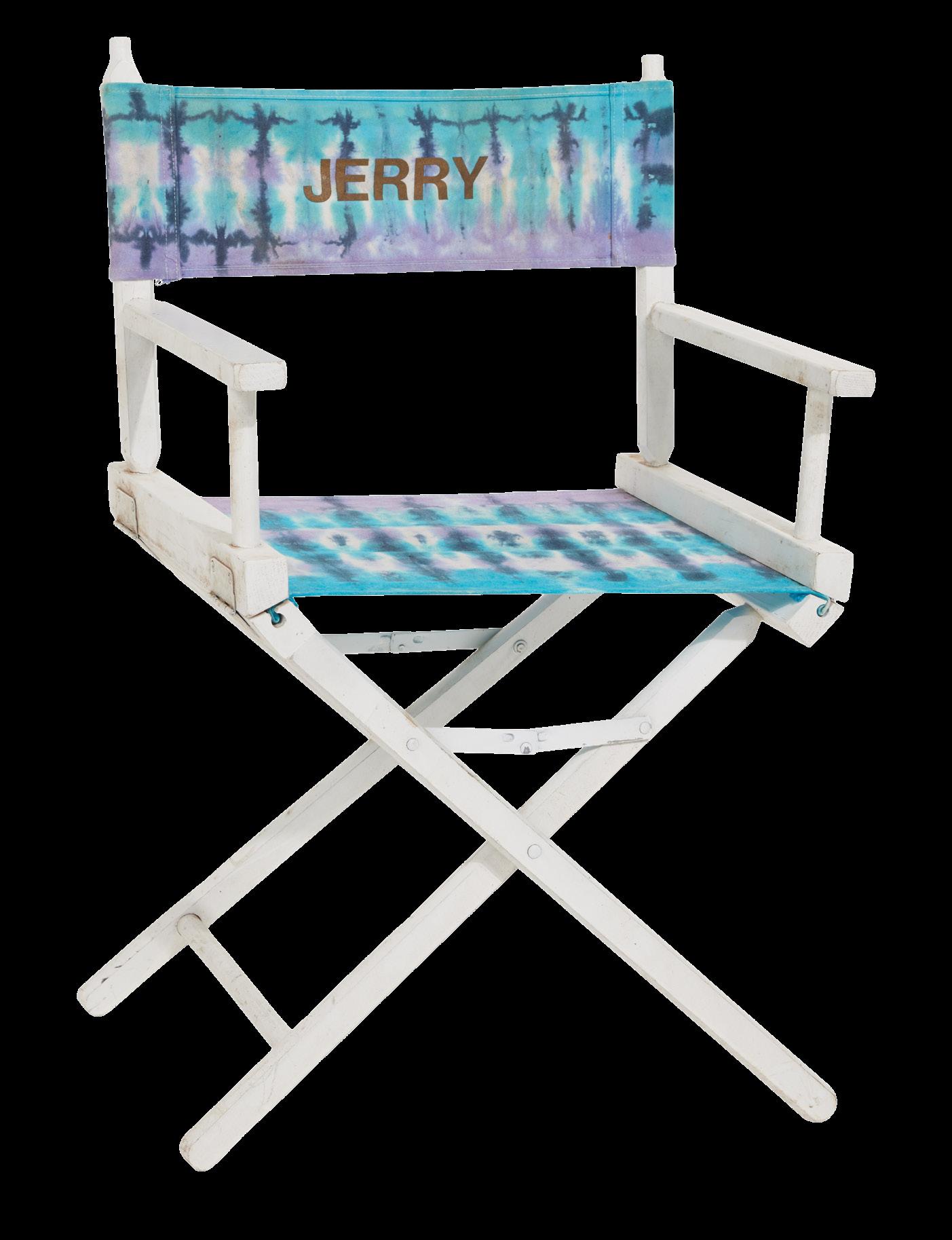
A blue, purple, grey, and white tie-dye director’s chair personalized for Jerry Garcia, commemorating 40 Grateful Dead performances at Madison Square Garden in New York City New York.
The chair has a white painted wooden base with a tie-dye seat and back cover. The back cover features black printed text that reads “Jerry” on one side and “The Garden - Madison Square Garden - 40 Performances - The Grateful Dead - 1979-1991.”
The Grateful Dead played Madison Square Garden a total of 52 times between 1979 and 1994, making them one of the most frequent acts at the iconic New York City venue and ranking fourth behind acts like Billy Joel and Elton John. Their first show was in January 1979 and they were inducted into the MSG Walk of Fame in 2015.
Est: $2,000 - $4,000
Jerry Garcia Pastel Sketchbook (Small Black)
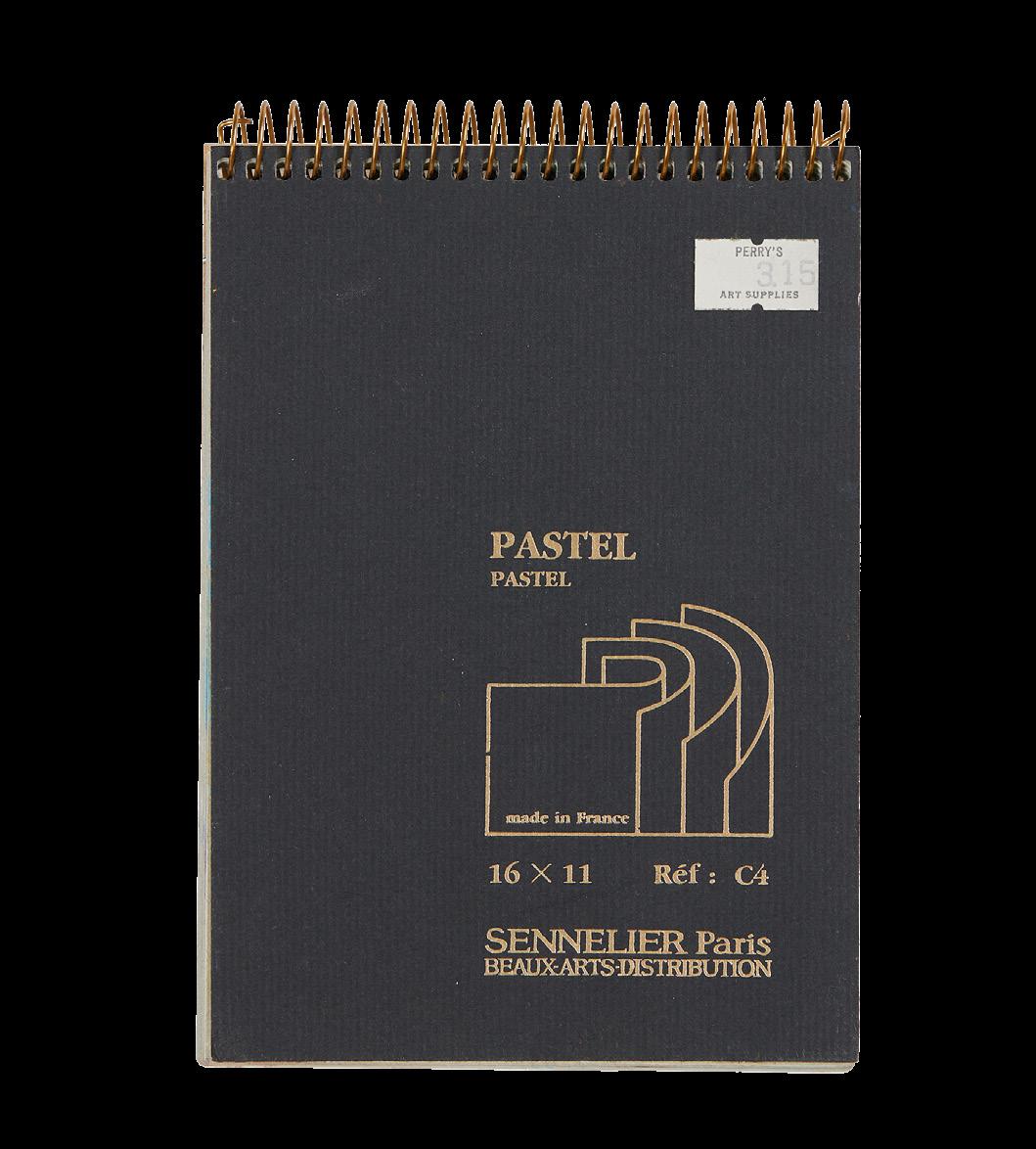
A small, spiralbound pastel sketchbook, owned and drawn in by Jerry Garcia.
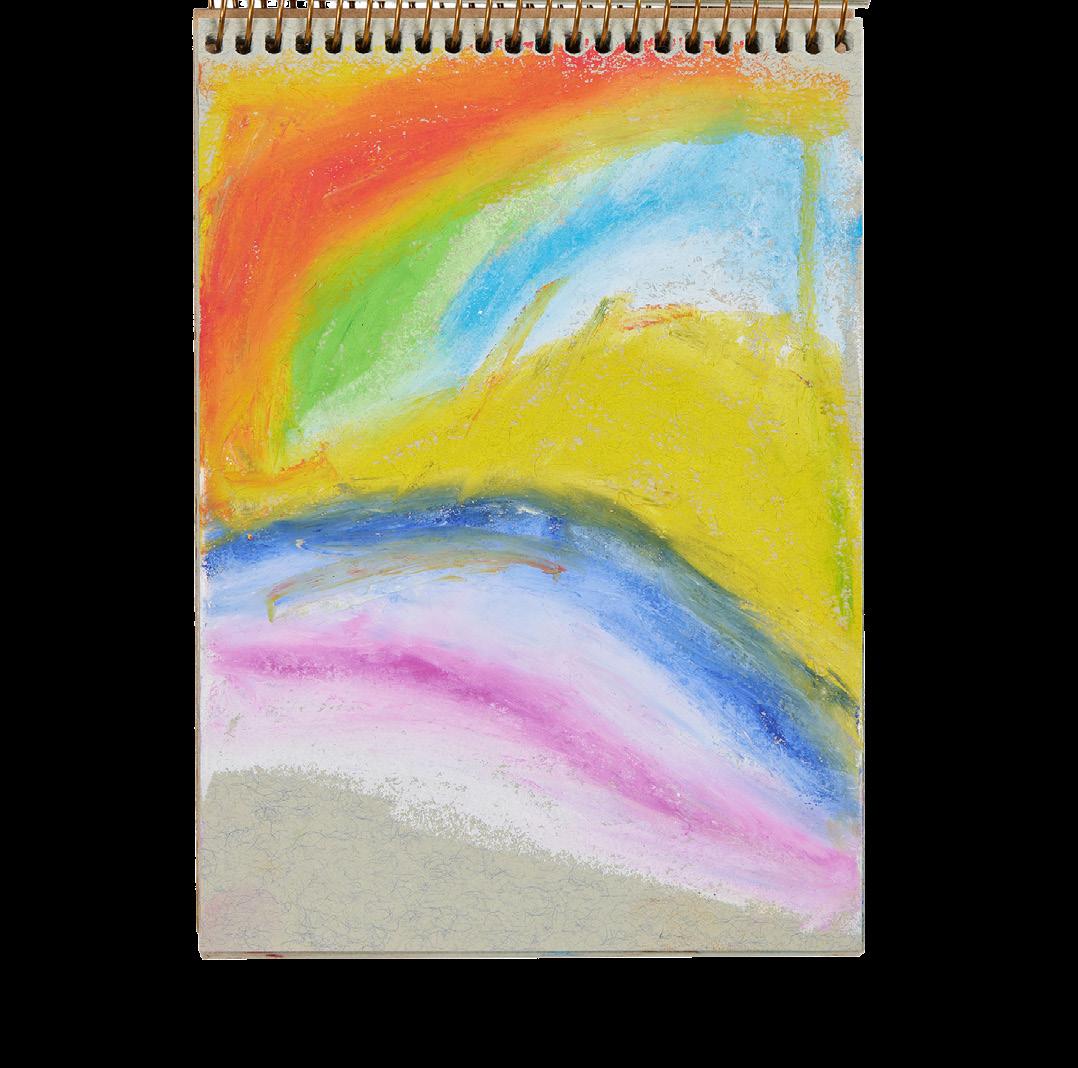
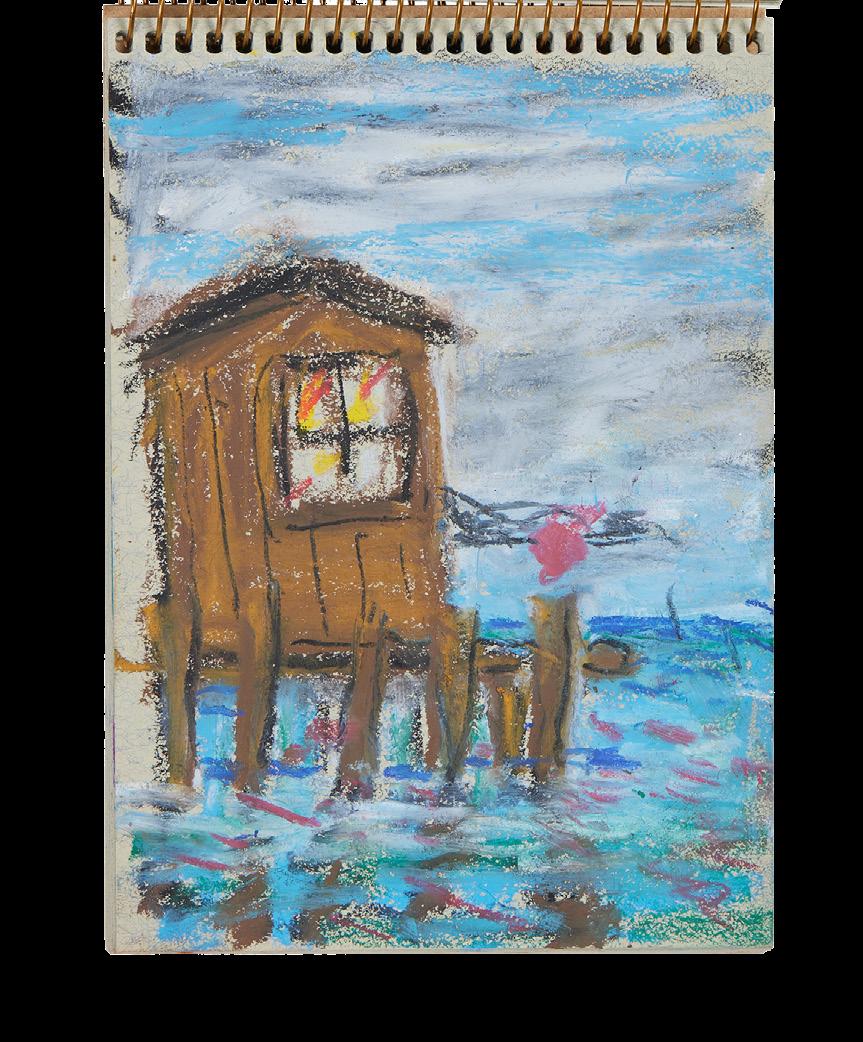
The sketchbook contains six colorful pastel drawings, most abstract but one of a house, as well as a couple of rudimentary line sketches.
Jerry’s artwork was memorialized in the beautiful book, Jerry Garcia: The Collected Artwork (Insight Collectibles, 2007), with over 100 full-color reproductions of his paintings, drawings, and prints. Personal sketchbooks and casual drawings provide an intimate glimpse into the beloved Dead frontman’s multi-faceted creativity.
According to his daughter, Trixie, Jerry drew his artistic inspiration from many sources, from fine art to comic books: “He had a wonderful sense of humor and loved exploring with new art, materials, pens, pencils, pastels, airbrush. The house was full of sketchbooks and art supplies.”
Est: $700 - $900
Bill Graham
1981 Telegrams to All Grateful Dead Band Members
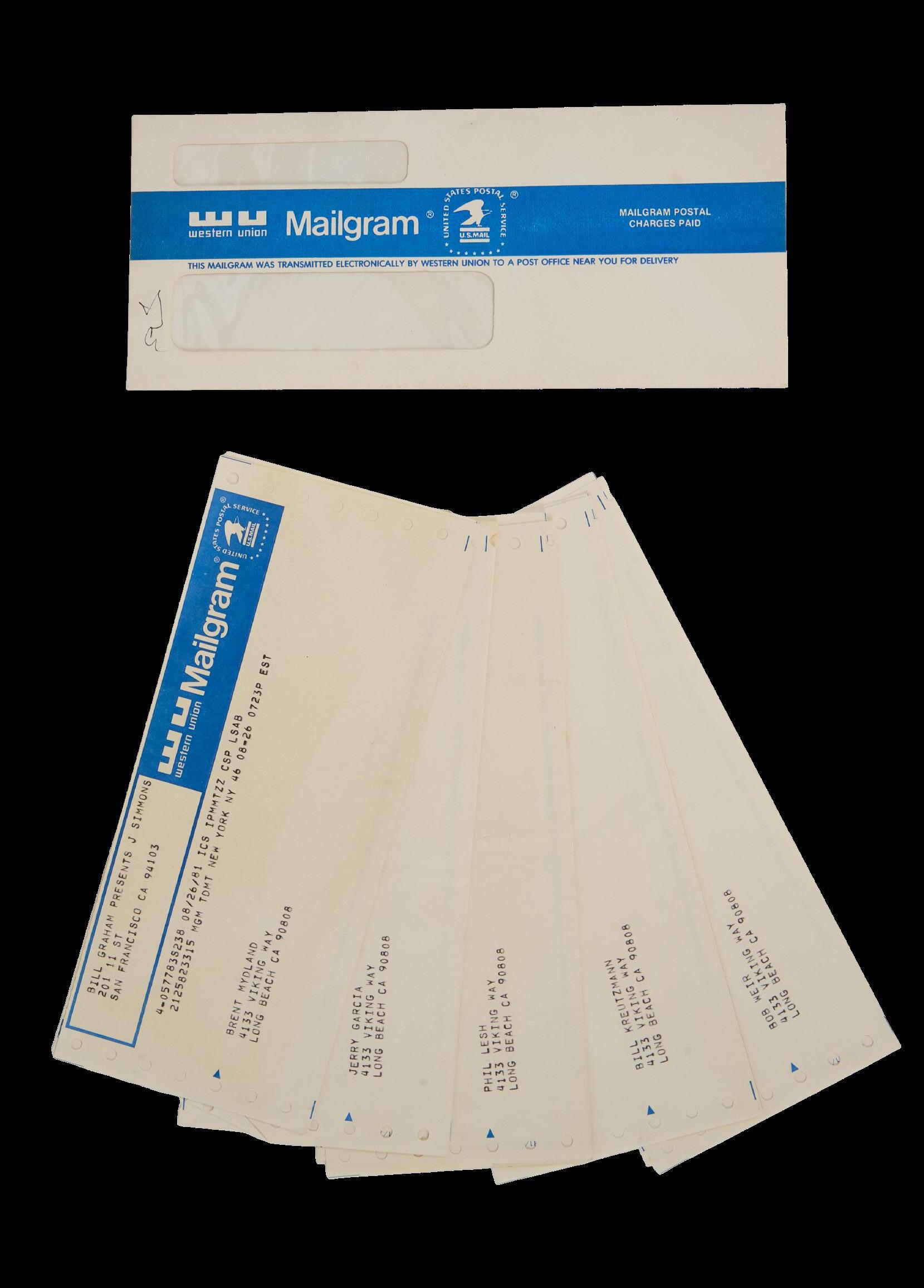
A group of five telegrams, sent by Bill Graham to members of the Grateful Dead, with original envelope, all dated 8/26/81, and addressed to them in Long Beach. In the telegrams, he expresses regret at missing the Dead’s two nights at the Long Beach Arena (where they played August 27-28, 1981), displaying his characteristic wit and sense of humor.
1. “Dear Jerry, Where’s the starch?”
2. “Dear Bob, Sorry I couldn’t be with you. Am presently in grueling meetings in the capital [sic] mapping out strategic security plans for Greek Theatre shows. Cannot convince Alexander to assist me. See you in Berkeley.”
3. “Dear Phil, Sorry I couldn’t be with you all. Am in the China Sea infiltrating Japanese whaling fleet with Greenpeace t-shirts.”
4. “Dear Bill, Sorry I couldn’t be with you. Am presently in Tobruk investigating cause of mid-air U.S./Libya mishap. See you in Berkeley.”
5. “Dear Brent, Sorry I couldn’t be with you. Am presently staying at Longview Farm in Massachusetts auditioning as keyboardist/vocalist for Rolling Stones. See you in Berkeley (if I don’t get the job).”
Est: $600 - $800
Stanley Mouse
Signed “Tuesday Night Jam” Print Gifted to Lawrence “Ram Rod” Shurtliff
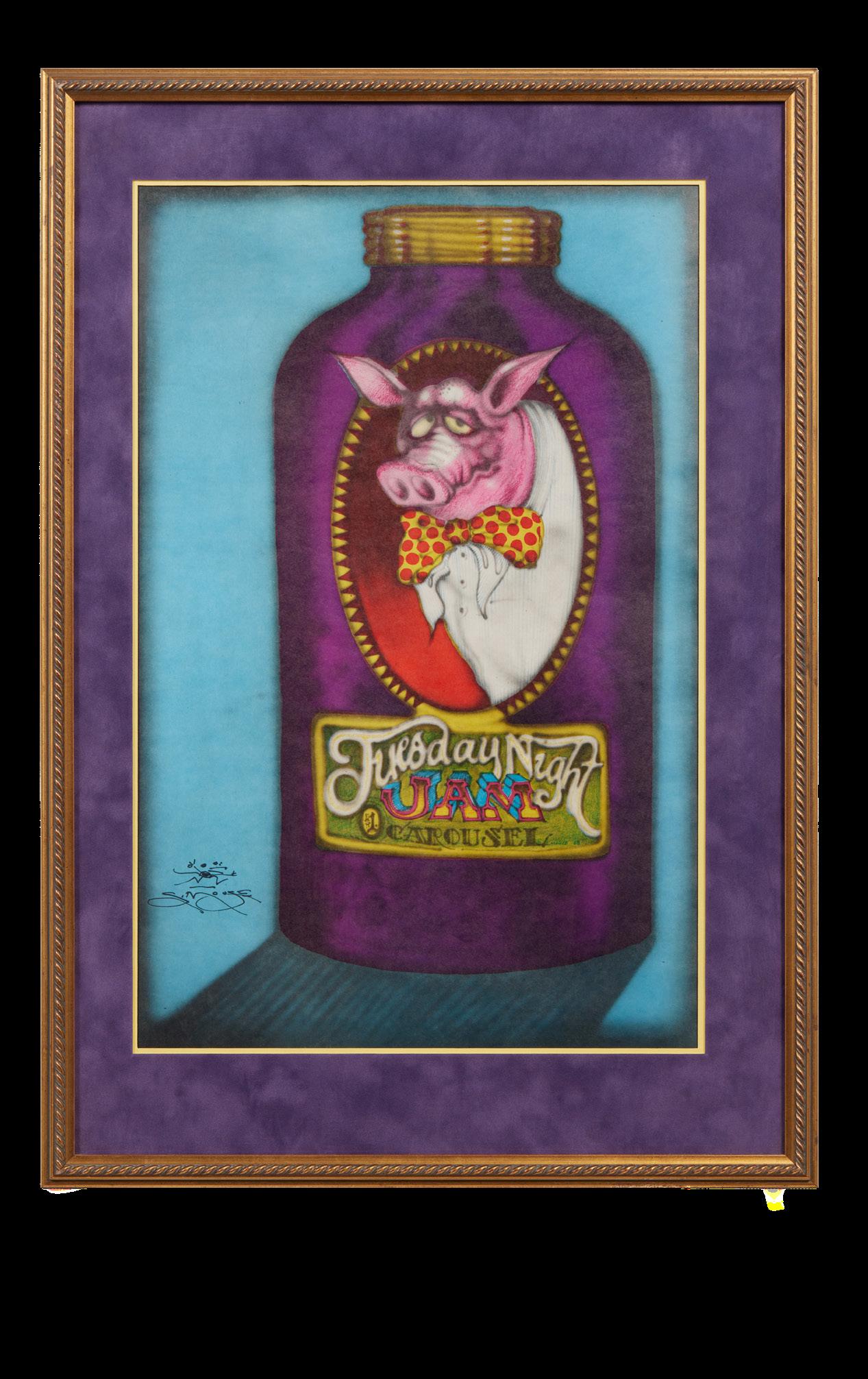
A matted and framed color lithograph Stanley Mouse “Tuesday Night Jam” print, signed by Mouse below his characteristic mouse doodle in black marker.
Created to commemorate the Dead’s weekly jam sessions at the Carousel Ballroom, the print features a purple bottle with a pig wearing a bowtie and a label that reads “Tuesday Night Jam / $1 / Carousel.”
Along with Alton Kelley, Stanley Mouse’s psychedelic posters for the Grateful Dead, Journey, Styx, and others came to define the look and feel of the 1960s. His relationship with the Dead developed organically, with Mouse and Kelley living across the street from the band’s 710 Ashbury Street residence.
Est: $800 - $1,200
Lawrence “Ram Rod” Shurtliff
Vintage Filmore East T-Shirt
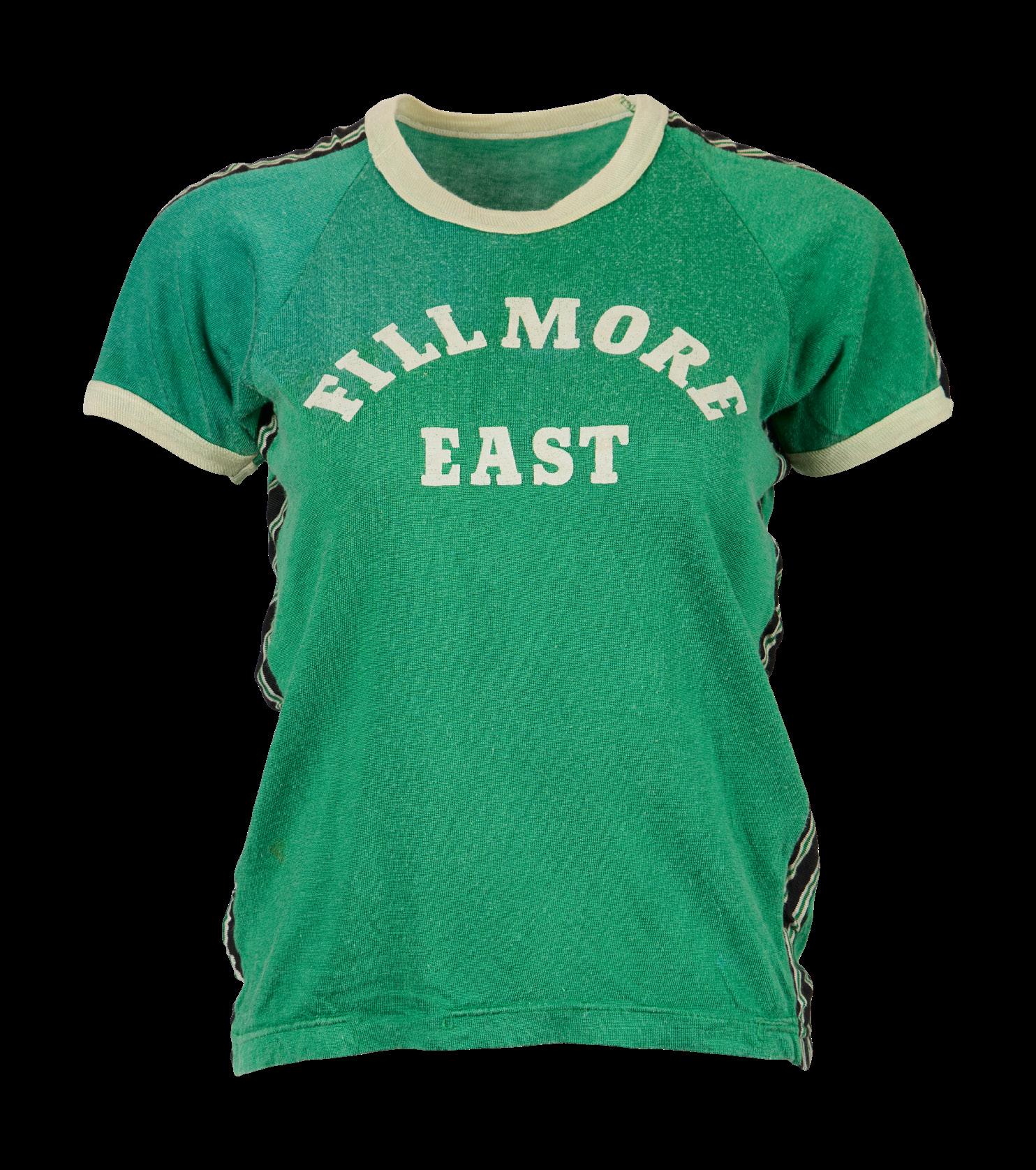
A vintage “Filmore East “ raglan-style t-shirt composed of Kelly green durene fabric with striped ribbing down each shoulder and side, owned and worn by Lawrence ”Ram Rod” Shurtliff, the legendary head roadie and equipment manager for the Grateful Dead. No size or label present.
The Fillmore East served as the Grateful Dead’s premier East Coast base from 1968 to 1971, earning its reputation as the “Church of Rock and Roll.” It was a pivotal venue where the band transitioned from psychedelic explorers into masters of Americana and acoustic folk.
Est: $600 - $800
Stanley Mouse
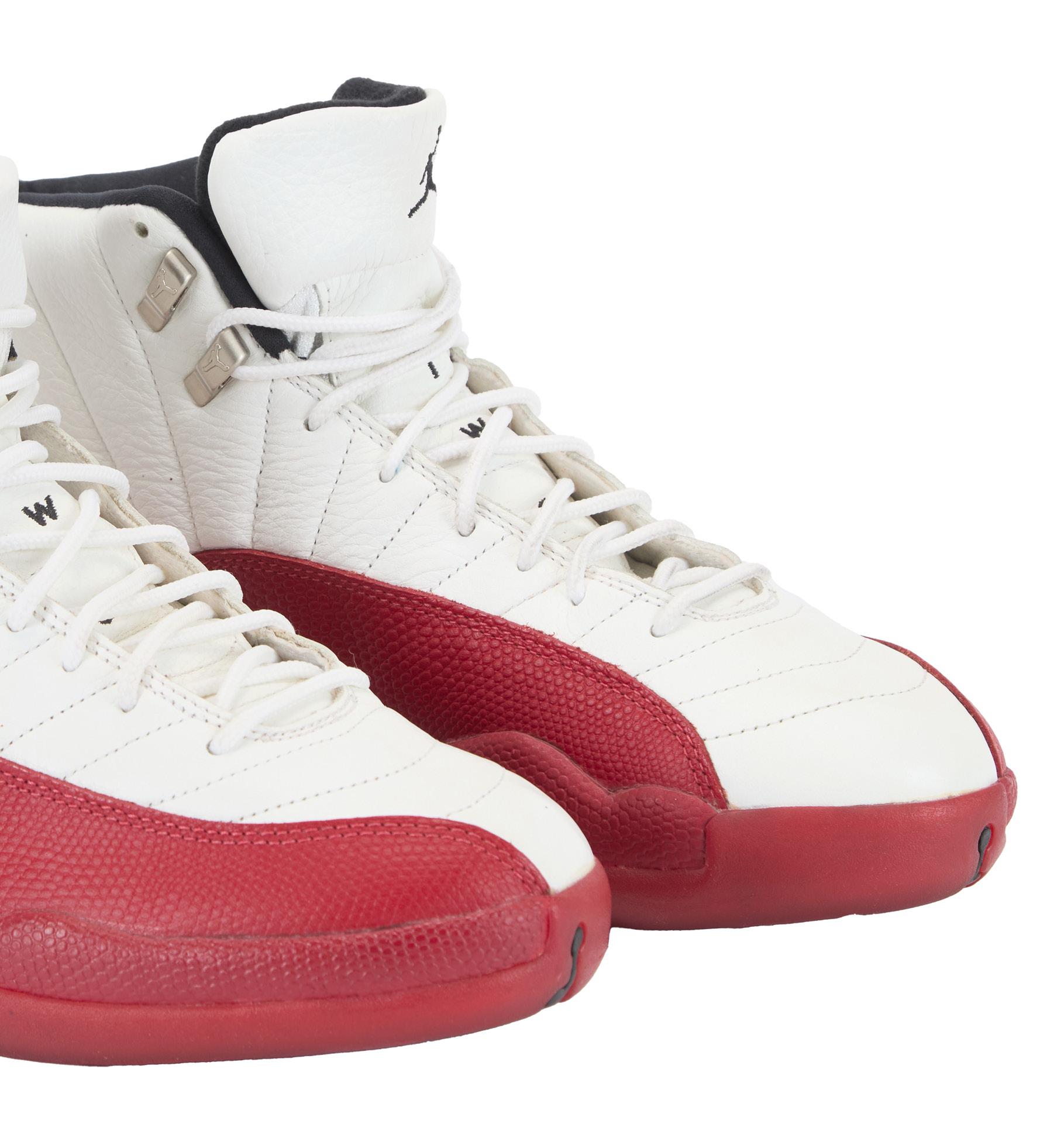
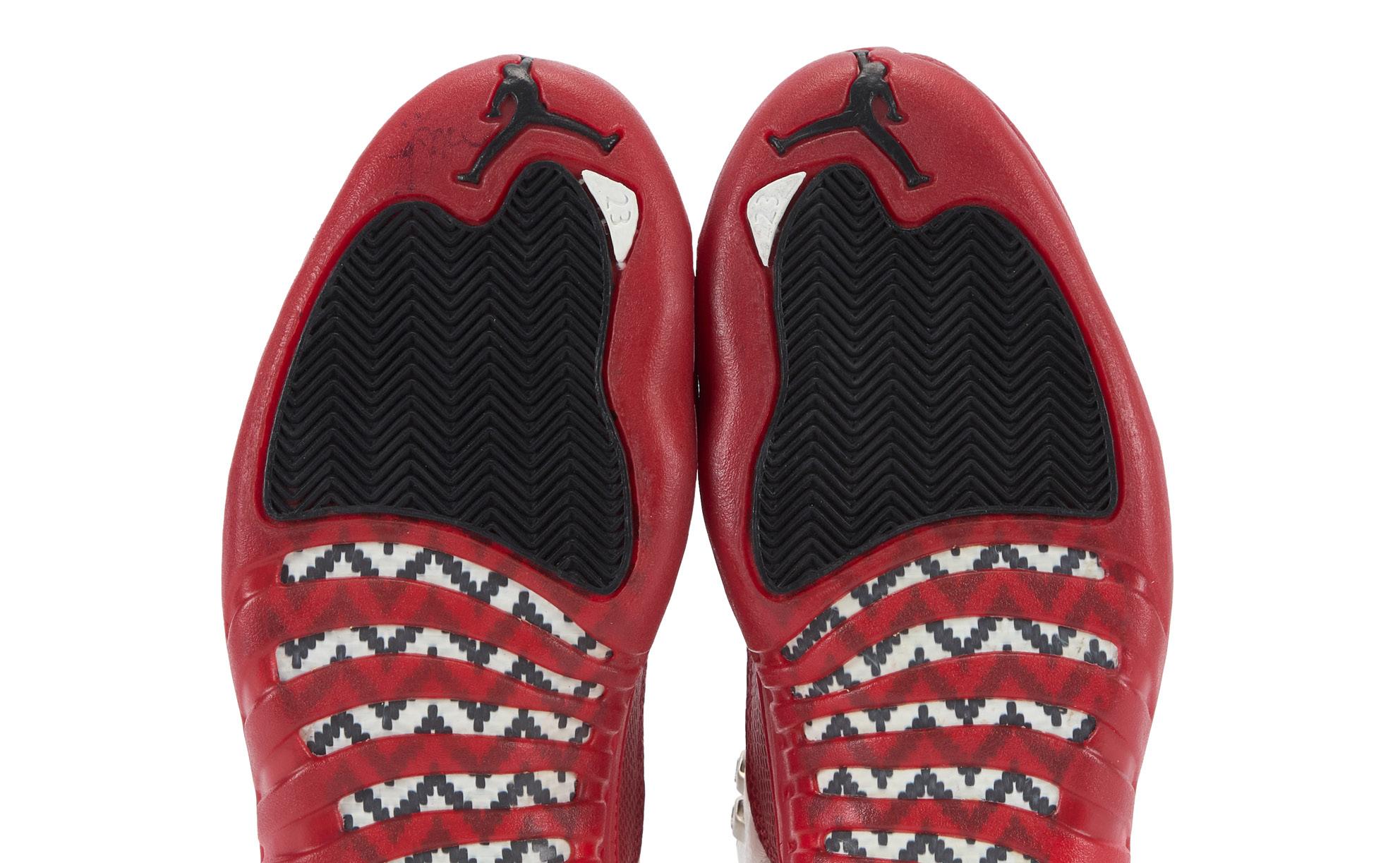
Michael Jordan Signed 1997 Air Jordan 12s (Cherry)
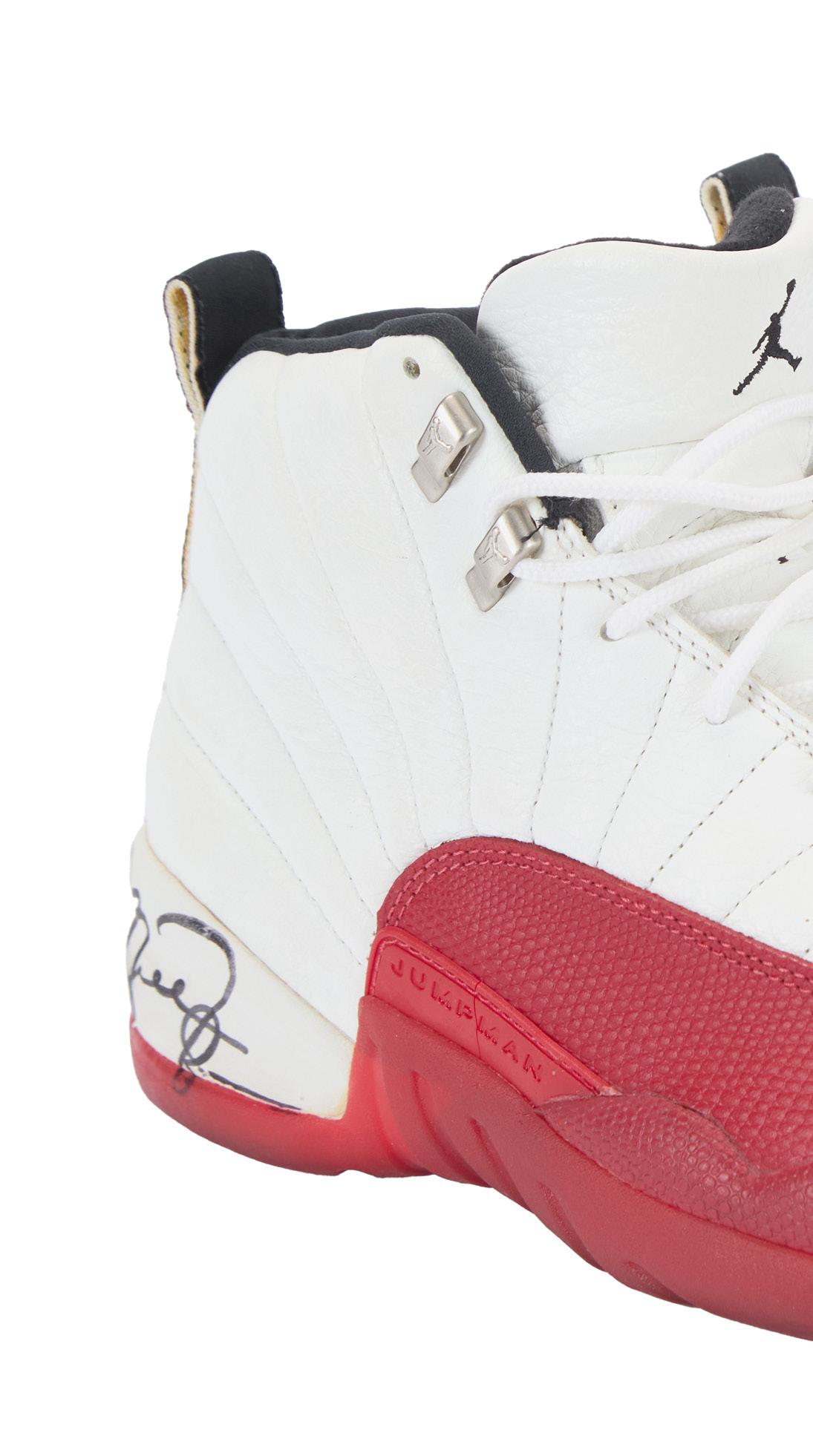
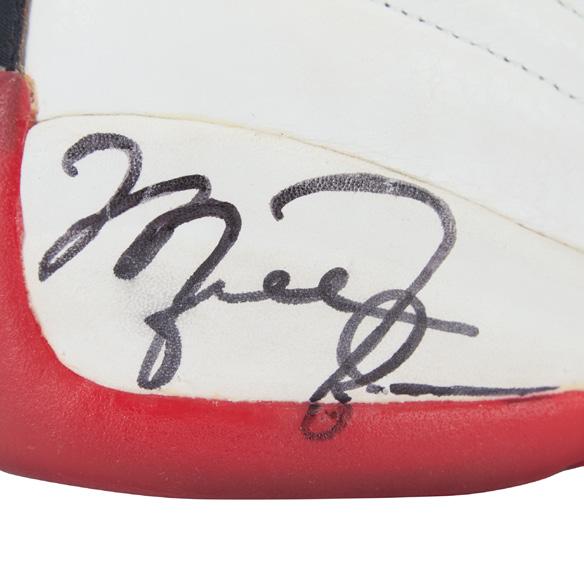
A pair of Air Jordan XXI in the white-varsity red-black colorway (also referred to as “Chicagos” or “Cherrys”) signed by Michael Jordan in black marker on the outer edge of the right foot sneaker. Size US 13.
The sneakers were gifted to Lawrence “Ram Rod” Shurtliff, legendary head roadie and equipment manager for the Grateful Dead, in the late 1990s, soon after the original release of the iconic sneakers.
Est: $3,000 - $5,000
Lawrence “Ram Rod” Shurtliff
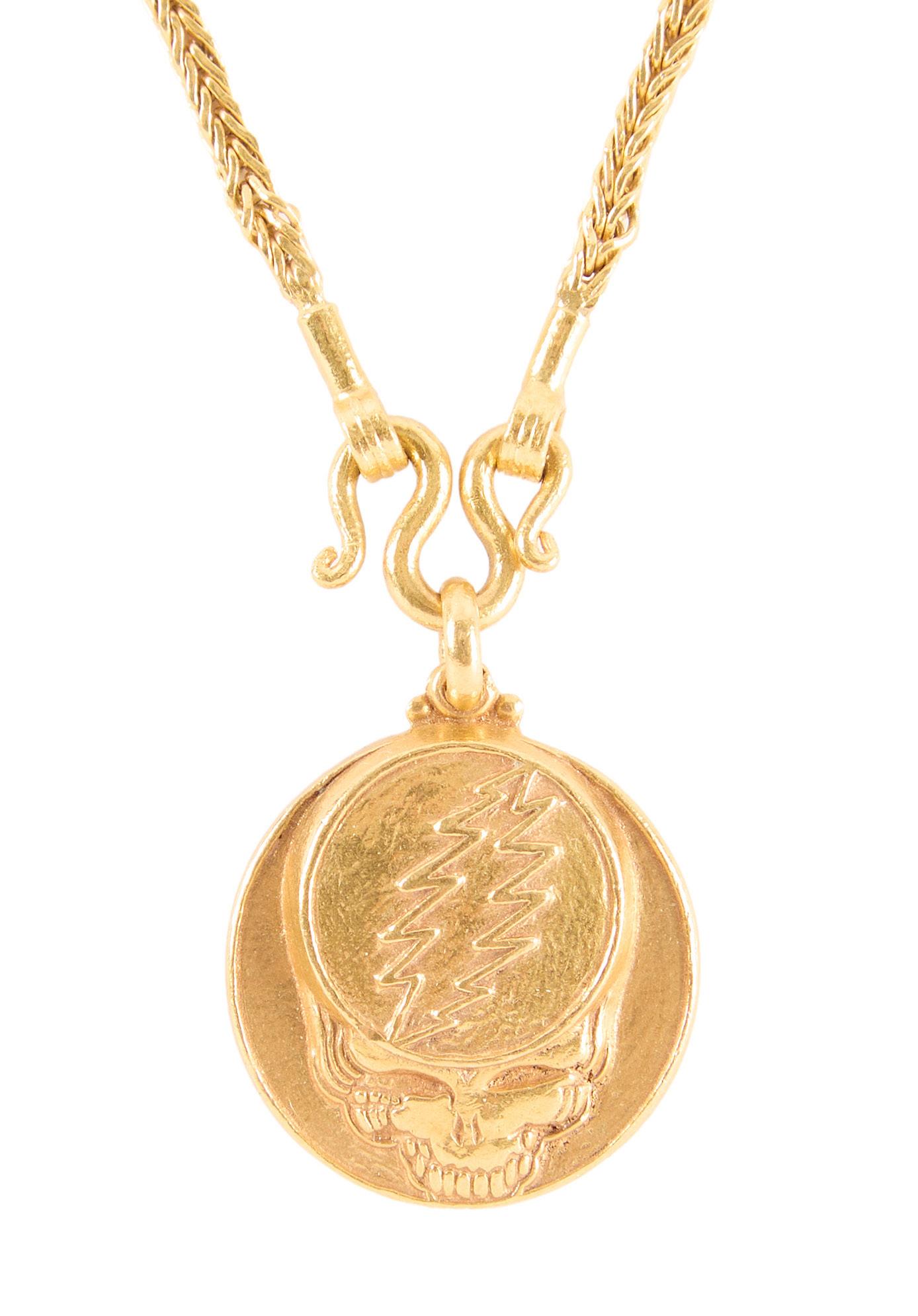
23k Gold “Steal Your Face” Necklace
A 23k gold, Grateful Dead “Steal Your Face” logo necklace, owned by Lawrence “Ram Rod” Shurtliff.
The circular pendant with sculpted “Steal Your Face” logo in high relief, suspended by a spiga chain, joined by S link clasp, chain 17 inches, pendant 1 inch, 26.9 grams. Marked 23K Nathaniel.
Est: $2,000 - $4,000
Jerry Garia
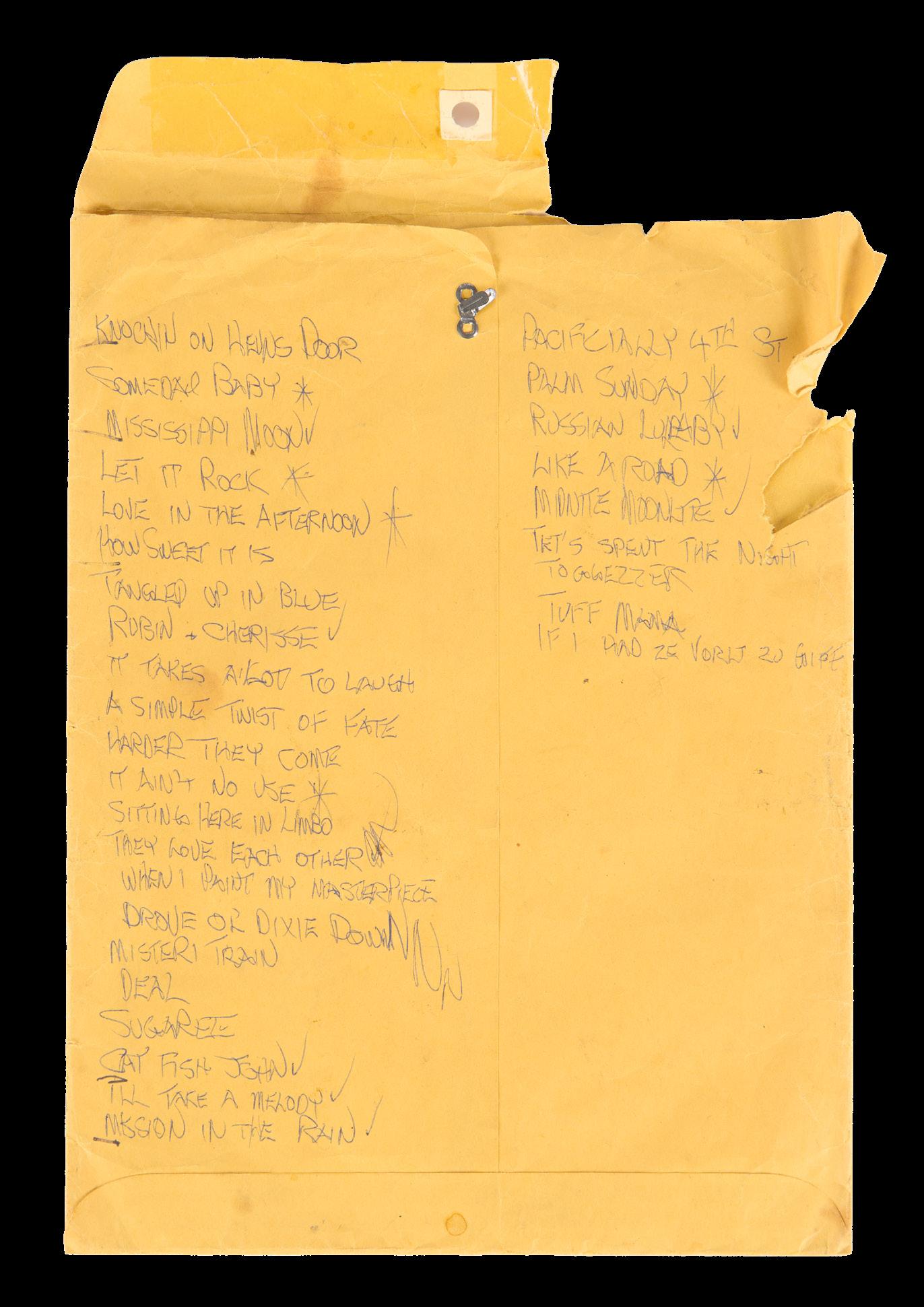
Late 1980s Handwritten Rehearsal Song List
A late 1980s rehearsal song list, handwritten by Jerry Garcia on the back of a manila envelope. The list includes songs by Jerry and the Grateful Dead, as well as songs by Bob Dylan, Merl Saunders, and others, with some titles humorously misspelled.
According to “Big Steve” Parish, lists like this had a narrative quality to them, they were “his way of seeing what the songs meant to him.”
Est: $3,000 - $5,000
Bob Dylan
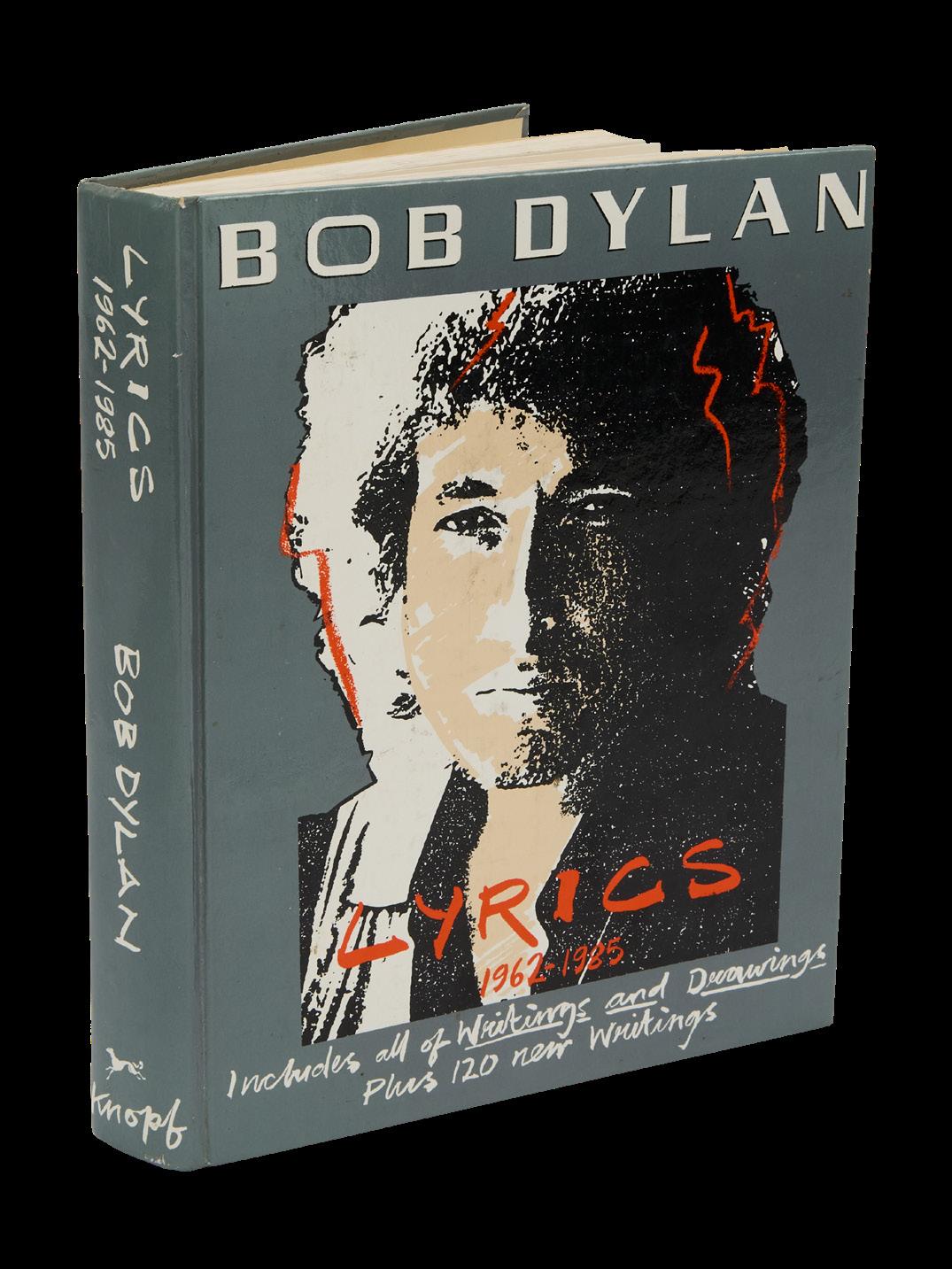
“Lyrics 1962-1985” Book Signed to “Big Steve”
Parish with 1987 Grateful Dead with Bob Dylan Backstage Pass
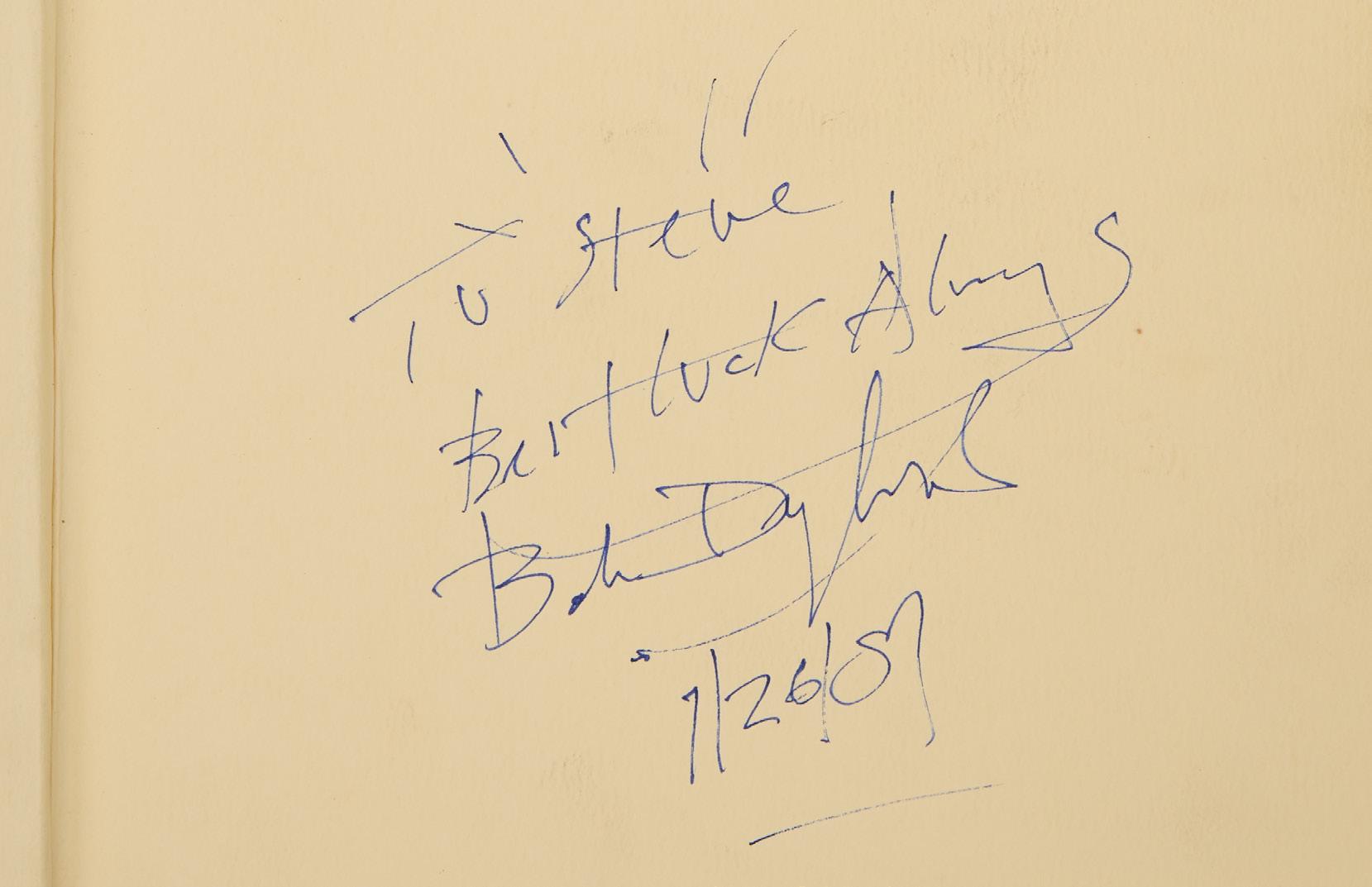
A copy of the book Bob Dylan: Lyrics 1962-1985 (Alfred A. Knopf 1985) signed and inscribed by Bob Dylan to “Big Steve” Parish: “To Steve / best luck always / Bob Dylan / 7/26/87.” Steve’s yellow backstage pass depicting Dylan and the Dead as haloed angels is affixed to the flyleaf above the inscription.
Dylan went on tour with The Dead in the summer of 1987, completing six stops in various U.S. cities with The Dead performing their own set before serving as the backup band for Dylan. July 26 was the final stop on the tour and took place at Anaheim Stadium in Southern California. Dylan signed and inscribed the book to Steve on that date.
Est: $1,000 - $2,000