Nothing is impossible, the word itself says ‘I’m possible!”
Audrey Hepburn.

Nothing is impossible, the word itself says ‘I’m possible!”
Audrey Hepburn.
All seasons have their special meaning but there is something about spring that gives us all a boost.
The first green shoots, the sound of birdsong and the sun herald a new start.
In this edition, we look at ways we can all do our bit to save our environment by giving a new lease of life to second hand clothes and furniture.
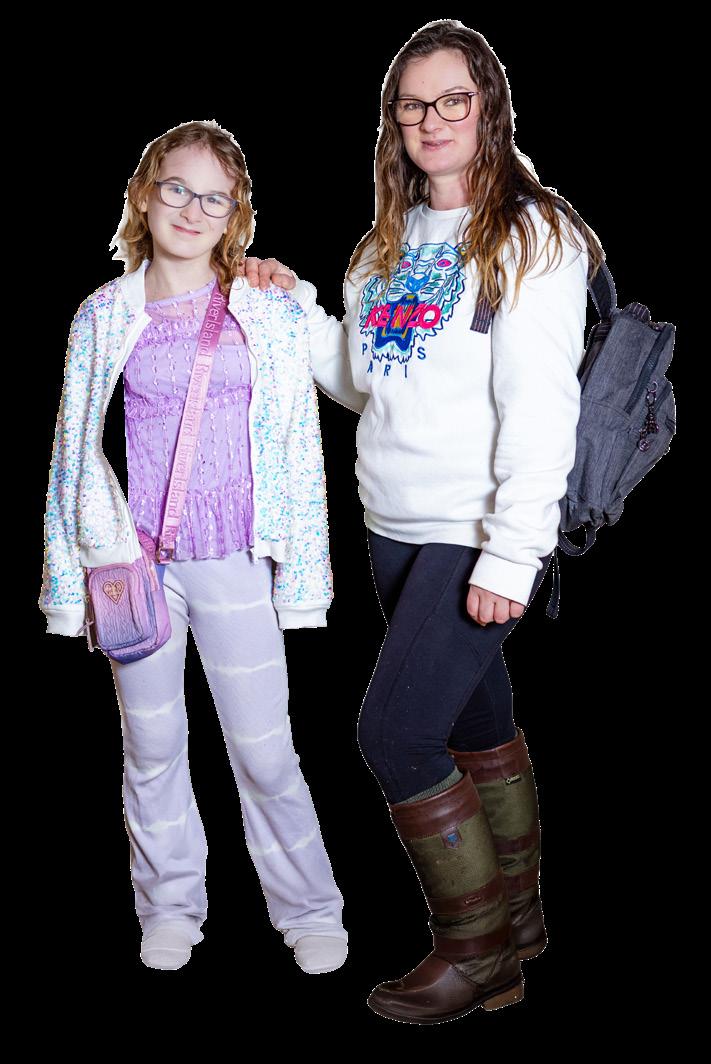
Couple Kate and Alice share their fabulous finds and Hayley shows how the money she saves helps fund her daughter April’s favourite hobby (pages 10-11).
Beautiful butterflies are the result of a wellbeing project centred around the traditional art of paper folding (page 4) and octogenarian John shares how hanging upside down like a bat keeps him fit and well (page 22) Do not try this at home!
We talk to IT manager Karen (page 6) about when she realised she needed help to recognise the effect trauma was having on her body and mind and how swimming has helped her recovery.
Sunshine and longer days lift our spirits. Maureen proves that it’s
Brian’s special gift
never too late to try your hand at something new after a stand up comedy course at The Life Rooms (page 14).
We hope this issue helps put a little spring in your step.
The MC Magazine team.
It seems simple – a sheet of paper and a few careful folds – yet origami’s effect on mental wellbeing can be profound. We watch this unfold at a workshop on the traditional Japanese art at Hartley Hospital.
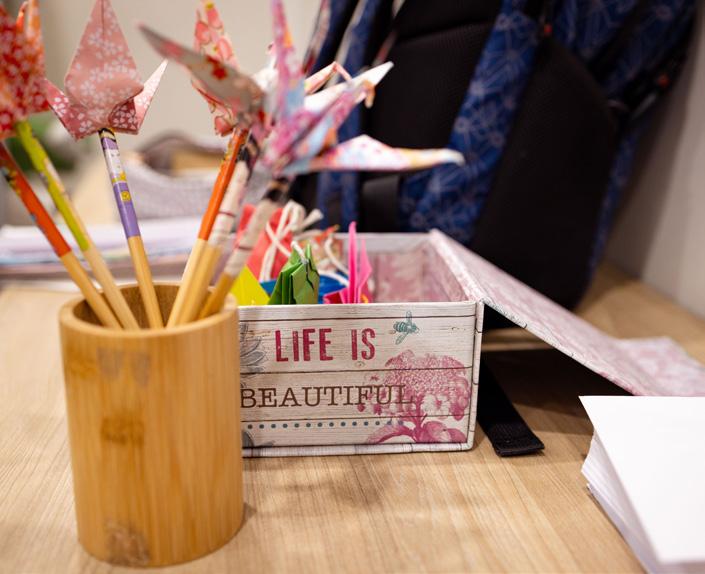
The room is filled with quiet concentration as origami tutor and arts facilitator Zulay Sayalero leads a session. Surrounded by paper birds for inspiration, it is almost impossible to imagine the group will create anything so intricate.
Hands tremble at first but inspired by Zulay’s warmth and reassurance,
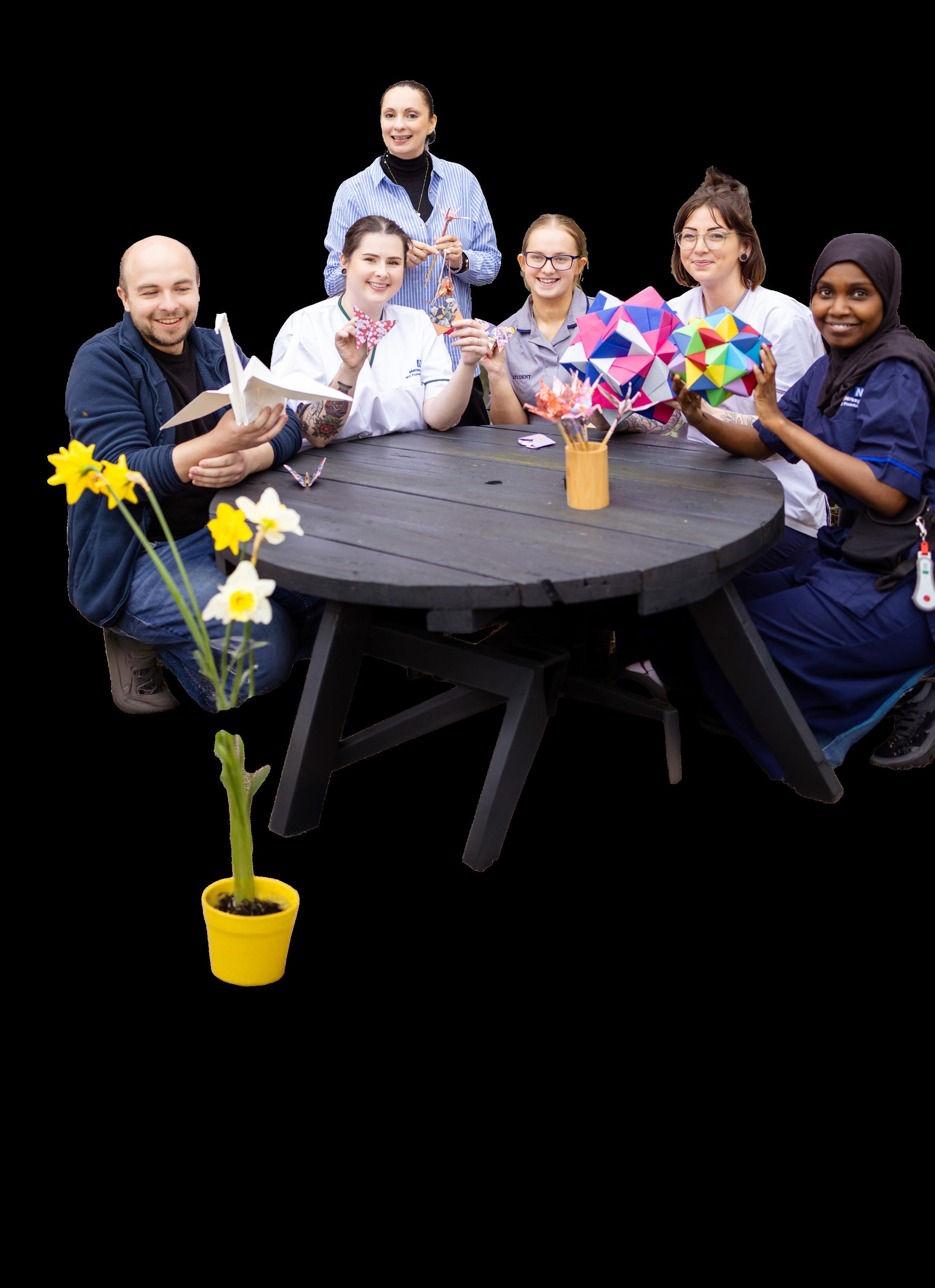
confidence builds and precision improves. Gasps of delight erupt as a delicate butterfly rests in each pair of hands.
You can feel the sense of achievement as uncertainty gives way to confidence and calm.
Science based artist Dr Lizzie Burns describes origami as a mindful activity that helps you take control at the same time as creating something beautiful.
“Stress is released into the paper with each fold. The focus required keeps us in the moment. We stop worrying about the past or what might happen in the future.”
Formerly a chemical engineer, Zulay discovered the therapeutic
value of origami when she experienced acute postnatal depression 17 years ago. The simple act of folding paper brought back cherished memories of her childhood in Venezuela and became an essential part of her recovery. Today, her stunning installations welcome patients at Hartley Hospital, offering moments of stillness, colour and hope.
“When everything felt chaotic, origami gave me a focus,” she says. “You must be patient and present. That was a lifeline for me. My hands were occupied, and my mind was freed from spiralling thoughts. Slowly, those small, repeated movements created moments of calm and clarity.”

This workshop is part of ‘From the Heart’ funded by the National Lottery.
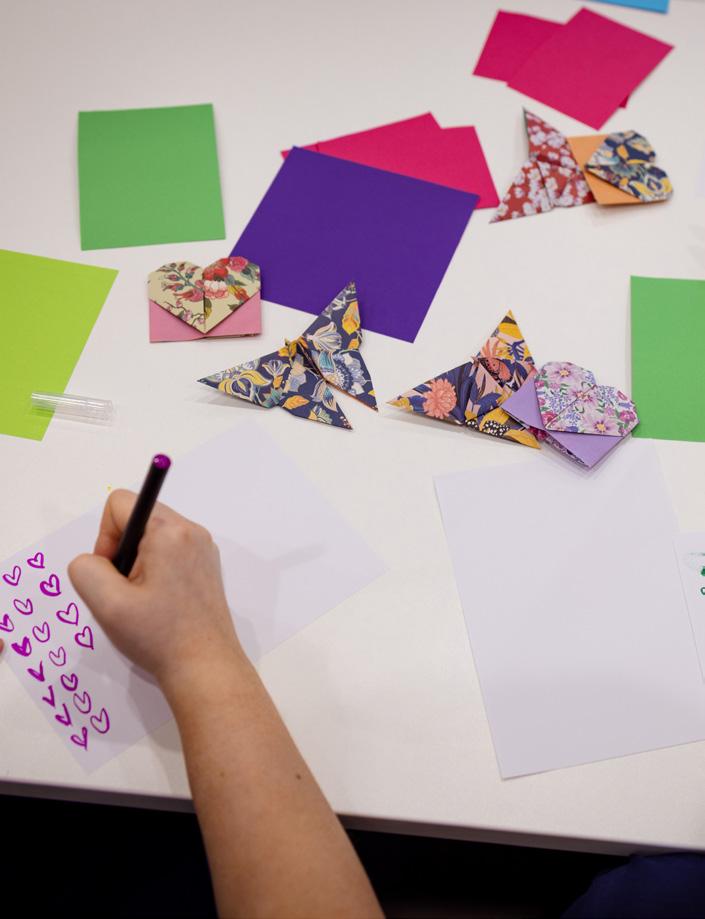
Despite the precision involved, Zulay emphasises there is no pressure for perfection. “Creating something beautiful and organic, while accepting that perfection isn’t possible, is incredibly liberating.”
Around the table, members of the group encourage one another, swap tips and celebrate each other’s progress. “I never thought I’d be able to make something like this,” says Steven. “I feel elated – I see myself differently.”
As Zulay puts it: “A folded butterfly is a tiny treasure but the act of creating it also brings focus, conversation and a sense of belonging.”
Long days in hospital can be boring. After postdoctoral research in cancer biology at the University of Oxford, Dr Burns worked as a science communicator and saw that origami as a shared activity could benefit everyone by sparking conversation, creativity and focus.
“We provide toys and activities for children in hospital but little is available for adults to keep their minds occupied and emotions balanced.”
Like hunger or loneliness, boredom can alert us to a need to act.
“Ideally, it prompts us to find something engaging or meaningful to do. But when people’s choices or movement are limited – particularly in
• Start with basic shapes like butterflies or hearts
• Use any paper, including recycled paper, flyers or magazines
• Focus on the process and enjoy the moment of creation.
hospital - boredom can bring feelings of hopelessness, frustration and isolation. This can have a significant impact on health.
“Origami encourages patients to connect with others. They focus on a shared task, learn from one another and create small gifts filled with meaning - a welcome and joyful distraction during difficult times.”
Occupational therapy assistant Alicia Collings has benefited from online wellbeing sessions with Dr Burns, run for Mersey Care staff and funded by the National Lottery.
“We all start literally on the same page together and I feel such a sense of connection and community with the other people in the group. It’s such a powerful way to bringing relaxation, joy and a sense of achievement into your life.”
Dr Burns and Zulay cofounded Origami Pulse, made possible by a Community Fund from the National Lottery.
Zulay is a trustee of the British Origami Society, which supports origami education, events and outreach.
Follow step by step instructions with Dr Burns on YouTube.
When you know, you know – or do you?
Traumatic events can take their toll without us realising. We talk to a woman who has found solace in choppy waters and an expert on how to spot the signs.
Karen Ennis swims channels for charity. A determination to battle through adversity is a trademark of the 53 year old IT manager.
Faced with the loss of two babies at 39 and the tragic death of her husband a few years later, Karen’s will to stay strong masked the devastation of trauma on her mind and body.
She and partner Gary met young, married and planned for a family. After years of trying, they’d accepted it wasn’t to be, so when Karen fell pregnant at 39 the couple were overjoyed. Joy turned to sadness when their baby son was stillborn.
Karen endured miscarriages during IVF but the couple were thrilled when she became
pregnant naturally. But sadly their little girl was also stillborn.
Karen’s instinct was to stay strong. She went back to work and the couple threw themselves into fundraising to support other families and children.
“Even in the most horrendous circumstances I thought ‘I’ve got to crack on’,” she recalls. “I was struggling to cope with even the
smallest of things like reading a menu. I wouldn’t sleep for fear of nightmares that made me relive what had happened. It was pure terror.”
Karen finally sought help. She was diagnosed with Post Traumatic Stress Disorder (PTSD) and underwent Cognitive Behavioural Therapy (CBT).
“I know now I was stuck in a loop, unable to process what had happened but at the time I couldn’t see it.”
CBT is a type of talking therapy where a therapist helps you to change how you think and act.
A friend advised Karen to do something she’d previously enjoyed. “I always loved swimming but I struggled with people and being out. The journey to the pool was the hardest I’d ever made”.
She began to swim with an old friend and signed up for the Great North Swim, a mile long open water event.
“Someone jokingly said ‘you’ll be swimming the Channel next’ so I started training!”
Meanwhile Gary was preparing for an Iron Man triathlon. But more tragedy was to follow. He was out cycle training when Karen took a call – her “strong fit healthy” husband had crashed and suffered a severe brain injury. Karen was with Gary as his life support was turned off.
“It was catastrophic, but I did my usual and went back to work. I didn’t realise I needed help, but people I work with did.”
Karen underwent Eye Movement Desensitisation and Reprocessing (EMDR), a therapy that helps the brain reprocess traumatic memories.
“It was difficult, you have to relive horrible memories, but it worked. I’m able to process things better. In the past even a small problem would send me downhill quickly. Now I don’t immediately go into a cycle of crisis. I can think ‘it’s happened, I’m dealing with it’.”

Karen now uses swimming as therapy. She’s swum in six of the world’s oceans, raising more than £70,000 for charities.
“I need a next challenge for routine and focus. Swimming in cold water relaxes me.
“I know now getting help doesn’t make you weak, if anything it’s a strength. Learn to understand what you need, don’t be too critical of yourself or do too much - just do what works best for you.”
Eyes Right
EMDR involves recalling the traumatic incident in detail while making eye movements, such as following the movement of your therapist’s finger, a light bar or tapping. Patients are given grounding techniques like mindfulness to help you through the sessions.
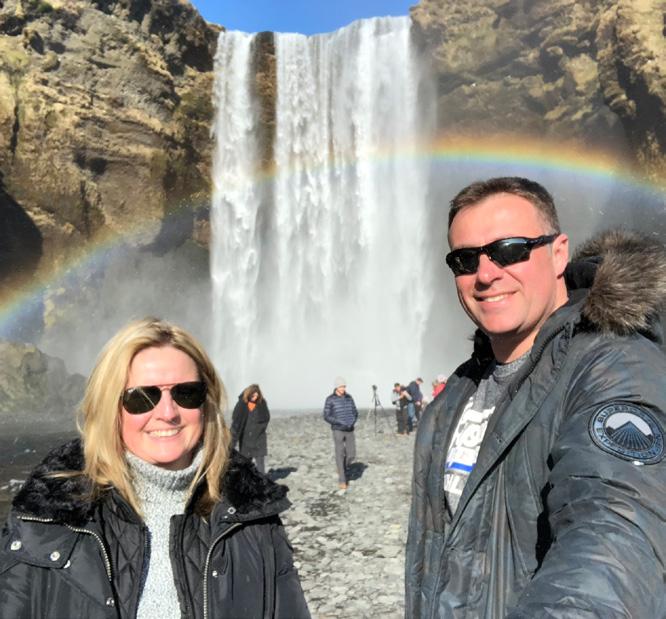
find out more about Karen’s fundraising efforts
If you think you have experienced trauma, discuss it with your GP.
Very stressful, frightening or distressing events that are difficult to cope with or out of our control. There are different types:
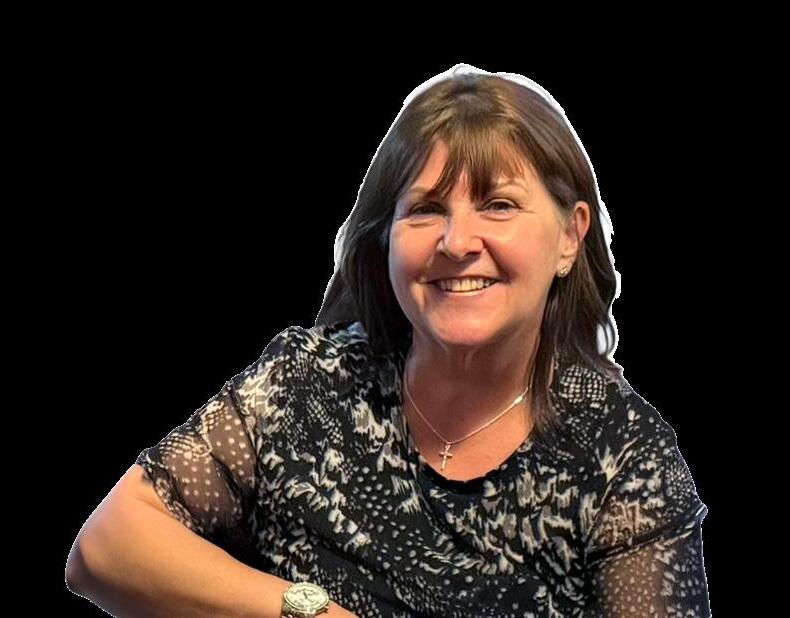
Karen’s response was typical of someone who has experienced trauma, says Mersey Care CBT and EMDR therapist Judith Baker.
“Our brains are wired to move us into fight, flight or freeze mode very quickly to help us survive. People distract themselves from what’s happened and even though they might have flashbacks or nightmares, they may not accept they need help.”
Sleeping problems, night terrors, recurrent dreams, headaches, tension and fatigue are just some of the physical signs of trauma, which often begins in childhood.
Judith says, “The emotional impact of trauma can make people feel guilty. If there is no one to support them or they come from a background where trauma is brushed under the carpet, it can make them feel shame or even a sense of worthlessness.”
Acute: a one off incident like a sudden loss, an attack or an accident.
Complex: several traumas throughout someone’s life, usually beginning in childhood.
If swimming channels is not for you, one grounding exercise is to plunge your hands in a bowl of cold water or splash your face.
Recognising the signs of trauma is the first step in the healing process and Judith encourages grounding exercises like mindfulness and breathing before any treatment.
“I get people to remember a time when they were able to cope and focus on physical activities to reconnect with their bodies.”
Other priorities include making sure a person is safe and securing a support system in place to help build hope for the future.
As in Karen’s case, EMDR is a successful treatment for people experiencing the effects of trauma.
Judith says, “One woman described after her final EMDR session feeling that she had ‘lost 10 stone’.”
Which gives a whole new meaning to taking a weight off your mind.
Chronic: like repeated sexual or domestic abuse. Collective: affecting people who have suffered the same event such as a shooting, war or other disaster.
signs of trauma:
• Panic attacks
• Disassociation - feeling numb, spaced out or detached from your body
• Sleep problems - finding it hard to fall or stay asleep, feeling unsafe at night
• Self-neglect - unable to meet basic needs like eating and keeping clean
• Self harm - hurting yourself as a way of dealing with very difficult feelings
• Suicidal thoughts
• Alcohol or substance misuse.
Visit the Mind website for guidance on types of trauma and its effects.
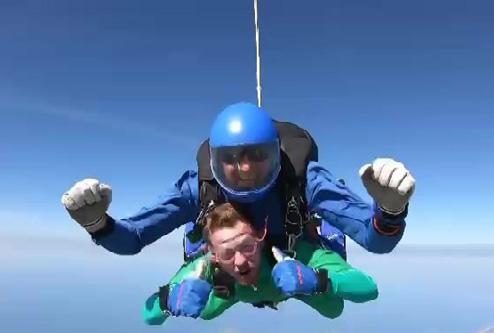
For fundraising charity challenges including a skydive and a 10K, visit Mersey Cares at merseycares.org

olar panels, air source heat pumps and charging points for electric vehicles are just some of the high spec measures Mersey Care has put in place to deliver sustainable health care.
Head of Sustainability Jane Hardy-Jones leads the Trust’s Green Plan to protect people and the planet.
“Energy use and transport are two of the main causes of greenhouse gases like carbon dioxide and methane. By investing in renewable energy and alternative ways to travel, we are already making a difference.”
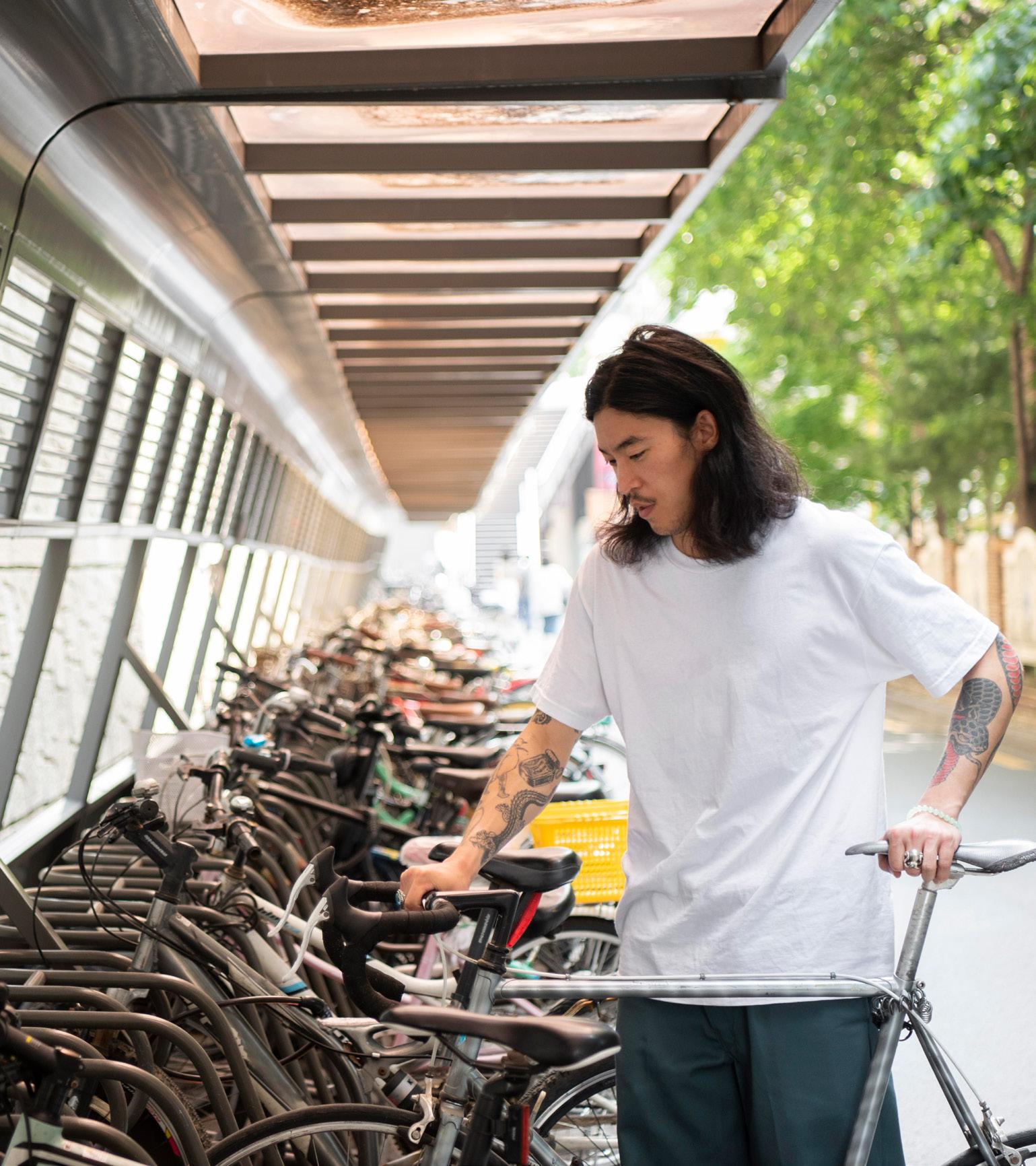
A cycle to work scheme is already in place.
Solar panels on Rowan View and Aspen Wood hospitals - and other buildings at Maghull Health Parkproduce a significant amount of electricity to help power the sites. This saves the equivalent carbon footprint of taking about 60 cars off the road for a year.
Heating and hot water in Rathbone Hospital, Leigh Moss, Moss House and The Life Rooms in Walton are now produced by low carbon heat pumps.
At the newly opened Mossley Hill Hospital, green spaces have also been created to cool the building naturally, crucial as our weather gets warmer.
Future plans include offering enhanced digital options, where clinically appropriate, meaning service users make fewer journeys.
Jane’s message is clear. “Cleaner air means fewer asthma attacks, greener spaces mean better mental health and energy efficient buildings mean lower bills – which is more money for health services. Sustainability isn’t just about saving the planetit’s about saving lives.”
Do Your Bit
• Consider looking for second hand clothes and furniture before buying new
• Check out recycling options like blister packs and toothpaste tubes at some pharmacies
• See if your favourite charity accepts costume jewellery or used stamps to raise funds
• Eat local seasonal food to reduce ‘food miles’
• Plan meals, check cupboards, and create a strict shopping list to reduce waste.
We talk to Mersey Care staff who are doing their bit to reduce, reuse and recycle.
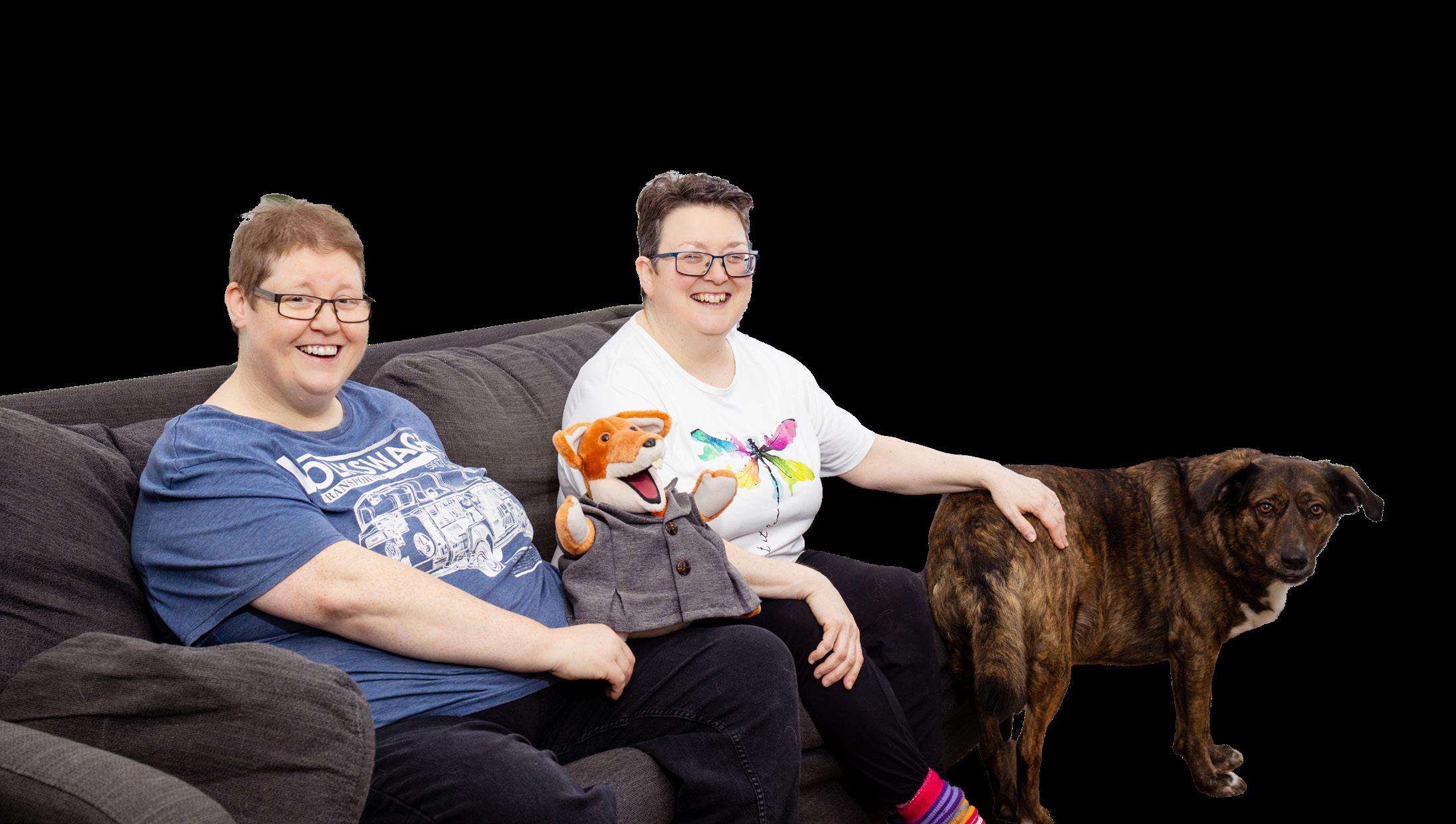
When Kate York and her wife Alice need something for their Liverpool home, they don’t go shopping, they embark on an adventure of discovery.
One of their greatest finds ever was an immaculate Laura Ashley sofa, which cost precisely nothing.
Using websites like ‘Freecycle’, ‘Trash Nothing’ and local marketplaces, the couple have been able to furnish every room for next to nothing.
“We must have saved thousands over the years,” says Kate, who works as a leadership personal assistant at Mersey Care. Alice is a Mersey Care support worker.
“We’re not crafty in the slightest but we can be quite creative when it comes to finding a new use for things.”
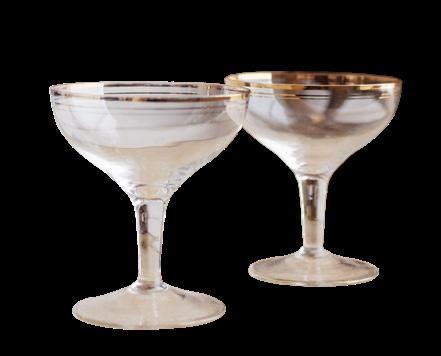
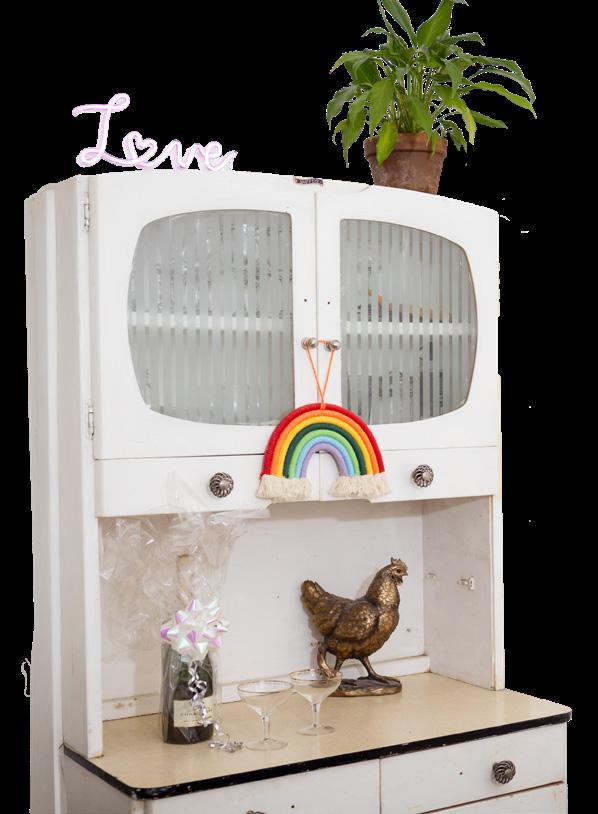
An original 1950s Shefco kitchen larder cabinet was being given away for free. Restored, the cabinet could fetch £100s on eBay. It now serves as a quirky yet practical bar, displaying the vintage champagne glasses they picked up in a charity shop.
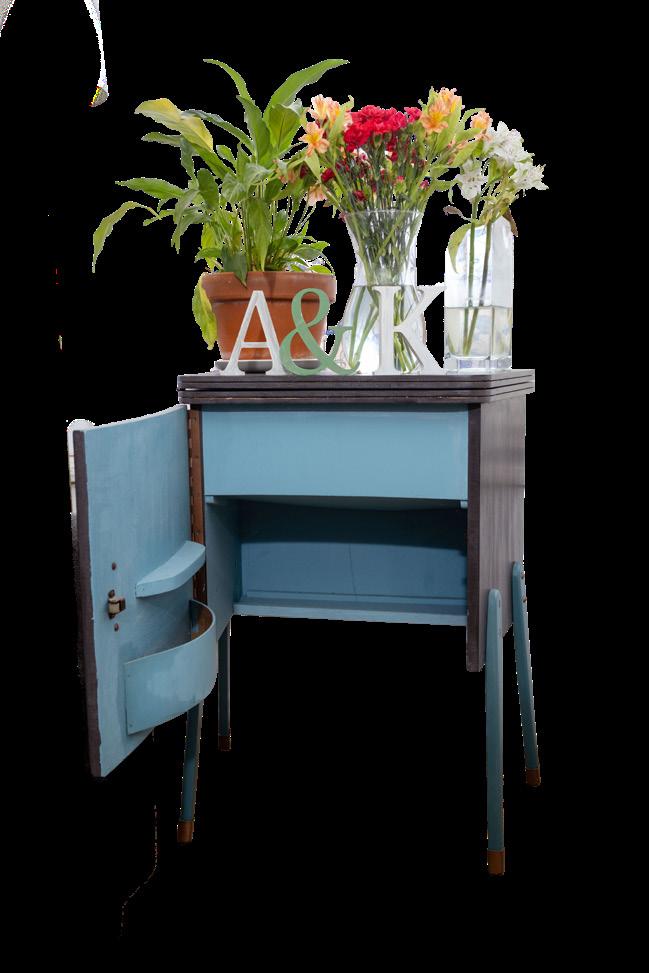
Perched next to a sofa that has been passed on by a friend is a mid century sewing table, now living its best second life displaying plants and keepsakes after a funky paint job.
“Vintage items were made to last,” says Kate.
As well as jigsaws and books – all picked up second hand at a fraction of the retail cost – the couple have sourced second hand camping equipment and even a free dinghy.
Kate says, “We get a great deal of pleasure from knowing we have stopped so much stuff going to landfill. And we love the challenge of finding a new use for things – it makes shopping so much more interesting!”
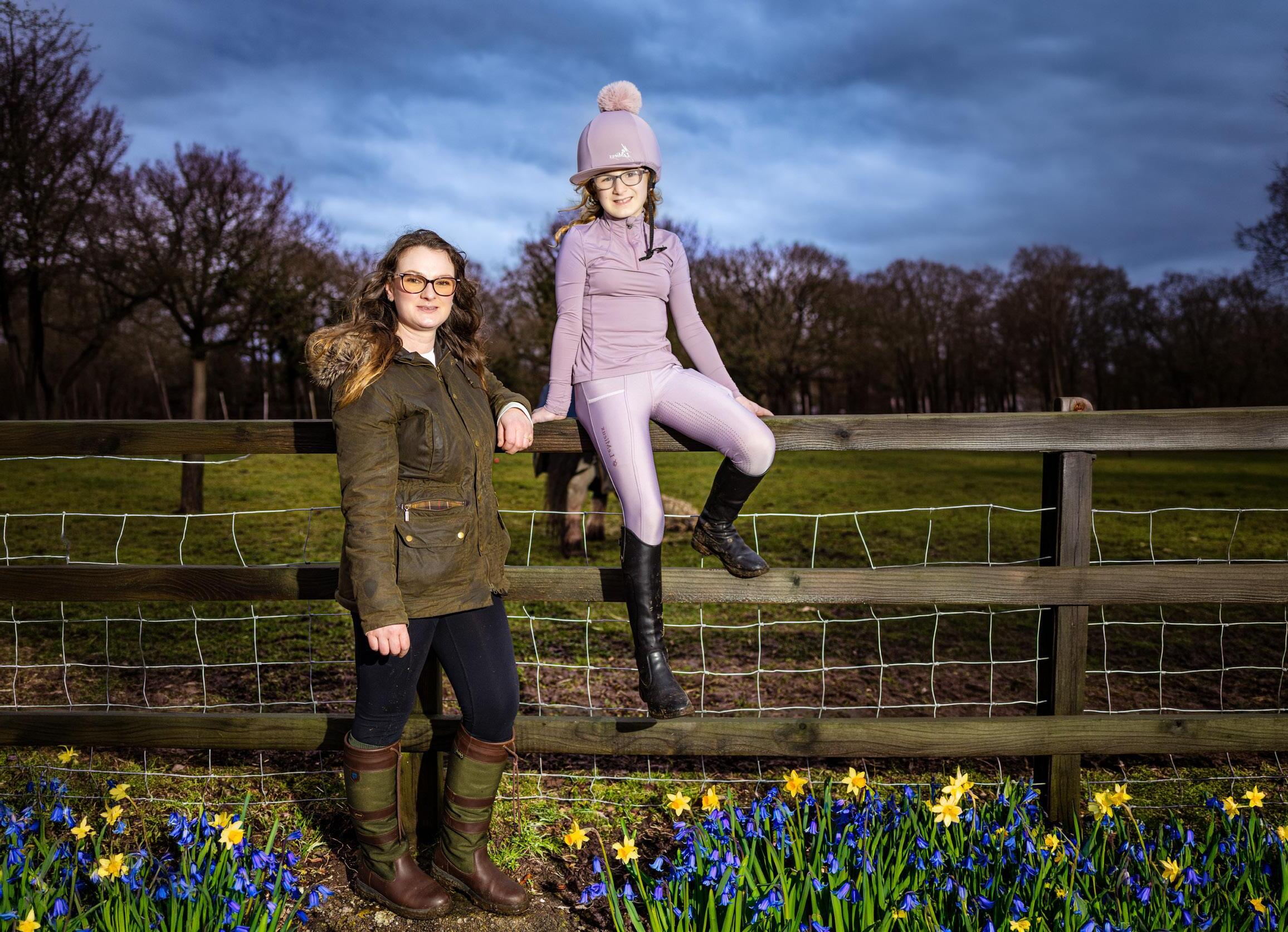
Nurse Hayley Timmis is a huge fan of preloved items with local car boot sales, Facebook Marketplace and the second hand app Vinted proving particularly rich pickings.
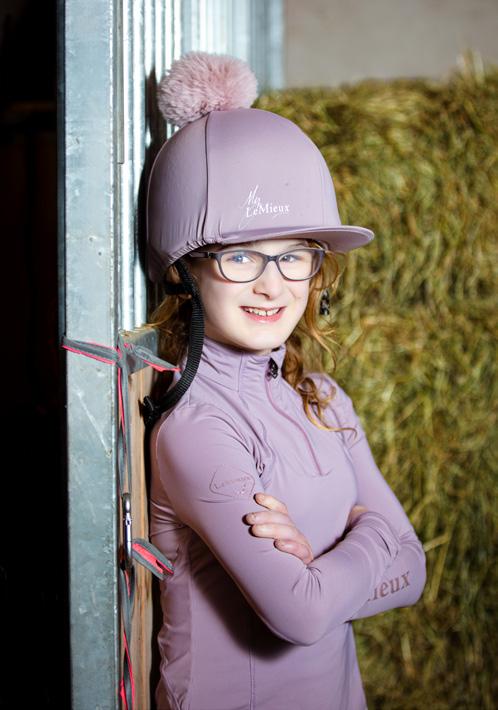
Her best ever buy was a sheepskin rug - which cost more than £300 originally - for just £2 from a jumble sale. She has also been able to kit her daughter April out in style for horse riding, picking up top quality riding boots for just under £25 (RRP £80). A savvy choice when children grow so quickly.
“I have found some incredible bargains for us both. April loves horses but they are an expensive hobby. Buying what she needs second hand leaves money over
for me to pay for lessons. And being able to find good quality coats and boots for me means I can join her at the stables and stay warm and dry.”
Hayley discovered a brand new waxed jacket for £68 (RRP £319), and boots for less than half the RRP of £379.
“They were even in the original box! So much of what’s available has never even been worn. There’s no need to spend a fortune.”
Hayley’s top tips to bag a bargain
Sundays are prime time for purchases online.
If you’re buying brands, use an authentication service. This is an optional, paid service available on some sites.
Be aware of potential scams. Avoid using friends and family options on digital and online wallet systems if the person is not known to you.
When buying or selling in person, meet in a public
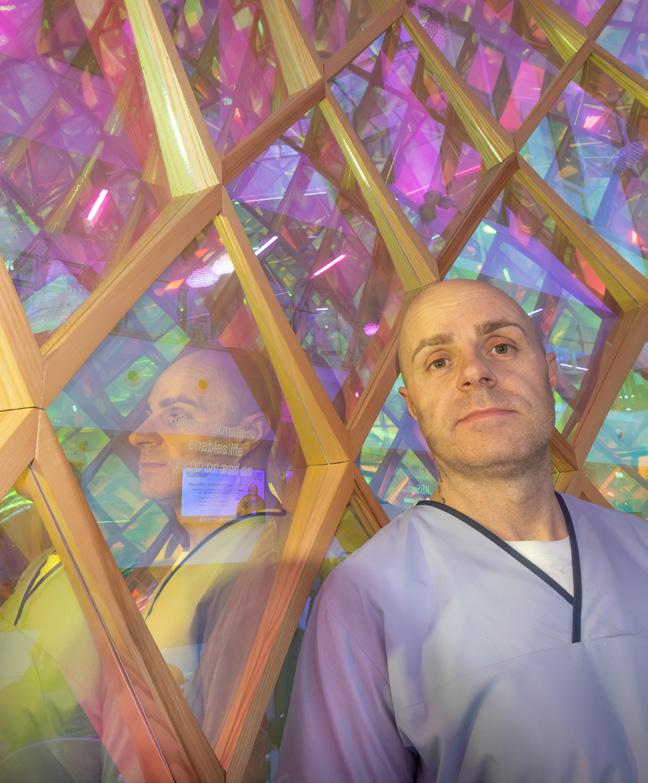
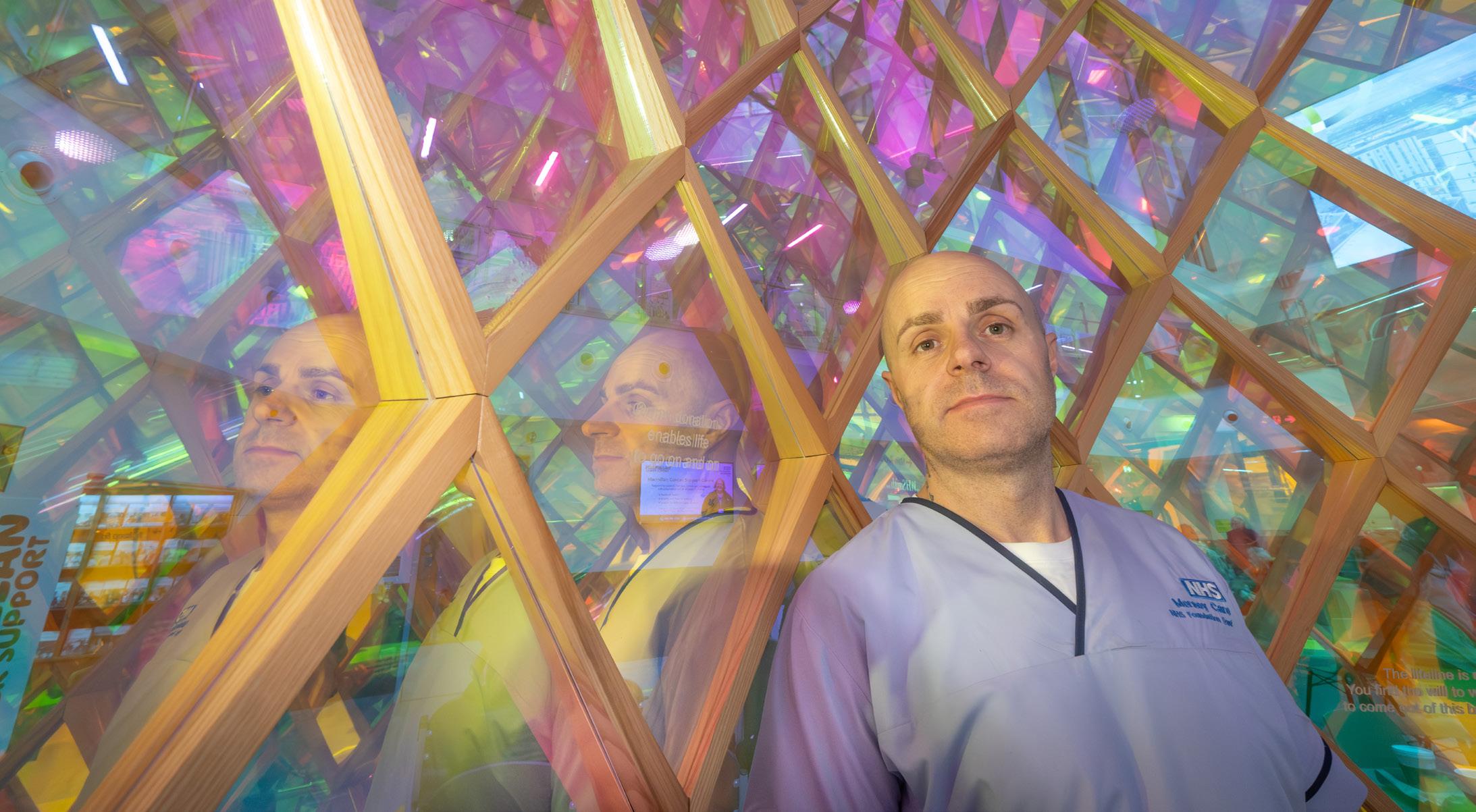
Brian at the Tribute, an art installation at Liverpool Royal University Hospital which honours organ and tissue donors and their families
Thousands of people in the UK are waiting for a kidney transplant. Donors like Brian and Ian have changed lives.
There aren’t many clubs more exclusive than the one Brian Cross has joined. In the past 20 years, only around 1000 people in the UK have donated a kidney to someone they don’t know and may never meet.
When he put himself forward as a living donor three years ago, most people asked why.
Alongside his health care support role at Mersey Care, Brian works as an ambulance care assistant. He has met several patients with failing kidneys on their way for dialysis treatment.
“When I heard that it was possible to be a living donor, I wanted to do it while I’m still young and healthy.”
Brian underwent blood tests, scans and psychological assessments for almost a year to ensure he was suitable for surgery.
“They ask you about your fears, motivations, relationships. I understand why they do that - it’s an emotional journey as much as a physical one.”
Fit and active, he knew he could recover physically from the operation but the real challenge came during the three month recuperation period when his life fell still.
“I wasn’t allowed to drive or go back to work. The isolation and the feeling of being stuck was tough.”
Unable to lift, walk far or even dress himself at first, he went from being fiercely independent
to relying on others for the simplest tasks. He missed Christmas with family and couldn’t attend a funeral.
“That hits you mentally. It really changes how you see yourself.”
What has helped is knowing the donation has made a difference. When he received a letter confirming the transplant had succeeded, a weight lifted.
“I needed that closure. I look at the letter - and my scar - whenever I feel low. It reminds me why I did it and what I’ve achieved.”
Brian is now using his experience by training as a donor buddy, speaking to people considering donation.
“I hope someone would do the same for me. Pain fades, but knowing you’ve changed someone’s life stays with you.”
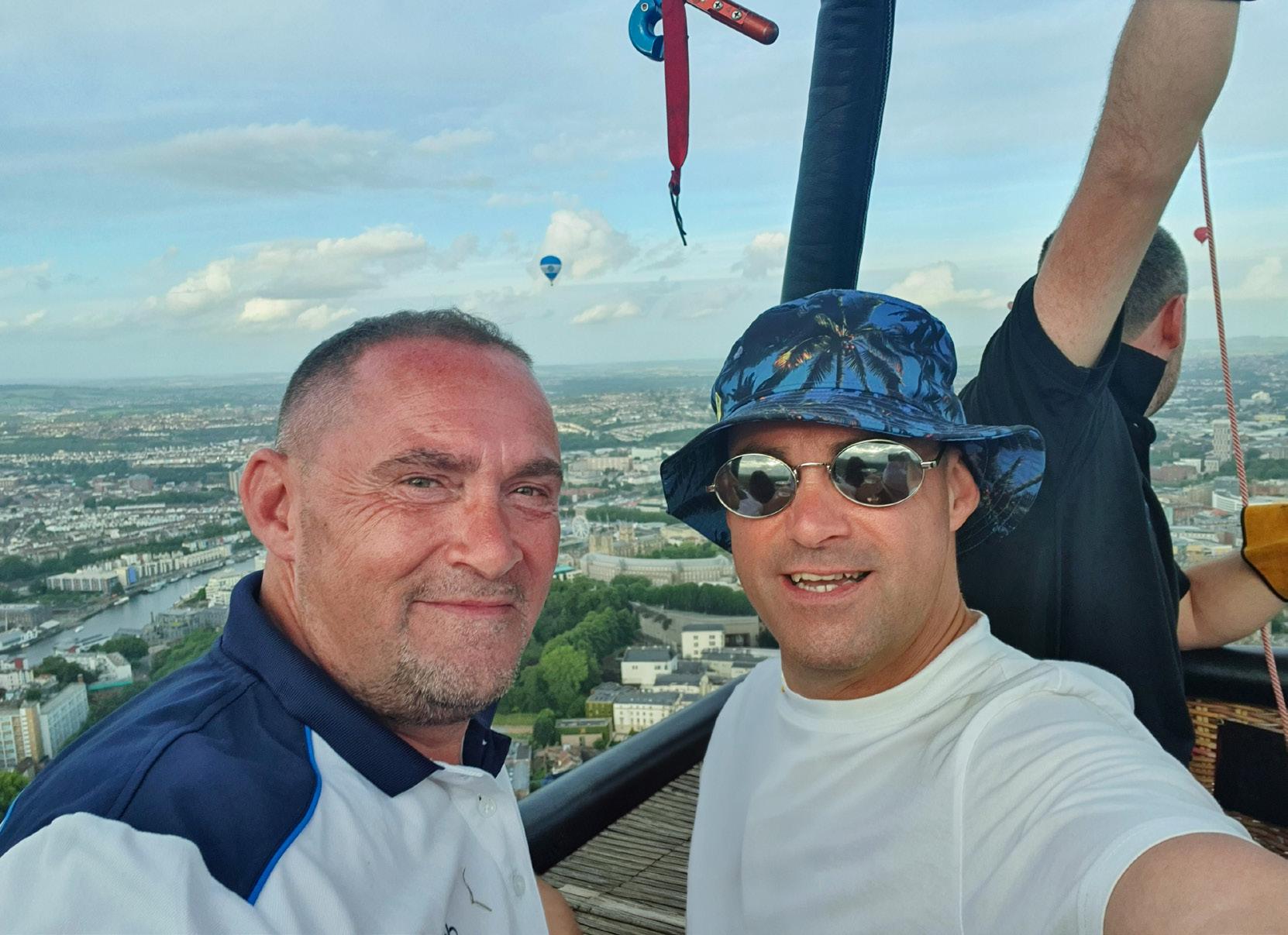
“I don’t want to sound melodramatic, but I wouldn’t be here if it wasn’t for Ian.”
Born with just one kidney, Roy Carroll’s life changed overnight when he was diagnosed with chronic renal failure aged just 30. With two young children at home and the threat of dialysis looming, the future felt frightening.
Doctors suggested considering a kidney transplant. Looking back, Roy realises that he never even had to ask the question – his twin brother Ian had been at his side at each appointment and there was an unspoken understanding between them. For Ian it was a simple decision to donate one of his kidneys.
“We didn’t need to have the conversation. It would’ve been odd if I hadn’t done it.”
“It was the ultimate gift,” Roy says. “I’ve had all these years with my kids because of Ian.”

Lord of the
David
has received two life saving kidney transplants from his parents.
Seventeen years on, life has a new clarity.
Immunosuppressants bring challenges for Roy with an increased risk of skin cancer and infection and he’s careful to keep his weight down, avoid salt and drink lots of water. As part of staying healthy and to raise awareness about organ donation, he now represents the Royal Liverpool University Hospital at table tennis in the British Transplant Games.
The duo are determined to embrace life and there are no regrets. Roy says: “There’s no way to ever say ‘thank you’ enough.”
A kidney transplant offers an improved quality of life and better long term survival rates compared to remaining on dialysis. Most people can live a completely normal and healthy life with only one functioning kidney.
Visit Kidney Research UK for more information
You can join the organ donation register on the NHS app
Open the app, select the person icon at the top of the screen (your profile), and select Organ Donation Decision.
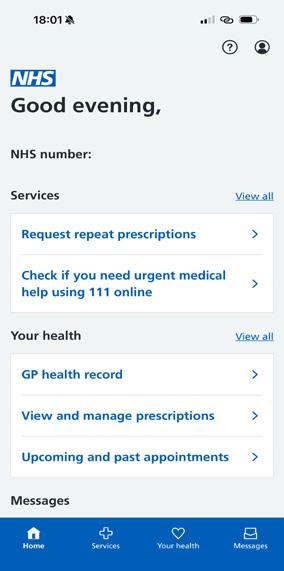
Tell your family. Even if you’re registered, your family will be asked to confirm your wishes.
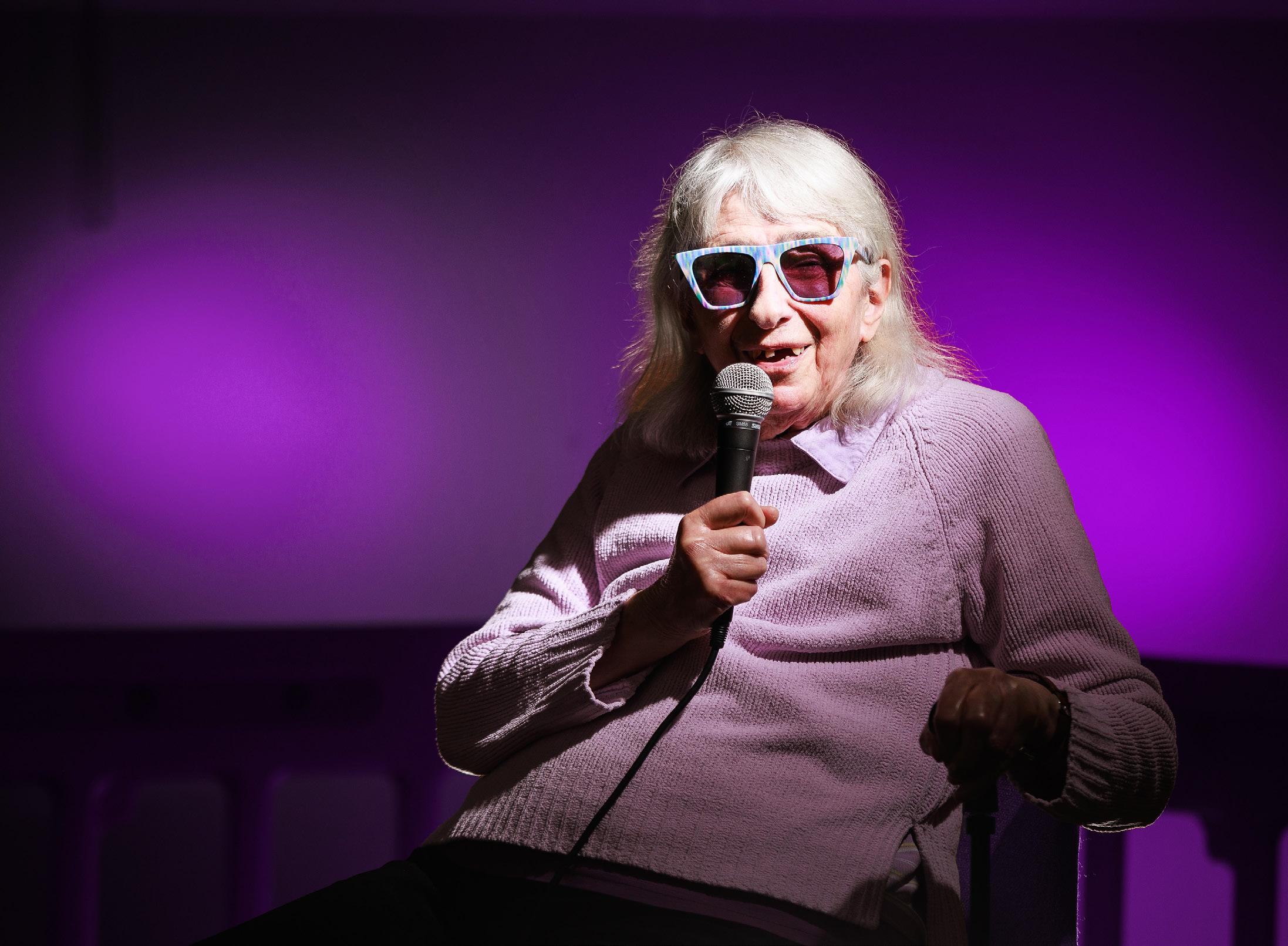
Apacked comedy club on any Friday night in Liverpool - a city famous for its witis a tough crowd for any stand up. But 80 year old Maureen’s performance at the Hot Water Comedy Club brought the audience to its feet. Not only was this her first ever stand up appearance, she came to the stage via a course designed to improve mental wellbeing.
Although she’s experienced many difficult times in her life, Maureen says she is ‘a coper’ who tends not to talk about her problems. She’s a regular at The Life Rooms in Walton where the opportunity to meet people and learn
new skills has helped her work through her severe post-traumatic stress. She signed up for the comedy course to ‘find my sense of humour again’.
Over six weeks, she and nine other service users attended the Laugh for Life course culminating in a showcase performance. Founded by Liverpool comic Henry Churney, the course helps participants craft their own material, practise projection and microphone techniques and - crucially - see their own experiences through a playful lens.
A natural at telling a funny story, Maureen thinks she inherited her beloved dad’s sense of humour. Under Henry’s guidance, she learnt to deliver the one liner -
to hilarious effect. Being hit by a car and a victim of a crime are not amusing but Maureen’s deadpan delivery went down a storm. One of her lines ‘I was knocked over by a drunk driver once. And once was enough, you know,’ brought a standing ovation and rapturous applause.
Although her stage appearance had been nerve wracking, Maureen felt elated after her debut and has plans to continue performing.
“I’ve had low self esteem and not much confidence most of my life. On stage I am my natural self - it’s mundane and ridiculous at the same time. But making people laugh felt really good.”
Comedy courses are just one of the activities being used by NHS as social prescribinghelping people increase social interaction, reduce stress and learn new skills.
For current opportunites and courses available at The Life Rooms visit liferooms.org/learning
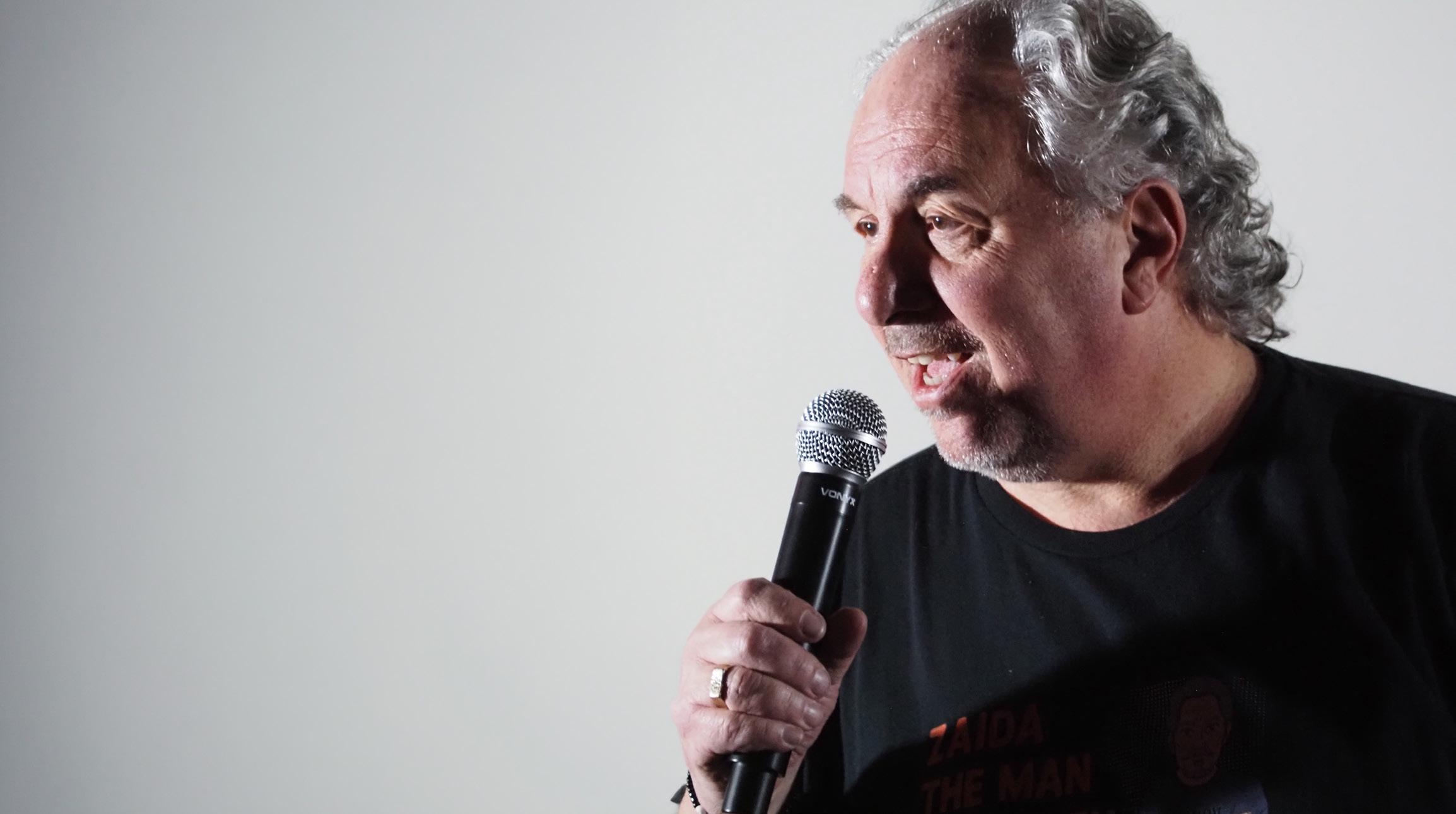
As well as a confidence boost, Maureen says that laughing together was significant and the friendships formed in the group were just as important. “We really gelled as a group. Everyone was so funny with their stories. I loved listening to them all.”
Building a community through comedy was always Henry’s aim. He began delivering the courses to raise awareness about mental health after a close friend lost his son to suicide. He encourages people to use comedy as a way to open up about their feelings and experiences and connect with others.
He says, “We’ve always known laughing feels good. As well as a release of endorphins - our brain’s natural pain killer - it helps us feel more relaxed.
“Recent studies have also shown how beneficial it is for us to laugh together - laughing as a group creates a deep sense of belonging and lifts our spirits even more.”
Course leader Henry Churney
Credit: Keith Taylor, Rockshots
Henry encourages the group to use their own stories to help them find out more about themselves.
“I believe everyone has a funny story that’s worth telling others.
Stay well feel great
“But there’s no pressure - even if someone can’t go onto a stage, there’s lots of benefit from being in the group and enjoying listening.”
Michelle Pybis, Learning Delivery Manager at The Life Rooms sees the impact and says, “Finding comedy has challenged people to look for a new perspective on some difficult times in their life. It’s been an opportunity for them to have fun and step away from their day to day problems. Laughter really can be a great medicine.”
Each day, ask yourself: ‘What was funny about today?’ Write it down or share it - this trains your humour radar. Share a funny story, joke, or video. Laughing together strengthens bonds and creates a ripple of positivity. Seek out humour. Find comedy podcasts, books or shows that make you laugh.

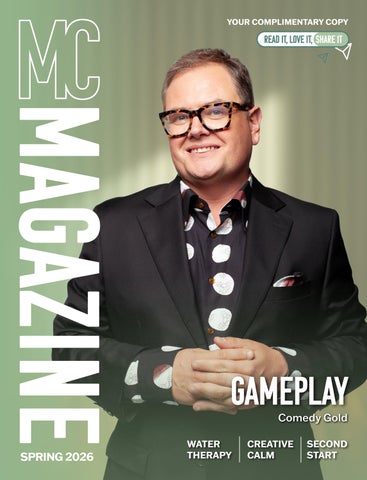
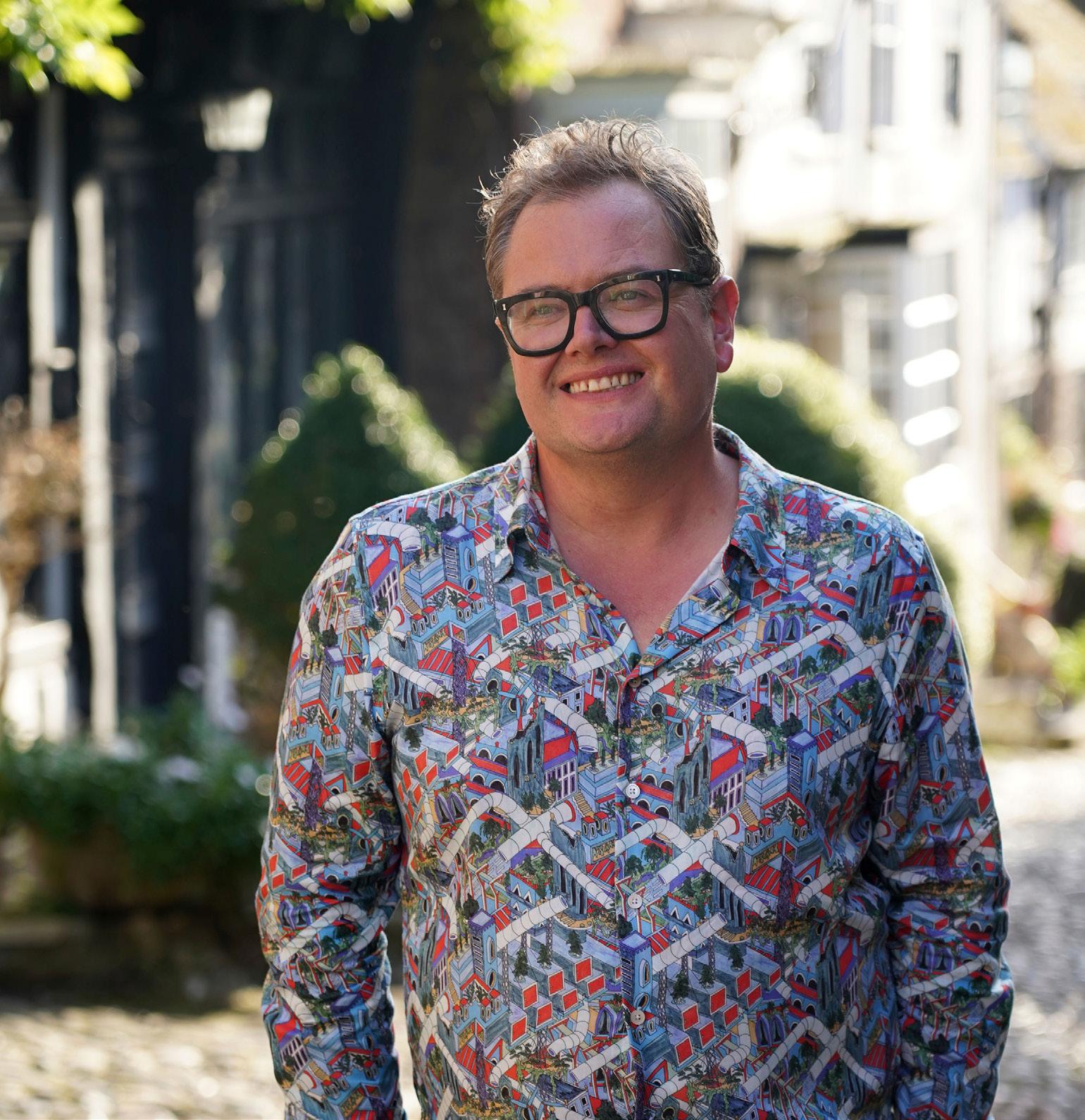
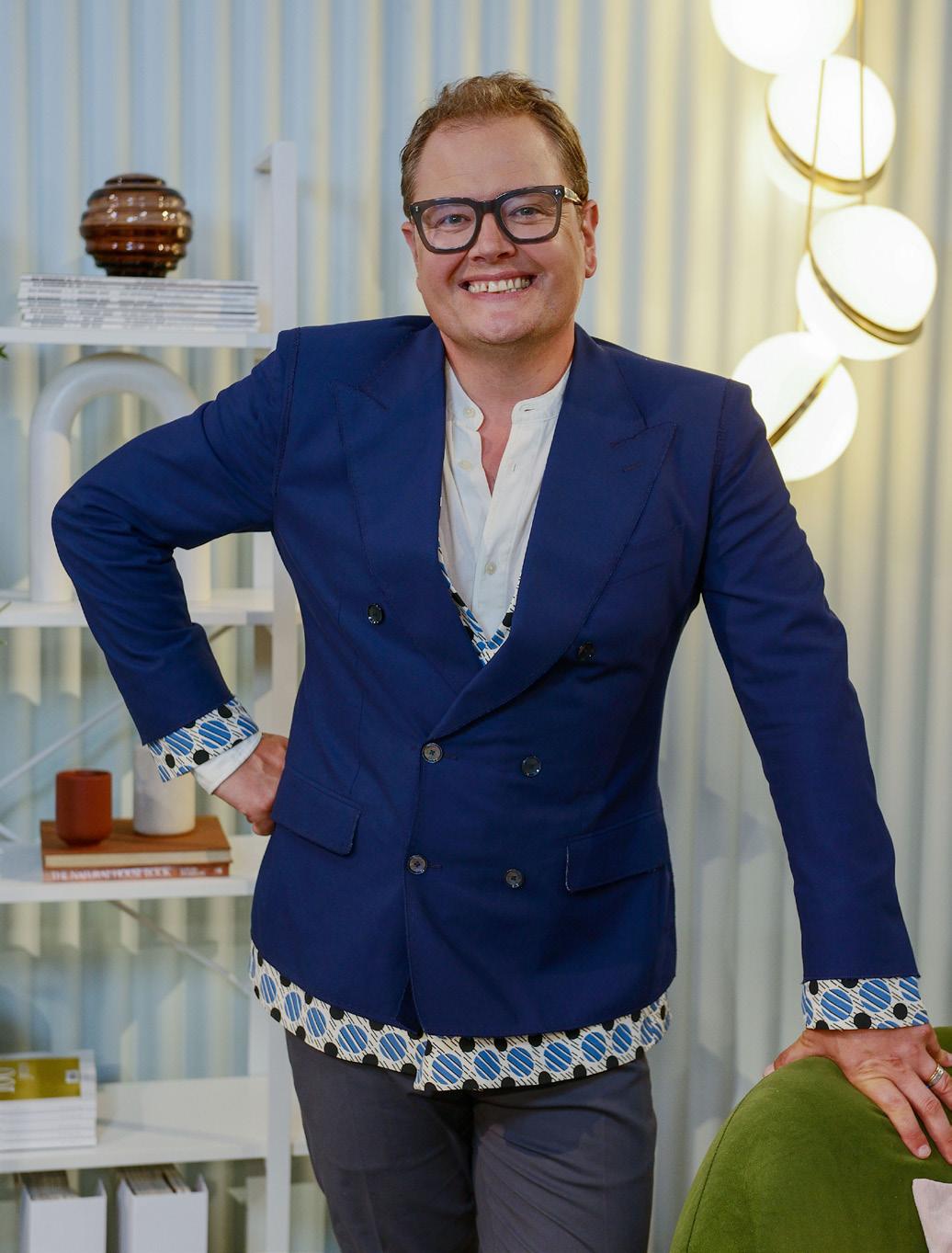
Comedian Alan Carr won £87,500 for the childhood cancer charity Neuroblastoma on The Celebrity Traitors last December. We ask a psychiatrist what the programme tells us about human behaviour.
Sparking a national obsession with cloaks, castles and Claudia Winkleman’s fringe, BBC’s The Traitors is TV gold.
The nation held its breath as bubbly comedian Alan Carr lied and betrayed his way to victory in the first celebrity version of the reality TV competition in 2025.
Originally created in the Netherlands, Faithfuls pitch against Traitors to build up a cash prize. Secretly, a small number of players are chosen to be Traitors. The aim of the remaining Faithfuls is to identify and remove all Traitors from the game while the Traitors work together in secret to eliminate other contestants,
without revealing their identities. All contestants openly debate who might be a Traitor at round table discussions.
According to Traitors fan, Mersey Care consultant forensic psychiatrist Dr John Crosby, the show is a fascinating snapshot of human behaviour.
“We are social animals – we like and trust people who seem to have the same values and experiences.”
“From hunter gatherer times we are hardwired to be suspicious of people who seem like ‘outsiders’. Successful Traitors quickly become one of the group and when that happens, it’s difficult for people to vote them out.”
He thinks that Alan Carr’s ability to live up to his chat show title Chatty Man was the TV star’s invisible shield. “He knows how to entertain and make someone feel heard - we felt safe with him. Making people laugh is a great way of creating a bond and then it’s very difficult to be disloyal.
“In contrast, it’s easier for the group to mistakenly banish Faithful contestants just because they stand out from the crowd. Contestants form impressions of one another based on very limited cues - confidence, tone of voice, facial expression and even their day job.
“These judgements feel like 'intuition', but they're actually the psychological shortcuts our brain uses to cope with
uncertainty. When people are loud or confrontational, they don’t fit in with the herd mentality and this can result in an early exit from the game.”
Ultimately, The Traitors is high stakes entertainment which exposes how sociallyinfluenced our thinking can be - even without the distraction of gold coins. People’s charm and agreeableness and the power of ‘groupthink’ works outside the castle too.
As Dr Crosby sums it up, “Being wrong together often feels safer than being right alone.”
The Celebrity Traitors is available to watch on BBC iPlayer with a second series due on screen later this year.
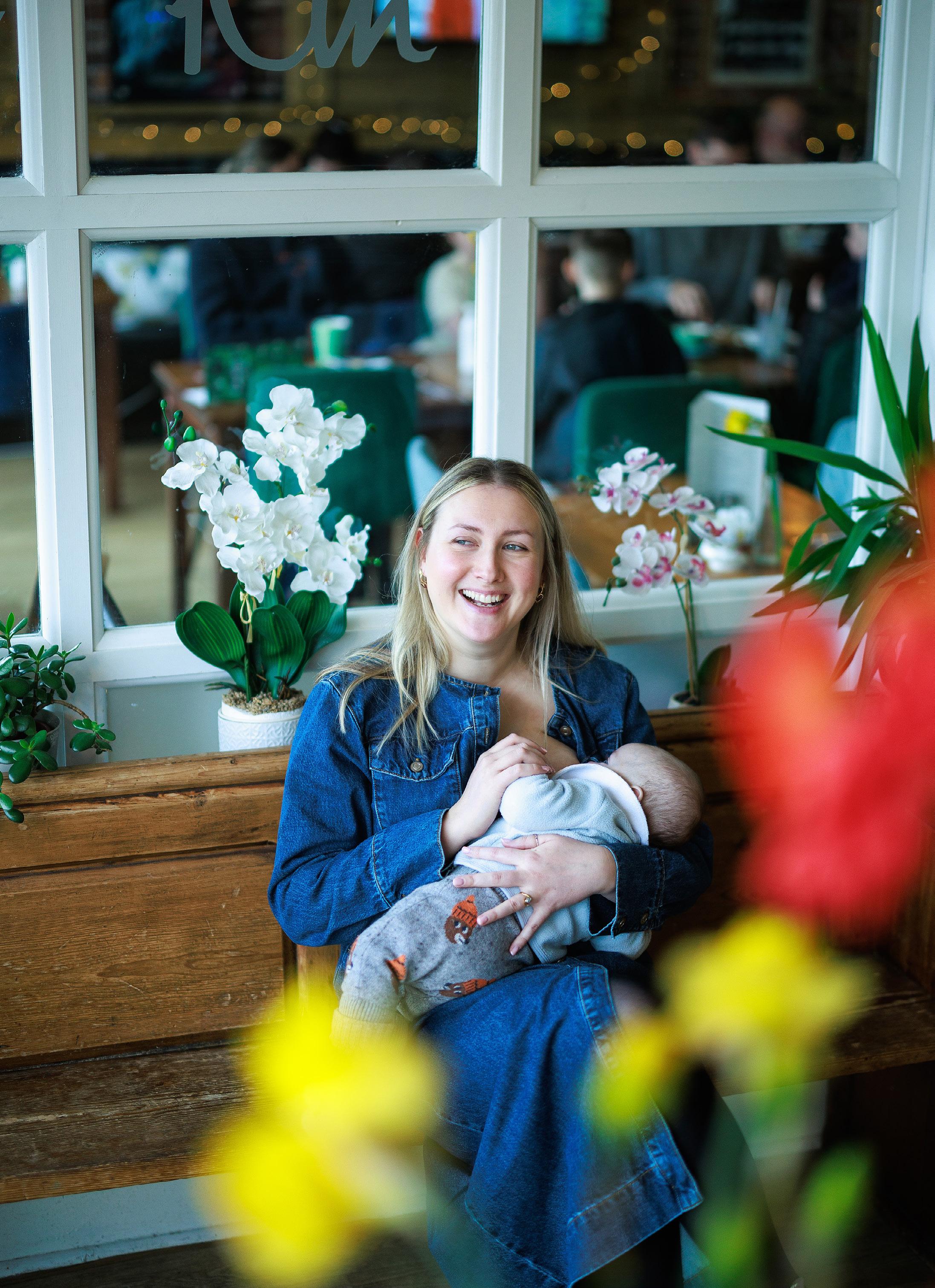
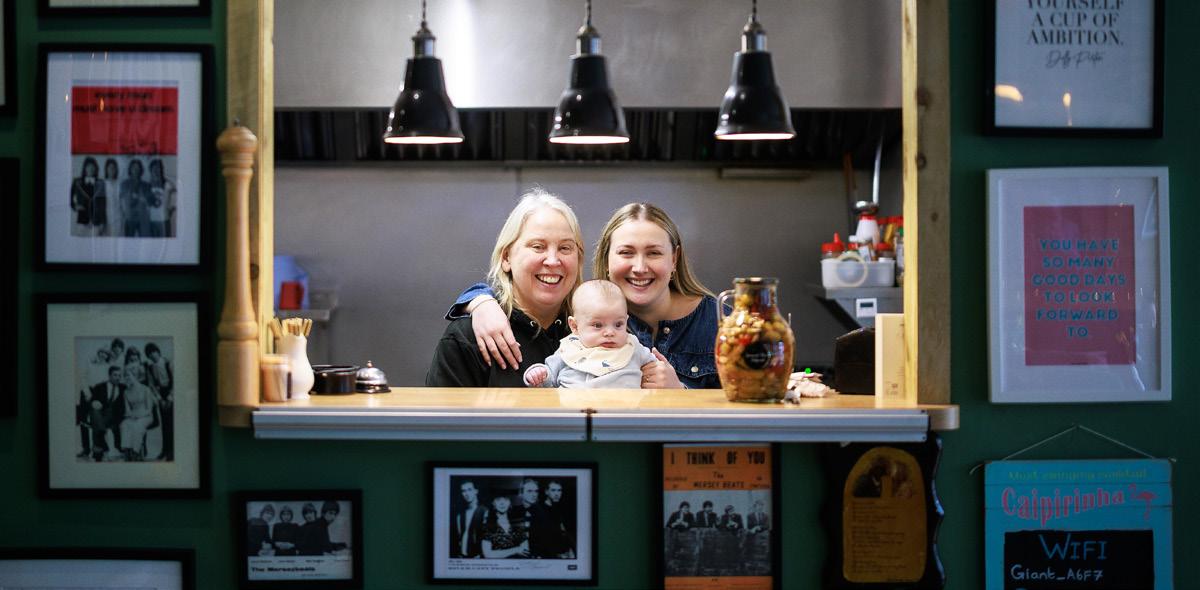
After a problem free pregnancy, Beth was looking forward to the first weeks with partner Emma and their newborn son Kit. They felt breastfeeding would give Kit the best start in life and as a midwife, Beth assumed it would be straight forward.
“I felt like an expert when I was pregnant with so much support and information around me. I went from feeling really confident to thinking ‘this is just so hard’.”
Like one in ten UK babies, Kit was born with a tongue tie, where the skin connecting the tongue to the bottom of the mouth is tighter than usual. He was fed with a syringe for his first nine days until surgery to correct it and he seemed to have no problem latching on when Beth started breastfeeding. But despite feeding constantly, he gained little weight.
More babies are being breastfed across Merseyside, up by 30 percent in areas like Bootle.
Providing all the nutrition a baby needs, breastfed babies have a lower risk of infection. Breastfeeding can protect mums against breast and ovarian cancer.
“It was a shock. I knew I needed help.”
Beth knows now she hadn’t been producing enough milk. “It was a vicious circle. Kit was burning calories by constantly trying to feed.
“When everything is new and you’re sleep deprived, it’s hard to know what to do for the best.”
Beth’s health visitor referred her to Mersey Care’s Infant Feeding team in Sefton.
Lactation (breastfeeding) consultant Colette Palin created a plan that made sure Kit was getting enough food while working on increasing Beth’s milk supply. This included supplementary formula milk while Beth continued to breast feed, expressing milk in between. Colette also supported Beth to position Kit and recognise the signs that feeding was going well.
Beth says, “We saw a difference straight away. He gained weight and was much more content. It was hard but so worth it. A real labour of love.
“Colette helped us do what was best for our family. I never felt pushed in any direction.”
Emma owns a café and has signed up to the Breastfeeding Friendly Scheme, helping parents feel more confident when they are out with their baby.
Beth says, “I felt so guilty when I was struggling and I’m grateful for the help I’ve had. It’s a lovely thing to be able to do for him. I’d like to keep going until I go back to work.
“If you want to breast feed, persevere - with the right help, you’re setting yourself up
for success.
Above all, be kind to yourself.”
Tennis star Serena Williams breastfed her baby for six months before returning to training.
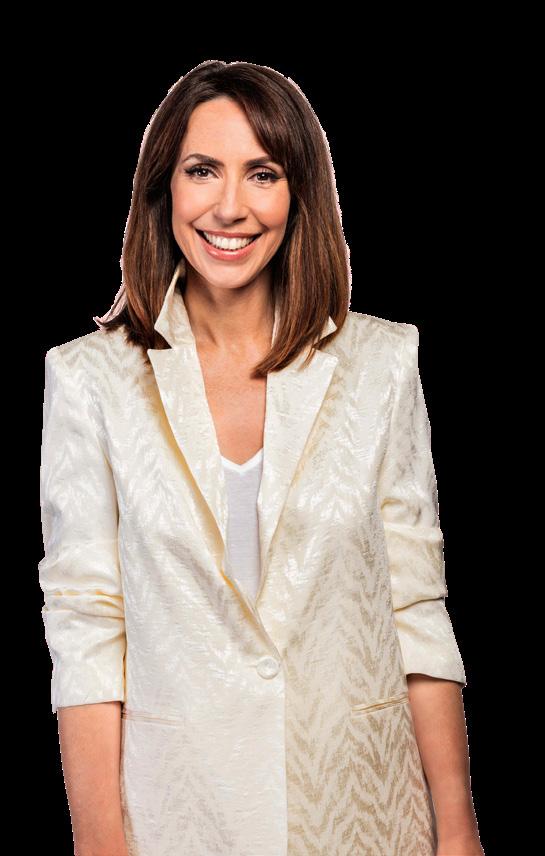
The One Show presenter and mother of three Alex Jones has been open about issues combining breastfeeding and returning to work.

The World Health Organisation (WHO) recommends exclusive breastfeeding for the first six months of life. However, midwife Vicky Graham from Sefton Infant Feeding team says, “We don’t want mums to feel it’s all or nothing. If your baby is having any breast milk at all alongside being bottle fed, they will benefit.”
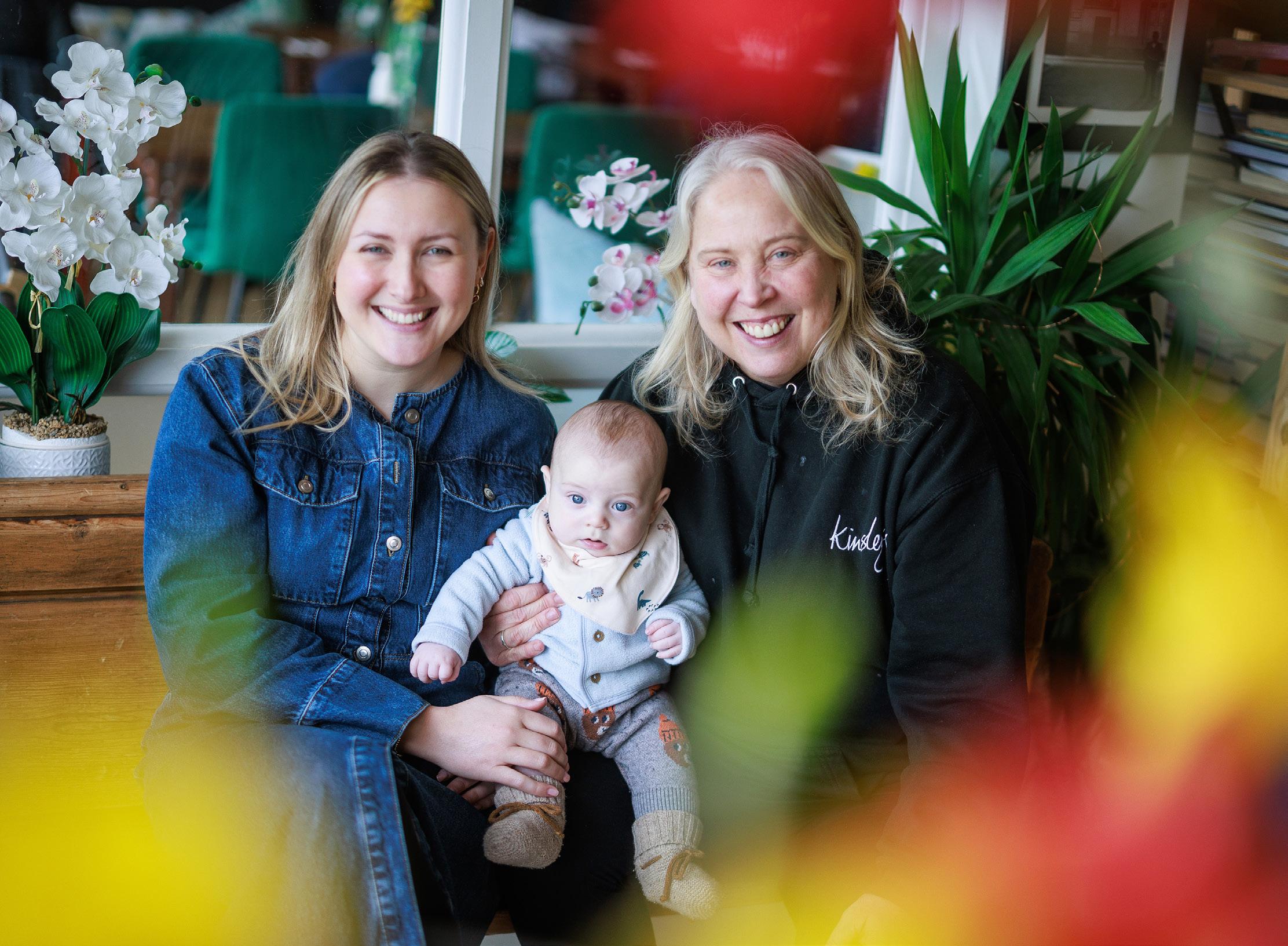
Find out information about breastfeeding before your baby is born
Keep your baby close and learn their cues for feeding – like fidgeting or finger sucking
Keep having skin to skin contact. This releases hormones crucial for breastfeeding
Breastfeed your baby whenever and wherever - you cannot overfeed a breastfed baby
If you decide or are advised to bottle feed your breastfed baby with expressed or formula milk, a health professional will always support your goals
Take care of yourself. Ask for help if you need a break.

stress sometimes gets bad press but without it we wouldn’t be able to get out of bed in the morning.
Understanding its effect on our minds and bodies can help us manage stress levels and avoid it leading to further problems.
Talking Therapies counsellor Jordan Thomas explains,
“Stress is our body’s way of preparing us to act. When the alarm clock goes off in the morning, that small burst of stress motivates us to start our day.”
In situations where performance matters - like a job interview or sports competition - stress triggers a physical response including raised heart rate, quicker breathing and the release of hormones such as adrenaline and cortisol.
“These hormones tune out distractions and help us focus fully on the task.
“When stress is short term and tied to a meaningful goal, it sets us up to perform at our best. Like athletes, anyone stepping into a challenging situation can benefit from that heightened state of readiness.”
Problems arise when stress becomes constant. Staying in ‘work mode’ when we are at home - worrying about meeting a deadline or emotionally worn out after caring for othersmeans we remain stressed for too long. Blurred boundaries between work and home can add to a sense of constant pressure.
Jordan says, “When the body stays in a heightened state and continues to release hormones designed for action, over time this can spark anxiety, burnout or low mood.
“By keeping work and home life separate and considering whether we’re worrying about a practical or hypothetical problem, we can keep stress useful, not overwhelming.”
Be active Exercise reduces the emotional intensity of your stress, letting you deal with problems more calmly
Control Loss of control is one of the main causes of stress. Make a top three to do list to avoid being overwhelmed
Connection Talking things through with a friend or someone you trust reduces levels of cortisol, the body’s main stress hormone
Time Out Take time for socialising and relaxation.
Visit mental health charity Mind for tips on self-care, managing stress and building resilience.
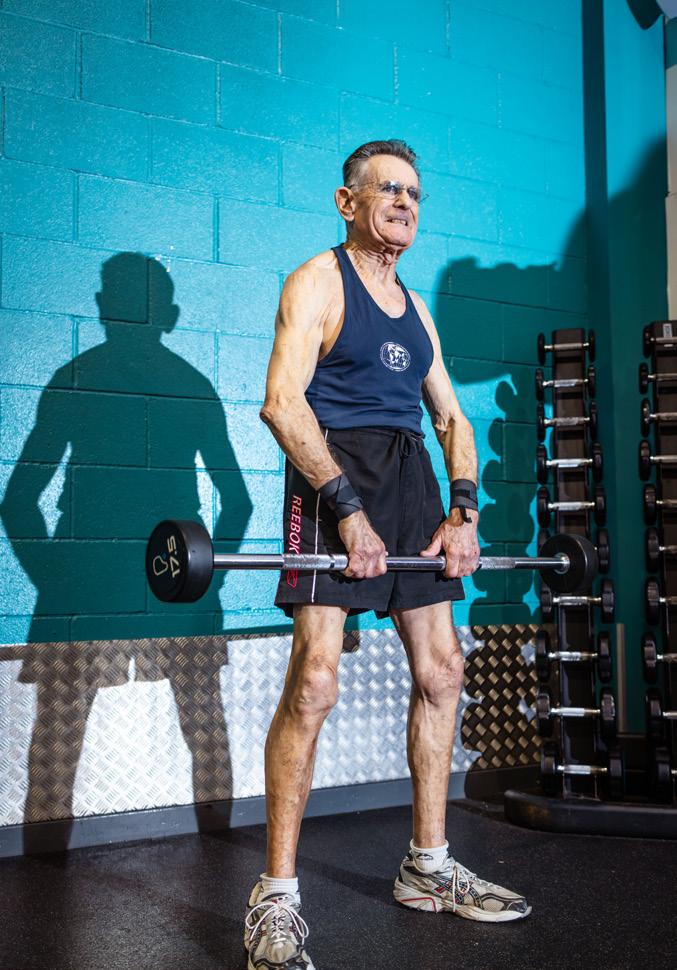
John Little took up running in his late 40s. Almost 40 years later, he’s still on track.
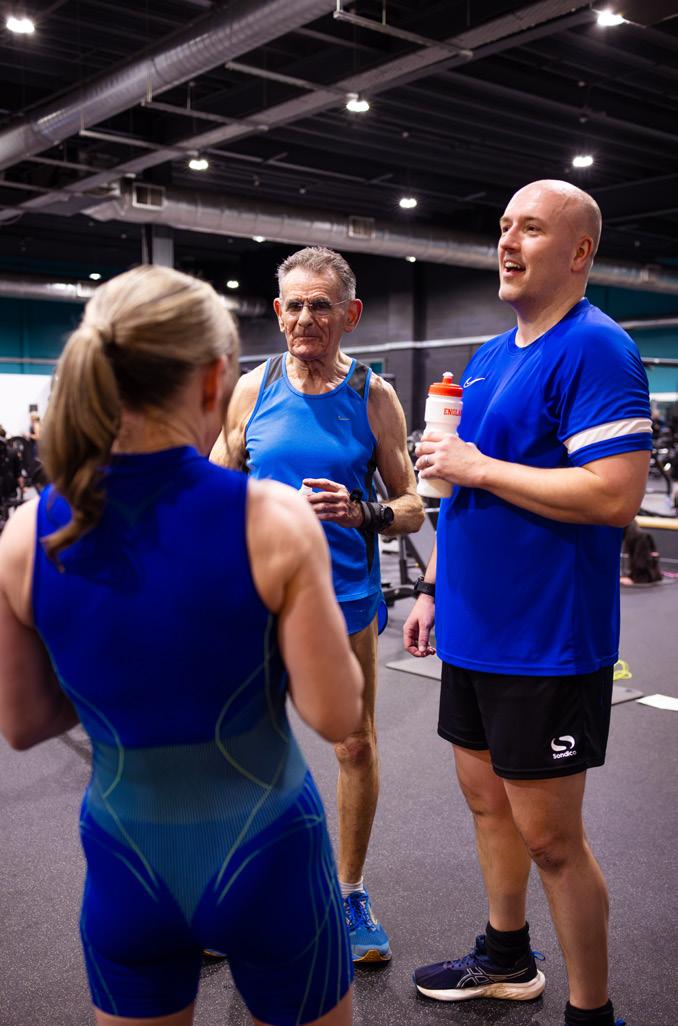
It’s fair to say that John is one of the older runners at his weekly Parkrun session in Warrington. Aged 83, he’s never lost his competitive edge, admitting to a friendly rivalry with a fellow octogenarian and still getting a buzz from crossing the finishing line.
For more information about how to get more active – whatever your age – visit nhs.uk/better-health/get-active
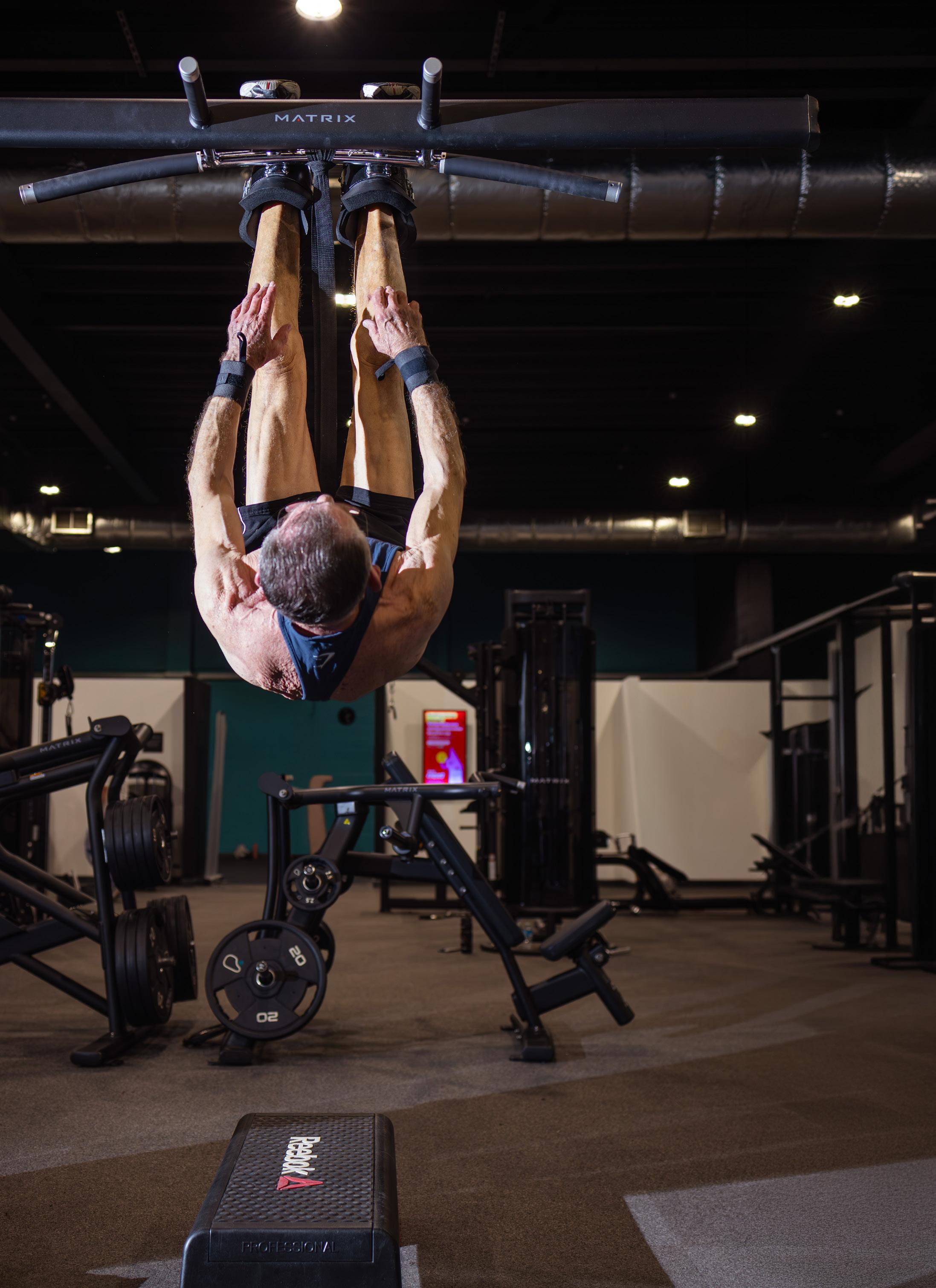
Like many other Parkrunners, he enjoys the friendship and sense of community as much as the run – considered to be a main reason for its worldwide success.
Although his age is no barrier, he has adapted his running style over the years and is now following the Jeffing method of alternating short intervals of running and walking.
John says “It’s ideal for older runners or people recovering from an injury who can’t run continuously. The idea is to give yourself frequent recovery breaks. Jeffing is also brilliant training for

Stay well feel great anyone wanting to take up running for the first time.”
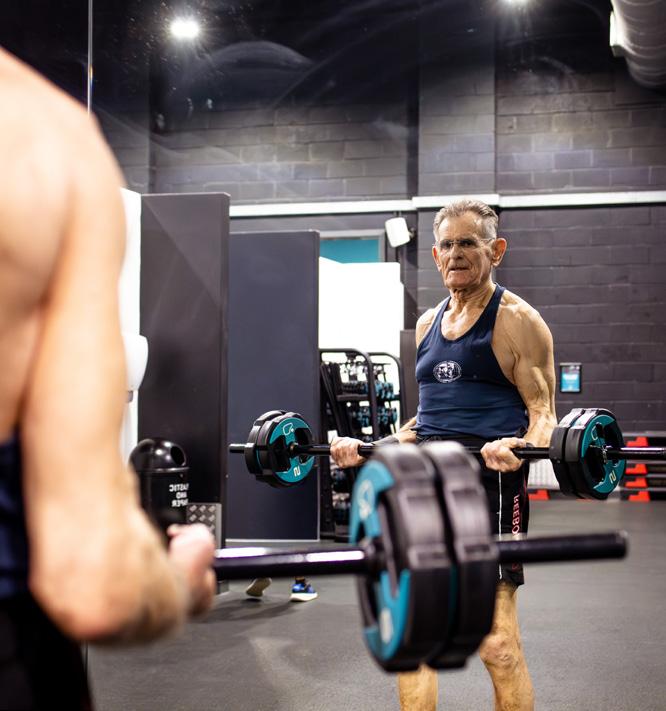
Strength training at a local gym has also helped John keep running, especially after knee surgery 13 years ago. He continues to challenge himself, developing an exercise he calls ‘Bat Abs’ which sees him doing sit ups while hanging upside down from a bar.
But he says that being around people at the gym is just as important for his health as the exercise.
“Ian, my training buddy is actually 40 years younger than I am. I keep up with him though! Having the chance to spend time with friends of all ages has been the secret to my wonderful retirement.”

Parkrun was founded by Paul Sinton-Hewitt in 2004. A club runner, he was unable to run due to an injury and was struggling with his mental health. He arranged to meet up with friends for a weekly timed run followed by a coffee together – a tradition Parkruns uphold to this day.
‘A run, not a race’, the combination of fresh air, exercise, inclusive atmosphere and socialising has a positive effect on mental as well as physical health.
Jeffing is named after the American Olympian Jeff Galloway to improve endurance and reduce injury risk.

GP surgeries now offer Parkrun to patients as part of what is known as ‘social prescribing’. Last year more than 850,000 people attended an event for the first time, some of whom described themselves as previously ‘completely inactive’.
Find your local Parkrun at parkrun.org.uk
Julie Channell, lead physiotherapist in Mersey Care’s Sefton Pulmonary Rehabilitation Team says,
“As we age, there is a gradual reduction in lung capacity, muscle mass and strength. A combination of both endurance exercise, like running, and strengthening exercises will improve how the body uses oxygen.”
Exercise physiologist Rebecca Cuff adds, “Regular resistance training using resistance bands, light weights or body weight - for example squats or wall push ups – make our muscles stronger to use oxygen for the energy we need to complete everyday tasks.”
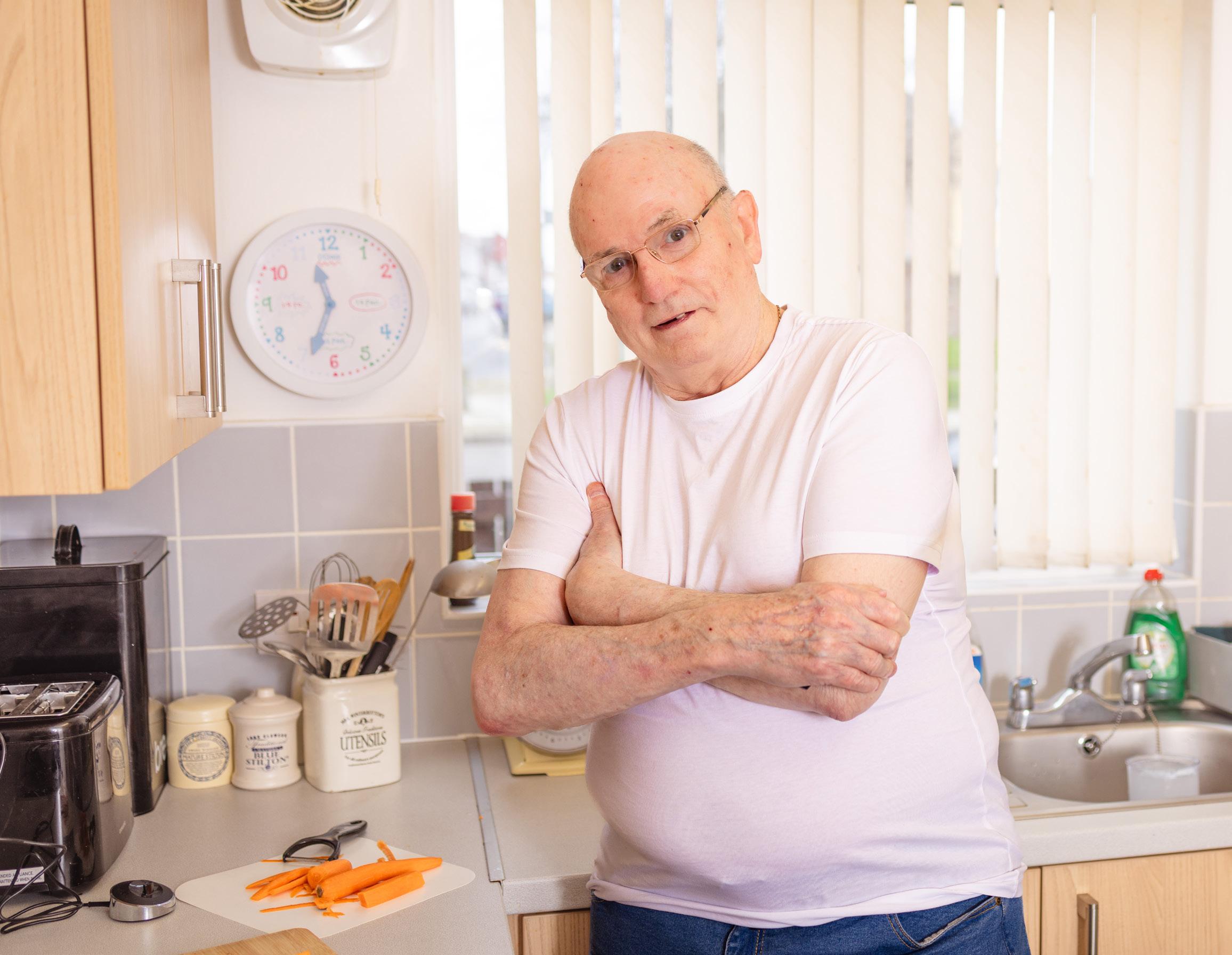
As a young lad delivering fruit and veg from the market to Liverpool’s top restaurants, Michael Murphy got his first glimpse of bustling kitchens and chefs in white uniforms.
“I saw them there looking all smart and important and I thought ‘I want to do that!’”
After catering college, he specialised in French cuisine and was soon working in top hotels and luxurious cruise liners, catering for celebrities like Cilla Black and the Bee Gees.
Married to his “wonderful” wife Marian for 30 years, he was devastated when she passed away. Referred to The Life Rooms by his GP to help manage his depression, he catches up with friends and joins in training courses most days.
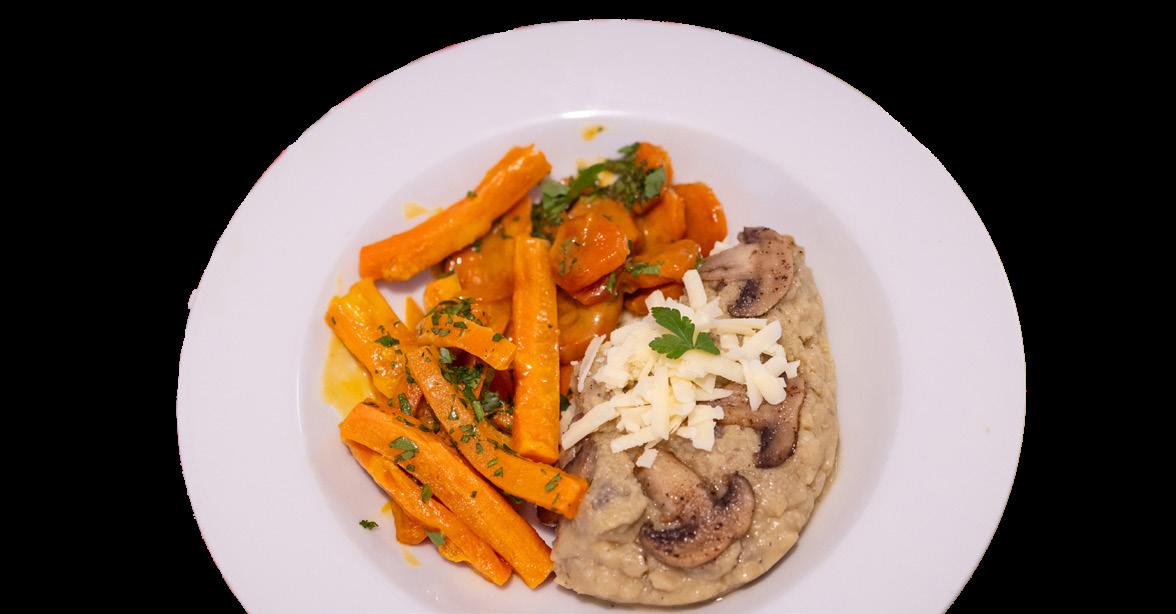
Now aged 70, he understands the importance of a varied diet including more fibre and he shares his favourite vegetarian casserole recipe.
“Lentils aren’t embraced in this country the way they are on the Continent but they are so versatile and tasty.”
For an extra fibre and vitamins boost, add peppers, diced celery, diced leek or garden peas to the lentil dish when you’re frying the mushrooms.
For pudding, Michael says simple is best. “You just can’t beat fresh raspberries – a little bowl full of goodness and just what the doctor ordered.”
16g
Michael’s Lentil
with Vichy carrot side
Prep: 15 minutes
Cook: 40 minutes
Serves 4 Ingredients
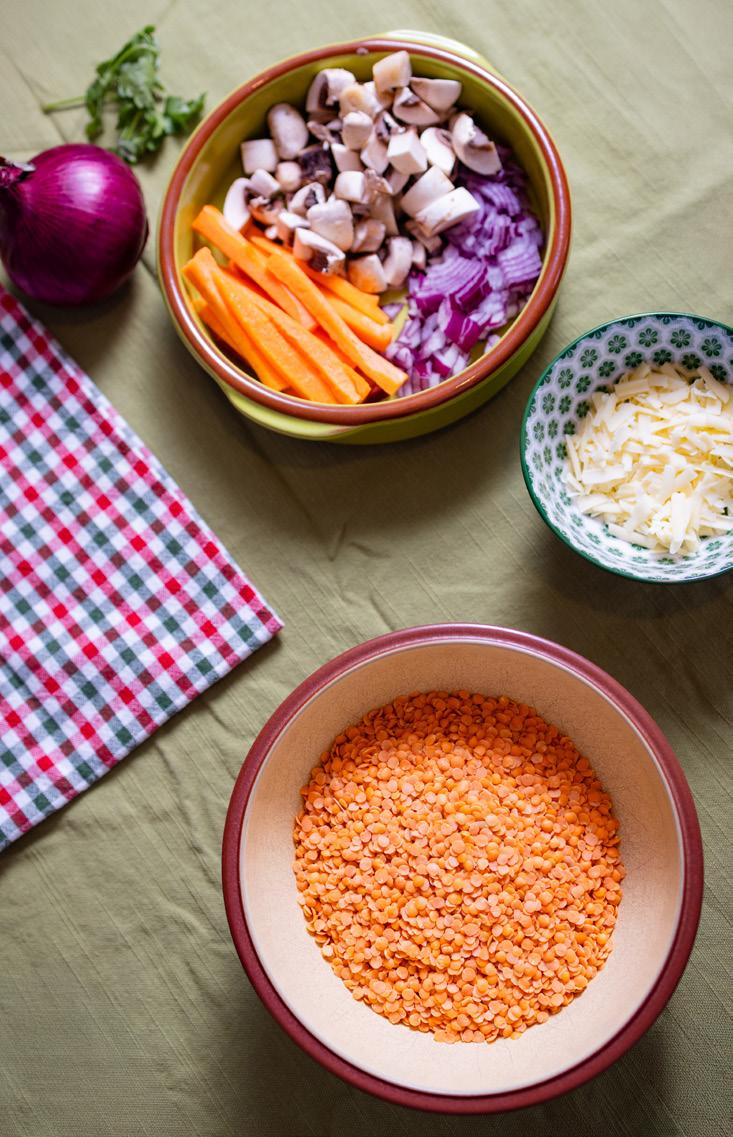
• 1 medium onion, diced
• 225g red or yellow dried lentils, rinsed
• 100g button mushrooms, sliced or quartered
• 700ml vegetable stock
• 1 tablespoon cooking oil
• Black pepper to taste or try adding sage and thyme, smoked paprika, soy sauce or curry powder.
Optional toppings – grated cheese
Method
1. Pre-heat the oven to Gas 5/190°C.
2. Heat oil in a large pan or frying pan, then add onions and mushrooms. Fry for around 6 minutes. Reserve a few fried mushrooms for garnish.
3. Add lentils and stir.
4. Add stock and bring to the boil. Simmer for 10 minutes.
5. Transfer to a casserole dish and cover with a lid or foil. Bake for 30 to 40 minutes until soft. Remove lid and bake for 10 minutes more until creamy.
125g of raspberries
7g fibre

Vichy carrots
8g fibre
Vichy carrot Ingredients
• 450g carrots, peeled and cut lengthways into 1/4inch slices
• 15g butter
• 175ml pure orange juice
• ¼ teaspoon ground ginger
• Chopped parsley to taste.
1. Melt butter in a deep frying pan. Stir in orange juice and ginger.
2. Bring to the boil.
3. Add carrots. Reduce heat, cover and simmer for 10 minutes or until carrots are tender.
4. Remove cover and turn up heat to reduce liquid to a syrupy glaze. Add more orange juice if required. Transfer to a heated dish and sprinkle with fresh parsley.
Bon appetit! Lentils

Protein has taken centre stage in health debates and dietary advice recently but now it’s the turn of a new nutrition hero - fibre.
Mersey Care dietitian Alan Haddy says, “Fibre’s not just good for your digestion. Research links higher fibre consumption to reduced risk of heart disease, type 2 diabetes and certain cancers. It can also help stabilise blood sugar, keep energy levels even and support healthy weight management by helping you feel fuller for longer.”
Most of us aren’t getting nearly enough. Despite the NHS recommending 30g of fibre a day, the average UK adult manages barely half that amount.
There’s good news - eating more fibre doesn’t mean a complete diet overhaul.
It is important to increase your fibre intake gradually, drink plenty of water and your body will soon thank you. We know protein builds muscles, but fibre helps build a healthier, happier you.
fibre rich tasty tips
• Add beans, vegetables, chickpeas or lentils to a chilli, curry or pasta sauce
• Swap out white rice for brown
• Choose wholegrain cereals and bread over white
• Try fruit or seeds on porridge
• Snack on fruit, nuts or popcorn.
Speak to your GP or dietitian if you have concerns about increasing your fibre intake, especially if you have chronic constipation, an existing bowel disease or a related medical condition.
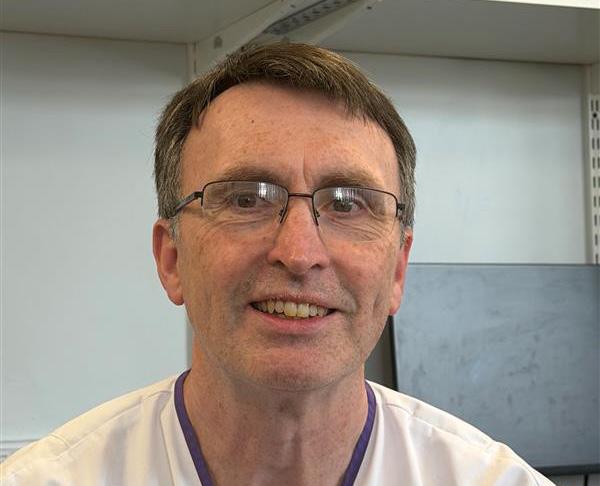
Mossley Hill Hospital opened its doors in December 2025. We talk to those who stay and work in the new state of the art facility
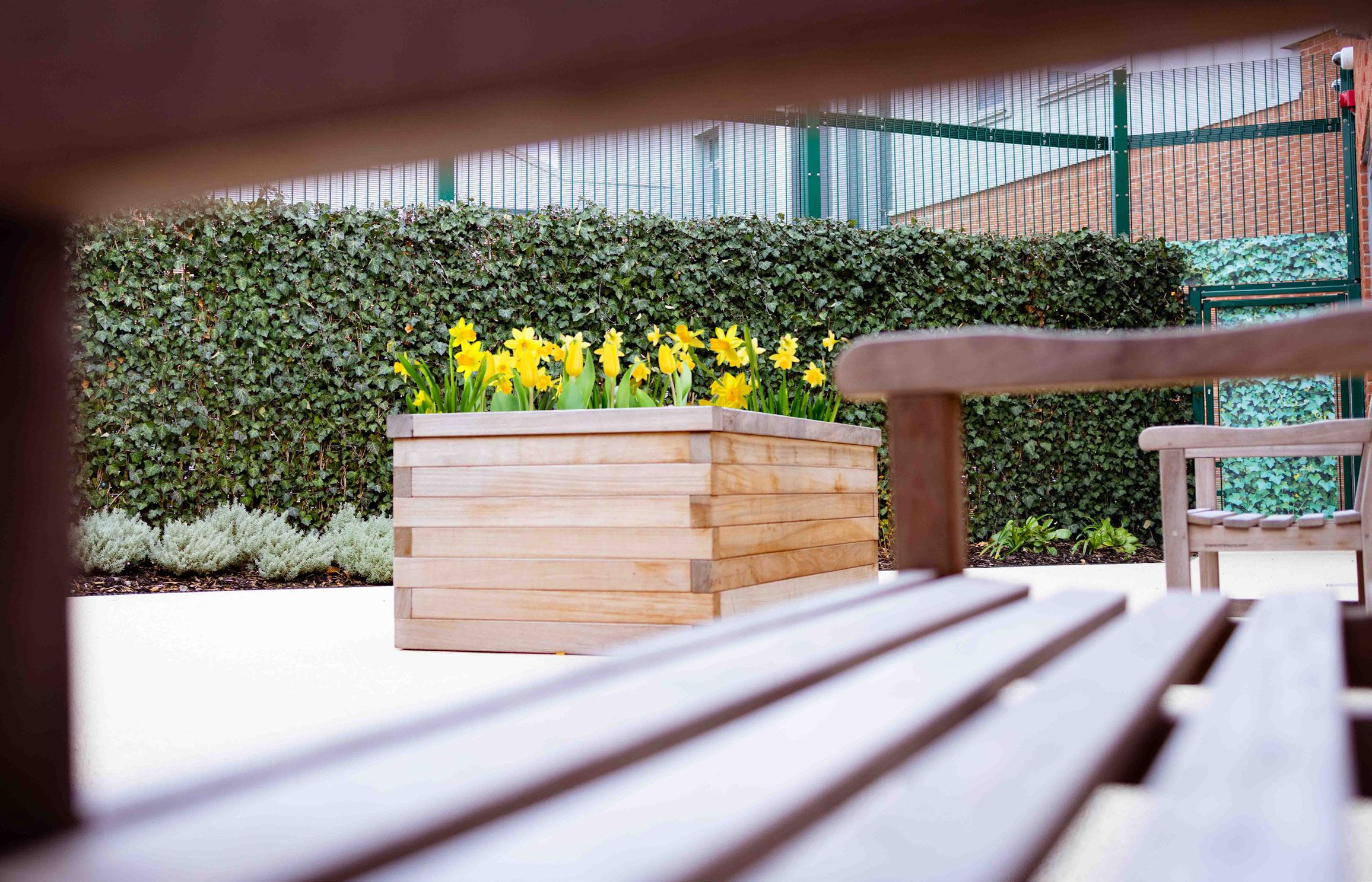
Natural light, a pleasant ambience, access to outdoor space and a connection to the wider world can help us all feel happier and healthier. For patients healing after a mental health crisis and the people taking care of them, they are crucial.
Step inside the new Mossley Hill Hospital and you notice the sunlight pouring through wide windows into bright and airy rooms, opening onto peaceful gardens.
The crisp design and spotless facilities are expected in a newly built, state of the art hospital, but there is a sense of calm, peace and comfort.
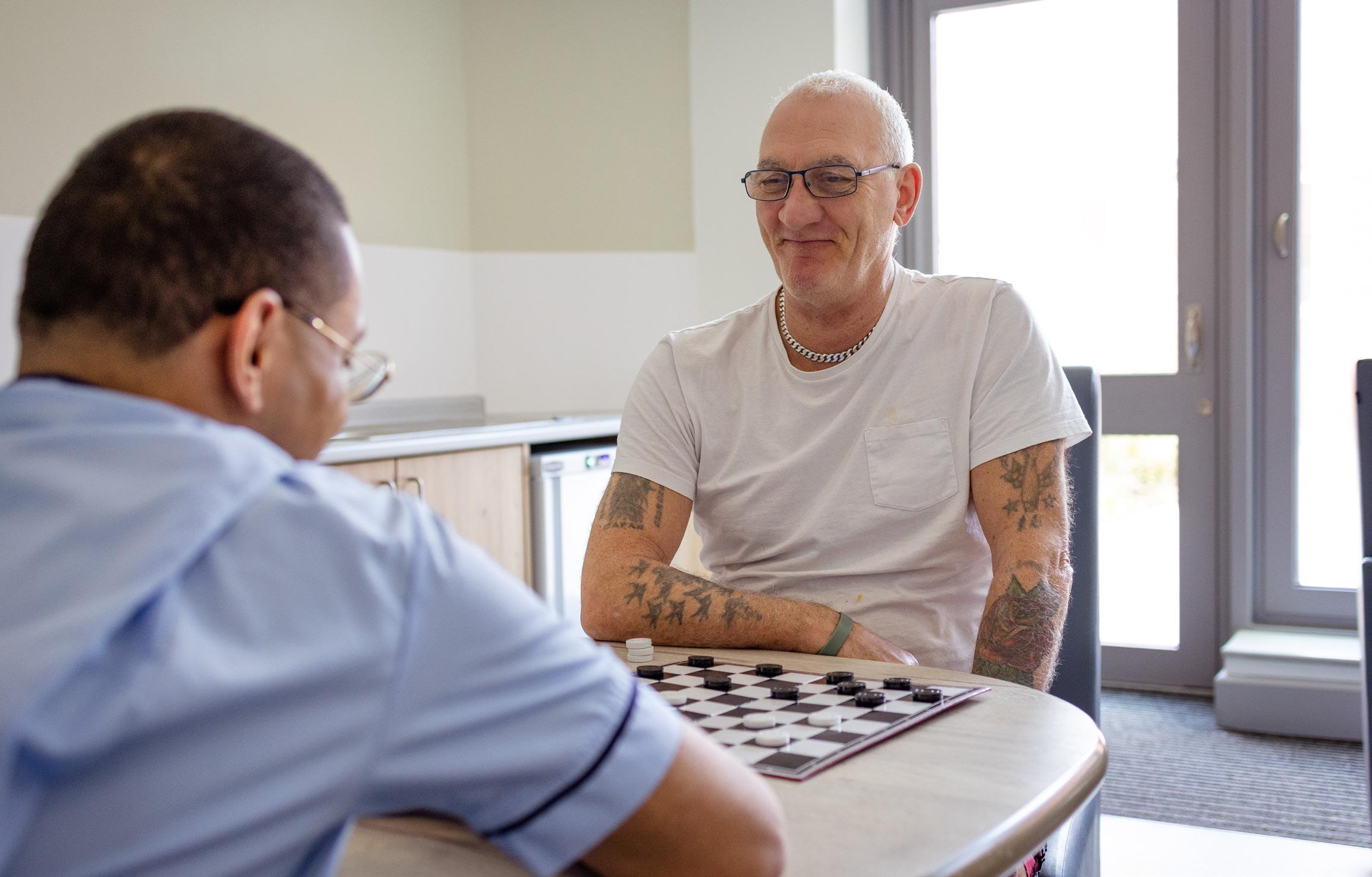
The hospital’s design was shaped by the voices, experiences and insight of service users and staff. For the clinical teams based there, the building is not just beautiful – it’s purposeful. The layout encourages and enables people to connect with others while giving service users the autonomy and freedom of choice they need during difficult times.
Occupational therapist Laura Baker has seen lifted moods and a willingness to participate in activities and sessions to help people recover.
“This building gives people their dignity – it promotes their independence and protects their privacy.”
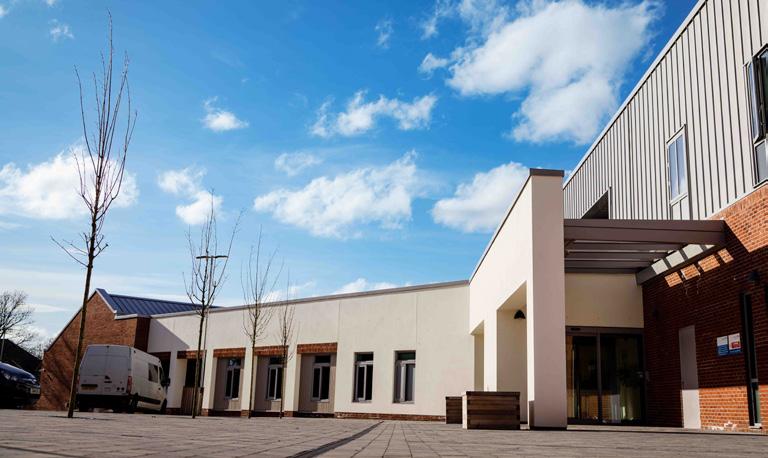
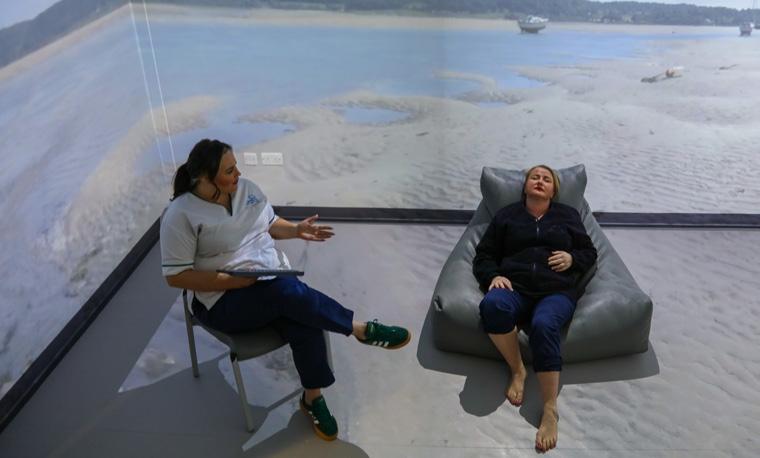
Mark Swan, Director of Mersey Care’s Mental Health Inpatients, says, “The new Mossley Hill represents a major step forward in how we care for our communities. A contemporary, therapeutic setting grounded in dignity, privacy and recovery provides patients with more tranquil, secure and individually tailored experiences.
“For our team, the improved layout, natural light and purpose designed clinical spaces make an enormous difference supporting teamwork, wellbeing and the high quality care they strive to deliver every day. Mossley Hill isn’t just a new building - it’s a statement of our commitment to deliver outstanding mental health care for the future.”
For many service users, moving to Mossley Hill has been life changing. The build marks an end to mental health dormitory wards in Liverpool and the private ensuite rooms give people a sense of control that’s often missing during a mental health crisis
Before the move, Anthony was cared for in a much older hospital. He feels different here.
“This place is a breath of fresh air. I’m lot happier. I didn’t expect it to be as good as it is Décor and ambience are so important and here, it feels so calm and serene.”
Having space to call his own has made a huge impact on how he feels. He proudly shows off his ensuite room which he keeps immaculate and has made truly personal, decorating it with treasured photos and keepsakes.
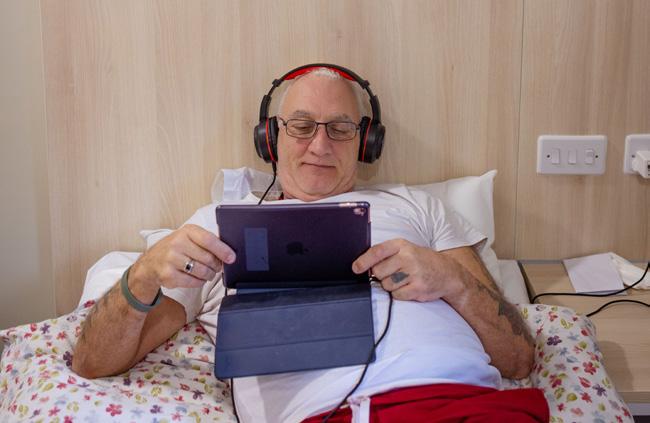
“Before, I was sharing a ward with five others. Now I have my own TV. I can have it as warm or cool in here as I like. If I want the light on, it’s not disturbing anybody. I love having the window open all day - none of this is possible on a ward. But here I feel in control of my environment.”
Having a room that feels personal and safe means people can fully relax and sleep better.
“I can listen to my music and chill out,” Anthony says. “There’s a real sense of peace in this place.”
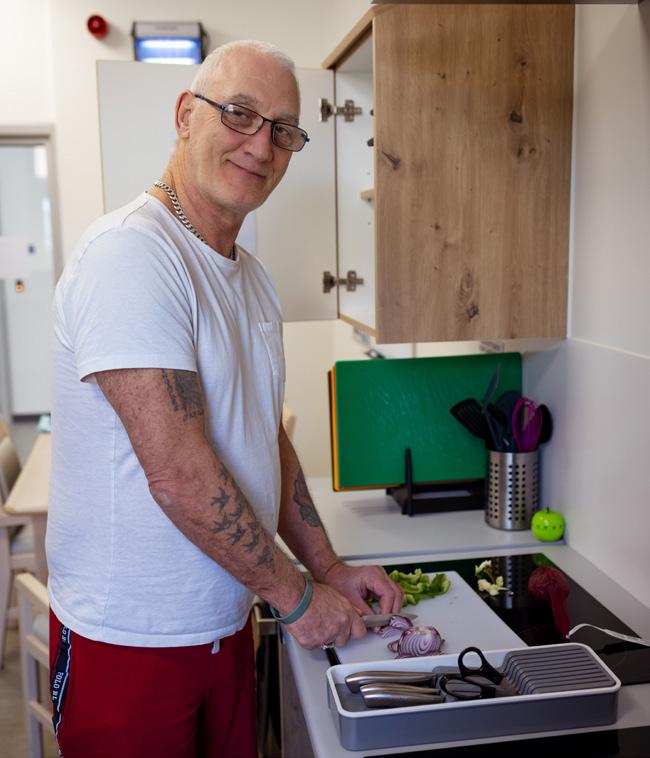
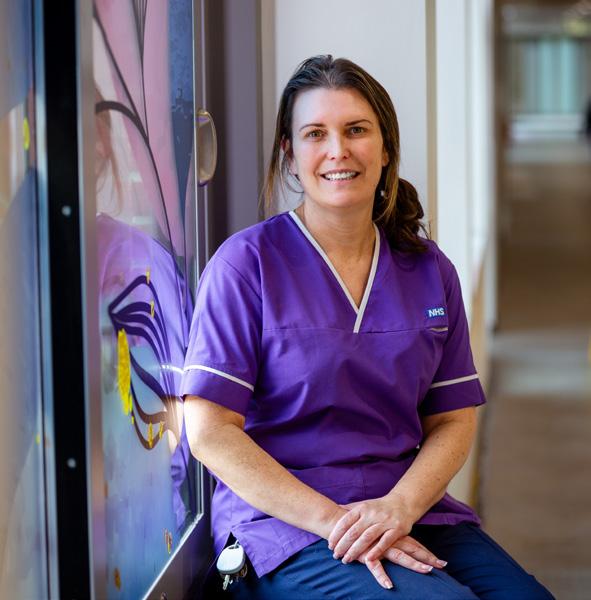
Facilities management assistant Ellouise Sweeney takes pride in keeping the hospital looking clean and new.
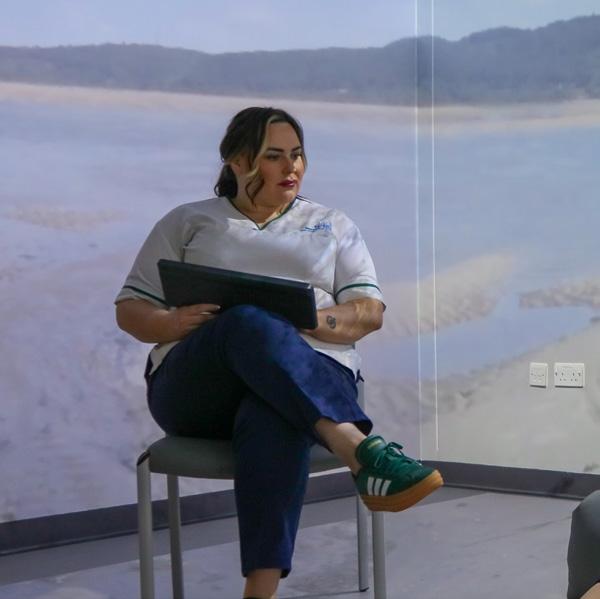
“This building gives people their dignity – it promotes independence and protects privacy. Self care is part of recovery and the ensuite rooms mean we can help people build a routine where they feel safe with everything they need around them.”
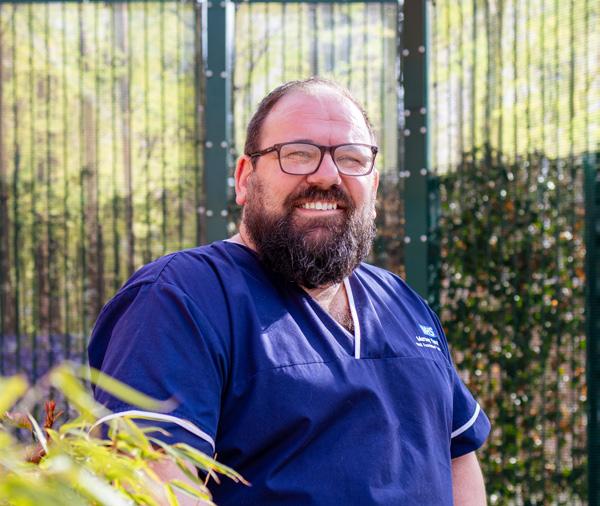
“One of the most transformative features for our patients is the freedom to access outdoor spaces at any time without having to be accompanied by a member of staff.
It has a massive impact on wellbeing - people have independence and that’s so important. The communal spaces help us support people who might not have left their rooms before. It brings people together.”
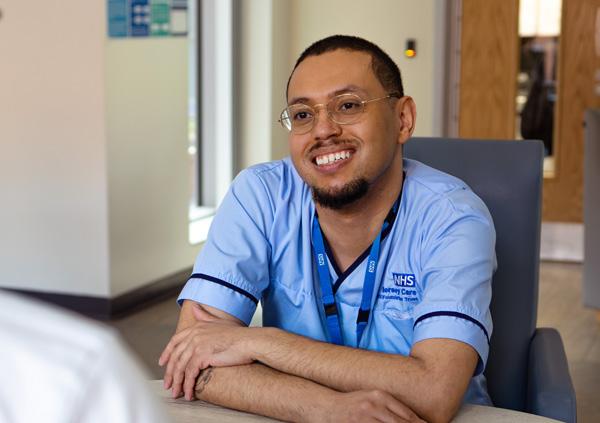
“There’s a lovely atmosphere here. We feel part of a bigger team. If we need advice, we can just walk up the corridor. The building helps us work together for the good of the patients.”
Staff working at Mossley Hill tell us what the new hospital means to them
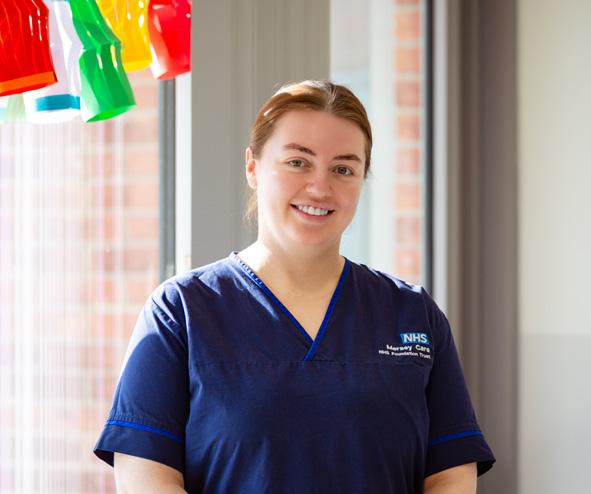
“I’m proud to work here. Quiet spaces for patients to decompress make a huge difference. Staff even have separate break rooms and agile working spaces. It makes me feel valued.”
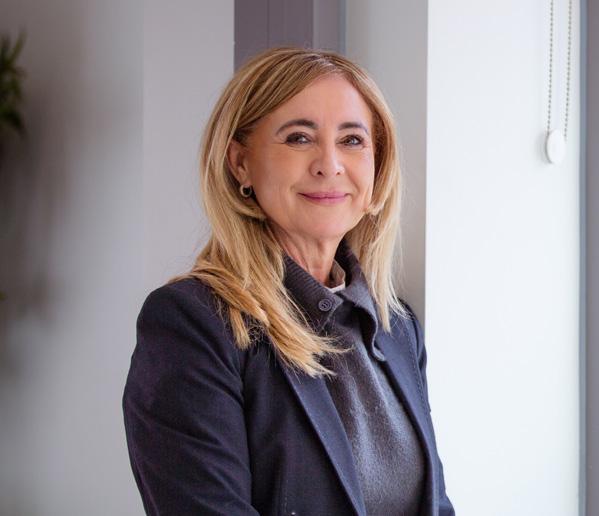
Jan takes the time to make sure family and friends of service users feel confident and comfortable as soon as they arrive.
“People’s loved ones are part of their recovery – we want them to know how valued and important they are. This place is full of light and spaceit lifts your spirits.”
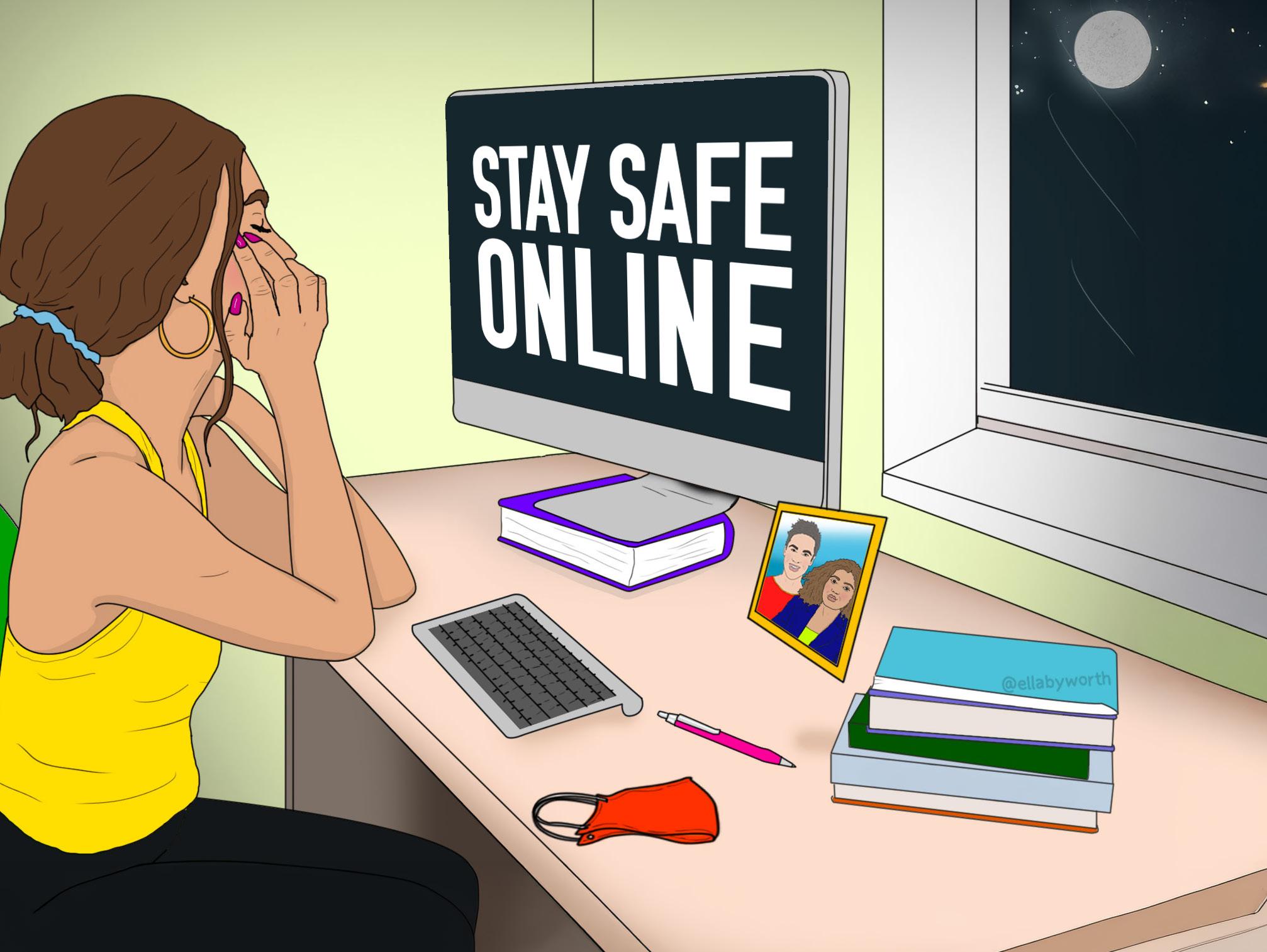
Credit: Ella Byworth
One in five adults fell victim to scammers last year in the UK with more than £9.4 billion being stolen from customers. Now, according to fraud prevention service Cifas, children are increasingly being targeted – often by shopping scams and fake job ads.
There can be warning signs. Be wary of a text or email containing a time limited offer, encouraging you to respond quickly. Emails and websites might be designed to look like a brand you know but any spelling or grammar mistakes should be a red flag. Think carefully before sharing any personal information or transferring money.
Mersey Care’s Mental Health Support Team in schools is supporting young people and their parents to stay safe online. They offer webinars and workbooks to help parents teach their children how to make good decisions.
Louise Hughes, Whole School Approach and Participation Lead at Mersey Care, says, “We’d encourage families to make informed decisions about how to stay safe online as well as using safety settings. Have a family chat to agree which apps and websites are appropriate and teach young people it’s okay to say ‘no’ if they’re asked to share anything personal or send money. Make sure they know how to block and report anyone who has made them feel unsafe.
• Keep software and apps updated
• Use strong, unique passwords for accounts
• Check bank accounts for unusual transactions.
“Above all, let them know they can come to you if anything has worried them and that you won’t overreact.”
If you suspect a scam, don’t reply, click on any links, call any phone numbers or make any payments. Contact the organisation directly using an email address or phone number you have checked is correct. Report potential scams by forwarding suspicious emails to report@phishing.gov.uk and text messages to 7726.
Scan for more about Mersey Care’s digital workbooks and webinars for children, parents and teachers.
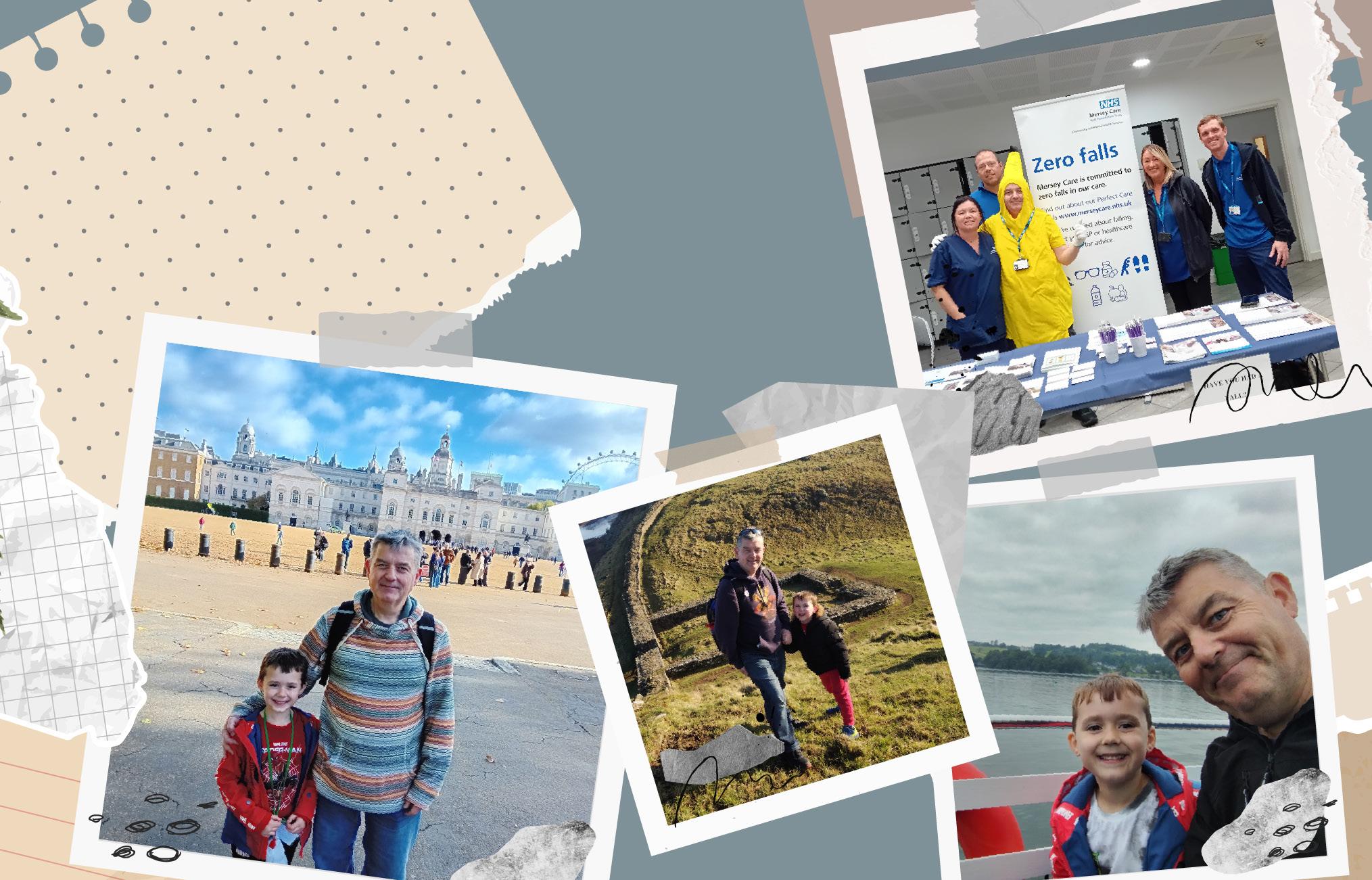
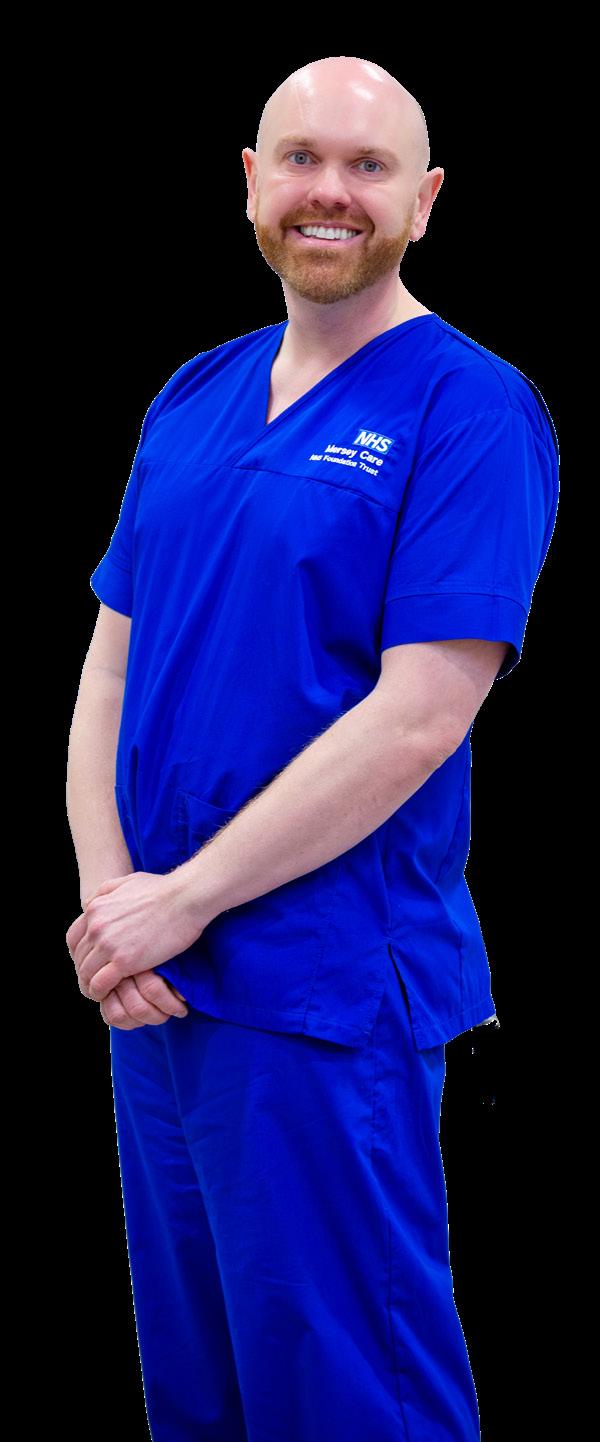
Jason O’Flaherty remembers a stranger helping his family when he was young. That has driven him to help others.
“I hadn’t realised our family was homeless, I was only about ten. We’d moved around a bit and one night someone from the council took us to a flat we were supposed to be moving into. When they opened the door, the whole place had been ransacked. We had nowhere else to go so the housing officer took us home with them and my parents, sister and I stayed for a couple of weeks. Experiences like that shape you - I am now the trustee of a homeless charity and have hosted two Ukrainian families since the war began in 2022.
A qualified nurse, for 30 years I’ve been supporting Romany children in Romania, who are
often marginalised. I started as a volunteer training childcare staff working in orphanages. After about a year, I set up a community project called Equal Start, supporting the children in their early years of education. One of those children is now completing a PhD and delivers educational sessions all over the world. I am so proud.
One of my best friends, Tesha, was from Tanzania and together we worked on a project to refurbish a school in his home village. An NHS mental health nurse for 30 years, tragically he died of COVID before the work was finished.
As part of Tesha’s legacy, I have helped raise more than £10,000 to build a new nursery block for the school and my son Caleb and I are due to go out soon to open it.
As a member of Mersey Care’s Health and Safety team, I am passionate about creating a fair and equal environment for everyone.
One issue close to my heart is to help create a good work/life balance for staff. Being a dad is the most important role of my life and as a single parent, I want to give a voice to my colleagues across the Trust who juggle family and work commitments.”
Our service users, carers, staff and members of the public have the opportunity to influence the way your health services are run. Find out what it means to be a Governor by visiting merseycare.nhs.uk/council-governors