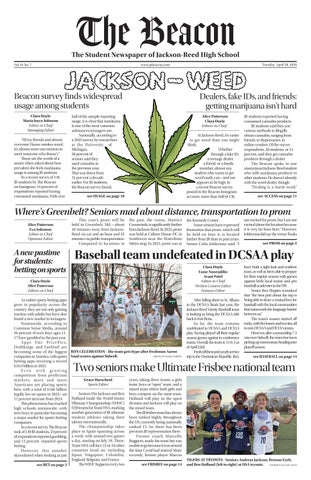
JACKSON WEED I
Beacon survey finds widespread usage among students
Clara Doyle
Maria Joyce-Johnson Editor-in-Chief Managing Editor
“All my friends and almost everyone I know smokes weed, it’s almost more uncommon to meet someone who doesn’t.”
Those are the words of a senior when asked about how prevalent she feels marijuana usage is among JR students.
In a recent survey of 136 JR students by The Beacon on Instagram, 54 percent of respondents reported having consumed marijuana. With over
half of the sample reporting usage, it is clear that marijuana is one of the most common substances teenagers use.
Nationally, according to a 2025 survey by researchers at the University Michigan, 26 percent of seniors said they used cannabis in the previous year. That was down from 35 percent a decade earlier. For JR students, the Beacon survey found,
see USAGE on page 10
Dealers,

fake IDs, and friends: getting marijuana isn't hard
Alice Patterson
Clara Doyle Editors-in-Chief
At Jackson-Reed, it’s easier to get weed than you might
Whether through a fake ID, a teenage dealer, a friend, or a family member, almost any student who wants to get weed easily can—and use appears to be high. In a recent Beacon survey posted to the Beacon Instagram account, more than half of 136
JR students reported having consumed cannabis products.
JR students said they use various methods to illegally obtain cannabis, ranging from friends, to dispensaries, to online vendors. Of the survey respondents, 20 students, or 15 percent, said they get cannabis products through a dealer.
The Beacon spoke to one anonymous Jackson-Reed student who sells marijuana products to other students. He doesn’t identify with the word dealer, though.
“Dealing is a harsh word,”
see ACCESS on page 11
Where's Greenbelt? Seniors mad about distance, transportation to prom
Alice Patterson
Eva Solomon Editor-in-Chief
Opinions Editor
A new pastime for students: betting on sports
Clara Doyle Alice Patterson Editors-in-Chief
As online sports betting apps grow in popularity across the country, they are not only gaining traction with adults but have also found a new market in teenagers.
Nationwide, according to Common Sense Media, around 36 percent of teen boys ages 1117 have gambled in the past year.
Apps like PrizePics, DraftKings, and FanDuel are becoming some of the biggest companies in America, with sports betting apps receiving a record $16.9 billion in 2025.
Even with growing competition from prediction markets, more and more Americans are placing sports bets, with a total of $166 billion legally bet on sports in 2025—an 11 percent increase from 2024.
This phenomena has reached high schools nationwide, with teen boys in particular becoming a major market for sports betting companies.
In a recent survey The Beacon took of 130 JR students, 23 percent of respondents reported gambling, and 12 percent reported sports betting.
However, this number skyrocketed when looking at just
This year’s prom will be held in Greenbelt, Md.—about 40 minutes away from JacksonReed via car and an hour and 45 minutes via public transportation. Compared to locations in
the past, the venue, Martin’s Crosswinds, is significantly further from Jackson-Reed. In 2022, prom was held at Culture House DC in Southwest near the Waterfront Metro stop. In 2023, prom was at
the Kennedy Center. Some seniors have expressed frustration that prom, which will be held on June 6, is located farther from JR than in past years.
Senior Celia Joldersma said, “I
am excited for prom, but I am not excited about the location because it is very far from here.” However, Joldersma did say the venue “looks
see PROM on page 2
Baseball team undefeated in DCSAA play
Sidwell.
Clara Doyle Esme Nooruddin Avani Patel Editor-in-Chief
Written Content Editor
Features Editor
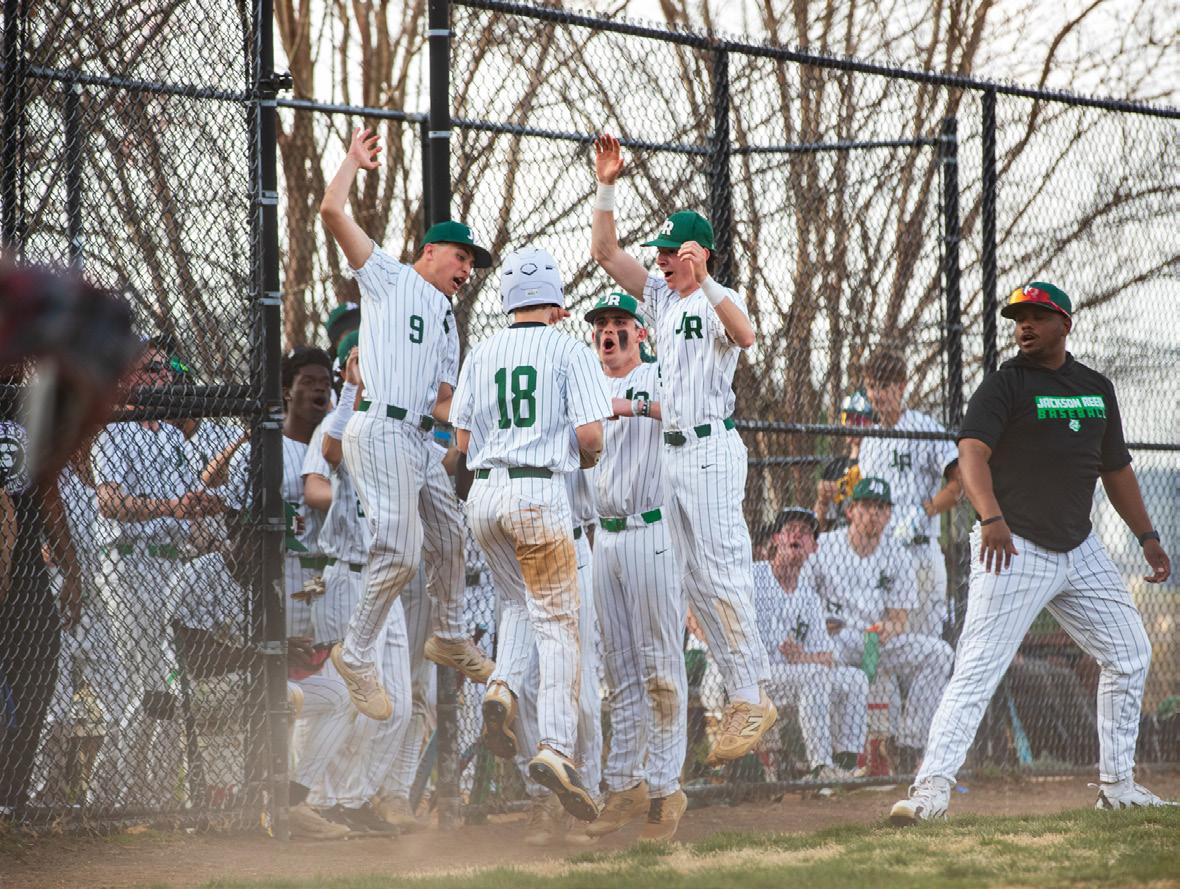
After falling short to St. Albans in the DCSAA finals last year, the Jackson-Reed Varsity Baseball team is looking to bring the DCSAA title back to Fort Reno.
So far, the team remains undefeated in DCSAA and DCIAA play, having played all their regular season games against in-conference teams. Overall, the team is 13-6-3 as of April 23rd.
Fresh off the team’s yearly service trip to the Dominican Republic, they
have built a tight-knit and resilient team, as well as been able to prepare for their regular season with games against both local teams and pro baseball academies in the DR.
Senior Ben Shapiro remarked that “the best part about the trip is being able to share a mutual love for baseball with the local communities that transcends the language barrier between us.”
The team’s season started off rocky, with five losses and two ties, all to non-DCSAA and DCIAA teams.
However, after a resounding 7-3 win over Sidwell, the team has been picking up momentum heading into playoff season.
see BASEBALL on page 14
Two seniors make Ultimate Frisbee national team
Grace Harscheid Sports Editor
Seniors Dre Jackson and Ben Holland made the World Junior Ultimate Championship (WJUC) U20 teams for Team USA, marking another generation of JR ultimate student athletes taking their talents internationally.
The championship takes place in Spain spanning across a week, with around two games a day, starting on July 18. There, Team USA will face 15 or 16 other countries head on; including Japan, Singapore, Colombia, England, Belgium, and France.
The WJUC happens every two
years, taking three teams: a girls team, boys or “open” team, and a mixed team where both girls and boys compete on the same team. Holland will play in the open division and Jackson will play on the mixed team.
The JR frisbee team has always been ranked highly throughout the US, currently being nationally ranked 13. So, there has been previous JR representation there.
Former coach Marcello Ruggiero, made the team but was unable to go because it was around the time Covid had started. More recently, former player Marcus

PHOTO BY DANIEL KREPPS
COURTESY OF AMY LEVIN
TIGERS AT TRYOUTS - Seniors Andreas Jackson, Benson Ezeh, and Ben Holland (left to right) at USA tryouts.
RUN CELEBRATION - The team gets hype after freshman Aaron Saad scores against
Despite lower enrollment, budget woes force staff cuts
Avani Patel Tessa Frantz Features Editor Section Copy Editor
The Jackson-Reed budget is set to increase for the 20262027 academic year. However, the expanded funding will not stretch as far as in previous years as a result of increasing teacher salaries.
While a larger budget might appear to allow for more programs, the majority of the increased funding is already accounted for by the rise in salaries, leaving the JR administrators to make decisions about how the remaining funding should be utilized.
Every year, the JR budget is determined by a number of factors including the number of students set to enroll, the number of at-risk students, and the number of special programs the school wishes to include.
Additionally, DCPS has outlined certain academic expectations, pushing JR to include specific courses that support students on their post-
secondary journey.
For the upcoming academic year, JR is expected to have a total student population of 1,633, the first time it's been under the building capacity of 1,700 in recent years.
With this information, Principal Sah Brown, along with input from other administrations, parents, and students makes his final decisions.
Brown sends out a survey to all faculty and parents to better understand what they wish to see from the budget for the following year; with those results he has “a pulse on how everybody's thinking about the budget,” though it sometimes leads to “very hard decisions to make.”
In addition to not only having to work with faculty and parental wishes, JR must also balance with educational expectations DCPS wants to see. DCPS, in recent years, has begun prioritizing postsecondary preparations to allow for more students to have a more concrete plan as they exit high school.
JR offers 11 different
National Academy Foundation (NAF ) academies that are regulated nationwide, but placed on heavy emphasis by DCPS. When asked about the consideration of NAF Academies in the planning of the budget, Brown commented that “it[‘s] prioritized [at DCPS central office], and we prioritize here with our budget as well.”
According to the DCPS Office of the Secondary Schools, the Career and Technical Education Office aims “to ensure that DCPS schools are offering high-quality CTE programs of study and Career Academies that align with the District’s high-wage, highdemand careers.”
With the expansion of the Academy of Global Studies, the Academy of Finance, and the addition of courses to preexisting academies, this can limit funding available to other classes.
With a strong push on NAF courses, other departments may be facing potential losses and cuts. Next year, JR will lose all of its area study classes; with the Social Studies department taking a bigger hit than other
Italian exchange program comes to an end after many years
make the trip, liability requirements prevented her from chaperoning, leaving the program to carry on for one final year without her.
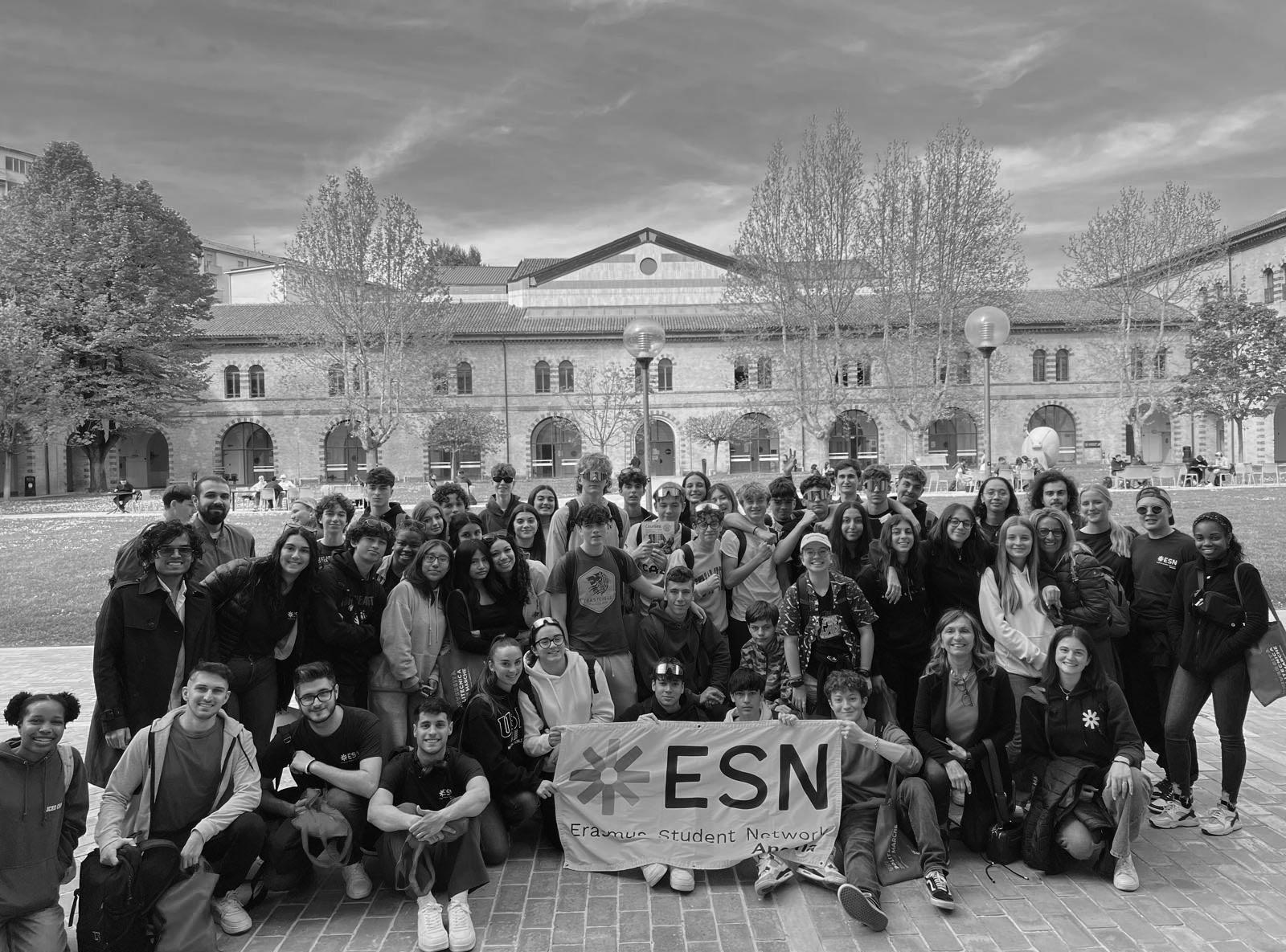
Jackson-Reed High School's Italian exchange program will conclude this year, ending a tradition that connected DC students with peers from Papinara, Italy.
The program paired American host families with Italian students traveling to DC to practice their English and learn a new culture. For years, it was one of JR's few international programs, but between policy changes, fewer kids enrolling, and a key teacher retiring, this will be the final visit.
"I'm sad that it's ending, but it's time for a new chapter," said Social Studies teacher Robert Geremia, the program's current teacher sponsor.
The Italian students' lead teacher retired last year, and though a dedicated group still wanted to
Additionally, Hardy Middle School's Italian program had also been shrinking for years and as of this year, Hardy no longer feeds into JR, cutting off what remained a large portion of students arriving with a foundation in the language.
DCPS has also reshaped what international exchange can look like going forward. Students can't just stay directly with families anymore, and future programs would require an outside agency to match students with families, a shift that would roughly triple costs, pushing a roughly $2,000 trip to around $6,000.
Recruiting host families proved challenging even this year. Geremia began outreach in May of last year, secured a sufficient number of
departments like English and Math.
Though there are some staff cuts that are occurring for the following year, Brown remains steadfast “to prioritize classroom teachers,” particularly in response to concerns about the large class sizes and the burden placed on teachers managing multiple courses.
In addition, a crucial concern to the school and its administrators is the availability of student support services present. According to DCPS Budget Staffing Ration Allocation, there is supposed to be one school counselor for every 250 high school students.
JR currently has seven school counselors, which excludes the two psychologists and six additional social workers, meaning the school meets, and slightly exceeds, the recommended ratio. Brown further emphasized that mental health remains a key concern voiced by both students and parents, and that “school counseling is a priority.”
Although JR’s student population will officially be under the maximum capacity
PROM
from page 1
families only weeks before the students' arrival, and arranged last-minute backup hosts along the way. "There's more reluctance and less willingness to host when the exchange isn't reciprocated," Geremia said, pointing to DCPS policy, not the school itself, as the driver.
For the families who did sign up, the week quickly became something more than a hosting obligation. First-time host, sophomore Jojo Gavin, described the experience as an immediate highlight. "My student is from a very small seaside town and is so sweet," Gavin said. "We've gone out to dinner, walked around Georgetown, and gone bowling. Other than being able to show them around our city, we've become very close and created new friendships.”
Sophomore, Luke Suardi, whose family has hosted every year and who is hosting two students this year, knows that feeling well. "It is one of the best ways to make international friends, learn new cultures, and gain new skills," Suardi said. For the Suardis, those friendships have outlasted the week itself; they've kept in touch with every student they've hosted, and last year traveled to Italy to visit one near the very town where the program's school is located.
As the program closes, what the program gave to all students is probably its biggest legacy. Most host families had no Italian background, making the exchange, for many, a first real window into another culture. For a school that prides itself on diversity and global awareness, that window is now closing.•
of the school building, the portables will be remaining for another year.
JR has no formal control over the addition and removal of the portables from property grounds. Brown described it as “a unique structure in that the addition and removal comes from the capital [funds].”
While there is some indication that the portables could be removed during the academic year of 2027-2028, this timeline remains uncertain and dependent on further updates from the Capital Fund Project.
Even though DCPS has allocated funds for JR based on an algorithm, school principals do have the ability to appeal the amount given if they believe there isn’t sufficient funding to meet the school’s needs.
However, this is a very rare occurrence, meaning most of the time the money given during the initial allocation is most likely the final amount.
The final budget allocation to JR will be published at the start of the next academic year. •
really nice.”
Senior Anna Gordus expressed a similar sentiment, saying, “I’m definitely not happy with the location because it’s pretty far and it means I’ll spend around half my night commuting.”
Because of distance, some seniors are struggling to navigate transportation to and from prom. On public transportation, the trip involves taking a bus, the Green line on the Metro, another bus, and a total of 20 minutes of walking.
Senior Jackson Alexander said he “feels like the venue for prom this year creates an unnecessary amount of financial stress on students.” He added that “it’s hard for a lot of people to find ways to affordably get somewhere that is so far away when transportation costs so much money.”
“It would be much more practicable for the administration to hold prom at a venue in DC that is more accessible,” Alexander added.
One anonymous senior pointed out concerns about students' potentially drinking and driving . “It’s terrifying that the administration hasn’t considered that kids are going to be drunk driving to prom,” the student said. “People can’t afford to rent private transportation, and public transportation takes forever. Kids are just going to drive drunk.”
Principal Sah Brown said the administration is “considering ways to address the transportation concerns that [they] have heard.” But a specific plan had not yet been announced as of Beacon publication.
Brown said the administration’s
Senior Team worked with the Student Government Association to secure a venue in DC, but “things such as costs, date availability, and contract terms prevented us from reaching an agreement.”
When asked about the decision to choose Martin’s Crosswind’s, Brown said, “We identified a location that has successfully hosted DCPS proms.”
The prom was organized by 12th grade Assistant Principal Porshia Ojigbo, who referred all questions to Brown.
The 2025 prom was held at the Bethesda North Marriott Hotel and prompted similar concerns from students about distance. But the event went by with little to no major issues.
Joldersma said she and her friends planned to rent a party bus for the night, with each student paying $120. Gordus has a similar plan, renting a bus which will cost around $100 per person in her group. “The venue being so far away means we have to rent [the bus] for longer, making it more expensive,” she said.
Junior Julia Khoury said that the distance is very frustrating “because we’re going to have to get from the monuments”—where students visit to take photos before prom—“to Greenbelt on our own.”
Senior Lucinda Schaible said, “I am not excited literally at all, and I think it was executed poorly. I’m not even sure if I’m attending the actual dance.” She added that she’s experiencing “lots of stress because it's expensive.”
Senior Alexis Mott said, “I don’t know anyone who’s happy about it. I don’t understand why it’s that far.” •
Hannah Clark Contributor
PHOTO BY WILL NICHOLS
ITALY EXCHANGE - JR students pose outside a school in Italy during the 2024 exchange program.
Postcolonial Spanish class returns to JR
Avani Patel Features Editor
The Latinx community celebrates once again upon learning that the Postcolonial Spanish class has been reinstated in the curriculum for the 20262027 school year.
Last year, the Jackson-Reed administration’s decision to remove the Postcolonial class and reduce the availability of AP Spanish Literature & Culture sparked outrage within the Latinx community, as these courses offered opportunities for students to further explore HispanicAmerican literature.
The Postcolonial class, which delves into 20th century HispanicAmerican artwork and literature, provided a space to analyze literary works that address crucial issues from a Latinx perspective. This course allowed students to goexplore topics beyond the traditional discussions of imperialism and US interference.
It often served as a prior class for more advanced courses like AP Spanish Literature, giving students a deeper understanding of literary devices and analytical skills necessary for college level classes. However, with the reduction of these classes forced students to choose between enrolling directly in AP Spanish Literature without prior preparation or leaving the Spanish language program altogether due to a lack of available spots.
The Postcolonial class played an instrumental role for many students, especially those seeking to maintain and strengthen their academic Spanish outside of their home. These courses
go beyond basic language instruction, offering a rigorous environment that prepares students for higher level Spanish. Through in-depth analysis of complex texts, students learn how to write structured essays, think critically, and communicate their ideas effectively. They also explore political movements, historical contexts, and cultural identities, allowing them to better understand both the Spanishspeaking world and their own experiences. In this way, Spanish literature classes serve as both an academic and personal resource for students.
However, upon seeing this injustice, the community did not remain passive. Many parents and students expressed their concerns and took action to pressure the administration into reconsidering. Tenth- and eleventh-grade students sent emails explaining the importance of maintaining these classes, emphasizing how essential Postcolonial is for academic growth and cultural connection. Their efforts highlighted the broader impact of removing such courses, particularly for students who use them as a space for representation and understanding. After continued demonstrated interested from the Latinx community, the Postcolonial class was reinstated. The community is grateful for this outcome and hopes the decision will remain in place. In these times of uncertainty, having access to cultural representation and opportunities to explore one’s identity are more important than ever, making these classes far more valuable. •
from page 1
boys, with 50 percent of boys reporting that they gamble and around 25 percent reporting that they bet on sports.
The majority of those who gambled reported doing so through their friends, with poker nights or small bets amongst friends around sports games or other events.
However, around 15 percent of those who reported gambling said they placed bets through online sports betting apps, like DraftKings.
An anonymous senior said that “sports betting is very prevalent among my friends, around half of my close friends sports bet on a regular basis.” They said that “the most common way people I know sports bet is through online gambling apps like PrizePics.”
Another anonymous senior agreed saying that he mainly uses PrizePics, and he “started a couple years ago” and says he made “around $200 net once cashed out.”
to be addicting, they utilize dopamine just like social media.”
However, not all students report seeing sports betting in such a prevalent way. Of those surveyed, upperclassmen were more likely to report having gambled or sports bet than underclassmen.
An anonymous freshman said that “very few of my friends
placed $6,700 on a single bet.
Legally, you must be over 18 to sports bet in DC, however most states require you to be over 21. DC is one of only six places in the country that only require people to be 18. However, many people find easy ways to get around that. For example, when you sign up for an account on DraftKings, it requires you to check a box saying that you agree to the Terms of Use and confirm that you are at least 18, but it requires no confirmation or evidence to prove your age.
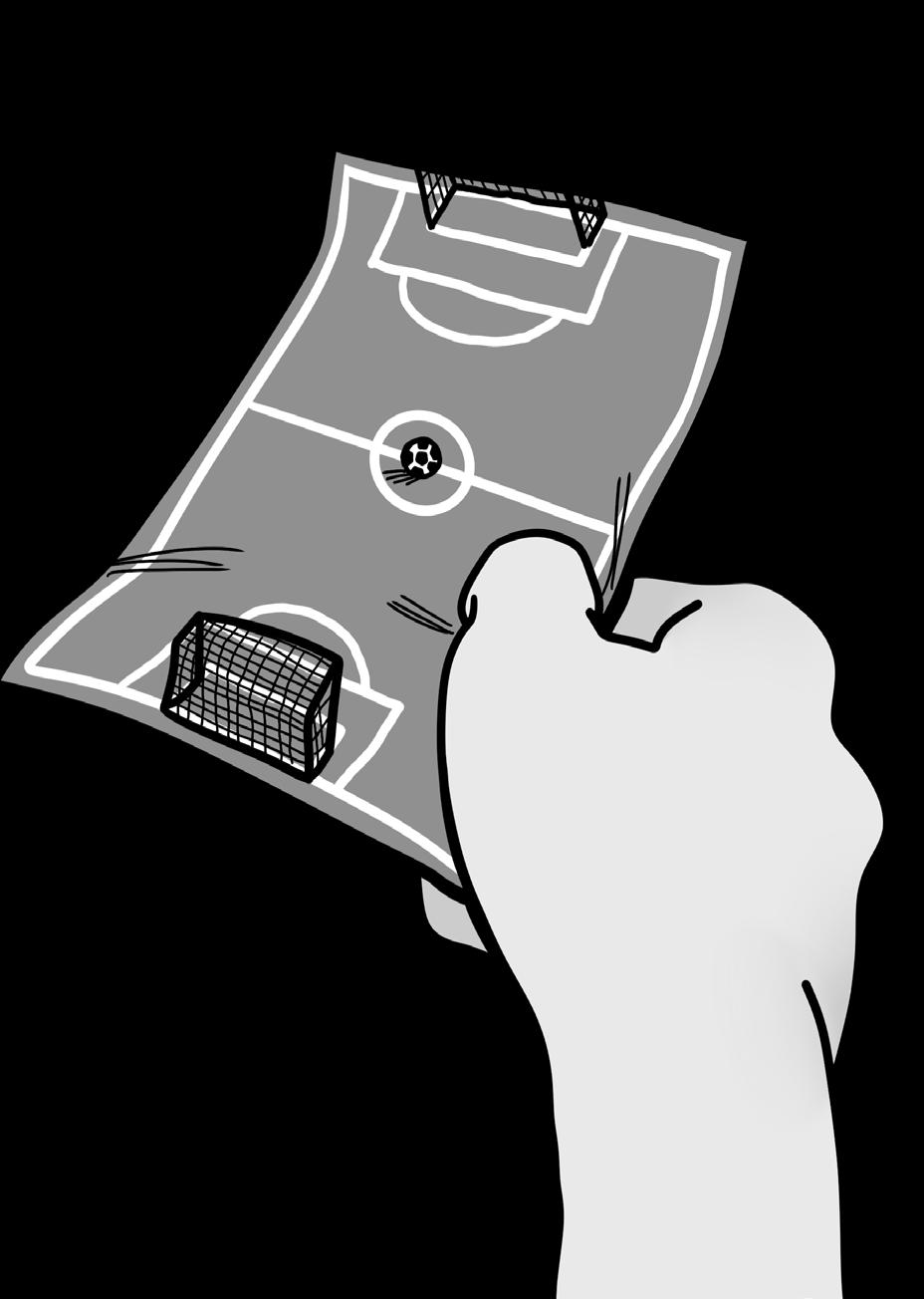
However, not all students have had a positive experience with sports betting.
Another anonymous senior said, “sports betting is a scam that doesn’t feel like one.”
At first, he said, “I thought that I could beat the system” because “after the first couple of wins, they hook you before you start losing and you try to chase your losses” until “you realize you’re not going to win anything back.”
He said that “it’s designed
sports bet, maybe around two or three of them, and even then it’s really small amounts, like $10 or $20.”
In general, most people reported placing very small bets, around $5 or $10 on each bet. An anonymous senior said that “most of my friends place less than $10 on each bet, and only go over that on really rare occasions.”
However, that number varied dramatically with one person even saying they had
The majority of respondents to the Beacon survey who said they partook in online sports betting said that they had simply lied about their age to be able to sports bet, while a small subset said they had gotten their parents to help them set up an account. An anonymous senior said that “it’s very easy to [evade the age restrictions’, you just use a crypto wallet or parents credit card.”
They added that, “you don’t even need a social security number for some and all you have to do is add your credit card and you can immediately play.”
As sports betting and prediction markets become a more prevalent issue nationwide, teenagers are finding ways around laws and restrictions, getting swept up, and turning to online gambling as a form of entertainment. •
Area studies classes cut to make room for academies
Next year, Jackson-Reed will eliminate the area studies classes such as Middle Eastern Studies, Latin American Studies, Asian Studies, African Studies, or the Model UN and Diplomacy class. In replacement of the area studies classes the Academy of Global Studies (AGS) will begin to offer additional courses.
This decision came after years of overcrowded core social studies classes, decreased elective enrollment, and the introduction of NAF classes for the AGS.
The new classes will teach students about international and domestic political systems and history, with a new coursesequence focused on covering everything from the foundations of American democracy to international relations and foreign policy.
This year is the first year that the school offers AGS specific courses, a switch from the previous academy structure that gave students priority into certain classes but did not require workbased learning or internships to graduate.
Now, future and current
underclassmen will take a new course structure that is being created by AGS social studies teachers and DCPS given guidelines based on the Career and Technical Education and the National Academy Foundation.
Principal Sah Brown said that at first DCPS releases a final course offering set and “after engaging teachers, department chairs, Assistant Principals, and CTE Directors around course offerings, I make a final decision.”
Social Studies department chair Matthew Burgoyne said his, “goal is always to keep teachers at the school.”
Burgoyne explained that department chairs were tasked with deciding what classes they would offer for the upcoming school year, given that cuts to the class list were being made.
Core Social Studies classes are often overcrowded, with the average number of students being much higher than other departments, such as Math or English. “My job is to give kids the best education; you can’t do that with 30 kids in the class,” Burgoyne said.
By eliminating the area studies courses, the Social Studies department will have more class
periods to teach courses that every student has to take, though Burgoyne advocated to keep the course catalog as large as possible.
While many see the value of academies in gaining real-world experience, they feel the area studies courses should not be sacrificed in the process.
Neha Malik, who taught Latin American and Middle Eastern studies this year, said that she’s “always against cutting the humanities, especially specialized humanities.”
When asked about the prioritization of work based learning, she said, “skills learning is important, but social studies also helps develop critical thinking and multicultural competency skills, which are becoming more valuable in an increasingly globalized world that’s dependent on AI.”
Malik argues the area studies allow students to learn about the world meaningfully and fill gaps that might otherwise be filled with disinformation.
Spanish and humanities teacher Isabel Vazquez-Gil echoes this sentiment saying, “when someone graduates from JR, they should not only know the relation the US has with other countries,
but how the world sees the US.”
Vazquez-Gil also laments the lack of parent and student involvement in the decision, “I never like when a class is cut, and if that needs to happen, there should be an open conversation about it, that should include students and parents.”
Burgoyne had previously noted that if students and parents feel passionate about social studies education, they should advocate their desires to the school for more social studies teachers, as one is being cut this year.
To replace the teacher position, Burgoyne explained, the department will gain a TLI that will teach four class periods, compared to a typical six periods with planning, as well as teaching professional development to teachers.
So, while the Social Studies Department is losing a teacher this year, it only translates to two lost class periods overall.
Social Studies teacher Robert Geremia, who teaches Model UN, AP US History, and AP Comparative Government, says he is “never in favor of subtracting classes,” said he's sad to see Model UN go because it helped students “learn how the UN organs tackle
conflicts and contextualize the geopolitics of today.”
For students outside AGS however, some worry that an understanding of our globalized world is lost.
Malik hopes that area studies topics will be incorporated in the World History II curriculum, but the curriculum already received a requirement of an additional fifteen civilizations to cover by the district this year.
According to Malik, “You can’t touch everything in World II, and the difference between the level of depth in Areas Studies and breadth in World History courses is significant.”
Students have also shown their qualms with cutting area studies. Junior Zoe Lewis said that after taking Latin American studies she "understood the genocides and takeovers in South America, and could just appreciate our place in the world in general.”
Lewis points out that in a diverse school like JR, it's important to educate students on what it means to live in a global community. •
Orly Jossen Junior Editor
Editors-in-chief say farewell to The Beacon
Alice Patterson
Noa Gordon
Clara Doyle Editors-in-Chief
As you’re reading this, we are no longer the Editors-in-Chief (sad face), instead we have passed on this beautiful paper to our wonderful successors: Eva and Padget!
We know you’ll miss us dearly: the endless chasing people down for interviews, stopping you in the hallway to ask for kids in the hall, sneaking into the back of your lit class to do Beacon work.
But, before we go, we want to give you some unsolicited parting advice.
First off, embrace the little moments in the day. One thing senior year and the stress of this paper has taught us that the only way to get through it is by being grateful for the small things.
A lunch with your whole friend group there (everyone free from revisions), the lethal gossip debrief in class, all the little things that make school suck a little lesstrust us, you’ll miss it when it’s gone.
You don’t know if you don’t try! Talking to new people, trying new activities, there are so many people and things at JR that are waiting for you to discover them, and that’s only possible if you try.
A slightly odd piece of advice –push yourself and experiment with your style now! JR students are so accepting and have amazingly creative style, so embrace that while you can. This is the best place to do it. Soon, you might go to college and be surrounded by scary basic suburban people.
Not to be biased, but we also genuinely want you to join The Beacon! This paper has given us so much, and it is a phenomenal activity to accompany a student through their high school career.
The Beacon has made us better writers, more inquisitive people, and harder workers. And college application writing went by in a breeze.
Our biggest piece of parting advice we want to leave with you: talk to more new people! Senior year, we’ve watched people reach across “friend group” lines more and make new connections that forced us to realize how much
we’ve missed out on by isolating for most of high school. Talk to everyone. Our fellow JacksonReed students are actually super interesting!
Most importantly, we want to shout out all the people that helped us along the way.
Ms. Webb and Mr. CrockerTHANK YOU. Without your help, we never would have found the beautiful home that is the back of your classroom. Thank you for always letting us come in to work even when we are slightly disrupting your class.
Thank you to the teachers we harass endlessly for quotes. Shout out Mr. Geremia, Mr. Burgoyne, Ms. Bollinger, Ms. Collins, Ms. Postler, Dean Serraile.
Shoutout Principal Brown for always giving us your most diplomatic answer to our nagging questions.
Special shoutout to Dean Rogers - our ally in the hallways, always willing to fight for us and help us with what we need.
Thank you to Ms. Belew, our savior, who stepped up to advise us this year. Your kindness and leadership helped us through so
Goggles galore: Senior Assassin rundown
Emmanuel Abera Contributor
If you’ve noticed seniors walking through the halls with goggles around their necks or lurking in Tenley with water guns in their hands, it’s probably because you’re witnessing one of the most anticipated end-of-year traditions 12th graders participate in: Senior Assassin.
The goal of the game is simple: get your assigned target out by splashing them with water while they aren’t wearing goggles. “We use the ‘Splashin’ app,” said Eva Okoobo, one of the two seniors organizing it this year.
”Once you register and enter a buy-in, you’re both assigned a target, and become one.” The buy-in this year was $20, and while the app shows individual target locations, many seniors opted to pay extra for the premium version to view everyone’s live location.
This year, over 100 seniors are participating, which has turned everyday locations into high-stakes battlegrounds; that is, except for designated safe zones.
to help organize the game rather than play themselves. “We have really busy schedules… and also didn’t want to be looking over our shoulders 24/7,” they said. “But we still wanted people to have a fun experience, so we managed to organize it and are trying to make it enjoyable for the rest of the senior class.”
That experience has included everything from creative ambushes to controversial eliminations. People have been waiting outside houses, hiding under cars, and even using their siblings as decoys.
organizers, we try to be as fair and morally right as possible,” said Okoobo and Booker. “At the end of the day, people trusted us by buying into the game, so we’re just trying to make it fun, safe, and enjoyable. We know we can’t make everyone happy, but we’re doing our best.”
Behind the scenes, that responsibility has been more demanding than initially expected.
“Organizing it has been hectic,” they admitted. “We’re on the app like seven hours a week fixing things and answering people.”

“The school is a safe zone, along with workplaces, hospitals and places of worship,” explained Kamryn Booker, the other senior organizing the game. “We added some new rules this year to make things safer, like you can't do a driveby and the driver is always safe if the car isn’t parked. The water guns also can’t be electric or dark-colored.”
Okoobo and Booker decided
Weigert. “It's been really fun to see people get eliminated in silly ways. But honestly, I wish it was easier to get people out.”
Senior Edilson Canedo said he was just eating at Panera when he was caught off guard by his assassin.
“I swear I put my goggles on on time – we even had an Instagram poll and most people said I shouldn’t be out.” (He was still eliminated).
Moments like these underscore one of the biggest challenges of running the game: fairness. “As
many tough times this year.
Despite the chaos both on and off the scene, the game continues to pick up momentum. When players successfully assassinate their target, they inherit their target's assignment.
To win, one must eliminate four others and be either the last person standing or, if it comes down to it, the person with the most kills. The winner gets a cash prize, and this year its winner takes
“Overall, we’re really glad we had the opportunity to run it,” they said. For the students who run it next year, Okoobo and Booker recommended keeping the rules really clear, having waivers, and just reminding people that it’s supposed to be fun (take notes juniors).
“When people take it too seriously, that’s when it gets stressful, but regardless, it really has been a fun way of ending our last year together as high-schoolers.” •
Shout out to Stefan Fatsis, our journalistic advisor extraordinaire. You make the paper so much better. Finally, a huge shoutout to all our fellow Beaconers for all their hard work and writing this year, not to sound cringy but genuinely none of this would’ve been possible without you.
We wish the best of luck to next year’s Beacon staff. We know you’ll make amazing papers and we hope you have a year less…. eventful than ours. •
Tenley restaurants worth the hype
Five Guys: 3.2 / 5
Every day at 11:55 a.m., Tenleytown is flooded with approximately one thousand teenagers looking to recover from their mornings of drudgery with affordable and moderately good food.
They’re confronted with dozens of options, and most of them choose wrong. To save you from that fate, here’s a (not) complete review of some of the most popular options around.
Angelico’s Pizza: 4.1 / 5
Angelico’s Pizza has been a cornerstone of Tenleytown since I’ve lived here, and for good reason. With cheap, sizable pizza (5.8 square inches per dollar!), it's the perfect post-school or lunch spot that doesn't sacrifice that hard earned babysitting money.
While the sandwiches left something to be desired, and the service wasn’t especially quick, Angelico’s will always show up for you with a huge greasy slice of pizza.
Bandit Taco: 4.5 / 5
Despite its small stature and out-of-the-way location, Bandit Taco is not missing any flavor. The restaurant consistently provides fresh ingredients and exceptional value, especially on those Taco Tuesday (thanks LeBron) deals that make it impossible to justify going anywhere else.
The only thing Bandit Taco is missing is bigger taco portions and better seating, but that’s a small price to pay for the best taco place in Tenleytown.
I will always have personal beef with Five Guys after they took $18 from me for a single cheeseburger then managed to burn it beyond belief, but even I can’t deny the cajun fries alone might be worth the trip.
The Tenleytown location is clean and efficient, the service moves at a solid pace, and when the burger isn’t charred to a crisp, it's a legitimately good fast food slop experience. The price tag will always sting for me ($13 for a kids meal is crazy), but the quality, at least in theory, is there.
Roaming Rooster: 4.3 / 5
This rating is pretty much a no-brainer. Roaming Rooster, despite being a comparatively new arrival to Tenleytown, has quickly made a name for itself as one of the go-to chicken destinations in Tenleytown, and for good reason.
The chicken is free-range, halal, and grain fed, the sandwich portions are consistently great, and the service is almost always fast and friendly. The only thing holding it back is the subpar wings, but the shakes and frozen custard more than make up for it.
Seoul Spice: 3.8 / 5
Seoul Spice is essentially Tenleytown’s version of Chipotle if it was a little less mid. It’s another bowl slop place, this time with a Korean overcoat. Portions are relatively large, the service is quick, and the seating is plentiful.
The kids meal also provides great value, pretty much providing you with a whole bowl for only $7. Despite its occasional blandness and overdone concept, Seoul Spice is a consistently solid choice. •
PHOTO BY DESMOND PARSONS
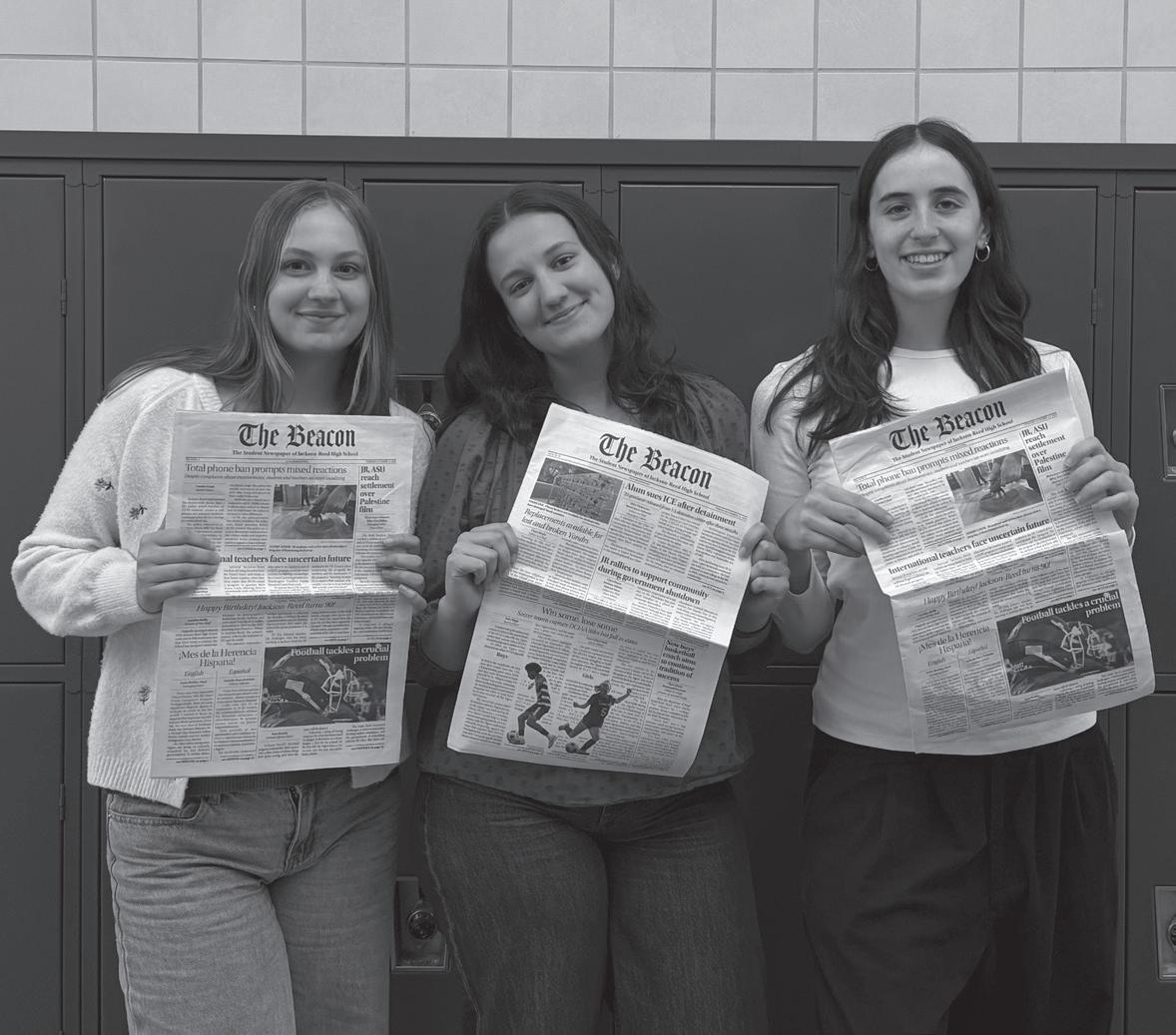
BYE, BYE BEACON - The editors-in-chief Clara, Alice, and Noa (left to right) pose with Beacon editions, while preparing their last.
William Tucker Contributor
GRAPHIC BY IRINA FILLIPOVA
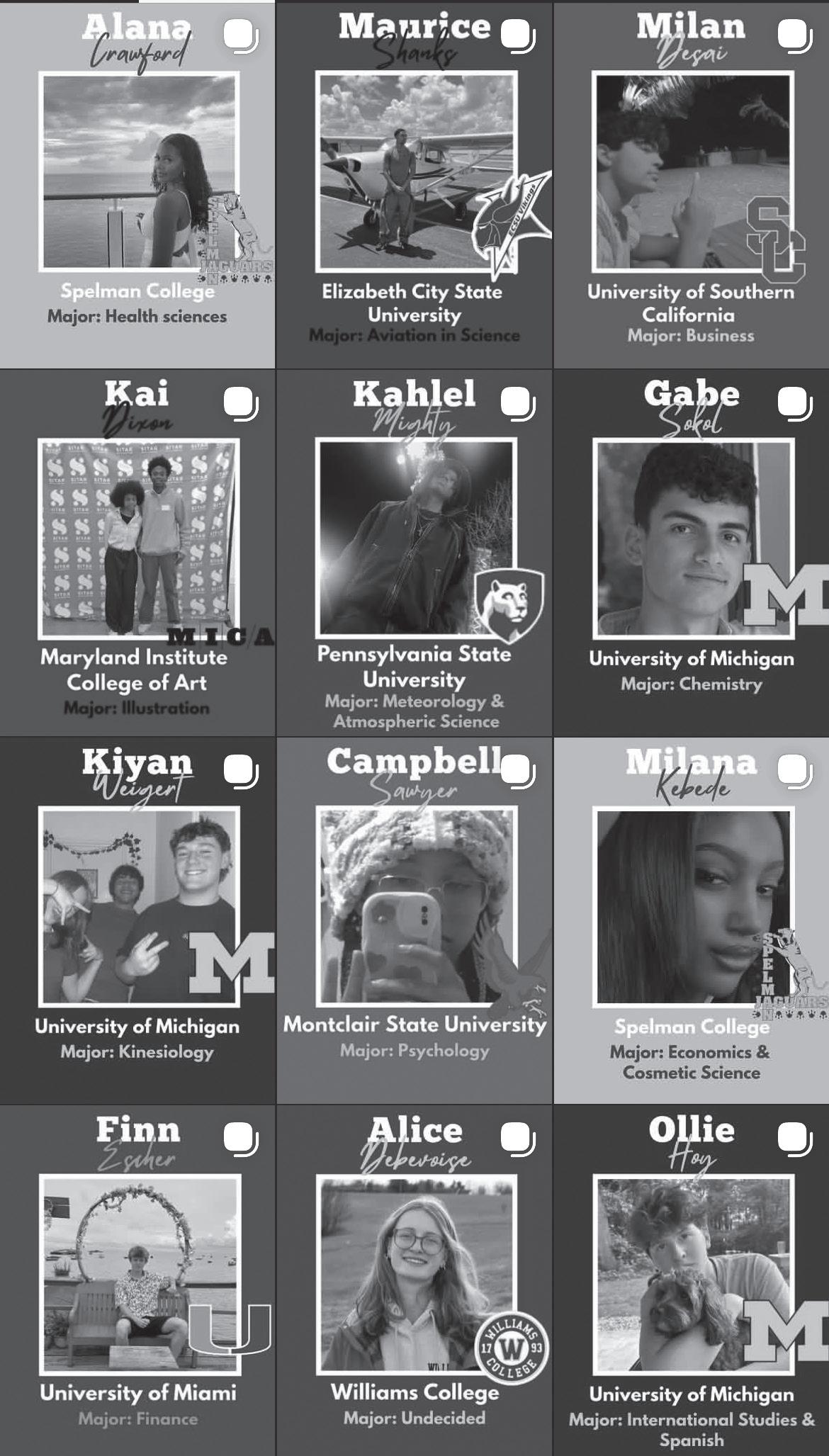
Seniors are off!!!
The lost art of sewing: meet the JR tailoring club
Joao Braga Junior Editor
From expensive Italian suits to grandma-knit Christmas sweaters, tailoring is considered to be an art form, and one that's on its deathbed.
In recent years, our school has been slowly eliminating art classes such as sewing, home economics, and darkroom photography.
It was the lack of classes teaching these basic life skills that motivated senior Aoife Dwyer to create the tailoring club, which meets every Monday after school in Mr. Walters’ room.
“I've always loved fashion,” Dwyer said, “but then I found out from Mr. Walters that we used to have a sewing class at the school about ten years ago. I was like, maybe I'll start this club to have this outlet to teach people a skill that's been around for so long.”
Coming in, I had little to no idea of what tailoring actually was; the closest I had ever gotten to it
was watching my grandma sew on a button that had fallen off my shirt when I was a kid.
But, as I learned the thoughtfulness that goes behind each and every project they worked on, from choosing a pattern to working with the sewing machine (which to me looked like a transformer with all its different parts and functions), I finally began to understand what makes sewing and tailoring so special.
Despite seeming intimidating at first, seeing the passion and creativity behind these projects opened my eyes to how even something as simple as a shirt can serve as a canvas for someone to imprint their own ideas.
Although the club was founded less than a year ago, it has already made its presence felt among Jackson-Reed faculty, with members often helping to fix and repair clothes for teachers.
With the help of Mrs. Thompson, a volunteer of the club,
the students get to learn about the process while also getting the opportunity to then do it themselves.
Dwyer explained how sewing used to look so simple when she watched her grandmother do it, “but when you do it yourself, you're like, ‘Oh, how did she do this?’”
By the time the meeting was over, it became clear to me that besides its usefulness, learning these skills is also about keeping this art form alive in a world where it's easier to buy a new shirt than to fix a button.
When asked about her hopes for the future, her club, and sewing at the school, Dwyer said, “A lot of the art department is very underfunded, which is a very unfortunate issue happening.
Despite STEM being a huge thing at our school, I feel like there needs to be a balance between the two. It would be cool to see a revival of the sewing classes or [home economics].” •
Debate is on the road to nationals
Stacia Sharma-Manning Contributor
The Jackson-Reed Speech and Debate Team swept the competition at two state tournaments on March 14 at Alice Deal and March 21 at Washington Liberty. In total, ten students qualified for nationals across 12 rounds: two virtual and ten in person.
The debate team competes in multiple events, from Public Forum, a form of partner debate that focuses on policy decision making, to Lincoln Douglas, a form of individual debate that focuses on the morality of propositions.
At the recent state tournaments, JR secured half of all qualifying spots. It was no surprise to the team, who prep together every Tuesday.
Junior Mateo Jacobson got fourth place in Public Forum with Senior Joao Braga, who Jacobson describes as “a ball of positivity.” Though he missed the award ceremony to be with his sister, Jacobson could not have been prouder. “I was very happy. I was
proud of the work we did, and it paid off,” he declared.
In May, the qualified students will join hundreds of others at nationals, spending a weekend sweating in ill-fitting suits and

carrying around briefcases.
This year it will be held in DC, and take place on May 23-24. When asked how he felt about nationals, Jacobson said, “I’m excited, very excited.”
To the untrained eye the students may seem like overperforming nerds.
However, upon closer inspection they are kind, funny, and well-rounded. It turns out that you can be on the debate team and have a life!
The team serves as a hub for all types of students, from biomed freaks to future librarians, University of Pennsylvania commits to field hockey stars, and even JROTC buffs. Everyone shares a common desire to learn and argue.
Though the regular season is over, the debate team will take new students next year.
It is an excellent way to maintain real discourse and build community under our current oppressive regime. Members learn important skills, from researching to public speaking. As Jacobson said, “It is probably one of the best experiences you will ever have.”
For the students going on to nationals, we wish you the best of luck. •
Science teacher feature: meet Mr. Farmer
Sarah Wiesenfelder
Kalpana Shipler Directors of New Staff
On Wednesday, October 1, at 9:09 am, 17 students received a daunting email that switched them out of Will Gomaa’s beloved AP Environmental Science (APES) class into William Farmer’s class.
“When I first found out, I was so upset. I didn’t want to switch out of my class after classes had begun,” said senior Andres Rodriguez.
We, along with many others, felt the same way, feeling unsure of the upcoming year. However, the second we stepped into his classroom, Farmer’s warm and
energetic energy surrounded us, and Farmer's class has quickly become our favorite.
We got to know Farmer pretty quickly through his weekend recaps and stories about childhood pet birds.
We learned that Farmer was born in Memphis, Tennessee, and moved to a town in Northwest Florida called Santa Rosa Beach for middle school.
He attended the New York University School of Engineering, studying chemical and biological engineering, but after two years, transferred to Florida Gulf Coast State College for a year to get his associate's degree.
“I wasn't sure what I wanted to do at the time,” Farmer said. This prompted him to transfer
to American University for two years to get a bachelor’s degree in biology. After completing his bachelor's, he spent two more years earning a master's in biology, doing research on the macroinvertebrate diversity and food webs.
During his time as an undergraduate student and while he was getting his masters, Farmer was a teacher's assistant for Biology 100, 200 and Cell Biology, enjoying it significantly.
“It was a lot of fun being able to do a lecture as well as work on the experiments, and guide everyone through the instructions in the laboratory,” Farmer said, expressing his initial love for teaching and describing the influence this had
on his future.
Farmer managed a university research portfolio that was over $100 million. However, when President Donald Trump canceled grants and was reviewing contracts, Farmer had to search for something new. He realized teaching high school science felt like the perfect choice. “It was a good transition, a good stepping stone,” he said.
While Farmer loves to teach, it’s not the only thing he enjoys. “I like to garden. I have a community garden plot,” Farmer stated, which was fitting considering his name! You might catch him on weekends in Glover Park on a summer day, tending to fresh fruits and vegetables. Besides gardening, he loves
doing woodworking projects like building small side tables.
As two Farmer fans, we wondered what his secret was to making his students feel so welcome, and he said that he just tries “to treat people as adults. Just treat people how they want to be treated.”
Farmer expressed his respect for all of his students. These qualities make up the incredible and fun teacher that we have grown to love. His final piece of advice for all high school students is “once you go to college, don't skip class.” •
The coolest and best DC music venues
Cecelia Grant Spread Editor
From its very inception, DC has been shaped by music, and you seem to find a new sound anywhere you go. DC boasts a number of notable music venues, ranging from massive mainstream arenas to smaller underground clubs. Here are the best:
1. 9:30 Club
An iconic and historic venue, the 9:30 Club holds an energetic, atmospheric quality at which countless famous and underground musicians have all performed.
Named the third-best venue in the nation by Rolling Stone, the 9:30 Club truly has something for everyone. In my experience, I have gotten to see Yo La Tengo there and hope to see many more bands!
2. The Anthem
Located at the Wharf, the Anthem has hosted a number of incredibly major musicians. Recently, notable musicians like Lorde, Patti Smith, Gracie Abrams, and Blood Orange have played here.
A larger venue and often more expensive than the 9:30 Club, the Anthem tends to host artists with larger fan bases. I have seen Lucy Dacus and Nilüfer Yanya, who both filled the Anthem with an energy that has captivated audiences on a massive scale.
3. Black Cat
Located near U Street, the Black Cat is a longstanding hub for live music, known for hosting alternative and punk bands. Its smaller size creates an energetic yet intimate atmosphere with a nostalgic charm.
Since opening in 1993, the Black Cat is iconic for its noisy but still inviting vibe. Welcoming audiences of all ages, I have seen Snail Mail here.
4. Howard Theatre
Opened in 1910, the Howard Theatre was a premier stage for Black entertainers. It has hosted legendary musicians like Duke Ellington, Ella Fitzgerald, and Marvin Gaye, playing a large role as one of the first major theaters for Black audiences.
Its historic charm blends with modern amenities, hosting all kinds of music genres today and even fun dance parties like the Heated Rivalry Rave! •
Your guide to how to spot a DC tourist
Lola Pearlman-Chang
crowded the Tidal Basin is with tourists taking thousands of
actually look cute, stopping at the street vendors appears to be a

morning knows how insanely
always a wreck and crawling with
crowds of people. Not only are there tons of people, but they all too many landmarks on it doesn’t
Restaurant review: Maketto is overhyped
bread croissant, unfortunately).
My Instagram feed is packed full of random restaurants, stores, and cafes around DC that I save but never visit because they’re usually overhyped. However, when I was offered a ride to Maketto in NoMa, I decided to pay it a visit to see if it was worth the hype.
Maketto is a Taiwanese and Cambodian restaurant, cafe, and marketplace combo. During the day, they rotate through different meals and menus, and on Saturdays at 9 a.m., they have an Asian treats bake sale.
It has an evolving list of treats and is only open while supplies last, so get there early!
We got there at 9:45, as it is a trek to get there, and had to wait in the freezing cold for 20 minutes.
Once we finally made it inside, we ordered at a small table set up at the front before heading to the bar area to pick up the pastries and drinks. The inside was set up with restaurant-like seating, but with cafe ambiance. The cafe was bustling, but it only took us a few minutes to find an empty table.
Since we got there a little late, a couple of things were sold out (including the garlic
We got three pastries: pumpkin honeycomb cake, Japanese creme sandwich, and dreamsicle pineapple bun.
different coffees: pandan latte and the honey five spice latte. The total came to just $28, which felt like a steal in this economy.
an average slice of pumpkin bread. Near the bottom of the slice, it was less spongy and more chewy and mochi-like. But overall, this was kind of a

with the pumpkin honeycomb cake, which is a spongy Vietnamese cake meant to resemble the texture of a honeycomb.
It does have an interesting structure, and you could see the honeycomb texture, but when you bit into it, it just tasted like
sweet, and the bread was oozing oil and fried flavor. The textures were good, but the flavors were not. It felt like something you’d beg your parents to get at a fair and then regret later when your stomach started twisting into itself.
Lastly, with our hopes low,
we turned to the dreamsicle pineapple bun. I’m a frequent pineapple bun consumer, so I was a little scared.
But we took one bite and it was delicious. It had a little twist and added whipped cream to the usual pineapple filling. Unlike in the creme sandwich, the unsweetened whipped cream perfectly matched the sweet pineapple filling.
The topping of the bun added the perfect crunch. This was by far the best part of our visit.
After waiting fifteen more minutes for the lattes, we hoped they would be good.
They did not live up to our expectations. The pandan latte just tasted like a plain subpar latte and was not worth the $5. The first sip of the honey five spice latte was bearable, but upon the second sip, we could not drink any more.
I’m a big fan of fun-flavored lattes, but this one just did not work.
Throughout this trip, I’ve come to realize there is a reason why I don’t try things on my Instagram feed: they usually let me down.
While I would take a trip back solely for the pineapple bun, their rotating menu does not support this idea. Overall, I rate Maketto overhyped. •
Peyton Shum Opinions Editor
GRAPHIC BY SOLAYA RUTLEDGE
GRAPHIC BY CLARE BATES
High school sports are losing the joy
Vivian Whitelaw Junior Editor
Remember the good old days, the Saturday mornings as a toddler spent waddling around the soccer field, not knowing or caring what the score was, much less where your team’s goal was?
Since that time as a little kid, though, many sports have become a stressful, competitive burden for students, causing them to quit the sports they love due to the all-consuming pressure.
Additionally, this strain causes competition between teammates, with every player lobbying for the coach’s attention and scouting opportunities.
As a result of this intense competition, kids have started specializing in sports even earlier than in previous years, which is a devastating loss because sports are not only enjoyable activities for students, but are also very beneficial to their mental health.
Sports have proven to help children handle anxiety and reduce stress and depression. Playing sports also helps athletes build confidence and helps with emotional regulation, all essential aspects of growing up.
However, all of these benefits are lost when kids are forced to compare themselves to other athletes and aren’t given space to grow and improve on their own timeline.
Without having the freedom to try different
sports out, make mistakes, and find the sport that speaks to them, kids are missing out on a key part of childhood. However, not only this, words can’t describe how embarrassing it is to see a small kid who is better than you at your sport!
Sports as a concept have lost their main purposes: teamwork, confidence building, and improved mental health.
Sports have transformed from a joy for young kids and students, a time when they can forget their problems and move their bodies, to a source of stress and competition.
Children should spend more time trying different types of sports, instead of specializing too early. Or forming more noncompetitive leagues, so children and students can experience the joy of playing sports, without the unnecessary pressure. The focus shouldn't be on trophies or recruitment, but on having fun and learning new skills.
Sports aren’t quite the same as they were when we were kids, because of the added pressure to perform and the fact that kids are forced to specialize too early. So let's take it back a few, and learn to enjoy sports for sports' sake•
ChatGPT is funding Trump, here's how you can quit GPT
Cecelia Grant Grace Harscheid Spread Editor Sports Editor
As artificial intelligence (AI) has become more prevalent in recent years and Jackson-Reed students appear to be getting caught using it daily, we need to understand how AI can be used ethically and what the best use of the tool is.
These questions have been exacerbated by recent events in the news, including but not limited to President Trump’s recent partnership with the large corporation OpenAI, better known as the parent company for ChatGPT.
Specifically, the President of OpenAI, Greg Brockman, has provided $25 million to sponsor Trump’s MAGA agenda.
This includes their support towards US Immigration and Customs Enforcement (ICE) infrastructure, which has alarmed the public and sparked the nationwide “QuitGPT” campaign, which is advocating for people to boycott ChatGPT. So far, 1.5 million users have already left the AI service.
Boycotts are often an easy way to fight against regimes or programs you don’t agree with. So, the “QuitGPT” campaign is a great way to protest the US government and president right now, especially since there are so many other, and more ethical, alternatives to ChatGPT.

This has led to broader arguments regarding tech industries and their ties with government institutions. It can be quite easy to forget that the many tools which modern technology has granted us access to do, in fact, sponsor organizations and aren’t

as neutral as they may appear at the surface level.
As represented by the JR student body’s mass involvement in the anti-ICE protest on February 27, many of us have strong beliefs about what our government is doing.
We are the first generation learning to live with these realities of artificial intelligence and have an inherent responsibility not just to ourselves but to future generations who will continue to be impacted by the choices we make.
By understanding the implications of exactly what we are sponsoring, and actively searching for more responsible alternatives, we can use a helpful tool while at the same time supporting a company that does not direct its profit towards harmful causes. Reducing your AI use is a great way to stand up for what you believe in.
There are certain areas where AI can be useful, and some platforms are more ethical than others when used in moderation.
One powerful form of AI, not just in its quality, but also in its positive environmental impacts, is EcoGPT. EcoGPT actually uses 100% renewable energy and additionally plants one tree per AI conversation.
It works to reduce digital carbon footprint and actively informs you of its purpose, unlike OpenAI. This agency acts as a method of advocacy against harmful forms of AI, combatting the sheer amount of resources wasted by other platforms, and has even been dubbed as the world’s first “regenerative AI.”
VYRO AI is yet another climate friendly ChatGPT alternative, where every message powers clean energy.
Forbes recommends Anthropic's Claude AI for ChatGPT boycotters, which has reportedly resisted allowing its product to be used by US ‘Defense’ officials for mass surveillance of autonomous weapons systems, instead of giving in to the government as ChatGPT had. Claude is much more transparent about what it is sponsoring than OpenAI, and is trained by a set of ethical principles dubbed the “constitution” to make AI more responsible and honest. As future technology continues to progress, and corrupted businesses are continuing to make their way to the top, it is essential to do a deep dive into the indirect and direct impacts the things you support have on the world and the people around you. •
JR needs more humanities and arts academies
Caroline Wilding Junior Editor
One of Jackson-Reed’s most well-known and best features is the various successful academy programs.
From engineering to graphic design, the ten academies claim to have a subject matter for everyone, but that’s not the case.
As someone who loves literature, it’s so upsetting that we don’t have an academy centered around language arts, which JR could seriously benefit from.
Writing in all its forms is one of the most captivating aspects of human communication. We only have access to thousands of years of history because people wrote things down.
Without writing, there is simply no way for our world to advance. There needs to be a way for students to hone in on writing at JR, and one of the best ways to do that is by creating academies
that focus on communication, literature, and journalism.
Having two AP English classes restricted to upperclassmen is not enough to say our school has a robust and advanced English department.
Jackson-Reed has an extensive course catalog, yet the options for those who want to dive deeper into the English language are somewhat limited.
We need classes that focus on the creative and more media-driven parts of English language arts, not just how to craft a thesis statement and pick strong evidence.
A full academy, or even two, covering how to analyze and create literature while incorporating aspects of the sequential journalism classes would be far more beneficial than any single year English course. Additionally, students with an interest in creative media and journalistic fields would be better suited to enter the workforce.
Our school used to have the Academy of Humanities, Arts, and Media (HAM), which was an immersive and explorational academy. Students would create a schedule of classes they wanted to take based on their fields of interest.
This sort of do-it-yourself scheduling made the academy feel tailored to your personal interests, which is something JR doesn’t have anymore. The program hosted field trips to New York, students constructed a play in twenty-four hours, and many classes wrote their own novels at the end of the semester.
After COVID, this incredible academy was disbanded for no apparent reason. Yes, the academy could’ve been dissolved for valid reasons that we don’t know about, but JR should’ve at least made an effort to develop new classes to somewhat recreate the HAM academy.
There’s so much to cover in the English language arts domain
that JR could have two separate academies and still have excess material.
The journalism classes could morph into an entire academy about newswriting, written media production, and the editing process. This new academy would be a way for students to truly focus on that specific interest and show it in a way that’s appealing to colleges, in addition to gaining valuable information about an enticing career path.
English as a subject is convoluted and takes more than just a few classes to understand. JR needs structured English academies for those of us who want to explore more about the importance of language and communication.
Now, I know it takes more than just one person to implement a whole new curriculum, but if enough people take an interest, there’s a chance these ideas can turn into reality.
Our world is in an extremely malleable state at the moment. AI is covering every inch of space it can, and the future of our generation is uncertain.
So, now more than ever, we need access to reliable media. Schools’ focus should be directed towards educating the youth on how to navigate our ever-changing society, and one of the best ways to do that is by encouraging strong writing.
We need future journalists who can differentiate fake news from real and future novelists who have the resources to build imaginative stories, and the only way to ensure that is to provide students with the means to pursue journalism and literature further.
It would be in Jackson-Reed’s best interest to create academies that can keep up with these demands and interests. Not only for the satisfaction of students, but for the safety of the future. •
GRAPHIC BY CARYS GRAY
GRAPHIC BY CARYS GRAY
Red pilling is letting far-right ideologies into the mainstream
Clara Doyle Maria Joyce-Johnson Editor-in-Chief Managing Editor
Red pilling is a term from the Matrix; it refers to an “awakening” to a hidden truth and enlightenment to new viewpoints and a new reality. However in the age of the internet the “hidden truth” is one pushed by the far-right to spread anti-feminist beliefs and the idea that men are an oppressed group in a society dominated by the fight for gender equality.
Red pilling pushes the idea that men are the dominant sex and that they need to reclaim what has been taken from them by feminists and the advancement of women's rights. It is the idea of “male supremacy” and the denial of not only rights, but also respect
towards women.
These sexist attitudes not only hurt women’s rights and advancement in society but can also lead to widespread sexual harassment and abuse.
While these started as just fringe beliefs held by a few extremist members of society, they are slowly becoming more and more mainstream every day as these beliefs are pushed onto young Gen Z men.
The “manosphere” is a section of social media that works to address men’s struggles, but can unfortunately shift towards red pilling and subliminally press these beliefs upon viewers.
Social media influencers, like Nick Fuentes, are pushing targeted posts and videos towards young men to stress the idea that women shouldn't be getting an education and joining the workforce, and
Do you really need a graphing calculator?
Esme Noorudin
Written Content Editor
Almost every year of high school without fail at least one class syllabus will require a graphing calculator. And almost every year without fail, you’ll look at the price, decide against it, and take the class unscathed by your lack of a TI-84.
While you might have made it through Algebra I, II, and Geometry without a graphing calculator, it doesn’t mean these instruments are useless.
Jackson-Reed provides students with graphing calculators in math classes, so most students don’t consider purchasing their own. However, once students reach higher maths, such as Precalculus or Calculus, only having access to a graphing calculator during class won’t suffice anymore.
There will inevitably come a point when students need their own graphing calculator to get through homework. Of course, you could always pull out Desmos. At this point, we all have a love-hate relationship with Desmos.
scientific calculators. Desmos often rounds too soon for science classes, and because it's online it can't be used for paper tests.

We love Desmos for carrying us through the SAT math section, but no one wants the hassel of logging into a school device to enter a homework problem. A thirty-second calculation becomes a two-minute endeavor when, if you had just had a graphing calculator at your disposal in the first place, you could have been spared the annoyance.
Even if you don’t mind Desmos and are still reluctant to invest in a graphing calculator, this sentiment will die when you arrive at AP science courses.
Courses like AP Physics and AP Chemistry strongly recommend having your own graphing calculator, and for a good reason. Unlike math classes, science classes often do not have class sets of graphing calculators.
This leaves many teachers and students relying on Desmos or
that, instead, they should stay in the home and raise children.
In February, Fuentes said that women getting educated is hurting the fertility rate and therefore they must “go to the breeding gulags.” He added that “the number one political enemy in America is women” and so “just like Hitler imprisoned Gypsies, Jews, communists, you know, all of his political rivals, we have to do the same thing with women.”
Fuentes, though, is just one example of the far-right political commentators who are spreading anti-women beliefs through social media.
Andrew Tate, along with his brother Tristan Tate have been leaders of the red pilling movement since its inception. The brothers initially became famous for their online pornography business, however they quickly
gained traction as masculinity influencers.
Andrew Tate’s content revolves around the same themes that are prevalent across the manosphere: wealth, fitness, and women. However Tate, who has multiple allegations of rape and sexual assault, is most often quoted on his views about women, going viral for statements like “women are like cars” and “you can get a new one whenever you want, but you always want to keep the old one in good condition in case you need it again.”
While damaging in and of itself, the demographic Tate is most popular with is adolescent boys, teens whose brains are still developing. This is where red pilling becomes most dangerous, when the movement shifts from the views of a few extremists, to the collective beliefs of a whole
new generation. Most of the time red pilling doesn’t happen in an outright way; it targets men through the subtle messaging on social media content that seems harmless, but in reality is slowly working its way into the values of mainstream society. Online misogyny is not isolated; it works its way into schools, workplaces, and society. As red pilling increases more and more people lean towards far-right, anti-feminist ideologies, resulting in a rise in abuse and degredation of women. Every day that this content spreads without inhibition, the rights and safety that women have fought so hard for is put further at risk. •
Senioritis is a failure of the system, not just of lazy seniors
Greta Bradley-Meal Managing Editor
As for the scientific calculators— trust me when I say you do not want to be five parts deep in an FRQ with the clock ticking, trying to solve a quadratic, wishing you were able to just graph it. Furthermore, TI-84s allow students to store constants and grab answers from previous problems easily, making solving multistep problems infinitely less stressful. Still, at the end of the day, a graphing calculator is an investment. An on-brand Texas Instruments graphing calculator, even when on sale, is at least $100. That’s a significant amount to spend on the odd high school class that actually requires you to have one. In college, though, chances are much higher that you find yourself in a class needing a graphing calculator. Plus, TI-84s can last up to 20 years; at that rate, depending on some other life choices, it might end up putting both you and your children through high school. And lest we forget, eBay exists. You can most definitely find a secondhand graphing calculator for much cheaper online.
In short, graphing calculators are worth it if you’re taking advanced STEM courses. In higher level maths and sciences, that graphing calculator will be your best friend.
In all honesty, it won’t make or break your grade if you have a graphing calculator or not; it’s the practice and time put into it that will. If dropping $100 on a calculator will incentivize you to put in the work, then do it; if not, then don’t. Either way, I’ll have mine.
Senioritis is everyone’s favorite punchline. Once January hits, we’re all but expected to start skipping classes, dropping extracurriculars, and falling off the face of the earth. As much as I’m a textbook case, it’s a little depressing.
Moreover, it’s indicative of just how much of our high school choices are purely motivated by getting into college. Or if not that, what we think we should be doing. Once the college pressure is off, we recalculate what’s important to us.
only countries in the world where the final year of school is not academically the most important.
July determine where you can go to college in September. In Ireland, students spend their final year preparing for their Leaving Certificates.
junior year cramming for APs and SATs, padding our resumes, and desperately trying to make ourselves as marketable as possible. Then, we eke through mid year reports, senior year, and
We sign up for AP classes we have no interest in and then spend the minimum amount of time possible to get an A on each assignment.
Worse yet, we avoid hard classes we are interested in out of fear they’ll deflate our GPAs. We show up to interest meetings to fill slots on the Common App, we sign up for leadership roles and commitments we know we don’t have time to fulfill.
It’s a boring, stressful, and unfulfilling way to spend four
the learning environment they deserve, pushing them towards classes they know they can get As in rather than ones they love.
It’s even worse in extracurriculars. These student organizations are intended to reflect students’ passions and interests, to be a forum for us to learn, create, and engage without the pressure of grades. Now, they’re a Common App commodity.

…. hell breaks loose. Senioritis, a symptom of the educational apathy disease.
As much as colleges love to tout their emphasis on holistic evaluation and getting to know their potential students, for most of us, they seem essentially like resume competitions.
We all face immense pressure to perfect our stats, stack our extracurricular lists, and inflate our GPAs as much as possible.
Classes full of students only there for the A are never going to produce interesting, highlevel discussions.
I know because I’ve been one of those bored, A-seeking, bare minimum students more times than I can count. It’s a vicious cycle. Students do the least they can to make their transcripts read right, and those who are genuinely interested in the subject are deprived of
It’s hard to blame the students, forced into the rat race of application competition, but it’s also hard not to mourn the atmosphere we sacrifice by trying to pad our resumes.
Once senior year rolls around, and we realize that no one’s going to know if we soft quit and there are no more “honors and awards” sections to be filled out (at least for the time being), our cost benefit analysis changes. We, most of us anyway, don’t drop off the face of the earth completely. We skip the classes we shouldn’t have signed up for anyway, and we stop coming to clubs that we’ve been quietly quitting for years.
It’s easy to blame the lazy seniors, and it doesn’t say great things about our schooling system, but to be honest, it’s probably for the best that for the final few months of high school the spaces we inhibit are the ones we want to be in and the ones we don’t are left for the people who want to learn from them. •
GRAPHIC BY CARMINE MACKAYE
Jackson-Reed High School
3950 Chesapeake St. NW, Washington DC, 20016 https://thejackson-reedbeacon.com/ beaconchiefeditor@gmail.com
CLARA DOYLE, NOA GORDON, and ALICE PATTERSON Editors-in-Chief
GRETA BRADLEY-MEAL, MARIA JOYCE-JOHNSON, and JAVIER THOMPSON Managing Editors
CAROLINE REILLY, KALPANA SHIPLER, and SARAH WIESENFELDER Director of New Staff
VISUALS STAFF
CARYS GRAY and DESMOND PARSONS Directors of Art and Design beaconvisuals@gmail.com
Assistant Director of Art and Design: Clare Bates
Visual Content Contributors: Clare Bates, Carys Gray, Daniel Krepps, Solaya Rutledge, Lily Maurer, Carmine MacKaye, Will Nichols, Amy Levin, Irina Fillipove, Desmond Parsons, Emse Noorudin
EDITORIAL STAFF
ETTA MASON Copy Editor
RILEY MACCLELLAN and JORDANA SLOANE News Editors
Written Content Contributors: Hannah Clark
PEYTON SHUM and EVA SOLOMON Opinions Editors
JESSICA MCCALLUM and AVANI PATEL
Features Editors
Written Content Contributors: Stacia Sharma Manning, Emmanuel Abera, William Tucker, Jojo Gavin
CECELIA GRANT and DANIEL RAVIV Spread Editors
ISABELLA MARA ORNSTEIN and DANI ORTIZ DE PRADO Spanish Editors
SAM BIGGE and GRACE HARSCHEID
Sports Editors
Assistant Sports Editor: Sam Bensky
Written Content Contributors: Tinsley Barmeyer, Nylah Daniels, Cy Amos
PADGET BOWERS-SHREVE and WILLA FRILLICI
Style Editors
Written Content Contributors: Annie Griffin, Elvana Beqir Gjoka
BEN HOLLAND Games Editor
WRITTEN CONTENT EDITORS
Esme Nooruddin, Meredith Page
SECTION COPY EDITORS
Tessa Frantz and Cole Anderson
JUNIOR EDITORS
James Fowlkes, Andrew Dellabella, Nati Pinilla, Patrick Hutchins, Idan Kumin, Affomia Debebe, Francisco Blancato, Alex Oh, Elsa McIntyre, Landon Green, Kate Walter, Sofia Amin, Giacomo Tomaino, Joao Braga, Caroline Wilding, Alexa Lucas, Ben O'Toole, Miles Green, Orly Jossen, Adrian Pinto, Desmond Parsons, William Pfaffenroth, Arabella Bernstein, Eliza Bowers-Shreve, Uli Ferrero, Alex Garcia, Alex Rogers, Miles Heyman, Vivian Whitelaw, Rose Geshekter, Nora Freed
WEBSITE STAFF
LOLA PEARLMAN-CHANG
Web Editor
NATALIA WEINSTEIN
Multimedia Editor
The fight for DC statehood is more important now than ever
By The Beacon staff
“No taxation without representation” is the basis on which the United States was founded. The idea that people could be asked to fund a government they had no part in was ludicrous. But that very problem continues to exist today.
DC residents pay taxes on our income. Like all Americans, our taxes not only fund our local government, but the federal government as well. Unlike most Americans, however, we have no control over how those tax dollars are spent. We are not a state.
Our Representative in the House is a nonvoting member, and we lack the two Senators that every other state is afforded. This is especially jarring considering DC has a larger population than states such as Vermont and Wyoming, which both have representation in Congress.
In a time of increased political instability, it is important to ensure that every voice is heard.
The District continues to be affected by national actions and debates, such as the increased presence of the national guard, the loss of federal jobs, and the upcoming mayoral election. As a result, it is especially important that our city is represented on a national stage.
The US government’s failure to make DC a state also has implications for DC’s Black population. The city’s lack of representation is directly linked to its roots as a historically Black city. By refusing to give DC residents the right to representation in the federal government, we are actively upholding a system of Black disenfranchisement.
Currently, 700,000 DC residents remain unrepresented in Congress. The Beacon believes that DC statehood is necessary to amend this injustice, to uphold the principles this nation was founded on, and to give the District’s next generation the voice our predecessors never had. •
100 word rants
OFF CAMPUS
Greta Bradley-Meal
I’m not four, let me off campus after 12:15. Look, I get that the school wants everyone to go back to third period, but we all passed the second grade. We can read clocks. As someone who frequently beats the Google Maps walking time estimate, I resent the idea that I (or really anyone) can’t get to Whole Foods and back in less than half an hour, or at least be in charge of making the decision myself. If they really wanted to cut down on third period tardies, they should start with the security line, instead of pretending that teenagers can’t tell time. •
SPRING JOY
Things are on the up, and this time I believe it! After writing rants about JR security calamities, grading disasters, phone peevings, and other general JR grudges, I’m ready to cast my annoyances aside in a wave of senior year positivity. The sun has fully thawed my winter sadness, flowers have bloomed, days are longer, college stress is (almost) over, and with these joys, I’m nearly in my phase of high school nostalgia. As I get ready to graduate, I want to say that I’ll miss you, JR, and for everyone who will be back here next August, remember to enjoy your lunches outside! •
Stacia Sharma Manning
I love the word “mansplaining.” English has perfectly defined the phenomenon when boys launch into dramatic recounts of their puny knowledge that nobody asked for. “Connor,” I know how basketball works. I don't want to hear about your rebounding skills. As my contribution to society, here is how to avoid being a Connor. First of all, did they ask? No? Then why are you answering? Secondly, are you actually being helpful? If not, why are you talking? Last, are you being condescending? Yes? Then stop. A good rule of thumb: if you are not an expert, close your mouth. Remember: don't be like Connor! •
Jessica McCallum
Jackson Weed I

If
you consume marijuana, how often do you do so?
USAGE
from page 1
the most common method of consumption was smoking at 47 percent. But cannabis vape cartridges (carts), which are similar to e-cigarettes except they use marijuana instead of nicotine, are also common, favored by 34 percent of the survey respondents.
While a majority of students reported having consumed marijuana, the frequency of usage and the first usage varied dramatically from student to student.
“The first time I consumed marijuana was like a week before freshman year started, and I probably consume marijuana three or four
How bad is weed for your health?
Greta Bradley-Meal Managing Editor
Marijuana usage is almost ubiquitous among teenagers. However, many don’t consider the health risks associated with usage, especially compared to the legal and social consequences. Marijuana does, however, carry a variety of health risks, especially when used irresponsibly.
The most common form of marijuana consumption among JR students surveyed, smoking, is detrimental to lung health. Smoke kills cells in the walls of the lungs, leading quickly to permanent damage. Over time, this increases the risk of lung cancer, chronic obstructive pulmonary disease, and respiratory infections, among other issues.
Other forms of marijuana, like edibles or THC cartridges, are often billed as safer. While this is true, marijuana itself has serious side effects.
Jackson-Reed health teacher, Rebecca Bradshaw-Smith, emphasized that health impacts are especially important for teenagers to consider. “Your brain and body aren’t fully developed. Anything that can alter the way
times a day,” one anonymous senior said. Others had similar stories. One student said he first consumed marijauna during freshman year. “In general, I smoke twice a week,” he said.
On the other hand, a different anonymous senior said, “the first time I smoked was last summer, I was almost 17.” She added that, “I don’t do it too often, never more than once a week.”
In general, of those who reported consuming marijuana, 20 percent reported using marijuana every day. Additionally, 25 percent of respondents said they had consumed marijuana on school property or attended school under the influence, with 10 percent saying they do so regularly.
Many teachers and students

you think is going to be a longterm effect”.
Marijuana, like other psychoactive substances, interferes with the endocannabinoid system, which regulates memory, learning, and other cognitive functions. There is some evidence that the use of cannabis products at a young age can increase the incidence of psychosis or schizophrenia later in life.
Bradshaw-Smith also clarified that different cannabis products, like edibles and joints, have very different effect durations and experiences, something that younger users often aren’t aware of.
Cannabis also carries a lot of incidental risks, but there are ways to make consumption safer. For example, ensure that you know exactly what you are consuming.
In the last year, over 2,000 hospitalizations were recorded due to the presence of Vitamin E acetate in the lungs, according to the CDC. Vitamin E acetate is an additive used to dilute THC oil while retaining the viscous appearance of uncut THC. It is most often found in vape cartridges purchased from informal or online sellers, and
frequently feel like students come to school under the influence.
One senior said that, while he tries to avoid coming to school high, “I have done it before and it wasn’t hard to avoid being noticed or caught at all.” Another senior said, “I come to school high every day, and I have never been caught.”
However, Principal Sah Brown said that the school has seen a decrease in infractions for students using marijuana or other controlled substances. In the 2022-23 school year, there were 51 such incidents, Brown said. However, last year there were only 30 incidents.
“We address situations involving students with controlled substances in a number of ways,” Brown said. He added that the consequences are “aligned to the DCPS disciplinary policy and provide interventions to help address the issue.”
Manager of School Administration and Operational Support Jessica Lawrence said that, last year, the JR counseling department in collaboration with the student Adolescent Substance Abuse, Awareness, and Prevention Club hosted several webinars for families. The webinars were designed to help families understand underage substance abuse and learn techniques for dealing with it.
“Having relationships with adults here can help when students
can cause inflammation and even chemical burns.
Similarly, purchasing marijuana from online or unlicensed sellers increases the likelihood that the substance is cut or laced with something else, including most dangerously, fentanyl. It is safest to consume cannabis products from licensed dispensaries, of which there are many in DC, as they have to uphold certain safety standards across their products.
As a psychoactive substance, marijuana lowers inhibitions, slows reflexes, and allows for poorer decision-making. Because of that, driving under the influence of marijuana is not only illegal, but also extremely dangerous. One study by the American College of Surgeons found that over 40% of fatal car crash victims tested positive for THC above legal limits. Reducing smoking, ensuring consumption of regulated products, and avoiding driving are all ways to ensure that when cannabis consumption happens, it can be as safe as possible. Regardless of the precautions taken, however, it is important to bear in mind the long-term mental and physical consequences of frequent cannabis use. • are under the influence of some substance,” Brown said. The school tries to “make sure that we’re connecting them with the social worker or their counselor so we can deal with the issue at hand.”
Many students feel they are aware of the health issues that come with marijuana use, but don’t see it as a major problem. One student said that while he knows about the health risks, he feels “it depends on how much you do it, and the ways in which you’re doing it.”
One student reported already experiencing health risks from marijuana usage. She said that she used to have CHS, Cannabinoid Hyperemesis Syndrome, which is "basically like this [condition] that makes you throw up." She added that, while it influenced her consumption patterns for a while, it does not anymore and she continues to smoke frequently.
The level of marijuana use by JR students reflects a broader shift towards societal acceptance of the drug. As technology for marijuana consumption improves, and as recreational use becomes legal in more places, the drug becomes more and more accessible, especially for teenagers. This makes it harder to catch, and even harder to prevent.
“It’s probably not good for me,” one senior said, “but at the end of the day neither is drinking, and I drink.” •

ACCESS
from page 1
the student said. “I think about it more as helping people out, kind of, sharing the opportunity to get better weed.”
This student said that he sells cannabis products to “30 or 40” JR students in a month. When asked if he’s ever been caught or faced consequences, the student responded simply with “nope.”
In addition to dealers, some students reported that they get weed through older family members, usually siblings. “My sister usually buys me stuff when she comes home,” one senior said. “She’s over 21 so it’s easy for her and cheaper than going to a dealer or somewhere that doesn’t card.”
One of the most common ways that students obtain marijuana is with a fake ID. Twenty percent of survey respondents said they use a fake ID to buy cannabis products. In general, most students get their fakes from other students, either at JR or other local high schools.
Of those surveyed, 18 percent had obtained a fake ID from another JR student and 9 percent from a teenager at another school.
“I got my fake around a year ago,” another senior, who also asked not to be named, said. “It was $60 for two cards and super easy to get.”
“My friend was putting in an order with someone who goes to their school, so I just texted them

to ask if I could get one,” the student said. Then, they “Venmoed the person and filled out a Google form with a picture, name, address, and state. Then about a month later it came in the mail.”
Once students have a fake ID, they can go to dispensaries in the area that are known for being relaxed with identification. This makes marijuana considerably easier to obtain, and means that the products students buy meet the safety standards of licensed dispensaries.

Another anonymous senior said she buys weed “at least once a week” with a fake ID at a local smoke shop and has “never had any trouble” purchasing there.
A different senior said she has bought from the same shop, which is popular with interviewed JR students. However, “That's only sometimes, I mostly get it through friends.”
The student also expressed strong preferences for the type of cannabis products she buys: “I stay away from carts. Those are nasty.”
More than 40 percent of the survey respondents said that they have, at least once, consumed a cannabis product without
Which of these have you consumed? (select all that apply)
knowing exactly where it came from.
This sentiment was echoed by interviewed students. “I just get it through friends,” one anonymous senior girl said. “I don’t know exactly where it’s coming from, I just trust the friends I smoke with.”
This does expose students to the risk of unknown contaminants. More than 40 percent of respondents said they most frequently get cannabis products from a friend.
One anonymous student shared that, one time, “after work I was smoking with my coworker and we were smoking her weed, and I had a really bad reaction and am pretty sure it was laced with something.”
What are DC’s weed laws?
Riley MacClellan News Editor
As of November 2014, the Legalization of Possession of Minimal Amounts of Marijuana for Personal Use Initiative, or Initiative 71, was approved by District voters and has been in effect since.
Initiative 71 altered the legality of marijuana possession for those 21 and older but still holds many restrictions.
According to information posted on the Metropolitan Police Department’s (MPD) website, those who are 21 and up can: possess two ounces or less of marijuana, grow up to six marijuana plants, with no more than three mature at a time, transfer up to one ounce to another person of age so long as no payment is exchanged, and use marijuana on private property.
This initiative however does not change the laws on marijuana possession and usage for minors. No person under the age of 21 is legally allowed to possess the substance and it is not allowed to be sold or sparked in any area in which the public is invited to regardless of age.
If a MPD officer sees someone
under 21 with up to two ounces of marijuana, it will be seized, but they will not be arrested or issued a ticket.
Anyone under 21 with more than two ounces of marijuana can be arrested, fined, or have mandatory drug education and community service.
Distributing marijuana for anything of value, such as money, without a license is a felony and can result in up to five years in prison and fines up to $50,000. These fines are doubled for distribution within 1000 feet of a school, religious buildings, or government offices.
However, there are many exceptions that businesses and individuals exploit to sell or distribute marijuana. Dispensaries are allowed to sell marijuana directly through purchase with a Medical Marijuana Card, a card
prescribed by a doctor for issues like chronic pain, anxiety, or diseases.
Those who want these can be any age but must get a healthcare recommendation. Alternatively, there is the “gifting” system. In DC, no marijuana can be sold or bought directly, so dispensaries will often sell a separate product instead.
Many places are known to sell stickers with an everchanging price tag based on the products asked for. This way, legally, they are not selling an illegal substance yet it is traded from the store's possession to the consumers. •
HowdoJackson-Reedstudents mostoftenconsumemarijuana?
Another anonymous senior offered an alternative perspective, saying he purchases most of the marijuana he consumes online.
“Online they don’t ask for ID at all,” he said. “You just ship it to an address and they drop it off or you can go pick it up. Either way, no ID needed.” •
blunt, bong, etc.)
Making the most of spring in the city
Vivian Whitelaw Rose Geshekter Junior Editors
Spring break offers a much needed break for many students. Travelling is exciting and fun, but if you’re not going anywhere this spring break, we have ideas on how to make this staycation the best one yet. Growing up in Washington DC, sometimes we don’t appreciate the beauty around us, so here are some fun and low cost activities anyone can enjoy this spring break.
Spring is always the perfect time to see the cherry blossoms - one of the biggest highlights of the city. However, if you were unlucky and missed peak bloom, no worries! The National Cherry Blossom Festival stretches from March 20 to April 12 2026. The festival includes an opening ceremony at the historic Warner Theater, a kite festival, a fireworks display and a parade.
Keeping within the theme of being a tourist in your own city, an activity that we have been wanting to try ourselves is going kayaking on the Potomac.
Speaking of festivals, there are tons of concerts and shows happening around the DMV during April. From 9:30 Club dance parties to concerts at the Anthem, venues around the city begin to host performances as the weather transitions into the perfect conditions for a show.
The Waterfront Rental offers both kayaking and paddle board rentals, if kayaking is not your forte. There are also many pedal boats around the Tidal Basin, which is an incredible way to see some monuments and possibly
the last of the cherry blossoms. Rock Creek Park also offers many incredible bike routes, perfect for an active day out with friends.
The National Cathedral has a beautiful garden with a view of the sunset, which is the perfect spot for a picnic. The variety of colors and different flowers is unique and vibrant, and makes a great activity to do with friends or a special someone in your life.
Although there are infinite outdoorsy things to do in DC, here are some indoor activities if that’s not your vibe. One of these includes getting together with friends and going cafe hopping. Or, to give a little variety, book store hopping as well! A sweet iced coffee with a new book is always the perfect way to spend a breezy spring day.
Another option is going to a workout class with friends. This could be a chill yoga class or an intense lifting class; either way, it’s a great option for any type of weather! Similarly, if you have been checking anyone's story on instagram lately, you would have noticed how popular puppy yoga is. What could be better than spending an afternoon playing with puppies while pretending to lock in at a yoga class? On the same note, there are also cat cafes throughout the DMV, where you get to play with cats while enjoying a delicious cup of coffee.
Even though staying in DC may not feel like the most exciting vacation, there are countless ways to make it the best spring break yet! From festivals to book shops, DC is an absolutely underrated city to spend your spring break, as a resident or a tourist! •
Harry Styles returns with a bang

Eva Solomon Opinions Editor
On March 6, 2026, Harry Styles released “Kiss All The Time. Disco, Occasionally.” The album includes 12 songs, totaling 43 minutes. As a Directioner, this album really spoke to me, with subtle lines hinting at the late Liam Payne.
The album opens with “Aperture,” a 6-minute song best described as an upbeat, disco, and techno piece, released on January 22, 2026, prior to the rest of the album.
Before the album was officially announced, the lyric “we belong together” was teased on posters, videos, and past performances, intriguing his audience and symbolizing community.
The album continues with
Fulfill your caffeine cravings at these DC spots
Miles Heyman Arabella Bernstein Junior Editors
Jumping into the routine of morning practices throughout the week has made us experts on all things caffeine. Crew winter practices are at Jackson Reed, so all that entails is a Fantasy Vibe Celsius or a Dunkin’ drink that is always way too sweet.
But finally returning to Georgetown for spring practice and being outdoors again means something a little more sophisticated. So as we celebrate the return of warm days and cherry blossoms and say goodbye to seasonal depression, let’s take a tour of some DC cafes.
We’ve gotten in the habit of going to Blank Street for coffee with teammates after Saturday practice, where we personally love the blondie and shaken vanilla bean lattes.
Although Blank Street is not local to DC, it’s the best place to go if you love a modern or even trendy coffee shop - even if you make the trip just to post a photo of your aesthetically pleasing drinks on Instagram.
The food is more on the
expensive side, but taking the first bite into one of their croissants is almost unmatched, so we’d say it’s worth it. And besides, $6 for a large latte nowadays isn’t bad at all, so next time you’re in Georgetown you should check it out–don’t forget to thank us later!
Next up is Tryst in Adams Morgan.
If your vibe is more of a cozy, homey cafe this is definitely the place for you. For our avid coffee haters who still need some caffeine in their lives, the chai there is amazing.
They have a number of other speciality and seasonal drinks to enjoy, and a huge food menu that genuinely makes us hungry every time we look at it. Tryst is the perfect place to go if you want more of a meal because their food selection is super good!
For a beautiful old fashioned red-brick coffee house, head to Ebenezer’s right outside Union Station. With a friendly interior and equally friendly baristas, it’s the perfect spot for coffee after school - and is well worth a weekend trip.
It also serves as home to local concerts when it’s not being used to serve coffee–talk about a double life!
Rose Ave Bakery, located right outside the Woodley Metro Stop, is known for their viral eyecatching donuts.
As one of DC’s very finest Asian American cafes, it’s home to black sesame filled donuts, ube cheese croissants and mochi puffs–and that’s just dessert! Its name perfectly describes the floral interior and modern architecture that work to create a cozy atmosphere.
They serve mouth watering donuts, bacon egg and cheeses, matchas, and much more, making it a perfect spot for a pit stop or an hour long meal! Their incredible range means you can stop here for breakfast, snack or even dessert and never get bored.
Whether you’re just looking for a quick stop or a full-on meal, there’s a cafe in DC perfect for you! These are a few favorites, but there are so many more out there for you to explore and enjoy.
We’d encourage you all to take a chance on some of our favorite coffee shops and experiment a bit with your daily caffeine intake! •
a techno intro that turns into a song about worrying about others’ perception of you. Styles sings, “Hoping you will love me now” and “Do you love me now?” to emphasize that point.
“Coming Up Roses” is another great slow song that explores self-acceptance in the context of breakups and relationships.
“Pop” harks back to the more upbeat soundtracks relating to the little control established in newer, more passionate relationships.
“Dance No More” includes a call-and-response in the chorus, where Styles mentions wanting to be himself and not follow the norms of a performer.
“American Girls,” a song reflecting on how Styles has seen his friends settle down in life but has yet to do the same.
The album then transitions to “Ready, Steady, Go!,” an upbeat song that practically forces you to get up and dance, conveying the chaos of a fast-paced life in somewhat impulsive and unpredictable ways.
“Are You Listening Yet?” follows, introducing more important themes of accountability and self-reflection.
One of my personal favorites, “The Waiting Game,” is a ballad that describes entering a cycle of stagnation, or not making progress in a relationship due to expecting others to change, while not reflecting on your own personal change.
The second half of the album starts with “Season 2 Weight Loss,”
Reaching the end of the album, “Paint By Numbers” is a song that has a somber tone, expressing Styles’ opinions on the negatives of fame, with stardom not allowing him to be a “normal” guy.
The “paint by numbers” refers to the narrow rules forced onto him, and the line “kids with water guns” is seemingly directed towards Liam Payne, as on tour with One Direction, the pair would get up to shenanigans.
The final song on the album is “Carla’s Song,” a tribute to a friend. “It’s all waiting for you” is a recurring lyric in the song, reassuring her and showing the comfort music can bring.
I strongly recommend giving “Kiss All The Time. Disco, Occasionally” a listen whether you’re a Harry Styles fan or just want to listen to a great album. It both goes deep into important topics while staying upbeat, keeping it easy to dance along to. •
My dream spring day
Geshekter Junior Editor
After 85 degree days, random snowfalls, and an (almost) tornado, spring is finally here. Imagine this: you take a step outside, the warm air hitting your skin, soft wind blowing, and an instant rush of joy running through your body. That’s what a perfect spring day sounds like to me!
It’s a Sunday morning, and you got to sleep in–but not too late. You’re not in a rush to get ready, so you take your sweet time and enjoy a chill, easy morning.
Your friend texts you when she’s 10 minutes away, so you have time to perfect your look and grab a quick snack before you leave.
You get in her car and drive to Georgetown, where you already have a reservation at your favorite restaurant, Billy Hicks, and get your favorite meal. It’s a warm day, so after brunch you guys walk around and you finally buy those pants you’ve been wanting for so long.
You listen to your summer playlist (duh) to get yourselves in a summer mood and have a cool glass of water with some perfectly ripe watermelon. After the pool you walk to your local ice cream shop and buy your favorite flavor, which is obviously Oreo.

You head home and on the way you catch the prettiest sunset and cherry blossoms! You and your friend have a spontaneous photo shoot and you finally get the most perfect picture you have been trying so hard for. You finally make it home with enough time to shower before dinner is ready. To your delight,it’s steak and fries paired with your favorite veggies. After dinner, you go upstairs and get in your freshly cleaned sheets with your favorite PJ’s set ready.
You do a quick UV check and find out the UV is a perfect 8, so you and your friend decide to tan and then go for a swim at her pool.
You fall asleep right away, the last thought on your mind about how perfect the day was, and all you can do is hope for another one just like it to come soon. •
Rose
GRAPHIC BY ESME NOORUDIN
Where JR students draw their fashion inspiration
Elvana Beqir Gjoka Contributor
Jackson Reed fashion showcases a range of 60s vibrancy, 2000s low rise denim, and Georgetown minimalism, our students are the models and the hallway their runway.
Fashion at Jackson Reed combines a wide range of personalities, inspiration of past and current trends, and different aesthetics to make their own. Our students excel when they mix eras and patterns to build their confidence to own what they wear at school.
Evelyn Gallant’s style is a mix of eras, mostly focusing on vibrant
colors and textures of the ‘60s and' 70s, rooted in her emphasis on comfort and personality. She says that having a vision in fashion is crucial; finding potential in unassuming thrift finds and pairing them with what she likes builds up her unique style. “ I just like to wear what makes me feel good,” Gallant says, reminding us that one's creativity pairs exceptionally with comfort to create her own personal style that also highlights her individuality.
Antonia Terreza describes her aesthetic as a modern version of early 2000s icons: Lily Allen, Kiera Knightley, Mischa Barton and small parts of Jane Birkin's effortless self. The roots of her style trace back to a combination
Where to shop til you drop
Annie Griffin Contributor
It can prove difficult to transition between seasons, and finding reliable brands with cute outfits is always a struggle, so here is my list of clothing brands for the spring and summer!
Starting off strong, Hollister Co. just launched their Spring Break 2026 line: the line has numerous amounts of denim such as their iconic skirts and shorts, new prints and patterns that scream spring and if you want to get ahead on your summer shopping they also have released swimwear and sundresses as well.
In case you are also looking for a throwback to the 2000s, Hollister also has a Y2K line to celebrate their 25-year milestone.
American Eagle and its sister store Aerie are also very good options too. While Aerie is mainly athletic and lounge wear, they also have a huge range of swimwear in their new spring line.
On the other hand, American Eagle is a little less casual, and has lots of denim and cute sundresses, perfect for a night out!
Brandy Melville is another perfect spot to get lots of summer basics; the store is more minimalist, and has lots of neutral and casual options.
If you go in-person, there are two locations nearby: one in Georgetown, and one in North Bethesda.
Garage is another great option! While it is on the more expensive side, they have great basics with a huge range of colors.
The clothes are more casual, with lots of trendy, comfy pieces.
If you’re looking for denim for the spring and summer, Aeropostale is another good pick. They have everything from highrise mom shorts to extra low-rise mini styles; you can pick from a variety of lengths, rises, and washes.
With reasonable pricing and lots of sales, it's easy to buy multiple pieces and extend your denim collection.
Now for shoes: Birkenstock, though another expensive option, has footwear that is perfect for warmer weather. Their clogs and sandals are cute, trending choices that will go with any summer outfit.
For anyone trying to find more sustainable options, thrifting (both online and in person) is a great way to help the environment and find cheap, stylish pieces. Online sites like Depop and ThredUp have endless options for every season, and going to inperson thrift-stores like goodwill or other local thrifts is a super fun activity where you can find equally fun pieces.
Overall, there are so many great options for finding cute spring and summer clothes.
No matter your style or budget, it’s easy to build an outfit for the warmer weather, so I hope this influenced you to utilize these brands and find some new clothes! •
of pieces of these icons. What does she advise? Simple but intentional to make every outfit memorable. “You can wear a basic white tee and jeans,” she says, “but pair it with a cute hat or [piece] of jewelry to make it more interesting.”
Fashion is art, a colorful piece here and there can elevate the whole look.
Terreza claims that thrifting plays a big role in her style, hidden gems and pieces that might be overlooked, allows her to portray a bold iconic look that she rocks everyday.
Natalie Heredia-Lea leans into a darker, more alternative, heavy metal side of the 2000s, influenced by her daily mood. Her striped shirts and her spiky metal
belts always seem to pair with her vibrant dyed hair. “My style really depends on what I’m feeling that day,” she explains, "Sometimes it's a lot and sometimes it’s not” while still making sure what she wears portrays who she is . Natalie advises us to embrace who we are and find ways to show it as well as making sure to save up for pieces you truly love-for fashion it’s always worth it.
And finally, Bella Mara, whose style is inspired by little bits of everyday moments. “Whenever I go to Georgetown I see people with the most stunning outfits and keep that in mind for later.”
She has one simple rule when it comes to fashion: wear what makes you feel like a star,
because as she says, “Confidence shines more than the outfit itself.” One can have a basic outfit and add a piece that was gifted or hold meaning, a little color and a good lip combo, all together making her outfits stand out.
Jackson-Reed’s studentsbeing the fashion icons they are - remind us that style is not all trends, they are deeply rooted in expression.
Find what you like and what makes you feel good about yourself as your confidence is the root of any fashion decision. •
The 2026 Oscars: did they pull it off?
Rose Geshekter Junior Editor
Whether you agreed with every Oscar nomination or didn’t watch any of the movies
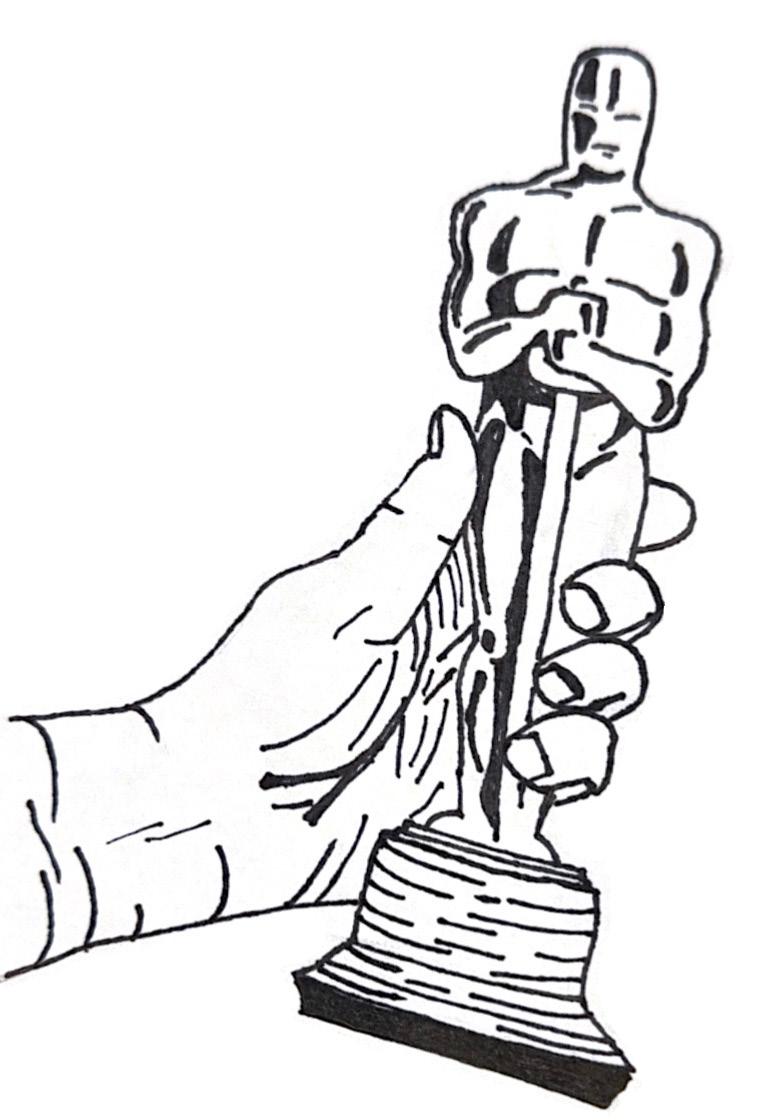
when I hosted, LA was on fire, but this year everything is going great.” He also gave a very entertaining performance of what it would be like if he ever received an Oscar, complete with a crown, a robe, and a bird flying down with the
Oscar in its mouth. While I did agree with most of the Oscar nominations, the winner of the Best Picture award was not what I would’ve chosen. It went to “One Battle After Every I read going to movie it seem like a thrilling, revolutionary adventure set in the ‘80s. Plus, the main character was played by Leonardo DiCaprio, so it seemed legit. I was The
movie was disturbing and overly vulgar, which made for a very bad date night decision. As if that wasn’t bad enough, the movie was also about two and a half hours long, and I felt squirmish
the whole time. I tried to remain open-minded, but even the adults I talked to who had also seen it felt the same way.
The movie was definitely unique, and the acting was good, but the plot had many holes and definitely did not leave me feeling satisfied.
The Oscars red carpet show is always my favorite part because I love seeing how dressed up yet classy people can be.
In my opinion, the bestdressed actress was Mia Goth, who was nominated for Frankenstein. She wore a beautiful, light yellow, flowy, strappy dress by Dior. It had intricate lacy flowers sewn into layers of sheer lace with a thighhigh slit up the middle of the dress.
As for men, the best-dressed title has to go to Timothee Chalamet. He pulled up in an all-white suit made by Givenchy, accompanied by some stylish, thin black sunglasses.
The suit jacket was longer than a typical suit, and the pants were quite baggy, which I thought was an interesting take on newer age style mixed with the timeless buttoned suit.
Overall, the 2026 Oscars were well done and memorable. From the opening monologue to the glamorous red carpet looks, the ceremony captured what the event is truly about.
Although I didn’t agree with every award choice, the night still celebrated the talented actors and filmmakers who make the great American movies. •
Trend predictions: be ahead of the curve
Vivian Whitelaw Junior Editor
Now that it’s in the 70’s and sunny, it’s time to ditch the sweatpants, jeans, and hoodies to trade them in for something more appropriate.
I don’t know about you, but it can be difficult deciding what to wear when it’s not quite warm enough for shorts, but a bit too cold for pants.
So the perfect spring trend, linen pants! They are extremely
comfortable and perfect for any temperature, making them an excellent spring choice.
Maxi skirts are a similar and amazing option; although they are not a new trend, I have seen a lot of maxi and midi skirts lately, usually with big belts layered over.
Another exciting trend to experiment with is denim on denim. I have previously been opposed to wearing jeans and a jean jacket at the same time. However, this trend has exploded across social media and the Jackson Reed hallways, and I am
loving it!
Another trend that has caught my eye are ballet flats. Flats and jeans always look incredible together and add so much to an outfit.
Although they aren’t the most comfortable shoe choice, they are hands down the most stylish. Additionally, getting creative with flats (or shoes in general) through color and styles, or matching it with another aspect with an outfit (we’ve all heard of the sandwich method), such as a bag or headband, always improves
the look and adds stylish touches that are not overlooked.
For those who are tired of seeing the same repeated outfits in the hallways, another upcoming trend is layering jewelry.
However this doesn’t mean two or three small necklaces, no: this means unique and eclectic jewelry of many different lengths (preferably very long) to spice up a look and give a personal flair.
Keeping within the topic of jewelry and uniqueness, big and chunky bangles are making a comeback!
Let's let spring of 2026 be a time of experimentation and exploration. Lets not fall into habits of conforming with everyone around us, the best way to add new trends into your life and wardrobe is to make them your own, so don’t be afraid to add your own twist to these trends. •
GRAPHIC BY CARMINE MACKAYE
The positive future of JR football, from a player's perspective
Cy Amos Contributor
I am Cy Amos, a class of 2029 Jackson-Reed football player, and I am excited for the future of the team.
You probably think we have no hope for the next season having had four straight 1-9 seasons, but there’s a lot of excitement in the program for next year’s campaign. The freshman class is the biggest class in JR football in a long time, and we are inspiring a new vision for the team.
In the 2025 football season, we were able to have a JV Football team for the first time in two years. This was a big win for our team's chemistry and development as
FRISBEE
from page 1
Lee of the class of 2024 played in the last cycle (two years ago).
Holland remembered how cool it was watching Lee play on “Team USA with all the best players I've seen before [in the US] against all these international players.”
From then on, with JR ultimate head coach Dave Ohls, Holland set up a list of short-term goals to hit his longterm goal of landing a tryout for WJUC.
Jackson and Ruggiero developed a close bond, and he pushed him to be a better player, a better teammate, and strive for the goal he had: WJUC.
To make the team, they both had to first fill out an application, complete with
players. It also helped us with getting in game experience and developing players from a young age.
We have already started offseason football workouts and are being introduced to a new offensive playbook.
Coach Lipscomb has also hired a new defensive backs coach who has been pushing us very hard and implementing fourquarter weight room sessions to get the edge over other teams in the offseason and to be the best we can be.
We have amazing coaches who push us to our limits to bring the best out in us. And they don’t just coach about football, they also coach us to be the best we can be, and prepare us for life
essays and their stats mainly brought in from their summer club programs: which Holland described as almost like a “college application.” Then, they both traveled to North Carolina for the tryout portion with senior Benson Ezeh, who also earned a tryout but did not make a team.
There were two tryouts: one East coast, one West coast, each with 100 players trying out (50 guys, 50 girls). These consisted of two days of 9-5 drills and scrimmages, with an hour lunch break. During the tryouts, Jackson remembers seeing a lot of guys they recognized from previous tournaments, “especially on the East Coast tryout, it was great to see familiar faces, as well as new faces.”
When finding out they made the team, both boys were
after high school by teaching us to understand that football isn’t just about wins and losses, it’s about teamwork and being the best version of yourself.
After our demotion to the DCIAA Stripes League, there is a new feeling in our team community.
We expect to win football games next year.
In the 2025 football season, we had a disappointed fan base that couldn’t get around to supporting us because of our losing record.
As we go into next season, we have a new vision and will not let this continue. Our goal for next season is to bring a football team to JR that fans and alumni can be proud of. •
hyped, naturally.
Holland remembers feeling as if “the world's stopped moving.” Seeing as, “oh my God, that's, like, the goal I'd worked [toward for] two years, [and it] finally came true. It was awesome.”
Holland had originally played ultimate casually in middle school, but was officially introduced to frisbee freshman year after his mom encouraged him to try it out when he stopped playing baseball. He remembers immediately loving it, and just getting stuck with it and further in love with the game.
Jackson was at work when he found out through a text from one of the alumni before he got the email from the program. “And it was just [as] I was driving home, I started crying,” he remembered.
Jackson became

acquainted with JR frisbee in his 7th grade year after getting to know Ohls at a pickup game his brother brought him to.
He started playing with the JV team that year, had his first tournament with them the summer going into 8th grade, joined the summer club team coached by Ohls, and ended up making varsity in his 8th grade year. He’s played varsity ever since.
After hearing the good news of making the team, the both of them met up and celebrated together.
This program is a big milestone for them as Jackson goes on to play D1 ultimate at CU Boulder, ranked first in the country as of April 21st and Holland will also play D1 Michigan, currently ranked 16th in the country.
Holland notes that reaching
a goal they’ve both worked two years towards, feels a bit unsettling, as he wonders, “How do I keep finding that motivation to get better and everything.”
As they go on to play this summer, both Jackson and Holland are equally excited for the social aspect of it. “Getting all these styles of play into this one team, in that one week, and then going to Spain and playing with them against these players from Japan [and other countries]... that’s what I’m really waiting for,” said Jackson.
The boys hope that this legacy will continue on, as Jackson said, “One [player chosen] last cycle, and now this cycle, two people go to make the team. Holland adds how he is “sure there’s gonna be more than that [in the following years].” •
from page 1
One of the defining moments of their regular season games was the Tigers rematch of the DCSAA finals last year against St. Albans. While the team had a rough top of the first inning, with St. Albans scoring 5 runs, the team was able to bounce back following back to back doubles by Seniors Tommy Gore and Ben Shapiro.
Senior Alex Ouzts drove home three runners with a double that put the Tigers up 11-10.
The game ultimately ended 11-10 for the Tigers and they were able to maintain their streak of DCSAA wins and get retribution for their state final loss last year.
Sophomore Walker Alexander said he was “very
The teams went back and forth for the remaining six innings, with the team fighting back in the bottom of the fifth to comeback from being behind two runs with a score of 10-8.
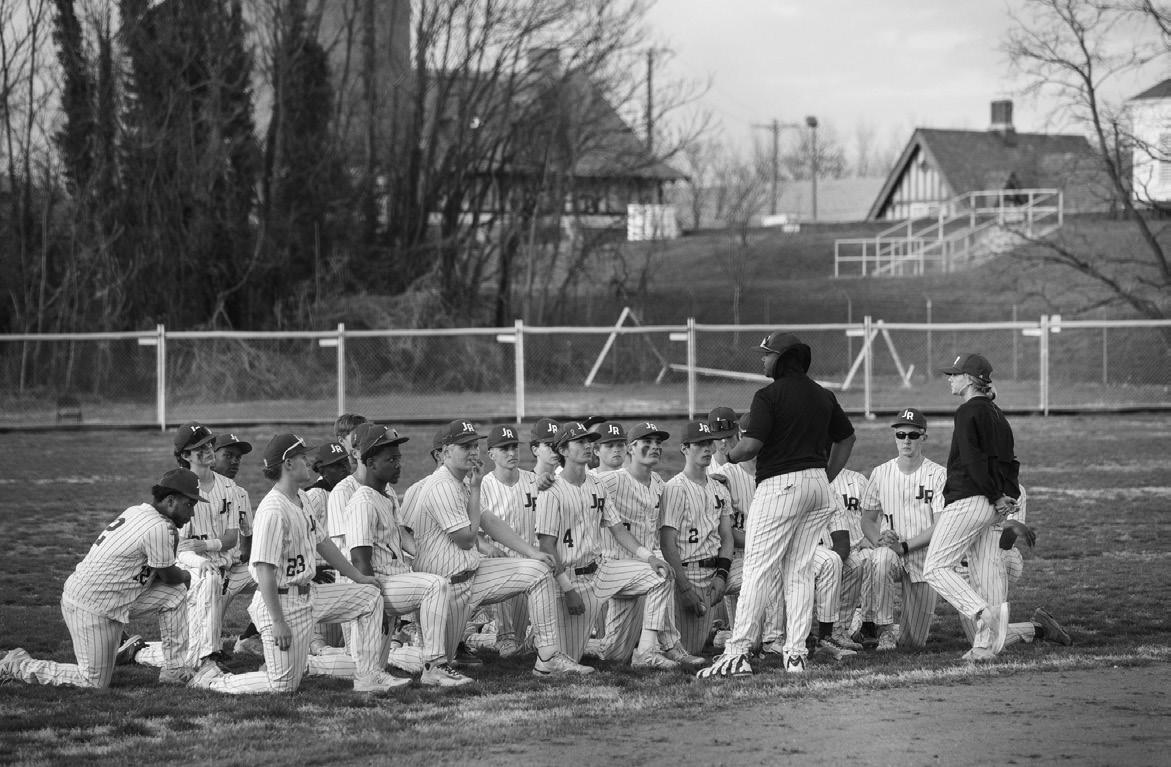
impressed how the guys stuck with it after a tough first inning to get the win.”
Additionally, one of the most exciting developments for the Tigers this season has been the addition of Alex Nehrer, the team’s only female player.
As the only girl on an allboys team, Nehrer has been embracing the challenge and the opportunity to play “with lots of talented people, which has pushed me to grow as a player.”
She added how “being on the team has been really fun, there’s a really good community, and we all have a really good dynamic.”
Her presence on the team has been well received by all her teammates, and her determination and skills continue to make a significant impact.
Looking forward, the team is gearing up for playoffs with one goal in mind: the DCSAA championship.
Junior Lee Eckstein emphasized the team’s strong preparation and palpable ambition for another state championship saying, “we have one goal and it is to win a state championship, if we play
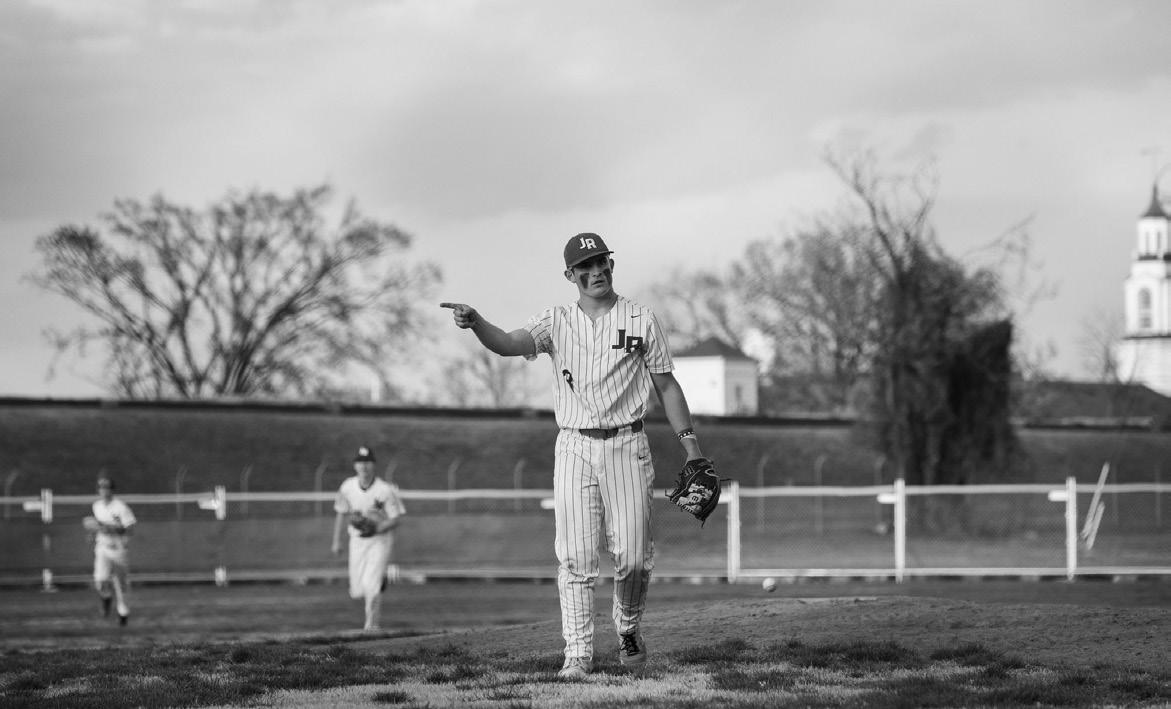
STRIKEOUT SEASON - Junior Lee Eckstein celebrates after striking out a Sidwell batter in the Tigers' 7-3 win. together and stay a family we can accomplish anything this year.”
Alexander emphasized this saying, that he is “proud of how the team has won many of our tough DCSAA games and how we remain undefeated in that conference.”
Currently, the Tigers are looking in great shape for another DCSAA Championship run. So far this season, they have played and beaten most of the other DCSAA teams with a 7-3 win over Sidwell, 9-5 win over Gonzaga, 2-0 win over Maret, 11-
10 win over St. Albans, a 13-5 win over Latin, and a 13-3 win over Schools Without Walls. Shapiro, Eckstein, and Alexander are all optimistic about the team’s chances with Shapiro adding that his expectations are to “end my high school career with a high note and win a state championship.”
With the season coming to a close, the Tigers are positioned for a deep playoff run and have only one thing on their mind: to win. •
PHOTO BY DANIEL KREPPS
PHOTO BY DANIEL KREPPS
MIDGAME TALK - The baseball team huddles during a game against Sidwell.
PHOTO COURTESY OF ORLY JOSSEN
BETTER TIMES AHEAD - The Tigers had a rough 1-9 season in 2024, but they are hopeful for the upcoming season.
Track team takes on indoor nationals
Tinsley Barmeyer Contributor
After a record-breaking indoor season and a DCIAA Championship title, a select group of Tigers earned the opportunity to compete against some of the fastest high school athletes in the country in national competitions. The team represented the school at both New Balance Nationals Indoor and Adidas Track Nationals, finishing the season on the biggest stages.
At New Balance Nationals in Boston, Avery Craig made history, breaking the school's 200-meter record with a time of 22.01 and proving himself among the country’s top sprinters.
Arjun Bhat led the distance squad, finishing the mile in 4:19.79 and the two-mile in 9:13.42, a time that puts him 65th nationally.
The 4x200 squad made up of Josh Gayle, Nathan Bovelle, Wyatt Dieterle, and Craig had a devastating loss when an opposing runner knocked the baton out of Dieterle’s hand.
“For all of us, it was so sad,” senior sprinter Josh Gayle said. “We had worked to get to Nationals in the first place. We ran that 4x200 a couple of times to qualify, and then to drop the baton on a national stage for the first time all season was heartbreaking.”
However, the team was given another chance. “It was honestly a blessing in disguise,” sprint coach John Akinsanya reflected. “We protested the baton falling and got to run in finals where we ran a new
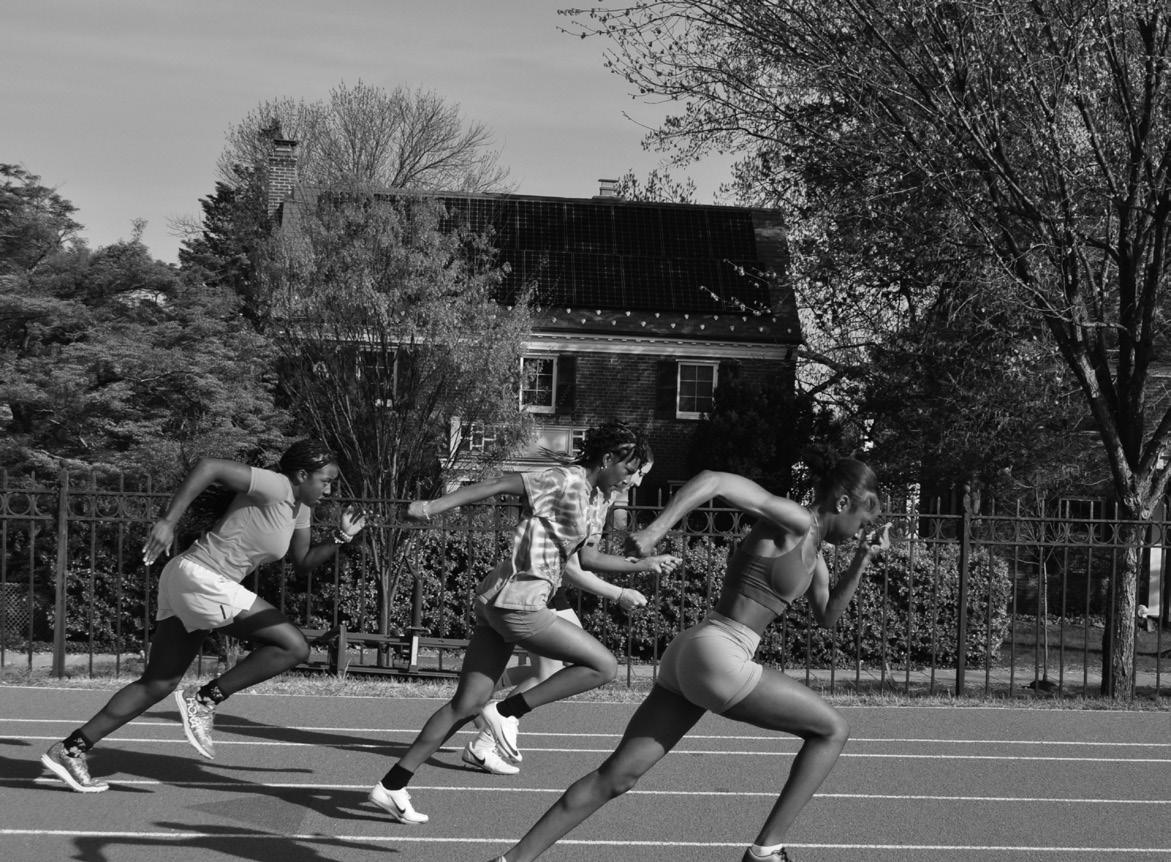
school best.”
Gayle added, “Getting that opportunity back meant everything, it felt like a new spark of hope. We thought it was over.”
In the 4x400, Justin Briggs, Mason Fedele, Bovelle, and Craig broke both the indoor and outdoor school records, running 3:22.32 and finishing the season 24th nationally.
The Sprint Medley relay team, Craig, Gayle, Briggs, and Mark Suardi also impressed, running 3:33.03 to rank 22nd nationally and beating their previous school record from earlier this season.
At Adidas Nationals the athletes continued to compete against high level competition.
Samuel Elliott, Tate Stadler, and Bovelle ran in the 60 meter dash, while William Wills, Salim Camara, and Bovelle took on the
Girls' lacrosse flourishes depsite funding issues
Sam Bensky Assistant Sports Editor
The girls' lacrosse team has been building a program centered on player growth, commitment, and team chemistry. This year, as players continue to develop and strengthen relationships under the encouragement of their captains and coaches, players across skill levels and ages have come to love the sport and their team.
A big factor behind the team’s improvement is their commitment to practice. With five practices a week split between the mornings and afternoons, the team has been able to “constantly build skill sets and be around each other to continue to improve that trust and relationships on the the field” said Senior Captain Angie Payz.
With five practices, and 1-2 games a week, players are certainly able to work on their skills, which coaches and captains have prioritized this year.
Junior Ames Amolsch, who’s played for the team all three years, emphasized how “our coaches and captains are super great.”
She described how often when coaches are preoccupied with the JV team, or vice versa, the team’s captains take responsibility over their teammates, putting together drills and workouts to keep the team active
and improving. Ames added that the coaches too are “super supportive and very motivating,” while “making sure that we’re still having fun, and learning the game as well.”
Captains, too, are happy to take the players under their wing as they continue to improve. Payz noted that watching her friends improve was one of the highlights of her season, saying how “its so rewarding seeing how people started, and how they are playing today,” and that the dedication of the freshmen makes her “happy for the future of the team.”
While the team has strong leadership, commitment, and tiger spirit, they see less funding than many boys' teams, including the boys' lacrosse team, according to one source. While other teams receive greater school funding for equipment and buses, the majority of girls' lacrosse funds come from the players' own fundraising.
According to one player on the team, there have been issues with missing team buses, in fact, the player described how “it’s usually parents stepping up and taking off work” to carpool players to games, as for the majority of their games, there is no team bus for transport, unlike on the boys' team.
While funding has been a struggle, the team has absolutely made the most of their opportunity to play. •
A guide to college sports recruitment
Nylah Daniels Contributor
Jackson-Reed hosts some of the strongest athletic programs in D.C. making standing out as a great way to get recruited. The path to college has many routes for players to take. Some athletes, like soccer player Sonora Hale, attend showcases that college coaches would attend; a practice common across all sports. Going to showcases can help athletes get to know coaches and show off their skills.
400 meters. In the field events, Maurice Shanks and Zari Gedeon represented the team in the long jump.
The 4x200 relay team, Stadler, Elliott, Wills, and Shanks, ran 1:35.84, showcasing strong teamwork and execution.
While the team did not make the podium, competing at national meets gave the athletes experience at the highest levels and helped to topple four school records. Now the focus shifts to outdoors where the team looks to continue their momentum.
“I expect big things for all of us,” Gayle said. “We worked really hard during indoor, we won a championship, and we want the same for outdoor. I think everyone’s going to keep pushing to get better.” •
Most athletes can post highlight videos of themselves playing their sport and showing their skills, often on apps like X and Instagram, making an account especially for their recruitment.
Taking these steps starts the process of colleges and universities reaching out to you. While getting offers from colleges can be very exciting, it's important to determine the best fit for you. Players should make sure they are considering factors they consider priorities, like programs and team culture.
Rower Willa Frillici determined her school based off of rankings, which are especially important in sports like crew. Athletic Director Arrington explained, “this is a life decision,” so you have to consider so much.
The way to get recruited by a school is to make yourself known to the coaches – reach out to them by email – know what you want from a school, and most importantly make yourself stand out and give them a
reason to want you on their team.
You only have four years to get recruited to a college, and the time goes by fast. When should you get started? Most players start reaching out to coaches their sophomore year to help develop relationships. But, you can get started at any time, what matters is “being proactive,” according to Arrington.
When reaching out to coaches you should include footage of yourself playing, send invitations to an upcoming game, and anything else so they can get to know you better as a player and a person. Coaches look for three things when it comes to getting recruited: coachability, consistency, and effort, according to Arrington.
Coaches like her look at “how you act on and off the court.” In almost every school, your grades can decide whether a student is recruited or not. You also have to think about some questions that you want to ask coaches.
Arrington suggests asking schools questions like, “how do you support athletes academically?” or “what’s your coaching philosophy?” In the end, the way to get a lot of offers is simple: start early, stand out, and show that you are the model athlete for the program.
Playing a sport in high school doesn’t mean that you have to play in college. Some people play a sport to help them prepare for college. Sports can not only get you into college, they can help you prepare for life. •
Boys' lacrosse builds spirit
Sam Bensky Assistant Sports Editor
Over the past few years, our boys' lacrosse team has been working to cement themselves as an active, competitive team with a strong, tight-knit group of players. This year, the team’s progress has been showing, as their discipline, confidence and camaraderie are at all-time highs.
The team’s strength starts in practice. Holding two-hour practices every day, and playing one to two games a week, players have plenty of opportunity to sharpen their skills.
Steven Most, a junior who is new to the team, said how the strict schedule “makes the team better” and that, being new to the school, he “got to know the guys on the team a lot better.” Senior Cary Stenberg noted how its helped him “find a lot of new unexpected friends,” especially amongst younger players.
The team has welcomed a record number of freshmen this year, fileding an impressive JV team.
As opposed to previous years, when underclassmen were often unable to get much opportunity on the field, especially in games, our lacrosse freshmen and sophomores have been able to work together and see serious improvements.
In practices, the team often splits into JV and varsity, which gives younger players room to make
mistakes and work on them. As the season has progressed some JV players have even managed to make their way into varsity games. Rafa Goldstein, a freshman and first year lacrosse player, noted a highlight of the season, was when he and some of his friends got into a varsity game we were winning, “especially with a bunch of the upperclassmen cheering us on.”
On the team, the relationship between JV and varsity is one of mutual encouragement. Beyond the outlandish celebrations on the bench after every goal or big hit, players have kept the light team atmosphere while still focusing on disciplined work and improvement.
Goldstein emphasized that “our captains are people we can go to whenever we have questions or need advice,” and that they “really
push us to be our best.”
Improvement, however, has also largely come from a well-versed, motivated coaching staff that helps all players, not just those on JV. Head coach Rio Osbourne is a JR graduate who himself played on our lacrosse team all four years, and has come back to coach for the past 4.
Overall, the team’s performance comes as the result of many different factors coming together, helping us field our best lacrosse team possible. The team is 4-5 against tough competition thus far, and there are only a few more games left to play in the regular season. The last regular season game, also serving as the team’s senior night, comes on May 1 at 6 pm against Bowie in The Den. Be there! •
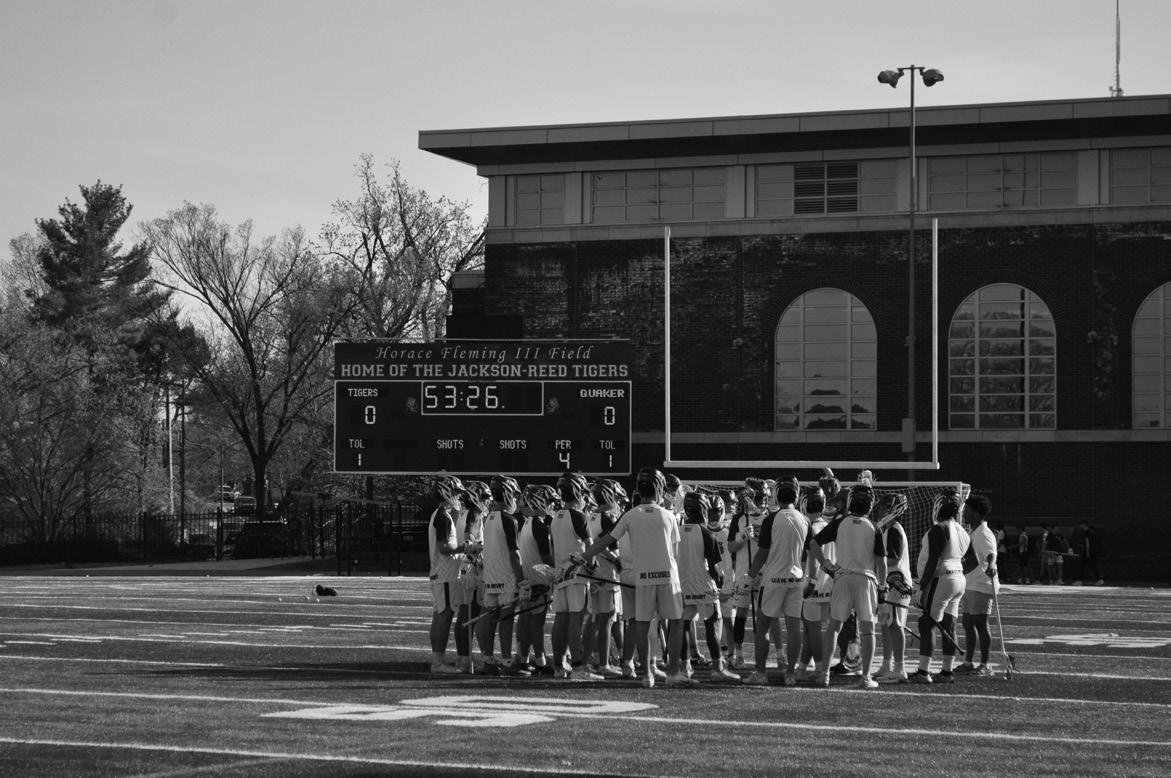
PHOTO BY LILY MAURER
PRACTICE MAKES PERFECT - Runners practice sprints to prepare for the spring outdoor Track season.
PHOTO BY LILY MAURER
TIGER HUDDLE - The lacrosse teams talks midgame against rival Sidwell.
La clase de Postcolonial regresa
Estefania Mora Editora junior de Español
La comunidad latina celebra una vez más al notar que la clase de Español Postcolonial ha sido reintegrada en el currículum del año escolar 2026-2027.
A principios del año pasado, la administración de JacksonReed decidió eliminar la clase de Postcolonial y reducir el número de clases permitidas para la clase de AP Español literatura y Cultura. Al notar esto, muchos padres, estudiantes, y maestros sintieron indignación al ver que cada vez la representación latina se reduce en la escuela al igual que el nivel académico.
La clase de Postcolonial es una clase de literatura que explora el mundo literario hispanoamericano en el siglo XX, donde se analizan textos literarios que abordan diferentes problemas desde la perspectiva hispanoamericana, mientras que las clases de historia muchas veces suelen explicar temas como el imperialismo, la interferencia estadounidense, y problemas sociales desde la perspectiva estadounidense, dejando a un lado detalles cruciales, y a menudo, priorizando la perspectiva de los grupos colonizadores.
Por ejemplo, en la clase de historia, el imperialismo se presenta como una búsqueda de recursos y riqueza, sin profundizar en los millones de damnificados y muchos menos el impacto que persiste en países latinoamericanos y asiáticos en el siglo XVI, mientras que en las clases de literatura, se explica la conexión entre el imperialismo y las problemas políticas en
curso.
Asegurar la presencia de cursos de literatura avanzada en el currículo es fundamental para representar la realidad latinoamericana.
La decisión de eliminar y reducir estas clases generó exaltación ya que esta decisión se tomó sin consultar a la comunidad latino y afectó directamente a los estudiantes.
Varios estudiantes tenían planeado tomar Postcolonial antes de AP Literatura para prepararse mejor; entender el currículo y aprender a manejar el uso del lenguaje figurativo sin la preocupación del examen de ‘AP’.
Sin embargo, algunos se vieron obligados a inscribirse directamente en AP literatura y cultura, y otros fueron obligados a abandonar el programa por completo debido a la falta de cupos y apoyo.
A pesar de reducir la cantidad de clases rigurosas de Jackson Reed, tampoco se ofrecen los materiales necesarios.
Los estudiantes se ven obligados a comprar sus propios libros para estas clases, los cuales se encuentran entre un rango de 40 a 80 dólares, haciéndolo mucho más difícil para estudiantes menos privilegiados.
Al mismo tiempo, la administración de Jackson Reed invierte en programas innecesarios como los ‘Yonder Pouches’, que resultan ineficientes y no resuelven el problema principal del abuso de tecnología y plagiarismo.
Lo que hace es reducir recursos que podrían ser
asignados a otras áreas más importantes y beneficiosas.
Muchos se preguntan cuál es la importancia de las clases de literatura en español. Estos cursos ayudan a los estudiantes a mantener su español académico fuera de sus países de origen y a aprovechar su rigor para prepararse para la universidad, ya que aborda temas bastantes avanzados y los analiza de manera bastante profunda.
En esta clase se les enseña a escribir ensayos, analizar textos, aprender de movimientos políticos, y la comunicación eficaz con el mundo real.
Sin embargo, al ver esta injusticia, la comunidad no se quedó de brazos cruzados, muchos padres y estudiantes expresaron su descontento y decidieron tomar acción para presionar a la administración.
Alumnos de décimo y onceavo grado enviaron correos electrónicos explicando la importancia de mantener estas clases. Después de numerosas quejas d e parte de la comunidad latina, finalmente la clase de postcolonial fue reintegrada.
La comunidad latina está agradecida y espera que esta decisión se mantenga porque en momentos de tanta angustia, necesitamos representación cultural y entender nuestra cultura. •
Venezuela hace historia ganando el Clásico Mundial de Béisbol 2026
El béisbol siempre ha sido un deporte muy importante en Venezuela. Desde niños, muchos sueñan de jugar, batear o lanzar como los jugadores grandes. En marzo de 2026, Venezuela hizo historia al ganar por primera vez el Clásico Mundial de Béisbol. En el campeonato, venció a Estados Unidos 3-2, y todo el país celebró con mucha alegría y orgullo. Este triunfo mostró como Venezuela tiene mucho talento y pasión por el deporte.
No fue fácil llegar a la final del clásico mundial de béisbol. Los jugadores tuvieron que esforzarse mucho, trabajar en equipo y no rendirse. Cada partido fue un desafío que requirio concentración y mucho esfuerzo. Además, el
equipo venezolano demostró que con dedicación y perseverancia se pueden lograr grandes metas. La victoria también significó mucho para los venezolanos. En un país que enfrenta momentos difíciles, el triunfo unió a las familias y a las comunidades. Todos celebraron juntos, gritando y mostrando el orgullo por el equipo. La alegría se sintió en las calles, en los hogares y en las redes sociales.
Finalmente, ganar el Clásico Mundial de Béisbol no es solo un logro deportivo. Es un motivo de orgullo y felicidad para todos los venezolanos y Venezolanas. Este triunfo quedará en la historia y siempre será recordado. Además, inspirará a futuras generaciones a luchar por sus sueños, dentro y fuera del campo de béisbol. Venezuela mostró al mundo que con esfuerzo y pasión se pueden alcanzar grandes cosas en la vida.•
La Velada del Año 6: boxeo, streamers y espectáculo
Adrian Pinto Elvira Editor adjunto
En los últimos años, uno de los eventos más seguidos en internet, en particular en España, es La Velada del Año, que organiza el streamer Ibai Llanos. Este 2026 se celebrará su sexta edición, la conocida como La Velada del Año 6, que prometen que es la más espectacular de todas. Pero, para muchas personas que no siguen el mundo de Twitch o el de YouTube, puede surgir una pregunta importante, ¿de qué trata exactamente el evento?
La Velada del Año es, en líneas generales, un evento de boxeo amateur entre creadores de contenido como streamers, youtubers o influencers. Los participantes no son boxeadores profesionales; son streamers, youtubers... y durante meses entrenan para preparar sus asaltos. La magia del evento es la que se produce cuando la gente que conoces de internet compite en algo en lo que normalmente no hacen. Esta sexta edición se celebrará el 25 de julio de 2026 en el Estadio de La Cartuja en Sevilla,
un lugar con capacidad para miles de personas. Además, la velada durará varias horas como en las ediciones anteriores, con mezcla de peleas, actuaciones musicales y momentos de entretenimiento. Una de las principales características de esta edición es que habrá diez combates, el más hasta ahora, con participantes de diferentes países como España y Latinoamérica. Entre las peleas más esperadas se encuentran las de creadores muy conocidos como IlloJuan, TheGrefg o Fernanfloo. Esto lleva al evento a tener un alcance internacional y audiencia no sólo española sino que también de millones de personas que los siguen estos creadores de contenido a lo largo y ancho del mundo entero. Sin embargo, La Velada del Año no es únicamente boxeo. También hay actuaciones musicales, entradas de invitados e incluso momentos virales que convierten ese acontecimiento más en un show que en un evento deportivo tradicional. Este tipo de formato es una de las causas de su éxito, ya que mezcla deporte, entretenimiento y cultura digital
en una sola propuesta.
Un punto determinante es el impacto que tiene en las redes sociales. Cada una de las ediciones generan millones de visualizaciones en directo y miles de comentarios a través de plataformas como Twitch, YouTube o Twitter. Ello pone de manifiesto cómo ha cambiado
el modo de consumo del entretenimiento, pasando del típico de la televisión a eventos generados por creadores de contenido.
En definitiva, La Velada del Año 6 es mucho más que unas simples peleas de boxeo. Es un espectáculo que da lugar a la nueva era del entretenimiento
digital, donde los creadores de contenido tienen la misma potencialidad de impacto que los deportistas o artistas. Para muchos jóvenes, se ha convertido en uno de los eventos más esperados del año, y todo apunta a que esta sexta edición será la más grande hasta ahora. •
Alex Garcia Editor adjunto
GRAFICO
Marzo: el mes de la mujer
El mes de marzo es conocido como el Mes de la Mujer, un periodo que permite poner de manifiesto los logros, luchas y significativas aportaciones realizadas por la mujer desde diferentes disciplinas, un periodo que nos ofrece la oportunidad de volver la vista atrás y contemplar la apertura de muchos pasos que han logrado dar las mujeres, especialmente aquellas que han hecho de esos pasos una realidad donde antes no existía la oportunidad de poder caminar. En ese camino, las mujeres hispanas han sido muy importantes en la política, en la ciencia, en el arte o en el activismo.
Frida Kahlo, una artista mexicana, es una de las más reconocidas, con una obra no sólo destaca por su estilo pictórico sino también por abordar y representar las temáticas de la identidad, del dolor o de la experiencia de la mujer. A pesar de las múltiples intervenciones relacionadas con su estado de salud, Kahlo no dejó de crear y hoy es considerada uno de los artistas más influyentes de
la historia. Dentro del contexto judicial y político resalta concreta e ideológicamente de Sonia Sotomayor, quién hizo historia al convertirse en la primera mujer latina dentro del Tribunal Supremo de los Estados Unidos. Su existencia es un ejemplo de perseverancia, pues creció en condiciones humildes y llegó a ocupar uno de los máximos cargos del país. Su presencia en el sistema judicial es un importante avance en términos de diversidad y representación.
Una de las figuras claves en la ciencia es Ellen Ochoa, la primera mujer hispana que viajó al espacio. Como ingeniera y astronauta de la NASA, Ochoa no sólo participó a lo largo de su carrera en diferentes misiones en el espacio, sino que ha servido como una figura inspiradora para todo un alumnado de jóvenes interesados en la ciencia y la tecnología en general. Su carrera pone de manifiesto que las mujeres pueden alcanzar altos niveles en las áreas dominadas generalmente por hombres.
Además de estas figuras, hay muchas otras mujeres hispanas que han contribuido al cambio
social. En el activismo, mujeres como Dolores Huerta han luchado por los derechos de los trabajadores y las comunidades latinas. En cuanto al arte, la música o el cine, muchas creadoras han utilizado sus plataformas para poner de manifiesto sus culturas y contar historias que antes no se escuchaban. El impacto de esas mujeres no queda limitado a sus logros individuales. Cada una de ellas ha ayudado a abrir puertas a las nuevas generaciones, demostrando que se puede superar barreras y alcanzar metas en cualquier ámbito. Han contribuido a dar otro enfoque a la forma en cómo se ven las mujeres en el ámbito social, promoviendo mayor igualdad y reconocimiento. En conclusión, el Mes de la Mujer no es sencillamente un homenaje, sino un homenaje que a su vez sirve para recordar todo lo que aún está por hacer. Reconocer a figuras como Frida Kahlo, Sonia Sotomayor y Ellen Ochoa nos recuerda la esencia de la diversidad y de la representación. Sus relatos motivan la lucha por una sociedad más justa, donde todas las personas tengan las mismas oportunidades, sin importar su género o su origen.•
Latinoamérica en Miami
Isabella Mara Editora de Español
En Miami, hablar español no es la excepción, sino la regla. Caminar por sus calles es escuchar acentos de distintos países, encontrar comida que recuerda a casa y convivir con tradiciones que han cruzado fronteras. Para muchos latinoamericanos, incluyéndome, la ciudad no se siente extranjera, sino muy familiar. Miami no es solo un destino turístico de playas y rascacielos. Es, ante todo, un espacio donde lo latino no es una minoría, sino la norma. De hecho, más del 70% de su población es de origen hispano, lo que la convierte en una de las ciudades más latinas de Estados Unidos.
Este predominio se refleja en todos los aspectos de la vida cotidiana: desde el idioma (el español se escucha en la calle, en las tiendas y en las escuelas) hasta la gastronomía, la música y las tradiciones. Comunidades cubanas, venezolanas, colombianas, nicaragüenses y argentinas conviven y construyen una identidad diversa, pero profundamente latinoamericana.
Pero, ¿por qué hay tanta influencia latina en Miami? La respuesta está en la historia. Uno de los momentos clave fue la Revolución Cubana, que
provocó la llegada masiva de exiliados que huían de la inestabilidad política tras la llegada de Fidel Castro. En apenas unos años, cientos de miles de cubanos se establecieron en la ciudad, transformando su identidad para siempre.
A esta primera gran ola migratoria le siguieron otras. Durante las décadas de 1970 y 1980, conflictos y crisis en países como Nicaragua impulsaron nuevas migraciones hacia el sur de Florida. Más recientemente, la inestabilidad económica y política en Venezuela, así como las dificultades en Colombia y Argentina, han reforzado el papel de Miami como destino clave para los latinoamericanos.
El resultado es una ciudad que muchos consideran la “capital de América Latina” fuera de la región: un lugar donde distintas culturas se mezclan sin perder su esencia.
Si tienen la oportunidad de visitar esta ciudad, van a encontrar ejemplos de esta mezcla cultural en cientos de restaurantes. Una parada recomendable es el restaurante Negroni, fundado originalmente por Pablo Sartori en el barrio de Palermo Hollywood, en Buenos Aires, y con una variedad de platos espectaculares (la milanesa fue mi favorita). •
Fin de estudios de área: alumnos y maestros reaccionan
las clases y permitiendo trabajar con grupos más reducidos.
El próximo año, JR eliminará la clase de estudios de área debido a la incorporación de los cursos de la Academia de Estudios Globales. Los estudiantes ya no podrán tomar Estudios de Oriente Medio, Estudios Latinoamericanos, Estudios Asiáticos, Estudios Africanos ni la clase de Modelo de las Naciones Unidas.
Esta decisión se tomó tras años de clases de estudios sociales abarrotadas, una disminución en la matrícula de clases electivos y la introducción de las clases NAF para la Academia de Estudios Globales.
El jefe del departamento de Estudios Sociales, el Sr. Burgoyne, explica que la tarea de decidir qué clases ofrecerían para el próximo año escolar se dio a los jefes de departamento. “Tuve que tomar la decisión, y mi objetivo es siempre mantener a los profesores en la escuela”. Burgoyne explicó que las clases de estudios sociales estaban abarrotadas, el número promedio de estudiantes siendo mucho mayor que el de una clase de matemáticas o de inglés. “Mi trabajo consiste en ofrecer a los chicos la mejor educación posible, y eso no se puede lograr con 30 alumnos en la clase”, dijo Burgoyne; por ello, se tomó esta decisión con la esperanza de lograr grupos más reducidos en las clases de Historia Mundial, las cuales son un requisito para graduarse. Al eliminar los cursos de estudios regionales, el departamento de Estudios Sociales dispone más períodos para enseñar las clases necesarias para la graduación, evitando así el hacinamiento en
La prioridad de Jackson-Reed es preparar a los estudiantes para el éxito postsecundario a través de oportunidades educativas, tales como el aprendizaje basado en el
históricamente desatendidas, los estudiantes pueden adquirir un conocimiento más profundo y llenar vacíos que, de otro modo, podrían ser ocupados por la desinformación.
Profesora de Humanidades
una razón por la que impartimos estas clases en primer lugar... Nunca me gusta cuando se toma una decisión sin tener un diálogo abierto con los padres y los estudiantes”. Burgoyne había señalado

comentó, “Sí, el aprendizaje de habilidades es importante; sin embargo, los estudios sociales contribuyen a desarrollar el pensamiento crítico y la competencia multicultural en un mundo cada vez más globalizado, algo que es exclusivo de las humanidades”. Malik sostiene que, al profundizar en los aspectos culturales e históricos de regiones
y Español, la Sra. Vázquez, se hace eco de este sentimiento, afirmando, “Cuando alguien se gradúa de Jackson-Reed, no solo debería conocer la relación que Estados Unidos mantiene con otros países, sino también cómo el mundo ve a Estados Unidos”. Vázquez también lamenta la falta de participación de padres y estudiantes en el proceso, “hubo
de Estudios Globales. Geremia, quien dijo que “nunca está a favor de eliminar clases“ , dice siente tristeza al ver desaparecer el Modelo de las Naciones Unidas, porque ayudaba a los estudiantes a “aprender cómo los órganos de la ONU manejan los conflictos y a contextualizar la geopolítica actual”. Lo excelente de GP2,
dice Geremia, es que ofrece continuidad y permitirá a los estudiantes profundizar aún más en los temas. Sin embargo, para los estudiantes que no están en la academia, algunos profesores y alumnos siguen preocupados de que se pierda la comprensión de nuestro mundo globalizado. La Sra. Malik espera que se incorporen temas de estudios regionales al plan de estudios de Historia Mundial II; no obstante, el distrito ya ha añadido, este mismo año, otras quince civilizaciones adicionales que deben abordarse en dicho programa. Malik comentó, “Es imposible cubrir todo en Historia Mundial II, y resulta una verdadera lástima que los estudiantes terminen la escuela secundaria sin nunca haber tenido la oportunidad de interactuar con otras partes del Los estudiantes también han manifestado sus inquietudes respecto al recorte de los estudios de área. Zoe Lewis, junior, comentó que, tras tomar estudios latinoamericanos, “comprendió los genocidios y las tomas de poder en Sudamérica, y pudo simplemente valorar nuestro lugar en el mundo en general”. Lewis afirma que, en una escuela diversa como Jackson-Reed, es importante educar a los estudiantes sobre lo que significa vivir en una comunidad global. Todos los profesores reconocen la importancia de una comprensión regional y global, y esperan que JR encuentre la manera de incorporar o reintroducir los estudios de área. •
Orly Jossen Editora junior de Español
Adrian Pinto Elvira Editor adjunto
Make sure you have READ FURST before you do the BREAD FURST sponsored games *DON’T FORGET TO CHECK OUT

MINI CROSSWORD
By Ben Holland

ACROSS
1 JRHS values motto
5 Go in 7 Wear away 8 The fabric of a “Canadian Tuxedo”
9 Univ. offeringsDOWN
1 The R of JRHS
2 No Turn ___ (road sign)
3 Make up (for)
4 Make even deeper
6 Sleep phenomena
CROSSWORD By Luke Suardi
ACROSS
1 Alternate spelling of a rookie gamer
5 Set of beliefs, or a 2015 boxing film
10 “Poker Face” singer Lady ___
14 Brazilian smoothie berry
15 Harry Potter’s nemesis Malfoy
BEACON MAZE
can you find your way out?

16 Omelet ingredient, in French 17 Texas Instruments product
19 Taken by mouth
20 Herbert of the “Pink Panther” movies
21 Ginger ___
22 “___ the Explorer”
23 *When you can see all of the starred hints?
27 Subtle differences
28 “___ be my pleasure”
29 Smartphone download
30 “Start the music!”
33 Hägar the Horrible’s wife
37 Oak or elm
39 Filled tortillas
41 “Avatar: The Last Airbender” protagonist
42 Plastic wrap brand
44 Opposite of urban

46 How some Aussies say “no”
47 Shoulder-held weapon
49 “I _______ affirm this” (phrase used in debate)
51 *One may see them now near the Tidal Basin
56 German automaker
57 Hosp. scan 58 ___ Airways, Southern European airline company
59 British submachine gun
60 *Skimpy garments
65 “___ Fu Panda”
66 “Rolling in the Deep” singer
67 Window supplier based in Pennsylvania
68 Sound of air escaping
69 Inventor Nikola 70 Office inappropriate, in web shorthand DOWN
1 ___ Breda, Belgian professional soccer team
2 Portuguese novelist ___ de Queiroz
3 Background?
4 Crescent-shaped
5 450, in Roman numerals
6 Major IRS overhaul law (abbr.)
7 Really bother 8 Intestinal bacteria 9 “The Sound of Music” song
“Smart thinking!” 11 Herman Miller office chair
12 Basketball position
13 Insurance company with a duck in its ads
18 Ohio State rivals, for short
23 Prefix meaning “above”
24 Univ. located in Rhode Island, named after northeastern states
25 Our sun’s type
26 Biblical verb ending 27 *2019 World Series champs
31 Critical hosp. ward
32 Midsection
34 *The Washington Monument and Lincoln Memorial, for example
35 *Pesky insects
36 Farming prefix
38 Pair of studs, e.g.
40 Academic exams for jrs. or srs.
43 “Morning Edition” network
45 Vision-correcting surgery
48 Wrestling practice surface
50 Vague idea
51 Wine barrels
52 Most Rwandans
53 Perfect places
54 Bouquet tosser
55 Script
61 Under the weather
62 Salty expanse
63 NFL gameday exclusively on Prime Video, abbr.
64 Tool with teeth
Horoscopes
Aries - Next month you will set the knuckle hopping world record.
Taurus - Someone will pour an entire water bottle of water on you for senior assassin.
Gemini - Computa, make these gemini have uncontrollable diarrhea
Cancer - Tiger Woods needs a personal driver, it’s up to you.
Leo - Druski will do a skit dressed up as you
Virgo - Go smell some candles in Target.
Libra - Take a risk and climb Acatenango Volcano
Scorpio - Don’t study for your AP exams, it raises cortisol Sagittarius - Start training now—you’ve been recruited for Artemis III
Capricorn - Your next subway order will contain gabagool Aquarius - You’re going to get scammed on Depop
Pisces - You will be touse mogger
BEACONNECTIONS
Find groups of 4 that share something in common!
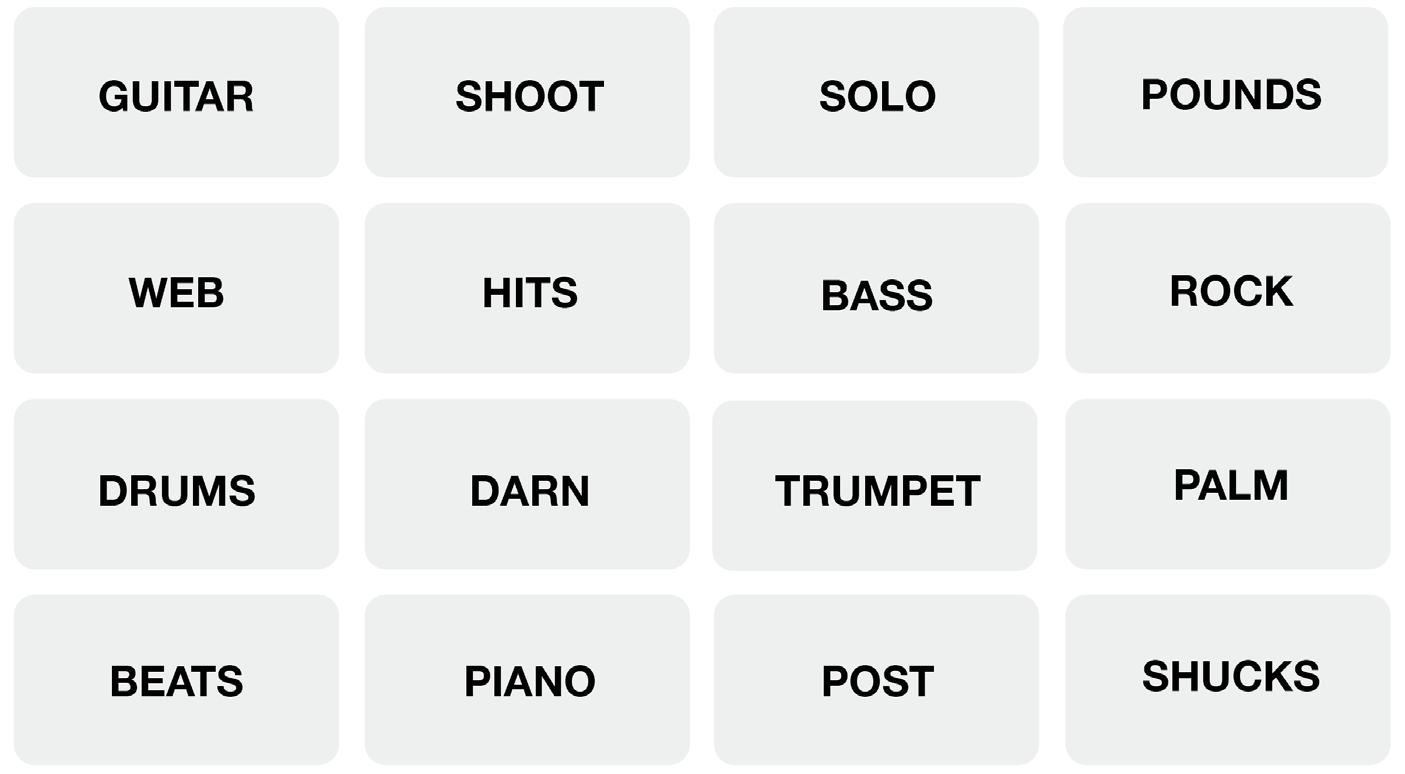
Jackson-Reebus Fast Food Chains



SPELLING BEECON
Find as many words as you can! Words must be at least 4 letters long and use the center letter at least once. Letters can repeat.




Guitar, Bass, Piano, Trumpet
instruments)
Darn, Shucks, Gosh
What is your favorite JR memory?








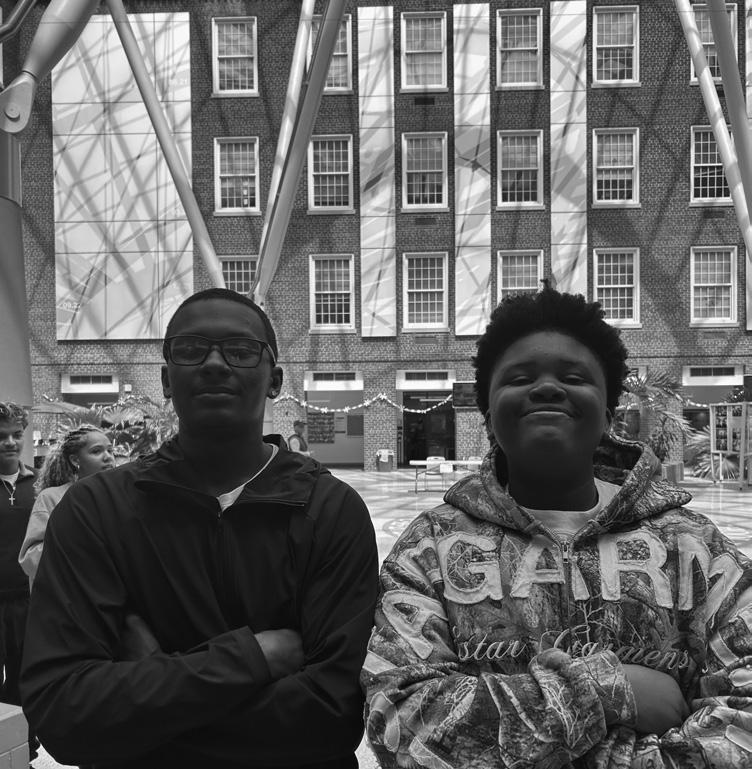
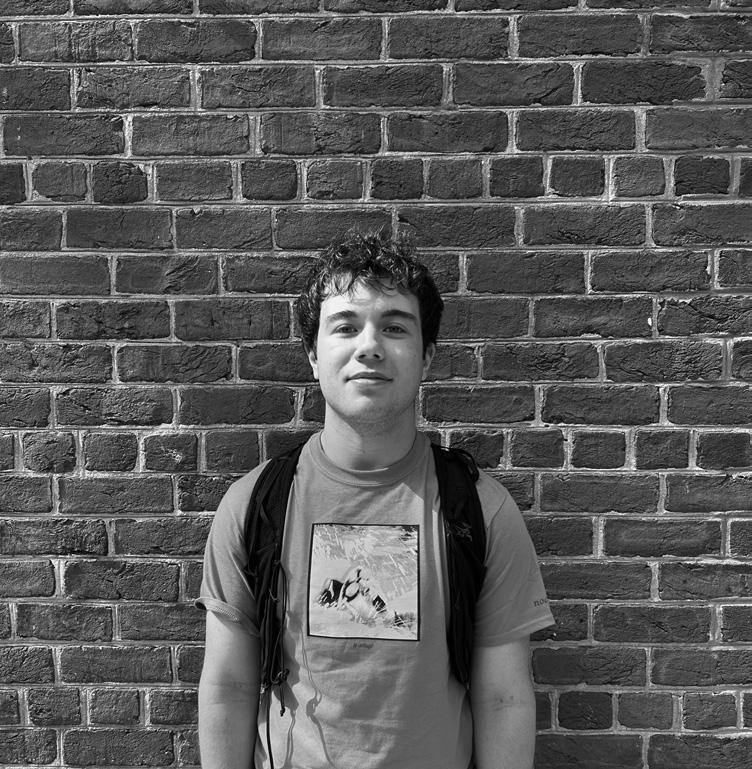

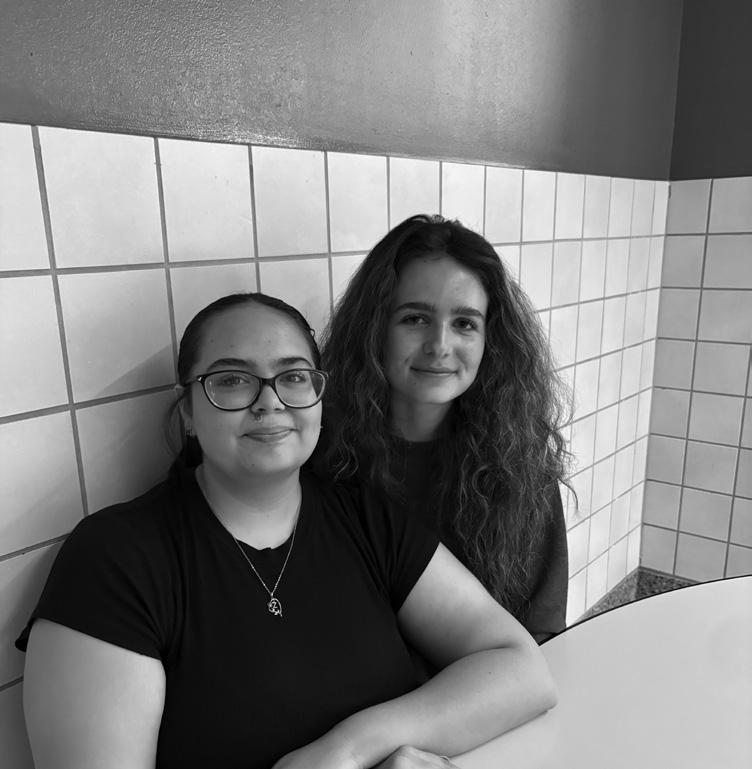
Nothing! Nana Yeboah, 12
Sneaking out through the art exit Dylan Forester, 12
AP Lang with Ms. Szakats
Kevin Obregó-Cruz and Inas Moutei, 12
MJJ rager Charlie Ketchum, 12
Field day every year
Micah Bracey, 12
Riding the elevator Kamryn Booker, 12
Being mistaken as a senior in the atrium all four years
Alexis Mott, 12
Mr. Jenkins’ freshman English Keith Parham and Xavier Johnson, 12
The zoo trip freshman year Maurice Shanks, 12
No school during the morning for CAPE (cough cough) Zoe Castillo and Isabelle King, 12
Getting caught hazing the soccer freshmen Miles Green and Charlie Hall, 12
Slipping on the art wing ramp and getting laughed at Otis Barnes, 12