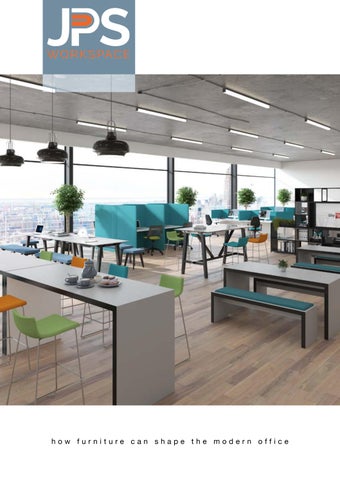
how furniture can shape the modern office
contents
the post-pandemic workplace
the modern office
4
6
employee expectations
8
planning considerations
10
adapting existing spaces
14
protective screen solutions
communal spaces
18
working from home
20
furniture solutions
22
always looking forward
16
24
4
5 hybrid working
the post-pandemic workplace 2m
L e t ’s m a k e t h e most of it.
the changing nature of the workplace The wellbeing of employees in the workplace is becoming more vital, and office furniture can play a huge part in helping to keep people happy and healthy when they’re working. There is no single type of optimal work setting to suit everyone. Instead, it’s about balance. Companies that don’t provide workers with the types of spaces they need to manage the demands and intensity of work will find that this can have a negative impact on employee wellbeing. The most productive employees are those who feel at home when they’re in the workplace. These employees are free to focus on the tasks at hand, rather than some small part of their mind remaining occupied on basic comfort considerations.
t?
In a time of unprecedented change, we have an equally momentous opportunity to shape the future of work.
h
’s n e t a
x
There is no going back to the pre-pandemic workplace. Businesses and individuals have had no choice but to discover new ways of working.
w
The world has experienced widespread disruption over the past year as a result of the Covid-19 pandemic. With the successful development and distribution of a Covid-19 vaccine, the timeline for when the so-called next normal will arrive is clearer.
Work as we know it is forever changed by Covid-19. Now is the time for managers to envision the office that employees will return to.
The anticipated gradual return to the office in the coming months provides opportunities to experiment with hybrid ways of working. Returning to the office strategically, by focusing first on the activities best performed in person and, in the process, evaluating the effectiveness of both home and office work, gives managers the ability to critically consider the ways in which a hybrid workplace might be more effective. There’s no doubt that living through a pandemic will have a long-lasting impact on the way we work and how our workplaces function. It seems likely that our desire to trek into the office will be tested after a prolonged period of acclimatisation towards remote working from both workers and managers alike. Homeworking will continue, but office life - in some form - will, too. The challenge lies in how to adapt workplaces. The pandemic taught us that remote work can be highly effective — to a degree. Employees are often more productive when they don’t have to spend time on a daily commute. Meetings may be more frequent but tend to be shorter. People enjoy the added flexibility when working from home. But recent research has shown us that the past few months of widespread remote working have also had some significant drawbacks.
6
7
the modern office
The right arrangement of people, processes and places will enhance the office aesthetics, improve employee wellbeing, increase cooperation and help facilitate decision-making business processes. The most effective and modern office spaces are characterised by division into different zones that support employees as they perform particular tasks. An office should be adjusted to employees, not the other way round. A good solution to each of these problems is the right office space arrangement combined with the right choice of functional furniture solutions.
people Your people are what really make up a business. A successful organisation doesn’t happen without great people.
processes The tasks that people undertake in work each day can be done more efficiently with a functionally arranged office.
places An office layout that incorporates the work styles of different departments will improve the quality of business processes.
enhanced office aesthetics
8
9
employee expectations
While health and safety were the top motivators for sending employees home to work at the start of the lockdown, health and safety concerns will also impact the return to the office. Employees will be emboldened to push back on returning to the workplace until they feel it is safe to do so and seek proof that they are returning to a safe and risk-free workplace to allay fears. People want safety, flexibility, and ways to collaborate in person and remotely. So, organisations will need to find ways in which employees can keep some of their newfound flexibility as they head back to a safe and hygienic office.
dedicated individual workspace For health reasons, privacy, or otherwise, a majority of workers want space to themselves for focused work, calls, or video meetings. But this can’t override the desire for collaboration; it means accommodating a balance of both.
safety & cleanliness The pandemic has put employee safety into sharp focus. Precautions need to be taken to prevent the spread of germs and contagions. Everyone needs to have their own space which is sanitised often.
collaborative technology The work-from-home reality of the pandemic has caused employees to embrace technology geared toward collaboration and connection. So there’s an expectation that employers will equip them for remote collaboration.
10
11
work ‘spaces’
The workplace has always been more than just a place to work. We create, we innovate, we meet and we eat, and with people making up around 60% of an organisation’s costs, it is vital that today’s workplace creates a happy and productive work ‘space’. Give employees the freedom to choose an environment to suit different work tasks and activities:
focus Focus ‘space’ is where people can do exactly that – focus, concentrate and work in their personal space
flexibility
Control the personal space with dividers, screens and different work areas for different tasks
safety
Protocols to protect ourselves, our colleagues and any other people we come into contact with
Understand the use of space
interact Interactive ‘space’ is for more formal areas of the workplace for pitches, presentations, training and meetings
capacity
Will employees return to the office, work remotely, or a phased approach to coming back to work
space
How can you incorporate social distancing among employees so they all feel safe at work
collaborate We can retro-fit your existing products, re-design your spaces, and help you re-imagine your new normal. Whatever that looks like, we will work with you to make sure your employees feel safe, healthy, and are comfortable in their place of work. Work ‘space’ helps to better understand the use of space and aligns solutions tailored to creating the culture that attracts, empowers and retains people through creating a great place to work
Collaborative ‘space’ for informal meetings, brainstorm sessions and touch down areas to drive creativity
recharge Recharge ‘space’ to relax and refresh, including quiet rooms and dining spaces where people can talk and gather
12 planning considerations
13 work ‘spaces’
The way we think about work in the new postpandemic world has changed. Embracing this next normal, we are leading the way in redefining the new spaces where work happens. We may work in new ways and in new spaces but some things never change. We all need connection with other people, comfort and flexibility.
the future office Despite current events, the desire to return to the office (at least, in part) remains strong. This can in part be attributed to the in-person benefits of collaboration. A company’s culture and ability to innovate are formed around people spending real time together. To get there, companies will need to embrace a plan that’s flexible and purpose driven. People need connections, interactions, and people. Employees view the office as a critical place to meaningfully connect with colleagues, with creativity thriving in an office environment thanks to casual collisions and people working together. Workspaces will need to be designed to support the kinds of interactions not possible with remote work. The future office will serve as the hub for productivity, collaboration, socialising, and in-person connectivity.
reduced footprint Working from home employees will cause office footprints to shrink. At the same time, employees will experience a trade-off between working from home and having a dedicated desk. They can also expect less desk space than before the pandemic. With a rising demand for flexible work benefits, businesses need to consider the potential for reduced office occupancy, which has ramifications for how much office space they need, and what types of workspaces they offer employees.
14
15 new, defined spaces
adapting existing spaces
Businesses that flex to their employees changing needs will have the advantage. This means being able to read how workers are settling into the ‘new normal’ and meeting them where they are, sometimes on the fly. Moveable elements such as modular furniture or space dividers and screens will be critical.
Employees will need spaces designed for collaborative meetings as well as places to escape to focus on individual tasks. Surprisingly, people will depend on the workplace as a place for focused work as much as for collaboration.
before
after
Accommodate new ways of working by enhancing your existing products and blending new solutions into the workplace. Biophilic experiences can reduce stress, improve cognitive function, and enhance mood and creativity. Introduce nature seamlessly with our wooden planter units, which are proven to increase health and wellbeing, as well as productivity.
before
after
The pandemic has underscored the importance of organisational nimbleness, and businesses can design physical workplaces to support it. Different office configurations could be employed depending on whether a group is brainstorming, hosting a training session, or conducting a daily meeting.
16
17
protective screen solutions
Previously, workstations were about privacy and acoustics. Now they represent a physical separation between colleagues, and additional physical barriers will make people feel more comfortable when returning to work. The modern office is going to have to adapt to ensure employees can maintain social distancing guidelines and limit the risk of airborne germs between colleagues.
x
cleanable fabrics
Anti-bacterial and bleach cleanable fabrics and vinyls are available to make upholstered screens as safe and as easy to clean as possible when it comes to infection control. Having protective screens with anti-microbial treatments or bleach cleanable products are just as important to protect employees in the fight against microbes.
x
If colleagues are too close and workplaces are too densely populated, then people will naturally feel uncomfortable in the space, so high screens can be added to existing furniture to provide a protective barrier, whether on single desks, bench desk clusters, meeting areas or social spaces. Floor standing desk dividers are also available to sit on the floor and rest on desktops, table tops and workstations to negate the need to reconfigure existing spaces by applying appropriate distance between people.
signage & sanitising stations
This return is likely to be met by changes in work patterns. Additional cleaning protocols will be in place, with a continued emphasis on hand washing and limited group meetings. We are also likely to see the walls of our offices covered in visual instructions, wider corridors and doorways, more partitions between departments, and markings on the floor and in corridors to remind people to keep their distance, potentially creating a one-way flow to minimise transmission, as adopted by many hospitals during the current outbreak. Coronavirus has changed the way we have worked and will undoubtedly have long-term consequences for the way we work and manage in the future. Every day use of hand sanitiser, cleaning equipment and wearing masks will emerge. Handshaking or friendly kisses on the cheek may soon be things of the past. There will definitely not be any snacks at the next office meeting.
2m
18 communal spaces
Multi-functional workspaces are all about large areas and open spaces that provide plenty of room for movement and versatile seating arrangements. These spaces will utilise technology to help facilitate a contactless workplace, ensuring hygiene, modern technology and connecting all remote workers. In the long-term, multi-functional spaces will be the reason why people enjoy coming into the office. These are the spaces where people can work according to their own needs and preferences and interact with the people around them to feel part of a community. When designing an agile workspace, it’s important to think about the diversity of employees and provide a variety of spaces for work methods and preferences. No one size can fit all.
19 modern technology & meetings
New technologies and working habits are driving traditional workplaces to transform. Technology and globalisation have completely changed the workplace and today, technology has enabled people to work from anywhere. In the past year, there has been a considerable increase in the number of businesses offering flexible working and as the cost of the technology that enables flexible working continues to reduce, such as cloud-based services, this number is expected to rise further.
While modern technology creates opportunities to work in new ways, businesses should also look further into the future and consider how digital tools might be applied to support changes in employee behaviour. Video meetings, even within the same workplace, could become the new normal. Along with an emphasis on enhanced audio-visual capabilities to accommodate remote teams.
With the use of multi-functional spaces, employees can get back on the grind together with their colleagues and enjoy exchanging ideas once more, while still keeping track of social distance. They can offer a lot of room for flexibility in terms of furniture displays and can be a great opportunity to showcase brand values and culture.
The office of the future will need to be designed as a truly digital, collaborative space where employees can use their own devices to work wherever and however they choose.
20
All the working from home now proves that it is possible to keep business going and not be physically present in the office. Some people have discovered the pleasures of home working, and who doesn’t miss the daily commute – so it’s understandable that some may prefer to continue working from home.
The jury is still out on whether employees who work from home or work from an office are more productive. But with a dedicated workspace where you can concentrate, it becomes easier to unlock the benefits of remote working.
work/life balance
A physical office does a fantastic job of implementing a much-needed barrier between work and home life. Remote working, on the other hand, gives way to an unhealthy and imagined pressure that we ought to be constantly available, which can have profound implications on our productivity – and at its worst, lead to burnout.
home
Most people will look to strike the right balance between home and office working. And the challenge then lies in not only how to adapt workplaces to the new normal of strict personal hygiene and social distancing, but also how best to create a healthy and productive home working environment, whatever your circumstances or space limitations.
balance
working from home
21
work
22
23
furniture solutions
By now you should be all too familiar with the way you are working from home, and if you haven’t already, your workspace is long overdue an assessment. Is the layout of your equipment optimised for your comfort, performance and wellbeing? Is your furniture suitable for the long hours you are spending at your desk?
ergonomics
If the answer is no to these, we strongly recommend assessing your options. Having your chair at the right height is very important when it comes to lasting comfort and wellbeing, as is ensuring your keyboard, monitor and various equipment you use is set up to help combat poor posture and the effects of sedentary behaviour.
Ergonomics is all about enhancing your performance through good design whilst also keeping you safe and healthy. One of the biggest problems with working from home is inactivity. When facing a heavy workload, our natural reaction is to sit at our desk until it’s done, leading to hours and hours of inactivity. Without the commute to work and with all meetings and calls taken at your desk, the amount of movement and activity in our lives can take a drastic decline. Many people invest in a desk for their home office but still insist on using a kitchen chair, armchair or stool to sit on. This can be a big problem for maintaining good posture, and if your home office is in your kitchen or living room it really doesn’t help you, keep a neat dividing line between work and play. Investing in a proper office chair is a better solution, so that you can select your ideal seating position. Even when working from home, it’s not uncommon for people to sit and work for long periods without regular breaks, so it is imperative that home workers have a chair that is comfortable and offers great functionality when being sat down for long periods, but without having to compromise on style.
Other ideas you could look at are sit-stand desks, which can really have a positive impact on your overall health, and active workstations such as the Elev8² range of home office desks to transform the home office with healthy flexibility and mass appeal, dramatically improving health, well-being and energy levels of home workers.
24 always looking forward
Re-thinking the workplace also opens up new opportunities for re-thinking the workforce and, ultimately, work itself. When work isn’t limited to the workplace, the idea of whom you can include in the workforce expands. The potential talent pool is not just limited to people who live in the local area, allowing businesses to employ morediverse employees.
shape the future of work The workplace, workforce, and work of the future will be fundamentally different as a result of the pandemic. The gradual emergence from this disruption provides an unprecedented opportunity to explore and experiment. Leaders must learn to continually re-invent the future of work, and now is the time to begin discovering how to bring that future about.
25 focus on safety & flexibility
Let’s start by planning offices around their inherent strengths: bringing people together in physical space and supporting the kind of interaction and productivity not possible when working remote.
Most of all, let’s place a premium on safety and flexibility. Workers will thrive when given choice over how and where they can be most effective.
we’re here to help We can retro-fit your existing products, re-design your spaces, and help you re-imagine your new normal. Whatever that looks like, we will work with you to make sure your employees feel safe, healthy, and are comfortable in their place of work.
JPS Workspace 23 Tenderah Road Helston, Cornwall TR13 8NT
P: 01326 331774 E: sales@go2jps.co.uk
tel: 0151 548 7111
email: sales@dams.com web: www.dams.com