












include: the National Parking Platform; updates on the Government’s anticipated new private parking Code of Practice; Learning Labs on: Structural safety and asset management best practice; Tackling evasion through innovation; and Delivering excellence in Blue Badge compliance. Plus, the BPA Women in Parking community will be discussing how to build networks at their lunch and learn; the winners of this year’s John Heasman Innovation Awards will be announced; and we’ll learn all about a new direction for safer and more accessible parking.
As spring gathers pace and the lighter mornings and longer evenings return, we arrive at the point in the year when attention naturally turns forward. For the parking sector, that means Parkex is back in focus.
Parkex returns once again to the CBS Arena in Coventry for two packed days of discussion, discovery and connection. The central location and excellent access make the venue a fitting home for the UK’s flagship parking event, bringing together operators, local authorities, suppliers, innovators and policymakers from across the sector.
What makes Parkex such an important date in the calendar is not simply the scale of the exhibition, but the space it creates to reflect, challenge assumptions and share experience. It is where new ideas emerge, partnerships form and practical solutions are explored.
This year’s programme mirrors the diversity of issues facing parking professionals today and highlights the growing recognition of parking’s role within national transport policy, digital infrastructure and local economic vitality. Topics featured in this year’s BPA Live Theatre agenda
Parkex is where new ideas emerge, partnerships form and solutions are explored
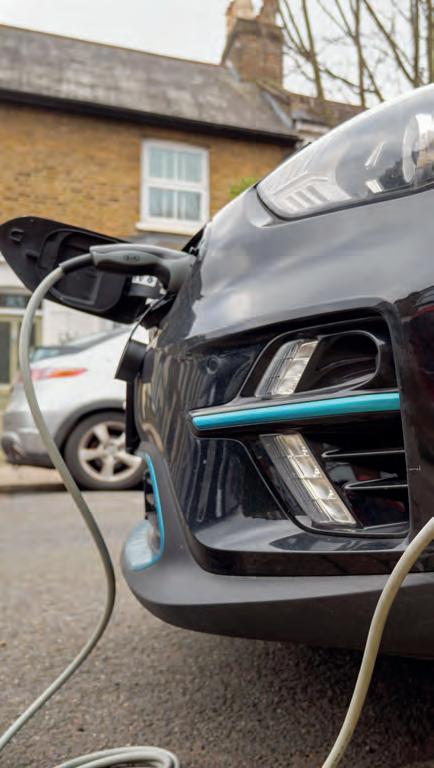
Alongside this, the EV Connect Theatre will explore progress with EV use and EV charging infrastructure, ICEing, enforcement and reality, Paying for parking vs paying for EV Charging, Strategies for managing demand for fleet Charging, and much more.
And before Parkex kicks off, many of our members will be teeing off at the Coventry Hearsall Golf Club, for some friendly competition at the BPA Charity Golf Day, and to raise important funds for the Motor Neurone Disease Association. I look forward to seeing you there and welcoming you to what promises to be another fantastic Parkex.


Mike Marrs President

Parking News is published by on behalf of the British Parking Association
Editor
Sophie Vening editor@britishparking.co.uk
Advertising
Amelia Marshall
amelia.marshall@ jamespembrokemedia.co.uk
T: 0203 198 3092
Production editor
Lizzie Hu on
Design and production
manager
Christina Richmond
Publisher
James Houston
Circulation and administration
Linda Page linda.p@britishparking.co.uk
Print Stephens & George Print Group

We would like to remind our readers that the views expressed by any contributor to Parking News are not necessarily those of the British Parking Association or Parking News, (the editor, the editorial panel or the board).
Contributions and adverts are published in good faith and no responsibility or liability will be accepted, either for their contents or accuracy, or for any action taken as a result of anything contained in Parking News
© British Parking Association 2025 ISSN 1470-8361




This issue of Parking News reflects a sector that continues to evolve at pace, with innovation, collaboration and real-world problem solving at its core.
Our enforcement feature (page 14) looks at how councils are trialling new approaches to tackle persistent parking challenges. While a year on from the launch of the National Parking Platform, we talk to CEO of the NPP Sarah Randall about how the industry-led initiative is beginning to reshape how parking services are delivered (page 10).
Alongside the latest industry updates in Digest (page 6), this bumper issue also includes our comprehensive Parkex 2026 show guide (page 31). I’m very much looking forward to seeing many of you at this flagship industry event.
Editor
SHARE YOUR STORIES contact editor@ britishparking .co.uk
14




< ON THE COVER
Don’t miss the sector’s biggest learning and networking event: Parkex
See page 31


10 | Update on the National Parking Platform
NPP interim CEO Sarah Randall on how the scheme is growing and evolving
14 | Rethinking enforcement
A look at the methods two councils are using to tackle persistent parking problems
18 | Roundtable: the future of the city centre
From EV infrastructure to park and rides, three panellists discuss how parking fits into modern cities
31 | Parkex 2026
A round-up of the exhibitors and speakers, plus the full agenda of this year’s show

6 | Digest
Women in Parking, National Blue Badge Awareness week, the Government’s new transport strategy, and more
25 | Legal view
The obligations for operators if they are subject to a data protection complaint
45 | BPA updates
Sponsored webinars and a new vice president, plus an appeal for runners for next year’s London Marathon
50 | Park life
Kelvin Reynolds MBE on why the decisions the industry makes today matter more than ever
48 | Marketplace

Yasmin Jefferies, BPA engagement and local networks manager, reports on the activities of the European Women in Parking network at Intertraffic Amsterdam
At Intertraffic Amsterdam, a clear message emerged: the future of parking and mobility must be inclusive, collaborative and forward-looking. The European Women in Parking (E-WiP) initiative played a central role in reinforcing this message through a series of well-attended engagements.
A key highlight was a presentation delivered by E-WiP co-chair Giovanna Piras and myself at the Designa stand. The session introduced the E-WiP network, outlined its objectives and emphasised the importance of collaboration across the sector under the theme Stronger Together. The platform provided valuable visibility for the initiative and its growing impact.
This was followed by a successful in-person networking session, sponsored by SKIDATA, which brought together professionals from across the industry. Strong attendance and high levels of engagement demonstrated a clear appetite for connection, collaboration and shared learning.
Throughout the event, discussions focused not only on challenges but on practical solutions and opportunities for
Different views on improving city centre parking for everyone, p18

progress.Supportfromindustryorganisationshighlighteda growingrecognitionthatdiversityandinclusionarecriticalto innovationandlong-termsectordevelopment.
E-WiPcontinuestoplayanimportantroleindrivingthis momentumbyfosteringconnections,increasingvisibility andsupportingthenextgenerationoftalent.Itspresenceat IntertrafficAmsterdamunderlinedthatinclusionisnolongera peripheralissuebutacentralcomponentofthesector’s future.FormoreaboutE-WiP,visiteuropeanparking.eu/e-wip
A new National Blue Badge Awareness week will take place from 11-15 May 2026, expanding the long-running Blue Badge Day of Action into a five-day campaign aimed at tackling misuse and improving understanding of the scheme.
The initiative will bring together local authorities and, for the first time, private parking operators to help build a clearer picture of Blue Badge misuse and enforcement activity. Organisers say the move reflects growing recognition of the need for better data and a more
coordinated national approach.
The campaign will raise awareness of misuse, support proportionate enforcement and highlight the impact of fraud on genuine badge holders, while contributing data to a national overview of trends. Local authorities and operators can choose how they take part, whether across the full week or on selected days, and can focus on awareness, enforcement activity or a combination of both.
“We want to build on the success of last year’s Day of Action by extending the
campaigntoaweek,”saysRichard Boultee,consultantforNationalBlue Badge.“Wehopetheanalysiswill informthosewhomanageparkingwith areferenceforfuturepolicydecisions, whilegivinga‘stateofthenation’ updateforallonBlueBadgeusage, misuseandfraud”
Registeraheadoftheeventforguidance, communicationsmaterialsanddata submissionsupportat com/blue-badge-day-of-actionnationalbluebadge.

Omni Partners has acquired AI-powered communications specialist Barbour Logic, further strengthening its public sector software platform, Infoshare+. The deal marks the eighth bolt-on acquisition since October 2024, underlining the platform’s rapid growth.
Barbour Logic provides automated correspondence solutions for local authority parking teams, including its ‘Parking Brain’ AI engine, which generates policycompliant responses to penalty charge notice (PCN) queries. Its suite of tools also includes chatbot, voice and appeal-writing solutions designed to improve accessibility and reduce administration.
Wayne Story, partner at Omni, said: “We’re delighted to welcome Barbour Logic to Infoshare+. Barbour Logic’s technology demonstrates how AI can be applied in a practical, highly targeted way to solve the operational challenges faced by the public sector.”
During the passage of the English Devolution and Community Empowerment Bill, the House of Lords approved two amendments (41 and 158) that would give the Secretary of State new powers to allow local transport authorities in England to prohibit pavement parking in their areas. The enabling regulations will set out how these powers can be exercised, including which vehicles may be exempt and what permissive exclusions may apply.
Taken together with the Government’s commitment to introduce new enforcement powers for footway obstruction –expected to come forward in the autumn – these changes would give local areas greater flexibility.
Authorities could choose either to target obstruction or, if appropriate, adopt a more comprehensive pavement parking ban to meet local needs.
The Government’s new longterm strategy for integrated transport identifies parking as a vital component of seamless journeys.
A key focus of Better Connected – the Government’s new direction for safe, reliable, affordable and accessible transport in England – is continued support for the National Parking Platform (NPP), enabling drivers to use a single app of their choice across multiple locations.
The strategy also signals a broader role for the platform, with potential integration of tolling and wider road user charging, positioning parking within a unified mobility payment system. The plan also highlights opportunities to better integrate parking with wider transport networks, including linking parking to rail services and park and ride schemes.
The strategy highlights rising demand for accessible EV charging, with future standards likely to influence parking design and provision. At the same time, new powers for local authorities to restrict pavement parking and support car club bays point to significant changes in kerbside management.
Transport Secretary Heidi Alexander said: “For too long,
gettingfromAtoBhasbeen morecomplicatedthanit needstobe.
“Peoplewantjourneystobe easyandreliable.Theywant tobeabletogetoffatrainand straightontoabuswithout havingtobattlethrough aconfusingsystemorbuy separateticketsforeachpart oftheirjourney.
“That’swhywe’regiving localleadersthepowersto buildtransportnetworksthat aresimpler,moreaccessible andbetterconnected, improvingeverydayjourneys andsupportinggrowthin everycornerofthecountry”
FIND OUT MORE
Formoredetailsandtoreadthe fullstrategy,visit: gov.uk/government/publications/ better-connected-a-strategy-forintegrated-transport
ForanupdateontheNPP,see page10.
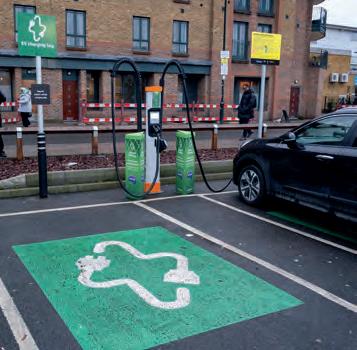
Paythru has partnered with Visa to launch a white-label fleet wallet that lets drivers charge at any EV charge point while giving fleet operators full control, visibility and consolidated billing.
New solar carport on MSCP
RenEnergy UK has installed a solar carport at University Hospital Wales on top of a multi‑storey car park and beneath an Air Ambulance flight path, maintaining emergency access throughout the build project.
campaign
Created by Colchester City Council on behalf of the North Essex Parking Partnership and delivered in partnership with Brighton & Hove City Council, Beyond the Uniform is a finalist in the Communications category at the MJ Achievement Awards. The campaign, which aims to tackle violence and aggression towards frontline staff, has also been shortlisted for Campaign of the Year at the LGC Awards 2026.
A2,800 mile return journey from Birmingham to Spain will put EV charging accessibility to the test this May, in what organisers describe as the first documented trip of its kind.
Led by Disabled Motoring UK (DMUK), the initiative will see trustee Anjna Patel and DMUK’s marketing and campaigns manager, Zoe Rush, travel in a fully electric vehicle to Alicante, documenting the barriers faced by disabled drivers. The journey, supported by Accessible Vehicle Club, will include around 24 charging stops and take six days.
Anjna, who has severe rheumatoid arthritis, will assess charging points using a framework from the Safer Parking Accessible EV accreditation, highlighting issues such as heavy cables, inaccessible bays and range anxiety.
Research shows just 2.3% of UK on street chargers are currently accessible. DMUK CEO Graham
Footer said: “The transition to EVs is accelerating and it is vital that accessibility is not treated as an afterthought.
“We aim to shine a light on those real world challenges and push for meaningful, inclusive change across the EV network in the UK and Europe.”

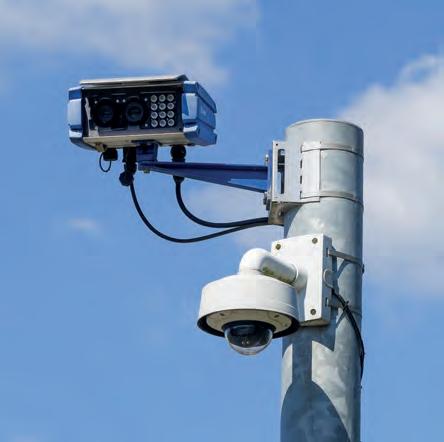
Leeds City Council has introduced ANPR cameras outside Chapel Allerton Primary School and Hugh Gaitskell Primary School to strengthen enforcement of School Streets restrictions.
The schools are part of the council’s scheme, which limits traffic on surrounding roads during peak times. The new cameras will capture vehicles breaching the rules, while the council’s parking team will review the footage alongside CCTV to determine whether penalties should be issued.
Councillor Jonathan Pryor, the council’s deputy leader and executive member for economy, transport and sustainable development, said: “Introducing camera enforcement at these two established School Streets is an important step in making sure the restrictions work as intended and continue to keep children safe.
“We know families value cleaner air and calmer streets around their schools, and ensuring consistent compliance will only strengthen those benefits.”









With rapid growth and rising industry buy-in, the NPP is evolving from a pilot project to the backbone of a more connected UK parking system. Parking News speaks to Sarah Randall about the journey so far
The launch of the National Parking Platform (NPP) at Parkex 2025 marked a pivotal moment for the UK parking sector. One year on, the platform has evolved from a government-backed concept into a fast-scaling, industry-led initiative that is beginning to reshape how parking services are delivered.
Reflecting on the past 12 months, Interim CEO of the NPP Sarah Randall points to a defining shi in both structure and perception: “The biggest milestone was undoubtedly the NPP’s transition from a Department for Transport (DfT) initiative into an industry-led not-for-
profit organisation announced at Parkex in May 2025, confirming the NPP has moved beyond proof of concept and into operational delivery.”
That transition has been accompanied by tangible growth. The platform now supports 15 live local authorities and processes more than a million transactions each month. Recent launches have demonstrated both scale and versatility. “The London Borough of Tower Hamlets go-live demonstrated the NPP’s value in one of the most complex and visible parking markets in the country, while a coordinated rollout across East





Herts, Stevenage and Welwyn Hatfield showcased collaboration. Expansion has also continued geographically, with Bolton strengthening the platform’s presence in the North West,” says Sarah.
Mindset shi
Just as significant as the operational milestones has been the shi in industry mindset. “Over the past year the conversation has shi ed from ‘what is the NPP?’ to ‘how do we join?’,” Sarah explains. Early government backing and live usage helped establish credibility, but it is the steady growth in operators and transaction volumes that has driven wider acceptance.







“The industry needs continued collaboration and a shared commitment to interoperability”
Sarah Randall, NPP Interim CEO

“The sector response now feels more mature,” she adds, with stakeholders increasingly focused on “implementation, governance, onboarding and the wider strategic value of open, interoperable parking.” In short, the NPP is no longer viewed as an experiment but as a practical solution to long-standing fragmentation in parking services.
The numbers reinforce that trajectory. Alongside the 15 authorities already live across 1,242 locations, further growth is imminent. “By Parkex 2026 we are on track to have another five operators live and, at the current onboarding rate, we are on track to have at least 50 operators live by the end of 2026,” says Sarah.

While expectations were high at launch, she says the team is “pleased with the current trajectory and is pushing to progress further”.
At its core, the NPP is designed to improve the parking experience for both motorists and councils. For drivers, the benefits are immediate and practical. “The biggest benefit is choice and simplicity. Instead of having to download and use several di erent parking apps, they can use their favourite wherever they go,” Sarah says. This reduces confusion and the risk of incorrect payments, while creating a more seamless user experience.
For local authorities, the advantages are equally compelling. The platform provides “a robust, resilient service, as well as delivering choice and innovation for their customers,” says Sarah.
Built on the Alliance for Parking Data Standards (APDS), the NPP also o ers future scalability, with the potential to support innovations beyond traditional parking services.
However, the journey from pilot to national infrastructure has not been without its issues. “One of the biggest challenges has been moving from pilot success to scaled adoption across a very varied local authority landscape,” Sarah explains. Di erences in procurement processes, governance structures and supplier readiness can slow progress, while true interoperability requires alignment across multiple stakeholders.
“The biggest lessons learned have been around optimising our own processes, operations and collaboration,” she says, underlining the importance of coordination as the platform expands.
Looking ahead, growth remains the primary focus. “The priority is to keep expanding and allowing more operators and drivers to reap the benefits of the NPP,” says Sarah. Alongside this, there is a continued emphasis on maintaining the not-for-profit governance model and demonstrating public value through real-world adoption and case studies.
Another key objective is to encourage greater innovation within the ecosystem.
“We also want to increase the number of service providers bringing their innovations to the competitive market, further improving driver experience,” she adds.
In the longer term, the ambition extends far beyond simplifying payments.
“The NPP has the potential to become the foundational digital infrastructure for

the parking sector. Its importance goes beyond app choice; it creates a common, open framework that allows operators, suppliers and innovators to work together more effectively.”
This interoperability could unlock better data use, more flexible services and closer integration with transport systems. “The NPP is not just modernising parking payments – it is helping modernise how parking operates as part of the wider transport network,” she says, noting its recognition within the DfT’s Transport Data Action Plan.
Feedback from councils already on the platform suggests these benefits are being realised. “Councils value the ability to offer motorists greater choice… feedback received from their residents and visitors has been overwhelmingly positive,” says Sarah. Reliability has also improved, with built-in resilience reducing the impact of individual app outages. “Drivers simply use one of the other available providers, meaning no enforcement or compliance downtime.”
For authorities considering joining, the onboarding process is designed to be structured and supportive. “Operators first get in touch with our expert engagement team who are here to help every step of the way. We support operators in
their transition to the platform through answering key questions and aligning on tariff and configuration requirements, contracts, signage and comms,” she explains. Dedicated project managers then oversee the go-live, ensuring all technical and operational elements are in place before launch.
Despite the strong momentum, Sarah is clear that continued collaboration will be critical to achieving national scale. “The industry needs continued collaboration and a shared commitment to interoperability,” she says. Success depends on councils, providers and suppliers recognising the collective benefits of open infrastructure, alongside ongoing support for common standards and neutral governance.
Ultimately, the NPP’s significance lies in its ability to unify an historically fragmented sector. As Sarah summarises: “The NPP gives the UK parking sector a shared, open and scalable digital foundation that makes parking simpler for drivers and more flexible, competitive and future-ready for councils.”
For more information on the National Parking Platform and guidance on how to join the network, visit npp.org.uk
Driving simpler parking
William Jillings, data and development lead for parking services at East Suffolk Council, shares his experience of signing up to the NPP
Why join the NPP?
“We believe the parking experience should be simple, seamless and uneventful.
Expecting a customer to download another of the many apps, register an account and, hopefully, pay for their parking while stood in a car park potentially wrestling with poor signal, inclement weather and an unfamiliar payment process is the polar opposite of this belief. The NPP offered a forward-thinking move that also supports our digital inclusion and environmental ambitions.”
How was implementation?
“The support was outstanding. Early collaboration across procurement, finance, IT, legal and data protection teams helped tick all the boxes, while working closely with our back office provider as well as our new provider helped ensure we were ready to go live in May 2024. Any teething issues were resolved, with the NPP acting as a single, efficient point of contact.”
Has it changed internal operations?
“Initially, managing data from five different sources proved challenging, but we raised concerns with the NPP and a new single financial report resolved this. Increased cashless use has also reduced the need to collect and bank coinage.
“We’ve also changed our approach to enforcement when a payment method is out of service. Previously, the single cashless app being out of service would have halted off-street enforcement, but with multiple cashless options now available, the expectation is that charges apply as normal even when a single payment method is down.”




Exploring how councils are testing new approaches to address persistent parking challenges, from busy coastal hotspots to complex airport operations


From seasonal congestion in visitor hotspots to the rise of unregulated operators and community safety concerns, local authorities across the UK are under growing pressure to tackle persistent parking challenges.
The response? Councils and their partners are trialling several new approaches, which combine stronger deterrents with more coordinated enforcement. Here we will look at two recent initiatives, in Bournemouth and around Bristol Airport, that highlight how di erent strategies are being deployed to
influence behaviour and improve safety for local communities.
For Bournemouth, Christchurch and Poole (BCP) Council, the issue of illegal parking has been building for years but is most challenging during peak periods when visitor numbers surge. Helen Taverner, head of parking operations and enforcement, explains: “Illegal parking in the area is not historically limited to the seafront: as an area, Bournemouth, Christchurch and Poole welcomes millions of trips every month of the
year, with illegal parking particularly prominent during hot weather.”
In recent times, the scale of the challenge has become increasingly di icult to ignore. For years, leaders of the council (and its predecessor local authorities) have been lobbying for tougher powers. “These calls were brought to national attention last year a er our o icers issued more than 4,000 PCNs across our three busiest weekends in early summer,” explains Helen.
In response, the council was granted approval by the Department for Transport (DfT) to trial higher penalty charge
notices (PCNs) during August 2025, applying significantly increased rates across a defined stretch of coastal routes.
“Throughout August, the council was allowed to charge PCNs at the same rate as local authorities in London (£160 for higher tariff offences/£110 for lower tariff offences – more than double the standard rate) along 543 coastal roads from Sandbanks to Southbourne,” says Helen. “The area and PCN levels were prescribed by the Secretary of State for Transport and were loosely based on the area covered by a parking consultation that was live at the time.”
Prior to the trial, enforcement teams were dealing with a wide range of problematic behaviours. For example, during the summer, there was a significant increase in on-street parking contraventions: “Whether that’s parking on double-yellow lines and loading bays, obstructing access for residents and emergency services or, in some particularly egregious incidents, parking on roundabout islands or blocking highways entirely,” says Helen, who tells us that the results of the trial point to a clear shift in behaviour.
“The report demonstrated exactly why we’ve spent so long calling for greater powers to tackle illegal and irresponsible parking: higher PCNs work, and the results show that.”
Illegal and irresponsible parking dropped significantly during the trial period and, importantly, there was more than enough spare capacity every day during the summer at car parks that are just a short walk from the beaches and town centres. In fact, throughout the trial, BCP Council saw:
● fewer vehicles parking on double-yellow lines
● fewer cars obstructing junctions
● better access for buses and emergency services
One of the crucial results of the trial is that the use of higher penalties did not deter visitors. “Our three towns remained
as popular as ever, with returning visitors increasing year on year, and millions of trips made to Bournemouth, Christchurch and Poole every single month,” adds Helen.
Plus, from an operational perspective, the trial proved manageable. “While we were anticipating increased levels of annoyance from drivers, and amended our risk assessment accordingly, we did not see an increase in hostility towards our CEOs,” Helen explains.
“Enforcement was carried out following our standard operating procedures throughout the trial and, thanks to the professionalism of the entire team, emerging issues were caught early and dealt with immediately through daily meetings.”
Overwhelming public support also played a key role in reinforcing the council’s position that higher rate PCNs for those who park illegally seem a fair and reasonable solution. “Our residents consistently tell us they want to see more done to tackle this behaviour: 59% supported the increased rates, rising to 76% of local businesses.”
For the council, the trial reinforces a clear message: higher rate PCNs are effective in deterring illegal and irresponsible parking, challenging the idea that such behaviour is unavoidable. So, attention now turns to the national level. “We have been clear with the DfT that we are ready to work with it to secure a long-term solution that puts the safety of our residents first,” says Helen. “To us that means implementing higher rate PCNs on a permanent basis, all year round, across the entirety of Bournemouth, Christchurch and Poole. But we want to see a national change because we know illegal parking is a blight on communities up and down the country – not just in our area.”
For BCP Council, the trial focused on deterrence. In contrast, the challenges
“Higher rate PCNs are effective in deterring illegal and irresponsible parking, challenging the idea that such behaviour is unavoidable”
around Bristol Airport highlight the complexity of parking enforcement when multiple land uses, operators and agencies are involved.
“Airport-related parking presents challenges in several forms, typically occurring either on the adopted highway or on privately owned land,” says Chris Joannou, principal planning enforcement officer at North Somerset Council. “The core difficulty arises where land use can shift quickly – such as on fields, farms or private driveways, creating complex situations that are hard to regulate.”
Even where parking is technically lawful, the impacts can be significant. For example, parking on the highway can cause disruption by blocking driveways, narrowing roads, generating congestion or contributing to noise and litter.
Chris tells us that the longevity of the parking issues underlines their significance. “For more than two decades, airport parking has been a major enforcement challenge for North Somerset Council,” he says. “Despite issuing numerous notices, the industry continued to expand, with interventions often displacing activity and increasing the area affected.”
This ‘displacement effect’ means that traditional enforcement
“It is now extremely difficult for operators to park vehicles without breaching an enforcement notice, and new sites can expect immediate action”
approaches have become less effective, while also raising wider concerns, including environmental harm and pressure on council resources. “The core issue is the unsustainable volume of low-occupancy vehicle movements associated with airport travel, which contributes to congestion, carbon emissions and highway safety concerns,” says Chris.
The response? A coordinated approach via a joint Parking Action Plan, which has been developed between Bristol Airport, North Somerset Council, and Avon and Somerset Police.
“Because these issues cut across multiple teams and agencies, they have historically been difficult to resolve,” Chris explains. “This highlighted the need for a coordinated, multi-agency approach, ultimately leading to the development of the Parking Action Plan.”
Local authority planning enforcement teams play a crucial role in protecting land use, particularly given the scale of airport-related parking operations. “In North Somerset alone, the team is managing more than 6,700 cars and has issued 88 notices to address unauthorised activity,” says Chris.
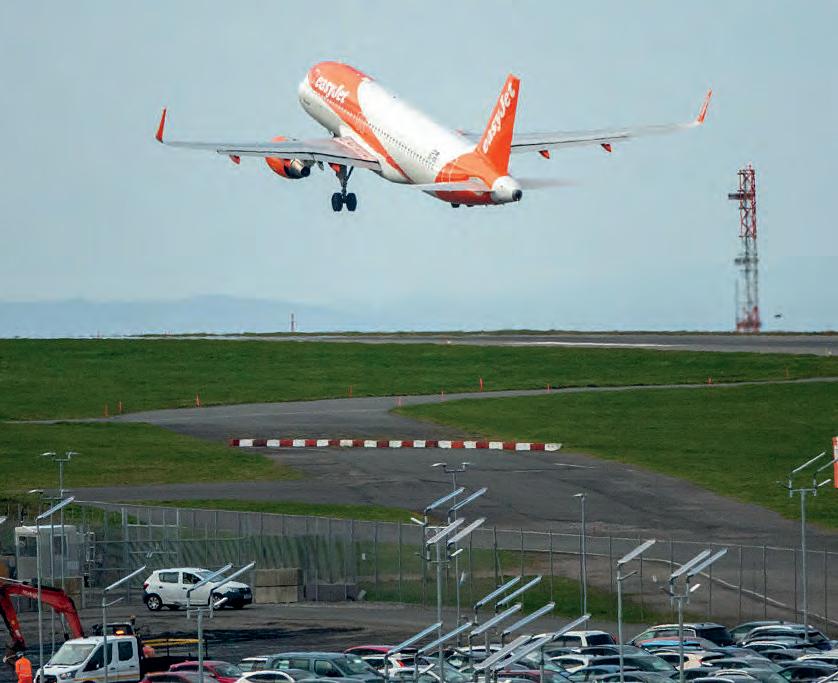
Rather than simply shutting down sites, the council has adopted a more strategic model that recognises displacement risks when sites are closed. “As a result, it is now extremely difficult for operators to park vehicles without breaching an enforcement notice, and new sites can expect immediate action without warning,” Chris adds.
This shift is already having an influence on behaviour, as developers and landowners are fully aware that even short-term use will trigger a notice, which becomes a permanent charge on the land and may affect future disposals. “This heightened awareness has significantly reduced the emergence of new unauthorised sites,” says Chris. “Collaboration across
agencies is essential – no single team can tackle the full range of airport-related parking issues.”
This multi-agency approach, combining clear communication, coordinated enforcement and targeted use of highways measures, has been key to addressing these challenges. The breadth of issues involved reinforces this need.
“Alongside licensing and insurance concerns, officers also encounter offences such as reckless driving and drink-driving, as well as Trading Standards issues and, in some cases, links to organised crime,” says Chris.
“Effective partnership working is absolutely critical to managing the complexity and scale of the problem.”
If your authority is trialling or planning a new parking-related scheme – from enforcement and operations to innovation and policy – we’d like to hear from you. To share your experiences, insights and results, email editor@britishparking.co.uk.
From pricing and enforcement to placemaking and mobility hubs, this issue’s panellists discuss how parking is shaping the next generation of UK city centres


Councillor Kate Ravilious represents the Fulford & Heslington ward and is executive member for transport at City of York Council
Merran Wrigley is head of parking services at Brighton & Hove City Council
John Charlton is team leader of civil enforcement, environment and highways at Oxfordshire County Council
City centres across the UK are undergoing significant transformation. Faced with pressures concerning congestion, air quality, changing travel behaviour and economic resilience, local authorities are rethinking how space is used – and where parking fits into that future.
In this roundtable, representatives from Oxford, Brighton & Hove and York share how policies such as pricing, emission zones, EV infrastructure and park and ride are reshaping urban centres.
Rethinking the role of parking
John Charlton: We have one major historic city, Oxford, and we’ve recently introduced a congestion charge within the city centre, which went live in October 2025. We issued our first PCNs from December.
We have a big vision for the future of Oxford in respect of placemaking. It’s about dissuading people from using private vehicles and encouraging better transport modes, supported by more mobility hubs, so people can continue their onward journeys.
Merran Wrigley: Brighton & Hove is a small but very busy city, with around 12 million visitors a year and a population of about 280,000. We are very constrained in terms of space, so our focus is on
using technology to optimise how we use parking assets while supporting the transition to electric vehicles.
Kate Ravilious: We are on a similar trajectory in York. The focus is shi ing towards reducing reliance on city centre parking and encouraging more sustainable modes of transport. Parking still plays a role, but it is no longer the dominant factor.
EV infrastructure and the challenge of equity
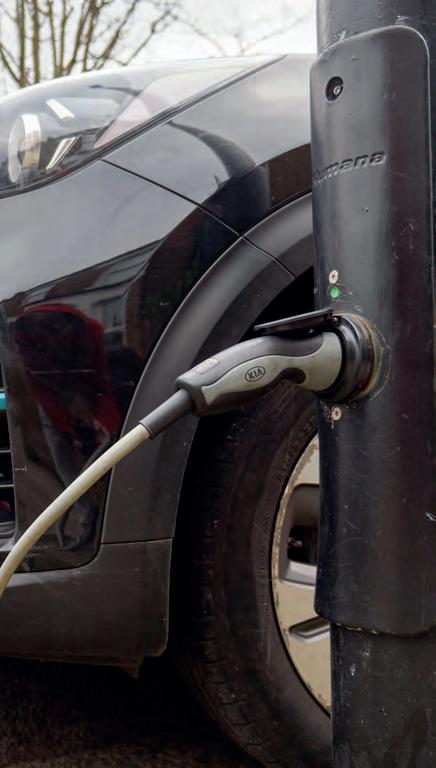
JC: We’ve signed a new contract on EV provision focusing on residential areas where people don’t have access to ostreet charging, such as terraced streets.
There will be some impact on existing parking provision, including a potential loss of paid spaces, but we see this as a benefit for residents and essential for supporting the transition.
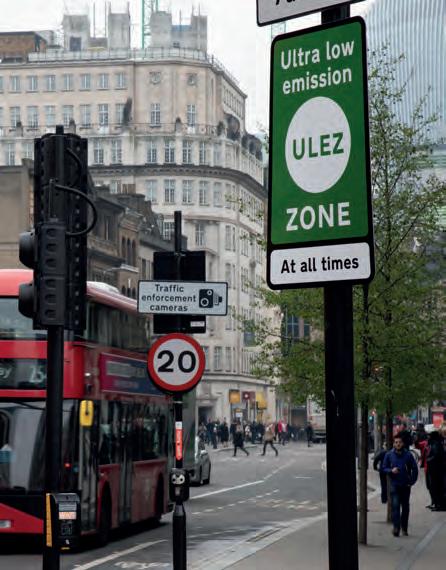
We also currently have a zero emission zone (ZEZ) within Oxford, and over the next 18 months to two years we will be consulting on expanding that to cover a much larger part of the city centre.
KR: For us, EVs include buses as well as cars. One of our ambitions is to make the entire bus fleet electric. Through government funding, we’ve already converted a large proportion of services, including park and ride buses.
This has had a real impact on air quality in York. Last year was the first time we did not exceed nitrogen dioxide limits anywhere in the city.
“It’s about dissuading people from using private vehicles and encouraging better transport modes”
John Charlton
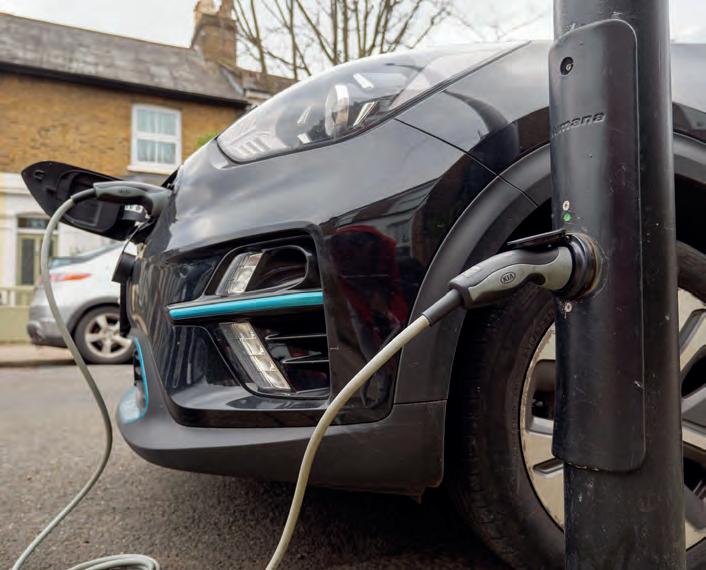
In terms of cars, we have a mix of fast charging hubs at park and ride sites and medium-speed charging in city centre car parks. The challenge we haven’t solved yet is residential charging on terraced streets.
There is a huge demand for crosspavement charging, but we cannot provide that equitably. Not every
household can have access, and we don’t want a situation where only early adopters benefit. We are exploring neighbourhood charging hubs instead.
MW: We have taken a similar approach in Brighton & Hove. We currently have around 500 on-street charging points and are planning to expand that to around 7,000 over the next five years.
However, we are seeing challenges around usage and behaviour. At the moment, if you are charging you are not paying for parking, and that has led to vehicles remaining in bays for longer than necessary.
We are looking at combining charging and parking tariffs to improve turnover and make better use of EV infrastructure.
Cross-pavement charging is one of the biggest challenges we face. It costs between £2,000-£3,000 to install and the payback period can be up to 10 years, depending on car usage. It also raises questions about fairness and access.
MW: One of the issues we are seeing is that EV infrastructure is expanding faster than EV uptake. Usage is not yet matching the level of investment so we are working with our EV infrastructure partners to build awareness and understanding about EVs. For example, we offer discount charging for local taxis, and also run Charge and Drive events, offering free EV test drives.
Residents also raise concerns about the cost and reliability of chargers. There is still a lack of confidence in relying on public infrastructure, particularly if it is not close to home.
JC: That is where policy measures come in. In Oxford, the expansion of the ZEZ will act as a significant incentive.
Anyone driving through the city centre without a compliant vehicle will have to pay, and that creates a clear push towards lower-emission vehicles.
KR: One of our key challenges is reducing car ownership while still giving people access to vehicles when they need them. We are exploring EV car clubs and shared mobility, but it is difficult to establish those schemes and encourage widespread adoption.
JC: We have car clubs in Oxford, many of which are electric, but the challenge is getting consistent usage. People still value convenience and having a vehicle immediately available.
MW: We have had mixed success in Brighton. We have allocated space for car clubs but usage has been inconsistent and, in some instances, the bays have been underused as our partners haven’t provided enough vehicles.
In cities such as London and Amsterdam, the model works well, but we still have work to do. People still want the convenience of their own vehicle. Our bus network, however, has seen strong uptake. People who may not have used buses 10 years ago are now doing so because the service is so frequent and reliable.
JC: We have significantly increased our parking charges in Oxford city centre. For
“The ambition is for park and rides to be multi-modal hubs, offering connections to buses and cycling”
Councillor Kate Ravilious
two hours, it now costs around £15. This is a deliberate tool to encourage use of park and ride services instead. Combined with the congestion charge, it is changing behaviour.
KR: We have taken a similar approach in York. We increased parking charges so that the first two hours’ parking is roughly equivalent to a family bus ticket. It was controversial, and caused some backlash, but the results have been positive. We have seen increased bus use, more cycling and reduced demand for parking.
MW: We are exploring zonal pricing in Brighton, with higher charges in the historic centre. We also feel developing clear price bands within the city across our car parks and for on-street parking will
make our charges easier to understand for residents, commuters and visitors.
KR: We have six park and ride sites around the city, with around 5,000 spaces, making it a significant asset. While it still works for visitors, particularly day-trippers, we are now looking at how it can support a much wider range of journeys.
One of the key changes is introducing secure overnight parking, allowing people to leave their cars on the edge of the city if they are staying overnight or connecting to rail services.
We are also investing in better facilities, including improved waiting areas, EV charging and cycle infrastructure, and exploring parking and pedal options.
The long-term ambition is for park and ride sites to operate as truly multi-modal hubs, supporting travel in multiple directions and offering connections to buses, cycling and, potentially, car clubs.
JC: We do have a park and ride in Oxford but funding was cut and we were unable to build access roads to it.
Homes England has now come forward with some funding and we’ve applied for planning permission. Hopefully, within 18 months it will be operational.
We are also exploring how park and rides can support logistics, including last-mile deliveries using cargo bikes. It is about removing unnecessary traffic from the city centre while still maintaining access.
MW: Brighton has struggled to deliver a permanent park and ride due to land constraints. We are due to become part of a Mayoral Strategic Authority next year and one of the big hopes is that will mean an expansion of our boundaries. I think a park and ride would work well here. We have evidence that people who know the city park on the outskirts of the central
parking zones and then get the bus into the centre. We operated a temporary park and ride last summer and it was well used by visitors, so there is obviously a demand for this type of parking provision.
KR: From the bus operator’s point of view that makes a really nice proposition, particularly if there is demand in both directions.
JC: We are seeing a clear shift towards digital payments. Around 60% of transactions are now through apps, with cash declining significantly. The National Parking Platform (NPP) has helped to simplify the experience, allowing drivers to use different apps across locations.
KR: All of our on-street parking is app only, via RingGo. It can be challenging when the network is down as it can be hard to prove whether the person could pay or not.
In our city centre car parks you can still pay at a machine by card and we have at least two car parks where you can pay in cash. We are trying to phase them out, though, because it costs us to empty the machines and they are susceptible to vandalism.
We believe it is important to maintain accessibility, but moving away from cash reduces costs, improves efficiency
and de-clutters pavements. It has also changed behaviour, preventing motorists from repeatedly topping up stays beyond time limits.
MW: We are largely app-based as well, although we have introduced some machines in tourist areas with a poor mobile signal. These are card only. Cash is mainly limited to barrier car parks, but even then cash usage is very low. However, we do offer PayPoint for paid on-street parking in some local shops, allowing customers to pay in cash. We currently see about 300 PayPoint parking payments a month. While usage is relatively small, it remains an important accessibility option.
KR: We are developing a movement and place plan for York, looking at how space is allocated between transport and people.
In the city centre, we are closing our largest site at Castle Car Park near Clifford’s Tower, and turning it into a public space. While this reduces income, we believe the wider social and economic benefits outweigh that loss.
JC: We are looking at similar approaches in Oxford, converting parking areas into places where people want to spend time. While there is a loss of parking revenue, the wider benefits for the economy and public realm are significant.
MW: We are having similar debates in Brighton. We have invested in city green spaces, cycling infrastructure and developing a new pedestrianised public space, behind the Royal Pavilion and Garden, which can be used for events.
We’re currently having a very serious debate rethinking the role of cars in the city. While car parking is important for residents, visitors and businesses, we’re also looking at how to make better use of public areas and enhance the city’s historic sites.
BPA VIEW
“The parking sector is fully committed to supporting the creation of more sustainable, people-focused city centres. As towns and cities rethink how space is used, parking will remain a critical enabler to this, supporting access, facilitating modal shift and helping to integrate new technologies such as EV charging and mobility hubs into the urban landscape. However, this transformation cannot be delivered in isolation. It requires consistent, longterm government funding, clear national policy direction and practical support for local authorities to invest in infrastructure, manage demand effectively and ensure equitable access for all users. With the right backing, the sector will continue to play a central role in delivering cleaner, more efficient and economically resilient urban environments.”
Isaac Occhipinti, BPA head of external affairs
This year’s Parkex includes sessions on congestion charging, EVs, accessibility and many other issues related to city centre parking. See page 35 for the full agenda.
With full implementation of the DUAA due by June 2026, JMW outlines the obligations for parking operators if they are subject to a data protection complaint
The Data (Use and Access) Act 2025 (DUAA) is reshaping the UK’s data protection landscape, with provisions coming into force from August 2025 and full implementation due by June 2026. Designed to support innovation and economic growth while maintaining individuals’ rights, the Act introduces practical updates rather than wholesale reform. For many organisations, it’s less about major change and more of an opportunity to review processes and ask: is there a better way?
Key changes
● Automated decision making
As long as you continue to apply the appropriate safeguards, the DUAA introduces a range of reasons (lawful bases) that you can rely on when using personal data to make significant automated decisions about someone. It may also allow you to rely more easily, and without a detailed Legitimate Interest Assessment, on legitimate interest lawful bases for this type of processing. Be aware, this does not apply to special category
data, which is subject to stronger protections.
● Data protection complaints
If you don’t already do so, the DUAA requires you to take steps to assist individuals who may wish to make a data protection-related complaint, including providing a clear complaints submission route, acknowledging complaints within 30 days and responding without undue delay.
● Clarity
The legislation is written and structured more clearly, making it easier to interpret and apply without materially changing how you use personal data.
● Subject access requests (SARs)
The DUAA is now more business friendly and clarifies that you are only required to make reasonable and proportionate searches when someone asks for access to their personal data.
Legal framework
A key change is the new statutory right to complain, under Section 164A of the Data Protection Act 2018, requiring data controllers to facilitate complaints before escalation to the Information Commissioner’s O ice (ICO).
You are only required to make reasonable and proportionate searches when someone asks for access to their personal data




Derek Millard-Smith BPA Lawline partner, JMW Solicitors LLP bpa@jmw.co.uk
What is a data protection complaint? Data protection complaints may be wide-ranging in their scope and type. The ICO has provided guidance and you should be aware that individuals do not have to use legal terms or quote sections of legislation in order to issue a proper complaint.
The common complaints you may receive in relation to data protection could relate to:
● the way you have dealt with an SAR
● the way in which you collect or use personal data
● the security/safeguards you apply to personal data
● your levels of service surrounding data protection
You should be aware that someone might contact you regarding a separate matter and include a data protection complaint within that. You must be diligent in ensuring complaints embedded in other correspondence are identified, pulled out and actioned appropriately.
You should provide individuals with details regarding their right to complain at the time their data is collected, and when responding to any subject access requests you may receive.
Your privacy policy should also provide details of the right to complain, along with individuals’ data subject rights.
Individuals do not have to wait for you to complete your investigations before complaining to the ICO
We have received a complaint, what now?
You must acknowledge receipt of the claim within 30 days, starting the day after it has been received, even if you receive the complaint on a weekend or bank holiday. If the day your response is due falls on a non-working day, you have until the next working day to respond.
Tip: Keep a complaints log which records key dates and details.
While investigating the complaint, you should ensure that you:
1. investigate the complaint in full, without undue delay
2. keep the individual updated as to the progress of their complaint
3. inform the individual of the outcome of your investigations into the complaint without undue delay
Our investigations are complete, now what?
Inform the complainant of the outcome without an unjustifiable or excessive delay. In line with ICO guidance, when providing your response you should:
1. clearly explain what you have done to resolve the complaint
2. where appropriate, confirm what actions you have taken as a result of your investigations
3. as a matter of good practice, provide

information relating to the fact that the individual can escalate their complaint to the ICO. You may also provide details on how the individual can make that complaint.
Tip: Individuals do not have to wait for you to complete your investigations and provide an outcome before complaining to the ICO. They can make a complaint to the ICO at any time.
If the individual is not happy with the outcome of your investigations into their complaint, you should provide them with more detail and clarify why you came to the decision that you did.
Tip: You may wish to implement a review process for complainants who remain unhappy with the outcome of the complaints procedure.
What should we do now?
A guide to compliance with the DUAA
● review your privacy policy to include complaint rights and contact details
● ensure a clear complaints process is in place and understood by the relevant staff
● act now ahead of full implementation of the DUAA in June 2026.
BPA Lawline: find out more
This information is for reference only, if you have any specific legal queries arising from the content of this article or generally you can contact Derek Millard-Smith and his team at JMW Solicitors through BPA Lawline via bpa@jmw.co.uk or call directly on 0345 241 3024. BPA members can receive up to 30 minutes free legal advice from BPA Lawline.



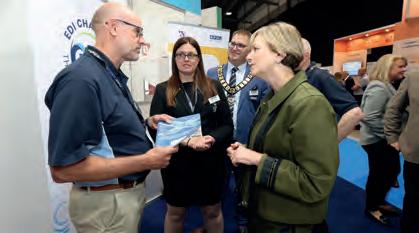
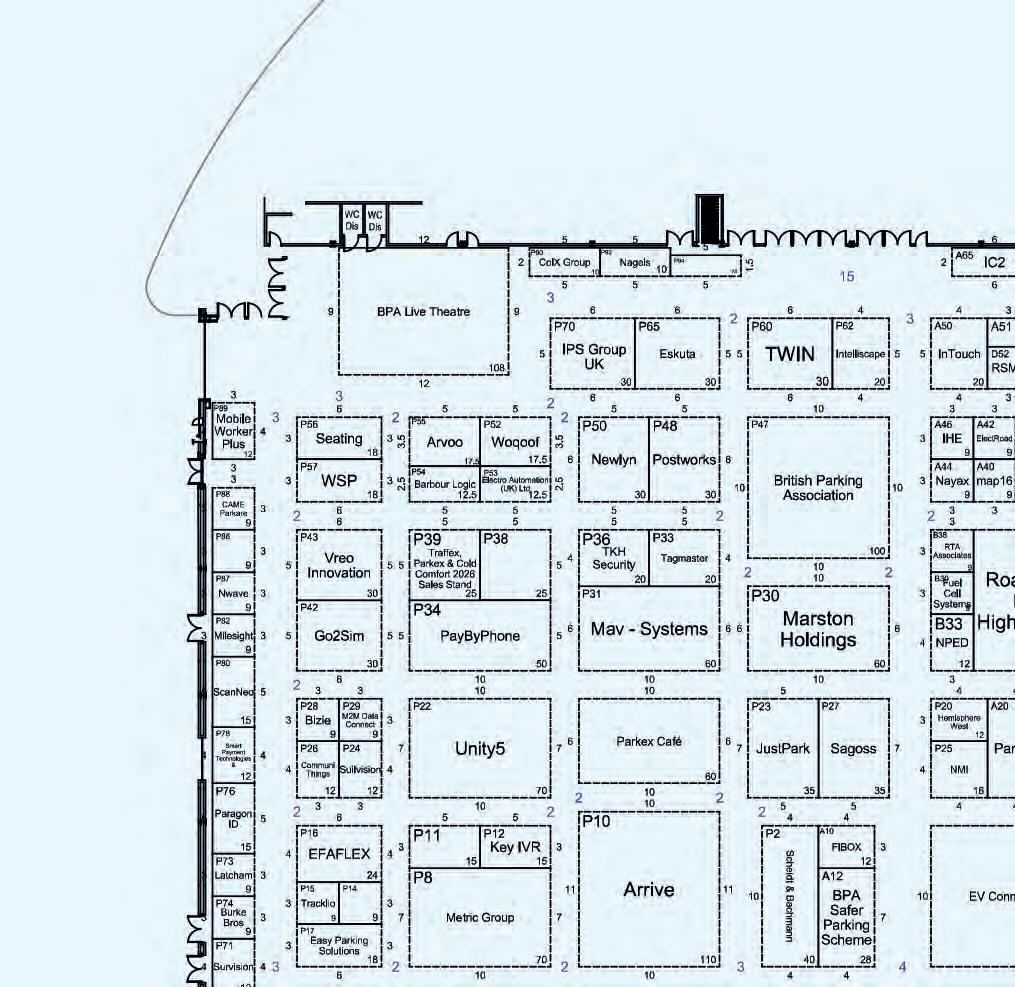
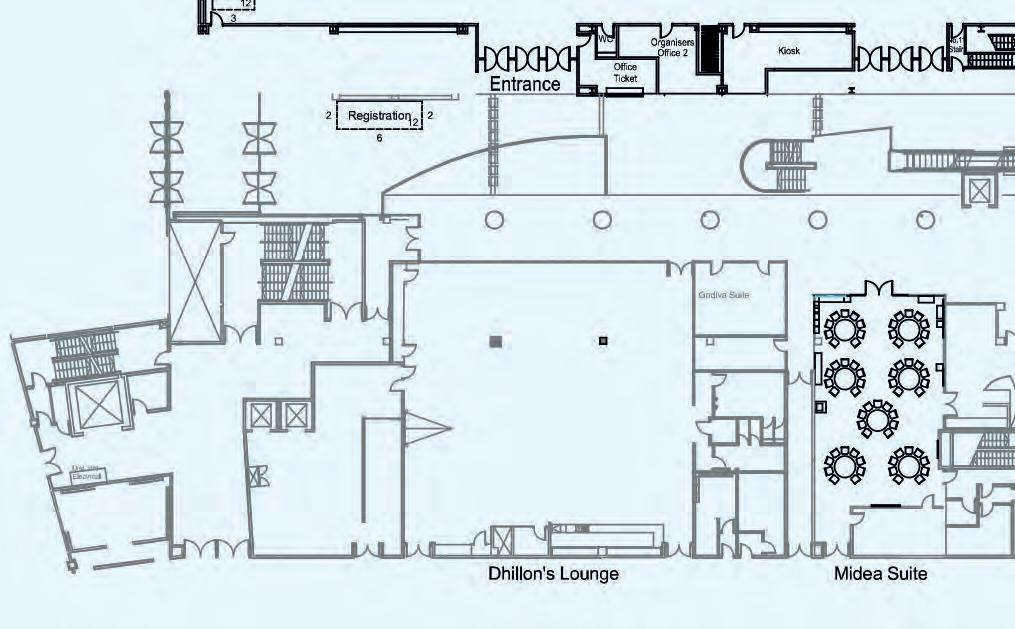
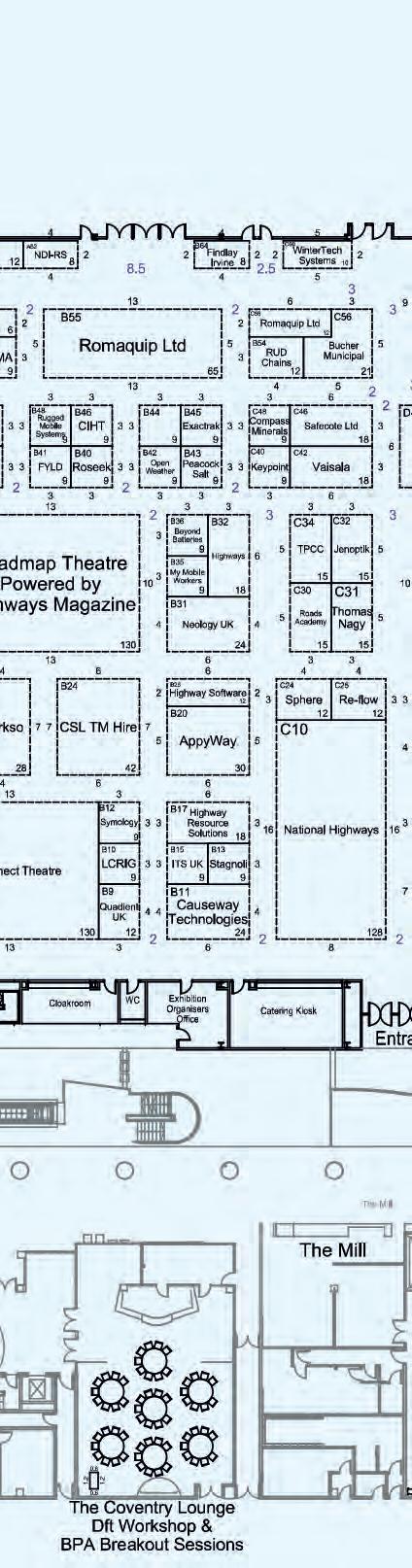
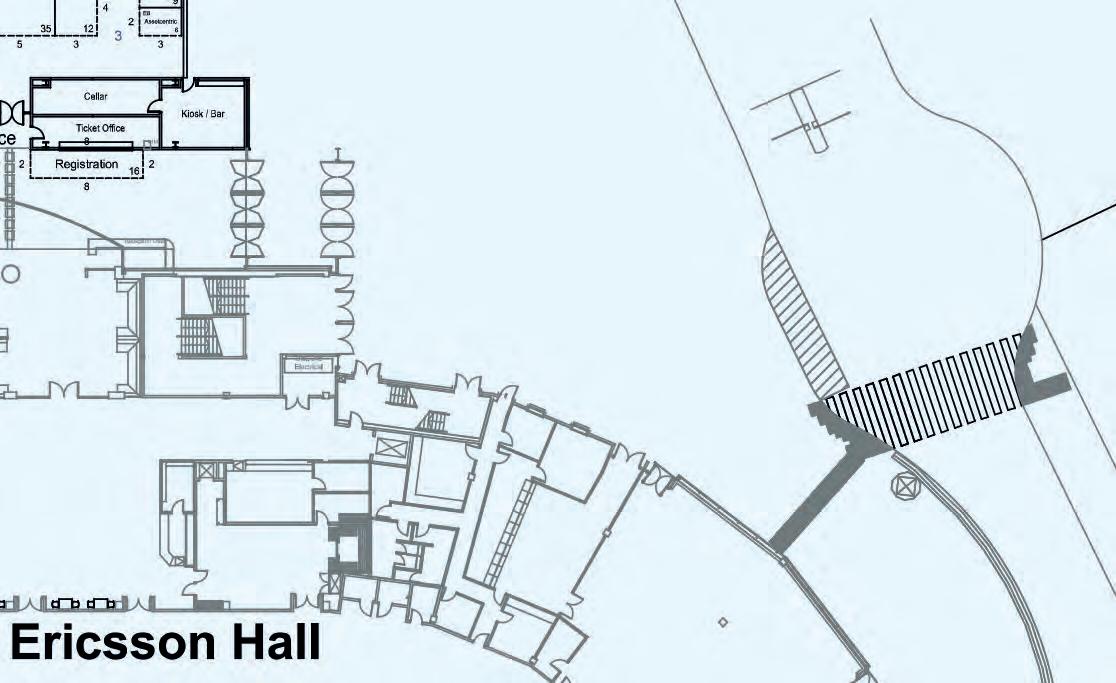
WE’RE DELIGHTED TO be returning to the Coventry Building Society (CBS) Arena for Parkex 2026, bringing together the ideas, innovations and conversations shaping the future of parking and mobility.
Parkex remains the essential meeting place for our sector – but it also sits at the heart of a wider ecosystem. Visitors will once again be able to explore the adjacent Tra ex and Cold Comfort exhibitions, creating a unique opportunity to engage with professionals across tra ic management, highways operations, local government and the rapidly evolving mobility landscape.
What to expect in 2026
Parkex runs over two dynamic days, with insight, networking and innovation woven throughout the programme:
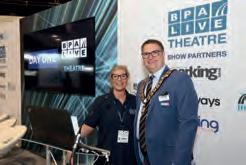
● BPA Live Theatre – industry leaders and practitioners take on the big issues.
● EV Connect Theatre – dedicated focus on electric vehicles, covering infrastructure, legislation, accessibility and future trends.
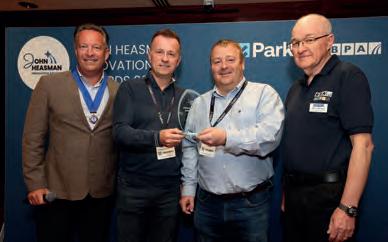
● John Heasman Innovation Awards –celebrating excellence and innovation, with winners announced live during the opening welcome on day one.
● Exclusive Member Summits – local authority and approved operator members come together in closed sessions on day one for deeper discussion and peer-to-peer networking. Plus a combined networking lunch.
● Women in Parking lunch and learn – a popular and growing forum focused on connection, development and strengthening professional networks.

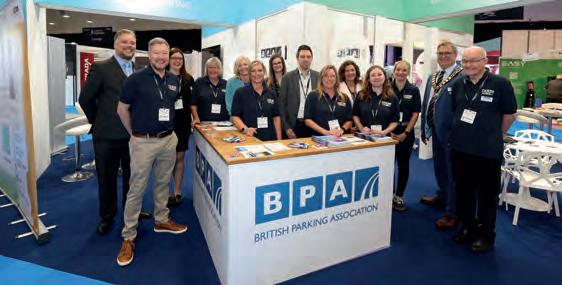
The Parkex exhibition remains a major highlight, showcasing cutting-edge products and services designed to raise standards and improve the parking experience. The BPA team will be on Stand P47 – please come and say hello, meet the people behind the BPA and share what matters most to you.
With so much happening across the sector and momentum continuing to build, Parkex 2026 is set to be our strongest yet. We look forward to welcoming you to the CBS Arena.




Dave Smith Head of membership engagement,
BPA

WEDNESDAY 20 MAY
10:15 – 10:30
Welcome to Parkex: John Heasman Innovation Awards –winners announcement
Andrew Pester, BPA chief executive
Mike Marrs, BPA president
10:35 – 11:00
In safe hands: The future of safer car parks
How police-led initiatives are shaping parking enforcement, tackling misuse, and working with local authorities to deliver safer, more compliant streets.
Speakers:
- Michael Brooke, head of government advocacy and police engagement, Police CPI
- Graham Footer, chief executive, Disabled Motoring UK
11:00 – 11:20
Ghost plates and other enforcement challenges
Exploring the growing challenge of cloned, obscured and noncompliant number plates, and the operational impact they are having on parking and traffic enforcement teams.
Speakers:
- Andrew Humphries, managing director, MAV Systems
- Barinder Moore, head of sales, product lead global parking, MAV Systems
11:30 – 12:15
LEARNING LAB Structural safety and asset management
Outlining best practice approaches for maintaining safe, resilient parking structures and offering practical insight into early warning indicators, risk assessment techniques, lifecycle planning, and the latest innovations in monitoring and maintenance.
Speakers:
- Richard Bowyer, Parking Stuctures Network representative, BPA
- Russell Simmons, Parking Stuctures Network representative, BPA
13:00 – 13:40
Smart mobility, smarter policy: Government updates on parking and transport
The latest updates from senior civil servants on England’s emerging parking and mobility policies, including upcoming regulations, digital transformation policies and national initiatives.
Speakers:
- Gavin James, deputy director traffic and technology, DfT
- Matthew Eglinton, head of Blue Badge policy, DfT
- Sarah Randall, interim CEO, National Parking Platform
- Steve Sopp, commercial lead –transport technology services, Government Commercial Agency
13:40 – 14:10
Inclusivity and diversity in parking services
How inclusive workforce practices and accessible kerbside design improve problem-solving, public trust and operational performance. Practical actions for parking managers including inclusive recruitment and leadership development, unconscious bias training, accessible payment and signage upgrades, and embedding DEI metrics into service delivery.
Speakers:
- Caryn Lowndes, civil enforcement supervisor, Cheshire East Council
- Lorraine Rushton, parking services manager, Cheshire East Council
14:15 – 14:45
LEARNING LAB Parking technology – tackling evasion through innovation
Practitioners, technologists and data specialists explore how innovation – particularly AI, data intelligence, and multi-agency collaboration – can transform our ability to identify offenders, protect communities and support compliant drivers.
Speakers:
- Alan Wood, CEO and founder, NPED
- Andrew Humphries, managing director, MAV Systems
- Richard Walker, head of parking, North Essex Parking Partnership
- Hannah Fuller, director of commercial strategy and partnerships, Unity 5
14:50 – 15:20
From congestion to clarity: the digital journey of Oxfordshire’s high-volume traffic permit and charge system
A real-world case study detailing the rapid deployment of the Zatpermit digital platform for Oxfordshire County Council’s new traffic filtering and congestion charge scheme.
Speaker:
- Hannah Fuller, director, commercial and strategy partnerships, Unity5
15:30 – 16:10
LEARNING LAB Blue Badge task force – delivering excellence in Blue Badge compliance
Cutting through long-standing myths around Blue Badge enforcement and explaining why strong leadership and consistent standards matter more than ever.
Speakers:
- Richard Boultbee, BPA Local Network representative, Yorkshire & Humber
- Steve Foster, BPA vice president
- Tom Gallagher, interim head of parking, Ealing Council
- Zoe Hall, BPA learning delivery partner, Parking Associates
16:15 – 16:45
National Parking Platform: year one review, lessons learned and scaling impact
This session will review the NPP’s first year of operation, including APDS-enabled enhancements, practitioner insights from early pilots, early efficiency and operational benefits, and the next steps for scaling adoption. The discussion will also explore how the NPP can support wider transport, kerbside, and policy objectives.
Speakers:
- Nigel Williams, managing director of Parking Matters, and chair of the Board of Directors NPP (facilitator)
- Adam Payton, parking and city centre operations manager, Peterborough City Council
- Keith Williams, director, Parking Matters
- Anthony Cashel, chief operating officer, Pay by Phone
THURSDAY 21 MAY
10:55 – 11:00
Welcome to Parkex
Steve Foster, BPA vice president
11:00 – 11:40
What next for the private parking sector and the Government Code of Practice
Exploring the latest developments, the anticipated next steps for the Code, and what they mean for operators, landowners and service providers.
Speakers:
- Conor Greely, director, Carflow
- Derek Millard-Smith, partner, JMW Solicitors / BPA Lawline
- Gary Osner, CEO ZZPS
- Grahame Rose, director of development, GroupNexus
- Sara Roberts, head of private parking, BPA
12:15 – 12:45
AI tools at work: an open discussion on supporting everyday work
Exploring how organisations use AI day to day to streamline work, boost productivity, and save time through real examples, honest lessons, and practical takeaways.
Speakers:
- Jade Neville, marketing manager, Trellint
- Sarah Randall, interim CEO, National Parking Platform
13:00 – 14:00
BPA Women in Parking: give to gain: building the networks that move our industry forward
Speakers:
- Hannah Fuller, director, commercial and strategy partnerships, Unity5
- Jade Neville, marketing manager, Trellint
WEDNESDAY 20 MAY
11:00 – 11:40
KEYNOTE Designing for people: signage, messaging and public understanding
Examining where the UK is with EV use and EV charging infrastructure.
Speakers:
- Mark Smith, regional account manager, Energy Saving Trust
- Simon Morgan, consultant, Causeway Technologies
11:45 – 12:25
PANEL ICEing, enforcement and reality: how do councils actually police EV bays
Exploring whether EV bays can be reliably enforced on-street, ANPR vs CEOs, and whether dual-use and time-restricted bays are a help or a headache.
Speakers:
- Alexandra Hobbs, parking manager, South Tyneside Council
- David Bagwell, chair, BPA EV Connect Group
- Karen Weech, vice chair, BPA EV Connect Group; vice chair, VREO
- Kieran Fitsall, senior projects manager, Brighton & Hove Council
- Mark Davis, car parks manager, Waverley Borough Council
- Ryan McGibbon, EV infrastructure manager, Southwark Council
- Tom Gallagher, interim head of parking, Ealing Council
12:30 – 13:00
CASE STUDY Rolling out EV charging infrastructure: advice for local authorities
Insight from experts across the private and public sector on what we do well, what we should start doing and what poor practices/barriers we need to overcome, and exploring how to reduce the burden on local authorities and assist in the rollout of an effective and comprehensive EV charging infrastructure network, at scale and at pace.
Speaker:
- Justin Ward, head of policy and technical practice, CIHT
14:00 – 14:15
CASE STUDY EV charging and parking best practices
How combining parking and EV charging into a single app removes friction for drivers and simplifies everyday journeys.
Speaker:
- Rebecca Maisey, UK commercial director, PayByPhone
14:20 – 15:00
PANEL Same day, different rules: paying for parking vs paying for EV charging
Exploring the practical differences between parking and EV charging payment models, including pre-
authorisation, session variability, and the absence of traditional enforcement mechanisms.
Speakers:
- David Bagwell, chair, BPA EV Connect Group
- Rebecca Maisey, UK commercial director, PayByPhone
THURSDAY 21 MAY
11:00 – 11:20
KEYNOTE Beyond plug-in – why ‘business as usual’ charging is not enough
Examining where conventional approaches are starting to fall short and why new delivery models are needed. Drawing on local authority delivery experience and current pilot projects, the session will explore the role of emerging solutions such as wireless charging, shared charging hubs and integrated energy systems.
Speaker:
- Shamala Gadgil, consultant working on behalf of Coventry City Council
11:25 – 11:45
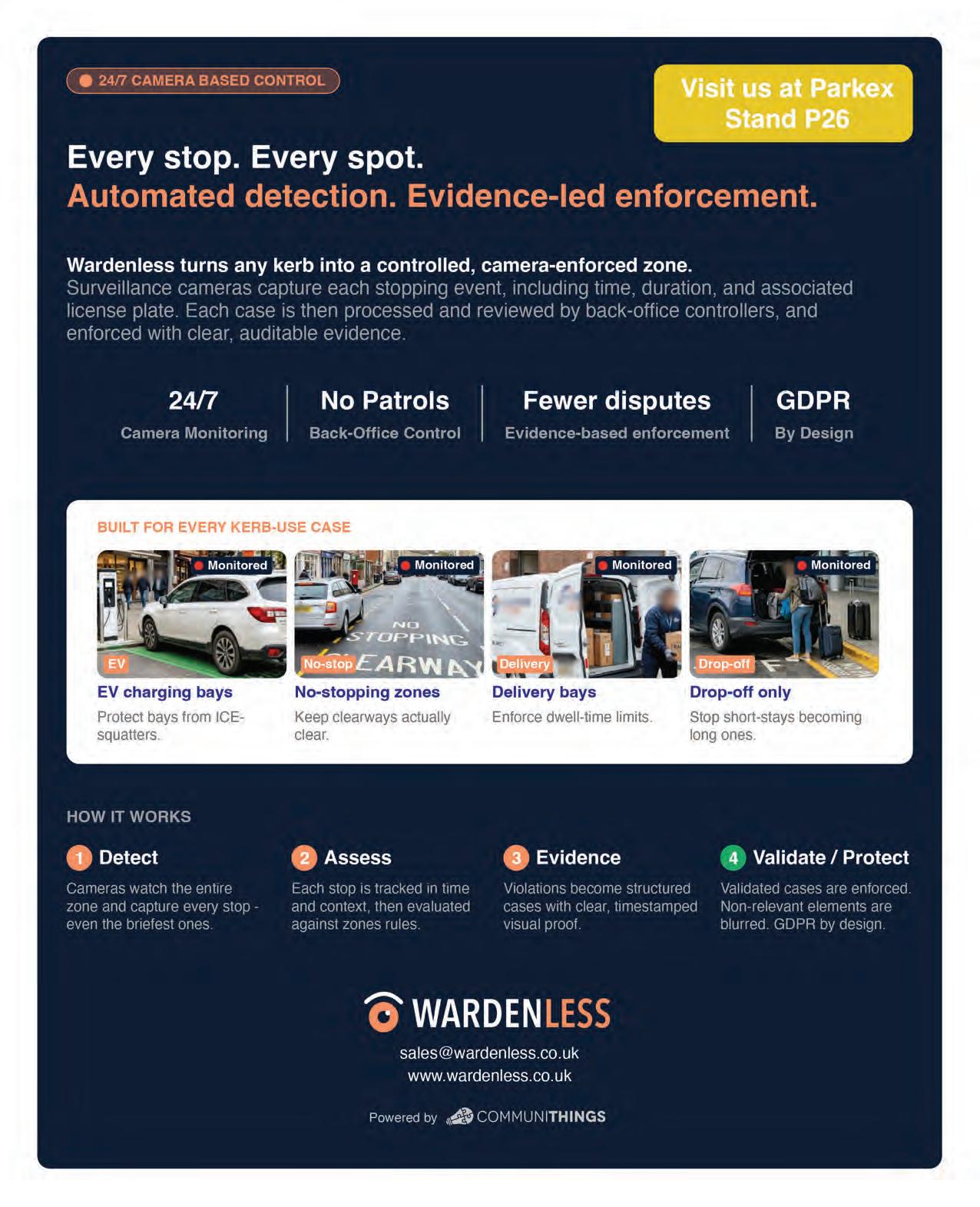
Wardenless: control stopping behaviour automatically Manual enforcement misses most stopping violations. Wardenless closes the gap with continuous PTZ monitoring that detects, times and documents every violation.
Speaker:
- Etay Oren, CommuniThings
11:50 – 12:30
Strategies for managing demand for fleet charging
Speakers:
- Sean Cleary, assistant director, Cambridge City Council
- Tim Gale, infrastructure strategy consultant, Cenex
- Tony Clayton, EV infrastructure programme manager, Transport for Wales
12:40 – 13:30
PANEL From chargepoints to coordinated kerbside management
Exploring how EV infrastructure sits within a wider kerbside ecosystem – balancing charging, loading, parking, micromobility and access through smarter allocation of limited street space.
Speakers:
- Chris Newman, CEO and founder, ScanNeo
- Jyoti Goyal, director of product, AppyWay
- Keith Williams, technical director, Parking Matters
- Michael Dnes, head of transport policy, Stonehaven
WEDNESDAY 20 MAY
10:30 – 12:45
Local authority forum
13:45 – 15:30
Parking on private land
THURSDAY 21 MAY
12:20 – 12:35
Modernising enforcement operations: end-to-end digital transformations – lessons for local councils
Moving from fragmented, analogue processes to fully digital, end-toend enforcement journeys through the integration of connected field devices, such as ANPR cameras, handhelds and scan-cars.
Speaker:
- Astrid Vanhove, traffic enforcement expert and EU business development manager, InTouch Solutions


David Bagwell
David is a seasoned sales and leadership expert with experience in central government, and the public and private sector. He is chair of the BPA EV Connect Group and a member of the BPA’s Technology, Innovation and Research Board.

Richard Boultbee
Richard is the BPA Local Network representative for Yorkshire & Humber, and a member of the Communications and External Affairs Board and the BPA’s Technology, Innovation and Research Board. He began his career as a civil engineer before moving into the sector, later becoming the parking manager for Amber Valley Borough Council. He has held key roles at BSI, International Parking Systems, Creative Car Park and WPS.

Richard Bowyer
Richard has decades of experience protecting the built environment. Specialising in car park structures, he is the BPA Parking Structures Network representative and has co-authored several of the Association’s ‘Parking Know Hows’ including the Winter Maintenance in Car Parks and Car Park Cleaning guides. He is Triflex’s national sales manager for car parks and Infrastructure.

Michael Brooke
Michael is head of government advocacy and police engagement at Police CPI.
Anthony Cashel
Anthony is chief operating officer of Pay by Phone and a board director for the NPP.

Tony Clayton
Tony is the EV infrastructure programme manager at Transport for Wales (TfW) and has more than 20 years’ experience delivering projects that are good for people and the planet. Having joined TfW in 2020, Tony was initially responsible for installing public EV charging infrastructure. He now leads TfW’s EV Infrastructure Hub, supporting the Welsh Government in achieving its EV charging infrastructure and wider net zero ambitions.

Sean Cleary
Sean is a seasoned senior strategic delivery manager with over 20 years’ experience in the public and commercial sectors. Sean has a proven track record in team leadership, financial management, and project management and procurement. He is committed to driving positive change, fostering collaboration and contributing to sustainable infrastructure development.
Mark Davis
Mark is car parks manager at Waverley Borough Council. He has also held parking manager posts at Buckinghamshire Council and Woking Borough Council and he has worked as an assistant contract manager for APCOA.

Michael Dnes
Michael is head of transport policy at Stonehaven. A former civil servant, Michael oversaw the Government’s roads programme for almost 10 years, creating National Highways, the ORR and Transport Focus in their current forms. After stints trying to apply road reforms to the railways, and working out what the passenger experience on HS2 would be, he led on future roads technology and the creation of the National Parking Platform.


Matthew is head of Blue Badge policy at the Department for Transport.
Kieran is senior projects manager at Brighton & Hove Council. He has over 25 years’ experience working in local government in parking and transformationrelated roles at Westminster City Council and is passionate about enabling cities to become more enjoyable, liveable and greener places.

Steve is vice president of the BPA and represents the North East region on the BPA Council. He is a team manager at Newcastle City Council and has chaired the BPA’s Professional Development and Standards Board and sat on the Board of Directors.

Hannah is director of commercial strategy and partnerships at Unity5 and has over a decade of experience in the parking industry. She represents technology on the BPA Council, and is a co-founder of the BPA’s Women in Parking Group. Hannah has also been a BPA mentor, and sits on the BPA’s Professional Development and Standards Board.

Shamala is a consultant working on behalf of Coventry City Council. She currently advises local authorities on the planning, delivery and governance of EV charging infrastructure, with a particular focus on residential and on-street provision. Her work brings together policy, procurement, grid coordination, and community engagement to ensure that infrastructure is both deliverable and equitable.

Tim leads fleet infrastructure planning at Cenex, providing expert information, modelling and guidance to clients transitioning to EVs across the public and private sectors. Since joining Cenex in 2022, Tim has worked on a variety of projects, including providing advice and training for local authority officers and creating strategies for the rollout of public and fleet EVI.

After spending the last five years in local government, Tom is currently interim head of parking at Ealing Council. Tom previously working as a police sergeant in Central London and is also the founder of the National Blue Badge Day of Action.

Jyoti is director of product at AppyWay, where she brings a unique blend of strategic vision, user-centric design and operational excellence. Having worked at FTSE 100 companies such as BT and Expedia, Jyoti has a proven track record of delivering impactful solutions across identity, marketplace and SaaS platforms. Jyoti is focused on leading the next stage of growth by leveraging AI to optimise urban mobility solutions.

Conor Greely
Conor is the director and founder of Carflow, a car park management company specialising in ANPR. He chairs the BPA’s Technology, Innovation and Research Board and sits on the BPA council and board of directors. Following a Master’s in finance, he worked in financial markets for over 10 years before moving into the parking industry in 2013.

Zoe Hall
Zoe is the learning and development manager at Parking Associates. A passionate and motivated parking management professional with strong business and community links, Zoe also has experience managing parking enforcement teams across a 100-mile end-to-end unitary authority.
Alexandra Hobbs
Alexandra is parking services manager at South Tyneside Council. She began her career as a parking appeals officer, administrator and CEO before progressing into central government, where she worked for HMRC. She returned to local government in 2020 and now champions the protection and recognition of CEOs and frontline staff, while driving service improvements and advocating for the North East within the BPA.

Andrew Humphries
Having been a business leader for decades in aerospace and defence, Andrew is now managing director of MAV Systems, where he is driving its position as a leading ANPR technology specialist. Passionate about technology, innovation and STEM, Andrew champions diversity and individual development.
Gavin James
Gavin is deputy director of traffic and technology at the Department for Transport, where he helps Government ministers make and implement decisions.

Caryn Lowndes
Caryn is the civil enforcement supervisor at Cheshire East Council where she leads enforcement operations with a strong focus on compliance, accessibility and staff welfare. With years of experience in parking services, Caryn is committed to promoting inclusivity. She is
equally enthusiastic about staff safety and ethical enforcement practices, ensuring that operational standards reflect fairness and respect.

Rebecca Maisey
Rebecca is commercial director at PayByPhone UK, with 14 years’ experience in client leadership, commercial strategy and innovation. She works closely with local authorities to support the shift to digital parking, including increasing mobile payment adoption and delivering machine removal programmes such as Meters for Trees. She played a key role in launching emissionsbased charging for the Royal Borough of Kensington and Chelsea in 2020.

Mike is president of the BPA. After leading the growth of a company from a modest team of 150 to 6,000 employees, Mike decided to embark on a new journey after 20 years and resigned. Following a 12-month hiatus, Mike now leads the team at APN, a collective of specialist companies operating throughout the UK.

Ryan is EV infrastructure manager at Southwark Council and vicechair of the Institution of Lighting Professionals (ILP) London & South East.

Derek is a partner at JMW with over 20 years’ experience in consumer and trading law. He is the leading specialist lawyer in the UK parking sector and he and his team are appointed by the BPA to represent its membership, and in particular those parking enforcement companies and local authorities who are BPA Approved Operators.

Barinder is head of sales and product lead for global Parking at MAV Systems, where he has worked for more than a decade. Providing personal account management for all of his customers, Barinder has developed a global network of clients and is committed to ensuring every one of them is getting the most from MAV Systems’ ANPR solutions.

Simon is a consultant at Causeway Technologies, where he uses his local government and subsequent experience to assist DfT, Transport Scotland, the Welsh Government, National Highways, Traffic Penalty Tribunal and others with policy issues and training. He chairs the committees at the BSI and the Institute of Highway Engineers responsible for traffic signs, and is well known as an author and speaker on signing, traffic orders and improving road safety.

Jade has 18 years’ experience in the parking sector covering public, private and technology sectors, and is currently sales operations and marketing manager (global) at Trellint. Jade is a keen champion of multiple campaigns, such as the protection of frontline teams, is co-chair of the BPA’s Women in Parking Group and chair of the Women’s Safety Working Group for Women in Transport, and has been a member of the BPA Council since 2017.

Chris is CEO and founder of ScanNeo and has over 15 years’ experience driving growth, operational excellence, and innovation in the transport, IT and parking sectors. Chris is recognised for datadriven decision-making, fostering cross-functional collaboration and implementing sustainable strategies that align with market demands.

Gary has been involved in the parking industry from 1991, working initially with local councils collecting unpaid parking notices. He is the founder and CEO of ZZPS, one of the leading UK suppliers for the management of notices emanating from parking on private land. As a BPA board director, he has worked on the proposed single Code of Practice.
Adam is parking and city centre operations manager at Peterborough City Council.



Andrew Pester
Andrew is chief executive of the BPA.
Sarah Randall
Sarah joined Agena Group in 2023, providing parking and software solutions. Before this, she worked in local government for almost 15 years. At the BPA, Sarah is chair of the London Regional Group, chair of the Technology, Innovation and Research Board and a director, in addition to her role on the board.


Sara Roberts
Sara is head of private parking at the BPA, where she has worked for five and a half years.
Grahame Rose
Grahame is the development director at GroupNexus, one of the UK’s leading car park management companies. He has been in the parking industry for over 25 years, is a former main board director of the BPA and sits on the Business Services and Accreditations Board.

Lorraine Rushton
Lorraine is the parking services manager at Cheshire East Council, overseeing operations to ensure efficient and customer-focused parking solutions. With a background in service management and compliance, Lorraine leads her team in delivering high standards of accessibility, safety and sustainability across all parking facilities.

Russell Simmons
A chartered construction manager and chartered building engineer, Russell is the founder of Stripe Consulting, which specialises in the car park built environment. He has been chair of the Parking Structures Group at the BPA for 10 years and chairs the Suicide Prevention Group and the Fire Risk in Car Parks Group. Russell is CEO of Ballast Nedam UK.

Mark is a regional account manager at the Energy Saving Trust, where he leads its work on the Transport Decarbonisation: Local Authority Toolkit and supports local authorities across the South East to decarbonise transport, improve air quality and increase EV adoption as part of the Local Government Support Programme.
Steve is the commercial lead for transport technology services at Government Commercial Agency. He has a strong background in the UK transport sector, innovation and IP, with previous experience at the Department for Transport, The Intellectual Property Office, and Innovate UK.

Astrid is the EU business development manager and expert in traffic enforcement at InTouch Solutions, Belgium’s market leader in digital traffic and parking enforcement. She has more than five years’ experience at the intersection of technology, public administration and enforcement policy and has worked on large-scale implementations across Belgium, including multicity traffic and parking enforcement processing models, digital visitor voucher platforms, and innovative solutions for local and federal authorities and police zones.

Justin is head of policy and technical practice at CIHT, a charity, learned society and membership body with members who are mainly engineers and transport planners operating in the UK and internationally. CIHT is keen on leading the sector to improve the way transport infrastructure – including roads – is planned, funded, designed, built, managed and operated to meet societal needs and environmental imperatives and support a strong economy.

Karen is vice-chair of VREO Innovation, an award-winning electronics engineering company whose advanced camera technologies are used by global partners across 19 countries, and vice-chair of the BPA EV Connect Group. She is an experienced strategic marketing and lead-generation specialist with more than 19 years’ experience helping global brands and high-growth businesses amplify their presence and drive results.

Keith is a director at Parking Matters and a board member at the Alliance for Parking Data Standards. He has extensive knowledge of parking technology, payment systems and data management gained from over 20 years in the parking industry.

Nigel is managing director of Parking Matters and President Emeritus of the European Parking Association. He is chair of the Board of Directors for the National Parking Platform and chair of the Board at the Alliance for Parking Data Standards.

CEO and founder of the NPED, Alan has over 23 years’ experience in recovering parking-related debts and has undertaken a variety of roles giving him a unique insight into all aspects of the sector.
A Fellow of the BPA, he has a proven track record of improving operational performance and achieving year-on-year growth, leads the industry on nuisance vehicle research and is currently assisting on a scheme aimed at improving our vehicle community and denying criminals the use of our roads.
How Arrive’s connected infrastructure and evolving platforms are helping councils unlock smarter data-driven parking management
Across the UK, many councils still rely on manual processes to understand parking capacity. Despite technological advances, building a holistic view of parking across a town or city o en requires in-person checks. This approach is time- and resource-intensive, making it di icult to gain an accurate, up-to-date picture of supply and demand.
At the same time, there are tens of thousands of paystations in use, but only a small fraction are internet-connected, and even fewer provide live updates to councils. Many local authorities also manage parking through disconnected back-o ice systems, where paystation data and mobile payment information sit separately. Together, these challenges create a significant data gap.
As towns and cities face growing pressure to improve tra ic flow, reduce emissions and make better use of kerbside space, access to accurate, unified parking data is becoming increasingly important.
When paystations operate o line or information is spread across multiple systems, it is di icult to build a reliable baseline of what is happening across the network. To make informed decisions, councils need reliable, joined-up data. Combining input from paystations, parking apps and, where possible,

private operators provides a clearer view of the parking landscape: where people park, how long for and where pressure points exist. These insights enable local authorities to move away from assumptions and towards a more data-led approach.
Arrive brings together decades of urban mobility experience as the parent company of RingGo, Flowbird and Parkopedia, with a mission to make cities more liveable. It is developing Arrive Pulse, a single global platform to consolidate fragmented mobility data from across parking, payments, transport and automotive sources into one system.
Starting with parking, the platform aims to help councils move away from disconnected systems towards a clearer, more complete view of their operations.
A connected system is only as strong as the infrastructure behind it. Many existing paystations were installed before internet connectivity was a consideration. To address this, Arrive is upgrading and modernising legacy hardware, while ensuring new paystations are futureready and capable of integrating with Arrive Pulse.
Retrofit kits allow older paystations –some up to 25 years old – to be upgraded with internet connectivity and current banking certification. This enables councils to extend the lifespan of existing equipment while capturing valuable transaction data alongside other sources. Arrive’s latest paystations come with built-in connectivity as standard, allowing transactions to feed into the same systems as parking apps and kerbside data. They also meet V6 banking hardware certification, which becomes mandatory for new sales from April 2027.
From data to decisions
Internet-connected paystations provide the foundation for smarter decisionmaking. By bringing together data from multiple sources, such as paystations and parking apps, councils can move from reactive interventions to long-term, strategic parking management – improving e iciency, sustainability and the overall user experience.
Find out more at Parkex, visit RingGo at the Arrive Stand P10, CBS Arena, Coventry, 20-21 May 2026



Welcome to the BPA’s new members! Find your audience with a
ponsored webinars are an effective way to position your organisation as a thought leader, reach a targeted audience and spark meaningful conversations with BPA members and the wider parking community.
In April, BPA hosted The Event Parking Opportunity, a sponsored webinar for JustPark as part of a value-added package that also included a dedicated e-shot, magazine editorial coverage and advertising – extending reach
well beyond the live session. By combining expert speakers with BPA’s promotional channels and trusted platform, the session delivered high-quality engagement with a relevant, informed audience. If you’re looking to raise your profile, share expertise and connect with decision-makers, a BPA sponsored webinar could be an effective part of your engagement strategy. Contact Amelia Marshall to find out more: amelia.marshall@ jamespembrokemedia.co.uk
Bon Voyage
Heathrow
A meet and greet valet parking service at Heathrow Airport bonvoyageparking. co.uk
Castle Leisure Bingo, gaming, catering and bar facilities for visiting customers. castle.bingo
Department for Transport (DfT) Ministerial department of the UK Government. gov.uk/government/ organisations/ department-fortransport
Electro Automation
Automatic gates, barriers and traffic management. electro automation.co.uk
Everyday People Financial Solutions
Supports people experiencing financial difficulty. pay.myepfs.com
Latcham
Provides printing services to the enforcement sector. latcham.co.uk
I Love Meet & Greet
Airport parking meet and greet and park and ride. ilovemeetand greet.co.uk
Parkfinda
Smart parking technology, including payment services, app development, live booking engines and API integration. parkfinda.com
Park Nova
Operates and manages private car parking facilities. parknova.co.uk
Transfer 360
Connecting ticket issuers to vehicle leasing companies. transfer360.co.uk
WSP UK Professional services and engineering consultancy. wsp.com/en-gb

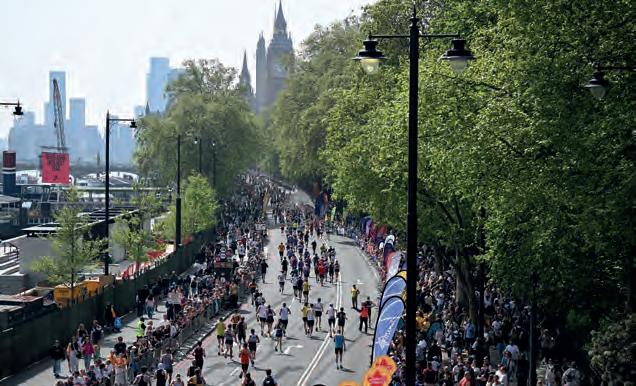
f you’re looking for a fundraising challenge to mark your calendar, applications are now open to join the Motor Neurone Disease Association team for the 2027 TCS London Marathon.
A limited number of charity places are available. To be considered, complete the online application form by 5pm on Monday 1 June 2026: mndassociation.org/form/ london-marathon-2027-application. Successful applicants will be notified
by the end of June 2026. Runners taking up a charity place will be asked to commit to a minimum fundraising target of £2,700 per person, helping to fund vital support, research and campaigning work.
Full details about the application process are available at mnd.sync. giving/london-marathon. For runners who prefer to secure their own place, the official marathon ballot is also now open: londonmarathonevents.co.uk/ballot.
BPA Business Insurance, delivered in partnership with Ascott Insurance Brokers, is a new member benefit to help parking and enforcement professionals protect their operations and manage sector‑specific risks. The service gives

BPA members access to specialist insurance solutions at preferential rates, backed by expert, advisory‑led support. Members benefit from insight into emerging risks, support reviewing existing arrangements, and ongoing assistance, including help with claims.
To find out more visit the BPA stand (P47) at Parkex, scan the QR code, left, or visit landing.britishparking.co.uk/bpabusiness-insurance
Hannah Fuller has been confirmed as the BPA’s next vice president for 2026/27.
Hannah (pictured) is director of commercial strategy and partnerships at Unity5 and has more than a decade of experience in the parking industry.
Congratulations to Hannah on securing this prestigious position, and thank you to everyone who put themselves forward this year.
Hannah’s vice presidency will officially begin at the BPA’s special inauguration reception at the House of Commons on 9 July, during which the BPA will also welcome the incoming president Steven Foster and celebrate past president Mike Marrs IRRV.

The BPA has announced the launch of a new Speaker Bank, an initiative designed to showcase the expertise, innovation and real-world experience across our community. Members are invited to submit case studies, ideas and areas of expertise that could be shared with the wider BPA community by completing a short form: wkf.ms/48I5oRo
DESIGNA design, manufacture and install fully automatic “Pay-on-foot” car parking systems. DESIGNA provides the answer to your parking needs with more than 16,000 installations worldwide; from simple standalone systems, to large, citywide networks, entire airport complexes, hotels, shopping centres and hospital estates.
01932 784040 | sales@designauk.com | www.designa.com


The UK’s largest parking enforcement debt resolution provider. Letter cycle recovery service with a 25% higher collection rate than our competitors. 0203 434 6132 | eki@dcbltd.com

Leading experts in car park refurbishment celebrating 50 Years of contracting experience. O ering testing and investigation with full turnkey solutions to the parking industry to refurbish, maintain and enhance your parking facility.
0845 899 4444 | www.makers.biz

NMI develops trusted payment so ware for mobile, online, and in-store payments. You’ve probably used it without realising it when booking a ticket, paying for parking, or making a charity donation. Its Payment Gateway is used by developers worldwide to add payments to their solutions enabling them to focus on what they do best.
0117 930 4455 | hello@nmi.com | www.nmi.com

As the ANPR market-leader, Parkingeye’s mission is to make life easier for businesses and their customers by giving them the capabilities to park e ortlessly in a highly connected world. Managing thousands of sites with a 98% client retention rate, our team deliver results which help our customers thrive.
Parkingeye Ltd | marketing@parkingeye.co.uk | www.parkingeye.co.uk

RTA OrderPro, is a cost-effective managed service offered by RTAA, as a DSP to the DfT hub, to host and update DTROs in real time to ensure business continuity.
Also available is a conversion tool for HA’s to upload DTROs from their corporate GIS software to the DfT’s DTRO hub.
Peter Lowe | 07900 264137 | plowe@rtaassociates.co.uk www.rtaassociates.co.uk

TagMaster UK Limited is a leading manufacturer and supplier of traffic monitoring equipment, a wide range of instrumentation and software systems are available ranging from temporary deployable radar devices through to full real-time ITS systems.
4 Caxton Place, Caxton Way, Stevenage, Hertfordshire SG1 2UG 01438 347555 | sales.uk@tagmaster.com | www.uk.tagmaster.com

Configurable. Connected. Insight-Driven. Unity5’s market leading Zatpark parking enforcement, administration and permit management software incorporates an ANPR-enabled street enforcement mobile app. Features provide complete control of the full life cycle of parking enforcement data, from issue to recovery action and every step in between. 03333 440515 | www.unity5.com

Kelvin Reynolds reflects on the decisions shaping the parking sector – from Parkex to policy, people and the customer experience – and why the choices matter now more than ever
Iwas in two minds about calling this article Decisions, decisions, decisions! but settled on Choices, choices, choices! Is there a di erence? Either way, we all have plenty to make over the coming months. First up: Parkex. Should you go? Absolutely. It promises to be a fantastic event. Once you’ve decided to attend, the next choice is do you visit for one or two days? Check out the programme and don’t miss the John Heasman Innovation Awards. Did you enter, and who will win? Decisions, decisions.
Look and learn?
Parkex remains our flagship event, bringing together the brightest brains and most innovative providers in our sector. Current issues and hot topics abound from leading BPA members and parking experts that push beyond parking, using it as a tool to encourage healthier lifestyles, protect vulnerable users and ensure diversity and inclusion.
As well as a packed exhibition hall, there are three theatres to choose from. EV Connect focuses on EV charging infrastructure, payment options, charging bay management and enforcement, and more. The BPA Live theatre, with no less than 14 presentations and conversations
for you to indulge and immerse yourself in, will host a wide range of discussions, including policy updates, the Blue Badge scheme, the National Parking Platform (NPP), and more. You can also explore procurement with the Government Commercial Agency and hear from Police CPI on safer parking. Other topics featured are ghost plates, enforcement databases, structural safety, and inclusivity and diversity. So much choice, so many decisions.
The BPA Council elections are also approaching, with 13 places available. The BPA has local representatives across the country, as well as from parking technology, healthcare, retail and leisure, and parking structures. Have you ever considered standing?
We are extremely grateful for the many years of service of existing BPA Council members, all of whom are eligible to continue in o ice should they choose to seek re-election.
Why should you get involved? The Council plays a key role in shaping strategy and advising the BPA Board, o ering a real opportunity to shape the direction of the Association. Check out the BPA newsletters and website for
Offering flexible payment options is key, as is looking at payments holistically as part of the entire parking experience and not in isolation


Reynolds MBE BPA executive consultant and company secretary kelvin.r@britishparking.co.uk
details on nominations. Will you step forward, or simply cast your vote?
Finally, consider the decisions that shape your parking services – and the choices motorists make when parking. To my mind, there are four pieces of information a motorist needs when parking:
● Can I park here? If yes, for how long?
● Do I need to pay? If yes, how, and how much?
Everything else is superfluous. Useful, maybe, in the sense of clarifying the full T&Cs (on private land) but not fundamental to the essence of the parking contract. If only operators and our audit arrangements recognised and focused on those elements.
You might also ask, what are the consequences of not complying with the rules? Clarity is essential. If we expect compliance, we must make it easy –especially when enforcement is involved. Being unable to pay is very di erent to being unwilling. So o ering flexible payment options is key, as is looking at payments holistically as part of the entire parking experience and not in isolation. The NPP o ers motorists a choice. Will you give them that choice?
The decisions you make today will shape tomorrow’s parking experience, and visiting Parkex is an opportunity to look at what’s new, learn from each other and then lead the way. You can deliver an exceptional parking service, one that exceeds motorists’ expectations. It’s your choice. What will you decide?