

























hope you enjoyed a well-deserved festive break and are feeling energised for the exciting year ahead. As we step into 2026, I want to thank you for your continued and invaluable support.
We closed 2025 on a high with a series of standout events: our Members’ Dinner, the AllIreland Parking Show, and the Women in Parking Afternoon of Soul. Each one captured what makes our not-for-profit community so special –opportunities to connect, share insight and create truly memorable experiences.
This spring, the BPA Council will publish our new strategic plan for 2026-29. Built on your feedback, including insights from the Membership Value Survey, it ensures we remain focused on what matters most to you. As expected, member
As our sector continues to evolve, we are broadening our membership to enhance relevance and benefits
support, professional development and advocacy remain at the heart of our direction. And as our sector continues to evolve, we are broadening our membership to enhance relevance and benefits for everyone.
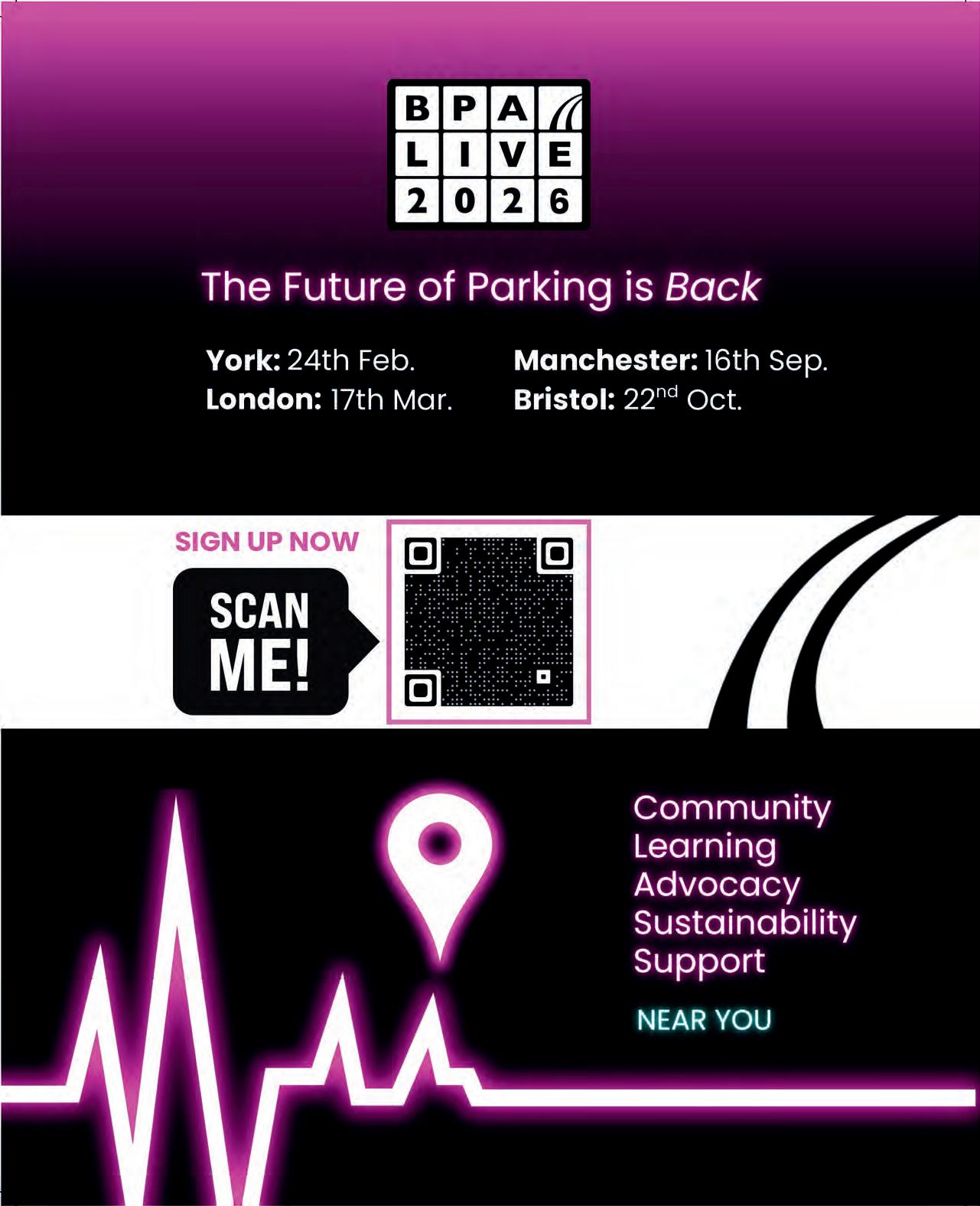
We’re kicking off the year with a packed programme of events. Our first BPA Live takes place in York on 24 February, followed by sessions in London, Manchester and Bristol. We’ll also return to Parkex in Coventry – always a highlight of the sector calendar.
And with our new BPA Local series already underway, members can now connect more easily and more often, closer to home. We are also strengthening our strategic partnerships – including the recent agreement with Crown Commercial Service (see page 37) – to deliver a more effective procurement service.
Thank you once again for your tremendous support. Together, we’ll make 2026 a year of progress, collaboration and shared success.

STAY CONNECTED IN 2026
Scan the QR code to register for the new year’s exciting programme of BPA Live events, beginning in York in February


Andrew Pester CEO

Parking News is published by
on behalf of the British Parking Association
Editor
Sophie Vening editor@britishparking.co.uk
Advertising
Millie Ursell
millie.ursell@ jamespembrokemedia.co.uk T: 0203 198 3092
Production editor
Lizzie Hu on
Design and production
manager
Christina Richmond
Publisher James Houston
Circulation and administration
Linda Page linda.p@britishparking.co.uk
Print Stephens & George Print Group
We would like to remind our readers that the views expressed by any contributor to Parking News are not necessarily those of the British Parking Association or Parking News, (the editor, the editorial panel or the board). Contributions and adverts are published in good faith and no responsibility or liability will be accepted, either for their contents or accuracy, or for any action taken as a result of anything contained in Parking News
© British Parking Association 2025 ISSN 1470-8361




Welcome to the January/February 2026 issue of Parking News, where we continue to explore the challenges and innovations shaping the UK parking sector.
This issue features a Roundtable on the cost of free parking (page 21), sparking debate on who really pays for ‘free’ spaces? We also examine the growing issue of illegal ghost plates and the practical steps the industry is taking to strengthen enforcement (page 12).
We’re pleased to announce the new regional representatives leading BPA Local (page 17), as they share their plans for the groups and details of how you can get involved.
Finally, our three-part car parking renovation series concludes with a focus on structured lifecare planning, highlighting how structural repairs and cleaning regimes can protect assets, users and budgets (page 8).

SHARE YOUR STORIES contact editor@ britishparking .co.uk

Sophie Vening Editor


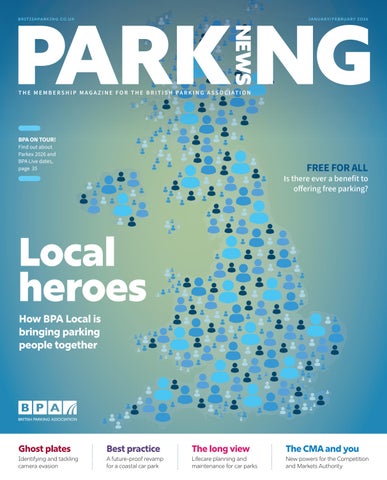
< ON THE COVER Introducing BPA Local
See page 17

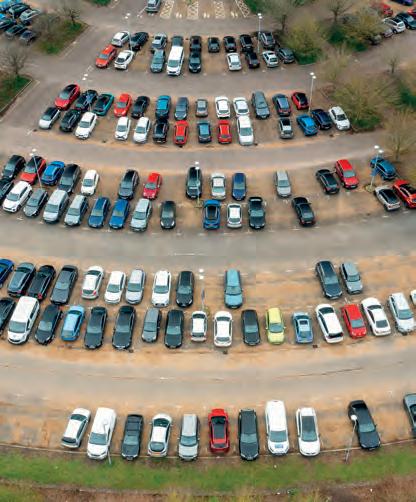

08 | Part III: Lifecare planning
The final instalment in our three-part series examines the importance of structural repairs and cleaning regimes
12 | Ghost plates
The harm caused by camera-evading number plates and the efforts being made to tackle the issue
17 | BPA Local
Find out what your new regional representative has planned for your local network
21 | Roundtable: The true cost of ‘free’ parking
Car park operators explore whether there is any benefit to offering free space
30 | Best practice
A deteriorating MSCP in Worthing has been transformed into a community asset that is fit for the future
6 | Digest
VCMA amendment update, proposed pavement parking ban, and more
27 | Legal view
Understanding the CMA’s new powers and their potential impact
32 | Parking people
Karen Weech of VREO on the importance of female representation in the industry
35 | BPA events
Recent highlights including the Members’ Dinner
36 | BPA updates
New members, exciting news about the biggest shows of 2026, and more
38 | Park life
Kelvin Reynolds wonders why we’re still pounding the pavement parking issue CLASSIFIED
26 | Specialist services
33 | Marketplace


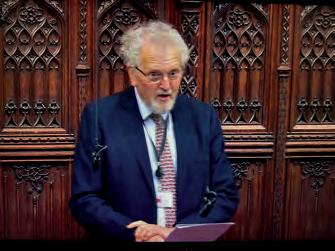
omentum continues to grow behind the Vehicle Compliance Management Act (VCMA) following its successful tabling in the House of Lords on 16 October 2025. The Public Bills Office has now formally drafted the amendment required for its inclusion in the Crime and Policing Bill.
The Act seeks to modernise and streamline vehicle compliance
BPA
“This amendment is a vital milestone in aligning compliance processes with modern legislative standards. By simplifying regulation and improving consistency, we’re helping create a framework that supports safer roads and more efficient enforcement.”
Isaac Occhipinti, head of external affairs
regulations and Alan Wood, CEO of NPED Services, is working closely with government officials to shape the operational detail of the VCMA pilot.
This collaboration marks a critical phase in turning legislative intent into practical enforcement capability. “The drafting of the amendment and our ongoing work with government signal real progress towards delivering safer streets and restoring control over vehicle compliance,” said Alan.
Infrastructure Minister Liz Kimmins has announced plans to introduce legislation to tackle inconsiderate pavement parking across Northern Ireland. The new rules will ban parking wholly on pavements, across dropped kerbs and
double parking, and the decision has been welcomed by the Inclusive Mobility and Transport Advisory Committee (IMTAC).
“Inconsiderate parking creates hazards for disabled people and others that prevent us making day-to-
day journeys,” said Terry McCorry, chair of IMTAC, a group made up of disabled people, older people and transport professionals.
“We will continue to work with the minister to identify what else can be done to eradicate this behaviour.”
In a bid to tackle dangerous parking, Oxfordshire County Council’s CEOs will be targeting market towns and areas that see repeated rule breaking.
More officers will patrol newly introduced controlled parking zones and respond to a rise in dangerous and inconsiderate parking, including on double yellow lines, outside schools and in residents’ bays.
Councillor Andrew Gant, cabinet member for transport management, said: “This focused crackdown will allow residents to see a greater presence by our officers in their neighbourhoods, enforcing the parking restrictions to make our streets safer and keep the transport network running for all users.”

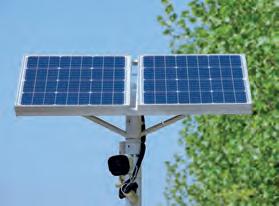
Anchor Group Services has partnered with Milesight to test and refine its solarpowered 4G ANPR cameras, tackling long-standing challenges in remote car park enforcement.
Following successful trials, the technology has been installed at sites in Bangor and Preston. Jamie Fretwell, technical services director at Anchor Group Services, said: “Despite the challenges of the UK weather, the solution has performed exceptionally.”
According to London Councils’ data on parking enforcement and appeals for 2024-25 there has been a 13.5% increase in the number of penalty charge notices (PCNs) issued in the city compared with 2023-24. London boroughs, the London Lorry Control Scheme and Transport for London issued a total of 9,462,185 PCNs to motorists who had contravened parking, bus lane and moving traffic regulations. London Councils says the increase was due to a 13.4% rise in parking PCNs issued, while bus lane PCNs increased by 16.8% and moving traffic PCNs by 13.3%.

Cardiff Council has approved a new 10-year parking strategy, including a resident permit surcharge for vehicles over 2.4 tonnes, in a bid to reduce congestion, improve air quality and make the city’s streets safer and more accessible.
The report noted that large, heavy vehicles occupy more parking space and are a ‘danger to other road users’. It also said that at some point the weight limit would be reduced to 2,000kg (for non-electric vehicles) and that vehicles over 3,500kg would not be entitled to permits.
Oliver Lord, head of UK and strategy for the Clean Cities Campaign, said: “Cardiff is showing real vision by standing up to the SUV car-spreading that’s taking over our streets. It’s only fair that those driving the biggest, heaviest and most polluting vehicles pay more for the extra space they take up and the danger they bring.”
Holiday Extras has strengthened its UK footprint with the acquisition of the freehold for its Airparks site in Aberdeen, securing long-term control of a key strategic location.
The company has leased and operated the site since 2022, and said the purchase marked a significant investment in expanding its airport parking portfolio and UK infrastructure.
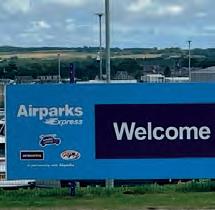
Waqaar Hussain, group property director, said: “Securing the freehold for our Aberdeen Airparks site is an important step in strengthening our operational base and ensuring we can continue to deliver the best possible experience for our customers.”
UK parking management company Intelli-Park has acquired Total Parking Solutions (TPS), broadening its presence across university, retail, healthcare and residential sectors. “By combining TPS’s existing client relationships with our industryleading tech and nationwide scale, we’ll help clients simplify parking, reduce unauthorised use and improve the experience for drivers,” said Ben Cooke, Group CEO at Intelli-Park.

PART III: In the final part of our series, we explore how lifecare planning, from structural repairs to cleaning regimes, can protect assets, users and budgets





The first two parts of this series looked at car park retrofitting and the importance of bay sizes. This final instalment asks a harder question: once you have invested in refurbishment, how do you protect that investment over the next 30-40 years?
For Richard Bowyer, national sales manager at Triflex, the answer lies in treating a car park like any other highvalue asset. “It’s a bit like an MOT for your car park,” he says. “You wouldn’t buy a car and never check the brakes or its service history. A lifecare plan aims to identify the structural condition, the current level of safety and how to maintain the car park.”
A structured plan reduces the risk of unplanned closure or, in the worst case, structural failure, both of which can be costly and reputationally damaging for owners and operators.
The BPA’s Guide to Life Care Planning for Car Park Owners and Operators outlines the core elements. Richard explains that early documentation should include as-built records, winter maintenance logs and daily surveillance, and that this should expand over time to include condition surveys, materials testing and records of works. After around eight years he recommends structural appraisals, supported by priced repair options, noting that a lifecare plan must be a live, evolving document.
This long-term approach is mirrored in project planning. “Absolutely key is to know the condition of the structure before you start on the design of a refurbishment scheme,” says Russell Simmons, managing director of Stripe Consulting. “Your lifecare plan and, indeed, your designer of the refurbishment scheme, should have detailed analysis and approvals of the structure so that the remedial actions required – which may not be clear or noticeable from a visual
inspection – are able to be determined and correctly specified.”
Lifecare planning has become increasingly important as heavier EVs and larger SUVs create new load demands. Older structures often face issues such as reinforcement corrosion, heightened fire risk due to changes in use, and water ingress. Effective drainage and waterproofing are therefore essential elements of any long-term strategy.
Choice of materials also plays a major role. “The correct specification is vital in protecting your car park,” says Richard. “In terms of waterproofing and surfacing, the correct system will cope with structural movement and associated cracking, helping to protect the structure from water ingress and corrosion.”
Russell adds: “We will design for the use of modern concrete repair mortars, as well as sacrificial anodes in repairs where required, and waterproofing membranes, such as resin coatings or even replacement mastic asphalt, which, if specified and installed correctly, can provide decades of value. Anti-carbonation coatings may also be required, as well as elastomeric paints or, in some cases, mineral paints. The method of repairing concrete should
STUDY: Christopher Place
Cemplas’ refurbishment of the Christopher Place MSCP in St Albans was shortlisted for a British Parking Award in the Car Park Renovation category. The early-1980s structure was an important facility for the adjoining shopping centre and local businesses, but had suffered extensive concrete deterioration and required works to stabilise the structure and improve its long-term durability.
The scheme included targeted concrete repairs to structural beams, supported by corrosion inhibitors and galvanic anodes to prevent future deterioration. Around 2,500m² of decks were waterproofed using the Tremco Deckshield Rapide ED1 system, addressing long-standing issues with water ingress. Columns, walls and beams received anti-carbonation coatings to enhance protection and improve the appearance of the interior.
Further interventions involved patch repairs to delaminated areas, reinstatement of failed joint sealants and the application of crack-bridging systems to manage slab movement. Localised spalling was broken out and rebuilt to restore cover to reinforcement, and defective drainage outlets were reformed to improve water management. Repairs were phased to keep the car park operational, using temporary traffic management and isolated closures while critical materials cured.
Final inspections confirmed improved structural integrity and a consistent waterproofing envelope across the decks.
“Only once you fully understand what you have can you begin to design an effective refurbishment scheme”
Russell Simmons
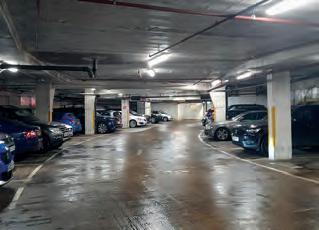
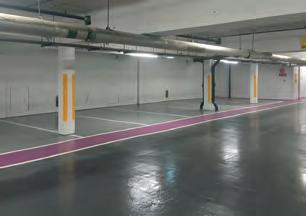
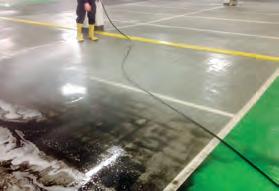
A lifecare plan isn’t only about structural resilience, it’s also about minimising the conditions that attract antisocial behaviour. Appearance and environment play a major role, underpinning the expectations set by the Police Crime Prevention’s Park Mark Safer Parking Scheme (SPS).
As Sam notes, poorly maintained environments are more likely to draw unwanted behaviour, whereas: “clean, bright surfaces signal that the facility is cared for and actively monitored”. Deck coatings, good
always be selected in accordance with BS EN 1504, and care must be taken to ensure procurement and quality assurance processes are robust.”
A good strategy also considers renewals, such as when systems can be overlaid instead of removed to reduce cost, risk and waste, provided these decisions sit within compliant, wellmanaged procurement and QA processes.
Structural repairs form only part of a lifecare plan; cleaning and housekeeping are also essential for maintaining safety and user confidence. “A bright and well-maintained car park impacts hugely on both safety and security,” says Sam O’Neill, director of Cleanpark UK.
In terms of behaviour, Sam cites the Broken Windows theory, which suggests that visible signs of neglect encourage further crime and disorder. “A dirty and poorly maintained car park is more likely to attract antisocial or criminal behaviour,” she says. Coatings and surface
lighting and defined pedestrian flows all contribute, but specialist products can also offer targeted protection.
Anti-graffiti coatings create a physical barrier that prevents paint bonding to the substrate. Systems such as Sika®Gard-850 AG, a clear, water-dispersed, non-sacrificial coating, allow graffiti to be removed using low-pressure washing, reducing the incentive for repeated tagging and lowering long-term cleaning costs.
Hydrophobic surface treatments, such as ProPERLA® Anti-Urine Coating, chemically repel liquids, causing them to bead and run off rather than soak into porous surfaces. In corners prone to misuse, this reduces staining and odour retention.
As with all measures in a lifecare plan, these coatings are only effective when they form part of a broader cycle of inspection, cleaning and renewal.
treatments help but, Sam stresses, they must be cleaned and maintained. “Bright or light-coloured decks can quickly look even worse than uncoated concrete if they’re not properly looked after.”
A well-designed cleaning regime will consider methods, frequency, traffic patterns, access and surface types. Housekeeping alone can achieve significant improvements. “Taking care
BPA VIEW
“Lifecare planning saves lives. It identifies risks early, prevents structural collapse, and ensures car parks remain safe for all users – because safety should never be left to chance.”
Sara Fisher, head of operations and business development
of litter, leaves and debris makes a massive impact for very little cost,” says John Taylor, managing director at 49 Parks. “Oil spills should be treated with absorbent, swept up as soon as possible and disposed of promptly and in a safe manner. Regular professional cleaning can potentially extend the life of surfaces and can be very cost effective against replacement. Ensuring you carry out a professional clean ensures your warranty. It also allows surveys to be carried out and defects to be detected at an early stage, potentially saving costs.”
Frequency will vary by site, although regular deep cleans remain key. “The deterioration of both coatings and concrete is exponential, and early detection can save huge cost a little further down the line,” says John.
In terms of repairs, surveillance is the first line of defence. “Damage, cracks, leaks or other issues can often be remedied quickly and cheaply when caught early,” says Richard. Routine inspections and periodic structural appraisals provide further reassurance, particularly for older sites.
“Whatever the nature of your facilities it is important to match an appropriate cleaning regime”
John Taylor
A lifecare plan can save significant costs by ensuring works are delivered at the right moment – neither too late nor unnecessarily early. Car parks that combine proactive structural planning, suitable materials and effective cleaning and inspections are not just safer but also more resilient and easier to operate.
Make your site stand out
Find out more about Park Access, Park Mark and Park Mark Plus at britishparking.co.uk/Schemes

WORDS | JENNIFER GRIMBLE


Illegal, camera-defeating number plates are undermining ANPR systems and costing millions. Here’s the lowdown on this escalating issue
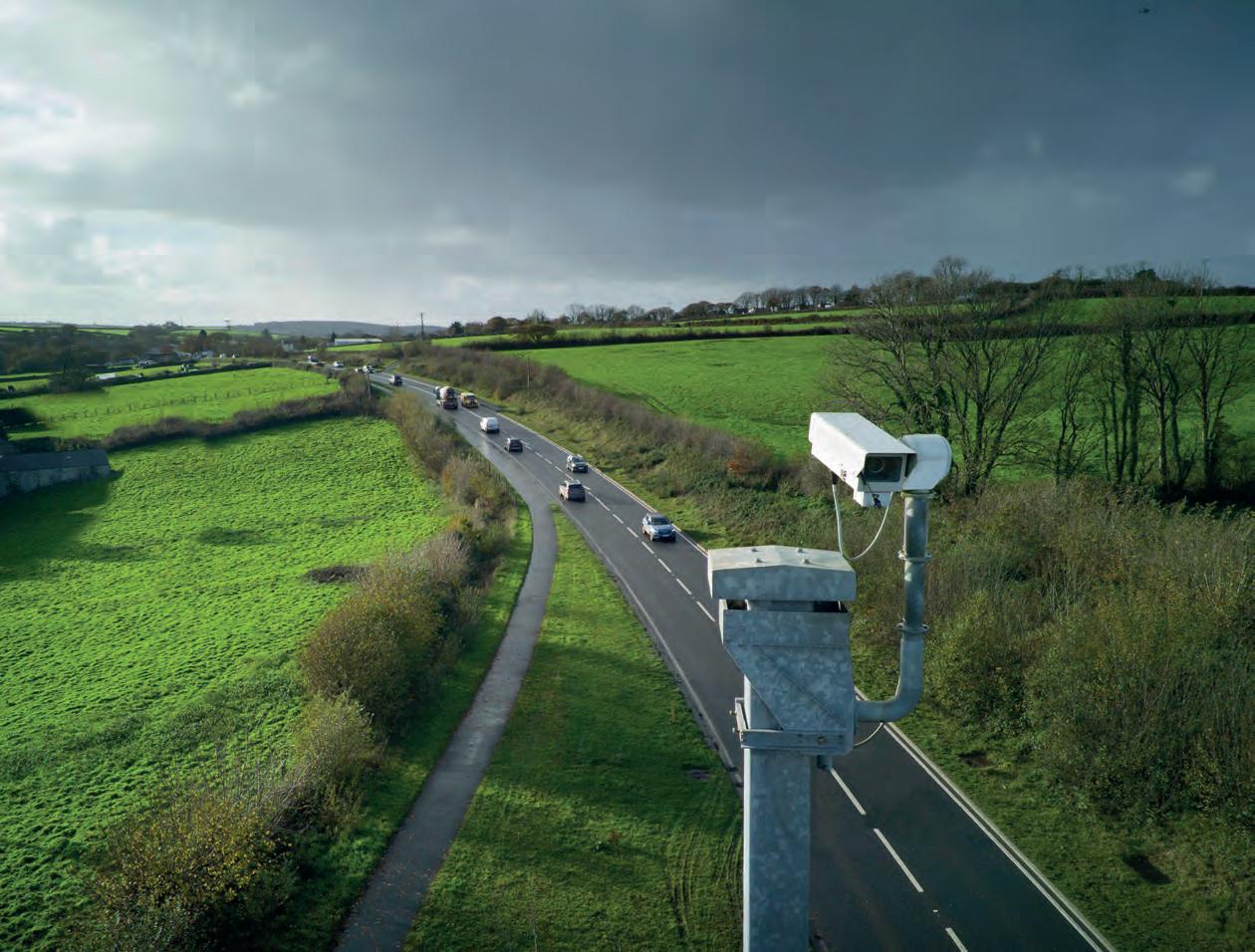
Designed to evade cameras, ghost plates are becoming a fastgrowing headache for those tasked with keeping Britain’s roads and car parks in order. In December 2025, the All Party Parliamentary Group for Transport Safety (APPGTS) published a report warning that the UK’s outdated and poorly regulated number plate system “enables criminals and organised crime groups to operate undetected on our road network, lets dangerous drivers o the hook, poses serious safety concerns, and leads to a significant loss of public funds”. We speak with some of the sector’s
best-informed experts about the impact ghost plates are having, and how the industry is fighting back.
What is a ghost plate?
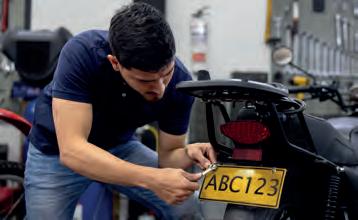
Ghost number plates might look ordinary, but thanks to clever materials or construction techniques, they are unreadable to ANPR, CCTV and speed cameras. There are various types on the market, including those covered with a transparent film that blocks or disperses infrared light. Instead of recording the plate details, ANPR cameras record glare or illegible digits.
So-called 3D and 4D plates feature overlays manufactured with multi-layer
“The VCMA will make a tangible difference to communities and help ensure our roads are safer and fairer for everyone” Alan Wood, NPED
optical coatings that reflect light and confuse cameras. “Plates can be bought with the special coating pre-applied, but people can also buy the coating, which is widely available online, to apply themselves,” explains Sarah Coombes, MP for West Bromwich.
Cloned plates are also causing issues, not just for parking professionals, but for innocent members of the public. They are o en used for illegal activities and Transport for London (TfL) has reported that cases in the capital have surged by 64% in the last three years. Other ghost plates are crude, as Mike Marrs, president of the BPA explains. “I recently saw a number plate that had clearly been tampered with. A strip of tape was used to distort a character. It’s a small example of a bigger, growing problem. For as little as £25, anyone can buy fake registration plates online.”
The extent of the issue is enormous. According to the National Persistent Evader Database (NPED), “over 10 million vehicles on our roads are currently operating outside one or more regulatory frameworks”, whether lacking an MOT certificate, or using false, cloned or stealth number plates. Evasion techniques drain public resources, lead to false fines for law-abiding motorists and generate unnecessary costs. “Some councils are on the brink of bankruptcy,” says Mike. “Every penny wasted on avoidable Tra ic Enforcement Centre fees is money that could have been better spent on services.”
Yet perhaps the most pivotal issue is that ghost plates get around ANPR – a system we rely on for law enforcement, tra ic management and security. “Since illegal number plates render people invisible to our detection and security systems, our roads become more dangerous, insurance premiums increase for all and we move backwards on road safety,” explains Sarah. “People can evade accountability for their activities on our
roads. This can range from speeding and street racing, to moving drugs and even human tra icking.”
The impact ghost plates are having on parking and road enforcement cannot be understated, either. “Vehicle noncompliance is placing a profound and escalating financial burden on both the government and local authorities,” says Alan Wood, CEO of NPED.
“In total, non-compliant vehicles cost the parking sector over £2.8bn every year, thanks to persistent evaders racking up unpaid PCNs, tolls and congestion charges. This results in significant budget shortfalls for local authorities, TfL and National Highways. These financial pressures directly impact funding for transport infrastructure, road safety and community services.”
Ghost plates aren’t just a big financial burden, though. Each misread triggers a manual admin review and evidence process, o en across the DVLA, police and Trading Standards. This adds a significant administrative burden to already overstretched teams, as employees spend hours verifying false information.
Law-abiding members of the public su er, too. Cloned or altered plates generate thousands of false PCNs every year, creating friction between operators and innocent motorists, damaging public trust and wasting valuable resources on disputes. “There’s a real erosion of trust,” Alan says. “The perception that nothing happens to persistent evaders or those using ghost plates damages public confidence in enforcement systems and the rule of law.” Disabled bay abuse is rife, too, depriving disabled motorists of essential access.
The Driver and Vehicle Licensing Agency (DVLA) maintains more than 47 million vehicle records in the UK and there are laws that demand number plate suppliers
Up to 1 in 15 vehicles on UK roads may be using a modified number plate that cannot be read by ANPR cameras. Two million vehicles suspected of using cloned, ghost or stealth plates.
During an enforcement exercise, 40% of London taxis or private-hire vehicles were found with illegal plates. During a pilot operation in the West Midlands, over 4,300 instances of ghost plates were detected in just two weeks, involving nearly 3,000 vehicles.
are properly registered with it. “We work with police and Trading Standards to enforce these rules and anyone caught driving with illegal number plates can face up to two years in prison,” a DVLA spokesperson confirms. “On top of this, there is a review of the current standards on number plates, which aims to ban production of plates that are specifically designed to evade ANPR cameras.”
However, many in the industry feel more can be done to clamp down on the sale of illegal number plates. “In the UK, we have over 40,000 number plate suppliers,” says Sarah Coombes. “To become one, you just need to pay £40 to the DVLA and supply basic details. At the moment, no background checks are carried out.” When altered or obscured plates are involved, DVLA investigations become slow and admin-heavy. Meanwhile, innocent motorists continue to receive automated PCNs.
Call for government action
Seeing the extent of the issue first- hand, industry professionals are calling on the government to get on top of the problem. “There’s a strong collective will across
local authorities and the industry to help find practical solutions,” says Mike. “But ultimately it will require action at government level. Primary legislation must be updated and the DfT needs to lead that change.”
Sarah is also fighting for action. “Cowboy suppliers and unregulated online shops have led to an explosion of illegal plates on our roads, hampering police efforts to catch people who think the rules of the road don’t apply to them,” she tells us. “I’m campaigning for higher fines, better enforcement and stronger regulation of our number plate system.”
Possible solutions
So, what can be done about ghost plates?
consistently evade parking fines or clone number plates. “The NPED enables issuing authorities to make informed decisions, significantly cutting down on enforcement costs and reducing admin,” says Alan. “The database is anticipated to save millions across the sector, enhancing enforcement efficiency and allowing for targeted interventions against persistent violators.”
“This widespread evasion undermines lawful motorists, drains public resources and facilitates broader criminal behaviour”
Alan Wood, NPED
In mid-October, Lord Lucas called on the government to support a legislative pilot of the Vehicle Compliance Management Act (VCMA), proposed by the NPED. Since then, The Public Bill Office has formally drafted an amendment required for its inclusion in the Crime and Policing Bill. “The Act aims to restore control over the vehicle community, deny criminals the use of public roads and create safer streets for all road users,” says Alan. “Crucially, the initiative is designed to be cost-neutral, ensuring that enhanced enforcement and compliance can be achieved without further taxpayer burden.” (See page 6 for more details.)
The NPED itself is proving crucial, too, providing centralised data on vehicles that
“Until now, the links between road safety and number plate compliance have been under-explored,” explains the APPGTS. “Our inquiry aims to provide a comprehensive assessment of the current system, offer evidence-based recommendations for reform, and facilitate informed discussions among policymakers, industry experts, trading standards, the police and the public about the impact of non-compliant plates.”
The DVLA is also working with the National Police Chiefs Council, the Home Office, police forces and Trading Standards in relation to the supply and use of illegal number plates. “The DfT is considering implementing stricter penalties and fines as part of its new road safety strategy,” says a spokesperson from the DVLA. Aside from this, it is hoped new-generation technology and wider data-sharing could reduce the effectiveness of illegal number plates. To download the APPGTS report, Ghosts on the Road, visit transportsafetyappg.org.uk/inquiries/ vehicle-registration-plate-inquiry


Picture match day at a major sports stadium. In the space of two hours, tens of thousands of cars approach the gates. Payment systems at parking terminals must process thousands of unattended transactions at once. If a gate slows down or a payment terminal freezes, tra ic backs up, tempers rise and revenue starts leaking before the first kick.
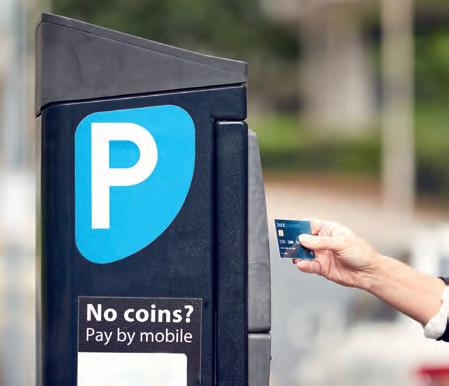
Our research, published in the white paper Keeping Payments Simple, shows the stakes: 46% of US consumers say they experienced a parking payment failure in the past year and nearly one in four say it happened more than once.
Stadium parking is unlike retail or transit, where there is a constant flow of customers and passengers with relatively minor peaks and troughs. For most of the week and the entirety of the o -season, stadium car parks might sit quiet, then, within a few hours, thousands of spaces must be filled and cleared.
A single point of failure can quickly cascade: stalled lines at entry, lost fees, confusion at exits, tra ic that spills out onto city streets. On top of the sheer volume of transactions, venues juggle a mix of technologies such as number plate recognition, tap-to-pay, mobile pre-bookings and payment acquirer routing. Each must work together seamlessly.
One well-known stadium that we work with at TNS, with more than 9,000 spaces across multiple lots, shows how complex this becomes. With such a large network of payment terminals, the stakes are high. Payment systems that stumble under pressure are not acceptable.
The unique problems of stadium parking require infrastructure that is always on: activeactive uptime, local fallback when the network drops, fast EMV contactless, smart payment orchestration with acquirer failover, constant monitoring and strong data protection.
Connectivity is especially critical. More than 70% of under-35s in our survey said that fast public Wi-Fi is important, compared with only 40% of those aged over 55. Younger fans expect an always-on digital layer at every touchpoint and when it’s absent, frustration is amplified.
Resilience in payments is about more than technology. It helps protect revenue, safeguards the fan experience and gives operators confidence when the crowds arrive.
A stadium’s playbook for reliability
At the stadium TNS works with, resilience meant combining:
• rugged payment terminals for gates and kiosks
• smart payment orchestration with acquirer failover
• payment tokenisation to secure card data
• AI anti-fraud technology
• secure connectivity across the estate
• integrations with number plate recognition and parking workflows
The results included higher throughput during pre-game surges, no critical downtime across events and faster reconciliation for finance teams. By treating payment acceptance, orchestration and security as one architecture, the stadium built confidence that events would run without disruption.
The resilience target is simple: eliminate single points of failure, keep tapto-pay latency low and support local fallback when links drop.
What works at a stadium can apply to arenas, convention centres and even large transit hubs. Key takeaways:
• build for payment surges, not averages
• treat payment acceptance, orchestration and security as one system, not separate layers
• choose payment partners with proven integration across gates, parking systems and acquiring
• align operational runbooks to event calendars, not daily retail patterns.
If you build payment systems that are reliable, adoption follows.
Live events are judged as much on logistics as on the scoreboard. Parking payments are o en the first interaction a fan has on match day and just as o en the last when they leave. If payments fail at either end, it can overshadow the entire experience.
Behind every great sporting moment is a payments infrastructure that quietly performs under pressure. Venues that invest in resilient payments support transactions that flow smoothly from entry to exit, help protect revenue and can leave fans with a positive impression long a er the game has ended.

To learn more, visit: tnsi.com/payments

Parking News talks to the BPA Council’s regional representatives to find out more about their plans for your local network
In the last issue of Parking News, we announced the launch of BPA Local – a new initiative designed to build vibrant networks where members can connect virtually or in person throughout the year. The aim is simple: encourage communication, collaboration and support genuine peer-to-peer learning.
Open to all BPA members, BPA Local provides a platform for everyone in the sector – not just local authorities – to share experiences, discuss challenges and explore opportunities. Regular regional meet-ups support members in exchanging local insights and strengthening the communities they serve.
Read on to meet your BPA Local regional representative and learn about their plans.

Karen Day, service manager, parking services at Nottingham City Council
Tell us a bit about your background? I’ve been with Nottingham City Council for 25 years, eight as parking manager. Before that I worked in social care, managing frontline teams from assessment through to specialist dementia care. I also have private-sector experience in the pharmaceutical and electricity industries, and have run two businesses. Why become a local representative? I want to represent the interests of
colleagues and members, and the role o ers a great opportunity to develop my leadership, communication and publicspeaking skills. I’m looking forward to meeting like-minded people and helping to make positive change in the sector.
Plans for the Midlands group? I want to energise the group, grow attendance and create inclusive meetings. I’d like us to share successes, learn from each other and champion members.
Thoughts on the new BPA Local approach? I’m looking forward to learning from others across our region and beyond, sharing knowledge and support.
To get involved, email Karen at: BPALocalMidlands@outlook.com


Paul Kyte, business development director at Trace Enforcement


Tell us a bit about your background? I’ve worked in the tra ic and parking sector since 1990. I became parking manager in 2004, and later joined RTA Associates, implementing civil parking enforcement across the Midlands, South West and Wales. Since 2009 I’ve been in the road tra ic debt recovery sector, spending 14 years with Bristow & Sutor and the past two with Trace Enforcement.
Why become a local representative?
In my early parking career I was involved
with the Midlands parking managers group, the forerunner to BPA regional groups. When the chance to stand for the BPA came up 10 years ago I didn’t hesitate. I’ve since contributed to TEC, DVLA and MoJ working groups, written a parking practice note on debt recovery and I sit on the communication and external a airs board and events panel. Plans for the South West group? COVID-19, home working and travel restrictions hit regional events hard. I hope we can rebuild a platform to share knowledge locally and highlight national BPA work. I’d like to form a panel of local representatives from various sectors to help shape engaging agendas.
Thoughts on the new BPA Local approach? It’s a great opportunity to bring local issues to the fore. Poor travel networks can make it di icult for South West authorities to attend national events, so local events are vital.
To get involved, email Paul at: BPALocalSouthWest@outlook.com

Richard Boultbee, consultant at National Blue Badge
Tell us a bit about your background? I’ve been in the parking world for 30 years, 10 in local government as a civil engineer and 20 in private industry. I’ve held senior
positions in parking technology and at a private parking operator. I now advise on digitising the Blue Badge scheme and tackling parking-related fraud. Why become a local representative?
Because I’m passionate about what I do. As an engineer in local government, I learned a great deal from peer groups. I didn’t sign up to be a ‘representative’; I signed up to bring people together, share knowledge and talk all things parking. Plans for the Yorkshire & Humber group? I want a group where parking stakeholders – public, private, hospitals, retailers and tech providers – can discuss, learn and resolve local parking issues.
A broad audience brings new ideas. Thoughts on the new BPA Local approach? A fresh approach is welcome. I’ve always enjoyed disrupting the norm. I want new members to contact me to help shape future meetings – online, inperson or maybe a WhatsApp group. We’ll need venues, sponsorship and help with social networking.
To get involved, email Richard at: BPALocalYorksandHumber @outlook.com


Richard Hein, interim service lead parking and Itchen Bridge at Southampton City Council
Tell us a bit about your background? I’ve been involved in parking since 1994, working for Croydon, Borough of Poole, Winchester City Council and Hampshire County Council. My previous role was head of parking operations for Richmond and Wandsworth Councils. I’ve been on BPA Council since 2003, I was BPA President in 2009 and I’ve been chair of the Southern Region group since 2012. Why become a local representative? I want to support our industry and engage with like-minded people to discuss relevant issues and deliver interesting meetings.
Plans for the Southern group? It’s always well attended. I’ve worked closely with my vice chair, Terry New, and group secretary, Kim Holmes, for years. With Terry retiring, I’m forming a new regional management team to create strong agendas, keep meetings engaging and bring in other organisations.
Thoughts on the new BPA Local approach? It will expand the Southern network, help people connect, share ideas, and explore local issues and new initiatives.
To get involved, email Richard at:
BPALocalSouthern@outlook.com

Sarah Randall, CEO of the National Parking Platform (NPP)
Tell us a bit about your background? I joined parking at Croydon Council in 2008, later becoming head of parking, and I was assistant director of tra ic and parking at Newham Council. In 2023, I became director of local government and propositions at Agena Group and, earlier this year, CEO of the NPP. Why become a local representative? I wanted to strengthen communication, collaboration and engagement within our community. The role allows me to support colleagues, share best practice and ensure local voices are heard.
I’m interested in the future of parking and how technologies such as NPP, NPED and DTRO shape the industry. Being part of the network helps me to stay connected with innovation and
ensure our local area is prepared for the changes ahead.
Plans for the London group? Strengthening communication and connections. I want more interactive discussions, stronger cross-team collaboration and simple ways to maintain engagement between meetings.
Thoughts on the new BPA Local approach? I’m excited about the relationships this will build and seeing new members coming up through the industry. The new approach will help those with experience, as well as new talent, connect, learn and collaborate. I’m keen to keep our network engaged with developments such as the NPP and NPED. To get involved, email Sarah at:
BPALocalLondon@outlook.com


Zulfiqar Ali, former BPA president who currently sits on the BPA’s board of directors
Tell us a bit about your background? My background is in civil engineering, specialising in tra ic management, smart parking and road safety. I’ve held senior management roles in the UK public sector and consultancy positions in the Middle East. I’m passionate about using data and innovation to drive more sustainable improvements in parking, mobility and transport. Why become a local representative? I want to create stronger collaboration between parking professionals across the East of England. Parking is no longer just enforcement – it’s integrated transport planning, clean air, digital infrastructure,
“It’s a privilege to work with our BPA Local representatives. I look forward to supporting them as they build stronger regional networks, empower members and help this relaunched programme thrive through collaboration, learning and shared experience.”
Yasmin Je eries, engagement and local networks manager
mobility and accessibility. I want our region to be at the forefront of that transformation.
Plans for the Eastern Group? I want a more inclusive and dynamic network, bringing together local authorities, private operators, consultants and suppliers. We’ll focus on EV infrastructure readiness, antisocial driving behaviour, kerbside management and new technologies such as AI and real-time data, with more structured learning and regional case studies to share good practice.
Thoughts on the new BPA Local approach? It’s essential. We must treat parking as a strategic asset. With integrated planning, tech investment and community engagement, we can create greener, safer and more userfriendly systems. The future of parking is not where we leave our cars, but how we shape our streets.
To get involved, email Zulfiqar at: BPALocalEastern@outlook.com


Steven Foster, team manager, parking services, Newcastle City Council; vice president of the BPA
Tell us a bit about your background? I’ve worked for Newcastle City Council Parking Services for 24 years, starting as a patrol o icer before becoming a supervisor and supporting the implementation of the TMA 2004. I’ve been the North East representative for the BPA for five years and I’m delighted to see regional interest in the BPA continue to grow. Why become a local representative? It’s an honour to represent the region at a time when we’re transitioning towards electric vehicles. Regional needs matters more than ever as we establish parking priorities across the country. It’s vital that all regions come together, highlight where communities need support and ensure those needs are heard at a national level.
Plans for the North East group? I helped

develop and inspire the North East parking show and I’m excited to see it grow and move to a new home in Durham for 2026. I hope to develop the points for discussion at the show into an itinerary that is supportive of the region’s views.
Thoughts on the new BPA Local approach? It will give greater flexibility to help set the priorities and agenda to better reflect the region’s concerns.
To get involved, email Steven at: BPALocalNorthEast@outlook.com

Roy Tunstall, consultant road tra ic management at Newlyn
Tell us a bit about your background? I joined Liverpool City Council 26 years ago and have been active in the parking sector ever since. When it came to retirement, I wasn’t quite ready to stop working, so took on a part-time government consultancy role with Newlyn specialising in tra ic and highways.
Why become a local representative? I was the chair of the North West Regional group for around 18 years and so decided to continue working as a local representative for the group.
Plans for the North West group? I want to make sure the meetings are varied, fun and have a social aspect, too. We don’t always have to talk shop!
Thoughts on the new BPA Local approach? I’ve been petitioning for the BPA to restart the regional meetings. I think there is so much value to be had. For me, the new approach is all about communication, creating a community, and learning from each other. If someone comes to me for help and I don’t know the answer, I can guarantee someone else in the group will!
To get involved, email Roy at:
BPALocalNorthWest@outlook.com
Following a vacancy and subsequent Call for Nominations, the new South East representative will be announced in the next issue.

Free parking is often promoted as a quick win for struggling high streets, but does it actually work? Our panel explores the real financial, operational and behavioural impacts of giving away parking for free


Rob Leet is head of parking and enterprise at Horsham District Council and manages day-to-day parking operations, enforcement teams and projects that improve its services.


Chris Wade is director of the People & Places Partnership, author of the LGA Revitalising town centres toolkit and a former expert adviser for the government-backed High Streets Task Force.
Free parking is a popular political promise and a frequent request from local business owners, but the reality behind it is much more complex. Local authorities have to juggle revenue pressures, transport choices, customer experience and the expectations of residents and retailers. In this roundtable, our panel examines what ‘free’ really means.


Joshua MacDonald is the strategic parking manager at Cornwall Council, responsible for the development and operation of o -street parking strategies.
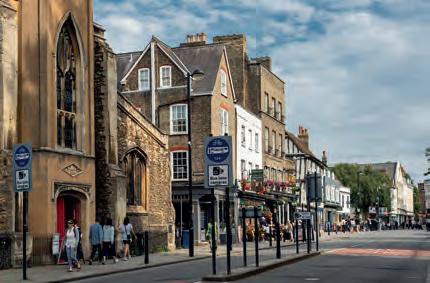
Chris Wade: When we go into towns, the cost of parking is one of the first things that gets mentioned, particularly by local independent businesses; it’s a knee- jerk reaction and roughly half of businesses will raise it with us. But when we survey customers, they might talk about completely di erent things: the quality of shops, the mix of o er, the feeling of a place. In one town outside Glasgow, 90% of businesses said parking was a major reason the high street was struggling, but only 8% of customers agreed.
I try to get people to think of parking as a service – you wouldn’t give away co ee for free. When Pret gave away ‘free’ co ee to drive footfall to its cafes it didn’t achieve what it hoped to.When a town’s o er is strong, people are willing to pay for parking. In Cambridge, people will happily pay £23 for an a ernoon of parking because the experience is worth it.
Rob Leet: One of the fundamental issues is that people forget that parking
is a business. Every time the debate comes up, criticism is aimed at councils: “the council is killing the high street with charges”, but you don’t hear that about private operators such as NCP. The expectation is that local authorities should subsidise the cost, but car parks have to be maintained, lit, cleaned and enforced. Those are real costs, and as a local authority we run that business on behalf of the taxpayer.
Apart from council tax and business rates, the next major income stream is fees and charges. Councils have a responsibility to run car parks safely
“When a town’s offer is strong, people are willing to pay for parking”
BPA VIEW

and efficiently but also to maximise revenue, because the alternative is the cost falling directly on the taxpayer –including those who might not drive. It’s about fairness. Parking income is worth between £4m and £5m annually in Horsham District Council, but we already know that we need to refurbish several car parks next year at a cost of around £150,000 to £200,000 each. That’s something we have to do every 10 years or so.
CW: That’s something people don’t always recognise. They think ‘free parking’ means the council simply forgoes profit. But your team still has to do the work. It costs money to provide a service.
RL: Shops rely on us to provide highquality facilities, and we rely on shops to provide an offer that attracts visitors. If the high street is good, people will come regardless of a marginal parking cost. You don’t hear complaints about the cost of parking at Legoland or The O2 – if the experience is worth it, people will pay.
Does seasonal free parking work?
CW: The problem is when free parking is used as a political gesture. Festive free parking is rarely based on evidence, and its impact is almost never measured. People will say: “Let’s do free parking at Christmas to boost trade.” But that’s already the busiest period. Giving something away doesn’t necessarily stimulate demand. It often just creates congestion, frustration and queues.
Joshua MacDonald: For the past five years, Cornwall has provided free parking on Small Business Saturday as a way to support businesses, which, of course, comes at a cost to the council’s budget. This has been extremely well received by businesses and motorists, which is the reason why the scheme continues. There are always risks: free parking does not necessarily equal more trade and, in some locations, we find that the
“Parking policy plays a vital role in supporting local economies. Free parking can seem attractive, but it must be balanced with sustainable funding for maintenance and improvements. Thoughtful planning ensures vibrant town centres without compromising long-term infrastructure needs.”
Isaac Occhipinti, head of external affairs
larger shopping destinations absorb the majority of the commercial trade. Next year I want to look at how we can spread free parking days across the county to promote trade in smaller towns and enable them to receive the same benefit larger retailers are receiving.
RL: If it’s working, great. But in my experience, free parking mainly benefits long-stay users and people already planning to visit. If you really want to help businesses, I would suggest a voucher system. Let businesses hand out freeparking vouchers with purchases, so the benefit goes directly to someone who’s spending money on the high street.
CW: Targeting is key. Free parking for everyone is unfocused. You’re giving away something of value with no guarantee of return.
RL: People don’t notice when parking works well, but they absolutely notice when it doesn’t. If their first impression of a town is sitting in a queue, driving around for ages or struggling with machines, that’s what they remember and they won’t come back. A well-managed, paid-for system often delivers a better experience than a free-for-all where spaces are clogged with long-stay vehicles.
CW: You’ve also got to think about the loss of revenue associated with giving away free parking on a Saturday in December!
RL: You’re probably talking about somewhere between £5,000 to £10,000 depending on the location and how busy it is.
Councils need to ask: why? What are you trying to achieve? If it’s a car park nobody uses and you want to encourage some activity on a Saturday because you don’t expect much demand anyway, there may be a case. But the bottom line is that there is no such thing as free parking. Somebody is paying for the maintenance, the enforcement, the car parking machines, the lighting. Someone funds all of that
We recently significantly increased Sunday tariffs in Horsham – some by around 200%. On Facebook, the reaction was intense, but when we monitored usage, we saw an 8% increase in Sunday and Bank Holiday parking compared with the same period the previous year. So increasing charges didn’t deter visitors. The lesson is that convenience and experience matter far more than minor price changes.
Do pricing incentives work?
CW: The evidence is very thin. Many towns like it because it sounds catchy. A council once told me they chose ‘free after three Thursdays’ simply because they
liked the alliteration. The decision wasn’t based on data.
RL: Aberdeen ran a properly controlled study – ‘free after 5pm’ – widely advertised and monitored. It cost the council £80,000 and did not result in an increase in footfall. The only measurable change was a drop in public transport use. The council spent a lot of money shifting people off buses and into cars, without increasing visitor numbers.
RL: Retailers also consistently overestimate the number of people who come by car. They’ll say between 70-80%. It’s usually around 40%. People who walk or use public transport often spend more on the high street as well.
JM: In Cornwall we offer a reduced ‘rover’ ticket, which allows motorists to park in all long-stay car parks for up to seven days and ‘hop’ between sites. This product provides a more cost-effective way to visit many of Cornwall’s beautiful rural locations, which aren’t always accessible with public transport. We see the value in the additional visitors this can bring to different parts of our county, however I am conscious that if I were leading a large metropolitan area, this is not likely to be a product I would offer.
We also offer ‘free parking’ through collaboration with local businesses, where either an entire period is subsidised by local traders or a second ticket can be obtained, and a portion of the parking is refunded with a purchase, which is
“Free parking on Small Business Saturday has been extremely well received by businesses and motorists”
similar to the voucher concept that Rob referred to earlier. We find this is a more sustainable initiative than ‘free parking’ in that it promotes the use of local businesses while not negatively impacting the council. This of course requires local buy-in, and is not something which can be provided in all towns. Rather than blanket free parking policies, I think this is the direction we should be exploring.
CW: What people need is good-quality, accessible parking. Whether that should be free is a valid debate.
RL: My view is that it shouldn’t automatically be free. When something is free, it becomes a high-value item and that drives fraud. It’s counterproductive as Blue Badge spaces end up being used by people using badges fraudulently, and disabled people lose access to the spaces designed for them. We changed our system in Horsham so Blue Badge holders pay unless they’re on the higher rate of mobility benefit or are on a PIP rate. Those who qualify register with us and go on a database that our enforcement officers can check. It dramatically reduced misuse.
CW: Just because you’re disabled doesn’t mean that you’re short of cash. Blue Badge holders need good quality and convenient parking that they know is going to be available.
Are better transport systems needed in the UK?
CW: Park & Ride can work brilliantly as a more affordable parking option – Cambridge is a good example – but only if bus frequency is high and the service is easy to use.
RL: It keeps congestion down and gives people an option, but take-up isn’t always strong. If it isn’t free, by the time you’ve paid for both bus fares you’re at around £6. There may
not be enough incentive versus a car park, plus there’s the perceived hassle of a bus. It needs to be part of a wider integrated offer.
CW: It’s about improving the travel choices, isn’t it?
RL: Perth & Kinross Council ran an initiative during which they replaced free or subsidised car parking with free bus travel. It mirrored a study in Japan where 43 habitual car drivers were split into two groups: a control group and a group who each received a one-month free bus ticket. Those given the free bus travel changed their behaviour, with more continuing to use the bus afterwards because they found it cheaper and easier than expected. That’s a targeted incentive. As I said earlier, subsidising car parking doesn’t change behaviour, it just shifts people from bus to car.
But public transport needs to be good
enough for people to change. In many rural areas it isn’t. We’re working on improving routes and timetables in Horsham, and we may need to use parking revenue to help fund it. That’s where you get the ecosystem between parking, travel and high street.
CW: Local authorities need to focus on the quality of the destination. People pay when the experience is worth it.
RL: And remember: there is no such thing as free parking. Someone always pays. If the aim is to support the high street, the solutions need to be targeted and evidence-based.
JM: Free parking is not the answer to all of a high street’s struggles, however if the opportunity arises to work with local businesses to support trade, while still managing traffic effectively, I believe we should explore that.
“The bottom line is that there is no such thing as free parking. Someone funds it”
“There is very good value in many off-street parking areas, as these spaces are sited in good locations within the parking area and are made more accessible, with wider bays and hatched areas. However, there is a difficult balance to be achieved from a practical perspective. The Blue Badge allows for the holder to park in most on-street areas free of charge. Introducing a charge in either on-street or off-street parking bays would likely result in many badgeholders parking on the nearest double yellow lines to avoid payment and potentially making these areas more dangerous for general road users.”
Richard Boultbee, consultant at National Blue Badge
“We introduced two hours free parking Monday to Saturday before 6pm across all our car parks to make it more convenient for people to visit and shop in our town centres and use local services. This followed an extensive consultation to find out exactly what residents and businesses needed to support them.
“Within the first month of us introducing the free parking, car park use soared by 40% and traders reported they are busier. This is exactly what we wanted – to make it easier for people to use our town centres as part of their day-to-day activities, shopping and leisure habits, supporting businesses and helping our town centres to thrive in changing times.” Cllr Stephen Homer, executive member for towns, transport and connectivity at Tameside Council






The enforcement body can now require action and impose fines, but what does this mean for the parking sector?
The Competition and Markets Authority (CMA) is the UK’s primary competition and consumer enforcement body and its powers were enhanced by the Digital Markets, Competition and Consumers (DMCC) Act 2024. It is now better able to oversee and ensure compliance with consumer laws and what historically would have been dealt with by local authority Trading Standards is now the responsibility of the CMA.
What is new?
Previously, the CMA had civil and criminal consumer enforcement powers and breaches were dealt with by courtbased litigation in civil or criminal courts. However, the CMA has now been granted a significantly larger range of enforcement powers:
∞ The CMA can decide if consumer laws have been broken; it is no longer solely up to the court to decide.
∞ If a breach is found, the CMA can impose new, wider-reaching remedies.
The CMA can now directly and autonomously enforce consumer law, which means we need to be aware of its interpretation of the DMCC Act and other consumer laws, and its guidance and enforcement process.
Who does CMA have jurisdiction over?
The CMA has power to act against any person or entity infringing UK consumer protection law, as long as they:
1. have a place of business in the UK
2. undertake business in the UK, and/or
3. direct their activities to consumers in the UK
Additionally, the CMA can require information from companies based outside of the UK and third parties with a UK connection – with ‘connection’ being subject to a broad definition.
Potential enforcement steps and consequences for non-compliance
Initially, the CMA will undertake preliminary enquiries, research and methods such as asking the public for information to determine whether to open a formal investigation (the prelaunch). If an investigation begins, the CMA will likely use its powers to seek information from the parties under investigation. A CMA investigation can be triggered via a complaint, the media, MP engagement etc and great care must be taken if responding to someone in order to correct a misconception and when dealing with specific enquiries. The CMA contact must not be ignored as there are consequences for failing to respond.
Enforcement powers
1. Provisional Infringement Notices (PINs)
If you receive a PIN, you will likely be required to stop infringing consumer protection law. You can also be required to publish the PIN, as well as publish a statement or correction.
2. Financial Infringement Notice (FINs)
The CMA can impose financial penalties for you not complying with a PIN of up to £300k or 10% of global annual turnover,




JMW Solicitors LLP
bpa@jmw.co.uk





whichever is greater. Also, if you don’t comply with its investigation, the CMA can fine you up to £30k or 1% of global annual turnover, whichever is greater.
3. Undertakings and penalties for non-compliance
As before, the CMA can accept an undertaking from you rather than issue new notices. More significantly, the CMA can also make directions:
a. Enhanced Consumer Measures (ECMs) – a direction to compensate the a ected customer and/or assist customers to obtain relevant market information to enable them to make better purchasing decisions.
b. Online Interface Notice (OIN) –a direction to take or refrain from certain actions regarding websites, applications or other digital content used for promotion, supply of goods, services or digital content.
Breaches of undertakings or directions can result in a fine of up to £150,000 or 5% of global annual turnover. The CMA can also impose
a daily penalty of up to £15,000 or 5% of global daily turnover until compliance is met (unless the offence is one of providing false or misleading information, in which case you will be asked to produce evidence that any factual claims are accurate).
The CMA has confirmed it may consider a company’s past conduct when determining penalties, so a previous failure to comply with enforcement action may work against you.
Where a breach has been identified, the CMA publishes the details of noncompliant companies and related enforcement action on its website and in press releases. This can have a significant and damaging impact on the reputation of an organisation which can take years to repair. A regular review of compliance, how new legislation is interpreted, and taking proactive steps to comply can help protect your reputation.
The CMA can enforce its powers (including financial penalties) on certain individuals or ‘accessories’ within a company. In practice, if an individual has a certain level of control over the affairs of a company and their behaviour is deemed to be directly attributable to the infringing activity, they can personally face liability for up to £300,000
In the summer of 2025, the CMA utilised its new enforcement powers to investigate 14 consumer-facing sectors. This culminated in it proposing enforcement action against eight businesses (none from the parking sector) and sending advisory letters to 100 businesses, including, as per the CMA’s press release issued on 18 November 2025, some from the parking sector. Its concerns relate to the use of additional fees and

sales tactics, and the letters will direct those businesses to review their practices. The CMA has also released new guidance on price transparency to help businesses comply with the rules.
If organisations have been advised to review their practices and fail to do so, formal enforcement action can be taken. The content of the letters could also potentially impact all those managing parking, as it indicates what is now expected of the sector as a whole, which in turn may require an overhaul of existing practices, the private parking sector single Code of Practice and local authority enforcement regimes.
Can CMA decisions be appealed?
It is often better to work with a regulator rather than to push back, and challenging a decision should be a last resort, especially when it is clear the regulator is reasonably seeking to ensure the spirit of the relevant law is adhered to – which appears to be the case in its current multi-sector investigation.
Working with a regulator is almost always the most appropriate reaction, however the CMA interprets the law and its interpretation may not necessarily be correct, fair or reasonable, particularly given that the laws and powers are new. Where, after careful consideration, enforcement action appears unreasonable and sector actions have been misunderstood by the regulator, it
is possible to appeal to the High Court regarding the decision to give directions or to impose a penalty and/or the nature and/or amount of any such penalty.
The goal of legislation and any regulator enforcing it is to protect, in this instance consumers. Understanding new regulation is key to running a compliant organisation. The enhanced powers and penalties which can now be imposed for noncompliance with consumer legislation have been implemented to further protect consumers, who are often bombarded with confusing content that encourages them to make a decision regarding payment for a product or service that they would not have made if they had fully understood the financial consequences.
If the CMA makes contact, organisations should be willing to engage with it as soon as possible. Similarly, if the CMA issues an advice notice, great care should be taken to adhere to the reasonable guidance published, and engage as appropriate, to avoid the risk of enforcement action.
BPA Lawline: find out more
This information is for reference only, if you have any specific legal queries arising from the content of this article or generally you can contact Derek Millard-Smith and his team at JMW Solicitors through BPA Lawline via bpa@jmw.co.uk or call directly on 0345 241 3024. BPA members can receive up to 30 minutes free legal advice from BPA Lawline.
Find out how innovative design has helped to transform a deteriorating coastal structure into an award-winning, future-proofed car park
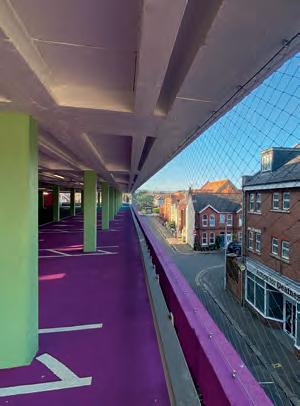
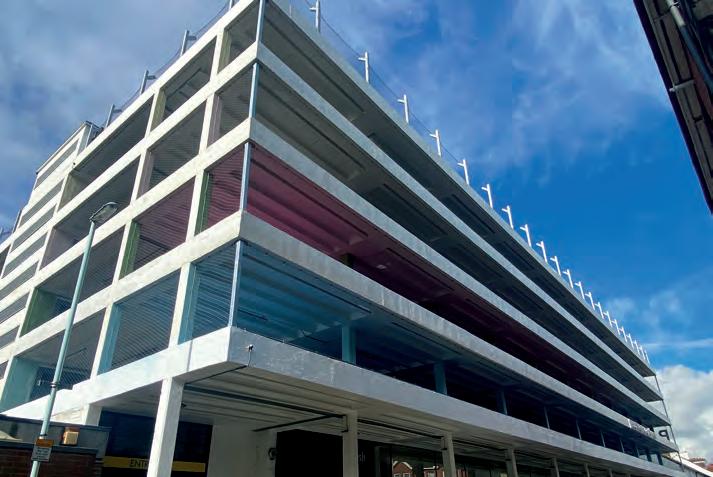
Built in the late 1960s, Buckingham Road multi-storey car park (MSCP) in Worthing has survived decades of patch repair work, yet the coastal climate and its ageing concrete structure meant these fixes were no longer enough. A full renovation was required to secure at least 20 more years of safe use. Today, the awardwinning project, named Best Car Park Renovation at the British Parking Awards 2025, has become a flagship of Worthing Borough Council’s Thriving Together regeneration mission, showing how modernising car parks can revitalise town centres and support economic growth.
Following a successful tender, Makers Construction undertook testing that revealed extensive levels of chloride. Repairs were completed with sacrificial anodes to deal with the high chloride levels before anticarbonation coatings were applied to soffits, brightening the area and providing long-term structural protection.
The concrete inter-decks, largely uncoated since the MSCP’s construction, were stripped and upgraded with liquid deck coatings. This also enabled clear zonal differentiation through colour, with blue for disabled parking and purple for parent and child bays.
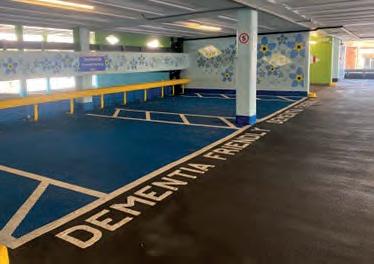
The re-marking also provided the opportunity to enlarge these special bays, thanks to the car park’s original 5m column grid configuration, with each now measuring 5m x 5m.
Years of vandalism, skateboard activity, and night-time alcohol
“Regular maintenance is critical. Neglect leads to structural risks, costly repairs, and reputational damage. Proactive upkeep protects users, ensures compliance, and preserves asset value for the future.”
and drug abuse had left the facility feeling unsafe. The redesign set out to remove hiding places, improve visibility and restore public
“Since reopening, the car park has recorded zero antisocial behaviour incidents”
fence on the exposed upper decks. In the original 1960s design these areas were too accessible, whereas the new barrier adds vital protection.
confidence, ensuring the car park was secure, easy to maintain and welcoming for visitors.
The ageing canopy entrance was demolished to open up sightlines. “It used to create easy, unauthorised access into the car park and a pretty scary atmosphere which attracted the usual antisocial behaviour. It was a known hotspot for local police,” says Simon Lamb of Makers.
New energy-e icient LED lighting has improved visibility, while reflective paint coatings have improved overall lighting inside. Upgraded CCTV, a new fire alarm and bird deterrent spikes have further helped tackle antisocial behaviour. Since reopening, the car park has recorded zero antisocial behaviour incidents.
A refreshed interior colour scheme, with each level adopting a di erent hue inspired by Worthing’s regeneration branding, helps with wayfinding. “It’s an unusual palette, but it’s the Borough’s regeneration colours and it works for the car park,” says Simon.
Enhanced safety and accessibility
One of the project’s most sensitive enhancements was the installation of a new 2m-high suicide prevention
Buckingham Road MSCP already had two dedicated dementia bays for ‘Friends of Dementia’, originally marked only by a sign on the back of the bays, but Makers saw an opportunity to improve visibility and accessibility. Working with the Alzheimer’s Society’s forget-me-not logo, the team created a calming sensory wrap featuring a cascade of flowers across the two enlarged 5m x 4.8m bays. A textural raised mesh surface on the wrap was used to help with sensory memory recognition and the flowers were finished in a kaleidoscope of colours chosen to reflect peace and calm. Refreshed signage has also helped to reinforce the message.
“We hope the bays, which have undergone the same repair specification as the remainder of Buckingham Road MSCP, have a friendly, homely feel,” says Simon. “Hopefully the redesign will encourage people not to abuse the spaces and prevent the people who need them from using them.”
Buckingham Road now also provides 15 disabled spaces and 16 electrical charging bays. Due to the age of the car park and original configuration, the electrical bays have been located together in banks of four, at the standard 4.8m x 2.4m size.
The newly refurbished Buckingham Road MSCP is now a secure, accessible and fully modernised asset within Worthing’s town centre regeneration plan. With its protected surface, enhanced safety features, welcoming design and elimination of antisocial behaviour, the car park
Total car park bays: 255
Number of levels: 8 Disabled bays: 15
Dementiafriendly bays: 2
Parent & child bays: 7 EV parking bays: 16
Project completed: October 2024
Contract value: £3.2m
has achieved both Park Mark and Park Access accreditations – proving itself as a model for how strategic renovation can transform ageing car parks into future-proofed structures.
However, Simon stresses that upkeep is essential. “One of the biggest failures following this type of investment is not maintaining it. It’s critical to the long-term performance and ensuring investments aren’t wasted,” he says.
To find out more about Park Mark, Park Access and Park Mark Plus visit britishparking.co.uk/parkmark, britishparking.co.uk/park-access and britishparking.co.uk/park-mark-plus
Read more about car park maintenance in the third part of our series on renovations on page 8.
We speak with Karen Weech, commercial director at VREO Innovation, about her role, and the importance of female representation and connection in the parking sector

What does your current role involve?
I oversee commercial strategy, partnerships, client relationships and growth planning across our smart camera and AI product lines.
How did you get into the sector?





I co-founded VREO with Mark Vernon, our MD and CTO. Our background was in imaging and AI, and as we explored commercial applications for our technology, the parking sector quickly stood out. It was full of opportunity, yet underserved by truly intelligent and integrated camera systems.
Why did you join the Women in Parking group?
As a senior woman in a tech-driven industry, I saw a real need for representation and connection, especially for those early in their careers. I wanted to be part of a platform that encouraged visibility, shared learning and industry-wide progress. It’s important that women at all levels see what’s possible in this space. Women in Parking o ers practical support, inspiring events and a safe space to grow your
Visibility matters, and consistent representation sends a clear message about inclusion
confidence and network. Whether you’re new to the industry or already in a leadership role, there’s real value in connecting with others who understand your experience – and want to see you succeed!
What challenges have you faced?
While many barriers are subtle, they’re significant: being overlooked in meetings, needing to prove credibility more than male peers or having ideas downplayed. These micro-barriers accumulate and can stall confidence, progression and visibility. The bigger issue is representation – or lack thereof. As of early 2025, Women in Parking UK grew to over 500 members, yet women continue to be a small minority in senior technical, operational and leadership roles. Without visible role models and inclusive pathways –for engineering, enforcement, board positions – the industry risks missing out on diverse thought, innovation and equitable service design.
How can the industry better support women?
The industry needs to move from good intentions to deliberate action. That means proactively championing women into leadership and commercialfacing roles, not just in support or back-o ice functions. It also means building inclusive recruitment and progression frameworks across operations, engineering, strategy and governance.
We must not only provide platforms for women to speak at events, shape policy and mentor others, but also ensure equal representation on panels, decision-making bodies and industry forums.
What are you currently working on?
We launched Volt last year, our total bay monitoring solution, and Solaero, our hybrid wind and solar-powered camera solution for o -grid, sustainable deployment.
What has been your career highlight?
Taking the company, alongside Mark, from a bold idea to a thriving tech business has been incredibly rewarding. But this is just the beginning! Our goal is to become the undisputed leaders in bestin-class camera and AI technology for the mobility and infrastructure sectors.
What are your future career goals?
I want to continue scaling VREO as a leader in ethical, intelligent parking technology, focusing on sustainability, accessibility and innovation. I’m also passionate about building the next generation of male and female leaders in this sector, and I hope to play a bigger role in mentoring and shaping the conversation around commercial strategy and inclusion across the wider mobility industry.
DESIGNA design, manufacture and install fully automatic “Pay-on-foot” car parking systems. DESIGNA provides the answer to your parking needs with more than 16,000 installations worldwide; from simple standalone systems, to large, citywide networks, entire airport complexes, hotels, shopping centres and hospital estates.
01932 784040 | sales@designauk.com | www.designa.com


The UK’s largest parking enforcement debt resolution provider. Letter cycle recovery service with a 25% higher collection rate than our competitors.
0203 434 6132 | eki@dcbltd.com
Entry Parking Posts is a well established UK company, founded over 30 years ago, specialising in tra ic control equipment, spike barriers, and the original manufacturer of ALLIGATOR TEETH. Our tra ic direction restrictors are superior in design and performance to tra ic flow plates. Our equipment solves any problems you may have controlling access, tra ic and maintaining the security of your site.
01564 773188 | www.entryparkingposts.com

NMI develops trusted payment so ware for mobile, online, and in-store payments. You’ve probably used it without realising it when booking a ticket, paying for parking, or making a charity donation. Its Payment Gateway is used by developers worldwide to add payments to their solutions enabling them to focus on what they do best. 0117 930 4455 | hello@nmi.com | www.nmi.com

As the ANPR market-leader, Parkingeye’s mission is to make life easier for businesses and their customers by giving them the capabilities to park e ortlessly in a highly connected world. Managing thousands of sites with a 98% client retention rate, our team deliver results which help our customers thrive.
Parkingeye Ltd | marketing@parkingeye.co.uk | www.parkingeye.co.uk

RTA OrderPro, is a cost-effective managed service offered by RTAA, as a DSP to the DfT hub, to host and update DTROs in real time to ensure business continuity. Also available is a conversion tool for HA’s to upload DTROs from their corporate GIS software to the DfT’s DTRO hub.
Peter Lowe | 07900 264137 | plowe@rtaassociates.co.uk | www.rtaassociates.co.uk

With a proven track record of excellence, we specialise in revitalising and optimising multi-storey car parks to meet the highest standards of functionality, safety, and aesthetics, including, concrete repair, expansion joints, deck and decorative coatings, line and bay demarcations, and maintenance programmes.
01270 439909 | info@structurecare.com | www.structurecare.com

TagMaster UK Limited is a leading manufacturer and supplier of traffic monitoring equipment, a wide range of instrumentation and software systems are available ranging from temporary deployable radar devices through to full real-time ITS systems.
4 Caxton Place, Caxton Way, Stevenage, Hertfordshire SG1 2UG 01438 347555 | sales.uk@tagmaster.com | | www.uk.tagmaster.com

Configurable. Connected. Insight-Driven. Unity5’s market leading Zatpark parking enforcement, administration and permit management software incorporates an ANPR-enabled street enforcement mobile app. Features provide complete control of the full life cycle of parking enforcement data, from issue to recovery action and every step in between.
03333 440515 | www.unity5.com
What a night! The annual Members’ Dinner was an unforgettable celebration of connection, recognition, and entertainment. Hosted by BPA President Mike Marrs at the magnificent Drapers’ Hall, London, the event was supported by our generous sponsors: Gold: DCBL (Direct Collection Bailiffs) Silver: CDER Group Highlights included:
• Paul Kyte being honoured as a BPA Fellow
• Terry New receiving a long-service award
• a silent auction raising more than £7,500 for the MND Association
• and, of course, the incredible Milton Jones, whose razor-sharp comedy left the room in stitches!
The evening combined a stunning venue, fine dining and a vibrant atmosphere that truly showcased the strength of our community.
President Mike Marrs said: “This dinner is always a highlight of the year and
tonight was no exception. It’s fantastic to celebrate achievements, share laughter and strengthen the bonds that make our association so special. I know everyone is already looking forward to next year!”
Save the date: Drapers’ Hall, 26 November 2026
Clontarf Castle provided a stunning backdrop for an exceptional day of discussion, learning and collaboration in November. The event united key players from across the island of Ireland, all focused on driving innovation and shaping the future of parking and mobility.
Opening remarks from Sean McConnell, Conor Greely and Dave Cullen set the tone, highlighting the importance of momentum, shared best practice and working together to move the sector forward.
The day was packed with insightful sessions and networking opportunities, culminating in a sparkling drinks reception

and dinner. With its rich history dating back to 1172, the venue offered the perfect setting for conversation and celebration.
Special guest Geordan Murphy inspired attendees with powerful lessons on leadership, teamwork and peak performance – drawing parallels between professional rugby and the parking industry.
Sean summed up the spirit of the event: “This was a fantastic day for collaboration and progress. The energy in the room shows how committed we all are to shaping the future of parking and mobility in Ireland.”
See you all again in Ireland in 2026!
The Women in Parking celebration at Soul Mama, Stratford, in December was an unforgettable afternoon filled with music, connection and inspiration. Guests enjoyed a vibrant atmosphere at the iconic music venue and restaurant, with live performances by the incredible YolanDa Brown OBE, delicious food and a free bar that kept the energy high throughout the event.
The gathering brought together colleagues and friends from across the parking sector to celebrate the amazing women driving progress in the industry. Networking flowed seamlessly alongside soulful tunes and special vibes, creating a perfect blend of professional engagement and festive cheer.
Alison Tooze captured the spirit of the day: “What a fantastic event! The music, the atmosphere and the sense of community were truly special. Members are already looking forward to our next celebration in 2026!”
To view all BPA events and meetings and to register, visit the website calendar: britishparking.co.uk/Events
T he BPA Local Midlands meeting was a resounding success, bringing together members for a day of networking, knowledge sharing and collaborative discussion.
A highlight of the day was the Spotlight Session on the Workplace Parking Levy (WPL), which provided valuable insights into implementation strategies and best practices. Members also appreciated the BPA Updates, which ensured everyone stayed informed about
key developments.
Networking opportunities during coffee breaks and lunch allowed attendees to connect and exchange ideas, while the closing raffle added a fun twist to the day.
Karen Day, BPA Local regional representative for the Midlands, said: “It was fantastic to see such strong engagement. The discussions were insightful and the energy in the room was inspiring. People are already looking forward to our next meeting in 2026!”
Multiple new locations have been accredited by the Safer Parking Scheme, with sites up and down the country having received awards for their safety and accessibility.
Park Mark Freight has had a particularly successful few months. Sutterton Truck Stop, Folkestone Services TruckStop and Cartland Truck Stop have all earned the Park Mark Freight award, and the scheme is going from strength to strength as we raise standards for truck stop safety across the country.
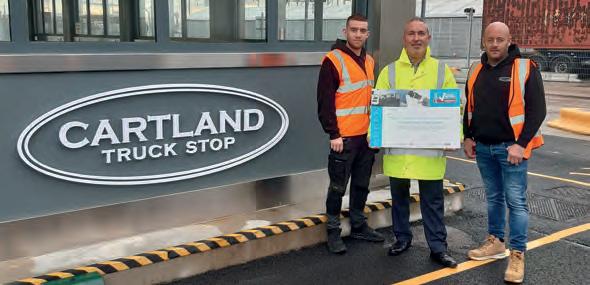
Welcome to the BPA’s new members!
Arcadis Professional Services (Canada) Inc
Intelligent solutions for climate change, energy affordability and liveable cities. arcadis.com
Cumberland Council Local authority. cumberland.gov.uk
Easy Parking
Meet-and-greet airport parking service offering valeting and EV charging. easyparkingltd.com
Engineer M8 t/a SmartPark 360
ANPR solutions and service provider. engineerm8.com
Fontygary Parks
Holiday and leisure park offering private parking. fontygaryparks.co.uk
GuardiPark
Parking management company specialising in new AI technologies. guardipark.com
M2M Data Connect Parking Bot
A multichannel platform that allows users to find and book parking through messaging apps. m2momnichannel. com/parkingbot
Micom Technologies
Technology and service solutions provider with expertise in logistics and operational excellence. micom.com
Park Direct UK
Parking management services, from residential complexes and business parks to retail outlets and event venues. parkdirectukltd.co.uk
Park It Pay t/a Park It Enforcement & Park It Management Car park management company providing payment and enforcement solutions. parkitgroup.com
Statius Management Services
Implements, maintains and improves management systems. statius.co.uk
Verve Connect
Tech company with a range of EV chargers for home, workplace and commercial sectors. vgoenergy.com
Vistech Services t/a Vistech Parking Security and facilities management service for private parking. vistechservices.co.uk
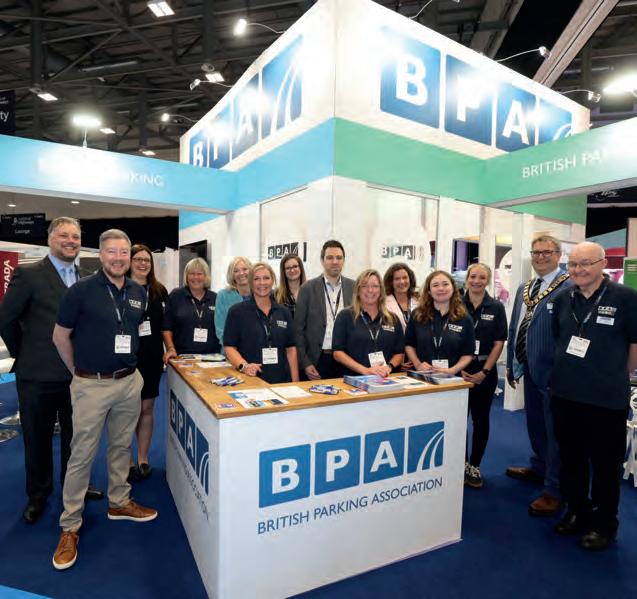
arkex 2026 returns to the CBS Arena, Coventry, on 20-21 May, and the BPA is already building what promises to be our most impactful programme yet.
PAs the BPA’s flagship annual show, Parkex brings together more than 5,000 decision-makers, senior executives and implementation-ready professionals from across the UK’s parking and mobility sector.
Anticipation is building for next year’s BPA Live series, with four more events happening across the country:
York: 24 February
London: 17 March
Manchester: 16 September
Bristol: 22 October
(Please note that BPA Live London has now moved from Leonardo Royal
The BPA Live Theatre will also return with two days of sessions featuring real-world case studies and practical implementations, plus lessons learned from challenges overcome, bestpractice examples that deliver genuine value, and solutions that attendees can apply in their own operations. To register for Parkex 2026, or if you are interested in exhibiting, visit parkex.net/register-interest
Hotel St Paul’s to Tower Bridge and will be held on 17 March, with York taking place on 24 February.)
You can book your place now as a delegate or exhibitor, and supporter packages are also available.
Register your interest at landing.britishparking.co.uk/bpa-live
The new BPA Sponsorship Prospectus is live and includes:
• flexible packages to suit your marketing goals and budget
• premium visibility at flagship events such as BPA Live, Parking Scotland and the All-Ireland Parking Show
• exclusive networking opportunities with decision-makers and influencers
• year-round brand exposure and thought leadership options
• real-world success stories and testimonials from past sponsors. Make sure you position your brand at the forefront of innovation, sustainability and sector growth. To request the 2026 prospectus, please email communications@britishparking.co.uk
For the latest parking updates, visit britishparking-media.co.uk
The BPA has announced a partnership with the Crown Commercial Service (CCS) to enhance parking services across the UK public sector. Leveraging CCS’s RM6347 Transport Technology framework, the deal simplifies procurement, boosts innovation and improves accessibility – from Blue Badge bays to smart payment systems – while delivering cost savings and elevating citizen experience.
Alison Tooze, chief engagement and policy officer at the BPA, said: “This collaboration not only has the potential to raise standards in procurement in our sector, but also creates new opportunities for suppliers of all sizes to contribute to a market that delivers better parking services across the UK.”
Read more here and in the next issue of Parking News: bit.ly/4pYy66P
Kelvin Reynolds explores the longstanding legal and operational issues around pavement obstruction, and highlights the need for coherent national policy to support safe, accessible streets
I’m repeating the title from Park Life in the Nov/Dec 25 issue of Parking News. Deliberately. It mentioned pedestrians, but in truth they were overlooked in my storytelling. Just a passing reference. Not my intention, but it’s the reality of what occurred. Do you see the parallel with announcements about enabling and encouraging walking, managing pavement parking, improving pedestrian priority and safety, and reducing obstruction?
For years, we’ve been removing and reducing street furniture to enable better and safer use of the pavements by pedestrians, wheelchair users and people with baby buggies, and now… EV chargers are popping up everywhere, obstructing the pavements and encouraging the use of trailing cables – trip hazards for many. Progress?
In 2024, guidance was issued and designed to help local authorities in England develop policies for safe and e ective use of cross-pavement solutions, providing residents with convenient charging options.
Freedom of movement?
We are all pedestrians by default, free to roam, but when we graduate to use of motor vehicles we begin to be regulated and then our ‘rights’ start to be controlled, and we naturally resist it. Remember the man with the red flag? That was about pedestrian power and controlling the speed and rights of the
motorist. Indeed, The AA was formed in 1905 to warn members about upcoming speed traps!
Anything that regulates our free spirit is resisted. Newton’s Third Law: ‘Actions and Reactions’. There are places where the motor car is supreme – on motorways and the like – an equal and opposite reaction would be areas where pedestrians are supreme – like pavements. How is that unfair?
The pace of progress
Go back further to the Highways Act 1835 section 72: If any person shall wilfully ride upon any footpath or causeway by the side of any road made or set apart for the use or accommodation of foot passengers; or shall wilfully lead or drive any horse, ass, sheep, mule, swine, or cattle or carriage of any description, or any truck or sledge, upon any such footpath or causeway; or shall tether any horse, ass, mule, swine, or cattle, on any highway, so as to su er or permit the tethered animal to be thereon.
That’s clear and all-encompassing. It’s been unlawful to drive any ‘…carriage of any description…’ on the pavement since 1835. That’s before Victoria became Queen!
In the 1980s I was active in a campaign entitled Footways are for Feet – Please Park Properly. We invited local magistrates to believe that a motor carriage parked on the pavement had been driven there, contrary to HA 1835 s72. We were very


BPA executive consultant and company secretary
kelvin.r@britishparking.co.uk
successful, with many prosecutions and some good local PR, but it was timeconsuming and cumbersome, requiring police participation. Oh for a ‘fixed penalty’ solution.
Pedestrian priority in town centres remains contentious. Shopkeepers demand ‘passing trade’ by which they mean people in cars, most of whom don’t stop or even notice the shops. Councils, meanwhile, want to compete with the big malls, all entirely pedestrianfriendly, car-free zones.
Fi y years on, a er London banned pavement parking with some exemptions, Scotland has copied and it seems to be working.
Northern Ireland will prohibit parking wholly, with four wheels, on a pavement; parking across dropped kerbs for pedestrian access; as well as a ban on double parking.
Wales plans to enable civil enforcement of obstruction and arrangements are being drawn up, in partnership with the police, which will see local authorities using civil penalty charges to tackle pavement parking and police dealing with “dangerous obstruction” particularly on the carriageway. Implementation is pending.
England has been consulting on options… four general elections later, we’re still waiting for a decision.
As 2026 dawns, let’s hope governments in England and Wales finally pick up the pace and stop kicking the can down the road.