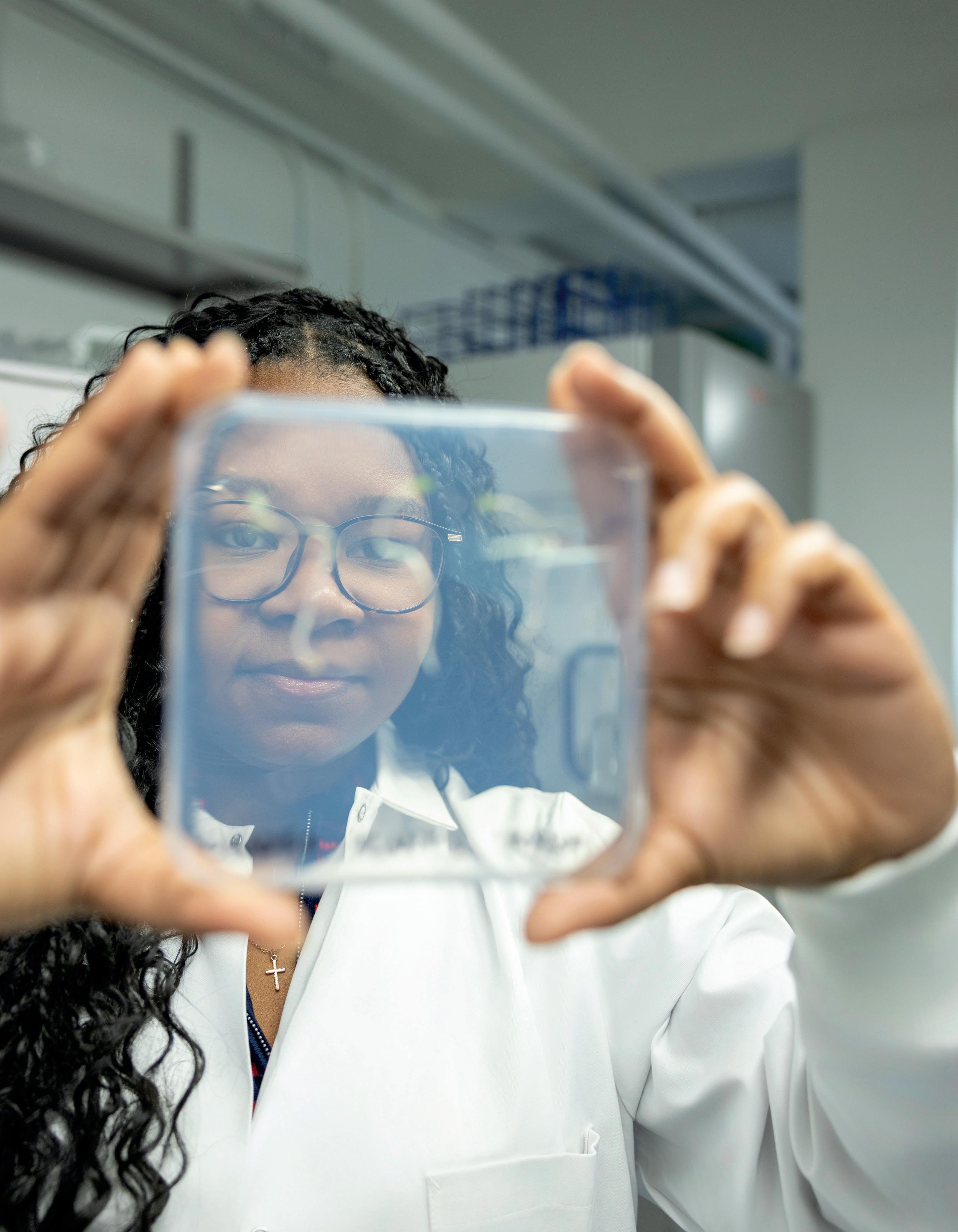
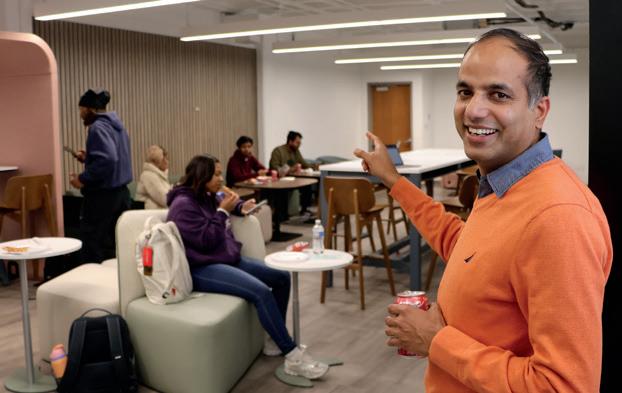
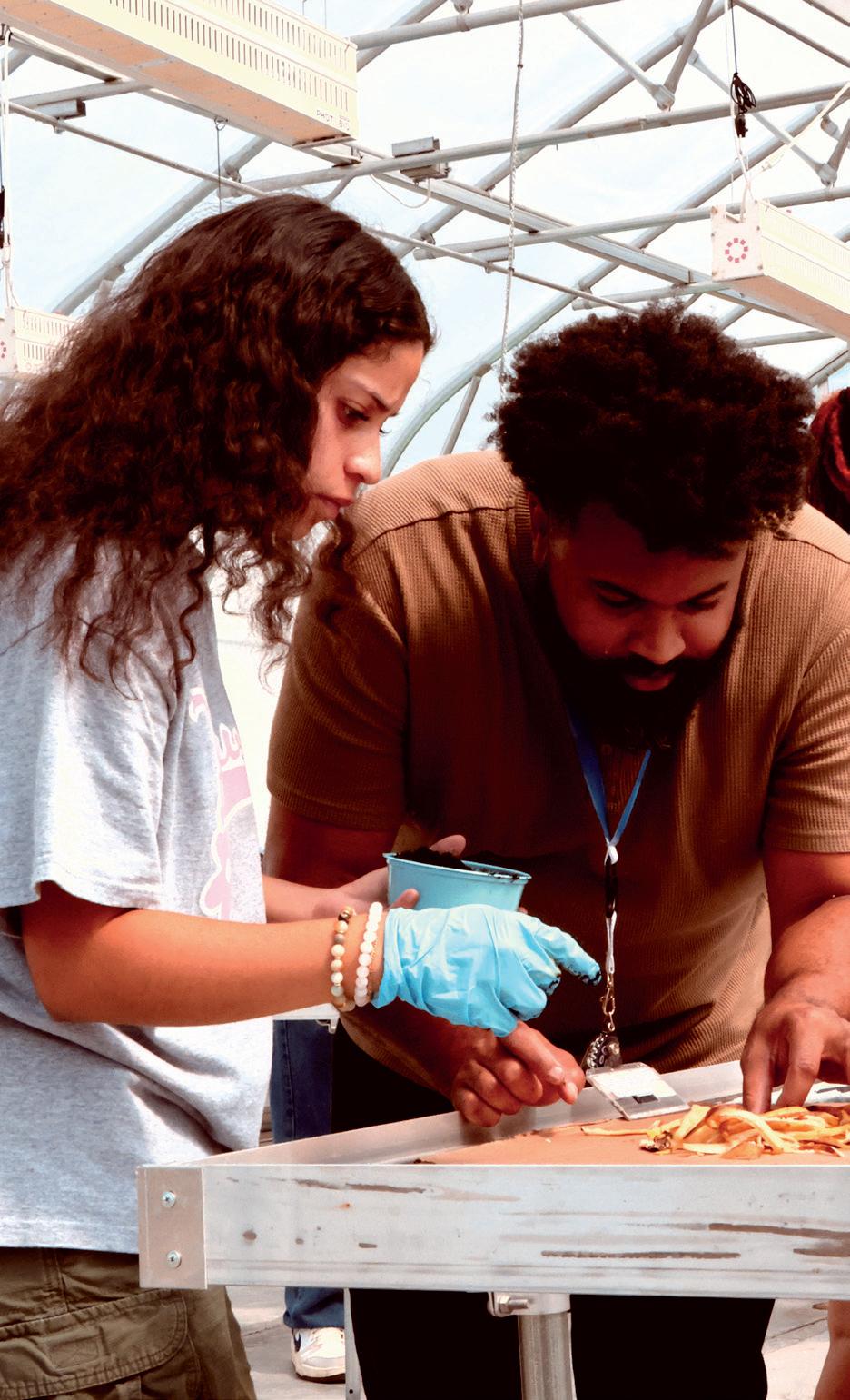
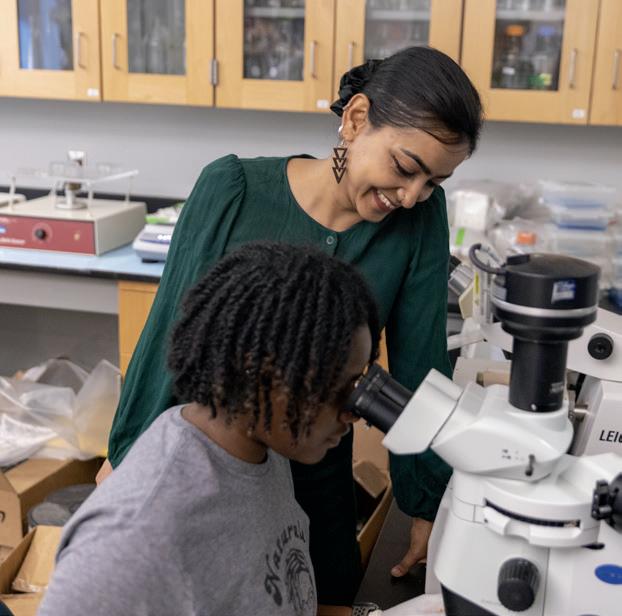
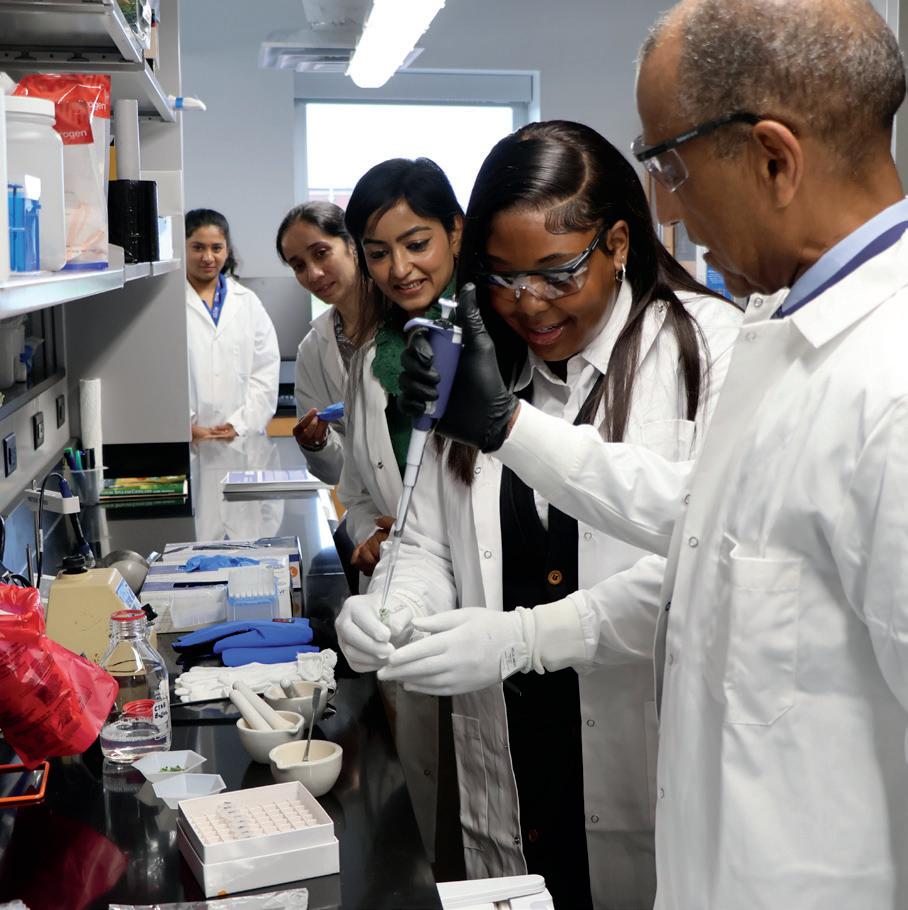
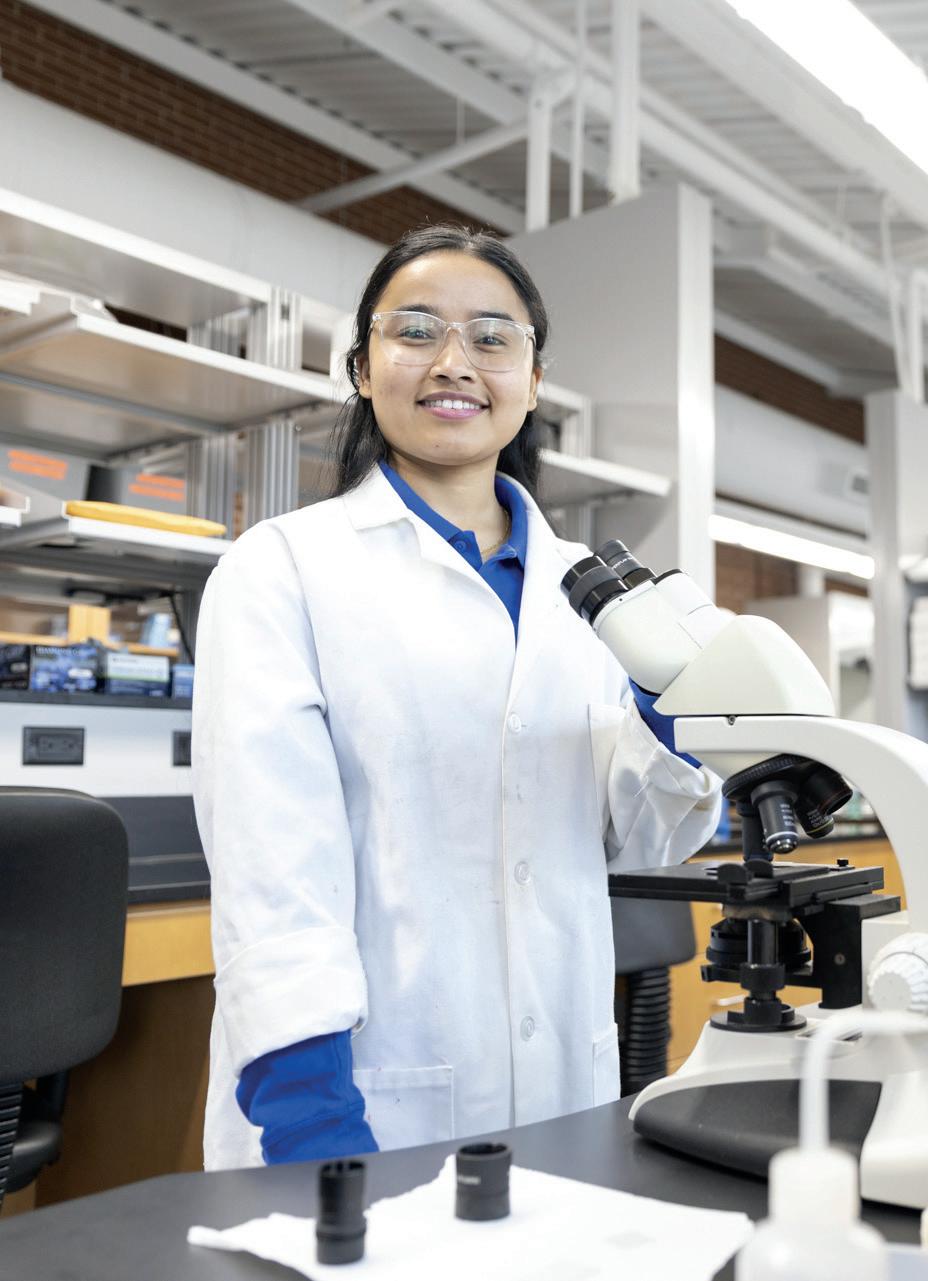
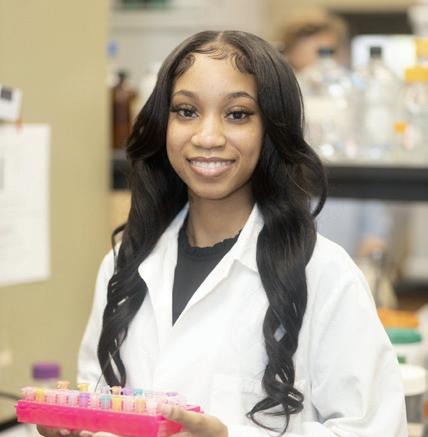
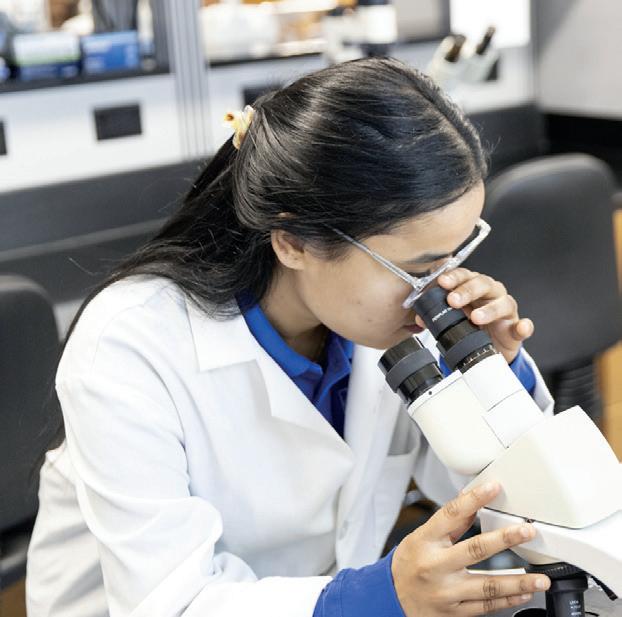
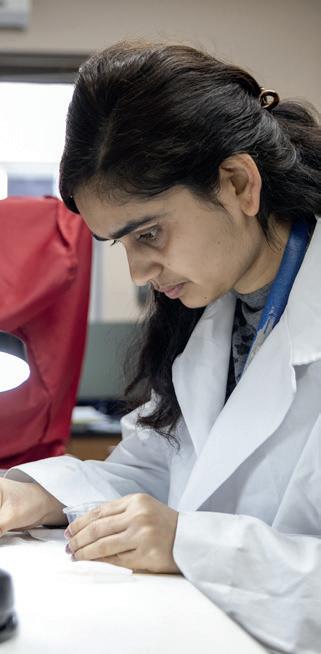
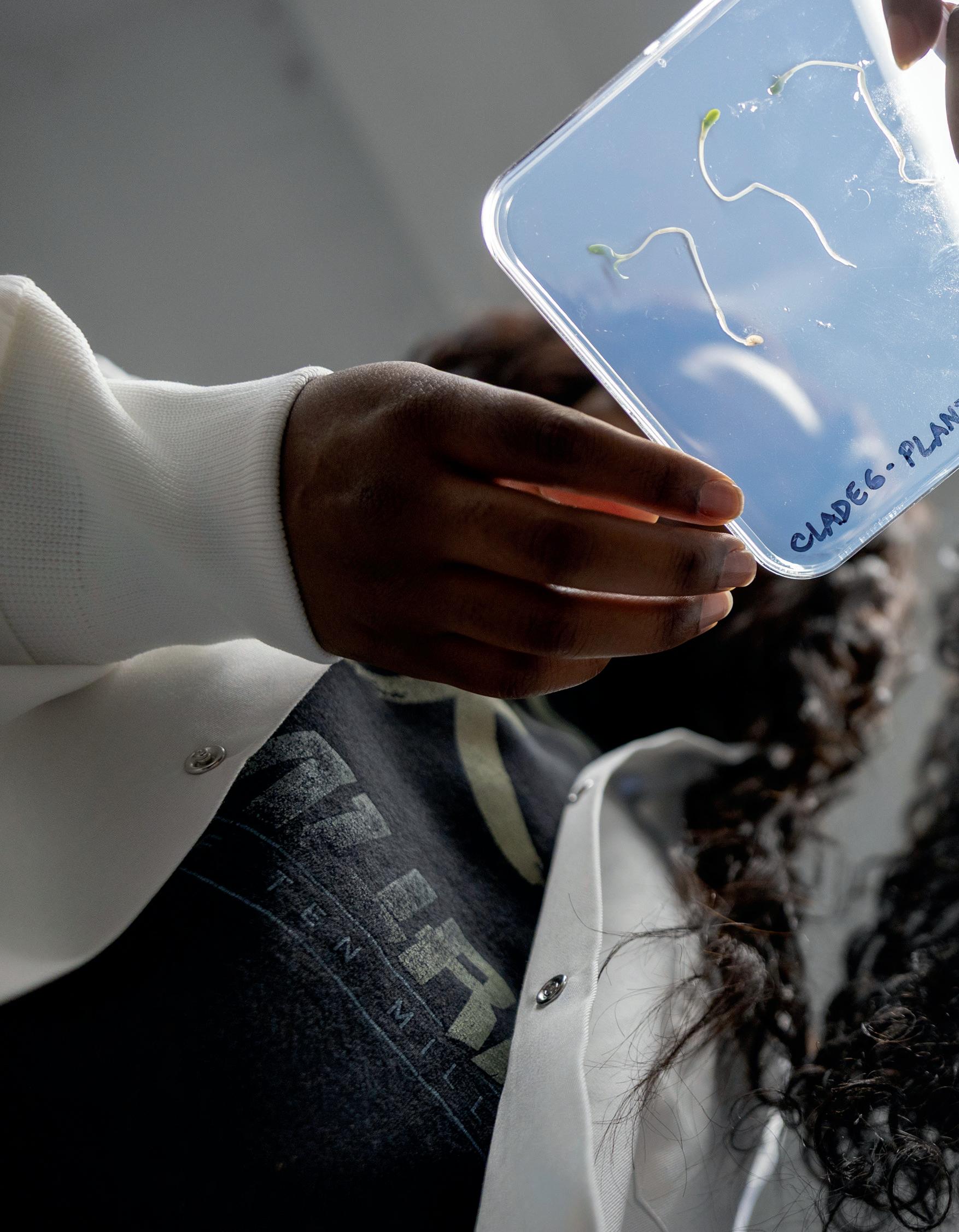
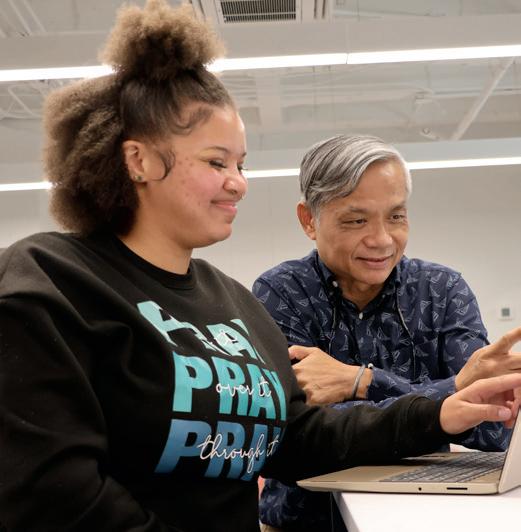
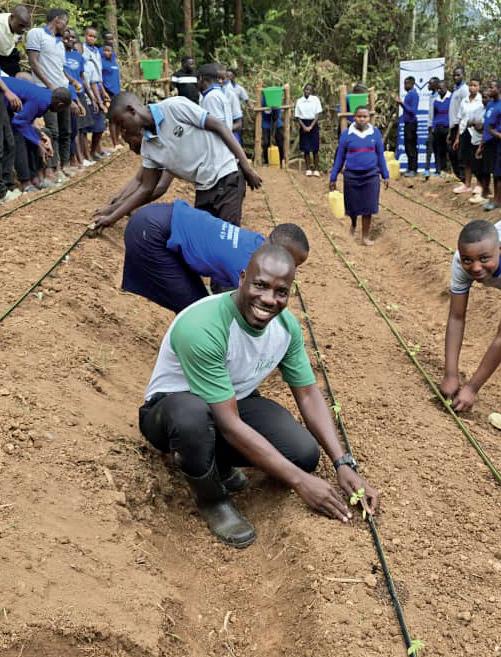
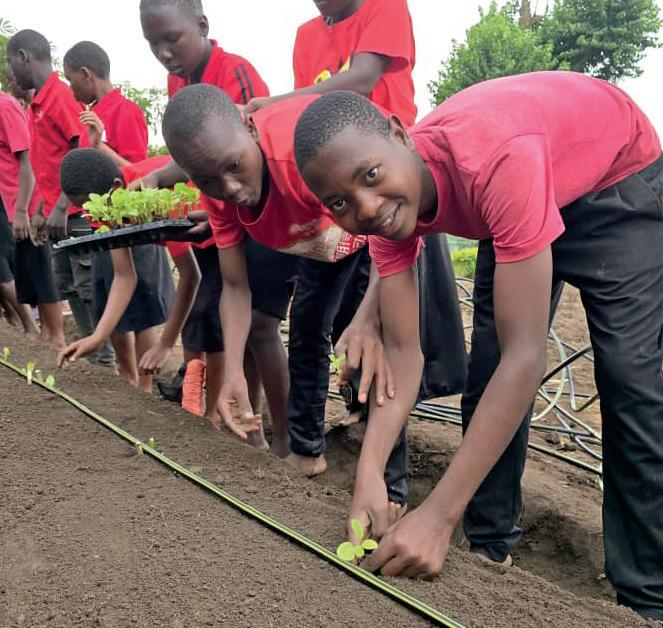
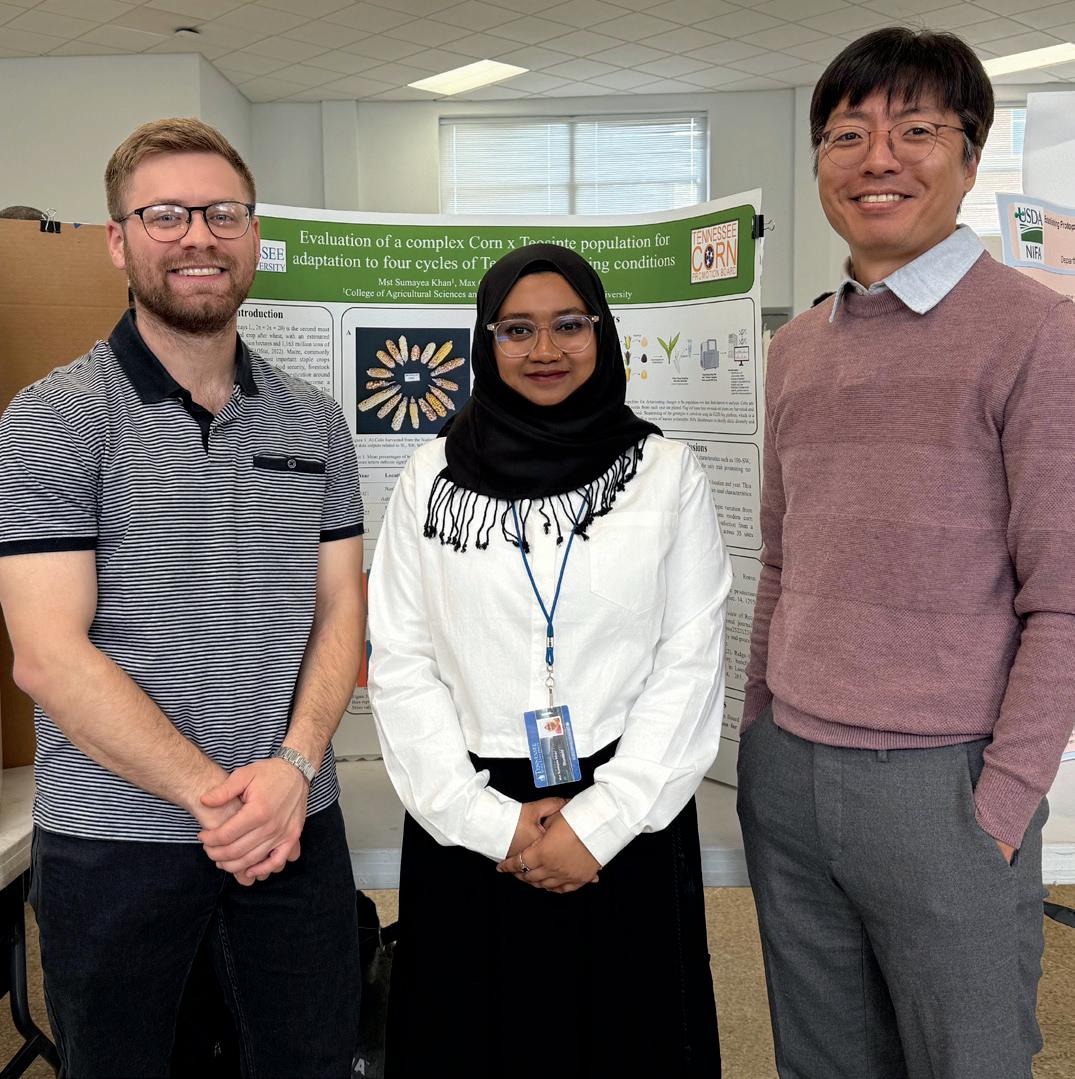
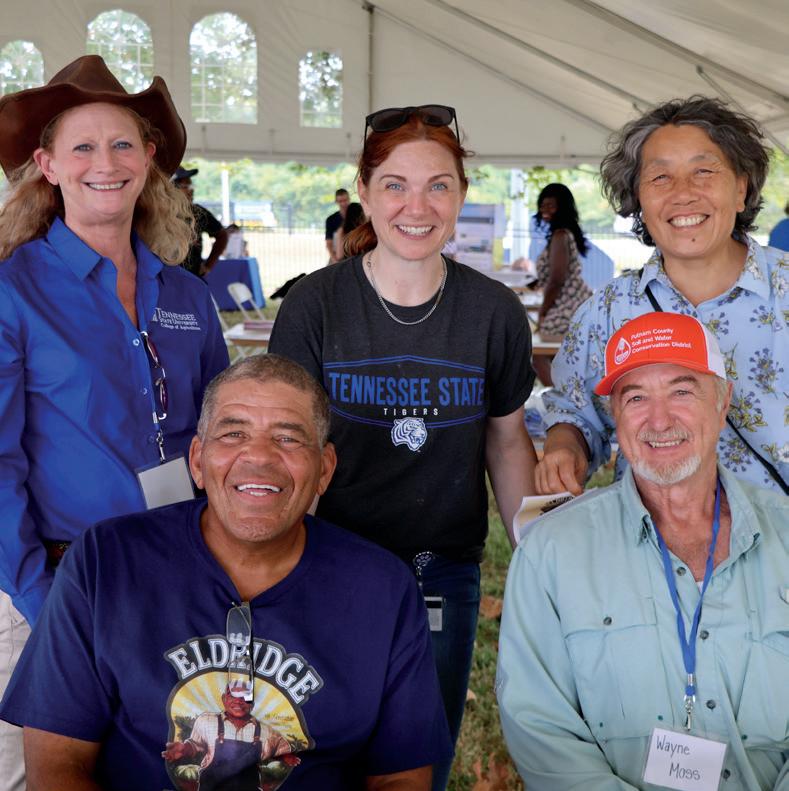
Research mentor Dr. Doc Lap Tran, picutred here with senior Agricultural Business and Education student researcher Brandon Peters, is emblematic of TSUAg’s undergraduate research culture.
Contributing
@tsucollegeofagriculture
@tsucollegeofag
@tsucollegeofagriculture
Email
message from the dean : dr . chandra reddy
Greetings to you our friends, supporters and stakeholders,
Thank you for picking up this issue of AgLink, an issue dedicated to the energy, innovation and sense of purpose that continues to define the Tennessee State University College of Agriculture. Those qualities, the qualities that define our work here, were on full display during the fantastic fall 2025 semester and I’m excited for you to learn all about it in this issue.
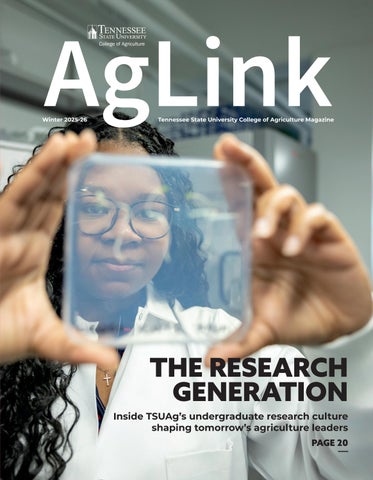
Our cover story this issue, “The Research Generation” (p. 20) details the growing impact of undergraduate student researchers across the College, students who are not only learning scientific principles in the classroom, but applying them through hands-on research that addresses real-world challenges. Their work reflects our commitment to experiential learning and to building strong pipelines into graduate study and professional careers.
In this issue you can read about new USDA NIFA Director Jaye Hamby’s visit to campus this fall. We were thrilled to be able to show off our facilities, our faculty and our most important resource, our students to Dr. Hamby during his visit. Read about Dr. Hamby’s visit on page eight in “A Day of Discovery.”
This issue highlights the classroom with a Teacher Feature on page 12 on TSU alumni-turned-faculty member ZaDarreyal “DJ” Wiggins, whose journey underscores the power of a TSU education to open doors, build confidence and inspire meaningful careers beyond campus.
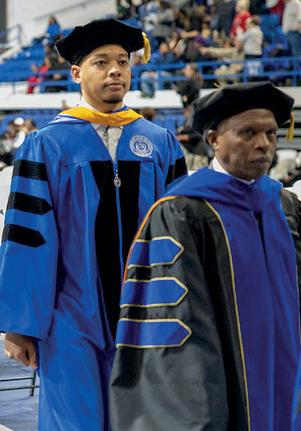
We graduated 26 undergraduate and graduate students this fall, and we’re so proud of them. Their achievements mark both personal milestones and the continued strength of our academic programs. See page six for some photos of fall commencement.
Student life is another central theme in this issue. From the revival of student organizations to cross-campus collaborations, our students are leading, serving, and representing TSUAg with pride. Several stories in this issue of AgLink touch on that theme, so enjoy those stories as well.
Finally, we honor excellence across generations with our coverage of the 2025 College of Agriculture’s Agriculture and Home Economics Hall of Fame induction ceremony (p. 44), an inspiring reminder of the legacy we build upon and the future we are creating together.
Thank you for being part of the TSUAg family and for supporting our shared mission of teaching, research and service.
Chandra Reddy Dean and Director of Research Administrator of Extension
Around Campus
Construction Progressing on New $90M Combined Food and Animal / Environmental Sciences Facility
The Tennessee State University has officially advanced the construction of the new, combined College of Agriculture (TSUAg) academic facility that will house the Departments of Food and Animal Sciences and Environmental Sciences, a major infrastructure project designed to enhance research, teaching and student success at the College. The project, which broke ground in June 2025, will create a more than 110,000-square-foot modern complex featuring state-of-the-art research and teaching labs, collaborative workspaces, faculty offices, classrooms and multipurpose spaces, with an expected completion of the fall of 2027.
Approved by the Tennessee State Building Commission, the design was developed through a partnership with architectural firms Orcutt|Winslow and Kline Swinney Associates, and construction is being executed by Barton Malow, a respected contractor with experience in institutional projects. This facility marks a significant milestone in TSUAg’s expansion, providing enhanced capacity for experiential learning and innovation that aligns with workforce needs in agriculture and environmental sciences in Tennessee and beyond.
TSUAg Renovates Portion of Humpries Hall for new Department of Agricultural Business and Education Wing
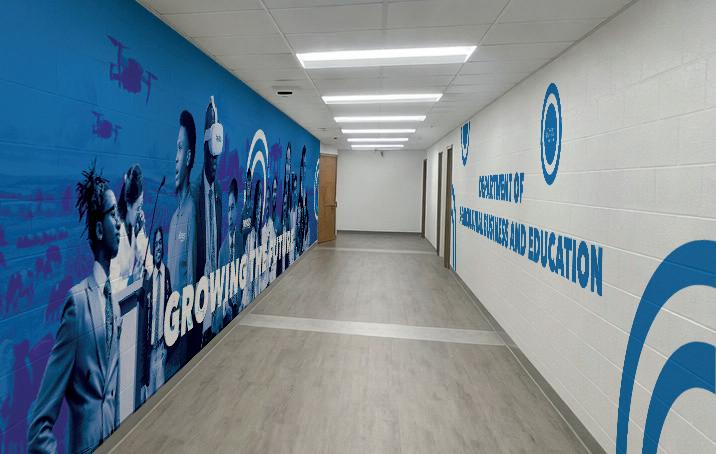
The College’s Department of Agricultural Business and Education now has a unified home after renovations transformed the third floor of Humphries Hall into dedicated department space. The renovation creates a welcoming hub where students, staff and faculty can connect. The new wing includes new offices for faculty, study nooks and a shared meeting area for collaboration. Soon, the space will feature an original mural by TSUAg graphic designer Christina Jacob.
Led by Department Chair Dr. Prabodh Illukpitiya, the Department of Agricultural Business and Education prepares students to lead, manage and educate in modern agricultural systems by blending business principles and applied agricultural science. Anchored in TSU’s land-grant mission, the department develops professionals who strengthen agricultural enterprises, support workforce development and advance food and agricultural systems locally, statewide and nationally.
congrats Fall ‘25 grads!
a day of discovery
USDA NIFA Director Jaye Hamby Visits TSUAg | By Charlie Morrison
Tennessee State University’s College of Agriculture welcomed Dr. Jaye Hamby, the new director of the USDA National Institute of Food and Agriculture (NIFA), for a full day of engagement with students, faculty and university leadership. The visit marked Hamby’s first official trip to TSU and offered a comprehensive look at the university’s expanding role as a national leader in agricultural education, research and Extension.
A Deep Dive Into TSU’s Land-Grant Mission
Dr. Hamby began the day in the Biotechnology Building with Dean Chandra Reddy and senior College leadership. The discussion highlighted NIFA-supported programs including student scholarships, 4-H youth development, the New Farmer Academy and the UT/TSU Extension
partnership, and emphasized TSU’s growing influence among 1890 institutions.
Hamby’s visit continued with extensive tours of TSU research facilities. Faculty introduced him to projects in food science, animal science, plant science, wildlife ecology, soil health and hydroponics, demonstrating how federal investments fuel innovation across disciplines.
At the Agricultural Research and Education Center, Hamby viewed field research sites and learned about upcoming infrastructure expansions that will further strengthen TSU’s capacity for large-scale agricultural research.
“The research, Extension and student support programs I saw today at Tennessee State are exactly the kind of work
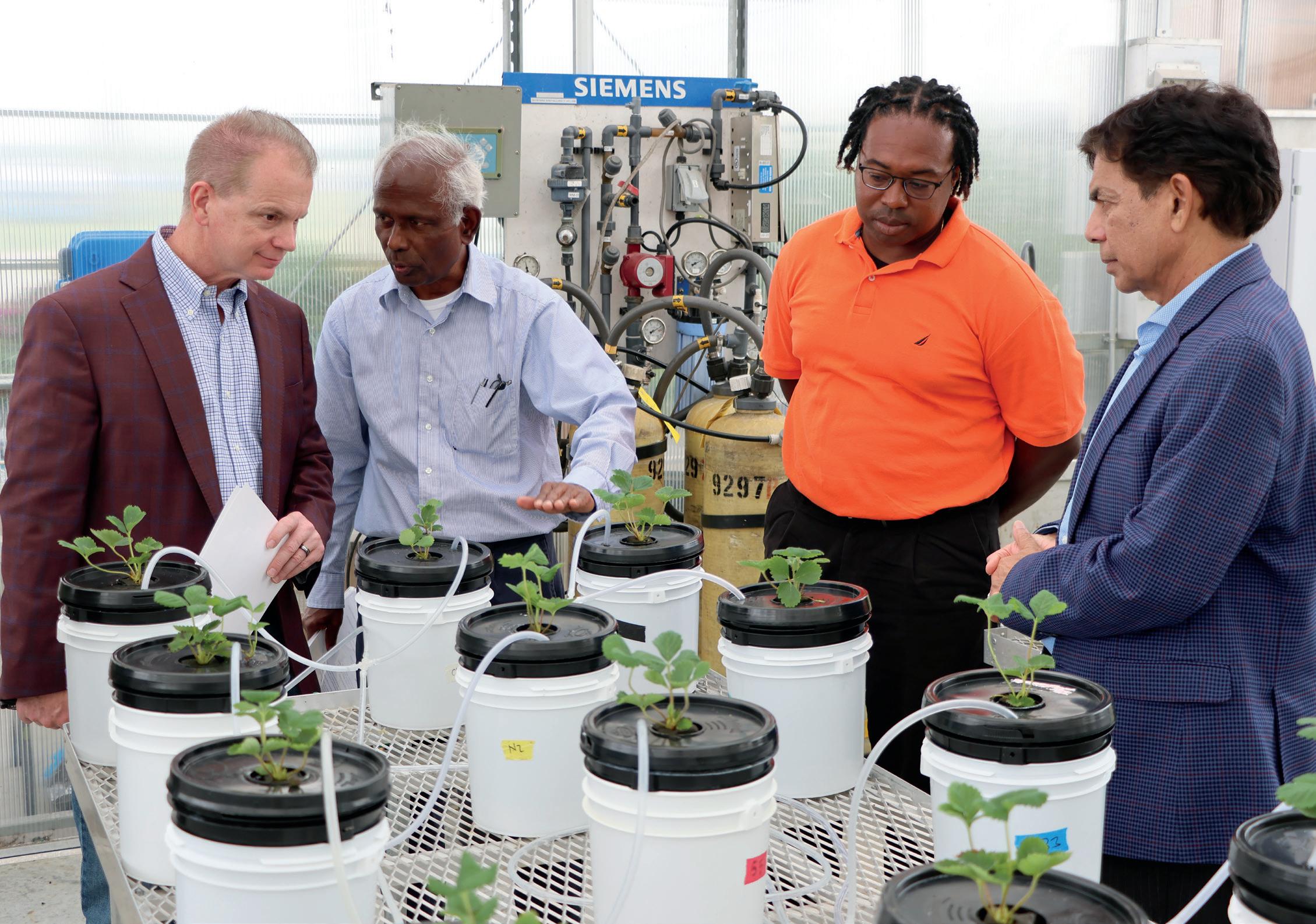
USDA NIFA Director Dr. Jaye Hamby visits with Drs. Dharma Pitchay, Steven Kennedy and Chandra Reddy at TSUAg’s Controlled Environment Agricultural Research Area.
that makes NIFA’s mission meaningful,” Hamby said. “TSU is preparing a new generation of agricultural leaders and advancing innovation that serves both Tennessee and the nation.”
Connecting With Tennessee’s Future Agriculture Leaders
At midday, Dr. Hamby joined university leaders for lunch before participating in a student forum attended by more than 100 undergraduates. The room included USDA 1890 Scholars, Farm Bill Scholars, NextGen Scholars, Dean’s Scholars, and College Ambassadors—many of whom are direct beneficiaries of NIFA support.
Students shared their academic journeys, asked questions about emerging opportunities in agricultural science, and thanked NIFA for its commitment to student success.
Dean Reddy underscored the importance of the visit: “We are honored to host Dr. Hamby and to show him the breadth of TSU’s impact as an 1890 land-grant university. His leadership at NIFA is vital to our ability to support students, conduct groundbreaking research, and serve farmers and communities across Tennessee.”
In closing remarks, Hamby praised TSU’s alignment with USDA priorities and its steadfast commitment to community-focused research and education. College leadership reaffirmed the importance of NIFA’s partnership in supporting students, advancing innovation, and meeting the needs of farmers and communities across Tennessee.
“
The research, Extension, and student support programs I saw today at Tennessee State are exactly the kind of work that makes NIFA’s mission meaningful.”
- Dr. Jaye Hamby
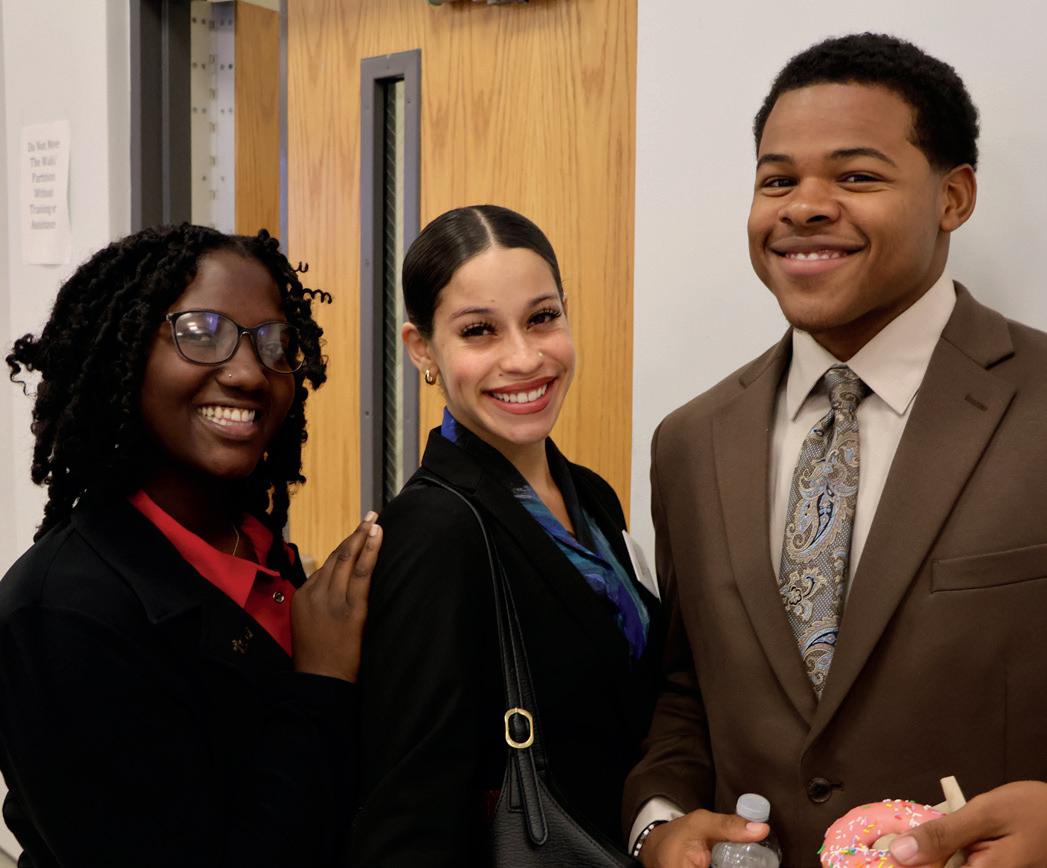
Undergrads (from left) Cassandra Brown, Aaliyah Cotton and Bruce Joy.
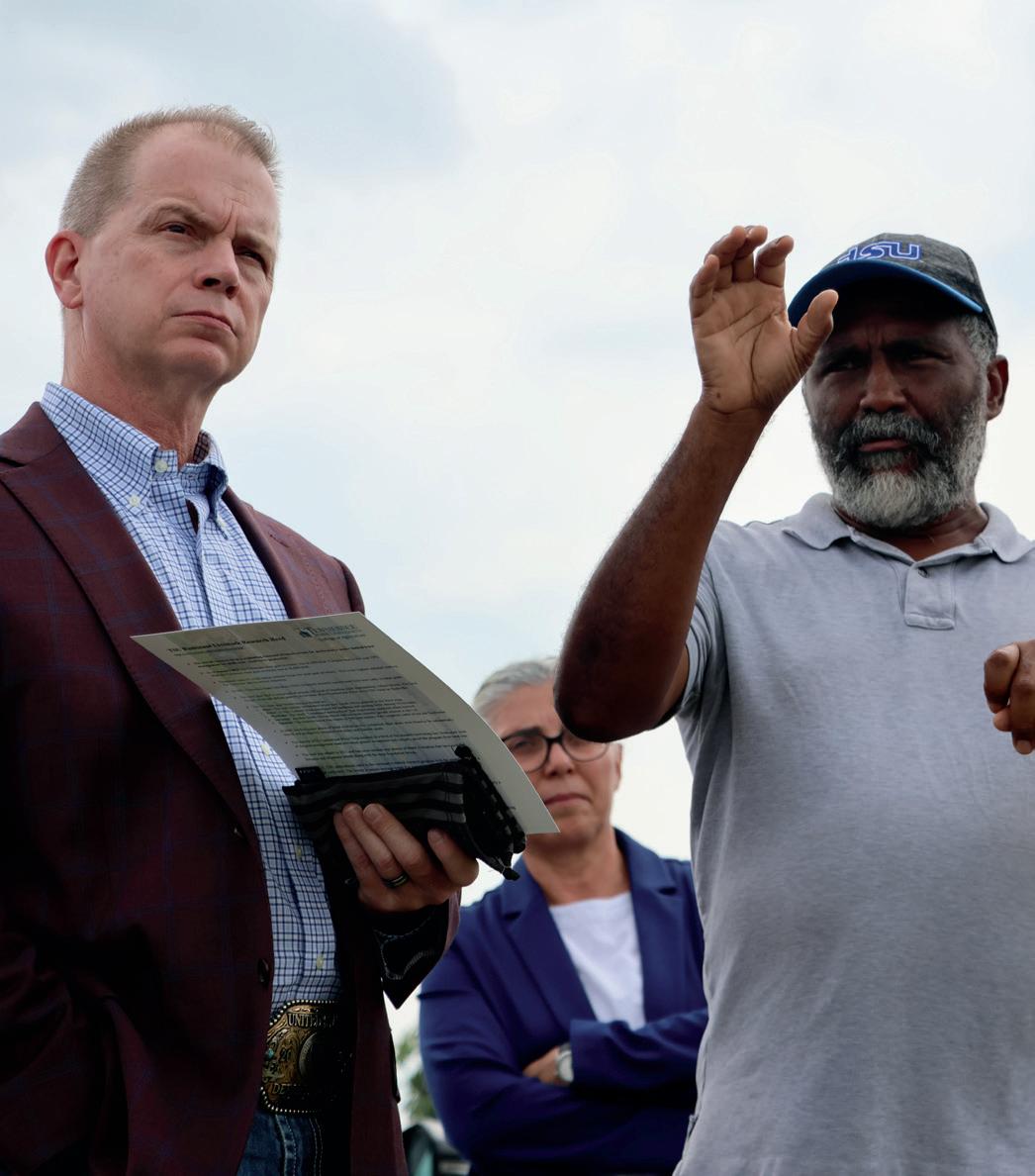
Dr. Hamby with Dr. Richard Browning at the TSUAg Animal Science Research Area.
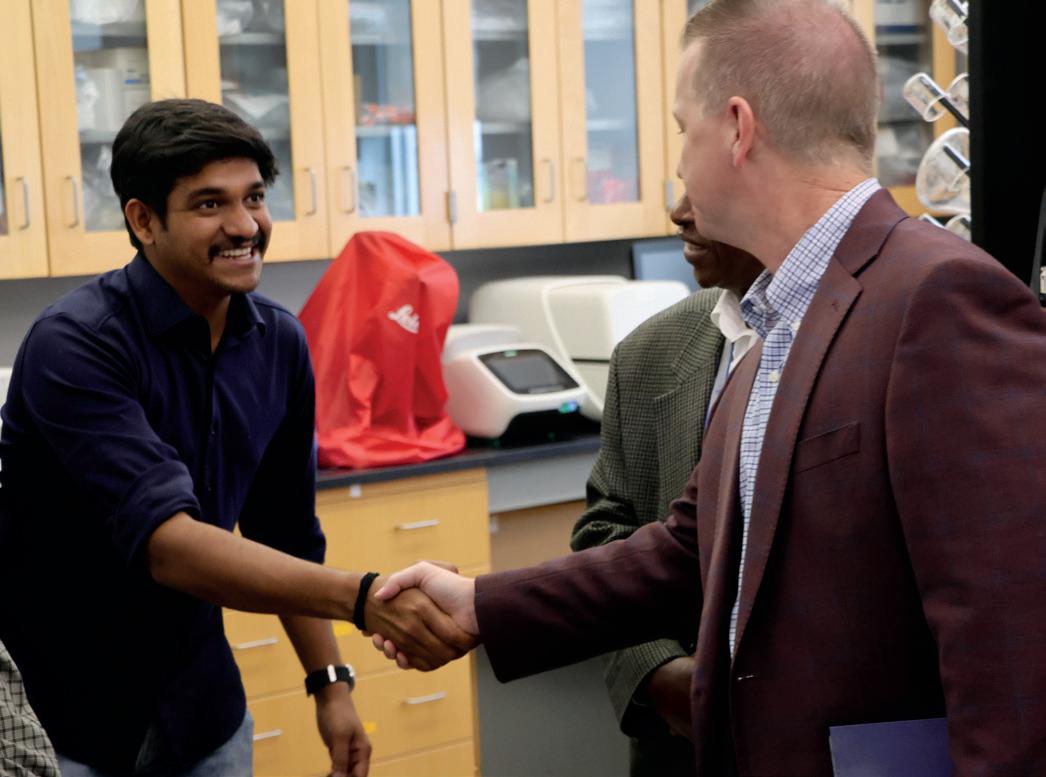
Graduate student Mohana Krishnan takes his opportunity to meet Dr. Hamby.
student life
Bayer B4U Mentoring Program
TSUAg students expanded their professional horizons this past semester through participation in the Bayer B4U Mentoring Program, an industry-led initiative designed to connect students with career pathways in agriculture and the life sciences. As part of the program, students visited Bayer’s U.S. headquarters, gaining firsthand exposure to global agricultural innovation while engaging directly with scientists, mentors and industry leaders.
The visit allowed students to explore career opportunities within the private sector and build relationships with professionals invested in their development, including TSUAg alumni now working at Bayer. That engagement continued back on campus with a B4U “Snack & Chat” mentoring session, where Bayer representatives and alumni returned to TSU to meet with students, share career insights, and offer guidance on navigating professional pathways beyond graduation.
Srinivas Family Scholarship Presentation
This fall, the College of Agriculture celebrated student achievement and philanthropy with the presentation of the Dr. Naveen & Suma Srinivas Family Scholarship to Kayla Renee Cooper, a junior in the College of Agriculture. The scholarship recognizes Cooper’s academic excellence, leadership, and dedication to agriculture, while highlighting the meaningful role donor support plays in student success.
Established by Dr. Naveen and Suma Srinivas, the scholarship is designed to support outstanding TSUAg students who demonstrate promise, perseverance, and a commitment to their field of study. During the oncampus presentation, college leadership, faculty, and supporters gathered to mark the occasion and celebrate the direct impact of the Srinivas family’s generosity.
For Cooper, the award represents both financial support and encouragement as she continues her academic journey. For the College of Agriculture, the presentation reflects the strength of partnerships that invest in students and help build pathways to success, reinforcing the sense of pride, opportunity and community that defines student life at TSUAg.
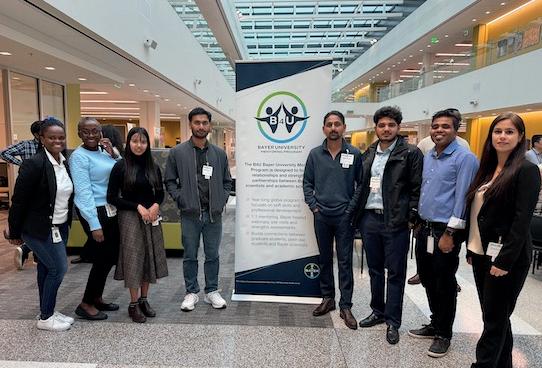
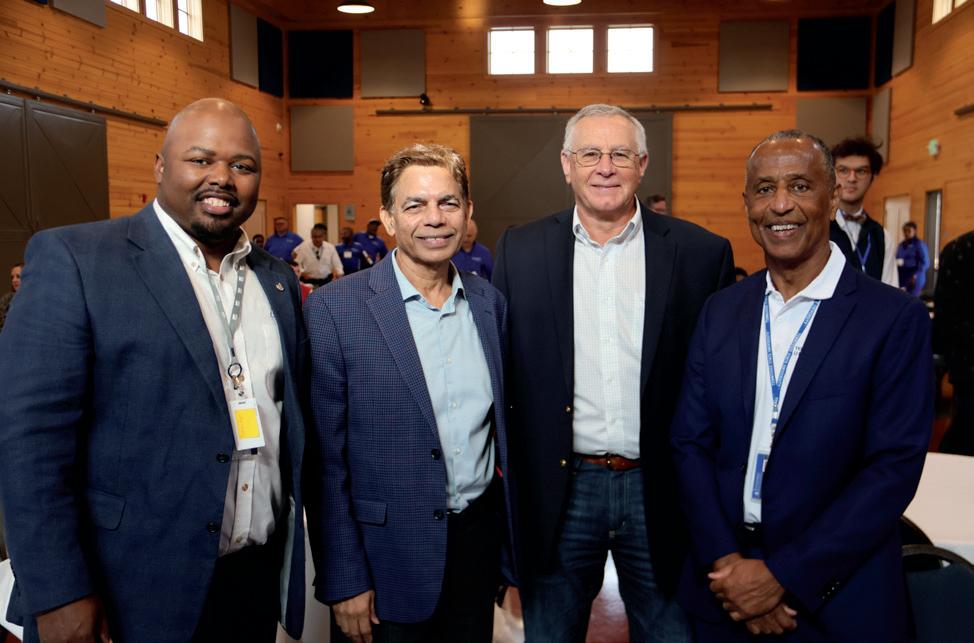
TSUAg students visited Bayer’s U.S. headquarters in the fall as part of the Bayer B4U Mentoring Program. The experience offered students firsthand insights into global agricultural innovation and career pathways, while connecting them with industry professionals — including Dr. Tariq Islam, Olga Hasser and TSUAg alumna Dr. Jacqueline Joshua.
TSU junior Kayla Renee Cooper has been awarded the Dr. Naveen & Suma Srinivas Family Scholarship, recognizing her academic excellence and dedication to agriculture.
Under
leadership of
TSUAg’s Ag Ambassadors are Back!
Re-established last semester, the TSU Agriculture Ambassadors are once again serving as a visible and welcoming presence for the College of Agriculture. Now guided by new faculty advisor Dr. Akua Adu-Gyamfi, the Ambassadors play a key role in representing TSUAg at recruitment, outreach and campus engagement events often recognized by their distinctive TSU blue attire.
As the official student outreach organization for the College of Agriculture, the Ambassadors help connect prospective students, alumni, industry partners and community stakeholders with the TSUAg experience. Their work includes leading campus tours, welcoming visiting high school students and assisting with college- and university-wide events that showcase the academic excellence and culture of the Land of Golden Sunshine, as TSU is affectionally know.
The program emphasizes leadership development, professionalism and career preparation. Ambassadors are selected through a competitive application and interview process and are held to high academic and conduct standards throughout their one-year term. With renewed energy and faculty leadership, the return of the TSUAg Ambassadors signals a strengthened commitment to student-led outreach.
College of Agriculture Makes Royal Strides at TSU Homecoming
The College of Agriculture celebrated a standout Homecoming moment this fall as two of its students were crowned among TSU’s newest royal representatives. DeShawn Swanson was named Mister TSU Freshman, while Chasity Groves earned the title of Miss TSU Freshman—both proudly representing the Tennessee State University College of Agriculture.
The Mister and Miss TSU Freshman honors recognize leadership, character, and school spirit, and Swanson and Groves embodied those qualities throughout the Homecoming season. Their visibility during one of the university’s most celebrated traditions helped shine a spotlight on the College of Agriculture and its students’ engagement beyond the classroom.
Their achievements underscore the depth of leadership within TSUAg and reflect the confidence, professionalism, and Big Blue pride that define student life in the College, on campus and in the broader university community.
the
faculty advisor Dr. Akua Adu-Gyamfi, the TSUAg Ambassadors program has returned. Students can be seen at events representing the College with distinction. Just look for their distinctive TSU blue attire to find them.
In 2025, both DeShawn Swanson “Mr. TSU Freshman” and Chasity Groves “Ms. TSU Freshman” are students from the College of Agriculture.
TSUAg Teacher Feature:
ZaDarreyal “DJ” Wiggins
Ag educator takes focused approach to send workforce-ready students to the industry |
By Charlie Morrison
The traditional view of preparing undergraduates for the agriculture workforce or graduate school often leans on siloing or training students narrowly in one discipline, anchoring them to a single research topic, or grooming them for a specific sector. But for Dr. ZaDarreyal “DJ” Wiggins, that approach only serves some learners. The majority, he believes, thrive when they’re grounded in strong fundamentals and then encouraged to grow outward with flexibility and curiosity.
Since arriving on campus in 2018 to pursue his Ph.D., Wiggins has modeled that blend of core knowledge and adaptability in his own work. Now he channels it directly into his classroom.
This fall, the new faculty member has immersed himself in teaching AGSC 3260: Regenerative Crop Production, an upper-level foundational course dominated by juniors and seniors. The semester-long dive into crop systems gave students a broad, usable understanding that positions them well for a wide range of career pathways.
The course taught them not just answers but the process of finding answers, putting students into
the role of a researcher, an essential skill across nearly every agriculture discipline.
Wiggins’ teaching philosophy, coursework, subject matter and student outcomes all reflect his own professional journey: nimble, grounded in fundamentals and shaped by research. And in the Tennessee State University College of Agriculture’s (TSUAg’s) ongoing mission to produce graduates who are career-ready from day one, that approach is proving powerful.
Building Fundamental Knowledge and Skills
Wiggins’ fall 2025 Regenerative Crop Production class brought issues to the fore in the macro and the micro. Students examined the science of crop production through a global lens and also up close, literally engaging in hard crop science in the TSUAg greenhouses. In allowing them to examine the topics of the course in such a way, Wiggins sends students into their futures with knowledge they hold on to.
“They learned how to sustain crops, but within that overall topic we covered global food security, water conservation and plant nutrition,” said Wiggins. “These are basic things that you need to know, whether you’re going into vegetable production, horticulture, fruit trees or soil science... this is fundamental knowledge.”
The class explored organic farming, cover crops, composting and vertical agriculture as building blocks of a deeper understanding and the fundamental knowledge conveyed transcended agriculture discipline: The student roster featured environmental science, plant science, food science and biotechnology students.
or industry, if you’re a good public speaker or communicator of the information that you get, you can do anything.”
Learning to Learn... and Prompt
Wiggins is committed to ensuring students walk away with actionable, applicable knowledge, particularly in a world where technology can accelerate or flatten learning depending on how it’s used. To be career-ready at TSUAg, students need both AI literacy and the foundational skill to defend and articulate their work.
For Wiggins, hard knowledge must be matched with soft skills, especially communication. Students in his class were expected not only to research but to present and defend their findings.
“You have to change up your teaching style. You have to make sure that they actually know what it is they’re presenting and claiming as their own,” Wiggins says. “When they’re presenting, you have to make sure that you’re very targeted and specific about follow-up questions you ask to make sure that they’re actually knowledgeable about the information.”
“This class actually helps, whether you’re going to be in academia or industry,” he says. “Whether it’s academia
“That said, they need to know how to prompt A.I. tools. You don’t need to know how to build a PowerPoint presentation from scratch anymore, but even if you do know how to use these tools
Senior environmental sciences major Aaliyah Cotton works with Dr. Wiggins in the greenhouses.
-
that’s where public speaking and communication show off your foundational knowledge. We still need to know how to think.”
Research, Readiness, Real-world Skills
For Wiggins, preparing workforce-ready agriculture graduates must include authentic research experience. That’s why greenhouse research became a major component of AGSC 3260. Students left the course with real projects and résumé-ready evidence of their skills.
“In the past, as long as you had a degree, you had your foot in the door. But nowadays, undergraduates need to participate in real-world, hands-on research projects at this level to get a leg up on the competition in both the agriculture industry and in trying to be accepted into graduate school,” Wiggins quips.
Experience in project management, data collection and data presentation means students aren’t starting from zero, and Wiggins sees the difference.
“Competition for entry-level industry jobs and for graduate school slots is intense,” he said. “Students know they need to stand out.”
And they are.
“I’ve had a number of students come to me about graduate school and industry positions,” he added. “Their confidence grew throughout the semester. Along with standardized testing, research experience is what sets them apart. Everyone has a bachelor’s degree. When the field is competitive, people choose the students with research experience... every time.”
“ AL Everyone has a bachelor’s degree. When the field is competitive, people choose the students with research experience... every time.”
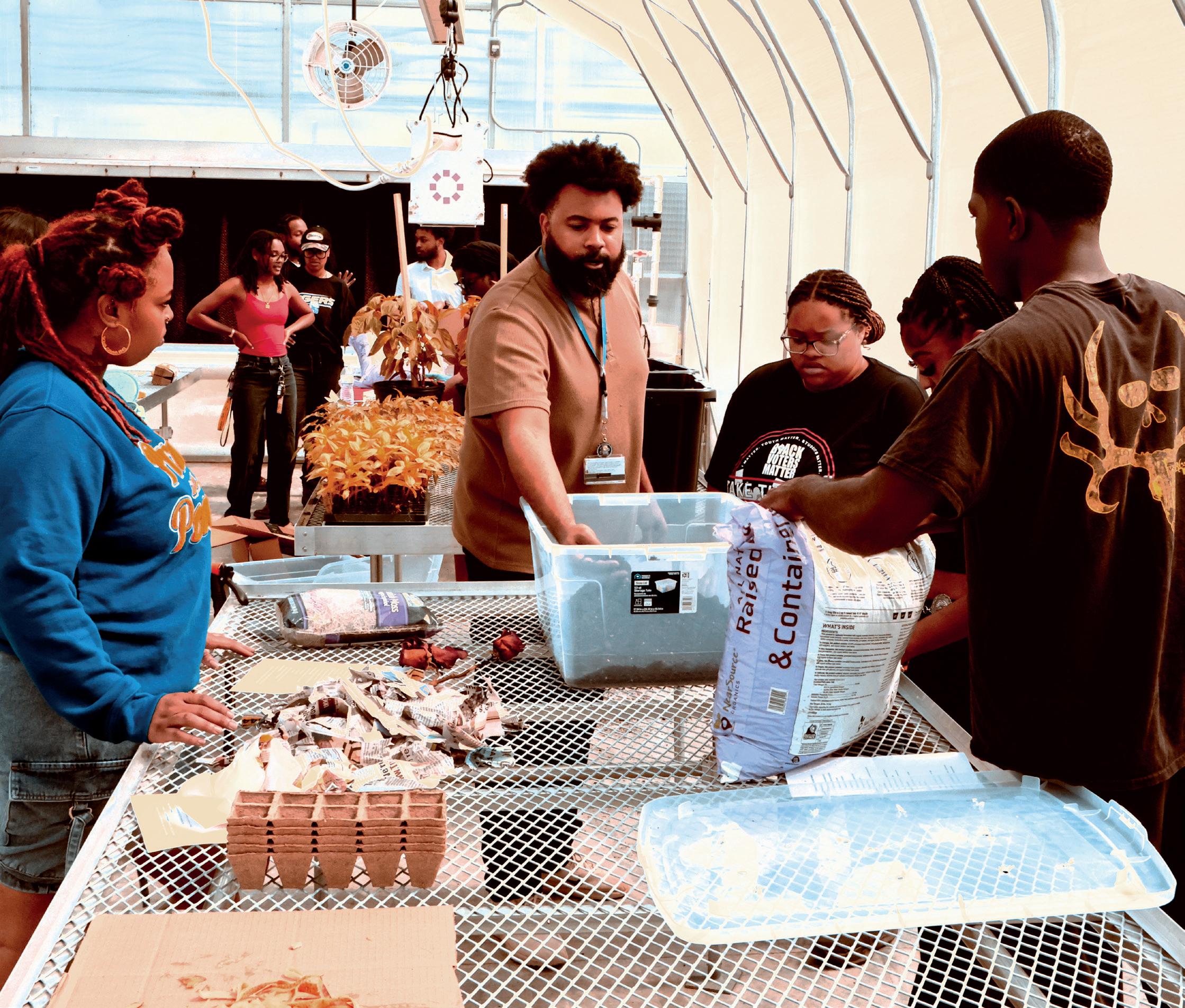
Dr. ZaDarreyal “DJ” Wiggins utilizes experiential, hands-on learning, in this case taking his classroom to the greenhouses at TSUAg’s Controlled Environment Agricultural Research Area, where they performed lab work.
Dr. ZaDarreyal “DJ” Wiggins
Passing the Gavel
TSU Dean Dr. Chandra Reddy Tapped to Lead National Ag Research Group | By
Charlie Morrison
Dr. Chandra Reddy, Dean of the Tennessee State University (TSU) College of Agriculture, officially began his term as Chair of agInnovation in late September 2025. This prestigious national leadership role places TSU at the forefront of agricultural research and innovation, as agInnovation represents the research leaders from all 69 U.S. land-grant universities—both the 1862 and 1890 institutions.
Dr. Reddy accepted the ceremonial gavel from outgoing Chair Dr. Steve Lommel of North Carolina State University at the fall 2025 meeting. The appointment signifies the beginning of Dr. Reddy’s one-year term, which will conclude in September 2026.
Advancing Research and National Security
As Chair, Dr. Reddy has outlined a series of priorities for 2025–2026 focused on strengthening research, expanding partnerships and addressing critical national challenges. A key goal for his term is to advocate for increased USDA NIFA funding for agricultural research, expand competitive grant opportunities and address the critical infrastructure needs of colleges of agriculture nationwide.
Dr. Reddy is also emphasizing the vital link between food security and national security, stressing that a stable food supply supports economic growth, poverty reduction and defense readiness. His priorities include initiatives focused on ensuring a safe food supply, prevention research and transforming agricultural production through modern technologies such as automation, robotics and precision agriculture.
Strengthening the Land-Grant System
Dr. Reddy is focused on finalizing a system-wide research roadmap to transform agricultural programs. This roadmap will leverage opportunities presented by advances in AI and the societal recognition of “Food as Medicine.”
“This is an important opportunity to bring together the full landgrant system to tackle pressing challenges in agriculture, health and food systems,” Dr. Reddy stated.
His appointment underscores TSU’s growing national leadership role as the university expands its programs and facilities to meet the increasing demands of 21st-century agriculture.
Tennessee State University College of Agriculture
Dean Dr. Chandra Reddy officially assumed the role of Chair of agInnovation. Reddy accepted the ceremonial gavel from outgoing Chair and former N.C. State University CALS Associate Dean of Research Dr. Steve Lommel. The gavel passing marks the beginning of Reddy’s one-year term as the Chair of the organization, which will come to an end in September of 2026.
TSU COLLEGE OF AGRICULTURE OFFERS ACCESS TO OUR SUITE OF FACILITIES
4 ON-CAMPUS AND OFF-CAMPUS RESEARCH FARMS
Funding the Fight
Madison County Extension’s Kane Reeves and colleagues win grant awards to fund their fight for their community |
By Charlie Morrison
With a clear focus on the young people in their community, UT–TSU Madison County Extension leader Kane Reeves and his colleagues have pushed hard to address the challenges facing Madison County, and that persistence recently paid off.
Determined to move beyond the limits of their annual operating budget, Reeves and the Madison County Extension team pursued competitive grant funding through the National 4-H Council. Their efforts resulted in more than $300,000 in new support to launch two long-term initiatives
designed to improve youth health, strengthen leadership skills and create lasting community impact.
More than $150,000 was awarded to implement the nationally recognized Health Rocks! program, an evidencebased substance use prevention initiative for youth. A second award of $167,000 will fund the 4-H LEAF Project, a food waste reduction and education program aimed at schools and families across Madison County.
4-H Health Rocks!
The National 4-H Health Rocks! grant is empowering Madison County Extension to expand substance use prevention programming for youth ages 8 to 18. The program educates participants about the risks of alcohol, tobacco, and drug use while helping them build confidence, decisionmaking skills, and healthy coping strategies rooted in positive youth development.
For Reeves, the process began with listening — collecting data and identifying issues affecting students in local schools before introducing a program designed to address them directly.
Reeves empowers teen leaders who are recruited and trained to support program delivery, serve as peer educators and strengthen youth-to-youth engagement throughout the county
“We did some research to get a read on the community. What are the trends? What does the data show?” he said. “Jackson has grown in crime and students have started showing more use of drugs and vaping, so we want to kind of cut that off before they get to high school.”
Health Rocks! programming will be led by Reeves alongside Madison County 4-H agents and program assistants who live and work in the communities they serve. Lessons will be integrated into existing 4-H offerings, including in-school and after-school programs, summer day and residential camps, and homeschool engagements.
Teen leaders will also be recruited and trained to support program delivery, serve as peer educators and strengthen youth-to-youth engagement throughout the county.
“They’re able to visit locations and do programs for an hour or two, teams of students set up booths at health fairs, and other students teach programs at their schools,” Reeves said. “We also encourage them to be creative and come up with their own initiatives… Our teen ambassadors are encouraged to do health, drug, alcohol and tobacco prevention programs in their schools specific to what they find interesting.”
Annual in-service trainings will focus on curriculum delivery and best practices in prevention education.
For Reeves, Extension’s unique access to young people makes the work especially effective. “There are other organizations that have funds to do some of these programs, but we have access to the kids,” he said. “We’re able to do a deeper dive with our 4-H members… we see them every month, we’re able to actually do those hands-on type of activities.”
4-H Food Waste Prevention Education Program
Alongside Health Rocks!, Reeves and the Madison County Extension team are preparing to launch the 4-H LEAF Project, a food waste prevention
initiative funded by the National 4-H Council and currently in the planning phase. The project will empower youth to take the lead in reducing food loss and waste in their schools, homes and communities.
Implemented across six sites within the Jackson-Madison County School System, the program combines handson learning, leadership development and community partnerships to help students understand the environmental, economic, and social impacts of food waste, and how they can be part of the solution.
With a goal of reaching approximately 1,000 students, youth participants will engage in real-world activities such as gleaning events with local farmers, cafeteria waste audits, public awareness campaigns and food rescue, donation, and upcycling projects.
“This program, when implemented, will represent for me a new way to reach audiences than we have traditionally,” Reeves said. “We have to figure out ways of getting into the school, being relevant and delivering education that hopefully they’ll take back home and use to teach their families and communities. This goes back to the foundation of what 4-H is.”
Developed in collaboration with school administrators, cafeteria staff, farmers, food banks, and nutrition experts, the LEAF Project connects classroom learning with practical, communitybased solutions. “We’re looking to work with community partners like a farmer with surplus he can’t move at the farmer’s market,” Reeves said. “We’re also looking to work with our regional interface association… we can work with them to try to provide those foods and donate those foods.”
By diverting thousands of pounds of food from landfills, improving school food service practices, and expanding youth-led outreach, the initiative aims to create lasting behavior change while strengthening community connections and addressing local food insecurity.
Empowering Students Is the Focus
For Reeves, both initiatives reflect a broader shift in how Extension and 4-H deliver programming, one that puts youth leadership and community impact at the forefront.
“I think this new way to approach programming gives our Extension program a refreshed look,” Reeves said. “Giving 4-H members and high school students an opportunity to be leaders in their communities is bringing new life to our programming.”
“ AL
We have to figure out ways of getting into the school, being relevant and delivering education that hopefully they’ll take back home and use to teach their families and communities.”
- Madison County Extension’s Kane Reeves
GENERATION RESEARCH THE
Inside TSUAg’s undergraduate research culture shaping tomorrow’s agriculture leaders |
By Charlie Morrison
Undergraduate research has become a defining pillar of the academic experience at the Tennessee State University College of Agriculture (TSUAg), where students are not just learning foundational concepts but actively contributing to research that addresses real-world challenges.
Across disciplines, undergraduates are engaging in hands-on research, designing experiments, collecting and analyzing data and presenting findings that extend beyond the classroom. These experiences are shaping critical thinkers and problem-solvers while reinforcing the university’s commitment to applied, impact-driven scholarship.
Within that broader institutional commitment, the College of Agriculture stands out for both the breadth and depth of undergraduate research opportunities available to students. From laboratories and greenhouses to farms, wetlands and communities, TSUAg undergraduates are embedded in research that spans disciplines and connects science directly to people, policy, and practice. The
college’s culture emphasizes mentorship, early access and sustained engagement, allowing students to grow as researchers over multiple years rather than through one-time experiences.
“What makes undergraduate research in the College of Agriculture truly special is that our students are not observing research—they are conducting it,” says Dr. De’Etra Young, Associate Dean of Academics at the College. “They are trusted with meaningful responsibilities, exposed to real research questions and mentored closely by faculty who see undergraduate researchers as essential contributors.
That combination creates confident, highly prepared graduates who are ready for advanced study, professional careers and leadership in the food, agriculture, environmental and family and consumer sciences.”
In this feature we take a moment with a few of these amazing undergraduate student researchers who will soon shape the future of agriculture in Tennessee and beyond.
BUILDING FUTURES IN BIOTECHNOLOGY
Researcher: Kyla Hughes
Hometown: Dallas, Texas
Faculty Advisor: Dr. Sonali Roy
Year: Senior
Major: Agricultural Sciences
Concentration: Biotechnology
Researcher: Shania Dean-Motley
Hometown: Detroit, Michigan
Faculty Advisor: Dr. Sonali Roy
Year: Senior
Major: Agricultural Sciences and Political Science
Concentration: Biotechnology
For seniors Kyla Hughes and Shania Dean-Motley, undergraduate research at Tennessee State University has been a constant—not a capstone. Since early in their undergraduate careers, both students have worked in the College of Agriculture’s Legume Genetics Lab, building years of sustained research experience that shaped their academic paths and clarified their professional goals.
Dean-Motley, a Detroit native pursuing a dual major in Agricultural Sciences and Engineering and Political Science, arrived at TSU with an associate degree and 69 credits already completed. Despite her academic head start, hands-on laboratory research was new to her. “Getting the hands-on experience here in the Legume Genetics Lab with Dr. Roy really helped me out in my concentration academically,” says Dean-Motley.
Her research began with a CRISPR-based project using a knockdown method to disable a specific gene. She later expanded that work by cloning the gene, developing both technical skill and scientific confidence. DeanMotley presented her findings through competitive research posters, earning second place at the TSU Research Symposium and gaining travel opportunities connected directly to her work.
“I want to work for the USDA and advocate for farmers on the policy side but I want to do it as someone who has a solid foundation in agriculture and agriculture science,” continues Dean-Motley. “I feel like you can’t fight for something you don’t fully understand and so that’s why I’ve worked in the lab to get that full understanding.”
A lot of the techniques I learned in this lab I was able to transfer to internships I did at M.I.T. and Harvard, giving me knowledge about the molecular world.”
- TSUAg Senior Kyla Huges
For Hughes, a senior from Dallas, Texas, undergraduate research brought clarity to her academic direction. She entered TSU as a food science student, but her perspective shifted after joining the lab. “When I joined Dr. Roy’s lab, I was opened up to where biotechnology could go and where it could take me... I fell in love with science.”
Across four years, Hughes conducted continuous research, produced two research papers, presented at conferences, and completed competitive internships.
“A lot of the techniques I learned in this lab I was able to transfer to internships I did at M.I.T. and Harvard, giving me knowledge about the molecular world yes but also how to run a gel, how to extract DNA, how to run a PCR, just fundamental aspects of biology I’ve gotten here at TSU.”
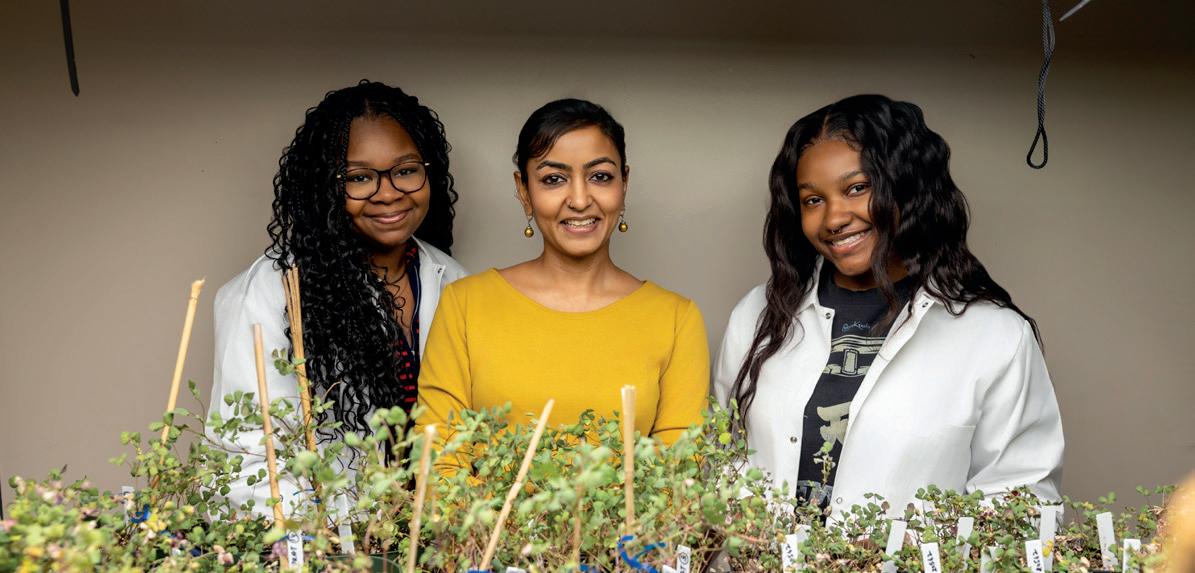
Seniors Kyla Hughes (left) and Shania Dean-Motley (right) have excelled in the TSU Legume Genetics Lab under the mentorship of TSUAg Assistant Professor Dr. Sonali Roy.
LEARNING ON THE LAND
Researcher: Tessa Adamopoulos
Hometown: Orlando, Florida
Faculty Advisor: Dr. Richard
Browning
Year: Senior (Dec. 2025 Grad)
Major: Agricultural Sciences
Concentration: Food and Animal
Science - Pre-Veterinary Medicine
For senior Tessa Adamopoulos, undergraduate research at TSUAg has meant learning animal science where it happens — on the farm. A Food and Animal Science–Pre-Veterinary Medicine major from Orlando, Florida, Adamopoulos has worked with Dr. Richard Browning on small ruminant research focused on goat reproduction, gaining firsthand experience in applied animal science.
Recruited to TSU on a full scholarship, Adamopoulos arrived looking for hands-on opportunities with animals. A former high school FFA member who grew up working with dogs, she began working on the TSU farm as a freshman and quickly became a regular part of daily operations. Her research centered on the “buck effect,” examining whether the presence of male goats influences estrus cycles in does.
Because the project was still relatively new, Adamopoulos initially relied on kidding dates as her primary data source, learning how long-term agricultural research evolves through observation, record analysis, and continuity. As the study progressed, she helped transition the project to a younger undergraduate researcher, reinforcing a culture of mentorship within the program. “It’s definitely rewarding to be able to come out here and get to work on the research and know what you’re doing it for,” she says.
“You can learn the symptoms of polio from a book but until you see it in person you don’t respect how serious it is,” says Adamopoulos, a December 2025 graduate. “A lot of people don’t realize that there are amazing research opportunities here for undergraduate students at the College. “I have friends who didn’t even know they wanted to do research and now they’re in the master’s program here at TSU.”
FROM PLANTS TO PATIENTS
Researcher: Zion Hogan
Hometown: Shelby Township, Michigan
Faculty Advisor: Dr. Ahmed Aziz
Year: Junior
Major: Agricultural Sciences
Concentration: Biotechnology
When Zion Hogan planned for her arrival to Tennessee State University, she planned to major in biology and pursue a career in medicine. Agriculture was not part of the picture, until an early introduction to the TSUAg Summer Apprentice Program (SAP) and Dr. De’Etra Young changed her trajectory.
Hogan’s SAP experience put her in the labs, the fields and the greenhouses with Dr. Ahmed Aziz and alongside high school students. “I was able to do research with Dr. Aziz, and go to the greenhouse with other high school students, we picked sweet sorghum and juiced the stalk and fed it to livestock, we made biofuel, it was so cool.”
The experience sparked her interest in agricultural biotechnology. Hogan officially joined the College of Agriculture as a freshman and immediately began working in Dr. Aziz’s lab, continuing research on sweet sorghum. Her work has included centrifuging plant samples to measure peak growth and evaluating different sorghum varieties.
Although her lab work is rooted in plant science, Hogan has a clear long-term goal: medical school, with a focus on pediatrics. She sees biotechnology research as a critical foundation for that path.
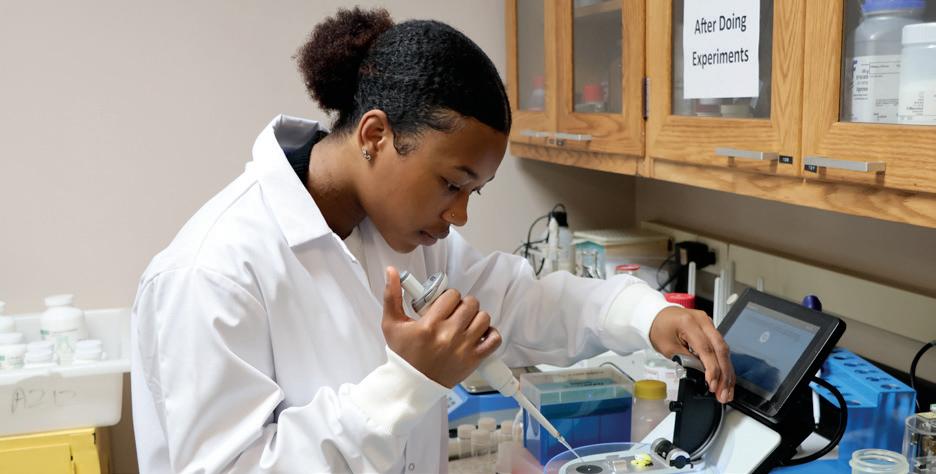
Zion Hogan is looking to take what she’s learned doing undergraduate research focused on plant science here at TSUAg to the medical field, where she hopes to work in pediatrics.
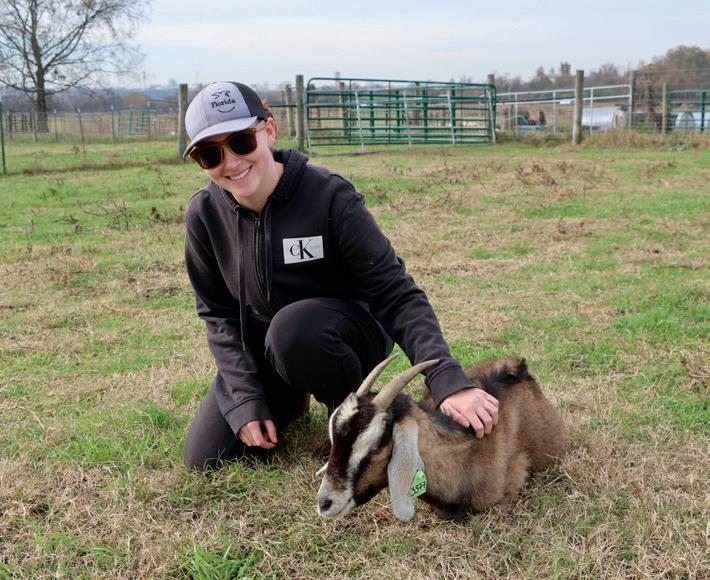
Pictured here with ‘Sally,’ Food and Animal Science student Tessa Adamopoulos conducted undergraduate research in animal science out at ‘the Farm’ here on campus, studying small ruminants.’
Researcher: Brandon Peters
Hometown: West Memphis, Arkansas
Faculty Advisor: Dr. Lap Doc Tran
Year: Senior
Major: Agricultural Sciences
Concentration: Agribusiness
Researcher: Olivia Giannuzzi
Hometown: East St. Louis, Illinois
Faculty Advisor: Dr. Lap Doc Tran
Year: Senior
Major: Agricultural Sciences
Concentration: Agribusiness
Minor: Business
For seniors Olivia Giannuzzi and Brandon Peters, undergraduate research in the College of Agriculture at Tennessee State University has become a way to connect classroom theory with real economic and community challenges. Both students conduct agribusiness research under the mentorship of Dr. Doc Lap Tran, applying quantitative tools to questions that affect consumers, households, and rural communities.
Giannuzzi, a first-generation college student from East St. Louis, Illinois, began her college career in business administration before finding her path to agriculture. “I’m a first-generation college student, so going away to college four and a half hours away from home was new, big and interesting,” she says. “I did a lot in high school so I wanted to find my way and get acclimated to college courses.”
A turning point came during her sophomore year after taking an environmental science course, followed by hands-on work at Gardens of Babylon, which helped solidify her interest in agribusiness. Her introduction to undergraduate research came through the Dean’s Scholars program, where she first worked with Dr. Matthew Blair on field research involving mung beans and amaranth.
“I enjoyed that and was introduced into the Dean’s Scholars program that way. I got some experience there and then last year I took Dr. Tran’s quantitative techniques class learning different statistics and statistical analysis. This semester there was an opportunity to work with him again and I wanted to get deeper into the research.”
Giannuzzi’s current research focuses on consumer behavior related to upcycled food products.
“We’re trying to apply a model to consumer behavior to gauge people’s knowledge of, experience with and opinions of upcycled food.”
Her findings revealed that many consumers were unfamiliar with the concept, prompting broader conversations around education and market access. She presented her work at the Tennessee Academy of Science meeting last fall.
“It was a great opportunity to express some concerns, inform some people, get feedback and just be around a bunch of brilliant people from up and down the science community who have solutions to problems.”
“
It’s an honor, it’s a blessing and I’m humbled to be able to be here and be a part of it, see the change and take action.”
- TSUAg Agribusiness student Olivia Giannuzzi
Brandon Peters, a senior agribusiness student, contributes to undergraduate research examining food security and rural community resilience with Dr. Doc Lap Tran.
Senior agribusiness student Olivia Giannuzzi applies quantitative analysis to consumer behavior research in her research, conducted with the guidance of Dr. Doc Lap Tran.
Researcher: Gianna Pearson
Hometown: Detroit, Michigan
Faculty Advisor: Dr. LaPorchia Davis
Year: Senior
Major: Family and Consumer Sciences
Concentration: Fashion Merchandising and Product Development
DESIGNING SOLUTIONS THROUGH RESEARCH
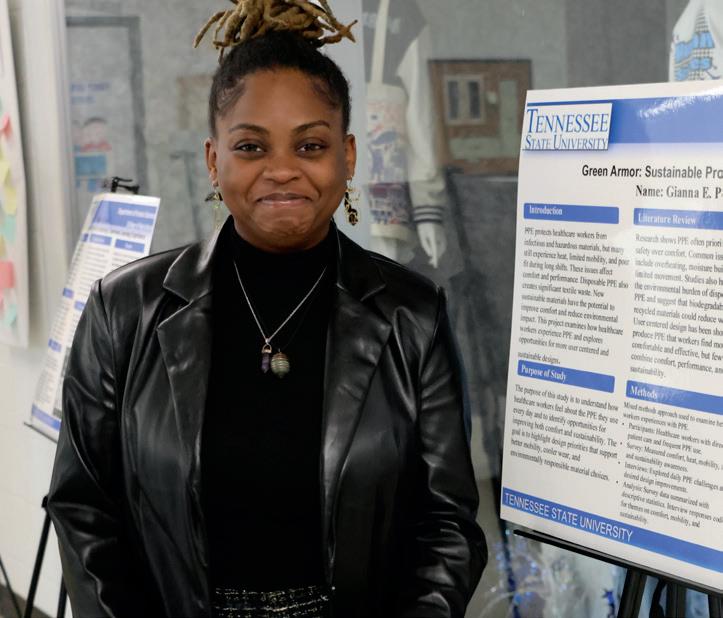
For senior Gianna Pearson, undergraduate research at Tennessee State University’s College of Agriculture began as an unexpected opportunity and grew into a defining part of her academic identity. A Family and Consumer Sciences major with a concentration in Fashion Merchandising and Product Development, Pearson is from Detroit, Michigan, and has worked closely with faculty advisor Dr. LaPorchia Davis while exploring the intersection of fashion, sustainability, agriculture and human-centered design.
“I didn’t even think about the research aspect of College until I got to TSU,” said Pearson, who started off her time as a freshman at TSU as a Dean’s Scholar and has continued in that program. “We did a sustainable workout wear project back when I was a freshman and it’s gone on from there.”
Building on those experiences, Pearson’s senior research shifted toward textiles and healthcare applications. Her work focused on the design of more sustainable, accessible, and attainable physical therapy scrubs for medical professionals. The project emphasized user feedback, allowing Pearson to study how design decisions affect comfort, usability, and performance in real-world settings. She plans to pursue graduate study in industrial textiles, continuing her focus on applied, problem-solving research.
“I ended up doing research at TSU the whole time I attended, it’s been quite a time and I feel like I’ve grown a lot with everything I’ve done so far,” she says. “I really appreciate having the opportunity to dive into different research projects. I didn’t know I was going to like doing research but I really do, I love to solve problems to live better.”
LEARNING THE ENVIRONMENT FROM THE GROUND UP
Researcher: Todd Stansberry
Hometown: Dallas, Texas
Faculty Advisor: Dr. Tom Byl
Year: Senior
Major: Agricultural Sciences
Concentration: Environmental Science
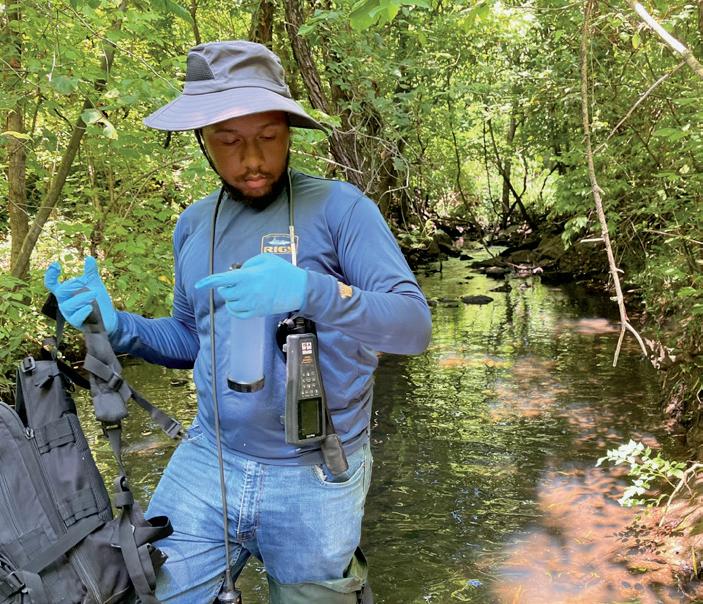
For senior Todd Stansberry, undergraduate research at Tennessee State University unfolded across two years, two faculty mentors, and two distinct research approaches—each reinforcing his interest in environmental science through hands-on discovery.
Stansberry arrived at TSU as an architectural engineering major, but shortly after arriving, he changed his major to agricultural science and he began research, first with Dr. Yujuan Chen with whom he focused on urban forestry, contributing to urban greenspace spatial analysis and fieldwork. Later, Stansberry expanded his experience through wetlands research with Dr. Tom Byl, studying algal blooms and gaining exposure to lab-based analysis.
“It was really helpful for me to see the scientific method applied in two totally different ways,” he says. “They have their own processes and stages.”
“I loved doing the lab research, classroom-only work is completely different. Whenever I can apply knowledge I really thrive. Going out there into the field and doing physical research work really helps connect class to the real world. My only regret is that I could have started sooner.”
Todd Stansberry, a senior environmental science student, has conducted undergraduate research in urban forestry with Dr. Yujuan Chen and wetland ecosystems with Dr. Tom Byl in his time at the College of Agriculture.
Gianna Pearson, a senior Family and Consumer Sciences major, has spent her undergraduate career exploring the intersection of fashion, sustainability and applied research.
FThe FFA Goes Global
TSUAg Graduate Student Brian Kibirige Builds a Youth-Led Agricultural Movement Back Home in Uganda | By
Charlie Morrison
or Tennessee State University College of Agriculture (TSUAg) Ph.D. candidate Brian Kibirige, the study of agriculture has never been just an academic interest, it’s always been more... a calling, a thread he’s weaved his life around.
Shaped by the rural communities where he grew up in his native Uganda, the challenges he witnessed small-scale farmers face, and his conviction that food security and national stability are inseparable, Kibirige has embraced that calling.
Now, as he completes his graduate work in agricultural education at TSUAg, he is also leading one of Ugandan youth organization the Youth Future Farmers of AfricaUganda (YoFFA-Uganda), a school-based initiative he helped co-found to train, inspire and mobilize the next generation of agricultural leaders in Uganda and beyond. Kibirige’s story is one of both frustration and hope. As a student, he saw his classmates avoid agriculture because they associated it with hardship, even as they lived in communities dependent on the land. In school, he saw teachers lecture about livestock, crops and production systems without ever taking students to a farm.
And across Uganda, he saw a widening gap: aging farmers leaving the land, with few young people prepared or willing to replace them.
Instead of accepting that trajectory, Kibirige chose to intervene. As a volunteer worker with Gayaza High School in 2013, Kibirige and his colleague Ronald Ddungu created what was at first a gardening club and farming camp teaching real-world agriculture skills like growing bananas and crops, and looking after cows, pigs and chickens.
The organization flourished, and grew in popularity over it early stages, but it got a major boon in 2016, when U.S.based charity Catholic Relief Services introduced Kibirige and Ddungu to a trio of representatives of the Future Farmers of America (FFA). The trio introduced Brian to the organization’s mission to promote leadership, personal growth and career success through agricultural education, focusing on skills in agriculture, teamwork, communication and citizenship, all guided by the motto: ‘Learning to Do, Doing to Learn, Earning to Live, Living to Serve.’
The group, a pair of volunteer educators and a student FFA leader, spent two weeks with Brian and his team,
Youth Future Farmers of Africa-Uganda co-founder and TSUAg graduate student Brian Kibrige.
transforming the gardening club into the YoFFA-Uganda, a national organization of secondary students engaged in agricultural education in Uganda.
The organization’s rebrand also led to growth. With the FFA’s School Agriculture Innovation Platform model in hand, Brian and Ddungu began expanding the organization’s activitiesand working with teachers and school leaders to create YoFFA-Uganda chapters in schools.
Nearly a decade of dedication saw YoFFA-Uganda grow to more than 125 chapters in primary and secondary schools across Uganda with a student membership of more than 25,000 and about 200 advisor teachers.
Today, Kibirige describes YoFFA-Uganda as a movement, one connecting agriculture, leadership and national development. His currently expanding work draws from models like the National FFA Organization and 4-H, but is deeply rooted in Uganda’s own needs: improving food production, building stronger support systems for smallscale farmers and cultivating leadership among young people who can transform the sector for decades to come.
In a conversation with AgLink, Kibirige reflects on his motivations, the origins of YoFFA-Uganda, the challenges Uganda faces and his vision for agricultural education in Africa.
AgLink: What first inspired you to pursue agriculture and youth leadership in Uganda?
Kibirige: Ever since I graduated with my undergraduate degree in 2013, I’ve been trying to create change in Uganda. I grew up in a rural community, and I saw how small-scale farmers who were my neighbors were struggling to make a living. Those of us who were educated generally didn’t show interest in the land, but at the same time we can’t keep doing this for generations because who is going to produce what we need? On top of that, I think right now, people have actually realized that food security is actually national security.
AgLink: What did you observe as a student that convinced you the system needed to change?
Kibirige: I was a student of agriculture from a young age. I loved farming, I grew up raising small animals, helping my cousins take cows to the grazing fields. And I loved crops. When I got to school, however, and began learning about agriculture, all I learned about was theories. Teachers talked to us about farming, about animal science, about good management practices, breeds of goats... but they’d never seen a goat. Teachers had no practical knowledge of say, how goats are kept. It was all theory and from that experience I saw a need.
I chose to study agriculture because it is the backbone of Uganda, and it needed someone to help create a system to make that sector flourish.
AgLink: Can you speak to the importance of leadership development as part of the National FFA organization here in the States and your group the YoFFA-Uganda?
Kibirige: The leadership component of our program helps us to educate young people to lead themselves, but then also lead others. In the U.S., they have schoolbased activities for leadership development, but then also community-based activities like the Boy and Girl Scouts, the YMCA, the FFA and 4-H. These programs and leadership cultivation are essential; Without leadership, be it at your home, be it in your community or in your country, you can’t thrive. You can’t make progress.
AgLink: What impact do you hope YoFFAUganda will have on Uganda’s agricultural workforce and the broader food system?
Kibirige: We’re not giving young people fish, we’re teaching young people how to fish themselves. When you work with young people and you teach them how to fish, they are going to find better ways of fishing, and they are going to make the system efficient. Approximately 75% of Ugandans are young people and 35% of that population exists somewhere in the education system. So if you tap into that population and give them the right skills, you’re on the path to success.
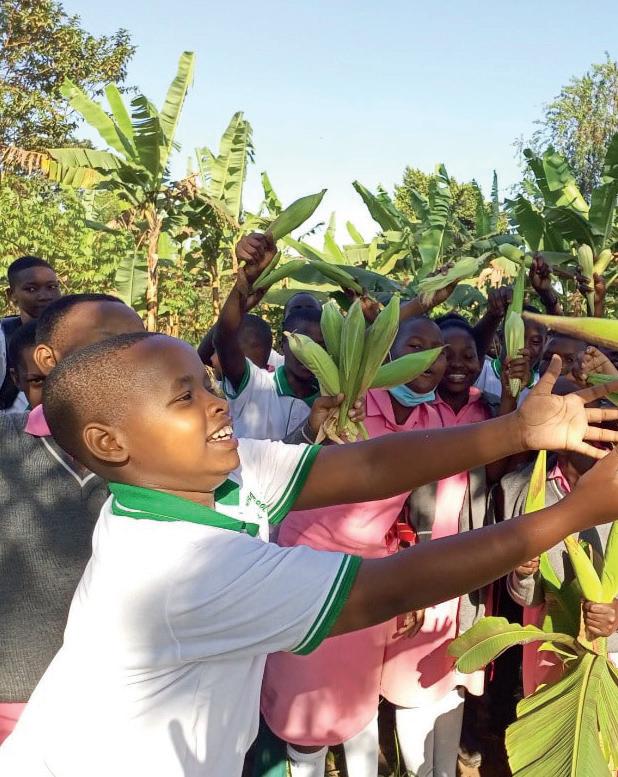
Students in the YoFFA program in Uganda enjoy hands-on agriculture projects.
AgLink: We get that you’re educating agriculture students, but what about the youth who don’t become farmers themselves? What roles can they take on that support Ugandan agriculture?
Kibirige: We don’t expect everyone actually to become a farmer, but they can become part of the ecosystem that helps farmers. I might not become a farmer, I could become an agriculturist, maybe a soil scientist, maybe a veterinary doctor... all roles that support farmers. And as for the farmers, to increase their production, they need support systems, and this organization can actually help create a network, a pipeline of information that begets that support system.
AgLink: Give me an example of an issue in Ugandan agriculture you’re trying to solve – what is your goal to solve it? Why is multisector collaboration so critical to the success of youth agricultural development?
Kibirige: People operate in silos in Ugandan agriculture. Multi-sector engagement remains one of the goals of the organization, I should say, the exchange of information from people in academia, people in research, people in the business world and people in the government. At the end of the day, the things that we do with young people, they need to interact with all these multiple stakeholders, and then maybe from those interactions we will actually start to see the improved communication trickle down into community development and societal transformation.
AgLink: What does this ‘movement’ need to survive and thrive going forward? ?
Kibirige: We are creating a national movement and for that, we’re looking for legitimacy from the government. Right now with no support at all from the government, and because it is a growing movement, you can’t ask for membership from teachers and students. We’ve been relying on collecting donations from business owners, and that model has delivered some big successes. Going forward, we’ll need governmental and financial support.
AgLink: What are your ambitions for scaling this model beyond Uganda?
Kibirige: My real goal is to grow the YoFFA-Uganda into a successful organization not only in Uganda, but in Africa and the rest of the developing world as a whole because even in countries like the U.S., where we have FFA and 4-H the industry is still struggling to attract young people. In the developing world, we have additional, unique challenges and for me after making this model successful in Uganda, I would love to take it to other countries to help them work on the same issues across Africa and the world. of Uganda’s population works in the agricultural sector 70% of Uganda’s population is under 14 years old 43%
The YoFFA-Uganda program has been aiding the country’s agriculture industry for over a decade.
With 70% of the population working in agriculture, educating youth is critical.
LA Legacy of Education, Equity and Innovation
ast year, 2025 marked the 135th anniversary of the passage of the Second Morrill Act of 1890, legislation that forever changed the landscape of American higher education and created a path for the 1890 land-grant university system to be established. For Tennessee State University (TSU), one of 19 historically Black colleges and universities designated as land-grant institutions under the Act, the celebration is both historic and deeply personal. The TSU College of Agriculture served as both a leader in on-campus celebrations and in representing the university in the nationwide celebration from offcampus.
TSU College of Agriculture Dean Dr. Chandra Reddy led a contingent to Washington, D.C. in early September to join representatives from the other 18 land-grant HBCUs in celebrating the occasion. Activities at the celebration in D.C. included the Cyber & AI Games in Agriculture, a reception and a photo-exhibit celebrating the “19-Strong Legacy Pathway,” events designed to amplify the legacies and ongoing impact of the 19 land-grant HBCUs under the 1890 Act.
At the core of the celebrations was a desire to remember the legislation itself and the lives it changed after its passage. Signed into law in 1890, the Act created a system of public universities to ensure access to higher education for African Americans in states where segregation barred them from existing land-grant institutions
TSU Honors 135 Years of the Morrill Act of 1890
By Charlie Morrison & Alexis Clark
established by the first Morrill Act of 1862. It was a bold commitment to equity and opportunity, and one that continues to shape TSU’s mission today.
Carrying the Legacy Forward
From its founding in 1912, Tennessee State University embraced this charge. Though established later than many of its sister 1890 institutions, TSU has emerged as a national leader in agricultural research, community outreach and student achievement.
TSU President Dwayne Tucker reflected on the significance of the anniversary. “On behalf of the Tennessee State University family, our students, faculty, staff and alumni, it is an honor to recognize the 135th anniversary of the Second Morrill Act,” said President Tucker. “This legislation gave birth to 1890 land-grant universities, which, despite historical underfunding, have stayed true to their mission of providing high-quality education, innovative research and life-changing outreach to communities across our nation.”
A Leader Among the 1890s
The TSU College of Agriculture embodies this leadership. With hundreds of undergraduate and graduate students, 75 faculty members, 37 state-of-the-art laboratories, three field research stations and Cooperative Extension agents serving 65 of Tennessee’s 95 counties, the College has built a
reputation for excellence in teaching, research and extension.
For Dr. Chandra Reddy, Dean of the College of Agriculture, the anniversary is an opportunity to reflect on both progress and promise. “TSU is a proud 1890 land-grant university serving students and the public since its founding in 1912,” said Dr. Reddy. “We evolved from a simple agricultural education facility to a major, researchintensive institution offering a variety of programs including several Ph.D. degree programs.
In recent decades TSU’s research portfolio has grown steadily, with millions in annual awards from federal and state agencies fueling advancements in food security, renewable energy and environmental sustainability. This work not only benefits Tennesseans but also addresses global challenges that will shape the future of agriculture and society.
As the nation reflects on the 135th anniversary of the Second Morrill Act, Tennessee State University stands as a living testament to its vision: an institution committed to access, excellence and service.
“TSU’s story is part of a larger story about equity and opportunity in higher education,” President Tucker said. “Our responsibility is to honor that legacy, not just by remembering it, but by building on it for the generations to come.”
living history
For over a century-and-a-half the Moore Family Century Farm has stood as a symbol of the Black farmer and a place for family, community and personal reflection | By Charlie Morrison
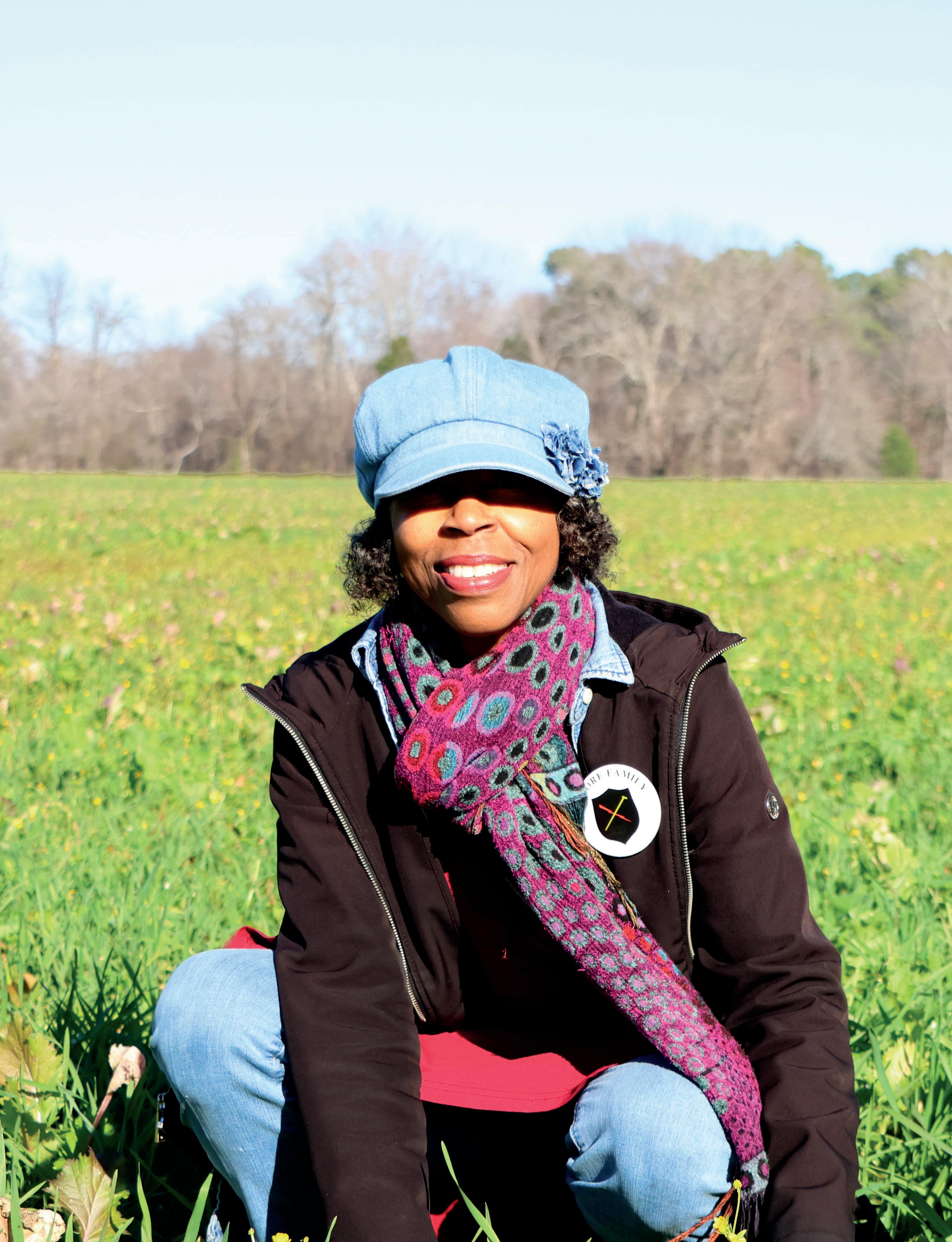
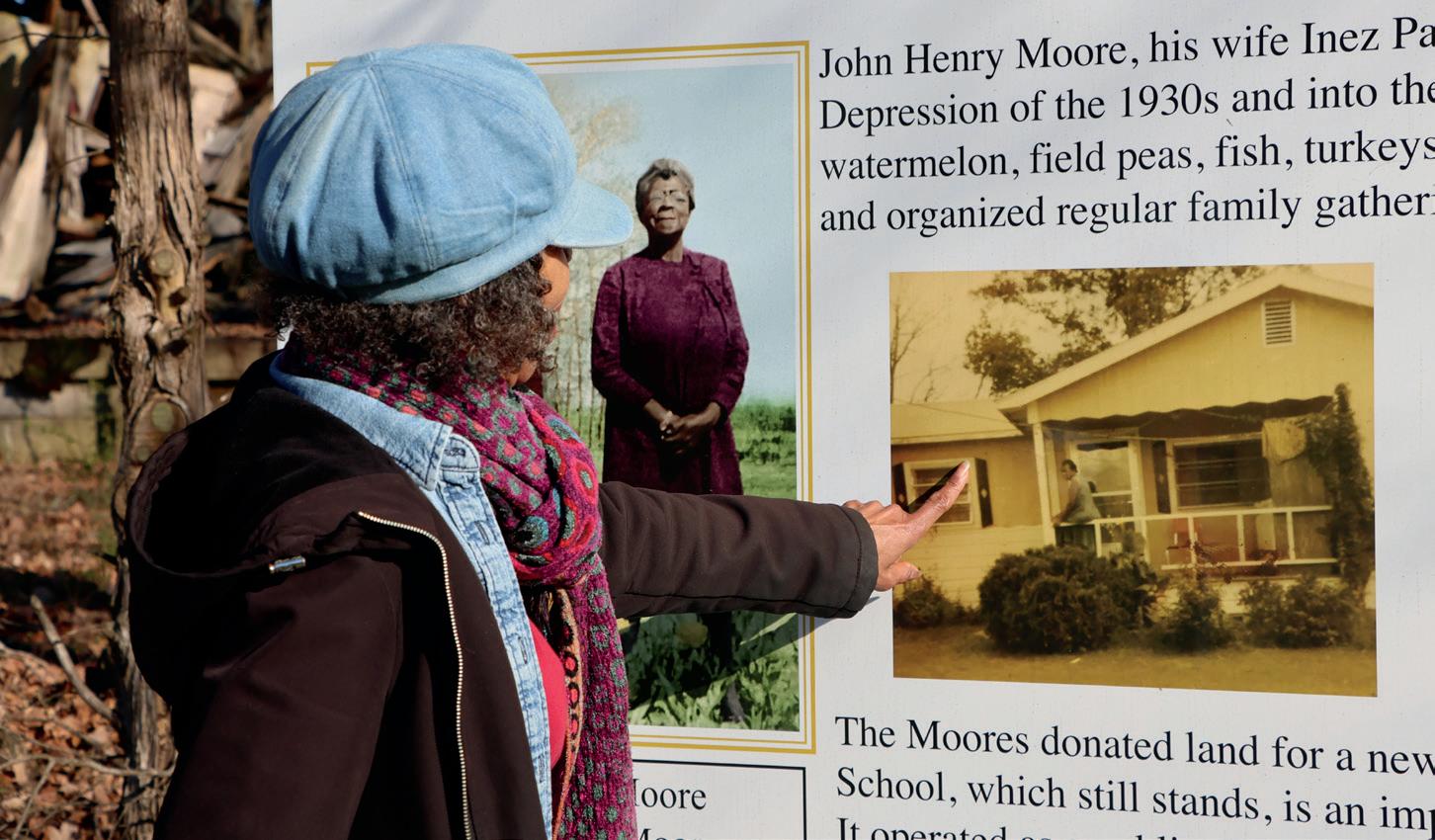
Moore family descendant, steward and curator Renee Moore-Williams
Situated on a 218-acre expanse of Benton County farmland in the historic Flatwoods Community, the Moore Family Century Farm stands as a testament to resilience, family and the sustaining power of the land. Established in 1870 by formerly enslaved ancestors John Moore and Harriet Strayhorn Barksdale Moore and continuously nurtured by their descendants, the farm is widely regarded as the oldest continually operating Black-owned century farm in Tennessee.
Today, the farm produces row crops and timber, and it also serves as a heritage landscape where land, memory, labor and legacy intersect. Walking the property, the sense of history is unmistakable. The remains of the original farmhouse still stand alongside a church, a school site, a cemetery and fields now in cover crops on ground once planted in cotton and corn. Together, these features tell a layered story of African American farmers who, in the wake of emancipation, carved livelihoods from the soil and built generational stability against overwhelming odds.
For Moore family descendant, steward and curator Renee Moore-Williams, these places are not static landmarks but active points of connection, linking the present to the Reconstruction era and serving as living classrooms for future generations. A gifted storyteller and educator, Moore-Williams shares the lessons of the land with both pride and humility. “I feel honored to have been birthed into this legacy, and I’m still in awe of what my family did for us to get here,” says Moore-Williams, a former professor in TSU’s Humanities Department and the daughter of two Tennessee State University alumni. “Sharing their story, and the story of this place, is the least I can do in honor of that legacy.”
John” during his time in bondage, spent decades saving money earned from side cobbling jobs. That discipline and foresight enabled the family’s land purchase. He brought his shoemaking trade with him to Flatwoods, while Harriet contributed her skill as a midwife, a vital role in rural communities.
In those early years, the land was largely forest, and timber cutting provided income and helped clear fields for planting. As the land opened, the Moores planted cotton, corn and sweet potatoes alongside garden crops. Livestock followed, including cattle, hogs and mules, gradually transforming the homestead into a diversified operation capable of sustaining both family and community.
By the mid-1870s, the Moore farm had become a self-sufficient hub. Fifty acres were under cultivation, 100 acres remained timbered and the family managed 61 animals. They made soap, raised their own meat and cultivated plants for food and medicine, building stability through cooperation and shared labor.
Adaptation and Entrepreneurship
Two qualities defined the Moore Family Century Farm’s longevity: thoughtful transitions of leadership and an ability to adapt to changing economic conditions. From the beginning, the Moores were entrepreneurial, adjusting crops and supplementing farm income through community work as circumstances demanded.
Roots in Freedom
The first major transition came with the death of John Moore in 1880. Leadership passed to his son, John Lewis Moore, who assumed stewardship alongside his mother. With his wife, Ida Menzies and their 15 children, John Lewis expanded cultivation to 100 acres and diversified livestock and garden production as the farm entered the 20th century.
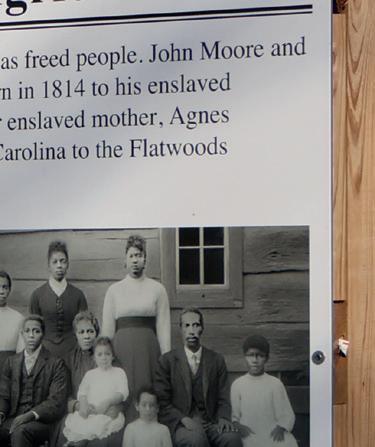
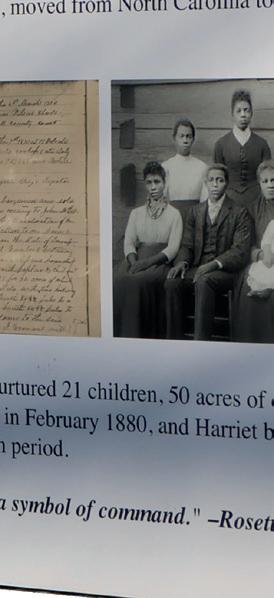
John and Harriet Moore arrived on their 218½ acres in Benton County in March of 1870 after purchasing the land for 50 cents an acre. They came as the heads of a growing household that would ultimately include 21 children, intent on building something permanent in a moment when freedom was new and the future uncertain.
This period also marked a deepening of the farm’s role in Flatwoods. The family donated land for community institutions including a school and Moore Chapel CME, the first Black church in the community and one of the oldest in Benton County.
John, known as “Shoemaker
Following the Great Depression, stewardship transitioned to John Henry Moore and his wife, Inez. Together with their seven children, they continued livestock and crop production while adding turkeys, peanuts and watermelons to meet
evolving market demands. John Henry, known affectionately as “Loving Henry,” was remembered for his warmth and community barbecues. Inez was equally influential, sharing practical knowledge throughout the county as a master gardener and teacher.
“They were true entrepreneurs,” Moore-Williams explains. “They looked at every market shift and asked, ‘What do we do now? How do we fit into this moment?’ They just kept pivoting — reacting to new conditions while holding onto what mattered.”
In 1991, the seven children of John and Inez Moore formally began managing the farm as the Moore Family Century Farm Group, which continues stewardship today. As the family’s public representative, Moore-Williams grounds her work in the values passed down through generations.
“One of the keys to our longevity was relationships,” she says. “Black or White, from here or somewhere else — it didn’t matter. That’s the agricultural mindset. If someone needed help, everybody showed up.”
Reflections and Recognition
In 2015, the Moore Family Century Farm was accepted into the Tennessee Century Farms Program. Administered by the Tennessee Department of Agriculture and the Middle Tennessee
State University Center for Historic Preservation, the program honors families who have owned and farmed the same land for more than a century.
Moore-Williams later led the installation of four interpretive panels with Humanities Tennessee, aligning with the formation of the Tennessee Black Farmer Coalition supported by TSUAg’s Finis Stribling III. The panels now feature profiles of Black farmers statewide, connecting the Moore story to a broader agricultural narrative.
As awareness of the farm has grown, Moore-Williams has reflected on why the story resonates so deeply. “Historians are fascinated that, despite all the obstacles, our family is still here,” she says. “Some people lost their farms. Others never had the opportunity to create this kind of legacy.”
“Once people move past the awe,” she continues, “they start asking how we did it — how to hold onto land, how to protect it, how to honor it and how to pass it forward. Those are the questions we’re trying to answer.”
A Foundation for the Future
That growing recognition culminated last fall with two significant milestones. In September, Moore-Williams and the farm were honored at the 2025 Tennessee Small Farm Expo, receiving the Best Alternative Enterprises Award
during the Small Farmer of the Year awards ceremony.
One month later, the family hosted a landmark event at the Moore Flatwoods Museum, uniting the Moore family reunion with the soft opening of Moore Land: Testimonies of Black-Owned Farms and Gardens in Tennessee, alongside family, friends, and community partners.
During the ceremony, the names of ancestors were spoken aloud. An honor guard from Fort Campbell fired volleys in tribute to the family’s veterans as dignitaries offered heartfelt remarks.
“It was incredibly emotional,” MooreWilliams recalled. “Everyone felt the beauty of the moment. I was deeply moved.”
Today, the Moore Family Century Farm welcomes farmers, historians and community members seeking connection to the land and to a place shaped by endurance, adaptability and care. Visitors can explore exhibits, walk historical trails or gather for reunions and tributes that continue adding new memories to the land.
At the Moore Family Century Farm, the past is not distant. It lives in the soil, the trees and the shared stories, and in the steady stewardship of a family, reminding us that heritage is something we actively sustain, not simply something we remember.
I feel honored to have been birthed into this legacy and I’m still in awe of what my family did for us to get here.” “ AL
- Renee Moore-Williams
Moore-Williams with one of the interpretive history installations that has been installed on the property.
Engaged. Empowered. Big Blue.
TSUAg student organizations thrive through hands-on experiences that support academic and professional success. | By
Charlie Morrison
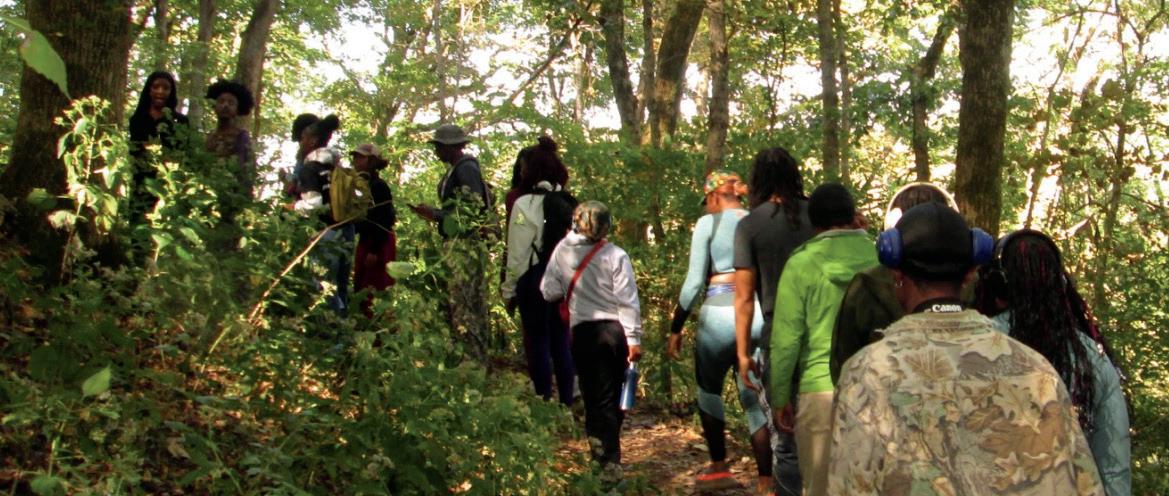
Oon a crisp fall afternoon, a group of Tennessee State University students stepped onto the wooded trails of Percy Warner Park, trading classrooms for fresh air and conversation. The hike, co-hosted by Big Blue Outside in partnership with the TSU Biotech Club and the TSU Fashion Society, filled quickly, drawing students from across disciplines who shared an interest in wellness, community and connection beyond campus.
Moments like this have become emblematic of student life within the Tennessee State University College of Agriculture. Throughout the fall 2025 semester, TSUAg student organizations remained active across academic, cultural and community-focused spaces, offering opportunities that extend learning beyond the classroom and into lived experience. From research and professional development to creativity, service and outdoor exploration, students continued to shape a campus culture defined by curiosity, collaboration and Big Blue pride.
Together, these organizations form an interconnected ecosystem that supports leadership development, handson learning and a strong sense of belonging. Through cross-organization collaboration and student-led initiative, TSUAg’s clubs create pathways for students to explore interests, build networks and lead with purpose. What follows is a snapshot of several organizations and how they helped define the fall 2025 semester within the College of Agriculture.
TSUAg’s MANRRS chapter had a varied program of activities in the fall.
TSUAg faculty mentor Dr. Armine Poghosyen advises TSUAg’s new Commodity Trading and Investment Club
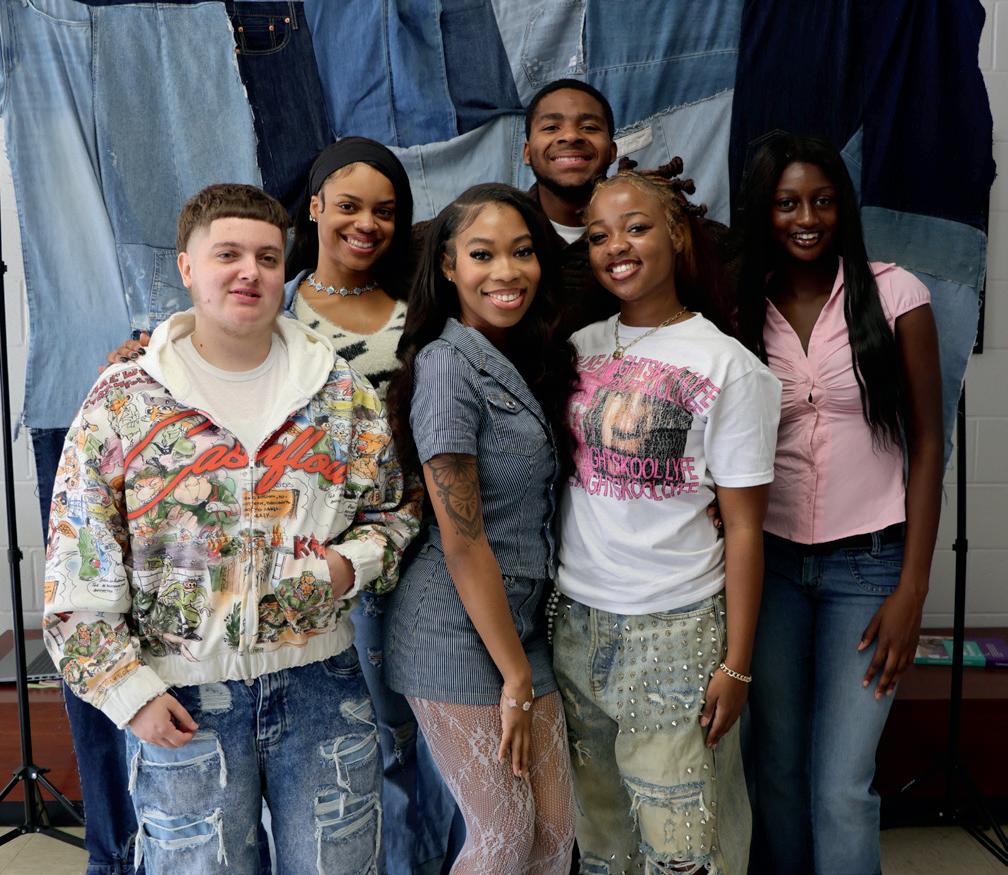
` The TSU Fashion Society hosted a number of events in the fall 2025 semester.
Big Blue Outside brought students off campus to Percy Warner Park.
MANRRS
Among the most active student organizations at the College of Agriculture this past and every semester was and is TSUAg’s MANRRS chapter, whose members remained consistently engaged in leadership development, service and community-building. The TSU MANRRS chapter balanced a full calendar of general body meetings, professional development programming and social engagement opportunities designed to support students pursuing careers across agriculture and natural resources fields.
Outside Magazine and the National Park Trust to encourage students to see themselves as future leaders and advocates in outdoor spaces.
traditional
Throughout the semester, Big Blue Outside organized programming that blended recreation with education, using shared outdoor experiences to build confidence, community and environmental appreciation. In short, the organization invited students throughout the semester to step beyond traditional campus boundaries and engage directly with nature.
General body meetings throughout the semester served as hubs for collaboration and idea-sharing, drawing strong attendance and reinforcing MANRRS’ mission of cultivating future leaders.
Professional development remained a core focus. Students participated in multiple workshops and seminars centered on leadership, networking, and career readiness, including a student networking mixer and interactive sessions that emphasized soft skills and professional conduct. Fundraising efforts, such as bake sales and a Double Good popcorn campaign, supported ongoing programming while strengthening member engagement.
Service and outreach also defined the semester. MANRRS members volunteered with Metro Animal Care, organized a holiday food drive and hosted outdoor experiences and career discussions for visiting high school students. Collaborative events, including the with the College of Agriculture on the Fall Festival and wellnessfocused outings further underscored the chapter’s commitment to community, mentorship and holistic student development.
Together, these efforts reflect a chapter that remains highly active, mission-driven, and deeply invested in preparing its members to lead with purpose on campus and beyond.
BIG BLUE OUTSIDE
Meanwhile, Big Blue Outside has continued to carve out a unique space on campus by connecting TSU students with outdoor experiences rooted in stewardship, wellness and exploration. Centered on environmental engagement and active lifestyles, the organization partners with national and regional groups including HBCUs Outside,
One of the semester’s culminating experiences brought students to YMCA Camp Widjiwagan for a horseback riding excursion, offering participants a chance to try something new while strengthening peer connections. Led by student ambassadors and supported by faculty and community partners, the event reflected the organization’s emphasis on experiential learning and trying new things outdoors.
In addition to recreational outings, Big Blue Outside remains committed to service-oriented work, including environmental cleanups and stewardshipfocused activities that reinforce the responsibility of caring for shared natural resources.
As the semester concluded, the organization looked ahead to expanding its programming and partnerships, continuing to make the outdoors accessible, welcoming and meaningful for TSU students in the semesters to come.
THE TSU FASHION SOCIETY
The TSU Fashion Society has enjoyed a visually striking and creatively ambitious half-year, kicked off really in the summer when TSU Fashion Society members extended their impact through summer internships spanning fashion design, styling, media, agriculture, education and community engagement.
The group started the year by taking stock of the professional experience members had gained over the summer that would later inform the organization’s creative vision. The group brought fashion into unexpected spaces while expanding its presence across campus. In November, the group held a series of tightly packed events.
On November 20, the group hosted a Vintage Streetwear Market, followed the next morning by the TSU Royal Breakfast, welcoming Mr. and Mrs. TSU alongside presidents and vice presidents of fellow student organizations. Later that same day, TSU Fashion Society participated in the College-wide TSU Agriculture Fair at the AREC Pavilion, transforming the Farm Pavilion into a full runway experience for a fashion show that doubled as a new member showcase. The event was titled “A Journey Through Decades.”
THE TSU ENVIRONMENTAL SCIENCE CLUB
In November, the Biotech Club partnered with the Department of Agricultural Sciences and Engineering to support a Seminar Series event held at the Agricultural Information Technology Center. The November 13 program featured undergraduate and graduate students presenting short talks on summer internships, Dean’s Scholars research, and other academic projects. The experience gave student researchers valuable practice in professional speaking while fostering peer-to-peer learning across disciplines.
One of the newest student organizations to emerge within the College of Agriculture is the TSU Environmental Science Club, a student-led group dedicated to environmental awareness, sustainability and hands-on learning. Though newly established, the club made an immediate impact during the fall semester by pairing leadership development with meaningful community engagement.
The organization formally launched its leadership structure during its Fall 2025 meeting on November 7, held in the Farrell Westbrooks Building. Student officers were elected, establishing a strong foundation for future programming and continuity. Advised by faculty from the Department of Environmental Sciences, the club is designed to connect students across environmental science, agriculture, biology, chemistry and related disciplines, while remaining open to anyone interested in sustainability and environmental issues.
The club also introduced its Executive Board for the 2025–2026 academic year, led by President Kyla Hughes, Vice President Shelby Burruss, Secretary Paris Johnson, Treasurer Tamia Ramey, Mr. Biotech Club Lanarius Evans, and Ms. Biotech Club Lyra Ford. Together, the leadership team is guiding a mission centered on exploring emerging areas of biotechnology through journal clubs, invited lectures, workshops, and networking opportunities.
Among its first major activities, Environmental Science Club members partnered with Root Nashville and community volunteers to plant 25 native sycamore trees at the TSU farm. The effort supported wildlife habitat, improved soil health, and reinforced the club’s commitment to practical, place-based environmental stewardship.
Looking ahead, the Environmental Science Club plans to organize field trips, volunteer initiatives, guest speakers, and awareness campaigns focused on topics such as waste reduction and the principles of Reduce, Reuse and Recycle.
THE TSU BIOTECH CLUB
Another emerging student organization gaining momentum within TSUAg is the TSU Biotech Club, a research-oriented group focused on connecting students with cutting-edge work in biotechnology and related sciences. Though still new, the club has quickly established itself as a hub for academic engagement, scientific communication and professional development.
By creating spaces where students can present research, discuss scientific literature and engage with faculty and peers, the TSU Biotech Club is bridging classroom learning with research experiences.
THE TSU COMMODITY TRADING & INVESTMENT CLUB
Rounding out the growing slate of student organizations within TSUAg is a newly launched TSU Commodity Trading and Investment Group, focused on building students’ analytical and professional skills through handson exposure to commodities markets. Founded during the fall semester, the group introduces students to the fundamentals of price analysis and commodity investing, emphasizing real-world tools and applied learning.
Led by faculty mentor Armine Poghosyan, the organization is designed to give students practical insight into how commodities markets function, while also helping them develop marketable skills relevant to finance, agribusiness, and investment-related careers. Plans are underway to incorporate a trading simulator that will allow members to practice strategies and decision-making using virtual capital in a low-risk learning environment.
LOOKING AHEAD
From MANRRS’ leadership and service initiatives to Big Blue Outside’s environmental engagement, the Fashion Society’s creative expression, and the research-driven focus of the Environmental Science, Biotechnology, and Commodity Trading clubs, TSUAg students are actively shaping experiences that extend learning beyond the classroom. AL
field by field, season by season
TSUAg researchers and Tennessee corn growers work side by side to build a more resilient future for corn production | By
Charlie Morrison
Across Tennessee, corn producers are navigating increasing climate variability, rising input costs and the long-term challenge of maintaining productive, resilient farmland. At Tennessee State University, researchers at the College of Agriculture (TSUAg) are working hand-in-hand with the Tennessee Corn Promotion Board and growers across the state to address those challenges through applied, on-the-ground research.
From improving soil health in working corn fields to developing new, weather-adapted corn genetics, TSUAgled projects are generating practical data and long-term solutions rooted in Tennessee conditions and farmer partnerships.
Improving Soil Health Through On-Farm Research
One of those efforts is a multi-county soil health study led by Dr. Krishna Bhandari, Assistant Professor and Extension Specialist in Forage Agronomy in TSUAg’s Department of Agricultural Sciences and Engineering. Supported by the Tennessee Corn Promotion Board, the project examines how different corn production systems influence soil health in central Tennessee, with a particular focus on the biological life within the soil. The study compares conventional corn fields that are
This research is about giving farmers reliable, local information. Healthy soil is an investment in the future of Tennessee agriculture.” “
- Dr. Krishna Bhandari
left fallow during the winter with fields that are planted in diverse mixtures of cover crops. Research is being conducted directly on 30 working farms across Franklin and Giles counties, a pair of Tennessee’s major cornproducing regions.
“Working with neighboring farms gives us a clearer picture of how these systems perform in Tennessee fields,” Bhandari says. To make the farmer connections for those 30 plots, Dr. Bhandari relied on TSUAg’s extensive Extension Agent network, particularly TSU Agent John Farrell in Franklin County and University of Tennessee Agent Kevin Rose in Giles County.
Rather than relying on research plots, the project uses a paired-farm approach. Each pair consists of nearby fields with similar soil types, where one grower follows a conventional winter-fallow system and the other uses cover crops and eliminates fallow periods. This design allows researchers to isolate the effects of management practices while accounting for local soil and climate conditions.
Soil samples are collected in both spring and fall to capture seasonal differences in moisture, temperature and crop growth. Researchers analyze a wide range of soil health indicators, including soil organic matter,
carbon and nitrogen levels, soil moisture, enzyme activity and microbial biomass. Special attention is given to soil microorganisms, bacteria and fungi that drive nutrient cycling, water retention and long-term soil productivity.
“It was very collaborative and because I work with farmers, I get to hear what is actually going on in their Tennessee fields. When I analyze the soil in the lab, they’re thrilled because I’m able to interpret for them their soil composition.”
Healthy microbial communities help soils function as living systems, improving nutrient availability for crops and increasing resilience during drought or other stress conditions. Because microbial indicators can respond quickly to management changes, they provide early insight into whether conservation practices are improving soil health.
The goal of the project is not to prescribe a single approach, but to provide Tennessee-specific data that growers can use to make informed decisions about soil management under increasingly unpredictable growing conditions. “It feels great to be working so closely on with actual corn producers here in Tennessee, even on what is a relatively small grant. The key is getting on the ground with the producers and getting good, actionable data,” Dr. Bhandari says.
Developing Climate-Resilient Corn Through Innovative Genetics
Complementing the soil health research is an ongoing plant breeding and genetics project led by Dr. Matthew Blair, professor of agricultural sciences at TSU. Known as the SynAdapt project, the research focuses on expanding the genetic diversity of corn to improve its ability to withstand drought, heat stress, and other environmental pressures common in Tennessee’s dryland production systems. At the center of the SynAdapt project is a unique synthetic corn population developed by the U.S. Department of Agriculture called ZeaSynthetic.
Since 2021, the synthetic population has been grown across multiple seasons at two TSU Agricultural Research and Education Centers in Nashville and Ashland City. Each growing season acts as a cycle of natural selection, allowing plants best suited to Middle Tennessee’s climate to contribute to the next generation.
By 2024, the project had advanced through multiple generational cycles, with researchers planting large populations to preserve genetic diversity. During the most recent growing season, weekly drone flights were conducted at the Nashville research site to monitor plant health, growth, water-use efficiency and canopy development. Drought conditions during early summer posed challenges at both sites but also provided valuable insight into which plants showed stronger resilience and recovery.
The next phase of the project involves DNA sequencing and genomic analysis. By comparing genetic data from earlier and later generations of the population, researchers aim to identify genetic signatures associated with adaptation to Tennessee’s climate. These findings could help plant breeders identify genes linked to drought tolerance, heat resilience, plant architecture and efficiency under low-input conditions.
“The project will be worked on by some of the best geneticists in the country so its a great opportunity for student learning,” said Dr. Blair. “Which is why I recruited our graduate student Sumayea Khan to work the project.”
Importantly, the ZeaSynthetic population is a publicaccess resource. Discoveries from the project can be shared with breeding programs, seed companies and researchers across the region, supporting long-term innovation in corn improvement. “This research is about preparing for the future,” Blair said. “By investing now in genetic diversity and adaptation, we’re helping ensure that Tennessee corn remains productive, competitive and resilient in the years ahead.”
Both projects reflect TSUAg’s commitment to conducting research that directly benefits Tennessee farmers. Together, these efforts demonstrate how collaboration among TSUAg researchers, the Tennessee Corn Promotion Board, and corn producers is helping address today’s challenges while building resilience for the future of Tennessee agriculture, one field, one season and one discovery at a time.
AL
Former TSUAg graduate student Max Miller, with current student Sumayea Khan and TSUAg precision agriculture faculty member Dr. Anjin Chang.
2025 Small Farmer of the Year Awards winner Jana Slagle from The Vintage Dahlia with TSUAg’s Karla Gargus.
Small Farms, New Roots
TSUAg celebrates Tennessee’s small farmers at 21st annual Small Farm Expo |
By Charlie Morrison
he Tennessee State University College of Agriculture (TSUAg) welcomed hundreds of farmers, students, faculty and agricultural leaders to campus on Sept. 4 for the 21st annual Tennessee Small Farm Expo.
The Expo, the signature event of TSUAg’s Cooperative Extension program, was held at the Agricultural Research and Education Center—better known as the “TSU Farm.” Attendees explored workshops, farm tours, live demonstrations and dozens of vendors offering practical solutions for today’s small farming operations. The day concluded with a Farmer Recognition Luncheon honoring some of Tennessee’s most innovative
offering producers.
This year’s event introduced a new tradition: the Agriculture Leadership Breakfast. Hosted at the Agriculture Pavilion, the breakfast brought together state lawmakers, industry leaders and stakeholders for a candid discussion on the future of farming. Tennessee State Senator Page Walley and State Representative Justin Jones were among those in attendance, along with keynote speaker Micah Mensing, a public policy and industry analyst with Farm Credit Mid-America. TSU President Dwayne Tucker delivered opening remarks.
Following the breakfast, the Expo came alive with activity. Visitors moved between the exhibition tent, where vendors showcased their products and services, and demonstration sites covering topics such as organic and sustainable farming, poultry production, hemp, beekeeping, and the latest in precision agriculture technologies.
Farmers and stakeholders took advantage of the opportunity to rub elbows with representatives from organizations spanning the breadth of the agriculture industry. Visitors to the exhibition tent could rub elbows with representatives from the Tennessee Department of Agriculture one minute, lenders from the Tennessee Farm Bureau the next and multi-generational ‘century’ farmers from the historic Butler Farms after that.
The Expo also highlighted TSU’s growing role in agricultural research and innovation. In the past year, the College reopened three renovated laboratories and broke ground on more than 110,000 square feet of new facilities for the Food and Animal
Rep. Justin Jones with century farmer James Butler
Sciences and Environmental Sciences programs. These projects follow the 2024 ribbon-cutting for greenhouse facilities rebuilt after the 2020 tornadoes. Tours of the upgraded labs and campus farm were a highlight for many visitors.
The Farmer Recognition Luncheon once again served as the capstone of the day. Four producers were recognized by their peers and TSUAg Cooperative Extension agents in categories including Best Management Practices, Alternative Enterprises, Innovative Marketing, and Most Improved Beginning Farmer. From those honorees, one was named Tennessee’s 2025 Small Farmer of the Year.
That honor went to Army veteran and Montgomery County cattle producer Mike Taliento, who also received the Best Management Practices award. Other winners included Jana Slagle (Innovative Marketing), Hunter Gentry (Most Improved Beginning Farmer), and Sheila Renee Moore-Williams (Alternative Enterprises).
“I didn’t do this by myself, I did it with family, friends and the technical support of the folks from the UT-TSU Extension offices and the USDA,” Taliento said. “In today’s world, there are fewer and fewer people who understand where our food comes from and how it is produced. I feel a responsibility to make sure my family knows, and to share that love of farming with others. It’s been a great journey.”
For Dr. Chandra Reddy, dean of the College of Agriculture and Director of Extension, the Expo’s impact is measured not only in awards but also in connections and opportunities. “For more than two decades, the Small Farm Expo has been a hub for sharing knowledge, resources and community connections, and this year was no exception,” Reddy said. “It’s an opportunity for producers to learn directly from experts and from each other, while also seeing the exciting advances happening at TSU. We’re very proud of the turnout and the outcomes.”
TSU students also benefited from the event. Olivia Giannuzzi, a senior agribusiness major from East St. Louis, Illinois, said the Expo offered a unique view of the industry. “It was an honor to be here and be surrounded by people who are so passionate about the same field as I am,” Giannuzzi said. “From research to education to business, seeing all the inputs and outputs in agriculture has been amazing.”
Her classmate, senior agribusiness major Bruce Joy, agreed. “From a student’s perspective, this event is necessary. Making these connections is very helpful,” he said. “As a senior, I can utilize all these people and opportunities.” With new traditions, expanded facilities, and a strong turnout, the 21st Tennessee Small Farm Expo underscored both the resilience of Tennessee’s small farmers and TSU’s leadership in advancing agricultural education, research, and outreach. AL
Davis
For HBCU cheerleaders, explosive tumbling passes and high-impact landings are part of the sport’s thrill, and part of its physical cost. Over time, the repetitive force placed on the spine and pelvis can contribute to chronic pain and earlyonset arthritis, especially in the sacroiliac (SI) joint, a critical link between the spine and hips.
At the Tennessee State University College of Agriculture’s (TSUAg) Department of Human Sciences, however, an innovative research project is seeking to change that. Enter the Tumble Tamer, a new smart shoe prototype developed by Dr. LaPorchia Davis in the Fashion and Product Development program, that combines wearable technology, biomechanics and data science to protect cheerleaders’ long-term health by monitoring biomechanical stress in real time.
“I was inspired by the TSU cheerleaders. They’re excellent cheerleaders and I know they all do competitive cheer as well, so I was thinking of them and the repetitive movements they have to do over and over,” says Davis.
“
“This project helped me to branch out from just talking about textiles as a professor and open my mind to the fact that I can tell the story of what they need even better with the help of data science.”
- Dr. LaPorchia Davis
tumble tech
Tackles Smart Footwear Project Aimed to Better the Future of Cheerleader Health at HBCUs | By Charlie Morrison
The project is funded through the United Negro College Fund (UNCF) with support and collaboration from major corporate partners, including Google, as part of UNCF’s broader programs that strengthen research, technology, and faculty development at HBCUs. After applying to the program and being accepted, Davis was partnered up with a Google data scientist to explore ways to integrate textiles with technology.
The UNCF’s work includes a broad range of programs aimed at strengthening teaching and research at member institutions, from research fellowships to faculty enhancement minigrants, creating fertile ground for projects like Tumble Tamer to thrive.
“The UNCF and Google wanted to create a cohort where Google researchers could see that HBCU professors know how to do research,” she continues. “We, as HBCU researchers were eager to show Google that we know how to infuse data science into their research.”
Why This Matters for Cheerleaders and HBCUs
Cheerleading is a physically demanding athletic discipline, and repetitive stress on the SI joint can lead to pain and injury that affects athletes long after their competitive careers end. Traditional coaching often relies on observation alone, meaning subtle risk factors can go undetected until it’s too late.
Tumble Tamer introduces a data-driven alternative: custom footwear embedded with advanced sensors. These sensors collect real-time biomechanical data as athletes train and compete, identifying patterns of movement and landing that place undue strain on the SI joint.
“When I was a cheerleader as an undergraduate, I wondered if there was a shoe that could help mitigate foot and lower body injuries,” Davis continues. “That was the genesis of this project.” This real-time data gives cheerleaders and coaches actionable insights they’ve never had before, helping athletes make small adjustments that reduce injury risk and promote longevity.
emphasizing comfort, support, and preventative design to reduce foot-related complications and improve mobility.
The shoe gives relief to your toes and your foot, recognizing that diabetes really impacts your extremities. I was doing a comparison with the New Balance shoe and comparing how much moisture they retain,” continues Davis. “My sneakers brought in more breathability to the foot in recognition of some of those issue. That experience directly informs her current research. By combining fashion and product development with health science, Dr. Davis has consistently explored how footwear can serve as a tool for prevention. Tumble Tamer extends that approach to musculoskeletal injury prevention among HBCU cheerleaders through smart technology and data-driven design.
Looking Ahead
Powered by Data and Designed for Personalization
In the system, captured data flows into a custom analysis platform where Python-based models help researchers identify trends and highrisk patterns across sessions. This allows the Tumble Tamer team to provide personalized recommendations tailored to each athlete’s profile rather than blanket advice that may not address individual needs.
Though the Tumble Tamer is still in its pilot phase, early results point to the potential for meaningful reductions in SI joint stress and related injuries among HBCU cheerleaders. Beyond cheer, the project’s insights could inform training and safety practices across athletics where high-impact movement is the norm. “The goal is to have the TSU cheerleaders actually use them in the near future, at least to try them out and practice in them as well,” she says. “This is just the first step. The goal is to actually collect data and see what the shoe and the sensors can do.”
By building an evidence base around SI joint stress, the project is also generating knowledge that could influence future footwear design, inform safer training protocols across disciplines, and support broader musculoskeletal well-being in high-impact sports.
first The help of data
And because the project is supported through national efforts that elevate faculty research and HBCU innovation, its influence may extend far beyond a single team or campus. “It was a really awesome experience, and it showed me how I can integrate textiles, mobility and data science into one thing,” she continues. “This project helped me to branch out from just talking about textiles as a professor and open my mind to the fact that I can tell the story of what they need even better with the help of data science.”
science.”
Building on Her Foundations in Shoe Design
Dr. Davis’s commitment to healthcentered footwear extends beyond cheerleading. Before launching Tumble Tamer, Dr. LaPorchia Davis built a foundation in health-focused footwear design through earlier research on a diabetic sneaker concept. That work addressed the unique needs of individuals living with diabetes,
At its core, Tumble Tamer reflects a powerful blend of innovation, partnership, and athletecentered care — a model for how technology, data, and community investment can combine to protect the health and future of HBCU student-athletes. “There are really cool ways to blend technology and science into fashion,” says Davis in conclusion. “It’s exciting.”
Dr. LaPorchia Davis, Ph.D., of Tennessee State University displays the Tumble Tamer prototype, a smart footwear design developed to help reduce musculoskeletal injury risk among HBCU cheerleaders.
Dr. ThelmaSanders-Hunter
Magnificent
The Seven
TSUAg Celebrates the 2025 Agriculture and Home Economics Hall of Fame Class |
By Charlie Morrison
On a crisp October evening during Homecoming Week, Tennessee State University’s (TSU) Farrell-Westbrook Auditorium became a gathering place for a look back with gratitute as the TSU College of Agriculture (TSUAg) welcomed its 2025 Agriculture and Home Economics Hall of Fame class, seven individuals whose lives reflect the enduring power of the land-grant mission.
Now in its 21st year, the Agriculture and Home Economics Hall of Fame is both a celebration of individual achievement and a collective acknowledgment of the educators, Extension professionals, advocates and alumni whose work
has shaped agriculture, families and communities across Tennessee and beyond. “This recognition is about more than careers,” said Dr. Chandra Reddy, Dean of the College of Agriculture, in his welcoming remarks. “It is about service, about people who gave themselves fully to the mission of this institution and to the communities we exist to serve.”
A Night of Reflection and Renewal
The 2025 induction ceremony unfolded as both a homecoming and a recommitment. As guests gathered in the hallway under the photos honoring decades of Hall of Fame inductees,
the evening echoed with a shared understanding: TSU Agriculture’s strength has always rested in people willing to lead, teach and give back.
That message resonated deeply as Dean Reddy highlighted the College’s present momentum—strong enrollment, expanding Extension reach across 63 counties, and the recent groundbreaking of two new, state-ofthe-art research and teaching facilities. Together, the Food and Animal Science and Environmental Science Buildings represent a $90 million investment in the future of agricultural education and discovery. Yet the heart of the evening belonged to the seven inductees whose
Christine Anderson
AlvinWade
stories reflect the very foundation on which those future advances are built.
Seven Lives, One Shared Mission
The 2025 Hall of Fame class represents decades of leadership across Extension, education, community development, economics and conservation. Each inductee carried TSUAg’s land-grant ideals into neighborhoods, farms, classrooms, and policy spaces.
Christine Anderson, raised on a family farm in West Tennessee, devoted 35 years to Extension service, delivering impactful programs in nutrition, financial literacy, and family well-being. Her leadership in initiatives
such as the Parenting and Consumer Education (PACE) program helped shape statewide Extension training models and earned recognition at the local, state, and national levels. Known for her collaborative spirit and deep understanding of Extension methodology, Anderson’s work improved quality of life for families across Hardeman and Lauderdale counties.
A lifetime of youth empowerment defined the career of Janice A. Hayslett, whose 38 years with TSU Extension in Davidson County transformed 4-H programming for urban youth. From pioneering the long-
running Reality Check financial literacy simulation to launching robotics clubs and STEM initiatives through competitive grants, Hayslett expanded what Extension could be. Her work reached thousands of young people, equipping them with practical skills and confidence to navigate adulthood.
For Mary Billings Wakefield, Extension was both a calling and a continuum. A former 4-H member herself, Wakefield went on to serve nearly five decades with TSU and University of Tennessee Extension across three regions of the state. Her leadership in nutrition education, community gardening, and youth
JaniceHayslett
GeorgeHadley
MaryWakefeld
BillBailey
development impacted tens of thousands of participants. Many of the programs she helped establish, including the Edgehill community garden in Nashville, continue to thrive today.
A proud Nashville native and threetime TSU graduate, Dr. Thelma Sanders-Hunter built a career dedicated to strengthening families and caregivers through education and evidence-based programming. As Family Life Specialist and Family & Consumer Sciences Program Leader, she played a pivotal role in implementing federal nutrition initiatives and securing USDA funding that laid the groundwork for what is now SNAP-Ed at TSU.
Her leadership earned national recognition and positioned TSU as a leader among 1890 landgrant institutions. Service to land, country, and community defines the life of Willie T. “Bill” Bailey, Jr. A Vietnam veteran and Purple Heart recipient, Bailey returned to TSU to earn degrees in agricultural economics and biology before continuing his family’s legacy as a steward of farmland dating back to the 1800s. His conservation work, philanthropic support of TSU, and commitment to mentoring through civic organizations reflect a lifelong dedication to giving back.
George Hadley’s journey from a 161-acre family farm in Georgia
to leadership roles in Extension and community development embodies generational perseverance. After earning his master’s degree at TSU, Hadley served the University of Georgia Extension system for more than three decades, supporting rural development across 18 counties. Alongside his wife, Evelyn, he has spent more than 40 years recruiting students to TSU and supporting the College financially—an enduring investment in future generations.
Completing the 2025 class is Alvin Wade, whose career in agricultural economics and community resource development advanced opportunities for limited-resource farmers throughout Middle and West Tennessee. From biodiesel education initiatives to land ownership programs spanning 22 counties, Wade’s Extension work strengthened rural economies while fostering sustainable agricultural practices. His leadership at the Farm, Home, and Ministers Institute further connected agriculture with civic and spiritual life.
Honoring the Past, Inspiring the Future
As inductees were formally recognized, the ceremony also paid tribute to the generations of Hall of Fame honorees who came before them—educators, researchers, and TSUAg Extension leaders whose names line the College’s history dating back decades. That lineage, organizers emphasized, is not static. It is alive in the work of
today’s faculty, students and Extension professionals. Throughout the evening, students in attendance listened closely as inductees reflected on careers shaped by mentorship, opportunity, and service.
The night concluded with a sense of shared purpose. The College of Agriculture continues to grow, innovate and expand its reach—but its foundation remains unchanged.
The 2025 Agriclture and Home Economics Hall of Fame inductees now take their place among those who have cultivated change for decades, reminding all who gathered that the future of agriculture is strongest when it is rooted in people willing to serve something greater than themselves.
By the Numbers: TSUAg Hall of Fame
21st Annual Induction Inductees overall 76
07 inductees in the 2025 class 1996 Honorees dating back to Representation across Extension, education, economics, & conservation
Dr. Reddy was on hand to congratulate the awardees.
curriculum:
Career Development:
Students
experience:
Undergraduates perform hands-on research at our on-campus labs, livestock facilities, farms and wetlands environments
Faculty:
Stay Connected!
Tennessee State University College of Agriculture
3500 John A. Merritt Blvd. Nashville, TN 37209
@tsucollegeofagriculture
@tsucollegeofag
@tsucollegeofagriculture
TSU College of Agriculture
TSU College of Agriculture
Tennessee State University College of Agriculture (615) 963-7561