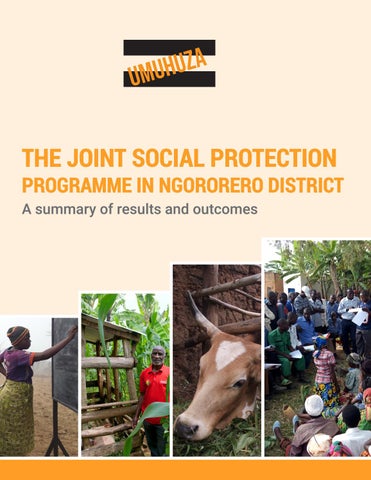
A Z U H U M U THE JOINT SOCIAL PROTECTION
PROGRAMME IN NGORORERO DISTRICT A summary of results and outcomes
AUTHOR Jean Pierre BUCYENSENGE DESIGN & LAYOUT Jean Pierre BUCYENSENGE PHOTOS Umuhuza, Olivier N. Fils & Emmanuel HITIMANA
December 2020
THE JOINT SOCIAL PROTECTION PROGRAMME IN NGORORERO DISTRICT
about umuhuza Founded in 2005, Umuhuza is a nongovernmental organization that works to foster a culture of peace through education, focusing on parents of young children to promote improved childhood development and create peaceful and law abiding citizens. Umuhuza envisions a society in which communities live in harmony, mutual respect and dignity.
4
THE JOINT SOCIAL PROTECTION PROGRAMME IN NGORORERO DISTRICT
5
THE JOINT SOCIAL PROTECTION PROGRAMME IN NGORORERO DISTRICT
Table of content 7
9
foreword
executive summary
12
18
I. INTRODUCTION
ii. implementation
1. A brief Introduction to Social Protection in Rwanda 14
approach
2. Vision 2020 Umurenge Program (VUP) 16 3. The Social Protection Interventions in Ngororero District 16
28
1. Implementation mechanisms 2. Umuhuza Implementation Approach
22 III. KEY RESULTS & OUTCOMES 19
19
1. Key Figures
23
2. Graduation from extreme poverty 24 3. Communities got more than social protection 27
32
34
V. BEST PRACTICE
VI. CHALLENGES
IV. LESSONS LEARNT
36
VII. IMPACT STORIES 6
42
VIII. CONCLUSION & RECOMMENDATIONS
THE JOINT SOCIAL PROTECTION PROGRAMME IN NGORORERO DISTRICT
Foreword Social Protection programs remain a core element of Rwanda’s efforts to fight against poverty and achieve sustainable and inclusive development for all the Rwandan citizens. Social Protection activities are part of the country’s strategy to eradicate extreme poverty1 by 2024 and is seen as a path to achieving the ambitious Sustainable Development Goals (SDGs) targets in eliminating poverty and hunger and significantly reducing inequalities. Social protection activities are implemented across the country’s 30 districts and target the most vulnerable households and families with the aim of helping them to improve their livelihoods and graduate from extreme poverty. The overall objective is to have a society that equally enjoys better living conditions. Initially, the government of Rwanda fully implemented all social protection initiatives through the established local government structure. But as it sought to further improve the delivery of the program and ensure a faster and sustained graduation from extreme poverty, the government adopted a new approach which heralded a joint Government – CSOs partnership for improved delivery of social protection program2. The partnership started with a pilot phase in 2017 in a number of select sectors across districts and was extended to new sectors two years later. However, despite showing great results, this model is yet to be implemented in all villages and sectors across the country.
Government of Rwanda, 7 Years Government Programme: National Strategy for Transformation (NST1), 2017-2024
1
Government of Rwanda, Statement on Cabinet Decisions of 13/09/2016, available at: https://bit.ly/3qEIAd4
2
7
THE JOINT SOCIAL PROTECTION PROGRAMME IN NGORORERO DISTRICT
It is under this partnership that in 2017 Umuhuza entered into an agreement with the district of Ngororero, Western Province, to pilot the joint program in Matyazo Sector and, later in 2018, the program was extended to a second sector: Kageyo. Umuhuza was retained to implement the joint program due to its extensive experience working with communities in Ngororero as well as the existing good relationships with the district. The joint program, which was implemented with funds from the Government and in compliance with Umuhuza strategic objectives, saw Umuhuza bring its experience and expertise in community engagement and community-focused development to improve the delivery of the social protection program. As a result, we have seen huge transformation of the overall social protection environment resulting in improved service delivery mechanisms and accountability in Girinka, the Vision 2020 Umurenge Program (VUP) components (Direct support, Public work and financial services) and a speed graduation of (some) beneficiaries from extreme poverty. As the pilot phase has shown that partnership is key in the social protection section, Umuhuza envisages to continue working with the district of Ngororero to ensure that the lessons and experience of Matyazo and Kageyo Sectors are replicated in other sectors of the district to guarantee better living conditions for the most vulnerable people. This report summarizes the key outcomes of our joint pilot social protection program in Ngororero District, our approach in implementing the activities as well as the lessons we have learnt throughout the process. I would like to extend our gratitude to the Government of Rwanda and particularly the leadership of Ngororero District, for the support and commitment they have shown. Our gratitude also goes to the people of Ngororero, particularly in Matyazo and Kageyo sectors, for their dedication to ending extreme poverty. Together, we can achieve even more.
Mathilde KAYITESI Executive Director Umuhuza 8
THE JOINT SOCIAL PROTECTION PROGRAMME IN NGORORERO DISTRICT
Executive Summary
Over the past decade or so, Rwanda heavily invested in social protection programs to fight extreme poverty and ensure better living conditions for the most vulnerable individuals and households. Poverty remains a serious and challenging obstacle on the country’s journey to sustainable development. But available figures show a positive trend in poverty reduction over the past years. According to Rwanda’s National Institute of Statistics (NISR), poverty rates decreased from 58.9% of the total population in 2001 to 38.2% in 2017 while extreme poverty decreased from 40% of the population to 16% over the same period of time3. The Social Protection Program has root in Rwanda’s Constitution which, in its fifth Fundamental Principle, emphasizes the commitment to build “a State committed to promoting social welfare and establishing appropriate mechanisms for equal opportunity to social justice”4. Social welfare is also emphasized as part of the country’s National Strategy of Transformation (NST1)5 with the country committing to promoting resilience to shocks and enhance graduation from poverty and extreme poverty through improving and scaling up core and complementary social protection programs (P12). Under the NST1, the government recognized that the eradication of (extreme) poverty will require multiple interventions across different sectors that offer incomes, decent jobs and savings as well as pro-poor and inclusive social protection. In 2008, Rwanda introduced a flagship social protection program with the objective of reducing the level of extreme poverty: The Vision 2020 Umurenge Program (VUP)6. VUP comprises activities that are directed towards the most vulnerable individuals and households through direct cash transfers, livelihoods development (financial literacy, skills development, micro-credit, financial education, employment opportunities) and community sensitization on various issues affecting their livelihoods. Together with other social protection activities – such as Girinka7- VUP is considered to be a mechanism to accelerate inclusive and sustainable development and poverty eradication. Initially, social protection interventions were implemented solely by the Government. But in 2016, the Government decided to enlist the service and experiences of Civil Society Organizations (CSOs) in the implementation of the program. A pilot phase of this joint partnership was thereafter introduced, with 3
NISR, Fifth Integrated Household Living Conditions Survey 2016/17
Government of Rwanda, The Constitution of The Republic Of Rwanda Of 2003 Revised In 2015, p34, Official Gazette n° Special of 24/12/2015 4
4
See NST1 in (1) above
Government of Rwanda, 2007, Vision 2020 Umurenge: An Integrated Local Development Program to Accelerate Poverty Eradication, Rural Growth, and Social Protection 6
7 Girinka is pro-poor program introduced in 2006 to help poor families improving their welfare. Under the Girinka program, poor families receive dairy cows to supplement their income and ensure they eat balanced diet
9
THE JOINT SOCIAL PROTECTION PROGRAMME IN NGORORERO DISTRICT
the government providing funds to a select number of CSOs through districts while the organizations worked hand in hand with local leaders to implement the activities in a number of pilot communities. Thanks to a wide experience of working with communities and better understanding of the population and issues facing them in Ngororero District (and in other rural districts), Umuhuza was chosen to implement the pilot phase of the joint Government-CSOs social protection partnership in Ngororero District. In 2017, a Memorandum of Understanding (MoU) detailing roles and responsibilities was signed between the district and Umuhuza, paving way for the implementation of pilot activities in Matyazo Sector and later Kageyo. The first phase was successfully completed in 2018 leading to the renewal of the MoU for further activities that were implemented until mid-2020. In Ngororero District, Umuhuza was mainly responsible of the following activities: ; Promote the understanding and skills on proper management of monthly direct cash transfers, expanded public works and classic public works; ; Equipping beneficiaries with life-changing skills (including on income generating activities, financial literacy, balanced diet, hygiene and sanitation, saving culture, etc.); ; Raise awareness on the rights and responsibilities of social protection beneficiaries; ; Educate beneficiaries on available micro-credit loans and financial literacy to initiate and successfully implement income generating activities. ; Increase beneficiaries’ skills and knowledge on improved livelihoods through dairy cattle farming and the improvement of agricultural productivity through the use of manure; ; Mobilize communities on the use of Umuganda to provide social support to extremely poor and vulnerable households. Thanks to the collaborative efforts with Ngororero District, Umuhuza was able to impact the lives of over 7,100 beneficiaries in Matyazo and Kageyo sectors through direct support, public works, minimum package for graduation and the Girinka program activities across all 26 villages in Matyazo and 27 villages in Kageyo sector. This was a very huge achievements, and has resulted in improved living conditions of the target beneficiaries; with some of those targeted moving along the ladder of poverty to achieve better lives. They are now no longer categorized as poor or extreme poor. These beneficiaries have also benefited from life-saving skills, which are proving essential in sustaining the results so far achieved and even brining in further changes in their lives. Some of these individuals are now model farmers in their communities and continue to work hard to further improve their welfare. The journey to socio-economic freedom continues.
7,100 direct programme beneficiaries in Kageyo and Matyazo sectors
10
26
Total number of villages of Matyazo sector. Interventions targeted all villages
27
Total number of villages of kageyo sector. Interventions targeted all villages
THE JOINT SOCIAL PROTECTION PROGRAMME IN NGORORERO DISTRICT
Lessons learnt There are five key lessons we have learnt from the implementation of the social protection program in Matyazo and Kageyo Sectors: 1. The successful implementation of the social protection activities required a strong partnership and collaboration between Umuhuza and the local government; 2. A strong community engagement strategy coupled with regular follow up of activities led to stronger results; 3. Training and capacity building of beneficiaries were essential components of the social protection program and ensured appropriate use of resources, income, loans and payments, and a better implementation of the income generation activities; 4. Transparency and advocacy are essential for effective community participation and adoption of social protection activities; and 5. The Social Protection activity would have made even greater impact had it been implemented over a longer period
Recommendations Key to the success of this program was a collaborative and community-centered approach that was put at the center of the partnership. It is therefore highly recommended that this approach be scaled up across the district of Ngororero – and to a larger extent across all 30 districts and all 416 sectors – to ensure that more people graduate from extreme poverty. The district should also prioritize social protection activities in its programming, planning and budgeting to ensure that the sector receives due funds. The volunteers who worked tirelessly to reach out to beneficiaries as well as other mechanisms put in place to help vulnerable people climb the ladder out of poverty should continue to be strengthened and mobilized to ensure lasting results. Local leaders and their stakeholders should also continue to collaborate on initiatives that aim to lift people out of extreme poverty to guarantee sustainable and inclusive development for all through extensive follow up of beneficiaries -even after the programs are completed- and connecting them to further opportunities for more income and wealth accumulation.
11
THE JOINT SOCIAL PROTECTION PROGRAMME IN NGORORERO DISTRICT
I.
INTRODUCTION
12
THE JOINT SOCIAL PROTECTION PROGRAMME IN NGORORERO DISTRICT
Following the 2016 approval of the Framework for Joint Government and CSOs Program to improve the Delivery of Social Protection Programs in Rwanda by the Cabinet Meeting held on 13/09/2016, Umuhuza signed a Memorandum of Understanding (MoU) with the district of Ngororero, the Ministry of Agriculture (MINAGRI) and Local Administrative Entities Development Agency (LODA) to co-lead the implementation of social protection services in Ngororero District by improving service delivery mechanisms and accountability in Girinka, VUP (Direct support, Public work and financial services). Umuhuza started implementing activities under the MoU on February 14th, 2017 and has since made a tremendous impact on the lives of target communities in Matyazo sector, Ngororero district. Since 2005, Umuhuza has been working in communities to ensure that they live in harmony, peace, dignity and mutual respect. Its efforts to empower communities has resulted in better lives for beneficiaries of its services. This pool of knowledge and understanding of communities, including in Ngororero District, led the authorities to entrusting Umuhuza with the pilot phase of the joint government-CSOs social protection program in two sectors of the district. Over the past 3 years Umuhuza has been supporting the implementation of social protection program in two sectors in Ngororero: Matyazo and Kageyo. This was done on the backdrop of the organization’s long experience in working with communities, and accumulated expertise as a practitioner of partnership and community engagement. This report documents the implementation process of this program, highlights key achievements and learnings and informs future planning and program design and management by capturing key achievements, lessons and best practice on how the social protection program was implemented and the results it yielded.
13
THE JOINT SOCIAL PROTECTION PROGRAMME IN NGORORERO DISTRICT
1.1. A brief Introduction to Social Protection in Rwanda Social protection encompasses “initiatives that provide income or consumption transfers to the poor, protect the vulnerable against livelihood risks and enhance the social status and rights of the marginalized; with the overall objective of reducing the economic and social vulnerability of poor, vulnerable and marginalized groups” (Devereux & Sabates-Wheeler, 20048 . In Rwanda, social protection interventions are mostly designed for vulnerable elderly women and men as well as poor families and people living with disabilities. They include monthly money transfer schemes targeting mainly the vulnerable elderly and people living with disability, social care services, and livelihood support and employment opportunities to ensure that the most vulnerable people among the community achieve a dignified level of living standards and accelerate graduation from extreme poverty9. It is widely acknowledged that social protection programs greatly contribute to reducing poverty and inequality within the community and promotes inclusive, sustainable development and social justice. In Rwanda, Social Protection activities are guided by the revised Rwandan Social Protection Policy, adopted in June 202010. According to the Policy, social protection includes:
Social Security ; Non-contributory Direct Income Support (DIS) schemes targeting vulnerable individuals and households; ; Mandatory contributory social insurance schemes for those in formal employment; ; Voluntary contributory social security schemes that are regulated by government. ; Maternity insurance ; Targeted health insurance subsidies for key vulnerable groups
Short-term Social Assistance This includes temporary or incidental (one-off) cash or in-kind assistance that addresses shortterm or temporary risks or deprivations. Key interventions currently include: ; Food assistance/emergency relief for households affected by disasters. ; Incidental (one-off) support provided to households in difficulty by local governments; ; Construction and rehabilitation of shelter for vulnerable households. ; Support to the most vulnerable to cover critical health care costs. ; Distribution of essential items to households affected by disasters (drought, floods, landslides etc.). 8
Minaloc, 2020, National Social Protection Policy
9
Idem
10
Minaloc, 2020, National Social Protection Policy
14
THE JOINT SOCIAL PROTECTION PROGRAMME IN NGORORERO DISTRICT
Social Care Services These include protection, psychosocial support, referrals and social inclusion promotion for the most vulnerable: ; Rehabilitation and reintegration services for People living with disabilities (PwDs), elderly persons and vulnerable children, women and youth. ; Services that prevent and respond to violence, abuse and exploitation, particularly against women, children, people with disabilities and older people; ; Outreach services for key vulnerable groups providing protection, psycho-social support and referrals to complementary services; ; Services that ensure that children and the elderly persons remain in families. ; Public communication and advocacy campaigns on the rights of vulnerable groups.
Livelihood and employment support In order to support the attainment of sustainable livelihoods and social transformation among the poor and vulnerable, the social protection sector delivers targeted livelihood development and employment support through multi-sectoral interventions and approached to households with labor, landless and those with land while also facilitating access to programs and services provided by other sectors. Key products, services and schemes include: ; Proximity advisory (caseworker) services; ; Provision of productive assets for income generating activities through multi-sectoral interventions; ; Training and sensitization on Financial literacy & entrepreneurship ; Skills training, particularly for PwDs, vulnerable Youth and Women; ; Community-based livelihood support schemes (e.g. Ubudehe projects, Hanga Umurimo).
15
THE JOINT SOCIAL PROTECTION PROGRAMME IN NGORORERO DISTRICT
1.2. Vision 2020 Umurenge Program (VUP) VUP is a flagship social protection program which aim to contribute to Rwanda’s efforts to alleviate extreme poverty and malnutrition, and to promote social economic transformation by accelerating graduation from extreme poverty and strengthening household resilience.11 VUP Interventions are directed towards the most vulnerable and the poorest (the most extremely poor households) within the community through Direct Support (monthly payment to the most vulnerable to avoid that they further sink into poverty), livelihoods development (financial literacy, skills development, micro-credit, financial education, employment opportunities) and community sensitization (Mobilization of beneficiaries, mentoring on a range of issues including agriculture, nutrition, hygiene and sanitation, health, right and responsibilities, etc). VUP is implemented across all 30 districts since it was introduced as a mechanism to accelerate inclusive and sustainable development and poverty eradication in 2008.
1.3. Umuhuza Social Protection Interventions in Ngororero District Umuhuza social protection interventions in Ngororero were guided by a MoU signed with the district of Ngororero in 2017 and renewed in 2018 – a vote of confidence that indicate the level of trust and results achieved over the first period. Under the agreement, targeted interventions were implemented in Matyazo and Kageyo Sectors between 2017 and 2020, with most of the activities focused on Matyazo Sector. This was part of the pilot phase of the implementation of social protection activities through a partnership between the Government of Rwanda and civil society organizations (CSOs). Umuhuza work in Ngororero District focused on the following components of VUP: ; Direct support: meant to contribute to extreme poverty, malnutrition and inequality reduction through the provision of monthly unconditional cash transfers to extremely poor households without the capacity to work. ; Minimum Package for Graduation: designed to rapidly move people out of extreme poverty conditions by building their potential for income generation and self-reliance where they receive asset grants of small livestock animals and capacity building. ; Expanded Public Works: Aims to provide accessible and appropriate employment opportunities to moderately labour constrained households with low labour capacity or caring responsibilities.
LODA, 2019, Vision 2020 Umurenge program (VUP): Accelerating sustainable graduation from extreme poverty and fostering inclusive national development: Classic Public Works Guidelines 11
16
THE JOINT SOCIAL PROTECTION PROGRAMME IN NGORORERO DISTRICT
; Classic public works: established to get employments on public projects for extremely poor households with labor capacity. ; Financial Services: micro-credit loans and financial literacy trainings for households wishing to start or expand an income generating activity. ; Girinka Program: initiated in 2006 with the main objective of reducing poverty through dairy cattle farming, improving livelihoods through increased milk consumption and income generation and agricultural productivity through the use of manure as fertilizer and promoting unity and reconciliation among Rwandans. Specifically, under the partnership with the district authority, Umuhuza targeted vulnerable people in Matyazo sector (and, starting with this year, in Kageyo Sector) to put in place mechanisms for a proper implementation of all social protection interventions, monitoring of key activities, verification, impact tracking as well as supporting communities to properly manage their income and projects for sustainable growth. The work of Umuhuza specifically targeted the following activities: ; Promote the understanding and skills on proper management of monthly direct cash transfers, expanded public works and classic public works; ; Equipping beneficiaries with life-changing skills (including on income generating activities, financial literacy, balanced diet, hygiene and sanitation, saving culture, etc.); ; Raise awareness on the rights and responsibilities of social protection beneficiaries; ; Educate beneficiaries on available micro-credit loans and financial literacy to initiate and successfully implement income generating activities. ; Increase beneficiaries’ skills and knowledge on improved livelihoods through dairy cattle farming and the improvement of agricultural productivity through the use of manure; ; Mobilize communities on the use of Umuganda to provide social support to extremely poor and vulnerable households.
17
THE JOINT SOCIAL PROTECTION PROGRAMME IN NGORORERO DISTRICT
II.
IMPLEMENTATION APPROACH
18
THE JOINT SOCIAL PROTECTION PROGRAMME IN NGORORERO DISTRICT
2.1. Implementation mechanisms Social protection interventions in Matyazo and, later, Kageyo Sectors was instrumental in improving the living conditions of beneficiaries – leading in some instances to progressive graduation from extreme poverty to a more dignified category.The impact of the interventions is felt along the communities and local leaders. On the implementation side, a strengthened participatory implementation approach and strong monitoring framework from the beginning of the works helped to ensure that those included on the list of beneficiaries fully deserve it by ensuring that the lists are checked, cross-checked and validated to weed out any error or any individual who might have been included or left out by mistake. This was critical in ensuring citizens participation and support for the program and a smooth implementation of all activities. Capacity building of beneficiaries on a range of issues, including financial management, nutrition, financial literacy and hygiene and sanitation, improved implementation processes and led to strong results – uplifting the welfare of beneficiaries in the end. Constant follow-up interventions, including home visits to accompany beneficiaries in the implementation of IGAs and Giirinka, enabled the success of the income generating activities and improved livelihoods through increased milk consumption, income generation and agricultural productivity as a result of the use of manure. Advocacy for beneficiaries to get timely payments and for solutions to challenges facing them also allowed them to timely implement their activities – leading to improved welfare. The experience of Umuhuza in working with communities and its master of the Ngororero socioeconomic context (where the organization started working since 2008) obviously contributed to a smooth implementation of the project. Another element that led to the results include a strong collaboration with local leaders who strongly supported and were involved in the implementation of the social protection activities from the beginning to the end. The will to improve social welfare and facilitate graduation from extreme poverty was tangible throughout the implementation process.
2.2. Umuhuza Implementation Approach During the implementation of the Social Protection program in Ngororero umuhuza adopted a multi-faceted approach which drew from its long-term experience of working with communities. The approach involved awareness creation right from the beginning to win support (both for communities, beneficiaries and local leaders), ensure proper understanding of the program, its objectives and the roles and responsibilities of every individual, capacity building of stakeholders and beneficiaries, tools development, regular monitoring of implementation and results (including regular home visits to stakeholders) as well as the tracking of payments and issues affecting beneficiaries to devise timely appropriate solutions. All interventions involved the following steps: 19
THE JOINT SOCIAL PROTECTION PROGRAMME IN NGORORERO DISTRICT
i)
Awareness creation
Right from the beginning Umuhuza sought to raise awareness among beneficiaries and stakeholders on the new approach, involving the collaborative partnership with the district. Since this was a new initiative, meetings were held with local leaders, non-governmental organizations operating in Ngororero, and the district leadership. The meetings were an opportunity for the participants to understand the joint coordination framework in improving services delivery, as well as everyone’s roles and responsibilities in their implementation. Such meetings resulted in stronger commitment to support the implementation of the social protection activities. In addition, awareness meetings were jointly organized by the Sector and Umuhuza for local leaders at village, cell and sector level; health officials and youth representative, opinion leaders and SACCO representatives. The awareness meetings resulted in sustained and strengthened collaborative efforts for the implementation of the project. As result, the participants to the meeting committed to collaborate with Umuhuza staff and have played an important role in inviting and encouraging beneficiaries to participate in different activities, including meetings and trainings, organized by Umuhuza during the project lifetime.
ii)
Tools development
Umuhuza developed different tools which enabled a smooth monitoring of the key activities and results, follow up of activities, data collection as well as feedback gathering across all intervention areas. The tools were essentially critical in identifying the right beneficiaries through physical verification to ensure that everyone on the list is eligible and meets all criteria; progressively document the state of implementation of the program, capture feedback and support beneficiaries in appeals and complaints; and capacity building on a wide range of topics, including financial management, income generating activities, monitoring of projects, loans and income generating activities (IGAs), etc.
iii)
Regular home visits to beneficiaries (Constant
follow up of activities ) Monthly visits to beneficiaries, including consistent home visits, were a critical element of the project implementation phase as they allowed for a continuous monitoring of the activities and results and timely actions to address any identified gaps. Umuhuza 20
THE JOINT SOCIAL PROTECTION PROGRAMME IN NGORORERO DISTRICT
staff worked hand in hand with an army of volunteers to carry out the monitoring visits which involved conducting an assessment of activities implemented by beneficiaries at household level and providing them with advice to further improve their results. It is during such visits that it was realized that some households were keeping cows in poorly constructed sheds or that there was a lack of full community participation in identifying beneficiaries of the VUP program, especially for public works. This were affecting the results of both programs, and actions and strategies were put in place to remediate on the shortcomings – resulting in strong outcomes in the long run.
iv)
Advocacy and feedback mechanism
Umuhuza did invest efforts in advocating for beneficiaries, to ensure that any challenge they face is duly addressed. Mechanisms to collect feedback from beneficiaries was also instituted to ensure that ideas, opinions, advice, grievances and complaints as well as compliments are collected and duly addressed. After realizing that delays in paying beneficiaries under the various components of the social protection program (public works, direct support) negatively impacted on the welfare of beneficiaries and derailed the delivery of target results, umuhuza advocated on behalf of beneficiaries to ensure that they get their payments duly and timely. Umuhuza also tracked the transfers from the District to SACCOs to beneficiaries to ensure that money transferred reaches beneficiaries accounts as expected. A comparison was also drawn between the payroll list and the recipients of transfers from SACCOs. v)
Results monitoring
Consistent monitoring of results throughout the implementation of the project was critical in ensuring that all actions yield intended results and that any gap or challenges are addressed timely.
21
THE JOINT SOCIAL PROTECTION PROGRAMME IN NGORORERO DISTRICT
III.
KEY RESULTS & OUTCOMES
22
THE JOINT SOCIAL PROTECTION PROGRAMME IN NGORORERO DISTRICT
3.1. Setting the record straight KEY FIGURES
Ever since the inception of the joint program in Ngororero District, the joint social protection programme implemented by Umuhuza and the District of Ngororero reached thousands of individuals and households in the two target sectors. In total, 7,166 people benefited from the social protection program in Matyazo and Kageyo Sectors. They include those who benefited from direct support (1,190), public works (4,271), minimum package for graduation (785) and Girinka (387) in all the 26 villages of Matyazo Sector and 27 villages in Kageyo. Another 533 people benefited from Nutrition Sensitive Direct Support (NSDS).
7166
387
TOTAL NUMBER OF GIRINKA BENEFICIARIES
TOTAL NUMBER OF PEOPLE WHO BENEFITED FROM THE SOCIAL PROTECTION PROGRAM IN MATYAZO AND KAGEYO SECTORS
1,190
TOTAL DIRECT SUPPORT BENEFICIARIES
533
785
TOTAL NUMBER OF PEOPLE WHO BENEFITED FROM THE MINIMUM PACKAGE FOR GRATUATION
4,271
TOTAL PUBLIC WORKS BENEFICIARIES
PEOPLE WHO BENEFITED FROM NUTRITION SENSITIVE DIRECT SUPPORT
23
THE JOINT SOCIAL PROTECTION PROGRAMME IN NGORORERO DISTRICT
3.2. Graduation from extreme poverty The partnership between Umuhuza and Ngororero District to implement social protection activities allowed to improve the lives of target communities in Matyazo and Kageyo sectors. As shown by the numbers of people reached and changes in the lives of beneficiaries, results of the program were significant and sometimes were beyond expectations. Testimonies from local leaders, partners and beneficiaries show a positive trend and strong outcomes in terms of uplifting social welfare, improving livelihoods and a better understanding of the roles of various people involved in social protection programs and the shared responsibilities to work for an equitable, inclusive and sustainable development. In addition, due to continued mobilization efforts, community engagement activities and awareness creation, communities (and not only beneficiaries) became much more involved in the implementation and monitoring of the social protection activities, yielding further stronger results and speeding up the graduation of some beneficiaries from extreme poverty. The partnership has led to more tangible outcomes, including – but not limited to – the following:
Improved management of monthly cash transfers, wages to VUP employees, Girinka and other support to beneficiaries. Thanks to a strong follow up mechanism instituted as part of the joint partnership, there was an observed overall improvement in the management of monthly cash transfers which was achieved through a strong beneficiary verification mechanism, strengthened follow up of transfers at SACCO levels and monitoring of fund use by beneficiaries to ensure they properly utilize the support to improve their welfare. In addition, efforts were made to ensure that beneficiaries under the public works component duly receive their payment and that all transfers are processed on time. Girinka beneficiaries also benefited from a strong monitoring framework, support and capacity building which ensured that the cows they received were better treated while at the same time benefiting from manure to improve their agricultural productivity. And thanks to improved management of wages and cash transfers, and an improved productivity from Girinka, beneficiaries became more active in the implementation of the social protection activities, and were able to improve their living conditions by investing in small income generating activities (mostly the rearing of small domestic animals or running small shops) leading to more diversified income sources and graduation from poverty.
“
Umuhuza was instrumental in helping beneficiaries to better utilize their income and support they receive for their own growth”
24
Laurien Tuyiyoboke,
Social Affairs Officer, Matyazo Sector
THE JOINT SOCIAL PROTECTION PROGRAMME IN NGORORERO DISTRICT
Social economic improvement and, as a result, the graduation from extreme poverty. Thanks to improved management of cash transfers and wages, the social protection beneficiaries accumulated wealth which allowed them to implement small income generating activities and make savings. In addition, beneficiaries joined informal savings groups, locally known as Ibimina, which allowed them to better utilize their finances, access micro-loans and invest in joint income generating activities. The available micro-credit loans and financial literacy trainings for VUP beneficiaries wishing to initiate income generating activities also guaranteed proper resources utilization and better implementation of IGAs leading to better results. Umuhuza also supported households by building capacity of VUP and Girinka beneficiaries on small domestic animal keeping, Integrated pest Control techniques, advanced agricultural practices and income generating activities. Stronger monitoring and follow-up mechanisms ensured that beneficiaries received the technical support they needed to ensure that their projects yield desired results. Combined, this led to more diverse streams of income, increased welfare and eventually a steady graduation from extreme poverty. This is shown in newly acquired assets, including domestic animals, new houses and/or improved farm production.
“I am very grateful because I was able to graduate from the first Ubudehe category12 comprising of the most extreme poor ]to the third category thanks to the social protection program. I came from a long way, but my life has transformed for the better.”
- Jean Claude Imenyabayo, beneficiary
“In the past, I was a manual laborer who earned a living by working in people’s plantations. But once I was employed under VUP, I stopped working in people’s plantations to make money. I now own my own land and a pig which gives me manure to increase my production.”
- Lucie Twizeyimana, beneficiary
Under the previous Ubudehe poverty categorization, individuals were categorized from 1 (Extreme Poor) to 5 (The well-off). Category 3 includes those considered to have enough means to meet their needs and live better without requiring support 12
25
THE JOINT SOCIAL PROTECTION PROGRAMME IN NGORORERO DISTRICT
Increased skills as a result of the
many trainings and capacity building programs targeting beneficiaries meant that they were equipped with the necessary skills they needed to better utilize their resources, properly manage their projects and accumulate wealth – which allowed them to graduate from extreme poverty all along the social protection implementation cycle. Access to skills among extremely poor and vulnerable households opened economic opportunities for the beneficiaries.
Beneficiaries became much more aware of their rights and responsibilities thanks to empowerment programs undertaken by Umuhuza Thanks to trainings and capacity building, beneficiaries understood their rights and how to advocate for them; and as a result were able to claim their rights appropriately. Umuhuza also undertook advocacy programs on behalf of beneficiaries and engaged leaders to ensure that they receive their wages and cash support on time and that the authorities take appropriate and timely measures to address challenges facing the beneficiaries. During the implementation of the Social Protection activities in Ngororero district, it became evident that putting efforts in identifying and solving beneficiaries’ problems and challenges, and linking them to the program’s objectives facilitate to meet the objectives of intervention and ensures that community 26
“Skills is the most important asset one can have. When you are knowledgeable, opportunities become endless.” -
Nsengimana Aloys,
Beneficiary
“I used to sell the manure to other farmers. Umuhuza taught me the manure can help me to increase my productivity and lead me to prosperity. That is how started using it in my plantation. I also started growing improved banana varieties and as a result my production increased”. - Jean Claude Imenyabayo,
beneficiary
THE JOINT SOCIAL PROTECTION PROGRAMME IN NGORORERO DISTRICT
members are well empowered, become conscious of their own problems, and actively contribute to seeking lasting solutions to the issues. This also ensures a speed delivery of the social program targets and allowed beneficiaries to achieve improved welfare.
Improved services for beneficiaries both at SACCOs and public offices Before the government decided to partner with CSOs in the implementation of social protection program, there were stories of delayed payment to VUP beneficiaries, sometimes taking months to process their payments. Often, the blame was put on the lengthy process to verify beneficiary lists or rather on the Savings and Credit Cooperatives (SACCOs), which are tasked with the transfers. When Umuhuza got involved in the process, it targeted these hurdles and instituted mechanisms to address them. First, it ensured that beneficiary lists are verified and confirmed through village meetings and transferred to authorities and SACCOs on time and made a follow up to ensure that money is transferred from the district to SACCOs and from SACCOs to beneficiaries’ accounts on time.
3.3. Communities got more than social protection While the main objective of the joint program was to improve the delivery of social protection programs, Umuhuza introduced other activities under its own portfolio and this benefited communities. Among key ‘extra’ activities that were implemented and which strongly benefited communities in Ngororero District include literacy programs, early Childhood Development and the use of Umuganda to support social welfare of the most vulnerable families and individuals. Ò Through the use of Umuganda, Umuhuza encouraged communities to support its vulnerable individuals. To that end, communities came together to supporting the poorest by helping to build or rehabilitate their houses, construct animal sheds and implement other activities that are beneficial to the welfare of the most vulnerable.
Ò Gender and Early Childhood Development: Trainings were organized on sexual gender based violence and positive parenting, areas which Umuhuza implements in other regions and which are not part of the core social protection programs. Such sessions were prepared to pre-empt and prevent any form of violence that beneficiaries may experience and which would negatively impact on their development journey. They were also instrumental in improving the understanding of beneficiaries on positive parental practices so that the gain increasing income and micro-loans serve them to take care of their children – and entire families- by improving nutrition and hygiene. Other interventions focused on increasing community skills on balanced diet and building the capacity of parents to support the physical, cognitive, and socio-emotional development of their children. The results from these target interventions were that women and men alike understood their responsibilities and devoted to family cohesion by improving intra family dialogue and peaceful conflict management; and acquired skills on parental practices which they went on to practice.
Ò Literacy programs: to foster the culture of reading and improve the reading skills of target beneficiaries, Umuhuza went beyond its mandate in the joint program to offer literacy courses – a program that Umuhuza has been running as part of its core activities for years. The key focus was on promoting adult literacy among beneficiaries. Umuhuza trained and provided learning materials (chalks, boards, notebooks and opens) to community literacy volunteers who went on to provide reading and writing trainings to beneficiaries. 27
THE JOINT SOCIAL PROTECTION PROGRAMME IN NGORORERO DISTRICT
IV.
LESSONS LEARNT
28
THE JOINT SOCIAL PROTECTION PROGRAMME IN NGORORERO DISTRICT
The implementation of any project results in successes, lessons and experiences – which are worthy capturing and sharing to further inform future interventions. Organizations also encounter difficulties and challenges along the journey, which if well managed, cement the positive results and yield more lessons that are critical for future programming. All these learning and best practice have to be analyzed in deep and be well captured to ensure that they can continue to form a strong basis and foundation for other interventions. This report is based on the understanding that capacity building and community empowerment is a complex process which is influenced by both internal and external factors. Overall, the social protection program in Matyazo and Kageyo showed that partnership between CSOs and the Government, community engagement and the participation of all actors is essential in ensuring successful delivery of social protection initiatives and is critical in winning the fight over extreme poverty.
Lesson 1: The successful implementation of the social protection activities required a strong partnership and collaboration between Umuhuza and the local government True to its way of doing things, Umuhuza implemented the social protection program in Matyazo and Kageyo sector by encouraging collaboration, partnership and participation of all stakeholders – including beneficiaries, communities, local leaders and other non-governmental organizations – at every stage of the program. From the start of the program, Umuhuza sought to ensure that every stakeholder is well informed about the program, understand the objectives and targets, and knows what their roles and responsibilities are. Umuhuza made all efforts to ensure that all stakeholders are fully engaged and have timely and accurate information to ensure their active participation in the entire implementation process. Consultation, information sharing, community and stakeholder engagement all proved to be essential throughout the implementation of all social protection activities.
Lesson 2: A strong community engagement strategy coupled with regular follow up of activities led to stronger results Community Engagement enables people's involvement in decision-making, addressing their needs, identifying priorities as well as empowering beneficiaries to implement and better utilize their resources. This was critical in ensuring better welfare and a quick graduation from extreme poverty. Extensively involving leaders and communities in the identification and selection of beneficiaries and in the decision making processes contributed to increasing awareness on the activities as well as issues and challenges facing the implementation part and pushed for a stronger, common analysis of challenges and development of solutions. It also resulted in a stronger sense of ownership of activities and processes and a common commitment to devise timely solutions to issues and challenges that affected them or threatened to derail the entire process. Regular follow up, including consistent home visits and the use of community-based volunteers, allowed constant interactions with beneficiaries as well as an in-depth scrutiny of their practices. To that end, issues were identified early and addressed before they could cause any damage to the implementation of the program’s activities. 29
THE JOINT SOCIAL PROTECTION PROGRAMME IN NGORORERO DISTRICT
Lesson 3: Training and capacity building of beneficiaries were essential components of the social protection program and ensured appropriate use of resources, income, loans and payments, and a better implementation of the income generation activities The social protection program aim to ensure that the most vulnerable households and individuals graduate from extreme poverty. But this goal can only be achieved when target beneficiaries are fully empowered and have the skills, knowledge and intellect to implement and sustain activities designed to help them develop. This is why trainings and capacity building programs tailored for beneficiaries were essential in ensuring that beneficiaries have the capacity to implement social protection activities, properly use their income, loans and direct payments fees as well as to successfully implement income generating activities as a way of improving their welfare and graduate from extreme poverty. Trainings on a range of topics including on social protection interventions, financial literacy, saving culture sanitation and hygiene, nutrition, child protection, positive parenting, reading, among others, were essential in a successful implementation of the program and uplifting beneficiaries from one category to a much better one.
Lesson 4: Transparency and advocacy are essential for effective community participation and adoption of social protection activities The Social Protection Program in Matyazo and Kageyo Sectors of Ngororero District adopted transparent, inclusive processes which is rooted in the way Umuhuza has been implementing its other community-focused projects and activities. This resulted in strengthened trust amongst the population and target beneficiaries and resulted in stronger relationships with all stakeholders. Continued advocacy to address issues affecting beneficiaries, including delays in making payments and transfers as well as verification of lists of beneficiaries meant beneficiaries received their money on time and could implement their activities, including savings and income generating projects, on time. This bolstered their morale to work hard and improve their living conditions and as a result a quick graduation from extreme poverty. The implementation of the joint CSO-Government Social protection Program in Ngororero highlighted the need for continuous capacity building of beneficiaries and Umuhuza and the district of Ngororero should continue to explore these avenues and use these community-focused approaches in order to ensure successful implementation of the social protection activities and guarantee a quick, sustainable and inclusive way out of extreme poverty for the district’s most vulnerable people.
Lesson 5: The Social Protection activity would have made even greater impact had it been implemented over a longer period Poverty alleviation requires enough time to ensure the sustainability of results and guarantee that beneficiaries are ready enough to take their gains to another level. The social protection program in Ngororero District has made a huge impact in the lives of beneficiaries: progressively, beneficiaries are graduating from extreme poverty and living better lives. That is a strong outcome, considering that the program was implemented in just about 3 years. Had the program been implemented for a longer period of time, there is no doubt the results would be much better and higher; and the sustainability of the impact made within the lives of beneficiaries would have had a much bigger guarantee. 30
THE JOINT SOCIAL PROTECTION PROGRAMME IN NGORORERO DISTRICT
31
THE JOINT SOCIAL PROTECTION PROGRAMME IN NGORORERO DISTRICT
V.
BEST PRACTICE
32
THE JOINT SOCIAL PROTECTION PROGRAMME IN NGORORERO DISTRICT
Ð
To ensure successful implementation of the program, Umuhuza elaborated community engagement tools, training toolkits and feedback tools to ensure a smooth, constant and regular monitoring and follow up, home visits, record of complaints and feedback;
Ð
Regular home visits to beneficiaries proved to be an essential way of getting direct information from beneficiaries, interacting with them on the support they receive and projects they implement, and allowed the identification of challenges facing them so that they are timely addressed;
Ð
Awareness meetings for both beneficiaries and local leaders improved the understanding on social protection delivery, role and responsibilities and expected results (E.g. improved understanding in DS and Girinka beneficiaries’ criteria of selection and eligibility so that unnecessary complaints have been reduced).
Ð
The existing good relationships between Umuhuza and local leaders guaranteed a smooth cooperation in the implementation of social protection activities through regular consultative meetings, timely monthly reporting, jointly monitoring and regular communication with sector and districts leaders on the activities.
Ð
The COVID-19 crisis unfolded, it became difficult to implement and follow up social protection activities. Also activities including trainings and mass mobilization were abruptly interrupted. In response, Umuhuza devised strategies that ensured the continuity of the activities while at the same time keeping the flow of information between leaders, Umuhuza and beneficiaries. Current communication technologies made it possible to keep the connection with the beneficiaries via the use of mobile phones. Calls between Umuhuza, leaders and beneficiary representatives served as a follow up mechanism during the height of the pandemic and a tool to collect feedback while at the same time providing information and advices that beneficiaries dearly needed.
33
THE JOINT SOCIAL PROTECTION PROGRAMME IN NGORORERO DISTRICT
VI.
CHALLENGES
34
THE JOINT SOCIAL PROTECTION PROGRAMME IN NGORORERO DISTRICT
Despite the many achievements that were made, Umuhuza also experienced some critical challenges which would have impacted the delivery of the program if they were not swiftly addressed. Notable among the challenges faced were the following: Ð
Limited financial resources: the financial resources allocated to the implementation of the program was not enough to cover all expenses. For instance, Umuhuza couldn’t hire a dedicated staff to follow up the implementation of the program and had to rely on existing staff to implement and monitor activities.
Ð
Early coordination was not perfect: since the joint program was still new, the beginnings of its implementation was not smooth as partners were still experimenting the new approach. Particularly, coordinating activities with the district and local leaders at sector and cell level was difficult in the beginning, with the line of responsibilities for each entity not clearly defined. However, as the implementation moved on, the coordination improved and results increased.
Ð
COVID -19 made it difficult to access and physically interact with beneficiaries: With the COVID-19 pandemic, a set of measures were put in place – including restrictions on movements of people and meetings. As a result, Umuhuza staff were unable to travel to Ngororero for follow up activities, house-to-house visits and meetings with partners and beneficiaries. However, to respond to the challenge, Umuhuza took use of available technologies for coordination and follow up. To that end, Umuhuza reached to beneficiaries through regular phone calls. During such calls, Umuhuza discussed the progress of implementation of activities, challenges facing beneficiaries, and provided information on best practices and methods to further improve the welfare of beneficiaries. In addition, it also collected feedback for further action.
35
THE JOINT SOCIAL PROTECTION PROGRAMME IN NGORORERO DISTRICT
VII.
IMPACT STORIES
36
THE JOINT SOCIAL PROTECTION PROGRAMME IN NGORORERO DISTRICT
“
“ We chose to work with Umuhuza based on its extensive experience working with communities in Ngororero” - MAYOR NDAYAMBAJE
Godefroid NDAYAMBAJE
Mayor of Ngororero District We chose to work with Umuhuza Organization based on its extensive experience working with communities in Ngororero. And coupled with that experience, they brought new ways of delivering social p ro t e c t i o n p ro g ra m s to communities, through a highly participatory approached which ensured citizens and stakeholder engagement right from the beginning and throughout the program implementation process. We are very proud of the work that was done and how it was done. The Umuhuza organization supported us in elaborating clear criteria for the selection
of the social protection program beneficiaries. Then they conducted communitu mobilization and awareness ra i s i n g t o e n s u r e t h a t communities understand not only their roles and responsibilities in the implementation of the program but also understand the process and criteria of identifying beneficiaries. In addition, Umuhuza ensured that beneficiaries better utilize any support they received and invest in long-term transformation rather than living on a day-to-day basis. Today, beneficiaries better understand that the support they receive
is a means to achieve better welfare, and graduate from extreme poverty rather than to just survive. We are aware that the journey to lift our population out of extreme poverty is an everyday fight and that it is far from over; and that we still need the contribution of partners- such as Umuhuza- so that we can even reach more. We wish Umuhuza could continue to provide its expertise and experience in delivering social protection programs and other activities that promote the welfare of our population and eventually leads to better lives. Such collaborative mechanisms are essential”. 37
THE JOINT SOCIAL PROTECTION PROGRAMME IN NGORORERO DISTRICT
“I moved from the first to the 3rd Ubudehe category. May life changed for good.”
Improved skills helped Imenyabayo graduate from extreme poverty For years, Jean Claude Imenyabayo struggled to live: he struggled to meet his basic needs, including regularly putting food on table. In his village of Rwankenke in Matyazo Sector, Ngororero District, he was known amongst the most vulnerable people and rightly put under the first category of Ubudehe, which comprises of the most extreme poor people. He thought his life was doomed and as years passed he lost hope of ever living better. When Imenyabayo received a cow under the Girinka program, he saw a glim of light for his life transformation. But the lack of skills kept his income low. So when Umuhuza offered him a training on dairy cow rearing, the use of manure to improve agriculture productivity and modern farming techniques, Imenyabayo knew he had reached his turning point. “I used to sell the manure to other farmers, unknowing that it was the hidden germ that would transform my life for the better,” 38
Imenyabayo says. “Umuhuza opened my eyes on the opportunities and I decided to act.” Instead of continuing to sell the manure, Imenyabayo decided to rather apply it to his crops. He also took a rather radical decision and uprooted all his old banana plantation and replaced it with modern, diseaseresistant and high-yield varieties. His production increased as a result and his living conditions improved. “Receiving a cow was one step to changing my life. But I lacked the skills to make the best out of it,” he says. “Umuhuza offered me the skills that I needed to transform my life.” All along the journey, Imenyabayo quickly moved out of poverty and is now categorized under the third category, comprising of households and individuals with enough income to live without the need for government support. “I came a long way from poverty but my life has changed for the better. It is something I am very proud of and am working hard to ensure that I can even achieve more.”
THE JOINT SOCIAL PROTECTION PROGRAMME IN NGORORERO DISTRICT
The tale of a life changed by VUP Lucie Twizeyimana always had to work in people’s plantations to be able to put food on the table. She was paid a mere 500 to 600 Frw on a good day; just not enough to feed her family. But when she was enlisted to be employed under the Public Works component of the Vision 2020 Umurenge Program (VUP), her life changed. Instead of working for her neighbors, she now is employed under the VUP where she is paid a daily Frw 1000 wage for her works. “From the money I got, I was able to meet my basic needs and built a kitchen at home,” she says from her home in Gataka Village, Gitega Cell, Matyazo Sector. To further improve her income and status, Twizeyimana was also amongst the first beneficiaries in Matyazo Sector who received small domestic animals courtesy of Umuhuza. She got a pig. “Umuhuza visited me and asked me if I can be able to rear a pig should they give me it. I agreed since I knew it would bring change in my life,” she says. “and there they brought a big , mature pig which they donated to me.”
“
I no longer work for others since I have enough food and my own plot of land.”
Twizeyimana says the pig gives her manure which she applies to her crops and as a result she can produce enough food to feed her family. “I no longer work for others since I have enough food and my own plot of land ,” she says. 39
THE JOINT SOCIAL PROTECTION PROGRAMME IN NGORORERO DISTRICT
“Opportunities are endless” Nsengimana Aloys has always dreamt of the day when he will be able to live a better life. He says it was always hard to afford basic necessities such as soaps to bathe and clean his clothes. So, when he was offered the opportunity to be employed under the VUP, he knew he would make money that would allow him to meet his needs and even improve his living conditions. He immediately seized it and started working – earning a monthly net income of 10 000 Frw. “I initially used the money to buy necessities, including soaps that helped me to improve bodily and household hygiene. I also saved part of them which I used to buy a goat,” he says. As he kept working, Nsengimana also received a pig from Umuhuza as part of efforts to empower communities and support their socio-economic development. “But the most important part of everything was the training that we received on proper pig farming. The skills we gained enabled us to properly take care of the pigs and make profit out of them,” he says. Thanks to the skills he gained, Nsengimana has improved his farming practices and produces more beans, maize and banana. Life is better today, he says. 40
“Skills is the most important asset one can have. When you are knowledgeable, opportunities become endless,” he notes. “If today we can dream to achieve even more, it is because we have realized that it is possible. This was only possible because we were offered trainings that opened doors to opportunities that we didn’t see in the past.”
“
When you are knowledgeable, opportunities become endless”.
THE JOINT SOCIAL PROTECTION PROGRAMME IN NGORORERO DISTRICT
41
THE JOINT SOCIAL PROTECTION PROGRAMME IN NGORORERO DISTRICT
VIII. CONCLUSION & RECOMMENDATIONS
42
THE JOINT SOCIAL PROTECTION PROGRAMME IN NGORORERO DISTRICT
Social Protection is important in the journey to achieve sustainable, inclusive development. While a lot has been done to alleviate poverty amongst the most vulnerable households and individuals, social protection remains a sure path to ensure more people graduate from extreme poverty and have all the tools they need to achieve better living conditions. While in the beginning, the Government of Rwanda sought to implement these activities through its established local leadership structures, a major shift was operated in 2016 when it decided to engage CSOs in the program. Ever since, a pilot joint program was initiated, which proved to be a success. Partnership and collaborative efforts between the government and CSOs ensured that more people could quickly graduate from extreme poverty as they received more attention, skills and experiences from the CSOs, and a stringent follow-up and monitoring mechanisms ensured that any issues and challenges were identified and addressed before it could cause negative effects on the program and its beneficiaries. Feedback mechanisms, community engagement strategies and stakeholder coordination guaranteed a strong sense of trust, transparency and ownership among all levels – resulting in a successful implementation of the program. Capacity building and trainings empowered communities and equipped them with the skills and tools they needed to contribute not only to a successful implementation of the program but also to ensure the sustainability of the achievements made. Umuhuza has been a champion of community engagement and has a vast, extensive experience of working with communities. It is this record that helped streamline activities and deliver beyond the expected threshold. Significant change has been attained in the lives of beneficiaries and some of them are no longer categorized as poor: they have graduated from extreme poverty and are enjoying better lives. Theirs is a story of deep transformation: they have victoriously emerged from the darkness of poverty and now live to tell the story of an inclusive, sustainable change that was made possible through hard work, collaboration, mutual support and unrelenting commitment to live better. To ensure that these individuals and others continue to live better lives, it is recommended that:
To the District of Ngororero ; As the pilot phase of the joint Government –CSOs Social Protection Program framework comes to a conclusion, continue to support beneficiaries to ensure that they can carry on and build from the achievements made under this phase to make even greater changes within their lives and their communities; ; Continue to prioritize social protection activities in their planning, programming and budgeting processes so that many more households and individuals can have the opportunity to graduate from extreme poverty ; Keep enlisting the services and support of experienced CSOs, such as Umuhuza, who understand communities and have the experience and skills to drive social protection to success; 43
THE JOINT SOCIAL PROTECTION PROGRAMME IN NGORORERO DISTRICT
; Strengthen collaborative approaches with all stakeholders and communities to reach sustainable, inclusive development; ; Extend the collaborative model to all the district’s 13 sectors.
To Umuhuza ; Continue to advocate for the prioritization of social protection programs in the budgets and programming of districts; ; Continue to follow up on the beneficiaries to ensure that the results achieved can last longer and bring even bigger impact within the communities and households in target areas; ; Continue to mobilize the army of volunteers to support the most vulnerable people as they work to climb the ladder out of poverty; ; Include social protection programs as part of its intervention areas in the long run.
To beneficiaries ; Never take their achievements for granted and continue to work to even make greater changes within their lives by investing more in income generating activities, learning new skills and ways of doing things, adopting improved farming methods and seeking advices from local leaders, opinion leaders, their peers and CSOs to advance their lives;
To the government of Rwanda ; Scale up of the joint Government – CSOs partnership on social protection to all districts and all sectors across the country to ensure that more people can quickly graduate from extreme poverty; ; The relatively limited timeline of the joint partnership is likely to hinder the full potential of the initiative. The government should consider a timeframe of up to five years to ensure that the results are sustainable and avoid that some beneficiaries may end up sliding back into poverty.
44
“
THE JOINT SOCIAL PROTECTION PROGRAMME IN NGORORERO DISTRICT
Umuhuza ensured that beneficiaries better utilize any support they received and invest in long-term transformation rather than living on a day-to-day basis. Today, beneficiaries better understand that the support they receive is used as a means to achieve better welfare, and graduate from extreme poverty rather than to just survive.” Godefroid NDAYAMBAJE
Mayor of Ngororero District
45
KG 573 st, Kigali - Gasabo +250 280-539-555 P.o.Box 2030 Kigali – Rwanda info@umuhuza.org.rw www.umuhuza.org.rw
A Z U UMUH