

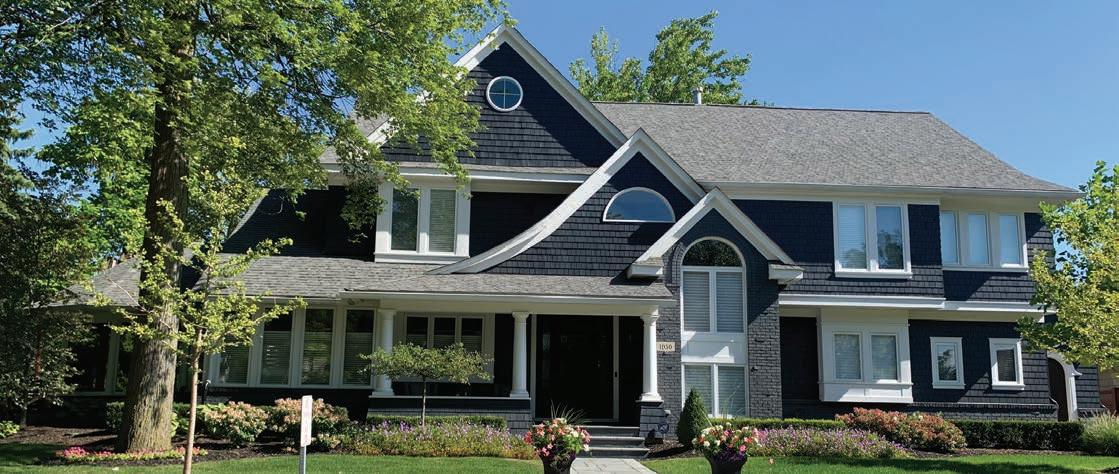
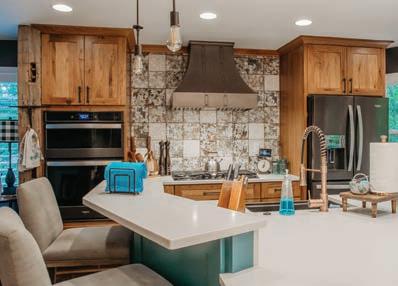
Ashwin Building Company is a family-owned home building & remodeling business based in Northville, Michigan with 35 years of experience in construction, home remodeling, and contracting. Blending time-tested construction practices and design, we personally strive to provide the best services to our customers before, during, and after project completion.
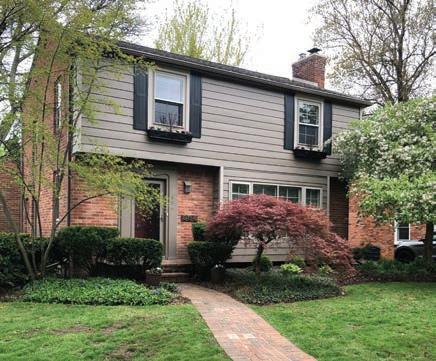

Let us bring your vision to life and create a space that truly reflects your style and personality. Contact us today to begin your journey to a beautiful home!






Please consider a donation to support The Rock. Since we began publishing more than five years ago, our goal has been to provide our readers with valuable information about the Plymouth community each and every month. Your support is vital if you would like to see us survive and grow. The Rock is sent free to every address in Plymouth, yet is not free to produce.
That is the foundation of this magazine. If you find it of value, please consider supporting it. We need your support.
Please send donations to: Journeyman Publishing 16435 Franklin Northville, MI 48168
You can also make donations via Pay Pal to kurtkuban@gmail.com.
Thanks in advance,
• Reach 21,000 addresses every month.
• We direct mail to every address in the 48170 zip code.
• Our locally-owned and produced publication is an affordable way for your business to reach the entire Plymouth market.
To secure space in an upcoming issue of The Rock, contact Advertising Director Scott Buie at (313) 399-5231, or via email at scottbuie@therockmagazine.com or advertising@therockmagazine.com.


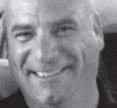

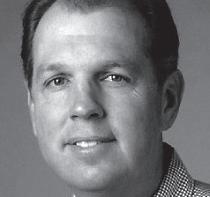






KURT KUBAN – Publisher
Kurt is an award-winning journalist, having served as a reporter and editor for several local newspapers and magazines, including the Plymouth Observer He has been a journalist for over two decades. He founded Journeyman Publishing, which also publishes The ‘Ville, in 2017.
SCOTT SPIELMAN – Editor
Scott graduated from the University of Oregon with a degree in Journalism. He covered western Wayne County for more than 12 years at several publications before transitioning into corporate communications and media relations. A Canton resident, he has also finished his first novel and is hard at work on his next.
SCOTT BUIE – Advertising Director/Vice President of Sales
Scott has 20+ years creating advertising campaigns for clients in Metro Detroit. After managing sales for radio stations for 17 years he purchased Street Marketing, where he works closely with a variety of businesses and events. Scott and his family have lived in the Plymouth/Northville area for over 23 years.
JENNY PEARSALL – Creative Director
Jenny has been in the design and print industry for over twenty years, holding various positions in graphic design, print buying, production and print management. She also owns Bovia Design Group, a company specializing in publications and corporate branding.
BRAD EMONS – Writer
Over the course of his four decades with the Observer & Eccentric, Brad established himself as one of the preeminent prep sports reporters in the state, winning many journalism awards along the way. His greatest joy is interviewing local athletes and coaches, and reporting on their efforts.
Tim brings a penchant for telling personal stories that run the gamut from news to sports. During more than 35 years in journalism, mostly with the Observer & Eccentric, he has earned numerous state and national awards. The Wayne State grad is a published author and rec ice hockey player.
WENSDY VON BUSKIRK – Writer
Wensdy graduated with a degree in journalism from Wayne State University. Her first job was working as a reporter for The Northville Record. Now, as a freelance writer and editor, she works for a variety of magazines, including The Rock. -Photo by Kathleen Voss
SUE VOYLES – Writer
Growing up, Sue always knew she wanted to be a writer. She has written for many publications over her long career in public relations and journalism, and taught English and journalism at Schoolcraft College. In 2022, she received the national Headliner Award from the Association for Women in Communications.
BILL BRESLER – Photographer
Bill arrived in Plymouth in 1977 to work for the Community Crier. He also worked for the Plymouth Observer for many years. Bill, who taught photography at Madonna University, retired from what was left of the newspaper business in 2019 and now freelances. He’s happy to be back in the Plymouth community.
BRYAN MITCHELL – Photographer
Bryan started working as a photographer more than 30 years ago, and was a staff photographer for the Plymouth Observer in the 90s. He has freelanced for The Detroit News, The Guardian, Reuters, and other publications. His photography has appeared in newspapers and magazines around the globe.
Sean is a freelance photographer who is originally from Chicago, where he spent many years in the world of broadcast television. He and his family moved from Chicago to Northville in 2021. He lives with his wife, Angelique (a 2025 Detroit News "Michiganian of the Year"), daughter Sadie, a cat, and an English black lab.
content in this publication without the written permission of the publisher is strictly prohibited. Comments are welcome at kurtkuban@therockmagazine.com .
Well, that was a month.
The Plymouth Township Board of Trustees appointed a replacement for Clerk Jerry Vorva on May 12 and I, for one, am relieved.
I think Kim Gaedeke was one of the top two of the six candidates who ultimately interviewed for the role, but the reason for my relief is not that they agreed, but that the board picked anyone at all—and they were fairly unified in their decision. The only one opposed was Trustee Sandy Groth, who, along with Trustee Jen Buckley, had also applied for the position.
Throughout her presentation and interview in front of the board on May 5, Gaedeke (whose name is pronounced Gay-deh-ka), sounded reasonable, professional, gracious and very smart. I think she’ll bring a level of measured professionalism to the board—and that is sorely needed, because this has not been a good time for Plymouth Township government. At all.
The two meetings leading up to the May 12 appointment laid bare a level of dysfunction that should concern every township resident, township employee, or anyone seeking to do business in the community.
Ron Richards, one of the other candidates for the clerk position, even put it into words as he announced that he was withdrawing his name from consideration: “There is a lot of dysfunction here that I just don’t want to be a part of.” He received the biggest round of applause of the night for that comment.
Richards had witnessed what anyone watching township board meetings recently has also seen: name-calling, unprofessional conduct, unprofessional—and sometimes bewildering—comments from the board, residents yelling at officials or catcalling from their seats, board members yelling back, decorum cast aside like an outfit that no longer fit.
“I had to call the Detroit News and tell them that my high school girlfriend’s name was Nancy. We dated for three years and never consummated that relationship,” Trustee John Stewart told the crowd on May 5. You can’t have that. He also called Supervisor Chuck Curmi “King Charles” on a couple of occasions.
And you can’t have the treasurer saying things like “I’m sure that can be arranged,” when talking about someone’s death (even if he was joking), or saying “That’s bullsh*t” to members of the audience or his colleagues, like Bob Doroshewitz did on April 21.
Or Trustee Jen Buckley, using her five-minute pitch for the clerk’s position on May 5 to not talk about her qualifications, but to drag Groth through the mud—after saying, ironically, that she “prayed about it.”
Come on folks. The people of Plymouth Township deserve better. They’re expecting the people they elected, at minimum, to act like adults and not hurl insults or shout at their colleagues—or to nurse old grievances. That kind of behavior isn't serving anyone, or anything. At the local level, serving the community should be a non-partisan job. People who serve on township boards or city commissions are just neighbors helping neighbors, residents pitching in to improve their community. In theory, anyway.
I hope Gaedeke can bring some sensibility and professionalism to the board, I really do. But she can’t do it alone. It’s not her job. That responsibility rests primarily in the person with the gavel and Curmi needs to recognize that, accept it, and act on it.
It’s well past time to bring respect back to township hall—respect for the residents, respect for the employees who serve those residents, respect to the people serving on the board, who volunteer their time or who simply want to voice their opinions.
Isn’t that why they were elected in the first place?



By Scott Spielman
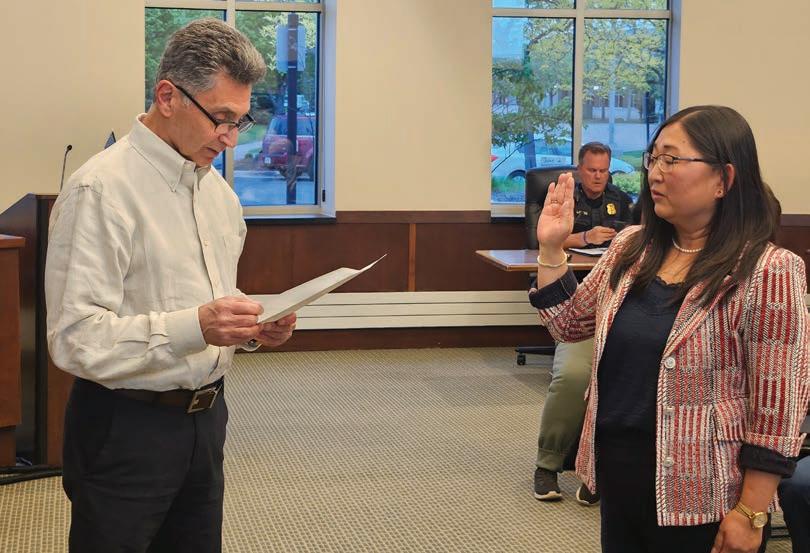
Nearly two months to the day after Clerk Jerry Vorva resigned from his position as Plymouth Township Clerk, the board of trustees appointed a new one.
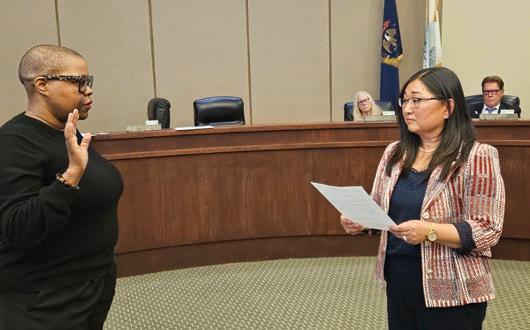
Kim Gaedeke, currently the managing director of the Office of Vice President for Research: Opioid Research at the University of Michigan, was appointed to the position on a 5-1 vote Tuesday, May 12. Gaedeke, who was sworn into office that night, has also served in executive leadership at the Michigan Department of Licensing and Regulatory Affairs (LARA), including roles as chief deputy director and chief of staff.
“I know we’re going down the right road,” said Township Supervisor Chuck Curmi.
“I think she’s going to be a great clerk,” said Trustee Mark
Clinton. “I’m looking forward to the next two years—and beyond.”
Gaedeke emerged as a consensus candidate at a special meeting on May 5, where the board heard from six township residents, including current trustees Jen Buckley and Sandy Groth, who were interested in filling out the remainder of Vorva’s term. That meeting was necessary because the first attempt to fill the spot at a township meeting on April 21 resulted in a 3-3 deadlock, with Curmi, Groth and Trustee John Stewart supporting Groth and Buckley, Trustee Mark Clinton and Treasurer Bob Doroshewitz supporting Buckley.
Gaedeke said her commitment to public service was inspired by her parents, who both worked in township and county government.
said. “They were true examples of how to live a life of faith, humility, respect, dignity, responsibility and integrity, which are all characteristics that I try to reflect in how I live.”
She said her previous roles have all included responsibilities regarding records management, financial operations, licensing and regulatory issues—all of which would suit her well in the clerk’s role.
“I am grateful and honored to be appointed by the township board to serve as clerk,” she said. “It is an incredible responsibility and I look forward to working alongside Supervisor Curmi, Treasurer Doroshewitz and our trustees as we work together to serve our community. During the next 2.5 years of this appointment, I hope to earn the trust of the Plymouth residents by maintaining the integrity of our elections and fulfilling the duties of the clerk.”
The vote was 5-1. Groth was the only board member who voted against the appointment. She said she was in favor of appointing someone on a temporary position to take on some clerical duties, like paying township bills, and then putting the clerk’s position on the November ballot.
“I learned early on the value of public service. My parents were deeply dedicated to wanting to make a difference in the community and a better future for generations to come,” she
“I think in the interests of our citizens, we should allow them to make a decision rather than us arbitrarily making one,” Groth said. “We tried the first step
and we weren’t able to reach a consensus or conclusion. So rather than permanently appointing someone who does not have the background and was not chosen by the residents, why wouldn’t we allow the temporary appointment so the work continues to get done but the citizens have a say in who is the clerk?”
Curmi reminded her, however, that she wanted to put off the appointment so that whoever took the role would not have to run for the position this year. The filing deadline for candidates was April 21. Groth took issue with that.
“I did not discourage the use of an election,” she said. “I told you that if I was going to step up and do the clerk’s duties, I was not going to give up my seat on the board so that I could step up and have to do the clerk’s duties and then have to go through an election. That does not mean I was discouraging an election.”
It would not have been the first time Groth reversed her position. When asked on April 21, she said she would not appoint current deputy clerk Paula Jefferson to serve as her deputy. On May 5, she said she had no problem working with Jefferson. Retaining the current staff in the clerk’s department emerged as an important issue, given the impending election season.
Doroshewitz told Groth he would not support her because of what he called a pattern of strained and dysfunctional relationships when she previously worked in
the township. He said she also insulted members of his staff.
"You don't hire the resume, you hire the person," he said. "Resumes can be impressive. They can check every box on the paper, but they don’t tell you how someone treats people, how they handle conflict, whether they take accountability and whether they can lead effectively when things get difficult. They can leave out critical information or mislead, and that’s what matters most here.
“If this decision were based purely on technical qualifications, this would be a much easier conversation— but it’s not,” he added. “This is an executive leadership position. The clerk must lead people, build trust, collaborate with other leaders, maintain professional relationships and create a stable work environment. Those are not secondary qualities—they are the job.”
Groth was also the lone vote against accepting Vorva’s resignation—which was on the May 12 agenda, too. She left the meeting after the vote to appoint Gaedeke, but before the meeting was adjourned.






The sport has expanded quickly in high schools and universities across the country and is on track to debut in the 2028 Olympics. That growth is especially evident in Michigan, which has exploded from just six high school teams in 2023 to around 81 today.
At P-CEP, the idea began when Canton High School Athletic Director Tiffany Roberts, who had previously helped start a girls flag football team at Carman-Ainsworth High School in Flint, approached Newton as the Detroit Lions and NFL worked to expand the league.
The response from students was immediate, and the excitement has only grown.
The team began meeting back in December,
Girls flag football is sweeping the nation, and the Plymouth-Canton Educational Park is now part of the movement, taking the field for its inaugural season. More than 60 girls from all three high schools have signed on to play for the Prowlers.
They compete in the Michigan Girls High School Flag Football League sponsored by the Detroit Lions.
“The league’s growing exponentially,” said
Head Coach Eric Newton, who also serves as head coach for Canton’s varsity boys football program. “They’re asking questions, and they’re learning a lot, so I’m just excited to see what they can do.”
The Prowlers rose out of a huge push by the NFL and Detroit Lions, which has partnered with the National Association of Intercollegiate Athletics (NAIA) to establish girls flag football as a varsity sport at the collegiate level.
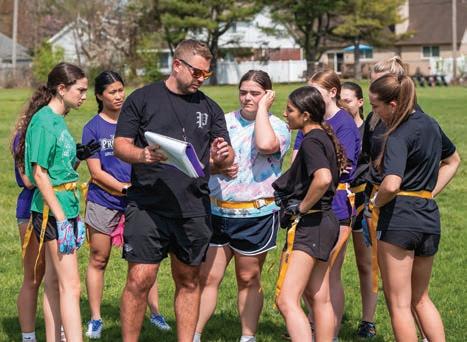

starting with classroom sessions to introduce the sport and its terminology before heading out for practices.
“Our first time we went outside, it started to snow sideways, and the girls are out there



running around, throwing the football,” Newton said. “I think they’re having a blast.”
That energy has carried through the season.
The Prowlers have 38 girls on varsity and 25 on junior varsity, strong numbers for a firstyear club program that pulls athletes from Canton, Plymouth and Salem high schools. Because many players also compete in other spring sports, the team rotates weekly captains rather than naming permanent ones.
Newton says the players’ commitment has stood out most. Practices run three days a week, and the girls are quickly taking to the game.
“The girls are learning a lot about the game of football,” Newton says. “It’s a little different than tackle, but there’s a lot of the same concepts and terminologies that we’re using as coaches that we would use with our boys.”
Helping lead the program is a full coaching staff that includes Associate Head Coach Derek Hoffman, a counselor at Plymouth High School and offensive line coach for the boys team; Matt Penn, defensive coordinator; Mike Bossio, JV coach; Nick Troher, offensive assistant and varsity offensive coordinator; and Alex Smaoui, an assistant currently interning with Eastern Michigan University football operations.
Student assistants Max Hornbacher, a Plymouth senior, and Luke Creighton, a Salem senior, also help support the team after playing for their respective football programs.
The Prowlers’ first season included
scrimmages against North Farmington, Wyandotte Roosevelt, Brighton and Farmington; with games against Northville (a 12-6 win!), Birmingham Groves, Brighton, Detroit Catholic Central, and Ypsilanti Lincoln.
If all goes well, the team will take the field for the 2026 Detroit Lions Youth Football girls flag football championship on May 31 at Ford Field.
Newton believes the girls flag football is only getting started.
“In the next couple of years, I think it’ll become another sanctioned sport for the state,” he said.
With colleges like Michigan State, Davenport and Saginaw Valley State University announcing women’s flag football programs and scholarships, the opportunities are expanding quickly.

For now, the focus is on building something new at P-CEP and inviting the community along for the ride. For a first-year team, the momentum is already unmistakable.
“I’m having a blast. I’m just super, super proud of our girls so far,” he said. “I mean, they show up and they practice their butts off.”
After we get to know you on a personal level, we’ll partner with you throughout your journey, always sharing strategies to help bring you closer to the future you see for yourself.
Contact us now to start your journey toward financial freedom.

John A Birchler CFP®
1176 South Main Street Ste A Plymouth, MI 48170 734-454-4653







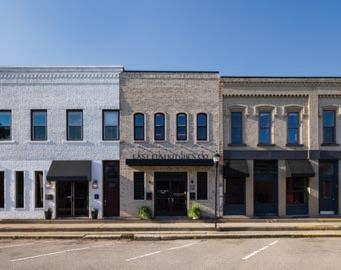



Jlooking out toward Kellogg Park.
Well, kind of. A portrait of the late Plymouth benefactor now adorns the walkway between the Penn Theatre and The Gathering, one of nine new pieces of exterior art installed for the third phase of the Plymouth Art Walk. Painted by Plymouth artist Tony Roko, who used a 1963 photo of Wilcox as inspiration and gave it his own unique style, the portrait exemplifies the theme of the third phase, which is to celebrate the history and culture of Plymouth.
“Each piece has a little story to it,” said Lisa Howard, executive director of the Plymouth Community Arts Council. “[Jack] is such an important philanthropist for our entire city. I thought it would be really fun to have Tony do a Jack Wilcox portrait.”
The third phase of the Art Walk is a collaboration between the

Development Authority and Tony Roko’s Art Foundation, with which Roko works with young people who might not otherwise get a chance to explore their artistic talents. The city hosted a ribbon cutting during the Spring Artisan’s Market last month. The art, which was installed on the buildings near Kellogg Park, was created by young people affiliated with the arts council and Roko’s foundation.
“It’s not really just about the art. It’s about mentorship,” said Roko. “The works are beautiful and compelling and wonderful to look at, but for me it’s about more than that. It’s about connection and being a positive role model in their lives. It’s a little broader than ‘I’m teaching a kid how to paint.’”
The Art Walk dates back to about 2018, when Patrick O’Neill of Family Legacy Wealth Services was looking for ways to install art in some underused spaces
the alleyway cut-throughs from the Central Parking Deck and Fleet Street. Rather than pay for—and have to maintain—large murals, Roko suggested doing something similar to the Detroit Institute of Arts’ Inside Out program, which brings replicas of well-known artistic masterpieces to outdoor spaces.
“I said: ‘We can do it like the DIA does’,” Roko said. “It’s noninvasive. When we want to take it down, we take it down. They loved the idea. It was just a huge success.”
O’Neill sponsored the first phase and, when that took off, Community Financial (now orsa) sponsored the second. The third phase is sponsored by Roko’s foundation, the DDA and, through a grant from the Wilcox Foundation, the PCAC.
The move to bring more art closer to the park was intentional, according to Sam Plymale, director of the Plymouth DDA.
ways we could activate some of the underutilized areas of the downtown, the walkway areas that maybe didn’t look so great,” he said. “It really activates those areas that are maybe underutilized and brings art and culture and our community history. To show that off and to show the creativity of the artists in our community, I think that’s an important piece.
“Downtowns are gathering places. To make them look good and have the art and culture reflected in our downtown, that’s part of the deal,” he added.
The young people were given topics to paint, but then allowed to use their own creativity to address them. Shannon O’Connor, a former PCAC intern, used a combination of abstract and surrealism to depict agriculture and livestock in her piece, which is on The Gathering facing Kellogg Park.
Her work depicts a ribbon of blue water flowing down center

of the piece that represents the Rouge River bending through Plymouth to Detroit, from the farms to the Eastern Market. Hooves represent livestock, while apples represent orchards of Plymouth.
“Everything flows with the river down the piece. Usually, my art is a collection of ideas sewn together into one through abstract and a little bit of surrealism,” she said. “There’s
a little bit of realism. I do like to make sure everything works together when I’m trying to sew ideas together.”
O’Connor, a Canton resident who earned an art scholarship through PCAC and has helped judge subsequent entries, said it was an honor to have work on permanent display where it all started.
“I think it’s super important for the public to have access to art and different culture and history of Plymouth,” she said. “I’m so grateful to be part of this project.”
The new phase is interactive, too. Each piece contains QR codes that direct users to the
a little bit about the piece and the artist who created it.
Howard said the interactive nature of the third phase not only allows visitors to learn more about the art, but also the value that leaders place on having it in public—which everyone appreciates.
“Even people who don’t go to art events value cities more or towns more or areas more that have those things,” she said. “There’s a psychological value of the energy and vibrance that comes from the arts, the perception that the people who run this place value them.
“It makes people notice places more. It’s a great talking point
“I think it’s super important for the public to have access to art and different culture and history of Plymouth. I’m so grateful to be part of this project.”
Shannon O’Connor, one of the artists who contributed to the Art Walk
DDA Website, where there is a dedicated page that displays where the pieces are located, tells

when people come into town, whether they like it or don’t like it,” she added. “We just want them to engage with it.”
With the third phase in the books—and on the buildings— talk is gradually moving toward a fourth phase. Although nothing is planned yet, Roko and Plymale said there would be interest in extending the Art Walk toward Old Village to support a longstanding city goal of connecting the two downtowns.
“We’ve chatted about possible connectivity now that Old Village is really in a revival stage,” Roko said. “Obviously, that would require discussions and another sponsor. Ideally, we just need to think about where are some spots that logistically make sense to initiate that connectivity between downtown and Old Village — and make it walkable.”
“There’s nothing in the works right now, but I do see it expanding,” Plymale said. “This

is just the start. I see this growing over the years.”
In the meantime, maps and more information can be found on the DDA website at www. downtownplymouth.org — and by walking through town to explore the underutilized areas themselves.


“It’s really made a great impact on the community and the response has been really special,” Roko said. “Each one of them was a very special experience. It’s not just about the image. They’re little diary entries for me.”
For more information about the Plymouth art Walk, visit www.downtownplymouth.org.
The growing popularity of e-rides—including electric bicycles (e-bikes), electric dirt bikes, mini bikes, and e-scooters—has introduced new and convenient ways to travel in communities like Plymouth. As their use continues to increase, so does the importance of understanding how to operate them safely—particularly for children and teenagers who may be newer to riding in traffic environments.
The growing popularity of e-rides—including electric bicycles (e-bikes), electric dirt bikes, mini bikes, and e-scooters—has introduced new and convenient ways to travel in communities like Plymouth. As their use continues to increase, so does the importance of understanding how to operate them safely—particularly for children and teenagers who may be newer to riding in traffic environments.
is essential. Because younger riders may not yet have completed formal driver education, they may be less familiar with how to navigate these situations safely and confidently.
As outlined in the accompanying chart, not all e-rides are the same. Differences in speed capability, age requirements, helmet use, and where they can be ridden (such as streets versus sidewalks) vary depending on the type and classification of the device. Understanding these distinctions is an important first step in safe and lawful operation.
As outlined in the accompanying chart, not all e-rides are the same. Differences in speed capability, age requirements, helmet use, and where they can be ridden (such as streets versus sidewalks) vary depending on the type and classification of the device. Understanding these distinctions is an important first step in safe and lawful operation.
The growing popularity of e-rides—including electric bicycles (e-bikes), electric dirt bikes, mini bikes, and e-scooters—has introduced new and convenient ways to travel in communities like Plymouth. As their use continues to increase, so does the importance of understanding how to operate them safely—particularly for children and teenagers who may be newer to riding in traffic environments.
Many e-rides are used on public roads alongside motor vehicles, where knowledge of traffic patterns, signage, and right-of-way rules is essential. Because younger riders may not yet have completed formal driver education, they may be less familiar with how to navigate these situations safely and confidently.
As outlined in the accompanying chart, not all e-rides are the same. Differences in speed capability, age requirements, helmet use, and where they can be ridden (such as streets versus sidewalks) vary depending on the type and classification of the device. Understanding these distinctions is an important first step in safe and lawful operation.
Plymouth Police Chief Al Cox emphasizes that safety—not punishment—is the department’s primary focus. Officers are working to help riders understand that the “rules of the road” apply to all users, including those operating e-rides. This includes obeying traffic signals, stopping at stop signs, yielding when appropriate, and riding no more than two abreast when traveling together.
Many e-rides are used on public roads alongside motor vehicles, where knowledge of traffic patterns, signage, and right-of-way rules is essential. Because younger riders may not yet have completed formal driver education, they may be less familiar with how to navigate these situations safely and confidently.
Plymouth Police Chief Al Cox emphasizes that safety—not punishment—is the department’s primary focus. Officers are working to help riders understand that the “rules of the road” apply to all users, including those operating e-rides. This includes obeying traffic signals, stopping at stop signs, yielding when appropriate, and riding no more than two abreast when traveling together.
Many e-rides are used on public roads alongside motor vehicles, where knowledge of traffic patterns, signage, and right-of-way rules
“Our goal is to prevent serious accidents and keep everyone safe,” Cox explained. “Some e-rides can reach speeds between 20 and 28 miles per hour, depending on the type. That makes it critical for riders to stay aware of their surroundings and follow traffic laws just like any other road user.”
Plymouth Police Chief Al Cox emphasizes that safety—not punishment—is the department’s primary focus. Officers are working to help riders understand that the “rules of the road” apply to all users, including those operating e-rides. This includes obeying traffic signals, stopping at stop signs, yielding when appropriate, and riding no more than two abreast when traveling together.
“Our goal is to prevent serious accidents and keep everyone safe,” Cox explained. “Some e-rides can reach speeds between 20 and 28 miles per hour, depending on the typ makes it critical for riders to stay aware of their surroundings and follow traffic laws just
“Our goal is to prevent serious accidents and keep everyone safe,” Cox explained. “Some e-rides can reach speeds between 20 and 28 miles per hour, depending on the typ makes it critical for riders to stay aware of their surroundings and follow traffic laws just like any other road user.”

A guide to safe riding for all ages as e-mobility grows in our community
A guide to safe riding for all ages as e-mobility grows in our community

E-bikes—one of the most common types of e-rides—are generally allowed on roadways and are treated similarly to traditional bicycles under current regulations. Riders are expected to stay to the right side of the road but may move within a lane when necessary for safety, such as when preparing for a turn.
The chart also highlights how e-bikes are divided into three classes:
E-bikes—one of the most common types of e-rides—are generally allowed on roadways and are treated similarly to traditional bicycles under current regulations. Riders are expected to stay to the right side of the road but may move within a lane when necessary for safety, such as when preparing for a turn.
and do not always align with requirements for similar vehicles, such as mopeds.
Class 1 and Class 2 e-bikes: Pedal-assisted and limited to 20 mph
The chart also highlights how e-bikes are divided into three classes:
Class 3 e-bikes: Can reach speeds up to 28 mph, require helmets for riders under 18, and have a minimum operating age of 14
Class 1 and Class 2 e-bikes: Pedal-assisted and limited to 20 mph
Class 3 e-bikes: Can reach speeds up to 28 mph, require helmets for riders under 18, and have a minimum operating age of 14
E-bikes—one of the most common types of e-rides—are generally allowed on roadways and are treated similarly to traditional bicycles under current regulations. Riders are expected to stay to the right side of the road but may move within a lane when necessary for safety, such as when preparing for a turn.
In contrast, other e-rides—such as electric dirt bikes and mini bikes—are not street-legal and are typically restricted to private property use, while e-scooters have their own distinct guidelines, including helmet requirements for younger riders.
The chart also highlights how e-bikes are divided into three classes:
For example, operating a moped in Michigan requires registration, a minimum age of 15, and passing a knowledge test on traffic laws. Many e-rides, despite having comparable speeds, do not currently require these same steps—creating a potential learning gap for newer riders.
In contrast, other e-rides—such as electric dirt bikes and mini bikes—are not street-legal and are typically restricted to private property use, while e-scooters have their own distinct guidelines, including helmet requirements for younger riders.
Local officials point to two main factors contributing to safety concerns. First, many younger riders are still learning the rules of the road. Second, statewide regulations for e-rides are still evolving and do not always align with requirements for similar vehicles, such as mopeds.
• Class 1 and Class 2 e-bikes: Pedal-assisted and limited to 20 mph
Local officials point to two main factors contributing to safety concerns. First, many younger riders are still learning the rules of the road. Second, statewide regulations for e-rides are still evolving and do not always align with requirements for similar vehicles, such as mopeds.
• Class 3 e-bikes: Can reach speeds up to 28 mph, require helmets for riders under 18, and have a minimum operating age of 14
For example, operating a moped in Michigan requires registration, a minimum age of 15, and passing a knowledge test on traffic laws. Many e-rides, despite having comparable speeds, do not currently require these same steps—creating a potential learning gap for newer riders.
For example, operating a moped in Michigan requires registration, a minimum age of 15, and passing a knowledge test on traffic laws. Many e-rides, despite having comparable speeds, do not currently require these same steps—creating a potential learning gap for newer riders.
The Plymouth Police Department continues to take an education-first approach. Officers often begin with guidance and warnings to help riders better understand safe practices and expectations. If unsafe behavior continues, enforcement measures such as citations may be used to reinforce the importance of following traffic laws.
The Plymouth Police Department continues to take an education-first approach. Officers often begin with guidance and warnings to help riders better understand safe practices and expectations. If unsafe behavior continues, enforcement measures such as citations may be used to reinforce the importance of following traffic laws.
In contrast, other e-rides—such as electric dirt bikes and mini bikes—are not street-legal and are typically restricted to private property use, while e-scooters have their own distinct guidelines, including helmet requirements for younger riders.
“We want young riders to enjoy e-rides safely,” Cox said. “By learning and following traffic rules, they can protect themselves and others on the road.”
The Plymouth Police Department continues to take an education-first approach. Officers often begin with guidance and warnings to help riders better understand safe practices and expectations. If unsafe behavior continues, enforcement measures such as citations may be used to reinforce the importance of following traffic laws.
“We want young riders to enjoy e-rides safely,” Cox said. “By learning and following traffic rules, they can protect themselves and others on the road.”
Local officials point to two main factors contributing to safety concerns. First, many younger riders are still learning the rules of the road. Second, statewide regulations for e-rides are still evolving
“We want young riders to enjoy e-rides safely,” Cox said. “By learning and following traffic rules, they can protect themselves and others on the road.”
Parents, guardians, and the broader community also play an important role. Encouraging awareness, reinforcing good habits, and reviewing the guidelines shown in the chart can help ensure that e-rides remain a safe and positive transportation option for everyone.
Parents, guardians, and the broader community also play an important role. Encouraging awareness, reinforcing good habits, and reviewing the guidelines shown in the chart can help ensure that e-rides remain a safe and positive transportation option for everyone.

Parents, guardians, and the broader community also play an important role. Encouraging awareness, reinforcing good habits, and reviewing the guidelines shown in the chart can help ensure that e-rides remain a safe and positive transportation option for everyone.
By Wensdy Von Buskirk | Photos by Bryan Mitchell
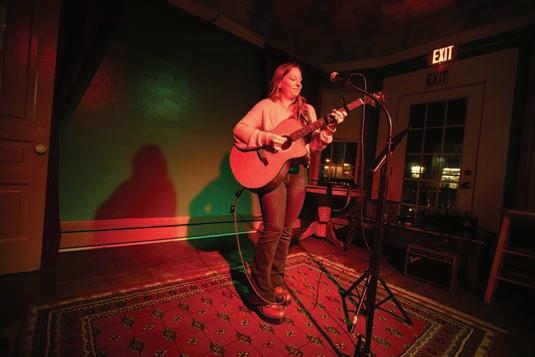
After a hiatus, Open Mic Nights have returned to Plymouth Coffee Bean, and organizer Michael Dante welcomes musicians to come and perform.
The first two Mondays of each month, Dante rolls out the rug in The Bean’s cozy main room,

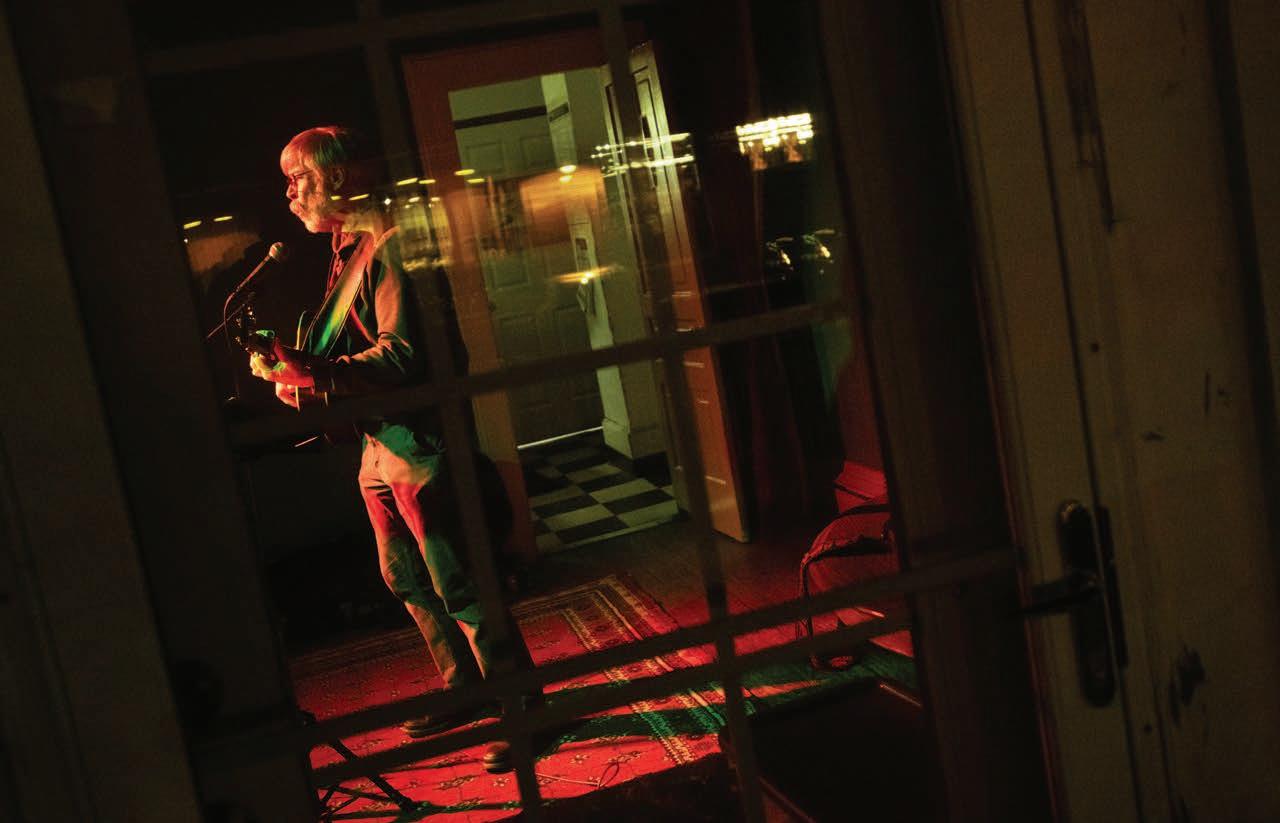
rearranges the chairs, sets up the sound equipment and moderates the low-key event.
The Bean touts itself as the longest-running coffee shop in Metro Detroit and its open mic night was a thriving scene for many years.
“This was the best open mic
night in Metro Detroit,” Dante says. “When I was younger this was the coolest space for young musicians and aspiring songwriters.”
The event began to flounder and eventually petered out until Dante approached the owners about bringing it back to life.
“All they needed was a host, so I revived it,” says Dante, who lives nearby and plays guitar in a three-piece indie rock band called Coloring Gray.
Dante spread the word through a popular Facebook group called Metro Detroit Open Mic. Since the legendary event
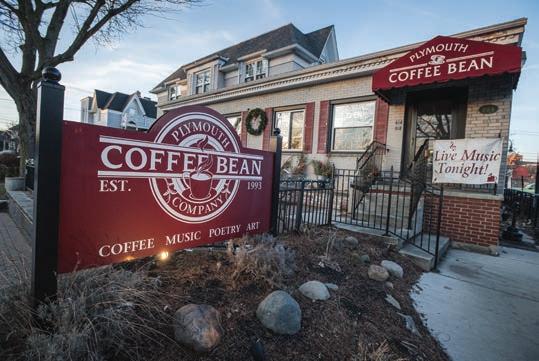
relaunched in March, attendance has been growing. Some weeks all the spots are filled as soon as the sign-up sheet hits the table.
Different acts are welcome, from music to poetry. One recent evening Geoff Ez sat on the stool with his acoustic guitar, playing his signature jazz-folk finger style.
“I really like the vibe and
Kevin Allan credits The Bean’s open mic nights for helping him evolve as the songwriter and performer he is today. He returned one recent Monday to support the relaunch.
“It’s really been such a warm and inviting room to share songs I wrote in my bedroom,” he says. “My hope is there will be a next

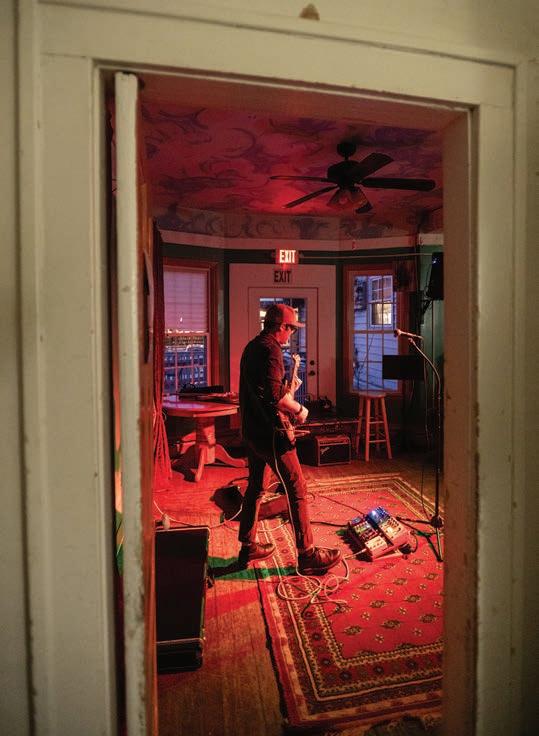
“I really like the vibe and ambiance here. We’re all about getting people together to do a show.”
Geoff Ez, local musician who has performed at Coffee Bean’s open mic night
ambiance here,” he says. “We’re all about getting people together to do a show.”
generation of artists to continue on the legacy of the talent that has come through here.”

OPEN MIC ETIQUETTE
Open Mic night runs 6:30-8:30 p.m. with sign-ups starting at 6:15. Dante encourages would-be performers to arrive early to secure a spot.
Musicians and spoken word artists are welcome with just a few rules: performers are required to present original works only, keep it family-friendly, and play up to three songs or 15 minutes of material. If it’s a really busy night, that might get reduced to give everyone a chance to take the stage.
The purpose is for emerging musicians to get over their nerves in front of an audience, for more seasoned performers to test out new work, and to foster a sense of

artistic community and support.
So bring friends, spread the word and be sure to grab a beverage and pastry to support the venue that makes it all possible.
“People were starving for this to come back,” Dante says. “It’s my mission to give back to the community and to promote new talent.”
WHERE: Plymouth Coffee Bean, 884 Penniman Ave., Plymouth
WHEN: 6:30-8:30 p.m. on first two Mondays of each month (sign-ups at 6:15 p.m.)
PHONE: (734) 454-0178 MORE INFO: plymouthcoffeebean.com
Rock
By Brad Emons
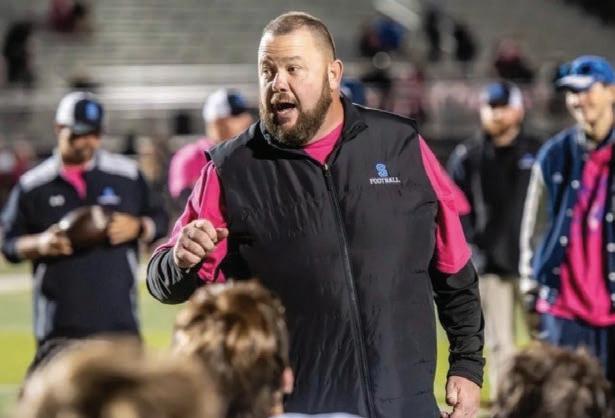
It’s been a never-ending game of musical chairs when it comes to high school sports conference and league realignment for the past couple of decades.
But it appears the music is finally about to stop – at least for now –for Canton, Plymouth and Salem High Schools and the PlymouthCanton Community Schools.
After joining the Kensington Lakes Activities Association in 2008 following a 26-year run in the Western Lakes Activities Association (dating back to 1982), the Cobras, Wildcats and Rocks will be embarking in their final athletic season (2026-27) in the KLAA before merging with member schools of the Southeastern Conference (SEC) in 2027-28.
The reshuffling and backroom dealing began to gain momentum

after three KLAA members of the Livonia Public Schools (Churchill, Franklin, Stevenson) announced they were leaving following the 2025-26 school year to join the 12-school Lakes Valley Conference, which also wooed the two Farmington Public Schools (Farmington and North Farmington) from the Oakland Activities Association (OAA).
Meanwhile, the 13 remaining KLAA schools, not including new invitee Dearborn Heights Crestwood, began discussions with the 14-member SEC about a potential merger between the conference to form a 28-school mega league consisting of four divisions of seven.
There appeared to be considerable support among the athletic directors for that configuration in principle, but
the constitutional language of the SEC required a two-thirds majority approval.
On Sept. 24, 2025, that plan was scratched in a vote by the SEC principals when three member schools reversed course despite the recommendations of their athletic directors.
Unable to gain the two-thirds majority required for the merger, the SEC and KLAA remained separate.
Salem athletic director Tim Baechler said there was no real explanation for the merger being voted down.
“There’s a lot of people from the SEC that were extremely disappointed because before the vote it sounded like it was a done deal and then some people flopped at the last second,” he said. “Nobody knows why and nobody knows why it’s approved now--other than that I guess they realized they made a mistake during the first vote. I don’t have any first-hand knowledge of why it got turned down the first time.”
But the musical chairs continued again early in the 2026 calendar year when two prominent members of the KLAA’s West Division – Northville and Novi –announced they were leaving to become members of the OAA, effective the 2027-28 school year.
“Our options were to keep the KLAA the way it is without Livonia (Churchill, Franklin, Stevenson), Northville and Novi,” Baechler said. “It was made clear to us from our principals and superintendents that we were going to remain loyal to the league, so we were all in with that. However, if the Livingston County schools would have gone, we might have had The Park going to the SEC. But again, it didn’t happen because everybody decided to stay except for Northville and Novi.”
However, in the irony of all ironies following the departures
of Northville and Novi from the KLAA to OAA, the SEC and 12 remaining members of the KLAA renewed merger talks and voted to join forces starting in 2027-28 under the name Southeastern Conference.
So, this is how the KLAA will look in its final year of existence for 2026-27:
KLAA West (8): Northville (enrollment 2,434), Novi (2,148), Howell (2,091), Canton (2,102), Brighton (1,954), Salem (1,901), Plymouth (1,865), Hartland (1,690).
KLAA East (8): Dearborn Fordson (2,159), Dearborn (1,821), Westland John Glenn (1,665), Belleville (1,683), Wayne Memorial (1,423), Crestwood (1,304).
The following year in the new SEC will consist of 26 schools in four different divisions:
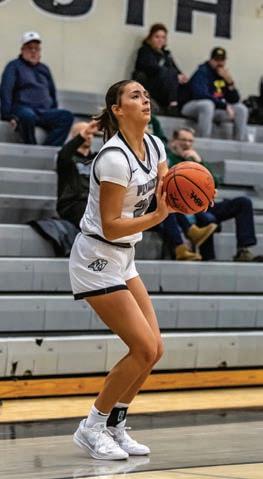
Blue Division (6): Canton, Plymouth, Salem, Brighton, Hartland, Howell.
Silver Division (7): Monroe (1,768), Belleville, Dearborn, Crestwood, Fordson, John Glenn, Wayne.
Red Division (6): Ann Arbor Huron (1,940), Ann Arbor
Pioneer (1,904), Saline (1,612), Ann Arbor Skyline (1,476), Temperance Bedford (1,372), Dexter (1,075).
White Division (8): Ypsilanti Lincoln (1,052), Jackson (996), Ypsilanti (979), Jackson Northwest (931), Adrian (800), Chelsea (764), Tecumseh (730), Pinckney (602).
When it comes to scheduling and crossovers in the new SEC, a lot has yet to be determined. School enrollments, geographics, bus travel and competitive balance could be factors when it comes to re-alignment.
“My coaches are asking, ‘What are the divisions, what is the scheduling?” Baechler said. “We have not sat down as SEC ADs and talked about anything regarding divisions, scheduling, but we’ve got a whole year to figure it out.”
Meanwhile, this fall’s final KLAA football schedule has been tweaked somewhat for 2026. Salem, for instance, will be playing four KLAA West foes (Novi, Plymouth, Canton, Northville), but will not face Brighton, Hartland or Howell. They will pick up instead, three KLAA East opponents (Belleville, Fordson, John Glenn). The Rocks’ opening week non-conference opponent (Aug. 27) will be at Utica, while the ninth week game (Oct. 23) will be KLAA divisional

away crossover.
In the new four-division SEC in 2027-28, it’s anyone’s guess how scheduling will go starting with football, but there are some ideas already on the table.
“I would like a snake

approach,” Baechler said. “So, if you just take football for instance. After two years you play your schedule, look at playoff points or however you want to give me the MPR in basketball, and go OK, let’s make two equal leagues, so you snake it.
“I know they’re calling the big schools Blue and Red. So. OK, Blue number one team is going there, the number two team is going Red. And then go three, four, five and six that way all the way down. And I think what’s exciting about that, and I’m thinking as a coach, it’s so fun to play different people.”
For Baechler, it’s a novel approach to filling out schedules.
“I think it makes it more enjoyable to have every two years to shake it up,” he said. “I don’t

agree with going, ‘OK, those best eight teams in their division and then worst eight teams are in this division.’ I don’t agree with that because I think you’re going to have some teams that will come out of that with good records that probably don’t deserve to be in the playoffs when you’re talking football. So, I think the snaking of it is the fairest and best way to do. That way the teams that play in the playoffs are going to deserve it.
“The strength of having a large league is scheduling. We should never be getting on MIAAA or the MHSAA website(s) looking for games unless you want to. We should be able to help each other fill out our schedules in every sport when you have a big league like this.”
It’s the call no one wants to get. But for one local doctor, it became a mission to save others from the “Blind Spot” in modern medicine.
(Southfield, MI)

Softball Size Tumors Silently Grew
You feel fine. You have no aches.
(South
endured brutal treatments and cruel side effects. Tragically, the cancer later returned as a brain tumor.
your insides. Unlike CT scans or X-rays, this machine emits NO radiation and is completely non-invasive.

You pass your annual physical with flying colors. You think you’re safe. But what if something sinister is silently growing inside you right now, waiting to strike? That is the terrifying reality Dr. Warren Ringold faced. As a respected family physician for 40 years, he knew the rules of medicine better than anyone. He felt perfectly fine until a sudden onset of shortness of breath sent him to the ER. The diagnosis was a shockwave: Stage 4 cancer.
His own grueling battle with late-stage cancer ignited a passion, leading him to create Michigan’s rst MRI full body screening center called Bionicc Body Screening.
Raising Awareness
But before he passed, Dr. Ringold left behind a legacy—and a warning—for the rest of us.
Full Body MRI Scans Without a Doctor’s Order
The “Dirty Little Secret” of modern medicine: Here is the hard truth your insurance company won’t tell you: The current healthcare system is reactive, not proactive.
Today, his son Ryan carries on this mission. ough not a medical professional himself, Ryan’s dedication to his father’s legacy drives him to raising awareness of this service for families of Michigan.
“Every week I learn of another person who felt perfectly ne, only to wake up with an unexplained symptom and discover they have stage four cancer. Once symptoms manifest cancer is usually advanced,” says his son Ryan. “My father never wanted another family to su er the emotional and physical hardships that our family and he endured. He wanted to save lives.”
Dr. Ringold discovered he had stage four cancer with tumors as large as softballs silently growing inside his body after experiencing shortness of breath. His treatment was brutal. He su ered cruel side e ects. After his cancer went into remission, it returned a year later as a brain tumor. Dr. Ringold believed there had to be a better way. He envisioned a future where individuals could take control of their health and detect potential problems before they escalated. In his nal days, Dr. Ringold passionately advocated for MRI full body screenings, a proactive approach he believed could empower individuals to take control of their health.
Bionicc Body Screening o ers elective, full-body MRI screenings that provide a comprehensive picture of your internal health, going beyond what traditional checkups often reveal. State-of-the-art technology can detect tumors as small as a pea, aneurysms, risk of stroke and a multitude of other conditions that might otherwise go unnoticed. Screenings include scans of the head, neck, chest, abdomen, pelvis, hips, shoulders and spine.
A Life Saved
Standard medical screenings (like mammograms and colonoscopies) only catch 29% of cancers. That means 71% of tumors grow undetected in areas doctors aren’t even looking at.
By the time you feel a lump or pain, it is often Stage 3 or 4. As Dr. Ringold warned, “Once you have symptoms, cancer is usually advanced.”
Mark B. and his younger brother decided to visit Bionicc Body Screening last spring for a proactive screening because cancer ran in their family. Mark was skeptical until his results returned a 3-centimeter mass on his lung, which tested positive for cancer. He had three-fourths of his lung removed. He credits the scan for saving his life. Meanwhile, his brother’s results were clean.
It scans the brain, neck, chest, abdomen, pelvis, and spine, looking for tumors as small as a pencil eraser. It can also detect silent killers like aneurysms and stroke risks before they become life-threatening emergencies.
Take Control: No Doctor’s Order Required The traditional medical system makes you jump through hoops. At Bionicc Body Screening, there is no red tape.
• No Doctor’s Referral Needed: You are in charge of your own health.
• No Insurance Hassles: This is an out of pocket, elective service for those who prioritize peace of mind and proactive care.
Scans are safe, non-invasive, emit no radiation and are available without a doctor’s referral. Scans can detect tumors, aneurysms, stroke risk and other conditions.

While he felt healthy on the outside, tumors the size of softballs had been silently growing on the inside. He
The Technology That Sees What Doctors Miss: Determined to stop this tragedy from happening to other families, Dr. Ringold founded Bionicc Body Screening in Southfield, Michigan’s first MRI full-body screening center. Using advanced MRI technology, Bionicc provides a “high-definition movie” of



• Immediate Answers: Don’t wait for a crisis to find out what’s going on inside your body.
Do not wait until you feel a symptom. A small tumor today could be a major problem tomorrow. The only difference between a tragedy and a survival story is early detection.

Michigan’s first MRI Full Body Screening Center –Located in Southfield














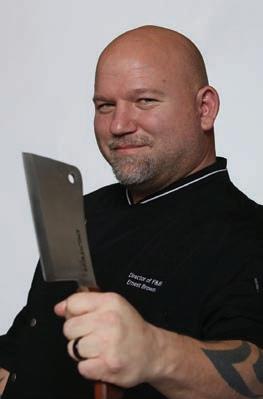
From the Las Vegas Strip to the red rock canyons of Colorado and the rolling hills of Pennsylvania, Ernie Brown’s culinary journey has taken him through some of the country’s most dynamic dining destinations. Now, that experience is shaping his next chapter in Plymouth.
Excitement is what you’ll hear when speaking to him about his new position as Area Director of Culinary Operations at St. John’s Resort in Plymouth, as well as its sister property, The Inn at Stonecliffe on Mackinac Island.
“I am here to enhance food quality and make sure we are operating at peak performance. My job is to make sure all the chefs are educated, trained and know how to run their operations,” says Brown, who lives in Plymouth with his wife Remy and their children.
He speaks quickly, with an enthusiasm that reflects both his Las Vegas roots and his passion for the role. That energy may stem from his early days on the strip, where his culinary career began unexpectedly—and accelerated quickly.
Beginning downtown at Binion’s Horseshoe, Brown started as a dishwasher.
“Three hours later, I was a line cook after two people walked out,” he says with a laugh.
That on-the-job experience led him to Le Cordon Bleu College of Culinary Arts where he earned a culinary degree. From there he worked as a chef for major Las Vegas properties including Caesars Entertainment, Green Valley Ranch Resort Spa & Casino and the Luxor Hotel & Casino.
Around 2015, he left Vegas to
travel east to Colorado, where he and his wife have family. In the mountain state, he served as corporate executive chef for Vail Resorts and later at Hotel Maverick, earning a nomination for a James Beard Award for Best Chef in the region.
“I didn’t make it all the way through, but I am proud of being nominated,” he says.
That was the chef’s last position before St. John’s came calling.
He was recruited by Dustin Dent, St. John’s area operating director, who Brown had previously worked with at Nemacolin Resort, a five-star property in Pennsylvania.
Brown’s career also includes working alongside celebrity chefs such as Gordon Ramsay and Bobby Flay.
All of his experiences have no doubt played a part in his upbeat attitude and get-it-done approach
in overseeing culinary operations for St. John’s and Stonecliffe, two Humanitarian Hotels owned by the Pulte Charitable Foundation. One hundred percent of net profits from the properties support charitable initiatives worldwide.
“We
take ‘old school’ great food and make it look new and modern. That’s what we did at The Five. I just want to create the most memorable experience in
my dining room.”
Ernie Brownm, Area Director of Culinary Operations at St. John’s Resort
Starting his job in March 2026, Brown and his team of 19 chefs and more than 100 cooks revamped the menu at the Five Steakhouse at St. John’s – launching it in two weeks, an unusually fast turnaround for fine dining.
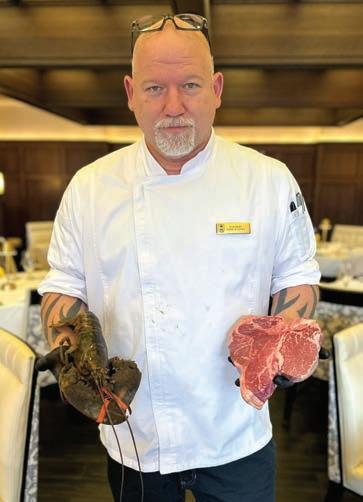
“I started by putting my biggest focus on the steakhouse, enhancing food quality, types of beef, leveraging fresh seafood flown in daily from Honolulu, and finding local farms to bring into the mix,” says Brown, adding with a chuckle that he stopped wearing the toque hat when he lost all his hair.
His top recommendation for Five Steakhouse is the Cardinal, a 42-ounce porterhouse, dryaged for 45 days, topped with tallow-infused butter and carved tableside for two. He suggests lobster mac and cheese and sauteed wild mushrooms for side dishes.
Next, he will turn his attention to Doyles Irish Pub and The Wine Grotto, followed by banquet operations, which include eight ballrooms and plated events for up to 800 guests.
Brown already has a vision for Doyles.
“I want to make it an authentic Irish pub and create the experiences for our guests, so they feel like they walked into a pub in Ireland,” explains Brown.
Once things are humming in Plymouth, Brown will turn his attention to The Inn at Stonecliffe, which has three restaurants and one executive chef, one sous chef and cooks totaling about a dozen people.
While he’s aware of Plymouth’s dining scene, he takes a broader view of competition.
“I spent a lot of time with celebrity chefs and other chefs around the world. I think we compete a lot with the Food Network. Everyone eats with their eyes; everything is an Instagram moment. You must make sure that food is visually appealing and looks great on the plate,” he says. “We take ‘old school’ great food and make it look new and modern. That’s what we did at The Five. I just want to create the most memorable experience in my dining room.”
At this pace, Chef Brown is well on his way to creating exactly that.
ADDRESS: 44045 Five Mile Road, Plymouth
PHONE: (734) 414-0600
WEBSITE: Stjohnresort.com

As your decking destination, we proudly carry all three leading brands–giving you the selection, quality, and flexibility to choose what’s right for your project.
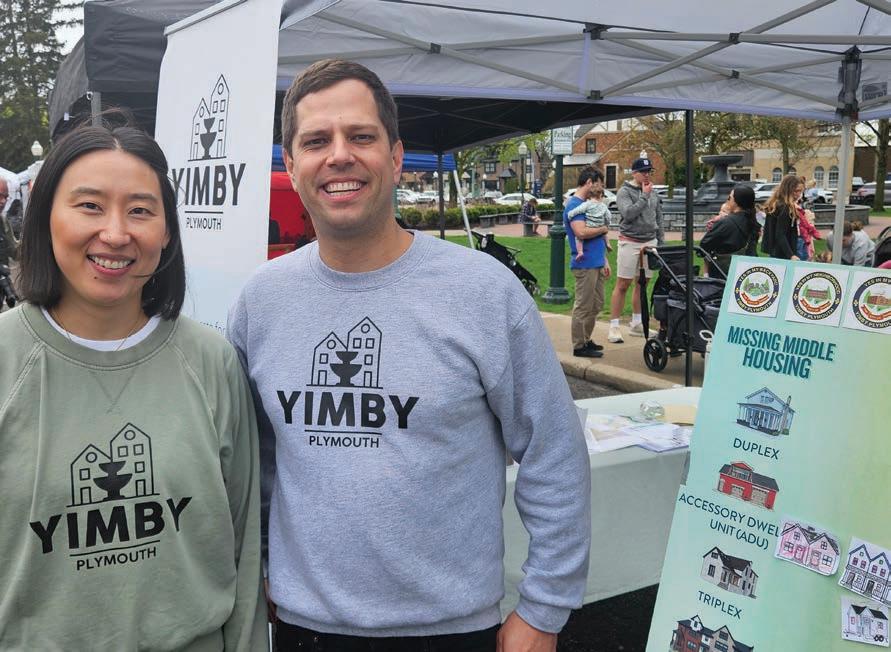
Local group says ‘Yes In My Backyard’ is key to diversified housing
By Scott Spielman
When it comes to housing, there should be room for everyone.
That’s the idea behind a new group formed recently in Plymouth to advocate for diversified homes, smart land use and responsible development.
Called Yes In My Backyard— or YIMBY—it is still in its infancy, meeting informally at local restaurants and gradually weighing in on zoning-related topics in the community.
“We’re very much just starting, growing and getting the word out,” said Jaimie Cavanaugh, a city resident and one of two co-founders of the Plymouth chapter. “I think that’s our main goal for the first year, just adding members and making sure people know about us.”
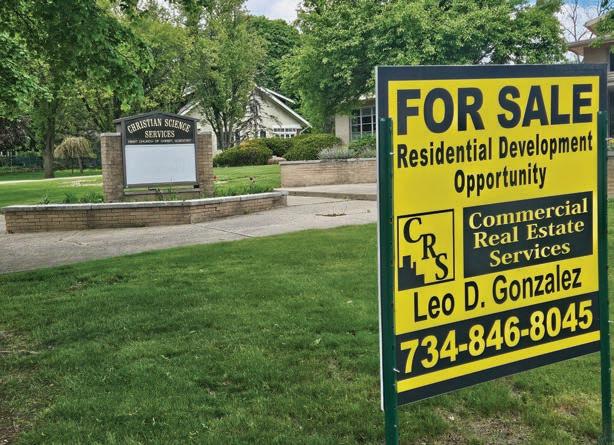
Cavanaugh and co-founder Allen Marecki started the group in the wake of the controversial Brookside development that was proposed for the First Church of Christ property on Ann Arbor Trail. That project,
called Brookside, would have created a new, 3,600-square foot church along with 20 homes on the 2.2-acre parcel just west of the downtown area, sparking a campaign from nearby residents—which included
lawn signs stating opposition to the project—to stop it. It was ultimately canceled by the developers, who could not meet requirements stipulated by the city planning commission.
“We weren’t really that tuned in to what was going on, but we started seeing the yard signs. We ended up going to one city commission meeting that was in the park,” Cavanaugh said. “We heard comments about wanting to keep Plymouth expensive and that it was good that it’s expensive to live here and it costs money and we want to keep it that way and we were really shocked that that’s the voices the city commission was hearing from at the meeting.
“There was no one else there commenting from the other side,” she added. “That doesn’t represent how we feel about Plymouth and we know there’s other people, like us, in Plymouth that don’t have a total anti-development mindset.”
YIMBY is a national organization, founded in 2013 in San Francisco to combat the affordable housing crisis there. It is primarily a grass roots effort—chapters get an annual budget of $300 from the national organization—designed to advocate for diversified housing as a way to reduce the overall

cost of home ownership and to provide more options for people of different economic statuses or who are in different stages of their lives.
“Typically, the YIMBY movement is not about regulating more. It’s about opening things up,” Marecki said. “We want to create more housing supply, in the long run, to help lower prices.”
Comprised of city and township residents, the group has come together at an interesting time. The City of Plymouth recently updated its master plan and has been enacting zoning amendments to guide future land use. Plymouth Township is in the process of updating its master plan, as well. In Lansing, a package of bills referred to as the Housing Readiness Package is pending that would limit some local restrictions on zoning, too.
Some diversified housing is on the way in both communities, too. In the township, the board of trustees approved an apartment building that will be constructed on the site of the former Courthouse Grill on Plymouth Road near the 35th District Court. Called Hillside Residences, the project will include 109 apartments, about 22 of which would be geared toward the “missing middle” home seeker, with rents about $800 per month lower than the $2,800 average monthly market rate. It was approved in March on a 4-3 vote, with trustees Sandy Groth, John Stewart and Jen Buckley voting against it.
In the city, the planning commission recently got its first look at a multi-unit development project planned for the former lumber mill site off Ann Arbor Trail, which would bring more than 80 apartments into the city.
Developments like those are a good start, Marecki said.
“If there’s more one-bedroom

apartments available in the city, that’s great,” he said.
They have not yet formed an opinion on the state bills, because they were only recently introduced, have only had one hearing and will most likely be drastically changed, if they’re approved at all. State Rep Matt Koleszar, who is opposed to that legislation, said there is “a long way to go,” before they come to a vote. (See related story, page 24)
Marecki said the group would stay focused on local issues.
“We want to be sure when we’re talking to local officials, that we’re talking about what are the things we can work on locally that the planning commission can do, that the city commission can do, regardless of what happens at the state level with the state bills that are pending,” he said.
“There’s many ways to expand housing in Plymouth. It’s not just building skyscrapers—that’s not what we’re advocating for,” he said, pointing out that there are duplexes and similar homes throughout the city, but current ordinances restrict the construction of new ones. “We’re not talking about knocking something down and building something totally different. We’re
talking about keeping the things we have and making it easier to build the things we already have.”
Former planning commissioner and city commission candidate Jim Mulhern said part of the issue is that land in Plymouth— particularly in the city—already sells at a premium price, which makes the prospect of constructing new affordable housing difficult.
“From a public perception, everybody can get behind being in favor of affordable housing,” he said. “I think we, as Plymouth residents, want the ability to welcome more people and welcome more families into Plymouth. It feeds the economy— it feeds everything. The devil is in the details, but I think that should be part of the message. This is something that most people will support. The vocal minority who doesn’t want it—whether it’s the church property or anything that involves greater density—they’re never going to be for it. You’re never going to convince them. But the message is not to them.
“I think we’ve got a great opportunity to move peoples’ thinking, have them thinking about keeping Plymouth welcoming, Plymouth having room for different homes and
styles, focusing on what’s possible rather than saying no.”
Cavanaugh agreed. “We have this unique, wonderful city that is walkable—more walkable than most of metro Detroit,” she said. “That’s the exact place you do want to do a modest increase in density. It makes sense to build things, especially close to downtown, where people will be able to walk and use all the amenities. We want to encourage that.”
To learn more about the Plymouth YIMBY organization or to sign up for emails. Visit www.yimbyplymouth.org.
The local group Yes In My Backyard -- or YIMBY – is advocating for more affordable housing in the Plymouth community, which could include greater density than current zoning allows. Would you like to see new projects come into the community that would be geared towards affordable housing? Is it something Plymouth needs? Email your opinions to Editor Scott Spielman at scottyspielman@ gmail.com.
By Scott Spielman
Arbor), whose district includes the western portion of Plymouth and Northville townships. Morgan is a co-sponsor and said he has heard positive feedback about them from officials in Grand Rapids and Ann Arbor, where he is based.
“Everybody knows we have a housing shortage and, I would argue, a housing crisis. That’s where this package comes from,” Morgan said. “It’s focused on the biggest barriers to making more housing that is affordable. The idea is if we don’t build more homes, prices are going to keep going up. This package is about making it easier to build housing, so people can actually afford to live in the communities they love.”
As written, key reforms include:
• A llowing duplexes in singlefamily residential zones that are in, or adjacent to, metropolitan areas
• Prohibit minimum parking space requirements of more than one space per dwelling
Most would agree there is a shortage of affordable housing in Michigan, but few would agree on the best way to address the issue.
Local leaders throughout western Wayne County are leery of a package of bills introduced earlier this year designed to promote the construction of more affordable housing over worries that they would lose local control of pending developments in their communities or force clusters of homes that would overburden current infrastructure.
The package of bills, referred to as the Housing Readiness Package, includes House Bills 5529-5532 and HBs 5581-5585. They would dictate minimum setbacks, lot sizes and parking requirements for developments, among other things.
“I have heard from leaders in every municipality in my district and the response has been unanimous: Everybody is opposed,” said State Rep. Matt Koleszar (D-Plymouth). Koleszar is opposed to them, as well.
“We do have an affordable housing crisis in Michigan. That’s undeniable,” he said. “Whether or not these bills will accomplish the goal of lowering housing prices is still being debated. I think, as a legislature, it’s important for us to continue to explore opportunities to lower housing costs, but I’m not sure this package is the way to accomplish that goal.”
The bills were developed through a bipartisan coalition to address the cost and availability of housing, according to State Rep. Jason Morgan (D-Ann
parents, on parcels with existing single-family homes
• Reduce delays by creating standards for local governments to follow when reviewing development requests.
The reforms would allow for more efficient use of space and reduce some barriers to development that adds time and cost to potential projects, Morgan said.
• Update the procedure for protesting zoning changes in a way that could increase community input by expanding the petition area radius and setting a 60% signature threshold
• Define setback requirements in metropolitan areas at 15 feet from the front of the property line and five feet from the sides and rear
• Cap minimum dwelling size requirements at 500 square feet, making it easier to build smaller and more affordable starter homes and apartments in areas where larger parcels may not be abundant
• Prohibit minimum lot size requirements of more than 1,500 square feet for singlefamily homes
• A llow Accessory Dwelling Units (ADUs), such as smaller homes for aging
“We know what these barriers are, particularly local zoning restrictions around lot sizes, what type of housing are allowed to be built and roadblocks to slow down the construction of more housing,” Morgan said. “We know these are significant challenges and we know it’s been difficult for local leaders to address these challenges because a lot of the policies have been put in place over decades. It’s an uncomfortable conversation, sometimes, with locals to have to be able to understand that wellmeaning local leaders have to take a hard look at their policies and how they’re impacting the construction of housing that is affordable to people.”
Concerns have ranged from the possible erosion of local control to being forced to approve developments that existing infrastructure will not support to overall density issues that could impact the quality of neighborhoods.
Koleszar said he, and the local officials he’s talked with, share those concerns.
“I’ve been very adamant that until the concerns that my local leaders are expressing are addressed, I am currently opposed,” he said. “If a compromise is achieved, that may change but as of now, I’m opposed.”
Morgan, who served on the Washtenaw Board of Commissioners prior to his
election to the state house, said the bills aren’t designed to eliminate or erode the control local planners have over what’s happening in their communities.
“The idea behind this package is not to eliminate local control. But to ensure there’s a basic floor to what our policies look like and then to ensure the communities still get to shape
(House Bill 5584)
what that development looks like, to ensure that there’s adequate infrastructure that can be built and traffic management,” he said. “Essentially it boils down to this: setting a minimum floor around local rules for housing construction, but then assuring that communities have the power to shape that would look like for their communities.”
Permits duplexes in single-family residential zones within or adjacent to metropolitan statistical areas, while providing a clear statewide definition of a duplex.
SMARTER PARKING RULES
(House Bill 5582)
Caps mandatory parking requirements at no more than one space per dwelling unit. This lowers costs for builders and families, encourages more walkable neighborhoods and prevents outdated rules from limiting new housing.
MODERNIZING PROTEST PETITION PROCESS
(House Bill 5532)
Clarifies and modernizes the local protest petition process to better reflect community sentiment and provide consistency for local decisionmakers. Expands the petition area to 300 feet while setting a clear 60% signature threshold, helping ensure that petitions represent brand broad neighborhood input before a super majority vote is required by the local council.
SET BACK REQUIREMENTS
(House Bill 5583)
Defines setback requirements in metropolitan statistical areas at 15 feet from the front property line and five feet from the sides and rear. This helps use land more efficiently, while still allowing exceptions for sensitive areas like marshes or waterways.
The bills are currently in committee, and Morgan said they would receive additional hearings as the initial round of feedback from locals is addressed before the bills come up for a vote. He said he’d like to see additional reassurance that local control would be protected and other issues are addressed, as well.
“That is already the case in
(House Bill 5581)
Caps minimum dwelling size requirements at 500 square feet in metropolitan statistical areas statewide. This makes it easier to build smaller, more affordable starter homes and apartments where large land parcels may not be abundant.
(House Bills 5529 and 5530)
Caps lot size requirements for single-family homes in metro areas at 1,500 square feet. This prevents excessive land mandates that drive up housing costs.
(House Bill 5585)
Defines ADUs and allows them on parcels with single-family homes. Caps set back at five feet, prohibits additional parking mandates and allows ADUs to be built onor off-site. This expands options for seniors, students and families.
(House Bill 5531)
Creates fair standards for local governments to request studies during development reviews. Limits repeat or unnecessary study demands, sets clear timelines for decisions (60 days) and ensures site plans must be approved if they meet zoning, planning and state/federal requirements.
the way these bills are written, but I’d like to see language that would further clarify that in the legislation,” he said. That vote, if it comes, may be a tough sell for legislators. The Michigan Municipal League, the Michigan Townships Association, the Southeast Michigan Council of Governments (SEMCOG), the Michigan Association of Counties and Michigan Chapter of the American Planning Association have all voiced concerns or outright opposed the bills are written.
Wayne County Commissioners Terry Marecki and Melissa Daub, who represent Plymouth and Northville, drafted a resolution of opposition in March that the county commission approved unanimously, as well.
“There’s a very long way to go on it,” said Koleszar. “We haven’t seen any compromises or amendments get made, or what may be cut. There’s still a long way to go on the process. It’s not like we’re voting on this next week. It’s a bit ‘if’ at this point.”
As a way to create more affordable housing projects in the state, which most people agree is a problem, Michigan House Bills 5529-5532 and HBs 5581-5585 would dictate minimum setbacks, lot sizes and parking requirements for developments, among other things. Are the bills necessary and would they be effective? Email your opinions to Editor Scott Spielman at scottyspielman@gmail.com.
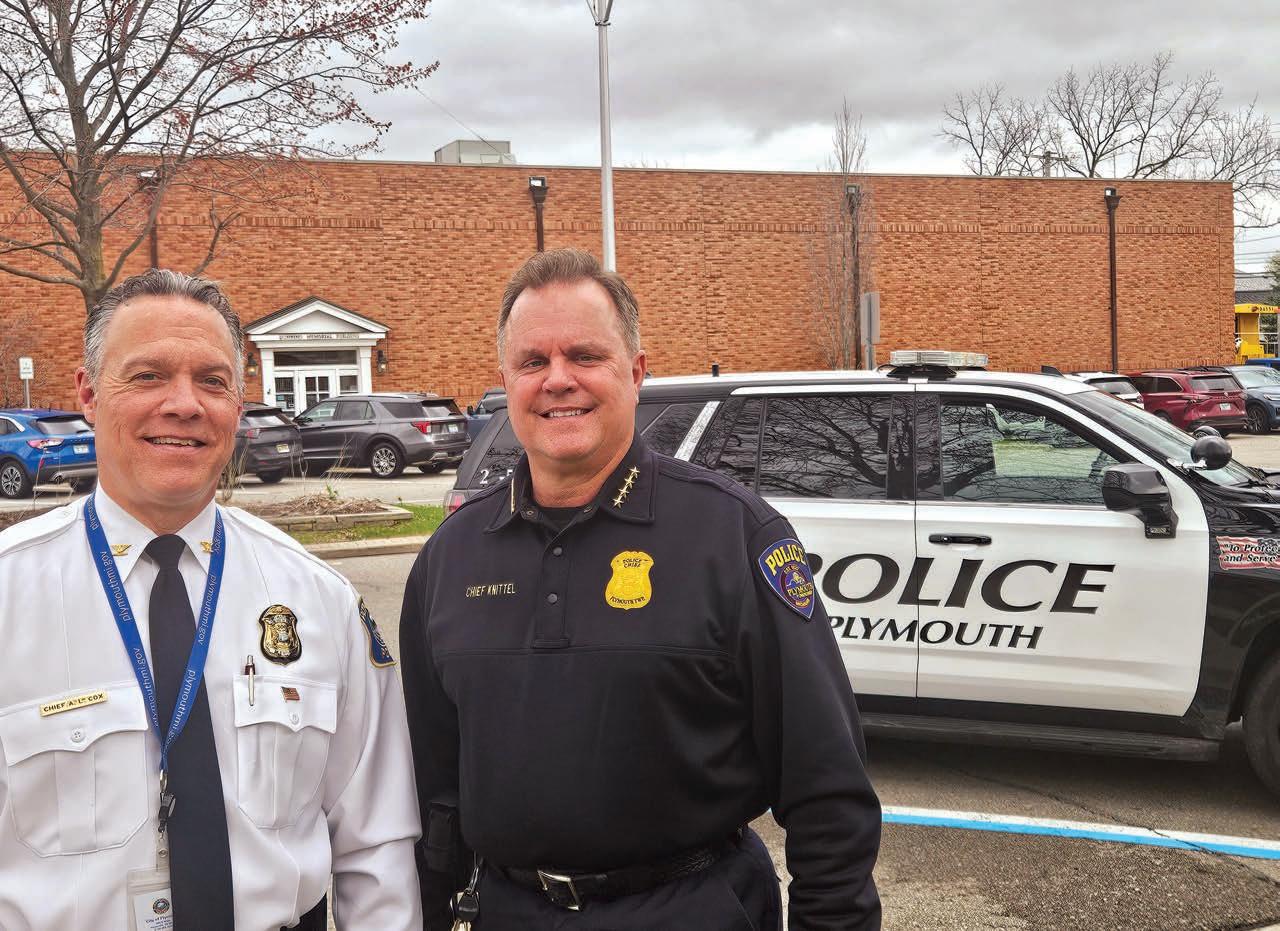
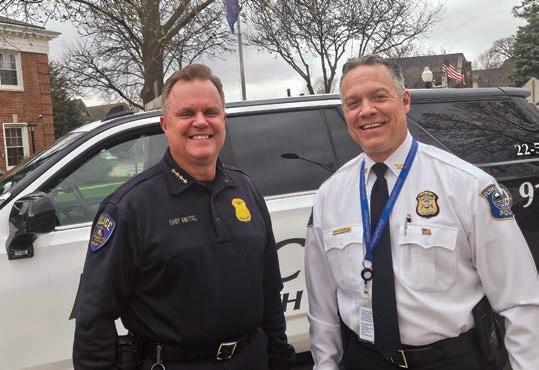
The city and township police departments have long enjoyed a positive working relationship. In March, they made it formal.
The city and township entered into a Community Policing Partnership that will allow them to share certain resources while maintaining their own individual identity. The township board of trustees and city commission both unanimously approved the agreement, which came as a Memo of Understanding between the two municipalities.
“In all honesty, we probably didn’t need the MOU,” said City Police Chief Alan Cox. “We’ve always had a great working relationship. We back them up and they back us up all the time.”
“It’s something that has
happened for a lot of years,” agreed township police chief James Knittel. “{the township] surrounds the city, but they’re backing us up and we’re backing them up really on a day-by-day and shift-by-shift basis. It’s really a strong relationship. This is just a matter of having something more formal.”
Due to recent retirements and new hires, the township police department currently has a more experienced detective bureau on than the city. The agreement allows a city detective to work one day a week on investigations that involve both departments. In addition, training between the two departments will be shared. Each department is responsible for their own personnel and equipment costs. The township
already provides dispatch services for the city.
A recent example of interdepartment cooperation took place at the end of March, when a 64-year-old jogger in Plymouth Township was attacked by three loose dogs. Although the 911 call came in from Plymouth Township, a city police officer was first on the scene.
“We worked arm and arm with the city on this situation,” Knittel said. “Even though it happened in the township, the first responding officer was a city officer. When we captured all three of the dogs, there were city officers there and township officers there.”
The owners of the dogs, township residents Kelita Yolanda Jackson-Holland and Edward Alan Turner, both 56,
were recently charged in the incident. Jackson-Holland was charged recently with three counts of Dangerous Animal Causing Serious Injury, each a four-year felony, while Turner was arraigned on charge of Dangerous Animal Causing Serious Injury. They were arraigned in early May at the 35th District Court, where Judge Joe Barone issued Jackson-Holland a $75,000 bond with conditions that included a GPS tether, an agreement not to own or possess any animals—particularly dogs— and shall not own or possess any firearms. Jackson-Holland also cannot have any contact with the victim, whose name has not yet been released.
Turner was issued a $25,000 bond with the same conditions.
All three dogs have been captured. Two had to be put down, while the third was transported to the Michigan Humane Society.
The MOU allows both departments to pool resources at a time when staffing levels remains challenging. While both departments are fully staffed, the city recently hired three new officers. With the extensive posthiring training necessary, it takes several months for new officers to be cleared to patrol on their own. Experienced officers have stepped up.
“Every time you have a new officer, not only are they not on the road by themselves, but the officer that is training them is also not on the road by themselves,” Cox said at a recent city commission meeting. “They have to be paired up; it’s part of their field training.”
Consequently, overtime is a
concern—and not just a financial one. Cox said he has had officers working eight consecutive days— each one a 12-hour shift—as they’re breaking in new officers. With about two months left in the fiscal year, the city has already used up about 95 percent of its overtime budget.
“In my 28 years, we’ve never been where we’ve been at over the last 12 months,” Cox said in March. “We’ve been keeping service levels where they’re at, but it’s taking a toll. Besides the cost to the city it’s just the effect on their body, as well.”
It’s not just in Plymouth, either. Police agencies everywhere are having a difficult time finding new recruits. Knittel said for many people, the occupation doesn’t have the same allure as it once did. Also, there are many agencies competing for the same level of talent, and many are even offering
hiring bonuses to attract top candidates.
“I’ve been in this career for 38 years and these are the toughest times we’ve had with recruiting,” Knittel said. “In the last 10 years, a lot of folks are less than eager to get into the line of work for the money and the risk involved— and it’s unfortunate, because we need good people and we’re all fighting in the same pool.
“We never thought about that
back in my day, but it’s a different time,” he added. “I think we have a really good thing going here. We have full staffing for the first time since I’ve been here. It’s a great place to work. I think both communities, the city of Plymouth and Plymouth Township are very supportive of police. It’s a great place to work, but we’re having the same challenges as anybody.”


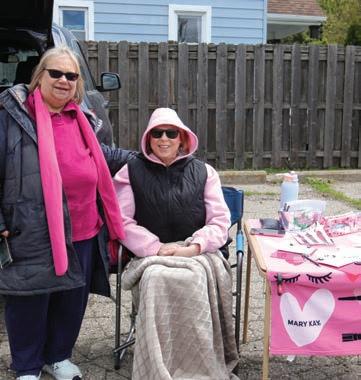
Yard sale. Garage sale. Trunk sale. Estate sale. They’re all slightly different terms, but essentially mean the same thing. For the hopeful shopper there’s always the old adage “One man’s junk, is another man’s treasure.”
Treasure, perhaps, was to be found in Plymouth along the quaint streets of Old Village, as the longstanding Old Village Yard and Trunk Sale captivated many buyers the first weekend in May. Despite chilly weather and mostly cloudy skies, shoppers turned out seeking something unique along Liberty Street or in the nearby neighborhood.
This year saw nearly 25 yard (and garage) sales, another 20 trunk sales and about a dozen other local vendors displaying their wares. Everyone got in the act, including members of the Winn family with their creative lemonade stand.
The event is a fundraiser for the Old Village Association, a group dedicated to enhancing the neighborhood through activities and lobbying for city improvements.
Held each May for nearly 20 years, the sale drew people from a dozen different communities who walked about, greeted one another and reminded many of Old Village’s unique vibe.