








Yves Bélanger, Servir
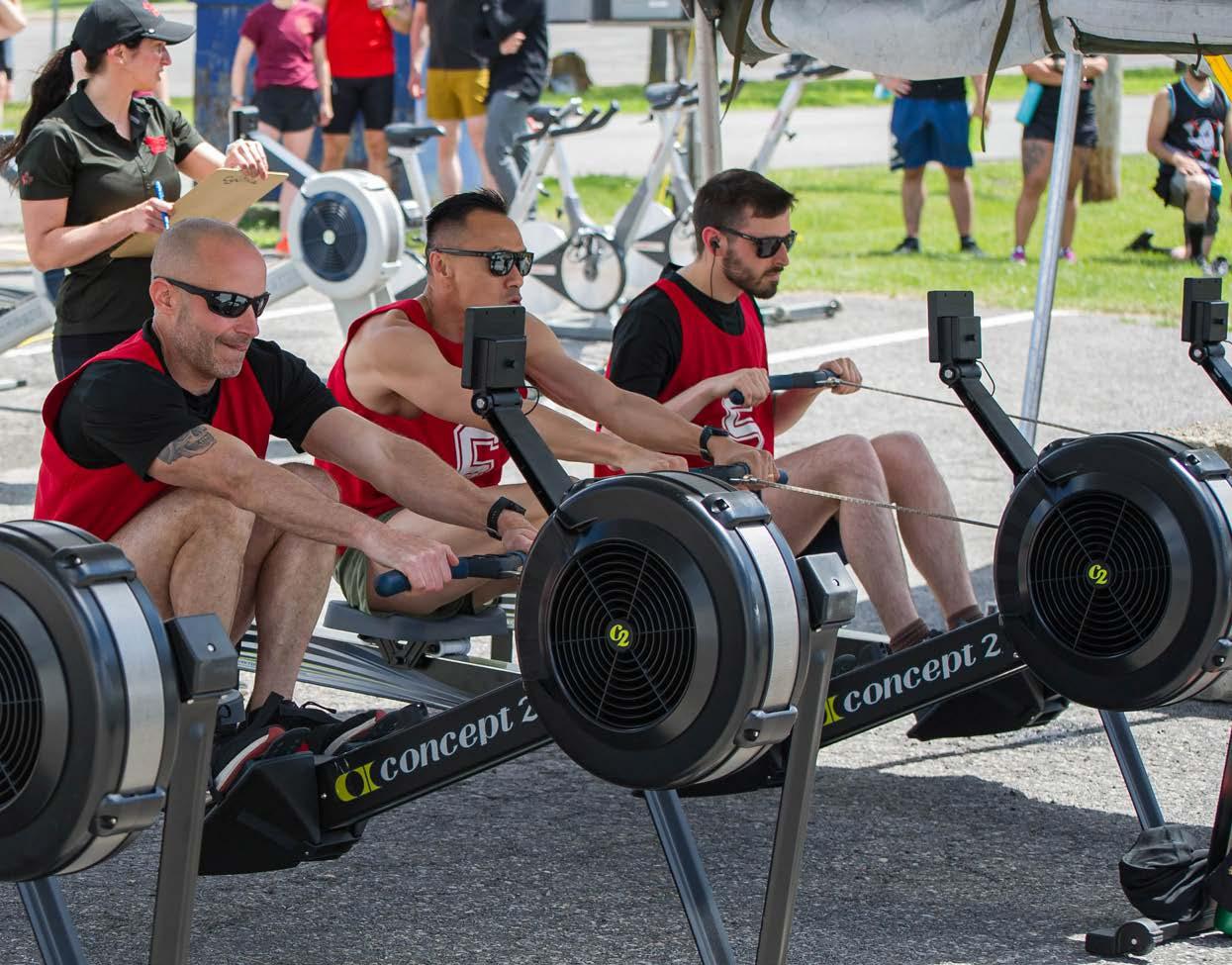
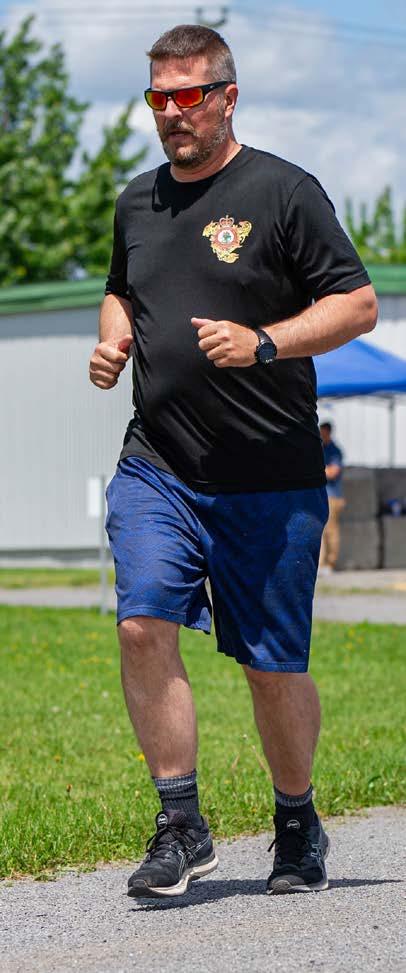
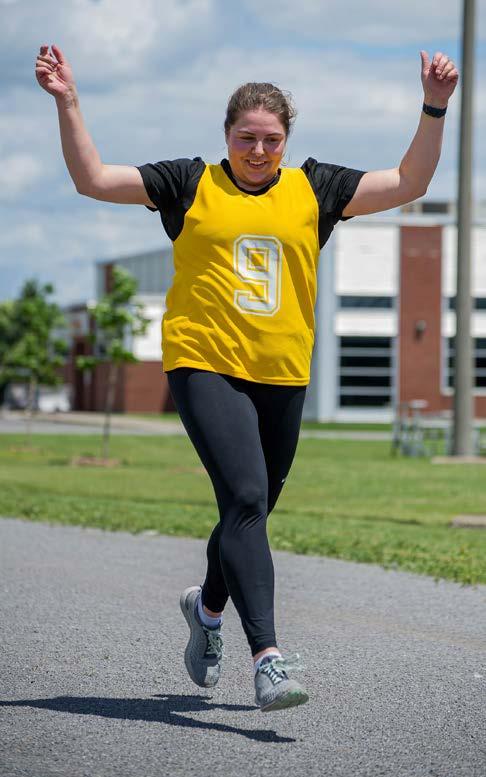
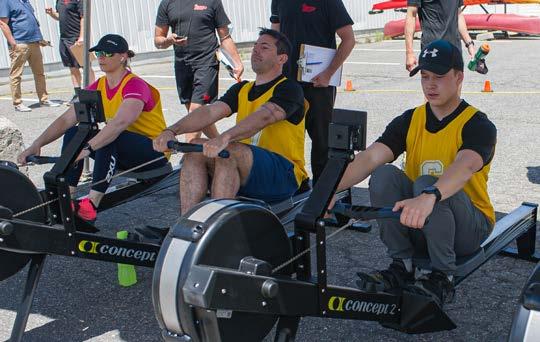
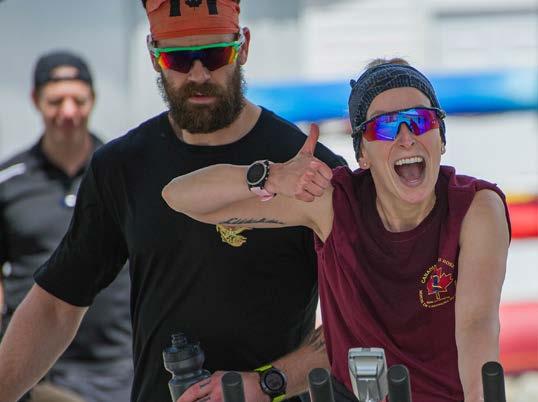
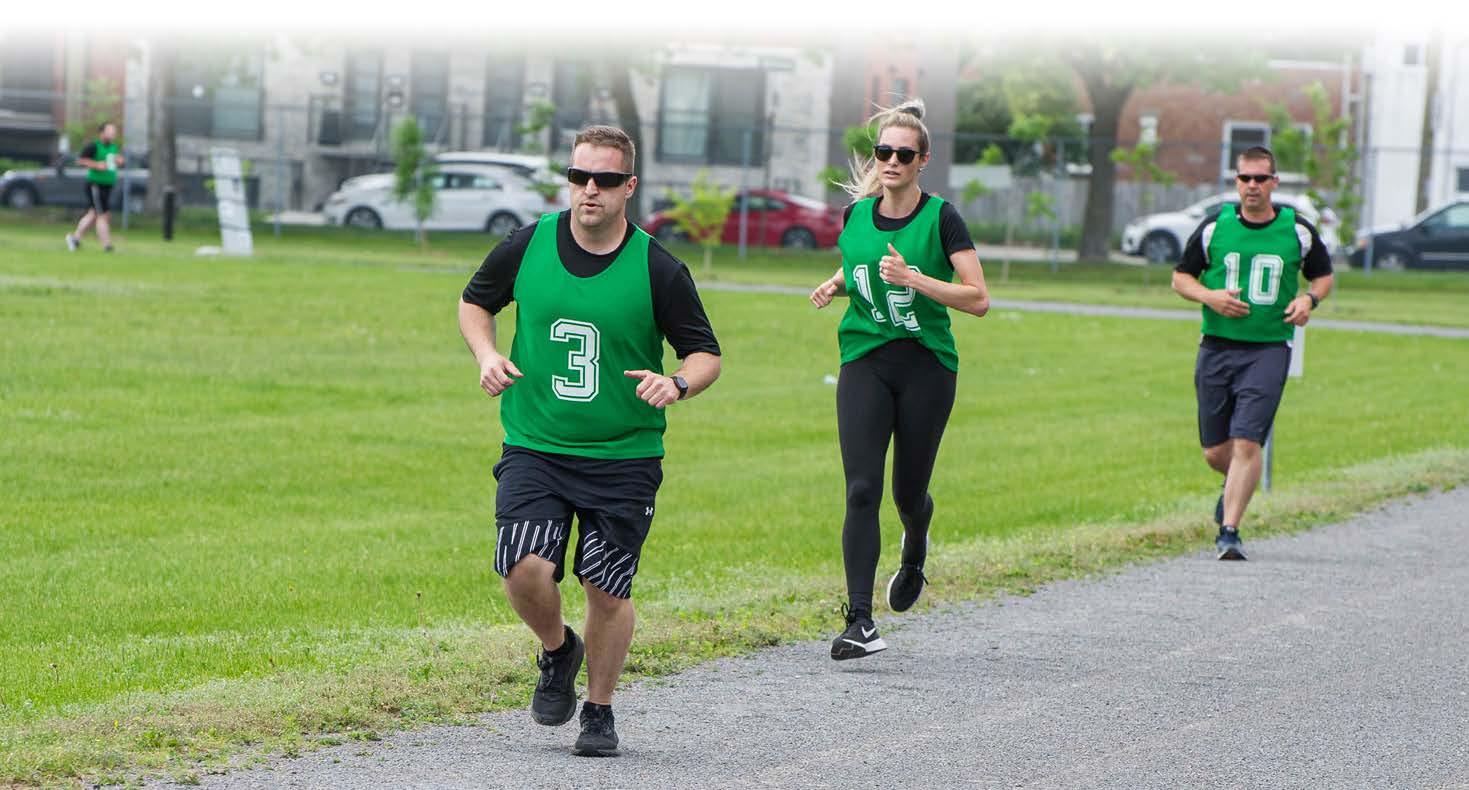
Seventy-five people, mainly military personnel, accepted the invitation of the Personnel Support Programs (PSP) team of the Montreal Garrison and took up the challenge of the Sprint triathlon which was held on June 17, from 11 a.m. to 12:30 p.m.
The activity consisted of three events: the rower (1 km), the stationary bike (2 km) and the race (1.6 km). “The majority of participants completed the whole thing between 15 and 18 minutes,” says Jean-François Bernard, manager of fitness, sports and recreation at the Montreal Garrison.
He reminds us that this sporting activity was above all intended to be a cohesion event. “We wanted people to be able to come together while having fun. The events were challenging yet achievable for everyone. It was really fun to see how happy the participants were to be present and to meet again.”
The majority of triathletes in attendance were employees of units such as 3 Canadian Support Unit, 202 Workshop Depot, Information Technology Services, 51 Field Ambulance and Personnel Services.
Mr. Bernard concludes by warmly thanking the personnel of the 2nd Canadian Division who participated in the organization of the event. “There was the Health Promotion team as well as the messes and the PSP facilities, among others. We also had the support of fitness and sports instructors from the Saint-Jean Garrison. We must not forget the help of the barrack warden of the Montreal Garrison and the team of the Real Property Operation Unit (Quebec) – Montreal Section.”
THE WINNERS
Women
1st place - Lt Camille Ferdais, 1 Fd Hosp, 16:32
2nd place - MCpl Stéphanie Lepage, 3 CSU, 17:09
3rd place - MCpl StacyTomalty, 3 CSU, 17:09
Men
1st place - Lt Philippe Desharnais, IT Svc, 13:32
2nd place - Cpl Anthony Fyfe-Miller, 3 CSU, 14:04
3rd place - MCpl Guillaume Noël, Ress Cons, 14:47
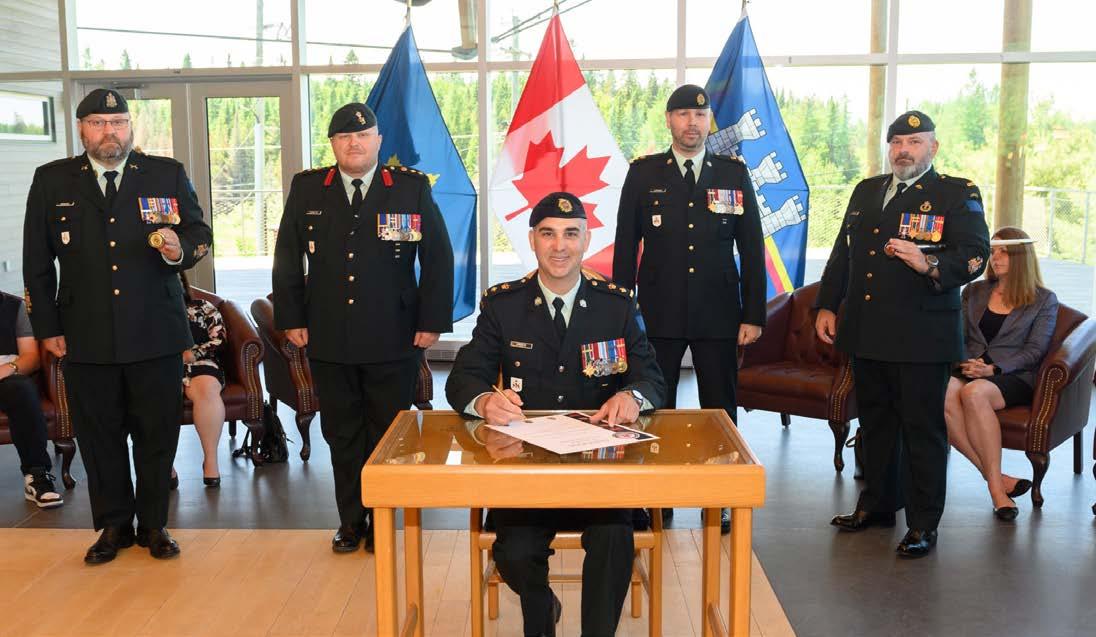
On Ju ne 15, at Base Valcartier, the 2 nd Canadian Division Support Group Operations Service (2 CDSG Ops Svc) change of command ceremony took place between LCol Keven Larocque, outgoing commander, and LCol François Laroche, designated commander.
The ceremony was presided over by Colonel Jason Langelier, Commander of 2 CDSG. LCol Laroche arrives from Ottawa, where he was Director of Land Resource Requirements 3.
The Ops Svc supports the training and operational readiness objectives of the integrated and lodger units by managing the daily operations of the 2 CDSG. This service is also the instigator of community life on the Montreal and SaintJean garrisons, as well as on Base Valcartier. (Y.B.)
The Defence Team is committed to promoting a workplace that is physically and psychologically safe and free from harassment and violence, including family violence. Did you know this also includes domestic violence?
To strengthen the policies that keep our Defence Team members safe, the Work Place Harassment and Violence Prevention Regulations (WHVPR), under the Canada Labour Code (CLC) Part II, came into effect on January 1, 2021. The Regulations focus heavily on prevention. The Defence Team is committed to promoting a workplace that is physically and psychologically safe and free from harassment and violence, including family violence.What is Family Violence and is it a workplace issue?-
Family Violence is defined as any form of abuse or neglect that a child or adult experiences from a family member, or from someone with whom they have an intimate relationship.
Family violence can take many forms, such as psychological, financial, physical, sexual, social, verbal and even cyber.
When family violence follows a victim to work, it becomes a workplace issue.
An actor of violence can present a risk to the victim or others in the workplace itself.

For example,
you may have heard people say “it is a personal matter” or “it's none of my business”. These attitudes can lead people experiencing family violence to isolation and discourage them from seeking help. The regulation on Workplace Harassment and Violence Prevention in the workplace now ensures that those affected by family violence have access to support and guidance when in need.
WHAT DOES THIS MEAN FOR YOU?
Family Violence Prevention: What this means for Defence Team Members?
The inclusion of Family Violence in the Workplace Harassment and Violence Prevention policy empowers Defence Team members to come forward in order to establish a safety plan with their supervisors/managers.
To support Defence Team members in addressing Family Violence in the workplace, the Workplace Harassment and Violence Prevention (WHVP) Centre of Expertise has developed a Family Violence: Supervisor’s Guide. The guide includes a step by step action plan, appropriate resources and a template for an Individualized Family Violence Safety Plan to ensure the safety of the Defence Team member as well as other personnel.
In addition to the guide, the WHVP Centre of Expertise also offers a new Family Violence in the Workplace Presentation. The presentation is an opportunity for Defence Team members to learn about the types of family violence, the cycle, the warning signs, the responsi-
bilities of employers and employees and available resources to all parties involved. To schedule a presentation or for questions regarding the Family Violence supervisor’s guide please contact the WHVP Centre of Expertise at WHVPCoE-PHVCE@ forces.gc.ca.



Yves Bélanger , Servir
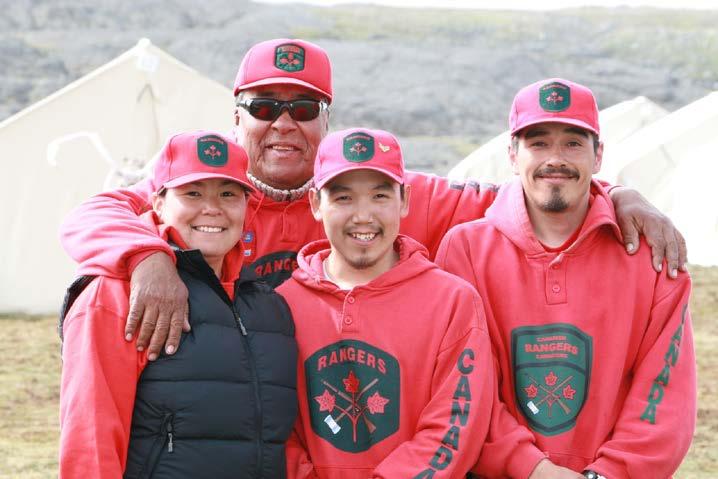
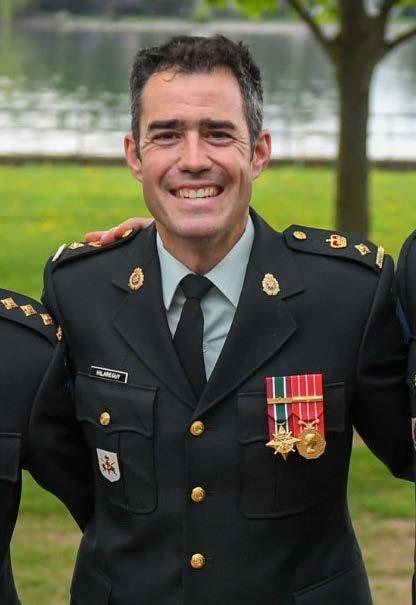
The new co mmander of the 2 nd Canadian Ranger Patrol Group (2 CRPG), Lieutenant-Colonel Nicolas Hilaréguy, has given himself the main mandate to recruit more Inuit and First Nations members within the various patrols of his unit. reserve.
In post for about forty days, LCol Hilaréguy has been working with 2 CRPG for five years. He says he started his new mandate by meeting the members of his close team. “I wanted to share with them my philosophy of command and discuss with them to decide what we wanted to put in place over the next three years.”
He says the first challenge he wants to take on is to increase the number of Canadian Rangers. “Obviously, there are three new patrols that must see the light of day, including one in Mistassini. This will make it possible to bring in up to 90 new reservists. On the other hand, several patrols are unable to acquire enough Rangers. This can impair the effectiveness of troops during search and rescue operations.”
To promote the work of the Canadian Rangers and thus help with recruitment, LCol Hilaréguy also trusts in the notoriety of the honorary lieutenant-colonel, Dr. Geneviève Auclair. A general practitioner at the Inuulitsivik Health Centre in Nunavik, she took up her post on September 1, 2021. “She is a leading ambassador for cultural diversity within 2 CRPG. It is already highly appreciated by the members.” It should be noted that honorary LCol Auclair has been practicing medicine in remote regions of Quebec for 15 years now.
MAKE PATROLS
MORE AUTONOMOUS
LCol Hilaréguy explains that he wi -
shes to take advantage of his three years in command of 2 CRPG to further develop the autonomy of the patrols. “During the COVID-19 pandemic, we have seen that some are less autonomous than others and therefore less able to perform the mandated tasks. We have to give them the tools to change that.”
Commander Hilaréguy even wants to set up joint exercises between patrols in certain regions. “Thus, the Rangers could share their experiences and knowledge.”
During his three years at the head of 2 CRPG, LCol Hilaréguy hopes to have the chance to tour the various communities served by the Canadian Rangers. “As of September, I intend to go into the field to recognize the work of our reservists and veterans who have contributed to the success of 2 GPRC.”
Eventually, he hopes to develop more constant communication with patrol leadership. “I want sergeants from
If the answer is positive, here is a webinar that could help you!
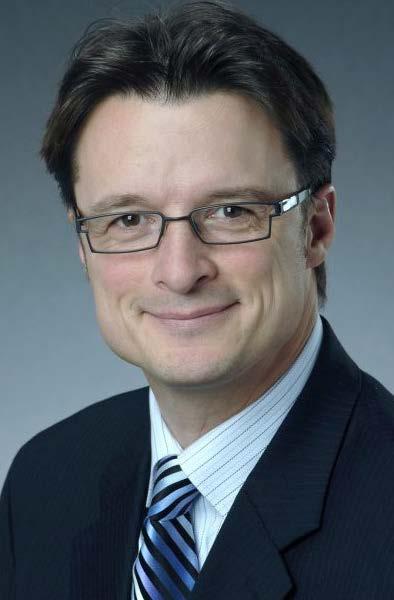
The Fort Saint-Jean Chapter invites us to watch The Impacts of Inflation on Food Shortages. In the first part, Dr. Sylvain Charlebois, an economist specializing in food industry, discusses the themes of inflation, the global food crisis and the impacts for Canada and Quebec.
In the second part, Dr. Marc Dauphin, veteran and lecturer in post-traumatic stress, as well as Martin Laferrière, social worker, comment on the effects of inflation on the behaviour of society. They explain the issues and impacts on individuals who are most susceptible to the discomforts of uncertainty and anxiety. They will discuss the most apparent signs and ways to calm down and increase resilience.
This webinar was presented live on June 7th (Y.B.)
different communities to have more opportunities to speak with their commander.”

Yves Bélanger, Servir
Since April 16, several CAF members, including Major Jean-Pierre Coulombe, Public Affairs Officer at the Opinion Relay and Speeches Directorate, and Master Warrant Officer
Pascal Simoneau, Sergeant Major of the 41 Canadian Forces Health Services CentreSaint-Jean, are in Warsaw to support the Polish Forces. Their mission: to help welcome the thousands of Ukrainians fleeing the war initiated by the Russian army.
The two men are taking part in Operation REASSURANCE. They say that even if the situation is not always easy on a psychological level, it is better than they expected. “Ukrainians are proud and confident people. They don't come here completely dejected. Their hearts are filled with hope,” said MWO Simoneau.
Maj Coulombe adds by explaining that many refugees have even started to return to their country for a few days. “The Ukrainian army managed to repel the Russians in several areas. People want to return home quickly to resume their lives.”
WELL ORGANIZED CENTRES

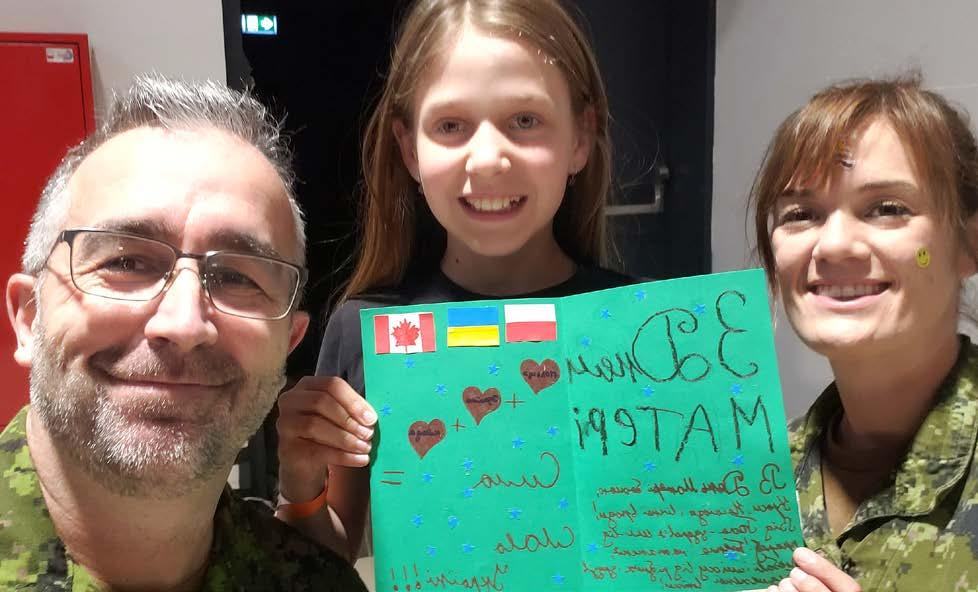
Upon their arrival on site to offer support, the CAF members were impressed by the work previously carried out by their Polish counterparts. “Their refugee reception centres are really well organized. People are treated well there. There are playrooms for the children, places to do the laundry and rest rooms,” lists Maj Coulombe.
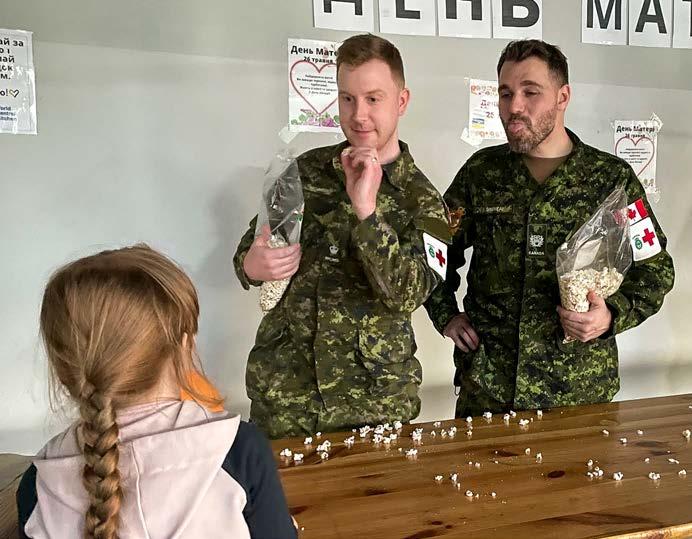
Although the CAF members went there with specific tasks to perform, it is obvious that in such a context, they are doing a little more than what is expected. “When we can, we take the time to chat with people. It is clear that it helps them to be able to talk about what they have been through and what awaits them,” said MWO Simoneau.
CANADIANS APPRECIATED
Maj Coulombe mentioned that five Canadian Armed Forces chaplains are part of the team and are present in one of the three centres. “The latter are of Ukrainian origin. This greatly facilitates the first approach. But I must say that when the refugees see the Canadian flag, they are happy and reassured.”
The Ukrainians they help had to leave their homes on the sly. They have with them their life wrapped up in at most two bags. “Many arrive with their pet under their arm,” says MWO Simoneau.
THE BIGGEST CHALLENGE
In reception centres, refugees have access to clothing and accessories. They can also receive appropriate medical care. MWO Simoneau says that for the medical team, one of the biggest challenges to overcome is language. “It's not easy to understand each other. In addition, the refugees often arrive with medicines for which it is difficult to decipher the prescription since it is written in the Cyrillic alphabet. It is the same with the majority of the drugs we have received as donations.” Consultations are therefore much longer with each patient.
The main ailments treated by the medical team on site are, among others, the flu, sore throats, sinusitis and pneumonia. “We are also starting to have cases of chicken pox,” says MWO Simoneau. As for the cases of COVID-19, there are a few, but the situation is being managed very well.”


Yves Bélanger , Servir
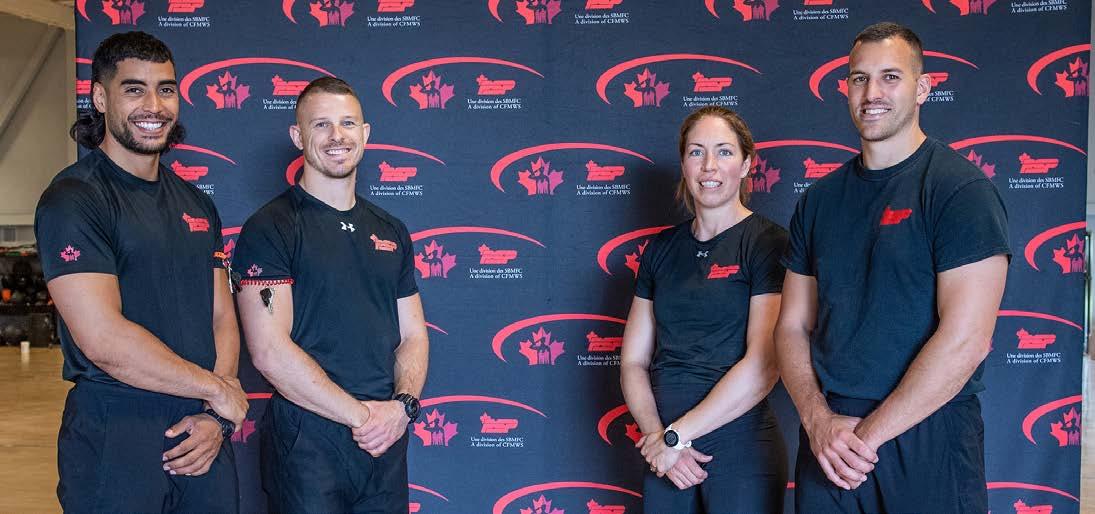
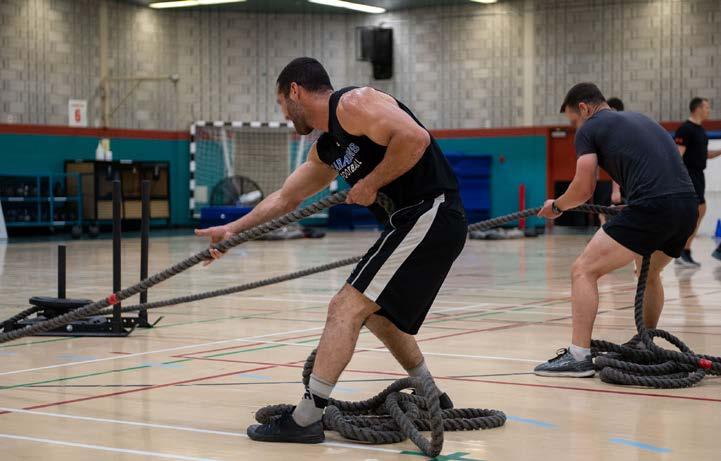
For the past few weeks, four fitness and sports instructors from the Saint-Jean Garrison have been offering special training to CAF members who are thinking of taking the exam to join the special forces or search and rescue teams. Sergeant Dominic Veilleux, from the Specialized Training Division at the Canadian Forces Leadership and Recruit School (CFLRS), is working with them.
The members of the Personnel Support Programs (PSP) team are Karine Côté, Bruno Lavergne, Mathieu Ramanand and Samuel V. Côté. The latter says that this project was created following a presentation by Sgt Veilleux which they attended. “It was very interesting. He spoke about his background in the special forces as well as his work with the Canadian Forces search and rescue team.”
It is obvious that to do this kind of work, CAF members must benefit from training that will allow them to surpass themselves physically. “Not everyone can be accepted into one of these teams.”
The four instructors therefore wanted to design a training routine to better prepare CAF members who plan to try their luck soon in the entrance exams for these trades.
“A 90-minute training is offered at lunchtime each week.”
A dozen CAF members are currently registered. Each week, they face the tests prepared by the instructors. “Among other things, there is running and rope climbing. It looks like cross fit exercises adapted to military tasks. In addition, there are capsules on nutrition and healthy lifestyles.”
Mr. Côté goes on to mention that the majority of participants also benefit from individual follow-up, provided by him or his three colleagues. “They are very motivated and hope
to one day be selected by these elite teams.”
Sgt Veilleux says selection camp for special forces and search and rescue teams is one of the hardest things to achieve in the Canadian Armed Forces. “Each year, only 10 to 12 people are selected. They have to meet difficult physical tests as well as psychological tests.”
He was very happy that the PSP monitors of the Saint-Jean Garrison offered him this collaboration. “First of all, it gives CAF members the chance to see if this type of training is right for them and if it's really what they want to do in the years to come.”
Secondly, it allows future candidates to prepare well. “It gives them additional tools in preparation for the tests they will have to undergo.” It is important to note that even if they pass all the tests with flying colors during the selection camp, some people may not be chosen immedia -
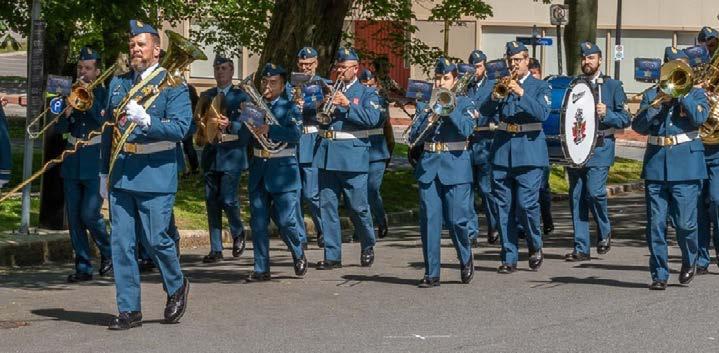
On June 12, the Band of 438 Tactical Helicopter Squadron (438 THS) was in Saint John, New Brunswick, to perform at the Freedom of the City ceremony with 403 Training Squadron helicopter operations.
The presence of the musicians of 438 THS was greatly appreciated by the many spectators. “From our perspective, a parade just isn't the same without the music. You definitely made all the difference and added
greatness to the event. Thank you for coming from Montreal to support us, we all appreciated it very much,” said Captain Isabelle L-McInnes, of the 403 Helicopter Operational Training Squadron.
Note that on June 29, a brass quintet from 438 THS also participated in an enlistment ceremony at the Canadian Forces Recruiting Centre Quebec, Detachment Montreal. The event took place at the Royal Military College Saint-Jean. (Y.B.)
tely due to the number of applicants. “You should not expect to be selected in the first year. It all depends on the number of places available and the number of good candidates. Sometimes it's only a postponement.”
Veilleux ends by inviting people who wish to obtain more information concerning the special forces or search and rescue teams to contact him at dominic.veilleux@forces. gc.ca.
Carl Coicou Health promotion specialist
Lately, our resilience and mental toughness have been put to the test. Here are some ideas to allow us to continue to move forward with zenitude!
A protracted pandemic, growing inflation that is having a major impact on our way of life, increasing incidents of urban violence, growing geopolitical instability, a horrific war whose foundations elude us, etc. In short, a tsunami of events that leads to an anxietyprovoking context for most of us.
In such circumstances, it is normal to experience certain feelings such as frustration, insecurity, helplessness, disillusionment, fear and even anxiety. Of course, we are all affected to varying degrees by this situation and we shouldn't feel guilty for sometimes not being well. Know that being able to accept our vulnerability only demonstrates our ability to recognize our limits and, by extension, our humanity.
Impossible to escape it: stress and anxiety are essential components of our lives. In too small quantities, it is boredom and lack of motivation. Omnipresent and too intense, it is fatigue and exhaustion that awaits us.
Hence the importance of having a good toolbox to tame adversity on a daily basis. Finding loopholes to release the pressure becomes vital. It can be sports and physical activity, games, nature walks, meditation, breathing and relaxation techniques, visualization, escape, travel, music, arts and so many others!
Listening to your emotions, not judging yourself, showing gratitude, self-compassion and kindness to yourself, stopping more often and doing what really makes you feel good, these are all effective ways to deal with the ups and downs of life.
We must learn to recognize what we have power over and then direct our focus to it. In other words, we must direct our attention to what really matters, to the essential.
This does not mean turning your head away or being indifferent to everything else. On the contrary, this strategy is one of survival. Doing so allows us to protect our mental health capital and prevents us from sinking into cynicism and despair.
Now more than ever, we need to refocus on what is most likely to bring us closer to well-being and serenity. Letting go takes on its full meaning here.
If you need help, contact your local resources. Members of the military community can also join:
• Defence Employee Assistance Program (military and public service employees): 1-800-268-7708
• LifeWorks (employees of NonPublic Funds): 1-844-880-9143


Yves Bélanger, Servir
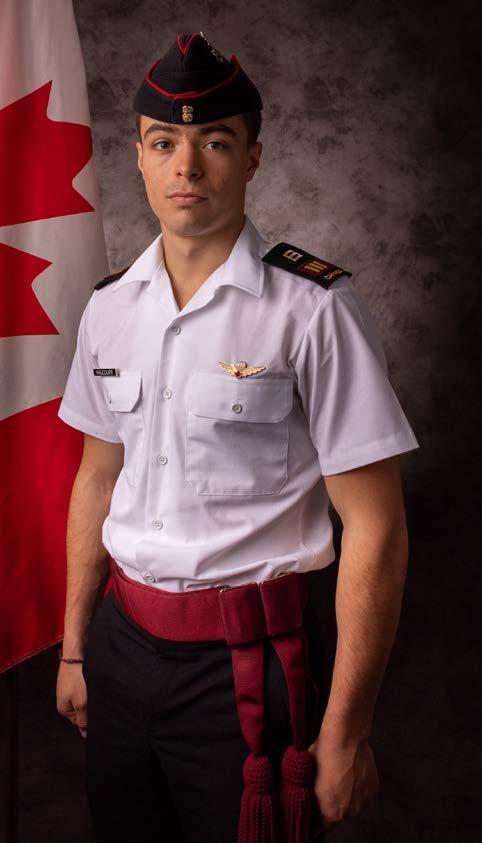
As he begins his final year of studies at Royal Military College Saint-Jean (RMC Saint-Jean), Officer Cadet Laurier Valcourt has decided to take the reins of the military skills team. And he hopes to take it a little further!
OCdt Valcourt has been a member of the RMC Saint-Jean team for three years. Having held various roles there, he has a lot of experience. However, he is aware that becoming a team captain will be very demanding. “It's a big responsibility. However, I wanted to try my luck and develop my leadership.”
He intends to take advantage of this fourth and final year of studies at RMC Saint-Jean to develop his skills to the maximum. “I want to devote a lot of my time to the team to enable it to achieve better results in competitions with other military institutions. I want to show that Canadian military teams are up to international competition.”
From the beginning of the school year, in September, he will undertake the campaign to select new members. “Instead of spreading this over three weeks, I intend to hold the selection over a period of seven days.”
Some Officer cadets and naval cadets who were members of the team and who wish to join the team this year will have to go through selection again. “The goal will be to see if they are assigned to the correct position.”
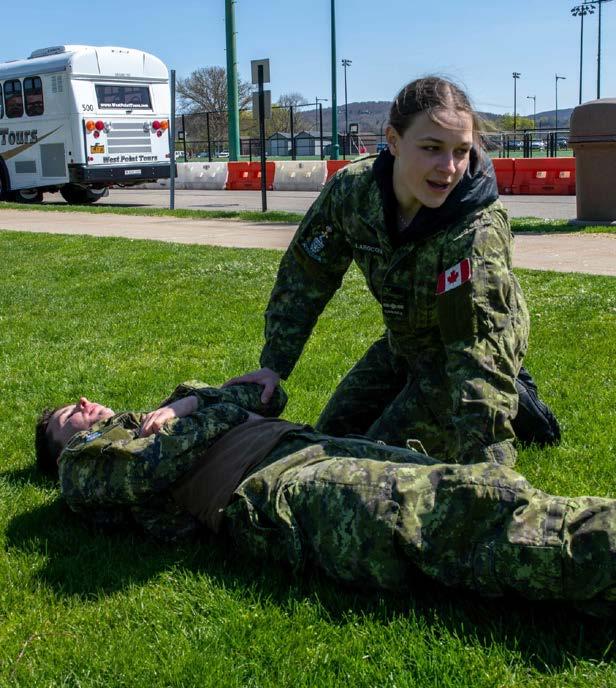
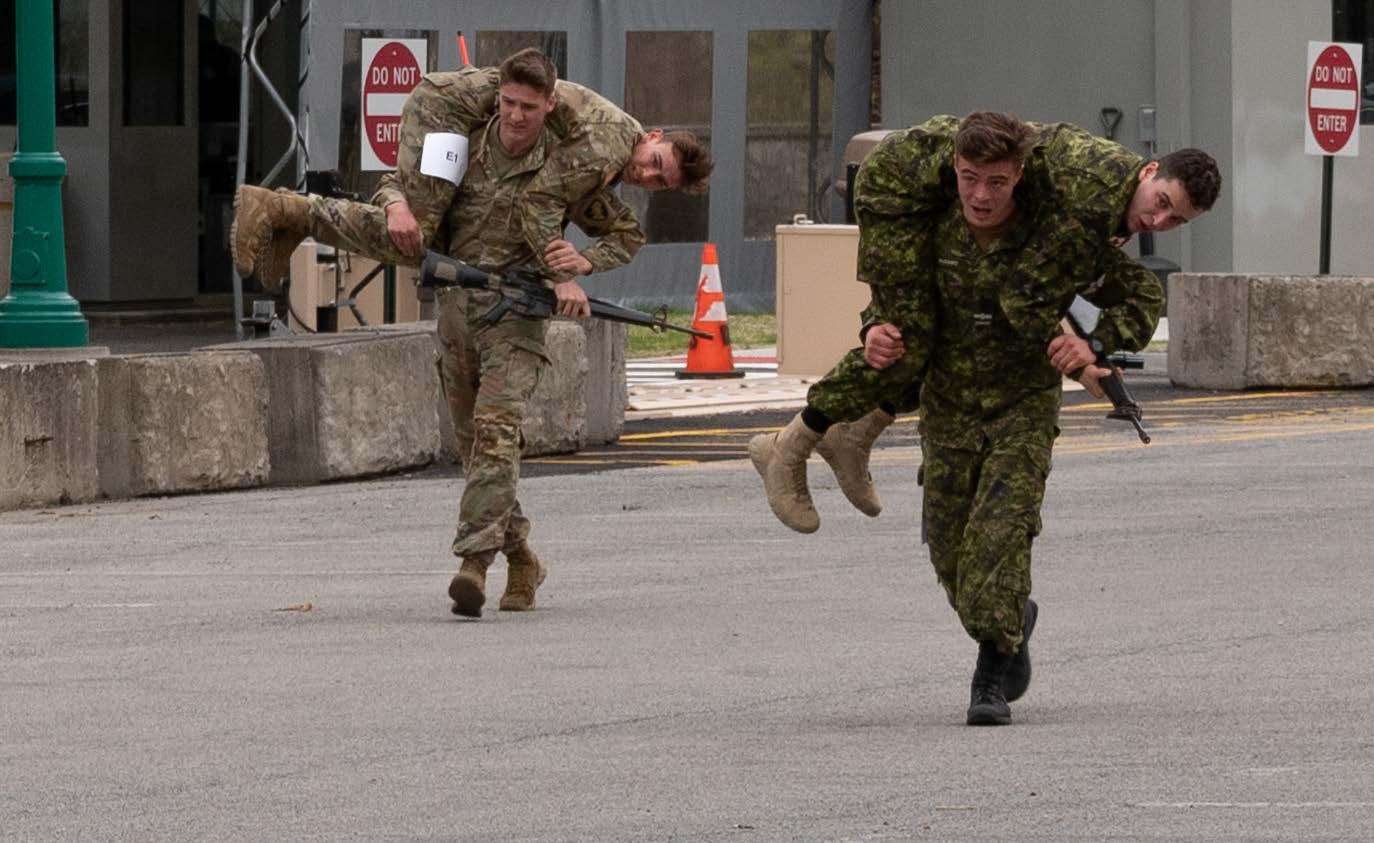
The new team captain explains that when RMC Saint-Jean participated in the Sandhurst challenge two months ago, he realized that there was a lack of diversity within the team. “It doesn't only take guys and girls who are physically strong. We also need members who are skilled in strategy and who have mental strength.”
Vol. 28/No 12 June 30, 2022
PRINT : digital edition only
EDITOR : Col Jason Langelier
2 Cdn Div Support Group Commander
MILITARY ADVISORS :
• Capt Steve Comeau
450-358-7099 ext. 6570 steve.comeau@forces.gc.ca
• Capt Frédéric Thouin
514-252-2777 ext. 4530 frederic.thouin717@forces.gc.ca
Saint-Jean Garrison, office K-125, PO Box 100, Station bureau-chef Richelain QC J0J 1R0 T. 450-358-7099 ext.6346 servir@forces.gc.ca • journalservir.com
• Claude Tourville 514 252-2777 # 4993 claude.tourville@forces.gc.ca
MANAGER : Guylaine Fortin 450-358-7099 ext. 7426 • guylaine.fortin@forces.gc.ca
JOURNALIST : Yves Bélanger 450-358-7099 ext. 7330 • yves.belanger@forces.gc.ca
ADVERTISTING REPRESENTATIVE : François Ménard 450-346-2300 • servir@tictactoecommunication.com
SUBSCRIPTION AND CLASSIFIED : Bélinda Raîche, 450-358-7099 ext. 6346 • belinda.raiche@forces.gc.ca
TRANSLATION : Google
GRAPHIC DESIGNER : Gillian Ottaway
ISSN 0384-0417
• Publication requests should be sent in Word format by email. The editor-in-chief reserves the right to reject, modify or publish any editorial or advertising material. Next edition 13/07/2022 Deadline 04/07/2022
• Servir is an authorized unofficial publication, published bimonthly with permission of the 2nd Canadian Division Support Group Commander. The opinions and points of views expressed are not necessarily those of DND, CAF and CFMWS/ NPFs Personnel.
Yves Bélanger, Servir
Lieutenant (Navy) Guillaume Leblanc, Maritime Liaison Officer, 2nd Canadian Division Headquarters and Joint Task Force (East), has been practicing various sports since he was young. He says that physical activity is the cornerstone of his daily life and his well-being.
The CAF member practices several sports. He particularly enjoys tennis and running. “I'm also a fan of resistance training which combines cardio and strength training on a daily basis (boot camp).” Mountain hiking, badminton and squash are added to the list. For him, physical activity has benefits for sleep, stress management and overall health.
He explains that it was his parents who introduced him to tennis. “They have always played tennis in recreational leagues. So naturally I ended up playing it too!”
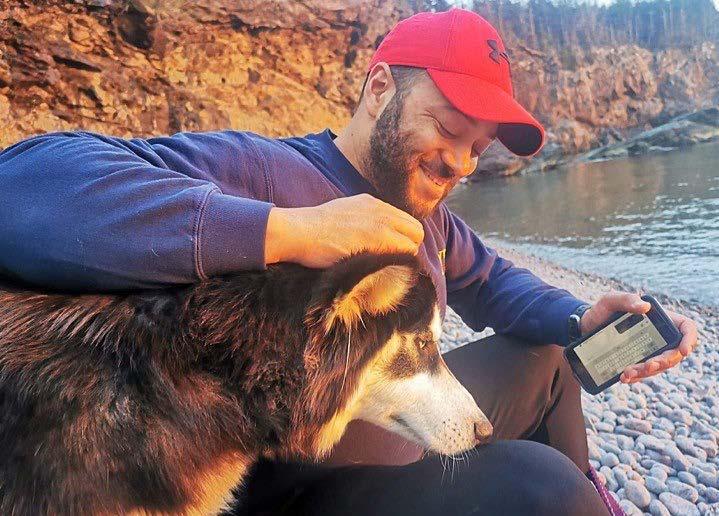
When it comes to running, resistance training and racquet sports, he says it was through the services and support provided by the Canadian Armed Forces (CAF) that he first became interested in them. “All military bases have gymnasiums, running tracks, squash courts, or other facilities.”
For him, it is clear that CAF members have the tools and resources to maintain good physical condition and practice sports. “All of this is complementary to passing the FORCE Evaluation we have to submit to every year.”
Dave Daneault, Automotive columnist
Editor’s note. The automobile chronicle is a tradition in Servir. In addition to new vehicle reviews by Mr. JeanFrançois Ross, there will be articles by Mr. Dave Daneault. They will deal with various topics related to the passion for driving.
How much of a passion is yours? For some, nothing could stop them from doing what they love, not even the loss of a limb… This is what happened to Vincent Pedneault, at the age of 25.
One day when Vince was working on an agricultural machine, a round baler, he had a slight lack of attention which ended in a hand getting stuck in the machine. An amputation was necessary and during difficult times he had to cling to his habits, especially his passion for off-roading.
Already a fan of this discipline, his passion grew very quickly with the purchase of a 2003 Dodge Dakota that he has owned for six years now. He has already made many modifications to the vehicle and they keep on adding: Ford Dana60, suspension, gear, diff truss, 4 link, T-case. It's all there, and it's just the beginning!
To see the young man go, we quickly realize that his handicap does not slow him down in his activities. On the contrary, whether on his buggy, his mountain bike or hiking, he lives his passions and de-

sires, the pedal to the floor! He is a beautiful role model for young and old who may have physical or mental limitations. He is living proof that we must push the negative aside and persevere in the things that make us happy.
Vince is keen to remind us that in our workplace, we need to be careful and aware of the environment around us: “Be alert and take the extra two minutes it takes to become aware of the risks of your next action. The situation can change quickly. Live your passions without looking back. Life is short and you never know what will get in your way. Be ready to cross this obstacle as you would on a trail with your 4×4! Good trail, gang!”
Lt(N) Leblanc devotes several hours a week to physical training. “Typically in a week I do three resistance workouts of 45 minutes, followed by 10 minutes of stretching. I also do three cardiovascular
workouts of about an hour and I play tennis for two to four hours. On weekends, if weather permitting, he likes to hike in the mountains or practice activities like badminton or squash. “I rest on Sunday in order to start the new week in good shape.”
He maintains that to excel in tennis and running, you have to find the balance between pleasure and the desire to improve. “Performance comes from pleasure, because it is from this moment that you end up being consistent. Improving training techniques and methods becomes natural and performance follows. It also helps to avoid injuries, because when you train while injured, the pleasure is no longer present.”
The CAF member says he likes to set goals. “Sometimes I do it with the fitness and sports instructors from the Montreal Garrison Personnel Support Programs. My main goal is to continue to achieve the platinum level in the annual FORCE Evaluation.” This year, Lt(N) Leblanc has also set another goal that of improving his time in running. “All for the purpose of me joining the CAF running team.”
The Saint-Jean Garrison Community Recreation Department invite CAF members to join the Montreal Region Golf Club.
Being a member of the club gives access to exclusive agreements with seven golf clubs located in the Montérégie and the Eastern Townships: Saint-Jean, Verchères, Farnham, Lac Champlain, Napierville, North Hatley and Saint-Basile-le-Grand.
Once again this year, the club is offering tournaments to its members during the summer season, one per month.
July 13, 2022: Farnham
August 17, 2022: Verchères
September 7, 2022: Farnham
To join the club, you must have a PSP membership card (sports centre subscription). Memberships and renewal of a membership card are done electronically. Each new member will be contacted to make payment for their membership and their PSP card.
Interested persons can contact Christian Munger, President, at christianmu06@ yahoo.ca or at 514 886-1064. (Y.B.)


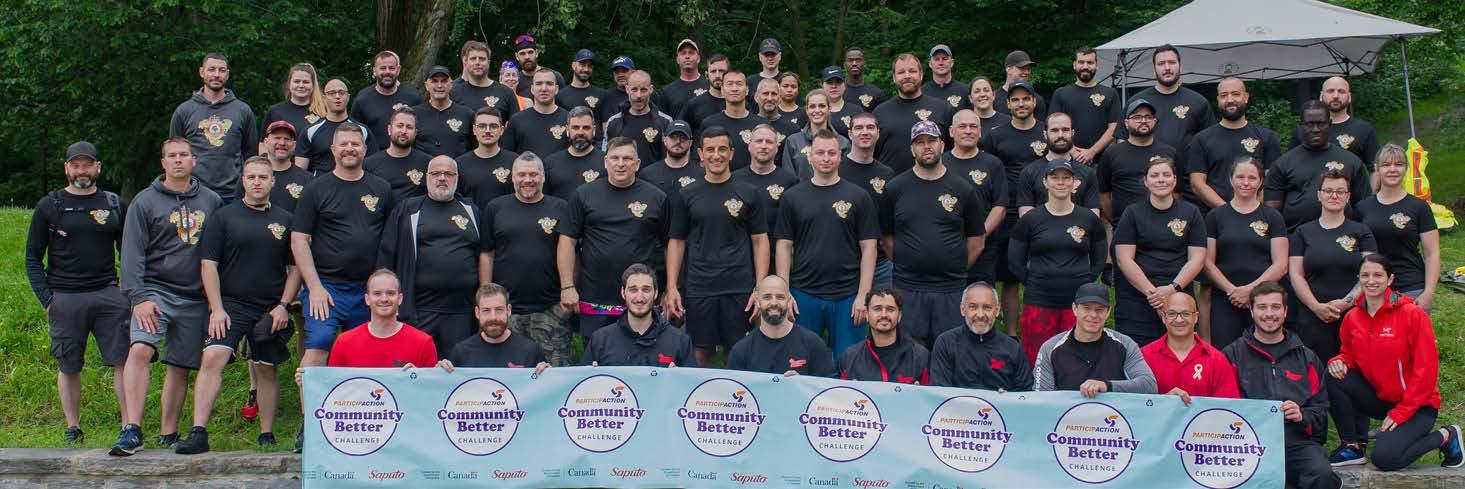
On June 10, members of the 3 rd Canadian Support Unit gathered on Mount Royal to take up the challenge of the Commander's Run.
The atmosphere was festive as 65 participants answered the call. “Some were accompanied by their spouse for the occasion. It was a great cohesion moment for everyone. It feels good to finally be able to resume this kind of activity after two years of confinement,” says Jean-François Bernard, manager of physical conditioning, sport and recreation at the Montreal
Garrison.
Of course, the entire Montreal Garrison Personnel Support Programs (PSP) team was present to support the event. “We also had excellent collaboration from the city of Montreal.”
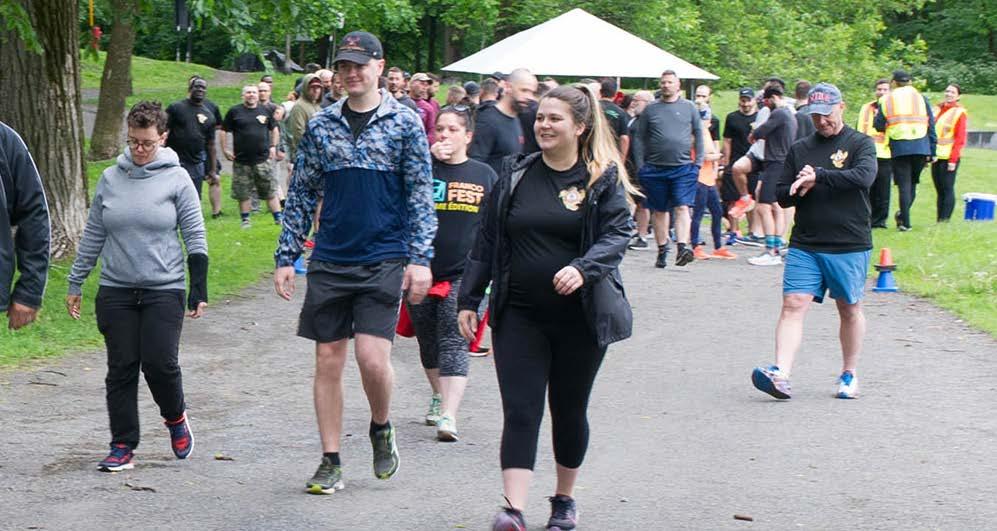
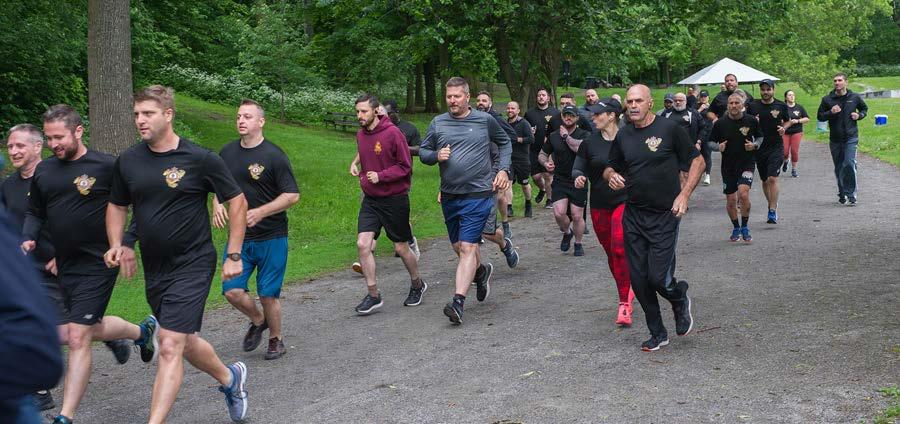
Two groups were formed among the participants. “The first was a group of runners while the second was made up of walkers.” All managed to complete the 5 km course. “It was not the easiest route, because 50% was on an upslope.” (YB)
Yves Bélanger, Servir
On June 1 and 2, Major David Simpkin, from Royal Military College Saint-Jean (RMC Saint-Jean), was in Águilas, Spain, to participate in the International Military Sports Council (CISM) World Triathlon Championship. This time, it was as a coach that he was there.
Maj Simpkin was named Head Coach of the Canadian Armed Forces (CAF) Triathlon Team (Short Distance) in the spring of 2020, after retiring from athletics. “I was part of the CAF triathlon team for almost 10 years before taking on the position of head coach.”
This year, the CAF triathlon team included an athlete from RMC SaintJean, Lieutenant (Navy) Émilie Béland. “A former College graduate, Captain Jonathan Lapointe, was also on the team. It was his first international CISM race.”
EXPERIENCE THE COMPETITION DIFFERENTLY
Maj Simpkin says he really enjoyed his first head coaching experience despite the pitfalls caused by the COVID-19 pandemic. “For two years, it was almost impossible to travel and meet each other.” Fortunately, technology has allowed the team to meet and train virtually.
He maintains that the team members were really excited and motivated to go to Spain. “They were happy to finally get together and go represent Canada. They were eager to build relationships with military athletes from participating nations.”
Maj Simpkin notes that at times he had a little difficulty watching the competition, sitting on the bench. “I would have liked to be on the circuit to help my team win.” He is still very happy with the decision he made. “It’s also nice to be able to lead others to achieve their goals.”
This is the first time in several years that the CAF team has returned from the CISM Triathlon Championships without a medal. The head coach explains that the main obstacle has been the impossibility to hold group training in almost three years.
Injuries also hampered the Canadian team. “Our best athlete, Master Corporal Alexandre Boulé, got injured during the race.” Also, two of the team's
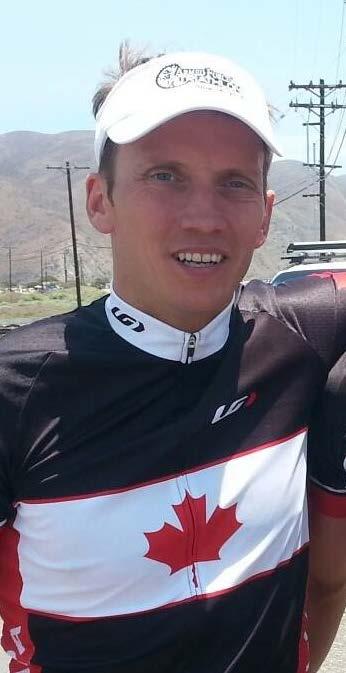



good athletes, Maj Philippe Reynolds and Maj David Lacombe, were unable to participate in the championship.
“The first was involved in a major bicycle accident and had to be hospitalized. Maj Lacombe was unable to attend for last-minute operational reasons.”
However, he assures that in the circumstances, the team did an excellent job. “I am very proud of the effort everyone has made and we are looking forward to the championships in France (2024) and Peru (2025). We will definitely be back on the podium at that time!”