





Photo: MCpl Nédia
Saint-Jean



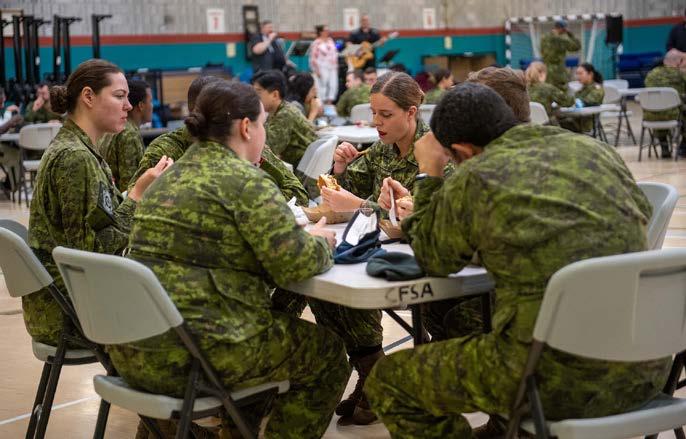
The bad weather did not get the better of the Lunch Party organized by the Personnel Support Programs (PSP) which took place on June 9 at Saint-Jean Garrison. The event, which was open to all CAF members and civilian employees (public service and non-public funds), attracted 366 people.
Due to the rain, the activity that was to take place outside was relocated to the Mega gymnasium. “The day before, a message was sent to Garrison employees to confirm that the event would take place rain or shine. We have transformed the gymnasium into a reception hall,” explains Pascal Vincent, Health Promotion Manager and main organizer of the event.
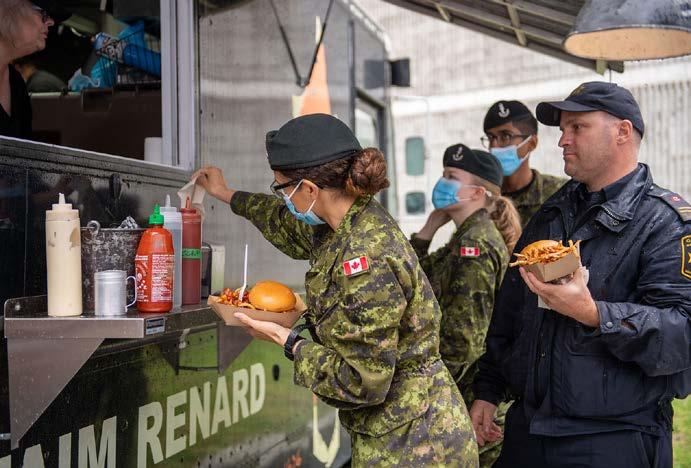
Three street food trucks were outside
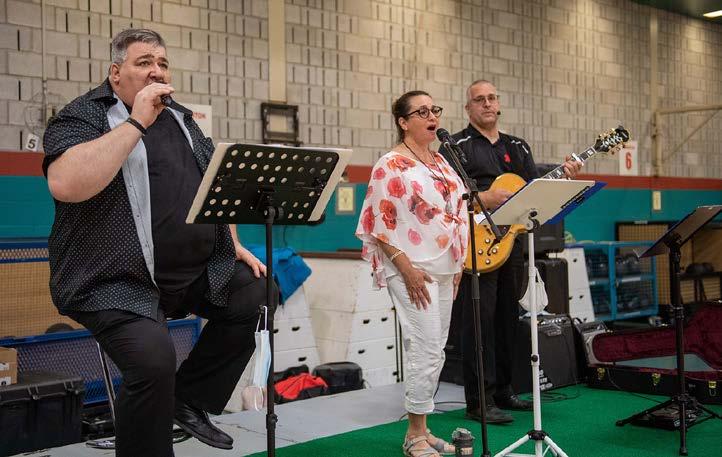
and party attendees were able to pick up their lunch for free as well as an ice cream. Inside, a tasting of Atypique drinks was offered by the messes and CANEX teams to allow people to discover these different alcohol-free cocktails. The PSP Band was on stage to provide entertainment.
Mr. Vincent assures that he received only good comments about the activity which aimed to bring people together after two years of pandemic. “We are very satisfied. The soldiers have recently returned to the Garrison and they responded in large numbers.”
He ends by emphasizing that the success of this event is a team one.
“Several people got involved and I would like to thank them warmly.”






Yves Bélanger, Servir
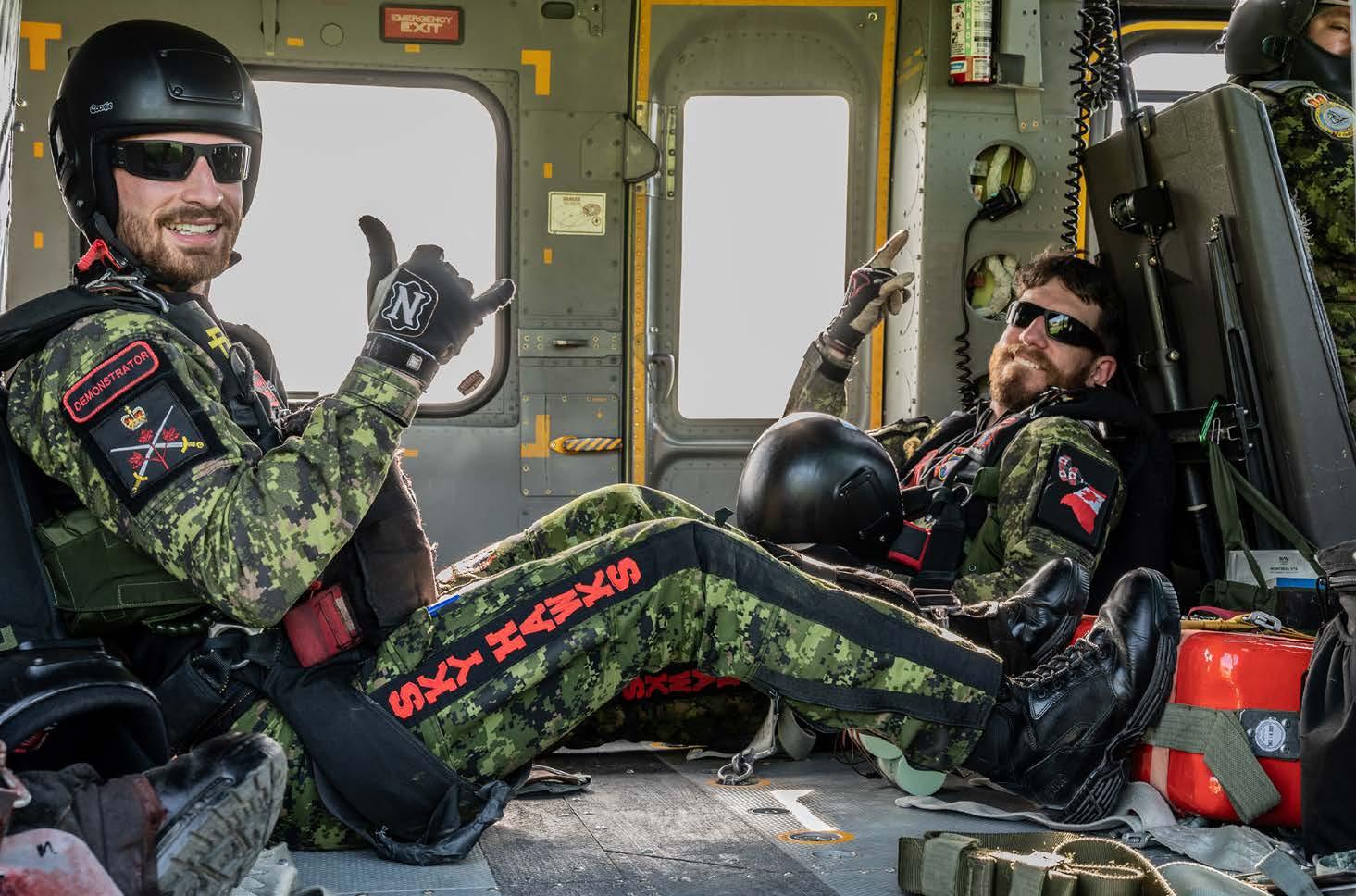
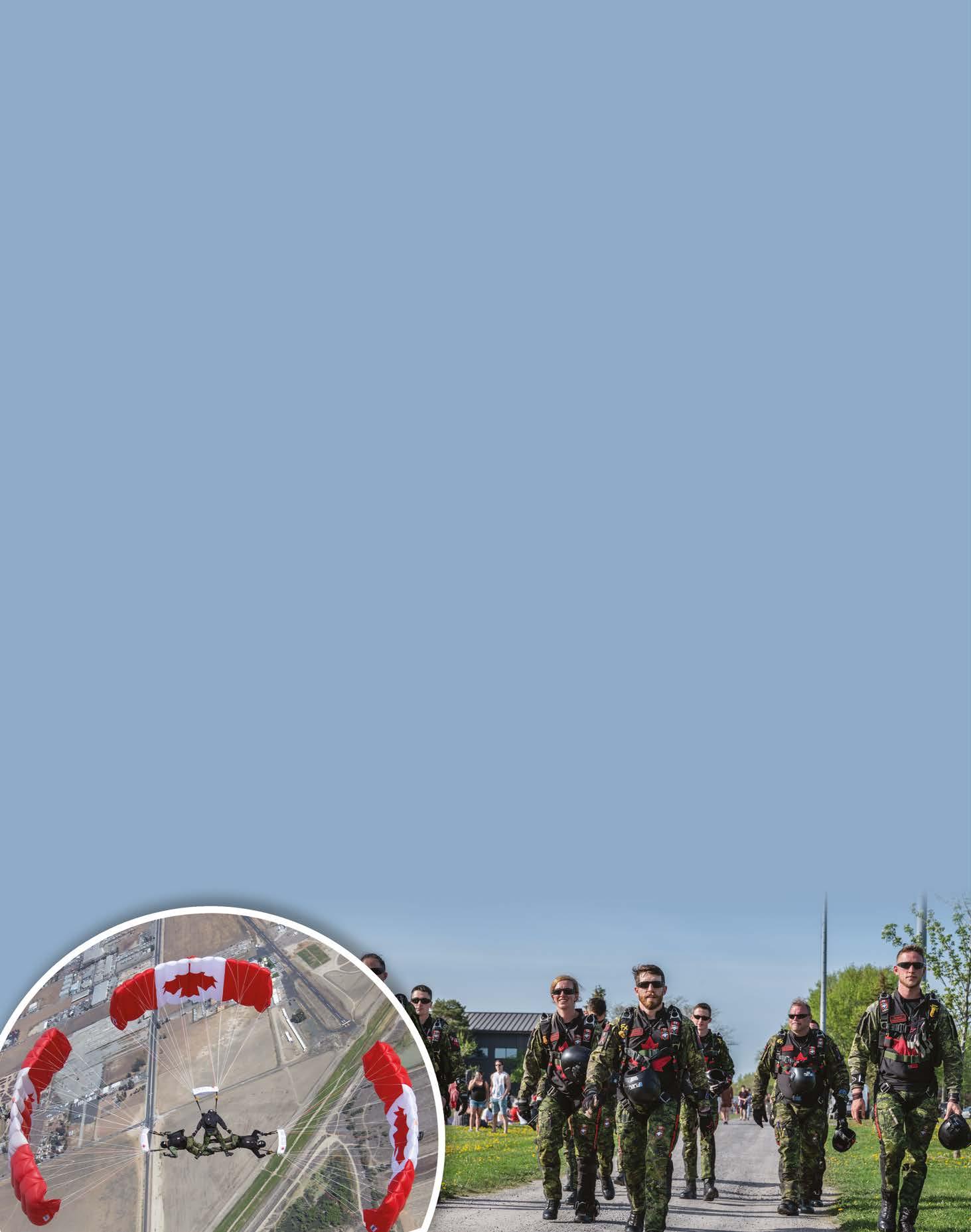
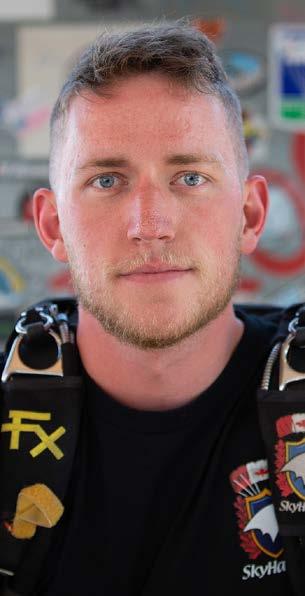
Sergeant Antoine Colette, of the 4e Bataillon Royal 22e Régiment, and Master Corporal Kimbo Grondin, transferred to the Canadian Army Advanced Warfare Centre, have a common passion: parachuting. The two Quebec CAF members are members of the SkyHawks, the Canadian Armed Forces parachute team.
On May 13 and 14, they were in SaintJean-sur-Richelieu with the team of 15 paratroopers for the end-of-year ceremonies at the Royal Military College Saint-Jean. Servir had the opportunity to interview them.
It's obvious, the two men run on adrenaline. This was their first show of the season and they were eager to present their stunts and formations to the public. Remember that due to the COVID-19 pandemic, the 2020 and 2021 SkyHawks seasons had been cancelled.
Sgt Colette is a real skydiving buff. In his civilian life, he works for a company related to this sport. “I have more than 1,800 jumps to my credit,” he says proudly.
For his part, MCpl Grondin has so far made more than 1,200 jumps. He still remembers his first jump with the SkyHawks in 2017. “It was so impressive. It was in Louisiana in front of a crowd of 250,000 people. People were all amazed by the different formations presented by the parachute teams.”
One of the jumps that impressed Sgt Colette the most was the one he made in Ottawa in 2019. “I landed on Parliament Hill in the middle of the crowd. It was special to jump into the nation's capital on Canada Day.”
When in the sky, SkyHawks skydivers face a variety of obstacles. The most important is of course the weather. This is why the team is very rigorous and does not take any chances. “If the weather is too bad, we just don't jump,” explains MCpl Grondin.
Both servicemen are well aware that their passion carries a certain level of risk and danger. However, they are trained accordingly. “Every morning when we have a show, we go over the emergency measures. We know what to do if something goes wrong,” says Sgt Colette.
He adds that the parachutes the SkyHawks use are also very safe. “We also have a reserve parachute in case of an incident.”
The SkyHawks will be performing across Canada this year. Here are the dates of the performances that will take place closest to Montreal.
July
July 1: Canada Day in Ottawa
September
September 16, 17, 18: Gatineau Airport
September 23, 24, 25: Volaria Air Festival in Mirabel
September 30 to October 2: ULM Festival in Saint-Cuthbert
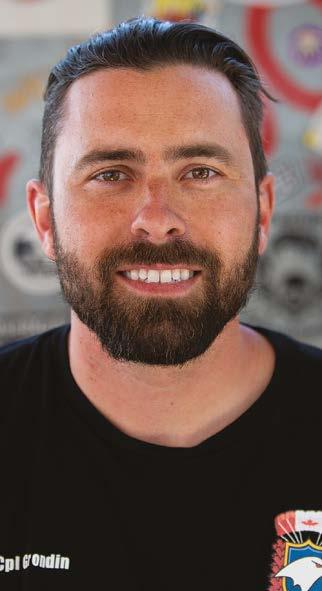
Corporal Kimbo Grondin of the Canadian Army Advanced Warfare Centre is a senior member of the SkyHawks team.
It was in June 1969 that a group of sport parachuting specialists from the Canadian Airborne Regiment was created. It took the name of Canadian Airborne Regiment Parachute Team.
The formation put on its first show on June 14, 1969, as part of the Mobile Command Firepower Show at Canadian Forces Base Petawawa, Ontario.
In October 1970, the formation was renamed the Canadian Forces Parachute Team.
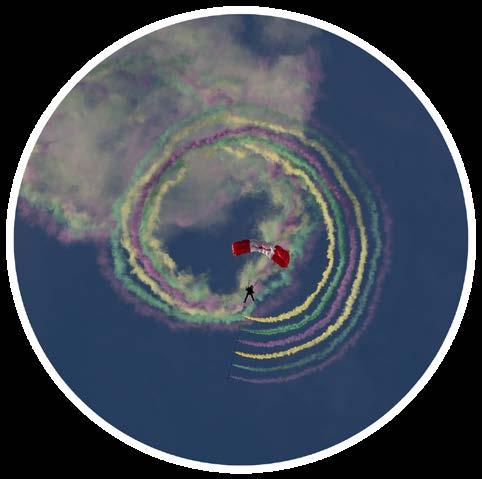
In 1971, the team came under the command of the Canadian Airborne Operations Centre. In August of that same year, the National Defence Headquarters made its existence official. The following month, the team became the SkyHawks.
The name Canadian Forces Parachute Team was adopted in 2013.
Each year, the SkyHawks compete in events across North America and around the world where they delight audiences with their acrobatic jumps and the formations they perform in the sky. The SkyHawks have performed around the world in front of more than 75 million spectators, and the formation is proud to have the opportunity again this season to deploy its distinctive parachutes bearing the Canadian flag.
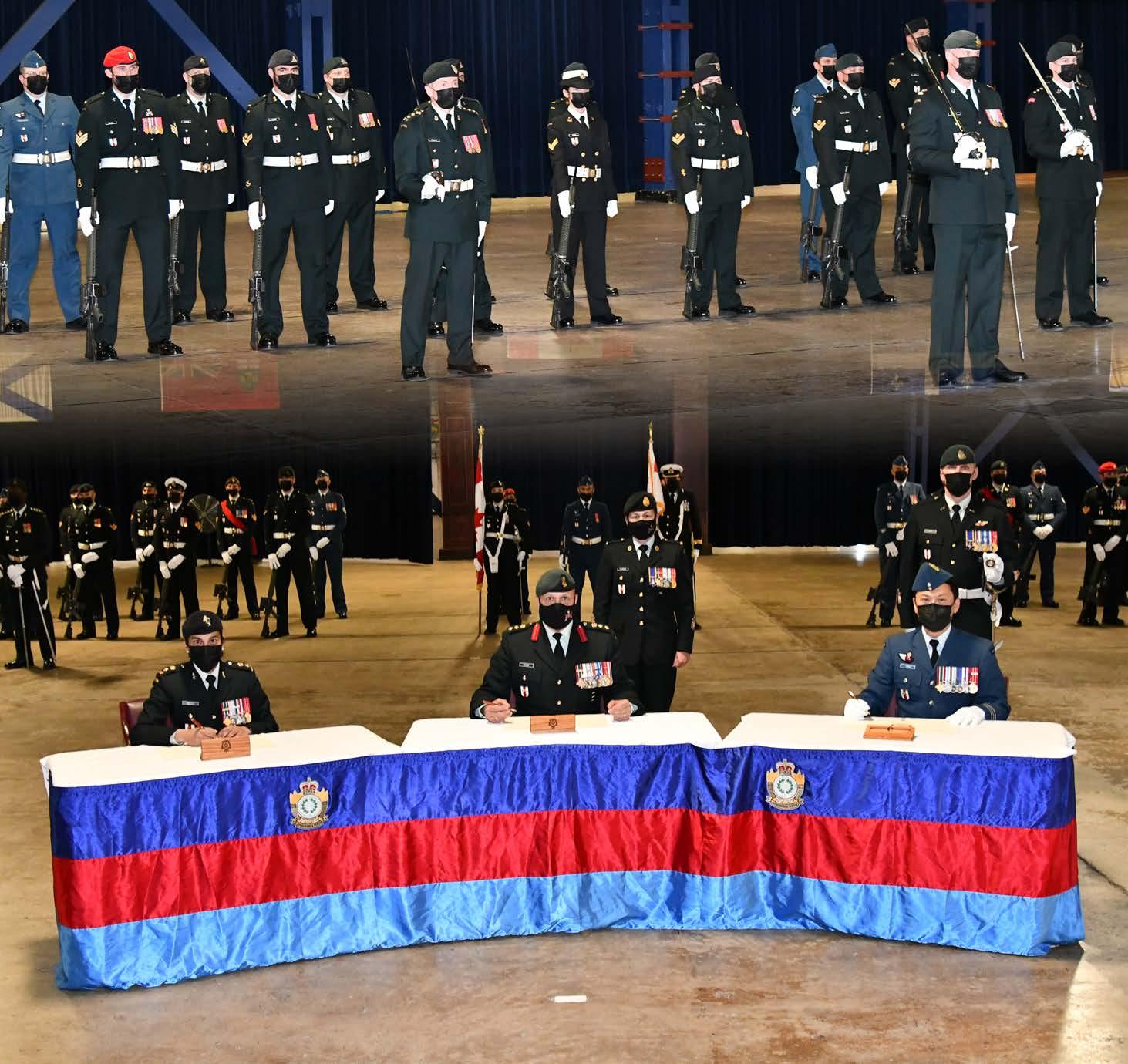
On June 3, at Saint-Jean Garrison, the Canadian Forces Leadership and Recruit School (CFLRS) change of command ceremony took place in the presence of Colonel Daniel Rivière, Commander of the Canadian Forces Base Borden and the Military Personnel Generation Training Group. Lieutenant-Colonel Melissa Ramessar handed over command to Lieutenant-Colonel Chung Wong. This is a comeback for LCol Wong who worked at CFLRS between 2010 and 2013.

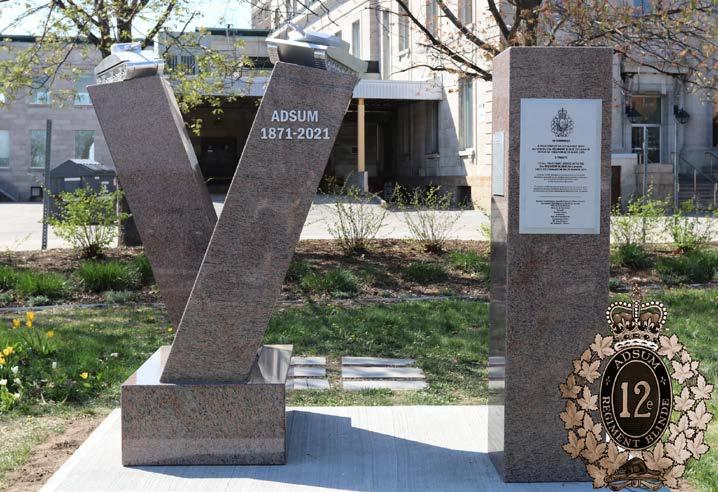
The 150th anniversary celebrations of the 12e Régiment blindé du Canada (12 RBC) ended on May 14 with the unveiling of the commemorative monument held in Parc du Platon, in Trois-Rivières.
Many dignitaries were present for the occasion, including Colonel Jonathan Chouinard, Commander of 35 Canadian Brigade Group, Brigadier-General Stéphane Boivin, Commander of the 2nd Canadian Division and senior officer of 12 RBC, Lieutenant-Governor of Quebec, Michel Doyon, and the mayor of Trois-Rivières,
More than 50 members of the Regular Force and the Reserve, as well as several distinguished guests attended the unveiling of the monument, created thanks to the collaboration of the City of Trois-Rivières and the Ministry of Culture and Communications. Various events have taken place over the past year to mark the 150th anniversary of 12 RBC. A commemorative envelope was, among other things, created in 2021 in collaboration with Canada Post. A historical book has been presented and put on sale in recent weeks. (YB)
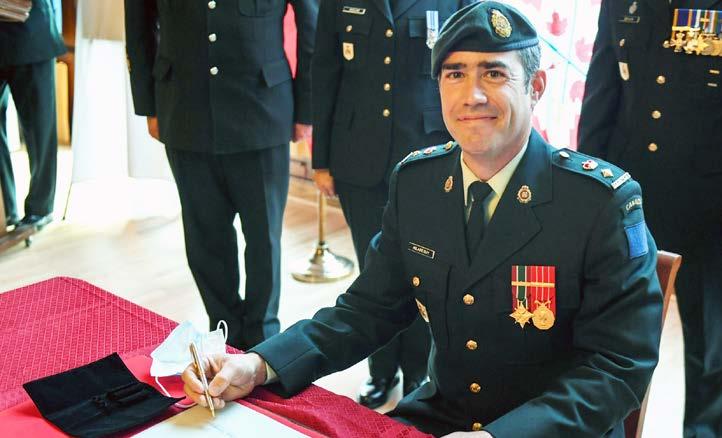
On May 16, in Saint-Jean-surRichelieu, Colonel Benoit Mainville handed over command of the 2nd Canadian Ranger Patrol Group (2 CRPG) to Lieutenant-Colonel Nicolas Hilaréguy.
The ceremony, presided over by BrigadierGeneral Stéphane Boivin, Commander of the 2nd Canadian Division and Joint Task Force (East), took place at the Royal Military College Saint-Jean. “I am
grateful for the excellent work done by Colonel Mainville during his command of 2 CRPG, particularly for the creation of the Nemaska patrol in 2019. I also congratulate the designated commander, Lieutenant-Colonel Hilaréguy, for his appointment. He can count on my unequivocal support so that the Rangers of 2 CRPG can continue to carry out their mandate within the communities of the Far North of Quebec,” said BGen Boivin. (YB)
Maude Laflamme
Community Integration Officer, MFRC
The transfer season, an unavoidable part of a military family's life, can bring its share of worries and questions: can social networks reduce them?
Moving is often a stressful time, not only because it means leaving the province where we have lived for many years, but also because integrating into the new place of residence raises questions and can create stress within the family. The most obvious one is the sale and purchase of a new home. However, there are other issues that arise when moving: what are the procedures for transferring health insurance cards? For the driver's license? Which school should the children attend?


The house hunting trip can be an opportunity to answer these questions. However, many answers can also be obtained before the trip through social media, which can save valuable time.
The vast majority of Military Family Resource Centres (MFRC) in each region have a Facebook group, where you can connect with a Centre’s staff, as well as military spouses and community members. All of them will be able to refer you to a school or recom -
mend a family doctor who is accepting new patients. It is also a great way to connect with the community, even before you move. In the Montreal area, you can check out the MFRC's Facebook page, as well as the Facebook page of the Montreal area military spouses group.
Finally, the CAFConnection site allows you to navigate from one MFRC to another across the country and learn about the contacts and resources you will find near your future home.



the
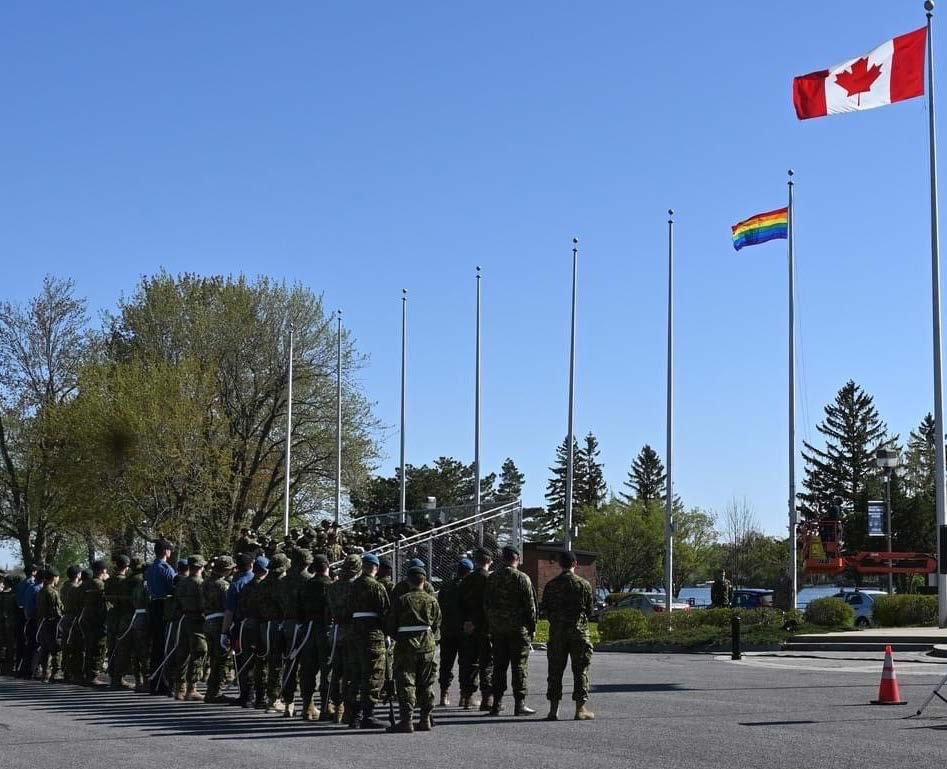
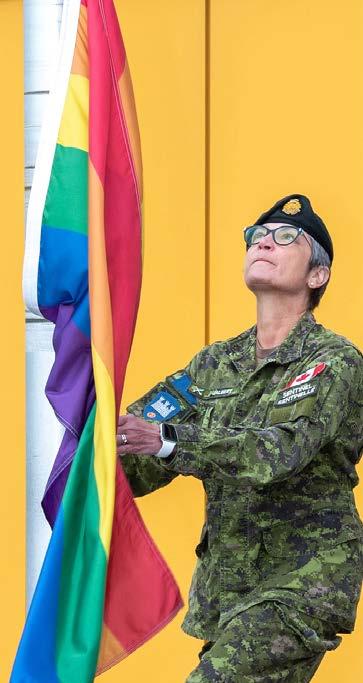
As part of the International Day Against Homophobia and Transphobia, the rainbow flag was raised on several Garrisons and military bases in Canada. This was the case, among others, at the Saint-Jean and Montreal Garrisons, as well as at the Royal Military College Saint-Jean.
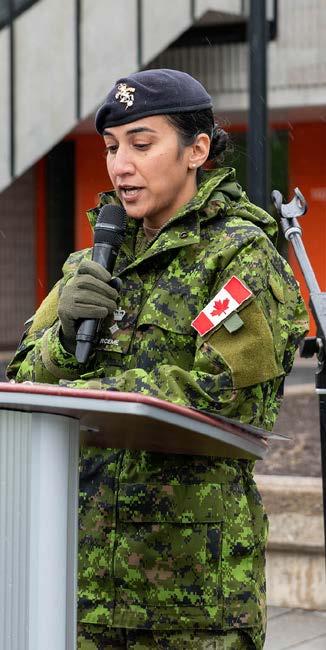
At the various ceremonies, spokespersons reiterated that the Defence Team strives to create an inclusive workplace. A lot of work has been done since, but there is still more to do. They thanked civilian and military employees for participating every day in the fight to defeat homophobia and transphobia, especially on social media and the Internet. (YB)

As part of June is recreation month, the Saint-Jean Garrison Plein Soleil day camp team will hold a special activity on June 28, from 2:30 p.m. to 5:30 p.m. Called Sharing the colors, sharing the joy, the activity will be aimed at children and parents of the day camp, as well as military and civilian holders of the PSP membership card (sports centre subscription).
Marie-Josée Bouchard, recreation coordinator, indicates that the activity will consist of painting smiling faces on white shirts.“Each t-shirt should be painted with at least four colors.” The jerseys and paint will be offered free of charge by the recreation department of the Montreal region.
Information and registration: 450-358-7099, extension 7262.

Éric Charbonneau,
Environment officer for Saint-Jean Garrison, Resource Conservation Services, 2nd Canadian Division Support Group
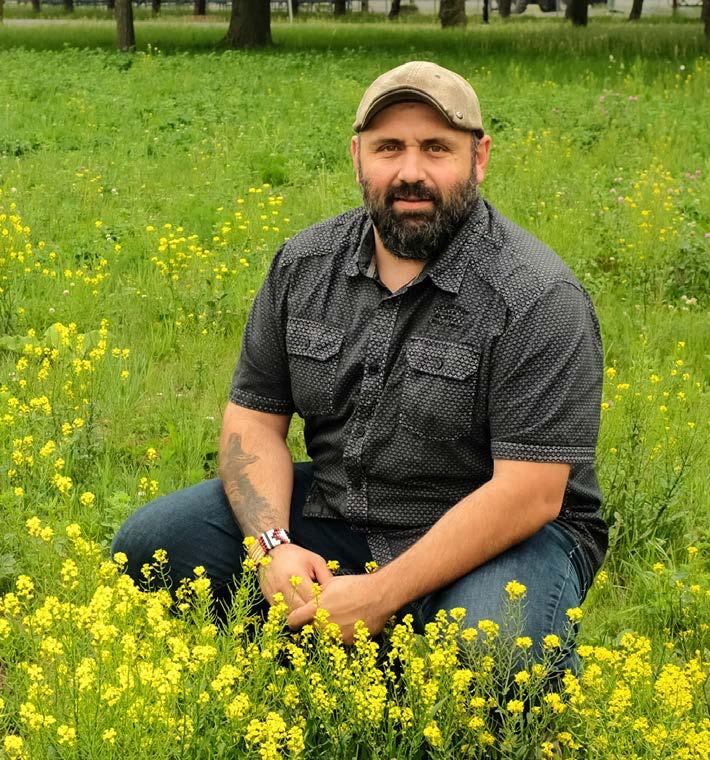
A few weeks ago, Kevin Piton, construction and maintenance officer at Saint-Jean Detachment of the Real Property Operation Unit, offered to participate in the Dandelion Challenge, which consists of not mowing the lawns during the month of May. His initiative offered a source of food (the nectar and pollen of dandelions) to the bees to help them recover their strength after winter. Mr. Piton also contributed to raising awareness on the situation of bees.
This spring, Quebec beekeepers saw record losses of honey bees. Bees and other pollinators are actually fewer and fewer.
Pollination is an essential service for the survival of ecosystems. Harvesting the majority of crops worldwide relies on pollination. We all depend on pollinators and the free service of pollination they provide to us. It is therefore crucial to monitor their decline and

to halt the loss of biodiversity and the degradation of ecosystems.
The simple act of not mowing the lawn in May can greatly help bees, the balance of our ecosystems and contribute to food security!
The bees say thank you to you and your children too!

Yves Bélanger, Servir
The sector of residential housing units in Saint-Hubert, commonly known as PMQ (Private married quarters), is continuing its rejuvenation treatment. About thirty of the 190 semi-detached or single-family dwellings will be entitled to a new roof during the summer season. One hundred and twenty of them will also be equipped with a new water heater.
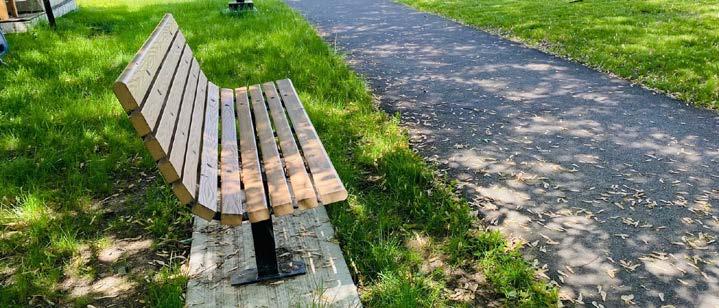
However, this work does not count in the rejuvenation phases planned by the management team. It should be noted that in 2020, a first phase of improvements was initiated. Among other things, there was the redevelopment of the pedestrian walkway which improved safety on the narrow streets. Park benches and solar-powered streetlights have also been installed.
Philippe Weris, the new manager of
the Montreal Region Housing Services Centre, explains that the second phase of the work has been postponed until next year, depending on the budget that will be allocated to the organization. The work will include installing Frost-type fences that will be lined with vines. “New sheds will also be installed for homes that do not have a garage.”
A RECREATION COMMITTEE?
Mr. Weris wants the Housing Services Centre to be even closer to residents of the Saint-Hubert sector. “I would also like them to get involved. It would be good if they set up a volunteer recreation committee to give life to the neighborhood. There was one a few years ago and it was very pleasant. The latter organized activities at different times of the year and the people of the neighborhood really appreciated these days.”


Yves Bélanger, Servir
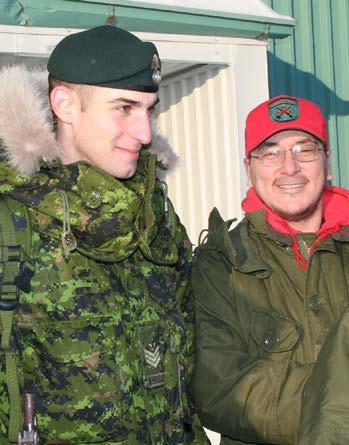
For 20 years now, Warrant Officer Étienne Ouellet, Area Commander of the 2nd Canadian Ranger Patrol Group (2 CRPG), has been working with First Nations and Inuit people. He explains that it changed his life on different levels, mainly in the way of raising his children.
WO Ouellet says that when he started working at 2 CRPG, he didn't know much about Indigenous culture, other than what he had learned in school. However, he very quickly adapted to these people and their pace of life. “I started in the Nunavik region. I loved my experience there.”
He explains that the Inuit adopt foreigners fairly quickly. “Being unable to pronounce our names, they give us a nickname that relates to our physical appearance. They used to call me Bon œil (good eye), probably because of my glasses.”
Occasionally, he returns to that area and sees the people he knew 20 years ago. “The relationships are still very good. It's like I left yesterday. In addition, I have the chance today to rub shoulders with their children and even to know the third generation.
For WO Ouellet, spending a large part of his life with First Nations people is a great privilege. “They bring me a lot on a human level. They led me to see life differently, particularly in the education of my children.”
The CAF member specifies that he was a parent who gave more freedom to his children. “While watching them closely, I let them discover for themselves, do their tests. I have encouraged my children a lot to go for it and try things rather than holding them back for fear that they will make mistakes. I was never far to help them if there was anything.”
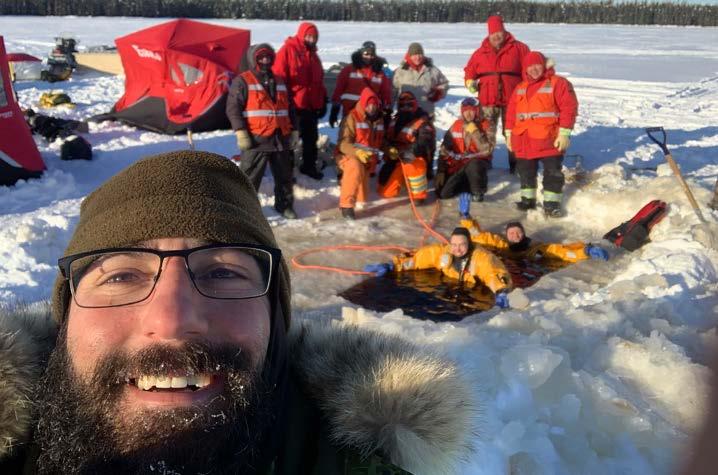
During his career, which is far from over, WO Ouellet also worked on the Basse-Côte-Nord, notably in HavreSaint-Pierre and Blanc-Sablon. One thing he sees everywhere he goes is the pride of the Aboriginal people who join 2 CRPG. “For them, it is a great honor to wear the uniform of the Canadian Rangers and to represent this reserve unit.”
On June 21, during the summer solstice, is National Indigenous Peoples Day. It might be a good time to try to learn a bit more about their culture.
“Unfortunately, over the centuries there has been a lot of misinformation about Inuit and First Nations people. However, they have a lot to teach us on subjects such as serenity and ecology.”
Yves Bélanger, Servir
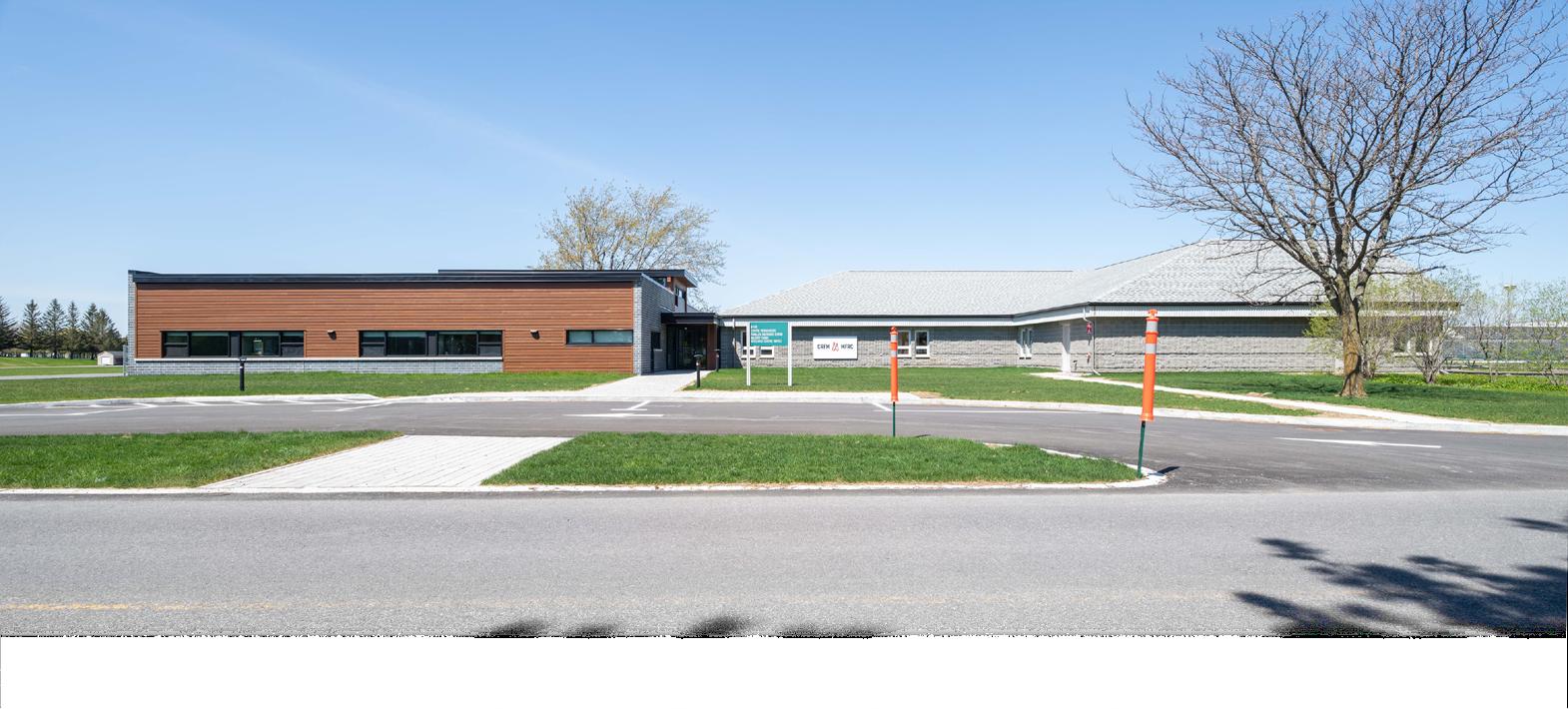
The Military Family Resource Centre (MFRC) at Saint-Jean Garrison has undergone a major facelift. The building has been expanded and is now much more functional to provide services to military families and their children.
The work lasted a year and a half. During this time, the offices of the organization have been relocated to the Iberville Pavilion (B-8). “Given that we were in the midst of the COVID-19 pandemic, several employees were working from home. This made things much easier,” explains Francine Habel, Executive Director of the Montreal Region MFRC.
The organization has been waiting for such facilities for several years. “This will now allow us to respond even better to our customers and even increase our service offer,” explains Catherine Bourassa, director of human resources at the Montreal Region MFRC.
WELL
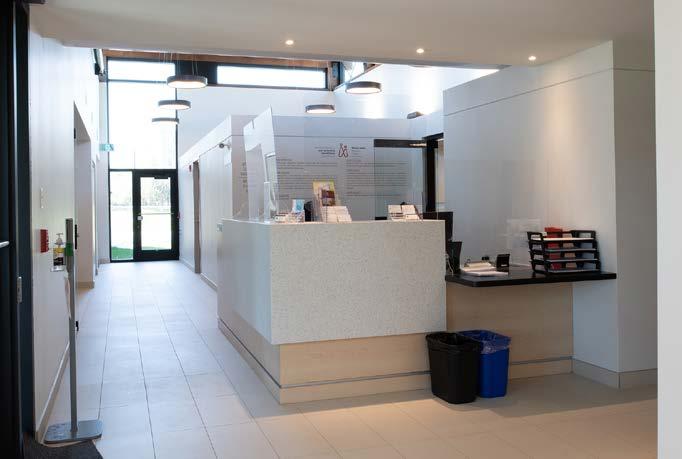
The Executive Director also notes that the large room housing the open-plan
offices has been designed in such a way that it is possible to add new workstations there over the next few years.
“If our team grows, we will be able to accommodate our new employees comfortably without having to reduce the space of others.”
It was in March 2022 that employees began moving to the new facilities. “Our people were really happy to move into these much brighter premises, even more adapted and user-friendly to receive our customers,” says Ms. Bourassa.
While the new premises allow the MFRC to offer more services to the military community, these remain the same for the time being. “A new strategic framework is about to be submitted to the military population. It was presented to us in January 2021 by the Family Services Branch. We are currently in an apprenticeship year and are preparing for the transition,” concludes Francine Habel.
A second article on the premises intended for child services is proposed on the following page.

Yves Bélanger, Servir
Francine Habel, Executive Director of the Montreal Region Military Family Resource Centre (MFRC), maintains that site security was at the heart of the Saint-Jean Garrison service point redevelopment project.
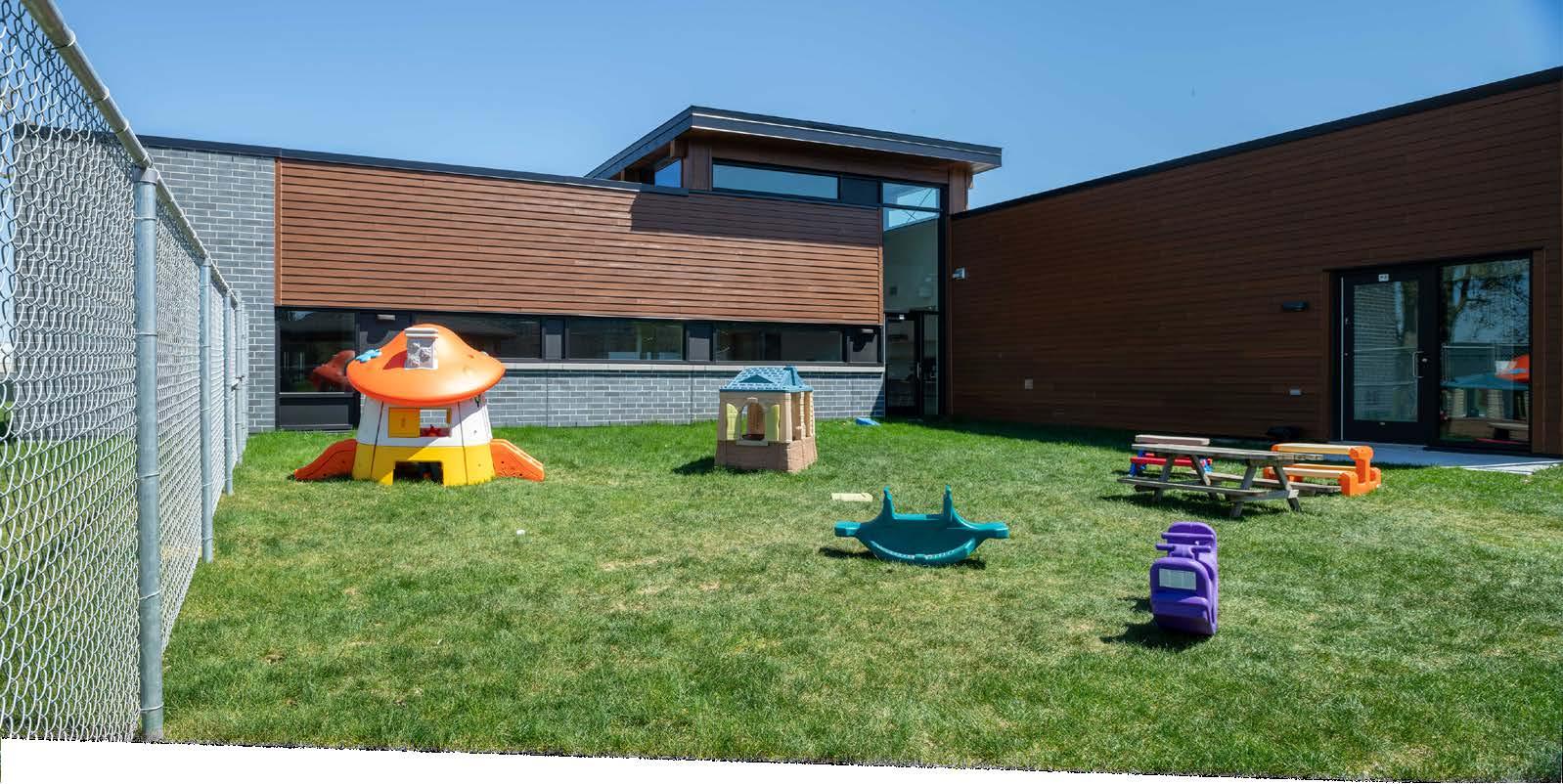
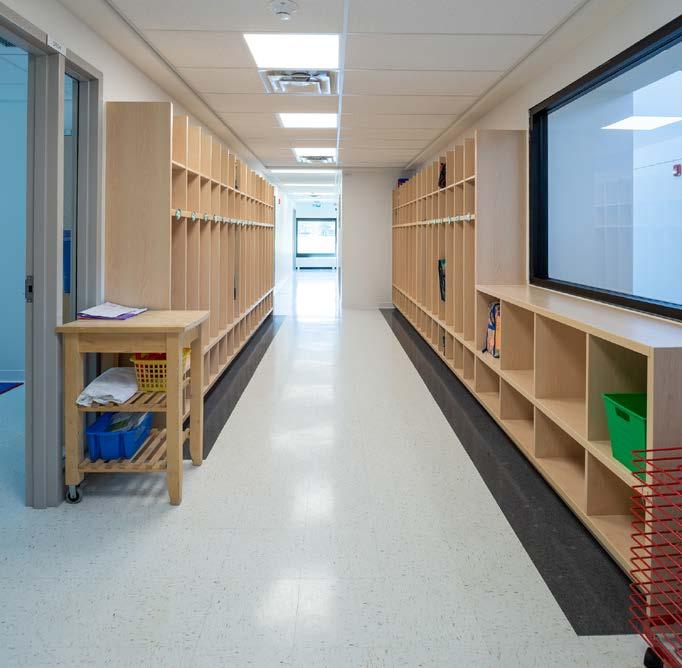
Among other things, a drop-off area
allows parents and their children to get to the drop-in daycare centre easily. “The environment is much better controlled. All doors lock automatically. People who want to enter the building must ring the doorbell.”
Francine Habel continues by mentioning that the expansion of the
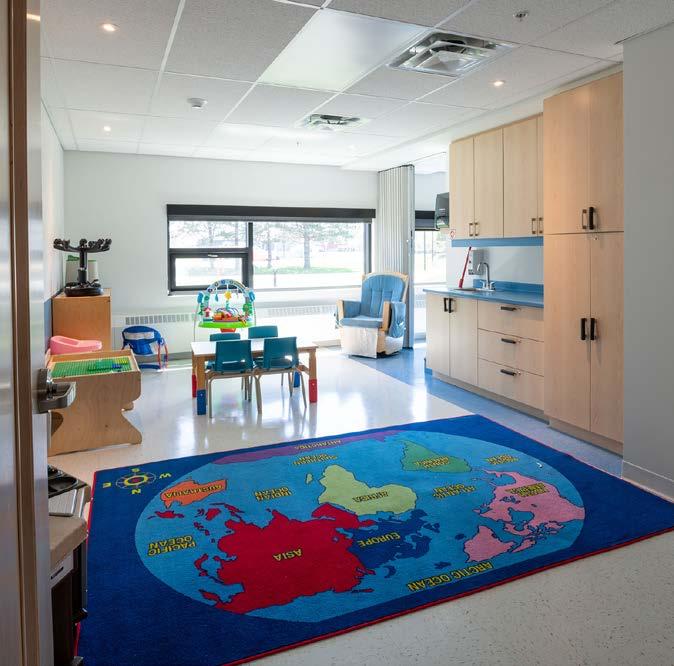
premises facilitates the work of all MFRC employees. “Before, we had a multifunctional room. After each workshop, everything had to be dismantled to make room for others. Now we have special purpose rooms. This way of doing things allows us to save time and focus our energies on more important things.”
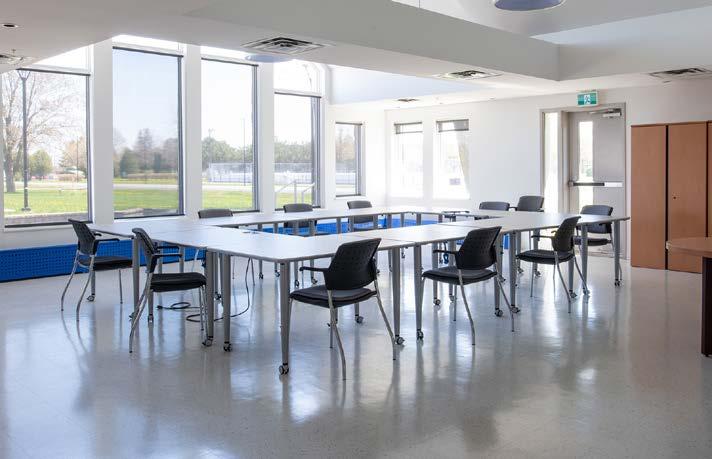
The work also made it possible to increase the number of premises within the establishment. “Among other things, we now have a new daycare centre, a more suitable conference room, classrooms, four closed offices in addition to a large open-plan office room,” concludes Ms. Habel.
Yves Bélanger, Servir
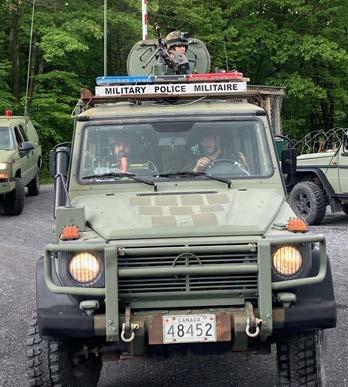
From May 27 to 29, police officers from the 4 Military Police Company were present at the Farnham training site to participate in Exercise POLICIER PROTECTEUR (which means protective policeman). Reservists from the 41, 42 and 53 Military Police Platoons as well as Regular Force CAF members from the 5 Military Police Platoon also took part.
Lieutenant Francis Alie, operations officer of the 4 Military Police Company
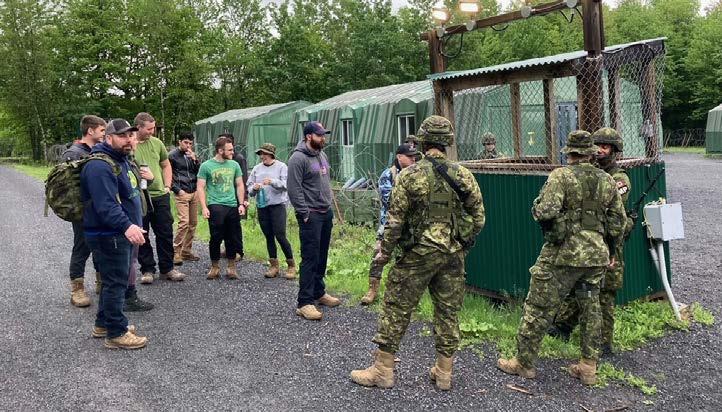
(5 Military Police Regiment), explains that the exercise was aimed, among other things, at protecting civilians on the move. “We chose to hold the exercise at the Farnham site since the location now has an urban combat zone.”
On May 28, 16 members of Corps de cadets 2831 from Saint-Bruno-deMontarville came to visit the police. “They could see the police in action. In addition, they were actors for a day in certain exercises.”
Lt Alie says the weekend went very well. “The weather was not on our side
on Saturday, but despite everything, we had no problems.”
He mentions that this type of exercise is beneficial since it allows military police officers from different formations to come together. “They thus have the chance to work together and develop common approaches.”
He ended by specifying that POLICIER PROTECTEUR is one of the annual exercises that the 4 Military Police Company organizes. “We hold two to three a year to keep us ready to intervene.”
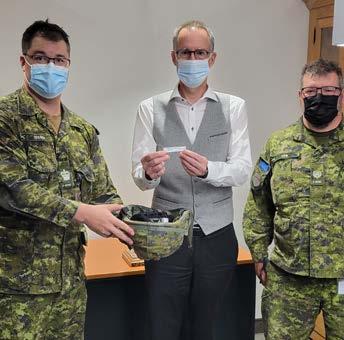
On May 25, the 2 nd Canadian Ranger Patrol Group (2 CRPG) raffled off a Milwaukee tool set to benefit the National Defence Workplace Charitable Campaign (NDWCC). The tools were graciously donated by Warrant Officer Nicolas Tessier, from the 2 CRPG. The prize, worth $287, was won by Captain Jean-François Wehrung of 2 CRPG. Ninety-one tickets were sold and $455 will be donated to the NDWCC.

Yves Bélanger,
Servir
Editor’s note. This interview was conducted a few days before the start of the invasion of Ukraine by the Russian Armed Forces.
Last July, Brigadier-General Gervais Carpentier and the members of his family left Quebec for Belgium. Appointed Canadian National Military Representative at Supreme Headquarters Allied Powers Europe and Commander Formation Europe, he is deployed to Europe for the next two years.
The Carpentier family is used to moving house. This is part of the reality of military families. “This is my eldest son's eighth house and my youngest's fifth.” As far as moving to foreign country is concerned, this is the second experience. “10 years ago, I accepted a position at NATO HQ in Naples, Italy. We lived there for two years.”
BGen Carpentier says that for this position in Italy, everything was decided very quickly. “It was a last minute surprise when I was offered the job. Of course, I discussed it with my wife before giving my answer, but we had little time to think. We finally decided to jump at the chance and live the adventure.”
It was an enriching family experience, but also professionally in a multinational environment. The HQ was then responsible for the operation UNIFIED PROTECTOR in Libya, the NATO force in Kosovo and the training mission in Iraq, in addition to the preparation and the mandate of the Rapid Reaction Force of the NATO.
A THOUGHTFUL DECISION
For this deployment in Belgium, the situation was different. “I had indicated my interest to my chain of command for such a position abroad.” The family discussion had therefore taken place beforehand. “It's not a decision you take lightly, because there are sacrifices that come with it. Among other things, our parents are aging and cannot travel as easily. It also means that we leave many loved ones behind. Fortunately, social media makes it possible to keep in closer contact with loved ones.”
As the children are older, it is also necessary to ensure that they will have access to good schools to continue their studies. “Fortunately, with the Canadian Armed Forces, we have access to various services to make it easier for us to select an educational path that can meet the needs of our children.”
There are also issues surrounding the career of the military spouse. “It is not easy for
some to put their professional development on the back burner. Fortunately, nowadays, telework allows several flexibilities. My wife, who works for the federal public service, was able to keep her job by working remotely.”
EASIER ADAPTATION
It is not always easy to adapt to a new culture and lifestyle in a new country, but taking up this challenge as a family is part of these unique experiences that we live as CAF members abroad.
BGen Carpentier explains that it was easier to adapt to Belgium than to Italy. “It is quite obvious that at the base, we speak the same language. It makes things easier for a newcomer.”
BGen Carpentier maintains that the good practice put in place by the CAF of being sponsored by another military family when a family lands in another country is also very helpful. “In addition, we have the members of the Personnel Support Programs and the Canadian Forces Morale and Welfare Services who greatly assist us in the process of adjusting to our new environment. In Europe, the bonds between the families of the Canadian community are woven very tightly.”
BEAUTIFUL DISCOVERIES
Living in the Mons region has certain advantages, including that of living near several borders. “For us, it's easy to leave for a stay in France, Holland, Germany or Luxembourg. We had the chance to discover magnificent places.”
Having a hockey player son, the Officer admits having also traveled a lot through Belgium since his arrival. “There are not
as many teams as in Quebec. So we have to travel several kilometers when my son's team plays against an opposing team. This allowed us to make escapades in more remote regions and to identify very enchanting sites.
“We are also close to airports and by plane, it is easy to travel anywhere in Europe and also access the coasts of the Mediterranean Sea! So, we intend to take advantage of it as well.”
In the NATO offices, BGen Carpentier wears two important hats. He is first of all the Canadian military representative at the Supreme Headquarters of the Allied Powers in Europe. “It is here that NATO defines the strategies and determines the plans employed to ensure the security of the thirty member countries of the Alliance.”
NATO is an alliance of European and North American countries. It establishes a unique link between the two continents and allows countries to consult and cooperate in the defense and security sectors, as well as to conduct multinational crisis management operations together. “In a way, my role is to maintain coordination between Ottawa and Mons in order to determine how the CAF will continue to contribute and participate in the various plans and operations of the Alliance.”
BGen Carpentier is also the Commander of Europe Formation. In this role, he is proud to be part of the large team of CAF members assigned to NATO positions on European soil. “Currently, we have CAF members working and making a difference
in 38 different organizations spread over 16 countries on the old continent.”
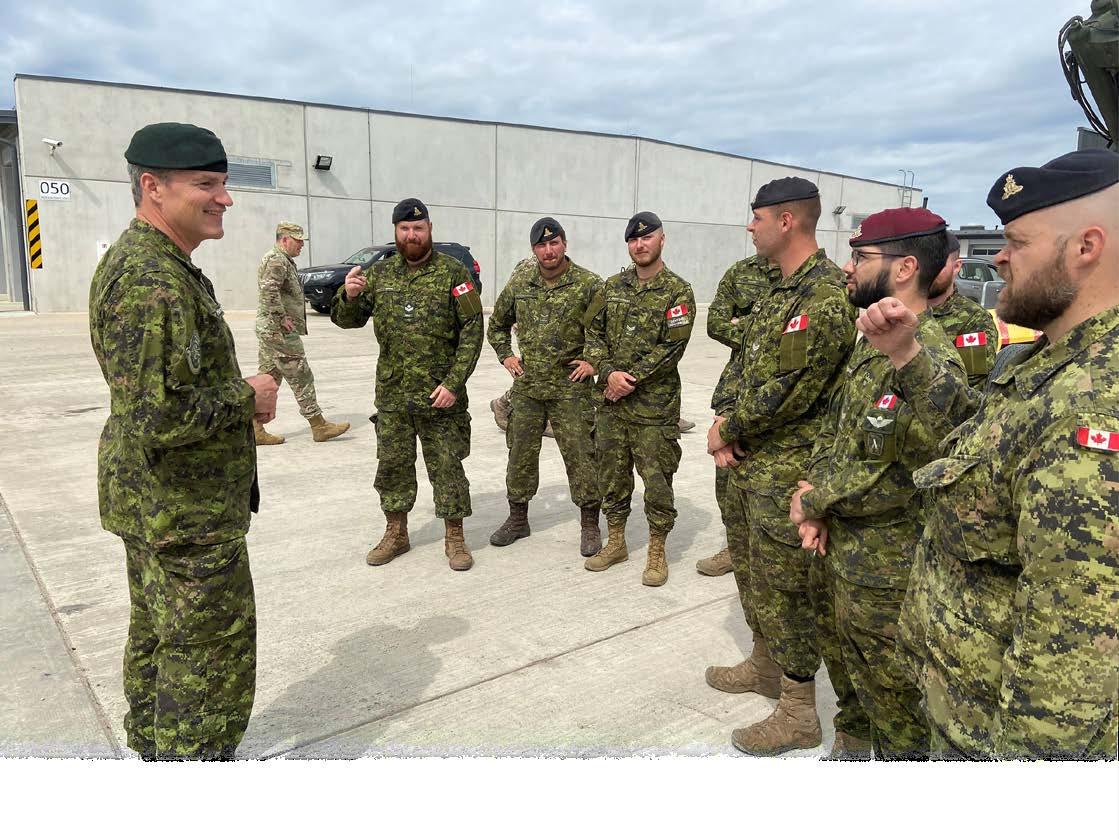
BGen Carpentier arrived on duty in Belgium in July 2021 while the pandemic was still raging. He maintains that fortunately, the teams in place within both NATO and the CAF had implemented measures allowing them to continue to operate while ensuring the safety of personnel. “The Formation Europe team is made up of seasoned people. This has allowed the work to continue and not slow down the operations and the important contribution of our members for NATO.”
At the time of this interview, tensions were high between Russia and Ukraine, but Russian President Vladimir Putin had not yet ordered his troops to invade Ukraine. The situation was worrying for NATO. “Our role in all of this is to see how, as a defensive alliance, we will ensure the plans and provide the additional capabilities to continue to position ourselves to provide security and defense for the thirty member countries of the Alliance and their populations.”
CAF members of all ranks serve with NATO in Europe. They work within organizations and operational headquarters crucial to the planning and synchronization of Alliance activities and operations in all operational areas: air, land, sea, special forces, cyber, space, etc.
“If this unique and rewarding experience, professionally and family-wise, interests you, be sure to discuss it with your chain of command and your career manager!”

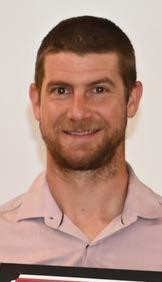
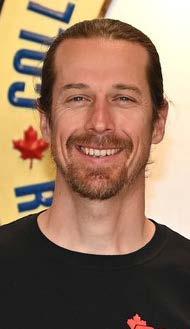
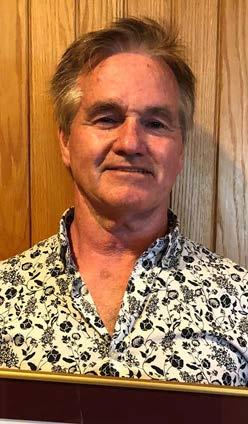
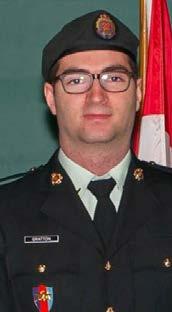

Yves Bélanger, Servir
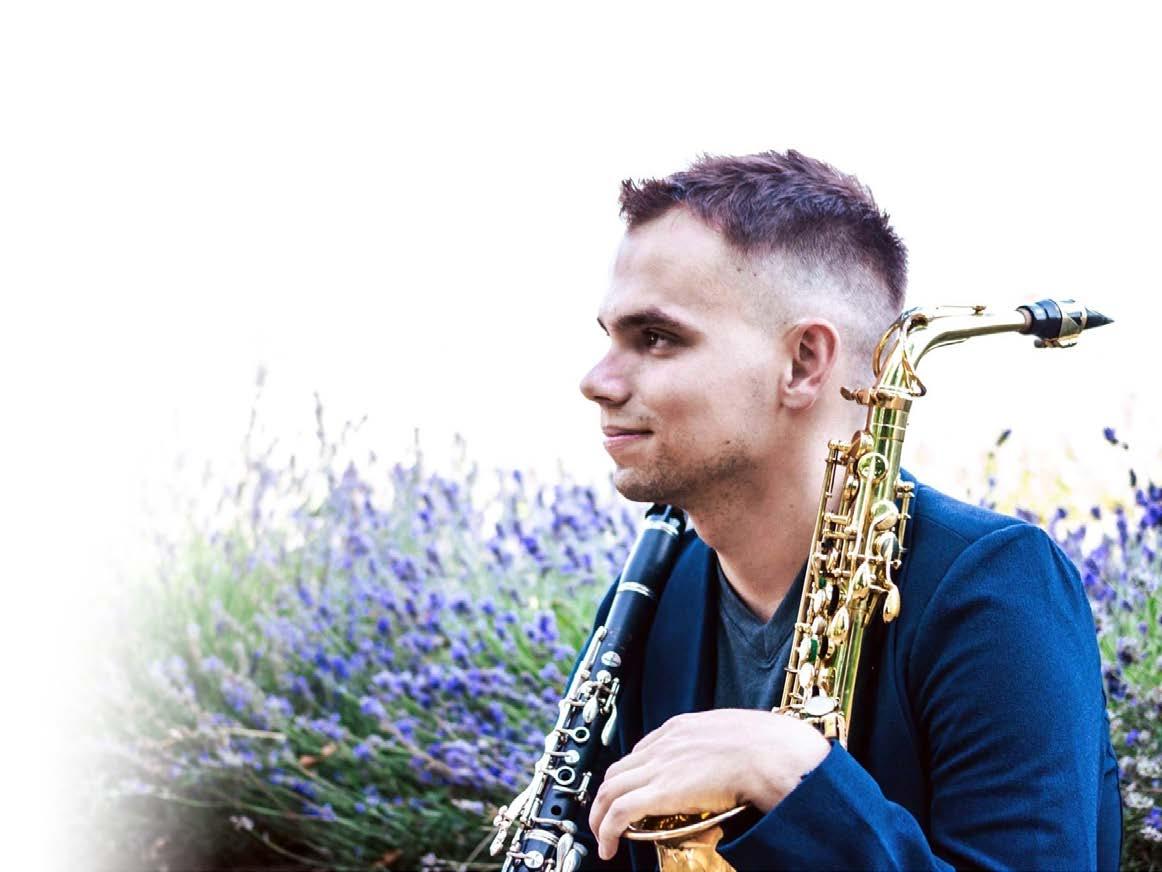
Corporal Ludovik Lesage-Hinse is a clarinetist with the Band of the 438 Tactical Helicopter Squadron (438 THS). Twenty seven years old, he now has 24 years of experience in this field.
Cpl Lesage-Hinse's mother is a musician. Seeing her son's interest in music, she enrolled him in piano and violin lessons at the age of three. “Two years later, I gave up the violin. I didn't really like that.”
His mother played in jazz ensembles and he accompanied her. “I was around 10 years old when I fell in love with the saxophone. I liked its tone and thought he looked fun to play.”
Living with his family in Mauricie, he did his 5 th and 6 th grade in a school in the Trois-Rivières region which has a symphony orchestra. He joins, but unfortunately, it does not have a saxophonist. Ludovic must therefore choose another instrument. “I regularly listened to classical music. I liked the sound of the oboe, but there was none in this school either. So I chose an instrument that I did not know, but which had the colour of the oboe and which had a mouthpiece similar to that of the saxophone: the clarinet.”
Now mastering three instruments, the young man decided, at the age of 13, to put the piano aside. “This instrument is more played alone. I prefer to play in a group.” At the same time as his secondary studies, he continued his course at the TroisRivières Music Conservatory which lasted 9 years.
MUSIC IN THE BLOOD
Cpl Lesage-Hinse holds two master's degrees and two post-master's degrees in music. He currently teaches clarinet at the Conservatoire de musique de Trois-Rivières, at that of Rimouski, as well as at Collège Lionel-Groulx. “I go there a few times a year to meet my students. It’s a lot of travel, but I like doing this job and I discover beautiful regions.” He also works as an instrumentalist, notably as second clarinetist for an orchestra in Ottawa. “Playing in an orchestra is really what I like to do the most in life. I love finding myself among the musicians and marrying the sound of my instrument to those of my colleagues.”
On occasion, he is also invited to join other orchestras for a concert. “Among other things, I had the opportunity to play with the Orchestre symphonique de Montréal. It was
a very rewarding experience as a guest musician. However, I am not sure that I would like to be bound exclusively to a single orchestra by contract. I like having the freedom to play in various musical ensembles.”
Although he loves to play classical music, it is not what he listens to the most when he finds himself in the comfort of his home. “In fact, I hear so much at work, that I seek to hear something else. I love all kinds of music! My tastes are varied. At home, I listen to jazz as much as world music, pop or klezmer, the traditional music of Ashkenazi Jews from Central and Eastern European countries.”
However, he explains that he is not good at playing this musical style. “It’s too different from my temperament and my way of interpreting music.” He also loves film music. “For some time, I have been rediscovering the music of the Harry Potter saga. There are several film productions in which music has a big place. I like to revisit these works from time to time.”
Cpl Lesage-Hinse enlisted in 2018 with the goal of joining a military band. He began his career with the 62e Régiment d’artillerie de campagne. The following year, he experienced his first deployment. “I was invited to join the Band of the Royal 22e Régiment which was on a trip to Europe as part of the 75th anniversary of the Italian Campaign. We participated in different parades.”
The following year, he was also deployed on Operation LASER. “I had to go and help in residential and long-term care centres. However, I was finally transferred for three months to the kitchens at Valcartier Base. It turned out to be a
very positive experience.”
In October 2020, he made the jump to the Air Force side to join the Band of 438 THS. “Among other things, I wanted to be closer to home since I lived in Montreal. However, it was not easy, because I was moving from the Land Force to the Air Force. I had to pass certain qualifications related to this element.”
He also points out that the 438 THS has several professional musicians who also work on the civilian side.
“The musical level of the group is therefore really very good. I have no embarrassment to say that the music of 438 competes with the music of the Regular Force and that it is among the best in Canada.”
He admits to being on his X within this band. “Just like me, the majority of the musicians in the group hold one or more master's degrees in music.”
The Band of 438 THS has 35 positions. “Currently, we are 31 musicians. What is interesting is that we all have different strengths. We are very complementary. This allows us to interpret several musical styles brilliantly.”
Within the formation, Cpl LesageHinse is a clarinetist. If necessary, he is also a saxophonist.
Currently, Cpl Lesage-Hinse holds a position in the operations of 438 THS. “As reservists, several months a year, we have the opportunity to work in class B within the Canadian Armed Forces
(CAF). This is good, because it allows you to have a fixed income. This is valuable for musicians, especially in times of a pandemic, because contracts have become rarer due to health measures.”
He enjoys the flexibility that his job in the CAF gives him. “For me, it’s ideal, because I have a flexible schedule. This allows me to organize myself more easily and honor my commitments as a teacher.”
Over the next few years, Cpl LesageHinse would like to become more involved in his military career. “Among other things, I would like to take my courses to progress and thus qualify for my rank of master corporal.”
The musician admits that it was very difficult during the pandemic to maintain the motivation necessary to continue the practices. “According to the different periods, it was not possible to rehearse as a group. When I arrived at the squadron, we couldn't even rehearse individually.”He explains that he began his career at 438 THS in isolation. “I had just been diagnosed positive with COVID-19.” For large ensemble rehearsals, it was not until April 2021 that the group was able to meet. “And we stopped everything again from the end of December 2021 to mid-February 2022 due to the Omicron variant. During this period, we did our best to practise as much as possible at home, but it came with ups and downs. It was not easy.”
Yves Bélanger, Servir
The nine Montreal Garrison CAF members who participated in the Recharge your machine program found it motivating and effective.
Carl Coicou, health promotion specialist at Personnel Support Programs in Montreal, recalls that the activity was created to revive participants' motivation and help them resume good lifestyle habits following confinement. The program offered 16 workshops, spread over eight consecutive weeks.
Mr. Coicou adds that the topics discussed during the information capsules touched, among other things, on motivation, injury prevention, healthy eating and stress management. “In terms of physical activities, we had, among other things, training in pickleball, spinning, volleyball, hiking and mindfulness meditation. We also had introductory sessions to the race.”
Master Corporal Renata Dumervil, assistant supervisor of human resources at 2nd Canadian Division Headquarters and Joint Task Force (East), says her participation taught her that it is possible to move having fun and that it is better to
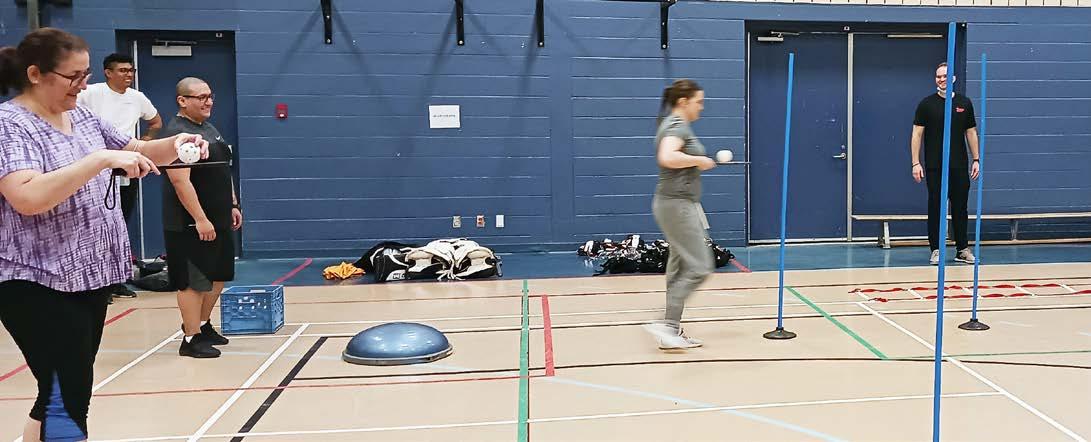
move less, but more often. “This advice has been invaluable to me. I move more often and I challenge myself more modestly. For example, I do five push-ups, five squats, and 15 seconds of plank every hour from 5 a.m. until 9 p.m. This allows me to do 80 push-ups, 80 squats and 4 minutes of plank a day without realizing it.
For their part, Warrant Officers Alexandre Pitt, Road Safety Supervisor for Montreal, Saint-Jean and Valcartier, Sergeant-
Major for Resource Conservation of the 2nd Canadian Division Support Group, and Nathalie Levasseur, from 2-2-2 Financial Management at the 2nd Canadian Division and Joint Task Force (East), explain that the Recharge your machine program gave them the opportunity to improve their discipline, their health and their lifestyle while meeting great and motivated people on the Montreal Garrison. “Each meeting, we had a training session and an information

I often receive comments indicating that I am on occasion abrupt, rude and even aggressive. I try to get my message across, but it seems to be lost in my delivery. Can you help me?
The Conflict & Complaint Management Services (CCMS) Practitioners can certainly help you! They offer Alternative Dispute Resolution (ADR) support to both military and civilian employees. This service is often used for two different reasons. Primarily, when you want to have a difficult conversation with someone, one-on-one, and you need a little practice or extra skills to start the discussion. Second, when you want to develop your conflict management
skills.
Conflict coaching is a goal-based process by way of confidential one-onone sessions with a Conflict Coach. Typically, conflict coaching consists of three to six sessions at regular intervals (every week or so). Though in-person sessions are preferred, conflict coaching can be conducted by other means such as telephone, e-mail and video-teleconference.
Our Conflict Coaches have great tools and models they can teach you to assist with getting your message across in a clear, concise and assertive manner. Perhaps you may also wish to discuss your verbal and non-verbal language with your coach to ensure your messaging is aligned.
Members of the Defence team are invited to have a confidential consultation with the Conflict & complaint management service centre (CCMSC) representatives for more information and to find out how to receive coaching from a practitioner.
In the Montreal and Saint-Jean areas, you can contact them at 514-252-2777
• Serge Hamel: extension 4353 or 438-337-8819
• Isabelle Bussières: extension 2549 or 514-378-5914
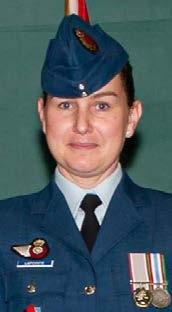
• Capitaine Cindy Lapointe: extension 2894 or 438-334-1254
• Adjudant-maître Dominic Labelle: extension 6365 or 514229-3543
capsule. It was a learning opportunity, while staying active,” said WO Pitt. BACK IN OCTOBER
Given the success of this first edition, Carl Coicou is pleased to announce that a second edition of Recharge your machine will be offered this fall. “I plan to start the whole thing in October. I invite people to watch the advertisements that will be broadcast on this subject at the end of the summer.”
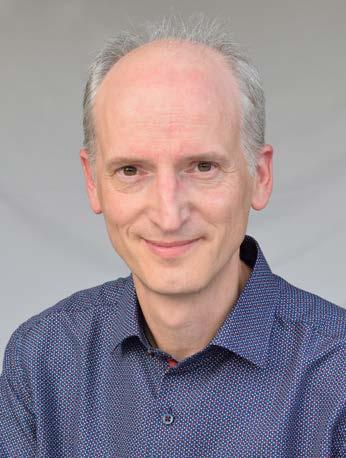
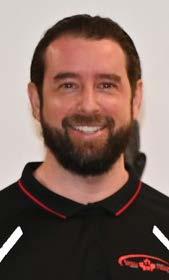
They have a full-time job, but always find the time to take training to perfect their knowledge and offer their services at many sporting events. Their passion: providing care to our military athletes! On the occasion of Appreciation Week for athletic trainers, which takes place from June 19 to 25, Servir presents the portrait of two of them.
“Athletic trainers are present at the various regional and national championships of the Canadian Armed Forces (CAF). They are also present during training camps,” explains Claudie Bussières, military sports coordinator for the Montreal region. “Without their contribution, we could not hold championships in our facilities and the athletes are always very grateful for their good care. On behalf of the athletes in the region and the Personnel Support Programs, I would like to thank them for their dedication to the athletes. They are always the first to arrive on the field and the last to leave in order to ensure that all athletes are well. Thank you for always wanting to perfect your knowledge. Your support is essential”
With a bachelor's degree in kinesiology and a graduate diploma in therapeutic exercises, it seemed obvious to Mathieu Doucet that training in the Canadian Forces Athletic Training Program would be a good professional development to add to his skills.
Being himself very athletic and having suffered a few minor injuries during his training and competitions, the taping techniques he learned were very useful to him.
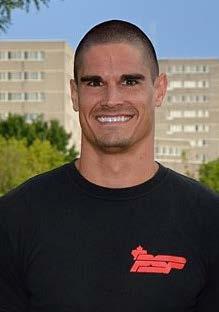
He obtained his Level I certification on November 29, 2011 and since that date, he has actively participated in more than fifty Canadian Armed Forces (CAF) sporting events, both regionally and nationally, in nearly 10 different sports across Canada.
After completing more than 200 hours in the field and acting as head athletic trainer at regional competitions, he went to Edmonton to seek his Level II athletic trainer certification in November 2019 to perfect his taping skills and techniques.
He discovered a passion and hopes to be involved for a long time in the CAF sports athletic trainer program. His next mission: to become a course instructor!
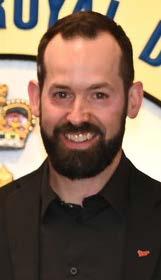
Captain Daniel Fitch earned a bachelor's degree in human physiology and physiotherapy. For the past few years, he has been the head physiotherapist of the Saint-Jean medical clinic (41 Canadian Forces Health Services Centre).
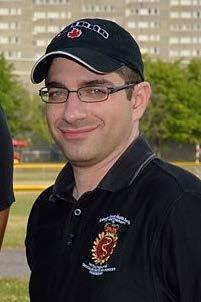
He began to get involved in military sports as an athletic trainer when he was in SaintJean in 2010. During the six years spent in the Montreal region, he was involved in several regional slo-pitch championships, volleyball, ball hockey and more. Then, during his time in Trenton, from 2016 to 2019, he was an athletic trainer at a few events, including the regional basketball championship and the national ice hockey championships. Most recently, he was an athletic trainer for the International Military Sports Council triathlon team during their regional training camp in November 2021, in Saint-Jean. Among his best memories, Capt Fitch mentions his involvement in the Invictus Games in 2017 in Toronto and during training camp for the 2020 edition in Valcartier.
He completed the Canadian Forces Athletic Training Program Level 1 foundation course, which he subsequently taught. He has also provided training in taping techniques to medical technicians (QL5) as well as training in musculoskeletal assessments and treatments in Borden.
Capt Fitch describes himself as a sports enthusiast, although he is not a huge athlete. He enjoys working with athletes, getting involved with the operational military population and seeing them develop their physical abilities. He enjoys attending sporting events, regardless of level.
Getting involved as an athletic trainer is always a real pleasure for him and he hopes to continue for a long time and to be able to attend the Invictus games again. He loves his partnership with the Personnel Support Programs team, which he describes as very friendly and motivated.



Janika Chartrand, Health Promotion Specialist
Good communication is essential when resolving personal or professional conflicts. Be compassionate, collaborative, and authentic, try to share power rather than impose your will. Easier said than done? I propose a simple method to help you when you have to hold a delicate conversation.
At home, are you tired of being responsible for cleaning the kitchen counter? And at the office, are you tired of your colleagues not meeting deadlines?
With the help of these two examples, I explain how to give the other person a chance to understand your needs and to get involved in resolving your conflict in a respectful and non-confrontational manner.
State observations without judgment or evaluation.


When I see dirty dishes on the counter...
For the past 3 weeks you have handed in your weekly report less than 10 minutes before the due date and time...
State your emotion or feeling about your observation and avoid associating it with a thought since it is marked with an evaluation or judgment.
I feel irritated.
I feel a nxious.
State your unmet need, do not state a preference or action you would like to be taken.
I need a clean kitchen to enjoy making dinner.
I need to review the report before sending it out.
State a concrete action you would like to see taken. This is a suggestion, each person is free to take action or not.
I would like you to put the dishes in the dishwasher.
I wou ld like you to give me the report by 4:00 p.m. the day before so that I can review it.
By following these steps, we give the other person a chance to understand our needs and to get involved in our conflict resolution in a respectful and non-confrontational way. Dare to try!

Yves
Bélanger, Servir
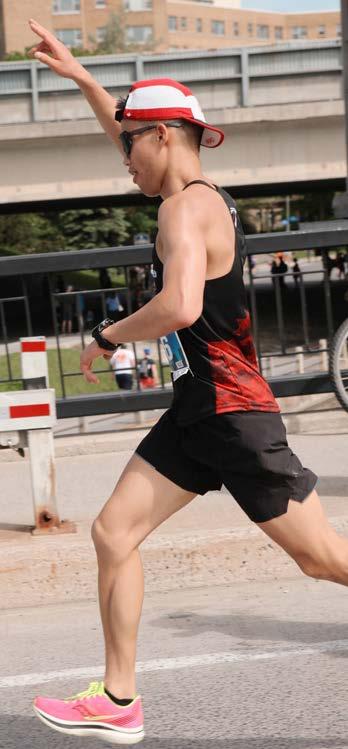
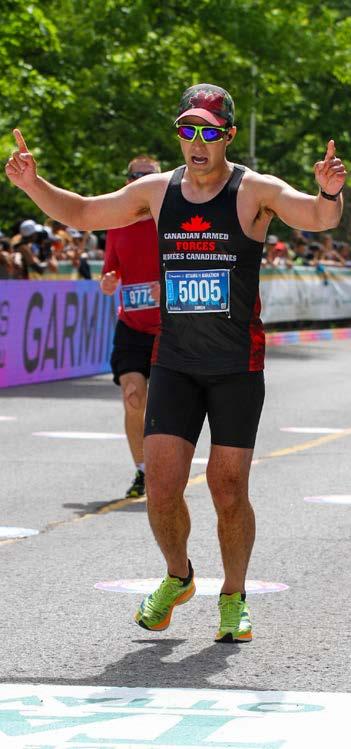
Four CAF mem bers and two future officers participated in the National Running Championships held May 27-29 in Ottawa. They were treated to extreme heat to complete their course.
Corporal Simon Chang, Human Resources Administrator at 3 Canadian Support Unit, was on his first experience. He participated in the 5 km, in the category of M 40-45 years. He finished 224 th in his category. “Although I loved my experience, I did not meet the time goal I had set for myself. The intense heat was my main obstacle. I was not prepared for this. I had done a similar distance in Montreal a week earlier and finished it more than a minute ahead of the time I did in Ottawa.”
Lieutenant (Navy) Simon Bullock, staff and administration officer at Her Majesty's Canadian Ship Donnacona , says he had a rather memorable ex -
perience. “Conditions were warmer than I would have liked but I run flat out and I'm proud of my effort. The opportunity to represent the CAF at the national level is an experience I will not soon forget. I can't wait to come back next year.” He finished 90 th in the M 30-34 years for the 21.1 km distance.
Officer Cadet Laurier Valcourt, from the Royal Military College SaintJean, says he enjoyed his experience. The student who ran in the 5 km category (M 20-24 years), finished 86 th. “It's an incredible competition that allows CAF members to compete against each other, but also rub shoulders with civilians. The event is very well organized and gives many beginners an opportunity to experience high caliber running. This gives the motivation to train intensely.” He says he really enjoyed rubbing shoulders with colleagues from across the country during the three days of competition.

O
PRINT : digital edition only
EDITOR : Col Jason Langelier
2 Cdn Div Support Group Commander
MILITARY ADVISORS :
• Capt Steve Comeau 450-358-7099 ext. 6570 steve.comeau@forces.gc.ca
• Capt Frédéric Thouin
514-252-2777 ext. 4530 frederic.thouin717@forces.gc.ca
servir@forces.gc.ca • journalservir.com
• Claude Tourville 514 252-2777 # 4993 claude.tourville@forces.gc.ca
MANAGER : Guylaine Fortin 450-358-7099 ext. 7426 • guylaine.fortin@forces.gc.ca
JOURNALIST : Yves Bélanger 450-358-7099 ext. 7330 • yves.belanger@forces.gc.ca
ADVERTISTING REPRESENTATIVE : François Ménard 450-346-2300 • servir@tictactoecommunication.com
SUBSCRIPTION AND CLASSIFIED : Bélinda Raîche, 450-358-7099 ext. 6346 • belinda.raiche@forces.gc.ca
TRANSLATION : Google
GRAPHIC DESIGNER : Gillian Ottaway
ISSN 0384-0417
•

The outdoor shops of Saint-Jean and Montreal Garrisons offer a wide variety of nautical equipment for rent. Two new boards recently became available at the Montreal store. Enjoy!
For who? Everyone, but certain conditions apply!
Saint-Jean: SvcOpsLocationPleinAir@forces.gc.ca
Montréal: Svcopspsplonguepointe@forces.gc.ca

From June 27 to August 19, qualified animators will welcome children aged 5 to 12 from the CAF members, civilian employees of the Defence (public service and non-public funds) and the general population. The camp is bilingual and it is possible to book for a few weeks only.

Health Promotion
Specialists help military members and their families win their fight against tobacco. Do not hesitate to call on them!
INFORMATION healthpromotion@forces. gc.ca
Camp: Monday to Friday, 8 a.m. to 4 p.m.
Daycare service (additional fees apply): Monday to Friday, 7 a.m. to 8 a.m. and 4 p.m. to 5 p.m. FOR FULL CAMP DETAILS