









Yves Bélanger, Servir
The Montreal’s Cavalry Institute has just published the English version of the book The Montreal’s Cavalry – The History of the Royal Canadian Hussars (RCH). The box containing two volumes recounts the major events that involved the Montreal’s Cavalry and the RCH between 1812 and 2021.
Colonel (retired) John Cochrane, co-author and President of the Montreal’s Cavalry Institute, is very proud of the result of the work of the past five years. “It’s a collector’s item that has 1,000 pages. Both volumes are delivered in a light blue box adorned with the regimental crest. In addition, each volume has an illustrated cover and a marker ribbon woven with the colours of the regiment.”
The english edition of the book was limited to 500 copies. So far, 266 copies have already been sold. “We have been working on the translation for a few months and we plan to offer the French version of the book in 2023. We have asked for the help of a professional to do so.”
Telling the story of a regiment with over 200 years of history is quite a challenge. To achieve this, the three main authors, Anthony Kellett, Steven Linton and John Cochrane decided to each work on a different period of history. “Afterwards, we proofread everything to control the quality and above all to standardize

the writing.” It’s important to mention that the authors are all former members of the RCH.
Col (retd) Cochrane explains that the first volume tells more of the history of the cavalry. It depicts historical events from the unique perspective of the cavalry soldier and provides insight into the social and political history of Montreal, Quebec and Canada.
“The second volume is more focused on the mechanized brigade. Among other things, it explains how the 6th Duke of Connaught's Royal Canadian Hussars and the 17th Duke of York's Royal Canadian Hussars were amalgamated after the
Second World War to form the Royal Canadian Hussars (Montreal).”
The second volume also recounts how, over the past few years, members of the unit have participated in various Canadian Armed Forces missions, notably in Germany, Cyprus, the former Yugoslavia and Afghanistan.
John Cochrane maintains that the box presented by his team is much more than a history book since it contains 812 photographs, 57 maps,
37 original works of art, 18 drawings of vehicles and 14 cartoons. “It also includes numerous appendices covering unit uniforms, battle honours, roll of honour, medals and decorations, and the various insignia used over time.”
Col (ret'd) Cochrane invites those who wish to know more about the RCH to visit the regiment's website. “We have recovered films shot in 1939 and 1943 among others and host them for free. These can be complementary to the books we have just published.”
The English version of the book can be ordered from the online bookstore of the Montreal’s Cavalry Institute which can be found on the Royal Canadian Hussars Association website. The cost of the box set is $124.11. You can also pre-order the French version there. “The money received is only used to finance the printing costs of this book. We make no profit from the sale of these books.”
The RCH is a reserve armored reconnaissance regiment of the Canadian Armed Forces. Housed in the historic armory located at 4185 Côte-desNeiges Road, it perpetuates many cavalry units in the Montreal region.


Yves Bélanger, Servir
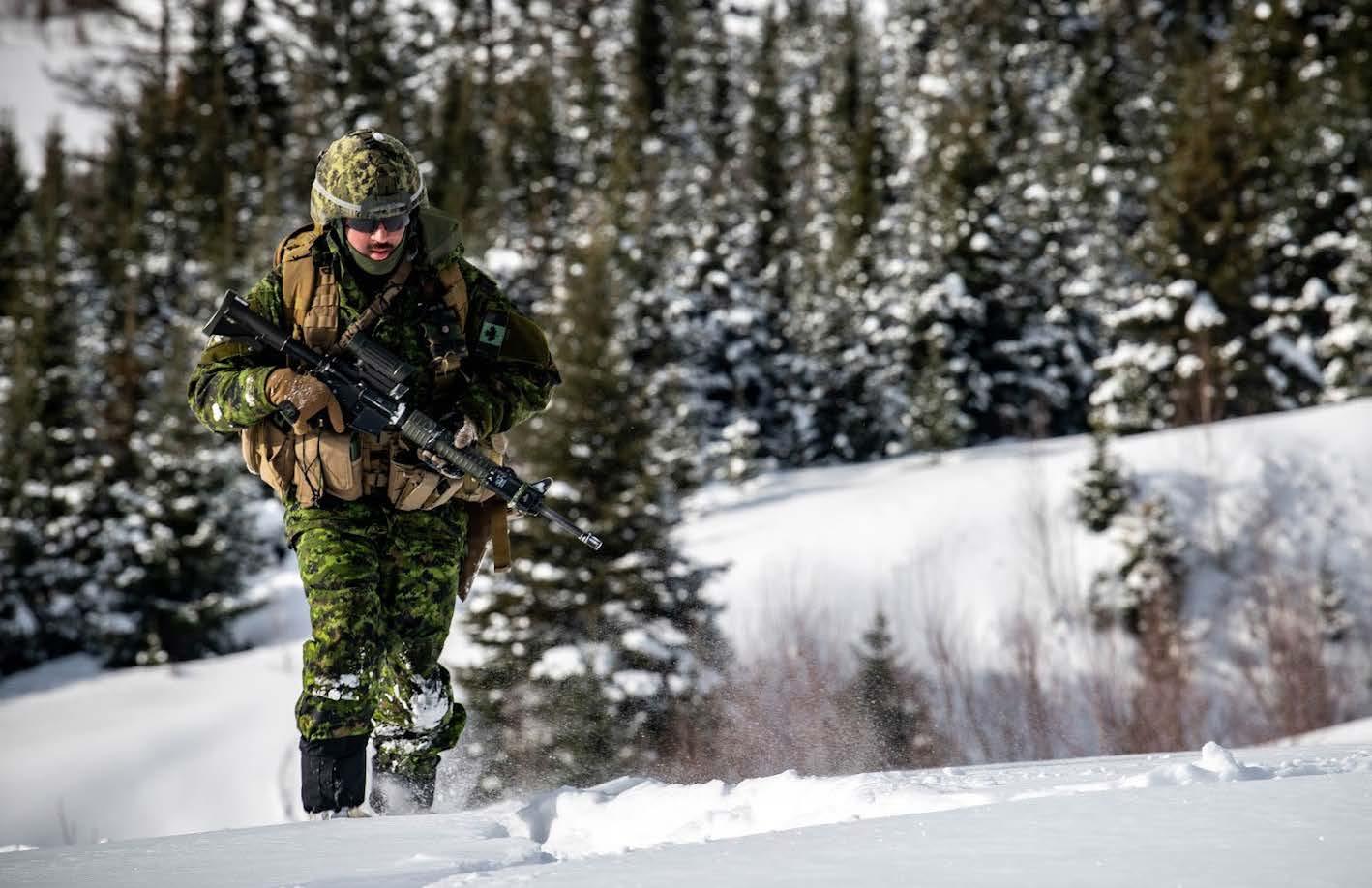
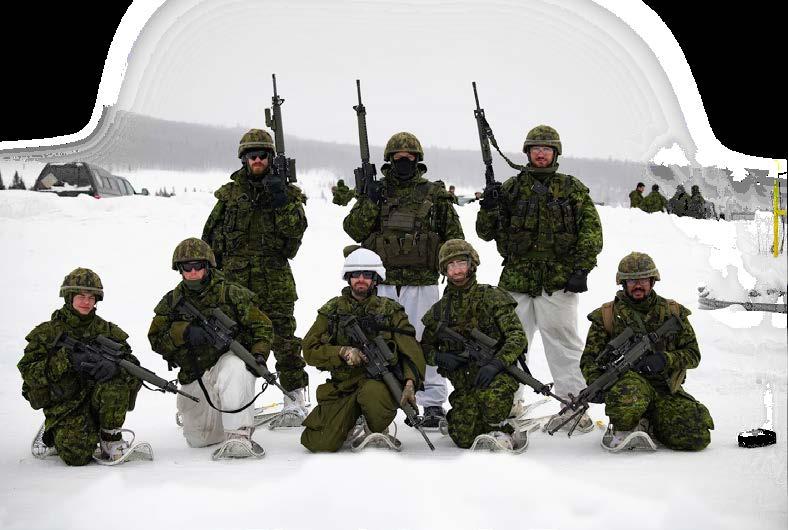
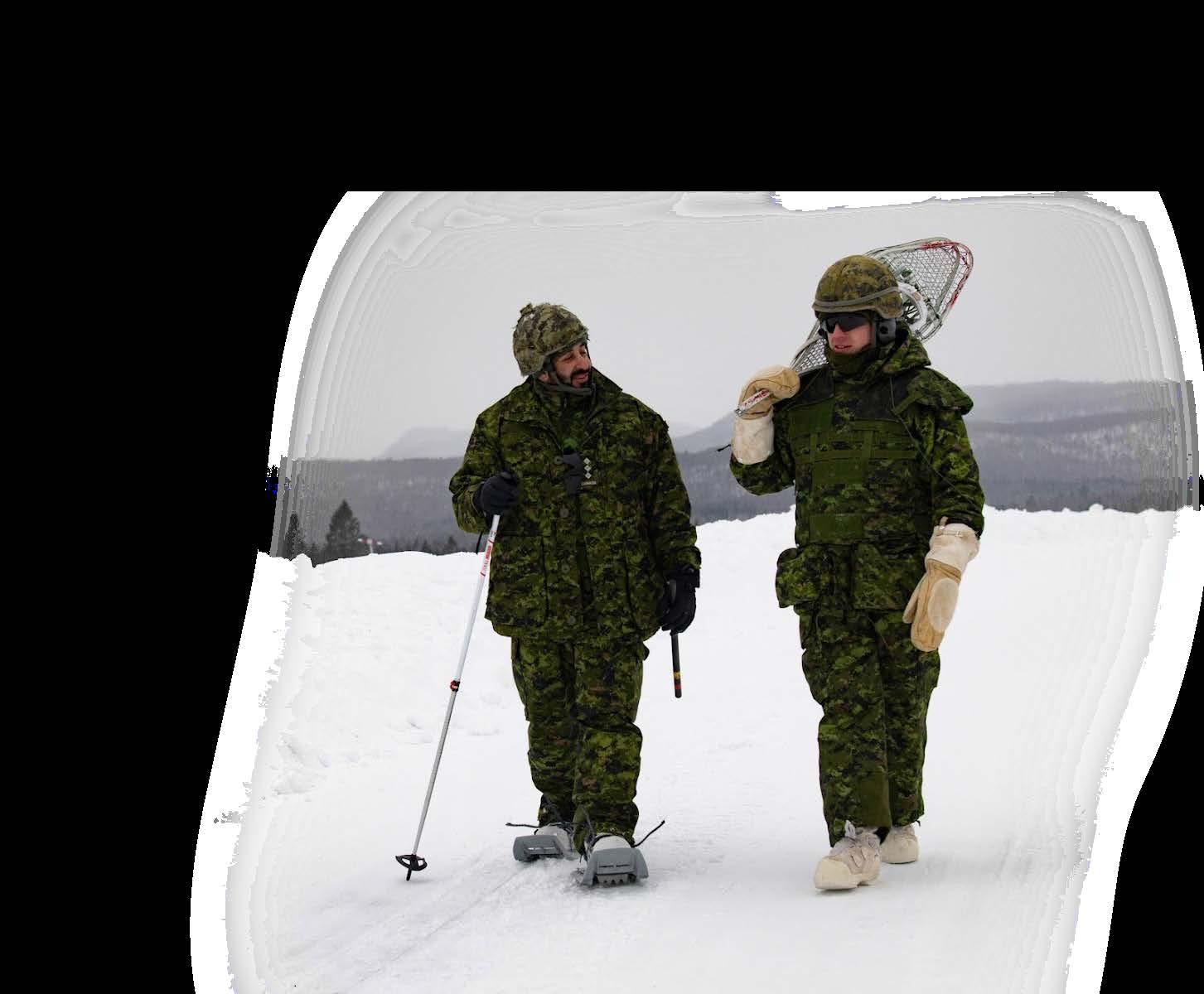
This year, the FIGHTING WARRIOR exercise was held at Base Valcartier from February 26 to March 6. Here is a photo overview of this exercise in which 230 members of the 34 Canadian Brigade Group (34 CBG) took part.
Exercise FIGHTING WARRIOR allows CAF members to maintain an adequate level of readiness. This annual exercise is part of the reserve training cycle. In recent years, it is in Virginia, more precisely in Fort Pickett, on the camp of the Virginia Army National Guard, that this important exercise took place.
The members of the various units of the 34 CBG took part in realistic training to prepare them for conducting operations in support of the Government of Canada. “Part of the exercise included live ammunition ranges to contribute to that realism,” says SubLieutenant KaryAnne Poirier, public affairs officer at 34 CBG.
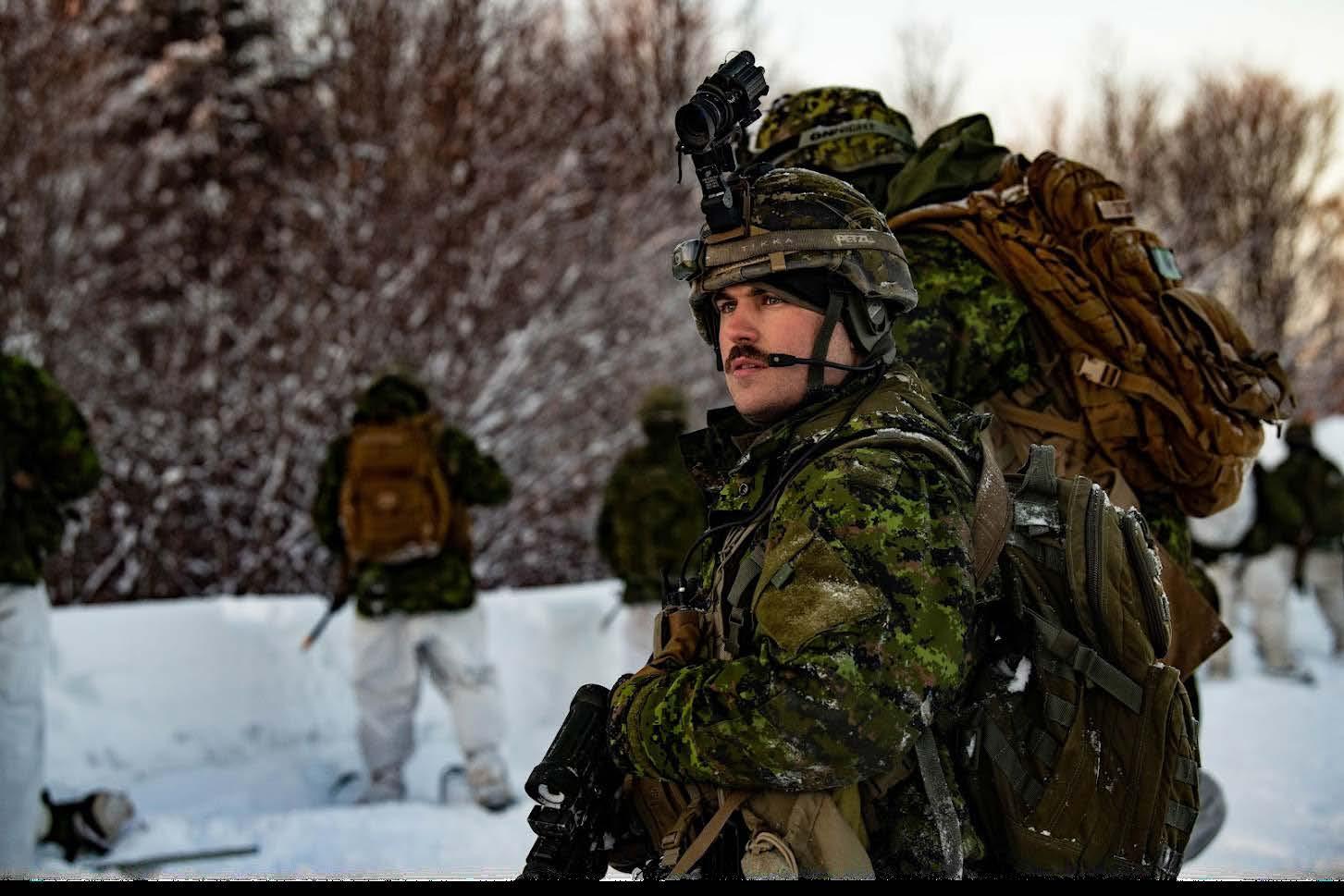
She adds that the CAF members present also made advances in contact in order to practice on the ground in the presence of enemy fire. “The pairs had to work as a team throughout the advance in contact in order to anticipate enemy fire.”



The Military Family Resource Centre (MFRC) social workers offer individual and family psychosocial counseling. The accent is placed on the consolidation of individual and family strengths. Services are confidential, free and offered to military family clientele of all ages. If you have any psychosocial questions or requests, you can communicate with the intervention team. Your needs will be evaluated to see what services we can offer you.
Please write to SvcPersCRFM SoutienPsyStJean@forces.gc.ca or call at 450-462-8777, extension 6821. In these changing times, our support is constant!


Yves Bélanger, Servir
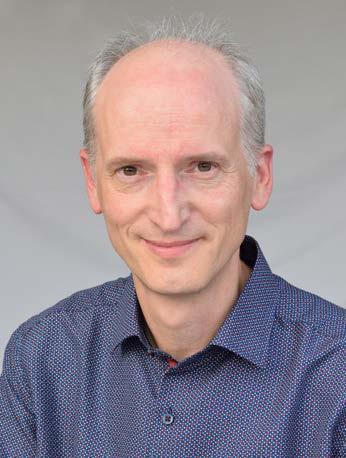
Retired Lieutenant-General Michel Maisonneuve was inducted into the Royal Military College Saint-Jean (RMC Saint-Jean) Hall of Fame on March 17.
Michel Maisonneuve was obviously very proud to receive such a tribute and to return to RMC Saint-Jean, where he was academic director from 2007 to 2018. “RMC Saint-Jean is part of my history. I did not study here, but I left a lot of my heart there,” he said a few minutes before the beginning of the ceremony.
He fondly recalls the years he spent as academic director. “What makes the strength of the institution is the
teamwork found there between teachers, management and military personnel.”
He is particularly proud to have contributed to the success of the reopening of RMC Saint-Jean and to have set the table for the return of university studies in August 2018. “I have never hidden my dream that our institution regains its university status. Thanks to everyone's collaboration, we were able to see the first graduates in International Studies in the spring of 2021.”
Among the guests at the LGen (Retd) Maisonneuve Hall of Fame induction ceremony was Petty Officer 1st Class Ryan Maisonneuve, his son. “He is
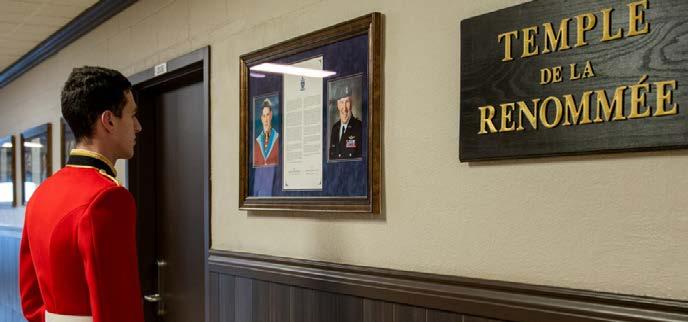
students during breaks between their courses and conferences.
The Royal Military College Saint-Jean (RMC Saint-Jean) Hall of Fame was inaugurated in 2013. It aims to stimulate the sense of pride of officer cadets and naval cadets towards RMC Saint-Jean and to motivate them to succeed.
The concept is to visually present them with a range of illustrious Canadian personalities who have achieved a certain reputation following their time at RMC Saint-Jean.
The mission of the Hall of Fame is to recognize individuals who have had exemplary service and/or made an exceptional contribution to the values of the institution. Looking back on their journey, students will undoubtedly be inspired by these
people who, in the past, may have been officer cadets or naval cadets at RMC SaintJean. They may also be inspired by others who have been employed by the College (as a faculty member or otherwise) or who have worked closely with the establishment over the years.
The induction of LGen (Retd) Maisonneuve is the first to take place since 2018. “With the return of university status and the COVID-19 pandemic, we were slowed down in the process, but we are now ready to continue the appointments and inductions. Others will take place in the coming months,” explains Captain Rachel Lefebvre, public affairs officer at RMC Saint-Jean.
To date, 11 people have had the honor of being inducted
• The Honorable Joseph Day, General (Retd) (2013 – Ex-cadets Category)
• Walter Natynczyk, General (Retd) (2013 – Ex-cadets Category)
• Richard Évraire, Lieutenant-General (Retd) (2013 – Ex-cadets Category)
• Mr. Jacques Castonguay, Ph. D. (2013 – Builder Category)
• The Honorable Roméo Dallaire, Lieutenant-General (Retd) (2014 – Ex-cadets Category)
• Jean-Paul Cadieux (posthumously) (2014 – Builder Category)
• Mr. David Daniel Ruddy (posthumously) (2014 – Builder Category)
• Mr. Gilles Ouimet (2014 – Ex-cadets Category)
• Mr. Serge Bernier (2018 – Ex-cadets Category)
• Mr. Jacques Lyrette (posthumously) (2018 – Ex-cadets Category)
• Michel Maisonneuve, Lieutenant-General (Retd) (2022 – Builder Category)
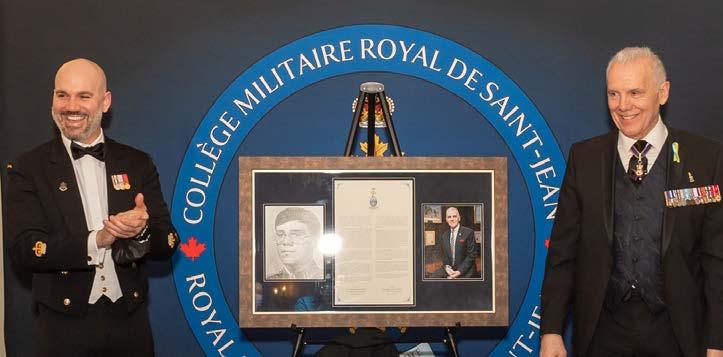
currently the Warrant Officer of the Richelieu Squadron.”
The father is visibly very proud to see his son occupy such a position within RMC Saint-Jean. “With his leadership, I am sure he has a lot to bring to the officer cadets and naval cadets of his squadron.”
It is in the Builder category that LGen (Retd) Maisonneuve was inducted.
During the ceremony, he was presented as a spearhead for the development of cooperation programs that have made the institution known internationally. The ceremony was also the opportunity to highlight his presence, his personal touch, his enthusiasm for promoting bilingualism and his charisma, which will remain a source of inspiration for several generations of officer cadets and naval cadets.

On March 3, Véronique Emond became the 6 th member of her family to join the ranks of the Canadian Armed Forces (CAF) by graduating from her basic military qualification course. Portrait of a family from the Quebec City region who have the CAF tattooed on their hearts.
From the outset, Véronique tells us about her grandfather, her father and her brother who are or have all been members of the Royal 22e Regiment . Her brother, Alexandre, is still active in the Regiment. Her father, Master Warrant Officer Mario Emond, recently retired after 36 years of service, and her grandfather served in the R22 eR between 1963 and 1993. Her second brother, Antonio, seems to be following a different path, “but he is still young and can change his mind,” she tells us with a wink.
The new aviator opted for the materiel management technician trade, like her stepmother, Master Warrant Officer Deborah Yaxley, who has 28 years of service under her belt in the
army. Her older sister, Maude, is a driver of mobile support equipment in the Royal Canadian Air Force (RCAF), the same element that Véronique chose to join. When asked why the RCAF rather than the Army like her parents and her brother, she is very honest: “I am strong, but the field is not for me.”
Véronique wanted to get involved as soon as possible. When told about longer delays for French taught courses, she didn't hesitate and embraced the challenge of taking her course in English, even though she was a bit rusty. She mentions having had excellent support from the instructors and it became easier over the weeks. In addition, Véronique earned three recognitions: best improvement, the trophy for the best female athlete in her platoon and the trophy for the best shooter.
Véronique admits that confinement to the garrison was difficult. However, it created the opportunity to strengthen the bonds and the complicity between
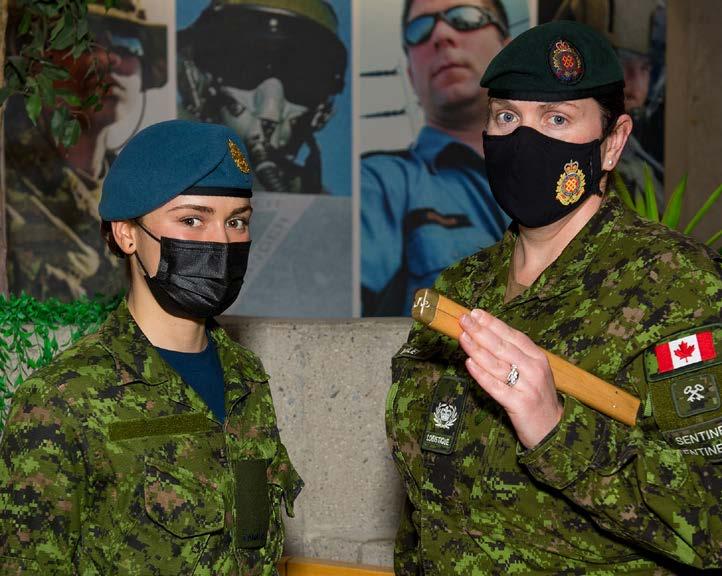
the colleagues of the platoon as well as the teamwork.
We bet the CAF will be a topic of
Many employers are now using virtual interviewing to meet candidates. The context is different, but preparing for the virtual interview has many similarities to preparing for a traditional in-person interview.
We must prepare for the questions that could be asked of us and think about the answers that we could give. You have to know how to answer questions about your professional background and therefore know your CV well. Also, you must find out about the company where you are applying; visit its website to learn about its mission, values and objectives.
HOW TO PREPARE
When the interview is done in the comfort of our own home, we tend to believe that we can dress in a more


comfortable way, but this is a mistake to avoid. Following the appropriate dress code for the type of job demonstrates your professionalism.
It is very important to do computer tests before the interview. Make sure you have adequate wallpaper and use a computer with a good camera. Be

discussion at family dinners at the Emond-Yaxley table. “It's a big part of our life, both personal and family,” says Véronique, “So yes, we will definitely talk about it”, she adds laughing.
aware that an interview from your cell phone would not have a professional effect.
You must find a quiet place, where you will not be disturbed! Your non-verbal communication and your posture are also important, whether on screen or in person.
YOU'LL GET USED TO IT!
Everything needs a first. So do your best, trust yourself, be authentic, and improve yourself for subsequent interviews. It is by dint of doing it that you will become good. You have to take this type of interview seriously, because who knows, it may land you the career of your dreams!
INFORMATION
450-358-7099 # 6084 (Saint-Jean)
450-462-8777 # 6827 (Saint-Hubert)
estelle.auger@forces.gc.ca
Chief of the Defence Staff
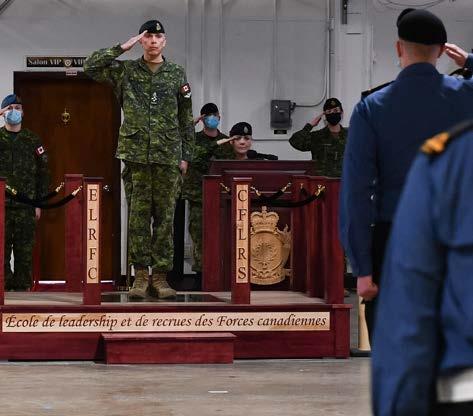
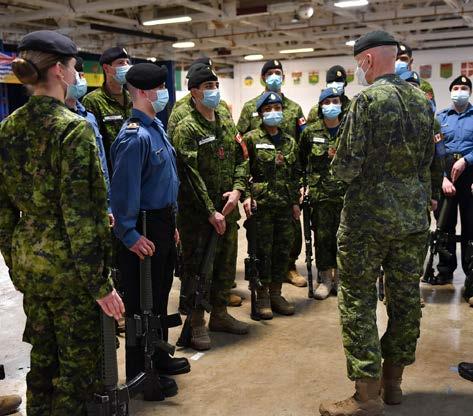
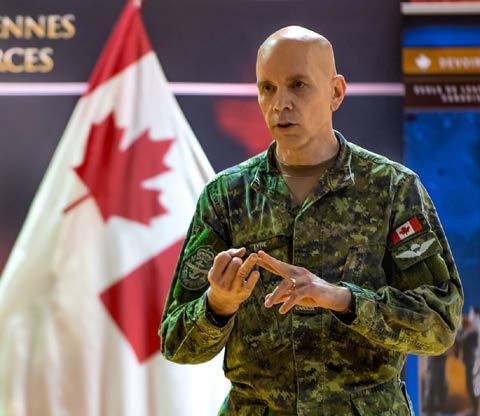
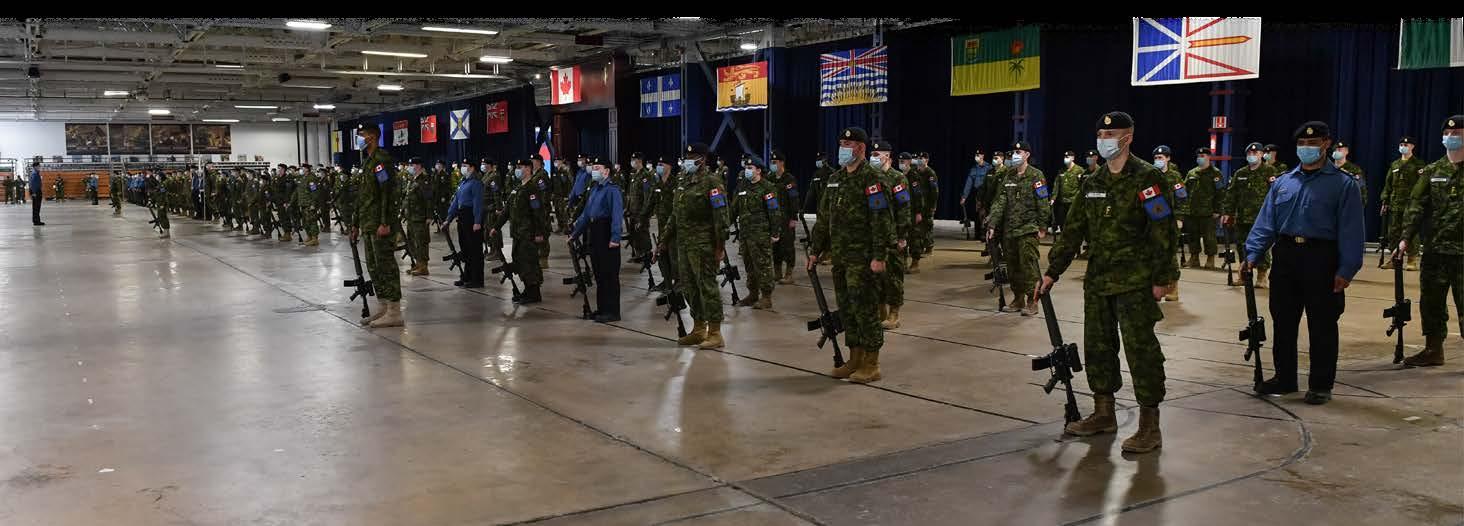
General Wayne Eyre visited Canadian Forces Leadership and Recruit School on March 17 th He took the opportunity to meet with the unit candidates and instructors.

Yves Bélanger, Servir
Since fall of 2021, the Personnel Support Programs (PSP) have been offering various activities to officer cadets and naval cadets at Royal Military College Saint-Jean (RMC Saint-Jean). Students can join one of ten recreational clubs, one of which is competitive.
Grace Quinn, Sports and Recreation Manager for PSP at RMC Saint-Jean, explains that the primary purpose of supervising the various clubs was first and foremost to support the club leaders. “Previously, some clubs were run by
CAF members. We now have a recreation and social media coordinator whose mandate is to provide mentorship to students who form the executive of the various clubs.”
The basic structure was based on that existing at RMC of Canada in Kingston. “We looked at their manual to see how they managed to organize their clubs. We then established a guide adapted to the context of RMC Saint-Jean.”
The mission of the club program is to enrich student life through the pursuit of activities of interest in a structured and
stimulating environment. Currently, ten clubs are offered by PSP. “We have some who are running at maximum capacity and others who are just starting their activities. There is something for everyone. It's quite varied.»
RECREATIONAL CLUBS
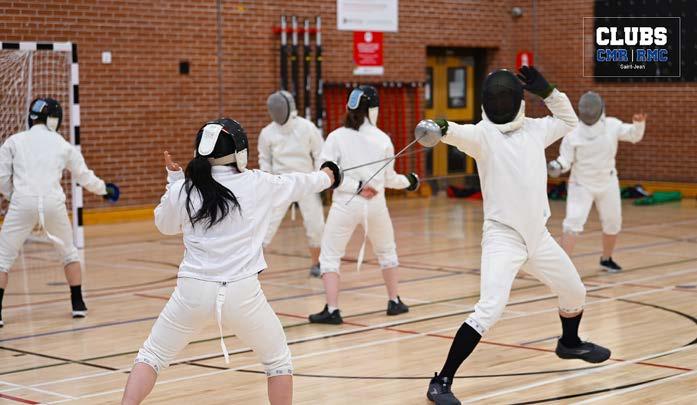
Among the recreational clubs, there is one for fencing, chess, reading and skydiving. “We also have some for barbecue, cycling, boxing, gaming and animes (cartoons, often of Japanese origin) adepts.” It will be possible to open new clubs for the next school year. “To do so,
however, we must proceed in stages. The first will be to complete the online form on our website.”
For a club to be viable, it must include a minimum of five people. “A president must be appointed. A provisional budget and an annual schedule of planned activities must be submitted.”
COMPETITIVE CLUB
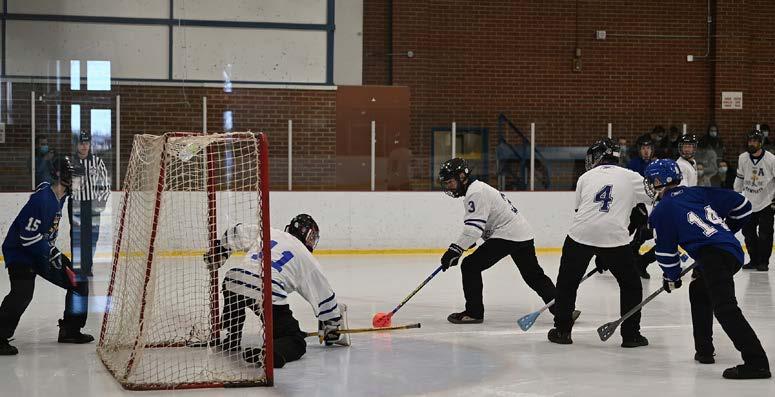
Currently, there is only one competitive club, broomball. “Simon Grenon is the regular coach for this club,” concludes Ms. Quinn.

Carl Coicou, Specialist, Health Promotion

Eating more plant-based foods means including more vegetables, fruits, whole grains, and plant-based proteins in your diet. Will you take
The latest version of Canada's Food Guide recommends choosing plantbased foods more often because of the health benefits they provide. Research shows that in general, people who eat more plant-based foods have a reduced risk of heart disease, colon cancer, and type 2 diabetes.
So, there are many benefits to getting into the habit of consuming these foods!


There are many meat substitutes on the market, like veggie burgers. These can be an easy and convenient substitute for meat, but they can also be high in salt and fat, so make sure to compare labels and use them in moderation.
Vol. 28/No 06 March 23, 2022

Saint-Jean Garrison, office K-125, PO Box 100, Station bureau-chef Richelain QC J0J 1R0 T. 450-358-7099 ext.6346 servir@forces.gc.ca • journalservir.com
A plant-based diet is usually:
• Higher in fibers
• Richer in fruits and vegetables
• Higher in nuts and soy protein (these foods can help lower cholesterol)
• Lower in processed meat
• Lower in saturated fat
Plant-based proteins like legumes and tofu are often less expensive than animal-based proteins.
A plant-based diet can have a lower impact on the environment. This is because growing and producing plantbased foods generally uses less land, energy and water.
• Brown, green, red or other lentils
• Peas such as chickpeas and split peas
• Dried beans, especially black beans and kidney beans
• Soy products like tofu, tempeh and edamame
• Fortified soy beverages
• Nuts and seeds and nut and seed butters (such as peanut butter)
PRINT : digital edition only
EDITOR : Col Jason Langelier
2 Cdn Div Support Group Commander
MILITARY ADVISORS :
• Capt Steve Comeau
450-358-7099 ext. 6570 steve.comeau@forces.gc.ca
• Capt Frédéric Thouin
514-252-2777 ext. 4530 frederic.thouin717@forces.gc.ca
• Claude Tourville 514 252-2777 # 4993 claude.tourville@forces.gc.ca
MANAGER : Guylaine Fortin 450-358-7099 ext. 7426 • guylaine.fortin@forces.gc.ca
JOURNALIST : Yves Bélanger 450-358-7099 ext. 7330 • yves.belanger@forces.gc.ca
ADVERTISTING REPRESENTATIVE : François Ménard 450-346-2300 • servir@tictactoecommunication.com
SUBSCRIPTION AND CLASSIFIED : Bélinda Raîche, 450-358-7099 ext. 6346 • belinda.raiche@forces.gc.ca
TRANSLATION : Google
GRAPHIC DESIGNER : Gillian Ottaway
ISSN 0384-0417 The
• Publication requests should be sent in Word format by email. The editor-in-chief reserves the right to reject, modify or publish any editorial or advertising material. Next edition 06/04/2022 Deadline 28/03/2022
• Servir is an authorized unofficial publication, published bimonthly with permission of the 2nd Canadian Division Support Group Commander. The opinions and points of views expressed are not necessarily those of DND, CAF and CFMWS/ NPFs Personnel.
Yves Bélanger, Servir
When a service or a hobby does not exist, why not create it yourself! This is what Karel Brossard, carpenter at the Saint-Jean Detachment of the Real Property Operation Unit (Quebec), did. Father of two children with autism spectrum disorder (ASD), he set up a hockey club adapted for this clientele eight years ago.
Karel Brossard is a hockey fan. For many years, he was involved as a minor hockey coach in the Saint-Jean-sur-Richelieu region. One day, Evan, his youngest son, told him that he was interested in this sport. “His condition meant that we were able to integrate him into a regular hockey team. He was therefore able to live his passion without any problem.”
Regularly attending his younger brother's games, Nathan, the eldest son, also asked to to put on skates and join a team. However, the situation was different. “It was unfortunately not possible for him to be part of a regular team.”
The father took various steps to find an alternative. However, his research failed to find a solution. “There is a gray area for children with neurological disorders and ASD. Paralympic sports only involve physical disabilities.”
AN ADAPTED HOCKEY CLUB
It was then that he decided to set up a
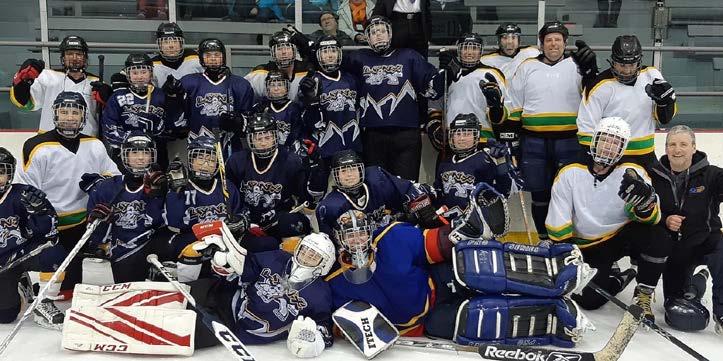
hockey club adapted for children with ASD. “I contacted parents and decided to bring together children who had the same problems as my son in order to set up a team in Saint-Jean-sur-Richelieu.”
Eight years later, there are 80 players in the organization. “In addition to Saint-Jeansur-Richelieu, we have teams in SainteJulie, Varennes, Chambly, Mirabel, Montreal, Quebec and Gatineau, among others,” he says proudly.
What differentiates these teams? Players can evolve at their own pace and be supervised. “They don’t change coaches every year in order to have greater stability. Coaches adapt to the development of young players and their needs.”
Karel Brossard maintains that playing hockey has considerable benefits for children with ASD. “These children often have difficulty making friends. When they come to play, they meet young people like them and develop meaningful connections. It helps them communicate.”
Mr. Brossard explains that he has received several positive comments from parents regarding the way their child has been acting at home since joining an adapted hockey team. “Even the teachers say they have seen a big difference in the behavior of the children in class. Young people are more collaborative and calmer.”

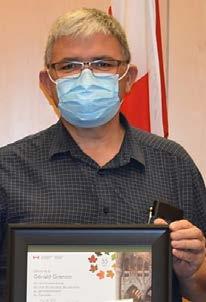
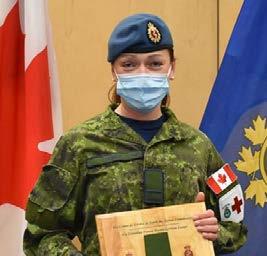
On March 27, from 8 a.m. to 3 p.m., the first Adapted Hockey Festival will take place at the Saint-Jean-sur-Richelieu municipal arena (90, Gouin Boulevard). Several teams will play friendly matches. “The goal is to show people what we can offer to young people with ASD.” He invites CAF members and civilian employees who have an autistic child to come and visit this festival. “They will be able to see that we have a lot of tools to help these young people. Too many parents still feel helpless when facing this problem.”
Those who will not be able to participate in the adapted hockey festival can still obtain information on the organization by contacting Mr. Brossard at karelbrossard@hotmail.fr.
Now that his son Nathan has reached adulthood and wants to continue playing hockey, Karel Brossard has decided to create a club adapted for adults. “This way, players with ASD who transition into adulthood will be able to continue playing their favorite sport and having a good time with their friends.”

From April 4 to 8, the Canadian Forces Leadership and Recruit School invites you to install your summer tires in the parking lot of B-131 at Saint-Jean Garrison. The activity is offered to all CAF members and Defence employees working on site. It costs $40 if your tires are already on your rims and $80 if the tires need to be installed on the wheels. Appointments must be made before April 1 by writing to mario.paquette4@forces.gc.ca or melissa.cormier@forces. gc.ca. Proceeds will be donated to the National Defence Workplace Charitable Campaign.

Yves Bélanger, Servir
Since March 22, at Montreal Garrison, CAF members and civilian employees have been taking part in the series of Reload your machine workshops organized by Health Promotion.
Carl Coicou, health promotion specialist and main facilitator of this workshop, explains that after two years of the pandemic, he wanted to offer people a motivational activity allowing them to resume good lifestyle habits. “The lockdown has had negative physical and psychological effects. Now that we can see the end of the sanitary measures, it is time to take control.”
There is no question of blaming anyone for having slowed down their physical activities and put aside their good eating habits. “On the contrary, everyone has been affected by the pandemic, at different levels. The goal of the program is to shake yourself up in a positive way to regain a healthy lifestyle.”
The series of workshops offers 16 sessions, spread over eight weeks.
“Everything will take place two times a week, at lunch hour.” In addition to Mr. Coicou, there will be a guest at each workshop. “Depending on the topics, I will ask my colleagues from the Personnel Support Programs prepare a physical activity.”
Healthy lifestyle habits, physical training, quality of sleep, alcohol consumption and food are some of the topics covered during the
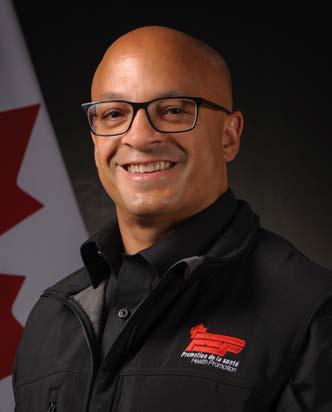

Reload your machine workshops. “Participants who wish to do so may also consult me privately to discuss certain topics in more depth.”
These workshops are intended for both CAF members and civilian employees of National Defence who are members of the Sports and Recreation Plan. “This is the first time that we have offered the possibility to civilian employees to benefit from this kind of program.”
For the health promotion specialist, the idea of organizing a group is very interesting. “It’s nice for people to rub shoulders and support each other over the weeks. There is a greater ripple effect than when we decide to take charge each on our side.”




tine2010@hotmail.com
only: robert.nudo@gmail.com
contact Sarah 450 358-2957