








Captain Annie Kerr Materiel Control Officer, 3 CSU
International Women’s Day is a day of unity, celebration, reflection, advocacy, and action. As Canadian Armed Forces (CAF) members, it is important to reflect on and recognize the achievements of the women supporting operations around the world.
The 3 Canadian Support Unit’s (3 CSU) mission is to provide supply support capabilities to overseas and domestic operations and exercises in order to deliver timely and relevant operational material support. The 3 CSU would like to showcase two female soldiers holding key positions on current deployments and the work these incredible women are doing.
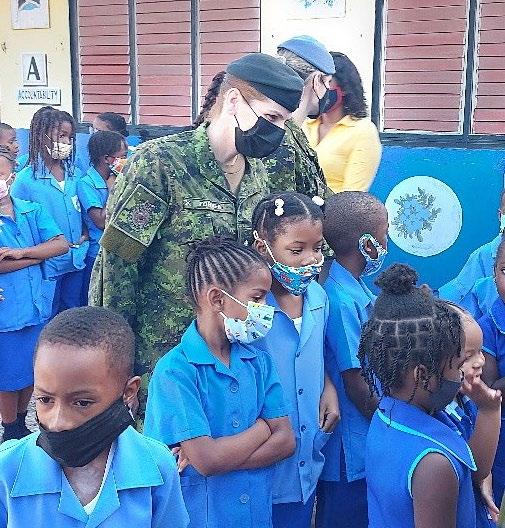
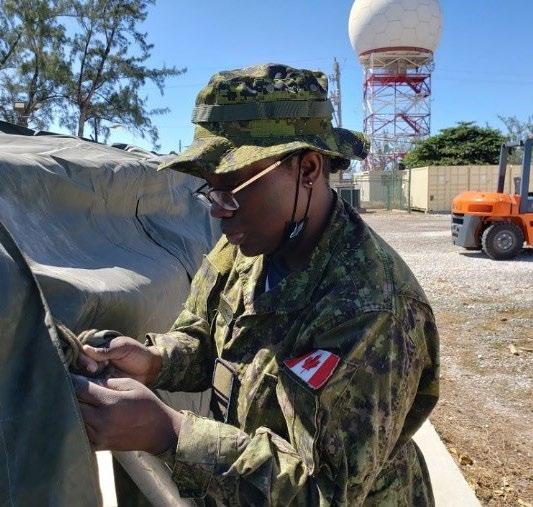
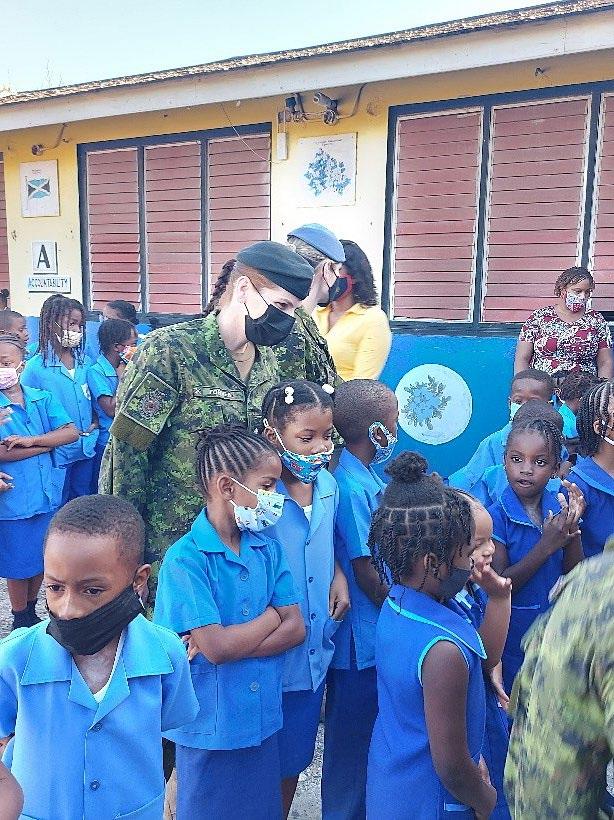
The 3 CSU deployed an all-female team to the Operational Support Hub – Latin America and the Caribbean (OSH LAC), located in Jamaica, in support of a site development plan (SDP). The task force’s mission is to conduct critical camp infrastructure maintenance and upgrades in order to maintain operational readiness for CAF Operations in Latin America and Caribbean region.
The purpose of OSH-LAC is to provide rapid support to missions to ensure the CAF can be quickly brought in to provide support to CAF operations to include humanitarian assistance and disaster relief operations. They deployed with a group of 35 Officers and Non-commissioned Members, of which only six are female.
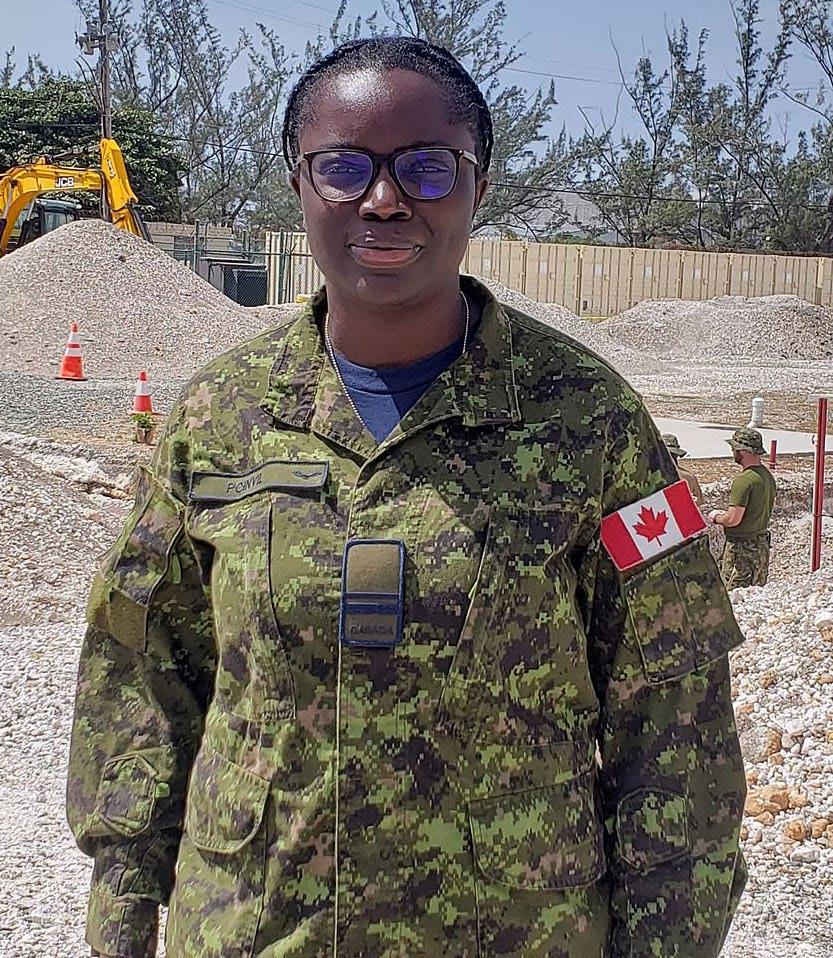
Air Force Logistics Officer, Lieutenant Rachel Poinvil, is holding the positions of the Contracts and Logistics Officer, where she liaises with local authorities and businesses to ensure the OSH-LAC has the service and support required to function.
Material Management Technician, Master Corporal Stephanie Lepage, is deployed as the sole Local Purchase Order buyer, where she completes

daily runs into town to purchase material in order for the engineers to have the critical material they require to complete their tasks towards the camp maintenance and upgrades. They are both fulfilling critical roles in their organization and the mission would not be attainable without their unwavering support.
Other women currently deployed from 3 CSU are Corporal Monique
Roy, OSH-E and both Warrant Officer Tammy Ayer and Corporal Christine Roy, Op REASSURANCE. In all cases, these remarkable women are not only representing our unit with professionalism and pride, but they are demonstrating the great work that women have to offer and continue to offer in the CAF. The 3 CSU is extremely proud of all of their accomplishments.






Yves Bélanger, Servir
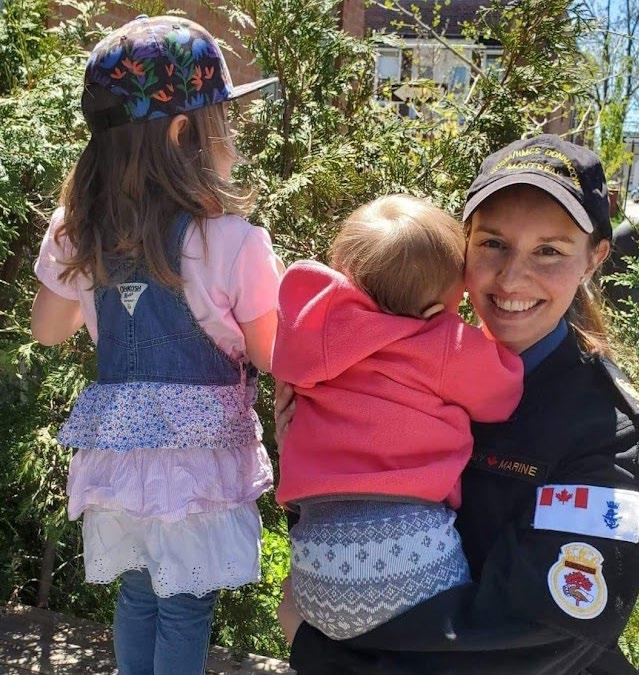
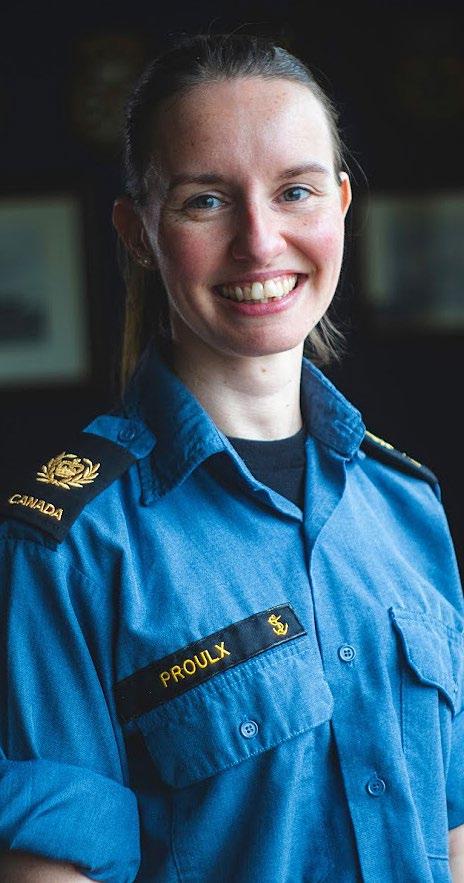
Since October, Chief Petty Officer 2nd Class Isabelle Proulx has served as Coxswain of Her Majesty's Canadian Ship (HMCS) Donnacona She is the third woman appointed to this prestigious position within the unit.
In the Royal Canadian Navy (RCN), the coxswain is the equivalent of the sergeant major in the army. Their role is to assist the commander on duty. “I am the person responsible for discipline within the troops and I make sure that morale is good. It’s also me who sees to the management of conflicts if there are any.”
At 36 years old, CPO 2 Proulx has 19 years of service in the RCN. “I enlisted at 17 in the HMCS d’Iberville in Rimouski. “My brother had done it two years before me and I wanted to take up the challenge.” She explains that she was already a young woman who loved physical training. “I did a lot of that in school. So I was not afraid to take on physical challenges.”
She was so determined about her choice to join the Canadian Armed Forces (CAF) that she agreed to skip her high school prom to enlist. “It was on my
prom day that I was supposed to start my training camp in Ontario. So I made a heartbreaking choice, but I've never regretted it.”
The coxswain joined the crew of HMCS Donnacona a year after enlisting. She explains that things have changed since her arrival. “Eighteen years ago, there were far fewer women enlisting in the Navy.”
She argues that because of this, women in her reserve unit have tended to cluster together. “We have developed a lot of solidarity between us.”
She does not remember being wronged because she was a woman. “Probably I experienced discrimination without realizing it because it was part of the culture at the time. With regard to harassment, it is the same thing.”
CPO 2 Proulx admits that because she was a woman, she always felt she had to prove herself more. “Once we showed our brothers in arms that we could do the job, they accepted us more.” She maintains that things have improved, but that there is still work to be done on this side.
She mentions that it is important that the number of women joining the RCN
and the CAF increases. “It brings more diversity in the way of thinking and working. This brings wealth to the teams and everyone comes out a winner.”
When she became coxswain of the Donnacona, CPO2 Proulx felt that the members of the unit were proud that a woman was appointed to this position. “It hadn’t happened for at least 20 years.” As the mother of two young children aged two and four, CPO2 Proulx reports that she could not have accepted this position without the support of her spouse.
“He supports me a lot in my career and I am very grateful to him. He is very involved in all the tasks of the house and with the children.”
To manage to reconcile her work/family schedule in an acceptable way, the CAF member recently resigned from her civilian job as a psychoeducator. “In addition to my position as coxswain, I work part-time at HMCS Donnacona as the unit training chief petty officer.”
Still in 2022, occupying the position of coxswain represents more challenges for women than for men. “I put a lot of pressure on myself, because I feel that the expectations are there. At the same time, I understand. The CAF has long worked hard to promote the contribution of women in command and leadership positions.”


Yves Bélanger,
Servir
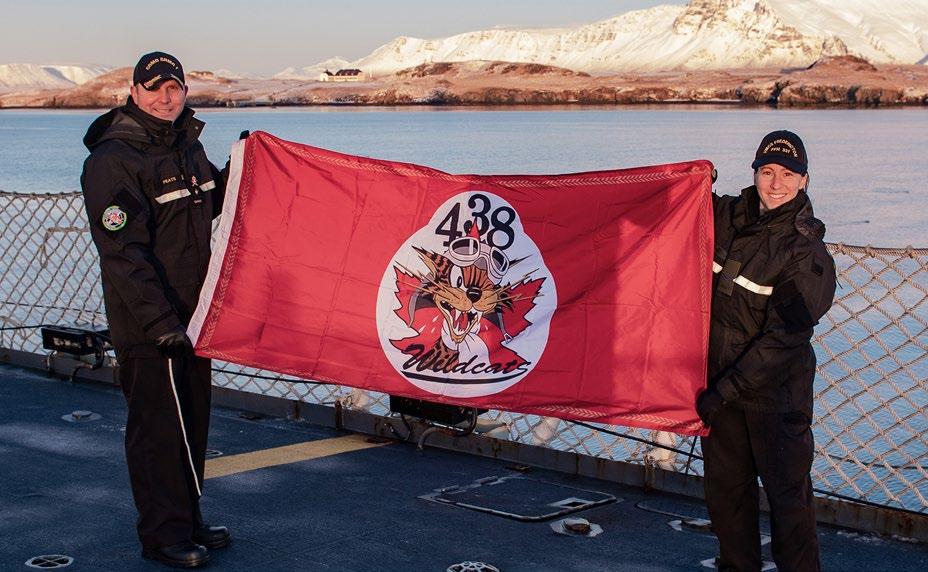
Master Corporal Laura Landry, Imagery Technician with 438 Tactical Helicopter Squadron (438 Tac Hel Sqn), loves challenges and thirsts for adventure. She greatly enjoyed her first deployment on Operation REASSURANCE. She spent nearly six months aboard Her Majesty's Canadian Ship (HMCS) FREDERICTON.
“When I heard about this deployment, I immediately submitted my name. My chain of command supported me in this project.” On July 24, 2021, she set off to board this ship, which crosses the Baltic Sea and the North Sea, among other places. “HMCS FREDERICTON was the flagship of the fleet. We had on board Commodore Bradley Peats, Commander Standing NATO Maritime Group 1.”
It was the first time that the CAF member had set foot on a ship of this size. “I learned what life was like as a sailor!”, she laughs. Of course, she had to face a fierce enemy: seasickness. “I tried different medications before finding the one that was right for me. It took at least three months to overcome the nausea. Fortunately, it was not continuous. It depended on the strength of the waves hitting the ship.”
Throughout her assignment, MCpl Landry was tasked with photographing many activities taking place on board.
“Among other things, I had to provide material to the public affairs officer who fed social medias related to the operation. My photos were also published on the Canadian Armed Forces Combat Camera website.”
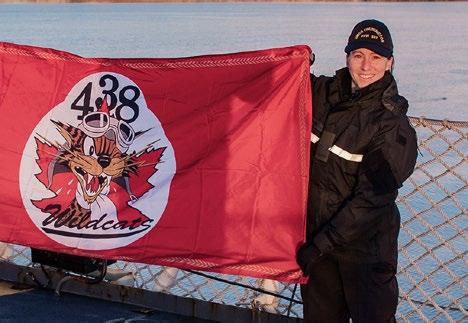
MCpl Landry also had to cover all the public events in which Commodore Peats participated. “In addition, I had to capture the different moments of daily life on a military ship. These photos are often sent to the families of deployed CAF members to show them what happens on board during an operation of this kind.”
The photographer was also able to take some aerial photos. “We had a cyclone helicopter on the ship and I boarded it a few times. I loved taking pictures!”
MCpl Landry joined the Reserve in 2009 and the Air Force a few years ago. It was only in 2019 that she decided to take
her imaging technician course. “The COVID-19 pandemic started right after I finished my training. I had not the chance to practice a lot in my job.”
Her deployment on Op REASSURANCE was an opportunity. “It really allowed me to gain a lot of experience in this job that I love.”
Curious by nature, she particularly liked the freedom that her job offered her. “I could be on the bridge as well as at the bottom of the hull. I really got to know the reality of the different trades on a military boat. It was great!”
Needless to say, she hopes to participate in another overseas operation. “I really want to relive such an experience. This is exactly the lifestyle I was looking for when I joined the CAF!”
Op REASSURANCE : Canadian troops have been part of Operation REASSURANCE in Central and Eastern Europe since 2014. They are there as part of NATO's assurance and deterrence measures to enhance the collective defense of NATO. This operation also demonstrates the strength of the solidarity of the allies.
The CAF conduct training, exercises and specific NATO tasks. Their support for NATO helps to increase the security and stability of Central and Eastern Europe.
Yves Bélanger, Servir
On the south sector of the Montreal Garrison, 6th Avenue is currently getting a makeover. With a length of 600 meters, the artery located between Notre-Dame and Souligny streets is gradually being transformed into a green street in order to improve the quality of life of the CAF members and civilian employees working in this sector.
Project manager Behrang Ghaffari, of the Montreal Real Property Operations Section (MRPO), explains that this renovation project, at a total cost of $6 million, was started four years ago. “The primary goal was to redo the sewer and aqueduct network.”
He points out that there have been problems with sewer backups in this area for a long time. They were due to the lack of green spaces to absorb excess water during heavy downpours and the limited capacity of the city of Montreal collector on Notre-Dame Street.
The engineering section of MRPO therefore decided to include greenery in the project. “In addition to being environmentally beneficial, we thought it would make this sector more pleasant. Everyone knows that the south sector of Montreal Garrison has a very industrial look,” explains Mr. Ghaffari. This project therefore completes the MRPO engineering solution, which consisted of setting up a 3,500 m3 retention basin in this sector of the garrison.
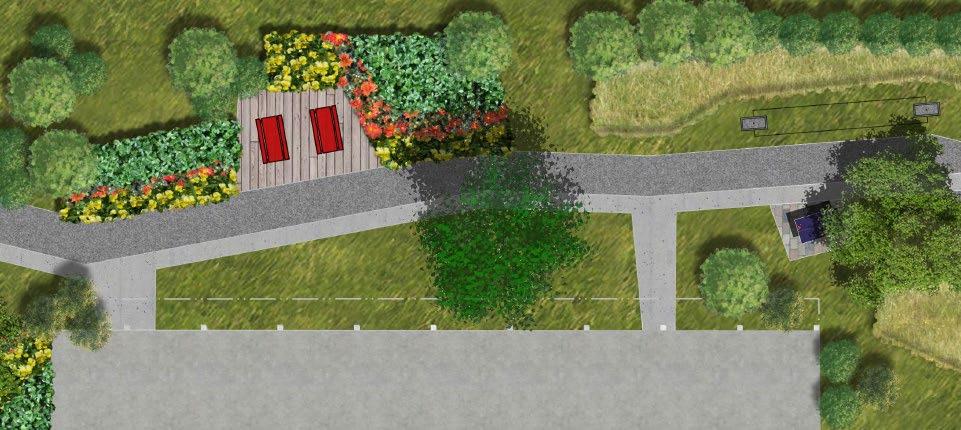
This is where the idea of the green street was born. “We decided to combine business with pleasure. It was easy to add different stations for sports, games and rest spaces to the project.”
In 2019, plans and specifications were prepared in this regard. “In 2020, we obtained the necessary financing for the realization of the project. In fact, the creation of the green street only increased the cost of the work to be done by $400,000. It was worth it!”
The new green street will provide a pleasant environment for walking. In addition, there will be outdoor games and training areas. Picnic tables will allow employees to eat outside and perhaps even have barbecues there.
A carport was already set up on site and made it possible to protect military equipment from bad weather. “We
decided to keep this roof and convert the place into a space that will include, among other things, a training space. We have other plans for this place that we can announce in a few months.”
A survey will be conducted over the next few months among employees of the Montreal Garrison to determine the final choice of facilities that will be developed along the green street. “A Zoom presentation of two projects will take place on June 11. Following this, it will be up to people to decide which of the two projects will win.”
Mr. Ghaffari explains that much of the project was carried out during the summer season. “We have completed at least two-thirds of the work. We hope to be able to finish everything and develop the green street this summer.” Mr. Ghaffari mentions that the development of the green street is the result of excellent teamwork. Everyone collaborated well
so that the project could be carried out without too much delay and friction.”
Jean-François Bernard, fitness, sports and recreation manager at the Montreal Garrison, is particularly excited about this project, which he describes as very innovative. “It's awesome! It is as if we were offered an open-air gymnasium. This will give us plenty of opportunities to make our presence more tangible on the south sector of the garrison.”
Mr. Bernard adds that a small infrastructure will be reserved on the green street for the Personnel Support Programs (PSP) team. “We will be able to leave equipment there and benefit from a connection to the Defence network. This will be useful for providing outdoor training platforms.”
With these facilities, the green street will allow PSP to multiply their services on the south sector of the garrison and to make themselves better known to the military community. “It will also reduce travel time for people working on the south sector who had to go to the sports centre located on the north side.”
Mr. Ghaffari adds that Jean-François Bernard was very supportive for the development of the green street. “He gave good advice in determining the type of sports equipment to choose. In addition, he supported the project very well during its presentation to the 2nd Canadian Division Support Group.”
Jean-Marie Dubois and Gilles Samson
Editor’s Note: Since 2019, the Eastern Townships Genealogy Society and Branch 10 – Sherbrooke of the Royal Canadian Legion have undertaken to publish biographies of soldiers living in the Eastern Townships, whether active or retired. To mark International Women's Day, these organizations share the story of one of these soldiers with Servir’s readers.
Rachelle Lavoie was born in Alma on October 19, 1958. She is the daughter of Fernande Bouchard (1925-2008) and Léopold Lavoie (1918-2009), farmer. After her primary and secondary studies in Alma, from 1976 to 1979, Rachelle did college studies in protection of the natural environment at the Saint-Félicien College.
Her studies finished, Rachelle Lavoie hastens to fulfill a childhood dream: joining the Canadian Forces, because she wanted to wear the uniform. In 1980, she enlisted as a volunteer in the Royal Canadian Air Force in Chicoutimi. She was transferred to the Saint-Jean-sur-Richelieu military base to do 14 weeks of basic training. “I was part of a platoon of about 20 women. At the time, mixed platoons did not yet exist,” explains MCpl Lavoie.
It was there that she met Yves Saint-Laurent, her future husband. Rachelle is then transferred to the Second Languages School to learn English. This course completed, she was transferred to Borden military base to take the performance oriented electronics training course.
In 1981, Rachelle Lavoie was transferred to Winnipeg Air Force Base as a radar communication technician on Hercules, T-Bird, Tutor and Dakota aircraft, until July 1988. “We were only

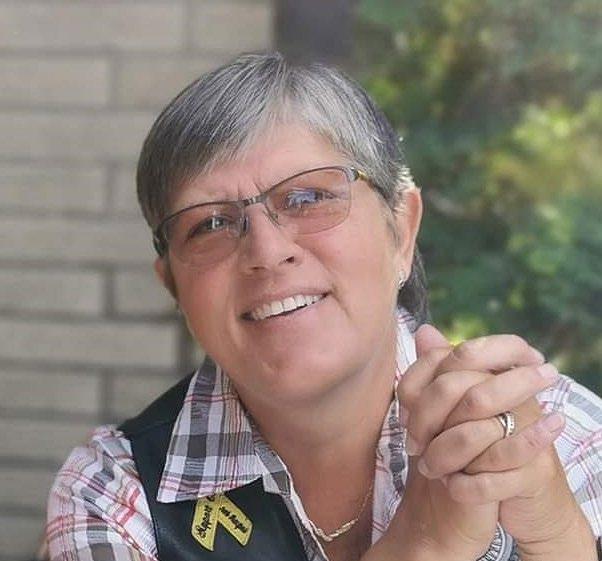
two women in this work environment. We had chosen a profession that was once reserved for men.”
During this period, Rachelle married Yves Saint-Laurent in the Saint-Sacrement church in Alma on June 26, 1982. The couple had a son, Jonatan. In July 1984, Rachelle Lavoie was promoted to Corporal and, in July 1987, Master Corporal.
In July 1988, Rachelle Lavoie was transferred to the Canadian Armed Forces Recruit School in Saint-Jean as a recruit instructor. “Once again, women were poorly represented. We were only two women among the instructors.” MCpl Lavoie says she integrated quite easily, however. “Let’s say I put my foot down right from the start. In the team, I saw that everyone had a nickname. I told
them my name was Rachelle and that I wouldn't accept anything else. They respected that.”
In July 1992, she was transferred to Bagotville to develop her specialty as a radar communication technician and to be eligible to work on CF-18 Hornet fighter planes. “Given that we had compatible trades, my husband and I had the privilege of being transferred together. This was not the case for all military couples.”
After six months of specialization, she was integrated into the 425 Tactical Fighter Squadron, the famous Second World War Alouette squadron based in Bagotville, where she remained attached to the CF-18s. It should be noted that Radar Communications Technicians are a support group for aircraft pilots and do not go into combat. They stay in the back.
From August to the end of December 1998, as part of a NATO operation, MCpl Lavoie was deployed to the Aviano Air Base of the United States Air Force, in Italy. She was part of the radar communication support unit of the CF-18s that departed from this base during the Kosovo War. In Italy, before her return to Canada, she received the NATO Medal for her services. She returned to Bagotville and was released in July 2000, after 20 years of service.
From 2001 to 2008, Rachelle Lavoie worked for Alcan in Alma, as a day laborer in electrolysis. She then moved to Sherbrooke where she became a volunteer with veterans in the Estrie community. In January 2018, she joined Branch 10Sherbrooke of the Royal Canadian Legion and served as a public relations officer. Since then, she is in charge of taking photos and editing videos relating to events affecting veterans.

Vol. 28/No 05 March 9, 2022
EDITOR : Col Jason Langelier
2 Cdn Div Support Group Commander
MILITARY ADVISORS :
• Capt Steve Comeau
450-358-7099 ext. 6570 steve.comeau@forces.gc.ca
• Capt Frédéric Thouin
514-252-2777 ext. 4530 frederic.thouin717@forces.gc.ca
• Claude Tourville 514 252-2777 # 4993
claude.tourville@forces.gc.ca
MANAGER : Guylaine Fortin 450-358-7099 ext. 7426 • guylaine.fortin@forces.gc.ca
JOURNALIST : Yves Bélanger 450-358-7099 ext. 7330 • yves.belanger@forces.gc.ca
ADVERTISTING REPRESENTATIVE : François Ménard 450-346-2300 • servir@tictactoecommunication.com
SUBSCRIPTION AND CLASSIFIED : Bélinda Raîche, 450-358-7099 ext. 6346 • belinda.raiche@forces.gc.ca
TRANSLATION : Google
GRAPHIC DESIGNER : Gillian Ottaway
ISSN 0384-0417
Geneviève Dupont, c.o. Personnel Selection and Counselling Centre (PSCC)
Your military career will end soon. You are thinking of leaving the Canadian Armed Forces. Do you miss several important aspects of the transition? The SCAN seminar will be back next April to answer your questions and help you prepare for your release.
This conference will bring together all the stakeholders directly or indirectly related to the transition, whether it is chosen or not: the release section, pension, financial planning, insurance, legal issues, career development, prior learning recognition and the transition to the civilian labor market, etc. The medical SCAN will follow the next day and

will be aimed at members who are on the verge of medically releasing, as many differences apply to their situation.
The SCAN will allow you to obtain a lot of information to consider for a possible release, but above all will give you the opportunity to meet all the contact people in one place.
DON'T WAIT TO PREPARE
Many CAF members wait until they are very close to retirement before they begin to prepare. However, the longer we wait, the more we risk missing out on important elements that have an impact on the life goals we want to achieve.
Consequently, we recommend attending SCAN at several points in the military career:
• Once in the first 10 years
• At least once within 5 years prior to the expected time of voluntary release
• When a first temporary medical category is obtained and it risks becoming permanent
• Once in the last months before release
Please note that all conferences will be held in French only. If you want to attend a SCAN seminar in English, you can do so virtually in April 2022 with PDev in Ottawa. Visit intranet. mil.ca/en/locations/ncr/pdev.page and click “Second career assistance network (SCAN)” to fill out the form to register.
The SCAN in French will take place on April 26 and 27, at the Saint-Jean
Garrison auditorium. The medical component will take place on April 28, at the same location. It will also be possible to participate in TEAMS.
To register: svcpersOSPStJean@forces. gc.ca or 450 358-7099 # 7308


The Canadian Forces Morale and Welfare Services invite you to attend a virtual conference by Claudia Harvey, inventor, author and global entrepreneur, on Thursday, March 24. You will find information about product-based business: launching, marketing and scaling your small business to success.
Major-General (Retired) David Fraser will present the entrepreneurial initiatives he has undertaken since
his retirement. He will talk about the tools, resources and programs offered exclusively to the military community.
This free activity is organized in partnership with BMO. It will take place at 3 p.m. and prizes will be offered in draws (including iPads). The first 300 people to register will receive a promotional kit.
Information and registration: entrepreneur.cafconnection.ca




On Saturdays March 19 and 26, young people from the military community are invited to take things to the next level. Two opportunities not to be missed!
Over the past two years, the world has changed. We have reinvented our ways of life, our ways of learning and our ways of working. Teenagers from 13 to 17 can join LEVEL UP, a virtual experience designed to help them connect, be inspired and become their own champions.
Participants will have the opportunity to discover new passions, voice concerns and take action through various breakout sessions held throughout the two days.
They will also be able to hear conferences given by Georges St-Pierre, one of the best MMA fighters of the moment, by Dr. Robyne Hanley-Dafoe, a psychology instructor specializing
in resilience, stress and change management, and by JUNO and Canadian Screen Award nominated singer-songwriter, Peter Katz.
Registration is open, free, and is for children of military families (active or retired), cadets and other young people from the military community.
INFORMATION: cafconnection.ca/ National/Get-Involved/LEVEL-UP.aspx


Yves Bélanger, Servir
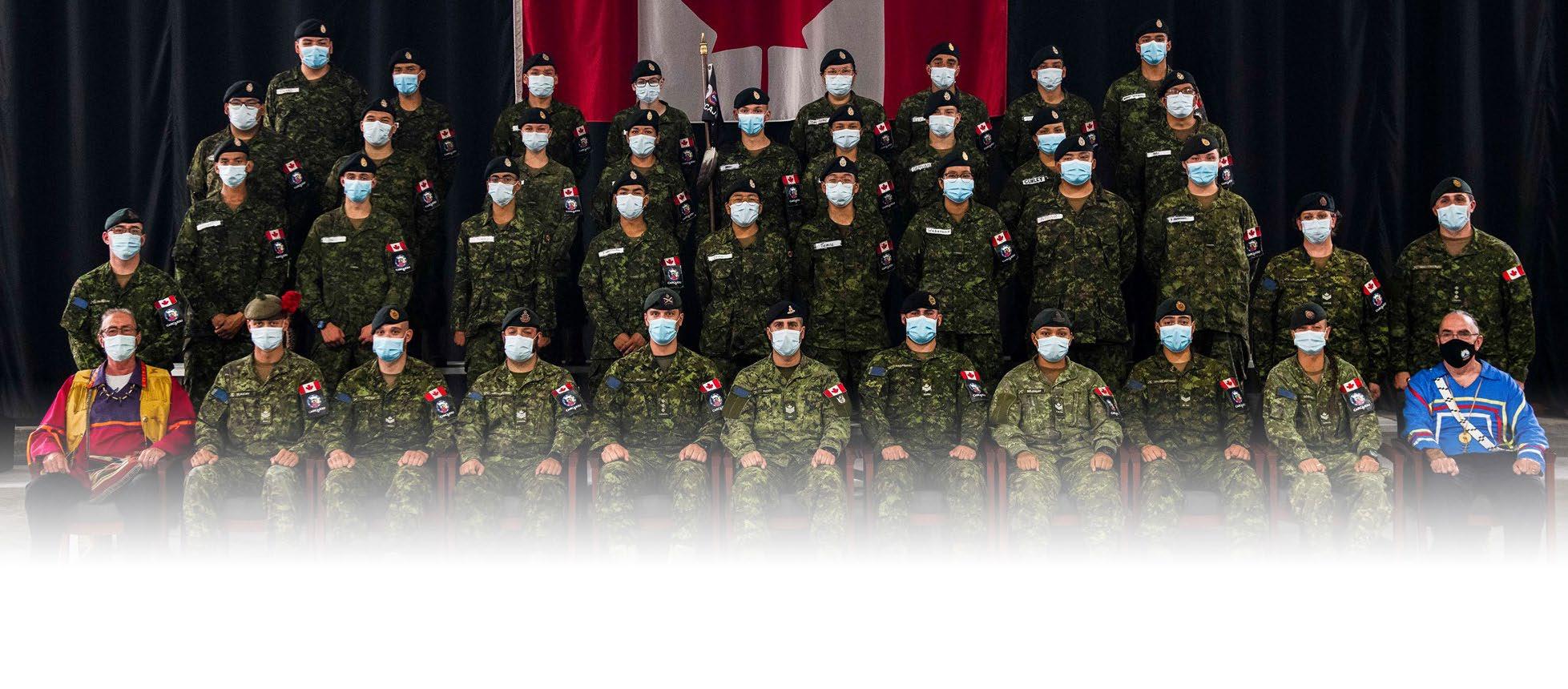
Launched in 2019, the Carcajou program allows First Nations, Métis and Inuit people to take summer training that combines Aboriginal culture and teachings with basic military training. At the same time, it allows program instructors to familiarize themselves with nations who are still little known despite their proximity.
Carcajou is for Canadian Aboriginals aged 16 and over, with the equivalent of a secondary 4, and who would like to complete their Basic Military Qualification (BMQ). “At the end of the program, different options are presented to candidates to allow them to serve in the Canadian Armed Forces (CAF), whether in the Regular Force or in the Reserve”, indicates Master Corporal Laurence Séguin, assistant to the Carcajou and Aboriginal recruitment.
In the summer of 2021, during the first weeks spent in the presence of the young Indigenous people registered for the BMQ 2021, several members
of the team had to adapt. “They realized that these young people do not necessarily start from the same place as those who enlist and do their training at the Canadian Forces Leadership and Recruit School. They arrive with their reality of life and their learning. They are no less good than the others. You just have to know how to deal with them.”
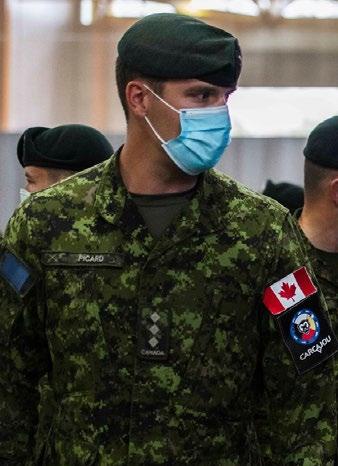
Captain François Picard, platoon instructor at the 2nd Canadian Division Training Centre, works with the Carcajou team. Last summer, he was in contact for the first time with young Aboriginal people. “We had received a week of training to make us aware of the culture of this clientele. Despite this, I must say that we had to adjust to meet the expectations of the young people and of Carcajou.”
The officer explains that it was important to him that the participants understand the importance of respecting and distinguishing moments dedicated to military learning from those dedi-
MCpl Séguin explains that presentations of the program take place in Aboriginal communities. “We visit schools, human resources organizations, Aboriginal friendship centres and Band Councils.”
She adds that outreach through social media is also a great method.
“Once contact is established with the applicant, regular monitoring begins. We make sure to give them as many tools as possible for their enrollment process.”
The program mainly covers the province of Quebec, but is intended for the entire country. “Currently, I have two persons from Western Canada who show a strong interest in participating in our program.”
cated to Aboriginal culture. “We have six weeks to complete the BMQ and graduates of the program must reach the level required by the CAF. This is serious!”
Capt Picard is very satisfied with the results obtained last year. Out of 34 registered participants, 28 completed the six weeks of training. “Of these, we know that 17 joined the CAF and three of them chose a career in the Regular Force. This is a very good retention rate.”
Capt Picard is particularly proud to be surrounded by a solid team. “We are fortunate to have Indigenous Elders who are our mentors. They really help us to interact well with the participants.”
Capt Picard admits to having learned a great deal about First Nations, Métis and Inuit people. “I realize how oblivious we were to the reality of the Indigenous peoples around us because we had too few opportunities to meet them.” Living alongside them, the
CAF members discovered the various aspects of their culture. “It is a mutual learning that takes place during their stay at Valcartier. It’s very rewarding for both the participants and the team members.”

This training program was named Carcajou (wolverine) because this animal knows how to face its enemies and has an impressive survival instinct. It is cunning, fierce, territorial and very protective of its family.


Corporal Alain Ouellet, Buyer, 3 CSU
During 2021, 3 Canadian Support Unit (3 CSU) deployed military members to Dakar, Senegal, as part of Operation PRESENCE. Its members were employed at the Centre de soutien opérationnelAfrique de l'Ouest (CSO-AO) whose mission is to provide advanced logistical support to multiple operations on the African continent.
This small team is made up of nine soldiers from across the country and reports to the CF Joint Operations Support Group. Over the past year, 3 CSU has provided officers and non-commissioned members to serve as commanders, contract specialists, buyers and material managers. The CSO-AO has enabled African missions to benefit from the importance of proximity for support, which has contributed to increasing their operational impact, thereby allowing them to successfully accomplish their missions.
Senegal, like many West African countries, still has very strong Francophone roots. Thus, a portion of the Senegalese population and military are fluent in French, which has facilitated the strengthening of relations with the CAF members. Thanks to these new relationships, Canadian troops have been
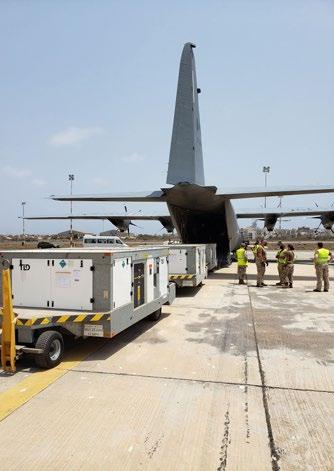
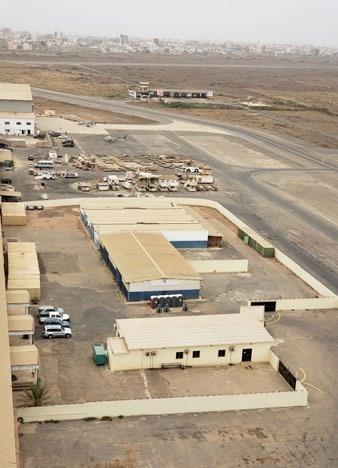
able to forge important links with local material suppliers. This has facilitated faster and more reliable service to other missions throughout Africa. In addition, thanks to the excellent work of the 3 CSU team, the CAF avoids the costly overseas shipping of equipment from back home.
COVID-19 and its Omicron variant have had a significant impact on the Canadian team, leaving many members unable to work in the field
for a short period of time. As in Canada, members had to take emergency health measures, but they were able to adapt to a mix of telework and face-to-face work in order to provide the best possible operational support to the missions.
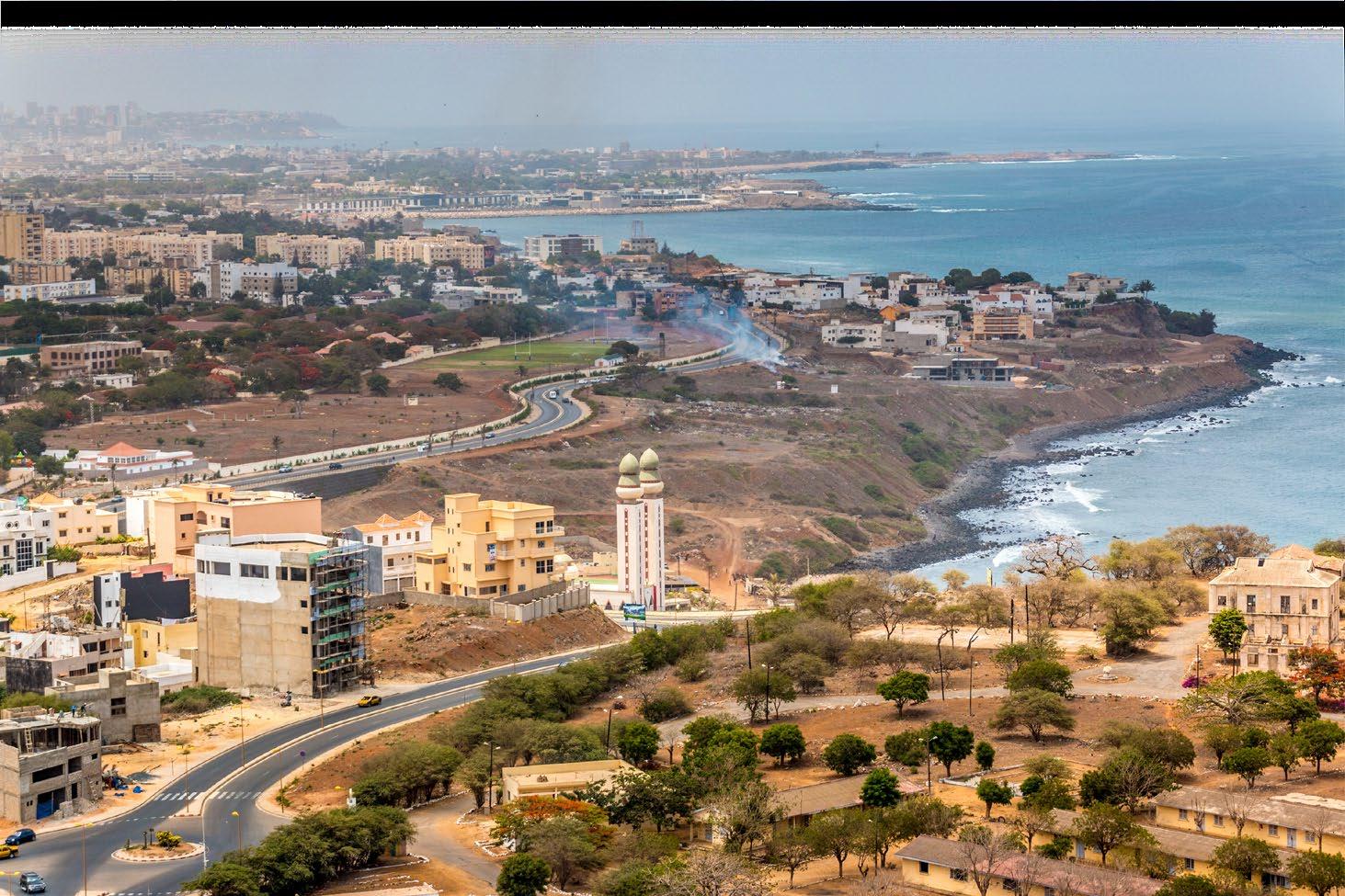
Despite a slowdown since the beginning of the pandemic, Senegal has experienced increased economic growth in recent years. Canadians have come to appreciate a dynamic and rapidly
evolving city. Recent years have seen major foreign investment.
The Dakar region is now equipped with modern highways and a new international airport as a result. On December 27, 2021 the Senegalese government inaugurated a new stateof-the-art rail service. The project called the Train express régional Dakar is a 55 km Senegalese-French collaborative project that ultimately plans to connect downtown Dakar with the Blaise-Diagne international airport located on the outskirts of the capital. In addition, in August 2021, the Canadian government announced €3 billion in funding for the construction of a high-speed rail line linking Dakar to the eastern city of Tambacounda, near the border with Mali. The train is expected to help CSO-AO staff improve support for the transportation of personnel and goods throughout West Africa.
The Canadian military presence in Dakar is confirmed until 2025 and 3 CSU will continue to play an important role as a leader in materiel management in this region. Those who have the opportunity to be deployed there will witness a society in the midst of transformation and will certainly experience unforgettable moments.

Audrey Gallant, S.W. Family Liaison Officer
Myriam Dutour, S.W. Veteran Family Program Coordinator
In collaboration with certified art therapists and thanks to a grant from the Fondation québécoise des vétérans , the Military Family Resource Centre (MFRC) will offer art therapy workshops starting this spring to veterans and CAF members in process of releasing from the CAF.
This art therapy project was born from our experience during retreats for CAF members who release from the CAF for medical reasons as well as for their spouses. The positive results we have obtained have led us to offer more therapeutic workshops, particularly in the different territories served by the MFRC.
The art therapy workshops will include four meetings in order to have a greater therapeutic scope for the participants.
Art therapy is an innovative approach offered by practitioners trained at the graduate level. To learn more about
the subject, you can visit aatq.org/en. It is important to note that it is not necessary to have any particular artistic talent to benefit from this approach.
The objective of these workshops is to enable participants to:
1. To express their emotions and thoughts related to their experience as a CAF member, the transition, and life as a veteran;
2. Consolidate their identity;
3. Use other means to express themselves;
4. Make sense of their experiences;
5. Share with other people their experience in a different form.
WHERE, WHEN AND HOW?
For now, the exact locations and
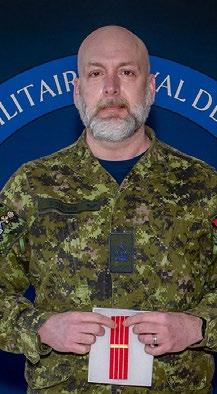
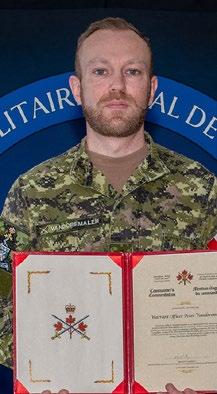
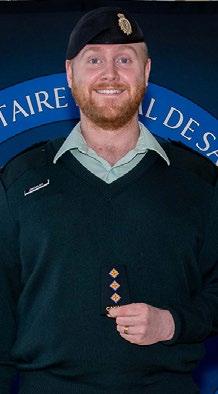
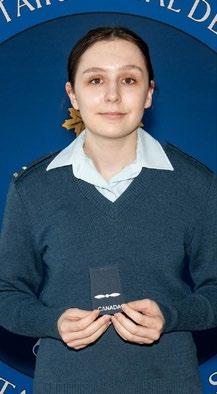

Marie-Josée Bouchard
Service Commander's Coin Since the beginning of the pandemic, Ms. Bouchard has stood out thanks to
addition to performing her usual duties, she surpassed herself by
the recreation team in the implementation of the Booking program which will meet the needs of the military community.

dates are yet to be determined. The workshops will take place during the day and will be offered in both languages.
Men and women often share a different experience and are sometimes reluctant to share their experience in front of individuals of the opposite gender. So, the art therapy workshops
will be offered in two groups, one for men and one for women.
Express your interest by email to audrey.gallant@forces.gc.ca or to 450 358-7099, ext. 5190. You will be the first to know when registration begins!
Maxime Brouillard Health Promotion Specialist
Sustainable development is a complex issue. However, you don’t need to be an expert to contribute. We can give our planet a good boost by starting on our plate!
The Food and Agriculture Organization of the United Nations (FAO) and the World Health Organization (WHO) define sustainable diets as those that promote health and well-being, while contributing to the prevention of all forms of malnutrition, including micronutrient deficiencies. These schemes also consider environmental impact, cultural acceptability, accessibility and affordability. Here are four strategies to help fuel us in that direction.
1. REDUCE FOOD WASTE
This subject was discussed in more detail in the February 23, 2022 edition of Servir. Avoiding food waste at home is one of the best ways to reduce the environmental impact of our food. This is because uneaten and discarded food has unnecessarily required resources to be grown, processed and distributed. In addition, food waste in landfills is a major source of methane, a greenhouse gas associated with climate change.

Do you have wilted spinach and forgotten mushrooms in the fridge? Incorporate them into a frittata!
2. CHOOSE LOCAL FOODS
An important sustainable practice is to favor whole foods, grown and produced here when possible and foods that are in season. This way of doing
Corporal Jean-François Ross Automotive columnist
In this period of transition to electrification of transportation, the popularity of fully electric cars continues to grow, especially with the price per liter of gasoline exceeding $2.00 in the Montreal region. Tesla is no longer going it alone in this niche since several car manufacturers have joined the group of 100% electric vehicles: Ford, GM, Hyundai, Kia, Nissan, Volkswagen and Volvo.
At the end of October 2021, despite anxiety about battery range in the fall, I decided to test the 2022 Volvo XC40 Recharge Ultimate, this all-electric luxury compact SUV.
On board, the large screen on the center console and the dials in front of the driver are very clear and provide all the information the user needs. On the central screen, the keys for the multimedia and heating/air conditioning functions are touch sensitive, which is much more distracting for the driver! The console also incorporates Android Auto and Apple
Carplay. It should be noted that the driving position is good and the cabin is quite spacious for a crossover vehicle in this category. The ergonomics are on point. On the other hand, we would appreciate a more generous trunk space.
The two electric motors (one on each axle that provides all-wheel drive) develop 402 horsepower and torque is 486 lb-ft. With a weight of 2,150 kg, this SUV is heavy. Despite everything, it only takes 4.9 seconds to go from 0 to 100 km/h and the vehicle has a theoretical range of only 359 kilometers!
Now let's talk about the charging time, depending on the type of charging station used. If you opt for a level 1 station, which means 120 volts alternating current (AC), normal household outlet, it will take you 54 hours if the battery is completely empty. This is not a practical solution! Let's move on to more serious things. The level 2 terminal, an outlet similar to that of a stove or a dryer, therefore 240 volts in alternating current
tritious, energy-adequate diet (calories) and nutrients, and uses fewer agricultural resources.
Eating based on your (true) hunger, free from distractions and having well planned meals is one way to avoid overeating.
4. EAT LESS PROCESSED FOODS
It cannot be repeated enough: eating more whole foods and fewer highly processed foods is a winning strategy for improving the overall quality of your diet. But that's not all! It can also reduce the environmental footprint thanks to a decrease in the environmental inputs required for food processing. The next time you're craving pizza, instead of buying (and eating) a huge frozen pizza, try this: turn a small whole-wheat pita, cheese and/or lean meats, withered vegetables from the fridge, into a nice healthy pizza!
In this way:
things also supports the local economy, especially the producers who provide us with nutritious whole foods.
3. LIMIT THE EXCESSES
By making wise food purchases and eating to meet your nutritional needs and overall health (indulgences included, of course!), it is possible to eat a nu-
• You will eat less
• You will eat less processed
• You will use your leftovers
And if your ingredients come from Quebec, you will kill four birds with one stone!

(AC), reduces everything to 8 hours, always if the battery is empty. Finally, there are the 400 volt direct current (DC) fast chargers which lower the time to 40 minutes. However, the cost can reach $11.50/hour. Note that if the battery is 50% charged, the charging time will be reduced by 50%, regardless of the station used. Electric cars have matured. However, this technology is not perfect due to the recharge time.
If you are a resident of Quebec, the 2022 Volvo XC40 Recharge is eligible for the $8,000 grant from the Quebec
government, but not the $5,000 grant from the government of Canada. Prices range from $59,950 to $70,800. This Volvo XC40 Recharge could meet your needs if your daily route is less than 225 kilometers due to our Canadian winters!
I would like to highlight the excellent collaboration of Volvo Canada for the test drive of the XC40 Recharge Ultimate 2022.
If you want to watch all automotive reviews in French and English, visit YouTube: Christopher Car Reviews.

Yves Bélanger, Servir
Returning in the fall of 2021 after a year of absence due to the COVID-19 pandemic, the Montreal Region Intramural Hockey League (also known as LHIRM) ended three months earlier than planned.
Sébastien Tremblay-Vu, acting coordinator of military sports at the SaintJean Garrison, explains that two reasons explain this sudden interruption of the season at the end of December. “First, there was a new confinement which prevented us from doing anything until the end of January. Subsequently, we were informed that the Royal Military College Saint-Jean ice rink was closing its doors to undergo renovations.” Unfortunately, it was impossible to get ice hours at the last minute in other arenas.
In all, four teams of 20 players, CFLRS Mix, CFLRS Trappeurs, Technical Services and 22 Castors, were formed at the beginning of the season. “It was good, because those were well balanced. They were of roughly equal strength.”
The abrupt end of the season, however, prevented the LHIRM organizers from holding finals. “So there was no winning team for the 2021-2022 season,” concludes Mr. Tremblay-Vu.
Sergeant Andrew Hooker, project manager at the Canadian Forces Leadership and Recruit School (CFLRS), was the captain of the CFLRS Mix team. He claims to have liked his season, even if it was shorter than expected. “I appreciated the time and effort of everyone involved in making it happen, especially the work of the referees and scorekeepers.”
Regarding his team, he said he appreciated the presence of Master Corporal Kyle Grummett. “His prior knowledge was very beneficial to all the players.” Sgt Hooker ends by wishing for a better season next year.
People interested in joining one of the four LHIRM teams for the 2022-2023 season can contact Mr. Tremblay-Vu at sebastien.tremblay-vu@forces.gc.ca





3
email only: robert.nudo@gmail.com
contact Sarah 450 358-2957