









CFLRS
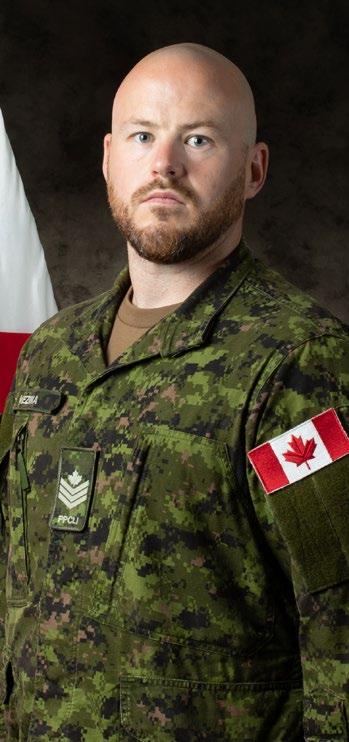
At Canadian Forces Leadership and Recruit School, each year, a Master Sailor/Master Corporal and Petty Officer Second Class/Sergeant is presented the instructor of the year award. The recipient instructors are those who have distinguished themselves the most from their colleagues by proving to be role models for candidates and their peers in the incarnation and application of the instructor’s creed; portrait of the atypical path of one of the 2022 recipients, Sgt Alex Vézina.
Sgt Vézina chose to enlist as an infantry soldier in 2012. This choice may not differ from the one many other members of the Canadian Armed Forces (CAF) made. What makes the story interesting and special is that unlike many other Quebec and francophone CAF members, Sgt Vézina made the jump to Western Canada to land at CFB Wainwright for the infantry course and join the Princess Patricia’s Canadian Light Infantry (PPCLI). This decision will force him to double his efforts to prove himself to his brothers and sisters in arms of the PPCLI and he will have managed to meet the challenge between 2013 and 2020 with determination, rigor and an ever present desire to push his capabilities.
TAKING ON NEW CHALLENGES AT CFLRS
Feeling ready for a new challenge outside of his trade area, Sgt Vézina left Edmonton to become an instructor at CFLRS. He volunteered, seeing within the unit of the Saint-Jean Garrison an opportunity to develop skills other than those which make a good infantry soldier. A family man, he could also appreciate the stability that an assignment on the south shore of
Montreal allows and did not hesitate to make this decision.
Even before he arrived in his new position, he was already apprehensive about his new duties and was eager to help the new generation of CAF members in their transition from civilian to military life. It is an opportunity to help build character, set the standard and pass on years of experience in the uniform to a new generation that is eager to learn. Despite approaching this new chapter with positivity and determination, challenges were waiting for him around the corner. Being outside of a brotherhood as strong as infantry soldiers, it can be difficult to adapt to a reality like CFLRS. Trusting other trades and other elements took some time, but it was a great realization to understand that a trade does not determine the value of brothers and sisters in arms, that what matters is their determination to serve Canadians. By learning about CFLRS, the candidates and the instructor trade, Sgt Vézina was fortunate to experience extraordinarily human moments, to see the positive impact the trade can have, not only on the candidates' future military careers, but also on their personal life outside the uniform. He recalls the story of a candidate he heard from after their time at the School for whom by acting as a mentor to her, he would have changed her life by giving her the tools she needed to succeed. A story among many others of the positive impacts and concrete contributions that the profession has on the lives of young women and men who walk through the doors of CFLRS.
It goes without saying that the profession is not easy and that success is a
reward for the great qualities possessed by instructors. What distinguishes Sgt Vézina from the others: his high standards, his rigor, respect, being firm and fair and receptive to learn as much as the candidates. By setting excessively high standards for himself, he is leading by example and establishing a high base line to which candidates submit themselves. This is the importance of being an instructor and taking the duties seriously. CAF members recall their
instructors and how significant some of them were, Sgt Vézina first. More than that, when they left school, everyone, not just candidates, has learned valuable life lessons that allow all those who are on the CFLRS path to be better people, better soldiers.
What must be remembered from this story is above all that of one man among many going above and beyond, raising of standards and that of a job well done. If the trophy exists, it is because there will always be a select few who will ramp up their efforts and go beyond expectations, which Sgt Vézina has done since his arrival. The other thing to keep in mind is that the less common path sometimes makes it as easy if not easier to get to the same destinations, and that in return we find ourselves better equipped for the future.
At CFLRS, every day is different and presents new challenges. At CFLRS, the experience is different from battalions, different from regiments, different from other trade units in the CAF. At CFLRS, we help raise the standards of the Canadian Forces, we develop in terms of leadership, communication and teamwork. Finally, at CFLRS, we are meeting challenges that prepare us even more for the future.
Sgt Vézina plans to return to his PPCLI comrades and is grateful for all that CFLRS has offered him and especially aware that he would not have all these gains without his visit to Saint-Jeansur-Richelieu. His message to CAF members: dare to try something new, dare to choose the path less taken.

Yves Bélanger, Servir
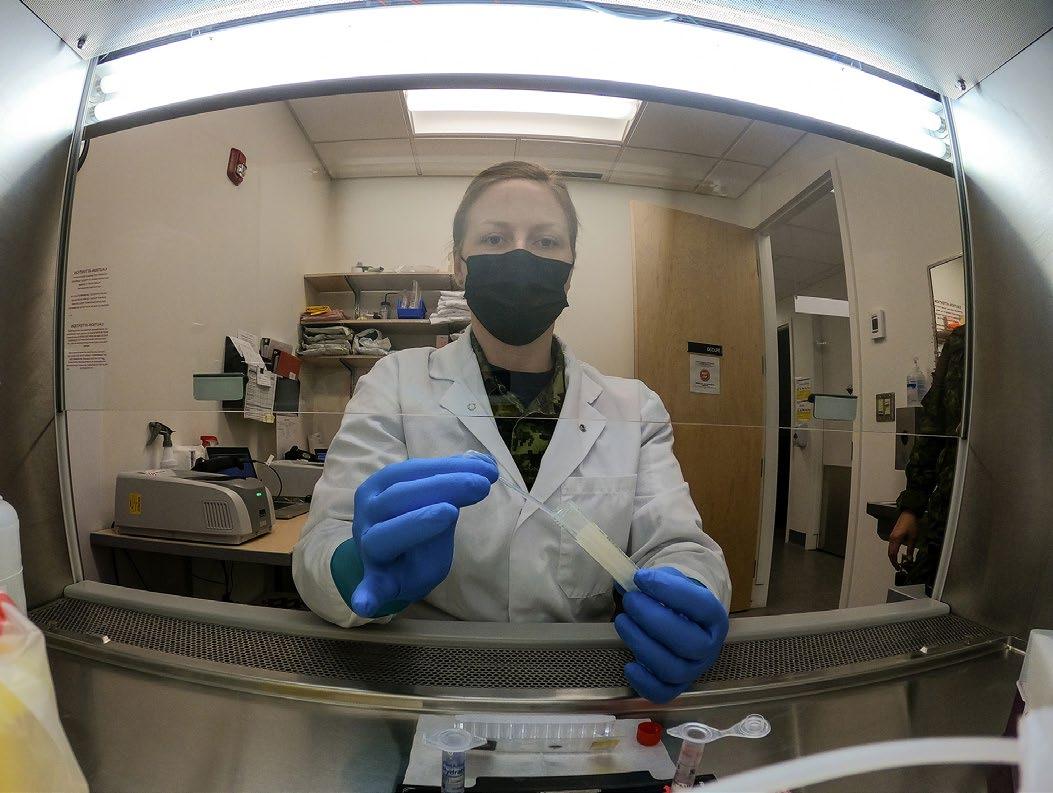
All Canadian Armed Forces (CAF) garrisons and bases have their own medical clinic to serve the CAF members. In thirteen of these sites, there is also a medical laboratory to perform the various basic analyzes that will help doctors make their diagnoses. Servir takes you to the laboratory of the Saint-Jean Garrison.
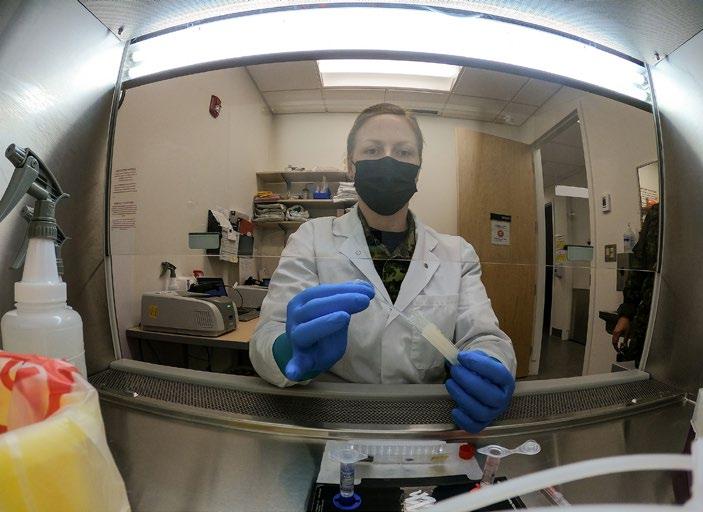
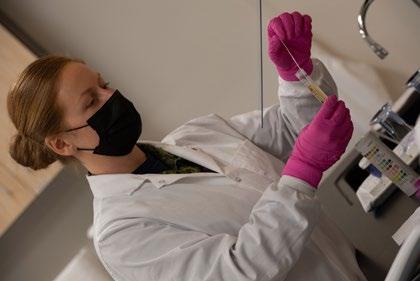
It is Sergeant Johanne Parent, leader of this team which includes three CAF members and three civilian employees, who welcomed us. “We work in rotation at four different workstations. We offer the following services: blood test, biochemical analyses, hematology, urine analyzes and virology,” she explains. These are the main tasks of the team, to which is added virology, one of the services particularly in demand over the past two years due to COVID-19. “Of course, like everyone else, we have been taken by surprise by this pandemic. We had to adapt quickly.”
She mentions that the laboratory qui -
“I work for the wellbeing of the military community, by participating in the diagnosis and treatment of patients.
ckly acquired BioFire devices, specialized in the detection of viruses. “We had to quickly learn how to use it
When I come home in the evening, I feel like I have done my duty. I feel useful to the population and to maintaining the health of the great CAF family.
I was able to receive training on the BioFire device that we currently use within the CAF for COVID-19 screening. This allowed me to specialize and deepen my knowledge. I thus became the point of contact and reference for this device in the virology department.”
“I like to understand the interactions between the different systems of the human body, when it has health problems. Our laboratory is multidisciplinary and allows us to see the correlations that exist between biochemistry and hematology in certain pathologies.
Our work requires us to always stay on the lookout and ahead of technological innovations in the medical field. Maintaining skills is essential throughout our career.”
properly, which was pretty easy.”
Interestingly, this device does not
“I like this job because I'm not the type to sit on a chair all day. I prefer to be on the move, to make the difference, to be the link between the arrival of the patient and the release of the results.
only detect the COVID-19 virus. “Once the pandemic is over, it will be very useful for us to detect the influenza virus. Many other viruses could be added depending on national guidelines.”
“I love my work. It is a logical continuation in my life course. I was a civilian analytical chemistry technician and a cook in the Reserve. After my deployment in Afghanistan, I wanted other challenges and a career change. So I went back to school to become a medical laboratory technician.”
“As a leader, I have to keep myself up to date on innovations in quality management. I love teaching and sharing my knowledge with new technologists who join our team.”
On next page, Servir presents a second article on the laboratory and other employee portraits.
The photos were taken by Master Corporal Nédia Coutinho of the Imagery section at Saint-Jean Garrison.
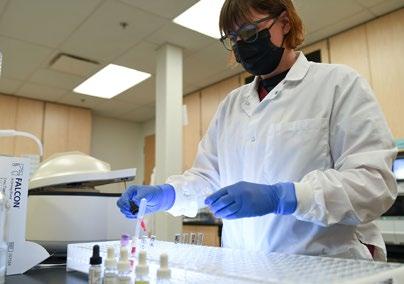
I like to help my colleagues at the reception if they are overwhelmed with work, with samples or help my colleagues who take care of the devices.
To succeed in this job, you have to know how to manage your priorities and organize your working time. You have to be able to interrupt what you are doing and resume a little later without losing the thread of your other tasks.”

Sergeant Johanne Parent, head of the Saint-Jean Garrison medical laboratory team, explains that working in a CAF clinic differs from that of a public sector clinic. “The basic work remains the same. However, we learn and perform more tasks than those normally assigned to public sector technologists. We help each other a lot between the different members of the team.”
She says public sector employers are still very interested in hiring medical laboratory technologists who have worked in the CAF. “They like us very much,” she laughs.
Being a medical laboratory technologist requires a lot of meticulousness and precision. Master Corporal Karina Pelletier explains that work in the virology de-
“I like having contact with patients and being able to answer their questions as much as possible. Being a reassuring figure and seeing a patient leave relieved and smiling is a source of motivation for me.
partment must always be carried out under sterile conditions. “There are a lot of protection and decontamination measures to respect. We work with viral and/or potentially virulent specimens. Samples must be handled with care at all times, especially when handling under the biological sign hood.”
She adds that work steps and procedures must be followed to the letter to avoid any form of cross-contamination. “We must also prevent contaminating ourselves with the samples, in addition to keeping the premises free of contaminants.”
The laboratory has two devices for virus detection. “An analysis takes 45 minutes and sample preparation is 15 minutes.” Thus, the team can deliver two results every 45 to 60 minutes.
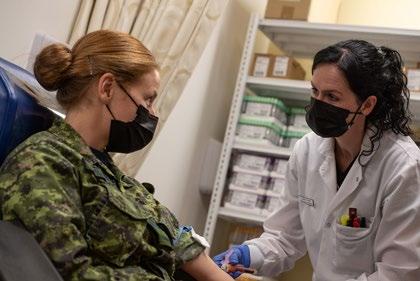
Complicated queries that require research in different reference laboratories are also great challenges. They ultimately help the doctor to make his diagnosis. A good sample is the starting point for a good laboratory result that can lead to a good diagnosis.”

“I find it so fascinating to see such small elements, invisible to the naked eye, and to be able to identify them using the microscope. I like to find the solution when a treatment is necessary. Some cells are more difficult to differentiate. Fortunately, to help us, we have reference books and the help of our colleagues. Together, we have more knowledge.
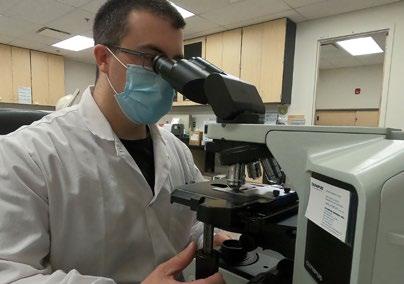
Using the microscopy we perform, doctors and their assistants can make more informed decisions to treat their patients.”

Captain Frédéric Thouin Public affairs officer, 2nd Canadian Division Support Group
The pandemic context of the past two years has highlighted one of the greatest strengths of the Canadian Armed Forces (CAF), the ability of its members to adapt quickly in order to help Canadians and help each other. Once again, it was possible to see this great force when the CAF members of the region responded during the vaccination campaign of the 3 rd dose.
With Operation VECTOR activating rapidly during the holiday season and the rise in COVID-19 cases caused by the Omicron variant, the decision was made to carry out a massive vaccination campaign in order to ensure the health and the safety of our members. This would allow us to continue our efforts at several vaccination sites in the province.
Faced with the magnitude of the task in the greater Montreal area, several units* have come together to meet this new challenge. CAF members from across the region responded positively to help
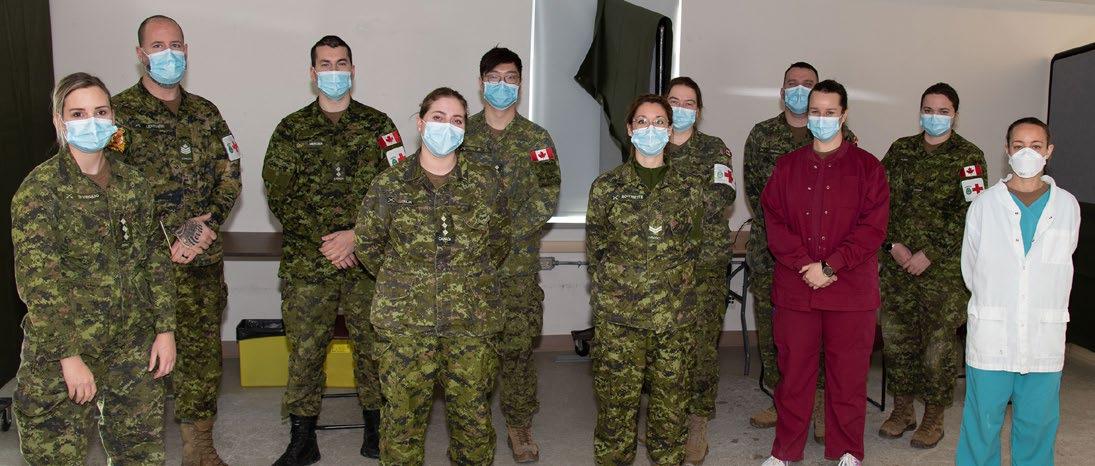
their peers. Thus, more than 1,500 CAF members were vaccinated in order to deploy on Op VECTOR and 1,700 others, who work in DND installations, were vaccinated on our garrisons.
After the 2 nd dose of vaccine, a decrease in protection against COVID-19 is observable over time (about 6 months). Since immunity decreases, the 3 rd dose is very important to maintain better protection against mild and severe forms of the disease.

Vol. 28/No 04 February 23, 2022
PRINT : digital edition only
EDITOR : Col Jason Langelier
2 Cdn Div Support Group Commander
MILITARY ADVISORS :
• Capt Steve Comeau
450-358-7099 ext. 6570 steve.comeau@forces.gc.ca
• Capt Frédéric Thouin
514-252-2777 ext. 4530 frederic.thouin717@forces.gc.ca
This is why it is essential for our members to get their 3rd dose to reduce the risk of being infected, or even hospitalized. The 3rd dose greatly increases the effectiveness of vaccines against the coronavirus infection causing COVID-19. Thus, the 3rd dose breaks the chains of transmission and reduces the number of hospitalizations that put great pressure on the health system.
CAF members can get vaccinated at the immunization departments of Saint-Jean and Montreal Garrisons.
Please make an appointment at:
• Saint-Jean: 450 358-7099, extension 7704 or 6230
• Montreal: 514 252-2777, extension 4951, option 2
* 1 Dental Unit – Montreal Detachment, 41 Canadian Forces Health Services Centre, Regional Cadet Support Unit (Eastern), 1st Canadian Field Hospital, Headquarter of the 4 Health Services Goup, 52 Field Ambulance, Operation Services of the 2nd Canadian Division Support Group.
In order to improve its service offer, the Recreation department of the Personnel Support Programs (PSP) of the Montreal region is currently conducting a survey.
“We want to know people’s habits and their different interests in terms of sports, recreation, cultural, aquatic and outdoor activities,” explains Pierre Desmarteaux, community recreation manager at the Saint-Jean Garrison. Based on the responses obtained and with the help of the Recreation advisory committee made up of CAF members, civilian employees of the Department of National Defence (DND) and civilians who are members of the Sports and Recreation Plan (SRP), the Recreation
Saint-Jean Garrison, office K-125, PO Box 100, Station bureau-chef Richelain QC J0J 1R0 T. 450-358-7099 ext.6346 servir@forces.gc.ca • journalservir.com
• Claude Tourville 514 252-2777 # 4993 claude.tourville@forces.gc.ca
MANAGER : Guylaine Fortin 450-358-7099 ext. 7426 • guylaine.fortin@forces.gc.ca
JOURNALIST : Yves Bélanger 450-358-7099 ext. 7330 • yves.belanger@forces.gc.ca
ADVERTISTING REPRESENTATIVE : François Ménard 450-346-2300 • servir@tictactoecommunication.com
SUBSCRIPTION AND CLASSIFIED : Bélinda Raîche 450-358-7099 ext. 6346 • belinda.raiche@forces.gc.ca
TRANSLATION : Google
GRAPHIC DESIGNER : Gillian Ottaway
ISSN 0384-0417
department will elaborate the next programs and activities.
“Your opinion is important to us. It is your answers that will help us develop a recreation service offer that will satisfy you and respond to your interests”, mentions Mr. Desmarteaux, specifying that this survey is intended for CAF members, members of the SRP and clubs (shooting , hunting and golf), DND civilian employees (Public Service and Non-Public Funds) and civilians using garrison recreation services.
You have until March 18, 2022 to respond, at the following address: form. jotform.com/220335677722255
Next edition 09/03/2022 Deadline 28/02/2022
• Servir is an authorized unofficial publication, published bimonthly with permission of the 2nd Canadian Division Support Group Commander. The opinions and points of views expressed are not necessarily those of DND, CAF and CFMWS/ NPFs Personnel.
• Publication requests should be sent in Word format by email. The editor-in-chief reserves the right to reject, modify or publish any editorial or advertising material.
Luce Bélanger Indigenous advisor, Saint-Jean Chaplaincy
There is so much to say about Aboriginal women and their place in the traditions of First Nations communities! Both yesterday and today!
In our ancestral beliefs, there is first and foremost Mother Earth, the one who has always nourished us under the watchful gaze of Grandmother Moon, the one who moves energy and even the oceans. Of course, there is also Father Sun who warms and fertilizes Mother Earth, but we will talk about him another time since today we are shedding light on the feminine and the different roles played by indigenous women.
In many Aboriginal communities, both in North and South America, women had a well-defined role within their community. Some communities continue to operate in the same way and many are returning to their old ways.
Starting with the Grandmothers, the Kukum, the Elders, the Abuelas. They occupied a role of Sage. They were the ones who chose the future Chief in certain communities. As they carried within them the memories of the Clan and had seen all its members grow, they knew who had the qualities necessary to lead and protect it. Some chiefs were also hereditary chiefs, but that's another story!
The Grandmothers ensured the transmission of knowledge. As Aboriginal culture is oral and not written, the Elders ensured that knowledge was passed on for the survival of the Clan.
The women knew about healing plants and often there was one within the clan who had an even closer connection with the plants. She was the medicine woman. She knew how to recognize, pick and transform plants to heal. She was accompanied by one or two apprentices to ensure continuity of knowledge. She also knew the proper ceremonies, rites of passage and healed the physical, mental, emotional and spiritual of an illness.
BEING RELATED TO THE WATER AND THE MOON
One of the elements often linked to the feminine is water. For many nations, women are the guardians of water. Woman carries in her stomac filled with water a child who will bathe there for 9 months. Woman is the bearer of life. Water is life. Without water, we could not live. There have been several marches initiated by women for the protection of water and to raise awareness of the need to protect it. During ceremonies, most of the time a woman is asked to


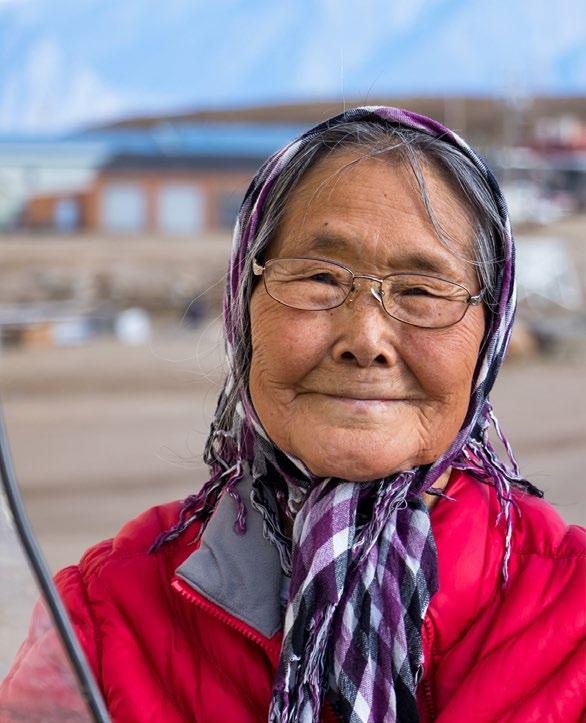
bless the water. Water carries the memories of humanity. The Grandmother Moon moves the water of the oceans and by the same fact, that of the emotions of our body. If water represents our emotions, it is obvious that Grandmother Moon will impact us with her energetic force.
It is also said that a woman is “in her moons”. She releases the sacred water from her body, her period, which normally returns every 28 days, like the full moon. This is what is most sacred to women. In some traditions, this blood is used to pray. This is a time of introspection for her.
Formerly, the woman withdrew for four days and four nights. During this time, she released all the energies captured during the last 28 days. She could go to a space used by the women of the clan or she could go to her own sacred space. She slept, weaved or embroidered during this time. Items created while she was “in her moons” were considered sacred. It was a break time to go back re-energized to his family.
Imagine if we chose to start doing this again today! The world would be better off, I'm sure!
The woman also takes care of the Sacred Fire in the kitchen. She prepares food for her family with all her love because food is also medicine. In the past and still today, it is very important not to be angry when preparing the meal since this emotion will also be found in the food.
The harvesting of sacred plants for certain ceremonies is very often done by women. Consider, for example, cedar which is placed on the floor of some sweat lodges or even to make cedar water or cedar tea. There is also the picking of sage which is used for smudging or to purify a space. It is very often the women who make the sacred harvest, in the appropriate way and in the respect of traditions.
There is so much to say! I am proud to be a woman! Thank you life!
Merci, Meegwetch, Thank you, Ekosani, Miigwech, Mahseecho, Mutna, Wopida, Hei Hei, Marci Cho, ᖁᐊᓇᖅᑯᑎᑦ, Quanaqqutit, Nakurmik, Kukwstsétsemc, Woliwun, Wela’lin.

For the first time in the history of Canadian Forces Leadership and Recruit School (CFLRS), a division is commanded by two women. As part of this year’s International Women’s Day theme “Women Inspiring Women”, CFLRS is taking this opportunity to introduce you to the extraordinary journey of Major Shona Couturier and Master Warrant Officer Deborah Yaxley who, since the summer of 2021, lead the Support Division, the largest unit in terms of personnel.
Major Couturier is from Quebec City. She joined the CAF in 2009 and graduated with honours from Royal Military College of Canada in English literature in 2013. Since then, she has been transferred to 5 Service Battalion, 1er Bataillon, Royal 22e Régiment (1 R22eR), followed by two years in Korea under United Nations command for which she received a Chief of the Defence Staff Commendation. It was during these two years that she completed an MBA from the University of Maryland. After a deployment to the Canadian Forces Joint Operational Support Group, she joined CFLRS in August 2021.
MWO Yaxley is originally from the South Shore of Montreal and enrolled in 1994 as an infantry soldier and then as a materiel management technician in the primary reserve. She transitioned to the Regular Force in 2005. Between 2010 and 2018, she was deployed to Afghanistan, Poland and Kuwait. In 2019, she was selected by her peers in the Intermediate Leadership Program to receive Chief Warrant Officer Boivin’s Comradeship Trophy. Since the beginning of her career, she has been a member of several reserve units and has transferred
to CFB Valcartier and Gagetown, and to 1 R22eR, Headquarter & Signal Squadron and at Royal Military College. She joined CFLRS in June 2021.
The Support Division is the most important in terms of personnel, both civilian and military and in terms of the diversity of trades and services offered. All the administrative assistance required for recruits is provided by the Support Division. Whether it is pay, the organization of travel to and from the School, etc. They quickly imbued the division of their leadership style: empathetic but firm. The effects were not long to be felt. The team keeps communication channels open and accessible to its members. The secret of their success? “Always listen to our members,” says MWO Yaxley. Maj Couturier adds on that “as long as our team members, regardless of their position in the division, feel that we are there for them, we will be a strong team.” There is a sense of chemistry between the two women. They have already had the opportunity to work together in another unit. Even if they get along well, the challenges are great. “One of the biggest challenges has been to balance the needs of the organization with the needs of individuals and the section,” says Maj Couturier. “Also, becoming a Division Commandant during the pandemic made contact with members difficult.” They get a lot of experience and gratification from their command. “Seeing our members rise to the enormous challenges caused by COVID, coming together and becoming a united team has been a great success for our division in recent months,” said MWO Yaxley.
WHAT NEXT?
Plans for the future are not yet clear. Promoted to the rank of major in
Integrated Conflict and Complaint Management (ICPM) has just implemented a toll-free hotline, 1-833-3283351. It will be in operation five days a week, from 7 a.m. to 7 p.m., and will provide services in both official languages.
Its objective is to provide greater accessibility to conflict and complaint management specialists in order to better guide and support members of the Defence Team.
In Canada, the 17 Conflict and Complaint Management Service Centres are staffed with specially trained agents to help members voice their concerns, identify problems appropriately and choose the best option to resolve them. Conflict management practi-
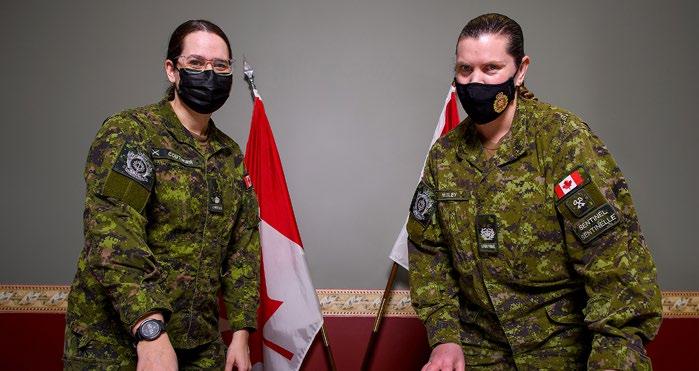
2021, Maj Couturier still has to prove herself in this rank. She wishes to be able to deploy overseas to command a unit. As to MWO Yaxley, after more than 26 years in the CAF, she wishes to continue her career as a senior non-commissioned officer and promote a positive and healthy atmosphere for the National Defence members. Increasingly, women are taking their place in the CAF. Maj Couturier and MWO Yaxley are a prime example. They inspire positive
leadership in their division and in the unit as a whole. It is no accident that they find themselves in this position and are able to contribute to the success of the division and the unit and inspire members to go above and beyond as they continue to provide exemplary service. It is through their hard work, dedication and great competence, notwithstanding their status as a woman, but greatly inspired by their experience of being one.
tioners are available to managers and staff to manage conflict using various informal approaches (training, consultation, coaching, facilitation, mediation and group process). You can obtain more information on the services offered by visiting: https://www. canada.ca/en/department-national-defence/ services/benefits-military/conflict-mis conduct/integrated-conflict-complaint-ma nagement/centres.html
Please note that this is not a crisis line. If you are in an emergency, dial 911. If your call is not an emergency, but you need immediate assistance, dial 1-800-268-7708 to reach the Assistance Program to members of the Canadian Forces or your employee assistance program.
Yves Bélanger, Servir
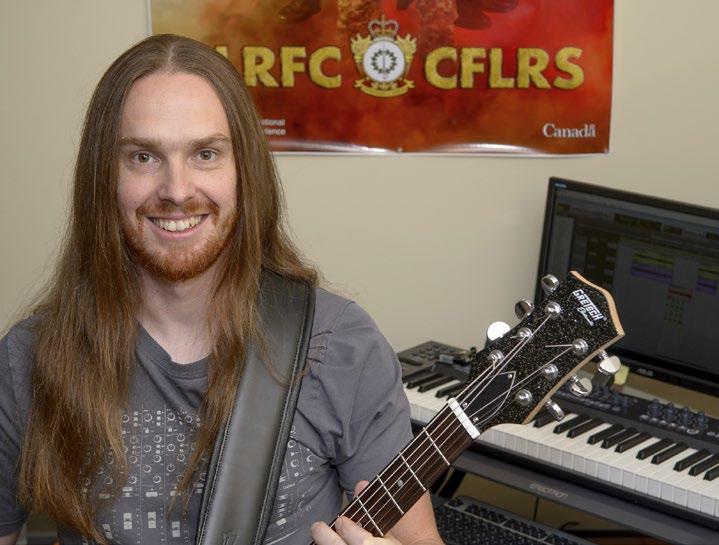
As we know, the Canadian Forces Leadership and Recruit School (CFLRS) occupies an important place at Saint-Jean Garrison. Before the pandemic, more than 6,000 candidates were trained there each year to become non-commissioned members or officers in the Canadian Armed Forces (CAF). To capture in photos and videos the various important moments that take place there, to support its operations, a team of multimedia specialists is working hard there.
Servir had the opportunity to meet one of the members of this team, Raynald Brochu, multimedia technician. He has worked for the institution for nine years. He explains that the team has 10 positions, including one reserved for a military imaging technician. “The other positions are occupied by public service employees, like me.”
The tasks of Mr. Brochu and his colleagues are varied. In addition to doing videos or photos of all the key events related to the CFLRS, the multimedia team has been working since the COVID-19 pandemic to broadcast live on Facebook all the Basic Military Qualification end of course ceremonies. “Due to sanitary measures, we no lon-
ger welcome the relatives of candidates. People appreciate this attention.”
It is also the multimedia team that designs the leaflets, virtual and/or printed, that accompany these ceremonies or changes of command. “It keeps us quite busy, because we produce it on a regular basis, due to the frequency of these events.” He adds that the team also prepares the commemorative plaques for the various trophies and the certificates presented during the ceremonies.
The multimedia team also supports the instruction. “We are the ones who update the documents for candidates and who do the maintenance on the CFLRS intranet. Currently, all this material is transferred over the Sharepoint network.”
The creation of videos for e-learning is also done by the team. “We do them according to the needs of the establishment. Some videos require a refresh. Others are tailor-made to meet needs.”
Raynald Brochu loves his job, even if it sometimes asks him to take on great challenges. “The most difficult thing, I believe, is to deal with the technical constraints imposed on us by the Defence Wide Area Network. It is highly secure and limits the tools we can use to accomplish our mandate. I must say that it is not easy every day,
but with the expertise that we have developed, we manage to perform real small miracles.”
Christine Geoffrion, Public Affairs Coordinator and Multimedia Manager at CFLRS, explains that what makes this team so special is that everyone has very different skills. “They all have strengths in different areas, while being very versatile. This makes it possible to have a group where everyone is complementary.”
Yves Bélanger, Servir
After his first six-month deployment abroad, is it necessary to say that Captain Michael Laplaine-Pereira, an infantry officer with the Fusiliers Mont-Royal , was very happy to be reunited with his loved ones at the end of 2021?
The CAF member was deployed on Operation IMPACT in Kuwait. He was there as a watch officer at the operations headquarters. “Basically, I was the front door for all the information that came into the operations cell. This included monitoring the communication channels that informed us directly about the various threats posed against our troops, in real time.”
He admits that his experience has been very rewarding. “In general, deployments are extremely educational. Expectations of us are much higher than normal. We are expected to be available at all times. Of course, we are entitled to rest, but the priority of all remains the accomplishment of the mission.” DEPLOYMENTS
Capt Laplaine-Pereira had the opportunity, in 2019 and 2020, to participate in domestic operations LENTUS and LASER.
Last year, he left the country for his very first operation on foreign soil. He maintains that he was happy to go to the Middle East for a few months.

“I like being in a new environment and having to adapt. I also enjoy meeting new people.”
Like the majority of his colleagues, he sometimes found it very difficult to be away from his loved ones and not be able to be there for them. “But
The latter is particularly proud of the products made by these specialists. “They manage to create small masterpieces in a short time. We are very lucky to have them!” Although the team has nine positions intended for public service employees, four of them are currently vacant. “Our employees have worked tirelessly over the past few months to successfully accomplish the essential tasks. We now hope to fill vacancies as soon as possible. Don’t hesitate to spread the word around you!”
that's the cost for such an experience,” he says. It is alone that he claims to have gone through the most difficult moments of trouble.
Fortunately, his return to the country took place at the end of November. “So I was back home to spend the holidays with my wife, my two dogs and my loved ones.”
It was in 2014 that Capt Laplaine-Pereira decided to join the Reserve. “I had reached a stage in my life where I was looking to accomplish something difficult. I wanted something that would push me to the limits of my abilities while still allowing me to pay for my education. I joined determined to complete Phase 3. To my knowledge, this is the most demanding career course in the Canadian Armed Forces. Only 50 to 60% of candidates pass it.”
Currently, the reservist is studying full-time at Concordia University in software engineering. “I am finishing my third year.” He says he loves working in stock investment automation (stock bots), a field of expertise that aims to use artificial intelligence to establish investment strategies. “Finding an architecture that allows all elements of the system to communicate and function is a process that fascinates me. Executing it is something very rewarding for me!”
CFMWS
Canadian Forces newspapers are looking for youth reporters who want to share a story about an issue that is important to their life or the community around them. And there's a scholarship to be won!
The Canadian Forces Newspapers Young Journalists Competition is aimed at young people between the ages of 13 and 18, from military families or members of the Cadets. It gives young people a unique chance to tell their story in print, online or on social media with the help of Canadian Forces newspapers journalists, editors and photographers. The winner of each category will receive a scholarship proudly presented by Adobe valued at 500$ as well as a one year subscription to Creative Cloud.
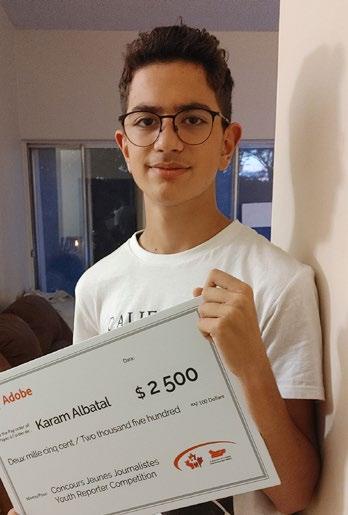
Karam Albatal is the winner of last year’s competition. His story, published in the Spring 2021 edition of Play magazine, tells us about the vision of happiness he has imagined for himself, thanks to his unusual personal story. Born in Brazil, his parents came back to Syria so that he could learn about his Syrian roots and grow up in his parents' culture. While there,

he took advantage of his studies to learn French, a language that would come in handy when his family chose Canada as their home a few years later.
“Happiness is simple and anyone can experience it. However, happiness is not easy to achieve but it is found in the simple things in life. During my immigration journey to Brazil, Syria, and Canada, we did not lack for anything, but we did not live-in luxury.
And although the situation was not always easy, we were happy.” Finding happiness in simplicity is how Karam lives his life. It is no surprise that the $2,500 he won will be invested in his future medical studies.
This year the selection committee will select the top stories in a variety of formats to be featured during the final week of April, which is the Month of the Military Child. All selected recipients
(winners) will receive a scholarship instead of one grand prize winner and the opportunity to be published on our Canadian Forces Morale and Welfare Services (CFMWS) Channels (website, social media, email) and Canadian Forces Newspapers.
The application can be found at CAFconnection.ca/YouthReporter. Application Deadline: February 28, 2022.

Yves Bélanger, Servir
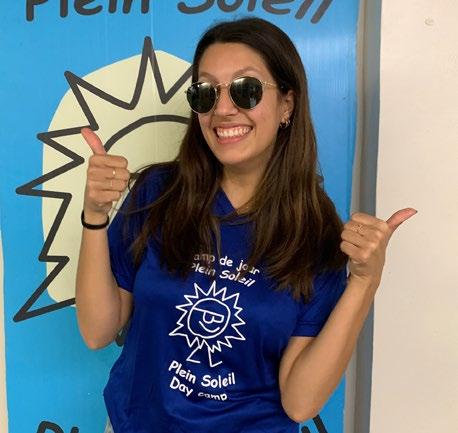
For many years, the Recreation Department of Personnel Support Programs in the Montreal region has been running the Plein Soleil day camp at Saint-Jean Garrison. Julien Gobeil spent many years there as a participant, then as an animator. Today, he teaches in a primary school!
“My parents were CAF members and enrolled me in this camp when I was five years old. I went there every summer, until I was 12,” explains Julien Gobeil, who has fond memories of it. “It was great to catch up with my friends every summer. I was always happy to go to camp. It will always be a great life experience.”
No wonder that when he was old enough to work, he himself became an animator at the Plein Soleil day camp. “I worked there for four summers.” He admits that it was special to join the team of animators. “At first, it was in the same premises, at the Iberville building. Things had changed a bit, but I recognized the places well. It was funny to look at the children and realizing that shortly before, I was sitting with them.”
He maintains that from the first year, the bonds between the members of the team of animators were very strong. “We were very tightly knit. In fact, we stayed in touch.”
His experience with children will have been very beneficial. “It allowed me to discover that I wanted to pursue a career

in elementary school teaching. So I oriented my studies in this direction. Today, I have the chance to be a substitute in a 1st grade class at École Micheline-Brodeur in Saint-Paul d'Abbotsford until the end of the school year. I am very happy about that.”
Even though the snow is still here, the Personnel Support Programs recreation team is already at work. A new team will create the camp program and oversee its implementation this summer. Marguerite Martel has been the camp supervisor for the past six years. She will not be back this year, as will some animators who have other professional commitments.
Ms. Martel talks about her experience with great enthusiasm. “I've had some great summers. I felt privileged to work with the military community.” At the professional level, she maintains that these years have brought her rigour, among other things. “It al-
lowed me to gain experience in customer service and develop my leadership.”
Asked about the assets that define a good day camp leader, Marguerite Martel speaks immediately of creativity. “This kind of job requires people who have a head full of ideas to create interesting activities for young people.”
Ms. Martel concludes by recalling some of the qualities sought in animators: punctuality, responsibility, organization and respect.
Do you know young persons who have this profile? Invite them to apply for a job!

The Plein soleil day camp will be held from June 28 to August 19 at the SaintJean Garrison. It will accommodate the children of CAF members and those of civilian employees (public service and Non-public funds).
For more information on future registrations or the hiring of animators, contact Brigitte David, Recreation Coordinator, at brigitte.david@forces.gc.ca.
Taking the opinions of others with a grain of salt…
Padre (Captain) Éric Généreux
Humans are funny contradictory creatures who love novelty, but hate change. Even if, in the long run, we end up appreciating the benefits of a new solution, we are ready to do anything to protect our old familiar and comfortable habits. It is therefore not surprising that we have to face opposition every time an innovative idea is proposed.
If you have a flash of genius and a plan that you share with those around you, you should expect someone to try to “burst your bubble”. This is completely normal and you should not let people who are averse to change hold back your ambitions

and question you.
Be honest with yourself. Does your idea really have the potential to bring value and benefits?
Do your research, validate your hypothesis, find the easiest and most cost-effective way to achieve your goal, and if you truly believe your idea is worth it, do what it takes to demonstrate it.
Whether it's implementing a new procedure at work or proposing a new project, no one is in a better position to put your ideas forward than you. Try to surround yourself with ambitious and optimistic people who want to help you develop your potential and ignore those who have such weak arguments as “it's just not a good idea”.
Unfortunately, this also includes family
and friends. Even if we like them very much, we must learn to separate feelings and professional ambitions and not give undue importance to their opinion. In short, don't let negative reviews influence your confidence in yourself, your skills and your ideas. It is also valid for yourself and your own thoughts. If you tend to tell yourself “I'm not 'this' enough to achieve my goal or I'm too 'that' to succeed”, know that these negative thoughts have the power to convince your subconscious that this is really the case, even if it is not. This is what gives rise to limiting beliefs and you want to avoid them at all costs!
The Military Family Resource Centre (MFRC) offers you a weekend stay to reflect, alone or as a couple, on the transition that your release from the CAF brings. The activity will take place at the Estrimont suite & spa hotel on March 25, 26 and 27, 2022.
You will benefit from workshops that will address the various psychosocial issues of transition, you will participate in activities and you will have the chance to meet other people who live a reality similar to yours.
Accommodation and meals are provided by the MFRC. The other costs are the responsibility of the participants (example: travel, alcohol, activities on the site other than those offered in the program,
babysitting, etc.).
You must register by March 7 at www.cfrmmfrcmtl.ca. If you have any food allergies, please mention them when registering.
Would you like to publish your promotions and commendations?
Please write to servir@forces.gc.ca
INFORMATION
450 358-7099 # 2910 or # 5190 (Saint-Jean)
Myriam.Dutour@forces.gc.ca
Audrey.Gallant@forces.gc.ca

is willing to throw $1,100 in the trash every year?
Jacinthe Letendre Health Promotion Specialist
The new healthy eating guidelines are emphasizing fresh foods and declaring war on highly processed foods. Why do fruits and vegetables not so easily take the first place in our purchases? Here are some explanations!
One of their great enemies is their short lifespan. Coming back from the grocery store, when you've opted for a large portion of fresh food, you may sometimes feel like you got carried away and that the third will end up in the trash, or, at best, to compost. In fact, that's not entirely accurate.
To be precise, it is estimated that 63% of the food thrown away or composted by Canadian households could have been consumed, that is, it is not inevitable residues like bones. This is the equivalent of $1,100 per year per family or $17 billion nationwide. Although all types of food can be wasted, fruits and vegetables account for 45% of Canada's food waste record. Usually they are not foods we choose when looking for long term storage.
At the beginning of the pandemic, during confinement announcements, who filled their fridge and pantry with perishable fruits and vegetables? 61% of Canadian households have increased their food purchases in the pandemic. At the beginning of confinement, the majority of Quebecers opted for frozen products (up 18.6%) and the purchase of fresh fruits and vegetables decreased. According to Ministry of Agriculture, Fisheries and Food of Quebec, in the frozen food section, fruits and vegetables have attracted interest, as have prepared meals.
So how do you reverse this trend? In addition to the tips and tricks for planning, preparing and cooking our fruits and vegetables, can we also turn to those that keep longer?
Making more room for foods that aren't highly processed but have a long shelf life has several benefits. First, for our wallet, because we will avoid losses. Then, for their convenience. Finally, for our health and that of the environment.
So, on your next visit to the grocery store, rehabilitate fresh fruits and vegetables as a healthy choice and solution to reducing food waste, at the source!
Winter squash (Butternut, Spaghetti)
Late apples (McIntosh, Cortland, Spartan)
Potatoes in season (September)
Parsnip
Red cabbage, green cabbage and Savoy cabbage
In a cool, dry place, but not in the refrigerator Keep the stalk
In a cool, dry place or in the refrigerator; Protected from light; Keep away from onions
In the refrigerator ; In an airtight container
In the refrigerator In the vegetable compartment or in an airtight container Fennel
In the refrigerator; In an open container Separate stems and leaves
Reducing food waste and combining foods that are beneficial to both human and ecosystem health are at the heart of sustainable food. It is an approach to food that focuses on:
• the maintenance of greenhouse gas emissions within the limits of the objectives set
• consumption of small amounts of red meat
• meeting energy and nutrient needs without exceeding them
• respect for local cultures.
For more information: fao.org/3/ ca6640 n/ca6640 n.pdf

Yves Bélanger, Servir
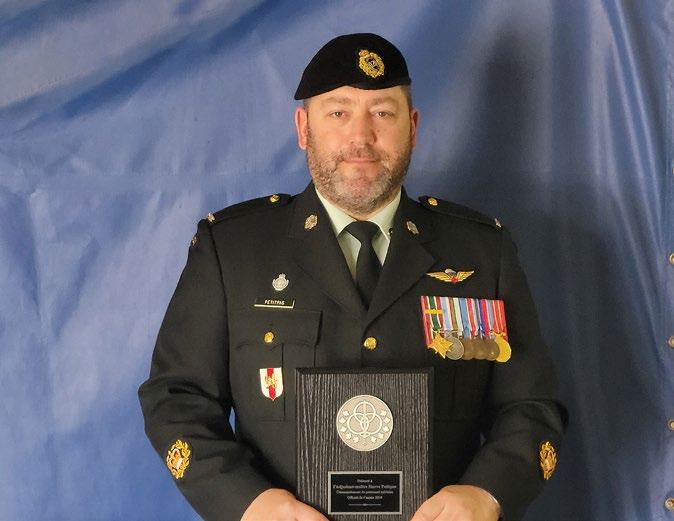
Master Warrant Officer Steeve Petitpas, of the Canadian Forces Leadership and Recruit School (CFLRS), is about to retire from the Canadian Armed Forces (CAF). The Montreal region Military Sports Team wanted to pay tribute to him for his great contribution to hockey within the CAF.
“It is not a coincidence that in 2019, MWO Petitpas was elected Official of the year at the regional level and that he was among those nominated for the same award at the national level”, indicates Sébastien Tremblay-Vu, coordinator of military sports.
Mr.Tremblay-Vu explains that MWO Petitpas is a very experienced ice hockey referee. Throughout 2019,
he officiated no less than eight separate ice hockey tournaments for the CAF, in addition to numerous games for the New Brunswick Hockey organization.”
He adds that the impact of MWO Petitpas' involvement as a hockey official went beyond the games he worked for. During the 2019 Women's Regional Championship, among other things, he helped train a junior referee while he refereed games. By doing so, he has allowed the CAF to have enough officials in hockey.
“Working at the CFLRS is intense and requires a lot of work, overtime and work in the field. Succeeding in doing his job at CFLRS and refereeing 30 high-level hockey games is proof that MWO Petitpas is dedicated to sport and his community.”







4
514 968-0875 / 514 824-5371
3 ½ located 9 km from the Longue Pointe Bas in Montreal. Housing completely renovated and available immediately. Lit, close to several services, possible to rent it furnished. Please contact me by email only: robert.nudo@gmail.com