All articles were written by Joshua Murray except the Foreword and the “In Appreciation of Caregivers” article, which was written by George H. Fleischner
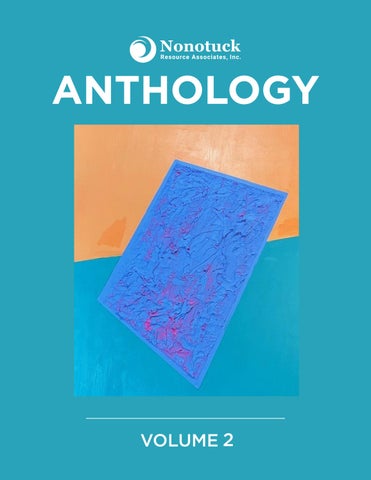
Front & Back Paintings George H. Fleischner
Front Cover Painting Title: Carpet Ride
4’x3’ Acrylic on Masonite
Back Cover Painting Title: Tan Line
4’x3’ Acrylic on Masonite
FOREWORD
George H. Fleischner, PRESIDENT AND CEO
It is with much gratitude and more that I introduce Volume 2 of the Nonotuck Anthology, a collection of stories drawn from our e-newsletter throughout 2024. This second volume continues a tradition begun with our first anthology: pausing long enough to gather the moments, relationships, and lived experiences that define who we are as a community.
The stories in these pages reflect a year of loving connections. They speak to what it means to share a home, to be there for one another in moments of joy and grief, and to remain connected through the ordinary and extraordinary rhythms of life. Whether centered on shared living households, family caregiving, staff reflections, community milestones, or the remembrances of those we have lost, each story carries the unmistakable imprint of Nonotuck’s community and its values.
This is the year in which we properly dedicated our Lee office to honor the memory of Kathleen “Kitty” Kelly-Curtin, whom we lost in 2023, leaving behind a legacy at Nonotuck that continues to shape us. We celebrated staff promotions, milestones, and Care Managers, as well as Ron Campbell and Tom Joyce, whose shared living relationships surpassed 30 years in 2024.
Throughout this volume, you will encounter relationships rooted in mutuality of love—people choosing one another not out of obligation, but out of genuine connection. You will see interdependence lived out in daily life, where care is reciprocal and dignity is never negotiable. There are also authentic lives here: people opening their hearts and their histories, trusting that vulnerable relationships are worth the risk. And woven through every page is commitment, Nonotuck’s enduring promise to stand alongside the people we support, their families, and one another for as long as they choose to walk with us.
These stories are not meant to be read as accomplishments or highlights alone. They are reflections of real lives, unfolding in real communities across Massachusetts.
As you read this second anthology, my hope is that you feel what I feel when I return to these stories: pride in our community, humility in the presence of so much love, generosity, and courage, and reassurance that our values are not abstract ideals, but living principles expressed every day.
Thank you to everyone whose stories fill these pages, and to all who continue to make Nonotuck a place where love, respect, and shared life are not just possible—but central.
Get to Know: Sandy Deare -Robinson
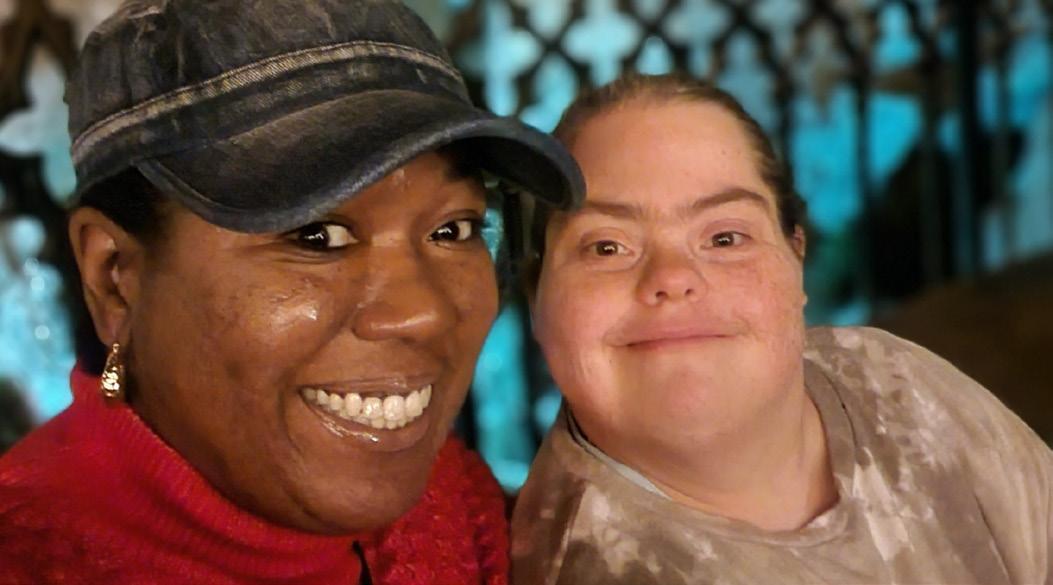
Sandy Deare-Robinson is unique in her role at Nonotuck, serving both as a longtime, celebrated employee and a shared living caregiver. Sandy has shared a home with Amanda Jo Benoit for 14 years, an arrangement that started on a fateful Thanksgiving eve and has blossomed since.
We recently sat down with Sandy to discuss both her unique role at Nonotuck, as well as her long standing and deep connection with Amanda.
To start: where are you from?
I started in the Bronx, NY, when I had my daughter. When she was 2 months old, {I left}. I didn’t want to raise a kid in NYC; it wasn’t something I wanted for her. I came to Pittsfield, MA – I’ve been here for 24 years. It was the best place to raise my kids, and Nonotuck was the best place to work and help me raise my kids. The company cared about us as parents.
I was a single mom then, caring about single moms, moms in general. Everything worked; they valued what I had in my life, my family life as well. Angela (Procopio-Rahilly, Executive VP of Operations) knew my kids – not many bosses know your children. I knew hers. I was living on Robbins Avenue in Pittsfield. Later moved to Appleton Ave. I was living there for 2 months before Amanda came in November 2009.
How did you and Amanda connect?
She found herself in a difficult situation, placed in a respite home without a day program. Her job wouldn’t allow her to work, or there was some issue. They asked me to take over her day program. About a month later, she found herself in need of a shared living home; her existing situation wasn’t working out and was simply bad. She was dropped off at a DDS office, and the provider wasn’t bringing her back, treating it as a form of punishment. They reached out to me asking if I could take Amanda in for respite. This happened on Thanksgiving eve, while I was outside shopping, preparing to have over 50 people in my house. I received the call about Amanda. I said, “Absolutely, as long as she was ok with the Holiday festivities.”
If you saw her that day, she was dancing with not a care in the world. That was a special time, and she decided to stay. She opened up my kids to what I actually do during the day, and they absolutely loved her.
She even played a significant role in my wedding as a bridesmaid, stealing the show. Our connection blossomed from there; we developed trust and understanding. Amanda has a heart of gold. Our relationship has been meaningful, navigating through hardships and sickness together. She loves my kids, Malyah and Craig, and my son is one of her best friends. She lights up when he comes home from school, and cried when he went to college, just like I did. Now she’s an Auntie with the arrival of my daughter’s little baby boy Omavi, she’s incredibly excited about that.
You’ve shared a home with Amanda for 14 years: what would you say to someone considering becoming a Shared Living Provider?
You’re entering one of the most meaningful aspects of your life—opening up and sharing your heart, embracing vulnerability. It’s about accepting someone as a friend, an extended family member. In your home, you’re not just working; you’re also revealing a part of yourself, accepting others for who they are and embracing your own identity while embracing theirs. Choosing to give your heart to someone with different abilities, looking and living through their lives as they live in yours, to see people grow from limitations that have been set upon them and fully blossom. Being fulfilled in observing people become independent in life skills, going to the bank, scheduling appointments, going on trips, attending recreational events, spending time with people’s friends and families, making dinner or lunch, or going out to dine, making purchases etc., etc. Being a part of their communities, watching each other’s personal relationships blossom, seeing how people connect with their family and yours. Sharing your home is not only rewarding to the household, but to the community as a whole.
Being vulnerable is a crucial element in any relationship. It’s about showing love without fear and being open to acknowledging someone else’s imperfections. It’s an incredibly fulfilling position. Over the years, I’ve encouraged a few friends, family members, and people I know to become Shared Living Providers. The experience is profoundly meaningful as you share your life with someone from a different background who is seeking love. They, in turn, are eager to reciprocate that love if you’re open to it. It transforms into an extended family dynamic or having a roommate who brings a different perspective. Love and connection are universal needs, transcending any labels we may have on paper. These shared connections involve more than just emotions—they extend to practical aspects like cooking for each other or helping with household tasks.
For me, shared living is akin to extending your family, especially considering the duration of my involvement. It’s like bringing home a brother, a sister, or a friend, and over time, that person becomes one of your best friends. The bond formed through shared living goes beyond the conventional definitions of family, creating a unique and fulfilling dynamic in life.
Get to Know: Sandy Deare -Robinson: Part 2
How would you describe the work you do at Nonotuck?
We are integrating individuals into communities, helping them pursue their desired activities and achievements, securing jobs, engaging in projects, participating in physical activities, and exploring various endeavors. Our approach is person-centered, bridging the gap between individuals and their communities. We connect people, fostering relationships and encouraging them to venture into activities they wouldn’t typically consider, taking risks and experiencing personal growth.
By leveraging our community and theirs, individuals secure jobs and engage in volunteer projects they love, becoming integral parts of these initiatives for years. This includes dance activities, shows, and interactions within the community, such as shopping, taking walks, and sharing meals. There are notable success stories, including individuals initially hesitant or unable to leave their homes due to fear and anxiety.
Over time, they have overcome these challenges, actively exploring activities and achieving remarkable personal growth. Initially limited to sitting in and doing nothing beyond their usual routine, they now participate in a variety of activities, from creating flower walls to taking walks, shopping, going to movies, and bowling. The community has witnessed significant growth, with individuals forming meaningful relationships both within and outside the program. Even during challenging times like the COVID-19 pandemic, our turnover rate has remained minimal, reflecting the enduring commitment of our staff and participants.
The impact of our program is evident in the transformation of individuals like Carrie {a program participant} who initially had limited availability but, through her dedication, not only earned the admiration of coworkers and customers at Goodwill but also maximized her earnings on the days she worked. Such success stories inspire others to embrace meaningful volunteer projects, creating a sense of purpose and connection among participants.
Our focus is on recognizing individuals’ skills, gifts, and talents, encouraging them to flourish and be seen within the community. The result is a profound difference in the lives of both program participants and the community at large, fostering love, acceptance, and meaningful connections.
As an example, during a recent trip to the dollar store with Renee {a program participant} the cashier’s face lit up upon seeing her, brightening the atmosphere in the store. This small interaction in a long line highlights the positive impact our program has on individuals and the broader community, reinforcing the notion that our efforts are a positive force for everyone involved.
What is something you bring to the table at Nonotuck?
My uniqueness—I don’t really perceive it as work. I acknowledge that it is work, and I’m grateful for the opportunity to visit someone’s house, where they eagerly await. It transforms into a connection right from the door, as I prepare myself, knowing that I’m about to engage in something people genuinely enjoy.
It’s about sharing what I love and discovering if there’s something they might enjoy too. I view people as individuals, which makes the entire process so much smoother. I see their hearts and their imperfections. I have my own shortcomings, and the acceptance I receive is something I cherish; I love them for it. My desire is to witness people flourishing, and it’s in my heart to do whatever I can to facilitate that or bridge any gaps.
Whether people are feeling up or down, I hope to lift them up through a song, a kind word, or a comforting touch. This connection is innate within me; it’s my heartfelt intention. Even a simple trip to the store, hearing a song, or observing people dance and express themselves freely brings me joy.
I don’t mind going out and dancing myself; it has shaped me more than it has shaped the people I work with. I take pleasure in bringing others along with me. I remained dormant for so long, unaware that I could just be free to be myself, without judgment or criticism.
What do you enjoy doing outside of work?
I enjoy spending time with my family. As a Shared Living Provider (SLP), I also cherish moments with my girlfriend, Amanda. We share interests such as listening to music, going out to explore, taking walks, visiting tracks and trails, watching movies, and attending shows. I appreciate being out, but I also savor home time. Being at home with my husband, Eddie, my kids, and my son when he’s home from college is special. We bond over watching movies, having pizza, enjoying wings, and playing games. My family includes my husband Eddie, my daughter Malyah, my one-monthold grandchild Omavi, my son Craig, who’s in college and returns home for holidays and summers, our cat Bella (affectionately known as Bells), and of course, Amanda.
What does ‘caregiving with love’ mean to you?
It means vulnerability, connection; it means safety, a safe place, admiration, gratitude, fulfillment, thankfulness, warmth, acceptance.
Any closing words?
I would just say that working for Nonotuck has been one of the best jobs I’ve had in my whole life. I know I’m still young, but this is the longest I’ve worked anywhere. I was a cashier before, and Nonotuck has been one of the best jobs, from the management team all the way down to George {Fleischner, Nonotuck President/CEO}.
It’s been easy to do our job, working and fulfilling our roles in the day program with the teams that we have. From the higher-ups, I’m able to pour so much into the people I supervise and support. It’s just our culture, how we do things. With every piece of paperwork that we do in business, it’s been rewarding to work with this company that cares so much for the people we’re supporting. We’re able to implement things because of what we get from the top, including the marketing team; it all connects. It’s such a rewarding feeling to work for this company. Nonotuck has been truly amazing.
I’ve been able to raise my kids as a single mom, get married, and become an SLP. I’m able to see growth in myself as well. It’s a busy place, and it’s a lot to come up with the makeup of who we are. I’m truly grateful and thankful. I also like to pray. I pray for us as a whole – a job, a company, an agency. I live that; I truly appreciate everything Nonotuck stands for. We have a good culture here.
Shared Living Caregiver Honored with Unsung Hero Award
Nonotuck Resource Associates, Inc. is pleased to announce that Shared Living Caregiver Tonya Loveday was recently honored with the annual William Johnson Unsung Hero Award. Presented by the Berkshire Citizens Advisory Board to the Department of Developmental Services, the award acknowledges people who make significant yet often overlooked contributions to their community.
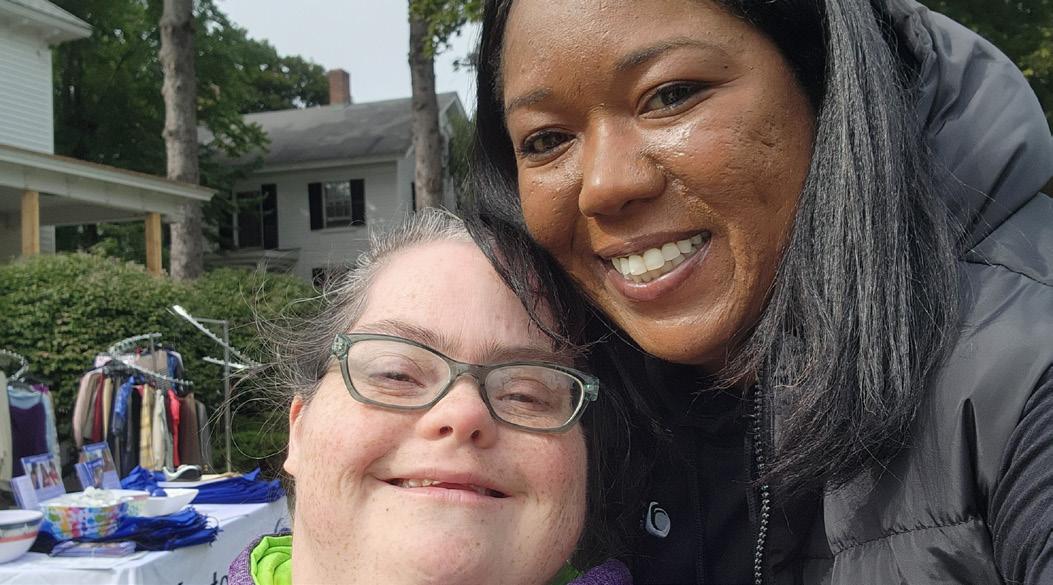
Since 2005, Tonya and her partner Paul have shared a home with John and Margaret O’Keefe, living fully integrated lives, blending families on both sides, celebrating holidays and birthdays, and enjoying family trips all over the Northeast.
Nonotuck Care Manager Kari Barschdorf has worked with Tonya, John, and Margaret since 2016. “{Tonya’s home} is one of my favorite homes I’ve ever visited. There are only so many ways to express what your ideal shared living house would be, but Tonya’s home is always what I picture. It embodies love and integration, including both her family and John and Margaret’s,” she says. “Tonya sets a great example of what we look for in shared living—it’s what means the most.”
True to the nature of the award, Kari says Tonya’s reaction to being informed of the honor was one of humility. “When I talked to Tonya about her receiving the award, she was like, ‘That was really nice of you, you know I don’t do this for the accolades,’” she says. “She does what’s in John and Margaret’s best interest, without needing anything else in return, just knowing that they’re taken care of.”
About the Award
William Johnson was a lifelong advocate for those in need of help. Prior to his many years of service as an advocate and service coordinator within the developmental disabilities field, William established a youth-based coffee shop called the “Harambe.” “Harambe” means “all pull together” in Swahili. He was a person who made substantive, yet often unrecognized, contributions to others. In his honor, the Berkshire Citizens Advisory Board to the Department of Developmental Services has established the annual “William Johnson Unsung Hero Award.”
Shared Moments: Celebrating Three Decades of Connection Through Shared Living
Recently, Thomas Joyce and Ron Campbell reached a momentous milestone: 30 years of sharing a home together. Their relationship dates back to the early 1980s, when they first met at a group home where Tom was working, and Ron was living. Ron’s family was among the founding families of Nonotuck, originally known as Community Homes for Children, which was established in 1972 and initially focused on group homes for people with disabilities.
When CEO/President George H. Fleischner led the charge to convert Nonotuck from a group home model to a shared living model in the early 90s, the opportunity was too good for Tom to resist. “George’s vision for shared living, and his inspiration, fire, and motivation to actually transform the whole agency into that model, really allowed us to have this incredible opportunity that I knew right away was a gift,” he says.
We recently asked Thomas what 30 years of Shared Living is like, from day-to-day existence to adventures big and small. “When Ron and I celebrated our 30 years together, it really hit home how the Shared Living Model at Nonotuck offers us something special: Time Together. It’s not just the years, but the quality time that lets us enjoy life at our own pace. Our days are pretty leisurely. Before Ron heads out to his day programs, we have relaxed mornings. In the evenings, we’re out shopping at local co-ops, eating out at places like Pulse Cafe, or enjoying a calm walk or bike ride. While driving, Ron loves to listen to chanting recordings, and that’s perfect because it gives me a peaceful backdrop for my meditation when we get home. Ron might watch some nature videos on YouTube—waterfalls, mountain streams—which helps both of us unwind. Ron is nonverbal, so there’s a quiet to our life together, a peaceful kind of silence. Over the years, we’ve developed a way of understanding each other that goes beyond words. Ron’s got a fantastic sense of humor; he might start smiling or laughing, and sometimes it’s clear what’s amusing him, other times it’s a bit of a guess. But that smile? It’s always a good sign.
One day, something amazing happened. We were at a local airport in Northampton, where we often hung out, and Ron suddenly grabbed my hand and led me over to a small plane parked nearby. He kicked the tire, and that got me thinking—maybe he wanted to fly. We started with scenic flights, which became regular adventures, taking us as far as New Hampshire, Cape Cod, Long Island, and Rhode Island.
From there, our adventures grew—tandem biking, canoeing, and even getting a big blue inflatable raft. We’ve explored parks like Look Park in Northampton and DAR State Park in Goshen. We’ve vacationed by the ocean, taken day trips to the beach, and even traveled to California for a meditation retreat I was attending.
All these adventures stem from the freedom and the one-on-one time the shared living model provides. In a group home, it’s harder to have these personal discoveries. But living together, just the two of us, we’ve been able to explore and find out not just what Ron enjoys, but what we both love doing together. That’s the gift of shared living—a life tailored just for us, filled with shared joys and personal growth.”
Bourke Speaks at Juneteenth Event
Nonotuck Placement Specialist Nichole Bourke recently spoke during The Association of Developmental Disabilities Providers (ADDP)’s Juneteenth event during its membership meeting on June 18. The event revolved around the theme of “Remembrance, Celebration, and Respect,” and highlighted the importance of intersectionality and the power of voting. Nichole was previously honored—alongside Diversity, Equity, Inclusion, and Belonging Co-Chair Jannelle Robinson— with the 2022 ADDP DEIB Award.
Dr. Jessica Pebble, Chief Diversity and Culture Officer at RFK Community Alliance, and Sean Rose, President and CEO of Thrive and Co-Chair of the ADDP DEIB Board Committee, also spoke alongside Nichole. Recorded remarks were also provided by Massachusetts Attorney General Andrea Campbell.
“As there are many people who are new to the idea of Juneteenth, I believe it is important to keep providing awareness. The hope is for people to begin their own research into America’s history. We are never too old to learn,” Nichole says. “The ADDP Juneteenth celebration was a highlight of how far we have come and the work that needs to continue. It is important for our voices to be heard, and that can be done by the power of voting!”
In addition to her work as a Placement Specialist, Nichole is also co-chair of our Diversity, Equity, Inclusion & Belonging Committee.
Manager Laurent’s Great Uncle to Come Home
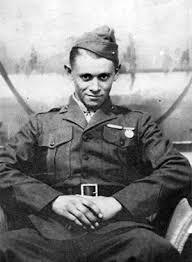
Call it a Memorial Day miracle: this May, Nonotuck Care Manager Tammy Laurent received the surprise of a lifetime when she learned that her Great Uncle Shaz (full name Pfc. Erwin S. King) will come home to be buried alongside his parents in the Berkshires. King enlisted in the U.S. Marine Corps in January 1942, at the age of 17, and excelled in basic training. He was killed just days after turning 18 and arriving in Guadalcanal. His parents had always hoped for his return, even purchasing a burial plot next to theirs in anticipation.
King’s family, including another niece and a nephew whom he never met, was informed that his remains had been found in the Solomon Islands and identified through a DNA sample provided several years ago by his niece, Judith LaBonte Richard.
When he is interred with full military honors this September, it will mark the end of an 82-year journey, one that still leaves Tammy in disbelief. “This is something out of a movie. I’m humbled and honored to be his relative. I have several family members, on both sides, that have served in the military, and of course, I’m proud and grateful to all of them,” she says. “Uncle Shaz is the only relative I am aware of who died in service. I called my father about this, and he was so emotional. It’s surreal to be a part of history in the making.”
Tammy’s husband is also a veteran, serving in the first Gulf War.
Remembering Kitty Kelly-Curtin
As we prepare to honor the memory of our beloved colleague and friend, Kitty Kelly-Curtin, by dedicating the Lee office in her name, we invite you to share your personal remembrances of Kitty. Whether you worked closely with her or simply admired her passion and dedication, your memories will help us celebrate the incredible impact she had on all of us.
The dedication will take place on Founders Day Weekend in Lee, on September 21 at 9:00 a.m. As we gather to commemorate this special occasion, we want to fill the day with stories and reflections that truly capture Kitty’s spirit.
Please send your remembrances to Joshua Murray (murray@nonotuck.com). Whether it’s a brief anecdote, a few words about what Kitty meant to you, a picture or video, or a story that highlights her contributions, we would love to include your reflections in the lead up to our celebration.
Thank you for helping us honor Kitty’s legacy and ensuring that her spirit continues to inspire our work and community.
2026 Update: Memories of Kitty are still welcomed and can be sent to Joshua Murray at murray@nonotuck.com.
Ronda Jones Tobey Earns
Multiple Honors for Diversity, Addiction Counseling
Nonotuck Resource Associates, Inc. is proud to announce that Clinician Ronda Jones Tobey is the recipient of multiple honors connected to her work here at Nonotuck. Ronda was selected by The Association for Addiction Professionals as the Lora Roe Memorial National Addiction Counselor of the Year and will be recognized at an event in Washington, D.C., in October. As if that weren’t enough, Ronda was recently awarded the Association of Developmental Disability Providers’ (ADDP) annual Diversity, Equity, Inclusion, and Belonging (DEIB) Award, which she will receive at a ceremony in September.
Ronda has worked in our Plymouth office since 2015. She was raised in the small town of Raeford, North Carolina, as a proud member of the Lumbee Tribe—one of the largest tribes in the United States.
Growing up in a diverse community, Ronda was deeply connected to her heritage. Her mother ensured that she and her siblings regularly attended powwows across the country, participated in the North Carolina Native Youth Organization, and attended national tribal youth conferences. These experiences provided Ronda with a strong foundation and a deep sense of identity that has shaped who she is today.
Ronda’s journey took her from North Carolina to New York City, where she became a head dancer at the Bear Mountain Powwow. Ronda earned both her bachelor’s and master’s degrees in social work from Rutgers University. After the tragic events of 9/11 and the subsequent rise in racism in New York, she decided to return to her roots in North Carolina.
In Robeson County, where 50% of children in foster care were from her tribe, Ronda took action. She founded Red Path Child and Family Agency, the first Native American foster agency in North Carolina. Through this platform, she worked to change state laws, ensuring that all tribal members could be considered kin to any child in state custody, effectively removing barriers to becoming a foster parent. This critical work laid the groundwork for Ronda’s continued advocacy.
Ronda’s dedication to her people led her to Cape Cod, where the Mashpee Wampanoag Tribe invited her to help establish their Health and Human Services Department as their ICWA (Indian Child Welfare Act) Director. In this role, she spearheaded changes in state regulations to ensure that Native American children were not placed in non-Native families. This legislation required authorities to ask about a child’s Native American ancestry during investigations, allowing tribes to be involved early in the process and preventing children from being disconnected from their cultural heritage.
Ronda’s commitment to her work and her tribe led to her meeting her current husband, a member of the Mashpee Wampanoag Tribe, which solidified her decision to stay in Cape Cod. Through her tireless efforts, Ronda has made a lasting impact on the lives of Native American children and their families, preserving their connections to their tribal culture and communities.
“These awards are a testament to Ronda’s unwavering dedication to her work and her community. At Nonotuck, we are incredibly proud of the profound impact she has made not only within our organization but also in the broader field of social work and advocacy,” says Nonotuck President/CEO George H. Fleischner. “Ronda’s commitment to diversity, equity, inclusion, and her tireless efforts to preserve and protect Native American heritage are truly inspiring. These honors recognize the extraordinary contributions she has made to improving the lives of countless individuals, and we are privileged to have her as part of the Nonotuck family.”
What do Civility and Kindness Mean to You?
This past August was National Civility Month, providing us with an opportunity to consider the importance of civility and kindness in our daily lives. At Nonotuck, civility and kindness are more than just words—they form the foundation of the organization’s mission, guiding interactions among employees and with the people they serve.
In celebration of National Civility Month, we encouraged staff to share their personal definitions of civility and kindness. Employees were invited to explore why these values are important to them and what they mean on a personal level.
Read employee responses below.
George H. Fleischner, President & CEO
“I want to let the Nonotuck community know how much I appreciate the outpouring of love that people shared at the first anniversary of Kitty Kelly-Curtin’s passing. Kitty was remembered in staff meetings, between staff people, and I received dozens of emails of kindness and love. This community has a wonderful heart. It cares deeply for each other. It’s a remarkable gift to work with so many kind and generous people.”
Joshua Murray, Marketing Coordinator
“Civility and kindness are key components in any successful relationship, be it personal, professional, or otherwise. When people feel validated, heard, and respected, they can do great things; treating people with civility and kindness helps to reach that greatness.”
Gretchen Parker, Director of Human Resources
“I truly appreciate that we start all of our supervisions by asking about civility and kindness. It brings home that this is acted upon and not just words in a handbook. Nonotuck is a truly special place to belong. It’s so nice to focus on the positives whenever we can.”
Tony Phiv, Assistant Program Director of NorthEast AFC Services
“I 100% agree that civility is important in all relationships, no matter how big or small of a group. While working here at Nonotuck, I have seen the effects of civility and how it positively impacts people. I am captain of a dragonboat team, and I have started teaching my team about civility because I understand how important it is in order to keep the team together for years to come. I appreciate Nonotuck for making civility a topic that is always discussed during our staff meetings in order to make sure we understand how important it is.”
Dedicates Lee Office to Kitty Curtin
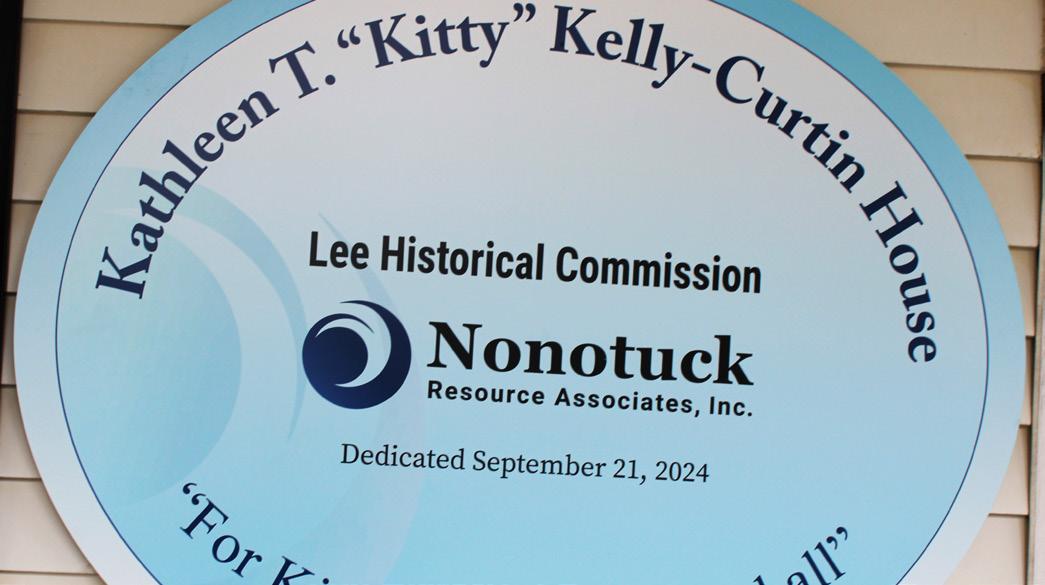
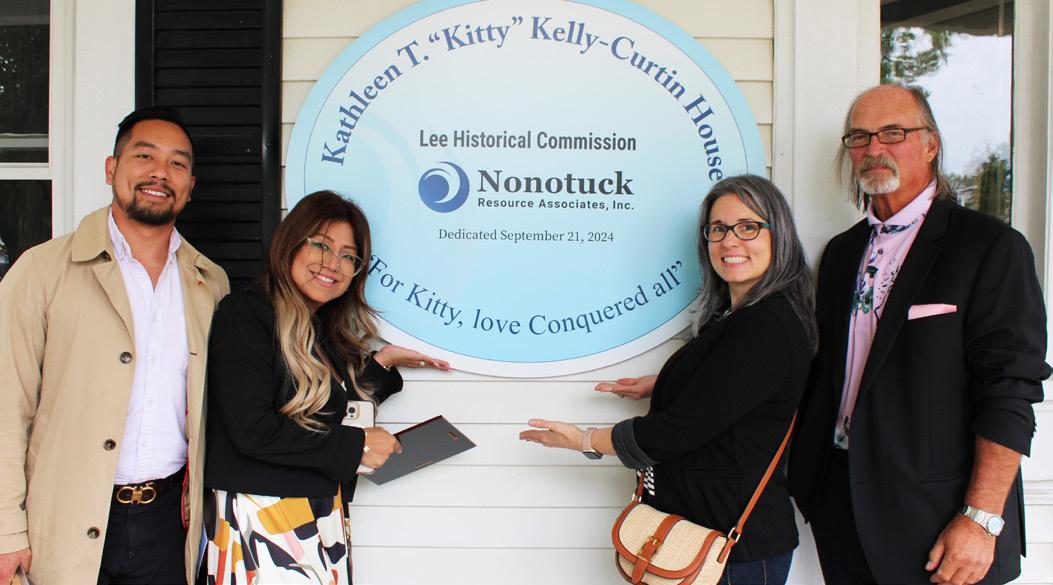
Nonotuck Resource Associates, Inc. was proud to dedicate its Lee office to the memory of Kathleen “Kitty” Kelly-Curtin on September 21. A crowd of Lee residents, Nonotuck staff, and Kitty’s friends and family gathered at the office at 14 Park Place during Lee’s Founders Day weekend to mark the occasion.
The Nonotuck community was devastated by Kitty’s passing on July 8, 2023. Kitty left behind an immeasurable impact, having served as the driving force behind the creation of our Adult Family Care (AFC) program, spent 26 years as a Shared Living caregiver, and worked for Nonotuck for 17 years, most recently as Executive Vice President of Operations.
After a welcome from Nonotuck CEO/President George H. Fleischner, Kitty’s son Devin delivered an invocation, followed by George’s keynote address, a dedication speech by Program Director Jill Gallagher, and the unveiling of a plaque naming the building by Jill and Care Manager Tammy Laurent. Reflections on Kitty’s legacy were shared by Care Manager Maggy Walto and former Nonotuck Chief Operating Officer and current Nonotuck Board member Rich French.
All the speakers remembered Kitty for her warmth, leadership, and dedication to her family, including Danny MacDonald, with whom she shared a home as a Shared Living Caregiver for 26 years. They also highlighted her entrepreneurial spirit, community connections, and joyous personality. George Fleischner spoke at length about Kitty’s family history in the town of Lee, where she resided and ran multiple local businesses.
A reception followed the presentation ceremony.
“In comparison to the life of an extraordinary person, this dedication is a modest way to honor Kitty. But I see it as fitting, as Kitty was a humble individual. Kitty loved the town of Lee and the people who live here,” says George Fleischner. “She had great warmth, kindness, and love of family and the community. These feelings serve as a lasting tribute to the legacy she built, one of compassion, entrepreneurship, and love. Kitty’s spirit will continue to inspire us all, and we are honored to preserve her memory in this way. She was a beloved mother, sister, grandmother, colleague, and life partner who is now honored well into the future with the dedication of this office.”
Appreciation for Care Managers at Nonotuck
As we celebrate National Case Management Week October 13-19, we are reminded of the vital contributions of Nonotuck’s Care Managers. This year’s theme is “Encouraging, Engaging, and Empowering,” which couldn’t be more appropriate for our Care Managers. These dedicated professionals are the lifeblood of our organization, exemplifying our core values of civility, kindness, and excellence in person-centered care. Their work extends far beyond oversight, touching the lives of those they support in ways that foster dignity, independence, and inclusion.
Care Managers bring an extraordinary combination of expertise and empathy to their role. They oversee shared living homes, ensuring that personalized plans of care are tailored to meet the unique needs of every person and family. From conducting health assessments and monitoring progress to coordinating care and supporting caregivers, their work reflects a profound dedication to improving lives.
They balance leadership with compassion, guiding caregivers through training and supervision while also providing families with the support and guidance they need. When health concerns arise, they act swiftly and collaboratively, working with physicians and team members to ensure that care is delivered with precision and heart.
As strong advocates, Care Managers uphold the rights and dignity of those they serve. Their roles as Human Rights Officers and active participants in agency committees demonstrate their commitment to ethical, person-centered care. They champion inclusion, respect, and kindness in every aspect of their work, ensuring that each person’s voice is heard and honored.
To our Care Managers—thank you for your tireless dedication, compassion, and the meaningful impact you make every day. Your work not only changes lives but strengthens our entire community. For that, we are profoundly grateful.
Sincerely,
George H. Fleischner President/CEO,
Nonotuck Resource Associates, Inc.
Barschdorf Promoted to QE
Nonotuck Resource Associates, Inc. is proud to announce the recent promotion of Kari Barschdorf to Quality Enhancement Associate. Kari has worked as a Care Manager in our Lee office since 2015 and will celebrate ten years with us in January.
Kari says she will bring her organizational skills honed from her years as a Care Manager to our Quality Enhancement (QE) department. “One of my favorite aspects of case management is auditing my records and those of others in my office,” she says. “I’ve also mentored a couple of new people in the agency, helping them develop. Those were my favorite parts of being a Care Manager, and I feel like I can expand upon that in the QE department.”
Kari adds that the QE position is also the perfect opportunity to grow within an organization she’s come to love. “My favorite thing about working at Nonotuck is, first, the people. I think Nonotuck has done a really great job of hiring people with shared values, which makes working together—not seamless or effortless, but it helps,” she says. “It’s unique that people are vetted at the beginning to make sure they’re a good fit.”
Director of QE, Grayson Fleischner, was part of the team that hired Kari. “Kari has always impressed me with her steadfast dedication to our community and her constant efforts to better our systems. She understands that improving these systems makes a direct impact on the lives of the people we support,” he says. “She is proactive in her thinking and person-centered in her approach. I think that her strong values and tireless drive are exactly what we need in this role, and I’m excited to see where she takes it.”
Kari has a Bachelor of Arts in Psychology from Westfield State and lives in Lanesboro with her husband and two sons. Outside of work, she enjoys spending time with friends and family, traveling, and going to comedy shows and concerts.
Celebrating Nonotuck’s
Care Managers: National Case Management Week
October 13-19, we celebrated National Case Management Week, an opportunity to recognize our excellent Case Managers (called Care Managers at Nonotuck). These dedicated professionals are the heart of our organization, upholding our values of civility, kindness, and excellence in person-centered care. Their work extends beyond oversight, profoundly impacting the lives they support by fostering dignity, independence, and inclusion.
With a unique blend of expertise and empathy, Nonotuck Care Managers go above and beyond to ensure personalized, high-quality care. From overseeing shared living arrangements to advocating for the rights and dignity of those they serve, they are trusted leaders and compassionate allies for individuals, families, and caregivers. We extend our heartfelt gratitude to each of our Care Managers for their unwavering dedication, compassion, and the meaningful impact they make daily. Their work strengthens our community and brings hope and comfort to so many lives.
Below are some Care Manager appreciations submitted by staff; please feel free to send your own to Joshua Murray (murray@nonotuck.com).
Eva Beland
“Our Nonotuck Care Manager, Eva Beland, has been an incredible advocate for Jonathan, whom we support through Shared Living. Eva quickly learned the best ways to connect with Jonathan, understanding his likes, dislikes, strengths, and challenges—many of which have since transformed into strengths under her guidance. Eva is prompt, courteous, professional, and caring. We are truly grateful for her expertise and support. Nonotuck has definitely found an exceptional team member in Eva Beland.”
—Respectfully, Joel & Janice Underwood
Elizabeth Carpenter
Beth is a wonderful Care Manager from the Berkshires who consistently goes above and beyond for all her caregivers and the individuals she serves. After being a Shared Living Provider for a gentleman named Billy for over 15 years, she transitioned into a Care Manager role at Nonotuck, where she brings her extensive expertise to each of her cases. Beth is a great listener, very supportive of caregivers, and a powerful advocate for the people served. Nonotuck is truly blessed to have Beth.
—Maggy Walto
Sharon McLean
I would like to recognize Sharon McLean for her outstanding dedication. Sharon excels in her role, consistently going above and beyond for the families she supports. From picking up medications and supplies to helping with complex paperwork for MassHealth or Social Security, she provides invaluable assistance. Families feel more at ease when she is present, whether it’s at an appointment or a meeting. She has even assisted individuals in relinquishing guardianship when appropriate. Sharon is a “go-to” resource and a strong advocate, and the families she supports are incredibly fortunate to have her.
—Kerrie Paradis
Empowering Others Through Resilience: Serah Muiruri’s Dedication to Success
Serah Muiruri has worn many hats in her 12 years at Nonotuck: Care Manager, Clinician, Life Coach, PhD Candidate, Shared Living Caregiver, and—most recently—published author. Serah, a Clinician in our Harvard and Auburn offices, was one of several contributors to the 2020 book Limitless Success with Serah W. Muiruri.
Each chapter of the book is written by a different contributor, who shares their own definition of success. For Serah, the project combines her two biggest passions: writing and helping others. “To me, success is about impacting others in a variety of ways and giving back to those who might struggle to be successful in certain areas, on many different levels,” she says. “If I can uplift someone or offer motivation, that’s success.”
In her book, the reader is invited to embark on a journey of self-discovery when surrounded by adversity, as this sets a beautiful stage for living a more fulfilled life. Serah reminds us to choose wisely, as the choices we make may have long-lasting effects.
In addition to Limitless Success, Serah will be publishing a second book, Empowered by Resilience: A Path to Unstoppable Growth, expected to be out by January 2025. She says the new book is the “Ultimate Resilient Blueprint” offering actionable steps for overcoming challenges. “I wanted this book to talk about ‘everything’ resilience, from definition, its attached power and impact, as well as the journey it entails,” she says. “I hope to share practical strategies, including some from the clinical world, to help people move forward.”
Serah says Empowered by Resilience will take readers through a journey of transformation. Modifying our thought patterns often leads to lasting change. According to Serah, “Strength does not come from what you can do; it comes from overcoming things that you once thought you couldn’t. Navigating through turbulence isn’t ignoring the challenges or bypassing struggle; it’s about recognizing the storm as part of our growth. Resilience teaches us that sometimes the most significant growth happens when we trust the journey even when we can’t see the path clearly. Developing trust allows us to stay grounded in the present moment, enabling us to respond calmly and thoughtfully to whatever comes our way.”
Serah was born in Kenya and emigrated to the U.S. for school in August 1992. The challenge of assimilating into a different culture—as well as being the first member of her family to leave for the U.S.—was part of her inspiration to devote her life to helping others. “It was an enlightening experience through the challenges of adapting to a new culture and country. That was a success, as I’ve been able to impact others, including my family and community, to achieve their goals. Being in the U.S. allows me to support people in Africa more easily than if I were back home,” she says. Serah’s intrinsic drive to see others succeed has influenced her attraction to serving others on various levels, both personally and professionally. Serah is well connected to her community, and her passion drives her purpose in life. “Once you find your purpose, strive to execute at an optimal level,” says Serah.
A resident of Webster, Serah has lived with a woman named Jen in a shared living arrangement for the past 18 years. What began as a two-week temporary situation blossomed into a long-term relationship where the two have traveled extensively and shared their lives with one another, including both of their respective extended families.
As if all of this weren’t enough, Serah is on track to complete her PhD in Behavioral Health next year. “Nonotuck’s support has been invaluable throughout this journey,” she says. Serah states that the agency’s values remain compatible with both her personal and professional values. “Compassion and humility are consistent with the life I live. An appreciation of vulnerability must be a pillar of opportunity, as it is in this state that optimal growth is attained.”
“At Nonotuck, we emphasize celebrating successes alongside tackling challenges,” she says. “I often remind the teams I am incredibly blessed and honored to work with that it’s important to acknowledge both. As clinicians, every day, we work to solve issues, celebrate small victories, and provide tools for programs, Care Managers, and caregivers to do their best.”
Serah is a proponent of self-awareness, which she defines as “the ability to observe our feelings and reactions without judgment.” She invites teams to regularly check in with themselves, as that is a great way of gaining insight into how we respond to stress, which then allows us to make conscious choices about how we move forward. “A resilient mind is flexible and rarely resists change,” she says. This approach helps us stay open to new paths, possibilities, and solutions, ultimately reducing anxiety that can come from wanting things to remain the same. “In the waves of change, we find our true direction,” says Serah.
In her tenure of service at Nonotuck, Serah states that she has come across many complexities and challenges, but what gets her through the most difficult of days is the people. She reminds us that everyone crossing our path is there to fulfill a purpose, and many times, that “purpose” is not obvious or apparent. Serah concludes by stating, “The people we serve are the reason I stay inspired.”
Get to Know: Tammy Laurent (Part 1)
Tammy Laurent recently celebrated 25 years of excellent work for Nonotuck Resource Associates as a Care Manager in our Lee office. Tammy has provided services for people with disabilities since she was a teenager in some form or fashion, and with that brings years of wisdom and insight into the practice.
Tammy came to Nonotuck after 14 years at the Center for Humanistic Change (CHC), later named Berkshire Family and Individual Resources (BFAIR). She was attracted to working at Nonotuck because of her familiarity with former Nonotuck Chief Operations Officer Rich French, as well as her desire for a change of scenery in her career.
Tammy has also served as the Western Massachusetts coordinator for Nonotuck’s Human Rights Committee for 15 years. Nonotuck’s Human Rights Committees, composed of independent volunteers and people served, work to protect and uphold the rights of people served by Nonotuck by reviewing policies, investigating grievances, monitoring behavior programs, and ensuring awareness and accessibility to rights information. Meeting quarterly, the committee is dedicated to affirming human and civil rights through collaboration, education, and advocacy, in line with Department of Developmental Services regulations.
Tammy lives in Pownal, Vermont, which is also the town she grew up in, mere miles from her childhood home.
You reached 25 years here at Nonotuck this year. What’s kept you here so long?
The atmosphere around the Berkshires team—despite changes over the years since I became a Care Manager— has always been really strong and supportive. The benefits have always been great, and we’ve always had flexible schedules. While I’d like to explore a different role than Care Manager simply because I’ve been doing it for so long, I don’t see myself saying “see you later.”
What are some things you’ve learned in your time here?
Diplomacy has been essential for me over the years. When I started, I was around 32, going through a lot—stuck in a difficult marriage with two young kids. It was sometimes hard to separate personal life from work. As time went on, I moved on from the bad marriage. In 2012, my current husband faced some ongoing medical issues, which brought new challenges in learning to balance work with home life. Keeping them separate is still hard at times, but I’ve learned how to manage it better over the years.
How did Nonotuck help you learn that?
I’d say, for the most part, everyone has always been supportive of one another when issues come up, which sometimes made things easier. My coworkers—the team in the Berkshires—have always had each other’s backs. Any time any of us has had an emergency, we’ve helped each other maintain balance. If someone needs to deal with something at home, others step in to help cover.
How would you describe your approach to being a Care Manager?
It has to start with respect for the people’s homes you’re going into, both the person served and the caregivers. It’s their home, not mine. During these visits, you learn {things like} who’s comfortable with you bringing in your laptop to do notes and who isn’t. You get to know these people, what they like, what they don’t like, how they react to different things—you just learn to understand and respect them.
What are some of your most memorable moments in your time at Nonotuck?
There have been so many moments. Meeting different people, of course, and the impact of those who have passed— people served, caregivers on our caseloads. Supporting everyone through those losses and cherishing their lasting memories, along with the impact they’ve had on me. Watching coworkers advance in their positions, get promoted, and receive the accolades they deserve has also been meaningful. I had the privilege of being the case manager for people like Kitty {Curtin} and Dan {MacDonald}. I believe I was Angela {Procopio-Rahilly} and Carrie {Bona}’s Care Manager, too.
And speaking of recognition, I would be remiss not to mention (Northampton Care Manager) Dan Zimmerman in this interview. He’s been here far longer than I have and has been not only a mentor but is now very supportive and appreciative. We still collaborate and consult with each other. I became the Human Rights Coordinator for the Western MA committee in 2010. Since then, every time I send out information, Dan thanks me for all the hard work I do on the Human Rights Committee.
Tell me more about the Human Rights Committee: why did you initially get involved with the committee?
Care managers are the human rights officers for all those on their caseloads. We all attended the quarterly meeting that were, up until 2020, held in the Northampton office. If we had something that required review by the committee, we would present and explain whatever it was. When the person who was coordinator before me left, I volunteered to take over. Since I’m in the position of someone needing to submit, I thought I could do a good job of organizing the meeting, so it ran smoothly and set up the minutes in a way that made sense.
Why is the committee important to you?
It’s one more safeguard (a big one!) for the people we work for. As a human service agency working for people with intellectual and other disabilities, it’s important to protect and respect everyone’s rights. Protecting rights and respecting people is reflected in everything we do.
What other things do you do as part of your job at Nonotuck?
I help train new Care Managers and am always available to support them as needed. I’ve mentored people out east, and I’m on the Positive Behavioral Supports (PBS) Leadership Team, Safety Committee, and Critical Incident Report Committee. I also handle all the ordering for our office, whether it’s through Amazon Prime, Staples, or grocery shopping at Big Y for office supplies, water, and coffee. I do it all.
Get to Know: Tammy Laurent (Part 2)
In the following, Tammy takes us back to the early 1990s, when she visited two institutions that, at the time, housed people with mental illness and intellectual disabilities. These institutions, now closed, represented a dark chapter in the history of care for those with disabilities.
Tammy’s accounts are both disturbing and essential. She bears witness to the horrors experienced by the people who lived within those walls—people who were often stripped of dignity, autonomy, and humanity. Her stories are not easy to hear, but they are a necessary reminder of how far we’ve come, thanks to the tireless efforts of families, advocates, and pioneers of community-based services who refused to accept institutionalization as an option.
As we look to the future, it is critical that we never forget this history. Many of the people we now support in community settings survived these institutions, carrying with them scars and stories that must not be erased. And yet, for a new generation of caregivers and Nonotuck staff, the reality of institutional life has faded into obscurity. This makes it all the more vital to remember and reflect, to ensure that the mistakes of the past are never repeated.
Tammy’s experiences shine a light on the resilience of those who lived through these times and the power of advocacy in driving systemic change. Her stories call on us to remain vigilant, compassionate, and committed to upholding the values of community, love, and respect. We encourage you to engage with her reflections fully and carry the lessons forward in your work and in your hearts.
How would you like to continue to grow in the Care Manager position?
I’ve always wanted to be a trainer—I want to train coworkers, staff, caregivers, people served, anyone who needs the training. We have so many training options, but something is lost when caregivers are just asked to watch a YouTube video. My next project is to create a combined human rights and mandated reporting training for caregivers and offer it to take that responsibility off other Care Managers’ shoulders. I’d like to hold two hybrid classes per year, where caregivers can come here to train in person or join via Zoom/Teams. Just reading the workbook doesn’t compare to having in-person discussions. I have a lot of stories from my experiences—like my visits to Belchertown State School and Northampton Hospital—stories and examples that would enrich in-person training, especially here in the Berkshires.
What’s an example of a story like that?
I was the house manager at one of the group homes, where one of the women was in crisis. She was self-injuring, aggressive, hurting others and herself. We had to restrain her constantly. She needed psychiatric hospitalization, and the only place with an open bed was Northampton State Hospital. I had to ride in the front seat during transport. She was in four-point restraints when we arrived. When we entered, I asked the staff if I could take her to the bathroom since she hadn’t gone in a long time. As soon as they released her restraints, she started banging her head. Four, five, maybe six people jumped on her, put her on a bed, and tied her down. I started crying, and they asked, “Why are you crying? Is she your sister?” I said, “No, I work with her.” They responded, “You’re just staff, and you’re crying?” That was in the early to mid-90s, and the ignorance, intolerance, and disregard for people with intellectual disabilities or mental health issues were appalling. The other people on the floor were mostly in straitjackets. That experience was an eye-opener; I’d never seen anything like it. It was the first time being labeled “just a” strengthened my stance that nobody is ever “just a…” anything. I am a Care Manager—I am not “just” a Care Manager. I’m a mom; I’m a grandma. I can’t stand it when someone says, “You’re just a…”
When we visited Belchertown State School, {Former Nonotuck COO} Rich French went with me. There weren’t many people left living there, and those who remained were housed in cottages where staff lived. There were three men referred to BFAIR, and we went to meet them.
Another time, we went to meet a couple of women who were set to leave that horrible place.
Have you ever seen the documentary Christmas in Purgatory? It’s about Belchertown, with pictures and stories that are truly horrifying. I remember one very distinctly—a young man wearing a fencing mask because he apparently had a tendency to bite people. They put him in a fencing mask. Fast forward to one of my trips to Belchertown—I was sitting on the floor, waiting for something, next to the door with a window in the padded room with restraints on the wall. I saw an enormous man walking down the hallway, flanked by four equally large staff members—that was the little boy in the fencing mask, grown up and coming down the hallway.
I read records from Northampton State School. The names they used to label people and the ways they were described were disturbing. One report from Northampton mentioned a woman’s teeth were in excellent condition, but four or five months later, another report said her teeth were so bad they needed to be removed. They pulled all her teeth out because she bit. I remember seeing a man I worked with labeled as “idiot white boy” in one report. The terms used were horrifying, but these stories are important to my growth and help others see how far we’ve come and how far we still need to go.
All the wards in the main building had their own day programs, spread across different areas of the hospital. In one place we visited, which used to be a ward, there were big, long rooms where you could almost envision the rows of beds. At the end of one of these rooms was a small area with a cage where the nurses stayed when they had to dispense medication—they were protected there. Walking up those staircases, you could hear the echoes of screams. They weren’t real; they weren’t actively happening, but you could hear them.
“Horrifying” is the only word I can use to describe it.
How Would You Compare Group Homes to Shared Living?
In Shared Living, someone doesn’t have to take turns with housemates to go out on an outing. It’s truly their home. No matter how well group homes are run, it just doesn’t feel like home. It’s just not the same.
In Shared Living, people are truly loved and valued as family members; they’re genuinely respected. I wouldn’t say that’s not the case in group homes, but in my experience working with them, it was discouraged for anyone to form bonds with the residents. You’re told, “You’re not their friend; you’re their staff.” Taking someone home for a holiday was seen as inappropriate...but people are people.
Get to Know: Tammy Laurent (Part 3)
What’s the biggest change you’ve seen in all your years providing services to people with disabilities?
The biggest change is how people are treated—how the people we work with are treated—and the growing understanding from the broader world. There’s been progress in fostering the idea that people with disabilities aren’t scary or contagious. I remember a situation years ago, maybe at CHC, when we moved a group home a couple of streets over in Williamstown. It was “The Village Beautiful,” and we had to go before a committee at a town meeting because the neighborhood didn’t want “those people” living there. They had no idea who these people were.
There’s been growth in that area and in the medical field as well, but there’s still a lot of work to do. Progress has been made in respecting everyone, in realizing that they’re people—they’re not their disability. But there’s still a long way to go. Even people with the most severe disabilities can communicate in their own way. And gosh, they have feelings.
Language is another area of change. Over the years, I’ve learned how to use appropriate language without sounding demeaning. I still hear people use the R-word, and it grates on me. I’ll correct them, and sometimes I get backlash, but I don’t care. I tell them, “Don’t use it.” I used to say, “This man is autistic; this man is bipolar.” Now I say, “This man has autism. He has an intellectual disability.” Learning to think and speak that way took time.
Another thing about language: I have a few people on my caseload who refer to themselves as clients or refer to others with disabilities as clients. I’ve told them, “You’re not a client; you’re a person.” But I’ve learned not to insist, because that’s the term they’re comfortable with. No matter how many times I correct them, that’s their choice, and I have to respect it.
You said to me, “You do not choose human services; human services choose you.”
What does that quote mean to you?
I’ve said that from day one. As a teenager, I babysat for family friends who had a daughter with developmental disabilities. I’d make her dinner and give her baths. I was at her house taking care of her when I was 17 or 18. That’s where my caregiving gene started, I guess.
People are born for this work. This field isn’t for everyone, any more than being a mathematician or a doctor is. Some people are made for their position, for their careers. And you’re miserable if you’re not doing something you’re good at and that you value. There’s nothing better than a home visit when people tell you, “You’re family. We love you. Come in.”
I have a caregiver who tells everyone I’m his sister because that’s how he views me. You can’t help but develop close relationships in this job. If you don’t have a deep bond with the people you’re working with, you can’t help them the way you should.
What do you like to do outside of work?
I have five grandchildren—they’re everything to me. Every weekend, since my first granddaughter, who’s now 15, was a week old, one of them has spent the night at our house. As the youngest two get older, they’re joining the rotation. I’ve even been known to take all five at a time!
I also enjoy yard work—not because my husband won’t do it, but because I like it. I love taking care of the lawn.
I’m an avid reader, and I like taking my mom out to do everyday things. Right now, I’m addicted to Royal Match and am almost on level 6,000. It’s mindless fun that requires just enough attention to take my mind off whatever’s bugging me. It’s like reading a trashy romance novel—though I don’t read those!
Anything I didn’t ask?
The importance of mutual respect and genuine caring among all of us {here in the Lee office}. We’re strong and committed to keeping this team solid and to providing the best care possible for everyone living in the Berkshires.