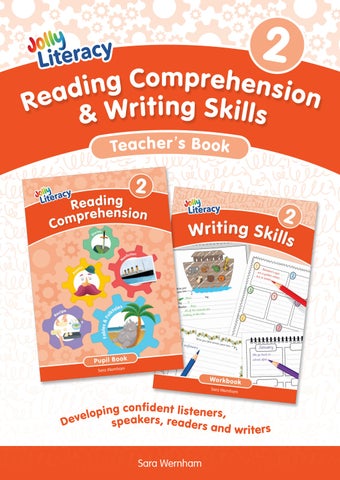

& Writi n g Skills Reading Co m prehension 2
Teach e r ’s Book
Developing co n f dent listeners, spea kers, readers and writers
How does Jolly Literacy link to TEFL?
Teaching both programmes across the week enables children to develop effective communication skills, helping them express themselves accurately and confidently in English. This is a lifelong skill and is necessary for children to begin to develop intellectually, socially, emotionally, culturally and spiritually.
The focus of Jolly Literacy progressively develops reading comprehension and writing skills, which are the foundation for the English level exams and provides additional opportunities to practise speaking and using vocabulary and language structures.
Together, the programmes offer a complete foundation for English language learning, using topics and themes that allow for vocabulary acquisition, as well as scaffolding more complex concepts of English that are introduced in later levels.
What is in the Reading Comprehension & Writing Skills Programme?
• a complete, structured programme for Levels 1 and 2 (for children aged 5 to 7)
• each level contains 36 weeks of unique comprehension and writing units – one lesson of Reading Comprehension and one lesson of Writing Skills per unit
• an hour for each lesson, dependent on usage, but also with the flexibility to be used in different ways in a variety of settings
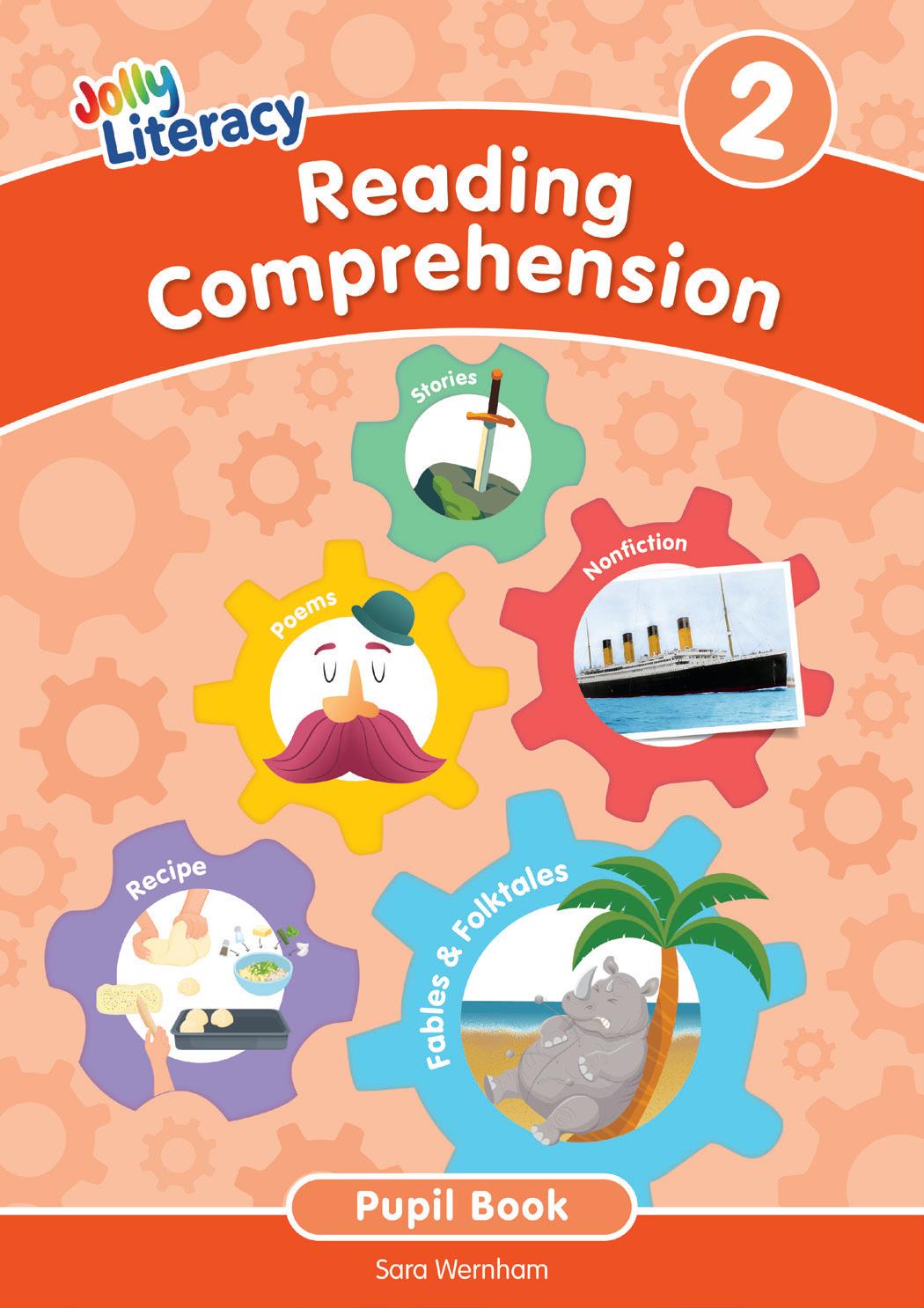
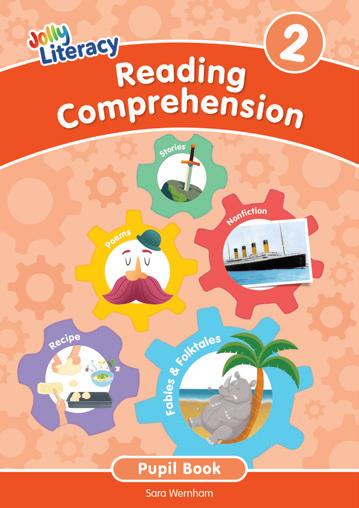
• full-colour, write-in Reading Comprehension Pupil Book featuring the text to read and activities to complete
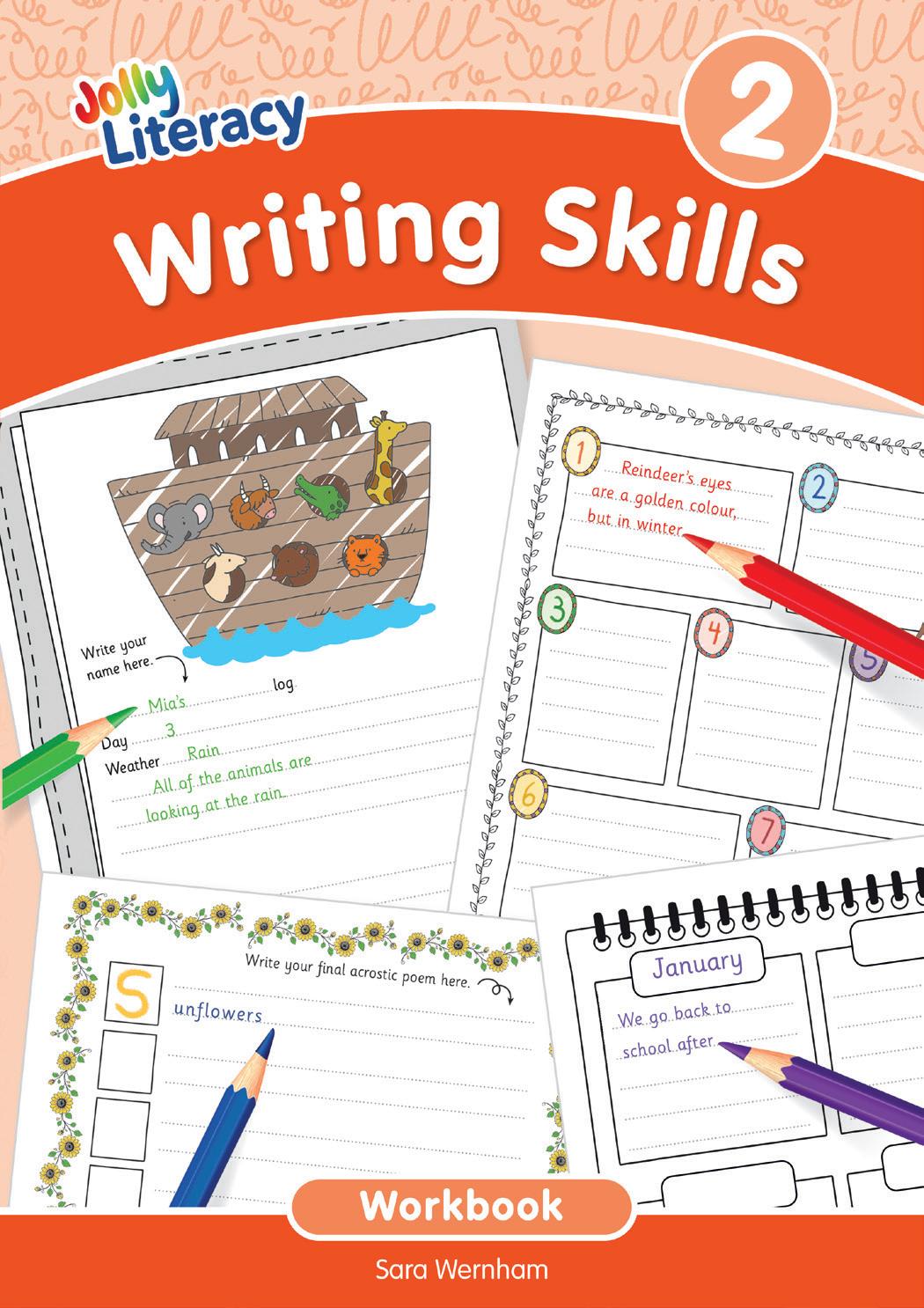
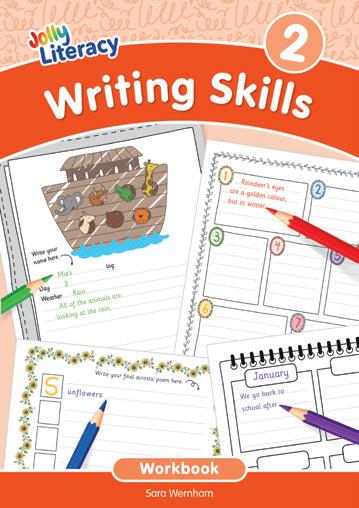
• black and white, write-in Writing Skills Workbook to support independent writing
• full-colour Teacher’s Book containing stepby-step lesson plans, further activities and extension ideas
For each level, a copy of the appropriate Reading Comprehension Pupil Book should be given to every pupil in the class. For ease of use, the Teacher’s Book has a comprehensive introduction to the programme and explains the methodology – it is a good idea to read this before starting the Programme. The second part of the Teacher’s Book provides structured lesson plans that give step-by-step guidance on all aspects of both the Reading Comprehension
and the Writing Skills lesson, including the Pupil Book activities. For each unit, the first spread covers Reading Comprehension; the second spread deals with Writing Skills.
How should the core materials be used?
Reading Comprehension Pupil Book:
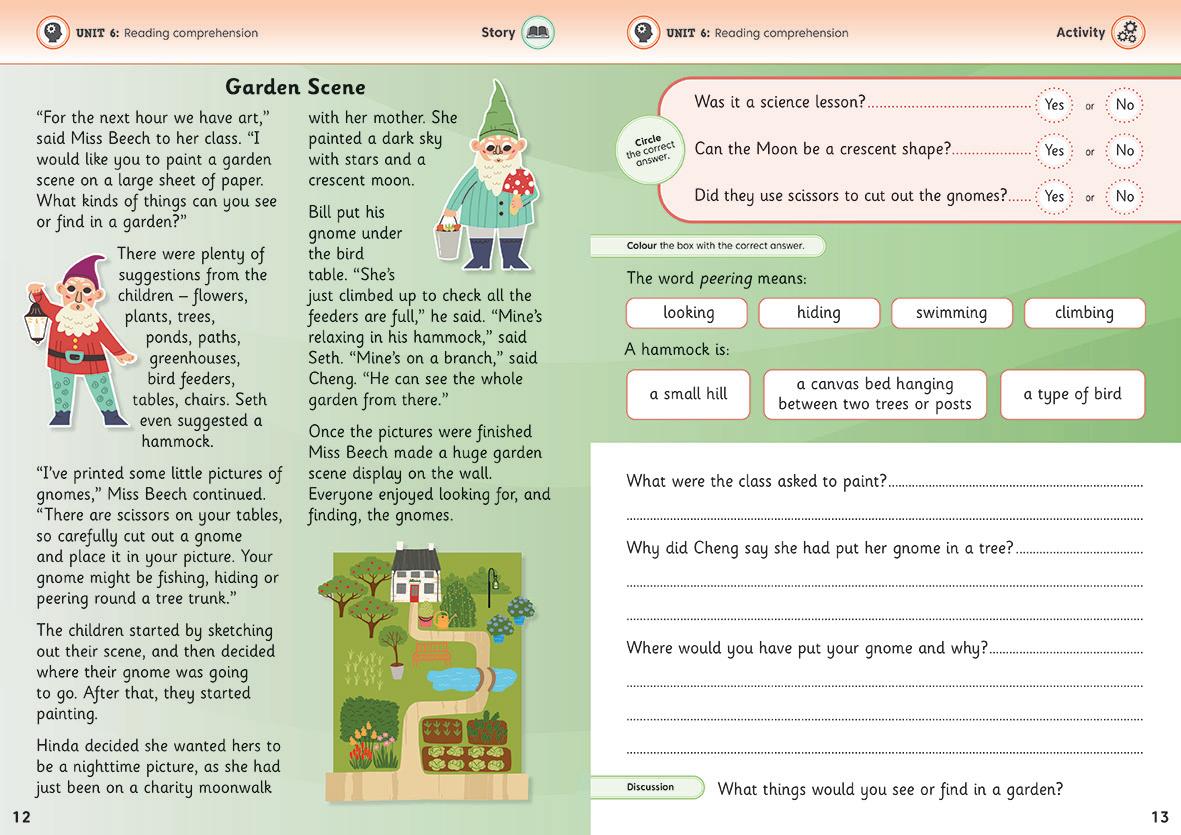
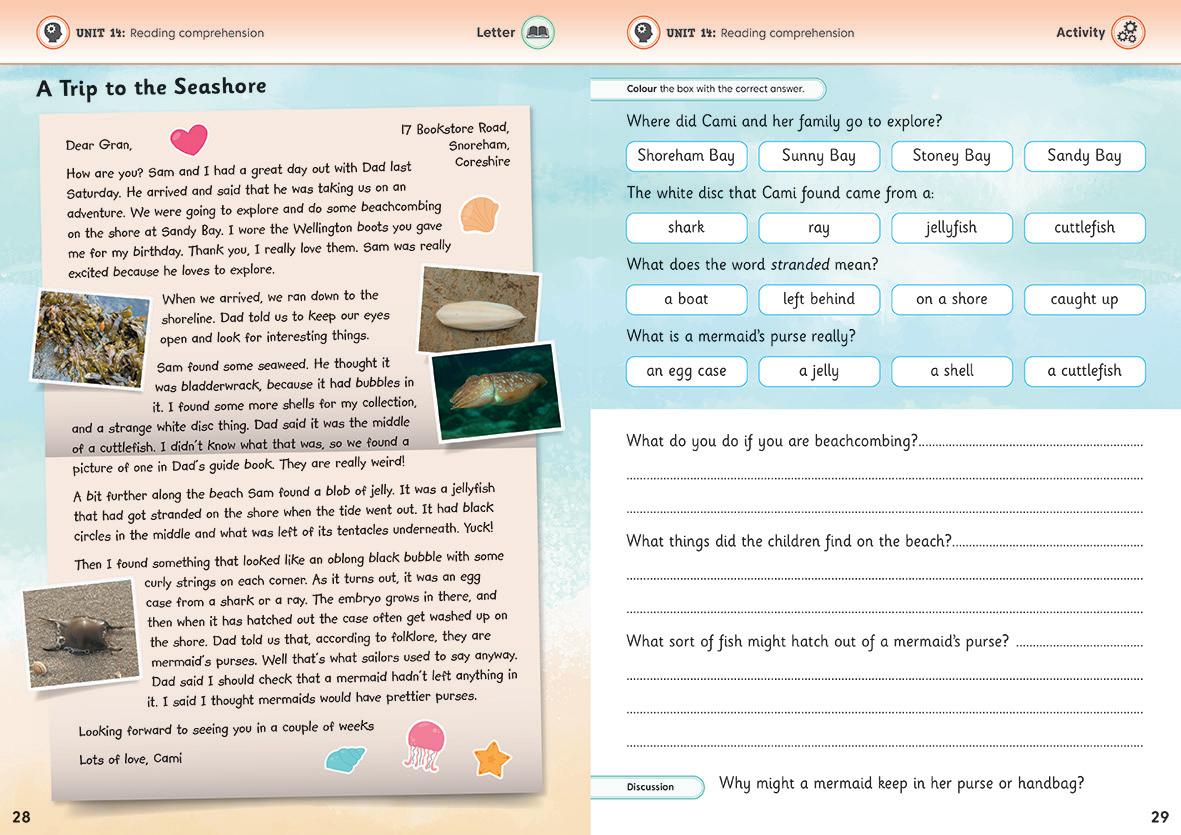
Each unit in the Pupil Book features a piece of text to read together, which reflects the topics of the Spelling, Grammar & Punctuation teaching of that week. A variety of different genres are included: from stories to rhymes, plays, newspaper articles, biographies and letters, with an engaging mix of photographic images and illustrations. Alongside the text are purposeful questions and activities requiring children to understand and reflect on what they have heard or read. The write-in element of the Pupil Book allows the child real ownership of their learning journey, as they interact with the text, discuss questions, write answers and gain deeper insights into what they have read. Giving each child their own Pupil Book also makes it easier for teachers to assess the children’s answers and penmanship as they strive towards the learning objectives.
Introduction
Writing Skills Workbook:
The Writing Skills Workbook enables children to develop their own independent, imaginative and creative ideas around the topic taught for that week. There are options for illustrating their own writing, pages and objects to cut out and use, decorative frames for stories, fun shapes to write in and interesting lined layouts to shape and support their writing. Children will be challenged and inspired to have a go at creating their own range of texts – from poems to stories, posters, logs, recipes and blogs.
Teacher Book:
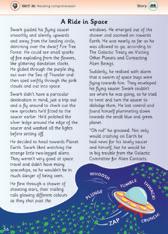
The Reading Comprehension & Writing Skills Teacher’s Book is the essential teaching resource for the programme, providing step-by-step plans for both the reading comprehension and writing lessons. The easily navigable book pulls together all the elements to talk about and discuss with the class, suggests books and stories to extend reading, gives rhyme time options, provides extensions for higher level children and adds further activities to try around the unit. Texts/formats covered in Level
Writing Skills lesson
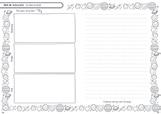
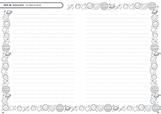
How to navigate a Writing Skills lesson in the Workbook:
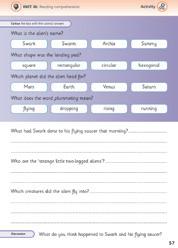
The unit number and type of lesson
Most instructions can be found in the Teacher’s Book, but there may be labels to help guide the children too.
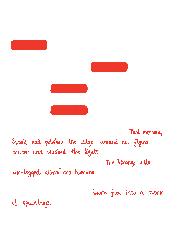
The children are encouraged to think about and plan what they are going to write, and to make decisions on how to colour or illustrate their work.
How to navigate a Writing Skills lesson in the Teacher’s Book:
Step-by-step guidelines provide instructions for each part of the lesson.
Step 1 may be to remind the children about the topic they discussed in the reading comprehension lesson, and reread the text or revisit vocabulary.
Step 2 allows the children to discuss their thoughts, ask and answer questions, and share their opinions. They will often begin to plan their writing out loud at this stage.
Step 3 provides guidance on the writing that the children will be doing.
The unit number and type of lesson to be taught can be found on these tabs throughout the Teacher’s Book.
This is the title of the lesson.
Step 4 brings the class together so the children can share their work, as well as read and listen to each other as a group.
Lined space is provided for the children’s writing. It can help them focus on their ideas and presentation, and to be proud of their writing.
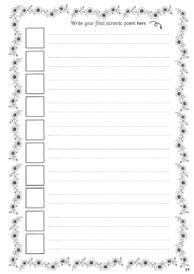
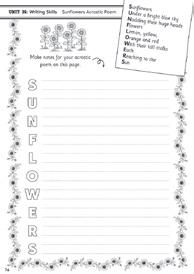
Often, the Workbook page is shown here for planning purposes and easy reference.
Some further activities connected to the things the children are learning in the unit are suggested here.
Linked to the topic, these extension activities can be done as a class, individually, or in groups.
The assessment criteria is graduated in order for the teacher to assess quickly the ability of each child based on the work for that unit and give feedback where needed.
The learning objectives list the skills or knowledge that are covered in each lesson.
Scope & Sequence
letters alternative spellings for the vowel sounds
‹k› silent ‹h› silent ‹g› silent ‹c› /ai/ ‹ei›, ‹eigh› for /ai/ /ee/ ‹ey› for /ee/ ‹ie› for /ee/ ‹ea› for /e/
‹w›
• Reinforce and extend the children’s phonic knowledge in the weekly spelling lessons with spelling lists, word banks, dictation and spelling tests.
• Consolidate the children’s writing skills: segment spelling list words and use chin bumps for longer words; write word or sentences from dictation; use words with focus graphemes in sentences.
• Provide systematic revision using flashcards, the short vowel actions, the vowel hand, and the vowel song.
• Ensure that the tricky parts of the tricky word family words are known and can be recognised (for reading) and remembered (for writing).
‹b›
• Use familiar spelling strategies for unusual spellings, like say it as it sounds, mnemonics and the tricky word spelling routine to help the children remember the tricky parts.
• Practise writing the tricky word family words regularly in the weekly spelling tests and sentence dictation.
• Encourage the children to spot the tricky word family words in texts and books they are reading.
Spelling
Spelling, Grammar & Punctuation sentence writing capital letters and proper nouns spelling rules for adding suffixes possession and possessive adjectives spelling rules for adding plural word endings identifying complete sentences using conjunctions to join clauses spelling rules for adding suffixes adding the suffix ‹-ed› & the doubling rule exclamation marks
• Extend and refine the children’s knowledge: sentences must have a verb, make sense, and end with a full stop, question mark, or exclamation mark; speech goes inside speech marks; commas separate words in lists; encourage the children to proofread their writing and to use analogy as a useful spelling strategy.
• Reinforce the children’s grammar and spelling knowledge in class reading and writing, and point out examples where spelling, grammar or vocabulary points overlap: for example, when adding a suffix to a root word changes the part of speech, or the need to use different punctuation marks for different types of sentence.
proper made by adding ‹-ful›, ‹-less› possessive ‹-s›, ‹-es›, ‹-ies› of location and movement a sentence needs a verb (and, or, but, when, if, that, because) of manner made by adding ‹-ly› regular past tense irregular past tense
capital letters determiners
• Deepen existing understanding of parts of speech and introduce new ones using simple, child-friendly definitions that expand over time, along with a colour and action.
Parts of Speech
• Practise simple parsing activities regularly, identifying one or more parts of speech in sentences, underlining the words in the appropriate colour; conjugate verbs with actions.
Mother’s Day
Breakfast (story)
Mr Nobody (poem)
Biography of Helen Keller (biography)
Zack’s blog (blog)
Reindeer (nonfiction)
Captain Noah’s Log (ship’s log)
Garden scene (story)
Gnomes to the Rescue (story)
How the Rhinoceros got its Skin (fable)
The Sword in the Stone (story)
Wrecks (nonfiction)
Thumb (folktale)
Tom
Writing questions for an interview
Writing a biography
Researching a famous person
Writing a blog
Writing fun facts
Writing a ship’s log
Writing a set of instructions
Creating a character
Retelling a story; story sequencing
Writing a description of a knight
Writing about what happens each month
Retelling a story; story sequencing
• Reinforce the children’s understanding of basic sentence structure in their reading and writing; begin with a simple definition and expand over time.
• Encourage the children to use techniques like finger spaces to make sure words are separated clearly in their writing.
Reading
Comprehension &
Writing Skills
Main learning objective
Read, recall details from, and understand the features of a blog.
1. Introduce the text
Briefly introduce the text and talk about it. Tell the children that a blog is a piece of writing that is online or on a website. It is written by someone about a subject they are interested in or that they want to tell other people about. It can be regularly updated too.
Remind the children what a diary is, and explain that blogs are a bit like diaries, except they do not have a space or an entry for every day. Whoever is writing them decides how often they add entries.
It could be daily, weekly, monthly or every now and again.
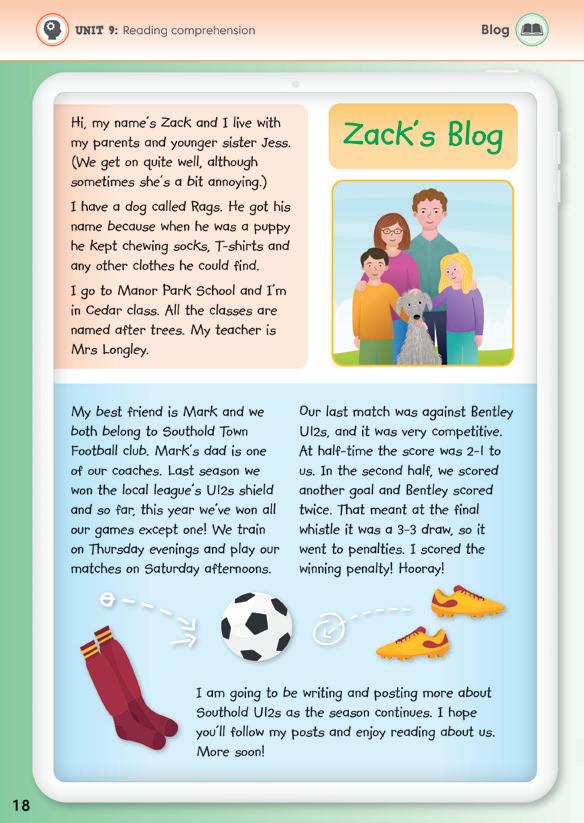
Blogs are written in an informal or conversational style, which is why Zack’s blog starts with Hi. It is Zack’s blog and, as he is the person doing the writing, it is written in the first person, so he uses I and we
2. Read and talk about the text
Read the text with the class. Ensure that the children can see the text as you read it. Look at any unusual words, such as younger, chewing, season, leagues, draw, penalties, posting, and check that the children understand what they mean.
Ask the children if any of them belong to a football club or are part of any sports or hobby clubs such as dance, theatre, Brownies or Scouts.
A blog is the name, or noun, for this type of writing. It can also be a verb: to blog means to write and publish a blog. The person writing the blog is called a blogger.
Story time
Further reading
Read around the topic with these books: The Secret Cooking Club: Blogs & Bakes Laurel Remington
Danny’s Blog: El Blog De Daniel (Let’s Read! Books) Martin Ursell
Building a Blog (Create and Share: Thinking Digitally) Kristin Fontichiaro (author) and Rachael McLean (illustrator)
• Who is Zack’s sister?
• Why might he write that she is a bit annoying?
• Why is his dog called Rags?
• Which class is Zack in at school?
• What sport does Zack play?
• Which team does he play for?
• What day do they train on?
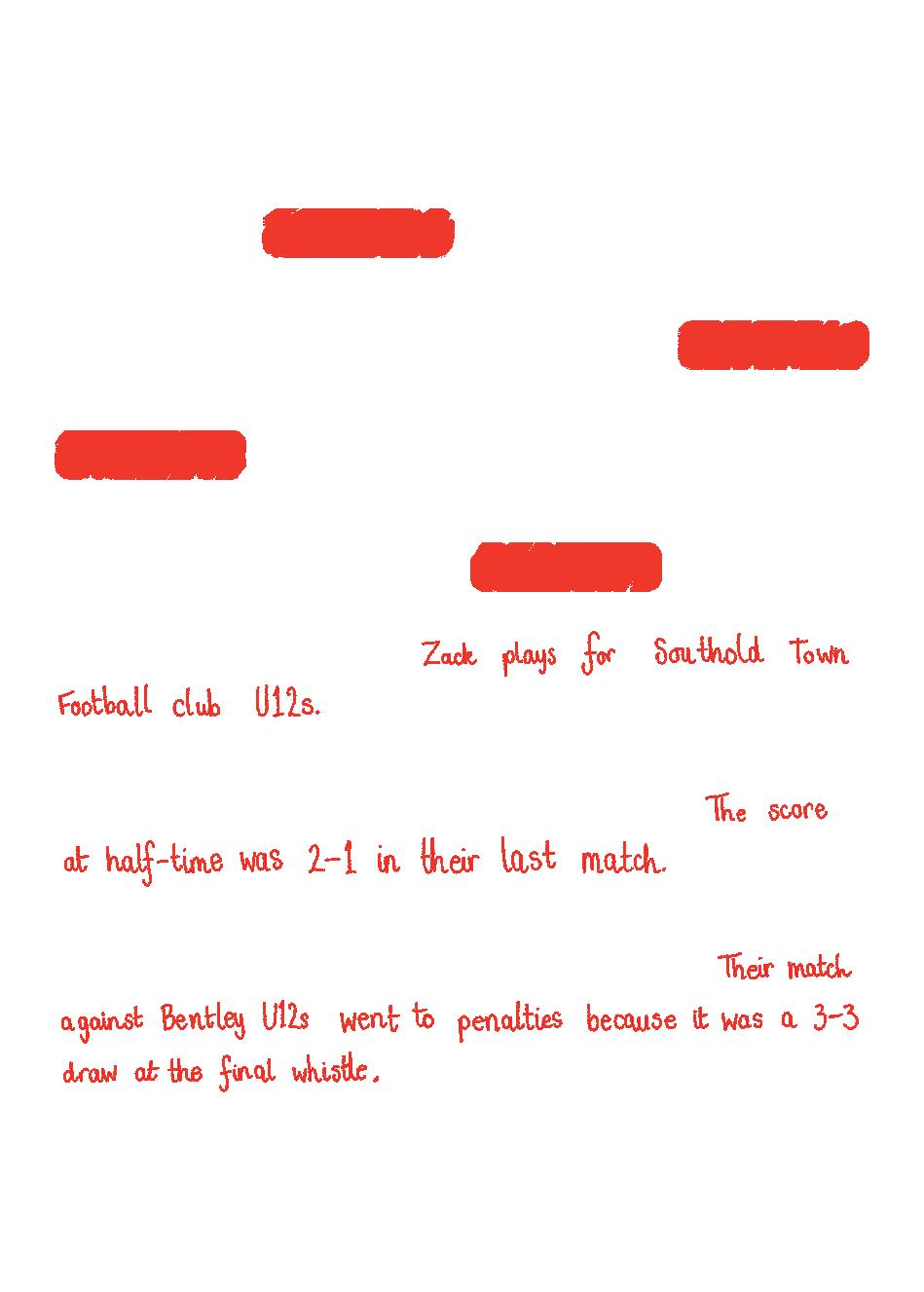
• What was the score at half time?
• What do they think it is like having to go to penalties?
• Have any of the children experienced this?
• Why does Zack write Hooray?
• What is Zack’s blog going to be about?
• Why might he be writing a blog?
Blogtime
Look at some blogs together:
• lovereading4kids.co.uk/blog/
• natgeokids.com/uk/kids-club/cool-kids/ general-kids-club/junior-travel-blog/
3. Comprehension activities
Look at Unit 9 in the Pupil Book with the class. Tell the children to:
1. Answer the multiple choice questions by colouring the box with the correct answer.
2. Read and answer the questions. Remind the children to write in complete sentences where possible.
The children can also...
• Think of more words with the /ee/ sound: for example, cheese, these, weak, dream, three.
• Read the text again with a partner using lots of expression.
4. Discussion
In groups or pairs have the children discuss how they think Zack felt when he scored the winning penalty. How can they tell he was pleased?
5. Plenary
Ask some children how they think Zack felt when he scored the winning penalty. Why might he have felt relieved? (He might have felt stressed and worried before taking the penalty, in case he missed. So, he was relieved when he scored.)
Learning objectives
The children are learning to:
• Read fluently and with expression.
• Increase vocabulary and comprehension.
• Use inference and prediction.
Further activities
• Make a graph or bar chart to show the different clubs and activities the children take part in.
• Ask a few children to talk to the class about a club they belong to. If several belong to the same club, they could work together as a group to do this.
• Link what they read to their own experiences.
• Appreciate rhymes, and recite them by heart.
Writing a Blog
Main learning objective
Write a blog, using an informal chatty style.
1. Introduce the activity
Reread Zack’s blog. Remind the children of any blogs they have read, either with you or on their own. Ask some of the children to
2. Talk about the writing
Explain to the children that they are going to write a blog post of their own. The word blog is a shortened version of the word weblog and someone who blogs is called a blogger.
The children will need to introduce themselves and tell the reader a little bit about their lives. Then they will need to say a bit about what they want to blog about as an introduction. It could be a club or organisation they belong
3. Writing activity
1. Tell the children to decide what they want to blog about. They can make some notes about themselves and what they want people to know.
2. Next, they need to think up a good title for their blog. Ask them to make some notes about what they are going to include in their blog.
3. Remind the children that, as they start to write their first blog piece, they should introduce themselves and write as if they are talking to the person reading their writing. A blog is not a formal piece of writing, so they need to write in a chatty, informal style.
The children can also...
• Reread their work, ensuring it makes sense and checking it.
• Find a partner and read each other’s blogs. Is there anything that could be made clearer or worded differently? Remind the children that any comments and suggestions on each other’s work should be constructive and not unpleasant.
say a few sentences about their families. Ask some to say something about any clubs they belong to or hobbies they have.
to, or just about their own life, their pet(s), their school, or even what they eat for lunch.
Ask the children if they have any ideas about what they would like to blog about. Ask them to think about and suggest a title for their blog (which should give an indication of what the blog is about). It is better if the title is a memorable one.
4. Plenary
Ask a few children to read some, or all, of their blog.
Assessment
The child writes some sentences about him or herself and any clubs (s)he belongs to; correctly spells known words and plausibly spells unknown or irregular words; the writing is mostly in complete sentences with some punctuation (capital letters and full stops).
Further activities
• Draw or paint a picture of a club they belong to.
• Talk or write about why they like the club.
The child independently writes about him or herself and any clubs (s)he belongs to; correctly spells known words and plausibly (or correctly) spells unknown or irregular words; the writing is both informal (chatty) and informative, and in complete sentences, with correct use of punctuation marks (full stops, question, exclamation and speech marks).
The child independently writes some sentences about him or herself and any clubs (s)he belongs to; correctly spells known words and plausibly spells unknown or irregular words; the writing is in complete sentences, with mostly correct use of capital letters and full stops (possibly also question, exclamation and speech marks).
Learning objectives
The children are learning to:
• Understand and recognise the features of a blog.
• Write in sentences, with correct punctuation.
• Think about and plan what they are going to write.
• Write in the first person.
• Reread their writing to check it.
A Trip to the Seashore
Main learning objective
Read and understand the features of an informal letter.
1. Introduce the text
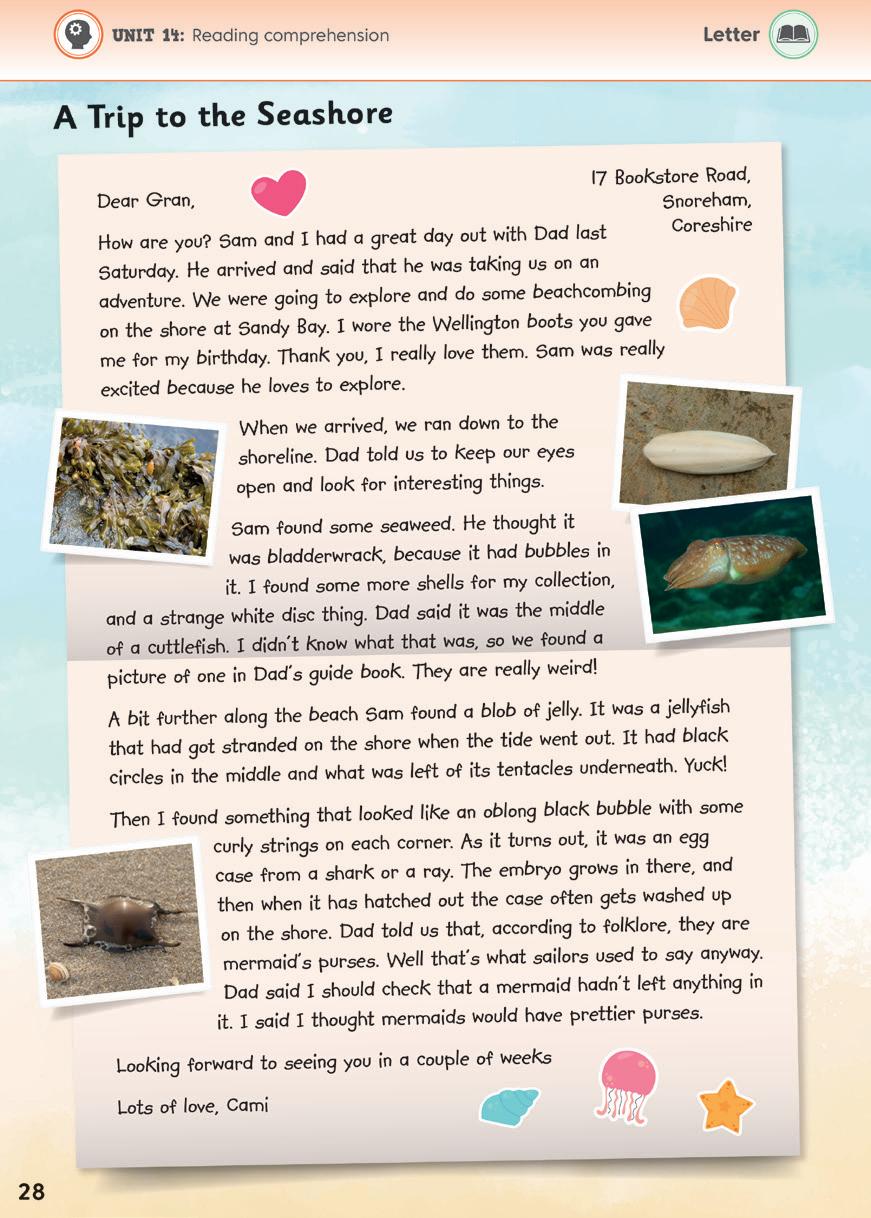
Briefly introduce the text and talk about it. Explain that it is a letter written by a girl (Cami) to her grandmother about a day out that Cami and her brother Sam had with their dad. They went to explore along the seashore at a place called Sandy Bay. Ask where the children have been to for a day out.
2. Read and talk about the text
Ask if any of the children have ever received or written a letter. Explain that letters can be formal, such as a bill or a letter from a doctor, or informal like this one, where Cami is writing to her grandmother. She writes as though she is chatting to her granny.
Read the letter with the class. Point out how it starts and finishes, and that it has Cami’s address at the top. Look at any unusual words, such as explore, beachcombing, shore, bladderwrack, cuttlefish, disc, tentacles, embryo, folklore, oblong, and check the children understand what they mean. Point out any punctuation and encourage them to read with expression and fluency.
Story time
Further reading
Read around the topic with these books:
The Little Guide to Shorelines
Alison Davies (author) and Tom Frost (illustrator)
At the Beach: Level 1 (National Geographic Readers) Shira Evans
Gracie’s Big Day at the Beach Simon Hammond
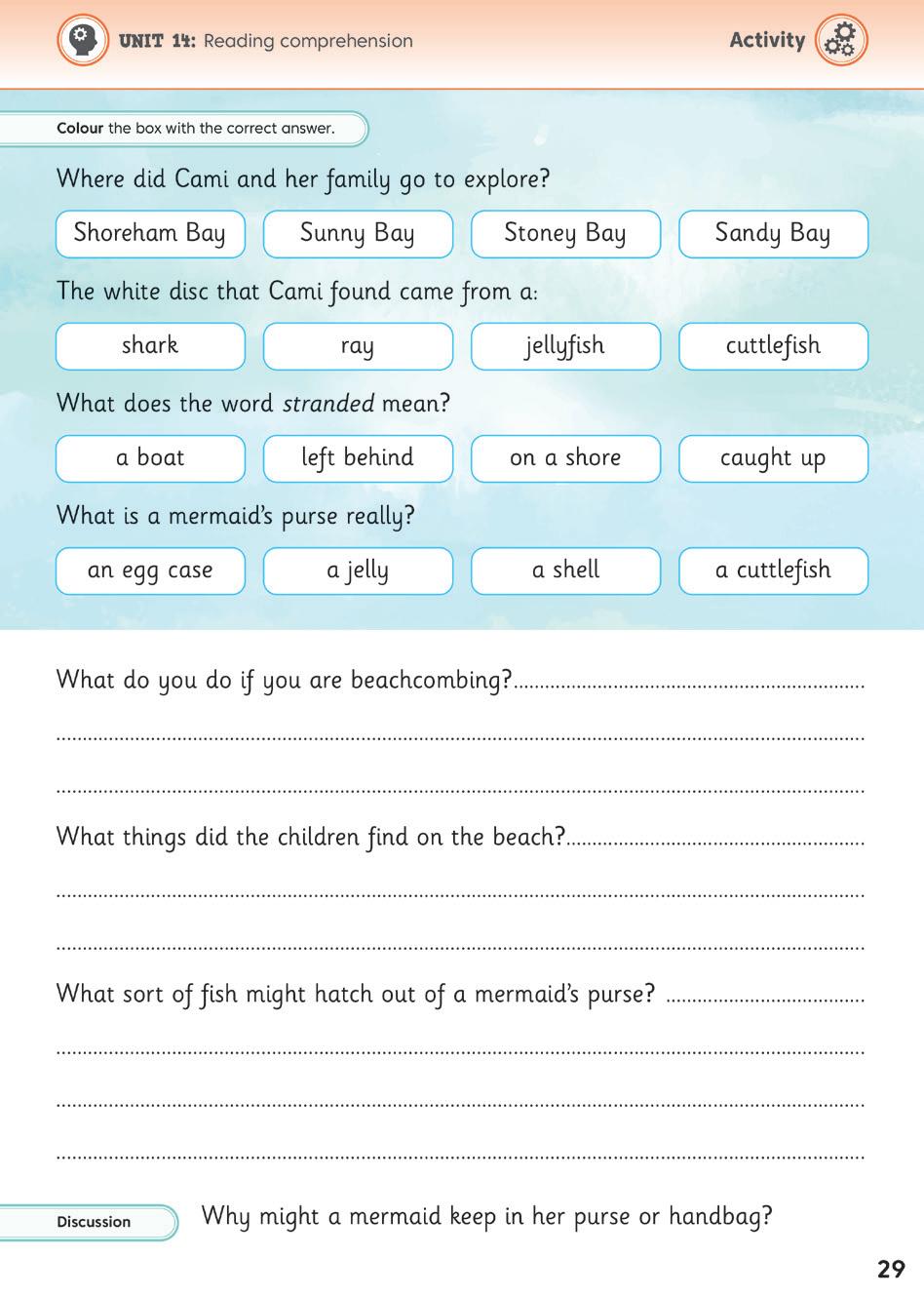
• Where had Cami, Sam and their dad gone?
• Did they like exploring?
• Has anyone in the class been exploring or beachcombing? What did they find?
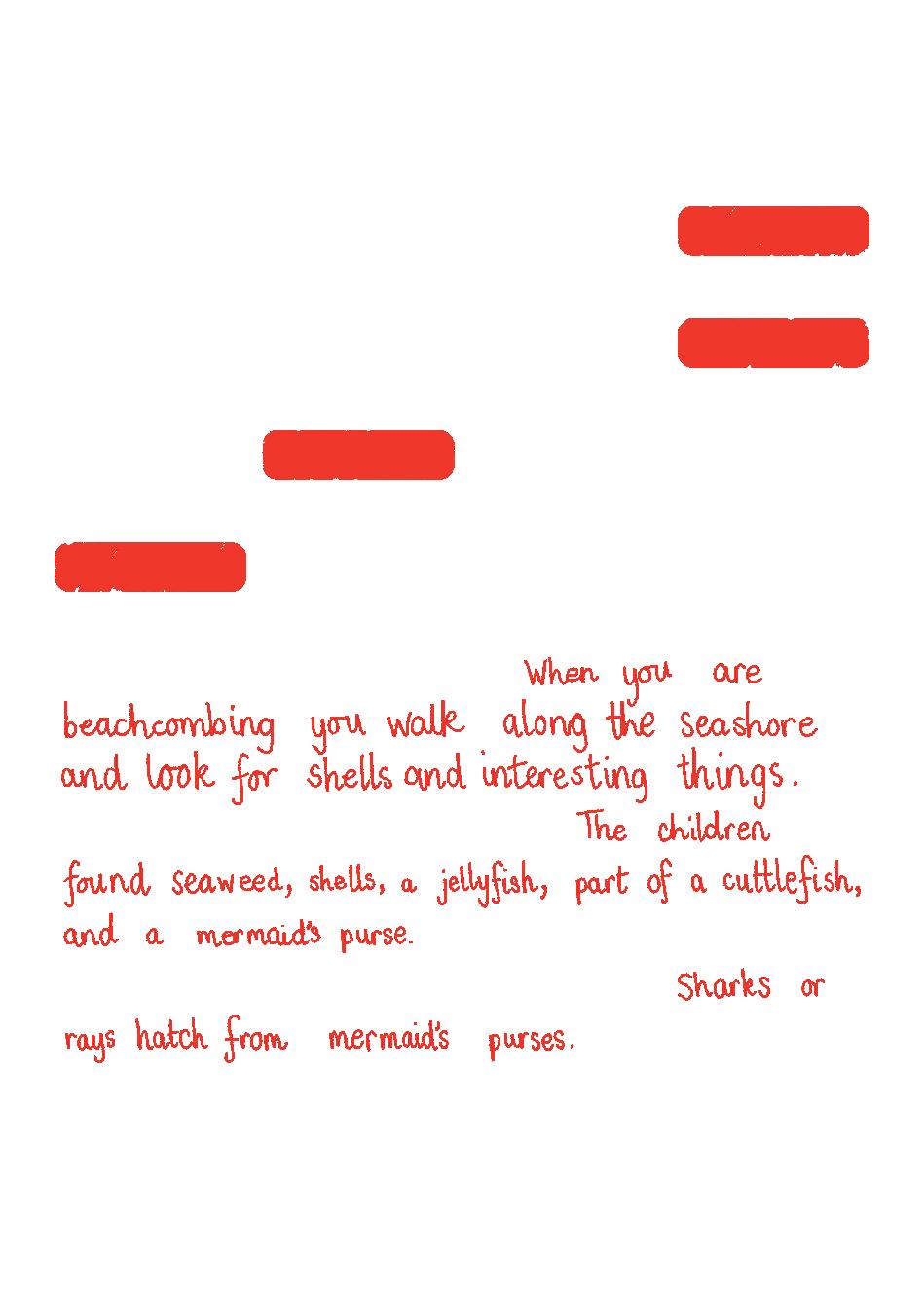
• What hatches out of the mermaid’s purse?
• Why might sailors think the egg cases were mermaid’s purses?
Point out...
...the ‹ore› in the words Snoreham, shore, explore, wore, more and lore, and the silent ‹b› in beachcombing
Rhyme time
Share this tongue twister with the children:
She sells seashells on the seashore, The shells she sells are seashells, I’m sure. So if she sells seashells on the seashore, Then I’m sure she sells seashore shells.
3. Comprehension activities
Look at Unit 14 in the Pupil Book with the class. Tell the children to:
1. Answer the multiple choice questions by colouring the box with the correct answer.
2. Read and answer the questions. Remind the children to write in complete sentences where possible.
The children can also...
• Write out their own address, or look it up on a map.
• Read the text again with a partner using lots of expression.
4. Discussion
In groups or pairs, have the children discuss what things they think a mermaid might have in their purse or handbag. (A comb for their hair, shells to use as coins, a pot
5. Plenary
Ask some children to share what they thought a mermaid might have in their purse or handbag.
Learning objectives
The children are learning to:
• Read fluently and with expression.
of green algae to polish their scales, comfy cushion for sitting on, a song book.)
Further activities
• Find out about beachcombing and the shoreline.
• Find out about shells and creatures you might find on the shoreline, such as, cuttlefish, sharks and rays.
• Draw some pebbles or shells (still life), or paint designs on some stones.
• Understand that informal letters are written in the first person.
• Understand that letters are informal when written to a friend or family member.
• Increase vocabulary and comprehension.
• Appreciate rhymes, and recite them by heart.
Writing about Yourself
Main learning objective
Learn about what an autobiography is, and write about themselves.
1. Introduce the activity
Remind the children that a biography is the life story of someone, but written by someone else. Ask some children who they chose to write about when they wrote a biography in Unit 11. Remind the children that for Unit
2. Talk about the writing
Explain to the children that this week they are going to write about themselves. If someone writes their own life story it is called an autobiography. The prefix auto indicates it is written by that person.
Tell the children that they need to think about themselves – not just what they look like, but also their character or personality and the things they are good at and like doing. Ask them to think about some adjectives to
3. Writing activity
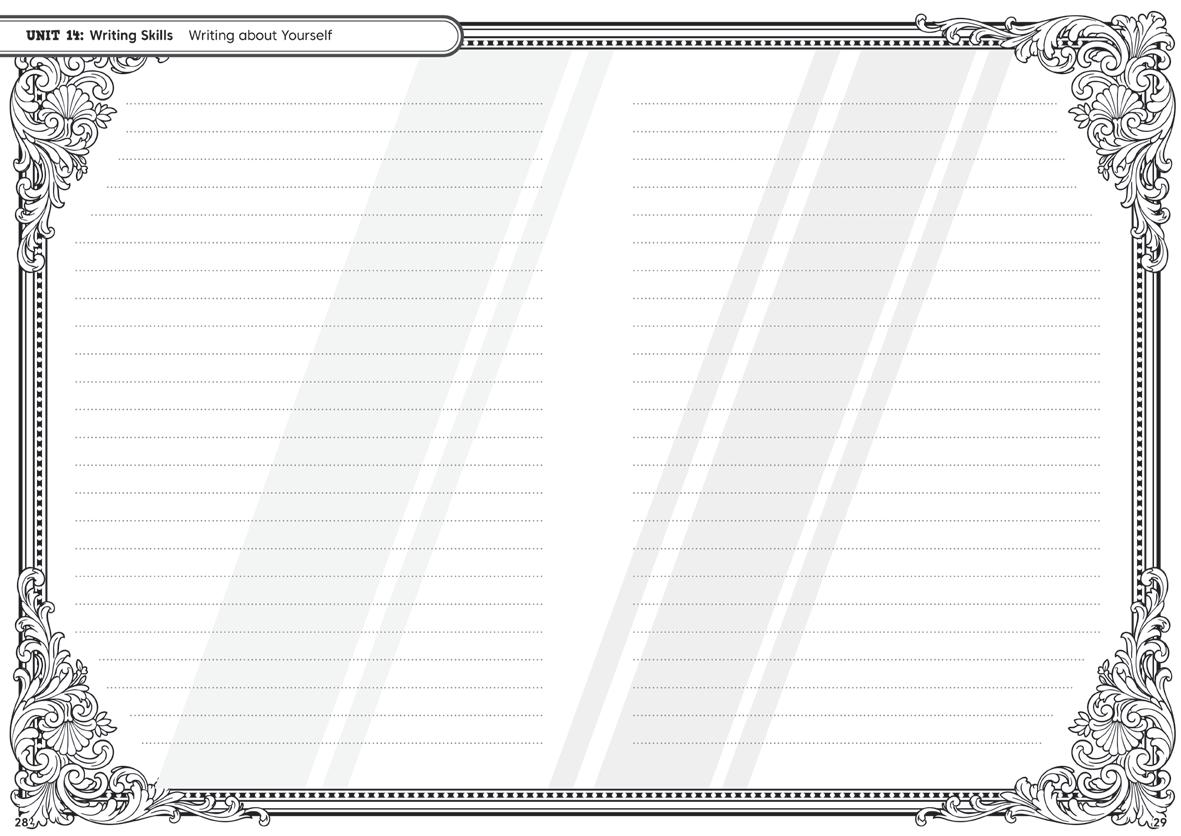
1. Tell the children they are going to write a piece about themselves.
2. Ask them to write the title, All About Me.
3. Encourage them to write about who they are, their hobbies, things they like doing and how they feel about school.
4. Explain that when they are writing they should start a new paragraph and a new line for each different aspect they are writing about. So, the first paragraph might be about what they look like, the second about their characteristics (kind, friendly) and the third about a hobby.
10 they had to find out about the person using books or the internet. In Unit 13 they also wrote about someone in their family by asking them questions.
describe their physical characteristics (like their hair colour, whether they are tall or short). Then, get them to think about words to describe their character. (For example: brave, shy, loud, quiet, determined.)
Ask the children why they think they are these things and if they can give an example to show this. (For example: I am a kind person because I help my friends.)
The children can also...
• Reread their work, ensuring it makes sense and checking it.
• Draw a self-portrait.
4. Plenary
Share some of the children’s work, either by showing it to the other children, or asking some of them to read out what they have written.
Assessment
The child writes a few mostly descriptive sentences about themselves, correctly spelling known words and plausibly spelling unknown or irregular words; the writing is mostly in complete sentences with some punctuation (capital letters and full stops).
The child writes a piece about themselves, including some reflective ideas, correctly spelling known words and plausibly spelling unknown or irregular words; the writing is in complete sentences, with mostly correct use of capital letters and full stops (possibly also question, exclamation and speech marks).
Learning objectives
The children are learning to:
• Think about and plan their writing.
• Include relevant and interesting information.
• Write in the first person.
• Organise their writing into paragraphs.
• Reread and correct their writing.
Further activities
• Find and read some autobiographies.
• Paint, draw, or college a self-portrait.
• Paint a picture of yourself or take a selfie.
• Think of adjectives to describe themselves, and write them around a photo of themselves.
• Write an acrostic poem about themselves using their name.
The child writes a thoughtful, reflective, interesting and original piece about themselves, correctly spelling known words and plausibly (or correctly) spelling unknown or irregular words; the writing is in complete sentences, with correct use of punctuation marks (full stops, question, exclamation and speech marks).
Reading Comprehension & Writing Skills is a programme that gives young children the skills they need to become confident listeners, speakers, readers and writers. It can be used independently, but also works well with Spelling, Grammar & Punctuation, and has the same multisensory, active and fun approach. The systematic and cumulative syllabus enables children to read a variety of different texts and genres with deeper understanding and enthusiasm, to expand their vocabulary and to write confidently, using their own experiences and imagination.
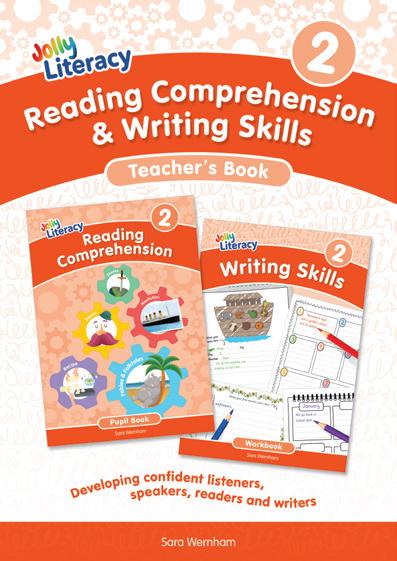
Reading Comprehension & Writing Skills Teacher’s Book:
• is the essential guide to making full use of the Pupil Book and Workbook
• provides a structured step-by-step set of lesson plans for both the reading comprehension and writing elements of the programme
• includes an in-depth introduction with a Scope and Sequence for teaching
• features additional support for each unit, with further reading suggestions and extension activities
• continually reinforces, revisits and secures learning, so no one is left behind
• is easy to navigate with helpful hints and tips along the way
To see the full range of Jolly Literacy products, visit our website at jollylearning.com
© Sara Wernham 2026 (text)
© Jolly Learning 2026 (illustrations)
Illustrated by Yoana Gurriz Muñoz
77 Hornbeam Road, Buckhurst Hill, Essex, IG9 6JX, UK Tel: +44 20 8501 0405
82 Winter Sport Lane, Williston, VT 05495, USA
Tel: +1-800-488-2665 Fax: (802) 864-7626 Reference: JL3873
in China. All rights