
by Kate Santini
NEW HAVEN, CT — New Haven is among several cities across the state taking action against rising food costs and cuts to federal food assistance benefits by creating farm-to-table and community-based solutions.
Farm-to-table programs provide fresh produce [and] fresh food for people who deserve it most, said Gov. Ned Lamont at a recent event including CitySeed, a New Haven-based nonprofit connecting about 60 Connecticut farms to its farmers markets. The state will do whatever it can to aid communities like New Haven that are taking the initiative to address food insecurity, said Lamont.
In response to federal cuts to the Supplemental Nutrition Assistance Program (SNAP) benefits, CitySeed received funding from the Emergency State Response Reserve Funds and a grant from the Connecticut Department of Agriculture’s Local Food Purchase Assistance Grant Program to facilitate relationships between local farmers and food pantries.
Lamont met with city officials, CitySeed
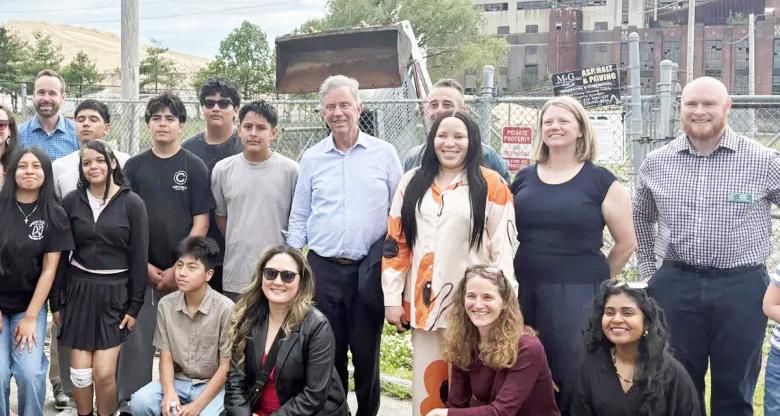
leaders and students from the nearby John S. Martinez Sea & Sky Magnet School for a tour of the organization’s ’s new prop-
erty on 162 James St., an area of New Haven reported to have been especially impacted by SNAP benefit cuts.
Chrsitine Kim, who serves on both New Haven’s Board of Alders and CitySeed’s Board of Directors, said the new building
would be used to uplift members of the community.
“What we are trying to build here is an opportunity upstream in the food system so that people can generate their own economic health [and] we can help our local farmers,” said Kim.
Local chefs like Kosarachi Okwunna, the owner of Kosy’s African Kitchen in New Haven, use the commercial kitchen to serve affordable and fresh food to the community, said Sarah Miller, CitySeed’s executive director.
“There’s a lot of potential for farm products to enter schools, restaurants [and] food pantries,” said Miller. “With the infrastructure support from the state … we’ve been able to really expand our capacity to offer market opportunities to farmers and to bring them to the city.”
Lamont said the programs were important because, while food insecurity afflicts people everywhere, cities have a tougher time getting fresh produce.
“That’s why programs like CitySeed are so important,” he said.
The following citizen contribution was submitted by members of the Bitsie Clark Fund for Artists. Applications for the grant, which you can find here, are open through June 30.
The Bitsie Clark Fund for Artists
The Bitsie Clark Fund for Artists, dedicated to enriching arts and culture in Greater New Haven, is excited to announce applications for its 2026 grant cycle. This year, members of the fund’s jury have designated one grant for an artist of color while the second remains open to all artists.
This marks the first year that the fund is managed by the Arts Council of Greater New Haven, the non-profit where Clark served as executive director for 20 years. Prior to that time, an advisory committee including Mimsie Coleman, Kim Futrell, Robin Golden, Stacy Graham-Hunt, Betty Monz and Maryann Ott steered the fund. "Being the facilitating organization for the Bitsie Clark Fund for Artists is a full-circle moment of legacy, as we keep Bitsie's name alive," said Rebekah Moore, program director for the Arts Council. "To be honored with this responsibility isn't taken lightly. We as a staff know that this grant uplifts our arts community, and is a

reminder that legacy allows you to touch lives well after you're gone."
Both grants are open to artists from all artistic disciplines who seek to either tackle a major goal in their artistic development, take a risk on a new direction in their work or advance their career as an artist.
These may include, but are not limited to, dance, music, theater, visual art, design, craft, literary, voice, poetry, playwriting, composition, and film.
Previous awardees have included poet and playwright Aaron Jafferis, musician and composer Adam Matlock, puppeteer Isaac Bloodworth, photographer Alexandra Diaz, playwright Steve Driffin, composer and bassoonist Damali Willingham, sculptor Linda Mickens, self-taught painter Marquis Brantley and vocalist Thabisa Rich among others ("We have come full-circle," said Coleman of the fund's move to the Arts Council. "Bitsie Clark has come home."
The Bitsie Fund was founded in 2018 in honor of Frances "Bitsie" Clark, the
Executive Director of the Arts Council of Greater New Haven for 20 years, who helped launch the Audubon Arts District and helped establish the arts as a driving economic force in Greater New Haven. The mission of the fund is to continue Bitsie's commitment to artists in the region. The Fund offers grants for individual artists, allowing them to pursue a significant goal at a turning point in their development.
Read more about Clark's extraordinary life and work here and about her memorial service here.
Full guidelines for the 2026 grant, including all the information artists need to apply, are available here. Applications are open from May 21, 2026 to 11:59 p.m. on June 30, 2026. The Bitsie Fund is a donor-advised fund housed at the Community Foundation for Greater New Haven (CFGNHV). The artist must live in one of the towns served by the CFGNHV.
by Donald Eng
A new state investigation is looking into former New Britain Mayor Erin Stewart’s handling of charitable assets for the benefit of the Mayor’s Trophy Charitable Fund, according to a statement from Attorney General William Tong’s office.
Tong and Consumer Protection Commissioner Bryan Cafferelli announced the investigation into the fund, which they described as a “donor-advised”
fund managed b the Community Foundation of Greater New Britain.
“It is our job to ensure charitable organizations adhere to all rules and regulations, and it is our priority to give donors confidence that when they give to charity, their contributions are used as intended,” said Tong and Cafferelli in a joint statement. “This inquiry will follow the facts wherever they lead, without regard to politics or personalities.”

Attorney Raymond Hassett, who has been representing Stewart, was not immediately available for comment.
An email to the foundation’s general information address was also not immediately returned.
According to the statement, the state has become aware of two relevant accounts, the fund managed by the foundation, and a checking account also named Mayor’s Trophy Charitable Fund held at M&T Bank and is
not managed by the foundation.As part of the investigation, three requests for information have been sent out, including: a subpoena to Stewart, a letter of inquiry to the foundation, and a subpoena to M&T Bank.
Stewart, a Republican, was a leading candidate to run for governor before ending her campaign days before the party primary amidst fraud allegations related to her city credit card use while mayor.
By Josiah Brown
Last Thursday, Connecticut Court Appointed Special Advocates (CT CASA) held a "Voices of Experience" documentary film screening, discussion, and reception to benefit this New Haven-based nonprofit, which is now working statewide. The venue was the Flint Street Theater at the Friends Center for Children, where Keegan Sagnelli and Trey Moore graciously hosted the event on behalf of the Friends Center.
During Foster Care month, the occasion raised awareness about child abuse and neglect, and about the wide range of experiences young people have in child welfare systems. The featured speakers included Tawanna Brown, a policy advocate and youth empowerment consultant who is the inaugural Young Adult Trustee on the National CASA Board, and Christopher Scott, who founded and leads SUN Scholars, which supports young people in Connecticut who—like himself—have been in foster care.
Brown and Scott engaged in a thoughtful public conversation following a screening of the PBS film "Absence/ Presence." That documentary spotlights two young women, one of whom, Charell Star, is an author who has long been affiliated with CASA of New York City and kindly sent a video message that was shown on screen.
It has been six years since Connecticut CASA opened in the New Haven juvenile court (child protection side) in 2020. Since then, the child welfare nonprofit has undergone a merger and expanded to Waterbury and Torrington in 2022; Wil-

limantic, Hartford, Rockville, and New Britain in 2023; Middletown in 2025; and now in 2026 to Waterford—the program's ninth court statewide.
CT CASA volunteer Karen Bergin, who has served children in multiple courts after having earlier both fostered and adopted children, was among those rec-
ognized—and later interviewed by Eddy Martinez of CT Public, which published a related story.
CASA Board member Toni Ligon was one of several board colleagues who participated in the event. In addition, she invited a strong contingent of sorority sisters from the New Haven Alumnae
Chapter of Delta Sigma Theta Sorority Inc. to attend and to recognize Tawanna Brown, who was herself a Delta at Seton Hall University.
Others in attendance ranged from State Rep. Toni Walker, philanthropic leaders Darcey Cobbs-Lomax, Claire Criscuolo, LindyLee Gold, and Deborah Marenna to
former DCF Commissioner Joette Katz and Yale Child Study Center Professor Dylan Gee (both CASA Advisors), CASA Ambassador Brandon Sherrod, and additional SUN Scholars, and students. In opening remarks, I thanked everyone in attendance, along with the sponsors, and provided an overview as well as an introduction of the speakers. I noted that, as part of a national movement for children who have experienced abuse or neglect, Connecticut CASA's volunteer advocates do many things, in concert with professionals from social workers and attorneys to educators and health providers. Among CASA's contributions are five "Rs." In order, they stand for: Reporting regularly to judges, to inform decisions about children's safe, permanent homes and best interests; Resources and services identified, from birth-to-three to special education, after-school, health, mental health, basic needs, summer jobs and camp; Relationship-building, through visits at least monthly and cases that can extend for years; Resilience promoted, to help children and youth overcome adversity; and Results that have seen this program grow rapidly, for children from birth to 18, whether in Foster Care or under Protective Supervision (when children are still with their families, as long as that's deemed safely possible).
Lead Sponsors were Yale University and Claire's Corner Copia, which donated food for the reception. Other sponsors included the Community Foundation for Greater New Haven, NewAlliance Foundation, Yale New Haven Children's Hospital, and Better Rhodes. The Wine Thief donated wine.
By courtesy of HBCUNEWS.com
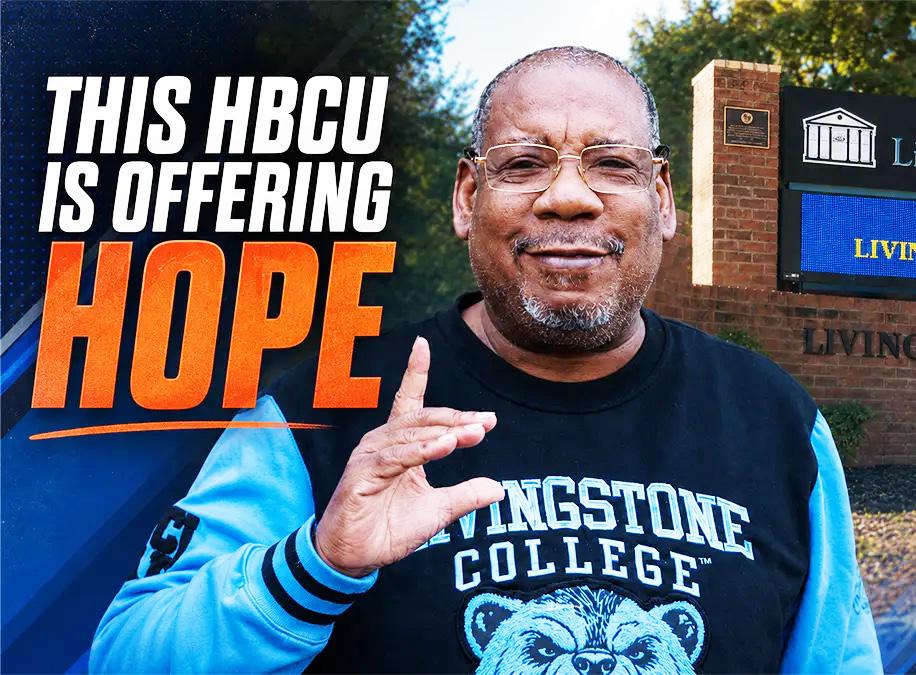
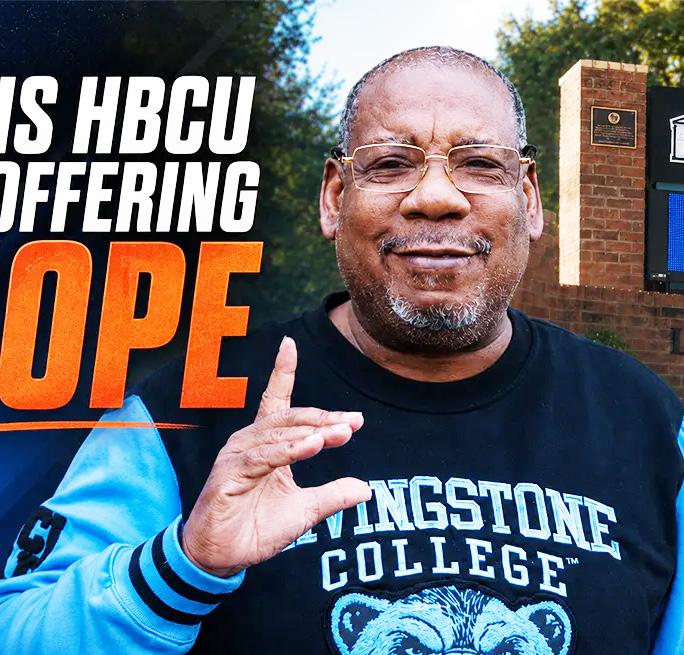
Livingstone College is using its HBCU mission to target students aging out of foster care with a program built to remove barriers to higher education.
The Salisbury, North Carolina-based institution is doing that through the H.O.P.E. Emancipation Project. The initiative offers a full support system for foster care youth who want to attend college but may lack the financial, emotional or family support that many students depend on.
Qualified students can receive an investment of up to $35,000. That support can cover tuition, on-campus housing, a meal plan and coordinated mental health services. Students are also paired with a dedicated success coach.
That last piece is especially important. The transition from foster care to adulthood can be difficult. The transition to college can be even harder. Livingstone College is trying to make sure those students do not have to navigate either journey alone.
Livingstone College builds support
The H.O.P.E. Emancipation Project is already showing results.
The program’s Alpha Cohort enrolled 22 students. According to Livingstone College, 95 percent of those students are still persisting in college. One student has already graduated. Another is scheduled to graduate in December.
The academic numbers are strong as well. Forty percent of the cohort currently holds a GPA between 3.5 and 4.0. The program also reports that 95 percent of students said they feel a strong sense of belonging on campus.
That sense of belonging is a key part of the HBCU experience. For foster care students, it can be the difference between surviving college and thriving in it.
Livingstone College says less than one percent of children in foster care attend college. President Dr. Anthony Davis is working to change that number. Davis is a foster care alumnus himself. He was born in Connecticut to a teen mother and entered foster care after his grandmother died on the day he was born. He was raised by a caring foster mother.
His journey shaped his belief in education.
“These students are just like me. I always wanted to go to college but could not. There were many barriers but no bridges. My dream was deferred, delayed, but never denied,” Davis said. “I am committed to ensuring that the same elevator that enabled me to go from Foster Care to The President’s Chair will be in place for someone else.”
Foster care students get an HBCU pathway
For an HBCU founded to educate students often overlooked by larger systems, the mission fits. Livingstone College is not just recruiting students aging out of foster care. It is building a bridge for them.
The H.O.P.E. Emancipation Project is about access. It is also about completion. And for foster care youth who have been told college is out of reach, Livingstone College is making a different statement. There is a place for them. There is a plan for them. And there is a path forward.
by Staff Report
Natalie Braswell has been named interim chancellor of the Connecticut State Colleges and Universities system, according to the Connecticut Board of Regents for Higher Education.
Braswell has previously served as state comptroller and is currently general counsel to Gov. Ned Lamont. She is expected to serve in the role for one year while CSCU conducts a national search for its next leader.
“Natalie brings a pragmatic, action-oriented approach and a proven ability to take on complex challenges during times of transition,” said Ari Santiago, the board’s interim chair. “She knows how to navigate state government, she leads with accountability and transparency, and understands how important CSCU is to students, faculty and staff, and communities across Connecticut.”
Braswell said the appointment was an honor that came with significant challenges.
“Throughout my career, I have never shied away from difficult challenges, and I understand both the responsibility and urgency of this work,” she said. “Our colleges and universities are essential engines of opportunity, workforce development, economic growth, and social mobility for students and families across our state. This is a moment that calls for steady leadership, accountability, and a clear focus on moving forward.”
Lamont called Braswell “a steady hand.” “Time and again, she has stepped into challenging situations, tackled tough issues head-on, and delivered results when the stakes were high,” he said in a statement. “Natalie doesn’t back down when something gets difficult.”
Braswell is a graduate of UConn and the UConn law school. She also taught legal

practice as an adjunct professor at UConn Law and served on the school’s foundation board and its Diversity, Equity and Belonging Committee.
CSCU operates 16 campuses statewide, including Central Connecticut State University, Eastern Connecticut State University, Southern Connecticut State University, Western Connecticut State University, Charter Oak State College, and Connecticut State Community College (CT State).
As interim chancellor, Braswell will also help oversee the completion of an independent review examining all known facts related to the former interim chancellor’s conduct and CSCU’s response to reports of alleged misconduct, including whether system policies, procedures, and best practices were appropriately followed. The review is expected to conclude within three months, and its findings will be made public upon completion, according to state officials.
by Donald Eng
SOUTH WINDSOR, CT — It appears a South Windsor Town Council candidate who was denied a seat in favor of a candidate who received fewer votes will finally be sworn into his elected role.
Harrison Amadasun, a Democrat who received the sixth-most votes for the 9-member council – and more votes than any Republican – is scheduled to be sworn in tonight before the regularly scheduled council meeting following a ruling from Judge Carl Schuman that the seat rightfully is Amadasun’s.
“This decision has been a long time coming, and today the court affirmed what the people of South Windsor already made clear at the ballot box,” said South Windsor DTC Chair Anitha Elango. “Democracy only works when election results are respected, and today’s ruling is a powerful affirmation that the will of the people cannot simply be rejected in an improper, arbitrary, and retroactive manner by unelected municipal officials.”
The controversy concerns the 2025 South Windsor Town Council race in which Amadasun received 3,847 votes, but Town Clerk Bonnie Armstrong instead awarded the seat to Republican Rick Balboni, who received 2,937 votes.
The issue is that in the Nov. 4 election, South Windsor voters also approved a Town Charter change reducing majority representation to a bare 5-4 majority.
The council previously had allowed a 6-3 majority.
Amadasun, who received the sixth highest vote total of the Democrats running, was then denied a seat in favor of a fourth
Republican.
Amadasun then sued, claiming that applying the charter revision rules retroactively to the previous election had nullified thousands of votes. The case ultimately ended up in front of the CT Supreme Court after a Superior Court judge initially dismissed the suit on technical grounds. The Supreme Court unanimous-
ly sent the case back to the Superior Court for reexamination.
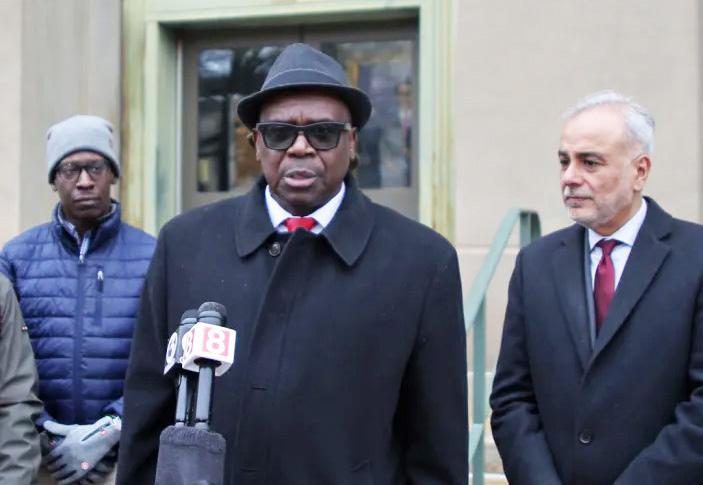
Attorney John Kennelly, who represented Amadasun, said it had been an honor to work on the case.
““Today’s decision is a landmark victory not only for the people of South Windsor but for democracy itself,” he said. “Harrison’s vindication stands as a bulwark against anyone who attempts to silence the will of the voters.”
Amadasun said he was looking forward to taking his seat.
“This was never about me; this is, was, and will always be about the voters of our community,” he said.
In his ruling, Schuman pointed out numerous inconsistencies, including proposed charter language that prohibits parties from nominating more than five council candidates and instructing voters to vote for five candidates, with the presence of six candidates from each party on the ballot voters had in front of them and instructions to vote for six candidates.
Also, the charter revisions eliminated the elected positions of treasurer and Board of Selectmen, but candidates for those positions appeared on the ballot since the town did not know at the time whether voters would approve the charter changes.


John P. Thomas Publisher / CEO
Babz Rawls Ivy Editor-in-Chief Liaison, Corporate Affairs Babz@penfieldcomm.com
Advertising/Sales Team
Keith Jackson Delores Alleyne John Thomas, III
Editorial Team
Staff Writers
Christian Lewis/Current Affairs
Anthony Scott/Sports Arlene Davis-Rudd/Politics
David Asbery / Tanisha Asbery
Jerry Craft / Cartoons / Barbara Fair
Dr. Tamiko Jackson-McArthur Michelle Turner / Smita Shrestha William Spivey / Kam Williams Rev. Samuel T. Ross-Lee
Contributors At-Large
Christine Stuart www.CTNewsJunkie.com Paul Bass www.newhavenindependent.org
National Association of Black Journalist
National Newspapers Publishers Association
Greater New Haven Chamber of Commerce Greater New Haven Business & Professional Greater New England Minority Supplier Development Council, Inc.
The Inner-City Newspaper is published weekly by Penfield Communications, Inc. from offices located at 50 Fitch Street, 2nd Floor, New Haven, CT 06515. 203-3870354 phone; 203-387-2684 fax. Subscriptions:$260 per year (does not include sales tax for the in State subscriptions). Send name, address, zip code with payment. Postmaster, send address changes to 50 Fitch Street, New Haven, CT 06515. Display ad deadline Friday prior to insertion date at 5:00pm Advertisers are responsible for checking ads for error in publication. Penfield Communications, Inc d.b.a., “The Inner-City Newspaper” , shall not be liable for failure to publish an ad or for typographical errors or errors in publication, except to the extent of the cost of the space in which actual error appeared in the first insertion. The Publisher reserves the right to refuse advertising for any reason and to alter advertising copy or graphics deemed unacceptable for publication. The entire contents of The Inner-City Newspaper are copyright 2012, Penfield Communications, Inc. and no portion may be reproduced by any means without the written permission of the publisher.



by Maya McFadden
Worthington Hooker School, Benjamin Jepson School, and Family Academy of Multilingual Exploration (FAME) are all on tap to be led by new principals next year, after the Board of Education approved two internal promotions and one outside hire.
New Haven Public Schools (NHPS) Supt. Madeline Negrón recommended those new-principal picks at last Monday’s school-board meeting at King/Robinson School. The Board of Education voted unanimously to approve all three.
The school board’s votes mean that current King/Robinson Assistant Principal Cara Campo will serve as principal of Worthington Hooker School, replacing the retiring Margaret Mary Gethings; current Jepson Assistant Principal Karissa Stolzman will serve as Jepson’s principal, replacing the retiring Lesley Stancarone; and current New Britain schools administrator Rosa Ortiz will serve as principal of FAME, replacing the retiring Marisol Rodriguez.
Campo’s and Stolzman’s appointments will become effective July 1; Ortiz’s will become effective July 8.
In brief remarks about these recommendations last week, Negrón described Campo as an equity-driven leader with two decades of experience with NHPS. She said Campo has also been a teacher-mentor during her time working for the district.
“One belief that really grounds me as an educator and leader is that every person in a school community brings unique gifts and every student comes to school with strengths and potential waiting to be nurtured,” Campo said during the school board meeting. “Every staff member brings talents and expertise that enrich a school community. As principal of Worth-
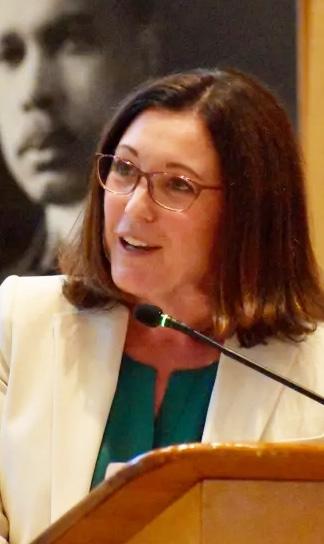
ington Hooker, I look forward to fostering an environment where those gifts are recognized and valued and celebrated.”
Negrón said that Stolzman has over a decade of administrative experience. She is a Hillhouse alum who has been a “deeply rooted community leader” inside and outside the school building. Stolzman said Tuesday that her son currently attends Hillhouse.
“I am a proud product of New Haven Public Schools,” Stolzman said. “From Edgewood to Sheridan and a graduate of the mighty James Hillhouse High School. This district has invested in me. It shaped my foundation, ignited my passion for education.”
Negrón said that Ortiz is a bilingual educational leader with more than 30 years
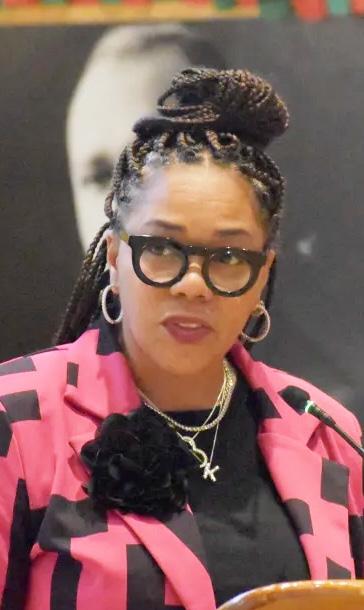
of schools experience in Connecticut. She will come to New Haven after most recently serving as an assistant principal in New Britain.
In response to some public testimony shared earlier in the meeting about Ortiz being an external candidate who has most recently worked outside of New Haven, Ortiz said she will not take her new role at FAME lightly. “I heard tonight some of our FAME staff’s passion about this principal candidacy and I can’t blame them,” she said. “They want to see a true leader help our school move in the right direction. I too hold that same passion and can only hope that within time they too will see that leader in me.”
Ortiz was responding to testimony earlier in the evening by FAME staffer and SPMT Chair Judith Leach and PTO President Janet Gonzalez, who both questioned
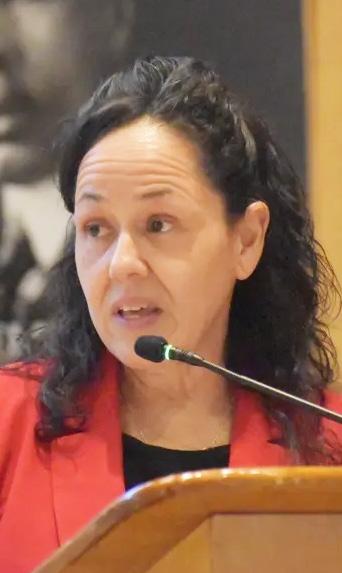
why the district did not select an internal candidate for the principal appointment. They said that current FAME Assistant Principal Regina Carini would have been great for the job.
Leach said she spoke collectively for the FAME school community to publicly express gratitude for Carini who has offered “deep positive impacts” on the community.
“Ms. Carini has been the steady anchor of our building for the past five years,” Leach said. “Teachers choose to stay at FAME because they feel genuinely supported by her and our students thrive because she knows and cares for every single one of them.”
They described Carini, a 23-year NHPS veteran, as having unwavering leadership
that has been vital to the school’s stability, bringing a calm that has helped during school emergencies, and constantly rolling up her sleeves to put data to action through home visits and by designing an incentive plan to lower chronic absenteeism from 21.2 percent to 19.2 percent.
“She spearheaded a restorative justice program that has fundamentally transformed school culture and drastically reduced suspensions,” Leach concluded. Gonzalez said Carini engages with students and families with “genuine care and dedication.”
She said the PTO was “profoundly” disappointed that Carini wasn’t promoted to principal and also expressed public gratitude for Carini’s years of work. In response to the testimony, Negrón said the step-by-step NHPS principal hiring process includes several interviews with HR, the superintendent, and the school’s SPMT.
“I’m a big fan of Ms. Carini at FAME,” Mayor Justin Elicker said during the school board meeting. “But I also very much respect the process that the superintendent uses to evaluate who’s most appropriate to be principal and will be supporting the superintendent’s decision here.”
Board of Education Secretary Ed Joyner asked how many candidates applied for the FAME principal position. Negrón said there were a total of five internal candidates and two external candidates. By the time it got to her for the final interview step, there was one internal recommendation and one external.
“So by the time it got to you all the various stakeholders had input and they recommended two remaining candidates,” Joyner said. “So that means the SPMT had input. The union had input. And your staff had input.”
by Donald Eng
Just days after the 2026 legislative session, Senate Majority Leader Bob Duff already has a new tax plan for the 2027 session.
The Norwalk Democrat issued a statement this week announcing his intention to explore how Connecticut can legally seize any payments received by state residents from the Trump administration’s $1.8 billion “Anti-Weaponization Fund.”
Duff said he intends to introduce legislation in the 2027 legislative session once that legal review is complete, with the goal of imposing a 100% state tax on any such payments received by Connecticut residents.
“Connecticut is not going to let a single one of our residents profit from that corruption,” Duff said. “If you filed a claim with Trump’s slush fund and collected a check, we are going to explore every legal option available to take every penny of it back. We will not allow this state to be a safe harbor for insurrectionist windfalls.”
The fund, announced by the Justice Depart-

ment earlier this month as part of a settlement resolving Trump’s lawsuit against the IRS over the leak of his tax returns, draws
from the federal Judgment Fund and operates with no judicial oversight, Duff said. It is intended to pay people who claim to
be victims of government “weaponization,” including those who took part in the Jan. 6, 2021 insurrection, when an armed mob of Trump supporters stormed the U.S. Capitol in an attempt to overturn the 2020 election.
Legal experts, government watchdogs, and even some U.S. Senate Republicans have condemned the arrangement as corrupt and unprecedented, Duff said.
Two Capitol Police officers who defended the building on January 6 sued to block the fund, calling it a “taxpayer-funded slush fund to finance insurrectionists.”
Duff said this was an unprecedented time.
“This regime acts in ways that were previously unthinkable, and their lapdogs on the Supreme Court and in Congress hand them a stamp of approval every single time,” he said. “Connecticut is going to fight back with every tool we have. We are doing the legal work now so that when the 2027 session begins, we are ready to act.”
Reaction to the proposal was varied, and divided along party lines.
Duff’s Republican counterpart, Sen. Stephen Harding of Brookfield, called the proposal pure political theater.
“But what do you expect? Connecticut Democrats won’t talk about how they made your electricity bills so unaffordable. Connecticut Democrats won’t talk about how they made your property taxes and health insurance so unaffordable. Connecticut Democrats won’t talk about the jobs they are driving out,” Harding said. “Nothing will change unless more Republicans are elected in our state.”
Gov. Ned Lamont, though, backed the plan. In a social media post on X, Lamont said, “This is a good idea, @SenatorDuff. And we should invest any revenue into the new fund we created supporting the families of fallen police officers killed in the line of duty. Let’s discuss.”
Though the fund faces numerous legal challenges, other states including California and New York are also planning action to prevent residents of those states from benefitting from the fund should it ever happen.





placed at the Evergreen office or the website.
by Karen Ponzio Les Misérables Shubert Theatre
Can a tale first told in the 19th century still resonate in the 21st century? In the case of Les Misérables, the answer is a resounding “yes.”
The beloved musical’s current North American tour opened at the Shubert Theatre Tuesday night for a six-day run. According to their website, it has been seen by “over 130 million people worldwide in 53 countries, 438 cities, and 22 languages.” That’s quite the connection.
The story of the musical “Les Mis” — as it is more commonly referred to — begins, appropriately, with a story, specifically the classic novel of the same name written by Victor Hugo and published way back in 1862. It did not become a musical — with its original lyrics written by Alain Boublil and music by Claude-Michel Schonberg — until 1980 in Paris, France. Five years later, an English language adaptation premiered in London’s West End, where it has been running ever since.
Broadway saw its own version premiere in 1987, where it won multiple awards at the Tonys — including Best Musical — and returned for a revival in 2014. Multiple productions and tours have occurred over the years all over the world. It was also made into a motion picture back in 2012 that won three Oscars, including a Best Supporting Actress Award for Anne Hathaway.
The musical maneuvers its way deftly through the story of a prisoner named Jean Valjean who, after serving 19 years in prison, is released by the guard Javert but cannot find work due to his status. His

original crime, stealing bread to help feed his nephew, haunts him, but he ends up stealing again. This time it is silver from a bishop. When the bishop pretends that he was the one who gave him the silver and then gives him more, it causes Valjean to commit himself to living a more honest way of life.
He breaks parole and goes on to create a new life where he becomes a factory owner and mayor of a town, all whilst hiding his true identity. He becomes a guardian to a young child, Cosette, after her mother Fantine, a worker of his, falls into despair and dies. During all of this he once again has a run-in with Javert as well as the
Thenardiers, inn keepers who have been using Cosette as a servant while taking money from Fantine for her care. They also have a daughter Eponine who, many years later, becomes involved in a love triangle with Cosette and revolutionary Marius.
Yes, there is revolution afoot in France, and it continues on while Valjean continues his search for redemption, Cosette and Marius pine for one another, Eponine pines for Marius, the Thenardiers plot to be richer, and Javert searches for Valjean. And if you think the story is stacked, you should hear the music. This is epic musical theater with one showstopper after
another. Even if you know how the story plays out, whether it’s from reading the original novel, watching the film, or seeing the show itself, it grips the viewer throughout.
“I Dreamed a Dream,” sung by Fantine early on in the show, sends a chill through the listener as she sings of her hopes being crushed by the reality of her situation: no job, no money, and a child to care for. “Master of the House,” sung by the Thenardiers and their customers, adds some comic relief to the proceedings. “Do You Hear the People Sing?” — sung by revolutionary Enjolras, students, and citizens of the town – is enough to fire one
up to start a revolution themselves. And in a way it seems that may be one of the reasons this story continues to connect to those who find it, whether it is for the first or fiftieth time. In its near-three-hour run time, Les Mis runs the gamut of emotions from sadness to fear to fighting spirit. France in the early 19th century was not the only time people were yearning for change or suffering a fate that they hoped was not beyond their control to change. And who among us has not felt regret, wished to be seen in a different light, or wished for another chance to improve our own situation and ourselves? Les Mis excels at taking a moment in history and making it both profound and personal. This sweeping production by Cameron Mackintosh utilizes the historic resonance of the Shubert to its maximum effect with set designs that make you feel like you are in an arena-sized venue at times, but also honors the intimacy of the individual performances. Whether it is the resounding booms during the revolutionary fight scenes or the quieter suffering of Fantine at the hands of those who are unkind to her, the impact lingers on.
As someone who has experienced the novel and the film but had never seen the musical live, this reporter highly recommends it as a vital theater experience, one that not only entertains, but engrains itself in you. By the way, my husband and I have also been going strong since 1985. It’s nice to know that some things last. “Les Misérables” is playing at the Shubert until Sunday, June 7 (including matinees on Friday, Saturday, and Sunday). Tickets are available through the Shubert’s website.
HARTFORD, CT — June 2026 — The Amistad Center for Art & Culture invites the public to join its 35th annual Juneteenth Celebration Series, a three-day commemoration honoring freedom, resilience, culture, and community through family activities, live performances, wellness experiences, history, art, and fellowship.
As Connecticut's premier African American museum and cultural center, The Amistad Center continues its longstanding tradition of celebrating Juneteenth—the oldest nationally recognized commemoration of the end of slavery in the United States—through programs that educate, inspire, and unite thousands of participants from across the region.
This year's celebration includes three signature events:
Saturday, June 13, 2026 | 12:00–4:00 PM | Free The Wadsworth Atheneum Museum of Art | 600 Main Street, Hartford, CT 06103
Families are invited to enjoy a free afternoon of hands-on artmaking, cultural demonstrations, wellness activities, live entertainment, and interactive learning experiences for all ages. A vibrant cultural festival for families and youth centered around exhibitions, Wendel A.
White | Manifest: Thirteen Colonies and Framing American Democracy: Rebel | Revolt | Resist, which highlight the essential role African American history plays in the evolution of American democracy. Artistic vendors, workshops, and activities, including a community collage and an inclusive sensory-friendly art-making station. Dance with our AfroHours silent disco and take part in whole-self wellness initiatives, including sound bath meditation, chair massages, and yoga. Participate in activities that connect the contemporary community to the meaning and history of Juneteenth, and enjoy interactive programming for all ages. With a sensory-friendly viewing of the 2014 film Annie at 11 a.m., all other festivities begin at 12 noon.
35th Juneteenth Jubilee Celebration
Friday, June 19, 2026
The Amistad Center & Wadsworth Atheneum Museum of Art
The Juneteenth Jubilee serves as The Amistad Center's premier annual fundraising celebration and cultural gathering. Guests will enjoy an evening of music, dancing, food, fellowship, and inspiration while supporting educational programs, exhibitions, and community initiatives that serve thousands throughout Connecticut each year. The event celebrates Black excellence, cultural achievement, and the ongoing pursuit of freedom and opportunity.
Go to onecau.se/AmistadJuneteenth to sponsor the program or get tickets while they last.
Bridging Freedom: Juneteenth Community Celebration
Saturday, June 20, 2026
Mortensen Riverfront Plaza & Great River Park
In partnership with the Cities of Hartford, East Hartford, and West Hartford, The Amistad Center will help bring the community together for a free regional celebration along the Connecticut River. Featuring live entertainment, cultural performances, food vendors, community organizations, family activities, and opportunities for reflection and connection, Bridging Freedom embodies the spirit of Juneteenth by bringing diverse communities together across geographic and cultural boundaries.
"Juneteenth is more than a historical commemoration—it is an opportunity to celebrate resilience, reflect on our collective journey, and imagine a more just and equitable future," said Rodneyna M. O. Hart, MBA, Interim Executive Director of The Amistad Center for Art & Culture. "For 35 years, The Amistad Center has provided a space where community members can gather to honor the legacy
of those who fought for freedom while celebrating the creativity, achievements, and cultural contributions of people of African descent. We invite everyone to join us for this important celebration."
The 2026 Juneteenth Celebration Series aligns with The Amistad Center's mission to honor, preserve, and celebrate the art and cultural contributions of people of African descent while fostering education, dialogue, and community engagement.
Proceeds from the Juneteenth Jubilee support year-round exhibitions, educational initiatives, youth programs, artist engagements, and community partnerships that advance The Amistad Center's work throughout Connecticut and beyond.
For tickets, event details, sponsorship opportunities, or volunteer information, visit www.amistadcenter.org or contact The Amistad Center at (860) 838-4089
By Rev. Dr. Leon Bailey Jr.
“Faith Matters” is a column that features pieces written by local religious figures.
Our world is strained by division and uncertainty. It’s refreshing to pause and consider something that speaks to all of us; not as partisans, not as members of any group, but simply as human beings. This reflection is from the Gospel of John 7:37–38. It is an invitation that reaches beyond any single faith tradition. It asks us to imagine living waters: a symbol of renewal, compassion, and shared humanity, flowing through every person, regardless of belief, background, or political identity.
In times like these, when headlines pull us apart and loyalties harden, there is value in exploring ideas that remind us of what we hold in common. Consider this image of living waters in a way of seeing ourselves and one another that transcends the usual lines we draw.
In the Gospel of John, Jesus speaks words that echo across centuries:
“Let anyone who is thirsty come and drink… and out of the believer’s heart shall flow rivers of living water.” This image is powerful enough to rise above religious boundaries. Whether one approaches it from a Christian background, another faith tradition, or no tradition at all, the metaphor of living waters speaks to something deeply human: the universal longing for renewal, compassion, and connection. Living waters are not stagnant. They move, refresh, and enliven. They carve new paths and sustain life wherever they flow. When we imagine such waters flowing through every person, we see humanity not as divided, but as a shared community nourished by the same source. In this sense, living waters symbolizes the vitality within all of us: our capacity for empathy, generosity, courage, and understanding. These qualities are not of any one religion. They are not limited to believers or withheld from nonbelievers. They are not reserved for one race, one nation, or one political identity. Living waters, understood as the life force that animates compassion and justice, belong to everyone. They remind us that beneath our differences we share the same thirst for dignity, belonging, and peace.
We live in times of turmoil: global conflict, social fragmentation, economic strain, and political polarization. Regardless of our affiliations, we feel the weight of these pressures. They touch our neighborhoods, workplaces, and families. They shape our conversations and sometimes strain our relationships. These challenges do not discriminate, and they reveal something important: when the flow of living waters is ob-
structed, all of us feel the drought.
The obstructions are familiar: fear, suspicion, prejudice, the belief that “my group” is more deserving than “their group.” These barriers constrict the flow of the very qualities that sustain communal life. When compassion dries up, resentment grows. When understanding is blocked, conflict intensifies. When hope is dammed, despair spreads.
There is hope in living waters. Whenever we choose empathy over hostility, they move. Whenever we listen instead of dismissing, they deepen. Whenever we extend kindness to someone who differs from us, they widen. Whenever we recognize the inherent worth of another person, regardless of race, religion, nationality, or political identity, the waters rush with renewed strength. This is not merely a religious aspiration; it is human. It is the work of building a world where the life giving qualities symbolized by living waters can flourish. It is the work of refusing to let division define us, and remembering that every person carries within them a reservoir of potential for good. Imagine a community where living waters flow freely: where compassion overrides suspicion, where justice is pursued without hatred, where disagreements do not diminish our shared humanity. Imagine a world where the Spirit — or, for some, the human spirit — moves unhindered through acts of mercy, gestures of peace, and efforts to heal what is broken.
In these turbulent times, the invitation symbolized by living waters remains open to all. Let anyone who is thirsty come. Let the waters flow. And let us become channels, not barriers, through which renewal can reach our neighbors, our communities, and our world. Previous “Faith Matters” columns:

by Janday Wilson
Jubilee: A Folk Opera Yale Schwarzman Center New Haven
As a multicultural group of performers, dressed in all black, streamed into the Dome at the Yale Schwarzman Center Thursday evening, the audience exploded in applause. We knew we were in for an experience.
The night’s presentation of folk opera Jubilee was a work-in-process, so there was no staging or the typical operatic spectacle. There was no need.
The concert reading was so engrossing, it felt like you were witnessing a full production.
As pianist Daniel Fung played thoughtful opening notes, the supertitle on the screen read “Flesh of My Flesh, This is Your Story.” Then the audience was immediately plunged into the abstract.
Margaret Walker (Patrice Pates Eaton), author of masterpiece novel Jubilee that the opera is based on, and Vyry (Jillian Tate), the fictionalized version of her great-grandmother from Jubilee, meet one another across centuries. Their joy during their reunion was palpable.
Jubilee tells the story of Vyry’s fight for freedom, from slavery through the Reconstruction era. Librettist Joan Ross Sorkin augmented the libretto with the inclusion of poetry from Walker’s This is My Century. In the next scene, the entire chorus stands up to sing lines from her poem “I Hear a Rumbling…”
I hear my children crying “Bread”/I hear my children crying “Peace”/I hear the farmers crying “Bread”/I hear the soldiers crying “Peace”/There is a rumbling…/… We want Peace./Bread and Peace are not enough; Freedom too.
As the sopranos held their notes, the deeper voices rumbled underneath creating a beautiful swath of sound. That powerful song sounded like a Negro spiritual, and established Jubilee as something entirely different than a classical opera. The entire folk opera was sung in English – often in historically Black colloquial English.
The piano took on a more romantic tone as the scene moved on to “I Want to Write,” another poem. Pates Eaton sang with a velvety richness; I want to write the songs of my people./…I want to catch their sunshine laughter in a bowl;/fling dark hands to a darker sky/and fill them full of stars…”
That stunning linguistic imagery, a hallmark of Walker’s writing, carried the show throughout, making visible the private ache and spiritual unrest but also the hope and joy pulsing beneath each character’s performance.
Each singer, down to the minor characters, employed their facial expressions with great utility; each emotion felt sincerely embodied. Tate’s eyes teared with sorrow in some scenes and in others shone with desire for salvation as her sparkling soprano soared over the audience. Her hus-
band Innis (Edwin Jhamal Davis) threw his head back and opened his mouth wide as he full body bellowed, I’m a free man, his bass filling the room.
Throughout, the piano composition accented the action with steady streams of insistent notes, sometimes dropping away to highlight the performers’ voices or taking a darker turn to discordance when scenes heightened. Conductor Julius Williams guided the ensemble with assured sensitivity.
Time collapsed as Margaret and Vyry encounter one another throughout the opera.
The story moves between the mid-to-late 1800s of Vyry’s time to the 1960s of Margaret’s time. They sang of the struggles of living through slavery, trying to escape to freedom, and then the repercussions of said freedom; still having to live with white people’s oppressive hatred. Like the Ku Klux Klan burning down Vyry and Innis’ newly built home.
Those repercussions extended to Margaret’s period. The audience heard it in the song/poem “Street Demonstration” about the Civil Rights Movement.
The Fighting may be long/And some of us will die/But Liberty is costly/and ROME they say to me/Was not built in one day.
The actual poem ends with: Hurry up, Lucille, Hurry up. We’re Going to Miss Our Chance to go to Jail. For the purposes of the opera, they change Lucille’s name to Margaret. At that line, the audience laughed; not because it’s funny to be jailed for fighting for God-given rights, but because sometimes you have to laugh to get through the godawful pain.
“[This is] what Black art has always done. It finds joy in the worst. It finds humanity in the most inhumane. It finds the unfindable, and I don’t think that will ever change unless America fundamentally changes,” said the producer, Yale School of Music Associate Professor of Music and Associate Dean for Student Life and Community Engagement at the Yale School of Music Dr. Albert Lee.
Despite Jubilee’s heavy subject matter, the production found room for sly humor, with certain scenes sparking genuine hilarity. When plantation owner Big Missy (Janna Baty) encountered a Union soldier, she gleefully told him, “I hope my son sees you on the battlefield and whups your ass.”
During the “Inflation Blues” scene/poem, the chorus sang, What’s the matter with Uncle Sam?/He took away my sugar; now he’s messing with my ham. The audience laughed in commiseration as we likely all reflected on our present day. The song went on: The gas too high to fill the tank/ One year cost more than did the car…/Cost more to live than foreign war./You can’t afford to live or die./…Hospital bed for just one day/Will scare your very death away. That parallel to our current times was almost too much to handle. The old adage,“there is nothing new under the sun,” struck home.
In a near-final scene, Vyry’s first husband Russell Ware (Miles Wilson-Toliver), who



was thought to be dead, appeared, showing all 32 teeth at their touching reunion. He was met with her new husband. “Innis, this is Randall,” Vyry blushingly explained. “Surprised me too.” The audience lost it.
The two youngest performers playing Young Jim (John Mugisho Mulaganire) and Young Minna (Penelope Klark Stewart) were a highlight. Even the chorus members couldn’t help grinning as they sang with voices beyond their years. Mulaganire was wearing the most adorable mini tuxedo, too – he took his job very seriously.
Every performer stood up for the final song/poem, “For My People.” They made a mellifluous roar as they sang, Let a new earth rise. Let another world be born/…. Let a second generation full of courage issue forth;/Let a race of men now rise and take control.
“For My People” came from the collection of poetry For My People that won Walker the 1942 award for the prestigious Yale Younger Poets Series. So, it was a kind of synchronicity for the work-inprocess opera to be staged at Yale. Even more of a coincidence, the director of the Margaret Walker Center at Jackson State University, Dr. Robert Luckett, who was present at the performance, is a Yale graduate who once lived across the street from Woosley Hall.
This work-in-process of Jubilee involved more than Yale; it was sponsored by Yale ASCEND, amongst other partnerships alongside Jackson State University. The ASCEND (Alliance for Scholarship, Collaboration, Engagement, Networking and Development) initiative is Yale’s effort to deepen their relationship with historically Black colleges and universities (HBCUs) and provide resources and collaborative opportunities.
Thus, in addition to Yale students, alum and faculty, Jubilee’s cast was compromised of students from five HBCUs, including Jackson State University, where Walker was a professor of English and founder of the Institute for the Study of the History, Life, and Culture of Black People (now The Margaret Walker Center). In a couple of weeks, they will stage Jubilee at Jackson State University.
Composer Randy Klein became aware of Walker because she was in the PBS/BBC documentary on Richard Wright that he composed music for. Prior to composing for Jubilee, he composed For My People –the Margaret Walker Song Cycle based on her poetry. For more than 25 years, Klein has written music to Walker’s words. After seeing Jubilee, he shared: “Hearing the work come alive for the first time was an exhilarating experience. Jubilee is a special work that sings while sending a message of unity and inclusion. I’m sure it will take on a life of its own.”
“We want people to understand the history, and how it affects today,” said Ross Sorkin. “We want to change hearts and minds, and we hope that this is going make an impact on how people think about these questions of freedom.”

By Word In Black Terrance Harris
Supporters of an athlete boycott say schools in states accused of gerrymandering should not benefit from Black athletic talent without protecting Black voting rights.
A controversial Supreme Court ruling on voting rights is fueling calls for Black athletes to boycott powerhouse college programs in Southern states accused of diluting Black political power. Supporters say Black athletes could wield the same economic leverage that once helped integrate college sports itself. This article originally appeared in The Houston Defender.
America — particularly Black America — is at a difficult crossroads that literally threatens the complexion of our nation.
Last month’s Supreme Court ruling that blew up Section 2 of the Voting Rights Act of 1965, allowing states to redistrict and gerrymander to dilute the vote of Black Americans, threatens to set our voting rights back significantly, especially in the South, if we don’t do something. Sure, we protest, we can scream, and just be pissed off.
But our real fighting power is in showing up at the voting polls like never before and withholding our buying power where our vote isn’t respected.
We also have another power that is sure to get the attention of white folks who don’t think we should have a say in this country’s political landscape. It’s through our gifted young Black athletes, whom they love to cheer for in the uniforms of their favorite college athletic teams.
In the wake of the Supreme Court’s 6-3 ruling in the Louisiana vs Callais case, Black people are calling for the top Black athletes to avoid playing for any primarily white college or university in the South. The calls have come from athletes, journalists, and even celebrities like actor and New Orleans native Wendell Pierce to boycott the Southeastern Conference in particular.
We’re talking kids boycotting programs in Florida, Louisiana, Mississippi, Alabama, South Carolina, Georgia, Tennessee, and Kentucky — places where the Black vote is being diluted. And yes, that includes Texas, where your beloved University of Texas and Texas A&M will be affected.
We Black Texans have had a frontrow seat to how gerrymandering can cripple the Black vote, and specifically in Houston, where Donald Trump commanded Gov. Greg Abbott, his good soldier, to find him five congressional seats ahead of the upcoming midterm elections. And right now, we

have lost a Black seat in Houston and forced two candidates – Christian Menefee and Al Green – with similar liberal leanings into a fierce, nasty battle that will weaken Black political influence in this state and the country.
I say, go for it and make these offending states suffer where it hurts. But don’t stop at the SEC. Extend it to schools in the Big 12 and ACC conferences, in states where people want to cheer for Black athletes on the football field but don’t want them to have true representation in Congress, the Senate, or even their more influential local elections.
Let’s not pretend this isn’t an enormous ask, especially in today’s major college landscape, where football and basketball athletes are able to legally make life-changing sums of money through name, image and likeness deals. But know that similar NIL and revenue-sharing riches will be awaiting you in states where your vote still matters and carries real weight.
It’s time Black athletes understand their influence and power. It’s time they free themselves from being viewed as glorified gladiators who perform for people who don’t respect them as equals or as real human beings, for that matter.
As one of the last football conferences to integrate, the SEC messed around and found out back in the 1960s that it couldn’t stay relevant

without Black athletes, so the good ole boys had to start accepting Black athletes. If the SEC felt the pressure then, imagine what it would feel today if the best Black athletes in the South suddenly started heading North or going out West.
Saturday afternoons just wouldn’t feel the same, and the SEC’s TV partners wouldn’t feel the same, either.
It was funny to hear recently hired Lane Kiffin throwing a barb at his for-
mer employer, Ole Miss, saying that it was hard to get Black athletes to want to come there because of the lack of diversity.
We used to have a saying where I’m from up North: If that ain’t the pot calling the kettle black. Somebody tell Kiffin it ain’t any different for Black people in Louisiana.
Imagine if young Black student-athletes and their families did start to align their recruitment with the consciousness of what kind of power play that would be. The natural destinations would be in the North and West, but what about HBCUs?
Back in the day, schools like Grambling State and Florida A&M boasted powerhouse football programs because the all-white SEC wasn’t an option for the best Black student-athletes.
Imagine what Prairie View head football coach Tremaine Jackson or Texas Southern coach Cris Dishman could do if the recruits who would have ordinarily gone to UT or Texas A&M suddenly landed in their laps. No, the amount of money they could make at the bigger schools might not be there, but the NIL and revenue-sharing pots would be significantly larger than they are today.
It’s time that Black athletes and their families understand their power and influence and then use it.
by Donald Eng
HARTFORD, CT — Nearly 100,000 state residents will be receiving letters in the mail starting this week informing them that some or all of their medical debt has been erased under a partnership between the state and the national nonprofit organization Undue Medical Debt.
This is the fourth round of the initiative and is eliminating nearly $315 million in medical debt from 97,000 individuals, according to Gov. Ned Lamont’s office. The most recent previous round, in December, erased about $63 million in medical debt from just under 40,000 residents. In total, more than 252,000 residents who were struggling with medical bills have had more than $513 million in medical debt canceled since the program began in 2024, Lamont said.
“Medical debt is a burden carried by families in every Connecticut community, but it disproportionately affects working-class families,” Lamont said. “While the Trump administration continues to ignore patients’ plight by gutting essential medical programs, including Medicaid, FQHCs, and Planned Parenthood, tax credits and subsidies for the Exchange, Connecticut is taking an active role in wiping out medical debt.”
Under the initiative, Undue Medical Debt leverages investments from the state to negotiate with hospitals and other providers on the elimination of large, bundled portfolios of qualifying medical debt owed by Connecticut patients. Those who are eligible must have income at or below four times (400%) the federal poverty level or have medical debt that is 5% or more of their income. The current federal poverty level is an annual income at or below $33,000 for a family of four. Since these medical debts are acquired in bulk and belong to those least able to pay, they cost a fraction of their face value, often pennies on the dollar, according to state officials.
Connecticut residents who have had some or all of their medical debt cancelled will receive an Undue Medical Debt branded envelope with the state seal, containing a letter from Undue Medical Debt in the mail over the next several days. To view a sample of what this letter looks like, click here.
Because this debt erasure occurs through the purchase of large, qualifying bundled portfolios of debt from participating partners such as hospitals and collection agencies, there is no application process for this relief and it cannot be requested.
“Nobody should go broke just because they got sick, but our healthcare system too often leaves families on the hook for bills they simply can’t pay,” Allison Sesso, president and CEO of Undue Medical Debt, said. “That’s exactly why partnerships like this one matter so much. With more than 252,000 people helped and over $513 million in medical debt erased since this initiative began, we’re providing immediate, tangible relief to thousands of families.”

by MALEAH PAUL HANDLEY
As a junior in high school, I’ve already had the chance to visit a few colleges. I’ve walked across campuses, sat through tours, and tried to imagine myself there. If I’m being honest, though, most of the time, it felt like I was watching someone else’s life — like something you would see in a movie, rather than something you could truly picture for yourself. That changed when I stepped onto HBCU campuses.
Last month, I joined 50 of my fellow students from United Charter High Schools (UCHS) on the network’s first HBCU Tour, taking us to seven HBCUs in three states and Washington, D.C. The four-day experience was designed not just to show us colleges, but to immerse us in the cultural significance of these institutions. In the weeks leading up to the trip, UCHS brought us together for a series of workshops where we learned about the history and legacy of HBCUs, and topics to prepare us for post-secondary success, including financial literacy and what it takes to succeed in college. We learned how to carry ourselves, ask questions, and advocate for ourselves in new environments. Those workshops helped me walk onto those campuses with confidence — nothing could fully prepare me for what it would feel like to actually be there.
I saw students who looked like me — not just in the classroom, but leading tours; running organizationsl and preparing for careers in fields like nursing, business, and science. I felt a strong sense of community, and everywhere I looked, I saw people

who were serious about their education but also comfortable being themselves.
At Howard University, a nursing student took the time to walk us through her program and answer every question we had. Seeing someone who looked like me already succeeding in the same field I’m interested in made me believe that I could follow a similar path.
At Norfolk State University, I watched a step team practicing outside while other students gathered nearby, studying, talking, and laughing together. It wasn’t just what they were doing; it was how they
carried themselves. They looked at home. That feeling stayed with me throughout the trip.
Another thing that stood out to me was how HBCU students present themselves. I saw young men in suits and ties, and young women in dresses or business attire. It reflected a sense of pride and purpose that really stuck with me, showing me the importance of carrying yourself with confidence and understanding your potential.
What also made this experience powerful was understanding the history be-
hind these institutions. At one campus, we learned about areas preserved because of their connection to the past, including sites connected to the Underground Railroad. It reminded us of what Black people have overcome and built. Walking through those spaces, you realize that HBCUs are not just schools. They are places rooted in resilience and excellence.
Before this experience, attending an HBCU was something I was considering. Now, it feels like a much clearer and more intentional goal. Being on those campuses helped me move from curiosity to confi-
dence in what I want for my future. That kind of shift only happens with exposure, and from adults who believe in you enough to create those opportunities. At UCHS, that belief starts at the top. Our CEO, Dr. Curtis Palmore, told us that he was once told he wasn’t “college material.” Instead of accepting that, he went on to attend an HBCU, where he built a foundation of knowledge and confidence that ultimately helped him earn his doctorate. Hearing that story, and then experiencing these campuses for myself, has shown me that where you start does not define where you can go.
For many students, especially those from communities like mine, college can feel like a big, unknown environment. You hear about it and prepare for it, but you don’t always feel connected to it. Experiences like this change that. They turn college from an idea into a place where you can truly see yourself thriving. By the end of the trip, I was thinking deeply about who I want to become and what kind of environment will help me get there.
More students — especially those from New York, where there are no HBCUs — should have access to experiences like this. Schools and communities should invest in opportunities that help students feel prepared, confident, and seen before they even apply. For me, this experience didn’t just show me colleges. It showed me a future I can truly believe in.
Maleah Paul Handley is a junior at the United Charter High School for the Humanities IV in Queens.
By courtesy of HBCUNEWS.com
HBCU financial health is under the microscope after Forbes released its 2026 College Financial Grades, showing major pressure across private colleges. The report paints a difficult picture for private higher education overall. Forbes reviewed more than 900 private nonprofit colleges with enrollment above 500 students. It said its 2026 formula was revamped with data from Perspective Data Science. The goal was to better measure “true liquidity” at each institution.
That matters for HBCUs because many private historically Black colleges operate with smaller endowments, tighter cash reserves and less margin for error. Forbes described the broader private college landscape as facing a “near perfect storm.” That storm includes a shrinking pool of high school graduates, fewer international students, inflation and more families choosing lower-cost options.
The result is a financial divide. Elite private colleges remain strong. Many less selective colleges are fighting for survival.

Some schools posted solid marks. Morehouse College, Fisk University and Rust College each earned a B+ grade. Tuskegee University, Howard University and Virginia University of Lynchburg earned B grades. Miles College, Hampton University and Claflin University earned B- grades.
That group represents the strongest private HBCU performers in the Forbes data.
But the larger picture is more sobering. Out of 35 private HBCUs listed in the user-provided Forbes grade sheet, 26 received a C grade or worse. That includes 13 schools with D grades.
The D-rated schools include Oakwood University, Stillman College, Virginia Union, Saint Augustine’s, Morris College, Florida Memorial, Edward Waters, Philander Smith, Paul Quinn, Wiley University, Jarvis Christian, Wilberforce University and Allen University.
Those grades do not mean every school is in immediate danger. They do
Con’t onpage 15
Courtesy of HBCUNEWS.com
Venture for T.H.E.M. announced that it will partner with The DM Firm and the Times Square Alliance for the inaugural HBCU Pitch Competition in Times Square
Morgan State alums and entrepreneurship leaders are set to bring a first-of-itskind HBCU startup pitch competition to the center of New York City during New York Tech Week this upcoming June. Venture for T.H.E.M. announced that it will partner with The DM Firm and the Times Square Alliance to host the inaugural HBCU Pitch Competition in Times Square on June 6 as part of Activate LIVE!, a public showcase highlighting emerging founders and innovators.
The event will take place in Times Square during New York Tech Week. It will feature five entrepreneurs connected to historically Black colleges and universities competing before a panel of business and technology leaders. Organizers said the initiative aims to increase visibility and investment opportunities for Black founders and student entrepreneurs.
According to a press release, more than 300,000 visitors typically move through Times Square on summer weekends, giving participating founders exposure on one of the nation’s most recognizable public stages.
The competition will include presentations by founders from several HBCUs, including Peter Iwuh of Morgan State University, founder of Tykoon AI,

a platform focused on NIL and athlete brand management; and Daryl Riley Jr. of North Carolina A&T State University, founder of the fashion technology company Tendaji, among others.
Additional competitors include Taylor Davis of Howard University, creator of the restaurant discovery application Troodie, and Carolyn Alston of Bowie State University, founder of the conversational card game Communic8 It!
Judges for the event include executives and leaders from companies and orga-
nizations such as Moët Hennessy, Base 11, the NBA Foundation, and the Milken Institute.
Organizers said the event reflects a broader push to create equitable access to capital and networking opportunities for underrepresented entrepreneurs. Venture for T.H.E.M., a Maryland-based accelerator, focuses on supporting founders from historically underserved communities through mentorship, access to funding, and business development initiatives.

show financial strain. They also show how thin the line can be for institutions that serve students who often need more support, not less.
Johnson C. Smith was one of many HBCUs in the C-tier.
A middle tier fighting for stability
A large group of HBCUs landed in the middle.
Johnson C. Smith, Clark Atlanta, Tougaloo College and Xavier University of Louisiana earned C+ grades. Talladega College, Bethune-Cookman and Lane College earned C grades. Shaw, Benedict, Livingstone, Voorhees, Dillard and Huston-Tillotson landed at C-.
That middle tier may be the most important group to watch.
These schools are not at the top of the Forbes financial rankings. But they are not at the bottom either. Many have strong brands, loyal alumni bases and important regional roles. The question is whether they can turn those assets into consistent enrollment, fundraising and operating strength.
For HBCUs, financial health is not just about balance sheets. It is about mission.
Private HBCUs often serve first-generation students, Pell Grant recipients and families with limited financial flexibility. That makes tuition-driven models harder to sustain. When enrollment dips, the impact can be immediate. When
costs rise, there is less room to absorb the hit.
HBCU mission meets financial reality Forbes’ 2026 financial grades should not be read as a verdict on the value of HBCUs.
They should be read as a warning.
The data shows that many private HBCUs are operating in a sector where the margin for survival is shrinking. A strong history and cultural relevance are not enough by themselves. Schools need liquidity, enrollment strategy, fundraising discipline and stronger revenue models.
The Forbes report also reinforces a larger truth. HBCUs continue to carry a public mission without always receiving public-level support.
That makes 2026 a critical moment. Schools with stronger grades have a chance to build from a position of stability. The schools in the middle must avoid sliding backward. Schools at the bottom need urgent plans, clear leadership and serious investment.
The financial story of HBCUs is not one story. It is a split screen.
Some institutions are holding steady. Some are fighting uphill. Others are facing real danger.
Forbes did not create that reality. It just put a grade beside it.




By BlackPressUSA Newswire Charlene Crowell
On behalf of the nearly 9 million people now in default on their student loans, a coalition of advocates from consumer, civil rights, and education organizations is appealing to the federal Education Department to halt plans to begin garnishing borrowers' wages this month. Default status connotes borrowers are 270 days or more behind on their payments.
Citing new research from Protect Borrowers, formerly the Student Borrower Protection Center, the coalition advised Education Secretary Linda McMahon in a January 7 letter that a new student loan default occurred every nine seconds in 2025. That escalating rate is unprecedented and nearly three times as high as in 2019, the year prior to the COVID-19 pandemic.
Further, according to the advocates, the Trump administration’s student loan policies are disproportionately harming Black and older borrowers. Signing the joint letter of appeal were: Protect Borrowers, American Federation of Teachers, the Debt Collective, NAACP, National Education Association, the Student Debt Crisis Center, and Young Invincibles.
“Research shows that involuntary collections only exacerbate the economic challenges faced by defaulted borrowers, who are disproportionately seniors and Black borrowers,” wrote the coalition. “In fact, of the borrowers already in default, roughly a third of them are older borrowers. Black graduates are additionally five
times more likely to default than their white peers.”
Additionally, and according to Protect Borrowers, nearly two-thirds of the borrowers who defaulted during the Trump Administration—more than 2.6 million people—live in states that President Trump won in the 2024 election. Among the states most severely affected were Florida, Georgia, Ohio, and Texas, each of which saw 100,000 or more borrowers default last year.
“The decision to resume wage garnishment against millions of borrowers amidst a growing affordability crisis crushing working families is callous and unnecessary,” continued the coalition.
“The decision also comes at a time when struggling borrowers have been forced to wait amidst a nearly 1 million application backlog to enroll in an Income-Driven Repayment (IDR) plan, and as mass layoffs at the Department have made it even harder for borrowers to get help with their student loans or if they are experiencing issues with their student loan servicer.”
For Derrick Johnson, President and CEO of the NAACP, the nation’s oldest civil rights organization, the Trump administration policies are about financial rights.
“By garnishing wages for defaulted student loan borrowers, the Trump Administration will only deepen financial hardship for working families and disproportionately harm Black borrowers,” said Johnson. “Millions are already struggling with rising costs and economic uncertainty, and stripping wages will only push

families further into financial crisis.”
Randi Weingarten, President of the American Federation of Teachers, agreed with Johnson: “This is not about borrowers’ responsibility; it’s outright hostility to the young people trying to get ahead. The Trump Administration is choosing to squeeze teachers, nurses and others while prices are increasing and families are struggling to stay afloat, ripping away wages and tax refunds when people need them most.”
A fact sheet developed by the Center for Responsible Lending tracks key 2025
policy decisions and summarizes the Education Department’s actions against student loan borrowers. These include:
In March 2025, the Department cut nearly half its workforce, with the Federal Student Aid office and Office for Civil Rights among the hardest hit. With Federal Student Aid’s servicing and community outreach infrastructures dismantled, systemic servicing errors are less likely to be caught or corrected, leaving borrowers with fewer avenues for help just as major loan policy changes are being rolled out.
In May 2025, the Department reinstated
the Treasury Offset Program, allowing the government to seize tax refunds from borrowers in default.
On August 1, 2025, the Department of Education resumed interest accrual for borrowers with Department of Education loans under SAVE forbearance. Since 2023, SAVE’s unpaid interest shielded borrowers from balance growth. With that protection gone, borrowers’ balances will now grow during this forbearance and may keep rising if monthly payments do not fully cover accrued interest. This shift makes repayment harder and adds longterm uncertainty for more than 7 million borrowers.
Beginning July 1, 2026, parents who take out new Parent PLUS loans will no longer be eligible for any income-driven repayment plan. That means no access to income-contingent repayment (ICR) or repayment assistance plan (RAP), leaving the standard repayment plan as their only choice. Borrowers with existing Parent PLUS loans can preserve access to ICR if they consolidate their loans before the July 1, 2026, deadline.
“As safeguards are rolled back and oversight weakens, borrowers face growing balances and greater financial strain, making it urgent to press for stronger policies that preserve the promise of higher education as a pathway to opportunity,” concluded CRL.
Charlene Crowell is a senior fellow with the Center for Responsible Lending. She can be reached at Charlene.crowell@ responsiblelending.org
by Tandy Lau
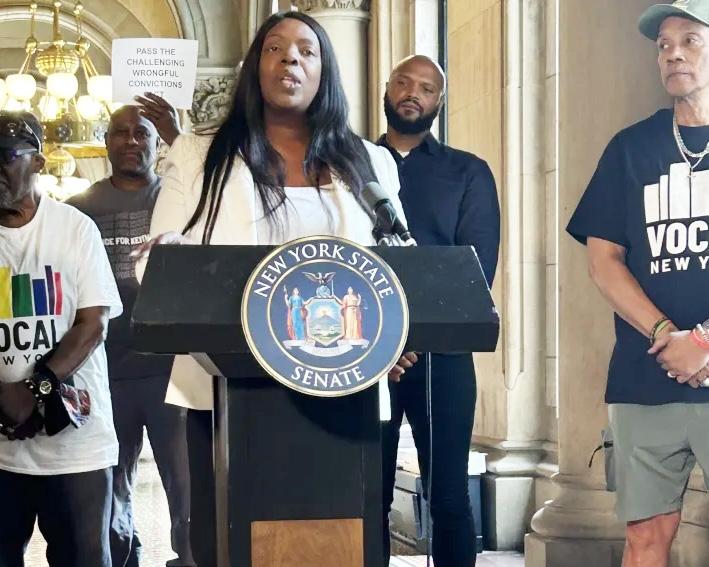
A bill overturning case law preventing innocent New Yorkers from challenging their guilty pleas with non-DNA evidence resurfaced in the state legislature May 19. Lawmakers originally passed the Challenging Wrongful Convictions Act back in 2023 but Gov. Kathy Hochul vetoed the legislation in the 11th hour.
“How could we accept a system that allowed innocent people to spend a single minute in our prisons?” said lead sponsor State Sen. Zellnor Myrie. “But that is the system that exists here in New York. We got to do something about this, and that is why I have been proud under the leadership of people who have been impacted to sponsor the Challenging Wrongful Convictions Act. We passed this bill, we sent it to the governor’s desk, and she vetoed it.
“We went back to the drawing board. We said we will accommodate the concerns, we will add, we will subtract, and here we are, three years later, prepared to finally do justice for New Yorkers right now, so we cannot wait any longer.”
About 97% of New York’s felony convictions stem from guilty pleas. Yet, a 2018 ruling in the state’s highest court prevented nurse Natascha Tiger from challenging a 2012 plea bargain, for which she spent months in jail, after new non-DNA evidence from a civil case showed no crime ever occurred. The bill would overturn the legal precedent established in People v. Tiger.
“In 2018, there was a New York Court of Appeals case, People v. Tiger that created this insurmountable obstacle for many people who are convicted,” said lead State Assembly sponsor Latrice Walker. “The court ruled that if someone pleads guilty to a crime, it bars them from challenging the conviction unless they
can produce newly discovered DNA evidence. This is a staggering hurdle, since 97% of felony convictions and 99% of misdemeanor convictions in New York are solved through guilty pleas and DNA is only relevant in only a small fraction of these cases.”
The amended bill would still overturn the case law, as well as expand access to evidence and legal representation in credible post-conviction cases. Advocates say the new version was redrafted following conversations with concerned skeptics and opponents, who feared the legislation could open “floodgates” in the legal system.
Currently, the main recourse for proving one’s innocence in a guilty plea goes through the local prosecutor. Prosecutor’s offices across the state boast conviction integrity units, which review and push innocence claims from cases they once prosecuted.
For example, Steve Lopez pleaded out to a lower charge to avoid the Central Park Jogger trial, arguably the most well-known wrongful conviction case in American history. But while the courts vacated the convictions of his co-defendants, known then as the Central Park Five, his guilty plea was not cleared until 2022 with the help of Manhattan District
Even before the Tiger ruling, Lopez struggled to find legal representation. And the DNA evidence used to exonerate his co-defendants and prove that serial rapist Matias Reyes raped Central Park jogger Trisha Meili could not be used as evidence for the lower conviction he pleaded out to.
Back in 2022, VOCAL-NY’s Roger Clark and Families and Friends of the Wrongfully Convicted co-founder Derrick Hamilton co-authored a Times Union op-ed about challenging their own convictions. Today, both remain heavily involved in the bill and spoke to the AmNews this week with renewed confidence.
“Back in 2023 it passed both houses,” said Clark. “However, the governor vetoed the bill, which was heartbreaking and extremely cruel. It has been a heart-wrenching moment, especially for those who are still incarcerated and are looking to have to get an avenue to get a fair chance to go to court.”
“This bill will give these people recourses,” added Hamilton. “The ability to get to court to present the evidence of innocence and be exonerated like they should be.”



By courtesy of BlackNews.com
Chikei Rick Chow, an Asian convenience store owner accused in the 2023 fatal shooting of 14-year-old Cyrus Carmack-Belton, who is Black, was found not guilty of murder.
The verdict came from a murder trial tied to a 2023 shooting outside Chow’s convenience store in Columbia, South Carolina. Prosecutors said Chow chased the teen for more than 130 yards after an incident inside the shop and shot him in the back.
During the trial, prosecutors argued Chow acted after wrongly believing the teen had stolen water bottles. They said Carmack-Belton ran from the store, dropped a pistol during the chase, and never threatened anyone with it. One prosecutor told jurors, “Chased a kid down, shot him in the back.”
According to NBC News, Chow’s defense team gave a different account. They said he acted to protect his son during a


fast-moving confrontation. His lawyer said Chow believed the teen had pointed a gun at his son and made a split-second decision in response to what he saw as a threat.
After the verdict was read, emotions ran high in the courtroom. Family members of Cyrus Carmack-Belton cried in the gallery. Chow remained seated, silent, and bowed his head. Defense attorney Jack Swerling said he understood the family’s pain but supported the jury’s decision.
“My heart goes out to them, but 14-yearold kid should not be roaming the streets of Columbia or South Carolina with semiautomatic pistol loaded and ready to fire,” he said.
The case had already drawn widespread attention in Richland County. Community members held vigils and protests outside the store in 2023, including one where water bottles were arranged to spell out “Cyrus.” The shooting added to ongoing tension and grief in the area.
By BlackPressUSA Newswire
A federal lawsuit filed by prominent civil rights attorney Ben Crump alleges that two Black infants were used as subjects in a government-sponsored experimental vaccine study without their parents’ knowledge or consent, resulting in tragic consequences that continue to reverberate decades later.
The complaint, filed on May 22, centers on the deaths of Ross Otto Hambrick and Victor Marcellus King, who were allegedly administered an experimental respiratory syncytial virus (RSV) vaccine developed by the National Institutes of Health (NIH) during the mid-1960s.
According to the lawsuit, Ross was two months old and Victor was four months old when they were injected with a vaccine identified as “Lot 100” at a Washington, D.C. hospital in the winter of 1965. The suit contends that their parents were never informed of the experimental nature of the vaccine nor asked to provide consent.
RSV is a common and highly contagious respiratory virus that often causes mild cold-like symptoms in healthy adults. However, it can lead to severe illness and even death among infants, older adults, and other vulnerable populations.
The lawsuit alleges that both children became critically ill following exposure to the virus the following year. Victor died on January 1, 1967, at 16 months old, while Ross died the next day at 14 months old.
According to court filings, medical findings at the time suggested that the children’s deaths may have been linked not only to RSV infection but also to an enhanced immune response allegedly triggered by the experimental vaccine, compounded by bacterial pneumonia.
The complaint further claims that tissue samples collected during the infants’ autopsies were preserved and later used by researchers studying why the vaccine had produced such severe outcomes. Attorneys for the families argue that the scientific knowledge derived from those

studies contributed to later advancements in RSV research, including vaccines and antibody therapies approved decades afterward.
gued that federal researchers proceeded with testing despite concerns about earlier RSV vaccine trials and the potential risks posed to young children.
The complaint also references previous RSV vaccine studies conducted during the 1960s, alleging that researchers continued testing despite reports of severe illness among some participants.
“The families of Ross Otto and Victor have waited nearly sixty years for answers and accountability,” Crump said in a statement announcing the lawsuit.
The NIH has not publicly responded to the allegations contained in the complaint. As the case proceeds through the courts, the lawsuit is expected to renew debate over medical ethics, informed consent, and the historical treatment of minority communities in medical research.
Crump and his legal team have filed claims including wrongful death, lack of informed consent, and civil battery.
Co-counsel William H. Murphy Jr. ar-
The lawsuit alleges that the families were never informed of the role their children’s tissue samples played in subsequent research and were never compensated for their contribution to medical advancements.
The allegations also draw attention to broader discussions about past instances of unethical experimentation in the United States and the importance of maintaining strict safeguards for human subjects participating in medical studies.
Area resident Kenneth Tolbert said he was near the United House of Prayer for All People Church on May 8 when he spotted what appeared to be the body of a teenage girl hanging from a tree, Juliana Nzita who recently moved to North Carolina from the Democratic Republic of the Congo, Nation / State, Was found earlier this month hanging from a tree near the United House of Prayer for All People Church in Charlotte, NC. he spotted what appeared to be the body of a teenage girl hanging from a tree, the outlet reported. Tolbert said he alerted church members and police.
By BlackPressUSA Newswire
A 16-year-old Black girl who had been missing since late April has been found dead hanging from a tree, according to police and media reports.
Juliana Nzita, who recently moved to North Carolina from the Democratic Republic of the Congo, was found earlier this month hanging from a tree near the United House of Prayer for
All People Church in Charlotte, police said. Her death has been classified as a suicide.
Authorities said Nzita was reported missing on April 28, according to the North Carolina Beat, an independent local news outlet. Her family searched for her while online posts and tips spread across social media.
Area resident Kenneth Tolbert said he was near the church on May 8 when

Tolbert reportedly provided video footage showing a small blue chair under a tree and a rope above, with the girl’s feet still close to the ground.
A church member reportedly said the area had been checked the day before and saw nothing unusual.
Charlotte-Mecklenburg Police Department records confirmed Nzita was pronounced dead at 12:40 p.m. on May 8. The report documented the location and initial findings.
Investigators said they received no response from Nzita’s family when contacted. The church reportedly released no public statement.
Sound Communities Inc., an affiliate of the Norwalk Housing Authority, and its development partner National Housing Trust are seeking proposals from qualified architectural firms for a multi-phase, transit-oriented, mixed-use affordable housing development adjacent to the South Norwalk Metro-North Station. The project is anticipated to yield approximately 200 units across two phases, with ground-floor office space, community amenities, and a public plaza component. Firms must have demonstrated experience in affordable and mixed-income multifamily housing, LIHTC-financed projects, mixed-use design, and stakeholder engagement.
Request For Information accepted through June 22, 2026 Submit via email only. No hard copies.
360 Management Group is currently seeking bids from qualified contractors to perform Trash Collection services and Recyclable collection services. A complete copy of the requirement may be obtained from Elm City’s Vendor Collaboration Portal https://newhavenhousing.cobblestonesystems.com/gateway beginning on
June 2, 2026, at 3:00PM.
The Town of Wallingford is accepting applications for Mechanic III. Wages: $35.42 to $43.00 hourly. For additional information and to apply online by the June 8, 2026 closing date please visit: www.wallingfordct.gov/government/departments/human-resources/. Applications are also available at the Department of Human Resources located in Room #301 of the Town Hall, 45 South Main Street, Wallingford, CT 06492. Phone: (203) 294-2080; Fax: (203) 294-2084. EOE
Public Notice The Housing Authority of the City of New Britain (NBHA) is seeking bids for Landscaping Services - Spring & Fall Cleanup and As-Needed Services
(Solicitation No. 2026-04-LAND).
Issue Date: April 22, 2026
Submission Deadline: May 13, 2026 at 3:00 p.m. (Local Time) RFP and all addendas and answers will be posted at www.nbhact.org<http://www.nbhact.org/>.

The State of Connecticut, Office of Policy and Management is recruiting for a Connecticut Careers Trainee, target class Planning Analyst in the Intergov
Locally owned and operated in Guilford, CT since 1984, East River Energy provides heating oil, diesel fuel, gasoline, and propane to thousands of customers locally. East River Energy is also a major distributor of petroleum products across 13 states and counting. Additionally, East River Energy is a growing full service HVAC/Home Services company in both commercial and residential sectors. This is a full-time dispatching position for nights (which includes on call and weekend coverage). At least one year of dispatching experience is required. We are looking for someone who is detail oriented and is comfortable working in a fast-paced environment.


Benefits include: Competitive Hourly Wage, Medical, Dental, and Vision Plans, Vacation & Sick Time, Paid Holidays, Retirement Plan 401(k), Wellness Program, Employee Assistance Program, Life Insurance Options
Send resume to: HR Manager, P.O. Box 388, Guilford, CT. 06437. Email: HRDEPT@eastriverenergy.com
*An Affirmative Action/Equal Opportunity Employer, including Disabled and Veterans*

UNION CONTRACTOR SEEKS:
Construction Equipment Mechanic
(preferably experienced in Reclaiming and Road Milling Equipment) We offer factory training on equipment we operate. Job is in Bloomfield, CT.
Contact: Tom Dunay Phone: 860-243-2300 Ext. 122 Email: tom.dunay@garrityasphalt.com
Reclaimer Operators and Milling Operators
(must have current licensing and a clean driving record; be willing to travel throughout the Northeast & NY)
Contact: Rick Tousignant Phone: 860-243-2300 Ext. 133 Email: rick.tousignant@garrityasphalt.com
Tractor Trailer Driver for Heavy & Highway
Construction Equipment
(must have a class A CDL license with Tank Endorsement and a clean driving record; be capable of operating heavy equipment and willing to travel throughout the Northeast and NY)
Contact: Brian McKee Phone: 860-558-6189 Email: bmckee@garrityasphalt.com
• We offer Excellent hourly rates and benefits.
• Women and Minority Applicants are encouraged to apply.
• Affirmative Action / Equal Opportunity Employer
Members of the public are invited to CONNECTICUT
HYBRID PUBLIC INFORMATION MEETINGS
DRAFT 2027-2030 STATEWIDE TRANSPORTATION IMPROVEMENT PROGRAM
Wednesday, June 3, 2026, at 1:00 p.m. & 7:00 p.m.
Connecticut Department of Transportation Headquarters 2800 Berlin Turnpike, Newington CT 06111
Register to Attend Virtually & Learn More: portal.ct.gov/STIP
The purpose of these meetings is to provide the community with an opportunity to learn about the Statewide Transportation Improvement Program and allow an open discussion of any views and comments concerning the program. A Q&A session will immediately follow the presentation. CTDOT staff will be available in-person 30 minutes prior to each meeting to informally discuss the draft STIP with members of the public.
The Statewide Transportation Improvement Program (STIP) compiles all highway and public transit projects that CTDOT intends to pursue over the next four years, utilizing Federal Highway Administration (FHWA) and Federal Transit Administration (FTA) funding. STIP documents can be found at portal.ct.gov/STIP, CTDOT Headquarters, and at all Councils of Government offices. It is suggested to schedule an appointment at these locations. To make an appointment at CTDOT, please call (860) 594-2040.
The draft STIP will be available for review for a 30-day public comment period from Wednesday, May 13, 2026, through Friday, June 12, 2026. Comments should be submitted to (860) 594-2020, DOT.STIPComments@ct.gov, or mailed to: ATTN: Rose Etuka, 2800 Berlin Turnpike P.O. Box 317546, Newington, CT 06131-7546 Please refer to the 2027-30 STIP in the correspondence.
Parking is available in the rear of the building. The meeting facility is ADA accessible, and persons with disabilities can access the building from the main entrance of the building.
Non-English language closed captioning will be available on Zoom. The recording will also be posted following the meeting in CTDOT’s public meeting playlist at portal.ct.gov/ctdotVPIMarchive
For limited internet access, call (877) 853-5257 with Meeting ID 862 1358 6028 for the 1:00 p.m. meeting, or Meeting ID 820 5097 2071 for the 7:00 p.m. meeting. Project information can be mailed within one week by contacting Rose Etuka at Rose.Etuka@ct.gov
For hearing/speech disabilities, dial 711 for Telecommunications Relay Services (TRS). Request language assistance from CTDOT’s Language Assistance at (860) 594-2109 at least five business days before meeting.
The South Central Regional Council of Governments (SCRCOG) seeks the services of one or more consultants for the following transportation planning studies during the 2026 and 2027 Fiscal Years (July 1, 2025June 30, 2027): Metropolitan Transportation Plan Update and Local Bridge Inspection Study. Responses are due by June 2, 2026 (12 noon local time). Selected firms will be interviewed on June 9, 2026. The full RFQ document can be viewed at the Council’s website: www.scrcog.org or can be made available upon request. Contact James Rode at (203) 4668623 with any questions.
LaRosa Earth Group LLC, a Site/Excavation Company, is currently looking to add the following full-time positions to our Team:
Please submit resumes to HR@LAROSABG.COM or stop by our main office to fill out an application: 163 Research Parkway Meriden, CT. Salary will be commensurate with experience and best fit for the positions. Health plan; 401K; company-paid holidays in addition to paid time off.
LaRosa Groups is an Affirmative Action/ Equal Opportunity Employer who values diversity and encourages all qualified applicants to apply.

Locally owned and operated in Guilford, CT since 1984, East River Energy provides heating oil, diesel fuel, gasoline, and propane to thousands of customers locally East River Energy is also a major distributor of petroleum products across 13 states and counting Additionally, East River Energy is a growing full service HVAC/Home Services company in both commercial and residential sectors
This is a full-time dispatching position for nights (which includes on call and weekend coverage) At least one year of dispatching experience is required. We are looking for someone who is detail oriented and is comfortable working in a fast-paced environment
Competitive Hourly Wage

How to Apply
Send your Resume to HRDEPT@eastriverenergy com or mail to the address below
Medical, Dental, and Vision Plans
Vacation & Sick Time
Paid Holidays
Retirement Plan 401(k) Wellness Program
Employee Assistance Program Life Insurance Options

www eastriverenergy com 203-453-1200 ext 2269 401 Soundview Road Guilford, CT 06437
a quarry and paving contractor, has positions open for the upcoming construction season. We are seeking candidates for a variety of positions, including: Scalehouse Dispatcher/ Equipment Operators and Laborers. NO PHONE CALLS. Please mail resume and cover letter to “Hiring Manager”, Galasso Materials LLC, PO Box 1776, East Granby CT 06026.
Galasso Materials is an Affirmative Action/Equal Opportunity Employer. All applicants will be considered for employment without attention to race, color, religion, sex, orientation, gender identity, national origin, veteran or disability status.
This is a full-time position in a fast-paced environment. The candidate must be highly organized, analytical and detail-oriented. This opportunity offers exposure to all areas of the business and plays a critical role in driving operational excellence and supporting company growth. A college degree is required.
Benefits include: Competitive Hourly Wage, Medical, Dental, and Vision Plans, Vacation & Sick Time, Paid Holidays, Retirement Plan 401(k), Wellness Program, Employee Assistance Program, Life Insurance Options.
Send resume to: HR Manager, P.O. Box 388, Guilford, CT. 06437. Email: HRDEPT@eastriverenergy.com
*An Affirmative Action/Equal Opportunity Employer, including Disabled and Veterans*
The Town of Wallingford is accepting applications for an HVAC Tradesman. Wages: $31.22 to $40.23 hourly. For additional information and to apply online by the closing date June 8, 2026, please visit: www.wallingfordct.gov/government/departments/human-resources/. Applications are also available at the Department of Human Resources located in Room #301 of the Town Hall, 45 South Main Street, Wallingford, CT 06492. Phone: (203) 294-2080; Fax: (203) 294-2084. EOE


The State of Connecticut, Office of Policy and Management is recruiting for a Connecticut Careers Trainee, target class Planning Analyst in the Intergovernmental Policy and Planning Division. Further information regarding the duties, eligibility requirements and application instructions are available at: https://www.jobapscloud.com/CT/ sup/bulpreview.asp?b=&R1= 260427&R2=2292AR&R3=001
The State of Connecticut is an equal opportunity/affirmative action employer and strongly encourages the applications of women, minorities and persons with disabilities.

of Bristol
$78,813/yr.
Required testing, general info, and apply online: www.bristolct.gov
DEADLINE: 12-07-25

The scope of the project includes adaptive reuse of an existing vacant historic 3 level bldg., approx. 46,513 sf, for 15 affordable one- and two-bedroom artist live-work space, exhibit space and community space.
Also, New Construction of One 4-story building, approximately 50,138sf with 44 affordable residential units. Total of 59 units.
Project Documents Include but not limited to: Selective & structural demo, asbestos abatement, earthwork, concrete, gypcrete, historic masonry restoration, misc. metals, rough & finish carpentry labor & material, wood trusses, stairs, final cleaning, thermal & moisture protection, fiber cement siding, EPDM roofing, firestopping, steel doors and frames, flush wood doors, access doors & aluminum windows, skylights, door hardware, glazing, gypsum board assemblies, acoustical ceilings, tin ceilings, flooring, toilet, bath and laundry accessories, terrazzo tile, painting, wire mesh storage lockers, louvers & vents, signage, fire extinguishers/cabinets, bath accessories, postal specialties, residential appliances, facility waste compactors, residential casework & countertops, entrance floor mats, horizontal louver blinds, bicycle racks, vertical wheelchair lifts, elevators, fire suppression, HVAC, plumbing, electrical, EV charging stations, solar, radon mitigation, landscaping, final cleaning and sanitary facilities.
Haynes is the GC on this project | This is a Living Wage Rate Project - Living Wage Payroll Requirements | Project is Taxable | SHPO Standards | City of New Haven Subcontracting Requirements: New Haven Small Contractor Development – 25% Subcontractor Program Goal | City of New Haven Resident Workforce Hours = 25%, MBE Workforce Hours = 25%, WBE Workforce Hours = 6.9%, Section 3 workforce 25% of all labor hours; 5% target area; Subcontractors must meet and be approved by New Haven CEO – CHRO and CHFA monthly reporting required.
The Equal Opportunities Ordinance of the City of New Haven, Chapter 12 ½ et seq., authorizes and empowers the New Haven Commission on Equal Opportunities to remedy discrimination complaints, and actively pursue and promote affirmative action and contract compliance within the City of New Haven.
This Invitation to Bid is additional outreach for MWBE subcontractors. Anticipated start 9-1-2026. Overall Project Duration: 18 month project
Bids are due to Haynes: 5-28-2026 by 3 pm to Taylor Els – tels@haynesct.com
If you have not already received this invitation to bid and would like to bid, please email your business name, contact information and trade to Taylor Els – tels@haynesct.com Taylor will add you to Procore and send you the ITB for easy access to plans and specifications.
All questions must be submitted in written form and directed to: Jordan Fredericks jfredericks@haynesct.com 203-888-8111 Eric Facchini efacchini@haynesct.com
This contract is subject to state set-aside and contract compliance requirements. HCC an Affirmative Action/Equal Opportunity Employer, encourages the participation of all Veteran, S/W/MBE & Section 3 Certified Businesses Haynes Construction Company, 32 Progress Ave, Seymour, CT 06483 AA/EEO EMPLOYER
The South Central Regional Council of Governments (SCRCOG) seeks the services of one or more consultants for the following transportation planning studies during the 2026 and 2027 Fiscal Years (July 1, 2025- June 30, 2027): Hamden Ridge Road Safety Study and On-call Technical Support Services. Responses are due by June 2, 2026 (12 noon local time). Selected firms will be interviewed on June 9, 2026. The full RFQ document can be viewed at the Council’s website: www.scrcog.org or can be made available upon request. Contact James Rode at 203-466-8623 with any questions.
‘I
Ex-head of Iowa schools says as he’s sentenced for falsely claiming to be a U.S. citizen
by Dollia Okine, Face2FaceAfrica.com
Ian Roberts, the former superintendent of Iowa’s largest school district, was sentenced to two years in prison on May 29. Roberts admitted guilt in January to charges of illegally carrying weapons and making false claims about his U.S. citizenship after being detained during a Trump administration immigration enforcement operation.
Roberts spoke with U.S. District Judge Rebecca Goodgame Ebinger for almost thirty minutes on the day of sentencing while wearing cuffs on his wrists and feet. He pleaded for leniency, admitting that his accomplishments and commitment to teaching thousands of kids did not “excuse my poor choice, my ethical lapse,” according to the Associated Press.
He also acknowledged that he knew he had let many people down, including kids. Roberts wiped away tears as he described a letter he received from a Des Moines second grader.
“I regret what I’ve done every single day,” Roberts stated.
Prosecutors argued during the trial that Roberts intentionally worked for most of his twenty years in urban education without a valid job permit.
They also claimed that he presented a falsified Social Security card when he was appointed to lead the Des Moines public school district, which is responsi-

ble for educating 30,000 students.
In her ruling, Judge Ebinger said that Roberts had intentionally lied about his citizenship status in order to gain an “incredible position of trust” and that this was “not an isolated ethical lapse.” She added that probation was insufficient as a punishment, despite calling the numerous letters of support that were filed on his behalf potent and mitigating.
His lawyers had recommended probation as a way to help him get out of the United States, but prosecutors argued his likely deportation shouldn’t be a factor. They asked for three years, the maximum allowed under the sentencing guidelines. Roberts’ attorney believes that he will be deported to Guyana, his home country, at the end of his term.
Roberts’ wife, friends, and coworkers,
including Nicole Price, an education consultant Roberts had worked with for years, were also present in the courtroom on the day of sentencing.
The Des Moines community was shocked and outraged by Roberts’ arrest in September, which coincided with the Trump administration’s widespread deportation campaign across the country.
On September 26, police stopped Rob-
erts in his school-issued vehicle as part of a targeted investigation by US Immigration and Customs Enforcement (ICE). He allegedly ran away before state authorities could find him.
Authorities said a loaded handgun was wrapped in a towel under his seat, and $3,000 in cash was in the car. When his house was searched, three more firearms were found.
Roberts was already subject to a final order of removal that had been approved in 2024.
Roberts’ attorneys noted that despite marrying a U.S. citizen, he was refused lawful permanent citizenship because he failed to mention that he had been arrested in his application. He explained that since the allegations against him were dismissed, he did not think he needed to. His attorneys wrote in a filing, “While Dr. Roberts tried to adjust his status three more times, this initial mistake by Dr. Roberts sealed his fate. In the background of his career for the next 24 years, this denial of his adjustment of status haunted Dr. Roberts like a ghost, eventually derailing his life and career.”
Meanwhile, Des Moines Public Schools said last month that it revised its conflict-of-interest policy after an audit revealed that Roberts awarded district business to Price’s consulting firm, which he worked for, confirming findings first reported by The Associated Press in the weeks after federal immigration officers detained him.
Contributing writer Noah Riccardi speaks with Macalester College history professor
Dr. Walter Greason and author and educator Dr. Artika Tyner about the last fifty years for Black communities in Minnesota and across the country, the durable structural barriers that remain and what the next decade will require to move toward equity and justice.
By BlackPressUSA Newswire Noah Riccardi | Minnesota Spokesman Recorder
Where do Black communities in Minnesota and across the country stand today, and where are they headed? The Minnesota Spokesman-Recorder reached out to prominent Black academics to get their assessment. Looking back across the last several decades and forward to the next ten years, their responses were sobering, nuanced, and at times hopeful.
Dr. Walter Greason, a professor of history at Macalester College, cautioned against an overly optimistic view.
“There is a temptation to see the last fifty years through rose-tinted lenses due to the increasing levels of political participation and elected leadership for Black communities,” Dr. Greason said. “However, the realities that the core of Black middle class has been decimated and the increas-
ing levels of carceral policy have reduced the opportunities for success in Black communities, especially since 2017.”
Dr. Artika Tyner, an author and educator who takes a data-based approach to sociology, arrived at a similar conclusion.
“In the past 50 years, technological advancement, broader access to higher education, and increased visibility of Black leadership across sectors have reshaped opportunity in meaningful ways,” Dr. Tyner said. “At the same time, structural barriers have proven remarkably durable. Racial wealth gaps persist with a projection of over two centuries to bridge. According to Goldman Sachs, ‘The median Black household owns nearly 90% less wealth than the median white household.’”
When asked about the last 25 years, Dr. Greason pointed to the impact of international politics on Black communities within the United States.
“The rise of the United States as the world’s lone superpower has been disastrous for Black people,” Dr. Greason said. “Most of the leverage that the Civil Rights Movement had was based on the foreign policy of the U.S. to appear superior to the Soviet Union. In the wake of September 11, the foreign policy of the War on Terrorism combined with the expansion of
the prison-industrial complex to destroy Black communities, especially in the Midwest. While educational gains were remarkable, the resistance of the private sector to invest equitably in Black communities places hard limits on the possibilities of equal opportunity nationwide.”
Dr. Tyner also emphasized how disparities in the justice and education systems continue to impede progress.
“Educational disparities remain entrenched with over five million Black children struggling to read,” Dr. Tyner said. “The criminal justice system continues to disproportionately impact the Black community… Black youth are nearly five times as likely as their white peers to be held in a juvenile facility.”
While some progress has been made, change has been slow and has yet to dismantle the major systemic barriers facing Black communities, particularly in education and the criminal justice system. Minnesota is far from free of those barriers.
“For many, Minnesota represents the land of milk and honey, as evidenced by high quality-of-life rankings, strong educational outcomes, and economic prosperity,” Dr. Tyner said. “Yet for Black Minnesotans, the data tells a completely different story. The state consistently ranks among
the worst nationally for racial disparities. Black communities face some of the widest gaps in educational achievement, household income, and criminal justice involvement. Minnesota’s narrative is not unique from the nation at large, but the disparities here are often more pronounced, creating what many describe as a tale of two Minnesotas.”
Dr. Greason also noted significant disparities in Minnesota while pointing out that the state fares somewhat better than its Midwestern peers.
“For the first time, there is a coordinated effort to understand the specific histories of the Black Midwest,” Dr. Greason said.
“These efforts hold enormous promise to reverse the devastating waves of deindustrialization that crippled Black communities from Cleveland to the Twin Cities. In Minnesota, there has not been enough effort to raise the standard of education for all students, especially Black students in the metropolitan area. Greater investment in hospitals, schools, and new small businesses would achieve the vision of a strong, equitable, and inclusive Minnesota. We are in a much better position than Ohio, Michigan, Wisconsin, and Iowa. Only Illinois has a similar path to widespread success.”
Looking ahead, both professors offered a
mix of apprehension and optimism about the next ten years.
“Afrofuturism has emerged as a powerful cultural force that is shaping new institutions around the world,” Dr. Greason said. “My optimism is that Black communities will grow stronger in connection with the African continent, Asian markets, and the European Union. On the other hand, the vulnerability of most Black communities across the southern U.S. will become more entrenched.”
Dr. Tyner struck a note of both urgency and possibility.
“The next decade presents a choice,” Dr. Tyner said. “Progress is not inevitable. It is a conscious choice evident by daily action. Change will depend on leadership and strategic action. The path forward requires training the next generation of leaders to think critically, build sustainable solutions, and pursue justice with intention. The next ten years offer an opportunity to build new inroads to justice and freedom within our own communities, one step and one decision at a time. This is an investment of your time, treasure, and talent. How will you plant a seed of social change?”
Noah Riccardi is a recent Macalester College graduate and contributing writer for the Minnesota Spokesman-Recorder.