












by Maya McFadden
While most 14-year-olds spend their summers sleeping in, New Haven swimmer Roberto “Robbie” Mathews-Ramos has spent the past week going to bed by 6 p.m. so he can wake up before the sun rises to train for the upcoming Pan American Aquatics Championships.
That intense summer prep, however, hasn’t kept Robbie from celebrating his successes along the way — including with his first ever chocolate milkshake. Robbie currently swims for both the Amity Regional Aquatic Club and the Juana Diaz Swim Team (JDST) in Puerto Rico. He is one of seven swimmers on the Puerto Rico team who qualified to compete in the 13-15 year old competition category during the Pan American Aquatics Championship, which starts on Wednesday in Ibagué, Colombia.
Robbie began swimming recreationally at around six years old to stay active and to pick up a new hobby. In 2020, when he was eight years old, he decided he wanted to take swimming to the next level by competing. His mother Ivonne Ramos recalled Robbie telling her and her husband on a daily basis, “I want to race!”
During a recent phone interview with the Independent, Robbie and his mother shared about spending over a week in Puerto Rico this month to prepare for the competition. Click here to listen in to an interview Robbie did with La Voz Hispana’s Norma Rodriguez on June 10 on this same topic.
The Pan American Aquatics Championship gathers swimmers from North, South, and Central America and the Caribbean to compete in several aquatic sports.
This past week Robbie had to wake up daily at around 2 a.m. to drive an hour and

Roberto "Robbie" Mathews-Ramos: Ready to compete in in the 15-meter backstroke, 50-meter butterfly, 200-meter butterfly, and 200-meter individual medley (IM).
a half to practice with his team. Over the past week he’s been preparing to compete in the 15-meter backstroke, 50-meter butterfly, 200-meter butterfly, and 200-meter individual medley (IM).
He described the 200-meter butterfly event as his “main dish” event, while the other events are like appetizers.
The Pan American competition will take place from July 8 to July 12. Robbie will return to New Haven on July 13 before heading to Virginia to practice for the Eastern Zone Long Course Age Group Championship, which will take place in
Richmond from July 29 to Aug. 1.
While now one of the fastest swimmers on his team relay, Robbie said he constantly reminds himself of “when I was the slowest” to help push himself to keep getting better.
His goal this week is not only to win, but also to learn from his previous mistakes when competing with his team in Puerto Rico in May. During his last competition, Robbie was disqualified from the 200-meter IM event. He said the disqualification was due to him turning a certain way before touching the pool wall
first. In Connecticut races he’s done flip turns, but lately he’s been practicing doing crossover turns from a back or breast stoke, which the competition in Puerto Rico allows.
Ramos highlighted that swim has helped Robbie improve over the years in math, perseverance, team spirit, and willingness to sacrifice to stay committed to his goals.
At 14 years old, Robbie maintains a schedule that sometimes requires putting aside friends’ gatherings and parties, avoiding unnecessarily risky hobbies like skating, and going to bed sometimes as early as 6
p.m. to wake up on time for a nutritionally sound breakfast and practice.
“It’s kind of hard but it’s all going to pay off,” he said.
In between his practicing in Puerto Rico, Robbie and his mom have made sure to make up for the strict schedule by buying Pokémon cards and Pokémon Go coins. He also tried his first-ever chocolate milkshake and visited the Albergue Olímpico, which he described as an “amazing memory.”
The opportunity to represent Puerto Rico in this week’s competition came about last August while Robbie and his family were on vacation in Puerto Rico. After connecting with a family member’s swim coach to practice while vacationing, Ramos recalled the coach asking him to join the team.
Robbie agreed and has traveled to practice and compete in Puerto Rico roughly five more times since his initial visit. Robbie is working to be a varsity swimmer his freshman year of high school and hopes win a team championship. He also plans to one day representing Puerto Rico as a swimmer in the Olympics. He’s already accomplished his short-term goal to represent Puerto Rico this week. Throughout his journey so far, Robbie said he is most proud to have learned to not give up and push himself even when things get hard. His success has led to him winning 49 metals from various swim competitions.
Ramos noted that Robbie’s trip was made possible through community fundraising efforts through GoFundMe which helped finance his trip to practice in Puerto Rico and compete in Colombia.
by Donald Eng
HARTFORD, CT — Attorney General William Tong and a coalition of 21 attorneys general and two governors have sued the U.S. Department of Housing and Urban Development (HUD) for a second time to block what Tong called unlawful caps on funding for permanent housing projects that would result in tens of thousands of people losing their homes.
Last month, the coalition states won a separate case against HUD in federal court in Rhode Island regarding the agency’s decision last year to impose illegal conditions on billions of dollars in funding for the Continuum of Care (CoC) program, which supports housing and other services for people experiencing housing instability or homelessness. Congress has prior-
itized stability in the way the funds are allocated, and the vast majority of CoC funds have traditionally supported permanent housing and other projects that have been shown to work, Tong said.
On June 1, HUD sought again to re-implement a cap on funding for permanent housing and set other unlawful conditions on the funds, Tong said. Without action by the court, HUD’s actions mean CoC-funded permanent housing projects will lose funding or see it reduced, resulting in tens of thousands of people being evicted back to the streets, with states and local governments left to pick up the pieces, he said.
“Trump tried to impose drastic, cruel conditions on homelessness funding that would have thrown thousands of people out of their homes and onto the
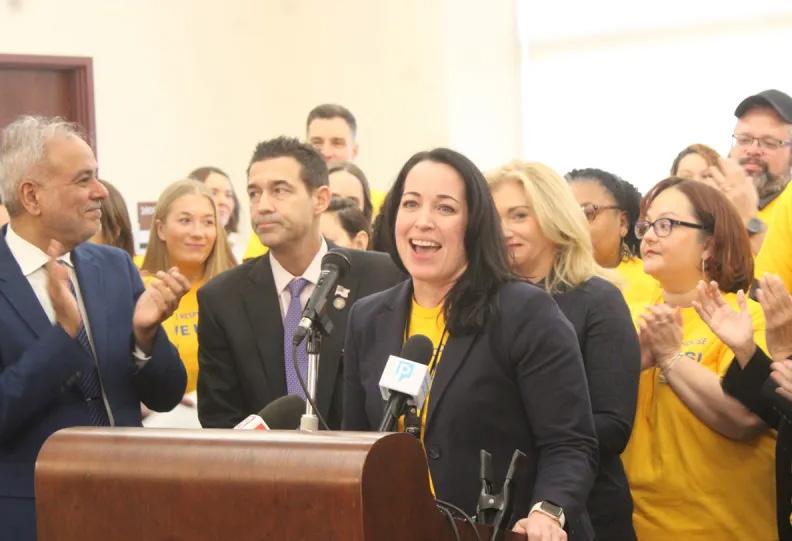
streets,” Tong said. “We sued, we won, but now Trump is back at it again. His cruelty truly has no bounds. We are heading back to court, and we will keep fighting for as long as it takes to protect safe and stable housing.”
Sarah Fox, CEO of the Connecticut Coalition to End Homelessness, said the funds keep people housed and support shelters and outreach teams.
“ At a time when more people are struggling to afford housing, we should protect the tools that work, not make it harder for states and local communities to bring people indoors and keep them there,” Fox said.
State Rep. Jason Rojas, D-East Hartford, the House majority leader, said the administration seemingly has a never-ending quest to make life more difficult for the most vulnerable resi-
by Lisa Reisman
If all goes according to plan, Mi’ah Harvin, 14, will be a pediatric nurse. Marious Cromwell, who just graduated from Riverside Academy, will have his own clothing line. And Brelyn Wooten-Harvin, 13, will be wielding a scalpel as a surgeon.
But first, there is work to do, and that’s where the RE-CEE Youth Program — which last week held its inaugural session with its first cohort at Yale’s Humanities Quadrangle — comes in. The program will meet three times weekly from 9:30 a.m. to 1 p.m. throughout the summer.
The brainchild of Newhallville Fresh Starts founder Marcus Harvin, currently a second-year law student at Western New England School of Law, RE-CEE is short for “reconsidering your role and rights in the system,” or, alternately, a process that will have the young participants literally re-seeing themselves and what they can do.
Telihl “TK” Streater and Marious Cromwell, RE-CEE recruits.
That’s what had TK Streater, an incoming freshman at Achievement First Amistad High School and aspiring entrepreneur, reciting the RE-CEE decree at the end of the two-hour-long session.
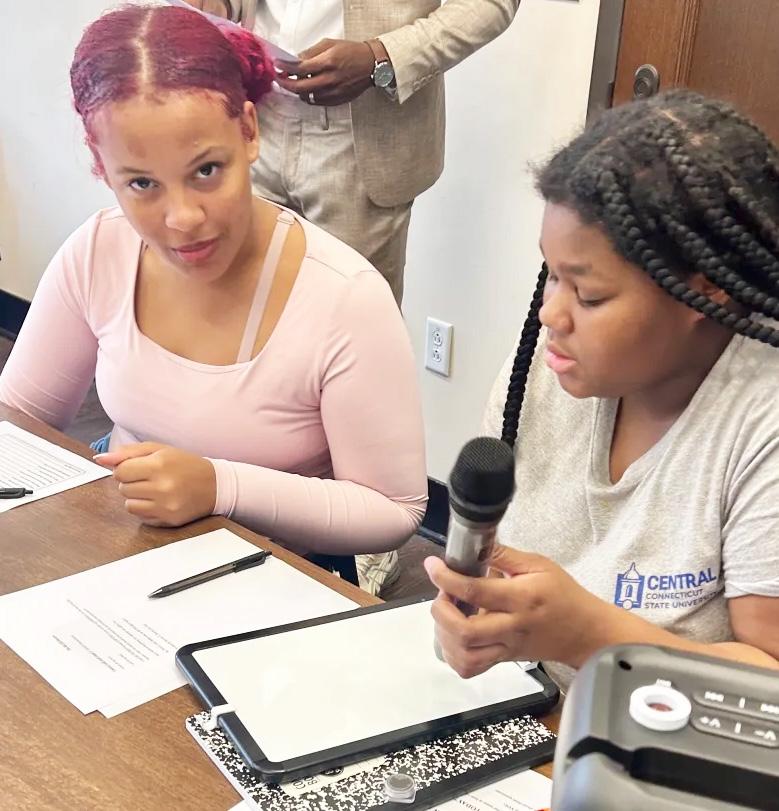
“I shall be the best version of myself because I have too much inside of me which the world needs and deserves,” he read. Earlier, Rickey Howard, a member of the RE-CEE team, all of whom are law school classmates of Harvin’s, outlined the rigorous regimen of the boot-camplike program.
We are here to give you the tools, the knowledge and the confidence to stand up, command a room, and prove that you have the capacity to be actors that shape the future,” he said. “No matter what you end up doing, we are going to give you the tools to succeed.”
Team members will lead lessons on mastering the art of the first impression and on speaking with authority. There will be oral presentations and film sessions to work on strengths and identify weaknesses, Howard said. All the while, “we will be holding participants to an elite standard.”
To hear team members tell it, the group came together in an effort to pay it forward.
“I know what it’s like to feel overlooked, discounted, forgotten,” Howard told them. “That’s why I’m here, to provide the guidance and mentorship I never had.” Another team member, Wesley Chung, said he spent his childhood getting into scrapes with the law. The kind-
ness of a stranger who taught him how to do laundry and tie a tie changed all that. “He saw something in me and that completely changed how I thought about myself,” he said.
The program is free and open to anyone from 13 to 18. Harvin, who distributed composition books and white boards to the participants, said Yale Law School’s Elizabeth Hinton was providing space at the university to host the program “to allow these young people access into somewhere otherwise excluded to them.”
Before the reading of the decree, Harvin addressed the group.
“Each of you has greatness in you and this is about finding it,” he said. “This is about looking at yourself in the mirror and rethinking what time you’re going go to sleep tonight and what your plan is for tomorrow to start bringing out that greatness.”
“We are asking you to go the extra mile for yourself,” he said. “And then we pledge to meet you in the middle, and help you become whatever you dream of being.”
The Independent will be following the progress of the participants throughout the summer.
by Laura Glesby
A security guard named Jaylan Jackson found himself at the top of the Temple Street Garage, alone with a stranger who wanted to end her life.
His instinctive words of hope convinced her to stay alive — and earned him a standing ovation from the Board of Alders.
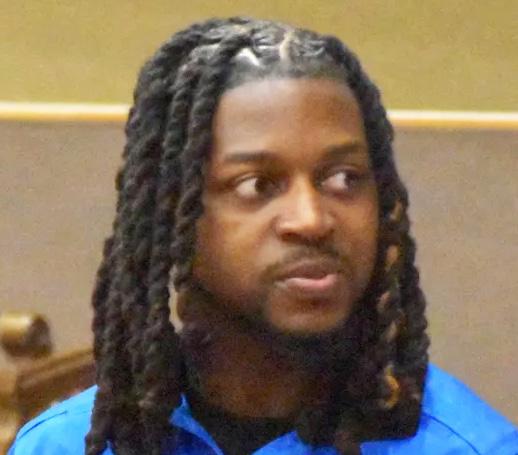
Jackson received a citation from the Board of Alders on Monday night for his life-saving work.
If you or someone you know needs support now, you are not alone. Call or text 988 or chat 988lifeline.org.
Downtown/East Rock Alder Christine Kim arranged for the citation in honor of Jackson’s actions on Tuesday, June 9 at around 6:15 p.m. Kim said she heard about the incident from Jackson’s supervisors at the New Haven Parking Authority.
According to Kim, a fellow security guard had radioed to Jackson that evening upon noticing someone standing on the edge at the top level of the garage. Jackson drove up to the top level and began to approach the person.
He recalled “telling her how much her life really mattered,” how “your life is valuable — every life is valuable.” He recalled saying that growth is always possible, that “you could change tomorrow.”
“She reeled herself back down,” Jackson
said.
Soon, emergency responders arrived and brought her to the hospital.
That evening wasn’t the first time that Jackson had found himself trying to persuade someone to stay alive while on a security job. He used to work security at a homeless shelter run by Upon This Rock, he said, where he’d sometimes try to help clients going through mental health crises.
While presenting Jackson with the citation on Monday, Kim commended him for acting “with extraordinary calm, courage, and compassion.”
“In a moment of great urgency, when the situation called for steady nerves and a steadier heart, Mr. Jackson stayed present, listened, and spoke with patience and sincerity until trust was earned, and a life was saved,” Kim said. “He had no specialized training to draw upon. Only his own deep empathy, his belief in the worth of every person, and the quiet conviction that no one should face their darkest moment alone.”
Board of Alders President Tyisha Walker-Myers told Jackson to “keep on shining, and keep being who you are.”
“It’s because of the type of person that you are” that the person “was able to hold on for one more day,” said Walker-Myers. “Sometimes, we don’t realize that the kind words we say to people — just listening to what people are going through
— can help.”
Direct Conversations Can Make A Difference
If you are worried that someone you know may want to end their own life, the National Institute of Mental Health
(NIMH) recommends asking them directly, without judgment, and letting them know that they don’t have to go through a crisis alone.
NIMH offers the following advice:
1. ASK: “Are you thinking about suicide?” It’s not an easy question to ask, but it can help start a conversation. Studies
show that asking people if they are suicidal does not increase suicidal behavior or thoughts.
2. BE THERE: Listening without judgment is key to learning what the person is thinking and feeling. Research suggests acknowledging and talking about suicide may reduce suicidal thoughts.
3. HELP KEEP THEM SAFE: Reducing access to highly lethal items or places can help prevent suicide. Asking the person if they have a plan and making lethal means less available or less deadly can help the person stay safe when suicidal thoughts arise.
4. HELP THEM CONNECT: Connecting the person with the 988 Suicide & Crisis Lifeline (call or text 988) and other community resources can give them a safety net when they need it. You can also help them reach out to a trusted family member, friend, spiritual advisor, or mental health professional.
5. FOLLOW UP: Staying in touch with the person after they have experienced a crisis or been discharged from care can make a difference. Studies show that supportive, ongoing contact can play an important role in suicide prevention.
The National Alliance on Mental Illness offers more guidance on how to support someone experiencing suicidal thoughts. And the City of New Haven has compiled a list of local resources for mental health crises.
by Laura Glesby
Dr. Ann E. Garrett Robinson — who was both a maker of history and a steward of history, as a path-breaking psychologist and a chronicler of New Haven’s past — died on Saturday, June 27, surrounded by her family.
She had just celebrated her 92nd birthday earlier in June.
Over the course of her professional life, as Robinson herself stated in 2024, “I became a first of this, a first of that.” She was the first Black woman to join Trinity College’s faculty, the first Black certified psychological examiner in New Haven Public Schools, and among the first Black women to be a researcher at Yale.
“She really charted her own path,” said Robinson’s daughter, retired Superior Court Judge Angela Robinson. “The things she did, and the way she did them, required some creativity.”
Many in New Haven knew her as a psychology professor at South Central Community College (now called CT State Gateway).
Sean Hardy, a family friend and a former student of her Cultural Anthropology, Psychology, and Theories of Personalities course, remembered Robinson as “a great force of encouragement.” She was strict “in the name of love,” he said because she “wanted everybody to be their best.”
As an ambitious academic, she did not let history limit her. And at the same time, she loved studying the past.
She amassed a sizable personal collection of artifacts documenting New Haven’s past, which she spent the last years of her life working to archive and preserve. She shared stories of local Black history in columns for the New Haven Register.
As she wrote in one Register article from February 2015: “In my celebrations of Black History Month in New Haven, as a student of community history, I have confronted an embarrassment of riches in stories about our history and culture.”
“And so,” she continued, writing exactly the way she spoke, “may I tell you a few black histories I’ve heard?”
Ann Garrett Robinson, at center, beside Trina Greene and Steve Winter watching unveiling of Lucretia’s Corner sign. Credit: Paul Bass Photo
One of the people she wrote about in that column was a woman named Lucretia, the earliest known Black resident of New Haven, whose story Robinson brought to light.
Robinson learned about Lucretia in 1998 from a document she found in the Afro-American Historical Archives at the Q House. Lucretia, who lived in the mid-17th century, was enslaved by New Haven Colony Gov. Theophilus Eaton. At some point in her life, she secured her freedom.
In 2022, Robinson successfully advocated for the corner of Elm and Orange, where Eaton once resided, to be named
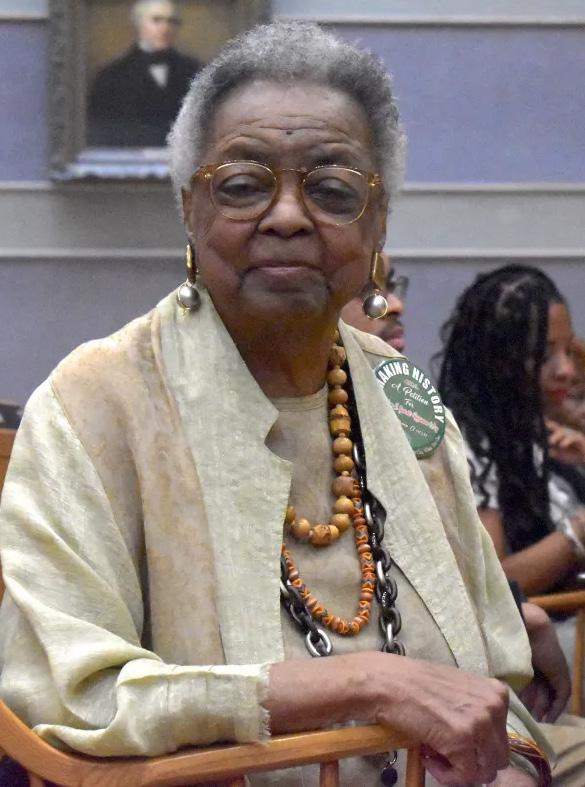
after Lucretia. There’s now a permanent sign at the intersection marking “Lucretia’s Corner.”
Two years later, Dixwell Alder Troy Streater worked to honor Robinson herself on the corner of Dixwell and Argyle.
“When I first asked her about doing the street naming… She did not hurry and say yes,” Streater recalled. “She said, ‘Alder Streater, let me think about that and get back to you.’ That’s how modest she was.”
They selected the corner across the street from the regal red house on Dixwell Avenue where Robinson lived for over fifty years, since 1970.
After a stint living in North Branford, Robinson and her family chose to move to Dixwell at a time when many who had the means were trying to move to the suburbs. She found a community she came to love. At her house, she hosted cookouts and concerts. She looked out for the kids in the neighborhood, getting to know them by name. On Thanksgivings, she filled her home with international students at local colleges who weren’t able to go home for the school break. She was committed, on principle, to neighborliness.
The neighborhood loved her back — as was evident at the unveiling of a street sign in October 2024 to formally declare the corner “Dr. Ann E. Garrett Robinson Way.”
Two marching bands joined at least 50
MA (1957) in clinical psychology from Wayne State University in Detroit, Michigan, and completed a clinical internship in psychology at Augusta State Hospital, in Augusta Maine.
After a period of practicing as a clinical psychologist in Indiana, Maine and North Carolina, Dr. Robinson then joined the faculty at Yale University, as a research assistant in the Comer Team at the Yale Child Study Center, making her one of the first Black women on the faculty at Yale University. At the same time, she worked as a learning diagnostician and psychological examiner with the New Haven Board of Education and became coordinator for research for the Focus Project in seventeen inner city schools. She was the first Black woman certified examiner in New Haven, and probably in the state.
Dr. Robinson joined the teaching faculty of Trinity College in Hartford, Connecticut in 1970 as an assistant professor of psychology. In 1972 she was invited to build a psychology program at a newly established two-year college, then known as South Central Community College, and now known as Gateway Community College in New Haven. She became the first woman to be elevated to the position of Full Professor. In 1975, Dr. Robinson earned her EdD in community college education with a specialty in behavioral sciences from Nova Southeastern University in Fort Lauderdale, Florida.

John P. Thomas Publisher / CEO
Babz Rawls Ivy Editor-in-Chief Liaison, Corporate Affairs Babz@penfieldcomm.com
Advertising/Sales
Keith Jackson Delores Alleyne John Thomas, III
people, including the mayor, to celebrate her that day.
On Saturday, June 27, 2026, at 1:30 p.m, Dr. Ann Elvonne Garrett Robinson, 92, passed away peacefully, surrounded by her children (Angela C. and George C. Robinson) and her only grandchild (Ronald “RJ’ Jai Robinson Thomas).
Dr. Robinson was born on June 8, 1934, in Greenville, North Carolina, in a vibrant, active and supportive Black community of “Greenvillians” – many of whom relocated to New Haven as she did. She was actively engaged in this community of transplants for her entire life and proudly touted the fact that the Mamie May Heirs Farm has existed for over 100 years in Greenville. She was the daughter of the late Mamie (May) Garrett, a college educated public school teacher and the late George Francis Garrett, known affectionately as the “Old Man of the Civil Rights Movement.”
Known affectionately as “Bae” to family and friends, she was a product of the public school system in Greenville and graduated in 1950 at the age of sixteen from the Charles Montgomery Eppes (C.M. Epps) High School. It was there that she first felt the calling to a life service in psychology, an unusual one for a young Black woman teen in the forties.
Dr. Robinson earned her BA (1954) from North Carolina Central University in Durham, North Carolina; received her
It was during her tenure as a practicing clinical psychologist that she met the love of her life, her husband of fifty years, the late Emitt Charles E Robinson, CISW, a brilliant Psychiatric Social Worker. The couple relocated to New Haven in 1967 when Charles was hired by Yale University to become a faculty member in the Psychiatry Department. They arrived in New Haven with their two- year- old daughter Angela (son George was to arrive the following year). The Robinsons immediately immersed themselves in their new community which by 1967, was rife with the Civil Rights Movement activism. In fact, the week they arrived, four days of rioting erupted in the Hill Neighborhood and quickly spreading to Newhallville, Dixwell Avenue and Fair Haven.
The Robinsons lived first on Prospect Street in New Haven, then on Clear Lake Manor Lane in North Branford, and ultimately, permanently settled in April 1970 at 406 Dixwell Avenue in New Haven, the family home for over 50 years. With love, laughter and music, the home was the residence of three pet dogs (Jessica, Puli and Ginger) pet rabbits, gerbils, guinea pigs, chicks and at one point ducklings.
The Robinson home was also a welcome place for the students, mentees and friends. It became known as a safe place for foreign students who were studying at area colleges. Parents from Nigeria, for instance would tell their children “Find Mrs. Robinson, and stay with her until you get settled.” For many years, The Robinsons hosted and fed as many as 80-100 foreign born students for dinner on Indigenous People’s Day, popularly Con’t on theinnercitynews.com
Editorial Team
Staff Writers
Christian Lewis/Current Affairs
Anthony Scott/Sports Arlene Davis-Rudd/Politics
David Asbery / Tanisha Asbery
Jerry Craft / Cartoons / Barbara Fair Dr. Tamiko Jackson-McArthur
Michelle Turner / Smita Shrestha William Spivey / Kam Williams Rev. Samuel T. Ross-Lee
Contributors At-Large
Christine Stuart www.CTNewsJunkie.com
Paul Bass www.newhavenindependent.org
National Association of Black Journalist
National Newspapers Publishers Association
Greater New Haven Chamber of Commerce
Greater New Haven Business & Professional
Greater New England Minority Supplier Development Council, Inc.
The Inner-City Newspaper is published weekly by Penfield Communications, Inc. from offices located at 50 Fitch Street, 2nd Floor, New Haven, CT 06515. 203-3870354 phone; 203-387-2684 fax. Subscriptions:$260 per year (does not include sales tax for the in State subscriptions). Send name, address, zip code with payment. Postmaster, send address changes to 50 Fitch Street, New Haven, CT 06515. Display ad deadline Friday prior to insertion date at 5:00pm Advertisers are responsible for checking ads for error in publication. Penfield Communications, Inc d.b.a., “The Inner-City Newspaper” , shall not be liable for failure to publish an ad or for typographical errors or errors in publication, except to the extent of the cost of the space in which actual error appeared in the first insertion. The Publisher reserves the right to refuse advertising for any reason and to alter advertising copy or graphics deemed unacceptable for publication. The entire contents of The Inner-City Newspaper are copyright 2012, Penfield Communications, Inc. and no portion may be reproduced by any means without the written permission of the publisher. 10
BY ADELE HAEG
Teachers, classmates, friends and family of Malaki Caraballo gathered at Trinity Temple Church on Dixwell Avenue Thursday morning for the 18-year-old New Haven Academy student’s funeral — ten days after he was shot and killed in a double homicide in the East Shore. Many in attendance at Thursday’s funeral wore black-and-red basketball jerseys bearing a picture of Caraballo, the number 23, and the words “Forever Melo” on the front and “Basketball Legend” on the back.
Speakers at Caraballo’s funeral included Police Chief David Zannelli, Pastor John Lewis, Mayor Justin Elicker, city Youth Service Bureau manager Ernie Cloman, Bishop Charles Brewer, and Rev. Robert Smith. They showed support for the many young people in the audience as well as their parents, and they asked for change.
“I see a lot of young people in this room, a lot of young men,” Elicker said during his remarks. “We’ve been to too many funerals. We do the same thing over and over and over. We go to the hospital, put on the t-shirts, we send up the balloons, we go to the wake, we go to the funeral. And then we decide to pick up a gun and seek revenge.”
Friends and family shared their memories of Caraballo with the audience during Thursday’s service. “He wasn’t even just my cousin, he was my brother,” said his cousin Narieh Jones, reflecting on the “laid back moments” she’d miss having with Caraballo. “He was such a funny person to be around, and he would lighten up your whole day, just by saying one joke.”
Caraballo’s aunt Shatoya Morris read
aloud a letter that Caraballo’s younger brother Nasir wrote to him. That letter was also printed in the program. “Eighteen years was not enough, and I wish we had more time together,” Morris read, “just one more conversation, one more laugh, one more hug.”
The killings of Caraballo, better known as “Melo,” and 21-year-old Ansonia resident Jayden Martinez at the Fort Hale Gardens condo complex on June 22 marked the city’s first homicides since November 2025.
“There was a moment in time here, this year, that we were hopeful we were going a year without losing anybody from the city. And it felt like it was becoming a real possibility,” Zannelli said during Thursday’s ceremony, “and then this happened. And we were reminded that there was much more coming. This I promise you: We will find out the truth about what happened to Melo.”
An investigation into Caraballo’s killing is ongoing, according to city police spokesperson Officer Christian Bruckhart. Police previously stated that the fatal shootings were not random, and that they appeared to have taken place between two separate groups of men who knew each other.
Others who spoke at Thursday’s service talked about how cyclical gun violence has become, even as progress has been made in recent months. The funeral was held in the same Dixwell Avenue church as Daily Jackson’s less than two years ago; Jackson, a 17-year-old Riverside Academy student, was shot and killed in Newhallville in December 2024.
“We call upon the guardians who are carrying the unbearable burden of raising children in the middle of a war that’s in the streets,” Lewis said from the pulpit,
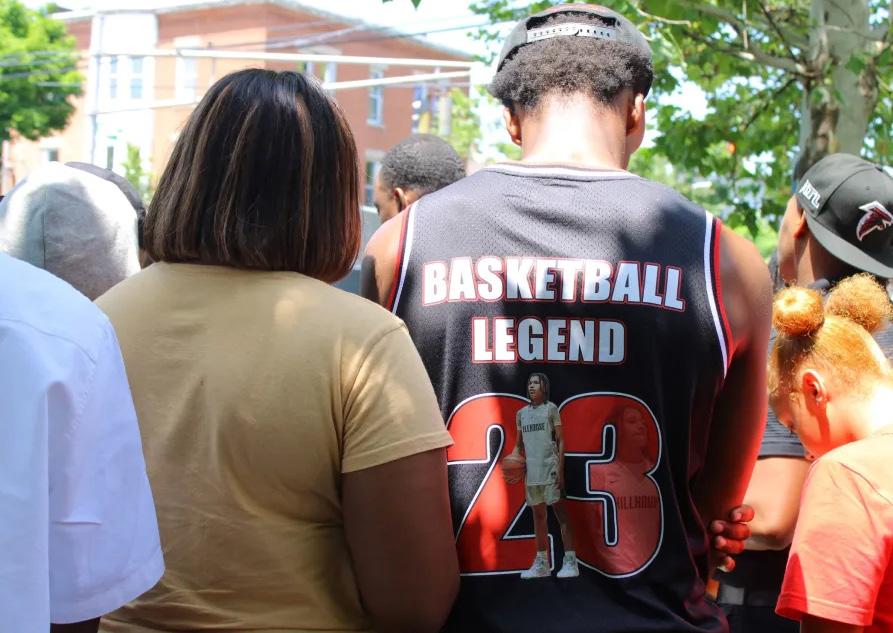
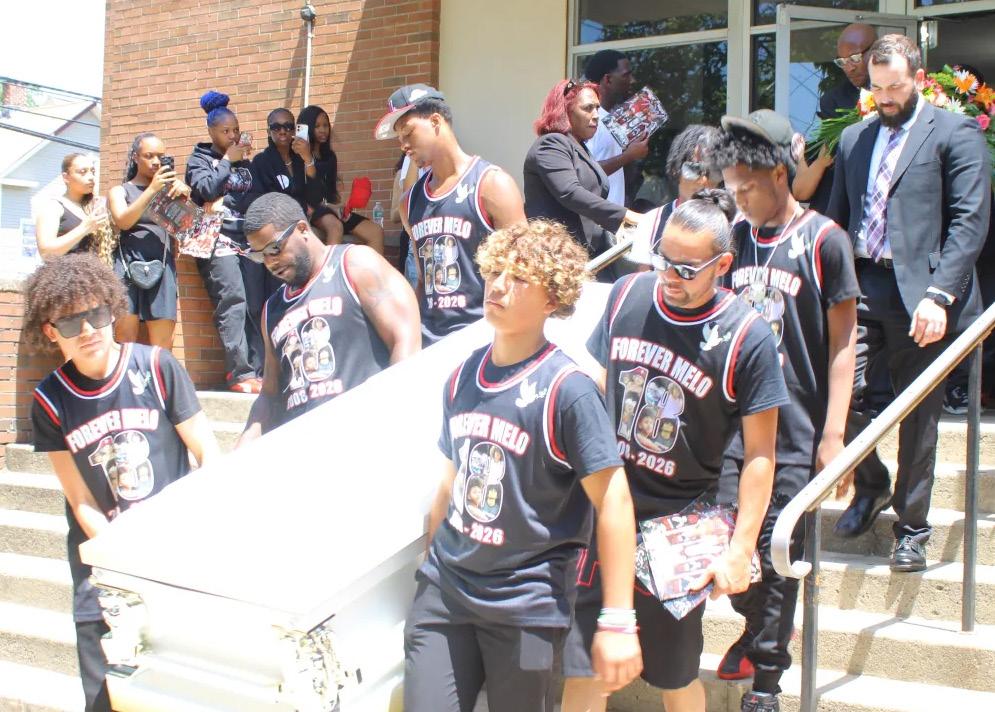
images and videos of Caraballo rotating on a slideshow behind him. “We call upon every organization, every outreach worker, every violence interrupter, every counselor, and every advocate who have made it their mission to stand in the gap between life and death on these streets. Let your resolve not grow weary.”
Lewis reminded the audience of the city’s resources, including Project Longevity, a gun-violence prevention program. After the funeral, he remarked that the responsibility for keeping children and teens safe from gun violence falls on parents, but also on young people themselves — “we can’t do it without them,” he said. He wore clergy garments in red, one of Caraballo’s two favorite colors, along with black.
A few of Caraballo’s mentors, including Cloman and Smith, spoke to his character. Smith met Caraballo when he was seven years old, he said. “He was the cutest little guy,” Smith remembered. “He had all the courage in the world and he was the only kid that I noticed was truly scared of nobody.”
Caraballo’s high school teacher, Fana Hickinson, recalled how much joy he brought into the classroom. When he got his SAT scores back, “he jumped out of his seat and ran through the hallway screaming. And that was the end of the period. We were not going to be able to do anything else because Melo was so proud of himself,” she said. “NHA [New Haven Academy] is truly going to miss him.”
Cloman also praised Caraballo as a student. “Even in his turn for not so great, he respected us enough to not be around us, if that makes sense. Because he did not want us to see him be bad,” Cloman said. “It hurts really bad to be in this situation.”
by Laura Glesby
Mayor Justin Elicker hopes to foster more “supportive housing” in New Haven: apartment complexes embedded with social services for tenants who are struggling with mental health or addiction. He returned again and again to that concept when pressed by a room of housing activists on how he plans to address the affordable housing crisis.
Over 35 tenant activists, social service providers, legal and policy advocates, and at least one landlord filled a meeting room in the Dixwell Q House meeting room on Wednesday evening for a conversation with the mayor. The event was hosted by the Room For All Coalition.
The conversation was powered entirely by audience questions. Attendees had the opportunity to write down their questions on white index cards at the start of the meeting, and a panel of moderators read them aloud to the mayor, one by one. Many attendees had personal experience with housing insecurity, including a large
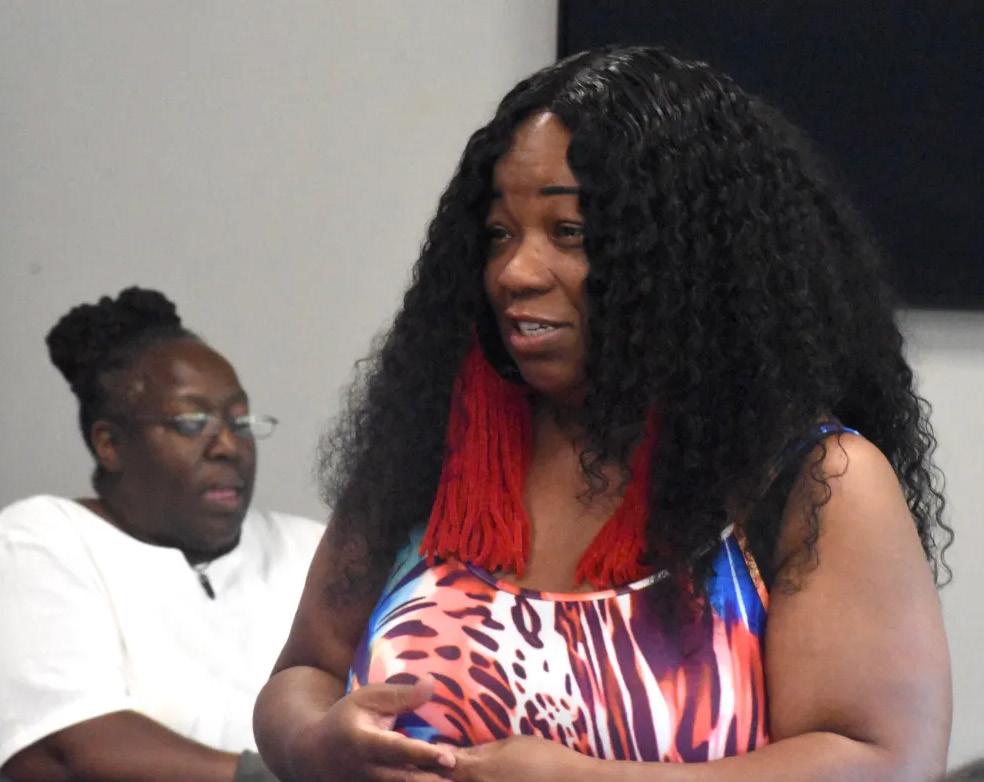
contingent from the advocacy group Mothers and Others for Justice (MOFJ). They were encouraged to speak from that experience.
MOFJ co-coordinator Myra Smith started the meeting by recounting her own past experiences with eviction and homelessness.
“We know the power of testimony. We know the power of telling your story. And we know the power of lived experience,” she told the room. “We don’t need professionals to come in to tell us… what they see, what they’ve read. We’ve lived it. Some of us are still in it.”
Personal stories trickled in to some of the questions. ”My two grown daughters had to move back in with me, along with my four grandchildren under the age of eight,” one question stated. “I am 70 years old, and I’m retired. What is being done about lowering rents?”
Elicker responded to questions about the rising cost of rent with multiple prongs.
He cited the Fair Rent Commission as a resource to which tenants can appeal if
they are facing a steep rent increase. And he spoke of his support for a growing number of tenants unions across the city. At the heart of the issue, he said, is a question of supply and demand. He argued that the more housing units are available locally, the lower rents will become.
“I think that the main way to solve this challenge is more housing,” he said.
“Since I’ve been mayor, we’ve brought over 5,000 new units or renovated units online,” Elicker said. “In the past year, we had 1,500 new units, just under 20 percent affordable. We’ve got a goal for another 5,800 units that are in the pipeline now. So we’re building a lot of housing.”
Some advocates were skeptical of the impact of some of the new apartment complexes on New Haven’s affordability crisis.
“What is being done to make sure that the new developments that have affordable units are really considering people from certain backgrounds, or with cred-
BY PAUL BASS
For one glimpse of how Max Webster is steering New Haven’s parks system into a new quarter-century, you could look at the old Edgewood Park soccer field. Make sure it’s not raining. Or bring boots if it is. Because the field gets soggy fast. You get there by walking down the steps on the west side of the Chapel Street Bridge over the West River or by following a trail behind the Parks Department’s Edgewood Avenue building.
You used to find a soccer field there. Then in 2012 replacement of vintage-1920s tidal gates south of Route 1 allowed incoming tides to flow into the West River, transforming the surrounding habitat — including the soccer field. It flooded more often, and became more of a wetland.
At first the city tried to keep mowing the lawn and having soccer games there. Eventually nature took its course: The Parks Department let vegetation grow in the center of the field while mowing the perimeter so people could walk around it. Now, under Webster’s guidance, the Parks Department is both allowing nature to take its course and enlisting the community to help steer what happens there. The Parks Department is considering creating a bird sanctuary there: Taking advantage of how the changed environment attracted more birds, while examining how to refine the land through planning, for instance examining what trees the birds like to nest in and whether they like standing
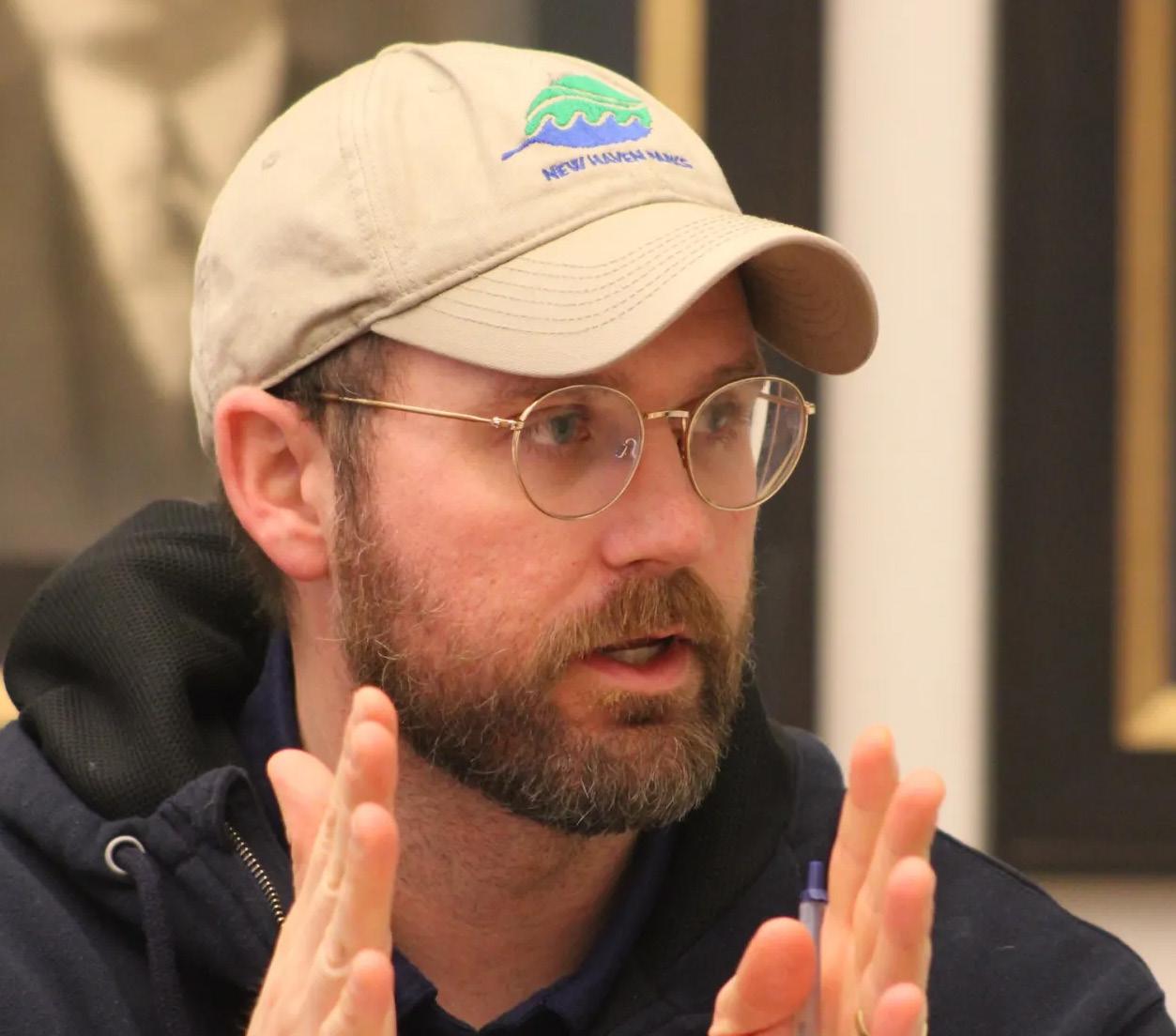
in dead trees. Webster has enlisted a local Eagle Scout to help draw up a plan.
Now multiply that natural habitat planning to over 100 park sites citywide — and you’ll have a sense of what Webster is up to.
Webster, who’s 36, talked about the soccer field-bird sanctuary transition and about his broader plans during a conversation Thursday on WNHH FM’s “Date-
line New Haven” program. Webster took over as Parks Department chief in November 2024. The department had gone through two major changes — from “parks and rec” to a combined department with public works; then back down to just “parks,” no rec. Webster’s job has been, first, to figure out how to run the newly downsized, shortstaffed department. And second, to do
something bigger: Draw up a new strategic long-term plan for how New Haven should run its public greenspaces. The first such plan in 25 years.
The plan’s called the “All Hands For New Haven Parks” initiative. It looks at how best to use Parks Department staff and community volunteers and to prioritize planning for waterways, trails, programs, mowing, trash …
It has featured months of public feeback sessions, surveys, planning meetings. Webster said they’ll release the report soon after some finishing touches.
He did say he learned that people are far more concerned about litter than overgrown grass.
And he read aloud the “All Hands” new vision statement:
“Fostering a culture of public stewardship and collaboration to create a vibrant park system that is open and accessible for all.”
“It’s less about how do we do everything as a department and more about how do we set up the right kinds of access and opportunities for folks to bring their creativity, to bring their perspectives, to bring their energy into park spaces and [be] positive,” Webster added.
In other words: How to do the staff work as well as link up with groups like Urban Resources Initiative (URI, an “All Hands” co-convener not to mention partner in planting trees citywide) and different neighborhood Parkfriends to make parks work better for New Haven humans, not to mention native species and migratory birds.
Part of that process involves recognizing how park land naturally grows and changes, and how to work with those changes. As in the case of the former Edgewood soccer field.
In the process, Webster is working with his staff as well on a master tree plan, as well as plans to connect waterways. That includes a current plan to pave a multiuse path through East Shore and Fort Hale parks in the latest step toward a 4.4-mile, car-free New Haven addition to the 24mile Shoreline Greenway from East Haven to Madison. (Read about that here.)
A lifelong urban parks devotee (“I could navigate you through those spaces blind” in Cincinnati greenspaces like Alms Park, given the amount of time he spent there as a kid), Webster said he found inspiration for the greenway plan — connecting the public more to the water — in Chicago. Webster worked as the Chicago Park District’s natural areas manager after his graduation from Yale School of Forestry (where he would make time to lead school kids on walks along the Mill River and help URI plant and prune hundreds of trees). Webster was awed by contiguous miles of waterfront open to the public in Chi-Town.
Connecticut as a whole has much to learn from Chicago when it comes to adding waterfront public access, he argued. “It is special and amazing that you can hop on the waterfront and go across so many different neighborhoods,” he said “It’s a bridge between all those different neighborhoods.”
by Maya McFadden
New Haven native Raiquan Clark often thinks about the needs of the city that raised him — even as he plays professional basketball overseas in places like Germany, Finland, and Spain.
That hometown pride was the inspiration for an annual summer camp that Clark hosts at the Q House on Dixwell Avenue. The Raiquan Clark Basketball Camp (RCBC) just wrapped up its third year on Thursday — with its highest enrollment ever.
Since the camp started on June 22, the Q House gym has come alive with the dribbling, passing, and shooting of campers ages 8-17 years old. On Thursday, upbeat music played from Clark’s phone meshed with the room’s steady tune of sneakers squeaking and teammates calling out plays to each other.
For the camp’s third year, enrollment grew significantly. Clark recalled that the camp, which is open to both boys and girls, started with 10 campers three years ago. This year enrollment grew to around 45 campers.
“When I learned basketball as a teen, it led me to be a better human being,” Clark said. “I want them all to see a different version of themselves from this.”
On Thursday, the camp hosted its first ever All-Star games for the younger children and teens, as well as a campers-versus-coaches finale.
Clark began playing basketball at Jackie Robinson School, now King/Robinson, then went on to Hillhouse High School. After attending Trinity-Pawling School, he went to Long Island University. He was the program’s all-time leading scorer.
Over the years Clark has played professionally with Wiha Panthers Schwenningen in Germany’s ProA league, Albacete Basket in Spain, and the Salon Vilpas in Finland. This year he signed with the men’s basketball team in Luxembourg, the BBC Grengewald Hueschtert.
While Clark’s camp uses basketball as its foundation, it also includes financial literacy workshops and seminars focused on getting through adversity and learning to express oneself. This year it hosted M&T Bank to teach about credit, budgeting, and checking and savings accounts.
Alongside Clark, five of his friends and fellow pro-basketball players coached this year’s campers. He also got help running the program from his family, including his mom, Shontay Watts, who he said “inspires me everyday.” Clark thanked the team around him for making this year’s camp such a success.
For the first time this year, RCBC host-
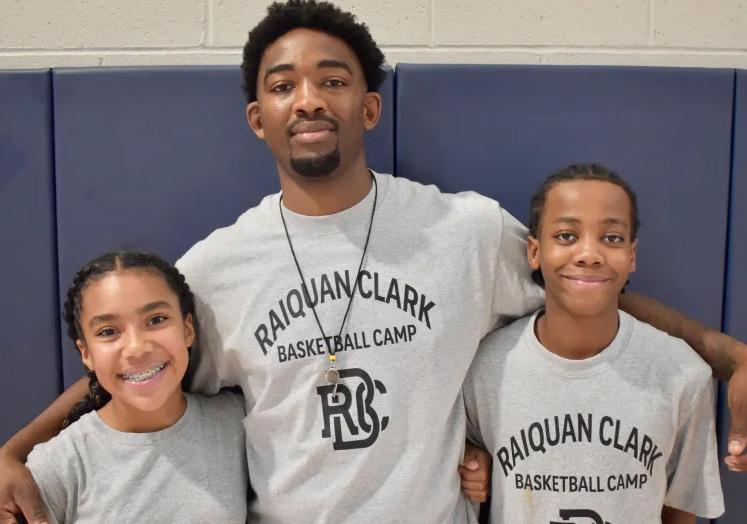
ed an All-Star cookout Thursday for the campers and their families to celebrate the conclusion of the summer session. Roughly 60 people on Thursday turned out for skill challenges, a dunk contest, and the final games.
Clark said the camp is not about making youth want to pursue basketball long term. Instead his focus is providing youth with an outlet to stay active, learn life skills, and have a safe space to enjoy with
their peers.
“This is us doing what we have to do as community,” he said. “The biggest win is giving back.”
ESUMS sophomore Avery McLean, 14, joined RCBC last summer. He said he most enjoys being pushed to be better on a daily basis. He hopes one day to play basketball professionally. He currently
plays basketball for Hillhouse.
This summer Avery focused on improving his ball handling. He said he also gained new problem solving skills for on and off the court. “When my team was being pressed during a game last week I had to think on the spot how we can get out of it,” he recalled.
After this summer he hopes to make Hillhouse’ varsity team.
Jennavie Roman, 12, a rising seventh grader at Hamden middle school, also joined RCBC last year and hopes to have a career in basketball.
Jennavie said she began RCBC this year lacking confidence. Three weeks later, she said she had positivity poured into her and her peers daily by the camp’s coaches. That’s what made her want to keep coming back.
She said that going to this camp has been a great alternative to just staying at home and scolling on her phone. Instead, she’s learned lessons around being consistent and confident.
She also said that she recently participated in the camp’s three-point contest. “I thought I wouldn’t do well,” she recalled thinking, until “coach Raiquan told me I’m made of confidence.” As a result Jennavie won second place
Yale New Haven Hospital is pleased to offer patients and their families financial counseling regarding their hospital bills or the availability of financial assistance, including free care funds. By appointment, patients can speak
Time: 5 - 7 pm
Location: Children’s Hospital, 35 Park St., 1st floor, Admitting
Parking available (handicapped accessible)
An appointment is necessary. Please call 855-547-4584
Spanish-speaking counselors available.
• Burial Lots (infant, single, two-grave, or four-grave)
• Monuments & Markers (black, gray, or pink granite)
• Flower placement (single or multiple placement)
• Cremation (Choose to be cremated at Evergreen.)
• Columbarium in the Most Beautiful Cremation Garden

• All orders can be placed at the Evergreen office or the website.




Shaunda Holloway
Entering the University Theatre at 222 York St. last Thursday, it was difficult to tell who was happier. The ticket collectors smiled. Attendees beamed. Ushers seemed excited to be there as they directed people to their seats. It was, suddenly, impossible to be in a bad mood.
Inside, it was a full house. New Haven notables, jazz dedicatees, families, and friends chattered fervently. An echo of knowing spread throughout the room— that this would be worth the wait. That it was time to live the moment.
New Haven’s own jazz history felt alive last week, as Somi graced the University Theatre’s stage for one night only as part of the International Festival of Arts & Ideas. Performing in New Haven for the first time, the artist brought a soulful and rich sound to the Elm City, reigniting a long-held history of jazz with something entirely of her own.
That was clear from the very beginning of the night, as the show opened on a soulful, dramatically lit stage bright enough to highlight each instrumentalist—Toru Dodo on piano, Milena Casado on trumpet, Jonathan Michel on bass and Sheldon Thwaites on drums—and soft enough to allow Somi’s light to permeate the room.
It was a constellation of stars sparkling in unison, each independently capable of enchanting every listener. On a stool, there was a vibrant bouquet of orange and red roses in full bloom, as if they were already aware of what the night ahead had in store.
Somi Kakoma—who goes simply by Somi—stood center stage, in a floor length aqua-toned dress that brought to mind a watercolor painting. A round medallion glittered around her neck. She lifted an arm full of gold bangles. With a single smile, she radiated an ethereal presence that only living one’s purpose can convey. Then she hopped on the mic. Somi sang about “yesterday,” with a reservoir of soul that channeled Sarah Vaughn. Around her, every artist on stage was just as exceptional: Dodo embarked on a solo that receded into itself, unleashing a sequence of steady notes with unbound might. These were notes that took up space. Notes that healed. Notes that unified. Notes that covered every emotion, and then kept going.
On trumpet, Casado matched him in intensity, the instrument full and resonant as though it were lifting off, and prepared to take the whole theater into outer space. Drumsticks and cymbals rippled through melodies. In the audience, listeners were all in the moment together. No flashing lights. No words necessary. Just jazz and joy.
“Toro sacrificed a lot to be here. He missed Japan playing in The World Cup,” Somi told the audience at one point. Listeners were luckier for it.
Back onstage, Somi’s hands waved delicately. Cymbals tapped. Her bare feet danced to a mellow piano groove. She slipped into a tribute to Miriam Makeba and Nina Simone, and it felt as if they were there, in the audience, cheering her on.
The two were “fearless and unapologetic about who they were as Black Women,” she later said (Somi is the exquisite brain and voice behind the album Zenzile: The Reimagination of Miriam Makeba, which came out in 2022 and also features collaborators like Angélique Kidjo and Gregory Porter). “They were concerned about [the] community at large.”
Every song seemed to bring the community closer to the stage, drawn by the wonder and wisdom of this spirit. In the tune “No Ghost,” Somi sang passionately about people in a relationship who disappeared without warning. When she invited the audience to sing along—We don’t want no ghost!—listeners-turned-singers chimed in, somewhere between a rumble and a roar. The lyrics gave validity to the situation; the final say went to the ghosted. This was redemption.
“I want to hear more,” said Michael Twitty, a longtime fan of Arts & Ideas who is an educator and counselor in the city. “ It was the sound of Africa that penetrates the heart in a great way. I love it!”
The music heard within the walls of University Theatre that night grabbed a listener (this listener, certainly) by the core. Surely, audience members thought, they could never commit to hearing Somi only once. When asked if she would come back to New Haven, Somi smiled. “I hope so!” she said.
We are here for it.

By Lucy Gellman
Julian Durio sat perched at the edge of the stage, his head between his hands, the sound of a choir swelling around him. He rotated slowly forward, then moved his body back, arms rising. Behind him, a photograph flashed across a screen in black and white, a snapshot of civil rights advocates marching arm in arm. As it faded into another, he rose, arms outstretched, and looked as if he might take flight.
At the front of the stage, two dancers joined him, bending at the waist. Legs lifted high into the air, fabric glowing as it fell around them. Viewers, spellbound in the audience, didn’t know that they were about to receive a master class in grace— and in advocacy.
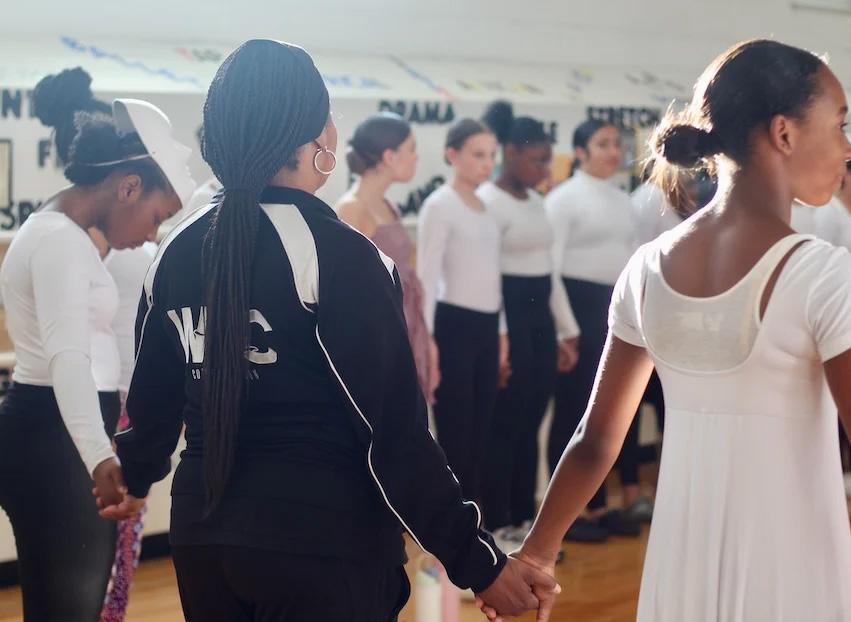
That moment, and so many others like it, unfolded at Betsy Ross Arts & Design Academy (BRADA, formerly Betsy Ross Arts Magnet School) on the cusp of graduation season, as dancers brought their 2026 spring showcase to the stage with teachers Nikki Claxton and Hannah Healey. In just over an hour, it became a lesson in how to teach history, build and maintain community, and speak truth to power through the arts, even and especial-
running track for Hillhouse while she danced outside of school. Decades later, “she is on the level of teacher of the year,” and “one who makes everyone around a better person.”
From the moment lights went up on Kirk Franklin’s “Now Behold The Lamb,” first performed during the school’s winter showcase in December, members of the audience could see that in real time. Before a packed house, dancers knelt with their heads pressed to the stage, arms bathed in blue light. With a flourish of keys, they rose row by row, arms drifting skyward with a precision that made the whole space look up, and snap to attention.
Dancers, without saying any words at all, moved slowly at first, savoring every heaven-raised arm, every foot planted squarely on the ground. They reached out towards the audience, then walked backwards so gently it seemed as though their feet were feather-light. As they looked on, eighth grader Tatum Cannon moved to the front, leaning forward before she leapt across the stage, and a few cheers of delight came up from the audience.
This was a benediction. This was reverence. This was community building, with no words at all. Behind Cannon, who fittingly had prayed for her peers before the performance, several eighth graders taught the quiet, shy sixth graders behind them how much strength there was in every slow, deliberate movement.
ly when it feels increasingly transgressive to do so.
Before the end of the night, the showcase also became a chance to celebrate Claxton, who has influenced generations of BRADA students during her 30 years at the school, and become a second mom to dozens of young people, some of whom are now parents themselves. Claxton, who is also the artistic director at the Elements Dance & Movement Conservatory and has built the dance repertoire in the summer program at the Connecticut Center for Arts & Technology (ConnCAT), accepted the recognition with a humility that she also brings to her work.
“I could not do this without you,” Claxton said to her students, presenting many of them with awards for their hard work and commitment throughout the year. “They are up here giving their all and I am so proud.”
“We have a world-class artist among us,” said Principal Jennifer Jenkins, whose daughter, Jayla Anderson, learned to dance with Claxton in middle school and is now choreographing her own work at Vassar College. Jenkins can still remember Claxton as a high school student,
“I think I’ve really improved since last year,” said sixth grader Gabriella Moore, who started the year as a timid student, and feels like dancing in Claxton’s classroom has helped her grow into herself. As dancer Londyn Brockington leapt forward to a flow of voices, Moore let herself feel the music, arms rising and falling with the sound before she swiveled, and walked offstage one foot at a time. “I enjoy that I get to learn new things.”
In the audience, whole families sat slack-jawed and wide-eyed in wonder, remembering themselves in time to cheer their dancers on. By now, many of them were talking back to the stage. As a trio of dancers padded to the center, white and yellow light falling around them, they sprang into action, their strength suddenly thunderous.
A sense of something sublime flowed, too, through Healey’s “Keep Fighting” and “Hallelujah,” the latter set to Pentatonix' cover of the eponymous song. As voices floated over the stage, dancers moved across the space, dresses gauzy and diaphanous. They arranged themselves around eighth grader Kimberly Gardner, in a wide circle in which every student seemed to say, We got you. Gardner ran between them, as if she was searching for something in their folded bodies, their outstretched arms and flattened fingers. She crouched to the ground and they rose, their arms rising in supplication. She balanced upside down, toes pointed and legs outstretched. Then she propelled herself toward the left side of the stage, an arm raised to the light in a
dents of Connecticut.
“A federal judge previously ruled that HUD’s approach was arbitrary, unlawful, and ignored the real damage it would do to people who’ve finally found stable housing under Connecticut’s Housing First model,” he said. “If HUD and the Trump administration won’t respect our judicial processes, we will keep fighting back until they do.”
State Rep. Antonio Felipe, D-Bridgeport, who cochairs the Housing Committee, added Connecticut providers had met the state’s challenges with a Housing First model.
“Funding should not be contingent on approach, it should be contingent on results and as our providers continue to meet the moment we must support them,” he said.
Fellow Housing Committee cochair, State Sen. Martha Marx of New London, said she was disturbed that the administration was “continuing to seek changes that go against all effective policies to support people experiencing housing insecurity.”
For more than two decades, HUD has embraced a commitment to permanent housing programs and the so-called Housing First model, which prioritizes rapid placement in permanent housing without requiring people to first meet conditions such as sobriety or a minimum income threshold.
But the current federal administration has rejected the commitment to the Housing First model and undermined the CoC program, Tong said. First, HUD published notices of funding opportunities last year that set a 30% cap on CoC funding that were subsequently found unlawful.
Now, HUD has issued the June 1 notice of funding opportunity that creates a $1.3 billion set-aside for new projects prioritizing such things as transitional housing, which results in a de facto cap on permanent housing. That shift threatens housing for at least 97,000 residents of CoC-funded permanent housing across the country, according to the National Alliance to End Homelessness.
The states argue that HUD’s actions violate the Administrative Procedure Act for, among other things, failing to proceed with notice-and-comment rulemaking and being arbitrary and capricious. They ask the court to declare that the challenged conditions are illegal and block HUD from implementing them.
A copy of the complaint is available here.
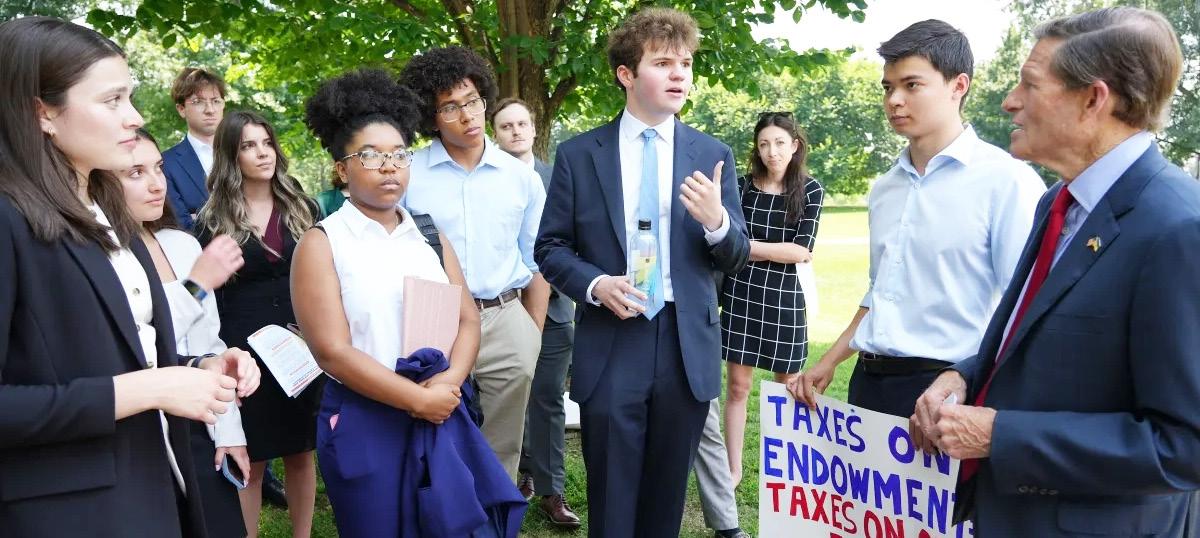
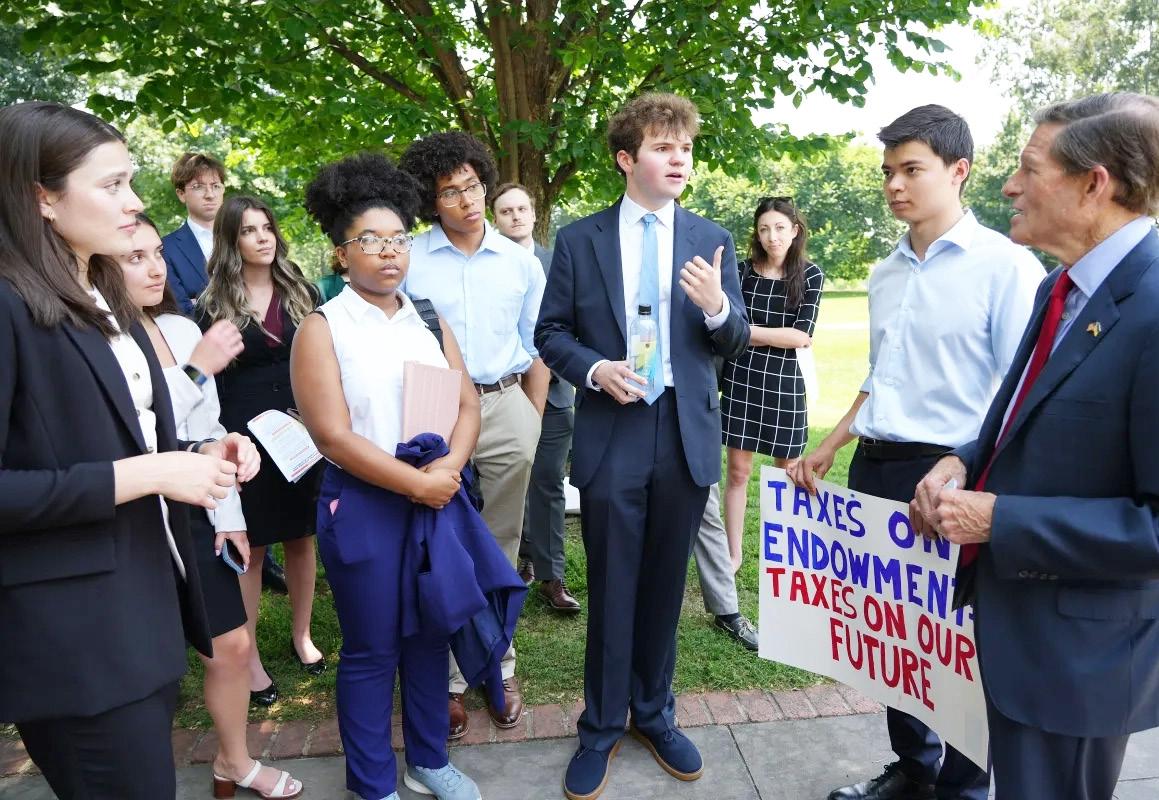
Yale junior Conor Webb spent half an hour Tuesday night in the nave of Sterling Memorial Library making phone call after phone call — urging Yale officials to reject a potential deal with the Trump administration over the university’s admissions policies.
Webb, the vice president of the Yale College Democrats, was one of roughly 60 people around the country to participate in Tuesday’s “emergency phone bank,” which was organized by the Yale College Democrats and the Yale College Council.
The outreach effort took place on the same day that the New York Times reported about growing resistance at the university to a potential federal settlement.
“I’m calling to express my strong disapproval of any Yale settlement that caves to the Trump administration by bargaining away students’ rights, free speech, academic freedom, or institutional autonomy,” reads the script that Webb and other phone bankers followed Tuesday night.
The script also mentions Yale’s mission — which Yale officials recently changed — and other settlements that “have resulted in schools like Columbia, Brown, UPenn, and Northwestern conceding their institutional autonomy, international student protections, respect for student identities, free speech protections, and self-governed academic departments.”
The Yalies who participated in Tuesday’s phone bank represented graduating classes from 1970 to 2030. They left 60-second voicemails with Yale President Maurie McInnis, Provost
Scott Strobel, the Office of General Counsel, and U.S. Rep. Rosa DeLauro.
“We absolutely flooded their voicemails,” Webb said. He added that he has not heard back from any trustees he emailed, or from President McInnis, but hopes they will reply eventually.
Tuesday’s phone bank marks just the latest example of Yale students, alumni, and law school leadership mobilizing against a potential deal with the Trump administration that they fear could be as far-reaching as those made with Harvard or Columbia.
An email sent out to students and alumni on Monday announced the phone bank with the subject line: “EMERGENCY: Tell Yale Not to Fold.”
The reported settlement proposal comes before a Department of Justice investigation into admissions at Yale has concluded. The students’ email criticized the administration, writing that the settlement was “happening behind closed doors, over the summer, with zero input from students.”
“There seems to be a genuine energy around this issue,” from both students and alumni, said Webb.
Since January 2025, the Trump administration has pressured several of Yale’s peer institutions into agreements over issues from free expression on campuses to the rights of international students attending American universities. So far, Yale has mostly been spared from the administration’s retribution, though the endowment tax hike has already constricted the university’s budget.
Webb noted that, even though the
Trump administration’s attacks on higher education have been ongoing for months, opposition to their scrutiny of higher education “seems more obvious than it was last year.”
He and other phone bank organizers had expected 10 or so attendees Tuesday, because they only had 24-hour notice, Webb said. Roughly 60 people wound up turning out.
“The reports that Yale University is in talks with the Trump administration on a potential deal are troubling,” DeLauro told the Independent in a statement Wednesday. “Private higher education institutions and their students should not be subject to the whims of a presidential administration or to political pressures. Making a deal with President Trump risks this independence. I urge Yale not to capitulate to the Trump Administration and instead stand strong against these bullying tactics and intimidation alongside their students, faculty, and alumni.”
Zach Pan, the treasurer for the Yale Democrats, said he was encouraged by the “breadth of the coalition” that has formed in opposition to the Trump administration’s interference. “It means that I think the university faces more pressure to listen to an incredibly broad group.”
Apart from the phone bank, a Yale alumni group — The Stand Up For Yale Coordinating Committee — sent an email on Monday asking Yale alumni to urge Yale trustees, administrators, donors and elected officials “to stand up and resist capitulation,” and sign a letter to McInnis, Strobel and Yale’s Board of Trustees. As of Wednesday afternoon, the letter had 3,975 signatories.
“Settling sends the message that Yale doesn’t stand by the work of its attorneys, the judgment of its admissions officers, or the brilliance of its students, and that it’s eager to betray its values for a dangerous illusion of security,” the letter read. “Now is the time for Yale to defend its autonomy and core values with the full weight of its institutional capacity.”
The Yale College Council posted a video to their YouTube page on Saturday, July 4 informing students and alumni of the potential deal and asking the administration to hear out students’ concerns about it. “In even trying to settle, we fear that Yale has accepted a losing premise,” Alex Chen, president of the Yale College Council, said in the video.
Chen pointed to settlements at Northwestern and Columbia, two schools that have been targeted by the administration and have since altered their policies around free expression and international students’ rights. Chen said Northwestern cracked down on campus demonstrations after their settlement with the Trump administration, restricting amplified sound at “the Rock,” where students often protest. Chen asked during the interview: “Is it going to be Beinecke Plaza next?”
A Yale spokesperson did not immediately respond to a request for comment, but told the New York Times on Tuesday, “We stand firm in the university’s commitment to students’ free expression, academic freedom, and Yale’s ability to determine who is admitted in accordance with the law.” The Department of Justice did not immediately respond to request for comment.
By Terrance Harris
Source: Black Press USA Wire
Just days after the New York Knicks had won their first NBA title in 53 years, their historic run, the planning of the parade, and their chances to repeat should have led the conversation. But it didn’t.
The topic that seemed to be on everybody’s mind and dominated the headlines was whether the Knicks would make the voyage to the White House to be honored by President Donald Trump. Initially, word spread that the Knicks would join every other NBA championship team that passed on the White House visit when Trump occupied it.
On June 18, however, Knicks owner James Dolan did what made sense for him. After all, Dolan had invited Trump to Madison Square Garden for what was a disastrous Game 3 for the Knicks. Naturally, Dolan accepted the invite.
Talk about a missed opportunity and being toned deaf at the same time. The Knicks should have declined, as should all championship teams, given the divisiveness and hate that have been spewed by this president, whose first 18 months back in the White House have been nothing but an embarrassment to this country. Black and Brown athletes in particular should decline any invitation because of the blatant disrespect and minimizing this president has shown toward their people. For Dolan to accept his friend’s invitation on behalf of the players who

brought him the title just seems distasteful.
BREAKING: The New York Knicks have accepted an invitation to visit the White House and become the FIRST NBA team to accept an invitation during a Donald Trump presidency ���� �� 2017 Warriors: No Visit�� 2018 Warriors: No Visit �� 2019 Raptors: No Visit �� 2020 Lakers: No Visit… pic.twitter. com/2hAxOLWb38
Basketball Forever (@bballforever_) June 17 , 2026
Jalen Brunson & company should not be in this position, having to decide and deal with the scrutiny of public opinion. But you hope that Brunson will feel as emboldened as Stephen Curry did when he stood up and said he would pass on the trip to the Trump White House after the Golden State Warriors won the NBA title in 2017.
That league that usually gets it has consistently passed on the Trump-occupied White House. The Warriors said no twice; Toronto, no thanks; last year, Oklahoma City declined; and the Los Angeles Lakers kindly waited until Joe Biden was in the White House, but that photo op didn’t happen because of COVID-19.
Trump has been so polarizing as president that it makes sense to avoid the misconception of supporting what’s go-
ing on. The Indiana Hoosiers, who won the College Football Playoff National Championship earlier this season, did make the trip to Washington, DC and the White House in May with several Black players present, but missing Heisman Trophy-winning quarterback Fernando Mendoza and a couple of other key players who chose their NFL practices over being in the presence of Trump.
The Knicks have accepted the White House invitation and are set to become the first NBA championship team to visit President Donald Trump's White House. ������ pic.twitter.com/0APSU4ll4x — My Mixtapez (@mymixtapez) June 17, 2026
What was once a great honor for athletes and their teams has become an awkward moment.
College athletes of all races should have an issue with Trump, who along with former college coaches Nick Saban and Tommy Tuberville, is trying to roll back the gains college athletes have made in terms of NIL and revenue-sharing money and the freedom to move around. So why fake the funk with someone who is working against you for an awkward photo op and a McDonald’s Happy Meal? Find somewhere – anywhere else to be. Based on reporting by Houston Defender.
Originally published by Black Press USA Wire — https://defendernetwork.com/ news/opinion/terrances-take-black-athletes-should-avoid-visits-to-trump-whitehouse/
By Clint Combs
Source: Black Press USA Wire
Supreme Court Strikes Down Birthright Citizenship Order, Advocates Link It to Voting Rights Fight
Contributing writer Clint Combs reports on the Supreme Court's 6-3 ruling upholding birthright citizenship under the 14th Amendment, striking down Trump's executive order. Justice Clarence Thomas dissented, arguing the amendment has been "repurposed," while Justice Ketanji Brown Jackson warned his reasoning pits Black Americans against immigrants. Civil rights leaders, immigrant advocates and first-time voters weigh in on what the ruling means, and why many see it as connected to a larger fight over voting rights.
On June 30, the Supreme Court struck down President Donald Trump’s executive order declaring that children born in the U.S. to parents who are in the country illegally or temporarily are not U.S. citizens.
The 6-3 ruling upheld a long-settled understanding that the 14th Amendment, adopted after the Civil War, guarantees citizenship to anyone born in the country.
Justices Clarence Thomas, Samuel Alito
and Neil Gorsuch dissented.
In his dissent, Thomas wrote that the 14th Amendment “was designed and understood to secure equal rights for the freed blacks but has instead been repurposed for political projects that the Reconstruction Congress did not support.”
Justice Ketanji Brown Jackson, the first Black woman to serve on the high court, warned of “an even greater threat” posed by Thomas’ dissent and what she described as the Trump administration’s bad-faith interpretation of the Constitution.
“What is more, this alternative account pitches Black Americans against immigrants when the advocates who promoted the Fourteenth Amendment did no such thing,” Jackson wrote.
“Freed Blacks fought for the shared humanity of all people.”
Justice Brett Kavanaugh suggested in his opinion that Congress, not the courts, could decide whether to change birthright citizenship through legislation.
Reaction to the ruling came quickly from civil rights and immigrant advocacy groups, many of whom connected the fight over birthright citizenship to broad-

er efforts to restrict voting rights.
Rod Adams, executive director of the New Justice Project, speaks outside Mercado Central on Lake Street in Minneapolis, June 30. Credit: Clint Combs/MSR New Justice Project Executive Director Rod Adams said the ruling reflected a promise won through Black resistance.
“The 14th Amendment was never about legal language. It was a declaration that America could no longer decide who was fully human or fully American based on race or circumstances of birth,” Adams
said. “That promise was purchased with Black blood, Black courage and Black resistance.”
Adams argued that Trump’s push to end birthright citizenship is connected to the SAVE Act, a restrictive voting bill that would require Americans to produce a passport or birth certificate to register to vote. Last week, Trump refused to sign a bipartisan housing affordability bill until Congress passes the SAVE Act.
“The same forces attacking birthright citizenship are attacking voting rights,”
Adams said. “The same forces targeting immigrant families are attacking Black communities. The same forces trying to erase our history are trying to silence our voices at the ballot box.”
Hamsa Hussein, a Somali American rideshare driver and leader of the SEIU Local 26 Drivers Organization Committee, joined Adams after the ruling and said attacks on birthright citizenship are also attacks on workers’ rights.
“Instead of attacking migrants who are our neighbors, we should stand up to the billionaires, the big corporations,” Hussein said.
Unidos MN Executive Director Emilia González-Avalos said efforts to end birthright citizenship amount to voter suppression.
“When they move to erase birthright citizenship, they move to erase your vote before you ever cast it, to make sure you could never hold them accountable for a mass deportation agenda tearing families from their homes right now,” GonzálezAvalos said. “Make no mistake, this was voter suppression dressed up as immigration policy, but they miscalculated, because you are here, you are citizens, and your power is real.”
Thomas Wolf, director of democracy initiatives at the nonpartisan Brennan Center for Justice at NYU Law, said the ruling doesn’t offset the damage he believes the court has done this term.
“The Fourteenth Amendment guaranteed citizenship to everyone born here over 150 years ago. The Supreme Court affirmed that 20 years later in Wong Kim Ark,” Wolf said. “Meanwhile, the court has been on an anti-democratic rampage. In just the past few weeks alone, the court further undermined the Voting Rights Act, encouraged more aggressive partisan gerrymandering, dangerously expanded presidential power over federal agencies, and further depleted protections for immigrants.”
Emily Rodriguez, a first-generation American, speaks outside Mercado Central on Lake Street in Minneapolis, June 30. Credit: Clint Combs/MSR
For some young people, the ruling is personal. Emily Rodriguez, a first-generation American born prematurely with a weakened immune system, said her parents came to the U.S. seeking a better life after leaving behind poverty and violence.
“Having health insurance meant that we could go to the doctor, get medication and get the care that we needed,” Rodriguez said.
Rodriguez, 18 and college-bound, said she was devastated when she learned Trump had signed the executive order denying birthright citizenship to people like her. She’ll carry that memory with her when she votes for the first time this year.
“That is something that I don’t think is a given,” Rodriguez said. “My voice matters, because this country recognizes me as an American. Every young person deserves that same certainty about where they belong and what future they can build.”
Ali Bella, who turns 18 this October, will also be eligible to vote for the first time in the midterm elections.
“A child doesn’t choose where they’re born. A child does not choose where their parents were born. So why should any child have their rights taken away because of circumstances they never chose,” Bella said. “I’ll be able to vote. Imagine taking that voice away from millions of people simply because of who their parents are.”
For more information on Trump’s proposed Birthright Citizenship Executive Order, visit www.naacpldf.org/case-issue/know-your-rights-birthright-citizenship/.
Clint Combs welcomes reader responses at combs0284@gmail.com. Your Might Also Like
Based on reporting by Minnesota Spokesman Reporter.
Originally published by Black Press USA Wire — https://spokesman-recorder.com/2026/07 /05/supreme-court-birthright-citizenship-ruling/

By Dr. Artika Tyner
Source: Black Press USA Wire
Mirrors and Windows:
Columnist Dr. Artika R. Tyner writes on the power of culturally relevant children's books, drawing on her own childhood memories searching for a story that reflected her. Tyner outlines how to identify genuinely culturally relevant books, why children engage more deeply with characters who share their culture, and how "First Educators" can use both mirror and window books to build empathy, self-worth and a broader view of the world.
As a child, one of my fondest memories was my grandmother taking me to the Salvation Army to buy books. I longed to find a book with a little girl with a skin tone similar to mine, a book that revolved around a relatable story. I wanted to see myself in this little girl, and if she were an achiever, I would strive to reach or even surpass her. These memories inspired me to become an author, an educator and a literacy advocate who focuses on creating access to culturally relevant books. My goal is to equip First Educators with the tools needed to inspire the next generation to learn, grow and lead.
“First Educator” refers to the fundamental primary role that parents and caregivers play in a person’s early development and education. They instill essential life skills, morals and behaviors.
As a First Educator, when was the last time you brought home a new book? Do you have a home library set up? Does your child see themselves in the characters of the books you bring home?
Studies have shown that children en-
gage more with books when they intersect with their culture. When characters are familiar with the way of life of their community, children establish an affinity with them. Culturally relevant books motivate children to read, which improves comprehension, enhances critical thinking and increases engagement with others. They also broaden empathy by allowing children to step into the shoes of others and understand the world from a diverse perspective, helping to break down stereotypes.
Books act as mirrors where children get to see a reflection of themselves. When children engage with culturally relevant books and characters they relate to, they tend to have an increased sense of selfworth and cultural validation. They end up emulating these worthy characters. How to identify a culturally relevant book
Having a picture of a person of color on the cover of a book does not equate to cultural relevance. The stories should be centered on the lives of these characters. Culture is the way of life of a group of people and, as such, should be represented in the details of the food, clothing, language and celebration of festivities. Culturally relevant books should be situated in scenarios that children are familiar with.
When selecting books for your child, focus on books authored by individuals from their communities who celebrate and honor cultural values. The similarities in experiences will resonate with children when they engage with these books.
To truly know what books would best suit your child, you need a better understanding of the child’s world. Start by asking them what their typical day looks
like. What sights and sounds they encounter, and how those make them feel. Know their preferences: what snacks they like, how they spend their summers. These details differ among cultures, and book selection should reflect that.
First Educators often introduce children to books that serve as both mirrors and windows. According to children’s literature scholar Dr. Rudine Sims Bishop, “Children need windows and mirrors. They need mirrors in which they see themselves and windows through which they see the world.”
Mirror books reflect the lives of children back to them. Readers are familiar with the characters and the setting. Mirror books affirm and validate their experiences and serve as a source of inspiration, particularly in nonfiction, where children are introduced to heroes and sheroes. Window books, on the other hand, open up the world to readers. They give children the liberty to build bridges across cultures, helping develop empathy and curiosity.
As much as a child needs culturally relevant books, there should be a fine balance. When setting up a home library, the collection should be diverse enough to give the child a holistic view of the world as a global citizen. First Educators can seek support from their local librarian in choosing the right books for their child. Make reading a conversation
As a First Educator, engage your children during and after they read a book. Ask questions such as: “What lessons were learned?” or “What would you have done in this situation?” Engaging children about culturally relevant books connects them to their cultural stories and values. It allows the First Educator to shed more light on cultural practices
not found in the book. Bonding over stories nurtures a child’s development, both emotionally and intellectually. It builds trust, improves literacy and unlocks the world for young readers.
A call to action
Pay critical attention to your child’s book collection. Are the books culturally relevant? Do they reflect what you expect your child to know about themselves? Are there stories that, if added, would strengthen the collection? Are there window books to ensure your child has a broad outlook on life?
A child’s understanding of who they are shapes their own story. A powerful gift you can give a child is a book that opens them up to see and know themselves better.
As Dr. Bishop wisely stated: “When there are enough books available that can act as both mirrors and windows for all our children, they will see that we can celebrate both our differences and our similarities, because together they are what make us all human.”
Join Planting People Growing Justice every first Saturday for the Leaders Are Readers program for intergenerational reading circles that bring children and families together through storytelling and interactive activities, plus a free lunch and book giveaway from 11 a.m. to 1 p.m. at Jimmy Lee Recreation Center. For more information, visit www.ppgjli. org/.
You can also reach Dr. Artika Tyner directly at drartikatyner@gmail.com.
Based on reporting by Minnesota Spokesman Reporter.
Originally published by Black Press USA Wire — https://spokesman-recorder.com/2026/07 /07 /culturally-relevant-books-children/
By The Positive Community Black Press USA Wire
Julia Perry was one of the most accomplished American composers of the twentieth century. Although she never became a household name during her lifetime, her music demonstrated extraordinary originality, technical mastery, and emotional depth. Working in an era when opportunities for women and African American classical composers were severely limited, Perry forged a remarkable career that continues to receive increasing recognition today.
Born on March 25, 1924, in Lexington, Kentucky, Perry grew up in Akron, Ohio, in a family that valued education and music. She studied piano, violin, and voice from an early age, displaying exceptional musical talent. Her parents encouraged her artistic development, laying the foundation for a lifetime devoted to composition and performance.
Perry attended Westminster Choir College, where she earned bachelor’s and master’s degrees in music. She later continued her studies at prestigious institutions, including Juilliard and the Berkshire Music Center at Tanglewood. These experiences exposed her to leading composers and conductors while sharpening her skills as both a performer and composer.

One of Perry’s greatest influences was the renowned composition teacher Nadia Boulanger in Paris. She also studied with the Italian composer Luigi Dallapiccola, whose modernist techniques broadened her musical vocabulary. Under their guidance, Perry developed a distinctive style that combined classical traditions with innovative harmonic language.
During the late 1940s and 1950s, Perry emerged as one of America’s most prom-
ising young composers. Her breakthrough came with Stabat Mater, a powerful work for contralto and string orchestra that attracted international attention. The composition demonstrated her gift for dramatic expression and sophisticated orchestration.
Perry composed works in many forms, including symphonies, chamber music, choral pieces, operas, and orchestral compositions. She ultimately wrote twelve
symphonies and numerous works for orchestra. Her music blended elements of neoclassicism with rhythms, melodies, and spiritual influences rooted in African American musical traditions, creating a voice that was uniquely her own.
Her accomplishments earned widespread recognition. Perry received two Guggenheim Fellowships, won the prestigious Prix Fontainebleau, and became one of the first Black women to have orchestral works performed by major American ensembles. She also toured Europe as a conductor and lecturer, where her music found enthusiastic audiences.
Despite these achievements, Perry faced significant barriers because of both her race and gender. Classical music during the 1950s and 1960s offered limited opportunities for African American women composers. Nevertheless, she persevered through determination and extraordinary talent, earning respect from musicians and critics around the world.
The Civil Rights Movement also influenced Perry’s later compositions. While her earlier works emphasized modernist musical techniques, many of her later pieces more openly reflected African American history and cultural identity.
She demonstrated that classical music could embrace diverse traditions while maintaining artistic excellence.
In the early 1970s, Perry suffered a se-
ries of debilitating strokes that left her partially paralyzed. Rather than ending her creative life, she taught herself to write with her left hand and continued composing despite enormous physical challenges. Her determination remains one of the most inspiring aspects of her remarkable career.
Following her death in 1979, much of Perry’s music fell into obscurity because many manuscripts remained unpublished and her estate was not properly organized. For decades, performances of her music were rare, depriving audiences of one of America’s most important compositional voices.
Today, a growing movement among orchestras, scholars, and performers is restoring Julia Perry’s place in American musical history. Newly published scores, recordings, and performances have introduced her work to new audiences, revealing the brilliance of a composer whose contributions deserve lasting recognition. Her life stands as a testament to perseverance, artistic excellence, and the enduring power of music to transcend barriers. Based on reporting by The Positive Community.
Originally published by Black Press USA Wire — https://thepositivecommunity.com/2026/07 /05/julia-perrys-enduring-musical-legacy/
BLACKPRESSUSA NEWSWIRE — One of the greatest Marylanders ever, Frederick Douglass, famously challenged America to reconcile its lofty aspirational principles with its actual treatment of Black citizens in his speech What to the Slave Is the Fourth of July? His words resonate to this day because the answer to his question remains incomplete and insufficient. Every generation inherits the responsibility to move this nation closer to its own ideals and ours is no exception.

by BPUSA Upload
By Delegate N. Scott Phillips
As Americans celebrate the 250th anniversary of our nation’s founding, we should do so with both pride and purpose. Two hundred and fifty years is an extraordinary milestone and is worthy of reflection on the ideals of democracy, and liberty and justice for all. For African Americans, the American story has always been one of profound contradiction. We have consistently believed in the promise of this nation, even when the nation did not believe in us. So, this seminal moment in our history should not only invite celebration; it should also demand honest examination of how well America has delivered on its promise. In 1963, Dr. King, argued that the Declaration of Independence and the Constitution were a “promissory note” guaranteeing certain rights to all Americans but “has come back marked insufficient funds” for Black Americans. In 2026, we must assess the progress made since Dr. King’s
dream speech.
Let’s be clear, African Americans have done our part, we have fought in every war, built businesses, advanced science, created culture, and strengthened our democracy, often while being denied its full benefits. There has been undeniable progress, but significant challenges still remain.
As Chairman of the Maryland Legislative Black Caucus, I believe this moment calls for our collective vigilance and less complacency. The distance between our founding ideals and our lived reality has narrowed since the civil rights movement, but it has not disappeared. Equity in economic and educational opportunity, access to affordable housing, fair protection under the law, and competent political representation remain unfinished business.
One of the greatest Marylanders ever, Frederick Douglass, famously challenged America to reconcile its lofty aspirational principles with its actual treatment of Black citizens in his speech What to the Slave Is the Fourth of July? His words resonate to this day because the answer to his question remains incomplete and insufficient. Every generation inherits the responsibility to move this nation closer to its own ideals and ours is no exception.
Maryland has a lot to be proud of when it comes to the political ascension of Af-
rican Americans in our state. None but the Old Line State can boast that Blacks serve as Governor, Attorney General, State Treasurer, US Senator, Mayors, and County Executives of over 62% of Maryland’s population and a legislative Black Caucus that comprises 29% of the legislature, the largest percentage in the nation. We have made meaningful investments in education, entrepreneurship, criminal justice reform, and community development.
Yet with all that has been accomplished, disparities persist and since better outcomes are possible, we must stay committed to doing better and doing more. The reality in Maryland is that Black families continue to face significant wealth gaps. Black-owned businesses still encounter barriers to accessing capital and procurement opportunities. Black communities are disproportionately impacted by economic instability and health inequities. These are not abstract statistics; they are realities that shape the everyday lives of too many Black Marylanders.
The timing of this year’s Independence Day reflection is especially significant as Maryland prepares for Governor Moore to convene a special legislative session on congressional redistricting. Redistricting is far more than drawing lines on a map. It determines whose communities remain
whole, and whose interests are represented in the halls of power.
The Maryland Legislative Black Caucus believes that we have an obligation to ensure that African American voting strength is not diluted and that the hardfought gains secured through generations of sacrifice are preserved. Fair representation is not about guaranteeing outcomes; it is about guaranteeing opportunity. Every Marylander deserves an equal voice in choosing those who represent them.
Our democracy is strongest when every community can participate fully and meaningfully. Protecting Black electoral influence is not a partisan objective; it is a democratic imperative rooted in the fundamental principle that every vote should carry equal weight. As legal and political challenges continue to reshape the landscape of voting rights across the country, Maryland must remain committed to protecting the inclusive representation that has been fought for generation after generation.
The Maryland Legislative Black Caucus will continue to advocate for policies that expand opportunity, protect civil rights, and strengthen our democracy. We recognize that representation is only the beginning. True progress will be evident in positive measurable outcomes in economic
mobility, educational achievement, better public safety, and fair access to justice for every Marylander.
As we gather with family and friends this Fourth of July, let us celebrate how far America has come but never denying how far we still must go. Patriotism is not measured solely by our willingness to celebrate our nation’s achievements, but also by our commitment to perfecting our imperfect union.
America’s 250th birthday should inspire us to renew the fight for the promise of our democracy. We owe it to those who fought for but never lived long enough to enjoy the blessings of freedom and to the next generation who should inherit a better America than their foreparents.
That is the work of the Maryland Legislative Black Caucus and all people of good conscience who lead while serving as educators, mavens of business and industry, faith leaders and community activists; and this task before us cannot be lost amid celebratory parades, commemorative speeches and patriotic celebrations from the city to the shore. It requires us to redouble our persistence, and principled leadership in the pursuit of America’s promise.
Delegate N. Scott Phillips is the Chairman of the Legislative Black Caucus of Maryland.
By MKE Community Journal
Statement of Milwaukee Common Council Members: Alderman Alex Brower, Alderwoman Andrea M. Pratt, Alderman Mark Chambers, Jr., Alderwoman Larresa Taylor, Alderwoman Sharlen P. Moore, and Alderwoman Marina Dimitrijevic
We have been made aware that there is elevated ICE activity in Milwaukee. We strongly condemn this fascist terror activity being carried out in our neighborhoods under the guise of ‘lawful’ federal immigration enforcement.
In fact, community organizations are telling us that most of those who are being taken by ICE have no criminal record. We understand fully that this is an unsettling time for many of our residents. We strongly encourage anyone with immigration emergencies, ICE sightings, or to report detentions in Wisconsin, to please call the Voces de la Frontera 24/7 Bilingual Emergency Hotline at 1-800-4270213.
Other helpful resources for citizens: https://www.aclu-wi.org/request-legal-assistance/, https://www.milwaukeeturners.org/know-your-rights, https://vdlf.org/know-your-rights/immigrant-rights/. Additional information on

immigration rights and responsibilities is available through the City of Milwaukee’s Know Your Rights & Resources website. We now have laws in place in Milwaukee that prohibit the use of masks for any law enforcement in our city. We believe that all law enforcement should be identifiable to the public and unmasked at all times, and we are requesting that Milwaukee Police and the Office of the City Attorney take the necessary steps to enforce
these laws and to immediately address any observed violations.
Additionally, in accordance with another new law we have approved, we are doing everything we can to stop ICE from using city property for staging or any other activities.
Together, we can stand up to ICE and help make Milwaukee a shining example of lawful and moral resistance to federal terror and tyranny.
By Birmingham Times Source: Black Press USA Wire
The Negro Southern League Museum (NSLM), in partnership with Nurture, Inc., is launching a series of community health and wellness events to support mental, emotional, and physical well-being. birminghamal.gov | The Birmingham Times
The Negro Southern League Museum (NSLM), in partnership with Nurture, Inc., is launching a series of community health and wellness events designed to support mental, emotional, and physical well-being throughout Birmingham.
Josh Gibson, widely regarded as one of the greatest players in Negro Leagues history, died at just 35 years old from a stroke. Many at the time believed Gibson was struggling mentally, not realizing he was exhibiting the symptoms of a brain tumor.
His passing in 1947 — just months before Jackie Robinson integrated modern Major League Baseball — fueled widespread speculation that he had died from the emotional burden of not being chosen to break baseball’s color barrier.
Josh Gibson, widely regarded as one of the greatest players in Negro Leagues history, died at just 35 years old from a stroke. Many at the time believed Gibson was struggling mentally, not realizing he was exhibiting the symptoms of a brain tumor. Gibson’s misunderstood symptoms and the stigma surrounding mental health in his era reflect challenges that many individuals and families continue to face today. NSLM’s new wellness series aims to address these concerns in the

historic setting of the museum which features legends like Gibson. The first event in the series, Healing the Legacy: Fatherhood, Identity, and Emotional Wellness, was held on June 6. Led by licensed counselor Perry Goins III, the session created a supportive environment where participants explored the unique mental health challenges faced by Black fathers, discussed barriers to care, and encouraged positive, generational change.

Upcoming Events in the Wellness Series
• Race-Based Stress: What It Does, How You Feel, and What You Can Do – July 11
A session focused on understanding the effects of race-based stress and exploring practical tools for resilience and emotional well-being.
• Write Your Way Back: The Healing Power of Journaling – August 15
An interactive workshop on using reflective writing as a pathway to healing, clarity, and emotional processing.
• ACEs (Adverse Childhood Experiences): Understanding Lifelong Impacts –September 19
A deep dive into how early life adversity affects mental health, behavior, and long-term health outcomes—along with strategies for community and personal healing.
• Be Cancer Aware! – October 10
A community conversation aimed at increasing awareness of cancer risks, screenings, and prevention to support early detection and healthier outcomes.
This partnership between NSLM and Nurture, Inc. underscores the museum’s commitment not only to preserving the stories of Negro Leagues legends, but also to strengthening the community those stories come from. Together, they aim to reduce stigma, expand access to knowledge, and promote wellness across generations.
For more information about event times, registration, or other inquiries, please contact Nurture, Inc. founder and director, Crystal Mullen Johnson cmullenj@nurturebham.com or contact the Negro Southern League Museum at 205581-3040.
britishart.yale.edu @yalebritishart 1080 Chapel Street New Haven, CT 06520

By Joseph Williams
Source: Black Press USA Wire
The most revealing image of America’s 250th birthday celebration wasn’t the fireworks bursting over the National Mall, colonial reenactors in Boston, or the military flyovers that filled Washington, D.C.’s skies. It was a Reuters photo, shot by Cheney Orr, of a lone Black woman on public transportation.
Riding the Metro, Washington’s subway Asystem, the as-yet-unidentified woman, in a green T-shirt, was sitting in a train car crowded with nearly a dozen identically dressed white men wearing khakis, navy shirts, baseball caps, sunglasses, and face masks.
With members of the white supremacist group Patriot Front filling the train car around her, she stared ahead, her expression frozen somewhere on a grid between practiced indifference, quiet calculation, anger, and fear.
The image Orr captured raced around social media because millions of Americans saw it and instantly understood what they were looking at: a hate group out in public, retelling an old American story about Black trauma, in modern costume.
Echoes of History
For Black Americans, the photograph was painfully familiar.
It echoed the images of Elizabeth Eckford, a Black teenager, hounded by an angry white mob in Little Rock, and Ruby Bridges, a Black child, walking past screaming segregationists into a New Orleans elementary school. Uncut racism against Black women and girls, on full display.
Now, we have a photo of a Black woman juxtaposed against looming masked white nationalists, as if a century of American racial history had folded in on itself.
From the Ku Klux Klan to the White Citizens Council to the Proud Boys, every generation has produced its own version of organized white intimidation. The uniforms change. The slogans evolve. The technology improves. But the underlying message, plainly and unequivocally told by white men, remains remarkably consistent: We belong here. You are merely tolerated.
Hiding in Plain Sight
Patriot Front wraps itself in the language of patriotism while promoting its white nationalist vision of America. Members marched through Washington carrying American and Confederate imagery beneath chants of “Reclaim America,” presenting themselves as defenders of the nation’s founding ideals — even as their movement traces its roots to the aftermath of the fatal 2017 Charlottesville “Unite the Right” rally.
Yet perhaps the most striking detail wasn’t they carried or chanted. It was what they hid.
America’s original patriots signed their names. The Klan hid beneath hoods. Patriot Front wraps itself in the flag while hiding behind masks.
Every face concealed, every distinguishing feature erased. Every member rendered indistinguishable from the next. It is unsettling, by design, and is not a new tradition



in America.
The Klan understood more than a century ago that anonymity is its own weapon. White robes and pointed hoods, while theatrical, protected identities, denied victims the ability to identify attackers and insulated participants from social and legal accountability.
The masks transformed ordinary men into an anonymous mob.
History remembers those tactics well. In the 1920s, tens of thousands of robed, hooded Klansmen marched openly through Washington, D.C., demonstrating that white supremacy was not a small cadre confined to Southern back roads but a political movement comfortably at home in the nation’s capital. Masked “night riders” menaced rural Black communities in the South under cover of darkness to instill terror without consequence.
A century later, the wardrobe has changed, from white robes to tactical khakis. The strategy has not.
Patriot Front claims it represents courage, tradition, and American patriotism. Yet it is difficult to square that claim with the effort its members make to avoid being recognized. And their appearance on July 4 in a subway car headed to the National Mall is a contradiction that’s impossible to ignore.
The men who signed the Declaration of Independence pledged, in their words, “our Lives, our Fortunes and our sacred Honor.” Whatever else history says about them, they publicly attached their names to beliefs they considered worth dying for. Patriot Front members invoke the founders while refusing to identify themselves. If they believe their cause is righteous — that it represents the true America — why the masks?
It’s because they know that openly embracing white supremacy carries consequences. Employers notice. So do neighbors, friends, family. So the white men in matching outfits hide behind the symbolism of public strength without accepting the personal cost of public conviction. That tension is part of what makes the Metro photograph so unsettling.
The woman at its center did not choose to become a symbol; she simply wanted to get somewhere on the subway. The millions of people who saw her recognized her discomfort. But Black Americans understood the emotional arithmetic written on her face: if you’re outnumbered and perceive danger, stay calm, avoid attention, get home safely.
The photo compresses centuries of the Black experience into a single subway car. One Black woman sits alone while a movement that claims to love America conceals its identity.
The Metro photograph is unsettling because it reveals insecurity masquerading as strength. America’s original patriots signed their names. The Klan hid beneath hoods. Patriot Front wraps itself in the flag while hiding behind masks.
For all its talk of reclaiming America, its members seem unwilling to claim their own beliefs.
Based on reporting by Seattle Medium.
Opening for a full time HVAC Apprentice Level 1. Candidate must possess a technical school certificate in heating, ventilation, air conditioning, oil, propane and natural gas. Must be detail oriented and comfortable working in a fast-paced environment. Send resume to: HR Manager, P. O. Box 388, Guilford, CT 06437 or emailHRDept@eastriverenergy.com
**An Affirmative Action/Equal Opportunity Employer including Disabled and Veterans**
Opening for a Class A Part-Time driver for petroleum/asphalt/like products deliveries for nights and weekends. Previous experience required. Send resume to: HR Manager, P. O. Box 388, Guilford, CT 06437 or email: hrdept@eastriverenergy.com
***An Affirmative Action/Equal
Members of the public are invited to
State Project No. 0173-0551
Traffic Control Signal Replacements in Southwestern Connecticut (East Haven, Fairfield, Milford, North Haven, Norwalk, Trumbull, Wallingford, West Haven, and Westport)
Tuesday, July 14, 2026, at 6:00 p.m.
Learn More: portal.ct.gov/DOTSouthwestCT0173-0551
The purpose of this meeting is to provide the community with an opportunity to learn about the proposed project and allow an open discussion of any views and comments concerning the proposed improvements. A Q&A session will immediately follow the presentation.
The purpose of this project is to replace aging and outdated traffic control signal infrastructure with new equipment to current standards in order to maintain reliable operation at project intersections throughout Southwestern Connecticut.
There is potential for right-of-way impacts around new signal equipment and newly installed sidewalks at some project intersections.
Construction is expected to start spring 2028, depending on funding, right-of-way acquisition, and permits. The estimated cost is $18 million with 100% state funds.
The public can submit comments and questions during the two-week public comment period following the meeting. Please direct comments and questions by Tuesday, July 28, 2026, to Kaethe Podgorski at DOTSignalReplacements@ct.gov or 860-594-2189.
The recording will be posted following the meeting in CTDOT’s public meeting playlist at portal.ct.gov/ctdotVPIMarchive
For audio only, call 877-853-5257 with Meeting ID 891 8729 7077. Project information can be mailed within one week by contacting Kaethe Podgorski at DOTSignalReplacements@ct.gov or 860-594-2189.
Individuals with hearing/speech disabilities can dial 711 for Telecommunications Relay Services (TRS). Request language assistance from CTDOT’s Language Assistance at 860-594-2109 at least five business days before meeting.

LaRosa Earth Group LLC, a Site/Excavation Company, is currently looking to add the following full-time positions to our Team:
Please submit resumes to HR@LAROSABG.COM or stop by our main office to fill out an application: 163 Research Parkway Meriden, CT. Salary will be commensurate with experience and best fit for the positions. Health plan; 401K; company-paid holidays in addition to paid time off.


LaRosa Groups is an Affirmative Action/ Equal Opportunity Employer who values diversity and encourages all qualified applicants to apply.
The South Central Regional Council of Governments (SCRCOG) seeks the services of one or more consultants for the following transportation planning studies during the 2026 and 2027 Fiscal Years (July 1, 2025June 30, 2027): Metropolitan Transportation Plan Update and Local Bridge Inspection Study. Responses are due by June 2, 2026 (12 noon local time). Selected firms will be interviewed on June 9, 2026. The full RFQ document can be viewed at the Council’s website: www.scrcog.org or can be made available upon request. Contact James Rode at (203) 4668623 with any questions.

Construction Equipment Mechanic
(preferably experienced in Reclaiming and Road Milling Equipment) We offer factory training on equipment we operate. Job is in Bloomfield, CT.
Contact: Tom Dunay Phone: 860-243-2300 Ext. 122 Email: tom.dunay@garrityasphalt.com
Reclaimer Operators and Milling Operators
(must have current licensing and a clean driving record; be willing to travel throughout the Northeast & NY)
Contact: Rick Tousignant Phone: 860-243-2300 Ext. 133 Email: rick.tousignant@garrityasphalt.com
Tractor Trailer Driver for Heavy & Highway
Construction Equipment
(must have a class A CDL license with Tank Endorsement and a clean driving record; be capable of operating heavy equipment and willing to travel throughout the Northeast and NY)
Contact: Brian McKee Phone: 860-558-6189 Email: bmckee@garrityasphalt.com
• We offer Excellent hourly rates and benefits.
• Women and Minority Applicants are encouraged to apply.
• Affirmative Action / Equal Opportunity Employer
RFP Site-Civil Engineering Services 26 Monroe Street, Norwalk, CT
Sound Communities Inc., an affiliate of the Norwalk Housing Authority, and its development partner National Housing Trust are seeking proposals from qualified site-civil engineering firms for a multi-phase, transit-oriented, mixed-use affordable housing development at 26 Monroe Street, adjacent to the South Norwalk Metro-North Station. The project is anticipated to yield approximately 200 units across two phases, with ground-floor office space, community amenities, and a public plaza component. Firms must have demonstrated experience in site planning, urban infrastructure, zoning, and multifamily or mixed-use development in Norwalk or Fairfield County. Full RFP is advertised on Norwalk Housing Authority website. NHA and Sound Communities are Equal Opportunity Employers.
Submission Deadline: July 24, 2026, at 5:00 PM EST
Email only. No hard copies. Questions accepted through July 17, 2026
Contact: Leala Marlin, Development Project Manager lmarlin@soundcommunitiesct.org
Special Inspection Services
Leroy Downs Apartments 8 Chestnut Street, Norwalk, CT
Sound Communities Inc., an affiliate of the Norwalk Housing Authority, invites proposals from qualified Special Inspection agencies to provide special inspection and materials testing services for Leroy Downs Apartments, a proposed 7-story, 68-unit cross- aminated timber (CLT) mixeduse affordable housing development in Norwalk, Connecticut.
Required inspection categories include Cast-in-Place Concrete, Structural Steel, Cold-Formed Steel Framing, Spray Fire Resistant Material (SFRM), Cross Laminated Timber (CLT), Mechanical & Electrical Systems, and Air Barrier / Air Leakage testing. The project is funded through the Connecticut Housing Finance Authority (CHFA) and CT Department of Housing (CT DOH). This is a prevailing wage, tax-exempt project.
Proposals are due no later than July 17th at 5:00 PM EST and must be submitted via email to sstewart@soundcommunitiesct.org
Request for Information: No Later than July 10th, 2026
The complete RFP may be obtained by contacting Sophie Stewart, Project Coordinator, at sstewart@soundcommunitiesct.org. Firms with CLT/mass timber special inspection experience are strongly encouraged to respond. Small, minority-, and women-owned businesses are encouraged to respond.
Norwalk Housing and Sound Communities are Equal Opportunity Employers
An Affiliate of the Norwalk Housing Authority REQUEST FOR QUALIFICATIONS
Architectural Services — 25 Leonard Street, Norwalk, CT
Sound Communities Inc., an affiliate of the Norwalk Housing Authority, is soliciting proposals from architectural firms with experience in affordable multifamily housing for a proposed 12-unit, 3-story new construction residential development at 25 Leonard Street, Norwalk, CT.
The selected Architect of Record will provide services from schematic design through site plan approval) and through construction document completion and contract administration.
RFQ Release date: June 26th, 2026
RFQ Deadline: July 3rd, 2026
Submission Deadline: Friday, July 17th, 2026, at 5:00PM
The RFP and all submission requirements are available by contacting Sophie Stewart at sstewart@soundcommunitiesct.org.
Proposals must be submitted by email only. No hard copies will be accepted.

The Housing Authority City of New Haven d/b/a Elm City Communities
Architectural Engineering Services for the Clock Factory
The Housing Authority of the City of New Haven d/b/a Elm City Communities acting through its instrumentality, The Glendower Group, Inc. Is soliciting request for qualifications (“RFQ”) for selection of a qualified and experienced A & E Firm to serve as the Project Architect for the Clock Factory. A complete copy of the requirement may be obtained from New Haven Housing Authority Vendor Collaboration Portal https://newhavenhousing.cobblestonesystems.com/ gateway beginning on
Wednesday,
The Housing Authority City of New Haven d/b/a Elm City Communities
Request for Proposals (RFP) Construction Manager at Risk (CM@R)
Construction Manager at Risk (CM@R) Clock Factory Redevelopment
The Housing Authority of the City of New Haven d/b/a Elm City Communities acting through its instrumentality, The Glendower Group, Inc. in partnership with the City of New Haven (the "City") as Co-Applicant and Neighborhood Implementation Entity, is issuing this Request for Proposals (RFP). for selection of a qualified and experienced CM@R Firm to serve as the Project Manager for the Clock Factory Redevelopment. A complete copy of the requirement may be obtained from New Haven Housing Authority Vendor Collaboration Portal https:// newhavenhousing.cobblestonesystems.com/gateway beginning on
Wednesday, June 10, 2026, at 3:00PM.
360 Management Group is currently seeking bids from qualified contractors to perform Extermination Services Agencywide. A complete copy of the requirement may be obtained from Elm City’s Vendor Collaboration Portal https://newhavenhousing.cobblestonesystems.com/gateway beginning on June 8, 2026, at 3:00PM.
a quarry and paving contractor, has positions open for the upcoming construction season. We are seeking candidates for a variety of positions, including: Scalehouse Dispatcher/ Equipment Operators and Laborers. NO PHONE CALLS. Please mail resume and cover letter to “Hiring Manager”, Galasso Materials LLC, PO Box 1776, East Granby CT 06026. Galasso Materials is an Affirmative Action/Equal Opportunity Employer. All applicants will be considered for employment without attention to race, color, religion, sex, orientation, gender identity, national origin, veteran or disability status.
This is a full-time position in a fast-paced environment. The candidate must be highly organized, analytical and detail-oriented. This opportunity offers exposure to all areas of the business and plays a critical role in driving operational excellence and supporting company growth. A college degree is required.
Benefits include: Competitive Hourly Wage, Medical, Dental, and Vision Plans, Vacation & Sick Time, Paid Holidays, Retirement Plan 401(k), Wellness Program, Employee Assistance Program, Life Insurance Options.
Send resume to: HR Manager, P.O. Box 388, Guilford, CT. 06437.
Email: HRDEPT@eastriverenergy.com
*An Affirmative Action/Equal Opportunity Employer, including Disabled and Veterans*
The Town of Wallingford is accepting applications for an HVAC Tradesman. Wages: $31.22 to $40.23 hourly. For additional information and to apply online by the closing date June 8, 2026, please visit: www.wallingfordct.gov/government/departments/human-resources/. Applications are also available at the Department of Human Resources located in Room #301 of the Town Hall, 45 South Main Street, Wallingford, CT 06492. Phone: (203) 294-2080; Fax: (203) 294-2084. EOE


The State of Connecticut, Office of Policy and Management is recruiting for a Connecticut Careers Trainee, target class Planning Analyst in the Intergovernmental Policy and Planning Division. Further information regarding the duties, eligibility requirements and application instructions are available at: https://www.jobapscloud.com/CT/ sup/bulpreview.asp?b=&R1= 260427&R2=2292AR&R3=001
The State of Connecticut is an equal opportunity/affirmative action employer and strongly encourages the applications of women, minorities and persons with disabilities.


The Town of Wallingford is accepting applications for Video Technician I (Part-Time). Wages: $20.00 to $22.00 hourly. For additional information and to apply online by the July 6th, 2026 closing date please visit: www.wallingfordct.gov/government/departments/human-resources/. Applications are also available at the Department of Human Resources located in Room #301 of the Town Hall, 45 South Main Street, Wallingford, CT 06492. Phone: (203) 294-2080; Fax: (203) 294-2084. EOE
The South Central Regional Council of Governments (SCRCOG) seeks the services of one or more consultants for the following transportation planning studies during the 2026 and 2027 Fiscal Years (July 1, 2025June 30, 2027): Hamden Ridge Road Safety Study and On-call Technical Support Services. Responses are due by June 2, 2026 (12 noon local time). Selected firms will be interviewed on June 9, 2026. The full RFQ document can be viewed at the Council’s website: www.scrcog.org or can be made available upon request. Contact James Rode at 203-4668623 with any questions.
The Town of Wallingford is accepting applications for Water Treatment Pumping Operator I. Wages: $30.35 to $36.64 hourly. For additional information and to apply online by the April 20, 2026 closing date please visit: www.wallingfordct.gov/government/departments/human-resources/. Applications are also available at the Department of Human Resources located in Room #301 of the Town Hall, 45 South Main Street, Wallingford, CT 06492. Phone: (203) 294-2080; Fax: (203) 294-2084. EOE




Required testing, general info, and apply online: www.bristolct.gov
DEADLINE: 12-07-25
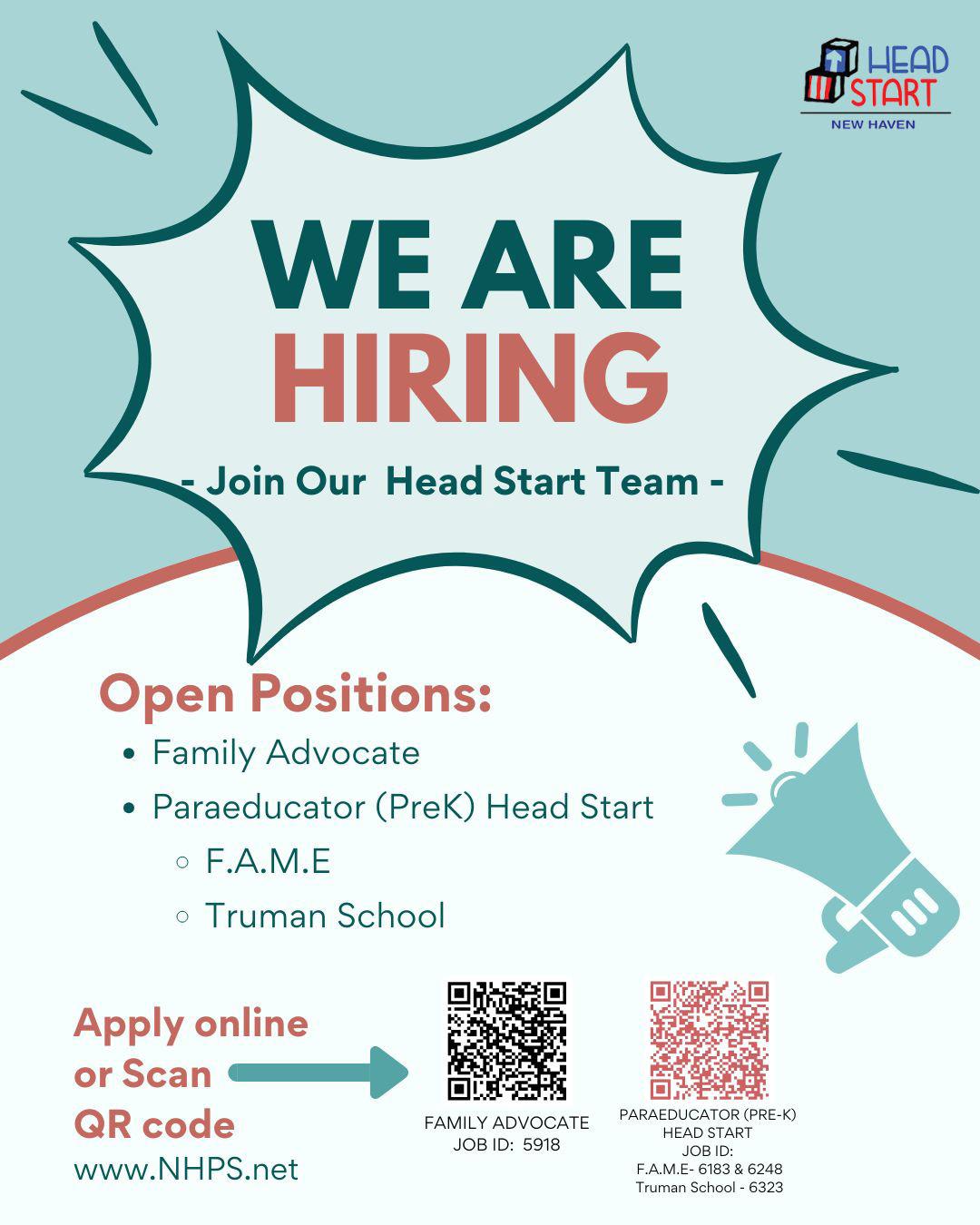
by Shaun White, HBCUNEWS.com
Something is shifting on HBCU campuses across the country, and it goes beyond hashtags and campus Wi-Fi upgrades. A genuine culture of digital fluency is taking root — one where students aren’t just consuming technology but actively building their financial and technical literacy around it. Crypto wallets, DeFi protocols, and fintech apps are becoming as familiar as textbooks in certain circles.
This isn’t a fringe trend. It reflects a broader generational pivot toward financial independence and decentralized tools, and HBCU students are embracing it with notable energy and ambition. The combination of strong community networks and a historically motivated drive to close the wealth gap is making these campuses a particularly fertile ground for this kind of forward-thinking engagement.
HBCU Students Are Going Digital-First HBCU students have long understood that traditional financial systems weren’t always built with them in mind. That historical context has made many of them early and enthusiastic adopters of alternative financial tools. Mobile banking, peer-to-peer payment platforms, and investment apps have all seen strong uptake within HBCU communities, often driven by peer-to-peer conversations rather than formal instruction.
What’s particularly interesting is how organically this digital-first mindset has grown. It shows up in dormitory conversations, campus organization meetings, and social media circles where students share resources, investment strategies, and tools for building wealth outside conventional banking. The culture around financial self-determination is real, and technology is the vehicle driving it forward.

Decentralized finance — commonly called DeFi — is becoming a real area of interest for HBCU students looking to build wealth on their own terms. Platforms that allow lending, borrowing, and earning interest without a traditional bank intermediary are attracting attention from students who are skeptical of legacy financial institutions. Cryptocurrency isn’t abstract theory for many HBCU students anymore — it’s a practical conversation. Bitcoin, Ethereum, and stablecoins are being discussed as legitimate tools for wealth building, remittances, and even entrepreneurship.
Some students invest through platforms like Coinbase or Kraken as part of personal finance education. Others use stablecoins for peer-to-peer payments and cross-border remittances to family
abroad. Some explore crypto in consumer-facing entertainment environments, like anonymous betting platforms for crypto users, with no-KYC account access and wallet-based transactions, that offer a practical lens on how digital assets move through real-world applications. This kind of exploration helps students understand blockchain mechanics beyond
just price speculation.
According to Chainalysis research, crypto adoption in North America has continued to grow significantly among younger demographics, with peer learning cited as a key driver. What’s compelling about this moment is the collaborative spirit behind it. Students aren’t just reading whitepapers in
isolation — they’re hosting workshops, running group investment pools, and building community around shared financial goals. The HBCU network, already powerful in career mentorship and alumni giving, is extending naturally into this new digital economy.
The implications of this digital fluency go well beyond campus life. Employers in fintech, blockchain development, and Web3 startups are actively recruiting candidates who understand decentralized systems, and HBCU graduates who have built that knowledge base are entering the job market with a distinct edge. This is one of the clearest examples of how campus culture can directly shape career outcomes.
A Deloitte workforce trends report highlighted that technology fluency — including familiarity with digital finance tools — is increasingly one of the most valued competencies across industries, not just in tech-focused roles. HBCU graduates who have been engaging with crypto and DeFi in genuine, community-driven ways are exactly the kind of candidates those employers want. The digital savviness emerging on HBCU campuses isn’t just culturally significant — it’s a competitive career advantage that will continue to pay dividends long after graduation day.
by Francis Akhalbey, Face2FaceAfrica.com
Nipsey Hussle’s two children have received their inheritance payouts from their late father’s estate.
Court documents obtained by TMZ disclosed that Nipsey’s 17-year-old daughter, Emani, and 9-year-old son, Kross, have received cash payments as well as assets.




Nipsey’s brother, Blacc Sam, oversees the late rapper’s estimated $11 million estate. Blacc Sam and Emani’s mother, Tanisha Foster, were initially locked in a dispute over Nipsey’s inheritance for years. But they ultimately reached an agreement
Following his death, Nipsey’s girlfriend, Lauren London, signed a document to confirm that Kross had received his portion of his late father’s estate. Emani and Kross split the funds equally, though the
Blacc Sam also disclosed in the documents that Nipsey left behind assets including a 2012 Chevy Suburban, an interest in The Marathon Clothing company and other businesses, as well as multiple
As previously reported by Face2Face Africa, Nipsey, whose real name is Ermias Joseph Asghedom, was shot outside his Marathon Clothing store on March 31, 2019. Eric Holder Jr., the man convicted of fatally shooting the Victory Lap rapper, was sentenced to 60 years to life in prison

in February 2023. Superior Court Judge H. Clay Jacke gave Holder’s sentence in a Los Angeles courtroom after hearing from one of Nipsey’s friends and reading a letter from Holder’s father. Holder was also found guilty of two counts of attempted voluntary manslaughter after two others were injured in the shooting.
At the start of his trial in June 2022, prosecutors told the court that Holder’s actions were planned and premeditated. Deputy District Attorney John McKinney alleged that Holder was well aware he was going to take the rapper’s life. Nipsey was struck at least ten times, McKinney said, adding that Holder also kicked the rapper’s head before fleeing the scene.