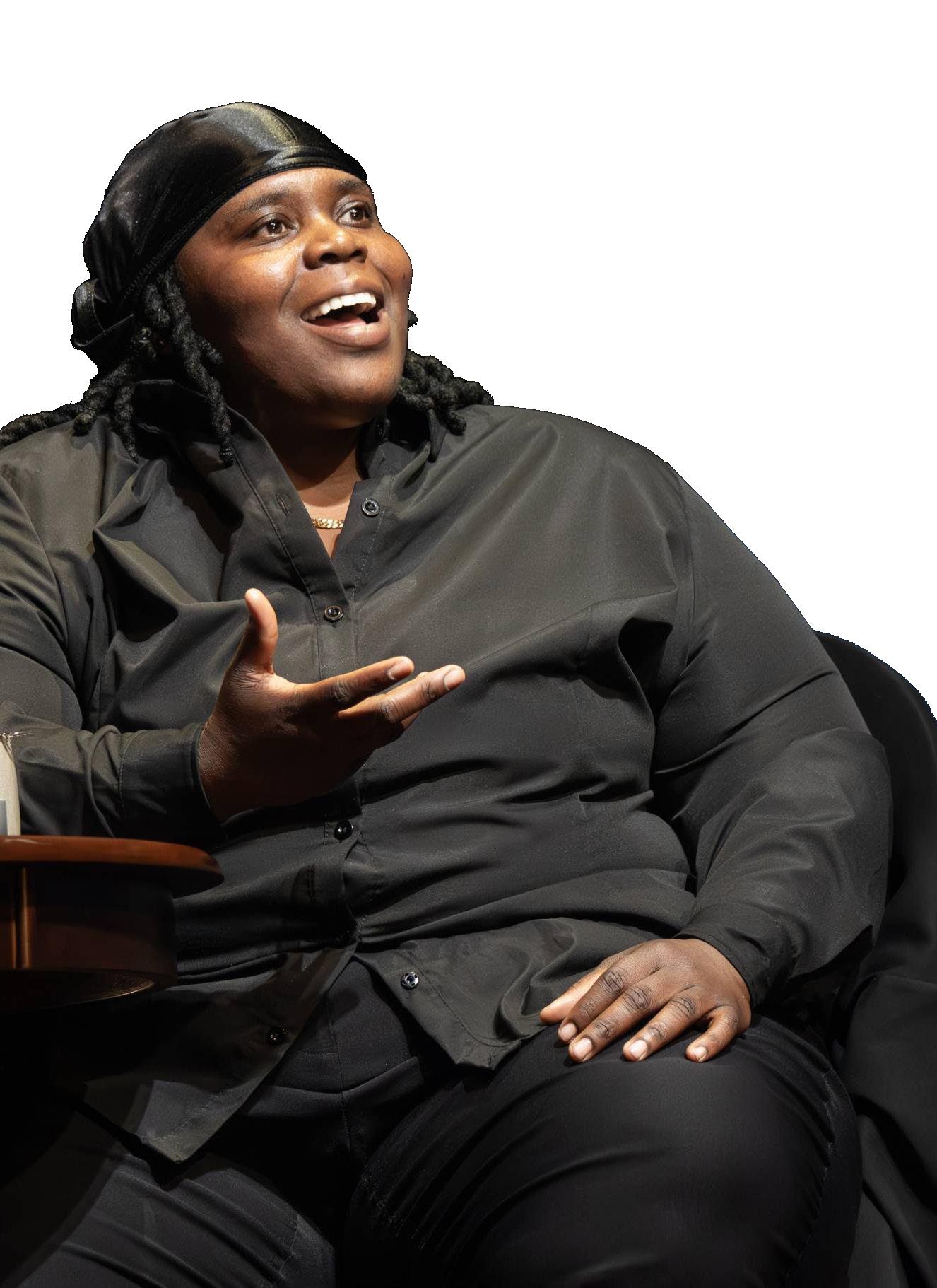





by Dereen Shirnekhi
While city government is in the midst of contract negotiations with three municipal unions and is preparing to begin negotiations with another three, the city’s Office of Labor Relations is down a senior attorney — and not one application has come through in the two months the position has been open.
According to the office’s director, that might be because the position doesn’t pay well enough.
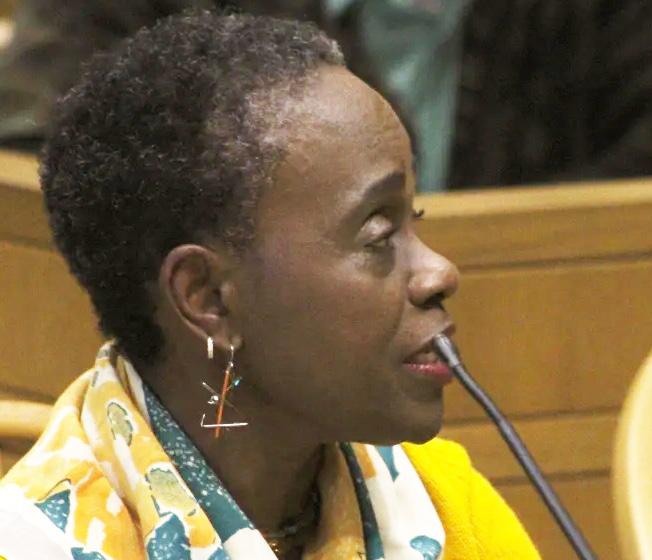
City Labor Relations Director Wendella Ault-Battey detailed that staffing vacancy to alders at Tuesday night’s Finance Committee meeting, as one of many department heads presenting on their portion of Mayor Justin Elicker’s proposed $733.3 million general fund budget for Fiscal Year 2026-27 (FY27), which begins July 1.
Ault-Battey heads the Office of Labor Relations, which represents the city in all things labor that might come before a court or agency, negotiates the city’s collective bargaining agreements with municipal unions, and handles grievances and arbitration.
There are 13 bargaining units that cover nearly 5,000 city employees, including teachers.
Elicker’s proposed budget for the Of-
fice of Labor Relations is almost entirely flat from the current fiscal year’s Board of Alders-approved budget, besides a $5,455 increase in salaries that Ault-Battey said is consistent with general wage
increases. The office is asking for a total of $767,064 for the upcoming fiscal year.
There are, however, two vacant, full-time positions in the Office of Labor Relations: a non-attorney Labor Relations Associate
(which does not require a law degree but performs legal work) and a Senior Labor Relations Counsel position.
While the non-attorney position has seen a number of applicants and has been narrowed down to five or six applicants who will be interviewed, Ault-Battey said, there are “no bites” on the attorney job. “Not one application has come through,” she told alders.
If the senior counsel position isn’t filled, Ault-Battey will be the only attorney in the Office of Labor Relations.
That’s a problem for the department, which is in the midst of negotiations.
There are three city unions with expired contracts: fire union Local 825, parks union Local 424 Unit 128, and clerical and technical workers union Local 884.
Three more unions’ contracts are set to expire at the end of June: Local 3144 management and professional workers union, nurses union Local 1303-467, and attorneys union Local 1303-464.
East Rock Alder Anna Festa asked Ault-Battey why she thinks there hasn’t been interest in the attorney role.
“It has to do with the amount of money the city is offering with the salary,” Ault-Battey said.
A job posting for the role lists the salary range as $79,023 – $138,012. The listing also requests five to seven years of “pro-
gressively responsible experience with primary responsibility for public sector labor relations.”
“How do we compare with other municipalities?” Festa asked.
Ault-Battey said that the city’s main competitor is the State of Connecticut, which is also having trouble filling positions.
“I’ve reached out to state colleagues to send me all of their unsuccessful candidates,” Ault-Battey said.
She also said that the capacity of the work happening in New Haven’s Office of Labor Relations is “quite substantial.” Other municipalities, she said, have larger staff.
“We advertise everywhere we can think to advertise,” Ault-Battey said. “Eventually I think we’ll fill the position.”
Festa asked whether it makes sense to have interns help the city in the interim. “Labor is a niche area of the law, it’s quite unique,” Ault-Battey said. It requires experience and training that is time-consuming and takes away from limited resources. “It takes about two years to get somebody acclimated to the City of New Haven and the volume of work.”
Reisman
Baseball cap turned backwards, eyes fixed in concentration behind his glasses, Ziggy Gleason contemplated his next move. All at once came a quick slide of the king and snap of the rook. Having secured his defense, he hit the time clock with a flourish.
The scene was the foyer of Floyd Little Athletic Center on Wednesday morning. Ziggy, a sophomore at High School in the Community who learned chess from his mother at the age of six, had advanced to the second round of the first annual George S. Bracey Invitational Chess Tournament.
Around him, locked in competition, were 70 other students from city and area high schools, including Hillhouse, Wilbur Cross, ESUMS, Riverside Academy, Metropolitan Business Academy, and Common Ground.
The three-hour tournament, which had players engaged in 10-minute games, is the brainchild of Neil Richardson. A former juvenile judicial marshal, he’s the founder of the Games Academy, which has kids playing board games like chess and checkers as a way to provide an outlet and to improve problem-solving, strategic thinking, as well as memory and focus.
“Sports are important to our kids, and this is about also getting their minds strong,” said Richardson, who expressed gratitude to Hillhouse chess club coach (and Span-
ish teacher) Adesina DeYounge for his support.
The emphasis on mental dexterity goes to the mission of the tournament, according to Ed Trimble, founder of S.P.O.R.T. Academy, a nonprofit organization that uses chess and sports, particularly basketball, to teach life skills and academic discipline to students in grades 1 through 8, and among the sponsors of the event.
“This is about producing independent thinkers and future leaders of the next generation,” said Trimble, as competitors alternately leaned over boards and punched their time clocks. “Chess trains the brain to focus, it helps you keep calm under pressure, and always to be thinking one or two moves ahead.”
Richardson named the tournament for George Bracey, who served for over three decades as a police officer in New Haven, gaining renown for his involvement in the city’s Police Athletic League, which brings together NHPD officers and youth through sports and mentoring.
“George connected everything and everybody with the PAL,” said his widow, former Q House director Jacqueline Bracey, who was an honorary guest at the event. “He took kids on trips, taught them to swim, went into the schools to connect with youth who had issues. He made kids see that policemen were human and not something to be feared.”
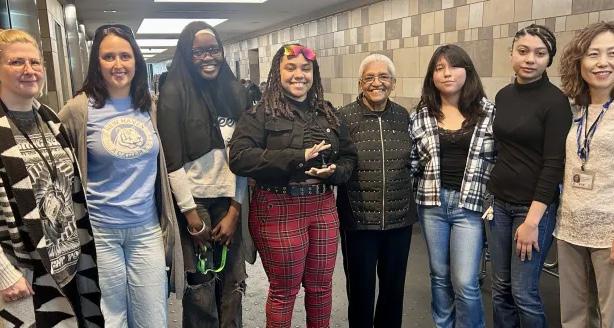

“You can see his influence,” said Richardson, gesturing at members of the police and fire departments, including their respective chiefs, offering tips and engaged in spirited competition.
Brandon Ahl, who serves as club advisor to the ESUMS high school chess and gaming club, pronounced satisfaction with the tournament for its first go-round.
“It’s a good opportunity for students to play over the board,” he said, as unofficial emcee Johnny Scafidi, director of community outreach and engagement at Dwight Hall At Yale, conferred with judges from S.P.O.R.T. Academy over the implications of a draw.
Getting up from a table near him was Ciana Robinson, a senior at New Haven Academy who had just lost her match. “I love chess,” she said, but she hadn’t been playing as much as she’d like with her afterschool job. She took it on to help pay for college, where she’ll be studying early childhood education. “I’ll come back to it at some point.”
Ciana was one of five female competitors. That’s in line with statistics showing women’s participation in international competition rising from 10 percent in 2020 to 16.5 percent in 2026. Hillhouse’s Blanka Filipczak advanced to the third and final round. A group of police officers watched her. “Wow,” said one, as she systematically took down her opponent. “Nice.” So did Juliette Bolanos of
by Dereen Shirnekhi
As Dixwell Alder Jeanette Morrison looked at the Livable City Initiative’s proposed budget breakdown for the next fiscal year, she had a question for the agency’s director: Why not ask for more money to relocate families who have to leave their homes, so that they can stay in nicer places?
Morrison was one of the alders on the city legislature’s Finance Committee in attendance at a Tuesday night budget workshop at City Hall, where alders heard from department heads about their portions of Mayor Justin Elicker’s proposed $733.3 million general fund budget for Fiscal Year 2026-27.
The Livable City Initiative (LCI) is the city department that focuses on housing code enforcement, anti-blight initiatives, and the residential landlord licensing program. LCI Executive Director Liam Brennan presented to alders what he described as a budget that is “essentially flat” from last year’s budget.
Elicker’s proposed budget includes a $4,153 bump in salaries across the department, bringing the total amount of general-fund dollars allocated to LCI to $1,342,007. (Only 13 of LCI’s 43 employee positions are funded by the general fund; the others are paid for by special funds.)
Apart from salaries, the proposed budget is in line with the budget approved by alders for the current fiscal year, with the cost of overtime, mileage, professional meetings, and contractual services remaining flat.
As part of that $1.3 million-plus general fund request, LCI is also looking for $400,000 to fund family relocation costs, the same amount that alders had approved for the current budget. With the number of fires seen just since the start of 2026, and the resulting necessary relocations, Brennan asked that the $400,000 be fully funded. “We have seen that money being used,” he said.
“Is there a reason why there isn’t more money put into family relocation?” Morrison asked Brennan and city Budget Director Shannon McCue. LCI relocates families when their home catches fire or when they’re living in illegal dwelling units. So far in FY202526, Brennan said that LCI has relocated tenants due to fires at nine buildings amounting to 34 units, totaling 46 adults
and eight children. LCI has so far also relocated six adults and two children living at six illegal dwelling units across two buildings.
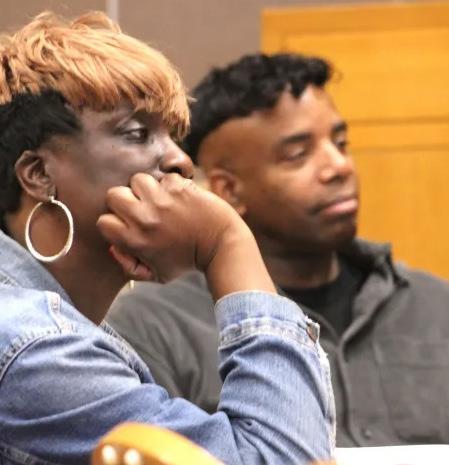
Morrison said that as an alder, she has heard from residents who were displaced and sent to hotels that were “nasty.” As a social worker, she is worried about families who were already traumatized by the conditions that displaced them being relocated to another difficult living situation.
“What have you done to try to advocate for more funding or change these locations?” she asked. “I know the reason why there isn’t an increase in the request is because the places that you use don’t require a whole lot of money.”
“We’re largely on the same page, alder,” Brennan said. “There are certain institutions you may be thinking of where we try not to place people there.”
Brennan said that during the last budget season, LCI had requested $500,000 for relocation funds and had only received $400,000 from alders. “We thought you didn’t want to give us more than $400,000,” he said, and he wanted to be
cognizant of the city’s budget constraints. “I want to make sure that does not get cut anymore.”
Morrison asked whether he would be able to provide the numbers so alders could know what it would cost to place people in “decent” places. “The places in your budget are places I would rather stay outside than go inside,” she said. “Any one of us could be in that situation, and you are not sending me to the places you are sending residents.”
After the meeting, Morrison specified that she is concerned about the Regal Inn on Whalley Avenue. “They place whole families there, but at the same time someone could be coming there to get a room for an hour,” she said. “I hate to put any business on blast but it is what it is.”
Purshotam Sharma, the front desk operator at Regal Inn, said over the phone that their housekeepers offer room-cleaning services every day. “Sometimes people, they say no. We want them to take service, we say please,” he said. But if they aren’t allowed to enter someone’s room, they can’t clean it.



Still, he said, “if they think something is dirty inside the room,” like sheets or towels, they just have to let staff know. The staff are on-site 24 hours per day. “We’ll change it.”
Sharma said that roughly 11 people relocated by LCI are at the Regal Inn right now, finishing up long-term stays. “It’s a safe place,” he said. “Don’t worry anything about this.”
He said that there are 85 rooms at the Regal Inn, and that 75-80 are typically full. He thinks that complaints arise when the staff don’t allow “illegal activities,” and people having others stay with them in their rooms and getting into fights.
“Sometimes people are fighting inside the rooms, breaking the TV, breaking the lamps,” he said. “We [say] all the time, don’t do this, please, we are not allowed.”
West River Alder and Board of Alders
President Tyisha Walker-Myers asked Brennan on Tuesday how much of the relocation budget has been used so far this fiscal year. Brennan said that LCI has not exceeded the $400,000 allocation, but that he didn’t know the exact numbers at
the moment. He promised to provide alders with those numbers.
Brennan also said that, because LCI is part of the city’s Economic Development Administration, they have been trying to patronize local businesses. “We are now engaging the suburbs as well in terms of a better roster of where we can place people,” he said.
“Why are we paying and not the property owner?” East Rock Alder Anna Festa asked.
Brennan said that property owners are liable when a displacement can be clearly shown to be the owner’s fault. “Most of our fire investigations don’t have a finding of whose at fault,” he said. Still, many landlords do pay for their tenants’ relocation, he said.
When the displacement can be proven to be the owner’s fault, or tenants are living in illegal dwelling units, then LCI can place a lien on the property and force a foreclosure on that lien if the landlord doesn’t pay. “We have not had the institutional muscle memory to do that,” he said. “That is something we’re hoping to redevelop.”
After the meeting, Morrison said that while she doesn’t have a specific hotel in mind that would be better for tenants, “I want something nice, something that people feel comfortable in, that people have quality towels and washcloths and quality linen.”
“Give people quality, they didn’t ask to be in a fire,” she said, particularly if the city is paying.
Morrison thinks it would be worth looking beyond New Haven hotels. “We always want to patronize New Haven businesses; however, if there are other hotels on the outskirts of New Haven that are better quality, I’d rather go for the quality,” she said. “We might have better ones here in New Haven that are very, very expensive.”
“If you’re already traumatized and you get in a situation that is bad like that — you start to look at self blame,” she continued. “At least if we could put them in a nice, bright, freshly painted” room, that could give families hope. “You want people to have hope because there’s a long road ahead of them to get back to having their own apartment.”

by Thomas Breen
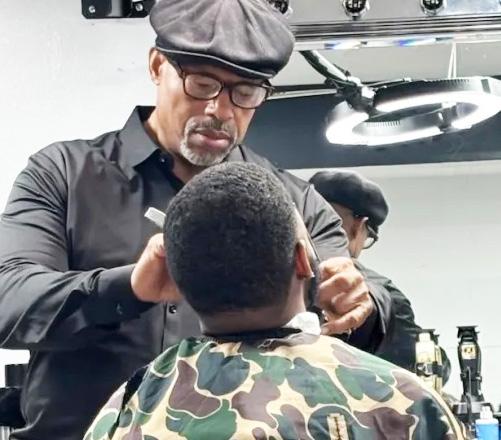
Dexter Atlas Jones gave his last haircut Saturday at the barbershop he’s run on Dixwell Avenue for the past three decades.
“This morning, waking up, I really didn’t know what to do,” Jones said on Monday as he reflected on the first week of his retirement. It’s been a “sentimental” experience closing up, he said, given how many lives he’s touched and how much hair he’s cut over the years.
Through his work at Dexter’s Unisex Barbershop and, before that, at Willie C’s Unisex Barbershop, Jones estimated that he’s cut hair for four generations of Dixwell Avenue customers over the past five decades.
Some of his Newhallville mentors and predecessors and colleagues in the barbershop business — “Mr. Eddie, Sam, Willie C, Freeman” — they all “died cutting hair,” Jones said. That is, “they were still active” in their barbershop work “when they passed away. I don’t want my legacy to be that.”
So, after first opening his shop at 716 Dixwell Ave. on April 1, 1997, Jones has decided to retire — even as he continues to remain active in the community, including through an annual event he leads in Goffe Street Park called “Unity in the Community.”
Jones, who is now 62 and lives in Hamden, said that he opened Dexter’s Unisex Barbershop after getting out of the Marine Corps and spending a decade-plus working at the barbershop run by his mentor, Willie C.
“I’ve always been entrepreneurial,” Jones recalled on Monday. And so, while still working at Willie C’s, he opened a barbershop in Meriden called Dexter’s

After Dark, where he would cut hair late into the night.
He then decided to open up a shop closer to home, and hung his sign up at 716 Dixwell Ave — where he would remain for the next three decades. (Jones recalled that Willie C. was none too pleased when Jones opened his own barbershop nearby. He said his former mentor described Jones’ move as “disrespectful;” but, now that Jones had his own shop, his former boss said he should be “working where your name is.”)
Longtime friends and customers told the Independent that Jones did right by the shop that bore his own name.
“He pays attentions to customers,” said
Arnold Johnson. “He spends his time cutting your air and gave exactly the cut you wanted.” He’d come in on his day off, Johnson said, if he knew that time worked best for a customer.
“I don’t find as many barbers as good as Dexter.”
Johnson, a retired state probation officer, said that businesses have come and gone on that stretch of Dixwell Avenue. “Dexter has been stable there. [He] never left.” (Asked on Monday about how that stretch of Dixwell Avenue has changed over the decades, Jones said, “once the welfare office around the corner” on Bas-


sett Street closed down, “it just stopped the whole flow of traffic. I had to depend on my older customers,” and they stayed loyal and supported him.)
Johnson said that he would get his hair cut at Dexter’s twice a month. Where will he go no that Dexter’s is closed? “I have no clue.”
Another loyal longtime customer, Marcus Garris, said the same. “He put the work in,” Garris said about Jones. “Dex wasn’t just a barber to me. He was a friend. That goes a long way.”
Garris said he would stop by the barbershop even when he wasn’t getting a haircut, just to “sit around and laugh and joke” and, more often than no, talk football. (Garris said Jones is a Giants fan, while he roots for the Commanders, formerly known as the Redskins. “That used to be a lot of back and forth,” he said.)
Jones said he has decided to retire now in part because his son decided to work as a barber at another shop, in part because he’s one of his mom’s caregivers.
“I’m not leaving” the area though, Jones said. He said he’ll be putting on the next “Unity in the Community” event at Goffe Street Park on Aug. 29. (He took over that series from Pastor Donald Morris.)
What’s the first thing Jones did after closing up shop at 5 p.m. on Saturday?
Jones said he went to LongHorn Steakhouse in North Haven.
Jones said he doesn’t know what’s coming next to the storefront where he’s long worked at 716 Dixwell Ave. The building is owned by a man named Willie Ransome (who Jones featured in this recent Facebook video.)
What he does know, though, is that — after more than three decades running his own barbershop — it’s time to move on to hang up the clippers.

John P. Thomas Publisher / CEO
Babz Rawls Ivy Editor-in-Chief Liaison, Corporate Affairs Babz@penfieldcomm.com
Keith Jackson Delores Alleyne John Thomas, III
Editorial Team
Staff Writers
Christian Lewis/Current Affairs Anthony Scott/Sports Arlene Davis-Rudd/Politics
David Asbery / Tanisha Asbery
Jerry Craft / Cartoons / Barbara Fair Dr. Tamiko Jackson-McArthur Michelle Turner / Smita Shrestha William Spivey / Kam Williams Rev. Samuel T. Ross-Lee
Christine Stuart www.CTNewsJunkie.com Paul Bass www.newhavenindependent.org
National Association of Black Journalist
National Newspapers Publishers Association
Greater New Haven Chamber of Commerce Greater New Haven Business & Professional Greater New England Minority Supplier Development Council, Inc.


The Inner-City Newspaper is published weekly by Penfield Communications, Inc. from offices located at 50 Fitch Street, 2nd Floor, New Haven, CT 06515. 203-3870354 phone; 203-387-2684 fax. Subscriptions:$260 per year (does not include sales tax for the in State subscriptions). Send name, address, zip code with payment. Postmaster, send address changes to 50 Fitch Street, New Haven, CT 06515. Display ad deadline Friday prior to insertion date at 5:00pm Advertisers are responsible for checking ads for error in publication. Penfield Communications, Inc d.b.a., “The Inner-City Newspaper” , shall not be liable for failure to publish an ad or for typographical errors or errors in publication, except to the extent of the cost of the space in which actual error appeared in the first insertion. The Publisher reserves the right to refuse advertising for any reason and to alter advertising copy or graphics deemed unacceptable for publication. The entire contents of The Inner-City Newspaper are copyright 2012, Penfield Communications, Inc. and no portion may be reproduced by any means without the written permission of the publisher.
by Paul Bass
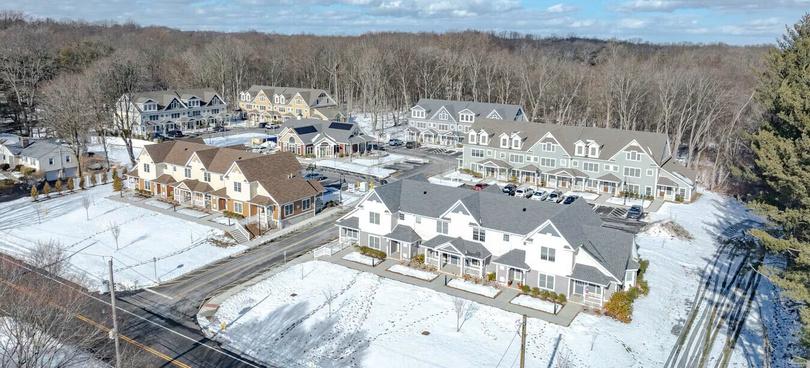
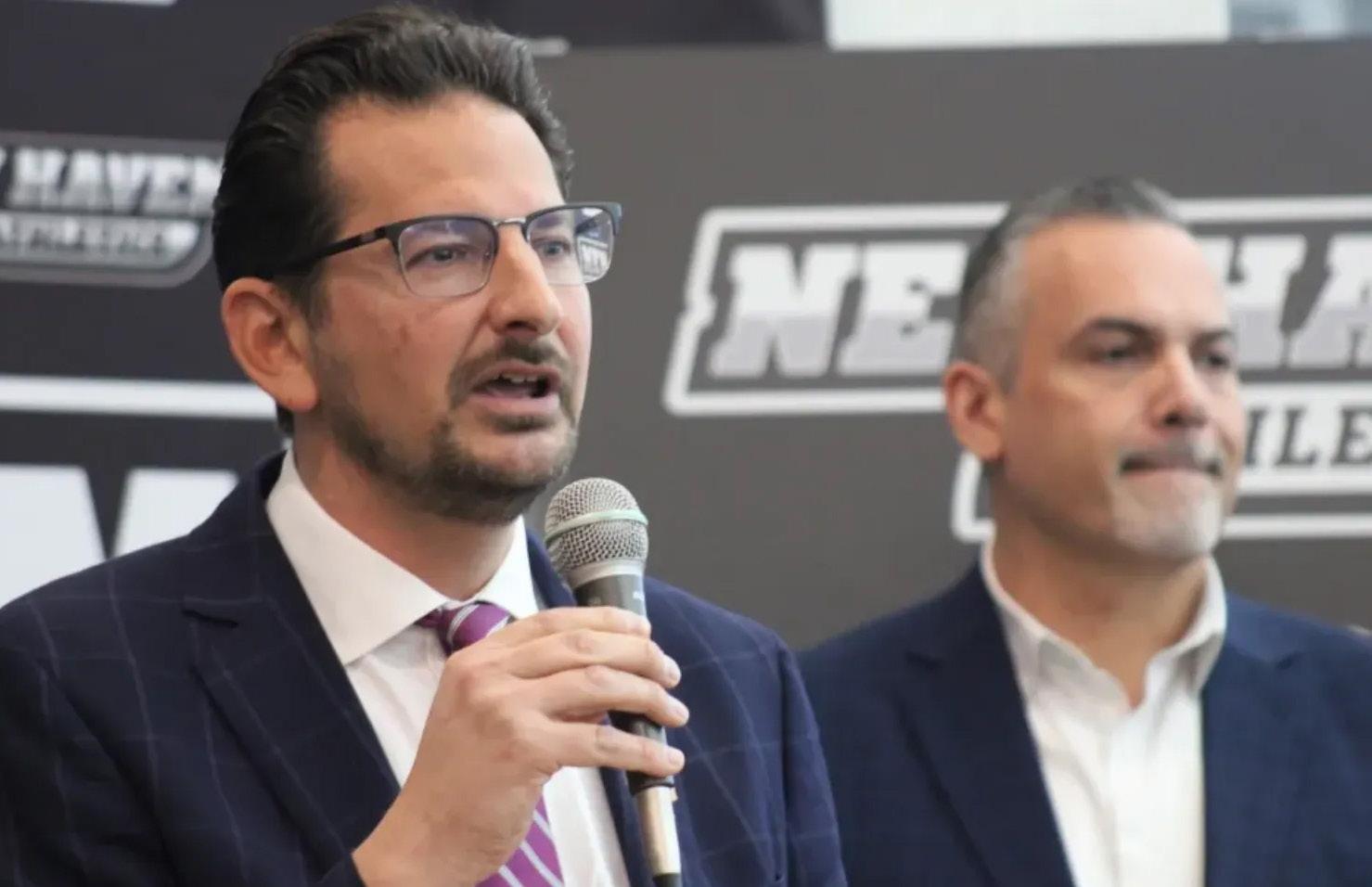
New Haven State Rep. Al Paolillo Jr. confirmed Monday that he is running for a State Senate seat that’s opening up for the first time in 34 years.
Paolillo told the Independent he will seek the 11th Senate District seat, which covers eastern New Haven and part of Hamden.
Martin Looney, who has represented that seat since 1993, announced Saturday that he’s retiring at the end of this year. “I definitely will be running,” Paolillo, 53, a Democrat, said. He said he plans to file official campaign paperwork this week.
New Haven legislators, from Looney to State Sen. Gary Winfield to State Rep. Pat Dillon, quickly endorsed Paolillo, whose bid (along with Looney’s retirement) had been expected for months.
Paolillo has represented the east side 97th state representative district for the past decade. Before that he served 15 years on the New Haven Board of Alders. In both jobs he shunned the spotlight, preferring to work alongside colleagues on legislation as a group — “more oriented to task than self-promotion,” as one veteran pol put it.
Indeed, when in an interview asked about his proudest accomplishments this session, Paolillo spoke of “working with
the delegation” of New Haven state legislators on a deal that added $270 million to the newly passed state budget in municipal and public education. That deal
includes a roughly $20 million boost for New Haven.
He also spoke of bills he and fellow Democrats are trying to pass in the leg-
islative session’s final three days in response to concerns raised by New Haven government. One would enable cities like New Haven to regulate “juice bars” with-
in adult bars, including limiting hours of operation and enforcing strict separation of under-21 areas. Last Halloween a shoot-out outside one such crammed establishment left one 18-year-old dead and injured three others between 18 and 21. Two other bills would require landlords to disclose when elevators are out of service and when repairs would be made (a problem that came to light at Bella Vista and at Fairmont Heights) and address abandoned vessels in waterways (like a recent one off Morris Cove).
Looney’s upcoming retirement has opened up a set of opportunities for generational advancement. New Haven State Sen. Gary Winfield, for instance, is running to fill a majority leader post that’s opening up because the current occupant, Norwalk Democrat Bon Duff, will seek to succeed Looney as Senate pro tem. And Paolillo’s state representative seat will open for the first time in a decade. Asked if the Republicans have come up with a candidate to seek the Senate seat, Town Chair John Carlson replied, “Not yet.”
State Rep. Dillon, a fellow Democrat, said she’s endorsing Paolillo “wholeheartedly. He has demonstrated skill at the legislative process while at the same time has stayed grounded in the down-toearth details of the priority and needs of
Con’t on page 07

by Jordan Allyn
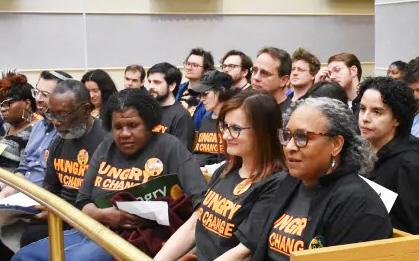
Nearly two dozen food-aid advocates testified before the Board of Alders Finance Committee Wednesday evening to call on the city to restore money for feeding the hungry to next year’s budget.
Wearing t-shirts bearing the words “Hungry for Change” in orange font, they issued that request during the aldermanic committee’s most recent public hearing on Mayor Justin Elicker’s proposed $733.3 million general fund budget for Fiscal Year 2026-27 (FY27).
Alders are currently reviewing the mayor’s proposal, and are slated to take final votes in late May or early June on whether or not to amend it. The final, approved FY27 budget will take effect July 1.
Last year, the Board of Alders wound up amending the mayor’s proposed budget to include a total of $482,439 in city funds for the Coordinated Food Access Network (CFAN). The mayor’s FY27 budget, however, would not renew that funding for another year.
CFAN representatives turned out in force at City Hall’s Aldermanic Chamber on Wednesday to call for the alders to restore roughly $500,000 in food assistance to the city’s budget.
According to CFAN Co-Chair Alycia Santilli, the organization distributed last year’s funding to 15 food-assistance programs. She said the school grocery program served 5,276 students, providing food to New Haven public school students during academic breaks. Local outreach coordinators have helped to determine SNAP residents’ eligibility, which Santilli said “has been critically important while federal regulations continue to change dramatically.”
Kim Hart, the co-founder of the local chapter of Witnesses to Hunger, described her lived experience struggling with food access this month. She said she received SNAP benefits in April, but because of rising grocery costs she relied on a food pantry three times this month to feed her-
self and her son. “Please fund CFAN,” said Hart. “Food is necessary in order to survive”
CitySeed Agriculture Programs Manager Blaise Berglund testified, “I’m here today with an urgent and clear request: Restore $500,000 to the city budget to
address food insecurity in New Haven.” Berglund partners with CFAN through CitySeed’s farmers markets. She said redemption rates for nutrition benefits including SNAP (formerly known as food stamps) and the Farmers Market Nutrition Program have increased by 300 percent over the last year.
Andrew Zumwalt-Hathaway, a volunteer at Downtown Evening Soup Kitchen (DESK), said he has seen firsthand “the need for food assistance surging while the financial support for these services shrinks.” He no longer has time to talk to guests given the recent influx of participants. He noted that SNAP benefits remove burdens on community members, allowing them to meet other financial costs related to their health and education. Rev. Robert Perry leads the soup kitchen at the Varick Memorial AME Zion Church on Dixwell Avenue. He said on Wednesday night that the city has a history of unequal investments and highlighted the difference in life expectancies between nearby neighborhoods with diametric resources. A 2019 study from Data Haven, for example, found that on average East Rock residents live more than 10 years longer than residents of Newhallville. Perry said, “Life shows us empty plates, and the Bible tells us, I was hungry and you fed me.” He ended his testimony by asking the Board of Alders, “Will you feed New Haven?”
by Thomas Breen
A 41-year-old Fair Havener named Oscar Ocampo was taking his seven-monthold son to daycare when he was suddenly surrounded by five federal immigration agents.
Ocampo clutched his baby to his chest, in disbelief that these armed men had come for him.
That scene played out at around 8:50 a.m. Monday on Exchange Street near James Street.
Ocampo doesn’t have a criminal record or any pending charges, according to state court records. He said he has been working through the process of securing a work permit. He said he has an immigration-court date scheduled for June in his bid to stay in this country.
The Immigration and Customs Enforcement (ICE) agents, too, appeared to be surprised as they attempted to apprehend Ocampo on Monday morning.
They appeared to think he was alone in his truck — and didn’t realize he had a young child with him.
“Stop,” Ocampo recalled one of the federal agents saying to his colleagues.
“Baby!”
Soon thereafter, more people emerged on the residential block.
These were neighbors and local immigrant-rights activists — holding their phones aloft, recording ICE’s attempted arrest of a fellow Fair Havener.
The activists and neighbors urged the agents to leave Ocampo alone. They asked Ocampo for contact information for a family member who could come and help.
“This is our neighbor,” one activist said to the ICE agents. “They belong here. This is Connecticut. Get out.”
Roughly 20 minutes later, ICE left. Without Ocampo. Ocampo and the activists and neighbors on the street watched the agents drive away.
Even as Ocampo’s future is uncertain, he remained filled with gratitude days later as he reflected on people he had never met before, from the New Haven Immigrants Coalition (NHIC), showing up to his defense at such an unsettling moment.
“They’re beautiful people,” he said.
The account of events included in this story is based on an Independent interview with Ocampo (conducted with Spanish-language interpretation by La Voz Hispana’s Norma Rodriguez-Reyes).
The Independent has also reviewed video footage from the incident and spoken with NHIC activists who happened across ICE’s attempted arrest of Ocampo and

then turned out in force to try to protect their neighbor.
“Hate has no home here,” a New Haven Immigrants Coalition spokesperson said in a written statement while providing a link to the group’s Instagram page as well as its rapid-response-line phone number, 854-666-4472 (854-NO-MIGRA).
“On Monday, April 27 five ICE agents tried to detain a neighbor carrying his baby to daycare in Fair Haven,” the group’s spokesperson wrote. “This neighbor, with a backpack of milk and daycare supplies at the ready, held his baby close and calmly. School buses passed. People taking their kids to school, heading
to work, and walking the dog stopped what they were doing to respond in an instant. New Haven Immigrants Coalition showed up. We recorded. We stood united and ICE went home. Our neighbor and his baby are safe thanks to our resistance. We will keep up that resistance as long as our community is under attack. Hate isn’t welcome here, but solidarity is thriving.”
Ocampo told the Independent that he came to the U.S. from his home country of Ecuador in 2022. He works a construction job, lives in Fair Haven, and has a wife and four children, two of whom are in Ecuador, two in New Haven. He was dropping off his youngest child, his 7-month-old son, at daycare Monday when ICE attempted to detain him. Ocampo stressed how surprised he was that ICE had come for him. He said he noticed a dark-colored vehicle near his truck as he made his way from home to daycare drop off. Only when he got out of his truck on Exchange Street did he find himself surrounded by ICE agents.
Ocampo said that one of the agents spoke in Spanish. Ocampo said ICE agents showed him a picture of himself when he entered the country three years ago, and said that his “entrance” to this country had been “revoked.”
ICE did not respond to requests for comment by the publication time of this Con’t on page 07
article about why they sought to arrest Ocampo on Monday.
Ocampo said he felt safe in the moment after ICE left and the New Haven Immigrants Coalition activists remained behind to help. However, he now finds himself concerned each day that ICE will return and that he’ll be whisked off to a detention facility.
He told the Independent that he has tried to live his life honestly. His car is registered. He has a driver’s license. He came to New Haven in search of work, and chose this city because of how many people he knew from Ecuador who had migrated here as well.
Asked on Friday about how he his doing several days after this attempted arrest, Ocampo wrote to the Independent via text message about his fear of being apprehended by ICE on the street: “El miedo es salir a la calle que nos atrapen Ice.” He said he would like to move to a different apartment, but doesn’t have enough money right now to afford a new place.
Norma Rodriguez-Reyes contributed to this report.
Haven Academy. She joined the chess club last year. “Really fun,” she said.
Then there was Peter Britto, a junior at Hillhouse. He started playing chess at 7 when a friend bought a chess set. A right fielder on the high school’s baseball team, he challenges himself with five-minute matches on the bus while traveling to away games. “I don’t play chess that much, but I just see the board,” said Peter, after dispatching his third-round adversary in minutes.
At that moment came an audible groan. The tournament was winding down. The school buses were waiting outside. Richardson said the Board of Education had provided free bus transport. Another tournament is slated for October, this one with celebrity chess masters.
“Checkmate,” someone called out, jumping up, fist in the air.
his district.”
Another endorsement came from East Rock/Fair Haven Alder Caroline Tanbee Smith. State political columnist Mike Cerulli had suggested earlier Monday in his closely-watched weekly “Capitol Report” column that Tanbee Smith might “kick the tires on a run” for the Senate seat. Tanbee Smith told the Independent she is “excited to support Representative Paolillo in his run to continue to support and deliver for our beloved city.”

By Lucy Gellman
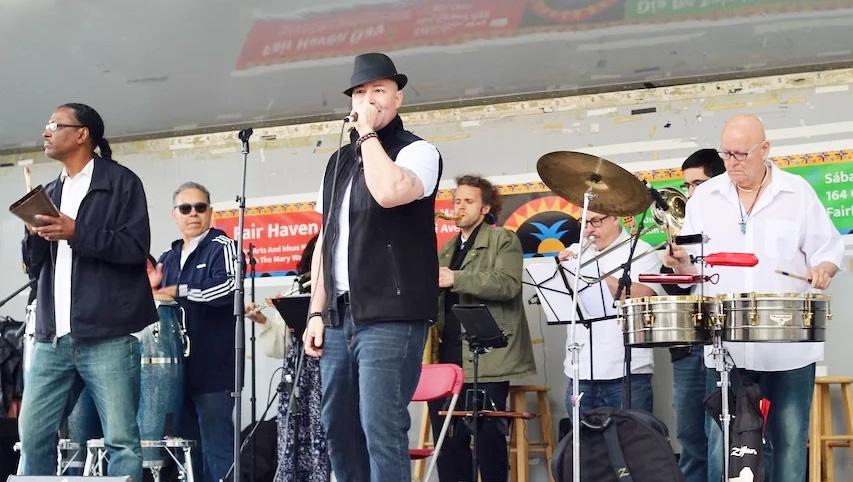
On stage, Agua Pa’ Chocolate was counting members in, as drums and cowbell formed a salsa heartbeat. As the horns drifted out towards Grand Avenue, Elizabeth Maria Lopez couldn’t keep still any longer. Her shoulders rolled and bounced through the cool May air. Her arms extended out to her sides, nail designs glittering in the sunlight. A smile tugged at the corners of her mouth, radiant by the time the band had gotten to the hook.
Saturday, Lopez was one of hundreds of New Haveners to sing, dance, paint, stroll and nibble their way through Fair Haven Day, a celebration of one of the city’s most diverse and polyphonic neighborhoods that has become the unofficial start of fair and festival season. Held on Grand Avenue, in the heart of Fair Haven’s bustling main corridor, it became a stunning celebration of community, from young artists and performers to musicians who have been doing their thing for decades, and dancers who had waited all winter to hear the beat return to the neighborhood.
“It brings the community back to Fair Haven and really brings out the beauty that is sometimes hidden here,” said organizing team member Kiana Cintron, who grew up helping her mom, Cheila Serrano, at JUNTA for Progressive Action across the street, and is now a founding member of the New Haven Immigrants Coalition. Especially in this political moment, “it was definitely important to us to bring more local businesses in,” from vendors like Salsa’s Authentic Mexican Restaurant to artists and entrepreneurs who live in the neighborhood.
Cintron also pointed to the power of collaborators without whom the day, which has continued to grow since its revival in 2023, would not be possible. This year, they included the Mary Wade Home, Fair Haven School, the Grand Avenue Special Services District, Pequeñas Ligas Hispana de New Haven, the New Haven Board of Alders, the International Festival of Arts & Ideas, Puerto Ricans United, Inc., ARTE Inc., and Fair Haven Community Health Care.
The day, which ended in the to the second annual “Fair Haven Fallout” wrestling showcase, marks the first of six neighborhood festivals on which Arts & Ideas is a collaborator. Five others unfold in the Hill, Whalley/Edgewood/Beaver Hills, West Rock and West Hills, Newhallville and Dixwell between now and early June.
Despite a chill in the air and low-hanging gray sky, Saturday’s mood seemed celebratory, from a mellifluous parade down James Street and Grand Avenue to the second annual “Fair Haven Fallout” inside Fair Haven School later in the afternoon. On a closed-off stretch of Grand Avenue, families lined up for face painting, stopped to chat with local vendors, and perused children’s books from New Haven Reads and Read To Grow that came in at least half a dozen languages.
As she pedaled down the street, a beaming Maria Olmo waved at passers-by and Fair Haven neighbors, hoping she was still recognizable beneath thick coats of clown makeup, a bulb-like red nose and a rainbow-patterned wig parted into pigtails . As both a daughter of Fair Haven and the director of residential care at the Mary Wade Home, Olmo can still remember the Fair Haven Day celebrations of yore, when she marched in the parade as a gymnast at Fair Haven School.
Decades later, she’s thrilled to see it back and thriving, with a generous spirit that she still associates with the neighborhood. She praised David Hunter, president and chief executive officer of Mary Wade, for bringing that enthusiasm and heart to everything he does—including supporting the parade, and making sure that staff are a visible presence in it.
“We all grew up here,” she said with a smile, remembering time spent in the neighborhood with classmates, friends and extended family. “To see youth and the community come back together to celebrate, it’s amazing.”
“You know, Fair Haven does get a bad rep, but they don’t see the sense of community, love, and strength,” she added. “Fair Haveners, we rise to the occasion. We take care of each other.”
Nearby, young Fair Haven artist Amayah Smith and her mom, fellow artist Shayla Streeter, introduced attendees to Mya’s Joy, a small sticker and print company that Smith started out of her home a little over a year ago, but has been dreaming up since she was just a kid. In an artwork on the table in front of her, a fiery bird spread its wings, bright and prismatic against a white background. Below, stickers in the shapes of faces asked a viewer to come closer.
As a cheerleader at John S. Martinez Sea & Sky STEM Magnet School, where she is in the eighth grade, Smith knew that she'd already be marching in the Fair Haven Day parade. So when organizers put out a call for vendors—with a focus on makers who lived in the neighborhood— it just made sense to stay.
“All my children are artists, but this one has taken it the farthest,” Streeter said as Smith wrapped a denim jacket tightly around her, braving the afternoon chill. Alex Novak, an artist who runs Pearl Studio out of her East Rock home, stepped in to study Smith’s designs as she chatted. “We probably have 15 sketchbooks at home … she just loves drawing. She’ll sit for hours in her room,” working on designs.
While Streeter initially came out to support her daughter, she was thrilled by the vibrancy of the neighborhood, which she’s still getting to know. Her favorite spot for fresh fruit, for instance, is just down the block—she pointed down Grand Avenue, to where a rerouted 212 bus trundled by—and conjured a bowl filled with fruit that can transport a person


hundreds of miles with a single bite. “This is a strong community,” she said, looking around at families that filled the street as she spoke. Just a few tents away, the smell of empanadas drifted over the block, announcing lunchtime to anyone who had forgotten.
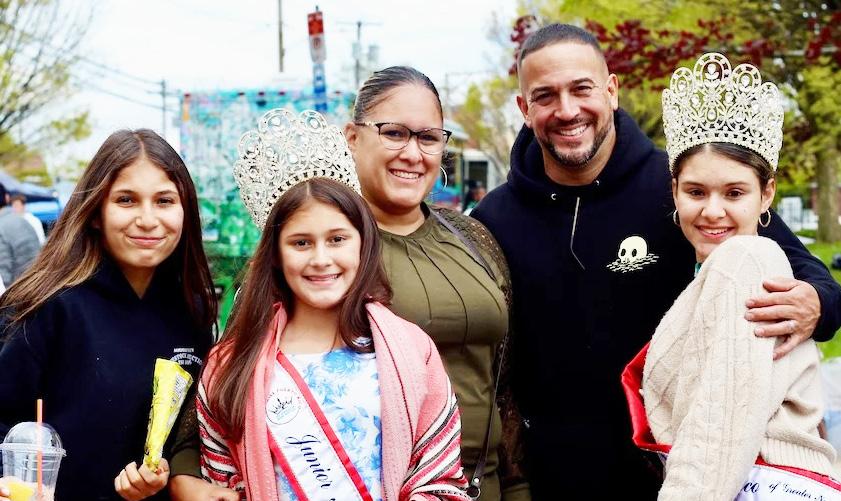
The party, it seemed, was just getting started. In the parking lot beside the Fair Haven Branch of the New Haven Free Public Library, the Bridgeport-based salsa band Agua Pa’ Chocolate filled the stage, members spread out from one end all the way to the other. As they began to play, the sound of brass soaring over the crowd, Elizabeth Lopez—newly crowned Miss Inspiración by Miss Puerto Rico of Greater New Haven—started to dance from where she was seated. Before long, her younger sister Eva had joined in, squeezing a new dumpling-shaped squishy toy as she grooved along.
Last week, Eva was crowned Miss Junior Puerto Rico of Greater New Haven in the same pageant. “It feels good [to be out here]! I love representing my culture,” she said, her voice straining over the music. In her hand, the pink squish toy kept the beat, luminescent and glittering as she squeezed it.
“It’s fun! I get to meet so many new people,” added Elizabeth Lopez, a senior at Wilbur Cross High School who has attended Fair Haven Day before, but never with such a title or the huge, shimmering crown that comes with it. Because she walks with a mobility aid, Lopez said she is hoping her title will inspire other young people to reach for their dreams, despite any disability that may pose a challenge along the way.
“I love it because I can inspire other girls that have disabilities,” she said, adding that she’s proud to be a member of the cheerleading squad at Cross, proof positive that her own physical challenges haven’t gotten in the way of her aspirations. “For me, I don’t let it stop me from doing anything.” As she and Eva chatted, pint-sized attendees ambled up to them in wonder, their eyes saucer-sized as they introduced themselves and posed for photos.
Tucked behind the library, dozens of Fair Haven-based resources and social service tents beckoned. As Agua Pa’ Chocolate gave way to student performers from All Nations Christian Academy, groups like the New Haven Immigrants Coalition, Vivan Las Autónomas and ARTE—all of which have deep Fair Haven roots—offered crafting activities for young kids, and free, helpful literature and information for their parents.
“At the core of what Vivan does, we’re trying to create a better future for women and children,” said Vivan Las Autónomas founder Vanesa Suarez, who runs the anti-femicide organization with fellow artist-activist Nika Zarazvand. So when Fair Haven Day rolled around, an artmaking activity—complete with hula hooping and other fun supplies—felt completely mission-aligned.
by Allan Appel
Below is Allan Appel’s latest entry in a yearlong series looking at the past 388 years of New Ha-ven history, as America celebrates the 250th anniversary of the signing of the Declaration of Inde-pendence.
As the July 4 hoopla marking the nation’s semquincentennial nears, we’re also approaching anoth-er date and moment of huge significance for New Haven. That date — Aug. 26, 1839 — was a steamy day out on Long Island Sound when the USS Wash-ington captured the “slave” schooner La Amistad off Montauk.
The next two years saw trials, publicity, complex legal wrangling, and a gut-checking of con-science for the nation — all centered on 53 Africans who had risen up against their Spanish captors, only to be recaptured by the U.S. Navy and imprisoned in New Haven.
A coalition of local, state, and national abolitionists fought years of legal battles to restore their freedom. In 1841, the U.S. Supreme Court ruled in favor of the Mende, whose resistance aboard La Amistad represents one of the great, successful revolts in the history of the international slave trade.
Attention should be paid especially during this historic year, and the best place to do so is at the New Haven Museum’s ongoing Amistad: Retold exhibition. For all the denizens of our town at the time — the passionate if ill-organized abolitionists, the op-posers, and the many in between — the Amistad saga was a Rorschach test on race, the issue that 20 years later would tear the country apart with the outbreak of the Civil War.
Having immersed in the many ongoing lectures, re-enactments, workshops, exhibitions, books, and art marking of our New Haven 250th, this reporter humbly offers that the Amistad story, by measure of how deep it goes into our sense of humanity as well as democracy, is the single most significant event or chapter in the history of our town since 1776 and, arguably, even since our deeper beginnings of 1638.
The New Haven Museum’s Amistad: Retold, along with interactive material mapping the saga, is an eye-opener — a clarifying, ground-level view of what happened focused on the Elm City and, taken all together, just as stirring as Anthony Hopkins/John Quincy Adams’ speech in Steven Spielberg’s eponymous 1997 movie. Much more on that below.
But, further, to make the case:
In 1839, the eyes of businessmen and merchants as well as slavers, prime ministers, royals, cler-gymen, abolitionists, and politicians from around the globe were on New Haven.
Newspapers around the country were filled with the regular headlines and
graphic illustrations of the alleged bloody deeds, and even a book was written almost immediately after the resolution.
Thousands of tourists were drawn to the city where they lingered on the Green to catch a glance of these Africans who had unchained themselves from their shackles and then allegedly murdered their captors. The Amistad survivors were just across Church Street, prisoners awaiting their trial, and some eight dying before it arrived, in the freezing and fetid jail cells where City Hall stands today.
It was an almost carnival atmosphere, as people came to view the jailed Africans in the time allotted for the prisoners to exercise on the Green. One of the jailers even charged a “a New York shilling” to see the “exotics” perform cartwheels and somersaults; the country and the world were riveted.
If you stood on the abolitionist side of the debate, the story of Amistad was irresistible: Surviving the Middle Passage and the horrors aboard the slave ship Tecora en route from today’s Sierra Le-one to Cuba; and then, on La Amistad, out of Havana on the way to enslavement in the sugar cane fields of Puerto Rico; then the breaking of chains and the fight for freedom. This was a tale not on-ly of heroism
North to his owner in the South. Bring on, then, the Civil War, so doesn’t that argue in a way against the significance of The United States v. The Libellants and Claimants of the Schooner Amistad?
And yet.
The defense of Sengbe Pieh or Cinque, Grabo, Konnoma, Margru, and the four dozen others had taken a huge step in humanizing Black Africans in the eyes of white people; it brought together disparate abolitionists into an Amistad Committee, which mobilization led to other powerful advo-cacy groups and even the creation some years later of the first historically Black college (after that attempt had been thwarted in New Haven some years before), and other major advances in human dignity for African Americans.
Therefore one of the most enduring legacies of our year of celebration locally will be — no, already is, in my opinion — the exhibition Amistad: Retold, which opened in 2024 at the New Haven Mu-seum.
local NHPS teacher and New Haven Museum educator Eve Galanis’s interactive web page and map. Both exhibition and map center the story on the people — the Africans and the local Black activ-ists, as well as their white allies.
And they both do a lot to brush away misconceptions that have persisted in the history telling over the generations, including in Steven Spielberg’s well-intentioned movie.
Created for teachers and students to take a deeper dive, it’s really for everyone.
but also proof of the dignity of every one of God’s human creations.
Or, for others, it was potent evidence of the murderous chaos that will overwhelm us unless laws are obeyed — even those that are, well, disagreeable, and the races controlled.
Just as in 1776, when you had to decide at some point whether you were patriot or loyalist, in 1839, if you were a New Havener, you had sooner rather than later to decide about race.
And yet the whole legal tangle turned not on the issue of freedom and natural rights but property law and international treaties.
When the U.S. Supreme Court ruled in 1841 that the Africans had been illegally kidnapped and as such were not anyone’s legal slaves, their mutiny was deemed an act of self-defense against unlaw-ful captivity, rather than piracy or murder. By that decision, however, no great legal precedent about race and slavery had been achieved.
By that narrow decision human beings could still be viewed as property and the Amistad court was in fact pretty much the same court that 15 years later ruled that runaway slave Dred Scott was chat-tel property and must be returned from the
cent to City Hall today and much info I didn’t know about that.
Below are a few of my favorite insights, factoids important and not, adding up to clearer ways to appreciate the Amistad story that I’ve gleaned from the materials: *After the Africans were freed, the pro-slavery U.S. Congress refused to vote for money to send the Africans home, which is why they were compelled to stay many months longer, working with the Amistad Committee and others arranging lecture touring, performing, to raise money for a ship home.
*The president at the time, Martin Van Buren, was wishy-washy on slavery. Yet because he need-ed the Southern vote for his upcoming reelection effort, he did everything he could to turn down the Amistad heat, that is, to stifle justice. That included deploying a navy ship in New London, the first port the Africans were taken to after capture on the Sound, in the hope they could be shipped back immediately, and the issue defused.
*Unlike the bumbling, vaguely mercenary portrait of him in Spielberg’s movie, the real Roger Baldwin was Roger Sherman Baldwin, grandson of our Roger Sherman, New Haven’s poster guy for the 250th, all-purpose signer of founding documents and mayor of New Haven, and a very ac-complished lawyer in his own right, future governor of the state, and ardent abolitionist.
In addition to this year’s Big Read of Sandra Cisneros’s The House on Mango Street, as our mu-nicipal required reading, I’d vote to urge everyone to take 20 more minutes to go through the mu-seum’s map and follow the cartographic Amistad story it tells.
With human faces, documents, and a concision based on erudition, it puts our local story in the context of the Atlantic slave trade, and carries you, with wonderful graphics from the slave castle on the shores of West Africa to a veritable tour of sites in New Haven where the story unfolded for the 19 months the Africans were in our town.
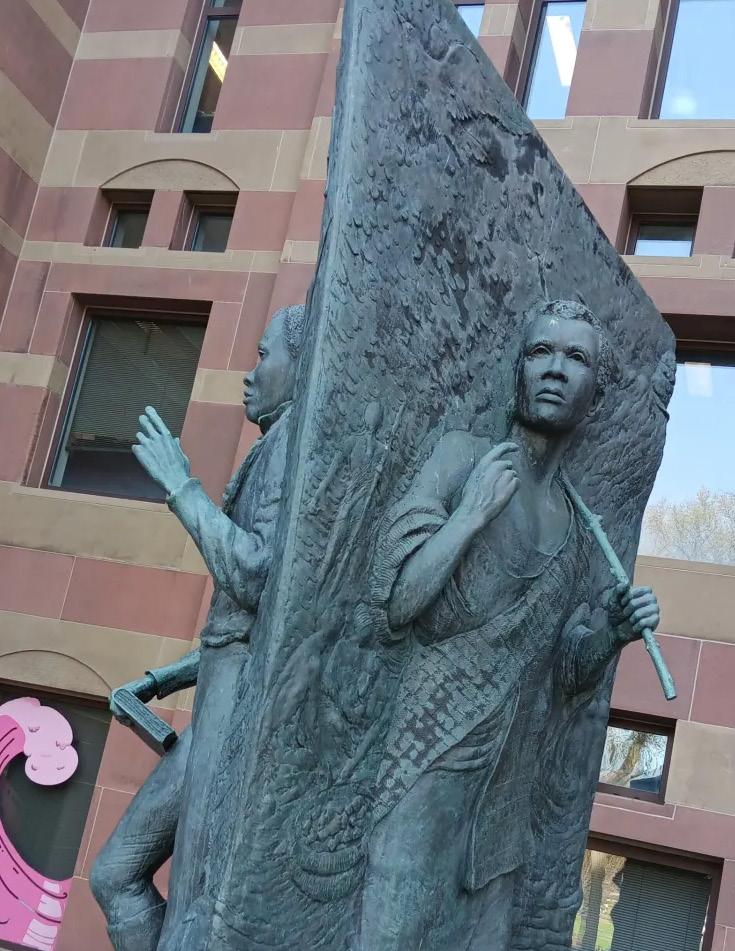
They include the jails — yes, jails, because in addition to Downtown, there was one in Westville, where the Africans were placed waiting to hear the Supreme Court ruling. They also include the homes of many of the players: the jailer who resided in Fair Haven, the Yale student who did por-traits of the captives; Grove Street Cemetery, where at least eight who died in captivity lie; the of-fice at Elm and Church were local attorney Roger Baldwin wrote the initial briefs to defend them. They even go up to Farmington where, after the ruling, the prisoners were kept, as they waited and tried to raise money to get back to Africa. And it concludes with the Ed Hamilton statue adja-
*Yale’s language professor, Joshua Gibbs, who helped find James Covey, a rescued slave, on a wharf in Staten Island, to speak Mende, was not the fool of the Spielberg movie, but expert and committed. He helped organize Yale students to teach the captives English, although they were also very much a “captive” audience for the students — many in training to be clergymen — and so the students also tried, with some success, to convert the Africans to become Christians. That’s not surprising as a huge impetus to the abolitionist movement, especially early on, was religious.
*And the case provides huge precedence for the critical importance of having a translator in legal situations down to today.
*In addition to the Amistad Committee, other groups emerged out of the trial or had their member-ship dramatically increased including missionary and colonization societies. And reading about these groups is a real perspective-giver. One of the latter, the American Colonization Society, sought to solve America’s racial turmoil and trauma by working to deport American Blacks to Af-rica, particularly Liberia, which had been created for that purpose only a few years before. New Haven had a very active chapter. Future President Abraham Lincoln was a member of his chapter. All of which indicates that you could be an abolitionist and a racist at the same time, and likely many Con’t on page 11
by Thomas Breen
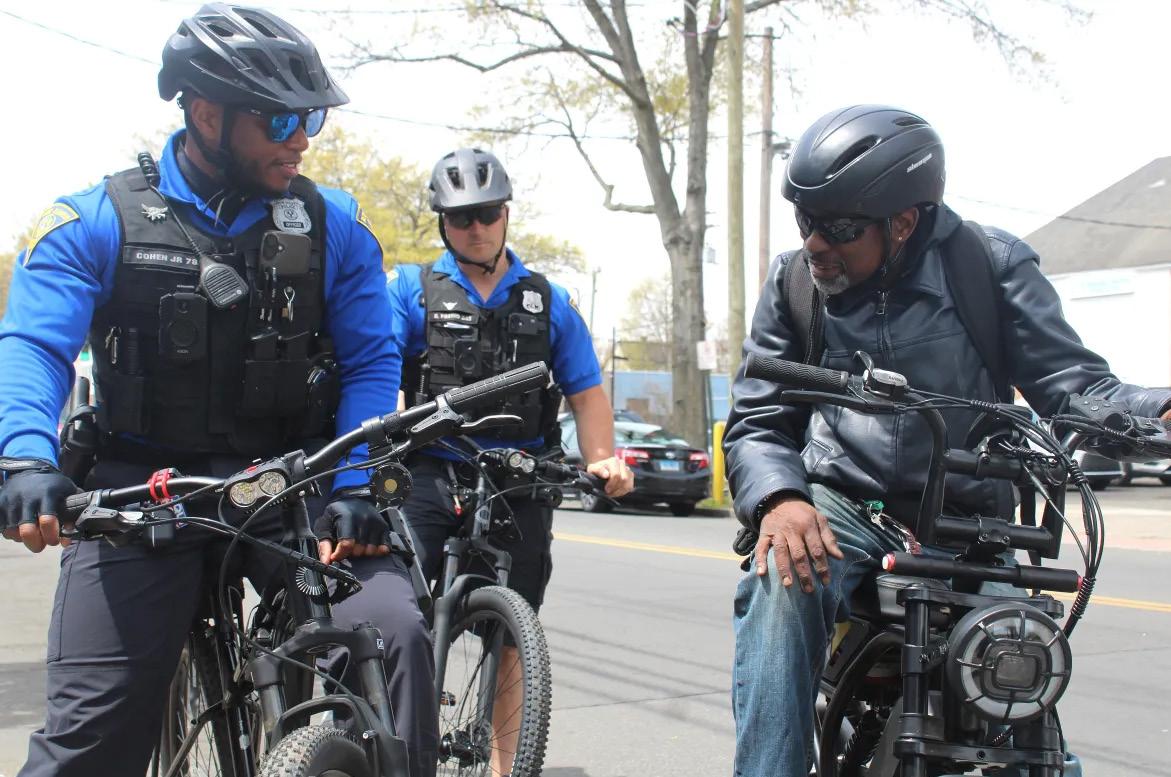
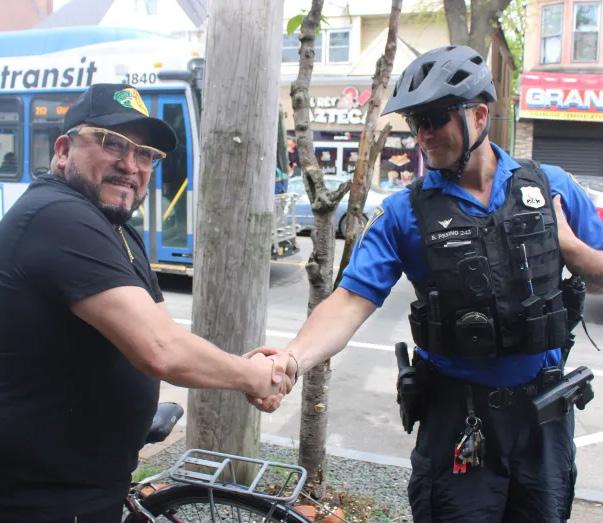
Officer Derek Cohen, Jr. pedaled east on Grand Avenue on a department-issued Cannondale Trail mountain bike when a driver heading west honked his car’s horn three times in quick succession to say hello.
“That’s my cousin,” who works an information-technology job at Fair Haven School, Cohen said with a smile. He and bike-patrol colleague Officer Eric Pesino waved in response as they continued their two-wheeled ride in the direction of the Quinnipiac River.
That passing, friendly moment of recognition was one of several to take place over the course of an hour early Wednesday afternoon as Cohen and Pesino biked around Fair Haven — as part of their police work.
Pesino, 36, helms the New Haven Police Department’s (NHPD) bicycle-certification program.
A 15-year NHPD vet currently assigned to the department’s traffic unit, Pesino teaches at least one week-long course each year for fellow city cops interested in learning how to pedal long distance (20 to 40 miles), bike up and down hills and even flights of stairs, dismount a bicycle in motion, and — most importantly — follow the bicycle rules of the road, like stopping at red lights and not biking on the sidewalk.
Cohen, 29, is one of 34 bike-certified NHPD officers currently assigned to patrol.
In an interview on Wednesday at the Blatchley Avenue police substation, Acting Police Chief David Zannelli and Fair Haven District Manager Sgt. Chris Alvarado said they’re hoping to build out the department’s bike-patrol program as part of the NHPD’s commitment to community policing.
The police car “is a natural barrier” for community members who want or need to speak with a cop, Alvarado said. He’s found that neighbors feel much more comfortable approaching an officer who is on a bicycle or on foot. Zannelli said he consistently hears from people across the city that they want to see more officers on the beat, visible and approachable, in their neighborhoods. He’s promised to bolster such community-policing efforts in his bid to become the city’s next permanent police chief.
Thus the renewed interest in bicycle beats.
Zannelli, a popular former Fair Haven district manager himself, said that the NHPD currently deploys three different bike-patrol units across the city each day, mostly — but not exclusively — in Fair Haven. He said he’d like to build the program up so that each of the city’s 10 policing districts has at least one bicycle or walking beat a day.
Alvarado said that the department plans
to host two bike-certification courses in June. That should boost the number of bike-certified patrol officers in the city to around 60.
On Wednesday from around noon to 1 p.m., Cohen and Pesino took this reporter on a biking tour of sorts to show what a bicycle-patrol beat can look like.
They pedaled along Blatchley Avenue, Grand Avenue, Ferry Street, Exchange Street, Lloyd Street, Front Street, and East Pearl Street, among other busy neighborhood corridors and quiet residential streets.
They weren’t responding to any particular calls for help.
Instead, they were on the look out for “quality-of-life” concerns — like unwanted loitering outside of Grand and Ferry businesses — while also checking in with shop owners and passersby. Over the course of the hour, a half-dozen different people waved or beeped hello, complimented their riding, and sometimes stopped them to chat and admire their rides.
Perry Flowers, a West Rock resident and former alder candidate, was one of those walkers to flag down Cohen and Pesino, at the corner of Grand and Blatchley.
Flowers said he was in the neighborhood trying to register people to vote in advance of this year’s gubernatorial election.
He also told Cohen how much respect he has for Cohen’s father, Derek Cohen, Sr., a retired former NHPD officer who also used to work a bicycle beat. (“He loved it,” Cohen, Jr. said about his dad’s experience on the job on two wheels.
He said his dad spent so much time on a
walking and biking beat downtown that he was fondly known as the “king of the Green.”)
Javier Sanchez, who runs the Evolution barber shop at 314 Grand Ave., also waved down the officers on Wednesday — not because he needed help, but just to thank them for being out and about in the neighborhood. “This is perfect,” Sanchez said. “We need more security.”
Farther up Grand, near the corner of Ferry Street, a man named Louis Santiago sat on an e-bike — and called Cohen over so he could take a look at the officer’s Cannondale.
Pesino said that one of the most frequent questions he gets asked about the
May Survivor of the Month - Joy Watkins-Jones

My name is Joy Watkins-Jones and this is my story.
I’m the President and Founder of the JHR Breast Cancer Foundation and a dedicated advocate for breast cancer awareness and early detection. I’m originally from Jamaica and have been a professional cosmetologist since 1984, serving the com-munity through hair restoration and care. I spent 22 years working in Jamaica before immigrating to the United States, where I continue my passion for helping others as the owner and operator of Joy's Hair and Repair Salon.
In 2017, at age 52, my life took a dramatic turn when a routine mammogram revealed suspicious calcifications. Further testing, including additional mammogram images and an ultrasound, uncovered a hidden mass. A biopsy confirmed that I had stage 2, HER2-positive breast cancer, a diagnosis that deeply impacted me, my family, and my clients.
Under the guidance of St. Francis Hospital, I underwent eight weeks of chemotherapy followed by another 12 weeks. The treatments took a tremendous toll on my body. I lost my appetite, my hair, and my nails, and developed painful oral ulcers. Yet, through God’s grace, steadfast prayer, and the unwavering support of my family, friends, and medical team, I perse-vered.
In September of that same year, I made the carefully and prayerfully considered decision to undergo a double mastectomy as a preventative measure against recurrence. While the surgery brought emotional challenges, including the impact on my body image, it also strengthened my faith and my determination to help others.
NHPD’s bicycle-certification program is whether or not officers get to ride e-bikes.
For now, Pesino said, the answer is no. That requires a different level of training.
Plus, the department just recently bought 15 new Cannondale Trail hardtail mountain bikes, from D’Aniello’s Amity Bicycles. Pesino — who grew up in Watertown as an avid BMX rider — said he likes the exercise of pedaling on a mountain bike, on the job and off.
Soon enough, the officers were back on their way, biking around the neighborhood. Before they left Ferry and Grand, a man on the sidewalk called out one more message of appreciation. “Nice bikes,” he said, “for real.”
After five years of being cancer-free, I felt compelled to give back by educating and supporting others facing similar battles. In 2022, I founded the JHR Breast Cancer Foundation, an organization dedicated to supporting women emotionally and spiritually while raising awareness about breast cancer among both men and women in the community. Through partner-ships with Hartford Hospital, Trinity Health, UConn Health, and the Connecticut Department of Public Health, the foun-dation hosts educational workshops and provides resources for early detection and screening. I remain committed to ensuring that every individual, regardless of their financial situation, has access to breast cancer screenings and vital healthcare resources. I encourage those in need of assistance to reach out to the JHR Breast Cancer Foundation for guidance.
By embracing a spirit of unwavering dedication, resilience and compassion, I hope to continue inspiring survivors, fighters, and their families to have a lasting impact on every life I manage to touch.






by Adam Wassilchalk
Furlough’s Paradise
Yale Repertory Theatre
Through May 16
“what y’all got in your utopia?”
This question sits at the heart of Furlough’s Paradise, the Susan Smith Blackburn Prize-winning play by Yale alum and artist-theorist a.k. payne. Throughout Yale Rep’s season-closing production of payne’s abolitionist two-hander, brilliantly directed by abigail jean-baptiste, two cousins discuss, imagine, and embody not just what their utopia is free from– policing, surveillance, the gender binary– but also what blooms there in abundance: care, accountability, stillness, and lots of “fresh fuckin fruit.”
The poetic Furlough’s Paradise follows cousins mina and sade as they reconnect for a weekend following the death sade’s mother, lashonda. With her passing, each cousin has one parent deceased and one parent estranged, leaving each other as their closest family tie. On the surface, they lead different lives: mina is an Ivy League-graduate who works at Google, while sade has returned home on a three-day furlough from prison. Their divergent circumstances quickly become a source of conflict, accountability, and most importantly, repair. Over the course of the play, the pair discover, or remember, that what they share – utopian dreams, haunting nightmares, and somatic rituals – has the potential to liberate them both.
Lauren F. Walker (sade) and Tiffany McLarty (mina) deserve all the kudos in the world for performing a piece and a relationship that holds so much, both physically and spiritually. Walker has a commanding stage presence as sade, and stunningly captures how one might hold both their rage and their joy together so closely. McLarty leans into a principled vulnerability as mina, expressing precisely how one might hold space for another without losing themselves. Together, their performances model some of the microcosmic work of abolition: finding ways to show up for someone with curiosity and care instead of discarding them.
Under jean-baptiste’s direction, Furlough’s Paradise frequently “snaps” between naturalistic and surrealist modes of expression, calling memory, ancestry, and dreamlike experiences into the space of the production. The Afrosurreal Manifesto by D. Scot Miller asserts that “beyond this visible world, there is an invisible world

striving to manifest, and it is our job to uncover it.” This work of uncovering is one of jean-baptiste’s talents as a director. In Furlough’s Paradise and other works they’ve directed, jean-baptiste savvily and vividly visibilizes experiences that are not perceptible to the naked eye, yet are profoundly felt by the spirit. For a play so chiefly concerned with the work of radical imagination, jean-baptiste’s skills and sensibilities are a perfect fit.
jean-baptiste stages this shapeshifting production of payne’s play with a stellar team of collaborators. Ogemdi Ude’s choreography gorgeously integrates fun, gregarious moves with ancestral, ritualized steps, especially during the more surreal sequences of the play. Wiktor Friefeld’s warping projections cast on Anthony Robles’s towering blue set suggest comfort and safety at times, and drowning and submersion at others. Constant Dzah’s sound design and original compositions evoke both the sweetest of dreams and the most harrowing of nightmares. Rea J. Brown’s costumes fascinatingly offer a first glimpse at just how much grief and turmoil sade and mina must wade through and wrangle with just to make it to the first scene of the play. Alan C. Edwards’ lighting design snaps the play forward in time again and again as the end of sade’s furlough gradually, then quickly, approaches. At the bittersweet conclusion of Furlough’s Paradise, the small utopian world that sade and mina create together is disrupted. The pair articulate ways to bring parts of that world into their future dynamic, and ideally into their relationships with others. In interviews about the play, payne has discussed the concept of fractals, of how the small impacts and is recreated in the large. Furlough’s Paradise leaves me with a strong understanding of how that can be true in practice from an abolitionist perspective, which is a testament to payne’s exceptional craft and incisive politic. Their play is a marvel. In her program note, production dramaturg Ashley M. Thomas quotes Marime Kaba’s We Do This ‘Til We Free Us: “Changing everything might sound daunting, but it also means there are many places to start, infinite opportunities to collaborate, and endless imaginative interventions and experiments to create.” payne, jean-baptiste, and the whole team behind Furlough’s Paradise have offered the gift of one fully imagined starting point, opportunity, intervention, and experiment; I hope the production inspires many more.

There’s been a drought on their childhood’s road and two cousins come home dry-eyed and grieving. Sade, on a three-day furlough from prison. Mina, departing a strangely idyllic west coast. As all time ticks towards the correctional officer’s arrival, these two wrestle with all they have never said, with the fallibility of memory itself, and with visions of a future they are bound to create. Winner of the prestigious 2025 Susan Smith Blackburn Prize, a.k. payne’s Furlough’s Paradise is a lyrical meditation on grief, home, kinship, and a utopia yet to be realized.





Black folks in Brooklyn and Queens were already the primary source on this issue, and for decades they've watched it unfold as no one listened.
Written by Dr. Stacy Patton, Newsone.com
New York City officials are finally moving to crack down on deed theft, with leaders like Mayor Zohran Mamdani and Councilman Chi Ossé pushing the issue into the spotlight, forcing a long-overdue conversation about how homeowners, especially Black homeowners, have been stripped of their property through fraud and legal manipulation.
On paper, it looks like progress. We’re seeing policy attention, press conferences, a sudden sense of urgency, and now folks are talking about deed theft.
There’s even been a small wave of radio segments and podcast coverage trying to break it down. New York’s Finest: Retired & Unfiltered ran an episode titled “NYC Deed Theft Crisis EXPOSED,” unpacking how these scams work. The Brian Lehrer Show on WNYC brought in housing reporters to explain who’s being targeted, especially Black homeowners in Brooklyn and Queens, and why it’s so hard to prosecute. And the Hell Gate Podcast folded the issue into broader conversations about housing, policing, and city politics.
The city has “discovered” a crisis!
And now, media outlets are breaking down deed theft like they just uncovered something groundbreaking. But Black folks in Brooklyn and Queens were already the primary source on this issue. For decades, they’ve been trading stories, comparing notes, warning each other, and watching it unfold house by house while nobody with a platform bothered to listen. And it’s not like nobody was raising the alarm.
For years, groups like the Legal Aid Society and Legal Services NYC were handling cases involving deed fraud and warning that Black homeowners, especially elders and families with inherited property, were being targeted. Community-based organizations in Brooklyn were dealing with the fallout by helping people navigate confusing transfers, suspicious sales, and the sudden loss of homes. Even members of the New York City Council had been pushing for stronger protections, oversight, and enforcement for years.
The alarm was being raised, but it was fragmented, localized, and often ignored. It lived in legal casework, community meetings, tenant organizing, city council hearings, quiet warnings between residents, but not in the kind of sustained media spotlight or high-profile investigative series that would have forced a broader public reckoning earlier. The problem wasn’t a lack of awareness. It was a lack of urgency, coordination, and political will because the targets were Black folks. Before deed theft had a clean, digestible name, before it became a policy issue reporters could package into an explainer, Black communities were already holding the archive. Not in newsrooms or studios, but in kitchens, on stoops, and in quiet, urgent conversations about who to trust and how to hold onto what was theirs.

In my early 20s, I lived in Brooklyn as a renter and heard longtime Black residents say things like: “They’re taking people’s houses.” Not losing them. Not selling them. Taking them.
And if you didn’t live in those neighborhoods, it might have sounded like a rumor, exaggeration, or confusion. But if you were there, you understood the pattern long before the city and media outlets did.
Deed theft isn’t complicated once you strip away the legal language. It’s when someone finds a way, through deception, pressure, or outright fraud, to transfer ownership of a home without the owner’s full understanding or consent. Sometimes that looks like forged signatures. Sometimes it’s tricking someone into signing documents they don’t understand. Sometimes it shows up with cash and urgency, pushing a sale under conditions that are anything but fair.
And sometimes it’s more insidious than that.
It’s a scam phone call about code violations. It’s people showing up at your door with paperwork you can’t decode. It’s trips to city offices that end with documents in your hand telling you something is wrong with your home. Suddenly, something expensive needs to be fixed, sold, or resolved or the city can take it over. It’s pressure, confusion, and exhaustion. And eventually, for too many people, surrender. They packed up and usually moved down south.
Black folks tried to make sense of loss, house by house and block by block, without the language or institutional support
to fully name what was happening. From many Black residents’ perspectives, it felt constant. There were landlords, many of them Hasidic Jewish men, who didn’t fix things unless forced. Buildings had chronic violations. The heat didn’t work, repairs were patched, tenants felt managed, not cared for.
Many Black residents experienced certain real estate and landlord practices in these neighborhoods as dismissive, extractive, and at times openly anti-Black and that perception didn’t emerge in a vacuum.
There was a chronic feeling that Black tenants and homeowners were being dealt with in ways that would not be tolerated elsewhere. In a city already structured by racial inequality, those practices, whoever carried them out, fit into a longer history of Black dispossession, where access to property, protection, and legal recourse has never been equal. Naming that reality isn’t about indicting an entire community; it’s about understanding how certain behaviors, operating within an unequal system, can reproduce outcomes that feel all too familiar.
Then there was the pressure in real estate transactions. Lowball offers. Repeated knocks on the door. “You ready to sell yet?” People compared notes. Who owned what. Who was buying. Who kept showing up in these deals. Over time, those observations hardened into beliefs about how the system was working, and who seemed to benefit, while Black homeowners kept ending up on the losing side. And layered on top of all of that was silence and a feeling that if you said too
They won’t touch on how Black homeowners understood what was happening as a form of racialized dispossession, or how city systems, through weak oversight, slow enforcement, and bureaucratic indifference, made it easier for that harm to occur, and how longstanding tensions between Black and Jewish communities were shaped by these patterns.
Why?
Because that kind of reporting is harder and raises legal risk. It requires airtight sourcing and demands access to communities that don’t easily open their doors to reporters or themselves to scrutiny. And it forces outlets to navigate the sensitive terrain of religion, race, and neighborhood conflict without collapsing into generalizations or fueling prejudice. So the coverage stays clean, neutral, and technical. And in the process, it leaves out the very things Black residents have been trying to say all along, and how a system helped make it possible.
None of this works without a system that allows it. A system where paperwork can override lived ownership. Where legal processes can be manipulated faster than victims can respond. Where people without access to lawyers, information, or resources are left to navigate something designed without them in mind. That’s what made deed theft possible, and that’s what made it so effective.
much, if you named patterns, described the people involved in these scams, or called out what you were seeing, you’d immediately be labeled antisemitic, the conversation would shut down, and the focus would shift away from the harm itself.
So Black people talked anyway, but quietly. On stoops. In kitchens. In churches, barbershops, and hair salons. In warnings passed from one person to another. My elders and longtime residents warned me in my early twenties when I was a renter in Brooklyn, and when I decided I wanted to buy a home. Black people told me, “Be careful.” “Don’t rent or buy from them.”
“Make sure you get a good lawyer, and make sure it’s not somebody the real estate agency recommends. They’re all in bed together.”
That’s part of why this story is so hard to tell now. Because it’s not just about what happened on paper. It’s about what people lived, and what they felt they couldn’t say out loud.
Mainstream outlets still struggle to sit with that reality. Instead, coverage flattens the story into something safer like a policy issue, a legal problem, or a few “bad actors.” Something that can be explained without touching the messy, uncomfortable truths about how it felt on the ground.
Newsrooms will talk all day about deed theft. But they rarely engage the lived experiences, the neighborhood memories, the whispered warnings, and the mistrust that built from repeated encounters that didn’t feel right.
They’re even less willing to examine how race and power shaped those experiences.
When deed theft happens over and over, targeting the same kinds of homeowners, it doesn’t just affect individual houses. It reshapes entire neighborhoods, and this is how gentrification accelerates. Not just through rising rents or trendy storefronts, but through the quiet transfer of property out of the hands of people who built those communities in the first place. One deed at a time. One “legal” transaction at a time. That’s why Brooklyn and Queens look the way they do now.
What rarely gets said is how deed theft didn’t just accompany gentrification; it helped clear the path for it.
When you can quietly transfer property out of the hands of longtime Black homeowners through pressure, confusion, or fraud, you speed up a process that would otherwise take decades. You don’t have to wait for market forces to do the work. You create turnover and consolidate ownership. You make entire blocks available for redevelopment faster than they were ever meant to be. And by the time the coffee shops, condos, and “revitalization” narratives arrive, the original residents are already gone and pushed out through paperwork long before anyone called it displacement.
So yes, the city is finally paying attention. There are podcasts, panels, and policy conversations trying to explain what’s happening and remedy the problem. But let’s not pretend this is new. Black communities have been reporting this story for years. They just weren’t believed. Or worse, they were heard and ignored. So while we applaud the mayor and others for stepping in now, we should not be celebrating “discovery.” We should recognize all this: a delay.
by Ariama C. Long
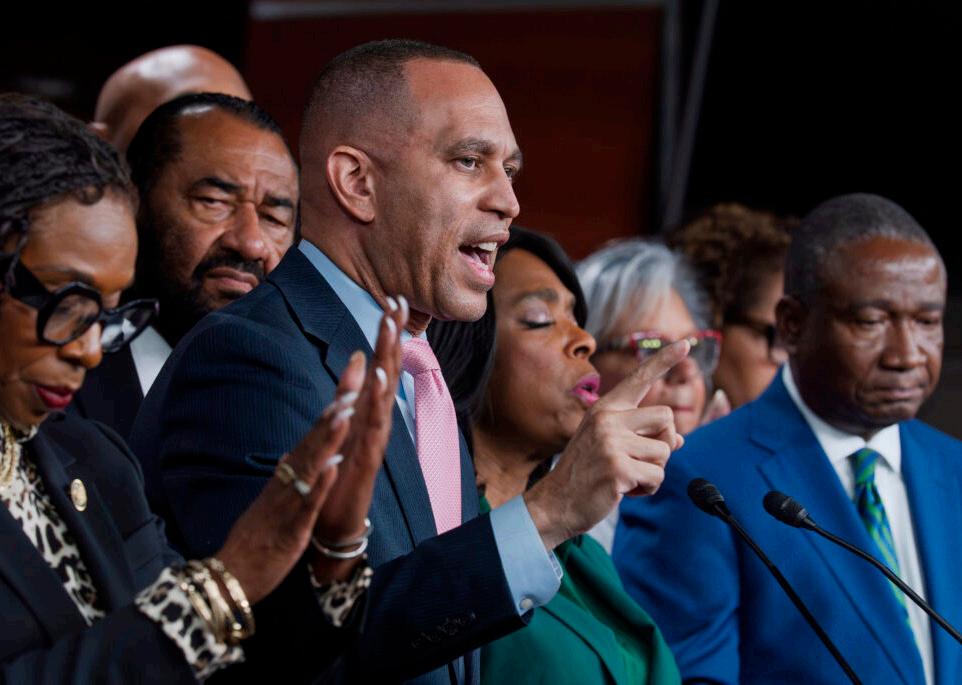
As critics reacting to the Supreme Court ruling in the Louisiana redistricting case, saying it “guts” Voting Rights Act of 1965 protections, Black congressional and legal leaders have already con-vened to mount a defense and rally behind the passage of the John R. Lewis Voting Rights Ad-vancement Act of 2025 (H.R.14.)
“We did not become a truly multi-racial democracy until the Voting Rights Act of 1965 enforced the 15th Amendment because Black Americans demanded the right to be seen, heard, and counted. That progress was paid for in blood, in sacrifice, and in unbreakable resolve,” said Congressional Black Caucus Chair Yvette Clarke at a press conference on April 29.
The Louisiana v. Callais case centered on the constitutionality of Louisiana’s congressional map, which provided two majority-Black districts situated in New Orleans and Baton Rouge in 2024. This map came out of years of litigation under Section 2 of the Voting Rights Act in Robinson v. Landry. The argued over section of the VRA of 1965 prohibits voting practices or procedures that discriminate on the basis of race, color, or minority group; which of course is rooted in the 14th and 15th Amendments.
The U.S. Supreme Court ruling on April 29 states that the Louisiana map is an “unconstitutional racial gerrymander” because the VRA did not require the state to create an additional majority-minority district and that there was “no compelling
justification” for the use of race in its creation. Those completely opposed said that this decision is “a devastating blow” to
critical civil rights pro-tections by permitting states to use “partisan gerrymandering,” which affects a community’s ability
Yale New Haven Hospital is pleased to offer patients and their families financial counseling regarding their hospital bills or the availability of financial assistance, including free care funds.
By appointment, patients can speak one-on-one with a financial counselor during regular business hours. For your convenience, extended hours are available in-person at Yale New Haven Hospital the third Monday of every month.
Time: 5 - 7 pm
Location: Children’s Hospital, 35 Park St., 1st floor, Admitting Parking available (handicapped accessible)
An appointment is necessary. Please call 855-547-4584. Spanish-speaking counselors available.


door to a coordinated attack on Black voters across this country. This is an outright power grab. It’s about silencing Black voices, dismantling majority Black districts, and rigging the map so that politicians can choose their voters instead of the other way around,” she continued.
Marc H. Morial, president and CEO of the National Urban League, called the Supreme court ruling “an affront and assault” on American democracy. Morial said he’d rather not telegraph their re-sponse except to encourage voters to come out during the primaries this year.
Morial quickly convened an emergency meeting on April 30 with other civil rights and legal minds to discuss outrage and strategy.
“The reason race is an issue is because they made it an issue. We were banned from certain things because of race. We were denied the right to vote, and then voter protection because of race. So to blame those of us that inherited a racist history, or a racial setup that you need to correct, is an in-sult to the intelligence of the American people,” said National Action Network president Rev. Al Sharpton. “So we are ready to mobilize. We are not going to take this sitting down.”
Sharpton spoke about NAN’s upcoming listening tour, which will visit more than 23 cities in an effort to encourage voter engagement.
to select their preferred leaders.
“With its decision in Louisiana v. Callais, the Supreme Court has opened the
Leadership Conference on Civil and Human Rights President and CEO Maya Wiley said, “ever since a Black man won a Con’t on page 16



presidential election with a diverse coalition named Barack Obama, we saw a rush of states to take voting power away from people of color. We heard politicians who were largely Republican, say out loud, and be reported on from Florida to Pennsylvania. We can deliver an election if we make it harder for Black people to vote. And what the Supreme Court has essentially done is said, Yes, you can. As long as you hide behind partisanship, you can ignore the fact that this is a long history of taking power from people whose decisions you may not like.”
Some congressional members discussed updates to the John Lewis Act to include modern day lan-guage that counteracts the Supreme Court’s ruling and other protections not in the 1960s legisla-tion, like preclearance, bail reform, and even possibly covering passport fees among low-income citizens that can’t afford a renewal or the REAL ID.
They also pointed out that it’s a fallacy that Black leaders can’t be elected in districts that aren’t ma-jority-Black.
“Because these extremists have failed America in every possible way. They failed on the economy, they failed on healthcare, they’re failing as it relates to this reckless and costly war of choice. The extremists have completely and totally failed America. So they’ve concluded, aided and abetted by the Trump Court, that they have to cheat to win,” said House Democratic Leader and Congress-member Hakeem Jeffries.
Jeffries resolved to summon courage and get this situation turned around going into the 2026 mid-term election. “We will not let their scheme to rig the midterm election and beyond be successful,” he said. “And when we take back the majority in the aftermath of the November 2026 elections, one of our first acts is going to be to make sure we pass the John Robert Lewis Voting Rights Amendment Act so we can end the era of voter suppression in America once and for all.”
On April 30,Louisiana suspended primaries for the state’s six U.S. House seats as a result of the Supreme Court ruling, which would have begun May 2. Early voting for the U.S. Senate May 16 election primaries will begin that day and continue as planned.


By Will Chesanek, hbcunews.com
Ken Griffey Jr. has one of the most iconic names and swings in MLB history. Griffey Jr. had an undeniable career in the majors. Some of his accomplishments include leading the American League in home runs four separate times, including three consecutive seasons (1994, 1997–99), winning seven Silver Slugger Awards, and being named AL MVP in 1997.
From hitting 630 home runs (No. 7 all time behind Willie Mays’ 660) to winning 10 Gold Glove Awards and being included in the Major League BaseballAll-Century Team, the 6-foot-3 left-hander exemplified how to play the game the right way.
Although Griffey went straight from Archbishop Moeller High School to play in the pros, he still promotes the importance of college athletics, more specifically in support of HBCUs, historically Black colleges and universities.
On Monday, MLB announced on social media that Ken Griffey Jr. is hosting an event for the league. Major League Baseball posted on its Instagram Story promoting the HBCU Classic, an initiative of the MLB-MLBPA Youth Development Foundation, which Griffey Jr. will host.
HBCUs were built in response to Jim Crow-era discrimination in the United States. Federal laws stated that Americans of all races deserved the same right to education, but with “separate but equal” policies still upheld, HBCUs were established in response. HBCUs are institutions that stand as a testament to strength in the face of adversity.
No new HBCUs are being built, and it is important that they receive proper
night with
was “good and sad” for this very sweet reason

funding and recognition. MLB is hoping to promote the importance of sports at HBCUs, and talented players who attend these institutions can participate in the MLB program led by Ken Griffey Jr.
Former HBCU baseball stars include Andre Dawson (Florida A&M), Lou Brock (Southern University) and Larry Doby (Virginia Union).
“Ken Griffey Jr. hosts top talent from HBCUs across the country on Friday,” MLB wrote on Instagram. “July 10. Tickets on sale now.”
Fans and players from HBCUs can sign up to attend the HBCU Swingman Classic on July 10.

BY MALCOLM TRAPP / REVOLT.TV
Key Takeaways
• Rihanna said her date night with A$AP Rocky at the 2026 Met Gala felt “good and sad” without their three children.
• The Met Gala generally does not allow guests under 18, with organizers previously calling it an “executive decision” and “not an appropriate event for people under 18.”
• For the event, Rihanna wore a custom Maison Margiela gown, while A$AP Rocky chose a pink Chanel look layered with High Jewelry pieces.
Rihanna’s 2026 Met Gala experience came with a tiny trade-off. On one hand, she and A$AP Rocky reminded us why they're hands down one of music’s bestdressed couples. On the other, the “Diamonds” singer had to leave her little ones behind for the evening. While ascending the iconic steps of the Metropolitan Museum of Art, People asked the pair how they felt spending
date night away from their three children — RZA, Rose, and baby Rocki. “It feels good,” Rocky replied, before RiRi clarified, “It feels good and sad.”
Why children usually aren’t allowed to attend the Met Gala
“Yeah!” the Harlem rapper agreed. As many already know, the Met Gala generally doesn't allow guests under 18. Event organizers previously told The Hollywood Reporter that it was an “executive decision,” explaining that “it’s not an appropriate event for people under 18.”
That rule, however, certainly saw an exception this year with co-chairs Beyoncé and Nicole Kidman, who both brought their children, Blue Ivy Carter and Sunday Rose, along for fashion’s biggest night. Watch Rihanna and Rocky enter the Met Gala below, then keep scrolling for more details about their stunning looks.
What did Rihanna and A$AP Rocky wear to the 2026 Met Gala?
Rihanna’s return to the Met Gala was definitely one of the more anticipated moments of the night. Just last year, she used the affair to announce that she and Rocky were expecting their third child, and though there wasn’t a pregnancy (or album!) reveal this time around, she certainly arrived in style.
According to Vogue, the ANTI artist stunned in a custom Maison Margiela gown from Glenn Martens’ Artisanal 2025 collection. Her breathtaking look featured "over 115,000 crystal beads, antique jewels, and chains," with embroidery alone taking a whopping 1,380 hours.
Rocky, meanwhile, went for a pink wool robe with black satin lapels courtesy of Chanel (proof that real men do wear pink), paired with a white cotton shirt and black trousers underneath. Complete with pieces from the luxury house’s High Jewelry collection, the publication noted that 194 hours went into creating his look.
by Dollita Okine, Face2FaceAfrica.com
BET has named Druski, the 31-year-old comedian and digital creator, as the host of the 2026 BET Awards. This announcement makes him the youngest emcee in the history of the show, which will be broadcast live from the Peacock Theater in Los Angeles on June 28, as confirmed by BET.
Druski surpasses Kevin Hart, who set the previous record in 2011, as reported by the Associated Press.
“I grew up watching the BET Awards,” Druski said in a statement. “To know the comedic legends that hosted before me set the bar so high, I’m just grateful to be a part of the history. But I’m still bringing my brand of comedy to the stage.”
The BET Awards are celebrating their 25th anniversary, marking a quarter-century as a premier platform honoring Black excellence across music, film, television, and sports. The ceremony is famous for its impactful performances, moving tributes, and culture-defining moments.
Connie Orlando, BET’s executive vice president of specials, music programming,
and music strategy, said, “As one of the most exciting comedic voices of his generation, Druski brings a unique ability to connect with audiences through humor that feels both fresh and deeply rooted in culture.”
Jesse Collins Entertainment is set to produce the show, with Jesse Collins, Dionne Harmon, and Jeannae Rouzan-Clay acting as executive producers.
According to Revolt, the comedian and social media star offered fans a very encouraging glimpse of what to expect.
“I told BET, ‘If I’m hosting, we gon’ do this my way,’” he opened before running through a few ground rules on Instagram.
“Rule No. 1: Jamie Foxx, take that big a** hat off. Rule No. 2: Sexyy Red, no leggings, rompers, or bodysuits. We don’t need no wrestlers. No wrestlers on the red carpet!” the Maryland native explained.
“Rule No. 3: YNs, take the ski masks off, man. Stop. Stop it.”
Jamie Foxx replied, “You gon kill it. And I got a hat for u!!!”
Druski is famous for his sold-out tours and notable collaborations with musicians

by Mildred Europa Taylor, Face2FaceAfrica.com
AŸ-Z’s Roc Nation Sports has officially signed Liverpool player Oliver “Ollie” O’Connor, a central midfielder whose academy seasons at the club have been described as one of the most impressive in recent years.
The 17-year-old, who has now joined one of the top sports representation agencies in the world, has made 25 appearances across all competitions in 2025/26. Besides contributing three goals and three assists, O’Connor logged 1,645 minutes for both the U18 and U19 sides, according to this report.
Launched in 2013, Roc Nation Sports is a sub-division of Roc Nation, one of the world’s most powerful entertainment companies. Inspired by founder JAŸ-Z’s love of sports, Roc Nation Sports supports athletes by elevating their careers on a global scale as it “conceptualizes and executes marketing and endorsement deals, community outreach, charitable tieins, media relations and brand strategy — helping athletes solidify their legacy both on and off the field,” its website says.
Some of the athletes it has represented include NBA All-Star and 2021 Rookie of the Year LaMelo Ball, Robinson Canó, Vinícius Júnior, Gabriel Martinelli, and Saquon Barkley.
Under the leadership of Desiree Perez (the CEO) and Sports President Juan Perez, the agency has been making inroads in European soccer in recent times. Bringing O’Connor on board is in line with that mission, and his signing

couldn’t have come at a better time, as he inches towards a professional contract decision with Liverpool. He would now
surely negotiate with one of the most powerful sports representation agencies in the world by his side.
like Drake and Snoop Dogg, as well as appearances with high-profile individuals such as Tom Brady and Timothée Chalamet.
Druski’s achievements include being named to Forbes’ Under 30 list and Rolling Stone’s Most Influential Creator list. In 2025, he made history as the first comedian to be featured on the cover of Billboard’s No. 1s issue.
However, he has sparked numerous controversies, notably with an ongoing skit for his fictional label, Coulda Been Records. A viral clip from over two years ago showed him being pursued by Cash Money Records’ Birdman, who then snatched his jewelry. He also drew criticism from many mega-church pastors earlier this year due to his controversial portrayal of popular televangelists.
More recently, Druski boosted his popularity with his video, “How Conservative Women in America Act.” The clip, which seems to satirize Turning Point USA’s CEO, Erika Kirk, features Druski in full drag—with white makeup and a blonde wig—and has already reached over 100 million views since its release.
Con’t from page 09
Roc Nation is one of JAŸ-Z’s multiple businesses, which he co-founded in 2008 with Desiree Perez (CEO), Jay Brown (Vice Chairman), Juan Perez (President of Roc Nation Sports), and Tyran “Ty Ty Smith” (President of A&R), and where he currently serves as Chairman.
The rapper, since his first album, has amassed a vast portfolio of work and invested in several business ventures, which ultimately earned him a spot on Forbes’ Billionaires list. He created his own record label, Roc-A-Fella, in 1994, through which he released his first two albums before building Rocawear in 1999, an apparel brand he later sold the rights to in 2007.
From 2004 to 2007, he was president of Def Jam Recordings and founded Baseline Studios in New York City in 2000 to “cultivate lyrical artistry and produce beats with expert and novice producers who wanted to enhance their technical and musical mastery,” according to Roc Nation.
The musician and billionaire is also a co-owner of The 40/40 Club, which he helped found in 2003 with business partners Juan Perez and Desiree Perez. In 10 years, he launched Roc Nation Sports, an agency currently managing elite athletes globally.
The following year, the music mogul co-founded luxury spirits brand Armand De Brignac and the streaming service TIDAL in 2015. In three years, he helped build Marcy Venture Partners, a venture capital firm named after the Marcy Projects in the Bedford-Stuyvesant neighborhood of Brooklyn, where JAŸ-Z grew up.
people were.
*Finally, a big lesson of the saga, valuable down to our own day, is that while white allies especial-ly those in powerful positions — like Roger Baldwin, Simeon Jocelyn, and John Quincy Adams — were needed, African Americans, especially African-American clergymen, very much led the struggle of the Amistad captives, particularly in the phase of repatriation to Africa.
From the beginning, they literally and figuratively had more skin in the game. Which is why the free Black character played by Morgan Freeman in the Spielberg film is such a mistake; he wan-ders about mainly showing off his caring face and his role is somehow to prove to Cinque and the Africans that the whites with him are okay. He has little to say, and conveys charming passivity. While Spielberg’s film does make some exquisite contributions, such as capturing the horror of the Middle Passage (much as he captured the horror of the D-Day landing in Saving Private Ryan), this slighting of the role of the local Black community and clergy such as James W.C. Pennington, from Hartford, is notably glaring. All the more reason, as we mark our 250th anniversary year, that we should take the time to mark the Amistad story’s 187th year. And the best way to do that is to visit the New Haven Museum’s Amistad: Retold, and then dial up on any computer the first-rate interactive map that was created in connection with the exhibition.
THE ELM CITY COMMUNITIES, HOUSING AUTHORITY OF NEW HAVEN (ECC/HANH) MOVING
Section II and Section VII of the Authority's Moving to Work Agreement {the "Agreement") requires that before the Agency can file its Approved Annual Moving to Work Plan (“Plan”) and Report (“Report”)to the U.S. Department of Housing and Urban Development (the "HUD") that it must conduct a public hearing, consider comments from the public on the proposed Plan, obtain approval from the Board of Commissioners, and submit the Plan to HUD.
The thirty (30) days comment period begins on Monday, April 27, 2026, and ends on Tuesday, May 26, 2026.
Copies of the Moving to Work (MTW) FY2027 Plan, will be made available on the agency website www.elmcitycommunities.org or via Facebook www.facebook.com/ ElmCityCommunities.
You are invited to provide written comments addressed to: ECC/HANH, Moving to Work FY2027 Annual Plan Attn: Evelise Ribeiro, 360 Orange Street, New Haven, CT 06511 or via email to: eribeiro@elmcitycommunities.org.
Pursuant to said Sections II and VII, a public hearing where public comments will be accepted and recorded is scheduled for Thursday, May 21, 2026, at 4:00pm via Teams: https://teams.microsoft.com/meet/226459013024616?p=ixECplpMVkoqWitDVX
Meeting ID: 226 459 013 024 616 Passcode: 43Zv7iG7
Dial in by phone
Phone: 1-872-240-4494
Phone conference ID: 874 430 272#
Any individual requiring a Reasonable Accommodation to participate in the hearing may call the Reasonable Accommodation Manager (203) 498-8800, ext. 3170 or at the TDD Number (203) 497-8434.
The Town of East Haven seeks a qualified candidate to serve in the position of Social Services Director at the East Haven Senior Center
Interested candidates should possess a Bachelor’s degree in related field and five years progressively responsible and relevant experience including two years of experience in a supervisory position and experience working with the Connecticut Energy Assistance Program (CEAP) and State of Connecticut Rental Rebate Programs, a valid Connecticut Driver’s License. The salary for this po-sition is $$62,801/year, 35.5 hours per week and the Town offers an excellent benefit package. Please send resume with Cover Letter to: Ed Sabatino, Assistant Director of Administration & Management, Town Hall-250 Main Street, East Haven, CT 06512 or email to jobs@easthaven-ct.gov . The position is open until filled. The Town of East Haven is committed to building a work force of diverse individuals. Minorities, females, handicapped and veterans are encouraged to apply. The Town of East Haven is an equal opportunity employer.
Public Notice The Housing Authority of the City of New Britain (NBHA) is seeking bids for Landscaping Services - Spring & Fall Cleanup and As-Needed Services (Solicitation No. 2026-04-LAND).
Issue Date: April 22, 2026
Submission Deadline: May 13, 2026 at 3:00 p.m. (Local Time)
RFP and all addendas and answers will be posted at www.nbhact.org<http://www.nbhact.org/>.

The State of Connecticut, Office of Policy and Management is recruiting for a Connecticut Careers Trainee, target class Planning Analyst in the Intergov




UNION CONTRACTOR SEEKS:
Construction Equipment Mechanic
(preferably experienced in Reclaiming and Road Milling Equipment) We offer factory training on equipment we operate. Job is in Bloomfield, CT.
Contact: Tom Dunay Phone: 860-243-2300 Ext. 122 Email: tom.dunay@garrityasphalt.com
Reclaimer Operators and Milling Operators
(must have current licensing and a clean driving record; be willing to travel throughout the Northeast & NY)
Contact: Rick Tousignant Phone: 860-243-2300 Ext. 133 Email: rick.tousignant@garrityasphalt.com
Tractor Trailer Driver for Heavy & Highway
Construction Equipment
(must have a class A CDL license with Tank Endorsement and a clean driving record; be capable of operating heavy equipment and willing to travel throughout the Northeast and NY)
Contact: Brian McKee Phone: 860-558-6189
Email: bmckee@garrityasphalt.com
• We offer Excellent hourly rates and benefits.
• Women and Minority Applicants are encouraged to apply.
• Affirmative Action / Equal Opportunity Employer
The Town of East Haven is currently seeking qualified applicants to participate in the Civil Service Examination for the position of Custodian. Graduation from High School or 1 year employment in building care and cleaning operations is required. The rate of pay is $26.29/hour; 40 hours/week and the town offers an excellent benefit package. Applications to participate in the examination are available online athttps://www.easthaven-ct.gov/jobs.aspx or the Civil Service Office, 250 Main Street, East Haven CT and must be returned by May 8, 2026. The Town of East Haven is committed to building a workforce of diverse individuals. Minorities, Females, Handicapped and Veterans are encouraged to apply.
Electrical Services IFB No. B26003
SCOPE:
The Housing Authority of the City of Danbury hereby issues this Invitation for Bid to secure a contract for Electrical Services
BID SUBMITTAL RETURN:
Housing Authority of the City of Danbury, 2 Mill Ridge Rd, Danbury, CT 06811 Envelope Must be Marked: IFB No. B26003, Electrical Services
SUBMITTAL DEADLINE May 11th, 2026 at 10:30am (EST)
IFB DOCUMENTATION:
Please register here to obtain Bid Package: https://ha.internationaleprocurement.com/requests.html?company_id=49968 ”
[Minority- and/or women-owned businesses are encouraged to respond]
The South Central Regional Council of Governments (SCRCOG) seeks the services of one or more consultants for the following transportation planning studies during the 2026 and 2027 Fiscal Years (July 1, 2025June 30, 2027): Metropolitan Transportation Plan Update and Local Bridge Inspection Study. Responses are due by June 2, 2026 (12 noon local time). Selected firms will be interviewed on June 9, 2026. The full RFQ document can be viewed at the Council’s website: www.scrcog.org or can be made available upon request. Contact James Rode at (203) 4668623 with any questions.
LaRosa Earth Group LLC, a Site/Excavation Company, is currently looking to add the following full-time positions to our Team:
Please submit resumes to HR@LAROSABG.COM or stop by our main office to fill out an application: 163 Research Parkway Meriden, CT. Salary will be commensurate with experience and best fit for the positions. Health plan; 401K; company-paid holidays in addition to paid time off.
LaRosa Groups is an Affirmative Action/ Equal Opportunity Employer who values diversity and encourages all qualified applicants to apply.


Invitation to Bid:
20 Security Drive Avon, CT One Building, 76 Units
Project Description: Gut Rehabilitation and adaptive reuse of a former office building for use as an affordable housing community consisting of 76 units of housing as well as associated property management and amenity spaces.
Project Documents include but not limited to: sitework, paving, utilities, selective demolition, concrete, masonry, masonry restoration, structural steel, miscellaneous metals, finish carpentry, thermal & moisture protection, storefronts, doors, frames & hardware, windows, drywall, acoustical ceilings, flooring, painting, signage, louvers and vents, toilet & bath accessories, fire extinguishers, cabinets and accessories, postal specialties, miscellaneous specialties, solid waste handling equipment, residential appliances, horizontal louver blinds, kitchen and bathroom casework, roller shades. electric traction elevators, hydraulic passenger elevators, chutes, fire protection, plumbing, HVAC, electrical, communications, electronic safety and security, sanitary facilities and final cleaning. The project is being designed to Energy Star MFNC v1.2 standards.
This contract is subject to state set-aside and contract compliance requirements.
Project is Taxable. No Wage Rate Project. Anticipated start July 2026.
Bids are due to Haynes: May 1, 2026 @ 3 pm to Taylor Els tels@haynesct.com Email questions to Dave Biega dbiega@haynesct.com Phone # 203-888-8109
Please note: Subcontractors need to include all future tariff costs in bid proposals and hold pricing through 7-1-2026.
State law requires a minimum of twenty-five (25%) percent of the state-funded portion of the contract for award to subcontractors holding current certification from the Connecticut Department of Administrative Services (“DAS”) under the provisions of CONN. GEN. STAT. § 4a-60g. (25% of the work with DAS certified Small and Minority owned businesses and 25% of that work with DAS certified Minority, Women and/or Disabled owned businesses.) The contractor must demonstrate good faith effort to meet the 25% set-aside goals.
a quarry and paving contractor, has positions open for the upcoming construction season. We are seeking candidates for a variety of positions, including: Scalehouse Dispatcher/ Equipment Operators and Laborers. NO PHONE CALLS. Please mail resume and cover letter to “Hiring Manager”, Galasso Materials LLC, PO Box 1776, East Granby CT 06026. Galasso Materials is an Affirmative Action/Equal Opportunity Employer. All applicants will be considered for employment without attention to race, color, religion, sex, orientation, gender identity, national origin, veteran or disability status.
Elm City Communities is currently seeking bids for Services of a firm to provide Unarmed Security Services. A complete copy of the requirement may be ob-tained from Elm City Communities’ Vendor Collaboration Portal https://newhavenhousing.cobblestonesystems.com/gateway beginning on
Wednesday, May 6, 2026, at 3:00PM.
The Glendower Group is currently seeking request for Qualifications from qualified firms for Ex-perienced Construction Managers at Risk t support the predevelopment, preconstruction of Union Square. A complete copy of the requirement may be obtained from Elm City’s Vendor Collaboration Portal https:// newhavenhousing.cobblestonesystems.com/gateway begin-ning on
Wednesday, May 6, 2026, at 3:00PM.

The State of Connecticut, Office of Policy and Management is recruiting for a Connecticut Careers Trainee, target class Planning Analyst in the Intergovernmental Policy and Planning Division. Further information regarding the duties, eligibility requirements and application instructions are available at: https://www.jobapscloud.com/CT/ sup/bulpreview.asp?b=&R1= 260427&R2=2292AR&R3=001
The State of Connecticut is an equal opportunity/affirmative action employer and strongly encourages the applications of women, minorities and persons with disabilities.

City of Bristol
$78,813/yr.
Required testing, general info, and apply online: www.bristolct.gov
DEADLINE: 12-07-25

The scope of the project includes adaptive reuse of an existing vacant historic 3 level bldg., approx. 46,513 sf, for 15 affordable one- and two-bedroom artist live-work space, exhibit space and community space.
Also, New Construction of One 4-story building, approximately 50,138sf with 44 affordable residential units. Total of 59 units.
Project Documents Include but not limited to: Selective & structural demo, asbestos abatement, earthwork, concrete, gypcrete, historic masonry restoration, misc. metals, rough & finish carpentry labor & material, wood trusses, stairs, final cleaning, thermal & moisture protection, fiber cement siding, EPDM roofing, firestopping, steel doors and frames, flush wood doors, access doors & aluminum windows, skylights, door hardware, glazing, gypsum board assemblies, acoustical ceilings, tin ceilings, flooring, toilet, bath and laundry accessories, terrazzo tile, painting, wire mesh storage lockers, louvers & vents, signage, fire extinguishers/cabinets, bath accessories, postal specialties, residential appliances, facility waste compactors, residential casework & countertops, entrance floor mats, horizontal louver blinds, bicycle racks, vertical wheelchair lifts, elevators, fire suppression, HVAC, plumbing, electrical, EV charging stations, solar, radon mitigation, landscaping, final cleaning and sanitary facilities.
Haynes is the GC on this project | This is a Living Wage Rate Project - Living Wage Payroll Requirements | Project is Taxable | SHPO Standards | City of New Haven Subcontracting Requirements: New Haven Small Contractor Development – 25% Subcontractor Program Goal | City of New Haven Resident Workforce Hours = 25%, MBE Workforce Hours = 25%, WBE Workforce Hours = 6.9%, Section 3 workforce 25% of all labor hours; 5% target area; Subcontractors must meet and be approved by New Haven CEO – CHRO and CHFA monthly reporting required.
The Equal Opportunities Ordinance of the City of New Haven, Chapter 12 ½ et seq., authorizes and empowers the New Haven Commission on Equal Opportunities to remedy discrimination complaints, and actively pursue and promote affirmative action and contract compliance within the City of New Haven.
This Invitation to Bid is additional outreach for MWBE subcontractors. Anticipated start 9-1-2026. Overall Project Duration: 18 month project
Bids are due to Haynes: 5-28-2026 by 3 pm to Taylor Els – tels@haynesct.com
If you have not already received this invitation to bid and would like to bid, please email your business name, contact information and trade to Taylor Els – tels@haynesct.com Taylor will add you to Procore and send you the ITB for easy access to plans and specifications.
All questions must be submitted in written form and directed to: Jordan Fredericks jfredericks@haynesct.com 203-888-8111 Eric Facchini efacchini@haynesct.com
This contract is subject to state set-aside and contract compliance requirements. HCC an Affirmative Action/Equal Opportunity Employer, encourages the participation of all Veteran, S/W/MBE
The South Central Regional Council of Governments (SCRCOG) seeks the services of one or more consultants for the following transportation planning studies during the 2026 and 2027 Fiscal Years (July 1, 2025- June 30, 2027): Hamden Ridge Road Safety Study and On-call Technical Support Services. Responses are due by June 2, 2026 (12 noon local time). Selected firms will be interviewed on June 9, 2026. The full RFQ document can be viewed at the Council’s website: www.scrcog.org or can be made available upon request. Contact James Rode at 203-466-8623 with any questions.
Black prom is a rite of passage for many Black teens. Here's why it's so special for our community.
written by Shannon Dawson, NEWSONE.com
Black proms in the United States are far more than end-of-year dances; they are vibrant, deeply meaningful celebrations that reflect history, identity, and community. While prom season typically arrives in the spring, with most events held in April or May, Black proms stand apart for their scale, style, and cultural significance. From elaborate gowns and tailored suits to community-wide sendoffs, these events are intentional, expressive, and rooted in something much larger than a single night.
Proms are a coming-of-age ritual for Black teens.
At their core, Black proms often function as a universal coming-of-age ritual. In cultures where milestones such as quinceañeras or bar mitzvahs formally mark the transition into adulthood, many Black American communities have transformed prom into a similarly important rite. It becomes a defining moment that celebrates not only the end of high school but also the beginning of adulthood, independence, and future aspirations, as noted by social media influencer @adivunsolicited.
They uplift not only students but also their villages.
What makes Black proms especially unique is the way they extend beyond the individual into a broader “village” celebration. Events like prom send-offs bring together family members, neighbors, mentors, and local businesses to honor a young person’s journey. These gatherings serve as a public acknowledgment of growth, resilience, and potential. They are not simply parties; they are affirmations of community investment and pride.
This deeper meaning is echoed in personal reflections like those of Shakira King, a West Philadelphia native who attended prom in 2009. Speaking in a 2024 interview with Resolve Philly, she explained that while prom is shared across racial groups, its role can differ significantly. King carefully explains:
“Black rites of passage are often overlooked because they just look like regular things from childhood. But I don’t think people understand how un-“regular” Black childhood is, especially if you live in a particular kind of city and experiencing a particular kind of poverty or trauma or you’re experiencing a certain kind of depression in your city.”
She adds that these celebrations are an “investment in joy,” highlighting their importance as moments that uplift, affirm, and showcase Black achievement. It’s a celebration against historical exclusion.
The significance of Black proms is



also tied to a history of exclusion. Prom culture in the United States dates back to the late 19th and early 20th centuries, originally emerging from elite college traditions modeled after debutante balls. These early events were racially segre-



gated and steeped in social expectations about gender and class. As proms became more widespread in high schools, particularly in the 1920s and then booming in popularity during the 1950s, Black students were often excluded entirely or
for Black and white students, while others allowed unofficial, segregated celebrations to persist well into the late 20th century, History notes. In response, Black families and communities created their own proms, spaces where their children could celebrate fully and freely. Today’s elaborate Black prom traditions can be understood, in part, as a continuation of that legacy, a form of cultural expression that stands as both a protest against exclusion and a celebration of progress.
Proms also push back against harmful narratives.
Black proms also push back against harmful societal narratives, including the “adultification” of Black youth, the tendency to view Black children as more mature and less deserving of care or celebration. These events create a space where young people are centered, nurtured, and celebrated as they should be.
As Aja D. Reynolds, Assistant Professor of Education at Wayne State University, observed:
“Black girls and their families organize prom send-offs as a ‘thank you’ to the members of their ‘village’ – old and young alike,” she wrote in 2021 for Today@Wayne. Reynolds observed the prom tradition of then-student Danielle Nolen, in Chicago, and saw in real time how her community uplifted her during her special moment.
“I have seen people from all aspects of the prom-goer’s life attend prom send-offs – everyone from teachers and mentors to fellow church members and co-workers. Even after Danielle was chauffeured to the formal prom dance, I stayed behind with her family to enjoy a cookout and line dancing,” she added.
Promos uplift Black businesses.
Another defining feature of Black proms is their role as a showcase for creativity and excellence. Fashion becomes a central form of expression, with many students wearing custom-designed outfits crafted by Black designers and seamstresses. These looks are often bold, intricate, and deeply personal, transforming prom into a runway of cultural pride and artistry while also reinvesting in Blackowned businesses and talent.
This impact on presentation is intentional and meaningful. As Chicago-based dressmaker Suzette Opara explained in a 2018 interview with the Chicago Tribune:
“Black people, we like to look good, we like to shine and present polished. There are not enough occasions for us to do that, so prom has become one. It’s not to be taken lightly.”
forced into separate events. Even after the 1954 Brown v. Board of Education decision outlawed school segregation, many communities resisted integration. Throughout the 1960s and 1970s, some schools held separate proms
Ultimately, Black prom is more than a celebration; it is a statement. It represents pride, resilience, beauty, and joy. It honors history while creating new traditions. And most importantly, it provides a space where young Black individuals are fully seen, celebrated, and uplifted as they step into the next chapter of their lives.