






by Donald Eng
HARTFORD, CT — About 25,000 state residents who are about to lose their federal Supplemental Nutrition Assistance Program (SNAP) benefits as a result of changes to eligibility will receive a little relief from the state, according to Gov. Ned Lamont.
On Wednesday morning, Lamont announced a plan to use $8.5 million from Connecticut’s Federal Cuts Response Fund to provide $300 grocery assistance cards to those losing their benefits.
“Connecticut will not stand by as the Trump administration uses hunger as a weapon against working families, veterans, and our most vulnerable,” Lamont said. “These new SNAP work requirements represent a cruel decision and fundamental shift away from the program’s core mission of ensuring our neighbors don’t go hungry.”
Lamont said he was particularly troubled by the decision to eliminate the exemption for veterans.
“We are providing this assistance as a bridge to prevent people from going hungry as we help them navigate these changes,” he said. “I hope that Congress will end the inhumane and immoral cuts that President Trump pushed for after Ameri-

cans elect a new Congress this fall.”
Under the plan, eligible individuals who have recently lost SNAP eligibility due to federal changes in work requirements will receive a grocery assistance card that can be used to purchase food. While applying
for benefits, applicants will be connected with services to help them regain SNAP eligibility where possible.
These benefits and services will be administered by the Connecticut Department of Social Services (DSS) through
a partnership with the state’s network of community action agencies, which will assist with outreach, eligibility verification, and distribution of benefits. In addition to the grocery card funding, the plan includes $1 million for administrative
costs related to the distribution of this aid and related services, according to Lamont’s office.
“No one in Connecticut should have to worry about putting food on the table because of a policy decision made in Washington,” DSS Commissioner Andrea Barton Reeves said. “This one-time grocery assistance will provide an immediate lifeline to thousands of our neighbors who are losing food benefits through no fault of their own.”
State Sen. Matt Lesser, D-Middletown, co-chair of the legislature’s Human Services Committee, called the administration’s cuts to social support programs devastating.
“The president just last week said he doesn’t care about families struggling with high gas and grocery prices,” Lesser said.
Lamont submitted details of the plan to legislative leaders Wednesday afternoon. This is the fourth such plan for use of Connecticut’s Federal Cuts Response Fund that the state created last year.In December, the state allocated $168 million to support health care and Planned Parenthood, among others. In January, another $18.7 million went for food assistance. The most recent such allocation was last month, a $22.5 million allocation to support the state’s dairy farmers.
by Mona Mahadevan
A request to reduce parking requirements for a proposed 300-child daycare in Fair Haven returned to the Board of Zoning Appeals (BZA) on Tuesday — this time with support from the Elicker administration.
The property owner, Vargas Business Hub, is seeking zoning relief to support a project that would turn vacant industrial buildings at 184 and 196 Chapel St. into a childcare center. In March, the city’s zoners denied a similar application on the advice of the City Plan Commission.
On Tuesday, María Vargas, a daycare provider of 25 years, returned to City Hall with a revised parking proposal, including a one-year deal with the city Economic Development Administration (EDA) for 10 off-street parking spaces. Attorney Ben Trachten represented the applicant. “The city is very supportive of this use and the redevelopment of the buildings,” said Helen Rosenberg, a city economic development officer. “We will extend ourselves so parking is not an issue.”
The city’s zoners first heard about the project in February. According to Vargas’s application, the plans involve converting three abandoned warehouses and offices into a daycare for children under five. The current design includes a playground and assembly space.
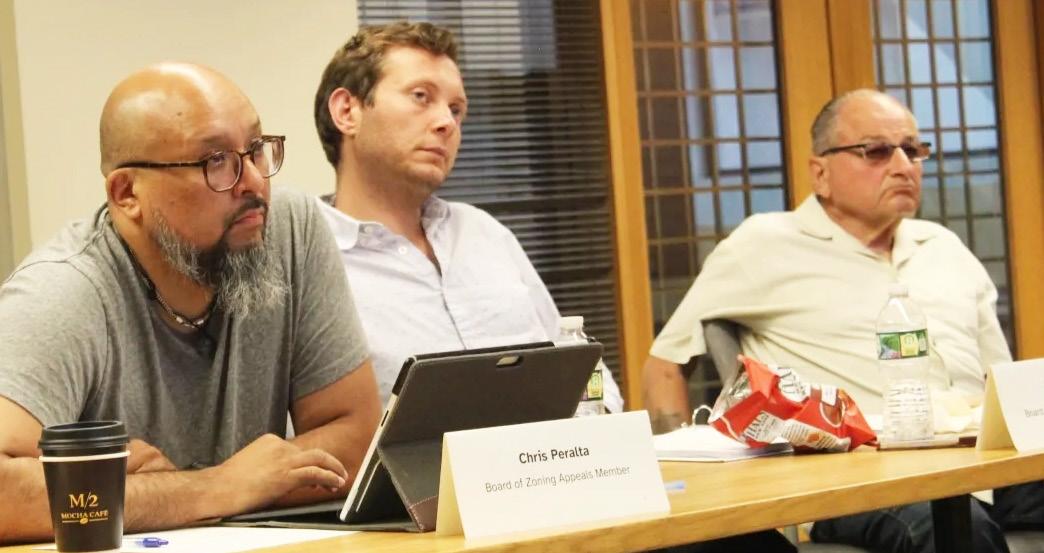
In their first visit to the BZA, Vargas Business Hub requested permission for nine parking spaces where 84 were required. After receiving the denial, architects Fernando Pastor and Keith Krolak redesigned the daycare with a smaller assembly space, reducing the number of required parking spaces from 84 to 34. They re-tallied the planned parking spac-
es from nine to 10.
They also received a letter from the city’s Economic Development Administration agreeing to provide 10 off-street parking spaces at 100 River St. for at least one year, provided that no other off-street parking can be found.
Carlos Eyzaguirre, deputy director of the Economic Development Adminis-
tration, told the BZA that the city rarely speaks in support of a non-city proposal. However, he said, his team feels “really strongly” that Vargas’s project should move forward.
In part, that is because of the significant need for quality daycare in Fair Haven, said Dave Holder, a nonprofit consultant. Daycares give families stability and en-
able parents to work, he said. “For working families, childcare is not a luxury.”
The shortage of childcare extends across the city and state. In 2025, one expert estimated that New Haven had a shortage of 2,194 infant and toddler slots for daycare. As a whole, Connecticut families need another 100,000 childcare slots. The state legislature has taken aim at the daycare shortage, most recently approving a $300 million investment in early childhood education.
On Tuesday, Fair Haven Alder Frank Redente — whose ward does not include the location of the proposed daycare — described the project as “an absolutely wonderful addition to the River Street area.” The number of incoming housing developments and new companies around the neighborhood will further increase the need for childcare, he said.
“If you allow us, we could grow,” Vargas told the board. Twenty-five years ago, her daycare began at her home with eight children. Now, she said, she hopes to give more kids “opportunities” and “education.”
The BZA did not vote on the requested special exception on Tuesday; as per the Zoning Ordinance, the City Plan Commission is required to issue an advisory report on parking-relief applications. Once they do, the request will return to the BZA for a final vote next month.




by Adele Haeg
Tyler Booker returned to New Haven on Sunday for his first Freddy Fixer Parade since he was four.
“It’s exactly like how I remember it,” said Booker, now a 22-year-old offensive guard for the Dallas Cowboys. The homegrown NFL player served as the parade’s Grand Marshal — and signed plenty of autographs along the way.
“It’s a city that shows love and embraces you,” Booker said. “Great things come out of New Haven, Connecticut.”
Booker was one of hundreds of people


to gather on Dixwell Avenue on Sunday afternoon to march in the 61st annual Freddy Fixer Parade, one of the city’s premier Black community events.
Eighty-nine floats rolled down Dixwell, heralded by marching bands, airhorns, and onlookers who set up chairs and tents from Bassett Street to Lake Place to watch. Following Booker in the parade were New Haven alders, state legislators, police officers, firefighters, and Mayor Justin Elicker and U.S. Sen. Richard Blumenthal, among many others.
“This is a reunion,” remarked city Assistant Fire Chief Shakira Samuel. She used to walk in the parade as a cheerleader for what was then Davis Street Elemen-
tary School. Every Freddy Fixer, Samuel runs into friends from across the city that she hasn’t seen in years. If she doesn’t see them anywhere else, she said, she knows they will come to Freddy Fixer.
The Freddy Fixer festivities seemed to unify the city for the afternoon. Pastor Robert Kinney watched the parade from the steps of his church, Mount Hope Temple. He said he was moved by the “spirit of harmony and peace” the parade-goers contributed. Manmita Dutta said this was her second year volunteering for the Freddy Fixer committee, which is helmed by Reese McLeod. As an immigrant, “coming here was made possible by the rich history” of solidarity that the parade rep-



resents, Dutta said.
What began as a parade dedicated to neighborhood beautification — in honor of Freddy Fixer, or Ed Grant — has become an unofficial holiday in New Haven, and in that, a place for the city to reflect.
Arnetta Troutman rode on one parade float covered with posters bearing the faces of New Haven homicide victims. Troutman pointed to a sign of the face of her son, Keron Troutman, who was killed last spring. Her float participates in the parade to show that they “support for our loved ones,” she said. “They are still part of us.”
According to city Police Chief David

Zannelli, who was also in attendance at Sunday’s aprade, New Haven has made “tremendous progress” this year against crime, though there is still “work to do,” he said. Zannelli referenced the city’s mid-year crime statistics — the NHPD reported zero homicides in the first five months of 2026.
“It’s events like these” that show progress, Zannelli said of the parade. Members of the Wilbur Cross Marching Band felt similarly. “At our first parade, we were a little timid,” said Luca Santell, a junior at Wilbur Cross who plays the flute. A year later, he said, the band is much more confident.
by Jamil Ragland
HARTFORD, CT — More than a hundred protesters shut down traffic on Main Street in Hartford for two hours during the rush hour commute Wednesday afternoon as they demanded that ICE agents leave Connecticut.
The No To ICE protest, organized by Hands Off Connecticut, took place in the street in front of the Abraham A. Ribicoff Federal Building at 450 Main Street. Protesters chanted, sang songs and ultimately staged a sit-in on the street.
Drivers who were diverted due to the protest were generally supportive, with several honking their horns in support of the crowd’s anti-ICE message.
Sam Pudlin, one of the organizers of the protest, said the aim was to draw aware-

ness to the fact that the federal building is home to the ICE Boston Hartford Field Office, serving as the epicenter for what he called illegal immigration raids across the state.
“What we’ve seen lately is ICE has been breaking Connecticut law,” he said. “We don’t have secret police in this country. They’re not allowed to be unidentified, they’re not allowed to wear masks in courthouses and they’ve been doing all of that.”
ICE has been involved in several controversial arrests in Connecticut. Most recently, ICE agents arrested Rihan, the son of an Afghan interpreter who entered the United States legally on a humanitarian visa. Zia, the boy’s father, was himself arrested a year before his son. Both have since been released.
by Adele Haeg
Yale plans to demolish a vacant former rubber factory in the Hill that was once home to vibrant, illegal live-work artist studios — prompting pushback from some neighbors who don’t want to see the site turned into an 89-space surface parking lot.
University officials presented those plans Tuesday evening during a meeting at John C. Daniels School.
Yale purchased the Daggett Square complex at 69-75 Daggett St. in 2024 — almost ten years after the city evicted artist-tenants from the site.
The university now wants more space “to help alleviate congestion in the area’s onstreet parking” around the medical campus and hospital, according to Alexandra Daum, associate vice president for New Haven Affairs and University Properties at Yale.
Daum said on Tuesday that university planners determined that the building cannot be repurposed. For them, demolition is the only option.
Yale still needs to receive site plan approval from the City Plan Commission for this factory-to-parking lot plan.
The university intends to begin demolishing Daggett Square in September and complete the construction of a new parking lot by next summer.
What started as a presentation of Yale’s plan to about 40 neighbors and elected officials Tuesday turned into a forum for debate over the proposed demolition.
Some attendees criticized what they view as an intrusion into their neighborhood by the university. One frustrated neighbor was even escorted out in the middle of the meeting as he argued against the plan.
Mayor Justin Elicker, meanwhile, said that Daggett Square is Yale’s to demolish, reminding neighbors that the city does not own the property. He also brought up Yale recently increasing its voluntary contribution to the city: “We could always push

Yale to do more, but Yale is taking a real step to do a lot more in the community.”
Hill Alder Angel Hubbard said Yale had already presented their proposal to her during a May meeting with university officials and city police Sgt. Jasmine Sanders. “At that meeting, I made no commitment because I need to take care of my constituents,” Hubbard said. She invited elected officials and neighbors to the Tuesday night meeting because she said she was eager to hear from them after meeting with the university. Her constituents who showed up Tuesday
were overwhelmingly against the plan. Some had specific concerns about traffic impacts, construction and snow management on the block. Others said they were concerned about what the development meant for the future of the Hill neighborhood.
Lifelong Hill resident Stephen Cotton argued that the neighborhood “shouldn’t have to settle for a parking lot.”
“I don’t care if it was a co-op grocery store. I don’t care if it was one more recreation center for you to go to. I don’t care if it was a warming center, a cooling

John P. Thomas Publisher / CEO
Babz Rawls Ivy Editor-in-Chief Liaison, Corporate Affairs Babz@penfieldcomm.com
center during the summer. I want to see it doing something that will improve the neighborhood,” Cotton said, to much applause from his neighbors.
In response to a question from an attendee, Daum said during the meeting that the university has no “long-term expansion strategy” in the Hill, and no plans for development beyond the parking lot. She also said that the parking lot may not have that function forever, but could become part of the hospital in the future.
State Rep. Pat Dillon suggested that the demolition plan be paused for now. “We want to have good relationships with the university,” she said, adding that “there is concern.”
New Haven Urban Design League President Anstress Farwell agreed with Dillon’s request for pause.
“Why is it so easy to rip up a low-income neighborhood?” she asked, adding that the university’s plan was “shocking.”
During the meeting, she urged Yale to have an independent engineer evaluate the building.
Hill neighbor Joe Fekieta, an artist, once had a studio in the old Daggett Square building. He argued that the city’s arts scene is “shrinking” and that historical preservation should be more of a priority than it is.
Hubbard said she thought the meeting went well, as did Fekieta. “I thought the meeting was a very good beginning,” Fekeita said. “You grow up with these buildings, you do things in these buildings and they become part of your life, then one day, they’re gone. It feels like a relative died. It’s very sad and it’s very uncomfortable.”
University officials did not disclose after the meeting whether they were considering pausing or adjusting the timeline in response to neighbors’ input. Daum wrote in an email statement to the Independent that Yale looks forward “to continuing those conversations as planning progresses.”
Advertising/Sales Team
Keith Jackson Delores Alleyne John Thomas, III
Editorial Team
Staff Writers
Christian Lewis/Current Affairs
Anthony Scott/Sports Arlene Davis-Rudd/Politics
David Asbery / Tanisha Asbery
Jerry Craft / Cartoons / Barbara Fair Dr. Tamiko Jackson-McArthur
Michelle Turner / Smita Shrestha William Spivey / Kam Williams Rev. Samuel T. Ross-Lee
Contributors At-Large
Christine Stuart www.CTNewsJunkie.com
Paul Bass www.newhavenindependent.org
National Association of Black Journalist
National Newspapers Publishers Association
Greater New Haven Chamber of Commerce
Greater New Haven Business & Professional
Greater New England Minority Supplier Development Council, Inc.
The Inner-City Newspaper is published weekly by Penfield Communications, Inc. from offices located at 50 Fitch Street, 2nd Floor, New Haven, CT 06515. 203-3870354 phone; 203-387-2684 fax. Subscriptions:$260 per year (does not include sales tax for the in State subscriptions). Send name, address, zip code with payment. Postmaster, send address changes to 50 Fitch Street, New Haven, CT 06515. Display ad deadline Friday prior to insertion date at 5:00pm Advertisers are responsible for checking ads for error in publication. Penfield Communications, Inc d.b.a., “The Inner-City Newspaper” , shall not be liable for failure to publish an ad or for typographical errors or errors in publication, except to the extent of the cost of the space in which actual error appeared in the first insertion. The Publisher reserves the right to refuse advertising for any reason and to alter advertising copy or graphics deemed unacceptable for publication. The entire contents of The Inner-City Newspaper are copyright 2012, Penfield Communications, Inc. and no portion may be reproduced by any means without the written permission of the publisher. 10

by Donald Eng and Kate Santini
MILFORD, CT—With an estimated 1,000 teaching positions vacant, the Connecticut Education Association will hold its annual job fair for aspiring, recertified and displaced educators Saturday in Milford. Attendees will have the opportunity to meet, interact and make connections with potential employers from school districts across the state, according to CEA. “The job fair allows us to have faceto-face meetings and find the right talent,” said Hamden Superintendent Gary Highsmith, who said the annual fair has resulted in several hires in the district. This year’s job fair will take place at Jonathan Law High School in Milford June 6. Early entry for CEA aspiring educators and CEA members begins at 10 a.m., and for all jobseekers at 11 a.m. The fair closes at 12:30 p.m.
“Last year, we had districts making job offers on the spot, and several CEA aspiring educators landed their first teaching jobs,” said CEA Vice President Joslyn DeLancey. “CEA is doing all it can to help address the ongoing teacher shortage, but more must be done, including compensating aspiring teachers for student teaching.”
The Educator Vacancy Dashboard reveals a high number of vacancies in special education, paraeducation and special services, but vacancies exist across the board, said CEA president Kate Dias. She also said the shortage is felt in high-level STEM subjects such as physics and mathematics, along with family consumer sciences and technical education.
“A job fair gives you the opportunity to see a broad scope of people and they have the opportunity to take resumes from everyone,” said Dias. Even if job openings

are not available on the spot, leaving a resume could open up future opportunities. While data remains limited, a 2020-21 report revealed that class sizes in Connecticut public schools average about 18 students per classroom, which sits slightly lower than the national average of 19-21 students per classroom.
Dias said the state’s 1,000-educator shortage is partially due to an aging population and an insufficient number of young people entering into the job market. The education system is currently unbalanced because, while widespread municipal budget cuts are taking away jobs, others remain vacant, she said. Those budget cuts then lead to an uptick in jobseekers, she said.
“Job fairs, to me, are investments,” said Dias. “It’s about getting in front of as many employers as possible to have the opportunity to sell themselves and share what their experiences are.”
by Jamil Ragland
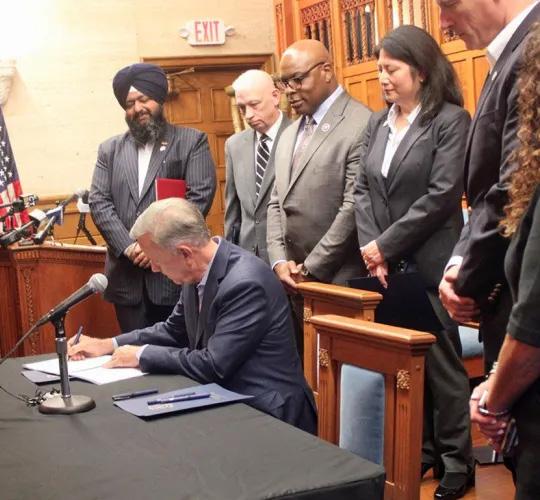
WEST HARTFORD, CT — A new law intended to protect various communities in the state received Gov. Ned Lamont’s signature Monday, as he signed new hate crime legislation consolidating and strengthening the state’s multiple laws that deal with incidents of hate.
Various elected leaders, law enforcement officials and advocates joined Lamont at the Congregation Beth Israel synagogue in West Hartford to celebrate the singing of Public Act 26-77.
“A hate crime is not just a crime against an individual. A hate crime is a crime against a community,” Lamont said in remarks before the signing. “A hate crime is an attack upon you because of race, color, creed, sexual orientation, how you identify. And that means not just you’re at risk, but your entire community feels like they’re at risk.”
The bill, which is the result of a review process conducted by the Connecticut Hate Crimes Advisory Council, clarifies the state’s existing hate crime statutes, some of which have existed since the 19th century. It takes laws from all over the state’s general statutes and puts them under one law. The bill also clarifies some language around intent to make it easier for prosecutors to use the law.
Officials also used the occasion to unveil a new initiative called the “Hate is More Than a Word” campaign, which includes a 30 second public service announcement and the launch of a reporting tool for incidents of bias.
Ken Barone, assistant director at the UConn Institute for Municipal and Regional Policy, said instances of hate are underreported in the state. With more information, the state would be able to deploy additional resources to combat hate, he said. “We also know that there are incidents that occur in big and small ways
every day that people are not sure were a crime,” he said. “We still feel like somebody in charge should know what
happened, and so we’ve created this reporting tool. Again, if a crime has occurred, call 911. Your police know how
to handle it. But if something occurred that maybe didn’t rise to that level, we want you to go to reporthate.ct.gov.”
Commissioner Ronnell Higgins of the Department of Emergency Services and Public Protection highlighted efforts of law enforcement to prevent hate crimes. “What is at stake here is the essence of public safety,” he said. “The freedom to be who you are, worship how you choose, and live, work, or study where you want. Many states focus primarily on investigating hate crimes after they occur. In Connecticut, we are investing in prevention, education, transparency, and community trust.”
Swarnjit Singh, mayor of Norwich and possibly the first Sikh mayor in New England, praised the law not just for combating hate, but as a sign that state government is striving for inclusion.
“We are not just about saying that diversity exists. We are working on inclusion with these kinds of things,” he said. “What we are doing today is not just signing a piece of legislation and making it into a law. What we are actually doing is saying that the state of Connecticut rejects hate.”
The bill drew broad bipartisan support when it passed the General Assembly, and Sen. Paul Cicarella, R-North Haven, ranking senator on the Public Safety and Security Committee applauded the governor signing the bill.
“Simplifying and consolidating Connecticut’s many hate crime laws will help police and prosecutors tasked with enforcing them,” he said in a statement. “This is common sense: As lawmakers, we should always be striving to make the job of the police and prosecutors easier so they can hold criminals accountable and protect the public.”





placed at the Evergreen office or the website.
The Amistad Center for Art & Culture invites the public to join its 35th annual Juneteenth Celebration Series, a three-day commemoration honoring freedom, resilience, culture, and community through family activities, live performances, wellness experiences, history, art, and fellowship.
As Connecticut's premier African American museum and cultural center, The Amistad Center continues its longstanding tradition of celebrating Juneteenth—the oldest nationally recognized commemoration of the end of slavery in the United States—through programs that educate, inspire, and unite thousands of participants from across the region.
This year's celebration includes three signature events:
Saturday, June 13, 2026 | 12:00–4:00
PM | Free The Wadsworth Atheneum Museum of Art | 600 Main Street, Hartford, CT 06103
Families are invited to enjoy a free afternoon of hands-on artmaking, cultural demonstrations, wellness activities, live entertainment, and interactive learning experiences for all ages. A vibrant cultural festival for families and youth centered around exhibitions, Wendel A. White | Manifest: Thirteen Colonies and Framing American Democracy: Rebel | Revolt | Resist, which highlight the essential role African American history plays in the evolution of American democracy.
Artistic vendors, workshops, and activities, including a community collage and an inclusive sensory-friendly art-making station. Dance with our AfroHours silent disco and take part in whole-self wellness initiatives, including sound bath meditation, chair massages, and yoga. Participate in activities that connect the contemporary community to the meaning and history of Juneteenth, and enjoy interactive programming for all ages. With a sensory-friendly viewing of the 2014 film Annie at 11 a.m., all other festivities begin at 12 noon.
Friday, June 19, 2026
The Amistad Center & Wadsworth Atheneum Museum of Art
The Juneteenth Jubilee serves as The Amistad Center's premier annual fundraising celebration and cultural gathering. Guests will enjoy an evening of music, dancing, food, fellowship, and inspiration while supporting educational programs, exhibitions, and community initiatives that serve thousands throughout Connecticut each year. The event celebrates Black excellence, cultural achievement, and the ongoing pursuit of freedom and opportunity.
Go to onecau.se/AmistadJuneteenth to sponsor the program or get tickets while they last.

Community Celebration
Saturday, June 20, 2026
Mortensen Riverfront Plaza & Great River Park
In partnership with the Cities of Hart-
ford, East Hartford, and West Hartford, The Amistad Center will help bring the community together for a free regional celebration along the Connecticut River. Featuring live entertainment, cultural performances, food vendors, community organizations, family activities, and op-
portunities for reflection and connection, Bridging Freedom embodies the spirit of Juneteenth by bringing diverse communities together across geographic and cultural boundaries.
"Juneteenth is more than a historical commemoration—it is an opportunity to celebrate resilience, reflect on our collective journey, and imagine a more just and equitable future," said Rodneyna M. O. Hart, MBA, Interim Executive Director of The Amistad Center for Art & Culture. "For 35 years, The Amistad Center has provided a space where community members can gather to honor the legacy of those who fought for freedom while celebrating the creativity, achievements, and cultural contributions of people of African descent. We invite everyone to join us for this important celebration."
The 2026 Juneteenth Celebration Series aligns with The Amistad Center's mission to honor, preserve, and celebrate the art and cultural contributions of people of African descent while fostering education, dialogue, and community engagement.
Proceeds from the Juneteenth Jubilee support year-round exhibitions, educational initiatives, youth programs, artist engagements, and community partnerships that advance The Amistad Center's work throughout Connecticut and beyond.
For tickets, event details, sponsorship opportunities, or volunteer information, visit www.amistadcenter.org or contact The Amistad Center at (860) 838-4089
by Adele Haeg
A downtown drop-in center is that much more equipped to save the lives of clients in cardiac arrest — now that a Guilford-based medical-technology company has donated a new “easy-touse” defibrillator.
That donation was celebrated Thursday morning during a press conference held at the Downtown Evening Soup Kitchen (DESK) at 266 State St.
DESK has a volunteer base of nearly 2,800 people. The nonprofit provides unhoused New Haveners with hot meals, harm-reduction services, connections to temporary housing, and on-site healthcare through Cornell Scott Hill Health Center, which runs a clinic out of DESK’s State Street hub.
Among those gathered on Thursday morning to thank the company Defibtech for its donation and to mark National CPR & Automated External Defibrillator (AED) Awareness Week were DESK Executive Director Steve Werlin, DESK Board of Directors Vice President Dr. Caitlyn Ryus, city Health Director

Maritza Bond, Hill Health Chief Medical Officer Dr. Michael Coutrie, and Defibtech CEO A.J. Pace. A defibrillator can be used to send an electric shock to the heart to correct fatal heart rhythms.
Bond said that many people lack access to life-saving AEDs, as those dfefices are often not available in corporate settings or airports. “We’re not seeing them in community spaces” enough, she said.
DESK already had one defibrillator prior to Thursday’s donation. One is not enough for a building with four floors and another space next door, according to DESK Director of Client Engagement and Quality Assurance Evan Serio.
Serio said he has not yet had to use an AED at DESK’s State Street location, he remembers once having to perform CPR on a client for 15 minutes. The new defibrillator will go on the third floor near the Hill Health clinic.
“Our staff are the responders before the first responders are able to arrive,” said Werlin, “so they have to be there for those critical moments that are really life-saving.”
Werlin said that a year and a half ago,
DESK had 159 people on the shelter waitlist, and a list of another 688 people who had been identified as unhoused in New Haven. As of about a month ago, there are now 1,073 people on the shelter waitlist and another 1,677 unhoused people in the city — a “shocking” increase, Werlin said. A third of the 1,379 people DESK has served this year have been seniors, who are most vulnerable to cardiac arrest.
As part of Thursday’s event, Defibtech Community Relations Manager Mike Papale performed an AED demonstration using a human patient simulator. One need not be a medical expert to perform life-saving measures with an AED, Papale emphasized: “You cannot hurt somebody with this machine.”
In the press release for Thursday’s event, Bond urged other groups to evaluate their emergency preparedness: “I ask every business and organization in this city: are the people you serve protected? Learning CPR, keeping an AED nearby, and knowing how to use it saves lives.”



On a recent sun-dappled morning on Greenwood Avenue in The Hill, Keshawn Brown and Kristen Threatt sat on the steps of Threatt’s front stoop, discussing the New York Knicks, on the cusp of their first NBA title since 1973.
Amid mention of a possible sweep, the dazzling exploits of the Spurs’ 7’4” center Victor Wembanyama, and the Knicks’ Jalen Brunson’s quiet magnificence, there was also talk of SKUs and COGs (cost of goods sold) and day trading.
The day trader was Brown, a soft-spoken 16-year-old junior at New Haven Academy, who’s been making a tidy profit negotiating the rapid fluctuations of stocks online for the last three years.
The faculty at NHA picked up on Brown’s business flair and sought out Threatt, co-founder of Gorilla Lemonade, which he and co-founder Brian Burkett-Thompson parlayed from a concoction in Burkett-Thompson’s kitchen to a beverage supplier contract with Yale to placement in over 400 locations across Connecticut and seven states.
“I was all in,” said Threatt, in reference to the school’s long-standing internship program, which pairs NHA juniors with professionals in a field in which they have interest. Scheduling the internship in the spring of junior year is intentional, as is the practice of spending the full work day with their mentors.
“They’re just beginning to figure out the details of their post-secondary plans, so it gives them a chance to see if what they think it is and what it’s like,” said New Haven Academy founder and program director Meredith Gavrin, who started the program over two decades ago. “And doing it all day, every day for three weeks gives them the full arc of the workday, and the full picture of what happens in the workplace.”
For NHA internship coordinator Jenny Heikkila Diaz, the match between Keshawn and Threatt seemed natural, given Keshawn’s interest in business, and Gorilla Lemonade’s tagline of “community over competition.”
“It’s all about fit,” said Heikkila Diaz, who matches 60 to 70 students a year with community organizations and leaders.
Each weekday, the two met at Threatt’s Greenwood Avenue headquarters. After praying, they walked to the corner of Greenwood and Legion Avenue. “We watched the cars go by, looked at the sky rise, and saw all the creations of everything out there, and we just talked, talked about what Brown had learned the day before, and why it was important,” said Threatt.
“SKUs and COGs,” said Brown, referring to Stock Keeping Unit, a unique, alphanumeric code assigned to a specific product to track stock levels and sales, as well as cost of goods sold.
“Right,” said Threatt. “Those are the different abbreviations in business you need to know because those terms are gonna come up, ‘how many SKUs do you have?’ ‘how have you lowered your COGs?’ ‘what are your profits and losses?,’ These are the basics I wanted to

teach him before we get out there. He has to learn this first.”
After that, Brown did invoicing, detailing out each specific product sold or purchased. He entered the invoices into a database. He recorded check reference numbers. “You have to develop good habits, and part of that is having all your ducks in a row, so when a check bounces or a payment doesn’t come through, you can get it resolved quick,” Threatt said. When they broke for lunch, they talked about entrepreneurship—“selling an idea, not a product,” Brown said—and the difference between a brand and a business—specifically, the gorilla in Gorilla Lemonade.
Threatt explained that as two Black men, he and co-founder Burkett-Thompson got to choose to define what gorilla means in a way that avoided stereotypes or negative connotations. “We looked it up and found gorilla could symbolize strength, intelligence, and gentleness.” There were other lessons. The Knicks, for example. Threatt and Brown are both diehard fans. “We talked about the importance of team, not just team, but team chemistry, with everyone playing their role,” said Threatt. “And delegating. You gotta delegate. Not just to anyone, but to someone who can do what you can’t. And then just let them roll with it.”
“Success for me is seeing the younger generation get to a place where we wasn’t,” he went on. “We didn’t have these same opportunities. Nobody in my family knew nothing about business. So now here’s our chance, to put our young generation in position to be owners, leaders, bosses,” he said.
Regarding Brown, “I want to watch him get to the next level,” he said. “Like ‘be better than me, be better than the way I’m doing it now.’ I’m 36. He’s 16. That’s a 20-year gap. If he can start doing everything that we talked about and learned and put action to, then please, we’re talking mogul.”
Brown nodded. “If you have an idea, act on it, just do it,” he said. “That’s what I do. I had a plan on day trading and I just went for it. If you wait, you’ll get used to waiting and you don’t do anything. You gotta move forward.”
With the foundation laid, Threatt foresees gradually increasing Brown’s responsibility with Gorilla Lemonade over the summer and his senior year. “We’re going to start going to the warehouse, start moving product, dealing with clients.”
To hear Gavrin, the NHA program director, tell it, it’s the kind of success story that testifies to the longevity of the program.
“Watching our internship coordinator make these placements sort of makes me fall in love with the community again year after year,” she said.
Threatt sounded a similar refrain. “It was a great experience for me too,” he said.
“Yeah,” Brown said. “Went way too quick.”

by Maya McFadden
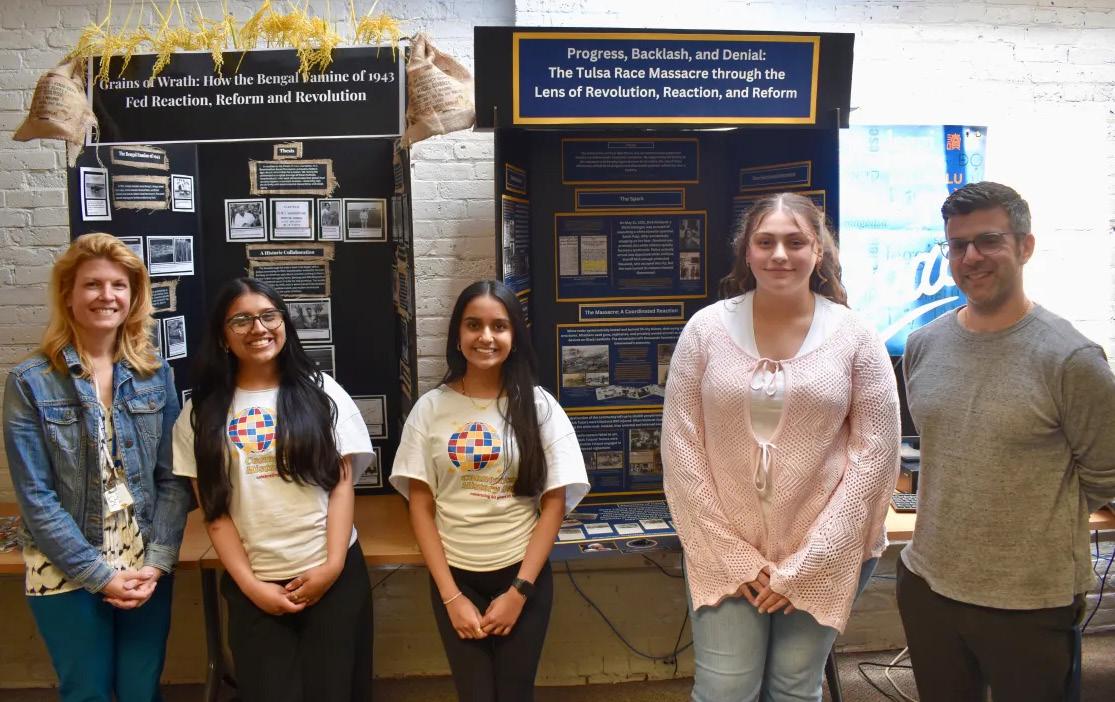
High School in the Community (HSC) junior Mya Stettinger has spent months researching the 1921 Tulsa Race Massacre in Oklahoma, while twin sisters and HSC sophomores Priya and Janu Patel have been diving deep on the 1943 Bengal Famine in southern Asia.
Later this month, all three students will bring their research to the University of Maryland, College Park as they compete in this year’s National History Day competition.
The HSC students have three goals in mind: sharing their knowledge, taking home a win, and having fun with other students around the country who also have a love for history.
Stettinger has participated in the History Day competition for the past three years. The Patels are competing for the second year in a row.
The three students were supported by HSC history teacher Danny Roque and library media specialist Karen Quinn, who partnered with Rebecca Taber of the Connecticut Democracy Center for additional resources and support.
Stettinger and the Patels have separate GoFundMes running to help them afford the trip to nationals now that both of their projects have qualified. The national History Day competition will take place from June 14 to June 18 at the University of
Maryland, College Park. Click here and here to view the two GoFundMe fundraisers, each of which is more than halfway to their respective goals
This year’s competition theme is “revolution, reaction, and reform.”
Stettinger selected the Tulsa massacre because it represents a historic moment
of violent reaction . “I was so interested in telling the story even though so many sources didn’t exist,” she said.
Her thesis is: “The destruction of Black Wall Street was an institutionally sup-
ported reaction to Greenwood’s economic revolution. By suppressing the history of the massacre and denying legal recourse to survivors, the city of Tulsa effectively stifled Black progress and obstructed systemic reform for over a century.”
The Patel sisters said they have a desire to dive into a history that relates to their own heritage. They were drawn to the 1943 Bengal Famine because it had such a large-scale impact, even though they’d never heard of it before starting research.
The Patels’ thesis is: “In reaction to the threat of mass starvation, M.S. Swaminathan’s Green Revolution achieved a historic agricultural reform that fed a nation. Yet, facing the unintended ecological damage of these methods, Swaminathan’s later work demonstrates that global food security requires a constant revision — balancing high productivity with environmental stewardship and social equity.”
Quinn, HSC’s library media specialist, recalled the trio working in the library almost daily some weeks since the start of the school year. Stettinger picked her topic last summer after learning what this year’s competition theme was.
Quinn helped the students conduct research, identify primary and secondary resources, and incorporate audio into their projects.
Roque has been facilitating HSC’s participation in local, regional, and state
Con’t from page 12
by Thomas Breen
Hundreds of Muslims from faith communities across Greater New Haven gathered at Yale’s Payne Whitney Gym — and then celebrated together in Edgewood Park — to mark one of the holiest days of the Islamic calendar.
The prayer service at Payne Whitney took place last Wednesday, May 27, for Eid al-Adha, a holiday that commemorates the biblical patriarch Abraham’s obedience to God. An Eid Festival then took place on Friday, May 29, in Edgewood Park near Ella T. Grasso Boulevard. Wednesday’s prayer service and Friday’s festival came together thanks to a collaboration among a number of different mosques and Islamic faith institutions in the area, including George Street’s Masjid al-Islam, Dixwell Avenue’s Abdul Majid Karim Hasan Islamic Center (AMKHIC), the West Haven Islamic Center, Ansonia’s Masjid Samiya, Stratford’s Esa ibn Maryam, and the Yale Muslim Life Program.
“This was the first collective” effort by this particular group of faith communities, said Abdul Lateef-Edge, the amir — or president — of Masjid al-Islam and one of the lead organizers of the two events. “The Southern Connecticut Islamic community came together.”
Yale Director of Muslim Life Omer Bajwa led the prayer service at Payne Whitney on Wednesday morning. He and Edge said that hundreds of people attended.
“It was beautiful,” said AMKHIC Imam Saladin A. Hassan. “All those different nationalities coming together — Egyptian, Afghan, African American — under one roof for the same purpose, the same divine purpose.”
“Our community has grown dramatically in my time here,” said Bajwa, who has work in Yale’s Chaplain’s Office for nearly 19 years. “I want to see myself as a bridge builder” between Islamic communities inside and outside the university. That’s why he said yes when Edge, among other event organizers, approached him and asked if the different mosques could mark Eid together at Payne Whitney, where Bajwa has been leading Eid services for Yale community members for “the last few years.”
This was “a fantastic opportunity to do community building.”
Bajwa said that Eid al-Adha comes at the end of the Islamic calendar year, and coincides with the global Muslim pilgrimage known as the Hajj. The holiday itself focuses on the biblical narrative of Abraham, or Ibrahim. It is a story “about sacrifice and struggle and trust in God and that idea of his faithfulness.”

Half the world is spiritually connected to Abraham, Bajwa said, given the importance of his story to Muslims, Christians, and Jews. He said Eid al-Adha is a reminder of Abraham’s “patience, gratitude,
faithfulness, trust in God, and sacrifices,” especially his willingness to sacrifice his son Isaac upon God’s command.
Hassan, the AMKHIC leader, said that the story is a reminder to him to reflect on
“how many things that we hold onto that are unnecessary.” If Abraham was willing to sacrifice his own son upon God’s command, think about all that we hold onto that is so much less important and that we nevertheless allow to “divide and tear apart this human family.”
Friday’s festival in the park, meanwhile, saw the organizing groups bring out a petting zoo, horses for kids to ride, bouncy houses, and lots of grilling. “The community is diverse,” Edge said; the food being cooked on the park’s grills included everything from jerk chicken to curried goat to lamb shish kabab to hot dogs and hamburgers.
“We have a passage in our book, in the Quran, that says: Hold onto the rope of this faith together, in unity,” Edge said. Friday’s festival was a demonstration of exactly that. “It was a call to remind people to come back, to bringing families together and bringing communities together.”
Masjid al-Islam Secretary Tihara Hopkins said the same. “Just to see the different communities come out together was an amazing experience to have,” she said. Edge expressed gratitude to all of the different groups that helped make last week’s celebration happen. “We want to bring people together,” he said. “Period.”
History Day competitions for the past 11 years. Nearly every year, HSC students make it to the state-wide competition. He primarily helps students keep their projects in accordance with competition rules, reminding them to have primary and secondary sources, follow word counts, and maintain the target of proving their theses. Throughout the school year, these three students made frequent revisions to their respective project boards. After each competition, they start from scratch with a new board building off of the feedback they received at earlier competitions.
The Patels’ project began with a focus on researching the science of agriculture and its impact. It later shifted after they received feedback to focus on the famine’s impact on women, who responded by fighting for equality and increased rights.
Quinn said that the History Day projects have prompted the students to become leaders around the school building.
While Stettinger is working to go into criminal justice, she said her History Day journeys over the years have helped her to improve her research, expand her personal thinking, and encourage her to seek out justice-related work.
Priya and Janu Patel both want to go into business management. Janu said the History Day competitions have helped her to improve in communicating while Priya said they have helped her to overcome being shy and improve her time-management skills.
This year HSC had 12 students go to the regional History Day competition. Stettinger was nicknamed the “History Day guardian angel” for her work helping to lead her peers through the process and mentoring them with their projects.
The Patels and Stettinger each stuck with their History Day projects while also taking two advanced placement (AP) courses and a dual-enrollment college course.
The trio credited Roque and Quinn because, as Stettinger said, “I wouldn’t have wanted to do this for three years if I wasn’t getting the motivation from someone other than myself.”
Roque and Quinn agreed that the students that participate in History Day have grit, curiosity, and the ability to take criticism.
Priya said that seeing other students from beyond New Haven has been inspiring. “I learned so much from people my age and it just makes it even more fun,” she said.
Stettinger concluded that the competitions have inspired her to research history in her free time because of her newfound interest in learning more about how the past shapes the present.
Roque said that while HSC’s resources are finite, the competition motivates students, particularly because it’s about accuracy. “It’s miraculous for us because we’re outperforming suburban districts with endless amounts of resources,” Roque said, “because we have students that have the grit to show what it is to be a lifelong learner.”

By BlackPressUSA Newswire
By Pastor K.W. Tulloss, Weller Street Missionary Baptist Church Inland Valley News
Los Angeles, CA — First Corinthians 12:14 says “For the body does not consist of one member, but of many.” In other words, our physical health is connected to one another. That principle should guide public policy as much as personal principle. A society reveals its character by how it treats the sick, the elderly, the poor, and the vulnerable. Health care is not merely an individual concern; it is a collective responsibility.
Every day, we are all called to answer a moral question: will we turn away from our neighbors in their hour of need, or will we stand together and carry one another through hard times? This June, Los Angeles County voters face one of those scenarios. Measure ER offers us an opportunity to affirm health care as a human right in Los Angeles County. It gives us the chance to ensure working families, seniors, children, and vulnerable residents can still access emergency rooms, trauma care, mental health services, and neighborhood clinics when they need them most.
I have prayed with families sitting in emergency rooms long into the night. I have watched church members delay treatment because they feared the cost. I have watched my very own children experience medical emergencies, and I understand the fear families feel when services may not be available in their time of need. I have counseled parents carrying the burden of choosing between rent, groceries, and medicine. These are everyday realities in our congregations.
Measure ER arrives at a time when LA County’s healthcare safety net is under

extraordinary strain. Federal healthcare cuts threaten billions in funding losses over the next several years, placing public hospitals, community clinics, and emergency care systems at risk. Without local action, the county could face health care worker layoffs, reduced services, and even clinic closures that would disproportionately impact Black communities and other communities of color.
Black people know what happens when
health care disappears – or doesn’t exist at all. We have lived through generations of inequity in which access too often depended on ZIP code, income, or insurance status. We know that when hospitals close in underserved neighborhoods, the consequences are felt throughout the community – in lives lost, chronic illnesses untreated, and crises made worse because help came too late.
Measure ER proposes a temporary
half-cent sales tax increase for five years to stabilize health care and essential public health services across Los Angeles County. Essential items like groceries and prescription medications would remain exempt, and the measure includes independent audits and public oversight provisions. The measure is expected to generate roughly $1 billion annually to help sustain hospitals, clinics, emergency preparedness, and public health infra-
structure.
Now, I understand why some people might be skeptical. Many families are already stretched thin by the rising cost of living. But affordability concerns are the exact reason to support Measure ER, because allowing our healthcare system to collapse under the weight of these cuts would cost us far more.
When clinics disappear, people wait until illnesses become emergencies. When preventive care vanishes, suffering increases – and sometimes people who were working can no longer do so. When emergency rooms are overwhelmed, everybody waits longer for lifesaving care. The burden eventually falls hardest on working people who already have the fewest resources and the least margin for crisis.
The Black church has always stood at the intersection of faith and justice. We have never separated our spirituality from community responsibility. Churches were the backbone of the Civil Rights Movement because we have always understood that defending our rights requires collective action. Today, that same calling remains before us.
Measure ER will not solve every healthcare challenge facing Los Angeles County. But it is a necessary step to protect care for millions of residents and preserve a healthcare system that so many families depend on every day. It says that in Los Angeles County, we will not abandon our neighbors when the pressure mounts.
This June, I urge voters across our churches and communities to vote YES on Measure ER — because dignity matters, because healthcare matters, and because we are called to care for one another by our faith.
By BlackPressUSA Newswire
Edwin Buggage, Editor-in-Chief | New Orleans Data News Weekly
For 25 years, Uptown Music Theatre (UMT) has helped young people across New Orleans discover their talents, build confidence, and develop a love for the performing arts. This summer, the organization will once again open its doors to aspiring performers through its Annual Summer Camp Program.
Founded by renowned New Orleans Jazz Musician and Educator Delfeayo Marsalis, Uptown Music Theatre has become a cornerstone of arts education in the city. The program provides youth with professional-level training in musical theater while creating a supportive environment where creativity, teamwork, and self-expression can flourish.
The 2026 UMT Summer Camp runs from June 1st through July 10th and is open to young people ages 8 to 18. Camp

activities will take place Monday through Friday from 9 a.m. to 3 p.m. at the Contemporary Arts Center.
Participants will receive instruction in acting, singing, dancing, stage movement, and performance techniques from
experienced theater professionals and educators. Throughout the Six-Week Program, students will work together to
develop their skills and prepare for a culminating stage production that showcases what they have learned.
Marsalis founded Uptown Music Theatre with a vision of providing young people with opportunities that extend beyond the classroom. Over the years, the organization has helped hundreds of students develop discipline, leadership skills, and confidence while exposing them to the transformative power of the arts.
The Summer Camp continues that mission by offering youth a chance to spend part of their summer immersed in a creative environment that encourages artistic growth and personal development.
As New Orleans continues to celebrate its rich cultural heritage, programs like Uptown Music Theatre play an important role in ensuring that the next generation of performers, artists, and community leaders have the opportunity to learn, grow, and shine on stage.
Originally published by Data News Weekly — https://www.ladatanews.com.
Improving men’s health and supporting their families through community
Saturday, June 27, 2026
Rain or shine
Dixwell Community Q-House
197 Dixwell Ave., New Haven, CT
Community Walk check-in: 9 am
Walk begins: 10:15 am
Health expo: 11 am – 2 pm
Free food and parking, and giveaways.
For more information, please email YNHHCommunityImpact@ynhh.org.
To schedule an appointment for a hernia screening, visit ynhhs.org/events and search “hernia.”






Par




By BlackPressUSA Newswire Charlene Crowell
On behalf of the nearly 9 million people now in default on their student loans, a coalition of advocates from consumer, civil rights, and education organizations is appealing to the federal Education Department to halt plans to begin garnishing borrowers' wages this month. Default status connotes borrowers are 270 days or more behind on their payments.
Citing new research from Protect Borrowers, formerly the Student Borrower Protection Center, the coalition advised Education Secretary Linda McMahon in a January 7 letter that a new student loan default occurred every nine seconds in 2025. That escalating rate is unprecedented and nearly three times as high as in 2019, the year prior to the COVID-19 pandemic.
Further, according to the advocates, the Trump administration’s student loan policies are disproportionately harming Black and older borrowers. Signing the joint letter of appeal were: Protect Borrowers, American Federation of Teachers, the Debt Collective, NAACP, National Education Association, the Student Debt Crisis Center, and Young Invincibles.
“Research shows that involuntary collections only exacerbate the economic challenges faced by defaulted borrowers, who are disproportionately seniors and Black borrowers,” wrote the coalition. “In fact, of the borrowers already in default, roughly a third of them are older borrowers. Black graduates are additionally five times more likely to default than their white peers.”
Additionally, and according to Protect Borrowers, nearly two-thirds of the borrowers who defaulted during the Trump Administration—more than 2.6 million

people—live in states that President Trump won in the 2024 election. Among the states most severely affected were Florida, Georgia, Ohio, and Texas, each of which saw 100,000 or more borrowers default last year.
“The decision to resume wage garnishment against millions of borrowers amidst a growing affordability crisis crushing working families is callous and unnecessary,” continued the coalition.
“The decision also comes at a time when struggling borrowers have been forced to wait amidst a nearly 1 million application backlog to enroll in an Income-Driven Repayment (IDR) plan, and as mass layoffs at the Department have made it even harder for borrowers to get help with their
student loans or if they are experiencing issues with their student loan servicer.”
For Derrick Johnson, President and CEO of the NAACP, the nation’s oldest civil rights organization, the Trump administration policies are about financial rights.
“By garnishing wages for defaulted student loan borrowers, the Trump Administration will only deepen financial hardship for working families and disproportionately harm Black borrowers,” said Johnson. “Millions are already struggling with rising costs and economic uncertainty, and stripping wages will only push families further into financial crisis.”
Randi Weingarten, President of the American Federation of Teachers, agreed
with Johnson: “This is not about borrowers’ responsibility; it’s outright hostility to the young people trying to get ahead. The Trump Administration is choosing to squeeze teachers, nurses and others while prices are increasing and families are struggling to stay afloat, ripping away wages and tax refunds when people need them most.”
A fact sheet developed by the Center for Responsible Lending tracks key 2025 policy decisions and summarizes the Education Department’s actions against student loan borrowers. These include:
In March 2025, the Department cut nearly half its workforce, with the Federal Student Aid office and Office for Civil Rights among the hardest hit. With Fed-
eral Student Aid’s servicing and community outreach infrastructures dismantled, systemic servicing errors are less likely to be caught or corrected, leaving borrowers with fewer avenues for help just as major loan policy changes are being rolled out. In May 2025, the Department reinstated the Treasury Offset Program, allowing the government to seize tax refunds from borrowers in default.
On August 1, 2025, the Department of Education resumed interest accrual for borrowers with Department of Education loans under SAVE forbearance. Since 2023, SAVE’s unpaid interest shielded borrowers from balance growth. With that protection gone, borrowers’ balances will now grow during this forbearance and may keep rising if monthly payments do not fully cover accrued interest. This shift makes repayment harder and adds longterm uncertainty for more than 7 million borrowers.
Beginning July 1, 2026, parents who take out new Parent PLUS loans will no longer be eligible for any income-driven repayment plan. That means no access to income-contingent repayment (ICR) or repayment assistance plan (RAP), leaving the standard repayment plan as their only choice. Borrowers with existing Parent PLUS loans can preserve access to ICR if they consolidate their loans before the July 1, 2026, deadline.
“As safeguards are rolled back and oversight weakens, borrowers face growing balances and greater financial strain, making it urgent to press for stronger policies that preserve the promise of higher education as a pathway to opportunity,” concluded CRL.
Charlene Crowell is a senior fellow with the Center for Responsible Lending. She can be reached at Charlene.crowell@ responsiblelending.org
By BlackPressUSA Newswire
A federal lawsuit filed by prominent civil rights attorney Ben Crump alleges that two Black infants were used as subjects in a government-sponsored experimental vaccine study without their parents’ knowledge or consent, resulting in tragic consequences that continue to reverberate decades later.
The complaint, filed on May 22, centers on the deaths of Ross Otto Hambrick and Victor Marcellus King, who were allegedly administered an experimental respiratory syncytial virus (RSV) vaccine developed by the National Institutes of Health (NIH) during the mid-1960s.
According to the lawsuit, Ross was two months old and Victor was four months old when they were injected with a vaccine identified as “Lot 100” at a Washington, D.C. hospital in the winter of 1965. The suit contends that their parents were never informed of the experimental nature of the vaccine nor asked to provide consent.
RSV is a common and highly contagious respiratory virus that often causes mild cold-like symptoms in healthy adults. However, it can lead to severe illness and even death among infants, older adults, and other vulnerable populations.
The lawsuit alleges that both children became critically ill following exposure to the virus the following year. Victor died on January 1, 1967, at 16 months old, while Ross died the next day at 14 months old.
According to court filings, medical findings at the time suggested that the children’s deaths may have been linked not only to RSV infection but also to an enhanced immune response allegedly triggered by the experimental vaccine, compounded by bacterial pneumonia.
The complaint further claims that tissue samples collected during the infants’ autopsies were preserved and later used by researchers studying why the vaccine had produced such severe outcomes. Attorneys for the families argue that the scientific knowledge derived from those

studies contributed to later advancements in RSV research, including vaccines and antibody therapies approved decades afterward.
The lawsuit alleges that the families were never informed of the role their children’s tissue samples played in sub-
sequent research and were never compensated for their contribution to medical advancements.
Crump and his legal team have filed claims including wrongful death, lack of informed consent, and civil battery.
Co-counsel William H. Murphy Jr. ar-
gued that federal researchers proceeded with testing despite concerns about earlier RSV vaccine trials and the potential risks posed to young children.
The complaint also references previous RSV vaccine studies conducted during the 1960s, alleging that researchers continued testing despite reports of severe illness among some participants.
“The families of Ross Otto and Victor have waited nearly sixty years for answers and accountability,” Crump said in a statement announcing the lawsuit.
The NIH has not publicly responded to the allegations contained in the complaint. As the case proceeds through the courts, the lawsuit is expected to renew debate over medical ethics, informed consent, and the historical treatment of minority communities in medical research.
The allegations also draw attention to broader discussions about past instances of unethical experimentation in the United States and the importance of maintaining strict safeguards for human subjects participating in medical studies.



By BlackPressUSA Newswire
Armani Durham | Howard University News Service
On Feb. 20, the U.S. Supreme Court ruled 6-3 in Learning Resources Inc. v. Trump that President Donald Trump was not authorized to impose sweeping tariffs under the International Emergency Economic Powers Act (IEEPA).
IEEPA, created in 1977, authorizes the president to act during a national emergency to regulate commerce, freeze assets or impose economic sanctions. Trump used the law, declaring national emergencies to bypass Congress and impose tariffs, sanction foreign entities and threaten economic action.
“The decision to…move very quickly to both impose tariffs and then increase those tariffs [has] injected new lines of uncertainty and a lack of predictability to markets…that doesn’t serve the United States economy or those market participants as well,” said Eric Morrissette, a senior fellow at the Joint Center for Political and Economic Studies
The ruling carries national significance, as it not only reshapes consumer prices and business costs but also redefines the limits of presidential authority over trade and signals a broader shift in United States economic and global policy.
On Feb. 24, Trump signed a proclamation under Section 122 of the Trade Act of 1974 to address “fundamental international payment problems.”
The proclamation imposes a 10% global import surcharge, implemented for 150 days.

Tariffs imposed under Section 122 require congressional approval to continue beyond 150 days, making them a temporary replacement for the invalidated IEEPA tariffs.
Approximately 90% of tariff costs were paid by businesses and consumers in the United States, not in foreign countries. Businesses that rely on imports saw input costs rise.
“At the end of the day…we all receive the repercussions behind their actions,” said Tony Barnes, co-owner of Oohh’s &
After the IEEPA tariffs were struck down, companies can seek refunds totaling $130 billion to $175 billion.
On March 4, in Atmus Filtration v. US, the U.S. Court of International Trade (CIT) ordered U.S. Customs and Border Protection (CBP) to refund unlawful IEEPA tariffs.
CBP issues refunds electronically via Automated Clearing House (ACH). Refunds are primarily available to importers of record that paid the tariffs and
are registered in the Automated Commercial Environment (ACE) system.
For court-ordered refunds, CBP uses the Consolidated Administration and Processing of Entries (CAPE) system to manage, track, and process tariff refund claims.
The Supreme Court only struck down tariffs imposed under IEEPA.
Trump’s tariffs, including tariffs imposed under IEEPA before it was invalidated, have impacted businesses across the country, including Black-owned busi-
nesses.
Black-owned businesses are not able to handle rising costs and the economic uncertainty, like other businesses, because of their smaller size, limited financial resources and concentration in import-dependent and customer-facing industries. According to the Center on Budget and Policy Priorities, tariffs increased input costs, leading Black-owned businesses to raise prices, cut staff or both.
Higher input costs disproportionately affect Black small businesses, as they often operate on narrower profit margins and have less access to capital than whiteowned businesses.
Approximately 52% of Black-owned businesses experienced a decline in sales due to tariffs.
“The prices have changed…they’re going up,” said the manager of JC Lofton Tailors, who goes by Shoemaker to customers. “Then you have to go up on your customers, and you don’t want to lose them.”
Trump’s tariffs affected everyday people, with some populations being more vulnerable, such as the Black community. “There are real people on the other side of this, who have both their life and their livelihoods tied into the decisions that are being made,” Morrissette said. “I think they all deserve the respect and the honor of being considered before a rush of action. Which seems to have been the case.” Armani Durham is a reporter for HUNewsService.com
By BlackPress of America
By National Women’s Law Center
The National Women’s Law Center released its annual State Child Care Assistance Policies report, finding that the number of children placed on waiting lists for federally funded child care assistance nearly doubled between 2024 and 2025 — and that number has only continued to grow. The report serves as a key resource for state lawmakers, advocates, and policymakers by tracking state child care assistance policies and identifying where states are strengthening support for families and early educators — or falling behind.
“This deeply troubling increase in the number of children on child care waiting lists is the result of a failure to invest in this crucial sector,” said Karen Schulman, senior director of state child care policy and author of the report. “Since the expiration of

• Approximately 106,700 children nationwide were added to waiting lists between February 2024 and February 2025, bringing the total to 225,500 children in February 2025 — a 90 percent increase compared to February 2024.
• The numbers climbed even further between February 2025 and summer/ fall 2025, with more than 175,000 additional children added to state waiting lists in just a few months — a 78 percent increase.
• At least seven states newly began placing families on waiting lists or freezing intake, while at least 10 additional states saw their waiting lists grow, after February 2025.
The report also includes state-bystate data on key child care assistance policies, including income eligibility limits, parent copayments, provider payment rates, and eligibility policies for parents searching for work.
Sound Communities Inc., an affiliate of the Norwalk Housing Authority, and its development partner National Housing Trust are seeking proposals from qualified architectural firms for a multi-phase, transit-oriented, mixed-use affordable housing development adjacent to the South Norwalk Metro-North Station. The project is anticipated to yield approximately 200 units across two phases, with ground-floor office space, community amenities, and a public plaza component. Firms must have demonstrated experience in affordable and mixed-income multifamily housing, LIHTC-financed projects, mixed-use design, and stakeholder engagement.
Request For Information accepted through June 22, 2026
Submit via email only. No hard copies. Contact: Leala Marlin, Project Manager lmarlin@soundcommunitiesct.org
360 Management Group is currently seeking bids from qualified contractors to perform Trash Collection services and Recyclable collection services. A complete copy of the requirement may be obtained from Elm City’s Vendor Collaboration Portal https://newhavenhousing.cobblestonesystems.com/gateway beginning on
June 2, 2026, at 3:00PM.
The Town of Wallingford is accepting applications for Mechanic III. Wages: $35.42 to $43.00 hourly. For additional information and to apply online by the June 8, 2026 closing date please visit: www.wallingfordct.gov/government/departments/human-resources/. Applications are also available at the Department of Human Resources located in Room #301 of the Town Hall, 45 South Main Street, Wallingford, CT 06492. Phone: (203) 294-2080; Fax: (203) 294-2084. EOE
Public Notice The Housing Authority of the City of New Britain (NBHA) is seeking bids for Landscaping Services - Spring & Fall Cleanup and As-Needed Services
(Solicitation No. 2026-04-LAND).
Issue Date: April 22, 2026
Submission Deadline: May 13, 2026 at 3:00 p.m. (Local Time)
RFP and all addendas and answers will be posted at www.nbhact.org<http://www.nbhact.org/>.

The State of Connecticut, Office of Policy and Management is recruiting for a Connecticut Careers Trainee, target class Planning Analyst in the Intergov
Locally owned and operated in Guilford, CT since 1984, East River Energy provides heating oil, diesel fuel, gasoline, and propane to thousands of customers locally. East River Energy is also a major distributor of petroleum products across 13 states and counting. Additionally, East River Energy is a growing full service HVAC/Home Services company in both commercial and residential sectors. This is a full-time dispatching position for nights (which includes on call and weekend coverage). At least one year of dispatching experience is required. We are looking for someone who is detail oriented and is comfortable working in a fast-paced environment.


Benefits include: Competitive Hourly Wage, Medical, Dental, and Vision Plans, Vacation & Sick Time, Paid Holidays, Retirement Plan 401(k), Wellness Program, Employee Assistance Program, Life Insurance Options
Send resume to: HR Manager, P.O. Box 388, Guilford, CT. 06437. Email: HRDEPT@eastriverenergy.com
*An Affirmative Action/Equal Opportunity Employer, including Disabled and Veterans*

CONTRACTOR SEEKS:
Construction Equipment Mechanic
(preferably experienced in Reclaiming and Road Milling Equipment) We offer factory training on equipment we operate. Job is in Bloomfield, CT.
Contact: Tom Dunay Phone: 860-243-2300 Ext. 122 Email: tom.dunay@garrityasphalt.com
Reclaimer Operators and Milling Operators
(must have current licensing and a clean driving record; be willing to travel throughout the Northeast & NY)
Contact: Rick Tousignant Phone: 860-243-2300 Ext. 133 Email: rick.tousignant@garrityasphalt.com
Tractor Trailer Driver for Heavy & Highway
Construction Equipment
(must have a class A CDL license with Tank Endorsement and a clean driving record; be capable of operating heavy equipment and willing to travel throughout the Northeast and NY)
Contact: Brian McKee Phone: 860-558-6189 Email: bmckee@garrityasphalt.com
• We offer Excellent hourly rates and benefits.
• Women and Minority Applicants are encouraged to apply.
• Affirmative Action / Equal Opportunity Employer
Members of the public are invited to
CONNECTICUT DEPARTMENT OF TRANSPORTATION
HYBRID PUBLIC INFORMATION MEETINGS
DRAFT 2027-2030 STATEWIDE TRANSPORTATION IMPROVEMENT PROGRAM
Wednesday, June 3, 2026, at 1:00 p.m. & 7:00 p.m.
Connecticut Department of Transportation Headquarters 2800 Berlin Turnpike, Newington CT 06111
Register to Attend Virtually & Learn More: portal.ct.gov/STIP
The purpose of these meetings is to provide the community with an opportunity to learn about the Statewide Transportation Improvement Program and allow an open discussion of any views and comments concerning the program. A Q&A session will immediately follow the presentation. CTDOT staff will be available in-person 30 minutes prior to each meeting to informally discuss the draft STIP with members of the public.
The Statewide Transportation Improvement Program (STIP) compiles all highway and public transit projects that CTDOT intends to pursue over the next four years, utilizing Federal Highway Administration (FHWA) and Federal Transit Administration (FTA) funding. STIP documents can be found at portal.ct.gov/STIP, CTDOT Headquarters, and at all Councils of Government offices. It is suggested to schedule an appointment at these locations. To make an appointment at CTDOT, please call (860) 594-2040.
The draft STIP will be available for review for a 30-day public comment period from Wednesday, May 13, 2026, through Friday, June 12, 2026. Comments should be submitted to (860) 594-2020, DOT.STIPComments@ct.gov, or mailed to: ATTN: Rose Etuka, 2800 Berlin Turnpike P.O. Box 317546, Newington, CT 06131-7546 Please refer to the 2027-30 STIP in the correspondence.
Parking is available in the rear of the building. The meeting facility is ADA accessible, and persons with disabilities can access the building from the main entrance of the building.
Non-English language closed captioning will be available on Zoom. The recording will also be posted following the meeting in CTDOT’s public meeting playlist at portal.ct.gov/ctdotVPIMarchive
For limited internet access, call (877) 853-5257 with Meeting ID 862 1358 6028 for the 1:00 p.m. meeting, or Meeting ID 820 5097 2071 for the 7:00 p.m. meeting. Project information can be mailed within one week by contacting Rose Etuka at Rose.Etuka@ct.gov
For hearing/speech disabilities, dial 711 for Telecommunications Relay Services (TRS). Request language assistance from CTDOT’s Language Assistance at (860) 594-2109 at least five business days before meeting.
The South Central Regional Council of Governments (SCRCOG) seeks the services of one or more consultants for the following transportation planning studies during the 2026 and 2027 Fiscal Years (July 1, 2025June 30, 2027): Metropolitan Transportation Plan Update and Local Bridge Inspection Study. Responses are due by June 2, 2026 (12 noon local time). Selected firms will be interviewed on June 9, 2026. The full RFQ document can be viewed at the Council’s website: www.scrcog.org or can be made available upon request. Contact James Rode at (203) 4668623 with any questions.
LaRosa Earth Group LLC, a Site/Excavation Company, is currently looking to add the following full-time positions to our Team:
Please submit resumes to HR@LAROSABG.COM or stop by our main office to fill out an application: 163 Research Parkway Meriden, CT. Salary will be commensurate with experience and best fit for the positions. Health plan; 401K; company-paid holidays in addition to paid time off.
LaRosa Groups is an Affirmative Action/ Equal Opportunity Employer who values diversity and encourages all qualified applicants to apply.

The Housing Authority City of New Haven d/b/a Elm City Communities
Architectural Engineering Services for the Clock Factory
The Housing Authority of the City of New Haven d/b/a Elm City Communities acting through its instrumentality, The Glendower Group, Inc. Is soliciting request for qualifications (“RFQ”) for selection of a qualified and experienced A & E Firm to serve as the Project Architect for the Clock Factory. A complete copy of the requirement may be obtained from New Haven Housing Authority Vendor Collaboration Portal https://newhavenhousing.cobblestonesystems.com/ gateway beginning on
Wednesday,
The Housing Authority City of New Haven d/b/a Elm City Communities
Request for Proposals (RFP) Construction Manager at Risk (CM@R)
Construction Manager at Risk (CM@R) Clock Factory Redevelopment
The Housing Authority of the City of New Haven d/b/a Elm City Communities acting through its instrumentality, The Glendower Group, Inc. in partnership with the City of New Haven (the "City") as Co-Applicant and Neighborhood Implementation Entity, is issuing this Request for Proposals (RFP). for selection of a qualified and experienced CM@R Firm to serve as the Project Manager for the Clock Factory Redevelopment. A complete copy of the requirement may be obtained from New Haven Housing Authority Vendor Collaboration Portal https:// newhavenhousing.cobblestonesystems.com/gateway beginning on
Wednesday, June 10, 2026, at 3:00PM.
Invitation for Bids
360 Management Group is currently seeking bids from qualified contractors to perform Extermination Services Agencywide. A complete copy of the requirement may be obtained from Elm City’s Vendor Collaboration Portal https://newhavenhousing.cobblestonesystems.com/gateway beginning on
June 8, 2026, at 3:00PM.
a quarry and paving contractor, has positions open for the upcoming construction season. We are seeking candidates for a variety of positions, including: Scalehouse Dispatcher/ Equipment Operators and Laborers. NO PHONE CALLS. Please mail resume and cover letter to “Hiring Manager”, Galasso Materials LLC, PO Box 1776, East Granby CT 06026. Galasso Materials is an Affirmative Action/Equal Opportunity Employer. All applicants will be considered for employment without attention to race, color, religion, sex, orientation, gender identity, national origin, veteran or disability status.
This is a full-time position in a fast-paced environment. The candidate must be highly organized, analytical and detail-oriented. This opportunity offers exposure to all areas of the business and plays a critical role in driving operational excellence and supporting company growth. A college degree is required.
Benefits include: Competitive Hourly Wage, Medical, Dental, and Vision Plans, Vacation & Sick Time, Paid Holidays, Retirement Plan 401(k), Wellness Program, Employee Assistance Program, Life Insurance Options.
Send resume to: HR Manager, P.O. Box 388, Guilford, CT. 06437. Email: HRDEPT@eastriverenergy.com
*An Affirmative Action/Equal Opportunity Employer, including Disabled and Veterans*
The Town of Wallingford is accepting applications for an HVAC Tradesman. Wages: $31.22 to $40.23 hourly. For additional information and to apply online by the closing date June 8, 2026, please visit: www.wallingfordct.gov/government/departments/human-resources/. Applications are also available at the Department of Human Resources located in Room #301 of the Town Hall, 45 South Main Street, Wallingford, CT 06492. Phone: (203) 294-2080; Fax: (203) 294-2084. EOE
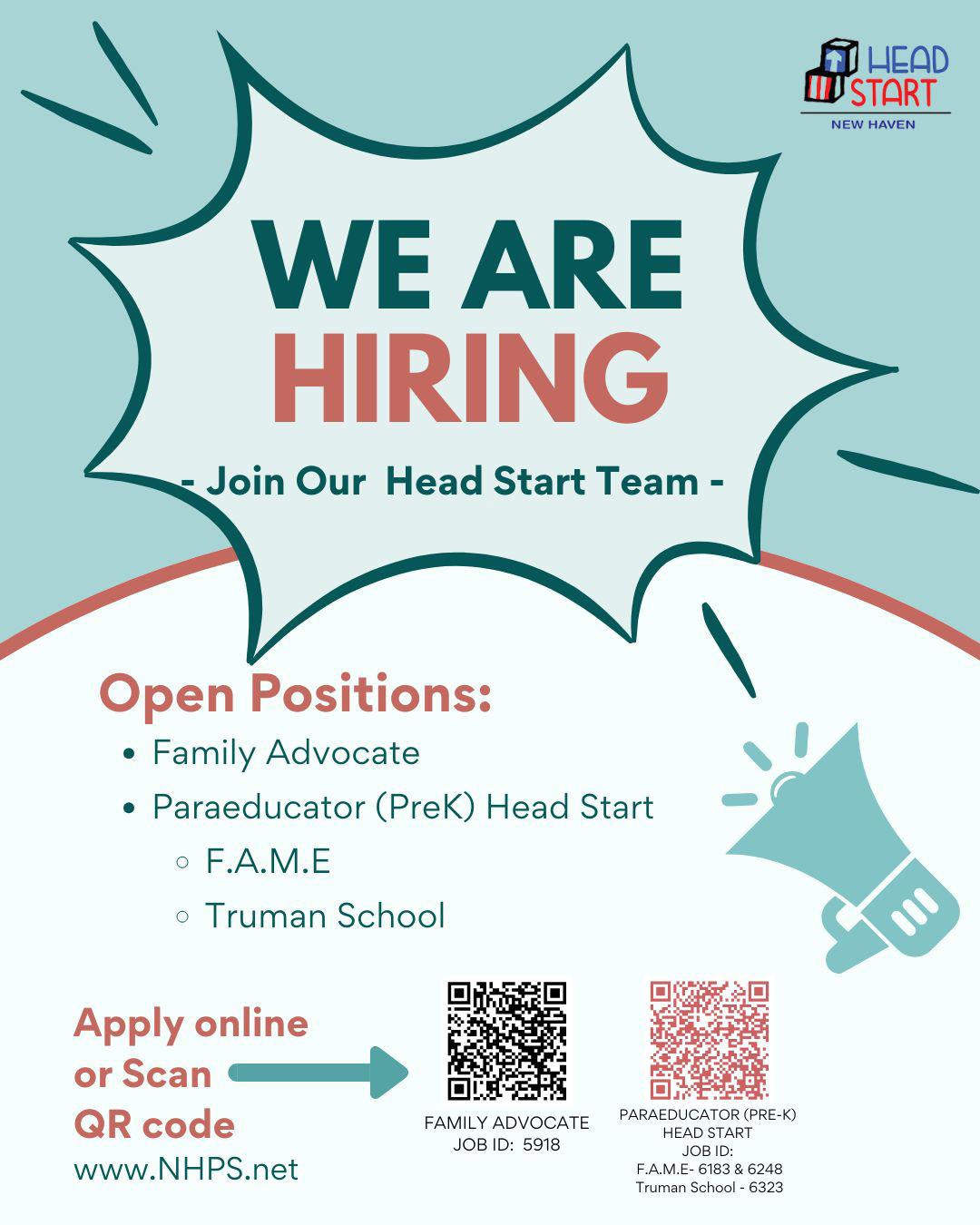

The State of Connecticut, Office of Policy and Management is recruiting for a Connecticut Careers Trainee, target class Planning Analyst in the Intergovernmental Policy and Planning Division. Further information regarding the duties, eligibility requirements and application instructions are available at: https://www.jobapscloud.com/CT/ sup/bulpreview.asp?b=&R1= 260427&R2=2292AR&R3=001
The State of Connecticut is an equal opportunity/affirmative action employer and strongly encourages the applications of women, minorities and persons with disabilities.

of Bristol
$78,813/yr.
Required testing, general info, and apply online: www.bristolct.gov
DEADLINE: 12-07-25

The scope of the project includes adaptive reuse of an existing vacant historic 3 level bldg., approx. 46,513 sf, for 15 affordable one- and two-bedroom artist live-work space, exhibit space and community space.
Also, New Construction of One 4-story building, approximately 50,138sf with 44 affordable residential units. Total of 59 units.
Project Documents Include but not limited to: Selective & structural demo, asbestos abatement, earthwork, concrete, gypcrete, historic masonry restoration, misc. metals, rough & finish carpentry labor & material, wood trusses, stairs, final cleaning, thermal & moisture protection, fiber cement siding, EPDM roofing, firestopping, steel doors and frames, flush wood doors, access doors & aluminum windows, skylights, door hardware, glazing, gypsum board assemblies, acoustical ceilings, tin ceilings, flooring, toilet, bath and laundry accessories, terrazzo tile, painting, wire mesh storage lockers, louvers & vents, signage, fire extinguishers/cabinets, bath accessories, postal specialties, residential appliances, facility waste compactors, residential casework & countertops, entrance floor mats, horizontal louver blinds, bicycle racks, vertical wheelchair lifts, elevators, fire suppression, HVAC, plumbing, electrical, EV charging stations, solar, radon mitigation, landscaping, final cleaning and sanitary facilities.
Haynes is the GC on this project | This is a Living Wage Rate Project - Living Wage Payroll Requirements | Project is Taxable | SHPO Standards | City of New Haven Subcontracting Requirements: New Haven Small Contractor Development – 25% Subcontractor Program Goal | City of New Haven Resident Workforce Hours = 25%, MBE Workforce Hours = 25%, WBE Workforce Hours = 6.9%, Section 3 workforce 25% of all labor hours; 5% target area; Subcontractors must meet and be approved by New Haven CEO – CHRO and CHFA monthly reporting required.
The Equal Opportunities Ordinance of the City of New Haven, Chapter 12 ½ et seq., authorizes and empowers the New Haven Commission on Equal Opportunities to remedy discrimination complaints, and actively pursue and promote affirmative action and contract compliance within the City of New Haven.
This Invitation to Bid is additional outreach for MWBE subcontractors. Anticipated start 9-1-2026. Overall Project Duration: 18 month project
Bids are due to Haynes: 5-28-2026 by 3 pm to Taylor Els – tels@haynesct.com
If you have not already received this invitation to bid and would like to bid, please email your business name, contact information and trade to Taylor Els – tels@haynesct.com Taylor will add you to Procore and send you the ITB for easy access to plans and specifications.
All questions must be submitted in written form and directed to: Jordan Fredericks jfredericks@haynesct.com 203-888-8111 Eric Facchini efacchini@haynesct.com
This contract is subject to state set-aside and contract compliance requirements. HCC an Affirmative Action/Equal Opportunity Employer, encourages the participation of all Veteran, S/W/MBE & Section 3 Certified Businesses Haynes Construction Company, 32 Progress Ave, Seymour, CT 06483 AA/EEO EMPLOYER
The South Central Regional Council of Governments (SCRCOG) seeks the services of one or more consultants for the following transportation planning studies during the 2026 and 2027 Fiscal Years (July 1, 2025- June 30, 2027): Hamden Ridge Road Safety Study and On-call Technical Support Services. Responses are due by June 2, 2026 (12 noon local time). Selected firms will be interviewed on June 9, 2026. The full RFQ document can be viewed at the Council’s website: www.scrcog.org or can be made available upon request. Contact James Rode at 203-466-8623 with any questions.
By courtesy of HBCUNEWS.com
Scott Bland
Los Angeles City Council member Nithya Raman, a Democrat, has taken a narrow lead for second place over former reality TV star Spencer Pratt, a registered Republican, in the race to take on Los Angeles Mayor Karen Bass in a runoff this fall.
NBC News projected Bass’ advancing to the runoff last week, but the outstanding question, as the city and the state continue counting ballots, is whom she will face and what kind of matchup that will be. NBC News hasn’t projected the winner of the other spot in the runoff.
The picture as it looked on election night has changed in recent days.
Pratt, who has challenged Bass from the right in the nonpartisan mayoral race, has seen his hold on the second-place slot
evaporate as Raman, a member of the Democratic Socialists of America, caught up.
In an emotional speech to supporters on election night, Raman said were still many ballots to count, “and we may not get an answer we like. But regardless of what happens next, nobody, nobody can take away what all of us have built together.”
But Raman has closed the gap significantly with each successive update from Los Angeles election authorities since Wednesday. By Friday night, she had cut Pratt’s advantage almost in half, to just over 20,000 votes. And on Sunday night, she overtook Pratt by a few thousand votes in the latest update.
It’s part of a pattern all over California since primary night: Democrats have gained more votes as the state’s slow counting process continues, after a late surge in Democratic turnout.
Other examples of the pattern include

the open governor’s race — in which former Health and Human Services Secretary Xavier Becerra is in first place and, NBC News projected Friday, has secured
a spot in the general election — as well as key congressional campaigns, like the 6th District race in the Sacramento area, a seat Democrats redrew to flip it this fall.
There, the leading Democrat has pulled into second place in a scrambled race that includes Republican-turned-independent Rep. Kevin Kiley and an additional Republican challenger. The results have soothed Democratic fears of getting locked out of the top-two general election despite the district’s blue lean.
In Los Angeles, Raman’s gains have put two very different types of mayoral races in play for the fall.
A Bass-Pratt race might look like a more traditional partisan contest, as Pratt tries to turn the election into more of an insider-versus-outsider dynamic.
A Bass-Raman race would pit two Democrats against each other, with Raman, a former Bass ally, challenging her from the left during the campaign.
The general election picture was more
muddled in a preprimary Los Angeles Times poll. The survey found both Bass and Raman leading in one-on-one matchups with Pratt — and Raman with a small advantage inside the margin of error in a general election matchup with Bass. Fully 40% of those polled said that they weren’t sure whom they would vote for or that they wouldn’t vote in such a matchup. In a statement, Bass’ campaign attacked Raman. “We look forward to winning a contest against an opponent who allows encampments near schools and fights against hiring more cops, yet is MIA on saving Hollywood jobs and fighting back when ICE invades LA,” Bass campaign spokesperson Alex Stack said.
Raman said in a statement Sunday night that she is “encouraged by the latest vote count and remain grateful to the thousands of Angelenos who have powered this campaign.”
In the meantime, Los Angeles still has more than 100,000 votes left to count.
By courtesy of HBCUNEWS.com
Spelman College just made a move that the entire HBCU world is talking about.
On Friday June 5, 2026, the Spelman College Board of Trustees announced Dr. Ayanna Howard as the new Spelman College president — the 12th person to lead the nation’s top-ranked HBCU. A world-renowned roboticist, AI pioneer, entrepreneur, and former NASA engineer, Howard will officially step into the role on August 1, 2026. She succeeds Interim President Rosalind “Roz” Brewer, a Spelman alumna who has led the college for the past 18 months following the departure of President Helene Gayle in late 2024.
A Résumé Built for This Moment
Dr. Howard comes to Spelman from The Ohio State University, where she served as dean of the College of Engineering and held the Monte Ahuja Endowed Dean’s Chair. Before Ohio State, she spent 15
years at Georgia Tech in faculty and leadership roles — making her return to Atlanta feel less like a relocation and more like a homecoming.
Her academic credentials are extraordinary. Howard earned her undergraduate degree from Brown University, then completed both a master’s degree and a doctorate in engineering from the University of Southern California, followed by an MBA from Claremont Graduate University. She has authored more than 300 publications and is one of the country’s most recognized voices in robotics, artificial intelligence, and human-centered technology.
Earlier in her career, Howard worked at NASA’s Jet Propulsion Laboratory — one of the most competitive research environments on the planet. That experience shaped a leader who doesn’t just theorize about the future but actively builds it.
New Spelman College President Has Always Built Doors, Not Just Walked
What makes Dr. Howard’s appointment so compelling is what she has done beyond her own career.
She co-founded Zyrobotics, a company that develops educational and therapeutic technologies for children with special needs. She also co-founded Black in Robotics, an organization dedicated to increasing representation and opportunity for Black professionals in the field. Both ventures reflect a career driven by a simple but powerful belief: excellence means nothing if the doors stay closed behind you.
That belief fits Spelman’s mission perfectly. “My lifelong purpose has been to break down barriers and expand tables for more voices to be heard,” Howard said following the announcement. “Together we will work tirelessly to expand student access, reduce financial barriers, support our world-class faculty, and ensure our daughters leave these gates fully equipped
to not just navigate a changing world, but to actively shape it.”
Taking Over at a Historic High Dr. Howard steps into the presidency at an extraordinary moment for Spelman. The college has been ranked the No. 1 HBCU by U.S. News & World Report for 19 consecutive years. It holds the highest graduation rate among HBCUs, is a leading producer of Black women who go on to earn doctoral degrees in STEM fields, and ranks among the nation’s top producers of Fulbright Scholars. Spelman enrolls approximately 2,700 students and is widely recognized as a global leader in the education of women of African descent.
Interim President Roz Brewer reflected on the transition warmly. “Serving as Spelman’s interim president has been one of the most profound honors of my life, and I am proud of the momentum our community has built,” Brewer said. “I am confident Dr. Howard will continue to elevate this
extraordinary institution.”
Board of Trustees Chair Lovette Russell was equally direct about what the search process demanded and what Howard delivered. “Throughout this search process, we sought a leader who would honor Spelman’s legacy while boldly advancing our future — and Dr. Howard embodies that vision. She understands the opportunities and challenges shaping higher education today and shares Spelman’s unwavering commitment to preparing Black women to lead and drive change.”
What Comes Next
With STEM, AI, and technology reshaping every industry, bringing a leader of Dr. Howard’s caliber to the nation’s top-ranked HBCU sends a clear message: Spelman is not just keeping up with the future — it is helping define it.
August 1 cannot come soon enough. The Spelmanites already know what this means. The rest of the world is about to find out.
by Tandy Lau
Local leaders showed up at Federal Plaza in Lower Manhattan on May 26 in solidarity with Black voters, especially those registered in southern states who fear their voting strength has been nullified as a result of the Supreme Court decision negatively impacting the Voting Rights Act. This “Protect the Black Vote” rally stems from a United States Supreme Court ruling undermining the Voting Rights Act as mid-term elections approach.
New York Working Families Party co-director Jasmine Gripper credited City Councilmember Sandy Nurse for organizing a thread with fellow elected officials and inspiring the event, which included the likes of Public Advocate Jumaane Williams, NAACP State Conference president L. Joy Williams, and former
Congressional Rep. Jamaal Bowman.
“We took assignments about who we were going to reach out to and needed to be there,” said Gripper. “[We] wanted to bring attention to what was happening in the South, particularly around all the egregious redistricting things that are about to take place in order to erode people’s access to the ballots and the polls.”
Nurse says she saw an absence of movement here in New York City in response to what was occurring in the South. The Brooklyn-based councilmember wanted to connect this issue locally, particularly with a significant exodus of Black New Yorkers to the South.
“New York is not immune from these things, if across the country we lose Black voting power,” said Nurse. “So [the rally] really was to bring a lot of political, organizational, and community leaders

together, including faith leaders, to start that conversation across New York City. We haven’t really seen the media pick it up locally and make those connections.
“It was really important that we demonstrate those connections. We’ve seen a loss of almost 200,000 Black New Yorkers over the last 10 years. They’re [often] going to the South in a place where they are going to lose representation under a very specific and clear white nationalist project.”
The April ruling in Louisiana v. Callais gutted Section 2 of the Voting Rights Act, a key provision in preventing racial discrimination at the polls. Two majority-Black districts in Louisiana came under scrutiny in the case, as both Democrats and Republicans look to redistricting as a tool to win important seats that often hinge on Black voter turnout.