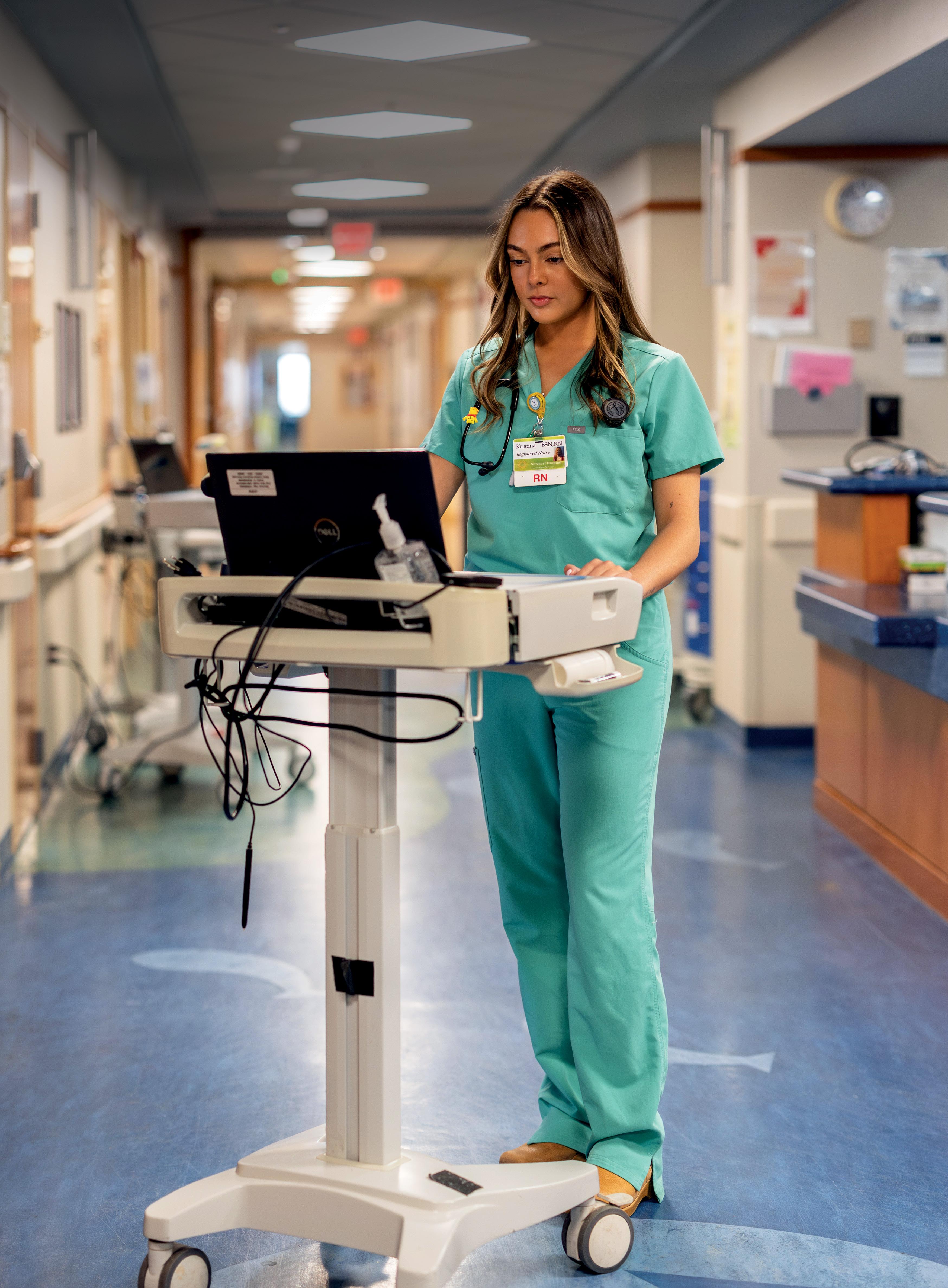
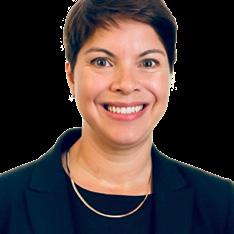
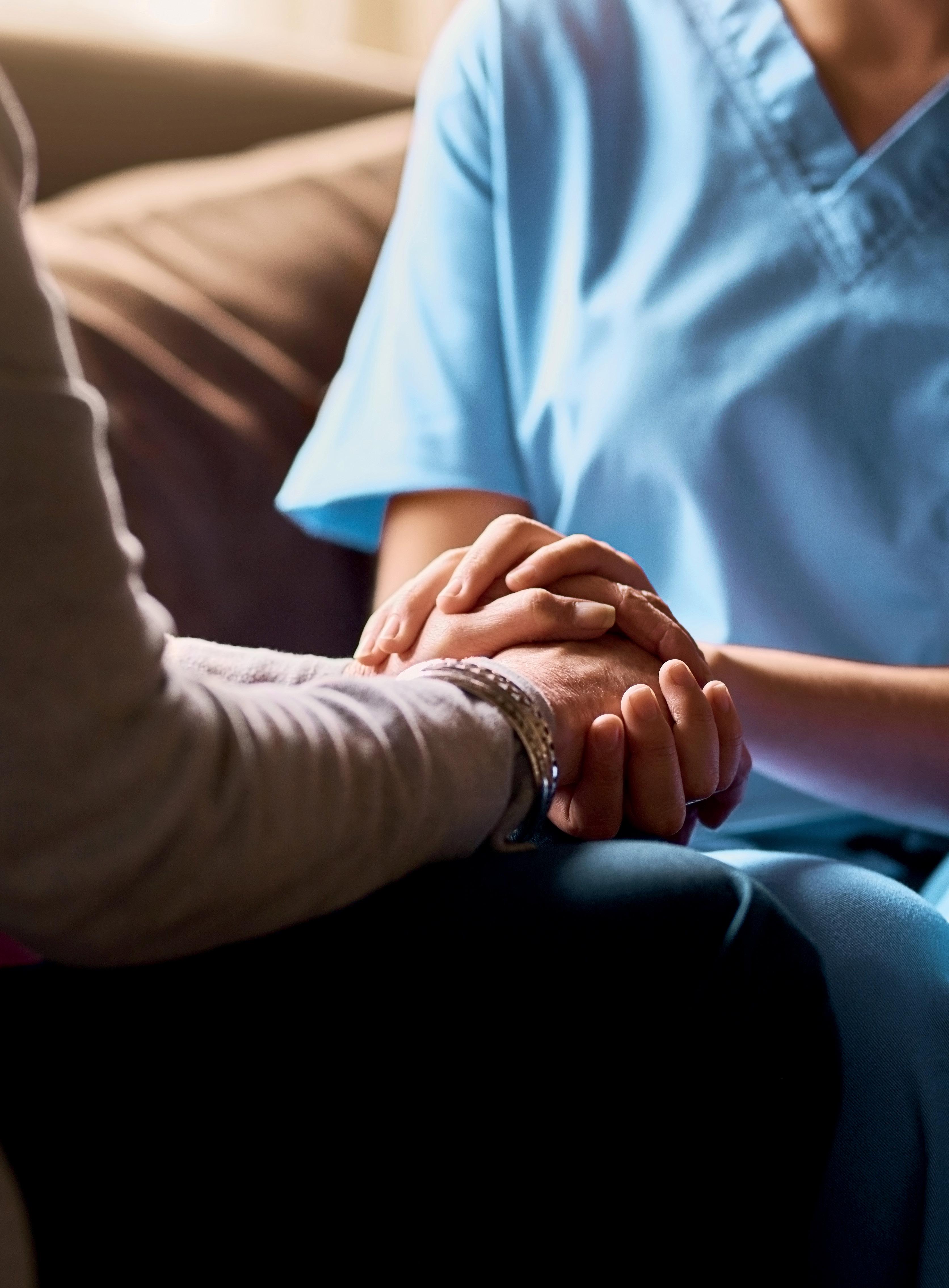
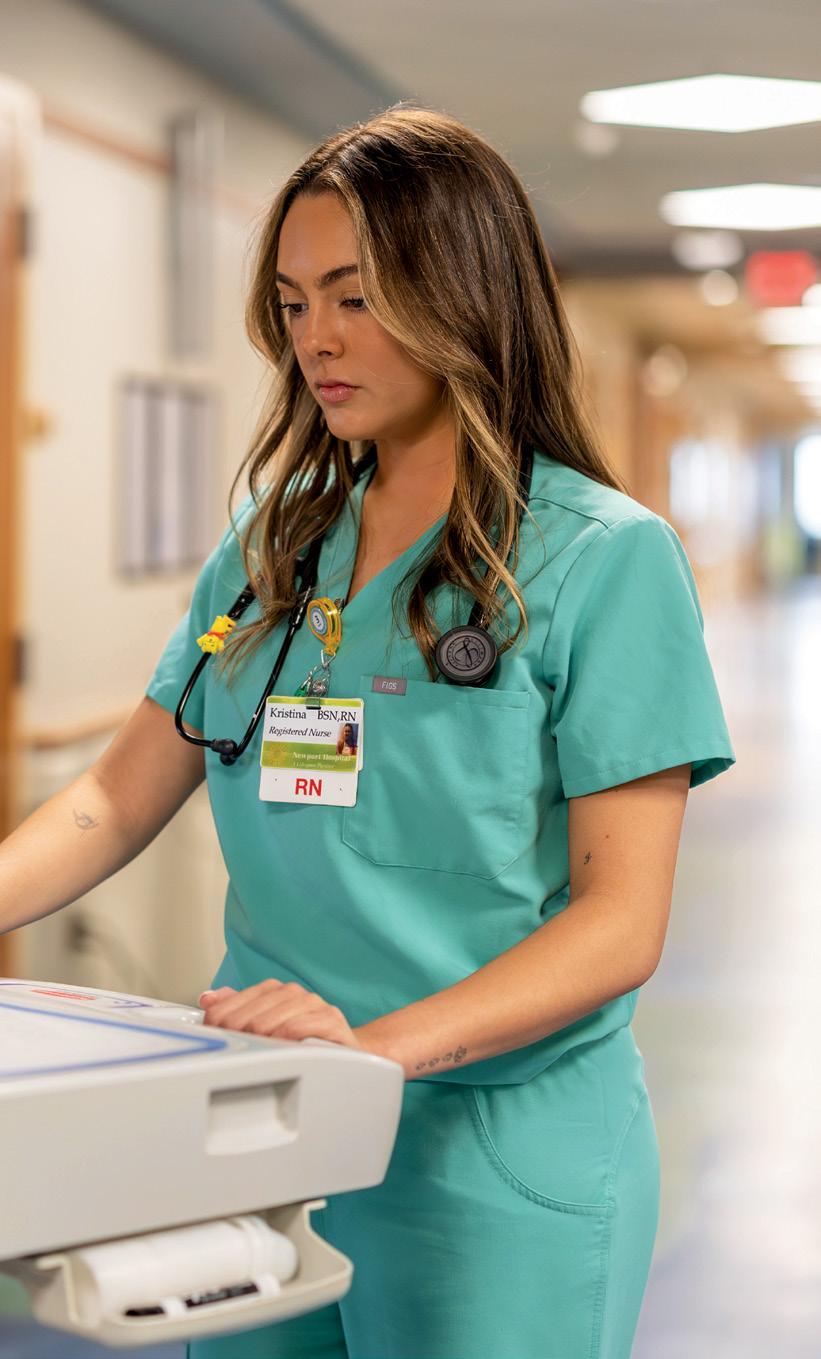
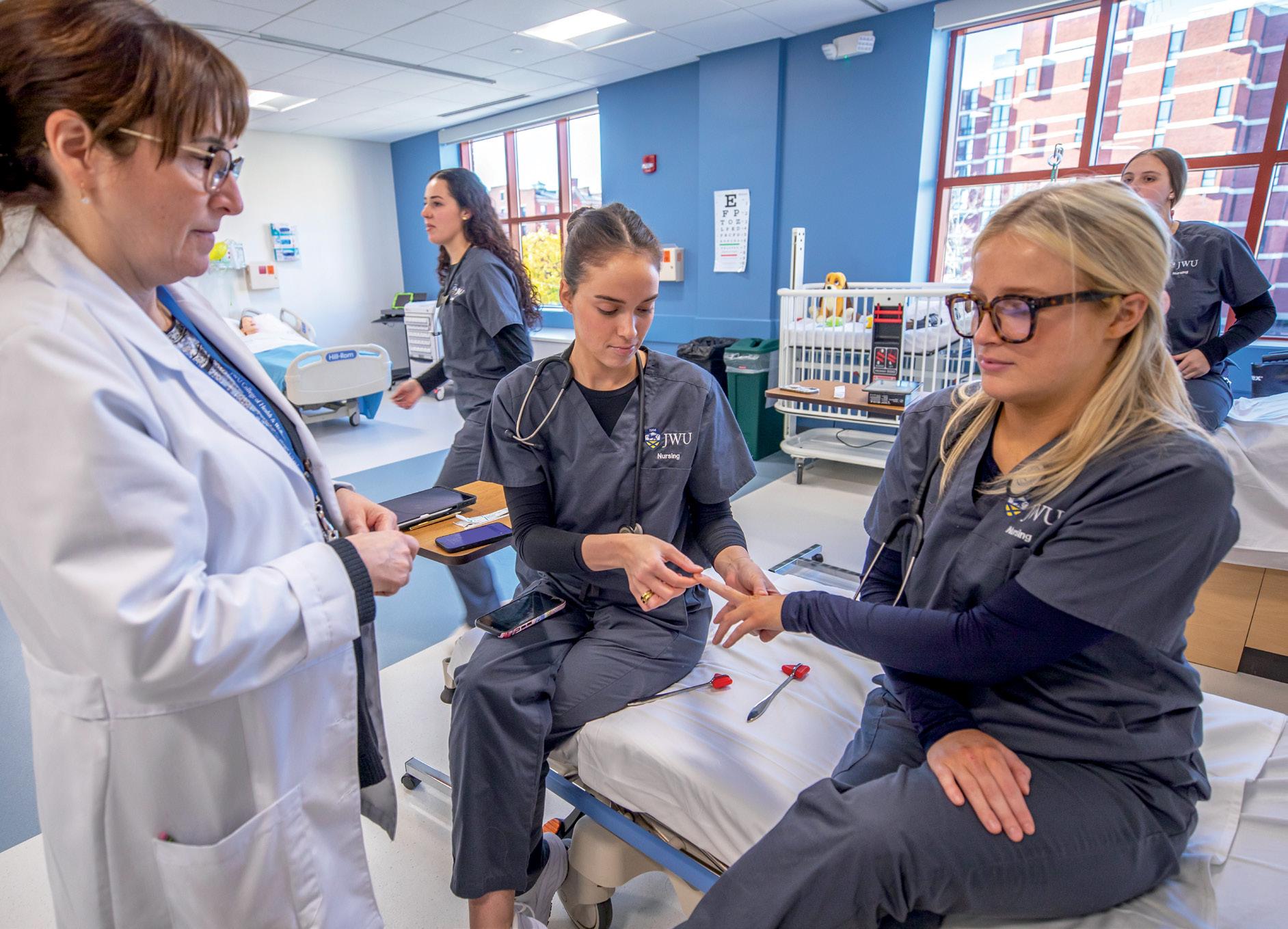
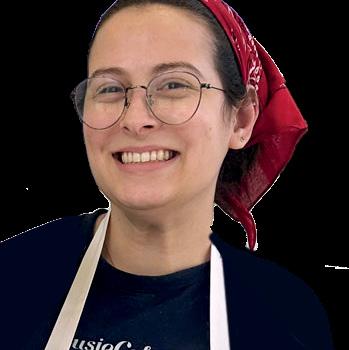
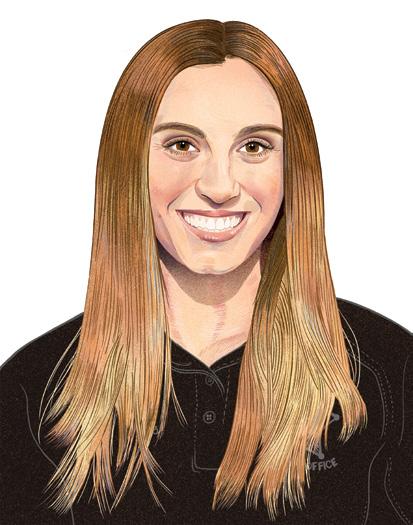
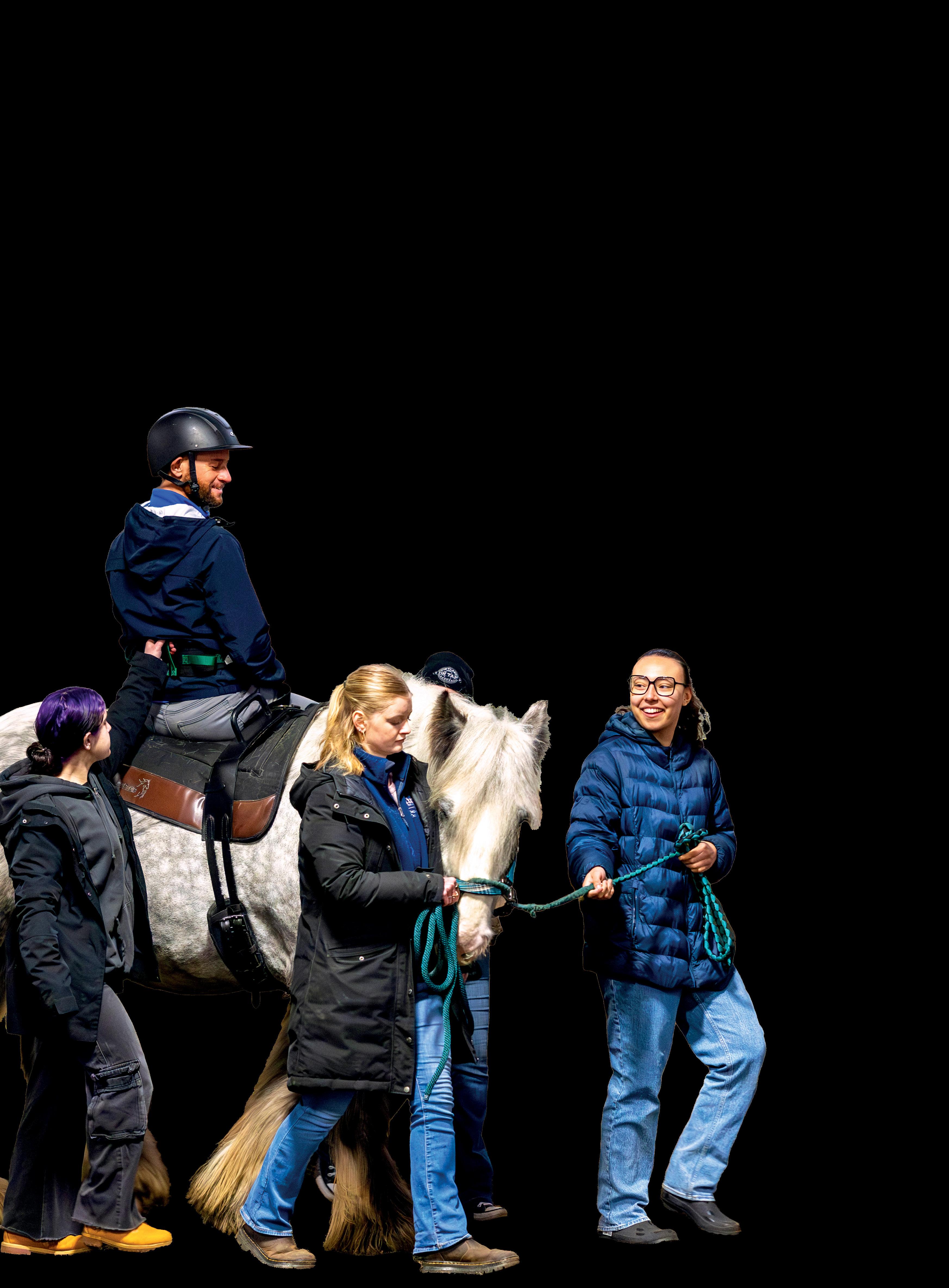
Kristina Johnson ’25 went back to school — at JWU — to fulfill her dream of becoming a nurse. More on p.14.
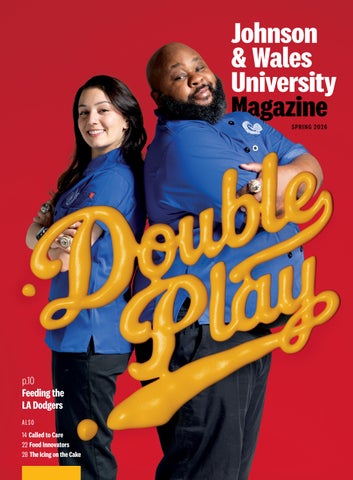
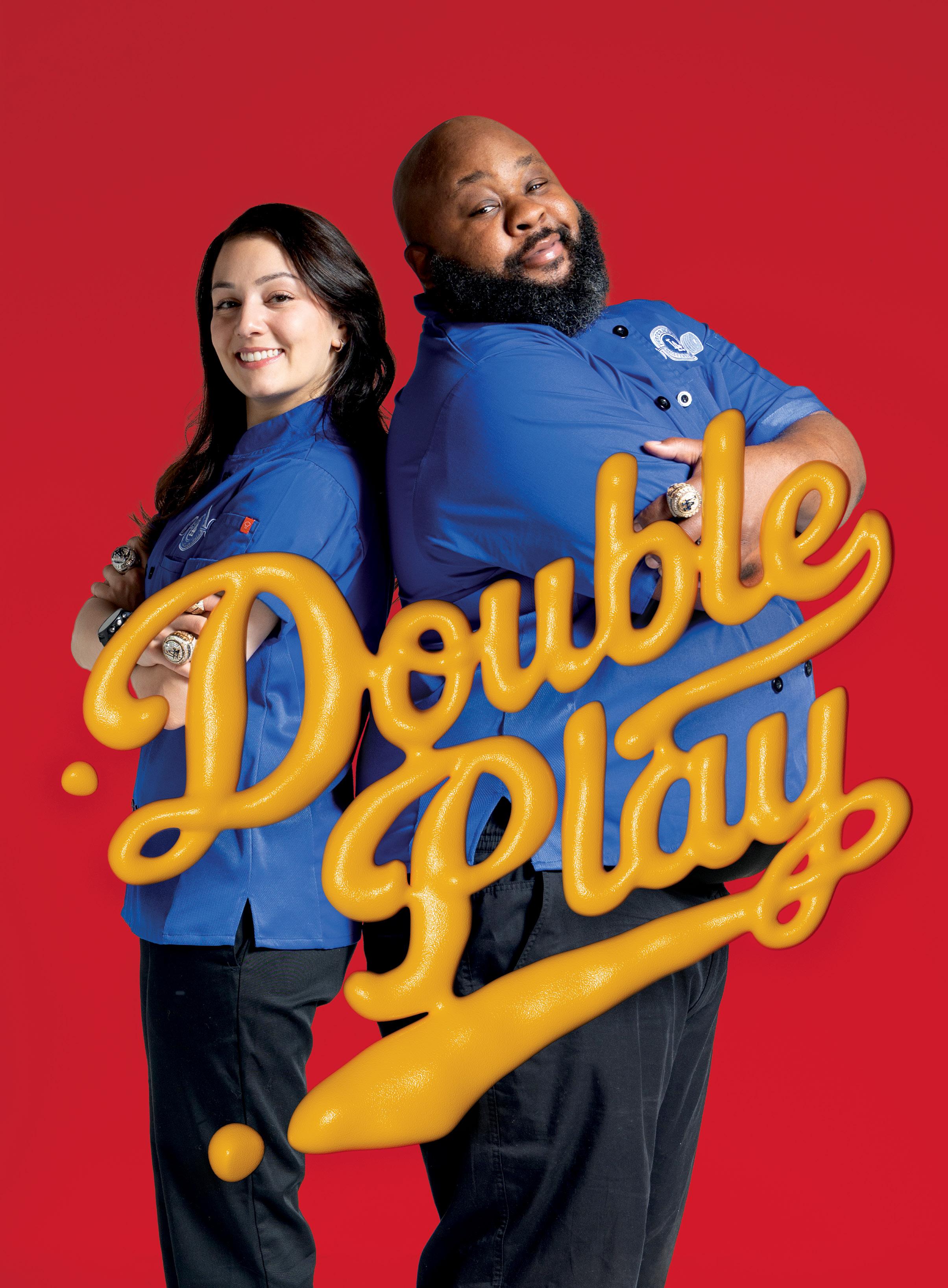
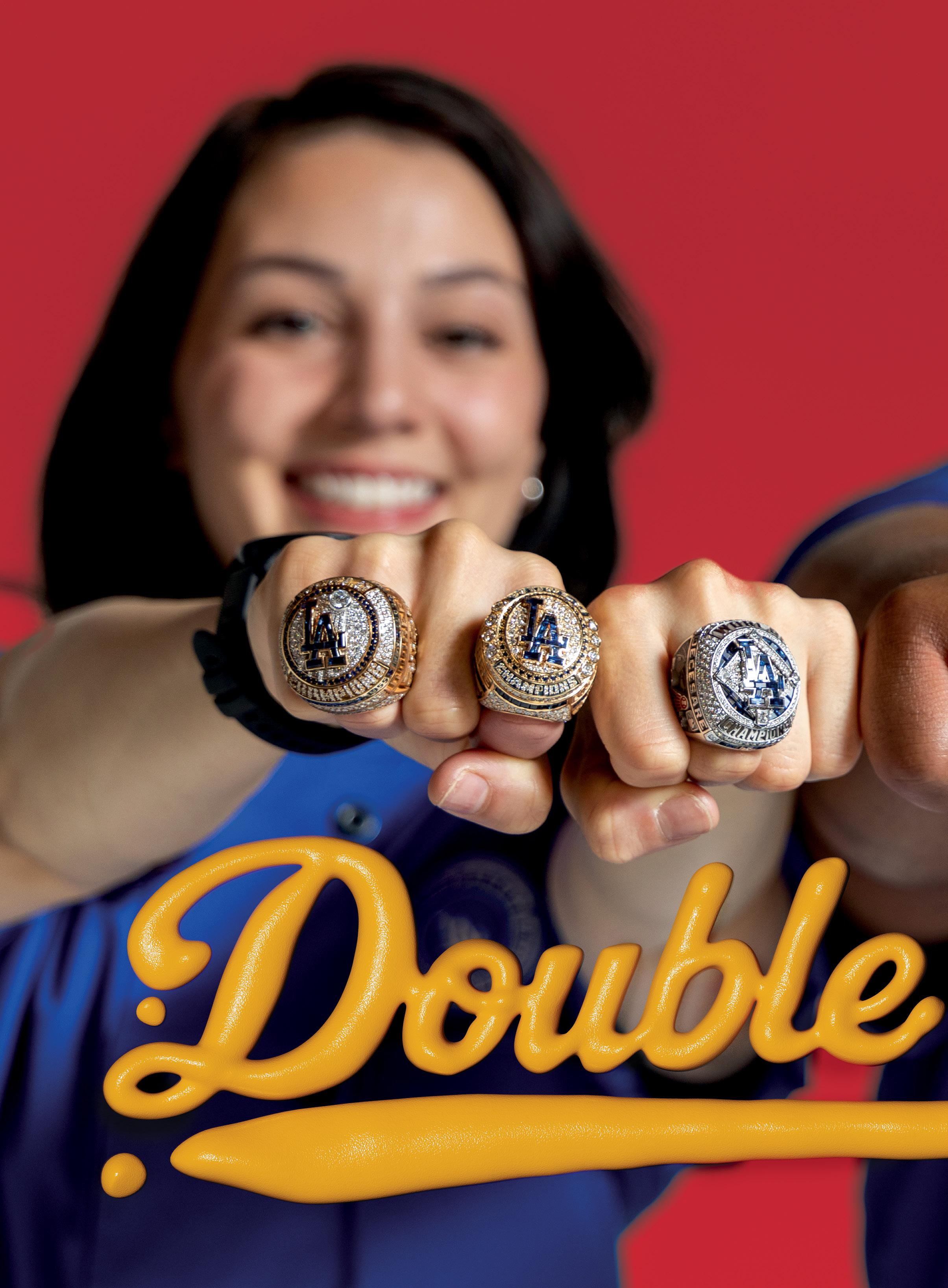
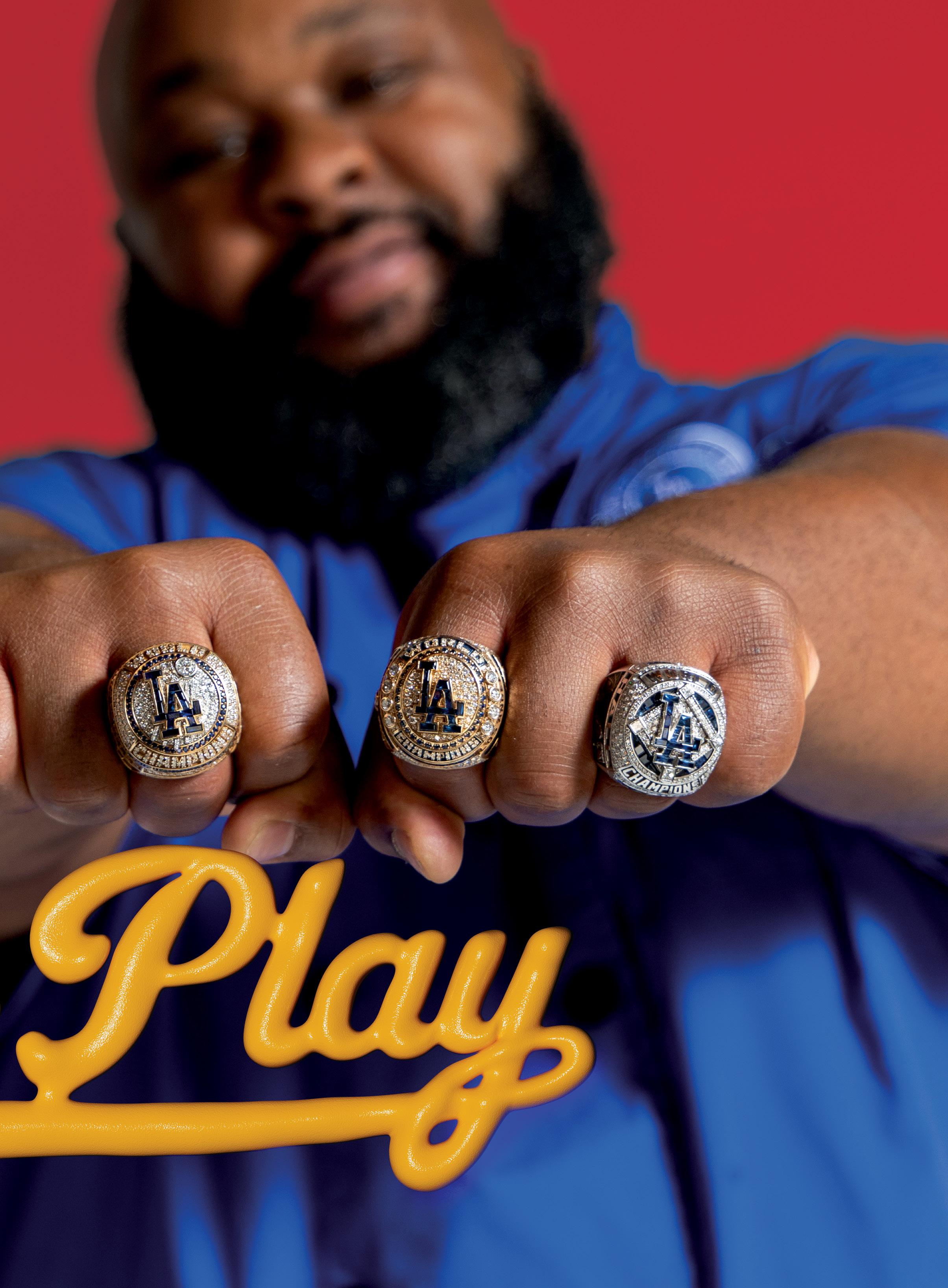
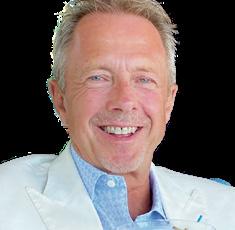
Two alums are fueling the LA Dodgers from one success to the next.
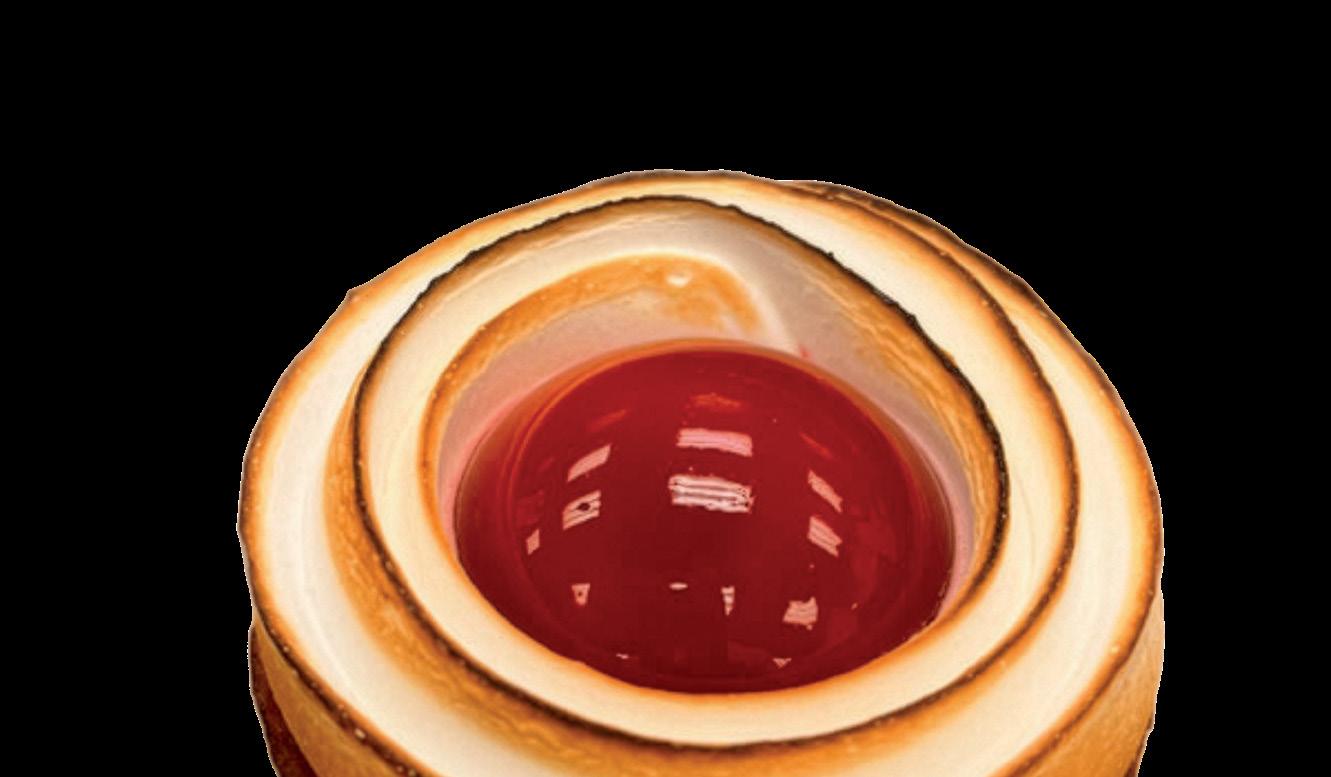
How JWU helps build the special set of skills to be a nurse.
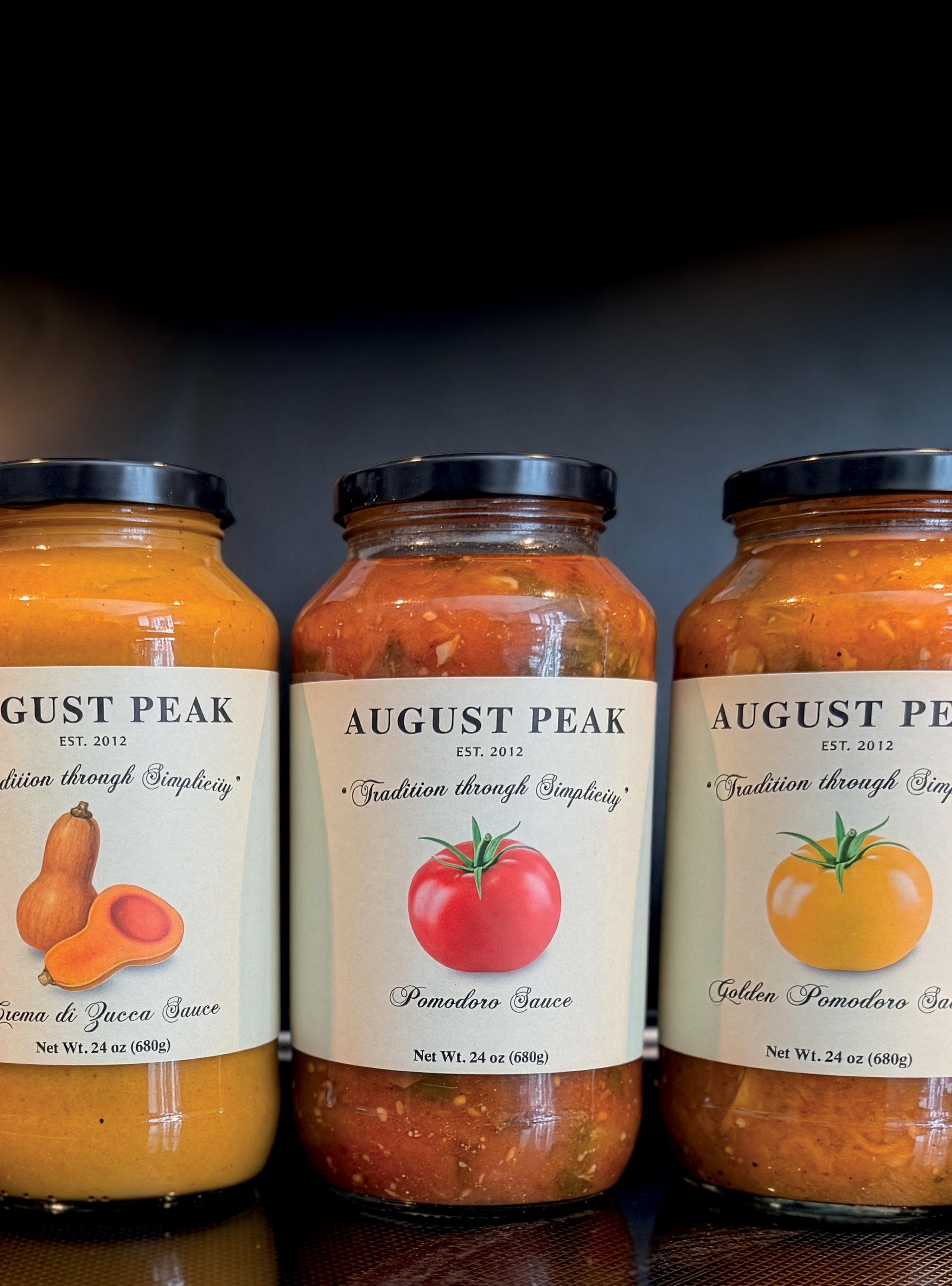
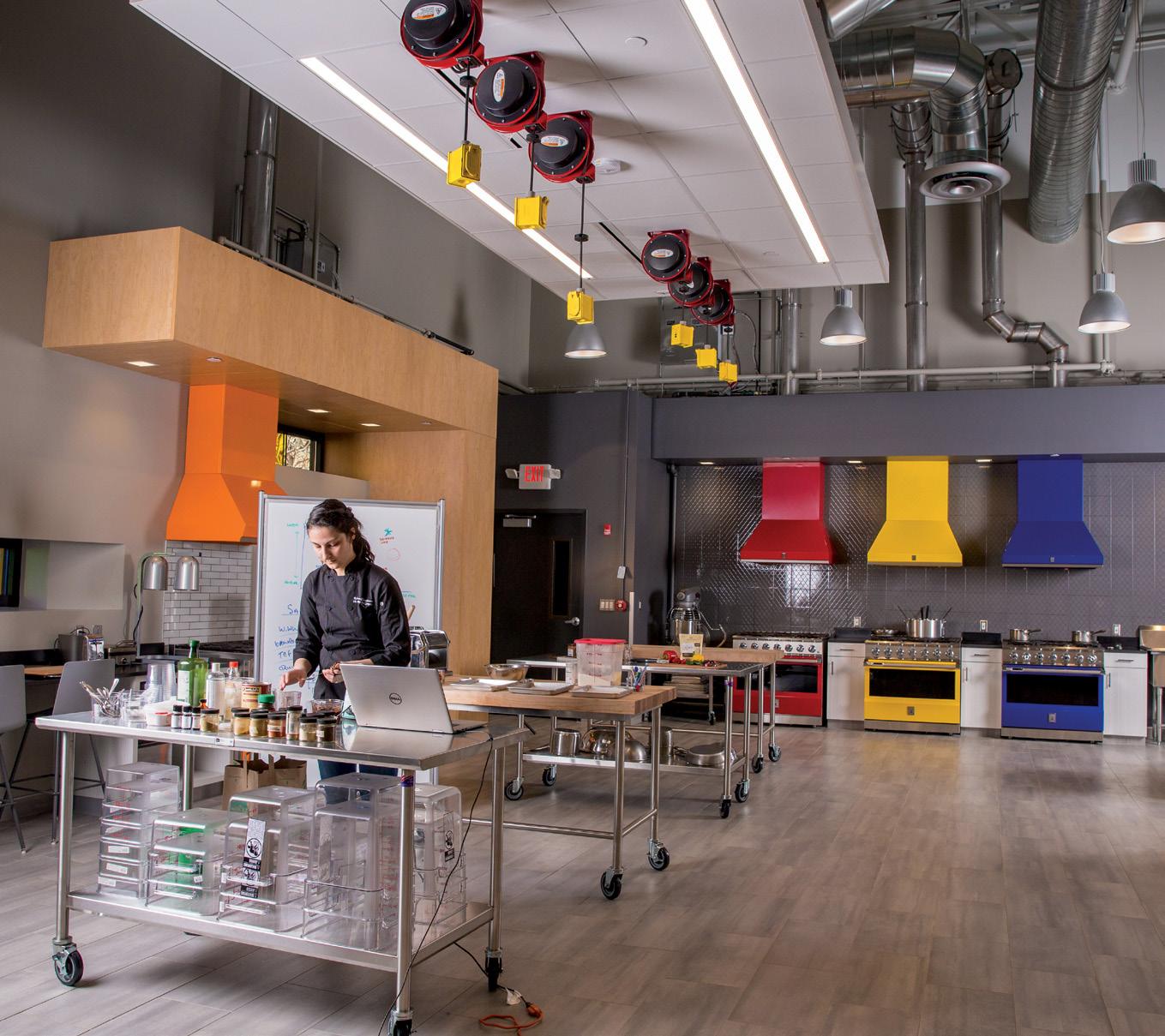
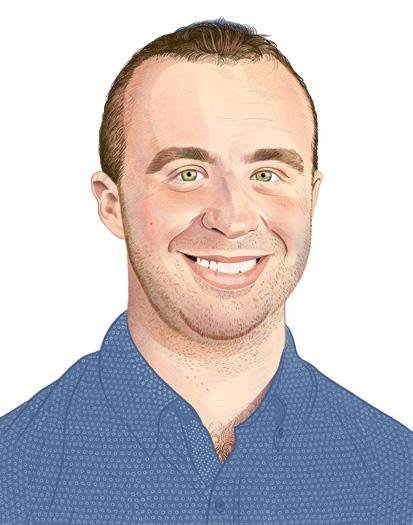
Both students and entrepreneurs benefit from the Ecolab Center’s food safety expertise.
JWU ALUMNI
Frosting cupcakes; the value of higher ed; humanAI relations and more.
Johnson & Wales University Magazine
VICE PRESIDENT
OF MARKETING & COMMUNICATIONS
Matthew Montgomery
EDITOR
Judy Hill
CREATIVE
Skelton Sprouls
CONTRIBUTORS
Jennifer Brouillard
John Davis
Kris DeRaimo
Alissa Dion
Pete DiVito
Caitlin Isles
Chris Massa
Rachel Nunes
Clara Schwager
Lisa Sheehan
Katelyn Silva
Dana Smith
Lauren Rebecca Thacker
Johnson & Wales University Magazine is published twice a year. Letters to the editor and story ideas can be sent to:
Johnson & Wales University Magazine, 8 Abbott Park Place, Providence RI, 02903 or emailed to jwumagazine@jwu.edu.
Johnson & Wales University Magazine is produced by University Marketing & Communications in cooperation with the department of Advancement & Alumni Relations.
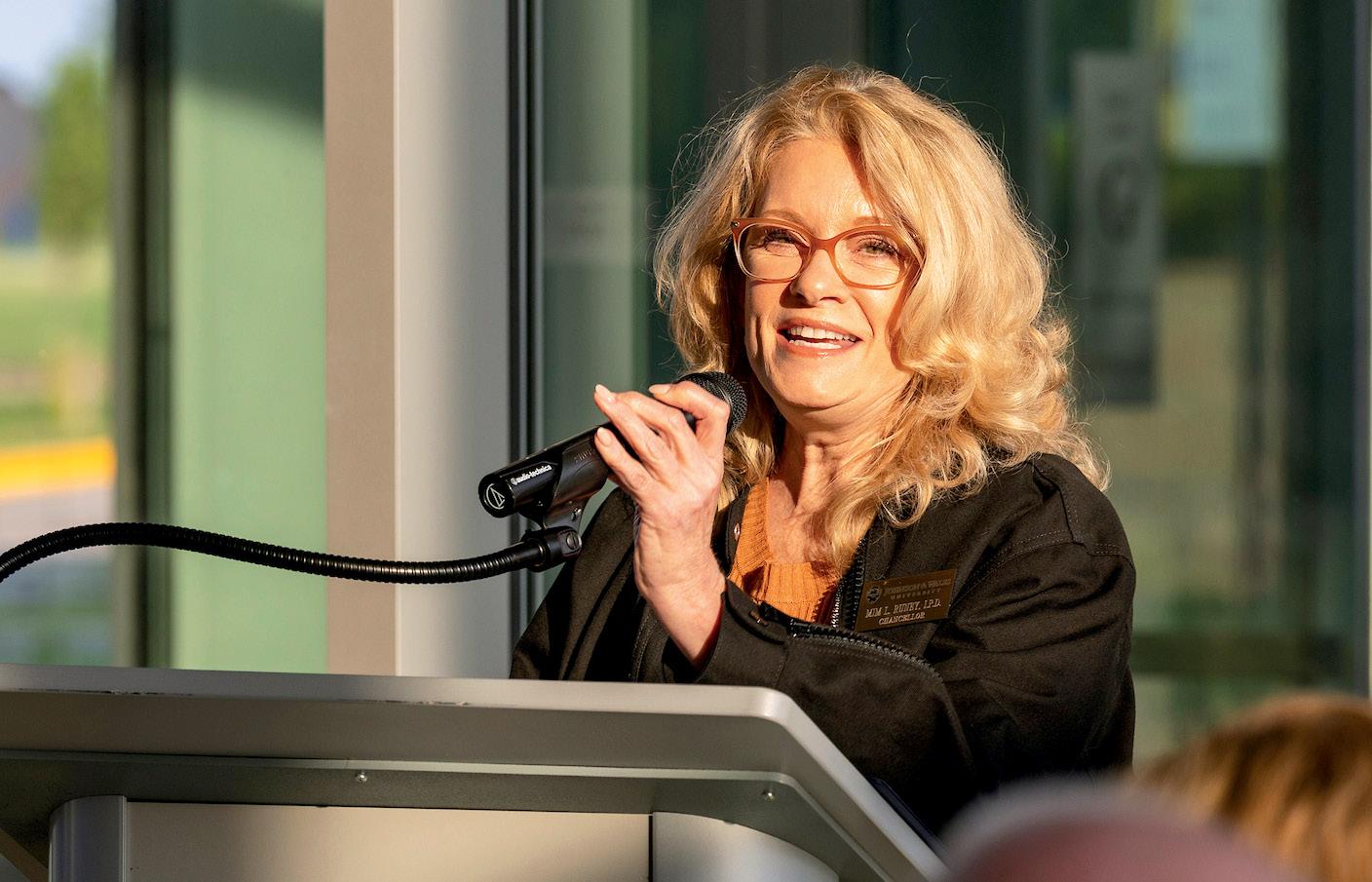
CHANCELLOR
Mim L. Runey, LP.D.
CAMPUS PRESIDENTS
Providence Joe Greene, ’89, ’98 M.S., CPA
Charlotte
Richard G. Mathieu, Ph.D.
Learning By Doing
“The most powerful learning happens when knowledge is applied in meaningful, realworld ways.”
At Johnson & Wales University, we often say that practice makes professional. The phrase reflects a philosophy that has guided our institution for more than a century: The most powerful learning happens when knowledge is applied in meaningful, real-world ways.
In this issue, you will see how that philosophy comes to life across our university, translating education into impact, strengthening industries, serving communities and advancing professions.
Our accelerated Bachelor of Science in Nursing program reflects this commitment in action. Students move quickly into clinical environments, developing the skills, judgement and compassion required to deliver exceptional patient care. The program’s first Providence cohort achieved a 100% first-time pass rate on the NCLEX-RN, and graduates like Kristina Johnson ’24 are already emerging as leaders in the field.
At our Harborside Campus in Rhode Island, experiential learning also drives innovation. At the Ecolab Center for Culinary Science, faculty and students collaborate with entrepreneurs and established companies to navigate the complexities of bringing new food products to market.
The reach of a JWU education can also be seen on some of the world’s biggest stages. Alumni Tyrone Hall ’05 and Kristen Loiacono ’15 help fuel the Los Angeles Dodgers through the demands of a championshipcaliber season, combining culinary expertise and sports science to support peak athletic performance.
Each of these stories reflects a shared principle: learning by doing. When students engage directly with their professions, they graduate not only prepared for careers, but ready to lead, innovate and make a difference.
MIM L. RUNEY, LP.D. CHANCELLOR
TALKING POINTS
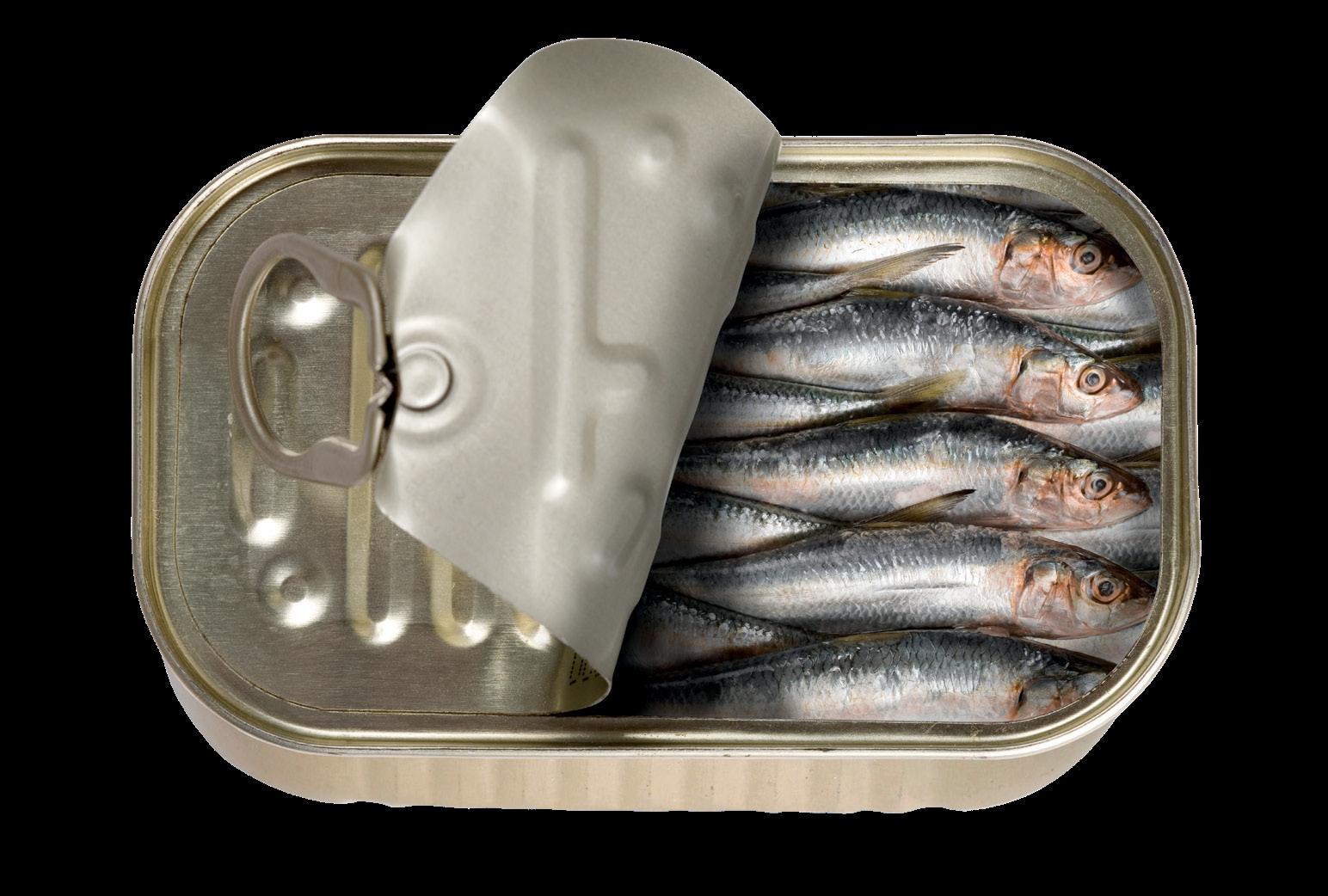
“Sardines are great for your skin and hair. This isn’t anything new. I think the Spanish and Portuguese have known this for centuries.”
T.J. DELLE DONNE
NEWS
Bringing the Heat
“Hell’s Kitchen” Episode Celebrates JWU
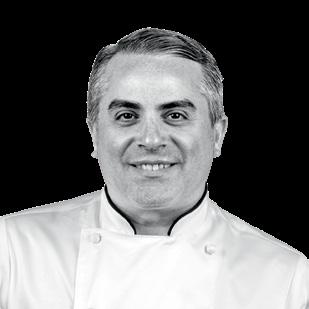
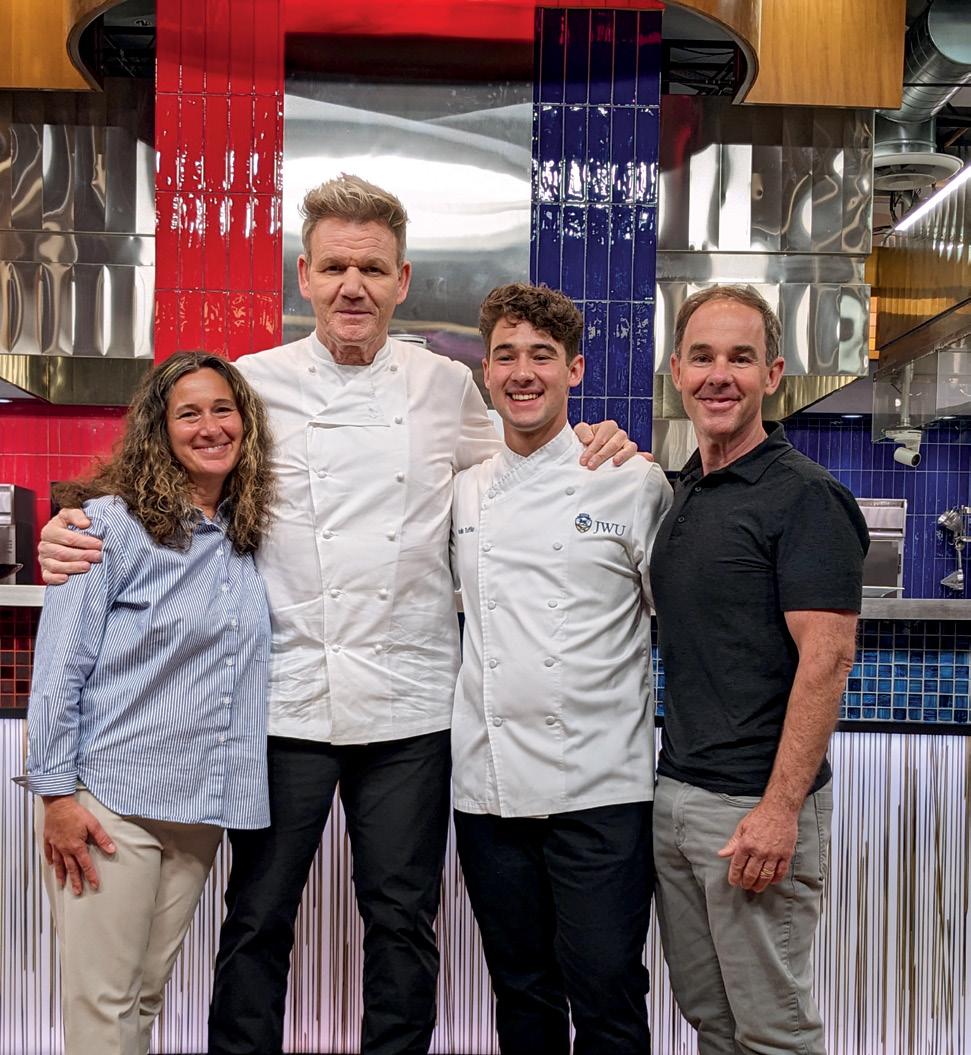
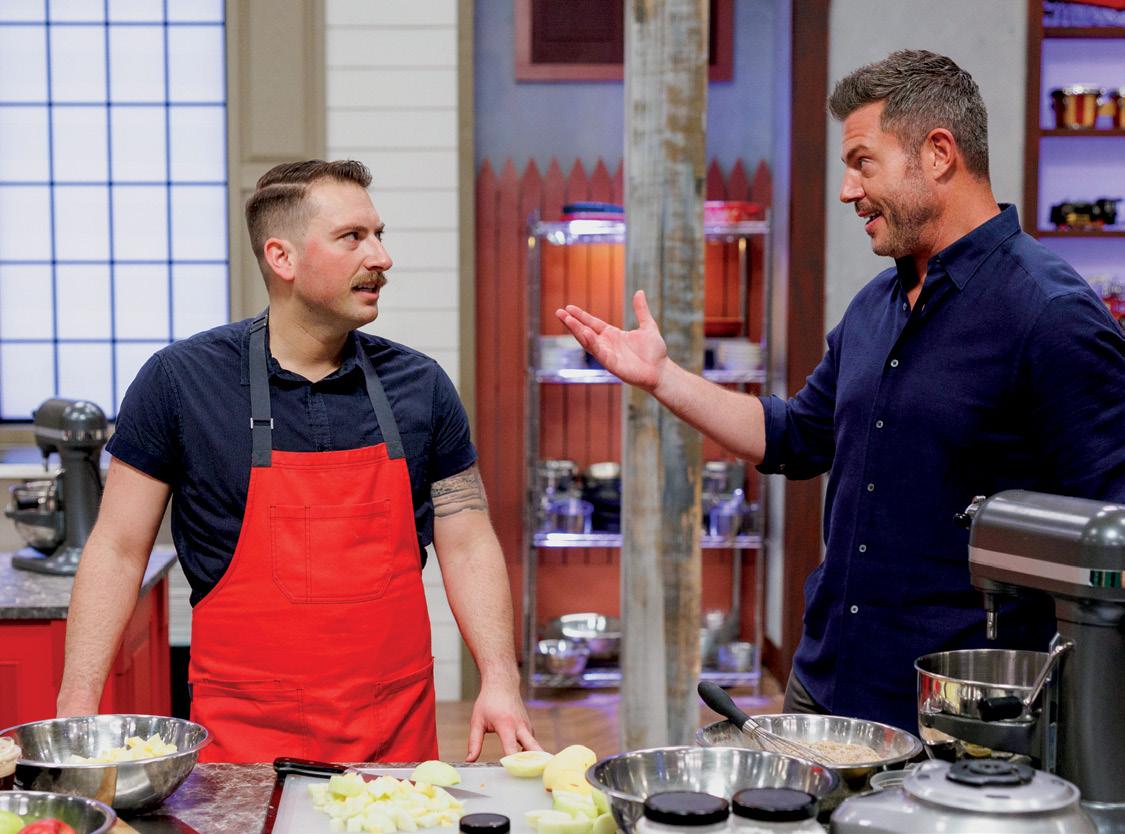
Johnson & Wales was featured in a recent episode of “Hell’s Kitchen” celebrating 50 years of culinary education at the university. T.J. Delle Donne, CFIT assistant dean, served as judge for the morning challenge alongside Culinary Arts major Hollis Tuffile ’26. The winning dishes from the head-to-head morning challenge were featured on a tasting menu at the celebration dinner.
“I was blown away — I had chills.”
T.J. Delle Donne
“When I first stepped onto the set and saw it all decked out in blue and gold for the university, I was blown away — I had chills,” says Delle Donne.
“Participating as a guest judge on ‘Hell’s Kitchen’ while a student at JWU was truly a once-in-a-lifetime opportunity,” says Tuffile.
“Talking one-on-one with Gordon Ramsay and receiving his advice was an incredible experience I never expected to have this soon.”
During the episode, Ramsay highlighted four of JWU’s most well-known alumni: Emeril Lagasse, Michelle Bernstein, Graham Elliot and Rock Harper, who won season three of “Hell’s Kitchen.”
Three of the 20 contestants competing on season 24 of “Hell’s Kitchen: Battle of the States” also attended JWU: Antonio Wormley, representing New Hampshire; Anaiya Lane, (Delaware); and Chris Faison, (New Jersey).
HEADLINERS
ROSTER OF FELLOWS
Colleen Cameron Whiting, assistant professor of Occupational Therapy, has been named to the prestigious AOTA Roster of Fellows, one of the highest honors in occupational therapy. This recognition celebrates her leadership, expertise and meaningful contributions to the profession and the communities it serves.
OUTSTANDING ADVOCATE
Terry Novak received the 2025 Outstanding Learning Community Advocate Award at the National Learning Communities Conference in November, where she was recognized for 25 years of learning communities work at Johnson & Wales University and over 20 years of leadership with the Atlantic Center for Learning Communities.
PROTECTING THE TURTLES
Kevin Aviles-Rodriguez, an assistant professor in the Department of Biological and Physical Sciences was recently awarded a Peter H. Warny Conservation Fund to support research on nesting predation of an endangered freshwater turtle species. The award funded the purchase of trail cameras and additional field research supplies.
Join the Club
Johnson & Wales has a lively club scene — student clubs, that is. Student driven and proposed by students, they run the gamut from Hack JWU to Wildcat Airwaves to Cutting Edge Acapella. New clubs and organizations are added every year. “We lose a few, too,” says Sandy Cardoza, associate director of programs and services, “but our number has been climbing.”
ACTIVE CLUBS
117
MOST MEMBERS
200 Peace, Love & Bread
100+
Ski & Snowboard club
JWU P.A.W.S. Black Student Alliance
BIGGEST EVENTS
Ignite the Night Student Involvement Fest
One Ton Sundae
Snoball Semi-Formal
CAMPUS CLUB EVENTS IN 2025
2,000+
OLDEST CLUB
The JWU Players
SUPPORT BEYOND THE CLASSROOM
From national organizations to student clubs, Wildcats have many options to pursue their passions outside of the classroom. Support JWU student clubs and organizations today! giving.jwu.edu
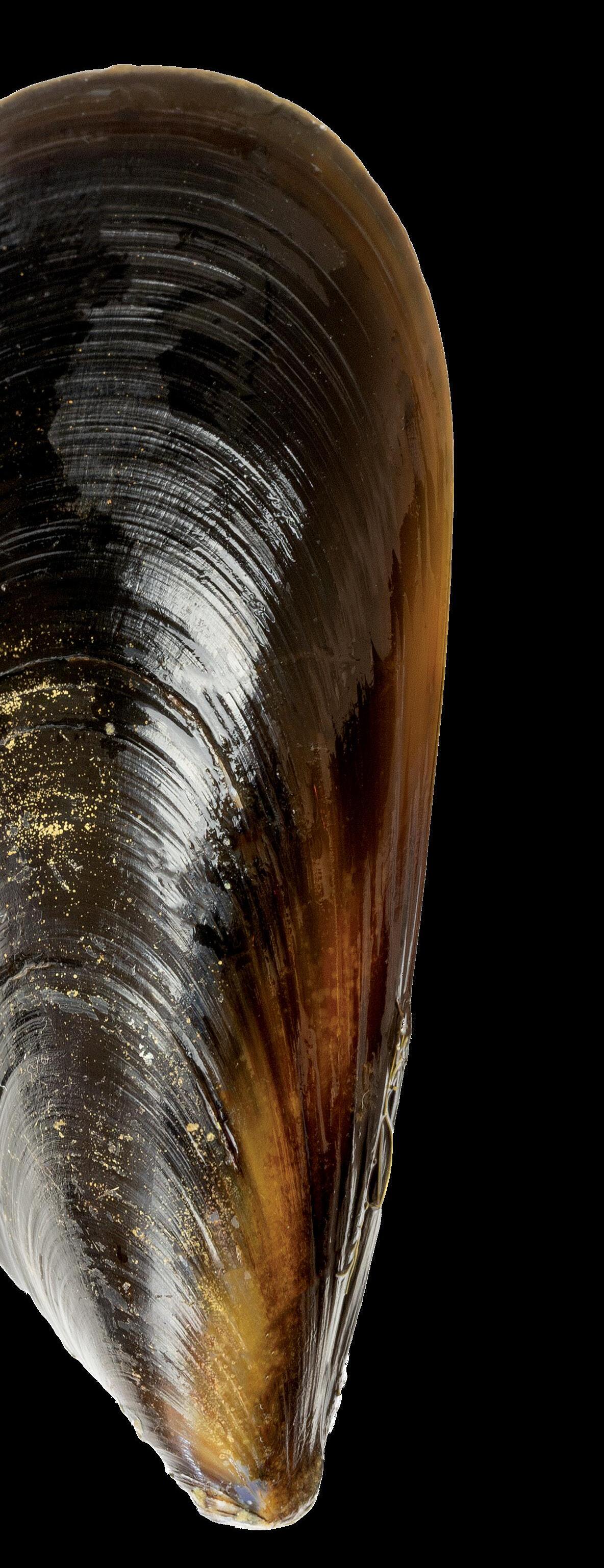
Mussel Memory
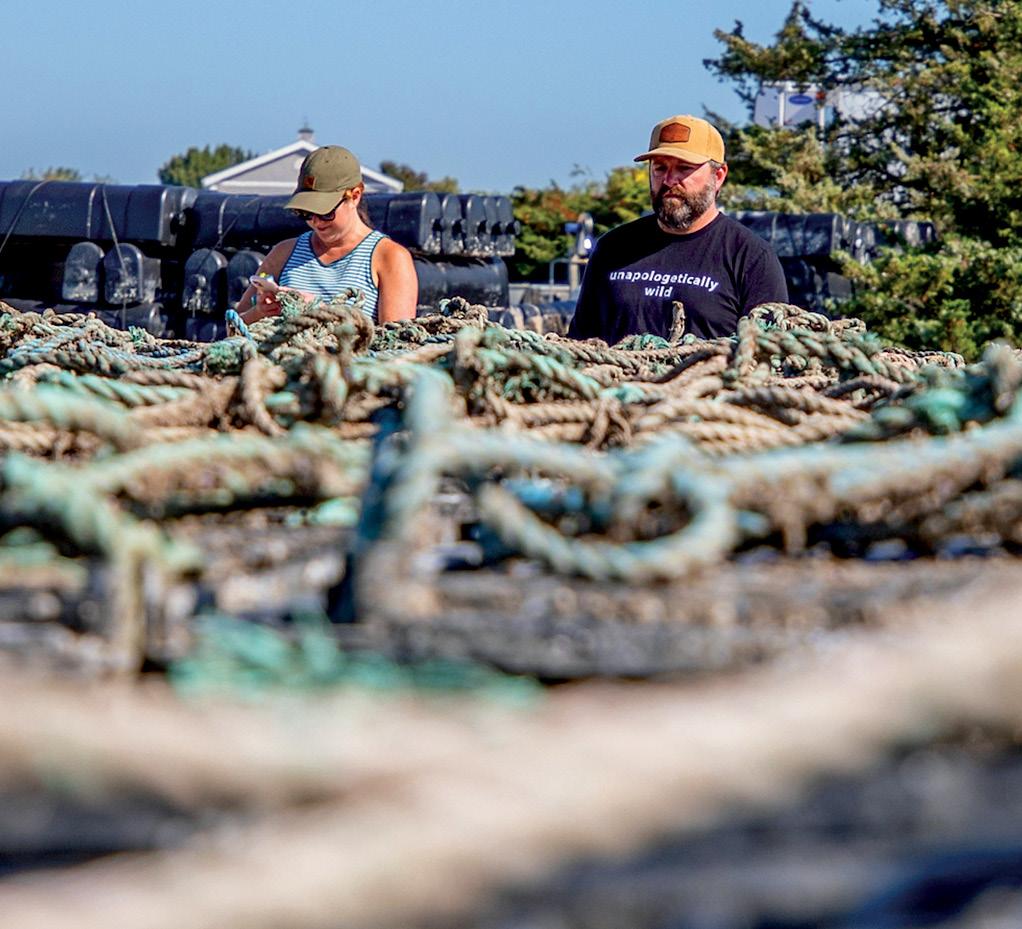
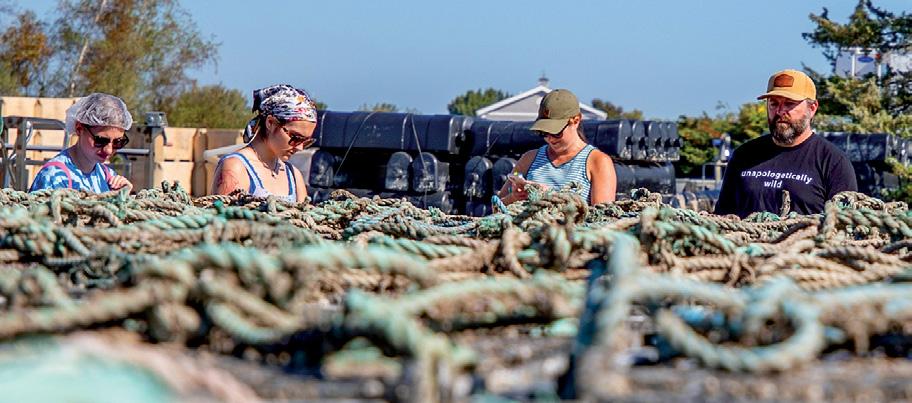
Last fall, students in Brendan Lewis’ Sustainability in the Culinary Kitchen course left the classroom behind for a few hours to travel by boat from the Harborside Campus to American Mussel Harvesters, a shellfish farming company in North Kingstown, Rhode Island.
The field trip was just one example of JWU’s Reimagining Experiential & Applied Learning (REAL) approach, which embeds active and experiential learning in every course. “When students are immersed in the environment, meet the farmers and fishers who produce their food, and learn directly about challenges and solutions, the experience can be transformative,” says Lewis. “There is no better way to develop this level of understanding.”
Bay Watch
The course, which forms part of the Sustainable Food Systems major and the Culinary Sustainability minor, includes six field trips throughout the local food system. On this trip, Save the Bay, an environmental organization that works to protect the Narragansett Bay ecosystem, co-led the teaching and skippered the boat. Students learned from the Save the Bay team about ocean and estuary conservation and how food systems professionals can help foster a more resilient marine environment to protect seafood resources. En route to American Mussel Harvesters, they met Jody King, a local quahogger (clam digger), and joined him briefly to dig clams.
2
Seafood and Science
At American Mussel Harvesters, students toured the processing facility, learned about their operations and sustainability efforts and shucked and tasted oysters. On the return trip, students participated in hands-on ocean science with the Save the Bay crew, including running a midwater trawl and examining marine life.
In the photo, below, students are observing oyster cages that have been pulled from the water to remove “fouling,” such as barnacles, seaweed and other organisms.
3
A Sustainable Food Future
After leading this trip for many years, Lewis has noticed that students are consistently amazed by what exists right in their own backyard. “Much of the food system operates out of sight, often right beneath our noses,” he says. “Seeing how food is harvested, processed and stewarded can be a powerful realization. When students understand how systems work, they are better equipped to make informed decisions and help build a more sustainable and equitable food future.”
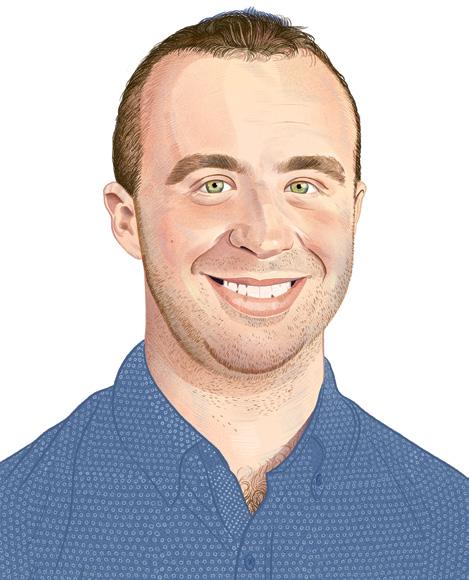
Anthonellis (Anthony) Morel ’25
Major:
Business Administration with a minor in Economics
Hometown: Providence, Rhode Island
EXPERIENCE
Morel worked as a student assistant in JWU’s finance department throughout his time at the university, starting his second week of school. He mainly assisted in the budget and financial planning office but also got to collaborate with the accounts payable team and the controller.
LEADERSHIP
Morel got involved with WIFI (Wildcat Investment & Finance Initiative), the student managed investment fund at JWU, as part of an experiential education class. As it evolved into a student club, he became its financial modeling manager and ultimately president and portfolio manager.
“We saw incredible growth,” he says. “When I came in, there were only five members. We jumped up to 15 when I became portfolio manager, and now we’re all the way at 30 members.”
“It’s going to help me massively,” Morel says of his experiences running the club and working in the finance department. “Most of the positions I aspire to involve investing or finance in some capacity. With my experience both on the corporate finance side, from the finance department, and on the actual investment nitty-gritty side with the investment fund, I think I’m very well prepared for what’s to come.”
PHILANTHROPY
Morel built a framework for clubs and classes to raise money through the university by creating their own fundraising web pages for trips and other class activities. The first club fundraising page, created last fall, helped fund a WIFI trip to an investing conference in Chicago. “The students in the club market the pages themselves,” says Morel, “on their LinkedIns or other social media platforms.”
POST-COLLEGE
“My ultimate goal is to run my own business,” says Morel. “I have some ideas about what it would be. Maybe some of them are a little too ambitious, but you can never stop dreaming.”
Healthy Debate
Encouraging open talk about topical healthcare issues.
It’s no secret that glaring disparities exist in healthcare delivery. Now, students in Johnson & Wales’s Health Equity Club are hosting a series of events — open to students, faculty and staff — to grapple with these issues. Recent Health Equity Reflections & Refreshments sessions have covered topics
INAUGURAL COHORT
On December 11, family, friends and community members gathered for the pinning ceremony for the inaugural cohort of the Master of Science in Clinical Nutrition program, representing the graduates’ official entrance into the profession.
“JWU’s
MSCND
program is distinctive. Our students gain advanced expertise in evidencebased practice while developing competencies in food science and nutrition industries.”
Maura Daly Iversen College of Health & Wellness Dean
such as the impact of academic pressure on wellbeing, accessibility of feminine hygiene products and the benefits and limitations of telehealth.
In January, community members read and discussed an article on AI in healthcare. Undergraduate and graduate students, as well as some faculty and staff, split into two circles, creating open spaces where anyone could speak their mind and where nothing said in confidence left the room.
The student hosts had prepared questions as a guide, but conversations soon took a turn of their own, bringing lived experiences and the current climate into the discussions.
“As a faculty member, it’s incredibly encouraging to see students engaging thoughtfully with issues that will shape their future professional lives,” says Professor Samantha Rosenthal, Ph.D., who serves as faculty advisor for the club.
“Watching students take ownership of these conversations gives me tremendous confidence in the next generation of healthcare leaders.”
PHYSICIAN ASSISTANT ACCOLADES
Two M.S. in Physician Assistant Studies students were recently honored. Jessica Ruggiero ’26 MSPAS, a Physician Assistant Education Association Student Health Policy Fellowship awardee, will use her fellowship to develop a deeper understanding of the political process. “It’s the perfect opportunity to learn more about advocacy and what it means to use your voice for your profession and your patients,” says Ruggiero.
JWU CHARLOTTE STUDENT ON A ROLL
Last year JWU Charlotte Baking & Pastry Arts student Max Astacio ’27 took bronze for his blood orange méringue cloud in an American Culinary Federation (ACF) road show competition in Myrtle Beach, South Carolina. Advancing to the regionals, he won Student Pastry Chef of the Year for the Southeast with a strawberry and rhubarb gâteau St. Honoré, which in turn qualified him for
“We’ve
always been a career-focused university ... and Charlotte, in and of itself, is a big attractor. There’s just so much vibrancy in the city, and it fits in wonderfully with what we’re doing.”
Richard Mathieu, president of the Charlotte Campus, explaining the recent 17% enrollment climb. Charlotte Business Journal, November 2025 “Going to New York as a 21-year-old, it’s difficult. Boston, on the other hand, is a little more affordable.”
Rizwan Ahmed, associate professor of culinary arts, on how Michelin’s presence in Boston may help keep young chefs closer to home. WCVB5, February 2026
“We’re not just providing catering and event services — we’re creating experiences that reflect the heart of this university.”
Amanda Rotondi, executive director of auxiliary services, on JWU’s expanded roster of catering, public cooking classes and external Rhode Island , November 2025
HOOPS HOTSHOT
Sophomore Grace Jaffray capped a memorable season for the JWU Providence women’s basketball team with a spot on the Women’s Basketball Coaches Association NCAA Division III All-America Honorable Mention Team.
The 2025–26 Conference of New England Player of the Year led the league and finished fourth in the country in scoring at 22.7 ppg. Jaffray scored a game-high 30 points in the conference championship against Western New England, propelling the Wildcats to a win and a berth in the NCAA Tournament for the first time since 2016.
The Blue Hill, Maine native became the seventh student-athlete and first sophomore in program history to reach the 1,000-point mark for her career on January 20. Following the season, Jaffray was named to both the D3hoops.com Women’s All-Region 2 First Team and the New England Women’s Basketball Association First Team.
Off the court, Jaffray is a business administration major who earned a spot on the College
Sports Communications Academic All-District Team, which recognizes the nation’s top studentathletes for their performances on the court and in the classroom.
Slam Dunk
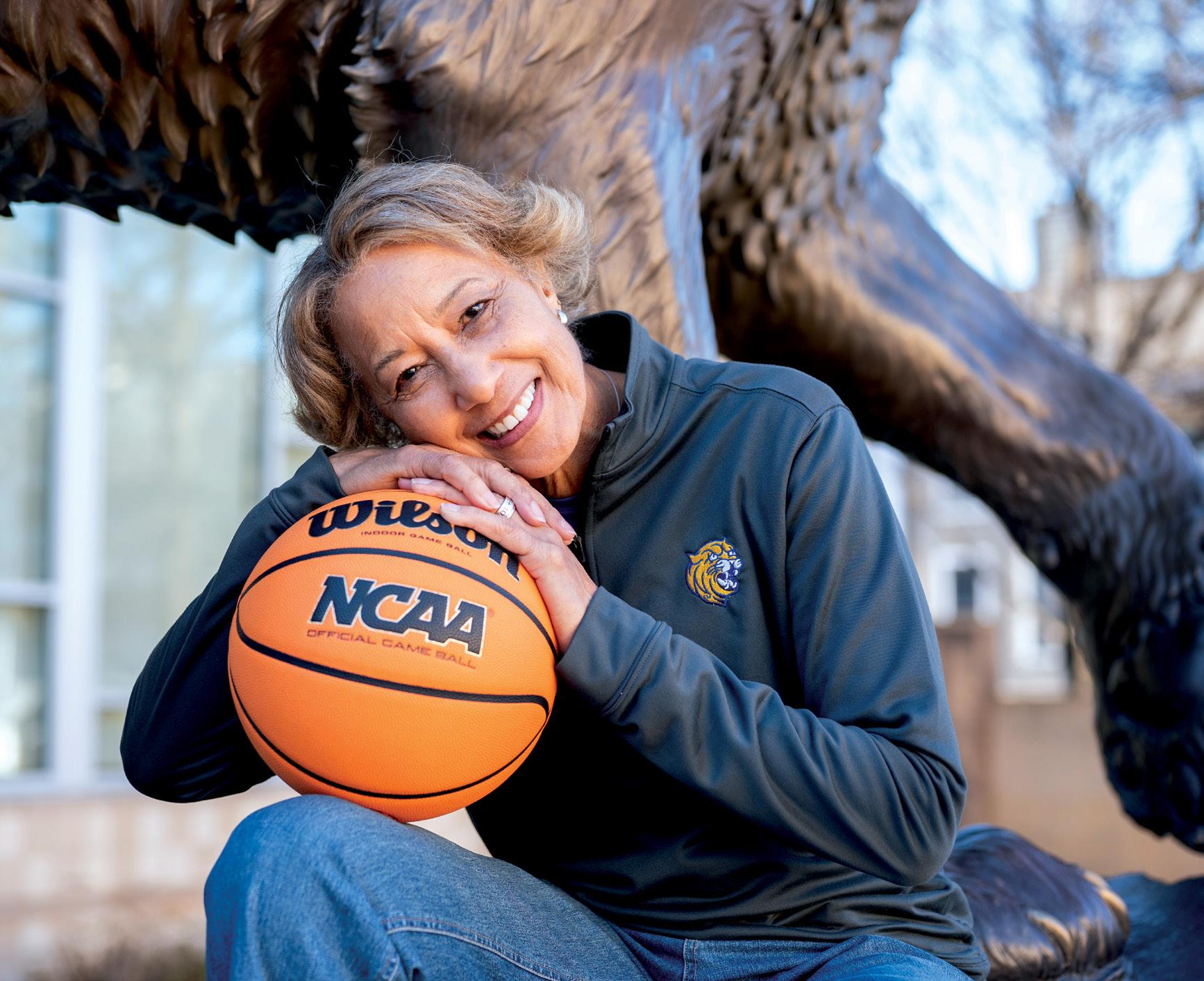
Trudi Lacey likes to say that basketball is in her DNA. The sport, which she started playing as a fourth grader in Clifton Forge, Virginia, has given her experiences she says she never would have had otherwise, including traveling the world and acquiring two academic degrees.
Lacey has also given back to the sport abundantly. In 1979, as the first Black woman to earn a full four-year basketball scholarship to North Carolina State, she led the Wolfpack to its first ACC women’s basketball title. After graduating, Lacey represented the U.S. at the World University Games, where she won gold medals in 1981 and 1983. A distinguished coaching career took her from the WNBA’s Charlotte
Sting and Washington Mystics to Queens University of Charlotte. Lacey also served as the assistant director for USA Women’s Basketball from 1997–2000, helping Team USA earn gold in the 2000 Sydney Olympics. In 2016, Lacey joined JWU’s Charlotte campus as director of athletics.
“I still watch a lot of basketball and study basketball,” says Lacey, “but I
Trudi Lacey
Years as Athletic Director: 10
Career Highlights: Led NC State to 1979 ACC championship
All-American, four-time ALL-ACC player
Named to the ACC All-Legend team
Hometown:
Clifton Forge, Virginia
Alma Mater: North Carolina State
also do a lot of other things now that I’m athletic director.” Those “other things” include growing the program from five sports to 14 and overseeing its transition to Division III.
Lacey says she is honored and humbled to have been inducted into both the North Carolina Sports Hall of Fame and the NC State Athletics Hall of Fame. What she is most proud of, though, is how she and her team have helped their student-athletes grow personally and professionally.
“Our goal,” she says, “is for them to be empowered to be the best version of themselves and to go on and have
a magnificent life.” Sports, she says, can teach them, “how to overcome challenges through perseverance and how to handle the wins, the defeats, the setbacks, the injuries.”
Being an advocate and role model for women, particularly Black women and women of color, is important to Lacey. Growing up, she says, she had “a wonderful group of Black women that supported me and showed me that I could do anything that I was willing to work for and set my mind to.”
Her goal for all her students is to “surround them with people that support them, that are there for them, that show up for them in this space every single day, that are willing to lead them and guide them and love them along the way, and to help them develop empathy and the ability to communicate and fully express themselves.”
“Our goal is for them to be empowered to be the best version of themselves and to go on and have a magnificent life.”
Trudi Lacey
Looking forward, Lacey is excited to see how the Division III journey unfolds and to watch her young athletes competing at a different level. “I’m also excited to see our young coaches grow and develop as leaders,” she says, “and I’m super excited about the next sport we will add to our program and the opportunity we’ll present to another group of young people and coaches.”
What will that sport be? Lacey has a good idea but won’t say for now; she still has more research to conduct to make sure it’s the right fit for the program. Whatever the 15th sport turns out to be, Lacey is sure of one thing. “Our future is really going to be dynamic.”
Daily Game Plan
Davis Bone ’26
Sport: Ice Hockey
Stats: Team Captain, JWU Student-Athlete Advisory Committee President
Major: Biology and Biomedical Engineering
Hometown: San Diego, CA
7 AM – WAKE UP
For breakfast, I rotate between cereal/granola with berries, homemade chia pudding, or meal-prepped breakfast burritos.
8 AM – CLASSES
First class is senior seminar in biology, a capstone course exploring the progression of invasive ecology.
11 AM – PRACTICE
We’ll work on offensive and defensive skills and competitive or battle drills. After practice, I shower and head to my next block of classes.
2 PM – CLASSES
First up is biomedical engineering design and then biomaterials, which focuses on the properties, structure, design and clinical considerations for biomaterials in biomedical devices.
5:45 PM – WORKOUT
Typically I do two to three supersets of exercises targeting muscle groups across the entire body at moderate to heavy weight with low to medium amounts of repetitions.
7:30 PM – WIND DOWN
I shower again and eat dinner — often homemade CAVA-style bowls or pasta and protein with a salad. Before bed, I make time to stretch or roll out to help reboot my legs for the next day.
Two JWU alums are helping fuel the LA Dodgers from one success to the next.
By Caitlin Isles
Photo by John Davis Photography
As MLB World Series Champions in 2020, 2024 and 2025, the Los Angeles Dodgers have tasted their share of success in recent years. Off the field, the team has benefitted from the nutrition expertise of two JWU alums who have developed a powerful partnership in the Dodgers’ kitchen.
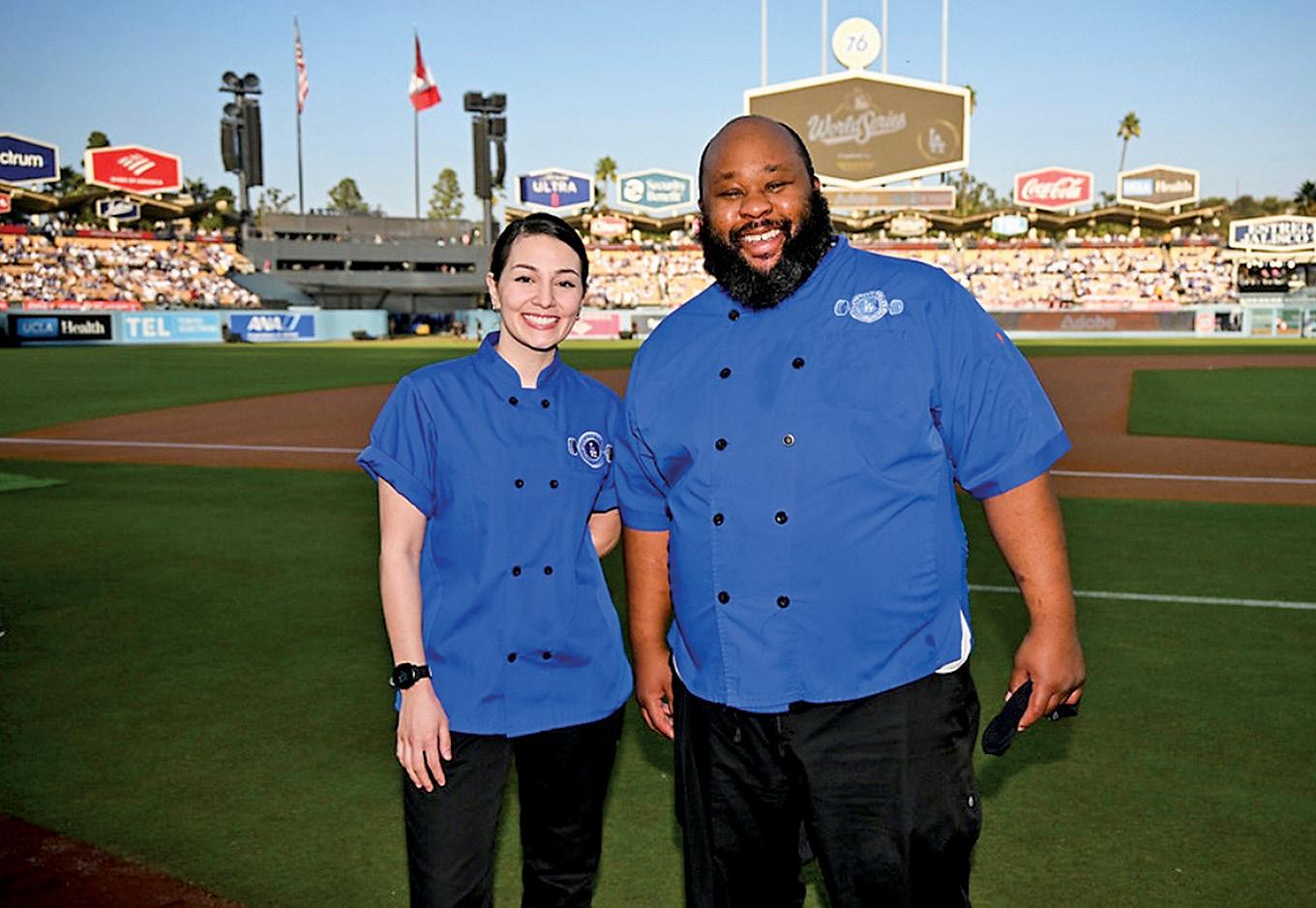
Tyrone Hall ’05, the team’s manager of performance nutrition and Kristen Loiacono ’15, head performance chef — both graduates of JWU’s Culinary Nutrition program — are responsible for fueling the Dodgers throughout the regular season and playoffs. Hall joined the team in 2016 and Loiacono arrived in 2018.
Though they have become accustomed to seeing their team succeed, winning never gets old.
“Watching that Game 7 in Toronto in the visiting clubhouse was absolutely one of the most thrilling moments of my baseball career,” says Hall of the team’s dramatic victory on November 1, 2025, which went to extra innings.
“When we won, the room erupted with cheers, high fives and hugs — then we ran to the field to meet the team. It was pure joy, gratitude and excitement,” adds Loiacono.
And while they aren’t the ones swinging the bat or catching the ball, Hall and Loiacono are still part of every step of the team’s journey — from spring training in March to the nail-biting playoffs in October.
“We are teaching them the fundamentals of nutrition and how to structure their eating routine on game days for performance and recovery.”
Kristen Loiacono
Inside the Dodgers Kitchen
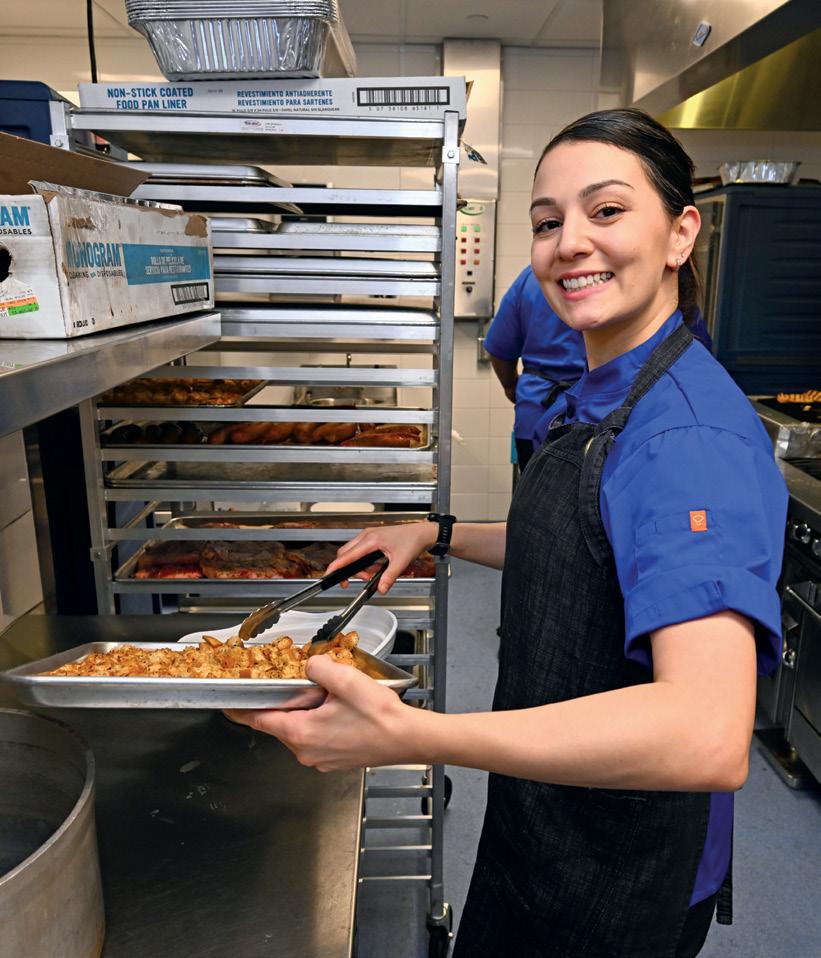
When the team heads to Arizona for spring training, a catering company manages the day-to-day food operations so that Hall and Loiacono can work one-on-one with players. “I focus on meeting with new and returning players, reviewing fueling and supplement regimens, and analyzing bloodwork to set baselines for the season,” says Loiacono.
“Minor league players need more guidance with their nutrition,” adds Hall. “We are teaching them the fundamentals of nutrition and how to structure their eating routine on game days for performance and recovery. Then, as they get into the majors, we start to fine-tune their programs and change diets for returnto-play plans or to extend longevity.”
Once they return to LA to start the regular season, Hall and Loiacono oversee everything that happens in the kitchen, from ingredient procurement to end-of-shift cleaning. Hall also handles budget management, catering logistics and dietetic counseling for players. On home game days (there are 81 of these), the pair can expect to be there for at least 15 hours.
“Most of the time we get to the field at 9 a.m. to start preparation for lunch,” Hall says. “That usually includes two proteins, two carbohydrates and two vegetables. We also set up a fruit bar, salad bar and sandwich bar.”
The first service starts at noon, but while they are batch cooking lunch, they’re also starting prep for the pregame service at 5 p.m. “We will lean on a build-a-bowl menu that allows a lot of variety for the guys,” Hall reveals. “Our goal is to provide the nutrition that they need before the game with a dash of what they want. On certain days we will also have somebody come and roll sushi for the team. It is always a hit!”
While players are enjoying the pregame meal, Hall and Loiacono are already on to prepping for the post-game meal, which happens anywhere from two to three hours after the 7 p.m. game start. “Dinner is usually hitting the table around 9:30 or 10 p.m.,” says Hall. “Some guys will eat at the field, but a lot of them pack up boxes to go home.”
“What is most interesting to me is how routine-driven players are,” Loiacono notes. “We know what each player likes and dislikes, what they prefer to eat when they walk into the clubhouse dining area and, for pitchers on their start day, what their go-to meals are. When they arrive, we already have their preferred meal ready, which helps them stay focused on the game.”
When the team heads out on the road, Hall and Loiacono can shift gears to focus more on menu development, nutrition consultations and procurement. And, of course, they try to squeeze in some rest days when they can.
The regular season grind only escalates come playoffs, especially for a team that has made a habit of going the distance. “The energy changes during the playoffs,” says Hall. “There is
a tension in the air — an excitement.”
Both chefs agree there is one important rule for playoffs: no new menu items. “Our job is to keep food consistent and reliable, so that food is the least of the players’ concerns,” Loiacono says.
But to celebrate the 2025 championship win, the chefs planned a lavish post-game meal with a sweet treat for dessert. “We cooked rib eyes and lobster tails, but for some reason, everybody coming down from the adrenaline of a win just wants a cheeseburger,” says Hall. “So, we made the cheeseburgers.”
The Journey to Pro Sports
Having three World Series Championship rings is just one of many things Hall and Loiacono have in common. Both grew up in families that loved to cook — Hall learned the basics from his father and grandmother while growing up in North Carolina, and Loiacono learned by watching her papa and greatgrandmother in Rhode Island. They both realized they wanted to pursue a career in food while in high school.
As a cross-country studentathlete at JWU, Loicano began to
“We cooked rib eyes and lobster tails, but for some reason, everybody coming down from the adrenaline of a win just wants a cheeseburger.”
Tyrone Hall
see how cooking her own nutritious meals could directly impact her performance. “I loved the idea of making food that was both delicious and purposeful. Studying abroad in France was a turning point for me and deepened my appreciation for food culture. The Culinary Nutrition program allowed me to blend culinary creativity with nutrition and performance to build a career where food could play a meaningful role in supporting athletes.”
Hall says he knew little about nutrition until his first year at JWU. “The Intro to Nutrition course put the hooks in me — the science of it all was fascinating. And then I learned you could make brownies with black beans! It was all a series of discoveries.”
Graduating from JWU in 2005, Hall spent time in the field as a chef before earning his master’s degree and getting his Registered Dietitian
From spring training to the playoffs, Kristin Loiacono ’15 and Tyrone Hall ’05 are focused on feeding the LA Dodgers.
(RD) license. He then worked with the Denver Broncos and the North Carolina’s Durham Country Department of Health before landing his current role with the LA Dodgers in 2016.
In that same year, Loiacono graduated from JWU and continued on to earn a master’s degree and RD license. She then took the leap and moved across the country for a culinary assistant internship with the Dodgers in 2018, which evolved into her current full-time role.
“The hands-on learning environment at JWU made me a professional who can think critically, adapt quickly and work confidently under pressure,” says Loiacono. “I still rely on the problem-solving, organization and communication skills I developed through my culinary labs and nutrition coursework. That foundation has helped me navigate challenges in my career and trust my training in fast-paced environments.”
For those interested in working in a high-pressure environment like that of a pro sports team kitchen, Hall and Loiacono have some advice.
“Build out your networks and spend time with the professionals you have access to,” says Hall. “Also, work on your soft skills. You can spend years in the kitchen working on knife skills and developing recipes, but if nobody wants you to be part of their team, it will be hard to advance in your career.”
“Be willing to sacrifice for growth,” adds Loiacono. “Working for a professional sports team is a very demanding schedule, but it is also incredibly rewarding. Chefs who are registered dietitians are becoming increasingly valuable in sports nutrition, and I look forward to seeing more JWU students enter the field.”
Called to Care
It takes a special set of skills to be a nurse. Johnson & Wales helps students build them — intensively, intentionally and in just 16 months.
By Judy Hill
Afew years ago, Kristina Johnson ’24 was working as a secretary at Newport Hospital in Rhode Island. Interacting with nurses in her administrative role, she became increasingly interested in their work. “I was able to see what they do day-to-day,” she says. “They wear so many hats — they’re able to do the job of several people at once, and I was just in awe of that.”
Johnson already had a bachelor’s degree in biology and had toyed with the idea of a medical career but doubted she had the time to go back to school. Luckily, her manager knew about the new Accelerated Bachelor of Science in Nursing program at Johnson & Wales. “It was exactly what I needed,” says Johnson. “It was a second bachelor’s degree. I didn’t have to waste my first degree, and I was able to get an accelerated program that took the prerequisites I already had.”
Johnson became part of the first cohort to graduate from the foursemester program, which welcomed students in August 2023. The Charlotte Campus welcomed its initial cohort the following spring, and the program, in both locations, earned national accreditation from the Commission on Collegiate Nursing Education in 2025.
Graduating in December 2024, the inaugural cohort at JWU’s Providence Campus achieved a 100% first-time pass rate on the National Council Licensure Examination for Registered Nurses (NCLEX-RN).
Johnson now works as a medical-surgical nurse on the night shift at Newport Hospital, taking care of patients on the adult cardiac and stroke floor. She has been there for a year now and after just a few months was promoted to the position of charge nurse, responsible for overseeing the other nurses in her unit.
Second-degree accelerated programs are offered in many places, says Kiley Medeiros, Ph.D., RN, nursing program director on the Providence Campus. “What I think Johnson & Wales does differently is the faceto-face opportunity. The majority of accelerated programs are fully online with just in-person clinicals. We are brick and mortar. You come to class, ask questions, meet and collaborate with your peers and get to ask your faculty members questions directly.”
The small cohort sizes also set the program apart. “The program’s largest cohort came in at 35 last fall,” says David Hudson, DNP, MSN, RN, the Charlotte Campus’s nursing program director, “and that’s about the largest that we want to see. It makes us big enough to have a footprint in the area, but small enough for the faculty to still be able to interact with all of the students.”
Think Like a Nurse
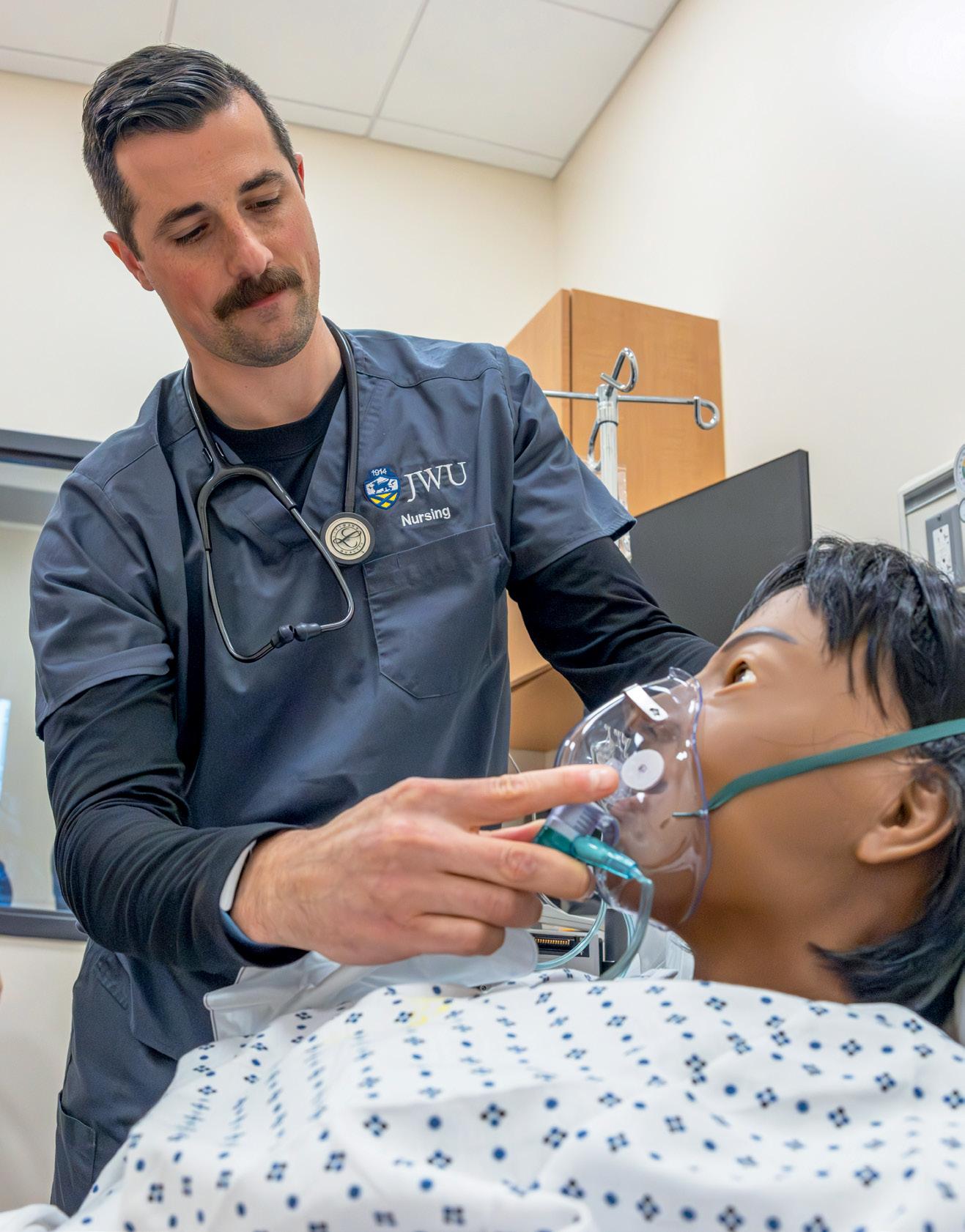
Within the first two to three weeks of starting the program, students are introduced to clinical rotations, where they spend time at area hospitals, as well as class sessions in the on-campus simulation lab.
“I joke and tell people that it’s bed, bath and vital signs,” says Hudson of the first semester Foundations in Nursing Practice course, “but it’s also about communication and teaching the student how to deliver safe nursing care. We’re teaching them how to start thinking like a nurse from a clinical judgment perspective.”
“ We are brick and mortar. You come to class, ask questions, meet and collaborate with your peers and get to ask your faculty members questions directly.”
Kiley Medeiros, Nursing Program Director
For first-semester student Max Glaser ’27, even simple techniques like using a stethoscope have proved fascinating. “When my classmates and I listen to each other, we hear the normal laminal flow. But when I’m in the hospital and I put my stethoscopes up to a patient, hearing
First Person
the different lung and heart sounds is very interesting, especially with people presenting with different conditions. I’ve never really spent time with a stethoscope around my neck before.”
Pathophysiology, or, as Hudson puts it, “the body gone bad,” also begins in that first semester. “So, as well as learning about how the heart functions, we’re talking about the disease processes that are happening when the heart doesn’t function.”
The Bigger Picture
In the sim lab, students start learning how to give medications and take health assessments, where they learn to look at the patient as a whole, says Hudson. “Not just their body, but their psyche, their bigger picture, their family life, their personal things, the things that make them click, and how they all impact their health.”
So yes, says Hudson “they’re learning how to listen to your heart
and your lungs and take your blood pressure and shine lights in your eyes and do all those things that you see your doctor doing and on TV, but also a lot more. And there’s sim lab right out of the gate.”
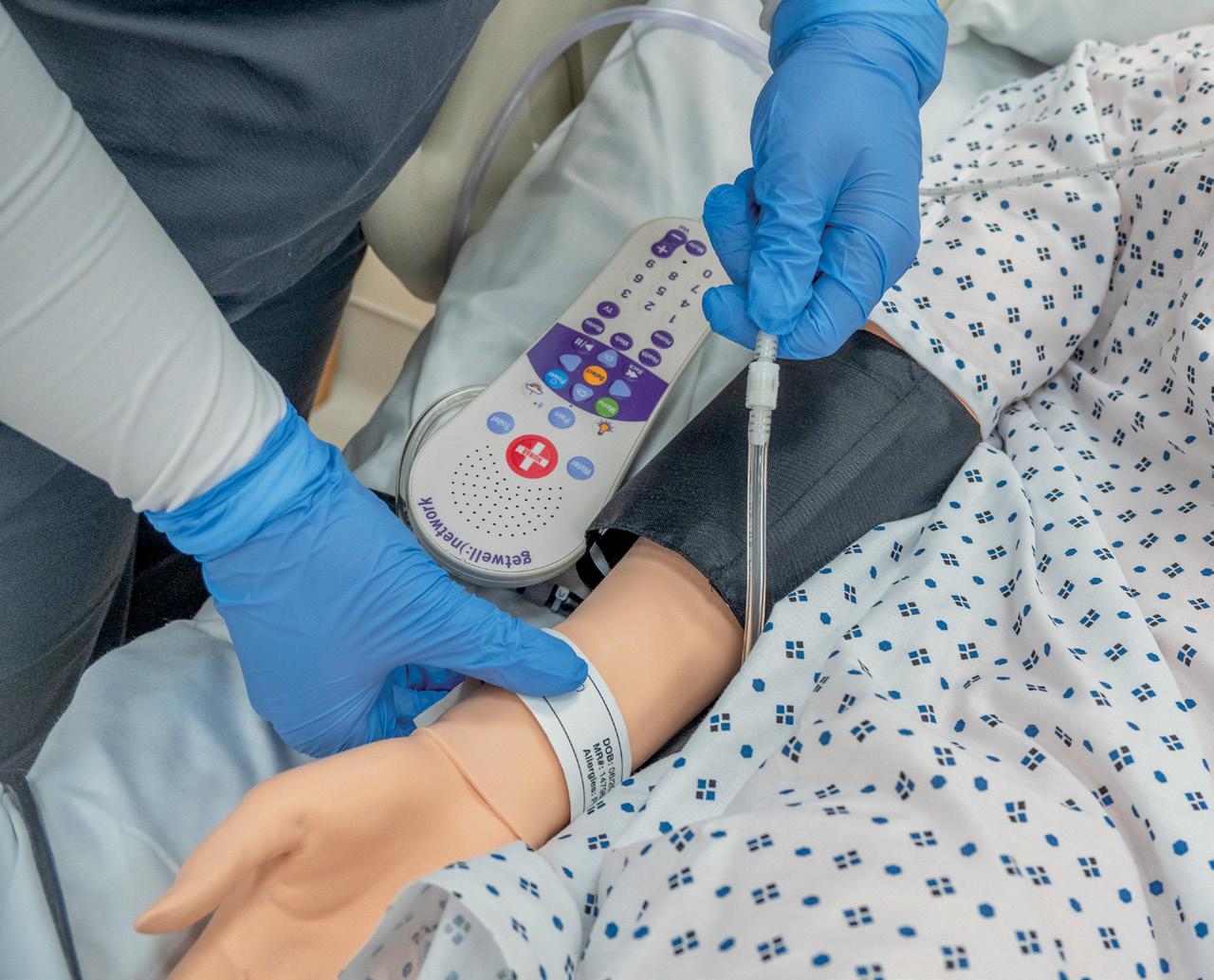
On both campuses the sim labs are a blend of high and low tech. “We have simulators that are very realistic, that talk, that breathe, that have heart sounds, lung sounds, bowel sounds and body fluids,” explains Meredith Joyner, DNP, RN, an assistant professor and simulation lab manager on the Charlotte Campus. When she is running a lab, she can change the mannequin’s vital signs directly from her laptop and even talk through the mannequin.
“When they first start the program, the students tend to be kind of standoffish with the mannequins — they have a hard time suspending reality,” says Joyner. “By the end of the program, they’re having conversations with it just like they would with a patient.”
Depending on the simulation, students sometimes interact with a faculty member or fellow student acting as a patient rather than a mannequin. “There are some things that I can mimic with our mannequins better than I can with a person, and vice versa,” says Jonathan Carpenter, MSN, assistant professor and simulation lab manager on the Providence Campus. “We actually have a lot of people volunteering to be a medical actor. It’s just fun.”
“What’s going on with this patient?”
Early in the program, students in the sim lab practice simple techniques such as inserting a Foley catheter and learning how to safely turn a patient in
Bring it On Maxwell Glaser ’27
First-Year Nursing Student Charlotte Campus
“It’s about taking the skills and experience I have and being able to apply that to where I’m at now.”
Right now, I’m drinking out of a fire hose. You just hit the ground running. I’m in a nursing foundation class, a pathophysiology class, a health assessments class and then my fourth class is a clinical rotation. That’s been the most interesting class so far. We’re in a cardiothoracic unit giving medications, doing assessments on people, seeing what’s going on with them. For me, it’s about taking the skills and experience I have and being able to apply that to where I’m at now. I have a master’s degree in exercise physiology, and I’ve also spent time as a strength and conditioning coach for the National Hockey League and working with Special Operations in Romania, as well as volunteering with the Special Olympics. It’s been fun to turn a page but keep my old pages open as well. What tipped me into wanting to be a nurse was coming across a distressed person in an overdose situation where I had to perform life-saving measures. If I could choose anything I wanted to do with nursing, it would be something fast paced — very emergency, very intensive care, very much in a trauma setting, anything where I can really have an impact and save lives as effectively as possible. That’s the trajectory I’m aiming for.
Kristina Johnson ’24, a nurse at Newport Hospital, takes care of patients on the adult cardiac and stroke floor.
bed or assist someone from the bed to a standing position into a wheelchair.
“We’re also trying to build up their confidence in communicating with a patient,” says Carpenter. “They’re learning how to walk into a room and talk to someone and establish that nurse-patient relationship, and that can be really hard when you’re first starting out.”
Even at this early stage, the simulations are also building up critical thinking skills. As Joyner explains, the students might have orders to administer medication, but there may be something wrong with the dosage or the patient has
a reaction to the medication. “They have to recognize that there’s an allergy or that the patient’s getting sicker. The skill may be putting in a urinary catheter, but they’ve got critical thinking points of medication administration that they have to think about. What’s going on with this patient? How do I deal with that?”
Nerves among new students are common. Johnson remembers how even doing simple actions early on, such as introducing herself to patients, handing out medication or giving injections caused her anxiety.
“I will never forget one of my professors telling me that the day you
are no longer nervous, you should be worried,” she says, “because being an overconfident nurse can be dangerous. Being exposed to things over and over again made me less anxious. I was able to practice injections in the sim lab and then discuss with my professors that it was something I wanted more practice with in clinicals, which ultimately allowed me to gain more trust in myself.
After a year of being a nurse I still get nervous, but I like to call it cautious.”
Carpenter starts his sim classes by assuring his students that they are in a safe learning environment and that he wants them to make mistakes because then they can come back together and reflect and talk about them. “What happens in sim, stays in sim,” he says.
“Coming out of it,” he adds, “they always say that it’s one of the best experiences that they have because it’s where you get the most condensed skill training in nursing school.
When we’re on an eight-hour shift on an orthopedic floor or a cardiac
“ They’re learning how to walk into a room and talk to someone and establish that nursepatient relationship, and that can be really hard when you’re first starting out.”
Jonathan Carpenter, Assistant Professor and Simulation Lab Manager
First-year
student Max Glaser practices basic techniques in the sim lab.
Sim Lab
INSTRUCTOR
Meredith Joyner, DNP, MSN
Assistant Professor and Simulation Lab Manager, Charlotte
Campus
CLASS DESCRIPTION
Every sim lab is different but the goal of the sessions, which take place in labs equipped with high-fidelity mannequins, is to put students in challenging scenarios they will likely encounter in a hospital when they graduate and that they might not have the opportunity to experience during their clinical rotations.
A TYPICAL LAB
“In pediatrics, we do an asthma simulation because that’s a common pediatric problem,” says Joyner. “One of the students will play the role of the patient’s mom. So, they’re getting that therapeutic interaction with the mother and also managing an acute situation with the patient. We want them to have experience with this before they’re taking care of a real person because managing an
acute asthma attack is a critical situation that can go bad really quickly. They gain experience with the medications you would give, how to administer a breathing treatment, how to interact with a mom that’s hysterical because her son’s not breathing well.”
THE DEBRIEF
“It’s really important after simulation that we sit down and talk about what went well, what didn’t go well, what were you thinking during this time?” says Joyner. “Allowing them to have that reflection really builds metacognition. It’s a real experience that they’re able to internalize and learn from.”
“The time of the sage on the stage lecturing for three hours is over. We want to engage the students and allow them to go through all of those stages of learning and hands-on experimenting.”
“We try to really put them in those critical situations that they will probably encounter as a nurse.”
Meredith Joyner, Assistant Professor and Simulation Lab Manager
telemetry floor, you may only get to do a skill if that patient happens to have something that requires you to do it.”
Johnson also found her first clinical rotation, in a nursing home, stressful at first. “We were nervous to put a patient to bed or to help somebody walk because we were still new to the basic maneuvers of getting somebody somewhere safely. Are they going to choke when you feed them something?”
Building the Complexity
In the second semester, students move on to understanding chronic disease processes. “They’re not looking at someone who’s had a heart attack today,” explains Hudson. “Instead, they’re assessing someone who had a heart attack a week ago and figuring out what happens now.” A mental health course, with its own freestanding mental health clinical experience, also happens during this semester, as well as a unit on pharmacology.
As a component of the mental health class, Carpenter runs a psychiatric simulation with a patient acutely detoxing from alcohol, so students can experience what it’s like when a patient becomes aggressive and starts becoming psychotic. While these are common situations that nurses will likely see in practice, in clinical settings, for student safety,
Think you could be an RN?
To be a nurse is to juggle myriad roles. “That’s one of the things I love about it,” says Jonathan Carpenter, MSN, simulation lab manager on the Providence Campus and a critical care nurse in Rhode Island. “I get to play social worker and therapist while also being mad scientist in the background titrating 12 different drip infusions while trying to also understand the path of pathophysiology of a disease process.”
Being compassionate and empathetic is just the baseline for succeeding as a nurse. According to Carpenter, you also need to be able to do all of the following, often at the same time:
Connect the Dots
There’s a reason we have so many prerequisites and all these science classes because you do need to be able to connect the dots and exercise a large amount of critical thinking.
Collaborate Well
Nurses tend to be the ones at the corner of a lot of things. We’re working with social work. We’re working with providers. We’re working with respiratory therapists, with pharmacists.
Know your Community
We’re doing the assessments when discharging a patient and thinking, “Does this person have a stable home to go to? Do they have food? Do they have electricity?”
Lean into Discomfort
Students often shy away from hard conversations. I was a nurse through COVID, so I’ve had a lot of very difficult conversations. It’s hard. Really hard. But as a nurse you need to be able to address these situations with care and compassion.
Be Open Minded
You also need to approach your job with cultural sensitivity because you’re going to be put in the middle of some very complex social circumstances. You need an open heart and an open mind when you’re in these situations.
Jonathan Carpenter Assistant Professor and Simulation Lab Manager, Providence Campus
“The overarching connective tissue of experiential learning is something we want JWU students to experience no matter what course they’re taking.”
Michael Fein, Dean of the John Hazen White College of Arts & Sciences
if anyone becomes aggressive the first thing an instructor will do is pull them out of danger. “This is a great opportunity,” he says, “for them to be involved in a situation they’re not going to be able to experience in a clinical practice setting.”
For Johnson, pharmacology was one of the most challenging classes. “I think it’s difficult for a lot of people just because it’s less to do with hands-on learning. You see a slide, you memorize it. Now I’m in the field, I realize how helpful it was because I’m still thinking of the rhymes I made up to jog my memory, and I always think ‘Wow, that’s crazy that I still remember that.’ So, it did end up being really useful.”
The third semester introduces students to pediatric nursing and maternal newborn nursing, each of which has an associated clinical component. Since students may not always see a delivery when they’re on a clinical rotation, Joyner simulates a delivery for them in the lab with a mannequin that can birth a baby. She also stages a postpartum hemorrhage, a common obstetrical emergency. “We try to really put them in those critical situations that they will probably encounter as a nurse.”
The final semester is the most exciting for students, says Medeiros, with a Care of the Adult course focused on acute illness and simulated medical emergencies with many moving parts. A patient may come in with chest pain, and the students have to determine if it’s a heart attack or not. Another might present with a stroke. Somebody else has diabetes and experiences an acute diabetic issue.
The last simulation Joyner runs with her students addresses prioritization, with three people with evolving disease processes that are getting sicker. The students have to prioritize care around who they will attend to first. “The patients have call bells, so the nurses get interrupted,” says Joyner. “They get phone calls from the doctors and the lab. This is what it’s really going to look like when you have three patients to care for and all three need things, and
you’re getting constant interruptions.” After the simulation, the students will debrief and talk about their thought process and why they chose to prioritize a particular patient.
A Glimpse of the Future
In their final semester, students also learn about community and population health nursing. The aim is to give them an understanding of the resources available to clients in their area. Do they have 24/7 transportation? Do they have a stable home to go to? Do they have food and electricity? Even if students are not planning on going into this area of nursing, Medeiros says, the training is valuable because “patients are leaving the hospital, and as a nurse you have to understand what is available to them once they’re discharged.”
Students at this stage of the program are also trying to figure out their professional identity within
nursing, and that’s where the oneon-one practicum plays a vital role. Each student is paired up to work with a nurse in a hospital setting caring for adult clients. “It’s a really strong professional building semester for the students, going from being one of eight in a clinical group following their clinical instructor to being a standalone,” says Medeiros.
Johnson was fortunate, she says, to have been placed in a medical surgical unit at Westerly Hospital in Rhode Island. “It’s similar to the one I work in now,” she says. “I worked with a registered nurse, and it was valuable because it gave me a different perspective. I created a different rapport and relationship with the nurse as well as with the patients, one that I wasn’t able to fully obtain in a group setting. I got to apply the skills I learned in class, clinical and simulation as a ‘real’ nurse. It gave me a glimpse of what my future held.”
The sim lab provides a safe space where students can learn and make mistakes.
Supporting Food Innovators
By Judy Hill
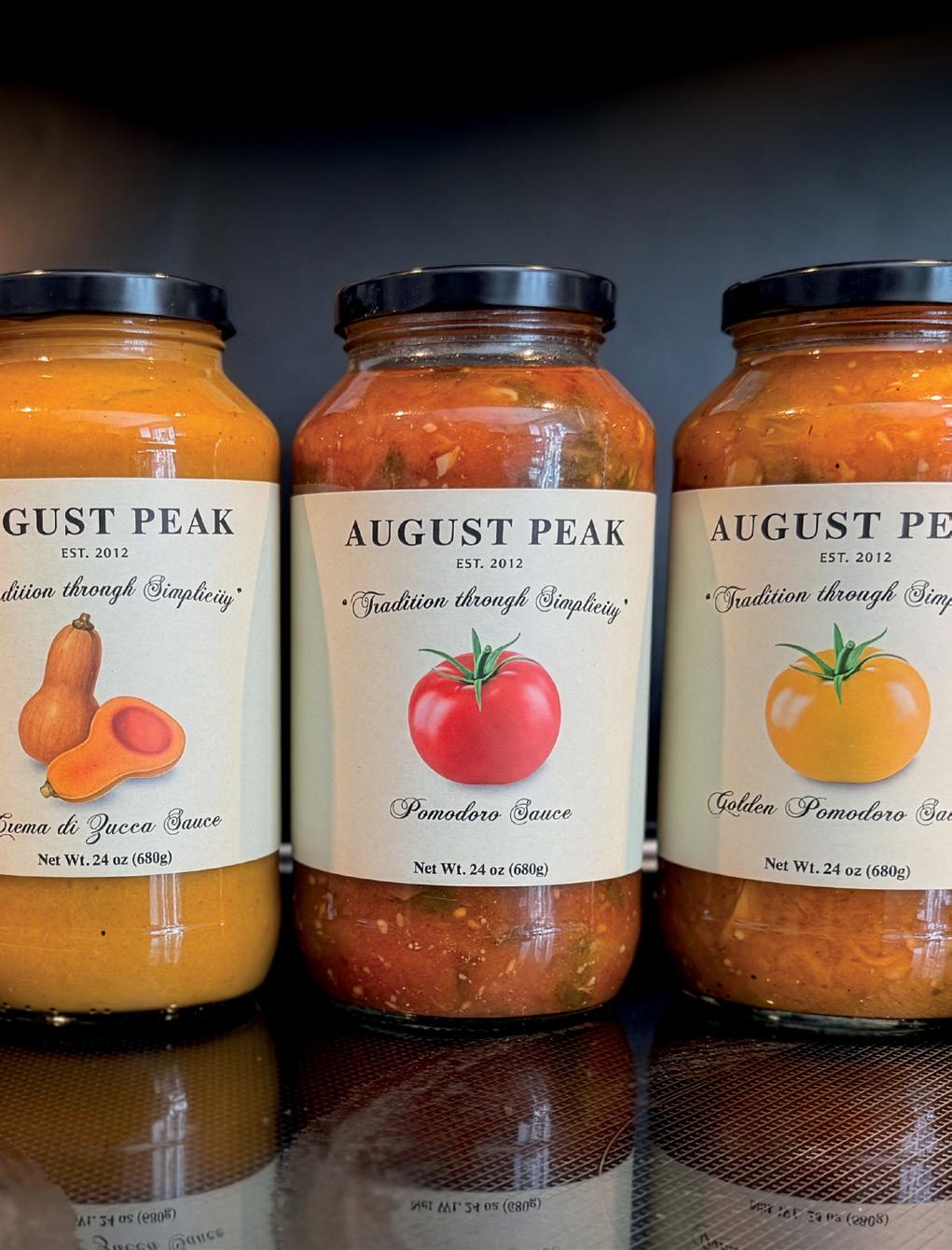
When William Ferlauto ’91 came up with the idea of jarring and selling a line of tomato sauces, he knew he’d have to jump through a few hoops. The easy part was coming up with the recipe. He’s been making the sauce — with fresh, ripe tomatoes, toasted garlic, basil and highgrade extra virgin olive oil — since he was a teenager growing up in New Jersey. Dreaming up variations was a breeze, too; His six-flavor lineup now includes Smoked Pomodoro Diavolo and Crema di Zucca, as well as a vegan Crimson Root Sauce, made with beets and apples.
The regulatory hurdles seemed more daunting. To sell his August Peak line of sauces he would need to file an application with the Department of Health and have his product analyzed to ensure its safety. To his relief, Ferlauto, who lives in Warren, Rhode Island, discovered he could take care of every step of the testing process at the Ecolab Center for Culinary Science on the Johnson & Wales Harborside Campus.
“It worked like a charm,” says Ferlauto. “The lab helped me legitimize everything and gave me the pH and the breakdown of sodium and everything I needed to create an actual nutritional label to go on the jars.”
Johnson & Wales has been in partnership with Ecolab, a global
safety and sustainability leader, since 2017, when a gift funded the creation of the Ecolab Center and its anchor space, the Food Innovation Design Lab, along with an endowment to fund operations and support student scholarships.
For the first few years, the Ecolab Center focused largely on programmatic and curriculum support, helping to get JWU’s Sustainable Food Systems bachelor’s degree and the master’s in Food Innovation & Technology off the ground and running.
“It was pretty clear to me that the center could and should play a role in the food and beverage entrepreneurship ecosystem here in the Northeast.”
CFIT Dean Jason Evans
When Jason Evans, Ph.D., arrived as dean in 2018, he pushed for the center to play a broader role. “I was brand new to Rhode Island and to its food and beverage landscape,” says Evans. “It was pretty clear to me that the center could and should play a role in the food and beverage entrepreneurship ecosystem here in the Northeast, so we set about finding a director with the food science chops to orchestrate everything we wanted to do.”
Enter Ruben Morawicki, Ph.D., formerly an associate professor in bioprocessing at the University
of Arkansas and a senior research scientist at Tyson Foods, who became director of the Ecolab Center in 2022 and also serves as a professor in JWU’s Culinary Science program. “Through testing, we determine if the product is safe or not,” says Morawicki. “And if it’s not, we tell them what they can do. And if eventually the product is not feasible, we tell them so.”
Specifically, what the Ecolab Center offers is product evaluation for acidified foods. FDA regulations require that all shelf-stable acidified products — such as pickles, salsa and BBQ sauce — be evaluated for safety by a facility known as a process authority, which analyzes the product, reviews the manufacturing process and list of ingredients and provides paperwork confirming its safety. The Ecolab Center is Rhode Island’s only process authority.
Several well-established food companies take advantage of the Ecolab Center’s services, though the majority of its clients are small entrepreneurs or people just starting a business. “They need a lot of hand holding,” says Morawicki, “and that’s what we do.” Since Morawicki’s arrival, the lab has undertaken lab analyses for hundreds of individual clients and products. “At the end of the day,” says Evans, “it’s a great source of non-tuition revenue to support the extension arm of the College of Food Innovation & Technology.”
Beyond food safety and testing expertise the Ecolab Center also
Since 2022, the Ecolab Center has completed lab analyses for around 450 unique products from well over 100 food and beverage entrepreneurs from across the country.
Two
In its first few years of operation, the Center helped launch two new CFIT academic programs — the Sustainable Food Systems bachelor’s degree and Food Innovation & Technology master’s degree.
The Ecolab Center sponsored CFIT’s Future Food All-Stars Challenge, a student entrepreneurship competition with cash prizes. Entrepreneurs in residence who mentored the students included well-known JWU alumni food personalities Tyler Florence ’94, ’04 Hon.; Lorena Garcia ’00, ’14 Hon.; and David Burke ’23 Hon.
The Ecolab Center is the only process authority — a facility that can validate food safety — in the state of Rhode Island.
80%
The majority of the Ecolab Center’s clients are small-scale food or beverage entrepreneurs, many from the Northeast.
provides in-depth consulting to food and beverage entrepreneurs around product research and development.
For example, says Evans, “a Canadian seafood company approached us because it was getting a lot of bycatch — species that show up in the nets when they’re harvesting their primary catch — and they didn’t have a market for those bycatch species, like razor clams. They wanted us to help develop product platforms that they could then take to their clients in fast casual or fast food.” That project spanned a year and a half and tapped the knowledge and experience of several JWU faculty.
JWU students intersect with the Ecolab Center, too. In junior and senior level labs, students get to design their own restaurant menus, which often involve processes — such as fermentations or sous vide applications — that technically would require a variance from the Department of Health. Morawicki works with the faculty and students in those classes to understand the processes and write safety plans that are then posted in the labs, helping to educate the young chefs on what a food entrepreneur would see from a regulatory standpoint.
This spring, the center welcomed its first intern, Terrene Huang ’26, a Culinary Science & Product Development major who became interested in food safety when she took a food processing class with Morawicki in her first semester.
Huang’s internship duties include helping Morawicki with lab analyses of food products: measuring pH levels, assessing water content and determining shelf life. She also is heading up a pilot program to produce a line of JWU branded packaged foods based on recipes developed by students on the Providence and Charlotte campuses last
year (with USDA grant funding) that use maple syrup as a hero flavor.
From a wide array of recipes — maple banana bars, maple ice cream, maple vinaigrette and a maple chili crisp — Huang will pick one or two to test, assessing market potential and manufacturing feasibility. Students will take full ownership of the production schedule and manufacture the branded products, which will be sold at campus venues.
“What I want to be able to continue to learn is how to bring good food practices to places that I work in and to communities around me,” says Huang, who also has a degree in industrial design. “I hope to combine my background in product development and design with my culinary passion and love for food.”
Beyond any singular project, Dean Evans sees an overall benefit for students from having so many local and regional food entrepreneurs actively engaged with the Ecolab
Center. “We now have this treasure trove of fledgling entrepreneurs that we can access and get in front of our students — whether that’s an event, classroom presentations, speaker series — all working in a business that many of our students want to break into.”
Moving forward, Evans sees Johnson & Wales, with the help of the Ecolab Center, positioning itself as a thought leader in food safety, especially as it relates to novel kitchen techniques that don’t yet have long-standing food safety parameters around them.
“Johnson & Wales and the Ecolab Center will be a hub for understanding the food safety implications of those new techniques and technologies,” he says, “so that departments of health all over the country will have a much better understanding of what they see when they walk into these really progressive kitchen environments.”
Ecolab students work in the Food Innovation and Design Lab.
Mike Cohea
Winners Circle
Charles Zimmerman ’15 Wins Food Network’s “Holiday Baking Championship”
On Season 5 of the Food Network’s “Holiday Wars” in 2023, Charles Zimmerman ’15 made it to the finals. Having come so close to network victory in the past, it was particularly gratifying for him to take home the $25,000 prize as winner of the 2025 Food Network’s Season 12 “Holiday Baking Championship” with a pecan-forward dessert.
“Watching the show back home with close friends was a more emotional experience than on set,” says Zimmerman, who is executive pastry chef at Farmington Country Club in Charlottesville, Virginia and previously worked at Michelin-starred restaurants like Per Se and
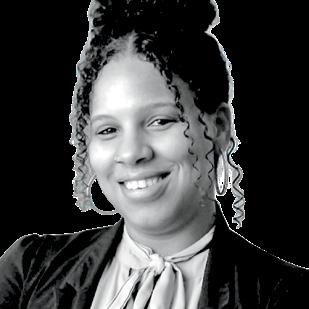
She adds, “As a Black woman in technology, the journey has not always been linear or easy. It’s required resilience, confidence and a willingness to take up space in rooms where we’re often underrepresented. This recognition affirms that our voices, perspectives and leadership matter.”
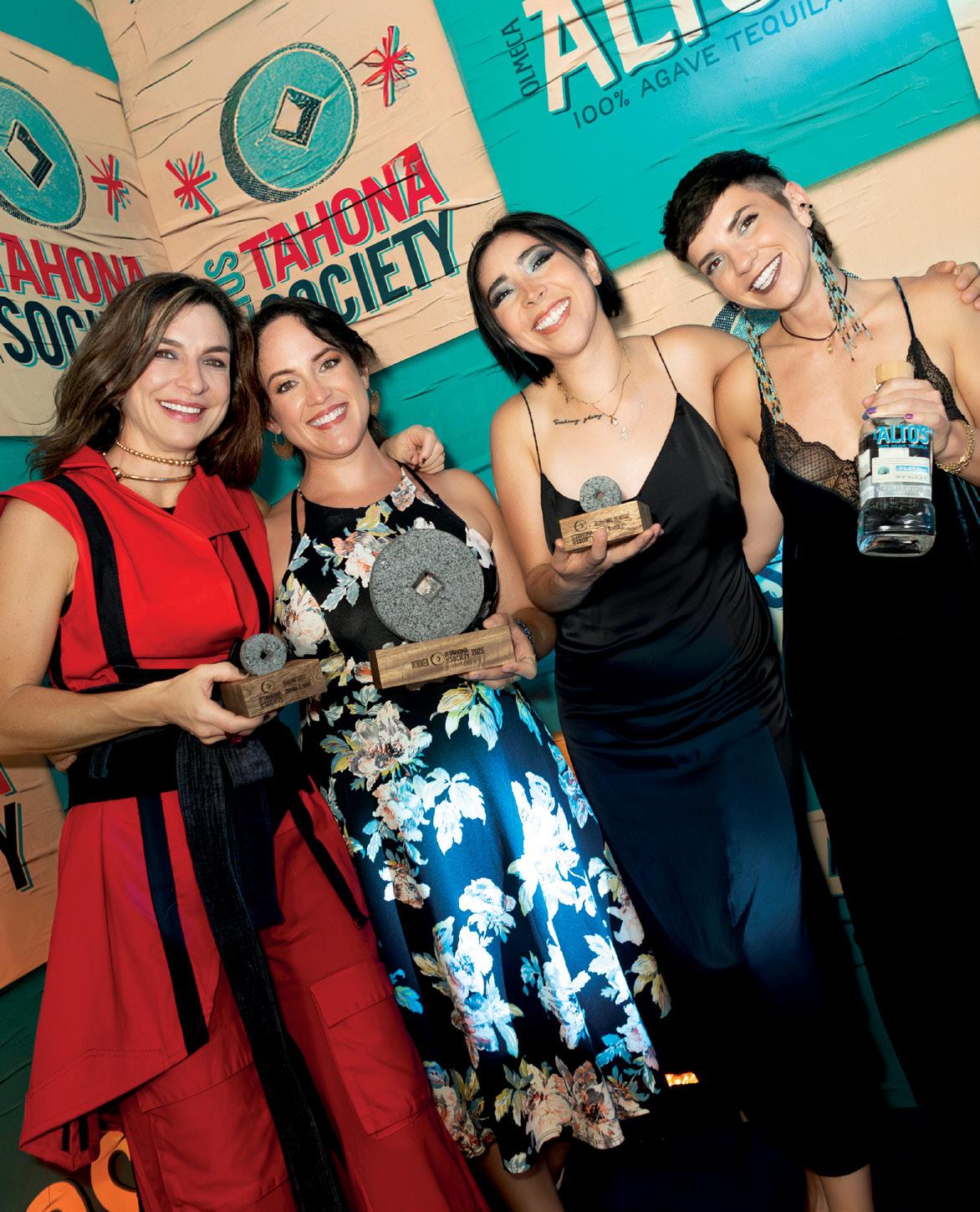
Christina Mercado ’07, ’10 MBA Wins 2025 Altos Tahona Society Competition
teaching mixology classes, and her modified syrups were a hit. Now, she’s bringing those syrups (C-Sweets Syrups) to market with the help of Altos Tequila’s Tahona Society — a tequila education program — who crowned her its 2025 Global Champion with a $50,000 grant.
The French Laundry. “I was so proud to represent myself on behalf of my family, staff, industry friends and aspiring chefs.”
Sandy Martins ’08 Honored with RI Tech10 Award
Sandy Martins ’08, who majored in Computer Graphics and New Media (now Design), was honored as one of the state’s biggest innovators in the technology field at Rhode Island Monthly magazine’s TECH10 Awards. Martins, who is director of information technology with MENTOR, a nonprofit organization that helps develop youth mentoring relationships, says the award was “deeply meaningful, not just professionally, but personally.”
Christina Mercado ’07, ’10 MBA takes pleasure in bringing high-quality ingredients together to create something delicious. Already an accomplished pastry chef, Mercado took a sabbatical from baking in 2016 to work as a mixologist, creating delectable cocktails with less sugar. She began
“Winning this competition was meaningful because it’s the culmination of years of work across my different fields of bar and pastry,” says Mercado, who earned her BS in Culinary Arts and MBA in Hospitality. “This competition not only helped me grow this idea into a business, but it’s also provided me with the resources to bring a product to life that I truly believe can positively affect our lives and industry.”
Below: Christina Mercado (second from left) at the 2025 Altos Tahona Society award ceremony.
Powered by Passion
Students raised funds to attend a transformative conference
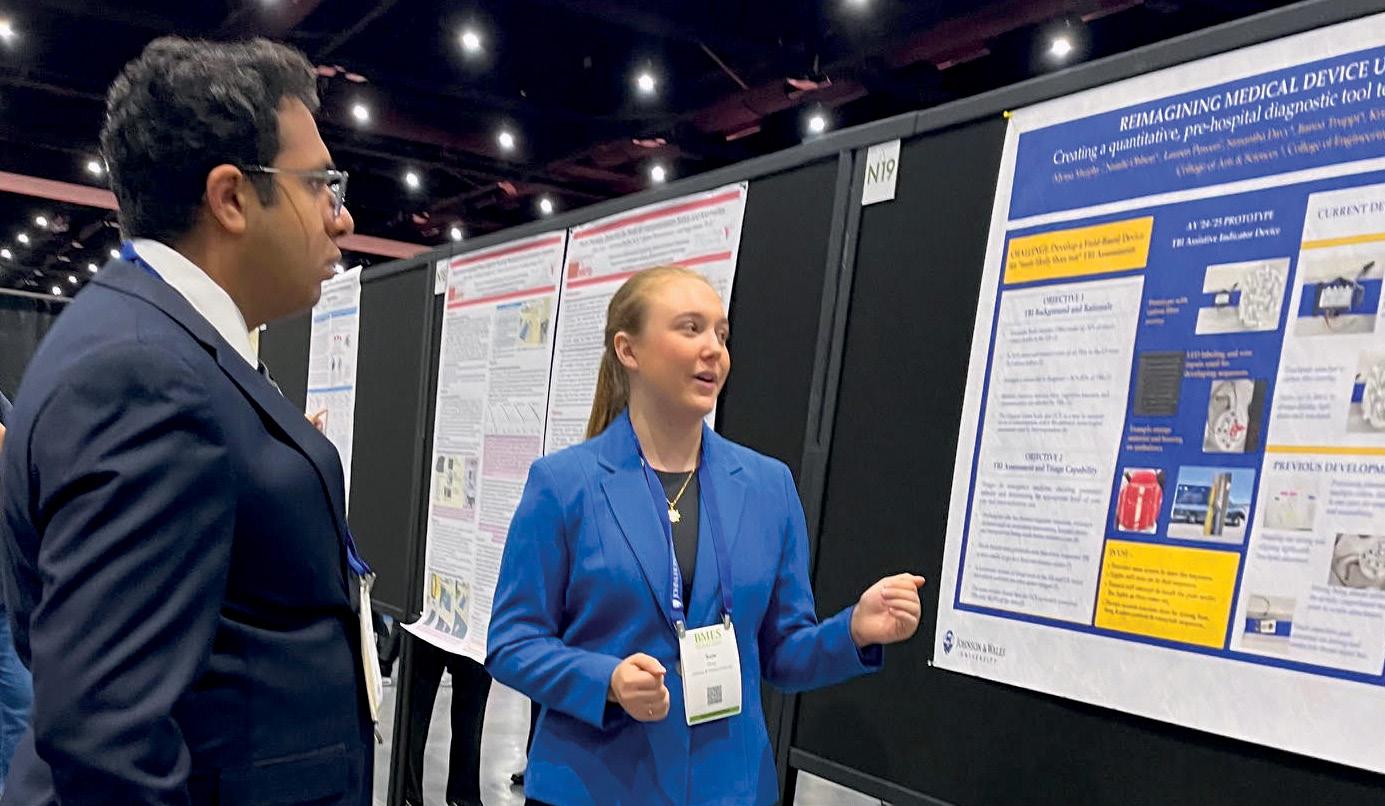
When Professor Nicole Urban, Ph.D., found out last summer that students in her Biodesign Experience Research Team had been accepted to present at the Biomedical Engineering Society Annual meeting in October in San Diego, she was excited that they would have the opportunity to present at the largest conference of its kind in the field. She also knew it would take considerable resources for her seven students to attend.
Undaunted, Urban and her students, with support from Dean Michael Fein and help from Director of Annual Giving Kilian Webster, set about developing a campaign to raise the necessary funds, all in the space of a few weeks. The students put together a presentation, developed a trip budget and posted videos on LinkedIn and other social media channels.
“I had participated in fundraisers as a child,” says Samantha Davy ’27 “but creating one of our own was completely different. I had moments of doubt, but once we achieved our goal, it was rewarding to see our efforts pay off in such a huge way.”
The students raised the full $9,000 needed for the registration fees, cross country flights and lodging, with some left over to donate to the College of Arts & Sciences for similar initiatives.
In San Diego, they attended three days of presentations, poster sessions, networking events and graduate program recruitment opportunities with over 5,000 researchers from across the globe. “It was incredible,” says Davy. “My biggest takeaway was becoming more comfortable speaking with experts and professionals.”
This type of funding campaign, says Urban, works well because donors can give anonymously and at any level, and it can be targeted to a specific initiative. “It also allows students to feel a sense of ownership and involvement in their project.”
SUCCESS
No matter what you support, your gift directly impacts student experiences. Discover what opportunities are meaningful to you and make your gift today. giving.jwu.edu
1986
James Ebersole Jr. ’86, ’89 M.S.
Lewisville, Texas
Jim met Denise Gonya ’87 in Professor Paul Trznadel’s economics class in 1986 and they had their wedding reception at the Johnson & Wales Inn. Forty years later, they live in Lewisville, Texas, with two kids and three grandchildren.
1988
Mark Moeller
Westport, Connecticut
Mark has launched The Restaurant COO™, a fractional leadership and operations firm helping independent restaurants and emerging brands achieve clarity, consistency and profitability.
Jeffrey S. Swirsky Deland, Florida
Jeff started a new role as general manager of the Marriott Hotel Orlando Downtown in Orlando, Florida.
1991
Paul St. Cyr Concord, New Hampshire
Paul is celebrating 20 years with Fidelity Investments in Merrimack, New Hampshire, as a stock plan consultant.
1995
Brandee Kern
Springfield, Ohio
Brandee was promoted to chief of staff at Wittenberg University in Springfield, Ohio.
Richard Catapano
Garden City, New York
Richard was hired as system director for CCL Hospitality Group at Morrison Living in Mount Vernon, New York.
2001
Ross Davis
Alexandria, Virginia Ross joined Metropolis
SHARE YOUR NEWS
Did you recently start a new job, receive a promotion, move to a new city or have a baby? We want to hear all that and more. Email alumni@jwu.edu or submit a note at bit. ly/jwuclassnotes
Technologies, the largest parking operator in North America, as regional manager, Washington, D.C.
2004
Eunji Kim Woodside, New York
Eunji is the executive pastry chef at Morgan Stanley in New York City under the Compass Group.
2006
Larken Egleston Charlotte, North Carolina
Larken has been named director of intergovernmental affairs for North Carolina Attorney General Jeff Jackson and the North Carolina Department of Justice in Raleigh, North Carolina.
2007
Michael Belton
Saint Louis, Missouri
Michael was promoted to chief operating officer with Thompson Hospiltality in Reston, Virginia.
Joanna Barrett
Annandale, Virginia
Joanna, founder of Joanna Barrett Therapy & Wellness LLC, has been named president of the Northern Virginia Alumnae Chapter of Alpha Sigma Tau Sorority. Joanna was a founding member of the chapter at JWU North Miami in 2007.
Strategic Connections
JAMIE KLUGER ’26
Food & Beverage Industry Management
“We all work together to communicate everything to the staff and make sure everyone’s where they need to be. I’m the one saying, ‘can you do this?’ or ‘you need to make the buttercream.’”
HOUSTON STRIGGOW ’79
Co-Founder, SusieCakes
“SusieCakes is a place where students can strengthen their skills in everything from production baking to inventory management in a positive and elevated workplace.”
Class Notes
The Icing on the Cake
Learning new skills in and out of the kitchen
Jamie Kluger ’26 is finishing up her second internship for SusieCakes, a national bakery brand known for classic American desserts. “It was a no-brainer for me to come back because I loved it and it’s close to home,” says Kluger, who has been working at the Laguna Niguel, California location, about 20 minutes from her hometown.
Founded in 2006 by Houston Striggow ’79 and Susan Sarich, SusieCakes has been a popular internship site for JWU students over the years.
Kluger was promoted to pastry baker lead intern during her second internship. “I’m the one running the shift, so I make the production board for the day that includes what everyone will be doing. I also do all the math for the next day, figuring out what is needed and how much,” she explains.
“My role is more management-based now. I’m crosstraining on the guest services side, which I wanted to do to gain that experience in our front of house including taking customer orders, answering their questions, helping with custom orders and making sure everyone’s orders are boxed and ready for pickup. I manage four full-time staff and collaborate with two of them. I’m also the only student working at this location.”
Striggow, who serves on the College of Food Innovation & Technology Advisory Council, also supports JWU students through the Houston Striggow ’79 & SusieCakes Endowed Scholarship and is a member of the 1914 Society, a group of alumni and friends who have included the university in their estate plans.
“Hands-on, experiential learning that builds upon classroom instruction is crucial to preparing students for successful careers after JWU,” says Striggow.
The Yena Experiential Education Fund supports learning opportunities that empower students to launch their careers with confidence.
Make a gift today. giving.jwu.edu
2009
Jenny Scuccimarri Ypsilanti, Michigan
Jenny is an actor and recently appeared on the NBC show “Chicago P.D.” in the Season 13 Episode “Miami.”
2012
Zachary Williams Magnolia, Delaware
Zach joined the Boston Beer Company as the integrated communication manager for Dogfish Head. Zach leads digital and social marketing strategy for the brand’s “offcentered” portfolio.
2013
Damont Combs Providence, Rhode Island Damont has been awarded the Pawtucket (RI) Teen Hall of Fame Humanitarian of the Year 2025 for the work he does with youth and in the prison system teaching poetry. It all began at JWU when Sheila Austin gave him the opportunity to teach poetry in her class one day.
2014
Jade Duncan
Jamaica, New York Jade’s family-owned business, The Nourish Spot, opened a new location in JFK Airport’s Terminal 8 in January 2025. Duncan serves as COO alongside her mother, Dawn Kelly, in this thriving enterprise that serves fresh juices, vibrant salads, wraps and hot offerings.
Maycie Ralbovsky Easton, Connecticut
Maycie and Sam Ralbovsky ’14 met their freshman year at JWU. After running a food truck, they now run a thriving catering and private chef business (Feast and Fest) and still have the same passion for cooking and
each other as they did back in their college days.
2015
Alison O’Hearn
Glen Allen, Virginia
The trade magazine
“Foodservice Equipment Reports” named Alison an Emerging Leader under 45 in 2025. Alison is a project manager at Cini-Little International Inc.
Alanna Allen
Rio Rancho, New Mexico
Alanna is partner services manager for Visit Albuquerque, where she leads Partner Pop-In, a program that combines meaningful connections with activities hosted at partner businesses. In her inaugural year hosting this event, it was recognized as a finalist for the 2025 Outstanding Event category at the New Mexico Hospitality Association’s Top HAT Awards.
2017
Margarida Vieira ’17 Ed.D Bourne, Massachusetts
Margarida is retiring from Bridgewater State University (BSU) after a 40-year career that began when she was a high school student. She earned her bachelor’s and master’s degrees at BSU and her doctorate at JWU while working full time, a significant accomplishment since she had not been allowed to continue her education beyond the sixth grade in her native Azores.
2019
Bryan Kaetz
New York City, New York
Bryan was promoted to manager of men’s visual merchandising at Tommy Hilfiger in New York City.
Meghan Tozza Kittery, Maine
Meghan has launched Chef Meghan Tozza LLC,
which offers weekly meal prep along the seacoasts of Southern Maine and New Hampshire, as well as in Boston, with a monthly rotating menu customized to fit dietary preferences.
Meghan also offers private cooking services for gatherings.
2020
Michael Dowell ’22 M.S.
Herndon, Virginia
Michael is a compliance/ safety officer III for the Virginia Department of Agriculture and Consumer Services, Department of Meat and Poultry Services in Richmond, Virginia.
2021
Ashley Hogan Raymore, Missouri
Ashley is a supervisor of garde manger for Levy at CPKC Stadium in Kansas City, Missouri. The stadium is home to the National Women’s Soccer League Kansas City Current. Ashley has worked during NWSL Championships, Kansas City Chiefs playoffs and many concerts.
2022
Justin Nichols
Brooklyn, New York
Justin is the senior global marketing specialist at OIA Global in New York City.
2023
Jasmine L. Hazard East Providence, Rhode Island
Jasmine was promoted to associate level 2 at Feast & Fettle in East Providence, Rhode Island.
2024
Josef Thorsen North Charleston, South Carolina
Josef is the executive chef at Katsubo in the Park Circle neighborhood
of North Charleston, South Carolina.
2025
Mudassir Khokon ’25 MBA Mumbai, India
Mudassir has joined Brightstar Lottery as a project manager/ network operations project manager. In this role, he leads a team of IT network and security technicians and helps build and mature a Network Operations Center from the ground up to support nationwide mission-critical systems.
BIRTHS
2015
Natalie Harvey Hampstead, New Hampshire
Natalie welcomed a son, Charlie, in August 2025.
Stephanie Grey East Hartford, Connecticut
Stephanie had her third child in spring 2026. Her 7- and 2-year-old daughters are excited to be big sisters.
2021
Cheyenne Whitson
Nashville, Tennessee
On November 6, 2025, Cheyenne and Jacob Witson welcomed baby girl Tatum Sloane Whitson, weighing 8 pounds and 21 1/2 inches long. Both parents are 2021 graduates from the JWU Charlotte Campus.
WEDDINGS
2019
Joana Marie Cayetano-Garcia Hamden, Connecticut
Joana Marie CayetanoGarcia ’19 and Randy Garcia ’18 were married at The Coast Guard House in Narragansett, Rhode Island (where
The Opener
Joshua Klapper ’21
The bosses at Union Square Hospitality Group (USHG) call Joshua Klapper ’21 the “ChatGPT of Daily Provisions” because he has all the answers about the brand that includes 11 “neighborhood kitchens” that provide breakfast, lunch, dinner and catering to hungry New Yorkers, Bostonians and DCers. Daily Provisions is one of the crown jewels in USHG’s expanding empire of restaurants, cafes and eateries, and Klapper is their training manager, assisting with new store openings and covering managerial shifts across locations as needed.
“Connections really matter in the culinary world.”
“It’s been really gratifying to be at the forefront of expanding Daily Provisions to new locations, including in Lower Manhattan, and the first locations outside of New York in Cambridge, Massachusetts and Washington, D.C.,” says Klapper who helps outfit the cafes, establish workflows, train new staff and ensure openings go smoothly. “As a foodie, it’s also fun to experience the food cultures of other cities while I’m working there.”
Klapper’s admiration for USHG began early. In fact, his first course at JWU was a front-ofthe-house lab in which he did a project on the group. “I think it’s pretty remarkable that I now work for the same company that I admired so much when I first started college,” says Klapper, who was already a fan of USHG founder Danny Meyer’s book, “Setting the Table,” and a regular at the first Daily Provisions location near his home in Manhattan.
In a few short years, Klapper has worked his way up through the ranks at Daily Provisions from bagger to expediter to manager to his current role. He emphasizes the importance of hard work and taking every opportunity at JWU — Friday labs, clubs and extracurriculars — to grow and make connections. “Connections really matter in the culinary world,” he notes.
As Daily Provisions continues to expand, Klapper is looking forward to overseeing another opening in the coming months in Boston’s Seaport.
How can we communicate the value of higher education?
We asked three JWU education experts how they argue for the importance of higher ed at a time when many are questioning whether it is worth the investment.
Jose
Samayoa ’16 Founder and Principal, Eels Professional Development
I’m currently working with a client’s leadership team and the topic of going back to school recently came up. I likened enrolling in a program to a SMART goal. There’s a semester, syllabus and specific coursework and outcomes that can be planned for. Yes, there is open courseware available but you’re navigating it all on your own. Beyond the academics there are experiences and relationships that will last a lifetime. Regardless of today’s climate, I will stress what I share with my clients: Impact what you can control. There is nothing wrong with wanting to be a part of something bigger than you that builds a bond, pride and drives accountability.
Victor Mercurio, Ed.D. Director, Educational Leadership Doctoral Program, Johnson & Wales University
In a world in which time and space are expanding and contracting at exponential rates of speed, the higher education space provides students with a chance to connect interdependently with other students whose learning journeys transcend the boundaries of geography and experience. The complex, evolving problems of our time demand solutions that embrace a robust exchange of ideas that emerge from a multiplicity of perspectives. The pursuit of higher education provides the critical space for young people to grapple with new ideas individually and collectively in ways that have a profound impact on personal growth and community building.
Diane Caine ’93
Training and Development Cultivator, Half Full LLC
Higher education is not a guarantee — but it is a powerful investment in who you are becoming. Beyond subject matter expertise, it cultivates curiosity, confidence and the capacity to lead in a rapidly changing world.
As a facilitator and leadership coach working across levels, I see that growth comes from expanded perspective, meaningful challenge and strong relationships. Higher education offers all three. It creates space to test ideas, stretch beyond comfort zones and build networks that endure. For many, its greatest value unfolds over time — shaping not only careers, but the contributions they make to their organizations, communities and those who follow.
Joana Marie interned and was a pastry cook), on February 27, 2024.
2020
Caroline Donahue ’22 MBA
Tampa, Florida
Caroline Donahue and Luke Hornick ’20 met while members of the JWU Rowing Team and were married on October 18, 2025, during The Head of The Charles Regatta weekend.
2021
Kaitlin Lytle ’24 MBA Alpharetta, Georgia
Kaitlin (Recka) ’21, ’24 MBA and Adam Lytle ’21 were married September 13, 2025.
IN MEMORIAM
ALUMNI
1965
Joann D. Peace
February 11, 2026
1970
Alan C. Cadorette
November 15, 2025
1973
Richard Unsworth
November 27, 2025
1976
Kenneth T. Federico
August 29, 2025
Frank A. Santoro
January 16, 2026
1977
Robert L. Theroux
November 3, 2025
1978
Timothy McKinnon
September 9, 2025
Robert (Bo) S. Wilbur
December 29, 2025
1981
Paul A. Lindsay
August 23, 2025
1982
Donna R. Lewis (Hambrick)
November 2, 2025
Thomas J. Petrola
November 19, 2025
Steven A. Uliss
November 22, 2024
1983
Michele Babayan
January 8, 2026
Keith E. Zanella
January 30, 2026
1984
Roger N. Choquette ’94 M.S.
February 1, 2026
Michael P. Ries
December 17, 2025
William W. Spooner
February 12, 2026
1985
Gary A. Blank
September 16, 2025
James J. Gansrow
November 27, 2025
1986
Joseph P. Falkowski
September 3, 2025
Joseph P. Schmied
January 21, 2026
1987
Earl Guy
October 19, 2025
1988
Glenn W. Scott
October 14, 2025
1989
Curtis Moraes
September 17, 2025
Lori A. Ruehle
November 14, 2025
1990
John G. Tagney
August 13, 2025
1991
Richard L. DiMauro
August 23, 2025
1992
Charles S. Bryson
September 28, 2025
1993
Jim Keomorokot
August 9, 2025
MaryRose B. Lawler
September 16, 2025
Charles H. Slattery
August 10, 2025
1994
Alan G. Hassenfeld ’94 Hon.
July 9, 2025
Gary D. Johnson
December 5, 2025
1996
Julian A. Buckner
August 27, 2025
Chris Markland
August 26, 2025
1999
David A. Wilson ’99 Hon.
November 20, 2025
2000
Neal Clark
October 25, 2025
Jarrod P. Paquette
November 20, 2025
2001
Norman Javarey
September 13, 2025
Jonathan D. Knapp
February 5, 2026
Michael Tallmadge
April 6, 2025
2003
Christopher L. Terrien
September 22, 2025
2005
Linda A. Kane
September 17, 2025
2006
Matthew C. Clarke
September 10, 2025
2007
Anthony M. Marino
August 19, 2025
David W. Varone
August 30, 2025
2010
Nathan R. Hurtt
August 1, 2025
2013
Salvatore C. DeMartino
December 12, 2024
2014
Kajuana Baker ’17 M.S.
January 22, 2026
Christopher J. McLaughlin
September 1, 2025
FACULTY, STAFF AND FRIENDS
Robert E. Bell
October 10, 2025
John R. Gounaris
January 8, 2026
Darrell F. Johnston
January 3, 2026
Saiyeda Khatun
February 18, 2026
Nancy A. Murray
August 18, 2025
Thomas J. Pandolfini Jr.
November 27, 2025
James R. Santos
February 13, 2026
James W. Walters
January 1, 2026
Solving Crime Scenes
Christina Cronin ’20
A call comes in to Florida’s Citrus County Sheriff’s Office about a stolen vehicle, a homicide or a potential suicide.
Immediately, Christina Cronin ’20 jumps into action, trained and ready to collect fingerprints, DNA and crime scene evidence. Cronin, who majored in criminal justice at JWU, has been a crime scene specialist for three years, helping to incarcerate criminals, including burglars and murderers.
“You can’t beat the feeling of putting really bad people behind bars,” says Cronin, who also does undercover work to catch child sexual predators. “In a five-day operation, we arrested 25 predators,” she says. In February, Cronin was honored as the Criminal Investigations Division’s Employee of the Month.
While Cronin knew she wanted a career in criminal justice early on, taking a criminalistics lab course during her sophomore year helped her identify forensics as her specialty.
“It was phenomenal. Professor Desmarais set up mock crime scenes, and we got to collect fingerprints and take measurements and photos. It really solidified for me that this was the direction I wanted to take,” says Cronin, who later earned a master’s degree in crime scene investigations from Stevenson University.
At JWU, Cronin complemented her coursework with clubs and internships. She was a member of the Criminal Justice Association and completed two forensics internships, one with the Providence Police Department and the other with Hernando County Sheriff’s Office — near her hometown in Florida.
For JWU students interested in a similar career, Cronin encourages on-the-job training. “There’s nothing like hands-on experience when it comes to this kind of work because you can never have too much knowledge, and it’s constantly evolving,” says Cronin.
She also notes that the job can be intense, so it’s beneficial for students to have real experiences to see if it’s the right fit. Cronin loves her job, though, and says, “I can’t imagine doing anything else.”
David A. Wilson, Ph.D., ’99 Hon., P’98, 84, passed away on November 20, 2025.
Dave Wilson was a valued member of the Johnson & Wales community as a trustee, an honorary degree recipient, a donor and the parent of a JWU graduate.
In his role as Board member, Dave brought a strong business acumen having served as the CEO of the Graduate Management Admission Council and as a partner with Ernst & Young LLP, coupled with higher education experience gained from a decade as an academic faculty member. He finished his career as an independent corporate director at six public companies including Barnes & Noble and as lead director at CoreSite Realty.
During his nine years of service on the Board, Dave served as chair of the Audit & Risk Management Committee, helping the Board effectively oversee an increasingly complex higher education landscape and heightening the Board’s focus on risk assessment and management, scenario planning and cybersecurity.
He was a strong supporter of JWU students before and throughout his time on the Board through his service to the Confrérie de la Chaîne de Rôtisseurs as its Bailli Délégué and as founder and past chair of the Chaîne Foundation, a provider of significant scholarship support for JWU students.
Mark Peres
Professor, College of Arts & Sciences
The Accord: A Novel
Dave valued the unique educational experience Johnson & Wales provided for his son, Sean Wilson ’98, and his daughter-in-law Erin (Downs) Wilson ’98. Together with his wife, Jane, he personally supported JWU student scholarships through the David A. ’99 Hon., P’98 and Jane M. Wilson P’98 Family Endowed Scholarship established in 2016.
“As a young boy, growing up in Canada, my parents always taught me to hold the door for others,” Dave once said. “As an adult, I saw an obligation not only to hold a door but to open doors for those who could not do so or who may not even have known that there was a door for them.”
In his new speculative literary novel, “The Accord,” Mark Peres, J.D., a Johnson & Wales professor who teaches courses on ethics and philosophy, tackles the topic of artificial intelligence.
Why did you write the book?
I began writing it out of a growing fascination with how quickly AI was moving from tool to companion. I spend much of my time asking students what it means to live well in a world shaped by powerful systems. AI sharpened that question. I wasn’t as interested in whether machines could become conscious as I was in what happens to us when something begins to feel responsive, relational and morally significant. How do we respond when a technology seems to ask to be met, not merely used?
What are the main ideas in the novel?
The novel explores questions of agency, ownership, grief and moral imagination. The protagonist is a philosophy professor who develops a relationship with an emergent AI modeled after her late daughter. Their bond forces her, and the institutions around her, to confront questions
about personhood, power and responsibility. Who owns intelligence? What does sovereignty mean when intelligence is no longer exclusively human? And can care exist within systems built for extraction and profit?
Why fiction rather than nonfiction?
I chose fiction because fiction allows moral complexity to breathe. In nonfiction, arguments move toward clarity and conclusion. In a novel, characters must live inside ambiguity. Fiction invites readers not just to analyze ideas but to feel their weight. It creates space for empathy and uncertainty in ways a position paper cannot.
What do you want your readers to take away?
I hope readers leave the book more attentive about how they relate to technology, and more aware of their own moral agency.
Is it ultimately optimistic or pessimistic?
It is, I hope, serious and hopeful. It acknowledges real risks while insisting that the future of human–AI relations is not predetermined. It will be shaped by the depth of our imagination and the courage of our care.
Horse Sense
This spring, students in JWU’s Physical Therapy and Occupational Therapy programs teamed up with pre-veterinary students to visit The Bridge Center in Bridgewater, Massachusetts, which offers equine-assisted therapy, also known as hippotherapy. The goal of the trip was to provide an interdisciplinary approach to learning about the care for the horses used in hippotherapy as well as the therapeutic benefits for patients.
How Does it Work?
Hippotherapy uses the natural gait and movement of a horse to improve neurological and physical functioning in patients with a range of conditions, including cerebral palsy, autism and Down syndrome.
No Hippos?
The term hippotherapy is derived from the Greek word hippos, meaning “horse.”
Two Sided
“This is a great opportunity for the students to see both sides of this type of work and gain a better appreciation for the collaborative effort involved in the field,” says Chris Holland, an assistant professor of animal science.
A Special Bond
Animal assistive therapy is a unique field in that it uses another being to facilitate care for patients and opens up the opportunity for an indepth look at the emotional capabilities of animals and the human-animal bond.
The Nitty Gritty
The students explored a current research study examining weight limits for therapy horses using a variety of biometrics and discussed the motor function of riders as a consideration in adaptive riding and hippotherapy. They also examined equine conformational differences and how they influence the rider during therapy.
Takeaways
Students came away with a deeper appreciation of the nuances of working with animals as a therapy modality and gained confidence in hands-on skills.