
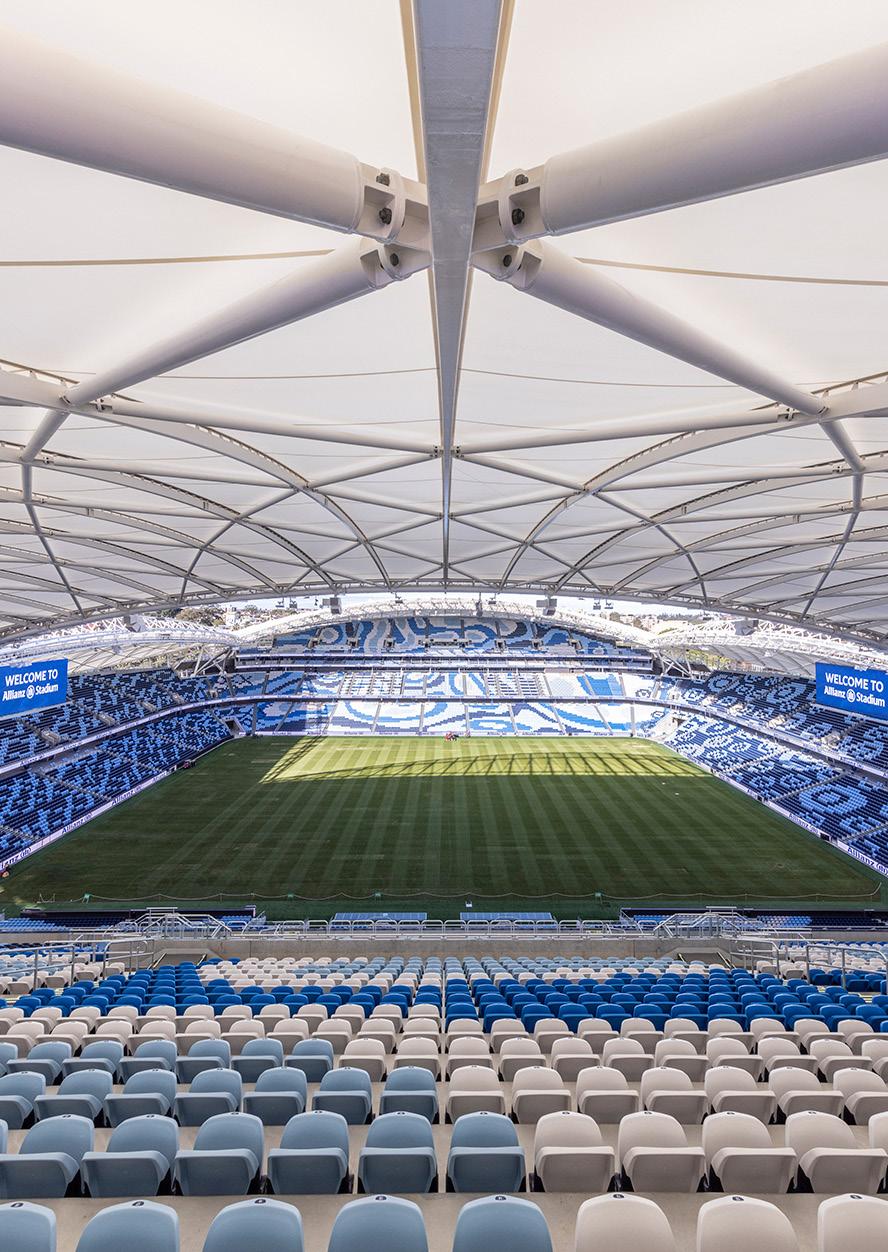
Modern Slavery Statement 2022
Acknowledgement of Country
John Holland pays respect to the Traditional Owners and Custodians of the land on which we work and live, and their connections to land, sea and community. We pay our respect to their Elders past and present and extend that respect to all Aboriginal and Torres Strait Islander peoples today.
About this Statement
John Holland has prepared this Modern Slavery Statement (Statement) to address the requirements of the Australian Modern Slavery Act 2018 (Cth) (Act). The reporting period covered by this Statement is 1 January 2022 to 31 December 2022.
This Statement applies to the following five reporting entities:
CCCI Australia Pty Ltd
John Holland Holdings Pty Ltd
John Holland Group Pty Ltd
John Holland Pty Ltd
John Holland Queensland Pty Ltd
In this Statement, the terms ‘John Holland’, ‘we’ and ‘our’ are used to refer collectively to these five reporting entities. A description of each of these individual entities is set out in Appendix B.
This Statement does not apply to John Holland’s non-controlled joint ventures. Further, this Statement does not apply to entities in which John Holland has an interest but are required to report in their own right under the Act, such as Cross Yarra Partnership.
The Board of John Holland Group Pty Ltd approved this Statement on 30 May 2023. It is appropriate that the Board of John Holland Group Pty Ltd approved the Statement under the Act because this entity is the highest operating entity and main head entity for the John Holland group, and is the entity that has adopted the policies, procedures and processes under which the John Holland group operates (including the other subsidiary reporting entities).1
The other reporting entities covered by this Statement were consulted on its development, as set out in Section 05. As required by the Act, the Statement has been signed in Section 05 by Joe Barr, Director & Chief Executive Officer. This Statement has not been externally assured.
1 Although CCCI Australia Pty Ltd is the head Australian entity for the John Holland group, as a holding company it has no active operations (including procurement activity) and two of its four Directors approved this Statement as common Directors of John Holland Group Pty Ltd.
CEO message
At John Holland, our purpose is to transform lives.
For us, transforming lives is far more than delivering infrastructure, buildings and transport for our communities. We also think deeply about how we do it and the impact we have on communities.
In line with this purpose, we are committed to eradicating any form of human rights abuse from our supply chain, including modern slavery.
I am proud to present our third Modern Slavery Statement. In this, you’ll read about how we identify the risks of modern slavery practices in our supply chain, set clear standards, and continuously improve our oversight and management of any identified risks.
Our Code of Business Conduct and Supplier Code of Conduct set clear expectations for our people and suppliers. We have also continued to increase our engagement and investment in the social enterprise sector as another important way of managing risk and supporting communities.
John Holland’s projects cover the breadth of Australia and so too does our supply chain. Our supply chain includes everything from civil subcontractors to concrete suppliers, and from professional consulting services to fabricated steel suppliers and labour hire.
That’s why companies like John Holland need to lead and take action to protect human rights at every level of our business and supply chain. It’s transforming lives in action.

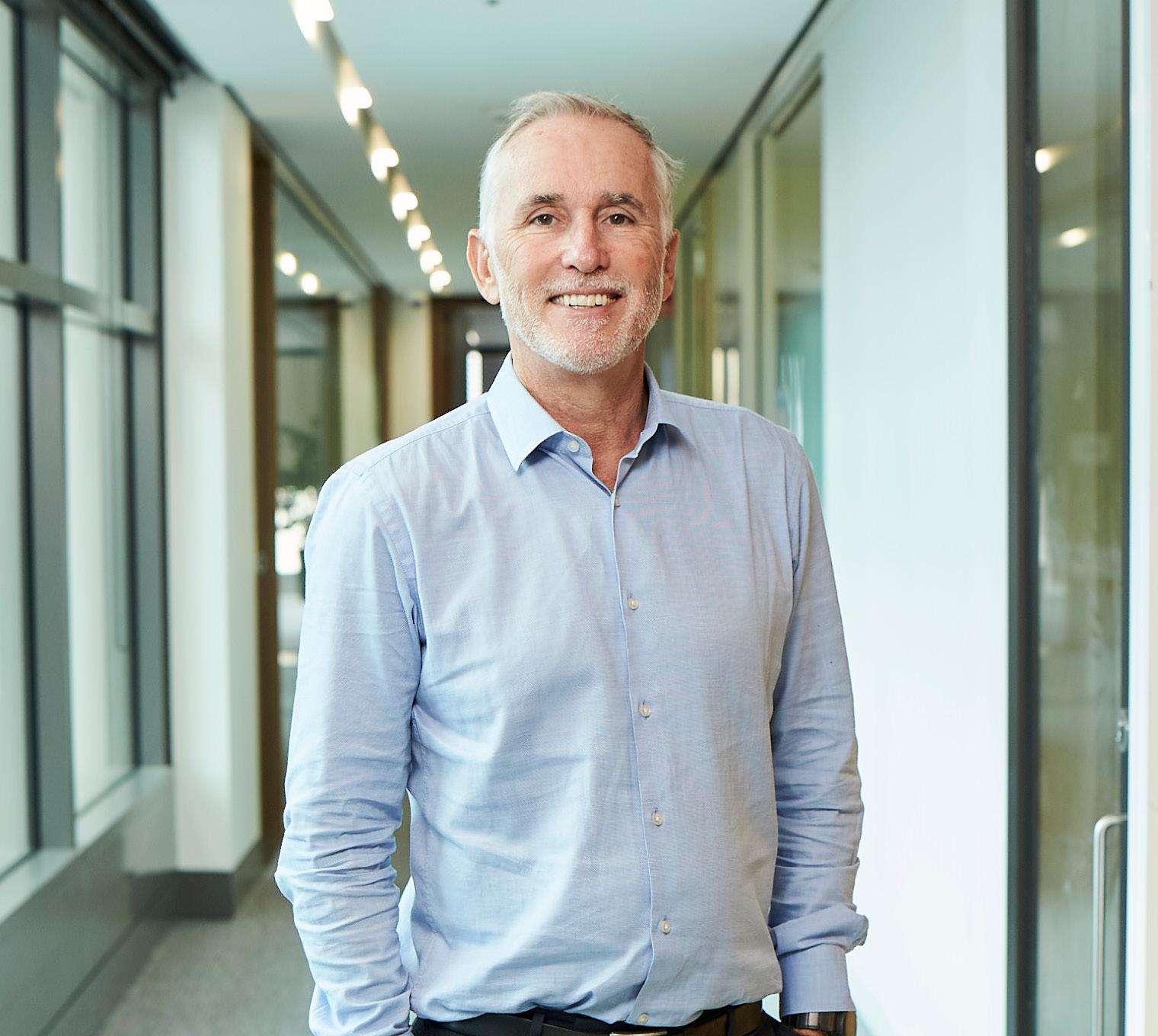
Joe Barr Chief Executive Officer
2
Our structure, operations and supply chain
Who we are
Since our foundation more than 70 years ago, we have been committed to supporting communities around Australia by building infrastructure that improves lives and makes us more connected.
We are one of the nation’s leading infrastructure companies. By finding solutions to complex challenges and opportunities, we transform communities to make them easier to move around, more connected and better to live in. We have had a hand in building the Australia we know today, from Parliament House in Canberra to the Alice Springs to Darwin Rail Link, from the MCG’s Great Southern Stand to Sydney Metro.
We partner with communities to provide essential infrastructure. We do this by designing, engineering, constructing and operating services across Australia and New Zealand.
Our structure
John Holland operates as a corporate group and CCCI Australia Pty Ltd is the Australian parent company. CCCI Australia Pty Ltd is a wholly owned subsidiary of China Communications Construction Company Limited (CCCC), which is dual listed on the Hong Kong (1800.HK) and Shanghai Stock Exchanges (601800SH). CCCC is one of the world’s largest infrastructure construction companies.
In addition to the reporting entities set out in Appendix B, the John Holland group includes a range of controlled entities. These entities undertake a variety of functions, including acting as holding or special purpose companies, or supporting the construction and operation of transport infrastructure and services.
We believe in creating peoplecentred solutions to complex challenges. We always aim to have a positive impact on communities and other stakeholders, while continuing to push boundaries of innovation.
The legacy we leave is just as important as the physical property and infrastructure we build. We acknowledge that our industry has a wide impact on the environment, communities, suppliers and subcontractors and their workers. We take the responsibility to conduct a sustainable business seriously, including by taking steps to assess and address modern slavery risks in our operations and supply chain.
Three of these controlled entities are incorporated outside Australia, in New Zealand, Malaysia2 and the United Kingdom. Of these three entities, only the New Zealand entity undertakes active operations, which relate to rail construction and maintenance contracting.
John Holland also undertakes a range of joint venture activities, which primarily relate to construction activities in Australia during the reporting period.
Our operations
Our focus is to deliver positive change for communities by getting people home safely, helping them stay connected, and developing infrastructure for the future.
We work across Australia and New Zealand and our main areas of operation include:
Infrastructure: Delivering and maintaining infrastructure, such as major roads and bridges, energy infrastructure, tunnelling, and water and wastewater treatment solutions
Rail & Transport: Rail and transport operations & maintenance and the construction of rail assets
Building & Development: Major building projects, such as correctional facilities, hospitals, stadiums, education and research facilities, and commercial and mixed use development.
Our governance
Some of our key projects include delivering the West Gate Tunnel and Melbourne Metro projects in Melbourne, the iconic Sydney Gateway and Shoalhaven Hospital in NSW, and the new Dexus Waterfront Brisbane. More detail about our operations and projects is set out on our website.
To support our operations, we employ over 5,400 employees. These employees undertake roles relating to engineering, project management, site supervision and other internal corporate functions such as commercial, legal, finance, people, risk, strategy and IT. We also engage contractors to work on our sites across Australia and New Zealand in a range of constructionrelated roles, including tunnelling, surveying, building, surfacing and track work. The numbers and roles of these contractors vary and are determined by the size and quantity of our projects at any time.
Key information about our operations and project locations is set out in the infographic and map on pages 6 to 9.
We recognise that a workplace that prioritises integrity, ethics, transparency and reporting enables robust and thoughtful decision-making that produces the best solutions. The John Holland Group Board of Directors is responsible for John Holland’s long-term success and for managing the Group’s business affairs to the highest standards of corporate governance. The Board consists of up to six shareholder appointed directors and three executive directors.
To assist the Board in discharging its responsibilities, a tiered corporate governance framework has been implemented, which provides for the delegation of functions to a number of Board and Management Committees. The Board Governance, Compliance & Audit (GCA) Committee supports the Board to monitor the financial performance and disclosures of John Holland, as well as compliance with all applicable laws and regulations, including our modern slavery reporting. Quarterly reports are provided to the GCA Committee on the actions being taken to assess and address modern slavery risks. Further, the Board’s Risk Committee supports the Board to oversee the framework for, and the reporting of, risks including enterprise, project procurement and delivery risks. The project risks include those relating to modern slavery and other procurement activities.
Senior managers across John Holland with responsibility for functions relevant to preventing and addressing modern slavery report to the Board through appropriate channels, such as the GCA and Risk Committees.
70 projects across Australia and New Zealand
Our operations

$12.3b work in hand
5,439 direct employees
$6.1b New work won in 2022
Our supply chain
Over 9,500 Australian suppliers Approximately 60 international suppliers
Over $5.5b supplier spend
Over $150m spend with social and Indigenous enterprises
Our projects and offices
We have 70 projects in Australia and New Zealand across the following sectors:
Infrastructure:
Roads and bridges
Tunnelling
Water and wastewater
Pumped hydro
Rail and transport:
Design and construction
Delivery of key retail services
Systems engineering delivery and integration
Operations and maintenance
Building and development:
Education and research
Health and aged care
Justice and corrections
Sport, tourism and culture
Future cities
Property development
Commercial
Western Australia
5
Corporate Offices
Sydney 65 Pirrama Road
Pyrmont NSW 2009
Phone: +61 2 9552 4288
Perth
Level 8, Commercial Tower 3
10 Telethon Avenue, Perth WA 6000
Phone: +61 8 9482 2700
New Zealand
Level 2, 56 Parnell Road, Parnell
Auckland 1052, New Zealand
Phone: +64 9 525 1743
Melbourne
Level 9, 180 Flinders Street
Melbourne VIC 3000
Phone: +61 3 8698 9400
Brisbane
1000 Ann Street
Fortitude Valley QLD 4006
Phone: +61 7 3867 7000
Hobart
Level 2, 13-17 Castray Esplanade
Battery Point TAS 7004
Phone: +61 3 6221 8900
Our supply chain
We live in a globalised world, which means that, although we are primarily based in Australia, our supply chains span around the globe.
In the last year, we procured more than $5.5 billion worth of goods and services from our suppliers to support our work in the infrastructure, building, water and transport sectors. The vast majority of our direct suppliers (Tier One) are Australian based. In 2022, that represented over 9,500 suppliers, each of them with their individual supply chains. We also engage directly with a small number of overseas suppliers (approximately 60 suppliers in 2022). The processes described on pages 11 to 13 highlight the complexity of our procurement activity and our constant work in finding solutions to avoid modern slavery risks in our supply chain.
Our procurement systems and policies are managed by a central procurement team, which also oversees international procurements and other strategic procurement activities. Business areas across John Holland are responsible for day-to-day procurement activity and all our reporting entities and controlled entities use the same procurement policies and frameworks.
We are also involved in construction activities through joint ventures. In some cases, we act as the principal contractor for these projects, being responsible for the operations of the site and execution of the project using our own processes and systems, including our policies and procedures relating to modern slavery. Where we are not the principal contractor, site operations may be managed using another entity’s processes and systems. Independently of who serves as the principal contractor for projects, all of our joint venture partners must maintain high ethical standards.
In 2022, the main categories of goods and services we procured consisted of (in order of expenditure):
Civil sub-contracts: including contracts to construct bulk earthworks, pavements, drainage and reinforced concrete structures
Labour hire: including short- and long-term project labour for our sites
Mechanical, electrical and systems: including HVAC, pumps and pipelines, control systems, electrical wiring, transformers and switchboards, and subcomponents making up the systems
Plant and equipment: including dry hire (hire of equipment) and wet hire (hire of equipment and services to operate it), as well as purchase of a wide range of owned equipment, from heavy earthmoving equipment such as tunnel boring machines to light towers and elevated work platforms
Building materials and products: including facades and external cladding
Professional consulting services: including engineering design services, as well as environmental, inspection and construction services
Concrete and reinforcing products: including ready-mix and precast concrete, reinforcing bar and mesh
Fabricated steel: including heavy, medium and light steel products from bridge girders through to handrails and street lights
Traffic management: including materials and signalling, communications and control systems
Industrial consumables: including gases, welding consumables, fasteners, small tools, and Personal Protective Equipment (PPE)
Fuels and lubricants: including fuel and lubricants for plants and equipment and hydraulic oils.
Social procurement
We give special attention to the creation of opportunities through social inclusion. One of the ways we do that is by including the support and increased use of direct and indirect employment through social and Indigenous enterprises as part of our procurement strategy.
Supply Nation and Kinaway are two of the certifiers that assist us by connecting certified Indigenous suppliers and projects that may need the services provided by them. These partnerships have allowed us to empower our
projects and continuously increase the use of local and Indigenous suppliers.
In 2022, we spent more than $150 million with almost 200 different Indigenous suppliers and social enterprises across our projects. Since our first Modern Slavery Statement in 2020, this amount has tripled. From this amount, over $10 million was spent through our partnerships with Multicultural Consulting Services, Career Seekers and other social enterprise organisations.
We do recognise that there may be higher risks of modern slavery practices within the supply chains of Indigenous suppliers. However, our focus on social enterprises and smaller, local businesses helps us reduce our exposure to modern slavery risks, since we are able to monitor working conditions and undertake due diligence closer and in a more effective way.
How we support overseas inspections to avoid risks of modern slavery practices in a complex and global procurement
The large range of goods and services we procure indicate that our supply chain can be long and complex. The risks incurred when importing goods and services from overseas are usually increased by the lack of visibility and control into companies that operate according to foreign laws.
Whenever any international supplier is engaged by us, several actions are taken to ensure the integrity of our supply chain. One of these actions is the mandatory overseas inspection process, which is embedded in our system and has helped create a more simplified and robust system for evaluating overseas suppliers.
These mandatory overseas inspections are performed on our behalf by well-regarded consulting and inspection companies who perform overseas inspections in a timely and trustworthy manner.
The results provided are fundamental for the assessments performed by John Holland in using and rating the services.
During 2022, each time we started a new project, the team responsible for it received full information about this process and how to trigger the inspections. Including this theme in our project launch processes has increased the visibility of modern slavery threats and improved the ability of our teams to act when needed.
Identifying the risks of modern slavery practices in our operations
The United Nations defines modern slavery as an umbrella term covering practices such as forced labour, debt bondage, forced marriage, and human trafficking. Essentially, it refers to situations of exploitation that a person cannot refuse or leave because of threats, violence, coercion, deception, and/ or abuse of power.
With that in mind, we understand that there are risks of modern slavery practices within businesses’ global operations and that supply chains can change over time. We also recognise that the construction sector can include a range of direct and indirect practices that can be identified as modern slavery.
During the reporting period, we continued working to refine our understanding of modern slavery risk areas across our operations and supply chain.
Our annual interactive modern slavery risk workshop with key functions from across John Holland was held in the last quarter of 2022 and, through this work, we have once again reviewed and assessed the potential modern slavery risk areas that may be present in the operations and supply chains of entities in the infrastructure sector.
As mentioned, we recognise that the construction sector can include modern slavery risks, particularly for the production of materials and provision of services in countries where there are reports of forced labour and disrespect for human rights.
We reaffirm our commitment to continually monitor, prevent and mitigate any potential risk areas relating to forced labour or any other modern slavery practices within our supply chain.
The impact of businesses in modern slavery
The Australian Government’s official guidance on the Act defines modern slavery as situations where ‘coercion, threats or deception are used to exploit victims or undermine and deprive them of their freedom’. This includes practices such as forced labour, debt bondage and the worst forms of child labour.
The United Nations (UN) Guiding Principles on Business and Human Rights are the globally recognised standard for responsible business conduct. They explain that businesses can be involved in adverse impacts on the human rights of people, such as modern slavery, in three ways:
1) By causing a human rights impact, such as modern slavery, if its own actions or omissions directly result in that impact
2) By contributing to a human rights impact if its actions or omissions contribute to another party causing the impact
3) By being directly linked to a human rights impact by another entity it has a business relationship with, through its operations, products or services.
As recommended by the Australian Government’s guidance, we use this continuum of involvement from the UN Guiding Principles on Business and Human Rights to support our actions to assess and address our modern slavery risks.
Risk area
Waste disposal (offshore)
Cleaning, catering and site security
Imported fabricated steel
Design and related services (offshore service providers)
PPE/site clothing manufacture
Multiple tiered subcontractors
Risks identified
Forced/bonded labour
Unauthorised subcontracting and workers submitted to forced/bonded labour
Forced/bonded labour, domestic servitude and child labour, particularly when from countries where modern slavery practices are more prevalent
Forced/bonded labour
Forced/bonded labour and child labour, particularly when from countries where modern slavery practices are more prevalent
Forced/bonded labour, especially of visa holder workers
Transportation Bonded labour
Joint venture partners
Remote worksite camps
Labour hire
Design and related services (onshore service providers)
Having modern slavery practices reported in their operations or supply chain
Forced/bonded labour and sex trafficking
Forced/bonded labour, particularly when hiring lower skilled and migrant workers
Forced/bonded labour
Traffic controllers Bonded labour
2022 risk assessment
High risk, although the exposure has decreased due to a reduction in waste export volume
Average risk, with no significant changes during the year
Average risk, with no significant changes during the year
Average risk, with no significant changes during the year
Average risk, with no significant changes during the year
Average risk, with increased risk during the year due to a rise in immigration
Average risk, with increased risk during the year due to a rise in immigration combined with a low language skill requirement
Average risk. New risk identified
Low risk. New risk identified
Low risk, with no significant changes during the year
Low risk, with no significant changes during the year, but there is potential for this risk to increase due to growing demand
Low risk. New risk identified
Our actions to assess and address modern slavery risks
We aim to conduct our business ethically and efficiently, while ensuring we remain a good corporate citizen.
Assessing potential risks
We have taken a range of steps to assess and address potential modern slavery risk areas in our operations and supply chain. These actions are outlined below.
As described in Section 02 above, in 2022 we continued to refine our understanding of potential modern slavery risk areas in our operations and supply chain through our annual interactive modern slavery risk workshop with key functions from across John Holland, including: Procurement; People; Health, Sustainability & Climate; and key operational areas, including relevant joint ventures and controlled entities. This workshop contributes to the identification of possible risk areas and informs the development of action items to further strengthen our response.
Setting clear standards
Our Code of Business Conduct is based on our values, policies, procedures and applicable laws guiding our daily work and demonstrates our commitment to uphold proper and ethical business practices, including in relation to modern slavery. It also sets out our commitment to seek to prevent modern slavery in our supply chain.
In 2021, we updated the Code of Business Conduct to make it clear we respect the human rights and dignity of all employees, the communities in which we work and those who are affected by our projects and operations. Further, the language was updated to reinforce our zero-tolerance approach to all forms of modern slavery.
The Code of Business Conduct applies to everyone who works for or with us, including people working under contract. We require our employees and labour hire contractors to comply with it and our employees must also complete an e-learning module about the Code of Business Conduct during induction and every two years thereafter. Where we have a controlling position in a joint venture or other similar arrangement, we require that the standards of behaviour contained in our Code of Business Conduct be adopted as a minimum.
Investigations into potential breaches of the Code of Business Conduct are monitored by our Governance, Compliance & Audit Committee.
Setting clear standards for our suppliers
Our Supplier Code of Conduct sets the clear expectations we have as to how our suppliers must manage their own supply chains. Part of the work done to identify and mitigate modern slavery practice risks in our business and supply chain was to introduce modern slavery compliance clauses into our standard supply contracts in 2022. With that, all of our suppliers are now expressly required to comply with modern slavery laws and regulations and with our Supplier Code of Conduct (including implementing their own policies and procedures), as well as being responsible for due diligence on their own supply chains.
Managing supplier risks
Our procurement policy commits us to ‘efficient, effective, ethical and sustainable procurement’ and sets out our expectation that all our employees, contractors and business partners including suppliers will uphold ethical business practices and abide by relevant legislation. We manage risks associated with our procurement by inspecting all of our international suppliers (which are considered to have a higher exposure to modern slavery risks when compared to local suppliers), as described on page 11, and requiring international suppliers to complete a modern slavery questionnaire and deed poll during the tender process. This sets out a range of modern slavery requirements, including an obligation for the supplier to inform us of actual or suspected modern slavery incidents in its operations and supply chain.
In 2022, we developed an online training module for our suppliers to undertake in relation to the Supplier Code of Conduct, which sets clear standards that should always be followed. Acknowledging and agreeing with our Supplier Code of Conduct is a mandatory part of the contracting process with us, and this training assists our suppliers achieve a better understanding of it.
Strengthening our supplier management system
Digitising our procurement processes as part of managing our suppliers effectively and increasing efficiency on our projects were areas of focus in 2022. We developed an integrated, automatic system, which now performs periodic risk assessment for all of our direct suppliers. This risk assessment includes multiple risk areas including modern slavery related content, and feeds into a live dashboard that allows us to monitor supplier risks and assist with executive oversight.
In addition, in 2022 we improved the visibility of certified local and Indigenous suppliers through an automated system between our projects and our certifying partners.
Maintaining a whistleblower mechanism
Our whistleblower mechanism provides a safe and anonymous way for our employees, contractors, suppliers and other stakeholders to report potential breaches of our Code of Business Conduct, Supplier Code of Conduct and applicable laws, including in relation to modern slavery. Reports can be made through an independent Speak Up Line or directly to the Company Secretary and Corporate Counsel, or the Privacy Officer, and we take steps to protect complainants from retaliation. Further information on how we receive and investigate reports is set out in our Whistleblower Standard, which is available on our website.
Fortunately, since the implementation of this mechanism, no reports have been received relating to modern slavery or labour rights more broadly. Whilst pleased with this result, we recognise that modern slavery incidents may not always be reported through whistleblower mechanisms, including where potential complainants may have difficulty accessing the mechanism due to lack of awareness or language barriers. To address this, we started promoting the establishment of the whistleblower mechanism to our employees in 2019, including through emails, intranet posts and an FAQ document. Both our Code of Business Conduct and Supplier Code of Conduct include information about accessing the whistleblower mechanism.
Filling gaps previously identified
In 2020, we engaged a business and human rights advisory firm (Pillar Two) to undertake a gap analysis of our policies and processes relating to modern slavery and developed a three year roadmap for action.
During 2022, we continued to implement the roadmap and addressed the following key recommendations: improved the communication of the Supplier Code of Conduct for our supplier base through an online training module for our suppliers
improved the communication about modern slavery practices throughout our projects and how to access tools that assist in identifying risks among our suppliers during project launch presentations to project leadership teams
added a standard contract term in all of our new supplier contracts to address modern slavery, which includes requiring compliance with our Supplier Code of Conduct.
Collaborating with our partners
We continue working collaboratively with our business peers to build our response to modern slavery through the Infrastructure Sustainability Council of Australia (ISCA) Road Sector Modern Slavery Coalition. The Coalition aims to support collaborative solutions to modern slavery risk management, drive industry good practice to support modern slavery compliance, and build members’ capacity to manage modern slavery risks. During the reporting period, we also continued working with Coalition members to consider modern slavery risks and identifying gaps.
With the active participation of our Procurement General Manager, one of the activities undertaken by the Coalition in the eight meetings held throughout the year was developing a draft of the Modern Slavery Leadership Statement.
In November 2022, the members of the Coalition also participated in a feedback session and supplier forum, allowing small suppliers to voice concerns and challenges, which also raised awareness about modern slavery risks.
Our Supplier Code of Conduct
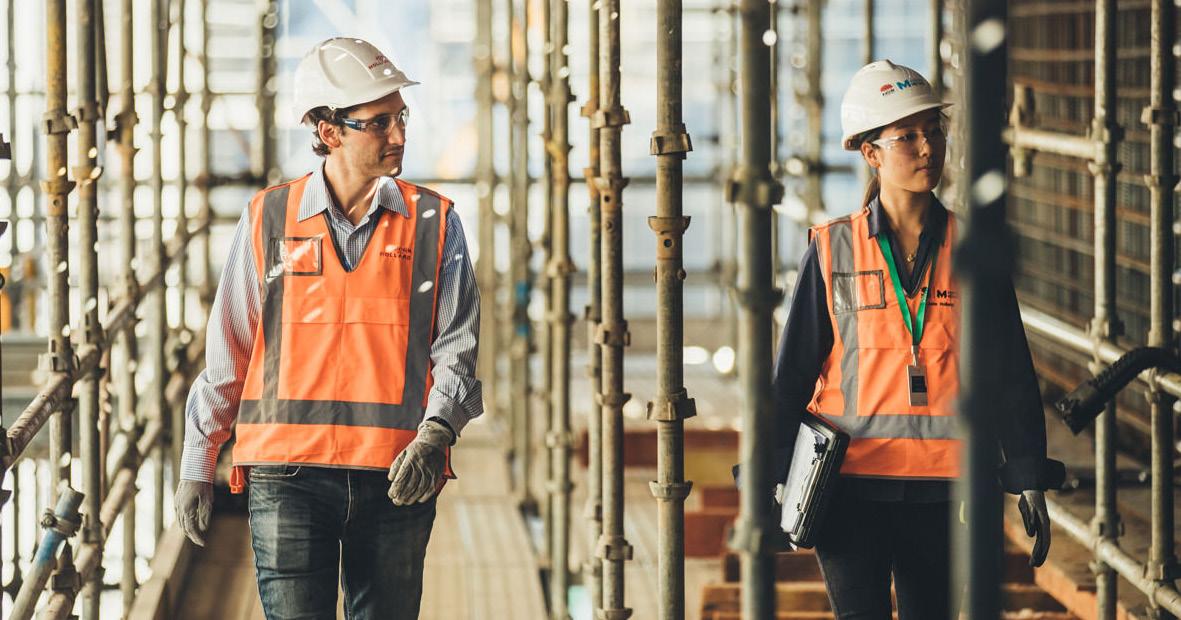
John Holland introduced a Supplier Code of Conduct in December 2021. This Code explains our expectations of our suppliers, their subsidiaries and supply chain, and applies to every organisation or individual that provides us with goods or services. We expect our suppliers to provide their workers with appropriate training and support to enable them to comply with the Code, which also sets clear expectations for the whole supply chain to align with it.
Among other requirements about ethical business practices, the environment and the community, the Code requires that all suppliers must: prohibit the use of modern slavery (including forced labour) and child labour in their operations and supply chains, and take proactive steps to manage potential risks
provide means for their workers to safely and anonymously make complaints relating to unsafe or unfair working conditions (including modern slavery or other exploitation), including through our whistleblower mechanism. Workers must not be exposed to retaliation or fear of retaliation for making a complaint.
The Supplier Code of Conduct is part of every supplier standard contract. Acknowledging and agreeing with it is a mandatory part of the contracting process with us. By including this important step in our processes, we expect our suppliers to take action and also encourage them to demonstrate leadership by going beyond the requirements of the Code.
Case study: John Holland’s people policies for a better workplacemitigating modern slavery risks
We have a range of standards, policies and procedures which set clear standards and expectations for our employees and the organisation as a whole. Together with our Code of Business Conduct, they support a safer and more inclusive workplace particularly for our own employees. Such standards, policies and procedures include:
Health Safety and Wellbeing Policy
People Standard and Policy
Ethical Behaviour Policy Leave Procedure
Whistleblower Standard
Business Conduct Reporting Procedure
Workplace Behaviour Complaints Procedure
In addition, under our Working Flexibly Policy, we welcome our employees to choose different types of flexible work options including shifting the start and end times, taking extended breaks or working from home, which supports a healthy work-life balance.
John Holland was the first Australian construction company to implement a paid parental leave scheme. Today, we are encouraging more men to take primary carer’s leave. We offer 18 weeks of paid primary carer’s leave and 3 weeks of secondary carer’s leave. Parents continue to receive superannuation payments while on paid or unpaid leave for 18 weeks.
Our employees can join our employee networks as a way of making a difference, including First Nations, Celebrate Women, PRIDE and GROW.
We also have an Employee Assistance Program (EAP) which provides free and confidential one-on-one professional counselling services to all employees, their immediate families and our subcontractors. The EAP provides counselling services for life, relationship, work and mental health issues in face-to-face or telephone sessions.
Assessing our effectiveness and future plans
We recognise the importance of constant improvement in managing our modern slavery risks and are working to enhance the scope and sophistication of our response.
Assessing the effectiveness of our actions is a key element of our commitment to continuous improvement. We assess the effectiveness of our approach in a number of ways, including by: monitoring and analysing data from our key indicators, such as the number of modern slavery related reports made through our whistleblower mechanisms and the number of modern slavery questionnaires and deed polls completed by international suppliers reviewing all overseas inspections performed with international suppliers considering how our response compares to good practice responses from business peers in our sector and more broadly, including through the ISCA Coalition
evaluating whether our policies are fit for purpose, including through processes such as the modern slavery gap analysis (see page 16 for further details).
We plan to further strengthen our response to modern slavery in the future, including by: implementing an integrated, automatic vendor management system that will allow us to better control and assess risks across our supplier base
continuing to develop (and ultimately implement) an Operational Management System that will allow us to enhance our monitoring of compliance with our Supplier Code of Conduct
strengthening the focus on recognising and avoiding modern slavery practices within suppliers during our project launch presentations continuing to update Framework Agreements and company standard contracts with the requirement to comply with our Supplier Code of Conduct and modern slavery laws and practices.
Consultation and approval
This Statement was developed in consultation with each of the reporting entities covered by the Statement (as listed in Appendix B) and other relevant controlled entities.
This Statement was reviewed by one or more directors from each reporting entity and each controlled entity.3 Each reporting entity also shares a common company secretary, who was actively involved in the drafting of this Statement. This Statement was approved by the Board of John Holland Group Pty Ltd on 30 May 2023.

Joe Barr Director and Chief Executive Officer
9 June 2023
Appendix A
How
our
Statement addresses the Modern Slavery Act’s requirements
Modern Slavery Act requirement Reference in this Statement
Identify the reporting entity ’About this Statement’ (page 2) and Appendix B
Describe the reporting entity’s structure, operations and supply chains
Describe the risks of modern slavery practices in the operations and supply chains of the reporting entity and any entities it owns or controls
Describe the actions taken by the reporting entity and any entity that the reporting entity owns or controls, to assess and address those risks, including due diligence and remediation processes
Describe how the reporting entity assesses the effectiveness of such actions
Describe the process of consultation with (i) any entities the reporting entity owns or controls; and (ii) for a reporting entity covered by a joint statement, the entity giving the statement
Include any other information that the reporting entity, or the entity giving the statement, considers relevant
Section 01 Appendix B
Section 02
Section 02 Section 03
Section 04
Section 05
Throughout this Statement
Appendix B
Table of reporting entities
Reporting entity Description
CCCI Australia Pty Ltd (the head Australian entity)
John Holland Holdings Pty Ltd
CCCI Australia Pty Ltd is an entity formed by CCCC International Holding Limited to hold its Australian business interests and operations. The entity has no active operations and no subsidiaries other than John Holland Holdings Pty Ltd.
John Holland Holdings Pty Ltd is an entity formed by CCCC International Holding Limited as the holding entity for the John Holland Group. The entity has no active operations and no subsidiaries other than John Holland Group Pty Ltd.
John Holland Group Pty Ltd
John Holland Pty Ltd
John Holland Queensland Pty Ltd
John Holland Group Pty Ltd is the main head entity for the John Holland Group. It is the employing entity for all staff (‘white collar’) employees. It also provides funding and treasury services to all group entities and operations.
John Holland Pty Ltd is the principal Australian operating entity for construction contracting services.
John Holland Queensland Pty Ltd undertakes Queensland government and related bodies construction contracts.
johnholland.com.au